EP3606926B1 - Heteroaromatic compounds useful in therapy - Google Patents
Heteroaromatic compounds useful in therapy Download PDFInfo
- Publication number
- EP3606926B1 EP3606926B1 EP18716212.8A EP18716212A EP3606926B1 EP 3606926 B1 EP3606926 B1 EP 3606926B1 EP 18716212 A EP18716212 A EP 18716212A EP 3606926 B1 EP3606926 B1 EP 3606926B1
- Authority
- EP
- European Patent Office
- Prior art keywords
- dimethyl
- compound
- indazol
- amine
- pharmaceutically acceptable
- Prior art date
- Legal status (The legal status is an assumption and is not a legal conclusion. Google has not performed a legal analysis and makes no representation as to the accuracy of the status listed.)
- Active
Links
- KLHVRCVOQALCQV-UHFFFAOYSA-N Cc(c1c2)n[n](C)c1ccc2-c1c2nc(C)cc(NCc3cnc(C(F)(F)F)cc3)[n]2nc1C Chemical compound Cc(c1c2)n[n](C)c1ccc2-c1c2nc(C)cc(NCc3cnc(C(F)(F)F)cc3)[n]2nc1C KLHVRCVOQALCQV-UHFFFAOYSA-N 0.000 description 1
- QRAMEWVYIZWROQ-UHFFFAOYSA-N Cc1n[n](C)c(cc2)c1cc2-c1c(C)nc2[n]1nc(C)cc2NCc1cnc(C)cc1 Chemical compound Cc1n[n](C)c(cc2)c1cc2-c1c(C)nc2[n]1nc(C)cc2NCc1cnc(C)cc1 QRAMEWVYIZWROQ-UHFFFAOYSA-N 0.000 description 1
- INIHKJIARHRCAP-UHFFFAOYSA-N Cc1n[n](C)c(cc2)c1cc2-c1c2nc(C)cc(NCc(cc3)ccc3Cl)[n]2nc1C Chemical compound Cc1n[n](C)c(cc2)c1cc2-c1c2nc(C)cc(NCc(cc3)ccc3Cl)[n]2nc1C INIHKJIARHRCAP-UHFFFAOYSA-N 0.000 description 1
- KBRKERCJKFMZEM-UHFFFAOYSA-N Cc1n[n](C)c(cc2)c1cc2-c1c2nc(C)nc(NCc3ccncc3)[n]2nc1C Chemical compound Cc1n[n](C)c(cc2)c1cc2-c1c2nc(C)nc(NCc3ccncc3)[n]2nc1C KBRKERCJKFMZEM-UHFFFAOYSA-N 0.000 description 1
Images

Classifications
-
- A—HUMAN NECESSITIES
- A61—MEDICAL OR VETERINARY SCIENCE; HYGIENE
- A61K—PREPARATIONS FOR MEDICAL, DENTAL OR TOILETRY PURPOSES
- A61K31/00—Medicinal preparations containing organic active ingredients
- A61K31/33—Heterocyclic compounds
- A61K31/395—Heterocyclic compounds having nitrogen as a ring hetero atom, e.g. guanethidine or rifamycins
- A61K31/435—Heterocyclic compounds having nitrogen as a ring hetero atom, e.g. guanethidine or rifamycins having six-membered rings with one nitrogen as the only ring hetero atom
- A61K31/4353—Heterocyclic compounds having nitrogen as a ring hetero atom, e.g. guanethidine or rifamycins having six-membered rings with one nitrogen as the only ring hetero atom ortho- or peri-condensed with heterocyclic ring systems
- A61K31/437—Heterocyclic compounds having nitrogen as a ring hetero atom, e.g. guanethidine or rifamycins having six-membered rings with one nitrogen as the only ring hetero atom ortho- or peri-condensed with heterocyclic ring systems the heterocyclic ring system containing a five-membered ring having nitrogen as a ring hetero atom, e.g. indolizine, beta-carboline
-
- A—HUMAN NECESSITIES
- A61—MEDICAL OR VETERINARY SCIENCE; HYGIENE
- A61P—SPECIFIC THERAPEUTIC ACTIVITY OF CHEMICAL COMPOUNDS OR MEDICINAL PREPARATIONS
- A61P31/00—Antiinfectives, i.e. antibiotics, antiseptics, chemotherapeutics
- A61P31/12—Antivirals
-
- C—CHEMISTRY; METALLURGY
- C07—ORGANIC CHEMISTRY
- C07D—HETEROCYCLIC COMPOUNDS
- C07D487/00—Heterocyclic compounds containing nitrogen atoms as the only ring hetero atoms in the condensed system, not provided for by groups C07D451/00 - C07D477/00
- C07D487/02—Heterocyclic compounds containing nitrogen atoms as the only ring hetero atoms in the condensed system, not provided for by groups C07D451/00 - C07D477/00 in which the condensed system contains two hetero rings
- C07D487/04—Ortho-condensed systems
-
- Y—GENERAL TAGGING OF NEW TECHNOLOGICAL DEVELOPMENTS; GENERAL TAGGING OF CROSS-SECTIONAL TECHNOLOGIES SPANNING OVER SEVERAL SECTIONS OF THE IPC; TECHNICAL SUBJECTS COVERED BY FORMER USPC CROSS-REFERENCE ART COLLECTIONS [XRACs] AND DIGESTS
- Y02—TECHNOLOGIES OR APPLICATIONS FOR MITIGATION OR ADAPTATION AGAINST CLIMATE CHANGE
- Y02A—TECHNOLOGIES FOR ADAPTATION TO CLIMATE CHANGE
- Y02A50/00—TECHNOLOGIES FOR ADAPTATION TO CLIMATE CHANGE in human health protection, e.g. against extreme weather
- Y02A50/30—Against vector-borne diseases, e.g. mosquito-borne, fly-borne, tick-borne or waterborne diseases whose impact is exacerbated by climate change
Definitions
- the present invention relates generally to novel compounds having usefulness in therapy, in particular in the treatment of viral conditions, more particularly viral conditions caused by picornaviruses, e.g. enteroviruses.
- the present invention also relates to novel compounds having usefulness for the treatment of diseases such as meningitis, hand-foot and mouth disease, herpangina, respiratory disease, encephalitis and myocarditis, but also including diabetes, cancer, neurodegenerative diseases such as Alzheimer's disease and amyotrophic lateral sclerosis.
- Pyrazolo[1,5-a]pyrimidine derivatives have been described as analgesics, benzodiazepine receptor antagonists, angiotensin II receptor antagonists, angiogenesis inhibitors, antiinflammatory agents, neuropeptide Y receptor antagonists, COX2-inhibitor and corticotrophin-releasing hormone receptor type 1 antagonists and as CHK1 inhibitors (e.g. Mayo et al (Adv. Synth. Catal. 2003, 345, 620-624 ; Tellew et al (Bioorg. Med. Chem. Lett. 2010, 20, 7259-7264 ); Chen et al (Bioorg. Med. Chem. Lett. 2004, 14, 3669-3673 ); Labroli et al (Bioorg. Med. Med.
- Pexacerfont is a clinically tested pyrazolo[1,5-a] triazin-4-amine drug developed by Bristol-Myers Squibb, acting as a CRF-1 antagonist.
- the pyrazolo[1,5-a][1,3,5]triazine scaffold has also been described as present in cyclin-dependent kinase inhibitors ( WO2013128029 ), casein kinase inhibitors and DYRK1A kinase inhibitors ( WO2010103486 ) useful for treatment of various diseases.
- the scaffold has further been described as present in cannabinoid 1 receptor antagonists ( J. Pharm. Exp. Ther. (2010), 335(1), 103-113 ).
- Imidazo[1,2-b]pyridazine derivatives have been described as Mps1 kinase inhibitors ( Kusakabe, J. Med. Chem. 2015, 58, 1760-1775 ). Similar scaffolds have been described as present in phosphatidylinositol 4-kinase (PI4K) inhibitors ( McLeod et al (ACS Med. Chem. Lett. 2013, 4(7), 585-589 ) and van der Schaar et al (Antimicrobial Agents Chemother.
- PI4K phosphatidylinositol 4-kinase
- Autophagy is a process of homeostatic degradation in cells, used to create nutrients in times of stress and as a mechanism to recycle damaged organelles or microbes in the cytostol ( Karanasios et al, 2016, Autophagy at the cell, tissue and organismal level (Springer )). Many pathogens interact with the host autophagic pathways and could impair the normal autophagy. Lai et al (Viruses, 2016, 8(32), 1-13 ) describe that viruses subvert the autophagy machinery to benefit the virus replication and exit from the host and that inhibition of PI4KIII ⁇ will have an effect on the autophagy processes and thus inhibit the virus replication. Sridhar et al (EMBO J.
- PI4KIII ⁇ to be a key factor in autophagy and it is believed that many diseases are caused by or linked to impaired or abnormal autophagy, for example neurodegenerative and neuropsychiatric diseases, cancer, cardiac diseases, inflammatory diseases and diabetes ( Polajnar et al J. Cell. Mol. Med. 2014, 9(18). 1705-1711 ; Levine et al, Cell, 2008, 132(1), 27-42 ; Barlow, et al, DNA Cell. Biol, 2015, 34(4), 252-260 ). Without being bound to any theory it is believed that compounds of the present invention also could be used for treatment of diseases caused by or linked to impaired or abnormal autophagy.
- a first aspect is a compound of formula (I) or a pharmaceutically acceptable salt thereof, wherein
- a further aspect is a compound of formula (I), or a pharmaceutically acceptable salt thereof, for use as an inhibitor of picornavirus replication.
- a further aspect is a compound of formula (I), or a pharmaceutically acceptable salt thereof, for use as an inhibitor of picornaviral cytopathogenic effects.
- a further aspect is a compound of formula (I), or a pharmaceutically acceptable salt thereof, for use as an inhibitor of phosphatidylinositol 4-kinase III ⁇ .
- a further aspect is a compound of formula (I), or a pharmaceutically acceptable salt thereof, for use to modulate autophagy.
- a further aspect is a compound of formula (I), or a pharmaceutically acceptable salt thereof, for use in therapy.
- a still further aspect is a pharmaceutical composition
- a pharmaceutical composition comprising a compound of formula (I), or a pharmaceutically acceptable salt thereof, and optionally a pharmaceutically acceptable excipient.
- a further aspect is a compound of formula (I), or a pharmaceutically acceptable salt thereof, for use in the treatment of a viral infection.
- a further aspect is a compound of formula (I), or a pharmaceutically acceptable salt thereof, capable of improving impaired or modulating abnormal autophagy in a cell, for use in the treatment of a disease as mentioned herein.
- a further aspect is a compound of formula (I), or a pharmaceutically acceptable salt thereof, for use in the treatment of a disease linked to impaired or abnormal autophagy.
- a further aspect is a compound of formula (I), or a pharmaceutically acceptable salt thereof, for use in the treatment of a disease linked to impaired autophagy.
- a further aspect is a compound of formula (I), or a pharmaceutically acceptable salt thereof, for use in the treatment of a disease linked to abnormal autophagy.
- abnormal autophagy e.g. autophagy that favours viral replication and release.
- pair autophagy is meant a subnormally functioning autophagy in a cell.
- a disease linked to impaired or abnormal autophagy that may be treated according to the invention e.g. may be selected from neurodegenerative and neuropsychiatric diseases, cancer, cardiac diseases, inflammatory diseases and diabetes, such as diseases mentioned herein.
- a further aspect is a compound of formula (I), or a pharmaceutically acceptable salt thereof, for use in the treatment of a non-enveloped single-stranded (+) RNA viral infection.
- Still a further aspect is a compound of formula (I), or a pharmaceutically acceptable salt thereof, for use in the treatment of pancreatitis, poliomyelitis, encephalitis, meningitis, sepsis, cancer, such as breast, prostate, ovarian and colorectal cancer, paralysis, cardiac diseases, such as myocarditis, diabetes, common cold, hand-foot-and-mouth disease, herpangina, pleurodynia, diarrhea, mucocutaneous lesions, respiratory illness, conjunctivitis, myositis, chronic fatigue syndrome, neuropsychiatric diseases, and neurodegenerative diseases such as multiple sclerosis, Parkinson's disease, amyotrophic lateral sclerosis, Alzheimer's disease, and Huntington's disease, or inflammatory conditions.
- cardiac diseases such as myocarditis, diabetes, common cold, hand-foot-and-mouth disease, herpangina, pleurodynia, diarrhea, mucocutaneous lesions, respiratory illness, conjunctivitis, myositis
- a further aspect is the use of a compound of formula (I) or a pharmaceutically acceptable salt thereof in the manufacture of a medicament for the treatment of a disorder or disease as mentioned herein.
- a further aspect is a method for the treatment of a disorder or disease as mentioned herein by administration of a therapeutically effective amount of a compound of formula (I) or a pharmaceutically acceptable salt thereof to a mammal in need thereof.
- “Pharmaceutically acceptable” means being useful in preparing a pharmaceutical composition that is generally safe, non-toxic and neither biologically nor otherwise undesirable and includes being useful for veterinary use as well as human pharmaceutical use.
- Treatment includes prophylaxis of the named disorder or condition, or amelioration or elimination (i.e. cure) of the disorder once it has been established.
- an “effective amount” refers to an amount of a compound that confers a therapeutic effect on the treated subject.
- the therapeutic effect may be objective (i.e., measurable by some test or marker, e.g. no measurable virus titre in a biological sample from the treated subject) or subjective (i.e., subject gives an indication of or feels an effect).
- C1-C6 alkyl denotes a straight or branched alkyl group having from 1 to 6 carbon atoms, e.g. methyl, ethyl, n-propyl, iso-propyl, n-butyl, iso-butyl, sec-butyl, t-butyl and straight- and branched-chain pentyl and hexyl.
- halogen refers to fluorine (F), chlorine (Cl), or bromine (Br).
- a moiety of the type RO is a moiety of formula A moiety of the type RR'NC(O) is a moiety of formula A moiety of the type RC(O)N(R') is a moiety of formula A moiety of the type RS(O) 2 is a moiety of formula A moiety of the type RS(O) 2 N(R') is a moiety of formula A moiety of the type RR'NS(O) 2 is a moiety of formula A moiety of the type RR'N is a moiety of formula A moiety of the type RC(O) is a moiety of formula A moiety of the type ROC(O) is a moiety of formula
- heterocyclyl refers to a saturated or unsaturated, aromatic or non-aromatic cyclic moiety containing not only carbon atoms, but also at least one other atom in the ring, e.g. selected from nitrogen (N), sulphur (S) and oxygen (O).
- heterocyclyl also may be referred to as "heteroaryl", which refers to an aromatic ring containing at least one ring heteroatom, such as furyl, isoxazolyl, isothiazolyl, imidazolyl, pyridyl, pyrrolyl, pyrazolyl, pyrimidinyl, pyridazinyl, pyrazinyl, oxadiazolyl, oxazolyl, thienyl, thiadiazolyl, thiazolyl, triazolyl, and tetrazolyl.
- heteroaryl refers to an aromatic ring containing at least one ring heteroatom, such as furyl, isoxazolyl, isothiazolyl, imidazolyl, pyridyl, pyrrolyl, pyrazolyl, pyrimidinyl, pyridazinyl, pyrazinyl, oxadiazolyl, oxazolyl
- aromatic refers to an unsaturated cyclic moiety that has an aromatic character
- non-aromatic refers to a cyclic moiety, that may be saturated or unsaturated, e.g. polyunsaturated, but that does not have an aromatic character
- benzyl refers to a moiety of formula C 6 H 5 CH 2 -, i.e.;
- pyridyl (or pyridinyl) refers to a moiety of formula
- 3-pyridyl (or “pyridin-3-yl”) refers to a moiety of formula A 3-pyridyl substituted with a moiety R 1 in 6-position (e.g.
- 6-methyl-3-pyridyl is a compound of formula
- the term "4-pyridyl” (or pyridin-4-yl) refers to a moiety of formula
- the term "thienyl” refers to a moiety of formula
- the term “2-thienyl” refers to a moiety of formula
- the term “furyl” refers to a moiety of formula
- the term “2-furyl” refers to a moiety of formula
- a “non-enveloped single-stranded (+) RNA viral infection” refers to an infection with a non-enveloped single-stranded (+) RNA virus.
- a “non-enveloped virus” is a virus lacking viral envelope.
- a “single-stranded (+) RNA virus” is a virus having genetic material which is single-stranded RNA and which RNA can be immediately translated to viral protein by the cell infected by the virus.
- mammal refers to a human or any mammalian animal, e.g. a primate, a farm animal, a pet animal, or a laboratory animal. Examples of such animals are monkeys, cows, sheep, goats, horses, pigs, dogs, cats, rabbits, mice, rats etc.
- the mammal is a human.
- the mammal is an animal, e.g. a farm animal, such as a cow, sheep, goat, horse, or pigs.
- the animal is a pet, e.g. a dog, a cat or a rabbit.
- excipient refers to a pharmaceutically acceptable chemical, such as known to those of ordinary skill in the art of pharmacy to aid the administration of a medicinal agent. It is a compound that is useful in preparing a pharmaceutical composition, generally safe, non-toxic and neither biologically nor otherwise undesirable, and includes excipients that are acceptable for veterinary use as well as human pharmaceutical use. Exemplary excipients include binders, surfactants, diluents, disintegrants, antiadherents, and lubricants.
- X is N or CH; and Y is N and Z is C, or Y is C and Z is N.
- X is CH, Y is N, and Z is C; or X is CH, Y is C, and Z is N; or X is N, Y is N, and Z is C.
- X is CH, Y is N, and Z is C; or X is CH, Y is C, and Z is N.
- X is CH, Y is C, and Z is N; or X is N, Y is N, and Z is C.
- X is CH, Y is N, and Z is C; or X is N, Y is N, and Z is C.
- X is CH, Y is N, and Z is C; or X is N, Y is N, and Z is C.
- X is CH, i.e. the compound of formula (I) is a compound of formula (Ia) wherein m, R 1 , ring A, Y and Z are as defined herein.
- X is N, i.e. the compound of formula (I) is a compound of formula (Ib) wherein m, R 1 , ring A, Y and Z are as defined herein.
- Y is C and Z is N, i.e. the compound of formula (I) is a compound of formula (Ic) wherein m, R 1 , ring A, and X are as defined herein.
- Y is N and Z is C, i.e. the compound of formula (I) is a compound of formula (Id) wherein m, R 1 , ring A, and X are as defined herein.
- Y is C and Z is N, i.e. the compound may be represented by formula (Ie) wherein m, R 1 , and ring A are as defined herein.
- Y is N and Z is C, i.e. the compound may be represented by formula (If) wherein m, R 1 , and ring A are as defined herein.
- Y is N and Z is C, i.e. the compound may be represented by formula (Ig) wherein m, R 1 , and ring A are as defined herein.
- Y is C and Z is N, i.e. the compound may be represented by formula (Ih) wherein m, R 1 , and ring A are as defined herein.
- X is N only when Y is N and Z is C.
- ring A is phenyl or 5- or 6-membered heteroaryl having one or more heteroatoms selected from O, S, and N.
- ring A is 5- or 6-membered heteroaryl.
- ring A is phenyl or 6-membered heteroaryl.
- ring A is phenyl.
- ring A is phenyl or 5-membered heteroaryl.
- ring A is 5-membered heteroaryl.
- ring A is 6-membered heteroaryl.
- said heteroaryl contains one or more heteroatoms selected from N, O and S.
- said heteroaryl may contain 1, 2, 3, or 4 heteroatoms.
- said heteroaryl contains 1, 2 or 3 heteroatoms.
- said heteroaryl contains or 1 or 2 heteroatoms selected from N, O and S.
- said heteroaryl contains 1 heteroatom selected from N, O and S.
- each heteroatom is independently selected from N, O and S. In some embodiments, each heteroatom is independently selected from N and O. In still other embodiments each heteroatom is independently selected from N and S. In some particular embodiments, at least one heteroatom is N, e.g. each heteroatom is N. In some embodiments, the heteroaryl contains one heteroatom, which is N. In some other embodiments, the heteroraryl contains one heteroatom, which is O. In some other embodiments, the heteroaryl contains one heteroatom, which is S.
- said heteroaryl when ring A is 5-membered heteroaryl, said heteroaryl contains one heteroatom selected from O and S, and optionally one or more nitrogen atoms, e.g. 1-3 N, or 1 or 2 N, e.g. 1 N.
- said heteroaryl is thienyl or furyl, e.g. 2-thienyl or 2-furyl.
- said heteroaryl when ring A is 5-membered heteroaryl, said heteroaryl more particularly is thienyl, e.g. 2-thienyl.
- each heteroatom of said heteroaryl is N.
- said heteroaryl is pyridyl, e.g. 3-pyridyl or 4-pyridyl.
- ring A is 5- or 6-membered heteroaryl
- said heteroaryl is selected from thienyl, furyl, pyrrolyl, imidazolyl, pyrazolyl, thizaolyl, isothiazolyl, oxazolyl, isoxazolyl, triazolyl, tetrazolyl, oxadiazolyl, thiadiazolyl, pyridyl, pyrazinyl, pyrimidinyl, and pyridazinyl.
- the compound of formula (I) comprises a moiety of formula (II)
- the moiety of formula (II) more particularly is a moiety of formula (IIa) wherein W 1 and W 2 are independently selected from N, CH and CR 1 .
- the compound of formula (I) may be represented by formula (Ij) wherein W 1 , W 2 , X, Y and Z are as defined herein.
- one of W 1 and W 2 is different from N. In some embodiments, at least one of W 1 and W 2 is N. In some embodiments, at least one of W 1 and W 2 is different from CH. In some embodiments, at least one of W 1 and W 2 is different from CR 1 . In some embodiments, W 1 and W 2 are different from each other, i.e. W 1 and W 2 are not both N, not both CH and not both CR 1 .
- W 1 is N, CH or CR 1 , and W 2 is N or CR 1 .
- W 1 is CH or CR 1
- W 2 is N or CR 1 .
- W 1 is N or CH
- W 2 is N, CH or CR 1 .
- at least one of W 1 and W 2 is different from CH.
- either W 1 or W 2 is N, and the other one is selected from CH and CR 1 .
- W 1 is N, and W 2 is CR 1 ; or W 1 is CH and W 2 is N.
- W 1 is CH, i.e. the compound of formula (Ij) may be represented by formula (Ik) wherein W 2 , X, Y and Z are as defined herein.
- W 2 is N or CR 1 , e.g. W 2 is N. In some other embodiments of a compound of formula (Ik), W 2 is CH or CR 1 , e.g. W 2 is CR 1 .
- W 2 is CR 1 , i.e. the compound of formula (Ij) may be represented by formula (Im) wherein R 1 , W 1 , X, Y and Z are as defined herein.
- W 1 is N or CH, e.g. W 1 is N.
- the moiety of formula (II) is selected from a moiety comprising 5-membered heteroaryl, e.g. unsubstituted (m is 0) 5-membered heteroaryl, and a ring of formula (IIa) as defined herein; e.g. from unsubstituted 2-thienyl and a ring of formula (IIa) wherein W 1 is CH and W 2 is CR 1 , or W 1 is CH and W 2 is N, or W 1 is N and W 2 is CR 1 .
- the moiety of formula (II) is selected from unsubstituted 2-thienyl and a ring of formula (IIa) wherein W 1 is CH and W 2 is N, or W 1 is N and W 2 is CR 1 .
- m is an integer that denotes the number of substituents on ring A.
- the integer m is 0, 1 or 2, i.e. ring A may be unsubstituted (m is 0) or substituted by 1 or 2 moieties R 1 (m is 1 or 2).
- m is 0 or 1.
- m is 0.
- m is 1 or 2, in particular 1.
- ring A when ring A is phenyl, m is different from 0. Thus, in some embodiments, when ring A is phenyl, m is 1 or 2, and when ring A is 5- or 6-membered heteroaryl, m is 0, 1 or 2. In some other embodiments, when ring A is phenyl, m is 1, and when ring A is 5- or 6-membered heteroaryl, m is 0 or 1. In still further embodiments, when ring A is phenyl, m is 1, and when ring A is 5- or 6-membered heteroaryl, m is 0. In some further embodiments, when ring A is phenyl, m is 1, when ring A is 5-membered heteroaryl, m is 0, and when ring A is 6-membered heteroaryl, m is 0 or 1.
- ring A is phenyl and m is different from 0. In some embodiments, ring A is phenyl and m is 1 or 2, or ring A is 5- or 6-membered heteroaryl and m is 0, 1 or 2. In some other embodiments, ring A is phenyl and m is 1, or ring A is 5- or 6-membered heteroaryl, and m is 0 or 1. In still further embodiments, ring A is phenyl, and m is 1, or ring A is 5- or 6-membered heteroaryl, and m is 0. In some further embodiments, ring A is phenyl, and m is 1, or ring A is 5-membered heteroaryl, and m is 0, or ring A is 6-membered heteroaryl, and m is 0 or 1.
- ring A is phenyl, and m is 0, 1 or 2, in particular 1 or 2. In some embodiments, ring A is phenyl, and m is 1.
- ring A is 5- or 6-membered heteroaryl, and m is 0 or 1. In some embodiments, ring A is 5- or 6-membered heteroaryl, and m is 0. In some embodiments, ring A is 5-membered heteroaryl, and m is 0. In some embodiments, ring A is 6-membered heteroaryl, and m is 0 or 1. In some embodiments, ring A is 6-membered heteroaryl, and m is 1. In some embodiments, ring A is 6-membered heteroaryl, and m is 0.
- each moiety R 1 is independently selected from halogen, C1-C6 alkyl, R 2 O, R 3 S(O) 2 , R 4 S(O) 2 N(R 5 ), R 6 R 7 NC(O), R 8 C(O)N(R 9 ), R 10 C(O), R 11 R 12 N, and R 13 R 14 NS(O) 2 ; and when m is 2, two R 1 attached to adjacent atoms of ring A, together with the atoms to which they are attached may form a 5- or 6-membered heterocyclic or carbocyclic ring.
- each R 1 is independently selected from halogen, C1-C6 alkyl, R 2 O, R 3 S(O) 2 , R 4 S(O) 2 N(R 5 ), R 6 R 7 NC(O), R 8 C(O)N(R 9 ), R 10 C(O), R 11 R 12 N, and R 13 R 14 NS(O) 2 .
- each R 1 is independently selected from halogen, C1-C6 alkyl, R 2 O, R 3 S(O) 2 , R 4 S(O) 2 N(R 5 ), R 8 C(O)N(R 9 ), R 10 C(O), R 11 R 12 N, and R 13 R 14 NS(O) 2 .
- each R 1 is independently selected from halogen, C1-C6 alkyl, R 2 O, R 3 S(O) 2 , R 4 S(O) 2 N(R 5 ), R 6 R 7 NC(O), R 10 C(O), R 11 R 12 N, and R 13 R 14 NS(O) 2 .
- each R 1 is independently selected from halogen, C1-C6 alkyl, R 2 O, R 3 S(O) 2 , R 4 S(O) 2 N(R 5 ), R 6 R 7 NC(O), R 8 C(O)N(R 9 ), R 11 R 12 N, and R 13 R 14 NS(O) 2 .
- each R 1 is independently selected from halogen, C1-C6 alkyl, R 2 O, R 3 S(O) 2 , R 4 S(O) 2 N(R 5 ), R 6 R 7 NC(O), R 8 C(O)N(R 9 ), R 10 C(O), and R 13 R 14 NS(O) 2 .
- each R 1 is independently selected from halogen, C1-C6 alkyl, R 2 O, R 3 S(O) 2 , R 4 S(O) 2 N(R 5 ), and R 13 R 14 NS(O) 2 . In some embodiments, each R 1 is independently selected from halogen, C1-C6 alkyl, and R 2 O.
- each R 1 is independently selected from R 2 O, R 3 S(O) 2 , R 4 S(O) 2 N(R 5 ), and R 13 R 14 NS(O) 2 . In some embodiments, each R 1 is independently selected from R 3 S(O) 2 , R 4 S(O) 2 N(R 5 ), and R 13 R 14 NS(O) 2 .
- each R 1 is independently selected from C1-C6 alkyl, R 2 O, R 3 S(O) 2 , R 4 S(O) 2 N(R 5 ), R 6 R 7 NC(O), R 8 C(O)N(R 9 ), R 10 C(O), R 11 R 12 N, and R 13 R 14 NS(O) 2 ; in particular from C1-C6 alkyl, R 2 O, R 3 S(O) 2 , R 4 S(O) 2 N(R 5 ), and R 13 R 14 NS(O) 2 ; or from C1-C6 alkyl, R 2 O, and R 3 S(O) 2 .
- each R 1 is independently selected from halogen, C1-C6 alkyl, R 2 O, and R 3 S(O) 2 .
- Each one of the moieties R 2 , R 3 , R 4 , R 5 , R 6 , R 7 , R 8 , R 9 , R 10 , R 11 , R 12 , R 13 , R 15 and R 16 when present, is independently selected from H and C1-C6 alkyl, e.g. from H and C1-C4 alkyl, or from H and C1-C3 alkyl, or from H, methyl and ethyl, in particular from H and methyl.
- each one of the moieties R 2 , R 3 , R 4 , R 8 , R 10 , R 15 and R 16 when present, is independently selected from C1-C6 alkyl, e.g. from C1-C4 alkyl, or from C1-C3 alkyl, or from methyl and ethyl, e.g. methyl; and each one of the moieties R 5 , R 6 , R 7 , R 9 , R 11 , R 12 , and R 13 , when present, is independently selected from H and C1-C6 alkyl, e.g. from H and C1-C4 alkyl, or from H and C1-C3 alkyl, or from H, methyl and ethyl, or from H and methyl, in particular H.
- each one of the moieties R 2 , R 3 , R 4 , R 8 , R 10 , R 15 and R 16 when present, is independently selected from C1-C3 alkyl; and each one of the moieties R 15 , R 6 , R 7 , R 9 , R 11 , R 12 , and R 13 , and when present, is independently selected from H and C1-C3 alkyl.
- each one of the moieties R 2 , R 3 , R 4 , R 8 , R 10 , R 15 and R 16 when present, is independently selected from methyl and ethyl; and each one of the moieties R 5 , R 6 , R 7 , R 9 , R 11 , R 12 , and R 13 , when present, is independently selected from H, methyl and ethyl.
- each one of the moieties R 2 , R 3 , R 4 , R 8 , R 10 , R 15 and R 16 , when present, is methyl; and each one of the moieties R 5 , R 6 , R 7 , R 9 , R 11 , R 12 , and R 13 , and when present, is H.
- R 14 is selected from H, C1-C6 alkyl, R 15 C(O), and R 16 OC(O).
- R 14 is H or C1-C6 alkyl, e.g. H or C1-C4 alkyl; or H or C1-C3 alkyl; or H, methyl or ethyl; in particular H or methyl; e.g. R 14 is H.
- R 14 is selected from H, R 15 C(O), and R 16 OC(O), e.g. from H and R 15 C(O), e.g. R 14 is R 15 C(O).
- R 14 is selected from C1-C6 alkyl, R 15 C(O), and R 16 OC(O); e.g. from R 15 C(O) and R 16 OC(O), e.g. R 14 is R 16 OC(O).
- R 14 is C1-C6 alkyl, e.g. C1-C4 alkyl; or C1-C3 alkyl; e.g. methyl or ethyl; in particular methyl.
- R 1 is C1-C6 alkyl
- said alkyl more particularly may be C1-C4 alkyl, or C1-C3 alkyl, or C1-C2 alkyl, e.g. methyl.
- R 1 is halogen
- said halogen e.g. may be F, Cl or Br; or F or Cl; in particular Cl.
- R 1 is Cl or Br.
- each R 1 is independently selected from F, Cl, CH 3 , CF 3 , CH 3 O, CH 3 S(O) 2 , CH 3 S(O) 2 NH, and NH 2 S(O) 2 ; or from Cl, CH 3 , CH 3 O, CH 3 S(O) 2 , CH 3 S(O) 2 NH, and NH 2 S(O) 2 ; e.g. from CH 3 , CH 3 O, CH 3 S(O) 2 , CH 3 S(O) 2 NH, and NH 2 S(O) 2 ; or from CH 3 , CH 3 O, and CH 3 S(O) 2 .
- any alkyl may optionally be substituted by one or more halogen atoms.
- the halogen is fluoro (F).
- no halogen substitution is present on any alkyl.
- a compound of formula (Ia) also is a compound of formula (Ij).
- a compound of formula (Ib) also is a compound of formula (Ij).
- a compound of formula (Ic) also is a compound of formula (Ij).
- a compound of formula (Id) also is a compound of formula (Ij).
- X is CH, Y is N and Z is C, or X is CH, Y is C and Z is N; or X is N, and Y is N and Z is C; and ring A is phenyl, thienyl, or pyridyl, e.g. ring A is phenyl, 2-thienyl, 3-pyridyl, or 4-pyridyl.
- R 1 is halogen, C1-C6 alkyl, R 2 O, R 3 S(O) 2 , R 4 S(O) 2 N(R 5 ), or R 13 R 14 NS(O) 2 ; each one of R 2 , R 3 , R 4 , R 5 , R 13 and R 14 is independently selected from H and C1-C6 alkyl; e.g. from H and C1-C3 alkyl, and any alkyl is optionally substituted by one or more halogen.
- X is CH, Y is N, and Z is C; or X is CH, Y is C, and Z is N; or X is N, Y is N, and Z is C;
- ring A is phenyl, 2-thienyl, 3-pyridyl, or 4-pyridyl;
- m is 0 or 1; each R 1 is independently selected from halogen, C1-C6 alkyl, R 2 O, R 3 S(O) 2 , R 4 S(O) 2 N(R 5 ), and R 13 R 14 NS(O) 2 ; each one of R 2 , R 3 , R 4 , R 5 , R 13 and R 14 is independently selected from H and C1-C6 alkyl; and any alkyl is optionally substituted by one or more halogen.
- X is CH, Y is N, and Z is C; or X is CH, Y is C, and Z is N; or X is N, Y is N, and Z is C;
- ring A is phenyl, 2-thienyl, 3-pyridyl, or 4-pyridyl;
- m is 0 or 1; each R 1 is independently selected from halogen, C1-C3 alkyl, R 2 O, R 3 S(O) 2 , R 4 S(O) 2 N(R 5 ), and R 13 R 14 NS(O) 2 ; each one of R 2 , R 3 , R 4 , R 5 , R 13 and R 14 is independently selected from H and C1-C3 alkyl; and any alkyl is optionally substituted by one or more halogen.
- X is CH, Y is N, and Z is C. In some other of the above mentioned particular embodiments, X is CH, Y is C, and Z is N. In still other of the above mentioned particular embodiments, X is N, Y is N, and Z is C.
- ring A is phenyl
- m is different from 0.
- any alkyl is optionally substituted by one or more halogen
- said halogen is F
- ring A is 5- or 6-membered heteroaryl.
- ring A is thienyl, e.g. 2-thienyl.
- ring A is a ring of formula (IIa) as defined herein, wherein at least one of W 1 and W 2 is N.
- the compound is a compound of formula (Ig), ring A is 6-membered heteroaryl, and m is 0 or 1. In some of these embodiments, the compound is a compound of formula (Ig), ring A is 6-membered heteroaryl, and m is 0.
- the compound is a compound of formula (Ib), (Id) or (Ig), ring A is pyridyl or thienyl, and m is 0 or 1. In some of these embodiments, the compound is a compound of formula (Ig).
- m is 0 when ring A is thienyl.
- ring A is 4-pyridyl, or 2-thienyl, and m is 0; or ring A is phenyl, 3-pyridyl, or 4-pyridyl, and m is 1.
- the moiety of formula (II) is a moiety selected from wherein R 1 is as defined herein, e.g. R 1 is selected from halogen, C1-C6 alkyl, R 2 O, R 3 S(O) 2 , R 4 S(O) 2 N(R 5 ), and R 13 R 14 NS(O) 2 .
- the moiety of formula (II) is selected from phenyl, 4-methoxyphenyl, 4-fluorophenyl, 4-chlorophenyl, 4-methylsulfonylphenyl, 4-sulfamoylphenyl, 4-(methylsulfonamido)phenyl, pyridin-4-yl, 6-methylpyridin-3-yl, 6-trifluoromethylpyridin-3-yl, 6-methoxypyridin-3-yl, and 2-thienyl.
- the moiety of formula (II) is selected from 4-methoxyphenyl, 4-chlorophenyl, 4-methylsulfonylphenyl, 4-sulfamoylphenyl, 4-(methylsulfonamido)phenyl, pyridin-4-yl, 6-methylpyridin-3-yl, 6-methoxypyridin-3-yl, and 2-thienyl.
- X is CH or N; Y is N and Z is C; or Y is C and Z is N; ring A is phenyl, 3-pyridyl, 4-pyridyl, or 2-thienyl, m is 0 or 1; each R 1 is independently selected from C1-C6 alkyl, R 2 O, and R 3 S(O) 2 ; each one of R 2 and R 3 is independently selected from C1-C6 alkyl; and any alkyl is optionally substituted by one or more halogen, e.g. one or more F.
- halogen e.g. one or more F.
- X is CH or N; Y is N and Z is C; or Y is C and Z is N; ring A is phenyl, 3-pyridyl, 4-pyridyl, or 2-thienyl, m is 0 or 1; each R 1 is independently selected from C1-C3 alkyl, R 2 O, and R 3 S(O) 2 ; each one of R 2 and R 3 is independently selected from C1-C3 alkyl; and any alkyl is optionally substituted by one or more halogen, e.g. one or more F.
- halogen e.g. one or more F.
- X is CH or N; Y is N and Z is C; or Y is C and Z is N; ring A is 3-pyridyl, 4-pyridyl, or 2-thienyl, m is 0 or 1; e.g. m is 0 when ring A is 4-pyridyl or 2-thienyl and m is 1 when ring A is 3-pyridyl; each R 1 is independently selected from C1-C3 alkyl, R 2 O, and R 3 S(O) 2 ; each one of R 2 and R 3 is independently selected from C1-C3 alkyl; and any alkyl is optionally substituted by one or more halogen, e.g. one or more F.
- halogen e.g. one or more F.
- X is CH or N; Y is N and Z is C; or Y is C and Z is N; ring A is phenyl, 3-pyridyl, or 4-pyridyl; m is 0 or 1; e.g.
- m is 0 when ring A is 4-pyridyl, and m is 1 when ring A is phenyl or 3-pyridyl; each R 1 is independently selected from C1-C6 alkyl, R 2 O, and R 3 S(O) 2 ; each one of R 2 and R 3 is independently selected from C1-C6 alkyl; and any alkyl is optionally substituted by one or more halogen, e.g. one or more F.
- X is CH or N; Y is N and Z is C; or Y is C and Z is N; ring A is 3-pyridyl or 4-pyridyl; m is 0 or 1; e.g. m is 0 when ring A is 4-pyridyl, and m is 1 when ring A is 3-pyridyl; each R 1 is independently selected from C1-C3 alkyl, R 2 O, and R 3 S(O) 2 ; each one of R 2 and R 3 is independently selected from C1-C6 alkyl; and any alkyl is optionally substituted by one or more halogen, e.g. one or more F.
- halogen e.g. one or more F.
- X is CH or N; Y is N and Z is C; or Y is C and Z is N; ring A is phenyl, 3-pyridyl, 4-pyridyl, or 2-thienyl; m is 0 or 1; each R 1 is independently selected from methyl, CH 3 O, and CH 3 S(O) 2 ; and any methyl is optionally substituted by one or more F.
- X is CH or N; Y is N and Z is C; or Y is C and Z is N; ring A is phenyl, 3-pyridyl, 4-pyridyl, or 2-thienyl; m is 0 or 1; each R 1 is independently selected from methyl, CH 3 O, and CH 3 S(O) 2 ; and any methyl is optionally substituted by one or more F.
- X is CH or N; Y is N and Z is C; or Y is C and Z is N; ring A is 3-pyridyl, 4-pyridyl or 2-thienyl; m is 0 or 1; each R 1 is independently selected from methyl, CH 3 O, and CH 3 S(O) 2 ; and any methyl is optionally substituted by one or more F.
- X is CH or N; Y is N and Z is C; or Y is C and Z is N; ring A is 3-pyridyl or 4-pyridyl; m is 0 or 1; each R 1 is independently selected from methyl, CH 3 O, and CH 3 S(O) 2 ; and any methyl is optionally substituted by one or more F.
- the moiety (II) is a moiety of formula (IIa).
- ring A when ring A is 3-pyridyl, m is 1 or 2 and one R 1 is attached in 6-position on the pyridyl ring.
- the moiety of formula (II) is 5-membered unsubstituted heteroaryl, e.g. thienyl or furyl, in particular thienyl.
- the moiety of formula (II) is 2-thienyl or 2-furyl, in particular 2-thienyl.
- the compound of formula (I) is a compound of formula (Id).
- the compounds of formula (I) also may be transformed into suitable, pharmaceutically acceptable salts.
- pharmaceutically acceptable salt of a compound refers to a salt that is pharmaceutically acceptable, as defined herein, and that possesses the desired pharmacological activity of the parent compound.
- Pharmaceutically acceptable salts include acid addition salts formed with inorganic acids, e.g. hydrochloric acid, hydrobromic acid, sulphuric acid, nitric acid, phosphoric acid; or formed with organic acids, e.g.
- acetic acid benzenesulfonic acid, benzoic acid, camphorsulfonic acid, citric acid, ethanesulfonic acid, fumaric acid, glucoheptonic acid, gluconic acid, glutamic acid, glycolic acid, hydroxynaphtoic acid, 2-hydroxyethanesulfonic acid, lactic acid, maleic acid, malic acid, malonic acid, mandelic acid, methanesulfonic acid, muconic acid, 2-naphthalenesulfonic acid, propionic acid, salicylic acid, succinic acid, tartaric acid, p-toluenesulfonic acid, trimethylacetic acid, etc.
- such acid are used which form suitably therapeutically acceptable salts.
- acids are hydrohalogen acids, sulfuric acid, phosphoric acid, nitric acid, aliphatic, alicyclic, aromatic or heterocyclic carboxylic or sulfonic acids, such as formic acid, acetic acid, propionic acid, succinic acid, glycolic acid, lactic acid, malic acid, tartaric acid, citric acid, ascorbic acid, maleic acid, hydroxymaleic acid, pyruvic acid, p-hydroxybenzoic acid, embonic acid, methanesulfonic acid, ethanesulfonic acid, hydroxyethanesulfonic acid, halogenbenzenesulfonic acid, toluenesulfonic acid or naphthalenesulfonic acid.
- any asymmetric atom may be present in the (R)- or (S)-configuration, and the compound may be present as a mixture of its stereoisomers, e.g. a racemic mixture, or one stereoisomer only, each being within the scope of the present invention.
- the present invention includes pharmaceutical compositions comprising at least one compound of formula (I), or an individual isomer, racemic or non-racemic mixture of isomers or a pharmaceutically acceptable salt thereof, together with at least one pharmaceutically acceptable excipient, e.g. a carrier, and optionally other therapeutic and/or prophylactic ingredients.
- pharmaceutically acceptable excipient e.g. a carrier, and optionally other therapeutic and/or prophylactic ingredients.
- a pharmaceutical composition according to the invention may be for topical (local) or systemic administration, e.g. for enteral administration, such as rectal or oral administration, or for parenteral administration to a mammal (especially a human), and comprises a therapeutically effective amount of a compound according to the invention or a pharmaceutically acceptable salt thereof, as active ingredient, in association with a pharmaceutically acceptable excipient, e.g. a pharmaceutically acceptable carrier.
- a pharmaceutically acceptable excipient e.g. a pharmaceutically acceptable carrier.
- the therapeutically effective amount of the active ingredient is as defined herein and depends e.g. on the species of mammal, the body weight, the age, the individual condition, individual pharmacokinetic data, the disease to be treated and the mode of administration.
- the compounds of the invention may be formulated in a wide variety of dosage forms.
- the pharmaceutical compositions and dosage forms may comprise a compound or compounds of the present invention or pharmaceutically acceptable salt(s) thereof as the active component.
- the pharmaceutically acceptable carriers may be either solid or liquid. Solid form preparations include powders, tablets, pills, lozenges, capsules, cachets, suppositories, and dispersible granules.
- a solid carrier may be one or more substances which may also act as diluents, flavouring agents, solubilizers, lubricants, suspending agents, binders, preservatives, tablet disintegrating agents, or an encapsulating material.
- the carrier In powders, the carrier generally is a finely divided solid which is a mixture with the finely divided active component.
- the active component In tablets, the active component generally is mixed with the carrier having the necessary binding capacity in suitable proportions and compacted in the shape and size desired.
- Suitable carriers include but are not limited to magnesium carbonate, magnesium stearate, talc, sugar, lactose, pectin, dextrin, starch, gelatine, tragacanth, methylcellulose, sodium carboxymethylcellulose, a low melting wax, cocoa butter, and the like.
- the formulation of the active compound may comprise an encapsulating material as carrier, providing a capsule in which the active component, with or without carriers, is surrounded by a carrier, which is in association with it.
- Aqueous suspensions can be prepared by dispersing the finely divided active component in water with viscous material, such as natural or synthetic gums, resins, methylcellulose, sodium carboxymethylcellulose, and other well-known suspending agents.
- Solid form preparations include solutions, suspensions, and emulsions, and may contain, in addition to the active component, colorants, flavors, stabilizers, buffers, artificial and natural sweeteners, dispersants, thickeners, solubilising agents, and the like.
- compositions for rectal administration include suppositories which can contain, for example, a suitable non-irritating excipient, such as cocoa butter, synthetic glyceride esters or polyethylene glycols, which are solid at ordinary temperatures, but liquefy and/or dissolve in the rectal cavity to release the drug.
- a suitable non-irritating excipient such as cocoa butter, synthetic glyceride esters or polyethylene glycols, which are solid at ordinary temperatures, but liquefy and/or dissolve in the rectal cavity to release the drug.
- the compounds of the invention also may be administered parenterally, e.g. by inhalation, injection or infusion, e.g. by intravenous, intraarterial, intraosseous, intramuscular, intracerebral, intracerebroventricular, intrasynovial, intrasternal, intrathecal, intralesional, intracranial, intracutaneous and subcutaneous injection or infusion.
- the pharmaceutical compositions of the invention may be in the form of a sterile injectable or infusible preparation, for example, as a sterile aqueous or oleaginous suspension.
- This suspension may be formulated according to techniques known in the art using suitable dispersing or wetting agents (e.g., Tween 80), and suspending agents.
- Fatty acids such as oleic acid and its glyceride derivatives are useful in the preparation of injectables, as are natural pharmaceutically acceptable oils, such as olive oil or castor oil, especially in their polyoxyethylated versions.
- oils such as olive oil or castor oil, especially in their polyoxyethylated versions.
- These oil solutions or suspensions may also contain a long-chain alcohol diluent or dispersant.
- Suitable stabilizing agents include antioxidizing agents, such as sodium bisulfate, sodium sulfite or ascorbic acid, either alone or combined, citric acid and its salts and sodium EDTA.
- Suitable stabilizing agents may also contain preservatives, such as benzalkonium chloride, methyl- or propyl-paraben, and chlorobutanol.
- suitable pharmaceutical formulations are as particles, aerosols, powders, mists or droplets, e.g. with an average size of about 10 ⁇ m in diameter or less.
- compositions for inhalation may be prepared as solutions in saline, employing benzyl alcohol or other suitable preservatives, absorption promoters to enhance bioavailability, fluorocarbons, and/or other solubilising or dispersing agents known in the art.
- compositions of the invention also may be administered topically, to the skin or to a mucous membrane.
- the pharmaceutical composition may be e.g. a lotion, a gel, a paste, a tincture, a transdermal patch, or a gel for transmucosal delivery.
- composition may be formulated as a suitable ointment containing the active components suspended or dissolved in a carrier.
- Carriers for topical administration of the compounds of this invention include, but are not limited to, mineral oil, liquid petroleum, white petroleum, propylene glycol, polyoxyethylene polyoxypropylene compound, emulsifying wax and water.
- the pharmaceutical composition may be formulated as a suitable lotion or cream containing the active compound suspended or dissolved in a carrier.
- suitable carriers include, but are not limited to, mineral oil, sorbitan monostearate, polysorbate 60, cetyl esters wax, cetearyl alcohol, 2-octyldodecanol, benzyl alcohol and water.
- compositions of this invention may also be topically applied to the lower intestinal tract by rectal suppository formulation or in a suitable enema formulation.
- Suitable pharmaceutical excipients e.g. carriers, and methods of preparing pharmaceutical dosage forms are described in Remington's Pharmaceutical Sciences, Mack Publishing Company , a standard reference text in art of drug formulation.
- the pharmaceutical compositions may comprise from approximately 1 % to approximately 95%, preferably from approximately 20% to approximately 90% of a compound of the invention, together with at least one pharmaceutically acceptable excipient.
- the compounds of the invention will be administered in a therapeutically effective amount by any of the accepted modes of administration for agents that serve similar utilities.
- Suitable daily dosages typically ranges from 1 to 1000 mg, e.g. 1-500 mg, or 1-50 mg of the compound of formula (I), or an equivalent amount of a pharmaceutically acceptable salt thereof, depending upon numerous factors such as the severity of the disease to be treated, the age and relative health of the patient, the potency of the compound used, the route and form of administration, and the indication towards which the administration is directed, etc.
- One of ordinary skill in the art of treating such diseases will be able, without undue experimentation and in reliance upon personal knowledge and the disclosure of this application, to ascertain a therapeutically effective amount of the compounds of the present invention for a given disease.
- Compounds of the invention may be administered as pharmaceutical formulations including those suitable for enteral or parenteral administration.
- the preferred manner of administration is generally oral using a convenient daily dosage regimen which can be adjusted according to the degree of affliction.
- RNA viral infection in a mammal
- diseases caused by picornaviruses i.e. viruses belonging to the family Picornaviridae.
- the picornavirus is selected from an enterovirus, a rhinovirus, a hepatovirus, a cardiovirus, an aphthovirus, a poliovirus, a parechovirus, an erbovirus, a kobuvirus, a teschovirus, a coxsackie virus; e.g.
- the virus may be selected from an aphthovirus, and a teschovirus.
- Diseases that are considered to be linked to, caused by, or otherwise associated with a viral infection are e.g. pancreatitis, poliomyelitis, encephalitis, meningitis, sepsis, cancer, such as breast, prostate, ovarian and colorectal cancer, paralysis, myocarditis, diabetes, common cold, hand-foot-and-mouth disease, herpangina, pleurodynia, diarrhea, mucocutaneous lesions, respiratory illness, conjunctivitis, myositis, and chronic fatigue syndrome, as well as neurodegenerative diseases such as multiple sclerosis, Parkinson's disease, amyotrophic lateral sclerosis, Alzheimer's disease, and Huntington's disease.
- pancreatitis poliomyelitis, encephalitis, meningitis, sepsis, cancer, such as breast, prostate, ovarian and colorectal cancer
- paralysis myocarditis
- diabetes common cold, hand-foot-and-mouth disease, herpangina, pleur
- the compounds of the present invention further are contemplated as useful for the treatment of diseases caused by impaired and/or abnormal autophagy.
- Diseases that are considered to be linked to impaired or abnormal autophagy are, for example, cancer, cardiac diseases, diabetes, inflammatory diseases, neuropsychiatric diseases, and neurodegenerative diseases such as multiple sclerosis, Parkinson's disease, amyotrophic lateral sclerosis, Alzheimer's disease, and Huntington's disease.
- the compound of the present invention is a PI4 kinase inhibitor and as such it is considered as capable of having a usefulness in the treatment of various conditions where inhibition of a PI4 kinase is considered beneficial, e.g. a condition selected from e.g.
- pancreatitis pancreatitis, poliomyelitis, encephalitis, meningitis, sepsis, cancer, such as breast, prostate, ovarian and colorectal cancer, paralysis, cardiac diseases, such as myocarditis, diabetes, common cold, hand-foot-and-mouth disease, herpangina, pleurodynia, diarrhea, mucocutaneous lesions, respiratory illness, conjunctivitis, myositis, chronic fatigue syndrome, neuropsychiatric diseases, neurodegenerative diseases such as multiple sclerosis, Parkinson's disease, amyotrophic lateral sclerosis, Alzheimer's disease, and Huntington's disease, and inflammatory conditions.
- cardiac diseases such as myocarditis, diabetes, common cold, hand-foot-and-mouth disease, herpangina, pleurodynia, diarrhea, mucocutaneous lesions, respiratory illness, conjunctivitis, myositis, chronic fatigue syndrome, neuropsychiatric diseases, neurodegenerative diseases such as multiple sclerosis, Parkinson'
- the present invention consequently includes a compound of formula (I) for use in the treatment of any of the above mentioned diseases; a pharmaceutical composition for use in the treatment of any of the above mentioned diseases; the use of a compound of formula (I) in the manufacturing of a medicament for the treatment of any of the above mentioned diseases; and a method of treatment of any of the above mentioned diseases, by administering a compound of formula (I) to an animal or human in need of such treatment.
- the compound of formula (I) is used for the treatment of a human patient.
- the compound of formula (I) is used for the treatment of an animal (i.e. non-human patient), such as an animal as mentioned herein.
- the antiviral activity of compounds of the invention has been evaluated based on the ability of the compounds to prevent virus from causing viral cytopathic effects (CPE) in mammalian cell culture.
- CPE viral cytopathic effects
- Incubation time, cell line, cell density and virus titer differed from assay to assay but the general procedure was as follows: Cells were cultivated on 96-well flat bottom plates to approximately 90 % confluence (20 000-90 000 cells/well) in a suitable media. The titer of the virus was determined by the standard method of tissue culture infective dose (TCID 50 ) on cells. Briefly, cells were infected with 50 ⁇ l of virus suspension, and diluted 10-fold in media.
- TCID 50 tissue culture infective dose
- the dose response of inhibition of Coxsackie B3 Nancy strain induced cytopathogenic effect was measured using 6 different compounds of the present invention, viz. Examples 2, 3, 8, 20 and 25.
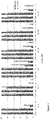
- the test was run at 1 (High) and 0.1 (Low) multiplicity of infection (MOI). The results are shown in Figure 1 .
- Table 6 shows the inhibition capacity of compounds of the invention on different enteroviruses.
- EV6 Enterovirus 6; EV30: Enterovirus 30; EV68: Enterovirus 68; EV71: Enterovirus 71; B1: coxsackie B1 virus; B2: coxsackie B2 virus; B3: coxsackie B3 virus; B4: coxsackie B4 virus; B5: coxsackie B5 virus; Polio 1: polio virus Sabin 1.
- Table 6 Ex.
- the assay was performed like the "in vitro assay in mammalian cell culture" described above with the exception that substance was added one hour pre inoculation (-1 h), at inoculation (0 h), and 2 hours (+2 h), 6 hours (+6 h) or 24 hours (+24 h) past inoculation.
- the virus EV71 was used at high titer for the test.
- Table 7 shows data for Example 7 and Example 20. The data show that the time of addition of the drug was not crucial and as long the replication was not too quick the compound could inhibit the cytopathogenic effect in an efficient way.
- Table 7 Ex. Conc. -1 h 0 h +2 h +6 h +24 h 7 100 nM 0.95 0.85 1.00 0.91 0.02 20 100 nM 0.85 0.94 0.95 0.99 0.02
- Table 8 shows test results for some compounds of the invention vs. different kinases, expressed as IC 50 values (in ⁇ M). Table 8 Kinase Example 2 IC 50 ( ⁇ M) Example 8 IC 50 ( ⁇ M) Example 12 IC 50 ( ⁇ M) Example 20 IC 50 ( ⁇ M) PI4KIII ⁇ 0.0015 0.0009 0.0008 0.0012 PI4KIII ⁇ 0.2 1.3 0.8 >1* PI3K ⁇ 1.7 1.5 >1* >1* PI3K ⁇ >1* >1* >1* *No inhibition at the highest texted concentration 1 ⁇ M
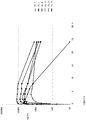
- Test data are shown in Table 9 and in Figure 2 .
- Table 9 Parameter Ex. 1 Ex. 2 Ex. 8 Ex. 12 Ex. 13 Ex. 20 Dose (mg/kg bw) 50.00 50.00 50.00 50.00 50.00 50.00 Cmax ( ⁇ g/mL) 3.9 ⁇ 0.4 4.8 ⁇ 0.8 12.9 ⁇ 0.7 1.9 ⁇ 0.1 5.9 ⁇ 0.9 8.0 ⁇ 1.5 T max (h) 1.7 ⁇ 0.6 1.7 ⁇ 0.6 1.7 ⁇ 0.6 5.3 ⁇ 2.3 2 ⁇ 0 2 ⁇ 0 AUC last (h* ⁇ g/mL) 22.2 ⁇ 2.1 58.6 ⁇ 9.9 184.7 ⁇ 13.3 30.0 ⁇ 8.2 62.1+10.9 109.8 ⁇ 8.3 AUC inf (h* ⁇ g/mL) 31.8 ⁇ 8.0 64.1 ⁇ 7.0 196.9 ⁇ 27.1 73.3 ⁇ 46.9 76.1 ⁇ 26.8 115.0 ⁇ 9.4 AUC extrap (%) 27.8 ⁇ 14.8 8.8 ⁇ 7.1 5.7 ⁇ 6.1 49.4 ⁇ 24.5 14.5+17.1 5.1 ⁇ 4.9 T 1/2 (h) 4.3
- Metabolic stability was studied using human (HLM) or rat (RLM) liver microsomes.
- the final composition of the assay included 5 ⁇ M of test item and reference item (Diclofenac or Imipramine) prepared from DMSO stock, so that the final concentration of DMSO was 0.1%, 0.125 mg/mL microsomal protein and cofactors (5.0 mM G-6-P, 0.06 U/mL G-6-PDH, 2.0 mM MgCl 2 , 1.0 mM NADP + ).Test and reference items were incubated with human or rat liver microsomes with or without cofactors. The reaction mixture (100 ⁇ L) was removed at specified time periods and the reaction was stopped by addition of stop solution. The samples were extracted in presence of internal standard and were analyzed using LC-MS/MS. The percent of the test/reference item remaining after a specified incubation period was calculated with respect to the peak area ratio at time 0 min. Results are shown in Table 10.
- Plasma protein binding study was performed by using a Rapid Equilibrium Dialysis (RED) device containing dialysis membrane with a molecular weight cut-off of 8,000 Daltons. Each dialysis insert contains two chambers. The red chamber was for the plasma while the white chamber was for the buffer. The human and rat plasma (pH adjusted to 7.40) samples of test items and reference items (Warfarin and Propranolol) were prepared at a required test concentration of 5 ⁇ M using 5 mM DMSO stocks (final DMSO concentration was 0.1%). 300 ⁇ L of plasma sample was added into the sample chamber. 500 ⁇ L of buffer was added into the buffer chamber.
- RED Rapid Equilibrium Dialysis
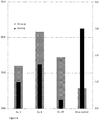
- the virus titer in the organs was determined by immunohistochemistry using the Dako 5-D8/1 monoclonal mouse antibody and the titer was scored on a scale from 0 to 4, where 0 indicates no infection and 4 corresponds to the highest determined virus titer ( Figure 4 ).
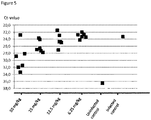
- the Ct values from PCR detection of virus titers were determined ( Figure 5 ). The higher the Ct value is, the lower is the virus titer. The data show a very good dose-response.
- Corresponding studies were also performed on Examples 2, 8 and 20 at a dosage of 50 mg/kg/day and pancreatitis scoring and Ct values were determined ( Figure 6 ).
Landscapes
- Chemical & Material Sciences (AREA)
- Organic Chemistry (AREA)
- Health & Medical Sciences (AREA)
- Life Sciences & Earth Sciences (AREA)
- Animal Behavior & Ethology (AREA)
- Pharmacology & Pharmacy (AREA)
- Veterinary Medicine (AREA)
- Public Health (AREA)
- Medicinal Chemistry (AREA)
- General Health & Medical Sciences (AREA)
- Communicable Diseases (AREA)
- Oncology (AREA)
- Virology (AREA)
- Nuclear Medicine, Radiotherapy & Molecular Imaging (AREA)
- General Chemical & Material Sciences (AREA)
- Chemical Kinetics & Catalysis (AREA)
- Epidemiology (AREA)
- Pharmaceuticals Containing Other Organic And Inorganic Compounds (AREA)
- Nitrogen Condensed Heterocyclic Rings (AREA)
Priority Applications (1)
| Application Number | Priority Date | Filing Date | Title |
|---|---|---|---|
| PL18716212T PL3606926T3 (pl) | 2017-04-05 | 2018-04-04 | Heteroaromatyczne związki użyteczne w terapii |
Applications Claiming Priority (2)
| Application Number | Priority Date | Filing Date | Title |
|---|---|---|---|
| EP17165082 | 2017-04-05 | ||
| PCT/EP2018/058522 WO2018185120A1 (en) | 2017-04-05 | 2018-04-04 | Heteroaromatic compounds useful in therapy |
Publications (2)
| Publication Number | Publication Date |
|---|---|
| EP3606926A1 EP3606926A1 (en) | 2020-02-12 |
| EP3606926B1 true EP3606926B1 (en) | 2021-05-26 |
Family
ID=58489645
Family Applications (1)
| Application Number | Title | Priority Date | Filing Date |
|---|---|---|---|
| EP18716212.8A Active EP3606926B1 (en) | 2017-04-05 | 2018-04-04 | Heteroaromatic compounds useful in therapy |
Country Status (12)
| Country | Link |
|---|---|
| US (1) | US11001587B2 (da) |
| EP (1) | EP3606926B1 (da) |
| JP (1) | JP7200126B2 (da) |
| CN (1) | CN110520424B (da) |
| AU (1) | AU2018248581B2 (da) |
| CA (1) | CA3057408A1 (da) |
| DK (1) | DK3606926T3 (da) |
| ES (1) | ES2880327T3 (da) |
| PL (1) | PL3606926T3 (da) |
| RU (1) | RU2770363C2 (da) |
| WO (1) | WO2018185120A1 (da) |
| ZA (1) | ZA201907303B (da) |
Families Citing this family (8)
| Publication number | Priority date | Publication date | Assignee | Title |
|---|---|---|---|---|
| EP3419980B1 (en) | 2016-02-26 | 2025-01-01 | The Board of Trustees of the Leland Stanford Junior University | Pi-kinase inhibitors with anti-infective activity |
| CN110520424B (zh) * | 2017-04-05 | 2022-06-21 | 库洛维公司 | 用于疗法的杂芳族化合物 |
| KR102821765B1 (ko) | 2018-10-10 | 2025-06-16 | 큐로비르 아베 | 바이러스 감염을 치료하기 위한, 2,6-다이메틸-N-((피리딘-4-일)메틸)이미다졸[1,2-b]피리다진-8-아민 및 2,5-다이메틸-N-[(피리딘-4-일)메틸]피라졸로[1,5-a]피리미딘-7-아민 유도체 |
| WO2020074160A1 (en) | 2018-10-10 | 2020-04-16 | Curovir Ab | Condensed pyrimidine or pyridazine derivatives as antiviral agents |
| CA3126143A1 (en) * | 2019-01-11 | 2020-07-16 | The Board Of Trustees Of The Leland Stanford Junior University | Pi4-kinase inhibitors with anti-cancer activity |
| EP3941909A4 (en) | 2019-03-21 | 2023-01-25 | The Board Of Trustees Of The Leland Stanford Junior University | Pi4-kinase inhibitors and methods of using the same |
| WO2021032611A1 (en) | 2019-08-20 | 2021-02-25 | Curovir Ab | Heteroaromatic compounds useful in therapy |
| EP4676485A1 (en) | 2023-03-09 | 2026-01-14 | Curovir Ab | Compound and formulation for systemic therapy by oral transmucosal administration |
Family Cites Families (13)
| Publication number | Priority date | Publication date | Assignee | Title |
|---|---|---|---|---|
| US6313124B1 (en) | 1997-07-23 | 2001-11-06 | Dupont Pharmaceuticals Company | Tetrazine bicyclic compounds |
| US6191131B1 (en) * | 1997-07-23 | 2001-02-20 | Dupont Pharmaceuticals Company | Azolo triazines and pyrimidines |
| CN1377354A (zh) * | 1999-09-30 | 2002-10-30 | 纽罗杰有限公司 | 某些亚烷基二胺一取代的吡唑并[1,5-a]-1,5-嘧啶和吡唑并[1,5-a]-1,3,5-三嗪 |
| RU2340611C2 (ru) * | 2000-09-15 | 2008-12-10 | Вертекс Фармасьютикалз Инкорпорейтед | Производные пиразола, используемые в качестве ингибиторов протеинкиназы |
| US20070078136A1 (en) | 2005-09-22 | 2007-04-05 | Bristol-Myers Squibb Company | Fused heterocyclic compounds useful as kinase modulators |
| WO2010086040A1 (en) | 2009-01-29 | 2010-08-05 | Biomarin Iga, Ltd. | Pyrazolo-pyrimidines for treatment of duchenne muscular dystrophy |
| FR2943058B1 (fr) | 2009-03-11 | 2011-06-03 | Centre Nat Rech Scient | Derives de pyrazolo°1,5-a!-1,3,5-triazines, leur preparation et leur application en therapeutique. |
| AP4075A (en) | 2011-05-04 | 2017-03-23 | Rhizen Pharmaceuticals S A | Novel compounds as modulators of protein kinases |
| EP2634189A1 (en) | 2012-03-01 | 2013-09-04 | Lead Discovery Center GmbH | Pyrazolo-triazine derivatives as selective cyclin-dependent kinase inhibitors |
| ES2954126T3 (es) | 2014-01-22 | 2023-11-20 | Curovir Ab | Derivados del pirazolo[1,5-a]pirimidina-7-amina útiles en terapia |
| DE112015001328B4 (de) * | 2014-03-18 | 2020-06-04 | Micromass Uk Limited | Matrixunterstützte Flüssigextraktions-Laserdesorptionsionisations-Ionenquelle |
| CA2989722C (en) | 2015-06-24 | 2023-09-19 | Jacob Westman | Pyrazolo[1,5-a]triazin-4-amine derivatives useful in therapy |
| CN110520424B (zh) * | 2017-04-05 | 2022-06-21 | 库洛维公司 | 用于疗法的杂芳族化合物 |
-
2018
- 2018-04-04 CN CN201880023679.2A patent/CN110520424B/zh active Active
- 2018-04-04 ES ES18716212T patent/ES2880327T3/es active Active
- 2018-04-04 WO PCT/EP2018/058522 patent/WO2018185120A1/en not_active Ceased
- 2018-04-04 EP EP18716212.8A patent/EP3606926B1/en active Active
- 2018-04-04 AU AU2018248581A patent/AU2018248581B2/en active Active
- 2018-04-04 RU RU2019133777A patent/RU2770363C2/ru not_active Application Discontinuation
- 2018-04-04 JP JP2019554725A patent/JP7200126B2/ja active Active
- 2018-04-04 US US16/495,903 patent/US11001587B2/en active Active
- 2018-04-04 CA CA3057408A patent/CA3057408A1/en active Pending
- 2018-04-04 PL PL18716212T patent/PL3606926T3/pl unknown
- 2018-04-04 DK DK18716212.8T patent/DK3606926T3/da active
-
2019
- 2019-11-04 ZA ZA2019/07303A patent/ZA201907303B/en unknown
Non-Patent Citations (1)
| Title |
|---|
| None * |
Also Published As
| Publication number | Publication date |
|---|---|
| ZA201907303B (en) | 2022-07-27 |
| AU2018248581B2 (en) | 2022-05-26 |
| RU2019133777A (ru) | 2021-04-23 |
| EP3606926A1 (en) | 2020-02-12 |
| WO2018185120A1 (en) | 2018-10-11 |
| PL3606926T3 (pl) | 2021-11-02 |
| CA3057408A1 (en) | 2018-10-11 |
| CN110520424A (zh) | 2019-11-29 |
| JP7200126B2 (ja) | 2023-01-06 |
| US20200031833A1 (en) | 2020-01-30 |
| BR112019019796A2 (pt) | 2020-04-22 |
| RU2770363C2 (ru) | 2022-04-15 |
| RU2019133777A3 (da) | 2021-04-23 |
| JP2020516599A (ja) | 2020-06-11 |
| AU2018248581A1 (en) | 2019-11-07 |
| US11001587B2 (en) | 2021-05-11 |
| DK3606926T3 (da) | 2021-07-05 |
| CN110520424B (zh) | 2022-06-21 |
| ES2880327T3 (es) | 2021-11-24 |
Similar Documents
| Publication | Publication Date | Title |
|---|---|---|
| EP3606926B1 (en) | Heteroaromatic compounds useful in therapy | |
| EP3313842B1 (en) | Pyrazolo[1,5-a]triazin-4-amine derivatives useful in therapy | |
| US12319696B2 (en) | 2,6-dimethyl-n-((pyridin-4-yl)methyl)imidazo[1,2-b]pyridazin-8-amine and 2,5-dimethyl-n-[(pyridin-4-yl)methyl]pyrazolo[1,5-a]pyrimidin-7-amine derivatives for treating viral infections | |
| HK40019049A (en) | Heteroaromatic compounds useful in therapy | |
| HK40019049B (en) | Heteroaromatic compounds useful in therapy | |
| RU2798107C2 (ru) | Производные 2,6-диметил-n-((пиридин-4-ил)метил)имидазо[1,2-b]пиридазин-8-амина и 2,5-диметил-n-[(пиридин-4-ил)метил]пиразоло[1,5-a]пиримидин-7-амина для лечения вирусных инфекций | |
| BR112019019796B1 (pt) | Composto, composição farmacêutica, e, uso de composto ou de sal farmaceuticamente aceitável | |
| HK40058494A (en) | 2,6-dimethyl-n-((pyridin-4-yl)methyl)imidazo[1,2-b]pyridazin-8-amine and 2,5-dimethyl-n-[(pyridin-4-yl)methyl]pyrazolo[1,5-a]pyrimidin-7-amine derivatives for treating viral infections | |
| HK40058494B (en) | 2,6-dimethyl-n-((pyridin-4-yl)methyl)imidazo[1,2-b]pyridazin-8-amine and 2,5-dimethyl-n-[(pyridin-4-yl)methyl]pyrazolo[1,5-a]pyrimidin-7-amine derivatives for treating viral infections | |
| HK1254809B (en) | Pyrazolo[1,5-a]triazin-4-amine derivatives useful in therapy |
Legal Events
| Date | Code | Title | Description |
|---|---|---|---|
| STAA | Information on the status of an ep patent application or granted ep patent |
Free format text: STATUS: UNKNOWN |
|
| STAA | Information on the status of an ep patent application or granted ep patent |
Free format text: STATUS: THE INTERNATIONAL PUBLICATION HAS BEEN MADE |
|
| PUAI | Public reference made under article 153(3) epc to a published international application that has entered the european phase |
Free format text: ORIGINAL CODE: 0009012 |
|
| STAA | Information on the status of an ep patent application or granted ep patent |
Free format text: STATUS: REQUEST FOR EXAMINATION WAS MADE |
|
| 17P | Request for examination filed |
Effective date: 20191023 |
|
| AK | Designated contracting states |
Kind code of ref document: A1 Designated state(s): AL AT BE BG CH CY CZ DE DK EE ES FI FR GB GR HR HU IE IS IT LI LT LU LV MC MK MT NL NO PL PT RO RS SE SI SK SM TR |
|
| AX | Request for extension of the european patent |
Extension state: BA ME |
|
| DAV | Request for validation of the european patent (deleted) | ||
| DAX | Request for extension of the european patent (deleted) | ||
| REG | Reference to a national code |
Ref country code: HK Ref legal event code: DE Ref document number: 40019049 Country of ref document: HK |
|
| GRAP | Despatch of communication of intention to grant a patent |
Free format text: ORIGINAL CODE: EPIDOSNIGR1 |
|
| STAA | Information on the status of an ep patent application or granted ep patent |
Free format text: STATUS: GRANT OF PATENT IS INTENDED |
|
| INTG | Intention to grant announced |
Effective date: 20201201 |
|
| GRAS | Grant fee paid |
Free format text: ORIGINAL CODE: EPIDOSNIGR3 |
|
| GRAA | (expected) grant |
Free format text: ORIGINAL CODE: 0009210 |
|
| STAA | Information on the status of an ep patent application or granted ep patent |
Free format text: STATUS: THE PATENT HAS BEEN GRANTED |
|
| AK | Designated contracting states |
Kind code of ref document: B1 Designated state(s): AL AT BE BG CH CY CZ DE DK EE ES FI FR GB GR HR HU IE IS IT LI LT LU LV MC MK MT NL NO PL PT RO RS SE SI SK SM TR |
|
| REG | Reference to a national code |
Ref country code: GB Ref legal event code: FG4D |
|
| REG | Reference to a national code |
Ref country code: CH Ref legal event code: EP |
|
| REG | Reference to a national code |
Ref country code: FI Ref legal event code: FGE |
|
| REG | Reference to a national code |
Ref country code: AT Ref legal event code: REF Ref document number: 1396136 Country of ref document: AT Kind code of ref document: T Effective date: 20210615 |
|
| REG | Reference to a national code |
Ref country code: IE Ref legal event code: FG4D |
|
| REG | Reference to a national code |
Ref country code: DE Ref legal event code: R096 Ref document number: 602018017683 Country of ref document: DE |
|
| REG | Reference to a national code |
Ref country code: SE Ref legal event code: TRGR |
|
| REG | Reference to a national code |
Ref country code: DK Ref legal event code: T3 Effective date: 20210629 |
|
| REG | Reference to a national code |
Ref country code: NL Ref legal event code: FP |
|
| REG | Reference to a national code |
Ref country code: LT Ref legal event code: MG9D |
|
| REG | Reference to a national code |
Ref country code: AT Ref legal event code: MK05 Ref document number: 1396136 Country of ref document: AT Kind code of ref document: T Effective date: 20210526 |
|
| PG25 | Lapsed in a contracting state [announced via postgrant information from national office to epo] |
Ref country code: LT Free format text: LAPSE BECAUSE OF FAILURE TO SUBMIT A TRANSLATION OF THE DESCRIPTION OR TO PAY THE FEE WITHIN THE PRESCRIBED TIME-LIMIT Effective date: 20210526 Ref country code: HR Free format text: LAPSE BECAUSE OF FAILURE TO SUBMIT A TRANSLATION OF THE DESCRIPTION OR TO PAY THE FEE WITHIN THE PRESCRIBED TIME-LIMIT Effective date: 20210526 Ref country code: BG Free format text: LAPSE BECAUSE OF FAILURE TO SUBMIT A TRANSLATION OF THE DESCRIPTION OR TO PAY THE FEE WITHIN THE PRESCRIBED TIME-LIMIT Effective date: 20210826 Ref country code: AT Free format text: LAPSE BECAUSE OF FAILURE TO SUBMIT A TRANSLATION OF THE DESCRIPTION OR TO PAY THE FEE WITHIN THE PRESCRIBED TIME-LIMIT Effective date: 20210526 |
|
| REG | Reference to a national code |
Ref country code: ES Ref legal event code: FG2A Ref document number: 2880327 Country of ref document: ES Kind code of ref document: T3 Effective date: 20211124 |
|
| PG25 | Lapsed in a contracting state [announced via postgrant information from national office to epo] |
Ref country code: GR Free format text: LAPSE BECAUSE OF FAILURE TO SUBMIT A TRANSLATION OF THE DESCRIPTION OR TO PAY THE FEE WITHIN THE PRESCRIBED TIME-LIMIT Effective date: 20210827 Ref country code: IS Free format text: LAPSE BECAUSE OF FAILURE TO SUBMIT A TRANSLATION OF THE DESCRIPTION OR TO PAY THE FEE WITHIN THE PRESCRIBED TIME-LIMIT Effective date: 20210926 Ref country code: PT Free format text: LAPSE BECAUSE OF FAILURE TO SUBMIT A TRANSLATION OF THE DESCRIPTION OR TO PAY THE FEE WITHIN THE PRESCRIBED TIME-LIMIT Effective date: 20210927 Ref country code: RS Free format text: LAPSE BECAUSE OF FAILURE TO SUBMIT A TRANSLATION OF THE DESCRIPTION OR TO PAY THE FEE WITHIN THE PRESCRIBED TIME-LIMIT Effective date: 20210526 Ref country code: NO Free format text: LAPSE BECAUSE OF FAILURE TO SUBMIT A TRANSLATION OF THE DESCRIPTION OR TO PAY THE FEE WITHIN THE PRESCRIBED TIME-LIMIT Effective date: 20210826 Ref country code: LV Free format text: LAPSE BECAUSE OF FAILURE TO SUBMIT A TRANSLATION OF THE DESCRIPTION OR TO PAY THE FEE WITHIN THE PRESCRIBED TIME-LIMIT Effective date: 20210526 |
|
| PG25 | Lapsed in a contracting state [announced via postgrant information from national office to epo] |
Ref country code: EE Free format text: LAPSE BECAUSE OF FAILURE TO SUBMIT A TRANSLATION OF THE DESCRIPTION OR TO PAY THE FEE WITHIN THE PRESCRIBED TIME-LIMIT Effective date: 20210526 Ref country code: SK Free format text: LAPSE BECAUSE OF FAILURE TO SUBMIT A TRANSLATION OF THE DESCRIPTION OR TO PAY THE FEE WITHIN THE PRESCRIBED TIME-LIMIT Effective date: 20210526 Ref country code: SM Free format text: LAPSE BECAUSE OF FAILURE TO SUBMIT A TRANSLATION OF THE DESCRIPTION OR TO PAY THE FEE WITHIN THE PRESCRIBED TIME-LIMIT Effective date: 20210526 Ref country code: RO Free format text: LAPSE BECAUSE OF FAILURE TO SUBMIT A TRANSLATION OF THE DESCRIPTION OR TO PAY THE FEE WITHIN THE PRESCRIBED TIME-LIMIT Effective date: 20210526 Ref country code: CZ Free format text: LAPSE BECAUSE OF FAILURE TO SUBMIT A TRANSLATION OF THE DESCRIPTION OR TO PAY THE FEE WITHIN THE PRESCRIBED TIME-LIMIT Effective date: 20210526 |
|
| REG | Reference to a national code |
Ref country code: DE Ref legal event code: R097 Ref document number: 602018017683 Country of ref document: DE |
|
| PLBE | No opposition filed within time limit |
Free format text: ORIGINAL CODE: 0009261 |
|
| STAA | Information on the status of an ep patent application or granted ep patent |
Free format text: STATUS: NO OPPOSITION FILED WITHIN TIME LIMIT |
|
| 26N | No opposition filed |
Effective date: 20220301 |
|
| PG25 | Lapsed in a contracting state [announced via postgrant information from national office to epo] |
Ref country code: IS Free format text: LAPSE BECAUSE OF FAILURE TO SUBMIT A TRANSLATION OF THE DESCRIPTION OR TO PAY THE FEE WITHIN THE PRESCRIBED TIME-LIMIT Effective date: 20210926 Ref country code: AL Free format text: LAPSE BECAUSE OF FAILURE TO SUBMIT A TRANSLATION OF THE DESCRIPTION OR TO PAY THE FEE WITHIN THE PRESCRIBED TIME-LIMIT Effective date: 20210526 |
|
| PG25 | Lapsed in a contracting state [announced via postgrant information from national office to epo] |
Ref country code: MC Free format text: LAPSE BECAUSE OF FAILURE TO SUBMIT A TRANSLATION OF THE DESCRIPTION OR TO PAY THE FEE WITHIN THE PRESCRIBED TIME-LIMIT Effective date: 20210526 Ref country code: LU Free format text: LAPSE BECAUSE OF NON-PAYMENT OF DUE FEES Effective date: 20220404 |
|
| P01 | Opt-out of the competence of the unified patent court (upc) registered |
Effective date: 20230424 |
|
| PG25 | Lapsed in a contracting state [announced via postgrant information from national office to epo] |
Ref country code: MK Free format text: LAPSE BECAUSE OF FAILURE TO SUBMIT A TRANSLATION OF THE DESCRIPTION OR TO PAY THE FEE WITHIN THE PRESCRIBED TIME-LIMIT Effective date: 20210526 Ref country code: CY Free format text: LAPSE BECAUSE OF FAILURE TO SUBMIT A TRANSLATION OF THE DESCRIPTION OR TO PAY THE FEE WITHIN THE PRESCRIBED TIME-LIMIT Effective date: 20210526 |
|
| PG25 | Lapsed in a contracting state [announced via postgrant information from national office to epo] |
Ref country code: HU Free format text: LAPSE BECAUSE OF FAILURE TO SUBMIT A TRANSLATION OF THE DESCRIPTION OR TO PAY THE FEE WITHIN THE PRESCRIBED TIME-LIMIT; INVALID AB INITIO Effective date: 20180404 |
|
| PG25 | Lapsed in a contracting state [announced via postgrant information from national office to epo] |
Ref country code: MT Free format text: LAPSE BECAUSE OF FAILURE TO SUBMIT A TRANSLATION OF THE DESCRIPTION OR TO PAY THE FEE WITHIN THE PRESCRIBED TIME-LIMIT Effective date: 20210526 |
|
| PGFP | Annual fee paid to national office [announced via postgrant information from national office to epo] |
Ref country code: PL Payment date: 20250305 Year of fee payment: 8 |
|
| PGFP | Annual fee paid to national office [announced via postgrant information from national office to epo] |
Ref country code: NL Payment date: 20250416 Year of fee payment: 8 |
|
| PGFP | Annual fee paid to national office [announced via postgrant information from national office to epo] |
Ref country code: FI Payment date: 20250422 Year of fee payment: 8 |
|
| PGFP | Annual fee paid to national office [announced via postgrant information from national office to epo] |
Ref country code: DE Payment date: 20250423 Year of fee payment: 8 |
|
| PGFP | Annual fee paid to national office [announced via postgrant information from national office to epo] |
Ref country code: GB Payment date: 20250422 Year of fee payment: 8 Ref country code: ES Payment date: 20250512 Year of fee payment: 8 Ref country code: DK Payment date: 20250422 Year of fee payment: 8 |
|
| PGFP | Annual fee paid to national office [announced via postgrant information from national office to epo] |
Ref country code: IT Payment date: 20250418 Year of fee payment: 8 Ref country code: BE Payment date: 20250416 Year of fee payment: 8 |
|
| PGFP | Annual fee paid to national office [announced via postgrant information from national office to epo] |
Ref country code: FR Payment date: 20250417 Year of fee payment: 8 |
|
| PGFP | Annual fee paid to national office [announced via postgrant information from national office to epo] |
Ref country code: CH Payment date: 20250501 Year of fee payment: 8 |
|
| PGFP | Annual fee paid to national office [announced via postgrant information from national office to epo] |
Ref country code: IE Payment date: 20250417 Year of fee payment: 8 |
|
| PGFP | Annual fee paid to national office [announced via postgrant information from national office to epo] |
Ref country code: SE Payment date: 20250417 Year of fee payment: 8 |
|
| PG25 | Lapsed in a contracting state [announced via postgrant information from national office to epo] |
Ref country code: TR Free format text: LAPSE BECAUSE OF FAILURE TO SUBMIT A TRANSLATION OF THE DESCRIPTION OR TO PAY THE FEE WITHIN THE PRESCRIBED TIME-LIMIT Effective date: 20210526 |