EP3604613A1 - Method for producing yttrium oxide-containing thin film by atomic layer deposition - Google Patents
Method for producing yttrium oxide-containing thin film by atomic layer deposition Download PDFInfo
- Publication number
- EP3604613A1 EP3604613A1 EP18775277.9A EP18775277A EP3604613A1 EP 3604613 A1 EP3604613 A1 EP 3604613A1 EP 18775277 A EP18775277 A EP 18775277A EP 3604613 A1 EP3604613 A1 EP 3604613A1
- Authority
- EP
- European Patent Office
- Prior art keywords
- yttrium
- thin film
- yttrium oxide
- tris
- butylcyclopentadienyl
- Prior art date
- Legal status (The legal status is an assumption and is not a legal conclusion. Google has not performed a legal analysis and makes no representation as to the accuracy of the status listed.)
- Pending
Links
Images


Classifications
-
- H—ELECTRICITY
- H01—ELECTRIC ELEMENTS
- H01M—PROCESSES OR MEANS, e.g. BATTERIES, FOR THE DIRECT CONVERSION OF CHEMICAL ENERGY INTO ELECTRICAL ENERGY
- H01M4/00—Electrodes
- H01M4/02—Electrodes composed of, or comprising, active material
- H01M4/04—Processes of manufacture in general
- H01M4/0402—Methods of deposition of the material
- H01M4/0421—Methods of deposition of the material involving vapour deposition
- H01M4/0428—Chemical vapour deposition
-
- C—CHEMISTRY; METALLURGY
- C23—COATING METALLIC MATERIAL; COATING MATERIAL WITH METALLIC MATERIAL; CHEMICAL SURFACE TREATMENT; DIFFUSION TREATMENT OF METALLIC MATERIAL; COATING BY VACUUM EVAPORATION, BY SPUTTERING, BY ION IMPLANTATION OR BY CHEMICAL VAPOUR DEPOSITION, IN GENERAL; INHIBITING CORROSION OF METALLIC MATERIAL OR INCRUSTATION IN GENERAL
- C23C—COATING METALLIC MATERIAL; COATING MATERIAL WITH METALLIC MATERIAL; SURFACE TREATMENT OF METALLIC MATERIAL BY DIFFUSION INTO THE SURFACE, BY CHEMICAL CONVERSION OR SUBSTITUTION; COATING BY VACUUM EVAPORATION, BY SPUTTERING, BY ION IMPLANTATION OR BY CHEMICAL VAPOUR DEPOSITION, IN GENERAL
- C23C16/00—Chemical coating by decomposition of gaseous compounds, without leaving reaction products of surface material in the coating, i.e. chemical vapour deposition [CVD] processes
- C23C16/22—Chemical coating by decomposition of gaseous compounds, without leaving reaction products of surface material in the coating, i.e. chemical vapour deposition [CVD] processes characterised by the deposition of inorganic material, other than metallic material
- C23C16/30—Deposition of compounds, mixtures or solid solutions, e.g. borides, carbides, nitrides
- C23C16/40—Oxides
-
- C—CHEMISTRY; METALLURGY
- C23—COATING METALLIC MATERIAL; COATING MATERIAL WITH METALLIC MATERIAL; CHEMICAL SURFACE TREATMENT; DIFFUSION TREATMENT OF METALLIC MATERIAL; COATING BY VACUUM EVAPORATION, BY SPUTTERING, BY ION IMPLANTATION OR BY CHEMICAL VAPOUR DEPOSITION, IN GENERAL; INHIBITING CORROSION OF METALLIC MATERIAL OR INCRUSTATION IN GENERAL
- C23C—COATING METALLIC MATERIAL; COATING MATERIAL WITH METALLIC MATERIAL; SURFACE TREATMENT OF METALLIC MATERIAL BY DIFFUSION INTO THE SURFACE, BY CHEMICAL CONVERSION OR SUBSTITUTION; COATING BY VACUUM EVAPORATION, BY SPUTTERING, BY ION IMPLANTATION OR BY CHEMICAL VAPOUR DEPOSITION, IN GENERAL
- C23C16/00—Chemical coating by decomposition of gaseous compounds, without leaving reaction products of surface material in the coating, i.e. chemical vapour deposition [CVD] processes
- C23C16/22—Chemical coating by decomposition of gaseous compounds, without leaving reaction products of surface material in the coating, i.e. chemical vapour deposition [CVD] processes characterised by the deposition of inorganic material, other than metallic material
- C23C16/30—Deposition of compounds, mixtures or solid solutions, e.g. borides, carbides, nitrides
- C23C16/40—Oxides
- C23C16/405—Oxides of refractory metals or yttrium
-
- C—CHEMISTRY; METALLURGY
- C23—COATING METALLIC MATERIAL; COATING MATERIAL WITH METALLIC MATERIAL; CHEMICAL SURFACE TREATMENT; DIFFUSION TREATMENT OF METALLIC MATERIAL; COATING BY VACUUM EVAPORATION, BY SPUTTERING, BY ION IMPLANTATION OR BY CHEMICAL VAPOUR DEPOSITION, IN GENERAL; INHIBITING CORROSION OF METALLIC MATERIAL OR INCRUSTATION IN GENERAL
- C23C—COATING METALLIC MATERIAL; COATING MATERIAL WITH METALLIC MATERIAL; SURFACE TREATMENT OF METALLIC MATERIAL BY DIFFUSION INTO THE SURFACE, BY CHEMICAL CONVERSION OR SUBSTITUTION; COATING BY VACUUM EVAPORATION, BY SPUTTERING, BY ION IMPLANTATION OR BY CHEMICAL VAPOUR DEPOSITION, IN GENERAL
- C23C16/00—Chemical coating by decomposition of gaseous compounds, without leaving reaction products of surface material in the coating, i.e. chemical vapour deposition [CVD] processes
- C23C16/44—Chemical coating by decomposition of gaseous compounds, without leaving reaction products of surface material in the coating, i.e. chemical vapour deposition [CVD] processes characterised by the method of coating
- C23C16/455—Chemical coating by decomposition of gaseous compounds, without leaving reaction products of surface material in the coating, i.e. chemical vapour deposition [CVD] processes characterised by the method of coating characterised by the method used for introducing gases into reaction chamber or for modifying gas flows in reaction chamber
- C23C16/45523—Pulsed gas flow or change of composition over time
- C23C16/45525—Atomic layer deposition [ALD]
- C23C16/45527—Atomic layer deposition [ALD] characterized by the ALD cycle, e.g. different flows or temperatures during half-reactions, unusual pulsing sequence, use of precursor mixtures or auxiliary reactants or activations
-
- C—CHEMISTRY; METALLURGY
- C23—COATING METALLIC MATERIAL; COATING MATERIAL WITH METALLIC MATERIAL; CHEMICAL SURFACE TREATMENT; DIFFUSION TREATMENT OF METALLIC MATERIAL; COATING BY VACUUM EVAPORATION, BY SPUTTERING, BY ION IMPLANTATION OR BY CHEMICAL VAPOUR DEPOSITION, IN GENERAL; INHIBITING CORROSION OF METALLIC MATERIAL OR INCRUSTATION IN GENERAL
- C23C—COATING METALLIC MATERIAL; COATING MATERIAL WITH METALLIC MATERIAL; SURFACE TREATMENT OF METALLIC MATERIAL BY DIFFUSION INTO THE SURFACE, BY CHEMICAL CONVERSION OR SUBSTITUTION; COATING BY VACUUM EVAPORATION, BY SPUTTERING, BY ION IMPLANTATION OR BY CHEMICAL VAPOUR DEPOSITION, IN GENERAL
- C23C16/00—Chemical coating by decomposition of gaseous compounds, without leaving reaction products of surface material in the coating, i.e. chemical vapour deposition [CVD] processes
- C23C16/44—Chemical coating by decomposition of gaseous compounds, without leaving reaction products of surface material in the coating, i.e. chemical vapour deposition [CVD] processes characterised by the method of coating
- C23C16/455—Chemical coating by decomposition of gaseous compounds, without leaving reaction products of surface material in the coating, i.e. chemical vapour deposition [CVD] processes characterised by the method of coating characterised by the method used for introducing gases into reaction chamber or for modifying gas flows in reaction chamber
- C23C16/45523—Pulsed gas flow or change of composition over time
- C23C16/45525—Atomic layer deposition [ALD]
- C23C16/45553—Atomic layer deposition [ALD] characterized by the use of precursors specially adapted for ALD
-
- H—ELECTRICITY
- H01—ELECTRIC ELEMENTS
- H01M—PROCESSES OR MEANS, e.g. BATTERIES, FOR THE DIRECT CONVERSION OF CHEMICAL ENERGY INTO ELECTRICAL ENERGY
- H01M4/00—Electrodes
- H01M4/02—Electrodes composed of, or comprising, active material
- H01M4/04—Processes of manufacture in general
- H01M4/0438—Processes of manufacture in general by electrochemical processing
- H01M4/044—Activating, forming or electrochemical attack of the supporting material
- H01M4/0442—Anodisation, Oxidation
-
- H—ELECTRICITY
- H01—ELECTRIC ELEMENTS
- H01M—PROCESSES OR MEANS, e.g. BATTERIES, FOR THE DIRECT CONVERSION OF CHEMICAL ENERGY INTO ELECTRICAL ENERGY
- H01M4/00—Electrodes
- H01M4/02—Electrodes composed of, or comprising, active material
- H01M4/04—Processes of manufacture in general
- H01M4/0471—Processes of manufacture in general involving thermal treatment, e.g. firing, sintering, backing particulate active material, thermal decomposition, pyrolysis
-
- H—ELECTRICITY
- H10—SEMICONDUCTOR DEVICES; ELECTRIC SOLID-STATE DEVICES NOT OTHERWISE PROVIDED FOR
- H10P—GENERIC PROCESSES OR APPARATUS FOR THE MANUFACTURE OR TREATMENT OF DEVICES COVERED BY CLASS H10
- H10P14/00—Formation of materials, e.g. in the shape of layers or pillars
- H10P14/60—Formation of materials, e.g. in the shape of layers or pillars of insulating materials
- H10P14/66—Formation of materials, e.g. in the shape of layers or pillars of insulating materials characterised by the type of materials
- H10P14/668—Formation of materials, e.g. in the shape of layers or pillars of insulating materials characterised by the type of materials the materials being characterised by the deposition precursor materials
-
- H—ELECTRICITY
- H10—SEMICONDUCTOR DEVICES; ELECTRIC SOLID-STATE DEVICES NOT OTHERWISE PROVIDED FOR
- H10P—GENERIC PROCESSES OR APPARATUS FOR THE MANUFACTURE OR TREATMENT OF DEVICES COVERED BY CLASS H10
- H10P14/00—Formation of materials, e.g. in the shape of layers or pillars
- H10P14/60—Formation of materials, e.g. in the shape of layers or pillars of insulating materials
- H10P14/63—Formation of materials, e.g. in the shape of layers or pillars of insulating materials characterised by the formation processes
- H10P14/6326—Deposition processes
- H10P14/6328—Deposition from the gas or vapour phase
- H10P14/6334—Deposition from the gas or vapour phase using decomposition or reaction of gaseous or vapour phase compounds, i.e. chemical vapour deposition
- H10P14/6339—Deposition from the gas or vapour phase using decomposition or reaction of gaseous or vapour phase compounds, i.e. chemical vapour deposition deposition by cyclic CVD, e.g. ALD, ALE or pulsed CVD
-
- H—ELECTRICITY
- H10—SEMICONDUCTOR DEVICES; ELECTRIC SOLID-STATE DEVICES NOT OTHERWISE PROVIDED FOR
- H10P—GENERIC PROCESSES OR APPARATUS FOR THE MANUFACTURE OR TREATMENT OF DEVICES COVERED BY CLASS H10
- H10P14/00—Formation of materials, e.g. in the shape of layers or pillars
- H10P14/60—Formation of materials, e.g. in the shape of layers or pillars of insulating materials
- H10P14/69—Inorganic materials
- H10P14/692—Inorganic materials composed of oxides, glassy oxides or oxide-based glasses
- H10P14/6938—Inorganic materials composed of oxides, glassy oxides or oxide-based glasses the material containing at least one metal element, e.g. metal oxides, metal oxynitrides or metal oxycarbides
- H10P14/6939—Inorganic materials composed of oxides, glassy oxides or oxide-based glasses the material containing at least one metal element, e.g. metal oxides, metal oxynitrides or metal oxycarbides characterised by the metal
- H10P14/69396—Inorganic materials composed of oxides, glassy oxides or oxide-based glasses the material containing at least one metal element, e.g. metal oxides, metal oxynitrides or metal oxycarbides characterised by the metal the material containing at least one rare earth metal element, e.g. oxides of lanthanides, scandium or yttrium
-
- Y—GENERAL TAGGING OF NEW TECHNOLOGICAL DEVELOPMENTS; GENERAL TAGGING OF CROSS-SECTIONAL TECHNOLOGIES SPANNING OVER SEVERAL SECTIONS OF THE IPC; TECHNICAL SUBJECTS COVERED BY FORMER USPC CROSS-REFERENCE ART COLLECTIONS [XRACs] AND DIGESTS
- Y02—TECHNOLOGIES OR APPLICATIONS FOR MITIGATION OR ADAPTATION AGAINST CLIMATE CHANGE
- Y02E—REDUCTION OF GREENHOUSE GAS [GHG] EMISSIONS, RELATED TO ENERGY GENERATION, TRANSMISSION OR DISTRIBUTION
- Y02E60/00—Enabling technologies; Technologies with a potential or indirect contribution to GHG emissions mitigation
- Y02E60/10—Energy storage using batteries
Definitions
- Patent Document 2 describes that tris(sec-butylcyclopentadienyl) yttrium can be used in CVD methods and ALD methods.
- this document describes that in cases where tris(sec-butylcyclopentadienyl) yttrium is used in a CVD method, examples of reactive gases used according to need, include oxygen, ozone, nitrogen dioxide, nitrogen monoxide, water vapor, hydrogen peroxide, hydrogen, organic amine compounds, such as monoalkylamines, dialkylamines, trialkylamines and alkylenediamines, hydrazine and ammonia.
- Step (A) in the production method of this invention is a step for introducing a raw material gas containing tris(sec-butylcyclopentadienyl) yttrium into a treatment atmosphere in order to deposit tris(sec-butylcyclopentadienyl) yttrium on a substrate.
- “deposit” is a concept that encompasses tris(sec-butylcyclopentadienyl) yttrium being adsorbed on a substrate.
- the yttrium oxide-containing thin film in this invention should be a thin film containing 5 mass% or more of yttrium oxide.
- Examples of compounds other than yttrium oxide contained in the thin film include yttria-stabilized zirconia, yttrium orthovanadate, yttrium dioxysulfide, yttrium barium copper oxide and yttrium aluminate.
- the production method of this invention is suitable as a method for producing a thin film consisting of yttrium oxide.
- the thin film composition of the produced thin films was confirmed by means of X-Ray photoelectron spectroscopy, and all of the obtained thin films were yttrium oxide, and the carbon content was lower than the detection limit of 0.1 atom%.
- the average film thickness was 7.0 nm, and the average film thickness obtained in a single cycle was 0.14 nm.
- FE-SEM field emission scanning electron microscope available from Hitachi High-Technologies Corporation
Landscapes
- Chemical & Material Sciences (AREA)
- General Chemical & Material Sciences (AREA)
- Engineering & Computer Science (AREA)
- Chemical Kinetics & Catalysis (AREA)
- Metallurgy (AREA)
- Materials Engineering (AREA)
- Mechanical Engineering (AREA)
- Organic Chemistry (AREA)
- Electrochemistry (AREA)
- Manufacturing & Machinery (AREA)
- Inorganic Chemistry (AREA)
- Chemical Vapour Deposition (AREA)
- Formation Of Insulating Films (AREA)
Abstract
Description
- This invention relates to a method for producing an yttrium oxide-containing thin film by atomic layer deposition.
- It is known that yttrium oxide thin films exhibit high heat resistance, plasma resistance and light transmission properties, and can be used in heat-resistant protective films, plasma-resistant protective films, optical thin films, and the like.
- Examples of methods for producing thin films include sputtering methods, ion plating methods, coating thermal decomposition methods, MOD methods such as sol-gel methods, CVD methods and atomic layer deposition methods (hereinafter referred to as ALD methods), and CVD methods and ALD methods are mainly used due to the obtained thin films having good quality.
-
Patent Document 1 discloses a method for producing an yttrium oxide thin film by means of a CVD method in which tris(sec-butylcyclopentadienyl) yttrium is used as a raw material and in which nitrogen gas and oxygen gas are used. - In addition,
Patent Document 2 describes that tris(sec-butylcyclopentadienyl) yttrium can be used in CVD methods and ALD methods. In addition, this document describes that in cases where tris(sec-butylcyclopentadienyl) yttrium is used in a CVD method, examples of reactive gases used according to need, include oxygen, ozone, nitrogen dioxide, nitrogen monoxide, water vapor, hydrogen peroxide, hydrogen, organic amine compounds, such as monoalkylamines, dialkylamines, trialkylamines and alkylenediamines, hydrazine and ammonia. In cases where an yttrium oxide-containing thin film is produced by means of a CVD method using tris(sec-butylcyclopentadienyl) yttrium, as in the method disclosed in this document, a reaction temperature of 250°C to 800°C is necessary. In particular, in cases where a high quality yttrium oxide-containing thin film, such as that disclosed in the examples, is produced by means of a CVD method, a reaction temperature of approximately 450°C is necessary. -
- [Patent Document 1] Japanese Patent Application Publication No.
2008-274374 - [Patent Document 2] Japanese Patent Application Publication No.
2005-068074 - In cases where yttrium oxide-containing thin films were produced using previously known CVD methods, large amounts of energy were required in order to vaporize raw materials serving as yttrium atom sources. In addition, since reactivity was low between raw materials serving as yttrium atom sources and reactive gases and a reaction temperature of approximately 450°C was necessary, it was difficult to produce a high quality yttrium oxide-containing thin film at a low reaction temperature.
- As a result of repeated investigations, the inventors of this invention found that this problem could be solved by a method for producing an yttrium oxide-containing thin film by using an atomic layer deposition method having specific steps, and thereby completed this invention.
- This invention provides a method for producing an yttrium oxide-containing thin film by using an atomic layer deposition method which includes (A) a step for introducing a raw material gas containing tris(sec-butylcyclopentadienyl) yttrium into a treatment atmosphere to deposit tris(sec-butylcyclopentadienyl) yttrium on a substrate (hereinafter abbreviated to step (A)); and (B) a step for introducing a reactive gas containing water vapor into the treatment atmosphere and causing the reactive gas to react with the tris(sec-butylcyclopentadienyl) yttrium that has been deposited on the substrate, thereby oxidizing yttrium (hereinafter abbreviated to step (B)).
- According to this invention, it is possible to produce a smooth high quality yttrium oxide-containing thin film containing little residual carbon with good productivity at a low reaction temperature.
-
-
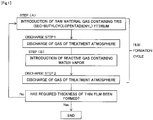
Fig. 1 is a flow chart that shows one example of the method for producing an yttrium oxide-containing thin film according to this invention. -
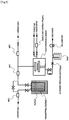
Fig. 2 is a schematic diagram that shows one example of an ALD apparatus used in the method for producing an yttrium oxide-containing thin film according to this invention. -
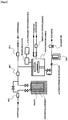
Fig. 3 is a schematic diagram that shows another example of an ALD apparatus used in the method for producing an yttrium oxide-containing thin film according to this invention. -
Fig. 4 is a schematic diagram that shows another example of an ALD apparatus used in the method for producing an yttrium oxide-containing thin film according to this invention. -
Fig. 5 is a schematic diagram that shows another example of an ALD apparatus used in the method for producing an yttrium oxide-containing thin film according to this invention. - This method for producing an yttrium oxide-containing thin film by atomic layer deposition can be carried out using a procedure similar to that of ordinary well-known atomic layer deposition methods, but a characteristic of this invention is that a combination of step (A) and step (B) described below must be used.
- Step (A) in the production method of this invention is a step for introducing a raw material gas containing tris(sec-butylcyclopentadienyl) yttrium into a treatment atmosphere in order to deposit tris(sec-butylcyclopentadienyl) yttrium on a substrate. Here, "deposit" is a concept that encompasses tris(sec-butylcyclopentadienyl) yttrium being adsorbed on a substrate. Using a raw material gas containing tris(sec-butylcyclopentadienyl) yttrium in step (A) and combining this with step (B) achieves the advantageous effect of being able to produce a high quality yttrium oxide-containing thin film at a low reaction temperature. The raw material gas containing tris(sec-butylcyclopentadienyl) yttrium used in this step preferably contains 90 vol.% or more, and more preferably 99 vol.% or more, of tris(sec-butylcyclopentadienyl) yttrium.
- The method for vaporizing the tris(sec-butylcyclopentadienyl) yttrium in step (A) is not particularly limited, and it is possible to use an organometallic compound vaporization method used in ordinary well-known atomic layer deposition methods. For example, it is possible to vaporize the tris(sec-butylcyclopentadienyl) yttrium by means of heating or depressurization in a raw material container of an ALD apparatus shown in
Fig. 2 . The heating temperature preferably falls within the range of 20°C to 200°C. In addition, the temperature of the substrate when the vaporized tris(sec-butylcyclopentadienyl) yttrium is deposited on the substrate in step (A) preferably falls within the range of 20°C to 300°C, and more preferably 150°C to 250°C. - Examples of the material of the substrate in this invention include silicon; ceramics such as indium arsenide, indium gallium arsenide, silicon oxide, silicon nitride, silicon carbide, aluminum oxide, aluminum nitride, tantalum oxide, tantalum nitride, titanium oxide, titanium nitride, titanium carbide, ruthenium oxide, zirconium oxide, hafnium oxide, lanthanum oxide and gallium nitride; glasses; and metals such as platinum, ruthenium, aluminum, copper, nickel, cobalt, tungsten and molybdenum. The form of the substrate can be plate-like, spherical, fibrous or flaky. The substrate surface may be flat or a three-dimensional structure such as a trench structure.
- Step (B) in the production method of this invention is a step for introducing a reactive gas containing water vapor into the treatment atmosphere and causing the reactive gas to react with the tris(sec-butylcyclopentadienyl) yttrium that has been deposited on the substrate, thereby oxidizing yttrium. Using a reactive gas containing water vapor in step (B) achieves the advantageous effect that can be reduced damage to substrates and surrounding members.
- The reactive gas containing water vapor used in this step may be a gas comprising water vapor or a mixed gas of water vapor and a gas such as argon, nitrogen, oxygen or hydrogen. In the case of a mixed gas, the water vapor concentration is preferably 0.001 vol.% to 50 vol.%, more preferably 0.01 vol.% to 10 vol.%, and further preferably 0.01 vol.% to 5 vol.%.
- The method for introducing the reactive gas containing water vapor into the treatment atmosphere in step (B) is not particularly limited, and the reactive gas can be introduced in the same way as in a reactive gas introduction method used in an ordinary well-known atomic layer deposition method, but it is preferable to introduce an already vaporized reactive gas into the treatment atmosphere.
- The yttrium oxide-containing thin film in this invention should be a thin film containing 5 mass% or more of yttrium oxide. Examples of compounds other than yttrium oxide contained in the thin film include yttria-stabilized zirconia, yttrium orthovanadate, yttrium dioxysulfide, yttrium barium copper oxide and yttrium aluminate. Of these, the production method of this invention is suitable as a method for producing a thin film consisting of yttrium oxide.
- For example, a method for producing an yttrium oxide thin film on a silicon substrate using the production method of this invention will be explained using the flow chart shown in
Fig. 1 . Here, the ALD apparatus shown inFig. 2 is used. - First, the silicon substrate is disposed in a film formation chamber. The method for disposing the silicon substrate is not particularly limited, and the substrate should be disposed in the film formation chamber using an ordinary well-known method. Further, tris(sec-butylcyclopentadienyl) yttrium is vaporized in a raw material chamber, introduced into the film formation chamber, and deposited (adsorbed) on the silicon substrate, which has been heated to a temperature of 20°C to 300°C, preferably 150°C to 300°C, more preferably 200°C to 300°C, and particularly preferably 200°C to 250°C (step (A)).
- Next, tris(sec-butylcyclopentadienyl) yttrium that has not been deposited on the silicon substrate is discharged from the film formation chamber (discharge step 1). It is ideal for tris(sec-butylcyclopentadienyl) yttrium that has not been deposited on the silicon substrate to be completely discharged from the film formation chamber, but this is not necessarily essential. Examples of discharging methods include purging the system with an inert gas such as helium or argon, discharging by depressurizing the system, and combinations of these methods. In cases where depressurization is carried out, the degree of depressurization is preferably 0.01 Pa to 300 Pa, and more preferably 0.1 Pa to 100 Pa.
- Next, a gas containing water vapor is introduced as a reactive gas into a film formation chamber, and the reactive gas is caused to react with the tris(sec-butylcyclopentadienyl) yttrium that has been deposited on the silicon substrate, thereby oxidizing yttrium (step (B)). Here, it is preferable for water to be vaporized in advance and introduced in the form of water vapor. When the water vapor reacts with the tris(sec-butylcyclopentadienyl) yttrium in this step, the temperature of the substrate preferably falls within the range of 20°C to 300°C, preferably 150°C to 300°C, more preferably 200°C to 300°C, and particularly preferably 200°C to 250°C. The difference between the temperature of the substrate in step (A) and the temperature of the substrate in step (B) is preferably the range of 0°C to 20°C in an absolute value. This is because it has been confirmed that an advantageous effect, namely the yttrium oxide-containing thin film being unlikely to warp, is achieved by adjusting within this range.
- Next, unreacted water vapor and by-produced gases are discharged from the film formation chamber (discharge step 2). It is ideal for unreacted water vapor and by-produced gases to be completely discharged from inside the reaction chamber, but this is not necessarily essential. Examples of discharging methods include purging the system with an inert gas such as helium or argon, discharging by depressurizing the system, and combinations of these methods. In cases where depressurization is carried out, the degree of depressurization is preferably 0.01 Pa to 300 Pa, and more preferably 0.1 Pa to 100 Pa.
- If one film formation cycle is defined as thin film deposition achieved by a series of procedures comprising step (A),
discharge step 1, step (B) anddischarge step 2, this cycle may be repeated a plurality of times until an yttrium oxide-containing thin film having the required film thickness is obtained. - In addition, energy such as plasma, light or a voltage may be applied in the production method of this invention. The time at which to apply this type of energy is not particularly limited, and can be, for example, when the tris(sec-butylcyclopentadienyl) yttrium gas is introduced in step (A), during the heating in step (B), when discharging from the system in the discharge steps, or between these steps.
- In the production method of this invention, it is possible to carry out an annealing treatment in an inert gas atmosphere or reducing gas atmosphere in order to obtain a higher quality thin film, and in cases where step filling is required, a reflow step may be provided. The temperature in such cases is generally 400°C to 1200°C, and preferably 500°C to 800°C.
- The apparatus used for producing an yttrium oxide-containing thin film in this invention can be a well-known ALD apparatus. Specific examples of such apparatuses include an apparatus capable of supplying a raw material for atomic layer deposition by bubbling, such as that shown in
Fig. 2 , and an apparatus having a vaporization chamber, as shown inFig. 3 . In addition, it is possible to use an apparatus capable of subjecting a reactive gas to a plasma treatment, as shown inFig. 4 andFig. 5 . The apparatus is not limited to single wafer type apparatuses such as those shown inFig. 2 to Fig. 5 , and may be an apparatus in which multiple wafers can be treated simultaneously by means of a batch type furnace. - This invention will now be explained in greater detail through the use of examples and comparative examples. However, this invention is in no way limited to these examples.
- Using tris(sec-butylcyclopentadienyl) yttrium as a raw material for atomic layer deposition, an yttrium oxide thin film was produced on a silicon wafer by means of an ALD method under the conditions described below using the apparatus shown in
Fig. 2 , and this was repeated 20 times to produce 20 thin films. - The thin film composition of the produced thin films was confirmed by means of X-Ray photoelectron spectroscopy, and all of the obtained thin films were yttrium oxide, and the carbon content was lower than the detection limit of 0.1 atom%. In addition, when film thickness measurements were carried out using an X-Ray reflectance method and the average value was calculated, the average film thickness was 7.0 nm, and the average film thickness obtained in a single cycle was 0.14 nm. When cross-sectional observations were carried out using an FE-SEM (a field emission scanning electron microscope available from Hitachi High-Technologies Corporation), the thin films had smooth surfaces.
-
- Reaction temperature (silicon wafer temperature): 200°C
- Reactive gas:
Argon gas : water vapor = 99.9:0.1 to 95.0:5.0 (volume ratio) - 50 cycles were carried out, with one cycle being a series of steps comprising (1) to (4) below.
- (1) A raw material for atomic layer deposition, which has been vaporized at a raw material container temperature of 150°C and a raw material container pressure of 100 Pa, is introduced into a film formation chamber and deposited for 30 seconds at a system pressure of 100 Pa.
- (2) Undeposited raw material is removed by purging with argon for 15 seconds.
- (3) A reactive gas is introduced into the film formation chamber and allowed to react for 0.2 seconds at a system pressure of 100 Pa.
- (4) Unreacted reactive gas and by-produced gases are removed by purging with argon for 60 seconds.
- 20 smooth thin films were produced using the same method as that used in Example 1, except that the reaction temperature (silicon wafer temperature) was changed to 250°C. The thin film composition was confirmed by means of X-Ray photoelectron spectroscopy, and all of the obtained thin films were yttrium oxide, and the carbon content was lower than the detection limit of 0.1 atom%. In addition, when film thickness measurements were carried out using an X-Ray reflectance method and the average value was calculated, the average film thickness was 6.5 nm, and the average film thickness obtained in a single cycle was 0.13 nm. When cross-sectional observations were carried out using an FE-SEM, the thin films had smooth surfaces.
- An attempt was made to produce 20 thin films using the same method as that used in Example 1, except that tris(cyclopentadienyl) yttrium was used as the raw material for atomic layer deposition. As a result, the 1st to 8th thin films were formed on the silicon wafer, but the thin film surfaces were highly uneven and it was not possible to form smooth thin films. In addition, the 9th to 20th thin films were not formed on the silicon wafer.
- An attempt was made to produce 20 thin films using the same method as that used in Example 1, except that tris(2,2,6,6-tetramethyl-3,5-heptanedionate) yttrium was used as the raw material for atomic layer deposition. As a result, the 1st to 8th thin films were formed on the silicon wafer, but the thin film surfaces were highly uneven and it was not possible to form smooth thin films. In addition, the 9th to 20th thin films were not formed on the silicon wafer.
- In view of the results above, smooth high quality yttrium oxide thin films having little residual carbon were obtained with good productivity in Examples 1 and 2, but thin films having highly uneven surfaces were obtained in Comparative Examples 1 and 2. In addition, it was understood that the yttrium oxide thin film production methods of Comparative Examples 1 and 2 exhibited extremely poor productivity.
Claims (4)
- A method for producing an yttrium oxide-containing thin film by atomic layer deposition, the method comprising:(A) a step for introducing a raw material gas containing tris(sec-butylcyclopentadienyl) yttrium into a treatment atmosphere to deposit tris(sec-butylcyclopentadienyl) yttrium on a substrate; and(B) a step for introducing a reactive gas containing water vapor into the treatment atmosphere and causing the reactive gas to react with the tris(sec-butylcyclopentadienyl) yttrium that has been deposited on the substrate, thereby oxidizing yttrium.
- The method for producing an yttrium oxide-containing thin film according to claim 1, wherein the temperature of the substrate in step (B) falls within the range of 150°C to 300°C.
- The method for producing an yttrium oxide-containing thin film according to claim 1 or 2, wherein the method has a step for discharging the gas of the treatment atmosphere between step (A) and step (B), and/or following step (B).
- The method for producing an yttrium oxide-containing thin film according to any one of claims 1 to 3, wherein a film formation cycle including step (A) and step (B) is repeated in this order.
Applications Claiming Priority (2)
| Application Number | Priority Date | Filing Date | Title |
|---|---|---|---|
| JP2017064631A JP6912913B2 (en) | 2017-03-29 | 2017-03-29 | Method for producing yttrium oxide-containing thin film by atomic layer deposition |
| PCT/JP2018/004849 WO2018179924A1 (en) | 2017-03-29 | 2018-02-13 | Method for producing yttrium oxide-containing thin film by atomic layer deposition |
Publications (2)
| Publication Number | Publication Date |
|---|---|
| EP3604613A1 true EP3604613A1 (en) | 2020-02-05 |
| EP3604613A4 EP3604613A4 (en) | 2020-12-02 |
Family
ID=63675058
Family Applications (1)
| Application Number | Title | Priority Date | Filing Date |
|---|---|---|---|
| EP18775277.9A Pending EP3604613A4 (en) | 2017-03-29 | 2018-02-13 | PROCESS FOR PRODUCING A YTTRIUM OXIDE THIN FILM BY ATOMIC LAYER DEPOSITION |
Country Status (7)
| Country | Link |
|---|---|
| US (1) | US11335896B2 (en) |
| EP (1) | EP3604613A4 (en) |
| JP (1) | JP6912913B2 (en) |
| KR (3) | KR20250121606A (en) |
| CN (1) | CN110475904A (en) |
| TW (1) | TWI735750B (en) |
| WO (1) | WO2018179924A1 (en) |
Families Citing this family (1)
| Publication number | Priority date | Publication date | Assignee | Title |
|---|---|---|---|---|
| US20220364226A1 (en) * | 2019-10-04 | 2022-11-17 | Adeka Corporation | Method for producing yttrium oxide-containing film |
Family Cites Families (10)
| Publication number | Priority date | Publication date | Assignee | Title |
|---|---|---|---|---|
| US4882206A (en) * | 1988-06-22 | 1989-11-21 | Georgia Tech Research Corporation | Chemical vapor deposition of group IIIB metals |
| US6271131B1 (en) * | 1998-08-26 | 2001-08-07 | Micron Technology, Inc. | Methods for forming rhodium-containing layers such as platinum-rhodium barrier layers |
| JP4312006B2 (en) * | 2003-08-25 | 2009-08-12 | 株式会社Adeka | Rare earth metal complex, raw material for thin film formation, and method for producing thin film |
| JP5138927B2 (en) * | 2006-12-25 | 2013-02-06 | 共同印刷株式会社 | Flexible TFT substrate, manufacturing method thereof and flexible display |
| JP2008274374A (en) | 2007-05-02 | 2008-11-13 | Seiko Epson Corp | Film forming apparatus and film forming method |
| US8900422B2 (en) * | 2008-04-23 | 2014-12-02 | Intermolecular, Inc. | Yttrium and titanium high-K dielectric film |
| JP2011243620A (en) * | 2010-05-14 | 2011-12-01 | Tokyo Electron Ltd | Film formation method and film formation apparatus |
| TWI610932B (en) * | 2012-12-07 | 2018-01-11 | 東曹股份有限公司 | Hydrazine complex, method for producing the same, cationic trinitrile complex, method for producing the same, and method for producing ruthenium-containing film |
| JP6577695B2 (en) * | 2013-12-18 | 2019-09-18 | 大陽日酸株式会社 | Method for forming silicon nitride film |
| JP6043851B1 (en) * | 2015-09-11 | 2016-12-14 | 田中貴金属工業株式会社 | Chemical vapor deposition material comprising organic ruthenium compound and chemical vapor deposition method using the chemical vapor deposition material |
-
2017
- 2017-03-29 JP JP2017064631A patent/JP6912913B2/en active Active
-
2018
- 2018-02-13 KR KR1020257025334A patent/KR20250121606A/en active Pending
- 2018-02-13 KR KR1020237016767A patent/KR102933366B1/en active Active
- 2018-02-13 CN CN201880022667.8A patent/CN110475904A/en active Pending
- 2018-02-13 KR KR1020197029250A patent/KR20190128062A/en not_active Ceased
- 2018-02-13 US US16/494,838 patent/US11335896B2/en active Active
- 2018-02-13 EP EP18775277.9A patent/EP3604613A4/en active Pending
- 2018-02-13 WO PCT/JP2018/004849 patent/WO2018179924A1/en not_active Ceased
- 2018-03-01 TW TW107106758A patent/TWI735750B/en active
Also Published As
| Publication number | Publication date |
|---|---|
| KR20230074306A (en) | 2023-05-26 |
| WO2018179924A1 (en) | 2018-10-04 |
| KR102933366B1 (en) | 2026-03-03 |
| JP2018168398A (en) | 2018-11-01 |
| US11335896B2 (en) | 2022-05-17 |
| US20200083520A1 (en) | 2020-03-12 |
| CN110475904A (en) | 2019-11-19 |
| KR20190128062A (en) | 2019-11-14 |
| TWI735750B (en) | 2021-08-11 |
| TW201840891A (en) | 2018-11-16 |
| KR20250121606A (en) | 2025-08-12 |
| EP3604613A4 (en) | 2020-12-02 |
| JP6912913B2 (en) | 2021-08-04 |
Similar Documents
| Publication | Publication Date | Title |
|---|---|---|
| JP4512098B2 (en) | Semiconductor device manufacturing method and substrate processing apparatus | |
| Kern et al. | Deposition technologies and applications: Introduction and overview | |
| WO2013043501A1 (en) | Metal-aluminum alloy films from metal amidinate precursors and aluminum precursors | |
| Badie et al. | Conductive TiN thin films grown by plasma-enhanced atomic layer deposition: Effects of N-sources and thermal treatments | |
| KR102745512B1 (en) | Method for producing a metal ruthenium thin film by atomic layer deposition | |
| US7179505B2 (en) | Manufacturing method of MoSi2-SiC nanocomposite coating | |
| Lee et al. | Effects of annealing on the properties of atomic layer deposited Ru thin films deposited by NH3 and H2 as reactants | |
| US11335896B2 (en) | Method for producing yttrium oxide-containing thin film by atomic layer deposition | |
| Burgess et al. | Solid precursor MOCVD of heteroepitaxial rutile phase TiO2 | |
| US6558742B1 (en) | Method of hot-filament chemical vapor deposition of diamond | |
| KR102177472B1 (en) | Source for depositing graphene oxide and method of forming graphene oxide thin film using the same | |
| Januś | DLC layers created using CVD techniques and their application | |
| KR20250163355A (en) | Ceramic synthesis through surface coating of powders | |
| WO2024147339A1 (en) | Sic-containing film, and method for manufacturing same | |
| CN114107939A (en) | Metal film deposition method | |
| JP6797068B2 (en) | Method for manufacturing titanium carbide-containing thin film by atomic layer deposition method | |
| JP4032178B2 (en) | Method for manufacturing silicon nitride sprayed film | |
| US11837635B2 (en) | Method of forming graphene on a silicon substrate | |
| KR20010036268A (en) | Method for forming a metallic oxide layer by an atomic layer deposition | |
| KR20200135547A (en) | Low temperature molybdenum film deposition using boron nucleation layer | |
| US20230098114A1 (en) | Selective deposition of organic material | |
| Skordas et al. | Low-temperature metalorganic chemical vapor deposition of Al2O3 for advanced complementary metal-oxide semiconductor gate dielectric applications | |
| KR20250012910A (en) | Method for the formation of thin films using two types of silicon precursor | |
| KR20260028823A (en) | Interface tuning for erosion- and corrosion-resistant coatings for semiconductor components. | |
| JP2006100812A (en) | Raw material liquid for metal organic chemical vapor deposition method and method for producing Hf-Si-containing composite oxide film using the raw material liquid |
Legal Events
| Date | Code | Title | Description |
|---|---|---|---|
| STAA | Information on the status of an ep patent application or granted ep patent |
Free format text: STATUS: THE INTERNATIONAL PUBLICATION HAS BEEN MADE |
|
| PUAI | Public reference made under article 153(3) epc to a published international application that has entered the european phase |
Free format text: ORIGINAL CODE: 0009012 |
|
| STAA | Information on the status of an ep patent application or granted ep patent |
Free format text: STATUS: REQUEST FOR EXAMINATION WAS MADE |
|
| 17P | Request for examination filed |
Effective date: 20191022 |
|
| AK | Designated contracting states |
Kind code of ref document: A1 Designated state(s): AL AT BE BG CH CY CZ DE DK EE ES FI FR GB GR HR HU IE IS IT LI LT LU LV MC MK MT NL NO PL PT RO RS SE SI SK SM TR |
|
| AX | Request for extension of the european patent |
Extension state: BA ME |
|
| DAV | Request for validation of the european patent (deleted) | ||
| DAX | Request for extension of the european patent (deleted) | ||
| A4 | Supplementary search report drawn up and despatched |
Effective date: 20201103 |
|
| RIC1 | Information provided on ipc code assigned before grant |
Ipc: C23C 16/40 20060101AFI20201028BHEP Ipc: C23C 16/455 20060101ALI20201028BHEP Ipc: H01L 21/31 20060101ALI20201028BHEP Ipc: H01L 21/316 20060101ALI20201028BHEP Ipc: C07F 17/02 20060101ALI20201028BHEP |