EP3603824A1 - Method for producing laminate, laminate and hard coating liquid - Google Patents
Method for producing laminate, laminate and hard coating liquid Download PDFInfo
- Publication number
- EP3603824A1 EP3603824A1 EP18777069.8A EP18777069A EP3603824A1 EP 3603824 A1 EP3603824 A1 EP 3603824A1 EP 18777069 A EP18777069 A EP 18777069A EP 3603824 A1 EP3603824 A1 EP 3603824A1
- Authority
- EP
- European Patent Office
- Prior art keywords
- group
- hard coat
- carbon atoms
- based resin
- organic dye
- Prior art date
- Legal status (The legal status is an assumption and is not a legal conclusion. Google has not performed a legal analysis and makes no representation as to the accuracy of the status listed.)
- Withdrawn
Links
- 239000007788 liquid Substances 0.000 title claims description 19
- 238000004519 manufacturing process Methods 0.000 title description 6
- 238000000576 coating method Methods 0.000 title description 2
- 239000011248 coating agent Substances 0.000 title 1
- 150000001875 compounds Chemical class 0.000 claims abstract description 70
- 238000000034 method Methods 0.000 claims abstract description 43
- 239000002904 solvent Substances 0.000 claims abstract description 34
- 239000000758 substrate Substances 0.000 claims abstract description 34
- 239000000463 material Substances 0.000 claims abstract description 25
- ARXJGSRGQADJSQ-UHFFFAOYSA-N 1-methoxypropan-2-ol Chemical compound COCC(C)O ARXJGSRGQADJSQ-UHFFFAOYSA-N 0.000 claims abstract description 22
- POAOYUHQDCAZBD-UHFFFAOYSA-N 2-butoxyethanol Chemical compound CCCCOCCO POAOYUHQDCAZBD-UHFFFAOYSA-N 0.000 claims abstract description 14
- LRHPLDYGYMQRHN-UHFFFAOYSA-N N-Butanol Chemical compound CCCCO LRHPLDYGYMQRHN-UHFFFAOYSA-N 0.000 claims abstract description 14
- 229920005989 resin Polymers 0.000 claims description 49
- 239000011347 resin Substances 0.000 claims description 49
- 125000004432 carbon atom Chemical group C* 0.000 claims description 45
- 239000000203 mixture Substances 0.000 claims description 27
- -1 silane compound Chemical class 0.000 claims description 23
- 125000004429 atom Chemical group 0.000 claims description 20
- 239000003795 chemical substances by application Substances 0.000 claims description 19
- 229910052751 metal Inorganic materials 0.000 claims description 17
- 239000002184 metal Substances 0.000 claims description 17
- XUMBMVFBXHLACL-UHFFFAOYSA-N Melanin Chemical compound O=C1C(=O)C(C2=CNC3=C(C(C(=O)C4=C32)=O)C)=C2C4=CNC2=C1C XUMBMVFBXHLACL-UHFFFAOYSA-N 0.000 claims description 16
- 125000003545 alkoxy group Chemical group 0.000 claims description 10
- 125000003277 amino group Chemical group 0.000 claims description 10
- 125000003118 aryl group Chemical group 0.000 claims description 10
- 125000000484 butyl group Chemical group [H]C([*])([H])C([H])([H])C([H])([H])C([H])([H])[H] 0.000 claims description 10
- 125000004435 hydrogen atom Chemical group [H]* 0.000 claims description 10
- 239000004593 Epoxy Substances 0.000 claims description 9
- JOYRKODLDBILNP-UHFFFAOYSA-N Ethyl urethane Chemical compound CCOC(N)=O JOYRKODLDBILNP-UHFFFAOYSA-N 0.000 claims description 9
- RYGMFSIKBFXOCR-UHFFFAOYSA-N Copper Chemical group [Cu] RYGMFSIKBFXOCR-UHFFFAOYSA-N 0.000 claims description 8
- NIXOWILDQLNWCW-UHFFFAOYSA-N acrylic acid group Chemical group C(C=C)(=O)O NIXOWILDQLNWCW-UHFFFAOYSA-N 0.000 claims description 8
- 239000010949 copper Substances 0.000 claims description 8
- 229920001225 polyester resin Polymers 0.000 claims description 8
- 229920002554 vinyl polymer Polymers 0.000 claims description 8
- DHKHKXVYLBGOIT-UHFFFAOYSA-N acetaldehyde Diethyl Acetal Natural products CCOC(C)OCC DHKHKXVYLBGOIT-UHFFFAOYSA-N 0.000 claims description 7
- 229920000642 polymer Polymers 0.000 claims description 6
- 229920000098 polyolefin Polymers 0.000 claims description 6
- 229910000077 silane Inorganic materials 0.000 claims description 6
- QEMSHZOGUJXBQA-UHFFFAOYSA-N sulfanyl carbamate Chemical compound NC(=O)OS QEMSHZOGUJXBQA-UHFFFAOYSA-N 0.000 claims description 6
- 125000003903 2-propenyl group Chemical group [H]C([*])([H])C([H])=C([H])[H] 0.000 claims description 5
- VYPSYNLAJGMNEJ-UHFFFAOYSA-N Silicium dioxide Chemical compound O=[Si]=O VYPSYNLAJGMNEJ-UHFFFAOYSA-N 0.000 claims description 5
- GWEVSGVZZGPLCZ-UHFFFAOYSA-N Titan oxide Chemical compound O=[Ti]=O GWEVSGVZZGPLCZ-UHFFFAOYSA-N 0.000 claims description 5
- 125000000217 alkyl group Chemical group 0.000 claims description 5
- 125000004414 alkyl thio group Chemical group 0.000 claims description 5
- 229910000410 antimony oxide Inorganic materials 0.000 claims description 5
- 125000003710 aryl alkyl group Chemical group 0.000 claims description 5
- 125000005110 aryl thio group Chemical group 0.000 claims description 5
- 125000004104 aryloxy group Chemical group 0.000 claims description 5
- 125000003178 carboxy group Chemical group [H]OC(*)=O 0.000 claims description 5
- 125000004093 cyano group Chemical group *C#N 0.000 claims description 5
- 125000006165 cyclic alkyl group Chemical group 0.000 claims description 5
- 125000004663 dialkyl amino group Chemical group 0.000 claims description 5
- 125000003700 epoxy group Chemical group 0.000 claims description 5
- 125000000524 functional group Chemical group 0.000 claims description 5
- 125000005843 halogen group Chemical group 0.000 claims description 5
- 125000001072 heteroaryl group Chemical group 0.000 claims description 5
- 125000002887 hydroxy group Chemical group [H]O* 0.000 claims description 5
- 125000001261 isocyanato group Chemical group *N=C=O 0.000 claims description 5
- 125000005647 linker group Chemical group 0.000 claims description 5
- 125000000449 nitro group Chemical group [O-][N+](*)=O 0.000 claims description 5
- QGLKJKCYBOYXKC-UHFFFAOYSA-N nonaoxidotritungsten Chemical compound O=[W]1(=O)O[W](=O)(=O)O[W](=O)(=O)O1 QGLKJKCYBOYXKC-UHFFFAOYSA-N 0.000 claims description 5
- TWNQGVIAIRXVLR-UHFFFAOYSA-N oxo(oxoalumanyloxy)alumane Chemical compound O=[Al]O[Al]=O TWNQGVIAIRXVLR-UHFFFAOYSA-N 0.000 claims description 5
- VTRUBDSFZJNXHI-UHFFFAOYSA-N oxoantimony Chemical compound [Sb]=O VTRUBDSFZJNXHI-UHFFFAOYSA-N 0.000 claims description 5
- RVTZCBVAJQQJTK-UHFFFAOYSA-N oxygen(2-);zirconium(4+) Chemical compound [O-2].[O-2].[Zr+4] RVTZCBVAJQQJTK-UHFFFAOYSA-N 0.000 claims description 5
- 150000004756 silanes Chemical class 0.000 claims description 5
- 229910052814 silicon oxide Inorganic materials 0.000 claims description 5
- 125000001424 substituent group Chemical group 0.000 claims description 5
- 238000006467 substitution reaction Methods 0.000 claims description 5
- 125000000542 sulfonic acid group Chemical group 0.000 claims description 5
- 125000003396 thiol group Chemical group [H]S* 0.000 claims description 5
- XOLBLPGZBRYERU-UHFFFAOYSA-N tin dioxide Chemical compound O=[Sn]=O XOLBLPGZBRYERU-UHFFFAOYSA-N 0.000 claims description 5
- 229910001887 tin oxide Inorganic materials 0.000 claims description 5
- OGIDPMRJRNCKJF-UHFFFAOYSA-N titanium oxide Inorganic materials [Ti]=O OGIDPMRJRNCKJF-UHFFFAOYSA-N 0.000 claims description 5
- 229910001930 tungsten oxide Inorganic materials 0.000 claims description 5
- 229910001928 zirconium oxide Inorganic materials 0.000 claims description 5
- RTZKZFJDLAIYFH-UHFFFAOYSA-N Diethyl ether Chemical compound CCOCC RTZKZFJDLAIYFH-UHFFFAOYSA-N 0.000 claims description 4
- 239000004642 Polyimide Substances 0.000 claims description 3
- 239000004202 carbamide Substances 0.000 claims description 3
- 125000004122 cyclic group Chemical group 0.000 claims description 3
- 238000002156 mixing Methods 0.000 claims description 3
- 229920000515 polycarbonate Polymers 0.000 claims description 3
- 239000004417 polycarbonate Substances 0.000 claims description 3
- 229920000728 polyester Polymers 0.000 claims description 3
- 229920001721 polyimide Polymers 0.000 claims description 3
- 229920000193 polymethacrylate Polymers 0.000 claims description 3
- 229920006295 polythiol Polymers 0.000 claims description 3
- 238000007152 ring opening metathesis polymerisation reaction Methods 0.000 claims description 3
- 239000004962 Polyamide-imide Substances 0.000 claims description 2
- 229920002312 polyamide-imide Polymers 0.000 claims description 2
- 125000002777 acetyl group Chemical class [H]C([H])([H])C(*)=O 0.000 claims 3
- 239000010410 layer Substances 0.000 description 74
- 239000000243 solution Substances 0.000 description 68
- 230000000694 effects Effects 0.000 description 12
- OKKJLVBELUTLKV-UHFFFAOYSA-N Methanol Chemical compound OC OKKJLVBELUTLKV-UHFFFAOYSA-N 0.000 description 9
- 238000003860 storage Methods 0.000 description 9
- 238000001723 curing Methods 0.000 description 8
- 238000005516 engineering process Methods 0.000 description 8
- 239000004033 plastic Substances 0.000 description 8
- 229920003023 plastic Polymers 0.000 description 8
- 238000002834 transmittance Methods 0.000 description 8
- XLYOFNOQVPJJNP-UHFFFAOYSA-N water Substances O XLYOFNOQVPJJNP-UHFFFAOYSA-N 0.000 description 8
- LFQSCWFLJHTTHZ-UHFFFAOYSA-N Ethanol Chemical compound CCO LFQSCWFLJHTTHZ-UHFFFAOYSA-N 0.000 description 7
- 239000004594 Masterbatch (MB) Substances 0.000 description 7
- HEMHJVSKTPXQMS-UHFFFAOYSA-M Sodium hydroxide Chemical compound [OH-].[Na+] HEMHJVSKTPXQMS-UHFFFAOYSA-M 0.000 description 6
- 150000001241 acetals Chemical class 0.000 description 5
- 230000000052 comparative effect Effects 0.000 description 4
- 238000003618 dip coating Methods 0.000 description 4
- 238000004090 dissolution Methods 0.000 description 4
- 238000009826 distribution Methods 0.000 description 4
- 238000001556 precipitation Methods 0.000 description 4
- 239000000047 product Substances 0.000 description 4
- 238000003756 stirring Methods 0.000 description 4
- 229920002574 CR-39 Polymers 0.000 description 3
- KFZMGEQAYNKOFK-UHFFFAOYSA-N Isopropanol Chemical compound CC(C)O KFZMGEQAYNKOFK-UHFFFAOYSA-N 0.000 description 3
- 239000000470 constituent Substances 0.000 description 3
- 229910052802 copper Inorganic materials 0.000 description 3
- MTHSVFCYNBDYFN-UHFFFAOYSA-N diethylene glycol Chemical compound OCCOCCO MTHSVFCYNBDYFN-UHFFFAOYSA-N 0.000 description 3
- 238000001035 drying Methods 0.000 description 3
- 238000005470 impregnation Methods 0.000 description 3
- 239000002346 layers by function Substances 0.000 description 3
- 238000005259 measurement Methods 0.000 description 3
- 239000000126 substance Substances 0.000 description 3
- NNWNNQTUZYVQRK-UHFFFAOYSA-N 5-bromo-1h-pyrrolo[2,3-c]pyridine-2-carboxylic acid Chemical compound BrC1=NC=C2NC(C(=O)O)=CC2=C1 NNWNNQTUZYVQRK-UHFFFAOYSA-N 0.000 description 2
- 230000003667 anti-reflective effect Effects 0.000 description 2
- 239000007864 aqueous solution Substances 0.000 description 2
- 238000001816 cooling Methods 0.000 description 2
- SWXVUIWOUIDPGS-UHFFFAOYSA-N diacetone alcohol Chemical compound CC(=O)CC(C)(C)O SWXVUIWOUIDPGS-UHFFFAOYSA-N 0.000 description 2
- 238000013007 heat curing Methods 0.000 description 2
- 150000007524 organic acids Chemical class 0.000 description 2
- 238000004528 spin coating Methods 0.000 description 2
- XNWFRZJHXBZDAG-UHFFFAOYSA-N 2-METHOXYETHANOL Chemical compound COCCO XNWFRZJHXBZDAG-UHFFFAOYSA-N 0.000 description 1
- ZNQVEEAIQZEUHB-UHFFFAOYSA-N 2-ethoxyethanol Chemical compound CCOCCO ZNQVEEAIQZEUHB-UHFFFAOYSA-N 0.000 description 1
- YEYKMVJDLWJFOA-UHFFFAOYSA-N 2-propoxyethanol Chemical compound CCCOCCO YEYKMVJDLWJFOA-UHFFFAOYSA-N 0.000 description 1
- 239000004952 Polyamide Substances 0.000 description 1
- 239000003513 alkali Substances 0.000 description 1
- 150000001412 amines Chemical class 0.000 description 1
- JKJWYKGYGWOAHT-UHFFFAOYSA-N bis(prop-2-enyl) carbonate Chemical compound C=CCOC(=O)OCC=C JKJWYKGYGWOAHT-UHFFFAOYSA-N 0.000 description 1
- 229910052799 carbon Inorganic materials 0.000 description 1
- 239000000919 ceramic Substances 0.000 description 1
- 238000005229 chemical vapour deposition Methods 0.000 description 1
- 238000004043 dyeing Methods 0.000 description 1
- 150000002170 ethers Chemical class 0.000 description 1
- 239000011521 glass Substances 0.000 description 1
- 238000010438 heat treatment Methods 0.000 description 1
- 239000000413 hydrolysate Substances 0.000 description 1
- 238000003384 imaging method Methods 0.000 description 1
- 238000007654 immersion Methods 0.000 description 1
- 230000001771 impaired effect Effects 0.000 description 1
- 238000005342 ion exchange Methods 0.000 description 1
- 150000002500 ions Chemical group 0.000 description 1
- 239000004973 liquid crystal related substance Substances 0.000 description 1
- 229910001510 metal chloride Inorganic materials 0.000 description 1
- 229910044991 metal oxide Inorganic materials 0.000 description 1
- 150000004706 metal oxides Chemical class 0.000 description 1
- 150000007522 mineralic acids Chemical class 0.000 description 1
- 235000005985 organic acids Nutrition 0.000 description 1
- 229910052760 oxygen Inorganic materials 0.000 description 1
- 230000000704 physical effect Effects 0.000 description 1
- 238000009832 plasma treatment Methods 0.000 description 1
- 230000010287 polarization Effects 0.000 description 1
- 238000005498 polishing Methods 0.000 description 1
- 229920002647 polyamide Polymers 0.000 description 1
- 229920001021 polysulfide Polymers 0.000 description 1
- 239000005077 polysulfide Substances 0.000 description 1
- 150000008117 polysulfides Polymers 0.000 description 1
- 230000001737 promoting effect Effects 0.000 description 1
- 230000002940 repellent Effects 0.000 description 1
- 239000005871 repellent Substances 0.000 description 1
- 150000003839 salts Chemical class 0.000 description 1
- 238000001004 secondary ion mass spectrometry Methods 0.000 description 1
- 229910052710 silicon Inorganic materials 0.000 description 1
- 238000005507 spraying Methods 0.000 description 1
- 229940124543 ultraviolet light absorber Drugs 0.000 description 1
- 239000006097 ultraviolet radiation absorber Substances 0.000 description 1
- 238000001771 vacuum deposition Methods 0.000 description 1
Images

Classifications
-
- C—CHEMISTRY; METALLURGY
- C09—DYES; PAINTS; POLISHES; NATURAL RESINS; ADHESIVES; COMPOSITIONS NOT OTHERWISE PROVIDED FOR; APPLICATIONS OF MATERIALS NOT OTHERWISE PROVIDED FOR
- C09D—COATING COMPOSITIONS, e.g. PAINTS, VARNISHES OR LACQUERS; FILLING PASTES; CHEMICAL PAINT OR INK REMOVERS; INKS; CORRECTING FLUIDS; WOODSTAINS; PASTES OR SOLIDS FOR COLOURING OR PRINTING; USE OF MATERIALS THEREFOR
- C09D7/00—Features of coating compositions, not provided for in group C09D5/00; Processes for incorporating ingredients in coating compositions
- C09D7/40—Additives
- C09D7/41—Organic pigments; Organic dyes
-
- B—PERFORMING OPERATIONS; TRANSPORTING
- B05—SPRAYING OR ATOMISING IN GENERAL; APPLYING FLUENT MATERIALS TO SURFACES, IN GENERAL
- B05D—PROCESSES FOR APPLYING FLUENT MATERIALS TO SURFACES, IN GENERAL
- B05D1/00—Processes for applying liquids or other fluent materials
- B05D1/18—Processes for applying liquids or other fluent materials performed by dipping
-
- B—PERFORMING OPERATIONS; TRANSPORTING
- B05—SPRAYING OR ATOMISING IN GENERAL; APPLYING FLUENT MATERIALS TO SURFACES, IN GENERAL
- B05D—PROCESSES FOR APPLYING FLUENT MATERIALS TO SURFACES, IN GENERAL
- B05D5/00—Processes for applying liquids or other fluent materials to surfaces to obtain special surface effects, finishes or structures
-
- B—PERFORMING OPERATIONS; TRANSPORTING
- B05—SPRAYING OR ATOMISING IN GENERAL; APPLYING FLUENT MATERIALS TO SURFACES, IN GENERAL
- B05D—PROCESSES FOR APPLYING FLUENT MATERIALS TO SURFACES, IN GENERAL
- B05D5/00—Processes for applying liquids or other fluent materials to surfaces to obtain special surface effects, finishes or structures
- B05D5/06—Processes for applying liquids or other fluent materials to surfaces to obtain special surface effects, finishes or structures to obtain multicolour or other optical effects
-
- B—PERFORMING OPERATIONS; TRANSPORTING
- B05—SPRAYING OR ATOMISING IN GENERAL; APPLYING FLUENT MATERIALS TO SURFACES, IN GENERAL
- B05D—PROCESSES FOR APPLYING FLUENT MATERIALS TO SURFACES, IN GENERAL
- B05D5/00—Processes for applying liquids or other fluent materials to surfaces to obtain special surface effects, finishes or structures
- B05D5/06—Processes for applying liquids or other fluent materials to surfaces to obtain special surface effects, finishes or structures to obtain multicolour or other optical effects
- B05D5/065—Processes for applying liquids or other fluent materials to surfaces to obtain special surface effects, finishes or structures to obtain multicolour or other optical effects having colour interferences or colour shifts or opalescent looking, flip-flop, two tones
-
- B—PERFORMING OPERATIONS; TRANSPORTING
- B05—SPRAYING OR ATOMISING IN GENERAL; APPLYING FLUENT MATERIALS TO SURFACES, IN GENERAL
- B05D—PROCESSES FOR APPLYING FLUENT MATERIALS TO SURFACES, IN GENERAL
- B05D7/00—Processes, other than flocking, specially adapted for applying liquids or other fluent materials to particular surfaces or for applying particular liquids or other fluent materials
-
- B—PERFORMING OPERATIONS; TRANSPORTING
- B05—SPRAYING OR ATOMISING IN GENERAL; APPLYING FLUENT MATERIALS TO SURFACES, IN GENERAL
- B05D—PROCESSES FOR APPLYING FLUENT MATERIALS TO SURFACES, IN GENERAL
- B05D7/00—Processes, other than flocking, specially adapted for applying liquids or other fluent materials to particular surfaces or for applying particular liquids or other fluent materials
- B05D7/24—Processes, other than flocking, specially adapted for applying liquids or other fluent materials to particular surfaces or for applying particular liquids or other fluent materials for applying particular liquids or other fluent materials
-
- B—PERFORMING OPERATIONS; TRANSPORTING
- B32—LAYERED PRODUCTS
- B32B—LAYERED PRODUCTS, i.e. PRODUCTS BUILT-UP OF STRATA OF FLAT OR NON-FLAT, e.g. CELLULAR OR HONEYCOMB, FORM
- B32B27/00—Layered products comprising a layer of synthetic resin
- B32B27/06—Layered products comprising a layer of synthetic resin as the main or only constituent of a layer, which is next to another layer of the same or of a different material
- B32B27/08—Layered products comprising a layer of synthetic resin as the main or only constituent of a layer, which is next to another layer of the same or of a different material of synthetic resin
-
- B—PERFORMING OPERATIONS; TRANSPORTING
- B32—LAYERED PRODUCTS
- B32B—LAYERED PRODUCTS, i.e. PRODUCTS BUILT-UP OF STRATA OF FLAT OR NON-FLAT, e.g. CELLULAR OR HONEYCOMB, FORM
- B32B27/00—Layered products comprising a layer of synthetic resin
- B32B27/18—Layered products comprising a layer of synthetic resin characterised by the use of special additives
-
- B—PERFORMING OPERATIONS; TRANSPORTING
- B32—LAYERED PRODUCTS
- B32B—LAYERED PRODUCTS, i.e. PRODUCTS BUILT-UP OF STRATA OF FLAT OR NON-FLAT, e.g. CELLULAR OR HONEYCOMB, FORM
- B32B27/00—Layered products comprising a layer of synthetic resin
- B32B27/18—Layered products comprising a layer of synthetic resin characterised by the use of special additives
- B32B27/20—Layered products comprising a layer of synthetic resin characterised by the use of special additives using fillers, pigments, thixotroping agents
-
- B—PERFORMING OPERATIONS; TRANSPORTING
- B32—LAYERED PRODUCTS
- B32B—LAYERED PRODUCTS, i.e. PRODUCTS BUILT-UP OF STRATA OF FLAT OR NON-FLAT, e.g. CELLULAR OR HONEYCOMB, FORM
- B32B27/00—Layered products comprising a layer of synthetic resin
- B32B27/40—Layered products comprising a layer of synthetic resin comprising polyurethanes
-
- C—CHEMISTRY; METALLURGY
- C09—DYES; PAINTS; POLISHES; NATURAL RESINS; ADHESIVES; COMPOSITIONS NOT OTHERWISE PROVIDED FOR; APPLICATIONS OF MATERIALS NOT OTHERWISE PROVIDED FOR
- C09B—ORGANIC DYES OR CLOSELY-RELATED COMPOUNDS FOR PRODUCING DYES, e.g. PIGMENTS; MORDANTS; LAKES
- C09B47/00—Porphines; Azaporphines
-
- C—CHEMISTRY; METALLURGY
- C09—DYES; PAINTS; POLISHES; NATURAL RESINS; ADHESIVES; COMPOSITIONS NOT OTHERWISE PROVIDED FOR; APPLICATIONS OF MATERIALS NOT OTHERWISE PROVIDED FOR
- C09D—COATING COMPOSITIONS, e.g. PAINTS, VARNISHES OR LACQUERS; FILLING PASTES; CHEMICAL PAINT OR INK REMOVERS; INKS; CORRECTING FLUIDS; WOODSTAINS; PASTES OR SOLIDS FOR COLOURING OR PRINTING; USE OF MATERIALS THEREFOR
- C09D201/00—Coating compositions based on unspecified macromolecular compounds
-
- C—CHEMISTRY; METALLURGY
- C09—DYES; PAINTS; POLISHES; NATURAL RESINS; ADHESIVES; COMPOSITIONS NOT OTHERWISE PROVIDED FOR; APPLICATIONS OF MATERIALS NOT OTHERWISE PROVIDED FOR
- C09D—COATING COMPOSITIONS, e.g. PAINTS, VARNISHES OR LACQUERS; FILLING PASTES; CHEMICAL PAINT OR INK REMOVERS; INKS; CORRECTING FLUIDS; WOODSTAINS; PASTES OR SOLIDS FOR COLOURING OR PRINTING; USE OF MATERIALS THEREFOR
- C09D5/00—Coating compositions, e.g. paints, varnishes or lacquers, characterised by their physical nature or the effects produced; Filling pastes
- C09D5/002—Priming paints
-
- C—CHEMISTRY; METALLURGY
- C09—DYES; PAINTS; POLISHES; NATURAL RESINS; ADHESIVES; COMPOSITIONS NOT OTHERWISE PROVIDED FOR; APPLICATIONS OF MATERIALS NOT OTHERWISE PROVIDED FOR
- C09D—COATING COMPOSITIONS, e.g. PAINTS, VARNISHES OR LACQUERS; FILLING PASTES; CHEMICAL PAINT OR INK REMOVERS; INKS; CORRECTING FLUIDS; WOODSTAINS; PASTES OR SOLIDS FOR COLOURING OR PRINTING; USE OF MATERIALS THEREFOR
- C09D7/00—Features of coating compositions, not provided for in group C09D5/00; Processes for incorporating ingredients in coating compositions
- C09D7/20—Diluents or solvents
-
- C—CHEMISTRY; METALLURGY
- C09—DYES; PAINTS; POLISHES; NATURAL RESINS; ADHESIVES; COMPOSITIONS NOT OTHERWISE PROVIDED FOR; APPLICATIONS OF MATERIALS NOT OTHERWISE PROVIDED FOR
- C09D—COATING COMPOSITIONS, e.g. PAINTS, VARNISHES OR LACQUERS; FILLING PASTES; CHEMICAL PAINT OR INK REMOVERS; INKS; CORRECTING FLUIDS; WOODSTAINS; PASTES OR SOLIDS FOR COLOURING OR PRINTING; USE OF MATERIALS THEREFOR
- C09D7/00—Features of coating compositions, not provided for in group C09D5/00; Processes for incorporating ingredients in coating compositions
- C09D7/40—Additives
- C09D7/60—Additives non-macromolecular
-
- G—PHYSICS
- G02—OPTICS
- G02B—OPTICAL ELEMENTS, SYSTEMS OR APPARATUS
- G02B1/00—Optical elements characterised by the material of which they are made; Optical coatings for optical elements
- G02B1/10—Optical coatings produced by application to, or surface treatment of, optical elements
- G02B1/14—Protective coatings, e.g. hard coatings
-
- G—PHYSICS
- G02—OPTICS
- G02C—SPECTACLES; SUNGLASSES OR GOGGLES INSOFAR AS THEY HAVE THE SAME FEATURES AS SPECTACLES; CONTACT LENSES
- G02C7/00—Optical parts
- G02C7/10—Filters, e.g. for facilitating adaptation of the eyes to the dark; Sunglasses
-
- B—PERFORMING OPERATIONS; TRANSPORTING
- B05—SPRAYING OR ATOMISING IN GENERAL; APPLYING FLUENT MATERIALS TO SURFACES, IN GENERAL
- B05D—PROCESSES FOR APPLYING FLUENT MATERIALS TO SURFACES, IN GENERAL
- B05D2201/00—Polymeric substrate or laminate
- B05D2201/02—Polymeric substrate
-
- B—PERFORMING OPERATIONS; TRANSPORTING
- B32—LAYERED PRODUCTS
- B32B—LAYERED PRODUCTS, i.e. PRODUCTS BUILT-UP OF STRATA OF FLAT OR NON-FLAT, e.g. CELLULAR OR HONEYCOMB, FORM
- B32B2255/00—Coating on the layer surface
- B32B2255/10—Coating on the layer surface on synthetic resin layer or on natural or synthetic rubber layer
-
- B—PERFORMING OPERATIONS; TRANSPORTING
- B32—LAYERED PRODUCTS
- B32B—LAYERED PRODUCTS, i.e. PRODUCTS BUILT-UP OF STRATA OF FLAT OR NON-FLAT, e.g. CELLULAR OR HONEYCOMB, FORM
- B32B2255/00—Coating on the layer surface
- B32B2255/26—Polymeric coating
-
- B—PERFORMING OPERATIONS; TRANSPORTING
- B32—LAYERED PRODUCTS
- B32B—LAYERED PRODUCTS, i.e. PRODUCTS BUILT-UP OF STRATA OF FLAT OR NON-FLAT, e.g. CELLULAR OR HONEYCOMB, FORM
- B32B2307/00—Properties of the layers or laminate
- B32B2307/40—Properties of the layers or laminate having particular optical properties
- B32B2307/402—Coloured
- B32B2307/4026—Coloured within the layer by addition of a colorant, e.g. pigments, dyes
-
- B—PERFORMING OPERATIONS; TRANSPORTING
- B32—LAYERED PRODUCTS
- B32B—LAYERED PRODUCTS, i.e. PRODUCTS BUILT-UP OF STRATA OF FLAT OR NON-FLAT, e.g. CELLULAR OR HONEYCOMB, FORM
- B32B2551/00—Optical elements
Definitions
- the present invention relates to a method of producing a laminate including an organic dye compound, a laminate, and a hard coat solution.
- Examples of methods for imparting desired characteristics to a plastic spectacle lens include a method of adding a function imparting agent such as an organic dye compound, a photochromic compound, or an ultraviolet light absorber to a lens substrate (a so-called in-mass method), and a method of adding a function imparting agent into a component layer to be laminated on the lens substrate.
- a function imparting agent such as an organic dye compound, a photochromic compound, or an ultraviolet light absorber
- the function imparting agent may be degraded during storage such that the functionality of the function imparting agent is no longer exhibited and it may not be possible to stably produce a plastic spectacle lens to which the functionality is imparted.
- Patent Document 1 and 2 describe a method of adding a function imparting agent into a component layer.
- Patent Document 1 discloses a method of producing a hard coat layer including an organic dye compound, in which a hard coat solution including an organic dye compound, a resin, and a leveling agent is applied on a primer layer and then dried or the like.
- Patent Document 2 discloses a method of producing a component layer including applying a hard coat solution containing an organic dye compound, a resin, and a solvent on a lens substrate and then dried or the like.
- the method of producing a laminate of the present invention it is possible to provide a laminate which has an excellent shielding effect for a specific wavelength. Since the laminate of the present invention is provided with a region including the organic dye compound in the primer layer, it is possible to increase the amount of the organic dye compound in the thickness direction in the functional layer and the primer layer and to improve the shielding effect for a specific wavelength. Furthermore, the solubility and storage stability of the organic dye compound in the hard coat solution of the present invention is excellent and the productivity of laminates using the hard coat solution is excellent.
- Fig. 1 is a chart showing the distribution of elements in the depth direction after measuring a lens obtained in Example 5 using secondary ion mass spectrometry.
- the method of producing a laminate of the present embodiment includes the following steps.
- the organic dye compound represented by following General Formula (1), a predetermined solvent, and a hard coat material are mixed by a method known in the related art to prepare a hard coat solution.
- each of A 1 to A 8 independently represents a hydrogen atom, a halogen atom, a nitro group, a cyano group, a hydroxy group, an amino group, a carboxyl group, a sulfonic acid group, a linear, branched, or cyclic alkyl group having 1 to 20 carbon atoms, an alkoxy group having 1 to 20 carbon atoms, an aryloxy group having 6 to 20 carbon atoms, a monoalkylamino group having 1 to 20 carbon atoms, a dialkylamino group having 2 to 20 carbon atoms, an aralkyl group having 7 to 20 carbon atoms, an aryl group having 6 to 20 carbon atoms, a heteroaryl group, an alkylthio group having 6 to 20 carbon atoms, or an arylthio group having 6 to 20 carbon atoms, and may form a ring excluding an aromatic ring via a linking group, and M represents two hydrogen atoms,
- M in General Formula (1) is more preferably divalent copper.
- a specific example thereof is a tetra-t-butyl-tetraazaporphyrin-copper complex represented by following Formula (1a), which corresponds to the product name PD-311S (produced by Mitsui Chemicals, Inc.).
- Cu represents divalent copper and t-C 4 H 9 represents a tertiary butyl group, and substitution positions of the four substituents are either of A 1 or A 2 , either of A 3 or A 4 , either of A 5 or A 6 , or either of A 7 or A 8 in General Formula (1).
- Examples of the solvent included in the hard coat solution include 1-methoxy-2-propanol, butanol, ethylene glycol monobutyl ether, water, methanol, ethanol, isopropyl alcohol, diacetone alcohol, ethylene glycol monomethyl ether, ethylene glycol monoethyl ether, ethylene glycol monopropyl ether, and the like, and preferable examples thereof include 1-methoxy-2-propanol, butanol, and ethylene glycol monobutyl ether. In the present embodiment, it is possible to use at least one type selected from the above.
- the hard coat solution of the present embodiment including the solvent makes the solubility and storage stability of the organic dye compound of General Formula (1) excellent and improves the impregnation of the organic dye compound into the primer layer described below, thus, it is possible to provide a laminate which has an excellent shielding effect for the specific wavelength for which the organic dye compound is provided.
- Examples of a hard coat material include at least one type of compound selected from silicon oxide; titanium oxide; zirconium oxide; tin oxide; aluminum oxide; tungsten oxide; antimony oxide; a silane compound having at least one type of functional group selected from an alkyl group, an allyl group, an alkoxy group, a methacryloxy group, an acryloxy group, an epoxy group, an amino group, an isocyanato group, and a mercapto group; and hydrolysates of the silane compounds.
- the hard coat solution of the present embodiment may further include another function imparting agent.
- other function imparting agent include anti-fogging agents, stain resistance imparting agents, water repellency imparting agents, and the like.
- step a it is possible to carry out step a specifically as follows.
- Step a is preferably performed according to the (2) or (3) described above.
- the dispersibility of the organic dye compound is further improved, and it is possible to obtain a hard coat solution in which the solubility and storage stability of the organic dye compound is superior.
- examples of the hard coat material include hard coat material-containing solutions MP-1154D, MP-1179, and the like produced by SDC Technologies Inc., including the metal oxide described above and the hydrolysate of the silane compound described above.
- the hard coat solution may further include a resin such as a urethane-based resin, a thiourethane-based resin, an epoxy-based resin, a polyester-based resin, a melanin-based resin, a polyvinyl acetal, and an acrylic-based resin. Due to this, the adhesiveness between the hard coat layer and the primer layer is superior.
- a resin such as a urethane-based resin, a thiourethane-based resin, an epoxy-based resin, a polyester-based resin, a melanin-based resin, a polyvinyl acetal, and an acrylic-based resin. Due to this, the adhesiveness between the hard coat layer and the primer layer is superior.
- the solvent in an amount of 1 to 1,000,000 parts by weight with respect to 1 part by weight of the organic dye compound, preferably 5 to 100,000 parts by weight, and more preferably 10 to 10,000 parts by weight.
- the amount is the total amount of the solvent described above included in the mixture liquid 1 and the mixture liquid 2.
- the hard coat solution obtained in step a to include 10 to 5,000 ppm of the organic dye compound, preferably 20 to 2,000 ppm, and more preferably 50 to 1,000 parts by weight.
- the organic dye compound in an amount of 1 ⁇ 10 -8 to 1 ⁇ 10 -1 parts by weight with respect to 1 part by weight of the resin, preferably 1 ⁇ 10 -7 to 1 ⁇ 10 -2 parts by weight, and more preferably 1 ⁇ 10 -6 to 5 ⁇ 10 -3 parts by weight.
- a curing agent may be included for the purpose of promoting curing.
- curing agents include inorganic acids, organic acids, amines, metal complexes, organic acid metal salts, metal chlorides, and the like.
- a lens substrate provided with a primer layer over at least one surface thereof is used.
- the plastic lens substrate includes at least one type selected from poly(thio)urethane, poly(thio)urethane urea, polysulfide, epoxy, polycarbonate, poly(meth) acrylate, ADC (allyl diglycol carbonate), polyolefin, cyclic polyolefin, polyene-polythiol polymer, ring-opening metathesis polymers, polyesters, poly(thio)ethers, polyamides, and polyimides, without being limited thereto.
- poly(thio)urethane poly(thio)urethane urea
- polysulfide epoxy
- polycarbonate poly(meth) acrylate
- ADC allyl diglycol carbonate
- polyolefin cyclic polyolefin
- polyene-polythiol polymer polyene-polythiol polymer
- ring-opening metathesis polymers polyesters
- poly(thio)ethers polyamides
- polyimides without being limited there
- the primer layer is formed by, for example, an application method or a drying method.
- the primer composition is applied by a known application method such as spin coating or dip coating, and then solidified to form a primer layer.
- the primer layer is formed by a known drying method such as a CVD method or a vacuum evaporation method.
- a pretreatment such as an alkali treatment, a plasma treatment, or an ultraviolet light treatment may be performed on the surface of the lens, as necessary, for the purpose of improving adhesion.
- the primer composition without a solvent, but a suitable solvent which does not influence the lens may be used for a purpose such as adjusting the viscosity of the composition.
- the primer layer formed from the primer composition preferably has high adhesion to the lens substrate and includes at least one type selected from urethane-based resins, thiourethane-based resins, epoxy-based resins, polyester-based resins, melanin-based resins, polyvinyl acetals, acrylic-based resins, and the like.
- the primer layer includes such a resin, the impregnation of the organic dye compound is excellent, and therefore, it is possible to provide a laminate excellent in the shielding effect for the specific wavelength for which the organic dye compound is provided.
- the hard coat solution is applied on the primer layer of the lens substrate provided with a primer layer over at least one surface thereof.
- application methods include methods such as a spin coating method, a dip coating method, a flow coating method, and a spray coating method.
- the organic dye compound included in the hard coat solution is impregnated into the primer layer, and a region including the organic dye compound is formed in the thickness direction of the primer layer from the surface in contact with the hard coat layer.
- the hard coat solution in the present embodiment includes the organic dye compound represented by General Formula (1) in combination with the solvent, the impregnation property of the organic dye compound to the primer layer including the resin is remarkably improved.
- the immersion method is preferable from the viewpoint of the effect of the present invention.
- a primer layer provided with the region including the organic dye compound is efficiently formed.
- the hard coat solution applied on the primer layer in step b is cured to form a hard coat layer.
- the curing methods include dry curing, heat curing, curing methods using energy beam irradiation such as ultraviolet light and visible light, and the like.
- the curing is preferably carried out at 80 to 120°C for 1 to 4 hours.
- the refractive index of the hard coat layer is preferably a refractive index for which the difference in refractive index with the molded product is in the range of ⁇ 0.1.
- an anti-reflective layer which suppresses the reflectance to further improve the transparency
- a water repellent layer which imparts a slippery property
- a hydrophilic layer which imparts anti-fogging properties
- processes or the like for imparting various functions may be performed such as a dyeing treatment for imparting fashionability may be performed, a treatment such as surface and edge polishing may be performed, and furthermore, inserting a polarizing film to the inside or attaching a polarizing film to the surface for the purpose of imparting polarization.
- the laminate obtained by the production method of the present embodiment is provided with a lens substrate, a primer layer formed over at least one surface of the lens substrate, and a hard coat layer including an organic dye compound formed on the primer layer.
- the organic dye compound included in the hard coat solution is impregnated into the primer layer, and a laminate containing the organic dye compound in any of the hard coat layer and the primer layer is obtained. That is, the laminate of the present embodiment is provided with a region including the organic dye compound in the primer layer and it is possible to increase the amount of the organic dye compound included in the thickness direction of the functional layer and the primer layer, thus, it is possible to sufficiently exhibit the shielding effect for the specific wavelength for which the organic dye compound is provided.
- plastic lenses such as plastic spectacle lenses, goggles, spectacle lenses for vision correction, lenses for imaging devices, Fresnel lenses for liquid crystal projectors, lenticular lenses, and contact lenses.
- the present invention was illustrated using an embodiment, the present invention is not limited to the embodiment above and it is possible to adopt various aspects in a range in which the effect of the present invention is not impaired.
- MP-1154D (SDC Technologies Inc.) : As a solvent, water, methanol, ethanol, and 1-methoxy-2-propanol is included.
- MP-1179 (SDC Technologies Inc.) : As a solvent, water, methanol, ethanol, and 1-methoxy-2-propanol is included.
- the transmittance was measured using a spectrophotometer (UV-1800, produced by Shimadzu Corporation).
- the distribution of the constituent elements (C, O, Si, Cu) in the thickness direction of the layer was measured using a secondary ion mass spectrometer (product name IMS 7f, produced by CAMECA).
- ethylene glycol mono n-butyl ether (EGBE)
- PD-311S produced by Mitsui Chemicals, Inc.
- a 10% aqueous solution of sodium hydroxide was added to a container provided with an ultrasonic generator.
- a lens substrate diethylene glycol diallyl carbonate (product name CR-39)
- was immersed in the solution and irradiated with ultrasonic waves at 50°C for 5 minutes.
- the lens substrate was taken out and washed with running water for 3 minutes to remove the aqueous solution of sodium hydroxide attached to the surface.
- the lens substrate was immersed in a container, in which an ion exchange water is filled, provided with an ultrasonic generator, and irradiated with ultrasonic waves at 45°C for 3 minutes. After ultrasonic wave irradiation, the lens substrate was taken out, dried by heating with a ceramic heater, and left to stand at room temperature for 5 minutes or more to cool the lens substrate.
- a primer coat solution PR-1165 (resin component: urethane-based resin, produced by SDC Technologies Inc.) was added to a container, and the lens substrate was immersed therein.
- the primer coat solution was applied on a lens substrate using a tabletop dip coating apparatus DT-0303-S3 (produced by SDI) at a pulling speed of 2.0 mm/sec. Subsequently, after the lens substrate was left to stand in an oven at 80°C for 10 minutes to dry, the lens substrate was left to stand at room temperature for 5 minutes or more for cooling.
- the hard coat solution (1) was added to a container, and the lens substrate having the primer coat applied thereto was immersed therein.
- the hard coat solution was applied on the lens with a primer layer using a tabletop dip coating apparatus DT-0303-S3 (produced by SDI) at a pulling speed of 2.0 mm/sec. Subsequently, after the lens was left to stand in an oven at 110°C for 3 hours to dry, the lens was left to stand at room temperature for 5 minutes or more for cooling.
- Lenses in which a primer layer and a hard coat layer were laminated were prepared in the same manner as in Example 5 except that the primer coat solution and the hard coat solution were changed to those shown in Table 1, and the light transmittance at 585 nm was measured. The results are shown in Table 1.
- Lenses in which a hard coat layer was laminated were prepared in the same manner as in Example 1 except that the primer coat was not applied and the hard coat solution was changed to the solutions shown in Table 1, and the light transmittance at 585 nm was measured. The results are shown in Table 1.
- the light transmittance at 585 nm was lower in the Example using the lens provided with the primer layer.
- the primer layer was provided with a region including a high concentration of the organic dye compound in the thickness direction from the surface in contact with the hard coat layer, and it was confirmed that the organic dye compound is included not only in the hard coat layer but also in the primer layer.
- Example 5 Primer coat solution Hard coat solution Hard coat material-containing solution PD-311S concentration in hard coat solution [ppm] PD-311S master batch solvent Light transmittance at 585 nm [%]
- Example 5 PR-1165 (1) MP-1154D 240 PGM 37.9
- Example 6 PR-1165 (7) MP-1179 240 PGM 41.1
- Example 7 PR-1165 (8) MP-1179 120 PGM 60.6
- Example 8 PR-1165 (11) MP-1179 120 EGBE 59.8
- Example 9 PR-1135 (11) MP-1179 120 EGBE 41.9 Comparative Example 1 --- (1) MP-1154D 240 PGM 74.4 Comparative Example 2 --- (11) MP-1179 120 EGBE 80.4 PGM: 1-methoxy-2-propanol EGBE: ethylene glycol mono n-butyl ether
Landscapes
- Chemical & Material Sciences (AREA)
- Life Sciences & Earth Sciences (AREA)
- Engineering & Computer Science (AREA)
- Wood Science & Technology (AREA)
- Organic Chemistry (AREA)
- Physics & Mathematics (AREA)
- Materials Engineering (AREA)
- Optics & Photonics (AREA)
- General Physics & Mathematics (AREA)
- Health & Medical Sciences (AREA)
- Ophthalmology & Optometry (AREA)
- General Health & Medical Sciences (AREA)
- Paints Or Removers (AREA)
- Application Of Or Painting With Fluid Materials (AREA)
- Surface Treatment Of Optical Elements (AREA)
- Laminated Bodies (AREA)
- Eyeglasses (AREA)
Abstract
Description
- The present invention relates to a method of producing a laminate including an organic dye compound, a laminate, and a hard coat solution.
- Examples of methods for imparting desired characteristics to a plastic spectacle lens include a method of adding a function imparting agent such as an organic dye compound, a photochromic compound, or an ultraviolet light absorber to a lens substrate (a so-called in-mass method), and a method of adding a function imparting agent into a component layer to be laminated on the lens substrate.
- However, in the in-mass method, for example, in a case where the plastic lens is stored for a long time on a distribution route in a state where the function imparting agent is included in the substrate, the function imparting agent may be degraded during storage such that the functionality of the function imparting agent is no longer exhibited and it may not be possible to stably produce a plastic spectacle lens to which the functionality is imparted.
- On the other hand, Patent Document 1 and 2 describe a method of adding a function imparting agent into a component layer.
- Patent Document 1 discloses a method of producing a hard coat layer including an organic dye compound, in which a hard coat solution including an organic dye compound, a resin, and a leveling agent is applied on a primer layer and then dried or the like.
- Patent Document 2 discloses a method of producing a component layer including applying a hard coat solution containing an organic dye compound, a resin, and a solvent on a lens substrate and then dried or the like.
-
- [Patent Document 1]
JP2008-134618 - [Patent Document 2]
JP2013-61653 - However, the plastic lenses obtained by the production methods described in Patent Document 1 or 2 have room for improvement in the realization of the effect of the organic dye compound.
- That is, it is possible to illustrate the present invention as follows.
- [1] A method of producing a laminate comprising: preparing a hard coat solution including an organic dye compound represented by following General Formula (1), a solvent, and a hard coat material; applying the hard coat solution on a primer layer which is provided over at least one surface of a lens substrate; and curing the hard coat solution applied on the primer layer to form a hard coat layer, in which the solvent is at least one type selected from 1-methoxy-2-propanol, butanol, and ethylene glycol monobutyl ether;

- [2] The method of producing a laminate according to [1], in which the preparing the hard coat solution includes preparing a mixture liquid including the organic dye compound and the solvent, and mixing the mixture liquid with the hard coat material.
- [3] The method of producing a laminate according to [1] or [2], in which the applying a hard coat solution on the primer layer includes immersing a lens substrate provided with a primer layer over at least one surface thereof in the hard coat solution.
- [4] The method of producing a laminate according to any one of [1] to [3], in which the hard coat material includes at least one type of compound selected from silicon oxide; titanium oxide; zirconium oxide; tin oxide; aluminum oxide; tungsten oxide; antimony oxide; a silane compound having at least one type of functional group selected from an alkyl group, an allyl group, an alkoxy group, a methacryloxy group, an acryloxy group, an epoxy group, an amino group, an isocyanato group, and a mercapto group; and hydrolysates of the silane compounds.
- [5] The method of producing a laminate according to any one of [1] to [4], in which the hard coat solution further includes at least one type selected from urethane-based resin, thiourethane-based resin, epoxy-based resin, polyester-based resin, melanin-based resin, polyvinyl acetal, and acrylic-based resin.
- [6] The method of producing a laminate according to any one of [1] to [5], in which the hard coat solution further includes another function imparting agent.
- [7] The method of producing a laminate according to any one of [1] to [6], in which the primer layer includes at least one type selected from urethane-based resin, thiourethane-based resin, epoxy-based resin, polyester-based resin, melanin-based resin, polyvinyl acetal, and acrylic-based resin.
- [8] The method of producing a laminate according to any one of [1] to [7], in which M is a divalent copper atom in the organic dye compound represented by General Formula (1).
- [9] The method of producing a laminate according to any one of [1] to [8], in which the organic dye compound is represented by following Formula (1a);

- [10] The method of producing a laminate according to any one of [1] to [9], in which the lens substrate includes at least one type selected from poly(thio)urethane, poly(thio)urethane urea, polycarbonate, poly(meth) acrylate, polyolefin, cyclic polyolefin, polyene-polythiol polymer, ring-opening metathesis polymers, polyesters, poly(thio)ether, polyamide, and polyimide.
- [11] The method of producing a laminate according to any one of [1] to [10], in which the primer layer including the organic dye compound is formed by the applying a hard coat solution.
- [12] A laminate comprising; a lens substrate; a primer layer formed over at least one surface thereof of the lens substrate; and a hard coat layer formed on the primer layer and including an organic dye compound represented by following General Formula (1), in which the primer layer is provided with a region including the organic dye compound in a thickness direction from a surface in contact with the hard coat layer.
- [13] A hard coat solution comprising; an organic dye compound represented by following General Formula (1) ; a solvent; and a hard coat material, in which the solvent is at least one type selected from 1-methoxy-2-propanol, butanol, and ethylene glycol monobutyl ether;

- [14] The hard coat solution according to [13], in which the hard coat material includes at least one type of compound selected from silicon oxide; titanium oxide; zirconium oxide; tin oxide; aluminum oxide; tungsten oxide; antimony oxide; a silane compound having at least one type of functional group selected from an alkyl group, an allyl group, an alkoxy group, a methacryloxy group, an acryloxy group, an epoxy group, an amino group, an isocyanato group, and a mercapto group; and hydrolysates of the silane compounds.
- [15] The hard coat solution according to [13] or [14], further including at least one type selected from urethane-based resin, thiourethane-based resin, epoxy-based resin, polyester-based resin, melanin-based resin, polyvinyl acetal, and acrylic-based resin.
- [16] The hard coat solution according to any one of [13] to [15], further including another function imparting agent.
- [17] The hard coat solution according to any one of [13] to [16], in which the organic dye compound is represented by Formula (1a);

- According to the method of producing a laminate of the present invention, it is possible to provide a laminate which has an excellent shielding effect for a specific wavelength. Since the laminate of the present invention is provided with a region including the organic dye compound in the primer layer, it is possible to increase the amount of the organic dye compound in the thickness direction in the functional layer and the primer layer and to improve the shielding effect for a specific wavelength. Furthermore, the solubility and storage stability of the organic dye compound in the hard coat solution of the present invention is excellent and the productivity of laminates using the hard coat solution is excellent.
- The above and other objects, advantages and features of the present invention will be more apparent from the following description of certain preferred embodiments taken in conjunction with the accompanying drawing.
-
Fig. 1 is a chart showing the distribution of elements in the depth direction after measuring a lens obtained in Example 5 using secondary ion mass spectrometry. - A specific description will be given below of the present invention based on embodiments.
- The method of producing a laminate of the present embodiment includes the following steps.
- Step a: A hard coat solution including the organic dye compound represented by General Formula (1), a solvent, and a hard coat material is prepared.
- Step b: The hard coat solution is applied on the primer layer which is provided over at least one surface of a lens substrate.
- Step c: The hard coat solution applied on the primer layer in step b is cured to form a hard coat layer.
- A description will be given below of each step.
- In this step, the organic dye compound represented by following General Formula (1), a predetermined solvent, and a hard coat material are mixed by a method known in the related art to prepare a hard coat solution.

- In Formula (1), each of A1 to A8 independently represents a hydrogen atom, a halogen atom, a nitro group, a cyano group, a hydroxy group, an amino group, a carboxyl group, a sulfonic acid group, a linear, branched, or cyclic alkyl group having 1 to 20 carbon atoms, an alkoxy group having 1 to 20 carbon atoms, an aryloxy group having 6 to 20 carbon atoms, a monoalkylamino group having 1 to 20 carbon atoms, a dialkylamino group having 2 to 20 carbon atoms, an aralkyl group having 7 to 20 carbon atoms, an aryl group having 6 to 20 carbon atoms, a heteroaryl group, an alkylthio group having 6 to 20 carbon atoms, or an arylthio group having 6 to 20 carbon atoms, and may form a ring excluding an aromatic ring via a linking group, and M represents two hydrogen atoms, a divalent metal atom, a divalent monosubstituted metal atom, a tetravalent disubstituted metal atom, or an oxymetal atom.
- In the organic dye compound (tetraazaporphyrin compound) represented by General Formula (1), M in General Formula (1) is more preferably divalent copper. A specific example thereof is a tetra-t-butyl-tetraazaporphyrin-copper complex represented by following Formula (1a), which corresponds to the product name PD-311S (produced by Mitsui Chemicals, Inc.).

- In the Formula (1a), Cu represents divalent copper and t-C4H9 represents a tertiary butyl group, and substitution positions of the four substituents are either of A1 or A2, either of A3 or A4, either of A5 or A6, or either of A7 or A8 in General Formula (1).
- Examples of the solvent included in the hard coat solution include 1-methoxy-2-propanol, butanol, ethylene glycol monobutyl ether, water, methanol, ethanol, isopropyl alcohol, diacetone alcohol, ethylene glycol monomethyl ether, ethylene glycol monoethyl ether, ethylene glycol monopropyl ether, and the like, and preferable examples thereof include 1-methoxy-2-propanol, butanol, and ethylene glycol monobutyl ether. In the present embodiment, it is possible to use at least one type selected from the above.
- In the hard coat solution of the present embodiment, including the solvent makes the solubility and storage stability of the organic dye compound of General Formula (1) excellent and improves the impregnation of the organic dye compound into the primer layer described below, thus, it is possible to provide a laminate which has an excellent shielding effect for the specific wavelength for which the organic dye compound is provided.
- Examples of a hard coat material include at least one type of compound selected from silicon oxide; titanium oxide; zirconium oxide; tin oxide; aluminum oxide; tungsten oxide; antimony oxide; a silane compound having at least one type of functional group selected from an alkyl group, an allyl group, an alkoxy group, a methacryloxy group, an acryloxy group, an epoxy group, an amino group, an isocyanato group, and a mercapto group; and hydrolysates of the silane compounds.
- In addition, it is possible for the hard coat solution of the present embodiment to further include another function imparting agent. Examples of other function imparting agent include anti-fogging agents, stain resistance imparting agents, water repellency imparting agents, and the like. Here, it is also possible to form various functional layers and an anti-reflective layer containing these function imparting agents over a hard coat layer.
- It is possible to carry out step a specifically as follows.
- (1) The organic dye compound, the solvent, and the hard coat material are mixed in one batch to prepare a hard coat solution.
- (2) The organic dye compound and a solvent are mixed to prepare a mixture liquid. Then, the mixture liquid and the hard coat material are mixed to prepare a hard coat solution.
- (3) The organic dye compound and a solvent are mixed to prepare a mixture liquid 1. The hard coat material and a solvent are mixed to prepare a mixture liquid 2. The mixture liquid 1 and the mixture liquid 2 are mixed to prepare a hard coat solution. The solvent included in the mixture liquid 1 and the solvent included in the mixture liquid 2 may be the same or different, but from the viewpoint of the solubility and storage stability of the organic dye compound, both preferably include the solvent described above.
- Step a is preferably performed according to the (2) or (3) described above. By preparing the mixture liquid 1 by mixing the organic dye compound with the solvent in advance, the dispersibility of the organic dye compound is further improved, and it is possible to obtain a hard coat solution in which the solubility and storage stability of the organic dye compound is superior.
- In the mixture liquid 2 used in (3) described above, examples of the hard coat material include hard coat material-containing solutions MP-1154D, MP-1179, and the like produced by SDC Technologies Inc., including the metal oxide described above and the hydrolysate of the silane compound described above.
- It is possible for the hard coat solution to further include a resin such as a urethane-based resin, a thiourethane-based resin, an epoxy-based resin, a polyester-based resin, a melanin-based resin, a polyvinyl acetal, and an acrylic-based resin. Due to this, the adhesiveness between the hard coat layer and the primer layer is superior.
- From the viewpoint of the effect of the present invention, it is possible to use the solvent in an amount of 1 to 1,000,000 parts by weight with respect to 1 part by weight of the organic dye compound, preferably 5 to 100,000 parts by weight, and more preferably 10 to 10,000 parts by weight. Here, in (3) described above, in a case where the mixture liquid 2 also includes the solvent described above, the amount is the total amount of the solvent described above included in the mixture liquid 1 and the mixture liquid 2.
- In addition, from the viewpoint of the effect of the present invention, it is possible for the hard coat solution obtained in step a to include 10 to 5,000 ppm of the organic dye compound, preferably 20 to 2,000 ppm, and more preferably 50 to 1,000 parts by weight.
- In a case where a resin is included, it is possible to use the organic dye compound in an amount of 1 × 10⁻⁸ to 1 × 10⁻¹ parts by weight with respect to 1 part by weight of the resin, preferably 1 × 10⁻⁷ to 1 × 10⁻² parts by weight, and more preferably 1 × 10⁻⁶ to 5 × 10⁻³ parts by weight.
- In addition, a curing agent may be included for the purpose of promoting curing. Specific examples of curing agents include inorganic acids, organic acids, amines, metal complexes, organic acid metal salts, metal chlorides, and the like.
- In this step, a lens substrate provided with a primer layer over at least one surface thereof is used.
- It is possible to use glass and plastic lens substrates as lens substrates. It is possible for the plastic lens substrate to include at least one type selected from poly(thio)urethane, poly(thio)urethane urea, polysulfide, epoxy, polycarbonate, poly(meth) acrylate, ADC (allyl diglycol carbonate), polyolefin, cyclic polyolefin, polyene-polythiol polymer, ring-opening metathesis polymers, polyesters, poly(thio)ethers, polyamides, and polyimides, without being limited thereto.
- The primer layer is formed by, for example, an application method or a drying method. In the application method, the primer composition is applied by a known application method such as spin coating or dip coating, and then solidified to form a primer layer. In the drying method, the primer layer is formed by a known drying method such as a CVD method or a vacuum evaporation method. When forming the primer layer, a pretreatment such as an alkali treatment, a plasma treatment, or an ultraviolet light treatment may be performed on the surface of the lens, as necessary, for the purpose of improving adhesion.
- It is also possible to use the primer composition without a solvent, but a suitable solvent which does not influence the lens may be used for a purpose such as adjusting the viscosity of the composition.
- The primer layer formed from the primer composition preferably has high adhesion to the lens substrate and includes at least one type selected from urethane-based resins, thiourethane-based resins, epoxy-based resins, polyester-based resins, melanin-based resins, polyvinyl acetals, acrylic-based resins, and the like. When the primer layer includes such a resin, the impregnation of the organic dye compound is excellent, and therefore, it is possible to provide a laminate excellent in the shielding effect for the specific wavelength for which the organic dye compound is provided.
- In the present embodiment, the hard coat solution is applied on the primer layer of the lens substrate provided with a primer layer over at least one surface thereof. Examples of application methods include methods such as a spin coating method, a dip coating method, a flow coating method, and a spray coating method.
- In this step, the organic dye compound included in the hard coat solution is impregnated into the primer layer, and a region including the organic dye compound is formed in the thickness direction of the primer layer from the surface in contact with the hard coat layer.
- Since the hard coat solution in the present embodiment includes the organic dye compound represented by General Formula (1) in combination with the solvent, the impregnation property of the organic dye compound to the primer layer including the resin is remarkably improved.
- In the present embodiment, the immersion method is preferable from the viewpoint of the effect of the present invention. A primer layer provided with the region including the organic dye compound is efficiently formed.
- The hard coat solution applied on the primer layer in step b is cured to form a hard coat layer.
- Examples of curing methods include dry curing, heat curing, curing methods using energy beam irradiation such as ultraviolet light and visible light, and the like. In the case of heat curing, the curing is preferably carried out at 80 to 120°C for 1 to 4 hours. In order to suppress the generation of interference fringes, the refractive index of the hard coat layer is preferably a refractive index for which the difference in refractive index with the molded product is in the range of ±0.1.
- It is possible to laminate various layers such as an anti-reflective layer which suppresses the reflectance to further improve the transparency, a water repellent layer which imparts a slippery property, or a hydrophilic layer and a water absorbing layer which impart anti-fogging properties.
- Furthermore, processes or the like for imparting various functions may be performed such as a dyeing treatment for imparting fashionability may be performed, a treatment such as surface and edge polishing may be performed, and furthermore, inserting a polarizing film to the inside or attaching a polarizing film to the surface for the purpose of imparting polarization.
- The laminate obtained by the production method of the present embodiment is provided with a lens substrate, a primer layer formed over at least one surface of the lens substrate, and a hard coat layer including an organic dye compound formed on the primer layer.
- In the production method of the present embodiment, the organic dye compound included in the hard coat solution is impregnated into the primer layer, and a laminate containing the organic dye compound in any of the hard coat layer and the primer layer is obtained. That is, the laminate of the present embodiment is provided with a region including the organic dye compound in the primer layer and it is possible to increase the amount of the organic dye compound included in the thickness direction of the functional layer and the primer layer, thus, it is possible to sufficiently exhibit the shielding effect for the specific wavelength for which the organic dye compound is provided.
- It is possible to use the laminate of the present embodiment for various types of plastic lenses such as plastic spectacle lenses, goggles, spectacle lenses for vision correction, lenses for imaging devices, Fresnel lenses for liquid crystal projectors, lenticular lenses, and contact lenses.
- As above, although the present invention was illustrated using an embodiment, the present invention is not limited to the embodiment above and it is possible to adopt various aspects in a range in which the effect of the present invention is not impaired.
- In addition, it is also possible to form another layer between the primer layer and the hard coat layer as long as the effects of the present invention are not affected.
- A specific description will be given below of the present invention based on Examples, but the present invention is not limited to these examples. In the Examples, the following hard coat material-containing liquid was used.
- MP-1154D (SDC Technologies Inc.) : As a solvent, water, methanol, ethanol, and 1-methoxy-2-propanol is included.
- MP-1179 (SDC Technologies Inc.) : As a solvent, water, methanol, ethanol, and 1-methoxy-2-propanol is included.
- In addition, the measurement of the physical properties in the Examples was performed as follows.
- The transmittance was measured using a spectrophotometer (UV-1800, produced by Shimadzu Corporation).
- The distribution of the constituent elements (C, O, Si, Cu) in the thickness direction of the layer was measured using a secondary ion mass spectrometer (product name IMS 7f, produced by CAMECA).
- 9.9 parts by weight of 1-methoxy-2-propanol (PGM) were added to 0.1 parts by weight of an organic dye compound (PD-311S, produced by Mitsui Chemicals, Inc.) represented by Formula (1a), the mixture was stirred for 3 hours at 25°C, and a PD-311S master batch (1) was produced.
- 9.9 parts by weight of ethylene glycol mono n-butyl ether (EGBE) were added to 0.1 parts by weight of PD-311S (produced by Mitsui Chemicals, Inc.), the mixture was stirred for 3 hours at 25°C, and a PD-311S master batch (2) was produced.
- While stirring 400 parts by weight of a hard coat material-containing solution MP-1154D (produced by SDC Technologies Inc.), 9.82 parts by weight, 4.85 parts by weight, and 2.42 parts by weight of PD-311S master batch (1) were each added thereto, the mixtures were stirred for 1 hour at 25°C, and hard coat solutions (1), (2), and (3) were respectively obtained. The concentrations of PD-311S in the hard coat solutions (1), (2), and (3) are 240 ppm, 120 ppm, and 60 ppm, respectively. In each hard coat solution, PD-311S was completely dissolved. Even after one day after dissolution, precipitation of the PD-311S was not observed, and it was confirmed that the storage stability of the organic dye compound was excellent.
- While stirring 400 parts by weight of a hard coat material-containing solution MP-1154D (produced by SDC Technologies Inc.), 9.82 parts by weight, 4.85 parts by weight, and 2.42 parts by weight of PD-311S master batch (2) were each added thereto, the mixtures were stirred for 1 hour at 25°C, and hard coat solutions (4), (5), and (6) were respectively obtained. The concentrations of PD-311S in the hard coat solutions (4), (5), and (6) are 240 ppm, 120 ppm, and 60 ppm, respectively. In each hard coat solution, the PD-311S was completely dissolved. Even after one day after dissolution, precipitation of the PD-311S was not observed, and it was confirmed that the storage stability of the organic dye compound was excellent.
- While stirring 400 parts by weight of a hard coat material-containing solution MP-1179 (produced by SDC Technologies Inc.), 9.82 parts by weight, 4.85 parts by weight, and 2.42 parts by weight of PD-311S master batch (1) were each added thereto, the mixtures were stirred for 1 hour at 25°C, and hard coat solutions (7), (8), and (9) were respectively obtained. The concentrations of the PD-311S in the hard coat solutions (7), (8), and (9) are 240 ppm, 120 ppm, and 60 ppm, respectively. In each hard coat solution, the PD-311S was completely dissolved. Even after one day after dissolution, precipitation of the PD-311S was not observed, and it was confirmed that the storage stability of the organic dye compound was excellent.
- While stirring 400 parts by weight of a hard coat material-containing solution MP-1179 (produced by SDC Technologies Inc.), 9.82 parts by weight, 4.85 parts by weight, and 2.42 parts by weight of PD-311S master batch (2) were each added thereto, the mixtures were stirred for 1 hour at 25°C, and hard coat solutions (10), (11), and (12) were respectively obtained. The concentrations of PD-311S in the hard coat solutions (10), (11), and (12) are 240 ppm, 120 ppm, and 60 ppm, respectively. In each hard coat solution, the PD-311S was completely dissolved. Even after one day after dissolution, precipitation of the PD-311S was not observed, and it was confirmed that the storage stability of the organic dye compound was excellent.
- A 10% aqueous solution of sodium hydroxide was added to a container provided with an ultrasonic generator. A lens substrate (diethylene glycol diallyl carbonate (product name CR-39)) was immersed in the solution, and irradiated with ultrasonic waves at 50°C for 5 minutes. After ultrasonic wave irradiation, the lens substrate was taken out and washed with running water for 3 minutes to remove the aqueous solution of sodium hydroxide attached to the surface.
- Subsequently, the lens substrate was immersed in a container, in which an ion exchange water is filled, provided with an ultrasonic generator, and irradiated with ultrasonic waves at 45°C for 3 minutes. After ultrasonic wave irradiation, the lens substrate was taken out, dried by heating with a ceramic heater, and left to stand at room temperature for 5 minutes or more to cool the lens substrate.
- Next, a primer coat solution PR-1165 (resin component: urethane-based resin, produced by SDC Technologies Inc.) was added to a container, and the lens substrate was immersed therein. The primer coat solution was applied on a lens substrate using a tabletop dip coating apparatus DT-0303-S3 (produced by SDI) at a pulling speed of 2.0 mm/sec. Subsequently, after the lens substrate was left to stand in an oven at 80°C for 10 minutes to dry, the lens substrate was left to stand at room temperature for 5 minutes or more for cooling.
- Next, the hard coat solution (1) was added to a container, and the lens substrate having the primer coat applied thereto was immersed therein. The hard coat solution was applied on the lens with a primer layer using a tabletop dip coating apparatus DT-0303-S3 (produced by SDI) at a pulling speed of 2.0 mm/sec. Subsequently, after the lens was left to stand in an oven at 110°C for 3 hours to dry, the lens was left to stand at room temperature for 5 minutes or more for cooling.
- When the light transmittance at 585 nm of the lens, in which the obtained primer layer and hard coat layer were laminated, was measured, the light transmittance was 37.9%. The results are shown in Table 1. Furthermore, the measurement results of the distribution of the constituent elements of the layer in this lens are shown in
Fig. 1 . - Lenses in which a primer layer and a hard coat layer were laminated were prepared in the same manner as in Example 5 except that the primer coat solution and the hard coat solution were changed to those shown in Table 1, and the light transmittance at 585 nm was measured. The results are shown in Table 1.
- Lenses in which a hard coat layer was laminated were prepared in the same manner as in Example 1 except that the primer coat was not applied and the hard coat solution was changed to the solutions shown in Table 1, and the light transmittance at 585 nm was measured. The results are shown in Table 1.
- When Examples 5 to 9 and Comparative Examples 1 and 2 were compared, the light transmittance at 585 nm was lower in the Example using the lens provided with the primer layer. As shown in
Fig. 1 , the primer layer was provided with a region including a high concentration of the organic dye compound in the thickness direction from the surface in contact with the hard coat layer, and it was confirmed that the organic dye compound is included not only in the hard coat layer but also in the primer layer. -
Table 1 Primer coat solution Hard coat solution Hard coat material-containing solution PD-311S concentration in hard coat solution [ppm] PD-311S master batch solvent Light transmittance at 585 nm [%] Example 5 PR-1165 (1) MP-1154D 240 PGM 37.9 Example 6 PR-1165 (7) MP-1179 240 PGM 41.1 Example 7 PR-1165 (8) MP-1179 120 PGM 60.6 Example 8 PR-1165 (11) MP-1179 120 EGBE 59.8 Example 9 PR-1135 (11) MP-1179 120 EGBE 41.9 Comparative Example 1 --- (1) MP-1154D 240 PGM 74.4 Comparative Example 2 --- (11) MP-1179 120 EGBE 80.4 PGM: 1-methoxy-2-propanol
EGBE: ethylene glycol mono n-butyl ether - This application claims priority based on Japanese Patent Application No.
2017-070213 filed on March 31, 2017
Claims (17)
- A method of producing a laminate comprising:preparing a hard coat solution including an organic dye compound represented by following General Formula (1), a solvent, and a hard coat material;applying the hard coat solution on a primer layer which is provided over at least one surface of a lens substrate; andcuring the hard coat solution applied on the primer layer to form a hard coat layer,wherein the solvent is at least one type selected from 1-methoxy-2-propanol, butanol, and ethylene glycol monobutyl ether;

- The method of producing a laminate according to claim 1,wherein the preparing the hard coat solution includespreparing a mixture liquid including the organic dye compound and the solvent, andmixing the mixture liquid with the hard coat material.
- The method of producing a laminate according to claim 1 or 2,
wherein the applying a hard coat solution on the primer layer includes immersing a lens substrate provided with a primer layer over at least one surface thereof in the hard coat solution. - The method of producing a laminate according to any one of claims 1 to 3,
wherein the hard coat material includes at least one type of compound selected from silicon oxide; titanium oxide; zirconium oxide; tin oxide; aluminum oxide; tungsten oxide; antimony oxide; a silane compound having at least one type of functional group selected from an alkyl group, an allyl group, an alkoxy group, a methacryloxy group, an acryloxy group, an epoxy group, an amino group, an isocyanato group, and a mercapto group; and hydrolysates of the silane compounds. - The method of producing a laminate according to any one of claims 1 to 4,
wherein the hard coat solution further includes at least one type selected from urethane-based resin, thiourethane-based resin, epoxy-based resin, polyester-based resin, melanin-based resin, polyvinyl acetal, and acrylic-based resin. - The method of producing a laminate according to any one of claims 1 to 5,
wherein the hard coat solution further includes another function imparting agent. - The method of producing a laminate according to any one of claims 1 to 6,
wherein the primer layer includes at least one type selected from urethane-based resin, thiourethane-based resin, epoxy-based resin, polyester-based resin, melanin-based resin, polyvinyl acetal, and acrylic-based resin. - The method of producing a laminate according to any one of claims 1 to 7,
wherein M is a divalent copper atom in the organic dye compound represented by General Formula (1). - The method of producing a laminate according to any one of claims 1 to 8,
wherein the organic dye compound is represented by following Formula (1a);
- The method of producing a laminate according to any one of claims 1 to 9,
wherein the lens substrate includes at least one type selected from poly(thio)urethane, poly(thio)urethane urea, polycarbonate, poly(meth) acrylate, polyolefin, cyclic polyolefin, polyene-polythiol polymer, ring-opening metathesis polymers, polyesters, poly(thio)ether, polyamide, and polyimide. - The method of producing a laminate according to any one of claims 1 to 10,
wherein the primer layer including the organic dye compound is formed by the applying a hard coat solution. - A laminate comprising:a lens substrate;a primer layer formed over at least one surface of the lens substrate; anda hard coat layer formed on the primer layer and including an organic dye compound represented by following General Formula (1),wherein the primer layer is provided with a region including the organic dye compound in a thickness direction from a surface in contact with the hard coat layer.
- A hard coat solution comprising:an organic dye compound represented by following General Formula (1) ;a solvent; anda hard coat material,wherein the solvent is at least one type selected from 1-methoxy-2-propanol, butanol, and ethylene glycol monobutyl ether;

- The hard coat solution according to claim 13,
wherein the hard coat material includes at least one type of compound selected from silicon oxide; titanium oxide; zirconium oxide; tin oxide; aluminum oxide; tungsten oxide; antimony oxide; a silane compound having at least one type of functional group selected from an alkyl group, an allyl group, an alkoxy group, a methacryloxy group, an acryloxy group, an epoxy group, an amino group, an isocyanato group, and a mercapto group; and hydrolysates of the silane compounds. - The hard coat solution according to claim 13 or 14, further comprising:
at least one type selected from urethane-based resin, thiourethane-based resin, epoxy-based resin, polyester-based resin, melanin-based resin, polyvinyl acetal, and acrylic-based resin. - The hard coat solution according to any one of claims 13 to 15, further comprising:
another function imparting agent. - The hard coat solution according to any one of claims 13 to 16,
wherein the organic dye compound is represented by Formula (1a) ;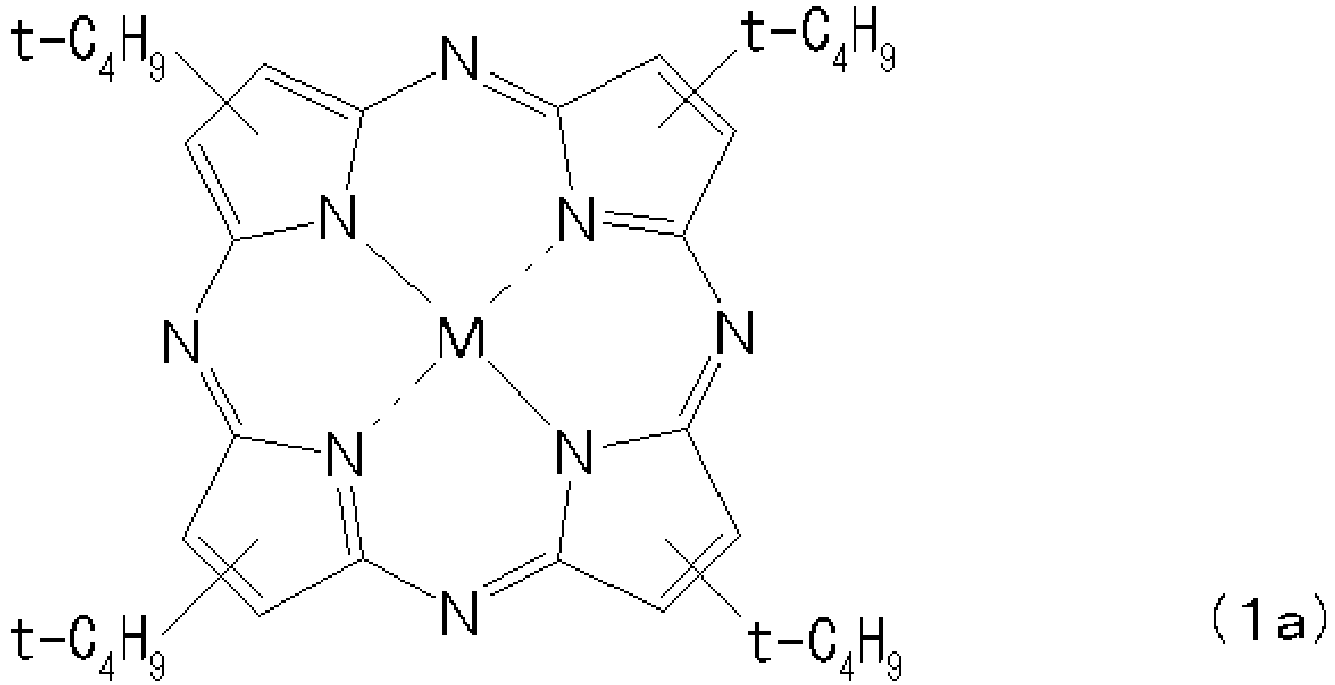
Applications Claiming Priority (2)
| Application Number | Priority Date | Filing Date | Title |
|---|---|---|---|
| JP2017070213 | 2017-03-31 | ||
| PCT/JP2018/012533 WO2018181375A1 (en) | 2017-03-31 | 2018-03-27 | Method for producing laminate, laminate and hard coating liquid |
Publications (2)
| Publication Number | Publication Date |
|---|---|
| EP3603824A1 true EP3603824A1 (en) | 2020-02-05 |
| EP3603824A4 EP3603824A4 (en) | 2020-10-14 |
Family
ID=63677941
Family Applications (1)
| Application Number | Title | Priority Date | Filing Date |
|---|---|---|---|
| EP18777069.8A Withdrawn EP3603824A4 (en) | 2017-03-31 | 2018-03-27 | Method for producing laminate, laminate and hard coating liquid |
Country Status (6)
| Country | Link |
|---|---|
| US (1) | US20200056058A1 (en) |
| EP (1) | EP3603824A4 (en) |
| JP (1) | JP6810792B2 (en) |
| KR (1) | KR102351116B1 (en) |
| CN (1) | CN110446562A (en) |
| WO (1) | WO2018181375A1 (en) |
Families Citing this family (1)
| Publication number | Priority date | Publication date | Assignee | Title |
|---|---|---|---|---|
| EP4084497A4 (en) * | 2019-12-24 | 2023-09-20 | FUJIFILM Corporation | COMPOSITION FOR ACOUSTIC LENS, ACOUSTIC LENS, ACOUSTIC WAVE PROBE, ULTRASONIC PROBE, ACOUSTIC WAVE MEASUREMENT DEVICE, ULTRASONIC DIAGNOSTIC SYSTEM, PHOTOACOUSTIC WAVE METER, ULTRASONIC ENDOSCOPE AND METHOD FOR PRODUCING AN ACOUSTIC WAVE PROBE |
Family Cites Families (16)
| Publication number | Priority date | Publication date | Assignee | Title |
|---|---|---|---|---|
| JP2005004877A (en) * | 2003-06-11 | 2005-01-06 | Ricoh Co Ltd | Optical recording medium and manufacturing method thereof |
| JP4321319B2 (en) * | 2004-03-17 | 2009-08-26 | Jsr株式会社 | Liquid curable composition, cured film and antistatic laminate |
| US8153344B2 (en) * | 2004-07-16 | 2012-04-10 | Ppg Industries Ohio, Inc. | Methods for producing photosensitive microparticles, aqueous compositions thereof and articles prepared therewith |
| JP2007276212A (en) * | 2006-04-04 | 2007-10-25 | Mitsubishi Chemicals Corp | Laminate |
| JP2008058683A (en) * | 2006-08-31 | 2008-03-13 | Fujifilm Corp | Dye-containing negative curable composition, color filter and method for producing the same |
| JP2008134618A (en) | 2006-10-26 | 2008-06-12 | Hopunikku Kenkyusho:Kk | Plastic eyeglass lens |
| JP5778109B2 (en) | 2006-10-26 | 2015-09-16 | 株式会社ホプニック研究所 | Plastic eyeglass lenses |
| US7506977B1 (en) * | 2008-04-18 | 2009-03-24 | Hopnic Laboratory Co., Ltd. | Plastic spectacles lens |
| KR20110053981A (en) * | 2008-08-29 | 2011-05-24 | 니폰 쇼쿠바이 컴파니 리미티드 | Phthalocyanine compound |
| JP2010265254A (en) * | 2009-04-16 | 2010-11-25 | Nippon Shokubai Co Ltd | Phthalocyanine compound |
| JP2012047981A (en) * | 2010-08-26 | 2012-03-08 | Yamamoto Chem Inc | Optical filter |
| JP5775482B2 (en) * | 2011-09-30 | 2015-09-09 | 富士フイルム株式会社 | Colored curable composition, color filter, method for producing color filter, and display device |
| JP5967293B2 (en) * | 2013-03-26 | 2016-08-10 | 信越化学工業株式会社 | Polycarbonate resin laminate |
| JP2016115779A (en) * | 2014-12-13 | 2016-06-23 | 株式会社ダイセル | Photo-curable composition for nanoimprinting |
| US10696016B2 (en) * | 2015-07-31 | 2020-06-30 | Samsung Sdi Co., Ltd. | Window film and flexible display including the same |
| JP6603533B2 (en) | 2015-10-05 | 2019-11-06 | 美代子 岩田 | How to make cocktail sauce |
-
2018
- 2018-03-27 CN CN201880020013.1A patent/CN110446562A/en active Pending
- 2018-03-27 WO PCT/JP2018/012533 patent/WO2018181375A1/en not_active Ceased
- 2018-03-27 EP EP18777069.8A patent/EP3603824A4/en not_active Withdrawn
- 2018-03-27 US US16/499,465 patent/US20200056058A1/en not_active Abandoned
- 2018-03-27 JP JP2019509924A patent/JP6810792B2/en active Active
- 2018-03-27 KR KR1020197028416A patent/KR102351116B1/en active Active
Also Published As
| Publication number | Publication date |
|---|---|
| JP6810792B2 (en) | 2021-01-06 |
| WO2018181375A1 (en) | 2018-10-04 |
| EP3603824A4 (en) | 2020-10-14 |
| US20200056058A1 (en) | 2020-02-20 |
| KR20190125994A (en) | 2019-11-07 |
| KR102351116B1 (en) | 2022-01-17 |
| CN110446562A (en) | 2019-11-12 |
| JPWO2018181375A1 (en) | 2019-11-07 |
Similar Documents
| Publication | Publication Date | Title |
|---|---|---|
| US12287450B2 (en) | Functional laminate and functional lens comprising the functional laminate | |
| KR20060113494A (en) | Plastic lens and manufacturing method of plastic lens | |
| TW201704358A (en) | Cyanine compound, filter, device using a filter, and resin composition which is applied to CCD CMOS sensors for near-infrared absorption and increasing light resistance | |
| BR112019025075B1 (en) | PHOTOCHROMIC ARTICLE, AND, METHOD FOR PREPARING A PHOTOCHROMIC ARTICLE | |
| WO2018025508A1 (en) | Adhesive composition, laminate, and optical article including said laminate | |
| BR112019007641B1 (en) | OPTICAL FILTRATION COATING COMPOSITION FOR IMPROVING PHOTOSTABILITY OF ABSORBENT DYE AND OPTICAL ARTICLE | |
| JP2007156464A (en) | Method of manufacturing optical article and article thus obtained | |
| JP2021009205A (en) | Spectacle lens | |
| US8153248B2 (en) | Plastic lens and method of producing plastic lens | |
| JP2020503537A (en) | Optical article containing dye resistant to light degradation | |
| US20200056058A1 (en) | Method of producing laminate, laminate, and hard coat solution | |
| KR102057381B1 (en) | Eyeglass lens and eyeglasses | |
| JP2021162620A (en) | Curable composition for photochromic lens protective film formation, coating composition, cured product, photochromic lens, and manufacturing method of photochromic lens | |
| US10852454B2 (en) | Eyeglass lens | |
| JP3959095B2 (en) | Plastic lens and method for manufacturing plastic lens | |
| JP2008020756A (en) | Plastic lens | |
| EP2808711B1 (en) | Method of manufacturing polarizing lens | |
| EP3327096A1 (en) | Heat-curable hybrid epoxy functional composition and transparent heat-cured caustic-resistant coatings prepared therefrom | |
| JP2009258400A (en) | Method of manufacturing optical substrate with light color mirror coat layer and optical substrate obtained from the same method | |
| US10788605B2 (en) | Eyeglass lens | |
| WO2021059850A1 (en) | Light-transmitting member and method for producing lens and light-transmitting member | |
| CN113167930B (en) | Optical member, curable composition, and method for producing optical member | |
| JP2000198961A (en) | Curable coating composition, molded article coated with the same, and method for producing molded article | |
| JP2007101779A (en) | Optical component manufacturing method and optical component | |
| JP2013195882A (en) | Method for manufacturing polarizing lens |
Legal Events
| Date | Code | Title | Description |
|---|---|---|---|
| STAA | Information on the status of an ep patent application or granted ep patent |
Free format text: STATUS: THE INTERNATIONAL PUBLICATION HAS BEEN MADE |
|
| PUAI | Public reference made under article 153(3) epc to a published international application that has entered the european phase |
Free format text: ORIGINAL CODE: 0009012 |
|
| STAA | Information on the status of an ep patent application or granted ep patent |
Free format text: STATUS: REQUEST FOR EXAMINATION WAS MADE |
|
| 17P | Request for examination filed |
Effective date: 20190923 |
|
| AK | Designated contracting states |
Kind code of ref document: A1 Designated state(s): AL AT BE BG CH CY CZ DE DK EE ES FI FR GB GR HR HU IE IS IT LI LT LU LV MC MK MT NL NO PL PT RO RS SE SI SK SM TR |
|
| AX | Request for extension of the european patent |
Extension state: BA ME |
|
| DAV | Request for validation of the european patent (deleted) | ||
| DAX | Request for extension of the european patent (deleted) | ||
| A4 | Supplementary search report drawn up and despatched |
Effective date: 20200916 |
|
| RIC1 | Information provided on ipc code assigned before grant |
Ipc: B32B 27/20 20060101ALI20200910BHEP Ipc: B05D 7/24 20060101ALI20200910BHEP Ipc: C09D 7/40 20180101ALI20200910BHEP Ipc: B05D 5/06 20060101AFI20200910BHEP Ipc: B05D 7/00 20060101ALI20200910BHEP Ipc: G02C 7/10 20060101ALI20200910BHEP Ipc: C09D 201/00 20060101ALI20200910BHEP Ipc: B32B 27/40 20060101ALI20200910BHEP Ipc: G02B 1/14 20150101ALI20200910BHEP Ipc: B05D 5/00 20060101ALI20200910BHEP Ipc: C09D 5/00 20060101ALI20200910BHEP |
|
| STAA | Information on the status of an ep patent application or granted ep patent |
Free format text: STATUS: EXAMINATION IS IN PROGRESS |
|
| 17Q | First examination report despatched |
Effective date: 20210921 |
|
| GRAP | Despatch of communication of intention to grant a patent |
Free format text: ORIGINAL CODE: EPIDOSNIGR1 |
|
| STAA | Information on the status of an ep patent application or granted ep patent |
Free format text: STATUS: GRANT OF PATENT IS INTENDED |
|
| INTG | Intention to grant announced |
Effective date: 20220322 |
|
| RIN1 | Information on inventor provided before grant (corrected) |
Inventor name: TAKAGUCHI, MASAYUKI |
|
| STAA | Information on the status of an ep patent application or granted ep patent |
Free format text: STATUS: THE APPLICATION IS DEEMED TO BE WITHDRAWN |
|
| 18D | Application deemed to be withdrawn |
Effective date: 20220802 |