EP3603772A1 - Druckluft-trocknungsvorrichtung - Google Patents
Druckluft-trocknungsvorrichtung Download PDFInfo
- Publication number
- EP3603772A1 EP3603772A1 EP19187166.4A EP19187166A EP3603772A1 EP 3603772 A1 EP3603772 A1 EP 3603772A1 EP 19187166 A EP19187166 A EP 19187166A EP 3603772 A1 EP3603772 A1 EP 3603772A1
- Authority
- EP
- European Patent Office
- Prior art keywords
- container
- fresh air
- regeneration
- drying
- cooling device
- Prior art date
- Legal status (The legal status is an assumption and is not a legal conclusion. Google has not performed a legal analysis and makes no representation as to the accuracy of the status listed.)
- Granted
Links
Images

Classifications
-
- B—PERFORMING OPERATIONS; TRANSPORTING
- B60—VEHICLES IN GENERAL
- B60T—VEHICLE BRAKE CONTROL SYSTEMS OR PARTS THEREOF; BRAKE CONTROL SYSTEMS OR PARTS THEREOF, IN GENERAL; ARRANGEMENT OF BRAKING ELEMENTS ON VEHICLES IN GENERAL; PORTABLE DEVICES FOR PREVENTING UNWANTED MOVEMENT OF VEHICLES; VEHICLE MODIFICATIONS TO FACILITATE COOLING OF BRAKES
- B60T17/00—Component parts, details, or accessories of power brake systems not covered by groups B60T8/00, B60T13/00 or B60T15/00, or presenting other characteristic features
- B60T17/002—Air treatment devices
- B60T17/004—Draining and drying devices
-
- B—PERFORMING OPERATIONS; TRANSPORTING
- B01—PHYSICAL OR CHEMICAL PROCESSES OR APPARATUS IN GENERAL
- B01D—SEPARATION
- B01D53/00—Separation of gases or vapours; Recovering vapours of volatile solvents from gases; Chemical or biological purification of waste gases, e.g. engine exhaust gases, smoke, fumes, flue gases, aerosols
- B01D53/26—Drying gases or vapours
- B01D53/261—Drying gases or vapours by adsorption
-
- B—PERFORMING OPERATIONS; TRANSPORTING
- B01—PHYSICAL OR CHEMICAL PROCESSES OR APPARATUS IN GENERAL
- B01D—SEPARATION
- B01D53/00—Separation of gases or vapours; Recovering vapours of volatile solvents from gases; Chemical or biological purification of waste gases, e.g. engine exhaust gases, smoke, fumes, flue gases, aerosols
- B01D53/02—Separation of gases or vapours; Recovering vapours of volatile solvents from gases; Chemical or biological purification of waste gases, e.g. engine exhaust gases, smoke, fumes, flue gases, aerosols by adsorption, e.g. preparative gas chromatography
- B01D53/04—Separation of gases or vapours; Recovering vapours of volatile solvents from gases; Chemical or biological purification of waste gases, e.g. engine exhaust gases, smoke, fumes, flue gases, aerosols by adsorption, e.g. preparative gas chromatography with stationary adsorbents
- B01D53/0407—Constructional details of adsorbing systems
- B01D53/0438—Cooling or heating systems
-
- F—MECHANICAL ENGINEERING; LIGHTING; HEATING; WEAPONS; BLASTING
- F04—POSITIVE - DISPLACEMENT MACHINES FOR LIQUIDS; PUMPS FOR LIQUIDS OR ELASTIC FLUIDS
- F04B—POSITIVE-DISPLACEMENT MACHINES FOR LIQUIDS; PUMPS
- F04B39/00—Component parts, details, or accessories, of pumps or pumping systems specially adapted for elastic fluids, not otherwise provided for in, or of interest apart from, groups F04B25/00 - F04B37/00
- F04B39/06—Cooling; Heating; Prevention of freezing
-
- F—MECHANICAL ENGINEERING; LIGHTING; HEATING; WEAPONS; BLASTING
- F04—POSITIVE - DISPLACEMENT MACHINES FOR LIQUIDS; PUMPS FOR LIQUIDS OR ELASTIC FLUIDS
- F04B—POSITIVE-DISPLACEMENT MACHINES FOR LIQUIDS; PUMPS
- F04B39/00—Component parts, details, or accessories, of pumps or pumping systems specially adapted for elastic fluids, not otherwise provided for in, or of interest apart from, groups F04B25/00 - F04B37/00
- F04B39/16—Filtration; Moisture separation
-
- B—PERFORMING OPERATIONS; TRANSPORTING
- B01—PHYSICAL OR CHEMICAL PROCESSES OR APPARATUS IN GENERAL
- B01D—SEPARATION
- B01D2253/00—Adsorbents used in seperation treatment of gases and vapours
- B01D2253/10—Inorganic adsorbents
- B01D2253/102—Carbon
-
- B—PERFORMING OPERATIONS; TRANSPORTING
- B01—PHYSICAL OR CHEMICAL PROCESSES OR APPARATUS IN GENERAL
- B01D—SEPARATION
- B01D2253/00—Adsorbents used in seperation treatment of gases and vapours
- B01D2253/10—Inorganic adsorbents
- B01D2253/104—Alumina
-
- B—PERFORMING OPERATIONS; TRANSPORTING
- B01—PHYSICAL OR CHEMICAL PROCESSES OR APPARATUS IN GENERAL
- B01D—SEPARATION
- B01D2253/00—Adsorbents used in seperation treatment of gases and vapours
- B01D2253/10—Inorganic adsorbents
- B01D2253/106—Silica or silicates
-
- B—PERFORMING OPERATIONS; TRANSPORTING
- B01—PHYSICAL OR CHEMICAL PROCESSES OR APPARATUS IN GENERAL
- B01D—SEPARATION
- B01D2253/00—Adsorbents used in seperation treatment of gases and vapours
- B01D2253/10—Inorganic adsorbents
- B01D2253/106—Silica or silicates
- B01D2253/108—Zeolites
-
- B—PERFORMING OPERATIONS; TRANSPORTING
- B01—PHYSICAL OR CHEMICAL PROCESSES OR APPARATUS IN GENERAL
- B01D—SEPARATION
- B01D2257/00—Components to be removed
- B01D2257/80—Water
-
- B—PERFORMING OPERATIONS; TRANSPORTING
- B01—PHYSICAL OR CHEMICAL PROCESSES OR APPARATUS IN GENERAL
- B01D—SEPARATION
- B01D2259/00—Type of treatment
- B01D2259/40—Further details for adsorption processes and devices
- B01D2259/40083—Regeneration of adsorbents in processes other than pressure or temperature swing adsorption
- B01D2259/40088—Regeneration of adsorbents in processes other than pressure or temperature swing adsorption by heating
- B01D2259/4009—Regeneration of adsorbents in processes other than pressure or temperature swing adsorption by heating using hot gas
-
- B—PERFORMING OPERATIONS; TRANSPORTING
- B01—PHYSICAL OR CHEMICAL PROCESSES OR APPARATUS IN GENERAL
- B01D—SEPARATION
- B01D2259/00—Type of treatment
- B01D2259/45—Gas separation or purification devices adapted for specific applications
- B01D2259/4566—Gas separation or purification devices adapted for specific applications for use in transportation means
-
- F—MECHANICAL ENGINEERING; LIGHTING; HEATING; WEAPONS; BLASTING
- F04—POSITIVE - DISPLACEMENT MACHINES FOR LIQUIDS; PUMPS FOR LIQUIDS OR ELASTIC FLUIDS
- F04B—POSITIVE-DISPLACEMENT MACHINES FOR LIQUIDS; PUMPS
- F04B2205/00—Fluid parameters
- F04B2205/11—Outlet temperature
Definitions
- the present invention relates to a drying device for drying fresh air for supplying a compressed air system of a vehicle, in particular a mobile work machine, such as a construction machine or a mobile crane.
- Brake systems of construction machines, mobile cranes and similar mobile motor vehicles are usually designed as so-called air brakes.
- air brakes To generate the required compressed air, ambient air is sucked in, compressed and then dehumidified to prevent corrosion damage to the compressed air system. Since the compression is mostly done by oil-lubricated piston compressors, it is also necessary to clean the fresh air.
- the compressed air When the compressed air is dried by adsorption, the air to be dried flows through a so-called adsorbent, so that water contained in the compressed air accumulates on the inner and outer surface of a porous adsorbent without a chemical connection occurring.
- the adsorbent has a high surface area in order to promote the accumulation of water.
- Common adsorbents are aluminum oxide, silica gel and activated carbon, but also molecular sieves.
- the adsorbent As soon as the adsorbent is saturated with water, the adsorbent has to be regenerated by removing the accumulated water from the adsorbent. This so-called desorption takes place during cold regeneration without additional heat supply. For this purpose, part of the previously dried compressed air is expanded to almost ambient pressure and passed through the saturated adsorbent. The air flow, which is extremely dry due to the expansion, absorbs the accumulated water and is led out of the system via an outlet valve.
- the temperature of the compressed air supplied to the adsorbent should not be significantly higher than the temperature of the ambient air.
- the air to be dried is therefore cooled in a heat exchanger after compression, with the waste heat being dissipated to the surroundings in known systems.
- the drying device comprises a cooling device downstream of a compressor in the fresh air flow path, which removes heat from the fresh air originating from the compressor, a desiccant container downstream of the cooling device in the fresh air flow path with an adsorbent which extracts water from the fresh air flowing through the drying agent container, and one in Fresh air flow path downstream of the drying agent tank regeneration tank, which receives a first part of the fresh air coming from the drying agent tank and releases it back to the drying agent tank if necessary, and which supplies the absorbed fresh air with heat dissipated by the cooling device.
- the heat which has been extracted from the air compressed by the compressor via the cooling device is used at least in part to heat the compressed, dried and air in the regeneration tank.
- the cooling device dissipates the heat from the fresh air compressed by the compressor directly to the regeneration tank. This can be achieved by the cooling device directly adjoining the regeneration tank or being in the immediate vicinity of the same.
- the cooling device can transfer the heat to the regeneration tank essentially by means of heat radiation. It follows that the cooling device and the regeneration tank do not essentially touch. Alternatively, however, the present invention can also provide that the heat flow between the cooling device and the regeneration tank is transmitted essentially by means of heat conduction or heat transport (convection). A However, primary transmission by means of heat conduction requires that the cooling device and the regeneration container have elements that are common or directly connected to one another in terms of material. It should be noted here that the regeneration tank, if configured as a pressure tank, must meet certain safety requirements. When structuring the cooling device to the regeneration tank, these requirements must of course also be observed.
- a "spacing" of the cooling device from the regeneration tank with an associated heat transfer by means of radiation and / or heat transport allows the use of standardized, safety-technically already certified and therefore inexpensive components for the cooling device and in particular the regeneration tank.
- the cooling device can comprise a cooling coil, in particular can be designed as a cooling coil. While basically any known heat exchanger could be used for the purposes of the cooling device, a cooling coil made of a spirally bent tube has the advantage that it cannot become clogged with ice or dirt particles, as is the case, for example, with other types of heat exchangers such as plate coolers can.
- An embodiment of the present invention takes advantage of the comparatively high space requirement of cooling coils compared to other heat exchangers in that the cooling coil encircles the regeneration container. The otherwise unusable volume circulated by the cooling coil is consequently taken up by the regeneration container, so that the construction volume required for the drying device is further reduced.
- maximum saving of the required construction volume is achieved in that the filling capacity of the regeneration container is designed for a complete regeneration of the drying agent container.
- the regeneration tank is dimensioned such that the amount of air stored in it is only sufficient to ensure complete desorption of the air Desiccant container to reach existing adsorbent.
- An additional storage capacity of the regeneration tank is not desirable here because of the additional construction volume required for this and the lack of possible use of the additional amount of air stored in the regeneration tank.
- the desiccant capacity of the desiccant container can be designed for a full charge of a pressure accumulator, which absorbs a second part of the fresh air coming from the desiccant container and releases it to the compressed air system if necessary.
- the nature and amount of the adsorbent present in the desiccant container can be dimensioned such that it is just sufficient to fill the pressure accumulator.
- the present invention enables a method for drying the fresh air supplied to a compressed air system of a vehicle, in particular a mobile work machine, in particular using a drying device as described above.
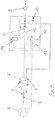
- the Figure 1 shows a drying device according to the invention, which provides compressed air for a compressed air system 1.
- Ambient air is drawn in and compressed by means of a compressor 2.
- the air heated by the compression is cooled again in a heat exchanger 3 connected downstream of the compressor 2, the heat removed being at least partially fed directly to the regeneration tank 5 and the compressed air stored therein.
- the heat exchanger or the cooling device 3 is formed by a sufficiently thick and long tube which spirally circulates around the regeneration tank 5 designed as a cylindrical pressure tank.
- the cooling coil 6 formed from the tube 7 is designed so that condensate, which may form in the tube 7 when cooling, can run off.
- the air stream cooled by means of the cooling device 3 is then fed to a filter 12, which removes any impurities from the air stream.
- the compressed, cooled and cleaned air stream is then fed to the desiccant container 4 in order to flow through an adsorbent located therein.
- the water stored in the air accumulates on the surface of the adsorbent.
- the now also dried air flow is largely stored in the downstream pressure accumulator 9 in order to be available to the compressed air system 1 when required.
- Another, smaller part of the air stream leaving the desiccant container 4 is fed to the regeneration container 5 and stored therein.
- the heat flow previously removed from the cooling device 3 is at least partially fed to the regeneration tank 5, so that the air therein is heated.
- the air flow of the compressor 2 is interrupted by means of the switching valve 14, so that the adsorbent in the desiccant container 4 can be dried by means of a so-called cold regeneration.
- the switching valve 13 By switching the switching valve 13, the air stored in the regeneration tank 5 is discharged in the opposite direction through the desiccant tank 4 and via the valve 13 and the outlet 11 into the environment.
- the compressed air coming from the regeneration container 5 is expanded to almost ambient pressure by means of an orifice or throttle 10 and is therefore very dry.
- valves 13 and 14 can be switched over again in order to initiate a new adsorption phase.
- the Figure 2 shows a structural unit 8, which is essentially formed from a cylindrical regeneration container 5 designed as a pressure container, and a tubular cooling spiral 3 that surrounds it in a spiral manner.
- the space-saving design of the drying device according to the invention is based, among other things, on the fact that the regeneration container 5 is in the Cooling coil 3 volume is arranged.
- the heat given off by the cooling coil 3 is used to heat the compressed air stored in the regeneration tank 5 and thus to increase its water absorption capacity. Due to the increased water absorption capacity of the compressed air in the regeneration tank 5, the amount of compressed air to be stored in the regeneration tank 5 can be reduced, so that the regeneration tank 5 and ultimately the entire assembly 8 can also be reduced.
Landscapes
- Engineering & Computer Science (AREA)
- Chemical & Material Sciences (AREA)
- Analytical Chemistry (AREA)
- General Chemical & Material Sciences (AREA)
- Oil, Petroleum & Natural Gas (AREA)
- Chemical Kinetics & Catalysis (AREA)
- Mechanical Engineering (AREA)
- General Engineering & Computer Science (AREA)
- Transportation (AREA)
- Drying Of Gases (AREA)
- Valves And Accessory Devices For Braking Systems (AREA)
- Drying Of Solid Materials (AREA)
Abstract
Description
- Die vorliegende Erfindung betrifft eine Trocknungsvorrichtung zum Trocknen von Frischluft zur Versorgung einer Druckluftanlage eines Fahrzeugs, insbesondere einer mobilen Arbeitsmaschine, etwa einer Baumaschine oder eines Mobilkrans.
- Bremsanlagen von Baumaschinen, Mobilkranen und ähnlichen mobilen Kraftfahrzeugen sind in der Regel als sogenannte Druckluftbremsen ausgestaltet. Für die Erzeugung der benötigten Druckluft wird Umgebungsluft angesaugt, verdichtet und anschließend entfeuchtet, um Korrosionsschäden an der Druckluftanlage zu verhindern. Da die Verdichtung zumeist durch ölgeschmierte Kolbenverdichter erfolgt, ist zudem eine Reinigung der Frischluft erforderlich.
- Zur Entfeuchtung der Druckluft sind verschiedene Trocknungsverfahren bekannt, welche sich der physikalischen Prinzipien der Kondensation, der Diffusion oder der Sorption (Absorption/Adsorption) bedienen. Adsorptionsverfahren werden wiederum nach der Art der Regeneration des verwendeten Adsorptionsmittels in Vakuumregenerations-, Warmregenerations- und Kaltregenerationsverfahren unterteilt.
- Bei der Trocknung der Druckluft durch Adsorption strömt die zu trocknende Luft durch ein sogenanntes Adsorptionsmittel, sodass sich in der Druckluft enthaltenes Wasser an der inneren und der äußeren Oberfläche eines porösen Adsorptionsmittels anlagert, ohne dass hierbei eine chemische Verbindung erfolgt. Hierfür weist das Adsorptionsmittel eine hohe Oberfläche auf, um das Anlagern von Wasser zu begünstigen. Gebräuchliche Adsorptionsmittel sind Aluminiumoxyd, Silikagel und Aktivkohle, aber auch Molekularsiebe.
- Sobald das Adsorptionsmittel durch Wasseranlagerungen gesättigt ist, muss das Adsorptionsmittel regeneriert werden, indem das angelagerte Wasser dem Adsorptionsmittel wieder entzogen wird. Diese sogenannte Desorption erfolgt bei der Kaltregeneration ohne zusätzliche Wärmezufuhr. Hierfür wird ein Teil der zuvor getrockneten Druckluft auf nahezu Umgebungsdruck entspannt und durch das gesättigte Adsorptionsmittel geleitet. Der durch die Entspannung extrem trockene Luftstrom nimmt das angelagerte Wasser auf und wird mit diesem über ein Auslassventil aus dem System geführt.
- Um bei der Adsorptionstrocknung die Anlagerung von Wasser am Adsorptionsmittel zu begünstigen, soll die Temperatur der dem Adsorptionsmittel zugeführten Druckluft nicht wesentlich höher sein als die Temperatur der Umgebungsluft. Die zu trocknende Luft wird daher nach der Verdichtung in einen Wärmetauscher gekühlt, wobei bei bekannten Systemen die Abwärme in die Umgebung abgeführt wird.
- Bekannte Adsorptions-Kaltregenerations-Trocknungsvorrichtungen nehmen jedoch ein erhebliches Bauvolumen ein, was beim nicht-stationären Einsatz in Fahrzeugen und den dort vorherrschenden Platzverhältnissen stets einen Nachteil darstellt.
- Es ist die Aufgabe der vorliegenden Erfindung, diesem Problem abzuhelfen und das Bauvolumen einer Adsorptions-Kaltregenerations-Trocknungsvorrichtung gegenüber bekannte Lösungen deutlich zu verringern.
- Die erfindungsgemäße Trocknungsvorrichtung umfasst hierfür eine im Frischluft-Strömungsweg einem Verdichter nachgeschaltete Kühleinrichtung, welche Wärme aus der vom Verdichter stammenden Frischluft abführt, einen im Frischluft-Strömungsweg der Kühleinrichtung nachgeschalteten Trocknungsmittelbehälter mit einem Adsorptionsmittel, welches der den Trocknungsmittelbehälter durchströmenden Frischluft Wasser entzieht, und einen im Frischluft-Strömungsweg dem Trocknungsmittelbehälter nachgeschalteten Regenerationsbehälter, welcher einen ersten Teil der aus dem Trocknungsmittelbehälter stammenden Frischluft aufnimmt und bedarfsweise wieder an den Trocknungsmittelbehälter abgibt, und welcher der aufgenommenen Frischluft von der Kühleinrichtung abgeführte Wärme zuführt.
- Mit anderen Worten wird gemäß der vorliegenden Erfindung die Wärme, welche der vom Verdichter komprimierten Luft über die Kühleinrichtung entzogen wurde, zumindest teilweise dazu genutzt, die verdichtete, getrocknete und im Regenerationsbehälter befindliche Luft zu erwärmen.
- Durch diesen zusätzlichen Wärmeeintrag wird die Wasseraufnahmefähigkeit der ohnehin schon getrockneten Luft im Regenerationsbehälter weiter erhöht, was letztendlich zu einer besseren Desorption in der Regenerationsphase führt, wenn das Adsorptionsmittel von der aus dem Regenerationsbehälter stammenden Luft durchströmt wird.
- Aufgrund der besseren Trocknungsfähigkeit der im Regenerationsbehälter gespeicherten Luft kann die zur Regeneration notwendige Luftmenge und folglich auch das Volumen des Regenerationsbehälters reduziert werden, was gegenüber bekannten Lösungen zu einem verringerten Bauvolumen der Trocknungsvorrichtung führt.
- Bei einer Ausführungsform der vorliegenden Erfindung führt die Kühleinrichtung die Wärme aus der vom Verdichter komprimierten Frischluft unmittelbar an den Regenerationsbehälter ab. Dies kann dadurch erreicht werden, indem die Kühleinrichtung unmittelbar an den Regenerationsbehälter angrenzt oder sich in unmittelbarer Umgebung zu diesem befindet.
- Dabei kann die Kühleinrichtung die Wärme im Wesentlichen mittels Wärmestrahlung an den Regenerationsbehälter übertragen. Daraus folgt, dass sich die Kühleinrichtung und der Regenerationsbehälter im Wesentlichen nicht berühren. Alternativ kann die vorliegende Erfindung jedoch ebenso vorsehen, dass der Wärmestrom zwischen Kühleinrichtung und Regenerationsbehälter im Wesentlichen mittels Wärmeleitung oder Wärmetransport (Konvektion) übertragen wird. Eine primäre Übertragung mittels Wärmeleitung erfordert allerdings, dass die Kühleinrichtung und der Regenerationsbehälter gemeinsame oder stofflich direkt miteinander verbundene Elemente aufweisen. Hier ist zu beachten, dass der Regenerationsbehälter, sofern als Druckbehälter ausgeführt, bestimmte sicherheitstechnische Anforderungen erfüllen muss. Bei einer strukturellen Angliederung der Kühleinrichtung an den Regenerationsbehälter müssen diese Anforderungen selbstverständlich ebenfalls beachtet werden. Eine "Beabstandung" der Kühleinrichtung vom Regenerationsbehälter mit einer damit einhergehenden Wärmeübertragung mittels Strahlung und/oder Wärmetransport erlaubt hingegen die Verwendung standardisierter, sicherheitstechnisch bereits zertifizierter und somit kostengünstiger Bauteile für die Kühleinrichtung und insbesondere den Regenerationsbehälter.
- In einer Ausführungsform kann die Kühleinrichtung eine Kühlwendel umfassen, insbesondere als eine Kühlwendel ausgestaltet sein. Während für die Zwecke der Kühleinrichtung grundsätzlich jeder bekannte Wärmetauscher eingesetzt werden könnte, bietet eine Kühlwendel aus einem spiralförmig gebogenen Rohr den Vorteil, dass sie sich nicht mit Eis oder Schmutzpartikeln zusetzen kann, wie dies beispielsweise bei anderen Arten von Wärmetauschern wie etwa Plattenkühlern der Fall sein kann. Den gegenüber anderen Wärmetauschern vergleichsweise hohen Platzbedarf von Kühlwendeln macht sich eine Ausführungsform der vorliegenden Erfindung dadurch zunutze, indem hier die Kühlwendel den Regenerationsbehälter umfänglich umläuft. Das ansonsten nicht nutzbare, von der Kühlwendel umlaufene Volumen wird folglich vom Regenerationsbehälter eingenommen, sodass sich das für die Trocknungsvorrichtung erforderliche Bauvolumen somit weiter reduziert.
- Eine maximale Einsparung des erforderlichen Bauvolumens wird gemäß einer weiteren Ausführungsform der vorliegenden Erfindung dadurch erreicht, dass das Füllvermögen des Regenerationsbehälters für eine vollständige Regeneration des Trocknungsmittelbehälters ausgelegt ist. Mit anderen Worten ist der Regenerationsbehälter so bemessen, dass die in ihm gespeicherte Luftmenge lediglich dazu ausreicht, eine vollständige Desorption des im Trocknungsmittelbehälter vorhandenen Adsorptionsmittels zu erreichen. Eine darüber hinausgehende Speicherkapazität des Regenerationsbehälters ist aufgrund des hierfür zusätzlich erforderlichen Bauvolumens und der fehlenden Verwendungsmöglichkeit der zusätzlich in Regenerationsbehälter gespeicherten Luftmenge hier nicht wünschenswert.
- In ähnlicher Weise kann bei einer weiteren Ausführungsform der vorliegenden Erfindung das Adsorptionsvermögen des Trocknungsmittelbehälters für eine vollständige Ladung eines Druckspeichers ausgelegt sein, welcher einen zweiten Teil der aus dem Trocknungsmittelbehälter stammenden Frischluft aufnimmt und bedarfsweise an die Druckluftanlage abgibt. Mit anderen Worten kann die Beschaffenheit und Menge des im Trocknungsmittelbehälter vorhandenen Adsorptionsmittel so bemessen sein, dass dieses gerade für eine Füllung des Druckspeichers ausreicht.
- Gemäß einem weiteren Aspekt ermöglicht die vorliegende Erfindung ein Verfahren zum Trocknen der einer Druckluftanlage eines Fahrzeugs, insbesondere einer mobilen Arbeitsmaschine, zugeführten Frischluft, und zwar insbesondere unter Verwendung einer wie voranstehend beschriebenen Trocknungsvorrichtung.
- Ein solches Verfahren kann dabei die folgenden Schritte umfassen:
- Abführen von Wärme aus mittels eines Verdichters verdichteter Frischluft in einer im Frischluft-Strömungsweg dem Verdichter nachgeschalteten Kühleinrichtung;
- Entziehen von Wasser aus der Frischluft, indem diese durch einen im Frischluft-Strömungsweg der Kühleinrichtung nachgeschalteten und ein Adsorptionsmittel aufweisenden Trocknungsmittelbehälter geleitet wird;
- Speichern eines Teils der aus dem Trocknungsmittelbehälter austretenden Frischluft in einem in Frischluft-Strömungsweg dem Trocknungsmittelbehälter nachgeschalteten Regenerationsbehälter, wobei der gespeicherten Frischluft von der Kühleinrichtung abgeführte Wärme zugeführt wird;
- bedarfsweises Abgeben der im Regenerationsbehälter gespeicherten Frischluft an den Trocknungsmittelbehälter zur Regeneration des darin enthaltenen Adsorptionsmittels.
- Die Erfindung wird im Folgenden anhand einer bevorzugten Ausführungsform und unter Bezugnahme auf die beiliegenden Figuren näher erläutert. Sie kann alle hierin beschriebenen Merkmale einzeln sowie in jedweder sinnvollen Kombination umfassen.
- Es zeigen:
- Figur 1
- Schaltplan der erfindungsgemäßen Trocknungsvorrichtung;
- Figur 2
- Perspektivische Ansicht einer erfindungsgemäßen Baueinheit aus einer Kühleinrichtung und einem Regenerationsbehälter.
- Die
Figur 1 zeigt eine erfindungsgemäße Trocknungsvorrichtung, welche Druckluft für eine Druckluftanlage 1 bereitstellt. - Mittels eines Verdichters 2 wird Umgebungsluft angesaugt und verdichtet. Die durch die Verdichtung erwärmte Luft wird in einem dem Verdichter 2 nachgeschalteten Wärmetauscher 3 wieder abgekühlt, wobei die abgeführte Wärme zumindest teilweise direkt dem Regenerationsbehälter 5 und der darin gespeicherten Druckluft zugeführt wird. Wie in der
Figur 1 zu erkennen ist, wird der Wärmetauscher bzw. die Kühleinrichtung 3 durch ein ausreichend dickes und langes Rohr gebildet, welches den als zylindrischen Druckbehälter ausgestaltetem Regenerationsbehälter 5 spiralförmig umläuft. Wie in derFigur 2 besser zu sehen ist, ist die aus dem Rohr 7 gebildete Kühlwendel 6 dabei so ausgestaltet, dass Kondensat, welches sich unter Umständen bei der Abkühlung im Rohr 7 bildet, ablaufen kann. Der mittels der Kühleinrichtung 3 abgekühlte Luftstrom wird sodann einem Filter 12 zugeführt, welcher etwaige Verunreinigungen aus dem Luftstrom entfernt. Der verdichtete, gekühlte und gereinigte Luftstrom wird dann dem Trocknungsmittelbehälter 4 zugeführt, um dort ein darin befindliches Adsorptionsmittel zu durchströmen. Hierbei lagert sich das in der Luft gespeicherte Wasser an der Oberfläche des Adsorptionsmittels an. Der nunmehr auch getrocknete Luftstrom wird größtenteils im nachgeschalteten Druckspeicher 9 gespeichert, um bei Bedarf der Druckluftanlage 1 zur Verfügung zu stehen. Ein weiterer, kleinerer Teil des den Trocknungsmittelbehälter 4 verlassenden Luftstroms wird dem Regenerationsbehälter 5 zugeführt und in diesem gespeichert. Der zuvor von der Kühleinrichtung 3 abgeführte Wärmestrom wird zumindest teilweise dem Regenerationsbehälter 5 zugeführt, sodass sich die darin befindliche Luft erwärmt. - Nachdem die Aufnahmekapazität des Adsorptionsmittels im Trocknungsmittelbehälter 4 durch die Trocknung des den Trocknungsmittelbehälter 4 durchströmenden Luftstroms erschöpft ist, wird mittels des Schaltventils 14 die Luftförderung des Verdichters 2 unterbrochen, sodass das im Trocknungsmittelbehälter 4 befindliche Adsorptionsmittel mittels einer sogenannten Kaltregeneration getrocknet werden kann. Durch Schalten des Schaltventils 13 wird die im Regenerationsbehälter 5 gespeicherte Luft in umgekehrter Richtung durch den Trocknungsmittelbehälter 4 und über das Ventil 13 und den Auslass 11 in die Umgebung abgeleitet. Vor dem Eintritt in den Trocknungsmittelbehälter 4 wird die aus dem Regenerationsbehälter 5 stammende Druckluft mittels einer Blende bzw. Drossel 10 auf nahezu Umgebungsdruck entspannt und ist somit sehr trocken. Hierdurch kann sie das vormals an der Oberfläche des Adsorptionsmittels angelagerte Wasser leicht aufnehmen und aus dem System abführen. Nach erfolgter Regeneration des Adsorptionsmittels im Trocknungsmittelbehälter 4 können die Ventile 13 und 14 wieder umgeschaltet werden, um eine erneute Adsorptionsphase einzuleiten.
- Die
Figur 2 zeigt eine Baueinheit 8, welche im Wesentlichen aus einem als Druckbehälter ausgestalteten, zylindrischen Regenerationsbehälter 5, und einer diesen spiralförmig umlaufenden, rohrförmigen Kühlwendel 3 gebildet wird. - Die platzsparende Ausgestaltung der erfindungsgemäßen Trocknungsvorrichtung beruht unter anderem darauf, dass der Regenerationsbehälter 5 im von der Kühlwendel 3 umlaufenen Volumen angeordnet ist. Zudem wird die von der Kühlwendel 3 abgegebene Wärme dazu genutzt, die im Regenerationsbehälter 5 gespeicherte Druckluft zu erwärmen und so deren Wasseraufnahmefähigkeit zu erhöhen. Aufgrund der erhöhten Wasseraufnahmekapazität der Druckluft im Regenerationsbehälter 5 kann die im Regenerationsbehälter 5 zu speichernde Druckluftmenge reduziert werden, sodass auch der Regenerationsbehälter 5 und letzten Endes auch die gesamte Baueinheit 8 verkleinert werden kann.
Claims (10)
- Trocknungsvorrichtung zum Trocknen der einer Druckluftanlage (1) eines Fahrzeugs, insbesondere einer mobilen Arbeitsmaschine zugeführten Frischluft, mit- einer im Frischluft-Strömungsweg einem Verdichter (2) nachgeschalteten Kühleinrichtung (3), welche Wärme aus der vom Verdichter (2) stammenden Frischluft abführt;- einem im Frischluft-Strömungsweg der Kühleinrichtung (3) nachgeschalteten Trocknungsmittelbehälter (4) mit einem Adsorptionsmittel, welches der den Trocknungsmittelbehälter (4) durchströmenden Frischluft Wasser entzieht;- einem im Frischluft-Strömungsweg dem Trocknungsmittelbehälter (4) nachgeschalteten Regenerationsbehälter (5), welcher einen ersten Teil der aus dem Trocknungsmittelbehälter (4) stammenden Frischluft aufnimmt und bedarfsweise wieder an den Trocknungsmittelbehälter (4) abgibt, und welcher der aufgenommenen Frischluft von der Kühleinrichtung (3) abgeführte Wärme zuführt.
- Trocknungsvorrichtung gemäß Anspruch 1, wobei die Kühleinrichtung (3) Wärme unmittelbar an den Regenerationsbehälter (5) abführt.
- Trocknungsvorrichtung gemäß einem der Ansprüche 1 oder 2, wobei die Kühleinrichtung (3) Wärme im Wesentlichen mittels Wärmestrahlung an den Regenerationsbehälter (5) abführt.
- Trocknungsvorrichtung gemäß einem der Ansprüche 1 bis 3, wobei die Kühleinrichtung (3) eine Kühlwendel (6) umfasst.
- Trocknungsvorrichtung gemäß einem der Ansprüche 1 bis 4, wobei die Kühleinrichtung (3) einen Strömungskanal (7) mit einer im Wesentlichen positiven Steigung aufweist, insbesondere durch einen solchen gebildet wird.
- Trocknungsvorrichtung gemäß einem der Ansprüche 4 oder 5, wobei die Kühlwendel (6) den Regenerationsbehälter (5) umläuft.
- Trocknungsvorrichtung gemäß einem der Ansprüche 1 bis 6, wobei die Kühleinrichtung (3) mit dem Regenerationsbehälter (5) eine Baueinheit (8) bildet.
- Trocknungsvorrichtung gemäß einem der Ansprüche 1 bis 7, wobei der Regenerationsbehälter (5) als im Wesentlichen zylindrischer Druckbehälter ausgebildet ist.
- Trocknungsvorrichtung gemäß einem der Ansprüche 1 bis 8, wobei das Füllvermögen des Regenerationsbehälters (5) für eine vollständige Regeneration des Trocknungsmittelbehälters (4) ausgelegt ist.
- Trocknungsvorrichtung gemäß einem der Ansprüche 1 bis 9, mit ferner einem im Frischluft-Strömungsweg dem Trocknungsmittelbehälter (4) nachgeschalteten Druckspeicher (9), welcher einen zweiten Teil der aus dem Trocknungsmittelbehälter (4) stammenden Frischluft aufnimmt und bedarfsweise an die Druckluftanlage (1) abgibt, wobei das Adsorptionsvermögen des Trocknungsmittelbehälters (4) für einen vollständige Ladung des Druckspeichers (9) ausgelegt ist.
Applications Claiming Priority (1)
| Application Number | Priority Date | Filing Date | Title |
|---|---|---|---|
| DE202018104403.6U DE202018104403U1 (de) | 2018-07-31 | 2018-07-31 | Druckluft-Trocknungsvorrichtung |
Publications (2)
| Publication Number | Publication Date |
|---|---|
| EP3603772A1 true EP3603772A1 (de) | 2020-02-05 |
| EP3603772B1 EP3603772B1 (de) | 2020-12-23 |
Family
ID=63587843
Family Applications (1)
| Application Number | Title | Priority Date | Filing Date |
|---|---|---|---|
| EP19187166.4A Active EP3603772B1 (de) | 2018-07-31 | 2019-07-19 | Druckluft-trocknungsvorrichtung |
Country Status (5)
| Country | Link |
|---|---|
| US (1) | US11413568B2 (de) |
| EP (1) | EP3603772B1 (de) |
| JP (1) | JP6840196B2 (de) |
| CN (1) | CN110772935A (de) |
| DE (1) | DE202018104403U1 (de) |
Families Citing this family (7)
| Publication number | Priority date | Publication date | Assignee | Title |
|---|---|---|---|---|
| CN111097244A (zh) * | 2020-01-08 | 2020-05-05 | 杭州大盒子汽车服务有限公司 | 洗车房保温系统 |
| WO2022271464A1 (en) * | 2021-06-23 | 2022-12-29 | Entegris, Inc. | Gas-processing systems and methods |
| CN113954805B (zh) * | 2021-11-13 | 2023-05-12 | 一汽解放汽车有限公司 | 气制动系统和车辆 |
| CN115193230B (zh) * | 2022-07-29 | 2025-07-15 | 浙江万安科技股份有限公司 | 压缩空气干燥组件系统及再生管路温度控制方法 |
| CN115532031B (zh) * | 2022-10-31 | 2023-10-03 | 盐城天尔机械有限公司 | 一种基于空气热交换压缩空气预冷机 |
| CN116241437B (zh) * | 2022-12-20 | 2025-05-06 | 普沃思环保科技无锡有限公司 | 一种空气压缩前处理系统 |
| DE102024110468A1 (de) * | 2024-04-15 | 2025-10-16 | Zf Cv Systems Europe Bv | Lufttrockner, Druckluftversorgungsanlage, Fahrzeug und Verfahren zum Betrieb eines Lufttrockners |
Citations (4)
| Publication number | Priority date | Publication date | Assignee | Title |
|---|---|---|---|---|
| DE19600377A1 (de) * | 1995-12-14 | 1997-06-19 | Wabco Gmbh | Druckgasanlage mit einem Gastrockner |
| US7326277B1 (en) * | 2004-04-14 | 2008-02-05 | Uop Llc | Brake air drying using low pressure desiccant wheel |
| US20140116534A1 (en) * | 2012-10-30 | 2014-05-01 | Bendix Commercial Vehicle Systems Llc | Heat-exchange dryer apparatus, system and method |
| US20150251645A1 (en) * | 2014-03-05 | 2015-09-10 | Bendix Commercial Vehicle Systems Llc | Air Dryer Purge Controller and Method |
Family Cites Families (5)
| Publication number | Priority date | Publication date | Assignee | Title |
|---|---|---|---|---|
| CN2141320Y (zh) * | 1992-10-20 | 1993-09-01 | 杭州汉业气源净化设备有限公司 | 净化压缩空气用干燥装置 |
| DE102015000893B4 (de) * | 2015-01-23 | 2023-07-13 | Knorr-Bremse Systeme für Nutzfahrzeuge GmbH | Vorrichtung und Verfahren zum Versorgen eines Nutzfahrzeugs mit Druckluft |
| CA3022487A1 (en) * | 2015-05-22 | 2016-12-01 | Simon Fraser University | Hybrid atmospheric water generator |
| KR101838367B1 (ko) * | 2016-01-21 | 2018-03-14 | 주식회사 은하에어테크 | 유지 보수가 용이한 퍼지 및 논퍼지 겸용 압축공기 건조방법 및 장치 |
| CN206288509U (zh) * | 2016-11-17 | 2017-06-30 | 广东红墙新材料股份有限公司 | 一种罐体外加热恒温装置 |
-
2018
- 2018-07-31 DE DE202018104403.6U patent/DE202018104403U1/de active Active
-
2019
- 2019-07-19 EP EP19187166.4A patent/EP3603772B1/de active Active
- 2019-07-25 JP JP2019136612A patent/JP6840196B2/ja active Active
- 2019-07-26 CN CN201910680921.XA patent/CN110772935A/zh active Pending
- 2019-07-30 US US16/526,640 patent/US11413568B2/en active Active
Patent Citations (4)
| Publication number | Priority date | Publication date | Assignee | Title |
|---|---|---|---|---|
| DE19600377A1 (de) * | 1995-12-14 | 1997-06-19 | Wabco Gmbh | Druckgasanlage mit einem Gastrockner |
| US7326277B1 (en) * | 2004-04-14 | 2008-02-05 | Uop Llc | Brake air drying using low pressure desiccant wheel |
| US20140116534A1 (en) * | 2012-10-30 | 2014-05-01 | Bendix Commercial Vehicle Systems Llc | Heat-exchange dryer apparatus, system and method |
| US20150251645A1 (en) * | 2014-03-05 | 2015-09-10 | Bendix Commercial Vehicle Systems Llc | Air Dryer Purge Controller and Method |
Also Published As
| Publication number | Publication date |
|---|---|
| EP3603772B1 (de) | 2020-12-23 |
| US11413568B2 (en) | 2022-08-16 |
| CN110772935A (zh) | 2020-02-11 |
| JP6840196B2 (ja) | 2021-03-10 |
| JP2020019012A (ja) | 2020-02-06 |
| US20200038799A1 (en) | 2020-02-06 |
| DE202018104403U1 (de) | 2018-08-31 |
Similar Documents
| Publication | Publication Date | Title |
|---|---|---|
| EP3603772B1 (de) | Druckluft-trocknungsvorrichtung | |
| DE60036810T2 (de) | Kälteeinrichtung | |
| EP2768598B1 (de) | Luftfilterpatrone zur druckluftaufbereitung für eine druckluftaufbereitungsanlage | |
| DE10255833A1 (de) | Kühlgerät mit Zusatzkühlstufe | |
| EP3255361B1 (de) | Kältemittelsammelbehälter zum sammeln von kältemittel und wärmetauschereinrichtung mit einem solchen kältemittelsammelbehälter | |
| DE19737799C2 (de) | Schalldämpfer für einen Kompressorauslaß zur Verwendung in einer Klimaanlage | |
| WO2007131627A1 (de) | Trocknung von druckluft unter nutzung der verdichterwärme mit geschlossenem regenerationskreislauf | |
| DE112014005908T5 (de) | Adsorber und Adsorptionskühlvorrichtung | |
| EP1821048A2 (de) | Fahrzeugklimaanlage | |
| DE102017124811A1 (de) | Klimatisierungssystem zum Konditionieren der Luft eines Fahrgastraums eines Kraftfahrzeugs und Verfahren zum Betreiben des Klimatisierungssystems | |
| DE112015000750T5 (de) | Kältefluidkreislauf zur thermischen Behandlung eines Kraftfahrzeugs | |
| DE102007013092A1 (de) | Vorrichtung und Verfahren zum Trocknen von in geschlossenen Kreisläufen geführten Fluiden | |
| DE102017215018A1 (de) | Wärme-/Kältesystem für ein Kraftfahrzeug | |
| DE102018008607A1 (de) | Kältekreislauf für einen Kraftwagen und Verfahren zum Betreiben eines Kältekreislaufs für einen Kraftwagen | |
| DE102024110467A1 (de) | Lufttrockneranordnung, Fahrzeug-Druckluftversorgungsanlage, Fahrzeug und Verfahren zum Betrieb einer Lufttrockneranordnung | |
| EP0317709A2 (de) | Verfahren und Vorrichtung zur Entsorgung eines Kältemittelsystems | |
| WO2014079779A1 (de) | Isolator mit katalytischem desinfektionsmittelabbau | |
| EP3640442B1 (de) | Verbrennungskraftmaschine umfassed ein system zur wassergewinnung aus einem abgas der verbrennungskraftmaschine | |
| DE19539102A1 (de) | Sorptionsmodul und Verfahren zum Betreiben eines solchen | |
| DE102021204489A1 (de) | Trocknerloser Kältemittelkreislauf, Verfahren zur Montage eines Kältemittelkreislaufs und Kältegerät | |
| DE102015006857B4 (de) | Adsoptionspeicher zum Kühlen einer Fahrgastzelle eines eine Klimaanlage aufweisenden Fahrzeugs | |
| DE102015110574A1 (de) | Vorrichtung zum Abscheiden und Sammeln flüssigen Kältemittels eines Kältemittelkreislaufs | |
| DE102018215981A1 (de) | Wärmetauschereinheit | |
| DE19905354C2 (de) | Kältekreislauf mit Verflüssiger, Verdampfer und integriertem Trockenmittel | |
| DE102023120530A1 (de) | Niveauregelsystem für Fahrzeuge sowie Verfahren zum Betreiben des Niveauregelsystems |
Legal Events
| Date | Code | Title | Description |
|---|---|---|---|
| PUAI | Public reference made under article 153(3) epc to a published international application that has entered the european phase |
Free format text: ORIGINAL CODE: 0009012 |
|
| STAA | Information on the status of an ep patent application or granted ep patent |
Free format text: STATUS: THE APPLICATION HAS BEEN PUBLISHED |
|
| AK | Designated contracting states |
Kind code of ref document: A1 Designated state(s): AL AT BE BG CH CY CZ DE DK EE ES FI FR GB GR HR HU IE IS IT LI LT LU LV MC MK MT NL NO PL PT RO RS SE SI SK SM TR |
|
| AX | Request for extension of the european patent |
Extension state: BA ME |
|
| STAA | Information on the status of an ep patent application or granted ep patent |
Free format text: STATUS: REQUEST FOR EXAMINATION WAS MADE |
|
| 17P | Request for examination filed |
Effective date: 20200214 |
|
| RBV | Designated contracting states (corrected) |
Designated state(s): AL AT BE BG CH CY CZ DE DK EE ES FI FR GB GR HR HU IE IS IT LI LT LU LV MC MK MT NL NO PL PT RO RS SE SI SK SM TR |
|
| GRAP | Despatch of communication of intention to grant a patent |
Free format text: ORIGINAL CODE: EPIDOSNIGR1 |
|
| STAA | Information on the status of an ep patent application or granted ep patent |
Free format text: STATUS: GRANT OF PATENT IS INTENDED |
|
| GRAJ | Information related to disapproval of communication of intention to grant by the applicant or resumption of examination proceedings by the epo deleted |
Free format text: ORIGINAL CODE: EPIDOSDIGR1 |
|
| GRAP | Despatch of communication of intention to grant a patent |
Free format text: ORIGINAL CODE: EPIDOSNIGR1 |
|
| INTG | Intention to grant announced |
Effective date: 20200421 |
|
| GRAJ | Information related to disapproval of communication of intention to grant by the applicant or resumption of examination proceedings by the epo deleted |
Free format text: ORIGINAL CODE: EPIDOSDIGR1 |
|
| STAA | Information on the status of an ep patent application or granted ep patent |
Free format text: STATUS: REQUEST FOR EXAMINATION WAS MADE |
|
| GRAP | Despatch of communication of intention to grant a patent |
Free format text: ORIGINAL CODE: EPIDOSNIGR1 |
|
| INTG | Intention to grant announced |
Effective date: 20200512 |
|
| STAA | Information on the status of an ep patent application or granted ep patent |
Free format text: STATUS: GRANT OF PATENT IS INTENDED |
|
| INTC | Intention to grant announced (deleted) | ||
| INTG | Intention to grant announced |
Effective date: 20200604 |
|
| GRAJ | Information related to disapproval of communication of intention to grant by the applicant or resumption of examination proceedings by the epo deleted |
Free format text: ORIGINAL CODE: EPIDOSDIGR1 |
|
| STAA | Information on the status of an ep patent application or granted ep patent |
Free format text: STATUS: REQUEST FOR EXAMINATION WAS MADE |
|
| INTC | Intention to grant announced (deleted) | ||
| GRAS | Grant fee paid |
Free format text: ORIGINAL CODE: EPIDOSNIGR3 |
|
| STAA | Information on the status of an ep patent application or granted ep patent |
Free format text: STATUS: GRANT OF PATENT IS INTENDED |
|
| GRAP | Despatch of communication of intention to grant a patent |
Free format text: ORIGINAL CODE: EPIDOSNIGR1 |
|
| GRAA | (expected) grant |
Free format text: ORIGINAL CODE: 0009210 |
|
| STAA | Information on the status of an ep patent application or granted ep patent |
Free format text: STATUS: THE PATENT HAS BEEN GRANTED |
|
| INTG | Intention to grant announced |
Effective date: 20201102 |
|
| AK | Designated contracting states |
Kind code of ref document: B1 Designated state(s): AL AT BE BG CH CY CZ DE DK EE ES FI FR GB GR HR HU IE IS IT LI LT LU LV MC MK MT NL NO PL PT RO RS SE SI SK SM TR |
|
| REG | Reference to a national code |
Ref country code: GB Ref legal event code: FG4D Free format text: NOT ENGLISH |
|
| REG | Reference to a national code |
Ref country code: DE Ref legal event code: R096 Ref document number: 502019000578 Country of ref document: DE |
|
| REG | Reference to a national code |
Ref country code: AT Ref legal event code: REF Ref document number: 1347180 Country of ref document: AT Kind code of ref document: T Effective date: 20210115 |
|
| REG | Reference to a national code |
Ref country code: IE Ref legal event code: FG4D Free format text: LANGUAGE OF EP DOCUMENT: GERMAN |
|
| PG25 | Lapsed in a contracting state [announced via postgrant information from national office to epo] |
Ref country code: NO Free format text: LAPSE BECAUSE OF FAILURE TO SUBMIT A TRANSLATION OF THE DESCRIPTION OR TO PAY THE FEE WITHIN THE PRESCRIBED TIME-LIMIT Effective date: 20210323 Ref country code: GR Free format text: LAPSE BECAUSE OF FAILURE TO SUBMIT A TRANSLATION OF THE DESCRIPTION OR TO PAY THE FEE WITHIN THE PRESCRIBED TIME-LIMIT Effective date: 20210324 Ref country code: RS Free format text: LAPSE BECAUSE OF FAILURE TO SUBMIT A TRANSLATION OF THE DESCRIPTION OR TO PAY THE FEE WITHIN THE PRESCRIBED TIME-LIMIT Effective date: 20201223 Ref country code: FI Free format text: LAPSE BECAUSE OF FAILURE TO SUBMIT A TRANSLATION OF THE DESCRIPTION OR TO PAY THE FEE WITHIN THE PRESCRIBED TIME-LIMIT Effective date: 20201223 |
|
| REG | Reference to a national code |
Ref country code: NL Ref legal event code: MP Effective date: 20201223 |
|
| PG25 | Lapsed in a contracting state [announced via postgrant information from national office to epo] |
Ref country code: SE Free format text: LAPSE BECAUSE OF FAILURE TO SUBMIT A TRANSLATION OF THE DESCRIPTION OR TO PAY THE FEE WITHIN THE PRESCRIBED TIME-LIMIT Effective date: 20201223 Ref country code: LV Free format text: LAPSE BECAUSE OF FAILURE TO SUBMIT A TRANSLATION OF THE DESCRIPTION OR TO PAY THE FEE WITHIN THE PRESCRIBED TIME-LIMIT Effective date: 20201223 Ref country code: BG Free format text: LAPSE BECAUSE OF FAILURE TO SUBMIT A TRANSLATION OF THE DESCRIPTION OR TO PAY THE FEE WITHIN THE PRESCRIBED TIME-LIMIT Effective date: 20210323 |
|
| PG25 | Lapsed in a contracting state [announced via postgrant information from national office to epo] |
Ref country code: HR Free format text: LAPSE BECAUSE OF FAILURE TO SUBMIT A TRANSLATION OF THE DESCRIPTION OR TO PAY THE FEE WITHIN THE PRESCRIBED TIME-LIMIT Effective date: 20201223 Ref country code: NL Free format text: LAPSE BECAUSE OF FAILURE TO SUBMIT A TRANSLATION OF THE DESCRIPTION OR TO PAY THE FEE WITHIN THE PRESCRIBED TIME-LIMIT Effective date: 20201223 |
|
| REG | Reference to a national code |
Ref country code: LT Ref legal event code: MG9D |
|
| PG25 | Lapsed in a contracting state [announced via postgrant information from national office to epo] |
Ref country code: RO Free format text: LAPSE BECAUSE OF FAILURE TO SUBMIT A TRANSLATION OF THE DESCRIPTION OR TO PAY THE FEE WITHIN THE PRESCRIBED TIME-LIMIT Effective date: 20201223 Ref country code: PT Free format text: LAPSE BECAUSE OF FAILURE TO SUBMIT A TRANSLATION OF THE DESCRIPTION OR TO PAY THE FEE WITHIN THE PRESCRIBED TIME-LIMIT Effective date: 20210423 Ref country code: LT Free format text: LAPSE BECAUSE OF FAILURE TO SUBMIT A TRANSLATION OF THE DESCRIPTION OR TO PAY THE FEE WITHIN THE PRESCRIBED TIME-LIMIT Effective date: 20201223 Ref country code: CZ Free format text: LAPSE BECAUSE OF FAILURE TO SUBMIT A TRANSLATION OF THE DESCRIPTION OR TO PAY THE FEE WITHIN THE PRESCRIBED TIME-LIMIT Effective date: 20201223 Ref country code: SM Free format text: LAPSE BECAUSE OF FAILURE TO SUBMIT A TRANSLATION OF THE DESCRIPTION OR TO PAY THE FEE WITHIN THE PRESCRIBED TIME-LIMIT Effective date: 20201223 Ref country code: SK Free format text: LAPSE BECAUSE OF FAILURE TO SUBMIT A TRANSLATION OF THE DESCRIPTION OR TO PAY THE FEE WITHIN THE PRESCRIBED TIME-LIMIT Effective date: 20201223 Ref country code: EE Free format text: LAPSE BECAUSE OF FAILURE TO SUBMIT A TRANSLATION OF THE DESCRIPTION OR TO PAY THE FEE WITHIN THE PRESCRIBED TIME-LIMIT Effective date: 20201223 |
|
| PG25 | Lapsed in a contracting state [announced via postgrant information from national office to epo] |
Ref country code: PL Free format text: LAPSE BECAUSE OF FAILURE TO SUBMIT A TRANSLATION OF THE DESCRIPTION OR TO PAY THE FEE WITHIN THE PRESCRIBED TIME-LIMIT Effective date: 20201223 |
|
| REG | Reference to a national code |
Ref country code: DE Ref legal event code: R097 Ref document number: 502019000578 Country of ref document: DE |
|
| PG25 | Lapsed in a contracting state [announced via postgrant information from national office to epo] |
Ref country code: IS Free format text: LAPSE BECAUSE OF FAILURE TO SUBMIT A TRANSLATION OF THE DESCRIPTION OR TO PAY THE FEE WITHIN THE PRESCRIBED TIME-LIMIT Effective date: 20210423 |
|
| PG25 | Lapsed in a contracting state [announced via postgrant information from national office to epo] |
Ref country code: AL Free format text: LAPSE BECAUSE OF FAILURE TO SUBMIT A TRANSLATION OF THE DESCRIPTION OR TO PAY THE FEE WITHIN THE PRESCRIBED TIME-LIMIT Effective date: 20201223 |
|
| PLBE | No opposition filed within time limit |
Free format text: ORIGINAL CODE: 0009261 |
|
| STAA | Information on the status of an ep patent application or granted ep patent |
Free format text: STATUS: NO OPPOSITION FILED WITHIN TIME LIMIT |
|
| PG25 | Lapsed in a contracting state [announced via postgrant information from national office to epo] |
Ref country code: DK Free format text: LAPSE BECAUSE OF FAILURE TO SUBMIT A TRANSLATION OF THE DESCRIPTION OR TO PAY THE FEE WITHIN THE PRESCRIBED TIME-LIMIT Effective date: 20201223 |
|
| 26N | No opposition filed |
Effective date: 20210924 |
|
| PG25 | Lapsed in a contracting state [announced via postgrant information from national office to epo] |
Ref country code: ES Free format text: LAPSE BECAUSE OF FAILURE TO SUBMIT A TRANSLATION OF THE DESCRIPTION OR TO PAY THE FEE WITHIN THE PRESCRIBED TIME-LIMIT Effective date: 20201223 |
|
| PG25 | Lapsed in a contracting state [announced via postgrant information from national office to epo] |
Ref country code: SI Free format text: LAPSE BECAUSE OF FAILURE TO SUBMIT A TRANSLATION OF THE DESCRIPTION OR TO PAY THE FEE WITHIN THE PRESCRIBED TIME-LIMIT Effective date: 20201223 |
|
| PG25 | Lapsed in a contracting state [announced via postgrant information from national office to epo] |
Ref country code: MC Free format text: LAPSE BECAUSE OF FAILURE TO SUBMIT A TRANSLATION OF THE DESCRIPTION OR TO PAY THE FEE WITHIN THE PRESCRIBED TIME-LIMIT Effective date: 20201223 |
|
| REG | Reference to a national code |
Ref country code: BE Ref legal event code: MM Effective date: 20210731 |
|
| PG25 | Lapsed in a contracting state [announced via postgrant information from national office to epo] |
Ref country code: IS Free format text: LAPSE BECAUSE OF FAILURE TO SUBMIT A TRANSLATION OF THE DESCRIPTION OR TO PAY THE FEE WITHIN THE PRESCRIBED TIME-LIMIT Effective date: 20210423 Ref country code: LU Free format text: LAPSE BECAUSE OF NON-PAYMENT OF DUE FEES Effective date: 20210719 |
|
| PG25 | Lapsed in a contracting state [announced via postgrant information from national office to epo] |
Ref country code: IE Free format text: LAPSE BECAUSE OF NON-PAYMENT OF DUE FEES Effective date: 20210719 Ref country code: BE Free format text: LAPSE BECAUSE OF NON-PAYMENT OF DUE FEES Effective date: 20210731 |
|
| REG | Reference to a national code |
Ref country code: CH Ref legal event code: PL |
|
| PG25 | Lapsed in a contracting state [announced via postgrant information from national office to epo] |
Ref country code: LI Free format text: LAPSE BECAUSE OF NON-PAYMENT OF DUE FEES Effective date: 20220731 Ref country code: CH Free format text: LAPSE BECAUSE OF NON-PAYMENT OF DUE FEES Effective date: 20220731 |
|
| P01 | Opt-out of the competence of the unified patent court (upc) registered |
Effective date: 20230515 |
|
| PG25 | Lapsed in a contracting state [announced via postgrant information from national office to epo] |
Ref country code: CY Free format text: LAPSE BECAUSE OF FAILURE TO SUBMIT A TRANSLATION OF THE DESCRIPTION OR TO PAY THE FEE WITHIN THE PRESCRIBED TIME-LIMIT Effective date: 20201223 |
|
| PG25 | Lapsed in a contracting state [announced via postgrant information from national office to epo] |
Ref country code: HU Free format text: LAPSE BECAUSE OF FAILURE TO SUBMIT A TRANSLATION OF THE DESCRIPTION OR TO PAY THE FEE WITHIN THE PRESCRIBED TIME-LIMIT; INVALID AB INITIO Effective date: 20190719 |
|
| PG25 | Lapsed in a contracting state [announced via postgrant information from national office to epo] |
Ref country code: MK Free format text: LAPSE BECAUSE OF FAILURE TO SUBMIT A TRANSLATION OF THE DESCRIPTION OR TO PAY THE FEE WITHIN THE PRESCRIBED TIME-LIMIT Effective date: 20201223 |
|
| PG25 | Lapsed in a contracting state [announced via postgrant information from national office to epo] |
Ref country code: MT Free format text: LAPSE BECAUSE OF FAILURE TO SUBMIT A TRANSLATION OF THE DESCRIPTION OR TO PAY THE FEE WITHIN THE PRESCRIBED TIME-LIMIT Effective date: 20201223 |
|
| REG | Reference to a national code |
Ref country code: AT Ref legal event code: MM01 Ref document number: 1347180 Country of ref document: AT Kind code of ref document: T Effective date: 20240719 |
|
| PGFP | Annual fee paid to national office [announced via postgrant information from national office to epo] |
Ref country code: DE Payment date: 20250722 Year of fee payment: 7 |
|
| PGFP | Annual fee paid to national office [announced via postgrant information from national office to epo] |
Ref country code: IT Payment date: 20250724 Year of fee payment: 7 |
|
| PGFP | Annual fee paid to national office [announced via postgrant information from national office to epo] |
Ref country code: GB Payment date: 20250722 Year of fee payment: 7 |
|
| PG25 | Lapsed in a contracting state [announced via postgrant information from national office to epo] |
Ref country code: AT Free format text: LAPSE BECAUSE OF NON-PAYMENT OF DUE FEES Effective date: 20240719 |
|
| PGFP | Annual fee paid to national office [announced via postgrant information from national office to epo] |
Ref country code: FR Payment date: 20250725 Year of fee payment: 7 |
|
| PG25 | Lapsed in a contracting state [announced via postgrant information from national office to epo] |
Ref country code: TR Free format text: LAPSE BECAUSE OF FAILURE TO SUBMIT A TRANSLATION OF THE DESCRIPTION OR TO PAY THE FEE WITHIN THE PRESCRIBED TIME-LIMIT Effective date: 20201223 |
|
| PGFP | Annual fee paid to national office [announced via postgrant information from national office to epo] |
Ref country code: AT Payment date: 20260410 Year of fee payment: 5 |