EP3603559A1 - Automatic pathway and waypoint generation and navigation method - Google Patents
Automatic pathway and waypoint generation and navigation method Download PDFInfo
- Publication number
- EP3603559A1 EP3603559A1 EP19198334.5A EP19198334A EP3603559A1 EP 3603559 A1 EP3603559 A1 EP 3603559A1 EP 19198334 A EP19198334 A EP 19198334A EP 3603559 A1 EP3603559 A1 EP 3603559A1
- Authority
- EP
- European Patent Office
- Prior art keywords
- luminal network
- pathway
- dimensional map
- target
- luminal
- Prior art date
- Legal status (The legal status is an assumption and is not a legal conclusion. Google has not performed a legal analysis and makes no representation as to the accuracy of the status listed.)
- Granted
Links
Images



Classifications
-
- A—HUMAN NECESSITIES
- A61—MEDICAL OR VETERINARY SCIENCE; HYGIENE
- A61B—DIAGNOSIS; SURGERY; IDENTIFICATION
- A61B5/00—Measuring for diagnostic purposes; Identification of persons
-
- A—HUMAN NECESSITIES
- A61—MEDICAL OR VETERINARY SCIENCE; HYGIENE
- A61B—DIAGNOSIS; SURGERY; IDENTIFICATION
- A61B34/00—Computer-aided surgery; Manipulators or robots specially adapted for use in surgery
- A61B34/10—Computer-aided planning, simulation or modelling of surgical operations
-
- A—HUMAN NECESSITIES
- A61—MEDICAL OR VETERINARY SCIENCE; HYGIENE
- A61B—DIAGNOSIS; SURGERY; IDENTIFICATION
- A61B34/00—Computer-aided surgery; Manipulators or robots specially adapted for use in surgery
- A61B34/25—User interfaces for surgical systems
-
- A—HUMAN NECESSITIES
- A61—MEDICAL OR VETERINARY SCIENCE; HYGIENE
- A61B—DIAGNOSIS; SURGERY; IDENTIFICATION
- A61B5/00—Measuring for diagnostic purposes; Identification of persons
- A61B5/08—Measuring devices for evaluating the respiratory organs
- A61B5/087—Measuring breath flow
-
- A—HUMAN NECESSITIES
- A61—MEDICAL OR VETERINARY SCIENCE; HYGIENE
- A61B—DIAGNOSIS; SURGERY; IDENTIFICATION
- A61B6/00—Apparatus or devices for radiation diagnosis; Apparatus or devices for radiation diagnosis combined with radiation therapy equipment
- A61B6/02—Arrangements for diagnosis sequentially in different planes; Stereoscopic radiation diagnosis
- A61B6/03—Computed tomography [CT]
- A61B6/032—Transmission computed tomography [CT]
-
- A—HUMAN NECESSITIES
- A61—MEDICAL OR VETERINARY SCIENCE; HYGIENE
- A61B—DIAGNOSIS; SURGERY; IDENTIFICATION
- A61B6/00—Apparatus or devices for radiation diagnosis; Apparatus or devices for radiation diagnosis combined with radiation therapy equipment
- A61B6/12—Arrangements for detecting or locating foreign bodies
-
- A—HUMAN NECESSITIES
- A61—MEDICAL OR VETERINARY SCIENCE; HYGIENE
- A61B—DIAGNOSIS; SURGERY; IDENTIFICATION
- A61B6/00—Apparatus or devices for radiation diagnosis; Apparatus or devices for radiation diagnosis combined with radiation therapy equipment
- A61B6/46—Arrangements for interfacing with the operator or the patient
- A61B6/461—Displaying means of special interest
- A61B6/463—Displaying means of special interest characterised by displaying multiple images or images and diagnostic data on one display
-
- A—HUMAN NECESSITIES
- A61—MEDICAL OR VETERINARY SCIENCE; HYGIENE
- A61B—DIAGNOSIS; SURGERY; IDENTIFICATION
- A61B6/00—Apparatus or devices for radiation diagnosis; Apparatus or devices for radiation diagnosis combined with radiation therapy equipment
- A61B6/46—Arrangements for interfacing with the operator or the patient
- A61B6/461—Displaying means of special interest
- A61B6/466—Displaying means of special interest adapted to display 3D data
-
- A—HUMAN NECESSITIES
- A61—MEDICAL OR VETERINARY SCIENCE; HYGIENE
- A61B—DIAGNOSIS; SURGERY; IDENTIFICATION
- A61B6/00—Apparatus or devices for radiation diagnosis; Apparatus or devices for radiation diagnosis combined with radiation therapy equipment
- A61B6/46—Arrangements for interfacing with the operator or the patient
- A61B6/467—Arrangements for interfacing with the operator or the patient characterised by special input means
- A61B6/469—Arrangements for interfacing with the operator or the patient characterised by special input means for selecting a region of interest [ROI]
-
- A—HUMAN NECESSITIES
- A61—MEDICAL OR VETERINARY SCIENCE; HYGIENE
- A61B—DIAGNOSIS; SURGERY; IDENTIFICATION
- A61B6/00—Apparatus or devices for radiation diagnosis; Apparatus or devices for radiation diagnosis combined with radiation therapy equipment
- A61B6/52—Devices using data or image processing specially adapted for radiation diagnosis
- A61B6/5211—Devices using data or image processing specially adapted for radiation diagnosis involving processing of medical diagnostic data
- A61B6/5217—Devices using data or image processing specially adapted for radiation diagnosis involving processing of medical diagnostic data extracting a diagnostic or physiological parameter from medical diagnostic data
-
- G—PHYSICS
- G06—COMPUTING OR CALCULATING; COUNTING
- G06T—IMAGE DATA PROCESSING OR GENERATION, IN GENERAL
- G06T7/00—Image analysis
- G06T7/0002—Inspection of images, e.g. flaw detection
- G06T7/0012—Biomedical image inspection
-
- A—HUMAN NECESSITIES
- A61—MEDICAL OR VETERINARY SCIENCE; HYGIENE
- A61B—DIAGNOSIS; SURGERY; IDENTIFICATION
- A61B34/00—Computer-aided surgery; Manipulators or robots specially adapted for use in surgery
- A61B34/10—Computer-aided planning, simulation or modelling of surgical operations
- A61B2034/101—Computer-aided simulation of surgical operations
- A61B2034/105—Modelling of the patient, e.g. for ligaments or bones
-
- A—HUMAN NECESSITIES
- A61—MEDICAL OR VETERINARY SCIENCE; HYGIENE
- A61B—DIAGNOSIS; SURGERY; IDENTIFICATION
- A61B34/00—Computer-aided surgery; Manipulators or robots specially adapted for use in surgery
- A61B34/10—Computer-aided planning, simulation or modelling of surgical operations
- A61B2034/107—Visualisation of planned trajectories or target regions
-
- A—HUMAN NECESSITIES
- A61—MEDICAL OR VETERINARY SCIENCE; HYGIENE
- A61B—DIAGNOSIS; SURGERY; IDENTIFICATION
- A61B90/00—Instruments, implements or accessories specially adapted for surgery or diagnosis and not covered by any of the groups A61B1/00 - A61B50/00, e.g. for luxation treatment or for protecting wound edges
- A61B90/36—Image-producing devices or illumination devices not otherwise provided for
- A61B90/37—Surgical systems with images on a monitor during operation
- A61B2090/376—Surgical systems with images on a monitor during operation using X-rays, e.g. fluoroscopy
- A61B2090/3762—Surgical systems with images on a monitor during operation using X-rays, e.g. fluoroscopy using computed tomography systems [CT]
-
- G—PHYSICS
- G06—COMPUTING OR CALCULATING; COUNTING
- G06T—IMAGE DATA PROCESSING OR GENERATION, IN GENERAL
- G06T2207/00—Indexing scheme for image analysis or image enhancement
- G06T2207/10—Image acquisition modality
- G06T2207/10072—Tomographic images
- G06T2207/10081—Computed x-ray tomography [CT]
-
- G—PHYSICS
- G06—COMPUTING OR CALCULATING; COUNTING
- G06T—IMAGE DATA PROCESSING OR GENERATION, IN GENERAL
- G06T2207/00—Indexing scheme for image analysis or image enhancement
- G06T2207/30—Subject of image; Context of image processing
- G06T2207/30004—Biomedical image processing
- G06T2207/30061—Lung
Definitions
- Breakthrough technology has emerged which allows the navigation of a catheter tip through a tortuous channel, such as those found in the pulmonary system, to a predetermined target.
- This technology compares the real-time movement of a locatable guide (LG) against a three-dimensional digital map of the targeted area of the body (for purposes of explanation, the pulmonary airways of the lungs will be used hereinafter, though one skilled in the art wil realize the present invention could be used in any body cavity or system: circulatory, digestive, pulmonary, to name a few).
- LG locatable guide
- CT images are two-dimensional slices of a portion of the patient. After taking several, parallel images, the Images may be "assembled" by a computer to form a virtual three-dimensional model of the lungs.
- the physician then takes this virtual model and, using the software supplied with the navigation system, plans a path to the target.
- Planning the path to the target involves creating a patient file and selecting and saving various waypoints along the path to the target.
- the physician also selects and saves various registration points used by the software to register the virtual model to the actual patient in the upcoming procedure.
- the present systems provide guidance to the target, but not necessarily to the waypoints along the way. Instead of focusing on the target, it would be advantageous to provide navigation guidance to each of the intermittent waypoints, thereby treating each successive waypoint as a target, then, after the waypoint is reached, changing the target to the next waypoint.
- one aspect of the present invention provides a system and method for automatically planning a pathway from an entry point in a patient to a target through a luminal network.
- Another aspect of the present invention automatically generates the various waypoints between a starting point and the target.
- Another aspect of the present invention provides a system and method for providing navigational cues to a target via the plurality of waypoints.
- the cues are provided in such a manner that the next waypoint in a path is automatically detected and treated as a destination. Navigational cues are provided to that waypoint until it is reached.
- the system selects the next waypoint along the path and provides navigational cues to that waypoint. This continues until the actual target is reached.
- the present invention includes a system and method for constructing, selecting and presenting pathway(s) to a target location within an anatomical luminal network in a patient.
- the present invention is particularly, but not exclusively, suited for guiding and navigating a probe through the bronchial airways of the lungs.
- the present invention includes a preoperative and an operative component.
- the preoperative component is conducted prior to navigation and can be categorized as "Pathway Planning.”
- the operative component is conducted during navigation and can be categorized as "Navigation.”
- the pathway planning phase includes three general steps, each of which is described in more detail below.
- the first step involves using a software graphical interface for generating and viewing a three-dimensional model of the bronchial airway tree ("BT").
- the second step involves using the software graphical interface for selection of a pathway on the BT, either automatically, semi-automatically, or manually, if desired.
- the third step involves an automatic segmentation of the pathway(s) into a set of waypoints along the path that can be visualized on a display.
- the airways are being used herein as an example of a branched luminal anatomical network.
- the term "BT” is being used in a general sense to represent any such luminal network, and not to be construed to only refer to a bronchial tree, despite that the initials "BT" may not apply to other networks.
- the first step begins with importing CT scan images, preferably in a DICOM format, into the software.
- the data may be imported into the software using any data transfer media, including but not limited to CDs, memory cards, network connections, etc.
- the software processes the CT scans and assembles them into a three-dimensional CT volume by arranging the scans in the order they were taken and spacing them apart according to the setting on the CT when they were taken.
- the software may perform a data fill function to create a seamless three-dimensional model.
- the software uses the newly-constructed CT volume to generate a three-dimensional map, or BT, of the airways.
- the three dimensional map can either be skeletonized, such that each airway is represented as a line, or it may be include airways having dimensions representative of their respective diameters.
- the airways are marked with an airflow direction (inhalation, exhalation, or separate arrows for each) for later use during the pathway generation step. It is envisioned that this step is optional.
- the CT volume may be used as it is.
- the software displays a representation of the three-dimensional map on a user interface, such as a computer monitor.
- the second step begins with a determination, by the software, of an appropriate pathway to a selected target.
- the software includes an algorithm that does this by beginning at the selected target and following lumina back to the entry point.
- the target is first selected.
- the software selects a point in the airways nearest the target. If the point closest to the target is in an airway segment that is between branches, the software has to choose between two directional choices. If the airways of the BT were marked with airflow direction, the software moves in the opposite direction of the arrows, thereby automatically generating a pathway to the entry point.
- the pathway to the target may be determined using airway diameter. Moving toward the entry point (the trachea) results in an increased airway diameter while moving distally results in a decreased airway diameter.
- the software could choose to move in the direction of increased airway diameter. If the point closes to the target is in an airway segment that includes one or more branches, the choices are more numerous but the following the path of the greatest increase in airway diameter will still result in the correct path to the entry point.
- the suggested pathway is displayed for user review.
- the entire BT will be displayed with the suggested pathway highlighted in some fashion.
- the user will have zoom and pan functions for customizing the display.
- the user is given the opportunity to edit and confirm the pathway.
- an alternative pathway is desirable. For example, though the targeted lesion is closest to a particular airway, there may be an artery or a lobe division between the selected airway and the target. Hence, it is important to provide the user with editing ability.
- the third step begins by designating each of the decision making points from 40 of step 2 as waypoints. This may happen concurrently with 40.
- the software while navigating backwards toward the trachea, was presented with navigational choices, the user navigating toward the target will necessarily also be presented with choices. Hence, it is logical to designate those decision-making points as waypoints along the path to the target.
- the waypoints appear on the suggested pathway, and may be labeled in such a way as to distinguish them from each other.
- the waypoints may be numbered, beginning at 1, in the order that they appear.
- the waypoints are positioned just downstream of each bifurcation, instead of at the bifurcation. In this way, providing navigation directions to the waypoint results in the probe being positioned in the appropriate airway once the waypoint has been reached. Hence, the physician can begin navigation to the next waypoint by simply advancing the probe without being concerned about advancing down an incorrect airway.
- the user is given the opportunity to edit the waypoints. It is understood that the second and third steps may occur concurrently. If the user Is editing the pathway to the target, the user will also be selecting alternative waypoints, as one in the art will realize.
- the software presents a "fly-through" feature that presents the user with the opportunity to view the user interface as it would appear from start to finish if the procedure was performed as planned.
- a preferred embodiment of one view the user interface is shown in Figure 4 .
- the interface 80 is divided into four quadrants, 82, 84, 86 and 88.
- the upper-left quadrant 82 is a lateral view of the CT volume of the lungs, i.e. as though looking parallel to the spine of the patient.
- the lower-left quadrant 84 is a birds-eye view of the CT volume of the lungs.
- the upper-right quadrant 86 is a side view of the CT volume of the lungs.
- the lower-right quadrant 88 is a three-dimensional perspective view inside a virtual airway of the BT.
- Cross-hairs 90 span over all of the quadrants to show the present location of the LG.
- the cross-hairs 90 in quadrant 88 are shown in a perspective format.
- FIG. 5 there is shown a user interface 100 that assists the user in navigating to the target.
- This view of the user interface 100 includes four quadrants 102, 104, 106, and 108.
- the images shown in each quadrant are preferably customizable. Hence, any of the aforementioned views from Interface 80 may be displayed. However, pertinent to the navigation discussion is the view shown in the lower-right quadrant 108.
- Quadrant 108 is shown as displaying an LG steering indicator.
- the destination 110 appears as a circle which floats over the quadrant 108 and moves when the LG is turned.
- the destination 110 represents the next waypoint to which the user is navigating, or the final destination (targeted lesion) in the event that the last waypoint has been passed.
- the destination 110 When the distal tip of the LG is pointing directly at the destination 110, the destination 110 appears in the center of the circle 112. If the LG is not pointing directly at the destination 110, the destination 110 is located in a representative location in or out of the circle 112. For example, if the LG is pointing down and right of the destination 110 in the body (in other words, the destination 110 is above and left of where the LG Is pointing), the destination 110 on the display in quadrant 108 will appear above and left of the center of the circle 112. If the LG is deflected away from the destination 110 far enough, the destination 110 may not even appear in the quadrant 108. For this reason, a guide arrow 114 appears "somewhere on the circle 112. The guide arrow 114 tells the user which direction the LG must be deflected to align the tip with the destination 110.
Landscapes
- Health & Medical Sciences (AREA)
- Life Sciences & Earth Sciences (AREA)
- Engineering & Computer Science (AREA)
- Medical Informatics (AREA)
- Surgery (AREA)
- General Health & Medical Sciences (AREA)
- Biomedical Technology (AREA)
- Heart & Thoracic Surgery (AREA)
- Molecular Biology (AREA)
- Animal Behavior & Ethology (AREA)
- Public Health (AREA)
- Veterinary Medicine (AREA)
- Nuclear Medicine, Radiotherapy & Molecular Imaging (AREA)
- Physics & Mathematics (AREA)
- Pathology (AREA)
- Biophysics (AREA)
- Radiology & Medical Imaging (AREA)
- Optics & Photonics (AREA)
- High Energy & Nuclear Physics (AREA)
- Human Computer Interaction (AREA)
- Robotics (AREA)
- Pulmonology (AREA)
- Theoretical Computer Science (AREA)
- Physiology (AREA)
- Computer Vision & Pattern Recognition (AREA)
- Quality & Reliability (AREA)
- General Physics & Mathematics (AREA)
- Apparatus For Radiation Diagnosis (AREA)
Abstract
Description
- This application claims priority to Patent Application Serial No.
61/053,523, filed May 15, 2009 - Breakthrough technology has emerged which allows the navigation of a catheter tip through a tortuous channel, such as those found in the pulmonary system, to a predetermined target. This technology compares the real-time movement of a locatable guide (LG) against a three-dimensional digital map of the targeted area of the body (for purposes of explanation, the pulmonary airways of the lungs will be used hereinafter, though one skilled in the art wil realize the present invention could be used in any body cavity or system: circulatory, digestive, pulmonary, to name a few).
- Such technology is described in
U.S. Patents 6,188,355 ;6,226,543 ;6,558,333 ;6,574,498 ;6,593,884 ;6,615,155 ;6,702,780 ;6,711,429 ;6,833,814 ;6,974,788 ; and6,996,430, all to Gilboa or Gilboa et al. ; U.S. Published Applications Pub. Nos.2002/0193686 ;2003/0074011 ;2003/0216639 ;2004/0249267 to either Gilboa or Gilboa et al ; as well asU.S. Patent Application Serial No. 11/939,537 to Averbuch et al. All of these references are incorporated herein in their entireties. - Using this technology begins with recording a plurality of images of the applicable portion of the patient, for example, the lungs. These images are often recorded using CT technology. CT images are two-dimensional slices of a portion of the patient. After taking several, parallel images, the Images may be "assembled" by a computer to form a virtual three-dimensional model of the lungs.
- The physician then takes this virtual model and, using the software supplied with the navigation system, plans a path to the target. Planning the path to the target involves creating a patient file and selecting and saving various waypoints along the path to the target. The physician also selects and saves various registration points used by the software to register the virtual model to the actual patient in the upcoming procedure.
- Typically, there is only one path that leads to the target, unless the target is very large. In the airways and vasculature of the body,' the body lumina do not split and then rejoin downstream. The branches of a tree provide a good analogy: for any given leaf on a tree, there is only one combination of branches that lead to that leaf. Hence, the step of pathway planning is a time-consuming step that would be avoided if automated.
- Additionally, the present systems provide guidance to the target, but not necessarily to the waypoints along the way. Instead of focusing on the target, it would be advantageous to provide navigation guidance to each of the intermittent waypoints, thereby treating each successive waypoint as a target, then, after the waypoint is reached, changing the target to the next waypoint.
- In view of the foregoing, one aspect of the present invention provides a system and method for automatically planning a pathway from an entry point in a patient to a target through a luminal network.
- Another aspect of the present invention automatically generates the various waypoints between a starting point and the target.
- Another aspect of the present invention provides a system and method for providing navigational cues to a target via the plurality of waypoints. The cues are provided in such a manner that the next waypoint in a path is automatically detected and treated as a destination. Navigational cues are provided to that waypoint until it is reached. The system then selects the next waypoint along the path and provides navigational cues to that waypoint. This continues until the actual target is reached.
-
-
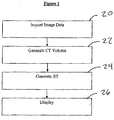
Figure 1 is a flowchart describing a general step of a method of the present invention; -
Figure 2 is a flowchart describing a general step of a method of the present invention; -
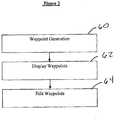
Figure 3 is a flowchart describing a general step of a method of the present invention; -
Figure 4 is a user interface of an embodiment of the system of the present invention; and -
Figure 5 is a user interface of an embodiment of the system of the present invention. - Generally, the present invention includes a system and method for constructing, selecting and presenting pathway(s) to a target location within an anatomical luminal network in a patient. The present invention is particularly, but not exclusively, suited for guiding and navigating a probe through the bronchial airways of the lungs. The present invention includes a preoperative and an operative component. The preoperative component is conducted prior to navigation and can be categorized as "Pathway Planning." The operative component is conducted during navigation and can be categorized as "Navigation."
- The pathway planning phase includes three general steps, each of which is described in more detail below. The first step involves using a software graphical interface for generating and viewing a three-dimensional model of the bronchial airway tree ("BT"). The second step involves using the software graphical interface for selection of a pathway on the BT, either automatically, semi-automatically, or manually, if desired. The third step involves an automatic segmentation of the pathway(s) into a set of waypoints along the path that can be visualized on a display. It is to be understood that the airways are being used herein as an example of a branched luminal anatomical network. Hence, the term "BT" is being used in a general sense to represent any such luminal network, and not to be construed to only refer to a bronchial tree, despite that the initials "BT" may not apply to other networks.
- Referring now to
Figure 1 , there is shown a flowchart describing the first step - using a software graphical interface for generating and viewing a BT. At 20, the first step begins with importing CT scan images, preferably in a DICOM format, into the software. The data may be imported into the software using any data transfer media, including but not limited to CDs, memory cards, network connections, etc. - At 22 the software processes the CT scans and assembles them into a three-dimensional CT volume by arranging the scans in the order they were taken and spacing them apart according to the setting on the CT when they were taken. The software may perform a data fill function to create a seamless three-dimensional model.
- At 24, the software uses the newly-constructed CT volume to generate a three-dimensional map, or BT, of the airways. The three dimensional map can either be skeletonized, such that each airway is represented as a line, or it may be include airways having dimensions representative of their respective diameters. Preferably, when the BT Is being generated, the airways are marked with an airflow direction (inhalation, exhalation, or separate arrows for each) for later use during the pathway generation step. It is envisioned that this step is optional. The CT volume may be used as it is.
- At 26, the software displays a representation of the three-dimensional map on a user interface, such as a computer monitor.
- Referring now to
Figure 2 , there is shown a flowchart describing the second step - using the software graphical interface for selection of a pathway on the BT. At 40, the second step begins with a determination, by the software, of an appropriate pathway to a selected target. - In one embodiment, the software includes an algorithm that does this by beginning at the selected target and following lumina back to the entry point. Using the airways as an example, the target is first selected. The software then selects a point in the airways nearest the target. If the point closest to the target is in an airway segment that is between branches, the software has to choose between two directional choices. If the airways of the BT were marked with airflow direction, the software moves in the opposite direction of the arrows, thereby automatically generating a pathway to the entry point.
- Alternatively, the pathway to the target may be determined using airway diameter. Moving toward the entry point (the trachea) results in an increased airway diameter while moving distally results in a decreased airway diameter. Hence, the software could choose to move in the direction of increased airway diameter. If the point closes to the target is in an airway segment that includes one or more branches, the choices are more numerous but the following the path of the greatest increase in airway diameter will still result in the correct path to the entry point.
- Though unlikely, in the event that an incorrect path is taken, the software would eventually detect an inevitable decrease in diameter, if this is the case, the software would automatically abort that path and revert to the last decision-making point. The algorithm will resume, blocking off the incorrect path as an option.
- At 42, after the pathway has been determined or concurrently with the pathway determination, the suggested pathway is displayed for user review. Preferably, the entire BT will be displayed with the suggested pathway highlighted in some fashion. The user will have zoom and pan functions for customizing the display.
- At 44, the user is given the opportunity to edit and confirm the pathway. There may be reasons an alternative pathway is desirable. For example, though the targeted lesion is closest to a particular airway, there may be an artery or a lobe division between the selected airway and the target. Hence, it is important to provide the user with editing ability.
- Referring now to
Figure 3 , there is shown a flowchart describing the third step - using the software to automatically generate waypoints. At 60, the third step begins by designating each of the decision making points from 40 ofstep 2 as waypoints. This may happen concurrently with 40. Each time the software, while navigating backwards toward the trachea, was presented with navigational choices, the user navigating toward the target will necessarily also be presented with choices. Hence, it is logical to designate those decision-making points as waypoints along the path to the target. - At 62, the waypoints appear on the suggested pathway, and may be labeled in such a way as to distinguish them from each other. For example, the waypoints may be numbered, beginning at 1, in the order that they appear. Preferably, the waypoints are positioned just downstream of each bifurcation, instead of at the bifurcation. In this way, providing navigation directions to the waypoint results in the probe being positioned in the appropriate airway once the waypoint has been reached. Hence, the physician can begin navigation to the next waypoint by simply advancing the probe without being concerned about advancing down an incorrect airway.
- At 64, the user is given the opportunity to edit the waypoints. It is understood that the second and third steps may occur concurrently. If the user Is editing the pathway to the target, the user will also be selecting alternative waypoints, as one in the art will realize.
- In addition to the editing features described above, the software presents a "fly-through" feature that presents the user with the opportunity to view the user interface as it would appear from start to finish if the procedure was performed as planned. A preferred embodiment of one view the user interface is shown in
Figure 4 . - The
interface 80 is divided into four quadrants, 82, 84, 86 and 88. The upper-leftquadrant 82 is a lateral view of the CT volume of the lungs, i.e. as though looking parallel to the spine of the patient. The lower-leftquadrant 84 is a birds-eye view of the CT volume of the lungs. The upper-right quadrant 86 is a side view of the CT volume of the lungs. The lower-right quadrant 88 is a three-dimensional perspective view inside a virtual airway of the BT. Cross-hairs 90 span over all of the quadrants to show the present location of the LG. The cross-hairs 90 in quadrant 88 are shown in a perspective format. - The heading "Navigation" refers to the processes occurring during the actual procedure. Referring now to
Figure 5 , there is shown auser interface 100 that assists the user in navigating to the target. This view of theuser interface 100 includes fourquadrants Interface 80 may be displayed. However, pertinent to the navigation discussion is the view shown in the lower-right quadrant 108. -
Quadrant 108 is shown as displaying an LG steering indicator. Thedestination 110 appears as a circle which floats over thequadrant 108 and moves when the LG is turned. Thedestination 110 represents the next waypoint to which the user is navigating, or the final destination (targeted lesion) in the event that the last waypoint has been passed. - When the distal tip of the LG is pointing directly at the
destination 110, thedestination 110 appears in the center of the circle 112. If the LG is not pointing directly at thedestination 110, thedestination 110 is located in a representative location in or out of the circle 112. For example, if the LG is pointing down and right of thedestination 110 in the body (in other words, thedestination 110 is above and left of where the LG Is pointing), thedestination 110 on the display inquadrant 108 will appear above and left of the center of the circle 112. If the LG is deflected away from thedestination 110 far enough, thedestination 110 may not even appear in thequadrant 108. For this reason, aguide arrow 114 appears "somewhere on the circle 112. Theguide arrow 114 tells the user which direction the LG must be deflected to align the tip with thedestination 110. - Although the invention has been described in terms of particular embodiments and applications, one of ordinary skill in the art, in light of this teaching, can generate additional embodiments and modifications without departing from the spirit of or exceeding the scope of the claimed invention. Accordingly, it is to be understood that the drawings and descriptions herein are proffered by way of example to facilitate comprehension of the invention and should not be construed to limit the scope thereof.
The invention is described by the following numbered paragraphs:- - 1. A method of providing a pathway through a luminal network of a patient from an entry point to a target comprising:
- collecting data regarding an anatomy of a luminal network;
- developing a three-dimensional map of said luminal network using said data;
- displaying a representation of said map on a user interface;
- selecting a target on said map;
- providing an algorithm that automatically determines a pathway from a selected entry point to said target;
- displaying said determined pathway on said user interface;
- providing an algorithm that automatically assigns and displays waypoints along said pathway.
- 2. The method of paragraph 1 wherein collecting data regarding an anatomy of a luminal network comprises taking a plurality of images of said luminal network.
- 3. The method of
paragraph 2 wherein taking a plurality of images of said luminal network comprises taking a plurality of CT scans of said luminal network. - 4. The method of paragraph 3 wherein developing a three-dimensional map of said luminal network using said data comprises assembling said plurality of CT scans and performing a data fill function to create a seamless three-dimensional model.
- 5. The method of paragraph 1 wherein developing a three-dimensional map of said luminal network comprises developing a skeletonized three-dimensional map of said luminal network.
- 6. The method of paragraph 1 wherein said algorithm automatically determines said pathway by performing steps comprising:
- beginning at said selected target;
- following lumina back to said entry point.
- 7. The method of paragraph 6 wherein following lumina back to said entry point comprises;
selecting a point within said lumina proximate said target;
determining a lumen diameter at said point;
selecting a second point outside a plane of said lumen diameter;
determining a second diameter at said second point;
continuing to select successive points having increasing diameters until said entry point is reached. - 8. The method of paragraph 6 wherein said luminal network comprises airways and developing a three-dimensional map of said luminal network using said data comprises labelling said map with exhalation air flow direction through said luminal network.
- 9. The method of paragraph 8 wherein following lumina back to said entry point comprises following said airflow direction labels back to said entry point.
- 10. The method of paragraph 1 wherein providing an algorithm that automatically assigns displays waypoints along said pathway comprises providing an algorithm that detects airway intersections.
- 11. The method of paragraph 10 wherein providing an algorithm that detects airway intersections further comprises providing an algorithm that detects airway intersections and designates a point spaced apart from said intersection, and on said pathway, as a waypoint.
- 12. The method of paragraph 11 wherein providing an algorithm that detects airway intersections and designates a point spaced apart from said intersection, and on said pathway, as a waypoint comprises providing an algorithm that detects airway intersections and designates a point spaced apart from said intersection toward said target, and on said pathway, as a waypoint.
- 13. The method of paragraph 1 wherein displaying said determined pathway on said user interface comprises providing a user with zoom and pan functions.
- 14. The method of paragraph 1 wherein providing an algorithm that automatically assigns and displays waypoints along said pathway comprises providing an algorithm that numbers said waypoints consecutively along said pathway.
- 15. The method of paragraph 1 further comprising providing an algorithm that generates a fly-through feature that displays a simulated navigation view from the entry point to the target on said user interface.
- 16. A method of providing a pathway through a luminal network of a patient from an entry point to a target comprising:
- providing a three-dimensional map of said luminal network;
- selecting a target on said map;
- providing an algorithm that automatically determines a pathway from a selected entry point to said target;
- displaying said determined pathway on said user interface.
- 17. The method of paragraph 16 further comprising providing an algorithm that automatically assigns and displays waypoints along said pathway.
- 18. The method of paragraph 17 wherein providing an algorithm that automatically assigns displays waypoints along said pathway comprises providing an algorithm that detects airway intersections.
- 19. The method of paragraph 18 wherein providing an algorithm that detects airway intersections further comprises providing an algorithm that detects airway intersections and designates a point spaced apart from said intersection, and on said pathway, as a waypoint.
- 20. The method of paragraph 19 wherein providing an algorithm that detects airway intersections and designates a point spaced apart from said intersection, and on said pathway, as a waypoint comprises providing an algorithm that detects airway intersections and designates a point spaced apart from said intersection toward said target, and on said pathway, as a waypoint.
- 21. The method of paragraph 16 wherein displaying said determined pathway on said user interface comprises providing a user with zoom and pan functions.
- 22. The method of paragraph 17 wherein providing an algorithm that automatically assigns and displays waypoints along said pathway comprises providing an algorithm that numbers said waypoints consecutively along said pathway.
- 23. The method of paragraph 16 further comprising providing an algorithm that generates a fly-through feature that displays a simulated navigation view from the entry point to the target on said user interface.
Claims (14)
- A computer-implemented method of providing a pathway through a luminal network of a patient, the computer-implemented method comprising:displaying a three-dimensional map of the luminal network;identifying a target on said map;determining a pathway from an entry point to the target;displaying the pathway in the three-dimensional map of the luminal network;detecting at least two luminal intersections; andassigning and displaying waypoints in the tree-dimensional map of the luminal network along the pathway at a point spaced apart from the at least two luminal intersections for use as navigational guidance along the pathway.
- The method of claim 1 further comprising providing a user with zoom and pan functions for displaying the three-dimensional map of the luminal network.
- The method of claim 1 or 2, further comprising running an algorithm that generates a fly-through feature that displays a simulated navigation view from the entry point to the target on a user interface.
- The method of any preceding claim, further comprising:collecting data regarding an anatomy of the luminal network; anddeveloping the three-dimensional map of the luminal network using the collected data.
- The method of claim 4 wherein collecting of the data regarding the anatomy of the luminal network comprises taking a plurality of images of said luminal network.
- The method of claim 5,
wherein taking the plurality of images of the luminal network comprises taking a plurality of CT scans of the luminal network, and wherein the developing the three-dimensional map of the luminal network using the collected data comprises assembling the plurality of CT scans. - The method of claim 5 or 6, wherein the developing of the three-dimensional map of the luminal network comprises developing a skeletonized three-dimensional map of the luminal network.
- The method of any one of claims 4 to 7 wherein the luminal network comprises airways.
- The method of claim 8, wherein the developing of the three-dimensional map of the luminal network using the data comprises labelling said map with air flow direction through said luminal network; and
wherein the labels indicate the exhalation air flow direction through said luminal network. - The method of any one of claims 1 to 7 wherein the pathway is automatically determined by performing steps comprising:
beginning at said identified target, following lumina back to said entry point by:selecting a point within the lumina proximate to the target,determining a lumen diameter at said point,selecting a second point outside a plane of said lumen diameter,determining a second diameter at said second point, andcontinuing to select successive points having increasing diameters until said entry point is reached. - A computer program comprising program instructions which, when executed within a computer system, cause the computer system to perform the method of any preceding claim.
- A system of providing a pathway through a luminal network of a patient, the system comprising a computer system including a display for displaying a user interface, and software which when run on the computer system causes the computer system to perform the method of any of claims 1 to 10.
- A system of providing a pathway through a luminal network of a patient, the system comprising a computer system including a display for displaying a user interface, and software which when run on the computer system causes the computer system to:display a three-dimensional map of the luminal network on the graphical user interface;identify a target on the three-dimensional map of the luminal network;automatically determine a pathway from the target to an entry point;display said determined pathway in the three-dimensional map on the user interface; andautomatically assign and display a waypoint at a point spaced apart from an intersection on said pathway for use as navigational guidance along the pathway.
- A system according to claim 12 or 13 wherein the software when run on the computer system further causes the computer system to:collect data regarding an anatomy of the luminal network; anddevelop the three-dimensional map of said luminal network using the collected data.
Applications Claiming Priority (3)
| Application Number | Priority Date | Filing Date | Title |
|---|---|---|---|
| US5352308P | 2008-05-15 | 2008-05-15 | |
| PCT/IB2009/005609 WO2009138871A2 (en) | 2008-05-15 | 2009-05-15 | Automatic pathway and waypoint generation and navigation method |
| EP09746166.9A EP2299924B1 (en) | 2008-05-15 | 2009-05-15 | Automatic pathway and waypoint generation and navigation method |
Related Parent Applications (1)
| Application Number | Title | Priority Date | Filing Date |
|---|---|---|---|
| EP09746166.9A Division EP2299924B1 (en) | 2008-05-15 | 2009-05-15 | Automatic pathway and waypoint generation and navigation method |
Publications (2)
| Publication Number | Publication Date |
|---|---|
| EP3603559A1 true EP3603559A1 (en) | 2020-02-05 |
| EP3603559B1 EP3603559B1 (en) | 2021-06-30 |
Family
ID=41319112
Family Applications (2)
| Application Number | Title | Priority Date | Filing Date |
|---|---|---|---|
| EP09746166.9A Active EP2299924B1 (en) | 2008-05-15 | 2009-05-15 | Automatic pathway and waypoint generation and navigation method |
| EP19198334.5A Active EP3603559B1 (en) | 2008-05-15 | 2009-05-15 | Automatic pathway and waypoint generation and navigation method |
Family Applications Before (1)
| Application Number | Title | Priority Date | Filing Date |
|---|---|---|---|
| EP09746166.9A Active EP2299924B1 (en) | 2008-05-15 | 2009-05-15 | Automatic pathway and waypoint generation and navigation method |
Country Status (4)
| Country | Link |
|---|---|
| US (5) | US8218846B2 (en) |
| EP (2) | EP2299924B1 (en) |
| ES (1) | ES2882565T3 (en) |
| WO (1) | WO2009138871A2 (en) |
Families Citing this family (86)
| Publication number | Priority date | Publication date | Assignee | Title |
|---|---|---|---|---|
| EP3492008B1 (en) | 2005-09-13 | 2021-06-02 | Veran Medical Technologies, Inc. | Apparatus and method for image guided accuracy verification |
| US20070066881A1 (en) | 2005-09-13 | 2007-03-22 | Edwards Jerome R | Apparatus and method for image guided accuracy verification |
| DE102010007177B4 (en) * | 2010-02-08 | 2017-06-22 | Siemens Healthcare Gmbh | Display method for an image of the interior of a vessel located in front of a widening device and display device corresponding thereto |
| US8672837B2 (en) | 2010-06-24 | 2014-03-18 | Hansen Medical, Inc. | Methods and devices for controlling a shapeable medical device |
| US10264947B2 (en) | 2010-08-20 | 2019-04-23 | Veran Medical Technologies, Inc. | Apparatus and method for airway registration and navigation |
| US9111386B2 (en) | 2010-11-02 | 2015-08-18 | Covidien Lp | Image viewing application and method for orientationally sensitive display devices |
| US20160038252A1 (en) | 2011-02-17 | 2016-02-11 | The Trustees Of Dartmouth College | Systems And Methods for Guiding Tissue Resection |
| US10391277B2 (en) | 2011-02-18 | 2019-08-27 | Voxel Rad, Ltd. | Systems and methods for 3D stereoscopic angiovision, angionavigation and angiotherapeutics |
| EP2785270B1 (en) * | 2011-12-03 | 2019-05-01 | Koninklijke Philips N.V. | Automatic depth scrolling and orientation adjustment for semi-automated path planning |
| EP2816966B1 (en) | 2012-02-22 | 2023-10-25 | Veran Medical Technologies, Inc. | Steerable surgical catheter comprising a biopsy device at the distal end portion thereof |
| US9091628B2 (en) | 2012-12-21 | 2015-07-28 | L-3 Communications Security And Detection Systems, Inc. | 3D mapping with two orthogonal imaging views |
| US10328280B2 (en) | 2013-02-08 | 2019-06-25 | Covidien Lp | System and method for lung denervation |
| EP2953532B1 (en) * | 2013-02-08 | 2020-01-15 | Covidien LP | System for lung denervation |
| US9057600B2 (en) | 2013-03-13 | 2015-06-16 | Hansen Medical, Inc. | Reducing incremental measurement sensor error |
| US9161814B2 (en) | 2013-03-15 | 2015-10-20 | Covidien Lp | Microwave energy-delivery device and system |
| US9925009B2 (en) | 2013-03-15 | 2018-03-27 | Covidien Lp | Pathway planning system and method |
| US9119650B2 (en) | 2013-03-15 | 2015-09-01 | Covidien Lp | Microwave energy-delivery device and system |
| US9301723B2 (en) | 2013-03-15 | 2016-04-05 | Covidien Lp | Microwave energy-delivery device and system |
| US9459770B2 (en) | 2013-03-15 | 2016-10-04 | Covidien Lp | Pathway planning system and method |
| US9639666B2 (en) | 2013-03-15 | 2017-05-02 | Covidien Lp | Pathway planning system and method |
| US9014851B2 (en) | 2013-03-15 | 2015-04-21 | Hansen Medical, Inc. | Systems and methods for tracking robotically controlled medical instruments |
| US9271663B2 (en) | 2013-03-15 | 2016-03-01 | Hansen Medical, Inc. | Flexible instrument localization from both remote and elongation sensors |
| US9629595B2 (en) | 2013-03-15 | 2017-04-25 | Hansen Medical, Inc. | Systems and methods for localizing, tracking and/or controlling medical instruments |
| US11020016B2 (en) | 2013-05-30 | 2021-06-01 | Auris Health, Inc. | System and method for displaying anatomy and devices on a movable display |
| US10448861B2 (en) * | 2013-09-06 | 2019-10-22 | Covidien Lp | System and method for light based lung visualization |
| EP3689284B1 (en) | 2013-10-24 | 2025-02-26 | Auris Health, Inc. | System for robotic-assisted endolumenal surgery |
| US20150305650A1 (en) | 2014-04-23 | 2015-10-29 | Mark Hunter | Apparatuses and methods for endobronchial navigation to and confirmation of the location of a target tissue and percutaneous interception of the target tissue |
| US20150305612A1 (en) | 2014-04-23 | 2015-10-29 | Mark Hunter | Apparatuses and methods for registering a real-time image feed from an imaging device to a steerable catheter |
| US11188285B2 (en) | 2014-07-02 | 2021-11-30 | Covidien Lp | Intelligent display |
| CN106572834B (en) | 2014-07-02 | 2019-12-03 | 柯惠有限合伙公司 | Align CT |
| US9770216B2 (en) * | 2014-07-02 | 2017-09-26 | Covidien Lp | System and method for navigating within the lung |
| US9603668B2 (en) | 2014-07-02 | 2017-03-28 | Covidien Lp | Dynamic 3D lung map view for tool navigation inside the lung |
| US10624697B2 (en) | 2014-08-26 | 2020-04-21 | Covidien Lp | Microwave ablation system |
| US9986983B2 (en) | 2014-10-31 | 2018-06-05 | Covidien Lp | Computed tomography enhanced fluoroscopic system, device, and method of utilizing the same |
| CA2989342A1 (en) * | 2015-06-12 | 2016-12-15 | The Trustees Of Dartmouth College | Systems and methods for guiding tissue resection |
| WO2017015738A1 (en) * | 2015-07-27 | 2017-02-02 | Synaptive Medical (Barbados) Inc. | Navigational feedback for intraoperative waypoint |
| CN108778113B (en) | 2015-09-18 | 2022-04-15 | 奥瑞斯健康公司 | Navigation of tubular networks |
| US10143526B2 (en) | 2015-11-30 | 2018-12-04 | Auris Health, Inc. | Robot-assisted driving systems and methods |
| US11172895B2 (en) | 2015-12-07 | 2021-11-16 | Covidien Lp | Visualization, navigation, and planning with electromagnetic navigation bronchoscopy and cone beam computed tomography integrated |
| US10813692B2 (en) | 2016-02-29 | 2020-10-27 | Covidien Lp | 90-degree interlocking geometry for introducer for facilitating deployment of microwave radiating catheter |
| WO2017167365A1 (en) * | 2016-03-31 | 2017-10-05 | Brainlab Ag | Atlas-based calculation of a flight-path through a virtual representation of anatomical structures |
| EP4238490B1 (en) | 2016-06-30 | 2025-09-17 | Intuitive Surgical Operations, Inc. | Graphical user interface for displaying guidance information during an image-guided procedure |
| CN114027987B (en) * | 2016-06-30 | 2024-09-13 | 直观外科手术操作公司 | A graphical user interface that displays guidance information in multiple modes during image-guided procedures |
| US10631933B2 (en) | 2016-08-31 | 2020-04-28 | Covidien Lp | Pathway planning for use with a navigation planning and procedure system |
| US10238455B2 (en) | 2016-08-31 | 2019-03-26 | Covidien Lp | Pathway planning for use with a navigation planning and procedure system |
| US10939963B2 (en) | 2016-09-01 | 2021-03-09 | Covidien Lp | Systems and methods for providing proximity awareness to pleural boundaries, vascular structures, and other critical intra-thoracic structures during electromagnetic navigation bronchoscopy |
| JP7170631B2 (en) | 2016-10-05 | 2022-11-14 | ニューヴェイジヴ,インコーポレイテッド | Surgical navigation system and related methods |
| US20180140359A1 (en) | 2016-11-21 | 2018-05-24 | Covidien Lp | Electromagnetic navigation registration using ultrasound |
| US10244926B2 (en) | 2016-12-28 | 2019-04-02 | Auris Health, Inc. | Detecting endolumenal buckling of flexible instruments |
| EP3360482A1 (en) * | 2017-02-09 | 2018-08-15 | Koninklijke Philips N.V. | Iso-centering in c-arm computer tomography |
| AU2018243364B2 (en) | 2017-03-31 | 2023-10-05 | Auris Health, Inc. | Robotic systems for navigation of luminal networks that compensate for physiological noise |
| US11937880B2 (en) | 2017-04-18 | 2024-03-26 | Intuitive Surgical Operations, Inc. | Graphical user interface for monitoring an image-guided procedure |
| WO2018221508A1 (en) | 2017-06-02 | 2018-12-06 | テルモ株式会社 | Route selection assist system, recording medium for recording route selection assist program, route selection assist method, and diagnosis method |
| US10022192B1 (en) | 2017-06-23 | 2018-07-17 | Auris Health, Inc. | Automatically-initialized robotic systems for navigation of luminal networks |
| US11058493B2 (en) | 2017-10-13 | 2021-07-13 | Auris Health, Inc. | Robotic system configured for navigation path tracing |
| US10555778B2 (en) | 2017-10-13 | 2020-02-11 | Auris Health, Inc. | Image-based branch detection and mapping for navigation |
| WO2019118767A1 (en) | 2017-12-14 | 2019-06-20 | Auris Health, Inc. | System and method for estimating instrument location |
| US11160615B2 (en) * | 2017-12-18 | 2021-11-02 | Auris Health, Inc. | Methods and systems for instrument tracking and navigation within luminal networks |
| WO2019134898A1 (en) | 2018-01-02 | 2019-07-11 | Koninklijke Philips N.V. | Animated position display of an oss interventional device |
| US11464576B2 (en) | 2018-02-09 | 2022-10-11 | Covidien Lp | System and method for displaying an alignment CT |
| JP7214747B2 (en) | 2018-03-28 | 2023-01-30 | オーリス ヘルス インコーポレイテッド | System and method for position sensor alignment |
| US20190298305A1 (en) | 2018-03-28 | 2019-10-03 | Covidien Lp | Electromagnetic navigation bronchoscopy using ultrasound |
| JP7225259B2 (en) | 2018-03-28 | 2023-02-20 | オーリス ヘルス インコーポレイテッド | Systems and methods for indicating probable location of instruments |
| AU2019268287B2 (en) | 2018-05-15 | 2021-07-08 | CairnSurgical, Inc. | Devices for guiding tissue treatment and/or tissue removal procedures |
| CN114601559B (en) | 2018-05-30 | 2024-05-14 | 奥瑞斯健康公司 | System and medium for positioning sensor based branch prediction |
| EP4454591A3 (en) | 2018-05-31 | 2025-01-15 | Auris Health, Inc. | Path-based navigation of tubular networks |
| CN110831538B (en) | 2018-05-31 | 2023-01-24 | 奥瑞斯健康公司 | Image-based airway analysis and mapping |
| US11503986B2 (en) | 2018-05-31 | 2022-11-22 | Auris Health, Inc. | Robotic systems and methods for navigation of luminal network that detect physiological noise |
| JP7536752B2 (en) | 2018-09-28 | 2024-08-20 | オーリス ヘルス インコーポレイテッド | Systems and methods for endoscope-assisted percutaneous medical procedures - Patents.com |
| US10806339B2 (en) | 2018-12-12 | 2020-10-20 | Voxel Rad, Ltd. | Systems and methods for treating cancer using brachytherapy |
| US12478444B2 (en) | 2019-03-21 | 2025-11-25 | The Board Of Trustees Of The Leland Stanford Junior University | Systems and methods for localization based on machine learning |
| US12089902B2 (en) | 2019-07-30 | 2024-09-17 | Coviden Lp | Cone beam and 3D fluoroscope lung navigation |
| US11207141B2 (en) | 2019-08-30 | 2021-12-28 | Auris Health, Inc. | Systems and methods for weight-based registration of location sensors |
| EP4021329B1 (en) | 2019-08-30 | 2025-12-10 | Auris Health, Inc. | Instrument image reliability systems and methods |
| US11612440B2 (en) | 2019-09-05 | 2023-03-28 | Nuvasive, Inc. | Surgical instrument tracking devices and related methods |
| CN114929148B (en) | 2019-12-31 | 2024-05-10 | 奥瑞斯健康公司 | Alignment interface for percutaneous access |
| EP4084720A4 (en) | 2019-12-31 | 2024-01-17 | Auris Health, Inc. | Alignment techniques for percutaneous access |
| KR20220123273A (en) | 2019-12-31 | 2022-09-06 | 아우리스 헬스, 인코포레이티드 | Anatomical feature identification and targeting |
| US11737663B2 (en) | 2020-03-30 | 2023-08-29 | Auris Health, Inc. | Target anatomical feature localization |
| EP4167892A4 (en) | 2020-06-19 | 2024-10-30 | Remedy Robotics, Inc. | SYSTEMS AND METHODS FOR GUIDING INTRALUMINAL DEVICES WITHIN THE VASCULAR SYSTEM |
| EP3928707A1 (en) | 2020-06-28 | 2021-12-29 | Koninklijke Philips N.V. | Determining needle position |
| EP4222718A1 (en) * | 2020-10-01 | 2023-08-09 | Covidien LP | Systems and method of planning thoracic surgery |
| US11707332B2 (en) | 2021-07-01 | 2023-07-25 | Remedy Robotics, Inc. | Image space control for endovascular tools |
| CA3222522A1 (en) | 2021-07-01 | 2023-01-05 | David James Bell | Vision-based position and orientation determination for endovascular tools |
| US12121307B2 (en) | 2021-07-01 | 2024-10-22 | Remedy Robotics, Inc. | Vision-based position and orientation determination for endovascular tools |
| US20250152252A1 (en) * | 2022-02-23 | 2025-05-15 | Covidien Lp | Mri based navigation |
Citations (16)
| Publication number | Priority date | Publication date | Assignee | Title |
|---|---|---|---|---|
| US6188355B1 (en) | 1997-12-12 | 2001-02-13 | Super Dimension Ltd. | Wireless six-degree-of-freedom locator |
| US6226543B1 (en) | 1998-09-24 | 2001-05-01 | Super Dimension Ltd. | System and method of recording and displaying in context of an image a location of at least one point-of-interest in a body during an intra-body medical procedure |
| US20020193686A1 (en) | 2000-01-10 | 2002-12-19 | Pinhas Gilboa | Methods and systems for performing medical procedures with reference to projective image and with respect to pre-stored images |
| US20030074011A1 (en) | 1998-09-24 | 2003-04-17 | Super Dimension Ltd. | System and method of recording and displaying in context of an image a location of at least one point-of-interest in a body during an intra-body medical procedure |
| US6574498B1 (en) | 1999-09-16 | 2003-06-03 | Super Dimension Ltd. | Linking of an intra-body tracking system to external reference coordinates |
| US6593884B1 (en) | 1998-08-02 | 2003-07-15 | Super Dimension Ltd. | Intrabody navigation system for medical applications |
| US6615155B2 (en) | 2000-03-09 | 2003-09-02 | Super Dimension Ltd. | Object tracking using a single sensor or a pair of sensors |
| US6702780B1 (en) | 1999-09-08 | 2004-03-09 | Super Dimension Ltd. | Steering configuration for catheter with rigid distal device |
| US6711429B1 (en) | 1998-09-24 | 2004-03-23 | Super Dimension Ltd. | System and method for determining the location of a catheter during an intra-body medical procedure |
| US20040249267A1 (en) | 2002-04-17 | 2004-12-09 | Pinhas Gilboa | Endoscope structures and techniques for navigating to a target in branched structure |
| US6974788B2 (en) | 2004-03-12 | 2005-12-13 | Chevron Oronite Company Llc. | Zeolite Y alkylation catalysts |
| US6996430B1 (en) | 1999-08-16 | 2006-02-07 | Super Dimension Ltd | Method and system for displaying cross-sectional images of a body |
| US20060149134A1 (en) * | 2003-12-12 | 2006-07-06 | University Of Washington | Catheterscope 3D guidance and interface system |
| US20070049861A1 (en) * | 2005-08-05 | 2007-03-01 | Lutz Gundel | Device and method for automated planning of an access path for a percutaneous, minimally invasive intervention |
| US20070092864A1 (en) * | 2005-09-30 | 2007-04-26 | The University Of Iowa Research Foundation | Treatment planning methods, devices and systems |
| US20070293721A1 (en) * | 2004-03-29 | 2007-12-20 | Pinhas Gilboa | Endoscope Structures And Techniques For Navigating To A Target In Branched Structure |
Family Cites Families (75)
| Publication number | Priority date | Publication date | Assignee | Title |
|---|---|---|---|---|
| US5391199A (en) | 1993-07-20 | 1995-02-21 | Biosense, Inc. | Apparatus and method for treating cardiac arrhythmias |
| US5558091A (en) | 1993-10-06 | 1996-09-24 | Biosense, Inc. | Magnetic determination of position and orientation |
| US6690963B2 (en) | 1995-01-24 | 2004-02-10 | Biosense, Inc. | System for determining the location and orientation of an invasive medical instrument |
| US5752513A (en) | 1995-06-07 | 1998-05-19 | Biosense, Inc. | Method and apparatus for determining position of object |
| US5729129A (en) | 1995-06-07 | 1998-03-17 | Biosense, Inc. | Magnetic location system with feedback adjustment of magnetic field generator |
| DE69726576T2 (en) | 1996-02-15 | 2004-10-14 | Biosense, Inc., Miami | Placemark sample |
| ES2243976T3 (en) | 1996-02-15 | 2005-12-01 | Biosense Webster, Inc. | MOBILE TRANSMISSION OR RECEPTION COILS FOR LOCATION SYSTEM. |
| IL125761A (en) | 1996-02-15 | 2005-05-17 | Biosense Inc | Independently positionable transducers for location system |
| DE69733815T2 (en) | 1996-02-15 | 2006-06-08 | Biosense Webster, Inc., Diamond Bar | PROBE FOR EXCAVATION |
| ES2241037T3 (en) | 1996-02-15 | 2005-10-16 | Biosense Webster, Inc. | PRECISE DETERMINATION OF THE POSITION OF ENDOSCOPES. |
| US6453190B1 (en) | 1996-02-15 | 2002-09-17 | Biosense, Inc. | Medical probes with field transducers |
| DE69733341T2 (en) | 1996-02-27 | 2006-02-02 | Biosense Webster, Inc., Diamond Bar | LOCATION PROCESS WITH FIELD ASSESSMENT SEQUENCES |
| IL126864A (en) | 1996-05-06 | 2003-05-29 | Biosense Inc | Method and apparatus for calibrating a magnetic field generator |
| US6016439A (en) | 1996-10-15 | 2000-01-18 | Biosense, Inc. | Method and apparatus for synthetic viewpoint imaging |
| US5928248A (en) | 1997-02-14 | 1999-07-27 | Biosense, Inc. | Guided deployment of stents |
| US6314310B1 (en) | 1997-02-14 | 2001-11-06 | Biosense, Inc. | X-ray guided surgical location system with extended mapping volume |
| US6580938B1 (en) | 1997-02-25 | 2003-06-17 | Biosense, Inc. | Image-guided thoracic therapy and apparatus therefor |
| US6201387B1 (en) | 1997-10-07 | 2001-03-13 | Biosense, Inc. | Miniaturized position sensor having photolithographic coils for tracking a medical probe |
| US6147480A (en) | 1997-10-23 | 2000-11-14 | Biosense, Inc. | Detection of metal disturbance |
| DE69928783T2 (en) | 1998-03-30 | 2006-08-03 | Biosense Webster, Inc., Diamond Bar | THREE-DIMENSIONED MAGNETIC COIL SENSOR |
| US6373240B1 (en) | 1998-10-15 | 2002-04-16 | Biosense, Inc. | Metal immune system for tracking spatial coordinates of an object in the presence of a perturbed energy field |
| JP2002534191A (en) * | 1999-01-04 | 2002-10-15 | コーニンクレッカ フィリップス エレクトロニクス エヌ ヴィ | Method, system and apparatus for processing an image representing a tubular structure and constructing a path through the structure |
| US7840252B2 (en) | 1999-05-18 | 2010-11-23 | MediGuide, Ltd. | Method and system for determining a three dimensional representation of a tubular organ |
| US7386339B2 (en) | 1999-05-18 | 2008-06-10 | Mediguide Ltd. | Medical imaging and navigation system |
| US7778688B2 (en) | 1999-05-18 | 2010-08-17 | MediGuide, Ltd. | System and method for delivering a stent to a selected position within a lumen |
| US7343195B2 (en) | 1999-05-18 | 2008-03-11 | Mediguide Ltd. | Method and apparatus for real time quantitative three-dimensional image reconstruction of a moving organ and intra-body navigation |
| US9572519B2 (en) | 1999-05-18 | 2017-02-21 | Mediguide Ltd. | Method and apparatus for invasive device tracking using organ timing signal generated from MPS sensors |
| US8442618B2 (en) | 1999-05-18 | 2013-05-14 | Mediguide Ltd. | Method and system for delivering a medical device to a selected position within a lumen |
| US6233476B1 (en) | 1999-05-18 | 2001-05-15 | Mediguide Ltd. | Medical positioning system |
| US7366562B2 (en) * | 2003-10-17 | 2008-04-29 | Medtronic Navigation, Inc. | Method and apparatus for surgical navigation |
| US20010034530A1 (en) * | 2000-01-27 | 2001-10-25 | Malackowski Donald W. | Surgery system |
| EP1275086A2 (en) | 2000-04-07 | 2003-01-15 | Stephen R. Aylward | Systems and methods for tubular object processing |
| US6484118B1 (en) | 2000-07-20 | 2002-11-19 | Biosense, Inc. | Electromagnetic position single axis system |
| US6650927B1 (en) | 2000-08-18 | 2003-11-18 | Biosense, Inc. | Rendering of diagnostic imaging data on a three-dimensional map |
| US7286868B2 (en) | 2001-06-15 | 2007-10-23 | Biosense Inc. | Medical device with position sensor having accuracy at high temperatures |
| US20030099390A1 (en) | 2001-11-23 | 2003-05-29 | Xiaolan Zeng | Lung field segmentation from CT thoracic images |
| WO2003094114A1 (en) * | 2002-05-03 | 2003-11-13 | Koninklijke Philips Electronics N.V. | Method of producing and displaying an image of a 3 dimensional volume |
| US7881769B2 (en) | 2002-11-18 | 2011-02-01 | Mediguide Ltd. | Method and system for mounting an MPS sensor on a catheter |
| US7505809B2 (en) | 2003-01-13 | 2009-03-17 | Mediguide Ltd. | Method and system for registering a first image with a second image relative to the body of a patient |
| EP1615554B1 (en) | 2003-04-15 | 2017-12-20 | Philips Intellectual Property & Standards GmbH | Method and arrangement for influencing magnetic particles and detecting interfering material |
| US7783441B2 (en) | 2003-04-17 | 2010-08-24 | Northern Digital Inc. | Eddy current detection and compensation |
| KR20060028682A (en) * | 2003-06-02 | 2006-03-31 | 딥브리즈 엘티디. | Methods and systems for analyzing cardiovascular sound |
| US7321228B2 (en) | 2003-07-31 | 2008-01-22 | Biosense Webster, Inc. | Detection of metal disturbance in a magnetic tracking system |
| US7397364B2 (en) | 2003-11-11 | 2008-07-08 | Biosense Webster, Inc. | Digital wireless position sensor |
| US6995729B2 (en) | 2004-01-09 | 2006-02-07 | Biosense Webster, Inc. | Transponder with overlapping coil antennas on a common core |
| WO2005070318A1 (en) | 2004-01-20 | 2005-08-04 | Philips Intellectual Property & Standards Gmbh | Device and method for navigating a catheter |
| EP1718203B1 (en) | 2004-02-18 | 2012-08-15 | Philips Intellectual Property & Standards GmbH | Correction of measured values for a magnetic localization device |
| WO2005084571A1 (en) | 2004-03-03 | 2005-09-15 | Deutsches Krebsforschungszentrum Stiftung des öffentlichen Rechts | Incremental real time recording of tracked instruments in tubular organ structures inside the human body |
| US7811294B2 (en) | 2004-03-08 | 2010-10-12 | Mediguide Ltd. | Automatic guidewire maneuvering system and method |
| EP1731093B1 (en) | 2004-03-29 | 2013-01-09 | Olympus Corporation | System for detecting position in examinee |
| US7197354B2 (en) | 2004-06-21 | 2007-03-27 | Mediguide Ltd. | System for determining the position and orientation of a catheter |
| US7627361B2 (en) * | 2004-08-24 | 2009-12-01 | Stereotaxis, Inc. | Methods and apparatus for steering medical device in body lumens |
| US7373271B1 (en) | 2004-09-20 | 2008-05-13 | Ascension Technology Corporation | System and method for measuring position and orientation using distortion-compensated magnetic fields |
| US8233681B2 (en) | 2004-09-24 | 2012-07-31 | The University Of North Carolina At Chapel Hill | Methods, systems, and computer program products for hierarchical registration between a blood vessel and tissue surface model for a subject and a blood vessel and tissue surface image for the subject |
| US7236567B2 (en) | 2005-03-24 | 2007-06-26 | Siemens Aktiengesellschaft | Method and apparatus for synchronizing operation of an x-ray system and a magnetic system |
| JP2008535560A (en) | 2005-04-11 | 2008-09-04 | コーニンクレッカ フィリップス エレクトロニクス エヌ ヴィ | 3D imaging for guided interventional medical devices in body volume |
| CA2605360C (en) * | 2005-04-21 | 2017-03-28 | Asthmatx, Inc. | Control methods and devices for energy delivery |
| US7604601B2 (en) | 2005-04-26 | 2009-10-20 | Biosense Webster, Inc. | Display of catheter tip with beam direction for ultrasound system |
| US7324915B2 (en) | 2005-07-14 | 2008-01-29 | Biosense Webster, Inc. | Data transmission to a position sensor |
| US7301332B2 (en) | 2005-10-06 | 2007-11-27 | Biosense Webster, Inc. | Magnetic sensor assembly |
| US20070167806A1 (en) | 2005-11-28 | 2007-07-19 | Koninklijke Philips Electronics N.V. | Multi-modality imaging and treatment |
| US8199984B2 (en) * | 2006-05-02 | 2012-06-12 | National University Corporation Nagoya University | System that assists in observing a luminal organ using the structure of the luminal organ |
| US8150497B2 (en) | 2006-09-08 | 2012-04-03 | Medtronic, Inc. | System for navigating a planned procedure within a body |
| US8160676B2 (en) * | 2006-09-08 | 2012-04-17 | Medtronic, Inc. | Method for planning a surgical procedure |
| US20080086051A1 (en) | 2006-09-20 | 2008-04-10 | Ethicon Endo-Surgery, Inc. | System, storage medium for a computer program, and method for displaying medical images |
| WO2008125910A2 (en) | 2006-11-10 | 2008-10-23 | Superdimension, Ltd. | Adaptive navigation technique for navigating a catheter through a body channel or cavity |
| US20080117210A1 (en) * | 2006-11-22 | 2008-05-22 | Barco N.V. | Virtual endoscopy |
| US7853058B2 (en) * | 2006-11-22 | 2010-12-14 | Toshiba Medical Visualization Systems Europe, Limited | Determining a viewpoint for navigating a virtual camera through a biological object with a lumen |
| IL187667A (en) | 2006-11-27 | 2011-12-29 | Mediguide Ltd | System and method for navigating a surgical needle toward an organ of the body of a patient |
| US8320991B2 (en) | 2006-12-01 | 2012-11-27 | Medtronic Navigation Inc. | Portable electromagnetic navigation system |
| US20080139915A1 (en) | 2006-12-07 | 2008-06-12 | Medtronic Vascular, Inc. | Vascular Position Locating and/or Mapping Apparatus and Methods |
| US7831076B2 (en) | 2006-12-08 | 2010-11-09 | Biosense Webster, Inc. | Coloring electroanatomical maps to indicate ultrasound data acquisition |
| US7879004B2 (en) | 2006-12-13 | 2011-02-01 | University Of Washington | Catheter tip displacement mechanism |
| US9220573B2 (en) | 2007-01-02 | 2015-12-29 | Medtronic Navigation, Inc. | System and method for tracking positions of uniform marker geometries |
| IL188262A (en) | 2007-01-10 | 2011-10-31 | Mediguide Ltd | System and method for superimposing a representation of the tip of a catheter on an image acquired by a moving imager |
-
2009
- 2009-05-14 US US12/466,238 patent/US8218846B2/en active Active
- 2009-05-15 EP EP09746166.9A patent/EP2299924B1/en active Active
- 2009-05-15 EP EP19198334.5A patent/EP3603559B1/en active Active
- 2009-05-15 ES ES19198334T patent/ES2882565T3/en active Active
- 2009-05-15 WO PCT/IB2009/005609 patent/WO2009138871A2/en not_active Ceased
-
2012
- 2012-07-09 US US13/544,468 patent/US8494246B2/en active Active
-
2013
- 2013-06-21 US US13/923,732 patent/US9439564B2/en active Active
- 2013-06-21 US US13/923,821 patent/US9375141B2/en active Active
-
2016
- 2016-09-13 US US15/263,479 patent/US10136814B2/en active Active
Patent Citations (19)
| Publication number | Priority date | Publication date | Assignee | Title |
|---|---|---|---|---|
| US6188355B1 (en) | 1997-12-12 | 2001-02-13 | Super Dimension Ltd. | Wireless six-degree-of-freedom locator |
| US6833814B2 (en) | 1998-08-02 | 2004-12-21 | Super Dimension Ltd. | Intrabody navigation system for medical applications |
| US20030216639A1 (en) | 1998-08-02 | 2003-11-20 | Pinhas Gilboa | Intrabody navigation system for medical applications |
| US6593884B1 (en) | 1998-08-02 | 2003-07-15 | Super Dimension Ltd. | Intrabody navigation system for medical applications |
| US20030074011A1 (en) | 1998-09-24 | 2003-04-17 | Super Dimension Ltd. | System and method of recording and displaying in context of an image a location of at least one point-of-interest in a body during an intra-body medical procedure |
| US6558333B2 (en) | 1998-09-24 | 2003-05-06 | Super Dimension Ltd | System and method of recording and displaying in context of an image a location of at least one point-of-interest in a body during an intra-body medical procedure |
| US6226543B1 (en) | 1998-09-24 | 2001-05-01 | Super Dimension Ltd. | System and method of recording and displaying in context of an image a location of at least one point-of-interest in a body during an intra-body medical procedure |
| US6711429B1 (en) | 1998-09-24 | 2004-03-23 | Super Dimension Ltd. | System and method for determining the location of a catheter during an intra-body medical procedure |
| US6996430B1 (en) | 1999-08-16 | 2006-02-07 | Super Dimension Ltd | Method and system for displaying cross-sectional images of a body |
| US6702780B1 (en) | 1999-09-08 | 2004-03-09 | Super Dimension Ltd. | Steering configuration for catheter with rigid distal device |
| US6574498B1 (en) | 1999-09-16 | 2003-06-03 | Super Dimension Ltd. | Linking of an intra-body tracking system to external reference coordinates |
| US20020193686A1 (en) | 2000-01-10 | 2002-12-19 | Pinhas Gilboa | Methods and systems for performing medical procedures with reference to projective image and with respect to pre-stored images |
| US6615155B2 (en) | 2000-03-09 | 2003-09-02 | Super Dimension Ltd. | Object tracking using a single sensor or a pair of sensors |
| US20040249267A1 (en) | 2002-04-17 | 2004-12-09 | Pinhas Gilboa | Endoscope structures and techniques for navigating to a target in branched structure |
| US20060149134A1 (en) * | 2003-12-12 | 2006-07-06 | University Of Washington | Catheterscope 3D guidance and interface system |
| US6974788B2 (en) | 2004-03-12 | 2005-12-13 | Chevron Oronite Company Llc. | Zeolite Y alkylation catalysts |
| US20070293721A1 (en) * | 2004-03-29 | 2007-12-20 | Pinhas Gilboa | Endoscope Structures And Techniques For Navigating To A Target In Branched Structure |
| US20070049861A1 (en) * | 2005-08-05 | 2007-03-01 | Lutz Gundel | Device and method for automated planning of an access path for a percutaneous, minimally invasive intervention |
| US20070092864A1 (en) * | 2005-09-30 | 2007-04-26 | The University Of Iowa Research Foundation | Treatment planning methods, devices and systems |
Non-Patent Citations (2)
| Title |
|---|
| GIBBS J D ET AL: "3D Path Planning and Extention for Endoscopic Guidance", OPTOMECHATRONIC MICRO/NANO DEVICES AND COMPONENTS III : 8 - 10 OCTOBER 2007, LAUSANNE, SWITZERLAND; [PROCEEDINGS OF SPIE , ISSN 0277-786X], SPIE, BELLINGHAM, WASH, vol. 6509, 18 February 2007 (2007-02-18), pages 65091K - 1, XP002481114, ISBN: 978-1-62841-730-2, DOI: 10.1117/12.708513 * |
| JASON D. GIBBS ET AL: "Integrated system for planning peripheral bronchoscopic procedures", PROCEEDINGS OF SPIE, vol. 6916, 6 March 2008 (2008-03-06), pages 69160H, XP055074549, ISSN: 0277-786X, DOI: 10.1117/12.768707 * |
Also Published As
| Publication number | Publication date |
|---|---|
| US10136814B2 (en) | 2018-11-27 |
| EP2299924A2 (en) | 2011-03-30 |
| US20120281903A1 (en) | 2012-11-08 |
| US20100008555A1 (en) | 2010-01-14 |
| US8218846B2 (en) | 2012-07-10 |
| WO2009138871A2 (en) | 2009-11-19 |
| US20130281838A1 (en) | 2013-10-24 |
| WO2009138871A3 (en) | 2010-01-07 |
| US9375141B2 (en) | 2016-06-28 |
| EP2299924A4 (en) | 2017-08-16 |
| US20160374763A1 (en) | 2016-12-29 |
| EP2299924B1 (en) | 2019-10-16 |
| US8494246B2 (en) | 2013-07-23 |
| EP3603559B1 (en) | 2021-06-30 |
| US20130279782A1 (en) | 2013-10-24 |
| ES2882565T3 (en) | 2021-12-02 |
| US9439564B2 (en) | 2016-09-13 |
Similar Documents
| Publication | Publication Date | Title |
|---|---|---|
| EP3603559B1 (en) | Automatic pathway and waypoint generation and navigation method | |
| US11804308B2 (en) | Pathway planning system and method | |
| JP6586253B2 (en) | Route planning system and method | |
| US12495952B2 (en) | Intelligent display | |
| JP6638027B2 (en) | Path planning system and method | |
| US20220139029A1 (en) | System and method for annotation of anatomical tree structures in 3d images | |
| US20240024029A1 (en) | Systems and method of planning thoracic surgery |
Legal Events
| Date | Code | Title | Description |
|---|---|---|---|
| PUAI | Public reference made under article 153(3) epc to a published international application that has entered the european phase |
Free format text: ORIGINAL CODE: 0009012 |
|
| STAA | Information on the status of an ep patent application or granted ep patent |
Free format text: STATUS: THE APPLICATION HAS BEEN PUBLISHED |
|
| AC | Divisional application: reference to earlier application |
Ref document number: 2299924 Country of ref document: EP Kind code of ref document: P |
|
| AK | Designated contracting states |
Kind code of ref document: A1 Designated state(s): AT BE BG CH CY CZ DE DK EE ES FI FR GB GR HR HU IE IS IT LI LT LU LV MC MK MT NL NO PL PT RO SE SI SK TR |
|
| STAA | Information on the status of an ep patent application or granted ep patent |
Free format text: STATUS: REQUEST FOR EXAMINATION WAS MADE |
|
| 17P | Request for examination filed |
Effective date: 20200730 |
|
| RBV | Designated contracting states (corrected) |
Designated state(s): AT BE BG CH CY CZ DE DK EE ES FI FR GB GR HR HU IE IS IT LI LT LU LV MC MK MT NL NO PL PT RO SE SI SK TR |
|
| GRAP | Despatch of communication of intention to grant a patent |
Free format text: ORIGINAL CODE: EPIDOSNIGR1 |
|
| STAA | Information on the status of an ep patent application or granted ep patent |
Free format text: STATUS: GRANT OF PATENT IS INTENDED |
|
| INTG | Intention to grant announced |
Effective date: 20201221 |
|
| GRAS | Grant fee paid |
Free format text: ORIGINAL CODE: EPIDOSNIGR3 |
|
| GRAA | (expected) grant |
Free format text: ORIGINAL CODE: 0009210 |
|
| STAA | Information on the status of an ep patent application or granted ep patent |
Free format text: STATUS: THE PATENT HAS BEEN GRANTED |
|
| AC | Divisional application: reference to earlier application |
Ref document number: 2299924 Country of ref document: EP Kind code of ref document: P |
|
| AK | Designated contracting states |
Kind code of ref document: B1 Designated state(s): AT BE BG CH CY CZ DE DK EE ES FI FR GB GR HR HU IE IS IT LI LT LU LV MC MK MT NL NO PL PT RO SE SI SK TR |
|
| REG | Reference to a national code |
Ref country code: CH Ref legal event code: EP |
|
| REG | Reference to a national code |
Ref country code: AT Ref legal event code: REF Ref document number: 1405639 Country of ref document: AT Kind code of ref document: T Effective date: 20210715 |
|
| REG | Reference to a national code |
Ref country code: DE Ref legal event code: R096 Ref document number: 602009063849 Country of ref document: DE |
|
| REG | Reference to a national code |
Ref country code: IE Ref legal event code: FG4D |
|
| REG | Reference to a national code |
Ref country code: LT Ref legal event code: MG9D |
|
| PG25 | Lapsed in a contracting state [announced via postgrant information from national office to epo] |
Ref country code: FI Free format text: LAPSE BECAUSE OF FAILURE TO SUBMIT A TRANSLATION OF THE DESCRIPTION OR TO PAY THE FEE WITHIN THE PRESCRIBED TIME-LIMIT Effective date: 20210630 Ref country code: HR Free format text: LAPSE BECAUSE OF FAILURE TO SUBMIT A TRANSLATION OF THE DESCRIPTION OR TO PAY THE FEE WITHIN THE PRESCRIBED TIME-LIMIT Effective date: 20210630 Ref country code: BG Free format text: LAPSE BECAUSE OF FAILURE TO SUBMIT A TRANSLATION OF THE DESCRIPTION OR TO PAY THE FEE WITHIN THE PRESCRIBED TIME-LIMIT Effective date: 20210930 |
|
| REG | Reference to a national code |
Ref country code: NL Ref legal event code: MP Effective date: 20210630 |
|
| REG | Reference to a national code |
Ref country code: AT Ref legal event code: MK05 Ref document number: 1405639 Country of ref document: AT Kind code of ref document: T Effective date: 20210630 |
|
| PG25 | Lapsed in a contracting state [announced via postgrant information from national office to epo] |
Ref country code: GR Free format text: LAPSE BECAUSE OF FAILURE TO SUBMIT A TRANSLATION OF THE DESCRIPTION OR TO PAY THE FEE WITHIN THE PRESCRIBED TIME-LIMIT Effective date: 20211001 Ref country code: SE Free format text: LAPSE BECAUSE OF FAILURE TO SUBMIT A TRANSLATION OF THE DESCRIPTION OR TO PAY THE FEE WITHIN THE PRESCRIBED TIME-LIMIT Effective date: 20210630 Ref country code: LV Free format text: LAPSE BECAUSE OF FAILURE TO SUBMIT A TRANSLATION OF THE DESCRIPTION OR TO PAY THE FEE WITHIN THE PRESCRIBED TIME-LIMIT Effective date: 20210630 Ref country code: NO Free format text: LAPSE BECAUSE OF FAILURE TO SUBMIT A TRANSLATION OF THE DESCRIPTION OR TO PAY THE FEE WITHIN THE PRESCRIBED TIME-LIMIT Effective date: 20210930 |
|
| REG | Reference to a national code |
Ref country code: ES Ref legal event code: FG2A Ref document number: 2882565 Country of ref document: ES Kind code of ref document: T3 Effective date: 20211202 |
|
| PG25 | Lapsed in a contracting state [announced via postgrant information from national office to epo] |
Ref country code: EE Free format text: LAPSE BECAUSE OF FAILURE TO SUBMIT A TRANSLATION OF THE DESCRIPTION OR TO PAY THE FEE WITHIN THE PRESCRIBED TIME-LIMIT Effective date: 20210630 Ref country code: SK Free format text: LAPSE BECAUSE OF FAILURE TO SUBMIT A TRANSLATION OF THE DESCRIPTION OR TO PAY THE FEE WITHIN THE PRESCRIBED TIME-LIMIT Effective date: 20210630 Ref country code: AT Free format text: LAPSE BECAUSE OF FAILURE TO SUBMIT A TRANSLATION OF THE DESCRIPTION OR TO PAY THE FEE WITHIN THE PRESCRIBED TIME-LIMIT Effective date: 20210630 Ref country code: CZ Free format text: LAPSE BECAUSE OF FAILURE TO SUBMIT A TRANSLATION OF THE DESCRIPTION OR TO PAY THE FEE WITHIN THE PRESCRIBED TIME-LIMIT Effective date: 20210630 Ref country code: PT Free format text: LAPSE BECAUSE OF FAILURE TO SUBMIT A TRANSLATION OF THE DESCRIPTION OR TO PAY THE FEE WITHIN THE PRESCRIBED TIME-LIMIT Effective date: 20211102 Ref country code: NL Free format text: LAPSE BECAUSE OF FAILURE TO SUBMIT A TRANSLATION OF THE DESCRIPTION OR TO PAY THE FEE WITHIN THE PRESCRIBED TIME-LIMIT Effective date: 20210630 Ref country code: RO Free format text: LAPSE BECAUSE OF FAILURE TO SUBMIT A TRANSLATION OF THE DESCRIPTION OR TO PAY THE FEE WITHIN THE PRESCRIBED TIME-LIMIT Effective date: 20210630 |
|
| PG25 | Lapsed in a contracting state [announced via postgrant information from national office to epo] |
Ref country code: PL Free format text: LAPSE BECAUSE OF FAILURE TO SUBMIT A TRANSLATION OF THE DESCRIPTION OR TO PAY THE FEE WITHIN THE PRESCRIBED TIME-LIMIT Effective date: 20210630 |
|
| REG | Reference to a national code |
Ref country code: DE Ref legal event code: R097 Ref document number: 602009063849 Country of ref document: DE |
|
| PG25 | Lapsed in a contracting state [announced via postgrant information from national office to epo] |
Ref country code: DK Free format text: LAPSE BECAUSE OF FAILURE TO SUBMIT A TRANSLATION OF THE DESCRIPTION OR TO PAY THE FEE WITHIN THE PRESCRIBED TIME-LIMIT Effective date: 20210630 |
|
| PLBE | No opposition filed within time limit |
Free format text: ORIGINAL CODE: 0009261 |
|
| STAA | Information on the status of an ep patent application or granted ep patent |
Free format text: STATUS: NO OPPOSITION FILED WITHIN TIME LIMIT |
|
| 26N | No opposition filed |
Effective date: 20220331 |
|
| PGFP | Annual fee paid to national office [announced via postgrant information from national office to epo] |
Ref country code: ES Payment date: 20220601 Year of fee payment: 14 |
|
| REG | Reference to a national code |
Ref country code: CH Ref legal event code: PL |
|
| REG | Reference to a national code |
Ref country code: BE Ref legal event code: MM Effective date: 20220531 |
|
| PG25 | Lapsed in a contracting state [announced via postgrant information from national office to epo] |
Ref country code: MC Free format text: LAPSE BECAUSE OF FAILURE TO SUBMIT A TRANSLATION OF THE DESCRIPTION OR TO PAY THE FEE WITHIN THE PRESCRIBED TIME-LIMIT Effective date: 20210630 Ref country code: LU Free format text: LAPSE BECAUSE OF NON-PAYMENT OF DUE FEES Effective date: 20220515 Ref country code: LI Free format text: LAPSE BECAUSE OF NON-PAYMENT OF DUE FEES Effective date: 20220531 Ref country code: CH Free format text: LAPSE BECAUSE OF NON-PAYMENT OF DUE FEES Effective date: 20220531 |
|
| PG25 | Lapsed in a contracting state [announced via postgrant information from national office to epo] |
Ref country code: LT Free format text: LAPSE BECAUSE OF FAILURE TO SUBMIT A TRANSLATION OF THE DESCRIPTION OR TO PAY THE FEE WITHIN THE PRESCRIBED TIME-LIMIT Effective date: 20210630 Ref country code: IE Free format text: LAPSE BECAUSE OF NON-PAYMENT OF DUE FEES Effective date: 20220515 |
|
| PG25 | Lapsed in a contracting state [announced via postgrant information from national office to epo] |
Ref country code: BE Free format text: LAPSE BECAUSE OF NON-PAYMENT OF DUE FEES Effective date: 20220531 |
|
| PGFP | Annual fee paid to national office [announced via postgrant information from national office to epo] |
Ref country code: IT Payment date: 20230420 Year of fee payment: 15 |
|
| PG25 | Lapsed in a contracting state [announced via postgrant information from national office to epo] |
Ref country code: MK Free format text: LAPSE BECAUSE OF FAILURE TO SUBMIT A TRANSLATION OF THE DESCRIPTION OR TO PAY THE FEE WITHIN THE PRESCRIBED TIME-LIMIT Effective date: 20210630 Ref country code: CY Free format text: LAPSE BECAUSE OF FAILURE TO SUBMIT A TRANSLATION OF THE DESCRIPTION OR TO PAY THE FEE WITHIN THE PRESCRIBED TIME-LIMIT Effective date: 20210630 |
|
| PG25 | Lapsed in a contracting state [announced via postgrant information from national office to epo] |
Ref country code: HU Free format text: LAPSE BECAUSE OF FAILURE TO SUBMIT A TRANSLATION OF THE DESCRIPTION OR TO PAY THE FEE WITHIN THE PRESCRIBED TIME-LIMIT; INVALID AB INITIO Effective date: 20090515 |
|
| PG25 | Lapsed in a contracting state [announced via postgrant information from national office to epo] |
Ref country code: TR Free format text: LAPSE BECAUSE OF FAILURE TO SUBMIT A TRANSLATION OF THE DESCRIPTION OR TO PAY THE FEE WITHIN THE PRESCRIBED TIME-LIMIT Effective date: 20210630 |
|
| REG | Reference to a national code |
Ref country code: ES Ref legal event code: FD2A Effective date: 20240701 |
|
| PGFP | Annual fee paid to national office [announced via postgrant information from national office to epo] |
Ref country code: GB Payment date: 20240418 Year of fee payment: 16 |
|
| PGFP | Annual fee paid to national office [announced via postgrant information from national office to epo] |
Ref country code: DE Payment date: 20240418 Year of fee payment: 16 |
|
| PG25 | Lapsed in a contracting state [announced via postgrant information from national office to epo] |
Ref country code: ES Free format text: LAPSE BECAUSE OF NON-PAYMENT OF DUE FEES Effective date: 20230516 |
|
| PG25 | Lapsed in a contracting state [announced via postgrant information from national office to epo] |
Ref country code: ES Free format text: LAPSE BECAUSE OF NON-PAYMENT OF DUE FEES Effective date: 20230516 |
|
| PGFP | Annual fee paid to national office [announced via postgrant information from national office to epo] |
Ref country code: FR Payment date: 20240418 Year of fee payment: 16 |
|
| PG25 | Lapsed in a contracting state [announced via postgrant information from national office to epo] |
Ref country code: MT Free format text: LAPSE BECAUSE OF FAILURE TO SUBMIT A TRANSLATION OF THE DESCRIPTION OR TO PAY THE FEE WITHIN THE PRESCRIBED TIME-LIMIT Effective date: 20210630 |
|
| PG25 | Lapsed in a contracting state [announced via postgrant information from national office to epo] |
Ref country code: IT Free format text: LAPSE BECAUSE OF NON-PAYMENT OF DUE FEES Effective date: 20240515 |
|
| REG | Reference to a national code |
Ref country code: DE Ref legal event code: R119 Ref document number: 602009063849 Country of ref document: DE |
|
| GBPC | Gb: european patent ceased through non-payment of renewal fee |
Effective date: 20250515 |
|
| PG25 | Lapsed in a contracting state [announced via postgrant information from national office to epo] |
Ref country code: GB Free format text: LAPSE BECAUSE OF NON-PAYMENT OF DUE FEES Effective date: 20250515 |
|
| PG25 | Lapsed in a contracting state [announced via postgrant information from national office to epo] |
Ref country code: DE Free format text: LAPSE BECAUSE OF NON-PAYMENT OF DUE FEES Effective date: 20251202 |
|
| PG25 | Lapsed in a contracting state [announced via postgrant information from national office to epo] |
Ref country code: FR Free format text: LAPSE BECAUSE OF NON-PAYMENT OF DUE FEES Effective date: 20250531 |