EP3602889B1 - Verfahren zur neuübertragung in der semipersisten planung ohne explizites harq-feedback - Google Patents
Verfahren zur neuübertragung in der semipersisten planung ohne explizites harq-feedback Download PDFInfo
- Publication number
- EP3602889B1 EP3602889B1 EP18705990.2A EP18705990A EP3602889B1 EP 3602889 B1 EP3602889 B1 EP 3602889B1 EP 18705990 A EP18705990 A EP 18705990A EP 3602889 B1 EP3602889 B1 EP 3602889B1
- Authority
- EP
- European Patent Office
- Prior art keywords
- harq
- network node
- wireless device
- transmission
- timer
- Prior art date
- Legal status (The legal status is an assumption and is not a legal conclusion. Google has not performed a legal analysis and makes no representation as to the accuracy of the status listed.)
- Active
Links
Images



Classifications
-
- H—ELECTRICITY
- H04—ELECTRIC COMMUNICATION TECHNIQUE
- H04L—TRANSMISSION OF DIGITAL INFORMATION, e.g. TELEGRAPHIC COMMUNICATION
- H04L1/00—Arrangements for detecting or preventing errors in the information received
- H04L1/12—Arrangements for detecting or preventing errors in the information received by using return channel
- H04L1/16—Arrangements for detecting or preventing errors in the information received by using return channel in which the return channel carries supervisory signals, e.g. repetition request signals
- H04L1/1607—Details of the supervisory signal
- H04L1/1657—Implicit acknowledgement of correct or incorrect reception, e.g. with a moving window
-
- H—ELECTRICITY
- H04—ELECTRIC COMMUNICATION TECHNIQUE
- H04L—TRANSMISSION OF DIGITAL INFORMATION, e.g. TELEGRAPHIC COMMUNICATION
- H04L1/00—Arrangements for detecting or preventing errors in the information received
- H04L1/12—Arrangements for detecting or preventing errors in the information received by using return channel
- H04L1/16—Arrangements for detecting or preventing errors in the information received by using return channel in which the return channel carries supervisory signals, e.g. repetition request signals
- H04L1/18—Automatic repetition systems, e.g. Van Duuren systems
- H04L1/1829—Arrangements specially adapted for the receiver end
- H04L1/1864—ARQ related signaling
-
- H—ELECTRICITY
- H04—ELECTRIC COMMUNICATION TECHNIQUE
- H04L—TRANSMISSION OF DIGITAL INFORMATION, e.g. TELEGRAPHIC COMMUNICATION
- H04L1/00—Arrangements for detecting or preventing errors in the information received
- H04L1/12—Arrangements for detecting or preventing errors in the information received by using return channel
- H04L1/16—Arrangements for detecting or preventing errors in the information received by using return channel in which the return channel carries supervisory signals, e.g. repetition request signals
- H04L1/18—Automatic repetition systems, e.g. Van Duuren systems
- H04L1/1867—Arrangements specially adapted for the transmitter end
- H04L1/1874—Buffer management
- H04L1/1877—Buffer management for semi-reliable protocols, e.g. for less sensitive applications like streaming video
-
- H—ELECTRICITY
- H04—ELECTRIC COMMUNICATION TECHNIQUE
- H04L—TRANSMISSION OF DIGITAL INFORMATION, e.g. TELEGRAPHIC COMMUNICATION
- H04L1/00—Arrangements for detecting or preventing errors in the information received
- H04L1/12—Arrangements for detecting or preventing errors in the information received by using return channel
- H04L1/16—Arrangements for detecting or preventing errors in the information received by using return channel in which the return channel carries supervisory signals, e.g. repetition request signals
- H04L1/18—Automatic repetition systems, e.g. Van Duuren systems
- H04L1/1867—Arrangements specially adapted for the transmitter end
- H04L1/188—Time-out mechanisms
-
- H—ELECTRICITY
- H04—ELECTRIC COMMUNICATION TECHNIQUE
- H04L—TRANSMISSION OF DIGITAL INFORMATION, e.g. TELEGRAPHIC COMMUNICATION
- H04L1/00—Arrangements for detecting or preventing errors in the information received
- H04L1/12—Arrangements for detecting or preventing errors in the information received by using return channel
- H04L1/16—Arrangements for detecting or preventing errors in the information received by using return channel in which the return channel carries supervisory signals, e.g. repetition request signals
- H04L1/18—Automatic repetition systems, e.g. Van Duuren systems
- H04L1/1867—Arrangements specially adapted for the transmitter end
- H04L1/1896—ARQ related signaling
-
- H—ELECTRICITY
- H04—ELECTRIC COMMUNICATION TECHNIQUE
- H04L—TRANSMISSION OF DIGITAL INFORMATION, e.g. TELEGRAPHIC COMMUNICATION
- H04L1/00—Arrangements for detecting or preventing errors in the information received
- H04L1/12—Arrangements for detecting or preventing errors in the information received by using return channel
- H04L1/16—Arrangements for detecting or preventing errors in the information received by using return channel in which the return channel carries supervisory signals, e.g. repetition request signals
- H04L1/18—Automatic repetition systems, e.g. Van Duuren systems
- H04L1/1812—Hybrid protocols; Hybrid automatic repeat request [HARQ]
Definitions
- the subject matter of the present application relates generally to wireless communications. More specifically, the subject matter concerns techniques for data retransmission in Fifth Generation (5G) wireless communication systems.
- 5G Fifth Generation
- LTE Long-Term Evolution
- resources for uplink (UL) transmissions are granted by a network node (e.g ., a base station, Evolved Node B (eNB), Next Generation Node B (gNB), etc.)
- a network node e.g ., a base station, Evolved Node B (eNB), Next Generation Node B (gNB), etc.
- This grant scheduling procedure can be done dynamically, such as when a network node schedules the UL transmission per transmission time interval (TTI).
- TTI transmission time interval
- SPS semi-persistent scheduling
- uplink grants for multiple TTls are transmitted to the wireless device at some point prior to a data transmission.
- the configuration of SPS includes an indication regarding the periodicity of the grant, the allocations, and modulation and coding scheme (MCS) for subsequent SPS occasions related to the grant.
- MCS modulation and coding scheme
- Another associated concept in wireless transmission is data retransmission.
- the receiver may request that the transmitter retransmit the data, for instance, using a HARQ process.
- the retransmission method may simply be transmitting the same data or a better coded data, with lower rate, for example.
- the receiver may simply use the new retransmitted data instead of the initially transmitted data or may combine them to make a more reliable detection.
- LTE uses a synchronous HARQ concept where an acknowledgement of correctly received data (ACK) or a negative acknowledgement of an erroneous detection (NACK) is sent by the receiver to the transmitter at a certain time over a Physical Hybrid-ARQ Indicator Channel (PHICH).
- a wireless device also referred to herein as a user equipment (UE) uses the same HARQ process number every eight TTIs.
- UE user equipment
- UE uses the same HARQ process number every eight TTIs.
- retransmission of the data if needed, occurs every eight TTIs using the same HARQ process number as the original transmission.
- the network node also referred to herein as a base station, eNB, gNB, or the like
- the network node is able to identify individual HARQ processes and cross-reference each retransmission with its original transmission through the HARQ ID.
- network nodes allocate PHICH for each configured SPS UL grant. Since the HARQ is synchronous, only one PHICH is allocated for sending the necessary explicit HARQ feedback signals from a receiver to the transmitter. With asynchronous HARQ, however, many PHICH channels would be required, and NR does not provide these channels or a mechanism for their creation. Thus, because NR is to use UL semi-persistent scheduling without explicit HARQ feedback, a UE implementing NR protocols will not be able to determine whether it should send a new data packet according to the SPS period or it should send a retransmission of the previous packet. Therefore, solutions to solve the problems resulting from this ambiguity are needed, as the resulting uncertainty regarding what is to be transmitted by the UE in NR could cause acute performance and reliability degradation on a per-UE as well as a system-wide scale.
- the present disclosure describes example techniques for data retransmission in systems that do not utilize explicit HARQ feedback, such as those implementing SPS or similar scheduling paradigms.
- the present disclosure describes an example method performed by a network node for managing wireless data transmissions (e.g ., in a transport block (TB) having an associated HARQ process ID) by a wireless device to the network node at periodic transmission occasions.
- a network node for managing wireless data transmissions (e.g ., in a transport block (TB) having an associated HARQ process ID) by a wireless device to the network node at periodic transmission occasions.
- TB transport block
- the present disclosure presents techniques for uplink data transmission and scheduling whereby a timer with a corresponding maximum retransmission time is configured for a wireless device such that when the timer expires, the wireless device can reuse the used HARQ process for transmission of new UL data or for retransmission of all or part of an original transmission.
- These techniques are based on the reality that there are two possible assumptions if the UE has not received any feedback. First, the wireless device could assume that the original transmission was correctly received (i.e ., assumes an ACK) for the TB. Under this first possible assumption, the wireless device could generate and transmit a new TB for the given HARQ process at the next transmission occasion. This scenario would be applicable, for example, where the reliability requirements for receiving the transmission at the network node are not particularly high (e.g ., in an enhanced Mobile Broadband (eMBB) use-case).
- eMBB enhanced Mobile Broadband
- the other alternative is to assume that the data was not properly received and that a negative acknowledgement (NACK) should have been sent.
- NACK negative acknowledgement
- the wireless device would generate and transmit the data of the original TB at the next transmission occasion of the HARQ process.
- This scenario would be applicable, for example, where the reliability requirements for receiving the data transmission at the network node are relatively high (e.g ., in an ultra-reliable low latency communications (URLLC) use-case).
- URLLC ultra-reliable low latency communications
- transmissions and retransmissions can be governed according to a HARQ policy that defines a timer counting a pre-configured maximum feedback time period (T) and/or a default operation (e.g ., according to one of the above-recited scenarios and assumptions).
- This default operation which can include whether to transmit new data using a particular HARQ ID or to retransmit data that was previously transmitted using the HARQ ID, can be triggered after the timer expires without the transmitting device receiving HARQ feedback from a receiving device.
- the timer could begin counting down the associated time period T when it transmits the original TB data, while in other examples the countdown could start when the wireless device receives the UL resource grant for the original TB data transmission.
- the default operation will be triggered in some embodiments where feedback has not been received by the time the timer has expired.
- This feedback associated with the timer could include an ACK, a NACK, a new data indicator (e.g ., new data exists in a transmission queue), or a new resource grant for one or more uplink transmissions.
- the maximum feedback time period T 205 can be selected or adapted ( e.g ., by the network node 106 or by another network-side device controlled by a network operator, for examples) based on the number of HARQ processes to be utilized for wireless communication between the wireless device 102 and the network node 106 (or at least for uplink transmissions 105, 107).
- the number of HARQ processes is relatively small (e.g., based on a threshold number, for instance) the value of the time period for the timer can be set to a relatively low value to allow for reuse of individual HARQ process numbers.
- the wireless device 102 can wait longer for a feedback before it must reuse the corresponding HARQ process number for new data, and therefore the time period can be set to a relatively higher value.
- any available HARQ process can be used to transmit new data while waiting for maximum feedback time period T 205 of a particular HARQ ID.
- each HARQ process can operate its own timer, optionally with a same maximum feedback time period or with different time periods in other examples.
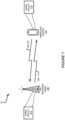
- Figure 1 illustrates a wireless communication system 10 that includes a network node 106 and a wireless device 102 in wireless communication over one or more communication channels.
- the wireless device 102 is configured to transmit uplink messages to the network node.
- these uplink transmissions can include an original (e.g ., first or earlier in time) TB transmission 105 comprising data and having a HARQ process ID.
- the uplink transmissions can include a subsequent TB transmission 107, which, depending on the HARQ policy 113 stored at the wireless device 102 and the network node 106, can include either new data or all or part of the original data for retransmission using the HARQ process ID of the original TB transmission 105.
- the network node 106 is configured to transmit downlink messages to the wireless device 102.
- These downlink messages can include one or more uplink scheduling grants 109, which in some instances can implement SPS techniques (i.e ., one uplink scheduling grant 109 being transmitted for every n transmission occasions where n > 1).
- the downlink transmissions can include configuration information 111, which can include information related to the HARQ processes, such as information needed at the wireless device 102 to carry out the HARQ policy 113.
- the configuration information may include a value for the time period T 205 associated with the timer.
- the configuration information can include control or characteristic data gathered by the network node 106 to aid the wireless device 102 in determining the HARQ policy 113 and/or the time period associated with the timer.
- Such information may include a number of HARQ processes to be utilized by the wireless device 102 in its transmissions to the network node 106, a periodicity of periodic transmission occasions (i.e ., how frequently uplink transmission occasions or opportunities are available), a delay tolerance of a service corresponding to data that may be carried by a TB transmitted by the wireless device 102, network load information, a processing time required for the network node to process received uplink transmissions from the wireless device 102, among other factors that may be needed to ensure proper transmission timing and/or HARQ policy selection by the wireless device 102.
- the selection of the HARQ policy includes determining whether the wireless device 102 is to retransmit all or part of the TB data transmitted in the original transmission 105 or is to use the HARQ process ID of that original transmission 105 to transmit new data in a TB at a next transmission occasion for that HARQ process if the timer expires without the wireless device 102 having received HARQ feedback for the original TB transmission 105.
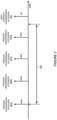
- Figure 2 illustrates an example of uplink transmission timing in the wireless communication system 10 of Figure 1 , which allows for functional retransmission operations without using explicit HARQ feedback.
- the wireless device 102 can initially send an original TB transmission 105 at a periodic transmission occasion 201 defined by the corresponding uplink grant ( e.g ., in an earlier SPS message from the network node 106).
- the timer 115 is started by the wireless device 102 contemporaneous with the original TB transmission 105 (though in other examples, the timer 115 could be started when the uplink grant for periodic transmission occasion 201 is received by the wireless device 102).
- the wireless device 102 After transmitting the original TB and stating the timer 115, the wireless device 102 then waits for a time period T 205 This time period T 205 may be selected by the wireless device 102, preconfigured by a network operator, or assigned by the network node 106.
- the wireless device 102 determines that no HARQ feedback has been received for the original TB transmission 105, the wireless device 102 is configured to, at the next periodic transmission occasion 203 following expiration of the timer, either (a) reuse the HARQ process ID of the original TB transmission 105 to transmit new data in a new TB or (b) retransmit all or part of the original TB transmission 105 using the same HARQ process ID.
- this determination regarding whether to transmit new data or retransmit the original data is governed by the HARQ policy 113. Therefore, upon determining that the timer has expired and no HARQ feedback was received, the wireless device 102 takes the action mandated by the HARQ policy 113 in effect at the time.
- the TB sent by the wireless device 102 at a next transmission occasion for the relevant HARQ process ID could be either a retransmission of the original data or a new TB containing new data.
- the HARQ policy 113 can be determined by the wireless device 102 (and optionally relayed to the network node 106). In some examples, the HARQ policy 113 can be set by the wireless device 102 based on network-side factors such as observed or estimated latency, network load, Quality of Service (QoS) requirements of the service to which the transmitted data pertains or to which the data is to likely pertain, reliability requirements of the underlying service (e.g ., eMBB vs. URLCC), and the like.
- QoS Quality of Service
- Figure 3 shows another example implementation where the number of HARQ processes is four.
- the timer time period T 305 is relatively long compared to the time period T 205 of Figure 2 , and as a result, multiple transmission occasions for other HARQ process IDs occur during the time period T 305 - namely, TB transmissions 300B, 300C, and 300D at periodic transmission occasions 301B, 301C, and 301D, respectively.
- the timer is described as having an associated time period T, the terms meant to be read as interchangeable such that when a timer is referred to, so is a time period T, and vice versa.
- the wireless device 102 upon expiration of the timer after time period T 305 elapses in Figure 3 , the wireless device 102 either retransmits all or part of the data transmitted in the TB of 300A or transmits new data in a TB at the next periodic transmission occasion by reusing the HARQ process ID of the original TB transmission 300A.
- the timer can be set (for instance, by the network node 106 or another network-side device) to have an associated time period T 205, 305 that differs based on one or more parameters.
- the time period T 205, 305 of the timer can be set based on one or more of the number of HARQ processes to be used by the wireless device 102, a periodicity of the SPS transmission, or a degree of delay-tolerance associated with the service or application corresponding to the data contained in one or more of the uplink TB transmissions 300A-D and 307.
- the timer could further be configured based on a processing time required by the network node 106 to decode and process received data of a given TB and perform a reliability check on the received data (e.g ., cyclic redundancy check (CRC) or the like).
- CRC cyclic redundancy check
- the time period T 205, 305 of the timer may additionally or alternatively be set based on the load in the network or network node 106 and/or throughput or QoS metrics mandated by an underlying service. For instance, in an example aspect, If the load is higher in the cell or cells operating on the same network node 106, the network node 106 can configure (or reconfigure) the time period T 205, 305 based on a present (or time-averaged) processing load present at the network node 106, and may further set the time period T such that the network node 106 is able to respond to the wireless device 102 with HARQ feedback within the configured time period T at a rate that is greater than or equal to a threshold value (or is projected to meet the threshold value through extrapolation or similar predictive methods).
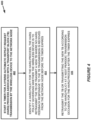
- FIG. 4 the figure depicts an example method 400 for managing TB transmissions by the wireless device 102 to a network node 106 at periodic transmission occasions, which can be performed by a wireless device 102 ( e.g ., a UE) according to some implementations.
- the method 400 can include, for instance, starting a timer for a HARQ process associated with a transport block transmission by the wireless device 102 to the network node 106 ( i.e ., original TB data transmissions 105 and 300A of Figures 2 and 3 , respectively) at block 402.
- the example method 400 can include, at block 404, identifying a HARQ policy for the HARQ process, where the HARQ policy governs whether the wireless device 102 is to retransmit the TB or the original transmission 105 or transmit a new TB where no HARQ feedback responsive to the original TB transmission is received from the network nod e106 before the timer expires.
- the method 400 can include, at block 406, retransmitting the TB or transmitting the new TB according to the HARQ policy at a next periodic transmission occasion for the HARQ process after the timer expires.
- method 400 could be included in method 400 in some embodiments.
- at least one additional HARQ process (see e.g ., items 300B, 300C, 300D) is executed after starting the timer and before the timer expires.
- the time period T associated with the timer can be set ( e.g ., by the network node 106) according to one or more of: a number of HARQ processes utilized by the wireless device 102, a periodicity of periodic transmission occasions, a delay tolerance of a service corresponding to data carried by the TB and/or the new TB, a processing time of the network node 106, and a network load.
- the timer for a relevant HARQ process can be started upon transmission of the original TB or upon the wireless device 102 receiving an uplink grant from the network node 106 for transmission of the TB.
- the method 400 can include the wireless device 102 generating the HARQ policy.
- Figure 5 illustrates an example method 500 performed by a network node for managing TB transmissions by a wireless device 102 to the network node 106 at periodic transmission occasions.
- method 500 may include, at block 502, configuring a timer for a HARQ process associated with a TB transmission by the wireless device to the network node.
- method 500 may include, at block 504, identifying a HARQ policy for the HARQ process, where the HARQ policy governs whether the wireless device 102 is to retransmit the TB or transmit a new TB to the network node 106 in scenarios where the wireless device 102 receives no HARQ feedback from the network node 106 responsive to the TB transmission before the timer expires.
- method 500 may include receiving a retransmitted TB or a new TB according to the HARQ policy at a next periodic transmission occasion for the HARQ process after the timer expires.
- identifying the HARQ policy at block 504 may also include obtaining the HARQ policy from the wireless device 102, for instance, via control signaling in a stand-alone uplink transmission or via a signal transmitted by the wireless device 102 of any other sort (e.g ., higher-level signaling, trailing bits of control or data transmissions by the wireless device, etc.) where the HARQ policy can optionally be indicated in one or more piggybacked bits.
- any other sort e.g ., higher-level signaling, trailing bits of control or data transmissions by the wireless device, etc.
- identifying the HARQ policy can include setting the HARQ policy at the network node 106, which can be based on one or more of the following non-limiting list of factors: a number of HARQ processes utilized by the wireless device 102, a periodicity of periodic transmission occasions, a delay tolerance and/or a reliability requirement of a service corresponding to data carried by the TB and/or the new TB, a processing time of the network node 106, and a network load.
- the time period T of the timer can be set by the network node 106 based on one or more of these factors.
- the method 500 can also include the network node 106 determining that the network load has reached a threshold value and, based on this determination, increasing the time period of the timer.
- the network node 106 may be configured to perform error detection on one or more TBs received from the wireless device 102. This can involve, for instance, performing CRC operations or otherwise processing received data using other error detection mechanisms known in the art. Based on the results of these error detection operations, the network node 106 can optionally transmit HARQ feedback to the wireless device assuming the configured HARQ policy allows for such transmissions to the wireless device 102.
- the network node 106 can then determine a TB and/or HARQ process that is to be transmitted or retransmitted during a next periodic transmission occasion based on a result of the error detection, the configured HARQ policy, and/or a time at which the HARQ feedback is transmitted to the wireless device 102 or is to be received by the wireless device 102.
- the periodic transmission occasions (e.g . 201, 203 of Figure 2 , 300A-300D, 307 of Figure 3 ) are defined according to an SPS scheme, which may also be referred to as "UL transmission without dynamic scheduling", “configured grant scheduling,” or “configured scheduling.”
- the HARQ policy can be selected by the wireless device 102, in some instances, it can alternatively be preconfigured, for instance, by a manufacturer, network operator, a particular radio access technology utilized by the wireless device 102 and the network node 106, or the like. In the same vein, in some instances the HARQ policy may be static, where in other instances it may be dynamic in that it can change over time based on one or more factors, including those discussed above.
- the wireless device 102 can be considered to be a user equipment, though, again, this is not a limiting aspect.
- the network node 106 can be a gNB, eNB, Base Station, 802.11 Access Point, or any other radio access network device in communication with one or more wireless devices 102.
- the network node 106 as that term is used herein, is a general term and can correspond to any type of radio network node or any network node which communicates with a wireless device and/or with another network node.
- network nodes include, but are not limited to NodeB, base station (BS), multi-standard radio (MSR) radio node such as MSR BS, evolved node B (eNodeB), new generation (5G) node B (gNodeB), macro evolved Node B (MeNB), small evolved Node B (SeNB), network controller, radio network controller (RNC), base station controller (BSC), relay, donor node controlling relay, base transceiver station (BTS), access point (AP), transmission points, transmission nodes, remote radio unit (RRU), remote radio head (RRH), nodes in distributed antenna system (DAS), core network node (e.g ., mobile switching center (MSC), MME, etc.), operations & maintenance (O&M), open storage service (OSS), self-organizing network (SON), positioning node (e.g ., evolved serving location center (E-SMLC)), minimizing of driving test (MDT), etc.
- MSR multi-standard radio
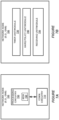
- Figure 6A illustrates additional details of an example wireless device 102 of a wireless communication system 10 according to one or more embodiments.
- the wireless device 102 is configured, e.g ., via functional means or units (also may be referred to as modules or components herein), to implement processing to perform certain aspects described above in reference to at least the aspects of Figures 2 and 3 the related methods presented in Figures 4 and 5 .
- the wireless device 102 in some embodiments for example includes means, modules, components, or units 630, 640, and 650 (among other possible means, modules, components, or units not shown explicitly in Fig. 6B ) for performing aspects of these methods.
- these means, modules, components, or units can be realized in processing circuitry 600.
- the functional means or units of the wireless device 102 may include a timing unit/module 630 configured to start and manage a timer for one or more HARQ processes, such as in block 402 of Figure 4 .
- the wireless device 102 can include a HARQ policy unit/module 640 to identify a HARQ policy for one or more HARQ processes governing whether the wireless device 102 is to retransmit a TB or portion thereof, or transmit a new TB where no HARQ feedback responsive to the TB transmission is received from the network node before the timer expires, for example, as performed in block 404 of Figure 4 , above.
- a HARQ policy unit/module 640 to identify a HARQ policy for one or more HARQ processes governing whether the wireless device 102 is to retransmit a TB or portion thereof, or transmit a new TB where no HARQ feedback responsive to the TB transmission is received from the network node before the timer expires, for example, as performed in block 404 of Figure 4 , above.
- wireless device 102 may include a transmitting/retransmitting unit/module for retransmitting a TB or a portion thereof, or transmitting a new TB according to the HARQ policy at a next periodic transmission occasion for the HARQ process after the timer expires, for instance, as performed at block 406 in Figure 4 .
- the wireless device 102 comprises one or more processing circuitry/circuits 600 configured to implement processing of the methods presented in Figures 4 and 5 and certain associated processing of the features described in relation to other figures, such as by implementing functional means or units above.
- the processing circuit(s) 600 implements functional means or units as respective circuits.
- the circuits in this regard may comprise circuits dedicated to performing certain functional processing and/or one or more microprocessors in conjunction with memory 620.
- memory 620 which may comprise one or several types of memory such as read-only memory (ROM), random-access memory, cache memory, flash memory devices, optical storage devices, etc.
- the memory 620 stores program code that, when executed by the one or more for carrying out one or more microprocessors, carries out the techniques described herein.
- the wireless device 102 also comprises communication circuitry 610.
- the communication circuitry 610 includes various components (e.g ., antennas) for sending and receiving data and control signals. More particularly, the circuitry 610 includes a transmitter that is configured to use known signal processing techniques, typically according to one or more standards, and is configured to condition a signal for transmission ( e.g ., over the air via one or more antennas). Similarly, the communication circuitry includes a receiver that is configured to convert signals received ( e.g ., via the antenna(s)) into digital samples for processing by the one or more processing circuits.
- Figure 7A illustrates additional details of an example network node 106 of a wireless communication system 10 according to one or more embodiments.
- the network node 106 is configured, e.g ., via functional means or units (also may be referred to as modules or components herein), to implement processing to perform certain aspects described above in reference to at least the aspects of Figures 2 and 3 the related methods presented in Figures 4 and 5 .
- the network node 106 in some embodiments for example includes means, modules, components, or units 730, 740, and 750 (among other possible means, modules, components, or units not shown explicitly in Fig. 7B ) for performing aspects of these methods.
- these means, modules, components, or units can be realized in processing circuitry 700.
- the functional means or units of the network node 106 may include a timing unit/module 730 configured to configure a timer and/or a time period associated with the timer for a HARQ process associated with a TB transmission by a wireless device 102 to the network node 106, such as in block 502 of Figure 5 .
- the network node 106 can include a HARQ policy unit/module 740 to identify a HARQ policy for one or more HARQ processes governing whether the network node 106 is to retransmit a TB or portion thereof, or transmit a new TB where no HARQ feedback responsive to the TB transmission is received from the network node before the timer expires, for example, as performed in block 504 of Figure 5 , above.
- a HARQ policy unit/module 740 to identify a HARQ policy for one or more HARQ processes governing whether the network node 106 is to retransmit a TB or portion thereof, or transmit a new TB where no HARQ feedback responsive to the TB transmission is received from the network node before the timer expires, for example, as performed in block 504 of Figure 5 , above.
- network node 106 may include a receiving unit/module for receiving a retransmitted TB or a portion thereof, or receiving a new TB according to the HARQ policy at a next periodic transmission occasion for the HARQ process after the timer expires, for instance, as performed at block 506 in Figure 5 .
- the network node 106 comprises one or more processing circuitry/circuits 700 configured to implement processing of the methods presented in Figures 4 and 5 and certain associated processing of the features described in relation to other figures, such as by implementing functional means or units above.
- the processing circuit(s) 700 implements functional means or units as respective circuits.
- the circuits in this regard may comprise circuits dedicated to performing certain functional processing and/or one or more microprocessors in conjunction with memory 720.
- memory 720 which may comprise one or several types of memory such as read-only memory (ROM), random-access memory, cache memory, flash memory devices, optical storage devices, etc.
- the memory 720 stores program code that, when executed by the one or more for carrying out one or more microprocessors, carries out the techniques described herein.
- the network node 106 also comprises communication circuitry 710.
- the communication circuitry 710 includes various components (e.g ., antennas) for sending and receiving data and control signals. More particularly, the circuitry 710 includes a transmitter that is configured to use known signal processing techniques, typically according to one or more standards, and is configured to condition a signal for transmission ( e.g ., over the air via one or more antennas). Similarly, the communication circuitry includes a receiver that is configured to convert signals received ( e.g ., via the antenna(s)) into digital samples for processing by the one or more processing circuits.
- a computer program comprises instructions which, when executed on at least one processor of the network node 106 or wireless device 102, cause these devices to carry out any of the respective processing described above.
- the processing or functionality of network node 106 or wireless device 102 may be considered as being performed by a single instance or device or may be divided across a plurality of instances of network node 106 or wireless device 102 that may be present in a given system such that together the device instances perform all disclosed functionality.
- the wireless device 102 may correspond to any mobile (or even stationary) device that is configured to receive/consume user data from a network-side infrastructure, including laptops, phones, tablets, loT devices, etc.
- the network node 106 may be any network device, such as a base station, eNB, gNB, access point, or any other similar device.
- Embodiments further include a carrier containing such a computer program.
- This carrier may comprise one of an electronic signal, optical signal, radio signal, or computer readable storage medium.
- a computer program in this regard may comprise one or more code modules corresponding to the means or units described above.
Landscapes
- Engineering & Computer Science (AREA)
- Computer Networks & Wireless Communication (AREA)
- Signal Processing (AREA)
- Multimedia (AREA)
- Mobile Radio Communication Systems (AREA)
Claims (12)
- Verfahren (400), durchgeführt von einer drahtlosen Vorrichtung (102) zum Verwalten von Transportblockübertragungen, TB-Übertragungen, (105) durch die drahtlose Vorrichtung (102) an einen Netzwerkknoten (106) bei periodischen Übertragungsgelegenheiten (300), wobei die periodischen Übertragungsgelegenheiten eine Periodizität aufweisen, die von dem Netzwerkknoten (106) konfiguriert ist, wobei das Verfahren Folgendes umfasst:Durchführen einer Transportblockübertragung, TB-Übertragung, (105) an den Netzwerkknoten (106) bei einer ersten Übertragungsgelegenheit der periodischen Übertragungsgelegenheiten;Starten (402) eines Zeitgebers für einen hybriden automatischen Wiederholungsanfrageprozess, HARQ-Prozess, welcher der TB-Übertragung (105) zugeordnet ist, wobei der Zeitgeber mit der Übertragung des TB gestartet wird;Identifizieren (404) einer HARQ-Richtlinie (113) für den HARQ-Prozess, wobei die HARQ-Richtlinie (113) regelt, ob die drahtlose Vorrichtung (102) den TB erneut zu übertragen hat oder einen neuen TB zu übertragen hat, wenn vor Ablauf des Zeitgebers kein HARQ-Feedback als Reaktion auf die TB-Übertragung (105) von dem Netzwerkknoten (106) empfangen wird; undals Reaktion auf ein Bestimmen, dass der Zeitgeber abgelaufen ist, ohne dass von dem Netzwerkknoten (106) HARQ-Feedback als Reaktion auf die TB-Übertragung (105) empfangen wird, erneutes Übertragen (406) des TB oder Übertragen des neuen TB gemäß der HARQ-Richtlinie (113) bei einer nächsten Übertragungsgelegenheit der periodischen Übertragungsgelegenheiten (307) für den HARQ-Prozess.
- Verfahren nach Anspruch 1, wobei das HARQ-Feedback eine Bestätigungsnachricht, ACK, eine negative Bestätigungsnachricht, NACK, oder eine neue Uplink-Übertragungsgenehmigung ist.
- Verfahren nach einem der vorhergehenden Ansprüche, wobei ein Zeitraum, der dem Zeitgeber zugeordnet ist, gemäß einem oder mehreren der Folgenden eingestellt wird: einer Anzahl von HARQ-Prozessen, die von der drahtlosen Vorrichtung (102) verwendet werden, der Periodizität der periodischen Übertragungsgelegenheiten (300), einer Verzögerungstoleranz eines Dienstes, der Daten entspricht, die von dem TB und/oder dem neuen TB getragen werden, einer Verarbeitungszeit des Netzwerkknotens (106) und einer Netzwerklast.
- Verfahren nach einem der vorhergehenden Ansprüche, wobei der Zeitraum, der dem Zeitgeber zugeordnet ist, von dem Netzwerkknoten (106) erlangt wird.
- Verfahren (500), durchgeführt von einem Netzwerkknoten (106), zum Verwalten von Transportblockübertragungen, TB-Übertragungen, (105) durch eine drahtlose Vorrichtung (102) an den Netzwerkknoten (106) bei periodischen Übertragungsgelegenheiten (300), wobei die periodischen Übertragungsgelegenheiten eine Periodizität aufweisen, die von dem Netzwerkknoten (106) konfiguriert ist, wobei das Verfahren Folgendes umfasst:Konfigurieren (502) eines Zeitgebers für einen hybriden automatischen Wiederholungsanfrageprozess, HARQ-Prozess, der einer Transportblockübertragung, TB-Übertragung, (105) durch die drahtlose Vorrichtung (102) an den Netzwerkknoten (106) bei einer ersten Übertragungsgelegenheit der periodischen Übertragungsgelegenheiten zugeordnet ist;Identifizieren (504) einer HARQ-Richtlinie (113) für den HARQ-Prozess, wobei die HARQ-Richtlinie (113) regelt, ob die drahtlose Vorrichtung (102) den TB erneut an den Netzwerkknoten (106) zu übertragen hat oder einen neuen TB an diesen zu übertragen hat, wenn die drahtlose Vorrichtung (102) vor Ablauf des Zeitgebers kein HARQ-Feedback von dem Netzwerkknoten (106) als Reaktion auf die TB-Übertragung (105) empfangen hat; undEmpfangen (506) eines erneut übertragenen TB oder des neuen TB gemäß der HARQ-Richtlinie (113) bei einer nächsten Übertragungsgelegenheit der periodischen Übertragungsgelegenheiten (307) für den HARQ-Prozess, nachdem der Zeitgeber abgelaufen ist.
- Verfahren nach Anspruch 5, wobei das Konfigurieren des Zeitgebers auf einem oder mehreren der Folgenden basiert: einer Anzahl von HARQ-Prozessen, die von der drahtlosen Vorrichtung (102) verwendet werden, der Periodizität der periodischen Übertragungsgelegenheiten (300), einer Verzögerungstoleranz eines Dienstes, der Daten entspricht, die von dem TB und/oder dem neuen TB getragen werden, und einer Verarbeitungszeit des Netzwerkknotens (106).
- Verfahren nach einem der Ansprüche 5-6, wobei ein Zeitraum des Zeitgebers basierend auf einer Netzwerklast eingestellt wird.
- Verfahren nach Anspruch 7, ferner umfassend:Bestimmen, dass die Netzwerklast einen Schwellenwert erreicht hat; undVergrößern des Zeitraums des Zeitgebers basierend auf dem Bestimmen, dass die Netzwerklast den Schwellenwert erreicht hat.
- Verfahren nach einem der Ansprüche 5-8, ferner umfassend Durchführen einer Fehlererkennung an einem oder mehreren TBs, die von der drahtlosen Vorrichtung (102) empfangen werdenÜbertragen von HARQ-Feedback an die drahtlose Vorrichtung (102) basierend auf der durchgeführten Fehlererkennung und der konfigurierten HARQ-Richtlinie (113); undBestimmen eines TB- und/oder HARQ-Prozesses, der während der nächsten Übertragungsgelegenheit (307) zu übertragen ist, basierend auf einem Ergebnis der Fehlererkennung, der konfigurierten HARQ-Richtlinie (113) und/oder einem Zeitpunkt, zu dem das HARQ-Feedback an die drahtlose Vorrichtung (102) übertragen wird oder von der drahtlosen Vorrichtung (102) zu empfangen ist.
- Drahtlose Vorrichtung (102), die dazu konfiguriert ist, Transportblockübertragungen, TB-Übertragungen, (105) durch die drahtlose Vorrichtung (102) an einen Netzwerkknoten (106) bei periodischen Übertragungsangelegenheiten (300) zu verwalten, wobei die periodischen Übertragungsgelegenheiten eine Periodizität aufweisen, die von dem Netzwerkknoten (106) konfiguriert ist, wobei die drahtlose Vorrichtung (102) zu Folgendem konfiguriert ist:Durchführen einer Transportblockübertragung, TB-Übertragung, (105) an den Netzwerkknoten (106) zu einer ersten Übertragungsgelegenheit der periodischen Übertragungsgelegenheiten;Starten eines Zeitgebers für einen hybriden automatischen Wiederholungsanfrageprozess, HARQ-Prozess, welcher der TB-Übertragung (105) durch die drahtlose Vorrichtung (102) an den Netzwerkknoten (106) zugeordnet ist, wobei der Zeitgeber bei der Übertragung des TB gestartet wird;Identifizieren einer HARQ-Richtlinie (113) für den HARQ-Prozess, wobei die HARQ-Richtlinie (113) regelt, ob die drahtlose Vorrichtung (102) den TB erneut zu übertragen hat oder einen neuen TB zu übertragen hat, wenn vor Ablauf des Zeitgebers kein HARQ-Feedback als Reaktion auf die TB-Übertragung (105) von dem Netzwerkknoten (106) empfangen wird; undals Reaktion auf ein Bestimmen, dass der Zeitgeber abgelaufen ist, ohne dass von dem Netzwerkknoten (106) HARQ-Feedback als Reaktion auf die TB-Übertragung (105) empfangen wird, erneutes Übertragen des TB oder Übertragen des neuen TB gemäß der HARQ-Richtlinie (113) bei einer nächsten Übertragungsgelegenheit der periodischen Übertragungsgelegenheiten (307) für den HARQ-Prozess.
- Drahtlose Vorrichtung (102) nach Anspruch 10, wobei das HARQ-Feedback eine Bestätigungsnachricht, ACK, eine negative Bestätigungsnachricht, NACK, oder eine neue Uplink-Übertragungsgenehmigung ist.
- Netzwerkknoten (106) zum Verwalten von Transportblockübertragungen, TB-Übertragungen, (105) durch eine drahtlose Vorrichtung (102) an den Netzwerkknoten (106) bei periodischen Übertragungsgelegenheiten (300), wobei die periodischen Übertragungsgelegenheiten eine Periodizität aufweisen, die durch den Netzwerkknoten (106) konfiguriert ist, wobei der Netzwerkknoten (106) zu Folgendem konfiguriert ist:Konfigurieren eines Zeitgebers für einen hybriden automatischen Wiederholungsanfrageprozess, HARQ-Prozess, der einer Transportblockübertragung, TB-Übertragung, (105) durch die drahtlose Vorrichtung (102) an den Netzwerkknoten (106) bei einer ersten Übertragungsgelegenheit der periodischen Übertragungsgelegenheiten zugeordnet ist;Identifizieren einer HARQ-Richtlinie (113) für den HARQ-Prozess, wobei die HARQ-Richtlinie (113) regelt, ob die drahtlose Vorrichtung (102) den TB erneut an den Netzwerkknoten (106) zu übertragen hat oder einen neuen TB an diesen zu übertragen hat, wenn vor Ablauf des Zeitgebers kein HARQ-Feedback von dem Netzwerkknoten (106) als Reaktion auf die TB-Übertragung (105) empfangen wird; undEmpfangen eines erneut übertragenen TB oder eines neuen TB gemäß der HARQ-Richtlinie (113) bei einer nächsten Übertragungsgelegenheit der periodischen Übertragungsgelegenheiten (307) für den HARQ-Prozess, nachdem der Zeitgeber abgelaufen ist.
Applications Claiming Priority (2)
| Application Number | Priority Date | Filing Date | Title |
|---|---|---|---|
| US201762476641P | 2017-03-24 | 2017-03-24 | |
| PCT/IB2018/050741 WO2018172862A1 (en) | 2017-03-24 | 2018-02-06 | Methods of retransmission in semi-persistent scheduling without explicit harq feedback |
Publications (3)
| Publication Number | Publication Date |
|---|---|
| EP3602889A1 EP3602889A1 (de) | 2020-02-05 |
| EP3602889B1 true EP3602889B1 (de) | 2025-01-29 |
| EP3602889C0 EP3602889C0 (de) | 2025-01-29 |
Family
ID=61244658
Family Applications (1)
| Application Number | Title | Priority Date | Filing Date |
|---|---|---|---|
| EP18705990.2A Active EP3602889B1 (de) | 2017-03-24 | 2018-02-06 | Verfahren zur neuübertragung in der semipersisten planung ohne explizites harq-feedback |
Country Status (5)
| Country | Link |
|---|---|
| US (3) | US11502784B2 (de) |
| EP (1) | EP3602889B1 (de) |
| CN (2) | CN117097444A (de) |
| ES (1) | ES3008583T3 (de) |
| WO (1) | WO2018172862A1 (de) |
Families Citing this family (18)
| Publication number | Priority date | Publication date | Assignee | Title |
|---|---|---|---|---|
| CN117097444A (zh) * | 2017-03-24 | 2023-11-21 | 瑞典爱立信有限公司 | 无显式harq反馈的半持续调度中重传的方法 |
| WO2018202906A1 (en) * | 2017-05-05 | 2018-11-08 | Telefonaktiebolaget Lm Ericsson (Publ) | Technique for grant-free transmissions |
| CN110351774B (zh) * | 2018-04-04 | 2022-07-15 | 中兴通讯股份有限公司 | 通信方法、装置、终端、基站及存储介质 |
| US11956788B2 (en) * | 2018-07-30 | 2024-04-09 | Qualcomm Incorporated | Expiration periods for low latency communications |
| CN112602280B (zh) * | 2018-08-09 | 2024-10-29 | 交互数字专利控股公司 | 未经许可的新无线电频谱中的自主上行链路传输 |
| WO2020034066A1 (en) * | 2018-08-13 | 2020-02-20 | Nokia Shanghai Bell Co., Ltd. | Apparatus, method and computer program |
| WO2020091681A1 (en) * | 2018-11-02 | 2020-05-07 | Telefonaktiebolaget Lm Ericsson (Publ) | Energy detection indicator |
| WO2020108726A1 (en) * | 2018-11-26 | 2020-06-04 | Nokia Technologies Oy | Improving multi-connectivity in wireless communication networks |
| WO2020144015A1 (en) | 2019-01-11 | 2020-07-16 | Telefonaktiebolaget Lm Ericsson (Publ) | Uplink transmission presence detection |
| CN113632579B (zh) * | 2019-02-12 | 2024-04-09 | 谷歌有限责任公司 | 用于减小共享载波上基于定时器的传输的延迟的系统和方法 |
| CN111742511B (zh) * | 2019-04-30 | 2023-10-10 | 上海诺基亚贝尔股份有限公司 | 配置的授权操作 |
| US11432320B2 (en) * | 2019-05-03 | 2022-08-30 | Mediatek Singapore Pte. Ltd. | Method and apparatus for autonomous retransmissions on configured grants in mobile communications |
| US11038628B2 (en) | 2019-05-04 | 2021-06-15 | Qualcomm Incorporated | Procedures for configured grants |
| CN112566146B (zh) * | 2019-09-25 | 2022-04-12 | 维沃移动通信有限公司 | 一种上行传输方法及终端 |
| EP4030662B1 (de) * | 2019-10-01 | 2025-03-19 | Huawei Technologies Co., Ltd. | Verfahren und vorrichtung zum steuern eines harq-verfahrens |
| US20220377766A1 (en) * | 2019-10-04 | 2022-11-24 | Telefonaktiebolaget Lm Ericsson (Publ) | Configured ul with repetition |
| EP4104344A1 (de) * | 2020-02-12 | 2022-12-21 | Fraunhofer-Gesellschaft zur Förderung der angewandten Forschung e.V. | Sender-empfänger und entsprechendes verfahren |
| US20240381161A1 (en) * | 2021-10-14 | 2024-11-14 | Nokia Technologies Oy | Radio access retransmission control |
Family Cites Families (17)
| Publication number | Priority date | Publication date | Assignee | Title |
|---|---|---|---|---|
| US7584397B2 (en) | 2004-06-10 | 2009-09-01 | Interdigital Technology Corporation | Method and apparatus for dynamically adjusting data transmission parameters and controlling H-ARQ processes |
| US8977258B2 (en) * | 2005-09-09 | 2015-03-10 | Intel Corporation | System and method for communicating with fixed and mobile subscriber stations in broadband wireless access networks |
| CN101286792A (zh) * | 2007-04-11 | 2008-10-15 | 北京三星通信技术研究有限公司 | 增强同步harq的设备和方法 |
| US20080273520A1 (en) * | 2007-05-04 | 2008-11-06 | Samsung Electronics Co. Ltd. | NETWORK ARCHITECTURE FOR DYNAMICALLY SETTING END-TO-END QUALITY OF SERVICE (QoS) IN A BROADBAND WIRELESS COMMUNICATION SYSTEM |
| US20090319850A1 (en) * | 2008-06-24 | 2009-12-24 | Texas Instruments Incorporated | Local drop control for a transmit buffer in a repeat transmission protocol device |
| US8332711B2 (en) | 2009-06-08 | 2012-12-11 | Clearwire Ip Holdings Llc | Systems and methods of information transmission |
| US20100322172A1 (en) * | 2009-06-17 | 2010-12-23 | Chia-Chun Hsu | Method for avoiding false random access procedure completion in a wireless communication system and related communication device |
| KR102073027B1 (ko) * | 2011-04-05 | 2020-02-04 | 삼성전자 주식회사 | 반송파 집적 기술을 사용하는 무선통신시스템에서 복수 개의 타임 정렬 타이머 운용 방법 및 장치 |
| US9065545B2 (en) | 2012-03-12 | 2015-06-23 | Blackberry Limited | Handling scheduling request collisions with an ACK/NACK repetition signal |
| US9693306B2 (en) * | 2012-07-11 | 2017-06-27 | Blackberry Limited | Mechanisms to support UE power preference signaling |
| US9743430B2 (en) * | 2013-01-11 | 2017-08-22 | Telefonaktiebolaget Lm Ericsson (Publ) | Methods, apparatus, user equipment, wireless network node, and computer program product for random access |
| EP2827522A1 (de) * | 2013-07-15 | 2015-01-21 | Alcatel Lucent | Verfahren für einen ersten Netzwerkknoten zum Senden oder erneuten Senden von Daten an einen zweiten Netzwerkknoten und erster Netzwerkknoten damit und Verfahren für einen zweiten Netzwerkknoten zum Empfangen von gesendeten oder erneut gesendeten Daten von einem ersten Netzwerkknoten und zweiter Netzwerkknoten damit |
| KR102382363B1 (ko) * | 2014-01-29 | 2022-04-05 | 인터디지탈 패튼 홀딩스, 인크 | 무선 통신에서의 업링크 송신 |
| JP2018101823A (ja) * | 2015-04-28 | 2018-06-28 | シャープ株式会社 | 端末装置、基地局装置、通信方法、および、集積回路 |
| CA3014152C (en) * | 2016-02-12 | 2023-02-14 | Nokia Technologies Oy | Apparatus and method for drx mechanisms for single harq process operation in nb-iot |
| BR112019019679B1 (pt) * | 2017-03-23 | 2020-12-08 | Lg Electronics Inc | método e equipamento de usuário para receber sinais de enlace descendente |
| CN117097444A (zh) * | 2017-03-24 | 2023-11-21 | 瑞典爱立信有限公司 | 无显式harq反馈的半持续调度中重传的方法 |
-
2018
- 2018-02-06 CN CN202310772514.8A patent/CN117097444A/zh active Pending
- 2018-02-06 ES ES18705990T patent/ES3008583T3/es active Active
- 2018-02-06 CN CN201880020884.3A patent/CN110463113A/zh active Pending
- 2018-02-06 EP EP18705990.2A patent/EP3602889B1/de active Active
- 2018-02-06 WO PCT/IB2018/050741 patent/WO2018172862A1/en not_active Ceased
- 2018-02-06 US US16/481,522 patent/US11502784B2/en active Active
-
2022
- 2022-11-11 US US17/985,749 patent/US11943058B2/en active Active
-
2024
- 2024-03-22 US US18/613,889 patent/US20240235743A1/en not_active Abandoned
Also Published As
| Publication number | Publication date |
|---|---|
| CN117097444A (zh) | 2023-11-21 |
| US20240235743A1 (en) | 2024-07-11 |
| US11502784B2 (en) | 2022-11-15 |
| WO2018172862A1 (en) | 2018-09-27 |
| CN110463113A (zh) | 2019-11-15 |
| EP3602889A1 (de) | 2020-02-05 |
| US20230074024A1 (en) | 2023-03-09 |
| ES3008583T3 (en) | 2025-03-24 |
| US11943058B2 (en) | 2024-03-26 |
| US20190386780A1 (en) | 2019-12-19 |
| EP3602889C0 (de) | 2025-01-29 |
Similar Documents
| Publication | Publication Date | Title |
|---|---|---|
| US11943058B2 (en) | Methods of retransmission in semi-persistent scheduling without explicit HARQ feedback | |
| US12200722B2 (en) | Communications device, infrastructure equipment and methods | |
| US10673699B2 (en) | Methods and apparatus in a wireless communications network | |
| US11304249B2 (en) | Buffer management techniques for enhanced multi-connectivity communications | |
| US10567135B2 (en) | Network node and method in a wireless communications network | |
| US20160065350A1 (en) | Terminal device, integrated circuit, and radio communication method | |
| US20180160400A1 (en) | Improved pdcch link adaptation in carrier aggregation | |
| EP3190850B1 (de) | Planungsverfahren für drahtlosnetzwerke und zugangsvorrichtung | |
| US11824661B2 (en) | HARQ-ack handling with multiple PUCCH in multi-TRP transmission in NR | |
| US12557093B2 (en) | Configured grant enhancements in unlicensed band | |
| US20250233697A1 (en) | Methods, system, and apparatus for retransmission in large propagation delay wireless communications | |
| JPWO2018025493A1 (ja) | 基地局、端末及び通信方法 | |
| CN116326030B (zh) | 混合自动重传请求方法、半持续调度方法和通信设备 | |
| EP4145746A1 (de) | Kommunikationsverfahren und -vorrichtung | |
| KR20230005159A (ko) | 데이터 송신 방식 | |
| EP4348897A1 (de) | Prozesshandhabung einer hybriden automatischen wiederholungsanfrage (harq) bei extrem grossem subträgerabstand (scs) | |
| US12574906B2 (en) | Repetition factor adaptation for mini-slot-based transport block transmission |
Legal Events
| Date | Code | Title | Description |
|---|---|---|---|
| STAA | Information on the status of an ep patent application or granted ep patent |
Free format text: STATUS: UNKNOWN |
|
| STAA | Information on the status of an ep patent application or granted ep patent |
Free format text: STATUS: THE INTERNATIONAL PUBLICATION HAS BEEN MADE |
|
| PUAI | Public reference made under article 153(3) epc to a published international application that has entered the european phase |
Free format text: ORIGINAL CODE: 0009012 |
|
| STAA | Information on the status of an ep patent application or granted ep patent |
Free format text: STATUS: REQUEST FOR EXAMINATION WAS MADE |
|
| 17P | Request for examination filed |
Effective date: 20190807 |
|
| AK | Designated contracting states |
Kind code of ref document: A1 Designated state(s): AL AT BE BG CH CY CZ DE DK EE ES FI FR GB GR HR HU IE IS IT LI LT LU LV MC MK MT NL NO PL PT RO RS SE SI SK SM TR |
|
| AX | Request for extension of the european patent |
Extension state: BA ME |
|
| DAV | Request for validation of the european patent (deleted) | ||
| DAX | Request for extension of the european patent (deleted) | ||
| STAA | Information on the status of an ep patent application or granted ep patent |
Free format text: STATUS: EXAMINATION IS IN PROGRESS |
|
| 17Q | First examination report despatched |
Effective date: 20210226 |
|
| GRAP | Despatch of communication of intention to grant a patent |
Free format text: ORIGINAL CODE: EPIDOSNIGR1 |
|
| STAA | Information on the status of an ep patent application or granted ep patent |
Free format text: STATUS: GRANT OF PATENT IS INTENDED |
|
| INTG | Intention to grant announced |
Effective date: 20241024 |
|
| RIN1 | Information on inventor provided before grant (corrected) |
Inventor name: WIKSTROEM, GUSTAV Inventor name: BEHRAVAN, ALI Inventor name: LARRSON, DANIEL Inventor name: ZOU, ZHENHUA |
|
| GRAS | Grant fee paid |
Free format text: ORIGINAL CODE: EPIDOSNIGR3 |
|
| GRAA | (expected) grant |
Free format text: ORIGINAL CODE: 0009210 |
|
| STAA | Information on the status of an ep patent application or granted ep patent |
Free format text: STATUS: THE PATENT HAS BEEN GRANTED |
|
| AK | Designated contracting states |
Kind code of ref document: B1 Designated state(s): AL AT BE BG CH CY CZ DE DK EE ES FI FR GB GR HR HU IE IS IT LI LT LU LV MC MK MT NL NO PL PT RO RS SE SI SK SM TR |
|
| REG | Reference to a national code |
Ref country code: GB Ref legal event code: FG4D |
|
| REG | Reference to a national code |
Ref country code: CH Ref legal event code: EP |
|
| REG | Reference to a national code |
Ref country code: DE Ref legal event code: R096 Ref document number: 602018078827 Country of ref document: DE |
|
| REG | Reference to a national code |
Ref country code: IE Ref legal event code: FG4D |
|
| U01 | Request for unitary effect filed |
Effective date: 20250129 |
|
| U07 | Unitary effect registered |
Designated state(s): AT BE BG DE DK EE FI FR IT LT LU LV MT NL PT RO SE SI Effective date: 20250204 |
|
| REG | Reference to a national code |
Ref country code: ES Ref legal event code: FG2A Ref document number: 3008583 Country of ref document: ES Kind code of ref document: T3 Effective date: 20250324 |
|
| U20 | Renewal fee for the european patent with unitary effect paid |
Year of fee payment: 8 Effective date: 20250227 |
|
| PGFP | Annual fee paid to national office [announced via postgrant information from national office to epo] |
Ref country code: ES Payment date: 20250303 Year of fee payment: 8 |
|
| PGFP | Annual fee paid to national office [announced via postgrant information from national office to epo] |
Ref country code: GB Payment date: 20250227 Year of fee payment: 8 |
|
| PG25 | Lapsed in a contracting state [announced via postgrant information from national office to epo] |
Ref country code: RS Free format text: LAPSE BECAUSE OF FAILURE TO SUBMIT A TRANSLATION OF THE DESCRIPTION OR TO PAY THE FEE WITHIN THE PRESCRIBED TIME-LIMIT Effective date: 20250429 |
|
| PG25 | Lapsed in a contracting state [announced via postgrant information from national office to epo] |
Ref country code: PL Free format text: LAPSE BECAUSE OF FAILURE TO SUBMIT A TRANSLATION OF THE DESCRIPTION OR TO PAY THE FEE WITHIN THE PRESCRIBED TIME-LIMIT Effective date: 20250129 |
|
| PG25 | Lapsed in a contracting state [announced via postgrant information from national office to epo] |
Ref country code: NO Free format text: LAPSE BECAUSE OF FAILURE TO SUBMIT A TRANSLATION OF THE DESCRIPTION OR TO PAY THE FEE WITHIN THE PRESCRIBED TIME-LIMIT Effective date: 20250429 Ref country code: IS Free format text: LAPSE BECAUSE OF FAILURE TO SUBMIT A TRANSLATION OF THE DESCRIPTION OR TO PAY THE FEE WITHIN THE PRESCRIBED TIME-LIMIT Effective date: 20250529 |
|
| PG25 | Lapsed in a contracting state [announced via postgrant information from national office to epo] |
Ref country code: HR Free format text: LAPSE BECAUSE OF FAILURE TO SUBMIT A TRANSLATION OF THE DESCRIPTION OR TO PAY THE FEE WITHIN THE PRESCRIBED TIME-LIMIT Effective date: 20250129 |
|
| PG25 | Lapsed in a contracting state [announced via postgrant information from national office to epo] |
Ref country code: GR Free format text: LAPSE BECAUSE OF FAILURE TO SUBMIT A TRANSLATION OF THE DESCRIPTION OR TO PAY THE FEE WITHIN THE PRESCRIBED TIME-LIMIT Effective date: 20250430 |
|
| REG | Reference to a national code |
Ref country code: CH Ref legal event code: PL |
|
| PG25 | Lapsed in a contracting state [announced via postgrant information from national office to epo] |
Ref country code: SM Free format text: LAPSE BECAUSE OF FAILURE TO SUBMIT A TRANSLATION OF THE DESCRIPTION OR TO PAY THE FEE WITHIN THE PRESCRIBED TIME-LIMIT Effective date: 20250129 |
|
| PG25 | Lapsed in a contracting state [announced via postgrant information from national office to epo] |
Ref country code: MC Free format text: LAPSE BECAUSE OF FAILURE TO SUBMIT A TRANSLATION OF THE DESCRIPTION OR TO PAY THE FEE WITHIN THE PRESCRIBED TIME-LIMIT Effective date: 20250129 |
|
| PG25 | Lapsed in a contracting state [announced via postgrant information from national office to epo] |
Ref country code: CH Free format text: LAPSE BECAUSE OF NON-PAYMENT OF DUE FEES Effective date: 20250228 |
|
| PG25 | Lapsed in a contracting state [announced via postgrant information from national office to epo] |
Ref country code: CZ Free format text: LAPSE BECAUSE OF FAILURE TO SUBMIT A TRANSLATION OF THE DESCRIPTION OR TO PAY THE FEE WITHIN THE PRESCRIBED TIME-LIMIT Effective date: 20250129 |
|
| PG25 | Lapsed in a contracting state [announced via postgrant information from national office to epo] |
Ref country code: SK Free format text: LAPSE BECAUSE OF FAILURE TO SUBMIT A TRANSLATION OF THE DESCRIPTION OR TO PAY THE FEE WITHIN THE PRESCRIBED TIME-LIMIT Effective date: 20250129 |
|
| PLBE | No opposition filed within time limit |
Free format text: ORIGINAL CODE: 0009261 |
|
| STAA | Information on the status of an ep patent application or granted ep patent |
Free format text: STATUS: NO OPPOSITION FILED WITHIN TIME LIMIT |
|
| 26N | No opposition filed |
Effective date: 20251030 |
|
| PG25 | Lapsed in a contracting state [announced via postgrant information from national office to epo] |
Ref country code: IE Free format text: LAPSE BECAUSE OF NON-PAYMENT OF DUE FEES Effective date: 20250206 |