EP3594861A1 - Systeme und verfahren zur klassifizierung von mehrdimensionalen zeitreihen von parametern - Google Patents
Systeme und verfahren zur klassifizierung von mehrdimensionalen zeitreihen von parametern Download PDFInfo
- Publication number
- EP3594861A1 EP3594861A1 EP19162981.5A EP19162981A EP3594861A1 EP 3594861 A1 EP3594861 A1 EP 3594861A1 EP 19162981 A EP19162981 A EP 19162981A EP 3594861 A1 EP3594861 A1 EP 3594861A1
- Authority
- EP
- European Patent Office
- Prior art keywords
- time series
- parameters
- features
- features set
- unique
- Prior art date
- Legal status (The legal status is an assumption and is not a legal conclusion. Google has not performed a legal analysis and makes no representation as to the accuracy of the status listed.)
- Granted
Links
Images


Classifications
-
- G—PHYSICS
- G06—COMPUTING OR CALCULATING; COUNTING
- G06N—COMPUTING ARRANGEMENTS BASED ON SPECIFIC COMPUTATIONAL MODELS
- G06N3/00—Computing arrangements based on biological models
- G06N3/02—Neural networks
- G06N3/08—Learning methods
- G06N3/088—Non-supervised learning, e.g. competitive learning
-
- G—PHYSICS
- G06—COMPUTING OR CALCULATING; COUNTING
- G06N—COMPUTING ARRANGEMENTS BASED ON SPECIFIC COMPUTATIONAL MODELS
- G06N3/00—Computing arrangements based on biological models
- G06N3/02—Neural networks
- G06N3/08—Learning methods
-
- G—PHYSICS
- G06—COMPUTING OR CALCULATING; COUNTING
- G06F—ELECTRIC DIGITAL DATA PROCESSING
- G06F16/00—Information retrieval; Database structures therefor; File system structures therefor
- G06F16/20—Information retrieval; Database structures therefor; File system structures therefor of structured data, e.g. relational data
- G06F16/28—Databases characterised by their database models, e.g. relational or object models
- G06F16/284—Relational databases
- G06F16/285—Clustering or classification
-
- G—PHYSICS
- G06—COMPUTING OR CALCULATING; COUNTING
- G06N—COMPUTING ARRANGEMENTS BASED ON SPECIFIC COMPUTATIONAL MODELS
- G06N3/00—Computing arrangements based on biological models
- G06N3/02—Neural networks
- G06N3/04—Architecture, e.g. interconnection topology
- G06N3/044—Recurrent networks, e.g. Hopfield networks
- G06N3/0442—Recurrent networks, e.g. Hopfield networks characterised by memory or gating, e.g. long short-term memory [LSTM] or gated recurrent units [GRU]
-
- G—PHYSICS
- G06—COMPUTING OR CALCULATING; COUNTING
- G06N—COMPUTING ARRANGEMENTS BASED ON SPECIFIC COMPUTATIONAL MODELS
- G06N3/00—Computing arrangements based on biological models
- G06N3/02—Neural networks
- G06N3/04—Architecture, e.g. interconnection topology
- G06N3/045—Combinations of networks
- G06N3/0455—Auto-encoder networks; Encoder-decoder networks
-
- G—PHYSICS
- G06—COMPUTING OR CALCULATING; COUNTING
- G06N—COMPUTING ARRANGEMENTS BASED ON SPECIFIC COMPUTATIONAL MODELS
- G06N3/00—Computing arrangements based on biological models
- G06N3/02—Neural networks
- G06N3/04—Architecture, e.g. interconnection topology
- G06N3/0495—Quantised networks; Sparse networks; Compressed networks
-
- G—PHYSICS
- G06—COMPUTING OR CALCULATING; COUNTING
- G06N—COMPUTING ARRANGEMENTS BASED ON SPECIFIC COMPUTATIONAL MODELS
- G06N3/00—Computing arrangements based on biological models
- G06N3/02—Neural networks
- G06N3/08—Learning methods
- G06N3/0895—Weakly supervised learning, e.g. semi-supervised or self-supervised learning
-
- G—PHYSICS
- G06—COMPUTING OR CALCULATING; COUNTING
- G06N—COMPUTING ARRANGEMENTS BASED ON SPECIFIC COMPUTATIONAL MODELS
- G06N3/00—Computing arrangements based on biological models
- G06N3/02—Neural networks
- G06N3/08—Learning methods
- G06N3/09—Supervised learning
-
- G—PHYSICS
- G06—COMPUTING OR CALCULATING; COUNTING
- G06N—COMPUTING ARRANGEMENTS BASED ON SPECIFIC COMPUTATIONAL MODELS
- G06N3/00—Computing arrangements based on biological models
- G06N3/02—Neural networks
- G06N3/08—Learning methods
- G06N3/096—Transfer learning
-
- G—PHYSICS
- G16—INFORMATION AND COMMUNICATION TECHNOLOGY [ICT] SPECIALLY ADAPTED FOR SPECIFIC APPLICATION FIELDS
- G16H—HEALTHCARE INFORMATICS, i.e. INFORMATION AND COMMUNICATION TECHNOLOGY [ICT] SPECIALLY ADAPTED FOR THE HANDLING OR PROCESSING OF MEDICAL OR HEALTHCARE DATA
- G16H50/00—ICT specially adapted for medical diagnosis, medical simulation or medical data mining; ICT specially adapted for detecting, monitoring or modelling epidemics or pandemics
- G16H50/20—ICT specially adapted for medical diagnosis, medical simulation or medical data mining; ICT specially adapted for detecting, monitoring or modelling epidemics or pandemics for computer-aided diagnosis, e.g. based on medical expert systems
-
- G—PHYSICS
- G16—INFORMATION AND COMMUNICATION TECHNOLOGY [ICT] SPECIALLY ADAPTED FOR SPECIFIC APPLICATION FIELDS
- G16H—HEALTHCARE INFORMATICS, i.e. INFORMATION AND COMMUNICATION TECHNOLOGY [ICT] SPECIALLY ADAPTED FOR THE HANDLING OR PROCESSING OF MEDICAL OR HEALTHCARE DATA
- G16H50/00—ICT specially adapted for medical diagnosis, medical simulation or medical data mining; ICT specially adapted for detecting, monitoring or modelling epidemics or pandemics
- G16H50/70—ICT specially adapted for medical diagnosis, medical simulation or medical data mining; ICT specially adapted for detecting, monitoring or modelling epidemics or pandemics for mining of medical data, e.g. analysing previous cases of other patients
-
- G—PHYSICS
- G06—COMPUTING OR CALCULATING; COUNTING
- G06N—COMPUTING ARRANGEMENTS BASED ON SPECIFIC COMPUTATIONAL MODELS
- G06N20/00—Machine learning
- G06N20/10—Machine learning using kernel methods, e.g. support vector machines [SVM]
Definitions
- the disclosure herein generally relates to time series analysis, and, more particularly, to systems and methods for classification of multi-dimensional time series of parameters.
- RNNs Recurrent Neural Networks
- EHR data e.g. diagnoses, mortality prediction and estimating length of stay, and fault diagnostics from sensor data from machines and the like.
- training RNNs requires large labeled training data like any other deep learning approach, and can be computationally inefficient because of sequential nature of computations.
- a processor implemented method for classifying multi-dimensional time series of parameters comprises obtaining a plurality of unique time series data corresponding to a plurality of parameters of one or more entities, wherein each unique time series data comprises one or more time series data corresponding each parameter of the plurality of parameters, and wherein the unique time series data is a fixed length data or a variable length data; automatically extracting, using an unsupervised encoder integrated within a Deep Recurrent Neural Network (RNN), one or more features from the unique time series to obtain a unique features set for each of the plurality of parameters, wherein the unique features set comprises a fixed-dimensional feature vector; concatenating features from the unique features set pertaining each of the plurality of parameters to obtain a concatenated features set comprising a fixed-dimensional concatenated feature vector; learning a non-temporal linear classification model
- the method may further comprise receiving an input time series corresponding to the plurality of parameters of the entity; automatically extracting one or more features from the input time series; and applying the validated learned classification model on the input time series based on the extracted one or more features to obtain a class for the input time series corresponding to the plurality of parameters of the entity.
- a processor implemented system for classifying multi-dimensional time series of parameters.
- the system comprises: a memory storing instructions; one or more communication interfaces; and one or more hardware processors coupled to the memory via the one or more communication interfaces, wherein the one or more hardware processors are configured by the instructions to: obtain a unique time series data corresponding to a plurality of parameters of an entity; automatically extract, using an unsupervised encoder integrated within a Deep Recurrent Neural Network (RNN) implemented by the system, one or more features from the unique time series to obtain a unique features set for each of the plurality of parameters, wherein the unique features set comprises a fixed-dimensional feature vector; concatenate features from the unique features set pertaining each of the plurality of parameters to obtain a concatenated features set comprising a fixed-dimensional concatenated feature vector; learn a non-temporal linear classification model based on the concatenated features set, wherein during the learning of the non-temporal linear classification model a weight is assigned to each feature from the concat
- the one or more hardware processors are further configured to: receive an input time series corresponding to the plurality of parameters of the entity; automatically extract one or more features from the input time series; apply the validated learned classification model on the input time series based on the extracted one or more features to obtain a class for the input time series corresponding to the plurality of parameters of the entity.
- the input time series and the unique time series data is a fixed length data or a variable length data.
- one or more non-transitory machine readable information storage mediums comprising one or more instructions which when executed by one or more hardware processors causes classifying multi-dimensional time series of parameters by obtaining a unique time series data corresponding to a plurality of parameters of an entity, wherein the unique time series data is a fixed length data or a variable length data; automatically extracting, using an unsupervised encoder integrated within a Deep Recurrent Neural Network (RNN), one or more features from the unique time series to obtain a unique features set for each of the plurality of parameters, wherein the unique features set comprises a fixed-dimensional feature vector; concatenating features from the unique features set pertaining each of the plurality of parameters to obtain a concatenated features set comprising a fixed-dimensional concatenated feature vector; learning a non-temporal linear classification model based on the concatenated features set, wherein during the learning of the non-temporal linear classification model a weight is assigned to each feature from the concatenated features set, and wherein the weight
- the instructions when executed by the one or more hardware processors may further cause receiving an input time series corresponding to the plurality of parameters of the entity; automatically extracting one or more features from the input time series; and applying the validated learned classification model on the input time series based on the extracted one or more features to obtain a class for the input time series corresponding to the plurality of parameters of the entity.
- Training a deep network on diverse instances can provide generic features for unseen instances, e.g., VGGNet for images. Also, fine-tuning a pre-trained network with transfer learning is often faster and easier than constructing and training a new network from scratch. The advantage of learning in such a manner is that the pre-trained network has already learned a rich set of features that can then be applied to a wide range of other similar tasks.
- TimeNet maps variable-length time series (say clinical time series) to fixed-dimensional feature vectors that are subsequently used for classification (e.g., patient phenotyping and in-hospital mortality prediction tasks on MIMIC-III database) via easily trainable non-temporal linear classification models. It is observed by the present disclosure that TimeNet-based features can be used to build such classification models with very little training effort while yielding performance comparable to models with hand-crafted features or carefully trained domain specific RNNs. The present disclosure further proposes to leverage the weights of the linear classification models to provide insights into the relevance of each raw input parameter.
- FIGS. 1 through 4B where similar reference characters denote corresponding features consistently throughout the figures, there are shown preferred embodiments and these embodiments are described in the context of the following exemplary system and/or method.
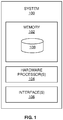
- FIG. 1 illustrates an exemplary block diagram of a system 100 for classifying multi-dimensional time series of parameters of entities in accordance with an embodiment of the present disclosure.
- the system 100 may also be referred as 'a classification system', and interchangeably used hereinafter.
- the system 100 includes one or more processors 104, communication interface device(s) or input/output (I/O) interface(s) 106, and one or more data storage devices or memory 102 operatively coupled to the one or more processors 104.
- the memory 102 comprises a database 108.
- the one or more processors 104 that are hardware processors can be implemented as one or more microprocessors, microcomputers, microcontrollers, digital signal processors, central processing units, state machines, logic circuitries, and/or any devices that manipulate signals based on operational instructions.
- the processor(s) is configured to fetch and execute computer-readable instructions stored in the memory.
- the system 100 can be implemented in a variety of computing systems, such as laptop computers, notebooks, hand-held devices, workstations, mainframe computers, servers, a network cloud and the like.
- the I/O interface device(s) 106 can include a variety of software and hardware interfaces, for example, a web interface, a graphical user interface, and the like and can facilitate multiple communications within a wide variety of networks N/W and protocol types, including wired networks, for example, LAN, cable, etc., and wireless networks, such as WLAN, cellular, or satellite.
- the I/O interface device(s) can include one or more ports for connecting a number of devices to one another or to another server.
- the memory 102 may include any computer-readable medium known in the art including, for example, volatile memory, such as static random access memory (SRAM) and dynamic random access memory (DRAM), and/or non-volatile memory, such as read only memory (ROM), erasable programmable ROM, flash memories, hard disks, optical disks, and magnetic tapes.
- volatile memory such as static random access memory (SRAM) and dynamic random access memory (DRAM)
- DRAM dynamic random access memory
- non-volatile memory such as read only memory (ROM), erasable programmable ROM, flash memories, hard disks, optical disks, and magnetic tapes.
- the database 108 may store information but are not limited to, a plurality of parameters obtained from one or more sensors, wherein the parameters are specific to entities (e.g., user, machine, and the like). Parameters may comprise sensor data captured through the sensors either connected to the user(s) and/or machine(s). Further, the database 108 stores information pertaining to inputs fed to the system 100 and/or outputs generated by the system (e.g., at each stage), specific to the methodology described herein. More specifically, the database 108 stores information being processed at each step of the proposed methodology.
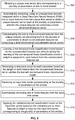
- FIG. 2 illustrates an exemplary flow diagram illustrating a method for classifying multi-dimensional time series of parameters using the system 100 of FIG. 1 according to an embodiment of the present disclosure.
- the system 100 comprises one or more data storage devices or the memory 102 operatively coupled to the one or more hardware processors 104 and is configured to store instructions for execution of steps of the method by the one or more processors 104.
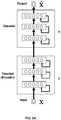
- TimeNet is a pre-trained off-the-shelf feature extractor for univariate time series with three recurrent layers having say 60 Gated Recurrent Units (GRUs) each.
- GRUs Gated Recurrent Units
- TimeNet is an RNN trained via an autoencoder consisting of an encoder RNN and a decoder RNN trained simultaneously using a sequence-to-sequence learning framework as shown in FIG. 3A .
- FIG. 3A depicts TimeNet trained via RNN Encoder-Decoder with three hidden GRU layers implemented by the system 100 of FIG. 1 in accordance with an example embodiment of the present disclosure.
- the model is trained to minimize the average squared reconstruction error.
- TimeNet maps a multivariate input time series to 180-dimensional feature vector, where each dimension corresponds to final output of one of the 60 GRUs in the 3 recurrent layers.
- the one or more hardware processors 104 obtain a unique time series data corresponding to a plurality of parameters of one or more entities (e.g., in this case entities can be a user, or a machine, and the like).
- the plurality of parameters are obtained from one or more sensors, for example, temperature sensor, motion sensor, health monitoring sensor(s), and the like.
- the one or more entities can also be referred as 'entities' and interchangeably used hereinafter.
- Each unique time series data comprises one or more time series data corresponding to each parameter of the plurality of parameters.
- the one or more time series data cumulatively constitutes a unique time series data that is obtained as input to the system prior to performing feature extraction. Therefore there can be multiple unique time series data (UTSD 1, UTSD 2, UTSD 3 and so on) fed as input to the system 100, wherein each of the multiple unique time series data is specific to a corresponding parameter and an entity respectively.
- UTSD 1 comprises one or more time series data (says TSD 1, TSD 2, TSD 3 and so on) corresponding to parameters (say P1, P2, P3 and so on) of an entity say E1.
- another unique time series data comprises one or more time series data (says TSD 11, TSD 12, TSD 13 and so on) corresponding to parameters (say P1, P2, P3, and so on) of another entity say E2.
- the one or more hardware processors 104 automatically extract, using an unsupervised encoder integrated within a Deep Recurrent Neural Network (RNN), one or more features from the unique time series to obtain a unique features set for each of the plurality of parameters, wherein the unique features set comprises a fixed-dimensional feature vector.
- RNN Deep Recurrent Neural Network
- time series length T also depends on i, e.g., based on length of stay in hospital.
- the system 100 further converts each time series to have equal length T by suitable pre/post padding with 0s.
- the unique features set comprises a fixed dimensional feature vector.
- the one or more hardware processors 104 concatenate features from the unique features set pertaining each of the plurality of parameters to obtain a concatenated features set comprising a fixed-dimensional concatenated feature vector.
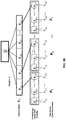
- FIG. 3B depicts TimeNet based Feature Extraction as implemented by the system 100 of FIG. 1 in accordance with an example embodiment of the present disclosure.
- the one or more hardware processors 104 learn a non-temporal linear classification model based on the concatenated features set, wherein during the learning of the non-temporal linear classification model a weight is assigned to each feature from the concatenated features set.
- the final concatenated feature vector z T is used as input for the classification tasks (e.g., say phenotyping and mortality prediction classification tasks in case of physiological parameters).
- the classification tasks e.g., say phenotyping and mortality prediction classification tasks in case of physiological parameters.
- the system 100 constrains the non-temporal linear model with weights w to use only a few of these large number of features.
- the one or more hardware processors 104 generate a relevance score for each of the plurality of parameters based on the weight of each feature from the concatenated features set to validate the learned non-temporal linear classification model.
- validation of learned non-temporal linear classification model includes (i) validating the incoming time series, (ii) validating feature extraction and associated output thereof, (iii) validating the concatenating process and output generated thereof thereby validating the learned non-temporal linear classification model itself.
- the system 100 determines relevance of the n raw input parameter for a given phenotype is potentially useful to obtain insights into the obtained classification model.
- the sparse weights w are easy to interpret and can give interesting insights into relevant parameters for a classification task.
- the system 100 generates relevance score say r j for j - th raw input parameter as the sum of absolute values of the weights w jk assigned to the corresponding TimeNet features z jT as shown in FIG. 3C . More specifically, FIG. 3C , with reference to FIGS. 1 through 3B , depicts generation of relevance scores for raw input parameters using the system 100 of FIG. 1 in accordance with an example embodiment of the present disclosure.
- T is time series length
- n is number of raw input parameters.
- the system 100 Upon obtaining the overall interpretable learned classification model (post validation), the system 100 further implements this interpretable classification model on a test input data wherein an input time series corresponding to the plurality of parameters of the entities is received and one or more features are automatically extracted from the input time series. The system 100 then applies the validated learned classification model on the input time series based on the extracted one or more features to obtain a class for the input time series corresponding to the plurality of parameters of the entities.
- input time series that is received by the system 100 may be a fixed length data or a variable length data.
- MIMIC-III (v1.4) clinical database was used [e.g., refer ' Alistair EW Johnson, Tom J Pollard, Lu Shen, H Lehman Liwei, Mengling Feng, Mohammad Ghassemi, Benjamin Moody, Peter Szolovits, Leo Anthony Celi, and Roger G Mark. Mimic-iii, a freely accessible critical care database. Scientific data, 3:160035, 2016 '] which consisted of over 60,000 ICU stays across 40,000 critical care patients].
- phenotyping task the goal was to classify 25 phenotypes common in adult ICUs.
- in-hospital mortality task the goal was to predict whether the patient survives or not given the time series observations up to 48 hours.
- Table 1 summarizes the results and provides comparison with existing/traditional benchmarks.
- Table 2 describes detailed phenotype-wise results.
- LR refers to Logistic regression
- LSTM-Multi refers to LSTM-based multitask model
- SAnD refers to (Simply Attend and Diagnose): Fully attention-based model
- SAnD-Multi refers to SAnD-based multitask model.
- the learned classifier was applied to all 48-hours windows (overlapping with shift of 24 hours) over the entire ICU stay period of a patient, and the average phenotype probability across windows was used as the final estimate of the target class.
- the additional feature is related to the presence (1) or absence (0) of the phenotype during the previous episode.
- the ground-truth value for this feature was used during training time, and the probability of presence of phenotype during previous episode (as given via LASSO-based classifier (also referred as "Least Absolute Shrinkage and Selection Operator-regularized loss function”) at test time.
- Table 3 depicts a list of input parameters pertaining to a user (in this case physiological parameters) as below: Table 3 1 Glucose 31 Glascow coma scale eye opening ⁇ 3 To speech 2 Glascow coma scale total ⁇ 7 32 Height 3 Glascow coma scale verbal response ⁇ Incomprehensible sounds 33 Glascow coma scale motor response ⁇ 5 Localizes Pain 4 Diastolic blood pressure 34 Glascow coma scale total ⁇ 14 5 Weight 35 Fraction inspired oxygen 6 Glascow coma scale total ⁇ 8 36 Glascow coma scale total ⁇ 12 7 Glascow coma scale motor response ⁇ Obeys Commands 37 Glascow coma scale verbal response ⁇ Confused 8 Glascow coma scale eye opening ⁇ None 38 Glascow coma scale motor response ⁇ 1 No response 9 Glascow coma scale eye opening ⁇ To pain 39 Mean blood pressure 10 Glascow coma scale total ⁇ 6 40 Glascow coma scale total ⁇ 4 11 Glascow coma scale verbal response ⁇ 1.0 ET/Tra
- TimeNet-48-Eps performs better than existing/conventional (or traditional) benchmarks, while still being practically more feasible as it looks at only up to 48 hours of current episode of a patient rather than the entire current episode.
- in-hospital mortality task as depicted in above Table 2, a comparable performance was observed when compared to existing benchmarks.
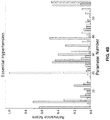
- FIGS. 4A-4B For example, as shown in FIGS. 4A-4B , highest relevance scores were obtained for Glucose Level (parameter 1) and Systolic Blood Pressure (parameter 20) for Diabetes Mellitus with Complications ( FIG. 4A ), and Essential Hypertension ( FIG. 4B ), respectively. More specifically, FIG. 4A , with reference to FIGS. 1 through 3C , depicts a graphical representation illustrating highest relevance scores obtained for Glucose Level (parameter 1) for phenotype Diabetes Mellitus with Complications in accordance with an embodiment of the present disclosure. FIG. 4B , with reference to FIGS.
- FIG. 1 through 4A depicts a graphical representation illustrating highest relevance scores obtained for and Systolic Blood Pressure (parameter 20) for phenotype Essential Hypertension in accordance with an embodiment of the present disclosure.
- the TimeNet encoder was pre-trained on time series from various domains taken from UCR Time Series Archive, it provided meaningful general-purpose features from time series of raw input parameters, and LASSO helps to select the most relevant ones for end-task by using labeled data.
- the hardware device can be any kind of device which can be programmed including e.g. any kind of computer like a server or a personal computer, or the like, or any combination thereof.
- the device may also include means which could be e.g. hardware means like e.g. an application-specific integrated circuit (ASIC), a field-programmable gate array (FPGA), or a combination of hardware and software means, e.g.
- ASIC application-specific integrated circuit
- FPGA field-programmable gate array
- the means can include both hardware means and software means.
- the method embodiments described herein could be implemented in hardware and software.
- the device may also include software means.
- the embodiments may be implemented on different hardware devices, e.g. using a plurality of CPUs.
- the embodiments herein can comprise hardware and software elements.
- the embodiments that are implemented in software include but are not limited to, firmware, resident software, microcode, etc.
- the functions performed by various modules described herein may be implemented in other modules or combinations of other modules.
- a computer-usable or computer readable medium can be any apparatus that can comprise, store, communicate, propagate, or transport the program for use by or in connection with the instruction execution system, apparatus, or device.
- a computer-readable storage medium refers to any type of physical memory on which information or data readable by a processor may be stored.
- a computer-readable storage medium may store instructions for execution by one or more processors, including instructions for causing the processor(s) to perform steps or stages consistent with the embodiments described herein.
- the term "computer-readable medium” should be understood to include tangible items and exclude carrier waves and transient signals, i.e., be non-transitory. Examples include random access memory (RAM), read-only memory (ROM), volatile memory, nonvolatile memory, hard drives, CD ROMs, DVDs, flash drives, disks, and any other known physical storage media.
Landscapes
- Engineering & Computer Science (AREA)
- Theoretical Computer Science (AREA)
- Physics & Mathematics (AREA)
- Health & Medical Sciences (AREA)
- Data Mining & Analysis (AREA)
- Biomedical Technology (AREA)
- General Health & Medical Sciences (AREA)
- General Engineering & Computer Science (AREA)
- General Physics & Mathematics (AREA)
- Mathematical Physics (AREA)
- Software Systems (AREA)
- Biophysics (AREA)
- Computational Linguistics (AREA)
- Evolutionary Computation (AREA)
- Artificial Intelligence (AREA)
- Molecular Biology (AREA)
- Computing Systems (AREA)
- Life Sciences & Earth Sciences (AREA)
- Databases & Information Systems (AREA)
- Medical Informatics (AREA)
- Public Health (AREA)
- Pathology (AREA)
- Epidemiology (AREA)
- Primary Health Care (AREA)
- Information Retrieval, Db Structures And Fs Structures Therefor (AREA)
- Investigating Or Analysing Biological Materials (AREA)
- Medical Treatment And Welfare Office Work (AREA)
- Complex Calculations (AREA)
- Image Analysis (AREA)
Applications Claiming Priority (1)
| Application Number | Priority Date | Filing Date | Title |
|---|---|---|---|
| IN201821025603 | 2018-07-09 |
Publications (3)
| Publication Number | Publication Date |
|---|---|
| EP3594861A1 true EP3594861A1 (de) | 2020-01-15 |
| EP3594861B1 EP3594861B1 (de) | 2024-04-03 |
| EP3594861C0 EP3594861C0 (de) | 2024-04-03 |
Family
ID=65817835
Family Applications (1)
| Application Number | Title | Priority Date | Filing Date |
|---|---|---|---|
| EP19162981.5A Active EP3594861B1 (de) | 2018-07-09 | 2019-03-14 | Systeme und verfahren zur klassifizierung von mehrdimensionalen zeitreihen von parametern |
Country Status (6)
| Country | Link |
|---|---|
| US (1) | US11379717B2 (de) |
| EP (1) | EP3594861B1 (de) |
| JP (1) | JP6793774B2 (de) |
| AU (1) | AU2019201881B2 (de) |
| CA (1) | CA3043825A1 (de) |
| MX (1) | MX2019003211A (de) |
Cited By (1)
| Publication number | Priority date | Publication date | Assignee | Title |
|---|---|---|---|---|
| CN112017776A (zh) * | 2020-10-27 | 2020-12-01 | 平安科技(深圳)有限公司 | 基于动态图和医学知识图谱的疾病预测方法及相关设备 |
Families Citing this family (13)
| Publication number | Priority date | Publication date | Assignee | Title |
|---|---|---|---|---|
| US20200026767A1 (en) * | 2018-07-17 | 2020-01-23 | Fuji Xerox Co., Ltd. | System and method for generating titles for summarizing conversational documents |
| EP3770822B1 (de) | 2019-07-26 | 2025-04-30 | Nokia Technologies Oy | Verfahren und vorrichtung zur verarbeitung von sensordaten |
| WO2021097178A1 (en) * | 2019-11-14 | 2021-05-20 | University Of Virginia Patent Foundation | System, method and computer readable medium for compressing continuous glucose monitor data |
| CN111275113B (zh) * | 2020-01-20 | 2023-04-07 | 西安理工大学 | 基于代价敏感混合网络的偏斜类时间序列异常检测方法 |
| CN111860542B (zh) * | 2020-07-22 | 2024-06-28 | 海尔优家智能科技(北京)有限公司 | 用于识别物品类别的方法及装置、电子设备 |
| US11301352B2 (en) | 2020-08-26 | 2022-04-12 | International Business Machines Corporation | Selecting metrics for system monitoring |
| EP4060677A1 (de) | 2021-03-18 | 2022-09-21 | Craft.Ai | Vorrichtungen und verfahren zur datenprobenauswahl für therapiegerichtete aufgaben |
| CN113792825B (zh) * | 2021-11-17 | 2022-08-02 | 国网江苏省电力有限公司营销服务中心 | 一种用电信息采集设备故障分类模型训练方法及装置 |
| US11431472B1 (en) | 2021-11-22 | 2022-08-30 | Morgan Stanley Services Group Inc. | Automated domain language parsing and data extraction |
| CN114491952B (zh) * | 2021-12-27 | 2025-07-29 | 宁波力斗智能技术有限公司 | 一种基于长短时记忆网络的锂电池剩余使用寿命预测方法 |
| CN114757630B (zh) * | 2022-06-16 | 2022-10-14 | 阿里健康科技(杭州)有限公司 | 仓储管理模型确定方法、装置及计算机设备 |
| CN115145221B (zh) * | 2022-07-05 | 2024-07-19 | 湖南大学 | 一种基于机器人铣边误差追溯的工件与刀具位姿标定方法 |
| CN117077871B (zh) * | 2023-10-17 | 2024-02-02 | 山东理工昊明新能源有限公司 | 基于大数据的能源需求预测模型的构建方法及装置 |
Family Cites Families (10)
| Publication number | Priority date | Publication date | Assignee | Title |
|---|---|---|---|---|
| JPH0674876A (ja) * | 1992-08-28 | 1994-03-18 | Kawasaki Steel Corp | 設備診断方法及び装置 |
| US6063028A (en) | 1997-03-20 | 2000-05-16 | Luciano; Joanne Sylvia | Automated treatment selection method |
| US8781989B2 (en) * | 2008-01-14 | 2014-07-15 | Aptima, Inc. | Method and system to predict a data value |
| EP2385789B1 (de) | 2008-12-19 | 2019-03-13 | Agency for Science, Technology and Research | Vorrichtung und verfahren zur generierung der darstellung des aufmerksamkeitsgrades einer person |
| CN103038772B (zh) | 2010-03-15 | 2017-10-24 | 新加坡保健服务集团有限公司 | 预测患者的存活性的系统和装置 |
| US20170286826A1 (en) * | 2016-03-30 | 2017-10-05 | Nec Laboratories America, Inc. | Real-time deep learning for danger prediction using heterogeneous time-series sensor data |
| JP2018097418A (ja) * | 2016-12-08 | 2018-06-21 | 株式会社Preferred Networks | 情報処理装置 |
| JP6386520B2 (ja) * | 2016-12-13 | 2018-09-05 | ファナック株式会社 | 数値制御装置及び機械学習装置 |
| US10616253B2 (en) * | 2017-11-13 | 2020-04-07 | International Business Machines Corporation | Anomaly detection using cognitive computing |
| US11157782B2 (en) * | 2017-11-16 | 2021-10-26 | International Business Machines Corporation | Anomaly detection in multidimensional time series data |
-
2019
- 2019-03-14 EP EP19162981.5A patent/EP3594861B1/de active Active
- 2019-03-18 JP JP2019049465A patent/JP6793774B2/ja active Active
- 2019-03-19 AU AU2019201881A patent/AU2019201881B2/en active Active
- 2019-03-20 MX MX2019003211A patent/MX2019003211A/es unknown
- 2019-03-25 US US16/363,038 patent/US11379717B2/en active Active
- 2019-05-21 CA CA3043825A patent/CA3043825A1/en active Pending
Non-Patent Citations (6)
| Title |
|---|
| ALISTAIR EW JOHNSON; TOM J POLLARD; LU SHEN; H LEHMAN LI-WEI; MENGLING FENG; MOHAMMAD GHASSEMI; BENJAMIN MOODY; PETER SZOLOVITS; L: "Mimic-iii, a freely accessible critical care database", SCIENTIFIC DATA, vol. 3, 2016, pages 160035 |
| BLUM A L ET AL: "Selection of relevant features and examples in machine learning", ARTIFICIAL INTELLIGENCE, ELSEVIER SCIENCE PUBLISHER B.V., AMSTERDAM, NL, vol. 97, no. 1-2, 2 December 1997 (1997-12-02), pages 245 - 271, XP002263360, ISSN: 0004-3702, DOI: 10.1016/S0004-3702(97)00063-5 * |
| HRAYR HARUTYUNYAN; HRANT KHACHATRIAN; DAVID C KALE; ARAM GALSTYAN: "Multitask learning and benchmarking with clinical time series data", ARXIV PREPRINT ARXIV: 1703.07771, 2017 |
| HUAN SONG; DEEPTA RAJAN; JAYARAMAN J THIAGARAJAN; ANDREAS SPANIAS: "Attend and diagnose: Clinical time series analysis using attention models", ARXIV PREPRINT ARXIV:1711.03905, 2017 |
| SPRECHMANN P ET AL: "Learning Efficient Sparse and Low Rank Models", IEEE TRANSACTIONS ON PATTERN ANALYSIS AND MACHINE INTELLIGENCE, IEEE COMPUTER SOCIETY, USA, vol. 37, no. 9, 2 September 2015 (2015-09-02), pages 1821 - 1833, XP011664909, ISSN: 0162-8828, [retrieved on 20150803], DOI: 10.1109/TPAMI.2015.2392779 * |
| ZHU LINCHAO ET AL: "Bidirectional Multirate Reconstruction for Temporal Modeling in Videos", IEEE COMPUTER SOCIETY CONFERENCE ON COMPUTER VISION AND PATTERN RECOGNITION. PROCEEDINGS, IEEE COMPUTER SOCIETY, US, 21 July 2017 (2017-07-21), pages 1339 - 1348, XP033249473, ISSN: 1063-6919, [retrieved on 20171106], DOI: 10.1109/CVPR.2017.147 * |
Cited By (1)
| Publication number | Priority date | Publication date | Assignee | Title |
|---|---|---|---|---|
| CN112017776A (zh) * | 2020-10-27 | 2020-12-01 | 平安科技(深圳)有限公司 | 基于动态图和医学知识图谱的疾病预测方法及相关设备 |
Also Published As
| Publication number | Publication date |
|---|---|
| JP2020009410A (ja) | 2020-01-16 |
| AU2019201881B2 (en) | 2021-04-01 |
| AU2019201881A1 (en) | 2020-01-23 |
| MX2019003211A (es) | 2020-01-10 |
| US20200012938A1 (en) | 2020-01-09 |
| US11379717B2 (en) | 2022-07-05 |
| EP3594861B1 (de) | 2024-04-03 |
| CA3043825A1 (en) | 2020-01-09 |
| EP3594861C0 (de) | 2024-04-03 |
| JP6793774B2 (ja) | 2020-12-02 |
| BR102019005486A2 (pt) | 2020-02-04 |
Similar Documents
| Publication | Publication Date | Title |
|---|---|---|
| EP3594861B1 (de) | Systeme und verfahren zur klassifizierung von mehrdimensionalen zeitreihen von parametern | |
| Yin et al. | Diagnosis of autism spectrum disorder based on functional brain networks with deep learning | |
| US12476004B2 (en) | Deep neural network pre-training method for classifying electrocardiogram (ECG) data | |
| Gupta et al. | Transfer learning for clinical time series analysis using deep neural networks | |
| US20210056413A1 (en) | Cross-modal neural networks for prediction | |
| US20210042916A1 (en) | Deep learning-based diagnosis and referral of diseases and disorders | |
| US11531851B2 (en) | Sequential minimal optimization algorithm for learning using partially available privileged information | |
| Gupta et al. | Using Features From Pre-trained TimeNET For Clinical Predictions. | |
| CN112017744A (zh) | 电子病例自动生成方法、装置、设备及存储介质 | |
| CN115879564A (zh) | 用于联合学习的自适应聚合 | |
| EP4371130A1 (de) | Verfahren zur bewertung von textähnlichkeit zur diagnose oder überwachung eines gesundheitszustands | |
| Mansoor et al. | Development of an efficient novel method for coronary artery disease prediction using machine learning and deep learning techniques | |
| Thiagarajan et al. | DDxNet: a deep learning model for automatic interpretation of electronic health records, electrocardiograms and electroencephalograms | |
| US20250046447A1 (en) | Apparatus and a method for generating a diagnostic label | |
| US20260057310A1 (en) | Accelerated training of a machine learning model | |
| US12147428B2 (en) | System and method for searching time series data | |
| US20220318626A1 (en) | Meta-training framework on dual-channel combiner network system for dialysis event prediction | |
| Singh et al. | Deep learning: the future of medical image processing | |
| US20240420848A1 (en) | Systems and methods for using machine-learning to predict patient health characteristics | |
| WO2025111606A1 (en) | Methods and systems for vector embedding search for predicting abnormalities in medical images | |
| CN112086174B (zh) | 一种三维知识诊断模型构建方法和系统 | |
| CN115761371A (zh) | 医学影像分类方法、装置、存储介质及电子设备 | |
| KR20220031397A (ko) | 질환 판단 방법 | |
| Gaurav et al. | A Deep Learning Approach to Early Detection of Heart Attacks from Health Parameters | |
| US20260018306A1 (en) | Apparatus and method for generating a preoperative data structure using a pre-operative panel |
Legal Events
| Date | Code | Title | Description |
|---|---|---|---|
| PUAI | Public reference made under article 153(3) epc to a published international application that has entered the european phase |
Free format text: ORIGINAL CODE: 0009012 |
|
| STAA | Information on the status of an ep patent application or granted ep patent |
Free format text: STATUS: THE APPLICATION HAS BEEN PUBLISHED |
|
| AK | Designated contracting states |
Kind code of ref document: A1 Designated state(s): AL AT BE BG CH CY CZ DE DK EE ES FI FR GB GR HR HU IE IS IT LI LT LU LV MC MK MT NL NO PL PT RO RS SE SI SK SM TR |
|
| AX | Request for extension of the european patent |
Extension state: BA ME |
|
| STAA | Information on the status of an ep patent application or granted ep patent |
Free format text: STATUS: REQUEST FOR EXAMINATION WAS MADE |
|
| 17P | Request for examination filed |
Effective date: 20200710 |
|
| RBV | Designated contracting states (corrected) |
Designated state(s): AL AT BE BG CH CY CZ DE DK EE ES FI FR GB GR HR HU IE IS IT LI LT LU LV MC MK MT NL NO PL PT RO RS SE SI SK SM TR |
|
| STAA | Information on the status of an ep patent application or granted ep patent |
Free format text: STATUS: EXAMINATION IS IN PROGRESS |
|
| 17Q | First examination report despatched |
Effective date: 20200924 |
|
| RIN1 | Information on inventor provided before grant (corrected) |
Inventor name: THE OTHER INVENTORS HAVE WAIVED THEIR RIGHT TO BE THUS MENTIONED. Inventor name: GAUTAM SHROFF Inventor name: LOVEKESH VIG Inventor name: PRIYANKA GUPTA Inventor name: MALHOTRA, PANKAJ |
|
| REG | Reference to a national code |
Ref country code: DE Ref legal event code: R079 Free format text: PREVIOUS MAIN CLASS: G06N0003040000 Ipc: G06N0003088000 Ref document number: 602019049297 Country of ref document: DE |
|
| REG | Reference to a national code |
Ref country code: DE Ref legal event code: R079 Free format text: PREVIOUS MAIN CLASS: G06N0003088000 Ipc: G06N0003044200 Ref document number: 602019049297 Country of ref document: DE |
|
| GRAP | Despatch of communication of intention to grant a patent |
Free format text: ORIGINAL CODE: EPIDOSNIGR1 |
|
| STAA | Information on the status of an ep patent application or granted ep patent |
Free format text: STATUS: GRANT OF PATENT IS INTENDED |
|
| RIC1 | Information provided on ipc code assigned before grant |
Ipc: G06N 3/045 20230101ALI20230907BHEP Ipc: G06N 3/044 20230101ALI20230907BHEP Ipc: G06N 20/10 20190101ALI20230907BHEP Ipc: G06N 3/088 20230101AFI20230907BHEP |
|
| RIC1 | Information provided on ipc code assigned before grant |
Ipc: G06N 3/088 20230101ALI20230908BHEP Ipc: G16H 50/70 20180101ALI20230908BHEP Ipc: G16H 50/20 20180101ALI20230908BHEP Ipc: G06N 3/0455 20230101ALI20230908BHEP Ipc: G06N 3/0442 20230101AFI20230908BHEP |
|
| INTG | Intention to grant announced |
Effective date: 20230928 |
|
| RIN1 | Information on inventor provided before grant (corrected) |
Inventor name: GAUTAM, SHROFF Inventor name: LOVEKESH, VIG Inventor name: PRIYANKA, GUPTA Inventor name: MALHOTRA, PANKAJ |
|
| GRAS | Grant fee paid |
Free format text: ORIGINAL CODE: EPIDOSNIGR3 |
|
| GRAA | (expected) grant |
Free format text: ORIGINAL CODE: 0009210 |
|
| STAA | Information on the status of an ep patent application or granted ep patent |
Free format text: STATUS: THE PATENT HAS BEEN GRANTED |
|
| AK | Designated contracting states |
Kind code of ref document: B1 Designated state(s): AL AT BE BG CH CY CZ DE DK EE ES FI FR GB GR HR HU IE IS IT LI LT LU LV MC MK MT NL NO PL PT RO RS SE SI SK SM TR |
|
| REG | Reference to a national code |
Ref country code: GB Ref legal event code: FG4D |
|
| REG | Reference to a national code |
Ref country code: CH Ref legal event code: EP |
|
| REG | Reference to a national code |
Ref country code: IE Ref legal event code: FG4D |
|
| REG | Reference to a national code |
Ref country code: DE Ref legal event code: R096 Ref document number: 602019049297 Country of ref document: DE |
|
| U01 | Request for unitary effect filed |
Effective date: 20240403 |
|
| U07 | Unitary effect registered |
Designated state(s): AT BE BG DE DK EE FI FR IT LT LU LV MT NL PT SE SI Effective date: 20240408 |
|
| PG25 | Lapsed in a contracting state [announced via postgrant information from national office to epo] |
Ref country code: IS Free format text: LAPSE BECAUSE OF FAILURE TO SUBMIT A TRANSLATION OF THE DESCRIPTION OR TO PAY THE FEE WITHIN THE PRESCRIBED TIME-LIMIT Effective date: 20240803 |
|
| PG25 | Lapsed in a contracting state [announced via postgrant information from national office to epo] |
Ref country code: HR Free format text: LAPSE BECAUSE OF FAILURE TO SUBMIT A TRANSLATION OF THE DESCRIPTION OR TO PAY THE FEE WITHIN THE PRESCRIBED TIME-LIMIT Effective date: 20240403 |
|
| PG25 | Lapsed in a contracting state [announced via postgrant information from national office to epo] |
Ref country code: GR Free format text: LAPSE BECAUSE OF FAILURE TO SUBMIT A TRANSLATION OF THE DESCRIPTION OR TO PAY THE FEE WITHIN THE PRESCRIBED TIME-LIMIT Effective date: 20240704 |
|
| PG25 | Lapsed in a contracting state [announced via postgrant information from national office to epo] |
Ref country code: ES Free format text: LAPSE BECAUSE OF FAILURE TO SUBMIT A TRANSLATION OF THE DESCRIPTION OR TO PAY THE FEE WITHIN THE PRESCRIBED TIME-LIMIT Effective date: 20240403 |
|
| PG25 | Lapsed in a contracting state [announced via postgrant information from national office to epo] |
Ref country code: CZ Free format text: LAPSE BECAUSE OF FAILURE TO SUBMIT A TRANSLATION OF THE DESCRIPTION OR TO PAY THE FEE WITHIN THE PRESCRIBED TIME-LIMIT Effective date: 20240403 |
|
| PG25 | Lapsed in a contracting state [announced via postgrant information from national office to epo] |
Ref country code: PL Free format text: LAPSE BECAUSE OF FAILURE TO SUBMIT A TRANSLATION OF THE DESCRIPTION OR TO PAY THE FEE WITHIN THE PRESCRIBED TIME-LIMIT Effective date: 20240403 |
|
| PG25 | Lapsed in a contracting state [announced via postgrant information from national office to epo] |
Ref country code: PL Free format text: LAPSE BECAUSE OF FAILURE TO SUBMIT A TRANSLATION OF THE DESCRIPTION OR TO PAY THE FEE WITHIN THE PRESCRIBED TIME-LIMIT Effective date: 20240403 Ref country code: NO Free format text: LAPSE BECAUSE OF FAILURE TO SUBMIT A TRANSLATION OF THE DESCRIPTION OR TO PAY THE FEE WITHIN THE PRESCRIBED TIME-LIMIT Effective date: 20240703 Ref country code: IS Free format text: LAPSE BECAUSE OF FAILURE TO SUBMIT A TRANSLATION OF THE DESCRIPTION OR TO PAY THE FEE WITHIN THE PRESCRIBED TIME-LIMIT Effective date: 20240803 Ref country code: HR Free format text: LAPSE BECAUSE OF FAILURE TO SUBMIT A TRANSLATION OF THE DESCRIPTION OR TO PAY THE FEE WITHIN THE PRESCRIBED TIME-LIMIT Effective date: 20240403 Ref country code: GR Free format text: LAPSE BECAUSE OF FAILURE TO SUBMIT A TRANSLATION OF THE DESCRIPTION OR TO PAY THE FEE WITHIN THE PRESCRIBED TIME-LIMIT Effective date: 20240704 Ref country code: ES Free format text: LAPSE BECAUSE OF FAILURE TO SUBMIT A TRANSLATION OF THE DESCRIPTION OR TO PAY THE FEE WITHIN THE PRESCRIBED TIME-LIMIT Effective date: 20240403 Ref country code: CZ Free format text: LAPSE BECAUSE OF FAILURE TO SUBMIT A TRANSLATION OF THE DESCRIPTION OR TO PAY THE FEE WITHIN THE PRESCRIBED TIME-LIMIT Effective date: 20240403 Ref country code: RS Free format text: LAPSE BECAUSE OF FAILURE TO SUBMIT A TRANSLATION OF THE DESCRIPTION OR TO PAY THE FEE WITHIN THE PRESCRIBED TIME-LIMIT Effective date: 20240703 |
|
| REG | Reference to a national code |
Ref country code: DE Ref legal event code: R097 Ref document number: 602019049297 Country of ref document: DE |
|
| PG25 | Lapsed in a contracting state [announced via postgrant information from national office to epo] |
Ref country code: SK Free format text: LAPSE BECAUSE OF FAILURE TO SUBMIT A TRANSLATION OF THE DESCRIPTION OR TO PAY THE FEE WITHIN THE PRESCRIBED TIME-LIMIT Effective date: 20240403 Ref country code: RO Free format text: LAPSE BECAUSE OF FAILURE TO SUBMIT A TRANSLATION OF THE DESCRIPTION OR TO PAY THE FEE WITHIN THE PRESCRIBED TIME-LIMIT Effective date: 20240403 |
|
| PG25 | Lapsed in a contracting state [announced via postgrant information from national office to epo] |
Ref country code: SM Free format text: LAPSE BECAUSE OF FAILURE TO SUBMIT A TRANSLATION OF THE DESCRIPTION OR TO PAY THE FEE WITHIN THE PRESCRIBED TIME-LIMIT Effective date: 20240403 |
|
| PG25 | Lapsed in a contracting state [announced via postgrant information from national office to epo] |
Ref country code: SM Free format text: LAPSE BECAUSE OF FAILURE TO SUBMIT A TRANSLATION OF THE DESCRIPTION OR TO PAY THE FEE WITHIN THE PRESCRIBED TIME-LIMIT Effective date: 20240403 Ref country code: SK Free format text: LAPSE BECAUSE OF FAILURE TO SUBMIT A TRANSLATION OF THE DESCRIPTION OR TO PAY THE FEE WITHIN THE PRESCRIBED TIME-LIMIT Effective date: 20240403 Ref country code: RO Free format text: LAPSE BECAUSE OF FAILURE TO SUBMIT A TRANSLATION OF THE DESCRIPTION OR TO PAY THE FEE WITHIN THE PRESCRIBED TIME-LIMIT Effective date: 20240403 |
|
| PLBE | No opposition filed within time limit |
Free format text: ORIGINAL CODE: 0009261 |
|
| STAA | Information on the status of an ep patent application or granted ep patent |
Free format text: STATUS: NO OPPOSITION FILED WITHIN TIME LIMIT |
|
| 26N | No opposition filed |
Effective date: 20250106 |
|
| U20 | Renewal fee for the european patent with unitary effect paid |
Year of fee payment: 7 Effective date: 20250325 |
|
| PGFP | Annual fee paid to national office [announced via postgrant information from national office to epo] |
Ref country code: CH Payment date: 20250401 Year of fee payment: 7 |
|
| PG25 | Lapsed in a contracting state [announced via postgrant information from national office to epo] |
Ref country code: MC Free format text: LAPSE BECAUSE OF FAILURE TO SUBMIT A TRANSLATION OF THE DESCRIPTION OR TO PAY THE FEE WITHIN THE PRESCRIBED TIME-LIMIT Effective date: 20240403 |
|
| PG25 | Lapsed in a contracting state [announced via postgrant information from national office to epo] |
Ref country code: IE Free format text: LAPSE BECAUSE OF NON-PAYMENT OF DUE FEES Effective date: 20250314 |
|
| REG | Reference to a national code |
Ref country code: CH Ref legal event code: U11 Free format text: ST27 STATUS EVENT CODE: U-0-0-U10-U11 (AS PROVIDED BY THE NATIONAL OFFICE) Effective date: 20260401 |
|
| PGFP | Annual fee paid to national office [announced via postgrant information from national office to epo] |
Ref country code: GB Payment date: 20260304 Year of fee payment: 8 |