EP3593715B1 - Multiplexing of high count electrode catheter(s) - Google Patents
Multiplexing of high count electrode catheter(s) Download PDFInfo
- Publication number
- EP3593715B1 EP3593715B1 EP19184969.4A EP19184969A EP3593715B1 EP 3593715 B1 EP3593715 B1 EP 3593715B1 EP 19184969 A EP19184969 A EP 19184969A EP 3593715 B1 EP3593715 B1 EP 3593715B1
- Authority
- EP
- European Patent Office
- Prior art keywords
- interest
- electrodes
- catheter
- electrode
- region
- Prior art date
- Legal status (The legal status is an assumption and is not a legal conclusion. Google has not performed a legal analysis and makes no representation as to the accuracy of the status listed.)
- Active
Links
Images


Classifications
-
- A—HUMAN NECESSITIES
- A61—MEDICAL OR VETERINARY SCIENCE; HYGIENE
- A61B—DIAGNOSIS; SURGERY; IDENTIFICATION
- A61B5/00—Measuring for diagnostic purposes; Identification of persons
- A61B5/05—Detecting, measuring or recording for diagnosis by means of electric currents or magnetic fields; Measuring using microwaves or radio waves
- A61B5/053—Measuring electrical impedance or conductance of a portion of the body
- A61B5/0536—Impedance imaging, e.g. by tomography
-
- A—HUMAN NECESSITIES
- A61—MEDICAL OR VETERINARY SCIENCE; HYGIENE
- A61B—DIAGNOSIS; SURGERY; IDENTIFICATION
- A61B18/00—Surgical instruments, devices or methods for transferring non-mechanical forms of energy to or from the body
- A61B18/04—Surgical instruments, devices or methods for transferring non-mechanical forms of energy to or from the body by heating
- A61B18/12—Surgical instruments, devices or methods for transferring non-mechanical forms of energy to or from the body by heating by passing a current through the tissue to be heated, e.g. high-frequency current
-
- A—HUMAN NECESSITIES
- A61—MEDICAL OR VETERINARY SCIENCE; HYGIENE
- A61B—DIAGNOSIS; SURGERY; IDENTIFICATION
- A61B18/00—Surgical instruments, devices or methods for transferring non-mechanical forms of energy to or from the body
- A61B18/04—Surgical instruments, devices or methods for transferring non-mechanical forms of energy to or from the body by heating
- A61B18/12—Surgical instruments, devices or methods for transferring non-mechanical forms of energy to or from the body by heating by passing a current through the tissue to be heated, e.g. high-frequency current
- A61B18/14—Probes or electrodes therefor
- A61B18/1492—Probes or electrodes therefor having a flexible, catheter-like structure, e.g. for heart ablation
-
- A—HUMAN NECESSITIES
- A61—MEDICAL OR VETERINARY SCIENCE; HYGIENE
- A61B—DIAGNOSIS; SURGERY; IDENTIFICATION
- A61B5/00—Measuring for diagnostic purposes; Identification of persons
- A61B5/24—Detecting, measuring or recording bioelectric or biomagnetic signals of the body or parts thereof
- A61B5/25—Bioelectric electrodes therefor
- A61B5/279—Bioelectric electrodes therefor specially adapted for particular uses
- A61B5/28—Bioelectric electrodes therefor specially adapted for particular uses for electrocardiography [ECG]
- A61B5/283—Invasive
- A61B5/287—Holders for multiple electrodes, e.g. electrode catheters for electrophysiological study [EPS]
-
- A—HUMAN NECESSITIES
- A61—MEDICAL OR VETERINARY SCIENCE; HYGIENE
- A61B—DIAGNOSIS; SURGERY; IDENTIFICATION
- A61B5/00—Measuring for diagnostic purposes; Identification of persons
- A61B5/24—Detecting, measuring or recording bioelectric or biomagnetic signals of the body or parts thereof
- A61B5/30—Input circuits therefor
- A61B5/307—Input circuits therefor specially adapted for particular uses
- A61B5/308—Input circuits therefor specially adapted for particular uses for electrocardiography [ECG]
-
- A—HUMAN NECESSITIES
- A61—MEDICAL OR VETERINARY SCIENCE; HYGIENE
- A61B—DIAGNOSIS; SURGERY; IDENTIFICATION
- A61B5/00—Measuring for diagnostic purposes; Identification of persons
- A61B5/68—Arrangements of detecting, measuring or recording means, e.g. sensors, in relation to patient
- A61B5/6801—Arrangements of detecting, measuring or recording means, e.g. sensors, in relation to patient specially adapted to be attached to or worn on the body surface
- A61B5/6844—Monitoring or controlling distance between sensor and tissue
-
- A—HUMAN NECESSITIES
- A61—MEDICAL OR VETERINARY SCIENCE; HYGIENE
- A61B—DIAGNOSIS; SURGERY; IDENTIFICATION
- A61B5/00—Measuring for diagnostic purposes; Identification of persons
- A61B5/68—Arrangements of detecting, measuring or recording means, e.g. sensors, in relation to patient
- A61B5/6846—Arrangements of detecting, measuring or recording means, e.g. sensors, in relation to patient specially adapted to be brought in contact with an internal body part, i.e. invasive
- A61B5/6847—Arrangements of detecting, measuring or recording means, e.g. sensors, in relation to patient specially adapted to be brought in contact with an internal body part, i.e. invasive mounted on an invasive device
- A61B5/6852—Catheters
-
- A—HUMAN NECESSITIES
- A61—MEDICAL OR VETERINARY SCIENCE; HYGIENE
- A61B—DIAGNOSIS; SURGERY; IDENTIFICATION
- A61B5/00—Measuring for diagnostic purposes; Identification of persons
- A61B5/68—Arrangements of detecting, measuring or recording means, e.g. sensors, in relation to patient
- A61B5/6846—Arrangements of detecting, measuring or recording means, e.g. sensors, in relation to patient specially adapted to be brought in contact with an internal body part, i.e. invasive
- A61B5/6847—Arrangements of detecting, measuring or recording means, e.g. sensors, in relation to patient specially adapted to be brought in contact with an internal body part, i.e. invasive mounted on an invasive device
- A61B5/6852—Catheters
- A61B5/6859—Catheters with multiple distal splines
-
- A—HUMAN NECESSITIES
- A61—MEDICAL OR VETERINARY SCIENCE; HYGIENE
- A61B—DIAGNOSIS; SURGERY; IDENTIFICATION
- A61B5/00—Measuring for diagnostic purposes; Identification of persons
- A61B5/68—Arrangements of detecting, measuring or recording means, e.g. sensors, in relation to patient
- A61B5/6846—Arrangements of detecting, measuring or recording means, e.g. sensors, in relation to patient specially adapted to be brought in contact with an internal body part, i.e. invasive
- A61B5/6867—Arrangements of detecting, measuring or recording means, e.g. sensors, in relation to patient specially adapted to be brought in contact with an internal body part, i.e. invasive specially adapted to be attached or implanted in a specific body part
- A61B5/6869—Heart
-
- G—PHYSICS
- G01—MEASURING; TESTING
- G01N—INVESTIGATING OR ANALYSING MATERIALS BY DETERMINING THEIR CHEMICAL OR PHYSICAL PROPERTIES
- G01N27/00—Investigating or analysing materials by the use of electric, electrochemical, or magnetic means
- G01N27/02—Investigating or analysing materials by the use of electric, electrochemical, or magnetic means by investigating impedance
- G01N27/04—Investigating or analysing materials by the use of electric, electrochemical, or magnetic means by investigating impedance by investigating resistance
- G01N27/06—Investigating or analysing materials by the use of electric, electrochemical, or magnetic means by investigating impedance by investigating resistance of a liquid
- G01N27/07—Construction of measuring vessels; Electrodes therefor
-
- A—HUMAN NECESSITIES
- A61—MEDICAL OR VETERINARY SCIENCE; HYGIENE
- A61B—DIAGNOSIS; SURGERY; IDENTIFICATION
- A61B18/00—Surgical instruments, devices or methods for transferring non-mechanical forms of energy to or from the body
- A61B2018/00315—Surgical instruments, devices or methods for transferring non-mechanical forms of energy to or from the body for treatment of particular body parts
- A61B2018/00345—Vascular system
- A61B2018/00351—Heart
-
- A—HUMAN NECESSITIES
- A61—MEDICAL OR VETERINARY SCIENCE; HYGIENE
- A61B—DIAGNOSIS; SURGERY; IDENTIFICATION
- A61B18/00—Surgical instruments, devices or methods for transferring non-mechanical forms of energy to or from the body
- A61B2018/00571—Surgical instruments, devices or methods for transferring non-mechanical forms of energy to or from the body for achieving a particular surgical effect
- A61B2018/00577—Ablation
-
- A—HUMAN NECESSITIES
- A61—MEDICAL OR VETERINARY SCIENCE; HYGIENE
- A61B—DIAGNOSIS; SURGERY; IDENTIFICATION
- A61B18/00—Surgical instruments, devices or methods for transferring non-mechanical forms of energy to or from the body
- A61B2018/00571—Surgical instruments, devices or methods for transferring non-mechanical forms of energy to or from the body for achieving a particular surgical effect
- A61B2018/00595—Cauterization
-
- A—HUMAN NECESSITIES
- A61—MEDICAL OR VETERINARY SCIENCE; HYGIENE
- A61B—DIAGNOSIS; SURGERY; IDENTIFICATION
- A61B18/00—Surgical instruments, devices or methods for transferring non-mechanical forms of energy to or from the body
- A61B18/04—Surgical instruments, devices or methods for transferring non-mechanical forms of energy to or from the body by heating
- A61B18/12—Surgical instruments, devices or methods for transferring non-mechanical forms of energy to or from the body by heating by passing a current through the tissue to be heated, e.g. high-frequency current
- A61B18/14—Probes or electrodes therefor
- A61B2018/1467—Probes or electrodes therefor using more than two electrodes on a single probe
Definitions
- Catheterization is a medical procedure used to diagnose and treat various conditions.
- a catheter is inserted into a patient's organ through the patient's veins or arteries.
- the catheter may be a thin tube having electrodes on one end and a handle and a connector on the other.
- the connector may be plugged into a diagnostic device which processes signals received from the electrodes to provide useful diagnostic information to doctors and other medical professionals. Relevant examples are described in documents WO 2017/024107 A1 , US 6 049 732 A and US 6 892 091 B1 .
- a a diagnostic device is provided as defined in independent claim 1.
- Alternative embodiments are defined by dependent claims 2 - 8.
- an imaging system includes a diagnostic device and a catheter.
- the catheter may include a large number of electrodes (e.g., approximately 200) that are coupled to the diagnostic device via switching circuitry.
- the catheter may be used to examine a patient's organ, such as a heart, lungs, or kidneys.
- the diagnostic device may be configured to focus the electrodes in the catheter on specific regions of interest in the patient's organ. Focusing the electrodes in the catheter may include one or more of, deactivating electrodes that are not in proximity to the regions of interest, activating additional electrodes that are in proximity to the regions of interest, and/or deactivating redundant electrodes that are situated in proximity to the regions of interest. Examples of different processes for activating and/or deactivating electrodes in a catheter in order to focus the electrodes in the catheter on specific regions of interest in a patient's organ are provided further below.
- FIG. 1A is a diagram of a system 100 including a diagnostic device 110 that is coupled to a catheter 120.
- the catheter 120 is a lasso catheter.
- the catheter 120 is any another suitable type of catheter, such as a basket catheter for example.
- a physician 104 may thread the catheter 120 through an artery or vein of a patient 103 to a destination which is desired to be examined with the catheter 120, such as a particular organ of the patient.
- the diagnostic device 110 may receive signals from electrodes and/or other sensors that are part of the catheter.
- the diagnostic device 110 may then amplify, filter, digitize, and combine those signals to generate a map of the patient's organ.
- the map may be a 2D image of the patient's organ, a 3D image of the patient's organ, and/or any other suitable type of electro-anatomic map of the patient's organ.
- the catheter 120 may be used to scan various organs of the patient 103, such as the patient's lung, the patient's kidneys, and/or any suitable type of organ.
- FIG. 1B is a schematic diagram of the system 100, according to aspects of the disclosure.
- the diagnostic device 110 may include a memory 111, a processor 112, a connector receptacle 113, and an input-output (I/O) device 114. Any of the memory 111, the connector receptacle 113, and the I/O device 114 may be operatively coupled to the processor via a system bus or another similar device.
- the memory 111 may include any suitable type of volatile or nonvolatile memory, such as random-access memory (RAM), a flash memory, a solid-state drive (SSD), a hard drive (HD), a dynamic random-access memory (DRAM), and/or erasable programmable read-only memory (EPROM).
- the memory 111 may store a data structure 180.
- the data structure 180 may identify a list of electrodes in the catheter 120 that are currently active. According to the present disclosure, when an electrode is activated, one or more signals generated by the electrode in a subsequent scan of a patient's organ are used to generate a map of the patient's organ. According to the present disclosure, when an electrode is deactivated, signals generated by the electrode are not used to generate a map of the patient's organ when a scan of the organ is subsequently performed.
- the data structure 180 is discussed further below with respect to FIG. 1D .
- the processor 112 may include one or more of a general-purpose processor (e.g., an x86 processor, a MIPS processor, a RISC processor, etc .), an application-specific integrated circuit (ASIC), a field-programmable gate array (FPGA), a complex programmable logic device (CPLD), a controller, and/or any other suitable type of processing circuitry.
- the connector receptacle 113 may include any suitable type of receptacle for receiving the connector 121 of the catheter 120.
- the input/output device 114 may include one or more of a display, a touchpad, a mouse, a keyboard, a microphone, a camera, a printer, a speaker, and/or any other suitable type of I/O device.
- the catheter 120 may include a connector 121, electrodes 122, temperature sensors 123, position sensors 124, and a switching circuitry 125.
- the connector 121 may include any suitable type of connector for plugging the catheter 120 into the diagnostic device 110.
- the electrodes 122 may include one or more mapping electrodes for measuring electro-cardiac signals at one or more respective contact points with the patient's heart tissue. Additionally or alternatively, in some implementations, the electrodes 122 may include one or more ablation electrodes and/or one or more electrodes that are capable of performing both mapping and ablation.
- the position sensors 124 may be disposed near a distal end of the catheter 120. The position sensors 124 may interact with magnetic field generators 106 disposed under the patient 103 (shown in FIG. 1A ) to generate electric signals indicating the position of the catheter 120. In some implementations, such signals may be further used to detect the position (e.g., location and/or orientation) of individual electrodes in an organ that is being examined with the catheter 120.
- the switching circuitry 125 may include any suitable type of electronic device (or devices) that is configured to select electrodes in the catheter 120 and route signals generated by the selected electrodes to the diagnostic device 110.
- the switching circuitry 125 may include one or more multiplexers that are arranged to form a switching fabric for addressing each (or at least some) of the electrodes 122 individually. Additionally or alternatively, in some implementations, the switching circuitry 125 may include one or more switches that are arranged to form a switching fabric for addressing each (or at least some) of the electrodes 122 individually. Stated succinctly, the present disclosure is not limited to any specific way for implementing the switching circuitry 125.
- FIG. 1C is schematic diagram of the catheter 120 showing its structure in further detail. Although in the present example, the catheter 120 is depicted as including only 16 electrodes, it will be understood that the catheter 120 may include any suitable number of electrodes ( e.g. 30, 50, 100, 200, 300, 500, 700, etc .)
- FIG. 1D is an example of a data structure 180 identifying a plurality of electrodes in the catheter that are currently active.
- the data structure may include a plurality of portions 182.
- Each portion 182 may include a respective identifier 184 of a different one of the electrodes 122, and a respective status identifier 186, which indicates whether the electrode is active or inactive.
- signals generated by the given electrode during a scan of an organ are used (by the processor 112 of the diagnostic device 110) to generate a map of the organ.
- the processor 112 of the diagnostic device 110 signals generated by the electrode are not used (by the processor 112 of the diagnostic device 110) in generating the map of the organ.
- the processor 112 of the diagnostic device 110 may retrieve the data structure 180 from the memory 111 to determine which electrodes 122 in the catheter 120 are currently active. Afterwards, the diagnostic device 110 may generate a map of an organ that is scanned with the catheter 120 based only on signals generated by electrodes that are currently active. In some implementations, the diagnostic device 110 may not sample electrodes that are identified as being inactive. Additionally or alternatively, in some implementations, the diagnostic device 110 may sample and subsequently ignore (or discard) signals generated by electrodes that are identified as being inactive when the map is generated. Although in the present example electrodes are activated and deactivated by modifying the data structure 180, alternative implementations are possible in which inactive electrodes are enabled and disabled using the switching circuitry 125.
- inactive electrodes may be disconnected from the processor 112 (or the connector 121) using one or more switches that are part of the switching circuitry 125.
- Such switches may lie on an electrical path between an electrode and the processor 112 (or connector 112) and they may be configured to interrupt the electrical path when the electrode is disabled.
- the physical disconnecting of the inactive electrodes may be performed either in addition to or instead of the labeling of the inactive electrodes as such in the data structure 180 when the inactive electrodes are deactivated.
- the data structure 180 is depicted as a table, the present disclosure is not limited to any specific way of implementing the data structure 180.
- the portions 182 of the data structure 180 are encapsulated in the same data structure, alternative implementations are possible in which each portion 182 is implemented as a separate data structure. Stated succinctly, the present disclosure is not limited to any specific way of storing a respective indication for each of the electrodes 122 that indicates whether the electrode is active or inactive.
- each electrode 122 is identified in the data structure 180 by using an ID corresponding to the electrode.
- each of the electrodes is identified using an ID corresponding to a particular channel on which signals from the electrode are received.
- each of the electrodes may be identified using one or more identifiers that indicate the position of the electrode in the catheter 120.
- each of the electrodes can be identified using an address corresponding to the electrode that is used by the switching circuitry 125 to connect and/or disconnect the electrode 122 from the processor 112 (or connector 121). Stated succinctly, the present disclosure is not limited to any specific way of referencing the electrodes 122 in the catheter 120.
- identifier may refer to a number, a string, an alphanumerical string, and/or any other suitable type of identifier.
- signal may refer to a waveform that is generated by an electrode and/or a digital representation of a characteristic of the waveform that is obtained by sampling and subsequently digitizing the waveform.
- FIG. 2 shows an example of a functional electro-anatomic map 109 of the patient's heart that is generated by the system 100.
- map 109 local activation times are represented by different shading patterns.
- superimposed over the map of the patient's heart is an image of the catheter 120, which shows the orientation of the catheter 120 and the respective positions of the electrodes 122 in the patient's heart.
- FIG. 3 is a flowchart of an example of a process for electro-anatomic mapping performed by the processor 112 of the diagnostic device 110, according to aspects of the disclosure.
- a first scan of an organ is performed using the catheter 120 and a first map of the organ (or portion thereof) is generated.
- scanning the organ may include obtaining ECG signals from the catheter, and processing those signals in a well-known fashion to produce the first map.
- the first map may be generated based only on data that is collected using only electrodes that are currently active.
- the first scan of the organ may be performed using a plurality of electrodes in the catheter that are currently active.
- the organ that is scanned is the heart of patient 103 and the map is of a particular anatomical region in one of the heart chambers.
- the set of electrodes that are currently active when the first map is generated may include all electrodes 122 that are available in the catheter 120. Alternatively, in some implementations, the set of electrodes that are currently active when the map is generated may include only some of the electrodes 122. Additionally or alternatively, in some implementations, the processor 112 may generate the first map by retrieving the data structure 180 to identify those electrodes that are currently active before the first scan of the organ is performed. In some implementations, performing the second scan may include identifying one or more of the electrodes 122 that are currently active based on the data structure 180, obtaining one or more signals produced by the electrodes that are currently active, and generating the first map in a well-known fashion, based on the obtained signals.
- the set of electrodes in the catheter 120 that are currently active is reduced by deactivating one or more of the electrodes that are currently active.
- the deactivated electrodes may include one or more of:
- electrodes that are in direct contact with the tissue of the patient's organ may be identified using a Tissue Proximity Indication (TPI) analysis or signal analysis. TPI, as implemented for example in the CARTO TM system. Additionally or alternatively, in some implementations, electrodes that are located in non-conductive areas of the patient's organ may be identified using signal characterization and model-based mapping. As discussed above, the processor 112 may deactivate a given electrode by updating the data structure 180 to indicate that the electrode is inactive. Additionally or alternatively, the processor 112 may deactivate a given electrode by causing the switching circuitry 125 to interrupt an electrical path between the electrode and the diagnostic device 110 (or connector 121).
- TPI Tissue Proximity Indication
- the set of electrodes in the catheter 120 that are currently active is fine-tuned by performing one or more of
- an electrode may be considered to be positioned inside a region of interest of the patient's organ if the electrode is in direct contact with tissue corresponding to the region of interest. Additionally or alternatively, in some implementations, an electrode may be considered positioned within a threshold distance from a region of interest in the patient's organ if the electrode is within a threshold distance from the tissue of the region of interest.
- the processor 112 may activate a given electrode by modifying the data structure 180 to indicate that the electrode is active. Additionally or alternatively, in some implementations, the processor 112 may activate a given electrode by causing the switching circuitry 125 to close an electrical path connecting the electrode to the diagnostic device 110 and/or the connector 121. Further examples of sub-processes for performing step 330 are provided further below with respect to FIGS. 4-6 .
- a second scan of an organ is performed and a second map of the patient's organ is generated as a result of the second scan.
- the second map may be generated by the processor 112 using only data that is obtained from electrodes in the catheter that are currently active when the second scan is performed. Additionally or alternatively, in some implementations, the processor may identify the electrodes that are currently active based on the data structure 180.
- the second map is output for presentation to a user by using the I/O device 114 of the diagnostic device 110.
- outputting the map may include displaying at least a portion of the map on a display device, such as an LCD monitor. Additionally or alternatively, outputting the second map may include generating an audible signal (e.g., a speech signal or a tone) based on the second map. Additionally or alternatively, in some implementations, outputting the second map may include outputting diagnostic information that is generated based on the second map.
- FIG. 4 is a flowchart of an example of a process 400 for fine-tuning the set of electrodes in the catheter 120 that are currently active, as discussed above with respect to step 330 of the process 300.
- a first data set is obtained using the electrodes in the catheter that are currently active.
- the first data set may include only data items that are generated by electrodes in the catheter 120 that are currently active.
- obtaining the first data set may include retrieving from the memory 111 one or more data items that are generated as a result of the first scan discussed with respect to step 310 of the process 300. Additionally or alternatively, in some implementations obtaining the first data set may include retrieving from the memory 111 one or more data items that are generated as a result of another scan that is performed with the catheter 120 after step 320 of the process 300 is executed.
- one or more regions of interest are identified and an activation index for each of the regions of interest is calculated.
- respective first activation index for any of the regions of interest may be calculated based on the first data set.
- identifying the regions of interest may include performing focal and rotational activation detection to identify areas of stable waves.
- focal activation may be defined as early consecutive QS waves.
- Rotational activity may be described as micro-reentrant circuits of activation.
- rotational activation may be defined as activation patterns which meet criteria including, but not limited to, head to tail distance, CL coverage, and temporal stability.
- calculating the activation index for any of the regions of interest when the organ that is scanned is the heart of patient may include calculating the number of heart beats that demonstrates the focal or rotational activity. For example, if focal activation lasts for ten consecutive heart beats, the activation index would equal ten.
- one or more regions of interest are identified that have borderline first activation indices.
- any of the first activation indexes may be considered borderline if it falls within a predetermined range.
- one of the regions of interest having a borderline activation index is selected.
- a currently-inactive electrode associated with the selected region of interest is activated, thereby increasing the set of electrodes in the catheter 120 that are currently active.
- the activated electrode may be one that is located within the region of interest. Additionally or alternatively, the activated electrode may be one that is located within a threshold distance of the region of interest.
- the electrode that is activated may be one that was active when the first map was generated ( i.e., an electrode used in generating the first map). Additionally or alternatively, the electrode that is activated may be one that was inactive when the first map was generated ( i.e., an electrode not used in generating the first map).
- the processor 112 may activate the electrode by modifying the data structure 180 to indicate that the electrode is active. Additionally or alternatively, in some implementations, the processor 112 may activate the electrode by causing the switching circuitry 125 to close an electrical path connecting the electrode to the diagnostic device 110 and/or the connector 121.
- a second data set is obtained using at least the electrodes in the selected region of interest that are currently active, and a second activation index for the region of interest is calculated using the second data set.
- the second data set may include only data items that are obtained from electrodes in the catheter 120 that are currently active.
- the set of electrodes that are currently active when step 460 is performed may include the electrode that is activated at step 450.
- the second data set may include one or more data items that are generated using the electrode activated at step 450.
- obtaining the second data set may include retrieving from the memory 111 one or more data items that are generated as a result of a scan that is performed with the catheter 120 after step 450 is executed.
- an increase in the activation index of the selected region of interest is determined that results from the activation of the electrode at step 460.
- the increase in the activation index may be determined by subtracting the first activation index of the selected region of interest from the second index of the select region of interest.
- step 480 a determination is made if the increase is less than a threshold. If the increase is less than the threshold, the process 400 returns to step 450, and steps 450-480 are repeated for another electrode that is currently inactive.
- step 490 a determination is made if there are any other regions of interest in the patient's organ that have borderline activation indices and remain to be processed. If there are such regions of interest, the process 400 returns to step 440, and steps 440-490 are repeated for another region of interest in the patient's organ.
- FIG. 5 is a flowchart of an example of a process 500 for fine-tuning the set of electrodes in the catheter 120 that are currently active, as discussed above with respect to step 330 of the process 300.
- a first data set is obtained using the electrodes in the catheter that are currently active.
- the first data set may include only data items that are generated by electrodes in the catheter 120 that are currently active.
- obtaining the first data set may include retrieving from the memory 111 one or more data items that are generated as a result of the first scan discussed with respect to step 310 of the process 300. Additionally or alternatively, in some implementations obtaining the first data set may include retrieving from the memory 111 one or more data items that are generated as a result of another scan that is performed with the catheter 120 after step 320 of the process 300 is executed.
- each of the selected regions of interest may be identified based on the first data set, as discussed with respect to step 420 of the process 400.
- a respective first activation index and a respective first set of wave properties are calculated for each of the regions of interest.
- the respective first activation index and the respective first set of wave properties for any of the regions of interest may be calculated based on the first data set.
- the plurality of regions of interest may be identified as discussed above with respect to step 420 of the process 400. Additionally or alternatively, in some implementations, the respective first activation index of any of the regions of interest may be identified as discussed above with respect to step 420 of the process 400.
- the respective first set of wave properties of any of the regions of interest may include parameters including, but not limited to, conduction velocity, special morphology sequence, and special morphology shape.
- one or more regions of interest are identified that have respective first indices that are greater than an activation index threshold.
- one of the regions of interest is selected that has an activation index that is greater than the activation index threshold.
- step 560 one or more active electrodes associated with the selected region of interest are deactivated. Step 560 is discussed further below with respect to FIG. 6 .
- step 570 a determination is made if there are any other regions of interest in the patient's organ whose activation indices exceed the activation index threshold, and which remain to be processed. If there are such electrodes, the process 500 returns to step 550, and steps 550-570 are repeated for another region of interest in the patient's organ.
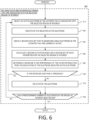
- FIG. 6 is a flowchart of an example of a process 600 for identifying and deactivating electrodes that are associated with a selected region of interest, as discussed with respect to step 560 of the process 500.
- executing the process 600 may result in electrodes associated with the selected region of interest that have the least effect on the operation of the catheter 120 becoming deactivated.
- an electrode in the catheter 120 that is currently active is selected.
- the selected electrode may be one that is associated with the particular region of interest. More particularly, in some implementations, the electrode may be one that is located in the selected region of interest. Additionally or alternatively, in some implementations, the electrode may be one that is located within a predetermined distance from the selected region of interest.
- the selected electrode is deactivated.
- deactivating the selected electrode may include updating the data structure to indicate the selected electrode is inactive.
- the processor 112 may deactivate a given electrode by updating the data structure 180 to indicate that the electrode is inactive. Additionally or alternatively, the processor 112 may deactivate a given electrode by causing the switching circuitry 125 to interrupt an electrical path between the electrode and the diagnostic device 110 (or connector 121).
- a second data set is obtained using at least the electrodes in the selected region of interest that are currently active.
- the second data set may include only data items that are generated by electrodes in the catheter that are currently active.
- the second data set may not include data items generated by the electrode that is deactivated at step 620.
- a second activation index and a second set of wave properties are calculated for the selected region of interest based on the second data set.
- the respective first activation index of any of the regions of interest may be identified as discussed above with respect to step 420 of the process 400.
- the respective first set of wave properties of any of the regions of interest may include at least one of conduction velocity of propagation action potential impulse(s) across the tissue of the selected region of interest, and/or direction of propagation of the action potential impulse(s).
- a decrease in the performance of the catheter 120 is determined that results from the deactivation of the electrode at step 650.
- the decrease in performance may be determined based on a metric that is calculated using at least some of the first activation index of the region of interest, the first set of wave properties of the region of interest, the second activation index of the selected region of interest, the second set of wave properties of the selected region of interest.
- the metric may be a number, a string, and/or any other suitable type of alphanumerical string.
- the metric may be determined based on one or more of
- the metric may be determined by using a fuzzy logic algorithm to compare the first activation index and the first set of wave properties of the selected region of interest to the second activation index and the second set of wave properties of the selected region of interest.
- the electrode that is deactivated at step 640 is reactivated.
- the processor 112 may activate the electrode by modifying the data structure 180 to indicate that the electrode is active. Additionally or alternatively, in some implementations, the processor 112 may activate the electrode by causing the switching circuitry 125 to close an electrical path connecting the electrode to the diagnostic device 110 and/or the connector 121.
- the predetermined number of electrodes may include all electrodes that are located in the region of interest, and/or any other suitable number of electrodes that are located within a predetermined distance from the region of interest. If the predetermined number of electrodes have been tested, the process 600 ends. Otherwise, the process 600 returns to step 610 and steps 610-680 are repeated for another electrode in the selected region of interest.
- process 600 Although in the example of the process 600, only one electrode is deactivated/re-activated during each iteration, alternative implementations are possible in which multiple electrodes are deactivated/re-activated. Furthermore, it will be understood that the process 600 is provided only as an example of many possible ways for identifying electrodes in a region of interest that have the least effect on the performance of a catheter and deactiating those electrodes.
- the electrodes in the selected region of interest that are deactivation may be selected by: (i) identifying a plurality of different sets of electrodes in the selected region of interest, each set of electrodes including one or more electrodes, (ii) determining the effect which disabling each set of electrodes has on the performance of the catheter 120, (iii) selecting one of the electrode sets based on the effect which its deactivation has on the performance of the catheter 120, and (iv) deactivating the selected set of electrodes.
- the selected set of electrodes may be the largest set of electrodes which when disabled allows the performance of the catheter to remain above a performance threshold.
- the effect which disabling each of the sets of electrodes has on the performance of the catheter may be performed by deactivating each set of electrodes, determining the effect which disabling the set of electrodes has on the performance of the catheter 120, and reactivating the deactivated set of electrodes to test another one of the sets.
- the effect which disabling a particular set of electrodes has on the operation of the catheter may be determined as discussed with respect to step 650 of the process 600.
- FIGS. 1A-6 are provided as an example only. At least some of the elements discussed with respect to these figures can be arranged in different order, combined, and/or altogether omitted. It will be understood that the provision of the examples described herein, as well as clauses phrased as "such as,” “e.g.”, “including”, “in some aspects,” “in some implementations,” and the like should not be interpreted as limiting the disclosed subject matter to the specific examples.
- non-transitory computer-readable storage mediums include a ROM, a random-access memory (RAM), a register, cache memory, semiconductor memory devices, magnetic media such as internal hard disks and removable disks, magneto-optical media, and optical media such as CD-ROM disks, and digital versatile disks (DVDs).
Landscapes
- Health & Medical Sciences (AREA)
- Life Sciences & Earth Sciences (AREA)
- Surgery (AREA)
- Engineering & Computer Science (AREA)
- General Health & Medical Sciences (AREA)
- Physics & Mathematics (AREA)
- Public Health (AREA)
- Veterinary Medicine (AREA)
- Biomedical Technology (AREA)
- Heart & Thoracic Surgery (AREA)
- Medical Informatics (AREA)
- Molecular Biology (AREA)
- Animal Behavior & Ethology (AREA)
- Pathology (AREA)
- Biophysics (AREA)
- Cardiology (AREA)
- Nuclear Medicine, Radiotherapy & Molecular Imaging (AREA)
- Chemical & Material Sciences (AREA)
- Plasma & Fusion (AREA)
- Otolaryngology (AREA)
- Physiology (AREA)
- Chemical Kinetics & Catalysis (AREA)
- Electrochemistry (AREA)
- Analytical Chemistry (AREA)
- Biochemistry (AREA)
- General Physics & Mathematics (AREA)
- Immunology (AREA)
- Radiology & Medical Imaging (AREA)
- Measurement And Recording Of Electrical Phenomena And Electrical Characteristics Of The Living Body (AREA)
Applications Claiming Priority (1)
| Application Number | Priority Date | Filing Date | Title |
|---|---|---|---|
| US16/030,358 US10912484B2 (en) | 2018-07-09 | 2018-07-09 | Multiplexing of high count electrode catheter(s) |
Publications (3)
| Publication Number | Publication Date |
|---|---|
| EP3593715A1 EP3593715A1 (en) | 2020-01-15 |
| EP3593715C0 EP3593715C0 (en) | 2024-09-25 |
| EP3593715B1 true EP3593715B1 (en) | 2024-09-25 |
Family
ID=67296970
Family Applications (1)
| Application Number | Title | Priority Date | Filing Date |
|---|---|---|---|
| EP19184969.4A Active EP3593715B1 (en) | 2018-07-09 | 2019-07-08 | Multiplexing of high count electrode catheter(s) |
Country Status (7)
| Country | Link |
|---|---|
| US (1) | US10912484B2 (https=) |
| EP (1) | EP3593715B1 (https=) |
| JP (1) | JP7423208B2 (https=) |
| CN (1) | CN110693603A (https=) |
| AU (1) | AU2019204199A1 (https=) |
| CA (1) | CA3047757A1 (https=) |
| IL (1) | IL267363B (https=) |
Families Citing this family (33)
| Publication number | Priority date | Publication date | Assignee | Title |
|---|---|---|---|---|
| US10905329B2 (en) | 2016-06-09 | 2021-02-02 | Biosense Webster (Israel) Ltd. | Multi-function conducting elements for a catheter |
| US12029545B2 (en) | 2017-05-30 | 2024-07-09 | Biosense Webster (Israel) Ltd. | Catheter splines as location sensors |
| US20190314083A1 (en) | 2018-04-11 | 2019-10-17 | Biosense Webster (Israel) Ltd. | Flexible Multi-Arm Catheter with Diametrically Opposed Sensing Electrodes |
| US11045628B2 (en) | 2018-12-11 | 2021-06-29 | Biosense Webster (Israel) Ltd. | Balloon catheter with high articulation |
| US11207016B2 (en) | 2018-12-28 | 2021-12-28 | Biosense Webster (Israel) Ltd. | Mapping ECG signals using a multipole electrode assembly |
| US11850051B2 (en) | 2019-04-30 | 2023-12-26 | Biosense Webster (Israel) Ltd. | Mapping grid with high density electrode array |
| US11712172B2 (en) | 2019-07-18 | 2023-08-01 | Biosense Webster (Israel) Ltd. | Visual guidance for positioning a distal end of a medical probe |
| US11759150B2 (en) | 2019-08-27 | 2023-09-19 | Biosense Webster (Israel) Ltd. | Accurate basket catheter tracking |
| US11950930B2 (en) | 2019-12-12 | 2024-04-09 | Biosense Webster (Israel) Ltd. | Multi-dimensional acquisition of bipolar signals from a catheter |
| US11517218B2 (en) | 2019-12-20 | 2022-12-06 | Biosense Webster (Israel) Ltd. | Selective graphical presentation of electrophysiological parameters |
| US12521055B2 (en) * | 2020-04-29 | 2026-01-13 | St. Jude Medical, Cardiology Division, Inc. | Amplifier interface for multi-electrode catheter |
| US12232874B2 (en) | 2020-05-29 | 2025-02-25 | Biosense Webster (Israel) Ltd. | Electrode apparatus for diagnosis of arrhythmias |
| US11987017B2 (en) | 2020-06-08 | 2024-05-21 | Biosense Webster (Israel) Ltd. | Features to assist in assembly and testing of devices |
| US12048479B2 (en) | 2020-09-10 | 2024-07-30 | Biosense Webster (Israel) Ltd. | Surface mounted electrode catheter |
| US11950841B2 (en) | 2020-09-22 | 2024-04-09 | Biosense Webster (Israel) Ltd. | Basket catheter having insulated ablation electrodes and diagnostic electrodes |
| US11950840B2 (en) | 2020-09-22 | 2024-04-09 | Biosense Webster (Israel) Ltd. | Basket catheter having insulated ablation electrodes |
| US12082875B2 (en) | 2020-09-24 | 2024-09-10 | Biosense Webster (Israel) Ltd | Balloon catheter having a coil for sensing tissue temperature and position of the balloon |
| US11974803B2 (en) | 2020-10-12 | 2024-05-07 | Biosense Webster (Israel) Ltd. | Basket catheter with balloon |
| US12201786B2 (en) | 2020-12-17 | 2025-01-21 | Biosense Webster (Israel) Ltd. | Measurement of distal end dimension of catheters using magnetic fields |
| US11918383B2 (en) | 2020-12-21 | 2024-03-05 | Biosense Webster (Israel) Ltd. | Visualizing performance of catheter electrodes |
| US12064170B2 (en) | 2021-05-13 | 2024-08-20 | Biosense Webster (Israel) Ltd. | Distal assembly for catheter with lumens running along spines |
| US12364426B2 (en) | 2021-08-12 | 2025-07-22 | Biosense Webster (Israel) Ltd. | Electro-anatomical mapping and annotation presented in electrophysiological procedures |
| US12004804B2 (en) | 2021-09-09 | 2024-06-11 | Biosense Webster (Israel) Ltd. | Basket catheter with mushroom shape distal tip |
| US12478424B2 (en) | 2021-09-10 | 2025-11-25 | Biosense Webster (Israel) Ltd. | Staggered pairs of biased ablation electrodes on basket catheter |
| US12011280B2 (en) | 2021-10-04 | 2024-06-18 | Biosense Webster (Israel) Ltd. | Electrophysiological mapping in the presence of injury current |
| US12533489B2 (en) | 2021-10-08 | 2026-01-27 | Biosense Webster (Israel) Ltd. | Measuring tissue proximity for multi-electrode catheter |
| US12419683B2 (en) | 2021-12-22 | 2025-09-23 | Biosense Webster (Israel) Ltd. | Irreversible electroporation with shorted electrodes |
| US12484961B2 (en) | 2022-01-20 | 2025-12-02 | Biosense Webster (Israel) Ltd. | Mechanical retainer systems for electrodes of a basket catheter, and methods of the same |
| US12446946B2 (en) | 2022-01-20 | 2025-10-21 | Biosense Webster (Israel) Ltd. | Systems and methods for a single spiral electrode assembly forming a spherical basket for improved tissue contact and current delivery |
| US12440263B2 (en) | 2022-01-20 | 2025-10-14 | Biosense Webster (Israel) Ltd. | Systems and methods for tripodic spines forming a spherical basket for improved tissue contact and current delivery |
| US12471989B2 (en) | 2022-04-28 | 2025-11-18 | Biosense Webster (Israel) Ltd. | Strengthened expandable baskets for medical probes and medical probes containing strengthen expandable baskets |
| US12533185B2 (en) | 2022-12-28 | 2026-01-27 | Biosense Webster (Israel) Ltd. | Basket end effector with distal position sensor |
| US12521035B2 (en) | 2022-12-29 | 2026-01-13 | Biosense Webster (Israel) Ltd. | Cylindrical cage systems and methods for distributed tissue contact for mapping and ablation |
Citations (1)
| Publication number | Priority date | Publication date | Assignee | Title |
|---|---|---|---|---|
| US6892091B1 (en) * | 2000-02-18 | 2005-05-10 | Biosense, Inc. | Catheter, method and apparatus for generating an electrical map of a chamber of the heart |
Family Cites Families (25)
| Publication number | Priority date | Publication date | Assignee | Title |
|---|---|---|---|---|
| US5156151A (en) | 1991-02-15 | 1992-10-20 | Cardiac Pathways Corporation | Endocardial mapping and ablation system and catheter probe |
| US5391199A (en) | 1993-07-20 | 1995-02-21 | Biosense, Inc. | Apparatus and method for treating cardiac arrhythmias |
| WO1996005768A1 (en) | 1994-08-19 | 1996-02-29 | Biosense, Inc. | Medical diagnosis, treatment and imaging systems |
| US6690963B2 (en) | 1995-01-24 | 2004-02-10 | Biosense, Inc. | System for determining the location and orientation of an invasive medical instrument |
| IL125761A (en) | 1996-02-15 | 2005-05-17 | Biosense Inc | Independently positionable transducers for location system |
| DE69726576T2 (de) | 1996-02-15 | 2004-10-14 | Biosense, Inc., Miami | Probe zur Ortsmarkierung |
| GB2331807B (en) | 1997-11-15 | 2002-05-29 | Roke Manor Research | Catheter tracking system |
| US6049732A (en) | 1997-11-17 | 2000-04-11 | Ep Technologies, Inc. | Electrophysiological interface system for use with multiple electrode catheters |
| US6239724B1 (en) | 1997-12-30 | 2001-05-29 | Remon Medical Technologies, Ltd. | System and method for telemetrically providing intrabody spatial position |
| US6301496B1 (en) | 1998-07-24 | 2001-10-09 | Biosense, Inc. | Vector mapping of three-dimensionally reconstructed intrabody organs and method of display |
| US6484118B1 (en) | 2000-07-20 | 2002-11-19 | Biosense, Inc. | Electromagnetic position single axis system |
| US6748255B2 (en) | 2001-12-14 | 2004-06-08 | Biosense Webster, Inc. | Basket catheter with multiple location sensors |
| US6741878B2 (en) | 2001-12-14 | 2004-05-25 | Biosense Webster, Inc. | Basket catheter with improved expansion mechanism |
| US7729742B2 (en) | 2001-12-21 | 2010-06-01 | Biosense, Inc. | Wireless position sensor |
| US20040068178A1 (en) | 2002-09-17 | 2004-04-08 | Assaf Govari | High-gradient recursive locating system |
| US7200439B2 (en) | 2003-01-24 | 2007-04-03 | Proteus Biomedical, Inc. | Method and apparatus for enhancing cardiac pacing |
| US20050033136A1 (en) | 2003-08-01 | 2005-02-10 | Assaf Govari | Catheter with electrode strip |
| US7536218B2 (en) | 2005-07-15 | 2009-05-19 | Biosense Webster, Inc. | Hybrid magnetic-based and impedance-based position sensing |
| US7756576B2 (en) | 2005-08-26 | 2010-07-13 | Biosense Webster, Inc. | Position sensing and detection of skin impedance |
| US8103327B2 (en) | 2007-12-28 | 2012-01-24 | Rhythmia Medical, Inc. | Cardiac mapping catheter |
| EP2765902B1 (en) * | 2011-10-12 | 2019-08-14 | CardioInsight Technologies, Inc. | Sensing zone for spatially relevant electrical information |
| US11324419B2 (en) | 2013-08-20 | 2022-05-10 | Biosense Webster (Israel) Ltd. | Graphical user interface for medical imaging system |
| EP3157617B1 (en) * | 2014-06-19 | 2018-04-11 | Cardiac Pacemakers, Inc. | Baroreceptor mapping system |
| US9833161B2 (en) | 2015-02-09 | 2017-12-05 | Biosense Webster (Israel) Ltd. | Basket catheter with far-field electrode |
| EP3331430B1 (en) | 2015-08-06 | 2025-04-23 | Donald Rubenstein, M.D., Ph.D. Prisma Health - Upstate | Devices for mapping cardiac arrhythmia |
-
2018
- 2018-07-09 US US16/030,358 patent/US10912484B2/en active Active
-
2019
- 2019-06-14 AU AU2019204199A patent/AU2019204199A1/en not_active Abandoned
- 2019-06-16 IL IL267363A patent/IL267363B/en active IP Right Grant
- 2019-06-21 CA CA3047757A patent/CA3047757A1/en not_active Abandoned
- 2019-07-08 EP EP19184969.4A patent/EP3593715B1/en active Active
- 2019-07-08 JP JP2019126720A patent/JP7423208B2/ja active Active
- 2019-07-09 CN CN201910617943.1A patent/CN110693603A/zh active Pending
Patent Citations (1)
| Publication number | Priority date | Publication date | Assignee | Title |
|---|---|---|---|---|
| US6892091B1 (en) * | 2000-02-18 | 2005-05-10 | Biosense, Inc. | Catheter, method and apparatus for generating an electrical map of a chamber of the heart |
Also Published As
| Publication number | Publication date |
|---|---|
| US20200008705A1 (en) | 2020-01-09 |
| JP7423208B2 (ja) | 2024-01-29 |
| CA3047757A1 (en) | 2020-01-09 |
| JP2020006178A (ja) | 2020-01-16 |
| IL267363A (en) | 2019-11-28 |
| EP3593715C0 (en) | 2024-09-25 |
| IL267363B (en) | 2021-06-30 |
| CN110693603A (zh) | 2020-01-17 |
| AU2019204199A1 (en) | 2020-01-23 |
| EP3593715A1 (en) | 2020-01-15 |
| US10912484B2 (en) | 2021-02-09 |
Similar Documents
| Publication | Publication Date | Title |
|---|---|---|
| EP3593715B1 (en) | Multiplexing of high count electrode catheter(s) | |
| US11497427B2 (en) | Adjusting annotation points in real time | |
| JP6675467B2 (ja) | 活性化波面のバイポーラ/ユニポーラハイブリッド検出のための装置 | |
| JP6182665B2 (ja) | ベクトル場を用いた電気生理学的マッピング中の活動パターンの表示及び特定のためのカテーテルシステム | |
| US10595739B2 (en) | Estimating the prevalence of activation patterns in data segments during electrophysiology mapping | |
| JP6069584B2 (ja) | ロータ伝搬ベクトルを特定するためのシステム | |
| JP6117433B2 (ja) | 類似性ベースのパターンマッチングによる増強された活動開始時間の最適化のための解剖学的マッピングシステム | |
| JP2019136494A (ja) | インピーダンスセンシング及び接触測定を用いた心臓内瘢痕組織の識別 | |
| US20250339077A1 (en) | Electro-anatomical mapping and annotation presented in electrophysiological procedures | |
| CN112971976B (zh) | 基于电极的子集的组织接近度指示 | |
| US20220202345A1 (en) | Method and apparatus to find abnormal activations in intra-cardiac electrocardiograms based on specificity and sensitivity | |
| EP4518761B1 (en) | Detecting potential slow-conduction cardiac tissue areas in stable arrhythmias | |
| US12263033B2 (en) | Historical ultrasound data for display of live location data | |
| JP2025509307A (ja) | スマート心臓電気生理学的(ep)マップ | |
| CN118804712A (zh) | 智能心脏电生理(ep)标测图 | |
| CN117462142A (zh) | 用于识别碎裂信号的方法和系统 | |
| WO2023222044A1 (zh) | 电极与组织接触识别的方法和系统 |
Legal Events
| Date | Code | Title | Description |
|---|---|---|---|
| PUAI | Public reference made under article 153(3) epc to a published international application that has entered the european phase |
Free format text: ORIGINAL CODE: 0009012 |
|
| STAA | Information on the status of an ep patent application or granted ep patent |
Free format text: STATUS: THE APPLICATION HAS BEEN PUBLISHED |
|
| AK | Designated contracting states |
Kind code of ref document: A1 Designated state(s): AL AT BE BG CH CY CZ DE DK EE ES FI FR GB GR HR HU IE IS IT LI LT LU LV MC MK MT NL NO PL PT RO RS SE SI SK SM TR |
|
| AX | Request for extension of the european patent |
Extension state: BA ME |
|
| STAA | Information on the status of an ep patent application or granted ep patent |
Free format text: STATUS: REQUEST FOR EXAMINATION WAS MADE |
|
| 17P | Request for examination filed |
Effective date: 20200629 |
|
| RBV | Designated contracting states (corrected) |
Designated state(s): AL AT BE BG CH CY CZ DE DK EE ES FI FR GB GR HR HU IE IS IT LI LT LU LV MC MK MT NL NO PL PT RO RS SE SI SK SM TR |
|
| RAP3 | Party data changed (applicant data changed or rights of an application transferred) |
Owner name: BIOSENSE WEBSTER (ISRAEL) LTD. |
|
| STAA | Information on the status of an ep patent application or granted ep patent |
Free format text: STATUS: EXAMINATION IS IN PROGRESS |
|
| 17Q | First examination report despatched |
Effective date: 20230626 |
|
| REG | Reference to a national code |
Ref country code: DE Free format text: PREVIOUS MAIN CLASS: A61B0005042000 Ref country code: DE Ref legal event code: R079 Ref document number: 602019059359 Country of ref document: DE Free format text: PREVIOUS MAIN CLASS: A61B0005042000 Ipc: A61B0005287000 |
|
| RIC1 | Information provided on ipc code assigned before grant |
Ipc: A61B 5/00 20060101ALI20240523BHEP Ipc: A61B 5/304 20210101ALI20240523BHEP Ipc: A61B 5/287 20210101AFI20240523BHEP |
|
| GRAP | Despatch of communication of intention to grant a patent |
Free format text: ORIGINAL CODE: EPIDOSNIGR1 |
|
| STAA | Information on the status of an ep patent application or granted ep patent |
Free format text: STATUS: GRANT OF PATENT IS INTENDED |
|
| INTG | Intention to grant announced |
Effective date: 20240701 |
|
| GRAS | Grant fee paid |
Free format text: ORIGINAL CODE: EPIDOSNIGR3 |
|
| GRAA | (expected) grant |
Free format text: ORIGINAL CODE: 0009210 |
|
| STAA | Information on the status of an ep patent application or granted ep patent |
Free format text: STATUS: THE PATENT HAS BEEN GRANTED |
|
| AK | Designated contracting states |
Kind code of ref document: B1 Designated state(s): AL AT BE BG CH CY CZ DE DK EE ES FI FR GB GR HR HU IE IS IT LI LT LU LV MC MK MT NL NO PL PT RO RS SE SI SK SM TR |
|
| REG | Reference to a national code |
Ref country code: GB Ref legal event code: FG4D |
|
| REG | Reference to a national code |
Ref country code: CH Ref legal event code: EP |
|
| REG | Reference to a national code |
Ref country code: DE Ref legal event code: R096 Ref document number: 602019059359 Country of ref document: DE |
|
| REG | Reference to a national code |
Ref country code: IE Ref legal event code: FG4D |
|
| U01 | Request for unitary effect filed |
Effective date: 20241022 |
|
| U07 | Unitary effect registered |
Designated state(s): AT BE BG DE DK EE FI FR IT LT LU LV MT NL PT RO SE SI Effective date: 20241113 |
|
| PG25 | Lapsed in a contracting state [announced via postgrant information from national office to epo] |
Ref country code: NO Free format text: LAPSE BECAUSE OF FAILURE TO SUBMIT A TRANSLATION OF THE DESCRIPTION OR TO PAY THE FEE WITHIN THE PRESCRIBED TIME-LIMIT Effective date: 20241225 |
|
| PG25 | Lapsed in a contracting state [announced via postgrant information from national office to epo] |
Ref country code: GR Free format text: LAPSE BECAUSE OF FAILURE TO SUBMIT A TRANSLATION OF THE DESCRIPTION OR TO PAY THE FEE WITHIN THE PRESCRIBED TIME-LIMIT Effective date: 20241226 |
|
| PG25 | Lapsed in a contracting state [announced via postgrant information from national office to epo] |
Ref country code: RS Free format text: LAPSE BECAUSE OF FAILURE TO SUBMIT A TRANSLATION OF THE DESCRIPTION OR TO PAY THE FEE WITHIN THE PRESCRIBED TIME-LIMIT Effective date: 20241225 |
|
| PG25 | Lapsed in a contracting state [announced via postgrant information from national office to epo] |
Ref country code: RS Free format text: LAPSE BECAUSE OF FAILURE TO SUBMIT A TRANSLATION OF THE DESCRIPTION OR TO PAY THE FEE WITHIN THE PRESCRIBED TIME-LIMIT Effective date: 20241225 Ref country code: NO Free format text: LAPSE BECAUSE OF FAILURE TO SUBMIT A TRANSLATION OF THE DESCRIPTION OR TO PAY THE FEE WITHIN THE PRESCRIBED TIME-LIMIT Effective date: 20241225 Ref country code: GR Free format text: LAPSE BECAUSE OF FAILURE TO SUBMIT A TRANSLATION OF THE DESCRIPTION OR TO PAY THE FEE WITHIN THE PRESCRIBED TIME-LIMIT Effective date: 20241226 |
|
| PG25 | Lapsed in a contracting state [announced via postgrant information from national office to epo] |
Ref country code: IS Free format text: LAPSE BECAUSE OF FAILURE TO SUBMIT A TRANSLATION OF THE DESCRIPTION OR TO PAY THE FEE WITHIN THE PRESCRIBED TIME-LIMIT Effective date: 20250125 |
|
| PG25 | Lapsed in a contracting state [announced via postgrant information from national office to epo] |
Ref country code: SM Free format text: LAPSE BECAUSE OF FAILURE TO SUBMIT A TRANSLATION OF THE DESCRIPTION OR TO PAY THE FEE WITHIN THE PRESCRIBED TIME-LIMIT Effective date: 20240925 |
|
| PG25 | Lapsed in a contracting state [announced via postgrant information from national office to epo] |
Ref country code: ES Free format text: LAPSE BECAUSE OF FAILURE TO SUBMIT A TRANSLATION OF THE DESCRIPTION OR TO PAY THE FEE WITHIN THE PRESCRIBED TIME-LIMIT Effective date: 20240925 |
|
| PG25 | Lapsed in a contracting state [announced via postgrant information from national office to epo] |
Ref country code: CZ Free format text: LAPSE BECAUSE OF FAILURE TO SUBMIT A TRANSLATION OF THE DESCRIPTION OR TO PAY THE FEE WITHIN THE PRESCRIBED TIME-LIMIT Effective date: 20240925 Ref country code: PL Free format text: LAPSE BECAUSE OF FAILURE TO SUBMIT A TRANSLATION OF THE DESCRIPTION OR TO PAY THE FEE WITHIN THE PRESCRIBED TIME-LIMIT Effective date: 20240925 |
|
| PG25 | Lapsed in a contracting state [announced via postgrant information from national office to epo] |
Ref country code: SK Free format text: LAPSE BECAUSE OF FAILURE TO SUBMIT A TRANSLATION OF THE DESCRIPTION OR TO PAY THE FEE WITHIN THE PRESCRIBED TIME-LIMIT Effective date: 20240925 |
|
| PGFP | Annual fee paid to national office [announced via postgrant information from national office to epo] |
Ref country code: GB Payment date: 20250529 Year of fee payment: 7 |
|
| U20 | Renewal fee for the european patent with unitary effect paid |
Year of fee payment: 7 Effective date: 20250606 |
|
| PLBE | No opposition filed within time limit |
Free format text: ORIGINAL CODE: 0009261 |
|
| STAA | Information on the status of an ep patent application or granted ep patent |
Free format text: STATUS: NO OPPOSITION FILED WITHIN TIME LIMIT |
|
| 26N | No opposition filed |
Effective date: 20250626 |
|
| PG25 | Lapsed in a contracting state [announced via postgrant information from national office to epo] |
Ref country code: HR Free format text: LAPSE BECAUSE OF FAILURE TO SUBMIT A TRANSLATION OF THE DESCRIPTION OR TO PAY THE FEE WITHIN THE PRESCRIBED TIME-LIMIT Effective date: 20240925 |
|
| REG | Reference to a national code |
Ref country code: CH Ref legal event code: H13 Free format text: ST27 STATUS EVENT CODE: U-0-0-H10-H13 (AS PROVIDED BY THE NATIONAL OFFICE) Effective date: 20260224 |
|
| PG25 | Lapsed in a contracting state [announced via postgrant information from national office to epo] |
Ref country code: CH Free format text: LAPSE BECAUSE OF NON-PAYMENT OF DUE FEES Effective date: 20250731 |