EP3593571B1 - Sender- und empfängerkommunikationsvorrichtung für ein drahtloskommunikationsnetzwerk - Google Patents
Sender- und empfängerkommunikationsvorrichtung für ein drahtloskommunikationsnetzwerk Download PDFInfo
- Publication number
- EP3593571B1 EP3593571B1 EP17717648.4A EP17717648A EP3593571B1 EP 3593571 B1 EP3593571 B1 EP 3593571B1 EP 17717648 A EP17717648 A EP 17717648A EP 3593571 B1 EP3593571 B1 EP 3593571B1
- Authority
- EP
- European Patent Office
- Prior art keywords
- signal
- communication device
- communication
- transmitter
- receiver
- Prior art date
- Legal status (The legal status is an assumption and is not a legal conclusion. Google has not performed a legal analysis and makes no representation as to the accuracy of the status listed.)
- Active
Links
Images





Classifications
-
- H—ELECTRICITY
- H04—ELECTRIC COMMUNICATION TECHNIQUE
- H04W—WIRELESS COMMUNICATION NETWORKS
- H04W56/00—Synchronisation arrangements
- H04W56/001—Synchronization between nodes
- H04W56/0015—Synchronization between nodes one node acting as a reference for the others
-
- H—ELECTRICITY
- H04—ELECTRIC COMMUNICATION TECHNIQUE
- H04W—WIRELESS COMMUNICATION NETWORKS
- H04W92/00—Interfaces specially adapted for wireless communication networks
- H04W92/16—Interfaces between hierarchically similar devices
- H04W92/18—Interfaces between hierarchically similar devices between terminal devices
Definitions
- the present invention relates to the field of wireless communications. More specifically, the present invention relates to a transmitter communication device and a receiver communication device for a wireless communication network, wherein the transmitter communication device is configured to serve as a synchronization reference for the receiver communication device.
- Direct device-to-device (D2D) communication is envisioned as a key component for future 5G networks.
- D2D Direct device-to-device
- V2X vehicle-to-anything
- URLLC ultra-reliable low-latency communication
- user identification and link establishment are required especially in the sidelink, including any type of multi- or single-link D2D/V2V (vehicle-to-vehicle) communication (unicast, broadcast etc.).
- LTE sidelink which is considered as the oncoming technology to serve D2D/V2V cellular-based communication
- receiver-side synchronization is performed through the detection of a set of predefined synchronization sequences. Usually, these predefined synchronization sequences also provide the user ID of the transmitter, which serves as a synchronization reference to the receiver.
- WO 2016/024825 A1 is a piece of prior art which discloses synchronisation algorithms in wireless a D2D wireless communication system.
- a typical scenario of a mobile (e.g. vehicular) network in a cellular environment includes in- and out-of cellular coverage user equipments (UEs), some of which may be equipped with a Global Navigation Satellite System (GNSS) receiver.
- UEs user equipments
- GNSS Global Navigation Satellite System
- Coexistence of so-called in-band sidelink and cellular transmissions within a frequency band requires time alignment of all transmitted signals to avoid interference enhancement between links.
- time synchronization between the network nodes including enhanced Node Bs (eNBs), relays/road side units (RSUs), sidelink-capable UEs and other cellular UEs is required.
- Similar synchronization requirements apply among multiple D2D radio links, even if the sidelink occupies a dedicated band (out-of-band D2D), other than the one used for cellular uplink/downlink transmission.
- UEs need to perform time synchronization and estimate - through reception of sidelink synchronization signals - the so-called Beginning of Frame (BOF) and Beginning of Symbol (BOS) in order to correctly process the received signal, e.g. remove the Cyclic Prefix (CP) in an Orthogonal Frequency Division Multiplexing (OFDM) system.
- BOS Beginning of Symbol
- CP Cyclic Prefix
- OFDM Orthogonal Frequency Division Multiplexing
- UEs perform simultaneously coarse frequency synchronization as well as estimate and compensate the Carrier Frequency Offset (CFO) between the transmitter and receiver oscillators.
- CFO Carrier Frequency Offset
- sidelink UEs share their time reference through sidelink synchronization signals. By receiving and detecting these signals, even out-of-coverage UEs are able to synchronize and align their transmissions in time with respect to other -already synchronized- or in-coverage users.
- each receiving UE needs to know the type of the time reference the transmitting users follow, e.g. a reference instructed by their base station, GNSS, other in- or out-of coverage UEs etc. By missing this information, UEs may be following a suboptimal time reference, or observe different references and may be unable to properly select the most relevant one on the basis of, for instance, a hierarchical synchronization/prioritization scheme.
- the invention relates to a transmitter communication device configured for communication with a receiver communication device in a wireless communication network
- the transmitter communication device comprises a processor configured to provide basic synchronization information by generating a communication frame comprising at least a first signal and a second signal for synchronizing the receiver communication device.
- the processor is further configured to provide additional synchronization information on the basis of the first and the second signal by arranging at least the first signal and the second signal in a pre-defined configuration in the communication frame, namely by the combination of positions of the first and second signal within the communication frame; and by selecting the first and the second signal from a set of pre-defined synchronization signals that differ in a generating code (in particular generating sequence).
- the transmitter communication device advantageously provides additional synchronization information on the basis of at least one of two additional "information dimensions", namely by the combination of positions of the first and second signal within the communication frame and by the combination of generating codes used for the first and second signal.
- the communication frame can comprise the "usual" information dimensions of time, frequency and space (beamforming using multiple antennas).
- the transmitter communication device can be configured to multiplex the first and second signal in the communication frame in time, frequency and/or space.
- the first signal and/or the second signal can be, for instance, reference signals, pilot signals and/or synchronization signals.
- the communication frame can comprise more than two signals, for instance, three signals, which are chosen from a set of pre-defined synchronization signals comprising a first and a second synchronization signal.
- the set of pre-defined synchronization signals comprises two or more than two pre-defined synchronization signals.
- the pre-defined synchronization signals can be based on LTE primary synchronization signals.
- the set of pre-defined synchronization signals can depend on the receiver communication device, i.e. the transmitter communication device can use a different set of pre-defined synchronization signals for different receiver communication devices.
- the transmitter communication device and/or the receiver communication device can be, for instance, a user equipment or a base station of the wireless communication network.
- the wireless communication network can be, for instance, a cellular communication network, an assisted network or an ad-hoc network.
- the transmitter communication device and the receiver communication device can be configured to communicate, for instance, in an uplink, downlink and/or sidelink direction.
- the transmitter communication device can comprise a communication interface configured to transmit the communication frame to the receiver communication device.
- embodiments of the invention allow generating advanced synchronization sequences, which are capable of carrying additional synchronization information providing more than a user/transmitter identifier (user-ID), as in the case of sequences used for conventional LTE synchronization signals.
- additional synchronization information may include the type of the synchronization source reference of the transmitter communication device (such as base station/cellular network, GNSS etc.), the number of hops over which the transmitter communication device has received its synchronization reference or other information.
- This additional synchronization information can be used beneficially by the receiver communication device for prioritizing and weighting synchronization signals received by the receiver communication device from other devices through the sidelink and/or for applying hierarchical synchronization.
- embodiments of the invention provide a scalable, backward-compatible extension of LTE primary synchronization signal, which, while still carrying the user-ID, further enables identification of the synchronization source and application of hierarchical synchronization at the receiver communication device.
- both the first signal and the second signal are configured to individually provide the receiver communication device at least with partial information for determining an identifier of the transmitter communication device. This provides for the technical advantage of being less prone to transmission errors.
- the first signal and the second signal are orthogonal, in one or more of time, frequency, space or code. This provides for the technical advantage that the first signal and the second signal can be more easily distinguished by the receiver communication device, while using the same communication resource.
- the second signal is the complex conjugate of the first signal. This provides for the technical advantage that the first signal and the second signal can be more easily distinguished by the receiver communication device with a significantly lower computational complexity.
- the first and signal are based on Zadoff-Chu sequences with the same length L and different root indices u1 and u2.
- the length L of the first Zadoff-Chu sequence is equal to 63
- the first root index u1 of the first Zadoff-Chu sequence is equal to 26
- the second root index u2 of the second Zadoff-Chu sequence is equal to 37.
- the additional synchronization information comprises information for hierarchically synchronizing the receiver communication device, in particular information about the synchronization source and/or a status of the synchronization source.
- the invention relates to a corresponding method of operating a transmitter communication device configured for communication with a receiver communication device in a wireless communication network, wherein the method comprises the following steps: providing basic synchronization information by generating a communication frame comprising at least a first signal and a second signal for synchronizing the receiver communication device; and providing additional synchronization information on the basis of the first and the second signal by: arranging at least the first signal and the second signal in a pre-defined configuration in the communication frame, namely by the combination of positions of the first and second signal within the communication frame; and selecting the first signal and the second signal from a set of pre-defined synchronization signals that differ in a generating code.
- the method according to the second aspect of the invention can be performed by the transmitter communication device according to the first aspect of the invention. Further features of the method according to the second aspect of the invention result directly from the functionality of the transmitter communication device according to the first aspect of the invention and its different implementation forms.
- the invention relates to a receiver communication device configured for communication with a transmitter communication device in a wireless communication network
- the receiver communication device comprising: a communication interface configured to receive a communication frame from the transmitter communication device, wherein the communication frame comprises at least a first signal and a second signal providing basic synchronization information for synchronizing the receiver communication device; and a processor configured to obtain additional synchronization information from the communication frame, wherein the additional synchronization information is defined by: an arrangement of the first signal and the second signal in a pre-defined configuration in the communication frame, namely by the combination of positions of the first and second signal within the communication frame; and a selection of the first and the second signal from a set of pre-defined synchronization signals that differ in a generating code.
- the processor is configured to obtain the additional synchronization information on the basis of a cross-correlation.
- the processor is configured to hierarchically synchronize the receiver communication device on the basis of the additional synchronization information obtained from the communication frame, in particular information about the synchronization source and/or a status of the synchronization source.
- the invention relates to a corresponding method of operating a receiver communication device configured for communication with a transmitter communication device in a wireless communication network, the method comprising the following steps: receiving a communication frame from the transmitter communication device, wherein the communication frame comprises at least a first signal and a second signal providing basic synchronization information for synchronizing the receiver communication device; and obtaining additional synchronization information from the communication frame wherein the additional synchronization information is defined by an arrangement of the first signal and the second signal in a pre-defined configuration in the communication frame, namely by the combination of positions of the first and second signal within the communication frame; and a selection of the first and the second signal from a set of pre-defined synchronization signals that differ in a generating code.
- the method according to the fourth aspect of the invention can be performed by the receiver communication device according to the third aspect of the invention. Further features of the method according to the fourth aspect of the invention result directly from the functionality of the receiver communication device according to the third aspect of the invention and its different implementation forms.
- the invention relates to a computer program product, comprising computer executable instructions stored on a non-transitory computer-readable medium, wherein when the instructions are executed on a computer or a processor, causes the processor to perform the method according to the second aspect or the method according to the fourth aspect.
- the invention can be implemented in hardware and/or software.
- a disclosure in connection with a described method may also hold true for a corresponding device or system configured to perform the method and vice versa.
- a corresponding device may include a unit to perform the described method step, even if such unit is not explicitly described or illustrated in the figures.
- the features of the various exemplary aspects described herein may be combined with each other, unless specifically noted otherwise.
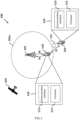
- Figure 1 shows a schematic diagram illustrating a wireless communication network 100 comprising a transmitter communication device 110 according to an embodiment and a receiver communication device 120 according to an embodiment.
- the transmitter communication device 110 and the receiver communication device 120 can be implemented in the form of user equipments (UEs), in particular mobile phones.
- UEs user equipments
- the wireless communication network 100 can further comprise a plurality of base stations 101 (only one base station 101 shown in figure for the sake of clarity), wherein each base station 101 defines a coverage area 101a.
- the transmitter communication device 110 is located within the coverage area 101a of the base station 101 and, thus, can communicate with the base station 101 in an uplink (UL) and a downlink (DL) direction.
- the receiver communication device 120 is located outside of the coverage area 101a of the base station 101 and, thus, cannot communicate with the base station 101, but can communicate with the transmitter communication device 110 in a sidelink (SL) direction.
- the wireless communication network 100 can further comprise one or more satellites 103 of a global navigation satellite system (GNSS) configured to provide synchronization signals to the transmitter communication device 110 and/or the receiver communication device 120.
- GNSS global navigation satellite system
- the transmitter communication device 110 comprises a processor 111 and a communication interface 113 and the receiver communication device 120 comprises a processor 121 and a communication interface 123.
- the processor 111 of the transmitter communication device 110 is configured to provide basic synchronization information by generating a communication frame 115 comprising at least a first signal and a second signal for synchronizing the receiver communication device 120.
- the processor 111 of the transmitter communication device 110 is further configured to provide additional synchronization information on the basis of the first and the second signal (i) by arranging at least the first signal and the second signal in a pre-defined configuration in the communication frame 115, namely by the combination of positions of the first and second signal within the communication frame, and (ii) by selecting the first and the second signal from a set of pre-defined synchronization signals that differ in a generating code.
- the communication interface 113 of the transmitter communication device 113 can be configured to transmit the communication frame 115 to the receiver communication device 120.
- the communication interface 123 of the receiver communication device 120 is configured to receive the communication frame 115 from the transmitter communication device 110, wherein the communication frame comprises the first signal and the second signal providing basic synchronization information for synchronizing the receiver communication device 120.
- the processor 121 of the receiver communication device 120 is configured to obtain additional synchronization information from the communication frame 115, wherein the additional synchronization information is defined (i) by an arrangement of the first signal and the second signal in a pre-defined configuration in the communication frame 115, namely by the combination of positions of the first and second signal within the communication frame, and (ii) by a selection of the first and the second signal from a set of pre-defined synchronization signals that differ in a generating code.
- the first signal and/or the second signal can be, for instance, reference signals, pilot signals and/or synchronization signals.
- the communication frame 115 can comprise more than two signals.
- the set of pre-defined synchronization signals comprises two or more than two pre-defined synchronization signals.
- the set of pre-defined synchronization signals can depend on the receiver communication device 120, i.e. the transmitter communication device 110 can use a different set of pre-defined synchronization signals for different receiver communication devices 120.
- the pre-defined synchronization signals can be based on LTE primary synchronization signals.
- Current cellular 3GPP LTE specifications provide a set of primary and secondary synchronization signals, namely PSSS/SSSS for the sidelink (for the general (i.e. non sidelink) case the primary and secondary synchronization signal are also referred to as "PSS" and "SSS” in the following).
- PSSS primary and secondary synchronization signals
- the user-ID contained in two integer parts is included in these sequences, where the first segment is in the PSSS and the second segment is in the SSSS.
- the PSSS consists of two identical parts, which are mapped on two consecutive OFDM symbols.
- the pre-defined synchronization signals are based on 63-length Zadoff-Chu (ZC) sequences.
- ZC Zadoff-Chu
- the particular root index identifies the sequence and the first segment of the user-ID, which indicates whether the user ID lies within the range ⁇ 0,.., 167 ⁇ or the range ⁇ 168,..,335 ⁇ .
- two predefined root indices preferably 26 and/or 37, are used.
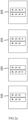
- Figures 2a , 2b and 2c show exemplary communication frames 115 generated by the transmitter communication device 110 for encoding additional synchronization information therein.
- Figure 2a shows four exemplary communication frames 115, where the processor 111 of the transmitter communication device 110 is configured to provide additional synchronization information on the basis of the first or the second signal by selecting the first and the second signal from a set of pre-defined synchronization signals that differ in a generating code (in particular generating sequence).
- the set of pre-defined synchronization signals contains a primary synchronization signal (PSS), such as a conventional LTE PSS, and its complex conjugate (PSS*).
- PSS primary synchronization signal
- PSS* complex conjugate
- Figure 2b shows four exemplary (out of eight possible) communication frames 115, wherein, as in the case of the example shown in figure 2a , the processor 111 of the transmitter communication device 110 is configured to provide additional synchronization information on the basis of the first or the second signal by selecting the first and the second signal from a set of pre-defined synchronization signals that differ in a generating code (in particular generating sequence).
- the set of pre-defined synchronization signals contains a first primary synchronization signal (PSS1) and a second primary synchronization signal (PSS2) and the communication frame 115 comprises in addition to the first signal and the second signal a third signal allowing to encode more additional synchronization information.
- PSS1 primary synchronization signal
- PSS2 second primary synchronization signal
- the communication frame 115 provides three slots, wherein each slot is to be filed by the processor 111 of the transmitter communication device 110 either with PSS1 or with PSS2.
- the additional synchronization information provided by the exemplary communication frames 115 shown in figure 2n could be expressed as the bit sequences "001", “011", "000” and "010", respectively.
- Figure 2c shows two exemplary communication frames 115, where the processor 111 of the transmitter communication device 110 is configured to provide additional synchronization information on the basis of the first or the second signal by arranging at least the first signal and the second signal in a pre-defined configuration in the communication frame 115.
- the first and the signal are the same primary synchronization signal (PSS1) and the processor 111 of the transmitter communication device 110 is configured to arrange each of the first signal and the second signal in one of four possible slots.
- PSS1 primary synchronization signal
- the processor 111 of the transmitter communication device 110 is configured to arrange each of the first signal and the second signal in one of four possible slots.
- the first signal and the second signal are arranged in a first pre-defined configuration and in the communication frame 115 on the right the first signal and the second signal are arranged in a second pre-defined configuration.
- the first pre-defined configuration can mean different additional synchronization information the second pre-defined configuration.
- the pre-defined synchronization signals can be based on LTE primary synchronization signals.
- both the first signal and the second signal are configured to individually provide the receiver communication device 120 at least with partial information for determining an identifier (user-ID) of the transmitter communication device 110.
- the first signal is based on a first Zadoff-Chu sequence and the second signal is based on a second Zadoff-Chu sequence.
- the first Zadoff-Chu sequence is defined by a length L and a first root index u1
- the length L of the first Zadoff-Chu sequence is equal to 63
- the first root index u1 of the first Zadoff-Chu sequence is equal to 26
- the second root index u2 of the second Zadoff-Chu sequence is equal to 37.
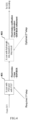
- Figure 3 shows a schematic diagram illustrating a hierarchical synchronization scheme implemented in the receiver communication device 120 according to an embodiment.
- the receiver communication device 120 can detect downlink synchronization signals from the base station 101 (step 301) and perform synchronization on the basis there.
- the receiver communication device 120 can try to detect synchronization signals from the GNSS 103 (step 303). If the GNSS reference is not available, the out-of-coverage receiver communication device 120 can synchronize through sidelink synchronization signals sent by other in- or out-of-coverage communication devices (step 305), such as the transmitter communication device 110.
- the transmitter communication device 110 is implemented in the form of a user equipment (UE) 110:
- UE user equipment
- the above additional synchronization information can be encoded by the transmitter communication device 110, for instance, on the basis of one or more of the examples shown in figures 2a , 2b and 2c .
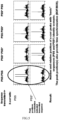
- Figure 4 shows a schematic diagram illustrating processing steps implemented in the receiver communication device 120 according to an embodiment. More specifically, figure 4 illustrates the sequence detection at the receiver communication device 120.
- a cross-correlation x-corr
- x-corr a cross-correlation with the full detected sequence from the first stage can be performed to validate and refine the estimation.
- the peak positions combination in the first stage 401 already indicates which sequences have been received, which identifies the case.
- time synchronization can be performed.
- the correlation with the full sequence verifies the estimate and refines it. Possible imperfections and errors from the first stage 401 can be also detected here.
- both first and second stages if detection is successful, there is no uncertainty about the transmitted sequence; hence all the information can be obtained by the receiver communication device 120.
- a further example of the additional synchronization information, which may be encoded by the transmitter communication device 110 in the communication frame 115 is provided in the following, wherein the transmitter communication device 110 is implemented in the form of a user equipment (UE) 110:
- UE user equipment
- Figure 9 shows a schematic diagram illustrating processing steps implemented in the receiver communication device 120 according to an embodiment. More specifically, figure 9 illustrates an implementation of the two-stage detection at the receiver communication device 120.
- pre-processing steps 911, 913 and the basic cross-correlation based operations steps 921, 923 and 927 and steps 931 and 935
- the phase shifts estimated due to time/frequency offsets can be compensated, before the operation is performed again (processing blocks with dashed lines, i.e. steps 927 and 935). This allows validating and refining the initial estimates and provides a less-distorted signal to the next steps of the signal processing chain.
- Figure 10 shows a flow diagram illustrating a method 1000 of operating the transmitter communication device 110 according to an embodiment.
- the method 1000 comprises the steps of providing 1001 basic synchronization information by generating a communication frame 115 comprising at least a first signal and a second signal for synchronizing the receiver communication device 120 and providing 1003 additional synchronization information on the basis of the first or the second signal by: arranging at least the first signal and the second signal in a pre-defined configuration in the communication frame 115, namely by the combination of positions of the first and second signal within the communication frame, and selecting the first signal and the second signal from a set of pre-defined synchronization signals that differ in a generating code.
- Figure 11 shows a flow diagram illustrating a method 1100 of operating the receiver communication device 120 according to an embodiment.
- the method comprises the steps of receiving 1101 a communication frame 115 from the transmitter communication device 110, wherein the communication frame 115 comprises at least a first signal and a second signal providing basic synchronization information for synchronizing the receiver communication device 120 and obtaining 1103 additional synchronization information from the communication frame 115, wherein the additional synchronization information is defined by an arrangement of the first signal and the second signal in a pre-defined configuration in the communication frame, namely by the combination of positions of the first and second signal within the communication frame, and a selection of the first and the second signal from a set of pre-defined synchronization signals that differ in a generating code.
- Embodiments of the invention provide a novel scheme for generating hierarchically structured sequences, which can be used to distinguish between different cases, e.g. synchronization status of a transmitting UE.
- Sequences with n segments where each segment is chosen from a set of two possible subsequences, can identify 2n different cases by checking whether that sequence has been received or not (binary decision: yes/no).
- binary decision: yes/no binary decision: yes/no
- computational complexity of correlation-based detection procedures can be significantly reduced.
- the already involved Zadoff-Chu sequences can be used for constructing sidelink synchronization signals.
Landscapes
- Engineering & Computer Science (AREA)
- Computer Networks & Wireless Communication (AREA)
- Signal Processing (AREA)
- Mobile Radio Communication Systems (AREA)
Claims (15)
- Senderkommunikationsvorrichtung (110), die konfiguriert ist für
eine Kommunikation mit einer Empfängerkommunikationsvorrichtung (120) in einem drahtlosen Kommunikationsnetz (100), wobei die Senderkommunikationsvorrichtung (110) umfasst:einen Prozessor (111), der konfiguriert ist, um grundlegende Synchronisationsinformationen durch Erzeugen eines Kommunikationsrahmens (115), umfassend mindestens ein erstes Signal und ein zweites Signal zum Synchronisieren der Empfängerkommunikationsvorrichtung (120), bereitzustellen
undgekennzeichnet dadurch,dass der Prozessor (111) ferner konfiguriert ist, um zusätzliche Synchronisationsinformationen auf der Basis des ersten und des zweiten Signals bereitzustellen durch:- Anordnen mindestens des ersten Signals und des zweiten Signals in einer vordefinierten Konfiguration in dem Kommunikationsrahmen (115),nämlich durch die Kombination von Positionen des ersten und des zweiten Signals innerhalb des Kommunikationsrahmens; und- Auswählen des ersten und des zweiten Signals von einem Satz vordefinierter Synchronisationssignale, die sich in einem Erzeugungscode unterscheiden. - Senderkommunikationsvorrichtung (110) nach Anspruch 1,
wobei sowohl das erste Signal als auch das zweite Signal konfiguriert sind, um die Empfängerkommunikationsvorrichtung (120) mindestens mit Teilinformationen zum Bestimmen eines Bezeichners der Senderkommunikationsvorrichtung (110) individuell zu versehen. - Senderkommunikationsvorrichtung (110) nach Anspruch 1 oder 2,
wobei das erste Signal und das zweite Signal in einem oder mehreren von Zeit, Frequenz, Raum oder Code orthogonal sind. - Senderkommunikationsvorrichtung (110) nach einem der vorstehenden Ansprüche,
wobei das zweite Signal die konjugiert-komplexe Zahl des ersten Signals ist. - Senderkommunikationsvorrichtung (110) nach einem der vorstehenden Ansprüche,
wobei das erste und das zweite Signal auf Zadoff-Chu-Sequenzen mit gleicher Länge L und unterschiedlichen Wurzelindizes u1 und u2 basieren. - Senderkommunikationsvorrichtung (110) nach Anspruch 5,
wobei der erste Wurzelindex u1 und der zweite Wurzelindex u2 Primzahlen zu der Länge L mit u2 = L-u1 sind. - Senderkommunikationsvorrichtung (110) nach Anspruch 6,
wobei die Länge L gleich 63 ist, der erste Wurzelindex u1 gleich 26 ist und der zweite Wurzelindex u2 gleich 37 ist. - Senderkommunikationsvorrichtung (110) nach einem der vorstehenden Ansprüche, wobei die zusätzlichen Synchronisationsinformationen Informationen zum hierarchischen Synchronisieren der Empfängerkommunikationsvorrichtung (120) umfassen.
- Verfahren (1000) zum Betreiben einer Senderkommunikationsvorrichtung (110), die für die Kommunikation mit einer Empfängerkommunikationsvorrichtung (120) in einem drahtlosen Kommunikationsnetz (100) konfiguriert ist, wobei das Verfahren (1000) umfasst:Bereitstellen grundlegender Synchronisationsinformationen durch Erzeugen eines Kommunikationsrahmens (115), umfassend mindestens ein erstes Signal und ein zweites Signal zum Synchronisieren der Empfängerkommunikationsvorrichtung (120); undgekennzeichnet dadurch,Bereitstellen zusätzlicher Synchronisationsinformationen auf der Basis des ersten und des zweiten Signals durch:Anordnen mindestens des ersten Signals und des zweiten Signals in einer vordefinierten Konfiguration in dem Kommunikationsrahmen (115),nämlich durch die Kombination von Positionen des ersten und des zweiten Signals innerhalb des Kommunikationsrahmens; undAuswählen des ersten Signals und des zweiten Signals von einem Satz vordefinierter Synchronisationssignale, die sich in einem Erzeugungscode unterscheiden.
- Empfängerkommunikationsvorrichtung (120), die konfiguriert ist für die Kommunikation mit einer Senderkommunikationsvorrichtung (110) in einem drahtlosen Kommunikationsnetz (100), die Empfängerkommunikationsvorrichtung (120) umfassend:eine Kommunikationsschnittstelle (123), die konfiguriert ist, um einen Kommunikationsrahmen (115) von der Senderkommunikationsvorrichtung (110) zu empfangen, wobei der Kommunikationsrahmen (115) mindestens ein erstes Signal und ein zweites Signal, die grundlegende Synchronisationsinformationen zum Synchronisieren der Empfängerkommunikationsvorrichtung (120) bereitstellen, umfasst; undgekennzeichnet dadurch,einen Prozessor (121), der konfiguriert ist, um zusätzliche Synchronisationsinformationen von dem Kommunikationsrahmen (115) zu erhalten, wobei die zusätzlichen Synchronisationsinformationen definiert sind durch:- eine Anordnung des ersten Signals und des zweiten Signals in einer vordefinierten Konfiguration in dem Kommunikationsrahmen (115),nämlich durch die Kombination von Positionen des ersten und des zweiten Signals innerhalb des Kommunikationsrahmens; und- eine Auswahl des ersten und des zweiten Signals von einem Satz vordefinierter Synchronisationssignale, die sich in einem Erzeugungscode unterscheiden.
- Empfängerkommunikationsvorrichtung (120) nach Anspruch 10, wobei der Prozessor (121) konfiguriert ist, um die zusätzlichen Synchronisationsinformationen auf der Basis einer Kreuzkorrelation zu erhalten.
- Empfängerkommunikationsvorrichtung (120) nach Anspruch 10 oder 11, wobei der Prozessor (121) konfiguriert ist, um die Empfängerkommunikationsvorrichtung (120) auf der Basis der zusätzlichen Synchronisationsinformationen, die von dem Kommunikationsrahmen (115) erhalten werden, hierarchisch zu synchronisieren.
- Verfahren (1100) zum Betreiben einer Empfängerkommunikationsvorrichtung (120), die für die Kommunikation mit einer Senderkommunikationsvorrichtung (110) in einem drahtlosen Kommunikationsnetz (100) konfiguriert ist, das Verfahren (1100) umfassend:Empfangen (1101) eines Kommunikationsrahmens (115) von der Senderkommunikationsvorrichtung (110), wobei der Kommunikationsrahmen (115) mindestens ein erstes Signal und ein zweites Signal, die grundlegende Synchronisationsinformationen zum Synchronisieren der Empfängerkommunikationsvorrichtung (120) bereitstellen, umfasst; undgekennzeichnet dadurch,Erhalten (1103) zusätzlicher Synchronisationsinformationen von dem Kommunikationsrahmen (115), wobei die zusätzlichen Synchronisationsinformationen definiert sind durch:- eine Anordnung des ersten Signals und des zweiten Signals in einer vordefinierten Konfiguration in dem Kommunikationsrahmen (115),nämlich durch die Kombination von Positionen des ersten und des zweiten Signals innerhalb des Kommunikationsrahmens; und- eine Auswahl des ersten und des zweiten Signals von einem Satz vordefinierter Synchronisationssignale, die sich in einem Erzeugungscode unterscheiden.
- Computerprogramm, umfassend Anweisungen, um die Vorrichtung nach Anspruch 1 zu veranlassen, die Schritte des Verfahrens (1000) nach Anspruch 9 auszuführen.
- Computerprogramm, umfassend Anweisungen, um die Vorrichtung nach Anspruch 10 zu veranlassen, die Schritte des Verfahrens (1100) nach Anspruch 13 auszuführen.
Applications Claiming Priority (1)
| Application Number | Priority Date | Filing Date | Title |
|---|---|---|---|
| PCT/EP2017/058351 WO2018184688A1 (en) | 2017-04-07 | 2017-04-07 | Transmitter and receiver communication device for a wireless communication network |
Publications (2)
| Publication Number | Publication Date |
|---|---|
| EP3593571A1 EP3593571A1 (de) | 2020-01-15 |
| EP3593571B1 true EP3593571B1 (de) | 2023-06-21 |
Family
ID=58548671
Family Applications (1)
| Application Number | Title | Priority Date | Filing Date |
|---|---|---|---|
| EP17717648.4A Active EP3593571B1 (de) | 2017-04-07 | 2017-04-07 | Sender- und empfängerkommunikationsvorrichtung für ein drahtloskommunikationsnetzwerk |
Country Status (4)
| Country | Link |
|---|---|
| US (1) | US20200045663A1 (de) |
| EP (1) | EP3593571B1 (de) |
| CN (1) | CN110537382B (de) |
| WO (1) | WO2018184688A1 (de) |
Families Citing this family (5)
| Publication number | Priority date | Publication date | Assignee | Title |
|---|---|---|---|---|
| EP4255051B1 (de) | 2017-08-31 | 2025-02-12 | Telefonaktiebolaget LM Ericsson (publ) | Konfiguration eines zusätzlichen synchronisationssignals |
| US10470143B2 (en) * | 2018-03-13 | 2019-11-05 | Qualcomm Incorporated | Systems and methods for timing synchronization and synchronization source selection for vehicle-to-vehicle communications |
| WO2020144812A1 (ja) * | 2019-01-10 | 2020-07-16 | 株式会社Nttドコモ | 通信装置及び通信方法 |
| US12549300B2 (en) * | 2019-02-14 | 2026-02-10 | Apple Inc. | NR sidelink synchronization signal for enhanced vehicle-to-everything use cases with optimized receiver processing |
| KR102301131B1 (ko) * | 2021-04-29 | 2021-09-10 | 세종대학교산학협력단 | 빔포밍을 위한 다중 안테나 채널 추정 장치 및 그 방법 |
Family Cites Families (5)
| Publication number | Priority date | Publication date | Assignee | Title |
|---|---|---|---|---|
| RU2643803C1 (ru) * | 2014-05-09 | 2018-02-06 | ЭлДжи ЭЛЕКТРОНИКС ИНК. | Способ передачи сигнала синхронизации для прямого обмена данными между терминалами в системе беспроводной связи и устройство для этой цели |
| EP3178172B1 (de) * | 2014-08-06 | 2022-11-02 | Sharp Kabushiki Kaisha | Synchronisationssignale für d2d-kommunikation |
| US10536234B2 (en) * | 2014-08-13 | 2020-01-14 | Lg Electronics Inc. | Synchronization signal transmission method for D2D communication in wireless communication system, and device therefor |
| US10244493B2 (en) * | 2014-08-26 | 2019-03-26 | Lg Electronics Inc. | Method for transmitting and receiving synchronization signal in wireless communication system and device for performing same |
| WO2017052687A1 (en) * | 2015-09-24 | 2017-03-30 | Intel Corporation | Systems, methods and devices for cellular synchronization references |
-
2017
- 2017-04-07 CN CN201780089054.1A patent/CN110537382B/zh active Active
- 2017-04-07 WO PCT/EP2017/058351 patent/WO2018184688A1/en not_active Ceased
- 2017-04-07 EP EP17717648.4A patent/EP3593571B1/de active Active
-
2019
- 2019-10-07 US US16/594,676 patent/US20200045663A1/en not_active Abandoned
Also Published As
| Publication number | Publication date |
|---|---|
| CN110537382B (zh) | 2021-11-19 |
| WO2018184688A1 (en) | 2018-10-11 |
| US20200045663A1 (en) | 2020-02-06 |
| EP3593571A1 (de) | 2020-01-15 |
| CN110537382A (zh) | 2019-12-03 |
Similar Documents
| Publication | Publication Date | Title |
|---|---|---|
| US20200045663A1 (en) | Transmitter and receiver communication device for a wireless communication network | |
| RU2638030C1 (ru) | Способ и устройство для синхронизации связи усройство-устройство | |
| KR101120331B1 (ko) | 피어-투-피어 네트워크에서 피어 발견 내에서 식별자들을 통신하는 코딩 방법들 | |
| EP2015485B1 (de) | Verfahren zur Übermittlung von Peer Identifikatoren bei der Peer-Entdeckung in einem Peer-to-Peer-Netzwerk | |
| KR101129879B1 (ko) | 피어-투-피어 네트워크에서 피어 발견을 위한 식별자들의 통신 | |
| KR101969746B1 (ko) | 비인가 주파수 대역 상의 데이터 전송 방법 및 장치 | |
| KR101120329B1 (ko) | 피어-투-피어 네트워크에서 피어 발견 내에서 식별자들을 통신하는 코딩 방법들 | |
| AU2015232026B2 (en) | Power control of device-to-device synchronization signal | |
| CN101228727B (zh) | 基站、移动台以及方法 | |
| KR20230018506A (ko) | 무선 통신 시스템에서 사이드링크 동기화 신호 송수신 방법 및 장치 | |
| CN112671501A (zh) | 窄带lte小区搜索 | |
| JP6759342B2 (ja) | 同期方法、同期装置、及び同期ソース | |
| US10764845B2 (en) | Radio (NR) random access response (RAR) synchronization sequence selection | |
| CN111757458B (zh) | 通信的方法和终端装置 | |
| US9848372B2 (en) | Coding Methods of communicating identifiers in peer discovery in a peer-to-peer network | |
| WO2016045037A1 (zh) | 信号发送方法,信号接收方法及其相关设备 | |
| EP1210780A1 (de) | System und verfahren zur synchronisation von mobileinheiten mit einer basisstation | |
| WO2020221457A1 (en) | Synchronisation procedures | |
| US7305012B1 (en) | Method and system to synchronize mobile units to a base transceiver station | |
| CN109792702B (zh) | 用于配置不可知无线电同步的方法和装置 | |
| KR102739914B1 (ko) | 사이드링크 동기화 신호를 보완하는 장치 및 방법 | |
| HK40008983A (en) | Methods and apparatuses for configuration agnostic radio synchronisation | |
| KR20140129903A (ko) | 다중 네트워크 환경에서의 초기 동기를 수행하는 방법 및 장치 |
Legal Events
| Date | Code | Title | Description |
|---|---|---|---|
| STAA | Information on the status of an ep patent application or granted ep patent |
Free format text: STATUS: UNKNOWN |
|
| STAA | Information on the status of an ep patent application or granted ep patent |
Free format text: STATUS: THE INTERNATIONAL PUBLICATION HAS BEEN MADE |
|
| PUAI | Public reference made under article 153(3) epc to a published international application that has entered the european phase |
Free format text: ORIGINAL CODE: 0009012 |
|
| STAA | Information on the status of an ep patent application or granted ep patent |
Free format text: STATUS: REQUEST FOR EXAMINATION WAS MADE |
|
| 17P | Request for examination filed |
Effective date: 20191011 |
|
| AK | Designated contracting states |
Kind code of ref document: A1 Designated state(s): AL AT BE BG CH CY CZ DE DK EE ES FI FR GB GR HR HU IE IS IT LI LT LU LV MC MK MT NL NO PL PT RO RS SE SI SK SM TR |
|
| AX | Request for extension of the european patent |
Extension state: BA ME |
|
| DAV | Request for validation of the european patent (deleted) | ||
| DAX | Request for extension of the european patent (deleted) | ||
| STAA | Information on the status of an ep patent application or granted ep patent |
Free format text: STATUS: EXAMINATION IS IN PROGRESS |
|
| 17Q | First examination report despatched |
Effective date: 20210705 |
|
| GRAP | Despatch of communication of intention to grant a patent |
Free format text: ORIGINAL CODE: EPIDOSNIGR1 |
|
| STAA | Information on the status of an ep patent application or granted ep patent |
Free format text: STATUS: GRANT OF PATENT IS INTENDED |
|
| INTG | Intention to grant announced |
Effective date: 20230103 |
|
| GRAS | Grant fee paid |
Free format text: ORIGINAL CODE: EPIDOSNIGR3 |
|
| GRAA | (expected) grant |
Free format text: ORIGINAL CODE: 0009210 |
|
| STAA | Information on the status of an ep patent application or granted ep patent |
Free format text: STATUS: THE PATENT HAS BEEN GRANTED |
|
| AK | Designated contracting states |
Kind code of ref document: B1 Designated state(s): AL AT BE BG CH CY CZ DE DK EE ES FI FR GB GR HR HU IE IS IT LI LT LU LV MC MK MT NL NO PL PT RO RS SE SI SK SM TR |
|
| REG | Reference to a national code |
Ref country code: CH Ref legal event code: EP |
|
| REG | Reference to a national code |
Ref country code: DE Ref legal event code: R096 Ref document number: 602017070410 Country of ref document: DE |
|
| REG | Reference to a national code |
Ref country code: AT Ref legal event code: REF Ref document number: 1581809 Country of ref document: AT Kind code of ref document: T Effective date: 20230715 |
|
| REG | Reference to a national code |
Ref country code: IE Ref legal event code: FG4D |
|
| REG | Reference to a national code |
Ref country code: LT Ref legal event code: MG9D |
|
| REG | Reference to a national code |
Ref country code: NL Ref legal event code: MP Effective date: 20230621 |
|
| PG25 | Lapsed in a contracting state [announced via postgrant information from national office to epo] |
Ref country code: SE Free format text: LAPSE BECAUSE OF FAILURE TO SUBMIT A TRANSLATION OF THE DESCRIPTION OR TO PAY THE FEE WITHIN THE PRESCRIBED TIME-LIMIT Effective date: 20230621 Ref country code: NO Free format text: LAPSE BECAUSE OF FAILURE TO SUBMIT A TRANSLATION OF THE DESCRIPTION OR TO PAY THE FEE WITHIN THE PRESCRIBED TIME-LIMIT Effective date: 20230921 |
|
| REG | Reference to a national code |
Ref country code: AT Ref legal event code: MK05 Ref document number: 1581809 Country of ref document: AT Kind code of ref document: T Effective date: 20230621 |
|
| PG25 | Lapsed in a contracting state [announced via postgrant information from national office to epo] |
Ref country code: RS Free format text: LAPSE BECAUSE OF FAILURE TO SUBMIT A TRANSLATION OF THE DESCRIPTION OR TO PAY THE FEE WITHIN THE PRESCRIBED TIME-LIMIT Effective date: 20230621 Ref country code: NL Free format text: LAPSE BECAUSE OF FAILURE TO SUBMIT A TRANSLATION OF THE DESCRIPTION OR TO PAY THE FEE WITHIN THE PRESCRIBED TIME-LIMIT Effective date: 20230621 Ref country code: LV Free format text: LAPSE BECAUSE OF FAILURE TO SUBMIT A TRANSLATION OF THE DESCRIPTION OR TO PAY THE FEE WITHIN THE PRESCRIBED TIME-LIMIT Effective date: 20230621 Ref country code: LT Free format text: LAPSE BECAUSE OF FAILURE TO SUBMIT A TRANSLATION OF THE DESCRIPTION OR TO PAY THE FEE WITHIN THE PRESCRIBED TIME-LIMIT Effective date: 20230621 Ref country code: HR Free format text: LAPSE BECAUSE OF FAILURE TO SUBMIT A TRANSLATION OF THE DESCRIPTION OR TO PAY THE FEE WITHIN THE PRESCRIBED TIME-LIMIT Effective date: 20230621 Ref country code: GR Free format text: LAPSE BECAUSE OF FAILURE TO SUBMIT A TRANSLATION OF THE DESCRIPTION OR TO PAY THE FEE WITHIN THE PRESCRIBED TIME-LIMIT Effective date: 20230922 |
|
| PG25 | Lapsed in a contracting state [announced via postgrant information from national office to epo] |
Ref country code: FI Free format text: LAPSE BECAUSE OF FAILURE TO SUBMIT A TRANSLATION OF THE DESCRIPTION OR TO PAY THE FEE WITHIN THE PRESCRIBED TIME-LIMIT Effective date: 20230621 |
|
| PG25 | Lapsed in a contracting state [announced via postgrant information from national office to epo] |
Ref country code: SK Free format text: LAPSE BECAUSE OF FAILURE TO SUBMIT A TRANSLATION OF THE DESCRIPTION OR TO PAY THE FEE WITHIN THE PRESCRIBED TIME-LIMIT Effective date: 20230621 |
|
| PG25 | Lapsed in a contracting state [announced via postgrant information from national office to epo] |
Ref country code: ES Free format text: LAPSE BECAUSE OF FAILURE TO SUBMIT A TRANSLATION OF THE DESCRIPTION OR TO PAY THE FEE WITHIN THE PRESCRIBED TIME-LIMIT Effective date: 20230621 |
|
| PG25 | Lapsed in a contracting state [announced via postgrant information from national office to epo] |
Ref country code: IS Free format text: LAPSE BECAUSE OF FAILURE TO SUBMIT A TRANSLATION OF THE DESCRIPTION OR TO PAY THE FEE WITHIN THE PRESCRIBED TIME-LIMIT Effective date: 20231021 |
|
| PG25 | Lapsed in a contracting state [announced via postgrant information from national office to epo] |
Ref country code: SM Free format text: LAPSE BECAUSE OF FAILURE TO SUBMIT A TRANSLATION OF THE DESCRIPTION OR TO PAY THE FEE WITHIN THE PRESCRIBED TIME-LIMIT Effective date: 20230621 Ref country code: SK Free format text: LAPSE BECAUSE OF FAILURE TO SUBMIT A TRANSLATION OF THE DESCRIPTION OR TO PAY THE FEE WITHIN THE PRESCRIBED TIME-LIMIT Effective date: 20230621 Ref country code: RO Free format text: LAPSE BECAUSE OF FAILURE TO SUBMIT A TRANSLATION OF THE DESCRIPTION OR TO PAY THE FEE WITHIN THE PRESCRIBED TIME-LIMIT Effective date: 20230621 Ref country code: PT Free format text: LAPSE BECAUSE OF FAILURE TO SUBMIT A TRANSLATION OF THE DESCRIPTION OR TO PAY THE FEE WITHIN THE PRESCRIBED TIME-LIMIT Effective date: 20231023 Ref country code: IS Free format text: LAPSE BECAUSE OF FAILURE TO SUBMIT A TRANSLATION OF THE DESCRIPTION OR TO PAY THE FEE WITHIN THE PRESCRIBED TIME-LIMIT Effective date: 20231021 Ref country code: ES Free format text: LAPSE BECAUSE OF FAILURE TO SUBMIT A TRANSLATION OF THE DESCRIPTION OR TO PAY THE FEE WITHIN THE PRESCRIBED TIME-LIMIT Effective date: 20230621 Ref country code: EE Free format text: LAPSE BECAUSE OF FAILURE TO SUBMIT A TRANSLATION OF THE DESCRIPTION OR TO PAY THE FEE WITHIN THE PRESCRIBED TIME-LIMIT Effective date: 20230621 Ref country code: CZ Free format text: LAPSE BECAUSE OF FAILURE TO SUBMIT A TRANSLATION OF THE DESCRIPTION OR TO PAY THE FEE WITHIN THE PRESCRIBED TIME-LIMIT Effective date: 20230621 Ref country code: AT Free format text: LAPSE BECAUSE OF FAILURE TO SUBMIT A TRANSLATION OF THE DESCRIPTION OR TO PAY THE FEE WITHIN THE PRESCRIBED TIME-LIMIT Effective date: 20230621 |
|
| PG25 | Lapsed in a contracting state [announced via postgrant information from national office to epo] |
Ref country code: PL Free format text: LAPSE BECAUSE OF FAILURE TO SUBMIT A TRANSLATION OF THE DESCRIPTION OR TO PAY THE FEE WITHIN THE PRESCRIBED TIME-LIMIT Effective date: 20230621 |
|
| REG | Reference to a national code |
Ref country code: DE Ref legal event code: R097 Ref document number: 602017070410 Country of ref document: DE |
|
| PLBE | No opposition filed within time limit |
Free format text: ORIGINAL CODE: 0009261 |
|
| STAA | Information on the status of an ep patent application or granted ep patent |
Free format text: STATUS: NO OPPOSITION FILED WITHIN TIME LIMIT |
|
| PG25 | Lapsed in a contracting state [announced via postgrant information from national office to epo] |
Ref country code: DK Free format text: LAPSE BECAUSE OF FAILURE TO SUBMIT A TRANSLATION OF THE DESCRIPTION OR TO PAY THE FEE WITHIN THE PRESCRIBED TIME-LIMIT Effective date: 20230621 |
|
| PG25 | Lapsed in a contracting state [announced via postgrant information from national office to epo] |
Ref country code: SI Free format text: LAPSE BECAUSE OF FAILURE TO SUBMIT A TRANSLATION OF THE DESCRIPTION OR TO PAY THE FEE WITHIN THE PRESCRIBED TIME-LIMIT Effective date: 20230621 |
|
| 26N | No opposition filed |
Effective date: 20240322 |
|
| PG25 | Lapsed in a contracting state [announced via postgrant information from national office to epo] |
Ref country code: SI Free format text: LAPSE BECAUSE OF FAILURE TO SUBMIT A TRANSLATION OF THE DESCRIPTION OR TO PAY THE FEE WITHIN THE PRESCRIBED TIME-LIMIT Effective date: 20230621 Ref country code: IT Free format text: LAPSE BECAUSE OF FAILURE TO SUBMIT A TRANSLATION OF THE DESCRIPTION OR TO PAY THE FEE WITHIN THE PRESCRIBED TIME-LIMIT Effective date: 20230621 |
|
| PG25 | Lapsed in a contracting state [announced via postgrant information from national office to epo] |
Ref country code: BG Free format text: LAPSE BECAUSE OF FAILURE TO SUBMIT A TRANSLATION OF THE DESCRIPTION OR TO PAY THE FEE WITHIN THE PRESCRIBED TIME-LIMIT Effective date: 20230621 |
|
| PG25 | Lapsed in a contracting state [announced via postgrant information from national office to epo] |
Ref country code: MC Free format text: LAPSE BECAUSE OF FAILURE TO SUBMIT A TRANSLATION OF THE DESCRIPTION OR TO PAY THE FEE WITHIN THE PRESCRIBED TIME-LIMIT Effective date: 20230621 |
|
| PG25 | Lapsed in a contracting state [announced via postgrant information from national office to epo] |
Ref country code: MC Free format text: LAPSE BECAUSE OF FAILURE TO SUBMIT A TRANSLATION OF THE DESCRIPTION OR TO PAY THE FEE WITHIN THE PRESCRIBED TIME-LIMIT Effective date: 20230621 Ref country code: BG Free format text: LAPSE BECAUSE OF FAILURE TO SUBMIT A TRANSLATION OF THE DESCRIPTION OR TO PAY THE FEE WITHIN THE PRESCRIBED TIME-LIMIT Effective date: 20230621 |
|
| REG | Reference to a national code |
Ref country code: CH Ref legal event code: PL |
|
| PG25 | Lapsed in a contracting state [announced via postgrant information from national office to epo] |
Ref country code: LU Free format text: LAPSE BECAUSE OF NON-PAYMENT OF DUE FEES Effective date: 20240407 |
|
| GBPC | Gb: european patent ceased through non-payment of renewal fee |
Effective date: 20240407 |
|
| REG | Reference to a national code |
Ref country code: BE Ref legal event code: MM Effective date: 20240430 |
|
| PG25 | Lapsed in a contracting state [announced via postgrant information from national office to epo] |
Ref country code: LU Free format text: LAPSE BECAUSE OF NON-PAYMENT OF DUE FEES Effective date: 20240407 |
|
| PG25 | Lapsed in a contracting state [announced via postgrant information from national office to epo] |
Ref country code: BE Free format text: LAPSE BECAUSE OF NON-PAYMENT OF DUE FEES Effective date: 20240430 |
|
| PG25 | Lapsed in a contracting state [announced via postgrant information from national office to epo] |
Ref country code: GB Free format text: LAPSE BECAUSE OF NON-PAYMENT OF DUE FEES Effective date: 20240407 |
|
| PG25 | Lapsed in a contracting state [announced via postgrant information from national office to epo] |
Ref country code: FR Free format text: LAPSE BECAUSE OF NON-PAYMENT OF DUE FEES Effective date: 20240430 |
|
| PG25 | Lapsed in a contracting state [announced via postgrant information from national office to epo] |
Ref country code: GB Free format text: LAPSE BECAUSE OF NON-PAYMENT OF DUE FEES Effective date: 20240407 Ref country code: FR Free format text: LAPSE BECAUSE OF NON-PAYMENT OF DUE FEES Effective date: 20240430 Ref country code: BE Free format text: LAPSE BECAUSE OF NON-PAYMENT OF DUE FEES Effective date: 20240430 Ref country code: CH Free format text: LAPSE BECAUSE OF NON-PAYMENT OF DUE FEES Effective date: 20240430 |
|
| PG25 | Lapsed in a contracting state [announced via postgrant information from national office to epo] |
Ref country code: IE Free format text: LAPSE BECAUSE OF NON-PAYMENT OF DUE FEES Effective date: 20240407 |
|
| PGFP | Annual fee paid to national office [announced via postgrant information from national office to epo] |
Ref country code: DE Payment date: 20250305 Year of fee payment: 9 |
|
| PG25 | Lapsed in a contracting state [announced via postgrant information from national office to epo] |
Ref country code: CY Free format text: LAPSE BECAUSE OF FAILURE TO SUBMIT A TRANSLATION OF THE DESCRIPTION OR TO PAY THE FEE WITHIN THE PRESCRIBED TIME-LIMIT; INVALID AB INITIO Effective date: 20170407 |
|
| PG25 | Lapsed in a contracting state [announced via postgrant information from national office to epo] |
Ref country code: HU Free format text: LAPSE BECAUSE OF FAILURE TO SUBMIT A TRANSLATION OF THE DESCRIPTION OR TO PAY THE FEE WITHIN THE PRESCRIBED TIME-LIMIT; INVALID AB INITIO Effective date: 20170407 |