EP3590945A1 - Method for producing coordinatively unsaturated metal-organic framework and coordinatively unsaturated metal-organic framework - Google Patents
Method for producing coordinatively unsaturated metal-organic framework and coordinatively unsaturated metal-organic framework Download PDFInfo
- Publication number
- EP3590945A1 EP3590945A1 EP19180670.2A EP19180670A EP3590945A1 EP 3590945 A1 EP3590945 A1 EP 3590945A1 EP 19180670 A EP19180670 A EP 19180670A EP 3590945 A1 EP3590945 A1 EP 3590945A1
- Authority
- EP
- European Patent Office
- Prior art keywords
- metal
- ion
- cluster
- acid ion
- organic framework
- Prior art date
- Legal status (The legal status is an assumption and is not a legal conclusion. Google has not performed a legal analysis and makes no representation as to the accuracy of the status listed.)
- Withdrawn
Links
- 239000012621 metal-organic framework Substances 0.000 title claims abstract description 183
- 238000004519 manufacturing process Methods 0.000 title claims abstract description 15
- -1 monocarboxylic acid ion Chemical class 0.000 claims abstract description 224
- 229910052751 metal Inorganic materials 0.000 claims abstract description 160
- 239000002184 metal Substances 0.000 claims abstract description 158
- 239000002253 acid Substances 0.000 claims abstract description 62
- 239000003446 ligand Substances 0.000 claims abstract description 53
- 150000002500 ions Chemical class 0.000 claims abstract description 48
- 239000002243 precursor Substances 0.000 claims abstract description 35
- 150000003839 salts Chemical class 0.000 claims abstract description 34
- 239000002904 solvent Substances 0.000 claims abstract description 30
- 229910021645 metal ion Inorganic materials 0.000 claims description 27
- BDAGIHXWWSANSR-UHFFFAOYSA-N methanoic acid Natural products OC=O BDAGIHXWWSANSR-UHFFFAOYSA-N 0.000 claims description 27
- 238000000034 method Methods 0.000 claims description 18
- 235000019253 formic acid Nutrition 0.000 claims description 14
- XBDQKXXYIPTUBI-UHFFFAOYSA-N dimethylselenoniopropionate Natural products CCC(O)=O XBDQKXXYIPTUBI-UHFFFAOYSA-N 0.000 claims description 12
- QTBSBXVTEAMEQO-UHFFFAOYSA-M Acetate Chemical compound CC([O-])=O QTBSBXVTEAMEQO-UHFFFAOYSA-M 0.000 claims description 11
- 229910052726 zirconium Inorganic materials 0.000 claims description 8
- 235000019260 propionic acid Nutrition 0.000 claims description 6
- 229910052761 rare earth metal Inorganic materials 0.000 claims description 6
- 229910021480 group 4 element Inorganic materials 0.000 claims description 5
- 150000004820 halides Chemical class 0.000 claims description 4
- ZMXDDKWLCZADIW-UHFFFAOYSA-N N,N-Dimethylformamide Chemical compound CN(C)C=O ZMXDDKWLCZADIW-UHFFFAOYSA-N 0.000 description 163
- XLYOFNOQVPJJNP-UHFFFAOYSA-N water Chemical compound O XLYOFNOQVPJJNP-UHFFFAOYSA-N 0.000 description 92
- QTBSBXVTEAMEQO-UHFFFAOYSA-N Acetic acid Natural products CC(O)=O QTBSBXVTEAMEQO-UHFFFAOYSA-N 0.000 description 53
- 238000001179 sorption measurement Methods 0.000 description 43
- 229910001868 water Inorganic materials 0.000 description 39
- 239000000463 material Substances 0.000 description 38
- VSCWAEJMTAWNJL-UHFFFAOYSA-K aluminium trichloride Chemical compound Cl[Al](Cl)Cl VSCWAEJMTAWNJL-UHFFFAOYSA-K 0.000 description 34
- 230000000052 comparative effect Effects 0.000 description 33
- OBOSXEWFRARQPU-UHFFFAOYSA-N 2-n,2-n-dimethylpyridine-2,5-diamine Chemical compound CN(C)C1=CC=C(N)C=N1 OBOSXEWFRARQPU-UHFFFAOYSA-N 0.000 description 23
- 230000014759 maintenance of location Effects 0.000 description 22
- 239000000126 substance Substances 0.000 description 22
- QMKYBPDZANOJGF-UHFFFAOYSA-N trimesic acid Natural products OC(=O)C1=CC(C(O)=O)=CC(C(O)=O)=C1 QMKYBPDZANOJGF-UHFFFAOYSA-N 0.000 description 22
- 239000000243 solution Substances 0.000 description 20
- CSCPPACGZOOCGX-UHFFFAOYSA-N Acetone Chemical compound CC(C)=O CSCPPACGZOOCGX-UHFFFAOYSA-N 0.000 description 17
- KKEYFWRCBNTPAC-UHFFFAOYSA-N benzene-dicarboxylic acid Natural products OC(=O)C1=CC=C(C(O)=O)C=C1 KKEYFWRCBNTPAC-UHFFFAOYSA-N 0.000 description 17
- 238000010438 heat treatment Methods 0.000 description 15
- 239000002841 Lewis acid Substances 0.000 description 14
- 150000001875 compounds Chemical class 0.000 description 14
- 150000007517 lewis acids Chemical class 0.000 description 14
- 238000005259 measurement Methods 0.000 description 13
- 238000002336 sorption--desorption measurement Methods 0.000 description 13
- 238000003860 storage Methods 0.000 description 12
- TWRXJAOTZQYOKJ-UHFFFAOYSA-L Magnesium chloride Chemical compound [Mg+2].[Cl-].[Cl-] TWRXJAOTZQYOKJ-UHFFFAOYSA-L 0.000 description 11
- 238000007654 immersion Methods 0.000 description 11
- QQVIHTHCMHWDBS-UHFFFAOYSA-N perisophthalic acid Natural products OC(=O)C1=CC=CC(C(O)=O)=C1 QQVIHTHCMHWDBS-UHFFFAOYSA-N 0.000 description 11
- SUAKHGWARZSWIH-UHFFFAOYSA-N N,N‐diethylformamide Chemical compound CCN(CC)C=O SUAKHGWARZSWIH-UHFFFAOYSA-N 0.000 description 10
- 239000011148 porous material Substances 0.000 description 10
- KWGKDLIKAYFUFQ-UHFFFAOYSA-M lithium chloride Chemical compound [Li+].[Cl-] KWGKDLIKAYFUFQ-UHFFFAOYSA-M 0.000 description 9
- PDPJQWYGJJBYLF-UHFFFAOYSA-J hafnium tetrachloride Chemical compound Cl[Hf](Cl)(Cl)Cl PDPJQWYGJJBYLF-UHFFFAOYSA-J 0.000 description 8
- 230000000737 periodic effect Effects 0.000 description 8
- DVMZCYSFPFUKKE-UHFFFAOYSA-K scandium chloride Chemical compound Cl[Sc](Cl)Cl DVMZCYSFPFUKKE-UHFFFAOYSA-K 0.000 description 8
- 230000015572 biosynthetic process Effects 0.000 description 7
- 239000000203 mixture Substances 0.000 description 7
- 230000003247 decreasing effect Effects 0.000 description 6
- 238000003795 desorption Methods 0.000 description 6
- 239000004810 polytetrafluoroethylene Substances 0.000 description 6
- 229920001343 polytetrafluoroethylene Polymers 0.000 description 6
- QAOWNCQODCNURD-UHFFFAOYSA-N Sulfuric acid Chemical compound OS(O)(=O)=O QAOWNCQODCNURD-UHFFFAOYSA-N 0.000 description 5
- 229910003130 ZrOCl2·8H2O Inorganic materials 0.000 description 5
- 150000001408 amides Chemical class 0.000 description 5
- 150000007942 carboxylates Chemical group 0.000 description 5
- VZJJZMXEQNFTLL-UHFFFAOYSA-N chloro hypochlorite;zirconium;octahydrate Chemical compound O.O.O.O.O.O.O.O.[Zr].ClOCl VZJJZMXEQNFTLL-UHFFFAOYSA-N 0.000 description 5
- 229910001629 magnesium chloride Inorganic materials 0.000 description 5
- 125000002496 methyl group Chemical group [H]C([H])([H])* 0.000 description 5
- 238000003786 synthesis reaction Methods 0.000 description 5
- 238000005406 washing Methods 0.000 description 5
- 238000001035 drying Methods 0.000 description 4
- 239000012535 impurity Substances 0.000 description 4
- 239000000843 powder Substances 0.000 description 4
- 238000002360 preparation method Methods 0.000 description 4
- 230000008929 regeneration Effects 0.000 description 4
- 238000011069 regeneration method Methods 0.000 description 4
- 230000000630 rising effect Effects 0.000 description 4
- OSWFIVFLDKOXQC-UHFFFAOYSA-N 4-(3-methoxyphenyl)aniline Chemical compound COC1=CC=CC(C=2C=CC(N)=CC=2)=C1 OSWFIVFLDKOXQC-UHFFFAOYSA-N 0.000 description 3
- ZCYVEMRRCGMTRW-UHFFFAOYSA-N 7553-56-2 Chemical group [I] ZCYVEMRRCGMTRW-UHFFFAOYSA-N 0.000 description 3
- LFQSCWFLJHTTHZ-UHFFFAOYSA-N Ethanol Chemical compound CCO LFQSCWFLJHTTHZ-UHFFFAOYSA-N 0.000 description 3
- OKKJLVBELUTLKV-UHFFFAOYSA-N Methanol Chemical compound OC OKKJLVBELUTLKV-UHFFFAOYSA-N 0.000 description 3
- 239000002585 base Substances 0.000 description 3
- 125000001246 bromo group Chemical group Br* 0.000 description 3
- 230000008859 change Effects 0.000 description 3
- 125000001309 chloro group Chemical group Cl* 0.000 description 3
- 125000004093 cyano group Chemical group *C#N 0.000 description 3
- 238000000354 decomposition reaction Methods 0.000 description 3
- 125000001495 ethyl group Chemical group [H]C([H])([H])C([H])([H])* 0.000 description 3
- 125000002534 ethynyl group Chemical group [H]C#C* 0.000 description 3
- 125000001153 fluoro group Chemical group F* 0.000 description 3
- 229910052736 halogen Inorganic materials 0.000 description 3
- 125000002887 hydroxy group Chemical group [H]O* 0.000 description 3
- 230000003993 interaction Effects 0.000 description 3
- 125000000449 nitro group Chemical group [O-][N+](*)=O 0.000 description 3
- 238000000425 proton nuclear magnetic resonance spectrum Methods 0.000 description 3
- 229910001220 stainless steel Inorganic materials 0.000 description 3
- 239000010935 stainless steel Substances 0.000 description 3
- 125000001424 substituent group Chemical group 0.000 description 3
- 125000000999 tert-butyl group Chemical group [H]C([H])([H])C(*)(C([H])([H])[H])C([H])([H])[H] 0.000 description 3
- TXXHDPDFNKHHGW-UHFFFAOYSA-N (2E,4E)-2,4-hexadienedioic acid Natural products OC(=O)C=CC=CC(O)=O TXXHDPDFNKHHGW-UHFFFAOYSA-N 0.000 description 2
- LXBGSDVWAMZHDD-UHFFFAOYSA-N 2-methyl-1h-imidazole Chemical compound CC1=NC=CN1 LXBGSDVWAMZHDD-UHFFFAOYSA-N 0.000 description 2
- VZCYOOQTPOCHFL-OWOJBTEDSA-N Fumaric acid Chemical compound OC(=O)\C=C\C(O)=O VZCYOOQTPOCHFL-OWOJBTEDSA-N 0.000 description 2
- KFZMGEQAYNKOFK-UHFFFAOYSA-N Isopropanol Chemical compound CC(C)O KFZMGEQAYNKOFK-UHFFFAOYSA-N 0.000 description 2
- GRYLNZFGIOXLOG-UHFFFAOYSA-N Nitric acid Chemical compound O[N+]([O-])=O GRYLNZFGIOXLOG-UHFFFAOYSA-N 0.000 description 2
- PYJRPLSURBGHSR-UHFFFAOYSA-N O.O.O.O.O.O.O.O.[Hf].ClOCl Chemical compound O.O.O.O.O.O.O.O.[Hf].ClOCl PYJRPLSURBGHSR-UHFFFAOYSA-N 0.000 description 2
- KYQCOXFCLRTKLS-UHFFFAOYSA-N Pyrazine Chemical compound C1=CN=CC=N1 KYQCOXFCLRTKLS-UHFFFAOYSA-N 0.000 description 2
- QAOWNCQODCNURD-UHFFFAOYSA-L Sulfate Chemical compound [O-]S([O-])(=O)=O QAOWNCQODCNURD-UHFFFAOYSA-L 0.000 description 2
- ZMANZCXQSJIPKH-UHFFFAOYSA-N Triethylamine Chemical group CCN(CC)CC ZMANZCXQSJIPKH-UHFFFAOYSA-N 0.000 description 2
- 239000013207 UiO-66 Substances 0.000 description 2
- 150000007513 acids Chemical class 0.000 description 2
- 150000001412 amines Chemical class 0.000 description 2
- QGZKDVFQNNGYKY-UHFFFAOYSA-O ammonium group Chemical group [NH4+] QGZKDVFQNNGYKY-UHFFFAOYSA-O 0.000 description 2
- 238000004458 analytical method Methods 0.000 description 2
- 238000006243 chemical reaction Methods 0.000 description 2
- 239000003153 chemical reaction reagent Substances 0.000 description 2
- 239000000460 chlorine Substances 0.000 description 2
- 239000000470 constituent Substances 0.000 description 2
- 238000007791 dehumidification Methods 0.000 description 2
- 238000011156 evaluation Methods 0.000 description 2
- 238000001914 filtration Methods 0.000 description 2
- 229910052735 hafnium Inorganic materials 0.000 description 2
- 150000002363 hafnium compounds Chemical class 0.000 description 2
- 230000002209 hydrophobic effect Effects 0.000 description 2
- RAXXELZNTBOGNW-UHFFFAOYSA-N imidazole Natural products C1=CNC=N1 RAXXELZNTBOGNW-UHFFFAOYSA-N 0.000 description 2
- OTCKOJUMXQWKQG-UHFFFAOYSA-L magnesium bromide Chemical compound [Mg+2].[Br-].[Br-] OTCKOJUMXQWKQG-UHFFFAOYSA-L 0.000 description 2
- 229910001623 magnesium bromide Inorganic materials 0.000 description 2
- 229910001507 metal halide Inorganic materials 0.000 description 2
- 150000005309 metal halides Chemical class 0.000 description 2
- 150000002739 metals Chemical class 0.000 description 2
- UHOVQNZJYSORNB-UHFFFAOYSA-N monobenzene Natural products C1=CC=CC=C1 UHOVQNZJYSORNB-UHFFFAOYSA-N 0.000 description 2
- 150000002762 monocarboxylic acid derivatives Chemical class 0.000 description 2
- 229910017604 nitric acid Inorganic materials 0.000 description 2
- 239000013259 porous coordination polymer Substances 0.000 description 2
- 238000000926 separation method Methods 0.000 description 2
- VZCYOOQTPOCHFL-UHFFFAOYSA-N trans-butenedioic acid Natural products OC(=O)C=CC(O)=O VZCYOOQTPOCHFL-UHFFFAOYSA-N 0.000 description 2
- GETQZCLCWQTVFV-UHFFFAOYSA-N trimethylamine Chemical group CN(C)C GETQZCLCWQTVFV-UHFFFAOYSA-N 0.000 description 2
- 150000003755 zirconium compounds Chemical class 0.000 description 2
- DUNKXUFBGCUVQW-UHFFFAOYSA-J zirconium tetrachloride Chemical compound Cl[Zr](Cl)(Cl)Cl DUNKXUFBGCUVQW-UHFFFAOYSA-J 0.000 description 2
- 238000005160 1H NMR spectroscopy Methods 0.000 description 1
- MWVTWFVJZLCBMC-UHFFFAOYSA-N 4,4'-bipyridine Chemical group C1=NC=CC(C=2C=CN=CC=2)=C1 MWVTWFVJZLCBMC-UHFFFAOYSA-N 0.000 description 1
- DQRKTVIJNCVZAX-UHFFFAOYSA-N 4-(2-pyridin-4-ylethyl)pyridine Chemical compound C=1C=NC=CC=1CCC1=CC=NC=C1 DQRKTVIJNCVZAX-UHFFFAOYSA-N 0.000 description 1
- MGFJDEHFNMWYBD-OWOJBTEDSA-N 4-[(e)-2-pyridin-4-ylethenyl]pyridine Chemical group C=1C=NC=CC=1/C=C/C1=CC=NC=C1 MGFJDEHFNMWYBD-OWOJBTEDSA-N 0.000 description 1
- QGZKDVFQNNGYKY-UHFFFAOYSA-N Ammonia Chemical class N QGZKDVFQNNGYKY-UHFFFAOYSA-N 0.000 description 1
- CPELXLSAUQHCOX-UHFFFAOYSA-M Bromide Chemical compound [Br-] CPELXLSAUQHCOX-UHFFFAOYSA-M 0.000 description 1
- VEXZGXHMUGYJMC-UHFFFAOYSA-M Chloride anion Chemical compound [Cl-] VEXZGXHMUGYJMC-UHFFFAOYSA-M 0.000 description 1
- PIICEJLVQHRZGT-UHFFFAOYSA-N Ethylenediamine Chemical compound NCCN PIICEJLVQHRZGT-UHFFFAOYSA-N 0.000 description 1
- OYFRNYNHAZOYNF-UHFFFAOYSA-N H2dhybdc Natural products OC(=O)C1=CC(O)=C(C(O)=O)C=C1O OYFRNYNHAZOYNF-UHFFFAOYSA-N 0.000 description 1
- 239000002879 Lewis base Substances 0.000 description 1
- TXXHDPDFNKHHGW-CCAGOZQPSA-N Muconic acid Natural products OC(=O)\C=C/C=C\C(O)=O TXXHDPDFNKHHGW-CCAGOZQPSA-N 0.000 description 1
- PCNDJXKNXGMECE-UHFFFAOYSA-N Phenazine Natural products C1=CC=CC2=NC3=CC=CC=C3N=C21 PCNDJXKNXGMECE-UHFFFAOYSA-N 0.000 description 1
- QAOWNCQODCNURD-ZSJDYOACSA-N Sulfuric acid-d2 Chemical compound [2H]OS(=O)(=O)O[2H] QAOWNCQODCNURD-ZSJDYOACSA-N 0.000 description 1
- 229910010068 TiCl2 Inorganic materials 0.000 description 1
- 239000007983 Tris buffer Substances 0.000 description 1
- PZKRHHZKOQZHIO-UHFFFAOYSA-N [B].[B].[Mg] Chemical compound [B].[B].[Mg] PZKRHHZKOQZHIO-UHFFFAOYSA-N 0.000 description 1
- 150000008065 acid anhydrides Chemical class 0.000 description 1
- 238000004378 air conditioning Methods 0.000 description 1
- 150000001298 alcohols Chemical class 0.000 description 1
- 125000000319 biphenyl-4-yl group Chemical group [H]C1=C([H])C([H])=C([H])C([H])=C1C1=C([H])C([H])=C([*])C([H])=C1[H] 0.000 description 1
- GDTBXPJZTBHREO-UHFFFAOYSA-N bromine Substances BrBr GDTBXPJZTBHREO-UHFFFAOYSA-N 0.000 description 1
- 229910052794 bromium Inorganic materials 0.000 description 1
- 238000004364 calculation method Methods 0.000 description 1
- 125000003178 carboxy group Chemical group [H]OC(*)=O 0.000 description 1
- 150000001732 carboxylic acid derivatives Chemical class 0.000 description 1
- 239000003054 catalyst Substances 0.000 description 1
- 230000003197 catalytic effect Effects 0.000 description 1
- 238000005341 cation exchange Methods 0.000 description 1
- 150000001785 cerium compounds Chemical class 0.000 description 1
- 229910052801 chlorine Inorganic materials 0.000 description 1
- 238000009833 condensation Methods 0.000 description 1
- 230000005494 condensation Effects 0.000 description 1
- 239000013257 coordination network Substances 0.000 description 1
- 239000013078 crystal Substances 0.000 description 1
- MKNXBRLZBFVUPV-UHFFFAOYSA-L cyclopenta-1,3-diene;dichlorotitanium Chemical compound Cl[Ti]Cl.C=1C=C[CH-]C=1.C=1C=C[CH-]C=1 MKNXBRLZBFVUPV-UHFFFAOYSA-L 0.000 description 1
- 230000007423 decrease Effects 0.000 description 1
- UXGNZZKBCMGWAZ-UHFFFAOYSA-N dimethylformamide dmf Chemical compound CN(C)C=O.CN(C)C=O UXGNZZKBCMGWAZ-UHFFFAOYSA-N 0.000 description 1
- 238000007599 discharging Methods 0.000 description 1
- 230000000694 effects Effects 0.000 description 1
- ZSWFCLXCOIISFI-UHFFFAOYSA-N endo-cyclopentadiene Natural products C1C=CC=C1 ZSWFCLXCOIISFI-UHFFFAOYSA-N 0.000 description 1
- 239000001530 fumaric acid Substances 0.000 description 1
- 239000007789 gas Substances 0.000 description 1
- QAOWNCQODCNURD-UHFFFAOYSA-M hydrogensulfate Chemical compound OS([O-])(=O)=O QAOWNCQODCNURD-UHFFFAOYSA-M 0.000 description 1
- CDOWNLMZVKJRSC-UHFFFAOYSA-N hydroxyterephthalic acid Natural products OC(=O)C1=CC=C(C(O)=O)C(O)=C1 CDOWNLMZVKJRSC-UHFFFAOYSA-N 0.000 description 1
- 230000006872 improvement Effects 0.000 description 1
- 238000002354 inductively-coupled plasma atomic emission spectroscopy Methods 0.000 description 1
- 238000011835 investigation Methods 0.000 description 1
- 150000007527 lewis bases Chemical class 0.000 description 1
- 239000007788 liquid Substances 0.000 description 1
- 229910003002 lithium salt Inorganic materials 0.000 description 1
- 159000000002 lithium salts Chemical class 0.000 description 1
- 238000011068 loading method Methods 0.000 description 1
- 239000011777 magnesium Substances 0.000 description 1
- 229910044991 metal oxide Inorganic materials 0.000 description 1
- 150000004706 metal oxides Chemical class 0.000 description 1
- 238000002156 mixing Methods 0.000 description 1
- 150000002763 monocarboxylic acids Chemical class 0.000 description 1
- 229910052757 nitrogen Inorganic materials 0.000 description 1
- 125000004433 nitrogen atom Chemical group N* 0.000 description 1
- 125000000962 organic group Chemical group 0.000 description 1
- 239000013110 organic ligand Substances 0.000 description 1
- 230000003647 oxidation Effects 0.000 description 1
- 238000007254 oxidation reaction Methods 0.000 description 1
- 125000004430 oxygen atom Chemical group O* 0.000 description 1
- 239000008188 pellet Substances 0.000 description 1
- NRNCYVBFPDDJNE-UHFFFAOYSA-N pemoline Chemical compound O1C(N)=NC(=O)C1C1=CC=CC=C1 NRNCYVBFPDDJNE-UHFFFAOYSA-N 0.000 description 1
- 229920005596 polymer binder Polymers 0.000 description 1
- 239000002491 polymer binding agent Substances 0.000 description 1
- XAEFZNCEHLXOMS-UHFFFAOYSA-M potassium benzoate Chemical compound [K+].[O-]C(=O)C1=CC=CC=C1 XAEFZNCEHLXOMS-UHFFFAOYSA-M 0.000 description 1
- 230000008569 process Effects 0.000 description 1
- 230000001737 promoting effect Effects 0.000 description 1
- 238000012827 research and development Methods 0.000 description 1
- 230000004044 response Effects 0.000 description 1
- 229920006395 saturated elastomer Polymers 0.000 description 1
- 159000000000 sodium salts Chemical class 0.000 description 1
- 238000006467 substitution reaction Methods 0.000 description 1
- 230000002194 synthesizing effect Effects 0.000 description 1
- CZDYPVPMEAXLPK-UHFFFAOYSA-N tetramethylsilane Chemical compound C[Si](C)(C)C CZDYPVPMEAXLPK-UHFFFAOYSA-N 0.000 description 1
- 229910052719 titanium Inorganic materials 0.000 description 1
- IMNIMPAHZVJRPE-UHFFFAOYSA-N triethylenediamine Chemical compound C1CN2CCN1CC2 IMNIMPAHZVJRPE-UHFFFAOYSA-N 0.000 description 1
- 229910021642 ultra pure water Inorganic materials 0.000 description 1
- 239000012498 ultrapure water Substances 0.000 description 1
- 230000008016 vaporization Effects 0.000 description 1
- GBNDTYKAOXLLID-UHFFFAOYSA-N zirconium(4+) ion Chemical compound [Zr+4] GBNDTYKAOXLLID-UHFFFAOYSA-N 0.000 description 1
Images



Classifications
-
- C—CHEMISTRY; METALLURGY
- C07—ORGANIC CHEMISTRY
- C07F—ACYCLIC, CARBOCYCLIC OR HETEROCYCLIC COMPOUNDS CONTAINING ELEMENTS OTHER THAN CARBON, HYDROGEN, HALOGEN, OXYGEN, NITROGEN, SULFUR, SELENIUM OR TELLURIUM
- C07F19/00—Metal compounds according to more than one of main groups C07F1/00 - C07F17/00
-
- C—CHEMISTRY; METALLURGY
- C07—ORGANIC CHEMISTRY
- C07F—ACYCLIC, CARBOCYCLIC OR HETEROCYCLIC COMPOUNDS CONTAINING ELEMENTS OTHER THAN CARBON, HYDROGEN, HALOGEN, OXYGEN, NITROGEN, SULFUR, SELENIUM OR TELLURIUM
- C07F7/00—Compounds containing elements of Groups 4 or 14 of the Periodic Table
- C07F7/003—Compounds containing elements of Groups 4 or 14 of the Periodic Table without C-Metal linkages
-
- C—CHEMISTRY; METALLURGY
- C08—ORGANIC MACROMOLECULAR COMPOUNDS; THEIR PREPARATION OR CHEMICAL WORKING-UP; COMPOSITIONS BASED THEREON
- C08G—MACROMOLECULAR COMPOUNDS OBTAINED OTHERWISE THAN BY REACTIONS ONLY INVOLVING UNSATURATED CARBON-TO-CARBON BONDS
- C08G83/00—Macromolecular compounds not provided for in groups C08G2/00 - C08G81/00
- C08G83/008—Supramolecular polymers
-
- C—CHEMISTRY; METALLURGY
- C07—ORGANIC CHEMISTRY
- C07F—ACYCLIC, CARBOCYCLIC OR HETEROCYCLIC COMPOUNDS CONTAINING ELEMENTS OTHER THAN CARBON, HYDROGEN, HALOGEN, OXYGEN, NITROGEN, SULFUR, SELENIUM OR TELLURIUM
- C07F1/00—Compounds containing elements of Groups 1 or 11 of the Periodic Table
- C07F1/02—Lithium compounds
-
- C—CHEMISTRY; METALLURGY
- C07—ORGANIC CHEMISTRY
- C07F—ACYCLIC, CARBOCYCLIC OR HETEROCYCLIC COMPOUNDS CONTAINING ELEMENTS OTHER THAN CARBON, HYDROGEN, HALOGEN, OXYGEN, NITROGEN, SULFUR, SELENIUM OR TELLURIUM
- C07F3/00—Compounds containing elements of Groups 2 or 12 of the Periodic Table
- C07F3/02—Magnesium compounds
-
- C—CHEMISTRY; METALLURGY
- C07—ORGANIC CHEMISTRY
- C07F—ACYCLIC, CARBOCYCLIC OR HETEROCYCLIC COMPOUNDS CONTAINING ELEMENTS OTHER THAN CARBON, HYDROGEN, HALOGEN, OXYGEN, NITROGEN, SULFUR, SELENIUM OR TELLURIUM
- C07F5/00—Compounds containing elements of Groups 3 or 13 of the Periodic Table
- C07F5/003—Compounds containing elements of Groups 3 or 13 of the Periodic Table without C-Metal linkages
-
- C—CHEMISTRY; METALLURGY
- C07—ORGANIC CHEMISTRY
- C07F—ACYCLIC, CARBOCYCLIC OR HETEROCYCLIC COMPOUNDS CONTAINING ELEMENTS OTHER THAN CARBON, HYDROGEN, HALOGEN, OXYGEN, NITROGEN, SULFUR, SELENIUM OR TELLURIUM
- C07F5/00—Compounds containing elements of Groups 3 or 13 of the Periodic Table
- C07F5/06—Aluminium compounds
- C07F5/069—Aluminium compounds without C-aluminium linkages
-
- C—CHEMISTRY; METALLURGY
- C07—ORGANIC CHEMISTRY
- C07F—ACYCLIC, CARBOCYCLIC OR HETEROCYCLIC COMPOUNDS CONTAINING ELEMENTS OTHER THAN CARBON, HYDROGEN, HALOGEN, OXYGEN, NITROGEN, SULFUR, SELENIUM OR TELLURIUM
- C07F7/00—Compounds containing elements of Groups 4 or 14 of the Periodic Table
Definitions
- the present disclosure relates to a method for producing a coordinatively unsaturated metal-organic framework and a coordinatively unsaturated metal-organic framework.
- MOF Metal-organic frameworks
- PCP porous coordination polymers
- MOFs can be used as the material for gas adsorption or separation, sensors, and catalysts, research and development regarding MOFs has been advancing. Furthermore, MOFs can adsorb water vapor, and thus, have been considered for use as the hygroscopic material in a chemical heat pump (adsorption heat pump) or humidity control system used for automobiles, residences, and manufacturing facilities.
- adsorption heat pump adsorption heat pump
- humidity control system used for automobiles, residences, and manufacturing facilities.
- Non-Patent Literature 1 describes an MOF (MOF-808) comprising Zr 4+ as a metal ion, a trimesic acid ion as the polydentate ligand, and a formic acid ion as the monodentate ligand.
- Non-Patent Literature 2 describes an MOF comprising a sulfate ion obtained by immersing an MOF (MOF-808), which comprises Zr 4+ as a metal ion, a trimesic acid ion as the polydentate ligand, and a formic acid ion as the monodentate ligand, in sulfuric acid to substitute the formic acid ion with the sulfate ion, and describes the catalytic activity thereof.
- MOF MOF-808
- Non-Patent Literature 3 describes an MOF comprising Ti 4+ or Hf 4+ obtained by reacting an MOF (UiO-66), which comprises Zr 4+ as the metal ion and a terephthalic acid ion as the polydentate ligand, with TiCpCl 2 or HfCl 4 to substitute the Zr 4+ with the Ti 4+ or Hf 4+ .
- MOF UiO-66
- TiCpCl 2 or HfCl 4 TiCpCl 2 or HfCl 4
- Non-Patent Literature 4 describes an MOF comprising Zr 4+ as the metal ion, a trimesic acid ion as the polydentate ligand, and a formic acid ion, acetic acid ion, or propionic acid ion as the monodentate ligand.
- the MOFs described in the above literature exhibit water vapor adsorption and desorption properties in response to changes in relative humidity.
- these MOFs under low relative humidity conditions, have low hygroscopicity or, in some cases, do not exhibit hygroscopicity.
- the heat output of these MOFs may be insufficient in some cases, and when used as the hygroscopic material for a humidity control system, the dehumidification performance of these MOFs may be insufficient in some cases.
- the present disclosure provides a method for efficiently producing a metal-organic framework that at least partially solves the above problems.
- a method for efficiently producing a metal-organic framework which can at least partially solve the problems described above and a metal-organic framework which can at least partially solve the problems described above can be provided.
- the method of the present disclosure for producing a coordinatively unsaturated MOF comprises providing a precursor metal-organic framework comprising a metal cluster and a polycarboxylic acid ion and a monocarboxylic acid ion which are coordinated to the metal cluster, and allowing the precursor metal-organic framework and a metal salt having a Lewis acidity to coexist in a solvent to desorb at least a part of the monocarboxylic acid ion, which is coordinated to the metal cluster, from the metal cluster.
- a coordinatively unsaturated MOF can be produced.
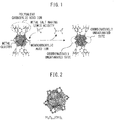
- FIG. 1 shows a specific example of the method of the present disclosure in which, due to the metal salt having a Lewis acidity, monocarboxylic acid ions are removed from a single metal cluster constituting the MOF, whereby the MOF is in a coordinatively unsaturated state.
- a trimesic acid ion which is a tridentate ligand polycarboxylic acid
- an acetic acid ion which is a monodentate ligand monocarboxylic acid
- Zr 6 O 4 (OH) 4 Zr 6 O 4
- YCl 3 which is a metal salt having a Lewis acidity, is allowed to act on the monocarboxylic acid ion coordinated to the metal cluster to desorb the monocarboxylic acid ion from the metal cluster.
- a coordinatively unsaturated MOF having one or a plurality of coordinatively unsaturated sites (the portions surrounded by dotted lines), as shown on the right side of FIG. 1 and a complex of a monocarboxylic acid ion and the metal from the metal salt are formed. This complex may remain in the coordinatively unsaturated MOF in some cases.
- precursor metal-organic framework comprising a metal cluster and a polycarboxylic acid ion and a monocarboxylic acid ion coordinated to the metal cluster is provided.
- Such a precursor MOF can be obtained by known means.
- the precursor MOF can be synthesized by mixing a metal ion source, a polycarboxylic acid compound, and a monocarboxylic acid compound, dissolving these components in a solvent as necessary, and heating.
- the precursor MOF can be synthesized by heating a solution comprising a metal ion source, a polycarboxylic acid compound, and a C 1-3 monocarboxylic acid compound.
- the metal ion source for synthesizing the precursor MOF is not particularly limited as long as a metal cluster constituting the coordinatively unsaturated MOF described above can be formed therewith.
- a compound comprising a metal constituting the metal cluster for example, a metal halide or the like, can be used as the metal ion source.
- the metal cluster includes an oxygen atom, a metal halide, an oxy-metal compound, or a metal oxide can be used as the metal ion source.
- the metal ion source may be at least one selected from the group consisting of a zirconium compound, a hafnium compound, and a cerium compound.
- a zirconium compound zirconium oxychloride octahydrate (ZrOCl 2 ⁇ 8H 2 O) or zirconium chloride (ZrCl 4 )
- zirconium oxychloride octahydrate ZrOCl 2 ⁇ 8H 2 O
- zirconium chloride (ZrCl 4 ) can be used as the zirconium compound
- hafnium oxychloride octahydrate hafnium oxychloride octahydrate
- hafnium chloride hafnium chloride
- polycarboxylic acids and monocarboxylic acids, or the salts or acid anhydrides thereof, corresponding to the polycarboxylic acid ion and monocarboxylic acid ion described regarding the coordinatively unsaturated MOF can be used as the polycarboxylic acid compound and monocarboxylic acid compound for synthesis of the precursor MOF.
- the polycarboxylic acid salt and the monocarboxylic acid salt include lithium salt, sodium salt, potassium salt, or ammonia salt of a polycarboxylic acid.
- polycarboxylic acid compounds are di-, tri-, or tetra- polycarboxylic acid compounds.
- the proportion of the polycarboxylic acid ions, with respect to the total molar number of carboxylic acid ions in the precursor MOF, may be 20 mol% or more, 30 mol% or more, or 40 mol% or more, and may be 95 mol% or less, 90 mol% or less, or 85 mol% or less.
- the proportion of monocarboxylic acid ions, with respect to the total molar number of carboxylic acid ions in the precursor MOF, may be 5 mol% or more, 10 mol% or more, or 15 mol% or more, and may be 80 mol% or less, 70 mol% or less, or 60 mol% or less.
- the mixture of the metal ion source, the polycarboxylic acid compound, and the monocarboxylic acid compound may further include a compound for providing the above polydentate ligand other than the polycarboxylic acid.
- the solvent for forming the precursor MOF is not particularly limited as long as it is capable of dispersing or dissolving the above-described metal ion source, polycarboxylic acid compound, monocarboxylic acid compound, and, as necessary, the compound for providing the polydentate ligand described above other than the polycarboxylic acid, and the precursor MOF can be synthesized in a heating process, which is described later.
- an amide is preferably used as the solvent.
- Amides decompose at high temperatures to gradually produce an amine base.
- the produced amine base deprotonates the carboxyl groups of the polycarboxylic acid compound and the monocarboxylic acid compound and promotes the formation of polycarboxylic acid ions and monocarboxylic acid ions, which are coordinatable to the metal cluster.
- the amide include N,N-dimethylformamide (DMF), N-N-diethylformamide (DEF), and combinations thereof.
- the aforementioned monocarboxylic acid compound can be used as the solvent.
- a combination of an amide and a monocarboxylic acid compound is used as the solvent.
- the heating for synthesis of the precursor MOF can be carried out under solvothermal conditions.
- a precursor MOF comprising a metal cluster and a polycarboxylic acid ion and a monocarboxylic acid ion coordinated to the metal cluster
- a metal ion source such as N,N-dimethylformamide (DMF) or N,N-diethylformamide (DEF)
- a solvent such as N,N-dimethylformamide (DMF) or N,N-diethylformamide (DEF) into a pressure vessel such as an autoclave, and heating at a temperature of 100 °C or more, or 120 °C or more, and 180 °C or less, or 150 °C or less for 6 hours or more, or 24 hours or more, and 100 hours or less, or 72 hours or less.
- DMF N,N-dimethylformamide
- DEF N,N-diethylformamide
- the precursor MOF may be purified by filtration, washing, or drying, as necessary, or the solution containing the synthesized precursor MOF may be used as-is in subsequent processes. Washing can be carried out once or a plurality of times using a solvent such as DMF or acetone. Drying can be carried out by allowing the solution to stand at room temperature or by heating under normal pressure or reduced pressure.
- a coordinatively unsaturated MOF can be produced by allowing the precursor MOF and a metal salt having a Lewis acidity to coexist in a solvent to desorb at least a part of the monocarboxylic acid ions which are coordinated to the metal cluster, from the metal cluster.
- Lewis acids are defined as receptors for electron pairs.
- Metals included in a metal salt having a Lewis acidity act as Lewis acids to desorb monocarboxylic acid ions, which are Lewis bases, from the metal cluster. Since desorption of the carboxylic acid ions by the Lewis acid proceeds more favorably for monocarboxylic acid ions, which are monodentate ligands, rather than for polycarboxylic acid ions, which are polydentate ligands, it is possible to selectively desorb monocarboxylic acid ions while maintaining the crystal structure of the MOF to generate coordinatively unsaturated sites in at least a part of the metal cluster.
- the Lewis acid is preferably non-protonic.
- the metal salt having a Lewis acidity is preferably a halide and is more preferably a chloride or bromide.
- Halogen ions derived from the halide may be included in the coordinatively unsaturated MOF in some cases. Though such halogen ions, in particular, chlorine ions and bromine ions, can coordinate to the metal cluster, since the halogen ions easily undergo ligand substitution with water molecules and detach from the metal cluster, they do not significantly lower the hygroscopic performance of the coordinatively unsaturated MOF.
- the metal salt having a Lewis acidity preferably contains a metal in which the number of electrons in the d-orbit of the metal ion having a stable oxidation number state is 0 or 10.
- a metal salt containing such a metal acts as a Lewis acid and can promote desorption of the monocarboxylic acid ion, which is a base, from the metal cluster.
- the metal salt having a Lewis acidity be one or more selected from the group consisting of LiCl, MgCl 2 , AlCl 3 , ScCl 3 , YCl 3 , ZrCl 4 , HfCl 4 , MgBr 2 , and TiCl 2 Cp 2 .
- Cp is a cyclopentadienyl anion or a derivative thereof, such as a pentamethylcyclopentadienyl anion (Cp*).
- the concentration of the metal salt having a Lewis acidity in the solvent may be, for example, 5 mmol/L or more, 10 mmol/L or more, 20 mmol/L or more, 30 mmol/L or more, or 60 mmol/L or more, and may be 600 mmol/L or less, 500 mmol/L or less, 300 mmol/L or less, or 200 mmol/L or less.
- the precursor MOF and the metal salt having a Lewis acidity are allowed to stand in a coexisting state in the solvent.
- the precursor MOF can coexist in the solvent with metal salt having a Lewis acidity by immersing the precursor MOF in a solution comprising the metal salt having a Lewis acidity and the solvent.
- the solvent is not particularly limited as long as the precursor MOF and the metal salt having a Lewis acidity can be dispersed or dissolved therein.
- water alcohols such as methanol, ethanol, and isopropanol, amides such as N,N-dimethylformamide (DMF) and N,N-diethylformamide (DEF), or combinations thereof can be used as the solvent.
- alcohols such as methanol, ethanol, and isopropanol
- amides such as N,N-dimethylformamide (DMF) and N,N-diethylformamide (DEF)
- DMF N,N-dimethylformamide
- DEF N,N-diethylformamide
- the desorption of monocarboxylic acid ions from the metal cluster may proceed at room temperature or may proceed upon heating.
- a solution comprising the precursor MOF, the metal salt having a Lewis acidity, and the solvent can be heated.
- the heating temperature may be, for example, 30 °C or more, or 50 °C or more, and may be 120 °C or less, or 100 °C or less.
- the heating time may be 6 hours or more, 24 hours or more, or 48 hours or more and may be 100 hours or less, or 72 hours or less.
- the coordinatively unsaturated MOF can be produced by desorbing at least a part of the monocarboxylic acid ions from the metal cluster.
- the obtained coordinatively unsaturated MOF can be purified by filtration, washing, or drying, as necessary. Washing can be carried out once or a plurality of times using a solvent such as DMF or acetone. Drying can be carried out by allowing the MOF to stand at room temperature or by heating under normal pressure or reduced pressure.
- the coordinatively unsaturated metal-organic framework (coordinatively unsaturated MOF) of the present disclosure comprises a metal cluster and carboxylic acid ions coordinated to the metal cluster. At least a part of the carboxylic acid ions are polycarboxylic acid ions, which bond a plurality of metal clusters to each other, and at least a part of the metal cluster includes coordinatively unsaturated sites.
- the coordinatively unsaturated MOF of the present disclosure can be produced by the aforementioned production method of the present disclosure.
- the coordinatively unsaturated metal-organic framework of the present disclosure comprises an M 6 O 8-x (OH) x -type metal cluster and carboxylic acid ions, which are coordinated to the metal cluster, wherein M is a group IV element ion or a rare earth ion, wherein the carboxylic acid ions coordinated to the metal cluster are a polycarboxylic acid ion as a polydentate ligand and a monocarboxylic acid ion as a monodentate ligand, wherein a plurality of the metal clusters are bonded to each other due to the polycarboxylic acid ion, wherein the amount of monocarboxylic acid ions coordinated to the metal cluster is 80% or less when the maximum amount of monocarboxylic acid ions which can coordinate with the metal cluster is 100%, and wherein the maximum amount of monocarboxylic acid ions which can coordinate with the metal cluster is six for each metal cluster.
- M is a group IV element ion or a rare earth i
- coordinatively unsaturated sites of the coordinatively unsaturated MOF of the present disclosure means coordination sites at which carboxylic acid ions comprising monocarboxylic acid ions and polycarboxylic acid ions are not coordinated and other polyvalent ligands are not coordinated. Molecules such as water (H 2 O) or dimethylformamide (DMF) may be coordinated to the coordinatively unsaturated sites, and these molecules may be derived from the solvent.
- H 2 O water
- DMF dimethylformamide
- the organic group moiety which is the hydrophobic moiety of the carboxylic acid ion which is coordinated to the metal cluster decreases the hygroscopicity of the MOF under low humidity conditions because the methyl group is oriented on the pore surface of MOF and exhibits hydrophobicity.
- the coordinatively unsaturated MOF of the present disclosure can exhibit high hygroscopicity even under low humidity conditions since ligands having such hydrophobic sites are at least partially removed from the coordinatively unsaturated sites of the coordinatively unsaturated MOF of the present disclosure. Furthermore, it is thought that by changing the number of coordinatively unsaturated sites in the coordinatively unsaturated MOF, the humidity that can be adsorbed can be easily controlled.
- the adsorption humidity of the coordinatively unsaturated MOF of the present disclosure may be 30% or less, 28% or less, 26% or less, 24% or less, 22% or less, or 20% or less, and may be 10% or more, 12% or more, 16% or more, or 18% or more.
- adsorption humidity means the relative humidity when adsorbing water vapor in an amount equal to half of the maximum water vapor adsorption amount.
- FIG. 1 shows an example of the method of the present disclosure for producing the coordinatively unsaturated MOF.
- a trimesic acid ion which is a tridentate ligand polycarboxylic acid
- an acetic acid ion which is a monodentate ligand monocarboxylic acid ion
- Zr 6 O 4 (OH) 4 Zr 6 O 4
- a part of the metal cluster includes one or a plurality of coordinatively unsaturated sites (the portions surrounded by dotted lines). Since these coordinatively unsaturated sites contribute to the hydrophilization of the pore surfaces of the coordinatively unsaturated MOF, it is believed that the adsorption of water into the pores of the coordinatively unsaturated MOF is promoted as compared to MOFs lacking coordinatively unsaturated sites.
- hygroscopicity can be controlled by changing the number of coordinatively unsaturated sites in the coordinatively unsaturated MOF.
- the coordinatively unsaturated MOF of the present disclosure can be used, depending on application, in a powder form or in the form of pellets or tablets. Furthermore, when forming the coordinatively unsaturated MOF of the present disclosure, a polymer binder or the like may be used.
- the metal cluster determines the vertex shape in the periodic structure of the coordinatively unsaturated MOF. Any metal cluster capable of forming an MOF can be used as the metal cluster.
- an M 6 O 8-x (OH) x -type metal cluster can be used as the metal cluster of the coordinatively unsaturated MOF of the present disclosure.
- This metal cluster has the structure shown in FIG. 2 , wherein M is a tetravalent group IV periodic table element or a rare earth ion, for example, Zr 4+ , Hf 4+ , and Ce 4+ , in particular, Zr 4+ , and the saturated coordination number thereof is 12.
- MOFs including this metal cluster include MOF-808, UiO-66, and MOF-801.
- ligands for this metal cluster include trimesic acid, formic acid, terephthalic acid, and fumaric acid.
- the carboxylic acid ions coordinated to the metal cluster include a polycarboxylic acid ion as a polydentate ligand and a C 1-3 monocarboxylic acid ion as a monodentate ligand, and less than 6, 5 or less, or 4 or less monocarboxylic acid ions may be coordinated to the metal cluster.
- the maximum amount of monocarboxylic acid ions which can coordinate to the metal cluster is six for each metal cluster.
- the amount of monocarboxylic acid ions coordinated to the metal cluster be 80% or less when the maximum amount of monocarboxylic acid ions which can coordinate to the M 6 O 8-x (OH) x -type metal cluster is 100%, more preferably in the range of 5% to 80%.
- the amount of monocarboxylic acid ions coordinated to this metal cluster may be 7% or more, 10% or more, 15% or more, 20% or more, 25% or more, 30% or more, 35% or more, 40% or more, 45% or more, or 50% or more, and may be 95% or less, 90% or less, 85% or less, 80% or less, 78% or less, or 75% or less.
- the polycarboxylic acid ions function as an organic linker by coordinating the carboxylate group thereof to the metal cluster and bond a plurality of metal clusters to each other. This forms the periodic structure of the coordinatively unsaturated MOF.
- Any arbitrary polycarboxylic acid with which an MOF can be formed can be used, and in general, polycarboxylic acid ions are di-, tri-, or tetra- polycarboxylic acid ions.
- divalent carboxylic acid ions include substituted or unsubstituted isophthalic acid ions, substituted or unsubstituted terephthalic acid ions, oxalate ions, fumarate ions, malonate ions, trans,trans-muconic acid ions, cis,cis-muconic acid ions, 2-6-naphthalenedicarboxylic acid ions, 9,10-anthracenedicarboxylic acid ions, 2,2'-diamino-4,4'-stilbendicarboxylic acid ions, 2,2'-dinitro-4,4'-stilbenedicarboxylic acid ions, and 2,3-pyrazinedicarboxylic acid ions.
- Substituted or unsubstituted isophthalic acid ions can be represented by Formula 1.
- each R represents an independent substituent other than a carboxylate group, and n is an integer from 0 to 4.
- R is not particularly limited as long as the ions described above can function as an organic linker to form an MOF. Examples thereof include hydroxy groups, nitro groups, fluoro groups, chloro groups, bromo groups, iodine groups, cyano groups, methyl groups, ethyl groups, tert-butyl groups, and ethynyl groups. It is preferable that R lack a positive charge which cancels the negative charge of the carboxylate ion. Examples of R having a positive charge include ammonium groups such as a trimethylammonium group (-N(CH 3 ) 3 + ) or a triethylammonium group (-N(C 2 H 5 ) 3 + ).
- isophthalic acid ions represented by Formula 1 include isophthalate ions (m-BDC 2- ), 5-hydroxyisophthalate ions, 5-nitroisophthalate ions, 5-tert-butylisophthalate ions, 5-ethynyl isophthalate ions, 5-chloroisophthalate ions, 5-bromoisophthalate ions, 5-cyanoisophthalate ions, and 4,6-dimethylisophthalate ions.
- the substituted or unsubstituted isophthalic acid ion represented by Formula 1 is preferably an isophthalic aciod ion (m-BDC 2- ).
- the substituted or unsubstituted terephthalic acid ion can be represented by Formula 2.
- each R represents an independent substituent other than a carboxylate group, and n is an integer from 0 to 4.
- R is not particularly limited as long as the ions described above can function as an organic linker to form an MOF. Examples thereof include hydroxy groups, nitro groups, fluoro groups, chloro groups, bromo groups, iodine groups, cyano groups, methyl groups, ethyl groups, tert-butyl groups, and ethynyl groups. It is preferable that R lack a positive charge which cancels the negative charge of the carboxylate ion. Examples of R having a positive charge include ammonium groups such as a trimethylammonium group (-N(CH 3 ) 3 + ) or a triethylammonium group (-N(C 2 H 5 ) 3 + ).
- substituted or unsubstituted terephthalic acid ions represented by Formula 2 include terephthalic acid ions (p-BDC 2- ), 2-aminoterephthalic acid ions, 2,5-diaminoterephthalic acid ions, 2-hydroxyterephthalic acid ions, and 2,5-dihydroxy terephthalic acid ions.
- the substituted or unsubstituted terephthalic acid ions represented by Formula 2 is preferably a terephthalic acid ion (p-BDC 2- ).
- trivalent carboxylic acid ions include substituted or unsubstituted trimesic acid ions, 1,3,5-tris(4-carboxyphenyl)benzene ions, 1,3,5-triscarboxyphenylethynylbenzene ions, 4,4',4"-s-triazine-2,4,6-triyl-tribenzoic acid ions, 1,3,5-tris(4'-carobxy[1,1'-biphenyl]-4-yl)benzene ions, biphenyl-3-4'-5-tricarboxylic acid ions, and 4,4',4"-(1,3,5-triazine-2,4,6-triyl triimino)trisbenzoic acid ions.
- Substituted or unsubstituted trimesic acid ions can be represented by Formula 3.
- each R is an independent substituent other than a carboxylate group, and n is an integer from 0 to 3.
- R is not particularly limited as long as the ions described above function as an organic linker to form an MOF. Examples thereof include hydroxy groups, nitro groups, fluoro groups, chloro groups, bromo groups, iodine groups, cyano groups, methyl groups, ethyl groups, tert-butyl groups, and ethynyl groups.
- substituted or unsubstituted trimesic acid ions represented by Formula 3 include trimesic acid ions (BTC 3- ), 2-hydroxy-1,3,5-benzenetricarboxylic acid ions, 2-nitro-1,3,5-benzenetricarboxylic acid ions, 2-chloro-1,3,5-benzenetricarboxylic acid ions, 2-bromo-1,3,5-benzenetricarboxylic acid ions, and 2-methyl-1,3,5-benzenetricarboxylic acid ions.
- the substituted or unsubstituted trimesic acid ions represented by Formula 1 is preferable a trimesic acid ion (BTC 3- ).
- tetravalent carboxylic acid ions include [1,1':4',1"]terphenyl-3,3",5,5"-tetra carboxylic acid ions, 3,3',5,5'-tetracarboxydiphenylmethane ions, 1,2,4,5-tetrakis(4-carboxyphenyl)benzene ions, and biphenyl-3,3',5,5'-tetracarboxylic acid ions.
- the polycarboxylic acid ion is preferably at least one selected from the group consisting of substituted or unsubstituted isophthalic acid ions, substituted or unsubstituted terephthalic acid ions, and substituted or unsubstituted trimesic acid ions.
- the polycarboxylic acid ion may be a combination of divalent carboxylic acid ions and trivalent carboxylic acid ions.
- the proportion of polycarboxylic acid ions may be 20 mol% or more, 30 mol% or more, or 40 mol% or more, and may be 95 mol% or less, 90 mol% or less, or 85 mol% or less using the total molar number of carboxylic acid ions as a baseline.
- the coordinatively unsaturated MOF may include a monocarboxylic acid ion coordinated to the metal cluster.
- the monocarboxylic acid ion functions as a monodentate ligand, suppresses the coordination of the polydentate ligand, such as a polycarboxylic acid ion, to the metal cluster, and can be used to control the periodic structure and crystalline shape (morphology) of the coordinatively unsaturated MOF.
- the monocarboxylic acid ion is not particularly limited as long as the coordinatively unsaturated MOF can be formed therewith. Since the monocarboxylic acid ion is advantageous for the formation of the periodic structure of the coordinatively unsaturated MOF, the monocarboxylic acid ion is preferable a C 1-3 monocarboxylic acid ion.
- the C 1-3 monocarboxylic acid is preferably at least one selected from the group consisting of formic acid ions, acetic acid ions, and propionic acid ions, and more preferably at least one selected from the group consisting of formic acid ions and acetic acid ions.
- the proportion of monocarboxylic acid ions may be 5 mol% or more, 10 mol% or more, or 15 mol% or more and may be 80 mol% or less, 70 mol% or less, or 60 mol% or less, with respect to the total molar number of carboxylic acid ions.
- the coordinatively unsaturated MOF may include a polydentate ligand other than a polycarboxylic acid, such as a nitrogen-donor polydentate ligand.
- nitrogen-donor polydentate ligands include imidazole ions, 2-methylimidazole (mIM) ions, 4,4'-bipyridyl, ethylenediamine, 1,4-diazabicyclo[2.2.2]octane (DABCO), pyrazine, 1,2-bis(4-pyridyl)ethane, and 1,2-bis(4-pyridyl)ethylene.
- these polydentate ligands other than carboxylic acid ligands can function as an organic linker to bond a plurality of metal clusters to each other.
- a ligand containing both of two or more carboxylate groups and a nitrogen atom having a donor property is classified as polycarboxylic acid ion.
- the proportion of the polydentate ligand other than a polycarboxylic acid may be 40 mol% or less, 30 mol% or less, or 20 mol% or less with respect to the total molar number of ligands coordinated to the metal cluster. Furthermore, the coordinatively unsaturated MOF may not include a polydentate ligand other than a polycarboxylic acid.
- the coordinatively unsaturated MOF of the present disclosure may include a metal ion which is not incorporated in the metal cluster.
- a metal ion which is not incorporated in the metal cluster is referred to as an "out-of-cluster metal ion".
- the coordinatively unsaturated MOF of the present disclosure can be produced by allowing a precursor metal-organic framework and a metal solvent having a Lewis acidity to coexist in a solvent, and desorbing the monocarboxylic acid ions which are coordinated to the metal cluster.
- the coordinatively unsaturated MOF of the present disclosure may include metal ions derived from the metal salt used as out-of-cluster metal ions in some cases.
- out-of-cluster metal ions form a complex with the monocarboxylic acid ions desorbed from the metal cluster, and balance the charge of the whole of the coordinatively unsaturated MOF as a result of the presence of such complex in, for example, the pores of the coordinatively unsaturated MOF.
- the out-of-cluster metal ions may be at least one selected from the group consisting of Li + , Mg 2+ , Al 3+ , Sc 3+ , Y 3+ , Ti 4+ , Zr 4+ , and Hf 4+ .
- the coordinatively unsaturated metal-organic framework of the present disclosure can be used, for example, as the hygroscopic material in a chemical heat pump.
- the chemical heat pump in this case comprises a water storage part that stores water as a working medium, a hygroscopic material retention unit for retaining the hygroscopic material, and a water vapor flow path that circulates water vapor between the water storage part and the hygroscopic material retention part.
- the water storage part may be used as both an evaporator and a condenser, or the water storage part may be used as an evaporator and the water vapor may be condensed by a separate condenser.
- Such a chemical heat pump can be used for air conditioning and heating in automobiles, residences, and production facilities.
- the water vapor generated by the water storage part 10 is supplied to the hygroscopic material retention part 20 through the water vapor flow path 30, reacts with the hygroscopic material, and supplies adsorption heat to the outside.
- heat can move from the water storage part 10 side to the hygroscopic material retention part 20 side.
- the coordinatively unsaturated metal-organic framework of the present disclosure can be used as, for example, the hygroscopic material in a humidity control system.
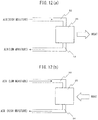
- the humidity control system in this case comprises a hygroscopic material retention part for retaining hygroscopic material, an air supply flow path for supplying air including water vapor to the hygroscopic material retention part, and an air discharge flow path for discharging the air supplied to the hygroscopic material retention part from the hygroscopic material retention part.
- a humidity control system can be used for the dehumidification or moisture control of vehicles, residences, and production facilities.
- air having a relatively small amount of water vapor is discharged from the hygroscopic material retention part through the air discharge flow path 34.
- air having a relatively small amount of water vapor means air having less water vapor as compared to the air having a relatively high amount of water vapor.
- the metal-organic frameworks (MOF) of the Examples and Comparative Examples were synthesized using the reagents shown in Table 1.
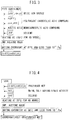
- FIG. 3 shows a flowchart of the production method of Comparative Example A-1.
- Example A-1 The product of Example A-1 was obtained by the following steps (1) to (3).
- the obtained product was a coordinatively unsaturated MOF in which a part of the acetic acid ions as the ligand were desorbed.
- FIG. 4 shows a flowchart of the production method of Example A-1.
- Example A-1 A product was obtained in the same manner as Example A-1 except that 121 mg (0.8 mmol) of scandium chloride (ScCl 3 ) was added in place of the aluminum chloride in step (1) of Example A-1.
- ScCl 3 scandium chloride
- Example A-1 A product was obtained in the same manner as Example A-1 except that 156 mg (0.8 mmol) of yttrium chloride (YCl 3 ) was added in place of the aluminum chloride in step (1) of Example A-1.
- YCl 3 yttrium chloride
- Example A-1 A product was obtained in the same manner as Example A-1 except that 469 mg (2.4 mmol) of yttrium chloride (YCl 3 ) was added in place of the aluminum chloride in step (1) of Example A-1.
- YCl 3 yttrium chloride
- Example A-1 A product was obtained in the same manner as Example A-1 except that 1562 mg (8 mmol) of yttrium chloride (YCl 3 ) was added in place of the aluminum chloride in step (1) of Example A-1.
- YCl 3 yttrium chloride
- Example A-2 A product was obtained in the same manner as Example A-2 except that the heating temperature in step (2) of Example A-2 was changed to 80 °C.
- Example A-3 A product was obtained in the same manner as Example A-3 except that the heating temperature in step (2) of Example A-3 was changed to 80 °C.
- Example A-4 A product was obtained in the same manner as Example A-4 except that the heating temperature in step (2) of Example A-4 was changed to 80 °C.
- Example A product was obtained in the same manner as Example A-2 except that the solvent in step (1) of Example A-2 was changed from DMF to water.
- Example A product was obtained in the same manner as Example A-3 except that the solvent in step (1) of Example A-3 was changed from DMF to water.
- Example A product was obtained in the same manner as Example A-4 except that the solvent in step (1) of Example A-4 was changed from DMF to water.
- Example A-1 A product was obtained in the same manner as Example A-1 except that 34 mg (0.8 mmol) of lithium chloride (LiCl) was added in place of the aluminum chloride of step (1) in Example A-1.
- LiCl lithium chloride
- Example A-1 A product was obtained in the same manner as Example A-1 except that 76 mg (0.8 mmol) of magnesium chloride (MgCl 2 ) was added in place of the aluminum chloride in step (1) of Example A-1.
- MgCl 2 magnesium chloride
- Example A-1 A product was obtained in the same manner as Example A-1 except that 256 mg (0.8 mmol) of hafnium chloride (HfCl 4 ) was added in place of the aluminum chloride in step (1) of Example A-1.
- HfCl 4 hafnium chloride
- a product was obtained in the same manner as Example A-14 except that, in step (1) of Example A-14, 182 mg (0.8 mmol in terms of Zr) of Zr-BTC (F) was used in place of the Zr-BTC/m-BDC(A), the amount of N,N-dimethylformamide (DMF) was changed to 80 mL, and the amount of hafnium chloride (HfCl 4 ) was changed to 769 mg (2.4 mmol).
- step (1) of Example A-14 182 mg (0.8 mmol in terms of Zr) of Zr-BTC (F) was used in place of the Zr-BTC/m-BDC(A), the amount of N,N-dimethylformamide (DMF) was changed to 80 mL, and the amount of hafnium chloride (HfCl 4 ) was changed to 769 mg (2.4 mmol).
- a product was obtained in the same manner as Example A-1 except that, in step (1) of Example A-1, 222 mg (about 0.8 mmol in terms of Zr) of Zr-p-BDC (A) was used in place of the Zr-BTC/m-BDC (A), and aluminum chloride was not used.
- a product was obtained in the same manner as Example A-3 except that, in step (1) of Example A-3, 222 mg (about 0.8 mmol in terms of Zr) of Zr-p-BDC (A) was used in place of the Zr-BTC/m-BDC (A).
- Example A-1 A product was obtained in the same manner as Example A-1 except that 4.69 g (24.0 mmol) of yttrium chloride (YCl 3 ) was added in place of the aluminum chloride in step (1) of Example A-1.
- YCl 3 yttrium chloride
- Example A-1 A product was obtained in the same manner as Example A-1 except that 2.56 g (8.0 mmol) of hafnium chloride (HfCl 4 ) was added in place of the aluminum chloride in step (1) of Example A-1.
- HfCl 4 hafnium chloride
- a product was obtained in the same manner as Example X-2 except that, in step (1) of Example X-2, N,N-diethylformamide (DEF) was used as the solvent in place of the N,N-dimethylformamide (DMF).
- DEF N,N-diethylformamide
- a product was obtained in the same manner as example A-1 except that 7.69 g (24.0 mmol) of hafnium chloride (HfCl 4 ) was added in place of the aluminum chloride in step (1) of Example A-1.
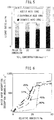
- the ratio of ligands constituting the Zr-BTC/m-BDC (A) (Comparative Example A-1) prior to immersion in a solution (Lewis acid solution) of a metal salt having a Lewis acidity, and the ratio of ligands constituting the Zr-BTC/m-BDC (A) (Example A-3: 20 mmol ⁇ L -1 ; Example A-4: 60 mmol ⁇ L -1 ; and Example A-5: 200 mmol ⁇ L -1 ) after immersion in solutions having different concentrations of YCl 3 (metal salt having a Lewis acidity) are shown in FIG. 5 .
- Example A-3 The water vapor adsorption/desorption isotherms at 20 °C of Comparative Example A-1, Example A-3, Example A-4, and Example A-5 are shown in FIG. 6 .
- Example A-5 the rising edge shifted to the low humidity side (the left side of FIG. 6 ) as compared with Comparative Example A-1 (residual amount of acetic acid ions: 90%).
- Comparative Example A-1 Residual amount of acetic acid ions: 90%.
- the smaller the residual amount of acetic acid ions the greater the shift amount of the water vapor adsorption curve.
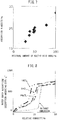
- the relative humidity when adsorbing water vapor in an amount equal to half the maximum water vapor adsorption amount was used as the adsorption humidity and is shown in FIG. 7 together with the residual amount of acetic acid ions. It could be understood that in Examples A-1 to A-8, the residual amount of acetic acid ions was reduced as compared with Comparative Example A-1, and the adsorption humidity decreased accordingly. Furthermore, there was a strong correlation between residual amount of acetic acid ions (%) and adsorption humidity (%).
- Example A-2 The water vapor adsorption/desorption isotherms at 20 °C of Comparative Example A-1, Example A-2, Example A-13, and Example A-14 are shown in FIG. 8 .
- Example A-14 In the water vapor adsorption curves of Example A-2 (ScCl 3 ), Example A-13 (MgCl 2 ), and Example A-14 (HfCl 4 ), the rising edge shifted toward the low relative humidity side (the left side in FIG. 8 ) as compared with Comparative Example A-1 (in which immersion in a Lewis acid solution was not performed).
- Example X-4 The water vapor adsorption/desorption isotherms at 20 °C of Examples X-2 and X-4 and Comparative Example X-1 are shown in FIG. 14 .
- the rising edge shifted toward the low humidity side (the left side in FIG. 14 ) as compared with Comparative Example X-1.
- Comparative Example X-1 it could be seen that the water vapor adsorption amount decreased. This is presumed to be the result of the fact that the concentration of the metal salt having a Lewis acidity used was too high (for example, 600 mmol/L or more), whereby the polycarboxylic acid ions that coordinated to the metal cluster desorbed.
Landscapes
- Chemical & Material Sciences (AREA)
- Organic Chemistry (AREA)
- Health & Medical Sciences (AREA)
- Chemical Kinetics & Catalysis (AREA)
- Medicinal Chemistry (AREA)
- Polymers & Plastics (AREA)
- Engineering & Computer Science (AREA)
- Materials Engineering (AREA)
- Solid-Sorbent Or Filter-Aiding Compositions (AREA)
- Organic Low-Molecular-Weight Compounds And Preparation Thereof (AREA)
Abstract
Description
- The present disclosure relates to a method for producing a coordinatively unsaturated metal-organic framework and a coordinatively unsaturated metal-organic framework.
- Metal-organic frameworks (MOF), which are porous compounds, are materials which are also referred to as porous coordination polymers (PCP). MOFs have a coordination network structure having a high surface area which is formed by interaction between a metal and an organic ligand.
- Since MOFs can be used as the material for gas adsorption or separation, sensors, and catalysts, research and development regarding MOFs has been advancing. Furthermore, MOFs can adsorb water vapor, and thus, have been considered for use as the hygroscopic material in a chemical heat pump (adsorption heat pump) or humidity control system used for automobiles, residences, and manufacturing facilities.
-
Non-Patent Literature 1 describes an MOF (MOF-808) comprising Zr4+ as a metal ion, a trimesic acid ion as the polydentate ligand, and a formic acid ion as the monodentate ligand. -
Non-Patent Literature 2 describes an MOF comprising a sulfate ion obtained by immersing an MOF (MOF-808), which comprises Zr4+ as a metal ion, a trimesic acid ion as the polydentate ligand, and a formic acid ion as the monodentate ligand, in sulfuric acid to substitute the formic acid ion with the sulfate ion, and describes the catalytic activity thereof. -
Non-Patent Literature 3 describes an MOF comprising Ti4+ or Hf4+ obtained by reacting an MOF (UiO-66), which comprises Zr4+ as the metal ion and a terephthalic acid ion as the polydentate ligand, with TiCpCl2 or HfCl4 to substitute the Zr4+ with the Ti4+ or Hf4+. -
Non-Patent Literature 4 describes an MOF comprising Zr4+ as the metal ion, a trimesic acid ion as the polydentate ligand, and a formic acid ion, acetic acid ion, or propionic acid ion as the monodentate ligand. -
- [NPL 1] H. Furukawa et al., "Water Adsorption in Porous Metal-Organic Frameworks and Related Materials", J. Am. Chem. Soc. 2014, 136, pp 4369-4381
- [NPL 2] J. Jiang et al., "Superacidity in Sulfated Metal-Organic Framework-808", J. Am. Chem. Soc. 2014, 136, pp 12844-12847
- [NPL 3] M. Kim et al., "Postsynthetic Ligand and Cation Exchange in Robust Metal-Organic Frameworks", J. Am. Chem. Soc. 2012, 134, pp 18082-18088
- [NPL 4] W. Liang et al., "Tuning Pore Size in a Zirconium-Tricarboxylate Metal-Organic Framework", CrystEngComm. 2014, 16, pp 6530-6533
- The MOFs described in the above literature exhibit water vapor adsorption and desorption properties in response to changes in relative humidity. However, these MOFs, under low relative humidity conditions, have low hygroscopicity or, in some cases, do not exhibit hygroscopicity. Thus, when used as the hygroscopic material for a chemical heat pump, the heat output of these MOFs may be insufficient in some cases, and when used as the hygroscopic material for a humidity control system, the dehumidification performance of these MOFs may be insufficient in some cases.
- The present disclosure provides a method for efficiently producing a metal-organic framework that at least partially solves the above problems.
- As a result of rigorous investigation, the present inventors have conceived of the present disclosure as described below.
- <
Aspect 1>
A method for producing a coordinatively unsaturated metal-organic framework, comprising:- providing a precursor metal-organic framework comprising a metal cluster and a polycarboxylic acid ion and a monocarboxylic acid ion which are coordinated to the metal cluster, and
- allowing the precursor metal-organic framework and a metal salt having a Lewis acidity to coexist in a solvent to desorb at least a part of the monocarboxylic acid ion which is coordinated to the metal cluster, from the metal cluster.
- <
Aspect 2>
The method according toAspect 1,
wherein the metal cluster is an M6O8-x(OH)x-type metal cluster,
wherein M is a group IV element ion or a rare earth ion,
wherein the polycarboxylic acid ion and the monocarboxylic acid ion coordinated to the metal cluster are a polycarboxylic acid ion as a polydentate ligand and a C1-3 monocarboxylic acid ion as a monodentate ligand, respectively, and
wherein less than six monocarboxylic acid ions are coordinated to each metal cluster. - <
Aspect 3>
The method according toAspect 2, wherein M is at least one selected from the group consisting of Zr4+, Hf4+, and Ce4+. - <
Aspect 4>
The method according to any one ofAspects 1 to 3, wherein the monocarboxylic acid ion is at least one selected from the group consisting of a formic acid ion, an acetic acid ion, and a propionic acid ion. - <Aspect 5>
The method according to any one ofAspects 1 to 4, wherein the metal salt having a Lewis acidity is a halide. - <Aspect 6>
A coordinatively unsaturated metal-organic framework, comprising:- an M6O8-x(OH)x-type metal cluster, and carboxylic acid ions coordinated to the metal cluster,
- wherein M is a tetravalent group IV element ion or a rare earth ion,
- wherein the carboxylic acid ions coordinated to the metal cluster comprise a polycarboxylic acid ion as a polydentate ligand and a monocarboxylic acid ion as a monodentate ligand,
- wherein a plurality of the metal clusters are bonded to each other due to the polycarboxylic acid ion,
- wherein the amount of monocarboxylic acid ions coordinated to the metal cluster is 80% or less, when the maximum amount of monocarboxylic acid ions which can coordinate with the metal cluster is 100%, and
- wherein the maximum amount of monocarboxylic acid ions which can coordinate with the metal cluster is six for each metal cluster.
- <Aspect 7>
The coordinatively unsaturated metal-organic framework according to Aspect 6, wherein the amount of monocarboxylic acid ions coordinated to the metal cluster is in the range of 5% to 80%. - <Aspect 8>
The coordinatively unsaturated metal-organic framework according to Aspect 7, wherein M is at least one selected from the group consisting of Zr4+, Hf4+, and Ce4+. - <Aspect 9>
The coordinatively unsaturated metal-organic framework according to any one of Aspects 6 to 8, wherein the monocarboxylic acid ion is a C1-3 monocarboxylic acid ion. - <
Aspect 10>
The coordinatively unsaturated metal-organic framework according to any one of Aspects 6 to 9, wherein the monocarboxylic acid ion is at least one selected from the group consisting of a formic acid ion, an acetic acid ion, and a propionic acid ion. - <Aspect 11>
The coordinatively unsaturated metal-organic framework according to any one of Aspects 6 to 10, further comprising a out-of-cluster metal ion. - <Aspect 12>
The coordinatively unsaturated metal-organic framework according to Aspect 11, wherein the out-of-cluster metal ion is at least one selected from the group consisting of Li+, Mg2+, Al3+, Sc3+, Y3+, Ti4+, Zr4+, and Hf4+. - According to the present disclosure, a method for efficiently producing a metal-organic framework which can at least partially solve the problems described above and a metal-organic framework which can at least partially solve the problems described above can be provided.
-
-
FIG. 1 is a view showing an example of the method of the present disclosure for producing a coordinatively unsaturated MOF. -
FIG. 2 is a view showing an example of a metal cluster which can be used in the coordinatively unsaturated MOF of the present disclosure. -
FIG. 3 is a flowchart of the production method of Comparative Example A-1. -
FIG. 4 is a flowchart of the production method of Example A-1. -
FIG. 5 shows the ratio of the ligands constituting the MOFs of Comparative Example A-1, Example A-3, Example A-4, and Example A-5. -
FIG. 6 shows the water vapor adsorption/desorption isotherms at 20 °C of Example A-3, Example A-4, and Example A-5. -
FIG. 7 is a graph showing the residual amount of acetic acid ions and adsorption humidity of Comparative Example A-1 and Examples A-1 to A-8. -
FIG. 8 shows the water vapor adsorption/desorption isotherms at 20 °C of Example A-2, Example A-13, and Example A-14. -
FIG. 9 shows the water vapor adsorption/desorption isotherms at 20 °C of Comparative Example B-1 and Example B-1. -
FIG. 10 shows the water vapor adsorption/desorption isotherms at 20 °C of Comparative Example C-1 and Example C-1. -
FIG. 11 is a schematic view of a heat pump using a coordinatively unsaturated MOF. -
FIG. 12 is a schematic view of a humidity control system using a coordinatively unsaturated MOF. -
FIG. 13 is a graph showing the residual amount of acetic acid ions and adsorption humidity of Comparative Examples A-1 and X-1 and Examples A-1 to A-8 and X-1 to X-4. -
FIG. 14 shows the water vapor adsorption/desorption isotherms at 20 °C of Examples X-2 and X-4 and Comparative Example X-1. - The present disclosure will be described below while referring to the drawings. The aspects shown below are examples of the present disclosure. The present disclosure is not limited by the aspects shown below.
- The method of the present disclosure for producing a coordinatively unsaturated MOF comprises providing a precursor metal-organic framework comprising a metal cluster and a polycarboxylic acid ion and a monocarboxylic acid ion which are coordinated to the metal cluster, and allowing the precursor metal-organic framework and a metal salt having a Lewis acidity to coexist in a solvent to desorb at least a part of the monocarboxylic acid ion, which is coordinated to the metal cluster, from the metal cluster.
- According to the method of the present disclosure, a coordinatively unsaturated MOF can be produced.
-
FIG. 1 shows a specific example of the method of the present disclosure in which, due to the metal salt having a Lewis acidity, monocarboxylic acid ions are removed from a single metal cluster constituting the MOF, whereby the MOF is in a coordinatively unsaturated state. - In the precursor MOF shown on the left side of
FIG. 1 , a trimesic acid ion, which is a tridentate ligand polycarboxylic acid, and an acetic acid ion, which is a monodentate ligand monocarboxylic acid, are coordinated to Zr6O4(OH)4 as the metal cluster. The polycarboxylic acid functions as an organic linker between adjacent metal clusters, and forms a network-like periodic structure. - In the example shown in
FIG. 1 , YCl3, which is a metal salt having a Lewis acidity, is allowed to act on the monocarboxylic acid ion coordinated to the metal cluster to desorb the monocarboxylic acid ion from the metal cluster. As a result, a coordinatively unsaturated MOF having one or a plurality of coordinatively unsaturated sites (the portions surrounded by dotted lines), as shown on the right side ofFIG. 1 , and a complex of a monocarboxylic acid ion and the metal from the metal salt are formed. This complex may remain in the coordinatively unsaturated MOF in some cases. - Each constituent element of the method of the present disclosure will be described below.
- In the method of the present disclosure, a precursor metal-organic framework (precursor MOF) comprising a metal cluster and a polycarboxylic acid ion and a monocarboxylic acid ion coordinated to the metal cluster is provided.
- Such a precursor MOF can be obtained by known means. For example, the precursor MOF can be synthesized by mixing a metal ion source, a polycarboxylic acid compound, and a monocarboxylic acid compound, dissolving these components in a solvent as necessary, and heating. For example, the precursor MOF can be synthesized by heating a solution comprising a metal ion source, a polycarboxylic acid compound, and a C1-3 monocarboxylic acid compound.
- The metal ion source for synthesizing the precursor MOF is not particularly limited as long as a metal cluster constituting the coordinatively unsaturated MOF described above can be formed therewith. A compound comprising a metal constituting the metal cluster, for example, a metal halide or the like, can be used as the metal ion source. When the metal cluster includes an oxygen atom, a metal halide, an oxy-metal compound, or a metal oxide can be used as the metal ion source.
- The metal ion source may be at least one selected from the group consisting of a zirconium compound, a hafnium compound, and a cerium compound. In this case, for example, zirconium oxychloride octahydrate (ZrOCl2·8H2O) or zirconium chloride (ZrCl4) can be used as the zirconium compound, and, for example, hafnium oxychloride octahydrate (HfOCl2·8H2O) or hafnium chloride (HfCl4) can be used as the hafnium compound.
- The polycarboxylic acids and monocarboxylic acids, or the salts or acid anhydrides thereof, corresponding to the polycarboxylic acid ion and monocarboxylic acid ion described regarding the coordinatively unsaturated MOF can be used as the polycarboxylic acid compound and monocarboxylic acid compound for synthesis of the precursor MOF. Examples of the polycarboxylic acid salt and the monocarboxylic acid salt include lithium salt, sodium salt, potassium salt, or ammonia salt of a polycarboxylic acid. In general, polycarboxylic acid compounds are di-, tri-, or tetra- polycarboxylic acid compounds.
- The proportion of the polycarboxylic acid ions, with respect to the total molar number of carboxylic acid ions in the precursor MOF, may be 20 mol% or more, 30 mol% or more, or 40 mol% or more, and may be 95 mol% or less, 90 mol% or less, or 85 mol% or less.
- The proportion of monocarboxylic acid ions, with respect to the total molar number of carboxylic acid ions in the precursor MOF, may be 5 mol% or more, 10 mol% or more, or 15 mol% or more, and may be 80 mol% or less, 70 mol% or less, or 60 mol% or less.
- The mixture of the metal ion source, the polycarboxylic acid compound, and the monocarboxylic acid compound may further include a compound for providing the above polydentate ligand other than the polycarboxylic acid.
- The solvent for forming the precursor MOF is not particularly limited as long as it is capable of dispersing or dissolving the above-described metal ion source, polycarboxylic acid compound, monocarboxylic acid compound, and, as necessary, the compound for providing the polydentate ligand described above other than the polycarboxylic acid, and the precursor MOF can be synthesized in a heating process, which is described later.
- From the viewpoint of promoting the synthesis of the precursor MOF, an amide is preferably used as the solvent. Amides decompose at high temperatures to gradually produce an amine base. The produced amine base deprotonates the carboxyl groups of the polycarboxylic acid compound and the monocarboxylic acid compound and promotes the formation of polycarboxylic acid ions and monocarboxylic acid ions, which are coordinatable to the metal cluster. Examples of the amide include N,N-dimethylformamide (DMF), N-N-diethylformamide (DEF), and combinations thereof.
- The aforementioned monocarboxylic acid compound can be used as the solvent. In one embodiment, a combination of an amide and a monocarboxylic acid compound is used as the solvent.
- The heating for synthesis of the precursor MOF can be carried out under solvothermal conditions.
- For example, a precursor MOF comprising a metal cluster and a polycarboxylic acid ion and a monocarboxylic acid ion coordinated to the metal cluster can be synthesized by loading a metal ion source, a polycarboxylic acid compound, a monocarobyxlic acid compound, and if necessary, a solvent such as N,N-dimethylformamide (DMF) or N,N-diethylformamide (DEF) into a pressure vessel such as an autoclave, and heating at a temperature of 100 °C or more, or 120 °C or more, and 180 °C or less, or 150 °C or less for 6 hours or more, or 24 hours or more, and 100 hours or less, or 72 hours or less.
- The precursor MOF may be purified by filtration, washing, or drying, as necessary, or the solution containing the synthesized precursor MOF may be used as-is in subsequent processes. Washing can be carried out once or a plurality of times using a solvent such as DMF or acetone. Drying can be carried out by allowing the solution to stand at room temperature or by heating under normal pressure or reduced pressure.
- A coordinatively unsaturated MOF can be produced by allowing the precursor MOF and a metal salt having a Lewis acidity to coexist in a solvent to desorb at least a part of the monocarboxylic acid ions which are coordinated to the metal cluster, from the metal cluster.
- Lewis acids are defined as receptors for electron pairs.
- Metals included in a metal salt having a Lewis acidity act as Lewis acids to desorb monocarboxylic acid ions, which are Lewis bases, from the metal cluster. Since desorption of the carboxylic acid ions by the Lewis acid proceeds more favorably for monocarboxylic acid ions, which are monodentate ligands, rather than for polycarboxylic acid ions, which are polydentate ligands, it is possible to selectively desorb monocarboxylic acid ions while maintaining the crystal structure of the MOF to generate coordinatively unsaturated sites in at least a part of the metal cluster.
- In the present disclosure, the Lewis acid is preferably non-protonic.
- The metal salt having a Lewis acidity is preferably a halide and is more preferably a chloride or bromide. Halogen ions derived from the halide may be included in the coordinatively unsaturated MOF in some cases. Though such halogen ions, in particular, chlorine ions and bromine ions, can coordinate to the metal cluster, since the halogen ions easily undergo ligand substitution with water molecules and detach from the metal cluster, they do not significantly lower the hygroscopic performance of the coordinatively unsaturated MOF.
- The metal salt having a Lewis acidity preferably contains a metal in which the number of electrons in the d-orbit of the metal ion having a stable oxidation number state is 0 or 10. A metal salt containing such a metal acts as a Lewis acid and can promote desorption of the monocarboxylic acid ion, which is a base, from the metal cluster.
- It is preferable that the metal salt having a Lewis acidity be one or more selected from the group consisting of LiCl, MgCl2, AlCl3, ScCl3, YCl3, ZrCl4, HfCl4, MgBr2, and TiCl2Cp2. Cp is a cyclopentadienyl anion or a derivative thereof, such as a pentamethylcyclopentadienyl anion (Cp*). By using these metal salts, desorption of monocarboxylicacid ions from the metal cluster is promoted, whereby a coordinatively unsaturated MOF having high hygroscopicity can be obtained.
- The concentration of the metal salt having a Lewis acidity in the solvent may be, for example, 5 mmol/L or more, 10 mmol/L or more, 20 mmol/L or more, 30 mmol/L or more, or 60 mmol/L or more, and may be 600 mmol/L or less, 500 mmol/L or less, 300 mmol/L or less, or 200 mmol/L or less.
- The precursor MOF and the metal salt having a Lewis acidity are allowed to stand in a coexisting state in the solvent. The precursor MOF can coexist in the solvent with metal salt having a Lewis acidity by immersing the precursor MOF in a solution comprising the metal salt having a Lewis acidity and the solvent.
- The solvent is not particularly limited as long as the precursor MOF and the metal salt having a Lewis acidity can be dispersed or dissolved therein. For example, water, alcohols such as methanol, ethanol, and isopropanol, amides such as N,N-dimethylformamide (DMF) and N,N-diethylformamide (DEF), or combinations thereof can be used as the solvent.
- The desorption of monocarboxylic acid ions from the metal cluster may proceed at room temperature or may proceed upon heating. For example, a solution comprising the precursor MOF, the metal salt having a Lewis acidity, and the solvent can be heated. The heating temperature may be, for example, 30 °C or more, or 50 °C or more, and may be 120 °C or less, or 100 °C or less. Furthermore, the heating time may be 6 hours or more, 24 hours or more, or 48 hours or more and may be 100 hours or less, or 72 hours or less.
- The coordinatively unsaturated MOF can be produced by desorbing at least a part of the monocarboxylic acid ions from the metal cluster. The obtained coordinatively unsaturated MOF can be purified by filtration, washing, or drying, as necessary. Washing can be carried out once or a plurality of times using a solvent such as DMF or acetone. Drying can be carried out by allowing the MOF to stand at room temperature or by heating under normal pressure or reduced pressure.
- The coordinatively unsaturated metal-organic framework (coordinatively unsaturated MOF) of the present disclosure comprises a metal cluster and carboxylic acid ions coordinated to the metal cluster. At least a part of the carboxylic acid ions are polycarboxylic acid ions, which bond a plurality of metal clusters to each other, and at least a part of the metal cluster includes coordinatively unsaturated sites. The coordinatively unsaturated MOF of the present disclosure can be produced by the aforementioned production method of the present disclosure.
- More specifically, the coordinatively unsaturated metal-organic framework of the present disclosure comprises an M6O8-x(OH)x-type metal cluster and carboxylic acid ions, which are coordinated to the metal cluster,
wherein M is a group IV element ion or a rare earth ion,
wherein the carboxylic acid ions coordinated to the metal cluster are a polycarboxylic acid ion as a polydentate ligand and a monocarboxylic acid ion as a monodentate ligand,
wherein a plurality of the metal clusters are bonded to each other due to the polycarboxylic acid ion,
wherein the amount of monocarboxylic acid ions coordinated to the metal cluster is 80% or less when the maximum amount of monocarboxylic acid ions which can coordinate with the metal cluster is 100%, and
wherein the maximum amount of monocarboxylic acid ions which can coordinate with the metal cluster is six for each metal cluster. - The term "coordinatively unsaturated sites" of the coordinatively unsaturated MOF of the present disclosure means coordination sites at which carboxylic acid ions comprising monocarboxylic acid ions and polycarboxylic acid ions are not coordinated and other polyvalent ligands are not coordinated. Molecules such as water (H2O) or dimethylformamide (DMF) may be coordinated to the coordinatively unsaturated sites, and these molecules may be derived from the solvent.
- It is presumed that the organic group moiety which is the hydrophobic moiety of the carboxylic acid ion which is coordinated to the metal cluster, for example, the methyl group in an acetic acid ion, decreases the hygroscopicity of the MOF under low humidity conditions because the methyl group is oriented on the pore surface of MOF and exhibits hydrophobicity.
- It is believed that the coordinatively unsaturated MOF of the present disclosure can exhibit high hygroscopicity even under low humidity conditions since ligands having such hydrophobic sites are at least partially removed from the coordinatively unsaturated sites of the coordinatively unsaturated MOF of the present disclosure. Furthermore, it is thought that by changing the number of coordinatively unsaturated sites in the coordinatively unsaturated MOF, the humidity that can be adsorbed can be easily controlled.
- Thus, the adsorption humidity of the coordinatively unsaturated MOF of the present disclosure may be 30% or less, 28% or less, 26% or less, 24% or less, 22% or less, or 20% or less, and may be 10% or more, 12% or more, 16% or more, or 18% or more. Note that in the present disclosure, adsorption humidity means the relative humidity when adsorbing water vapor in an amount equal to half of the maximum water vapor adsorption amount.
- The hygroscopicity of the coordinatively unsaturated MOF will be described with reference to
FIG. 1 , which shows an example of the method of the present disclosure for producing the coordinatively unsaturated MOF. - In the MOF shown on the left side of
FIG. 1 , as an example of a conventional MOF, a trimesic acid ion, which is a tridentate ligand polycarboxylic acid, and an acetic acid ion, which is a monodentate ligand monocarboxylic acid ion, are coordinated to Zr6O4(OH)4 as the metal cluster. The polycarboxylic acid functions as an organic linker between adjacent metal clusters to form a network-like periodic structure. - In the coordinatively unsaturated MOF shown on the right side of
FIG. 1 as an example of the coordinatively unsaturated MOF of the present disclosure, a part of the metal cluster includes one or a plurality of coordinatively unsaturated sites (the portions surrounded by dotted lines). Since these coordinatively unsaturated sites contribute to the hydrophilization of the pore surfaces of the coordinatively unsaturated MOF, it is believed that the adsorption of water into the pores of the coordinatively unsaturated MOF is promoted as compared to MOFs lacking coordinatively unsaturated sites. - Since the pore diameters of conventional MOFs are several times larger than that of water molecules, and water molecules are adsorbed in the pores as results of the interaction of water molecules with the pore surface and the interaction between the water molecules, it is believed that hydrophilization of the pore surface has a significant influence on the improvement of hygroscopicity. Furthermore, it is also believed that hygroscopicity can be controlled by changing the number of coordinatively unsaturated sites in the coordinatively unsaturated MOF.
- The coordinatively unsaturated MOF of the present disclosure can be used, depending on application, in a powder form or in the form of pellets or tablets. Furthermore, when forming the coordinatively unsaturated MOF of the present disclosure, a polymer binder or the like may be used.
- Each constituent element constituting the coordinatively unsaturated MOF of the present disclosure will be described below.
- In the coordinatively unsaturated MOF of the present disclosure, the metal cluster determines the vertex shape in the periodic structure of the coordinatively unsaturated MOF. Any metal cluster capable of forming an MOF can be used as the metal cluster.
- For example, an M6O8-x(OH)x-type metal cluster can be used as the metal cluster of the coordinatively unsaturated MOF of the present disclosure.
- This metal cluster has the structure shown in
FIG. 2 , wherein M is a tetravalent group IV periodic table element or a rare earth ion, for example, Zr4+, Hf4+, and Ce4+, in particular, Zr4+, and the saturated coordination number thereof is 12. Examples of MOFs including this metal cluster include MOF-808, UiO-66, and MOF-801. Furthermore, examples of ligands for this metal cluster include trimesic acid, formic acid, terephthalic acid, and fumaric acid. - For example, when the metal cluster of the coordinatively unsaturated MOF of the present disclosure is this M6O8-x(OH)x-type metal cluster, the carboxylic acid ions coordinated to the metal cluster include a polycarboxylic acid ion as a polydentate ligand and a C1-3 monocarboxylic acid ion as a monodentate ligand, and less than 6, 5 or less, or 4 or less monocarboxylic acid ions may be coordinated to the metal cluster.
- Note that, in the case of an M6O8-x(OH)x-type metal cluster, the maximum amount of monocarboxylic acid ions which can coordinate to the metal cluster is six for each metal cluster.
- Thus, in the present disclosure, it is preferable that the amount of monocarboxylic acid ions coordinated to the metal cluster be 80% or less when the maximum amount of monocarboxylic acid ions which can coordinate to the M6O8-x(OH)x-type metal cluster is 100%, more preferably in the range of 5% to 80%. Furthermore, the amount of monocarboxylic acid ions coordinated to this metal cluster may be 7% or more, 10% or more, 15% or more, 20% or more, 25% or more, 30% or more, 35% or more, 40% or more, 45% or more, or 50% or more, and may be 95% or less, 90% or less, 85% or less, 80% or less, 78% or less, or 75% or less.
- The polycarboxylic acid ions function as an organic linker by coordinating the carboxylate group thereof to the metal cluster and bond a plurality of metal clusters to each other. This forms the periodic structure of the coordinatively unsaturated MOF. Any arbitrary polycarboxylic acid with which an MOF can be formed can be used, and in general, polycarboxylic acid ions are di-, tri-, or tetra- polycarboxylic acid ions.
- Examples of divalent carboxylic acid ions include substituted or unsubstituted isophthalic acid ions, substituted or unsubstituted terephthalic acid ions, oxalate ions, fumarate ions, malonate ions, trans,trans-muconic acid ions, cis,cis-muconic acid ions, 2-6-naphthalenedicarboxylic acid ions, 9,10-anthracenedicarboxylic acid ions, 2,2'-diamino-4,4'-stilbendicarboxylic acid ions, 2,2'-dinitro-4,4'-stilbenedicarboxylic acid ions, and 2,3-pyrazinedicarboxylic acid ions.
- Substituted or unsubstituted isophthalic acid ions can be represented by
Formula 1.
Formula 1, each R represents an independent substituent other than a carboxylate group, and n is an integer from 0 to 4. R is not particularly limited as long as the ions described above can function as an organic linker to form an MOF. Examples thereof include hydroxy groups, nitro groups, fluoro groups, chloro groups, bromo groups, iodine groups, cyano groups, methyl groups, ethyl groups, tert-butyl groups, and ethynyl groups. It is preferable that R lack a positive charge which cancels the negative charge of the carboxylate ion. Examples of R having a positive charge include ammonium groups such as a trimethylammonium group (-N(CH3)3 +) or a triethylammonium group (-N(C2H5)3 +). - Specific examples of the isophthalic acid ions represented by
Formula 1 include isophthalate ions (m-BDC2-), 5-hydroxyisophthalate ions, 5-nitroisophthalate ions, 5-tert-butylisophthalate ions, 5-ethynyl isophthalate ions, 5-chloroisophthalate ions, 5-bromoisophthalate ions, 5-cyanoisophthalate ions, and 4,6-dimethylisophthalate ions. The substituted or unsubstituted isophthalic acid ion represented byFormula 1 is preferably an isophthalic aciod ion (m-BDC2-). - The substituted or unsubstituted terephthalic acid ion can be represented by
Formula 2.
Formula 2, each R represents an independent substituent other than a carboxylate group, and n is an integer from 0 to 4. R is not particularly limited as long as the ions described above can function as an organic linker to form an MOF. Examples thereof include hydroxy groups, nitro groups, fluoro groups, chloro groups, bromo groups, iodine groups, cyano groups, methyl groups, ethyl groups, tert-butyl groups, and ethynyl groups. It is preferable that R lack a positive charge which cancels the negative charge of the carboxylate ion. Examples of R having a positive charge include ammonium groups such as a trimethylammonium group (-N(CH3)3 +) or a triethylammonium group (-N(C2H5)3 +). - Specific examples of substituted or unsubstituted terephthalic acid ions represented by
Formula 2 include terephthalic acid ions (p-BDC2-), 2-aminoterephthalic acid ions, 2,5-diaminoterephthalic acid ions, 2-hydroxyterephthalic acid ions, and 2,5-dihydroxy terephthalic acid ions. The substituted or unsubstituted terephthalic acid ions represented byFormula 2 is preferably a terephthalic acid ion (p-BDC2-). - Examples of trivalent carboxylic acid ions include substituted or unsubstituted trimesic acid ions, 1,3,5-tris(4-carboxyphenyl)benzene ions, 1,3,5-triscarboxyphenylethynylbenzene ions, 4,4',4"-s-triazine-2,4,6-triyl-tribenzoic acid ions, 1,3,5-tris(4'-carobxy[1,1'-biphenyl]-4-yl)benzene ions, biphenyl-3-4'-5-tricarboxylic acid ions, and 4,4',4"-(1,3,5-triazine-2,4,6-triyl triimino)trisbenzoic acid ions.
- Substituted or unsubstituted trimesic acid ions can be represented by
Formula 3.
Formula 3, each R is an independent substituent other than a carboxylate group, and n is an integer from 0 to 3. R is not particularly limited as long as the ions described above function as an organic linker to form an MOF. Examples thereof include hydroxy groups, nitro groups, fluoro groups, chloro groups, bromo groups, iodine groups, cyano groups, methyl groups, ethyl groups, tert-butyl groups, and ethynyl groups. - Specific examples of substituted or unsubstituted trimesic acid ions represented by
Formula 3 include trimesic acid ions (BTC3-), 2-hydroxy-1,3,5-benzenetricarboxylic acid ions, 2-nitro-1,3,5-benzenetricarboxylic acid ions, 2-chloro-1,3,5-benzenetricarboxylic acid ions, 2-bromo-1,3,5-benzenetricarboxylic acid ions, and 2-methyl-1,3,5-benzenetricarboxylic acid ions. The substituted or unsubstituted trimesic acid ions represented byFormula 1 is preferable a trimesic acid ion (BTC3-). - Examples of tetravalent carboxylic acid ions include [1,1':4',1"]terphenyl-3,3",5,5"-tetra carboxylic acid ions, 3,3',5,5'-tetracarboxydiphenylmethane ions, 1,2,4,5-tetrakis(4-carboxyphenyl)benzene ions, and biphenyl-3,3',5,5'-tetracarboxylic acid ions.
- The polycarboxylic acid ion is preferably at least one selected from the group consisting of substituted or unsubstituted isophthalic acid ions, substituted or unsubstituted terephthalic acid ions, and substituted or unsubstituted trimesic acid ions. By using the aforementioned polycarboxylic acid ion, a network-like periodic structure having pores suitable for the adsorption of water vapor can be imparted to the coordinatively unsaturated MOF. The polycarboxylic acid ions may be a combination of divalent carboxylic acid ions and trivalent carboxylic acid ions.
- The proportion of polycarboxylic acid ions may be 20 mol% or more, 30 mol% or more, or 40 mol% or more, and may be 95 mol% or less, 90 mol% or less, or 85 mol% or less using the total molar number of carboxylic acid ions as a baseline.
- The coordinatively unsaturated MOF may include a monocarboxylic acid ion coordinated to the metal cluster. The monocarboxylic acid ion functions as a monodentate ligand, suppresses the coordination of the polydentate ligand, such as a polycarboxylic acid ion, to the metal cluster, and can be used to control the periodic structure and crystalline shape (morphology) of the coordinatively unsaturated MOF.
- The monocarboxylic acid ion is not particularly limited as long as the coordinatively unsaturated MOF can be formed therewith. Since the monocarboxylic acid ion is advantageous for the formation of the periodic structure of the coordinatively unsaturated MOF, the monocarboxylic acid ion is preferable a C1-3 monocarboxylic acid ion. The C1-3 monocarboxylic acid is preferably at least one selected from the group consisting of formic acid ions, acetic acid ions, and propionic acid ions, and more preferably at least one selected from the group consisting of formic acid ions and acetic acid ions.
- The proportion of monocarboxylic acid ions may be 5 mol% or more, 10 mol% or more, or 15 mol% or more and may be 80 mol% or less, 70 mol% or less, or 60 mol% or less, with respect to the total molar number of carboxylic acid ions.
- The coordinatively unsaturated MOF may include a polydentate ligand other than a polycarboxylic acid, such as a nitrogen-donor polydentate ligand. Examples of such nitrogen-donor polydentate ligands include imidazole ions, 2-methylimidazole (mIM) ions, 4,4'-bipyridyl, ethylenediamine, 1,4-diazabicyclo[2.2.2]octane (DABCO), pyrazine, 1,2-bis(4-pyridyl)ethane, and 1,2-bis(4-pyridyl)ethylene. Like the polycarboxylic acid ions, these polydentate ligands other than carboxylic acid ligands can function as an organic linker to bond a plurality of metal clusters to each other. In the present disclosure, a ligand containing both of two or more carboxylate groups and a nitrogen atom having a donor property is classified as polycarboxylic acid ion.
- The proportion of the polydentate ligand other than a polycarboxylic acid may be 40 mol% or less, 30 mol% or less, or 20 mol% or less with respect to the total molar number of ligands coordinated to the metal cluster. Furthermore, the coordinatively unsaturated MOF may not include a polydentate ligand other than a polycarboxylic acid.
- The coordinatively unsaturated MOF of the present disclosure may include a metal ion which is not incorporated in the metal cluster. In the present disclosure, a metal ion which is not incorporated in the metal cluster is referred to as an "out-of-cluster metal ion". As will be described below, the coordinatively unsaturated MOF of the present disclosure can be produced by allowing a precursor metal-organic framework and a metal solvent having a Lewis acidity to coexist in a solvent, and desorbing the monocarboxylic acid ions which are coordinated to the metal cluster. Thus, the coordinatively unsaturated MOF of the present disclosure may include metal ions derived from the metal salt used as out-of-cluster metal ions in some cases.
- Though not to be bound by any particular theory, it is believed that the out-of-cluster metal ions form a complex with the monocarboxylic acid ions desorbed from the metal cluster, and balance the charge of the whole of the coordinatively unsaturated MOF as a result of the presence of such complex in, for example, the pores of the coordinatively unsaturated MOF.
- The out-of-cluster metal ions may be at least one selected from the group consisting of Li+, Mg2+, Al3+, Sc3+, Y3+, Ti4+, Zr4+, and Hf4+.
- The coordinatively unsaturated metal-organic framework of the present disclosure can be used, for example, as the hygroscopic material in a chemical heat pump. The chemical heat pump in this case comprises a water storage part that stores water as a working medium, a hygroscopic material retention unit for retaining the hygroscopic material, and a water vapor flow path that circulates water vapor between the water storage part and the hygroscopic material retention part. In such a chemical heat pump, the water storage part may be used as both an evaporator and a condenser, or the water storage part may be used as an evaporator and the water vapor may be condensed by a separate condenser. Such a chemical heat pump can be used for air conditioning and heating in automobiles, residences, and production facilities.
- An aspect in which the water storage part is used as both an evaporator and a condenser in such a chemical heat pump will be described. As shown on, for example, the left side of
FIG. 11(a) , heat is supplied from the outside to the water (liquid H2O) in thewater storage part 10 to vaporize the water in the water storage tank, whereby water vapor (gaseous H2O) is produced. This stage can also be referred to as a stage in which cold is supplied from the water storage part to the outside by vaporizing the water in the water storage part to water vapor. At this time, in such a chemical heat pump, as shown on the right side ofFIG. 11(a) , the water vapor generated by thewater storage part 10 is supplied to the hygroscopicmaterial retention part 20 through the watervapor flow path 30, reacts with the hygroscopic material, and supplies adsorption heat to the outside. In other words, in such a heat pump, heat can move from thewater storage part 10 side to the hygroscopicmaterial retention part 20 side. - Furthermore, in such a chemical heat pump, in a regeneration stage in which the reaction shown in
FIG. 11(a) can again be performed, as shown on the right side ofFIG. 11(b) , heat is supplied from the outside to the hygroscopicmaterial retention part 20 and water is desorbed from the hygroscopic material to produce water vapor. This stage can also be referred to as a stage in which cold is supplied to the outside from the hygroscopicmaterial retention part 20 by desorbing water from the hygroscopic material in the hygroscopicmaterial retention part 20. At this time, in such a chemical heat pump, as shown on the left side ofFIG. 11(b) , the water vapor generated in the hygroscopicmaterial retention part 20 is supplied to thewater storage part 10 and is condensed, whereby latent condensation heat is supplied to the outside. - The coordinatively unsaturated metal-organic framework of the present disclosure can be used as, for example, the hygroscopic material in a humidity control system. The humidity control system in this case comprises a hygroscopic material retention part for retaining hygroscopic material, an air supply flow path for supplying air including water vapor to the hygroscopic material retention part, and an air discharge flow path for discharging the air supplied to the hygroscopic material retention part from the hygroscopic material retention part. Such a humidity control system can be used for the dehumidification or moisture control of vehicles, residences, and production facilities.
- In this humidity control system, as shown in, for example,
FIG. 12(a) , air containing a relatively large amount of water vapor is supplied from the outside to the hygroscopicmaterial retention part 25 through the airsupply flow path 32, and at least a part of the water vapor in the air in the hygroscopicmaterial retention part 25 is adsorbed and removed by the hygroscopic material. At that time, in the hygroscopicmaterial retention part 25, adsorption heat is generated as a result of the adsorption of the water vapor by the hygroscopic material. Thereafter, at least a part of the water vapor in the hygroscopicmaterial retention part 25 is removed, and air having a relatively small amount of water vapor is discharged from the hygroscopic material retention part through the airdischarge flow path 34. "A relatively small amount" and "a relatively high amount" of water vapor have relative meanings, and thus, air having a relatively small amount of water vapor means air having less water vapor as compared to the air having a relatively high amount of water vapor. - Furthermore, in this humidity control system, in a regeneration stage in which the reaction shown in
FIG. 12(a) can again be carried out, as shown inFIG. 12(b) , air having a relatively small amount of water vapor is supplied from the outside to the hygroscopicmaterial retention part 25 through the airsupply flow path 32 while heat is supplied from the outside to the hygroscopicmaterial retention part 25, and as a result, at least part of the water vapor which has been adsorbed by the hygroscopic material in the hygroscopicmaterial retention part 25 is discharged in the air. Thereafter, in the hygroscopicmaterial retention part 25, water vapor is added and air having a relatively high content of water vapor is discharged from the hygroscopic material retention part through the airoutlet flow path 34. This regeneration stage can also be performed as an air humidification stage. Note that in this regeneration stage, it is also possible to reverse the flow of air, i.e., to introduce air from the airdischarge flow path 34 and discharge air from the airsupply flow path 32. Similarly to the above, "a relatively small amount" and "a relatively large amount" of water vapor have relative meanings. - The metal-organic frameworks (MOF) of the Examples and Comparative Examples were synthesized using the reagents shown in Table 1.
-
Table 1 Reagent Name Chemical Formula or Abbreviated Name Obtained From Zirconium Oxychloride Octahydrate ZrOCl2·8H2O Sigma-Aldrich Hafnium Oxychloride Octahydrate HfOCl2·8H2O Alfa Aesar Trimesic Acid H3BTC Sigma-Aldrich Isophthalic Acid m-H2BDC Tokyo Chemical Industries Co. Terephthalic Acid p-H2BDC Tokyo Chemical Industries Co. Acetic Acid AcOH Wako Pure Chemical Industries Co. Formic Acid HCOOH Wako Pure Chemical Industries Co. N,N-dimethylformamide DMF Wako Pure Chemical Industries Co. N,N-diethylformamide DEF Tokyo Chemical Industries Co. Acetone CH3COCH3 Wako Pure Chemical Industries Co. Lithium Chloride LiCl Wako Pure Chemical Industries Co. Magnesium Chloride MgCl2 Sigma-Aldrich Aluminum Chloride AlCl3 Sigma-Aldrich Scandium Chloride ScCl3 Sigma-Aldrich Yttrium Chloride YCl3 Sigma-Aldrich Hafnium Chloride (IV) HfCl4 Strem Chemicals Magnesium Boride MgBr2 Sigma-Aldrich Titanocene Dichloride TiCp2Cl2 Tokyo Chemical Industries Co. - A product was obtained by the following steps (1) to (3).
FIG. 3 shows a flowchart of the production method of Comparative Example A-1. - (1) 387 mg (120 mmol) of zirconium oxychloride octahydrate (ZrOCl2·8H2O), 76 mg (36 mmol) of trimesic acid (H3BTC), 7 mg (4 mmol) of isophthalic acid (m-H2BDC), 20 mL of acetic acid, and 20 mL of N,N-dimethylformamide (DMF) were added to a 100 mL PTFE container (HUT-100, manufactured by Sanai-Kagaku Co.).
- (2) The PTFE container was loaded into a pressure-resistant stainless-steel outer cylinder (HUS-100, manufactured by Sanai-Kagaku Co.) and heated at 130 °C for 48 hours.
- (3) The product was filtered, washed three times with 10 mL of DMF and three times with 10 mL of acetone, and thereafter heated at 60 °C overnight while reducing the pressure to less than 10-1 Pa and dried to obtain the product (Zr-BTC/m-BDC (A)) as a white powder. The obtained product was a metal-organic framework having a structure in which an acetic acid ion as the monodentate ligand and a trimesic acid ion and an isophthalic acid ion as polydentate ligands were coordinated to a zirconium ion.
- The product of Comparative Example X-1 was obtained by the following steps (1) to (3).
- (1) 187 mg of Zr-BTC/m-BDC (A) (about 0.8 mmol in terms of Zr) as a precursor MOF, and 40 mL of N,N-dimethylformamide (DMF) as a solvent were added to a 110 mL vial.
- (2) The 110 mL vial was heated at 30 °C for 48 hours.
- (3) The product was filtered, washed three times with 10 mL of DMF and three times with 10 mL of acetone, and thereafter heated at 60 °C overnight while reducing the pressure to 10-1 Pa or less and dried to obtain the product.
- The product of Example A-1 was obtained by the following steps (1) to (3). The obtained product was a coordinatively unsaturated MOF in which a part of the acetic acid ions as the ligand were desorbed.
FIG. 4 shows a flowchart of the production method of Example A-1. - (1) 187 mg of Zr-BTC/m-BDC (A) (about 0.8 mmol in terms of Zr) as a precursor MOF, 107 mg (0.8 mmol) of aluminum chloride (AlCl3), and 40 mL of N,N-dimethylformamide (DMF) as a solvent were added to a 110 mL vial.
- (2) The 110 mL vial was heated at 30 °C for 48 hours.
- (3) The product was filtered, washed three times with 10 mL of DMF and three times with 10 mL of acetone, and thereafter heated at 60 °C overnight while reducing the pressure to less than 10-1 Pa and dried to obtain the product.
- A product was obtained in the same manner as Example A-1 except that 121 mg (0.8 mmol) of scandium chloride (ScCl3) was added in place of the aluminum chloride in step (1) of Example A-1.
- A product was obtained in the same manner as Example A-1 except that 156 mg (0.8 mmol) of yttrium chloride (YCl3) was added in place of the aluminum chloride in step (1) of Example A-1.
- A product was obtained in the same manner as Example A-1 except that 469 mg (2.4 mmol) of yttrium chloride (YCl3) was added in place of the aluminum chloride in step (1) of Example A-1.
- A product was obtained in the same manner as Example A-1 except that 1562 mg (8 mmol) of yttrium chloride (YCl3) was added in place of the aluminum chloride in step (1) of Example A-1.
- A product was obtained in the same manner as Example A-2 except that the heating temperature in step (2) of Example A-2 was changed to 80 °C.
- A product was obtained in the same manner as Example A-3 except that the heating temperature in step (2) of Example A-3 was changed to 80 °C.
- A product was obtained in the same manner as Example A-4 except that the heating temperature in step (2) of Example A-4 was changed to 80 °C.
- A product was obtained in the same manner as Example A-2 except that the solvent in step (1) of Example A-2 was changed from DMF to water.
- A product was obtained in the same manner as Example A-3 except that the solvent in step (1) of Example A-3 was changed from DMF to water.
- A product was obtained in the same manner as Example A-4 except that the solvent in step (1) of Example A-4 was changed from DMF to water.
- A product was obtained in the same manner as Example A-1 except that 34 mg (0.8 mmol) of lithium chloride (LiCl) was added in place of the aluminum chloride of step (1) in Example A-1.
- A product was obtained in the same manner as Example A-1 except that 76 mg (0.8 mmol) of magnesium chloride (MgCl2) was added in place of the aluminum chloride in step (1) of Example A-1.
- A product was obtained in the same manner as Example A-1 except that 256 mg (0.8 mmol) of hafnium chloride (HfCl4) was added in place of the aluminum chloride in step (1) of Example A-1.
- The product of Comparative Example B-1 was obtained by the following steps (1) to (3).
- (1) 387 mg (120 mmol) of zirconium oxychloride octahydrate (ZrOCl2·8H2O), 84 mg (40 mmol) of trimesic acid (H3BTC), 20 mL of formic acid, and 20 mL of N,N-dimethylformamide (DMF) were added to a 100 mL PTFE container (HUT-100, manufactured by Sanai-Kagaku Co.).
- (2) The PTFE container was loaded into a pressure-resistant stainless-steel outer cylinder (HUS-100, manufactured by Sanai-Kagaku Co.) and heated at 130 °C for 48 hours.
- (3) The product was filtered, washed three times with 10 mL of DMF and three times with 10 mL of acetone, and thereafter heated at 60 °C overnight while reducing the pressure to less than 10-1 Pa and dried to obtain Zr-BTC (F) as a white powder.
- A product was obtained in the same manner as Example A-14 except that, in step (1) of Example A-14, 182 mg (0.8 mmol in terms of Zr) of Zr-BTC (F) was used in place of the Zr-BTC/m-BDC(A), the amount of N,N-dimethylformamide (DMF) was changed to 80 mL, and the amount of hafnium chloride (HfCl4) was changed to 769 mg (2.4 mmol).
- The product of Comparative Example C-1 was obtained by the following steps (1) to (3).
- (1) 387 mg (120 mmol) of zirconium oxychloride octahydrate (ZrOCl2·8H2O), 199 mg (120 mmol) of terephthalic acid (p-H2BTC), 10 mL of acetic acid, and 30 mL of N,N-dimethylformamide (DMF) were added to a 100 mL PTFE container (HUT-100, manufactured by Sanai-Kagaku Co.).
- (2) The PTFE container was loaded into a pressure-resistant stainless-steel outer cylinder (HUS-100, manufactured by Sanai-Kagaku Co.) and heated at 130 °C for 48 hours.
- (3) The product was filtered, washed three times with 10 mL of DMF and three times with 10 mL of acetone, and thereafter heated at 60 °C overnight while reducing the pressure to less than 10-1 Pa and dried to obtain Zr-p-BDC (A) as a white powder.
- A product was obtained in the same manner as Example A-1 except that, in step (1) of Example A-1, 222 mg (about 0.8 mmol in terms of Zr) of Zr-p-BDC (A) was used in place of the Zr-BTC/m-BDC (A), and aluminum chloride was not used.
- A product was obtained in the same manner as Example A-3 except that, in step (1) of Example A-3, 222 mg (about 0.8 mmol in terms of Zr) of Zr-p-BDC (A) was used in place of the Zr-BTC/m-BDC (A).
- A product was obtained in the same manner as Example A-1 except that 4.69 g (24.0 mmol) of yttrium chloride (YCl3) was added in place of the aluminum chloride in step (1) of Example A-1.
- A product was obtained in the same manner as Example A-1 except that 2.56 g (8.0 mmol) of hafnium chloride (HfCl4) was added in place of the aluminum chloride in step (1) of Example A-1.
- A product was obtained in the same manner as Example X-2 except that, in step (1) of Example X-2, N,N-diethylformamide (DEF) was used as the solvent in place of the N,N-dimethylformamide (DMF).
- A product was obtained in the same manner as example A-1 except that 7.69 g (24.0 mmol) of hafnium chloride (HfCl4) was added in place of the aluminum chloride in step (1) of Example A-1.
- The synthesis conditions of the obtained MOFs are shown in Table 2.
-
Table 2 MOF Zr/Hf Concentration Acid Acid Concentration Solvent Temp Time (mmol·L-1) (mmol·L-1) (°C) (h) Comp Ex A-1 Zr-BTC/m-BDC (A) - - - - - - Comp Ex X-1 Zr-BTC/m-BDC (A) 20 - - DMF 30 48 Ex A-1 Zr-BTC/m-BDC (A) 20 AlCl3 20 DMF 30 48 Ex A-2 Zr-BTC/m-BDC (A) 20 ScCl3 20 DMF 30 48 Ex A-3 Zr-BTC/m-BDC (A) 20 YCl3 20 DMF 30 48 Ex A-4 Zr-BTC/m-BDC (A) 20 YCl3 60 DMF 30 48 Ex A-5 Zr-BTC/m-BDC (A) 20 YCl3 200 DMF 30 48 Ex A-6 Zr-BTC/m-BDC (A) 20 ScCl3 20 DMF 80 48 Ex A-7 Zr-BTC/m-BDC (A) 20 YCl3 20 DMF 80 48 Ex A-8 Zr-BTC/m-BDC (A) 20 YCl3 60 DMF 80 48 Ex A-9 Zr-BTC/m-BDC (A) 20 ScCl3 20 Water 30 48 Ex A-10 Zr-BTC/m-BDC (A) 20 YCl3 20 Water 30 48 Ex A-11 Zr-BTC/m-BDC (A) 20 YCl3 60 Water 30 48 Ex A-12 Zr-BTC/m-BDC (A) 20 LiCl 20 DMF 30 48 Ex A-13 Zr-BTC/m-BDC (A) 20 MgCl2 20 DMF 30 48 Ex A-14 Zr-BTC/m-BDC (A) 20 HfCl4 20 DMF 30 48 Comp Ex B-1 Zr-BTC (F) - - - - - - Ex B-1 Zr-BTC (F) 10 HfCl4 30 DMF 30 48 Comp Ex C-1 Zr-p-BDC (A) - - - - - - Comp Ex C-2 Zr-p-BDC (A) 20 - - DMF 30 48 Ex C-1 Zr-p-BDC (A) 20 YCl3 20 DMF 30 48 Ex X-1 Zr-BTC/m-BDC (A) 20 YCl3 600 DMF 30 48 Ex X-2 Zr-BTC/m-BDC (A) 20 HfCl4 200 DMF 30 48 Ex X-3 Zr-BTC/m-BDC (A) 20 HfCl4 200 DEF 30 48 Ex X-4 Zr-BTC/m-BDC (A) 20 HfCl4 600 DMF 30 48 - After decomposing the products, the 1H-NMR spectrum of the solution was measured to obtain the ratio of the ligands in the MOF from the integral ratio. The separation conditions, measurement device, and measurement conditions are shown below.
•Decomposition Conditions: 1 mL of bisulfate (D2SO4) was added to about 10 mg of product(MOF) and agitated •Measurement Device: JNM-AL400 (Manufactured by JEOL) •Measurement Conditions: The 1H-NMR spectrum of the solution was measured using tetramethylsilane (TMS) as aninternal baseline •Composition Calculation: Using 


- The ratio of ligands constituting the Zr-BTC/m-BDC (A) (Comparative Example A-1) prior to immersion in a solution (Lewis acid solution) of a metal salt having a Lewis acidity, and the ratio of ligands constituting the Zr-BTC/m-BDC (A) (Example A-3: 20 mmol·L-1 ; Example A-4: 60 mmol·L-1; and Example A-5: 200 mmol·L-1) after immersion in solutions having different concentrations of YCl3 (metal salt having a Lewis acidity) are shown in
FIG. 5 . - It could be understood from
FIG. 5 that as the concentration of YCl3 increased, the ratio of acetic acid ions in the MOF decreased. Furthermore, as shown in Table 2, from the compositions of the MOFs obtained fromFormulae 1 to 3, it could be understood that since the contents of trimesic acid ions and isophthalic acid ions (a and b) did not significantly change and only the content (c) of acetic acid ions decreased, acetic acid ions (monocarboxylic acid ions) in the MOFs were selectively desorbed by immersion in a Lewis acid solution. - After decomposing, the products were diluted with ultrapure water to quantitatively analyze the metal elements derived from the metal salt having a Lewis acidity. The decomposition conditions and measurement device are shown below.
•Decomposition Conditions: nitric acid (HNO3) and sulfuric acid (H2SO4) were added to the product and heated •Measurement Device: SPS5100 (manufactured by SII Nanotechnology Co.) - The types and contents of impurity metals contained in the products after immersion in the Lewis acid solution are shown in Table 3. From Table 3, it could be understood that though the contents thereof depended on the washing step, metal elements derived from the metal salt having a Lewis acidity remained in the product.
- After pretreating, the water vapor adsorption/desorption isotherms of the products were measured and the amounts of water vapor adsorption at 0% to 40% relative humidity were determined. The pretreatment device, pretreatment conditions, measurement device, and measurement conditions are shown below.
•Pretreatment Device: BELPREP-vacII (manufactured by MicrotracBEL Corp.) •Pretreatment Conditions: Heating at 130 °C for 6 hours, under a vacuum of less than 10-2Pa •Measurement Device: BELSORP-max (manufactured by MicrotracBEL Corp.) •Measurement Conditions: The water vapor adsorption amount was measured at a - The differences in the adsorption humidity and the difference in adsorption humidity before and after immersion in a Lewis acid solution of the Examples and the Comparative Examples are shown in Table 3. Note that the difference in adsorption humidity before and after immersion in a Lewis acid solution was obtained from the difference in adsorption humidity of the MOF (Examples A-1 to A-14, B-1, C-1, and X-1 to X-4) as well as the MOFs of other Comparative Examples (Comparative Examples X-1 and C-2) after immersion in the Lewis acid solution with respect to the adsorption humidity of the MOF prior to immersion in a Lewis acid solution (the adsorption humidity of Comparative Examples A-1, B-1, and C-1), and are shown in Table 3 as humidity differences. From Table 3, it could be understood that after immersion in a Lewis acid solution, the adsorption humidity of the MOF decreased significantly (2.3% to 14.5%).
[Table 3-1] Table 3 MOF Composition Acetic Acid Ion Residual Amount Metal Impurity Adsorption Characteristics (M6O4(OH)4)(BTC)a(BDC)b(OAc)c (OH)d(DMF)e(H2O)f (M is Zr or Hf) Type Content Adsorption Humidity Humidity Change a b c d e f (%) (%) (%) (%) Comp Ex A-1 1.94 0.05 6.00 0.00 1.04 0.00 100 - - 32.0 0.0 Comp Ex X-1 1.94 0.05 5.78 0.22 1.09 0.00 96 - - 31.9 0.0 Ex A-1 1.96 0.07 4.68 1.32 1.38 0.00 78 A1 9.4 26.1 -5.8 Ex A-2 1.94 0.09 3.02 2.98 1.41 1.58 50 Sc 1.5 23.5 -8.5 Ex A-3 1.93 0.10 2.89 3.11 1.08 2.03 48 Y 1.6 23.9 -8.0 Ex A-4 1.94 0.09 2.24 3.76 1.65 2.10 37 Y 3.1 21.2 -10.7 Ex A-5 1.95 0.08 1.71 4.29 3.03 1.26 29 Y 5.6 18.3 -13.7 Ex A-6 1.94 0.09 2.89 3.11 1.01 2.10 48 Sc 1.2 22.8 -9.2 Ex A-7 1.94 0.09 3.04 2.96 0.77 2.19 51 Y 1.3 24.9 -7.0 Ex A-8 1.95 0.08 2.32 3.68 1.13 2.55 39 Y 3.8 23.1 -8.9 Ex A-9 1.94 0.09 1.86 4.14 2.67 1.47 31 Sc 1.8 21.0 -11.0 Ex A-10 1.95 0.08 4.31 1.68 0.69 0.98 72 Y 2.1 26.3 -5.7 Ex A-11 1.95 0.08 3.12 2.87 1.09 1.78 52 Y 4.7 24.1 -7.9 ExA-12 1.94 0.09 4.78 1.22 1.07 0.15 83 Li 0 29.4 -2.6 Ex A-13 1.94 0.09 3.75 2.25 1.07 1.18 63 Mg 0 25.8 -6.2 Ex A-14 1.96 0.07 0.69 5.29 4.02 1.27 11 Hf 1.2 19.1 -12.9 Comp Ex B-1 - - - - - - - - - 28.1 0.0 Ex B-1 - - - - - - - Hf 4.3 23.3 -4.8 Comp Ex C-1 - - - - - - - - - 32.9 0.0 Comp Ex C-2 - - - - - - - Y 1.2 33.6 0.7 Ex C-1 - - - - - - - - - 30.6 -2.3 [Table 3-2] Continuation of Table 3 MOF Composition Acetic Acid Ion Residual Amount Metal Impurity Adsorption Characteristics F(M6O4(OH)4)(BTC)a(BDC)b(OAc)c (OH)d(DMF)e(H2O)f (M is Zr or Hf) Type Content Adsorption Humidity Humidity Change a b c d e f (%) (%) (%) (%) Ex X-1 1.95 0.04 3.02 2.98 2.29 0.68 50 Y 0.7 23.0 -9.0 Ex X-2 1.97 0.03 0.30 5.70 4.07 1.64 5 Hf 1.7 18.8 -13.2 Ex X-3 1.97 0.02 0.41 5.59 4.15 1.44 7 Hf 1.6 19.0 -13.0 Ex X-4 1.99 0.01 0.01 5.99 6.06 0.00 0 Hf 18 17.5 -14.5 - The water vapor adsorption/desorption isotherms at 20 °C of Comparative Example A-1, Example A-3, Example A-4, and Example A-5 are shown in
FIG. 6 . In the water vapor adsorption curves of Example A-3 (residual amount of acetic acid ions: 48%), Example A-4 (residual amount of acetic acid ions: 37%), and Example A-5 (residual amount of acetic acid ions: 29%), the rising edge shifted to the low humidity side (the left side ofFIG. 6 ) as compared with Comparative Example A-1 (residual amount of acetic acid ions: 90%). Furthermore, the smaller the residual amount of acetic acid ions, the greater the shift amount of the water vapor adsorption curve. - Note that the value of the residual amount of acetic acid ions (%) shown in Table 3 was determined by dividing the value of "c", which is the coefficient of "(OAc)" in the composition of the MOF, by six using the value of the case in which six monocarboxylic acid ions coordinated to the metal cluster as 100%.
- The relative humidity when adsorbing water vapor in an amount equal to half the maximum water vapor adsorption amount was used as the adsorption humidity and is shown in
FIG. 7 together with the residual amount of acetic acid ions. It could be understood that in Examples A-1 to A-8, the residual amount of acetic acid ions was reduced as compared with Comparative Example A-1, and the adsorption humidity decreased accordingly. Furthermore, there was a strong correlation between residual amount of acetic acid ions (%) and adsorption humidity (%). - Furthermore, the humidity at which the water vapor adsorption amounts of Comparative Examples A-1 and X-1 and Examples A-1 to A-8 and X-1 to X-4 reached half the value of 40% humidity were taken as the adsorption humidity and are shown in
FIG. 13 along with the residual amounts of acetic acid ions. It could be understood that in Examples A-1 to A-8 and X-1 to X-4, the residual amount of acetic acid ions was reduced as compared with Comparative Examples A-1 and X-1, and the adsorption humidity decreased accordingly. Furthermore, there was a strong correlation between the residual amount of acetic acid ions (%) and adsorption humidity (%). - From the above results, it could be understood that by controlling the residual amount of monocarboxylic acid ions (acetic acid ions) in the coordinatively unsaturated MOF, the adsorption humidity of the coordinatively unsaturated MOF could be controlled.
- The water vapor adsorption/desorption isotherms at 20 °C of Comparative Example A-1, Example A-2, Example A-13, and Example A-14 are shown in
FIG. 8 . In the water vapor adsorption curves of Example A-2 (ScCl3), Example A-13 (MgCl2), and Example A-14 (HfCl4), the rising edge shifted toward the low relative humidity side (the left side inFIG. 8 ) as compared with Comparative Example A-1 (in which immersion in a Lewis acid solution was not performed). - The water vapor adsorption/desorption isotherms at 20 °C of Comparative Example B-1 and Example B-1 are shown in
FIG. 9 , and the water vapor adsorption/desorption isotherms at 20 °C of Comparative Example C-1 and Example C-1 are shown inFIG. 10 . Even when the MOF was derived from Zr-BTC (F) or Zr-p-BDC (A), by immersing in an HfCl4/DMF solution, the rising edge of the water vapor adsorption curve thereof shifted toward the lower humidity side (the left sides ofFIGS. 9 and 10 ). - The water vapor adsorption/desorption isotherms at 20 °C of Examples X-2 and X-4 and Comparative Example X-1 are shown in
FIG. 14 . In the water vapor adsorption curves of Examples X-2 and X-4, the rising edge shifted toward the low humidity side (the left side inFIG. 14 ) as compared with Comparative Example X-1. Note that in Example X-4, it could be seen that the water vapor adsorption amount decreased. This is presumed to be the result of the fact that the concentration of the metal salt having a Lewis acidity used was too high (for example, 600 mmol/L or more), whereby the polycarboxylic acid ions that coordinated to the metal cluster desorbed. - As can be understood from the results above, according to the present disclosure, it is possible to generate coordinatively unsaturated sites by using various kinds of metal salts having a Lewis acidity in various MOFs, and it is possible to control the adsorption humidity of the coordinatively unsaturated MOF based on the strength and quantity of the Lewis acidity of the metal salt.
Claims (12)
- A method for producing a coordinatively unsaturated metal-organic framework, comprising:providing a precursor metal-organic framework comprising a metal cluster, and a polycarboxylic acid ion and a monocarboxylic acid ion which are coordinated to the metal cluster, andallowing the precursor metal-organic framework and a metal salt having a Lewis acidity to coexist in a solvent to desorb at least a part of the monocarboxylic acid ion which is coordinated to the metal cluster, from the metal cluster.
- The method according to claim 1,wherein the metal cluster is an M6O8-x(OH)x-type metal cluster,wherein M is a group IV element ion or a rare earth ion,wherein the polycarboxylic acid ion and the monocarboxylic acid ion coordinated to the metal cluster are a polycarboxylic acid ion as a polydentate ligand and a C1-3 monocarboxylic acid ion as a monodentate ligand, respectively, andwherein less than six monocarboxylic acid ions are coordinated to each metal cluster.
- The method according to claim 2, wherein M is at least one selected from the group consisting of Zr4+, Hf4+, and Ce4+.
- The method according to any one of claims 1 to 3, wherein the monocarboxylic acid ion is at least one selected from the group consisting of a formic acid ion, an acetic acid ion, and a propionic acid ion.
- The method according to any one of claims 1 to 4, wherein the metal salt having a Lewis acidity is a halide.
- A coordinatively unsaturated metal-organic framework, comprising:an M6O8-x(OH)x-type metal cluster, and carboxylic acid ions coordinated to the metal cluster,wherein M is a tetravalent group IV element ion or a rare earth ion,wherein the carboxylic acid ions coordinated to the metal cluster comprise a polycarboxylic acid ion as a polydentate ligand and a monocarboxylic acid ion as a monodentate ligand,wherein a plurality of the metal clusters are bonded to each other due to the polycarboxylic acid ion,wherein the amount of monocarboxylic acid ions coordinated to the metal cluster is 80% or less, when the maximum amount of monocarboxylic acid ions which can coordinate with the metal cluster is 100%, andwherein the maximum amount of monocarboxylic acid ions which can coordinate with the metal cluster is six for each metal cluster.
- The coordinatively unsaturated metal-organic framework according to claim 6, wherein the amount of monocarboxylic acid ions coordinated to the metal cluster is in the range of 5% to 80%.
- The coordinatively unsaturated metal-organic framework according to claim 7, wherein M is at least one selected from the group consisting of Zr4+, Hf4+, and Ce4+.
- The coordinatively unsaturated metal-organic framework according to any one of claims 6 to 8, wherein the monocarboxylic acid ion is a C1-3 monocarboxylic acid ion.
- The coordinatively unsaturated metal-organic framework according to any one of claims 6 to 9, wherein the monocarboxylic acid ion is at least one selected from the group consisting of a formic acid ion, an acetic acid ion, and a propionic acid ion.
- The coordinatively unsaturated metal-organic framework according to any one of claims 6 to 10, further comprising a out-of-cluster metal ion.
- The coordinatively unsaturated metal-organic framework according to claim 11, wherein the out-of-cluster metal ion is at least one selected from the group consisting of Li+, Mg2+, Al3+, Sc3+, Y3+, Ti4+, Zr4+, and Hf4+.
Applications Claiming Priority (2)
| Application Number | Priority Date | Filing Date | Title |
|---|---|---|---|
| JP2018128584 | 2018-07-05 | ||
| JP2018196162A JP2020011943A (en) | 2018-07-05 | 2018-10-17 | Method for producing coordinating unsaturated metal organic structure and coordinating unsaturated metal organic structure |
Publications (1)
| Publication Number | Publication Date |
|---|---|
| EP3590945A1 true EP3590945A1 (en) | 2020-01-08 |
Family
ID=66951811
Family Applications (1)
| Application Number | Title | Priority Date | Filing Date |
|---|---|---|---|
| EP19180670.2A Withdrawn EP3590945A1 (en) | 2018-07-05 | 2019-06-17 | Method for producing coordinatively unsaturated metal-organic framework and coordinatively unsaturated metal-organic framework |
Country Status (2)
| Country | Link |
|---|---|
| US (1) | US11078219B2 (en) |
| EP (1) | EP3590945A1 (en) |
Families Citing this family (7)
| Publication number | Priority date | Publication date | Assignee | Title |
|---|---|---|---|---|
| CN113354825B (en) * | 2020-03-06 | 2022-09-20 | 同济大学 | Zirconium-based metal organic framework material UiO-66(Zr) and room-temperature rapid preparation method and application thereof |
| CN115403776B (en) * | 2021-05-26 | 2023-11-14 | 中国石油化工股份有限公司 | Metal organic framework material with ketene structure, preparation method and application thereof, and carboxylic acid esterification method |
| US11479482B1 (en) | 2022-05-31 | 2022-10-25 | King Fahd University Of Petroleum And Minerals | Hydrogen-bonded organic framework (HOF) for water uptake |
| CN115945189B (en) * | 2022-12-08 | 2024-09-03 | 广东省科学院化工研究所 | A nano manganese-based catalyst and its preparation method and application |
| CN116550153B (en) * | 2023-03-31 | 2026-01-30 | 大连理工大学 | A high-flux MOF membrane material, its preparation method and application |
| CN116444811B (en) * | 2023-04-17 | 2024-02-02 | 江苏大学 | Metal organic framework material and preparation method and application thereof |
| CN118344609A (en) * | 2024-04-30 | 2024-07-16 | 南京工业大学 | Application of titanium-based metal-organic framework nanomaterials for adsorption of bromine |
Family Cites Families (2)
| Publication number | Priority date | Publication date | Assignee | Title |
|---|---|---|---|---|
| FR2951153A1 (en) | 2009-10-09 | 2011-04-15 | Corning Inc | MICROFLUIDIC DEVICE |
| WO2014042800A1 (en) | 2012-09-17 | 2014-03-20 | Board Of Regents, The University Of Texas System | Catalytic plate reactors |
-
2019
- 2019-06-10 US US16/435,743 patent/US11078219B2/en not_active Expired - Fee Related
- 2019-06-17 EP EP19180670.2A patent/EP3590945A1/en not_active Withdrawn
Non-Patent Citations (7)
| Title |
|---|
| ANASTASIA PERMYAKOVA ET AL: "Design of salt-metal organic framework composites for seasonal heat storage applications", JOURNAL OF MATERIALS CHEMISTRY A, vol. 5, no. 25, 1 January 2017 (2017-01-01), GB, pages 12889 - 12898, XP055629449, ISSN: 2050-7488, DOI: 10.1039/C7TA03069J * |
| H. FURUKAWA ET AL.: "Water Adsorption in Porous Metal-Organic Frameworks and Related Materials", J. AM. CHEM. SOC., vol. 136, 2014, pages 4369 - 4381, XP055200453, DOI: doi:10.1021/ja500330a |
| J. JIANG ET AL.: "Superacidity in Sulfated Metal-Organic Framework-808", J. AM. CHEM. SOC., vol. 136, 2014, pages 12844 - 12847, XP055200447, DOI: doi:10.1021/ja507119n |
| KIM M ET AL: "Postsynthetic Ligand and Cation Exchange in Robust Metal-Organic Frameworks", JOURNAL OF THE AMERICAN CHEMICAL SOCIETY, AMERICAN CHEMICAL SOCIETY, US, vol. 134, no. 43, 31 October 2012 (2012-10-31), pages 18082 - 18088, XP002714287, ISSN: 0002-7863, [retrieved on 20121018], DOI: 10.1021/JA3079219 * |
| M. KIM ET AL.: "Postsynthetic Ligand and Cation Exchange in Robust Metal-Organic Frameworks", J. AM. CHEM. SOC., vol. 134, 2012, pages 18082 - 18088, XP002714287, DOI: doi:10.1021/JA3079219 |
| W. LIANG ET AL.: "Tuning Pore Size in a Zirconium-Tricarboxylate Metal-Organic Framework", CRYSTENGCOMM., vol. 16, 2014, pages 6530 - 6533, XP055477511, DOI: doi:10.1039/C4CE01031K |
| WEIBIN LIANG ET AL: "Tuning pore size in a zirconium-tricarboxylate metal-organic framework", CRYSTENGCOMM, vol. 16, no. 29, 1 January 2014 (2014-01-01), GB, pages 6530 - 6533, XP055477511, ISSN: 1466-8033, DOI: 10.1039/C4CE01031K * |
Also Published As
| Publication number | Publication date |
|---|---|
| US20200010486A1 (en) | 2020-01-09 |
| US11078219B2 (en) | 2021-08-03 |
Similar Documents
| Publication | Publication Date | Title |
|---|---|---|
| EP3590945A1 (en) | Method for producing coordinatively unsaturated metal-organic framework and coordinatively unsaturated metal-organic framework | |
| EP3381924A1 (en) | Metal-organic framework and method of manufacturing the same | |
| CN110684201B (en) | Method for producing coordinatively unsaturated metal-organic structure, and coordinatively unsaturated metal-organic structure | |
| Côté et al. | Coordination solids via assembly of adaptable components: Systematic structural variation in alkaline earth organosulfonate networks | |
| Xue et al. | Tunable rare-earth fcu-MOFs: a platform for systematic enhancement of CO2 adsorption energetics and uptake | |
| Suh et al. | Hydrogen storage in metal–organic frameworks | |
| Lin et al. | Construction of a polyhedral metal–organic framework via a flexible octacarboxylate ligand for gas adsorption and separation | |
| CN109970778B (en) | Metal organic structure and method for producing the same | |
| CN111825848B (en) | Metal organic structure | |
| JP7325741B2 (en) | Method for separating halogenated unsaturated carbon compounds | |
| JP7099419B2 (en) | Metal-organic framework | |
| JPWO2015046417A1 (en) | Aldehyde removal material | |
| KR101937811B1 (en) | Organic-inorganic Hybrid Porous Adsorbent And Method For Preparing The Same | |
| CN109746043A (en) | A nitrogen-heterocyclic carbene functionalized porous organic polymer-supported copper catalyst and its preparation method and application | |
| JP2017160132A (en) | Method for producing carbonic acid ester | |
| JP2019116463A (en) | Metal organic structure and manufacturing method thereof | |
| US20210069672A1 (en) | Chromium-based metal-organic frameworks for water adsorption-related applications and gas storage | |
| CN115282941A (en) | A kind of metal organic framework material and its preparation method and application | |
| US20220355268A1 (en) | Improvements relating to gas separation | |
| JP2011067783A (en) | Hydrocarbon gas adsorbing agent including coordination polymer and method for storing hydrocarbon gas | |
| Fu et al. | Syntheses, structures, and gas adsorption properties of two novel cadmium–sodium organic frameworks with 1, 3, 5-benzenetricarboxylate ligands | |
| KR20130064475A (en) | The improved preparation method of porous metal organic framework | |
| JP2015213897A (en) | Aldehyde removal material for repeating adsorption and desorption | |
| JP6555861B2 (en) | Coordinating complex containing fluorine or salt thereof, gas adsorbent and production method thereof, gas separation device and gas storage device using the same | |
| JP6676406B2 (en) | Three-dimensional porous polymer metal complex, gas adsorbent using it, gas separation device, gas storage device, catalyst, conductive material, sensor |
Legal Events
| Date | Code | Title | Description |
|---|---|---|---|
| PUAI | Public reference made under article 153(3) epc to a published international application that has entered the european phase |
Free format text: ORIGINAL CODE: 0009012 |
|
| STAA | Information on the status of an ep patent application or granted ep patent |
Free format text: STATUS: REQUEST FOR EXAMINATION WAS MADE |
|
| 17P | Request for examination filed |
Effective date: 20190617 |
|
| AK | Designated contracting states |
Kind code of ref document: A1 Designated state(s): AL AT BE BG CH CY CZ DE DK EE ES FI FR GB GR HR HU IE IS IT LI LT LU LV MC MK MT NL NO PL PT RO RS SE SI SK SM TR |
|
| AX | Request for extension of the european patent |
Extension state: BA ME |
|
| STAA | Information on the status of an ep patent application or granted ep patent |
Free format text: STATUS: EXAMINATION IS IN PROGRESS |
|
| 17Q | First examination report despatched |
Effective date: 20230202 |
|
| GRAP | Despatch of communication of intention to grant a patent |
Free format text: ORIGINAL CODE: EPIDOSNIGR1 |
|
| STAA | Information on the status of an ep patent application or granted ep patent |
Free format text: STATUS: GRANT OF PATENT IS INTENDED |
|
| INTG | Intention to grant announced |
Effective date: 20240215 |
|
| STAA | Information on the status of an ep patent application or granted ep patent |
Free format text: STATUS: THE APPLICATION IS DEEMED TO BE WITHDRAWN |
|
| 18D | Application deemed to be withdrawn |
Effective date: 20240618 |