EP3589765B1 - A process for producing a superalloy and superalloy obtained by said process - Google Patents
A process for producing a superalloy and superalloy obtained by said process Download PDFInfo
- Publication number
- EP3589765B1 EP3589765B1 EP19706030.4A EP19706030A EP3589765B1 EP 3589765 B1 EP3589765 B1 EP 3589765B1 EP 19706030 A EP19706030 A EP 19706030A EP 3589765 B1 EP3589765 B1 EP 3589765B1
- Authority
- EP
- European Patent Office
- Prior art keywords
- melt
- melting
- superalloy
- furnace
- refined
- Prior art date
- Legal status (The legal status is an assumption and is not a legal conclusion. Google has not performed a legal analysis and makes no representation as to the accuracy of the status listed.)
- Active
Links
Images
Classifications
-
- C—CHEMISTRY; METALLURGY
- C21—METALLURGY OF IRON
- C21D—MODIFYING THE PHYSICAL STRUCTURE OF FERROUS METALS; GENERAL DEVICES FOR HEAT TREATMENT OF FERROUS OR NON-FERROUS METALS OR ALLOYS; MAKING METAL MALLEABLE, e.g. BY DECARBURISATION OR TEMPERING
- C21D9/00—Heat treatment, e.g. annealing, hardening, quenching or tempering, adapted for particular articles; Furnaces therefor
- C21D9/70—Furnaces for ingots, i.e. soaking pits
-
- C—CHEMISTRY; METALLURGY
- C22—METALLURGY; FERROUS OR NON-FERROUS ALLOYS; TREATMENT OF ALLOYS OR NON-FERROUS METALS
- C22B—PRODUCTION AND REFINING OF METALS; PRETREATMENT OF RAW MATERIALS
- C22B9/00—General processes of refining or remelting of metals; Apparatus for electroslag or arc remelting of metals
- C22B9/003—General processes of refining or remelting of metals; Apparatus for electroslag or arc remelting of metals by induction
-
- C—CHEMISTRY; METALLURGY
- C22—METALLURGY; FERROUS OR NON-FERROUS ALLOYS; TREATMENT OF ALLOYS OR NON-FERROUS METALS
- C22B—PRODUCTION AND REFINING OF METALS; PRETREATMENT OF RAW MATERIALS
- C22B9/00—General processes of refining or remelting of metals; Apparatus for electroslag or arc remelting of metals
- C22B9/04—Refining by applying a vacuum
-
- C—CHEMISTRY; METALLURGY
- C22—METALLURGY; FERROUS OR NON-FERROUS ALLOYS; TREATMENT OF ALLOYS OR NON-FERROUS METALS
- C22B—PRODUCTION AND REFINING OF METALS; PRETREATMENT OF RAW MATERIALS
- C22B9/00—General processes of refining or remelting of metals; Apparatus for electroslag or arc remelting of metals
- C22B9/05—Refining by treating with gases, e.g. gas flushing also refining by means of a material generating gas in situ
-
- C—CHEMISTRY; METALLURGY
- C22—METALLURGY; FERROUS OR NON-FERROUS ALLOYS; TREATMENT OF ALLOYS OR NON-FERROUS METALS
- C22B—PRODUCTION AND REFINING OF METALS; PRETREATMENT OF RAW MATERIALS
- C22B9/00—General processes of refining or remelting of metals; Apparatus for electroslag or arc remelting of metals
- C22B9/16—Remelting metals
- C22B9/20—Arc remelting
-
- C—CHEMISTRY; METALLURGY
- C22—METALLURGY; FERROUS OR NON-FERROUS ALLOYS; TREATMENT OF ALLOYS OR NON-FERROUS METALS
- C22C—ALLOYS
- C22C1/00—Making non-ferrous alloys
- C22C1/02—Making non-ferrous alloys by melting
- C22C1/023—Alloys based on nickel
-
- C—CHEMISTRY; METALLURGY
- C22—METALLURGY; FERROUS OR NON-FERROUS ALLOYS; TREATMENT OF ALLOYS OR NON-FERROUS METALS
- C22C—ALLOYS
- C22C1/00—Making non-ferrous alloys
- C22C1/10—Alloys containing non-metals
- C22C1/1036—Alloys containing non-metals starting from a melt
-
- C—CHEMISTRY; METALLURGY
- C22—METALLURGY; FERROUS OR NON-FERROUS ALLOYS; TREATMENT OF ALLOYS OR NON-FERROUS METALS
- C22C—ALLOYS
- C22C33/00—Making ferrous alloys
- C22C33/04—Making ferrous alloys by melting
-
- Y—GENERAL TAGGING OF NEW TECHNOLOGICAL DEVELOPMENTS; GENERAL TAGGING OF CROSS-SECTIONAL TECHNOLOGIES SPANNING OVER SEVERAL SECTIONS OF THE IPC; TECHNICAL SUBJECTS COVERED BY FORMER USPC CROSS-REFERENCE ART COLLECTIONS [XRACs] AND DIGESTS
- Y02—TECHNOLOGIES OR APPLICATIONS FOR MITIGATION OR ADAPTATION AGAINST CLIMATE CHANGE
- Y02P—CLIMATE CHANGE MITIGATION TECHNOLOGIES IN THE PRODUCTION OR PROCESSING OF GOODS
- Y02P10/00—Technologies related to metal processing
- Y02P10/25—Process efficiency
Definitions
- the present invention relates to a method of producing metal superalloys as defined in the preamble of claim 1.
- superalloys is intended to designate materials that are able to withstand high temperatures, possibly above 1000°C, and are mainly composed of Iron and Nickel, with the addition of variable amounts of Chromium, Cobalt, Niobium, Titanium and other elements.
- Superalloys are known as materials that must have a high degree of purity with respect to elements that are considered as impurities, such as, for example, Sulfur (S), Lead (Pb) and Bismuth (Bi) whose presence would jeopardize the mechanical, corrosion-resistance and thermal performances required of superalloys.
- S sulfur
- Pb Lead
- Bi Bismuth
- Materials having the aforementioned performances may be used for a variety of applications namely, but without limitation, in the aircraft industry, for example for the manufacture of propellers and rotor blades for turbojets.
- Such materials are produced using many types of manufacturing methods including the steps of melting, cooling in suitable ingot molds, further melting and refining, for improving mechanical performances but also for reducing harmful element, namely Sulfur, Lead and Bismuth, as mentioned above.
- V.I.M. Vacuum Induction Melting
- E.S.R. Electro Slag Remelting
- this process is known to include three melts of the initial charge, with impurity removal being carried out in the second melt, known as ESR (Electro Slag Remelting).
- the final result of the process is the production of a superalloy in which impurities, albeit in minor amounts, are present in uneven amounts in the commercial product, as they differ between charges of materials obtained from the initial melt V.I.M., each not exceeding twenty-five tons, as is known in the art.
- the object of the present invention is to provide a triple-melt method
- the object of the present invention is to provide a triple-melt method for the production of superalloys, which can provide a high degree of removal of S-, Sn-, Pb- and Bi-based impurities in the final product, as well as a high degree of evenness thereof, both in a single charge and in different charges of the material that composes the superalloy.
- the present invention can provide a method of producing a superalloy that results in a superalloy having a high homogeneity due to turbulent stirring of the liquid bath caused by gases blown during the A.O.D. process.
- the present invention can provide a method of producing a superalloy that results in a superalloy having extremely high levels of desulfurization (less than 5 ppm sulfur) and deoxidation, minimization of impurities (Bi and If are volatilized and reduced to levels of less than 1 ppm) and high inclusion cleanness.
- the present invention can provide strict control and high reproducibility of the chemical composition in the method of producing a superalloy due to the stoichiometry of the reactions involved.
- the first melt 3A molten by the electric furnace 3 undergoes the A.O.D. treatment 4 to obtain a refined first melt 4A.
- This superalloy 10 has a high chemical homogeneity and uniform mechanical, thermal and corrosion-resistance properties, as required for their use.
- the initial charge 2 ranging from forty to sixty tons establishes the chemico-physical conditions required for an effective A.O.D. Treatment 4, leading to a high impurity elimination degree.
- the A.O.D. treatment after the first melt 3A is carried out with a high turbulence of the molten mass generated by blowing process gases, which results in a high homogeneity of chemical process reactions, and hence of the chemical composition of the molten alloy.
Landscapes
- Chemical & Material Sciences (AREA)
- Engineering & Computer Science (AREA)
- Materials Engineering (AREA)
- Mechanical Engineering (AREA)
- Metallurgy (AREA)
- Organic Chemistry (AREA)
- Manufacturing & Machinery (AREA)
- Physics & Mathematics (AREA)
- Plasma & Fusion (AREA)
- Thermal Sciences (AREA)
- Crystallography & Structural Chemistry (AREA)
- Manufacture And Refinement Of Metals (AREA)
- Organic Low-Molecular-Weight Compounds And Preparation Thereof (AREA)
Description
- The present invention relates to a method of producing metal superalloys as defined in the preamble of
claim 1. - The term superalloys is intended to designate materials that are able to withstand high temperatures, possibly above 1000°C, and are mainly composed of Iron and Nickel, with the addition of variable amounts of Chromium, Cobalt, Niobium, Titanium and other elements.
- Superalloys are known as materials that must have a high degree of purity with respect to elements that are considered as impurities, such as, for example, Sulfur (S), Lead (Pb) and Bismuth (Bi) whose presence would jeopardize the mechanical, corrosion-resistance and thermal performances required of superalloys.
- Materials having the aforementioned performances may be used for a variety of applications namely, but without limitation, in the aircraft industry, for example for the manufacture of propellers and rotor blades for turbojets.
- Such materials are produced using many types of manufacturing methods including the steps of melting, cooling in suitable ingot molds, further melting and refining, for improving mechanical performances but also for reducing harmful element, namely Sulfur, Lead and Bismuth, as mentioned above.
- In current methods, the production of superalloys by a "triple melt"
weight does not exceed twenty-five tons, to undergo a first melting step in a vacuum induction furnace, known as Vacuum Induction Melting (V.I.M.) furnace, then casting the melted material into round ingot molds from which the ingots are transferred to a second melting step, known as E.S.R. (Electro Slag Remelting) which attempts to eliminate as many impurities as possible, particularly the amount of S (Sulfur), Pb (Lead), Sn (Tin) and Bi (Bismuth). Such second melting step is followed by a third melting step, known as V.A.R. - Thus, this process is known to include three melts of the initial charge, with impurity removal being carried out in the second melt, known as ESR (Electro Slag Remelting).
- Other known methods of production metal superalloys are disclosed in
US 2002/170386 A1 andDE 10 2015 016 729 A1 . - Despite the provision of three melting steps, one of which is E.S.R., the final result of the process is the production of a superalloy in which impurities, albeit in minor amounts, are present in uneven amounts in the commercial product, as they differ between charges of materials obtained from the initial melt V.I.M., each not exceeding twenty-five tons, as is known in the art.
- Also, this quantitative limit imposed on the charge does not allow the use of a much more effective purification procedure known as A.O.D. (Argon Oxygen Decarburization), which would lead to a further reduction of the impurities, because a charge amount of about twenty-five tons, as mentioned above, is insufficient to accommodate the reactions required to remove impurities such as S, Pb, Sn and Bi in the AOD procedure.
- The object of the present invention is to provide a triple-melt method
- The object of the present invention is to provide a triple-melt method for the production of superalloys, which can provide a high degree of removal of S-, Sn-, Pb- and Bi-based impurities in the final product, as well as a high degree of evenness thereof, both in a single charge and in different charges of the material that composes the superalloy.
- These and other objects, as better explained hereafter, are fulfilled by a method of producing a superalloy characterized by
claim 1 hereinafter. - The present invention can provide a method of producing a superalloy that results in a superalloy having a high homogeneity due to turbulent stirring of the liquid bath caused by gases blown during the A.O.D. process.
- Furthermore, the present invention can provide a method of producing a superalloy that results in a superalloy having extremely high levels of desulfurization (less than 5 ppm sulfur) and deoxidation, minimization of impurities (Bi and If are volatilized and reduced to levels of less than 1 ppm) and high inclusion cleanness.
- Also, the present invention can provide strict control and high reproducibility of the chemical composition in the method of producing a superalloy due to the stoichiometry of the reactions involved.
- Finally, the present invention can provide a method of producing a superalloy having a highly stable remelting rate and minimized gas, inclusions and segregation.
- Further features and advantages of the present invention will appear more clearly from the illustrative, non-limiting description of a preferred, non-exclusive embodiment of a method of producing superalloys, as well as superalloys obtained with the method as shown in the accompanying
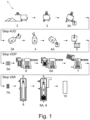
Figure 1 , which shows a flowchart of the production of a superalloy according to the present invention. - Even when this is not expressly stated, the individual features as described with reference to the particular embodiments shall be intended as auxiliary to and/or interchangeable with other features described with reference to other exemplary embodiments.
- Referring to the accompanying figure,
numeral 1 designates the method of producing a metal superalloy 10, i.e. a metal alloy that is mainly composed of Iron and Nickel with the addition of variable amounts of Chromium, Cobalt, Titanium and other elements. - In particular, the
method 1 is a triple-melt method including, as further explained below, a triple-melt process for melting and remelting a charge ofbase material 2. - The
method 1 comprises afirst step 3 in which the aforementioned charge ofmaterials 2 is provided in an amount ranging from forty to sixty tons, preferably of fifty tons. - This
first step 3 includes melting the aforementioned charge of materials in an electric-arc furnace to obtain afirst melt 3A. - The electric-arc furnace is a conventional furnace and will not be further described.
- Once the
first melt 3A of the entire charge ofmaterials 2 has been obtained by means of the electric-arc furnace 3, the same melt, in a liquid state, undergoes an A.O.D. (Argon Oxygen Decarburization)treatment 4, which is known in the art and will not be further described. - In other words, the
first melt 3A molten by theelectric furnace 3 undergoes the A.O.D.treatment 4 to obtain a refinedfirst melt 4A. - According to an advantageous aspect of the present method, the treatment A.O.D.
treatment 4 is carried out on thefirst melt 3A when thefirst melt 3A is still in the liquid state. - Namely, the A.O.D.
treatment 4 can provide a decarburized and refinedmelt 4A with minimized impurities such as S, Pb and Sn and extremely high deoxidation. - It shall be noted that the
first melt 4A has the same amount as the charge ofmaterials 2 introduced into theelectric furnace 3, that is if the charge ofmaterials 2 is fifty tons then also thefirst melt 4A. will be fifty tons. - During the A.O.D.
treatment 4, the liquid mass of thefirst melt 3A is subjected to vigorous stirring due to gases (argon, nitrogen and oxygen in varying proportions depending on the stage of the A.O.D. treatment) blown during treatment, which imparts high homogeneity to thefirst melt 4A. - The A.O.D.
treatment 4 is followed by a step ofsolidification 5 of thefirst melt 4A. - In one aspect the
solidification step 5 comprises a step in which the melt is cast into ingot molds and later cooled to obtainingots 5A, preferably having a cylindrical shape. - Then, the
ingots 5A undergo melting in a V.I.D.P. (Vacuum Degassing Induction and Pouring)furnace 6 to obtain asecond melt 6A. - At the end of the treatment in the V.I.D.P
furnace 6, thesecond melt 6 undergoes a step ofsolidification 7, still in the V.I.D.P furnace. - In one aspect the
solidification step 7 comprises a step in which the melt is cast into ingot molds and later cooled to obtainingots 7A, preferably having a cylindrical shape. - The
ingots 7A as obtained from thesolidification step 7 undergo melting in a V.A.R. (Vacuum Arc remelting)furnace 8 to obtain athird melt 8A. - Once melting in the V.A.R. furnace 8 is completed, the
third melt 8A undergoes a step ofsolidification 9 in the V.A.R. furnace to obtain themetal superalloy 10. - The
superalloy 10 obtained by the triple-melt - Namely, after the
solidification step 9, the superalloy 10 undergoes thermomechanical processing, which comprises a press forging step, preferably with a hydraulic press. - If a thickness of less than 250-300 mm is desired, after the solidification step and the press forging step, the superalloy 10 undergoes additional thermomechanical processing which comprises a radial four-die forging step using a hydraulic RUMX machine, and a continuous radial deformation forging step in a rolling plant, preferably of hydraulic type.
- This
superalloy 10 has a high chemical homogeneity and uniform mechanical, thermal and corrosion-resistance properties, as required for their use. - The
superalloy 10 obtained with themethod 1 is found to have high chemical homogeneity, a very high degree of desulfurization with less than 5 ppm residual sulfur, an equally high degree of deoxidation and Bi and Se impurity levels of less than 1 ppm. - This is believed to result from the fact that the
initial charge 2 ranging from forty to sixty tons establishes the chemico-physical conditions required for an effective A.O.D.Treatment 4, leading to a high impurity elimination degree. In addition, the A.O.D. treatment after thefirst melt 3A is carried out with a high turbulence of the molten mass generated by blowing process gases, which results in a high homogeneity of chemical process reactions, and hence of the chemical composition of the molten alloy. - According to a variant embodiment of the method of the invention, the charge that leaves the A.O.D.
treatment 4, for the subsequent V.I.D.P. and V.A.R. melting steps 6, 7, may be divided into multiple portions depending on the required supply of thealloy 10, thereby ensuring highly homogeneous supplies of the material even after some time. - Those skilled in the art will obviously appreciate that a number of changes and variants as described above may be made to fulfill particular requirements, without departure from the scope of the invention, as defined in the following claims.
Claims (9)
- A method (1) of producing a metal superalloy (10), comprising the steps of:- providing a charge of metal materials (2);- melting said charge of metal materials (2) in an electric-arc furnace (3) to obtain a first melt (3A) of said charge of metal materials (2);- solidifying (5) said first melt (3A) to obtain first ingots (5A);- melting said first ingots (5A) in a VI.D.P. furnace (6) to obtain a second melt (6A);- solidifying (7) said second melt (6A) to obtain second ingots (7A);- melting said second ingots (7A) in a V.A.R. furnace (8) to obtain a third melt (8A);- solidifying (9) said third melt (8A) to obtain a metal superalloy (10);characterized in that said charge of metal materials (2) has a weight amount ranging from forty to sixty tons;and in that it comprises a step of A.O.D. treatment (4) on said first melt (3A) to obtain a decarburized and refined first melt (4A), said melting in the VI.D.P. furnace (6) and said melting in the V.A.R. Furnace (8) being carried out sequentially on said first and refined decarburized and refined first melt (4A) resulting from said A.O.D. treatment (4).
- A method as claimed in claim 1, wherein said decarburized and refined first melt (4A) is obtained by carrying out the A.O.D. treatment on said first melt (3A) while the latter is in the molten state as a result of the melting step in said electric-arc furnace (3).
- Method as claimed in claim 1 or 2, wherein said decarburized and refined first melt (4A) undergoing said second melting step in the V.I.D.P. furnace (6) has a weight amount ranging from ten to twenty tons.
- A method as claimed in claim 1, wherein said step of solidification (7) of said second melt (6A) comprises a step of casting the melt into molds.
- A method as claimed in claim 1, wherein said steps of solidifying said decarburized and refined first melt (4A) and said second melt (6A) include a step of cooling the melt after casting it into ingot molds.
- A method as claimed in claim 5, wherein said ingot molds have such a shape that said first and second ingots have a cylindrical shape.
- A method as claimed in claim 1, wherein said metal superalloy (10) is of the iron- or nickel-based type, comprising variable amounts of Chromium, Cobalt, Niobium, Titanium and/or other elements.
- A method as claimed in claim 1 wherein, after the step of solidifying (9) said third melt (8A), said superalloy (10) undergoes thermomechanical processing comprising a press forging step.
- A method as claimed in claim 8 wherein, after the step of solidifying (9) said third melt (8A) and the step of thermomechanical processing comprising a press forging step, said superalloy (10), when thicknesses of less than 250-300 mm are required, undergoes further thermomechanical processing comprising a radial four-die forging step using a hydraulic RUMX machine, and a continuous radial deformation forging step in a rolling plant.
Applications Claiming Priority (2)
| Application Number | Priority Date | Filing Date | Title |
|---|---|---|---|
| IT102018000004541A IT201800004541A1 (en) | 2018-04-16 | 2018-04-16 | Process for the production of a superalloy and superalloy obtained with the process |
| PCT/IB2019/050602 WO2019202408A1 (en) | 2018-04-16 | 2019-01-24 | A process for producing a superalloy and superalloy obtained by said process |
Publications (3)
| Publication Number | Publication Date |
|---|---|
| EP3589765A1 EP3589765A1 (en) | 2020-01-08 |
| EP3589765B1 true EP3589765B1 (en) | 2025-07-09 |
| EP3589765C0 EP3589765C0 (en) | 2025-07-09 |
Family
ID=62875183
Family Applications (1)
| Application Number | Title | Priority Date | Filing Date |
|---|---|---|---|
| EP19706030.4A Active EP3589765B1 (en) | 2018-04-16 | 2019-01-24 | A process for producing a superalloy and superalloy obtained by said process |
Country Status (7)
| Country | Link |
|---|---|
| US (1) | US11268166B2 (en) |
| EP (1) | EP3589765B1 (en) |
| JP (1) | JP7292211B2 (en) |
| AU (1) | AU2019253975B2 (en) |
| ES (1) | ES3042785T3 (en) |
| IT (1) | IT201800004541A1 (en) |
| WO (1) | WO2019202408A1 (en) |
Families Citing this family (3)
| Publication number | Priority date | Publication date | Assignee | Title |
|---|---|---|---|---|
| CN112553486A (en) * | 2020-12-01 | 2021-03-26 | 无锡市东杨新材料股份有限公司 | Smelting process for improving quality of nickel ingot |
| CN115261706B (en) * | 2022-08-02 | 2023-06-02 | 河南中原特钢装备制造有限公司 | Preparation method of martensitic stainless steel continuous casting round billet for photovoltaic glass calendaring roller |
| CN121183156B (en) * | 2025-11-27 | 2026-03-06 | 成都先进金属材料产业技术研究院股份有限公司 | A high-density high-temperature alloy and its preparation method |
Citations (2)
| Publication number | Priority date | Publication date | Assignee | Title |
|---|---|---|---|---|
| EP0327042A1 (en) * | 1988-02-01 | 1989-08-09 | Inco Alloys International, Inc. | Maraging steel |
| EP3325680B1 (en) | 2015-06-24 | 2025-04-23 | ATI Properties LLC | Alloy melting and refining method |
Family Cites Families (5)
| Publication number | Priority date | Publication date | Assignee | Title |
|---|---|---|---|---|
| US6416564B1 (en) * | 2001-03-08 | 2002-07-09 | Ati Properties, Inc. | Method for producing large diameter ingots of nickel base alloys |
| ITVA20130061A1 (en) | 2013-12-05 | 2015-06-06 | Foroni Spa | AGING BASE NICKEL BASE CONTAINING CHROME, MOLIBDENO, NIOBIO, TITANIUM; HAVING HIGH MECHANICAL CHARACTERISTICS AND HIGH RESISTANCE TO CORROSION IN AGGRESSIVE ENVIRONMENTS THAT CAN MEET IN THE WELLS FOR THE EXTRACTION OF OIL AND GAS NAT |
| WO2015197751A1 (en) | 2014-06-27 | 2015-12-30 | Nuovo Pignone Srl | Component of a turbomachine, turbomachine and process for making the same |
| DE102015016729B4 (en) * | 2015-12-22 | 2018-10-31 | Vdm Metals International Gmbh | Process for producing a nickel-base alloy |
| ITUA20163944A1 (en) * | 2016-05-30 | 2017-11-30 | Nuovo Pignone Tecnologie Srl | Process for making a component of a turbomachine, to a component obtainable consequently and turbomachine comprising the same / Process for obtaining a turbomachinery component, a component obtainable from it and a turbomachine which comprises it |
-
2018
- 2018-04-16 IT IT102018000004541A patent/IT201800004541A1/en unknown
-
2019
- 2019-01-24 US US16/608,470 patent/US11268166B2/en active Active
- 2019-01-24 EP EP19706030.4A patent/EP3589765B1/en active Active
- 2019-01-24 AU AU2019253975A patent/AU2019253975B2/en active Active
- 2019-01-24 WO PCT/IB2019/050602 patent/WO2019202408A1/en not_active Ceased
- 2019-01-24 JP JP2019556817A patent/JP7292211B2/en active Active
- 2019-01-24 ES ES19706030T patent/ES3042785T3/en active Active
Patent Citations (2)
| Publication number | Priority date | Publication date | Assignee | Title |
|---|---|---|---|---|
| EP0327042A1 (en) * | 1988-02-01 | 1989-08-09 | Inco Alloys International, Inc. | Maraging steel |
| EP3325680B1 (en) | 2015-06-24 | 2025-04-23 | ATI Properties LLC | Alloy melting and refining method |
Non-Patent Citations (10)
| Title |
|---|
| ALIOFKHAZRAEI MAHMOOD: "Superalloys", 25 November 2015, INTECHOPEN, ISBN: 978-953-51-2212-8, article IGOR V. SHISHKOVSKY, ALEKSEY P. NAZAROV, DMITRY V. KOTOBAN AND NINA G. KAKOVKINA: "Chapter 10 Comparison of Additive Technologies for Gradient Aerospace Part Fabrication from Nickel-Based Superalloys", pages: 221 - 245, XP009566486, DOI: 10.5772/61121 |
| ALIOFKHAZRAEI MAHMOOD: "Superalloys", 25 November 2015, INTECHOPEN, ISBN: 978-953-51-2212-8, article LEMBIT KOMMEL: "Chapter 8 Phase Equilibrium Evolution in Single-Crystal Ni-Based Superalloys", pages: 171 - 202, XP009566485, DOI: 10.5772/61102 |
| ANONYMOUS: "SMX Radial forging machines", SMS GROUP, 14 July 2017 (2017-07-14), XP093386629, Retrieved from the Internet <URL:https://dkf1ato8y5dsg.cloudfront.net/uploads/13/280/radial-forging-machines-smx.pdf> |
| COX HELMUT: "Möglichkeiten und Grenzen der Bewältigung der Stahlkrise: Eine Produktions-, Kosten- und Wettbewerbsanalyse", WIRTSCHAFTSDIENST, 1 January 1983 (1983-01-01), pages 493 - 498, XP093386634, Retrieved from the Internet <URL:https://www.econstor.eu/bitstream/10419/135847/1/wd_v63_i10_pp493-498.pdf> |
| DOMBLESKY, J. P.; JACKMAN, L. A.; SHIVPURI, R.; HENDRICK, B. B.: "Prediction of grain size during multiple pass radial forging of Alloy 718", SUPERALLOYS 718,625,706 DERIV., PROC. INT. SYMP., 3RD, 1 January 1994 (1994-01-01), pages 263 - 272, XP009145021 |
| MALARA CARLO, RADAVICH JOHN: "Alloy 718 Large Ingots Studies", SUPERALLOYS 718, 625, 706 AND VARIOUS DERIVATIVES (2005), 1 January 2005 (2005-01-01), XP093386621, DOI: 10.7449/2005/superalloys_2005_25_33 |
| ODENTHAL HANS-JÜRGEN, FALKENRECK UDO, SCHLÜTER JOCHEN: "Simulation dynamischer Strömungsvorgänge beim AOD-Prozess", ANSYS CONFERENCE & 26TH CADFEM USERS’ MEETING 2008, 1 January 2008 (2008-01-01), XP093386632, Retrieved from the Internet <URL:https://www.researchgate.net/publication/308648776_Simulation_dynamischer_Stromungsvorgange_beim_AOD-Prozess> |
| ROGER C. REED: "The Superalloys Fundamentals and Applications", 7 September 2006, CAMBRIDGE UNIVERSITY PRESS , Cambridge , ISBN: 978-0-521-85904-2, article ROGER C. REED: "1 - Introduction", pages: 1 - 32, XP009566484, DOI: 10.1017/CBO9780511541285 |
| TRESA M. POLLOCK AND SAMMY TIN: "Nickel-Based Superalloys for Advanced Turbine Engines: Chemistry, Microstructure and Properties", JOURNAL OF PROPULSION AND POWER., NTRS-NASA TECHNICAL REPORTS SERVER, US, vol. 22, no. 2, 1 March 2006 (2006-03-01), US , pages 361 - 374, XP009176918, ISSN: 0748-4658, DOI: 10.2514/1.18239 |
| YAMAGUCHI MOTOI, SATOSHI KUBOTA, TAKEHIRO OHNO, TOSHIAKI NONOMURA, TSUYOSHI FUKUI: "GRAIN SIZE PREDICTION OFALLOY 718 BILLET FORGED BY RADIAL FORGING MACHINE USING NUMERICAL AND PHYSICAL SIMULATION", SUPERALLOYS 718, 625, 706 AND VARIOUS DERIVATIVES, 1 January 2001 (2001-01-01), XP093386625, Retrieved from the Internet <URL:https://www.tms.org/Superalloys/10.7449/2001/Superalloys_2001_291_300.pdf> |
Also Published As
| Publication number | Publication date |
|---|---|
| WO2019202408A1 (en) | 2019-10-24 |
| AU2019253975A1 (en) | 2019-11-21 |
| JP2021523289A (en) | 2021-09-02 |
| IT201800004541A1 (en) | 2019-10-16 |
| EP3589765C0 (en) | 2025-07-09 |
| AU2019253975B2 (en) | 2024-05-23 |
| US11268166B2 (en) | 2022-03-08 |
| EP3589765A1 (en) | 2020-01-08 |
| US20200199711A1 (en) | 2020-06-25 |
| JP7292211B2 (en) | 2023-06-16 |
| ES3042785T3 (en) | 2025-11-24 |
Similar Documents
| Publication | Publication Date | Title |
|---|---|---|
| US8668760B2 (en) | Method for the production of a β-γ-TiAl base alloy | |
| EP2314725B1 (en) | Method for producing large diameter ingots of nickel base alloys | |
| US20040105483A1 (en) | Method and apparatus for solidification-controllable induction melting of alloy with cold copper crucible | |
| CN105088094A (en) | Manufacturing method of nitrogen-controlled austenitic stainless steel large forging piece | |
| AU2019253975B2 (en) | A process for producing a superalloy and superalloy obtained by said process | |
| CN110565012A (en) | Continuous casting manufacturing method of ultra-high chromium ferrite stainless steel | |
| CN110964990A (en) | High-performance large-diameter thick-wall austenitic stainless steel forged pipe for nuclear power and short-process preparation method thereof | |
| CN111455219A (en) | Electron beam cooling bed furnace melting method for nickel-based alloys | |
| RU2089334C1 (en) | Method of combined continuous casting and rolling of copper and its alloys | |
| CN114635058A (en) | Nickel-based superalloy electroslag ingot and manufacturing method thereof | |
| WO1997000978A1 (en) | Process for the manufacture of a high carbon cobalt-chromium-molybdenum alloy | |
| CN112301230A (en) | A hollow electroslag remelting consumable electrode and its preparation method and electroslag remelting method | |
| CN107794419A (en) | A kind of aluminium alloy polynary intermediate alloy and preparation method thereof | |
| CN116043043A (en) | A quadruple smelting process for superalloys | |
| JPH0559483A (en) | Manufacture of amorphous alloy thin strip for commercial frequency band transformer | |
| JP2000144273A (en) | Consumable electrode type remelting method of super heat resistant alloy | |
| JP7417056B2 (en) | titanium alloy ingot | |
| CN115418547A (en) | Method for controlling MnS inclusions in low-sulfur low-alloy structural steel | |
| JP5956205B2 (en) | Method for producing Ni-based alloy | |
| RU2811632C1 (en) | METHOD OF VACUUM ARC FINAL REMELTING OF Ti-6Al-2Sn-4Zr-6Mo TITANIUM ALLOY INGOTS | |
| RU2770807C1 (en) | Method for producing blanks from low-alloy copper-based alloys | |
| Plöckinger | Electroslag Remelting–a Modern Tool in Metallurgy | |
| CN121023229A (en) | A vacuum arc remelting method for titanium alloy ingots and the titanium alloy ingots obtained by this method | |
| JPH08120366A (en) | Continuous casting method for titanium ingot | |
| JP2003340560A (en) | Method and apparatus for producing active metal ingots |
Legal Events
| Date | Code | Title | Description |
|---|---|---|---|
| STAA | Information on the status of an ep patent application or granted ep patent |
Free format text: STATUS: UNKNOWN |
|
| STAA | Information on the status of an ep patent application or granted ep patent |
Free format text: STATUS: THE INTERNATIONAL PUBLICATION HAS BEEN MADE |
|
| PUAI | Public reference made under article 153(3) epc to a published international application that has entered the european phase |
Free format text: ORIGINAL CODE: 0009012 |
|
| STAA | Information on the status of an ep patent application or granted ep patent |
Free format text: STATUS: REQUEST FOR EXAMINATION WAS MADE |
|
| 17P | Request for examination filed |
Effective date: 20190930 |
|
| AK | Designated contracting states |
Kind code of ref document: A1 Designated state(s): AL AT BE BG CH CY CZ DE DK EE ES FI FR GB GR HR HU IE IS IT LI LT LU LV MC MK MT NL NO PL PT RO RS SE SI SK SM TR |
|
| AX | Request for extension of the european patent |
Extension state: BA ME |
|
| TPAC | Observations filed by third parties |
Free format text: ORIGINAL CODE: EPIDOSNTIPA |
|
| STAA | Information on the status of an ep patent application or granted ep patent |
Free format text: STATUS: EXAMINATION IS IN PROGRESS |
|
| 17Q | First examination report despatched |
Effective date: 20201029 |
|
| DAV | Request for validation of the european patent (deleted) | ||
| DAX | Request for extension of the european patent (deleted) | ||
| GRAP | Despatch of communication of intention to grant a patent |
Free format text: ORIGINAL CODE: EPIDOSNIGR1 |
|
| STAA | Information on the status of an ep patent application or granted ep patent |
Free format text: STATUS: GRANT OF PATENT IS INTENDED |
|
| INTG | Intention to grant announced |
Effective date: 20250221 |
|
| GRAS | Grant fee paid |
Free format text: ORIGINAL CODE: EPIDOSNIGR3 |
|
| GRAA | (expected) grant |
Free format text: ORIGINAL CODE: 0009210 |
|
| STAA | Information on the status of an ep patent application or granted ep patent |
Free format text: STATUS: THE PATENT HAS BEEN GRANTED |
|
| AK | Designated contracting states |
Kind code of ref document: B1 Designated state(s): AL AT BE BG CH CY CZ DE DK EE ES FI FR GB GR HR HU IE IS IT LI LT LU LV MC MK MT NL NO PL PT RO RS SE SI SK SM TR |
|
| REG | Reference to a national code |
Ref country code: GB Ref legal event code: FG4D |
|
| REG | Reference to a national code |
Ref country code: CH Ref legal event code: EP |
|
| REG | Reference to a national code |
Ref country code: IE Ref legal event code: FG4D |
|
| REG | Reference to a national code |
Ref country code: DE Ref legal event code: R096 Ref document number: 602019072254 Country of ref document: DE |
|
| U01 | Request for unitary effect filed |
Effective date: 20250724 |
|
| U07 | Unitary effect registered |
Designated state(s): AT BE BG DE DK EE FI FR IT LT LU LV MT NL PT RO SE SI Effective date: 20250731 |
|
| REG | Reference to a national code |
Ref country code: ES Ref legal event code: FG2A Ref document number: 3042785 Country of ref document: ES Kind code of ref document: T3 Effective date: 20251124 |
|
| PG25 | Lapsed in a contracting state [announced via postgrant information from national office to epo] |
Ref country code: IS Free format text: LAPSE BECAUSE OF FAILURE TO SUBMIT A TRANSLATION OF THE DESCRIPTION OR TO PAY THE FEE WITHIN THE PRESCRIBED TIME-LIMIT Effective date: 20251109 |
|
| PG25 | Lapsed in a contracting state [announced via postgrant information from national office to epo] |
Ref country code: NO Free format text: LAPSE BECAUSE OF FAILURE TO SUBMIT A TRANSLATION OF THE DESCRIPTION OR TO PAY THE FEE WITHIN THE PRESCRIBED TIME-LIMIT Effective date: 20251009 |
|
| PG25 | Lapsed in a contracting state [announced via postgrant information from national office to epo] |
Ref country code: HR Free format text: LAPSE BECAUSE OF FAILURE TO SUBMIT A TRANSLATION OF THE DESCRIPTION OR TO PAY THE FEE WITHIN THE PRESCRIBED TIME-LIMIT Effective date: 20250709 |
|
| PG25 | Lapsed in a contracting state [announced via postgrant information from national office to epo] |
Ref country code: GR Free format text: LAPSE BECAUSE OF FAILURE TO SUBMIT A TRANSLATION OF THE DESCRIPTION OR TO PAY THE FEE WITHIN THE PRESCRIBED TIME-LIMIT Effective date: 20251010 |
|
| PG25 | Lapsed in a contracting state [announced via postgrant information from national office to epo] |
Ref country code: PL Free format text: LAPSE BECAUSE OF FAILURE TO SUBMIT A TRANSLATION OF THE DESCRIPTION OR TO PAY THE FEE WITHIN THE PRESCRIBED TIME-LIMIT Effective date: 20250709 |
|
| PG25 | Lapsed in a contracting state [announced via postgrant information from national office to epo] |
Ref country code: RS Free format text: LAPSE BECAUSE OF FAILURE TO SUBMIT A TRANSLATION OF THE DESCRIPTION OR TO PAY THE FEE WITHIN THE PRESCRIBED TIME-LIMIT Effective date: 20251009 |
|
| U20 | Renewal fee for the european patent with unitary effect paid |
Year of fee payment: 8 Effective date: 20260109 |
|
| PG25 | Lapsed in a contracting state [announced via postgrant information from national office to epo] |
Ref country code: SM Free format text: LAPSE BECAUSE OF FAILURE TO SUBMIT A TRANSLATION OF THE DESCRIPTION OR TO PAY THE FEE WITHIN THE PRESCRIBED TIME-LIMIT Effective date: 20250709 |
|
| PGFP | Annual fee paid to national office [announced via postgrant information from national office to epo] |
Ref country code: GB Payment date: 20260123 Year of fee payment: 8 |
|
| PGFP | Annual fee paid to national office [announced via postgrant information from national office to epo] |
Ref country code: ES Payment date: 20260227 Year of fee payment: 8 |
|
| PLBI | Opposition filed |
Free format text: ORIGINAL CODE: 0009260 |
|
| REG | Reference to a national code |
Ref country code: CH Ref legal event code: L10 Free format text: ST27 STATUS EVENT CODE: U-0-0-L10-L00 (AS PROVIDED BY THE NATIONAL OFFICE) Effective date: 20260416 |
|
| PLAX | Notice of opposition and request to file observation + time limit sent |
Free format text: ORIGINAL CODE: EPIDOSNOBS2 |
|
| PG25 | Lapsed in a contracting state [announced via postgrant information from national office to epo] |
Ref country code: CZ Free format text: LAPSE BECAUSE OF FAILURE TO SUBMIT A TRANSLATION OF THE DESCRIPTION OR TO PAY THE FEE WITHIN THE PRESCRIBED TIME-LIMIT Effective date: 20250709 |
|
| PG25 | Lapsed in a contracting state [announced via postgrant information from national office to epo] |
Ref country code: SK Free format text: LAPSE BECAUSE OF FAILURE TO SUBMIT A TRANSLATION OF THE DESCRIPTION OR TO PAY THE FEE WITHIN THE PRESCRIBED TIME-LIMIT Effective date: 20250709 |
|
| 26 | Opposition filed |
Opponent name: VOESTALPINE STAHL GMBH Effective date: 20260408 |