EP3587303A1 - Chemical resistant floating structures - Google Patents
Chemical resistant floating structures Download PDFInfo
- Publication number
- EP3587303A1 EP3587303A1 EP19192745.8A EP19192745A EP3587303A1 EP 3587303 A1 EP3587303 A1 EP 3587303A1 EP 19192745 A EP19192745 A EP 19192745A EP 3587303 A1 EP3587303 A1 EP 3587303A1
- Authority
- EP
- European Patent Office
- Prior art keywords
- liquid
- structures
- fluoropolymer
- foamed
- floating
- Prior art date
- Legal status (The legal status is an assumption and is not a legal conclusion. Google has not performed a legal analysis and makes no representation as to the accuracy of the status listed.)
- Withdrawn
Links
- 238000007667 floating Methods 0.000 title claims description 30
- 239000000126 substance Substances 0.000 title claims description 23
- 229920002313 fluoropolymer Polymers 0.000 claims abstract description 49
- 239000004811 fluoropolymer Substances 0.000 claims abstract description 49
- 239000002033 PVDF binder Substances 0.000 claims abstract description 40
- 239000007788 liquid Substances 0.000 claims abstract description 40
- 229920002981 polyvinylidene fluoride Polymers 0.000 claims abstract description 40
- 239000006260 foam Substances 0.000 claims abstract description 33
- BQCIDUSAKPWEOX-UHFFFAOYSA-N 1,1-Difluoroethene Chemical compound FC(F)=C BQCIDUSAKPWEOX-UHFFFAOYSA-N 0.000 claims abstract description 26
- 238000001704 evaporation Methods 0.000 claims abstract description 18
- 230000008020 evaporation Effects 0.000 claims abstract description 16
- 239000012530 fluid Substances 0.000 claims abstract description 14
- 229920001577 copolymer Polymers 0.000 claims description 26
- 238000000034 method Methods 0.000 claims description 12
- 229920001519 homopolymer Polymers 0.000 claims description 8
- 239000000178 monomer Substances 0.000 claims description 8
- 241001307241 Althaea Species 0.000 claims description 6
- 235000006576 Althaea officinalis Nutrition 0.000 claims description 6
- 239000002253 acid Substances 0.000 claims description 6
- 235000001035 marshmallow Nutrition 0.000 claims description 6
- 239000003440 toxic substance Substances 0.000 claims description 2
- 239000002585 base Substances 0.000 claims 1
- 231100000481 chemical toxicant Toxicity 0.000 claims 1
- 239000007800 oxidant agent Substances 0.000 claims 1
- 239000004952 Polyamide Substances 0.000 abstract description 37
- 229920002647 polyamide Polymers 0.000 abstract description 37
- 229920006370 Kynar Polymers 0.000 abstract description 11
- 239000000463 material Substances 0.000 abstract description 8
- 231100000331 toxic Toxicity 0.000 abstract description 3
- 230000002588 toxic effect Effects 0.000 abstract description 3
- 239000003518 caustics Substances 0.000 abstract description 2
- 229920000642 polymer Polymers 0.000 description 31
- XLYOFNOQVPJJNP-UHFFFAOYSA-N water Substances O XLYOFNOQVPJJNP-UHFFFAOYSA-N 0.000 description 23
- 239000010410 layer Substances 0.000 description 20
- -1 polypropylene Polymers 0.000 description 15
- JBKVHLHDHHXQEQ-UHFFFAOYSA-N epsilon-caprolactam Chemical compound O=C1CCCCCN1 JBKVHLHDHHXQEQ-UHFFFAOYSA-N 0.000 description 14
- NAQMVNRVTILPCV-UHFFFAOYSA-N hexane-1,6-diamine Chemical compound NCCCCCCN NAQMVNRVTILPCV-UHFFFAOYSA-N 0.000 description 14
- 239000004604 Blowing Agent Substances 0.000 description 13
- 239000002667 nucleating agent Substances 0.000 description 13
- 239000000654 additive Substances 0.000 description 12
- 239000000203 mixture Substances 0.000 description 10
- 239000004594 Masterbatch (MB) Substances 0.000 description 9
- HCDGVLDPFQMKDK-UHFFFAOYSA-N hexafluoropropylene Chemical compound FC(F)=C(F)C(F)(F)F HCDGVLDPFQMKDK-UHFFFAOYSA-N 0.000 description 9
- WNLRTRBMVRJNCN-UHFFFAOYSA-N adipic acid Chemical compound OC(=O)CCCCC(O)=O WNLRTRBMVRJNCN-UHFFFAOYSA-N 0.000 description 8
- 239000002666 chemical blowing agent Substances 0.000 description 8
- BFKJFAAPBSQJPD-UHFFFAOYSA-N tetrafluoroethene Chemical compound FC(F)=C(F)F BFKJFAAPBSQJPD-UHFFFAOYSA-N 0.000 description 8
- JHWNWJKBPDFINM-UHFFFAOYSA-N Laurolactam Chemical compound O=C1CCCCCCCCCCCN1 JHWNWJKBPDFINM-UHFFFAOYSA-N 0.000 description 7
- 239000012141 concentrate Substances 0.000 description 7
- 230000009467 reduction Effects 0.000 description 7
- 239000004793 Polystyrene Substances 0.000 description 6
- 239000000956 alloy Substances 0.000 description 6
- 229910045601 alloy Inorganic materials 0.000 description 6
- 229920001897 terpolymer Polymers 0.000 description 6
- 229920001169 thermoplastic Polymers 0.000 description 6
- UUAGAQFQZIEFAH-UHFFFAOYSA-N chlorotrifluoroethylene Chemical group FC(F)=C(F)Cl UUAGAQFQZIEFAH-UHFFFAOYSA-N 0.000 description 5
- 238000000576 coating method Methods 0.000 description 5
- 150000003951 lactams Chemical class 0.000 description 5
- BDJRBEYXGGNYIS-UHFFFAOYSA-N nonanedioic acid Chemical compound OC(=O)CCCCCCCC(O)=O BDJRBEYXGGNYIS-UHFFFAOYSA-N 0.000 description 5
- 229920002223 polystyrene Polymers 0.000 description 5
- 239000004416 thermosoftening plastic Substances 0.000 description 5
- VTYYLEPIZMXCLO-UHFFFAOYSA-L Calcium carbonate Chemical compound [Ca+2].[O-]C([O-])=O VTYYLEPIZMXCLO-UHFFFAOYSA-L 0.000 description 4
- GWEVSGVZZGPLCZ-UHFFFAOYSA-N Titan oxide Chemical compound O=[Ti]=O GWEVSGVZZGPLCZ-UHFFFAOYSA-N 0.000 description 4
- 239000001361 adipic acid Substances 0.000 description 4
- 235000011037 adipic acid Nutrition 0.000 description 4
- 230000015572 biosynthetic process Effects 0.000 description 4
- 210000004027 cell Anatomy 0.000 description 4
- KRKNYBCHXYNGOX-UHFFFAOYSA-N citric acid Chemical compound OC(=O)CC(O)(C(O)=O)CC(O)=O KRKNYBCHXYNGOX-UHFFFAOYSA-N 0.000 description 4
- 239000011248 coating agent Substances 0.000 description 4
- 238000001816 cooling Methods 0.000 description 4
- 229920000840 ethylene tetrafluoroethylene copolymer Polymers 0.000 description 4
- 239000004088 foaming agent Substances 0.000 description 4
- 229920000098 polyolefin Polymers 0.000 description 4
- 239000011347 resin Substances 0.000 description 4
- 229920005989 resin Polymers 0.000 description 4
- 239000007787 solid Substances 0.000 description 4
- 239000002699 waste material Substances 0.000 description 4
- 101100361281 Caenorhabditis elegans rpm-1 gene Proteins 0.000 description 3
- 229920007484 Kynar® 760 Polymers 0.000 description 3
- 239000012963 UV stabilizer Substances 0.000 description 3
- 150000007513 acids Chemical class 0.000 description 3
- 125000000746 allylic group Chemical group 0.000 description 3
- 230000001174 ascending effect Effects 0.000 description 3
- 238000006243 chemical reaction Methods 0.000 description 3
- 238000009833 condensation Methods 0.000 description 3
- 230000005494 condensation Effects 0.000 description 3
- 150000004985 diamines Chemical class 0.000 description 3
- 239000012467 final product Substances 0.000 description 3
- XUCNUKMRBVNAPB-UHFFFAOYSA-N fluoroethene Chemical compound FC=C XUCNUKMRBVNAPB-UHFFFAOYSA-N 0.000 description 3
- 238000005187 foaming Methods 0.000 description 3
- 238000010438 heat treatment Methods 0.000 description 3
- 238000002844 melting Methods 0.000 description 3
- 230000008018 melting Effects 0.000 description 3
- 239000002245 particle Substances 0.000 description 3
- 229920001343 polytetrafluoroethylene Polymers 0.000 description 3
- 239000004810 polytetrafluoroethylene Substances 0.000 description 3
- 229920002635 polyurethane Polymers 0.000 description 3
- 239000004814 polyurethane Substances 0.000 description 3
- 239000000047 product Substances 0.000 description 3
- 230000005855 radiation Effects 0.000 description 3
- 239000000243 solution Substances 0.000 description 3
- MIZLGWKEZAPEFJ-UHFFFAOYSA-N 1,1,2-trifluoroethene Chemical compound FC=C(F)F MIZLGWKEZAPEFJ-UHFFFAOYSA-N 0.000 description 2
- GUOSQNAUYHMCRU-UHFFFAOYSA-N 11-Aminoundecanoic acid Chemical compound NCCCCCCCCCCC(O)=O GUOSQNAUYHMCRU-UHFFFAOYSA-N 0.000 description 2
- PBLZLIFKVPJDCO-UHFFFAOYSA-N 12-aminododecanoic acid Chemical class NCCCCCCCCCCCC(O)=O PBLZLIFKVPJDCO-UHFFFAOYSA-N 0.000 description 2
- JZUHIOJYCPIVLQ-UHFFFAOYSA-N 2-methylpentane-1,5-diamine Chemical compound NCC(C)CCCN JZUHIOJYCPIVLQ-UHFFFAOYSA-N 0.000 description 2
- RNLHGQLZWXBQNY-UHFFFAOYSA-N 3-(aminomethyl)-3,5,5-trimethylcyclohexan-1-amine Chemical compound CC1(C)CC(N)CC(C)(CN)C1 RNLHGQLZWXBQNY-UHFFFAOYSA-N 0.000 description 2
- 229920007925 Ethylene chlorotrifluoroethylene (ECTFE) Polymers 0.000 description 2
- 229920010298 Kynar Flex® 2800-20 Polymers 0.000 description 2
- 229920012299 Kynar Flex® 3120-50 Polymers 0.000 description 2
- GLUUGHFHXGJENI-UHFFFAOYSA-N Piperazine Chemical compound C1CNCCN1 GLUUGHFHXGJENI-UHFFFAOYSA-N 0.000 description 2
- QQONPFPTGQHPMA-UHFFFAOYSA-N Propene Chemical compound CC=C QQONPFPTGQHPMA-UHFFFAOYSA-N 0.000 description 2
- VYPSYNLAJGMNEJ-UHFFFAOYSA-N Silicium dioxide Chemical compound O=[Si]=O VYPSYNLAJGMNEJ-UHFFFAOYSA-N 0.000 description 2
- KKEYFWRCBNTPAC-UHFFFAOYSA-N Terephthalic acid Chemical compound OC(=O)C1=CC=C(C(O)=O)C=C1 KKEYFWRCBNTPAC-UHFFFAOYSA-N 0.000 description 2
- XLOMVQKBTHCTTD-UHFFFAOYSA-N Zinc monoxide Chemical compound [Zn]=O XLOMVQKBTHCTTD-UHFFFAOYSA-N 0.000 description 2
- QVQLCTNNEUAWMS-UHFFFAOYSA-N barium oxide Chemical compound [Ba]=O QVQLCTNNEUAWMS-UHFFFAOYSA-N 0.000 description 2
- 239000011324 bead Substances 0.000 description 2
- 229910000019 calcium carbonate Inorganic materials 0.000 description 2
- 229910052918 calcium silicate Inorganic materials 0.000 description 2
- 235000012241 calcium silicate Nutrition 0.000 description 2
- OSGAYBCDTDRGGQ-UHFFFAOYSA-L calcium sulfate Chemical compound [Ca+2].[O-]S([O-])(=O)=O OSGAYBCDTDRGGQ-UHFFFAOYSA-L 0.000 description 2
- OYACROKNLOSFPA-UHFFFAOYSA-N calcium;dioxido(oxo)silane Chemical compound [Ca+2].[O-][Si]([O-])=O OYACROKNLOSFPA-UHFFFAOYSA-N 0.000 description 2
- 125000004432 carbon atom Chemical group C* 0.000 description 2
- 239000006229 carbon black Substances 0.000 description 2
- 230000015556 catabolic process Effects 0.000 description 2
- 238000012993 chemical processing Methods 0.000 description 2
- 239000002894 chemical waste Substances 0.000 description 2
- 238000000354 decomposition reaction Methods 0.000 description 2
- 238000006731 degradation reaction Methods 0.000 description 2
- 230000006866 deterioration Effects 0.000 description 2
- 235000014113 dietary fatty acids Nutrition 0.000 description 2
- QFTYSVGGYOXFRQ-UHFFFAOYSA-N dodecane-1,12-diamine Chemical compound NCCCCCCCCCCCCN QFTYSVGGYOXFRQ-UHFFFAOYSA-N 0.000 description 2
- TVIDDXQYHWJXFK-UHFFFAOYSA-N dodecanedioic acid Chemical compound OC(=O)CCCCCCCCCCC(O)=O TVIDDXQYHWJXFK-UHFFFAOYSA-N 0.000 description 2
- 238000001125 extrusion Methods 0.000 description 2
- 239000000194 fatty acid Substances 0.000 description 2
- 229930195729 fatty acid Natural products 0.000 description 2
- 150000004665 fatty acids Chemical class 0.000 description 2
- 230000012010 growth Effects 0.000 description 2
- 238000002347 injection Methods 0.000 description 2
- 239000007924 injection Substances 0.000 description 2
- 238000001746 injection moulding Methods 0.000 description 2
- 238000009413 insulation Methods 0.000 description 2
- QQVIHTHCMHWDBS-UHFFFAOYSA-N isophthalic acid Chemical compound OC(=O)C1=CC=CC(C(O)=O)=C1 QQVIHTHCMHWDBS-UHFFFAOYSA-N 0.000 description 2
- 238000004519 manufacturing process Methods 0.000 description 2
- 238000005259 measurement Methods 0.000 description 2
- VNWKTOKETHGBQD-UHFFFAOYSA-N methane Chemical compound C VNWKTOKETHGBQD-UHFFFAOYSA-N 0.000 description 2
- 238000005065 mining Methods 0.000 description 2
- 238000000465 moulding Methods 0.000 description 2
- 230000001473 noxious effect Effects 0.000 description 2
- 239000008188 pellet Substances 0.000 description 2
- 239000000049 pigment Substances 0.000 description 2
- KIDHWZJUCRJVML-UHFFFAOYSA-N putrescine Chemical compound NCCCCN KIDHWZJUCRJVML-UHFFFAOYSA-N 0.000 description 2
- 238000005096 rolling process Methods 0.000 description 2
- 238000007789 sealing Methods 0.000 description 2
- CXMXRPHRNRROMY-UHFFFAOYSA-N sebacic acid Chemical compound OC(=O)CCCCCCCCC(O)=O CXMXRPHRNRROMY-UHFFFAOYSA-N 0.000 description 2
- KDYFGRWQOYBRFD-UHFFFAOYSA-N succinic acid Chemical compound OC(=O)CCC(O)=O KDYFGRWQOYBRFD-UHFFFAOYSA-N 0.000 description 2
- 238000003466 welding Methods 0.000 description 2
- 239000012463 white pigment Substances 0.000 description 2
- CZGWDPMDAIPURF-UHFFFAOYSA-N (4,6-dihydrazinyl-1,3,5-triazin-2-yl)hydrazine Chemical compound NNC1=NC(NN)=NC(NN)=N1 CZGWDPMDAIPURF-UHFFFAOYSA-N 0.000 description 1
- ASRMWYDEZPXXBA-UHFFFAOYSA-N (sulfonylamino)urea Chemical compound NC(=O)NN=S(=O)=O ASRMWYDEZPXXBA-UHFFFAOYSA-N 0.000 description 1
- DMUPYMORYHFFCT-UPHRSURJSA-N (z)-1,2,3,3,3-pentafluoroprop-1-ene Chemical compound F\C=C(/F)C(F)(F)F DMUPYMORYHFFCT-UPHRSURJSA-N 0.000 description 1
- BLTXWCKMNMYXEA-UHFFFAOYSA-N 1,1,2-trifluoro-2-(trifluoromethoxy)ethene Chemical compound FC(F)=C(F)OC(F)(F)F BLTXWCKMNMYXEA-UHFFFAOYSA-N 0.000 description 1
- WUMVZXWBOFOYAW-UHFFFAOYSA-N 1,2,3,3,4,4,4-heptafluoro-1-(1,2,3,3,4,4,4-heptafluorobut-1-enoxy)but-1-ene Chemical compound FC(F)(F)C(F)(F)C(F)=C(F)OC(F)=C(F)C(F)(F)C(F)(F)F WUMVZXWBOFOYAW-UHFFFAOYSA-N 0.000 description 1
- MFEVGQHCNVXMER-UHFFFAOYSA-L 1,3,2$l^{2}-dioxaplumbetan-4-one Chemical compound [Pb+2].[O-]C([O-])=O MFEVGQHCNVXMER-UHFFFAOYSA-L 0.000 description 1
- ABADUMLIAZCWJD-UHFFFAOYSA-N 1,3-dioxole Chemical class C1OC=CO1 ABADUMLIAZCWJD-UHFFFAOYSA-N 0.000 description 1
- PWGJDPKCLMLPJW-UHFFFAOYSA-N 1,8-diaminooctane Chemical compound NCCCCCCCCN PWGJDPKCLMLPJW-UHFFFAOYSA-N 0.000 description 1
- SPJXZYLLLWOSLQ-UHFFFAOYSA-N 1-[(1-aminocyclohexyl)methyl]cyclohexan-1-amine Chemical compound C1CCCCC1(N)CC1(N)CCCCC1 SPJXZYLLLWOSLQ-UHFFFAOYSA-N 0.000 description 1
- DAVCAHWKKDIRLY-UHFFFAOYSA-N 1-ethenoxy-1,1,2,2,3,3,3-heptafluoropropane Chemical compound FC(F)(F)C(F)(F)C(F)(F)OC=C DAVCAHWKKDIRLY-UHFFFAOYSA-N 0.000 description 1
- YKWORVRLPTZONH-UHFFFAOYSA-N 1-ethenoxy-1,1,2,3,3,3-hexafluoro-2-(1,1,2,2,3,3,3-heptafluoropropoxy)propane Chemical compound FC(F)(F)C(F)(F)C(F)(F)OC(F)(C(F)(F)F)C(F)(F)OC=C YKWORVRLPTZONH-UHFFFAOYSA-N 0.000 description 1
- XLHCFNYXQWSNAX-UHFFFAOYSA-N 1-n,4-n-dimethyl-1-n,4-n-dinitrobenzene-1,4-dicarboxamide Chemical compound [O-][N+](=O)N(C)C(=O)C1=CC=C(C(=O)N(C)[N+]([O-])=O)C=C1 XLHCFNYXQWSNAX-UHFFFAOYSA-N 0.000 description 1
- RNFJDJUURJAICM-UHFFFAOYSA-N 2,2,4,4,6,6-hexaphenoxy-1,3,5-triaza-2$l^{5},4$l^{5},6$l^{5}-triphosphacyclohexa-1,3,5-triene Chemical compound N=1P(OC=2C=CC=CC=2)(OC=2C=CC=CC=2)=NP(OC=2C=CC=CC=2)(OC=2C=CC=CC=2)=NP=1(OC=1C=CC=CC=1)OC1=CC=CC=C1 RNFJDJUURJAICM-UHFFFAOYSA-N 0.000 description 1
- HFNSTEOEZJBXIF-UHFFFAOYSA-N 2,2,4,5-tetrafluoro-1,3-dioxole Chemical compound FC1=C(F)OC(F)(F)O1 HFNSTEOEZJBXIF-UHFFFAOYSA-N 0.000 description 1
- JCUZDQXWVYNXHD-UHFFFAOYSA-N 2,2,4-trimethylhexane-1,6-diamine Chemical compound NCCC(C)CC(C)(C)CN JCUZDQXWVYNXHD-UHFFFAOYSA-N 0.000 description 1
- QUBNFZFTFXTLKH-UHFFFAOYSA-N 2-aminododecanoic acid Chemical compound CCCCCCCCCCC(N)C(O)=O QUBNFZFTFXTLKH-UHFFFAOYSA-N 0.000 description 1
- HASUJDLTAYUWCO-UHFFFAOYSA-N 2-aminoundecanoic acid Chemical compound CCCCCCCCCC(N)C(O)=O HASUJDLTAYUWCO-UHFFFAOYSA-N 0.000 description 1
- 125000000954 2-hydroxyethyl group Chemical group [H]C([*])([H])C([H])([H])O[H] 0.000 description 1
- YZTJKOLMWJNVFH-UHFFFAOYSA-N 2-sulfobenzene-1,3-dicarboxylic acid Chemical compound OC(=O)C1=CC=CC(C(O)=O)=C1S(O)(=O)=O YZTJKOLMWJNVFH-UHFFFAOYSA-N 0.000 description 1
- WMRCTEPOPAZMMN-UHFFFAOYSA-N 2-undecylpropanedioic acid Chemical class CCCCCCCCCCCC(C(O)=O)C(O)=O WMRCTEPOPAZMMN-UHFFFAOYSA-N 0.000 description 1
- FDMFUZHCIRHGRG-UHFFFAOYSA-N 3,3,3-trifluoroprop-1-ene Chemical compound FC(F)(F)C=C FDMFUZHCIRHGRG-UHFFFAOYSA-N 0.000 description 1
- YSYRISKCBOPJRG-UHFFFAOYSA-N 4,5-difluoro-2,2-bis(trifluoromethyl)-1,3-dioxole Chemical compound FC1=C(F)OC(C(F)(F)F)(C(F)(F)F)O1 YSYRISKCBOPJRG-UHFFFAOYSA-N 0.000 description 1
- IGSBHTZEJMPDSZ-UHFFFAOYSA-N 4-[(4-amino-3-methylcyclohexyl)methyl]-2-methylcyclohexan-1-amine Chemical compound C1CC(N)C(C)CC1CC1CC(C)C(N)CC1 IGSBHTZEJMPDSZ-UHFFFAOYSA-N 0.000 description 1
- NBOCQTNZUPTTEI-UHFFFAOYSA-N 4-[4-(hydrazinesulfonyl)phenoxy]benzenesulfonohydrazide Chemical compound C1=CC(S(=O)(=O)NN)=CC=C1OC1=CC=C(S(=O)(=O)NN)C=C1 NBOCQTNZUPTTEI-UHFFFAOYSA-N 0.000 description 1
- ICGLPKIVTVWCFT-UHFFFAOYSA-N 4-methylbenzenesulfonohydrazide Chemical compound CC1=CC=C(S(=O)(=O)NN)C=C1 ICGLPKIVTVWCFT-UHFFFAOYSA-N 0.000 description 1
- MARUHZGHZWCEQU-UHFFFAOYSA-N 5-phenyl-2h-tetrazole Chemical compound C1=CC=CC=C1C1=NNN=N1 MARUHZGHZWCEQU-UHFFFAOYSA-N 0.000 description 1
- SLXKOJJOQWFEFD-UHFFFAOYSA-N 6-aminohexanoic acid Chemical compound NCCCCCC(O)=O SLXKOJJOQWFEFD-UHFFFAOYSA-N 0.000 description 1
- 239000004156 Azodicarbonamide Substances 0.000 description 1
- 229910052582 BN Inorganic materials 0.000 description 1
- PZNSFCLAULLKQX-UHFFFAOYSA-N Boron nitride Chemical compound N#B PZNSFCLAULLKQX-UHFFFAOYSA-N 0.000 description 1
- OYPRJOBELJOOCE-UHFFFAOYSA-N Calcium Chemical compound [Ca] OYPRJOBELJOOCE-UHFFFAOYSA-N 0.000 description 1
- OKTJSMMVPCPJKN-UHFFFAOYSA-N Carbon Chemical compound [C] OKTJSMMVPCPJKN-UHFFFAOYSA-N 0.000 description 1
- MWRWFPQBGSZWNV-UHFFFAOYSA-N Dinitrosopentamethylenetetramine Chemical compound C1N2CN(N=O)CN1CN(N=O)C2 MWRWFPQBGSZWNV-UHFFFAOYSA-N 0.000 description 1
- VGGSQFUCUMXWEO-UHFFFAOYSA-N Ethene Chemical compound C=C VGGSQFUCUMXWEO-UHFFFAOYSA-N 0.000 description 1
- 241000282414 Homo sapiens Species 0.000 description 1
- DGAQECJNVWCQMB-PUAWFVPOSA-M Ilexoside XXIX Chemical compound C[C@@H]1CC[C@@]2(CC[C@@]3(C(=CC[C@H]4[C@]3(CC[C@@H]5[C@@]4(CC[C@@H](C5(C)C)OS(=O)(=O)[O-])C)C)[C@@H]2[C@]1(C)O)C)C(=O)O[C@H]6[C@@H]([C@H]([C@@H]([C@H](O6)CO)O)O)O.[Na+] DGAQECJNVWCQMB-PUAWFVPOSA-M 0.000 description 1
- 239000004609 Impact Modifier Substances 0.000 description 1
- 229920009902 Kynar Flex® 2800-00 Polymers 0.000 description 1
- 229920012224 Kynar Flex® 3120-10 Polymers 0.000 description 1
- 229920010177 Kynar® 460 Polymers 0.000 description 1
- 229920007478 Kynar® 740 Polymers 0.000 description 1
- 229910000003 Lead carbonate Inorganic materials 0.000 description 1
- OFOBLEOULBTSOW-UHFFFAOYSA-N Malonic acid Chemical compound OC(=O)CC(O)=O OFOBLEOULBTSOW-UHFFFAOYSA-N 0.000 description 1
- GRYLNZFGIOXLOG-UHFFFAOYSA-N Nitric acid Chemical compound O[N+]([O-])=O GRYLNZFGIOXLOG-UHFFFAOYSA-N 0.000 description 1
- 229920001774 Perfluoroether Polymers 0.000 description 1
- 239000004743 Polypropylene Substances 0.000 description 1
- 229920005830 Polyurethane Foam Polymers 0.000 description 1
- UIIMBOGNXHQVGW-DEQYMQKBSA-M Sodium bicarbonate-14C Chemical compound [Na+].O[14C]([O-])=O UIIMBOGNXHQVGW-DEQYMQKBSA-M 0.000 description 1
- QAOWNCQODCNURD-UHFFFAOYSA-N Sulfuric acid Chemical compound OS(O)(=O)=O QAOWNCQODCNURD-UHFFFAOYSA-N 0.000 description 1
- 230000006750 UV protection Effects 0.000 description 1
- QYKIQEUNHZKYBP-UHFFFAOYSA-N Vinyl ether Chemical class C=COC=C QYKIQEUNHZKYBP-UHFFFAOYSA-N 0.000 description 1
- FMRLDPWIRHBCCC-UHFFFAOYSA-L Zinc carbonate Chemical compound [Zn+2].[O-]C([O-])=O FMRLDPWIRHBCCC-UHFFFAOYSA-L 0.000 description 1
- VRFNYSYURHAPFL-UHFFFAOYSA-N [(4-methylphenyl)sulfonylamino]urea Chemical compound CC1=CC=C(S(=O)(=O)NNC(N)=O)C=C1 VRFNYSYURHAPFL-UHFFFAOYSA-N 0.000 description 1
- FDLQZKYLHJJBHD-UHFFFAOYSA-N [3-(aminomethyl)phenyl]methanamine Chemical compound NCC1=CC=CC(CN)=C1 FDLQZKYLHJJBHD-UHFFFAOYSA-N 0.000 description 1
- 230000000996 additive effect Effects 0.000 description 1
- OFHCOWSQAMBJIW-AVJTYSNKSA-N alfacalcidol Chemical compound C1(/[C@@H]2CC[C@@H]([C@]2(CCC1)C)[C@H](C)CCCC(C)C)=C\C=C1\C[C@@H](O)C[C@H](O)C1=C OFHCOWSQAMBJIW-AVJTYSNKSA-N 0.000 description 1
- PNEYBMLMFCGWSK-UHFFFAOYSA-N aluminium oxide Inorganic materials [O-2].[O-2].[O-2].[Al+3].[Al+3] PNEYBMLMFCGWSK-UHFFFAOYSA-N 0.000 description 1
- 229910000323 aluminium silicate Inorganic materials 0.000 description 1
- 150000001413 amino acids Chemical class 0.000 description 1
- 229960004543 anhydrous citric acid Drugs 0.000 description 1
- 238000007743 anodising Methods 0.000 description 1
- 229910000410 antimony oxide Inorganic materials 0.000 description 1
- 239000003963 antioxidant agent Substances 0.000 description 1
- 239000002216 antistatic agent Substances 0.000 description 1
- 239000012298 atmosphere Substances 0.000 description 1
- CJYXCQLOZNIMFP-UHFFFAOYSA-N azocan-2-one Chemical compound O=C1CCCCCCN1 CJYXCQLOZNIMFP-UHFFFAOYSA-N 0.000 description 1
- XOZUGNYVDXMRKW-AATRIKPKSA-N azodicarbonamide Chemical compound NC(=O)\N=N\C(N)=O XOZUGNYVDXMRKW-AATRIKPKSA-N 0.000 description 1
- 235000019399 azodicarbonamide Nutrition 0.000 description 1
- YDLSUFFXJYEVHW-UHFFFAOYSA-N azonan-2-one Chemical compound O=C1CCCCCCCN1 YDLSUFFXJYEVHW-UHFFFAOYSA-N 0.000 description 1
- 229910052788 barium Inorganic materials 0.000 description 1
- AYJRCSIUFZENHW-DEQYMQKBSA-L barium(2+);oxomethanediolate Chemical compound [Ba+2].[O-][14C]([O-])=O AYJRCSIUFZENHW-DEQYMQKBSA-L 0.000 description 1
- 238000010923 batch production Methods 0.000 description 1
- 239000011575 calcium Substances 0.000 description 1
- 229910052791 calcium Inorganic materials 0.000 description 1
- BRPQOXSCLDDYGP-UHFFFAOYSA-N calcium oxide Chemical compound [O-2].[Ca+2] BRPQOXSCLDDYGP-UHFFFAOYSA-N 0.000 description 1
- 239000000292 calcium oxide Substances 0.000 description 1
- ODINCKMPIJJUCX-UHFFFAOYSA-N calcium oxide Inorganic materials [Ca]=O ODINCKMPIJJUCX-UHFFFAOYSA-N 0.000 description 1
- 239000000378 calcium silicate Substances 0.000 description 1
- 125000003178 carboxy group Chemical group [H]OC(*)=O 0.000 description 1
- 230000010261 cell growth Effects 0.000 description 1
- 238000012824 chemical production Methods 0.000 description 1
- 229960004106 citric acid Drugs 0.000 description 1
- 235000015165 citric acid Nutrition 0.000 description 1
- 239000003086 colorant Substances 0.000 description 1
- 238000011109 contamination Methods 0.000 description 1
- 238000010924 continuous production Methods 0.000 description 1
- YQLZOAVZWJBZSY-UHFFFAOYSA-N decane-1,10-diamine Chemical compound NCCCCCCCCCCN YQLZOAVZWJBZSY-UHFFFAOYSA-N 0.000 description 1
- 150000001991 dicarboxylic acids Chemical class 0.000 description 1
- 239000000539 dimer Substances 0.000 description 1
- HNPSIPDUKPIQMN-UHFFFAOYSA-N dioxosilane;oxo(oxoalumanyloxy)alumane Chemical compound O=[Si]=O.O=[Al]O[Al]=O HNPSIPDUKPIQMN-UHFFFAOYSA-N 0.000 description 1
- 230000035622 drinking Effects 0.000 description 1
- 239000000975 dye Substances 0.000 description 1
- 238000004043 dyeing Methods 0.000 description 1
- 230000000694 effects Effects 0.000 description 1
- 230000007613 environmental effect Effects 0.000 description 1
- RTZKZFJDLAIYFH-UHFFFAOYSA-N ether Substances CCOCC RTZKZFJDLAIYFH-UHFFFAOYSA-N 0.000 description 1
- 238000010101 extrusion blow moulding Methods 0.000 description 1
- 238000009313 farming Methods 0.000 description 1
- 239000000835 fiber Substances 0.000 description 1
- 239000000945 filler Substances 0.000 description 1
- 239000003063 flame retardant Substances 0.000 description 1
- 210000000497 foam cell Anatomy 0.000 description 1
- 239000006261 foam material Substances 0.000 description 1
- 230000004927 fusion Effects 0.000 description 1
- 238000005246 galvanizing Methods 0.000 description 1
- 239000011521 glass Substances 0.000 description 1
- 229910002804 graphite Inorganic materials 0.000 description 1
- 239000010439 graphite Substances 0.000 description 1
- XTBMQKZEIICCCS-UHFFFAOYSA-N hexane-1,5-diamine Chemical compound CC(N)CCCCN XTBMQKZEIICCCS-UHFFFAOYSA-N 0.000 description 1
- 229920001903 high density polyethylene Polymers 0.000 description 1
- 239000004700 high-density polyethylene Substances 0.000 description 1
- XLYOFNOQVPJJNP-UHFFFAOYSA-M hydroxide Chemical compound [OH-] XLYOFNOQVPJJNP-UHFFFAOYSA-M 0.000 description 1
- 239000004615 ingredient Substances 0.000 description 1
- 239000012212 insulator Substances 0.000 description 1
- VYFOAVADNIHPTR-UHFFFAOYSA-N isatoic anhydride Chemical compound NC1=CC=CC=C1CO VYFOAVADNIHPTR-UHFFFAOYSA-N 0.000 description 1
- 229910000464 lead oxide Inorganic materials 0.000 description 1
- HTUMBQDCCIXGCV-UHFFFAOYSA-N lead oxide Chemical compound [O-2].[Pb+2] HTUMBQDCCIXGCV-UHFFFAOYSA-N 0.000 description 1
- 229910003002 lithium salt Inorganic materials 0.000 description 1
- 159000000002 lithium salts Chemical class 0.000 description 1
- 238000011068 loading method Methods 0.000 description 1
- ZLNQQNXFFQJAID-UHFFFAOYSA-L magnesium carbonate Chemical compound [Mg+2].[O-]C([O-])=O ZLNQQNXFFQJAID-UHFFFAOYSA-L 0.000 description 1
- 239000001095 magnesium carbonate Substances 0.000 description 1
- 229910000021 magnesium carbonate Inorganic materials 0.000 description 1
- VTHJTEIRLNZDEV-UHFFFAOYSA-L magnesium dihydroxide Chemical compound [OH-].[OH-].[Mg+2] VTHJTEIRLNZDEV-UHFFFAOYSA-L 0.000 description 1
- 239000000347 magnesium hydroxide Substances 0.000 description 1
- 229910001862 magnesium hydroxide Inorganic materials 0.000 description 1
- 239000000391 magnesium silicate Substances 0.000 description 1
- 229910052919 magnesium silicate Inorganic materials 0.000 description 1
- 235000019792 magnesium silicate Nutrition 0.000 description 1
- ZADYMNAVLSWLEQ-UHFFFAOYSA-N magnesium;oxygen(2-);silicon(4+) Chemical compound [O-2].[O-2].[O-2].[Mg+2].[Si+4] ZADYMNAVLSWLEQ-UHFFFAOYSA-N 0.000 description 1
- FPYJFEHAWHCUMM-UHFFFAOYSA-N maleic anhydride Chemical compound O=C1OC(=O)C=C1 FPYJFEHAWHCUMM-UHFFFAOYSA-N 0.000 description 1
- 239000000155 melt Substances 0.000 description 1
- 238000002156 mixing Methods 0.000 description 1
- CWQXQMHSOZUFJS-UHFFFAOYSA-N molybdenum disulfide Chemical compound S=[Mo]=S CWQXQMHSOZUFJS-UHFFFAOYSA-N 0.000 description 1
- 229910052982 molybdenum disulfide Inorganic materials 0.000 description 1
- HWPKGOGLCKPRLZ-UHFFFAOYSA-M monosodium citrate Chemical compound [Na+].OC(=O)CC(O)(C([O-])=O)CC(O)=O HWPKGOGLCKPRLZ-UHFFFAOYSA-M 0.000 description 1
- ZETYUTMSJWMKNQ-UHFFFAOYSA-N n,n',n'-trimethylhexane-1,6-diamine Chemical compound CNCCCCCCN(C)C ZETYUTMSJWMKNQ-UHFFFAOYSA-N 0.000 description 1
- 229910017604 nitric acid Inorganic materials 0.000 description 1
- 235000019645 odor Nutrition 0.000 description 1
- JRZJOMJEPLMPRA-UHFFFAOYSA-N olefin Natural products CCCCCCCC=C JRZJOMJEPLMPRA-UHFFFAOYSA-N 0.000 description 1
- 239000012860 organic pigment Substances 0.000 description 1
- VTRUBDSFZJNXHI-UHFFFAOYSA-N oxoantimony Chemical compound [Sb]=O VTRUBDSFZJNXHI-UHFFFAOYSA-N 0.000 description 1
- 229920003023 plastic Polymers 0.000 description 1
- 239000004033 plastic Substances 0.000 description 1
- 239000004014 plasticizer Substances 0.000 description 1
- 238000007747 plating Methods 0.000 description 1
- 231100000614 poison Toxicity 0.000 description 1
- 229920003229 poly(methyl methacrylate) Polymers 0.000 description 1
- 229920000058 polyacrylate Polymers 0.000 description 1
- 229920000728 polyester Polymers 0.000 description 1
- 239000002952 polymeric resin Substances 0.000 description 1
- 230000000379 polymerizing effect Effects 0.000 description 1
- 239000004926 polymethyl methacrylate Substances 0.000 description 1
- 229920005862 polyol Polymers 0.000 description 1
- 229920001155 polypropylene Polymers 0.000 description 1
- 229920006327 polystyrene foam Polymers 0.000 description 1
- 239000011496 polyurethane foam Substances 0.000 description 1
- 229920002620 polyvinyl fluoride Polymers 0.000 description 1
- 229920000131 polyvinylidene Polymers 0.000 description 1
- 239000000843 powder Substances 0.000 description 1
- 238000003825 pressing Methods 0.000 description 1
- 230000002265 prevention Effects 0.000 description 1
- 238000012545 processing Methods 0.000 description 1
- FBZULTVJWVCJQV-UHFFFAOYSA-N propan-2-yl n-(propan-2-yloxycarbonylamino)carbamate Chemical compound CC(C)OC(=O)NNC(=O)OC(C)C FBZULTVJWVCJQV-UHFFFAOYSA-N 0.000 description 1
- 238000010526 radical polymerization reaction Methods 0.000 description 1
- 150000003839 salts Chemical class 0.000 description 1
- 239000010865 sewage Substances 0.000 description 1
- 239000000377 silicon dioxide Substances 0.000 description 1
- 238000004513 sizing Methods 0.000 description 1
- 239000011734 sodium Substances 0.000 description 1
- 229910052708 sodium Inorganic materials 0.000 description 1
- 239000002904 solvent Substances 0.000 description 1
- 238000010561 standard procedure Methods 0.000 description 1
- 229960005137 succinic acid Drugs 0.000 description 1
- 239000001117 sulphuric acid Substances 0.000 description 1
- 235000011149 sulphuric acid Nutrition 0.000 description 1
- 239000002344 surface layer Substances 0.000 description 1
- 239000004094 surface-active agent Substances 0.000 description 1
- 229920003002 synthetic resin Polymers 0.000 description 1
- 239000004408 titanium dioxide Substances 0.000 description 1
- PBYZMCDFOULPGH-UHFFFAOYSA-N tungstate Chemical compound [O-][W]([O-])(=O)=O PBYZMCDFOULPGH-UHFFFAOYSA-N 0.000 description 1
- 239000011800 void material Substances 0.000 description 1
- 238000010792 warming Methods 0.000 description 1
- 238000004065 wastewater treatment Methods 0.000 description 1
- 239000011667 zinc carbonate Substances 0.000 description 1
- 229910000010 zinc carbonate Inorganic materials 0.000 description 1
- 235000004416 zinc carbonate Nutrition 0.000 description 1
- 239000011787 zinc oxide Substances 0.000 description 1
- XOOUIPVCVHRTMJ-UHFFFAOYSA-L zinc stearate Chemical compound [Zn+2].CCCCCCCCCCCCCCCCCC([O-])=O.CCCCCCCCCCCCCCCCCC([O-])=O XOOUIPVCVHRTMJ-UHFFFAOYSA-L 0.000 description 1
- 239000004711 α-olefin Substances 0.000 description 1
Images
Classifications
-
- B—PERFORMING OPERATIONS; TRANSPORTING
- B65—CONVEYING; PACKING; STORING; HANDLING THIN OR FILAMENTARY MATERIAL
- B65D—CONTAINERS FOR STORAGE OR TRANSPORT OF ARTICLES OR MATERIALS, e.g. BAGS, BARRELS, BOTTLES, BOXES, CANS, CARTONS, CRATES, DRUMS, JARS, TANKS, HOPPERS, FORWARDING CONTAINERS; ACCESSORIES, CLOSURES, OR FITTINGS THEREFOR; PACKAGING ELEMENTS; PACKAGES
- B65D88/00—Large containers
- B65D88/34—Large containers having floating covers, e.g. floating roofs or blankets
-
- B—PERFORMING OPERATIONS; TRANSPORTING
- B65—CONVEYING; PACKING; STORING; HANDLING THIN OR FILAMENTARY MATERIAL
- B65D—CONTAINERS FOR STORAGE OR TRANSPORT OF ARTICLES OR MATERIALS, e.g. BAGS, BARRELS, BOTTLES, BOXES, CANS, CARTONS, CRATES, DRUMS, JARS, TANKS, HOPPERS, FORWARDING CONTAINERS; ACCESSORIES, CLOSURES, OR FITTINGS THEREFOR; PACKAGING ELEMENTS; PACKAGES
- B65D88/00—Large containers
- B65D88/34—Large containers having floating covers, e.g. floating roofs or blankets
- B65D88/36—Large containers having floating covers, e.g. floating roofs or blankets with relatively movable sections
-
- E—FIXED CONSTRUCTIONS
- E04—BUILDING
- E04H—BUILDINGS OR LIKE STRUCTURES FOR PARTICULAR PURPOSES; SWIMMING OR SPLASH BATHS OR POOLS; MASTS; FENCING; TENTS OR CANOPIES, IN GENERAL
- E04H4/00—Swimming or splash baths or pools
- E04H4/06—Safety devices; Coverings for baths
- E04H4/08—Coverings consisting of rigid elements, e.g. coverings composed of separate or connected elements
Definitions
- the invention relates to chemically resistant structures that float on top of a liquid to reduce the level of evaporation from the liquid.
- the liquid could be in a small container or vat, or in a larger pool, pond, or reservoir.
- the structure is preferably a foamed material of a polyamide or fluoropolymer, or may be a hollow or foamed structure having a polyamide or fluoropolymer outer layer.
- the structures covering the liquid may consist of a single structure or two or more discrete structures that partially or fully cover the surface of a liquid. The covering is especially useful where the fluid contains toxic, reactive or corrosive substances.
- One preferred structure is a polyvinylidene fluoride foam structure (such as a KYNAR from Arkema Inc) at about 0.1 to 36 inches in length/diameter.
- Preventing or reducing evaporation from bodies of water is a key aspect of water conservation. Water lost through evaporation cannot be easily replaced, and is not available for use by human beings, for mining, farming or industrial uses. In many cases, water is collected in surface reservoirs and ponds. Many solutions have been put into place to at least partially cover the surface of these bodies of water, thereby limiting evaporation. The solutions have included floating covers, discrete floating modules, and chemical monolayers. Each of these methods has advantages and disadvantages. Floating covers, generally a single sheet of material, are effective at covering a large percentage of the surface, but are difficult to manipulate on large bodies of water. Chemical monolayers are inexpensive, but less effective at reducing evaporation, and can be difficult to separate from the water.
- Discrete floating elements can be used on large bodies of water, are easy to add and remove, but typically have limited coverage.
- Commonly used floating elements include hollow plastic spheres, often referred to as "bird balls”. These have limited effectiveness, since the ball shape leaves gaps between adjacent balls.
- coverings may provide a thermal insulation, and also retard the growth of oraganisms at the water/air interface.
- the discrete floating elements described in the art generally are made with a polyolefin (polypropylene, high density polyethylene shell), and may have a polystyrene or polyurethane foam in the interior for added buoyancy. Polystyrene beads, sheets and other shapes can also be used. UV stabilizers are often used to prevent deterioration from UV light exposure. Carbon black may be added for improved UV resistance, or white pigment (like TiO2) to reduce absorbed solar energy.
- floating covering elements In addition to use on bodies of water, floating covering elements also find use as coverings for other liquids, including but not limited to chemical production, anodizing baths, galvanizing baths, plating baths, dyeing baths, sewage treatment, oil waste, and waste ponds containing chemical or toxic substances.
- PVDF polyvinylidene fluoride
- US 8,277,913 and US 2012-0045603 describe self-supporting foamed fluoropolymer structures. Through the use of special foaming techniques, it is possible to produce a foamed fluoropolymer structure having a density below the target density of the fluid needing coverage (i.e. below 1.0 g/cm 3 for water).
- US 2013-0108816 describes foamed fluoropolymer foam-core structures.
- floating structures having a fluoropolymer or polyamide outer layer can be used as a covering to solve the problem of evaporation from industrial fluid baths and chemical waste ponds. These structures work over a broad pH range, with most chemical solvents and corrosive chemicals.
- the structures of the invention provide superior chemical resistance, flame resistance and weathering resistance, and will last much longer than polymers typically used in these applications.
- the floating structure could be, for example, a foamed fluoropolymer, a foamed polyamide, a hollow fluoropolymer or polyamide structure - preferably a foamed hollow structure, or a multi-layer structure having a fluoropolymer or polyamide layer as the outermost layer - such as a polyamide or fluoropolymer coated thermoplastic.
- the floating structures of the invention also aid in the thermal insulation (to prevent the fluid body from cooling or warming), prevents splashing when an object is placed into a bath, and prevents misting from a chemical reaction within the bath that releases bubbles.
- the use of foamed structures reduces costs, as less material is required, and increases the flexibility of the structures.
- the invention relates to a chemical resistant floating structure, having as the outermost layer of the structure a fluoropolymer or a polyamide.
- the invention further relates to a partially or fully covered body of liquid, where the liquid has one or more of the fluoropolymer or a polyamide structure floating on it.
- the floating structure is either a foamed structure, a coated structure, or a multi-layer structure.
- the invention further relates to a method of reducing the evaporation from a liquid body involving partially or fully covering the liquid body with one or more floating polyamide or fluoropolymer structures
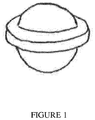
- Figure 1 represents the structure made by the process of Example 4.
- the invention relates to a structure or structures having a surface layer that is a fluoropolymer or polyamide, and that float on top of a fluid to prevent evaporation.
- Percentages, as used herein are weight percentages, unless otherwise noted, and molecular weight are weight average molecular weight as measured by a GPC, unless otherwise noted. US patents included in this description are incorporated herein by reference.
- PVDF polyvinylidene fluoride
- the fluoropolymers of the invention include, but are not limited to polymers containing at least 50 weight percent of one or more fluoromonomers.
- fluoromonomer as used according to the invention means a fluorinated and olefinically unsaturated monomer capable of undergoing free radical polymerization reaction.
- Suitable exemplary fluoromonomers for use according to the invention include, but are not limited to, vinylidene fluoride, vinyl fluoride, trifluoroethylene, tetrafluoroethylene (TFE), ethylene tetrafluoroethylene, and hexafluoropropylene (HFP) and their respected copolymers.
- Preferred fluoropolymers are a polyvinylidene fluoride homopolymer or copolymer, chlorotrifluoroethylene (CTFE), perfluorinated ethylene-propylene copolymer (EFEP), ethylene- tetrafluoroethylene (ETFE), ethylene-chlorotrifluoroethylene (ECTFE), copolymers of tetrafluoroethylene and hexafluoropropene, perfluoroalkoxy copolymer (PFA), polytetrafluoroethylene-perfluoromethylvinyl ether, and polytetrafluoroethylene homopolymer or copolymers.
- Fluoro-terpolymers are also contemplated, including terpolymers such as those having tetrafluoroethylene, hexafluoropropene and vinylidene fluoride monomer units.
- thermoplastic fluoropolymers for foam formation include, but are not limited to: chlorotrifluoroethylene (CTFE), ethylene- tetrafluoroethylene (ETFE), perfluorinated ethylene-propylene copolymer (EFEP), ethylene-chlorotrifluoroethylene (ECTFE), VF 2 , copolymers of tetrafluoroethylene and hexafluoropropene, THV.
- CCTFE chlorotrifluoroethylene
- ETFE ethylene- tetrafluoroethylene
- EEP perfluorinated ethylene-propylene copolymer
- ECTFE ethylene-chlorotrifluoroethylene
- VF 2 copolymers of tetrafluoroethylene and hexafluoropropene
- the fluoropolymer is a polyvinylidene fluoride (PVDF).
- PVDF polyvinylidene fluoride
- the polyvinylidene fluoride (PVDF) of the invention is PVDF homopolymer, copolymer or polymer alloy.
- Polyvinylidene fluoride polymers of the invention include the homopolymer made by polymerizing vinylidene fluoride (VDF), and copolymers, terpolymers and higher polymers of vinylidene fluoride, where the vinylidene fluoride units comprise greater than 51 percent by weight, preferably 70 percent of the total weight of all the monomer units in the polymer, and more preferably, comprise greater than 75 percent of the total weight of the monomer units.
- Copolymers, terpolymers and higher polymers may be made by reacting vinylidene fluoride with one or more monomers from the group consisting of vinyl fluoride, trifluoroethene, tetrafluoroethene, one or more of partly or fully fluorinated alpha-olefins such as 3,3,3-trifluoro-1-propene, 1,2,3,3,3-pentafluoropropene, 3,3,3,4,4-pentafluoro-1-butene, and hexafluoropropene, the partly fluorinated olefin hexafluoroisobutylene, perfluorinated vinyl ethers, such as perfluoromethyl vinyl ether, perfluoroethyl vinyl ether, perfluoro-n-propyl vinyl ether, and perfluoro-2-propoxypropyl vinyl ether,
- Preferred copolymers include those comprising from about 60 to about 99 weight percent VDF, and correspondingly from about 1 to about 40 percent HFP; copolymers of VDF and CTFE; terpolymers of VDF/HFP/TFE; and copolymers of VDF and EFEP.
- the PVDF of the invention could also be an alloy of PVDF and a miscible, semi-miscible, or compatible polymer. Since most alloys of PVDF result in some diminishment of the PVDF properties, a preferred PVDF is one that is not an alloy. However, small amounts of other polymer, up to 25 percent of the total PVDF polymer alloy may be added. Other fluoropolymers (such as polyvinyl fluoride and PTFE), TPU and (meth)acrylic polymers are examples of useful polymers that may make up a useful polymer alloy.
- the stiffness of the foam will be determined by the Tg of the polymer or copolymer, the molecular weight, and the crystallinity.
- Useful flexual modulus of the polymer can be from less than 20,000, preferably less than 50,000, and more preferably less than 100,000 to greater than 1,000,000 and preferably greater than 750,000 psi.
- Additives such as glass beads or fibers can be added to increase the modulus and/or reduce the density.
- Polyamides useful in the invention include both polyamides and copolyamides.
- polyamide is understood to mean products resulting from the condensation:
- Copolyamides result from the condensation of at least two alpha,omega-aminocarboxylic acids or of two lactams or of a lactam and of an alpha,omega-aminocarboxylic acid. Mention may also be made of the copolyamides resulting from the condensation of at least one alpha,omega-aminocarboxylic acid (or a lactam), at least one diamine and at least one dicarboxylic acid.
- lactams By way of examples of lactams, mention may be made of those having from 3 to 12 carbon atoms in the main ring and possibly being substituted. Mention may be made, for example, of ⁇ , ⁇ -dimethylpropriolactam, ⁇ , ⁇ -dimethylpropriolactam, amylolactam, caprolactam, capryllactam and lauryllactam.
- alpha,omega-aminocarboxylic acids mention may be made of aminoundecanoic acid and aminododecanoic acid.
- dicarboxylic acids mention may be made of adipic acid, sebacic acid, isophthalic acid, butanedioic acid, 1,4-cyclohexyldicarboxylic acid, terephthalic acid, the sodium or lithium salt of sulphoisophthalic acid, dimerized fatty acids (these dimerized fatty acids have a dimer content of at least 98% and are preferably hydrogenated) and dodecanedioic acid HOOC-(CH 2 ) 10 -COOH.
- the diamine may be an aliphatic diamine having from 6 to 12 carbon atoms or it may be an aryl diamine and/or a saturated cyclic diamine.
- IPD isophoronediamine
- MPDM methylpentamethylenediamine
- BMACM bis(aminocyclohexyl)methane
- copolyamides By way of examples of copolyamides, mention may be made of copolymers of caprolactam and lauryllactam (PA-6/12), copolymers of caprolactam, adipic acid and hexamethylenediamine (PA-6/6,6), copolymers of caprolactam, lauryllactam, adipic acid and hexamethylenediamine (PA-6/12/6,6), copolymers of caprolactam, lauryllactam, 11-aminoundecanoic acid, azelaic acid and hexamethylenediamine (PA-6/6,9/11/12), copolymers of caprolactam, lauryllactam, 11-aminoundecanoic acid, adipic acid and hexamethylenediamine (PA-6/6,6/11/12) and copolymers of lauryllactam, azelaic acid and hexamethylenediamine (PA-6,9/12).
- the relative viscosity of the polyamides measured as a 1% solution in sulphuric acid at 20°C, is between 1.5 and 5.
- Preferred polyamides and copolyamides include, but are not limited to PA-6, PA-10, PA-11, PA-12, PA-6,6, PA-10,12, PA 6,10 and PA-10,10.
- One or more additives may optionally be added to the fluoropolymer or polyamide composition.
- Typical additives include, but not limited to, impact modifiers, UV stabilizers, plasticizers, fillers, coloring agents, pigments, dyes, antioxidants, antistatic agents, surfactants, toner, pigments, flame retardant, and dispersing aids.
- a white pigment is added to help reflect solar radiation in outdoor ponds.
- Fluoropolymers and polyamides useful for forming polymer foams include crystalline and semi-crystalline fluoropolymers and polyamides that are thermoplastic, as they must melt and flow in polymer extrusion and process molding.
- semi-crystalline as used herein is meant that the polymer has at least 5% by weight crystalline, and preferably at least 10% crystalline content, as measured DSC. The DSC measurement is run on a 10 mg sample from RT to 210°C at 20 C/min held for 5 min, cooled from 210°C to -20°C at 20°C per minute, then heated from -20°C to 210°C at 10°C per min.
- the heat of melting is calculated by standard methods and the percent crystallinity is calculated by dividing the J/g heat of melting by 105 J/g for 100% crystalline PVDF and multiplying by 100. For example, a measurement of 50 J/g heat of melting would mean 47.6% crystallinity.
- Branched fluoropolymers and polyamides are especially useful in foam formation, as larger cells can be produced.
- Functional fluoropolymers such as maleic anhydride grafted PVDF (such as KYNAR ADX) from Arkema Inc. may also be used.
- the foamed layer(s) can be manufactured through any foaming process including but not limited to the use of physical or chemical blowing agents and nucleating agents.
- the gas is created by decomposition of a chemical by heating it above its degradation temperature.
- gas is introduced into the polymer either directly or through evaporating a liquid foaming agent by heating it above its evaporation temperature.
- Chemical blowing agents are mainly used for higher density foams - down to 70% density reduction, while physical blowing agents can produce light foams - upwards of 10X density reduction.
- Blowing agents useful in the invention can be either chemical or physical blowing agents, or a mixture thereof.
- a chemical blowing agent the gas is created by decomposition of a chemical heated above its degradation temperature.
- the physical blowing agent gas is introduced into the polymer either directly or through evaporating a liquid foaming agent by heating it above its evaporation temperature.
- a combination of chemical and physical blowing agents can also be used.
- the chemical blowing agent can be a solid or fluid.
- useful blowing agents include, but are not limited to, azodicarbonamide, azodiisobutyronitile, sulfonylsemicarbazide, 4,4-oxybenzene, barium azodicarboxylate, 5-Phenyltetrazole, p-toluenesulfonylsemicarbazide, diisopropyl hydrazodicarboxylate, 4,4'-oxybis(benzenesulfonylhydrazide), diphenylsulfone-3,3'-disulfohydrazide, isatoic anhydride, N,N'-dimethyl-N,N'dinitroterephthalamide, citric acid, sodium bicarbonate, monosodium citrate, anhydrous citric acid, trihydrazinotriazine, N,N'-dinitroso-pentamethylenetetramine, and p-tol
- the foam of the invention may optionally be formed using a nucleating agent that aids in producing a homogeneous foam.
- a nucleating agent that aids in producing a homogeneous foam.
- no added nucleating agent is added.
- a chemical foaming agent could act as both a foaming agent and a nucleating agent.
- a nucleating agents may be useful when a chemical blowing agent is used and is necessary for forming a controlled foam with physical blowing agents. A mixture of two or more nucleating agents can be used.
- nucleating agents include, but are not limited to calcium carbonate, calcium sulfate, magnesium hydroxide, magnesium silicate hydroxide, calcium tungstate, silica, calcium oxide, lead oxide, barium oxide, titanium dioxide, zinc oxide, antimony oxide, boron nitride, magnesium carbonate, lead carbonate, zinc carbonate, barium carbonate, calcium silicate, aluminosilicate, carbon black, graphite, non organic pigments, alumina, molybdenum disulfide, zinc stearate, PTFE particles, immiscible polymer particles, and calcium metasilicate.
- a preferred nucleating agent is calcium carbonate. Nucleating agents that have smaller particle size, and have rougher surfaces are preferred.
- the fluoropolymer foamed structure is produced using one or more master batch concentrate(s) containing an optional nucleating agent, at least one chemical blowing agent in the case where a chemical blowing agent is used, and optional other additives, in a suitable carrier.
- the purpose of the master batch is to provide a more precise addition of ingredients used at low level, and to do so in a manner providing excellent homogeneous mixing of components within the PVDF, leading to homogeneous foam formation.
- the additives are usually in the form of fine powders that need to be added to the polymer pellets and would phase separate in the extruder hopper.
- the master batch contains a high concentration of the required additives in the final product (sometimes 10 to 50 times more concentrated). In one embodiment the master batch contains 1 to 20 weight percent of a blowing agent, and, if present from 0.5 to 20 weight percent of nucleating agent.
- the master batch is then generally mixed with the PVDF pellets in a dry blend form and introduced in the extruder hopper. This process is called letting down the concentrate. In the let down process, depending on the concentration of the additives in the master batch and also the required amount of the additives in the final product, anything between several percent to sometimes over 50% of the master batch concentrate is added to the polymer resin.
- multiple master batches each containing one or more of the additives to be mixed into the PVDF.
- One advantage of multiple master batches would be that a manufacturer could adjust the ratio of the additives at the point of manufacture.
- An example of multiple master batches would be a first master batch containing a nucleating agent, and a second master batch containing a blowing agent.
- the foam has good mechanical stability and load bearing properties for PVDF foamed structures having density reductions down to 30 % of the original density.
- the foamed structure has a density that is below that of the liquid it will cover, preferably below 1.0 g/cc, and more preferably from 0.3 to 0.98 g/cc. and more preferably from 0.6 to 0.97 g/cc.
- the density reduction could be 35% less, 50% less and even as high as 100 times less dense than the non-foamed PVDF material.
- the foamed PVDF of this invention would have the melt strength to go through sizing and calibration enabling one to form and size the PVDF foam structure to such a close tolerances.
- the foam cell size is as small as possible.
- the cell size could be as small as 1 micron.
- the cell size is in the range of from 10 to 250 microns, more typically in the range of from 50 to 150 microns.
- the density of the foam can be controlled by controlling the void space, through adjustment of the process temperature, level of blowing agent, nucleating agents and the cooling procedure for cooling the gas-laden polymer melt (control of the cell growth and final size).
- the foam can be extruded into the desired shape or profile and cut to a desired length.
- a continuous rod is extruded, and cut into lengths where the length and rod diameter are about equal, producing a marshmallow shaped foam.
- Hollow structures may be formed from either solid and foamed fluoropolymer or polyamide.
- Hollow structures may be formed by means known in the art, such as the injection molding of a PVDF polymer to form two halves of a hollow structure, followed by welding of the halves to form a single hollow structure in the prescribed shape.
- a blown film could be formed that is cut and welded (such as by heat) to trap air and form a flexible, polymer "balloon", having a density allowing the structure to float on the liquid, but being amorphous enough to pack tightly with other similar structures providing good surface coverage.
- a structure is injection molded or blow-molded into a hollow sphere or any desired shape.
- Another means of producing a floating structure having a fluoropolymer or polyamide outer layer is to form a multi-layer structure, wherein the outermost layer is a fluoropolymer or polyamide.
- a structure cold be produced by insert molding, where a thin sheet of fluoropolymer or polyamide is placed in a mold, followed by the injection of a second polymer (such as a polyolefin, or other structural polymer) onto the fluoropolymer or polyamide. If this is formed into half of a hollow structure, two halves can be welded together to forma multi-layer hollow, floating structure, in which all the outside surface is composed of the fluoropolymer or polyamide.
- a second polymer such as a polyolefin, or other structural polymer
- a layer or fluoropolymer or polyamide can be placed in the mold, and a foam material (such as a polystyrene or polyurethane, could be injected, and two matching halves could be welded together by known means.
- the foamed polymer could be designed to result in buoyancy of the whole structure.
- a coextruded sheet having a layer of fluoropolymer or polyamide, and a layer of another thermoplastic polymer, such as, for example, a polyolefin, polyurethane, polyester, polystyrene - either in neat or foamed form is formed.
- a tie layer could optionally be added between the layers to increase adhesion.
- the multi-layer sheet could then be thermoformed into half of a hollow structure, with two halves being welded together to form a hollow, floating structure.
- a foamed or hollow structure cold be formed by a less chemical-resistance polymer, followed by coating the structure with a fluoropolymer or polyamide coating.
- the coating should have a thickness of from 5 to 500 nanometers.
- an aqueous polyvinylidene fluoride coating such as AQUATECH coatings available from Arkema Inc, is applied to a structure such as a hollow polypropylene structure, or a polystyrene foamed structure, to produce a fluoropolymer-coated floating structure.
- the floating fluoropolymer or polyamide structure of the present invention can be of any shape or size. Shapes could be formed in a continuous process (such as the formation of a foamed rod, sheet or profile that is cut and/or formed into multiple structures; or in a batch process, such as injection molding. Some non-limiting examples of useful structures are foamed sheets with a thickness of from 1/16 inch (1.5 mm) to 2 inches (50 mm) and preferably 1/8 inch to 1 inch. The sheet could be cut to fit a small liquid bath as a single piece, or cut into halves, quarters or similar shapes that could be connected on the ends to avoid overlap of the pieces when objects are raised or lowed into the liquid. A foam sheet can be shaped, in-line to various shapes (discs, squares, triangles, hexagons). Shaped floats could then be joined together. Further, a foam sheet could be stamped to any shape, to meet the final application.
- multiple structures as used to provide coverage of a liquid surface. This provides a covering that is more flexible and able to cover any given geometry of the liquid surface. It also provides flexibility for easy entry and egress from the liquid bath, pool or pond.
- a foam semi-cooled rod could be formed into unique shapes using forming tools, including but not limited to spheres, pillow-shaped, oblong shapes.
- the ideal structure is one that provides maximum coverage of the liquid surface.
- the density of the structures of the invention can be adjusted to be less than that of the liquid it is to cover to provide buoyancy. While the polymer structures of the invention are designed to "float" on the surface liquid, it can be preferable for the structure to extend through the surface (be partially above and partially below), as this can help reduce loss of the structures due to wind. Preferred density difference between the structure and the liquid is in the range of 2 to 50 percent below that of the liquid, and preferably from 10 to 25 percent below. Foams having a density of from 0.3 to 0.98 and preferably from 0.5 to 0.97, more preferably from 0.6 to 0.95 are a preferred embodiment.
- the structures of the invention float on the liquid they are covering, they reduce the level of evaporation, reduce the release of noxious or toxic vapors, provide safety for workers from chemical reactions and misting that occur during processing with a chemical bath, act as a thermal insulator, prevent contamination from entering the bath (such as for example dirt, birds and other wildlife, bugs), deter wildlife from entering or drinking the liquid, and serve to retard biological growth.
- the floating structures of the invention may be used in water reservoirs and ponds, pools, in chemical waste ponds, chemical processing baths, waste-water treatment reservoirs, and chemical processing ponds, including but not limited to mining operations, oil field operations, and fracking chemical pools.
- PVDF homopolymer foam rods were produced having densities between 0.707 g/cc and 0.9754 g/cc, using KYNAR FLEX 2620 FC foam concentrate with polyvinylidene homopolymers and copolymers, such as KYNAR 760, KYNAR 450, KYNAR 460 and KYNAR 3120-50 resins from Arkema Inc.
- the foam rods were made at a rate of up to 70 ft/minute, and were cooled and cut into short, marshmallow shaped structures.
- Kynar Flex® 2800 resin to an extrusion blow molding extruder, and extrude a parison at extruder temperatures ranging from 400°F at the feed throat and ascending in temperature up to 480°F at the metering zone on the extruder.
- the adapter and die temperatures can be constantly held at 480°F.
- the parison will flow at a screw speed of about 10 revolutions per minute.
- the mold will then close on the parison and internal air pressure will form the parison to the cavity of the mold forming into a large hollow shape.
- Kynar Flex® 2800 film can be placed over the hole. Using a heated face at 300°F, the film can be welded over the hole sealing in the air. The air trapped inside of the molded product allows buoyancy to float on water.
- Kynar Flex® 3120-10, Kynar Flex® 2800-20 or Kynar® 740 resin into an extruder and extrude a film at extruder temperatures ranging from 400°F at the feed throat and ascending in temperature up to 450°F at the metering zone on the extruder.
- the adapter and die temperatures can be constantly held at 450°F.
- the extruder RPM can be held at 10 revolutions per minute with a line speed of 5-8 ft/min.
- the roll stacks can be controlled at 150°F temperature.
- the film can then be collected on a winder. Once the film is formed, then the film can be cut to size and thermally welded.
- two Kynar Flex® 2800-20 10" x 10" square film samples can be cut to size and laid directly on top of each other.
- a thermal welding heat sealer one could heat the sealer to 300°F place and one side at a time of the 10" x 10" sample into the welder.
- Once three of the four sides are welded one could add air in between the 10" x 10" sheets so that air is trapped inside the bag and then heat seal the fourth edge making a square article with air trapped in the center which allows buoyancy to float on top of water.
- Kynar Flex® 3120-50 with a 6wt% loading of Kynar Flex® 2620FC to an extruder and extrude a foamed sheet at extruder temperatures ranging from 380°F at the feed throat and ascending in temperature up to 420°F at the metering zone on the extruder.
- the adapter and die temperatures can be constantly held at 360°F.
- the extruder RPM can be held at 10 revolutions per minute with a line speed of 5-8 ft/min.
- the roll stacks can be controlled at 150°F temperature.
- the closed cell sheet can then be collected on a winder. Once the sheet is cooled, then the sheet can be cut to size and thermoformed to shape.
- two Kynar Flex® 3120-50 10" x 10" square foamed sheet samples can be cut to size and be thermoformed into a bowl shape.
- the two shapes can be edge trimmed and placed so that the top of the bowls are in contact.
- a butt fusion or IR welder can be used to melt the interfacial areas at the top of the bowls and sealed by pressing molten parts together producing a completely welded interface between the two bowls, taking on the shape of welded sphere with air trapped inside.
- the foamed sphere with air trapped in the center allows buoyancy to float on top of water. See Figure 1 .
- a hollow cylindrical structure can be thermally extruded using 8wt% of Kynar Flex® 2620FC foam concentrate additive.
- the extrusion conditions to be set at the conditions below. Barrel (°F) Die (°F) Head (psi) Line speed RPM 1 2 3 4 1 2 3 (ft/min.) 350 375 400 425 355 355 355 780 13.2 14.6
- the gas-laden melt extrudate is cooled and formed in a water vacuum cooling tank with a water temperature of 100°F.
- the solid hollow cylinder can then be cut to length.
- the density of this final product is 49.67% density reduction (0.760 g/cc) making it a very buoyant product.
- the open ends of the hollow cylinder can be welded shut using a thermal heat sealer set to 450°F and clamp closed for 5 seconds to allow the two molten interfaces to come into contact. The clamp is then reopened and the molten section is allowed to cool and solidify producing a hollow buoy with air sealed inside which has a density less then water.
- the foamed parison does not have low enough density to float on water by itself, so the parison can then be heat sealed on one side using a thermal heat sealer set to 450°F and clamp closed for 5 seconds to allow the two molten interfaces to come into contact. The clamp is then reopened and the molten section is allowed to cool and solidify. The structure is now sealed on three sides, before sealing the four and final side, air can be blown into the bag and then the heat sealer can close and thermally seal the four edge to trap the air creating a foamed air pillow buoy which has a density less then water.
Landscapes
- Engineering & Computer Science (AREA)
- Architecture (AREA)
- Mechanical Engineering (AREA)
- Civil Engineering (AREA)
- Structural Engineering (AREA)
- Manufacture Of Porous Articles, And Recovery And Treatment Of Waste Products (AREA)
Abstract
Description
- The invention relates to chemically resistant structures that float on top of a liquid to reduce the level of evaporation from the liquid. The liquid could be in a small container or vat, or in a larger pool, pond, or reservoir. The structure is preferably a foamed material of a polyamide or fluoropolymer, or may be a hollow or foamed structure having a polyamide or fluoropolymer outer layer. The structures covering the liquid may consist of a single structure or two or more discrete structures that partially or fully cover the surface of a liquid. The covering is especially useful where the fluid contains toxic, reactive or corrosive substances. One preferred structure is a polyvinylidene fluoride foam structure (such as a KYNAR from Arkema Inc) at about 0.1 to 36 inches in length/diameter.
- Preventing or reducing evaporation from bodies of water is a key aspect of water conservation. Water lost through evaporation cannot be easily replaced, and is not available for use by human beings, for mining, farming or industrial uses. In many cases, water is collected in surface reservoirs and ponds. Many solutions have been put into place to at least partially cover the surface of these bodies of water, thereby limiting evaporation. The solutions have included floating covers, discrete floating modules, and chemical monolayers. Each of these methods has advantages and disadvantages. Floating covers, generally a single sheet of material, are effective at covering a large percentage of the surface, but are difficult to manipulate on large bodies of water. Chemical monolayers are inexpensive, but less effective at reducing evaporation, and can be difficult to separate from the water. Discrete floating elements can be used on large bodies of water, are easy to add and remove, but typically have limited coverage. Commonly used floating elements include hollow plastic spheres, often referred to as "bird balls". These have limited effectiveness, since the ball shape leaves gaps between adjacent balls. In addition to the prevention of evaporation, coverings may provide a thermal insulation, and also retard the growth of oraganisms at the water/air interface.
- Many designs for these discrete floating elements have been proposed to provide maximum surface coverage, while also addressing the issues of overlap (which wastes material), and the effect of the wind in pushing the individual elements into clumps. Several patents suggest novel, complicated designs, including
US 3,938,338 (hexagonal hollow float),US 8,019,208 (round, overlapping discs),US 8,099,804 (hexagonal or octagonal hollow pyramid-shapes).US 8,3442,352 US 8,393,486 - The discrete floating elements described in the art generally are made with a polyolefin (polypropylene, high density polyethylene shell), and may have a polystyrene or polyurethane foam in the interior for added buoyancy. Polystyrene beads, sheets and other shapes can also be used. UV stabilizers are often used to prevent deterioration from UV light exposure. Carbon black may be added for improved UV resistance, or white pigment (like TiO2) to reduce absorbed solar energy.
- In addition to use on bodies of water, floating covering elements also find use as coverings for other liquids, including but not limited to chemical production, anodizing baths, galvanizing baths, plating baths, dyeing baths, sewage treatment, oil waste, and waste ponds containing chemical or toxic substances.
- Environmental agencies, such as the US EPA, have been concerned with the noxious odors, and hazards associated with evaporation from many of these chemical and waste ponds.
- Problems with the polyolefins, polystyrene, and polyurethanes currently used as fluid coverings is that they have limited chemical resistance, and tend to react and deteriorate when exposed to acids, bases, oxidizers and other strong and highly reactive chemicals. These polymers have relatively poor resistance to UV radiation. Additionally, these polymers are quite flammable.
- Fluoropolymers, and polyvinylidene fluoride (PVDF) in particular, are known for their high chemical, weathering, permeation and flammability resistance. Unfortunately, at a density of 1.77 g/cm3, PVDF does not readily float on water or many other fluids. Polyamides also have a high degree of resistance to many chemicals, though not good as for fluoropolymers. At a density of 1.13-1.35 g/cm3, these materials also would fail to float on water, or most other fluids.
- Hollow floating polyvinylidene fluoride spheres had been proposed for this application, though the complicated manufacturing process and cost of solid PVDF made the use of these PVDF spheres use as liquid coverings undesirable.
-
US 8,277,913 andUS 2012-0045603 describe self-supporting foamed fluoropolymer structures. Through the use of special foaming techniques, it is possible to produce a foamed fluoropolymer structure having a density below the target density of the fluid needing coverage (i.e. below 1.0 g/cm3 for water).US 2013-0108816 describes foamed fluoropolymer foam-core structures. - It has now been found that floating structures having a fluoropolymer or polyamide outer layer can be used as a covering to solve the problem of evaporation from industrial fluid baths and chemical waste ponds. These structures work over a broad pH range, with most chemical solvents and corrosive chemicals. The structures of the invention provide superior chemical resistance, flame resistance and weathering resistance, and will last much longer than polymers typically used in these applications. The floating structure could be, for example, a foamed fluoropolymer, a foamed polyamide, a hollow fluoropolymer or polyamide structure - preferably a foamed hollow structure, or a multi-layer structure having a fluoropolymer or polyamide layer as the outermost layer - such as a polyamide or fluoropolymer coated thermoplastic.
- In addition to reducing the evaporation from bodies of fluids, the floating structures of the invention also aid in the thermal insulation (to prevent the fluid body from cooling or warming), prevents splashing when an object is placed into a bath, and prevents misting from a chemical reaction within the bath that releases bubbles. The use of foamed structures reduces costs, as less material is required, and increases the flexibility of the structures.
- The invention relates to a chemical resistant floating structure, having as the outermost layer of the structure a fluoropolymer or a polyamide.
- The invention further relates to a partially or fully covered body of liquid, where the liquid has one or more of the fluoropolymer or a polyamide structure floating on it. Preferably the floating structure is either a foamed structure, a coated structure, or a multi-layer structure.
- The invention further relates to a method of reducing the evaporation from a liquid body involving partially or fully covering the liquid body with one or more floating polyamide or fluoropolymer structures
-
Figure 1 represents the structure made by the process of Example 4. - The invention relates to a structure or structures having a surface layer that is a fluoropolymer or polyamide, and that float on top of a fluid to prevent evaporation.
- Percentages, as used herein are weight percentages, unless otherwise noted, and molecular weight are weight average molecular weight as measured by a GPC, unless otherwise noted. US patents included in this description are incorporated herein by reference.
- The invention will be illustrated by referring to polyvinylidene fluoride (PVDF), however, one of ordinary skill in the art would recognize that other fluoropolymers (especially thermoplastic fluoropolymers), as well as polyamides could be substituted for the PVDF in the practice of the invention.
- The fluoropolymers of the invention include, but are not limited to polymers containing at least 50 weight percent of one or more fluoromonomers. The term "fluoromonomer" as used according to the invention means a fluorinated and olefinically unsaturated monomer capable of undergoing free radical polymerization reaction. Suitable exemplary fluoromonomers for use according to the invention include, but are not limited to, vinylidene fluoride, vinyl fluoride, trifluoroethylene, tetrafluoroethylene (TFE), ethylene tetrafluoroethylene, and hexafluoropropylene (HFP) and their respected copolymers. Preferred fluoropolymers are a polyvinylidene fluoride homopolymer or copolymer, chlorotrifluoroethylene (CTFE), perfluorinated ethylene-propylene copolymer (EFEP), ethylene- tetrafluoroethylene (ETFE), ethylene-chlorotrifluoroethylene (ECTFE), copolymers of tetrafluoroethylene and hexafluoropropene, perfluoroalkoxy copolymer (PFA), polytetrafluoroethylene-perfluoromethylvinyl ether, and polytetrafluoroethylene homopolymer or copolymers. Fluoro-terpolymers are also contemplated, including terpolymers such as those having tetrafluoroethylene, hexafluoropropene and vinylidene fluoride monomer units.
- Useful thermoplastic fluoropolymers for foam formation include, but are not limited to: chlorotrifluoroethylene (CTFE), ethylene- tetrafluoroethylene (ETFE), perfluorinated ethylene-propylene copolymer (EFEP), ethylene-chlorotrifluoroethylene (ECTFE), VF2, copolymers of tetrafluoroethylene and hexafluoropropene, THV. Vinyl fluoride copolymers that are thermoplastic in nature may also be used.
- Most preferably the fluoropolymer is a polyvinylidene fluoride (PVDF). The polyvinylidene fluoride (PVDF) of the invention is PVDF homopolymer, copolymer or polymer alloy. Polyvinylidene fluoride polymers of the invention include the homopolymer made by polymerizing vinylidene fluoride (VDF), and copolymers, terpolymers and higher polymers of vinylidene fluoride, where the vinylidene fluoride units comprise greater than 51 percent by weight, preferably 70 percent of the total weight of all the monomer units in the polymer, and more preferably, comprise greater than 75 percent of the total weight of the monomer units. Copolymers, terpolymers and higher polymers (generally referred to herein as "copolymers") of vinylidene fluoride may be made by reacting vinylidene fluoride with one or more monomers from the group consisting of vinyl fluoride, trifluoroethene, tetrafluoroethene, one or more of partly or fully fluorinated alpha-olefins such as 3,3,3-trifluoro-1-propene, 1,2,3,3,3-pentafluoropropene, 3,3,3,4,4-pentafluoro-1-butene, and hexafluoropropene, the partly fluorinated olefin hexafluoroisobutylene, perfluorinated vinyl ethers, such as perfluoromethyl vinyl ether, perfluoroethyl vinyl ether, perfluoro-n-propyl vinyl ether, and perfluoro-2-propoxypropyl vinyl ether, fluorinated dioxoles, such as perfluoro(1,3-dioxole) and perfluoro(2,2-dimethyl-1,3-dioxole), allylic, partly fluorinated allylic, or fluorinated allylic monomers, such as 2-hydroxyethyl allyl ether or 3-allyloxypropanediol, and ethene or propene. Preferred copolymers or terpolymers are formed with vinyl fluoride, trifluoroethene, tetrafluoroethene (TFE), and hexafluoropropene (HFP).
- Preferred copolymers include those comprising from about 60 to about 99 weight percent VDF, and correspondingly from about 1 to about 40 percent HFP; copolymers of VDF and CTFE; terpolymers of VDF/HFP/TFE; and copolymers of VDF and EFEP.
- The PVDF of the invention could also be an alloy of PVDF and a miscible, semi-miscible, or compatible polymer. Since most alloys of PVDF result in some diminishment of the PVDF properties, a preferred PVDF is one that is not an alloy. However, small amounts of other polymer, up to 25 percent of the total PVDF polymer alloy may be added. Other fluoropolymers (such as polyvinyl fluoride and PTFE), TPU and (meth)acrylic polymers are examples of useful polymers that may make up a useful polymer alloy.
- When the fluoropolymer is to be foamed to reduce the density and increase buoyancy, the stiffness of the foam will be determined by the Tg of the polymer or copolymer, the molecular weight, and the crystallinity. Useful flexual modulus of the polymer can be from less than 20,000, preferably less than 50,000, and more preferably less than 100,000 to greater than 1,000,000 and preferably greater than 750,000 psi. Additives such as glass beads or fibers can be added to increase the modulus and/or reduce the density.
- Polyamides useful in the invention include both polyamides and copolyamides. The term "polyamide" is understood to mean products resulting from the condensation:
- of one or more amino acids, such as aminocaproic, 7-aminoheptanoic, 11-aminoundecanoic and 12-aminododecanoic acids or of one or more lactams, such as caprolactam, oenantholactam and lauryllactam;
- of one or more salts or mixtures of diamines, such as hexamethylenediamine, dodecamethylenediamine, metaxylylenediamine, bis-p(aminocyclohexyl)methane and trimethylhexamethylenediamine with diacids such as isophthalic, terephthalic, adipic, azelaic, suberic, sebacic and dodecanedicarboxylic acids.
- Copolyamides result from the condensation of at least two alpha,omega-aminocarboxylic acids or of two lactams or of a lactam and of an alpha,omega-aminocarboxylic acid. Mention may also be made of the copolyamides resulting from the condensation of at least one alpha,omega-aminocarboxylic acid (or a lactam), at least one diamine and at least one dicarboxylic acid.
- By way of examples of lactams, mention may be made of those having from 3 to 12 carbon atoms in the main ring and possibly being substituted. Mention may be made, for example, of β,β-dimethylpropriolactam, α,α-dimethylpropriolactam, amylolactam, caprolactam, capryllactam and lauryllactam.
- By way of examples of alpha,omega-aminocarboxylic acids, mention may be made of aminoundecanoic acid and aminododecanoic acid. By way of examples of dicarboxylic acids, mention may be made of adipic acid, sebacic acid, isophthalic acid, butanedioic acid, 1,4-cyclohexyldicarboxylic acid, terephthalic acid, the sodium or lithium salt of sulphoisophthalic acid, dimerized fatty acids (these dimerized fatty acids have a dimer content of at least 98% and are preferably hydrogenated) and dodecanedioic acid HOOC-(CH2)10 -COOH.
- The diamine may be an aliphatic diamine having from 6 to 12 carbon atoms or it may be an aryl diamine and/or a saturated cyclic diamine. By way of examples, mention may be made of hexamethylenediamine, piperazine, tetramethylenediamine, octamethylenediamine, decamethylenediamine, dodecamethylenediamine, 1,5-diaminohexane, 2,2,4-trimethyl-1,6-diaminohexane, diamine polyols, isophoronediamine (IPD), methylpentamethylenediamine (MPDM), bis(aminocyclohexyl)methane (BACM) and bis(3-methyl-4 aminocyclohexyl)methane (BMACM).
- By way of examples of copolyamides, mention may be made of copolymers of caprolactam and lauryllactam (PA-6/12), copolymers of caprolactam, adipic acid and hexamethylenediamine (PA-6/6,6), copolymers of caprolactam, lauryllactam, adipic acid and hexamethylenediamine (PA-6/12/6,6), copolymers of caprolactam, lauryllactam, 11-aminoundecanoic acid, azelaic acid and hexamethylenediamine (PA-6/6,9/11/12), copolymers of caprolactam, lauryllactam, 11-aminoundecanoic acid, adipic acid and hexamethylenediamine (PA-6/6,6/11/12) and copolymers of lauryllactam, azelaic acid and hexamethylenediamine (PA-6,9/12).
- It is possible to use polyamide blends. Advantageously, the relative viscosity of the polyamides, measured as a 1% solution in sulphuric acid at 20°C, is between 1.5 and 5.
- Preferred polyamides and copolyamides, include, but are not limited to PA-6, PA-10, PA-11, PA-12, PA-6,6, PA-10,12, PA 6,10 and PA-10,10.
- One or more additives may optionally be added to the fluoropolymer or polyamide composition. Typical additives include, but not limited to, impact modifiers, UV stabilizers, plasticizers, fillers, coloring agents, pigments, dyes, antioxidants, antistatic agents, surfactants, toner, pigments, flame retardant, and dispersing aids. In one embodiment a white pigment is added to help reflect solar radiation in outdoor ponds. An advantage of PVDF is that it is stable against deterioration from UV radiation, so no UV stabilizer is needed.
- Fluoropolymers and polyamides useful for forming polymer foams include crystalline and semi-crystalline fluoropolymers and polyamides that are thermoplastic, as they must melt and flow in polymer extrusion and process molding. By "semi-crystalline", as used herein is meant that the polymer has at least 5% by weight crystalline, and preferably at least 10% crystalline content, as measured DSC. The DSC measurement is run on a 10 mg sample from RT to 210°C at 20 C/min held for 5 min, cooled from 210°C to -20°C at 20°C per minute, then heated from -20°C to 210°C at 10°C per min. The heat of melting is calculated by standard methods and the percent crystallinity is calculated by dividing the J/g heat of melting by 105 J/g for 100% crystalline PVDF and multiplying by 100. For example, a measurement of 50 J/g heat of melting would mean 47.6% crystallinity.
- Branched fluoropolymers and polyamides are especially useful in foam formation, as larger cells can be produced.
- Functional fluoropolymers, such as maleic anhydride grafted PVDF (such as KYNAR ADX) from Arkema Inc. may also be used.
- The foamed layer(s) can be manufactured through any foaming process including but not limited to the use of physical or chemical blowing agents and nucleating agents. In the case of the chemical blowing agent, the gas is created by decomposition of a chemical by heating it above its degradation temperature. In the case of the physical blowing agent, gas is introduced into the polymer either directly or through evaporating a liquid foaming agent by heating it above its evaporation temperature. Chemical blowing agents are mainly used for higher density foams - down to 70% density reduction, while physical blowing agents can produce light foams - upwards of 10X density reduction.
- Blowing agents useful in the invention can be either chemical or physical blowing agents, or a mixture thereof. In the case of a chemical blowing agent, the gas is created by decomposition of a chemical heated above its degradation temperature. In the case of the physical blowing agent, gas is introduced into the polymer either directly or through evaporating a liquid foaming agent by heating it above its evaporation temperature. A combination of chemical and physical blowing agents can also be used.
- The chemical blowing agent can be a solid or fluid. Useful blowing agents include, but are not limited to, azodicarbonamide, azodiisobutyronitile, sulfonylsemicarbazide, 4,4-oxybenzene, barium azodicarboxylate, 5-Phenyltetrazole, p-toluenesulfonylsemicarbazide, diisopropyl hydrazodicarboxylate, 4,4'-oxybis(benzenesulfonylhydrazide), diphenylsulfone-3,3'-disulfohydrazide, isatoic anhydride, N,N'-dimethyl-N,N'dinitroterephthalamide, citric acid, sodium bicarbonate, monosodium citrate, anhydrous citric acid, trihydrazinotriazine, N,N'-dinitroso-pentamethylenetetramine, and p-toluenesulfonylhydrazide, or include a blend of or more of said blowing agents. Mixtures of chemical and physical blowing agents are also contemplated by the invention.
- The foam of the invention may optionally be formed using a nucleating agent that aids in producing a homogeneous foam. In one preferred embodiment, no added nucleating agent is added. In some cases, a chemical foaming agent could act as both a foaming agent and a nucleating agent. A nucleating agents may be useful when a chemical blowing agent is used and is necessary for forming a controlled foam with physical blowing agents. A mixture of two or more nucleating agents can be used. Useful nucleating agents include, but are not limited to calcium carbonate, calcium sulfate, magnesium hydroxide, magnesium silicate hydroxide, calcium tungstate, silica, calcium oxide, lead oxide, barium oxide, titanium dioxide, zinc oxide, antimony oxide, boron nitride, magnesium carbonate, lead carbonate, zinc carbonate, barium carbonate, calcium silicate, aluminosilicate, carbon black, graphite, non organic pigments, alumina, molybdenum disulfide, zinc stearate, PTFE particles, immiscible polymer particles, and calcium metasilicate. A preferred nucleating agent is calcium carbonate. Nucleating agents that have smaller particle size, and have rougher surfaces are preferred.
- In one preferred embodiment, the fluoropolymer foamed structure is produced using one or more master batch concentrate(s) containing an optional nucleating agent, at least one chemical blowing agent in the case where a chemical blowing agent is used, and optional other additives, in a suitable carrier. The purpose of the master batch is to provide a more precise addition of ingredients used at low level, and to do so in a manner providing excellent homogeneous mixing of components within the PVDF, leading to homogeneous foam formation. Moreover, the additives are usually in the form of fine powders that need to be added to the polymer pellets and would phase separate in the extruder hopper.
- The master batch contains a high concentration of the required additives in the final product (sometimes 10 to 50 times more concentrated). In one embodiment the master batch contains 1 to 20 weight percent of a blowing agent, and, if present from 0.5 to 20 weight percent of nucleating agent. The master batch is then generally mixed with the PVDF pellets in a dry blend form and introduced in the extruder hopper. This process is called letting down the concentrate. In the let down process, depending on the concentration of the additives in the master batch and also the required amount of the additives in the final product, anything between several percent to sometimes over 50% of the master batch concentrate is added to the polymer resin.
- It is possible to have multiple master batches, each containing one or more of the additives to be mixed into the PVDF. One advantage of multiple master batches would be that a manufacturer could adjust the ratio of the additives at the point of manufacture. An example of multiple master batches would be a first master batch containing a nucleating agent, and a second master batch containing a blowing agent.
- The foam has good mechanical stability and load bearing properties for PVDF foamed structures having density reductions down to 30 % of the original density. The foamed structure has a density that is below that of the liquid it will cover, preferably below 1.0 g/cc, and more preferably from 0.3 to 0.98 g/cc. and more preferably from 0.6 to 0.97 g/cc. The density reduction could be 35% less, 50% less and even as high as 100 times less dense than the non-foamed PVDF material. The foamed PVDF of this invention would have the melt strength to go through sizing and calibration enabling one to form and size the PVDF foam structure to such a close tolerances.
- Preferably, the foam cell size is as small as possible. The cell size could be as small as 1 micron. Generally the cell size is in the range of from 10 to 250 microns, more typically in the range of from 50 to 150 microns.
- The density of the foam can be controlled by controlling the void space, through adjustment of the process temperature, level of blowing agent, nucleating agents and the cooling procedure for cooling the gas-laden polymer melt (control of the cell growth and final size).
- The foam can be extruded into the desired shape or profile and cut to a desired length. In one embodiment, a continuous rod is extruded, and cut into lengths where the length and rod diameter are about equal, producing a marshmallow shaped foam.
- Another means of producing structures having a fluoropolymer or polyamide outer layer that float on the target liquid is by forming a hollow structure. Hollow structures may be formed from either solid and foamed fluoropolymer or polyamide.
- Hollow structures may be formed by means known in the art, such as the injection molding of a PVDF polymer to form two halves of a hollow structure, followed by welding of the halves to form a single hollow structure in the prescribed shape.
- A blown film could be formed that is cut and welded (such as by heat) to trap air and form a flexible, polymer "balloon", having a density allowing the structure to float on the liquid, but being amorphous enough to pack tightly with other similar structures providing good surface coverage.
- In one embodiment a structure is injection molded or blow-molded into a hollow sphere or any desired shape.
- Another means of producing a floating structure having a fluoropolymer or polyamide outer layer, is to form a multi-layer structure, wherein the outermost layer is a fluoropolymer or polyamide. Such a structure cold be produced by insert molding, where a thin sheet of fluoropolymer or polyamide is placed in a mold, followed by the injection of a second polymer (such as a polyolefin, or other structural polymer) onto the fluoropolymer or polyamide. If this is formed into half of a hollow structure, two halves can be welded together to forma multi-layer hollow, floating structure, in which all the outside surface is composed of the fluoropolymer or polyamide. Alternatively, a layer or fluoropolymer or polyamide can be placed in the mold, and a foam material (such as a polystyrene or polyurethane, could be injected, and two matching halves could be welded together by known means. The foamed polymer could be designed to result in buoyancy of the whole structure.
- In another embodiment, a coextruded sheet having a layer of fluoropolymer or polyamide, and a layer of another thermoplastic polymer, such as, for example, a polyolefin, polyurethane, polyester, polystyrene - either in neat or foamed form is formed. A tie layer could optionally be added between the layers to increase adhesion. The multi-layer sheet could then be thermoformed into half of a hollow structure, with two halves being welded together to form a hollow, floating structure.
- In another embodiment, a foamed or hollow structure cold be formed by a less chemical-resistance polymer, followed by coating the structure with a fluoropolymer or polyamide coating. The coating should have a thickness of from 5 to 500 nanometers. In one embodiment, an aqueous polyvinylidene fluoride coating, such as AQUATECH coatings available from Arkema Inc, is applied to a structure such as a hollow polypropylene structure, or a polystyrene foamed structure, to produce a fluoropolymer-coated floating structure.
- The floating fluoropolymer or polyamide structure of the present invention can be of any shape or size. Shapes could be formed in a continuous process (such as the formation of a foamed rod, sheet or profile that is cut and/or formed into multiple structures; or in a batch process, such as injection molding. Some non-limiting examples of useful structures are foamed sheets with a thickness of from 1/16 inch (1.5 mm) to 2 inches (50 mm) and preferably 1/8 inch to 1 inch. The sheet could be cut to fit a small liquid bath as a single piece, or cut into halves, quarters or similar shapes that could be connected on the ends to avoid overlap of the pieces when objects are raised or lowed into the liquid. A foam sheet can be shaped, in-line to various shapes (discs, squares, triangles, hexagons). Shaped floats could then be joined together. Further, a foam sheet could be stamped to any shape, to meet the final application.
- In a preferred embodiment, multiple structures as used to provide coverage of a liquid surface. This provides a covering that is more flexible and able to cover any given geometry of the liquid surface. It also provides flexibility for easy entry and egress from the liquid bath, pool or pond.
- A foam semi-cooled rod could be formed into unique shapes using forming tools, including but not limited to spheres, pillow-shaped, oblong shapes.
- While there is no limit to the size and shape of useful structures. Structures could be as small as 0.1 mm in diameter, width or length, up to several meters in diameter or length. Some preferred sizes for applications in which multiple structures are used to cover a liquid for a length, width or diameter are from 0.1 mm to 10 meters, preferably from 1 mm to 1 meter, more preferably from 2 mm to 500 cm, and more preferably from 5 mm to 50 cm - depending on the end-use application. The ideal structure is one that provides maximum coverage of the liquid surface. Some non-limiting examples include:
- Spheres, either hollow or foam, which are easy to form and provide full coverage of any surface area shape. The disadvantage being that there are many gaps in the surface coverage between the spheres.
- Foamed or hollow polygons, for example triangles, squares, hexagons, octagons and other shapes that can align with each other to provide an almost complete coverage of the surface. As seen in the cited art, hexagons are especially favored, and preferably include a 3-dimensional cone or pyramid shape to prevent overlap.
- Foamed or hollow disks, or other relatively flat shapes that can lay flat on the surface, and may have wings, or overlapping surfaces to reduce gaps between the discs. Flatter structures have advantages of requiring less material, and not easily overturning where the top can rotate to the bottom, bring dirt from the atmosphere into the liquid.
- Marshmallow shaped foam, can be easily formed by foaming a rod structure that is cut into many small lengths. Preferably the length of the marshmallow is within +/- 50 percent, preferably +/- 25 percent, and more preferably +/- 10 percent of the diameter of the marshmallow.
- winged rods, with the wings preventing rolling in the liquid.
- amorphous "balloon" shaped hollow structures can be formed from blown film tubes that are cut and sealed on both ends to trap air. These can be packed together to provide almost complete surface coverage.
- a foam sheet could be formed, and cut into shapes - such as cubes or boxes, of any desired size.
- a winged sphere, foamed or hollow, in a Saturn-shape having a rim around the diameter, provides a means to prevent rolling, and allow for overlap of the rings for improved surface coverage.
- The density of the structures of the invention can be adjusted to be less than that of the liquid it is to cover to provide buoyancy. While the polymer structures of the invention are designed to "float" on the surface liquid, it can be preferable for the structure to extend through the surface (be partially above and partially below), as this can help reduce loss of the structures due to wind. Preferred density difference between the structure and the liquid is in the range of 2 to 50 percent below that of the liquid, and preferably from 10 to 25 percent below. Foams having a density of from 0.3 to 0.98 and preferably from 0.5 to 0.97, more preferably from 0.6 to 0.95 are a preferred embodiment.
- Since the structures of the invention float on the liquid they are covering, they reduce the level of evaporation, reduce the release of noxious or toxic vapors, provide safety for workers from chemical reactions and misting that occur during processing with a chemical bath, act as a thermal insulator, prevent contamination from entering the bath (such as for example dirt, birds and other wildlife, bugs), deter wildlife from entering or drinking the liquid, and serve to retard biological growth.
- In one embodiment, when many small floating structures are used on the top of an acid bath (such as chroming bath with nitric acid), parts can easily be placed into the bath between the floating structures, and the structures then back-fill across the opening in the surface to prevent misting due to the chemical reaction. This adds a level of safety to the industrial application.
- The floating structures of the invention may be used in water reservoirs and ponds, pools, in chemical waste ponds, chemical processing baths, waste-water treatment reservoirs, and chemical processing ponds, including but not limited to mining operations, oil field operations, and fracking chemical pools.
- PVDF homopolymer foam rods were produced having densities between 0.707 g/cc and 0.9754 g/cc, using KYNAR FLEX 2620 FC foam concentrate with polyvinylidene homopolymers and copolymers, such as KYNAR 760, KYNAR 450, KYNAR 460 and KYNAR 3120-50 resins from Arkema Inc. The foam rods were made at a rate of up to 70 ft/minute, and were cooled and cut into short, marshmallow shaped structures.
- Using KYNAR 760 resin and 8 wt% of KYNAR FLEX 2620 FC foam concentrate, a foam rod of about 0.20 inch diameter was extruded at 66 ft/min. The rod had a density of 0.93 g/cm3 - a 47% density reduction. The extruder conditions were as follows:
Barrel (°F) Die (°F) Head (psi) Amps. Line speed RPM 1 2 3 4 1 2 3 (ft/min.) 390 390 430 450 460 460 460 1280 72% 66 40 - One would add Kynar Flex® 2800 resin to an extrusion blow molding extruder, and extrude a parison at extruder temperatures ranging from 400°F at the feed throat and ascending in temperature up to 480°F at the metering zone on the extruder. The adapter and die temperatures can be constantly held at 480°F. The parison will flow at a screw speed of about 10 revolutions per minute. The mold will then close on the parison and internal air pressure will form the parison to the cavity of the mold forming into a large hollow shape. If there is an opening through the wall of the hollow part, and Kynar Flex® 2800 film can be placed over the hole. Using a heated face at 300°F, the film can be welded over the hole sealing in the air. The air trapped inside of the molded product allows buoyancy to float on water.
- One would add Kynar Flex® 3120-10, Kynar Flex® 2800-20 or Kynar® 740 resin into an extruder and extrude a film at extruder temperatures ranging from 400°F at the feed throat and ascending in temperature up to 450°F at the metering zone on the extruder. The adapter and die temperatures can be constantly held at 450°F. The extruder RPM can be held at 10 revolutions per minute with a line speed of 5-8 ft/min. The roll stacks can be controlled at 150°F temperature. The film can then be collected on a winder. Once the film is formed, then the film can be cut to size and thermally welded. For example, two Kynar Flex® 2800-20 10" x 10" square film samples can be cut to size and laid directly on top of each other. Using a thermal welding heat sealer, one could heat the sealer to 300°F place and one side at a time of the 10" x 10" sample into the welder. Once three of the four sides are welded, one could add air in between the 10" x 10" sheets so that air is trapped inside the bag and then heat seal the fourth edge making a square article with air trapped in the center which allows buoyancy to float on top of water.
- One would add Kynar Flex® 3120-50 with a 6wt% loading of Kynar Flex® 2620FC to an extruder and extrude a foamed sheet at extruder temperatures ranging from 380°F at the feed throat and ascending in temperature up to 420°F at the metering zone on the extruder. The adapter and die temperatures can be constantly held at 360°F. The extruder RPM can be held at 10 revolutions per minute with a line speed of 5-8 ft/min. The roll stacks can be controlled at 150°F temperature. The closed cell sheet can then be collected on a winder. Once the sheet is cooled, then the sheet can be cut to size and thermoformed to shape. For example, two Kynar Flex® 3120-50 10" x 10" square foamed sheet samples can be cut to size and be thermoformed into a bowl shape. The two shapes can be edge trimmed and placed so that the top of the bowls are in contact. A butt fusion or IR welder can be used to melt the interfacial areas at the top of the bowls and sealed by pressing molten parts together producing a completely welded interface between the two bowls, taking on the shape of welded sphere with air trapped inside. The foamed sphere with air trapped in the center allows buoyancy to float on top of water. See
Figure 1 . - Using a blend of 70wt% Kynar®760 and 30wt% PMMA V825 a hollow cylindrical structure can be thermally extruded using 8wt% of Kynar Flex® 2620FC foam concentrate additive. The extrusion conditions to be set at the conditions below.
Barrel (°F) Die (°F) Head (psi) Line speed RPM 1 2 3 4 1 2 3 (ft/min.) 350 375 400 425 355 355 355 780 13.2 14.6 - The gas-laden melt extrudate is cooled and formed in a water vacuum cooling tank with a water temperature of 100°F. The solid hollow cylinder can then be cut to length. The density of this final product is 49.67% density reduction (0.760 g/cc) making it a very buoyant product. To further improve the buoyancy, the open ends of the hollow cylinder can be welded shut using a thermal heat sealer set to 450°F and clamp closed for 5 seconds to allow the two molten interfaces to come into contact. The clamp is then reopened and the molten section is allowed to cool and solidify producing a hollow buoy with air sealed inside which has a density less then water.
- Using a blend of Kynar Flex® 2800-00 and 5wt% of Azo based Kynar® PVDF foam concentrate, one can extrude a foamed parison where the density of the gas-laden melt is 28.26% density reduction (1.2841g/cc) using the following conditions:
Barrel (°F) Die (°F) Head (psi) Line speed RPM 1 2 3 4 1 2 3 (ft/min.) 315 380 410 310 315 315 315 2000 2.9 40 - The foamed parison does not have low enough density to float on water by itself, so the parison can then be heat sealed on one side using a thermal heat sealer set to 450°F and clamp closed for 5 seconds to allow the two molten interfaces to come into contact. The clamp is then reopened and the molten section is allowed to cool and solidify. The structure is now sealed on three sides, before sealing the four and final side, air can be blown into the bag and then the heat sealer can close and thermally seal the four edge to trap the air creating a foamed air pillow buoy which has a density less then water.
Claims (12)
- A chemical resistant floating structure, wherein the outermost layer of the structure comprises a fluoropolymer, wherein said structure comprises a foamed structure, a coated structure, or a multi-layer structure, wherein said fluoropolymer is a polyvinylidene fluoride homopolymer or copolymer having at least 70 weight percent of vinylidene fluoride monomer units.
- The structure of claim 1 wherein the density of the structure is from 0.3 to 0.98 g/cc.
- The structure of claim 1, wherein said structure is a foam.
- The structure of claim 1, wherein said structure is a hollow structure.
- The structure of claim 1, wherein said structure is in the shape of a marshmallow, cube or box.
- The structure of claim 5, wherein said marshmallow-shape structure has a diameter of from 0.5 to 12 inches, and a length of from 0.5 to 12 inches, wherein said length is within +/- 25% of the diameter.
- The structure of claim 1, wherein said structure is in the shape of a polygon.
- The structure of claim 7, wherein said structure is in the shape of a hexagon.
- A partially or fully covered body of liquid, comprising a liquid body, having floating thereon one or more chemically resistant structures, wherein said structures comprise, as the outermost layer, a fluoropolymer, wherein said fluoropolymer is a polyvinylidene fluoride homopolymer or copolymer having at least 70 weight percent of vinylidene fluoride monomer units.
- The covered body of liquid of claim 9, wherein said floating structure comprises two or more discrete floating structures.
- A method for reducing the evaporation from a liquid comprising;a. forming the structure of claim 1,b. placing one or more of the structures on the top of a fluid to partially cover the fluid surface.
- The method of claim 11, wherein said fluid comprises an acid, base, oxidizing agent, toxic chemical, or corrosive chemical.
Applications Claiming Priority (3)
| Application Number | Priority Date | Filing Date | Title |
|---|---|---|---|
| US201361828290P | 2013-05-29 | 2013-05-29 | |
| EP14804980.2A EP3003914A4 (en) | 2013-05-29 | 2014-05-28 | Chemical resistant evaporation control structures |
| PCT/US2014/039644 WO2014193870A1 (en) | 2013-05-29 | 2014-05-28 | Chemical resistant evaporation control structures |
Related Parent Applications (1)
| Application Number | Title | Priority Date | Filing Date |
|---|---|---|---|
| EP14804980.2A Division EP3003914A4 (en) | 2013-05-29 | 2014-05-28 | Chemical resistant evaporation control structures |
Publications (1)
| Publication Number | Publication Date |
|---|---|
| EP3587303A1 true EP3587303A1 (en) | 2020-01-01 |
Family
ID=51989346
Family Applications (2)
| Application Number | Title | Priority Date | Filing Date |
|---|---|---|---|
| EP19192745.8A Withdrawn EP3587303A1 (en) | 2013-05-29 | 2014-05-28 | Chemical resistant floating structures |
| EP14804980.2A Withdrawn EP3003914A4 (en) | 2013-05-29 | 2014-05-28 | Chemical resistant evaporation control structures |
Family Applications After (1)
| Application Number | Title | Priority Date | Filing Date |
|---|---|---|---|
| EP14804980.2A Withdrawn EP3003914A4 (en) | 2013-05-29 | 2014-05-28 | Chemical resistant evaporation control structures |
Country Status (4)
| Country | Link |
|---|---|
| US (1) | US10155619B2 (en) |
| EP (2) | EP3587303A1 (en) |
| CN (2) | CN111779325A (en) |
| WO (1) | WO2014193870A1 (en) |
Families Citing this family (10)
| Publication number | Priority date | Publication date | Assignee | Title |
|---|---|---|---|---|
| FR3006431B1 (en) * | 2013-05-29 | 2015-06-05 | Euro Heat Pipes | DEVICE FOR TRANSPORTING HEAT WITH A DIPHASIC FLUID |
| US9993747B2 (en) | 2015-09-01 | 2018-06-12 | Meurer Research, Inc. | Plate settler cover and method |
| CN106742829A (en) * | 2015-11-20 | 2017-05-31 | 中国石油化工股份有限公司 | A kind of oil-containing material internal-floating cover of stock tank |
| CN107303972A (en) * | 2016-04-21 | 2017-10-31 | 中国石油化工股份有限公司 | Floating plate in a kind of oil product storage tank |
| CN106586300A (en) * | 2016-07-19 | 2017-04-26 | 北京众信远新能源技术有限公司 | Soft floating roof method for reducing evaporation of liquid fuel storage tank through hollow plastic product |
| US10900188B2 (en) * | 2017-05-12 | 2021-01-26 | Aero Aggregates Of North America, Llc | Lightweight-foamed glass aggregates for vaporization suppression |
| CN107555001A (en) * | 2017-09-05 | 2018-01-09 | 保定市新华石化设备制造有限公司 | Inner floating roof annex sealing device |
| KR102626455B1 (en) | 2017-09-08 | 2024-01-25 | 알케마 인코포레이티드 | Low density fluoropolymer foam |
| CN110258438B (en) * | 2019-06-05 | 2024-03-26 | 中国水利水电科学研究院 | System for preventing reservoir evaporation by utilizing graphite powder |
| US20250067013A1 (en) * | 2023-08-27 | 2025-02-27 | Christina Zhang | Shade Dome for Reducing Evaporation of Open Body of Water |
Citations (12)
| Publication number | Priority date | Publication date | Assignee | Title |
|---|---|---|---|---|
| US2867346A (en) * | 1954-10-06 | 1959-01-06 | British Petroleum Co | Floating plastic screen |
| US3938338A (en) | 1973-11-09 | 1976-02-17 | Arthur Prosper Cullen | Covering or blanketing liquid surfaces and float members for effecting same |
| US20070245479A1 (en) * | 2006-03-20 | 2007-10-25 | National Spa Cover, Inc. | Spa cover |
| US8019208B2 (en) | 2008-05-21 | 2011-09-13 | Mitchell Altman | Steam generating apparatus with water-cooled solid state switch |
| WO2011152836A1 (en) * | 2010-06-04 | 2011-12-08 | Joseph Riordan | Buoyant spheres and their use to form gas barriers on liquid surfaces |
| US8099804B2 (en) | 2008-10-09 | 2012-01-24 | Gregg John M | Thermally insulating blanket constructed of individual floats and system for deploying and retrieving same |
| US20120045603A1 (en) | 2009-05-01 | 2012-02-23 | Arkema Inc. | Foamed polyvinylidene fluoride structure |
| WO2012049502A2 (en) * | 2010-10-12 | 2012-04-19 | Trelleborg Offshore U.K. Ltd | Full-Contact Floating Roof for Liquid Storage Tanks |
| US8277913B2 (en) | 2007-05-01 | 2012-10-02 | Arkema Inc. | Foamed polyvinylidene fluoride tubular structures |
| US8342352B2 (en) | 2010-09-08 | 2013-01-01 | Matt Alirol | Liquid covering disks |
| US8393486B2 (en) | 2004-07-28 | 2013-03-12 | Aqua Guardian Group Ltd. | Water storage evaporation control |
| US20130108816A1 (en) | 2011-10-27 | 2013-05-02 | Arkema Inc. | Multi-layer fluoropolymer foam structure |
Family Cites Families (14)
| Publication number | Priority date | Publication date | Assignee | Title |
|---|---|---|---|---|
| GB949771A (en) * | 1959-05-07 | 1964-02-19 | Montagu Hyams | Treatment of articles in liquid baths |
| NL7405803A (en) | 1974-05-01 | 1975-11-04 | Philips Nv | PROCESS FOR MANUFACTURING AN INSULATED TRANSIT THROUGH A CAPACITOR HOUSING AND A CAPACITOR WITH SUCH TRANSIT. |
| US3993215A (en) | 1974-09-30 | 1976-11-23 | Umc Industries, Inc. | Spiral vendor |
| US3984881A (en) * | 1974-12-19 | 1976-10-12 | Catel Manufacturing Inc. | Solar panel |
| US3998204A (en) | 1975-05-13 | 1976-12-21 | Fuchs Francis J | Floatable ball |
| US3993214A (en) * | 1975-08-25 | 1976-11-23 | Georg Fischer Aktiengesellschaft | Open liquid surface cover |
| US5106910A (en) | 1989-11-09 | 1992-04-21 | Applied Polymer Systems | High concentration acid resistant coatings |
| US7081216B2 (en) * | 2001-02-15 | 2006-07-25 | Arkema Inc. | Foams and coatings |
| WO2005090696A1 (en) * | 2004-03-18 | 2005-09-29 | Technological Resources Pty Limited | Water evaporation minimization |
| WO2005108299A1 (en) * | 2004-05-06 | 2005-11-17 | Hayden John Stein | A floating cover system for a body of liquid |
| CN100532222C (en) * | 2004-07-28 | 2009-08-26 | 沃特创新私人有限公司 | evaporation control device for water storage equipment |
| US7387473B2 (en) * | 2004-11-19 | 2008-06-17 | Norman Louis Smith | Apparatus and method for creating a floating cover |
| DE602005019778D1 (en) * | 2004-12-06 | 2010-04-15 | Akzo Nobel Nv | CHEMICAL PROCESS AND PRODUCTION UNIT |
| US7589140B2 (en) * | 2005-09-29 | 2009-09-15 | 3M Innovative Properties Company | Fluoropolymer bonding compositions |
-
2014
- 2014-05-28 CN CN202010646543.6A patent/CN111779325A/en not_active Withdrawn
- 2014-05-28 WO PCT/US2014/039644 patent/WO2014193870A1/en not_active Ceased
- 2014-05-28 EP EP19192745.8A patent/EP3587303A1/en not_active Withdrawn
- 2014-05-28 CN CN201480030767.7A patent/CN105246800A/en active Pending
- 2014-05-28 US US14/893,568 patent/US10155619B2/en not_active Expired - Fee Related
- 2014-05-28 EP EP14804980.2A patent/EP3003914A4/en not_active Withdrawn
Patent Citations (12)
| Publication number | Priority date | Publication date | Assignee | Title |
|---|---|---|---|---|
| US2867346A (en) * | 1954-10-06 | 1959-01-06 | British Petroleum Co | Floating plastic screen |
| US3938338A (en) | 1973-11-09 | 1976-02-17 | Arthur Prosper Cullen | Covering or blanketing liquid surfaces and float members for effecting same |
| US8393486B2 (en) | 2004-07-28 | 2013-03-12 | Aqua Guardian Group Ltd. | Water storage evaporation control |
| US20070245479A1 (en) * | 2006-03-20 | 2007-10-25 | National Spa Cover, Inc. | Spa cover |
| US8277913B2 (en) | 2007-05-01 | 2012-10-02 | Arkema Inc. | Foamed polyvinylidene fluoride tubular structures |
| US8019208B2 (en) | 2008-05-21 | 2011-09-13 | Mitchell Altman | Steam generating apparatus with water-cooled solid state switch |
| US8099804B2 (en) | 2008-10-09 | 2012-01-24 | Gregg John M | Thermally insulating blanket constructed of individual floats and system for deploying and retrieving same |
| US20120045603A1 (en) | 2009-05-01 | 2012-02-23 | Arkema Inc. | Foamed polyvinylidene fluoride structure |
| WO2011152836A1 (en) * | 2010-06-04 | 2011-12-08 | Joseph Riordan | Buoyant spheres and their use to form gas barriers on liquid surfaces |
| US8342352B2 (en) | 2010-09-08 | 2013-01-01 | Matt Alirol | Liquid covering disks |
| WO2012049502A2 (en) * | 2010-10-12 | 2012-04-19 | Trelleborg Offshore U.K. Ltd | Full-Contact Floating Roof for Liquid Storage Tanks |
| US20130108816A1 (en) | 2011-10-27 | 2013-05-02 | Arkema Inc. | Multi-layer fluoropolymer foam structure |
Also Published As
| Publication number | Publication date |
|---|---|
| CN105246800A (en) | 2016-01-13 |
| EP3003914A4 (en) | 2017-05-03 |
| EP3003914A1 (en) | 2016-04-13 |
| US10155619B2 (en) | 2018-12-18 |
| CN111779325A (en) | 2020-10-16 |
| WO2014193870A1 (en) | 2014-12-04 |
| US20160101932A1 (en) | 2016-04-14 |
Similar Documents
| Publication | Publication Date | Title |
|---|---|---|
| US10155619B2 (en) | Chemical resistant evaporation control structures | |
| EP2449012B1 (en) | Foamed polyvinylidene fluoride structure | |
| JP4074319B2 (en) | Method for producing plastic foam composite | |
| US20200282689A1 (en) | Multi-layer fluoropolymer foam structure | |
| TWI545194B (en) | A carrier for fluid treatment and a method for producing the same | |
| JP7428649B2 (en) | Non-solid core filament for 3D printing | |
| CN1738852A (en) | Anti-microbial coated polymeric film | |
| WO2010060020A1 (en) | Laminar articles with good hydrocarbon barrier | |
| WO1999005213A1 (en) | Resin composition, process for preparing the same, and laminate containing layer of said resin composition | |
| JP6869307B2 (en) | Microbial carrier | |
| CN107090713A (en) | For the manufacture method weaved cotton cloth for preventing aquatile from adhering to | |
| US8129024B2 (en) | Multi-layer rotational moulding | |
| JP2000044756A (en) | Method for producing saponified ethylene-vinyl acetate copolymer composition | |
| CN1243826C (en) | Biofilm carrier with improved specific surface area, bioaffinity and fluidity | |
| JP2003276021A (en) | Method for producing saponified ethylene-vinyl acetate copolymer composition pellet | |
| JPH11293077A (en) | Method for producing resin composition | |
| US20220081542A1 (en) | Compositions and methods for use in the preparation of hydrophobic surfaces | |
| JPH11293078A (en) | Method for producing resin composition | |
| JP4164151B2 (en) | Manufacturing method of resin composition | |
| JP4107447B2 (en) | Method for drying saponified pellets of ethylene-vinyl acetate copolymer | |
| JP2000281715A (en) | Method for cleaning saponified ethylene-vinyl acetate copolymer | |
| JP2007136791A (en) | Lightweight and strong plastic molding | |
| KR101973966B1 (en) | Polyethylene Resin Antimicrobial Water Tank And Method For Manufacturing The Same | |
| JP2001105428A (en) | Pellet manufacturing method | |
| NZ518385A (en) | Composition and methods for the control of plant growth |
Legal Events
| Date | Code | Title | Description |
|---|---|---|---|
| PUAI | Public reference made under article 153(3) epc to a published international application that has entered the european phase |
Free format text: ORIGINAL CODE: 0009012 |
|
| STAA | Information on the status of an ep patent application or granted ep patent |
Free format text: STATUS: THE APPLICATION HAS BEEN PUBLISHED |
|
| AC | Divisional application: reference to earlier application |
Ref document number: 3003914 Country of ref document: EP Kind code of ref document: P |
|
| AK | Designated contracting states |
Kind code of ref document: A1 Designated state(s): AL AT BE BG CH CY CZ DE DK EE ES FI FR GB GR HR HU IE IS IT LI LT LU LV MC MK MT NL NO PL PT RO RS SE SI SK SM TR |
|
| STAA | Information on the status of an ep patent application or granted ep patent |
Free format text: STATUS: REQUEST FOR EXAMINATION WAS MADE |
|
| 17P | Request for examination filed |
Effective date: 20200616 |
|
| RBV | Designated contracting states (corrected) |
Designated state(s): AL AT BE BG CH CY CZ DE DK EE ES FI FR GB GR HR HU IE IS IT LI LT LU LV MC MK MT NL NO PL PT RO RS SE SI SK SM TR |
|
| STAA | Information on the status of an ep patent application or granted ep patent |
Free format text: STATUS: EXAMINATION IS IN PROGRESS |
|
| 17Q | First examination report despatched |
Effective date: 20210330 |
|
| STAA | Information on the status of an ep patent application or granted ep patent |
Free format text: STATUS: THE APPLICATION IS DEEMED TO BE WITHDRAWN |
|
| 18D | Application deemed to be withdrawn |
Effective date: 20210810 |