EP3587236A2 - In-frame mounted bicycle monitoring device - Google Patents
In-frame mounted bicycle monitoring device Download PDFInfo
- Publication number
- EP3587236A2 EP3587236A2 EP19182784.9A EP19182784A EP3587236A2 EP 3587236 A2 EP3587236 A2 EP 3587236A2 EP 19182784 A EP19182784 A EP 19182784A EP 3587236 A2 EP3587236 A2 EP 3587236A2
- Authority
- EP
- European Patent Office
- Prior art keywords
- charge
- level
- electronic device
- bicycle
- housing
- Prior art date
- Legal status (The legal status is an assumption and is not a legal conclusion. Google has not performed a legal analysis and makes no representation as to the accuracy of the status listed.)
- Granted
Links
Images




Classifications
-
- B—PERFORMING OPERATIONS; TRANSPORTING
- B62—LAND VEHICLES FOR TRAVELLING OTHERWISE THAN ON RAILS
- B62K—CYCLES; CYCLE FRAMES; CYCLE STEERING DEVICES; RIDER-OPERATED TERMINAL CONTROLS SPECIALLY ADAPTED FOR CYCLES; CYCLE AXLE SUSPENSIONS; CYCLE SIDECARS, FORECARS, OR THE LIKE
- B62K19/00—Cycle frames
- B62K19/30—Frame parts shaped to receive other cycle parts or accessories
- B62K19/40—Frame parts shaped to receive other cycle parts or accessories for attaching accessories, e.g. article carriers, lamps
-
- B—PERFORMING OPERATIONS; TRANSPORTING
- B62—LAND VEHICLES FOR TRAVELLING OTHERWISE THAN ON RAILS
- B62J—CYCLE SADDLES OR SEATS; AUXILIARY DEVICES OR ACCESSORIES SPECIALLY ADAPTED TO CYCLES AND NOT OTHERWISE PROVIDED FOR, e.g. ARTICLE CARRIERS OR CYCLE PROTECTORS
- B62J50/00—Arrangements specially adapted for use on cycles not provided for in main groups B62J1/00 - B62J45/00
- B62J50/20—Information-providing devices
- B62J50/21—Information-providing devices intended to provide information to rider or passenger
- B62J50/22—Information-providing devices intended to provide information to rider or passenger electronic, e.g. displays
-
- B—PERFORMING OPERATIONS; TRANSPORTING
- B62—LAND VEHICLES FOR TRAVELLING OTHERWISE THAN ON RAILS
- B62J—CYCLE SADDLES OR SEATS; AUXILIARY DEVICES OR ACCESSORIES SPECIALLY ADAPTED TO CYCLES AND NOT OTHERWISE PROVIDED FOR, e.g. ARTICLE CARRIERS OR CYCLE PROTECTORS
- B62J50/00—Arrangements specially adapted for use on cycles not provided for in main groups B62J1/00 - B62J45/00
- B62J50/20—Information-providing devices
- B62J50/21—Information-providing devices intended to provide information to rider or passenger
- B62J50/225—Mounting arrangements therefor
-
- G—PHYSICS
- G01—MEASURING; TESTING
- G01R—MEASURING ELECTRIC VARIABLES; MEASURING MAGNETIC VARIABLES
- G01R31/00—Arrangements for testing electric properties; Arrangements for locating electric faults; Arrangements for electrical testing characterised by what is being tested not provided for elsewhere
- G01R31/36—Arrangements for testing, measuring or monitoring the electrical condition of accumulators or electric batteries, e.g. capacity or state of charge [SoC]
- G01R31/3644—Constructional arrangements
- G01R31/3648—Constructional arrangements comprising digital calculation means, e.g. for performing an algorithm
-
- G—PHYSICS
- G01—MEASURING; TESTING
- G01R—MEASURING ELECTRIC VARIABLES; MEASURING MAGNETIC VARIABLES
- G01R31/00—Arrangements for testing electric properties; Arrangements for locating electric faults; Arrangements for electrical testing characterised by what is being tested not provided for elsewhere
- G01R31/36—Arrangements for testing, measuring or monitoring the electrical condition of accumulators or electric batteries, e.g. capacity or state of charge [SoC]
- G01R31/371—Arrangements for testing, measuring or monitoring the electrical condition of accumulators or electric batteries, e.g. capacity or state of charge [SoC] with remote indication, e.g. on external chargers
-
- G—PHYSICS
- G01—MEASURING; TESTING
- G01R—MEASURING ELECTRIC VARIABLES; MEASURING MAGNETIC VARIABLES
- G01R31/00—Arrangements for testing electric properties; Arrangements for locating electric faults; Arrangements for electrical testing characterised by what is being tested not provided for elsewhere
- G01R31/36—Arrangements for testing, measuring or monitoring the electrical condition of accumulators or electric batteries, e.g. capacity or state of charge [SoC]
- G01R31/396—Acquisition or processing of data for testing or for monitoring individual cells or groups of cells within a battery
-
- G—PHYSICS
- G06—COMPUTING OR CALCULATING; COUNTING
- G06F—ELECTRIC DIGITAL DATA PROCESSING
- G06F1/00—Details not covered by groups G06F3/00 - G06F13/00 and G06F21/00
- G06F1/16—Constructional details or arrangements
- G06F1/1613—Constructional details or arrangements for portable computers
- G06F1/1633—Constructional details or arrangements of portable computers not specific to the type of enclosures covered by groups G06F1/1615 - G06F1/1626
- G06F1/1637—Details related to the display arrangement, including those related to the mounting of the display in the housing
-
- G—PHYSICS
- G06—COMPUTING OR CALCULATING; COUNTING
- G06F—ELECTRIC DIGITAL DATA PROCESSING
- G06F1/00—Details not covered by groups G06F3/00 - G06F13/00 and G06F21/00
- G06F1/16—Constructional details or arrangements
- G06F1/1613—Constructional details or arrangements for portable computers
- G06F1/1633—Constructional details or arrangements of portable computers not specific to the type of enclosures covered by groups G06F1/1615 - G06F1/1626
- G06F1/1656—Details related to functional adaptations of the enclosure, e.g. to provide protection against EMI, shock, water, or to host detachable peripherals like a mouse or removable expansions units like PCMCIA cards, or to provide access to internal components for maintenance or to removable storage supports like CDs or DVDs, or to mechanically mount accessories
-
- B—PERFORMING OPERATIONS; TRANSPORTING
- B62—LAND VEHICLES FOR TRAVELLING OTHERWISE THAN ON RAILS
- B62J—CYCLE SADDLES OR SEATS; AUXILIARY DEVICES OR ACCESSORIES SPECIALLY ADAPTED TO CYCLES AND NOT OTHERWISE PROVIDED FOR, e.g. ARTICLE CARRIERS OR CYCLE PROTECTORS
- B62J43/00—Arrangements of batteries
- B62J43/30—Arrangements of batteries for providing power to equipment other than for propulsion
-
- B—PERFORMING OPERATIONS; TRANSPORTING
- B62—LAND VEHICLES FOR TRAVELLING OTHERWISE THAN ON RAILS
- B62M—RIDER PROPULSION OF WHEELED VEHICLES OR SLEDGES; POWERED PROPULSION OF SLEDGES OR SINGLE-TRACK CYCLES; TRANSMISSIONS SPECIALLY ADAPTED FOR SUCH VEHICLES
- B62M6/00—Rider propulsion of wheeled vehicles with additional source of power, e.g. combustion engine or electric motor
- B62M6/40—Rider propelled cycles with auxiliary electric motor
Definitions
- the present technology relates to bicycles and, in particular, bicycle monitoring technology.
- Electric bicycles generally include human machine interfaces for interacting with the electric bicycles.
- the human machine interfaces can enable operators to monitor the electric bicycles.
- an electronic device for monitoring operations or properties of a bicycle or a component attached to the bicycle.
- the electronic device can include: a housing configured to mount to a top tube of a bicycle so that a portion of the housing is within the top tube when the housing is mounted to the bicycle; no more than two user input elements configured to receive user inputs; a wireless interface supported by the housing and configured wirelessly communicate with other devices; a connector supported by the housing and configured to receive data indicative of operations or properties of the bicycle or a component attached to the bicycle; a processor positioned in the housing where the processor is configured to monitor the operations or the properties to determine status information and store at least some of the data to a memory device; and a display supported by the housing and configured to present the status information without using alphanumeric characters.
- the display may, for instance, not include a liquid-crystal display.
- the electronic device of the preceding paragraph can include one or more of the following features:
- the display can include multiple light emitting diodes to present the status information.
- the no more than two user input elements can be two buttons, and the user inputs can include activation inputs, deactivation inputs, and settings adjustment inputs.
- the user inputs can include a reset input configured to reset system parameters, the reset input being received responsive to selection of at least one of the no more than two user input elements for a period of time during startup of the processor.
- the operations or the properties can include a speed, a cadence, a location, and a mode of the bicycle.
- the processor can output at least some of the data to another device via the wireless interface.
- the processor can communicate via a controller area network to monitor the operations or the properties.
- the processor can communicate with a remote control device via the connector.
- the electronic device can further include the remote control device, the remote control device including a switch configured to connect a data wire to ground when the switch is pressed; the remote control device not including any transistors.
- the housing may include no more than one hole that is configured to receive a fastener to secure the housing to the top tube.
- the portion can include a port configured to permit diagnosing or servicing of errors, and the housing can include a cover configured to selectively cover the port.
- the electronic device can further comprise the bicycle, the housing being configured to mount to the top tube so that any electrical connections supported by the housing are protected in the top tube from splashes of water external to the bicycle when the housing is mounted to the bicycle.
- the processor can automatically store at least some of the data to the memory device.
- the processor may not automatically store at least some of the data to the memory device until instructed by a user to automatically store at least some of the data to the memory device.
- the connector can receive power from the bicycle or the component.
- an electronic device for monitoring levels of charge of a plurality of batteries associated with a bicycle.
- the electronic device can include: a housing configured to mount to a top tube of a bicycle so that a portion of the housing is within the top tube when the housing is mounted to the bicycle; a connector supported by the housing and configured to receive data indicative of a first level of charge of a first battery and a second level of charge of a second battery, the first battery and the second battery being associated with the bicycle; a processor positioned in the housing and configured to monitor the first level of charge and the second level of charge over time; and a display supported by the housing.
- the display can simultaneously present the first level of charge and the second level of charge over time such that: the first level of charge is overlaid on the second level of charge when the first level of charge is greater than the second level of charge, and the second level of charge is overlaid on the first level of charge when the first level of charge is less than the second level of charge.
- the electronic device of the preceding paragraph can include one or more of the following features: Responsive to a user input, the display can present the first level of charge and the second level of charge for a period of time and then hide the first level of charge and the second level of charge upon expiration of the period of time.
- the display can present the first level of charge and the second level of charge as a single combined indicator when the first level of charge is below a first threshold and the second level of charge is below a second threshold.
- the display can include multiple light emitting diodes configured to illuminate to present the first level of charge and the second level of charge.
- the first level of charge can be indicated by a first set of the multiple light emitting diodes having a first hue
- the second level of charge is indicated by a second set of the multiple light emitting diodes having a second hue different from the first hue.
- the first level of charge can be presented on a scale different from the second level of charge.
- the first battery and the second battery can be supported by the bicycle and power at least one of the bicycle or one or more components supported by the bicycle.
- an electronic device for monitoring levels of charge of a plurality of batteries associated with a bicycle.
- the electronic device can include: a housing configured to mount to a top tube of a bicycle so that a portion of the housing is within the top tube when the housing is mounted to the bicycle; a connector supported by the housing and configured to receive data indicative of a first level of charge of a first battery and a second level of charge of a second battery, the first battery and the second battery being associated with the bicycle; a processor positioned in the housing and configured to monitor the first level of charge and the second level of charge over time; and a display supported by the housing.
- the display can simultaneously present the first level of charge and the second level of charge over time such that: at least a portion of the first level of charge is positioned above the second level of charge when the first level of charge is greater than the second level of charge, and at least a portion of the second level of charge is positioned above the first level of charge when the first level of charge is less than the second level of charge.
- the electronic device of the preceding paragraph can include one or more of the following features: Responsive to a user input, the display can present the first level of charge and the second level of charge for a period of time and then hide the first level of charge and the second level of charge upon expiration of the period of time.
- the display can present the first level of charge and the second level of charge as a single combined indicator when the first level of charge is below a first threshold and the second level of charge is below a second threshold.
- the display can include multiple light emitting diodes configured to illuminate to present the first level of charge and the second level of charge.
- the first level of charge can be indicated by a first set of the multiple light emitting diodes having a first hue
- the second level of charge can be indicated by a second set of the multiple light emitting diodes having a second hue different from the first hue.
- the first level of charge can be presented on a scale different from the second level of charge.
- the first battery and the second battery can be supported by the bicycle and power at least one of the bicycle or one or more components supported by the bicycle.
- an electronic device for monitoring operations or properties of a bicycle or a component attached to the bicycle.
- the electronic device can include: a housing configured to mount to a top tube of a bicycle so that a portion of the housing is within the top tube when the housing is mounted to the bicycle, the portion including a hole configured to receive a fastener to secure the housing to the top tube; a connector supported by the housing and configured to receive data indicative of operations or properties of the bicycle or a component attached to the bicycle; a processor positioned in the housing and configured to monitor the operations or properties to determine status information for presentation; and a display supported by the housing and configured to present the status information.
- the housing may include no holes configured to receive fasteners to secure the housing to the top tube other than the hole.
- the portion can include a spring configured to press against an inner surface of the top tube to secure the housing to the top tube.
- the spring can be positioned on a first end of the portion, and the hole can be positioned on a second end of the portion.
- the first end can be opposite the second end.
- the housing can include a lip around a perimeter of the housing, the lip being configured to cover a gap between the housing and the top tube when the housing is mounted to the bicycle.
- the lip can include rubber. Any electrical connections supported by the housing can be positioned in the top tube when the housing is mounted to the bicycle.
- This application is directed at least in part to aspects of an electronic device (sometimes referred to as a human machine interface) that is mounted in and to a frame of a bicycle, such as an electric bicycle, and used to monitor operations or properties of the bicycle or one or more components associated with the bicycle.
- the electronic device can, for example, be mounted in a top tube of the bicycle and have an aesthetically clean appearance.
- the electronic device may be able to integrate and communicate with a variety of components including sensors to facilitate customization of monitoring by the electronic device.
- the electronic device moreover can be relatively inexpensive, and any connectors of electronic device can be designed to be protected against environmental conditions, such as water, when the electronic device are mounted to the bicycle.
- the electronic device can desirably have a relatively minimalist design.
- the electronic device may include a display that does not present alphanumeric characters to an operator.
- the display can include multiple indicators that individually or in combination present information to the operator, such as the level of charge of one or more batteries or an operating mode of the electronic device or bicycle.
- the multiple indicators can, for example, include multiple light emitting diodes (LEDs).
- the display may not include a liquid-crystal display (LCD) like a thin-film-transistor (TFT) LCD.
- LCD liquid-crystal display
- TFT thin-film-transistor
- the electronic device can include one or two user input elements, such as buttons, for the operator to directly provide user inputs (for instance, an on/off input to activate or deactivate the bicycle or a mode change input for adjusting a mode of the electronic device or bicycle) to the electronic device.
- the electronic device may not include more than two user input elements for the operator to directly provide user inputs to the electronic device.
- the electronic device can, in certain aspects, include one connector for receiving data and power from the bicycle or one or more components associated with the bicycle.
- the electronic device can additionally include another connector for receiving inputs from a remote control device like a handle bar mounted control device.
- the remote control device can include one or more switches and may connect a data wire to ground when a corresponding one of the switches is pressed. In some implementations, the remote control device may not include any transistors or intelligent components, such as a microprocessor.
- the electronic device can also include a diagnostic port for servicing or diagnosing any issues with electronic device. The diagnostic port may be hidden when the electronic device is mounted to the bicycle, and the electronic device can include a cover, such as a rubber seal, over the diagnostic port to protect against water entering the diagnostic port when not in use.
- the electronic device can include a wireless communication interface for wirelessly communicating with other devices and may transmit information such as speed, battery charge, or selected mode using one or more protocols, like ANT+TM or BluetoothTM.
- the diagnostic port or wireless interface communications can be used to tune, diagnose, or update the electronic device, bicycle, or one or more other components assisted with the bicycle, as well as collect and remotely store data gathered by the electronic device.
- the electronic device can have a housing configured to be at least partly mounted in a top tube of a bicycle.
- the housing can be secured to the top tube by bolting the housing to the top tube on one side of the housing and securing another side of the housing with the spring from inside the top tube.
- This design desirably, in certain aspects, can facilitate quick and easy drop in and mounting of the housing to the top tube with the use of no more than one fastener, such as a bolt or screw, that passes through a hole in the housing.
- this design advantageously, in certain aspects, can allow for a large tolerance in top tube wall thickness and shape, as well as a length and width of the cutout for the electronic device in the top tube.
- the housing can further include a perimeter lip to cover a gap between the electronic device in the top tube.
- the lip can, for instance, be composed of rubber or plastic.
- the electronic device can moreover be designed so that any connectors or cables extending from the electronic device are positioned within the top tube when the electronic devices mounted to the top tube.
- the electronic device can be set to a mode in which the display presents for a period of time (such as a 2, 3, 5, or 10 seconds) certain information in response to a user input, but otherwise does not present the certain information.
- This mode can be termed a dark mode and may be set according to instructions received from another device, such as instructions provided by an application running on a smart phone.
- the electronic device can include a display that presents a state of charge of one or more batteries in percentage increments (such as 5%, 10%, or 20% increments). Each percentage increment can be denoted by a separate indicator, and activation of one or more indicators can denote a state of charge that at least meets a threshold level corresponding to the activated indicators.
- the display can further simultaneously present the state of charge of two batteries. The state of charge of one of the two batteries can be presented in a different color from the state of charge of the other of the two batteries. In addition, the state of charge of one of the two batteries can be overlaid on the other of the two batteries such that the battery having the lower state of charge is shown on top. When the state of charge of both of the two batteries may be below a threshold level, a single combined indicator can be used to represent a dual low battery condition.
- the electronic device can continuously monitor the bicycle and one or more components associated with the bicycle when the bicycle is in operation. If any errors occur during operation, the electronic device can store a snapshot associated with the error so that the snapshot can be later used for analysis or troubleshooting.
- the electronic device can also record in log files gathered bike-related data, such as speed, cadence, location, selected mode, or motor temperature. The log files can then be used to analyze rides or provide the bike-related data to platforms, such as social platforms like STRAVATM.
- the record function can be switched off by default and may be activated by an operator before being initiated.
- one or more of these features of the electronic device can obviate the need for bringing a smart phone when riding the bicycle because the electronic device can automatically and easily handle gathering of data about rides.
- the electronic device can be reset in some instances without utilizing a separate tool, such as an application, diagnostic, or other communication with another device.
- the electronic device can, for example, be reset by an operator holding one of the user input elements for a period of time (for example, 2, 3, 5, or 10 seconds) during startup of the electronic device.
- the reset can desirably reset system parameters, such as those parameters that may be adjusted by an operator, and may be useful in instances like transferring of the electronic device or bicycle to another operator.
- the electronic device can also facilitate the addition of one or more lights to the bicycle.
- An in-line Y splitter can be connected to a connector of the electronic device, which may route one or more voltage and ground lines for the one or more lights.
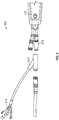
- FIG. 1A illustrates a side view of a bicycle 100, such as an electric bicycle.
- the bicycle 100 can include a seat 105 and a frame 110.
- the seat 105 can be supported by a seat tube 115.
- An electronic device 112 can be mounted to the frame 110 and positioned at least partly in a top tube of the frame 110 that extends between the seat tube 115 and handle bar mount.
- the bicycle 100 also can include a rear axle 120 of a rear wheel assembly 125.
- a motor can be positioned proximate the rear wheel assembly 125 for imparting motion to the bicycle 100, and one or more sensors can be positioned proximate the rear wheel assembly 125 or the front wheel assembly for monitoring operations or properties of the bicycle 100.
- a remote control device 130 can be attached to handle bars of the bicycle 100 and used to control the electronic device 112.
- Figure 1B illustrates a view of the bicycle 100 of Figure 1A from the perspective of a rider sitting in the seat 105 and viewing the handle bars and the electronic device 112 mounted to the top tube.
- FIG 2A illustrates a top perspective view of the electronic device 112 of Figure 1A .
- the electronic device 112 includes a housing that has an upper portion 201 and a lower portion 202.
- the lower portion 202 can be positioned within the frame 110 and the upper portion 201 can be positioned above the frame 110 and visible when viewing an outer surface of the bicycle 100.
- the upper portion 201 can include a downward sloping portion 203 and an inwardly sloping portion 204.
- the upper portion 201 may include a hole 206 usable for securing the upper portion 201 to the frame 110 with a fastener like a bolt or screw.
- the lower portion 202 can include a spring 208 configured to press against an inner surface of the frame 110 to secure the electronic device 112 to the top tube.
- the spring 208 can, for example, be a plate spring.
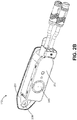
- the lower portion 202 can additionally include a connector 210.
- the connector 210 can be an analog connector and may include a first cable 212 (such as a HIGO 6-pole female cable) and a second cable 214 (such as a HIGO 5-pole male cable) for receiving data or power from or transmitting data or power to the bicycle 100 or one or more other components associated with the bicycle.
- the upper portion 201 can include a first user interface element 220 and a second user interface element 222.
- the first user interface element 220 can, for example, be used to receive a user input to activate or deactivate the bicycle 100, such as a motor of the bicycle 100 or one or more components associated with the bicycle 100.
- the second user interface element 222 can, for instance, be used to receive a user input to switch modes for the bicycle 100 or one or more other components associated with the bicycle 100.
- the upper portion 201 can further include a first display area 230 and a second display area 232.
- the first display area 230 can be used to display a level of charge of one or more batteries associated with (for example, supported by) the bicycle 100, such as is described in greater detail with respect to Figure 6 .
- the second display area 232 can be used to indicate whether the electronic device 112 or the bicycle 100 is activated or to identify a mode of operation for the electronic device 112 or the bicycle 100.
- Figure 2B illustrates a bottom perspective view of the electronic device 112 of Figure 1A .
- the lower portion 202 can include a speaker 240, such as a beeper, for outputting information audibly to an operator.
- a speaker 240 such as a beeper
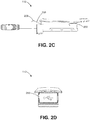
- Figures 2C and 2D illustrate side perspective views of the electronic device 112 of Figure 1A .
- the spring 208 can include a point 209 that is configured to contact and apply force against the inner surface of the frame 110 to secure the electronic device 112 to the frame 110.
- the electronic device 112 can include a diagnostic port positioned behind a cover 250 as shown in Figures 2C and 2D .
- the diagnostic port can be used to service and perform diagnostics on electronic device 112, the bicycle 100, or one or more components associated with the bicycle 100.
- the diagnostic port can be a Universal Serial Bus (USB) port.
- USB Universal Serial Bus
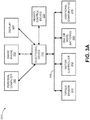
- FIG 3A illustrates an environment 300 in which the electronic device 112 of Figure 1A may communicate with other devices.
- the electronic device 112 can communicate via a medium, such as a Controller Area Network (CAN bus) or other channel, with a torque sensor 310, a motor controller 312, one or more batteries 314, and one or more additional components 316.
- the electronic device 112 can additionally communicate via wired or wireless communications with the remote control device 130, a personal computer 320, a smart phone 322, and a display 324.
- a medium such as a Controller Area Network (CAN bus) or other channel
- the electronic device 112 can receive a torque signal from the torque sensor 310 that is indicative of a torque at the rear axle 120 or another part of the bicycle 100.
- the electronic device 112 may communicate with the motor controller 312 so that the electronic device 112 can monitor operations or properties of the motor controller 312 or provide control commands to adjust operations by the motor controller 312.
- the electronic device 112 can receive one or more batteries signals from the one or more batteries 314 that is indicative of a level of charge of the one or more batteries 314.
- the one or more batteries 314 can include two batteries, and the electronic device can receive one battery signal from each of the two batteries to determine the level of charge of the individual batteries.
- FIG 3B illustrates an example components of the electronic device 112 of Figure 1A .
- the electronic device 112 can include a processor 330, a memory device 332, a user interface 334, a communication interface 336, and a Global Positioning System (GPS) antenna 338.
- the processor 330 can control operations of the electronic device 112 according to executable instructions stored in the memory device 332.
- the processor 330 may also store gathered bike data to the memory device 332.
- the user interface 334 can receive user inputs from an operator, such as via selection of the first user interface element 220 and the second user interface element 222 by the operator.
- the communication interface 336 can facilitate wired or wireless communications between the electronic device 112 and other devices.
- the GPS antenna 338 can provide a location of the electronic device 112, such as geographical coordinates corresponding to the location of the electronic device 112 over time.
- Figures 4A and 4B illustrate perspective views of the remote control device 130.
- the remote control device 130 can be attached to the handle bars of the bicycle 100 by positioning and securing the handle bars in the hole 410.
- the remote control device 130 can include multiple remote user interface elements, including a first remote user interface element 420, a second remote user interface element 422, and a third remote user interface element 424 for receiving user inputs to control operations of the electronic device 112.
- the remote control device 130 can transmit control signals to the electronic device 112 via a connector 430 of the remote control device 130.
- Each of the first remote user interface element 420, the second remote user interface element 422, and the third remote user interface element 42 can, for instance, include a switch that connects a different data wire to ground when the switch is pressed.
- the remote control device 130 may not include any transistors or intelligent components, such as a microprocessor.
- the remote control device 130 can include a top housing 440, rubber keys 442, internal plugs 444, flexible printed circuits (FPCs) with clickers 446, a bottom housing 448, a seal plug 450, a nut plate 452, a screw 454, a bushing 456, and a cable 458.
- FPCs flexible printed circuits
- Figure 5 illustrates a configuration 500 for connecting one or more lights to the electronic device 112 of Figure 1A .
- the first cable 212 can be connected to a Y splitter 510.
- the ends 512 of the Y splitter 510 can be connected to the one or more lights and provide voltage and ground wires for the one or more lights.
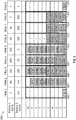
- FIG 6 illustrates battery status displays 600 by the electronic device 112 of Figure 1A .
- the battery status displays 600 in particular can be presented in the first display area 230 shown in Figure 2A .
- the Battery 1 State of Charge Percentage (SOC%) row and the Battery 2 SOC% row indicate the state of charge (sometimes referred to as a level of charge) of battery 1 and battery 2 over times 1-9 as numerical percentages. For example, at times 3, 7, and 9, battery 1 can respectively have a state of charge of 100%, 20%, and 7%, and at times 3, 7, and 9, battery 2 can respectively have a state of charge of 100%, 100%, and 5%.
- the 1-10 rows indicate the state of charge of the two batteries in the form of activated, colored indicators (such as LEDs) that correspond to the numerical percentages listed in the corresponding time column.
- a presented scale for battery 1 may be different from the presented scale for battery 2 (for instance, 100% state of charge for battery 1 can be indicated by activating all 1-10 of the indicators so each indicator represents an around 10% increase in charge while 100% state of charge for battery 2 can be indicated by activating all 1-5 of the bottom indicators so that each indicator represents an around 20% increase in charge).
- the indicators for battery 1 can be presented in a different color from the indicators for battery 2.
- all 1-10 of the blue indicators can be activated corresponding to the 100% state of charge for battery 1, and all 1-5 of the green indicators can be activated corresponding to the 100% state of charge for battery 2.
- 1 and 2 of the blue indicators can be activated corresponding to the 20% state of charge for battery 1, and all 1-5 of the green indicators can be activated corresponding to the 100% state of charge for battery 2.
- a single combined red indicator can be presented indicating that both batteries are below threshold levels, such as a 10% state of charge.
- the first display area 230 can appear as shown in box 602.
- the first display area 230 can appear as shown in box 604.
- the first display area 230 can appear as shown in box 606.
- the first display area 230 can appear as shown in box 608.
- the first display area 230 can appear as shown in box 610.
- the first display area 230 can appear as shown in box 612.
- the first display area 230 can appear as shown in box 614.
- the first display area 230 can appear as shown in box 616.
- the first display area 230 can appear as shown in box 618.
- the first display area 230 can simultaneously present the state of charges of battery 1 and battery 2 so that the state of charge of one of battery 1 or battery 2 is overlaid on the state of charge of the other of battery 1 or battery 2.
- the first display area 230 can moreover present the state of charges of battery 1 and battery 2 such that the battery having the lower state of charge is shown overlaid on top.
- the battery having the higher state of charge may instead by shown overlaid on top.
- the state of charge of one of battery 1 or battery 2 may be presented with a smaller width than the state of charge of the other of battery 1 or battery 2 (for example, as illustrated where the state of charge of battery 1 has a smaller width than the state of charge of battery 2).
- a machine such as a general purpose processor, a digital signal processor (DSP), an application specific integrated circuit (ASIC), a field programmable gate array (FPGA) or other programmable logic device, discrete gate or transistor logic, discrete hardware components, or any combination thereof designed to perform the functions described herein.
- DSP digital signal processor
- ASIC application specific integrated circuit
- FPGA field programmable gate array
- a general purpose processor can be a microprocessor, but in the alternative, the processor can be a controller, microcontroller, or state machine, combinations of the same, or the like.
- a processor can also be implemented as a combination of computing devices, for example, a combination of a DSP and a microprocessor, a plurality of microprocessors, one or more microprocessors in conjunction with a DSP core, or any other such configuration.
- a software module can reside in RAM memory, flash memory, ROM memory, EPROM memory, EEPROM memory, registers, hard disk, a removable disk, a CD-ROM, or any other form of computer-readable storage medium known in the art.
- An example storage medium can be connected to the processor such that the processor can read information from, and write information to, the storage medium.
- the storage medium can be integral to the processor.
- the processor and the storage medium can reside in an ASIC.
- the ASIC can reside in a user terminal.
- the processor and the storage medium can reside as discrete components in a user terminal.
Landscapes
- Engineering & Computer Science (AREA)
- Mechanical Engineering (AREA)
- Computer Hardware Design (AREA)
- Physics & Mathematics (AREA)
- General Physics & Mathematics (AREA)
- Theoretical Computer Science (AREA)
- General Engineering & Computer Science (AREA)
- Human Computer Interaction (AREA)
- Electric Propulsion And Braking For Vehicles (AREA)
- Charge And Discharge Circuits For Batteries Or The Like (AREA)
- Battery Mounting, Suspending (AREA)
- Measuring Fluid Pressure (AREA)
Abstract
Description
- This application claims priority to
U.S. Patent Application No. 16/022,507 filed on June 28, 2018 ; the disclosure of which is hereby incorporated by reference in its entirety. - The present technology relates to bicycles and, in particular, bicycle monitoring technology.
- Electric bicycles generally include human machine interfaces for interacting with the electric bicycles. The human machine interfaces can enable operators to monitor the electric bicycles.
- The systems, methods and devices described herein have innovative aspects, no single one of which is indispensable or solely responsible for their desirable attributes. Without limiting the scope of the claims, some of the advantageous features will now be summarized.
- In some aspects, an electronic device is disclosed for monitoring operations or properties of a bicycle or a component attached to the bicycle. The electronic device can include: a housing configured to mount to a top tube of a bicycle so that a portion of the housing is within the top tube when the housing is mounted to the bicycle; no more than two user input elements configured to receive user inputs; a wireless interface supported by the housing and configured wirelessly communicate with other devices; a connector supported by the housing and configured to receive data indicative of operations or properties of the bicycle or a component attached to the bicycle; a processor positioned in the housing where the processor is configured to monitor the operations or the properties to determine status information and store at least some of the data to a memory device; and a display supported by the housing and configured to present the status information without using alphanumeric characters. The display may, for instance, not include a liquid-crystal display.
- The electronic device of the preceding paragraph can include one or more of the following features: The display can include multiple light emitting diodes to present the status information. The no more than two user input elements can be two buttons, and the user inputs can include activation inputs, deactivation inputs, and settings adjustment inputs. The user inputs can include a reset input configured to reset system parameters, the reset input being received responsive to selection of at least one of the no more than two user input elements for a period of time during startup of the processor. The operations or the properties can include a speed, a cadence, a location, and a mode of the bicycle. The processor can output at least some of the data to another device via the wireless interface. The processor can communicate via a controller area network to monitor the operations or the properties. The processor can communicate with a remote control device via the connector. The electronic device can further include the remote control device, the remote control device including a switch configured to connect a data wire to ground when the switch is pressed; the remote control device not including any transistors. The housing may include no more than one hole that is configured to receive a fastener to secure the housing to the top tube. The portion can include a port configured to permit diagnosing or servicing of errors, and the housing can include a cover configured to selectively cover the port. The electronic device can further comprise the bicycle, the housing being configured to mount to the top tube so that any electrical connections supported by the housing are protected in the top tube from splashes of water external to the bicycle when the housing is mounted to the bicycle. Responsive to the bicycle turning on, the processor can automatically store at least some of the data to the memory device. The processor may not automatically store at least some of the data to the memory device until instructed by a user to automatically store at least some of the data to the memory device. The connector can receive power from the bicycle or the component.
- In some aspects, an electronic device is disclosed for monitoring levels of charge of a plurality of batteries associated with a bicycle. The electronic device can include: a housing configured to mount to a top tube of a bicycle so that a portion of the housing is within the top tube when the housing is mounted to the bicycle; a connector supported by the housing and configured to receive data indicative of a first level of charge of a first battery and a second level of charge of a second battery, the first battery and the second battery being associated with the bicycle; a processor positioned in the housing and configured to monitor the first level of charge and the second level of charge over time; and a display supported by the housing. The display can simultaneously present the first level of charge and the second level of charge over time such that: the first level of charge is overlaid on the second level of charge when the first level of charge is greater than the second level of charge, and the second level of charge is overlaid on the first level of charge when the first level of charge is less than the second level of charge.
- The electronic device of the preceding paragraph can include one or more of the following features: Responsive to a user input, the display can present the first level of charge and the second level of charge for a period of time and then hide the first level of charge and the second level of charge upon expiration of the period of time. The display can present the first level of charge and the second level of charge as a single combined indicator when the first level of charge is below a first threshold and the second level of charge is below a second threshold. The display can include multiple light emitting diodes configured to illuminate to present the first level of charge and the second level of charge. The first level of charge can be indicated by a first set of the multiple light emitting diodes having a first hue, and the second level of charge is indicated by a second set of the multiple light emitting diodes having a second hue different from the first hue. The first level of charge can be presented on a scale different from the second level of charge. The first battery and the second battery can be supported by the bicycle and power at least one of the bicycle or one or more components supported by the bicycle.
- In some aspects, an electronic device is disclosed for monitoring levels of charge of a plurality of batteries associated with a bicycle. The electronic device can include: a housing configured to mount to a top tube of a bicycle so that a portion of the housing is within the top tube when the housing is mounted to the bicycle; a connector supported by the housing and configured to receive data indicative of a first level of charge of a first battery and a second level of charge of a second battery, the first battery and the second battery being associated with the bicycle; a processor positioned in the housing and configured to monitor the first level of charge and the second level of charge over time; and a display supported by the housing. The display can simultaneously present the first level of charge and the second level of charge over time such that: at least a portion of the first level of charge is positioned above the second level of charge when the first level of charge is greater than the second level of charge, and at least a portion of the second level of charge is positioned above the first level of charge when the first level of charge is less than the second level of charge.
- The electronic device of the preceding paragraph can include one or more of the following features: Responsive to a user input, the display can present the first level of charge and the second level of charge for a period of time and then hide the first level of charge and the second level of charge upon expiration of the period of time. The display can present the first level of charge and the second level of charge as a single combined indicator when the first level of charge is below a first threshold and the second level of charge is below a second threshold. The display can include multiple light emitting diodes configured to illuminate to present the first level of charge and the second level of charge. The first level of charge can be indicated by a first set of the multiple light emitting diodes having a first hue, and the second level of charge can be indicated by a second set of the multiple light emitting diodes having a second hue different from the first hue. The first level of charge can be presented on a scale different from the second level of charge. The first battery and the second battery can be supported by the bicycle and power at least one of the bicycle or one or more components supported by the bicycle.
- In some aspects, an electronic device is disclosed for monitoring operations or properties of a bicycle or a component attached to the bicycle. The electronic device can include: a housing configured to mount to a top tube of a bicycle so that a portion of the housing is within the top tube when the housing is mounted to the bicycle, the portion including a hole configured to receive a fastener to secure the housing to the top tube; a connector supported by the housing and configured to receive data indicative of operations or properties of the bicycle or a component attached to the bicycle; a processor positioned in the housing and configured to monitor the operations or properties to determine status information for presentation; and a display supported by the housing and configured to present the status information.
- The electronic device of the preceding paragraph can include one or more of the following features: The housing may include no holes configured to receive fasteners to secure the housing to the top tube other than the hole. The portion can include a spring configured to press against an inner surface of the top tube to secure the housing to the top tube. The spring can be positioned on a first end of the portion, and the hole can be positioned on a second end of the portion. The first end can be opposite the second end. The housing can include a lip around a perimeter of the housing, the lip being configured to cover a gap between the housing and the top tube when the housing is mounted to the bicycle. The lip can include rubber. Any electrical connections supported by the housing can be positioned in the top tube when the housing is mounted to the bicycle.
- The above-mentioned aspects, as well as other features, aspects, and advantages of the present technology will now be described in connection with various aspects, with reference to the accompanying drawings. The illustrated aspects, however, are merely examples and are not intended to be limiting. Like reference numbers and designations in the various drawings indicate like elements.
-
Figure 1A illustrates a side view of a bicycle with an example in-tube mounted electronic device. -
Figure 1B illustrates a seat perspective view of the bicycle with the in-tube mounted electronic device ofFigure 1A . -
Figure 2A illustrates a top perspective view of the in-tube mounted electronic device ofFigure 1A . -
Figure 2B illustrates a bottom perspective view of the in-tube mounted electronic device ofFigure 1A . -
Figures 2C and 2D illustrate side perspective views of the in-tube mounted electronic device ofFigure 1A . -
Figure 3A illustrates an example environment in which the in-tube mounted electronic device ofFigure 1A can communicate with other devices. -
Figure 3B illustrates an example components of the in-tube mounted electronic device ofFigure 1A . -
Figures 4A and4B illustrate perspective views of an example remote control device that may communicate with the in-tube mounted electronic device ofFigure 1A . -
Figure 5 illustrates a configuration for connecting one or more lights to the in-tube mounted electronic device ofFigure 1A . -
Figure 6 illustrates example battery status displays by the in-tube mounted electronic device ofFigure 1A . - In the following detailed description, reference is made to the accompanying drawings, which form a part of the present disclosure. The illustrative aspects described in the detailed description, drawings, and claims are not meant to be limiting. Other aspects may be utilized, and other changes may be made, without departing from the spirit or scope of the subject matter presented here. It will be readily understood that the aspects of the present disclosure, as generally described herein, and illustrated in the Figures, can be arranged, substituted, combined, and designed in a wide variety of different configurations, all of which are explicitly contemplated and form part of this disclosure. For example, a system or device may be implemented or a method may be practiced using any number of the aspects set forth herein. In addition, such a system or device may be implemented or such a method may be practiced using other structure, functionality, or structure and functionality in addition to or other than one or more of the aspects set forth herein. Alterations and further modifications of the inventive features illustrated herein, and additional applications of the principles of the inventions as illustrated herein, which would occur to one skilled in the relevant art and having possession of this disclosure, are to be considered within the scope of the invention.
- Descriptions of unnecessary parts or elements may be omitted for clarity and conciseness, and like reference numerals refer to like elements throughout. In the drawings, the size and thickness of layers and regions may be exaggerated for clarity and convenience.
- Features of the present disclosure will become more fully apparent from the following description and appended claims, taken in conjunction with the accompanying drawings. It will be understood these drawings depict only certain aspects in accordance with the disclosure and, therefore, are not to be considered limiting of its scope; the disclosure will be described with additional specificity and detail through use of the accompanying drawings. An apparatus, system or method according to some of the described aspects can have several aspects, no single one of which necessarily is solely responsible for the desirable attributes of the apparatus, system or method. After considering this discussion, and particularly after reading the section entitled "Detailed Description" one will understand how illustrated features serve to explain certain principles of the present disclosure.
- This application is directed at least in part to aspects of an electronic device (sometimes referred to as a human machine interface) that is mounted in and to a frame of a bicycle, such as an electric bicycle, and used to monitor operations or properties of the bicycle or one or more components associated with the bicycle. The electronic device can, for example, be mounted in a top tube of the bicycle and have an aesthetically clean appearance. The electronic device may be able to integrate and communicate with a variety of components including sensors to facilitate customization of monitoring by the electronic device. The electronic device moreover can be relatively inexpensive, and any connectors of electronic device can be designed to be protected against environmental conditions, such as water, when the electronic device are mounted to the bicycle.
- The electronic device can desirably have a relatively minimalist design. The electronic device, in some aspects, may include a display that does not present alphanumeric characters to an operator. The display can include multiple indicators that individually or in combination present information to the operator, such as the level of charge of one or more batteries or an operating mode of the electronic device or bicycle. The multiple indicators can, for example, include multiple light emitting diodes (LEDs). In some implementations, the display may not include a liquid-crystal display (LCD) like a thin-film-transistor (TFT) LCD. The electronic device can include one or two user input elements, such as buttons, for the operator to directly provide user inputs (for instance, an on/off input to activate or deactivate the bicycle or a mode change input for adjusting a mode of the electronic device or bicycle) to the electronic device. In some implementations, the electronic device may not include more than two user input elements for the operator to directly provide user inputs to the electronic device.
- The electronic device can, in certain aspects, include one connector for receiving data and power from the bicycle or one or more components associated with the bicycle. The electronic device can additionally include another connector for receiving inputs from a remote control device like a handle bar mounted control device. The remote control device can include one or more switches and may connect a data wire to ground when a corresponding one of the switches is pressed. In some implementations, the remote control device may not include any transistors or intelligent components, such as a microprocessor. The electronic device can also include a diagnostic port for servicing or diagnosing any issues with electronic device. The diagnostic port may be hidden when the electronic device is mounted to the bicycle, and the electronic device can include a cover, such as a rubber seal, over the diagnostic port to protect against water entering the diagnostic port when not in use. Further, the electronic device can include a wireless communication interface for wirelessly communicating with other devices and may transmit information such as speed, battery charge, or selected mode using one or more protocols, like ANT+™ or Bluetooth™. The diagnostic port or wireless interface communications can be used to tune, diagnose, or update the electronic device, bicycle, or one or more other components assisted with the bicycle, as well as collect and remotely store data gathered by the electronic device.
- The electronic device can have a housing configured to be at least partly mounted in a top tube of a bicycle. The housing can be secured to the top tube by bolting the housing to the top tube on one side of the housing and securing another side of the housing with the spring from inside the top tube. This design desirably, in certain aspects, can facilitate quick and easy drop in and mounting of the housing to the top tube with the use of no more than one fastener, such as a bolt or screw, that passes through a hole in the housing. In addition, this design advantageously, in certain aspects, can allow for a large tolerance in top tube wall thickness and shape, as well as a length and width of the cutout for the electronic device in the top tube. The housing can further include a perimeter lip to cover a gap between the electronic device in the top tube. The lip can, for instance, be composed of rubber or plastic. The electronic device can moreover be designed so that any connectors or cables extending from the electronic device are positioned within the top tube when the electronic devices mounted to the top tube.
- The electronic device can be set to a mode in which the display presents for a period of time (such as a 2, 3, 5, or 10 seconds) certain information in response to a user input, but otherwise does not present the certain information. This mode can be termed a dark mode and may be set according to instructions received from another device, such as instructions provided by an application running on a smart phone.
- The electronic device can include a display that presents a state of charge of one or more batteries in percentage increments (such as 5%, 10%, or 20% increments). Each percentage increment can be denoted by a separate indicator, and activation of one or more indicators can denote a state of charge that at least meets a threshold level corresponding to the activated indicators. The display can further simultaneously present the state of charge of two batteries. The state of charge of one of the two batteries can be presented in a different color from the state of charge of the other of the two batteries. In addition, the state of charge of one of the two batteries can be overlaid on the other of the two batteries such that the battery having the lower state of charge is shown on top. When the state of charge of both of the two batteries may be below a threshold level, a single combined indicator can be used to represent a dual low battery condition.
- The electronic device can continuously monitor the bicycle and one or more components associated with the bicycle when the bicycle is in operation. If any errors occur during operation, the electronic device can store a snapshot associated with the error so that the snapshot can be later used for analysis or troubleshooting. The electronic device can also record in log files gathered bike-related data, such as speed, cadence, location, selected mode, or motor temperature. The log files can then be used to analyze rides or provide the bike-related data to platforms, such as social platforms like STRAVA™. In some implementations, the record function can be switched off by default and may be activated by an operator before being initiated. Advantageously, in certain aspects, one or more of these features of the electronic device can obviate the need for bringing a smart phone when riding the bicycle because the electronic device can automatically and easily handle gathering of data about rides.
- The electronic device can be reset in some instances without utilizing a separate tool, such as an application, diagnostic, or other communication with another device. The electronic device can, for example, be reset by an operator holding one of the user input elements for a period of time (for example, 2, 3, 5, or 10 seconds) during startup of the electronic device. The reset can desirably reset system parameters, such as those parameters that may be adjusted by an operator, and may be useful in instances like transferring of the electronic device or bicycle to another operator.
- The electronic device can also facilitate the addition of one or more lights to the bicycle. An in-line Y splitter can be connected to a connector of the electronic device, which may route one or more voltage and ground lines for the one or more lights.
-
Figure 1A illustrates a side view of abicycle 100, such as an electric bicycle. Thebicycle 100 can include aseat 105 and aframe 110. Theseat 105 can be supported by aseat tube 115. Anelectronic device 112 can be mounted to theframe 110 and positioned at least partly in a top tube of theframe 110 that extends between theseat tube 115 and handle bar mount. Thebicycle 100 also can include arear axle 120 of arear wheel assembly 125. A motor can be positioned proximate therear wheel assembly 125 for imparting motion to thebicycle 100, and one or more sensors can be positioned proximate therear wheel assembly 125 or the front wheel assembly for monitoring operations or properties of thebicycle 100. Aremote control device 130 can be attached to handle bars of thebicycle 100 and used to control theelectronic device 112. -
Figure 1B illustrates a view of thebicycle 100 ofFigure 1A from the perspective of a rider sitting in theseat 105 and viewing the handle bars and theelectronic device 112 mounted to the top tube. -
Figure 2A illustrates a top perspective view of theelectronic device 112 ofFigure 1A . Theelectronic device 112 includes a housing that has anupper portion 201 and alower portion 202. When theelectronic device 112 is mounted to the bicycle, thelower portion 202 can be positioned within theframe 110 and theupper portion 201 can be positioned above theframe 110 and visible when viewing an outer surface of thebicycle 100. Theupper portion 201 can include a downward slopingportion 203 and an inwardly slopingportion 204. Theupper portion 201 may include ahole 206 usable for securing theupper portion 201 to theframe 110 with a fastener like a bolt or screw. - The
lower portion 202 can include aspring 208 configured to press against an inner surface of theframe 110 to secure theelectronic device 112 to the top tube. Thespring 208 can, for example, be a plate spring. Thelower portion 202 can additionally include aconnector 210. Theconnector 210 can be an analog connector and may include a first cable 212 (such as a HIGO 6-pole female cable) and a second cable 214 (such as a HIGO 5-pole male cable) for receiving data or power from or transmitting data or power to thebicycle 100 or one or more other components associated with the bicycle. - The
upper portion 201 can include a firstuser interface element 220 and a seconduser interface element 222. The firstuser interface element 220 can, for example, be used to receive a user input to activate or deactivate thebicycle 100, such as a motor of thebicycle 100 or one or more components associated with thebicycle 100. The seconduser interface element 222 can, for instance, be used to receive a user input to switch modes for thebicycle 100 or one or more other components associated with thebicycle 100. - The
upper portion 201 can further include afirst display area 230 and asecond display area 232. Thefirst display area 230 can be used to display a level of charge of one or more batteries associated with (for example, supported by) thebicycle 100, such as is described in greater detail with respect toFigure 6 . Thesecond display area 232 can be used to indicate whether theelectronic device 112 or thebicycle 100 is activated or to identify a mode of operation for theelectronic device 112 or thebicycle 100. -
Figure 2B illustrates a bottom perspective view of theelectronic device 112 ofFigure 1A . Thelower portion 202 can include aspeaker 240, such as a beeper, for outputting information audibly to an operator. -
Figures 2C and 2D illustrate side perspective views of theelectronic device 112 ofFigure 1A . As can be seen fromFigure 2C , thespring 208 can include apoint 209 that is configured to contact and apply force against the inner surface of theframe 110 to secure theelectronic device 112 to theframe 110. Theelectronic device 112 can include a diagnostic port positioned behind acover 250 as shown inFigures 2C and 2D . The diagnostic port can be used to service and perform diagnostics onelectronic device 112, thebicycle 100, or one or more components associated with thebicycle 100. In one implementation, the diagnostic port can be a Universal Serial Bus (USB) port. -
Figure 3A illustrates anenvironment 300 in which theelectronic device 112 ofFigure 1A may communicate with other devices. As shown, theelectronic device 112 can communicate via a medium, such as a Controller Area Network (CAN bus) or other channel, with atorque sensor 310, amotor controller 312, one ormore batteries 314, and one or moreadditional components 316. Theelectronic device 112 can additionally communicate via wired or wireless communications with theremote control device 130, apersonal computer 320, asmart phone 322, and adisplay 324. - The
electronic device 112 can receive a torque signal from thetorque sensor 310 that is indicative of a torque at therear axle 120 or another part of thebicycle 100. Theelectronic device 112 may communicate with themotor controller 312 so that theelectronic device 112 can monitor operations or properties of themotor controller 312 or provide control commands to adjust operations by themotor controller 312. Theelectronic device 112 can receive one or more batteries signals from the one ormore batteries 314 that is indicative of a level of charge of the one ormore batteries 314. For instance, the one ormore batteries 314 can include two batteries, and the electronic device can receive one battery signal from each of the two batteries to determine the level of charge of the individual batteries. -
Figure 3B illustrates an example components of theelectronic device 112 ofFigure 1A . Theelectronic device 112 can include aprocessor 330, amemory device 332, auser interface 334, acommunication interface 336, and a Global Positioning System (GPS)antenna 338. Theprocessor 330 can control operations of theelectronic device 112 according to executable instructions stored in thememory device 332. Theprocessor 330 may also store gathered bike data to thememory device 332. Theuser interface 334 can receive user inputs from an operator, such as via selection of the firstuser interface element 220 and the seconduser interface element 222 by the operator. Thecommunication interface 336 can facilitate wired or wireless communications between theelectronic device 112 and other devices. TheGPS antenna 338 can provide a location of theelectronic device 112, such as geographical coordinates corresponding to the location of theelectronic device 112 over time. -
Figures 4A and4B illustrate perspective views of theremote control device 130. Theremote control device 130 can be attached to the handle bars of thebicycle 100 by positioning and securing the handle bars in thehole 410. Theremote control device 130 can include multiple remote user interface elements, including a first remoteuser interface element 420, a second remoteuser interface element 422, and a third remoteuser interface element 424 for receiving user inputs to control operations of theelectronic device 112. Theremote control device 130 can transmit control signals to theelectronic device 112 via aconnector 430 of theremote control device 130. Each of the first remoteuser interface element 420, the second remoteuser interface element 422, and the third remote user interface element 42 can, for instance, include a switch that connects a different data wire to ground when the switch is pressed. In some implementations, theremote control device 130 may not include any transistors or intelligent components, such as a microprocessor. As can be seen from the tear down of theremote control device 130 inFigure 4B , theremote control device 130 can include atop housing 440,rubber keys 442,internal plugs 444, flexible printed circuits (FPCs) withclickers 446, abottom housing 448, aseal plug 450, anut plate 452, ascrew 454, abushing 456, and acable 458. -
Figure 5 illustrates aconfiguration 500 for connecting one or more lights to theelectronic device 112 ofFigure 1A . Thefirst cable 212 can be connected to aY splitter 510. The ends 512 of theY splitter 510 can be connected to the one or more lights and provide voltage and ground wires for the one or more lights. -
Figure 6 illustrates battery status displays 600 by theelectronic device 112 ofFigure 1A . The battery status displays 600 in particular can be presented in thefirst display area 230 shown inFigure 2A . - The
Battery 1 State of Charge Percentage (SOC%) row and theBattery 2 SOC% row indicate the state of charge (sometimes referred to as a level of charge) ofbattery 1 andbattery 2 over times 1-9 as numerical percentages. For example, attimes battery 1 can respectively have a state of charge of 100%, 20%, and 7%, and attimes battery 2 can respectively have a state of charge of 100%, 100%, and 5%. - The 1-10 rows indicate the state of charge of the two batteries in the form of activated, colored indicators (such as LEDs) that correspond to the numerical percentages listed in the corresponding time column. Notably, a presented scale for
battery 1 may be different from the presented scale for battery 2 (for instance, 100% state of charge forbattery 1 can be indicated by activating all 1-10 of the indicators so each indicator represents an around 10% increase in charge while 100% state of charge forbattery 2 can be indicated by activating all 1-5 of the bottom indicators so that each indicator represents an around 20% increase in charge). Moreover, the indicators forbattery 1 can be presented in a different color from the indicators forbattery 2. In one example, attime 3, all 1-10 of the blue indicators can be activated corresponding to the 100% state of charge forbattery 1, and all 1-5 of the green indicators can be activated corresponding to the 100% state of charge forbattery 2. In another example, attime battery 1, and all 1-5 of the green indicators can be activated corresponding to the 100% state of charge forbattery 2. In yet another example, attime 9, a single combined red indicator can be presented indicating that both batteries are below threshold levels, such as a 10% state of charge. - Accordingly, at
time 1, thefirst display area 230 can appear as shown inbox 602. Attime 2, thefirst display area 230 can appear as shown inbox 604. Attime 3, thefirst display area 230 can appear as shown inbox 606. Attime 4, thefirst display area 230 can appear as shown inbox 608. Attime 5, thefirst display area 230 can appear as shown inbox 610. Attime 6, thefirst display area 230 can appear as shown inbox 612. Attime 7, thefirst display area 230 can appear as shown inbox 614. Attime 8, thefirst display area 230 can appear as shown inbox 616. Attime 9, thefirst display area 230 can appear as shown inbox 618. - The
first display area 230 can simultaneously present the state of charges ofbattery 1 andbattery 2 so that the state of charge of one ofbattery 1 orbattery 2 is overlaid on the state of charge of the other ofbattery 1 orbattery 2. Thefirst display area 230 can moreover present the state of charges ofbattery 1 andbattery 2 such that the battery having the lower state of charge is shown overlaid on top. In other aspects, the battery having the higher state of charge may instead by shown overlaid on top. Moreover, the state of charge of one ofbattery 1 orbattery 2 may be presented with a smaller width than the state of charge of the other ofbattery 1 or battery 2 (for example, as illustrated where the state of charge ofbattery 1 has a smaller width than the state of charge of battery 2). - Various modifications to the implementations described in this disclosure may be readily apparent to those skilled in the art, and the generic principles defined herein may be applied to other implementations without departing from the spirit or scope of this disclosure. Thus, the claims are not intended to be limited to the implementations shown herein, but are to be accorded the widest scope consistent with this disclosure, the principles and the novel features disclosed herein. Additionally, a person having ordinary skill in the art will readily appreciate, the terms "upper" and "lower" are sometimes used for ease of describing the figures, and indicate relative positions corresponding to the orientation of the figure on a properly oriented page, and may not reflect the proper orientation of the device as implemented.
- Certain features that are described in this specification in the context of separate implementations also can be implemented in combination in a single implementation. Conversely, various features that are described in the context of a single implementation also can be implemented in multiple implementations separately or in any suitable sub combination. Moreover, although features may be described above as acting in certain combinations and even initially claimed as such, one or more features from a claimed combination can in some cases be excised from the combination, and the claimed combination may be directed to a sub combination or variation of a sub combination.
- The various illustrative logical blocks, modules, and algorithm steps described in connection with the aspects disclosed herein can be implemented as electronic hardware, computer software, or combinations of both. To clearly illustrate this interchangeability of hardware and software, various illustrative components, blocks, modules, and steps have been described above generally in terms of their functionality. Whether such functionality is implemented as hardware or software depends upon the particular application and design constraints imposed on the overall system. The described functionality can be implemented in varying ways for each particular application, but such implementation decisions should not be interpreted as causing a departure from the scope of the disclosure.
- The various illustrative logical blocks and modules described in connection with the aspects disclosed herein can be implemented or performed by a machine, such as a general purpose processor, a digital signal processor (DSP), an application specific integrated circuit (ASIC), a field programmable gate array (FPGA) or other programmable logic device, discrete gate or transistor logic, discrete hardware components, or any combination thereof designed to perform the functions described herein. A general purpose processor can be a microprocessor, but in the alternative, the processor can be a controller, microcontroller, or state machine, combinations of the same, or the like. A processor can also be implemented as a combination of computing devices, for example, a combination of a DSP and a microprocessor, a plurality of microprocessors, one or more microprocessors in conjunction with a DSP core, or any other such configuration.
- The steps of a method, process, or algorithm described in connection with the aspects disclosed herein can be embodied directly in hardware, in a software module executed by a processor, or in a combination of the two. A software module can reside in RAM memory, flash memory, ROM memory, EPROM memory, EEPROM memory, registers, hard disk, a removable disk, a CD-ROM, or any other form of computer-readable storage medium known in the art. An example storage medium can be connected to the processor such that the processor can read information from, and write information to, the storage medium. In the alternative, the storage medium can be integral to the processor. The processor and the storage medium can reside in an ASIC. The ASIC can reside in a user terminal. In the alternative, the processor and the storage medium can reside as discrete components in a user terminal.
- Conditional language used herein, such as, among others, "can," "might," "may," "for example," and the like, unless specifically stated otherwise, or otherwise understood within the context as used, is generally intended to convey that certain aspects include, while other aspects do not include, certain features, elements and/or states. Thus, such conditional language is not generally intended to imply that features, elements and/or states are in any way required for one or more aspects or that one or more aspects necessarily include logic for deciding, with or without author input or prompting, whether these features, elements and/or states are included or are to be performed in any particular aspect. The terms "comprising," "including," "having," and the like are synonymous and are used inclusively, in an open-ended fashion, and do not exclude additional elements, features, acts, operations, and so forth. Also, the term "or" is used in its inclusive sense (and not in its exclusive sense) so that when used, for example, to connect a list of elements, the term "or" means one, some, or all of the elements in the list.
- Conjunctive language such as the phrase "at least one of X, Y and Z," unless specifically stated otherwise, is otherwise understood with the context as used in general to convey that an item, term, etc. may be either X, Y or Z. Thus, such conjunctive language is not generally intended to imply that certain aspects require at least one of X, at least one of Y and at least one of Z to each be present.
- While the above detailed description has shown, described, and pointed out novel features as applied to various aspects, it will be understood that various omissions, substitutions, and changes in the form and details of the devices or algorithms illustrated can be made without departing from the spirit of the disclosure. As will be recognized, certain aspects described herein can be embodied within a form that does not provide all of the features and benefits set forth herein, as some features can be used or practiced separately from others. All changes which come within the meaning and range of equivalency of the claims are to be embraced within their scope.
Claims (15)
- An electronic device for monitoring levels of charge of a plurality of batteries associated with a bicycle, the electronic device comprising:a housing configured to mount to a top tube of a bicycle so that a portion of the housing is within the top tube when the housing is mounted to the bicycle;a connector supported by the housing and configured to receive data indicative of a first level of charge of a first battery and a second level of charge of a second battery, the first battery and the second battery being associated with the bicycle;a processor positioned in the housing and configured to monitor the first level of charge and the second level of charge over time; anda display supported by the housing, the display being configured to simultaneously present the first level of charge and the second level of charge over time such that:the first level of charge is overlaid on the second level of charge when the first level of charge is greater than the second level of charge, andthe second level of charge is overlaid on the first level of charge when the first level of charge is less than the second level of charge.
- The electronic device of claim 1, wherein, responsive to a user input, the display is configured to present the first level of charge and the second level of charge for a period of time and then hide the first level of charge and the second level of charge upon expiration of the period of time.
- The electronic device of claim 1 or 2, wherein the display is configured to present the first level of charge and the second level of charge as a single combined indicator when the first level of charge is below a first threshold and the second level of charge is below a second threshold.
- The electronic device of any one or more of claims 1-3, wherein the display comprises a plurality of light emitting diodes configured to illuminate to present the first level of charge and the second level of charge.
- The electronic device of claim 4, wherein the first level of charge is indicated by a first set of the plurality of light emitting diodes having a first hue, and the second level of charge is indicated by a second set of the plurality of light emitting diodes having a second hue different from the first hue.
- The electronic device of any one or more of claims 1-5, wherein the first level of charge is presented on a scale different from the second level of charge.
- The electronic device of any one or more of claims 1-6, wherein the first battery and the second battery are supported by the bicycle and configured to power at least one of the bicycle or one or more components supported by the bicycle.
- An electronic device for monitoring operations or properties of a bicycle or a component attached to the bicycle, the electronic device comprising:a housing configured to mount to a top tube of a bicycle so that a portion of the housing is within the top tube when the housing is mounted to the bicycle;no more than two user input elements configured to receive user inputs;a wireless interface supported by the housing and configured wirelessly communicate with other devices;a connector supported by the housing and configured to receive data indicative of operations or properties of the bicycle or a component attached to the bicycle;a processor positioned in the housing, the processor being configured to:monitor the operations or the properties to determine status information, andstore at least some of the data to a memory device; anda display supported by the housing and configured to present the status information without using alphanumeric characters,wherein the display does not comprise a liquid-crystal display.
- The electronic device of claim 8, wherein the display comprises a plurality of light emitting diodes to present the status information.
- The electronic device of claim 8 or 9, wherein the no more than two user input elements are two buttons, and the user inputs comprise activation inputs, deactivation inputs, and settings adjustment inputs.
- The electronic device of any one or more of claims 8-10, wherein the user inputs comprise a reset input configured to reset system parameters, the reset input being received responsive to selection of at least one of the no more than two user input elements for a period of time during startup of the processor.
- The electronic device of any one or more of claims 8-11, wherein the operations or the properties comprise a speed, a cadence, a location, and a mode of the bicycle.
- The electronic device of any one or more of claims 8-12, wherein the processor is configured to communicate with a remote control device via the connector.
- The electronic device of claim 13, further comprising the remote control device, the remote control device comprising a switch configured to connect a data wire to ground when the switch is pressed, the remote control device not comprising any transistors.
- The electronic device of any one or more of claims 8-14, wherein the housing comprises no more than one hole that is configured to receive a fastener to secure the housing to the top tube.
Priority Applications (1)
| Application Number | Priority Date | Filing Date | Title |
|---|---|---|---|
| EP21161260.1A EP3851365B1 (en) | 2018-06-28 | 2019-06-27 | In-frame mounted bicycle monitoring device |
Applications Claiming Priority (1)
| Application Number | Priority Date | Filing Date | Title |
|---|---|---|---|
| US16/022,507 US10472015B1 (en) | 2018-06-28 | 2018-06-28 | In-frame mounted bicycle monitoring device |
Related Child Applications (1)
| Application Number | Title | Priority Date | Filing Date |
|---|---|---|---|
| EP21161260.1A Division EP3851365B1 (en) | 2018-06-28 | 2019-06-27 | In-frame mounted bicycle monitoring device |
Publications (3)
| Publication Number | Publication Date |
|---|---|
| EP3587236A2 true EP3587236A2 (en) | 2020-01-01 |
| EP3587236A3 EP3587236A3 (en) | 2020-03-11 |
| EP3587236B1 EP3587236B1 (en) | 2021-03-24 |
Family
ID=67137526
Family Applications (2)
| Application Number | Title | Priority Date | Filing Date |
|---|---|---|---|
| EP21161260.1A Active EP3851365B1 (en) | 2018-06-28 | 2019-06-27 | In-frame mounted bicycle monitoring device |
| EP19182784.9A Active EP3587236B1 (en) | 2018-06-28 | 2019-06-27 | In-frame mounted bicycle monitoring device |
Family Applications Before (1)
| Application Number | Title | Priority Date | Filing Date |
|---|---|---|---|
| EP21161260.1A Active EP3851365B1 (en) | 2018-06-28 | 2019-06-27 | In-frame mounted bicycle monitoring device |
Country Status (2)
| Country | Link |
|---|---|
| US (4) | US10472015B1 (en) |
| EP (2) | EP3851365B1 (en) |
Cited By (3)
| Publication number | Priority date | Publication date | Assignee | Title |
|---|---|---|---|---|
| EP3882121A1 (en) * | 2020-03-20 | 2021-09-22 | Amprio GmbH | Electric bicycle and modular electric bicycle traction battery |
| US12545357B2 (en) | 2018-06-28 | 2026-02-10 | Specialized Bicycle Components, Inc. | In-frame mounted bicycle monitoring device |
| US12589822B2 (en) | 2021-05-25 | 2026-03-31 | Specialized Bicycle Components, Inc. | In-frame mounted bicycle display |
Families Citing this family (24)
| Publication number | Priority date | Publication date | Assignee | Title |
|---|---|---|---|---|
| US9452654B2 (en) | 2009-01-07 | 2016-09-27 | Fox Factory, Inc. | Method and apparatus for an adjustable damper |
| US9140325B2 (en) | 2009-03-19 | 2015-09-22 | Fox Factory, Inc. | Methods and apparatus for selective spring pre-load adjustment |
| US12491961B2 (en) * | 2008-11-25 | 2025-12-09 | Fox Factory, Inc. | Seat post |
| US9422018B2 (en) * | 2008-11-25 | 2016-08-23 | Fox Factory, Inc. | Seat post |
| US10036443B2 (en) | 2009-03-19 | 2018-07-31 | Fox Factory, Inc. | Methods and apparatus for suspension adjustment |
| US11299233B2 (en) | 2009-01-07 | 2022-04-12 | Fox Factory, Inc. | Method and apparatus for an adjustable damper |
| EP3778358B1 (en) | 2010-07-02 | 2023-04-12 | Fox Factory, Inc. | Positive lock adjustable seat post |
| EP3567272B1 (en) | 2011-09-12 | 2021-05-26 | Fox Factory, Inc. | Methods and apparatus for suspension set up |
| ES2863405T3 (en) * | 2018-06-27 | 2021-10-11 | Polar Electro Oy | Cycling computer |
| JP2020098124A (en) * | 2018-12-17 | 2020-06-25 | セイコーエプソン株式会社 | Electronic device, battery status display method and printing device |
| US12246795B2 (en) * | 2019-11-26 | 2025-03-11 | Sram, Llc | Interface for electric assist bicycle |
| USD1099881S1 (en) * | 2020-05-28 | 2025-10-28 | Sram, Llc | Combined electronic device and mounting interface |
| TW202241750A (en) | 2021-04-20 | 2022-11-01 | 德商矢倫德國股份有限公司 | Electric bicycle drive unit, and bicycle frame, frame interface unit and energy storage device for electric bicycle drive unit |
| JP7220759B1 (en) * | 2021-09-30 | 2023-02-10 | 本田技研工業株式会社 | Boarding type mobile body, control device, control method, and program for boarding type mobile body |
| DE102022109790A1 (en) * | 2022-04-22 | 2023-10-26 | Porsche eBike Perfomance GmbH | Bicycle or e-bike interface and bicycle or e-bike |
| US12414170B2 (en) | 2022-11-30 | 2025-09-09 | Sram, Llc | Power on pairing for electronic components of a bicycle |
| CN219619280U (en) * | 2023-03-10 | 2023-09-01 | 深圳市十方运动科技有限公司 | Pipe embedded GPS box installation locking structure |
| DE102023205672A1 (en) | 2023-06-16 | 2024-12-19 | Mahle International Gmbh | Control device for an electric bicycle and electric bicycle with the same |
| USD1096783S1 (en) * | 2023-07-12 | 2025-10-07 | Specialized Bicycle Components, Inc. | Display screen or portion thereof with animated graphical user interface |
| DE102024201931A1 (en) * | 2024-03-01 | 2025-09-04 | Robert Bosch Gesellschaft mit beschränkter Haftung | Electric motor-driven vehicle and display unit for an electric motor-driven vehicle |
| DE102024201936A1 (en) * | 2024-03-01 | 2025-09-04 | Robert Bosch Gesellschaft mit beschränkter Haftung | Electric motor-driven vehicle and display unit for an electric motor-driven vehicle |
| DE102024201940A1 (en) * | 2024-03-01 | 2025-09-04 | Robert Bosch Gesellschaft mit beschränkter Haftung | Electric motor-driven vehicle and display unit for an electric motor-driven vehicle |
| US12606271B2 (en) | 2024-08-26 | 2026-04-21 | Sram, Llc | System for a bicycle including an energy storage device |
| DE102024131067A1 (en) | 2024-10-24 | 2026-04-30 | Mahle International Gmbh | Control unit for an electric bicycle, bicycle frame, and electric bicycle with such a control unit |
Family Cites Families (111)
| Publication number | Priority date | Publication date | Assignee | Title |
|---|---|---|---|---|
| FR730602A (en) | 1932-01-27 | 1932-08-18 | Mounting device for watches of motorcycles and other similar vehicles | |
| US2596438A (en) | 1951-11-30 | 1952-05-13 | Security Sash & Screen Company | Spring clip |
| DE4105505A1 (en) | 1991-02-22 | 1992-09-03 | Telefonbau & Normalzeit Gmbh | Liquid crystal display device with large number of electrode connections - uses distance piece to separate compressable conducting blocks, enabling two rows of connections to be employed |
| US5178033A (en) | 1991-09-03 | 1993-01-12 | August Kund | Bicycle gear display |
| DE9204615U1 (en) | 1992-04-03 | 1992-06-04 | Tsai, Shui Te, Chang-Hua City | Mounting device for measuring device |
| DE4427173C1 (en) | 1994-08-01 | 1995-10-19 | Valeo Borg Instr Verw Gmbh | Electro=optical cellular display esp. for dashboard of motor vehicle |
| JPH08268361A (en) * | 1995-03-30 | 1996-10-15 | Matsushita Electric Ind Co Ltd | Electric bicycle |
| US5798702A (en) | 1996-04-18 | 1998-08-25 | Suzuki Motor Corporation | Residual battery capacity display device for electric vehicle |
| US6305241B1 (en) | 1999-06-28 | 2001-10-23 | Shimano, Inc. | Handlebar adapter for mounting a bicycle display |
| US6854328B2 (en) | 2001-06-14 | 2005-02-15 | Custom Spec Engineering, Inc. | Cover structure for marine instrument |
| JP2003116226A (en) * | 2001-10-10 | 2003-04-18 | Matsushita Electric Ind Co Ltd | Electric vehicle and charging unit for battery unit for electric vehicle |
| USD472834S1 (en) | 2001-11-28 | 2003-04-08 | Cateye Co., Ltd. | Speedometer for a bicycle |
| JP3727315B2 (en) * | 2003-04-01 | 2005-12-14 | 株式会社シマノ | Bicycle power supply |
| TWD104499S1 (en) | 2003-08-25 | 2005-05-11 | 貓眼股份有限公司 | Speedometer for a bicycle |
| TWD104498S1 (en) | 2003-08-25 | 2005-05-11 | 貓眼股份有限公司 | Speedometer for a bicycle |
| USD522394S1 (en) | 2004-08-30 | 2006-06-06 | Cateye Co., Ltd. | Speedometer for a bicycle |
| US20070052100A1 (en) | 2005-09-07 | 2007-03-08 | Nokia Corporation | Spring clip for a portable electronic device |
| USD553528S1 (en) | 2005-09-27 | 2007-10-23 | Cateye Co., Ltd. | Speedometer for a bicycle |
| USD554014S1 (en) | 2006-08-29 | 2007-10-30 | Cat Eye Co., Ltd. | Speedometer for a bicycle |
| TWM316210U (en) * | 2007-03-16 | 2007-08-01 | Ideal Bike Corp | Power apparatus for electric bicycle |
| US7878521B2 (en) * | 2007-04-16 | 2011-02-01 | Trek Bicycle Corporation | Bicycle frame with device cavity |
| KR100886381B1 (en) * | 2007-09-06 | 2009-03-02 | 김기수 | Remote control transceiver |
| US20090091292A1 (en) * | 2007-10-04 | 2009-04-09 | Brookshire Innovations, Llc | Motor cycle cell phone power adapter charging system |
| ITMI20072407A1 (en) * | 2007-12-20 | 2009-06-21 | Campagnolo Srl | ELECTRONIC EQUIPMENT FOR BICYCLE |
| US9422018B2 (en) * | 2008-11-25 | 2016-08-23 | Fox Factory, Inc. | Seat post |
| US8364389B2 (en) | 2009-02-02 | 2013-01-29 | Apple Inc. | Systems and methods for integrating a portable electronic device with a bicycle |
| FI20095888A0 (en) | 2009-08-28 | 2009-08-28 | Polar Electro Oy | The cycling computer |
| USD637508S1 (en) | 2009-09-10 | 2011-05-10 | Cateye Co., Ltd. | Measuring instrument for bicycle |
| USD640608S1 (en) | 2010-07-01 | 2011-06-28 | Panasonic Corporation | Operation switch for battery-assisted bicycle |
| US8469381B2 (en) * | 2010-08-26 | 2013-06-25 | Cycling Sports Group, Inc. | Bicycle |
| JP5564390B2 (en) * | 2010-09-30 | 2014-07-30 | 本田技研工業株式会社 | Control device for battery-assisted bicycle |
| USD665685S1 (en) | 2010-10-07 | 2012-08-21 | Cateye Co., Ltd. | Data logger |
| US8531072B2 (en) | 2011-02-16 | 2013-09-10 | E-Wish Technology, Llc | Dual-mode counter-rotating-to-traditional electric motor and system |
| US10086708B2 (en) * | 2011-03-31 | 2018-10-02 | Shimano Inc. | Bicycle component control apparatus |
| EP2532571B1 (en) * | 2011-06-10 | 2014-03-26 | Campagnolo S.r.l. | Bicycle on-board device and related mounting method |
| USD680890S1 (en) | 2011-08-26 | 2013-04-30 | Cateye Co., Ltd. | Speedometer for a bicycle |
| USD674322S1 (en) | 2011-08-29 | 2013-01-15 | Saris Cycling Group, Inc. | Handlebar mount for a bicycle computer |
| US9119295B2 (en) | 2011-10-11 | 2015-08-25 | Rockwell Automation Technologies, Inc. | Display mounting techniques |
| US8979110B2 (en) * | 2012-03-16 | 2015-03-17 | Specialized Bicycle Components, Inc. | Bicycle with battery mount |
| TWM448435U (en) * | 2012-07-10 | 2013-03-11 | Shimano Kk | A bicycle frame |
| USD711755S1 (en) | 2012-07-17 | 2014-08-26 | Robert Bosch Gmbh | Cyclometer |
| USD704583S1 (en) | 2012-11-01 | 2014-05-13 | Cateye Co., Ltd. | Speedometer for a bicycle |
| US9254409B2 (en) * | 2013-03-14 | 2016-02-09 | Icon Health & Fitness, Inc. | Strength training apparatus with flywheel and related methods |
| GB201311001D0 (en) * | 2013-06-20 | 2013-08-07 | Lucabella Holdings Llc | Lucabella |
| USD727768S1 (en) | 2013-06-28 | 2015-04-28 | Cateye Company, Ltd. | Speedometer for a bicycle |
| US9191038B2 (en) * | 2013-12-24 | 2015-11-17 | Shimano Inc. | Wireless bicycle communication apparatus and wireless bicycle communication system |
| USD743824S1 (en) | 2014-01-08 | 2015-11-24 | Polar Electro Oy | Cyclometer |
| US9194955B1 (en) * | 2014-01-16 | 2015-11-24 | WI-MM Corporation | Cloud based activity monitor for bicycles with fleet management and rider analytics system |
| US9604689B2 (en) | 2014-07-16 | 2017-03-28 | Ford Global Technologies, Llc | Bicycle frame joint locking mechanism |
| TW201617583A (en) | 2014-08-05 | 2016-05-16 | 福柏克智慧財產有限責任公司 | Bicycle. controller for use with a bicycle and method for controlling a transmission of a bicycle |
| TWD172358S (en) | 2014-10-15 | 2015-12-11 | 貓眼股份有限公司 | Speedometer for a bicycle |
| US20170334522A1 (en) | 2014-11-18 | 2017-11-23 | Vanhawks Inc. | Network-enabled bicycles, bicycles interconnected into a mesh network, electronic devices for bicycles and related methods |
| DE102015211782B4 (en) * | 2014-12-31 | 2020-07-23 | Lenovo (Beijing) Co., Ltd. | Electronic device and method for controlling a power supply to the electronic device |
| USD810733S1 (en) | 2015-04-15 | 2018-02-20 | Samsung Electronics Co., Ltd. | Electronic device |
| DE202015002905U1 (en) * | 2015-04-22 | 2015-05-10 | Hubert Dummler | Drive device of an electric bicycle (E-Bikes) |
| USD772746S1 (en) | 2015-06-08 | 2016-11-29 | Garmin Switzerland Gmbh | Electronic device |
| USD777591S1 (en) | 2015-06-18 | 2017-01-31 | Polar Electro Oy | Bike computer |
| CN104908864B (en) | 2015-07-13 | 2017-09-26 | 吴俊斌 | A kind of guider for intelligent bicycle |
| CN105882822A (en) | 2015-08-11 | 2016-08-24 | 乐视体育文化产业发展(北京)有限公司 | Headset and intelligent bicycle |
| CN105882799A (en) | 2015-08-11 | 2016-08-24 | 乐视体育文化产业发展(北京)有限公司 | Bicycle and parking control device thereof |
| US20200207435A1 (en) | 2015-08-14 | 2020-07-02 | Volata Cycles, Inc. | Bicycle with integrated electronic components |
| US9685986B2 (en) * | 2015-11-05 | 2017-06-20 | Htc Corporation | Device cover for accessory attachment |
| CN205220948U (en) | 2015-11-12 | 2016-05-11 | 天津市天鹿自行车有限公司 | Bicycle frame with can dismantle loss prevention modular structure |
| US10118660B2 (en) | 2016-05-14 | 2018-11-06 | Peter Cooper | Smartpack device for a bike |
| CN205872330U (en) | 2016-06-30 | 2017-01-11 | 苏州达方电子有限公司 | Electric bike |
| USD852677S1 (en) | 2016-07-18 | 2019-07-02 | Trek Bicycle Corporation | Bicycle display |
| WO2018022867A1 (en) | 2016-07-27 | 2018-02-01 | F3 Cycling LLC | Universal stem-mounted bicycle computer mount |
| PL3281855T3 (en) * | 2016-08-10 | 2020-08-24 | BH Bikes Europe, S.L. | Electric bicycle frame and electric bicycle |
| JP6720034B2 (en) * | 2016-09-15 | 2020-07-08 | ヤマハ発動機株式会社 | Electric assisted bicycle |
| CN106379472A (en) | 2016-11-16 | 2017-02-08 | 浙江途尔车业有限公司 | Integrated frame structure of electric bicycle |
| CN106428377B (en) | 2016-12-09 | 2022-03-25 | 广东技术师范学院 | Bicycle handlebar structure and electric bicycle |
| US10475303B2 (en) * | 2017-03-16 | 2019-11-12 | Shimano Inc. | Bicycle electric device |
| TWI644815B (en) | 2017-03-23 | 2018-12-21 | 綠點高新科技股份有限公司 | Intelligent bicycle handlebar and central control device thereof |
| US10773769B2 (en) * | 2017-04-03 | 2020-09-15 | Shimano Inc. | Bicycle drive system, bicycle drive unit, and bicycle battery unit |
| CN108860402B (en) * | 2017-05-12 | 2023-11-07 | 京东方科技集团股份有限公司 | Vehicle display systems and vehicles |
| US20210039737A1 (en) | 2017-05-18 | 2021-02-11 | Carla Marie Montez | Handlebar Systems and Method |
| US10858061B2 (en) | 2017-05-18 | 2020-12-08 | Carla Marie Montez | Integrated handlebar system and method |
| US10812645B2 (en) | 2017-05-18 | 2020-10-20 | Carla Marie Montez | Handlebar systems and method |
| US10442488B2 (en) * | 2017-06-29 | 2019-10-15 | Shimano Inc. | Bicycle electrical component |
| US10392020B2 (en) * | 2017-07-07 | 2019-08-27 | Shimano Inc. | Bicycle component control system |
| DE202017104230U1 (en) * | 2017-07-14 | 2018-10-16 | Zeg Zweirad-Einkaufs-Genossenschaft Eg | Bicycle frame for electric bicycles, and electric bicycle hereby |
| CH714099A2 (en) | 2017-08-29 | 2019-03-15 | Mystromer Ag | Electric bicycle with communication system. |
| CH714097B1 (en) | 2017-08-29 | 2022-01-31 | Mystromer Ag | Air conditioning device for an electric bicycle. |
| CN109501920A (en) | 2017-09-15 | 2019-03-22 | 微程式资讯股份有限公司 | Has the bicycle intelligent vehicle handle of operating system |
| NL2020781B1 (en) * | 2018-04-17 | 2019-10-24 | Vanmoof Bv | Bicycle with light system, bicycle tube cassette and working method |
| DE102018206821A1 (en) * | 2018-05-03 | 2019-11-07 | YT Industries GmbH | Set with a battery unit and a receiving device for receiving the battery unit |
| TWI641521B (en) | 2018-06-19 | 2018-11-21 | 達方電子股份有限公司 | Connector module and electric bicycle |
| CN109018147B (en) | 2018-06-27 | 2021-06-08 | 苏州达方电子有限公司 | Connector and electric bicycle |
| USD891991S1 (en) | 2018-06-28 | 2020-08-04 | Specialized Bicycle Components, Inc. | Electronic device |
| US10472015B1 (en) | 2018-06-28 | 2019-11-12 | Specialized Bicycle Components, Inc. | In-frame mounted bicycle monitoring device |
| US11124259B2 (en) | 2018-08-21 | 2021-09-21 | Specialized Bicycle Components, Inc. | Bicycle with housing loop stay |
| KR20210111267A (en) | 2019-01-08 | 2021-09-10 | 카를라 마리 몬테즈 | Handlebar systems and methods |
| US12246795B2 (en) | 2019-11-26 | 2025-03-11 | Sram, Llc | Interface for electric assist bicycle |
| DE102020200020B4 (en) | 2020-01-03 | 2026-02-19 | Smartscale NewCo AG | Display unit, display unit set and electric bicycle |
| KR20210143480A (en) | 2020-05-20 | 2021-11-29 | 주식회사 엠이알아이티 | Display integrated handle bar |
| CN212766602U (en) | 2020-09-08 | 2021-03-23 | 惠州捷冠科技有限公司 | Portable folding electric bicycle |
| JP7828139B2 (en) | 2021-02-02 | 2026-03-11 | ヤマハ発動機株式会社 | Display device for electrically assisted bicycle and electrically assisted bicycle |
| WO2022167372A1 (en) | 2021-02-04 | 2022-08-11 | Sabrina Gwendolin Fischer | Bicycle handlebar comprising an integrated display |
| DE102021120276B4 (en) | 2021-02-04 | 2025-07-17 | FLITE GmbH | Bicycle handlebar with integrated display ("FLITEDECK") |
| US12589822B2 (en) | 2021-05-25 | 2026-03-31 | Specialized Bicycle Components, Inc. | In-frame mounted bicycle display |
| DE102021205911A1 (en) | 2021-06-10 | 2022-12-15 | Mahle International Gmbh | Operating device and electric bicycle |
| TW202304735A (en) | 2021-07-30 | 2023-02-01 | 日商島野股份有限公司 | Operating device for human-powered vehicle and human-powered vehicle |
| DE102021209424B4 (en) | 2021-08-27 | 2024-08-01 | Zf Friedrichshafen Ag | Power distribution unit for an electric bicycle and bicycle |
| US11623710B2 (en) | 2021-09-02 | 2023-04-11 | Rudi Pienaar | Handlebar apparatus with an integral electronic device for a bicycle |
| CN216332505U (en) | 2021-10-18 | 2022-04-19 | 英腾运动科技(苏州)有限公司 | Upper tube type electric quantity display control device for electric power-assisted bicycle |
| CN216508802U (en) | 2021-12-21 | 2022-05-13 | 八方电气(苏州)股份有限公司 | Electric bicycle display instrument and mounting structure |
| DE102022106780B4 (en) | 2022-03-23 | 2024-02-01 | Piepenstock Metall Systeme GmbH | Clamp for fixing an operating or display unit to a tubular part of a bicycle, operating or display unit and bicycle |
| DE102022109790A1 (en) | 2022-04-22 | 2023-10-26 | Porsche eBike Perfomance GmbH | Bicycle or e-bike interface and bicycle or e-bike |
| DE102022206633A1 (en) | 2022-06-30 | 2024-01-04 | Robert Bosch Gesellschaft mit beschränkter Haftung | Display and/or operating device |
| CH719877A1 (en) | 2022-07-08 | 2024-01-15 | Mystromer Ag | Device and method for locking and unlocking an electrically powered vehicle. |
| DE202023103043U1 (en) | 2023-06-02 | 2023-06-23 | Biketec Gmbh | Operating interface and electric bicycle with an operating interface |
-
2018
- 2018-06-28 US US16/022,507 patent/US10472015B1/en active Active
-
2019
- 2019-06-27 EP EP21161260.1A patent/EP3851365B1/en active Active
- 2019-06-27 EP EP19182784.9A patent/EP3587236B1/en active Active
- 2019-10-31 US US16/670,872 patent/US10933936B2/en active Active
-
2021
- 2021-02-26 US US17/187,288 patent/US11820456B2/en active Active
-
2023
- 2023-10-17 US US18/488,367 patent/US12545357B2/en active Active
Cited By (3)
| Publication number | Priority date | Publication date | Assignee | Title |
|---|---|---|---|---|
| US12545357B2 (en) | 2018-06-28 | 2026-02-10 | Specialized Bicycle Components, Inc. | In-frame mounted bicycle monitoring device |
| EP3882121A1 (en) * | 2020-03-20 | 2021-09-22 | Amprio GmbH | Electric bicycle and modular electric bicycle traction battery |
| US12589822B2 (en) | 2021-05-25 | 2026-03-31 | Specialized Bicycle Components, Inc. | In-frame mounted bicycle display |
Also Published As
| Publication number | Publication date |
|---|---|
| US10933936B2 (en) | 2021-03-02 |
| EP3851365B1 (en) | 2023-11-22 |
| US10472015B1 (en) | 2019-11-12 |
| US20200062327A1 (en) | 2020-02-27 |
| EP3851365A1 (en) | 2021-07-21 |
| US20210291923A1 (en) | 2021-09-23 |
| EP3587236A3 (en) | 2020-03-11 |
| US11820456B2 (en) | 2023-11-21 |
| US12545357B2 (en) | 2026-02-10 |
| US20240158041A1 (en) | 2024-05-16 |
| EP3587236B1 (en) | 2021-03-24 |
Similar Documents
| Publication | Publication Date | Title |
|---|---|---|
| US12545357B2 (en) | In-frame mounted bicycle monitoring device | |
| CN102730134B (en) | Bicycle assembly parts control convenience | |
| US11643165B2 (en) | Bicycle drive system, bicycle drive unit, and bicycle battery unit | |
| US10086907B2 (en) | Bicycle electrical component | |
| US20150009019A1 (en) | Bicycle control system | |
| CN105314050B (en) | Crank component of bicycle | |
| US10822017B2 (en) | Integrated auto-steer system for vehicle | |
| JP2017222244A (en) | Bicycle display device | |
| WO2007139796A3 (en) | Systems and methods for image acquisition | |
| EP4387386A1 (en) | Electrical device with a communication module | |
| JP6333559B2 (en) | Farm machine control device | |
| CN104648608B (en) | Bicycle electronic system | |
| TWI781303B (en) | Bicycle electrical component | |
| US10513188B2 (en) | Rechargeable battery pack for electric or hybrid vehicles comprising a communication interface | |
| JP6509319B2 (en) | Remote control device for agricultural machinery | |
| WO2015127967A1 (en) | Control system for a vehicle, and method for controlling a vehicle | |
| TW202340039A (en) | Bicycle electrical component | |
| JP5533123B2 (en) | Solar power system | |
| US20210347261A1 (en) | Driver anti-distraction device (dadd) | |
| DE202016008499U1 (en) | Device for controlling electronic components of a vehicle, in particular a bicycle or light vehicle, and for displaying information | |
| CN110209234B (en) | voltage processing circuit | |
| CN217227824U (en) | Integrated controller of electric two-wheel vehicle and novel electric two-wheel vehicle | |
| US20260054797A1 (en) | System for a bicycle including an energy storage device | |
| US20240300607A1 (en) | Method for controlling a motorcycle using a smart dashboard thereof and a mobile device | |
| KR102024650B1 (en) | Steering wheel for autonomous driving vehicle |
Legal Events
| Date | Code | Title | Description |
|---|---|---|---|
| PUAI | Public reference made under article 153(3) epc to a published international application that has entered the european phase |
Free format text: ORIGINAL CODE: 0009012 |
|
| STAA | Information on the status of an ep patent application or granted ep patent |
Free format text: STATUS: THE APPLICATION HAS BEEN PUBLISHED |
|
| AK | Designated contracting states |
Kind code of ref document: A2 Designated state(s): AL AT BE BG CH CY CZ DE DK EE ES FI FR GB GR HR HU IE IS IT LI LT LU LV MC MK MT NL NO PL PT RO RS SE SI SK SM TR |
|
| AX | Request for extension of the european patent |
Extension state: BA ME |
|
| PUAL | Search report despatched |
Free format text: ORIGINAL CODE: 0009013 |
|
| AK | Designated contracting states |
Kind code of ref document: A3 Designated state(s): AL AT BE BG CH CY CZ DE DK EE ES FI FR GB GR HR HU IE IS IT LI LT LU LV MC MK MT NL NO PL PT RO RS SE SI SK SM TR |
|
| AX | Request for extension of the european patent |
Extension state: BA ME |
|
| RIC1 | Information provided on ipc code assigned before grant |
Ipc: B62K 19/40 20060101ALI20200204BHEP Ipc: B62M 6/90 20100101AFI20200204BHEP Ipc: B62J 99/00 20200101ALN20200204BHEP |
|
| STAA | Information on the status of an ep patent application or granted ep patent |
Free format text: STATUS: REQUEST FOR EXAMINATION WAS MADE |
|
| 17P | Request for examination filed |
Effective date: 20200319 |
|
| RBV | Designated contracting states (corrected) |
Designated state(s): AL AT BE BG CH CY CZ DE DK EE ES FI FR GB GR HR HU IE IS IT LI LT LU LV MC MK MT NL NO PL PT RO RS SE SI SK SM TR |
|
| REG | Reference to a national code |
Ref country code: DE Ref legal event code: R079 Ref document number: 602019003379 Country of ref document: DE Free format text: PREVIOUS MAIN CLASS: B62M0006900000 Ipc: B62J0050210000 |
|
| GRAP | Despatch of communication of intention to grant a patent |
Free format text: ORIGINAL CODE: EPIDOSNIGR1 |
|
| STAA | Information on the status of an ep patent application or granted ep patent |
Free format text: STATUS: GRANT OF PATENT IS INTENDED |
|
| RIC1 | Information provided on ipc code assigned before grant |
Ipc: B62K 19/40 20060101ALI20200917BHEP Ipc: B62J 50/21 20200101AFI20200917BHEP Ipc: B62J 50/22 20200101ALI20200917BHEP Ipc: B62J 43/00 20200101ALI20200917BHEP |
|
| INTG | Intention to grant announced |
Effective date: 20201020 |
|
| GRAS | Grant fee paid |
Free format text: ORIGINAL CODE: EPIDOSNIGR3 |
|
| GRAA | (expected) grant |
Free format text: ORIGINAL CODE: 0009210 |
|
| STAA | Information on the status of an ep patent application or granted ep patent |
Free format text: STATUS: THE PATENT HAS BEEN GRANTED |
|
| AK | Designated contracting states |
Kind code of ref document: B1 Designated state(s): AL AT BE BG CH CY CZ DE DK EE ES FI FR GB GR HR HU IE IS IT LI LT LU LV MC MK MT NL NO PL PT RO RS SE SI SK SM TR |
|
| REG | Reference to a national code |
Ref country code: GB Ref legal event code: FG4D |
|
| REG | Reference to a national code |
Ref country code: CH Ref legal event code: EP |
|
| REG | Reference to a national code |
Ref country code: IE Ref legal event code: FG4D |
|
| REG | Reference to a national code |
Ref country code: DE Ref legal event code: R096 Ref document number: 602019003379 Country of ref document: DE Ref country code: AT Ref legal event code: REF Ref document number: 1374228 Country of ref document: AT Kind code of ref document: T Effective date: 20210415 |
|
| REG | Reference to a national code |
Ref country code: LT Ref legal event code: MG9D |
|
| PG25 | Lapsed in a contracting state [announced via postgrant information from national office to epo] |
Ref country code: BG Free format text: LAPSE BECAUSE OF FAILURE TO SUBMIT A TRANSLATION OF THE DESCRIPTION OR TO PAY THE FEE WITHIN THE PRESCRIBED TIME-LIMIT Effective date: 20210624 Ref country code: HR Free format text: LAPSE BECAUSE OF FAILURE TO SUBMIT A TRANSLATION OF THE DESCRIPTION OR TO PAY THE FEE WITHIN THE PRESCRIBED TIME-LIMIT Effective date: 20210324 Ref country code: GR Free format text: LAPSE BECAUSE OF FAILURE TO SUBMIT A TRANSLATION OF THE DESCRIPTION OR TO PAY THE FEE WITHIN THE PRESCRIBED TIME-LIMIT Effective date: 20210625 Ref country code: FI Free format text: LAPSE BECAUSE OF FAILURE TO SUBMIT A TRANSLATION OF THE DESCRIPTION OR TO PAY THE FEE WITHIN THE PRESCRIBED TIME-LIMIT Effective date: 20210324 Ref country code: NO Free format text: LAPSE BECAUSE OF FAILURE TO SUBMIT A TRANSLATION OF THE DESCRIPTION OR TO PAY THE FEE WITHIN THE PRESCRIBED TIME-LIMIT Effective date: 20210624 |
|
| PG25 | Lapsed in a contracting state [announced via postgrant information from national office to epo] |
Ref country code: LV Free format text: LAPSE BECAUSE OF FAILURE TO SUBMIT A TRANSLATION OF THE DESCRIPTION OR TO PAY THE FEE WITHIN THE PRESCRIBED TIME-LIMIT Effective date: 20210324 Ref country code: SE Free format text: LAPSE BECAUSE OF FAILURE TO SUBMIT A TRANSLATION OF THE DESCRIPTION OR TO PAY THE FEE WITHIN THE PRESCRIBED TIME-LIMIT Effective date: 20210324 Ref country code: RS Free format text: LAPSE BECAUSE OF FAILURE TO SUBMIT A TRANSLATION OF THE DESCRIPTION OR TO PAY THE FEE WITHIN THE PRESCRIBED TIME-LIMIT Effective date: 20210324 |
|
| REG | Reference to a national code |
Ref country code: NL Ref legal event code: MP Effective date: 20210324 |
|
| REG | Reference to a national code |
Ref country code: AT Ref legal event code: MK05 Ref document number: 1374228 Country of ref document: AT Kind code of ref document: T Effective date: 20210324 |
|
| PG25 | Lapsed in a contracting state [announced via postgrant information from national office to epo] |
Ref country code: NL Free format text: LAPSE BECAUSE OF FAILURE TO SUBMIT A TRANSLATION OF THE DESCRIPTION OR TO PAY THE FEE WITHIN THE PRESCRIBED TIME-LIMIT Effective date: 20210324 |
|
| PG25 | Lapsed in a contracting state [announced via postgrant information from national office to epo] |
Ref country code: LT Free format text: LAPSE BECAUSE OF FAILURE TO SUBMIT A TRANSLATION OF THE DESCRIPTION OR TO PAY THE FEE WITHIN THE PRESCRIBED TIME-LIMIT Effective date: 20210324 Ref country code: EE Free format text: LAPSE BECAUSE OF FAILURE TO SUBMIT A TRANSLATION OF THE DESCRIPTION OR TO PAY THE FEE WITHIN THE PRESCRIBED TIME-LIMIT Effective date: 20210324 Ref country code: CZ Free format text: LAPSE BECAUSE OF FAILURE TO SUBMIT A TRANSLATION OF THE DESCRIPTION OR TO PAY THE FEE WITHIN THE PRESCRIBED TIME-LIMIT Effective date: 20210324 Ref country code: AT Free format text: LAPSE BECAUSE OF FAILURE TO SUBMIT A TRANSLATION OF THE DESCRIPTION OR TO PAY THE FEE WITHIN THE PRESCRIBED TIME-LIMIT Effective date: 20210324 Ref country code: SM Free format text: LAPSE BECAUSE OF FAILURE TO SUBMIT A TRANSLATION OF THE DESCRIPTION OR TO PAY THE FEE WITHIN THE PRESCRIBED TIME-LIMIT Effective date: 20210324 |
|
| PG25 | Lapsed in a contracting state [announced via postgrant information from national office to epo] |
Ref country code: IS Free format text: LAPSE BECAUSE OF FAILURE TO SUBMIT A TRANSLATION OF THE DESCRIPTION OR TO PAY THE FEE WITHIN THE PRESCRIBED TIME-LIMIT Effective date: 20210724 Ref country code: PL Free format text: LAPSE BECAUSE OF FAILURE TO SUBMIT A TRANSLATION OF THE DESCRIPTION OR TO PAY THE FEE WITHIN THE PRESCRIBED TIME-LIMIT Effective date: 20210324 Ref country code: PT Free format text: LAPSE BECAUSE OF FAILURE TO SUBMIT A TRANSLATION OF THE DESCRIPTION OR TO PAY THE FEE WITHIN THE PRESCRIBED TIME-LIMIT Effective date: 20210726 Ref country code: RO Free format text: LAPSE BECAUSE OF FAILURE TO SUBMIT A TRANSLATION OF THE DESCRIPTION OR TO PAY THE FEE WITHIN THE PRESCRIBED TIME-LIMIT Effective date: 20210324 Ref country code: SK Free format text: LAPSE BECAUSE OF FAILURE TO SUBMIT A TRANSLATION OF THE DESCRIPTION OR TO PAY THE FEE WITHIN THE PRESCRIBED TIME-LIMIT Effective date: 20210324 |
|
| REG | Reference to a national code |
Ref country code: DE Ref legal event code: R097 Ref document number: 602019003379 Country of ref document: DE |
|
| PG25 | Lapsed in a contracting state [announced via postgrant information from national office to epo] |
Ref country code: DK Free format text: LAPSE BECAUSE OF FAILURE TO SUBMIT A TRANSLATION OF THE DESCRIPTION OR TO PAY THE FEE WITHIN THE PRESCRIBED TIME-LIMIT Effective date: 20210324 Ref country code: AL Free format text: LAPSE BECAUSE OF FAILURE TO SUBMIT A TRANSLATION OF THE DESCRIPTION OR TO PAY THE FEE WITHIN THE PRESCRIBED TIME-LIMIT Effective date: 20210324 Ref country code: MC Free format text: LAPSE BECAUSE OF FAILURE TO SUBMIT A TRANSLATION OF THE DESCRIPTION OR TO PAY THE FEE WITHIN THE PRESCRIBED TIME-LIMIT Effective date: 20210324 Ref country code: ES Free format text: LAPSE BECAUSE OF FAILURE TO SUBMIT A TRANSLATION OF THE DESCRIPTION OR TO PAY THE FEE WITHIN THE PRESCRIBED TIME-LIMIT Effective date: 20210324 |
|
| PLBE | No opposition filed within time limit |
Free format text: ORIGINAL CODE: 0009261 |
|
| STAA | Information on the status of an ep patent application or granted ep patent |
Free format text: STATUS: NO OPPOSITION FILED WITHIN TIME LIMIT |
|
| PG25 | Lapsed in a contracting state [announced via postgrant information from national office to epo] |
Ref country code: SI Free format text: LAPSE BECAUSE OF FAILURE TO SUBMIT A TRANSLATION OF THE DESCRIPTION OR TO PAY THE FEE WITHIN THE PRESCRIBED TIME-LIMIT Effective date: 20210324 |
|
| 26N | No opposition filed |
Effective date: 20220104 |
|
| REG | Reference to a national code |
Ref country code: BE Ref legal event code: MM Effective date: 20210630 |
|
| PG25 | Lapsed in a contracting state [announced via postgrant information from national office to epo] |
Ref country code: LU Free format text: LAPSE BECAUSE OF NON-PAYMENT OF DUE FEES Effective date: 20210627 |
|
| PG25 | Lapsed in a contracting state [announced via postgrant information from national office to epo] |
Ref country code: IE Free format text: LAPSE BECAUSE OF NON-PAYMENT OF DUE FEES Effective date: 20210627 |
|
| PG25 | Lapsed in a contracting state [announced via postgrant information from national office to epo] |
Ref country code: IS Free format text: LAPSE BECAUSE OF FAILURE TO SUBMIT A TRANSLATION OF THE DESCRIPTION OR TO PAY THE FEE WITHIN THE PRESCRIBED TIME-LIMIT Effective date: 20210724 Ref country code: FR Free format text: LAPSE BECAUSE OF NON-PAYMENT OF DUE FEES Effective date: 20210630 |
|
| PG25 | Lapsed in a contracting state [announced via postgrant information from national office to epo] |
Ref country code: BE Free format text: LAPSE BECAUSE OF NON-PAYMENT OF DUE FEES Effective date: 20210630 |
|
| REG | Reference to a national code |
Ref country code: GB Ref legal event code: 732E Free format text: REGISTERED BETWEEN 20221027 AND 20221102 |
|
| PG25 | Lapsed in a contracting state [announced via postgrant information from national office to epo] |
Ref country code: IT Free format text: LAPSE BECAUSE OF FAILURE TO SUBMIT A TRANSLATION OF THE DESCRIPTION OR TO PAY THE FEE WITHIN THE PRESCRIBED TIME-LIMIT Effective date: 20210324 |
|
| REG | Reference to a national code |
Ref country code: CH Ref legal event code: PL |
|
| PG25 | Lapsed in a contracting state [announced via postgrant information from national office to epo] |
Ref country code: LI Free format text: LAPSE BECAUSE OF NON-PAYMENT OF DUE FEES Effective date: 20220630 Ref country code: CH Free format text: LAPSE BECAUSE OF NON-PAYMENT OF DUE FEES Effective date: 20220630 |
|
| PG25 | Lapsed in a contracting state [announced via postgrant information from national office to epo] |
Ref country code: CY Free format text: LAPSE BECAUSE OF FAILURE TO SUBMIT A TRANSLATION OF THE DESCRIPTION OR TO PAY THE FEE WITHIN THE PRESCRIBED TIME-LIMIT Effective date: 20210324 |
|
| PG25 | Lapsed in a contracting state [announced via postgrant information from national office to epo] |
Ref country code: HU Free format text: LAPSE BECAUSE OF FAILURE TO SUBMIT A TRANSLATION OF THE DESCRIPTION OR TO PAY THE FEE WITHIN THE PRESCRIBED TIME-LIMIT; INVALID AB INITIO Effective date: 20190627 |
|
| PG25 | Lapsed in a contracting state [announced via postgrant information from national office to epo] |
Ref country code: MK Free format text: LAPSE BECAUSE OF FAILURE TO SUBMIT A TRANSLATION OF THE DESCRIPTION OR TO PAY THE FEE WITHIN THE PRESCRIBED TIME-LIMIT Effective date: 20210324 |
|
| PG25 | Lapsed in a contracting state [announced via postgrant information from national office to epo] |
Ref country code: TR Free format text: LAPSE BECAUSE OF FAILURE TO SUBMIT A TRANSLATION OF THE DESCRIPTION OR TO PAY THE FEE WITHIN THE PRESCRIBED TIME-LIMIT Effective date: 20210324 |
|
| REG | Reference to a national code |
Ref country code: DE Ref legal event code: R082 Ref document number: 602019003379 Country of ref document: DE Representative=s name: STRAUS, ALEXANDER, DIPL.-CHEM.UNIV. DR.PHIL., DE |
|
| PG25 | Lapsed in a contracting state [announced via postgrant information from national office to epo] |
Ref country code: MT Free format text: LAPSE BECAUSE OF FAILURE TO SUBMIT A TRANSLATION OF THE DESCRIPTION OR TO PAY THE FEE WITHIN THE PRESCRIBED TIME-LIMIT Effective date: 20210324 |
|
| PGFP | Annual fee paid to national office [announced via postgrant information from national office to epo] |
Ref country code: DE Payment date: 20250402 Year of fee payment: 7 |
|
| PGFP | Annual fee paid to national office [announced via postgrant information from national office to epo] |
Ref country code: GB Payment date: 20250401 Year of fee payment: 7 |