EP3584093B1 - Fahrzeugluftreifen - Google Patents
Fahrzeugluftreifen Download PDFInfo
- Publication number
- EP3584093B1 EP3584093B1 EP19173973.9A EP19173973A EP3584093B1 EP 3584093 B1 EP3584093 B1 EP 3584093B1 EP 19173973 A EP19173973 A EP 19173973A EP 3584093 B1 EP3584093 B1 EP 3584093B1
- Authority
- EP
- European Patent Office
- Prior art keywords
- sipe
- profile
- tread
- length
- depth
- Prior art date
- Legal status (The legal status is an assumption and is not a legal conclusion. Google has not performed a legal analysis and makes no representation as to the accuracy of the status listed.)
- Active
Links
Images
Classifications
-
- B—PERFORMING OPERATIONS; TRANSPORTING
- B60—VEHICLES IN GENERAL
- B60C—VEHICLE TYRES; TYRE INFLATION; TYRE CHANGING; CONNECTING VALVES TO INFLATABLE ELASTIC BODIES IN GENERAL; DEVICES OR ARRANGEMENTS RELATED TO TYRES
- B60C11/00—Tyre tread bands; Tread patterns; Anti-skid inserts
- B60C11/03—Tread patterns
- B60C11/12—Tread patterns characterised by the use of narrow slits or incisions, e.g. sipes
- B60C11/1259—Depth of the sipe
- B60C11/1263—Depth of the sipe different within the same sipe
-
- B—PERFORMING OPERATIONS; TRANSPORTING
- B60—VEHICLES IN GENERAL
- B60C—VEHICLE TYRES; TYRE INFLATION; TYRE CHANGING; CONNECTING VALVES TO INFLATABLE ELASTIC BODIES IN GENERAL; DEVICES OR ARRANGEMENTS RELATED TO TYRES
- B60C11/00—Tyre tread bands; Tread patterns; Anti-skid inserts
- B60C11/03—Tread patterns
- B60C11/12—Tread patterns characterised by the use of narrow slits or incisions, e.g. sipes
- B60C11/1204—Tread patterns characterised by the use of narrow slits or incisions, e.g. sipes with special shape of the sipe
- B60C2011/1209—Tread patterns characterised by the use of narrow slits or incisions, e.g. sipes with special shape of the sipe straight at the tread surface
Definitions
- the invention relates to a pneumatic vehicle tire with a tread which has tread elements, at least one tread element being provided with a fine incision, the fine incision having a longitudinal extent which is measured between the two edges of the fine incision and wherein the fine incision extends over its depth in the radial direction extends from the tread periphery into the inside of the profile element to the bottom of the fine incision, with the fine incision in the central region of its longitudinal extent having an integral connection to the rubber material surrounding the fine incision in order to even out the profile rigidity over the service life of the pneumatic vehicle tire.
- a pneumatic vehicle tire designed in this way is from U.S. 6,484,772 B1 known. Furthermore, from the DE 10 2009 026 355 A1 a vehicle tire is known with a tread profile having fine incisions, the fine incisions having integral connections perpendicular to the plane of the radial fine incision extension which counteract the closing of the fine incision in the tire contact.
- Fine incisions are incisions that are arranged within the profile elements such as profile strips or profile blocks with a width of 0.3 mm to 2.0 mm.
- fine incision widths of approximately 0.6 mm are often realized in passenger car tires and of approximately 1.0 mm in van tires.
- the fine incisions serve, among other things, to absorb snow in order to increase the snow / snow friction and thus better grip of the tire to enable on wintry roads.
- a large number of edges are made available that can intervene in the winter road.
- a wide variety of fine incisions are also known, the formation of which changes with the depth profile within the profile block, e.g. have a variable amplitude (3-dimensional fine incision).
- a fine incision either extends from one profile element wall to the other profile element wall and crosses the profile element completely or does not cross the profile element completely and is connected to its edges within the profile element.
- the tread depth in the tread is significantly reduced during use of a tire over its service life, a change in the tread stiffness, in particular the stiffness of the individual tread elements, is inevitable.
- the change in the profile element stiffness follows a rather strictly monotonous function. The stiffness is lowest in profile elements with straight fine incisions when the tire is not driven on and increases with wear of the profile elements.
- the invention is based on the object of improving the performance of a tire intended in particular for winter or year-round use; in particular, the properties of the tire on snow and on dry roads should be as balanced and equally good as possible over its service life.
- this material connection extends from the tread periphery to a depth which is at least 1 mm above the bottom of the fine incision and that the length of the connection is reduced over its depth.
- the fine incision in the area of the connection is not a continuous gap over its longitudinal extent, but is divided into three sections by the centrally arranged connection: gap - connection - gap.
- This three-way division over the longitudinal extent of the fine incision does not extend to the fine incision base, but the connection ends at least 1 mm above the fine incision base.
- the connection preferably consists of the rubber mixture of the profile element and is firmly connected to it.
- the connection which is most effective at full profile depth due to its greatest width, has the effect that the greatest stiffening of the profile element is maintained when it is not driven on and counteracts the profile element that is least stiff in this state.
- the stiffness of the tread elements increases, due to the connection becoming narrower to the same extent, the stiffness influence from the connection decreases, so that the stiffness of the tread elements is maintained over the life of the tire.
- the properties of the tire on snow and on dry roads over its service life are as balanced as possible and equally good.
- the length of the material connection to the tread periphery corresponds to a maximum of 1 ⁇ 2 x the longitudinal extension of the fine incision, preferably approximately 1/3 x the longitudinal extension of the fine incision.
- This length of the connection has proven to be particularly suitable for maintaining constant rigidity of the profile element over its service life.
- the cohesive connection is preferably arranged centrally in the longitudinal extent of the fine incision in such a way that the gap to the left of the connection has approximately the same length as the gap to the right of the connection.
- the cohesive connection - in plan view of the fine incision spanned by its longitudinal and depth extension - is v-shaped, semicircular, semi-elliptical or trapezoidal. These geometric shapes are particularly suitable for setting a uniform profile element stiffness over its service life.
- the fine incision is a 2-D fine incision and, in plan view, is a straight fine incision or a fine incision in a wave, step or zigzag shape.
- the fine incision is a 3-D fine incision and, in plan view, is a straight fine incision or a fine incision in a wave, step, or zigzag shape.
- the invention is concerned with a special embodiment of fine incisions in profile elements of treads, such as profile blocks or profile ribs, in pneumatic vehicle tires, in particular winter tires or all-season tires for passenger cars.
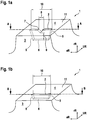
- the Figures 1a and 1b show an example of a three-dimensional view of a profile element for a tread in the form of a profile block 1 with a fine incision 2 designed as a straight line when viewed from above on the profile block 1
- Fig. 1a shows this when not driven on and the Figure 1b in the approached state in which the connection 7 has already been worn off.
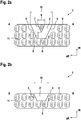
- the Figures 2a and 2b show longitudinal sections of this fine incision 2, in section AA in the non-traveled state and in section BB in the approached state.
- the Figures 2a and 2b to explain the mode of action of the same rigidity obtained via the abrasion of the profile block via a spring model.
- the sipe 2 runs in the radial direction rR of the tire from the tread block periphery 4 into the tread block interior 3.
- the fine incision 2 has a longitudinal extent with a defined length 10, which is measured between the two edges of the fine incision 5.
- the edges of the fine incision 5 run to one another in such a way that the length 10 of the fine incision decreases over its depth in the radial direction rR and ends in the fine incision base 6.
- the incision 2 has an integral connection 7 to the rubber material 11 surrounding the incision 2 in the central region of its longitudinal extent. This integral connection 7 extends from the profile block periphery 4 to a depth which is at least 1 mm above the fine incision base 6 and accordingly has a distance 9 from the fine incision base 6 of at least 1 mm.
- the length 8 of the material connection is reduced over its depth.
- the length 8 of the integral connection to the profile block periphery 4 is approximately 1/3 x the length 10 of the fine incision on the profile block periphery 4.
- the connection 7 is - in section - designed V-shaped.
- a spring model which in the longitudinal sections in the Figures 2a and 2b are shown, the equalization of the profile stiffness over the life of the tire can be clearly explained:
- a small number of springs connected in parallel (springs connected in the axial direction) on the profile block periphery results in low rigidity.
- the proportion of springs connected in series decreases (springs connected in the radial direction), which makes the profile stiffer.
- the proportion of springs connected in parallel increases, which increases the profile rigidity.
- the fine incision 2 has a material connection in the area of the profile block periphery 4 and thus supports the block elements resulting from several parallel fine incisions in terms of their (bending) rigidity.
- the depth of the block elements decreases as the tread depth of the tire decreases, and the stiffness of the block elements increases to the same extent. From a certain profile depth, the material connection is worn off and the additional increase in rigidity is no longer necessary. This counteracts the increase in stiffness caused by the reduction in tread depth and the tread exhibits a more constant stiffness over the life of the tire.
Landscapes
- Engineering & Computer Science (AREA)
- Mechanical Engineering (AREA)
- Tires In General (AREA)
Description
- Die Erfindung betrifft einen Fahrzeugluftreifen mit einem Laufstreifen, welcher Profilelemente aufweist, wobei zumindest ein Profilelement mit einem Feineinschnitt versehen ist, wobei der Feineinschnitt eine Längserstreckung aufweist, welche sich zwischen den beiden Kanten des Feineinschnittes bemisst und wobei der Feineinschnitt sich über seine Tiefenerstreckung in radialer Richtung von der Laufstreifenperipherie ins Profilelementinnere bis zum Feineinschnittgrund erstreckt, wobei zur Vergleichmäßigung der Profilsteifigkeit über die Lebensdauer des Fahrzeugluftreifens der Feineinschnitt im mittigen Bereich seiner Längserstreckung eine stoffschlüssige Anbindung an das den Feineinschnitt umgebende Kautschukmaterial aufweist.
- Ein derart ausgeführter Fahrzeugluftreifen ist aus der
US 6 484 772 B1 bekannt. Ferner ist aus derDE 10 2009 026 355 A1 ist ein Fahrzeugreifen mit einem Feineinschnitte aufweisenden Laufstreifenprofil bekannt, wobei die Feineinschnitte senkrecht zur Ebene der radialen Feineinschnitterstreckung stoffschlüssige Anbindungen aufweisen, welche einem Schließen des Feineinschnittes im Reifenlatsch entgegenwirken. - Es ist bei Laufstreifenprofilen von Winterreifen bzw. Ganzjahresreifen üblich, Feineinschnitte innerhalb der erhabenen Profilelemente vorzusehen. Feineinschnitte sind Einschnitte, welche innerhalb der Profilelemente wie Profilbänder oder Profilblöcke mit einer Breite von 0,3 mm bis 2,0 mm angeordnet sind. Beispielsweise werden in PKW-Reifen häufig Feineinschnittbreiten von etwa 0,6 mm und in Van-Reifen von etwa 1,0 mm verwirklicht. Die Feineinschnitte dienen bei winterlichen Bedingungen u.a. dazu, Schnee aufzunehmen, um die Schnee/Schnee - Reibung zu erhöhen und derart eine bessere Haftung des Reifens auf winterlicher Fahrbahn zu ermöglichen. Zudem werden eine Vielzahl an Kanten zur Verfügung gestellt, welche in die winterliche Fahrbahn eingreifen können.
- Es gibt eine Vielzahl an bekannten Ausbildungen von Feineinschnitten. Am bekanntesten ist eine Ausbildung, bei der der Feineinschnitt in Profilaufsicht gerade oder sinusförmig ausgebildet ist und in seinem Tiefenverlauf innerhalb des Profilblockes unverändert ist (2-dimensionaler Feineinschnitt).
- Es sind aber auch verschiedenste Feineinschnitte bekannt, deren Ausbildung sich mit dem Tiefenverlauf innerhalb des Profilblockes ändert, z.B. eine veränderliche Amplitude aufweisen (3-dimensionaler Feineinschnitt).
- Ein Feineinschnitt reicht entweder von einer Profilelementwand zur anderen Profilelementwand und quert das Profilelement vollständig oder quert das Profilelement nicht vollständig und ist innerhalb des Profilelementes an seinen Kanten angebunden.
- Da sich während der Benutzung eines Reifens über dessen Haltbarkeitsdauer die Profiltiefe im Laufstreifen deutlich verringert, ist eine Änderung der Profilsteifigkeit, insbesondere der Steifigkeit der einzelnen Profilelemente, unumgänglich. Bei den üblichen Feineinschnittausführungen folgt die Änderung der Profilelementsteifigkeit einer eher streng monotonen Funktion. Am geringsten ist die Steifigkeit in Profilelementen mit gerade ausgeführten Feineinschnitten im unbefahrenen Zustand des Reifens und nimmt mit Abrieb der Profilelemente zu.
- Der Erfindung liegt die Aufgabe zu Grunde, die Performance eines insbesondere für einen Winter bzw. Ganzjahreseinsatz vorgesehenen Reifens zu verbessern, insbesondere sollen die Eigenschaften des Reifens auf Schnee sowie auf trockenen Fahrbahnen über dessen Lebensdauer möglichst ausgewogen und gleichermaßen gut sein.
- Gelöst wird die gestellte Aufgabe erfindungsgemäß dadurch, dass sich diese stoffschlüssige Anbindung von der Laufstreifenperipherie bis in eine Tiefe erstreckt, welche wenigstens 1 mm oberhalb des Feineinschnittgrundes liegt und dass sich die Länge der Anbindung über deren Tiefenerstreckung verringert.
- Erfindungsgemäß ist der Feineinschnitt im Bereich der Anbindung über seine Längserstreckung kein durchgehender Spalt, sondern ist durch die mittig angeordnete Anbindung in drei Abschnitte gegliedert: Spalt - Anbindung - Spalt. Diese Dreiteilung über die Längserstreckung des Feineinschnittes reicht nicht bis auf den Feineinschnittgrund, sondern die Anbindung endet mindestens 1 mm oberhalb des Feineinschnittgrundes. Die Anbindung besteht bevorzugt aus der Kautschukmischung des Profilelementes und ist mit dieser stoffschlüssig verbunden. Die Anbindung, welche bei voller Profiltiefe durch ihre größte Breite am wirksamsten ausbildet ist, bewirkt, dass im unbefahrenen Zustand die größte Versteifung des Profilelementes erhalten ist und dem in diesem Zustand am wenigsten steife Profilelement entgegenwirkt. Bei abnehmender Profiltiefe mit zunehmendem Abrieb des Laufstreifens nimmt die Steifigkeit der Profilelemente zu, durch die in gleichem Maße schmaler werdende Anbindung nimmt der Steifigkeitseinfluss durch die Anbindung ab, so dass eine über die Lebensdauer des Reifens gleichbleibende Steifigkeit der Profilelemente erhalten ist. Hierdurch sind die Eigenschaften des Reifens auf Schnee sowie auf trockener Fahrbahn über dessen Lebensdauer möglichst ausgewogen und gleichermaßen gut. Zudem ist die Möglichkeit gegeben, mehr Feineinschnitte als bisher üblich in einem Profilelement anzuordnen, ohne dass das Profilelement zu weich wird.
- Zweckmäßig ist es, wenn die Länge der stoffschlüssigen Anbindung an der Laufstreifenperipherie maximal ½ x der Längserstreckung des Feineinschnittes, vorzugsweise etwa 1/3 x der Längserstreckung des Feineinschnittes entspricht. Diese Länge der Anbindung hat sich für den Erhalt einer gleichbleibenden Steifigkeit des Profilelementes über dessen Lebensdauer als besonders geeignet erwiesen.
- Die stoffschlüssige Anbindung ist vorzugsweise mittig in der Längserstreckung des Feineinschnittes angeordnet, derart, dass der Spalt links von der Anbindung etwa die gleiche Länge wie der Spalt rechts von der Anbindung aufweist.
- Zweckmäßig ist es, wenn die stoffschlüssige Anbindung - in Aufsicht auf den durch seine Längs- und Tiefenerstreckung aufgespannten Feineinschnitt - v-förmig, halbkreisförmig, halb-elliptisch oder trapezförmig ist. Diese geometrischen Formen eignen sich besonders, um eine gleichmäßige Profilelementsteifigkeit über dessen Lebensdauer einzustellen.
- In einer bestimmten Ausführung der Erfindung ist der Feineinschnitt ein 2-D-Feineinschnitt und ist in Aufsicht ein gerader Feineinschnitt oder ein Feineinschnitt in Wellen-, Treppen- oder Zick-Zack-Form.
- In einer alternativen Ausführung der Erfindung ist der Feineinschnitt ein 3-D-Feineinschnitt und ist in Aufsicht ein gerader Feineinschnitt oder ein Feineinschnitt in Wellen-, Treppen- oder Zick-Zack-Form.
- Weitere Merkmale, Vorteile und Einzelheiten der Erfindung werden nun anhand der Zeichnungen, die ein schematisches Ausführungsbeispiel darstellen, näher beschrieben. Dabei zeigen die
-
Fig. 1a eine dreidimensionale Ansicht eines Profilelementes des Laufstreifens eines erfindungsgemäßen Fahrzeugluftreifens mit einem Feineinschnitt im unbefahrenen Zustand; -
Fig. 1b eine dreidimensionale Ansicht des Profilelementes der Fig. la mit einem Feineinschnitt im angefahrenen Zustand; -
Fig. 2a einen Schnitt durch den Profilblock derFig. 1a entlang des Schnittes A-A; -
Fig. 2b einen Schnitt durch den Profilblock derFig. 1b entlang des Schnittes B-B. - Die Erfindung befasst sich mit einer besonderen Ausführung von Feineinschnitten in Profilelementen von Laufstreifen, wie Profilblöcke oder Profilrippen, in Fahrzeugluftreifen, insbesondere Winterreifen oder Ganzjahresreifen für Personenkraftwagen.
- Die
Fig. 1a und Fig. 1b zeigen beispielhaft eine dreidimensionale Ansicht eines Profilelementes für einen Laufstreifen in der Form eines Profilblockes 1 mit einem in Aufsicht auf den Profilblock 1 als Gerade ausgebildeten Feineinschnitt 2. DieFig. 1a zeigt diesen im unbefahrenen Zustand und dieFig. 1b im angefahrenen Zustand, in dem die Anbindung 7 bereits abgerieben ist. DieFig. 2a und 2b zeigen Längsschnitte dieses Feineinschnittes 2, im Schnitt A-A im unbefahrenen Zustand und im Schnitt B-B im angefahrenen Zustand. Zudem dienen dieFig. 2a und 2b zur Erklärung der Wirkweise der über den Abrieb des Profilblockes erhaltenen gleichen Steifigkeit über ein Federmodell. - Der Feineinschnitt 2 verläuft in radialer Richtung rR des Reifens von der Profilblockperipherie 4 in das Profilblockinnere 3 hinein.
- Der Feineinschnitt 2 weist eine Längserstreckung mit einer definierten Länge 10 auf, welche sich zwischen den beiden Kanten des Feineinschnittes 5 bemisst. Die Kanten des Feineinschnittes 5 verlaufen derart zueinander, dass die Länge 10 des Feineinschnittes über seine Tiefenerstreckung in radialer Richtung rR abnimmt und im Feineinschnittgrund 6 endet. Zur Vergleichmäßigung der Profilsteifigkeit über die Lebensdauer des Fahrzeugluftreifens weist der Feineinschnitt 2 im mittigen Bereich seiner Längserstreckung eine stoffschlüssige Anbindung 7 an das den Feineinschnitt 2 umgebende Kautschukmaterial 11 auf. Diese stoffschlüssige Anbindung 7 erstreckt sich von der Profilblockperipherie 4 bis in eine Tiefe, welche wenigstens 1 mm oberhalb des Feineinschnittgrundes 6 liegt und weist dementsprechend einen Abstand 9 zum Feineinschnittgrund 6 von wenigstens 1 mm auf. Zudem verringert sich die Länge 8 der stoffschlüssigen Anbindung über deren Tiefenerstreckung. Die Länge 8 der stoffschlüssigen Anbindung an der Profilblockperipherie 4 ist etwa 1/3 x der Länge 10 des Feineinschnittes an der Profilblockperipherie 4. Die Anbindung 7 ist - im Schnitt - v-förmig ausgestaltet.
Über ein Federmodell, welches in den Längsschnitten in denFig. 2a und 2b dargestellt sind, lässt sich die Vergleichmäßigung der Profilsteifigkeit über die Lebensdauer des Reifens anschaulich erläutern:
Bei Feineinschnitten des Standes der Technik OHNE Anbindung ist durch wenige, parallel geschaltete Federn (in axialer Richtung geschaltete Federn) an der Profilblockperipherie eine geringe Steifigkeit aufzufinden. Nach Abrieb des oberen Teils nimmt der Anteil der in Reihe geschalteten Federn ab (in radialer Richtung geschaltete Federn), wodurch das Profil steifer wird. Gleichzeitig nimmt der Anteil an parallel geschalteten Federn zu, wodurch sich die Profilsteifigkeit verstärkt. - Nach erfindungsgemäßer Ausführung weist der Feineinschnitt 2 im Bereich der Profilblockperipherie 4 eine stoffschlüssige Anbindung auf und stützt somit die aus mehreren parallel angeordneten Feineinschnitten resultierenden Blockelemente in Bezug auf ihre (Biege-)Steifigkeit. Die Tiefe der Blockelemente nimmt mit abnehmender Profiltiefe des Reifens ab, im gleichen Maß nimmt dadurch die Steifigkeit der Blockelemente zu. Ab einer bestimmten Profiltiefe ist die stoffschlüssige Anbindung abgerieben und die zusätzliche Erhöhung der Steifigkeit fällt weg. Dadurch wird der Steifigkeitszunahme, die durch die Profiltiefenreduktion entsteht, entgegengewirkt und das Profil weist eine konstantere Steifigkeit über das Reifenleben aus.
-
- 1
- Profilblock / Profilelement
- 2
- Feineinschnitt
- 3
- Profilblockinneres / Profilelementinneres
- 4
- Profilblockperipherie / Laufstreifenperipherie
- 5
- Kante des Feineinschnittes
- 6
- Feineinschnittgrund
- 7
- Anbindung
- 8
- Länge der Anbindung
- 9
- Abstand
- 10
- Länge des Feineinschnittes
- 11
- Kautschukmaterial
- rR
- Radiale Richtung
- UR
- Umfangsrichtung
- aR
- axiale Richtung
Claims (5)
- Fahrzeugluftreifen mit einem Laufstreifen, welcher Profilelemente (1) aufweist, wobei zumindest ein Profilelement (1) mit einem Feineinschnitt (2) versehen ist, wobei der Feineinschnitt (2) eine Längserstreckung mit einer definierten Länge (10) aufweist, welche sich zwischen den beiden Kanten (5) des Feineinschnittes (2) bemisst und wobei der Feineinschnitt (2) sich über seine Tiefenerstreckung in radialer Richtung (r) von der Laufstreifenperipherie (4) ins Profilelementinnere (3) bis zum Feineinschnittgrund (6) erstreckt, wobei zur Vergleichmäßigung der Profilsteifigkeit über die Lebensdauer des Fahrzeugluftreifens der Feineinschnitt (2) im mittigen Bereich seiner Längserstreckung eine stoffschlüssige Anbindung (7) an das den Feineinschnitt (2) umgebende Kautschukmaterial aufweist,
dadurch gekennzeichnet, dass sich diese stoffschlüssige Anbindung (7) von der Laufstreifenperipherie (4) bis in eine Tiefe erstreckt, welche wenigstens 1 mm oberhalb des Feineinschnittgrundes liegt und dass sich die Länge der stoffschlüssigen Anbindung (8) über deren Tiefenerstreckung verringert. - Fahrzeugluftreifen nach Anspruch 1, dadurch gekennzeichnet, dass die Länge der stoffschlüssigen Anbindung (8) an der Laufstreifenperipherie (4) maximal ½ x Länge des Feineinschnittes (10), vorzugsweise etwa 1/3 x Länge des Feineinschnittes (10) ist.
- Fahrzeugluftreifen nach einem der vorangehenden Ansprüche, dadurch gekennzeichnet, dass die stoffschlüssige Anbindung (7) - in Aufsicht auf den durch seine Längs- und Tiefenerstreckung aufgespannten Feineinschnitt (2) - v-förmig, halbkreisförmig oder trapezförmig ist.
- Fahrzeugluftreifen nach einem der vorangehenden Ansprüche, dadurch gekennzeichnet, dass der Feineinschnitt (2) ein 2-D-Feineinschnitt ist und in Aufsicht ein gerader Feineinschnitt oder ein Feineinschnitt in Wellen-, Treppen- oder Zick-Zack-Form ist.
- Fahrzeugluftreifen nach einem der vorangehenden Ansprüche 1 bis 3, dadurch gekennzeichnet, dass der Feineinschnitt (2) ein 3-D-Feineinschnitt ist und in Aufsicht ein gerader Feineinschnitt oder ein Feineinschnitt in Wellen-, Treppen- oder Zick-Zack-Form ist.
Applications Claiming Priority (1)
| Application Number | Priority Date | Filing Date | Title |
|---|---|---|---|
| DE102018209742.9A DE102018209742A1 (de) | 2018-06-18 | 2018-06-18 | Fahrzeugluftreifen |
Publications (2)
| Publication Number | Publication Date |
|---|---|
| EP3584093A1 EP3584093A1 (de) | 2019-12-25 |
| EP3584093B1 true EP3584093B1 (de) | 2020-12-16 |
Family
ID=66529800
Family Applications (1)
| Application Number | Title | Priority Date | Filing Date |
|---|---|---|---|
| EP19173973.9A Active EP3584093B1 (de) | 2018-06-18 | 2019-05-13 | Fahrzeugluftreifen |
Country Status (2)
| Country | Link |
|---|---|
| EP (1) | EP3584093B1 (de) |
| DE (1) | DE102018209742A1 (de) |
Family Cites Families (5)
| Publication number | Priority date | Publication date | Assignee | Title |
|---|---|---|---|---|
| JPH0257407A (ja) * | 1988-05-19 | 1990-02-27 | Sumitomo Rubber Ind Ltd | 空気入りタイヤ |
| FR2759323B1 (fr) * | 1997-02-12 | 1999-03-19 | Michelin & Cie | Sculpture de bande de roulement et procede de fabrication |
| FR2888163B1 (fr) * | 2005-07-05 | 2007-09-14 | Michelin Soc Tech | Bande de roulement comportant une sculpture avec des incisions. |
| DE102009026355A1 (de) * | 2009-08-10 | 2011-02-17 | Continental Reifen Deutschland Gmbh | Lamellenblech für eine Reifenvulkanisierform und Fahrzeugluftreifen |
| CN104334373B (zh) * | 2012-06-29 | 2018-07-06 | 横滨橡胶株式会社 | 充气轮胎 |
-
2018
- 2018-06-18 DE DE102018209742.9A patent/DE102018209742A1/de not_active Withdrawn
-
2019
- 2019-05-13 EP EP19173973.9A patent/EP3584093B1/de active Active
Non-Patent Citations (1)
| Title |
|---|
| None * |
Also Published As
| Publication number | Publication date |
|---|---|
| EP3584093A1 (de) | 2019-12-25 |
| DE102018209742A1 (de) | 2019-12-19 |
Similar Documents
| Publication | Publication Date | Title |
|---|---|---|
| EP0669216B1 (de) | Fahrzeugluftreifen | |
| AT402179B (de) | Laufstreifen für einen fahrzeugluftreifen | |
| EP2773519B1 (de) | Fahrzeugluftreifen | |
| EP1459908A1 (de) | Lauffläche für Winterreifen | |
| DE102008028461A1 (de) | Fahrzeugluftreifen | |
| DE102015224291A1 (de) | Fahrzeugluftreifen | |
| EP2159080A1 (de) | Fahrzeugluftreifen | |
| EP2844503B1 (de) | Laufstreifenprofil eines fahrzeugreifens | |
| AT394684B (de) | Laufflaechenprofil fuer einen fahrzeugluftreifen | |
| EP3034332B1 (de) | Fahrzeugluftreifen | |
| DE69907856T2 (de) | Ein Reifen für Fahrzeugräder | |
| EP3446892B1 (de) | Fahrzeugluftreifen | |
| EP2660080B1 (de) | Laufstreifenprofil eines Fahrzeugreifens | |
| DE102015224289A1 (de) | Fahrzeugluftreifen | |
| EP2943359A1 (de) | Fahrzeugluftreifen für den einsatz unter winterlichen fahrbedingungen | |
| EP1533140B1 (de) | Laufflächenprofil für einen Fahrzeugluftreifen | |
| EP3584093B1 (de) | Fahrzeugluftreifen | |
| EP2000329B1 (de) | Fahrzeugluftreifen | |
| EP2660081A1 (de) | Laufstreifenprofil eines Fahrzeugreifens | |
| EP0958945B1 (de) | Fahrzeugreifen | |
| AT394002B (de) | Radialreifen fuer raeder von lkw-antriebsachsen | |
| EP2648925A1 (de) | Fahrzeugluftreifen | |
| EP3446893A1 (de) | Fahrzeugluftreifen | |
| WO2018103920A1 (de) | Fahrzeugluftreifen | |
| WO2015086181A1 (de) | Fahrzeugluftreifen |
Legal Events
| Date | Code | Title | Description |
|---|---|---|---|
| PUAI | Public reference made under article 153(3) epc to a published international application that has entered the european phase |
Free format text: ORIGINAL CODE: 0009012 |
|
| STAA | Information on the status of an ep patent application or granted ep patent |
Free format text: STATUS: THE APPLICATION HAS BEEN PUBLISHED |
|
| AK | Designated contracting states |
Kind code of ref document: A1 Designated state(s): AL AT BE BG CH CY CZ DE DK EE ES FI FR GB GR HR HU IE IS IT LI LT LU LV MC MK MT NL NO PL PT RO RS SE SI SK SM TR |
|
| AX | Request for extension of the european patent |
Extension state: BA ME |
|
| STAA | Information on the status of an ep patent application or granted ep patent |
Free format text: STATUS: REQUEST FOR EXAMINATION WAS MADE |
|
| 17P | Request for examination filed |
Effective date: 20200625 |
|
| RBV | Designated contracting states (corrected) |
Designated state(s): AL AT BE BG CH CY CZ DE DK EE ES FI FR GB GR HR HU IE IS IT LI LT LU LV MC MK MT NL NO PL PT RO RS SE SI SK SM TR |
|
| GRAP | Despatch of communication of intention to grant a patent |
Free format text: ORIGINAL CODE: EPIDOSNIGR1 |
|
| STAA | Information on the status of an ep patent application or granted ep patent |
Free format text: STATUS: GRANT OF PATENT IS INTENDED |
|
| RIC1 | Information provided on ipc code assigned before grant |
Ipc: B60C 11/12 20060101AFI20200729BHEP |
|
| INTG | Intention to grant announced |
Effective date: 20200828 |
|
| GRAS | Grant fee paid |
Free format text: ORIGINAL CODE: EPIDOSNIGR3 |
|
| GRAA | (expected) grant |
Free format text: ORIGINAL CODE: 0009210 |
|
| STAA | Information on the status of an ep patent application or granted ep patent |
Free format text: STATUS: THE PATENT HAS BEEN GRANTED |
|
| AK | Designated contracting states |
Kind code of ref document: B1 Designated state(s): AL AT BE BG CH CY CZ DE DK EE ES FI FR GB GR HR HU IE IS IT LI LT LU LV MC MK MT NL NO PL PT RO RS SE SI SK SM TR |
|
| REG | Reference to a national code |
Ref country code: GB Ref legal event code: FG4D Free format text: NOT ENGLISH |
|
| RAP2 | Party data changed (patent owner data changed or rights of a patent transferred) |
Owner name: CONTINENTAL REIFEN DEUTSCHLAND GMBH |
|
| REG | Reference to a national code |
Ref country code: DE Ref legal event code: R096 Ref document number: 502019000534 Country of ref document: DE |
|
| REG | Reference to a national code |
Ref country code: IE Ref legal event code: FG4D Free format text: LANGUAGE OF EP DOCUMENT: GERMAN |
|
| REG | Reference to a national code |
Ref country code: AT Ref legal event code: REF Ref document number: 1345257 Country of ref document: AT Kind code of ref document: T Effective date: 20210115 |
|
| PG25 | Lapsed in a contracting state [announced via postgrant information from national office to epo] |
Ref country code: RS Free format text: LAPSE BECAUSE OF FAILURE TO SUBMIT A TRANSLATION OF THE DESCRIPTION OR TO PAY THE FEE WITHIN THE PRESCRIBED TIME-LIMIT Effective date: 20201216 Ref country code: FI Free format text: LAPSE BECAUSE OF FAILURE TO SUBMIT A TRANSLATION OF THE DESCRIPTION OR TO PAY THE FEE WITHIN THE PRESCRIBED TIME-LIMIT Effective date: 20201216 Ref country code: GR Free format text: LAPSE BECAUSE OF FAILURE TO SUBMIT A TRANSLATION OF THE DESCRIPTION OR TO PAY THE FEE WITHIN THE PRESCRIBED TIME-LIMIT Effective date: 20210317 Ref country code: NO Free format text: LAPSE BECAUSE OF FAILURE TO SUBMIT A TRANSLATION OF THE DESCRIPTION OR TO PAY THE FEE WITHIN THE PRESCRIBED TIME-LIMIT Effective date: 20210316 |
|
| REG | Reference to a national code |
Ref country code: NL Ref legal event code: MP Effective date: 20201216 |
|
| PG25 | Lapsed in a contracting state [announced via postgrant information from national office to epo] |
Ref country code: BG Free format text: LAPSE BECAUSE OF FAILURE TO SUBMIT A TRANSLATION OF THE DESCRIPTION OR TO PAY THE FEE WITHIN THE PRESCRIBED TIME-LIMIT Effective date: 20210316 Ref country code: LV Free format text: LAPSE BECAUSE OF FAILURE TO SUBMIT A TRANSLATION OF THE DESCRIPTION OR TO PAY THE FEE WITHIN THE PRESCRIBED TIME-LIMIT Effective date: 20201216 Ref country code: SE Free format text: LAPSE BECAUSE OF FAILURE TO SUBMIT A TRANSLATION OF THE DESCRIPTION OR TO PAY THE FEE WITHIN THE PRESCRIBED TIME-LIMIT Effective date: 20201216 |
|
| PG25 | Lapsed in a contracting state [announced via postgrant information from national office to epo] |
Ref country code: NL Free format text: LAPSE BECAUSE OF FAILURE TO SUBMIT A TRANSLATION OF THE DESCRIPTION OR TO PAY THE FEE WITHIN THE PRESCRIBED TIME-LIMIT Effective date: 20201216 Ref country code: HR Free format text: LAPSE BECAUSE OF FAILURE TO SUBMIT A TRANSLATION OF THE DESCRIPTION OR TO PAY THE FEE WITHIN THE PRESCRIBED TIME-LIMIT Effective date: 20201216 |
|
| REG | Reference to a national code |
Ref country code: LT Ref legal event code: MG9D |
|
| PG25 | Lapsed in a contracting state [announced via postgrant information from national office to epo] |
Ref country code: CZ Free format text: LAPSE BECAUSE OF FAILURE TO SUBMIT A TRANSLATION OF THE DESCRIPTION OR TO PAY THE FEE WITHIN THE PRESCRIBED TIME-LIMIT Effective date: 20201216 Ref country code: SK Free format text: LAPSE BECAUSE OF FAILURE TO SUBMIT A TRANSLATION OF THE DESCRIPTION OR TO PAY THE FEE WITHIN THE PRESCRIBED TIME-LIMIT Effective date: 20201216 Ref country code: SM Free format text: LAPSE BECAUSE OF FAILURE TO SUBMIT A TRANSLATION OF THE DESCRIPTION OR TO PAY THE FEE WITHIN THE PRESCRIBED TIME-LIMIT Effective date: 20201216 Ref country code: EE Free format text: LAPSE BECAUSE OF FAILURE TO SUBMIT A TRANSLATION OF THE DESCRIPTION OR TO PAY THE FEE WITHIN THE PRESCRIBED TIME-LIMIT Effective date: 20201216 Ref country code: LT Free format text: LAPSE BECAUSE OF FAILURE TO SUBMIT A TRANSLATION OF THE DESCRIPTION OR TO PAY THE FEE WITHIN THE PRESCRIBED TIME-LIMIT Effective date: 20201216 Ref country code: RO Free format text: LAPSE BECAUSE OF FAILURE TO SUBMIT A TRANSLATION OF THE DESCRIPTION OR TO PAY THE FEE WITHIN THE PRESCRIBED TIME-LIMIT Effective date: 20201216 Ref country code: PT Free format text: LAPSE BECAUSE OF FAILURE TO SUBMIT A TRANSLATION OF THE DESCRIPTION OR TO PAY THE FEE WITHIN THE PRESCRIBED TIME-LIMIT Effective date: 20210416 |
|
| PG25 | Lapsed in a contracting state [announced via postgrant information from national office to epo] |
Ref country code: PL Free format text: LAPSE BECAUSE OF FAILURE TO SUBMIT A TRANSLATION OF THE DESCRIPTION OR TO PAY THE FEE WITHIN THE PRESCRIBED TIME-LIMIT Effective date: 20201216 |
|
| REG | Reference to a national code |
Ref country code: DE Ref legal event code: R097 Ref document number: 502019000534 Country of ref document: DE |
|
| PG25 | Lapsed in a contracting state [announced via postgrant information from national office to epo] |
Ref country code: IS Free format text: LAPSE BECAUSE OF FAILURE TO SUBMIT A TRANSLATION OF THE DESCRIPTION OR TO PAY THE FEE WITHIN THE PRESCRIBED TIME-LIMIT Effective date: 20210416 |
|
| PLBE | No opposition filed within time limit |
Free format text: ORIGINAL CODE: 0009261 |
|
| STAA | Information on the status of an ep patent application or granted ep patent |
Free format text: STATUS: NO OPPOSITION FILED WITHIN TIME LIMIT |
|
| PG25 | Lapsed in a contracting state [announced via postgrant information from national office to epo] |
Ref country code: AL Free format text: LAPSE BECAUSE OF FAILURE TO SUBMIT A TRANSLATION OF THE DESCRIPTION OR TO PAY THE FEE WITHIN THE PRESCRIBED TIME-LIMIT Effective date: 20201216 |
|
| 26N | No opposition filed |
Effective date: 20210917 |
|
| PG25 | Lapsed in a contracting state [announced via postgrant information from national office to epo] |
Ref country code: DK Free format text: LAPSE BECAUSE OF FAILURE TO SUBMIT A TRANSLATION OF THE DESCRIPTION OR TO PAY THE FEE WITHIN THE PRESCRIBED TIME-LIMIT Effective date: 20201216 |
|
| PG25 | Lapsed in a contracting state [announced via postgrant information from national office to epo] |
Ref country code: LU Free format text: LAPSE BECAUSE OF NON-PAYMENT OF DUE FEES Effective date: 20210513 Ref country code: MC Free format text: LAPSE BECAUSE OF FAILURE TO SUBMIT A TRANSLATION OF THE DESCRIPTION OR TO PAY THE FEE WITHIN THE PRESCRIBED TIME-LIMIT Effective date: 20201216 Ref country code: ES Free format text: LAPSE BECAUSE OF FAILURE TO SUBMIT A TRANSLATION OF THE DESCRIPTION OR TO PAY THE FEE WITHIN THE PRESCRIBED TIME-LIMIT Effective date: 20201216 |
|
| REG | Reference to a national code |
Ref country code: BE Ref legal event code: MM Effective date: 20210531 |
|
| PG25 | Lapsed in a contracting state [announced via postgrant information from national office to epo] |
Ref country code: SI Free format text: LAPSE BECAUSE OF FAILURE TO SUBMIT A TRANSLATION OF THE DESCRIPTION OR TO PAY THE FEE WITHIN THE PRESCRIBED TIME-LIMIT Effective date: 20201216 |
|
| PG25 | Lapsed in a contracting state [announced via postgrant information from national office to epo] |
Ref country code: IE Free format text: LAPSE BECAUSE OF NON-PAYMENT OF DUE FEES Effective date: 20210513 |
|
| PG25 | Lapsed in a contracting state [announced via postgrant information from national office to epo] |
Ref country code: IS Free format text: LAPSE BECAUSE OF FAILURE TO SUBMIT A TRANSLATION OF THE DESCRIPTION OR TO PAY THE FEE WITHIN THE PRESCRIBED TIME-LIMIT Effective date: 20210416 |
|
| PG25 | Lapsed in a contracting state [announced via postgrant information from national office to epo] |
Ref country code: BE Free format text: LAPSE BECAUSE OF NON-PAYMENT OF DUE FEES Effective date: 20210531 |
|
| REG | Reference to a national code |
Ref country code: CH Ref legal event code: PL |
|
| PG25 | Lapsed in a contracting state [announced via postgrant information from national office to epo] |
Ref country code: LI Free format text: LAPSE BECAUSE OF NON-PAYMENT OF DUE FEES Effective date: 20220531 Ref country code: CH Free format text: LAPSE BECAUSE OF NON-PAYMENT OF DUE FEES Effective date: 20220531 |
|
| PG25 | Lapsed in a contracting state [announced via postgrant information from national office to epo] |
Ref country code: CY Free format text: LAPSE BECAUSE OF FAILURE TO SUBMIT A TRANSLATION OF THE DESCRIPTION OR TO PAY THE FEE WITHIN THE PRESCRIBED TIME-LIMIT Effective date: 20201216 |
|
| PG25 | Lapsed in a contracting state [announced via postgrant information from national office to epo] |
Ref country code: HU Free format text: LAPSE BECAUSE OF FAILURE TO SUBMIT A TRANSLATION OF THE DESCRIPTION OR TO PAY THE FEE WITHIN THE PRESCRIBED TIME-LIMIT; INVALID AB INITIO Effective date: 20190513 |
|
| REG | Reference to a national code |
Ref country code: DE Ref legal event code: R081 Ref document number: 502019000534 Country of ref document: DE Owner name: CONTINENTAL REIFEN DEUTSCHLAND GMBH, DE Free format text: FORMER OWNER: CONTINENTAL REIFEN DEUTSCHLAND GMBH, 30165 HANNOVER, DE |
|
| PG25 | Lapsed in a contracting state [announced via postgrant information from national office to epo] |
Ref country code: MK Free format text: LAPSE BECAUSE OF FAILURE TO SUBMIT A TRANSLATION OF THE DESCRIPTION OR TO PAY THE FEE WITHIN THE PRESCRIBED TIME-LIMIT Effective date: 20201216 |
|
| PGFP | Annual fee paid to national office [announced via postgrant information from national office to epo] |
Ref country code: GB Payment date: 20240521 Year of fee payment: 6 |
|
| PG25 | Lapsed in a contracting state [announced via postgrant information from national office to epo] |
Ref country code: MT Free format text: LAPSE BECAUSE OF FAILURE TO SUBMIT A TRANSLATION OF THE DESCRIPTION OR TO PAY THE FEE WITHIN THE PRESCRIBED TIME-LIMIT Effective date: 20201216 |
|
| PGFP | Annual fee paid to national office [announced via postgrant information from national office to epo] |
Ref country code: IT Payment date: 20240524 Year of fee payment: 6 |
|
| PGFP | Annual fee paid to national office [announced via postgrant information from national office to epo] |
Ref country code: DE Payment date: 20250531 Year of fee payment: 7 |
|
| REG | Reference to a national code |
Ref country code: AT Ref legal event code: MM01 Ref document number: 1345257 Country of ref document: AT Kind code of ref document: T Effective date: 20240513 |
|
| PGFP | Annual fee paid to national office [announced via postgrant information from national office to epo] |
Ref country code: FR Payment date: 20250528 Year of fee payment: 7 |
|
| PG25 | Lapsed in a contracting state [announced via postgrant information from national office to epo] |
Ref country code: AT Free format text: LAPSE BECAUSE OF NON-PAYMENT OF DUE FEES Effective date: 20240513 |
|
| PG25 | Lapsed in a contracting state [announced via postgrant information from national office to epo] |
Ref country code: TR Free format text: LAPSE BECAUSE OF FAILURE TO SUBMIT A TRANSLATION OF THE DESCRIPTION OR TO PAY THE FEE WITHIN THE PRESCRIBED TIME-LIMIT Effective date: 20201216 |
|
| GBPC | Gb: european patent ceased through non-payment of renewal fee |
Effective date: 20250513 |
|
| PG25 | Lapsed in a contracting state [announced via postgrant information from national office to epo] |
Ref country code: GB Free format text: LAPSE BECAUSE OF NON-PAYMENT OF DUE FEES Effective date: 20250513 |
|
| PGFP | Annual fee paid to national office [announced via postgrant information from national office to epo] |
Ref country code: AT Payment date: 20260410 Year of fee payment: 5 |
|
| PG25 | Lapsed in a contracting state [announced via postgrant information from national office to epo] |
Ref country code: IT Free format text: LAPSE BECAUSE OF NON-PAYMENT OF DUE FEES Effective date: 20250513 |