EP3582518A1 - Method for providing location-based service and electronic device therefor - Google Patents
Method for providing location-based service and electronic device therefor Download PDFInfo
- Publication number
- EP3582518A1 EP3582518A1 EP18767295.1A EP18767295A EP3582518A1 EP 3582518 A1 EP3582518 A1 EP 3582518A1 EP 18767295 A EP18767295 A EP 18767295A EP 3582518 A1 EP3582518 A1 EP 3582518A1
- Authority
- EP
- European Patent Office
- Prior art keywords
- poi
- user
- electronic device
- information
- database
- Prior art date
- Legal status (The legal status is an assumption and is not a legal conclusion. Google has not performed a legal analysis and makes no representation as to the accuracy of the status listed.)
- Granted
Links
Images







Classifications
-
- H—ELECTRICITY
- H04—ELECTRIC COMMUNICATION TECHNIQUE
- H04W—WIRELESS COMMUNICATION NETWORKS
- H04W4/00—Services specially adapted for wireless communication networks; Facilities therefor
- H04W4/02—Services making use of location information
- H04W4/023—Services making use of location information using mutual or relative location information between multiple location based services [LBS] targets or of distance thresholds
-
- G—PHYSICS
- G01—MEASURING; TESTING
- G01C—MEASURING DISTANCES, LEVELS OR BEARINGS; SURVEYING; NAVIGATION; GYROSCOPIC INSTRUMENTS; PHOTOGRAMMETRY OR VIDEOGRAMMETRY
- G01C21/00—Navigation; Navigational instruments not provided for in groups G01C1/00 - G01C19/00
- G01C21/26—Navigation; Navigational instruments not provided for in groups G01C1/00 - G01C19/00 specially adapted for navigation in a road network
- G01C21/34—Route searching; Route guidance
- G01C21/36—Input/output arrangements for on-board computers
- G01C21/3679—Retrieval, searching and output of POI information, e.g. hotels, restaurants, shops, filling stations, parking facilities
- G01C21/3682—Retrieval, searching and output of POI information, e.g. hotels, restaurants, shops, filling stations, parking facilities output of POI information on a road map
-
- G—PHYSICS
- G01—MEASURING; TESTING
- G01C—MEASURING DISTANCES, LEVELS OR BEARINGS; SURVEYING; NAVIGATION; GYROSCOPIC INSTRUMENTS; PHOTOGRAMMETRY OR VIDEOGRAMMETRY
- G01C21/00—Navigation; Navigational instruments not provided for in groups G01C1/00 - G01C19/00
- G01C21/26—Navigation; Navigational instruments not provided for in groups G01C1/00 - G01C19/00 specially adapted for navigation in a road network
- G01C21/34—Route searching; Route guidance
- G01C21/3453—Special cost functions, i.e. other than distance or default speed limit of road segments
- G01C21/3476—Special cost functions, i.e. other than distance or default speed limit of road segments using point of interest [POI] information, e.g. a route passing visible POIs
-
- G—PHYSICS
- G01—MEASURING; TESTING
- G01C—MEASURING DISTANCES, LEVELS OR BEARINGS; SURVEYING; NAVIGATION; GYROSCOPIC INSTRUMENTS; PHOTOGRAMMETRY OR VIDEOGRAMMETRY
- G01C21/00—Navigation; Navigational instruments not provided for in groups G01C1/00 - G01C19/00
- G01C21/26—Navigation; Navigational instruments not provided for in groups G01C1/00 - G01C19/00 specially adapted for navigation in a road network
- G01C21/34—Route searching; Route guidance
- G01C21/36—Input/output arrangements for on-board computers
- G01C21/3605—Destination input or retrieval
- G01C21/3617—Destination input or retrieval using user history, behaviour, conditions or preferences, e.g. predicted or inferred from previous use or current movement
-
- G—PHYSICS
- G01—MEASURING; TESTING
- G01C—MEASURING DISTANCES, LEVELS OR BEARINGS; SURVEYING; NAVIGATION; GYROSCOPIC INSTRUMENTS; PHOTOGRAMMETRY OR VIDEOGRAMMETRY
- G01C21/00—Navigation; Navigational instruments not provided for in groups G01C1/00 - G01C19/00
- G01C21/26—Navigation; Navigational instruments not provided for in groups G01C1/00 - G01C19/00 specially adapted for navigation in a road network
- G01C21/34—Route searching; Route guidance
- G01C21/36—Input/output arrangements for on-board computers
- G01C21/3626—Details of the output of route guidance instructions
- G01C21/3644—Landmark guidance, e.g. using POIs or conspicuous other objects
-
- G—PHYSICS
- G01—MEASURING; TESTING
- G01C—MEASURING DISTANCES, LEVELS OR BEARINGS; SURVEYING; NAVIGATION; GYROSCOPIC INSTRUMENTS; PHOTOGRAMMETRY OR VIDEOGRAMMETRY
- G01C21/00—Navigation; Navigational instruments not provided for in groups G01C1/00 - G01C19/00
- G01C21/26—Navigation; Navigational instruments not provided for in groups G01C1/00 - G01C19/00 specially adapted for navigation in a road network
- G01C21/34—Route searching; Route guidance
- G01C21/36—Input/output arrangements for on-board computers
- G01C21/3667—Display of a road map
- G01C21/3673—Labelling using text of road map data items, e.g. road names, POI names
-
- G—PHYSICS
- G06—COMPUTING OR CALCULATING; COUNTING
- G06F—ELECTRIC DIGITAL DATA PROCESSING
- G06F16/00—Information retrieval; Database structures therefor; File system structures therefor
- G06F16/20—Information retrieval; Database structures therefor; File system structures therefor of structured data, e.g. relational data
- G06F16/29—Geographical information databases
-
- G—PHYSICS
- G06—COMPUTING OR CALCULATING; COUNTING
- G06V—IMAGE OR VIDEO RECOGNITION OR UNDERSTANDING
- G06V20/00—Scenes; Scene-specific elements
- G06V20/50—Context or environment of the image
- G06V20/56—Context or environment of the image exterior to a vehicle by using sensors mounted on the vehicle
- G06V20/58—Recognition of moving objects or obstacles, e.g. vehicles or pedestrians; Recognition of traffic objects, e.g. traffic signs, traffic lights or roads
- G06V20/582—Recognition of moving objects or obstacles, e.g. vehicles or pedestrians; Recognition of traffic objects, e.g. traffic signs, traffic lights or roads of traffic signs
-
- H—ELECTRICITY
- H04—ELECTRIC COMMUNICATION TECHNIQUE
- H04L—TRANSMISSION OF DIGITAL INFORMATION, e.g. TELEGRAPHIC COMMUNICATION
- H04L67/00—Network arrangements or protocols for supporting network services or applications
- H04L67/50—Network services
- H04L67/52—Network services specially adapted for the location of the user terminal
-
- H—ELECTRICITY
- H04—ELECTRIC COMMUNICATION TECHNIQUE
- H04W—WIRELESS COMMUNICATION NETWORKS
- H04W4/00—Services specially adapted for wireless communication networks; Facilities therefor
- H04W4/02—Services making use of location information
-
- H—ELECTRICITY
- H04—ELECTRIC COMMUNICATION TECHNIQUE
- H04W—WIRELESS COMMUNICATION NETWORKS
- H04W4/00—Services specially adapted for wireless communication networks; Facilities therefor
- H04W4/02—Services making use of location information
- H04W4/021—Services related to particular areas, e.g. point of interest [POI] services, venue services or geofences
-
- H—ELECTRICITY
- H04—ELECTRIC COMMUNICATION TECHNIQUE
- H04W—WIRELESS COMMUNICATION NETWORKS
- H04W4/00—Services specially adapted for wireless communication networks; Facilities therefor
- H04W4/02—Services making use of location information
- H04W4/025—Services making use of location information using location based information parameters
- H04W4/026—Services making use of location information using location based information parameters using orientation information, e.g. compass
-
- H—ELECTRICITY
- H04—ELECTRIC COMMUNICATION TECHNIQUE
- H04W—WIRELESS COMMUNICATION NETWORKS
- H04W4/00—Services specially adapted for wireless communication networks; Facilities therefor
- H04W4/02—Services making use of location information
- H04W4/029—Location-based management or tracking services
Definitions
- the present disclosure generally relates to an electronic device, and more specifically, to a method for providing a location-based service and an electronic device thereof.
- the electronic device supports various functions. For example, the electronic device may receive information of a location of the electronic device from a global positioning system (GPS) satellite. The electronic device may provide information of the location of the electronic device to a user. In addition, the electronic device supports various services such as a map service or a navigation service using the location information of the electronic device.
- GPS global positioning system
- the present disclosure provides a method and an apparatus for providing point of interest (POI) information based on user experience.
- POI point of interest
- the present disclosure provides a method and an apparatus for providing information of a place description based on a user POI.
- the present disclosure provides a method and an apparatus for providing navigation information based on a user POI.
- the present disclosure provides a method and an apparatus for displaying a map based on a user POI.
- the present disclosure provides a method and an apparatus for providing recommendation information based on a user POI.
- the present disclosure provides a method and an apparatus for acquiring place information based on wifi monitoring.
- an electronic device may include a processor configured to generate a database relating to a user point of interest (POI), and detect an information request from a user, and an output unit for outputting information based on the database, and the user POI may indicate at least one place extracted from information inputted to the electronic device.
- POI point of interest
- an operating method of an electronic device may include generating a database relating to a user POI, detecting an information request from a user, and outputting information based on the database, and the user POI may indicate at least one place extracted from information inputted to the electronic device.
- a method and an electronic device may, by filtering location and place information based on a user point of interest (POI), provide POI information of a more appropriate form to a user, and thus, the user of the electronic device may improve cognitive ability and cognitive speed on a geographical place.
- POI user point of interest
- the present disclosure relates to a method for providing a location based service in a wireless communication system and an electronic device thereof. More specifically, the present disclosure describes a technique for providing various location based services based on a user point of interest (POI) in the electronic device.
- POI point of interest
- 'POI' may include information relating to a place corresponding to a location.
- the POI may include information of the place (e.g., a shop, an institution, facilities or building, etc.) where the electronic device is currently located.
- 'POI' may further include awareness information (e.g., a business name, an institution name, a facility name, a building name, etc.) for a corresponding place at a recognition level of people.
- 'User POI' may include a POI relating to a user of the electronic device. That is, the user POI may include information indicating at least one place extracted from information inputted to the electronic device.
- 'information' may be variously defined as a GPS reception signal, wireless fidelity (Wi-Fi) media access control (MAC) address and its location information, and information included in a webpage displayable at the electronic device.
- MAC media access control
- 'extract' may be defined as a series of processes for acquiring meaningful information for the user from the inputted information. For example, the electronic device may receive a GPS signal and obtain specific location information. It may obtain place information corresponding to the acquired location.
- the electronic device may receive a WiFi MAC address, and obtain place information corresponding to the MAC address.
- the electronic device may obtain text from every information included in the webpage, and obtain place information indicated by the text.
- 'user POI' indicates the POI which is visited, known, or expected to be aware of by the user of the electronic device. Specifically, 'user POI' may be classified into a visited place, a landmark, a common culture recognized place, an interested place of the user of the electronic device, and so on. At this time, the landmark may have a different weight. For example, a world famous place (e.g., the Eiffel Tower, the Statue of Liberty) may have a higher weight, and all of users may know the corresponding place.
- a world famous place e.g., the Eiffel Tower, the Statue of Liberty
- a locally famous place may be a landmark having a low weight.
- the common cultural recognized place may refer to a place which is known from other users living in the same area, or known by a community newspaper.
- the interested place may refer to a place which the user may be aware of by reading a television (TV) program, a movie, a drama, and a book.
- the user visited place may refer to a place where the visit of the electronic device 101 is detected.
- 'Event' may include information occurring at the POI, wherein the POI may refer to a POI included in a user POI database of the electronic device. Accordingly, 'event' may indicate all information occurring at a place regarding the user of the electronic device.
- FIG. 1 illustrates a functional configuration of an electronic device according to various embodiments of the present disclosure.
- a term such as 'portion' or ' ⁇ er' used hereafter indicates a unit for processing at least one function or operation, and may be implemented using hardware, software, or a combination of hardware and software.
- the electronic device 101 may include a display 110, a camera 120, a sensor module 130, a communication unit 140, a memory 150 and a processor 160.
- the display 110 is a component for displaying a screen of the electronic device 101.
- the display 110 may be configured with at least one of organic light emitting diode (OLED), quantum-dot light emitting diode (QLED), and liquid crystal display (LCD).
- the display 110 may include a touch screen panel for detecting a user touch input of the electronic device 101.
- the camera 120 performs a function for capturing an image of an external environment of the electronic device 101. For example, if a navigation is executed, the camera 120 may capture a road sign. Although not depicted, the camera 120 may include a separate processor (e.g., a graphic process unit (GPU)) for processing the image, and recognize a text of the sign through separate processing on the image acquired by a sensor embedded in the camera 120.
- a separate processor e.g., a graphic process unit (GPU)
- the communication unit 140 performs a function for receiving a signal from an external device or transmitting a signal to the external device.
- the communication unit 140 may receive a WiFi signal of the external device, and transmit a message notifying that connection is successful.
- the memory 150 stores a basic program for operating the electronic device 101, an application program and data such as setting information.
- the application program may include a map or navigation application.
- the memory 150 may be configured with a volatile memory, a non-volatile memory or a combination of a volatile memory and a non-volatile memory.
- the memory 150 may provide the stored data according to a request of the processor 160.
- the memory 150 may store location and place information acquired by the communication unit 140 and/or the sensor module 130. Specifically, the memory 150 may store a user's known place database based on text mining and a visited place database based on WiFi monitoring. In addition, the memory 150 may store a map POI database received from a server and data necessary for public transportation detection.
- the processor 160 controls entire operations of the electronic device 101.
- the processor 160 may control the screen display of the display 110, and recognize an external object through the camera 120.
- the processor 160 may obtain the location information of the electronic device 101 through the communication unit 140 or the sensor module 130.
- the processor 160 may store place information regarding the user in the user POI database.
- the processor 160 may generate and output location related information based on the user POI.
- the location related information may be outputted through the display 110 in a visual form, and may be outputted through a speaker (not shown) in a sound form.
- the display 101 and the speaker which may output the location related information may be commonly referred to as an 'output unit'.
- the processor 160 may control the electronic device 101 to perform various operations to be described.
- FIG. 2 illustrates a functional block diagram of a processor and a memory according to various embodiments of the present disclosure.
- a term such as 'portion' or ' ⁇ er' used hereafter indicates a unit for processing at least one function or operation, and may be implemented using hardware, software, or a combination of hardware and software.
- the processor 160 of the electronic device 101 may include a text mining unit 210, a visited place detecting unit 220, a web crawling unit 230, a road sign recognizing unit 240, a public transportation detecting unit 250, a map POI database 260, a text matching unit 270, a visited place matching unit 280 and a common route detecting unit 290.
- the text mining unit 210, the visited place detecting unit 220, the web crawling unit 230, the road sign recognizing unit 240, the public transportation detecting unit 250, the map POI database 260, the text matching unit 270, the visited place matching unit 280 and the route detecting unit 290 may be, as an instruction set or code stored in the memory 150, the instructions/code resided in the processor 160 at least temporarily or a storage space storing the instructions/code, or part of circuitry of the processor 160.
- the text mining unit 210 may detect texts regarding the input and the output of the electronic device 101. For example, the text mining unit 210 may detect every text which is inputted by the user. Specifically, the text mining unit 210 may detect texts completed through every input device such as a touch input. As another example, the text mining unit 210 may detect every text outputted. Specifically, the text mining unit 210 may detect all of the texts displayed on the display 110 of the electronic device 101.
- the visited place detecting unit 220 may detect information of a place visited by the electronic device 101.
- the electronic device 101 may detect the visited place information through a global positioning system (GPS) module, and a wifi positioning system (WPS) module.
- the electronic device 101 may detect the visited place information through a WiFi monitoring unit.
- GPS global positioning system
- WPS wifi positioning system
- the web crawling unit 230 may randomly collect POI information on web sites. For example, the web crawling unit 230 may acquire POI information from information extracted from every website connected on the electronic device 101.
- the road sign recognizing unit 240 may recognize a road sign through the camera 120. For example, if the user executes a navigation application, the electronic device 101 may operate the camera 120, and the electronic device 101 may recognize the road sign, according to the image processing process of the camera 120. As another example, if detecting a speed exceeding a threshold speed, the electronic device 101 may operate a camera and recognize a road sign. As another example, the road sign recognizing unit 240 may include a separate database, and the corresponding database may be received from a server. Herein, the separate database and the server may be provided by a public institution or a third party which provides a road traffic related service.
- the public transportation detecting unit 250 may include general information about public transportations, wherein the public transportations may refer to a bus, a subway, a tram and so on. According to another embodiment, the public transportation detecting unit 250 may include a separate database, and the corresponding database may be received from the server.
- the separate database and the server may be provided by a public institution or a third party which provides a public transportation related service
- the map POI database 260 may include all the POI information.
- the electronic device 101 may download and store a database including existing POI information from an external device (e.g., a server).
- the existing POI information may be provided by a third party such as an application or service provider, and may be different from actual POI information at the application execution.
- the text matching unit 270 may identify whether the text obtained through the text mining unit 210 is a text referring to the POI. For example, the text matching unit 270 may detect the text indicating the POI by comparing the obtained text with a plurality of POI information included in the map POI database 260. According to another embodiment, the electronic device 101 may match the POI text acquired through the text mining with the user POI database, and store in a known place database 214 if the matching is not fulfilled.
- the visited place matching unit 280 may identify whether a visited place is the place for the POI.
- the visited place may be acquired through the visited place detecting unit 220, and the visited place matching unit 280 may determine whether the visited place corresponds to the POI, by comparing the acquired visited place information with the map POI database 260.
- the electronic device 101 may store the POI obtained by the visited place matching unit 280 in a visited place visited place database 212.
- the electronic device 101 may store a history in the form of a specific user log.
- the electronic device 101 may store the POI of the visited place.
- the electronic device 101 may identify the history of the visited place and a place list.
- the common route detecting unit 290 may detect routes between the visited places. For example, if detecting a visit to a specific place, the common route detecting unit 290 may determine common routes between the specific place of the detected visit and other visited places. In another embodiment, the common route detecting unit 290 may determine a plurality of common routes between the same visited places.
- the memory 150 of the electronic device 101 may include the visited place database 212 and the known place database 214.
- information including all information of the visited place database 212 and the known place database 214 both may be referred to as user POI information.
- the visited place database 212 may store POI information visited directly by the user and acquired through the visited place detecting unit 220 of the electronic device 101.
- the visited place database 212 may include not only the POI information visited directly by the user, but also the route information acquired by the common route detecting unit 290 between the directly visited places.
- the known place database 214 may store POI information recognized by the user through the input and the output and acquired through the text mining unit 210 of the electronic device 101.
- the POI information stored in the known place database 214 may not be merely the text information acquired by the text mining, but may be specific POI information compared with the map POI database 260 by the text matching unit 270.
- the visited place database 212 and the known place database 214 have been described as part of the configuration of the electronic device 101.
- the electronic device may use a database stored outside.
- the visited place database 212 and the known place database 214 may be formed in an external server (e.g., a cloud server), and accordingly, the electronic device 101 may access use the information stored in the visited place database 212 and the known place database 214 by accessing the external server.
- FIG. 3 illustrates a method for providing a location guide service in an electronic device according to various embodiments of the present disclosure.
- FIG. 3 illustrates an operating method of the electronic device 101.
- the electronic device 101 in step 301, the electronic device 101 generates a user POI database. For doing so, the electronic device 101 may determine the user POI, by identifying a user input regarding a POI inputted through an input device, extracting POI related information on a screen displayed by the display 110, or determining a POI corresponding to a current location through location estimation. The electronic device 101 may generate and update the user POI database using the determined user POI. That is, the electronic device 101 may add information of a POI newly discovered to the user POI database.
- the POI database may be generated inside the electronic device 101. In this case, in this step, the electronic device may store the information of the user POI in an internal storage device (e.g., the memory 150). According to another embodiment, the POI database may be generated outside the electronic device 101. In this case, in this step, the electronic device may transmit the information of the user POI to an external server (e.g., a cloud server).
- an external server e.g., a cloud server
- the electronic device 101 detects a user's information request.
- the electronic device 101 determines that location guide on a specific POI is requested from the user.
- the user's information request may be defined variously such as a response for accepting route guide in a navigation service, a text input corresponding to the POI on a web site, and a user input for selecting a text indicating the corresponding POI at a place the user does not know while displaying the web page.
- the electronic device 101 outputs information based on the user POI database. That is, the electronic device 101 may generate guide information (e.g., a text, graphics, etc.) for the location request by the user using at least one user POI of the user POIs. For example, in a navigation service, the electronic device 101 may display a map excluding other user POIs than the user POI. As another example, if the user requests a description on a POI corresponding to an unknown place, the electronic device 101 may generate the description on a specific location or route for the unknown place based on the user POI. In this case, if explaining with a sentence using text or voice, the electronic device 101 may output a guide phrase based on the user POI, or output audio through text-to-sound (TTS).
- guide information e.g., a text, graphics, etc.
- the electronic device 101 may determine the user POI based the user experience, and provide a more convenient location-based service to the user based on the user POI.
- a service which provides a location description on a specific place may be provided. Specific examples of services for providing the location description on the place are as follows.
- the electronic device 101 may provide information which describes where the corresponding place is located in association with a place the user knows. For example, the electronic device 101 may output text or speech such as "The corresponding place is located in three minutes walk from 'Aioli' restaurant located in Jongno 1-ga".
- the electronic device 101 may receive a short message service (SMS) or an e-mail to meet at a particular place.
- SMS short message service
- the electronic device 101 may provide brief information of the corresponding place using user's known places.
- the electronic device 101 may detect a user's guide request, and output a notification that "You should go by car".
- the electronic device 101 may also output a notification that "Go to Yongsan 1-ga road" which the user frequently visits.
- the electronic device 101 may provide turn-by-turn guide using an image on the map or a voice.
- the electronic device 101 may detect that the text indicates a name of the POI.
- the electronic device 101 may retrieve and recognize the POI name text in the POI database. If the text indicates the POI, the electronic device 101 may determine whether it is one of the user's known POIs. If it is a user's unknown POI, the electronic device 101 may generate a location description, and wait for a user's request.
- FIG. 4 illustrates a method for providing a location description in an electronic apparatus according to various embodiments of the present disclosure.
- FIG. 4 illustrates an operating method of the electronic device 101.
- the electronic device 101 detects a POI input based on the text mining. That is, if obtaining a text from a user's input, the electronic device 101 may identify whether the obtained text is a text about the POI. For example, if the user is accessing a website, the electronic device 101 may acquire a text displayed on the website using the text mining unit 210, and identify whether it is a text indicating the POI by comparing with a map POI database through the text matching unit 270. In another example, the electronic device 101 may receive at least one e-mail, SMS, long message service (LMS) and multimedia message including contents to meet at a particular place.
- SMS short message service
- the electronic device 101 identifies whether the detected POI input and the user POI database match. That is, the electronic device 101 may compare whether a place corresponding to the detected POI is the same as a user's know or visited place. For example, if the detected input matches the user POI database, the electronic device 101 may finish this process for providing the place description because the user already knows or visited the place. If the detected input does not match the user POI database, the electronic device 101 may perform operation 405 for the place description because the user has never visited or knows the place corresponding to the detected POI.
- the electronic device 101 detects a user POI close to the inputted POI and generates a place description. In other words, to describe the place corresponding to the inputted POI based on the user's known or visited place, the electronic device 101 may detect the user POI close to the inputted POI.
- the criterion of the distance for detecting the close user POI may be a distance value which is set by the user of the electronic device 101, or may be a randomly set value. If the set distance value is great, there may be many user POIs close to the inputted POI, and if the set distance value is small, there may be not many user POIs close to the inputted POI.
- the electronic device 101 may generate the place description based on the detected user POIs. For example, if the inputted user POI is located in 1 Km north from the user POI (e.g., a user's workplace), the electronic device 101 may generate a specific place description that the inputted POI is located in 1 Km north from the user's workplace.
- the electronic device 101 may display the text differently on the display 110 to induce a request for the location description. For example, if the user is browsing the web, if the POI input detected by the text mining does not match the user POI database, a shadow effect may be displayed together with the text corresponding to the POI, to thus notify the user that a user's unknown place is included in web browsing contents.
- the electronic device may provide the description of the specific POI based on the user POI.
- the user may understand well the specific POI based on his/her known or visited place.
- the electronic device may provide not only the description of the particular POI, but also guide of the navigation route if going to the particular POI.
- Specific examples of navigation services are as follows.
- the electronic device 101 may include information of the user's known place, and display a route from the user's known place to a destination by considering a user's current location.
- the route display may be a simple drawing which is drawn by a user's friend to explain the route.
- the user may know well because some area of a route to the corresponding shopping mall is the same as a route to work. In this case, the user may receive an appropriate guide to the destination.
- the electronic device 101 may provide the guide based on a landmark, or provide guide by the turn-by-turn if there is no landmark.
- the turn-by-turn navigation guide may be replaced by a landmark image of a close position in another embodiment.
- the user may be on the way to a small city which is not shown on a road sign. If the user is completely unaware of the route, he/she may experience confusion.
- a navigation application may be aware of the route, the current location and road signs, and accordingly the thus the navigation application may provide a correct city or route on the road sign for the user.
- the electronic device 101 may output to the user 'very good or best' for new places in the navigation.
- the electronic device 101 may require an additional service considering road traffic status, surroundings, and landmarks other people know.
- the new landmarks may be completely new places the user has never seen or heard about, may be places the user has heard about or read about, or may be places generally known but unknown to the user.
- the electronic device 101 may provide additional information. For example, if the user passes a specific city on a highway, the electronic device 101 may notify some interesting facts such as information that the corresponding city is a landmark on the route, historical fact or recent news.
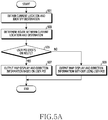
- FIG. 5A illustrates a method for providing navigation direction information in an electronic device according to various embodiments of the present disclosure.
- FIG. 5Aa illustrates an operating method of the electronic device 101.
- the electronic device 101 identifies a current location and a destination. That is, the electronic device 101 may determine POIs for a starting location and an arrival location. For doing so, the electronic device 101 may identify the current location through WiFi monitoring as well as a GPS module or a WPS module, or identify the POI corresponding to the destination inputted through an input device. For example, the electronic device 101 may set the POI corresponding to the identified current location to the starting location, or may set the POI corresponding to the text inputted as the starting location as the starting location. In addition, the electronic device 101 may receive a text input regarding the destination and set a destination POI matching the text in the map POI database as the arrival location.
- the electronic device 101 determines a route between the current location and the destination. That is, if there is a plurality of routes between the start and the arrival, the electronic device 101 may determine one route. For example, if both of the start and the arrival are POIs of the user's visited places, the electronic device 101 may determine one of the routes stored in the user POI database using the common route detecting unit 290. As another example, if at least one of the start and the arrival is a POI the user has never visited, the electronic device 101 may determine the route using the map POI database 260.
- the electronic device 101 determines whether a user POI exists on the route. In other words, the electronic device 101 may determine whether a user's known or visited place is present on the determined route. For example, the electronic device 101 may identify all of POIs on the determined route in the map POI database 260. By matching with the user POI database, the electronic device 101 may determine the user POI present on the route. According to another embodiment, the electronic device 101 may determine whether the user POI is present in a particular range from the route.
- the electronic device 101 outputs map display and direction information based on the user POI. That is, the electronic device 101 may output a navigation route guide based on the user's known or visited place. In one embodiment, the electronic device 101 may display the map excluding other POIs than the user POI. Referring to FIG. 5B , the electronic device 101 may output simple map display 520 on the display 110.
- the user POI may be 'Yongsan Electronics Market', 'work', 'Yongsan 1-ro', 'home' and 'city hall', and the electronic device 101 may display the above-described POI as the map.
- the electronic device 101 may output the turn-by-turn guide based on the user POI, wherein the guide may be voice output based on the TTS, image display for the user POI and specific text sentence display.
- the electronic device 101 outputs map display and direction information without using the user POI. That is, since there is no user POI on the determined route, the electronic device 101 may output navigation route guide based on the map POI database 260.
- the electronic device 101 may display a map including all of POIs. Referring to FIG. 5B , the electronic device 101 may display general map display 510. For example, the user's current location may be displayed in a pin shape, and all other POIs (e.g., buildings, roads, etc.) may be displayed together.
- the electronic device 101 may output the turn-by-turn guide based on all the POIs, wherein the guide may be voice output based on the TTS and specific text sentence display.
- the electronic device 101 may provide the navigation route guide based on the user POI.
- the user may improve geographical understanding according to the navigation guide using the known or visited place.
- the electronic device may output not only the navigation route guide but also the user POI information as the notifications, and thus provide necessary information for the user. Specific examples regarding the notification are as follows.
- the electronic device 101 may know other available tram stop at a particular tram stop through automatic user log analysis. Hence, the electronic device 101 may not recommend a tram number to the user, but may recommend the tram stop, and the recommended tram stop may be a familiar stop because the user visits there everyday to work.
- the electronic device 101 may identify that the user mostly goes for a walk with family in a park. A marathon causing traffic jam may be held in the park on particular Saturday, and the user does not know that. The electronic device 101 may know that the user goes to the park often and a specific road is unavailable at a particular time. Hence, the electronic device 101 may output a notification in advance in morning.
- the user may browse a particular product in an Internet shopping mall a few days ago.
- the electronic device 101 may output that there is a sales event for the corresponding product in a shop very close to the user's workplace.
- the user may set a reminder for a notification a few hours or days later.
- the electronic device 101 may know a user's known place, and may display a corresponding place, if the user writes an SMS or posts on a social network service (SNS).
- SNS social network service
- the electronic device 101 may recommend names of the user places, and help the user's SNS writing by adding a detailed street address, a link to the map, and so on.
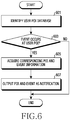
- FIG. 6 illustrates a method for providing user POI recommendation information according to various embodiments of the present disclosure.
- FIG. 6 illustrates an operating method of the electronic device 101.
- the electronic device 101 identifies the user POI database. That is, the electronic device 101 may identify user's visited or known places.
- the electronic device 101 may identify a database of a nearby user POI based a current location.
- the user POI database may include both of the visited place database 212 and the known place database 214.
- the electronic device 101 may identify a database of the user POI based on a place visited periodically or a place recently searched.
- the place visited periodically may be identified through the visited place detecting unit 220 and the visited place matching unit 280, and the place recently searched may be identified through information acquired by the web crawling unit 230, the text mining unit 210 and the text matching unit 270.
- the electronic device 101 identifies whether an event occurs at the user POI.
- the electronic device 101 may detect particular event occurrence of the POI the user has visited or recognized by search.
- the event may indicate any information which is significant to the user of the electronic device 101 in relation to the corresponding POI.
- step 605 the electronic device 101 acquires corresponding POI and event information. For example, if identifying the event information that there is a marathon event in the park of every Saturday walk, the electronic device 101 may acquire the corresponding POI information 'Park' and the event Information 'marathon event' together.
- the electronic device 101 outputs the POI and the event as a notification. For example, if a discount event of a grocery store visited on every Friday ends on Thursday, the electronic device 101 may output a notification before Thursday, and thus the user may learn the POI related event. As another example, if the marathon event occurs at the park visited every Saturday for a walk, the electronic device 101 may output a notification before Saturday, thus notifying the marathon event in advance. In another embodiment, if the user is driving, the electronic device 101 may output a notification based on the TTS rather than the display on the display 110.
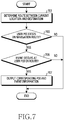
- FIG. 7 illustrates a method for providing POI recommendation information on a navigation route according to various embodiments of the present disclosure.
- FIG. 7 illustrates an operating method of the electronic device 101.
- the electronic device 101 determines a route between a current location and a destination. That is, the electronic device 101 may select a starting point and an arrival point and accordingly determine the route. For example, the electronic device 101 may acquire the current location using the communication unit 140 according to navigation execution, and determine a POI corresponding to the current location as the starting point. In addition, a POI corresponding to a text inputted as the destination may be determined as the arrival point. In one embodiment, if both of the starting point and the arrival point are included in the user POI database, the electronic device 101 may obtain information of the route between the current location and the destination using the common route detecting unit 290. In another embodiment, if the user POI database does not include at least one of the current location and the destination, the electronic device 101 may obtain the route information based on the map POI database 260.
- step 703 the electronic device 101 determines whether the user POI exists on the navigation route. That is, the electronic device 101 may match every POI on the determined route with the user POI database, and determine presence of the user POI on the navigation route if there is a common POI. The electronic device 101 may finish this algorithm if there is no common POI.
- step 705 the electronic device 101 determines whether an event occurs at the user POI on the route.
- the electronic device 101 may identify whether information of the common POI is updated. For example, the electronic device 101 may, if there is an update record of a grocery store on the navigation route, determine that the event occurs at the corresponding POI.
- the electronic device 101 outputs the corresponding POI and event information.
- the electronic device 101 may display the corresponding POI and the event information on the display 110, and also output through a voice based on the TTS.
- the electronic device 101 may also output a voice based on the TTS.
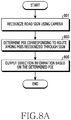
- FIG. 8A illustrates a method for providing navigation direction information based on road sign recognition according to various embodiments of the present disclosure.
- FIG. 8 illustrates an operating method of the electronic device 101.
- the electronic device 101 recognizes a road sign by using the camera 120. That is, the electronic device 101 may identify where a POI indicated by a text of the road sing indicates. For example, if recognizing execution of the navigation, the electronic device 101 may operate a sensor of the camera 120. Next, by processing an image acquired through the camera 120 sensor, the text such as a destination of the road sign may be recognized, and the recognized text may be matched with a POI database (e.g., the map POI database 260 or the user POI database).
- a POI database e.g., the map POI database 260 or the user POI database.
- texts acquired may be 'Daebang station', 'Mapodaegyo, 'Munhwa Broadcasting' and 'Wonhyodaegyo'.
- the electronic device 101 may compare the obtained texts with the map POI database 260 and obtain 'Daebang station', 'Mapodaegyo', 'Munhwa Broadcasting' and 'Wonhyodaegyo' information as the POIs, not the text.
- the electronic device 101 determines a POI corresponding to the route among the POIs recognized from the sign. That is, the electronic device 101 may select a POI which does not drift away from the determined route among the POIs of the road sign. For example, referring to FIG. 8B , the electronic device 101 may not select 'Daebang station', 'Mapodaegyo' and 'Munhwa Broadcasting' which are the POIs of different directions from the selected route, and may determine 'Wonhyodaegyo' which is the POI of the matching direction.
- the electronic device 101 outputs direction information based on determined POI. That is, the electronic device 101 may output information for guiding the user toward the determined POI.
- the outputted information may be various information such as image, text, and voice.
- the electronic device 101 may output a voice message 820 of "Go toward Wonhyodaegyo sign', or display a sign image for 'Wonhyodaegyo', and may output a text of 'toward Wonhyodaegyo' on the screen.
- FIG. 9A illustrates a method for providing route information of some section of navigation based on a user POI according to various embodiments of the present disclosure.
- FIG. 9A illustrates an operating method of the electronic device 101.
- the electronic device 101 determines whether a user POI exists only in some section of a route. That is, the electronic device 101 may identify every user POI on the selected route. If there is no section having the user POI on the selected route, the electronic device 101 may finish this algorithm, and provide route guide based on the map POI database in the entire section of the selected route. By contrast, if there is a section having the user POI on the selected route, the following operation may be performed for the some section route guide based on the user POI.
- the electronic device 101 selects the some section having the user POI. That is, the electronic device 101 may determine a section for providing the route guide based on the user POI. The electronic device 101 may select the corresponding section if a distance of the user POI exceeds a specific distance.
- the specific distance may be a value which is set by the user or an arbitrary value which is set by the processor 160.
- the electronic device 101 outputs a user POI route corresponding to the some section. That is, the electronic device 101 may provide a navigation route guide based on a user's known or visited place.
- the output of the user POI route may be one of voice output for the route guide, image display for the user POI or text display for the route guide.
- some section of the route may be the same as a user's normal work route, and the electronic device 101 may output a voice guide "Go to the usual work route' for the some section.
- FIG. 10A illustrates a method for providing POI information based on public transportation information according to various embodiments of the present disclosure.
- FIG. 10A illustrates an operating method of the electronic device 101.
- the electronic device 101 extracts stop information from a detected user POI.
- the electronic device 101 may select a route from a current location to a destination, wherein the route may refer to a route using both of walking and public transportation. Accordingly, the electronic device 101 may determine a section using the public transportation excluding a walking section, and detect a user POI for the public transportation section.
- the user POI for the public transportation section may be stop information such as a subway station, a bus stop, and a tram stop.
- the electronic device 101 displays a map based on the corresponding stop information.
- the electronic device 101 may display the stop information as the map to provide the route using the public transportation.
- the electronic device 101 may display the map further including POI information such as a user POI located around the corresponding stop, and a landmark in order to enhance user's understanding.
- the electronic device 101 outputs public transportation information at the corresponding stop. For example, if the user arrives at the corresponding stop, the electronic device 101 may further output the public transportation information used to get to the destination.
- the public transportation information may be information such as a line number for a bus, subway service information for a subway, and a tram number for a tram.
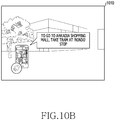
- the electronic device 101 may know the fact that a stop 'Rondo' is a stop which the user often goes to, and thus output a sound guide such as "To go to Arkadia shopping mall, take tram at 'Rondo' stop".
- the electronic device 101 may provide a location-based service optimized for the user based on the user POI.
- the electronic device 101 estimates the location.
- a system such as GPS and WPS may be used.
- a technique such as time of arrival (TOA) and time difference of arrival (TDOA) using signals of the wireless communication system may be utilized.
- TOA time of arrival
- TDOA time difference of arrival
- the electronic device 101 may continually identify the location, and accordingly the GPS module requires great battery consumption to acquire the location information and the POI of the electronic device 101.
- the WPS module which needs to access a common database, may require Internet connectivity and data exchange.
- WiFi monitoring may be suggested to reduce the aforementioned battery consumption and data consumption, and to enhance accuracy and reliability of location measurement.
- Specific examples of the WiFi monitoring are as follows.
- the WiFi monitoring may detect a start time and an end time of a visit using a WiFi monitoring unit 1110.
- the electronic device 101 which is based on the WiFi monitoring, may not rely on Internet connection or data transfer, without using the GPS module and the WPS module.
- the WiFi monitoring may reduce unnecessary battery consumption by decreasing a sampling interval.
- the WiFi monitoring may reduce a sampling frequency based on a motion sensor. If not receiving motion sensing data over a specific time, since there is no need to frequently perform the monitoring to detect a change of the place, the WiFi monitoring may set the sampling frequency to a smaller value.
- the WiFi monitoring may perform partial wifi scanning.
- the WiFi monitoring may scan only Wi-Fi corresponding to the user's known or visited place.
- the electronic device 101 may reduce unnecessary battery consumption and optimize the battery consumption. In matching the detected place with the POI, the fact that the GPS may not operate all day due to the battery consumption of the GPS and the fact that the GPS does not operate indoors may be problematic.
- WiFi connectable a few minutes before the visit may be selected. If the same WiFi is detected next time, GPS log, accelerometer and gyroscope records may be used to determine a user's precise location. Hence, as the number of visits increases, the electronic device 101 may acquire the visit location of higher accuracy through corresponding log records. Thus, if acquiring the visit location of high accuracy, the next visit may not require separate processing.
- FIG. 11A through FIG. 11C A configuration and operations of the electronic device 101 for the WiFi monitoring as stated above are described below by referring to FIG. 11A through FIG. 11C .
- FIG. 11A illustrates a functional configuration of WiFi monitoring in an electronic device according to various embodiments of the present disclosure.
- a term such as 'portion' or ' ⁇ er' used hereafter indicates a unit for processing at least one function or operation, and may be implemented using hardware, software, or a combination of hardware and software.
- the electronic device 101 may include a WiFi detecting unit 1110, a place engine unit 1120, a location acquiring unit 1130 and a sensor data collecting unit 1140.
- the WiFi detecting unit 1110 may detect a WiFi connectable by the electronic device 101.
- the WiFi detecting unit 1110 may detect a WiFi for a specific place or WiFi connection for a road.
- the electronic device 101 may not be connected to a particular Wi-Fi, and may merely store a plurality of connectable WiFis as list information.
- the WiFi detecting unit 1110 may trigger the sensing data collecting unit 1140.
- MAC WiFi road media access control
- the place engine unit 1120 may acquire specific place information according to the connected WiFi. For example, each WiFi may include a unique MAC address, and if the WiFi is connected, the place engine unit 1120 may obtain a specific place based on the MAC address of the corresponding WiFi. In another example, if receiving the road WiFi MAC address, the place engine unit 1120 may determine that the user leaves a POI corresponding to an existing visited place. In one embodiment, if detecting a WiFi place MAC, the place engine unit 1120 may stop triggering the sensor data acquiring unit 1140.
- the location acquiring unit 1130 may obtain coordinate information according to the place information acquired by the place engine unit 1120.
- the electronic device 101 may include a database for basic location coordinates corresponding to the place obtained by the place engine unit 1120.
- the acquired basic location coordinates may be used to measure a user's precise location with data collected by the sensor data collecting unit 1140, without relying on the GPS module or the WPS module.
- the sensor data collecting unit 1140 may collect sensing data such as user's movement of the electronic device 101.
- the sensor data collecting unit 1140 may have a configuration similar to the sensor module of FIG. 1 .
- the sensor data collecting unit 1140 may stop the operation of the sensor module 130 because the user visits the POI.
- the sensor data collecting unit 1140 may operate the sensor module 130 because the user leaves the visited POI. Accordingly, the electronic device 101 may acquire the user's specific location without using the GPS module or the WPS module.
- FIG. 11B illustrates a method for conducting the WiFi monitoring in the electronic device according to various embodiments of the present disclosure.
- FIG. 11B illustrates an operating method of the electronic device 101.
- the electronic device 101 may initiate the WiFi monitoring. That is, the electronic device 101 may monitor a connectable WiFi.
- the connectable WiFi may change according to the user's movement, and signal strength of the connectable WiFi may also change.
- the electronic device 101 may initiate the WiFi monitoring by monitoring a type and the signal strength of the connectable WiFi in real time.
- the electronic device 101 may determine whether the user is located indoors. That is, if acquiring WiFi place MAC, the electronic device 101 may determine that the user is located at a place corresponding to the Wi-Fi place MAC.
- the Wi-Fi place MAC indicates a MAC address of a WiFi access point (AP) located indoors. That is, the electronic device 101 may identify the MAC address of the AP using a signal received from the AP, and identify whether the identified MAC address is the WiFi place MAC.
- AP WiFi access point
- the electronic device 101 may update a visited place database. That is, the electronic device 101 may determine that the user is indoors, and update the database for the POI corresponding to the indoor. Specifically, the electronic device 101 may additionally update the number of visits, and the visit time in the database, and store in the form of a user log record. For example, if the user visits a POI for the first time, the electronic device 101 may add the corresponding POI to the visited place database 212. In addition, if the user revisits the visited POI, the electronic device 101 may update how many times it is visited and a start time and an end time of the visit in the visited place database 212.
- the electronic device 101 may collect sensor data and fix the GPS.
- the electronic device 101 may determine that the user is outdoors out of the visited POI, and operate the sensor module 130. For example, upon acquiring the WiFi road MAC, the electronic device 101 may detect a user's movement. However, the electronic device 101 may perform the GPS fix to improve accuracy of the sensor data.
- the WiFi monitoring may have very high reliability.
- the WiFi monitoring may collect GPS, accelerometer and gyroscope logs for a few minutes before the place visit. Based on the collected logs, a precise entrance location of the place may be calculated, and the calculated entrance location may be very important information in acquiring a road address.
- WPS accuracy may be about 20m in an urban area, and may be about 70m in a lower urbanized area. In addition, the accuracy of about 100m may be obtained in a rural area.
- the WPS module may provide a location on a next building or on the other road side. If going outside the place, since even walking may cause a considerable gap, time of GPS first fix may be crucial.
- a user's movement path according to the data collected by the sensor data collecting unit 1140 may be sensor fusion 1150.
- the electronic device 101 may perform the GPS first fix.
- the electronic device 101 may minimize battery consumption and acquire the user's precise location.
- a computer-readable storage medium which stores one or more programs (software modules) may be provided.
- One or more programs stored in the computer-readable storage medium may be configured for execution by one or more processors of a device.
- One or more programs may include instructions for enabling the device to execute the methods according to the embodiments disclosed in the claims or the specification of the present disclosure.
- Such a program may be stored to a random access memory, a non-volatile memory including a flash memory, a read only memory (ROM), an electrically erasable ROM (EEPROM), a magnetic disc storage device, a compact disc (CD)-ROM, digital versatile discs (DVDs) or other optical storage devices, and a magnetic cassette.
- the programs may be stored to a memory combining part or all of them. Also, a plurality of memories may be included.
- the programs may be stored in an attachable storage device accessible via a communication network such as Internet, Intranet, local area network (LAN), wide LAN (WLAN), or storage area network (SAN), or a communication network by combining these networks.
- a storage device may access an apparatus which realizes an embodiment of the present disclosure through an external port.
- a separate storage device on the communication network may access the apparatus which realizes an embodiment of the present disclosure.
- the elements included in the disclosure are expressed in a singular or plural form.
- the singular or plural expression is appropriately selected according to a proposed situation for the convenience of explanations, the present disclosure is not limited to a single element or a plurality of elements, the elements expressed in the plural form may be configured as a single element, and the elements expressed in the singular form may be configured as a plurality of elements.
Landscapes
- Engineering & Computer Science (AREA)
- Remote Sensing (AREA)
- Radar, Positioning & Navigation (AREA)
- General Physics & Mathematics (AREA)
- Physics & Mathematics (AREA)
- Automation & Control Theory (AREA)
- Signal Processing (AREA)
- Computer Networks & Wireless Communication (AREA)
- Theoretical Computer Science (AREA)
- Databases & Information Systems (AREA)
- General Engineering & Computer Science (AREA)
- Data Mining & Analysis (AREA)
- Health & Medical Sciences (AREA)
- General Health & Medical Sciences (AREA)
- Social Psychology (AREA)
- Multimedia (AREA)
- Navigation (AREA)
Abstract
Description
- The present disclosure generally relates to an electronic device, and more specifically, to a method for providing a location-based service and an electronic device thereof.
- Thanks to remarkable development of information communication technology and semiconductor technology, supply and use of various electronic devices are rapidly increasing. As the electronic device is widely supplied, the electronic device supports various functions. For example, the electronic device may receive information of a location of the electronic device from a global positioning system (GPS) satellite. The electronic device may provide information of the location of the electronic device to a user. In addition, the electronic device supports various services such as a map service or a navigation service using the location information of the electronic device.
- Based on the discussions described above, the present disclosure provides a method and an apparatus for providing point of interest (POI) information based on user experience.
- In addition, the present disclosure provides a method and an apparatus for providing information of a place description based on a user POI.
- In addition, the present disclosure provides a method and an apparatus for providing navigation information based on a user POI.
- In addition, the present disclosure provides a method and an apparatus for displaying a map based on a user POI.
- In addition, the present disclosure provides a method and an apparatus for providing recommendation information based on a user POI.
- In addition, the present disclosure provides a method and an apparatus for acquiring place information based on wifi monitoring.
- According to various embodiments of the present disclosure, an electronic device may include a processor configured to generate a database relating to a user point of interest (POI), and detect an information request from a user, and an output unit for outputting information based on the database, and the user POI may indicate at least one place extracted from information inputted to the electronic device.
- According to various embodiments of the present disclosure, an operating method of an electronic device may include generating a database relating to a user POI, detecting an information request from a user, and outputting information based on the database, and the user POI may indicate at least one place extracted from information inputted to the electronic device.
- A method and an electronic device according to various embodiments of the present disclosure may, by filtering location and place information based on a user point of interest (POI), provide POI information of a more appropriate form to a user, and thus, the user of the electronic device may improve cognitive ability and cognitive speed on a geographical place.
- Effects obtainable from the present disclosure are not limited to the above mentioned effects, and other effects which are not mentioned may be clearly understood by those skilled in the art of the present disclosure through the following descriptions.
-
-
FIG. 1 illustrates a functional configuration of an electronic device according to various embodiments of the present disclosure. -
FIG. 2 illustrates a functional block diagram of a processor and a memory according to various embodiments of the present disclosure. -
FIG. 3 illustrates a method for providing a location based service in an electronic device according to various embodiments of the present disclosure. -
FIG. 4 illustrates a method for providing a place description in an electronic apparatus according to various embodiments of the present disclosure. -
FIG. 5A illustrates a method for providing navigation direction information based on a user point of interest (POI) in an electronic device according to various embodiments of the present disclosure. -
FIG. 5B illustrates an example of map display based on a user POI according to various embodiments of the present disclosure. -
FIG. 6 illustrates a method for providing user POI recommendation information according to various embodiments of the present disclosure. -
FIG. 7 illustrates a method for providing POI recommendation information on a navigation route according to various embodiments of the present disclosure. -
FIG. 8A illustrates a method for providing navigation direction information based on road sign recognition according to various embodiments of the present disclosure. -
FIG. 8B illustrates an example of providing the navigation direction information based on the road sign recognition according to various embodiments of the present disclosure. -
FIG. 9A illustrates a method for providing route information of some section of navigation based on a user POI according to various embodiments of the present disclosure. -
FIG. 9B illustrates an example of providing the route information of the some section of the navigation based on the user POI according to various embodiments of the present disclosure. -
FIG. 10A illustrates a method for providing POI information based on public transportation information according to various embodiments of the present disclosure. -
FIG. 10B illustrates an example for providing the POI information based on the public transportation information according to various embodiments of the present disclosure. -
FIG. 11A illustrates a functional configuration of wifi monitoring according to various embodiments of the present disclosure. -
FIG. 11B illustrates a method for conducting the WiFi monitoring according to various embodiments of the present disclosure. -
FIG. 11C illustrates a specific example of the WiFi monitoring according to various embodiments of the present disclosure.] - Terms used in the present disclosure are used for describing particular embodiments, and are not intended to limit the scope of other embodiments. A singular form may include a plurality of forms unless it is explicitly differently represented. All the terms used herein, including technical and scientific terms, may have the same meanings as terms generally understood by those skilled in the art to which the present disclosure pertains. Among terms used in the present disclosure, the terms defined in a general dictionary may be interpreted to have the same or similar meanings with the context of the relevant art, and, unless explicitly defined in this disclosure, it shall not be interpreted ideally or excessively as formal meanings. In some cases, even terms defined in this disclosure should not be interpreted to exclude the embodiments of the present disclosure.
- In various embodiments of the present disclosure to be described below, a hardware approach will be described as an example. However, since the various embodiments of the present disclosure include a technology using both hardware and software, the various embodiments of the present disclosure do not exclude a software-based approach.
- Hereafter, the present disclosure relates to a method for providing a location based service in a wireless communication system and an electronic device thereof. More specifically, the present disclosure describes a technique for providing various location based services based on a user point of interest (POI) in the electronic device.
- Terms (e.g., POI) indicating places, terms indicating types of a place based service, and terms indicating components of a device which are used in the following descriptions, are for the sake of explanations. Accordingly, the present disclosure is not limited to the terms to be described, and may use other terms having technically identical meaning.
- Various embodiments for the location based service are described below. Hereinafter, definitions of terms used in the descriptions are as follows.
- 'POI' may include information relating to a place corresponding to a location. For example, the POI may include information of the place (e.g., a shop, an institution, facilities or building, etc.) where the electronic device is currently located. 'POI' may further include awareness information (e.g., a business name, an institution name, a facility name, a building name, etc.) for a corresponding place at a recognition level of people.
- 'User POI' may include a POI relating to a user of the electronic device. That is, the user POI may include information indicating at least one place extracted from information inputted to the electronic device. Herein, 'information' may be variously defined as a GPS reception signal, wireless fidelity (Wi-Fi) media access control (MAC) address and its location information, and information included in a webpage displayable at the electronic device. In addition, 'extract' may be defined as a series of processes for acquiring meaningful information for the user from the inputted information. For example, the electronic device may receive a GPS signal and obtain specific location information. It may obtain place information corresponding to the acquired location. As another example, the electronic device may receive a WiFi MAC address, and obtain place information corresponding to the MAC address. As another example, the electronic device may obtain text from every information included in the webpage, and obtain place information indicated by the text. In short, 'user POI' indicates the POI which is visited, known, or expected to be aware of by the user of the electronic device. Specifically, 'user POI' may be classified into a visited place, a landmark, a common culture recognized place, an interested place of the user of the electronic device, and so on. At this time, the landmark may have a different weight. For example, a world famous place (e.g., the Eiffel Tower, the Statue of Liberty) may have a higher weight, and all of users may know the corresponding place. By contrast, a locally famous place (e.g., Hanok Village, Suncheon Bay) may be a landmark having a low weight. The common cultural recognized place may refer to a place which is known from other users living in the same area, or known by a community newspaper. The interested place may refer to a place which the user may be aware of by reading a television (TV) program, a movie, a drama, and a book. The user visited place may refer to a place where the visit of the
electronic device 101 is detected. - 'Event' may include information occurring at the POI, wherein the POI may refer to a POI included in a user POI database of the electronic device. Accordingly, 'event' may indicate all information occurring at a place regarding the user of the electronic device.
-
FIG. 1 illustrates a functional configuration of an electronic device according to various embodiments of the present disclosure. A term such as 'portion' or '∼ er' used hereafter indicates a unit for processing at least one function or operation, and may be implemented using hardware, software, or a combination of hardware and software. - Referring to
FIG. 1 , theelectronic device 101 may include adisplay 110, acamera 120, asensor module 130, acommunication unit 140, amemory 150 and aprocessor 160. - The
display 110 is a component for displaying a screen of theelectronic device 101. For example, thedisplay 110 may be configured with at least one of organic light emitting diode (OLED), quantum-dot light emitting diode (QLED), and liquid crystal display (LCD). As another example, thedisplay 110 may include a touch screen panel for detecting a user touch input of theelectronic device 101. - The
camera 120 performs a function for capturing an image of an external environment of theelectronic device 101. For example, if a navigation is executed, thecamera 120 may capture a road sign. Although not depicted, thecamera 120 may include a separate processor (e.g., a graphic process unit (GPU)) for processing the image, and recognize a text of the sign through separate processing on the image acquired by a sensor embedded in thecamera 120. - The
communication unit 140 performs a function for receiving a signal from an external device or transmitting a signal to the external device. For example, thecommunication unit 140 may receive a WiFi signal of the external device, and transmit a message notifying that connection is successful. - The
memory 150 stores a basic program for operating theelectronic device 101, an application program and data such as setting information. Herein, the application program may include a map or navigation application. Thememory 150 may be configured with a volatile memory, a non-volatile memory or a combination of a volatile memory and a non-volatile memory. Thememory 150 may provide the stored data according to a request of theprocessor 160. Thememory 150 may store location and place information acquired by thecommunication unit 140 and/or thesensor module 130. Specifically, thememory 150 may store a user's known place database based on text mining and a visited place database based on WiFi monitoring. In addition, thememory 150 may store a map POI database received from a server and data necessary for public transportation detection. - The
processor 160 controls entire operations of theelectronic device 101. For example, theprocessor 160 may control the screen display of thedisplay 110, and recognize an external object through thecamera 120. As another example, theprocessor 160 may obtain the location information of theelectronic device 101 through thecommunication unit 140 or thesensor module 130. As another example, theprocessor 160 may store place information regarding the user in the user POI database. In addition, theprocessor 160 may generate and output location related information based on the user POI. At this time, the location related information may be outputted through thedisplay 110 in a visual form, and may be outputted through a speaker (not shown) in a sound form. Herein, thedisplay 101 and the speaker which may output the location related information may be commonly referred to as an 'output unit'. According to various embodiments of the present disclosure, theprocessor 160 may control theelectronic device 101 to perform various operations to be described. -
FIG. 2 illustrates a functional block diagram of a processor and a memory according to various embodiments of the present disclosure. A term such as 'portion' or '∼ er' used hereafter indicates a unit for processing at least one function or operation, and may be implemented using hardware, software, or a combination of hardware and software. - Referring to
FIG. 2 , theprocessor 160 of theelectronic device 101 may include atext mining unit 210, a visitedplace detecting unit 220, aweb crawling unit 230, a roadsign recognizing unit 240, a publictransportation detecting unit 250, amap POI database 260, atext matching unit 270, a visitedplace matching unit 280 and a commonroute detecting unit 290. Herein, thetext mining unit 210, the visitedplace detecting unit 220, theweb crawling unit 230, the roadsign recognizing unit 240, the publictransportation detecting unit 250, themap POI database 260, thetext matching unit 270, the visitedplace matching unit 280 and theroute detecting unit 290 may be, as an instruction set or code stored in thememory 150, the instructions/code resided in theprocessor 160 at least temporarily or a storage space storing the instructions/code, or part of circuitry of theprocessor 160. - The
text mining unit 210 may detect texts regarding the input and the output of theelectronic device 101. For example, thetext mining unit 210 may detect every text which is inputted by the user. Specifically, thetext mining unit 210 may detect texts completed through every input device such as a touch input. As another example, thetext mining unit 210 may detect every text outputted. Specifically, thetext mining unit 210 may detect all of the texts displayed on thedisplay 110 of theelectronic device 101. - The visited
place detecting unit 220 may detect information of a place visited by theelectronic device 101. For example, theelectronic device 101 may detect the visited place information through a global positioning system (GPS) module, and a wifi positioning system (WPS) module. According to another embodiment, theelectronic device 101 may detect the visited place information through a WiFi monitoring unit. - The
web crawling unit 230 may randomly collect POI information on web sites. For example, theweb crawling unit 230 may acquire POI information from information extracted from every website connected on theelectronic device 101. - The road
sign recognizing unit 240 may recognize a road sign through thecamera 120. For example, if the user executes a navigation application, theelectronic device 101 may operate thecamera 120, and theelectronic device 101 may recognize the road sign, according to the image processing process of thecamera 120. As another example, if detecting a speed exceeding a threshold speed, theelectronic device 101 may operate a camera and recognize a road sign. As another example, the roadsign recognizing unit 240 may include a separate database, and the corresponding database may be received from a server. Herein, the separate database and the server may be provided by a public institution or a third party which provides a road traffic related service. - The public
transportation detecting unit 250 may include general information about public transportations, wherein the public transportations may refer to a bus, a subway, a tram and so on. According to another embodiment, the publictransportation detecting unit 250 may include a separate database, and the corresponding database may be received from the server. Herein, the separate database and the server may be provided by a public institution or a third party which provides a public transportation related service - The
map POI database 260 may include all the POI information. For example, if the user downloads and executes a map or navigation application, theelectronic device 101 may download and store a database including existing POI information from an external device (e.g., a server). Herein, the existing POI information may be provided by a third party such as an application or service provider, and may be different from actual POI information at the application execution. - The
text matching unit 270 may identify whether the text obtained through thetext mining unit 210 is a text referring to the POI. For example, thetext matching unit 270 may detect the text indicating the POI by comparing the obtained text with a plurality of POI information included in themap POI database 260. According to another embodiment, theelectronic device 101 may match the POI text acquired through the text mining with the user POI database, and store in aknown place database 214 if the matching is not fulfilled. - The visited
place matching unit 280 may identify whether a visited place is the place for the POI. For example, the visited place may be acquired through the visitedplace detecting unit 220, and the visitedplace matching unit 280 may determine whether the visited place corresponds to the POI, by comparing the acquired visited place information with themap POI database 260. According to another embodiment, theelectronic device 101 may store the POI obtained by the visitedplace matching unit 280 in a visited place visitedplace database 212. Herein, if the POI acquired by the visitedplace matching unit 280 already exists, theelectronic device 101 may store a history in the form of a specific user log. In addition, if the POI acquired by the visitedplace matching unit 280 is not stored in the visitedplace database 212, theelectronic device 101 may store the POI of the visited place. Hence, theelectronic device 101 may identify the history of the visited place and a place list. - The common
route detecting unit 290 may detect routes between the visited places. For example, if detecting a visit to a specific place, the commonroute detecting unit 290 may determine common routes between the specific place of the detected visit and other visited places. In another embodiment, the commonroute detecting unit 290 may determine a plurality of common routes between the same visited places. - The
memory 150 of theelectronic device 101 may include the visitedplace database 212 and the knownplace database 214. Herein, information including all information of the visitedplace database 212 and the knownplace database 214 both may be referred to as user POI information. - The visited
place database 212 may store POI information visited directly by the user and acquired through the visitedplace detecting unit 220 of theelectronic device 101. In addition, the visitedplace database 212 may include not only the POI information visited directly by the user, but also the route information acquired by the commonroute detecting unit 290 between the directly visited places. - The known
place database 214 may store POI information recognized by the user through the input and the output and acquired through thetext mining unit 210 of theelectronic device 101. The POI information stored in the knownplace database 214 may not be merely the text information acquired by the text mining, but may be specific POI information compared with themap POI database 260 by thetext matching unit 270. - In the embodiment as described in reference to
FIG. 2 , the visitedplace database 212 and the knownplace database 214 have been described as part of the configuration of theelectronic device 101. However, according to another embodiment, in place of the visitedplace database 212 and the knownplace database 214, the electronic device may use a database stored outside. For example, the visitedplace database 212 and the knownplace database 214 may be formed in an external server (e.g., a cloud server), and accordingly, theelectronic device 101 may access use the information stored in the visitedplace database 212 and the knownplace database 214 by accessing the external server. -
FIG. 3 illustrates a method for providing a location guide service in an electronic device according to various embodiments of the present disclosure.FIG. 3 illustrates an operating method of theelectronic device 101. - Referring to
FIG. 3 , instep 301, theelectronic device 101 generates a user POI database. For doing so, theelectronic device 101 may determine the user POI, by identifying a user input regarding a POI inputted through an input device, extracting POI related information on a screen displayed by thedisplay 110, or determining a POI corresponding to a current location through location estimation. Theelectronic device 101 may generate and update the user POI database using the determined user POI. That is, theelectronic device 101 may add information of a POI newly discovered to the user POI database. According to one embodiment, the POI database may be generated inside theelectronic device 101. In this case, in this step, the electronic device may store the information of the user POI in an internal storage device (e.g., the memory 150). According to another embodiment, the POI database may be generated outside theelectronic device 101. In this case, in this step, the electronic device may transmit the information of the user POI to an external server (e.g., a cloud server). - In
step 303, theelectronic device 101 detects a user's information request. In other words, theelectronic device 101 determines that location guide on a specific POI is requested from the user. For example, the user's information request may be defined variously such as a response for accepting route guide in a navigation service, a text input corresponding to the POI on a web site, and a user input for selecting a text indicating the corresponding POI at a place the user does not know while displaying the web page. - In
step 305, theelectronic device 101 outputs information based on the user POI database. That is, theelectronic device 101 may generate guide information (e.g., a text, graphics, etc.) for the location request by the user using at least one user POI of the user POIs. For example, in a navigation service, theelectronic device 101 may display a map excluding other user POIs than the user POI. As another example, if the user requests a description on a POI corresponding to an unknown place, theelectronic device 101 may generate the description on a specific location or route for the unknown place based on the user POI. In this case, if explaining with a sentence using text or voice, theelectronic device 101 may output a guide phrase based on the user POI, or output audio through text-to-sound (TTS). - As described above with reference to
FIG. 3 , theelectronic device 101 may determine the user POI based the user experience, and provide a more convenient location-based service to the user based on the user POI. Herein, as a kind of the location-based service, a service which provides a location description on a specific place may be provided. Specific examples of services for providing the location description on the place are as follows. - According to various embodiments of the present disclosure, if the user finds a place of interest while browsing the web, the
electronic device 101 may provide information which describes where the corresponding place is located in association with a place the user knows. For example, theelectronic device 101 may output text or speech such as "The corresponding place is located in three minutes walk from 'Aioli' restaurant located in Jongno 1-ga". - According to various embodiments of the present disclosure, the
electronic device 101 may receive a short message service (SMS) or an e-mail to meet at a particular place. Theelectronic device 101 may provide brief information of the corresponding place using user's known places. Theelectronic device 101 may detect a user's guide request, and output a notification that "You should go by car". Theelectronic device 101 may also output a notification that "Go to Yongsan 1-ga road" which the user frequently visits. Next, if the user passes through 'Yongsan 1-ga', theelectronic device 101 may provide turn-by-turn guide using an image on the map or a voice. - According to various embodiments of the present disclosure, the
electronic device 101 may detect that the text indicates a name of the POI. Theelectronic device 101 may retrieve and recognize the POI name text in the POI database. If the text indicates the POI, theelectronic device 101 may determine whether it is one of the user's known POIs. If it is a user's unknown POI, theelectronic device 101 may generate a location description, and wait for a user's request. - Operations of the
electronic device 101 for the above-described embodiments are described below with reference toFIG. 4 . -
FIG. 4 illustrates a method for providing a location description in an electronic apparatus according to various embodiments of the present disclosure.FIG. 4 illustrates an operating method of theelectronic device 101. - Referring to
FIG. 4 , instep 401, theelectronic device 101 detects a POI input based on the text mining. That is, if obtaining a text from a user's input, theelectronic device 101 may identify whether the obtained text is a text about the POI. For example, if the user is accessing a website, theelectronic device 101 may acquire a text displayed on the website using thetext mining unit 210, and identify whether it is a text indicating the POI by comparing with a map POI database through thetext matching unit 270. In another example, theelectronic device 101 may receive at least one e-mail, SMS, long message service (LMS) and multimedia message including contents to meet at a particular place. - In
step 403, theelectronic device 101 identifies whether the detected POI input and the user POI database match. That is, theelectronic device 101 may compare whether a place corresponding to the detected POI is the same as a user's know or visited place. For example, if the detected input matches the user POI database, theelectronic device 101 may finish this process for providing the place description because the user already knows or visited the place. If the detected input does not match the user POI database, theelectronic device 101 may performoperation 405 for the place description because the user has never visited or knows the place corresponding to the detected POI. - In
step 405, theelectronic device 101 detects a user POI close to the inputted POI and generates a place description. In other words, to describe the place corresponding to the inputted POI based on the user's known or visited place, theelectronic device 101 may detect the user POI close to the inputted POI. In one embodiment, the criterion of the distance for detecting the close user POI may be a distance value which is set by the user of theelectronic device 101, or may be a randomly set value. If the set distance value is great, there may be many user POIs close to the inputted POI, and if the set distance value is small, there may be not many user POIs close to the inputted POI. Theelectronic device 101 may generate the place description based on the detected user POIs. For example, if the inputted user POI is located in 1 Km north from the user POI (e.g., a user's workplace), theelectronic device 101 may generate a specific place description that the inputted POI is located in 1 Km north from the user's workplace. - Although not depicted in
FIG. 4 , theelectronic device 101 may display the text differently on thedisplay 110 to induce a request for the location description. For example, if the user is browsing the web, if the POI input detected by the text mining does not match the user POI database, a shadow effect may be displayed together with the text corresponding to the POI, to thus notify the user that a user's unknown place is included in web browsing contents. - According to various embodiments as stated above, the electronic device may provide the description of the specific POI based on the user POI. Thus, the user may understand well the specific POI based on his/her known or visited place. Yet, the electronic device may provide not only the description of the particular POI, but also guide of the navigation route if going to the particular POI. Specific examples of navigation services are as follows.
- According to various embodiments of the present disclosure, the
electronic device 101 may include information of the user's known place, and display a route from the user's known place to a destination by considering a user's current location. In this case, the route display may be a simple drawing which is drawn by a user's friend to explain the route. - According to various embodiments of the present disclosure, if the user goes to a shopping mall, the user may know well because some area of a route to the corresponding shopping mall is the same as a route to work. In this case, the user may receive an appropriate guide to the destination. The
electronic device 101 may provide the guide based on a landmark, or provide guide by the turn-by-turn if there is no landmark. The turn-by-turn navigation guide may be replaced by a landmark image of a close position in another embodiment. - According to various embodiments of the present disclosure, the user may be on the way to a small city which is not shown on a road sign. If the user is completely ignorant of the route, he/she may experience confusion. A navigation application may be aware of the route, the current location and road signs, and accordingly the thus the navigation application may provide a correct city or route on the road sign for the user.
- According to various embodiments of the present disclosure, the
electronic device 101 may output to the user 'very good or best' for new places in the navigation. In this embodiment, theelectronic device 101 may require an additional service considering road traffic status, surroundings, and landmarks other people know. The new landmarks may be completely new places the user has never seen or heard about, may be places the user has heard about or read about, or may be places generally known but unknown to the user. To provide information of the new landmark, if the user is traveling, theelectronic device 101 may provide additional information. For example, if the user passes a specific city on a highway, theelectronic device 101 may notify some interesting facts such as information that the corresponding city is a landmark on the route, historical fact or recent news. - Operations of the
electronic device 101 for the above-described embodiments are explained below with reference toFIG. 5A andFIG. 5B . -
FIG. 5A illustrates a method for providing navigation direction information in an electronic device according to various embodiments of the present disclosure.FIG. 5Aa illustrates an operating method of theelectronic device 101. - Referring to
FIG. 5A , instep 501, theelectronic device 101 identifies a current location and a destination. That is, theelectronic device 101 may determine POIs for a starting location and an arrival location. For doing so, theelectronic device 101 may identify the current location through WiFi monitoring as well as a GPS module or a WPS module, or identify the POI corresponding to the destination inputted through an input device. For example, theelectronic device 101 may set the POI corresponding to the identified current location to the starting location, or may set the POI corresponding to the text inputted as the starting location as the starting location. In addition, theelectronic device 101 may receive a text input regarding the destination and set a destination POI matching the text in the map POI database as the arrival location. - In
step 503, theelectronic device 101 determines a route between the current location and the destination. That is, if there is a plurality of routes between the start and the arrival, theelectronic device 101 may determine one route. For example, if both of the start and the arrival are POIs of the user's visited places, theelectronic device 101 may determine one of the routes stored in the user POI database using the commonroute detecting unit 290. As another example, if at least one of the start and the arrival is a POI the user has never visited, theelectronic device 101 may determine the route using themap POI database 260. - In
step 505, theelectronic device 101 determines whether a user POI exists on the route. In other words, theelectronic device 101 may determine whether a user's known or visited place is present on the determined route. For example, theelectronic device 101 may identify all of POIs on the determined route in themap POI database 260. By matching with the user POI database, theelectronic device 101 may determine the user POI present on the route. According to another embodiment, theelectronic device 101 may determine whether the user POI is present in a particular range from the route. - If the user POI exists on the route, in
step 507, theelectronic device 101 outputs map display and direction information based on the user POI. That is, theelectronic device 101 may output a navigation route guide based on the user's known or visited place. In one embodiment, theelectronic device 101 may display the map excluding other POIs than the user POI. Referring toFIG. 5B , theelectronic device 101 may outputsimple map display 520 on thedisplay 110. For example, the user POI may be 'Yongsan Electronics Market', 'work', 'Yongsan 1-ro', 'home' and 'city hall', and theelectronic device 101 may display the above-described POI as the map. As another example, theelectronic device 101 may output the turn-by-turn guide based on the user POI, wherein the guide may be voice output based on the TTS, image display for the user POI and specific text sentence display. - If the user POI does not exist on the route, in
step 509, theelectronic device 101 outputs map display and direction information without using the user POI. That is, since there is no user POI on the determined route, theelectronic device 101 may output navigation route guide based on themap POI database 260. In one embodiment, theelectronic device 101 may display a map including all of POIs. Referring toFIG. 5B , theelectronic device 101 may display general map display 510. For example, the user's current location may be displayed in a pin shape, and all other POIs (e.g., buildings, roads, etc.) may be displayed together. As another example, theelectronic device 101 may output the turn-by-turn guide based on all the POIs, wherein the guide may be voice output based on the TTS and specific text sentence display. - As described with reference to
FIG. 5Aa , theelectronic device 101 may provide the navigation route guide based on the user POI. Thus, the user may improve geographical understanding according to the navigation guide using the known or visited place. In addition, the electronic device may output not only the navigation route guide but also the user POI information as the notifications, and thus provide necessary information for the user. Specific examples regarding the notification are as follows. - According to various embodiments of the present disclosure, the
electronic device 101 may know other available tram stop at a particular tram stop through automatic user log analysis. Hence, theelectronic device 101 may not recommend a tram number to the user, but may recommend the tram stop, and the recommended tram stop may be a familiar stop because the user visits there everyday to work. - According to various embodiments of the present disclosure, from history information based on the user POI database, the
electronic device 101 may identify that the user mostly goes for a walk with family in a park. A marathon causing traffic jam may be held in the park on particular Saturday, and the user does not know that. Theelectronic device 101 may know that the user goes to the park often and a specific road is unavailable at a particular time. Hence, theelectronic device 101 may output a notification in advance in morning. - According to various embodiments of the present disclosure, the user may browse a particular product in an Internet shopping mall a few days ago. The
electronic device 101 may output that there is a sales event for the corresponding product in a shop very close to the user's workplace. In addition, the user may set a reminder for a notification a few hours or days later. - According to various embodiments of the present disclosure, the
electronic device 101 may know a user's known place, and may display a corresponding place, if the user writes an SMS or posts on a social network service (SNS). In addition, if the user inputs a sentence about the place, theelectronic device 101 may recommend names of the user places, and help the user's SNS writing by adding a detailed street address, a link to the map, and so on. - Operations of the
electronic device 101 for the embodiments regarding the above-described notification are explained below with reference toFIG. 6 through FIG. 10B . -
FIG. 6 illustrates a method for providing user POI recommendation information according to various embodiments of the present disclosure.FIG. 6 illustrates an operating method of theelectronic device 101. - Referring to
FIG. 6 , instep 601, theelectronic device 101 identifies the user POI database. That is, theelectronic device 101 may identify user's visited or known places. - According to one embodiment, the
electronic device 101 may identify a database of a nearby user POI based a current location. In this case, the user POI database may include both of the visitedplace database 212 and the knownplace database 214. According to another embodiment, theelectronic device 101 may identify a database of the user POI based on a place visited periodically or a place recently searched. Herein, the place visited periodically may be identified through the visitedplace detecting unit 220 and the visitedplace matching unit 280, and the place recently searched may be identified through information acquired by theweb crawling unit 230, thetext mining unit 210 and thetext matching unit 270. - In
step 603, theelectronic device 101 identifies whether an event occurs at the user POI. In other words, theelectronic device 101 may detect particular event occurrence of the POI the user has visited or recognized by search. Herein, the event may indicate any information which is significant to the user of theelectronic device 101 in relation to the corresponding POI. - In
step 605, theelectronic device 101 acquires corresponding POI and event information. For example, if identifying the event information that there is a marathon event in the park of every Saturday walk, theelectronic device 101 may acquire the corresponding POI information 'Park' and the event Information 'marathon event' together. - In
step 607, theelectronic device 101 outputs the POI and the event as a notification. For example, if a discount event of a grocery store visited on every Friday ends on Thursday, theelectronic device 101 may output a notification before Thursday, and thus the user may learn the POI related event. As another example, if the marathon event occurs at the park visited every Saturday for a walk, theelectronic device 101 may output a notification before Saturday, thus notifying the marathon event in advance. In another embodiment, if the user is driving, theelectronic device 101 may output a notification based on the TTS rather than the display on thedisplay 110. -
FIG. 7 illustrates a method for providing POI recommendation information on a navigation route according to various embodiments of the present disclosure.FIG. 7 illustrates an operating method of theelectronic device 101. - Referring to
FIG 7 , instep 701, theelectronic device 101 determines a route between a current location and a destination. That is, theelectronic device 101 may select a starting point and an arrival point and accordingly determine the route. For example, theelectronic device 101 may acquire the current location using thecommunication unit 140 according to navigation execution, and determine a POI corresponding to the current location as the starting point. In addition, a POI corresponding to a text inputted as the destination may be determined as the arrival point. In one embodiment, if both of the starting point and the arrival point are included in the user POI database, theelectronic device 101 may obtain information of the route between the current location and the destination using the commonroute detecting unit 290. In another embodiment, if the user POI database does not include at least one of the current location and the destination, theelectronic device 101 may obtain the route information based on themap POI database 260. - In
step 703, theelectronic device 101 determines whether the user POI exists on the navigation route. That is, theelectronic device 101 may match every POI on the determined route with the user POI database, and determine presence of the user POI on the navigation route if there is a common POI. Theelectronic device 101 may finish this algorithm if there is no common POI. - In
step 705, theelectronic device 101 determines whether an event occurs at the user POI on the route. In other words, theelectronic device 101 may identify whether information of the common POI is updated. For example, theelectronic device 101 may, if there is an update record of a grocery store on the navigation route, determine that the event occurs at the corresponding POI. - In
step 707, theelectronic device 101 outputs the corresponding POI and event information. For example, theelectronic device 101 may display the corresponding POI and the event information on thedisplay 110, and also output through a voice based on the TTS. - Although not depicted, if approaching the POI where the event occurs during the user's driving based on the route guide of the navigation, the
electronic device 101 may also output a voice based on the TTS. -
FIG. 8A illustrates a method for providing navigation direction information based on road sign recognition according to various embodiments of the present disclosure.FIG. 8 illustrates an operating method of theelectronic device 101. - Referring to
FIG. 8A , in step 801, theelectronic device 101 recognizes a road sign by using thecamera 120. That is, theelectronic device 101 may identify where a POI indicated by a text of the road sing indicates. For example, if recognizing execution of the navigation, theelectronic device 101 may operate a sensor of thecamera 120. Next, by processing an image acquired through thecamera 120 sensor, the text such as a destination of the road sign may be recognized, and the recognized text may be matched with a POI database (e.g., themap POI database 260 or the user POI database). Referring toFIG. 8B , for example, in aroad sign 810, texts acquired may be 'Daebang station', 'Mapodaegyo, 'Munhwa Broadcasting' and 'Wonhyodaegyo'. Next, theelectronic device 101 may compare the obtained texts with themap POI database 260 and obtain 'Daebang station', 'Mapodaegyo', 'Munhwa Broadcasting' and 'Wonhyodaegyo' information as the POIs, not the text. - In
step 803, theelectronic device 101 determines a POI corresponding to the route among the POIs recognized from the sign. That is, theelectronic device 101 may select a POI which does not drift away from the determined route among the POIs of the road sign. For example, referring toFIG. 8B , theelectronic device 101 may not select 'Daebang station', 'Mapodaegyo' and 'Munhwa Broadcasting' which are the POIs of different directions from the selected route, and may determine 'Wonhyodaegyo' which is the POI of the matching direction. - In
step 805, theelectronic device 101 outputs direction information based on determined POI. That is, theelectronic device 101 may output information for guiding the user toward the determined POI. Herein, the outputted information may be various information such as image, text, and voice. For example, referring toFIG. 8B , theelectronic device 101 may output avoice message 820 of "Go toward Wonhyodaegyo sign', or display a sign image for 'Wonhyodaegyo', and may output a text of 'toward Wonhyodaegyo' on the screen. -
FIG. 9A illustrates a method for providing route information of some section of navigation based on a user POI according to various embodiments of the present disclosure.FIG. 9A illustrates an operating method of theelectronic device 101. - Referring to
FIG. 9A , instep 901, theelectronic device 101 determines whether a user POI exists only in some section of a route. That is, theelectronic device 101 may identify every user POI on the selected route. If there is no section having the user POI on the selected route, theelectronic device 101 may finish this algorithm, and provide route guide based on the map POI database in the entire section of the selected route. By contrast, if there is a section having the user POI on the selected route, the following operation may be performed for the some section route guide based on the user POI. - In
step 903, theelectronic device 101 selects the some section having the user POI. That is, theelectronic device 101 may determine a section for providing the route guide based on the user POI. Theelectronic device 101 may select the corresponding section if a distance of the user POI exceeds a specific distance. Herein, the specific distance may be a value which is set by the user or an arbitrary value which is set by theprocessor 160. - In
step 905, theelectronic device 101 outputs a user POI route corresponding to the some section. That is, theelectronic device 101 may provide a navigation route guide based on a user's known or visited place. Herein, the output of the user POI route may be one of voice output for the route guide, image display for the user POI or text display for the route guide. For example, referring toFIG. 9B , some section of the route may be the same as a user's normal work route, and theelectronic device 101 may output a voice guide "Go to the usual work route' for the some section. -
FIG. 10A illustrates a method for providing POI information based on public transportation information according to various embodiments of the present disclosure.FIG. 10A illustrates an operating method of theelectronic device 101. - Referring to
FIG. 10 , instep 1001, theelectronic device 101 extracts stop information from a detected user POI. Theelectronic device 101 may select a route from a current location to a destination, wherein the route may refer to a route using both of walking and public transportation. Accordingly, theelectronic device 101 may determine a section using the public transportation excluding a walking section, and detect a user POI for the public transportation section. Herein, the user POI for the public transportation section may be stop information such as a subway station, a bus stop, and a tram stop. - In
step 1003, theelectronic device 101 displays a map based on the corresponding stop information. For example, theelectronic device 101 may display the stop information as the map to provide the route using the public transportation. In one embodiment, theelectronic device 101 may display the map further including POI information such as a user POI located around the corresponding stop, and a landmark in order to enhance user's understanding. - In
step 1005, theelectronic device 101 outputs public transportation information at the corresponding stop. For example, if the user arrives at the corresponding stop, theelectronic device 101 may further output the public transportation information used to get to the destination. Herein, the public transportation information may be information such as a line number for a bus, subway service information for a subway, and a tram number for a tram. For example, referring toFIG. 10B , theelectronic device 101 may know the fact that a stop 'Rondo' is a stop which the user often goes to, and thus output a sound guide such as "To go to Arkadia shopping mall, take tram at 'Rondo' stop". - According to various embodiments described above, the
electronic device 101 may provide a location-based service optimized for the user based on the user POI. For the location-based service, theelectronic device 101 estimates the location. For the location estimation, a system such as GPS and WPS may be used. Alternatively, for the location estimation, a technique such as time of arrival (TOA) and time difference of arrival (TDOA) using signals of the wireless communication system may be utilized. However, according to various embodiments, theelectronic device 101 may continually identify the location, and accordingly the GPS module requires great battery consumption to acquire the location information and the POI of theelectronic device 101. In addition, the WPS module, which needs to access a common database, may require Internet connectivity and data exchange. - WiFi monitoring may be suggested to reduce the aforementioned battery consumption and data consumption, and to enhance accuracy and reliability of location measurement. Specific examples of the WiFi monitoring are as follows.
- According to various embodiments the present disclosure, the WiFi monitoring may detect a start time and an end time of a visit using a WiFi monitoring unit 1110. The
electronic device 101, which is based on the WiFi monitoring, may not rely on Internet connection or data transfer, without using the GPS module and the WPS module. According to one embodiment, if monitoring WiFi for a user's known or visited place, the WiFi monitoring may reduce unnecessary battery consumption by decreasing a sampling interval. In another embodiment, the WiFi monitoring may reduce a sampling frequency based on a motion sensor. If not receiving motion sensing data over a specific time, since there is no need to frequently perform the monitoring to detect a change of the place, the WiFi monitoring may set the sampling frequency to a smaller value. In yet another embodiment, the WiFi monitoring may perform partial wifi scanning. For example, the WiFi monitoring may scan only Wi-Fi corresponding to the user's known or visited place. According to the embodiments mentioned above, theelectronic device 101 may reduce unnecessary battery consumption and optimize the battery consumption. In matching the detected place with the POI, the fact that the GPS may not operate all day due to the battery consumption of the GPS and the fact that the GPS does not operate indoors may be problematic. In one embodiment, during a first visit to a specific POI, WiFi connectable a few minutes before the visit may be selected. If the same WiFi is detected next time, GPS log, accelerometer and gyroscope records may be used to determine a user's precise location. Hence, as the number of visits increases, theelectronic device 101 may acquire the visit location of higher accuracy through corresponding log records. Thus, if acquiring the visit location of high accuracy, the next visit may not require separate processing. - A configuration and operations of the
electronic device 101 for the WiFi monitoring as stated above are described below by referring toFIG. 11A through FIG. 11C . -
FIG. 11A illustrates a functional configuration of WiFi monitoring in an electronic device according to various embodiments of the present disclosure. A term such as 'portion' or '∼ er' used hereafter indicates a unit for processing at least one function or operation, and may be implemented using hardware, software, or a combination of hardware and software. - Referring to
FIG. 11A , for the WiFi monitoring, theelectronic device 101 may include a WiFi detecting unit 1110, aplace engine unit 1120, alocation acquiring unit 1130 and a sensordata collecting unit 1140. - The WiFi detecting unit 1110 may detect a WiFi connectable by the
electronic device 101. For example, the WiFi detecting unit 1110 may detect a WiFi for a specific place or WiFi connection for a road. Theelectronic device 101 may not be connected to a particular Wi-Fi, and may merely store a plurality of connectable WiFis as list information. In one embodiment, if detecting WiFi road media access control (MAC), the WiFi detecting unit 1110 may trigger the sensingdata collecting unit 1140. - The
place engine unit 1120 may acquire specific place information according to the connected WiFi. For example, each WiFi may include a unique MAC address, and if the WiFi is connected, theplace engine unit 1120 may obtain a specific place based on the MAC address of the corresponding WiFi. In another example, if receiving the road WiFi MAC address, theplace engine unit 1120 may determine that the user leaves a POI corresponding to an existing visited place. In one embodiment, if detecting a WiFi place MAC, theplace engine unit 1120 may stop triggering the sensordata acquiring unit 1140. - The
location acquiring unit 1130 may obtain coordinate information according to the place information acquired by theplace engine unit 1120. Theelectronic device 101 may include a database for basic location coordinates corresponding to the place obtained by theplace engine unit 1120. Herein, the acquired basic location coordinates may be used to measure a user's precise location with data collected by the sensordata collecting unit 1140, without relying on the GPS module or the WPS module. - The sensor
data collecting unit 1140 may collect sensing data such as user's movement of theelectronic device 101. Herein, the sensordata collecting unit 1140 may have a configuration similar to the sensor module ofFIG. 1 . For example, if a WiFi corresponding to a place POI is connected, the sensordata collecting unit 1140 may stop the operation of thesensor module 130 because the user visits the POI. As another example, if a WiFi corresponding to a road POI is connected, the sensordata collecting unit 1140 may operate thesensor module 130 because the user leaves the visited POI. Accordingly, theelectronic device 101 may acquire the user's specific location without using the GPS module or the WPS module. -
FIG. 11B illustrates a method for conducting the WiFi monitoring in the electronic device according to various embodiments of the present disclosure.FIG. 11B illustrates an operating method of theelectronic device 101. - Referring to
FIG. 11B , instep 1101, theelectronic device 101 may initiate the WiFi monitoring. That is, theelectronic device 101 may monitor a connectable WiFi. The connectable WiFi may change according to the user's movement, and signal strength of the connectable WiFi may also change. Hence, theelectronic device 101 may initiate the WiFi monitoring by monitoring a type and the signal strength of the connectable WiFi in real time. - In
step 1103, theelectronic device 101 may determine whether the user is located indoors. That is, if acquiring WiFi place MAC, theelectronic device 101 may determine that the user is located at a place corresponding to the Wi-Fi place MAC. Herein, the Wi-Fi place MAC indicates a MAC address of a WiFi access point (AP) located indoors. That is, theelectronic device 101 may identify the MAC address of the AP using a signal received from the AP, and identify whether the identified MAC address is the WiFi place MAC. - In
step 1105, theelectronic device 101 may update a visited place database. That is, theelectronic device 101 may determine that the user is indoors, and update the database for the POI corresponding to the indoor. Specifically, theelectronic device 101 may additionally update the number of visits, and the visit time in the database, and store in the form of a user log record. For example, if the user visits a POI for the first time, theelectronic device 101 may add the corresponding POI to the visitedplace database 212. In addition, if the user revisits the visited POI, theelectronic device 101 may update how many times it is visited and a start time and an end time of the visit in the visitedplace database 212. - In
step 1107, theelectronic device 101 may collect sensor data and fix the GPS. In other words, theelectronic device 101 may determine that the user is outdoors out of the visited POI, and operate thesensor module 130. For example, upon acquiring the WiFi road MAC, theelectronic device 101 may detect a user's movement. However, theelectronic device 101 may perform the GPS fix to improve accuracy of the sensor data. - According to various embodiments of the present disclosure, the WiFi monitoring may have very high reliability. The WiFi monitoring may collect GPS, accelerometer and gyroscope logs for a few minutes before the place visit. Based on the collected logs, a precise entrance location of the place may be calculated, and the calculated entrance location may be very important information in acquiring a road address.
- According to one embodiment, WPS accuracy may be about 20m in an urban area, and may be about 70m in a lower urbanized area. In addition, the accuracy of about 100m may be obtained in a rural area. Sometimes, the WPS module may provide a location on a next building or on the other road side. If going outside the place, since even walking may cause a considerable gap, time of GPS first fix may be crucial. Referring to
FIG. 11C , a user's movement path according to the data collected by the sensordata collecting unit 1140 may be sensor fusion 1150. However, since there may be a difference in time when the user actually leaves the visited POI and time when the sensordata collecting unit 1140 operates according to acquiring the WiFi road MAC using the WiFi monitoring, theelectronic device 101 may perform the GPS first fix. Thus, theelectronic device 101 may minimize battery consumption and acquire the user's precise location. - The methods according to the embodiments described in the claims or the specification of the present disclosure may be implemented in hardware, software, or a combination of hardware and software.
- For the software implementation, a computer-readable storage medium which stores one or more programs (software modules) may be provided. One or more programs stored in the computer-readable storage medium may be configured for execution by one or more processors of a device. One or more programs may include instructions for enabling the device to execute the methods according to the embodiments disclosed in the claims or the specification of the present disclosure.
- Such a program (software module, software) may be stored to a random access memory, a non-volatile memory including a flash memory, a read only memory (ROM), an electrically erasable ROM (EEPROM), a magnetic disc storage device, a compact disc (CD)-ROM, digital versatile discs (DVDs) or other optical storage devices, and a magnetic cassette. Alternatively, the programs may be stored to a memory combining part or all of them. Also, a plurality of memories may be included.
- Also, the programs may be stored in an attachable storage device accessible via a communication network such as Internet, Intranet, local area network (LAN), wide LAN (WLAN), or storage area network (SAN), or a communication network by combining these networks. Such a storage device may access an apparatus which realizes an embodiment of the present disclosure through an external port. Also, a separate storage device on the communication network may access the apparatus which realizes an embodiment of the present disclosure.
- In the specific embodiments of the present disclosure as described above, the elements included in the disclosure are expressed in a singular or plural form. However, the singular or plural expression is appropriately selected according to a proposed situation for the convenience of explanations, the present disclosure is not limited to a single element or a plurality of elements, the elements expressed in the plural form may be configured as a single element, and the elements expressed in the singular form may be configured as a plurality of elements.
- Meanwhile, the detailed description of the present disclosure has been described with reference to certain embodiments thereof, but various modifications may be made without departing from the scope of this disclosure. Therefore, the scope of this disclosure should not be limited to the described embodiments but should be defined by the claims as below and their equivalents within the scope of the claims.
Claims (15)
- A method for operating an electronic device, the method comprising:generating a database regarding a user point of interest (POI);detecting an information request from a user; andoutputting information based on the database,wherein the user POI indicates at least one place extracted from information inputted to the electronic device.
- The method of claim 1, further comprising:detecting a user input on the electronic device,wherein the user input comprises a text input based on text mining or a text input for a navigation destination.
- The method of claim 2, wherein generating the database regarding the user POI comprises:detecting a POI corresponding to the user POI;matching the detected POI with the database regarding the user POI; andif there is no matching, storing the detected POI in the database.
- The method of claim 3, wherein the user input comprises a text input based on text mining, further comprising:matching the detected POI with the database regarding the user POI;detecting a user POI close to the detected POI;generating a place description based on the user POI; andoutputting the place description.
- The method of claim 1, further comprising:identifying the user POI database;determining event occurrence at a user POI;obtaining the user POI and event information; andoutputting the user POI and event information.
- An electronic device comprising:a processor configured to generate a database regarding a user point of interest (POI), and detect an information request from a user; andan output unit for outputting information based on the database,wherein the user POI indicates at least one place extracted from information inputted to the electronic device.
- The electronic device of claim 6, wherein the processor detects a user input on the electronic device,
wherein the user input comprises a text input based on text mining or a text input for a navigation destination. - The electronic device of claim 7, wherein the processor detects a POI corresponding to the user POI, matches the detected POI with the database, and if there is no matching, stores the detected POI in the database.
- The electronic device of claim 8, wherein the user input comprises a text input based on text mining, and
the processor matches the detected POI with the user POI database, detects a user POI close to the detected POI, generates a place description based on the user POI, and controls to output the place description. - The electronic device of claim 8, wherein the user input comprises a text input for a navigation destination, and
the processor determines the navigation route, determines whether a user POI exists on the route, and controls to output map display and direction information based on the user POI on the path. - The electronic device of claim 10, wherein the processor, if there is no user POI on the navigation route, controls to output map display and direction information without using the user POI.
- The electronic device of claim 6, wherein the processor identifies the user POI database, determines event occurrence at a user POI, obtains the user POI and event information, and controls to output the user POI and event information.
- The electronic device of claim 10, wherein the processor is further configured to determine event occurrence at a user POI on the path, and output the user POI and the event information.
- The electronic device of claim 10, wherein the processor recognizes a road sign through a camera, detects a POI of the recognized sign, determines a POI corresponding to the route, and determines the direction information according to the determined POI.
- The electronic device of claim 10, wherein the processor determines whether a user POI exists only in some section of the route, and selects the some section where the user POI exists, and
the direction information is direction information based on the user POI which exists in the some section.
Applications Claiming Priority (2)
| Application Number | Priority Date | Filing Date | Title |
|---|---|---|---|
| KR1020170031960A KR102305123B1 (en) | 2017-03-14 | 2017-03-14 | Method for providing location based service and an electronic device thereof |
| PCT/KR2018/002963 WO2018169295A1 (en) | 2017-03-14 | 2018-03-14 | Method for providing location-based service and electronic device therefor |
Publications (3)
| Publication Number | Publication Date |
|---|---|
| EP3582518A1 true EP3582518A1 (en) | 2019-12-18 |
| EP3582518A4 EP3582518A4 (en) | 2020-03-04 |
| EP3582518B1 EP3582518B1 (en) | 2021-02-17 |
Family
ID=63522430
Family Applications (1)
| Application Number | Title | Priority Date | Filing Date |
|---|---|---|---|
| EP18767295.1A Not-in-force EP3582518B1 (en) | 2017-03-14 | 2018-03-14 | Method for providing location-based service and electronic device therefor |
Country Status (4)
| Country | Link |
|---|---|
| US (1) | US11255691B2 (en) |
| EP (1) | EP3582518B1 (en) |
| KR (1) | KR102305123B1 (en) |
| WO (1) | WO2018169295A1 (en) |
Families Citing this family (8)
| Publication number | Priority date | Publication date | Assignee | Title |
|---|---|---|---|---|
| US11243091B2 (en) * | 2018-12-05 | 2022-02-08 | International Business Machines Corporation | Selectively generating directions based on device location |
| CN109872392B (en) * | 2019-02-19 | 2023-08-25 | 阿波罗智能技术(北京)有限公司 | Man-machine interaction method and device based on high-precision map |
| CN110851738B (en) * | 2019-10-28 | 2021-03-19 | 百度在线网络技术(北京)有限公司 | Method, device and equipment for acquiring POI state information and computer storage medium |
| US11257396B2 (en) * | 2020-03-18 | 2022-02-22 | Sas Institute Inc. | User interfaces for converting geospatial data into audio outputs |
| JP7734535B2 (en) * | 2021-09-03 | 2025-09-05 | キヤノン株式会社 | Communication device, information processing device, distribution system, control method, and program |
| US11460973B1 (en) | 2022-04-11 | 2022-10-04 | Sas Institute Inc:. | User interfaces for converting node-link data into audio outputs |
| US12159549B2 (en) | 2022-06-09 | 2024-12-03 | Red Hat, Inc. | Screen reader software for generating a background tone based on a spatial location of a graphical object |
| CN115342824B (en) * | 2022-07-08 | 2025-12-19 | 阿里巴巴(中国)有限公司 | Method and equipment for training POI (Point of interest) arrival position point scoring model and determining navigation path |
Family Cites Families (16)
| Publication number | Priority date | Publication date | Assignee | Title |
|---|---|---|---|---|
| JP2003529054A (en) * | 1999-10-19 | 2003-09-30 | アメリカン カルカー インコーポレイティド | Effective navigation technology based on user preferences |
| US8386488B2 (en) * | 2004-04-27 | 2013-02-26 | International Business Machines Corporation | Method and system for matching appropriate content with users by matching content tags and profiles |
| US7480567B2 (en) * | 2004-09-24 | 2009-01-20 | Nokia Corporation | Displaying a map having a close known location |
| US20070078596A1 (en) * | 2005-09-30 | 2007-04-05 | John Grace | Landmark enhanced directions |
| WO2008134595A1 (en) * | 2007-04-27 | 2008-11-06 | Pelago, Inc. | Determining locations of interest based on user visits |
| US7822426B1 (en) * | 2008-01-17 | 2010-10-26 | Where, Inc. | System and method for snapping a user location to a landmark of known location |
| US8589069B1 (en) * | 2009-11-12 | 2013-11-19 | Google Inc. | Enhanced identification of interesting points-of-interest |
| US8754777B1 (en) * | 2010-08-13 | 2014-06-17 | Google Inc. | System and method for predicting user route and destination |
| US8810437B2 (en) * | 2011-02-02 | 2014-08-19 | Mapquest, Inc. | Systems and methods for generating electronic map displays with points-of-interest information based on reference locations |
| US8782034B1 (en) * | 2011-08-17 | 2014-07-15 | Google Inc. | Utilizing information about user-visited places to recommend novel spaces to explore |
| US8849567B2 (en) * | 2012-05-31 | 2014-09-30 | Google Inc. | Geographic data update based on user input |
| KR101350227B1 (en) * | 2012-07-17 | 2014-01-15 | 에스케이플래닛 주식회사 | Gps camera apparatus and system for traveling |
| WO2014077500A1 (en) * | 2012-11-14 | 2014-05-22 | 에스케이플래닛 주식회사 | System and method for providing user position-based place information for each theme |
| KR20150122561A (en) * | 2014-04-23 | 2015-11-02 | 삼성전자주식회사 | Devices and Methods of processing an incoming call in the devices |
| KR102222250B1 (en) * | 2014-08-12 | 2021-03-04 | 삼성전자주식회사 | Method and Apparatus for Providing Route Guidance using Reference Points |
| US10045159B2 (en) * | 2015-07-02 | 2018-08-07 | Qualcomm Incorporated | Providing, organizing, and managing location history records of a mobile device |
-
2017
- 2017-03-14 KR KR1020170031960A patent/KR102305123B1/en active Active
-
2018
- 2018-03-14 WO PCT/KR2018/002963 patent/WO2018169295A1/en not_active Ceased
- 2018-03-14 US US16/494,244 patent/US11255691B2/en not_active Expired - Fee Related
- 2018-03-14 EP EP18767295.1A patent/EP3582518B1/en not_active Not-in-force
Also Published As
| Publication number | Publication date |
|---|---|
| EP3582518A4 (en) | 2020-03-04 |
| US11255691B2 (en) | 2022-02-22 |
| KR102305123B1 (en) | 2021-09-28 |
| EP3582518B1 (en) | 2021-02-17 |
| US20200132501A1 (en) | 2020-04-30 |
| WO2018169295A1 (en) | 2018-09-20 |
| KR20180104972A (en) | 2018-09-27 |
Similar Documents
| Publication | Publication Date | Title |
|---|---|---|
| EP3582518B1 (en) | Method for providing location-based service and electronic device therefor | |
| US9672240B2 (en) | Apparatus and method to update geographic database | |
| US9891058B2 (en) | Method and apparatus for providing navigation guidance via proximate devices | |
| US9513137B2 (en) | Area map provision system, terminal device, and server device | |
| JP5284932B2 (en) | Route guidance method, status information providing device, and navigation device | |
| US9746336B2 (en) | Navigation device and method | |
| EP3477971A1 (en) | Method and apparatus for generating, managing, and sharing moving path | |
| US20150142302A1 (en) | Route search device and route search method | |
| US9008965B2 (en) | Position measurement device, method for generating locational information, and storage medium | |
| JP5877394B2 (en) | Content providing system, server, and content providing method | |
| EP2848893A1 (en) | Navigation via recorded paths | |
| JP2013036930A (en) | Navigation device and navigation system comprising the same | |
| JP2013160586A (en) | Navigation device | |
| JP2026063301A (en) | Information provision device, information provision method, and information provision program | |
| JP2009288120A (en) | Navigation system and navigation device | |
| US20230400322A1 (en) | Computer-readable medium, information display device, and information display method | |
| KR20210098183A (en) | System for providing location based service | |
| JP2007043574A (en) | Collection device and collection method of access point information and navigation system | |
| KR20110106124A (en) | Navigation device, method of providing advertisement content of navigation device, and advertisement content server | |
| JP2018022505A (en) | Information providing device, information providing method and program for providing information | |
| JP5326037B1 (en) | Information search apparatus and information search program | |
| AU2014101670A4 (en) | Property proximity method and apparatus | |
| JP2015011550A (en) | Information providing device, information providing method and program for providing information | |
| NZ629929B (en) | Property proximity method and apparatus | |
| JP2013137246A (en) | Navigation device |
Legal Events
| Date | Code | Title | Description |
|---|---|---|---|
| STAA | Information on the status of an ep patent application or granted ep patent |
Free format text: STATUS: THE INTERNATIONAL PUBLICATION HAS BEEN MADE |
|
| PUAI | Public reference made under article 153(3) epc to a published international application that has entered the european phase |
Free format text: ORIGINAL CODE: 0009012 |
|
| STAA | Information on the status of an ep patent application or granted ep patent |
Free format text: STATUS: REQUEST FOR EXAMINATION WAS MADE |
|
| 17P | Request for examination filed |
Effective date: 20190911 |
|
| AK | Designated contracting states |
Kind code of ref document: A1 Designated state(s): AL AT BE BG CH CY CZ DE DK EE ES FI FR GB GR HR HU IE IS IT LI LT LU LV MC MK MT NL NO PL PT RO RS SE SI SK SM TR |
|
| AX | Request for extension of the european patent |
Extension state: BA ME |
|
| A4 | Supplementary search report drawn up and despatched |
Effective date: 20200131 |
|
| RIC1 | Information provided on ipc code assigned before grant |
Ipc: H04W 4/02 20180101AFI20200127BHEP Ipc: H04W 4/021 20180101ALI20200127BHEP Ipc: H04W 4/029 20180101ALI20200127BHEP Ipc: G06K 9/00 20060101ALI20200127BHEP Ipc: G01C 21/36 20060101ALI20200127BHEP Ipc: H04L 29/08 20060101ALI20200127BHEP |
|
| DAV | Request for validation of the european patent (deleted) | ||
| DAX | Request for extension of the european patent (deleted) | ||
| STAA | Information on the status of an ep patent application or granted ep patent |
Free format text: STATUS: EXAMINATION IS IN PROGRESS |
|
| 17Q | First examination report despatched |
Effective date: 20201001 |
|
| GRAP | Despatch of communication of intention to grant a patent |
Free format text: ORIGINAL CODE: EPIDOSNIGR1 |
|
| STAA | Information on the status of an ep patent application or granted ep patent |
Free format text: STATUS: GRANT OF PATENT IS INTENDED |
|
| INTG | Intention to grant announced |
Effective date: 20201112 |
|
| GRAS | Grant fee paid |
Free format text: ORIGINAL CODE: EPIDOSNIGR3 |
|
| GRAA | (expected) grant |
Free format text: ORIGINAL CODE: 0009210 |
|
| STAA | Information on the status of an ep patent application or granted ep patent |
Free format text: STATUS: THE PATENT HAS BEEN GRANTED |
|
| AK | Designated contracting states |
Kind code of ref document: B1 Designated state(s): AL AT BE BG CH CY CZ DE DK EE ES FI FR GB GR HR HU IE IS IT LI LT LU LV MC MK MT NL NO PL PT RO RS SE SI SK SM TR |
|
| REG | Reference to a national code |
Ref country code: GB Ref legal event code: FG4D |
|
| REG | Reference to a national code |
Ref country code: CH Ref legal event code: EP |
|
| REG | Reference to a national code |
Ref country code: DE Ref legal event code: R096 Ref document number: 602018012772 Country of ref document: DE |
|
| REG | Reference to a national code |
Ref country code: AT Ref legal event code: REF Ref document number: 1363110 Country of ref document: AT Kind code of ref document: T Effective date: 20210315 |
|
| REG | Reference to a national code |
Ref country code: IE Ref legal event code: FG4D |
|
| REG | Reference to a national code |
Ref country code: LT Ref legal event code: MG9D |
|
| REG | Reference to a national code |
Ref country code: NL Ref legal event code: MP Effective date: 20210217 |
|
| PG25 | Lapsed in a contracting state [announced via postgrant information from national office to epo] |
Ref country code: HR Free format text: LAPSE BECAUSE OF FAILURE TO SUBMIT A TRANSLATION OF THE DESCRIPTION OR TO PAY THE FEE WITHIN THE PRESCRIBED TIME-LIMIT Effective date: 20210217 Ref country code: GR Free format text: LAPSE BECAUSE OF FAILURE TO SUBMIT A TRANSLATION OF THE DESCRIPTION OR TO PAY THE FEE WITHIN THE PRESCRIBED TIME-LIMIT Effective date: 20210518 Ref country code: FI Free format text: LAPSE BECAUSE OF FAILURE TO SUBMIT A TRANSLATION OF THE DESCRIPTION OR TO PAY THE FEE WITHIN THE PRESCRIBED TIME-LIMIT Effective date: 20210217 Ref country code: BG Free format text: LAPSE BECAUSE OF FAILURE TO SUBMIT A TRANSLATION OF THE DESCRIPTION OR TO PAY THE FEE WITHIN THE PRESCRIBED TIME-LIMIT Effective date: 20210517 Ref country code: PT Free format text: LAPSE BECAUSE OF FAILURE TO SUBMIT A TRANSLATION OF THE DESCRIPTION OR TO PAY THE FEE WITHIN THE PRESCRIBED TIME-LIMIT Effective date: 20210617 Ref country code: NO Free format text: LAPSE BECAUSE OF FAILURE TO SUBMIT A TRANSLATION OF THE DESCRIPTION OR TO PAY THE FEE WITHIN THE PRESCRIBED TIME-LIMIT Effective date: 20210517 Ref country code: LT Free format text: LAPSE BECAUSE OF FAILURE TO SUBMIT A TRANSLATION OF THE DESCRIPTION OR TO PAY THE FEE WITHIN THE PRESCRIBED TIME-LIMIT Effective date: 20210217 |
|
| REG | Reference to a national code |
Ref country code: AT Ref legal event code: MK05 Ref document number: 1363110 Country of ref document: AT Kind code of ref document: T Effective date: 20210217 |
|
| PG25 | Lapsed in a contracting state [announced via postgrant information from national office to epo] |
Ref country code: SE Free format text: LAPSE BECAUSE OF FAILURE TO SUBMIT A TRANSLATION OF THE DESCRIPTION OR TO PAY THE FEE WITHIN THE PRESCRIBED TIME-LIMIT Effective date: 20210217 Ref country code: RS Free format text: LAPSE BECAUSE OF FAILURE TO SUBMIT A TRANSLATION OF THE DESCRIPTION OR TO PAY THE FEE WITHIN THE PRESCRIBED TIME-LIMIT Effective date: 20210217 Ref country code: PL Free format text: LAPSE BECAUSE OF FAILURE TO SUBMIT A TRANSLATION OF THE DESCRIPTION OR TO PAY THE FEE WITHIN THE PRESCRIBED TIME-LIMIT Effective date: 20210217 Ref country code: NL Free format text: LAPSE BECAUSE OF FAILURE TO SUBMIT A TRANSLATION OF THE DESCRIPTION OR TO PAY THE FEE WITHIN THE PRESCRIBED TIME-LIMIT Effective date: 20210217 Ref country code: LV Free format text: LAPSE BECAUSE OF FAILURE TO SUBMIT A TRANSLATION OF THE DESCRIPTION OR TO PAY THE FEE WITHIN THE PRESCRIBED TIME-LIMIT Effective date: 20210217 |
|
| PG25 | Lapsed in a contracting state [announced via postgrant information from national office to epo] |
Ref country code: IS Free format text: LAPSE BECAUSE OF FAILURE TO SUBMIT A TRANSLATION OF THE DESCRIPTION OR TO PAY THE FEE WITHIN THE PRESCRIBED TIME-LIMIT Effective date: 20210617 |
|
| PG25 | Lapsed in a contracting state [announced via postgrant information from national office to epo] |
Ref country code: EE Free format text: LAPSE BECAUSE OF FAILURE TO SUBMIT A TRANSLATION OF THE DESCRIPTION OR TO PAY THE FEE WITHIN THE PRESCRIBED TIME-LIMIT Effective date: 20210217 Ref country code: CZ Free format text: LAPSE BECAUSE OF FAILURE TO SUBMIT A TRANSLATION OF THE DESCRIPTION OR TO PAY THE FEE WITHIN THE PRESCRIBED TIME-LIMIT Effective date: 20210217 Ref country code: SM Free format text: LAPSE BECAUSE OF FAILURE TO SUBMIT A TRANSLATION OF THE DESCRIPTION OR TO PAY THE FEE WITHIN THE PRESCRIBED TIME-LIMIT Effective date: 20210217 Ref country code: AT Free format text: LAPSE BECAUSE OF FAILURE TO SUBMIT A TRANSLATION OF THE DESCRIPTION OR TO PAY THE FEE WITHIN THE PRESCRIBED TIME-LIMIT Effective date: 20210217 |
|
| REG | Reference to a national code |
Ref country code: CH Ref legal event code: PL |
|
| REG | Reference to a national code |
Ref country code: DE Ref legal event code: R097 Ref document number: 602018012772 Country of ref document: DE |
|
| PG25 | Lapsed in a contracting state [announced via postgrant information from national office to epo] |
Ref country code: MC Free format text: LAPSE BECAUSE OF FAILURE TO SUBMIT A TRANSLATION OF THE DESCRIPTION OR TO PAY THE FEE WITHIN THE PRESCRIBED TIME-LIMIT Effective date: 20210217 Ref country code: SK Free format text: LAPSE BECAUSE OF FAILURE TO SUBMIT A TRANSLATION OF THE DESCRIPTION OR TO PAY THE FEE WITHIN THE PRESCRIBED TIME-LIMIT Effective date: 20210217 Ref country code: RO Free format text: LAPSE BECAUSE OF FAILURE TO SUBMIT A TRANSLATION OF THE DESCRIPTION OR TO PAY THE FEE WITHIN THE PRESCRIBED TIME-LIMIT Effective date: 20210217 Ref country code: DK Free format text: LAPSE BECAUSE OF FAILURE TO SUBMIT A TRANSLATION OF THE DESCRIPTION OR TO PAY THE FEE WITHIN THE PRESCRIBED TIME-LIMIT Effective date: 20210217 |
|
| REG | Reference to a national code |
Ref country code: BE Ref legal event code: MM Effective date: 20210331 |
|
| PLBE | No opposition filed within time limit |
Free format text: ORIGINAL CODE: 0009261 |
|
| STAA | Information on the status of an ep patent application or granted ep patent |
Free format text: STATUS: NO OPPOSITION FILED WITHIN TIME LIMIT |
|
| 26N | No opposition filed |
Effective date: 20211118 |
|
| PG25 | Lapsed in a contracting state [announced via postgrant information from national office to epo] |
Ref country code: ES Free format text: LAPSE BECAUSE OF FAILURE TO SUBMIT A TRANSLATION OF THE DESCRIPTION OR TO PAY THE FEE WITHIN THE PRESCRIBED TIME-LIMIT Effective date: 20210217 Ref country code: FR Free format text: LAPSE BECAUSE OF NON-PAYMENT OF DUE FEES Effective date: 20210417 Ref country code: AL Free format text: LAPSE BECAUSE OF FAILURE TO SUBMIT A TRANSLATION OF THE DESCRIPTION OR TO PAY THE FEE WITHIN THE PRESCRIBED TIME-LIMIT Effective date: 20210217 Ref country code: CH Free format text: LAPSE BECAUSE OF NON-PAYMENT OF DUE FEES Effective date: 20210331 Ref country code: LI Free format text: LAPSE BECAUSE OF NON-PAYMENT OF DUE FEES Effective date: 20210331 Ref country code: IE Free format text: LAPSE BECAUSE OF NON-PAYMENT OF DUE FEES Effective date: 20210314 Ref country code: LU Free format text: LAPSE BECAUSE OF NON-PAYMENT OF DUE FEES Effective date: 20210314 |
|
| PG25 | Lapsed in a contracting state [announced via postgrant information from national office to epo] |
Ref country code: SI Free format text: LAPSE BECAUSE OF FAILURE TO SUBMIT A TRANSLATION OF THE DESCRIPTION OR TO PAY THE FEE WITHIN THE PRESCRIBED TIME-LIMIT Effective date: 20210217 |
|
| PG25 | Lapsed in a contracting state [announced via postgrant information from national office to epo] |
Ref country code: IT Free format text: LAPSE BECAUSE OF FAILURE TO SUBMIT A TRANSLATION OF THE DESCRIPTION OR TO PAY THE FEE WITHIN THE PRESCRIBED TIME-LIMIT Effective date: 20210217 |
|
| PGFP | Annual fee paid to national office [announced via postgrant information from national office to epo] |
Ref country code: DE Payment date: 20220221 Year of fee payment: 5 |
|
| PG25 | Lapsed in a contracting state [announced via postgrant information from national office to epo] |
Ref country code: IS Free format text: LAPSE BECAUSE OF FAILURE TO SUBMIT A TRANSLATION OF THE DESCRIPTION OR TO PAY THE FEE WITHIN THE PRESCRIBED TIME-LIMIT Effective date: 20210617 |
|
| PG25 | Lapsed in a contracting state [announced via postgrant information from national office to epo] |
Ref country code: BE Free format text: LAPSE BECAUSE OF NON-PAYMENT OF DUE FEES Effective date: 20210331 |
|
| GBPC | Gb: european patent ceased through non-payment of renewal fee |
Effective date: 20220314 |
|
| PG25 | Lapsed in a contracting state [announced via postgrant information from national office to epo] |
Ref country code: GB Free format text: LAPSE BECAUSE OF NON-PAYMENT OF DUE FEES Effective date: 20220314 |
|
| PG25 | Lapsed in a contracting state [announced via postgrant information from national office to epo] |
Ref country code: CY Free format text: LAPSE BECAUSE OF FAILURE TO SUBMIT A TRANSLATION OF THE DESCRIPTION OR TO PAY THE FEE WITHIN THE PRESCRIBED TIME-LIMIT Effective date: 20210217 |
|
| PG25 | Lapsed in a contracting state [announced via postgrant information from national office to epo] |
Ref country code: HU Free format text: LAPSE BECAUSE OF FAILURE TO SUBMIT A TRANSLATION OF THE DESCRIPTION OR TO PAY THE FEE WITHIN THE PRESCRIBED TIME-LIMIT; INVALID AB INITIO Effective date: 20180314 |
|
| REG | Reference to a national code |
Ref country code: DE Ref legal event code: R119 Ref document number: 602018012772 Country of ref document: DE |
|
| PG25 | Lapsed in a contracting state [announced via postgrant information from national office to epo] |
Ref country code: DE Free format text: LAPSE BECAUSE OF NON-PAYMENT OF DUE FEES Effective date: 20231003 |
|
| PG25 | Lapsed in a contracting state [announced via postgrant information from national office to epo] |
Ref country code: MK Free format text: LAPSE BECAUSE OF FAILURE TO SUBMIT A TRANSLATION OF THE DESCRIPTION OR TO PAY THE FEE WITHIN THE PRESCRIBED TIME-LIMIT Effective date: 20210217 |
|
| PG25 | Lapsed in a contracting state [announced via postgrant information from national office to epo] |
Ref country code: MT Free format text: LAPSE BECAUSE OF FAILURE TO SUBMIT A TRANSLATION OF THE DESCRIPTION OR TO PAY THE FEE WITHIN THE PRESCRIBED TIME-LIMIT Effective date: 20210217 |
|
| PG25 | Lapsed in a contracting state [announced via postgrant information from national office to epo] |
Ref country code: TR Free format text: LAPSE BECAUSE OF FAILURE TO SUBMIT A TRANSLATION OF THE DESCRIPTION OR TO PAY THE FEE WITHIN THE PRESCRIBED TIME-LIMIT Effective date: 20210217 |