EP3581927A1 - Electronic integrated multi-electrode detection system based on potential measurement - Google Patents
Electronic integrated multi-electrode detection system based on potential measurement Download PDFInfo
- Publication number
- EP3581927A1 EP3581927A1 EP18754212.1A EP18754212A EP3581927A1 EP 3581927 A1 EP3581927 A1 EP 3581927A1 EP 18754212 A EP18754212 A EP 18754212A EP 3581927 A1 EP3581927 A1 EP 3581927A1
- Authority
- EP
- European Patent Office
- Prior art keywords
- detection system
- electrode
- electronic integrated
- detection
- integrated multi
- Prior art date
- Legal status (The legal status is an assumption and is not a legal conclusion. Google has not performed a legal analysis and makes no representation as to the accuracy of the status listed.)
- Pending
Links
Images

Classifications
-
- G—PHYSICS
- G01—MEASURING; TESTING
- G01R—MEASURING ELECTRIC VARIABLES; MEASURING MAGNETIC VARIABLES
- G01R17/00—Measuring arrangements involving comparison with a reference value, e.g. bridge
- G01R17/20—AC or DC potentiometric measuring arrangements
-
- G—PHYSICS
- G01—MEASURING; TESTING
- G01N—INVESTIGATING OR ANALYSING MATERIALS BY DETERMINING THEIR CHEMICAL OR PHYSICAL PROPERTIES
- G01N27/00—Investigating or analysing materials by the use of electric, electrochemical, or magnetic means
- G01N27/26—Investigating or analysing materials by the use of electric, electrochemical, or magnetic means by investigating electrochemical variables; by using electrolysis or electrophoresis
- G01N27/416—Systems
- G01N27/49—Systems involving the determination of the current at a single specific value, or small range of values, of applied voltage for producing selective measurement of one or more particular ionic species
-
- G—PHYSICS
- G01—MEASURING; TESTING
- G01N—INVESTIGATING OR ANALYSING MATERIALS BY DETERMINING THEIR CHEMICAL OR PHYSICAL PROPERTIES
- G01N27/00—Investigating or analysing materials by the use of electric, electrochemical, or magnetic means
- G01N27/26—Investigating or analysing materials by the use of electric, electrochemical, or magnetic means by investigating electrochemical variables; by using electrolysis or electrophoresis
- G01N27/416—Systems
-
- G—PHYSICS
- G01—MEASURING; TESTING
- G01R—MEASURING ELECTRIC VARIABLES; MEASURING MAGNETIC VARIABLES
- G01R19/00—Arrangements for measuring currents or voltages or for indicating presence or sign thereof
- G01R19/10—Measuring sum, difference or ratio
-
- G—PHYSICS
- G01—MEASURING; TESTING
- G01N—INVESTIGATING OR ANALYSING MATERIALS BY DETERMINING THEIR CHEMICAL OR PHYSICAL PROPERTIES
- G01N27/00—Investigating or analysing materials by the use of electric, electrochemical, or magnetic means
- G01N27/26—Investigating or analysing materials by the use of electric, electrochemical, or magnetic means by investigating electrochemical variables; by using electrolysis or electrophoresis
- G01N27/28—Electrolytic cell components
- G01N27/30—Electrodes, e.g. test electrodes; Half-cells
- G01N27/333—Ion-selective electrodes or membranes
Definitions
- the present invention relates to an analytical detection instrument, relates to the field of analysis and detection, generally including life sciences, environmental sciences, medicine clinics and the like, and particularly relates to a detection which can be used for analysis of samples with trace ion concentration changes, which is a universal electronic integrated multi-electrode detection system of a potential determination.
- Potentiometric analysis is an important field in analytical chemistry and is an analytical method based on the detection of potential changes of substances in a solution.
- Potential-based electrode detection such as ion-selective electrodes
- ion-selective electrodes is a widely used detection technique in potentiometric analysis, has the advantages of good selectivity, convenient and quick detection, low price, simple and portable equipment, and can be used for real-time and online analysis, and widely used in scientific research, clinical diagnosis, environmental monitoring and the like.
- ion-selective electrodes still have many challenges and limitations in practical applications.
- the ion-selective electrode is a type of indicating electrode that is composed of a sensitive film and selectively generates a Nernst response to an ion, and obtains the activity of the ion to be detected according to the Nernst relationship.
- the theoretical slope of the Nernst formula is 59.2/n mV (n refers to the number of electrons participating in an electrode reaction), which is limited by the theoretical value of the Nernst response slope.
- the sensitivity of the ion-selective electrode is difficult to break through this value in practical work. However, ion analysis of many samples puts forward higher demands on detection sensitivity.
- the first ion-selective electrode i.e., a lanthanum fluoride single-crystal electrode
- the research on sensors related to ion-selective electrodes has been rapidly developed.
- Selective electrodes for different ion detection have come out one after another, and the sensor researches on ion detection have begun to boom, mainly including the development of new membrane materials, the introduction of new analysis modes, etc., in order to reduce the detection lower limit and improve the electrode selectivity.
- some studies to improve detection sensitivity are also included in these researches. However, in the reported researches, the detection sensitivity has not been greatly improved.
- the technical problem to be solved by the present invention is to provide an electronic integrated multi-electrode detection system of a potential determination.
- the detection system can greatly improve the Nernst response slope by simultaneous determination of multiple electrodes, and significantly enhance the detection sensitivity.
- An electronic integrated circuit unit greatly improves the sensitivity while maintaining low background interference, thereby improving the accuracy and precision of detection results.
- the electronic integrated multi-electrode detection system of the present invention can reduce the relative concentration error caused by accuracy measurement from ⁇ 0.2% of the conventional method to ⁇ 0.006%, and the error will decrease as the number of electrodes increases.
- the electronic integrated multi-electrode detection system can be used for constant conventional sample analysis and analytic detection with relatively high error requirements in the fields of life sciences, environmental sciences, and the like, and is a universal detection system of a potential determination, accompanied with a broad application prospect.
- An electronic integrated multi-electrode detection system of a potential determination comprises a multi-electrode array (10), a circuit unit (20), and a total signal output and acquisition unit (30). Output signals from the multi-electrode array pass through a phase shifting filter circuit in the circuit unit, and then pass through a summing circuit to obtain a total output signal.
- the phase shifting filter circuit technique is adopted in the circuit unit of the invention to eliminate interference signals mainly based on a power frequency AC signal, reduce the background noise, and improve the detection stability and accuracy.
- the detection sensitivity of the system of the present invention increases proportionally with the increase in the number of electrodes, so an expansion module (24) is designed to input signals from other identical or different circuit modules of multi-electrode detection.
- the present invention has the following beneficial effects: the Nernst response slope is greatly improved, the detection sensitivity is significantly enhanced, and the accuracy and precision of the detection result are improved. If an electronic integrated multi-electrode detection system composed of m electrodes is used, the slope thereof will be increased to 59.2 m/n mV from 59.2/n mV of a single electrode; the sensitivity will also be increased by m times that of the single electrode; the relative concentration error caused by accuracy measurement is reduced to 1/m times that of the single electrode.
- the electronic integrated multi-electrode system of the present invention can widely monitor the trace ion concentration change and the analysis of the constant conventional samples in many fields, generally including life sciences, environmental sciences, medicine clinical, etc., and is a universal detection system of a potential determination.
- An electronic integrated multi-electrode detection system of a potential determination of the present invention comprises a multi-electrode array (10), a circuit unit (20) and a total signal output and acquisition unit (30).
- the circuit unit mainly comprises a multi-electrode array signal input end (21), a high input impedance voltage follower (22), a phase shifting filter circuit (23), an extension module input end (24), a summing circuit (25) and a total output signal end (26).
- a saturated calomel electrode is used as a reference electrode, a multi-electrode array is adopted as a working electrode, and an output signal of each of a plurality of electrodes is coupled to the electronic integrated multi-electrode detection system.
- a total output signal is obtained by the circuit unit of the detection system, and coupled to a potential acquirer to acquire signals.
- the phase shifting filter circuit (23) is used in the circuit unit to invert a pair of signals from two electrodes, which can eliminate interference signals mainly based on a power frequency AC signal, reduce the background noise, and improve the detection stability.
- the summing circuit is used in the circuit unit to sum the signals of the plurality of electrodes, and is combined with the phase shifting filter circuit to significantly enhance the detection sensitivity while maintaining relatively low background noise, so that the change in trace ion concentration in a sample can be accurately monitored.
Landscapes
- Life Sciences & Earth Sciences (AREA)
- Chemical & Material Sciences (AREA)
- Health & Medical Sciences (AREA)
- General Physics & Mathematics (AREA)
- Physics & Mathematics (AREA)
- Chemical Kinetics & Catalysis (AREA)
- Molecular Biology (AREA)
- Electrochemistry (AREA)
- Analytical Chemistry (AREA)
- Biochemistry (AREA)
- General Health & Medical Sciences (AREA)
- Immunology (AREA)
- Pathology (AREA)
- Power Engineering (AREA)
- Engineering & Computer Science (AREA)
- Investigating Or Analyzing Materials By The Use Of Electric Means (AREA)
Abstract
Description
- This application claims the priority of the Chinese patent application No.
201710079915.X - The present invention relates to an analytical detection instrument, relates to the field of analysis and detection, generally including life sciences, environmental sciences, medicine clinics and the like, and particularly relates to a detection which can be used for analysis of samples with trace ion concentration changes, which is a universal electronic integrated multi-electrode detection system of a potential determination.
- Potentiometric analysis is an important field in analytical chemistry and is an analytical method based on the detection of potential changes of substances in a solution. Potential-based electrode detection, such as ion-selective electrodes, is a widely used detection technique in potentiometric analysis, has the advantages of good selectivity, convenient and quick detection, low price, simple and portable equipment, and can be used for real-time and online analysis, and widely used in scientific research, clinical diagnosis, environmental monitoring and the like. Despite this, ion-selective electrodes still have many challenges and limitations in practical applications. First, because the ion-selective electrode is a type of indicating electrode that is composed of a sensitive film and selectively generates a Nernst response to an ion, and obtains the activity of the ion to be detected according to the Nernst relationship. It is well known that the theoretical slope of the Nernst formula is 59.2/n mV (n refers to the number of electrons participating in an electrode reaction), which is limited by the theoretical value of the Nernst response slope. The sensitivity of the ion-selective electrode is difficult to break through this value in practical work. However, ion analysis of many samples puts forward higher demands on detection sensitivity. Environmental science, especially in life science research and clinical diagnosis, requires a higher sensitivity to ion detection, which in turn puts forward higher demands on the detection sensitivity of ion-selective electrodes, and meanwhile puts forwards high demands on the accuracy and precision of the detection results. For the traditional electrode detection, a relative concentration error caused by accuracy measurement is calculated up to 0.17% according to the theoretical slope value (59.2/n mV). For the detection of relatively high error requirements and the analytic detection of constant conventional samples, this relative error is relatively large and cannot meet the requirements of accurate determination.
- Since the first ion-selective electrode, i.e., a lanthanum fluoride single-crystal electrode, was proposed in 1966, the research on sensors related to ion-selective electrodes has been rapidly developed. Selective electrodes for different ion detection have come out one after another, and the sensor researches on ion detection have begun to boom, mainly including the development of new membrane materials, the introduction of new analysis modes, etc., in order to reduce the detection lower limit and improve the electrode selectivity. Of course, some studies to improve detection sensitivity are also included in these researches. However, in the reported researches, the detection sensitivity has not been greatly improved. According to our understanding, it has not been reported that the detection sensitivity is improved and the detection accuracy and precision are high. From the above reports, it is not difficult to see that with the development of human society, environmental changes, etc., the monitoring of ion concentration and its changes has received more and more attention. But in many cases, such as life activities and clinics, the change in ion concentration is very small. To detect such small changes not only requires a high-sensitivity detection method, but also requires accurate and reliable detection results, which is still a challenge for ion sensor detection techniques.
- The technical problem to be solved by the present invention is to provide an electronic integrated multi-electrode detection system of a potential determination. The detection system can greatly improve the Nernst response slope by simultaneous determination of multiple electrodes, and significantly enhance the detection sensitivity. An electronic integrated circuit unit greatly improves the sensitivity while maintaining low background interference, thereby improving the accuracy and precision of detection results. The electronic integrated multi-electrode detection system of the present invention can reduce the relative concentration error caused by accuracy measurement from ±0.2% of the conventional method to ±0.006%, and the error will decrease as the number of electrodes increases. Therefore, the electronic integrated multi-electrode detection system can be used for constant conventional sample analysis and analytic detection with relatively high error requirements in the fields of life sciences, environmental sciences, and the like, and is a universal detection system of a potential determination, accompanied with a broad application prospect.
- The technical solution adopted by the present invention to solve the technical problem thereof is: a plurality of electrodes is subjected to phase shifting and filtration, and then summed by an electronic integrated module circuit instead of a simple series connection of a plurality of electrodes. An electronic integrated multi-electrode detection system of a potential determination comprises a multi-electrode array (10), a circuit unit (20), and a total signal output and acquisition unit (30). Output signals from the multi-electrode array pass through a phase shifting filter circuit in the circuit unit, and then pass through a summing circuit to obtain a total output signal.
- The phase shifting filter circuit technique is adopted in the circuit unit of the invention to eliminate interference signals mainly based on a power frequency AC signal, reduce the background noise, and improve the detection stability and accuracy.
- The detection sensitivity of the system of the present invention increases proportionally with the increase in the number of electrodes, so an expansion module (24) is designed to input signals from other identical or different circuit modules of multi-electrode detection.
- The present invention has the following beneficial effects: the Nernst response slope is greatly improved, the detection sensitivity is significantly enhanced, and the accuracy and precision of the detection result are improved. If an electronic integrated multi-electrode detection system composed of m electrodes is used, the slope thereof will be increased to 59.2 m/n mV from 59.2/n mV of a single electrode; the sensitivity will also be increased by m times that of the single electrode; the relative concentration error caused by accuracy measurement is reduced to 1/m times that of the single electrode. The electronic integrated multi-electrode system of the present invention can widely monitor the trace ion concentration change and the analysis of the constant conventional samples in many fields, generally including life sciences, environmental sciences, medicine clinical, etc., and is a universal detection system of a potential determination.
-
-
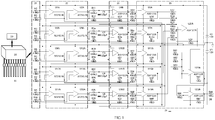
FIG. 1 is a schematic diagram showing a structure and a circuit unit of an electronic integrated multi-electrode detection system of the present invention.FIG. 1 shows a circuit diagram of inputs of 10 electrodes. If 10 or less electrodes are used, excess input ends can be grounded; if more than 10 electrodes are used, the electrodes may be accessed through an expansion module (24). -
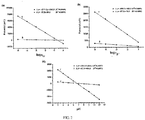
FIG. 2 is a comparison diagram showing a linear relationship between 30 chlorine ion electrodes, 10 fluorine ion electrodes and 10 pH electrodes in an electronic integrated multi-electrode detection system and respective single electrodes. -
FIG. 3 is a comparison diagram showing titration change curves of 30 chlorine ion electrodes, 10 pH electrodes and the corresponding single electrodes in different solutions. -
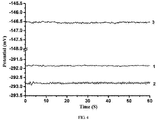
FIG. 4 is a comparison diagram showing baseline noise maps. - The present invention will be further described below in conjunction with the drawings and embodiments.
- An electronic integrated multi-electrode detection system of a potential determination of the present invention comprises a multi-electrode array (10), a circuit unit (20) and a total signal output and acquisition unit (30). Referring to
FIG. 1 , the circuit unit mainly comprises a multi-electrode array signal input end (21), a high input impedance voltage follower (22), a phase shifting filter circuit (23), an extension module input end (24), a summing circuit (25) and a total output signal end (26). - A saturated calomel electrode is used as a reference electrode, a multi-electrode array is adopted as a working electrode, and an output signal of each of a plurality of electrodes is coupled to the electronic integrated multi-electrode detection system. A total output signal is obtained by the circuit unit of the detection system, and coupled to a potential acquirer to acquire signals.
- The phase shifting filter circuit (23) is used in the circuit unit to invert a pair of signals from two electrodes, which can eliminate interference signals mainly based on a power frequency AC signal, reduce the background noise, and improve the detection stability.
- The summing circuit is used in the circuit unit to sum the signals of the plurality of electrodes, and is combined with the phase shifting filter circuit to significantly enhance the detection sensitivity while maintaining relatively low background noise, so that the change in trace ion concentration in a sample can be accurately monitored.
- Embodiment 1: linear relationship experiment.
FIG. 2 is a linear relationship diagram under different ion concentrations obtained by using a chloride ion electrode, a fluorine ion electrode, and a pH electrode as working electrodes and a saturated calomel electrode as a reference electrode in the detection system of the present invention. Compared with the linear relationship diagram of a single electrode, we have found that the slope (1711.2 mV) (FIG. 2a , curve 1) of the electronic integrated multi-electrode detection system with 30 chloride ion electrodes is about 30 times of the slope (57.2 mV) (FIG. 2a , curve 2) of the single electrode; and the slope (564.7mV) (FIG. 2b , curve 1) of the electronic integrated multi-electrode detection system with 10 fluorine ion electrodes and the slope (576.2mV) (FIG. 2c , curve 1) of the electronic integrated multi-electrode detection system with 10 pH electrodes are about 10 times of the slope (57.3mV) (FIG. 2b , curve 2) of a single fluorine ion electrode and the slope (57.7mV) (FIG. 2c , curve 2) of a single pH electrode. The experiment proves that the sensitivity of the electronic integrated multi-electrode detection system based on the potential determination of the present invention is remarkably enhanced, and the enhancement level is proportional to the increase in the number of electrodes. The sensitivity of m electrodes is about m times of the sensitivity of the single electrode. - Embodiment 2: under the detection system of the present invention, titration experiments of different ion electrodes in different solutions are performed.
FIG. 3a is a diagram showing a change curve when a drop of 0.1 mol/L potassium chloride is dropwise added into 100 mL of 1.0 x 10⁻³ mol/L potassium chloride solution in the case where a saturated calomel electrode is used as a reference electrode, and 30 chloride ion electrodes and a single chloride ion electrode are used as working electrodes. The change of the 30 chloride ion electrodes is about 30 mV (theoretical value is 29 mV), and the change of the single chloride ion electrode is 0.8 mV (theoretical value is 0.9 mV).
FIG. 3b is a diagram showing a change curve when a drop of 0.1 mol/L hydrochloric acid is dropwise added in 100 mL of buffer solution (pH9) in the cases where a saturated calomel electrode is used as a reference electrode, and 10 pH electrodes and a single pH electrode are used as working electrodes. The change of 10 pH electrodes is 24 mV (theoretical value is 23 mV), and the change of a single pH electroplate is 2 mV (theoretical value is 2 mV).
FIG. 3c is a diagram showing a change curve when 1.0 × 10⁻³ mol/L hydrochloric acid solution is dropwise added to 100mL of 1.0 × 10⁻³ mol/L histidine solution in the cases where a saturated calomel electrode is used as a reference electrode, and 10 pH electrodes and a single pH electrode are used as working electrodes.
FIG. 3d is a diagram showing a change curve when 1.0 × 10⁻³ mol/L sodium hydroxide solution is dropwise added to 100mL of 1.0 × 10⁻³ mol/L phosphoric acid solution in the cases where a saturated calomel electrode is used as a reference electrode, and 10 pH electrodes and a single pH electrode are used as working electrodes.
The experiments have proved that under the multi-electrode electronic integrated multi-plate detection system (FIG. 3a, b, c, d in curve 1), the titration line change of multiple electrodes is significantly higher than that of a single electrode change (FIG. 3a, b, c, d in curve 2). It is indicated that the detection system of the present invention can have a significant advantage in the detection of trace changes in ion concentration in the analyte. - Embodiment 3: baseline noise comparison experiment. It can be seen from
FIG. 4 that the baseline noise of a single pH electrode (FIG. 4 , curve 3) and two pH electrodes without a phase shifting filter circuit (FIG. 4 , curve 1) is significantly larger than that of the two pH electrodes passing through the phase shift filter circuit (FIG. 4 , curve 2). Experiments have proved that the electronic integrated multi-electrode detection system of the potential determination can effectively reduce the background interference and improve the detection stability. Accurate detection results can be obtained by greatly improving the detection sensitivity while maintaining low background interference.
Claims (8)
- An electronic integrated multi-electrode detection system of a potential determination, comprising a multi-electrode array (10), a circuit unit (20) and a total signal output and acquisition unit (30), wherein the circuit unit mainly comprises a multi-electrode array signal input end (21), a high input impedance voltage follower (22), a phase shifting filter circuit (23), an extension module input end (24), a summing circuit (25) and a total output signal end (26), wherein output signals of the multi-electrode array are coupled to the circuit unit, inversely filtered by the phase shifting filter circuit in the circuit unit, and then summed by the summing circuit to obtain a total output signal, and the total output signal is coupled to a potentiometer for signal acquisition.
- The electronic integrated multi-electrode detection system according to claim 1, wherein electrodes used in the system are electrodes (10) of the potential determination.
- The electronic integrated multi-electrode detection system according to claim 1 or 2, wherein the number of electrodes is 2 or more.
- The electronic integrated multi-electrode detection system according to claim 1, wherein the circuit unit adopts the high input impedance voltage follower (22).
- The electronic integrated multi-electrode detection system according to claim 1 or 4, wherein the phase shifting filter circuit (23) is adopted.
- The electronic integrated multi-electrode detection system according to claim 1, wherein the expansion module (24) is used to input signals from other identical or different circuit modules.
- The electronic integrated multi-electrode detection system according to claim 1 or 6, wherein the summing circuit is used to obtain the total output signal.
- The electronic integrated multi-electrode detection system according to claim 1 or 7, wherein the total output signal is coupled to the potentiometer for acquisition.
Applications Claiming Priority (2)
| Application Number | Priority Date | Filing Date | Title |
|---|---|---|---|
| CN201710079915.XA CN106841363B (en) | 2017-02-15 | 2017-02-15 | Electronics based on potential measurement integrates multi-electrode detection system |
| PCT/CN2018/076326 WO2018149380A1 (en) | 2017-02-15 | 2018-02-11 | Electronic integrated multi-electrode detection system based on potential measurement |
Publications (2)
| Publication Number | Publication Date |
|---|---|
| EP3581927A1 true EP3581927A1 (en) | 2019-12-18 |
| EP3581927A4 EP3581927A4 (en) | 2021-01-06 |
Family
ID=59128340
Family Applications (1)
| Application Number | Title | Priority Date | Filing Date |
|---|---|---|---|
| EP18754212.1A Pending EP3581927A4 (en) | 2017-02-15 | 2018-02-11 | INTEGRATED ELECTRONIC MULTI-ELECTRODE DETECTION SYSTEM BASED ON MEASUREMENT OF POTENTIAL |
Country Status (5)
| Country | Link |
|---|---|
| US (1) | US11486908B2 (en) |
| EP (1) | EP3581927A4 (en) |
| JP (1) | JP6861445B2 (en) |
| CN (1) | CN106841363B (en) |
| WO (1) | WO2018149380A1 (en) |
Families Citing this family (1)
| Publication number | Priority date | Publication date | Assignee | Title |
|---|---|---|---|---|
| CN116486945B (en) * | 2023-03-30 | 2026-01-09 | 四川大学 | A method for calculating the constitutive relation of temperature-dependent additive manufacturing titanium-aluminum alloys |
Family Cites Families (21)
| Publication number | Priority date | Publication date | Assignee | Title |
|---|---|---|---|---|
| US4133732A (en) * | 1976-06-10 | 1979-01-09 | Jan Boeke | Combination electrode system |
| US4189367A (en) * | 1978-10-19 | 1980-02-19 | Leeds & Northrup Company | Method for testing ion selective electrodes in continuous measuring systems |
| US4468608A (en) * | 1981-12-11 | 1984-08-28 | Instrumentation Laboratory Inc. | Electrochemical sensor instrumentation |
| EP0241601B1 (en) * | 1986-04-15 | 1990-02-07 | Yokogawa Europe B.V. | Device for testing the integrity of an electrode in a potentiometric measuring electrode system |
| JP3502466B2 (en) * | 1995-02-08 | 2004-03-02 | 株式会社エイアンドティー | Method for measuring electrolyte solution and electrolyte measuring device |
| EP0730149A3 (en) * | 1995-03-02 | 1997-05-21 | Orion Research | Linearized potentiometric electrode |
| GB9726348D0 (en) * | 1997-12-13 | 1998-02-11 | Eastman Kodak Co | Ion concentration and pH measurement |
| JP4729030B2 (en) * | 2002-07-31 | 2011-07-20 | 株式会社東芝 | Base sequence detector |
| JP4214232B2 (en) * | 2004-03-25 | 2009-01-28 | 独立行政法人産業技術総合研究所 | Neural network electrical activity regulator |
| US7544979B2 (en) * | 2004-04-16 | 2009-06-09 | Technion Research & Development Foundation Ltd. | Ion concentration transistor and dual-mode sensors |
| JP2007097019A (en) | 2005-09-30 | 2007-04-12 | Sanyo Electric Co Ltd | Delay circuit and video signal processing circuit using the same |
| JP2007097020A (en) | 2005-09-30 | 2007-04-12 | Sanyo Electric Co Ltd | Delay circuit and video signal processing circuit using the same |
| JP4822903B2 (en) * | 2006-03-30 | 2011-11-24 | 株式会社東芝 | Bimolecular film forming apparatus and method |
| CN101135662B (en) * | 2006-08-30 | 2010-11-10 | 梅特勒-托利多仪器(上海)有限公司 | Electric potential analyse electric pole measuring method and apparatus |
| JP4931025B2 (en) * | 2009-01-13 | 2012-05-16 | 独立行政法人産業技術総合研究所 | Stabilized reference electrode circuit |
| CN101846699A (en) | 2010-05-28 | 2010-09-29 | 青岛特锐德电气股份有限公司 | Electrical parameter measuring device, system and method |
| TW201202692A (en) * | 2010-07-05 | 2012-01-16 | Univ Nat Yunlin Sci & Tech | Measurement device and measurement method utilizing the same |
| CN103140737B (en) | 2010-09-30 | 2015-09-16 | 西铁城控股株式会社 | Physical quantity transducer |
| CN103424444B (en) * | 2013-07-22 | 2015-03-25 | 中国地质调查局水文地质环境地质调查中心 | System and method for realizing automatic monitoring of pH value of deep level solution based on electrochemical ion selective electrode method |
| CN203688495U (en) * | 2013-12-17 | 2014-07-02 | 中霖中科环境科技(安徽)股份有限公司 | Electric potential detection circuit for detecting ion-selective electrode of water |
| US9571121B2 (en) * | 2014-07-24 | 2017-02-14 | Atlas Scientific LLC | Electrochemical sensing module |
-
2017
- 2017-02-15 CN CN201710079915.XA patent/CN106841363B/en active Active
-
2018
- 2018-02-11 EP EP18754212.1A patent/EP3581927A4/en active Pending
- 2018-02-11 JP JP2019543796A patent/JP6861445B2/en active Active
- 2018-02-11 US US16/486,203 patent/US11486908B2/en active Active
- 2018-02-11 WO PCT/CN2018/076326 patent/WO2018149380A1/en not_active Ceased
Also Published As
| Publication number | Publication date |
|---|---|
| JP6861445B2 (en) | 2021-04-21 |
| CN106841363B (en) | 2019-05-14 |
| WO2018149380A1 (en) | 2018-08-23 |
| US20200057023A1 (en) | 2020-02-20 |
| EP3581927A4 (en) | 2021-01-06 |
| US11486908B2 (en) | 2022-11-01 |
| JP2020506398A (en) | 2020-02-27 |
| CN106841363A (en) | 2017-06-13 |
Similar Documents
| Publication | Publication Date | Title |
|---|---|---|
| Yan et al. | Review of progresses on clinical applications of ion selective electrodes for electrolytic ion tests: from conventional ISEs to graphene-based ISEs | |
| De Jong et al. | Electrochemical fingerprint of street samples for fast on-site screening of cocaine in seized drug powders | |
| EP3294125B1 (en) | Device and method for detecting creatinine and albumin to creatinine ratio | |
| Kappes et al. | Field-portable capillary electrophoresis instrument with potentiometric and amperometric detection | |
| Ross Jr | SOLID-STATE AND LIQUID MEMBRANE | |
| Torres Pio dos Santos et al. | Simultaneous flow injection analysis of paracetamol and ascorbic acid with multiple pulse amperometric detection | |
| Guo et al. | Study on the potential application of salivary inorganic anions in clinical diagnosis by capillary electrophoresis coupled with contactless conductivity detection | |
| Bergamini et al. | Flow injection amperometric determination of procaine in pharmaceutical formulation using a screen-printed carbon electrode | |
| Lai et al. | Carbon fiber-based multichannel solid-contact potentiometric ion sensors for real-time sweat electrolyte monitoring | |
| Gross et al. | Nitrite/nitrate detection in serum based on dual-plate generator–collector currents in a microtrench | |
| Cai et al. | Determination of Chinese Angelica honey adulterated with rice syrup by an electrochemical sensor and chemometrics | |
| US11486908B2 (en) | Electronic integrated multi-electrode detection system based on potential determination | |
| CN105784814A (en) | Sensor based on concentration cell principle | |
| Chen et al. | Electrocatalytic oxidation and determination of norepinephrine at poly (cresol red) modified glassy carbon electrode | |
| Durst | Ion-Selective Electrodes in Science, Medicine, and Technology: Potentiometric sensors offer possibilities of wide utility in such areas as biomedical research, public health, and pollution monitoring | |
| Ab Rahim et al. | Performance Analysis of Optimized Screen-Printed Electrodes for Electrochemical Sensing | |
| Chen et al. | Simultaneous detection of ascorbic acid and uric acid using a fluorosurfactant-modified platinum electrode | |
| Peña et al. | Determination of Fe (III) in wine samples using a ruthenium oxide hexacyanoferrate modified microelectrode | |
| Mielech-Łukasiewicz et al. | Electrooxidation of some antifungal agents and their square-wave voltammetric determination in cosmetics and pharmaceutics | |
| Coldur et al. | Flow-injection potentiometric applications of solid state Li+ selective electrode in biological and pharmaceutical samples | |
| Xu et al. | Tailor-made peptide sensor for detection of matrix metalloproteinase 2 in blood serum | |
| Teixeira et al. | Differential pulse anodic voltammetric determination of lithium ions in pharmaceutical formulations using a carbon paste electrode modified with spinel-type manganese oxide | |
| Zhou et al. | Advanced electrochemical strategy for in vivo detection of electrochemically inactive molecules | |
| Kannan et al. | An Analytical Review of Biosensor-Based Chronic Pain Quantification in Healthcare | |
| Dwivedi et al. | Electrochemical sensors: a review of developments and applications |
Legal Events
| Date | Code | Title | Description |
|---|---|---|---|
| STAA | Information on the status of an ep patent application or granted ep patent |
Free format text: STATUS: THE INTERNATIONAL PUBLICATION HAS BEEN MADE |
|
| PUAI | Public reference made under article 153(3) epc to a published international application that has entered the european phase |
Free format text: ORIGINAL CODE: 0009012 |
|
| STAA | Information on the status of an ep patent application or granted ep patent |
Free format text: STATUS: REQUEST FOR EXAMINATION WAS MADE |
|
| 17P | Request for examination filed |
Effective date: 20190911 |
|
| AK | Designated contracting states |
Kind code of ref document: A1 Designated state(s): AL AT BE BG CH CY CZ DE DK EE ES FI FR GB GR HR HU IE IS IT LI LT LU LV MC MK MT NL NO PL PT RO RS SE SI SK SM TR |
|
| AX | Request for extension of the european patent |
Extension state: BA ME |
|
| DAV | Request for validation of the european patent (deleted) | ||
| DAX | Request for extension of the european patent (deleted) | ||
| REG | Reference to a national code |
Ref country code: DE Ref legal event code: R079 Free format text: PREVIOUS MAIN CLASS: G01N0027490000 Ipc: G01N0027333000 |
|
| A4 | Supplementary search report drawn up and despatched |
Effective date: 20201204 |
|
| RIC1 | Information provided on ipc code assigned before grant |
Ipc: G01N 27/416 20060101ALI20201130BHEP Ipc: G01N 27/333 20060101AFI20201130BHEP |
|
| STAA | Information on the status of an ep patent application or granted ep patent |
Free format text: STATUS: THE APPLICATION IS DEEMED TO BE WITHDRAWN |
|
| 18D | Application deemed to be withdrawn |
Effective date: 20220901 |
|
| 18RA | Request filed for re-establishment of rights before grant |
Effective date: 20230720 |
|
| 18RR | Decision to grant the request for re-establishment of rights before grant |
Free format text: ANGENOMMEN Effective date: 20230908 |
|
| 17Q | First examination report despatched |
Effective date: 20240222 |
|
| STAA | Information on the status of an ep patent application or granted ep patent |
Free format text: STATUS: EXAMINATION IS IN PROGRESS |
|
| D18D | Application deemed to be withdrawn (deleted) | ||
| GRAP | Despatch of communication of intention to grant a patent |
Free format text: ORIGINAL CODE: EPIDOSNIGR1 |
|
| STAA | Information on the status of an ep patent application or granted ep patent |
Free format text: STATUS: GRANT OF PATENT IS INTENDED |
|
| INTG | Intention to grant announced |
Effective date: 20250819 |
|
| GRAS | Grant fee paid |
Free format text: ORIGINAL CODE: EPIDOSNIGR3 |