EP3580977B1 - Verfahren und vorrichtung zur rundfunkkanalkonfiguration und für rundfunkkanalübertragung und -empfang für ein kommunikationssystem - Google Patents
Verfahren und vorrichtung zur rundfunkkanalkonfiguration und für rundfunkkanalübertragung und -empfang für ein kommunikationssystem Download PDFInfo
- Publication number
- EP3580977B1 EP3580977B1 EP18751996.2A EP18751996A EP3580977B1 EP 3580977 B1 EP3580977 B1 EP 3580977B1 EP 18751996 A EP18751996 A EP 18751996A EP 3580977 B1 EP3580977 B1 EP 3580977B1
- Authority
- EP
- European Patent Office
- Prior art keywords
- pbch
- scrambling
- block
- blocks
- information
- Prior art date
- Legal status (The legal status is an assumption and is not a legal conclusion. Google has not performed a legal analysis and makes no representation as to the accuracy of the status listed.)
- Active
Links
Images




Classifications
-
- H—ELECTRICITY
- H04—ELECTRIC COMMUNICATION TECHNIQUE
- H04W—WIRELESS COMMUNICATION NETWORKS
- H04W72/00—Local resource management
- H04W72/20—Control channels or signalling for resource management
- H04W72/23—Control channels or signalling for resource management in the downlink direction of a wireless link, i.e. towards a terminal
-
- H—ELECTRICITY
- H04—ELECTRIC COMMUNICATION TECHNIQUE
- H04W—WIRELESS COMMUNICATION NETWORKS
- H04W56/00—Synchronisation arrangements
- H04W56/001—Synchronization between nodes
-
- H—ELECTRICITY
- H04—ELECTRIC COMMUNICATION TECHNIQUE
- H04L—TRANSMISSION OF DIGITAL INFORMATION, e.g. TELEGRAPHIC COMMUNICATION
- H04L25/00—Baseband systems
- H04L25/02—Details ; arrangements for supplying electrical power along data transmission lines
- H04L25/03—Shaping networks in transmitter or receiver, e.g. adaptive shaping networks
- H04L25/03828—Arrangements for spectral shaping; Arrangements for providing signals with specified spectral properties
- H04L25/03866—Arrangements for spectral shaping; Arrangements for providing signals with specified spectral properties using scrambling
-
- H—ELECTRICITY
- H04—ELECTRIC COMMUNICATION TECHNIQUE
- H04L—TRANSMISSION OF DIGITAL INFORMATION, e.g. TELEGRAPHIC COMMUNICATION
- H04L5/00—Arrangements affording multiple use of the transmission path
- H04L5/003—Arrangements for allocating sub-channels of the transmission path
- H04L5/0048—Allocation of pilot signals, i.e. of signals known to the receiver
- H04L5/005—Allocation of pilot signals, i.e. of signals known to the receiver of common pilots, i.e. pilots destined for multiple users or terminals
-
- H—ELECTRICITY
- H04—ELECTRIC COMMUNICATION TECHNIQUE
- H04L—TRANSMISSION OF DIGITAL INFORMATION, e.g. TELEGRAPHIC COMMUNICATION
- H04L5/00—Arrangements affording multiple use of the transmission path
- H04L5/003—Arrangements for allocating sub-channels of the transmission path
- H04L5/0048—Allocation of pilot signals, i.e. of signals known to the receiver
- H04L5/0051—Allocation of pilot signals, i.e. of signals known to the receiver of dedicated pilots, i.e. pilots destined for a single user or terminal
-
- H—ELECTRICITY
- H04—ELECTRIC COMMUNICATION TECHNIQUE
- H04L—TRANSMISSION OF DIGITAL INFORMATION, e.g. TELEGRAPHIC COMMUNICATION
- H04L5/00—Arrangements affording multiple use of the transmission path
- H04L5/003—Arrangements for allocating sub-channels of the transmission path
- H04L5/0053—Allocation of signalling, i.e. of overhead other than pilot signals
-
- H—ELECTRICITY
- H04—ELECTRIC COMMUNICATION TECHNIQUE
- H04L—TRANSMISSION OF DIGITAL INFORMATION, e.g. TELEGRAPHIC COMMUNICATION
- H04L5/00—Arrangements affording multiple use of the transmission path
- H04L5/0091—Signalling for the administration of the divided path, e.g. signalling of configuration information
-
- H—ELECTRICITY
- H04—ELECTRIC COMMUNICATION TECHNIQUE
- H04W—WIRELESS COMMUNICATION NETWORKS
- H04W72/00—Local resource management
- H04W72/04—Wireless resource allocation
- H04W72/044—Wireless resource allocation based on the type of the allocated resource
- H04W72/0446—Resources in time domain, e.g. slots or frames
-
- H—ELECTRICITY
- H04—ELECTRIC COMMUNICATION TECHNIQUE
- H04W—WIRELESS COMMUNICATION NETWORKS
- H04W72/00—Local resource management
- H04W72/30—Resource management for broadcast services
Definitions
- the present disclosure relates to a wireless communication system, and more particularly, to a method and apparatus for configuring a broadcast channel, and for transmitting and receiving a broadcast channel in a New Radio (NR) system.
- NR New Radio
- IMT International Mobile Telecommunication
- 5G 5th generation
- NB-PBCH design for NB-IoT that has been published as document R1-160042 by the 3rd Generation partnership project (3GPP) in January 2016 discloses initializing of a scrambling sequence for PBCH in eight consecutive radio frames based on a cell ID of a base station in an LTE system, and determining a plurality of synchronization signal, SS, blocks in the eight consecutive radio frames, wherein each SS block comprises a PBCH.
- a method and device for detecting system frame number of long term evolution (LTE) system is disclosed by CN 102 271 023 B .
- the document discloses to scramble a portion of each physical broadcast channel, PBCH, in four consecutive radio frames, wherein each radio frame in the four consecutive radio frames has a duration of 10ms.
- Exemplary embodiments of the present invention have the following effects.
- a method and a base station for transmitting and receiving a broadcast channel in an NR system.
- a method and a base station for explicitly indicating a part of frame information through a broadcast channel, and implicitly indicating the remaining part of the frame information.
- first, second, A, B, (a), (b), and the like may be used herein to describe elements in the description herein. The terms are used to distinguish one element from another element. Thus, the terms do not limit the element, an arrangement order, a sequence or the like. It will be understood that when an element is referred to as being “on”, “connected to” or “coupled to” another element, it can be directly on, connected or coupled to the other element or intervening elements may be present. In contrast, when an element is referred to as being “directly on,” “directly connected to” or “directly coupled to” another element, there are no intervening elements present.
- the described scheme may be embodied as a module (process, function, or the like) that executes the described function.
- the module may be stored in a memory, and may be executed by a processor.
- the memory may be disposed inside or outside the processor, and may be connected to the processor through various well-known means.
- an operation performed in a wireless communication network may be performed in a process of controlling a network and transmitting data by a system that controls a wireless network, e.g., a base station, or may be performed in a user equipment connected to the wireless communication network.
- a base station or other network nodes other than the base station may be capable of performing various operations performed for communication with a terminal in a network including a plurality of network nodes including the base station.
- the 'BS (Base Station)' may be replaced with the terms, such as, a fixed station, a Node B, an eNode B (eNB), a gNodeB (gNB), an AP (Access Point), and the like.
- the 'terminal' may be replaced with the terms, such as a UE (User Equipment), an MS (Mobile Station), an MSS (Mobile Subscriber Station), an SS (Subscriber Station), a non-AP STA (non-AP station), and the like.
- transmitting or receiving a channel may include the meaning of transmitting or receiving a signal or information through the corresponding channel.
- transmitting a control channel may indicate that a control signal or control information is transmitted through the control channel.
- transmitting a data channel may indicate that transmitting a data signal or data information is transmitted through the data channel.
- NR system is used to distinguish a system to which various embodiments of the present disclosure are applied from the conventional system.
- scope of the present disclosure may not be limited by the term.
- NR system in the present specification is used as an example of a wireless communication system that is capable of supporting various numerologies.
- NR system is not limited to a wireless communication system that supports a plurality of SCSs.
- An NR numerology may indicate the numerical value of the basic element or factor that generates a resource grid in the time-frequency domain for designing the NR system.
- subcarrier spacing corresponds to 15kHz (or 7.5kHz in the case of MBSFN(Multicast-Broadcast Single-Frequency Network)).
- the term "numerology" is not limited to subcarrier spacing, and may include the length of CP (Cyclic Prefix), the length of a TTI (Transmit Time Interval), the number of OFDM (Orthogonal Frequency Division Multiplexing) symbols within a predetermined time interval, the duration of a single OFDM symbol, or the like, which is associated with subcarrier spacing (or which is determined based on subcarrier spacing). That is, different numerologies may be distinguished by a difference in at least one of subcarrier spacing, a CP length, a TTI length, the number of OFDM symbols within a predetermined time interval, or the duration of a single OFDM symbol.
- the current 3GPP NR system considers a plurality of numerologies by taking into consideration various scenarios, various service requirements, compatibility with a potential new system, or the like. More particularly, the numerology of the conventional wireless communication system is difficult to support a high frequency band, a fast moving speed, a low latency, or the like which required from "IMT for 2020 and beyond", and thus, it is needed to define a new numerology.
- the NR system is capable of supporting applications, such as eMBB(enhanced Mobile Broadband), mMTC(massive Machine Type Communications)/uMTC(Ultra Machine Type Communications), URLLC (Ultra-Reliable and Low Latency Communications), and the like.
- eMBB enhanced Mobile Broadband
- mMTC massive Machine Type Communications
- uMTC Ultra Machine Type Communications
- URLLC Ultra-Reliable and Low Latency Communications
- the requirement associated with a user plane latency for URLLC and eMBB services is 0.5ms in an uplink and is 4ms in both uplink and downlink, which requires a significant decrease in the latency when compared to 10ms, which is the requirement associated with the latency of 3GPP LTE(Long Term Evolution) and LTE-A(LTE-Advanced) system.
- requirements for performing beam-based transmission and for coping with signal attenuation in a high frequency band may exist in the NR system.
- the NR system needs to support various numerologies.
- the NR system needs to support a plurality of SCSs, unlike the conventional LTE/LTE-A system that supports a single subcarrier spacing (SCS) basically.
- SCS single subcarrier spacing
- a new numerology for the NR system including supporting of a plurality of SCSs may be determined by assuming a wireless communication system that operates in a frequency range or carrier, such as 6GHz or 40GHz, in order to overcome the problems in that a broadband cannot be used in the conventional frequency range or carrier, such as 700MHz or 2GHz.
- a frequency range or carrier such as 6GHz or 40GHz
- the scope of the present disclosure may not be limited thereto.
- a synchronization scheme As an initial step for a mobile communication terminal to access a network.
- a scheme of configuring a synchronization signal for supporting synchronization a scheme of mapping a synchronization signal onto the time-frequency resources and transmitting the same, a scheme of receiving a synchronization signal mapped onto the time-frequency resources have not been yet concretely defined.
- examples of the present disclosure associated with a method of configuring synchronization signals/broadcast channels by an NR system, and a scheme of indicating information associated with a frame timing (or a frame boundary) which needs to be provided to a terminal during a synchronization procedure, and multiplexing of synchronization signals in a slot are described.
- FIG. 1 is a diagram illustrating the configurations of an SS block, an SS burst, and an SS burst set to which the present disclosure is applicable.
- At least a PSS/SSS and/or a PBCH may be transmitted within an SS block.
- other signals may be additionally transmitted together in the SS block.
- an MRS Measurement Reference Signal
- TSS Temporal Synchronization Signal
- a time domain index e.g., an SS block index or the like
- an NR-synchronization signal (NR-SS), a broadcast channel, or the like may be allocated to a physical resource according to an FDM(Frequency Division Multiplexing), a TDM(Time Division Multiplexing), or a combination thereof, and may be transmitted to a terminal by a base station.
- NR-SS NR-synchronization signal
- FDM Frequency Division Multiplexing
- TDM Time Division Multiplexing
- beam transmission-based SS block transmission may be used for compensating for channel attenuation occurring in a high frequency band (e.g., over 6GHz).
- a frequency band other than the high frequency band e.g., below 6GHz
- uni-beam transmission may be used for SS blocks.
- One or more SS blocks may configure a single SS burst.
- the SS blocks included in the single SS burst may be contiguously or discontiguously allocated in the time or frequency domain.
- One or more SS bursts may configure a single SS burst set. From the perspective of a terminal, periodic NR-SS/broadcast channel reception may be expected for each SS burst set periodicity.
- a terminal may assume a default SS burst transmission periodicity value.
- the terminal may receive updated information associated with an SS burst set transmission periodicity from a base station.
- a PBCH (NR-PBCH) defined in the NR system will be described.
- the SCS for a PBCH may be the same as or different from a default subcarrier spacing (default SCS) which is defined for each frequency range category.
- default SCS subcarrier spacing
- the number (N) of OFDMs included in a single SS block may be one of 2, 3, and 4. N may be determined based on a default SCS.
- the number of SS blocks in a single SS burst may be 7 or 14.
- the number of SS bursts in a single SS burst set may be 1, 2, 4, or the like. In this instance, when an NR-PBCH is transmitted in an SS block, the correlation with a frame number needs to be considered.
- NR-PBCH transmission in an SS block needs to be defined for a default SS burst set periodicity and for SS burst set periodicities in an RRC Idle/Connected mode.
- an SCS value may be one of 15, 30, and 60 kHz.
- the minimum NR carrier bandwidth may be one of 5MHz, 10MHz, and 20MHz.
- the transmission bandwidth of each synchronization signal may be one of approximately 1.08 MHz, 2.16 MHz, 4.32 MHz, and 8.64 MHz.
- an SCS value may be one of 120 kHz and 240 kHz.
- the minimum NR carrier bandwidth may be one of 20 MHz, 40 MHz, and 80 MHz.
- the transmission bandwidth of each synchronization signal may be one of approximately 8.64 MHz, 17.28 MHz, 34.56 MHz, and 69.12 MHz.
- PSS/SSS allocation in a single SS block may be multiplexed according to the TDM.
- a PBCH may be multiplexed to SSs (i.e., PSSs/SSSs) according to the TDM, FDM, or a combination thereof.
- At least a part of SFN (System Frame Number) information bits is explicitly indicated through control information transmitted via a NR-PBCH, and the remaining part of SFN information bits may be implicitly indicated.
- SFN System Frame Number
- 8-bit SFN information, and 18-bit HSFN (Hyper SFN) information may be explicitly transmitted via a PBCH, while the remaining part of SFN information bits may be indicated implicitly or explicitly depending on applied scheme.
- NR-PBCH NR-PBCH
- NR-SIB System Information Block
- Multi-beam transmission may be performed when an angular region (i.e., a target coverage area from the perspective of an azimuth and an elevation) where a single TRP (Total Radiated Power) needs to cover different beamformed patterns is significantly large.
- an angular region i.e., a target coverage area from the perspective of an azimuth and an elevation
- TRP Total Radiated Power
- a beam width, the number of beams, or the like may be determined.
- the values may be variously determined according to the environment of a cell where TRP exists (e.g., a target coverage area, an ISD (Inter-Site Distance), a carrier frequency, or the like). Therefore, for the degree of freedom of implementation, it is required to define the maximum number of physical resources (e.g., SS blocks/SS bursts/SS burst sets), and the maximum number of beams which can be transmitted via the physical resources.
- FIG. 2 is a diagram illustrating an example of beam transmission in a SS burst according to the present disclosure.
- Part (a) of FIG. 2 shows an example in which a single beam is applied for each single SS block, and the normal analog beamforming method is applied.
- the number of beams to be applied may be limited based on the number of Radio Frequency (RF) chains.
- RF Radio Frequency
- Part (b) of FIG. 2 shows an example in which two beams are applied for each single SS block, and normal digital beamforming method or hybrid beamforming method is applied.
- beam sweeping is available, which is to cover a target coverage area during a short period of time. Therefore, the amount of SS block resources consumed may be smaller than that of the example shown in part (a) of FIG. 2 , whereby the efficiency of network resource consumption may be improved.
- SS block transmission may not always consider multi-beam transmission, and a signal such as an NR-SS, a PBCH, or the like may be transmitted according to the same transmission structure as in multi-beam transmission, even in a low frequency band (e.g., below 6GHz).
- a signal such as an NR-SS, a PBCH, or the like may be transmitted according to the same transmission structure as in multi-beam transmission, even in a low frequency band (e.g., below 6GHz).
- SS block transmission in which different beam patterns are applied for each SS block through beam sweeping may be performed to satisfy a target coverage area.
- transmission performed to satisfy the target coverage area indicates that each of the one or more beam transmissions is transmitted based on a beam width and/or azimuth intended by a base station, and the one or more beam transmissions cover a predetermined target area overall.
- a signal such as an NR-SS, a PBCH, or the like may not be transmitted in all SS blocks.
- the present disclosure describes examples of a scheme of scrambling a channel in an SS block including NR-PBCH transmission, based on the above-described NR-SS block and SS burst structure, and additionally describes examples of a scheme of transmitting the remaining SFN information and/or 5-ms SS block transmission interval timing, based thereon.
- FIG. 3 is a diagram illustrating an example of an SS block transmission structure according to the present disclosure.
- N the number of OFDM symbols for each SS block (# of OFDM symbols per SS block) is N.
- I may be determined according to a method of multiplexing between a synchronization signal, such as NR-PSS/SSS, NR-TSS, NR-PBCH, MRS, or the like, and a broadcast channel.
- a synchronization signal such as NR-PSS/SSS, NR-TSS, NR-PBCH, MRS, or the like
- N may be 1, 2, and 4.
- the number of beams for each SS block (# of beams per SS block) is M.
- M may indicate the maximum number of beams applied to a single SS block, and the number of beams and a beam width may be set by a base station. Therefore, the base station may transmit a maximum number of beams allowed in a single SS block, or may transmit an SS through some beams.
- the number of SS blocks for each SS burst (# of SS block per SS burst) is I.
- the number of SS blocks included in each SS burst may be a fixed I value, or I may vary according to a fixed SS burst duration (T) and the number of OFDM symbols (N) included in a single SS block.
- T the value of an SS burst duration is T, and the unit thereof may be ms.
- T may be determined based on at least one of subcarrier spacing (SCS), the number (I) of OFDM symbols included in a single SS block, and the fixed number (N) of SS blocks included in a single SS burst.
- SCS subcarrier spacing
- I the number of OFDM symbols included in a single SS block
- N fixed number
- T may be 1ms, 2ms, 4ms, ..., or the like.
- an SS burst periodicity is J, and the unit thereof may be ms.
- SS burst may have a predetermined periodicity, and the periodicity may be determined based on requirements associated with a synchronization time or the like.
- J may be 5ms, and may not be limited thereto. J may be differently set for each SCS according to an SCS value, an SS transmission structure, or the like.
- K the number of SS bursts for each SS burst set (# of SS bursts per SS burst set) is K.
- K may be set to be a fixed value, or may be set by a base station through high layer signaling or the like.
- an SS burst set periodicity may be defined. From the perspective of a terminal, when one SS block is successfully detected for at least the initial access, it may be assumed that a periodicity by which a beam pattern same as the beam pattern of the detected SS block is transmitted as an SS burst set periodicity.
- an NR-SS and an NR-PBCH may be multiplexed according to FDM.
- an NR-SS and an NR-PBCH may be multiplexed through TDM, FDM, or a combination thereof.
- a subframe has a time interval of 1ms. That is, even though SCSs are different from each other, a subframe may be defined as a time reference with a fixed predetermined time interval.
- the time duration of one slot may be differently set based on an SCS.
- the time duration may be listed in Table 1 provided below.
- one slot has 7 OFDM symbols in case of 15kHz SCS, but one slot may include 7 or 14 symbols in case of the other SCSs.
- Subcarrier spacing (kHz) # of symbols Time duration per a slot (ms) 15 7 0.5 30 7 0.25 14 0.5 60 7 0.125 14 0.25 120 7 0.0625 14 0.125 240 7 0.03125 14 0.0625 480 7 0.015625 14 0.03125
- the number of slots in one subframe (1ms) may be different according to an SCS value.
- SCS when the SCS is 15kHz, the number of symbols in a single slot may be 7, and the number of slots for each subframe may be 2. In case of 30kHz SCS, if the number of symbols in a single slot is 7, the number of slots in each subframe may be 4. In case of 60kHz SCS, if the number of symbols in a single slot is 7, the number of slots in each subframe may be 8.
- the SS burst time interval may be defined based on a slot unit, subframe unit, or time unit (e.g., ms).
- the number of SS blocks for each SS burst is 7 or 14
- the number of SS blocks may be set as 28, 48, ..., or the like, depending on SCS (Subcarrier spacing), a beam sweeping time, a SS block structure, or the like.
- the number of SS blocks included in the SS burst interval may be determined based on the length of the time interval of an SS block (e.g., 1, 2, or 4 symbols).
- the terminal may recognize at least an OFDM symbol timing boundary according to a predetermined SS block structure that includes a predetermined number of OFDM symbols for each SS block.
- the terminal may not recognize information associated with an SS block index or a symbol index of a corresponding symbol timing, and may not also recognize information associated with a frame timing.
- information associated with the number of beams applied to an SS block may be needed to proceed with initial synchronization, RRM measurement, random access or the like, and thus, beam resource index information may also be required.
- the terminal needs to perform an initial cell access procedure including synchronization, system information obtaining, or the like, in order to access an NR system.
- a base station transmits a synchronization signal and a broadcast channel to a terminal in order to provide synchronization and system information using an SS block, SS burst, and SS burst set structure.
- the terminal may obtain frame boundary timing information.
- the terminal may monitor an SS block at least for initial access, based on at least a default subcarrier spacing value.
- the default subcarrier spacing may correspond to a numerology value that is assumed by the terminal for each frequency band at least for the purpose of initial cell access.
- the terminal may assume in advance a time-domain resource structure (e.g., an OFDM symbol length, a slot structure, a subframe structure, a radio frame structure, or the like) for receiving NR-SS and PBCH in an SS block.
- a time-domain resource structure e.g., an OFDM symbol length, a slot structure, a subframe structure, a radio frame structure, or the like
- a time-domain resource structure e.g., an OFDM symbol length, a slot structure, a subframe structure, a radio frame structure, or the like
- the terminal may assume in advance a time-domain resource structure (e.g., an OFDM symbol length, a slot structure, a subframe structure, a radio frame structure, or the like) for receiving NR-SS and PBCH in an SS block.
- an SFN information has 10 bits
- 8 bits of the SFN information may be explicitly indicated to a terminal via an NR-PBCH
- the remaining SFN information that is, the remaining 2 bits correspond to a value that may be implicitly provided in a physical layer.
- the SFN information has 18 bits
- 16 bits of the SFN information may be explicitly indicated to a terminal via an NR-PBCH
- the remaining 2 bits correspond to a value that is implicitly provided in a physical layer.
- the remaining SFN information bits are referred to as a remaining SFN value.
- 8 radio frames may correspond to 0 to 7 system frames, that is, 3 bits as a remaining SFN information. Therefore, when it is assumed that an SFN information bit field is 10bits in the NR system, 7 bits (i.e., 10-k bits) may be explicitly indicated by MIB included in a PBCH transmitted by a base station, and bit information (k bits) associated with the remaining SFN information may be implicitly indicated according to the method proposed by the present disclosure. Accordingly, the terminal may finally derive and obtain the entire SFN information. In the same manner, when the SFN value is 18bits, 15 bits are transmitted via the MIB according to the explicit method, and the remaining 3 bits are indicated by a base station to a terminal according to the proposed implicit method.
- An SS block time location for each frequency band range may be defined as one set.
- Such SS block time location (using L SS blocks) may be defined under an SS burst set unit or a radio frame unit, and SS blocks exists on the time axis at predetermined time intervals based on the unit. For example, the time location of SS blocks is determined based on a SS burst set unit or a radio frame unit, and the candidates of the SS block time location may be repeated per every SS burst set unit or radio frame unit in the time-domain.
- a maximum of 1 to 4 SS blocks may be defined for each SS burst set.
- a maximum of 4 or 8 SS blocks may be defined for each SS burst set.
- a maximum of 64 SS blocks may be defined for each SS burst set.
- All the SS blocks defined as described above may need to be located and performed during a limited 5-ms transmission time in order to minimize the amount of power consumed for receiving SS blocks. Therefore, two types of SS block transmission windows (5ms) may exist within one radio frame (10ms) during 80ms, a terminal needs additional information associated with an SS block transmission window. Therefore, a base station also needs to indicate an SS block transmission window timing (i.e. 5ms) to the terminal, in addition to the remaining SFN information within 80ms.
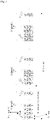
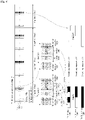
- FIGs. 4 and 5 are diagrams illustrating the structures of an SS block, an SS burst, an SS burst set, and a radio frame in the time domain.
- two SS bursts exist in a single SS burst set.
- a time unit in which a SS burst set exists is the same as a radio frame (e.g., 10 ms)
- a plurality of SS burst sets may be defined in one radio frame or other combinations can be used. Therefore, the present disclosure may not be limited to the above described example.
- FIG. 8 assumes that the SS burst set includes two SS bursts, and each SS burst includes two SS blocks.
- the number of SS bursts and the number of SS blocks in the SS burst set periodicity may be variously changed with the range of L value (i.e., the maximum number of SS block candidates in an SS burst set).
- a scrambling may be performed according to first NR PBCH scrambling method, and additionally, the scrambling may be differently performed for each SS block during a time interval corresponding to the remaining SFN k bits.
- the first NR-PBCH scrambling is performed before channel coding, and CRC may be attached after scrambling is performed.
- bits e.g., a information bit
- PBCH transmission does not exist in a SS block as shown in the diagram 450
- a part of a scrambling sequence corresponding to PBCH information bits in the SS block may be considered as shown in the diagram 480.
- a scrambling sequence applies an offset value corresponding to the PBCH information bits, which consider the SS block without PBCH transmission for the subsequent PBCH scrambling. This is to use a part of the scrambling sequence associated with the actual PBCH transmission, for scrambling when subsequent PBCH transmission actually exists.
- the terminal may not recognize, in advance, an SS block at which PBCH transmission is actually performed by a base station, in a set of SS blocks in the time domain, which is defined for each frequency band (e.g., SS block locations on the time axis, SS blocks 0, 1, 2, and 3 of FIG. 4 ). That is, an SS block that includes PBCH transmission is not determined in advance in the SS block time location, but may be determined according to setting or implementation by the base station.
- scrambling for PBCH transmission is performed using different parts of one scrambling sequence based on an SS block index, an SS burst index, or an SS burst set index in radio frames corresponding to the remaining SFN. Additionally, in order to indicate the remaining SFN value, an SS block index 480, an SS burst index 490, or an SS burst set index 495 which exist in each radio frame may be used.
- S is the number of potential SS blocks, the number of SS bursts, the number of SS burst sets, the number of slots, or the number of radio frames in the time interval corresponding to the remaining SFN K bits, the number (S SS_block ) of potentially transmittable SS blocks in one of the time intervals, and the number (K bit )
- the same part of the scrambling sequence may be applied to the PBCH in potentially transmittable SS blocks in a time interval corresponding to the number of SS burst, the number of SS burst set, the number of slot, or the number of radio frame (e.g., the diagram 490 or 495 of FIG. 4 or FIG. 8 ).
- a scrambling sequence is generated based on an SS burst unit, an SS burst set unit, one or more slots, or one or more radio frames (e.g., as shown in the diagrams 490 and 495)
- the same part of a scrambling sequence is applied to the PBCH in the all SS blocks during the corresponding time unit.
- the length M bit of the scrambling sequences are the same.
- a terminal may perform a descrambling process to identify a scrambling sequence part used for PBCH, and may derive an associated radio frame in the remaining SFN information, so as to recognize an SFN.
- a method based on an SS block index will be described as follows. As described above, a method based on an SS burst index or SS burst set index may be applied in the same manner.
- Equation 1 shows that scrambling is performed with scrambling sequence (Mbit) and entire PBCH information bits (b(i)) per a time interval corresponding to the remaining SFN k bits.
- a scrambling sequence (c(i)) associated with an SS block in which PBCH is not transmitted may not be actually used for subsequent PBCH transmission.
- J may be defined as the number of SS blocks per radio frame. Also, the value is determined based on a set of SS blocks assumed by a terminal for each frequency band for initial cell access in the time domain. In the above example, J is 4. The number of SS blocks in a single radio frame in the time domain is 4.
- the PBCH scrambling sequence c(i) uses, for example, two polynomials x31 + x3 + 1 and x31 +x3 + x2 + 1 + 1 based on a Gold sequence having a length of 31.
- a fixed "000...001" value (a length of 31) is used for the first polynomial
- a Cell ID, and/or different time information may be used for the second polynomial.
- the sequence (c(i)) generated as described above may be used for scrambling PBCH data (b(i)).
- Gold sequences having different lengths for accommodating a larger number of initial values or Gold sequences generated by applying different polynomials may be utilized for the purpose of indicating a timing boundary (e.g. SFN, 5ms timing and SS block index) proposed by the present disclosure.
- a timing boundary e.g. SFN, 5ms timing and SS block index
- n SS-block is an index for SS blocks allocated in remaining SFNs determined by 2 k .
- the range of the SS block indices may be determined by using a combination of SS burst sets, or a combination of SS bursts and an SS block index in the remaining SFN.
- four radio frames correspond to remaining n SS-block have 0 to 15 within the total number of SS blocks (i.g., 16 SS blocks) existing in the four radio frames.
- Table 2 provided below shows an example of performing scrambling for each SS block in remaining radio frames.
- Table 3 shows an example of performing scrambling for each SS burst in remaining radio frames.
- the method performs scrambling for every SS block index in each SS burst set.
- the method may be applied to the example in which scrambling is performed for SS blocks(i.e. PBCH) in every SS burst in an SS burst set. That is, a base station performs scrambling for SS blocks(i.e. PBCH) in every SS burst index/SS burst set index in a radio frame corresponding to a remaining SFN, and transmits the same.
- a terminal may recognize a radio frame index value based on the relationship between a detected SS burst index/ SS burst set index, and radio frames corresponding to the remaining SFN.
- a scrambling sequence is initialized for each SS block, SS block burst, or SS burst set, and a remaining SFN value is implicitly indicated to a terminal.
- a method of initializing a scrambling sequence for each SS block index or each SS block burst is described.
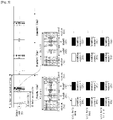
- At least SS block index (504, 505, 506, and 507 in Fig. 5 ) and information associated with a frame boundary may be obtained through a signal within on SS block, such as an NR-SS, a TSS, an NR-PBCH, or the like.
- the terminal may obtain interference randomization effect for PBCH.
- a base station performs scrambling in consideration of nf mod 2k and transmits a PBCH in an SS block to terminals.
- the terminal performs blind decoding by descrambling the received PBCH.
- the terminal may readily obtain the corresponding remaining SFN value by performing descrambling and CRC(Cyclic Redundancy Check) check.
- Equation 2 shows that scrambling is performed for the number Mbit of information bits (b(i)) transmitted in a PBCH in one SS block.
- a scrambling sequence (c(i)) for an SS block in which PBCH is not transmitted may not be actually used for subsequent PBCH transmission.
- M bit corresponds to the length of a scrambling sequence and PBCH information bit.
- a terminal derives an index of an SS block from among the previously determined time locations of SS blocks, and may recognize the time location of the detected SS block in a given SS burst set.
- the relationship between an SS burst set and a radio frame is determined in advance.
- the SS burst set may have a periodicity of 10ms, and includes a total of 4 SS blocks.
- the configuration of the SS burst set may be defined for each radio frame.
- the time interval of the SS burst set and the time interval of the radio frame are the same, and thus, it is recognized that they are in a 1:1 relationship.
- the relationship between the radio frame and the SS burst set may be a 1:2 relationship.
- the terminal may derive the relationship between the radio frame and a received SS block based on received SS block index information, and may recognize a corresponding radio frame in remaining SFN information, through a descrambling operation for decoding a PBCH in the received SS block.
- a remaining SFN value may be indicated via a combination of CRC masking of an NR-PBCH and PBCH scrambling in above.
- At least one RS from among a DMRS (Demodulation RS), an NR-SSS, and an NR-TSS may be used for decoding at least a PBCH.
- the NR system needs to support space diversity.
- the terminal needs to know at least the number of antenna ports of an RS for decoding a corresponding PBCH.
- a PBCH is decoded based on a CRS.
- a base station performs scrambling or masking on a CRC in the PBCH using different scrambling sequences, and transmits the same to terminals.
- the terminal may identify the number of CRC antenna port by performing blind decoding with respect to the scrambled information in the CRC.
- the number of antenna ports for decoding a PBCH may be a fixed value. Therefore, at least a remaining SFN value is indicated through CRC masking instead of scrambling, however, scrambling may be performed in order to provide the inter-cell interference randomization effect when a PBCH is received.
- a CRC bit having a length of 16 is added to an information bit a 0 , a 1 , a 2 , a 3 , ..., a A-1 which is transmitted in a single PBCH.
- a PBCH CRC mask value in Table 4 may be scrambled with a CRC bit and may be transmitted in order to indicate a remaining SFN value.
- the range of the "remaining SFN" may be differently defined, and associated RBCH CRC mask bits may be accordingly defined as sequences to be orthogonal to each other.
- Table 4 provided below shows an example of CRC masking for informing a remaining SFN value by a PBCH.
- the terminal may derive a corresponding SS block index by receiving a signal in the SS block, such as a PSS, an SSS, a TSS, a PBCH, or the like.
- the derived SS block index may provide information associated with the physical time location in a radio frame or an SS burst set to the terminal, and the remaining SFN value may be obtained by performing blind-decoding of the PBCH CRC masking information.
- a part of the remaining SFN values may be indicated by the proposed PBCH CRC mask, and the other part in the remaining SFN values may be indicated through the above described scrambling. This is regarded as a combination of the above described schemes.
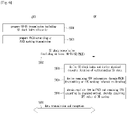
- FIG. 6 is a diagram illustrating a signaling procedure according to the present disclosure.
- a base station recognize SS block indices within a SS burst set or within a SS burst, based on an SS burst/SS burst set configuration.
- the base station prepares at least NR-SS/NR-PBCH transmission for each SS block in operation (600).
- the base station additionally prepares PBCH transmission together with the NR-SS within the SS block that is determined for SS block transmission by the base station.
- the base station prepares PBCH transmission to which proposed remaining SFN indication for the PBCH transmission and/or a PBCH scrambling procedure or PBCH masking procedure is applied.
- the base station transmits prepared SS blocks at predetermined time locations.
- an SS block may include an NR-SS/NR-PBCH.
- An MRS (Measurement RS) for measuring a channel and a TSS (ternary SS) for indicating an SS block index may be transmitted selectively or together with an NR-SS and NR-PBCH in an SS block.
- a terminal derives an SS block index through the NR-SS/TSS/PBCH in the received SS block, and derives a physical time location through the SS block index value and the predetermined physical location of the SS block index value.
- the terminal may derive remaining SFN information by performing a proposed PBCH descrambling procedure or CRC demasking procedure through the PBCH in the received SS block.
- the terminal may obtain SFN bits which have been explicitly provided through payload included in the received PBCH, and may obtain remaining SFN information which has been provided according to the above proposed implicit method, thereby obtaining an entire SFN information (i.e. 10bits) of the NR system. If the proposed implicit indication methods for the remaining SFNs are not considered for NR, then all the SFN information (10 bits) including remaining SFNs for NR system should be explicitly indicated through PBCH payload (i.e. PBCH information bits). In this case, the proposed scrambling methods can only provide interference randomization effect for better PBCH detection performance in a terminal side.
- the terminal may perform a data transmission and reception procedure based on received radio frame information (i.e. SFN) of the NR system in operation (606).
- received radio frame information i.e. SFN
- FIG. 7 is a diagram illustrating the configuration of a radio device according to the present disclosure.
- FIG. 7 illustrates a base station device 700 for transmitting a synchronization signal and a broadcast channel signal, and a terminal device 750 for receiving a synchronization signal and a broadcast channel signal.
- the base station device 700 may include a processor 710, an antenna unit 720, a transceiver 730, and a memory 740.
- the processor 710 may perform base band-related signal processing, and may include a higher layer processing unit 711 and a physical layer processing unit 712.
- the higher layer processing unit 711 may process operation of a MAC layer, an RRC layer, or a higher layer.
- the physical layer processing unit 712 may process operation of a PHY layer (e.g., downlink transmission signal processing and uplink reception signal processing).
- the processor 710 may control operation of the base station device 700, in addition to performing baseband-related signal processing.
- the antenna unit 720 may include one or more physical antennas, and may support MIMO transmission and reception when a plurality of antennas is included.
- the transceiver 730 may include an RF transmitter and an RF receiver.
- the memory 740 may store processed information of the processor 710, software associated with operation of the base station device 700, an operating system, applications or the like, and may include elements such as a buffer or the like.
- the processor 710 of the base station device 700 may be configured to implement operation of the base station described in the embodiments of the present disclosure.
- the higher layer processing unit 711 of the processor 710 may include an SS block configuring unit 713.
- the SS block configuring unit 713 may determine the relationship from the perspective of physical resources between a radio frame and an SS block/SS burst/SS burst set configuration, a default SCS, a default SS burst set periodicity, a default slot structure, or the like, which is predetermined for each frequency band, and may provide the same to the terminal device 750 through higher layer signaling or the like.
- the SS block configuring unit 713 may determine how many bits from among the entire SFN information is to be explicitly signaled (i.e., how many bits is remaining SFN information which is implicitly indicated) in an NR-SS/NR-PBCH, or the like transmitted in an SS block, and may determine a scrambling scheme or a CRC masking scheme applied to the NR-PBCH transmitted in the SS block.
- the physical layer processing unit 712 in the processor 710 of the base station device may include an SS block transmitting unit 714.
- the SS block transmitting unit 714 may configure an SS block based on configuration information set by the SS block configuring unit 713 and may transmit the same. Accordingly, a part of the SFN information may be explicitly indicated to the terminal device 750 through an NR-SS/NR-PBCH of the SS block. Also, the SS block transmitting unit 714 may implicitly indicate the remaining part of the SFN information to the terminal 750 by applying a PBCH scrambling scheme or CRC masking scheme which is associated with SS block transmission.
- the terminal 750 may include a processor 760, an antenna unit 770, a transceiver 770, and a memory 790.
- the processor 760 may perform base band-related signal processing, and may include an higher layer processing unit 761 and a physical layer processing unit 762.
- the higher layer processing unit 761 may process operation of a MAC(Medium Access Control) layer, an RRC (Radio Resource Control), or a higher layer.
- the physical layer processing unit 762 may process operation of a physical (PHY) layer (e.g., uplink transmission signal processing and downlink reception signal processing).
- the processor 760 may control operation of the terminal device 750, in addition to performing baseband-related signal processing.
- the antenna unit 770 may include one or more physical antennas, and may support MIMO(Multiple Input Multiple Output) transmission and reception when a plurality of antennas is included.
- the transceiver 770 may include an radio frequency (RF) transmitter and an RF receiver.
- the memory 790 may store processed information of the processor 760, software associated with operation of the terminal device 750, an operating system, applications, or the like, and may include elements such as a buffer or the like.
- the processor 760 of the terminal device 750 may be configured to implement operation of the terminal device described in the embodiments of the present disclosure.
- the higher layer processing unit 760 of the processor 760 may include an SS block configuration determining unit 763.
- the SS block configuration determining unit 763 may determine the relationship from the perspective of physical resources between a radio frame and an SS block/SS burst/SS burst set configuration, a default SCS, a default SS burst set periodicity, a default slot structure, or the like, which is predetermined for each frequency band, and may provide the information to the physical layer processing unit 762, whereby the physical layer processing unit 762 may detect an SS block.
- the SS block configuration determining unit 863 may determine how many bits from among the entire SFN information is to be explicitly signaled (i.e., how many bits is remaining SFN information which is implicitly indicated) in an NR-SS/NR-PBCH, or the like transmitted in an SS block, may determine a scrambling scheme or a CRC masking scheme applied to the NR-PBCH transmitted in the SS block, and may transmit the same to the physical layer processing unit 762.
- the physical layer processing unit 762 in the processor 760 of the terminal device may include an SS block receiving unit 764.
- the SS block transmitting unit 764 may attempt reception of an SS block based on information provided by the SS block configuration determining unit 763. Accordingly, the terminal device 750 may explicitly determine a part of the SFN information through an NR-SS/NR-PBCH of the SS block. Also, the SS block receiving unit 764 may implicitly determine the remaining part of the SFN information by identifying a PBCH scrambling scheme or CRC masking scheme which is associated with SS block transmission.
- the maximum number of SS blocks for each SS burst set may be defined as L for each frequency band.
- a base station may perform scrambling in the same manner as the scheme of FIG. 4 and 8 , for each SS block, SS burst, SS burst set, or one or more slots within 80 ms, in order to implicitly indicate a remaining SFN value (if applied) and provide interference randomization effects to a terminal.
- the complexity of a descrambling operation by a terminal may be reduced than when scrambling is performed based on an SS block/SS burst unit.
- the base station 700 may also transmit 1-bit information indicating the half radio frame index via the PBCH payload. For example, if the 1-bit information is zero, it may indicate the beginning 5ms of a radio frame. If the 1-bit information is one, it may indicate the latter 5ms of the radio frame.
- the base station 700 may transmit, to the terminal 750, information of the half radio frame index via a PBCH DMRS sequence.
- the 1-bit information of the half radio frame index (in addition to the Cell ID and the 2nd and 3rd LSB of SS block index) may be used for an initialization value of a Gold sequence for generating the PBCH DMRS sequence.
- the 2nd and 3rd LSB of SS block index may be transmitted to the terminal 750 via an initialization of the DMRS sequence.
- the initialization of the DMRS sequence may be performed at the start of each SS block occasion.
- the 3-bit SS block index has only eight different values.
- the eight values indicated by the 3-bit SS block index may be repeated 8 times as shown in Table 8 below.
- the second scrambling sequence may be initialized at the start of each SS block or the first SS block in each SS burst set.
- the initialization of the second scrambling sequence may be based on Cell ID of the base station 700.
- the base station 700 may initialize, based on a cell identifier of a base station, a scrambling sequence generator to scramble a portion of each PBCH in eight consecutive radio frames, wherein each radio frame in the eight consecutive radio frames has a duration of 10ms.
- the base station 700 may determine a plurality of synchronization signal (SS) blocks in the eight consecutive radio frames, wherein each SS block comprises a PBCH, and generate a scrambling sequence to scramble a portion of each PBCH within the eight consecutive radio frames, wherein the scrambling sequence comprises four different sequence parts.
- SS synchronization signal
- the base station 700 may scramble PBCHs in a first 20ms of the eight consecutive radio frames by applying a first one of the four different sequence part, scramble PBCHs in a second 20ms of the eight consecutive radio frames by applying a second one of the four different sequence part, scramble PBCHs in a third 20ms of the eight consecutive radio frames by applying a third one of the four different sequence part, and scramble PBCHs in a fourth 20ms of the eight consecutive radio frames by applying a fourth one of the four different sequence part.
- the base station may determine, based on a frequency range, a maximum quantity of SS blocks associated with the eight consecutive radio frames.
- the maximum quantity of SS blocks within one of the four 20ms is 4, 8, or 64 depending on the frequency range.
- the base station 700 may receive a PBCH demodulation reference signal (DMRS) indicating second and third lest significant bits of an SS block index.
- DMRS PBCH demodulation reference signal
- the base station 700 may perform, based on the second and third least significant bits of the SS block index, a second scrambling on the PBCHs in one of the first 20ms, the second 20ms, the third 20ms, and the fourth 20ms.
- the base station 700 may indicate, via one or more system frame number (SFN) fields associated with a PBCH, at least one of 1024 radio frame numbers.
- the base station 700 may indicate, based on the one or more SFN fields, four 20ms durations in the eight consecutive radio frames.
- the base station 700 may indicate, based on a 5ms timing field of a PBCH payload, a 5ms transmission duration within the eight consecutive radio frames.
- the base station 700 may transmit, SS blocks in the 5ms transmission duration within the eight consecutive radio frames.
- the base station 700 may indicate, based on a PBCH demodulation reference signal (DMRS) sequence generation, the 5ms timing field.
- DMRS PBCH demodulation reference signal
- a terminal identifies the above described scrambling scheme (as an example, a different part of a scrambling sequence is applied for each SS burst set periodicity of 20ms in a time interval of 80ms (in the same manner as operation 495 of FIG. 4 and FIG. 8 , a different part of a scrambling sequence (e.g., a, b, c, or d) is applied for each SS burst set, and in the same manner as FIG. 9 , a different part of a scrambling sequence is applied for each SS burst set)).
- a different part of a scrambling sequence e.g., a, b, c, or d
- the terminal detects a PBCH in an SS block, and obtains information associated with a time interval where a PBCH exists from among four time intervals of 20ms (e.g., a, b, c, and d time intervals) within 80ms based on scrambling information if the proposed implicit remaining SFN indication is applied.
- the terminal may identify a time interval where a PBCH detected through a descrambling process exists from among a, b, c, and d time intervals, through a decoding process.
- Each time interval is 20ms and remaining SFN (0 or 1) information in the 20 ms time interval is derived from an SS block index obtained through the PBCH decoding process, whereby the terminal may identify a corresponding SFN.
- interval 'a' is corresponding to SFNs corresponding to (0 or 1)
- interval 'b' is corresponding to SFNs corresponding to (2 or 3)
- interval 'c' is corresponding to SFNs corresponding to (4 or 5)
- interval 'd' is corresponding to SFNs corresponding to (6 or 7).
- the terminal may obtain time interval information corresponding to a, b, c, or d, wherein a, b, c, and d time intervals are related to different parts of a scrambling sequence according to the above proposed scrambling method, respectively and may identify a corresponding SFN from among two SFNs (radio frames) which exist for each 20ms, based on SS block index information obtained through a PBCH decoding process, thereby deriving a 3-bit remaining SFN value.
- the two radio frames (20ms) have the same periodicity as an SS burst set periodicity, and thus, the terminal may obtain information associated with a corresponding radio frame from among two radio frames in each interval as described above, based on detectedSS block index (one in the range of 0 to L) in each SS burst set periodicity. In this instance, the physical time location of an SS block within an SS burst set periodicity corresponding to a time interval of two radio frames are determined in advance.
- scrambling is performed using different scrambling sequences in each SS burst set, scrambling can be performed based on an SS block unit or based on an SS burst unit, as illustrated in FIG.
- the terminal identifies the proposed scrambling method and an SS block index, so as to obtain a remaining SFN value (e.g. 3 LSB of SFN).
- a remaining SFN value e.g. 3 LSB of SFN.
- order of the operation of identifying a scrambling method and the operation of identifying an SS block index may be permutable.
- the a, b, c, and d intervals as in Fig. 9 may be indicated through a CRC masking method as shown in Table 5 and Equation 3.
- the CRC masking method proposed below may be an additional check point, thereby dramatically reducing the probability of an error that obtains a wrong SS burst set boundary. That is, each CRC masking value indicates the a, b, c, and d intervals, and one of the two SFNs (radio frames) in the indicated interval may be derived through an SS block index value, as above proposed method.
- a CRC bit a 0 , a 1 , a 2 , a 3 , ..., a A-1 having a length of 16 is added to an in-formation bit which is transmitted in a single PBCH.
- a PBCH CRC mask value of Table 5 may be scrambled with a CRC bit and may be transmitted in order to indicate a remaining SFN value.
- the range of the "SS burst set periodicity part within NR-PBCH scheduling periodicity" value in Table 5 may be differently defined, and associated RBCH CRC mask bits may be defined as sequences to be orthogonal to each other.
- Table 5 provided below shows an example of CRC masking for informing a remaining SFN in a PBCH.
- RV redundancy version
- the RV method proposed below may be an additional check point and may reduce the probability of an error that obtains a wrong SS burst set boundary. That is, each RV value may indicate an a, b, c, or d interval, and a radio frame value in the indicated interval may derive a final remaining SFN value through an SS block index value.
- the terminal derives one of the two SFNs based on an SS block index, thereby determining a remaining SFN value.
- time intervals of 80 ms may be indicated by 7 bits of an SFN field in an MIB.
- various types of timing information corresponding to 20ms, 10ms, or 5ms within 80 ms corresponding to remaining 3-bit SFN information may be indicated according to the method proposed below.
- Table 6 illustrates embodiments of the present disclosure according to a method of indicating 20ms/10ms/5ms timing within PBCH TTI (scheduling periodicity) 80ms.
- 20-ms timing boundary two radio frames
- 10-ms timing boundary one radio frame
- 5-ms timing boundary SS block transmission window
- Embodiment #1 -MIB SFN field (three LSB among ten bits)
- -MIB 5-ms timing field (SS block transmission window) (1 bit), or -DMRS mapping order, or -DMRS sequence (initialization)
- timing information corresponding to the entire 1024 radio frames is provided through an SFN field (10 bits) in an MIB, and a remaining 5-ms timing may be indicated using a 5-ms timing field (1 bit) defined in the MIB.
- a base station may indicate its information corresponding to 1 bit to a terminal, based on a DMRS mapping order or DMRS sequence initialization, without using the information in the MIB.
- the terminal may determine a corresponding 5-ms timing interval from among two 5-ms timing intervals included in a radio frame timing (10ms) according to a predetermined rule.
- the terminal determines a first 5-ms timing interval as the corresponding timing interval when a PBCH DMRS sequence is mapped in order from a low frequency index (i.e. Resource Element, RE) to a high frequency index.
- the terminal determines a second 5-ms timing interval as the corresponding timing interval when the PBCH DMRS sequence is mapped in the opposite order.
- the terminal may determine a first 5-ms timing interval as the corresponding 5-ms timing interval when the PBCH DMRS sequence is mapped in order from a high frequency index to a low frequency index, and may determine a second 5-ms timing interval as the corresponding 5-ms timing interval when the PBCH DMRS sequence is mapped in the opposite order.
- the terminal may determine the corresponding 5-ms timing interval according to a predetermined rule.
- the terminal may obtain a 5-ms timing interval information among two blind decoding candidates (i.e. first and second 5ms timing in a radio frame) corresponding to 1 bit-information by using DMRS sequence initialization.
- the 5-ms timing interval may be indicated by PBCH DMRS sequence, instead of using a PBCH DMRS mapping order as described above.
- a PN sequence (pseudo-random sequence) c(i) which is took into consideration for generating the PBCH DMRS sequence may use two polynomials based on a Gold sequence having a length of 31, as provided below.
- a first polynomial may be x31 + x3 + 1 and a second polynomial may be x31 + x3 + x2 + 1 + 1.
- Cinit a fixed value is used for the first polynomial, and the second polynomial is generated using a Cell ID or a Cell ID and different time information (SS block index 2 to 3 bits and 5ms timing) according to the BPSK or QPSK modulation scheme.
- Nc 1600
- a second m sequence may be determined as
- a Cinit value proposed below may determine the initial value of the second m sequence as
- a PN sequence (pseudo-random sequence) generator may use one of and
- a PN sequence (pseudo-random sequence) generator may use one of and
- a terminal identifies the above proposed scrambling scheme (as an example, a different part of a scrambling sequence is applied for each SS burst set periodicity of 20ms in a time interval of 80ms (in the same manner as operation 495 of FIG. 4 and FIG. 8 , a different part of a scrambling sequence (e.g., a, b, c, and d) is applied for each SS burst set, and in the same manner as FIG. 9 , a different part of a scrambling sequence is applied for each SS burst set)).
- a different part of a scrambling sequence is applied for each SS burst set periodicity of 20ms in a time interval of 80ms (in the same manner as operation 495 of FIG. 4 and FIG. 8 , a different part of a scrambling sequence (e.g., a, b, c, and d) is applied for each SS burst set, and in the same manner as FIG
- the terminal detects a PBCH in an SS block, and obtains information associated with a time interval in which the PBCH is detected from among four time intervals of 20ms (e.g., a, b, c, and d time intervals) within 80ms based on scrambling information.
- the terminal may identify a time interval where a PBCH is detected through a descrambling process exists from among a, b, c, and d time intervals, through a decoding process.
- MIB 1-bit information
- boundaries of 20 ms (default SS burst set periodicity)-intervals (i.e., a, b, c, and d) within a PBCH scheduling periodicity (80ms) may be indicated through different PBCH data scrambling as described in the above embodiment and method.
- an SS block transmission window (5ms) timing within the 20-ms interval (indication of four 5-ms intervals within the 20-ms interval) may be explicitly indicated through 2-bit information (MIB) transferred by a PBCH.
- MIB 2-bit information
- radio frames corresponding to a 10-ms timing may be derived by the indication of the SS block transmission window (5ms) within the 20-ms period. Therefore, 10-ms timing may not need to be indicated through the MIB.
- the terminal may detect a PBCH in an SS block, and obtain information associated with a time interval where the PBCH exists from among eight 10-ms time intervals within 80 ms (e.g., a, b, c, d, e, f, g or h time intervals as shown in the diagrams 490 of FIG. 8 ), through scrambling information. As illustrated in FIG.
- the terminal may identify a time interval where the PBCH that is detected through a descrambling process exists from among a, b, c, d, e, f, g, and h time intervals, through a decoding process.
- the boundaries of 10-ms intervals (radio frames) within a PBCH scheduling periodicity (80ms) (e.g., a, b, c, d, e, f, g, and h) may be indicated through different PBCH data scrambling.
- an SS block transmission window (5ms) timing within the 10ms may be indicated by a PBCH DMRS sequence mapping order or a PBCH DMRS sequence, or may be indicated by one-bit information (MIB) transferred by a PBCH, as proposed in the above described embodiments.
- MIB one-bit information
- a timing in the 80-ms time interval may be indicated to a terminal using a 5-ms timing field (4 bits) in the MIB.
- a 5-ms timing field (4 bits) in the MIB.
- an SFN field in the MIB has 7 bits
- a 5-ms timing filed has 4 bits.
- a base station may provide an SFN value/radio frame timing and a 5-ms timing to a terminal using the 4 bits.
- Embodiments associated with other combinations of the proposed method of indicating the timing of a time interval can be also considered.
- a 20-ms timing may be indicated by an SFN field in the MIB
- information corresponding to 10/5-ms timing in the 20-ms timing may be indicated by a 5-ms timing field (2 bits) in the MIB.
- the present disclosure does not limit the methods to the proposed embodiments, and may also include embodiments that utilize the combination of the methods of indicating a time interval.
- a method for generating and applying a second PBCH scrambling sequence :
- a terminal detects a PBCH DMRS for decoding a PBCH before decoding the PBCH.
- the terminal may detect channel estimation information for PBCH decoding and a part or the entirety of an SS block (2 or 3 bits) index information, before decoding a PBCH.
- the maximum number of SS blocks (L) and corresponding subcarrier spacing are defined according to a frequency band range. Therefore, as shown in the equation associated with Cinit which is used for the PBCH DMRS sequence generation to indicate the 5-ms timing, an SS block index ( n ssblock ) corresponding to a maximum of 2 or 3-bit information may be indicated to the terminal through the PBCH DMRS sequence, before detecting the PBCH.
- a DMRS sequence may be generated by taking into consideration corresponding SS block index information, and may be transmitted. Since 64 SS blocks exist in a frequency band over 6GHz and thus, 6-bit SS block index information may be indicated to the terminal as a combination of information bits in the PBCH and the PBCH DMRS.
- Table 7 shows a supported SCS and the maximum number of SS blocks per frequency range.
- SS block index information detected upon reception of the PBCH DMRS may be used in addition to a Cell ID.
- This second PBCH scrambling is performed after channel coding process. That is, in the same manner as the first PBCH scrambling scheme, a scrambling sequence is initialized at the start of each SS block or at the start of each SS burst set periodicity (e.g., 20ms) based on a Cell ID, and may use the same for the second PBCH scrambling.
- the terminal may obtain an additional time diversity gain in a 5-ms transmission window through which SS blocks are transmitted, and becomes robust against interference from an adjacent cell in a 20-ms time interval.
- the biggest benefit of the method is that performance may be improved without complexity of the additional PBCH decoding.
- first scrambling When four different scrambling sequence parts of the above discussed PBCH scrambling sequence (first scrambling) are applied to every SS burst set periodicity (20 ms) with in PBCH scheduling periodicity (80ms), respectively, as shown in FIGs. 8 and 9 , the same part of scrambling sequence may be applied to PBCH in all the SS blocks within a SS burst set periodicity 20ms. Therefore, in this case, when performing PBCH combining within 20 ms, diversity gain and performance gain obtained through interference randomization cannot be obtained, which is a drawback.
- the terminal may detect a PBCH to which an additional PBCH scrambling (second scrambling) is applied.
- PBCH detection may be performed through four different parts of scrambling sequence corresponding to A1, A2, A3, and A4 which are respectively associated with four SS block indices in a first SS burst set periodicity (e.g., 20ms).
- the second PBCH scrambling may be performing by utilizing four different parts of scrambling sequence corresponding to B1, B2, B3, and B4, which are respectively associated with four SS block indices in a second 20-ms interval (B), C1, C2, C3, and C4, which are respectively associated with four SS block indices in a third 20-ms interval (C), D1, D2, D3, and D4, which are respectively associated with four SS block indices in a fourth 20-ms interval (D).
- B1, B2, B3, and B4 which are respectively associated with four SS block indices in a second 20-ms interval (B), C1, C2, C3, and C4, which are respectively associated with four SS block indices in a third 20-ms interval (C), D1, D2, D3, and D4, which are respectively associated with four SS block indices in a fourth 20-ms interval (D).
- the terminal may determine that an SS block existing in an interval corresponding to a second 20-ms interval within 80 ms (a second SS burst set period) is detected. Also, a 10-ms timing (radio frame timing) and a 5-ms timing (SS block window timing) may be derived by the terminal, and may be indicated by the base station, according to the above proposed methods.
- Different PBCH scrambling parts the number of which corresponds to a value obtained by multiplying the number of 10-ms or 20-ms timings (C) to which the first PBCH scrambling is applied within the PBCH scheduling periodicity (3 bits, 80ms) and the number of SS block indices (S) (2 or 3 bits, 4 or 8) that is indicated by a PBCH DMRS and to which the second PBCH scrambling is applied, may be applied to SS blocks within the PBCH scheduling periodicity, for entire PBCH scrambling.
- an effect of applying different scrambling sequence parts for every PBCH transmitted in all SS blocks may be obtained, and complexity of descrambling by a terminal may not be significantly increased.
- a PBCH scrambling sequence having a length that is 8 times of a PBCH transmission bit length may be generated and may be repeatedly applied for up to 64 SS blocks in 20 ms.
- the length of data/ scrambling sequence corresponding to one (or each) PBCH scrambling sequence index is the same as the number of coded bits corresponding to one PBCH transmission.
- 8 repetitive scrambling sequences are applied to PBCH data in 64 SS blocks within a 20-ms timing boundary, whereby PBCH detection performance may be improved by performing additional PBCH combining within 20ms according to the proposed second PBCH scrambling within 20ms.
- PBCH scrambling based 3-bit PBCH DMRS SS block indication will be described with reference to Table 8 provided below.
- Table 8 1 st 20ms 2 nd 20ms 3 rd 20ms 4 th 20ms Maximum number of SS blocks 64 SS blocks 64 SS blocks 64 SS blocks 64 SS blocks PBCH scrambling sequence index 0, 1, ...7, 0, 1,...7,...0, 1,...7 8, 9, ..., 15, 8, 9, ..., 15, 8, 9, ..., 15 16, 17, ...23, 16, 17, ...23, 16, 17, ...23 24, 25, ...31, 24, 25, ...31, 24, 25, ...31, 24, 25, ...31, 24, 25, ...31, 24, 25, ...31, 24, 25, ...31, 24, 25, ...31, 24, 25, ...31, 24, 25, ...31, 24, 25, ...31, 24, 25, ...31, 24, 25, ...31, 24, 25, ...31, 24, 25, ...31, 24, 25, ...31, 24, 25, ...31, 24, 25, ...31, 24, 25,
- FIG. 11 illustrates a PBCH scrambling procedure performed in a first 20-ms time interval (first 20ms) from among the examples of Table 8.
- the number of PBCH scrambling sequence indices (the number of SS blocks indicated by a PBCH DMRS) is depending on the number of information bits transferred by a PBCH DMRS within a predetermined 10-ms time interval or 20-ms time interval. When it is assumed that 3 bits are used, a maximum of 8 different scrambling sequence parts may be repetitively applied for each PBCH transmission (in 64 SS blocks). Referring to FIG.
- a second PBCH scrambling sequence may be generated which corresponds to scrambling sequence indices (0, 1,..., 7) which are respectively associated with a maximum of 8 SS block indices that may be obtained through a DMRS for each 20ms.
- the terminal may recognize a PBCH scrambling sequence that is applied to a given 20-ms time interval, based on 0 to 7 SS block index information, which correspond to 3 bits and are obtained through PBCH DMRS detection. Based on the information, the terminal may perform PBCH descrambling, and perform PBCH data decoding.
- the terminal may recognize a corresponding 20-ms time interval within a 80-ms time interval, through the previously proposed method (SFN indication method via implicit or explicit manner). Accordingly, the terminal performs PBCH descrambling without further blind decoding. However, the base station performs additional PBCH data scrambling within a 10-ms or 20-ms boundary by utilizing a maximum of 3-bit SS block index information transferred by a PBCH DMRS, and transmits the same.
- the above described transmission method may provide more reliable PBCH data decoding to the terminal, whereby the performance of the system can be improved.
- the above-described example is merely an example, and the proposed method may be applied to the case of indicating 10-ms or 5-ms boundaries within PBCH scheduling periodicity (80 ms) using PBCH scrambling.
- the processors may include an application-specific integrated circuit (ASIC), another chipset, a logic circuit, and/or a data processing device.
- the memories may include a Read-Only Memory (ROM), a Random Access Memory (RAM), a flash memory, a memory card, a storage medium and/or another storage device.
- the RF units may include a baseband circuit for processing a wireless signal.
- the described scheme may be embodied as a module (process, function, or the like) that executes the described function.
- the module may be stored in a memory, and may be executed by a processor.
- the memory may be disposed inside or outside the processor, and may be connected to the processor through various well-known means.
- the present invention can be applied to a method and an apparatuses for other system.
Landscapes
- Engineering & Computer Science (AREA)
- Signal Processing (AREA)
- Computer Networks & Wireless Communication (AREA)
- Physics & Mathematics (AREA)
- Spectroscopy & Molecular Physics (AREA)
- Power Engineering (AREA)
- Mobile Radio Communication Systems (AREA)
- Computer Security & Cryptography (AREA)
- Databases & Information Systems (AREA)
Claims (13)
- Verfahren zum Verwürfeln/Scrambeln eines Physical Broadcast Channels, PBCH, das Verfahren aufweisend:Initialisieren eines Verwürfelungs-Sequenz-Generators auf der Grundlage einer Mobilfunkzellenidentifikation einer Base-Station;Bestimmen mehrerer Synchronisationssignal-, SS, -Blöcke in acht aufeinanderfolgenden Radio-Frames, wobei jeder SS-Block einen PBCH aufweist, und wobei jeder Radio-Frame von den acht aufeinanderfolgenden Radio-Frames eine Dauer von 10 ms aufweist;Erzeugen einer Verwürfelungs-Sequenz unter Verwendung des Verwürfelungs-Sequenz-Generators, um jedes PBCH innerhalb der acht aufeinanderfolgenden Radio-Frames zu verwürfeln, wobei die Verwürfelungs-Sequenz vier unterschiedliche Sequenz-Teile aufweist;Verwürfeln der PBCHs während erster 20ms der acht aufeinanderfolgenden Radio-Frames durch Anwenden eines Ersten der vier unterschiedlichen Sequenz-Teile;Verwürfeln der PBCHs während zweiter 20ms der acht aufeinanderfolgenden Radio-Frames durch Anwenden eines Zweiten der vier unterschiedlichen Sequenz-Teile;Verwürfeln der PBCHs während dritter 20ms der acht aufeinanderfolgenden Radio-Frames durch Anwenden eines Dritten der vier unterschiedlichen Sequenz-Teile; undVerwürfeln der PBCHs während vierter 20ms der acht aufeinanderfolgenden Radio-Frames durch Anwenden eines Vierten der vier unterschiedlichen Sequenz-Teile; undDurchführen eines zweiten Verwürfelns der PBCHs während der ersten 20ms oder der zweiten 20ms oder der dritten 20ms oder der vierten 20ms auf der Grundlage eines zweiten und dritten Bits mit dem niedrigsten Stellenwert eines SS-Block-Index.
- Verfahren nach Anspruch 1, weiter aufweisend:
Bestimmen, basierend auf einem Frequenzbereich, einer maximalen Anzahl an SS-Blöcken, die mit den acht aufeinanderfolgenden Radio-Frames verknüpft sind. - Verfahren nach Anspruch 2, wobei in Abhängigkeit vom Frequenzbereich die maximale Anzahl an SS-Blöcken innerhalb einer der viermal 20ms gleich 4, 8, oder 64 ist.
- Verfahren nach Anspruch 1, weiter aufweisend:
Empfangen eines PBCH-Demodulation-Referenz-Signals, DMRS, welches das zweite und dritte Bit mit dem niedrigsten Stellenwert des SS-Block-Index angibt. - Verfahren nach Anspruch 1,
wobei der Verwürfelungs-Sequenz-Generator einen Länge-31 Gold-Sequenz-Generator aufweist, der alle acht Radio-Frames initialisiert wird. - Verfahren nach Anspruch 1, weiter aufweisend:Empfangen eines 3-Bit SS-Block-Indexes für das zweite Verwürfeln, wobei der 3-Bit SS-Block-Index durch ein PBCH-Demodulation-Referenz-Signal, DMRS, angegeben wird,wobei jede von den ersten 20 ms, den zweiten 20 ms, den dritten 20 ms und den vierten 20 ms maximal acht SS-Blöcke aufweist.
- Verfahren nach Anspruch 1, weiter aufweisend:Empfangen eines 3-bit SS-Block-Index für das zweite Verwürfeln, wobei der 3-Bit SS-Block-Index durch ein PBCH-Demodulation-Referenz-Signal, DMRS, angegeben wird,wobei jede von den ersten 20 ms, den zweiten 20 ms, den dritten 20 ms und den vierten 20 ms maximal vierundsechzig SS-Blöcke aufweist.
- Verfahren nach Anspruch 7, wobei auf jede PBCH-Übertragung der maximal vierundsechzig SS-Blöcke maximal acht unterschiedliche Verwürfelungs-Sequenz-Teile wiederholt angewendet werden.
- Verfahren nach einem der Ansprüche 6 bis 8, wobei jede von den ersten 20 ms, den zweiten 20 ms, den dritten 20 ms und den vierten 20 ms einem von vier SS-Burst-Sets entspricht.
- Verfahren nach einem der Ansprüche 6 bis 9, wobei eine Verwürfelungs-Sequenz der zweiten Verwürfelung bei einem Beginn von jedem SS-Block initialisiert wird.
- Base-Station aufweisend einen Prozessor und einen drahtlosen Transceiver, wobei die Base-Station ausgebildet ist, das Verfahren nach einem der Ansprüche 1 bis 10 auszuführen.
- System, aufweisend:ein Benutzergerät, UE, das dazu ausgebildet ist einen Physical Broadcast Channel, PBCH, zu empfangen; undeine Base-Station, die dazu ausgebildet ist, das Verfahren nach einem der Ansprüche 1 bis 10 auszuführen.
- Computerlesbares Medium, das Anweisungen speichert, welche das Verfahren nach einem der Ansprüche 1 bis 10 ausführen, wenn die Anweisungen durch einen Prozessor ausgeführt werden.
Priority Applications (2)
| Application Number | Priority Date | Filing Date | Title |
|---|---|---|---|
| EP22205117.9A EP4152675B1 (de) | 2017-02-07 | 2018-02-07 | Verfahren und vorrichtung zur rundfunkkanalkonfiguration und für rundfunkkanalübertragung und -empfang für ein kommunikationssystem |
| EP24219411.6A EP4503777A3 (de) | 2017-02-07 | 2018-02-07 | Verfahren und vorrichtung zur rundfunkkanalkonfiguration und für rundfunkkanalübertragung und -empfang für ein kommunikationssystem |
Applications Claiming Priority (4)
| Application Number | Priority Date | Filing Date | Title |
|---|---|---|---|
| KR20170016589 | 2017-02-07 | ||
| KR20170056755 | 2017-05-04 | ||
| KR1020170093736A KR102266745B1 (ko) | 2017-02-07 | 2017-07-24 | Nr 시스템을 위한 브로드캐스트 채널 구성 및 브로드캐스트 채널 송수신 방법 및 장치 |
| PCT/KR2018/001665 WO2018147645A1 (en) | 2017-02-07 | 2018-02-07 | Method and apparatus for broadcast channel configuration and broadcast channel transmission and reception for communication system |
Related Child Applications (3)
| Application Number | Title | Priority Date | Filing Date |
|---|---|---|---|
| EP24219411.6A Division EP4503777A3 (de) | 2017-02-07 | 2018-02-07 | Verfahren und vorrichtung zur rundfunkkanalkonfiguration und für rundfunkkanalübertragung und -empfang für ein kommunikationssystem |
| EP22205117.9A Division-Into EP4152675B1 (de) | 2017-02-07 | 2018-02-07 | Verfahren und vorrichtung zur rundfunkkanalkonfiguration und für rundfunkkanalübertragung und -empfang für ein kommunikationssystem |
| EP22205117.9A Division EP4152675B1 (de) | 2017-02-07 | 2018-02-07 | Verfahren und vorrichtung zur rundfunkkanalkonfiguration und für rundfunkkanalübertragung und -empfang für ein kommunikationssystem |
Publications (3)
| Publication Number | Publication Date |
|---|---|
| EP3580977A1 EP3580977A1 (de) | 2019-12-18 |
| EP3580977A4 EP3580977A4 (de) | 2021-04-14 |
| EP3580977B1 true EP3580977B1 (de) | 2022-12-14 |
Family
ID=63443756
Family Applications (1)
| Application Number | Title | Priority Date | Filing Date |
|---|---|---|---|
| EP18751996.2A Active EP3580977B1 (de) | 2017-02-07 | 2018-02-07 | Verfahren und vorrichtung zur rundfunkkanalkonfiguration und für rundfunkkanalübertragung und -empfang für ein kommunikationssystem |
Country Status (3)
| Country | Link |
|---|---|
| EP (1) | EP3580977B1 (de) |
| KR (10) | KR102266745B1 (de) |
| CN (1) | CN110463314B (de) |
Families Citing this family (2)
| Publication number | Priority date | Publication date | Assignee | Title |
|---|---|---|---|---|
| PL3580977T3 (pl) * | 2017-02-07 | 2023-05-02 | Innovative Technology Lab Co., Ltd. | Sposób i aparatura do konfiguracji kanału rozgłaszania oraz nadawania i odbioru kanału rozgłaszania dla systemu komunikacyjnego |
| CN114513291B (zh) | 2017-06-16 | 2024-08-09 | 中兴通讯股份有限公司 | 定时信息的发送、确定方法、装置、存储介质及处理器 |
Family Cites Families (4)
| Publication number | Priority date | Publication date | Assignee | Title |
|---|---|---|---|---|
| CN102271023B (zh) * | 2010-09-30 | 2013-01-23 | 重庆重邮信科通信技术有限公司 | 长期演进lte系统的系统帧号检测方法及装置 |
| KR20140080296A (ko) * | 2012-12-20 | 2014-06-30 | 주식회사 팬택 | 단말, 단말의 정보 수신 방법, 기지국, 및 기지국의 정보 전송 방법 |
| EP2978230B1 (de) * | 2013-03-17 | 2019-01-02 | LG Electronics Inc. | Verfahren zur zuweisung eines rundfunkkanals, verfahren zum senden und empfangen eines rundfunkkanalsignal und vorrichtung zur unterstützung des verfahrens |
| WO2015060646A1 (ko) * | 2013-10-22 | 2015-04-30 | 엘지전자 주식회사 | 기계타입통신을 지원하는 무선접속시스템에서 방송채널 송신 방법 및 이를 지원하는 장치 |
-
2017
- 2017-07-24 KR KR1020170093736A patent/KR102266745B1/ko active Active
-
2018
- 2018-02-07 EP EP18751996.2A patent/EP3580977B1/de active Active
- 2018-02-07 CN CN201880020742.7A patent/CN110463314B/zh active Active
-
2021
- 2021-06-14 KR KR1020210076602A patent/KR102311618B1/ko active Active
- 2021-10-05 KR KR1020210131727A patent/KR102358392B1/ko active Active
-
2022
- 2022-01-27 KR KR1020220012207A patent/KR102409646B1/ko active Active
- 2022-06-13 KR KR1020220071273A patent/KR102465086B1/ko active Active
- 2022-11-04 KR KR1020220145713A patent/KR102518055B1/ko active Active
-
2023
- 2023-03-31 KR KR1020230042417A patent/KR102566665B1/ko active Active
- 2023-08-09 KR KR1020230103891A patent/KR102613711B1/ko active Active
- 2023-12-11 KR KR1020230178326A patent/KR102748267B1/ko active Active
-
2024
- 2024-12-24 KR KR1020240195853A patent/KR20250003446A/ko active Pending
Also Published As
| Publication number | Publication date |
|---|---|
| KR102518055B1 (ko) | 2023-04-05 |
| KR102311618B1 (ko) | 2021-10-12 |
| KR20210074261A (ko) | 2021-06-21 |
| KR102566665B1 (ko) | 2023-08-14 |
| KR102613711B1 (ko) | 2023-12-14 |
| KR20250003446A (ko) | 2025-01-07 |
| KR20220084257A (ko) | 2022-06-21 |
| EP3580977A1 (de) | 2019-12-18 |
| KR20180091677A (ko) | 2018-08-16 |
| KR20230048489A (ko) | 2023-04-11 |
| KR20230172444A (ko) | 2023-12-22 |
| KR102748267B1 (ko) | 2024-12-31 |
| KR20220018534A (ko) | 2022-02-15 |
| KR102409646B1 (ko) | 2022-06-16 |
| KR102465086B1 (ko) | 2022-11-09 |
| KR20210123277A (ko) | 2021-10-13 |
| CN110463314A (zh) | 2019-11-15 |
| KR102358392B1 (ko) | 2022-02-08 |
| KR20220153551A (ko) | 2022-11-18 |
| KR102266745B1 (ko) | 2021-06-18 |
| CN110463314B (zh) | 2023-04-18 |
| KR20230121706A (ko) | 2023-08-21 |
| EP3580977A4 (de) | 2021-04-14 |
Similar Documents
| Publication | Publication Date | Title |
|---|---|---|
| EP4152675B1 (de) | Verfahren und vorrichtung zur rundfunkkanalkonfiguration und für rundfunkkanalübertragung und -empfang für ein kommunikationssystem | |
| US11924790B2 (en) | Method and apparatus for communicating reference signal for broadcast channel | |
| CN111557081B (zh) | 发送和接收参考信号的方法及其设备 | |
| EP3641167B1 (de) | Verfahren und vorrichtung zur anzeige von synchronisierungssignalblöcken | |
| KR20250003446A (ko) | Nr 시스템을 위한 브로드캐스트 채널 구성 및 브로드캐스트 채널 송수신 방법 및 장치 | |
| EP3424246A1 (de) | Verfahren und vorrichtungen, die mit gelegentlich gesendeten feinen zeitreferenzsignalen betrieben werden |
Legal Events
| Date | Code | Title | Description |
|---|---|---|---|
| STAA | Information on the status of an ep patent application or granted ep patent |
Free format text: STATUS: THE INTERNATIONAL PUBLICATION HAS BEEN MADE |
|
| PUAI | Public reference made under article 153(3) epc to a published international application that has entered the european phase |
Free format text: ORIGINAL CODE: 0009012 |
|
| STAA | Information on the status of an ep patent application or granted ep patent |
Free format text: STATUS: REQUEST FOR EXAMINATION WAS MADE |
|
| 17P | Request for examination filed |
Effective date: 20190905 |
|
| AK | Designated contracting states |
Kind code of ref document: A1 Designated state(s): AL AT BE BG CH CY CZ DE DK EE ES FI FR GB GR HR HU IE IS IT LI LT LU LV MC MK MT NL NO PL PT RO RS SE SI SK SM TR |
|
| AX | Request for extension of the european patent |
Extension state: BA ME |
|
| DAV | Request for validation of the european patent (deleted) | ||
| DAX | Request for extension of the european patent (deleted) | ||
| RIC1 | Information provided on ipc code assigned before grant |
Ipc: H04L 5/00 20060101AFI20201208BHEP Ipc: H04L 25/03 20060101ALI20201208BHEP Ipc: H04W 56/00 20090101ALI20201208BHEP |
|
| REG | Reference to a national code |
Ref country code: DE Ref legal event code: R079 Ref document number: 602018044263 Country of ref document: DE Free format text: PREVIOUS MAIN CLASS: H04W0072040000 Ipc: H04L0005000000 |
|
| A4 | Supplementary search report drawn up and despatched |
Effective date: 20210317 |
|
| RIC1 | Information provided on ipc code assigned before grant |
Ipc: H04L 5/00 20060101AFI20210311BHEP Ipc: H04L 25/03 20060101ALI20210311BHEP Ipc: H04W 56/00 20090101ALI20210311BHEP |
|
| GRAP | Despatch of communication of intention to grant a patent |
Free format text: ORIGINAL CODE: EPIDOSNIGR1 |
|
| STAA | Information on the status of an ep patent application or granted ep patent |
Free format text: STATUS: GRANT OF PATENT IS INTENDED |
|
| INTG | Intention to grant announced |
Effective date: 20220623 |
|
| GRAS | Grant fee paid |
Free format text: ORIGINAL CODE: EPIDOSNIGR3 |
|
| GRAA | (expected) grant |
Free format text: ORIGINAL CODE: 0009210 |
|
| STAA | Information on the status of an ep patent application or granted ep patent |
Free format text: STATUS: THE PATENT HAS BEEN GRANTED |
|
| AK | Designated contracting states |
Kind code of ref document: B1 Designated state(s): AL AT BE BG CH CY CZ DE DK EE ES FI FR GB GR HR HU IE IS IT LI LT LU LV MC MK MT NL NO PL PT RO RS SE SI SK SM TR |
|
| RAP3 | Party data changed (applicant data changed or rights of an application transferred) |
Owner name: INNOVATIVE TECHNOLOGY LAB CO., LTD. |
|
| REG | Reference to a national code |
Ref country code: GB Ref legal event code: FG4D |
|
| REG | Reference to a national code |
Ref country code: CH Ref legal event code: EP |
|
| REG | Reference to a national code |
Ref country code: DE Ref legal event code: R096 Ref document number: 602018044263 Country of ref document: DE |
|
| REG | Reference to a national code |
Ref country code: IE Ref legal event code: FG4D |
|
| REG | Reference to a national code |
Ref country code: AT Ref legal event code: REF Ref document number: 1538319 Country of ref document: AT Kind code of ref document: T Effective date: 20230115 |
|
| REG | Reference to a national code |
Ref country code: SE Ref legal event code: TRGR |
|
| REG | Reference to a national code |
Ref country code: NL Ref legal event code: FP |
|
| REG | Reference to a national code |
Ref country code: ES Ref legal event code: FG2A Ref document number: 2937390 Country of ref document: ES Kind code of ref document: T3 Effective date: 20230328 |
|
| REG | Reference to a national code |
Ref country code: LT Ref legal event code: MG9D |
|
| PG25 | Lapsed in a contracting state [announced via postgrant information from national office to epo] |
Ref country code: NO Free format text: LAPSE BECAUSE OF FAILURE TO SUBMIT A TRANSLATION OF THE DESCRIPTION OR TO PAY THE FEE WITHIN THE PRESCRIBED TIME-LIMIT Effective date: 20230314 Ref country code: LT Free format text: LAPSE BECAUSE OF FAILURE TO SUBMIT A TRANSLATION OF THE DESCRIPTION OR TO PAY THE FEE WITHIN THE PRESCRIBED TIME-LIMIT Effective date: 20221214 |
|
| REG | Reference to a national code |
Ref country code: AT Ref legal event code: MK05 Ref document number: 1538319 Country of ref document: AT Kind code of ref document: T Effective date: 20221214 |
|
| PG25 | Lapsed in a contracting state [announced via postgrant information from national office to epo] |
Ref country code: RS Free format text: LAPSE BECAUSE OF FAILURE TO SUBMIT A TRANSLATION OF THE DESCRIPTION OR TO PAY THE FEE WITHIN THE PRESCRIBED TIME-LIMIT Effective date: 20221214 Ref country code: LV Free format text: LAPSE BECAUSE OF FAILURE TO SUBMIT A TRANSLATION OF THE DESCRIPTION OR TO PAY THE FEE WITHIN THE PRESCRIBED TIME-LIMIT Effective date: 20221214 Ref country code: HR Free format text: LAPSE BECAUSE OF FAILURE TO SUBMIT A TRANSLATION OF THE DESCRIPTION OR TO PAY THE FEE WITHIN THE PRESCRIBED TIME-LIMIT Effective date: 20221214 Ref country code: GR Free format text: LAPSE BECAUSE OF FAILURE TO SUBMIT A TRANSLATION OF THE DESCRIPTION OR TO PAY THE FEE WITHIN THE PRESCRIBED TIME-LIMIT Effective date: 20230315 |
|
| PG25 | Lapsed in a contracting state [announced via postgrant information from national office to epo] |
Ref country code: SM Free format text: LAPSE BECAUSE OF FAILURE TO SUBMIT A TRANSLATION OF THE DESCRIPTION OR TO PAY THE FEE WITHIN THE PRESCRIBED TIME-LIMIT Effective date: 20221214 Ref country code: RO Free format text: LAPSE BECAUSE OF FAILURE TO SUBMIT A TRANSLATION OF THE DESCRIPTION OR TO PAY THE FEE WITHIN THE PRESCRIBED TIME-LIMIT Effective date: 20221214 Ref country code: PT Free format text: LAPSE BECAUSE OF FAILURE TO SUBMIT A TRANSLATION OF THE DESCRIPTION OR TO PAY THE FEE WITHIN THE PRESCRIBED TIME-LIMIT Effective date: 20230414 Ref country code: EE Free format text: LAPSE BECAUSE OF FAILURE TO SUBMIT A TRANSLATION OF THE DESCRIPTION OR TO PAY THE FEE WITHIN THE PRESCRIBED TIME-LIMIT Effective date: 20221214 Ref country code: CZ Free format text: LAPSE BECAUSE OF FAILURE TO SUBMIT A TRANSLATION OF THE DESCRIPTION OR TO PAY THE FEE WITHIN THE PRESCRIBED TIME-LIMIT Effective date: 20221214 Ref country code: AT Free format text: LAPSE BECAUSE OF FAILURE TO SUBMIT A TRANSLATION OF THE DESCRIPTION OR TO PAY THE FEE WITHIN THE PRESCRIBED TIME-LIMIT Effective date: 20221214 |
|
| PG25 | Lapsed in a contracting state [announced via postgrant information from national office to epo] |
Ref country code: SK Free format text: LAPSE BECAUSE OF FAILURE TO SUBMIT A TRANSLATION OF THE DESCRIPTION OR TO PAY THE FEE WITHIN THE PRESCRIBED TIME-LIMIT Effective date: 20221214 Ref country code: IS Free format text: LAPSE BECAUSE OF FAILURE TO SUBMIT A TRANSLATION OF THE DESCRIPTION OR TO PAY THE FEE WITHIN THE PRESCRIBED TIME-LIMIT Effective date: 20230414 Ref country code: AL Free format text: LAPSE BECAUSE OF FAILURE TO SUBMIT A TRANSLATION OF THE DESCRIPTION OR TO PAY THE FEE WITHIN THE PRESCRIBED TIME-LIMIT Effective date: 20221214 |
|
| REG | Reference to a national code |
Ref country code: DE Ref legal event code: R097 Ref document number: 602018044263 Country of ref document: DE |
|
| PG25 | Lapsed in a contracting state [announced via postgrant information from national office to epo] |
Ref country code: MC Free format text: LAPSE BECAUSE OF FAILURE TO SUBMIT A TRANSLATION OF THE DESCRIPTION OR TO PAY THE FEE WITHIN THE PRESCRIBED TIME-LIMIT Effective date: 20221214 |
|
| REG | Reference to a national code |
Ref country code: CH Ref legal event code: PL |
|
| REG | Reference to a national code |
Ref country code: BE Ref legal event code: MM Effective date: 20230228 |
|
| PLBE | No opposition filed within time limit |
Free format text: ORIGINAL CODE: 0009261 |
|
| STAA | Information on the status of an ep patent application or granted ep patent |
Free format text: STATUS: NO OPPOSITION FILED WITHIN TIME LIMIT |
|
| PG25 | Lapsed in a contracting state [announced via postgrant information from national office to epo] |
Ref country code: LU Free format text: LAPSE BECAUSE OF NON-PAYMENT OF DUE FEES Effective date: 20230207 Ref country code: LI Free format text: LAPSE BECAUSE OF NON-PAYMENT OF DUE FEES Effective date: 20230228 Ref country code: DK Free format text: LAPSE BECAUSE OF FAILURE TO SUBMIT A TRANSLATION OF THE DESCRIPTION OR TO PAY THE FEE WITHIN THE PRESCRIBED TIME-LIMIT Effective date: 20221214 Ref country code: CH Free format text: LAPSE BECAUSE OF NON-PAYMENT OF DUE FEES Effective date: 20230228 |
|
| 26N | No opposition filed |
Effective date: 20230915 |
|
| PG25 | Lapsed in a contracting state [announced via postgrant information from national office to epo] |
Ref country code: SI Free format text: LAPSE BECAUSE OF FAILURE TO SUBMIT A TRANSLATION OF THE DESCRIPTION OR TO PAY THE FEE WITHIN THE PRESCRIBED TIME-LIMIT Effective date: 20221214 |
|
| REG | Reference to a national code |
Ref country code: IE Ref legal event code: MM4A |
|
| PG25 | Lapsed in a contracting state [announced via postgrant information from national office to epo] |
Ref country code: IE Free format text: LAPSE BECAUSE OF NON-PAYMENT OF DUE FEES Effective date: 20230207 |
|
| PG25 | Lapsed in a contracting state [announced via postgrant information from national office to epo] |
Ref country code: BE Free format text: LAPSE BECAUSE OF NON-PAYMENT OF DUE FEES Effective date: 20230228 |
|
| PG25 | Lapsed in a contracting state [announced via postgrant information from national office to epo] |
Ref country code: BG Free format text: LAPSE BECAUSE OF FAILURE TO SUBMIT A TRANSLATION OF THE DESCRIPTION OR TO PAY THE FEE WITHIN THE PRESCRIBED TIME-LIMIT Effective date: 20221214 |
|
| PG25 | Lapsed in a contracting state [announced via postgrant information from national office to epo] |
Ref country code: BG Free format text: LAPSE BECAUSE OF FAILURE TO SUBMIT A TRANSLATION OF THE DESCRIPTION OR TO PAY THE FEE WITHIN THE PRESCRIBED TIME-LIMIT Effective date: 20221214 |
|
| PGFP | Annual fee paid to national office [announced via postgrant information from national office to epo] |
Ref country code: DE Payment date: 20250121 Year of fee payment: 8 |
|
| PGFP | Annual fee paid to national office [announced via postgrant information from national office to epo] |
Ref country code: FI Payment date: 20250121 Year of fee payment: 8 |
|
| PGFP | Annual fee paid to national office [announced via postgrant information from national office to epo] |
Ref country code: ES Payment date: 20250307 Year of fee payment: 8 |
|
| PGFP | Annual fee paid to national office [announced via postgrant information from national office to epo] |
Ref country code: SE Payment date: 20250121 Year of fee payment: 8 |
|
| PGFP | Annual fee paid to national office [announced via postgrant information from national office to epo] |
Ref country code: PL Payment date: 20250122 Year of fee payment: 8 Ref country code: FR Payment date: 20250121 Year of fee payment: 8 |
|
| PGFP | Annual fee paid to national office [announced via postgrant information from national office to epo] |
Ref country code: IT Payment date: 20250122 Year of fee payment: 8 Ref country code: GB Payment date: 20250121 Year of fee payment: 8 |
|
| PG25 | Lapsed in a contracting state [announced via postgrant information from national office to epo] |
Ref country code: CY Free format text: LAPSE BECAUSE OF FAILURE TO SUBMIT A TRANSLATION OF THE DESCRIPTION OR TO PAY THE FEE WITHIN THE PRESCRIBED TIME-LIMIT; INVALID AB INITIO Effective date: 20180207 |
|
| PG25 | Lapsed in a contracting state [announced via postgrant information from national office to epo] |
Ref country code: HU Free format text: LAPSE BECAUSE OF FAILURE TO SUBMIT A TRANSLATION OF THE DESCRIPTION OR TO PAY THE FEE WITHIN THE PRESCRIBED TIME-LIMIT; INVALID AB INITIO Effective date: 20180207 |
|
| PG25 | Lapsed in a contracting state [announced via postgrant information from national office to epo] |
Ref country code: TR Free format text: LAPSE BECAUSE OF FAILURE TO SUBMIT A TRANSLATION OF THE DESCRIPTION OR TO PAY THE FEE WITHIN THE PRESCRIBED TIME-LIMIT Effective date: 20221214 |
|
| PGFP | Annual fee paid to national office [announced via postgrant information from national office to epo] |
Ref country code: NL Payment date: 20260108 Year of fee payment: 9 |