EP3580185B1 - Verfahren zur behandlung von schlamm - Google Patents
Verfahren zur behandlung von schlamm Download PDFInfo
- Publication number
- EP3580185B1 EP3580185B1 EP18776916.1A EP18776916A EP3580185B1 EP 3580185 B1 EP3580185 B1 EP 3580185B1 EP 18776916 A EP18776916 A EP 18776916A EP 3580185 B1 EP3580185 B1 EP 3580185B1
- Authority
- EP
- European Patent Office
- Prior art keywords
- sludge
- treatment
- pretreatment
- anaerobic
- primary
- Prior art date
- Legal status (The legal status is an assumption and is not a legal conclusion. Google has not performed a legal analysis and makes no representation as to the accuracy of the status listed.)
- Active
Links
Images


Classifications
-
- C—CHEMISTRY; METALLURGY
- C02—TREATMENT OF WATER, WASTE WATER, SEWAGE, OR SLUDGE
- C02F—TREATMENT OF WATER, WASTE WATER, SEWAGE, OR SLUDGE
- C02F11/00—Treatment of sludge; Devices therefor
- C02F11/02—Biological treatment
- C02F11/04—Anaerobic treatment; Production of methane by such processes
-
- C—CHEMISTRY; METALLURGY
- C02—TREATMENT OF WATER, WASTE WATER, SEWAGE, OR SLUDGE
- C02F—TREATMENT OF WATER, WASTE WATER, SEWAGE, OR SLUDGE
- C02F1/00—Treatment of water, waste water, or sewage
- C02F1/66—Treatment of water, waste water, or sewage by neutralisation; pH adjustment
-
- C—CHEMISTRY; METALLURGY
- C02—TREATMENT OF WATER, WASTE WATER, SEWAGE, OR SLUDGE
- C02F—TREATMENT OF WATER, WASTE WATER, SEWAGE, OR SLUDGE
- C02F3/00—Biological treatment of water, waste water, or sewage
- C02F3/02—Aerobic processes
- C02F3/12—Activated sludge processes
- C02F3/1205—Particular type of activated sludge processes
- C02F3/1221—Particular type of activated sludge processes comprising treatment of the recirculated sludge
-
- C—CHEMISTRY; METALLURGY
- C02—TREATMENT OF WATER, WASTE WATER, SEWAGE, OR SLUDGE
- C02F—TREATMENT OF WATER, WASTE WATER, SEWAGE, OR SLUDGE
- C02F2209/00—Controlling or monitoring parameters in water treatment
- C02F2209/06—Controlling or monitoring parameters in water treatment pH
-
- C—CHEMISTRY; METALLURGY
- C02—TREATMENT OF WATER, WASTE WATER, SEWAGE, OR SLUDGE
- C02F—TREATMENT OF WATER, WASTE WATER, SEWAGE, OR SLUDGE
- C02F2209/00—Controlling or monitoring parameters in water treatment
- C02F2209/14—NH3-N
-
- Y—GENERAL TAGGING OF NEW TECHNOLOGICAL DEVELOPMENTS; GENERAL TAGGING OF CROSS-SECTIONAL TECHNOLOGIES SPANNING OVER SEVERAL SECTIONS OF THE IPC; TECHNICAL SUBJECTS COVERED BY FORMER USPC CROSS-REFERENCE ART COLLECTIONS [XRACs] AND DIGESTS
- Y02—TECHNOLOGIES OR APPLICATIONS FOR MITIGATION OR ADAPTATION AGAINST CLIMATE CHANGE
- Y02E—REDUCTION OF GREENHOUSE GAS [GHG] EMISSIONS, RELATED TO ENERGY GENERATION, TRANSMISSION OR DISTRIBUTION
- Y02E50/00—Technologies for the production of fuel of non-fossil origin
- Y02E50/30—Fuel from waste, e.g. synthetic alcohol or diesel
-
- Y—GENERAL TAGGING OF NEW TECHNOLOGICAL DEVELOPMENTS; GENERAL TAGGING OF CROSS-SECTIONAL TECHNOLOGIES SPANNING OVER SEVERAL SECTIONS OF THE IPC; TECHNICAL SUBJECTS COVERED BY FORMER USPC CROSS-REFERENCE ART COLLECTIONS [XRACs] AND DIGESTS
- Y02—TECHNOLOGIES OR APPLICATIONS FOR MITIGATION OR ADAPTATION AGAINST CLIMATE CHANGE
- Y02W—CLIMATE CHANGE MITIGATION TECHNOLOGIES RELATED TO WASTEWATER TREATMENT OR WASTE MANAGEMENT
- Y02W10/00—Technologies for wastewater treatment
- Y02W10/10—Biological treatment of water, waste water, or sewage
Definitions
- the present invention relates to a process for the treatment of sludge derived from sewage or wastewater.
- the treated sludge is fed to an anaerobic digester.
- the present invention relates to the treatment of a sludge from a bioreactor for treating wastewater/secondary treatment in a wastewater treatment plant.
- the present invention relates to the treatment of sludge from a screen or a primary settler.
- Microbial processes play a central role in wastewater management. In particular, they underpin biological treatment of wastewater, the most cost-effective and environmentally friendly method for wastewater treatment.
- a typical advanced wastewater treatment plant receives wastewater from sewage mains.
- the wastewater is first treated to remove large particulates (by screening, or passing through a primary settler, or both).
- the liquor then passes to bioreactors, where bacteria mineralise organic carbon (often referred to as biological oxygen demand or BOD) to CO 2 and convert ammonia to nitrate, and in some cases further to nitrogen gas.
- BOD biological oxygen demand
- Some bioreactors also achieve biological phosphorus removal. This process results in the growth of biomass.
- the biomass is then separated from the liquor, typically in a secondary settler.
- the sludge from the secondary settler (which includes most of the separated biomass) is then treated in an anaerobic digester or an aerobic digester, sometimes together with primary sludge resulting from the settling process in the primary settler.
- anaerobic digester the BOD of the sludge is converted to methane.
- Products from the anaerobic digester also include solids that may be disposed of and a liquid stream.
- part of the organics in the sludge is mineralised thus achieving the stabilisation and a reduction of the sludge to be disposed of.
- Bioreactors used for treating primary effluent can consist of aerobic, anoxic and even anaerobic zones/conditions.
- the term "bioreactor for treating wastewater” is used to refer to any reactor in which microorganisms utilise or catalyse conversion of wastewater stream components into other components.
- the bioreactor may be an aerobic bioreactor, an anaerobic bioreactor or an anoxic bioreactor, or it may be operated under two or more such conditions (typically in sequence, but different zones of a bioreactor may operate under different conditions, for example, a top part of a bioreactor may be operating under aerobic conditions and a bottom part of the bioreactor may be operating under anaerobic conditions.
- the secondary sludge is often supplied to an anaerobic digester in order to convert the BOD of the sludge to biogas containing methane.
- this large stream of secondary sludge although containing large amounts of organic carbon, is poorly biodegradable.
- Pre-treatment of the sludge is often required to break up bacterial cell walls to make its carbon more available for the reactions in the anaerobic digester, such as methane production, or in another bioreactor for treating wastewater as an external carbon source for denitrification.
- Pre-treatment technologies such as thermal, mechanical, chemical and biological attack
- TPAD temperature phased anaerobic digestion
- Nitrite oxidising bacteria then oxidise nitrite (NO2-) to nitrate (NO3-).
- NOB Nitrite oxidising bacteria
- NO2- oxidise nitrite
- NO3- nitrate
- the oxidation of nitrite to nitrate consumes 25% of the oxygen required for ammonium oxidation to nitrate.
- nitrate is reduced to nitrite, and nitrite is further reduced to dinitrogen gas via nitric oxide and nitrous oxide.
- This process requires organic carbon as the electron donor.
- the amount of carbon required for nitrate reduction to nitrite represents 40% of that requires for full conversion of nitrate to dinitrogen gas.
- methods of controlling a nitrification reaction in a biological nitrogen removal reactor to favour partial nitrification of ammonia to nitrite instead of complete oxidation of ammonia to nitrate are disclosed.
- the methods disclosed in this US patent application include maintaining a pH in the reactor within a range that promotes growth of ammonia oxidising bacteria, maintaining a concentration of dissolved oxygen in the reactor within a range that limits the ammonium oxidising bacteria from completing nitrification, selecting an operational solids retention time within a range suitable for maintaining increasing concentrations of the ammonia oxidising bacteria in the reactor while reducing concentrations of nitrite oxidising bacteria in the reactor, and increasing the concentration of free ammonia in the reactor thereby inhibiting growth of the nitrite oxidising bacteria in the reactor.
- partial nitrification results from selective proliferation of ammonia oxidising bacteria (AOB) over nitrite oxidising bacteria (NOB).
- AOB ammonia oxidising bacteria
- NOB nitrite oxidising bacteria
- Systems and methods according to the disclosed subject matter include BNR reactor operating parameters that facilitate the proliferation of AOB over NOB and thus facilitate partial nitrification.
- BNR reactor operating parameters that facilitate the proliferation of AOB over NOB and thus facilitate partial nitrification.
- SRT operational solids retention time
- the pH is controlled in the reactor to about 7.4 to 7.6 so as to promote growth of ammonia oxidising bacteria.
- the pH may be controlled, for example, by adding chemicals for adjusting pH, such as sodium bicarbonate.
- the range of dissolved oxygen in the reactor is controlled to about 0.6 to 2.5mg O 2 /L (ppm). These are the only specific ranges of values provided for pH and dissolved oxygen in US 2010/0233777 .
- this level is not obvious, with many different results reported in the literature.
- the inhibitory effect of a certain bulk concentration of FA or FNA on NOB in a larger aggregate may differ from that in a biofilm. Different inhibitory effects have been observed in studies on activated sludge, biofilms and pure cultures and nitrifiers are potentially more sensitive to inhibition in small aggregates and thinner biofilms than in larger clusters.
- Piculell does not discuss adding alkaline materials, such as sodium hydroxide or sodium carbonate, to control pH.
- alkaline materials such as sodium hydroxide or sodium carbonate
- the results given in Piculell showed that the maximum FA (mg NH 3 -N/L) ranged from 0.60 to 272mg/L.
- Piculell found that the success of the treatment clearly relied on having thin biofilms; the positive effect on nitrite production was higher and occurred more often in biofilms having a thickness of 50 ⁇ m than in biofilms having a thickness of 400 ⁇ m where nitrite production was negligible.
- Piculell also found that although nitrite production increased after reject exposure, a complete elimination of NOB activity could not be achieved without affecting AOB.
- Piculell speculated that it may be possible that repeated exposure to reject water could result in suppression of NOB even in fully nitrifying biofilms and repeated exposure to reject water might indeed result in and gradually increase suppression of NOB in biofilms. Based on the present study, Piculell suggested that a possible treatment strategy to convert fully nitrifying biofilms to efficient nitritation would be repeated exposure to reject water approximately every third day at a specified reject exposure time. However, Piculell also cautioned that repeated disturbances to the system could also result in a population shift towards a more resilient community, which could disfavour the nitrite production.
- WO 2014/177156 A1 relates to the field of biomass processing and bioenergy production.
- a CO 2 containing gas such as biogas or flue gas, is added to the biomass present in the buffer tank and/or in the anaerobic digester operably linked to the buffer tank.
- EP2837679 A1 relates to a process and a plant for implementing the method to reduce nitrogen from organic substrates with a high nitrogen content, such as the manure produced by laying hens or other poultry, by means of a thermal pre-treatment in two stages that favours the transformation of organic nitrogen content in organic substrates with high concentrations of total nitrogen into ammonia for its subsequent removal.
- the procedure implements a sequence of heating to temperatures typical of the hydrolysis/acidogenesis followed by a second step of heat treatment, with raising the temperature up to between 65 and 95°C.
- JP2002177994 provides a digestive treatment method and treatment equipment for organic sludge.
- the ammonia formed at this time is separated away from the liquid in a suitable ammonia remover and the pretreated sludge of the lowered ammonia concentration is subjected to methane fermentation in an anaerobic digesting chamber.
- the present invention is directed to a method for treating a sludge and to a method for treating sewage or wastewater, which may at least partially overcome at least one of the abovementioned disadvantages or provide the consumer with a useful or commercial choice.
- the present invention provides a method for treating a sludge derived from sewage or wastewater as defined in claim 1.
- the method comprises step (a) of subjecting the sludge to a treatment step at a pH of 8.9 or greater and a free ammonia (FA) content of from 250 mg to 680 mg NH 3 -N/L, wherein the sludge has a residence time in a reactor where it is contacted with free ammonia of from 2 hours to 1 week.
- step (b) the sludge from step (a) is sent to an anaerobic digester, to form methane and an anaerobic digestion liquor in the anaerobic digester.
- step (c) at least part of the anaerobic digestion liquor is retuned to step (a).
- the sludge comprises a secondary sludge from a secondary settler or from a bioreactor for treating sewage or wastewater.
- the sludge comprises a primary sludge from a sewage or wastewater treatment plant.
- the primary sludge may comprise a primary sludge collected from a primary settler or a sludge collected from a screen.
- the pH in the treatment step is from 8.9 to 10.5, or from 8.9 to 10.0, or from 8.9 to 9.5, or from 9.0 to 9.5, or from 9.1 to 9.5, or from 9.2 to 9.5, or from 9.3 to 9.5, or about 9.3.
- the FA concentration in the treatment step ranges from 420 mg to 680 mg NH 3 -N/L.
- the pH is controlled to fall within the specified range.
- the pH may be controlled by monitoring the pH and adding an alkaline agent if the pH drops below 8.9.
- the alkaline agent may comprise sodium hydroxide, sodium carbonate, calcium hydroxide, or any other alkaline agent that can increase pH to 8.9 or greater.
- the free ammonia content specified in the treatment step is obtained by adding a liquid containing dissolved ammonium (NH 4 + ) having a concentration such that at the pH of the treatment step, the desired free ammonia concentration is achieved in the treatment reactor.
- the liquid containing dissolved ammonium has a dissolved ammonium concentration of from 0.5 to 4 g/L NH 4 + -N, or from 1.0 to 3.0 g/L NH 4 + -N, or from 1.0 to 2.0 g/L NH 4 + -N.
- the liquid containing dissolved ammonium may comprise liquor removed from an anaerobic digestion process.
- ammonium may be purchased from a commercial supplier. In these embodiments, the concentration of ammonium added may be much higher (thereby allowing a smaller volume of liquid containing ammonium to be added).
- the liquid containing dissolved ammonia comprises an anaerobic digestion liquor.
- the sludge may have a residence time in the reactor where it is contacted with free ammonia from 4 hours to 48 hours, or from 6 hours to 24 hours.
- the treatment time is likely to be set by the operational parameters of the particular wastewater treatment plant.
- treatment of the sludge with free ammonia will occur on a continuous basis, especially in embodiments where the sludge is being fed to a downstream reactor where methane is being produced (such as an anaerobic digester).
- methane such as an anaerobic digester
- anaerobic liquor could be fed continuously to the reactor and alkali addition could occur when the pH drops below the minimum value.
- a higher pH may be used in the treatment step to obtain the desired free ammonia concentration. If the liquid containing dissolved ammonium has a relatively higher concentration of dissolved ammonium, a lower pH may be used in the treatment step to obtain the desired free ammonia concentration. However, the minimum pH used in the treatment step must be 8.9.
- the sludge that is treated is sent to an anaerobic digester, the anaerobic digester forming methane.
- the present inventors have found that the production of methane is greatly enhanced by the treatment of the sludge prior to feeding the sludge to the anaerobic digester.
- the sludge that is treated in the treatment step is sent to an anaerobic digester, the anaerobic digester forming methane and an anaerobic digestion liquor, and at least part of the anaerobic digestion liquor being returned to the treatment step.
- This is advantageous in that the anaerobic digestion liquor will contain dissolved ammonium that subsequently forms free ammonia at the pH conditions present in the treatment step. Therefore, it may not be necessary to provide a separate source of ammonium or ammonia for supply to the treatment step. Effectively, the required ammonia content can be generated by the anaerobic digestion step of the overall sewage treatment method or wastewater treatment method.
- the only additional chemical that needs to be purchased, or produced on-site, for adding to the treatment step is an alkaline agent to obtain the desired pH conditions in the treatment step.
- the secondary sludge is thickened prior to the step of treating the secondary sludge with free ammonia.
- Conventional thickening techniques may be used. By thickening the secondary sludge, a smaller volume of material is fed to the free ammonia treatment step, thereby allowing for smaller vessels or tanks to be used, which reduces capital costs. Further, as a small volume of material is being treated, less alkaline agent is likely to be required to obtain the desired pH level.
- the sludge could be thickened to a solids level in the range of from 2% to 15% by weight, or from 4% to 8% by weight.
- the primary settler forms a sludge stream and a liquid stream, the liquid stream being fed to a bioreactor to form a secondary sludge, the secondary sludge also being fed to the anaerobic digester.
- part of the anaerobic digestion liquor is mixed with the wastewater or sewage in the primary settler or upstream of the primary settler.
- an anaerobic digester sludge is formed in the anaerobic digester.
- the anaerobic digester sludge may form a disposal stream that can be disposed of.
- the effluent leaving the anaerobic digester is subject to a dewatering step to form the anaerobic digestion liquor and the dewatered anaerobic digester sludge.
- the anaerobic digester may be of any conventional design and operation.
- the sludge may comprise a primary sludge or may comprise a secondary sludge.
- the sludge that has been subjected to the FA treatment step has a residence time in the anaerobic digester of from 5 days to 50 days, or from 7 days to 40 days, or from 10 days to 30 days.
- step (b) the method involves removing an effluent stream from the anaerobic digester, separating an anaerobic digestion liquor from the effluent stream and then, in step (c), returning at least part of the anaerobic digestion liquor to the step (a) of treating the sludge.
- the sludge that is being treated in the free ammonia treatment step (a) comprises a secondary sludge from a bioreactor.
- the sludge that is being treated in the free ammonia treatment step (a) comprises a primary sludge.
- the sludge that is being treated in the free ammonia treatment step (a) comprises a mixture of primary sludge and secondary sludge.
- methane is produced in the anaerobic digester.
- the methane may be used as an energy source that may be recovered and stored for later use.
- the process for treating wastewater in accordance with the present invention may include a number of other conventional steps, such as primary separation of solids from the wastewater, treating the wastewater in a bioreactor and recovering a secondary sludge from the bioreactor, treating the primary sludge or the secondary sludge by increasing its solids concentration (such as by clarification or thickening), returning secondary sludge to a bioreactor that treats wastewater, dewatering the effluent from the anaerobic digester to produce the anaerobic digester liquor and an anaerobic digester sludge, and disposing of the anaerobic digester sludge.
- other conventional steps such as primary separation of solids from the wastewater, treating the wastewater in a bioreactor and recovering a secondary sludge from the bioreactor, treating the primary sludge or the secondary sludge by increasing its solids concentration (such as by clarification or thickening), returning secondary sludge to a bioreactor that treats wastewater, dewatering the effl
- the process for treating wastewater in accordance with the present invention may be easily incorporated into existing wastewater treatment plants.
- This example relates to a method in accordance with one embodiment of the present invention for treating a secondary sludge.
- Secondary sludge was harvested from the thickened sludge of a biological nitrogen and phosphorus removal WWTP in Brisbane, whose sludge retention time (SRT) was 15 d. Secondary sludge was used as the substrate. Inoculum was obtained from an anaerobic digester receiving mixed primary and secondary sludge in the same WWTP as that secondary sludge was collected. The mesophilic anaerobic digester has an SRT of 15-18 d. The inoculum was employed to biodegrade the secondary sludge. The primary properties of secondary sludge and inoculum were shown in Table 1. Table 1 - Primary properties of secondary sludge and inoculum.
- TS Total solids
- VS Volatile solids
- TCOD Total chemical oxygen demand
- SOD Soluble chemical oxygen demand
- the ammonium together with the pH condition adopted above resulted in FA concentrations between 85 and 680 mg NH 3 -N/L (Table 2).
- Ammonium pre-treatment was performed at 800 mg NH 4 + -N/L (Table 2), which was the highest ammonium concentration used in the FA pre-treatment. pH control was not performed and a pH of around 6.9 was recorded, leading to a quite low FA concentration of 4 mg NH 3 -N/L.
- the alkaline and ammonium pre-treatment tests were conducted to evaluate whether the enhanced methane production was due to alkaline or ammonium pre-treatment.
- Another batch reactor i.e. control
- the magnetic stirrers were used to mix all the reactors. All tests lasted for 24 h. Table 2 - Pre-treatment conditions employed in this study a .
- Pre-treatment FA (mg NH 3 -N/L) NH 4 + -N (mg N/L) pH Control 0.04 8 b 6.9 b FA 85 100 10 250 300 10 420 500 10 680 800 10 Alkaline 7 8 b 10 NH 4 + 4 800 6.9 b a Temperature was room temperature (25 °C) in all tests. Pre-treatment time was 24 h. b 8 mg NH 4 + -N/L and pH 6.9 were the ammonium concentration and pH value in the raw secondary sludge
- the VS, TS and SCOD concentrations were determined three times both prior to and after pre-treatment and the solubilisation of secondary sludge was expressed as the SCOD release divided by the VS of secondary sludge.
- Methane that secondary sludge produced with FA, alkaline and ammonium pre-treatment was evaluated by biochemical methane potential (BMP) tests, which were detailed in Wang et al. (2013).
- the serum vials 160 mL with a working volume of 100 mL were used to carry out the BMP tests.
- 80 mL inoculum with 20 mL secondary sludge was added to every BMP test vial, leading to a VS-based inoculum to secondary sludge ratio of 2.0 ⁇ 0.1.
- the pH of secondary sludge with FA and alkaline pre-treatment was adjusted to 6.9 (i.e. pH in the control reactor) using 1 M HCl before the secondary sludge was added to the BMP test vial.
- Nitrogen gas (at 1 L/min) was used to flush the vials for around 2 min to ensure anaerobic condition. After that, a rubber stopper with aluminium crimp cap was used to seal the vials, which were then put in an incubator operated at 35°C. Blank was also operated, which only contained the same volume of MilliQ water and inoculum (i.e. without secondary sludge). Triplicate tests were conducted. The BMP assays lasted for 50 days until biogas production decreased to a negligible level.
- the biogas (i.e. H 2 , CH 4 , CO 2 ) composition and production were recorded every day in the first 7 d and in a 2-6 days' interval afterwards.
- the volume of methane was determined by multiplying the volume of biogas by the percentage of methane in biogas and calculated as the value at standard pressure and temperature (1 atm, 25 °C).
- the methane production from secondary sludge was determined by subtracting methane production in the test vial (i.e. with secondary sludge) from that in the blank vial (i.e. without secondary sludge).
- the methane production was recorded as methane volume divided by VS mass (L CH 4 /kg VS).
- the methane production potential and kinetics of the secondary sludge were assessed by biochemical methane potential (B 0 ) and hydrolysis rate (k). They were determined by using the first order kinetic model to fit the methane production data obtained from BMP assays. A modified Aquasim 2.1d was used. The objective function was the sum of squared errors (J opt ) (Batstone et al., 2003). The uncertainty surfaces of B 0 and k were also estimated by the Aquasim 2.1d on the basis of a model-validity F-test with 95% confidence limits (Batstone et al., 2003).
- the second employed a two substrate model (equation (2)), which divided the secondary sludge samples into both a rapidly biodegradable substance and a slowly biodegradable substance (Wang et al., 2013; Rao et al., 2000). This aims to assess how the pre-treatment affects the rapidly biodegradable substances and slowly biodegradable substances, respectively.
- B t B 0 , rapid 1 ⁇ e ⁇ k rapid t + B 0 , slow 1 ⁇ e ⁇ k slow t
- B 0,rapid biochemical methane potential of rapidly biodegradable substances (L CH 4 /kg VS added)
- B 0,slow biochemical methane potential of slowly biodegradable substances (L CH 4 /kg VS added)
- k rapid is hydrolysis rate of rapidly biodegradable substances (d -1 )
- k slow is hydrolysis rate of slowly biodegradable substances (d -1 ).
- Millipore filter units with a 0.45 ⁇ m pore size were used to filter the secondary sludge samples for the measurement of NH 4 + -N and SCOD.
- the NH 4 + -N concentration was determined by a Lachat QuikChem8000 Flow Injection Analyzer.
- the VS, TS, SCOD and TCOD concentrations were measured based on the standard methods.
- the volume of biogas was tested by a manometer at the start of each sampling event. A manometer was used to measure the volume of biogas at the beginning of every sampling event. The volume of generated gas was determined based on the pressure increase in the headspace of the BMP test vials and recorded at standard conditions (1 atm, 25 °C). Biogas composition (i.e. CH 4 , CO 2 and N 2 ) was measured by a Perkin Elmer autosystem gas chromatograph equipped with a thermal conductivity detector (GC-TCD).
- GC-TCD thermal conductivity detector
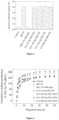
- FA and alkaline pre-treatment caused increased (p ⁇ 0.05) SCOD release, whereas ammonium pre-treatment did not play a role (p>0.05) in SCOD release in comparison to the control.
- control without adding ammonium or adjusting pH, Table 2
- ammonium pre-treated secondary sludge SCOD only rose by approximately 0.03 mg SCOD/mg VS.
- SCOD increased by around 0.4 mg SCOD/mg VS with FA treatment at all the tested FA concentrations (i.e. 85-680 mg NH 3 -N/L), which resulted in a 10 times higher solubilisation of secondary sludge compared with the control and ammonium treatment.
- EPS extracellular polymeric substances
- FIG. 2 shows the measured methane production during the entire BMP assay period (i.e. 50 days) in all tests.
- biochemical methane potential and hydrolysis rate two main parameters (i.e. biochemical methane potential (B 0 ) and first order hydrolysis rate (k)) were determined by two models (i.e. one substrate model and two substrate model).
- One substrate model - Fig. 3A shows the simulated biochemical methane production profiles by one substrate model, which reveals the satisfactory fit of methane production data to this model.
- the determined B 0 and k and 95% confidence regions for them with FA, alkaline and ammonium pre-treatment are shown in Table 3 and Fig. 4 .
- FA pre-treatment at >250 mg NH 3 -N/L achieved higher (p ⁇ 0.05) B 0 and k compared with the control.
- FA pre-treatment not according to the present invention at 85 mg NH 3 -N/L and alkaline pre-treatment at pH 10 did not affect (p>0.05) B 0 significantly and had a similar effect (p ⁇ 0.05) on k (also see Fig. 4 ), which was enhanced by around 85% (from 0.22 to 0.41 d -1 ).
- ammonium pre-treatment at 800 mg NH 4 + -N/L did not play a role (p>0.05) in both k and B 0 .
- Two substrate model - Fig. 3B shows the simulated biochemical methane production profiles by two substrate model, which reveals that methane production was well captured. This result indicates that the composition of secondary sludge was in a heterogeneous form.
- Table 4 shows the determined values of B 0,rapid , k rapid , Y rapid , and B 0,slow , k slow , Y slow .
- FA pre-treatment at > 250 mg NH 3 -N/L led to increased (p ⁇ 0.05) k rapid , B 0,rapid and Y rapid although parameter identification was poor in the cases of 85 mg NH 3 -N/L and pH 10 (see diagonal region in Table 4).
- FA is a recoverable chemical, which can be obtained directly from the waste (i.e. anaerobic digestion liquor) of WWTPs.
- Anaerobic digestion liquor generally has an ammonium concentration of 1.0-2.0 g N/L, and a pH of 7.5-8.6.
- FA concentration can also easily reach 680 mg NH 3 -N/L by adding a moderate amount of alkali.
- the improved methane production would correspond to the reduced amount of secondary sludge requesting transport and disposal, thereby decreasing corresponding costs. Since this FA pretreatment technology aims to use the WWTPs' waste (i.e. anaerobic digestion liquor) to enhance methane production from the WWTPs, it will set an example for the paradigm shift of the WWTPs from ⁇ linear economy' to 'circular economy'.
- Fig. 2 demonstrated that the highest methane production at a digestion time of 15 d was attained in the case of secondary sludge pre-treatment under 420 mg NH 3 -N/L. Therefore, the FA pre-treatment at 420 mg NH 3 -N/L was selected for the following economic and environmental evaluations.
- the free nitrous acid (FNA)-based technology is a promising technology for enhancing energy recovery in the form of methane.
- the advantage of this technology lies in the in-situ FNA production via side-stream nitritation of anaerobic digestion liquor.
- the side-stream nitritation reactor does not exist in most of the WWTPs, which makes the in-situ FNA production difficult.
- the FA-based technology proposed in this example does not depend on side-stream nitritation reactor.
- the key chemical (i.e. FA) required for this technology can be attained directly from the anaerobic digestion liquor. Therefore, the FA-based technology is more applicable to the WWTPs without the side-stream nitritation reactor, whereas the FNA-based technology is more applicable to the WWTPs with the side-stream nitritation reactor.
- the substrate using this example was primary sludge, which was collected from a primary settler of a local biological nutrient removal WWTP.
- SRT mesophilic anaerobic digester
- the inoculum was used to biodegrade primary sludge in the biochemical methane potential tests to be described later.
- the characteristics of the inoculum and primary sludge were listed in Table 5 Table 5 - Characteristics of primary sludge and inoculum used in experiments.
- a sequence of batch tests were done in order to assess the effect of FA pretreatment on the main characteristics (i.e. SCOD, SKN, NH 4 + -N and VFA) of primary sludge.
- 2.8 L primary sludge was divided equally into 7 same batch reactors.
- a certain volume of ammonium stock solution (3.0 mol NH 4 + -N/L) was then added to four reactors to get desired ammonium concentrations (i.e. 100, 300, 500 and 800 mg NH 4 + -N/L), as described in Table 6.
- the designed NH 4 + -N/L concentrations can be obtained in-situ from anaerobic digestion liquor in real WWTPs.
- Pretreatment FA (mg NH 3 -N/L) NH 4 + -N (mg N/L) pH Control 0.02 80 b 5.6 b FA 85 100 10 250 300 10 420 500 10 680 800 10 Alkaline 68 80 b 10 NH 4 + 0.2 800 5.6 b Temperature was room temperature (25 °C) in all tests. Pretreatment time was 24 h b 80 mg NH 4 + -N/L and pH 5.6 were the ammonium concentration and pH value in the raw primary sludge
- the main characteristics (SCOD, SKN, NH 4 + -N and VFA) of primary sludge before and after pretreatment were measured in triplicate.
- the measured changes of SCOD, SKN, NH 4 + -N and VFA during the 24 h pretreatment period were then expressed as a biomass specific value by dividing by the corresponding VS of primary sludge.
- the biogas production and composition were monitored.
- the volume of methane was determined by multiplying the volume of biogas by the percentage of methane in biogas and calculated as the value under standard conditions (1 atm, 25 °C).
- the methane generation from primary sludge was calculated by subtracting that in blank vial. Methane production was reported as the volume of methane generated per kilogram of VS added (L CH 4 /kg VS added).
- the sludge samples were filtered through disposable Millipore filter units with a 0.45 ⁇ m pore size for the analyses of SCOD, SKN, NH 4 + -N and VFA.
- the NH 4 + -N concentrations were determined using a Lachat Quik-Chem 8000 flow injection analyzer (Lachat Instrument, Milwaukee).
- the analyses of TS, VS, TCOD, SCOD, TKN, SKN and VFA were conducted in accordance with Standard Methods (APHA, 2005).
- the pH of sludge was measured using a calibrated glass body probe (TPS, Brisbane, Australia).
- Biogas composition (N 2 , H 2 , CH 4 and CO 2 ) was determined with a Perkin Elmer loop injection gas chromatography (GC) equipped with a thermal conductivity detector. The volume of biogas was tested by a manometer at the start of each sampling event.
- GC Perkin Elmer loop injection gas chromatography
- the hydrolysis rate (k) and biochemical methane potential (B 0 ) were evaluated by fitting the experimental data of methane production in BMP tests to the first order kinetic model using a modified version of Aquasim 2.1d. Residual sum of squares (RSS) between the measured data and model predicted data was objective function (J) (Batstone et al., 2003). The optimal set of k and B 0 will be the one under which the RSS is minimized (J min ). The first-order kinetic model was shown in Eq. (1) (Batstone et al., 2003; Wang et al., 2013).
- B t B 0 1 ⁇ e ⁇ kt
- B (t) is biochemical methane production at t (L CH 4 /kg VS); t is time (d); B 0 is biochemical methane potential (L CH 4 /kg VS); k is hydrolysis rate (d -1 ).
- the uncertainty surface of B 0 and k were determined using objective surface searching based on the method of Batstone et al. (2003).
- Methane production results reflected the VS destruction of primary sludge (see equation 2), which was shown in Figure 7B .
- the VS destruction of primary sludge showed a similar trend to methane production.
- the primary sludge pretreated by FA of 250 ⁇ 680 mg NH 3 -N/L had a more (p ⁇ 0.05) VS destruction than control, alkaline at pH 10 and ammonium at 800 mg NH 4 + -N/L pretreatment.
- Model based analysis of methane production results the experimentally measured methane production data from the 50 days' BMP test were fit to a first-order kinetic model with the results shown in Figure 8.
- Figure 8 demonstrated that the model well captured the measured data of methane production.
- the hydrolysis rate (k) and biochemical methane potential (B 0 ) were calculated and tabulated in Table 7. All in all, FA pretreatment at 250 ⁇ 680 mg NH 3 -N/L had a negative influence (p ⁇ 0.05) on k, which was reduced by 24-38% compared with control (i.e. from 0.29 d -1 to 0.18-0.22 d -1 ).
- Figure 9 showed the 95% confidence regions of B 0 and k in all the studied cases.
- FA pretreatment technology for enhancing anaerobic methane production from primary sludge This example demonstrated that FA pretreatment at > 250 mg NH 3 -N/L was effective in increasing anaerobic methane production from full-scale primary sludge while the digestion time was more than 7 days.
- FA could be produced from the anaerobic digestion liquor directly (pH 7.5-8.6, 1.0-2.0 g NH 4 + -N/L, and 33 °C). That is equivalent to the FA level of 30-560 mg NH 3 -N/L (Cervantes, 2009; Fux et al., 2006), which is already adequate for increasing the production of methane (i.e. FA >250 mg NH 3 -N/L).
- FA level of 680 mg NH 3 -N/L could also be easily reached through dosing moderate amount of alkali.
- the enhanced production of methane would be equivalent to the reduced amount of primary sludge that would require transportation and disposal, thus decreasing the corresponding costs.
- this FA technology relies on the usage of the WWTPs waste (i.e. anaerobic digestion liquor) to enhance anaerobic methane production from the WWTPs, it will set an example for the paradigm shift of the WWTPs from ⁇ linear economy' to 'circular economy'.
- the FA pretreatment at 420 mg NH 3 -N/L was selected for the following economic and environmental evaluations.
- the economic analysis results were described in Table S 1.
- a 420 mg NH 3 -N/L FA pretreatment would save $0.8/PE/year (Table S1; PE: population equivalent), attributing to the increased production of methane (i.e. saving $1.0/PE/year) and the improved degradation of primary sludge (i.e. saving $0.5/PE/year) subtracting the possible additional cost ($0.7/PE/year) related to primary sludge pretreatment. Therefore, the FA pretreatment technique is economically favourable. Nevertheless, it should be noted that the results of economic evaluation reported in this work should be only considered as indicative due to the fact that the actual cost might be variable depending on local conditions, which also might change from nation to nation.
- the potential environmental impact of the proposed FA pretreatment technique was also analyzed in terms of CO 2 emission.
- the overall CO 2 emission was estimated to decline by 7.0 kg CO 2 /PE/year with an FA pretreatment at 420 mg NH 3 -N/L.
- the decreased CO 2 emission was due to the less consumption of fossil fuel resulting from the enhanced methane production although the FA pretreatment technology itself might cause minor CO 2 emission. Consequently, the FA technology could be considered environmentally friendly.
- Example 1 demonstrated that FA pretreatment technology was also able to enhance anaerobic methane production from secondary sludge (Wei et al., 2017). This indicated that the FA pretreatment technology could be implemented on the mixture of primary sludge and secondary sludge to maximize methane production from the waste stream of the WWTPs.
- the FNA pretreatment technology had a negative effect on anaerobic methane production from primary sludge (Zhang et al., 2016). Therefore, the FNA pretreatment can only be implemented on secondary sludge.
- one important advantage of the FNA-based technology is the in-situ production of FNA through the side-stream nitritation of the anaerobic digestion liquor (Wang et al., 2013).
- the FA technology of this work would not require a side-stream nitritation reactor.
- the required FA for this new technology could be directly obtained from the anaerobic digestion liquor easily.
- the FA pretreatment is more applicable to those WWTPs without side-stream nitritation reactor.
- the model-based analysis in this example showed a greater biochemical methane potential (B 0 ) after FA pretreatment of 250 ⁇ 680 mg NH 3 -N/L, which was 8-17% higher than that of raw primary sludge.
- B 0 biochemical methane potential
- the higher B 0 contributed to the improved performance of anaerobic methane production.
- the hydrolysis rate (k) was decreased by 24-38% following FA pretreatment of 250 ⁇ 680 mg NH 3 -N/L compared to the control. This explained the lower methane production during the first 7 days' BMP test period compared to the control.
- the FA pretreatment technology is in contrast to the other reported pretreatment technologies (e.g. Ge et al., 2010).
- the temperature phased anaerobic digestion generally increases k without affecting B 0 (Ge et al., 2010), whereas FNA pretreatment negatively affect both B 0 and k of primary sludge (Zhang et al., 2016).
- the conventional biological nitrogen removal process in wastewater treatment systems is achieved by complete oxidation of ammonium (NH 4 + ) to nitrate (NO3 - ) (nitrification) followed by the reduction of nitrate (NO3 - ) to nitrogen gas (N 2 ) (denitrification). Both nitrification and denitrification involve nitrite (NO 2 - ) as an intermediate. If nitrification is terminated at nitrite, denitritation from nitrite to nitrogen gas can be attained (i.e. nitrogen removal via nitrite pathway).
- Nitrogen removal via nitrite instead of nitrate can decrease oxygen demand for nitrification by 25%, and also reduce chemical oxygen demand (COD) requirement for denitrification by 40%.
- COD chemical oxygen demand
- the reduction in COD requirement will be significantly beneficial for wastewater with a low COD to nitrogen ratio.
- the key point of attaining nitrite pathway is to selectively wash out nitrite oxidizing bacteria (NOB) from the system while retaining ammonium oxidizing bacteria (AOB).
- NOB nitrite oxidizing bacteria
- AOB ammonium oxidizing bacteria
- This example is related to the development of a free ammonia (FA)-based technology to selectively eliminate NOB and achieve the nitrite pathway based on side-stream sludge treatment.
- one lab-scale sequencing batch reactor (SBR) with a working volume of 8 L was used.
- the operation of the SBR consisted of two phases: baseline phase (i.e. without FA treatment) and experimental phase (i.e. with FA treatment).
- the reactor was operated in an anoxic-aerobic mode (6 h per cycle).
- the synthetic wastewater consisted of both normal wastewater and anaerobic digestion liquor.
- the normal wastewater was comprised of various components to simulate real domestic wastewater, with the total chemical oxygen demand (TCOD) and total Kjeldahl nitrogen (TKN) concentrations being 300 mg/L and 50 mg/L, respectively.
- TCOD total chemical oxygen demand
- TKN total Kjeldahl nitrogen
- the detailed composition was (per litre): 83 mg milk powder, 60 mg sucrose, 61 mg starch, 12 mg peptone, 29 mg yeast extract, 45 mg CH 3 COONa, 153 mg NH 4 Cl (40 mg NH 4 + -N), 14 mg KH 2 PO 4 , 13 mg K 2 HPO 4 , 600 mg NaHCO 3 , 2.5 mg FeSO 4 ⁇ 7H 2 O, 0.06 mg ZnCl 2 , 0.06 mg MnCl 2 ⁇ 4H 2 O, 0.19 mg NaMoO 4 ⁇ 2H 2 O, 0.13 mg CoCl 2 ⁇ 6H 2 O, 0.04 mg NiCl 2 ⁇ 6H 2 O, 0.06 mg CuSO 4 , 0.06 mg H 3 BO 3 , 0.19 mg MgCl 2 , 0.44 mg CaCl 2 .
- the anaerobic digestion liquor contained NH 4 HCO 3 and was returned to the main-stream reactor (i.e. SBR) and contributed to an additional 20% nitrogen load.
- Figure 13 shows a graph of nitrite accumulation ratio (NO 2 - -N/(NO 2 - -N+NO 3 - -N) ⁇ 100%) in the effluent of the reactor.
- Figure 14 shows nitrogenous compound concentration in the effluent of the reactor. In the results of figures 13 and 14 , the reactor was operated for more than 3 months before FA treatment. Only 25 days' data are shown in figures 13 and 14 .
- Figure 15 shows a flowsheet for a novel "closed loop" concept in a WWTP based on the FA technology to selectively wash out nitrite oxidizing bacteria and achieve the nitrite pathway.
- AOB is favoured over NOB, with the NOB effectively being washed out of the reactor by the FA treatment.
Landscapes
- Life Sciences & Earth Sciences (AREA)
- Engineering & Computer Science (AREA)
- Chemical & Material Sciences (AREA)
- Hydrology & Water Resources (AREA)
- Organic Chemistry (AREA)
- Water Supply & Treatment (AREA)
- Environmental & Geological Engineering (AREA)
- Oil, Petroleum & Natural Gas (AREA)
- Molecular Biology (AREA)
- Health & Medical Sciences (AREA)
- General Chemical & Material Sciences (AREA)
- Chemical Kinetics & Catalysis (AREA)
- Biodiversity & Conservation Biology (AREA)
- Microbiology (AREA)
- Treatment Of Sludge (AREA)
- Purification Treatments By Anaerobic Or Anaerobic And Aerobic Bacteria Or Animals (AREA)
Claims (12)
- Verfahren zur Behandlung eines von Abwasser oder Schmutzwasser stammenden Schlamms, wobei das Verfahren Folgendes umfasst:(a) das Einwirkenlassen eines Behandlungsschritts bei einem pH-Wert von 8,9 oder höher und einem Gehalt an freiem Ammoniak (FA) von 250 mg bis 680 mg NH3-N/l auf den Schlamm, wobei der Schlamm in einem Reaktor, in dem er mit freiem Ammoniak in Kontakt gebracht wird, eine Verweilzeit von 2 Stunden bis 1 Woche aufweist;(b) das Leiten des Schlamms von Schritt (a) zu einem anaeroben Fermenter, wodurch im anaeroben Fermenter Methan und eine anaerobe Zersetzungsflüssigkeit gebildet werden; und(c) das Rückführen zumindest eines Teils der anaeroben Zersetzungsflüssigkeit zu Schritt (a).
- Verfahren nach Anspruch 1, wobei der Schlamm einen Sekundärschlamm aus einem Nachklärbecken oder aus einem Bioreaktor zur Behandlung von Abwasser oder Schmutzwasser umfasst oder der Schlamm einen Primärschlamm aus einer Abwasser- oder Schmutzwasserbehandlungsanlage umfasst oder der Schlamm einen aus einem Vorklärbecken isolierten Primärschlamm oder einen von einem Sieb isolierten Schlamm umfasst.
- Verfahren nach Anspruch 1 oder Anspruch 2, wobei der pH-Wert in Schritt (a) von 8,9 bis 10,5 oder von 8,9 bis 10,0 oder von 8,9 bis 9,5 oder von 9,0 bis 9,5 oder von 9,1 bis 9,5 oder von 9,2 bis 9,5 oder von 9,3 bis 9,5 oder etwa 9,3 beträgt.
- Verfahren nach einem der vorhergehenden Ansprüche, wobei die Konzentration an freiem Ammoniak im Behandlungsschritt von 420 mg bis 680 mg NH3-N/l reicht.
- Verfahren nach einem der vorhergehenden Ansprüche, wobei der pH-Wert so gesteuert wird, dass er in den Bereich von 8,9 oder höher fällt, und der pH-Wert gesteuert wird, indem der pH-Wert überwacht und ein alkalisches Mittel zugegeben wird, wenn der pH-Wert unter 8,9 fällt.
- Verfahren nach einem der vorhergehenden Ansprüche, wobei der Gehalt an freiem Ammoniak in Schritt (a) durch das Zugeben einer Flüssigkeit erhalten wird, die gelöstes Ammonium (NH4 +) mit einer solchen Konzentration enthält, dass beim pH-Wert von Schritt (a) der Gehalt an freiem Ammoniak in einem Reaktor erreicht wird, in dem Schritt (a) durchgeführt wird, wobei die gelöstes Ammonium enthaltende Flüssigkeit eine Konzentration an gelöstem Ammonium von 0,5 bis 4 g/l NH4 +-N oder von 1,0 bis 3,0 g/l NH4 +-N oder von 1,0 bis 2,0 g/l NH4 +-N aufweist.
- Verfahren nach Anspruch 6, wobei die gelöstes Ammonium enthaltende Flüssigkeit aus einem anaeroben Zersetzungsprozess entfernte Flüssigkeit umfasst.
- Verfahren nach einem der vorhergehenden Ansprüche, wobei in Schritt (a) die Verweilzeit des Schlamms in dem Reaktor, in dem er mit freiem Ammoniak in Kontakt gebracht wird, von 4 Stunden bis 48 Stunden oder von 6 Stunden bis 24 Stunden beträgt.
- Verfahren nach einem der vorhergehenden Ansprüche, wobei der Schlamm einem nachgeschalteten Reaktor zugeführt wird, in dem Methan erzeugt wird, und die Behandlung des Schlamms mit freiem Ammoniak kontinuierlich erfolgt.
- Verfahren nach Anspruch 2, wobei im Vorklärbecken ein Schlammstrom und ein Flüssigkeitsstrom gebildet werden, wobei der Flüssigkeitsstrom einem Bioreaktor zugeführt wird, wodurch ein Sekundärschlamm gebildet wird, wobei der Sekundärschlamm auch dem anaeroben Fermenter zugeführt wird.
- Verfahren nach Anspruch 1, wobei der Schlamm, der dem FA-Behandlungsschritt unterzogen worden ist, im anaeroben Fermenter eine Verweilzeit von 5 Tagen bis 50 Tagen oder von 7 Tagen bis 40 Tagen oder von 10 Tagen bis 30 Tagen aufweist.
- Verfahren nach einem der vorhergehenden Ansprüche, wobei Schritt (a) bei Raumtemperatur durchgeführt wird.
Applications Claiming Priority (2)
| Application Number | Priority Date | Filing Date | Title |
|---|---|---|---|
| AU2017901156A AU2017901156A0 (en) | 2017-03-30 | Process for the Treatment of Sludge | |
| PCT/AU2018/050292 WO2018176096A1 (en) | 2017-03-30 | 2018-03-29 | Process for the treatment of sludge |
Publications (3)
| Publication Number | Publication Date |
|---|---|
| EP3580185A1 EP3580185A1 (de) | 2019-12-18 |
| EP3580185A4 EP3580185A4 (de) | 2020-11-18 |
| EP3580185B1 true EP3580185B1 (de) | 2024-07-24 |
Family
ID=63673859
Family Applications (1)
| Application Number | Title | Priority Date | Filing Date |
|---|---|---|---|
| EP18776916.1A Active EP3580185B1 (de) | 2017-03-30 | 2018-03-29 | Verfahren zur behandlung von schlamm |
Country Status (5)
| Country | Link |
|---|---|
| US (1) | US11198632B2 (de) |
| EP (1) | EP3580185B1 (de) |
| CN (1) | CN110709357B (de) |
| AU (1) | AU2018241518B2 (de) |
| WO (1) | WO2018176096A1 (de) |
Families Citing this family (11)
| Publication number | Priority date | Publication date | Assignee | Title |
|---|---|---|---|---|
| EP3847235A4 (de) * | 2018-09-05 | 2022-06-22 | Wentech Solutions Inc. | System und verfahren zur bewertung, optimierung und/oder steuerung eines anaeroben gärungsverfahrens |
| US11505482B2 (en) * | 2019-05-01 | 2022-11-22 | University Of Manitoba | Dynamic process control for partial nitritation in wastewater treatment with autotrophic nitrogen removal |
| AU2020284266A1 (en) | 2019-05-24 | 2021-10-07 | The University Of Queensland | Method for treating wastewater or sludge |
| CN113185074B (zh) * | 2021-04-12 | 2022-10-21 | 哈尔滨工业大学 | 一种游离亚硝酸与过氧化钙联合预处理促进污泥厌氧发酵短链脂肪酸积累的方法 |
| CN113636734B (zh) * | 2021-09-06 | 2022-11-18 | 广州大学 | 一种载铁掺氮复合碳材料联合热水解预处理强化剩余污泥厌氧消化产甲烷效能的方法 |
| CN114720586B (zh) * | 2022-03-09 | 2023-03-21 | 中国科学院生态环境研究中心 | 一种评价阴离子对污泥厌氧消化的影响的方法 |
| CN114772887B (zh) * | 2022-04-11 | 2023-07-21 | 同济大学 | 一种利用碳酸氢铵提升污泥厌氧消化产甲烷量的方法 |
| CN115072860B (zh) * | 2022-06-24 | 2024-03-29 | 北京工业大学 | 一种三段式城市污水厌氧氨氧化高效脱氮系统与方法 |
| CN115436358B (zh) * | 2022-09-21 | 2025-09-09 | 西华师范大学 | 一种测定厌氧消化污泥中氨氮浓度的方法 |
| CN115710076B (zh) * | 2022-11-16 | 2026-05-08 | 中国科学院生态环境研究中心 | 基于游离氨预处理的污泥厌氧发酵产甲烷的方法和装置 |
| CN117776440B (zh) * | 2023-12-29 | 2026-02-27 | 北京林业大学 | 一种低碳排放的高效污水资源化处理方法 |
Family Cites Families (16)
| Publication number | Priority date | Publication date | Assignee | Title |
|---|---|---|---|---|
| US4537682A (en) * | 1982-01-29 | 1985-08-27 | Environmental Research & Technology | Activated sludge wastewater treating process |
| JP4863545B2 (ja) * | 2000-12-11 | 2012-01-25 | メタウォーター株式会社 | 有機性汚泥の消化処理方法及び装置 |
| EP1945596B8 (de) * | 2005-09-15 | 2015-11-04 | Anuvia Plant Nutrients Holdings LLC | Alkalisches verfahren für die umwandlung von organische substanzen enthaltendem schlamm in dünger |
| JP4642635B2 (ja) * | 2005-10-31 | 2011-03-02 | 荏原エンジニアリングサービス株式会社 | 高濃度有機性廃液の処理方法及び装置 |
| US20080156726A1 (en) * | 2006-09-06 | 2008-07-03 | Fassbender Alexander G | Integrating recycle stream ammonia treatment with biological nutrient removal |
| US8586337B2 (en) | 2007-10-04 | 2013-11-19 | The Trustees Of Columbia University In The City Of New York | Systems and methods for achieving partial nitrification in a biological nitrogen removal reactor |
| CN102173504A (zh) * | 2011-03-16 | 2011-09-07 | 北京工业大学 | 一种联合fa和fna双重抑制培养短程硝化颗粒污泥的方法 |
| US20120315209A1 (en) * | 2011-04-20 | 2012-12-13 | Thermoenergy Corporation | Methods and systems for treating water streams |
| US9005333B1 (en) | 2011-06-20 | 2015-04-14 | The United States Of America, As Represented By The Secretary Of Agriculture | Systems and methods for reducing ammonia emissions from and for recovering the ammonia liquid effluents |
| WO2013060338A1 (en) * | 2011-10-28 | 2013-05-02 | Xergi Nix Technology A/S | Method for anaerobic fermentation and biogas production |
| ITPC20130004A1 (it) * | 2013-01-22 | 2014-07-23 | Syngen Srl | Procedimento per l'estrazione dell'azoto contenuto in digestati derivanti dalla fermentazione metanogenica, deiezioni zootecniche, fanghi di depurazione. |
| WO2014177156A1 (en) * | 2013-05-02 | 2014-11-06 | Xergi Nix Technology A/S | Method for ph-controlled fermentation and biogas production |
| CN103241916B (zh) * | 2013-05-12 | 2014-07-02 | 北京工业大学 | 污泥发酵耦合反硝化过程实现亚硝酸盐最大积累的方法 |
| ITTS20130003A1 (it) * | 2013-08-16 | 2015-02-17 | Igp S R L | Procedimento e impianti finalizzati alla rimozione dell'azoto dalle deiezioni avicole |
| WO2015054783A1 (en) * | 2013-10-18 | 2015-04-23 | Her Majesty The Queen In Right Of Canada, As Represented By The Minister Of Agriculture And Agri-Food | Psychrophilic anaerobic digestion of ammonia-rich waste |
| CN104528934B (zh) * | 2014-12-04 | 2016-04-27 | 浙江清华长三角研究院 | 短程硝化-反硝化脱氮膜生物反应器及其污水处理工艺 |
-
2018
- 2018-03-29 EP EP18776916.1A patent/EP3580185B1/de active Active
- 2018-03-29 WO PCT/AU2018/050292 patent/WO2018176096A1/en not_active Ceased
- 2018-03-29 US US16/496,050 patent/US11198632B2/en not_active Expired - Fee Related
- 2018-03-29 AU AU2018241518A patent/AU2018241518B2/en not_active Ceased
- 2018-03-29 CN CN201880022042.1A patent/CN110709357B/zh not_active Expired - Fee Related
Also Published As
| Publication number | Publication date |
|---|---|
| AU2018241518A1 (en) | 2019-09-26 |
| EP3580185A4 (de) | 2020-11-18 |
| AU2018241518B2 (en) | 2023-11-02 |
| US11198632B2 (en) | 2021-12-14 |
| CN110709357A (zh) | 2020-01-17 |
| EP3580185A1 (de) | 2019-12-18 |
| US20200331788A1 (en) | 2020-10-22 |
| WO2018176096A1 (en) | 2018-10-04 |
| CN110709357B (zh) | 2022-05-27 |
Similar Documents
| Publication | Publication Date | Title |
|---|---|---|
| US11198632B2 (en) | Process for the treatment of sludge | |
| Wang et al. | A 20-year journey of partial nitritation and anammox (PN/A): from sidestream toward mainstream | |
| Kampman et al. | Enrichment of denitrifying methanotrophic bacteria for application after direct low-temperature anaerobic sewage treatment | |
| Yogev et al. | Nitrogen and carbon balance in a novel near-zero water exchange saline recirculating aquaculture system | |
| Meng et al. | Nitrogen removal from low COD/TN ratio manure-free piggery wastewater within an upflow microaerobic sludge reactor | |
| Soares et al. | Comparison between disintegrated and fermented sewage sludge for production of a carbon source suitable for biological nutrient removal | |
| CN101525179B (zh) | 一种厌氧氨氧化处理低浓度氨氮废水的方法 | |
| Rajagopal et al. | Combined anaerobic and activated sludge anoxic/oxic treatment for piggery wastewater | |
| Wang et al. | Nitrogen removal from wastewater and external waste activated sludge reutilization/reduction by simultaneous sludge fermentation, denitrification and anammox (SFDA) | |
| Ghasimi et al. | The Effect of C: N: P ratio, volatile fatty acids and Na levels on the performance of an anaerobic treatment of fresh leachate from municipal solid waste transfer station | |
| Hatamoto et al. | Performance evaluation of the sulfur-redox-reaction–activated up-flow anaerobic sludge blanket and down-flow hanging sponge anaerobic/anoxic sequencing batch reactor system for municipal sewage treatment | |
| He et al. | The treatment of animal manure wastewater by coupled simultaneous methanogenesis and denitrification (SMD) and shortcut nitrification–denitrification (SND) | |
| KR20110045812A (ko) | 혐기성 소화 탈리액 질소 제거 장치 및 이를 이용한 혐기성 소화 탈리액의 질소 제거 방법 | |
| Kumi et al. | Volatile fatty acids platform from thermally hydrolysed secondary sewage sludge enhanced through recovered micronutrients from digested sludge | |
| Zhao et al. | Application of immobilized biological fillers for the hydrolytic acidification and denitrification of sulfide-containing tannery wastewater | |
| Wang et al. | Bioproduction of volatile fatty acid from the fermentation of waste activated sludge for in situ denitritation | |
| Khursheed et al. | Enhanced combined assimilative and bound phosphorus uptake in concurrence with nitrate removal in pre-anoxic cyclic sequencing batch reactor | |
| Kim et al. | Impact of COD/N/S ratio on dentrification by the mixed cultures of sulfate reducing bacteria and sulfur denitrifying bacteria | |
| Gao et al. | Treatment of anaerobically digested effluent from kitchen waste using combined processes of anaerobic digestion–complete nitritation–ANAMMOX based on reflux dilution | |
| Zhang et al. | The anaerobic treatment of nitrite containing wastewater using an expanded granular sludge bed (EGSB) reactor | |
| Jiang et al. | Novel insights into aerobic duration control-based partial nitritation in source-separated blackwater treatment: Growth type, inoculation source, and comammox threat | |
| Eusebi et al. | Nitrogen removal from temperate anaerobic–aerobic two‐stage biological systems: impact of reactor type and wastewater strength | |
| de Oliveira Freitas et al. | A new anaerobic, aerobic, nitrification, anoxic reactor (AANAR) with overlaid biological zones: Sulfide removal from wastewater and biogas | |
| Kasiri et al. | Anaerobic processes | |
| Wu et al. | A new oxic-settling-anaerobic (NOSA®) activated sludge process for minimizing excess sludge in secondary biological treatment plants: a pilot-scale evaluation of the absorption–biodegradation process |
Legal Events
| Date | Code | Title | Description |
|---|---|---|---|
| STAA | Information on the status of an ep patent application or granted ep patent |
Free format text: STATUS: THE INTERNATIONAL PUBLICATION HAS BEEN MADE |
|
| PUAI | Public reference made under article 153(3) epc to a published international application that has entered the european phase |
Free format text: ORIGINAL CODE: 0009012 |
|
| STAA | Information on the status of an ep patent application or granted ep patent |
Free format text: STATUS: REQUEST FOR EXAMINATION WAS MADE |
|
| 17P | Request for examination filed |
Effective date: 20190911 |
|
| AK | Designated contracting states |
Kind code of ref document: A1 Designated state(s): AL AT BE BG CH CY CZ DE DK EE ES FI FR GB GR HR HU IE IS IT LI LT LU LV MC MK MT NL NO PL PT RO RS SE SI SK SM TR |
|
| AX | Request for extension of the european patent |
Extension state: BA ME |
|
| DAV | Request for validation of the european patent (deleted) | ||
| DAX | Request for extension of the european patent (deleted) | ||
| A4 | Supplementary search report drawn up and despatched |
Effective date: 20201021 |
|
| RIC1 | Information provided on ipc code assigned before grant |
Ipc: C02F 3/30 20060101ALI20201015BHEP Ipc: C02F 1/66 20060101ALI20201015BHEP Ipc: C02F 11/04 20060101AFI20201015BHEP Ipc: C02F 3/12 20060101ALN20201015BHEP |
|
| STAA | Information on the status of an ep patent application or granted ep patent |
Free format text: STATUS: EXAMINATION IS IN PROGRESS |
|
| 17Q | First examination report despatched |
Effective date: 20210609 |
|
| GRAP | Despatch of communication of intention to grant a patent |
Free format text: ORIGINAL CODE: EPIDOSNIGR1 |
|
| STAA | Information on the status of an ep patent application or granted ep patent |
Free format text: STATUS: GRANT OF PATENT IS INTENDED |
|
| RIC1 | Information provided on ipc code assigned before grant |
Ipc: C02F 3/12 20060101ALN20240126BHEP Ipc: C02F 1/66 20060101ALI20240126BHEP Ipc: C02F 3/30 20060101ALI20240126BHEP Ipc: C02F 11/04 20060101AFI20240126BHEP |
|
| INTG | Intention to grant announced |
Effective date: 20240220 |
|
| GRAS | Grant fee paid |
Free format text: ORIGINAL CODE: EPIDOSNIGR3 |
|
| GRAA | (expected) grant |
Free format text: ORIGINAL CODE: 0009210 |
|
| STAA | Information on the status of an ep patent application or granted ep patent |
Free format text: STATUS: THE PATENT HAS BEEN GRANTED |
|
| AK | Designated contracting states |
Kind code of ref document: B1 Designated state(s): AL AT BE BG CH CY CZ DE DK EE ES FI FR GB GR HR HU IE IS IT LI LT LU LV MC MK MT NL NO PL PT RO RS SE SI SK SM TR |
|
| REG | Reference to a national code |
Ref country code: GB Ref legal event code: FG4D |
|
| REG | Reference to a national code |
Ref country code: CH Ref legal event code: EP |
|
| REG | Reference to a national code |
Ref country code: DE Ref legal event code: R096 Ref document number: 602018072209 Country of ref document: DE |
|
| REG | Reference to a national code |
Ref country code: IE Ref legal event code: FG4D |
|
| REG | Reference to a national code |
Ref country code: LT Ref legal event code: MG9D |
|
| REG | Reference to a national code |
Ref country code: NL Ref legal event code: MP Effective date: 20240724 |
|
| PG25 | Lapsed in a contracting state [announced via postgrant information from national office to epo] |
Ref country code: PT Free format text: LAPSE BECAUSE OF FAILURE TO SUBMIT A TRANSLATION OF THE DESCRIPTION OR TO PAY THE FEE WITHIN THE PRESCRIBED TIME-LIMIT Effective date: 20241125 |
|
| REG | Reference to a national code |
Ref country code: AT Ref legal event code: MK05 Ref document number: 1706185 Country of ref document: AT Kind code of ref document: T Effective date: 20240724 |
|
| PG25 | Lapsed in a contracting state [announced via postgrant information from national office to epo] |
Ref country code: NL Free format text: LAPSE BECAUSE OF FAILURE TO SUBMIT A TRANSLATION OF THE DESCRIPTION OR TO PAY THE FEE WITHIN THE PRESCRIBED TIME-LIMIT Effective date: 20240724 |
|
| PG25 | Lapsed in a contracting state [announced via postgrant information from national office to epo] |
Ref country code: PT Free format text: LAPSE BECAUSE OF FAILURE TO SUBMIT A TRANSLATION OF THE DESCRIPTION OR TO PAY THE FEE WITHIN THE PRESCRIBED TIME-LIMIT Effective date: 20241125 Ref country code: NL Free format text: LAPSE BECAUSE OF FAILURE TO SUBMIT A TRANSLATION OF THE DESCRIPTION OR TO PAY THE FEE WITHIN THE PRESCRIBED TIME-LIMIT Effective date: 20240724 |
|
| PG25 | Lapsed in a contracting state [announced via postgrant information from national office to epo] |
Ref country code: NO Free format text: LAPSE BECAUSE OF FAILURE TO SUBMIT A TRANSLATION OF THE DESCRIPTION OR TO PAY THE FEE WITHIN THE PRESCRIBED TIME-LIMIT Effective date: 20241024 |
|
| PG25 | Lapsed in a contracting state [announced via postgrant information from national office to epo] |
Ref country code: FI Free format text: LAPSE BECAUSE OF FAILURE TO SUBMIT A TRANSLATION OF THE DESCRIPTION OR TO PAY THE FEE WITHIN THE PRESCRIBED TIME-LIMIT Effective date: 20240724 Ref country code: PL Free format text: LAPSE BECAUSE OF FAILURE TO SUBMIT A TRANSLATION OF THE DESCRIPTION OR TO PAY THE FEE WITHIN THE PRESCRIBED TIME-LIMIT Effective date: 20240724 Ref country code: GR Free format text: LAPSE BECAUSE OF FAILURE TO SUBMIT A TRANSLATION OF THE DESCRIPTION OR TO PAY THE FEE WITHIN THE PRESCRIBED TIME-LIMIT Effective date: 20241025 |
|
| PG25 | Lapsed in a contracting state [announced via postgrant information from national office to epo] |
Ref country code: BG Free format text: LAPSE BECAUSE OF FAILURE TO SUBMIT A TRANSLATION OF THE DESCRIPTION OR TO PAY THE FEE WITHIN THE PRESCRIBED TIME-LIMIT Effective date: 20240724 |
|
| PG25 | Lapsed in a contracting state [announced via postgrant information from national office to epo] |
Ref country code: LV Free format text: LAPSE BECAUSE OF FAILURE TO SUBMIT A TRANSLATION OF THE DESCRIPTION OR TO PAY THE FEE WITHIN THE PRESCRIBED TIME-LIMIT Effective date: 20240724 |
|
| PG25 | Lapsed in a contracting state [announced via postgrant information from national office to epo] |
Ref country code: IS Free format text: LAPSE BECAUSE OF FAILURE TO SUBMIT A TRANSLATION OF THE DESCRIPTION OR TO PAY THE FEE WITHIN THE PRESCRIBED TIME-LIMIT Effective date: 20241124 Ref country code: AT Free format text: LAPSE BECAUSE OF FAILURE TO SUBMIT A TRANSLATION OF THE DESCRIPTION OR TO PAY THE FEE WITHIN THE PRESCRIBED TIME-LIMIT Effective date: 20240724 |
|
| PG25 | Lapsed in a contracting state [announced via postgrant information from national office to epo] |
Ref country code: HR Free format text: LAPSE BECAUSE OF FAILURE TO SUBMIT A TRANSLATION OF THE DESCRIPTION OR TO PAY THE FEE WITHIN THE PRESCRIBED TIME-LIMIT Effective date: 20240724 |
|
| PG25 | Lapsed in a contracting state [announced via postgrant information from national office to epo] |
Ref country code: RS Free format text: LAPSE BECAUSE OF FAILURE TO SUBMIT A TRANSLATION OF THE DESCRIPTION OR TO PAY THE FEE WITHIN THE PRESCRIBED TIME-LIMIT Effective date: 20241024 Ref country code: ES Free format text: LAPSE BECAUSE OF FAILURE TO SUBMIT A TRANSLATION OF THE DESCRIPTION OR TO PAY THE FEE WITHIN THE PRESCRIBED TIME-LIMIT Effective date: 20240724 |
|
| PG25 | Lapsed in a contracting state [announced via postgrant information from national office to epo] |
Ref country code: RS Free format text: LAPSE BECAUSE OF FAILURE TO SUBMIT A TRANSLATION OF THE DESCRIPTION OR TO PAY THE FEE WITHIN THE PRESCRIBED TIME-LIMIT Effective date: 20241024 Ref country code: PL Free format text: LAPSE BECAUSE OF FAILURE TO SUBMIT A TRANSLATION OF THE DESCRIPTION OR TO PAY THE FEE WITHIN THE PRESCRIBED TIME-LIMIT Effective date: 20240724 Ref country code: NO Free format text: LAPSE BECAUSE OF FAILURE TO SUBMIT A TRANSLATION OF THE DESCRIPTION OR TO PAY THE FEE WITHIN THE PRESCRIBED TIME-LIMIT Effective date: 20241024 Ref country code: LV Free format text: LAPSE BECAUSE OF FAILURE TO SUBMIT A TRANSLATION OF THE DESCRIPTION OR TO PAY THE FEE WITHIN THE PRESCRIBED TIME-LIMIT Effective date: 20240724 Ref country code: IS Free format text: LAPSE BECAUSE OF FAILURE TO SUBMIT A TRANSLATION OF THE DESCRIPTION OR TO PAY THE FEE WITHIN THE PRESCRIBED TIME-LIMIT Effective date: 20241124 Ref country code: HR Free format text: LAPSE BECAUSE OF FAILURE TO SUBMIT A TRANSLATION OF THE DESCRIPTION OR TO PAY THE FEE WITHIN THE PRESCRIBED TIME-LIMIT Effective date: 20240724 Ref country code: GR Free format text: LAPSE BECAUSE OF FAILURE TO SUBMIT A TRANSLATION OF THE DESCRIPTION OR TO PAY THE FEE WITHIN THE PRESCRIBED TIME-LIMIT Effective date: 20241025 Ref country code: FI Free format text: LAPSE BECAUSE OF FAILURE TO SUBMIT A TRANSLATION OF THE DESCRIPTION OR TO PAY THE FEE WITHIN THE PRESCRIBED TIME-LIMIT Effective date: 20240724 Ref country code: ES Free format text: LAPSE BECAUSE OF FAILURE TO SUBMIT A TRANSLATION OF THE DESCRIPTION OR TO PAY THE FEE WITHIN THE PRESCRIBED TIME-LIMIT Effective date: 20240724 Ref country code: BG Free format text: LAPSE BECAUSE OF FAILURE TO SUBMIT A TRANSLATION OF THE DESCRIPTION OR TO PAY THE FEE WITHIN THE PRESCRIBED TIME-LIMIT Effective date: 20240724 Ref country code: AT Free format text: LAPSE BECAUSE OF FAILURE TO SUBMIT A TRANSLATION OF THE DESCRIPTION OR TO PAY THE FEE WITHIN THE PRESCRIBED TIME-LIMIT Effective date: 20240724 |
|
| PG25 | Lapsed in a contracting state [announced via postgrant information from national office to epo] |
Ref country code: RO Free format text: LAPSE BECAUSE OF FAILURE TO SUBMIT A TRANSLATION OF THE DESCRIPTION OR TO PAY THE FEE WITHIN THE PRESCRIBED TIME-LIMIT Effective date: 20240724 Ref country code: DK Free format text: LAPSE BECAUSE OF FAILURE TO SUBMIT A TRANSLATION OF THE DESCRIPTION OR TO PAY THE FEE WITHIN THE PRESCRIBED TIME-LIMIT Effective date: 20240724 Ref country code: SM Free format text: LAPSE BECAUSE OF FAILURE TO SUBMIT A TRANSLATION OF THE DESCRIPTION OR TO PAY THE FEE WITHIN THE PRESCRIBED TIME-LIMIT Effective date: 20240724 |
|
| PG25 | Lapsed in a contracting state [announced via postgrant information from national office to epo] |
Ref country code: EE Free format text: LAPSE BECAUSE OF FAILURE TO SUBMIT A TRANSLATION OF THE DESCRIPTION OR TO PAY THE FEE WITHIN THE PRESCRIBED TIME-LIMIT Effective date: 20240724 |
|
| PG25 | Lapsed in a contracting state [announced via postgrant information from national office to epo] |
Ref country code: CZ Free format text: LAPSE BECAUSE OF FAILURE TO SUBMIT A TRANSLATION OF THE DESCRIPTION OR TO PAY THE FEE WITHIN THE PRESCRIBED TIME-LIMIT Effective date: 20240724 |
|
| REG | Reference to a national code |
Ref country code: DE Ref legal event code: R097 Ref document number: 602018072209 Country of ref document: DE |
|
| PG25 | Lapsed in a contracting state [announced via postgrant information from national office to epo] |
Ref country code: IT Free format text: LAPSE BECAUSE OF FAILURE TO SUBMIT A TRANSLATION OF THE DESCRIPTION OR TO PAY THE FEE WITHIN THE PRESCRIBED TIME-LIMIT Effective date: 20240724 Ref country code: SK Free format text: LAPSE BECAUSE OF FAILURE TO SUBMIT A TRANSLATION OF THE DESCRIPTION OR TO PAY THE FEE WITHIN THE PRESCRIBED TIME-LIMIT Effective date: 20240724 |
|
| PLBE | No opposition filed within time limit |
Free format text: ORIGINAL CODE: 0009261 |
|
| STAA | Information on the status of an ep patent application or granted ep patent |
Free format text: STATUS: NO OPPOSITION FILED WITHIN TIME LIMIT |
|
| 26N | No opposition filed |
Effective date: 20250425 |
|
| PG25 | Lapsed in a contracting state [announced via postgrant information from national office to epo] |
Ref country code: SE Free format text: LAPSE BECAUSE OF FAILURE TO SUBMIT A TRANSLATION OF THE DESCRIPTION OR TO PAY THE FEE WITHIN THE PRESCRIBED TIME-LIMIT Effective date: 20240724 |
|
| REG | Reference to a national code |
Ref country code: DE Ref legal event code: R119 Ref document number: 602018072209 Country of ref document: DE |
|
| PG25 | Lapsed in a contracting state [announced via postgrant information from national office to epo] |
Ref country code: MC Free format text: LAPSE BECAUSE OF FAILURE TO SUBMIT A TRANSLATION OF THE DESCRIPTION OR TO PAY THE FEE WITHIN THE PRESCRIBED TIME-LIMIT Effective date: 20240724 |
|
| REG | Reference to a national code |
Ref country code: CH Ref legal event code: H13 Free format text: ST27 STATUS EVENT CODE: U-0-0-H10-H13 (AS PROVIDED BY THE NATIONAL OFFICE) Effective date: 20251023 |
|
| PG25 | Lapsed in a contracting state [announced via postgrant information from national office to epo] |
Ref country code: LU Free format text: LAPSE BECAUSE OF NON-PAYMENT OF DUE FEES Effective date: 20250329 |
|
| GBPC | Gb: european patent ceased through non-payment of renewal fee |
Effective date: 20250329 |
|
| REG | Reference to a national code |
Ref country code: BE Ref legal event code: MM Effective date: 20250331 |
|
| PG25 | Lapsed in a contracting state [announced via postgrant information from national office to epo] |
Ref country code: DE Free format text: LAPSE BECAUSE OF NON-PAYMENT OF DUE FEES Effective date: 20251001 |
|
| PG25 | Lapsed in a contracting state [announced via postgrant information from national office to epo] |
Ref country code: GB Free format text: LAPSE BECAUSE OF NON-PAYMENT OF DUE FEES Effective date: 20250329 |
|
| PG25 | Lapsed in a contracting state [announced via postgrant information from national office to epo] |
Ref country code: FR Free format text: LAPSE BECAUSE OF NON-PAYMENT OF DUE FEES Effective date: 20250331 |
|
| PG25 | Lapsed in a contracting state [announced via postgrant information from national office to epo] |
Ref country code: BE Free format text: LAPSE BECAUSE OF NON-PAYMENT OF DUE FEES Effective date: 20250331 |
|
| PG25 | Lapsed in a contracting state [announced via postgrant information from national office to epo] |
Ref country code: CH Free format text: LAPSE BECAUSE OF NON-PAYMENT OF DUE FEES Effective date: 20250331 |
|
| PG25 | Lapsed in a contracting state [announced via postgrant information from national office to epo] |
Ref country code: IE Free format text: LAPSE BECAUSE OF NON-PAYMENT OF DUE FEES Effective date: 20250329 |