EP3579696B1 - In vivo model for parasitic worm infection and methods for evaluating antiparasitic compounds, including compounds active against canine heartworm - Google Patents
In vivo model for parasitic worm infection and methods for evaluating antiparasitic compounds, including compounds active against canine heartworm Download PDFInfo
- Publication number
- EP3579696B1 EP3579696B1 EP18709829.8A EP18709829A EP3579696B1 EP 3579696 B1 EP3579696 B1 EP 3579696B1 EP 18709829 A EP18709829 A EP 18709829A EP 3579696 B1 EP3579696 B1 EP 3579696B1
- Authority
- EP
- European Patent Office
- Prior art keywords
- parasitic
- rodent
- worm
- worms
- mouse
- Prior art date
- Legal status (The legal status is an assumption and is not a legal conclusion. Google has not performed a legal analysis and makes no representation as to the accuracy of the status listed.)
- Active
Links
Images




Classifications
-
- A—HUMAN NECESSITIES
- A01—AGRICULTURE; FORESTRY; ANIMAL HUSBANDRY; HUNTING; TRAPPING; FISHING
- A01N—PRESERVATION OF BODIES OF HUMANS OR ANIMALS OR PLANTS OR PARTS THEREOF; BIOCIDES, e.g. AS DISINFECTANTS, AS PESTICIDES OR AS HERBICIDES; PEST REPELLANTS OR ATTRACTANTS; PLANT GROWTH REGULATORS
- A01N43/00—Biocides, pest repellants or attractants, or plant growth regulators containing heterocyclic compounds
- A01N43/90—Biocides, pest repellants or attractants, or plant growth regulators containing heterocyclic compounds having two or more relevant hetero rings, condensed among themselves or with a common carbocyclic ring system
-
- G—PHYSICS
- G01—MEASURING; TESTING
- G01N—INVESTIGATING OR ANALYSING MATERIALS BY DETERMINING THEIR CHEMICAL OR PHYSICAL PROPERTIES
- G01N33/00—Investigating or analysing materials by specific methods not covered by groups G01N1/00 - G01N31/00
- G01N33/48—Biological material, e.g. blood, urine; Haemocytometers
- G01N33/50—Chemical analysis of biological material, e.g. blood, urine; Testing involving biospecific ligand binding methods; Immunological testing
- G01N33/5005—Chemical analysis of biological material, e.g. blood, urine; Testing involving biospecific ligand binding methods; Immunological testing involving human or animal cells
- G01N33/5008—Chemical analysis of biological material, e.g. blood, urine; Testing involving biospecific ligand binding methods; Immunological testing involving human or animal cells for testing or evaluating the effect of chemical or biological compounds, e.g. drugs, cosmetics
- G01N33/5082—Supracellular entities, e.g. tissue, organisms
- G01N33/5085—Supracellular entities, e.g. tissue, organisms of invertebrates
-
- A—HUMAN NECESSITIES
- A01—AGRICULTURE; FORESTRY; ANIMAL HUSBANDRY; HUNTING; TRAPPING; FISHING
- A01K—ANIMAL HUSBANDRY; AVICULTURE; APICULTURE; PISCICULTURE; FISHING; REARING OR BREEDING ANIMALS, NOT OTHERWISE PROVIDED FOR; NEW BREEDS OF ANIMALS
- A01K67/00—Rearing or breeding animals, not otherwise provided for; New or modified breeds of animals
- A01K67/027—New or modified breeds of vertebrates
- A01K67/0271—Chimeric vertebrates, e.g. comprising exogenous cells
-
- A—HUMAN NECESSITIES
- A01—AGRICULTURE; FORESTRY; ANIMAL HUSBANDRY; HUNTING; TRAPPING; FISHING
- A01N—PRESERVATION OF BODIES OF HUMANS OR ANIMALS OR PLANTS OR PARTS THEREOF; BIOCIDES, e.g. AS DISINFECTANTS, AS PESTICIDES OR AS HERBICIDES; PEST REPELLANTS OR ATTRACTANTS; PLANT GROWTH REGULATORS
- A01N43/00—Biocides, pest repellants or attractants, or plant growth regulators containing heterocyclic compounds
- A01N43/72—Biocides, pest repellants or attractants, or plant growth regulators containing heterocyclic compounds having rings with nitrogen atoms and oxygen or sulfur atoms as ring hetero atoms
-
- A—HUMAN NECESSITIES
- A01—AGRICULTURE; FORESTRY; ANIMAL HUSBANDRY; HUNTING; TRAPPING; FISHING
- A01N—PRESERVATION OF BODIES OF HUMANS OR ANIMALS OR PLANTS OR PARTS THEREOF; BIOCIDES, e.g. AS DISINFECTANTS, AS PESTICIDES OR AS HERBICIDES; PEST REPELLANTS OR ATTRACTANTS; PLANT GROWTH REGULATORS
- A01N47/00—Biocides, pest repellants or attractants, or plant growth regulators containing organic compounds containing a carbon atom not being member of a ring and having no bond to a carbon or hydrogen atom, e.g. derivatives of carbonic acid
- A01N47/08—Biocides, pest repellants or attractants, or plant growth regulators containing organic compounds containing a carbon atom not being member of a ring and having no bond to a carbon or hydrogen atom, e.g. derivatives of carbonic acid the carbon atom having one or more single bonds to nitrogen atoms
- A01N47/10—Carbamic acid derivatives, i.e. containing the group —O—CO—N<; Thio analogues thereof
- A01N47/18—Carbamic acid derivatives, i.e. containing the group —O—CO—N<; Thio analogues thereof containing a —O—CO—N< group, or a thio analogue thereof, directly attached to a heterocyclic or cycloaliphatic ring
-
- A—HUMAN NECESSITIES
- A01—AGRICULTURE; FORESTRY; ANIMAL HUSBANDRY; HUNTING; TRAPPING; FISHING
- A01K—ANIMAL HUSBANDRY; AVICULTURE; APICULTURE; PISCICULTURE; FISHING; REARING OR BREEDING ANIMALS, NOT OTHERWISE PROVIDED FOR; NEW BREEDS OF ANIMALS
- A01K2207/00—Modified animals
- A01K2207/12—Animals modified by administration of exogenous cells
-
- A—HUMAN NECESSITIES
- A01—AGRICULTURE; FORESTRY; ANIMAL HUSBANDRY; HUNTING; TRAPPING; FISHING
- A01K—ANIMAL HUSBANDRY; AVICULTURE; APICULTURE; PISCICULTURE; FISHING; REARING OR BREEDING ANIMALS, NOT OTHERWISE PROVIDED FOR; NEW BREEDS OF ANIMALS
- A01K2217/00—Genetically modified animals
- A01K2217/15—Animals comprising multiple alterations of the genome, by transgenesis or homologous recombination, e.g. obtained by cross-breeding
-
- A—HUMAN NECESSITIES
- A01—AGRICULTURE; FORESTRY; ANIMAL HUSBANDRY; HUNTING; TRAPPING; FISHING
- A01K—ANIMAL HUSBANDRY; AVICULTURE; APICULTURE; PISCICULTURE; FISHING; REARING OR BREEDING ANIMALS, NOT OTHERWISE PROVIDED FOR; NEW BREEDS OF ANIMALS
- A01K2227/00—Animals characterised by species
- A01K2227/10—Mammal
- A01K2227/105—Murine
-
- A—HUMAN NECESSITIES
- A01—AGRICULTURE; FORESTRY; ANIMAL HUSBANDRY; HUNTING; TRAPPING; FISHING
- A01K—ANIMAL HUSBANDRY; AVICULTURE; APICULTURE; PISCICULTURE; FISHING; REARING OR BREEDING ANIMALS, NOT OTHERWISE PROVIDED FOR; NEW BREEDS OF ANIMALS
- A01K2267/00—Animals characterised by purpose
- A01K2267/03—Animal model, e.g. for test or diseases
- A01K2267/0337—Animal models for infectious diseases
-
- G—PHYSICS
- G01—MEASURING; TESTING
- G01N—INVESTIGATING OR ANALYSING MATERIALS BY DETERMINING THEIR CHEMICAL OR PHYSICAL PROPERTIES
- G01N2333/00—Assays involving biological materials from specific organisms or of a specific nature
-
- G—PHYSICS
- G01—MEASURING; TESTING
- G01N—INVESTIGATING OR ANALYSING MATERIALS BY DETERMINING THEIR CHEMICAL OR PHYSICAL PROPERTIES
- G01N2333/00—Assays involving biological materials from specific organisms or of a specific nature
- G01N2333/435—Assays involving biological materials from specific organisms or of a specific nature from animals; from humans
- G01N2333/43504—Assays involving biological materials from specific organisms or of a specific nature from animals; from humans from invertebrates
- G01N2333/43526—Assays involving biological materials from specific organisms or of a specific nature from animals; from humans from invertebrates from worms
- G01N2333/4353—Assays involving biological materials from specific organisms or of a specific nature from animals; from humans from invertebrates from worms from nematodes
-
- Y—GENERAL TAGGING OF NEW TECHNOLOGICAL DEVELOPMENTS; GENERAL TAGGING OF CROSS-SECTIONAL TECHNOLOGIES SPANNING OVER SEVERAL SECTIONS OF THE IPC; TECHNICAL SUBJECTS COVERED BY FORMER USPC CROSS-REFERENCE ART COLLECTIONS [XRACs] AND DIGESTS
- Y02—TECHNOLOGIES OR APPLICATIONS FOR MITIGATION OR ADAPTATION AGAINST CLIMATE CHANGE
- Y02A—TECHNOLOGIES FOR ADAPTATION TO CLIMATE CHANGE
- Y02A50/00—TECHNOLOGIES FOR ADAPTATION TO CLIMATE CHANGE in human health protection, e.g. against extreme weather
- Y02A50/30—Against vector-borne diseases, e.g. mosquito-borne, fly-borne, tick-borne or waterborne diseases whose impact is exacerbated by climate change
Definitions
- the invention relates to the modeling of parasitic worm infections using immunocompromised rodents, with or without engrafted immune cells from a definitive host of the parasitic worm.
- the invention further relates to the use of such model systems to screen and evaluate the efficacy of antiparasitic agents.
- Filariasis is a parasitic disease caused by thread-like filarial nematodes or roundworms. Filariasis is transmitted via insect bites, and infective filarial larvae may be introduced into animals, including dogs and humans, via bites of blood sucking insects including mosquitoes or flies. In dogs, cardiopulmonary dirofilariasis, (i.e., heartworm (HW) disease) is caused by Dirofilaria immitis ( D. immitis ) and Dirofilaria repens ( D. repens ) nematodes. In the case of D.
- HW heartworm
- ivermectin IPM
- Dirofilariasis is a severe vector-borne helminthiasis of dogs and cats worldwide. It is transmitted by Culicidae (i.e., mosquito) bites and caused by the development of D. immitis in the pulmonary arteries and the heart. Clinically, it leads to irreversible cardiac insufficiency that can result in the death of the animal. Treatment is difficult and prevention is critical for dirofilariasis control.
- nematodes In humans, clinically significant filarial nematodes include Wuchereria bancrofti, Brugia malayi, Brugia timori, Onchocerca volvulus and Mansonella species. W. bancrofti and B. malayi infections can develop into lymphatic filariasis, often presenting as hydrocoele and/or lymphedema, and (in extreme cases), elephantiasis. O . volvulus infections can evolve into onchocerciasis, the visual impairment giving the disease its common name River Blindness.
- the nematodes are host to obligate intracellular bacteria of the genus Wolbachia. These endobacteria are essential for embryogenesis, larval development and adult worm survival. As such, an alternative effort aiming to eliminate the nematodes includes removal of the bacteria with antibacterial agents.
- J. Keiser et al "Evaluation of an FDA approved library against laboratory models of human intestinal nematode infections", Parasites & Vectors, 2016, vol. 9, no. 1 discloses using animal models of human intestinal nematode infections and testing the activity of an FDA approved drug library.
- NOD scid gamma NOD.Cg-Prkdcscid Il2rgtm1Wjl/SzJ; hereafter, "NSG” immunodeficient mice support complete infection and development of certain parasitic worms, including canine HW. These mice support complete infection and development of filarial parasitic worms, such as those in Table 1, as well as other parasitic nematodes, such as Haemonchus contortus. Additionally, Applicants discovered that NRG ( NOD-Rag1 null IL2rg null , NOD rag gamma), a similarly immunodeficient mouse, is susceptible to HW, whereas other immunodeficient mice are resistant. Table 1.
- Immunocompromised mouse unexpectedly supports complete infection for some nematode species, but not others.
- Parasite Definitive Host Complete Infection in Normal Mouse ? Complete Infection in NSG Mouse? Dirofilaria immitis (Heartworm Disease) Canine No Yes Onchocerca volvulus (River Blindness) Human No No Strongyloides stercoralis Human, Canine No Yes Haemonchus contortus Sheep, goats No Yes
- the invention provides a method of determining the effectiveness of a compound or combination of compounds for treating or preventing a parasitic worm infection, comprising:
- immunocompromised rodent model for supporting the infection and development of parasitic worms (e.g., nematode parasites such as filarial parasites) outside of their definitive hosts.
- parasitic worms e.g., nematode parasites such as filarial parasites
- Such immunocompromised rodent models can support the complete infection and development of filarial parasites (e.g., to the stage of adult worms) outside of their definitive hosts.
- Such immunocompromised rodent models can be used in methods for modeling complete infection of a parasitic worm outside of the worm's definitive host, methods of determining the effectiveness of a compound for treating or preventing a parasitic worm infection, methods of drug screening for drugs with efficacy in treating or preventing a parasitic worm infection, or methods of characterizing changes in sensitivity to a parasiticidal agent during parasitic worm infection (e.g., a filaricidal agent during filarial worm infection).
- a parasiticidal agent during parasitic worm infection e.g., a filaricidal agent during filarial worm infection.
- the invention provides a method of determining the number of parasitic worms in one or more isolated tissue sample(s) of an immunocompromised rodent, preferably necropsied immunocompromised rodent, infected with a specific number of parasitic worm larvae and treated with a compound or combination of compounds to be tested, wherein the method comprises determining the number of parasitic worms, optionally adult parasitic worms, present in the isolated tissue sample(s); wherein the parasitic worm is a nematode and the parasitic worm is Dirofilaria immitis, Strongyloides stercoralis or Haemonchus contortus and wherein the rodent is an NOD scid IL2 receptor gamma chain knockout mouse (NSG) (NOD-SCID-IL2Ry -/-) or an NRG (NOD-Rag1 null IL2rg null ) immunodeficient mouse.
- NSG NOD scid IL2 receptor gamma chain knock
- the invention provides one or more filaricidal compound(s) identified by the method of the first or second aspects above, selected from the group consisting of and for use in a method of treating filariasis in a subject in need thereof, wherein the filariasis is dirofilariasis.
- the invention provides an immunocompromised rodent infected with one or more adult parasitic worms, wherein the parasitic worm is a nematode and wherein the parasitic worm is Dirofilaria immitis, Strongyloides stercoralis or Haemonchus contortus and the rodent is an NOD scid IL2 receptor gamma chain knockout mouse (NSG) (NOD-SCID-IL2Ry -/-) or an NRG (NOD-Rag1 null IL2rg null ) immunodeficient mouse.
- NSG NOD scid IL2 receptor gamma chain knockout mouse
- NRG NOD-Rag1 null IL2rg null
- the invention provides the use of an immunocompromised rodent of the fourth aspect above for modeling complete infection of a parasitic worm outside of the worm's definitive host or for characterizing changes in sensitivity to a parasiticidal or filaricidal agent during parasitic or filarial worm infection.
- the invention provides the use of an immunocompromised rodent for modeling complete infection of a parasitic worm outside of the worm's definitive host, wherein the rodent is an NOD scid IL2 receptor gamma chain knockout mouse (NSG) (NOD-SCID-IL2Ry -/-) or an NRG (NOD-Rag1 null IL2rg null ) immunodeficient mouse and the parasitic worm is a nematode and the parasitic worm is Dirofilaria immitis, Strongyloides stercoralis or Haemonchus contortus.
- NSG NOD scid IL2 receptor gamma chain knockout mouse
- NRG NOD-Rag1 null IL2rg null
- the invention is based upon the surprising discovery that immunocompromised rodents, with or without engrafted immune cells from a different species (e.g., the species of a definitive host of a parasitic worm), may be used to model filarial parasite infections and infections by other parasitic worms such as nematode parasites outside of their definitive hosts.
- a different species e.g., the species of a definitive host of a parasitic worm
- Applicants have found, quite unexpectedly, that NSG and NRG immunodeficient mice support infection and development of certain parasitic worms, including canine HW.
- NSG and NRG mice are among the most immunocompromised mice described to date, lacking mature T cells, B cells, and natural killer (NK) cells. Moreover, NSG mice lack several cytokine signaling pathways, and they have many defects in innate immunity. As indicated in Table 1, Applicants found that NSG and NRG mice exhibit a surprising capacity to harbor parasites that until now have normally only established complete infections in definitive hosts, but have not established complete infections in non-target animals (i.e., non-definitive hosts) having uncompromised immune systems (Table 1). Likewise, Applicants found that NSG mice with engrafted immune cells from the definitive host of a parasitic worm exhibit a surprising capacity to harbor parasites that until now have normally only established complete infections in definitive hosts.
- complete infection means that a given early stage larval form (e.g., L3) persists and develops into mature worms (e.g., adult worms).
- the given early stage larval form e.g., L3 persists and develops into mature worms that may be capable of releasing microfilariae into the bloodstream of the infected/infested host.
- Microfilariae themselves do not establish infection. Instead, these earliest stage larval forms are taken up from an infected mammal via a bite from a blood-sucking arthropod (e.g., mosquito).
- arthropod e.g., mosquito
- Applicants' establishment of this model permits the rapid screening of APIs for their ability to target one or more specific stages of a filarial nematode's live cycle.
- Applicants' establishment of this model also permits the rapid screening of APIs for their ability to target one or more specific stages of the life cycle of other parasitic worms or nematode parasites. This feature has the obvious benefit of allowing investigators to target parasite life cycle stages that were heretofore extremely expensive and challenging to address because of the requirement for a definitive host.
- this model will provide an invaluable tool for interrogating the nature of the signals that allow immunocompromised rodents to mimic canine filarial infection and development.
- microfilariae when introduced into the immunocompromised rodents, they may persist for a period of time, particularly in circulation when introduced via the IV route. Such persistence would allow for the testing of APIs that are specifically active against microfilariae in vivo.
- infective larvae e.g., L3
- nematode parasites when introduced into the immunocompromised rodents, they may persist for a period of time and, for example, develop into adult worms, allowing for API testing.
- the invention provides a method of determining the effectiveness of a compound or combination of compounds for treating or preventing a parasitic worm infection, comprising:
- the immunocompromised rodent model can support the complete infection and development of filarial parasites (e.g., to adult filarial worms) outside of their definitive hosts.
- Such immunocompromised rodent models can be used in methods for modeling complete infection of a parasitic worm outside of the worm's definitive host, methods of determining the effectiveness of a compound for treating or preventing a parasitic worm infection, methods of drug screening for drugs with efficacy in treating or preventing a parasitic worm infection, or methods of characterizing changes in sensitivity to a parasiticidal agent during parasitic worm infection (e.g., a filaricidal agent during filarial worm infection).
- a parasiticidal agent during parasitic worm infection e.g., a filaricidal agent during filarial worm infection.
- the model comprises infection of a mouse lacking mature or functional T cells, B cells, and natural killer (NK) cells.
- the model comprises infection of a mouse lacking mature T cells, B cells, and natural killer (NK) cells; and, wherein the mouse also lacks several cytokine signaling pathways and comprises many defects in innate immunity.
- the model is an NSG mouse or an NRG mouse as described elsewhere herein. Also described herein but not part of the present invention are mice that can be genetically engineered to lack one or more or all comparable functional elements that are lacking in an NSG mouse, relative to a corresponding mouse possessing an intact immune system.
- NSG (NOD. Cg-Prkdc scid Il2rg tm1Wjl /SzJ) is one of the most immunodeficient mouse strains.
- the Non-Obese Diabetic (NOD) genetic background contains alleles that reduce the function of the innate branch of the immune system. Consequently, macrophages and dendritic cells are defective. Scid is a loss-of-function mutation of the Prkdc gene that prevents the development of T and B cells.
- Prkdc encodes the catalytic subunit of a DNA dependent protein kinase with a role in resolving the DNA double strand breaks that occur during V(D)J recombination (i.e., via non-homologous end joining (NHEJ)).
- NHEJ non-homologous end joining
- the gamma chain of the interleukin 2 receptor is a common component of the cell surface receptors for six different interleukins (IL-2, IL-4, IL-7, IL-9, IL-15, and IL-21).
- NSG mice have a complete null mutation (knockout) of this gene. The signaling pathways for these cytokines are blocked in Il2rg knockout mice, although the cytokines themselves are still present. The major consequence of Il2rg deficiency is an absence of functional NK cells, which require IL15 signaling to develop. NSG mice have the following characteristics: mature B cells: absent; mature T cells: absent; dendritic cells: defective; macrophages: defective; natural killer cells: absent; and complement: absent.
- NSG and NRG mice are very similar strains.
- NRG mice substitute the Rag1 knockout mutation for the scid mutation.
- the Rag1 knockout has a very similar phenotype in the immune system (elimination of T and B cells), but it does not have the scid side effect of radiation/chemotherapy sensitivity.
- NRG mice carry two mutations on the NOD/ShiLtJ genetic background: a targeted knockout mutation in recombination activating gene 1 ( Rag1 ) , and a complete null allele of the IL2 receptor common gamma chain ( Il2rg ) .
- the Rag1 null mutation renders the mice Band T cell deficient, and the IL2rg null mutation prevents cytokine signaling through multiple receptors, leading to a deficiency in functional NK cells.
- a model comprising a mammal whose immune system has been genetically engineered to lack comparable functional elements that are lacking in an NSG mouse, relative to a corresponding mouse possessing an intact immune system.
- Such models can have, for example, one or more or all of the following characteristics: (1) absence of functional T and B cells (i.e., lack of mature T and B cells); (2) absence of functional NK cells; and (3) reduced function of the innate branch of the immune system.
- Some models lack mature T and B cells. This can be caused, for example, by a loss of function mutation in the Prkdc gene, such as the Scid mutation. This can also be caused, for example, by a loss of function mutation in the Rag1 gene.
- Some models lack functional NK cells.
- Some models have deficient cytokine production, such as deficient interleukin signaling pathways (e.g., those affected by Il2rg knockout, such as II,15 signaling).
- Some models have reduced function of the innate branch of the immune system.
- macrophages and/or dendritic cells can be defective in some models. This can be caused, for example, by the NOD genetic background.
- Some models lack mature T and B cells and lack functional NK cells. Some models lack mature T and B cells and have reduced function of the innate branch of the immune system. Some models lack functional NK cells and have reduced function of the innate branch of the immune system. Some models lack mature T and B cells, lack functional NK cells, and have reduced function of the innate branch of the immune system.
- the mammal may comprise engrafted immune cells from another species, such as engrafted immune cells from a definitive host of a particular parasitic worm.
- the mammal may comprise engrafted hematopoietic stem cells.
- the mammal may comprise engrafted mature immune cells.
- the mammal may comprise engrafted canine stem cells.
- the mammal may comprise engrafted canine mature immune cells.
- Such mammals may lack functional NK cells and/or lack mature T and B cells (e.g., have the scid mutation).
- the mammal can be irradiated prior to engraftment.
- the mammal is a mouse.
- HSCs canine CD34+ hematopoietic stem cells
- PBMCs canine donor and injected into the mammal
- PBMCs peripheral blood mononuclear cells
- B, T, and NK cells mature lymphocytes
- monocytes monocytes
- macrophages macrophages
- the parasitic worm used in the present invention is a filarial worm or a gastrointestinal parasite which is Dirofilaria immitis, Strongyloides stercoralis or Haemonchus contortus. Infections with parasitic filarial worms cause disease conditions generically known as filariasis. Filarial parasites and their life cycle are described in more detail elsewhere herein. They are vectored by arthropods, mature and mate in specific host tissues, and produce microfilariae.
- the Filarioidea include several families, such as Aproctidae, Creagrocercidae, Drilonematidae, Filariidae, Homungellidae, Mesidionematidae, Onchocercidae, Scolecophilidae, Setariidae, and Ungellidae. Examples of genera within these families include Wuchereria, Brugia, Onchocerca, Mansonella, Dirofilaria, Parafilaria, Stenofilaria, and Loa.
- filarial parasites include the following: Wuchereria bancrofti; Brugia species (e.g., Brugia malayi, and Brugia timori ); Mansonella species (e.g., Mansonella ozzardi, Mansonella perstans, Mansonella streptocerca, and Mansonella semiclarum or Mansonella perstans ) ; Dirofilaria immitis; Dirofilaria repens; Parafilaria species (e.g., Parafilaria bovicola and Parafilaria multipapillosa ); Onchocerca species (e.g., Onchocerca volvulus, Onchocerca dermata, Onchocerca ochengi, and Onchocerca dukei ); Stenofilaria assamensis ; and Loa loa.
- the filarial parasite is Dirofilaria immitis.
- the nematode parasite can be a gastrointestinal parasite.
- a gastrointestinal parasite refers to a parasite that infects the gastrointestinal tract.
- the nematode can be from the Strongylida order or the Trichostrongyloidea superfamily (e.g., the Haemonchus genus). Trichostrongyloidea are divided into 14 families and 24 subfamilies. These worms have very small mouths and are found in a large number of hosts. They generally infect the stomach or intestine.
- the parasite is Haemonchus contortus (barber's pole worm), which is described in more detail elsewhere herein.
- the nematode parasite can be from the Rhabditida order (e.g., the Strongyloididae family or the Strongyloides genus).
- the nematode parasite is Strongyloides stercoralis (threadworm), which is a human pathogenic parasitic roundworm causing the disease strongyloidiasis.
- the adult parasitic stage lives in tunnels in the mucosa of the small intestine. S. stercoralis has been reported in other mammals, including cats and dogs.
- the invention provides a method of determining the number of parasitic worms in one or more isolated tissue sample(s) of an immunocompromised rodent, preferably necropsied immunocompromised rodent, infected with a specific number of parasitic worm larvae and treated with a compound or combination of compounds to be tested, wherein the method comprises determining the number of parasitic worms, optionally adult parasitic worms, present in the isolated tissue sample(s); wherein the parasitic worm is a nematode and the parasitic worm is Dirofilaria immitis, Strongyloides stercoralis or Haemonchus contortus and wherein the rodent is an NOD scid IL2 receptor gamma chain knockout mouse (NSG) (NOD-SCID-IL2Ry -/-) or an NRG (NOD-Rag1 null IL2rg null ) immunodeficient mouse.
- NSG NOD scid IL2 receptor gamma chain knock
- infected tissue a tissue in which that type of worm is found in an infected, but untreated immunocompromised rodent.
- the worms counted in the tissue can be any stage of worm (e.g., microfilariae (Mf), L3, L4, L5, or adult worms). Likewise, eggs can be counted. In one embodiment, the number of adult worms is counted.
- the tissue in which the worms are counted is a tissue in which that type of worm is typically found in an infected definitive host or a tissue in which that type of worm is found in an infected, but untreated immunocompromised rodent.
- the tissue can be muscle or skin.
- the tissue for a gastrointestinal parasite such as Strongyloides stercoralis or Haemonchus contortus can be the stomach, the small intestine, or another tissue from the gastrointestinal tract.
- the worms can be counted at different time points post-infection.
- the worms can be counted at about 1, 2, 3, 4, 5, 6, 7, 8, 9, 10, 11, 12, 13, 14, 15, or more weeks post-infection.
- the worms are counted at about 2-10, 3-9, 4-8, 5-7, 6 weeks post-infection.
- the immunocompromised mouse used in the methods of the second aspect comprises engrafted immune cells.
- the engrafted immune cells can be from another species, such as engrafted immune cells from a definitive host of a particular parasitic worm.
- the immunocompromised rodent may comprise engrafted hematopoietic stem cells.
- the immunocompromised rodent may comprise engrafted mature immune cells.
- the immunocompromised rodent can comprise engrafted canine immune cells.
- the engrafted immune cells can be CD34+ cells or hematopoietic stem cells (e.g., from umbilical cord blood or bone marrow).
- the engrafted immune cells can be mature immune cells, such as PBMCs ("peripheral blood mononuclear cells") including, for example, mature lymphocytes (B, T, and NK cells), monocytes, and macrophages.
- PBMCs peripheral blood mononuclear cells
- the immunocompromised mouse can be infected in the methods of the invention by any suitable means.
- suitable means include subcutaneous injection, intraperitoneal injection, and oral administration.
- the infection can be through administration of the larvae by subcutaneous injection or intraperitoneal injection.
- the infection can be, for example, through administration of the larvae by oral gavage.
- the number of parasitic worm larvae used to infect the immunocompromised rodent in the methods of the second or third aspects can be any number sufficient to establish a complete infection.
- about 5, 10, 15, 20, 25, 30, 35, 40, 45, 50, 60, 70, 80, 90, 100, 110, 120, 130, 140, 150, 200, 300, 400, 500, 1000, 2000, 3000, 4000, 5000, 25-5000, 6000, 7000, 8000, 9000, 10000, 1000-10000, 2000-9000, 3000-8000, 4000-7000, 5000-6000, 1000-5000, 5000-10000, 25-4000, 25-3000, 25-2000, 25-1000, 100-5000, 200-4000, 300-3000, 400-2000, 500-1000, 25-500, 50-200, or 50-100 parasitic worm larvae can be used.
- about 50-100 parasitic worm larvae are used.
- 500-1000 parasitic worm larvae e.g., Haemonchus contortus larvae
- 1000-5000 parasitic worm larvae e.g., Strongyloides stercoralis
- the parasitic worm larvae can be any stage, such as any stage sufficient to infect the rodent.
- the stage of parasitic worm e.g., nematode or filarial worm
- the stage of parasitic worm can be microfilariae, L3 larvae, L4 larvae, L5 larvae, or young adult worms.
- L3 larvae are used.
- the method can further comprise infecting a control immunocompromised rodent with a specific number of parasitic worm larvae, necropsying the control immunocompromised rodent and determining the number of worms present in a rodent tissue, and comparing the number of worms in the rodent tissue from the control (i.e., untreated) immunocompromised rodent with the number of worms in the rodent tissue from the treated immunocompromised rodent.
- the control and the treated rodents are infected with the same number of parasitic worm larvae by the same means of infection.
- the tissue samples from the control and the treated rodents are the same type of tissue isolated at the same time point post-infection.
- the method can further comprise comparing the parasiticidal efficacy of the test compound(s) against the parasiticidal efficacy of a compound known to have parasiticidal activity against the parasitic worm being tested.
- the method can further comprise comparing the parasiticidal efficacy of the test compound(s) against the parasiticidal efficacy of either or both of a macrocyclic lactone (ML) parasiticidal compound or a depsipeptide parasiticidal compound.
- ML parasiticidal compounds include avermectin, ivermectin, doramectin, abamectin, milbemycin, and moxidectin.
- depsipeptide parasiticidal compound include emodepside.
- the efficacy of putative parasiticidal compounds may be tested against a target parasite up to about 95% faster than efficacy studies in dogs or other definitive host animals.
- the efficacy of putative filaricidal and/or microfilaricidal compounds may be tested against a target parasite up to about 95% faster than efficacy studies in dogs.
- emodepside and ivermectin eliminate HW parasites when said active pharmaceutical ingredients (APIs) were delivered orally to HW-infected NSG mice.
- a "parasiticidal” agent is one that kills parasitic worms at any stage of development, unless otherwise specified.
- a “filaricidal” agent is one that kills filarial worms at any stage of development, unless otherwise specified.
- a “microfilaricidal” agent is one that kills microfilariae.
- an agent may be described as being “selective” for one or more stage(s) of parasitic worm or nematode or filarial worm development. In such cases, “selective” means that the agent exhibits greater efficacy against one developmental stage as compared with its efficacy against another developmental stage.
- selective agents are at least about 3, 10, 30, 100, 300, or 1000-fold more effective at killing one stage of parasitic worm or nematode or filarial worm versus another stage. In some embodiments, selective agents exhibit no detectable efficacy against non-target developmental stages.
- microfilariae are administered to the immunocompromised rodents, to allow for the screening and evaluation of APIs that selectively target this earlier stage of the filarial parasites.
- Adult filarial nematodes live in a tissue or the circulatory system of vertebrates (the “definitive hosts”). These mature worms release microfilariae into the bloodstream of the vertebrate host. The microfilariae are then taken up by blood-feeding arthropod vectors (the “intermediate hosts”). In the intermediate host, the microfilariae develop into infective larvae (e.g., L3 D. immitis larvae), which may be transmitted to a new definitive host.
- infective larvae e.g., L3 D. immitis larvae
- microfilaraemia The presence of microfilariae in the host bloodstream is referred to as "microfilaraemia.”
- the methods of the example specify that microfilariae are administered rather than other stages of filarial worm, the type of immunocompromised rodents used, the type of filarial worms used, the means of infection, the number of microfilariae used to infect the immunocompromised rodent, the stage of worms counted in infected tissue, the use of control immunocompromised rodents, the comparison of parasiticidal efficacy (filarial efficacy) to other compounds, and any other features of the methods can all be as described for the third aspect.
- any larval stage may be studied and/or targeted, including, but not limited to, Mf, L3, L4, L5 and young adult. In one embodiment, the L3 larval stage is used.
- the invention provides one or more filaricidal compound(s) identified by the method of any one of claims 1 to 9, selected from the group consisting of and for use in a method of treating filariasis in a subject in need thereof, wherein the filariasis is dirofilariasis.
- the subject can be, for example, a human, a non-human animal, a non-human mammal, a dog, a sheep, a goat, or a cow.
- the parasitic worm is a nematode.
- the filarial worm can be D. immitis, and the subject can be a dog.
- the nematode can be a gastrointestinal parasite.
- the nematode can be Strongyloides stercoralis (threadworm), and the subject can be a human or a dog.
- the nematode can be Haemonchus contortus, and the subject can be a ruminant.
- a ruminant is a mammal that chews the cud regurgitated from its rumen, such as a sheep, a goat, or a cow.
- animal it is intended mammals, birds, and the like.
- Animal or host includes mammals and human.
- the animal may be selected from the group consisting of, but not limited to: equine, canine, feline, ovine, bovine, swine, caprine, avian, primate, and fish.
- the term “animal” also includes an individual animal in all stages of development, including embryonic and fetal stages.
- filasis refers to helminth infections that are caused by filarial nematodes.
- An infection is the colonization of a host organism by parasite species. Infections with human filarial nematodes can cause lymphatic filariasis or onchocerciasis.
- lymphatic filariasis refers to an infection with the nematodes Wuchereria bancrofti, Brugia malayi or Brugia timori.
- onchocerciasis refers to an infection with the nematode Onchocerca volvulus. Lymphatic filariasis may cause hydrocoele, lymphoedema, and elephantiasis.
- Onchocerciasis may cause skin inflammation and blindness, so called River Blindness.
- an infection with nematode species called Dirofilaria immitis ( D. immitis ) and Dirofilaria repens ( D. repens ) causes dirofilariasis.
- the former nematode species cause HW disease, while the latter causes subcutaneous dirofilariasis.
- HW heartworm
- prophylactic treatment refers to either preventing or inhibiting the development of a clinical condition or disorder or delaying the onset of a pre-clinically evident stage of a clinical condition or disorder.
- prophylactic treatment refers to either preventing or inhibiting the development of a clinical condition or disorder or delaying the onset of a pre-clinically evident stage of a clinical condition or disorder.
- prophylactic treatment refers to either preventing or inhibiting the development of a clinical condition or disorder or delaying the onset of a pre-clinically evident stage of a clinical condition or disorder.
- prophylactic treatment refers to either preventing or inhibiting the development of a clinical condition or disorder or delaying the onset of a pre-clinically evident stage of a clinical condition or disorder.
- prophylactic treatment refers to either preventing or inhibiting the development of a clinical condition or disorder or delaying the onset of a pre-clinically evident stage of a clinical condition or disorder.
- prophylactic treatment refers to either preventing or inhibiting the development of a clinical
- terapéuticaally effective amount is used herein to mean an amount or dose sufficient to cause an improvement in a clinically significant condition in the subject.
- IVM is ivermectin; "EMO” is emodepside; "8800” is depsipeptide 0798800; “4838” is depsipeptide 0804838; and “8914” is luxabendazole; and "6557” is a DI3 analog.
- "3615,” “8800,” “4838,” “7823,” “5010,” and “2677” are depsipeptide analogs described in US 2017/0022253 A1 and US 2017/0233438 A1 . Structures for these compounds are provided below.
- the invention provides an immunocompromised rodent infected with one or more adult parasitic worms, wherein the parasitic worm is a nematode and wherein the parasitic worm is Dirofilaria immitis, Strongyloides stercoralis or Haemonchus contortus and the rodent is an NOD scid IL2 receptor gamma chain knockout mouse (NSG) (NOD-SCID-IL2Ry -/-) or an NRG (NOD-Rag1 null IL2rg null ) immunodeficient mouse.
- NSG NOD scid IL2 receptor gamma chain knockout mouse
- NRG NOD-Rag1 null IL2rg null
- an immunocompromised rodent of the fourth aspect above for modeling complete infection of a parasitic worm outside of the worm's definitive host or for characterizing changes in sensitivity to a parasiticidal or filaricidal agent during parasitic or filarial worm infection.
- the invention provides the use of an immunocompromised rodent for modeling complete infection of a parasitic worm outside of the worm's definitive host, wherein the rodent is an NOD scid IL2 receptor gamma chain knockout mouse (NSG) (NOD-SCID-IL2Ry -/-) or an NRG (NOD-Rag1 null IL2rg null ) immunodeficient mouse and the parasitic worm is a nematode and the parasitic worm is Dirofilaria immitis, Strongyloides stercoralis or Haemonchus contortus.
- NSG NOD scid IL2 receptor gamma chain knockout mouse
- NRG NOD-Rag1 null IL2rg null
- FR3 refers the Filariasis Research Reagent Resource Center at the University of Georgia Vet School, which supplied Applicants with ML-susceptible 2005 Missouri strain Di. In general, worms were recovered from mosquitos and shipped overnight in media and antibiotics. Worms were washed and counted for use in mice.
- mice were injected subcutaneously or via intraperitoneal injection.
- mice were exsanguinated for serum collection, skinned and the fascia scored, the viscera (pluck) removed, and the muscle fascia scored. All pieces were left to soak overnight room temperature in RPMI media supplemented with 10% FBS and Pen/strep antibiotics. The following morning, approximately 18 hours later, worms were counted and fixed in 95% ethanol/5% glycerol. Worms were mounted in glycerine jelly and then measured using cellSens software.
- Canine heartworm (HW), D. immitis, related to the human river-blindness parasite O . volvulus, is transmitted via a mosquito vector that delivers infective L3 larva to hosts.
- the parasite matures through several larval stages, migrating through host tissue to the pulmonary arteries and heart.
- Adult heartworms can grow to 20-30 cm in length.
- Adults produce circulating microfilariae that are transferred to the mosquito in a bloodmeal. Once internalized, the microfilaria mature to infective L3 larvae, completing the cycle.
- the mouse model of canine HW infection promises to accelerate discovery of new pharmaceutical treatments by reducing timelines (6 weeks in mouse, compared to 6 months in canines) and costs.
- NSG mice were injected SQ as described above, this time with 25, 50 or 100 D. immitis L3 larvae (Table 5).
- “Mouse #” refers to the identifier for a particular mouse.
- the numbers in the "Pluck,” “Upper Muscles,” “Lower Muscles,” “Skin,” “Total,” and “Average Recovery” columns refer to number of Di recovered.
- “% Recovery” refers to percent of the original 25, 50, or 100 Di recovered from the mouse. And while there was a statistically significant dose-dependent increase in average recovery, percent recovery did not change significantly across the tested doses. Table 5. Recovery of D. immitis from NSG mice 6 weeks post SQ infection with 25, 50, or 100 L3 larvae.
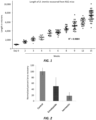
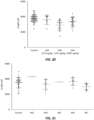
- NSG mice were next infected with 100 L3 per mouse, using methods described above. Recovery and measurements were performed as above, and lengths were reported as a function of time post-infection ( FIG. 1 ). As indicated, the model is significantly and surprisingly linear, with a calculated R 2 value of 0.9884.
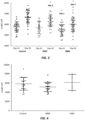
- NSG mice were dosed orally with 1 mg/kg EMO or 3 mg/kg IVM, at Days 1, 15, and 30 post-infection. As indicated in FIG. 2 , both compounds significantly reduced HW parasite load.
- EMO emodepside
- IVM ivermectin
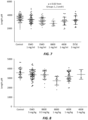
- NSG mice were infected on Day 0 with 50 Di L3 larvae. The mice were then treated with 1mg/kg EMO or 8800 on Day 30, and recovery was conducted on Days 41 to 43.
- FIG. 3 shows the length of Di recovered from the mice at Days 41 and 43, and Table 6 provides survival data, recovery data, and summary statistics.
- "#” refers to the mouse identifier for a particular mouse.
- “Survival” refers to the number of Di recovered from the mouse.
- % Rec refers to percent of the original 50 Di recovered from the mouse.
- % Red refers to percent reduction in the percent of Di recovered compared to control. Table 6. Summary data for Di -infected NSG mice treated with Control, EMO, or 8800.
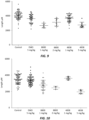
- NSG mice were infected at Day 0 with 50 Di L3 larvae. The mice were then treated with Control; 1 mg/kg EMO; or 8800 on Days 30 and 60.
- FIG. 4 shows the lengths of Di recovered at Days 83 and 84, and Table 7 presents the survival data, recovery data, and summary statistics. Table 7. Summary data for Di-infected NSG mice treated with Control, EMO, or 8800.
- NSG mice were infected with 50 Di L3 per mouse, then treated according to the following: Control; 2X 8800 (1 mg/kg) at Days 1 and 30; 1X EMO (1 mg/kg) at Day 30; 2X EMO (1 mg/kg) at Days 1 and 30; 3X EMO (1 mg/kg) at Days 1, 15, and 30; or 3X IVM (3 mg/kg) at Days 1, 15, and 30.
- FIG. 5 is a graph showing the length of Di recovered at Days 41 to 43, and Table 8 presents the survival data, recovery data, and summary statistics. Table 8. Summary data for Di -infected NSG mice treated with Control, 8800, EMO, or IVM.
- NSG mice were infected with 50 Di L3 per mouse, then treated according to the following: EMO (1 mg/kg); 8800 (1 mg/kg); 4838 (1 mg/kg); 8914 (1 mg/kg); and 6557 (3 mg/kg).
- FIG. 6 is a graph showing the lengths of Di recovered at Days 41 to 43; and, Table 9 presents the survival data, recovery data, and summary statistics.
- Table 9 Summary data for Di -infected NSG mice treated with Control, EMO, 8800, 4838, 8914, or 6557.
- NSG mice were infected with 50 Di L3 Merial worms (not FR3 worms) per mouse, then treated on Days 1, 15, and 30 according to the following: EMO (1 mg/kg); EMO (5 mg/kg); 8800 (1 mg/kg); 4838 (1 mg/kg); or IVM (3 mg/kg).
- FIG. 7 is a graph showing the lengths of Di recovered at Days 41 to 43, and Table 10 presents the survival data, recovery data, and summary statistics. Table 10. Summary data for Di -infected NSG mice treated with Control, EMO low dose, EMO high dose, 8800, 4838, or IVM.
- NSG mice were infected with 50 Di L3 per mouse, then treated on Days 1, 15, and 30 according to the following: EMO (5 mg/kg); 8800 (0.3 mg/kg); 8800 (1 mg/kg); 4838 (1 mg/kg); or 4838 (5 mg/kg).
- FIG. 8 is a graph showing the lengths of Di recovered at Days 41 to 42, and Table 11 presents the survival data, recovery data, and summary statistics. Table 11. Summary data for Di -infected NSG mice treated with Control, EMO, 8800, or 4838.
- NSG mice were infected with 50 Di L3 (UC strain, sourced from Merial's insectary) per mouse, then treated on Days 1, 15, and 30 according to the following: EMO (5 mg/kg); 8800 (1 mg/kg); 8800 (2 mg/kg); 4838 (1 mg/kg); or 4838 (5 mg/kg).
- FIG. 9 is a graph showing the lengths of Di recovered at Days 41 to 42, and Table 12 presents the survival data, recovery data (Days 41 and 42), and summary statistics. Table 12. Summary data for Di -infected NSG mice treated with Control, EMO, 8800, or 4838.
- NSG mice were infected with 50 Di L3 (UC Strain) per mouse, then treated on Days 1, 15, and 30 according to the following: EMO (1 mg/kg); 8800 (1 mg/kg); 8800 (2 mg/kg); 4838 (1 mg/kg); or 4838 (5 mg/kg).
- FIG. 10 is a graph showing the lengths of Di recovered at Days 40 to 42, and Table 13 presents the survival data, recovery data (Days 41 to 43), and summary statistics. Table 13. Summary data for Di -infected NSG mice treated with Control, EMO, 8800 or 4838.
- NSG mice were infected with 50 Di L3 per mouse, then treated on Days 1, 15, and 30 according to the following: 8800 (5 mg/kg); 4838 (10 mg/kg); IVM (3 mg/kg); or IVM (0.3 mg/kg).
- FIG. 11 is a graph showing the lengths of Di recovered at Days 41 to 42, and Table 14 presents the survival data, recovery data, and summary statistics. Table 14. Summary data for Di -infected NSG mice treated with Control, 8800, 4838, or IVM.
- NSG mice were infected on Day 0 with 50 Di L3 (FR3 worms) per mouse, then treated on Days 1, 15, and 30 according to the following: MO Control; MO IVM (1 mg/kg); MO IVM (3 mg/kg); JYD Control; JYD IVM (1 mg/kg); JYD IVM (3 mg/kg); 4838 (10 mg/kg); IVM (3 mg/kg); or IVM (0.3 mg/kg).
- MO Control MO IVM (1 mg/kg); MO IVM (3 mg/kg); JYD Control; JYD IVM (1 mg/kg); JYD IVM (3 mg/kg); 4838 (10 mg/kg); IVM (3 mg/kg); or IVM (0.3 mg/kg).
- MO Control MO IVM (1 mg/kg); MO IVM (3 mg/kg); JYD Control; JYD IVM (1 mg/kg); JYD IVM (3 mg/kg); 4838 (10 mg/kg); IVM (3 mg/kg); or IVM (0.3 mg/kg).
- the Missouri strain i.e., Missouri
- FIG. 12 is a graph showing the lengths of Di recovered at Days 41 to 42, and Table 15 presents the survival data, recovery data (Days 41 and 42), and summary statistics.
- FIG. 13 shows the worm recovery locations. Table 15. Summary data for Di -infected NSG mice treated with Control, 8800, 4838, or IVM.
- Group 1 Group 2 Group 3 Group 4 Group 5 Group 6 Missouri Control Missouri IVM 1 mg/kg Missouri IVM 3 mg/kg JYD Control JYD IVM 1 mg/kg JYD IVM 3 mg/kg # Survival % Rec # Survival % Rec # Survival % Rec # Survival % Rec # Survival % Rec # Survival % Rec # Survival % Rec 1 13 26 6 3 6 11 0 0 16 9 18 23 6 12 21 2 4 2 18 36 7 2 4 12 1 2 17 12 24 24 3 6 22 0 0 3 22 44 8 2 4 13 0 0 18 10 20 25 7 14 29 7 14 4 34 68 9 0 0 14 2 4 20 14 28 26 3 6 30 4 8 5 20 40 10 3 6 15 1 2 27 4 8 31 3 6 28 4 8 32 2 4 34 4 8 33 2 4 Mean 21 43 Mean 2 4 Mean 1 2 Mean 11 23 Mean 4 9 Mean 3 6 SD 8 16 SD 1 2 SD 1 2 SD 2 4 SD 2 3 SD 2 4 % Red: 91% % Red: 95% % Red % Red: 61% % Red:
- FIG. 14 is a graph showing the lengths of Di recovered at Days 41 to 42, and Table 16 presents the survival data, recovery data (Days 41 and 42), and summary statistics. Table 16. Summary data for various strains of mouse infected with FR3 Di.
- NSG mice were infected on Day 0 with 50 Di L3 (FR3 worms) per mouse, and treated on days 1, 15, and 30 as follows: 4838 (0.5 mg/kg); 4838 (1 mg/kg); 4838 (2.5 mg/kg); 4838 (5 mg/kg); 4838 (10 mg/kg).
- FIG. 15 is a graph showing the lengths of Di recovered at Days 41 to 42, and Table 17 presents the survival data, recovery data (Days 41 and 42), and summary statistics. Table 17. Summary data for NSG mice infected with FR3 Di and subsequently treated with increasing doses of the 4838 depsipeptide parasiticidal agent.
- NSG mice were infected on Day 0 with 50 JYD Di L3 (FR3 worms) per mouse, then treated on Days 1, 15, and 30 according to the following: Control; 3615 (1 mg/kg); 5010 (1 mg/kg); 7823 (1 mg/kg); 2677 (1 mg/kg); or 8800 (1 mg/kg).
- FIG. 16 is a graph showing the lengths of Di recovered at Days 41 to 42, and Table 18 presents the survival data, recovery data (Days 41 and 42), and summary statistics. Table 18. Summary data for NSG mice infected with FR3 Di and subsequently treated with 3615, 5010, 7823, 2677, and 8800.
- NSG mice were infected on Day 0 with 50 JYD Di L3 (FR3 worms) per mouse, then treated on Days 1, 15, and 30 according to the following: Control; IVM (0.01 mg/kg); IVM (0.25 mg/kg); IVM (0.5 mg/kg); IVM (1 mg/kg); or IVM (5 mg/kg).
- FIG. 17 is a graph showing the lengths of Di recovered at Days 40 to 42, and Table 19 presents the survival data, recovery data (Days 40-42), and summary statistics. Table 19. Summary data for NSG mice infected with FR3 Di and subsequently treated with different doses of IVM.
- NSG mice were infected on Day 0 with 50 JYD Di L3 (FR3 worms) per mouse, then treated on Days 1, 15, and 30 according to the following: Control; 7823 (0.1 mg/kg); 7823 (0.25 mg/kg); 7823 (0.5 mg/kg); 7823 (1 mg/kg); or 7823 (5 mg/kg).
- FIG. 18 is a graph showing the lengths of Di recovered at Days 40 to 42, and Table 20 presents the survival data, recovery data (Days 40-42), and summary statistics. Table 20. Summary data for NSG mice infected with FR3 Di and subsequently treated with different doses of 7823.
- NSG mice were infected on Day 0 with 50 JYD Di L3 (FR3 worms) per mouse, then treated on Days 1, 15, and 30 according to the following: Control; IVM (0.01 mg/kg); IVM (0.25 mg/kg); IVM (0.5 mg/kg); IVM (1 mg/kg); or IVM (5 mg/kg).
- FIG. 19 is a graph showing the lengths of Di recovered at Days 40 to 42, and Table 21 presents the survival data, recovery data (Days 40-42), and summary statistics. Table 21. Summary data for NSG mice infected with FR3 Di and subsequently treated with different doses of IVM.
- NSG mice were infected on Day 0 with 50 JYD Di L3 (FR3 worms) per mouse, then treated on Days 1, 15, and 30 according to the following: Control; IVM (0.25 mg/kg); IVM (0.01 mg/kg); or IVM (0.005 mg/kg).
- FIG. 20 is a graph showing the lengths of Di recovered at Days 40 to 42, and Table 22 presents the survival data, recovery data (Days 40-42), and summary statistics. Table 22. Summary data for NSG mice infected with FR3 Di and subsequently treated with IVM.
- NSG mice infected with resistant HW are exposed to novel compounds to determine the efficacy of these compounds in killing resistant parasites.
- the source of the novel compounds may be from pharmaceutical libraries and they would be administered to the mice in a range of doses to measure efficacy and killing IVM-resistant and IVM-susceptible strains of HW.
- JYD strain One such strain that is resistant (i.e., less susceptible) to ivermectin is the JYD strain described above.
- the JYD strain i.e., isolate JYD-27
- the JYD strain is described, for example, in Maclean et al. (2017) Parasit. Vectors 10(Suppl 2):480 .
- Experiments in which compounds were tested against the JYD strain in NSG immunocompromised mice are described in Example 1. See, e.g ., FIGS. 12 , 13 , and 16-20 and Tables 15 and 18-22. See also FIG. 21 and Table 25 in Example 3.
- PBMCs peripheral blood mononuclear cells
- Canine PBMCs were isolated from 10 mL of whole blood using a Ficoll gradient per manufacturer's instructions for the isolation of human PBMC.
- IP intraperitoneal
- mice were injected via intraperitoneal (IP) injection with 5.0 ⁇ 10 6 PBMCs from a single donor animal and screened by flow cytometry 4 and 8 weeks later.
- IP intraperitoneal
- All mice were positive for canine B cells and CD4 and CD8 T cells, along with a number of other canine CD45 + cells present that the panel did not identify (Table 24 and data not shown).
- Percent engraftment was calculated by the total canine CD45+ cells within the lymphocyte/granulocyte gate, which is determined based on cell size and cell granularity. At 8 weeks post-engraftment 3 mice had succumbed to graft vs host disease (GVHD), and of the remaining 3 mice, only one had significant levels of canine PBMCs remaining. This study shows that NSG mice are capable of supporting canine immune cells and should provide a suitable platform for the engraftment of CD34 + stem cells. Table 24. Canine cell levels in NSG mice at 3-weeks post-engraftment. CD45+ CD3+ CD4+ CD8+ 29 ⁇ 20% 8 ⁇ 7% 16 ⁇ 14% 3 ⁇ 3%
- mice were purified from 100 mL of canine whole blood. Fifteen NSG mice were injected with either 5 ⁇ 10 6 (10 mice) or 10 ⁇ 10 6 (5 mice) PBMCs from a donor animal. Mice receiving 5 ⁇ 10 6 cells had an average canine CD45 + engraftment of 16 ⁇ 16%, and the mice receiving 10 ⁇ 10 6 cells had an average engraftment of 28 ⁇ 13%. All mice succumbed to GVHD between 3 and 6 weeks post-engraftment.
- CD34+ stem cells were purified from two different canine umbilical cord blood collections.
- Canine CD34 + stem cells were purified using a biotin labeled anti-canine CD34 + antibody, in conjunction with a magnetic assisted cell sorting kit (MACS) that specifically recognized the biotin labeled antibody. Due to the small amount of cord blood obtained from a puppy, it is impossible to purify stem cells from a single donor.
- Two mixed-donor purified CD34 + cells batches were purified with cell counts of 2.65 ⁇ 10 5 and 2.2 ⁇ 10 5 and cell purities of 74 and 77%, respectively.
- mice 50,000 canine CD34+ cells isolated from umbilical cord blood were then engrafted into five 48-hour-old NSG pups irradiated with 150 RAD. Their engraftment status was verified at 8 weeks. Based on our experience with humanized mice, it was predicted that the mice would be optimally engrafted at around 12 weeks. At 12 weeks post-engraftment, the 5 mice had average canine CD45 + cell levels of 58 ⁇ 6%. The caninized mice (CnMice) were then infected with 50 JYD Di L3 about one week later (Day 0) in conjunction with an NSG mouse infection. The mice were necropsied on Days 40 through 42 post-infection.
- FIG. 21 is a graph showing the lengths of Di recovered at Days 40 to 42 in the canine mice, and Table 25 presents the survival and recovery data (Days 40-42). There was no difference in the parasite survival and growth in the CnMice vs. the NSG mice.
- CD34 + stem cells Due to low numbers of CD34 + stem cells that are available from canine cord blood, we attempted to isolate stem cells from bone marrow collected from newborn puppies. CD34 + stem cells were isolated from bone marrow using a similar method to the cord blood isolation protocol. Using bone marrow from three mixed donor dogs, and following MACS beads and column isolation, we were able to isolate 4.4 ⁇ 10 5 CD34 + cells. These cells were engrafted into 7 NSG mice. At 12 weeks post engraftment the mice had canine CD45 + cell levels of 21 ⁇ 19% of the total lymphocyte/granulocyte population.
- Haemonchus contortus is a gastrointestinal worm that infects mainly sheep and goats, but also cattle. These worms do not affect dogs and cats.
- the disease caused by Haemonchus worms is called haemonchosis.
- Haemonchus worms have a direct life cycle (there are no intermediate hosts involved).
- Adult females lay eggs in the stomach of the host that are shed with the feces. Once in the environment, the eggs release the L1-larvae that complete development to infective L3-larvae in about 4 to 7 days. Livestock becomes infected after ingesting infective larvae. These larvae enter the pit of gastric glands and feed on blood flowing out of the lesions they cause to the stomach's lining. Later, they complete development to adult worms and females start producing eggs.
- mice were infected with either 500 or 1,000 larvae of H. contortus. In addition, some of the mice were further immune compromised by treatment with the steroid methylprednisolone acetate. Following infection, mice showed a drop in weight of 10-20%, and then either regained or remained the same throughout the rest of the experiment. Mice were necropsied periodically over 8 weeks, looking in the stomach for adult worms and in the intestinal contents for eggs. It was discovered that H. contortus larvae develop to adults that contained blood within their intestines. Importantly, eggs were seen in the intestinal contents at 28 days post-infection. Steroid treatment to further compromise the immune response did not increase worm recoveries.
- mice were pre-treated with methylprednisolone acetate (MPA) one week prior to infection.
- H. contortus L3 were both agar cleaned and/or cleaned with NCTC/IMDM (NI) media with antibiotics.
- 500 and 1000 L3 were dosed to control and MPA-treated mice by oral gavage.
- mice were weighed and given a general health score.
- Mice were checked biweekly for health scores and weighed once a week at MPA dosing (MPA injections are weekly). Forty total mice were infected: 20 with MPA and 20 controls, with 10 in each group for doses of 500 and 1000.
- mice were fasted. Stomachs and small intestines were then removed. The stomach was cut open and hung in a 40 mL conical in PBS. The small intestines were cut open and hung around a paper clip in a 50 mL conical in PBS. The tissues were then incubated at 50°C for 2.5 hours, after which the tissues were discarded. The tubes were shaken and poured through a 200 ⁇ m mesh strainer and rinsed. Worms were collected by back washing off of the strainer and were counted. Worms were saved fixed with glycerol/alcohol to be measured.
- H. contortus recovery counts for the 500 and 1000 starting infections are shown in Tables 27 and 28, respectively, and in FIGS. 22 and 23 , respectively.
- “Recovery” refers to the number of Hc worms recovered from a mouse. Eggs collected from fecal content between Days 23-31 post-infection (day 28 post-infection) in four of the infected mice are shown in Table 29. Table 27. Hc recovery counts from mice with starting infection of 500 Hc L3.
- mice were checked biweekly over the infection period for a visual health screen and always scored 0 on our health assessment (score of 8 is an indicator for euthanasia). Mice were weighed weekly to monitor for excessive weight loss (data not shown).
- mice were infected with 1000 L3 as described above.
- H . contortus recovery counts at various time points are shown in Table 30. Eggs were recovered from the mice 26 days post-infection and were incubated at 26°C for 18 days. Twenty L1 larvae were recovered. Table 30. Hc recovery counts from mice with starting infection of 1000 Hc L3. Time Point Number of Mice Infected Average Recovery 15 Days PI 6 15 23 Days PI 6 4 28 Days PI 22 2 31 Days PI 8 1
- Strongyloides stercoralis is a human pathogenic parasitic roundworm that causes the disease strongyloidiasis.
- the adult parasitic stage lives in tunnels in the mucosa of the small intestine.
- S. stercoralis has been reported in other mammals, including cats and dogs.
- S . stercoralis infects an estimated 100 million people. Its ability to autoinfect its host enables it to persist for decades undetected and to progress to a potentially fatal hyperinfection that often is induced by glucocorticoid treatment.
- the mouse model described herein recapitulates all forms of human strongyloidiasis. Treatment with methylprednisolone acetate (MPA), a synthetic glucocorticoid, induces hyperinfection in NSG mice.
- MPA methylprednisolone acetate
- mice infected by subcutaneous injection with 5000 S. stercoralis L3 larvae, either with or without MPA. Mice were treated with 2.5 mg/kg EMO or 3 mg/kg IVM on days 1, 15, and 30 post-injection. Adult worms, L1 larvae, or L3 larvae were counted in the mice at 6 weeks post-injection.
- EMO and IVM clearly controlled the intestinal infection, eliminating adult worms and L1 larvae, respectively, in models of both normal, chronic infection (control) and hyperinfection (MPA).
- EVO and IVM reduced the circulating L3 in models of both normal, chronic infection (control) and hyperinfection (MPA), but there were still some circulating L3 in the body.
- Control MPA EMO Control EMO / MPA IVM Control IVM / MPA 32 8456 0 0 0 0 4 9181 0 0 0 0 15 3464 0 0 0 0 46 670 0 0 0 0 64 86 0 0 0 0 24 0 0 0 0 0 mean 32 3647 0 0 0 SD 24 4206 0.0 0 0.0 0 Table 33.
Landscapes
- Life Sciences & Earth Sciences (AREA)
- Health & Medical Sciences (AREA)
- Engineering & Computer Science (AREA)
- Environmental Sciences (AREA)
- Biomedical Technology (AREA)
- General Health & Medical Sciences (AREA)
- Zoology (AREA)
- Cell Biology (AREA)
- Immunology (AREA)
- Wood Science & Technology (AREA)
- Dentistry (AREA)
- Plant Pathology (AREA)
- Pest Control & Pesticides (AREA)
- Agronomy & Crop Science (AREA)
- Hematology (AREA)
- Chemical & Material Sciences (AREA)
- Urology & Nephrology (AREA)
- Molecular Biology (AREA)
- Tropical Medicine & Parasitology (AREA)
- Microbiology (AREA)
- Biotechnology (AREA)
- Toxicology (AREA)
- Bioinformatics & Cheminformatics (AREA)
- Food Science & Technology (AREA)
- Medicinal Chemistry (AREA)
- Physics & Mathematics (AREA)
- Analytical Chemistry (AREA)
- Biochemistry (AREA)
- General Physics & Mathematics (AREA)
- Pathology (AREA)
- Animal Behavior & Ethology (AREA)
- Animal Husbandry (AREA)
- Biodiversity & Conservation Biology (AREA)
- Investigating Or Analysing Biological Materials (AREA)
Priority Applications (1)
| Application Number | Priority Date | Filing Date | Title |
|---|---|---|---|
| HRP20230870TT HRP20230870T1 (hr) | 2017-02-08 | 2018-02-08 | Model in vivo za infekciju parazitnim crvima i postupak ocjenjivanja antiparazitnih spojeva, uključujući spojeve koji djeluju protiv pseće dirofilarioze |
Applications Claiming Priority (2)
| Application Number | Priority Date | Filing Date | Title |
|---|---|---|---|
| US201762456510P | 2017-02-08 | 2017-02-08 | |
| PCT/US2018/017398 WO2018148392A1 (en) | 2017-02-08 | 2018-02-08 | In vivo model for parasitic worm infection and methods for evaluating antiparasitic compounds, including compounds active against canine heartworm |
Publications (2)
| Publication Number | Publication Date |
|---|---|
| EP3579696A1 EP3579696A1 (en) | 2019-12-18 |
| EP3579696B1 true EP3579696B1 (en) | 2023-06-28 |
Family
ID=61599579
Family Applications (1)
| Application Number | Title | Priority Date | Filing Date |
|---|---|---|---|
| EP18709829.8A Active EP3579696B1 (en) | 2017-02-08 | 2018-02-08 | In vivo model for parasitic worm infection and methods for evaluating antiparasitic compounds, including compounds active against canine heartworm |
Country Status (13)
| Country | Link |
|---|---|
| US (1) | US20200011856A1 (pl) |
| EP (1) | EP3579696B1 (pl) |
| AU (2) | AU2018219273B2 (pl) |
| BR (1) | BR112019016480A2 (pl) |
| CA (1) | CA3052054A1 (pl) |
| DK (1) | DK3579696T3 (pl) |
| ES (1) | ES2955523T3 (pl) |
| HR (1) | HRP20230870T1 (pl) |
| HU (1) | HUE063265T2 (pl) |
| MX (1) | MX2019009369A (pl) |
| PL (1) | PL3579696T3 (pl) |
| PT (1) | PT3579696T (pl) |
| WO (1) | WO2018148392A1 (pl) |
Families Citing this family (4)
| Publication number | Priority date | Publication date | Assignee | Title |
|---|---|---|---|---|
| US20220071183A1 (en) * | 2019-01-10 | 2022-03-10 | Zoetis Services Llc | Anthelmintic laboratory animal model for heartworm |
| CA3133100A1 (en) | 2019-03-19 | 2020-09-24 | Boehringer Ingelheim Animal Health USA Inc. | Anthelmintic aza-benzothiophene and aza-benzofuran compounds |
| CN116744917A (zh) | 2020-09-04 | 2023-09-12 | 礼蓝美国公司 | 适口调配物 |
| UY39995A (es) | 2021-11-01 | 2023-05-15 | Boehringer Ingelheim Vetmedica GmbH | Compuestos de pirrolopiridazina como antihelmínticos |
Family Cites Families (3)
| Publication number | Priority date | Publication date | Assignee | Title |
|---|---|---|---|---|
| AU2016244022A1 (en) * | 2015-04-02 | 2017-10-26 | Boehringer Ingelheim Animal Health USA Inc. | Anthelmintic combinations and methods of use thereof |
| LT3298027T (lt) | 2015-05-20 | 2021-08-10 | Boehringer Ingelheim Animal Health USA Inc. | Antihelmintiniai depsipeptido junginiai |
| RU2715556C2 (ru) | 2015-12-28 | 2020-03-02 | Мериал, Инк. | Противогельминтные депсипептидные соединения |
-
2018
- 2018-02-08 EP EP18709829.8A patent/EP3579696B1/en active Active
- 2018-02-08 US US16/484,768 patent/US20200011856A1/en not_active Abandoned
- 2018-02-08 HR HRP20230870TT patent/HRP20230870T1/hr unknown
- 2018-02-08 WO PCT/US2018/017398 patent/WO2018148392A1/en not_active Ceased
- 2018-02-08 HU HUE18709829A patent/HUE063265T2/hu unknown
- 2018-02-08 BR BR112019016480A patent/BR112019016480A2/pt unknown
- 2018-02-08 MX MX2019009369A patent/MX2019009369A/es unknown
- 2018-02-08 PT PT187098298T patent/PT3579696T/pt unknown
- 2018-02-08 ES ES18709829T patent/ES2955523T3/es active Active
- 2018-02-08 DK DK18709829.8T patent/DK3579696T3/da active
- 2018-02-08 AU AU2018219273A patent/AU2018219273B2/en active Active
- 2018-02-08 PL PL18709829.8T patent/PL3579696T3/pl unknown
- 2018-02-08 CA CA3052054A patent/CA3052054A1/en active Pending
-
2023
- 2023-10-18 AU AU2023251466A patent/AU2023251466A1/en not_active Abandoned
Also Published As
| Publication number | Publication date |
|---|---|
| AU2018219273A1 (en) | 2019-08-29 |
| AU2023251466A1 (en) | 2023-11-09 |
| HUE063265T2 (hu) | 2024-01-28 |
| MX2019009369A (es) | 2019-10-24 |
| ES2955523T3 (es) | 2023-12-04 |
| BR112019016480A2 (pt) | 2020-04-07 |
| AU2018219273B2 (en) | 2023-08-17 |
| NZ756139A (en) | 2024-10-25 |
| DK3579696T3 (da) | 2023-09-18 |
| WO2018148392A1 (en) | 2018-08-16 |
| CA3052054A1 (en) | 2018-08-16 |
| PL3579696T3 (pl) | 2024-01-03 |
| EP3579696A1 (en) | 2019-12-18 |
| US20200011856A1 (en) | 2020-01-09 |
| HRP20230870T1 (hr) | 2023-11-10 |
| PT3579696T (pt) | 2023-07-19 |
Similar Documents
| Publication | Publication Date | Title |
|---|---|---|
| McCall et al. | Effects of doxycycline on heartworm embryogenesis, transmission, circulating microfilaria, and adult worms in microfilaremic dogs | |
| AU2023251466A1 (en) | In vivo model for parasitic worm infection and methods for evaluating antiparasitic compounds, including compounds active against canine heartworm | |
| Petry et al. | Evaluation of the adulticidal efficacy of imidacloprid 10%/moxidectin 2.5%(w/v) spot-on (Advocate®, Advantage® Multi) against Dirofilaria repens in experimentally infected dogs | |
| Pfister et al. | New perspectives in equine intestinal parasitic disease: insights in monitoring helminth infections | |
| McCall et al. | Effects of doxycycline on early infections of Dirofilaria immitis in dogs | |
| Böhm et al. | Prevention of lactogenic Toxocara cati infections in kittens by application of an emodepside/praziquantel spot-on (Profender®) to the pregnant queen | |
| Risch et al. | Development of adult Dirofilaria immitis worms in the Rag2/Il-2rγ-/-mouse model | |
| HK40011728B (en) | In vivo model for parasitic worm infection and methods for evaluating antiparasitic compounds, including compounds active against canine heartworm | |
| HK40011728A (en) | In vivo model for parasitic worm infection and methods for evaluating antiparasitic compounds, including compounds active against canine heartworm | |
| Patterson et al. | Parasitic diseases | |
| Petry et al. | Efficacy of emodepside plus toltrazuril oral suspension for dogs (Procox®, Bayer) against Trichuris vulpis in naturally infected dogs | |
| Tang et al. | Drug efficacy of ivermectin against primary nematodes parasitizing captive Przewalski’s horse (Equus ferus przewalskii) after ten years of annually treatment | |
| RU2629600C1 (ru) | Препарат для лечения паразитозов мелких домашних животных | |
| Sánchez-Sánchez et al. | A questionnaire-based survey in Spain provides relevant information to improve the control of ovine coccidiosis | |
| Petry et al. | Efficacy of Procox® oral suspension for dogs (0.1% emodepside and 2% toltrazuril) against experimental nematode (Toxocara cati and Ancylostoma tubaeforme) infections in cats | |
| de Lavalle Galvis et al. | Wolbachia pipientis: Endosymbiont Bacteria of Dirofilaria immitis and its Role in Feline Dirofilariasis | |
| Mbaya et al. | Studies on the leucocytic response to experimental infection with Trypanosoma brucei and Haemonchus contortus in red fronted gazelles (Gazella rufifrons) | |
| Dovč et al. | Control of Hymenolepis nana infection as a measure to improve mouse colony welfare | |
| Prokulewicz et al. | Evaluation of the Efficacy of Doramectin in the Control of Strongyle (Strongylidae, Cyathostominae) Infestation in Horses. | |
| Dayanti et al. | Canine and Feline Dirofilariasis Currently Spreads in Indonesia Damaging Pulmonary Arteries and Lungs: A Literature Review | |
| REPUBLICE | Occurrence of coccidia (Caryospora neofalconis and Caryospora kutzeri) in birds of prey in falcon breeding facility in Milotice in the Czech Republic | |
| Qadri et al. | Resistance to anthelmintic medications in animals: A review | |
| Sargison | New worming guidelines: Quarantine anthelmintic treatments | |
| Machado et al. | Effects of dexamethasone, cyclosporine and betamethasone on inflammatory cell recruitment in mice infected with Strongyloides venezuelensis | |
| Nwanwko et al. | Comparative efficacy and cost analysis of albendazole, levamisole, and ivermectin on West African dwarf sheep in Makurdi Benue state Nigeria |
Legal Events
| Date | Code | Title | Description |
|---|---|---|---|
| REG | Reference to a national code |
Ref country code: HR Ref legal event code: TUEP Ref document number: P20230870T Country of ref document: HR |
|
| STAA | Information on the status of an ep patent application or granted ep patent |
Free format text: STATUS: UNKNOWN |
|
| STAA | Information on the status of an ep patent application or granted ep patent |
Free format text: STATUS: THE INTERNATIONAL PUBLICATION HAS BEEN MADE |
|
| PUAI | Public reference made under article 153(3) epc to a published international application that has entered the european phase |
Free format text: ORIGINAL CODE: 0009012 |
|
| STAA | Information on the status of an ep patent application or granted ep patent |
Free format text: STATUS: REQUEST FOR EXAMINATION WAS MADE |
|
| 17P | Request for examination filed |
Effective date: 20190823 |
|
| AK | Designated contracting states |
Kind code of ref document: A1 Designated state(s): AL AT BE BG CH CY CZ DE DK EE ES FI FR GB GR HR HU IE IS IT LI LT LU LV MC MK MT NL NO PL PT RO RS SE SI SK SM TR |
|
| AX | Request for extension of the european patent |
Extension state: BA ME |
|
| DAV | Request for validation of the european patent (deleted) | ||
| STAA | Information on the status of an ep patent application or granted ep patent |
Free format text: STATUS: EXAMINATION IS IN PROGRESS |
|
| REG | Reference to a national code |
Ref country code: HK Ref legal event code: DE Ref document number: 40011728 Country of ref document: HK |
|
| 17Q | First examination report despatched |
Effective date: 20200707 |
|
| GRAP | Despatch of communication of intention to grant a patent |
Free format text: ORIGINAL CODE: EPIDOSNIGR1 |
|
| STAA | Information on the status of an ep patent application or granted ep patent |
Free format text: STATUS: GRANT OF PATENT IS INTENDED |
|
| RIC1 | Information provided on ipc code assigned before grant |
Ipc: A61P 33/10 20060101ALI20220701BHEP Ipc: A01N 43/90 20060101ALI20220701BHEP Ipc: A01N 47/18 20060101ALI20220701BHEP Ipc: A01P 5/00 20060101ALI20220701BHEP Ipc: A01N 43/72 20060101AFI20220701BHEP |
|
| INTG | Intention to grant announced |
Effective date: 20220725 |
|
| GRAJ | Information related to disapproval of communication of intention to grant by the applicant or resumption of examination proceedings by the epo deleted |
Free format text: ORIGINAL CODE: EPIDOSDIGR1 |
|
| STAA | Information on the status of an ep patent application or granted ep patent |
Free format text: STATUS: EXAMINATION IS IN PROGRESS |
|
| INTC | Intention to grant announced (deleted) | ||
| GRAP | Despatch of communication of intention to grant a patent |
Free format text: ORIGINAL CODE: EPIDOSNIGR1 |
|
| STAA | Information on the status of an ep patent application or granted ep patent |
Free format text: STATUS: GRANT OF PATENT IS INTENDED |
|
| INTG | Intention to grant announced |
Effective date: 20230120 |
|
| GRAS | Grant fee paid |
Free format text: ORIGINAL CODE: EPIDOSNIGR3 |
|
| GRAA | (expected) grant |
Free format text: ORIGINAL CODE: 0009210 |
|
| STAA | Information on the status of an ep patent application or granted ep patent |
Free format text: STATUS: THE PATENT HAS BEEN GRANTED |
|
| P01 | Opt-out of the competence of the unified patent court (upc) registered |
Effective date: 20230518 |
|
| AK | Designated contracting states |
Kind code of ref document: B1 Designated state(s): AL AT BE BG CH CY CZ DE DK EE ES FI FR GB GR HR HU IE IS IT LI LT LU LV MC MK MT NL NO PL PT RO RS SE SI SK SM TR |
|
| REG | Reference to a national code |
Ref country code: CH Ref legal event code: EP |
|
| REG | Reference to a national code |
Ref country code: AT Ref legal event code: REF Ref document number: 1581887 Country of ref document: AT Kind code of ref document: T Effective date: 20230715 |
|
| REG | Reference to a national code |
Ref country code: PT Ref legal event code: SC4A Ref document number: 3579696 Country of ref document: PT Date of ref document: 20230719 Kind code of ref document: T Free format text: AVAILABILITY OF NATIONAL TRANSLATION Effective date: 20230713 Ref country code: IE Ref legal event code: FG4D |
|
| REG | Reference to a national code |
Ref country code: DE Ref legal event code: R096 Ref document number: 602018052392 Country of ref document: DE |
|
| REG | Reference to a national code |
Ref country code: NL Ref legal event code: FP |
|
| REG | Reference to a national code |
Ref country code: DK Ref legal event code: T3 Effective date: 20230915 |
|
| REG | Reference to a national code |
Ref country code: LT Ref legal event code: MG9D |
|
| PG25 | Lapsed in a contracting state [announced via postgrant information from national office to epo] |
Ref country code: SE Free format text: LAPSE BECAUSE OF FAILURE TO SUBMIT A TRANSLATION OF THE DESCRIPTION OR TO PAY THE FEE WITHIN THE PRESCRIBED TIME-LIMIT Effective date: 20230628 Ref country code: NO Free format text: LAPSE BECAUSE OF FAILURE TO SUBMIT A TRANSLATION OF THE DESCRIPTION OR TO PAY THE FEE WITHIN THE PRESCRIBED TIME-LIMIT Effective date: 20230928 |
|
| REG | Reference to a national code |
Ref country code: HR Ref legal event code: T1PR Ref document number: P20230870 Country of ref document: HR |
|
| PG25 | Lapsed in a contracting state [announced via postgrant information from national office to epo] |
Ref country code: RS Free format text: LAPSE BECAUSE OF FAILURE TO SUBMIT A TRANSLATION OF THE DESCRIPTION OR TO PAY THE FEE WITHIN THE PRESCRIBED TIME-LIMIT Effective date: 20230628 Ref country code: LV Free format text: LAPSE BECAUSE OF FAILURE TO SUBMIT A TRANSLATION OF THE DESCRIPTION OR TO PAY THE FEE WITHIN THE PRESCRIBED TIME-LIMIT Effective date: 20230628 Ref country code: LT Free format text: LAPSE BECAUSE OF FAILURE TO SUBMIT A TRANSLATION OF THE DESCRIPTION OR TO PAY THE FEE WITHIN THE PRESCRIBED TIME-LIMIT Effective date: 20230628 Ref country code: GR Free format text: LAPSE BECAUSE OF FAILURE TO SUBMIT A TRANSLATION OF THE DESCRIPTION OR TO PAY THE FEE WITHIN THE PRESCRIBED TIME-LIMIT Effective date: 20230929 |
|
| REG | Reference to a national code |
Ref country code: ES Ref legal event code: FG2A Ref document number: 2955523 Country of ref document: ES Kind code of ref document: T3 Effective date: 20231204 |
|
| PG25 | Lapsed in a contracting state [announced via postgrant information from national office to epo] |
Ref country code: FI Free format text: LAPSE BECAUSE OF FAILURE TO SUBMIT A TRANSLATION OF THE DESCRIPTION OR TO PAY THE FEE WITHIN THE PRESCRIBED TIME-LIMIT Effective date: 20230628 |
|
| REG | Reference to a national code |
Ref country code: AT Ref legal event code: UEP Ref document number: 1581887 Country of ref document: AT Kind code of ref document: T Effective date: 20230628 |
|
| PG25 | Lapsed in a contracting state [announced via postgrant information from national office to epo] |
Ref country code: SK Free format text: LAPSE BECAUSE OF FAILURE TO SUBMIT A TRANSLATION OF THE DESCRIPTION OR TO PAY THE FEE WITHIN THE PRESCRIBED TIME-LIMIT Effective date: 20230628 |
|
| PG25 | Lapsed in a contracting state [announced via postgrant information from national office to epo] |
Ref country code: IS Free format text: LAPSE BECAUSE OF FAILURE TO SUBMIT A TRANSLATION OF THE DESCRIPTION OR TO PAY THE FEE WITHIN THE PRESCRIBED TIME-LIMIT Effective date: 20231028 |
|
| REG | Reference to a national code |
Ref country code: HU Ref legal event code: AG4A Ref document number: E063265 Country of ref document: HU |
|
| PG25 | Lapsed in a contracting state [announced via postgrant information from national office to epo] |
Ref country code: SM Free format text: LAPSE BECAUSE OF FAILURE TO SUBMIT A TRANSLATION OF THE DESCRIPTION OR TO PAY THE FEE WITHIN THE PRESCRIBED TIME-LIMIT Effective date: 20230628 Ref country code: SK Free format text: LAPSE BECAUSE OF FAILURE TO SUBMIT A TRANSLATION OF THE DESCRIPTION OR TO PAY THE FEE WITHIN THE PRESCRIBED TIME-LIMIT Effective date: 20230628 Ref country code: RO Free format text: LAPSE BECAUSE OF FAILURE TO SUBMIT A TRANSLATION OF THE DESCRIPTION OR TO PAY THE FEE WITHIN THE PRESCRIBED TIME-LIMIT Effective date: 20230628 Ref country code: IS Free format text: LAPSE BECAUSE OF FAILURE TO SUBMIT A TRANSLATION OF THE DESCRIPTION OR TO PAY THE FEE WITHIN THE PRESCRIBED TIME-LIMIT Effective date: 20231028 Ref country code: EE Free format text: LAPSE BECAUSE OF FAILURE TO SUBMIT A TRANSLATION OF THE DESCRIPTION OR TO PAY THE FEE WITHIN THE PRESCRIBED TIME-LIMIT Effective date: 20230628 |
|
| RAP2 | Party data changed (patent owner data changed or rights of a patent transferred) |
Owner name: THOMAS JEFFERSON UNIVERSITY Owner name: BOEHRINGER INGELHEIM VETMEDICA GMBH |
|
| REG | Reference to a national code |
Ref country code: HR Ref legal event code: ODRP Ref document number: P20230870 Country of ref document: HR Payment date: 20240125 Year of fee payment: 7 |
|
| PG25 | Lapsed in a contracting state [announced via postgrant information from national office to epo] |
Ref country code: PL Free format text: LAPSE BECAUSE OF FAILURE TO SUBMIT A TRANSLATION OF THE DESCRIPTION OR TO PAY THE FEE WITHIN THE PRESCRIBED TIME-LIMIT Effective date: 20230628 |
|
| REG | Reference to a national code |
Ref country code: BE Ref legal event code: PD Owner name: THOMAS JEFFERSON UNIVERSITY; US Free format text: DETAILS ASSIGNMENT: CHANGE OF OWNER(S), ASSIGNMENT; FORMER OWNER NAME: BOEHRINGER INGELHEIM ANIMAL HEALTH USA INC. Effective date: 20240208 |
|
| REG | Reference to a national code |
Ref country code: DE Ref legal event code: R097 Ref document number: 602018052392 Country of ref document: DE |
|
| PLBE | No opposition filed within time limit |
Free format text: ORIGINAL CODE: 0009261 |
|
| STAA | Information on the status of an ep patent application or granted ep patent |
Free format text: STATUS: NO OPPOSITION FILED WITHIN TIME LIMIT |
|
| 26N | No opposition filed |
Effective date: 20240402 |
|
| PG2D | Information on lapse in contracting state deleted |
Ref country code: PL |
|
| PG25 | Lapsed in a contracting state [announced via postgrant information from national office to epo] |
Ref country code: MC Free format text: LAPSE BECAUSE OF FAILURE TO SUBMIT A TRANSLATION OF THE DESCRIPTION OR TO PAY THE FEE WITHIN THE PRESCRIBED TIME-LIMIT Effective date: 20230628 |
|
| PG25 | Lapsed in a contracting state [announced via postgrant information from national office to epo] |
Ref country code: LU Free format text: LAPSE BECAUSE OF NON-PAYMENT OF DUE FEES Effective date: 20240208 |
|
| PG25 | Lapsed in a contracting state [announced via postgrant information from national office to epo] |
Ref country code: LU Free format text: LAPSE BECAUSE OF NON-PAYMENT OF DUE FEES Effective date: 20240208 |
|
| PG25 | Lapsed in a contracting state [announced via postgrant information from national office to epo] |
Ref country code: BG Free format text: LAPSE BECAUSE OF FAILURE TO SUBMIT A TRANSLATION OF THE DESCRIPTION OR TO PAY THE FEE WITHIN THE PRESCRIBED TIME-LIMIT Effective date: 20230628 |
|
| PG25 | Lapsed in a contracting state [announced via postgrant information from national office to epo] |
Ref country code: BG Free format text: LAPSE BECAUSE OF FAILURE TO SUBMIT A TRANSLATION OF THE DESCRIPTION OR TO PAY THE FEE WITHIN THE PRESCRIBED TIME-LIMIT Effective date: 20230628 |
|
| REG | Reference to a national code |
Ref country code: HR Ref legal event code: ODRP Ref document number: P20230870 Country of ref document: HR Payment date: 20250130 Year of fee payment: 8 |
|
| PGFP | Annual fee paid to national office [announced via postgrant information from national office to epo] |
Ref country code: PT Payment date: 20250130 Year of fee payment: 8 |
|
| PGFP | Annual fee paid to national office [announced via postgrant information from national office to epo] |
Ref country code: CH Payment date: 20250301 Year of fee payment: 8 |
|
| PGFP | Annual fee paid to national office [announced via postgrant information from national office to epo] |
Ref country code: PL Payment date: 20250130 Year of fee payment: 8 Ref country code: CZ Payment date: 20250131 Year of fee payment: 8 |
|
| PGFP | Annual fee paid to national office [announced via postgrant information from national office to epo] |
Ref country code: ES Payment date: 20250331 Year of fee payment: 8 |
|
| PG25 | Lapsed in a contracting state [announced via postgrant information from national office to epo] |
Ref country code: CY Free format text: LAPSE BECAUSE OF FAILURE TO SUBMIT A TRANSLATION OF THE DESCRIPTION OR TO PAY THE FEE WITHIN THE PRESCRIBED TIME-LIMIT; INVALID AB INITIO Effective date: 20180208 |
|
| REG | Reference to a national code |
Ref country code: HR Ref legal event code: ODRP Ref document number: P20230870 Country of ref document: HR Payment date: 20260129 Year of fee payment: 9 |
|
| REG | Reference to a national code |
Ref country code: CH Ref legal event code: U11 Free format text: ST27 STATUS EVENT CODE: U-0-0-U10-U11 (AS PROVIDED BY THE NATIONAL OFFICE) Effective date: 20260301 |
|
| PGFP | Annual fee paid to national office [announced via postgrant information from national office to epo] |
Ref country code: NL Payment date: 20260218 Year of fee payment: 9 |
|
| PGFP | Annual fee paid to national office [announced via postgrant information from national office to epo] |
Ref country code: HU Payment date: 20260220 Year of fee payment: 9 |
|
| PGFP | Annual fee paid to national office [announced via postgrant information from national office to epo] |
Ref country code: GB Payment date: 20260219 Year of fee payment: 9 |
|
| PGFP | Annual fee paid to national office [announced via postgrant information from national office to epo] |
Ref country code: DE Payment date: 20260218 Year of fee payment: 9 Ref country code: DK Payment date: 20260220 Year of fee payment: 9 Ref country code: IE Payment date: 20260218 Year of fee payment: 9 |
|
| PGFP | Annual fee paid to national office [announced via postgrant information from national office to epo] |
Ref country code: AT Payment date: 20260219 Year of fee payment: 9 Ref country code: HR Payment date: 20260129 Year of fee payment: 9 |
|
| PGFP | Annual fee paid to national office [announced via postgrant information from national office to epo] |
Ref country code: BE Payment date: 20260218 Year of fee payment: 9 Ref country code: IT Payment date: 20260224 Year of fee payment: 9 |
|
| PGFP | Annual fee paid to national office [announced via postgrant information from national office to epo] |
Ref country code: FR Payment date: 20260218 Year of fee payment: 9 |
|
| PGFP | Annual fee paid to national office [announced via postgrant information from national office to epo] |
Ref country code: TR Payment date: 20260203 Year of fee payment: 9 |