EP3571857B1 - Benutzergerät und netzwerkeinheit für ein drahtloskommunikationsnetzwerk - Google Patents
Benutzergerät und netzwerkeinheit für ein drahtloskommunikationsnetzwerk Download PDFInfo
- Publication number
- EP3571857B1 EP3571857B1 EP17707815.1A EP17707815A EP3571857B1 EP 3571857 B1 EP3571857 B1 EP 3571857B1 EP 17707815 A EP17707815 A EP 17707815A EP 3571857 B1 EP3571857 B1 EP 3571857B1
- Authority
- EP
- European Patent Office
- Prior art keywords
- user equipment
- communication network
- state
- communication
- message
- Prior art date
- Legal status (The legal status is an assumption and is not a legal conclusion. Google has not performed a legal analysis and makes no representation as to the accuracy of the status listed.)
- Active
Links
Images



Classifications
-
- H—ELECTRICITY
- H04—ELECTRIC COMMUNICATION TECHNIQUE
- H04W—WIRELESS COMMUNICATION NETWORKS
- H04W76/00—Connection management
- H04W76/10—Connection setup
- H04W76/15—Setup of multiple wireless link connections
-
- H—ELECTRICITY
- H04—ELECTRIC COMMUNICATION TECHNIQUE
- H04W—WIRELESS COMMUNICATION NETWORKS
- H04W76/00—Connection management
- H04W76/10—Connection setup
- H04W76/14—Direct-mode setup
-
- H—ELECTRICITY
- H04—ELECTRIC COMMUNICATION TECHNIQUE
- H04W—WIRELESS COMMUNICATION NETWORKS
- H04W16/00—Network planning, e.g. coverage or traffic planning tools; Network deployment, e.g. resource partitioning or cells structures
- H04W16/02—Resource partitioning among network components, e.g. reuse partitioning
- H04W16/10—Dynamic resource partitioning
-
- H—ELECTRICITY
- H04—ELECTRIC COMMUNICATION TECHNIQUE
- H04W—WIRELESS COMMUNICATION NETWORKS
- H04W68/00—User notification, e.g. alerting and paging, for incoming communication, change of service or the like
- H04W68/12—Inter-network notification
-
- H—ELECTRICITY
- H04—ELECTRIC COMMUNICATION TECHNIQUE
- H04W—WIRELESS COMMUNICATION NETWORKS
- H04W72/00—Local resource management
- H04W72/12—Wireless traffic scheduling
- H04W72/1215—Wireless traffic scheduling for collaboration of different radio technologies
-
- H—ELECTRICITY
- H04—ELECTRIC COMMUNICATION TECHNIQUE
- H04W—WIRELESS COMMUNICATION NETWORKS
- H04W72/00—Local resource management
- H04W72/20—Control channels or signalling for resource management
- H04W72/21—Control channels or signalling for resource management in the uplink direction of a wireless link, i.e. towards the network
Definitions
- the present invention relates to the field of wireless communication. More specifically, the present invention relates to a user equipment and a network entity for a wireless communication network.
- a user equipment In response to a power-on, a user equipment (also referred to as mobile device or end device) will generally search and attach to the wireless communication network (also referred to as mobile or cellular network) of the mobile network operator the user equipment has subscribed to (this network is also referred to as Home Public Land Mobile Network or short HPLMN).
- the wireless communication network also referred to as mobile or cellular network
- this network is also referred to as Home Public Land Mobile Network or short HPLMN.
- the user equipment In case the user equipment is at a location, where the HPLMN is not available (for instance, when the user equipment is abroad), the user equipment will perform a roaming procedure and attach to a visiting PLMN (VPLMN).
- VPN Visite Radio Link Management
- RRC Radio Resource and Control
- a conventional user equipment that needs to manage its connectivity states e.g., IDLE, CONNECTED
- connectivity states e.g., IDLE, CONNECTED
- Dual-SIM user equipments are known, which are capable of attaching to two different mobile networks. Dual-SIM user equipments, however, do not allow managing the connectivity to more than two networks at the same time, which would be desirable, for instance, in a V2X environment, i.e. a mobile wireless communication environment comprising vehicles and infrastructure.
- US 9,198,210 discloses an approach based on a database of registration information associating UEs with cells under control of different network operators.
- the registration information is used to coordinate between a first network operator and a second network operator to facilitate establishment of a direct communication link between the first UE and the second UE.
- US 2016/073298 A1 discloses a node of a cellular network which detects the entry of a vehicle-to-vehicle communication device into a cell of the cellular network.
- the node allocates resources to the vehicle-to-vehicle communication device, and sends channel information to the vehicle-to-vehicle communication device.
- the channel information can be included in a handover command to the vehicle-to-vehicle communication device.
- the channel information indicates the allocated resources.
- the vehicle-to-vehicle communication device uses the allocated resources for sending of vehicle-to-vehicle communication messages.
- US 2015/171944 A1 discloses a cellular communication system, wherein pre-coding MIMO parameters are assigned for transmission of device-to-device (D2D) signals between D2D mobile devices to minimize interference at unintended recipient devices (receiving proximate devices).
- the pre-coding MIMO parameters are transmitted from a base station to a transmitting D2D mobile device over a subset of defined downlink cellular communication resources defined by a communication specification for downlink transmission from base stations to mobile wireless devices.
- the pre-coding MIMO parameters are determined based on channel characteristics of at least an Interference channel where the Interference channel is between a D2D transmitting device and a proximate receiving mobile device (unintended recipient device).
- the precoding MIMO parameters are determined to facilitate interference management at the receiving proximate mobile device when the pre-coded transmission signal Is received through the interference channel.
- US 2015/163789 A1 discloses the scheduling and controlling of device-to-device (D2D) communication.
- device parameters and uplink parameters are received from a first communication device and at least one second communication device, respectively.
- transmission format of a D2D communication link for allowing D2D communication between the first communication device and the at least one second communication device is determined.
- an uplink transmit grant and an uplink listen grant are transmitted to the first communication device and the at least one second communication device, respectively, based on the determination, wherein the uplink transmit grant and the uplink listen grant indicate at least the transmission format and time of transmission on the D2D communication link to the first communication device and the at least one second communication device.
- US 2015/341972 A1 discloses a method for setting a direct mode communication channel of a group of terminals in a wide band radio communication system.
- the setting of the channel being assisted by at least one base station at which terminals of the group are recorded.
- the method includes transmitting a setting request to the base station by a terminal of the group recorded at said base station, setting a direct mode communication channel by the base station by allocating free resource blocks, transmitting a setting message by the base station to the terminals, and accessing direct mode communication channel by each of said terminals for directly communicating with the other terminals of the group.
- WO 2015/180126 discloses measures for supporting multiple subscriber identities in a wireless communication device.
- the wireless communication device communicates with a first wireless network and with a second wireless network and shares mobility management tasks between first and second wireless cellular protocol software stacks when the first and second subscriber identity modules are each associated with the same wireless network provider either as a serving carrier or as a roaming carrier.
- the UE 110 when the UE 110 is in the IDLE state, it can either execute typical actions as specified in the corresponding telecommunication standards (e.g., monitoring the frequency of broadcasting or paging channels) or it may adopt a different behavior (e.g., faster monitoring of the downlink channels) according to particular triggering events (e.g., entering a specific geographical area, network load notification, etc.).
- typical actions e.g., monitoring the frequency of broadcasting or paging channels
- a different behavior e.g., faster monitoring of the downlink channels
- triggering events e.g., entering a specific geographical area, network load notification, etc.
- the UE 110 when the UE 110 is CONNECTED to more than one of the cellular communication networks 120, 130, it is configured to provide these networks appropriate information. For instance, the UE 110 can be connected to the first cellular communication network 120 and communication resources have been allocated to the UE 110 by the first cellular communication network 120. If the UE 110 becomes CONNECTED to the second cellular communication network 130, while remaining CONNECTED to the first cellular communication network 120, according to an embodiment the UE 110 is configured to inform the second cellular communication network 130 about potential restrictions it will have for the allocation of communication resources.
- the UE 110 is configured to provide the second cellular communication network 130 with information allowing the second cellular communication network 130 (or the network entity 131 thereof) not to allocate communication resources, for instance, during the same time interval in both networks 120, 130, since the UE 110 may have only one RF chain and cannot transmit data in different networks possibly operating in different spectrum bands, as will be described in more detail further below.
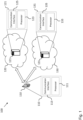
- the UE 110 comprises a processor 111 and a communication interface 113 for communicating with the first and second cellular communication networks 120, 130 (and the corresponding network entities 121, 131 thereof).
- the first message is a "Connection Request” message and the communication interface 113 is configured to transmit the "Connection Request” message to the second cellular communication network 130, when the user equipment 110 is triggered to connect additionally to the second cellular communication network 130.
- the processor 111 of the UE 110 is configured to be in one of a plurality of states, including a first state and a second state, wherein in the first state of the processor 111 the UE 110 is connected to the first cellular communication network 120 but not to the second cellular communication network 130 and wherein in the second state of the processor 111 the UE 110 is connected to the first cellular communication network 120 and the second cellular communication network 130.
- both the network entity 121 and the network entity 131 comprise a processor 123, 133 and a communication interface 125, 135.
- the network entity 131 of the second cellular communication network 130 is configured to receive a message from the UE 110 via its communication interface 135, wherein the message comprises information about the first cellular communication network 120 the UE 110 is already connected to.
- the processor 133 of the network entity 131 is configured to allocate at least one of the plurality of communication resources to the UE 110 for communicating over the second cellular communication network 130 on the basis of the information about the first cellular communication network 120 the UE 110 is already connected to.
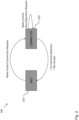
- FIG. 2 shows a state diagram of a state machine 200 implemented in the network entities 121, 131 according to an embodiment.
- the network entity 121, 131 receives a Connection Request message from the UE 110 that is in the IDLE state (reference sign 201)
- the network entity 121, 131 processes this request and changes the status of the UE 110 to the CONNECTED state (reference sign 203).
- the Connection Request message contains further information regarding the cellular networks that the UE 110 is already connected to and its restrictions for communication, such as information about timing restrictions, physical communication resources and the like.
- TAU Tracking Area Update
- embodiments of the invention provide an enhanced radio control protocol, which can be represented using various state machine diagrams (or short state diagrams).
- state machine diagrams or short state diagrams.
- the state machines of these functionally similar embodiments of the UE 110 can be characterized as follows.
- the UE 110 comprises a state machine, which is based on the state machine as defined by the LTE standard and further takes into account the number of cellular communication networks 120, 130 to which the UE 110 is connected to.
- the UE 110 comprises a state machine, which is based on the state machine as defined by the LTE standard and comprises a further state referred to as "MULTI-CONNECTED" state.
- MULTI-CONNECTED the UE 110 is connected with more than one cellular communication network 120, 130.
- This embodiment also allows keeping track of the number of cellular communication networks 120, 130 to which the UE 110 is connected to.
- the UE 110 is configured to implement multiple instances of a state machine, which is based on the state machine as defined by the LTE standard.
- the UE 110 can comprise a state machine selection function for defining which instance of the state machine will be used at each specific point in time.
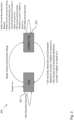
- Figure 3 shows a state diagram of the state machine 300 implemented in the UE 110 according to the first embodiment.
- the state machine implemented in the UE 110 is based on the RRC state machine defined by the LTE standard in that it comprises the same states as the RRC state machine defined by the LTE standard, namely an IDLE state (reference sign 301) and a CONNECTED state (reference sign 303).
- the state machine 300 implemented in the UE 110 according to this first embodiment comprises a counter for tracking the number of cellular communication networks 120, 130 the UE 110 is connected (CONNECTED state) to or in an IDLE state relative thereto.
- the UE 110 As illustrated in figure 3 , once the UE 110 according to the first embodiment is powered on, it switches to the IDLE state with respect to all the mobile networks 120, 130. Then, on the basis of the UE's configuration (which may be fixed in a SIM card of the UE 110, periodically updated, or updated in every other way) the UE 110 will start registering itself to each of the individual mobile networks 120, 130. The registration may take place sequentially (i.e., the UE 110 registers itself to a new mobile network once a previous registration has finished) or simultaneously (the registration procedure can be initiated to all the networks at the same time), as far as this is possible due to potential limitations of the physical layer of the UE 110.
- the UE's configuration which may be fixed in a SIM card of the UE 110, periodically updated, or updated in every other way
- the registration may take place sequentially (i.e., the UE 110 registers itself to a new mobile network once a previous registration has finished) or simultaneously (the registration procedure can be initiated to all the
- the UE 110 For registering itself in one of the mobile networks 120, 130 the UE 110 has to switch to the CONNECTED state with respect to that mobile network.
- the UE 110 is configured to send a "Connection Request" message, in particular a "Radio Control Connection Setup” message to the first mobile network to which it wants to register on the basis of the UE's configuration, for instance, the first mobile network 120.
- the UE 110 will be CONNECTED with the first mobile network 120 and IDLE with respect to all the other mobile networks; the UE 110, thus, will be in the CONNECTED state.
- the UE 110 In order to register with the other mobile networks the UE 110 is configured to send further "Radio Control Connection Setup" messages to these mobile networks and it will remain in the CONNECTED state.
- the UE 110 comprises a counter for the number of mobile networks 120, 130 to which the UE 110 is already CONNECTED to (herein also referred to as "Connected Networks Counter").
- This counter is configured to enable the UE 110 to decide whether to remain in the CONNECTED state or to switch to the IDLE state. For instance, in an embodiment, if the counter is larger than or equal to 1, the UE 110 remains in the CONNECTED state. Otherwise, i.e. if the counter is equal to 0, the UE 110 switches to the IDLE state.
- a counter for the number of mobile networks 120, 130 to which the UE 110 is already CONNECTED to herein also referred to as "Connected Networks Counter”
- This counter is configured to enable the UE 110 to decide whether to remain in the CONNECTED state or to switch to the IDLE state. For instance, in an embodiment, if the counter is larger than or equal to 1, the UE 110 remains in the CONNECTED state. Otherwise, i.e. if the counter
- the UE 110 can be CONNECTED to a mobile network A (e.g. the first mobile network 120 of figure 1 ) and in the IDLE state with respect to mobile networks B (e.g. the second mobile network 130 of figure 1 ) and C; the UE will be in the CONNECTED state in his local state diagram.
- a mobile network A e.g. the first mobile network 120 of figure 1
- mobile networks B e.g. the second mobile network 130 of figure 1
- C the UE will be in the CONNECTED state in his local state diagram.
- the UE 110 wants to be CONNECTED to the mobile network B as well, it will send a "Connection Request" message, in particular a "Radio Control Connection Setup” message, to the mobile network B, while being in the CONNECTED state in its state machine.
- the UE 110 will be CONNECTED to the mobile networks A and B and it will be IDLE with respect to the mobile network C in the respective network state diagrams. Moreover, the UE 110 will increment the Connected Networks Counter from 1 to 2. Once inactivity is detected with respect to one of the two connected mobile networks, by way of example with respect to mobile network B, the UE 110 will switch to the IDLE state relative to the mobile network B in the state diagram of the mobile network B, but it will remain in the CONNECTED state, since it is in the CONNECTED state for at least one network, namely the mobile network A. Accordingly, the UE 110 will decrement the Connected Networks Counter from 2 to 1.
- the UE 110 will turn to IDLE for the mobile network A (i.e. the state diagram of mobile network A) as well.
- the UE 110 will be IDLE for all mobile networks with the Connected Networks Counter having been decremented once more to 0, the UE 110 will turn to its IDLE state.
- the same process can be followed for the reception of TAU Accept messages.
- Radio Control Reconfiguration Messages can be used for establishing or modifying bearers or for performing handovers or any other similar procedures that are part of similar protocols such as the RRC in LTE and are captured by the RRC reconfiguration request process.
- the way that it behaves is configurable in terms of which downlink channel it should monitor and how often (e.g., Paging Channel in LTE) for each of the mobile networks 120, 130.
- This configuration can depend on the capabilities of the UE 110 and is configurable by the network entities 121, 131 of the mobile networks 120, 130.
- the UE 110 has multiple RF chains, it has the capability to remain inactive during the switching from one mobile network to another. This can be the case, for instance, when two mobile networks 120, 130 operate with communication resources at different frequencies or having different waveforms.
- the UE 110 when it is in IDLE state in the network state diagram, it may have a different configuration compared to other networks to which it is IDLE as well.
- the UE 110 can be IDLE with respect to more than one network and can have different configurations in the different networks.
- the configuration of the UE 110 may be provided by a mobile network, when the UE 110 performs its initial registration or during other operations such as the Tracking Area Update (TAU) process.
- TAU Tracking Area Update
- such updates could be provided by means of periodic updates provided by the mobile networks or upon requests from the UE 110 or even can be preconfigured on a SIM card of the UE 110.
- Figure 4 shows a state diagram of the state machine 300 implemented in the UE 110 according to the second embodiment.
- the state machine implemented in the UE 110 is based on the state machine as defined by the LTE standard and comprises a further state referred to as "MULTI-CONNECTED" state (reference sign 305).
- MULTI-CONNECTED the state machine implemented in the UE 110 is based on the state machine as defined by the LTE standard and comprises a further state referred to as "MULTI-CONNECTED" state (reference sign 305).
- MULTI-CONNECTED the UE 110 is connected with more than one mobile network 120, 130.
- This embodiment also allows keeping track of the number of mobile networks 120, 130 to which the UE 110 is connected to.
- the mobile network 120, 130 may still update the IDLE mode operation of the UE 110.
- the Connected Networks Counter provides the information about when the UE 110 should be in the MULTI-CONNECTED state or in the CONNECTED state.
- Figure 5 shows a state diagram of the state machine 300 implemented in the UE 110 according to the third embodiment.
- the UE 110 is configured to implement multiple instances of a state machine, which is based on the state machine as defined by the LTE standard.
- the UE 110 comprises a state machine selection function 501 for defining which instance of the state machine will be used at each specific point in time.
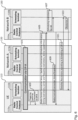
- Figure 6 shows a schematic diagram illustrating multiple interactions between the UE 110 according to an embodiment and the cellular communication networks 120, 130 as well as their network entities 121, 131.
- a radio control protocol 111a and a scheduling function 111b are implemented on the processor 111 of the UE 110.
- corresponding radio control protocols 123a, 133a and scheduling functions 123b, 133b are implemented on the processor 123, 133 of the network entity 121, 131 of the first and second cellular communication network 120, 130, respectively.
- the UE 110 when it wants to connect with multiple mobile networks 120, 130 at the same time, it is configured to provide to each individual mobile network 120, 130 information about its capabilities and/or restrictions regarding its wireless connections.
- this information can include the availability of multiple RF chains in the UE 110, possible waveforms, other active connections, or any other type of restrictions including timing restrictions, band restrictions, energy saving requirements for multiple connections, etc.
- This information can be used by the scheduling function 123b, 133b of each mobile network 120, 130 for avoiding overlaps in the scheduling (Uplink, Downlink, Sidelink) of the UE 110.
- this information can be provided in the Radio Control Protocol Connection Setup Messages and Radio Control Protocol Reconfiguration Requests that the UE 110 sends to the mobile networks 120, 130.
- more detailed information may be provided in the case of dynamic scheduling, where the UE 110 is configured to provide with high granularity information regarding its capabilities and/or restrictions (e.g., timing restrictions, occupied or already scheduled TTls, etc.).
- the detailed restrictions can be provided in the Status Reporting of the UE 110 to each scheduling function 123b, 133b of each mobile network 120, 130 along with, for instance, a channel status, a buffer status and/or power headroom reports.
- Figure 6 illustrates both cases, where the UE 100 provides generic restrictions in the Radio Control Connection Setup message (i.e., restrictions related to scheduling information, timing restrictions, carrier and frequency restrictions, device capabilities; provided with the message in block 605 of figure 6 ) and more detailed restrictions (e.g., timing restrictions; provided with the message in block 611 of figure 6 ) via direct interactions with the scheduling function 133b of the new network to which it wants to connect, i.e. the second mobile network 130.
- this detailed information can be provided by the scheduling function 111b of the UE 110, which can be configured to provide this information to the other mobile network to which the UE is already connected as well, namely mobile network 120.
- the processor 111 of the UE 110 implements the radio control protocol 111a and the scheduling function 111b.
- the respective processors 123, 133 of the respective network entities 121, 131 of the first and second mobile network 120, 130 implement a respective radio control protocol 123a, 133a and a respective scheduling function 123b, 133b.
- figure 6 shows the following steps: a step 601 of communication between the UE 110 and the first mobile network 120; a step 603 of triggering a connection to the second mobile network 130; a step 607 of forwarding the scheduling restrictions received in step 605 to the scheduling function 133b of the network entity 131 of the second mobile network 130; a step 609 of sending a Radio Control Connection Setup Response from the radio control protocol 133a of the network entity 131 of the second mobile network 130 to the UE 110; and a step 613 of allocating communication resources by the scheduling function 133b of the network entity 131 of the second mobile network 130to the UE 110.
- the UE 110 is configured to synchronize with each mobile network 120, 130 for transmission and reception.
- the UE 110 comprises a timing function configured to provide a temporal alignment or coordination among the multiple networks 120, 130. This timing function allows the UE 110 to synchronize faster with the other network or to achieve energy gains by avoiding having to listen to the synchronization channels all the time.
- the functionalities of the timing function of the UE 110 include time shifting for being able to synchronize to a new transmission/reception, and even more complicated actions including sleeping and waking up for certain time periods.
- the triggering events for the transition among the states of the Radio Control Protocol implemented by embodiments of the invention can include: new incoming or outgoing data traffic; UE Inactivity; activation, sensing, notification and/or identification of a new mobile network; entering/leaving special geographical areas; reception of certain messages for reconfiguration of the operation of the UE 110 and/or reception of certain messages related to the location tracking of the UE 110.
- Figure 7 shows a schematic diagram illustrating a method 700 of operating the user equipment 110 according to an embodiment.
- the method 700 comprises the step 701 of transmitting a first message to the second cellular communication network 130, when the user equipment 110 is triggered to connect additionally to the second cellular communication network 130, wherein the first message comprises information about the first cellular communication network 120.
- Figure 8 shows a schematic diagram illustrating a method 800 of operating the network entity 131 according to an embodiment.
- the method 800 comprises the steps of: receiving a message from the user equipment 110, wherein the message comprises information about the further cellular communication network 120 the user equipment is connected to; and allocating at least one of the plurality of communication resources to the user equipment 110 for communicating over the cellular communication network 130 on the basis of the information about the further cellular communication network 120 the user equipment 110 is connected to.
Landscapes
- Engineering & Computer Science (AREA)
- Computer Networks & Wireless Communication (AREA)
- Signal Processing (AREA)
- Mobile Radio Communication Systems (AREA)
Claims (15)
- Benutzergerät (110), umfassend:einen Prozessor (111), der dazu konfiguriert ist, als Reaktion auf das Erkennen eines zweiten Kommunikationsnetzwerks (130) oder einer Änderung einer geografischen Position des Benutzergeräts festzustellen, dass das Benutzergerät zusätzlich zu einem ersten Kommunikationsnetzwerk (120), mit dem das Benutzergerät aktuell verbunden ist, mit dem zweiten Kommunikationsnetzwerk zu verbinden ist; undeine Kommunikationsschnittstelle (113), die dazu konfiguriert ist, als Reaktion auf die Feststellung, dass das Benutzergerät zusätzlich mit dem zweiten Kommunikationsnetzwerk zu verbinden ist, eine erste Nachricht an das zweite Kommunikationsnetzwerk zu übertragen, während das Benutzergerät mit dem ersten Kommunikationsnetzwerk verbunden ist, wobei die erste Nachricht Zeitbeschränkungen und/oder Träger- und Frequenzbeschränkungen für die Kommunikation zwischen dem Benutzergerät und dem zweiten Kommunikationsnetzwerk umfasst, um das zweite Kommunikationsnetzwerk über die Zeitbeschränkungen und/oder die Träger- und Frequenzbeschränkungen für die Kommunikation zwischen dem Benutzergerät und dem zweiten Kommunikationsnetzwerk zu informieren,wobei das Benutzergerät ferner dazu konfiguriert ist, nach der Übertragung der ersten Nachricht die zusätzliche Verbindung mit dem zweiten Kommunikationsnetzwerk herzustellen, während das Benutzergerät mit dem ersten Kommunikationsnetzwerk verbunden ist, wobei die zusätzliche Verbindung mit dem zweiten Kommunikationsnetzwerk den Zeitbeschränkungen und/oder den Träger- und Frequenzbeschränkungen in der ersten Nachricht unterliegt;wobei der Prozessor ferner dazu konfiguriert ist, eine Vielzahl von Zuständen des Benutzergeräts zu verwalten, die einen ersten Zustand und einen zweiten Zustand beinhaltet, wobei das Benutzergerät in dem ersten Zustand mit dem ersten Kommunikationsnetzwerk, aber nicht mit dem zweiten Kommunikationsnetzwerk verbunden ist und wobei das Benutzergerät in dem zweiten Zustand sowohl mit dem ersten Kommunikationsnetzwerk als auch mit dem zweiten Kommunikationsnetzwerk verbunden ist; undwobei die Kommunikationsschnittstelle dazu konfiguriert ist, periodisch eine zweite Nachricht an das zweite Kommunikationsnetzwerk zu übertragen, während das Benutzergerät sowohl mit dem ersten Kommunikationsnetzwerk als auch mit dem zweiten Kommunikationsnetzwerk verbunden ist, wobei die zweite Nachricht eine oder mehrere zusätzliche Beschränkungen für die Kommunikation zwischen dem Benutzergerät und dem zweiten Kommunikationsnetzwerk umfasst.
- Benutzergerät nach Anspruch 1, wobei die erste Nachricht und/oder die zweite Nachricht ferner Informationen über die Zuweisung von mindestens einer von einer Vielzahl von Kommunikationsressourcen zu dem Benutzergerät durch das erste Kommunikationsnetzwerk umfassen/umfasst.
- Benutzergerät nach Anspruch 1 oder 2, wobei die erste Nachricht eine Verbindungsanforderungsnachricht ist.
- Benutzergerät nach einem der vorhergehenden Ansprüche, wobei der Prozessor ferner dazu konfiguriert ist, einen Zähler bereitzustellen, welcher der Anzahl der Kommunikationsnetzwerke entspricht, mit denen das Benutzergerät verbunden ist, wobei der erste Zustand des Benutzergeräts ein verbundener Zustand (303) mit einem ersten Wert des Zählers ist und der zweite Zustand des Benutzergeräts ein verbundener Zustand mit einem zweiten Wert des Zählers ist.
- Benutzergerät nach einem der vorhergehenden Ansprüche, wobei der erste Zustand des Prozessors ein verbundener Zustand ist und der zweite Zustand ein mehrfach verbundener Zustand (305) ist.
- Benutzergerät nach einem der vorhergehenden Ansprüche, wobei der Prozessor dazu konfiguriert ist, eine Vielzahl von Instanzen eines Zustandsdiagramms umzusetzen, wobei der erste Zustand des Benutzergeräts einem verbundenen Zustand einer einzelnen Instanz des Zustandsdiagramms entspricht und wobei der zweite Zustand des Prozessors verbundenen Zuständen von zwei Instanzen des Zustandsdiagramms entspricht.
- Benutzergerät nach einem der vorhergehenden Ansprüche, wobei der Prozessor ferner dazu konfiguriert ist, die Kommunikation mit dem ersten und dem zweiten Kommunikationsnetzwerk (120, 130) in dem zweiten Zustand zeitlich abzustimmen.
- Benutzergerät nach einem der vorhergehenden Ansprüche, wobei das Benutzergerät dazu konfiguriert ist, wenn das Benutzergerät nicht mit dem ersten Kommunikationsnetzwerk verbunden ist, auf einen Rundsendekanal des ersten Kommunikationsnetzwerks zuzugreifen, und, wenn das Benutzergerät nicht mit dem zweiten Kommunikationsnetzwerk verbunden ist, auf einen Rundsendekanal des zweiten Kommunikationsnetzwerks zuzugreifen.
- Verfahren (700), umfassend:Feststellen, durch ein Benutzergerät (110), als Reaktion auf Erkennen eines zweiten Kommunikationsnetzwerks (130) oder einer Änderung einer geografischen Position des Benutzergeräts, dass das Benutzergerät zusätzlich zu einem ersten Kommunikationsnetzwerk (120), mit dem das Benutzergerät aktuell verbunden ist, mit dem zweiten Kommunikationsnetzwerk zu verbinden ist;Übertragen, durch das Benutzergerät, als Reaktion auf die Feststellung, dass das Benutzergerät zusätzlich mit dem zweiten Kommunikationsnetzwerk zu verbinden ist, einer ersten Nachricht an das zweite Kommunikationsnetzwerk, während das Benutzergerät mit dem ersten Kommunikationsnetzwerk verbunden ist, wobei die erste Nachricht Zeitbeschränkungen und/oder Träger- und Frequenzbeschränkungen für die Kommunikation zwischen dem Benutzergerät und dem zweiten Kommunikationsnetzwerk umfasst, um das zweite Kommunikationsnetzwerk über die Zeitbeschränkungen und/oder die Träger- und Frequenzbeschränkungen für die Kommunikation zwischen dem Benutzergerät und dem zweiten Kommunikationsnetzwerk zu informieren; undHerstellen, durch das Benutzergerät, nach der Übertragung der ersten Nachricht, der zusätzlichen Verbindung mit dem zweiten Kommunikationsnetzwerk, während das Benutzergerät mit dem ersten Kommunikationsnetzwerk verbunden ist, wobei die zusätzliche Verbindung mit dem zweiten Kommunikationsnetzwerk den Zeitbeschränkungen und/oder den Träger- und Frequenzbeschränkungen in der ersten Nachricht unterliegt;wobei das Benutzergerät eine Vielzahl von Zuständen des Benutzergeräts verwaltet, die einen ersten Zustand und einen zweiten Zustand beinhaltet, wobei das Benutzergerät in dem ersten Zustand mit dem ersten Kommunikationsnetzwerk, aber nicht mit dem zweiten Kommunikationsnetzwerk verbunden ist und wobei das Benutzergerät in dem zweiten Zustand sowohl mit dem ersten Kommunikationsnetzwerk als auch mit dem zweiten Kommunikationsnetzwerk verbunden ist; undwobei die Kommunikationsschnittstelle dazu konfiguriert ist, periodisch eine zweite Nachricht an das zweite Kommunikationsnetzwerk zu übertragen, während das Benutzergerät sowohl mit dem ersten Kommunikationsnetzwerk als auch mit dem zweiten Kommunikationsnetzwerk verbunden ist, wobei die zweite Nachricht eine oder mehrere zusätzliche Beschränkungen für die Kommunikation zwischen dem Benutzergerät und dem zweiten Kommunikationsnetzwerk umfasst.
- Netzwerkeinheit (131) eines zweiten Kommunikationsnetzwerks (130), umfassend:eine Kommunikationsschnittstelle (135), die dazu konfiguriert ist, eine Nachricht von einem Benutzergerät (110) zu empfangen, wobei die Nachricht Zeitbeschränkungen und/oder Träger- und Frequenzbeschränkungen für die Kommunikation zwischen dem Benutzergerät und dem zweiten Kommunikationsnetzwerk aufgrund einer bestehenden Verbindung zwischen dem Benutzergerät und einem ersten Kommunikationsnetzwerk (120) umfasst; undeinen Prozessor (133), der dazu konfiguriert ist, mindestens eine der Vielzahl von Kommunikationsressourcen dem Benutzergerät zum Kommunizieren über das zweite Kommunikationsnetzwerk basierend auf den Zeitbeschränkungen und/oder den Träger- und Frequenzbeschränkungen in der Nachricht zuzuweisen;wobei die Netzwerkeinheit ferner dazu konfiguriert ist, basierend auf der Zuweisung der mindestens einen der Vielzahl von Kommunikationsressourcen eine Verbindung mit dem Benutzergerät herzustellen, wobei die Verbindung mit dem Benutzergerät den Zeitbeschränkungen und/oder den Träger- und Frequenzbeschränkungen in der Nachricht unterliegt;wobei das Benutzergerät dazu konfiguriert ist, eine Vielzahl von Zuständen des Benutzergeräts zu verwalten, die einen ersten Zustand und einen zweiten Zustand beinhaltet, wobei das Benutzergerät in dem ersten Zustand mit dem ersten Kommunikationsnetzwerk, aber nicht mit dem zweiten Kommunikationsnetzwerk verbunden ist und wobei das Benutzergerät in dem zweiten Zustand sowohl mit dem ersten Kommunikationsnetzwerk als auch mit dem zweiten Kommunikationsnetzwerk verbunden ist; undwobei die Kommunikationsschnittstelle dazu konfiguriert ist, periodisch eine zweite Nachricht von dem Benutzergerät zu empfangen, während das Benutzergerät sowohl mit dem ersten Kommunikationsnetzwerk als auch mit dem zweiten Kommunikationsnetzwerk verbunden ist, wobei die zweite Nachricht eine oder mehrere zusätzliche Beschränkungen für die Kommunikation zwischen dem Benutzergerät und dem zweiten Kommunikationsnetzwerk umfasst.
- Netzwerkeinheit (131) nach Anspruch 10, wobei die Nachricht ferner eine Zuweisung von mindestens einer der Vielzahl von Kommunikationsressourcen zu dem Benutzergerät durch das erste Kommunikationsnetzwerk umfasst.
- Netzwerkeinheit (131) nach Anspruch 10 oder 11, wobei die Nachricht eine Verbindungsanforderungsnachricht ist.
- Netzwerkeinheit (131) nach Anspruch 10 oder 11, wobei der Prozessor dazu konfiguriert ist, als Reaktion auf das Empfangen der Nachricht von dem Benutzergerät mindestens eine der Vielzahl von Kommunikationsressourcen dynamisch dem Benutzergerät zum Kommunizieren über das zweite Kommunikationsnetzwerk zuzuweisen.
- Verfahren (800), umfassend:Empfangen (801), durch eine Netzwerkeinheit (131) eines zweiten Kommunikationsnetzwerks (130), einer Nachricht von einem Benutzergerät (110), wobei die Nachricht Zeitbeschränkungen und/oder Träger- und Frequenzbeschränkungen für die Kommunikation zwischen dem Benutzergerät und dem zweiten Kommunikationsnetzwerk aufgrund einer bestehenden Verbindung zwischen dem Benutzergerät und einem ersten Kommunikationsnetzwerk (120) umfasst; undZuweisen (803), durch die Netzwerkeinheit, mindestens einer der Vielzahl von Kommunikationsressourcen zu dem Benutzergerät zum Kommunizieren über das zweite Kommunikationsnetzwerk basierend auf den Zeitbeschränkungen und/oder den Träger- und Frequenzbeschränkungen in der Nachricht; undHerstellen, durch die Netzwerkeinheit, basierend auf der Zuweisung der mindestens einen der Vielzahl von Kommunikationsressourcen, einer Verbindung mit dem Benutzergerät, wobei die Verbindung mit dem Benutzergerät den Zeitbeschränkungen und/oder den Träger- und Frequenzbeschränkungen in der Nachricht unterliegt;wobei das Benutzergerät dazu konfiguriert ist, eine Vielzahl von Zuständen des Benutzergeräts zu verwalten, die einen ersten Zustand und einen zweiten Zustand beinhaltet, wobei das Benutzergerät in dem ersten Zustand mit dem ersten Kommunikationsnetzwerk, aber nicht mit dem zweiten Kommunikationsnetzwerk verbunden ist und wobei das Benutzergerät in dem zweiten Zustand sowohl mit dem ersten Kommunikationsnetzwerk als auch mit dem zweiten Kommunikationsnetzwerk verbunden ist; undwobei die Netzwerkeinheit periodisch eine zweite Nachricht von dem Benutzergerät empfängt, während das Benutzergerät sowohl mit dem ersten Kommunikationsnetzwerk als auch mit dem zweiten Kommunikationsnetzwerk verbunden ist, wobei die zweite Nachricht eine oder mehrere zusätzliche Beschränkungen für die Kommunikation zwischen dem Benutzergerät und dem zweiten Kommunikationsnetzwerk umfasst.
- Computerprogramm, umfassend Anweisungen, welche die Vorrichtung nach Anspruch 1 oder Anspruch 10 dazu veranlassen, die Schritte des Verfahrens (700) nach Anspruch 9 bzw. des Verfahrens (800) nach Anspruch 14 auszuführen.
Applications Claiming Priority (1)
| Application Number | Priority Date | Filing Date | Title |
|---|---|---|---|
| PCT/EP2017/054431 WO2018153487A1 (en) | 2017-02-27 | 2017-02-27 | User equipment and network entity for a wireless communication network |
Publications (2)
| Publication Number | Publication Date |
|---|---|
| EP3571857A1 EP3571857A1 (de) | 2019-11-27 |
| EP3571857B1 true EP3571857B1 (de) | 2025-06-25 |
Family
ID=58191424
Family Applications (1)
| Application Number | Title | Priority Date | Filing Date |
|---|---|---|---|
| EP17707815.1A Active EP3571857B1 (de) | 2017-02-27 | 2017-02-27 | Benutzergerät und netzwerkeinheit für ein drahtloskommunikationsnetzwerk |
Country Status (4)
| Country | Link |
|---|---|
| US (1) | US11229072B2 (de) |
| EP (1) | EP3571857B1 (de) |
| CN (1) | CN110366855B (de) |
| WO (1) | WO2018153487A1 (de) |
Families Citing this family (7)
| Publication number | Priority date | Publication date | Assignee | Title |
|---|---|---|---|---|
| US20200383173A1 (en) * | 2018-01-08 | 2020-12-03 | Ubicquia Llc | Light pole wireless networking device |
| CN118509980A (zh) * | 2019-03-12 | 2024-08-16 | 欧芬诺有限责任公司 | 无线连接活动信息更新 |
| US10623946B1 (en) * | 2019-03-25 | 2020-04-14 | Qualcomm Incorporated | Multi-SIM assistance information |
| CN115053626B (zh) * | 2019-12-02 | 2025-11-28 | 诺基亚技术有限公司 | 具有不可用时间的多sim ue协助信息 |
| JP7332814B2 (ja) * | 2020-01-21 | 2023-08-23 | 鴻穎創新有限公司 | マルチsim動作のためのユーザ機器及び方法 |
| EP4203605A4 (de) | 2020-10-29 | 2024-03-06 | Samsung Electronics Co., Ltd. | Benutzerendgerät mit mehreren teilnehmeridentitätsmodulen |
| KR20220057306A (ko) * | 2020-10-29 | 2022-05-09 | 삼성전자주식회사 | 복수의 가입자 식별 모듈을 포함하는 사용자 단말 |
Citations (11)
| Publication number | Priority date | Publication date | Assignee | Title |
|---|---|---|---|---|
| US20040053632A1 (en) * | 2002-09-18 | 2004-03-18 | Nikkelen Vincent Johannes Wilhelmus | Distributing shared network access information in a shared network mobile communications system |
| US20110028120A1 (en) * | 2009-07-30 | 2011-02-03 | Chih-Hsiang Wu | Method of handling call origination and related communication device |
| US20110258327A1 (en) * | 2010-04-20 | 2011-10-20 | Nokia Corporation | D2D Communications Considering Different Network Operators |
| US8611280B2 (en) * | 2010-01-14 | 2013-12-17 | Telcordia Technologies, Inc. | Public land mobile network selection procedures for simultaneous network connectivity through multiple accesses |
| US20140269512A1 (en) * | 2011-11-28 | 2014-09-18 | Sk Telecom Co., Ltd. | Apparatus and method for supporting data transmission service over multiple networks |
| US20150163789A1 (en) * | 2012-06-05 | 2015-06-11 | Alcatel Lucent | Scheduling and controlling device-to-device communication |
| US20150171944A1 (en) * | 2012-07-18 | 2015-06-18 | Kyocera Corporation | Interference management of device-to-device communication in a cellular communication system |
| US20150341972A1 (en) * | 2012-12-03 | 2015-11-26 | Airbus Ds Sas | Direct mode communication in a wideband radio communication system |
| WO2015180134A1 (en) * | 2014-05-30 | 2015-12-03 | Apple Inc. | Methods and apparatus to reuse wireless circuitry for multiple subscriber identities in a wireless communication device |
| WO2015180126A1 (en) * | 2014-05-30 | 2015-12-03 | Apple Inc. | Methods and apparatus to support multiple subscriber identities in wireless communication device |
| US20160073298A1 (en) * | 2013-04-22 | 2016-03-10 | Telefonaktiebolaget L M Ericsson (Publ) | Cellular network control of channel allocation for vehicle-to-vehicle communication |
Family Cites Families (17)
| Publication number | Priority date | Publication date | Assignee | Title |
|---|---|---|---|---|
| US6820117B1 (en) * | 1999-10-18 | 2004-11-16 | Sun Microsystems, Inc. | Bandwidth management |
| FI20040841A0 (fi) * | 2004-06-17 | 2004-06-17 | Nokia Corp | Menetelmä tietoliikenteen valvomiseksi käyttäen verkkonoodiryhmää kommunikaatiojärjestelmässä |
| WO2008052580A1 (en) * | 2006-10-31 | 2008-05-08 | Telecom Italia S.P.A. | Management of seamless handover between different communication systems in an ip dual-mode terminal |
| US8538430B1 (en) * | 2007-03-22 | 2013-09-17 | Apple Inc. | System and method for handoff of mobile terminals between different wireless access network technologies |
| US20090161575A1 (en) * | 2007-12-19 | 2009-06-25 | Research In Motion Limited | Long Term Evolution User Equipment Multi-Packet Data Network Connectivity Control |
| EP2512184B1 (de) * | 2011-04-13 | 2017-07-19 | OCT Circuit Technologies International Limited | Verfahren und vorrichtung zur handhabung einer abwärtsverbindungsübertragung während des netzwerkumschaltens |
| CN103167452A (zh) * | 2011-12-12 | 2013-06-19 | 美国博通公司 | 用于多sim用户设备的后台寻呼监控 |
| WO2014064491A1 (en) * | 2012-10-26 | 2014-05-01 | Nokia Corporation | Method and apparatus for management of multiple communication channels |
| US20150023230A1 (en) * | 2013-07-19 | 2015-01-22 | Qualcomm Incorporated | Dual sim dual active subscriber identification module with a single transmit chain and dual or single receive chain |
| CN104378842A (zh) * | 2013-08-12 | 2015-02-25 | 中兴通讯股份有限公司 | 一种连接管理方法及接入网网元 |
| US20150065106A1 (en) * | 2013-08-29 | 2015-03-05 | Qualcomm Incorporated | Linking user equipment contexts associated with the same physical device |
| US9900923B2 (en) * | 2013-11-01 | 2018-02-20 | Qualcomm Incorporated | Techniques for using carrier aggregation in dual connectivity wireless communications |
| US9426642B1 (en) * | 2015-03-02 | 2016-08-23 | Taqua, Llc | Systems and methods facilitating communication with respect to a plurality of communication networks using pullback techniques |
| WO2016144147A1 (ko) * | 2015-03-12 | 2016-09-15 | 엘지전자 주식회사 | V2x 통신 시스템에서 차량에 설치된 단말의 통신 방법 및 단말 |
| JP5984029B1 (ja) * | 2015-12-24 | 2016-09-06 | パナソニックIpマネジメント株式会社 | ドアホンシステムおよび通信制御方法 |
| US11006359B2 (en) * | 2016-12-23 | 2021-05-11 | Telefonaktiebolaget Lm Ericsson (Publ) | Method and nodes for enabling a wireless terminal configured with dual connectivity to enter an inactive mode |
| KR102715376B1 (ko) * | 2016-12-30 | 2024-10-11 | 인텔 코포레이션 | 라디오 통신을 위한 방법 및 디바이스 |
-
2017
- 2017-02-27 EP EP17707815.1A patent/EP3571857B1/de active Active
- 2017-02-27 CN CN201780087411.0A patent/CN110366855B/zh active Active
- 2017-02-27 WO PCT/EP2017/054431 patent/WO2018153487A1/en not_active Ceased
-
2019
- 2019-08-27 US US16/552,643 patent/US11229072B2/en active Active
Patent Citations (13)
| Publication number | Priority date | Publication date | Assignee | Title |
|---|---|---|---|---|
| US20040053632A1 (en) * | 2002-09-18 | 2004-03-18 | Nikkelen Vincent Johannes Wilhelmus | Distributing shared network access information in a shared network mobile communications system |
| US20110028120A1 (en) * | 2009-07-30 | 2011-02-03 | Chih-Hsiang Wu | Method of handling call origination and related communication device |
| US8611280B2 (en) * | 2010-01-14 | 2013-12-17 | Telcordia Technologies, Inc. | Public land mobile network selection procedures for simultaneous network connectivity through multiple accesses |
| US9198210B2 (en) * | 2010-04-20 | 2015-11-24 | Nokia Solutions And Networks Oy | D2D communications considering different network operators |
| US20110258327A1 (en) * | 2010-04-20 | 2011-10-20 | Nokia Corporation | D2D Communications Considering Different Network Operators |
| US20140269512A1 (en) * | 2011-11-28 | 2014-09-18 | Sk Telecom Co., Ltd. | Apparatus and method for supporting data transmission service over multiple networks |
| US20150163789A1 (en) * | 2012-06-05 | 2015-06-11 | Alcatel Lucent | Scheduling and controlling device-to-device communication |
| US20150171944A1 (en) * | 2012-07-18 | 2015-06-18 | Kyocera Corporation | Interference management of device-to-device communication in a cellular communication system |
| US20150341972A1 (en) * | 2012-12-03 | 2015-11-26 | Airbus Ds Sas | Direct mode communication in a wideband radio communication system |
| US9750058B2 (en) * | 2012-12-03 | 2017-08-29 | Airbus Ds Sas | Direct mode communication in a wideband radio communication system |
| US20160073298A1 (en) * | 2013-04-22 | 2016-03-10 | Telefonaktiebolaget L M Ericsson (Publ) | Cellular network control of channel allocation for vehicle-to-vehicle communication |
| WO2015180134A1 (en) * | 2014-05-30 | 2015-12-03 | Apple Inc. | Methods and apparatus to reuse wireless circuitry for multiple subscriber identities in a wireless communication device |
| WO2015180126A1 (en) * | 2014-05-30 | 2015-12-03 | Apple Inc. | Methods and apparatus to support multiple subscriber identities in wireless communication device |
Also Published As
| Publication number | Publication date |
|---|---|
| US20190387559A1 (en) | 2019-12-19 |
| CN110366855B (zh) | 2023-09-12 |
| EP3571857A1 (de) | 2019-11-27 |
| US11229072B2 (en) | 2022-01-18 |
| WO2018153487A1 (en) | 2018-08-30 |
| CN110366855A (zh) | 2019-10-22 |
Similar Documents
| Publication | Publication Date | Title |
|---|---|---|
| EP3571857B1 (de) | Benutzergerät und netzwerkeinheit für ein drahtloskommunikationsnetzwerk | |
| US11356842B2 (en) | Throughput and radio resource utilization for user equipment having multiple subscriber identity modules | |
| US11736930B2 (en) | Throughput and radio resource utilization for user equipment having multiple subscriber identity modules | |
| JP2021052409A (ja) | ネットワークスライシングを実装する5gネットワークにrrc手順を適合させる通信システムおよび方法 | |
| EP3512118B1 (de) | Verfahren und vorrichtung zur übertragung einer antwortnachricht | |
| CN110225570B (zh) | 无线接入电信系统中的系统信息分配的方法、终端和小区 | |
| US20240089918A1 (en) | Paging collision avoidance by ue comprising plurality of rat networks and sims in cellular network | |
| US10945178B2 (en) | Devices and methods for steering end devices between networks | |
| WO2014032502A1 (zh) | 终端接入方法、系统和终端 | |
| EP4094544B1 (de) | Trägerzuweisung in drahtlosem netzwerk | |
| JP7780542B2 (ja) | 要求情報の送信方法、ue及びネットワーク側機器 | |
| CN116235587A (zh) | 无线设备之间的能力协调 | |
| EP3994917B1 (de) | Proaktive vermittlung von v2x-kommunikation von einer sidelink-verbindung zu einer zellularen verbindung | |
| US20230262538A1 (en) | Method and apparatus for recording information in mobile communication system | |
| WO2022022082A1 (zh) | 通信方法和通信装置 | |
| CN107371176B (zh) | 一种小区操作方法及装置 | |
| CN113518396A (zh) | 一种测量对象指示方法与装置 | |
| US20240407048A1 (en) | Method and device for performing sidelink drx | |
| CN117880859B (zh) | 波形切换方法、设备、介质、芯片系统及产品 | |
| CN112770366B (zh) | 一种通信方法与通信装置 | |
| Sureshsah et al. | Novel 5G and B5G network architecture and protocol for Multi SIM devices | |
| CN113841463B (zh) | 无线通信系统中用于执行通信的方法和装置 | |
| US20260059568A1 (en) | Method for wireless communication, terminal device, and network device | |
| JP2026507069A (ja) | 無線通信用の方法及び装置 | |
| WO2025175986A1 (zh) | 一种通信方法、装置和系统 |
Legal Events
| Date | Code | Title | Description |
|---|---|---|---|
| STAA | Information on the status of an ep patent application or granted ep patent |
Free format text: STATUS: UNKNOWN |
|
| STAA | Information on the status of an ep patent application or granted ep patent |
Free format text: STATUS: THE INTERNATIONAL PUBLICATION HAS BEEN MADE |
|
| PUAI | Public reference made under article 153(3) epc to a published international application that has entered the european phase |
Free format text: ORIGINAL CODE: 0009012 |
|
| STAA | Information on the status of an ep patent application or granted ep patent |
Free format text: STATUS: REQUEST FOR EXAMINATION WAS MADE |
|
| 17P | Request for examination filed |
Effective date: 20190821 |
|
| AK | Designated contracting states |
Kind code of ref document: A1 Designated state(s): AL AT BE BG CH CY CZ DE DK EE ES FI FR GB GR HR HU IE IS IT LI LT LU LV MC MK MT NL NO PL PT RO RS SE SI SK SM TR |
|
| AX | Request for extension of the european patent |
Extension state: BA ME |
|
| DAV | Request for validation of the european patent (deleted) | ||
| DAX | Request for extension of the european patent (deleted) | ||
| STAA | Information on the status of an ep patent application or granted ep patent |
Free format text: STATUS: EXAMINATION IS IN PROGRESS |
|
| 17Q | First examination report despatched |
Effective date: 20210519 |
|
| REG | Reference to a national code |
Ipc: H04W0076150000 Ref country code: DE Ref legal event code: R079 Ref document number: 602017090114 Country of ref document: DE Free format text: PREVIOUS MAIN CLASS: H04W0016100000 |
|
| GRAP | Despatch of communication of intention to grant a patent |
Free format text: ORIGINAL CODE: EPIDOSNIGR1 |
|
| STAA | Information on the status of an ep patent application or granted ep patent |
Free format text: STATUS: GRANT OF PATENT IS INTENDED |
|
| RIC1 | Information provided on ipc code assigned before grant |
Ipc: H04W 68/02 20090101ALI20250120BHEP Ipc: H04W 72/04 20090101ALI20250120BHEP Ipc: H04W 16/10 20090101ALI20250120BHEP Ipc: H04W 76/15 20180101AFI20250120BHEP |
|
| INTG | Intention to grant announced |
Effective date: 20250226 |
|
| GRAS | Grant fee paid |
Free format text: ORIGINAL CODE: EPIDOSNIGR3 |
|
| GRAA | (expected) grant |
Free format text: ORIGINAL CODE: 0009210 |
|
| STAA | Information on the status of an ep patent application or granted ep patent |
Free format text: STATUS: THE PATENT HAS BEEN GRANTED |
|
| AK | Designated contracting states |
Kind code of ref document: B1 Designated state(s): AL AT BE BG CH CY CZ DE DK EE ES FI FR GB GR HR HU IE IS IT LI LT LU LV MC MK MT NL NO PL PT RO RS SE SI SK SM TR |
|
| REG | Reference to a national code |
Ref country code: GB Ref legal event code: FG4D |
|
| REG | Reference to a national code |
Ref country code: CH Ref legal event code: EP |
|
| REG | Reference to a national code |
Ref country code: DE Ref legal event code: R096 Ref document number: 602017090114 Country of ref document: DE |
|
| REG | Reference to a national code |
Ref country code: CH Ref legal event code: EP |
|
| REG | Reference to a national code |
Ref country code: IE Ref legal event code: FG4D |
|
| PG25 | Lapsed in a contracting state [announced via postgrant information from national office to epo] |
Ref country code: FI Free format text: LAPSE BECAUSE OF FAILURE TO SUBMIT A TRANSLATION OF THE DESCRIPTION OR TO PAY THE FEE WITHIN THE PRESCRIBED TIME-LIMIT Effective date: 20250625 |
|
| REG | Reference to a national code |
Ref country code: LT Ref legal event code: MG9D |
|
| PG25 | Lapsed in a contracting state [announced via postgrant information from national office to epo] |
Ref country code: GR Free format text: LAPSE BECAUSE OF FAILURE TO SUBMIT A TRANSLATION OF THE DESCRIPTION OR TO PAY THE FEE WITHIN THE PRESCRIBED TIME-LIMIT Effective date: 20250926 Ref country code: NO Free format text: LAPSE BECAUSE OF FAILURE TO SUBMIT A TRANSLATION OF THE DESCRIPTION OR TO PAY THE FEE WITHIN THE PRESCRIBED TIME-LIMIT Effective date: 20250925 |
|
| PG25 | Lapsed in a contracting state [announced via postgrant information from national office to epo] |
Ref country code: BG Free format text: LAPSE BECAUSE OF FAILURE TO SUBMIT A TRANSLATION OF THE DESCRIPTION OR TO PAY THE FEE WITHIN THE PRESCRIBED TIME-LIMIT Effective date: 20250625 |
|
| PG25 | Lapsed in a contracting state [announced via postgrant information from national office to epo] |
Ref country code: HR Free format text: LAPSE BECAUSE OF FAILURE TO SUBMIT A TRANSLATION OF THE DESCRIPTION OR TO PAY THE FEE WITHIN THE PRESCRIBED TIME-LIMIT Effective date: 20250625 |
|
| PG25 | Lapsed in a contracting state [announced via postgrant information from national office to epo] |
Ref country code: RS Free format text: LAPSE BECAUSE OF FAILURE TO SUBMIT A TRANSLATION OF THE DESCRIPTION OR TO PAY THE FEE WITHIN THE PRESCRIBED TIME-LIMIT Effective date: 20250925 |
|
| PG25 | Lapsed in a contracting state [announced via postgrant information from national office to epo] |
Ref country code: LV Free format text: LAPSE BECAUSE OF FAILURE TO SUBMIT A TRANSLATION OF THE DESCRIPTION OR TO PAY THE FEE WITHIN THE PRESCRIBED TIME-LIMIT Effective date: 20250625 |
|
| REG | Reference to a national code |
Ref country code: NL Ref legal event code: MP Effective date: 20250625 |
|
| PG25 | Lapsed in a contracting state [announced via postgrant information from national office to epo] |
Ref country code: NL Free format text: LAPSE BECAUSE OF FAILURE TO SUBMIT A TRANSLATION OF THE DESCRIPTION OR TO PAY THE FEE WITHIN THE PRESCRIBED TIME-LIMIT Effective date: 20250625 |
|
| PG25 | Lapsed in a contracting state [announced via postgrant information from national office to epo] |
Ref country code: PT Free format text: LAPSE BECAUSE OF FAILURE TO SUBMIT A TRANSLATION OF THE DESCRIPTION OR TO PAY THE FEE WITHIN THE PRESCRIBED TIME-LIMIT Effective date: 20251027 |
|
| REG | Reference to a national code |
Ref country code: AT Ref legal event code: MK05 Ref document number: 1808023 Country of ref document: AT Kind code of ref document: T Effective date: 20250625 |
|
| PG25 | Lapsed in a contracting state [announced via postgrant information from national office to epo] |
Ref country code: IS Free format text: LAPSE BECAUSE OF FAILURE TO SUBMIT A TRANSLATION OF THE DESCRIPTION OR TO PAY THE FEE WITHIN THE PRESCRIBED TIME-LIMIT Effective date: 20251025 |
|
| PG25 | Lapsed in a contracting state [announced via postgrant information from national office to epo] |
Ref country code: AT Free format text: LAPSE BECAUSE OF FAILURE TO SUBMIT A TRANSLATION OF THE DESCRIPTION OR TO PAY THE FEE WITHIN THE PRESCRIBED TIME-LIMIT Effective date: 20250625 Ref country code: SM Free format text: LAPSE BECAUSE OF FAILURE TO SUBMIT A TRANSLATION OF THE DESCRIPTION OR TO PAY THE FEE WITHIN THE PRESCRIBED TIME-LIMIT Effective date: 20250625 |
|
| PG25 | Lapsed in a contracting state [announced via postgrant information from national office to epo] |
Ref country code: CZ Free format text: LAPSE BECAUSE OF FAILURE TO SUBMIT A TRANSLATION OF THE DESCRIPTION OR TO PAY THE FEE WITHIN THE PRESCRIBED TIME-LIMIT Effective date: 20250625 |
|
| PG25 | Lapsed in a contracting state [announced via postgrant information from national office to epo] |
Ref country code: PL Free format text: LAPSE BECAUSE OF FAILURE TO SUBMIT A TRANSLATION OF THE DESCRIPTION OR TO PAY THE FEE WITHIN THE PRESCRIBED TIME-LIMIT Effective date: 20250625 |
|
| PG25 | Lapsed in a contracting state [announced via postgrant information from national office to epo] |
Ref country code: EE Free format text: LAPSE BECAUSE OF FAILURE TO SUBMIT A TRANSLATION OF THE DESCRIPTION OR TO PAY THE FEE WITHIN THE PRESCRIBED TIME-LIMIT Effective date: 20250625 |
|
| PG25 | Lapsed in a contracting state [announced via postgrant information from national office to epo] |
Ref country code: SK Free format text: LAPSE BECAUSE OF FAILURE TO SUBMIT A TRANSLATION OF THE DESCRIPTION OR TO PAY THE FEE WITHIN THE PRESCRIBED TIME-LIMIT Effective date: 20250625 Ref country code: RO Free format text: LAPSE BECAUSE OF FAILURE TO SUBMIT A TRANSLATION OF THE DESCRIPTION OR TO PAY THE FEE WITHIN THE PRESCRIBED TIME-LIMIT Effective date: 20250625 |
|
| PG25 | Lapsed in a contracting state [announced via postgrant information from national office to epo] |
Ref country code: ES Free format text: LAPSE BECAUSE OF FAILURE TO SUBMIT A TRANSLATION OF THE DESCRIPTION OR TO PAY THE FEE WITHIN THE PRESCRIBED TIME-LIMIT Effective date: 20250625 |