EP3565902B1 - Procede de detection et quantification d'adn circulant et utilisations - Google Patents
Procede de detection et quantification d'adn circulant et utilisations Download PDFInfo
- Publication number
- EP3565902B1 EP3565902B1 EP18703044.0A EP18703044A EP3565902B1 EP 3565902 B1 EP3565902 B1 EP 3565902B1 EP 18703044 A EP18703044 A EP 18703044A EP 3565902 B1 EP3565902 B1 EP 3565902B1
- Authority
- EP
- European Patent Office
- Prior art keywords
- subject
- dna
- base pairs
- cell
- interest
- Prior art date
- Legal status (The legal status is an assumption and is not a legal conclusion. Google has not performed a legal analysis and makes no representation as to the accuracy of the status listed.)
- Active
Links
Images


Classifications
-
- C—CHEMISTRY; METALLURGY
- C12—BIOCHEMISTRY; BEER; SPIRITS; WINE; VINEGAR; MICROBIOLOGY; ENZYMOLOGY; MUTATION OR GENETIC ENGINEERING
- C12Q—MEASURING OR TESTING PROCESSES INVOLVING ENZYMES, NUCLEIC ACIDS OR MICROORGANISMS; COMPOSITIONS OR TEST PAPERS THEREFOR; PROCESSES OF PREPARING SUCH COMPOSITIONS; CONDITION-RESPONSIVE CONTROL IN MICROBIOLOGICAL OR ENZYMOLOGICAL PROCESSES
- C12Q1/00—Measuring or testing processes involving enzymes, nucleic acids or microorganisms; Compositions therefor; Processes of preparing such compositions
- C12Q1/68—Measuring or testing processes involving enzymes, nucleic acids or microorganisms; Compositions therefor; Processes of preparing such compositions involving nucleic acids
- C12Q1/6806—Preparing nucleic acids for analysis, e.g. for polymerase chain reaction [PCR] assay
-
- C—CHEMISTRY; METALLURGY
- C12—BIOCHEMISTRY; BEER; SPIRITS; WINE; VINEGAR; MICROBIOLOGY; ENZYMOLOGY; MUTATION OR GENETIC ENGINEERING
- C12Q—MEASURING OR TESTING PROCESSES INVOLVING ENZYMES, NUCLEIC ACIDS OR MICROORGANISMS; COMPOSITIONS OR TEST PAPERS THEREFOR; PROCESSES OF PREPARING SUCH COMPOSITIONS; CONDITION-RESPONSIVE CONTROL IN MICROBIOLOGICAL OR ENZYMOLOGICAL PROCESSES
- C12Q1/00—Measuring or testing processes involving enzymes, nucleic acids or microorganisms; Compositions therefor; Processes of preparing such compositions
- C12Q1/68—Measuring or testing processes involving enzymes, nucleic acids or microorganisms; Compositions therefor; Processes of preparing such compositions involving nucleic acids
- C12Q1/6876—Nucleic acid products used in the analysis of nucleic acids, e.g. primers or probes
- C12Q1/6883—Nucleic acid products used in the analysis of nucleic acids, e.g. primers or probes for diseases caused by alterations of genetic material
- C12Q1/6886—Nucleic acid products used in the analysis of nucleic acids, e.g. primers or probes for diseases caused by alterations of genetic material for cancer
-
- C—CHEMISTRY; METALLURGY
- C12—BIOCHEMISTRY; BEER; SPIRITS; WINE; VINEGAR; MICROBIOLOGY; ENZYMOLOGY; MUTATION OR GENETIC ENGINEERING
- C12Q—MEASURING OR TESTING PROCESSES INVOLVING ENZYMES, NUCLEIC ACIDS OR MICROORGANISMS; COMPOSITIONS OR TEST PAPERS THEREFOR; PROCESSES OF PREPARING SUCH COMPOSITIONS; CONDITION-RESPONSIVE CONTROL IN MICROBIOLOGICAL OR ENZYMOLOGICAL PROCESSES
- C12Q2600/00—Oligonucleotides characterized by their use
- C12Q2600/118—Prognosis of disease development
-
- C—CHEMISTRY; METALLURGY
- C12—BIOCHEMISTRY; BEER; SPIRITS; WINE; VINEGAR; MICROBIOLOGY; ENZYMOLOGY; MUTATION OR GENETIC ENGINEERING
- C12Q—MEASURING OR TESTING PROCESSES INVOLVING ENZYMES, NUCLEIC ACIDS OR MICROORGANISMS; COMPOSITIONS OR TEST PAPERS THEREFOR; PROCESSES OF PREPARING SUCH COMPOSITIONS; CONDITION-RESPONSIVE CONTROL IN MICROBIOLOGICAL OR ENZYMOLOGICAL PROCESSES
- C12Q2600/00—Oligonucleotides characterized by their use
- C12Q2600/156—Polymorphic or mutational markers
Definitions
- the field of the invention relates to a method for detecting and quantifying free DNA from all cells (otherwise generally called ⁇ circulating DNA' or ⁇ circulating free DNA cfDNA') and their use in particular for the purposes of diagnosis, prognosis or monitoring of the physiological state of a given subject of interest.
- pre-analytical considerations that influence the analytical outcome must take into account other factors such as the volume of plasma to be extracted, directly correlated to the amount of DNA extracted, the yield of the extraction technique for a given volume of liquid, the reproducibility of the extraction, the final concentration of DNA and the inter-assay standardization of the yield/concentration of the eluate obtained.
- cell-free DNA also called circulating DNA
- the term "liquid biopsy” has emerged to describe the monitoring of the genetic evolution of the tumor from the blood ( Fatouros IG et al., ClinBiochem 2010 ).
- Circulating DNA concentrations reflect pathological but also physiological processes ( Fatouros IG, et al. ClinBiochem 2010 ). Circulating extracellular DNA can be detected in healthy controls ( Fatouros IG, et al. ClinBiochem 2010 ) and suffering from malignant diseases ( Oxnard GR et al., Clin Cancer Res 2014 ; Lipson EJ et al., J Immunother Cancer 2014 ; Reinert T et al., Gut 2016 ; ) or non-malignant ( Steinman CR. J Clin Invest 1984 ; Galeazzi M, et al. AutoimmunRev 2003 ).
- the amount of circulating DNA per ml of fluid can be considered as a biomarker of a clinical response
- standardization of the amount of circulating DNA extracted from one extraction to another is essential.
- the size of circulating DNA fragments in healthy controls mainly comes from apoptotic cells.
- the lengths of circulating DNA fragments are generally 185 to 200 bp ( Giacona MB et al., Pancreas 1998 ). This uniformly truncated circulating DNA is produced by enzymatic cleavage during apoptosis ( Wyllie AH, Nature 1980 ).
- circulating DNA extraction techniques preserve the size profile of circulating DNAs, particularly small fragments that can be eliminated if the proportion of the mixture of chemical components of the fixation step on the silica column varies.
- the composition of the liquid can also modify this proportion. It is therefore essential to be able to verify and standardize the extraction efficiency of small fragments, particularly around 100 base pairs.
- the amount of circulating DNA is directly proportional to the amount of plasma extracted. It is therefore important to extract as much plasma as possible.
- the total volume to be extracted including plasma, proteases and fixation solutions exceeds on average 10 ml (for 4 ml of plasma) and must be eluted on silica columns not exceeding 1 to 2 cm in height and 1 cm in diameter. It should be noted that the smaller the diameter of the column, the smaller the elution volume will be and therefore the more concentrated the circulating DNA extract.
- the volume of liquid to be extracted, the concentration and the elution volume are interdependent.
- cfDNA circulating free DNA
- This circulating free DNA is in the form of double-stranded DNA with an average size of 150-180 bp corresponding to the winding of the DNA around the nucleosome, larger sizes correspond to multiples of 150-180 bp. Its duration of life is less than two hours, before it is filtered and eliminated from the bloodstream by the spleen, liver and kidneys.
- cfDNA is detected in lower quantities in healthy individuals and that its increase is linked to different clinical situations such as stroke, myocardial infarction, intensive muscular exercise, acute renal failure, hepatic cytolysis, trauma, surgery, graft rejection and cancer.
- cfDNA The origin of cfDNA is not yet fully understood but is thought to be linked to 3 phenomena: apoptosis, necrosis and, to a lesser extent, active secretion.
- circulating DNA comes mainly from cells undergoing apoptosis ( Giacona, MB et al., Pancreas, 1998 ).
- the lengths of the DNA fragments are in this case generally 185 to 200 bp ( Wyllie, AH et al., Int Rev Cytol, 1980 ).
- the size of circulating DNA varies greatly, because in addition to apoptosis, necrosis and autophagy are responsible for the death of cancer cells ( Jin, Z.
- cfDNA analysis concerns the pre-analytical processes (treatment of blood tubes and DNA extraction). Variations in cfDNA concentrations can be artefactually produced by the release of leukocyte DNA before the first centrifugation of the tubes, or in the absence of a second centrifugation at a minimum of 4000g.
- cfDNA concentrations expressed per ml/plasma it is important to ensure the robustness of the extraction technique, but above all to propose a method to standardize the extractions between them and over time.
- Eini et al. (Avicenna J Med Biotech 2016; 8(2):84-90 ) describes an 'in house' extraction method and an amplification method of circulating DNA in a plasma sample from a healthy subject, using an exogenous DNA fragment of 167 nucleotides and the calculation of a ratio integrity of the extracted DNA for a qualitative assessment of the extraction step.
- WO2014/194113 (Schutz et al. ) describes a method for quantifying cell-free DNA in a transplant recipient from a plasma sample enriched with 320 bp DNA of non-human origin, for the qualitative assessment of extraction yield.
- the inventors have developed a method for detecting and quantifying free DNA from all cells (circulating DNA), comprising an extraction step in which calibrators, otherwise known as standards (fragments of exogenous DNA), are added to standardize the variations in circulating DNA in patients, and possibly also verify the reproducibility of extraction of small circulating DNA.
- 'calibrators' or 'standards' we mean internal controls of the method for detecting and quantifying the extracted circulating DNA, said calibrators or standards being constituted by exogenous DNA fragments defined below.
- calibrated ICE fragment or ICE fragment we will also speak of calibrated ICE fragment in the remainder of the description.
- ⁇ calibrated ICE fragment is meant according to the invention an exogenous DNA fragment whose concentration is calibrated by ddPCR; the use of this calibrated ICE fragment makes it possible to normalize the concentration of free genomic DNA (cfDNA) by calculating the cfDNA/ICE ratio (Grewis) in order to ensure that only the physiological and/or pathological fluctuations of this circulating DNA in a subject of interest are measured in comparison with other analysis points over time or in comparison with a control (healthy subject).
- cfDNA free genomic DNA
- Rewis cfDNA/ICE ratio
- exogenous DNA fragment is meant a DNA fragment from a species other than the circulating DNA of interest; a non-human exogenous DNA fragment will preferably be chosen for the extraction of human genomic circulating DNA.
- ⁇ circulating DNA is meant the free DNA of all cells.
- cfDNA circulating DNA
- it will be human circulating DNA, in particular circulating DNA of a subject of interest.
- ⁇ subject of interest' is meant a subject distinct from a normal or healthy subject.
- the subject of interest according to the invention is a subject capable of releasing free DNAs from all cells, in particular linked to phenomena of apoptosis, necrosis and/or to a lesser extent to active secretion.
- Such a subject of interest according to the claimed invention is a subject suffering from or developing cancer or a pathological clinical condition chosen in particular from a stroke or myocardial infarction, acute renal failure, hepatic cytolysis, trauma, graft rejection, or a subject undergoing medical treatment such as biopsy, surgery, radiotherapy, chemotherapy, immunotherapy, or active ingredient (chemical or biological).
- exogenous DNA fragment By 'effective quantity' of exogenous DNA fragment is meant a quantity (or a number of copies for a given size of the fragment) of exogenous DNA per ml of biological fluid sample allowing the implementation of the step of standardization of the quantity of circulating DNA extracted and possibly of its size profile.
- the quantity of exogenous DNA per ml of biological fluid sample is at least 1fg, or even 2 fg per ml of sample (i.e. 10,000 to 20,000 copies per ml of plasma sample for a fragment of 110 base pairs), in particular ranging from 1fg or 2 fg to 2ng per ml of sample.
- concentrations of calibrators in areas close to or even lower than the concentrations of free DNA gene copies of all cells of a normal subject (e.g.: lower than 8ng/ml), make it possible to work at the physiological values of a healthy subject in order to precisely measure the fluctuations.
- Step (i) of extracting cell-free DNA from a sample of biological fluid will generally successively comprise a step of proteolysis of said biological sample, a step of isolation of circulating free DNA, and a step of elution, possibly precipitation and possibly concentration of circulating free DNA.
- Step (ii) of amplification and quantification of the free DNA of all cells extracted in the previous step will preferably be carried out according to the invention by a digital PCR, Q-PCR and/or NGS method.
- the exogenous DNA fragment and a human sequence detected by ddPCR or QPCR Taqman or NGS are co-amplified in the same well. This is referred to as ⁇ co-amplification' or co-detection.
- the method according to the invention also allows multiplexing in dPCR or NGS of this calibrator (ICE) and of gene anomalies (mutations, amplifications, etc.) in order to follow the evolution of the concentration of anomalies over time or in comparison with a reference subject (healthy subject, control).
- ICE calibrator
- gene anomalies mutations, amplifications, etc.
- control healthy subject
- 'reference subject we mean a 'normal' subject, distinct from the subject of interest, i.e. not likely to be affected or to develop a clinical indication as described for the subject of interest.
- the standardization step (iii), characteristic of the detection and quantification method of the invention makes it possible to measure in a simple and reliable manner the quantity of circulating free DNA extracted and its variations over time (new extractions and quantifications from a sample of biological fluid from the same subject at defined times t0, t1, t2, etc.) or in comparison with a reference subject (control, healthy subject), and possibly its size profile to verify the reproducibility of the extraction of circulating DNA at the specific size zone, in particular of circulating DNA of size around 100 base pairs.
- Another embodiment useful for understanding the invention relates to the use of the method for detecting and/or quantifying free DNA from all cells from a sample of biological fluid from a subject of interest according to the invention, in a method for analyzing a biological sample from a subject of interest likely to release free DNA from all cells, in particular a subject of interest suffering from or likely to develop cancer or a clinical condition chosen in particular from a stroke or myocardial infarction, acute renal failure, hepatic cytolysis, trauma, surgery, graft rejection, or a subject undergoing intensive muscular exercise, or a subject undergoing medical treatment such as biopsy, surgery, radiotherapy, chemotherapy, immunotherapy, or active ingredient.
- Steps (ii) and (iii) can be reproduced as many times as necessary (for example at t2, t3, t4, etc.) to monitor the evolution of a specific physiological state of a subject of interest, and consequently the effect of a medical treatment (surgery, medication, radiotherapy, etc.) on said subject.
- the duration of time elapsed between two measurement times may generally represent one or several hours, days, weeks, months or years, depending on the physiological state of the subject of interest and the objective sought by the quantification of circulating DNA from a sample of biological fluid from said subject.
- the loading accessories used in step (iii) are accessories surmounting the extraction columns and having at least one diameter greater than the diameter of said column, making it possible to load the entire sample/extraction solution mixture at once.
- such accessories make it possible to load volumes ranging from 0.5 to 100 ml, in particular from 1 ml to 36 ml, preferably from 1 ml to 14 ml, into the column.
- the volume will be from 0.5 to 8 ml, in particular from 0.5 to 4 ml.
- funnels will be used as accessories allowing the entire sample/extraction solution mixture to be loaded.
- ⁇ extraction solution is meant the solution comprising the buffers and enzymes necessary for the step of extracting circulating DNA.
- the kit for extracting free DNA from all cells according to the invention is used in association with a kit for amplifying and quantifying free DNA from all cells, supplied together or separately.
- Another embodiment useful for understanding the invention relates to the use of at least one first exogenous DNA fragment of 50-2000 base pairs, preferably 50-200 base pairs according to the invention, preferably 60-160 base pairs, more preferably 70-150 base pairs and better still 80-140 base pairs (ICE), for its use in the standardization of a method for extracting and quantifying free DNA from all cells and/or in a method for analyzing fluctuations in free DNA from all cells in a subject of interest over time by measuring the ratio (Grewis) of the number of copies of free DNA from all cells to the number of copies of the first exogenous DNA fragment of 50-2000 base pairs, preferably 50-200 base pairs according to the invention, preferably 60-160 base pairs, more preferably 70-150 base pairs. and better 80-140 base pairs (ICE).
- ICE 80-140 base pairs
- Said exogenous DNA fragment can advantageously be used with any kit for extraction and/or quantification of free DNA from all cells.
- the subject of interest is a subject suffering from or developing cancer or a clinical condition chosen from a stroke or myocardial infarction, acute renal failure, hepatic cytolysis, trauma, graft rejection, or a subject undergoing medical treatment such as biopsy, surgery, radiotherapy, chemotherapy, immunotherapy, or active ingredient (chemical or biological).
- the subject of interest is affected by or develops cancer.
- the subject of interest is likely to have graft rejection.
- the subject of interest is subjected to a medical treatment chosen from a biopsy, surgery, radiotherapy, chemotherapy, immunotherapy, or an active principle (chemical or biological).
- the biological fluid is chosen from the group consisting of whole blood, serum, plasma, urine, saliva, bone marrow effluent, lymph, cerebrospinal fluid, tear fluid, sweat, milk, aqueous humor, synovial fluid, pleural fluid, peritoneal fluid, amniotic fluid, bile, seminal fluid, expectorations.
- the biological fluid is plasma.
- Plasma samples are usually prepared from whole blood.
- plasma can be stored at -20°C for a period of less than or equal to 1 month or -80°C for periods of more than 1 month.
- the extraction step (i) does not include a precipitation step (i4).
- the method of the invention comprises a co-amplification of a DNA free from all cells, of an exogenous ICE fragment and of a genomic DNA sequence chosen from a mutated DNA sequence or a ⁇ donor' DNA sequence.
- ⁇ mutated DNA sequence' is meant according to the invention a sequence exhibiting a mutation.
- a mutation for example, in the case of cancer, we will seek to detect/quantify activating mutations or resistance to targeted therapy.
- prostate cancer we will seek to detect/quantify mutations in the gene encoding the androgen receptor that are resistant to treatment with Abiraterone or other targeted therapies.
- NSCLC non-small cell lung cancer
- ⁇ donor DNA sequence' or ⁇ donor DNA sequence' is meant according to the invention a donor DNA sequence (transplant case) as opposed to the recipient DNA, targeting SNP or other HLA sequences.
- the standard(s) (abovementioned exogenous DNA fragments), characterizing the method of extraction, amplification and quantification of circulating DNA of the invention, are added to the sample of biological fluid from a subject of interest before the proteolysis step.
- the first exogenous DNA fragment of 50-2000 base pairs, preferably 50-200 base pairs according to the invention, preferably 60-160 base pairs, more preferably 70-150 base pairs and better still 80-140 base pairs (ICE) and optionally the second exogenous DNA fragment of 50-150 base pairs (LED) are added.
- their mixture will be used.
- only the first ICE fragment will be used provided that it is small, i.e. 50 to 200 base pairs according to the invention, preferably 60 to 160 base pairs, preferably 70 to 150 base pairs, and better still 80 to 140 base pairs. At these small sizes, the ICE fragment thus also plays the role of the LED fragment advantageously.
- the first exogenous DNA fragment of 50-2000 base pairs, preferably 50-200 base pairs according to the invention, preferably 60-160 base pairs, more preferably 70-150 base pairs and better still 80-140 base pairs serves as the exogenous internal control (ICE).
- ICE exogenous internal control
- the person skilled in the art will define the size of the first exogenous DNA fragment to be used depending on the subject of interest whose circulating DNA is to be quantified and depending on the analytical technique (quantification) available.
- this first exogenous DNA fragment has a size ranging from 50 to 200 base pairs, preferably 60 to 160 base pairs, preferably 70 to 150 base pairs, and better still from 80 to 140 base pairs.
- the first exogenous DNA fragment is a fragment preferably of 200 to 1000 base pairs, more preferably of 250 to 350 base pairs.
- the first exogenous DNA fragment is a non-human DNA fragment of 300 base pairs.
- the first exogenous DNA fragment is a non-human DNA fragment of 110 base pairs.
- This inter-assay standard makes it possible to standardize the quantity of circulating DNA extracted and its inter-assay variations (and in particular over time for the same subject of interest) or comparatively with respect to the quantity of circulating DNA extracted in a reference subject (healthy subject, control) by calculating the ratio (Grewis) of the number of copies of circulating DNA to the number of copies of the first exogenous DNA fragment of 50-2000 base pairs, preferably 50-200 base pairs according to the invention, preferably 60-160 base pairs, more preferably 70-150 base pairs and better still 80-140 base pairs (ICE).
- Grewis the ratio of the number of copies of circulating DNA to the number of copies of the first exogenous DNA fragment of 50-2000 base pairs, preferably 50-200 base pairs according to the invention, preferably 60-160 base pairs, more preferably 70-150 base pairs and better still 80-140 base pairs (ICE).
- the value of the ratio is expressed in arbitrary units (Grewis). This approach thus makes it possible to avoid any calculation leading to eluate volumes.
- the first exogenous DNA fragment of 50-2000 base pairs can be used alone or in combination with the second exogenous DNA fragment of 50-150 base pairs, distinct from the first fragment.
- the second exogenous DNA fragment of 50-150 base pairs, distinct from the first fragment, serves to control small fragments (LED).
- the second exogenous DNA fragment is an exogenous DNA fragment of 80-120 base pairs.
- the second exogenous DNA fragment is a 110 base pair non-human DNA fragment.
- This second exogenous DNA fragment allows to verify the reproducibility of extraction of circulating DNAs at the specific size zone, in other words to standardize the size profile of the extracted circulating DNA, and to counter the influence of the chemical/biological composition of the plasma on the efficiency of extraction of small fragments.
- the ratio of the number of copies of the first exogenous DNA fragment of 50-2000 base pairs (ICE) to the number of copies of the second exogenous DNA fragment of 50-150 base pairs (LED) is calculated.
- a first ICE fragment of 50 to 200 base pairs preferably 60 to 160 base pairs, preferably 70 to 150 base pairs, and better still 80 to 140 base pairs, will be used, which will also play the role of the LED fragment.
- the step of proteolysis or hydrolysis of proteins under the action of enzymes is generally carried out in the presence of a buffer and enzymes.
- an enzyme proteinase K
- a lysis buffer LYS
- the person skilled in the art will determine the quantities of enzyme and lysis buffer to be used depending on the volume of sample to be treated.
- the mixture once stirred under vortex, is incubated at an activation temperature of the enzyme, in particular a temperature of 56°C +/- 5°C for 30 minutes to 1 hour with stirring.
- the lysis buffer contains chaotropic salts (guanidinium hydrochloride); these salts bring the chao into the macromolecules and allow the water molecules to be separated from the silica and the DNAs once the molecules are loaded.
- a bridge can be created which is favorable to the fixation of the DNAs and the standards on the silica
- the method for detecting and/or quantifying free DNA from all cells furthermore implements uses in the extraction step (i) at least one control sample preferably consisting of a lyophilisate of culture medium of a mutated or non-mutated cell line, to be rehydrated to mimic the biological fluid sample.
- a mutated cell line is understood to mean in particular a cell line whose genome presents modifications such as SNVs for Single Nucleotide Variants, deletions, insertions, CNVs for Copy Number Variations, etc.)
- This quality control of the extraction yield makes it possible to verify the inter-assay reproducibility of the extraction by calculating the same 2 ratios on this control sample, namely respectively the ratio of the number of copies of circulating DNA to the number of copies of the first exogenous DNA fragment of 50-2000 base pairs and the ratio of the number of copies of the first exogenous DNA fragment of 50-2000 base pairs (ICE) to the number of copies of the second exogenous DNA fragment of 50-150 base pairs (LED), which must not vary from one extraction series to another.
- control sample according to the invention undergoes the same reactions as the sample of biological fluid of the subject of interest from which the circulating DNA is to be extracted, in particular the addition of standards (fragments of exogenous DNA ICE and LED, extraction, amplification, quantification and control).
- the affinity method will be used on a membrane support, preferably a silica membrane support in an extraction column.
- a membrane support preferably a silica membrane support in an extraction column.
- MIDI columns are used according to the supplier's recommendations, in the presence of activation and fixation buffers.
- Activation and fixation buffers are the buffers used in common extraction protocols.
- a Guanidinium Hydrochloride-ethanol fixation buffer will be used.
- the extraction column in step (i2) of isolating free DNA from all cells is topped with a loading accessory, preferably a funnel making it possible to load the entire sample/extraction solution mixture, i.e. a volume preferably ranging from 1 ml to 14 ml.
- This configuration allows the manipulation in a single pipetting of the entire (manual) or half (automated) plasma-proteolysis buffer-fixing solution mixture.
- the circulating DNA isolation and fixation step is followed by a membrane washing step according to the supplier's standard recommendations (several washing cycles, application of vacuum at -0.4 bar for 5 minutes).
- a vacuum is applied, for example at a minimum of -0.6 bar for 10 minutes, to completely dry the membrane of all traces of ethanol.
- step (i3) of elution of free DNA from all cells isolated in step (i2) is carried out in the presence of an elution buffer supplemented with albumin, gelatin, or substitutes.
- the elution step is carried out in the presence of an elution buffer supplemented with albumin, such as BSA (Bovine Serum Albumin), preferably at 0.5 mg/ml of eluate.
- albumin such as BSA (Bovine Serum Albumin)
- the elution step is carried out in the presence of an elution buffer supplemented with gelatin, such as that marketed by SIGMA under the trade name Prionex ® , preferably used at 1%.
- an elution buffer supplemented with gelatin such as that marketed by SIGMA under the trade name Prionex ® , preferably used at 1%.
- the extraction process does not include a precipitation step (i4).
- step (i5) of concentrating pure free DNA from all cells is carried out on a concentration plate by ultrafiltration.
- This concentration step can be carried out by exclusion of the aqueous phase, and advantageously without the addition of chaotropic salts for the fixation and alcoholic washing of the circulating DNA.
- the volume to be concentrated can range from 20-300 ⁇ l, the volume to be recovered can range from 25-300 ⁇ l.
- the obtained circulating DNAs should be stored at 5°C ⁇ 3°C if dPCR (Digital PCR) or ddPCR (Droplet Digital PCR) or Q-PCR (Quantitative PCR) is performed subsequently, otherwise the circulating DNAs should be stored at -80°C for longer storage.
- Extraction step processes for Streck Cell-Free DNA BCT ® blood collection tubes have also been developed.
- the stabilizing reagents in BCT tubes require prolonged proteolysis in order to efficiently isolate circulating DNA.
- This step of amplification and quantification of the free DNA of all cells and of the exogenous DNA fragment(s) (ICE standards and possibly LED) extracted in the previous step can be carried out by methods well known to those skilled in the art.
- the method of the invention allows co-amplification, in particular in the same well, of an exogenous ICE fragment and of a genomic sequence presenting a mutation or of a donor DNA sequence (transplantation), making it possible to follow the evolution of the concentration of mutated DNA or of donor DNA between two extractions over time.
- a digital PCR quantitative PCR in real time
- NGS New Generations of DNA Sequencers
- Digital PCR will be preferentially used for its capacity to multiplex amplifications, its sensitivity, its absolute quantification, its high resolution for variations in quantity obtained using Poisson's law.
- the absolute values quantified for each DNA (circulating DNA, exogenous ICE DNA fragments and possibly LED), respectively extracted from a sample of biological fluid from a subject of interest, a reference subject (healthy subject, control) or a control sample, will allow the calculation of the ratios according to the standardization step of the quantity of free DNA from all cells extracted and possibly its size profile described below.
- the Grewis (first ratio) is calculated for the biological fluid sample (e.g. plasma) and for the control sample, and the efficiency of the extraction of small fragments around 80-120 bases (second ratio) is possibly checked.
- the value of the first ratio serves as a reference which can be compared between each extraction and thus defines the variations in the quantity of circulating DNA in a given subject over time or in a subject of interest compared to a reference (healthy subject, control).
- the value of the first ratio (Grewis) decreases between two extractions, this means that the amount of DNA circulating in the subject has decreased between the first and second extractions. If the value of the first ratio (Grewis) for a subject of interest is higher than the same ratio for a reference (healthy subject, control), this means that the amount of DNA circulating in the subject has decreased between the first and second extractions. subject of interest is more important, sign of a phenomenon of apoptosis, necrosis and/or active secretion.
- the value of the second ratio must not vary from one extraction to another.
- the numerical values are not important; for example, we will choose a value of the second ratio equal to 1, i.e. identical proportions of the first exogenous DNA fragment (ICE) and the second exogenous DNA fragment (LED).
- Another embodiment useful for understanding the invention relates to the use of a method for detecting and/or quantifying free DNA of all cells from a sample of biological fluid of a subject of interest according to the invention, in a method for analyzing a biological sample of a subject of interest likely to release free DNAs of all cells, in particular a subject suffering from or likely to develop cancer or a clinical condition chosen in particular from a stroke or myocardial infarction, acute renal failure, hepatic cytolysis, trauma, surgery, graft rejection, or a subject subjected to intensive muscular exercise, or a subject subjected to medical treatment such as biopsy, surgery, radiotherapy, chemotherapy, immunotherapy, or active ingredient (chemical or biological).
- This method of detecting and/or quantifying free DNA from all cells may in particular be used in in vitro analysis methods of biological fluid samples (e.g. blood plasma) from subjects of interest for diagnostic, prognostic, theranostic applications, or for monitoring the evolution of a specific physiological state of an individual.
- biological fluid samples e.g. blood plasma
- this method of detecting and/or quantifying free DNA of all cells will be used to monitor the evolution of a specific physiological state of an individual under treatment, for example surgical treatment, or drug treatment (e.g. drugs), or radiotherapy treatment or any other method causing cell death inducing variation in the quantity of free DNA of all cells.
- drug treatment e.g. drugs
- radiotherapy treatment any other method causing cell death inducing variation in the quantity of free DNA of all cells.
- a subject of interest likely to release circulating DNA, for example a subject suffering from or likely to develop cancer, and from a sample of biological fluid (plasma), at a time t0 of his life, the value of the first ratio (Grewis).
- This value at t0 can have a biological value for diagnosing a pathology, prognosis of a medical event (metastasis, recurrence of the disease, death, etc.), in particular compared to a reference subject (control, healthy subject) and/or response to medical treatment (surgery, medication, radiotherapy, etc.).
- Steps (ii) and (iii) can be reproduced as many times as necessary (for example at t2, t3, t4, etc.) to monitor the evolution of a specific physiological state of a subject of interest, and consequently the effect of a medical treatment (surgery, medication, radiotherapy, etc.) on said subject.
- cfDNA Due to the relative ease of access and the nature of the sample, the use of cfDNA has been expected for several years to become a tool to help monitor the progression or response of patients to anticancer treatments ( Aung, K.L et al., Hugo J; 2010 ). To date, cfDNA can thus be used in clinical research, to perform the analysis of somatic mutations of genes of therapeutic interest in certain pathologies such as: non-small cell lung cancers, colon cancers, thyroid cancers and melanomas. But as of today, only the prescription of Osimertinib (Astra Zeneca) is authorized in the treatment of adult patients with locally advanced or metastatic non-small cell lung cancer (NSCLC), with EGFR T790M mutation.
- NSCLC metastatic non-small cell lung cancer
- the MA specifies that the EGFR T790M mutation status is determined by a validated analysis method using circulating tumor DNA (ctDNA) obtained from a plasma sample.
- ctDNA circulating tumor DNA
- Many analytical methods can be used to search for gene abnormalities from cfDNA. It is thus possible to detect Variations in Number (CNA), point mutations, insertions, deletions, insertions/deletions, genome methylations by targeted methods: QPCR, pyrosequencing, High Resolution Melting curve (HRM), Mass-array, snap shot, dPCR... or non-targeted techniques: CGH-array, SNP-array, Sanger sequencing, NGS,....
- cfDNA can be detected in healthy controls and subjects with non-malignant diseases, trauma (Lvatiov, PP et al., 2004.), therapeutic procedures ( Davis, GL et al., Arthritis Rheum, 1973 ) and practice of sport ( Velders M. et al., Clinical Biochemistry, 2014 ) can also cause the release of DNA into the circulation.
- the identification of cancer-specific genetic markers is a guarantee to exclusively follow tumor DNA ( Luke, JJ et al., J Natl Cancer Inst, 2014 ).
- the approach used by some laboratories to ensure the analysis of tumor cfDNA consists of looking for individual somatic genomic abnormalities as markers of tumor pathology. If we take the example of melanoma, the BRAF V600E variant can thus allow the monitoring of treatments by BRAF-specific inhibitors ( Sanmamed, MF et al., Clin Chem, 2015 ). In this case, the choice of target is obvious, but does not allow a global approach to the pathology since only about 50% of patients are V600 mutated and the variant followed is the target of the treatment and therefore subject to drug pressure. Other rarer mutations can also be analyzed.
- IDXtract ID-Solutions, France
- ICE non-human sequence
- the detection/quantification of concomitant genomic abnormalities with the measurement of Grewis and/or the exogenous ICE sequence alone, makes it possible to follow the evolution of the concentration of mutated DNA between the different liquid biopsies carried out longitudinally.
- the results are normalized to the ICE fragment (added to the plasma before extraction of the cfDNA) calibrated by dPCR, expressed per ml of plasma and/or Grewis.
- the variations in mutants make it possible, for example, to monitor the increase over the sequence time of the mutated cfDNA linked directly or indirectly to the emergence of tumor cell clones resistant to targeted or non-targeted treatment in progress. For example, it is possible to define a decision threshold value for changing the therapeutic line.
- AlloMap ® is the only commercially available non-invasive organ transplant monitoring test. It is an RT-QPCR test of expression profile of 11 genes, from peripheral blood mononuclear cells (PBMC), validated in heart transplant patients. It is used in heart transplant monitoring to detect acute rejection in patients between 6 months and 5 years after transplantation. In the kidney, the same type of approach is currently being validated.
- PBMC peripheral blood mononuclear cells
- cfDNA donor-derived cell-free DNA
- ddcfDNA donor-derived cell-free DNA
- donor cfDNA quantification may be a universal marker of any type of solid organ transplantation. Persistent increase or high circulating DNA levels may indicate biopsy-confirmed acute rejection in renal, pancreatic, or cardiac transplant patients. In liver transplantation, cfDNA levels increase in rejection but also in stress, inflammation, and with the number of transfusions.
- transplants can be subject to rejection monitoring: heart, kidney, bone marrow, etc.
- IDXtract ID-Solutions, France
- ICE non-human sequence
- the kit according to the invention of QPCR/dPCR IDQuant makes it possible to co-amplify the exogenous ICE DNA with one or more human genome sequences.
- Another embodiment useful for understanding the invention also relates to the use of at least one first exogenous DNA fragment of 50-2000 base pairs, preferably 50-200 base pairs according to the invention, preferably 60-160 base pairs, more preferably 70-150 base pairs and better still 80-140 base pairs (ICE), for its use in the standardization of a method for extracting and quantifying free DNA from all cells and/or in a method for analyzing fluctuations in free DNA from all cells in a subject of interest over time by measuring the ratio (Grewis) of the number of copies of free DNA from all cells to the number of copies of the first exogenous DNA fragment of 50-2000 base pairs, preferably 50-200 base pairs according to the invention, preferably 60-160 base pairs, more preferably 70-150 base pairs. of bases and better 80-140 base pairs (ICE).
- ICE 80-140 base pairs
- a kit may be characterized by the parameters defined in the following table 1: ⁇ u>Table 1 ⁇ /u> Technology Silica membrane technology Format Midi columns with removable funnel Sample 1 to 10ml of plasma, especially 1 to 5ml of plasma Blood collection tubes EDTA, Cell-Free DNA BCT ® (Streck), Roche Fragment size ⁇ 50 bp Yield From 1 to 1000 ng Elution volume before concentration 100-200 ⁇ l Elution volume after concentration 50 ⁇ l Preparation time 2h15 minutes/ 24 preparations
- This kit allows the purification of free DNA from all cells from a volume of up to 100 ml of plasma, in particular 10 ml of plasma, in particular 5 ml of plasma.
- the kit contains Midi columns, preferably with accessories for loading said columns, preferably funnels allowing the entire sample/extraction solution mixture to be loaded at once and allows the processing of 1 to 24 samples in parallel.
- the extraction is advantageously done without DNA or RNA carriers (formation of a complex with the DNA in order to facilitate its isolation). Indeed, these DNA or RNA carriers induce the overestimation of the free DNA concentrations of all cells when using techniques for quantifying total, double or single-stranded DNA.
- the kit for extracting free DNA from all cells according to the invention is used in association with a kit for amplifying and quantifying free DNA from all cells, supplied together or separately.
- the kit for extracting free DNA from all cells according to the invention and the kit for amplifying and quantifying free DNA from all cells are packaged together.
- the kit for extracting free DNA from all cells according to the invention and the kit for amplifying and quantifying free DNA from all cells are packaged separately.
- the plasma samples are prepared from a subject of interest likely to release cfDNA, i.e. a subject suffering from or likely to develop cancer or a clinical condition selected in particular from stroke or myocardial infarction, acute renal failure, hepatic cytolysis, trauma, surgery, graft rejection, or a subject subjected to intensive muscular exercise, or a subject subjected to medical treatment such as biopsy, surgery, radiotherapy, chemotherapy, immunotherapy, or active ingredient (chemical or biological).
- a subject of interest likely to release cfDNA
- Example 1 Standardized extraction of circulating DNA from a plasma sample
- a vacuum is applied, at least -0.6 bar for 10 minutes to completely dry the membrane of all traces of ethanol.
- the obtained circulating DNAs should be stored at 5°C ⁇ 3°C if ddPCR or Q-PCR is performed subsequently, otherwise the circulating DNAs should be stored at -80°C for longer storage.
- ICE first exogenous DNA fragment of 110 base pairs
- SEQ ID No. 2 a first exogenous DNA fragment of 110 base pairs
- the 96-well plate is transferred to the Biorad droplet reader and the droplets are read.
- the same amplification and quantification step is carried out for the DNAs extracted from the plasma sample and for the DNAs extracted from the control sample.
- the results obtained for the RPP30 gene represent the number of copies of extracted circulating DNA.
- the results obtained for the extracted exogenous DNA fragment (ICE) represent the number of copies of extracted ICE.
- the Grewis calculation is performed by dividing the value obtained for RPP30 by the value obtained for ICE. This value serves as a reference value that can be compared between each extraction for the same subject and thus determine the variation in the amount of free DNA of said subject over time.
- a ratio (Grewis) is obtained that is representative of the amount of DNA circulating in the sample of the subject of interest.
- the 96-well plate is transferred to the Biorad droplet reader and the droplets are read.
- the same extraction, amplification and quantification steps are carried out for the DNAs extracted from the plasma sample and for the DNAs extracted from the control sample.
- the results obtained for the extracted exogenous DNA fragment represent the number of copies of extracted ICE.
- the results obtained for the second extracted exogenous DNA fragment represent the number of copies of extracted LED.
- the calculation of the extraction control of small fragments is carried out by dividing the value obtained for ICE by the value obtained for LED.
- Amplification and quantification can also be performed using the 3 targets (circulating DNA, ICE and LED) simultaneously as described in examples 2 and 3 above respectively.
- Example 2 above is reproduced using, as exogenous ICE fragment, the 110 base pair fragment corresponding to the sequence SEQ ID No. 2.
- the 96-well plate is transferred to the Biorad droplet reader and the droplets are read.
- the same amplification and quantification step is carried out for the DNAs extracted from the plasma sample and for the DNAs extracted from the control sample.
- the results obtained for the RPP30 gene represent the number of copies of extracted circulating DNA.
- the results obtained for the extracted exogenous DNA fragment (ICE) represent the number of copies of extracted ICE.
- the Grewis calculation is performed by dividing the value obtained for RPP30 by the value obtained for ICE. This value serves as a reference value that can be compared between each extraction for the same subject and thus determine the variation in the amount of free DNA of said subject over time.
- a ratio (Grewis) is obtained that is representative of the amount of DNA circulating in the sample of the subject of interest.
- Example 5 Method for monitoring the physiological state of a subject of interest with concomitant search for EGFR mutation in Non-Small Cell Bronchial Cancers
- an IDEGFR kit for detecting and quantifying by digital PCR the EGFR mutations involved in the stratification of patients for targeted therapies using tyrosine kinase inhibitors and associated resistances is used.
- Activating mutations of the gene encoding EGFR appear mainly in non-small cell lung cancer (NSCLC) and cause constitutive activation of the kinase activity of the EGFR protein, thus contributing to the oncogenic process.
- the most common mutations include a variety of deletions in exon 19 and an L858R substitution in exon 21. These mutations constitute 85% of EGFR mutations observed in NSCLC.
- Mutations T790M and C797S represent 2 mutations described as conferring resistance to targeted therapies Erlotinib and Osimertinib respectively.
- Circulating DNA is extracted from the samples according to the protocol described in Example 4, before being amplified.
- a mutation is considered positive if the positive droplet value is greater than or equal to 2.
- a mutation is considered undetected if its value is zero or less than 2 positive droplets.
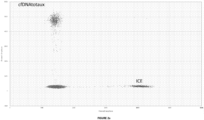
- FIG. 2a the results of co-amplification of cfDNA (RPP30) and ICE by dPCR.
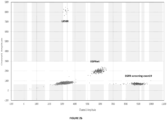
- the Figure 2b represents the analysis of EGFR mutations by the IDEGFR tube mutations ARM-IDEGFR sensi kit.
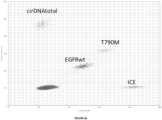
- FIG. 3a illustrates the analysis of EGFR mutations by the IDEGFR tube mutations ARM- IDEGFR resist kit with co-amplification of ICE.
- Figure 3b illustrates the analysis of EGFR mutations by the IDEGFR tube mutations ARM-IDEGFR resist kit.
- the detection/quantification of genomic anomalies concomitant with the measurement of Grewis and/or the exogenous ICE sequence makes it possible to monitor the evolution of the concentration of mutated DNA between the different liquid biopsies carried out longitudinally.
- the targeted treatment is adapted.
- Example 6 Method for detecting/quantifying a donor DNA signature from cfDNA by ddPCR concomitant with the measurement of Grewis and/or the exogenous ICE sequence
- kits for extracting and detecting cfDNA as described in Examples 1 and 4 In combination with a kit for extracting and detecting cfDNA as described in Examples 1 and 4, a kit for detecting and quantifying donor DNA by digital PCR (after transplantation) is used.
- the protocol is similar to the protocol described in Example 5 for mutated DNA, except that the probes used are specific for the donor DNA in replacement of the mutated DNA.
- the detection/quantification of 'donor' DNA concomitant with the measurement of Grewis and/or the exogenous ICE sequence also makes it possible to monitor the evolution of the concentration of 'donor' DNA between the different liquid biopsies carried out longitudinally.
- Example 7 Use of Grewis measurement and/or exogenous ICE sequence in an analytical process of genomic analysis ('hub' role)
- An ANDcf extraction, detection and amplification kit is used according to the protocols described in examples 1 and 4, in the presence of an ICE fragment.
- Example 8 In vitro method to aid in the diagnosis of a pathological condition
Landscapes
- Chemical & Material Sciences (AREA)
- Life Sciences & Earth Sciences (AREA)
- Organic Chemistry (AREA)
- Health & Medical Sciences (AREA)
- Proteomics, Peptides & Aminoacids (AREA)
- Engineering & Computer Science (AREA)
- Zoology (AREA)
- Analytical Chemistry (AREA)
- Wood Science & Technology (AREA)
- Immunology (AREA)
- Genetics & Genomics (AREA)
- Physics & Mathematics (AREA)
- Pathology (AREA)
- Biotechnology (AREA)
- Microbiology (AREA)
- Molecular Biology (AREA)
- General Health & Medical Sciences (AREA)
- General Engineering & Computer Science (AREA)
- Biophysics (AREA)
- Biochemistry (AREA)
- Bioinformatics & Cheminformatics (AREA)
- Oncology (AREA)
- Hospice & Palliative Care (AREA)
- Chemical Kinetics & Catalysis (AREA)
- Measuring Or Testing Involving Enzymes Or Micro-Organisms (AREA)
Priority Applications (1)
| Application Number | Priority Date | Filing Date | Title |
|---|---|---|---|
| SI201831179T SI3565902T1 (sl) | 2017-01-06 | 2018-01-08 | Postopek zaznavanja in kvantificiranja cirkulirajoče dnk in uporabe |
Applications Claiming Priority (2)
| Application Number | Priority Date | Filing Date | Title |
|---|---|---|---|
| FR1750146A FR3061720B1 (fr) | 2017-01-06 | 2017-01-06 | Procede de detection et quantification d'adn circulant et utilisations |
| PCT/FR2018/050038 WO2018127674A1 (fr) | 2017-01-06 | 2018-01-08 | Procede de detection et quantification d'adn circulant et utilisations |
Publications (2)
| Publication Number | Publication Date |
|---|---|
| EP3565902A1 EP3565902A1 (fr) | 2019-11-13 |
| EP3565902B1 true EP3565902B1 (fr) | 2024-09-04 |
Family
ID=59152962
Family Applications (1)
| Application Number | Title | Priority Date | Filing Date |
|---|---|---|---|
| EP18703044.0A Active EP3565902B1 (fr) | 2017-01-06 | 2018-01-08 | Procede de detection et quantification d'adn circulant et utilisations |
Country Status (10)
| Country | Link |
|---|---|
| US (1) | US12049664B2 (da) |
| EP (1) | EP3565902B1 (da) |
| DK (1) | DK3565902T3 (da) |
| ES (1) | ES3005160T3 (da) |
| FI (1) | FI3565902T3 (da) |
| FR (1) | FR3061720B1 (da) |
| PL (1) | PL3565902T4 (da) |
| PT (1) | PT3565902T (da) |
| SI (1) | SI3565902T1 (da) |
| WO (1) | WO2018127674A1 (da) |
Families Citing this family (3)
| Publication number | Priority date | Publication date | Assignee | Title |
|---|---|---|---|---|
| CN110804655B (zh) * | 2019-11-15 | 2023-06-02 | 康美华大基因技术有限公司 | 一种宏基因组绝对定量的方法 |
| WO2021236993A1 (en) | 2020-05-22 | 2021-11-25 | Bloodq, Inc. | Methods for characterizing cell-free nucleic acid fragments |
| FR3158968B1 (fr) * | 2024-02-01 | 2026-01-02 | Adelis | Procédé de prédiction de la réponse d’un patient atteint de cancer à un traitement d’immunothérapie |
Citations (1)
| Publication number | Priority date | Publication date | Assignee | Title |
|---|---|---|---|---|
| WO2014194113A2 (en) * | 2013-05-29 | 2014-12-04 | Chronix Biomedical | Detection and quantification of donor cell-free dna in the circulation of organ transplant recipients |
Family Cites Families (1)
| Publication number | Priority date | Publication date | Assignee | Title |
|---|---|---|---|---|
| US9260745B2 (en) * | 2010-01-19 | 2016-02-16 | Verinata Health, Inc. | Detecting and classifying copy number variation |
-
2017
- 2017-01-06 FR FR1750146A patent/FR3061720B1/fr active Active
-
2018
- 2018-01-08 EP EP18703044.0A patent/EP3565902B1/fr active Active
- 2018-01-08 PT PT187030440T patent/PT3565902T/pt unknown
- 2018-01-08 SI SI201831179T patent/SI3565902T1/sl unknown
- 2018-01-08 DK DK18703044.0T patent/DK3565902T3/da active
- 2018-01-08 ES ES18703044T patent/ES3005160T3/es active Active
- 2018-01-08 PL PL18703044.0T patent/PL3565902T4/pl unknown
- 2018-01-08 WO PCT/FR2018/050038 patent/WO2018127674A1/fr not_active Ceased
- 2018-01-08 US US16/475,737 patent/US12049664B2/en active Active
- 2018-01-08 FI FIEP18703044.0T patent/FI3565902T3/fi active
Patent Citations (1)
| Publication number | Priority date | Publication date | Assignee | Title |
|---|---|---|---|---|
| WO2014194113A2 (en) * | 2013-05-29 | 2014-12-04 | Chronix Biomedical | Detection and quantification of donor cell-free dna in the circulation of organ transplant recipients |
Also Published As
| Publication number | Publication date |
|---|---|
| PT3565902T (pt) | 2025-01-07 |
| FI3565902T3 (fi) | 2024-12-07 |
| DK3565902T3 (da) | 2024-12-09 |
| FR3061720A1 (fr) | 2018-07-13 |
| ES3005160T3 (en) | 2025-03-14 |
| US12049664B2 (en) | 2024-07-30 |
| SI3565902T1 (sl) | 2025-03-31 |
| PL3565902T3 (pl) | 2025-02-17 |
| FR3061720B1 (fr) | 2021-04-16 |
| PL3565902T4 (pl) | 2025-02-17 |
| US20190330684A1 (en) | 2019-10-31 |
| EP3565902A1 (fr) | 2019-11-13 |
| WO2018127674A1 (fr) | 2018-07-12 |
Similar Documents
| Publication | Publication Date | Title |
|---|---|---|
| Scheepbouwer et al. | ALL-tRNAseq enables robust tRNA profiling in tissue samples | |
| CN109837340B (zh) | 用于肺癌无创诊断的外周血基因标记物 | |
| EP3384047B1 (fr) | Procede d'evaluation du risque de complications chez les patients qui presentent un syndrome de reponse inflammatoire systemique (sirs) | |
| Welty et al. | Single cell transcriptomic analysis of prostate cancer cells | |
| EP3117012A1 (en) | Methods of monitoring immunosuppressive therapies in a transplant recipient | |
| US20210147948A1 (en) | Methods for typing of lung cancer | |
| Kennel et al. | Longitudinal profiling of circulating miRNA during cardiac allograft rejection: a proof-of-concept study | |
| Milhoransa et al. | Micro RNA 146a-5p expression in Kidney transplant recipients with delayed graft function | |
| EP3565902A1 (fr) | Procede de detection et quantification d'adn circulant et utilisations | |
| JP2026515558A (ja) | バイオマーカー特定のための方法及び製品 | |
| EP3183363B1 (fr) | Procédé pour déterminer le pronostic de survie d'un patient atteint d'un cancer du pancréas | |
| US20150292012A1 (en) | Biomarkers for nod2 and/or rip2 activity related application | |
| EP4551725A1 (fr) | Determination du risque de deces d'un sujet infecte par un virus respiratoire par mesure du niveau d'expression du gene oas2 | |
| EP2768973A1 (fr) | Méthode de quantification de marqueurs rénaux par dosage urinaire | |
| CA2354607C (fr) | Methode de detection et/ou de quantification d'une fonction connue a partir d'un echantillon d'acides nucleiques | |
| Nuñez-Borque et al. | Study of microRNAs expression in food allergy | |
| EP4596712A1 (en) | Methods of identifying and using biomarkers | |
| WO2020094970A1 (fr) | Methode de diagnostic d'un cancer et kit associe | |
| Ielo | Innovative approaches in chronic myeloid leukemia: from liquid biopsy to genomic characterization beyond BCR:: ABL1 | |
| EP4428253A1 (fr) | Methode de determination de la susceptibilite d'une souche de l'espece mycobacterium tuberculosis au pyrazinamide | |
| WO2015138746A1 (en) | Monitoring immunocompetance using immune repertoire sequencing | |
| Xue | Investigate non-invasive early-diagnostic and prognostic biomarkers of colorectal cancer using targeted RNA sequencing | |
| FR3088077A1 (fr) | Methode de diagnostic d'un cancer et kit associe | |
| WO2019202251A1 (fr) | Evaluation du risque de complication chez un patient suspecté d'avoir une infection ayant un score sofa inférieur à deux |
Legal Events
| Date | Code | Title | Description |
|---|---|---|---|
| STAA | Information on the status of an ep patent application or granted ep patent |
Free format text: STATUS: UNKNOWN |
|
| STAA | Information on the status of an ep patent application or granted ep patent |
Free format text: STATUS: THE INTERNATIONAL PUBLICATION HAS BEEN MADE |
|
| PUAI | Public reference made under article 153(3) epc to a published international application that has entered the european phase |
Free format text: ORIGINAL CODE: 0009012 |
|
| STAA | Information on the status of an ep patent application or granted ep patent |
Free format text: STATUS: REQUEST FOR EXAMINATION WAS MADE |
|
| 17P | Request for examination filed |
Effective date: 20190801 |
|
| AK | Designated contracting states |
Kind code of ref document: A1 Designated state(s): AL AT BE BG CH CY CZ DE DK EE ES FI FR GB GR HR HU IE IS IT LI LT LU LV MC MK MT NL NO PL PT RO RS SE SI SK SM TR |
|
| AX | Request for extension of the european patent |
Extension state: BA ME |
|
| DAV | Request for validation of the european patent (deleted) | ||
| DAX | Request for extension of the european patent (deleted) | ||
| STAA | Information on the status of an ep patent application or granted ep patent |
Free format text: STATUS: EXAMINATION IS IN PROGRESS |
|
| 17Q | First examination report despatched |
Effective date: 20201109 |
|
| REG | Reference to a national code |
Ref country code: DE Ref legal event code: R079 Ipc: C12Q0001680600 Ref country code: DE Ref legal event code: R079 Ref document number: 602018073896 Country of ref document: DE Free format text: PREVIOUS MAIN CLASS: C12Q0001680000 Ipc: C12Q0001680600 |
|
| RIC1 | Information provided on ipc code assigned before grant |
Ipc: C12Q 1/6886 20180101ALI20210823BHEP Ipc: C12Q 1/6806 20180101AFI20210823BHEP |
|
| P01 | Opt-out of the competence of the unified patent court (upc) registered |
Effective date: 20230711 |
|
| GRAP | Despatch of communication of intention to grant a patent |
Free format text: ORIGINAL CODE: EPIDOSNIGR1 |
|
| STAA | Information on the status of an ep patent application or granted ep patent |
Free format text: STATUS: GRANT OF PATENT IS INTENDED |
|
| INTG | Intention to grant announced |
Effective date: 20240328 |
|
| GRAS | Grant fee paid |
Free format text: ORIGINAL CODE: EPIDOSNIGR3 |
|
| GRAA | (expected) grant |
Free format text: ORIGINAL CODE: 0009210 |
|
| STAA | Information on the status of an ep patent application or granted ep patent |
Free format text: STATUS: THE PATENT HAS BEEN GRANTED |
|
| RAP1 | Party data changed (applicant data changed or rights of an application transferred) |
Owner name: ID SOLUTIONS ONCOLOGY |
|
| AK | Designated contracting states |
Kind code of ref document: B1 Designated state(s): AL AT BE BG CH CY CZ DE DK EE ES FI FR GB GR HR HU IE IS IT LI LT LU LV MC MK MT NL NO PL PT RO RS SE SI SK SM TR |
|
| REG | Reference to a national code |
Ref country code: GB Ref legal event code: FG4D Free format text: NOT ENGLISH |
|
| REG | Reference to a national code |
Ref country code: CH Ref legal event code: EP |
|
| REG | Reference to a national code |
Ref country code: IE Ref legal event code: FG4D Free format text: LANGUAGE OF EP DOCUMENT: FRENCH |
|
| REG | Reference to a national code |
Ref country code: DE Ref legal event code: R096 Ref document number: 602018073896 Country of ref document: DE |
|
| REG | Reference to a national code |
Ref country code: FI Ref legal event code: FGE |
|
| REG | Reference to a national code |
Ref country code: DK Ref legal event code: T3 Effective date: 20241203 |
|
| REG | Reference to a national code |
Ref country code: NL Ref legal event code: FP |
|
| REG | Reference to a national code |
Ref country code: LT Ref legal event code: MG9D |
|
| REG | Reference to a national code |
Ref country code: SE Ref legal event code: TRGR |
|
| REG | Reference to a national code |
Ref country code: PT Ref legal event code: SC4A Ref document number: 3565902 Country of ref document: PT Date of ref document: 20250107 Kind code of ref document: T Free format text: AVAILABILITY OF NATIONAL TRANSLATION Effective date: 20241227 |
|
| PG25 | Lapsed in a contracting state [announced via postgrant information from national office to epo] |
Ref country code: GR Free format text: LAPSE BECAUSE OF FAILURE TO SUBMIT A TRANSLATION OF THE DESCRIPTION OR TO PAY THE FEE WITHIN THE PRESCRIBED TIME-LIMIT Effective date: 20241205 |
|
| PG25 | Lapsed in a contracting state [announced via postgrant information from national office to epo] |
Ref country code: BG Free format text: LAPSE BECAUSE OF FAILURE TO SUBMIT A TRANSLATION OF THE DESCRIPTION OR TO PAY THE FEE WITHIN THE PRESCRIBED TIME-LIMIT Effective date: 20240904 |
|
| PG25 | Lapsed in a contracting state [announced via postgrant information from national office to epo] |
Ref country code: LV Free format text: LAPSE BECAUSE OF FAILURE TO SUBMIT A TRANSLATION OF THE DESCRIPTION OR TO PAY THE FEE WITHIN THE PRESCRIBED TIME-LIMIT Effective date: 20240904 |
|
| PG25 | Lapsed in a contracting state [announced via postgrant information from national office to epo] |
Ref country code: HR Free format text: LAPSE BECAUSE OF FAILURE TO SUBMIT A TRANSLATION OF THE DESCRIPTION OR TO PAY THE FEE WITHIN THE PRESCRIBED TIME-LIMIT Effective date: 20240904 |
|
| PG25 | Lapsed in a contracting state [announced via postgrant information from national office to epo] |
Ref country code: RS Free format text: LAPSE BECAUSE OF FAILURE TO SUBMIT A TRANSLATION OF THE DESCRIPTION OR TO PAY THE FEE WITHIN THE PRESCRIBED TIME-LIMIT Effective date: 20241204 |
|
| PG25 | Lapsed in a contracting state [announced via postgrant information from national office to epo] |
Ref country code: RS Free format text: LAPSE BECAUSE OF FAILURE TO SUBMIT A TRANSLATION OF THE DESCRIPTION OR TO PAY THE FEE WITHIN THE PRESCRIBED TIME-LIMIT Effective date: 20241204 Ref country code: LV Free format text: LAPSE BECAUSE OF FAILURE TO SUBMIT A TRANSLATION OF THE DESCRIPTION OR TO PAY THE FEE WITHIN THE PRESCRIBED TIME-LIMIT Effective date: 20240904 Ref country code: HR Free format text: LAPSE BECAUSE OF FAILURE TO SUBMIT A TRANSLATION OF THE DESCRIPTION OR TO PAY THE FEE WITHIN THE PRESCRIBED TIME-LIMIT Effective date: 20240904 Ref country code: GR Free format text: LAPSE BECAUSE OF FAILURE TO SUBMIT A TRANSLATION OF THE DESCRIPTION OR TO PAY THE FEE WITHIN THE PRESCRIBED TIME-LIMIT Effective date: 20241205 Ref country code: BG Free format text: LAPSE BECAUSE OF FAILURE TO SUBMIT A TRANSLATION OF THE DESCRIPTION OR TO PAY THE FEE WITHIN THE PRESCRIBED TIME-LIMIT Effective date: 20240904 |
|
| REG | Reference to a national code |
Ref country code: ES Ref legal event code: FG2A Ref document number: 3005160 Country of ref document: ES Kind code of ref document: T3 Effective date: 20250314 |
|
| PG25 | Lapsed in a contracting state [announced via postgrant information from national office to epo] |
Ref country code: IS Free format text: LAPSE BECAUSE OF FAILURE TO SUBMIT A TRANSLATION OF THE DESCRIPTION OR TO PAY THE FEE WITHIN THE PRESCRIBED TIME-LIMIT Effective date: 20250104 |
|
| PG25 | Lapsed in a contracting state [announced via postgrant information from national office to epo] |
Ref country code: RO Free format text: LAPSE BECAUSE OF FAILURE TO SUBMIT A TRANSLATION OF THE DESCRIPTION OR TO PAY THE FEE WITHIN THE PRESCRIBED TIME-LIMIT Effective date: 20240904 Ref country code: SM Free format text: LAPSE BECAUSE OF FAILURE TO SUBMIT A TRANSLATION OF THE DESCRIPTION OR TO PAY THE FEE WITHIN THE PRESCRIBED TIME-LIMIT Effective date: 20240904 |
|
| PG25 | Lapsed in a contracting state [announced via postgrant information from national office to epo] |
Ref country code: EE Free format text: LAPSE BECAUSE OF FAILURE TO SUBMIT A TRANSLATION OF THE DESCRIPTION OR TO PAY THE FEE WITHIN THE PRESCRIBED TIME-LIMIT Effective date: 20240904 |
|
| PG25 | Lapsed in a contracting state [announced via postgrant information from national office to epo] |
Ref country code: CZ Free format text: LAPSE BECAUSE OF FAILURE TO SUBMIT A TRANSLATION OF THE DESCRIPTION OR TO PAY THE FEE WITHIN THE PRESCRIBED TIME-LIMIT Effective date: 20240904 |
|
| PG25 | Lapsed in a contracting state [announced via postgrant information from national office to epo] |
Ref country code: SK Free format text: LAPSE BECAUSE OF FAILURE TO SUBMIT A TRANSLATION OF THE DESCRIPTION OR TO PAY THE FEE WITHIN THE PRESCRIBED TIME-LIMIT Effective date: 20240904 |
|
| REG | Reference to a national code |
Ref country code: DE Ref legal event code: R097 Ref document number: 602018073896 Country of ref document: DE |
|
| PLBE | No opposition filed within time limit |
Free format text: ORIGINAL CODE: 0009261 |
|
| STAA | Information on the status of an ep patent application or granted ep patent |
Free format text: STATUS: NO OPPOSITION FILED WITHIN TIME LIMIT |
|
| 26N | No opposition filed |
Effective date: 20250605 |
|
| PG25 | Lapsed in a contracting state [announced via postgrant information from national office to epo] |
Ref country code: MC Free format text: LAPSE BECAUSE OF FAILURE TO SUBMIT A TRANSLATION OF THE DESCRIPTION OR TO PAY THE FEE WITHIN THE PRESCRIBED TIME-LIMIT Effective date: 20240904 Ref country code: LU Free format text: LAPSE BECAUSE OF NON-PAYMENT OF DUE FEES Effective date: 20250108 |
|
| PGFP | Annual fee paid to national office [announced via postgrant information from national office to epo] |
Ref country code: NO Payment date: 20251230 Year of fee payment: 9 |
|
| PGFP | Annual fee paid to national office [announced via postgrant information from national office to epo] |
Ref country code: PT Payment date: 20251218 Year of fee payment: 9 |
|
| PGFP | Annual fee paid to national office [announced via postgrant information from national office to epo] |
Ref country code: FI Payment date: 20251224 Year of fee payment: 9 Ref country code: DK Payment date: 20251230 Year of fee payment: 9 |
|
| PGFP | Annual fee paid to national office [announced via postgrant information from national office to epo] |
Ref country code: FR Payment date: 20251212 Year of fee payment: 9 Ref country code: NL Payment date: 20251230 Year of fee payment: 9 |
|
| PGFP | Annual fee paid to national office [announced via postgrant information from national office to epo] |
Ref country code: IE Payment date: 20251223 Year of fee payment: 9 |
|
| PGFP | Annual fee paid to national office [announced via postgrant information from national office to epo] |
Ref country code: PL Payment date: 20251219 Year of fee payment: 9 |
|
| PGFP | Annual fee paid to national office [announced via postgrant information from national office to epo] |
Ref country code: SI Payment date: 20251222 Year of fee payment: 9 |
|
| REG | Reference to a national code |
Ref country code: CH Ref legal event code: U11 Free format text: ST27 STATUS EVENT CODE: U-0-0-U10-U11 (AS PROVIDED BY THE NATIONAL OFFICE) Effective date: 20260201 |
|
| REG | Reference to a national code |
Ref country code: AT Ref legal event code: UEP Ref document number: 1720434 Country of ref document: AT Kind code of ref document: T Effective date: 20240904 |
|
| PGFP | Annual fee paid to national office [announced via postgrant information from national office to epo] |
Ref country code: SE Payment date: 20260127 Year of fee payment: 9 |
|
| PGFP | Annual fee paid to national office [announced via postgrant information from national office to epo] |
Ref country code: GB Payment date: 20260127 Year of fee payment: 9 |
|
| PGFP | Annual fee paid to national office [announced via postgrant information from national office to epo] |
Ref country code: ES Payment date: 20260209 Year of fee payment: 9 |
|
| PGFP | Annual fee paid to national office [announced via postgrant information from national office to epo] |
Ref country code: DE Payment date: 20260114 Year of fee payment: 9 |
|
| PGFP | Annual fee paid to national office [announced via postgrant information from national office to epo] |
Ref country code: AT Payment date: 20251229 Year of fee payment: 9 |
|
| PGFP | Annual fee paid to national office [announced via postgrant information from national office to epo] |
Ref country code: BE Payment date: 20260119 Year of fee payment: 9 Ref country code: IT Payment date: 20260107 Year of fee payment: 9 |
|
| PGFP | Annual fee paid to national office [announced via postgrant information from national office to epo] |
Ref country code: TR Payment date: 20260105 Year of fee payment: 9 |
|
| PGFP | Annual fee paid to national office [announced via postgrant information from national office to epo] |
Ref country code: CH Payment date: 20260201 Year of fee payment: 9 |
|
| PG25 | Lapsed in a contracting state [announced via postgrant information from national office to epo] |
Ref country code: CY Free format text: LAPSE BECAUSE OF FAILURE TO SUBMIT A TRANSLATION OF THE DESCRIPTION OR TO PAY THE FEE WITHIN THE PRESCRIBED TIME-LIMIT Effective date: 20240904 |
|
| PG25 | Lapsed in a contracting state [announced via postgrant information from national office to epo] |
Ref country code: LT Free format text: LAPSE BECAUSE OF FAILURE TO SUBMIT A TRANSLATION OF THE DESCRIPTION OR TO PAY THE FEE WITHIN THE PRESCRIBED TIME-LIMIT Effective date: 20240904 |