EP3564213B1 - Method for preparing l-methionine crystals using crystallization technique - Google Patents
Method for preparing l-methionine crystals using crystallization technique Download PDFInfo
- Publication number
- EP3564213B1 EP3564213B1 EP17886142.3A EP17886142A EP3564213B1 EP 3564213 B1 EP3564213 B1 EP 3564213B1 EP 17886142 A EP17886142 A EP 17886142A EP 3564213 B1 EP3564213 B1 EP 3564213B1
- Authority
- EP
- European Patent Office
- Prior art keywords
- methionine
- crystals
- aqueous solution
- methionine crystals
- agent
- Prior art date
- Legal status (The legal status is an assumption and is not a legal conclusion. Google has not performed a legal analysis and makes no representation as to the accuracy of the status listed.)
- Active
Links
Images



Classifications
-
- B—PERFORMING OPERATIONS; TRANSPORTING
- B01—PHYSICAL OR CHEMICAL PROCESSES OR APPARATUS IN GENERAL
- B01D—SEPARATION
- B01D9/00—Crystallisation
- B01D9/0004—Crystallisation cooling by heat exchange
- B01D9/0013—Crystallisation cooling by heat exchange by indirect heat exchange
-
- C—CHEMISTRY; METALLURGY
- C07—ORGANIC CHEMISTRY
- C07C—ACYCLIC OR CARBOCYCLIC COMPOUNDS
- C07C323/00—Thiols, sulfides, hydropolysulfides or polysulfides substituted by halogen, oxygen or nitrogen atoms, or by sulfur atoms not being part of thio groups
- C07C323/50—Thiols, sulfides, hydropolysulfides or polysulfides substituted by halogen, oxygen or nitrogen atoms, or by sulfur atoms not being part of thio groups containing thio groups and carboxyl groups bound to the same carbon skeleton
- C07C323/51—Thiols, sulfides, hydropolysulfides or polysulfides substituted by halogen, oxygen or nitrogen atoms, or by sulfur atoms not being part of thio groups containing thio groups and carboxyl groups bound to the same carbon skeleton having the sulfur atoms of the thio groups bound to acyclic carbon atoms of the carbon skeleton
- C07C323/57—Thiols, sulfides, hydropolysulfides or polysulfides substituted by halogen, oxygen or nitrogen atoms, or by sulfur atoms not being part of thio groups containing thio groups and carboxyl groups bound to the same carbon skeleton having the sulfur atoms of the thio groups bound to acyclic carbon atoms of the carbon skeleton the carbon skeleton being further substituted by nitrogen atoms, not being part of nitro or nitroso groups
- C07C323/58—Thiols, sulfides, hydropolysulfides or polysulfides substituted by halogen, oxygen or nitrogen atoms, or by sulfur atoms not being part of thio groups containing thio groups and carboxyl groups bound to the same carbon skeleton having the sulfur atoms of the thio groups bound to acyclic carbon atoms of the carbon skeleton the carbon skeleton being further substituted by nitrogen atoms, not being part of nitro or nitroso groups with amino groups bound to the carbon skeleton
-
- C—CHEMISTRY; METALLURGY
- C07—ORGANIC CHEMISTRY
- C07C—ACYCLIC OR CARBOCYCLIC COMPOUNDS
- C07C319/00—Preparation of thiols, sulfides, hydropolysulfides or polysulfides
- C07C319/26—Separation; Purification; Stabilisation; Use of additives
- C07C319/28—Separation; Purification
-
- B—PERFORMING OPERATIONS; TRANSPORTING
- B01—PHYSICAL OR CHEMICAL PROCESSES OR APPARATUS IN GENERAL
- B01D—SEPARATION
- B01D9/00—Crystallisation
- B01D9/0018—Evaporation of components of the mixture to be separated
-
- B—PERFORMING OPERATIONS; TRANSPORTING
- B01—PHYSICAL OR CHEMICAL PROCESSES OR APPARATUS IN GENERAL
- B01D—SEPARATION
- B01D9/00—Crystallisation
- B01D9/005—Selection of auxiliary, e.g. for control of crystallisation nuclei, of crystal growth, of adherence to walls; Arrangements for introduction thereof
-
- B—PERFORMING OPERATIONS; TRANSPORTING
- B01—PHYSICAL OR CHEMICAL PROCESSES OR APPARATUS IN GENERAL
- B01D—SEPARATION
- B01D9/00—Crystallisation
- B01D9/005—Selection of auxiliary, e.g. for control of crystallisation nuclei, of crystal growth, of adherence to walls; Arrangements for introduction thereof
- B01D9/0054—Use of anti-solvent
-
- B—PERFORMING OPERATIONS; TRANSPORTING
- B01—PHYSICAL OR CHEMICAL PROCESSES OR APPARATUS IN GENERAL
- B01D—SEPARATION
- B01D9/00—Crystallisation
- B01D9/0063—Control or regulation
-
- C—CHEMISTRY; METALLURGY
- C07—ORGANIC CHEMISTRY
- C07C—ACYCLIC OR CARBOCYCLIC COMPOUNDS
- C07C319/00—Preparation of thiols, sulfides, hydropolysulfides or polysulfides
- C07C319/14—Preparation of thiols, sulfides, hydropolysulfides or polysulfides of sulfides
- C07C319/20—Preparation of thiols, sulfides, hydropolysulfides or polysulfides of sulfides by reactions not involving the formation of sulfide groups
-
- B—PERFORMING OPERATIONS; TRANSPORTING
- B01—PHYSICAL OR CHEMICAL PROCESSES OR APPARATUS IN GENERAL
- B01D—SEPARATION
- B01D9/00—Crystallisation
- B01D2009/0086—Processes or apparatus therefor
-
- B—PERFORMING OPERATIONS; TRANSPORTING
- B01—PHYSICAL OR CHEMICAL PROCESSES OR APPARATUS IN GENERAL
- B01D—SEPARATION
- B01D9/00—Crystallisation
- B01D2009/0086—Processes or apparatus therefor
- B01D2009/009—Separation of organic compounds by selective or extractive crystallisation with the aid of auxiliary substances forming complex or molecular compounds, e.g. with ureum, thioureum or metal salts
-
- B—PERFORMING OPERATIONS; TRANSPORTING
- B01—PHYSICAL OR CHEMICAL PROCESSES OR APPARATUS IN GENERAL
- B01D—SEPARATION
- B01D9/00—Crystallisation
- B01D9/0059—General arrangements of crystallisation plant, e.g. flow sheets
-
- C—CHEMISTRY; METALLURGY
- C07—ORGANIC CHEMISTRY
- C07B—GENERAL METHODS OF ORGANIC CHEMISTRY; APPARATUS THEREFOR
- C07B2200/00—Indexing scheme relating to specific properties of organic compounds
- C07B2200/13—Crystalline forms, e.g. polymorphs
Definitions
- the present disclosure relates to a method for preparing L-methionine crystals with an increased bulk density, and more specifically, a method for preparing L-methionine crystals, in which the bulk density of the L-methionine crystals is increased using crystallization techniques, such as pH adjustment, heating, and cooling of an aqueous solution of L-methionine.
- Crystallization is a separation technique used to obtain from a solution a desired solute in a solid state, and this process has been widely applied to obtain amino acid crystals with high purity. If it is possible to prepare powder with a large bulk density using the crystallization technique, enhancement of operational conditions can also be expected due to cost reduction in the storage and transportation of the powder and improvement of the powder's rheological characteristics.
- methionine crystals are difficult to stabilize because they are flaky, and coagulants are required for crystallization.
- coagulants are required for crystallization.
- Attempts to increase the bulk density continue to be made.
- these attempts include: a method of making a methionine preparation comprising a step of culturing methionine-producing microorganism in a fermentation medium ( US patent application publication No. 2005/0089975 ), a method for preparing methionine granules, in which methionine powder, water, a binding agent, and a surfactant are mixed and a high shear rate is applied to the mixture ( Korean Patent Application Publication No. 2003-7001521 ); a method for improving a bulk density by a recrystallization method in which a high-temperature methionine solution is injected into a low-temperature methionine suspension ( Japanese Patent Application Publication No.
- the present inventors have made efforts to develop a method for preparing L-methionine crystals with an increased bulk density, and as a result, they have confirmed that the bulk density of L-methionine crystals can be significantly increased when L-methionine crystals are prepared using a crystallization process, in which the pH of an aqueous solution of L-methionine is adjusted, the aqueous solution is heated, a coagulant is added, the pH of the aqueous solution is readjusted and/or the solution is cooled, etc. , thereby completing the present disclosure.
- An object of the present disclosure is to provide a method for preparing L-methionine crystals with an improved bulk density.
- Another object of the present disclosure is to provide L-methionine crystals prepared according to the above method of preparing L-methionine crystals.
- the method for preparing L-methionine crystals of the present disclosure can significantly improve the bulk density of L-methionine compared to other existing methods for preparing L-methionine crystals known in the art.
- the present inventors have developed a method using a pH control agent in the process of crystallizing L-methionine.
- the method for preparing L-methionine crystals of the present disclosure can significantly improve the bulk density of L-methionine compared to other existing methods for preparing L-methionine crystals known in the art.
- an aspect of the present disclosure provides a method for preparing L-methionine crystals, which includes: (a) adding a pH control agent to an aqueous solution containing L-methionine to lower or increase the pH (a step of pH adjustment); (b) heating the aqueous solution containing L-methionine (a step of heat treatment); and (c) extracting L-methionine crystals from the aqueous solution containing L-methionine, which underwent pH adjustment and heat treatment (a step of extraction of crystals).
- L-methionine may be obtained by chemical synthesis or biological synthesis via microbial fermentation, but the method of L-methionine synthesis is not limited thereto.
- the method for preparing L-methionine crystals of the present disclosure may include (a) a step of pH adjustment; (b) a step of heat treatment; and (c) a step of extraction of crystals, and through these steps, L-methionine crystals which are uniform in size and have a high bulk density can be prepared in high yield.
- the term "bulk density” refers to the density measured based on the volume including voids generated between particles when powder is filled into a container.
- the density of powder which is measured after treating the powder by tapping a cylinder filled with the powder with a constant force so as to make the powder within the cylinder dense is called tapped bulk density (hereinafter, "BD").
- BD tapped bulk density
- Step (a) is a step of adding a pH control agent to an aqueous solution containing L-methionine to lower or increase the pH, and in the present disclosure, Step (a) is named "a step of pH adjustment".
- the aqueous solution containing L-methionine may be an aqueous solution in which L-methionine is dissolved in water; or a fermentation liquid of a microorganism containing L-methionine, an enzyme reaction solution, or a chemical reaction solution, but the aqueous solution is not limited thereto.
- the aqueous solution containing L-methionine may contain a material other than L-methionine, but the material to be contained is not limited thereto.
- the aqueous solution containing L-methionine may specifically contain L-methionine in an amount of 20 to 60 parts by weight, more specifically 35 to 50 parts by weight, relative to 300 parts by weight of water, but the amount of L-methionine is not limited thereto and L-methionine may be contained in an appropriate amount by those skilled in the art according to the pH control agent to be added and subsequent processes.
- the L-methionine in the aqueous solution containing L-methionine may be in a state where L-methionine is dissolved completely or part of the L-methionine is not dissolved.
- the term "pH control agent” refers to a material which is added to a solution to adjust the pH, and it may contain both a pH decreasing agent for decreasing the pH and a pH increasing agent for increasing the pH.
- a pH control agent refers to a material which is added to a solution to adjust the pH, and it may contain both a pH decreasing agent for decreasing the pH and a pH increasing agent for increasing the pH.
- the technical feature of the method for preparing the L-methionine crystals of the present disclosure lies in that the method includes a pH adjustment step.
- the technical feature is not limited to any one of decreasing pH or increasing pH, but it should be understood that the addition of a pH control agent to an aqueous solution containing L-methionine causes a change in pH (i.e., a decrease or increase of pH) of the solution, and as a result, according to the increase of solubility of L-methionine, those effects appear in which the bulk density of L-methionine crystals (i.e., final product) increase and the recovery rate due to the increase of the amount of initial input of methionine increases.
- the pH-lowering agent is not limited as long as it can lower the pH of the aqueous solution into which the pH-lowering agent is added, and specifically, the pH-lowering agent may be a H + donor or OH - acceptor.
- the H + donor includes all of the materials capable of donating hydrogen ions to other materials, and may be a strong acid material (e.g., sulfuric acid, hydrochloric acid, etc.), but the H + donor is not limited thereto.
- the OH - acceptor includes all of the materials capable of accepting hydroxide ions of other materials, and specifically an aqueous solution of an ammonium salt, but the OH - acceptor is not limited thereto.
- the pH-increasing agent may not be limited as long as it can increase the pH of the aqueous solution into which the pH-lowering agent is added, and specifically, the pH-increasing agent may be a H + acceptor or OH - donor.
- the H + acceptor includes all of the materials capable of accepting hydrogen ions of other materials, and specifically, the H + acceptor may be an aqueous solution of an acetate salt, but the H + acceptor is not limited thereto.
- the OH - donor includes all of the materials capable of donating hydroxide ions to other materials, and specifically, the OH - donor may be a basic material (e.g., ammonia water, sodium hydroxide, lithium hydroxide, potassium hydroxide, etc.), but the OH - donor is not limited thereto.
- the OH - donor may be a basic material (e.g., ammonia water, sodium hydroxide, lithium hydroxide, potassium hydroxide, etc.), but the OH - donor is not limited thereto.
- a pH control agent which is used in the process of preparing L-methionine crystals by increasing the pH (i.e., a step of pH readjustment) after the preparation of an acidic solution of L-methionine with a low pH (i.e., a step of pH adjustment)
- a H + donor such as a strong acid material (e.g., sulfuric acid, hydrochloric acid, etc.) may be used.
- an OH - donor such as a basic material (e.g.
- ammonia water, sodium hydroxide, lithium hydroxide, potassium hydroxide, etc. may be used.
- an aqueous solution of a salt containing a H + acceptor such as a conjugate base of a weak acid (e.g. , an aqueous solution of an acetate salt), may be used, and as the conjugate base of the weak acid reduces the hydrogen ion concentration in the solution, the pH of the solution is increased, thereby improving the recovery rate.
- an OH - donor such as a strong basic material (e.g. , ammonia water, sodium hydroxide, lithium hydroxide, potassium hydroxide, etc.) may be used.
- a H + donor such as an acidic material (e.g., sulfuric acid, hydrochloric acid, etc.) may be used.
- an aqueous solution of a salt containing an OH - donor such as a conjugate acid of a weak base (e.g. , an aqueous solution of an ammonium salt) may be used, and as the conjugate acid of a weak base reduces the hydroxide ion concentration in the solution, the pH of the solution is lowered, thereby improving the recovery rate.
- the pH control agent is not limited to the examples described above, but any pH control agent may be appropriately selected and used by those skilled in the art as long as L-methionine crystals can ultimately be obtained using the pH control agent without affecting the structure of L-methionine.
- a pH-lowering agent may be added to the aqueous solution containing L-methionine so that the pH of the solution can be adjusted to a pH 1.0 to pH 3.5, and specifically pH 2.0 to pH 3.0; or a pH-increasing agent may be added to the aqueous solution containing L-methionine so that the pH of the solution can be adjusted to pH 7.5 to pH 10.0, and specifically pH 8.0 to pH 9.0, but the adjustment of the pH of the aqueous solution containing L-methionine is not limited thereto.
- the amount of the pH-lowering agent to be added into the aqueous solution containing L-methionine is not limited as long as it can lower the pH of the solution, and the amount may be specifically 2 to 10 parts by weight, and more specifically 4 to 8 parts by weight relative to 300 parts by weight of water.
- the amount of the pH-increasing agent to be added into the aqueous solution containing L-methionine is not limited as long as it can increase the pH of the solution, and the amount may be specifically 1 to 8 parts by weight, and more specifically 2 to 6 parts by weight relative to 300 parts by weight of water.
- Step (b) is a step of heating an aqueous solution containing L-methionine to increase the solubility of L-methionine, and in the present disclosure, Step (b) is named "a step of heat treatment".
- the step of heat treatment may be a step in which the aqueous solution containing L-methionine is specifically heated to a temperature of 40°C to 90°C, more specifically 50°C to 70°C, and even more specifically 55°C to 65°C, but the temperature is not limited thereto.
- Step (a) and Step (b) may be performed simultaneously, sequentially, or in reverse, and the order of performing these steps is not particularly limited. That is, a method in which L-methionine is added to an aqueous solution whose pH is already adjusted followed by heating, and a method in which an aqueous solution whose pH is already adjusted is heated and then L-methionine is added thereto fall within the scope of the present disclosure, and the time point of adding L-methionine does not affect the results of the present disclosure.
- Step (c) is a step to extract L-methionine crystals from the aqueous solution containing L-methionine, which underwent pH adjustment and heat treatment, and in the present disclosure, Step (c) is named "a step of extraction of crystals".
- Step (c) refers to a step in which crystal nuclei of L-methionine are formed, crystal nuclei of L-methionine are formed and grown, or the crystal nuclei formed from a previous step are grown, and L-methionine crystals can be obtained by Step (c).
- the step of extraction of crystals may be performed by a crystallization method known in the art, such as methods of concentration by evaporation, cooling, adiabatic evaporation, addition of compounds, etc. , but the crystallization method is not limited thereto.
- the method for preparing L-methionine crystals of the present disclosure may further include a step of (b-2), in which a pH control agent is added to the aqueous solution containing L-methionine to increase or lower the pH (a step of pH readjustment) between Step (b) and Step (c) or in Step (c).
- the bulk density of L-methionine crystals can be further increased via pH readjustment by adding a pH control agent in a state where the pH is already adjusted through Step (a).
- L-methionine crystals can be formed through an instant pH increase/decrease by adding a pH control agent to an aqueous solution containing L-methionine.
- the pH control agent used in the step of pH adjustment is a pH-increasing agent
- the pH control agent used in the step of pH readjustment may be a pH-lowering agent
- the pH control agent used in the step of pH readjustment may be a pH-increasing agent
- the solubility of L-methionine may conversely be decreased according to the decrease or increase of the pH by the treatment of a pH control agent in the step of pH readjustment.
- crystallization of L-methionine(neutralization crystallization of L-methionine) may occur, and through such a process, the bulk density of L-methionine crystals (i.e., the final product) may be increased.
- a pH-increasing agent may be added to the aqueous solution, whose pH was decreased in the step of pH adjustment, so as to readjust its pH to pH 2.0 to pH 5.0, and specifically to pH 3.0 to pH 4.0; or alternatively, a pH-lowering agent may be added to the aqueous solution, whose pH was increased in the step of pH adjustment, so as to readjust its pH to pH 6.0 to pH 9.0, and specifically to pH 7.0 to pH 8.0, but the step of pH readjustment is not limited thereto.
- the method for preparing L-methionine crystals of the present disclosure may further include a step of (b-1), in which a coagulant is added to the aqueous solution containing L-methionine (a step of addition of a coagulant), before Step (b-2) (i.e., a step of pH readjustment).
- Step (b-2) i.e., a step of pH readjustment
- the bulk density of L-methionine crystals may be increased by adding a coagulant before the step of pH readjustment so as to improve the efficiency of neutralization crystallization.
- the coagulant may be specifically an aromatic compound, and more specifically, acetylsalicylic acid, acetaminophen, benzoic acid, salicylic acid, gallic acid, L-tyrosine, L-phenylalanine, or a combination thereof, but the coagulant is not limited thereto.
- the coagulant may be added in an amount of 0.1 to 50 parts by weight, specifically 0.5 to 10 parts by weight, and more specifically 1 to 5 parts by weight relative to 300 parts by weight of L-methionine, but the amount of the coagulant is not limited thereto.
- the method for preparing L-methionine crystals of the present disclosure may further include a step of (b-3) cooling the aqueous solution containing L-methionine (i.e., a step of cooling) before or during Step (c) (i.e., a step of extraction of crystals).
- the cooling step is a step to cool the heat-treated aqueous solution containing L-methionine, and the crystallization of L-methionine can be induced by the cooling step.
- the cooling step may be performed before the step of extraction of crystals; alternatively, it may be performed simultaneously with the step of extraction of crystals or as the step of extraction of crystals itself in the step of extraction of crystals.
- the cooling step of the present disclosure may be performed after the step of pH readjustment.
- L-Methionine crystals with a significantly improved bulk density can be obtained by cooling the suspension which contains L-methionine crystals produced in the step of pH readjustment.
- the cooling step may be to cool the heat-treated aqueous solution containing L-methionine to a temperature of 5°C to 39°C, and specifically 15°C to 35°C, and at a rate of 20°C/h or less, and specifically 12°C/h or less, 9°C/h or less, 6°C/h or less, 3°C/h or less, or 1°C/h or less, but the cooling step is not limited thereto.
- Another aspect of the present disclosure is to provide L-methionine crystals which are prepared by the above method for preparing L-methionine crystals.
- the L-methionine crystals and preparation method thereof are as described above.
- L-Methionine crystals were obtained in the same manner as in Example 3, except that acetaminophen (2 g) was added as a coagulant instead of acetylsalicylic acid.
- the BD of the obtained L-methionine crystals was 590 g/L.
- L-Methionine crystals were obtained in the same manner as in Example 3, except that benzoic acid (2 g) was added as a coagulant instead of acetylsalicylic acid.
- the BD of the obtained L-methionine crystals was 590 g/L.
- L-Methionine crystals were obtained in the same manner as in Example 3, except that salicylic acid (2 g) was added as a coagulant instead of acetylsalicylic acid.
- the BD of the obtained L-methionine crystals was 580 g/L.
- L-Methionine crystals were obtained in the same manner as in Example 3, except that gallic acid (2 g) was added as a coagulant instead of acetylsalicylic acid.
- the BD of the obtained L-methionine crystals was 570 g/L.
- L-Methionine crystals were obtained in the same manner as in Example 3, except that L-tyrosine (2 g) was added as a coagulant instead of acetylsalicylic acid.
- the BD of the obtained L-methionine crystals was 570 g/L.
- L-Methionine crystals were obtained in the same manner as in Example 3, except that L-phenylalanine (2 g) was added as a coagulant instead of acetylsalicylic acid.
- the BD of the obtained L-methionine crystals was 560 g/L.
- L-Methionine crystals were obtained in the same manner as in Example 3, except that no coagulant was used.
- the BD of the obtained L-methionine crystals was 520 g/L.
- L-Methionine crystals were obtained in the same manner as in Example 3, except that 15 mL of an aqueous solution of lithium acetate (a 1:1 mass ratio between lithium acetate and water) was injected as a pH-increasing agent instead of ammonium acetate.
- the pH of the suspension was increased to pH 3.66 and the BD of the obtained L-methionine crystals was 580 g/L.
- L-Methionine crystals were obtained in the same manner as in Example 10, except that no coagulant was used.
- the BD of the obtained L-methionine crystals was 500 g/L.
- L-Methionine crystals were obtained in the same manner as in Example 3, except that 15 mL of an aqueous solution of sodium acetate (a 1:1 mass ratio between sodium acetate and water) was injected as a pH-increasing agent instead of ammonium acetate.
- the pH of the suspension was increased to pH 3.36 and the BD of the obtained L-methionine crystals was 550 g/L.
- L-Methionine crystals were obtained in the same manner as in Example 11, except that no coagulant was used.
- the BD of the obtained L-methionine crystals was 500 g/L.
- L-Methionine crystals were obtained in the same manner as in Example 3, except that 15 mL of an aqueous solution of potassium acetate (a 1:1 mass ratio between potassium acetate and water) was injected as a pH-increasing agent instead of ammonium acetate.
- the pH of the suspension was increased to pH 3.26 and the BD of the obtained L-methionine crystals was 560 g/L.
- L-Methionine crystals were obtained in the same manner as in Example 12, except that no coagulant was used.
- the BD of the obtained L-methionine crystals was 490 g/L.
- L-Methionine crystals were obtained in the same manner as in Example 3, except that 4.2 g of sodium hydroxide was injected as a pH-increasing agent instead of an aqueous solution of ammonium acetate.
- the pH of the suspension was increased to pH 3.43 and the BD of the obtained L-methionine crystals was 530 g/L.
- L-Methionine crystals were obtained in the same manner as in Example 13, except that no coagulant was used.
- the BD of the obtained L-methionine crystals was 450 g/L.
- L-Methionine crystals were obtained in the same manner as in Example 3, except that 7 mL of ammonia water was injected as a pH-increasing agent instead of an aqueous solution of ammonium acetate.
- the pH of the suspension was increased to pH 3.65 and the BD of the obtained L-methionine crystals was 600 g/L.
- L-Methionine crystals were obtained in the same manner as in Example 14, except that no coagulant was used.
- the BD of the obtained L-methionine crystals was 510 g/L.
- L-methionine After adding 4 g of sodium hydroxide as a pH control agent to 300 g of water as a solvent, 40g of L-methionine was dissolved at 60°C to prepare an aqueous solution of L-methionine (pH 8.15). 2 g of acetylsalicylic acid as a coagulant was added to the solution, and then 15 mL of an aqueous solution of ammonium acetate (a 6:1 mass ratio between ammonium acetate and water) as a pH-lowering agent was injected thereinto to obtain L-methionine crystals. In particular, the pH of the suspension was decreased to pH 7.84 and the BD of the obtained L-methionine crystals was 500 g/L.
- L-Methionine crystals were obtained in the same manner as in Example 15, except that no coagulant was used.
- the BD of the obtained L-methionine crystals was 450 g/L.
- L-Methionine crystals were obtained in the same manner as in Example 15, except that 2 mL of sulfuric acid was injected as a pH-lowering agent instead of a 6:1 aqueous solution of ammonium acetate.
- the pH of the suspension was decreased to pH 7.46 and the BD of the obtained L-methionine crystals was 480 g/L.
- L-Methionine crystals were obtained in the same manner as in Example 16, except that no coagulant was used.
- the BD of the obtained L-methionine crystals was 460 g/L.
- L-Methionine crystals were obtained in the same manner as in Example 17, except that the suspension was cooled to 30°C at a rate of 9°C/h instead of 12°C/h.
- the BD of the obtained L-methionine crystals was 730 g/L.
- L-Methionine crystals were obtained in the same manner as in Example 17, except that the suspension was cooled to 30°C at a rate of 6°C/h instead of 12°C/h.
- the BD of the obtained L-methionine crystals was 750 g/L.
- L-Methionine crystals were obtained in the same manner as in Example 17, except that the suspension was cooled to 30°C at a rate of 3°C/h instead of 12°C/h.
- the BD of the obtained L-methionine crystals was 760 g/L.
- L-Methionine crystals were obtained in the same manner as in Example 17, except that the suspension was cooled to 30°C at a rate of 1°C/h instead of 12°C/h.
- the BD of the obtained L-methionine crystals was 800 g/L.
- L-Methionine crystals were obtained in the same manner as in Example 19, except that no coagulant was used.
- the BD of the obtained L-methionine crystals was 630 g/L.
- the L-methionine crystals obtained by the cooling crystallization process of the present disclosure showed significantly higher BD values compared to the L-methionine crystals obtained by a common cooling crystallization process in which the step of pH adjustment and the step of pH readjustment are absent.
- Example 22 and Comparative Examples 12 and 13 Preparation of L-methionine crystals by treating aqueous solution of L-methionine with pH control agent (NaOH) and pH-lowering agent (ammonium acetate)
- L-Methionine crystals were obtained in the same manner as in Example 22, except that no coagulant was used.
- the BD of the obtained L-methionine crystals was 660 g/L.
- the L-methionine crystals obtained by the cooling crystallization process of the present disclosure showed significantly higher BD values compared to the L-methionine crystals obtained by a common cooling crystallization process in which the step of pH adjustment and the step of pH readjustment are absent.
- Example 22 and Comparative Examples 12 and 13 are summarized in Table 6 below.
- Step Additives and Others (Based on 300 g of Solvent) Ex. 22 Comp. Ex. 12 Comp. Ex. 13 Step of pH Adjustment L-Methionine 40 g 40 g L-Methionine (40 g), sodium hydroxide, pH-lowering agent, and coagulant (the same as those in the left) are injected simultaneously in the step of pH adjustment and heated to 60°C.
Landscapes
- Chemical & Material Sciences (AREA)
- Organic Chemistry (AREA)
- Chemical Kinetics & Catalysis (AREA)
- Crystallography & Structural Chemistry (AREA)
- Physics & Mathematics (AREA)
- Thermal Sciences (AREA)
- Organic Low-Molecular-Weight Compounds And Preparation Thereof (AREA)
- Preparation Of Compounds By Using Micro-Organisms (AREA)
Description
- The present disclosure relates to a method for preparing L-methionine crystals with an increased bulk density, and more specifically, a method for preparing L-methionine crystals, in which the bulk density of the L-methionine crystals is increased using crystallization techniques, such as pH adjustment, heating, and cooling of an aqueous solution of L-methionine.
- Crystallization is a separation technique used to obtain from a solution a desired solute in a solid state, and this process has been widely applied to obtain amino acid crystals with high purity. If it is possible to prepare powder with a large bulk density using the crystallization technique, enhancement of operational conditions can also be expected due to cost reduction in the storage and transportation of the powder and improvement of the powder's rheological characteristics.
- Meanwhile, it is generally known that methionine crystals are difficult to stabilize because they are flaky, and coagulants are required for crystallization. However, even when these coagulants are used, there is still a limitation with regard to the increase of the bulk density of methionine crystals, and studies to increase the bulk density of methionine crystals are underway.
- Attempts to increase the bulk density continue to be made. Examples of these attempts include: a method of making a methionine preparation comprising a step of culturing methionine-producing microorganism in a fermentation medium (
US patent application publication No. 2005/0089975 ), a method for preparing methionine granules, in which methionine powder, water, a binding agent, and a surfactant are mixed and a high shear rate is applied to the mixture (Korean Patent Application Publication No. 2003-7001521 Japanese Patent Application Publication No. 2004-292324 Japanese Patent Application Publication No. 2004-292324 Korean Patent Application Publication No. 2014-0138946 - The present inventors have made efforts to develop a method for preparing L-methionine crystals with an increased bulk density, and as a result, they have confirmed that the bulk density of L-methionine crystals can be significantly increased when L-methionine crystals are prepared using a crystallization process, in which the pH of an aqueous solution of L-methionine is adjusted, the aqueous solution is heated, a coagulant is added, the pH of the aqueous solution is readjusted and/or the solution is cooled, etc., thereby completing the present disclosure.
- An object of the present disclosure is to provide a method for preparing L-methionine crystals with an improved bulk density.
- Another object of the present disclosure is to provide L-methionine crystals prepared according to the above method of preparing L-methionine crystals.
- The method for preparing L-methionine crystals of the present disclosure can significantly improve the bulk density of L-methionine compared to other existing methods for preparing L-methionine crystals known in the art.
-
-
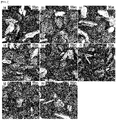
FIG. 1 shows SEM images of L-methionine crystals, in whichFIGS. 1(a) and 1(b) show the SEM images of L-methionine crystals obtained according to Examples 1 and 2 of the present disclosure, andFIG. 1(c) shows the SEM image of L-methionine crystals obtained according to Comparative Example 1 of the present disclosure. -
FIG. 2 shows SEM images of L-methionine crystals, in whichFIGS. 2(a) to 2(g) show the SEM images of L-methionine crystals obtained according to Examples 3 to 9 of the present disclosure, respectively, andFIG. 2(h) shows the SEM image of L-methionine crystals obtained according to Comparative Example 2 of the present disclosure. -
FIG. 3 shows SEM images of L-methionine crystals, in which all of the images on the left ofFIG. 3 are the SEM images of L-methionine crystals obtained according to Examples, whereas all of the images on the right ofFIG. 3 are the SEM images of L-methionine crystals obtained according to Comparative Examples. Specifically,FIGS. 3(a), 3(c), 3(e), 3(g), and 3(i) show the SEM images of L-methionine crystals obtained according to Examples 10 to 14 of the present disclosure, respectively, andFIGS. 3(b), 3(d), 3(f), 3(h), and 3(j) show the SEM images of L-methionine crystals obtained according to Comparative Examples 3 to 7 of the present disclosure. -
FIG. 4 shows SEM images of L-methionine crystals, in whichFIGS. 4(a) and 4(c) show the SEM images of L-methionine crystals obtained according to Examples 15 and 16 of the present disclosure, andFIGS. 4(b) and 4(d) show the SEM images of L-methionine crystals obtained according to Comparative Examples 8 and 9 of the present disclosure. -
FIG. 5 shows SEM images of L-methionine crystals, in whichFIGS. 5(a) to 5(e) show the SEM images of L-methionine crystals obtained according to Examples 17 to 21 of the present disclosure, respectively, andFIGS. 5(f) and 5(g) show the SEM images of L-methionine crystals obtained according to Comparative Examples 10 and 11 of the present disclosure. -
FIG. 6 shows SEM images of L-methionine crystals, in whichFIG. 6(a) shows the SEM image of L-methionine crystals obtained according to Example 22 of the present disclosure, andFIGS. 6(b) and 6(c) show the SEM images of L-methionine crystals obtained according to Comparative Examples 12 and 13 of the present disclosure. -
FIG. 7 shows a schematic diagram illustrating the constitution of an apparatus capable of performing the method for preparing L-methionine crystals of the present disclosure. As illustrated, the apparatus includes ajacket crystallizer 1, athermostat 2, animpeller 3, astirrer 4, athermometer 5, apH adjuster injector 6, and a pH meter 7. - To develop a method for preparing L-methionine crystals with an improved bulk density, the present inventors have developed a method using a pH control agent in the process of crystallizing L-methionine. The method for preparing L-methionine crystals of the present disclosure can significantly improve the bulk density of L-methionine compared to other existing methods for preparing L-methionine crystals known in the art.
- The present disclosure is described in detail as follows. Meanwhile, respective descriptions and embodiments disclosed in the present disclosure may also be applied to other descriptions and embodiments. That is, all combinations of various elements disclosed in the present disclosure fall within the scope of the present invention. Further, the scope of the present invention is not limited by the specific description below.
- To achieve the above objects, an aspect of the present disclosure provides a method for preparing L-methionine crystals, which includes: (a) adding a pH control agent to an aqueous solution containing L-methionine to lower or increase the pH (a step of pH adjustment); (b) heating the aqueous solution containing L-methionine (a step of heat treatment); and (c) extracting L-methionine crystals from the aqueous solution containing L-methionine, which underwent pH adjustment and heat treatment (a step of extraction of crystals).
- As used herein, "L-methionine" may be obtained by chemical synthesis or biological synthesis via microbial fermentation, but the method of L-methionine synthesis is not limited thereto. The method for preparing L-methionine crystals of the present disclosure may include (a) a step of pH adjustment; (b) a step of heat treatment; and (c) a step of extraction of crystals, and through these steps, L-methionine crystals which are uniform in size and have a high bulk density can be prepared in high yield.
- As used herein, the term "bulk density" refers to the density measured based on the volume including voids generated between particles when powder is filled into a container. In particular, the density of powder which is measured after treating the powder by tapping a cylinder filled with the powder with a constant force so as to make the powder within the cylinder dense is called tapped bulk density (hereinafter, "BD"). Although the bulk density confirmed in Examples of the present disclosure was "BD", it is apparent to those skilled in the art that the bulk density, tapped bulk density, and "BD" are proportional to one another, and thus, these terms are used interchangeably in the present disclosure. Hereinafter, the method for preparing L-methionine crystals will be described in detail.
- Step (a) is a step of adding a pH control agent to an aqueous solution containing L-methionine to lower or increase the pH, and in the present disclosure, Step (a) is named "a step of pH adjustment".
- In Step (a), the aqueous solution containing L-methionine may be an aqueous solution in which L-methionine is dissolved in water; or a fermentation liquid of a microorganism containing L-methionine, an enzyme reaction solution, or a chemical reaction solution, but the aqueous solution is not limited thereto.
- Additionally, the aqueous solution containing L-methionine may contain a material other than L-methionine, but the material to be contained is not limited thereto.
- Additionally, the aqueous solution containing L-methionine may specifically contain L-methionine in an amount of 20 to 60 parts by weight, more specifically 35 to 50 parts by weight, relative to 300 parts by weight of water, but the amount of L-methionine is not limited thereto and L-methionine may be contained in an appropriate amount by those skilled in the art according to the pH control agent to be added and subsequent processes.
- Additionally, the L-methionine in the aqueous solution containing L-methionine may be in a state where L-methionine is dissolved completely or part of the L-methionine is not dissolved.
- As used herein, the term "pH control agent" refers to a material which is added to a solution to adjust the pH, and it may contain both a pH decreasing agent for decreasing the pH and a pH increasing agent for increasing the pH. In the present disclosure, it was confirmed that only the inclusion of a step of adding a pH control agent to an aqueous solution containing L-methionine during the process of preparing L-methionine crystals significantly increases the bulk density of the prepared L-methionine crystals. That is, the technical feature of the method for preparing the L-methionine crystals of the present disclosure lies in that the method includes a pH adjustment step. The technical feature is not limited to any one of decreasing pH or increasing pH, but it should be understood that the addition of a pH control agent to an aqueous solution containing L-methionine causes a change in pH (i.e., a decrease or increase of pH) of the solution, and as a result, according to the increase of solubility of L-methionine, those effects appear in which the bulk density of L-methionine crystals (i.e., final product) increase and the recovery rate due to the increase of the amount of initial input of methionine increases.
- In the present disclosure, the pH-lowering agent is not limited as long as it can lower the pH of the aqueous solution into which the pH-lowering agent is added, and specifically, the pH-lowering agent may be a H+ donor or OH- acceptor. The H+ donor includes all of the materials capable of donating hydrogen ions to other materials, and may be a strong acid material (e.g., sulfuric acid, hydrochloric acid, etc.), but the H+ donor is not limited thereto. Additionally, the OH- acceptor includes all of the materials capable of accepting hydroxide ions of other materials, and specifically an aqueous solution of an ammonium salt, but the OH- acceptor is not limited thereto.
- In the present disclosure, the pH-increasing agent may not be limited as long as it can increase the pH of the aqueous solution into which the pH-lowering agent is added, and specifically, the pH-increasing agent may be a H+ acceptor or OH- donor. The H+ acceptor includes all of the materials capable of accepting hydrogen ions of other materials, and specifically, the H+ acceptor may be an aqueous solution of an acetate salt, but the H+ acceptor is not limited thereto. Additionally, the OH- donor includes all of the materials capable of donating hydroxide ions to other materials, and specifically, the OH- donor may be a basic material (e.g., ammonia water, sodium hydroxide, lithium hydroxide, potassium hydroxide, etc.), but the OH- donor is not limited thereto.
- Specifically, in the case of a pH control agent which is used in the process of preparing L-methionine crystals by increasing the pH (i.e., a step of pH readjustment) after the preparation of an acidic solution of L-methionine with a low pH (i.e., a step of pH adjustment), as the pH-lowering agent to be used in the pH adjustment, a H+ donor such as a strong acid material (e.g., sulfuric acid, hydrochloric acid, etc.) may be used. Then, as the pH-increasing agent to be used in the step of pH readjustment for preparing L-methionine crystals, an OH- donor such as a basic material (e.g., ammonia water, sodium hydroxide, lithium hydroxide, potassium hydroxide, etc.) may be used. Additionally, since the hydrogen ion concentration in the solution is very high, an aqueous solution of a salt containing a H+ acceptor, such as a conjugate base of a weak acid (e.g., an aqueous solution of an acetate salt), may be used, and as the conjugate base of the weak acid reduces the hydrogen ion concentration in the solution, the pH of the solution is increased, thereby improving the recovery rate.
- Additionally, in the case of a pH control agent which is used in the process of preparing L-methionine crystals by lowering the pH (i.e., a step of pH readjustment) after the preparation of a basic solution of L-methionine with a high pH (i.e., a step of pH adjustment), as the pH-increasing agent to be used in the pH adjustment, an OH- donor such as a strong basic material (e.g., ammonia water, sodium hydroxide, lithium hydroxide, potassium hydroxide, etc.) may be used. Then, as the pH-lowering agent to be used in the step of pH readjustment for preparing L-methionine crystals, a H+ donor such as an acidic material (e.g., sulfuric acid, hydrochloric acid, etc.) may be used. Additionally, since the hydroxide ion concentration in the solution is very high, an aqueous solution of a salt containing an OH- donor, such as a conjugate acid of a weak base (e.g., an aqueous solution of an ammonium salt), may be used, and as the conjugate acid of a weak base reduces the hydroxide ion concentration in the solution, the pH of the solution is lowered, thereby improving the recovery rate.
- However, the pH control agent is not limited to the examples described above, but any pH control agent may be appropriately selected and used by those skilled in the art as long as L-methionine crystals can ultimately be obtained using the pH control agent without affecting the structure of L-methionine.
- In the present disclosure, a pH-lowering agent may be added to the aqueous solution containing L-methionine so that the pH of the solution can be adjusted to a pH 1.0 to pH 3.5, and specifically pH 2.0 to pH 3.0; or a pH-increasing agent may be added to the aqueous solution containing L-methionine so that the pH of the solution can be adjusted to pH 7.5 to pH 10.0, and specifically pH 8.0 to pH 9.0, but the adjustment of the pH of the aqueous solution containing L-methionine is not limited thereto.
- In the present disclosure, the amount of the pH-lowering agent to be added into the aqueous solution containing L-methionine is not limited as long as it can lower the pH of the solution, and the amount may be specifically 2 to 10 parts by weight, and more specifically 4 to 8 parts by weight relative to 300 parts by weight of water.
- In the present disclosure, the amount of the pH-increasing agent to be added into the aqueous solution containing L-methionine is not limited as long as it can increase the pH of the solution, and the amount may be specifically 1 to 8 parts by weight, and more specifically 2 to 6 parts by weight relative to 300 parts by weight of water.
- Step (b) is a step of heating an aqueous solution containing L-methionine to increase the solubility of L-methionine, and in the present disclosure, Step (b) is named "a step of heat treatment".
- The step of heat treatment may be a step in which the aqueous solution containing L-methionine is specifically heated to a temperature of 40°C to 90°C, more specifically 50°C to 70°C, and even more specifically 55°C to 65°C, but the temperature is not limited thereto.
- Step (a) and Step (b) may be performed simultaneously, sequentially, or in reverse, and the order of performing these steps is not particularly limited. That is, a method in which L-methionine is added to an aqueous solution whose pH is already adjusted followed by heating, and a method in which an aqueous solution whose pH is already adjusted is heated and then L-methionine is added thereto fall within the scope of the present disclosure, and the time point of adding L-methionine does not affect the results of the present disclosure.
- Finally, Step (c) is a step to extract L-methionine crystals from the aqueous solution containing L-methionine, which underwent pH adjustment and heat treatment, and in the present disclosure, Step (c) is named "a step of extraction of crystals".
- As used herein, the term "crystallization" refers to a phenomenon in which a liquid or a solid in a non-crystalline state forms a crystal, and is accompanied by two phenomena called nucleation and crystal growth. Accordingly, Step (c) refers to a step in which crystal nuclei of L-methionine are formed, crystal nuclei of L-methionine are formed and grown, or the crystal nuclei formed from a previous step are grown, and L-methionine crystals can be obtained by Step (c).
- The step of extraction of crystals may be performed by a crystallization method known in the art, such as methods of concentration by evaporation, cooling, adiabatic evaporation, addition of compounds, etc., but the crystallization method is not limited thereto.
- The method for preparing L-methionine crystals of the present disclosure may further include a step of (b-2), in which a pH control agent is added to the aqueous solution containing L-methionine to increase or lower the pH (a step of pH readjustment) between Step (b) and Step (c) or in Step (c).
- The bulk density of L-methionine crystals can be further increased via pH readjustment by adding a pH control agent in a state where the pH is already adjusted through Step (a).
- In the step of pH readjustment of the present disclosure, L-methionine crystals can be formed through an instant pH increase/decrease by adding a pH control agent to an aqueous solution containing L-methionine.
- In particular, in a case where the pH control agent used in the step of pH adjustment is a pH-increasing agent, the pH control agent used in the step of pH readjustment may be a pH-lowering agent, whereas in a case where the pH control agent used in the step of pH adjustment is a pH-lowering agent, the pH control agent used in the step of pH readjustment may be a pH-increasing agent.
- Specifically, in a state where the solubility of L-methionine is increased according to the increase or decrease of the pH by the treatment of a pH control agent in the step of pH adjustment, the solubility of L-methionine may conversely be decreased according to the decrease or increase of the pH by the treatment of a pH control agent in the step of pH readjustment. As a result, crystallization of L-methionine(neutralization crystallization of L-methionine) may occur, and through such a process, the bulk density of L-methionine crystals (i.e., the final product) may be increased.
- In the step of pH readjustment of the present disclosure, a pH-increasing agent may be added to the aqueous solution, whose pH was decreased in the step of pH adjustment, so as to readjust its pH to pH 2.0 to pH 5.0, and specifically to pH 3.0 to pH 4.0; or alternatively, a pH-lowering agent may be added to the aqueous solution, whose pH was increased in the step of pH adjustment, so as to readjust its pH to pH 6.0 to pH 9.0, and specifically to pH 7.0 to pH 8.0, but the step of pH readjustment is not limited thereto.
- Additionally, the method for preparing L-methionine crystals of the present disclosure may further include a step of (b-1), in which a coagulant is added to the aqueous solution containing L-methionine (a step of addition of a coagulant), before Step (b-2) (i.e., a step of pH readjustment).
- As described above, since neutralization crystallization is possible via Step (b-2) (i.e., a step of pH readjustment), the bulk density of L-methionine crystals may be increased by adding a coagulant before the step of pH readjustment so as to improve the efficiency of neutralization crystallization.
- The coagulant may be specifically an aromatic compound, and more specifically, acetylsalicylic acid, acetaminophen, benzoic acid, salicylic acid, gallic acid, L-tyrosine, L-phenylalanine, or a combination thereof, but the coagulant is not limited thereto.
- The coagulant may be added in an amount of 0.1 to 50 parts by weight, specifically 0.5 to 10 parts by weight, and more specifically 1 to 5 parts by weight relative to 300 parts by weight of L-methionine, but the amount of the coagulant is not limited thereto.
- Furthermore, the method for preparing L-methionine crystals of the present disclosure may further include a step of (b-3) cooling the aqueous solution containing L-methionine (i.e., a step of cooling) before or during Step (c) (i.e., a step of extraction of crystals).
- The cooling step is a step to cool the heat-treated aqueous solution containing L-methionine, and the crystallization of L-methionine can be induced by the cooling step. The cooling step may be performed before the step of extraction of crystals; alternatively, it may be performed simultaneously with the step of extraction of crystals or as the step of extraction of crystals itself in the step of extraction of crystals.
- Additionally, the cooling step of the present disclosure may be performed after the step of pH readjustment. L-Methionine crystals with a significantly improved bulk density can be obtained by cooling the suspension which contains L-methionine crystals produced in the step of pH readjustment.
- The cooling step may be to cool the heat-treated aqueous solution containing L-methionine to a temperature of 5°C to 39°C, and specifically 15°C to 35°C, and at a rate of 20°C/h or less, and specifically 12°C/h or less, 9°C/h or less, 6°C/h or less, 3°C/h or less, or 1°C/h or less, but the cooling step is not limited thereto.
- Another aspect of the present disclosure is to provide L-methionine crystals which are prepared by the above method for preparing L-methionine crystals.
- The L-methionine crystals and preparation method thereof are as described above.
- Hereinafter, the present disclosure will be described in detail through exemplary embodiments. However, these exemplary embodiments are provided only as a guide to the understanding of the present disclosure and are not intended to limit the scope of the present disclosure.
- After adding 6 g of sulfuric acid as a pH control agent to 300 g of water as a solvent, 45 g of L-methionine was dissolved at 60°C to prepare an aqueous solution of L-methionine (pH 2.50). The solution was cooled to 30°C at a rate of 6°C/h using a temperature control program in a constant-temperature bath to obtain L-methionine crystals. The BD of the obtained crystals was 370 g/L. In this Example, the BD was measured using the ABD Powder Characteristics Measuring Instrument (Tsutsui Scientific Instruments Corporation).
- After adding 4 g of sodium hydroxide as a pH control agent to 300 g of water as a solvent, 40 g of L-methionine was dissolved at 60°C to prepare an aqueous solution of L-methionine (pH 8.15). The solution was cooled to 30°C at a rate of 6°C/h using a temperature control program in a constant-temperature bath to obtain L-methionine crystals. The BD of the obtained crystals was 350 g/L.
- 27 g of L-methionine was dissolved in 300 g of water as a solvent at 60°C without using a pH control agent, and thereby a neutral aqueous solution of L-methionine was prepared. The solution was cooled to 30°C at a rate of 6°C/h using a temperature control program in a constant-temperature bath to obtain L-methionine crystals. The BD of the obtained crystals was 190 g/L.
- As illustrated in SEM images of L-methionine crystals in
FIG. 1 , it was confirmed that the BD of the L-methionine crystals prepared in Examples 1 and 2 and Comparative Example 1 was significantly increased according to pH adjustment of the aqueous solution of L-methionine. - The results of Examples 1 and 2 and Comparative Example 1 are summarized in Table 1 below.
[Table 1] Step Additives and Others Ex. 1 Ex. 2 Comp. Ex. 1 Step of pH Adjustment L-Methionine (Based on 300 g of Solvent) 45 g 40 g 27 g pH Control Agent Sulfuric Acid (6 g) Sodium Hydroxide (4 g) - pH 2.50 8.15 - Step of Heat Treatment Temperature 60°C 60°C 60°C Step of Cooling Temperature 30°C 30°C 30° C Cooling Rate 6°C/ h 6°C/ h 6°C/h BD (g/L) 370 350 190 - After adding 6 g of sulfuric acid as a pH control agent to 300 g of water as a solvent, 45 g of L-methionine was dissolved at 60°C to prepare an aqueous solution of L-methionine (pH 2.50). 2 g of acetylsalicylic acid as a coagulant was added to the solution, and then 15 mL of an aqueous solution of ammonium acetate (a 1:1 mass ratio between ammonium acetate and water) as a second pH control agent was injected thereinto to obtain L-methionine crystals. In particular, the pH of the suspension was increased to pH 3.69 and the BD of the obtained L-methionine crystals was 610 g/L.
- L-Methionine crystals were obtained in the same manner as in Example 3, except that acetaminophen (2 g) was added as a coagulant instead of acetylsalicylic acid. The BD of the obtained L-methionine crystals was 590 g/L.
- L-Methionine crystals were obtained in the same manner as in Example 3, except that benzoic acid (2 g) was added as a coagulant instead of acetylsalicylic acid. The BD of the obtained L-methionine crystals was 590 g/L.
- L-Methionine crystals were obtained in the same manner as in Example 3, except that salicylic acid (2 g) was added as a coagulant instead of acetylsalicylic acid. The BD of the obtained L-methionine crystals was 580 g/L.
- L-Methionine crystals were obtained in the same manner as in Example 3, except that gallic acid (2 g) was added as a coagulant instead of acetylsalicylic acid. The BD of the obtained L-methionine crystals was 570 g/L.
- L-Methionine crystals were obtained in the same manner as in Example 3, except that L-tyrosine (2 g) was added as a coagulant instead of acetylsalicylic acid. The BD of the obtained L-methionine crystals was 570 g/L.
- L-Methionine crystals were obtained in the same manner as in Example 3, except that L-phenylalanine (2 g) was added as a coagulant instead of acetylsalicylic acid. The BD of the obtained L-methionine crystals was 560 g/L.
- L-Methionine crystals were obtained in the same manner as in Example 3, except that no coagulant was used. In particular, the BD of the obtained L-methionine crystals was 520 g/L.
- The SEM images of the L-methionine crystals prepared in Examples 3 to 9 and Comparative Example 2 are illustrated in
FIG. 2 . - It was confirmed that the BD of the L-methionine crystals was significantly increased when the pH of the aqueous solution of pH-adjusted L-methionine was readjusted according to the addition of a coagulant regardless of the kind of the coagulant.
- The results of Examples 3 to 9 and Comparative Example 2 are summarized in Table 2 below.
[Table 2] Step Additives and Others (Based on 300 g of Solvent) Ex. 3 Ex. 4 Ex. 5 Ex. 6 Ex. 7 Ex. 8 Ex. 9 Comp. Ex. 2 Step of pH Adjustment L-Methionine 45 g 45 g 45 g 45 g 45 g 45 g 45 g 45 g pH-Lowering Agent (Sulfuric Acid) 6g 6g 6g 6g 6g 6g 6g 6g pH 2.50 2.50 2.50 2.50 2.50 2.50 2.50 2.50 Step of Heat Treatment Temperature 60°C 60°C 60°C 60°C 60°C 60°C 60°C 60°C Step of Addition of Coagulant Acetylsalicylic Acid (= ASA);
Acetaminophen (= AA);
Benzoic Acid (= BA);
Salicylic Acid (= SA); Gallic Acid (= GA);
L-Tyrosine (L-Tyr);
L-Phenylalanine (L-Phe)ASA (2 g) AA (2 g) BA (2 g) SA (2 g) GA (2 g) L-Tyr (2 g) L-Phe (2 g) - Step of pH Readjustment pH-Increasing
Agent (50% Aqueous Solution of Ammonium Acetate)15 mL 15 mL 15 mL 15 m L 15 m L 15 mL 15 mL 15 mL pH 3.69 3.69 3.69 3.69 3.69 3.69 3.69 3.69 Step of Extraction of Crystals Maintenance of Stirring at 60°C BD (g/L) 610 590 590 580 570 570 560 520 - L-Methionine crystals were obtained in the same manner as in Example 3, except that 15 mL of an aqueous solution of lithium acetate (a 1:1 mass ratio between lithium acetate and water) was injected as a pH-increasing agent instead of ammonium acetate. In particular, the pH of the suspension was increased to pH 3.66 and the BD of the obtained L-methionine crystals was 580 g/L.
- L-Methionine crystals were obtained in the same manner as in Example 10, except that no coagulant was used. In particular, the BD of the obtained L-methionine crystals was 500 g/L.
- L-Methionine crystals were obtained in the same manner as in Example 3, except that 15 mL of an aqueous solution of sodium acetate (a 1:1 mass ratio between sodium acetate and water) was injected as a pH-increasing agent instead of ammonium acetate. In particular, the pH of the suspension was increased to pH 3.36 and the BD of the obtained L-methionine crystals was 550 g/L.
- L-Methionine crystals were obtained in the same manner as in Example 11, except that no coagulant was used. In particular, the BD of the obtained L-methionine crystals was 500 g/L.
- L-Methionine crystals were obtained in the same manner as in Example 3, except that 15 mL of an aqueous solution of potassium acetate (a 1:1 mass ratio between potassium acetate and water) was injected as a pH-increasing agent instead of ammonium acetate. In particular, the pH of the suspension was increased to pH 3.26 and the BD of the obtained L-methionine crystals was 560 g/L.
- L-Methionine crystals were obtained in the same manner as in Example 12, except that no coagulant was used. In particular, the BD of the obtained L-methionine crystals was 490 g/L.
- L-Methionine crystals were obtained in the same manner as in Example 3, except that 4.2 g of sodium hydroxide was injected as a pH-increasing agent instead of an aqueous solution of ammonium acetate. In particular, the pH of the suspension was increased to pH 3.43 and the BD of the obtained L-methionine crystals was 530 g/L.
- L-Methionine crystals were obtained in the same manner as in Example 13, except that no coagulant was used. In particular, the BD of the obtained L-methionine crystals was 450 g/L.
- L-Methionine crystals were obtained in the same manner as in Example 3, except that 7 mL of ammonia water was injected as a pH-increasing agent instead of an aqueous solution of ammonium acetate. In particular, the pH of the suspension was increased to pH 3.65 and the BD of the obtained L-methionine crystals was 600 g/L.
- L-Methionine crystals were obtained in the same manner as in Example 14, except that no coagulant was used. In particular, the BD of the obtained L-methionine crystals was 510 g/L.
- The SEM images of the L-methionine crystals prepared in Examples 11 to 14 and Comparative Examples 3 to 7 are illustrated in
FIG. 3 . - It was confirmed that the BD of the L-methionine crystals was significantly increased when the pH of the aqueous solution of pH-adjusted L-methionine was readjusted, regardless of the kind of the pH control agent.
- Additionally, the results of Examples 11 to 14 and Comparative Examples 3 to 7 are summarized in Table 3 below.
[Table 3] Step Additives and Others (Based on 300 g of Solvent) Ex. 10 Comp. Ex. 3 Ex. 11 Comp. Ex. 4 Ex. 12 Comp. Ex. 5 Ex. 13 Comp. Ex. 6 Ex. 14 Comp. Ex. 7 Step of pH Adjustme nt L-Methionine 45 g 45 g 45 g 45 g 45 g 45 g 45 g 45 g 45 g 45 g pH-Lowering Agent (Sulfuric Acid) 6g 6g 6g 6g 6g 6g 6g 6g 6g 6g pH 2.50 2.50 2.50 2.50 2.50 2.50 2.50 2.50 2.50 2.50 Step of Heat Treatment Temperature 60°C 60°C 60°C 60°C 60°C 60°C 60°C 60°C 60°C 60°C Step of Addition of Coagulant Acetylsalicyl ic Acid (= ASA) ASA (2 g) - ASA (2 g) - ASA (2 g) - ASA (2 g) - ASA (2 g) - Step of pH Readjustment pH-Increasing Agent 50% Aqueous Solution of Lithium Acetate (50 mL) 50% Aqueous Solution of Sodium Acetate (50 mL) 50% Aqueous Solution of Potassium Acetate (50 mL) Sodium Hydroxide (4.2 g) Ammonia Water (7 mL) pH 3.66 3.66 3.36 3.36 3.26 3.26 3.43 3.43 3.65 3.65 Step of Extraction of Crystals Maintenance of Stirring at 60°C BD (g/L) 580 500 550 500 560 490 530 450 600 510 - After adding 4 g of sodium hydroxide as a pH control agent to 300 g of water as a solvent, 40g of L-methionine was dissolved at 60°C to prepare an aqueous solution of L-methionine (pH 8.15). 2 g of acetylsalicylic acid as a coagulant was added to the solution, and then 15 mL of an aqueous solution of ammonium acetate (a 6:1 mass ratio between ammonium acetate and water) as a pH-lowering agent was injected thereinto to obtain L-methionine crystals. In particular, the pH of the suspension was decreased to pH 7.84 and the BD of the obtained L-methionine crystals was 500 g/L.
- L-Methionine crystals were obtained in the same manner as in Example 15, except that no coagulant was used. In particular, the BD of the obtained L-methionine crystals was 450 g/L.
- L-Methionine crystals were obtained in the same manner as in Example 15, except that 2 mL of sulfuric acid was injected as a pH-lowering agent instead of a 6:1 aqueous solution of ammonium acetate. In particular, the pH of the suspension was decreased to pH 7.46 and the BD of the obtained L-methionine crystals was 480 g/L.
- L-Methionine crystals were obtained in the same manner as in Example 16, except that no coagulant was used. In particular, the BD of the obtained L-methionine crystals was 460 g/L.
- The SEM images of the L-methionine crystals prepared in Examples 15 and 16 and Comparative Examples 8 and 9 are illustrated in
FIG. 4 . - It was confirmed that the BD of the L-methionine crystals was significantly increased when the pH of the aqueous solution of pH-increased L-methionine was readjusted, regardless of the kind of the pH-lowering agent added.
- Additionally, the results of Examples 15 and 16 and Comparative Examples 8 and 9 are summarized in Table 4 below.
[Table 4] Step Additives and Others (Based on 300 g of Solvent) Ex. 15 Comp. Ex. 8 Ex. 16 Comp. Ex. 9 Step of pH Adjustment L-Methionine 40 g 40 g 40 g 40 g pH -Increasing Agent (Sodium Hydroxide) 4g 4g 4 g 4 g pH 8.15 8.15 8.15 8.15 Step of Heat Treatment Temperature 60°C 60°C 60°C 60°C Step of Addition of Coagulant Acetylsalicylic Acid (= ASA) ASA (2 g) - ASA (2 g) - Step of pH Readjustment pH-Lowering Agent 15 mL of Aqueous Solution (ammonium acetate:water = 6:1) 2 mL of Sulfuric Acid pH 7.84 7.84 7.46 7.46 Step of Extraction of Crystals Maintenance of Stirring at 60°C BD (g/L) 500 450 480 460 - After adding 6 g of sulfuric acid as a pH control agent to 300 g of water as a solvent, 45 g of L-methionine was dissolved at 60°C to prepare an aqueous solution of L-methionine (pH 2.50). 2 g of acetylsalicylic acid as a coagulant was added to the solution, and then 15 mL of an aqueous solution of ammonium acetate (a 1:1 mass ratio between ammonium acetate and water) as a pH-increasing agent was injected thereinto to obtain a suspension in which L-methionine crystals were produced. In particular, the suspension was cooled to 30°C at a rate of 12°C/h to obtain the final L-methionine crystals. The BD of the obtained L-methionine crystals was 690 g/L.
- L-Methionine crystals were obtained in the same manner as in Example 17, except that the suspension was cooled to 30°C at a rate of 9°C/h instead of 12°C/h. The BD of the obtained L-methionine crystals was 730 g/L.
- L-Methionine crystals were obtained in the same manner as in Example 17, except that the suspension was cooled to 30°C at a rate of 6°C/h instead of 12°C/h. The BD of the obtained L-methionine crystals was 750 g/L.
- L-Methionine crystals were obtained in the same manner as in Example 17, except that the suspension was cooled to 30°C at a rate of 3°C/h instead of 12°C/h. The BD of the obtained L-methionine crystals was 760 g/L.
- L-Methionine crystals were obtained in the same manner as in Example 17, except that the suspension was cooled to 30°C at a rate of 1°C/h instead of 12°C/h. The BD of the obtained L-methionine crystals was 800 g/L.
- L-Methionine crystals were obtained in the same manner as in Example 19, except that no coagulant was used. In particular, the BD of the obtained L-methionine crystals was 630 g/L.
- After adding 6 g of sulfuric acid as a pH control agent to 300 g of water as a solvent, 15 mL of an aqueous solution of ammonium acetate (a 1:1 mass ratio between ammonium acetate and water) was added thereto. 2 g of acetylsalicylic acid as a coagulant was added to the mixture and 45 g of L-methionine was dissolved in the mixture at 60°C. The thus-prepared solution was cooled to 30°C at a rate of 6°C/h to obtain the final L-methionine crystals. The BD of the obtained L-methionine crystals was 410 g/L.
- From the above Examples, it was confirmed that the BD values of the obtained L-methionine crystals were increased as the cooling rate became reduced, and from the experiment of Comparative Example 11, it was confirmed that the BD values obtained by the general cooling process were significantly reduced.
- The SEM images of the L-methionine crystals prepared in Examples 17 to 21 and Comparative Examples 10 and 11 are illustrated in
FIG. 5 . - It was confirmed that the BD of the L-methionine crystals was significantly increased when the aqueous solution of pH-readjusted L-methionine was cooled.
- In particular, it was confirmed that the L-methionine crystals obtained by the cooling crystallization process of the present disclosure showed significantly higher BD values compared to the L-methionine crystals obtained by a common cooling crystallization process in which the step of pH adjustment and the step of pH readjustment are absent.
- Additionally, the results of Examples 17 to 21 and Comparative Examples 10 and 11 are summarized in Table 5 below.
[Table 5] Step Additives and Others (Based on 300 g of Solvent) Ex. 17 Ex. 18 Ex. 19 Ex. 20 Ex. 21 Comp. Ex. 10 Comp. Ex. 11 Step of pH Adjustment L-Methionine 45 g 45 g 45 g 45 g 45 g 45 g L-Methionine (45 g), sulfuric acid, pH-increasing agent, and coagulant (the same as those in the left) are injected simultaneously in the step of pH adjustment and heated to 60°C. pH-Lowering Agent (Sulfuric Acid) 6g 6g 6g 6g 6g 6g pH 2.50 2.50 2.50 2.50 2.50 2.50 Step of Heat Treatment Temperature 60°C 60°C 60°C 60°C 60°C 60°C Step of Addition of Coagulant Acetylsalicylic Acid (= ASA) ASA (2 g) ASA (2 g) ASA (2 g) ASA (2 g) ASA (2 g) - Step of pH Readjustment pH -Increasing Agent 50% Aqueous Solution of Ammonium Acetate (15 mL) pH 3.69 3.69 3.69 3.69 3.69 3.69 Step of Cooling Temperature 30°C 30°C 30°C 30°C 30°C 30°C 30°C Cooling Rate (°C/h) 12 9 6 3 1 6 6 BD (g/L) 690 730 750 760 800 630 410 - After adding 4 g of sodium hydroxide as a pH control agent to 300 g of water as a solvent, 40 g of L-methionine was dissolved at 60°C to prepare an aqueous solution of L-methionine. 2 g of acetylsalicylic acid as a coagulant was added to the solution, and then 15 mL of an aqueous solution of ammonium acetate (a 6:1 mass ratio between ammonium acetate and water) as a pH-lowering agent was injected thereinto to obtain a suspension in which L-methionine crystal nuclei were produced. The suspension was cooled to 30°C at a rate of 6°C/h to obtain the final L-methionine crystals. The BD of the obtained L-methionine crystals was 700 g/L.
- L-Methionine crystals were obtained in the same manner as in Example 22, except that no coagulant was used. In particular, the BD of the obtained L-methionine crystals was 660 g/L.
- After adding 4 g of sodium hydroxide as a pH control agent to 300 g of water as a solvent, 15 mL of an aqueous solution of ammonium acetate (a 6:1 mass ratio between ammonium acetate and water) as a pH-lowering agent was added thereto. 2 g of acetylsalicylic acid as a coagulant was added to the mixture and 40 g of L-methionine was dissolved in the mixture at 60°C. The thus-prepared solution was cooled to 30°C at a rate of 6°C/h to obtain the final L-methionine crystals. The BD of the obtained L-methionine crystals was 400 g/L.
- The SEM images of the L-methionine crystals prepared in Example 22 and Comparative Examples 12 and 13 are illustrated in
FIG. 6 . - It was confirmed that the BD of the L-methionine crystals was significantly increased when the aqueous solution of pH-readjusted L-methionine was cooled.
- In particular, it was confirmed that the L-methionine crystals obtained by the cooling crystallization process of the present disclosure showed significantly higher BD values compared to the L-methionine crystals obtained by a common cooling crystallization process in which the step of pH adjustment and the step of pH readjustment are absent.
- Additionally, the results of Example 22 and Comparative Examples 12 and 13 are summarized in Table 6 below.
[Table 6] Step Additives and Others (Based on 300 g of Solvent) Ex. 22 Comp. Ex. 12 Comp. Ex. 13 Step of pH Adjustment L-Methionine 40 g 40 g L-Methionine (40 g), sodium hydroxide, pH-lowering agent, and coagulant (the same as those in the left) are injected simultaneously in the step of pH adjustment and heated to 60°C. pH -Increasing Agent (Sodium Hydroxide) 4g 4g pH 8.15 8.15 Step of Heat Treatment Temperature 60°C 60°C Step of Addition of Coagulant Acetylsalicylic Acid (= ASA) ASA (2 g) Step of pH Readjustment pH-Lowering Agent 15 mL of Aqueous Solution (ammonium acetate :water = 6:1) pH 7.84 7.84 Step of Cooling Temperature 60°C 60°C 60°C Cooling Rate (°C/h) 6 6 6 BD (g/L) 700 660 400
Claims (9)
- A method for preparing L-methionine crystals, comprising:(a) adding a pH control agent to an aqueous solution comprising L-methionine to lower or increase the pH (a step of pH adjustment);(b) heating the aqueous solution comprising L-methionine (a step of heat treatment); and(c) extracting L-methionine crystals from the aqueous solution comprising L-methionine, which underwent pH adjustment and heat treatment (a step of extraction of crystals),wherein the method further comprises (b-2) adding a pH control agent to the aqueous solution comprising L-methionine to increase or lower the pH (a step of pH readjustment) between Step (b) and Step (c) or in Step (c),wherein when the pH control agent in the step of pH adjustment is a pH-increasing agent, the pH control agent in the step of pH readjustment is a pH-lowering agent, and when the pH control agent in the step of pH adjustment is a pH-lowering agent, the pH control agent in the step of pH readjustment is a pH-increasing agent, andwherein when the pH control agent in the step of pH adjustment is a pH-lowering agent, the pH-increasing agent in the step of pH readjustment is added to the aqueous solution containing L-methionine so that the pH of the solution is adjusted to pH 3.0 to pH 4.0; and when the pH control agent in the step of pH adjustment is a pH-increasing agent, the pH-lowering agent in the step of pH readjustment is added to the aqueous solution containing L-methionine so that the pH of the solution is adjusted to pH 7.0 to pH 8.0.
- The method according to claim 1, further comprising (b-1) adding a coagulant to the aqueous solution comprising L-methionine (a step of addition of a coagulant) before Step (b-2).
- The method according to claim 1, further comprising (b-3) cooling the aqueous solution comprising L-methionine (a step of cooling) before or during Step (c).
- The method according to claim 2, wherein the coagulant is an aromatic compound.
- The method according to claim 4, wherein the aromatic compound is at least one compound selected from the group consisting of acetylsalicylic acid, acetaminophen, benzoic acid, salicylic acid, gallic acid, L-tyrosine, and L-phenylalanine.
- The method according to claim 2, wherein the coagulant is added in an amount of 2 to 7 parts by weight relative to 100 parts by weight of L-methionine.
- The method according to claim 1, wherein the step of heat treatment is to heat to a temperature of 40°C to 90°C.
- The method according to claim 3, wherein the step of cooling is to cool to a temperature of 15°C to 35°C.
- The method according to claim 3, wherein the step of cooling is performed at a rate of 20°C/h or less.
Applications Claiming Priority (2)
| Application Number | Priority Date | Filing Date | Title |
|---|---|---|---|
| KR1020160183571A KR20180078621A (en) | 2016-12-30 | 2016-12-30 | A Method for Producing L-Methionine Crystal Using Crystallization Technique |
| PCT/KR2017/015709 WO2018124803A1 (en) | 2016-12-30 | 2017-12-29 | Method for preparing l-methionine crystals using crystallization technique |
Publications (3)
| Publication Number | Publication Date |
|---|---|
| EP3564213A1 EP3564213A1 (en) | 2019-11-06 |
| EP3564213A4 EP3564213A4 (en) | 2020-08-12 |
| EP3564213B1 true EP3564213B1 (en) | 2022-08-10 |
Family
ID=62709773
Family Applications (1)
| Application Number | Title | Priority Date | Filing Date |
|---|---|---|---|
| EP17886142.3A Active EP3564213B1 (en) | 2016-12-30 | 2017-12-29 | Method for preparing l-methionine crystals using crystallization technique |
Country Status (7)
| Country | Link |
|---|---|
| US (1) | US10870619B2 (en) |
| EP (1) | EP3564213B1 (en) |
| JP (1) | JP6893987B2 (en) |
| KR (1) | KR20180078621A (en) |
| CN (1) | CN110114341B (en) |
| ES (1) | ES2925653T3 (en) |
| WO (1) | WO2018124803A1 (en) |
Families Citing this family (3)
| Publication number | Priority date | Publication date | Assignee | Title |
|---|---|---|---|---|
| US12195422B2 (en) | 2019-06-18 | 2025-01-14 | Evonik Operations Gmbh | Process for the preparation of D,L-methionine |
| US20230391720A1 (en) * | 2020-10-13 | 2023-12-07 | Evonik Operations Gmbh | D,l-methionine with an optimized particle size distribution |
| CN113856235A (en) * | 2021-09-29 | 2021-12-31 | 浙江大华技术股份有限公司 | Cooling crystallization control method, device, electronic equipment and system |
Family Cites Families (15)
| Publication number | Priority date | Publication date | Assignee | Title |
|---|---|---|---|---|
| SU386929A1 (en) * | 1971-07-26 | 1973-06-21 | , С. В. царенко Волжский завод органического синтезас | METHOD OF CLEANING SYNTHETIC D1-METHIONINE |
| FR2708267B1 (en) | 1993-07-28 | 1995-09-01 | Rhone Poulenc Nutrition Animal | Method of crystallization of methionine. |
| WO1998040476A1 (en) | 1997-03-13 | 1998-09-17 | Shionogi & Co., Ltd. | PROCESS FOR PRODUCING L-METHIONINE η-LYASE CRYSTALS |
| JP4482973B2 (en) | 1998-09-11 | 2010-06-16 | 住友化学株式会社 | Method for producing methionine |
| JP2004175715A (en) | 2002-11-27 | 2004-06-24 | Nippon Soda Co Ltd | Method for crystallizing methionine |
| JP2004292324A (en) | 2003-03-26 | 2004-10-21 | Nippon Soda Co Ltd | Method for purifying methionine |
| EP1656454A4 (en) * | 2003-07-08 | 2011-06-22 | Novus Int Inc | METHODS OF RECOVERING METHIONINE |
| DE10359668A1 (en) | 2003-12-18 | 2005-07-14 | Basf Ag | Process for the preparation of methionine |
| KR20060010333A (en) * | 2004-07-28 | 2006-02-02 | 주식회사 팬택앤큐리텔 | Mobile communication terminal for easy opening and closing of cover |
| KR101164711B1 (en) * | 2009-02-27 | 2012-07-11 | 씨제이제일제당 (주) | A method of enhancing the methionine solubility using mineral addition and acid treatment |
| JP6368488B2 (en) * | 2010-12-29 | 2018-08-01 | シージェイ チェイルジェダン コーポレーション | Method for producing L-methionine and related products |
| EP2641898A1 (en) | 2012-03-20 | 2013-09-25 | Evonik Industries AG | Method for manufacturing methionine |
| CN102925530A (en) * | 2012-11-04 | 2013-02-13 | 宁波市远发生物工程有限公司 | L-methionine preparation method |
| CN104152524A (en) | 2014-08-08 | 2014-11-19 | 山东阳成生物科技有限公司 | Production technology of L-methionine |
| CN104744326B (en) * | 2015-02-12 | 2016-08-10 | 山东新和成氨基酸有限公司 | A method for continuously preparing high bulk density methionine crystals |
-
2016
- 2016-12-30 KR KR1020160183571A patent/KR20180078621A/en not_active Ceased
-
2017
- 2017-12-29 US US16/469,852 patent/US10870619B2/en active Active
- 2017-12-29 EP EP17886142.3A patent/EP3564213B1/en active Active
- 2017-12-29 JP JP2019531394A patent/JP6893987B2/en active Active
- 2017-12-29 ES ES17886142T patent/ES2925653T3/en active Active
- 2017-12-29 WO PCT/KR2017/015709 patent/WO2018124803A1/en not_active Ceased
- 2017-12-29 CN CN201780081676.XA patent/CN110114341B/en active Active
Also Published As
| Publication number | Publication date |
|---|---|
| CN110114341A (en) | 2019-08-09 |
| WO2018124803A1 (en) | 2018-07-05 |
| ES2925653T3 (en) | 2022-10-19 |
| JP2020500923A (en) | 2020-01-16 |
| US20190315682A1 (en) | 2019-10-17 |
| EP3564213A4 (en) | 2020-08-12 |
| KR20180078621A (en) | 2018-07-10 |
| JP6893987B2 (en) | 2021-06-23 |
| EP3564213A1 (en) | 2019-11-06 |
| US10870619B2 (en) | 2020-12-22 |
| CN110114341B (en) | 2021-04-06 |
Similar Documents
| Publication | Publication Date | Title |
|---|---|---|
| Yang et al. | Effect of sodium chloride on the nucleation and polymorphic transformation of glycine | |
| Veesler et al. | Phase transitions in supersaturated drug solution | |
| EP3564213A1 (en) | Method for preparing l-methionine crystals using crystallization technique | |
| EP2853576B1 (en) | Heat storage material composition and method for using heat storage material composition | |
| CN106442607A (en) | Method for controlling temperature of glycine cooling crystallization crystal point | |
| EP2455372B1 (en) | Process for producing crystals of polymorphic 2-(3-cyano-4-isobutyloxyphenyl)-4-methyl-5-thiazolecarboxylic acid by poor-solvent addition method | |
| EP3617191B9 (en) | Method for manufacturing diastereomer of citric acid derivative | |
| Zhang et al. | Mechanism of magnesium's influence on calcium carbonate crystallization: Kinetically controlled multistep crystallization | |
| EP4107261A1 (en) | Methods of preparing oligonucleotide compositions using ultrafiltration / diafiltration | |
| JP4453070B2 (en) | Process for producing 5'-disodium guanylate / disodium 5'-inosinate mixed crystal | |
| TW201217311A (en) | Process for the production of L-carnitine tartrate | |
| Srinivasan et al. | A contemporary method to enhance the metastable zone width for crystal growth from solution | |
| EP3121188B1 (en) | Crystalline 3',5'-cyclic diguanylic acid | |
| KR100810452B1 (en) | Process for producing mixed crystals of disodium 5'-guanylate and disodium 5'-inosinate | |
| CN108096196A (en) | A kind of preparation method of mezlocillin for injection sulbactam | |
| JPH0751693A (en) | Methane fermentation method and device therefor | |
| KR102368619B1 (en) | A Method for Producing L-Methionine Crystal Using Crystallization Technique | |
| EP2889303A1 (en) | Compound of crystal form of androsta-3b,5a,6b-triol and method for preparing same | |
| CN116693410B (en) | Preparation method of gabapentin with controllable particle size | |
| WO2023080253A1 (en) | Method for producing 5'-disodium guanylate/5'-disodium inosinate mixed crystals | |
| RU2425025C1 (en) | Method of producing beta-glycine | |
| Estime et al. | Characterization of the conglomerate form of acetyl-dl-leucine by thermal analysis and solubility measurements | |
| JP4222787B2 (en) | Method for stabilizing aminopolycarboxylic acids and aqueous solution of aminopolycarboxylic acids | |
| CN101679212B (en) | Method for precipitating a-crystals of glutamic acid | |
| Sakata et al. | Studies on the Polymorphism of l-Glutamic Acid: Part V. Crystallization of l-Glutamie Acid in β-Form |
Legal Events
| Date | Code | Title | Description |
|---|---|---|---|
| STAA | Information on the status of an ep patent application or granted ep patent |
Free format text: STATUS: THE INTERNATIONAL PUBLICATION HAS BEEN MADE |
|
| PUAI | Public reference made under article 153(3) epc to a published international application that has entered the european phase |
Free format text: ORIGINAL CODE: 0009012 |
|
| STAA | Information on the status of an ep patent application or granted ep patent |
Free format text: STATUS: REQUEST FOR EXAMINATION WAS MADE |
|
| 17P | Request for examination filed |
Effective date: 20190730 |
|
| AK | Designated contracting states |
Kind code of ref document: A1 Designated state(s): AL AT BE BG CH CY CZ DE DK EE ES FI FR GB GR HR HU IE IS IT LI LT LU LV MC MK MT NL NO PL PT RO RS SE SI SK SM TR |
|
| AX | Request for extension of the european patent |
Extension state: BA ME |
|
| DAV | Request for validation of the european patent (deleted) | ||
| DAX | Request for extension of the european patent (deleted) | ||
| A4 | Supplementary search report drawn up and despatched |
Effective date: 20200713 |
|
| RIC1 | Information provided on ipc code assigned before grant |
Ipc: C07C 323/58 20060101AFI20200708BHEP Ipc: B01D 9/00 20060101ALI20200708BHEP |
|
| RIN1 | Information on inventor provided before grant (corrected) |
Inventor name: MAERSON, ALLEN S. Inventor name: LEE, IN SUNG Inventor name: KOO, KEE KAHB Inventor name: KIM, WANG SOO Inventor name: KIM, JUN-WOO |
|
| RIN1 | Information on inventor provided before grant (corrected) |
Inventor name: KIM, WANG SOO Inventor name: MYERSON, ALLAN S. Inventor name: LEE, IN SUNG Inventor name: KOO, KEE KAHB Inventor name: KIM, JUN-WOO |
|
| GRAP | Despatch of communication of intention to grant a patent |
Free format text: ORIGINAL CODE: EPIDOSNIGR1 |
|
| STAA | Information on the status of an ep patent application or granted ep patent |
Free format text: STATUS: GRANT OF PATENT IS INTENDED |
|
| INTG | Intention to grant announced |
Effective date: 20220520 |
|
| GRAS | Grant fee paid |
Free format text: ORIGINAL CODE: EPIDOSNIGR3 |
|
| GRAA | (expected) grant |
Free format text: ORIGINAL CODE: 0009210 |
|
| STAA | Information on the status of an ep patent application or granted ep patent |
Free format text: STATUS: THE PATENT HAS BEEN GRANTED |
|
| AK | Designated contracting states |
Kind code of ref document: B1 Designated state(s): AL AT BE BG CH CY CZ DE DK EE ES FI FR GB GR HR HU IE IS IT LI LT LU LV MC MK MT NL NO PL PT RO RS SE SI SK SM TR |
|
| REG | Reference to a national code |
Ref country code: AT Ref legal event code: REF Ref document number: 1510456 Country of ref document: AT Kind code of ref document: T Effective date: 20220815 Ref country code: CH Ref legal event code: EP |
|
| REG | Reference to a national code |
Ref country code: NL Ref legal event code: FP |
|
| REG | Reference to a national code |
Ref country code: DE Ref legal event code: R096 Ref document number: 602017060617 Country of ref document: DE |
|
| REG | Reference to a national code |
Ref country code: IE Ref legal event code: FG4D |
|
| REG | Reference to a national code |
Ref country code: ES Ref legal event code: FG2A Ref document number: 2925653 Country of ref document: ES Kind code of ref document: T3 Effective date: 20221019 |
|
| REG | Reference to a national code |
Ref country code: LT Ref legal event code: MG9D |
|
| PG25 | Lapsed in a contracting state [announced via postgrant information from national office to epo] |
Ref country code: SE Free format text: LAPSE BECAUSE OF FAILURE TO SUBMIT A TRANSLATION OF THE DESCRIPTION OR TO PAY THE FEE WITHIN THE PRESCRIBED TIME-LIMIT Effective date: 20220810 Ref country code: RS Free format text: LAPSE BECAUSE OF FAILURE TO SUBMIT A TRANSLATION OF THE DESCRIPTION OR TO PAY THE FEE WITHIN THE PRESCRIBED TIME-LIMIT Effective date: 20220810 Ref country code: PT Free format text: LAPSE BECAUSE OF FAILURE TO SUBMIT A TRANSLATION OF THE DESCRIPTION OR TO PAY THE FEE WITHIN THE PRESCRIBED TIME-LIMIT Effective date: 20221212 Ref country code: NO Free format text: LAPSE BECAUSE OF FAILURE TO SUBMIT A TRANSLATION OF THE DESCRIPTION OR TO PAY THE FEE WITHIN THE PRESCRIBED TIME-LIMIT Effective date: 20221110 Ref country code: LV Free format text: LAPSE BECAUSE OF FAILURE TO SUBMIT A TRANSLATION OF THE DESCRIPTION OR TO PAY THE FEE WITHIN THE PRESCRIBED TIME-LIMIT Effective date: 20220810 Ref country code: LT Free format text: LAPSE BECAUSE OF FAILURE TO SUBMIT A TRANSLATION OF THE DESCRIPTION OR TO PAY THE FEE WITHIN THE PRESCRIBED TIME-LIMIT Effective date: 20220810 Ref country code: FI Free format text: LAPSE BECAUSE OF FAILURE TO SUBMIT A TRANSLATION OF THE DESCRIPTION OR TO PAY THE FEE WITHIN THE PRESCRIBED TIME-LIMIT Effective date: 20220810 |
|
| REG | Reference to a national code |
Ref country code: AT Ref legal event code: MK05 Ref document number: 1510456 Country of ref document: AT Kind code of ref document: T Effective date: 20220810 |
|
| PG25 | Lapsed in a contracting state [announced via postgrant information from national office to epo] |
Ref country code: PL Free format text: LAPSE BECAUSE OF FAILURE TO SUBMIT A TRANSLATION OF THE DESCRIPTION OR TO PAY THE FEE WITHIN THE PRESCRIBED TIME-LIMIT Effective date: 20220810 Ref country code: IS Free format text: LAPSE BECAUSE OF FAILURE TO SUBMIT A TRANSLATION OF THE DESCRIPTION OR TO PAY THE FEE WITHIN THE PRESCRIBED TIME-LIMIT Effective date: 20221210 Ref country code: HR Free format text: LAPSE BECAUSE OF FAILURE TO SUBMIT A TRANSLATION OF THE DESCRIPTION OR TO PAY THE FEE WITHIN THE PRESCRIBED TIME-LIMIT Effective date: 20220810 Ref country code: GR Free format text: LAPSE BECAUSE OF FAILURE TO SUBMIT A TRANSLATION OF THE DESCRIPTION OR TO PAY THE FEE WITHIN THE PRESCRIBED TIME-LIMIT Effective date: 20221111 |
|
| PG25 | Lapsed in a contracting state [announced via postgrant information from national office to epo] |
Ref country code: SM Free format text: LAPSE BECAUSE OF FAILURE TO SUBMIT A TRANSLATION OF THE DESCRIPTION OR TO PAY THE FEE WITHIN THE PRESCRIBED TIME-LIMIT Effective date: 20220810 Ref country code: RO Free format text: LAPSE BECAUSE OF FAILURE TO SUBMIT A TRANSLATION OF THE DESCRIPTION OR TO PAY THE FEE WITHIN THE PRESCRIBED TIME-LIMIT Effective date: 20220810 Ref country code: DK Free format text: LAPSE BECAUSE OF FAILURE TO SUBMIT A TRANSLATION OF THE DESCRIPTION OR TO PAY THE FEE WITHIN THE PRESCRIBED TIME-LIMIT Effective date: 20220810 Ref country code: CZ Free format text: LAPSE BECAUSE OF FAILURE TO SUBMIT A TRANSLATION OF THE DESCRIPTION OR TO PAY THE FEE WITHIN THE PRESCRIBED TIME-LIMIT Effective date: 20220810 Ref country code: AT Free format text: LAPSE BECAUSE OF FAILURE TO SUBMIT A TRANSLATION OF THE DESCRIPTION OR TO PAY THE FEE WITHIN THE PRESCRIBED TIME-LIMIT Effective date: 20220810 |
|
| REG | Reference to a national code |
Ref country code: DE Ref legal event code: R097 Ref document number: 602017060617 Country of ref document: DE |
|
| PG25 | Lapsed in a contracting state [announced via postgrant information from national office to epo] |
Ref country code: SK Free format text: LAPSE BECAUSE OF FAILURE TO SUBMIT A TRANSLATION OF THE DESCRIPTION OR TO PAY THE FEE WITHIN THE PRESCRIBED TIME-LIMIT Effective date: 20220810 Ref country code: EE Free format text: LAPSE BECAUSE OF FAILURE TO SUBMIT A TRANSLATION OF THE DESCRIPTION OR TO PAY THE FEE WITHIN THE PRESCRIBED TIME-LIMIT Effective date: 20220810 |
|
| PLBE | No opposition filed within time limit |
Free format text: ORIGINAL CODE: 0009261 |
|
| STAA | Information on the status of an ep patent application or granted ep patent |
Free format text: STATUS: NO OPPOSITION FILED WITHIN TIME LIMIT |
|
| PG25 | Lapsed in a contracting state [announced via postgrant information from national office to epo] |
Ref country code: AL Free format text: LAPSE BECAUSE OF FAILURE TO SUBMIT A TRANSLATION OF THE DESCRIPTION OR TO PAY THE FEE WITHIN THE PRESCRIBED TIME-LIMIT Effective date: 20220810 |
|
| P01 | Opt-out of the competence of the unified patent court (upc) registered |
Effective date: 20230606 |
|
| 26N | No opposition filed |
Effective date: 20230511 |
|
| REG | Reference to a national code |
Ref country code: CH Ref legal event code: PL |
|
| REG | Reference to a national code |
Ref country code: BE Ref legal event code: MM Effective date: 20221231 |
|
| PG25 | Lapsed in a contracting state [announced via postgrant information from national office to epo] |
Ref country code: SI Free format text: LAPSE BECAUSE OF FAILURE TO SUBMIT A TRANSLATION OF THE DESCRIPTION OR TO PAY THE FEE WITHIN THE PRESCRIBED TIME-LIMIT Effective date: 20220810 Ref country code: LU Free format text: LAPSE BECAUSE OF NON-PAYMENT OF DUE FEES Effective date: 20221229 |
|
| PG25 | Lapsed in a contracting state [announced via postgrant information from national office to epo] |
Ref country code: LI Free format text: LAPSE BECAUSE OF NON-PAYMENT OF DUE FEES Effective date: 20221231 Ref country code: IE Free format text: LAPSE BECAUSE OF NON-PAYMENT OF DUE FEES Effective date: 20221229 Ref country code: CH Free format text: LAPSE BECAUSE OF NON-PAYMENT OF DUE FEES Effective date: 20221231 |
|
| PG25 | Lapsed in a contracting state [announced via postgrant information from national office to epo] |
Ref country code: BE Free format text: LAPSE BECAUSE OF NON-PAYMENT OF DUE FEES Effective date: 20221231 |
|
| PG25 | Lapsed in a contracting state [announced via postgrant information from national office to epo] |
Ref country code: HU Free format text: LAPSE BECAUSE OF FAILURE TO SUBMIT A TRANSLATION OF THE DESCRIPTION OR TO PAY THE FEE WITHIN THE PRESCRIBED TIME-LIMIT; INVALID AB INITIO Effective date: 20171229 |
|
| PG25 | Lapsed in a contracting state [announced via postgrant information from national office to epo] |
Ref country code: CY Free format text: LAPSE BECAUSE OF FAILURE TO SUBMIT A TRANSLATION OF THE DESCRIPTION OR TO PAY THE FEE WITHIN THE PRESCRIBED TIME-LIMIT Effective date: 20220810 |
|
| PG25 | Lapsed in a contracting state [announced via postgrant information from national office to epo] |
Ref country code: MK Free format text: LAPSE BECAUSE OF FAILURE TO SUBMIT A TRANSLATION OF THE DESCRIPTION OR TO PAY THE FEE WITHIN THE PRESCRIBED TIME-LIMIT Effective date: 20220810 |
|
| PG25 | Lapsed in a contracting state [announced via postgrant information from national office to epo] |
Ref country code: MC Free format text: LAPSE BECAUSE OF FAILURE TO SUBMIT A TRANSLATION OF THE DESCRIPTION OR TO PAY THE FEE WITHIN THE PRESCRIBED TIME-LIMIT Effective date: 20220810 |
|
| PG25 | Lapsed in a contracting state [announced via postgrant information from national office to epo] |
Ref country code: MC Free format text: LAPSE BECAUSE OF FAILURE TO SUBMIT A TRANSLATION OF THE DESCRIPTION OR TO PAY THE FEE WITHIN THE PRESCRIBED TIME-LIMIT Effective date: 20220810 |
|
| PG25 | Lapsed in a contracting state [announced via postgrant information from national office to epo] |
Ref country code: BG Free format text: LAPSE BECAUSE OF FAILURE TO SUBMIT A TRANSLATION OF THE DESCRIPTION OR TO PAY THE FEE WITHIN THE PRESCRIBED TIME-LIMIT Effective date: 20220810 |
|
| PG25 | Lapsed in a contracting state [announced via postgrant information from national office to epo] |
Ref country code: MT Free format text: LAPSE BECAUSE OF FAILURE TO SUBMIT A TRANSLATION OF THE DESCRIPTION OR TO PAY THE FEE WITHIN THE PRESCRIBED TIME-LIMIT Effective date: 20220810 |
|
| PGFP | Annual fee paid to national office [announced via postgrant information from national office to epo] |
Ref country code: NL Payment date: 20250821 Year of fee payment: 9 |
|
| PGFP | Annual fee paid to national office [announced via postgrant information from national office to epo] |
Ref country code: IT Payment date: 20250822 Year of fee payment: 9 |
|
| PGFP | Annual fee paid to national office [announced via postgrant information from national office to epo] |
Ref country code: FR Payment date: 20250821 Year of fee payment: 9 |
|
| PG25 | Lapsed in a contracting state [announced via postgrant information from national office to epo] |
Ref country code: TR Free format text: LAPSE BECAUSE OF FAILURE TO SUBMIT A TRANSLATION OF THE DESCRIPTION OR TO PAY THE FEE WITHIN THE PRESCRIBED TIME-LIMIT Effective date: 20220810 |
|
| PGFP | Annual fee paid to national office [announced via postgrant information from national office to epo] |
Ref country code: DE Payment date: 20250820 Year of fee payment: 9 |
|
| PGFP | Annual fee paid to national office [announced via postgrant information from national office to epo] |
Ref country code: GB Payment date: 20251001 Year of fee payment: 9 |
|
| PGFP | Annual fee paid to national office [announced via postgrant information from national office to epo] |
Ref country code: ES Payment date: 20260122 Year of fee payment: 9 |