EP3559868B1 - Device placement optimization with reinforcement learning - Google Patents
Device placement optimization with reinforcement learning Download PDFInfo
- Publication number
- EP3559868B1 EP3559868B1 EP18716863.8A EP18716863A EP3559868B1 EP 3559868 B1 EP3559868 B1 EP 3559868B1 EP 18716863 A EP18716863 A EP 18716863A EP 3559868 B1 EP3559868 B1 EP 3559868B1
- Authority
- EP
- European Patent Office
- Prior art keywords
- operations
- embedding
- placement
- neural network
- sequence
- Prior art date
- Legal status (The legal status is an assumption and is not a legal conclusion. Google has not performed a legal analysis and makes no representation as to the accuracy of the status listed.)
- Active
Links
Images


Classifications
-
- G—PHYSICS
- G06—COMPUTING OR CALCULATING; COUNTING
- G06N—COMPUTING ARRANGEMENTS BASED ON SPECIFIC COMPUTATIONAL MODELS
- G06N3/00—Computing arrangements based on biological models
- G06N3/02—Neural networks
- G06N3/08—Learning methods
-
- G—PHYSICS
- G06—COMPUTING OR CALCULATING; COUNTING
- G06N—COMPUTING ARRANGEMENTS BASED ON SPECIFIC COMPUTATIONAL MODELS
- G06N3/00—Computing arrangements based on biological models
- G06N3/02—Neural networks
- G06N3/08—Learning methods
- G06N3/092—Reinforcement learning
-
- G—PHYSICS
- G06—COMPUTING OR CALCULATING; COUNTING
- G06N—COMPUTING ARRANGEMENTS BASED ON SPECIFIC COMPUTATIONAL MODELS
- G06N3/00—Computing arrangements based on biological models
- G06N3/02—Neural networks
- G06N3/04—Architecture, e.g. interconnection topology
- G06N3/044—Recurrent networks, e.g. Hopfield networks
-
- G—PHYSICS
- G06—COMPUTING OR CALCULATING; COUNTING
- G06N—COMPUTING ARRANGEMENTS BASED ON SPECIFIC COMPUTATIONAL MODELS
- G06N3/00—Computing arrangements based on biological models
- G06N3/02—Neural networks
- G06N3/04—Architecture, e.g. interconnection topology
- G06N3/044—Recurrent networks, e.g. Hopfield networks
- G06N3/0442—Recurrent networks, e.g. Hopfield networks characterised by memory or gating, e.g. long short-term memory [LSTM] or gated recurrent units [GRU]
-
- G—PHYSICS
- G06—COMPUTING OR CALCULATING; COUNTING
- G06N—COMPUTING ARRANGEMENTS BASED ON SPECIFIC COMPUTATIONAL MODELS
- G06N3/00—Computing arrangements based on biological models
- G06N3/02—Neural networks
- G06N3/04—Architecture, e.g. interconnection topology
- G06N3/045—Combinations of networks
-
- G—PHYSICS
- G06—COMPUTING OR CALCULATING; COUNTING
- G06N—COMPUTING ARRANGEMENTS BASED ON SPECIFIC COMPUTATIONAL MODELS
- G06N3/00—Computing arrangements based on biological models
- G06N3/02—Neural networks
- G06N3/04—Architecture, e.g. interconnection topology
- G06N3/045—Combinations of networks
- G06N3/0455—Auto-encoder networks; Encoder-decoder networks
-
- G—PHYSICS
- G06—COMPUTING OR CALCULATING; COUNTING
- G06N—COMPUTING ARRANGEMENTS BASED ON SPECIFIC COMPUTATIONAL MODELS
- G06N3/00—Computing arrangements based on biological models
- G06N3/02—Neural networks
- G06N3/04—Architecture, e.g. interconnection topology
- G06N3/047—Probabilistic or stochastic networks
-
- G—PHYSICS
- G06—COMPUTING OR CALCULATING; COUNTING
- G06N—COMPUTING ARRANGEMENTS BASED ON SPECIFIC COMPUTATIONAL MODELS
- G06N3/00—Computing arrangements based on biological models
- G06N3/02—Neural networks
- G06N3/08—Learning methods
- G06N3/098—Distributed learning, e.g. federated learning
-
- G—PHYSICS
- G06—COMPUTING OR CALCULATING; COUNTING
- G06N—COMPUTING ARRANGEMENTS BASED ON SPECIFIC COMPUTATIONAL MODELS
- G06N3/00—Computing arrangements based on biological models
- G06N3/02—Neural networks
- G06N3/10—Interfaces, programming languages or software development kits, e.g. for simulating neural networks
- G06N3/105—Shells for specifying net layout
-
- G—PHYSICS
- G06—COMPUTING OR CALCULATING; COUNTING
- G06N—COMPUTING ARRANGEMENTS BASED ON SPECIFIC COMPUTATIONAL MODELS
- G06N5/00—Computing arrangements using knowledge-based models
- G06N5/04—Inference or reasoning models
Definitions
- This specification relates to determining a placement of machine learning model operations across multiple devices.
- Neural networks are machine learning models that employ one or more layers of nonlinear units to predict an output for a received input.
- Some neural networks include one or more hidden layers in addition to an output layer. The output of each hidden layer is used as input to the next layer in the network, i.e., the next hidden layer or the output layer.
- Each layer of the network generates an output from a received input in accordance with current values of a respective set of parameters.
- a recurrent neural network is a neural network that receives an input sequence and generates an output sequence from the input sequence.
- a recurrent neural network can use some or all of the internal state of the network from a previous time step in computing an output at a current time step.
- An example of a recurrent neural network is a long short term (LSTM) neural network that includes one or more LSTM memory blocks. Each LSTM memory block can include one or more cells that each include an input gate, a forget gate, and an output gate that allow the cell to store previous states for the cell, e.g., for use in generating a current activation or to be provided to other components of the LSTM neural network.
- LSTM long short term
- TensorFlow large-scale machine learning on heterogeneous distributed systems
- An interface for expressing machine learning algorithms and an implementation for executing such algorithms.
- a computation expressed using TensorFlow can be executed with little or no change on a wide variety of heterogeneous systems, ranging from mobile devices such as phones and tablets up to large-scale distributed systems of hundreds of machines and thousands of computational devices such as GPU cards.
- a Hopfield neural network based task mapping method (W. Zhu et al., Computer Communications, vol. 22, no. 11, 15 July 1999, pages 1068-1079 ) discloses a static method that uses Hopfield neural network to cluster the tasks of a parallel program for a given system. This method takes into account both load balancing and communication minimization.
- Feature selection and policy optimization for distributed instruction placement using reinforcement learning discloses a systematic feature selection method that reduces the feature set size based on the extent to which features affect performance. These features are used as input to a reinforcement learning technique, called NeuroEvolution of Augmenting Topologies (NEAT), that uses a genetic algorithm to evolve neural networks to automatically discover placement heuristics.
- NEAT NeuroEvolution of Augmenting Topologies
- FIG. 1 illustrates a device placement system 100 that determines a placement for operations of a machine learning model across multiple hardware devices.
- the device placement system 100 can be implemented as computer programs on one or more computers in one or more locations.
- the machine learning model being placed can be configured to receive any kind of digital data input and to generate any kind of score, classification, or regression output based on the input.
- the output generated by the machine learning model for a given image may be scores for each of a set of object categories, with each score representing an estimated likelihood that the image contains an image of an object belonging to the category.
- the output generated by the machine learning model for a given Internet resource, document, or portion of a document may be a score for each of a set of topics, with each score representing an estimated likelihood that the Internet resource, document, or document portion is about the topic.
- the output generated by the machine learning model may be a score for each of a set of content items, with each score representing an estimated likelihood that the user will respond favorably to being recommended the content item.
- the output generated by the machine learning model may be a score for each of a set of pieces of text in another language, with each score representing an estimated likelihood that the piece of text in the other language is a proper translation of the input text into the other language.
- the output generated by the machine learning model may be a score for each of a set of pieces of text, each score representing an estimated likelihood that the piece of text is the correct transcript for the utterance.
- the device placement system 100 receives input data 110 that specifies a machine learning model to be placed for distributed processing on a plurality of hardware devices.
- the hardware devices are generally heterogeneous, and can include any appropriate hardware device, e.g., a combination of any of, CPUs, GPUs, ASICs or other special-purpose hardware, FPGAs, and so on.
- the input data 110 specifying the machine learning model may include data that represents a computational graph.
- the computational graph has vertices that represent operations and edges that represent data communicated between the operations.
- the input data 110 includes data that represents a computational graph G having vertices that represent M operations ⁇ o 1 , o 2 , ... o M ⁇ .
- the M operations can be operations to train the machine learning model or operations to generate outputs from received inputs using the machine learning model once the machine learning model has already been trained.
- the placement P is an assignment of each operation o i ⁇ G to a device p i that belongs to a set of D available hardware devices, i.e., p i ⁇ ⁇ 1 , ... , D ⁇ .
- the system 100 trains a placement recurrent neural network 102 that generates outputs that define placements of the operations across the devices. Once the placement recurrent neural network 102 has been trained, the system 100 can generate a final placement. The system 100 runs the trained placement recurrent neural network 102 and uses the output of the trained placement recurrent neural network 102 to determine the final placement.
- the system 100 can then schedule the machine learning model for processing by the plurality of hardware devices, i.e., causing the operations of the machine learning model to be executed according to the final placement.
- the system 100 can provide data identifying the final placement to another system that manages the execution of the machine learning model so that the other system can place the operations across the devices according to the final placement.
- the system 100 As part of training the placement recurrent neural network, the system 100 generates, from the input data 110, a sequence of operation embeddings 108. Each operation embedding in the sequence 108 characterizes one or more respective operations necessary to perform the processing of the machine learning model.
- An embedding is an ordered collection of numeric values, e.g., a vector or a matrix of floating point values or of quantized floating point values.
- the system combines multiple different embeddings to generate a single operation embedding for each operation in the sequence.
- the system 100 to generate an operation embedding characterizing a particular operation, the system 100 generates a type embedding of an operation type of the particular operation.
- an operation type may describe an underlying computation (e.g., matrix multiplication or two-dimensional convolution or one-dimensional convolution or non-linear activation function) of the operation
- the type embedding may be a tunable embedding vector of the operation type, i.e., so that each operation of the same type shares the same type embedding.
- the system 100 generates an output size embedding that characterizes a size of outputs generated by the particular operation. For instance, the system 100 may record the size of each of the outputs (e.g., output tensors) generated by the particular operation and concatenate the recorded sizes to generate into an output shape (e.g., a fixed-size zero-padded list).
- the output shape is the output size embedding of the particular operation.
- the system 100 generates an adjacency embedding (e.g., a one-hot encoding vector) that identifies operations that provide input to and receive output generated by the particular operation.
- an adjacency embedding e.g., a one-hot encoding vector
- the system 100 generates the operations embedding characterizing the particular operations from a combination of embeddings.
- the combination of embeddings used by the system 100 can vary.
- the system 100 may combine three kinds of embeddings described above, e.g., the type embedding, the output size embedding, and the adjacency embedding, to generate the operation embedding characterizing the particular operation.
- the system 100 may concatenate the type embedding, the output size embedding, and the adjacency embedding to generate the operation embedding.
- the system 100 may combine two of the three kinds of embeddings described above to generate the operation embedding.
- the system 100 may combine one or more of the three kinds of embeddings described above with a new kind of embedding to generate the operation embedding.
- the system 100 determines that two or more of the operations represented by vertices in the computational graph are to be co-located on the same device, and in response, the system 100 generates a single operation embedding that characterizes the two or more operations.
- the system 100 processes the sequence of operation embeddings 108 using the placement recurrent neural network 102 in accordance with current values of network parameters of the placement recurrent neural network 102.
- the placement recurrent neural network 102 is configured to process the sequence of operation embeddings 108 in accordance with the current values to generate a network output 112.
- the network output 112 defines a placement of the operations characterized by the operation embeddings in the sequence across the plurality of devices.
- the placement recurrent neural network 102 is configured to generate, for each of the operation embeddings in the sequence 108, a set of scores that includes a respective score for each hardware device in the set of available hardware devices.
- a respective score for each hardware device is a likelihood that represents how likely it is that the hardware device is the best device to assign the operation characterized by the operation embedding.
- the neural network 102 is then configured to select a device for each of the operations using the set of scores for the operation embedding. In some cases, the neural network 102 may select the device that has the highest score according to the set of scores for the operation embedding. In some other cases, the neural network 102 may sample a device from the plurality of devices according to probabilities defined by the set of scores for the operation embedding characterizing the operation.
- the neural network 102 outputs the network output 112 that defines a placement of the operations across the plurality of hardware devices.
- the system 100 may schedule the machine learning model for processing by the plurality of hardware devices by placing the operations on the plurality of devices according to the placement defined by the network output 112.
- the placement recurrent neural network 102 can be a recurrent neural network that includes a sequence-to-sequence model with Long Short-Term Memory (LSTM) neural network layers and a content-based attention mechanism.
- LSTM Long Short-Term Memory
- An example sequence-to-sequence model is described in Sutskever et al. "Sequence to sequence learning with neural networks” in Neural Information Processing Systems, 2014 .
- An example content-based attention mechanism is described in Bahdanau, Dzmitry et al. "Neural machine translation by jointly learning to align and translate.” In International Conference on Learning Representations, 2015 .
- the architecture of the placement recurrent neural network 102 is divided into two parts: an encoder recurrent neural network 104 and a decoder neural network 106.
- the encoder recurrent neural network 104 is configured to receive as input a sequence of operation embeddings.
- the encoder recurrent neural network 104 processes the sequence of operation embeddings to generate a respective encoder hidden state for each of the operation embeddings.
- the decoder neural network 106 is configured to receive a decoder input and to process the decoder input and the encoder hidden states to generate a set of scores for the operation embedding.
- the decoder input for each of the operation embeddings after a first operation embedding in the sequence identifies a device selected for the one or more operations represented by the preceding operation embedding in the sequence.
- the decoder neural network 106 may process only the encoder hidden states to generate the set of scores for the first operation embedding.
- An example architecture of the placement recurrent neural network 102 is described in more detail below with reference to FIG. 2 .
- the system 100 can update values of the network parameters of the placement recurrent neural network 102 based on running time using the process described in detail below with reference to FIG. 3 .
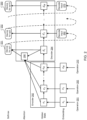
- FIG. 2 shows an example architecture of a placement recurrent neural network.
- the placement recurrent neural network includes an encoder 292 and a decoder 294.
- the encoder recurrent neural network 292 is configured to receive as input a sequence of operation embeddings (e.g., embeddings 211, 212..., 220).
- the sequence of operation embeddings characterize operations that are necessary to perform the processing of a machine learning model on a plurality of hardware devices.
- the encoder recurrent neural network 292 processes the sequence of operation embeddings to generate a respective encoder hidden state for each of the operation embeddings. For example, as shown in FIG. 2 , the encoder recurrent neural network 292 generates a list of encoder hidden states e 1 , e 2 , ... e M for operation embeddings x 1 , x 2 , ... . , x M , where M is the number of operations that are necessary to perform the processing of the machine learning model.
- the decoder neural network 294 maintains LSTM hidden states d 1 , d 2 , ... , d M and is configured to output a device for a respective operation embedding at each decoding time step.
- Each decoding time step corresponds to one operation embedding.
- the decoder neural network 294 is configured to receive a decoder input and to process the decoder input and a set of appropriate encoder hidden states to generate a set of scores for the operation embedding.
- the decoder neural network 294 may generate the set of scores for the operation embedding using a softmax neural network layer.
- the set of scores for the operation embedding includes a respective score for each hardware device in the plurality of hardware devices.
- a respective score for each hardware device is a likelihood that represents how likely it is that the hardware device is the best device to assign the operation characterized by the operation embedding.
- the decoder neural network 294 is then configured to select a device for each of the operations using the set of scores for the operation embedding.
- the decoder 294 may select the device that has the highest score according to the set of scores for the operation embedding. In some other cases, the decoder 294 may sample a device from the plurality of devices according to probabilities defined by the set of scores for the operation embedding characterizing the operation.
- the decoder neural network 294 can use an attention mechanism to determine a set of appropriate encoder hidden states to be used at each decoding time step.
- the decoder input for each of the operation embeddings after the first operation embedding in the sequence identifies a device selected for the one or more operations represented by the preceding operation embedding in the sequence.
- the decoder input 262 for the second operating embedding in the sequence is a device embedding that identifies the device 251 that is selected for the first operating embedding.
- the decoder neural network 106 may process only the appropriate encoder hidden states to generate the set of scores for the first operation embedding.
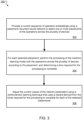
- FIG. 3 is a flow diagram of an example process 300 for training a placement recurrent neural network (e.g., the placement recurrent neural network 102 of FIG. 1 ) to update values of network parameters of the placement recurrent neural network.
- a placement recurrent neural network e.g., the placement recurrent neural network 102 of FIG. 1
- the process 300 will be described as being performed by a system of one or more computers located in one or more locations.
- a device placement system e.g., the device placement system 100 of FIG. 1 , appropriately programmed in accordance with this specification, can perform the process 300.
- a placement P ⁇ p 1 , p 2 , ... , p M ⁇ is an assignment of an operation o i ⁇ G to a device p i that belongs to a set of D hardware devices, i.e., p i ⁇ ⁇ 1, ..., D ⁇ .
- the system To update values of the network parameters of the placement recurrent neural network (e.g., from initial values or current values of the network parameters), the system repeatedly performs steps 302-306 as follows.
- the system processes a current sequence of operation embeddings using the placement recurrent neural network in accordance with current values of network parameters of the placement recurrent neural network to select one or more placements (e.g., K placements) of the operations across the plurality of devices (step 302).
- placements e.g., K placements
- the system can run the placement recurrent neural network K times to draw K placements from a probability distribution of placements defined by the placement recurrent neural network. That is, the system provides a batch of K identical input examples to the placement recurrent neural network. Each input example in the batch is the same current sequence of operation embeddings.
- the placement recurrent neural network is configured to process the current sequence of operation embeddings through an encoder recurrent neural network and a decoder neural network to generate a placement in accordance with a probability distribution of placement defined by the placement recurrent neural network (i.e., defined by a softmax neural network layer of the placement recurrent neural network) in the manner as described in detail above with reference to FIG. 1 .
- the system performs step 304 for each selected placement.
- the system performs the processing of the machine learning model with the operations across the plurality of devices according to the placement, and then determines a time required for the processing to complete. That is, for each selected placement, the system can monitor the processing of the machine learning model with the operations placed according to the selected placement and identify the time required for the processing to complete.
- the system adjusts the current values of the parameters using a reinforcement learning technique that uses a reward derived from the times required for the processing to complete for each of the selected placements (step 306).
- the reward is higher when the running time is shorter to encourage the placement neural network to generate placements that have shorter running times.
- the system trains the placement recurrent neural network to maximize the reward by minimizing the following objective function that defines a negative of the reward:
- ⁇ denotes the network parameters of the placement recurrent neural network
- ⁇ ( ; ⁇ ) denotes a probability distribution of placements defined by the placement recurrent neural network
- P the square root of the running time r ( P ).
- the objective function computes an expected value of the square roots of K running times for the K placements selected by the system (e.g., by running the placement recurrent neural network K times to draw K placements from the probability distribution of placements ⁇ ( ; ⁇ )) given the computational graph .
- the system determines a gradient of the objective function using a reinforcement learning technique, e.g., a REINFORCE technique.
- a reinforcement learning technique e.g., a REINFORCE technique.
- the gradient of the objective function can be expressed as follows: where p is the probability assigned to the placement by the placement recurrent neural network, i.e., the product of the scores generated by the placement recurrent neural network for the individual placements.
- the system can use a baseline term B, which is a moving average of the K running times, to approximate the gradient as follows:
- the system can backpropagate the gradient of the objective function to determine a respective updated value for each of the network parameters of the placement recurrent neural network.
- the system can optionally adjust the operation embeddings in the current sequence as part of the reinforcement learning technique, i.e., by backpropagating gradients into the operation embeddings.
- FIG. 4 illustrates an example computational graph 452 and an example placement of computational graph operations of the graph 452 on multiple devices of a system 454.
- the computational graph 450 includes vertices that represent operations 402-416.
- the computational graph 450 further includes edges 432-450 that represent data communicated between the operations 402-406.
- the computational graph 450 can be a TensorFlow computational graph whose vertices represent operations and edges represent multidimensional data arrays (tensors) communicated between the operations.
- Each of the operations 402-416 can be assigned to one of the devices 418-424 of the system 454 according to a particular placement, e.g., a placement determined by a device placement system (e.g., the device placement system 100 of FIG. 1 ) using a placement recurrent neural network (e.g., the placement recurrent neural network 102 of FIG. 1 ).
- FIG. 4 shows an example placement in which operation 402 and 410 are assigned to device 418, operations 404, 406, and 412 are assigned to device 420, operation 408 is assigned to device 422, and operations 414 and 416 are assigned to device 424.
- a system of one or more computers to be configured to perform particular operations or actions means that the system has installed on it software, firmware, hardware, or a combination of them that in operation cause the system to perform the operations or actions.
- one or more computer programs to be configured to perform particular operations or actions means that the one or more programs include instructions that, when executed by data processing apparatus, cause the apparatus to perform the operations or actions.
- data processing apparatus encompasses all kinds of apparatus, devices, and machines for processing data, including by way of example a programmable processor, a computer, or multiple processors or computers.
- the apparatus can include special purpose logic circuitry, e.g., an FPGA (field programmable gate array) or an ASIC (application specific integrated circuit).
- the apparatus can also include, in addition to hardware, code that creates an execution environment for the computer program in question, e.g., code that constitutes processor firmware, a protocol stack, a database management system, an operating system, or a combination of one or more of them.
- a program can be stored in a portion of a file that holds other programs or data, e.g., one or more scripts stored in a markup language document, in a single file dedicated to the program in question, or in multiple coordinated files, e.g., files that store one or more modules, sub programs, or portions of code.
- a computer program can be deployed to be executed on one computer or on multiple computers that are located at one site or distributed across multiple sites and interconnected by a communication network.
- an “engine,” or “software engine,” refers to a software implemented input/output system that provides an output that is different from the input.
- An engine can be an encoded block of functionality, such as a library, a platform, a software development kit ("SDK”), or an object.
- SDK software development kit
- Each engine can be implemented on any appropriate type of computing device, e.g., servers, mobile phones, tablet computers, notebook computers, music players, e-book readers, laptop or desktop computers, PDAs, smart phones, or other stationary or portable devices, that includes one or more processors and computer readable media. Additionally, two or more of the engines may be implemented on the same computing device, or on different computing devices.
- the processes and logic flows described in this specification can be performed by one or more programmable computers executing one or more computer programs to perform functions by operating on input data and generating output.
- the processes and logic flows can also be performed by, and apparatus can also be implemented as, special purpose logic circuitry, e.g., an FPGA (field programmable gate array) or an ASIC (application specific integrated circuit).
- special purpose logic circuitry e.g., an FPGA (field programmable gate array) or an ASIC (application specific integrated circuit).
- the processes and logic flows can be performed by and apparatus can also be implemented as a graphics processing unit (GPU).
- GPU graphics processing unit
- Computers suitable for the execution of a computer program include, by way of example, can be based on general or special purpose microprocessors or both, or any other kind of central processing unit.
- a central processing unit will receive instructions and data from a read only memory or a random access memory or both.
- the essential elements of a computer are a central processing unit for performing or executing instructions and one or more memory devices for storing instructions and data.
- a computer will also include, or be operatively coupled to receive data from or transfer data to, or both, one or more mass storage devices for storing data, e.g., magnetic, magneto optical disks, or optical disks.
- mass storage devices for storing data, e.g., magnetic, magneto optical disks, or optical disks.
- a computer need not have such devices.
- a computer can be embedded in another device, e.g., a mobile telephone, a personal digital assistant (PDA), a mobile audio or video player, a game console, a Global Positioning System (GPS) receiver, or a portable storage device, e.g., a universal serial bus (USB) flash drive, to name just a few.
- PDA personal digital assistant
- GPS Global Positioning System
- USB universal serial bus
- Computer readable media suitable for storing computer program instructions and data include all forms of non-volatile memory, media and memory devices, including by way of example semiconductor memory devices, e.g., EPROM, EEPROM, and flash memory devices; magnetic disks, e.g., internal hard disks or removable disks; magneto optical disks; and CD ROM and DVD-ROM disks.
- semiconductor memory devices e.g., EPROM, EEPROM, and flash memory devices
- magnetic disks e.g., internal hard disks or removable disks
- magneto optical disks e.g., CD ROM and DVD-ROM disks.
- the processor and the memory can be supplemented by, or incorporated in, special purpose logic circuitry.
- a computer having a display device, e.g., a CRT (cathode ray tube) or LCD (liquid crystal display) monitor, for displaying information to the user and a keyboard and a pointing device, e.g., a mouse or a trackball, by which the user can provide input to the computer.
- a display device e.g., a CRT (cathode ray tube) or LCD (liquid crystal display) monitor
- keyboard and a pointing device e.g., a mouse or a trackball
- Other kinds of devices can be used to provide for interaction with a user as well; for example, feedback provided to the user can be any form of sensory feedback, e.g., visual feedback, auditory feedback, or tactile feedback; and input from the user can be received in any form, including acoustic, speech, or tactile input.
- a computer can interact with a user by sending documents to and receiving documents from a device that is used by the user; for example, by sending web pages to a
- Embodiments of the subject matter described in this specification can be implemented in a computing system that includes a back end component, e.g., as a data server, or that includes a middleware component, e.g., an application server, or that includes a front end component, e.g., a client computer having a graphical user interface or a Web browser through which a user can interact with an implementation of the subject matter described in this specification, or any combination of one or more such back end, middleware, or front end components.
- the components of the system can be interconnected by any form or medium of digital data communication, e.g., a communication network. Examples of communication networks include a local area network (“LAN”) and a wide area network (“WAN”), e.g., the Internet.
- LAN local area network
- WAN wide area network
- the computing system can include clients and servers.
- a client and server are generally remote from each other and typically interact through a communication network.
- the relationship of client and server arises by virtue of computer programs running on the respective computers and having a client-server relationship to each other.
Landscapes
- Engineering & Computer Science (AREA)
- Theoretical Computer Science (AREA)
- Physics & Mathematics (AREA)
- Computing Systems (AREA)
- Software Systems (AREA)
- Artificial Intelligence (AREA)
- Mathematical Physics (AREA)
- Computational Linguistics (AREA)
- Data Mining & Analysis (AREA)
- Evolutionary Computation (AREA)
- General Physics & Mathematics (AREA)
- General Engineering & Computer Science (AREA)
- Biomedical Technology (AREA)
- Molecular Biology (AREA)
- General Health & Medical Sciences (AREA)
- Biophysics (AREA)
- Life Sciences & Earth Sciences (AREA)
- Health & Medical Sciences (AREA)
- Probability & Statistics with Applications (AREA)
- Machine Translation (AREA)
- Image Analysis (AREA)
- Stored Programmes (AREA)
Priority Applications (1)
| Application Number | Priority Date | Filing Date | Title |
|---|---|---|---|
| EP25167147.5A EP4553715A3 (en) | 2017-03-24 | 2018-03-23 | Device placement optimization with reinforcement learning |
Applications Claiming Priority (2)
| Application Number | Priority Date | Filing Date | Title |
|---|---|---|---|
| US201762476618P | 2017-03-24 | 2017-03-24 | |
| PCT/US2018/024155 WO2018175972A1 (en) | 2017-03-24 | 2018-03-23 | Device placement optimization with reinforcement learning |
Related Child Applications (2)
| Application Number | Title | Priority Date | Filing Date |
|---|---|---|---|
| EP25167147.5A Division EP4553715A3 (en) | 2017-03-24 | 2018-03-23 | Device placement optimization with reinforcement learning |
| EP25167147.5A Division-Into EP4553715A3 (en) | 2017-03-24 | 2018-03-23 | Device placement optimization with reinforcement learning |
Publications (2)
| Publication Number | Publication Date |
|---|---|
| EP3559868A1 EP3559868A1 (en) | 2019-10-30 |
| EP3559868B1 true EP3559868B1 (en) | 2025-05-07 |
Family
ID=61913686
Family Applications (2)
| Application Number | Title | Priority Date | Filing Date |
|---|---|---|---|
| EP18716863.8A Active EP3559868B1 (en) | 2017-03-24 | 2018-03-23 | Device placement optimization with reinforcement learning |
| EP25167147.5A Pending EP4553715A3 (en) | 2017-03-24 | 2018-03-23 | Device placement optimization with reinforcement learning |
Family Applications After (1)
| Application Number | Title | Priority Date | Filing Date |
|---|---|---|---|
| EP25167147.5A Pending EP4553715A3 (en) | 2017-03-24 | 2018-03-23 | Device placement optimization with reinforcement learning |
Country Status (6)
| Country | Link |
|---|---|
| US (3) | US10692003B2 (enExample) |
| EP (2) | EP3559868B1 (enExample) |
| JP (1) | JP6790286B2 (enExample) |
| KR (1) | KR102208989B1 (enExample) |
| CN (2) | CN117648971A (enExample) |
| WO (1) | WO2018175972A1 (enExample) |
Families Citing this family (30)
| Publication number | Priority date | Publication date | Assignee | Title |
|---|---|---|---|---|
| US11354301B2 (en) | 2017-11-13 | 2022-06-07 | LendingClub Bank, National Association | Multi-system operation audit log |
| US11243941B2 (en) * | 2017-11-13 | 2022-02-08 | Lendingclub Corporation | Techniques for generating pre-emptive expectation messages |
| US10699043B2 (en) | 2018-12-04 | 2020-06-30 | Google Llc | Generating integrated circuit floorplans using neural networks |
| JP7050023B2 (ja) * | 2019-03-22 | 2022-04-07 | Kddi株式会社 | ネットワーク障害復旧システム、コンピュータプログラム及びネットワーク障害復旧方法 |
| US11900244B1 (en) * | 2019-09-30 | 2024-02-13 | Amazon Technologies, Inc. | Attention-based deep reinforcement learning for autonomous agents |
| KR102371927B1 (ko) * | 2019-10-17 | 2022-03-11 | (주)유밥 | 학습 콘텐츠 추천 방법 및 장치 |
| US20210192314A1 (en) * | 2019-12-18 | 2021-06-24 | Nvidia Corporation | Api for recurrent neural networks |
| KR102272501B1 (ko) | 2020-04-24 | 2021-07-01 | 연세대학교 산학협력단 | 분산 강화 학습 장치 및 방법 |
| US11288097B2 (en) | 2020-06-12 | 2022-03-29 | Disney Enterprises, Inc. | Automated hardware resource optimization |
| CN111753973B (zh) * | 2020-06-22 | 2024-11-26 | 深圳鲲云信息科技有限公司 | 一种神经网络芯片的优化方法、系统、设备和存储介质 |
| US12205007B2 (en) * | 2020-06-26 | 2025-01-21 | Intel Corporation | Methods, systems, articles of manufacture, and apparatus to optimize layers of a machine learning model for a target hardware platform |
| US20220083824A1 (en) * | 2020-09-11 | 2022-03-17 | Actapio, Inc. | Execution control apparatus, execution control method, and a non-transitory computer-readable storage medium |
| KR20220045800A (ko) * | 2020-10-06 | 2022-04-13 | 삼성전자주식회사 | 인공지능 모델을 분산 처리하는 시스템 및 그 동작 방법 |
| KR102257028B1 (ko) * | 2020-10-06 | 2021-05-27 | 주식회사 딥이티 | 컴퓨팅 플랫폼 기반의 적응형 딥러닝 작업 할당 장치 및 방법 |
| KR20220064665A (ko) | 2020-11-12 | 2022-05-19 | 삼성전자주식회사 | 인공지능 모델을 분산 처리하는 전자 장치 및 그 동작 방법 |
| KR102799775B1 (ko) * | 2020-12-11 | 2025-04-25 | 한국과학기술원 | 다중 분산 데이터베이스 환경에서 이종 데이터세트의 임베딩 벡터를 이용한 딥 러닝 학습 |
| JP7703390B2 (ja) * | 2021-07-30 | 2025-07-07 | 株式会社Screenホールディングス | スケジュール作成方法、スケジュール作成装置、基板処理装置、基板処理システム、記録媒体、及びスケジュール作成プログラム |
| KR102573644B1 (ko) * | 2021-08-24 | 2023-09-01 | 주식회사 에너자이 | 실행 엔진 최적화 방법, 실행 엔진 최적화 장치, 및 실행 엔진 최적화 시스템 |
| US11704891B1 (en) | 2021-12-29 | 2023-07-18 | Insight Direct Usa, Inc. | Dynamically configured extraction, preprocessing, and publishing of a region of interest that is a subset of streaming video data |
| US11509836B1 (en) | 2021-12-29 | 2022-11-22 | Insight Direct Usa, Inc. | Dynamically configured processing of a region of interest dependent upon published video data selected by a runtime configuration file |
| WO2023163453A1 (ko) * | 2022-02-23 | 2023-08-31 | 주식회사 에너자이 | 임베디드 장치에서 실행될 신경망 모델 최적화 방법, 신경망 모델 최적화 장치, 및 신경망 모델 최적화 시스템 |
| WO2023243896A1 (ko) * | 2022-06-17 | 2023-12-21 | 삼성전자 주식회사 | 인공신경망의 추론 분산 비율 결정 전자 장치 및 그 동작 방법 |
| US11778167B1 (en) | 2022-07-26 | 2023-10-03 | Insight Direct Usa, Inc. | Method and system for preprocessing optimization of streaming video data |
| WO2024053910A1 (ko) * | 2022-09-08 | 2024-03-14 | 삼성전자주식회사 | 기계학습 모델에 적합한 가속기를 선택하는 장치 및 방법 |
| KR102603130B1 (ko) | 2022-12-27 | 2023-11-17 | 주식회사 애자일소다 | 강화학습 기반의 면적 및 매크로 배치 최적화를 위한 설계 시스템 및 방법 |
| KR102634706B1 (ko) | 2023-05-31 | 2024-02-13 | 주식회사 애자일소다 | 데드 스페이스의 최소화를 위한 집적회로 설계 장치 및 방법 |
| KR102645072B1 (ko) | 2023-05-31 | 2024-03-08 | 주식회사 애자일소다 | 매크로의 핀 방향 최적화를 위한 후처리 장치 및 방법 |
| CN117058491B (zh) * | 2023-10-12 | 2024-04-02 | 深圳大学 | 基于递归神经网络的结构化网格布局生成方法及设备 |
| KR102713624B1 (ko) | 2023-12-20 | 2024-10-08 | 주식회사 애자일소다 | 비사각형상의 분해 및 처리를 이용한 배치 최적화 장치 및 방법 |
| CN118798471A (zh) * | 2024-07-01 | 2024-10-18 | 西安科技大学 | 基于强化学习的煤矿综采工作面感知区域选择方法及系统 |
Family Cites Families (15)
| Publication number | Priority date | Publication date | Assignee | Title |
|---|---|---|---|---|
| JPH05108595A (ja) * | 1991-10-17 | 1993-04-30 | Hitachi Ltd | ニユーラルネツトワークの分散学習装置 |
| KR100676863B1 (ko) | 2004-08-31 | 2007-02-02 | 주식회사 코난테크놀로지 | 음악 검색 서비스 제공 시스템 및 방법 |
| US7870556B2 (en) * | 2006-05-16 | 2011-01-11 | Ab Initio Technology Llc | Managing computing resources in graph-based computations |
| KR20100067174A (ko) | 2008-12-11 | 2010-06-21 | 한국전자통신연구원 | 음성 인식을 이용한 메타데이터 검색기, 검색 방법, iptv 수신 장치 |
| KR20120034378A (ko) | 2010-10-01 | 2012-04-12 | 엔에이치엔(주) | 사운드 인식을 통한 광고 정보 제공 시스템 및 방법 |
| US9189730B1 (en) * | 2012-09-20 | 2015-11-17 | Brain Corporation | Modulated stochasticity spiking neuron network controller apparatus and methods |
| US9767419B2 (en) * | 2014-01-24 | 2017-09-19 | Microsoft Technology Licensing, Llc | Crowdsourcing system with community learning |
| US10102480B2 (en) * | 2014-06-30 | 2018-10-16 | Amazon Technologies, Inc. | Machine learning service |
| EP3204896A1 (en) * | 2014-10-07 | 2017-08-16 | Google, Inc. | Training neural networks on partitioned training data |
| CN110443351B (zh) * | 2014-11-14 | 2021-05-28 | 谷歌有限责任公司 | 生成映像的自然语言描述 |
| US11080587B2 (en) * | 2015-02-06 | 2021-08-03 | Deepmind Technologies Limited | Recurrent neural networks for data item generation |
| US10373054B2 (en) * | 2015-04-19 | 2019-08-06 | International Business Machines Corporation | Annealed dropout training of neural networks |
| US10515307B2 (en) * | 2015-06-05 | 2019-12-24 | Google Llc | Compressed recurrent neural network models |
| US9652712B2 (en) * | 2015-07-27 | 2017-05-16 | Google Inc. | Analyzing health events using recurrent neural networks |
| US11151446B2 (en) * | 2015-10-28 | 2021-10-19 | Google Llc | Stream-based accelerator processing of computational graphs |
-
2018
- 2018-03-23 EP EP18716863.8A patent/EP3559868B1/en active Active
- 2018-03-23 KR KR1020197026115A patent/KR102208989B1/ko active Active
- 2018-03-23 CN CN202311517807.8A patent/CN117648971A/zh active Pending
- 2018-03-23 JP JP2019552038A patent/JP6790286B2/ja active Active
- 2018-03-23 EP EP25167147.5A patent/EP4553715A3/en active Pending
- 2018-03-23 WO PCT/US2018/024155 patent/WO2018175972A1/en not_active Ceased
- 2018-03-23 CN CN201880011282.1A patent/CN110268422B/zh active Active
-
2019
- 2019-06-19 US US16/445,330 patent/US10692003B2/en active Active
-
2020
- 2020-05-20 US US16/878,720 patent/US11803747B2/en active Active
-
2023
- 2023-10-03 US US18/376,362 patent/US20240062062A1/en active Pending
Non-Patent Citations (5)
| Title |
|---|
| IRWAN BELLO ET AL: "Neural combinatorial pptimization with reinforcement learning", ARXIV:1611.09940V3 [CS.AI], 12 January 2017 (2017-01-12), XP055499145, Retrieved from the Internet <URL:https://arxiv.org/abs/1611.09940v3> [retrieved on 20180810] * |
| KATHERINE E COONS ET AL: "Feature selection and policy optimization for distributed instruction placement using reinforcement learning", PROCEEDINGS OF THE 17TH INTERNATIONAL CONFERENCE ON PARALLEL ARCHITECTURES AND COMPILATION TECHNIQUES, PACT '08, ACM PRESS, NEW YORK, NEW YORK, USA, 25 October 2008 (2008-10-25), pages 32 - 42, XP058164772, ISBN: 978-1-60558-282-5, DOI: 10.1145/1454115.1454122 * |
| MART\'IN ABADI ET AL: "TensorFlow: Large-Scale Machine Learning on Heterogeneous Distributed Systems", ARXIV.ORG, CORNELL UNIVERSITY LIBRARY, 201 OLIN LIBRARY CORNELL UNIVERSITY ITHACA, NY 14853, 14 March 2016 (2016-03-14), XP080689634 * |
| YU DONG ET AL: "The Computational Network Toolkit [Best of the Web]", IEEE SIGNAL PROCES SING MAGAZINE, IEEE SERVICE CENTER, PISCATAWAY, NJ, US, vol. 32, no. 6, 1 November 2015 (2015-11-01), pages 123 - 126, XP011586924, ISSN: 1053-5888, [retrieved on 20151014], DOI: 10.1109/MSP.2015.2462371 * |
| ZHU W ET AL: "A Hopfield neural network based task mapping method", COMPUTER COMMUNICATIONS, ELSEVIER SCIENCE PUBLISHERS BV, AMSTERDAM, NL, vol. 22, no. 11, 15 July 1999 (1999-07-15), pages 1068 - 1079, XP004172223, ISSN: 0140-3664, DOI: 10.1016/S0140-3664(99)00086-9 * |
Also Published As
| Publication number | Publication date |
|---|---|
| US20240062062A1 (en) | 2024-02-22 |
| CN110268422B (zh) | 2023-12-01 |
| CN110268422A (zh) | 2019-09-20 |
| US20200279163A1 (en) | 2020-09-03 |
| EP4553715A3 (en) | 2025-08-13 |
| US10692003B2 (en) | 2020-06-23 |
| EP3559868A1 (en) | 2019-10-30 |
| EP4553715A2 (en) | 2025-05-14 |
| KR20190113928A (ko) | 2019-10-08 |
| JP2020512639A (ja) | 2020-04-23 |
| CN117648971A (zh) | 2024-03-05 |
| US11803747B2 (en) | 2023-10-31 |
| US20190303761A1 (en) | 2019-10-03 |
| KR102208989B1 (ko) | 2021-01-28 |
| JP6790286B2 (ja) | 2020-11-25 |
| WO2018175972A1 (en) | 2018-09-27 |
Similar Documents
| Publication | Publication Date | Title |
|---|---|---|
| EP3559868B1 (en) | Device placement optimization with reinforcement learning | |
| US12073304B2 (en) | Classifying input examples using a comparison set | |
| US12423573B2 (en) | Neural network optimizer search | |
| US11455514B2 (en) | Hierarchical device placement with reinforcement learning | |
| US20200090043A1 (en) | Generating output data items using template data items | |
| US10679006B2 (en) | Skimming text using recurrent neural networks | |
| WO2019165462A1 (en) | Unsupervised neural network training using learned optimizers | |
| CN115066689B (zh) | 细粒度的随机神经架构搜索 | |
| US20230124177A1 (en) | System and method for training a sparse neural network whilst maintaining sparsity | |
| EP4315180A1 (en) | Efficient hardware accelerator configuration exploration | |
| US20230206030A1 (en) | Hyperparameter neural network ensembles | |
| WO2023158881A1 (en) | Computationally efficient distillation using generative neural networks | |
| US20240256865A1 (en) | Training neural networks using learned optimizers | |
| US20240403636A1 (en) | Self-attention based neural networks for processing network inputs from multiple modalities | |
| US20260004080A1 (en) | Synthetic data generation for retrieval evaluation and fine-tuning |
Legal Events
| Date | Code | Title | Description |
|---|---|---|---|
| STAA | Information on the status of an ep patent application or granted ep patent |
Free format text: STATUS: UNKNOWN |
|
| STAA | Information on the status of an ep patent application or granted ep patent |
Free format text: STATUS: THE INTERNATIONAL PUBLICATION HAS BEEN MADE |
|
| PUAI | Public reference made under article 153(3) epc to a published international application that has entered the european phase |
Free format text: ORIGINAL CODE: 0009012 |
|
| STAA | Information on the status of an ep patent application or granted ep patent |
Free format text: STATUS: REQUEST FOR EXAMINATION WAS MADE |
|
| 17P | Request for examination filed |
Effective date: 20190725 |
|
| AK | Designated contracting states |
Kind code of ref document: A1 Designated state(s): AL AT BE BG CH CY CZ DE DK EE ES FI FR GB GR HR HU IE IS IT LI LT LU LV MC MK MT NL NO PL PT RO RS SE SI SK SM TR |
|
| AX | Request for extension of the european patent |
Extension state: BA ME |
|
| DAV | Request for validation of the european patent (deleted) | ||
| DAX | Request for extension of the european patent (deleted) | ||
| STAA | Information on the status of an ep patent application or granted ep patent |
Free format text: STATUS: EXAMINATION IS IN PROGRESS |
|
| 17Q | First examination report despatched |
Effective date: 20211014 |
|
| REG | Reference to a national code |
Ref country code: DE Ref legal event code: R079 Free format text: PREVIOUS MAIN CLASS: G06N0003100000 Ipc: G06N0003044000 Ref country code: DE Ref legal event code: R079 Ref document number: 602018081705 Country of ref document: DE Free format text: PREVIOUS MAIN CLASS: G06N0003100000 Ipc: G06N0003044000 |
|
| GRAP | Despatch of communication of intention to grant a patent |
Free format text: ORIGINAL CODE: EPIDOSNIGR1 |
|
| STAA | Information on the status of an ep patent application or granted ep patent |
Free format text: STATUS: GRANT OF PATENT IS INTENDED |
|
| RIC1 | Information provided on ipc code assigned before grant |
Ipc: G06N 3/10 20060101ALI20241203BHEP Ipc: G06N 3/092 20230101ALI20241203BHEP Ipc: G06N 3/045 20230101ALI20241203BHEP Ipc: G06N 3/044 20230101AFI20241203BHEP |
|
| RIC1 | Information provided on ipc code assigned before grant |
Ipc: G06N 3/098 20230101ALI20241211BHEP Ipc: G06N 3/10 20060101ALI20241211BHEP Ipc: G06N 3/092 20230101ALI20241211BHEP Ipc: G06N 3/045 20230101ALI20241211BHEP Ipc: G06N 3/044 20230101AFI20241211BHEP |
|
| INTG | Intention to grant announced |
Effective date: 20241219 |
|
| GRAS | Grant fee paid |
Free format text: ORIGINAL CODE: EPIDOSNIGR3 |
|
| GRAA | (expected) grant |
Free format text: ORIGINAL CODE: 0009210 |
|
| STAA | Information on the status of an ep patent application or granted ep patent |
Free format text: STATUS: THE PATENT HAS BEEN GRANTED |
|
| AK | Designated contracting states |
Kind code of ref document: B1 Designated state(s): AL AT BE BG CH CY CZ DE DK EE ES FI FR GB GR HR HU IE IS IT LI LT LU LV MC MK MT NL NO PL PT RO RS SE SI SK SM TR |
|
| P01 | Opt-out of the competence of the unified patent court (upc) registered |
Free format text: CASE NUMBER: APP_15559/2025 Effective date: 20250331 |
|
| REG | Reference to a national code |
Ref country code: GB Ref legal event code: FG4D |
|
| REG | Reference to a national code |
Ref country code: CH Ref legal event code: EP |
|
| REG | Reference to a national code |
Ref country code: DE Ref legal event code: R096 Ref document number: 602018081705 Country of ref document: DE |
|
| REG | Reference to a national code |
Ref country code: IE Ref legal event code: FG4D |
|
| REG | Reference to a national code |
Ref country code: NL Ref legal event code: MP Effective date: 20250507 |
|
| PG25 | Lapsed in a contracting state [announced via postgrant information from national office to epo] |
Ref country code: PT Free format text: LAPSE BECAUSE OF FAILURE TO SUBMIT A TRANSLATION OF THE DESCRIPTION OR TO PAY THE FEE WITHIN THE PRESCRIBED TIME-LIMIT Effective date: 20250908 Ref country code: ES Free format text: LAPSE BECAUSE OF FAILURE TO SUBMIT A TRANSLATION OF THE DESCRIPTION OR TO PAY THE FEE WITHIN THE PRESCRIBED TIME-LIMIT Effective date: 20250507 Ref country code: FI Free format text: LAPSE BECAUSE OF FAILURE TO SUBMIT A TRANSLATION OF THE DESCRIPTION OR TO PAY THE FEE WITHIN THE PRESCRIBED TIME-LIMIT Effective date: 20250507 |
|
| REG | Reference to a national code |
Ref country code: LT Ref legal event code: MG9D |
|
| PG25 | Lapsed in a contracting state [announced via postgrant information from national office to epo] |
Ref country code: GR Free format text: LAPSE BECAUSE OF FAILURE TO SUBMIT A TRANSLATION OF THE DESCRIPTION OR TO PAY THE FEE WITHIN THE PRESCRIBED TIME-LIMIT Effective date: 20250808 Ref country code: NO Free format text: LAPSE BECAUSE OF FAILURE TO SUBMIT A TRANSLATION OF THE DESCRIPTION OR TO PAY THE FEE WITHIN THE PRESCRIBED TIME-LIMIT Effective date: 20250807 |
|
| PG25 | Lapsed in a contracting state [announced via postgrant information from national office to epo] |
Ref country code: PL Free format text: LAPSE BECAUSE OF FAILURE TO SUBMIT A TRANSLATION OF THE DESCRIPTION OR TO PAY THE FEE WITHIN THE PRESCRIBED TIME-LIMIT Effective date: 20250507 Ref country code: NL Free format text: LAPSE BECAUSE OF FAILURE TO SUBMIT A TRANSLATION OF THE DESCRIPTION OR TO PAY THE FEE WITHIN THE PRESCRIBED TIME-LIMIT Effective date: 20250507 |
|
| REG | Reference to a national code |
Ref country code: AT Ref legal event code: MK05 Ref document number: 1793283 Country of ref document: AT Kind code of ref document: T Effective date: 20250507 |
|
| PG25 | Lapsed in a contracting state [announced via postgrant information from national office to epo] |
Ref country code: BG Free format text: LAPSE BECAUSE OF FAILURE TO SUBMIT A TRANSLATION OF THE DESCRIPTION OR TO PAY THE FEE WITHIN THE PRESCRIBED TIME-LIMIT Effective date: 20250507 |
|
| PG25 | Lapsed in a contracting state [announced via postgrant information from national office to epo] |
Ref country code: HR Free format text: LAPSE BECAUSE OF FAILURE TO SUBMIT A TRANSLATION OF THE DESCRIPTION OR TO PAY THE FEE WITHIN THE PRESCRIBED TIME-LIMIT Effective date: 20250507 |
|
| PG25 | Lapsed in a contracting state [announced via postgrant information from national office to epo] |
Ref country code: AT Free format text: LAPSE BECAUSE OF FAILURE TO SUBMIT A TRANSLATION OF THE DESCRIPTION OR TO PAY THE FEE WITHIN THE PRESCRIBED TIME-LIMIT Effective date: 20250507 |
|
| PG25 | Lapsed in a contracting state [announced via postgrant information from national office to epo] |
Ref country code: RS Free format text: LAPSE BECAUSE OF FAILURE TO SUBMIT A TRANSLATION OF THE DESCRIPTION OR TO PAY THE FEE WITHIN THE PRESCRIBED TIME-LIMIT Effective date: 20250807 |
|
| PG25 | Lapsed in a contracting state [announced via postgrant information from national office to epo] |
Ref country code: IS Free format text: LAPSE BECAUSE OF FAILURE TO SUBMIT A TRANSLATION OF THE DESCRIPTION OR TO PAY THE FEE WITHIN THE PRESCRIBED TIME-LIMIT Effective date: 20250907 |
|
| PG25 | Lapsed in a contracting state [announced via postgrant information from national office to epo] |
Ref country code: LV Free format text: LAPSE BECAUSE OF FAILURE TO SUBMIT A TRANSLATION OF THE DESCRIPTION OR TO PAY THE FEE WITHIN THE PRESCRIBED TIME-LIMIT Effective date: 20250507 |