EP3556779A1 - Vernetzte stärkebasierte polymere zur arzneimittelabgabe - Google Patents
Vernetzte stärkebasierte polymere zur arzneimittelabgabe Download PDFInfo
- Publication number
- EP3556779A1 EP3556779A1 EP18290034.0A EP18290034A EP3556779A1 EP 3556779 A1 EP3556779 A1 EP 3556779A1 EP 18290034 A EP18290034 A EP 18290034A EP 3556779 A1 EP3556779 A1 EP 3556779A1
- Authority
- EP
- European Patent Office
- Prior art keywords
- cross
- starch
- based polymer
- process according
- starchy material
- Prior art date
- Legal status (The legal status is an assumption and is not a legal conclusion. Google has not performed a legal analysis and makes no representation as to the accuracy of the status listed.)
- Withdrawn
Links
- 229920003179 starch-based polymer Polymers 0.000 title claims abstract description 83
- 239000004628 starch-based polymer Substances 0.000 title claims abstract description 83
- 238000012377 drug delivery Methods 0.000 title description 4
- BWGNESOTFCXPMA-UHFFFAOYSA-N Dihydrogen disulfide Chemical compound SS BWGNESOTFCXPMA-UHFFFAOYSA-N 0.000 claims abstract description 51
- 239000000463 material Substances 0.000 claims abstract description 47
- 238000000034 method Methods 0.000 claims abstract description 29
- 239000002904 solvent Substances 0.000 claims abstract description 19
- 150000003553 thiiranes Chemical class 0.000 claims abstract description 14
- 229910052739 hydrogen Inorganic materials 0.000 claims abstract description 6
- 239000001257 hydrogen Substances 0.000 claims abstract description 5
- 238000004519 manufacturing process Methods 0.000 claims abstract description 5
- XLYOFNOQVPJJNP-UHFFFAOYSA-N water Substances O XLYOFNOQVPJJNP-UHFFFAOYSA-N 0.000 claims description 42
- HEMHJVSKTPXQMS-UHFFFAOYSA-M Sodium hydroxide Chemical compound [OH-].[Na+] HEMHJVSKTPXQMS-UHFFFAOYSA-M 0.000 claims description 39
- 229920000858 Cyclodextrin Polymers 0.000 claims description 38
- 229920002472 Starch Polymers 0.000 claims description 28
- 239000008107 starch Substances 0.000 claims description 28
- 235000019698 starch Nutrition 0.000 claims description 28
- 229920002774 Maltodextrin Polymers 0.000 claims description 24
- 239000005913 Maltodextrin Substances 0.000 claims description 22
- 229940035034 maltodextrin Drugs 0.000 claims description 22
- WHGYBXFWUBPSRW-FOUAGVGXSA-N beta-cyclodextrin Chemical compound OC[C@H]([C@H]([C@@H]([C@H]1O)O)O[C@H]2O[C@@H]([C@@H](O[C@H]3O[C@H](CO)[C@H]([C@@H]([C@H]3O)O)O[C@H]3O[C@H](CO)[C@H]([C@@H]([C@H]3O)O)O[C@H]3O[C@H](CO)[C@H]([C@@H]([C@H]3O)O)O[C@H]3O[C@H](CO)[C@H]([C@@H]([C@H]3O)O)O3)[C@H](O)[C@H]2O)CO)O[C@@H]1O[C@H]1[C@H](O)[C@@H](O)[C@@H]3O[C@@H]1CO WHGYBXFWUBPSRW-FOUAGVGXSA-N 0.000 claims description 21
- 239000001116 FEMA 4028 Substances 0.000 claims description 14
- 235000011175 beta-cyclodextrine Nutrition 0.000 claims description 14
- 229960004853 betadex Drugs 0.000 claims description 14
- 229920001353 Dextrin Polymers 0.000 claims description 11
- 239000004375 Dextrin Substances 0.000 claims description 11
- 235000019425 dextrin Nutrition 0.000 claims description 11
- 229940079593 drug Drugs 0.000 claims description 11
- 239000003814 drug Substances 0.000 claims description 11
- 229920002261 Corn starch Polymers 0.000 claims description 10
- 235000019759 Maize starch Nutrition 0.000 claims description 10
- 238000005538 encapsulation Methods 0.000 claims description 10
- 239000002246 antineoplastic agent Substances 0.000 claims description 7
- 229940041181 antineoplastic drug Drugs 0.000 claims description 7
- HFHDHCJBZVLPGP-UHFFFAOYSA-N schardinger α-dextrin Chemical compound O1C(C(C2O)O)C(CO)OC2OC(C(C2O)O)C(CO)OC2OC(C(C2O)O)C(CO)OC2OC(C(O)C2O)C(CO)OC2OC(C(C2O)O)C(CO)OC2OC2C(O)C(O)C1OC2CO HFHDHCJBZVLPGP-UHFFFAOYSA-N 0.000 claims description 7
- 206010028980 Neoplasm Diseases 0.000 claims description 6
- 201000011510 cancer Diseases 0.000 claims description 6
- 229940097362 cyclodextrins Drugs 0.000 claims description 5
- 229920001450 Alpha-Cyclodextrin Polymers 0.000 claims description 4
- 229920000856 Amylose Polymers 0.000 claims description 4
- HFHDHCJBZVLPGP-RWMJIURBSA-N alpha-cyclodextrin Chemical group OC[C@H]([C@H]([C@@H]([C@H]1O)O)O[C@H]2O[C@@H]([C@@H](O[C@H]3O[C@H](CO)[C@H]([C@@H]([C@H]3O)O)O[C@H]3O[C@H](CO)[C@H]([C@@H]([C@H]3O)O)O[C@H]3O[C@H](CO)[C@H]([C@@H]([C@H]3O)O)O3)[C@H](O)[C@H]2O)CO)O[C@@H]1O[C@H]1[C@H](O)[C@@H](O)[C@@H]3O[C@@H]1CO HFHDHCJBZVLPGP-RWMJIURBSA-N 0.000 claims description 4
- 229940043377 alpha-cyclodextrin Drugs 0.000 claims description 4
- 239000002798 polar solvent Substances 0.000 claims description 4
- 125000006273 (C1-C3) alkyl group Chemical group 0.000 claims description 3
- PGBVLOMZZHYJFP-UHFFFAOYSA-N 3-methyldithietane Chemical compound CC1CSS1 PGBVLOMZZHYJFP-UHFFFAOYSA-N 0.000 claims description 3
- UCKMPCXJQFINFW-UHFFFAOYSA-N Sulphide Chemical compound [S-2] UCKMPCXJQFINFW-UHFFFAOYSA-N 0.000 claims description 3
- 235000013339 cereals Nutrition 0.000 claims description 3
- 125000002791 glucosyl group Chemical group C1([C@H](O)[C@@H](O)[C@H](O)[C@H](O1)CO)* 0.000 claims description 3
- 125000004435 hydrogen atom Chemical group [H]* 0.000 claims description 3
- 235000021374 legumes Nutrition 0.000 claims description 3
- 150000002894 organic compounds Chemical class 0.000 claims description 3
- 238000001556 precipitation Methods 0.000 claims description 3
- 102000003668 Destrin Human genes 0.000 claims 1
- 108090000082 Destrin Proteins 0.000 claims 1
- WBZKQQHYRPRKNJ-UHFFFAOYSA-L disulfite Chemical compound [O-]S(=O)S([O-])(=O)=O WBZKQQHYRPRKNJ-UHFFFAOYSA-L 0.000 claims 1
- UFHFLCQGNIYNRP-UHFFFAOYSA-N Hydrogen Chemical compound [H][H] UFHFLCQGNIYNRP-UHFFFAOYSA-N 0.000 abstract description 2
- 125000000217 alkyl group Chemical group 0.000 abstract 1
- RWSXRVCMGQZWBV-WDSKDSINSA-N glutathione Chemical compound OC(=O)[C@@H](N)CCC(=O)N[C@@H](CS)C(=O)NCC(O)=O RWSXRVCMGQZWBV-WDSKDSINSA-N 0.000 description 98
- CSCPPACGZOOCGX-UHFFFAOYSA-N Acetone Chemical compound CC(C)=O CSCPPACGZOOCGX-UHFFFAOYSA-N 0.000 description 77
- 229960003180 glutathione Drugs 0.000 description 49
- AOJJSUZBOXZQNB-TZSSRYMLSA-N Doxorubicin Chemical compound O([C@H]1C[C@@](O)(CC=2C(O)=C3C(=O)C=4C=CC=C(C=4C(=O)C3=C(O)C=21)OC)C(=O)CO)[C@H]1C[C@H](N)[C@H](O)[C@H](C)O1 AOJJSUZBOXZQNB-TZSSRYMLSA-N 0.000 description 48
- 108010024636 Glutathione Proteins 0.000 description 28
- MBNVSWHUJDDZRH-UHFFFAOYSA-N 2-methylthiirane Chemical compound CC1CS1 MBNVSWHUJDDZRH-UHFFFAOYSA-N 0.000 description 24
- 229960004679 doxorubicin Drugs 0.000 description 24
- 229920006037 cross link polymer Polymers 0.000 description 23
- 239000006228 supernatant Substances 0.000 description 23
- 229920000642 polymer Polymers 0.000 description 21
- 239000000725 suspension Substances 0.000 description 18
- 238000002360 preparation method Methods 0.000 description 16
- 239000000243 solution Substances 0.000 description 16
- 238000003756 stirring Methods 0.000 description 15
- 239000000499 gel Substances 0.000 description 14
- 239000003431 cross linking reagent Substances 0.000 description 13
- ZMXDDKWLCZADIW-UHFFFAOYSA-N N,N-Dimethylformamide Chemical compound CN(C)C=O ZMXDDKWLCZADIW-UHFFFAOYSA-N 0.000 description 12
- 230000007935 neutral effect Effects 0.000 description 12
- 239000000843 powder Substances 0.000 description 12
- 238000005406 washing Methods 0.000 description 12
- 239000012670 alkaline solution Substances 0.000 description 11
- 238000005119 centrifugation Methods 0.000 description 11
- 239000005906 Imidacloprid Substances 0.000 description 10
- JBDHZKLJNAIJNC-LLVKDONJSA-N clodinafop-propargyl Chemical group C1=CC(O[C@H](C)C(=O)OCC#C)=CC=C1OC1=NC=C(Cl)C=C1F JBDHZKLJNAIJNC-LLVKDONJSA-N 0.000 description 10
- YWTYJOPNNQFBPC-UHFFFAOYSA-N imidacloprid Chemical compound [O-][N+](=O)\N=C1/NCCN1CC1=CC=C(Cl)N=C1 YWTYJOPNNQFBPC-UHFFFAOYSA-N 0.000 description 10
- 229940056881 imidacloprid Drugs 0.000 description 10
- 238000000338 in vitro Methods 0.000 description 10
- 229920002245 Dextrose equivalent Polymers 0.000 description 9
- 238000004458 analytical method Methods 0.000 description 9
- 239000012071 phase Substances 0.000 description 9
- 239000000126 substance Substances 0.000 description 9
- IAZDPXIOMUYVGZ-UHFFFAOYSA-N Dimethylsulphoxide Chemical compound CS(C)=O IAZDPXIOMUYVGZ-UHFFFAOYSA-N 0.000 description 8
- 229960000956 coumarin Drugs 0.000 description 8
- GDSRMADSINPKSL-HSEONFRVSA-N gamma-cyclodextrin Chemical compound OC[C@H]([C@H]([C@@H]([C@H]1O)O)O[C@H]2O[C@@H]([C@@H](O[C@H]3O[C@H](CO)[C@H]([C@@H]([C@H]3O)O)O[C@H]3O[C@H](CO)[C@H]([C@@H]([C@H]3O)O)O[C@H]3O[C@H](CO)[C@H]([C@@H]([C@H]3O)O)O[C@H]3O[C@H](CO)[C@H]([C@@H]([C@H]3O)O)O[C@H]3O[C@H](CO)[C@H]([C@@H]([C@H]3O)O)O3)[C@H](O)[C@H]2O)CO)O[C@@H]1O[C@H]1[C@H](O)[C@@H](O)[C@@H]3O[C@@H]1CO GDSRMADSINPKSL-HSEONFRVSA-N 0.000 description 8
- 238000004128 high performance liquid chromatography Methods 0.000 description 8
- LFQSCWFLJHTTHZ-UHFFFAOYSA-N Ethanol Chemical compound CCO LFQSCWFLJHTTHZ-UHFFFAOYSA-N 0.000 description 7
- 229940080345 gamma-cyclodextrin Drugs 0.000 description 7
- 238000004483 ATR-FTIR spectroscopy Methods 0.000 description 6
- ZMANZCXQSJIPKH-UHFFFAOYSA-N Triethylamine Chemical compound CCN(CC)CC ZMANZCXQSJIPKH-UHFFFAOYSA-N 0.000 description 6
- 239000002245 particle Substances 0.000 description 6
- VOVUARRWDCVURC-UHFFFAOYSA-N thiirane Chemical compound C1CS1 VOVUARRWDCVURC-UHFFFAOYSA-N 0.000 description 6
- KYNFOMQIXZUKRK-UHFFFAOYSA-N 2,2'-dithiodiethanol Chemical compound OCCSSCCO KYNFOMQIXZUKRK-UHFFFAOYSA-N 0.000 description 5
- 238000000944 Soxhlet extraction Methods 0.000 description 5
- PFKFTWBEEFSNDU-UHFFFAOYSA-N carbonyldiimidazole Chemical compound C1=CN=CN1C(=O)N1C=CN=C1 PFKFTWBEEFSNDU-UHFFFAOYSA-N 0.000 description 5
- 229960001760 dimethyl sulfoxide Drugs 0.000 description 5
- 239000000203 mixture Substances 0.000 description 5
- 239000007787 solid Substances 0.000 description 5
- 238000001228 spectrum Methods 0.000 description 5
- BVKZGUZCCUSVTD-UHFFFAOYSA-L Carbonate Chemical compound [O-]C([O-])=O BVKZGUZCCUSVTD-UHFFFAOYSA-L 0.000 description 4
- PBCJIPOGFJYBJE-UHFFFAOYSA-N acetonitrile;hydrate Chemical compound O.CC#N PBCJIPOGFJYBJE-UHFFFAOYSA-N 0.000 description 4
- ZYGHJZDHTFUPRJ-UHFFFAOYSA-N coumarin Chemical compound C1=CC=C2OC(=O)C=CC2=C1 ZYGHJZDHTFUPRJ-UHFFFAOYSA-N 0.000 description 4
- -1 cyclic oligosaccharides Chemical class 0.000 description 4
- 238000001914 filtration Methods 0.000 description 4
- 125000002496 methyl group Chemical group [H]C([H])([H])* 0.000 description 4
- 239000004570 mortar (masonry) Substances 0.000 description 4
- 230000003287 optical effect Effects 0.000 description 4
- 239000000047 product Substances 0.000 description 4
- 238000002411 thermogravimetry Methods 0.000 description 4
- VLDPXPPHXDGHEW-UHFFFAOYSA-N 1-chloro-2-dichlorophosphoryloxybenzene Chemical compound ClC1=CC=CC=C1OP(Cl)(Cl)=O VLDPXPPHXDGHEW-UHFFFAOYSA-N 0.000 description 3
- WEVYAHXRMPXWCK-UHFFFAOYSA-N Acetonitrile Chemical compound CC#N WEVYAHXRMPXWCK-UHFFFAOYSA-N 0.000 description 3
- RTZKZFJDLAIYFH-UHFFFAOYSA-N Diethyl ether Chemical compound CCOCC RTZKZFJDLAIYFH-UHFFFAOYSA-N 0.000 description 3
- 244000024675 Eruca sativa Species 0.000 description 3
- 235000014755 Eruca sativa Nutrition 0.000 description 3
- OKKJLVBELUTLKV-UHFFFAOYSA-N Methanol Chemical compound OC OKKJLVBELUTLKV-UHFFFAOYSA-N 0.000 description 3
- 239000002253 acid Substances 0.000 description 3
- 238000011088 calibration curve Methods 0.000 description 3
- 230000015556 catabolic process Effects 0.000 description 3
- 238000006243 chemical reaction Methods 0.000 description 3
- 238000006731 degradation reaction Methods 0.000 description 3
- 239000008367 deionised water Substances 0.000 description 3
- 229910021641 deionized water Inorganic materials 0.000 description 3
- 239000012535 impurity Substances 0.000 description 3
- 238000012986 modification Methods 0.000 description 3
- 230000004048 modification Effects 0.000 description 3
- 239000002105 nanoparticle Substances 0.000 description 3
- 239000003960 organic solvent Substances 0.000 description 3
- 238000004611 spectroscopical analysis Methods 0.000 description 3
- MEJYDZQQVZJMPP-ULAWRXDQSA-N (3s,3ar,6r,6ar)-3,6-dimethoxy-2,3,3a,5,6,6a-hexahydrofuro[3,2-b]furan Chemical compound CO[C@H]1CO[C@@H]2[C@H](OC)CO[C@@H]21 MEJYDZQQVZJMPP-ULAWRXDQSA-N 0.000 description 2
- HEDRZPFGACZZDS-UHFFFAOYSA-N Chloroform Chemical compound ClC(Cl)Cl HEDRZPFGACZZDS-UHFFFAOYSA-N 0.000 description 2
- 229920001218 Pullulan Polymers 0.000 description 2
- 239000004373 Pullulan Substances 0.000 description 2
- NINIDFKCEFEMDL-UHFFFAOYSA-N Sulfur Chemical compound [S] NINIDFKCEFEMDL-UHFFFAOYSA-N 0.000 description 2
- 238000010521 absorption reaction Methods 0.000 description 2
- 239000007900 aqueous suspension Substances 0.000 description 2
- 229910052799 carbon Inorganic materials 0.000 description 2
- 238000001460 carbon-13 nuclear magnetic resonance spectrum Methods 0.000 description 2
- 239000001913 cellulose Substances 0.000 description 2
- 229920002678 cellulose Polymers 0.000 description 2
- 238000012512 characterization method Methods 0.000 description 2
- 239000003638 chemical reducing agent Substances 0.000 description 2
- 235000001671 coumarin Nutrition 0.000 description 2
- 238000004132 cross linking Methods 0.000 description 2
- LOKCTEFSRHRXRJ-UHFFFAOYSA-I dipotassium trisodium dihydrogen phosphate hydrogen phosphate dichloride Chemical compound P(=O)(O)(O)[O-].[K+].P(=O)(O)([O-])[O-].[Na+].[Na+].[Cl-].[K+].[Cl-].[Na+] LOKCTEFSRHRXRJ-UHFFFAOYSA-I 0.000 description 2
- 239000004815 dispersion polymer Substances 0.000 description 2
- 238000002296 dynamic light scattering Methods 0.000 description 2
- 230000000694 effects Effects 0.000 description 2
- 238000010438 heat treatment Methods 0.000 description 2
- 230000014759 maintenance of location Effects 0.000 description 2
- 239000012528 membrane Substances 0.000 description 2
- 239000002539 nanocarrier Substances 0.000 description 2
- 239000002953 phosphate buffered saline Substances 0.000 description 2
- 238000006116 polymerization reaction Methods 0.000 description 2
- 235000019423 pullulan Nutrition 0.000 description 2
- 229910052717 sulfur Inorganic materials 0.000 description 2
- 238000003786 synthesis reaction Methods 0.000 description 2
- 238000012360 testing method Methods 0.000 description 2
- 238000011282 treatment Methods 0.000 description 2
- 229920000945 Amylopectin Polymers 0.000 description 1
- 239000004971 Cross linker Substances 0.000 description 1
- 102000004190 Enzymes Human genes 0.000 description 1
- 108090000790 Enzymes Proteins 0.000 description 1
- 238000005033 Fourier transform infrared spectroscopy Methods 0.000 description 1
- 238000012695 Interfacial polymerization Methods 0.000 description 1
- 239000007836 KH2PO4 Substances 0.000 description 1
- OFOBLEOULBTSOW-UHFFFAOYSA-N Malonic acid Chemical compound OC(=O)CC(O)=O OFOBLEOULBTSOW-UHFFFAOYSA-N 0.000 description 1
- FXHOOIRPVKKKFG-UHFFFAOYSA-N N,N-Dimethylacetamide Chemical compound CN(C)C(C)=O FXHOOIRPVKKKFG-UHFFFAOYSA-N 0.000 description 1
- SECXISVLQFMRJM-UHFFFAOYSA-N N-Methylpyrrolidone Chemical compound CN1CCCC1=O SECXISVLQFMRJM-UHFFFAOYSA-N 0.000 description 1
- 229920002565 Polyethylene Glycol 400 Polymers 0.000 description 1
- 229920001213 Polysorbate 20 Polymers 0.000 description 1
- 239000005864 Sulphur Substances 0.000 description 1
- 229940022682 acetone Drugs 0.000 description 1
- 238000005903 acid hydrolysis reaction Methods 0.000 description 1
- 125000002252 acyl group Chemical group 0.000 description 1
- 230000002411 adverse Effects 0.000 description 1
- 238000004220 aggregation Methods 0.000 description 1
- 230000002776 aggregation Effects 0.000 description 1
- 230000000259 anti-tumor effect Effects 0.000 description 1
- 239000008346 aqueous phase Substances 0.000 description 1
- 239000003125 aqueous solvent Substances 0.000 description 1
- 230000033228 biological regulation Effects 0.000 description 1
- 230000015572 biosynthetic process Effects 0.000 description 1
- 238000009835 boiling Methods 0.000 description 1
- 239000012482 calibration solution Substances 0.000 description 1
- 125000004432 carbon atom Chemical group C* 0.000 description 1
- 238000007385 chemical modification Methods 0.000 description 1
- 239000003795 chemical substances by application Substances 0.000 description 1
- 229960001701 chloroform Drugs 0.000 description 1
- 150000001875 compounds Chemical class 0.000 description 1
- 238000012790 confirmation Methods 0.000 description 1
- 238000013270 controlled release Methods 0.000 description 1
- 238000010411 cooking Methods 0.000 description 1
- 239000002537 cosmetic Substances 0.000 description 1
- 125000004122 cyclic group Chemical group 0.000 description 1
- 239000002781 deodorant agent Substances 0.000 description 1
- 239000003599 detergent Substances 0.000 description 1
- 125000006159 dianhydride group Chemical group 0.000 description 1
- 229960004132 diethyl ether Drugs 0.000 description 1
- 125000005442 diisocyanate group Chemical group 0.000 description 1
- 229940113088 dimethylacetamide Drugs 0.000 description 1
- ROORDVPLFPIABK-UHFFFAOYSA-N diphenyl carbonate Chemical compound C=1C=CC=CC=1OC(=O)OC1=CC=CC=C1 ROORDVPLFPIABK-UHFFFAOYSA-N 0.000 description 1
- 239000012153 distilled water Substances 0.000 description 1
- 230000000857 drug effect Effects 0.000 description 1
- 239000000975 dye Substances 0.000 description 1
- 230000005684 electric field Effects 0.000 description 1
- 230000007071 enzymatic hydrolysis Effects 0.000 description 1
- 238000006047 enzymatic hydrolysis reaction Methods 0.000 description 1
- 229960004756 ethanol Drugs 0.000 description 1
- 230000005284 excitation Effects 0.000 description 1
- 238000002474 experimental method Methods 0.000 description 1
- 238000010812 external standard method Methods 0.000 description 1
- 239000000796 flavoring agent Substances 0.000 description 1
- 239000007850 fluorescent dye Substances 0.000 description 1
- 235000013305 food Nutrition 0.000 description 1
- 238000009472 formulation Methods 0.000 description 1
- 239000007789 gas Substances 0.000 description 1
- 238000001879 gelation Methods 0.000 description 1
- 239000008187 granular material Substances 0.000 description 1
- 238000000227 grinding Methods 0.000 description 1
- 230000007062 hydrolysis Effects 0.000 description 1
- 238000006460 hydrolysis reaction Methods 0.000 description 1
- 238000001727 in vivo Methods 0.000 description 1
- 238000002329 infrared spectrum Methods 0.000 description 1
- 230000000749 insecticidal effect Effects 0.000 description 1
- 238000002356 laser light scattering Methods 0.000 description 1
- 229910000402 monopotassium phosphate Inorganic materials 0.000 description 1
- 235000019796 monopotassium phosphate Nutrition 0.000 description 1
- 239000002086 nanomaterial Substances 0.000 description 1
- 239000004745 nonwoven fabric Substances 0.000 description 1
- 238000000655 nuclear magnetic resonance spectrum Methods 0.000 description 1
- 229920001542 oligosaccharide Polymers 0.000 description 1
- 238000000399 optical microscopy Methods 0.000 description 1
- 210000000056 organ Anatomy 0.000 description 1
- 239000012074 organic phase Substances 0.000 description 1
- JLFNLZLINWHATN-UHFFFAOYSA-N pentaethylene glycol Chemical compound OCCOCCOCCOCCOCCO JLFNLZLINWHATN-UHFFFAOYSA-N 0.000 description 1
- 239000000256 polyoxyethylene sorbitan monolaurate Substances 0.000 description 1
- 235000010486 polyoxyethylene sorbitan monolaurate Nutrition 0.000 description 1
- GNSKLFRGEWLPPA-UHFFFAOYSA-M potassium dihydrogen phosphate Chemical compound [K+].OP(O)([O-])=O GNSKLFRGEWLPPA-UHFFFAOYSA-M 0.000 description 1
- 102000004169 proteins and genes Human genes 0.000 description 1
- 108090000623 proteins and genes Proteins 0.000 description 1
- 238000000746 purification Methods 0.000 description 1
- 238000000197 pyrolysis Methods 0.000 description 1
- 230000001105 regulatory effect Effects 0.000 description 1
- 230000035945 sensitivity Effects 0.000 description 1
- 238000000371 solid-state nuclear magnetic resonance spectroscopy Methods 0.000 description 1
- 239000012086 standard solution Substances 0.000 description 1
- 239000011593 sulfur Substances 0.000 description 1
- 239000004753 textile Substances 0.000 description 1
- 238000001757 thermogravimetry curve Methods 0.000 description 1
- ODLHGICHYURWBS-LKONHMLTSA-N trappsol cyclo Chemical compound CC(O)COC[C@H]([C@H]([C@@H]([C@H]1O)O)O[C@H]2O[C@@H]([C@@H](O[C@H]3O[C@H](COCC(C)O)[C@H]([C@@H]([C@H]3O)O)O[C@H]3O[C@H](COCC(C)O)[C@H]([C@@H]([C@H]3O)O)O[C@H]3O[C@H](COCC(C)O)[C@H]([C@@H]([C@H]3O)O)O[C@H]3O[C@H](COCC(C)O)[C@H]([C@@H]([C@H]3O)O)O3)[C@H](O)[C@H]2O)COCC(O)C)O[C@@H]1O[C@H]1[C@H](O)[C@@H](O)[C@@H]3O[C@@H]1COCC(C)O ODLHGICHYURWBS-LKONHMLTSA-N 0.000 description 1
- 230000001960 triggered effect Effects 0.000 description 1
- UCPYLLCMEDAXFR-UHFFFAOYSA-N triphosgene Chemical compound ClC(Cl)(Cl)OC(=O)OC(Cl)(Cl)Cl UCPYLLCMEDAXFR-UHFFFAOYSA-N 0.000 description 1
Images




Classifications
-
- A—HUMAN NECESSITIES
- A61—MEDICAL OR VETERINARY SCIENCE; HYGIENE
- A61K—PREPARATIONS FOR MEDICAL, DENTAL OR TOILETRY PURPOSES
- A61K47/00—Medicinal preparations characterised by the non-active ingredients used, e.g. carriers or inert additives; Targeting or modifying agents chemically bound to the active ingredient
- A61K47/50—Medicinal preparations characterised by the non-active ingredients used, e.g. carriers or inert additives; Targeting or modifying agents chemically bound to the active ingredient the non-active ingredient being chemically bound to the active ingredient, e.g. polymer-drug conjugates
- A61K47/51—Medicinal preparations characterised by the non-active ingredients used, e.g. carriers or inert additives; Targeting or modifying agents chemically bound to the active ingredient the non-active ingredient being chemically bound to the active ingredient, e.g. polymer-drug conjugates the non-active ingredient being a modifying agent
- A61K47/56—Medicinal preparations characterised by the non-active ingredients used, e.g. carriers or inert additives; Targeting or modifying agents chemically bound to the active ingredient the non-active ingredient being chemically bound to the active ingredient, e.g. polymer-drug conjugates the non-active ingredient being a modifying agent the modifying agent being an organic macromolecular compound, e.g. an oligomeric, polymeric or dendrimeric molecule
- A61K47/61—Medicinal preparations characterised by the non-active ingredients used, e.g. carriers or inert additives; Targeting or modifying agents chemically bound to the active ingredient the non-active ingredient being chemically bound to the active ingredient, e.g. polymer-drug conjugates the non-active ingredient being a modifying agent the modifying agent being an organic macromolecular compound, e.g. an oligomeric, polymeric or dendrimeric molecule the organic macromolecular compound being a polysaccharide or a derivative thereof
-
- A—HUMAN NECESSITIES
- A61—MEDICAL OR VETERINARY SCIENCE; HYGIENE
- A61K—PREPARATIONS FOR MEDICAL, DENTAL OR TOILETRY PURPOSES
- A61K47/00—Medicinal preparations characterised by the non-active ingredients used, e.g. carriers or inert additives; Targeting or modifying agents chemically bound to the active ingredient
- A61K47/30—Macromolecular organic or inorganic compounds, e.g. inorganic polyphosphates
- A61K47/36—Polysaccharides; Derivatives thereof, e.g. gums, starch, alginate, dextrin, hyaluronic acid, chitosan, inulin, agar or pectin
- A61K47/40—Cyclodextrins; Derivatives thereof
-
- A—HUMAN NECESSITIES
- A61—MEDICAL OR VETERINARY SCIENCE; HYGIENE
- A61K—PREPARATIONS FOR MEDICAL, DENTAL OR TOILETRY PURPOSES
- A61K47/00—Medicinal preparations characterised by the non-active ingredients used, e.g. carriers or inert additives; Targeting or modifying agents chemically bound to the active ingredient
- A61K47/50—Medicinal preparations characterised by the non-active ingredients used, e.g. carriers or inert additives; Targeting or modifying agents chemically bound to the active ingredient the non-active ingredient being chemically bound to the active ingredient, e.g. polymer-drug conjugates
- A61K47/69—Medicinal preparations characterised by the non-active ingredients used, e.g. carriers or inert additives; Targeting or modifying agents chemically bound to the active ingredient the non-active ingredient being chemically bound to the active ingredient, e.g. polymer-drug conjugates the conjugate being characterised by physical or galenical forms, e.g. emulsion, particle, inclusion complex, stent or kit
- A61K47/6949—Medicinal preparations characterised by the non-active ingredients used, e.g. carriers or inert additives; Targeting or modifying agents chemically bound to the active ingredient the non-active ingredient being chemically bound to the active ingredient, e.g. polymer-drug conjugates the conjugate being characterised by physical or galenical forms, e.g. emulsion, particle, inclusion complex, stent or kit inclusion complexes, e.g. clathrates, cavitates or fullerenes
- A61K47/6951—Medicinal preparations characterised by the non-active ingredients used, e.g. carriers or inert additives; Targeting or modifying agents chemically bound to the active ingredient the non-active ingredient being chemically bound to the active ingredient, e.g. polymer-drug conjugates the conjugate being characterised by physical or galenical forms, e.g. emulsion, particle, inclusion complex, stent or kit inclusion complexes, e.g. clathrates, cavitates or fullerenes using cyclodextrin
-
- A—HUMAN NECESSITIES
- A61—MEDICAL OR VETERINARY SCIENCE; HYGIENE
- A61K—PREPARATIONS FOR MEDICAL, DENTAL OR TOILETRY PURPOSES
- A61K9/00—Medicinal preparations characterised by special physical form
- A61K9/48—Preparations in capsules, e.g. of gelatin, of chocolate
- A61K9/4816—Wall or shell material
-
- C—CHEMISTRY; METALLURGY
- C08—ORGANIC MACROMOLECULAR COMPOUNDS; THEIR PREPARATION OR CHEMICAL WORKING-UP; COMPOSITIONS BASED THEREON
- C08B—POLYSACCHARIDES; DERIVATIVES THEREOF
- C08B31/00—Preparation of derivatives of starch
- C08B31/003—Crosslinking of starch
- C08B31/006—Crosslinking of derivatives of starch
-
- C—CHEMISTRY; METALLURGY
- C08—ORGANIC MACROMOLECULAR COMPOUNDS; THEIR PREPARATION OR CHEMICAL WORKING-UP; COMPOSITIONS BASED THEREON
- C08B—POLYSACCHARIDES; DERIVATIVES THEREOF
- C08B37/00—Preparation of polysaccharides not provided for in groups C08B1/00 - C08B35/00; Derivatives thereof
- C08B37/0006—Homoglycans, i.e. polysaccharides having a main chain consisting of one single sugar, e.g. colominic acid
- C08B37/0009—Homoglycans, i.e. polysaccharides having a main chain consisting of one single sugar, e.g. colominic acid alpha-D-Glucans, e.g. polydextrose, alternan, glycogen; (alpha-1,4)(alpha-1,6)-D-Glucans; (alpha-1,3)(alpha-1,4)-D-Glucans, e.g. isolichenan or nigeran; (alpha-1,4)-D-Glucans; (alpha-1,3)-D-Glucans, e.g. pseudonigeran; Derivatives thereof
- C08B37/0012—Cyclodextrin [CD], e.g. cycle with 6 units (alpha), with 7 units (beta) and with 8 units (gamma), large-ring cyclodextrin or cycloamylose with 9 units or more; Derivatives thereof
-
- C—CHEMISTRY; METALLURGY
- C08—ORGANIC MACROMOLECULAR COMPOUNDS; THEIR PREPARATION OR CHEMICAL WORKING-UP; COMPOSITIONS BASED THEREON
- C08B—POLYSACCHARIDES; DERIVATIVES THEREOF
- C08B37/00—Preparation of polysaccharides not provided for in groups C08B1/00 - C08B35/00; Derivatives thereof
- C08B37/0006—Homoglycans, i.e. polysaccharides having a main chain consisting of one single sugar, e.g. colominic acid
- C08B37/0009—Homoglycans, i.e. polysaccharides having a main chain consisting of one single sugar, e.g. colominic acid alpha-D-Glucans, e.g. polydextrose, alternan, glycogen; (alpha-1,4)(alpha-1,6)-D-Glucans; (alpha-1,3)(alpha-1,4)-D-Glucans, e.g. isolichenan or nigeran; (alpha-1,4)-D-Glucans; (alpha-1,3)-D-Glucans, e.g. pseudonigeran; Derivatives thereof
- C08B37/0012—Cyclodextrin [CD], e.g. cycle with 6 units (alpha), with 7 units (beta) and with 8 units (gamma), large-ring cyclodextrin or cycloamylose with 9 units or more; Derivatives thereof
- C08B37/0015—Inclusion compounds, i.e. host-guest compounds, e.g. polyrotaxanes
-
- C—CHEMISTRY; METALLURGY
- C08—ORGANIC MACROMOLECULAR COMPOUNDS; THEIR PREPARATION OR CHEMICAL WORKING-UP; COMPOSITIONS BASED THEREON
- C08B—POLYSACCHARIDES; DERIVATIVES THEREOF
- C08B37/00—Preparation of polysaccharides not provided for in groups C08B1/00 - C08B35/00; Derivatives thereof
- C08B37/0006—Homoglycans, i.e. polysaccharides having a main chain consisting of one single sugar, e.g. colominic acid
- C08B37/0009—Homoglycans, i.e. polysaccharides having a main chain consisting of one single sugar, e.g. colominic acid alpha-D-Glucans, e.g. polydextrose, alternan, glycogen; (alpha-1,4)(alpha-1,6)-D-Glucans; (alpha-1,3)(alpha-1,4)-D-Glucans, e.g. isolichenan or nigeran; (alpha-1,4)-D-Glucans; (alpha-1,3)-D-Glucans, e.g. pseudonigeran; Derivatives thereof
- C08B37/0018—Pullulan, i.e. (alpha-1,4)(alpha-1,6)-D-glucan; Derivatives thereof
-
- C—CHEMISTRY; METALLURGY
- C08—ORGANIC MACROMOLECULAR COMPOUNDS; THEIR PREPARATION OR CHEMICAL WORKING-UP; COMPOSITIONS BASED THEREON
- C08L—COMPOSITIONS OF MACROMOLECULAR COMPOUNDS
- C08L3/00—Compositions of starch, amylose or amylopectin or of their derivatives or degradation products
- C08L3/02—Starch; Degradation products thereof, e.g. dextrin
-
- C—CHEMISTRY; METALLURGY
- C08—ORGANIC MACROMOLECULAR COMPOUNDS; THEIR PREPARATION OR CHEMICAL WORKING-UP; COMPOSITIONS BASED THEREON
- C08L—COMPOSITIONS OF MACROMOLECULAR COMPOUNDS
- C08L3/00—Compositions of starch, amylose or amylopectin or of their derivatives or degradation products
- C08L3/04—Starch derivatives, e.g. crosslinked derivatives
-
- C—CHEMISTRY; METALLURGY
- C08—ORGANIC MACROMOLECULAR COMPOUNDS; THEIR PREPARATION OR CHEMICAL WORKING-UP; COMPOSITIONS BASED THEREON
- C08L—COMPOSITIONS OF MACROMOLECULAR COMPOUNDS
- C08L5/00—Compositions of polysaccharides or of their derivatives not provided for in groups C08L1/00 or C08L3/00
-
- C—CHEMISTRY; METALLURGY
- C08—ORGANIC MACROMOLECULAR COMPOUNDS; THEIR PREPARATION OR CHEMICAL WORKING-UP; COMPOSITIONS BASED THEREON
- C08L—COMPOSITIONS OF MACROMOLECULAR COMPOUNDS
- C08L5/00—Compositions of polysaccharides or of their derivatives not provided for in groups C08L1/00 or C08L3/00
- C08L5/16—Cyclodextrin; Derivatives thereof
Definitions
- the present invention relates to cross-linked starch-based polymers also named as nanosponges and method for producing the same.
- the cross-linked nanosponges so obtained can be used as drug delivery system.
- Starch-based nanosponges are polymers of starchy material, in particular cyclodextrins, in the form of particles, obtained by means of cross-linking with appropriate cross-linking agents.
- ⁇ , ⁇ , ⁇ -cyclodextrins are natural or semi-synthetic cyclic oligosaccharides, being generally biodegradable; ⁇ -CD, ⁇ -CD and certain derivatives thereof such as hydroxypropyl-p-cyclodextrin (HP- ⁇ -CD) and sulfobutyl ether-p-cyclodextrin (SBE-P-CD) are mostly used in industrial applications.
- the maltodextrin used in US2010/0196542 resulted to be an alternative product for the cyclodextrins and resulted to demonstrate high yields of encapsulation, particularly of flavourings, when compared with cyclodextrins without being subjected to strict use regulations.
- WO2016/004974 it is described a cross-linked polymer obtainable by reacting a maltodextrin deriving from starch comprising amylose in the range from 25 to 50% expressed as dry weight relative to the dry weight of the starch and at least one cross-linking compound having an electropositive carbon atom selected from the group consisting of a dicarboxylic acid, dianhydrides, carbonyldiimidazole, diphenylcarbonate, triphosgene, acyl dichlorides, diisocyanates, diepoxides.
- a cross-linked polymer obtainable by reacting a maltodextrin deriving from starch comprising amylose in the range from 25 to 50% expressed as dry weight relative to the dry weight of the starch and at least one cross-linking compound having an electropositive carbon atom selected from the group consisting of a dicarboxylic acid, dianhydrides, carbonyldiimidazole, diphenylcarbonate, triphosgene, acyl
- starch-based polymers which envisage use of anhydrous dextrins, high temperatures, and high-boiling solvents, that are difficult to remove.
- said methods enable preparation of nanosponges in the form of solid blocks that then require further treatments to enable use thereof, for example washing, Soxhlet extraction and grinding.
- WO2012/147069 a method of interfacial polymerization is described, wherein the nanosponge is produced by precipitation at the interface between an organic phase and an aqueous phase that are immiscible with one another.
- This method advantageously enables nanoparticles to be obtained without the use of processes of a mechanical type, enables a reduction in the amount of solvents used and is generally fast.
- Nanoparticles are interesting for biomedical applications, as their dimensions are close to those of biological components.
- different types of nanoparticles have been proposed as novel drug delivery systems for the time-controlled release of drugs targeted to specific cells or organs such that drug effects can be magnified and adverse effects reduced.
- the present invention concerns a process for preparing a glutathione (GSH) responsive cross-linked starch-based polymer comprising the following steps:
- the invention hence concerns a disulfide-cross-linked starch-based polymer obtainable by the process of the invention.
- the present invention resulted to be extremely advantageous since the cross-linked starch-based polymer of the invention is characterized by only disulfide bonds.
- the cross-linked starch-based polymer of the invention is capable to encapsulate bio-substances and deliver them to the target cells. Therefore, the cross-linked starch-based polymer of the invention resulted to be a carrier, preferably a nanocarrier, for delivering drug, named here as nanosponges.
- the cross-linked starch-based polymer of the invention can be advantageously a highly cross-linked starch-based polymer having a very high content of disulfide bridges, which are actually bio-responsive in the presence of glutathione.
- the invention concerns a use of the disulfide cross-linked starch-based polymer, preferably (GSH)-responsive disulfide cross-linked starch-based polymer for encapsulating and delivering drugs.
- GSH disulfide cross-linked starch-based polymer
- the present invention hence relates to a process for preparing a cross-linked starch-based polymer comprising the following steps:
- a starchy material is a product obtained by starch.
- starch classically refers to the starch isolated from any suitable botanical source, by any technique well known to those skilled in the art.
- Isolated starch typically contains not more than 3% of impurities; said percentage being expressed in dry weight of impurities with respect to the total dry weight of isolated starch.
- impurities typically comprise proteins, colloidal matters and fibrous residues.
- Suitable botanical source includes for instance legumes, cereals, and tubers.
- the starchy material useful to the invention is soluble in water at room temperature (20°C-25°C).
- starch isolated from botanical sources is not soluble as is. It is classically in the form of cold-water insoluble granules.
- the native starch classically must undergo physical and/or chemical modification. Such modification encompasses for instance cooking, hydrolysis, for instance by way of enzymes, heat treatment, chemical treatment for instance with an acid, or combination thereof.
- the starchy material can be selected from the group consisting of a cyclodextrins, a dextrin, and a maltodextrin, and a combination thereof.
- the starchy material when it is a cyclodextrin, it can be ⁇ -cyclodextrin, ⁇ -cyclodextrin or ⁇ -cyclodextrins, preferably ⁇ -cyclodextrin.
- the starchy material is a maltodextrin.
- maltodextrin classically refers to the starchy material obtained by acid and/or enzymatic hydrolysis of starch. Referring to the regulatory status, the maltodextrins have a dextrose equivalent (DE) of 1 to 20.
- DE dextrose equivalent
- the starchy material is a maltodextrin, it is preferably derived from cereal and/or legume starch, still preferably from pea starch, in particular smooth pea, or from maize starch, preferably from waxy maize starch.
- the starchy material is a maltodextrin, in particular derived from pea starch
- the maltodextrin is derived from starch having amylose content of at least 25%, expressed as dry weight relative to the dry weight of the starch, preferably of at least 30%, still preferably of at least 35%.
- This amylose content is preferably selected in the range from 25 to 50% expressed as dry weight relative to the dry weight of the starch, more preferably from 30% to 40%, still more preferably from 35% and 40%, for instance from 35% and 38%.
- the maltodextrin useful to the invention is derived from starch having amylopectin content of at least 50% expressed as dry weight relative to the dry weight of the starch, preferably of at least 60%, more preferably of at least 70%, still more preferably of at least 80%, still more preferably of at least 90%, still more preferably of at least 95%, for instance of at least 98%.
- the starchy material is a maltodextrin
- the maltodextrin has a dextrose equivalent (DE) selected within the range of 1 to 18. This DE is for instance equal to 2 or 17.
- Suitable maltodextrins are commercially available, for instance those marketed under the name KLEPTOSE® Linecaps (ROQUETTE) or GLUClDEX® (ROQUETTE).
- the starchy material can be a dextrin.
- the expression "dextrin” classically refers to the starchy material obtained from heating starch under dry condition, generally in the presence of an acid.
- the starchy material of the invention is a dextrin
- it is preferably derived from maize starch.
- Suitable dextrins are commercially available, for instance those marketed under the name STABILYS® (ROQUETTE).
- Step 2) is the addition of a episulfide of Formula (I) in the starchy material solution in order to obtain the disulfide crosslinked starch-based polymer.
- the addition is carried out at room temperature.
- R 1 , R 2 , R 3 and R 4 are independently hydrogen or methyl, more preferably the episulfide is propylene sulfide.
- step 2) can be carried out directly in the starchy material solution obtained by step a) by using water as a solvent, preferably at room temperature with no need to use organic solvents.
- Step 2) is preferably carried out at pH in the range from 12 to 14, preferably by using NaOH.
- the molar ratio between the starchy material and the episulfide of Formula (I) is in the ratio from 1:2 to 1:20, more preferably 1:5 to 1:12, still more preferably 1:10.
- the starchy material is a cyclodextrin the above ratio is preferably 1:10 and the final disulfide cross-linked starch-based polymer is obtained by precipitation.
- the starchy material is a maltodextrin, the ratio is preferably 1:10 i.e. the amount of episulfide of Formula (I), preferably propylene disulfide, is equivalent to 10 moles of sulfide for each 7 moles of condensed glucose units (Molecular weight 162.15 g/mol).
- the final disulfide cross-linked starch-based polymer is obtained by gelification.
- the ratio is preferably 1:10, i.e. the amount of episulfide of Formula (I), preferably propylene disulfide, is equivalent to 10 moles of sulfide for each 7 moles of condensed glucose units (Molecular weight 162.15 g/mol).
- the final disulfide cross-linked starch-based polymer is obtained by gelification.
- Step 2 allows to precipitate/gelificate the cross-linked starch-based polymer of the invention, which is characterized by only disulfide bridges and was technically characterized as it will be clear by the below experimental part.
- step 2 An exemplificative representation of step 2) and of the cross-linked starch-based polymer prepared with ⁇ -cyclodextrin as starchy material is reported in Figure 1 .
- the cross-linked starch-based polymer is preferably washed with water, through centrifuge cycles, until the pH of the supernatant became neutral. Then the cross-linked starch-based polymer can be rinsed with acetone and left to dry. In case the final cross-linked starch-based polymer is obtained by gelification the gels were ground in a mortar before be washed with water.
- the invention in another aspect then relates to a crosslinked starch-based polymer obtainable by the process of the invention and having only disulfide bridges.
- the disulfide-cross-linked starch-based polymer of the invention is preferably insoluble in organic and aqueous solvent, such as dimethylformamide, dimethylsulfoxide, acetone, ethanol, chloroform and diethylether.
- the cross-linked polymer of the invention is a nanosponge.
- the disulfide cross-linked starch-based polymer of the invention is capable to encapsulate bio-substances.
- the disulfide polymer of the invention being capable to encapsulate substances, can be used not only in the pharmaceutical industry, but also the cosmetic industry, the food industry, the paper and non-wovens industry, textiles, super-odoriferous products and deodorants, detergents or phytosanitary products, in drink industry and insecticidal field.
- the polymer of the invention allows encapsulation/inclusion/entrapment of various organic compounds with different physicochemical characteristics and sizes, such as drugs, dyes, gases, vapors.
- the invention hence concerns the use of the disulfide cross-linked starch-based polymer of the invention for encapsulation/inclusion/entrapment of an organic compound.
- the disulfide cross-linked starch-based polymer can be used not only to host active principle but also to deliver them to the target cells. Therefore, the cross-linked starch-based polymer of the invention, in particular in the form of nanosponges, resulted to be a nanocarrier for delivering drugs. Furthermore, the cross-linked starch-based polymer of the invention can be a highly cross-linked polymer having a very high content of disulfide bridges, which are actually bio-responsive in the presence of glutathione.
- the invention concerns a use of the disulfide cross-linked starch-based polymer, preferably (GSH)-responsive disulfide cross-linked starch-based polymer for encapsulating and delivering drugs.
- GSH disulfide cross-linked starch-based polymer
- disulfide cross-linked starch-based polymer of the invention can be used to host and to release anticancer drugs in the presence of GSH at concentrations typical of chemoresistant cancer cells.
- the invention relates the disulfide cross-linked starch-based polymer of the invention for use in hosting and delivering anticancer drugs in chemoresistant cancer cells.
- the disulfide cross-linked starch-based polymer of the invention is used in the solid state.
- the final cross-linked starch-based polymer is insoluble in any solvent, hence maintains its solid state when in contact with solvent.
- the encapsulation of the interested substance can be easily obtained by adding the selected amount of disulfide cross-linked starch-based polymer with an excess of guest molecule dissolved in suitable solvent, after stirring overnight at room temperature the encapsulation occurs and it is recovered by simply filtration under vacuum.
- Example 1 Preparation of the cross-linked starch-based polymer of the invention by reacting ⁇ -cyclodextrin and propylene sulfide as cross-linking agent.
- the cross-linked starch-based polymer so obtained was analyzed by TGA analysis, using a TA Instruments TGA2050 v5.4A, with a ramp of 10 °C per minute in N2.
- the result of the analysis is the thermogram reported in Figure 2 .
- the degradation of the polymer started around 200 °C and continued up to 370 °C, approximately. Nevertheless, the maximum degradation rate was reached at 325 °C.
- a final residue of about 7 % was registered.
- This thermogravimetric analysis confirmed the modification of ⁇ -cyclodextrin.
- the thermal degradation substantially started at a lower temperature and proceeds through a one-step pyrolysis process.
- the cross-linked starch-based polymer of the invention was analyzed with FTIR-ATR analysis, employing a PerkinElmer Spectrum 100 FT-IR spectrometer.
- the result of the analysis is the spectrum reported in Figure 3 .
- the peaks of the CH 3 groups i.e. 2960, 1585 cm -1
- the peaks at 2960, 1450 and 1370 cm-1 indicate a modification of the ⁇ -cyclodextrin.
- the most significant variation derives from the C-H stretching vibration of the CH 3 group introduced by propylene sulfide.
- Table 1 Wave number (cm -1 ) Absorbing group 3600-3100 O-H 2990-2800 C-H 1448 C-H 1371 C-H 1150-1000 C-O
- the polymer obtained was also characterized by means of CHNS analysis, in a Thermoscientific FlashEA 1112 Series instrument. The results are reported in the Table 2 below: Table 2 N % C % H % S % Cross-linked polymer of example 1 0.00 45.54 7.25 26.43
- the measured content of sulfur suggested a significantly higher ratio between the propylene sulfide to ⁇ -cyclodextrin the final polymer than the expected molar ratio, which was initially introduced for the synthesis reaction, i.e. a ration between propylene sulfide to ⁇ -cyclodextrin 10/1.
- the inventors deemed that was ascribed to a partial loss of un-reacted cyclodextrin or to a partially polymerization of episulfide.
- Example 2 Preparation of the cross-linked starch-based polymer of the invention by reacting ⁇ -cyclodextrin and propylene sulfide as cross-linking agent.
- Example 3 Preparation of the cross-linked starch-based polymer of the invention by reacting ⁇ -cyclodextrin and propylene sulfide as cross-linking agent.
- Example 4 Preparation of the cross-linked starch-based polymer of the invention bv reacting KLEPTOSE® Linecaps (a maltodextrin derived from pea starch, having a DE of 17) and propylene sulfide as cross-linking agent.
- KLEPTOSE® Linecaps a maltodextrin derived from pea starch, having a DE of 17
- propylene sulfide as cross-linking agent.
- Example 5 Preparation of the cross-linked starch-based polymer of the invention by reacting GLUClDEX®2 (a maltodextrin derived from waxy maize starch having a DE of 2) and propylene sulfide as cross-linking agent.
- GLUClDEX®2 a maltodextrin derived from waxy maize starch having a DE of 2
- propylene sulfide as cross-linking agent.
- Example 6 Preparation of the cross-linked starch-based polymer of the invention by reacting STABILYS® A025 (a dextrin derived from maize starch) and propylene sulfide as cross-linking agent.
- Example 7 Preparation of the cross-linked starch-based polymer of the invention bv reacting KLEPTOSE® Linecaps (a maltodextrin derived from pea starch, having a DE of 17) and ethylene sulfide as cross-linking agent.
- KLEPTOSE® Linecaps a maltodextrin derived from pea starch, having a DE of 17
- ethylene sulfide as cross-linking agent.
- KLEPTOSE® Linecaps (dried in oven at 80-100 °C for at least one night) were solubilized under continuous stirring in an alkaline solution previously prepared by adding 1.00 g of sodium hydroxide to 7.5 mL of water. Then, 1.57 mL of ethylene sulfide were introduced. A few hours later, gelation occurred. In the following days, the gel was broken with a spatula, added to an excess of acetone and centrifuged.
- Example 8 Preparation of the cross-linked starch-based polymer of the invention by reacting pullulan and propylene sulfide as cross-linking agent.
- Example 9 Preparation of the cross-linked starch-based polymer of the invention by reacting cyclic nigerosyl-( ⁇ 6)-nigerose (CNN) (a cyclic tetrasaccharide) and propylene sulfide as cross-linking agent.
- CNN cyclic nigerosyl-( ⁇ 6)-nigerose
- Example 10 Preparation of the cross-linked starch-based polymer of the invention by reacting GLUCIDEX® 2 (a maltodextrin derived from waxy maize starch having a DE of 2) and ethylene sulfide as cross-linking agent.
- GLUCIDEX® 2 a maltodextrin derived from waxy maize starch having a DE of 2
- ethylene sulfide as cross-linking agent.
- Example 11 Preparation of the cross-linked starch-based polymer of the invention by reacting STABILYS® A025 (a dextrin derived from maize starch) and ethylene sulfide as cross-linking agent.
- Example 12 Imidacloprid encapsulation/absorption test
- Residual unabsorbed ICP was quantified using an external calibration curve over the concentration range 10 -100 ppm (HPLC method: column C18, ⁇ detector 252 nm, mobile phase acetonitrile-water 60/40 v/v, flow 1.2 mL/min, total run time 8 min, retention time ⁇ 2.4 min).
- the polymer of example 13 was able to reduce the concentration of ICP from 50 ppm to approximately 45 ppm, in other words 100 mg of polymer absorbed 50 ⁇ g of ICP (10 % of the total amount of ICP). While, the amount of ICP absorbed by the carbonate polymer was lower than 1 ⁇ g.
- the polymer of example 3 was able to reduce the concentration of CFP from 50 ppm to approximately 7 ppm, in other words 100 mg of polymer absorbed 430 ⁇ g of CFP (86 % of the total amount of CFP). While, the amount of CFP absorbed by the carbonate polymer was lower than 1 ⁇ g.
- a weighted amount of disulfide cross-linked starch-based polymer produced in example 1 was suspended in a mixture of water/PEG400 (10% w/v) at the concentration of 10 mg/ml at room temperature. The suspension was then dispersed using a high shear homogenizer (Ultraturrax®, IKA, Konigswinter, Germany) for 15 minutes at 24000 rpm.
- a high shear homogenizer Ultraturrax®, IKA, Konigswinter, Germany
- Fluorescent labelled disulfide cross-linked starch-based polymer suspensions were obtained by adding a weighted amount of 6-coumarin (1 mg/ml) to the aqueous suspension of blank disulfide cross-linked polymer of A) (10 mg/ml, prepared as previously described) and stirring for 24 hours at room temperature in the dark. Then, the fluorescent disulfide cross-linked starch-based polymer suspension was freeze-dried using a Modulyo freeze-drier (Edwards) to obtain a powder.
- Doxorubicin-loaded disulfide cross-linked polymer were obtained by adding a weighted amount of fluorescent doxorubicin (2 mg/ml) to the aqueous suspension of disulfide cross-linked polymer (10 mg/ml). The mixture was then stirred overnight at room temperature in the dark. Subsequently, a dyalisis step was performed to separate the unloaded doxorubicin.
- the disulfide cross-linked polymer suspensions of example 14C were in vitro characterized under the physico-chemical profile.
- the average diameter and polydispersity index of the disulfide cross-linked polymer suspensions were determined by photon correlation spectroscopy (PCS); the zeta potential was determined by electrophoretic mobility using a 90 Plus instrument (Brookhaven, NY, USA). The analyses were performed at a scattering angle of 90° and at a temperature of 25 °C, using ⁇ CD S-S suspensions diluted with filtered distilled water. For the zeta potential determination, samples of diluted NS formulations were placed in the electrophoretic cell, where an electric field of approximately 15 V/cm was applied.
- PCS photon correlation spectroscopy
- the physico-chemical characteristics of disulfide cross-linked polymer were also evaluated in the absence and in the presence of glutathione (50 mM).
- Example 15 In vitro release of the disulfide cross-linked starch-based polymer loaded with doxorubicin
- Quantitative determination of doxorubicin was carried out by an HPLC system consisting of a pump (Shimadzu LC-9A PUMP C) equipped with fluorescence detector (Chrompack). Analyses were performed using an Agilent TC C18 column (250 mm ⁇ 4.6 mm, 5 ⁇ m). The mobile phase was a mixture of KH2PO4 0.01 M (pH 1.4), acetonitrile and methanol (65:25:10 v/v/v), degassed and pumped through the column with a flow rate of 1 ml/min. The column effluent was monitored at excitation and emission wavelengths of 480 and 560 nm, respectively. The external standard method was used to calculate the drug concentration.
- doxorubicin 1 mg was weighed, placed in a volumetric flask, and dissolved in water to obtain a stock standard solution. This solution was then diluted using the mobile phase, providing a series of calibration solutions, subsequently injected into the HPLC system. Linear calibration curve was obtained over the concentration range of 5-100 ng/mL with a regression coefficient of 0.999.
- the disulfide cross-linked polymer of example 14 (named as ⁇ CD NS S-S) was hence evaluated for delivering doxorubicin in in the presence or in absence of 50 nM of glutathione.
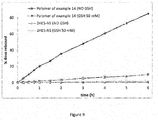
- doxorubicin was released by the disulfide cross-linked polymer in a linear way, thus demonstrating that the cross-linked starch-based polymer of the invention was a doxorubicin delivery system in the presence of glutathione.
- disulfide cross-linked polymer of the invention was a delivery drug system capable to release antitumoral agents encapsulated in the cross-linked starch-based polymer itself when glutathione is present as in the concentration as in the cancer cells.
- a nanosponge containing disulfide bridges (sulphur content 0.62 wt%), deriving from 2-hydroxyethyl disulfide (2HES), was synthesized by reacting ⁇ -cyclodextrin and 2HES with pyromellitic dianhydride, following the procedure reported in Trotta et al., ChemPlusChem 2016, 81, 439-443 . Specifically, 1.00 g of anhydrous ⁇ -CD and 0.10 g of 2HES were solubilized in 4.0 mL of dimethyl sulfoxide.
- the polymer of example 14 C exhibited a significantly higher sensitivity to glutathione, since the amount of doxorubicin, released after 6 h, increased from approximately 10 % to 85 % (eightfold increase), when glutathione was introduced at a 50 mM concentration ( figure 9 ).
- the concentration of 6-coumarin in the withdrawn samples was determined using a fluorimeter detector (Ex 450 nm, Em 480 nm).
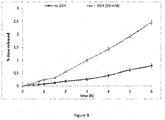
- the new polymers of the invention were responsive to the presence of GSH (disrupting S-S bonds) and faster release of coumarin used as a fluorescent probe. In the absence of GSH only negligible release was observed.
Landscapes
- Chemical & Material Sciences (AREA)
- Health & Medical Sciences (AREA)
- Life Sciences & Earth Sciences (AREA)
- Medicinal Chemistry (AREA)
- Chemical Kinetics & Catalysis (AREA)
- Polymers & Plastics (AREA)
- Organic Chemistry (AREA)
- General Health & Medical Sciences (AREA)
- Engineering & Computer Science (AREA)
- Biochemistry (AREA)
- Materials Engineering (AREA)
- Epidemiology (AREA)
- Public Health (AREA)
- Veterinary Medicine (AREA)
- Animal Behavior & Ethology (AREA)
- Pharmacology & Pharmacy (AREA)
- Molecular Biology (AREA)
- Bioinformatics & Cheminformatics (AREA)
- Inorganic Chemistry (AREA)
- Polysaccharides And Polysaccharide Derivatives (AREA)
- Pharmaceuticals Containing Other Organic And Inorganic Compounds (AREA)
- Medicinal Preparation (AREA)
- Cosmetics (AREA)
- Medicines That Contain Protein Lipid Enzymes And Other Medicines (AREA)
Priority Applications (11)
| Application Number | Priority Date | Filing Date | Title |
|---|---|---|---|
| EP18290034.0A EP3556779A1 (de) | 2018-04-20 | 2018-04-20 | Vernetzte stärkebasierte polymere zur arzneimittelabgabe |
| KR1020207033079A KR102479842B1 (ko) | 2018-04-20 | 2019-04-19 | 약물 전달용 가교 전분계 고분자 |
| CA3097609A CA3097609C (en) | 2018-04-20 | 2019-04-19 | Cross-linked starch-based polymers for drug-delivery |
| EP19723659.9A EP3781601B1 (de) | 2018-04-20 | 2019-04-19 | Vernetzte stärkebasierte polymere zur arzneimittelabgabe |
| JP2020558044A JP7034332B2 (ja) | 2018-04-20 | 2019-04-19 | 薬物送達のための架橋デンプンをベースとするポリマー |
| US17/049,185 US11440975B2 (en) | 2018-04-20 | 2019-04-19 | Cross-linked starch-based polymers for drug-delivery |
| ES19723659T ES2908835T3 (es) | 2018-04-20 | 2019-04-19 | Polímeros a base de almidón reticulados para el suministro de fármacos |
| CN201980041293.9A CN112334493B (zh) | 2018-04-20 | 2019-04-19 | 用于药物递送的交联的淀粉基聚合物 |
| MX2020011071A MX385830B (es) | 2018-04-20 | 2019-04-19 | Polímeros a base de almidón reticulados para la administración de fármacos |
| PCT/EP2019/060231 WO2019202148A1 (en) | 2018-04-20 | 2019-04-19 | Cross-linked starch-based polymers for drug-delivery |
| JP2021200768A JP7366110B2 (ja) | 2018-04-20 | 2021-12-10 | 薬物送達のための架橋デンプンをベースとするポリマー |
Applications Claiming Priority (1)
| Application Number | Priority Date | Filing Date | Title |
|---|---|---|---|
| EP18290034.0A EP3556779A1 (de) | 2018-04-20 | 2018-04-20 | Vernetzte stärkebasierte polymere zur arzneimittelabgabe |
Publications (1)
| Publication Number | Publication Date |
|---|---|
| EP3556779A1 true EP3556779A1 (de) | 2019-10-23 |
Family
ID=62134138
Family Applications (2)
| Application Number | Title | Priority Date | Filing Date |
|---|---|---|---|
| EP18290034.0A Withdrawn EP3556779A1 (de) | 2018-04-20 | 2018-04-20 | Vernetzte stärkebasierte polymere zur arzneimittelabgabe |
| EP19723659.9A Active EP3781601B1 (de) | 2018-04-20 | 2019-04-19 | Vernetzte stärkebasierte polymere zur arzneimittelabgabe |
Family Applications After (1)
| Application Number | Title | Priority Date | Filing Date |
|---|---|---|---|
| EP19723659.9A Active EP3781601B1 (de) | 2018-04-20 | 2019-04-19 | Vernetzte stärkebasierte polymere zur arzneimittelabgabe |
Country Status (9)
| Country | Link |
|---|---|
| US (1) | US11440975B2 (de) |
| EP (2) | EP3556779A1 (de) |
| JP (2) | JP7034332B2 (de) |
| KR (1) | KR102479842B1 (de) |
| CN (1) | CN112334493B (de) |
| CA (1) | CA3097609C (de) |
| ES (1) | ES2908835T3 (de) |
| MX (1) | MX385830B (de) |
| WO (1) | WO2019202148A1 (de) |
Cited By (1)
| Publication number | Priority date | Publication date | Assignee | Title |
|---|---|---|---|---|
| CN115594772A (zh) * | 2022-11-28 | 2023-01-13 | 中国科学院烟台海岸带研究所(Cn) | 一种香豆素类淀粉衍生物及其制备和应用 |
Families Citing this family (1)
| Publication number | Priority date | Publication date | Assignee | Title |
|---|---|---|---|---|
| CN118924683B (zh) * | 2024-07-19 | 2026-04-10 | 合肥工业大学 | 一种二硫交联的淀粉基胶束及其制备方法与应用 |
Citations (3)
| Publication number | Priority date | Publication date | Assignee | Title |
|---|---|---|---|---|
| US20100196542A1 (en) | 2007-07-19 | 2010-08-05 | Roquette Freres | Encapsulation agent comprising a pea maltodextrin and/or a pea glucose syrup, compositions containing it and its preparation method |
| WO2012147069A1 (en) | 2011-04-28 | 2012-11-01 | Universita' Degli Studi Di Torino | Method for preparing dextrin nanosponges |
| WO2016004974A1 (en) | 2014-07-07 | 2016-01-14 | Roquette Italia S.P.A. | A polymer based on a maltodextrin for encapsulating organic compounds |
Family Cites Families (3)
| Publication number | Priority date | Publication date | Assignee | Title |
|---|---|---|---|---|
| US9334338B2 (en) * | 2010-04-30 | 2016-05-10 | Halliburton Energy Services, Inc. | Water-soluble degradable synthetic vinyl polymers and related methods |
| JP2018034111A (ja) | 2016-08-31 | 2018-03-08 | 国立大学法人秋田大学 | 金属吸着剤 |
| CN107375237A (zh) * | 2017-09-08 | 2017-11-24 | 吉林大学 | 一种叶酸修饰的具有还原响应性的淀粉微胶囊及其制备方法 |
-
2018
- 2018-04-20 EP EP18290034.0A patent/EP3556779A1/de not_active Withdrawn
-
2019
- 2019-04-19 CA CA3097609A patent/CA3097609C/en active Active
- 2019-04-19 US US17/049,185 patent/US11440975B2/en active Active
- 2019-04-19 MX MX2020011071A patent/MX385830B/es unknown
- 2019-04-19 EP EP19723659.9A patent/EP3781601B1/de active Active
- 2019-04-19 ES ES19723659T patent/ES2908835T3/es active Active
- 2019-04-19 KR KR1020207033079A patent/KR102479842B1/ko active Active
- 2019-04-19 WO PCT/EP2019/060231 patent/WO2019202148A1/en not_active Ceased
- 2019-04-19 JP JP2020558044A patent/JP7034332B2/ja active Active
- 2019-04-19 CN CN201980041293.9A patent/CN112334493B/zh active Active
-
2021
- 2021-12-10 JP JP2021200768A patent/JP7366110B2/ja active Active
Patent Citations (3)
| Publication number | Priority date | Publication date | Assignee | Title |
|---|---|---|---|---|
| US20100196542A1 (en) | 2007-07-19 | 2010-08-05 | Roquette Freres | Encapsulation agent comprising a pea maltodextrin and/or a pea glucose syrup, compositions containing it and its preparation method |
| WO2012147069A1 (en) | 2011-04-28 | 2012-11-01 | Universita' Degli Studi Di Torino | Method for preparing dextrin nanosponges |
| WO2016004974A1 (en) | 2014-07-07 | 2016-01-14 | Roquette Italia S.P.A. | A polymer based on a maltodextrin for encapsulating organic compounds |
Non-Patent Citations (3)
| Title |
|---|
| FRANCESCO TROTTA ET AL.: "ChemPlusChem Communications", CHEM PUBSOC EUROPE, article "Glutathione Bioresponsive Cyclodextrin Nanosponges" |
| FRANCESCO TROTTA ET AL: "Glutathione Bioresponsive Cyclodextrin Nanosponges", CHEMPLUSCHEM, vol. 81, no. 5, 15 December 2015 (2015-12-15), pages 439 - 443, XP055515347, ISSN: 2192-6506, DOI: 10.1002/cplu.201500531 * |
| TROTTA ET AL., CHEMPLUSCHEM, vol. 81, 2016, pages 439 - 443 |
Cited By (2)
| Publication number | Priority date | Publication date | Assignee | Title |
|---|---|---|---|---|
| CN115594772A (zh) * | 2022-11-28 | 2023-01-13 | 中国科学院烟台海岸带研究所(Cn) | 一种香豆素类淀粉衍生物及其制备和应用 |
| CN115594772B (zh) * | 2022-11-28 | 2023-02-21 | 中国科学院烟台海岸带研究所 | 一种香豆素类淀粉衍生物及其制备和应用 |
Also Published As
| Publication number | Publication date |
|---|---|
| US11440975B2 (en) | 2022-09-13 |
| JP2021512206A (ja) | 2021-05-13 |
| JP7034332B2 (ja) | 2022-03-11 |
| CN112334493B (zh) | 2023-05-30 |
| ES2908835T3 (es) | 2022-05-04 |
| JP2022037079A (ja) | 2022-03-08 |
| MX385830B (es) | 2025-03-18 |
| KR102479842B1 (ko) | 2022-12-20 |
| CA3097609C (en) | 2021-09-07 |
| JP7366110B2 (ja) | 2023-10-20 |
| KR20210018224A (ko) | 2021-02-17 |
| CA3097609A1 (en) | 2019-10-24 |
| EP3781601B1 (de) | 2021-12-22 |
| MX2020011071A (es) | 2021-09-03 |
| US20210238315A1 (en) | 2021-08-05 |
| WO2019202148A1 (en) | 2019-10-24 |
| EP3781601A1 (de) | 2021-02-24 |
| CN112334493A (zh) | 2021-02-05 |
Similar Documents
| Publication | Publication Date | Title |
|---|---|---|
| JP6276431B2 (ja) | 有機化合物をカプセル封入するための、マルトデキストリンをベースとするポリマー | |
| EP2640752B1 (de) | Polysaccharidderivate mit einer alkeneinheit und chemischen thiol-click-kupplungsreaktionen | |
| Charlot et al. | Controlled synthesis and inclusion ability of a hyaluronic acid derivative bearing β-cyclodextrin molecules | |
| JP7366110B2 (ja) | 薬物送達のための架橋デンプンをベースとするポリマー | |
| Heydari et al. | Water-soluble cationic poly (β-cyclodextrin-co-guanidine) as a controlled vitamin B 2 delivery carrier | |
| CN115697303A (zh) | 基于交联淀粉衍生物的基质 | |
| WO2015181366A1 (en) | Cross-linked polymer mixture of hyaluronic acid and dextran grafted with cyclodextrins and uses thereof | |
| Heydari et al. | Water-soluble β-cyclodextrin polymers as drug carriers to improve solubility, thermal stability and controlled release of nifedipine | |
| Kasprzyk et al. | Cyclodextrin-modified poly (octamethylene citrate) polymers towards enhanced sorption properties | |
| US11071750B2 (en) | Soluble adducts of boric acid or derivatives and precursors thereof with chitosan oligosaccharide derivatives | |
| CA2880555A1 (en) | Surface modified nanocrystalline cellulose and uses thereof | |
| Mihoub et al. | Development of new ionic gelation strategy: Towards the preparation of new monodisperse and stable hyaluronic acid/β-cyclodextrin-grafted chitosan nanoparticles as drug delivery carriers for doxorubicin | |
| Belgamwar et al. | Synthesis of chitosan-graft-HPβCD copolymer by novel one pot technique and its application for solubility enhancement of Efavirenz | |
| Gangadhar et al. | A new and efficient synthesis of 6 A, 6 D-diisothiocyanto 6 A, 6 D-dideoxy β-cyclodextrin. | |
| Kadokawa et al. | Fabrication of Chitosan-Based Network Polysaccharide Nanogels |
Legal Events
| Date | Code | Title | Description |
|---|---|---|---|
| PUAI | Public reference made under article 153(3) epc to a published international application that has entered the european phase |
Free format text: ORIGINAL CODE: 0009012 |
|
| AK | Designated contracting states |
Kind code of ref document: A1 Designated state(s): AL AT BE BG CH CY CZ DE DK EE ES FI FR GB GR HR HU IE IS IT LI LT LU LV MC MK MT NL NO PL PT RO RS SE SI SK SM TR |
|
| AX | Request for extension of the european patent |
Extension state: BA ME |
|
| 17P | Request for examination filed |
Effective date: 20200420 |
|
| RBV | Designated contracting states (corrected) |
Designated state(s): AL AT BE BG CH CY CZ DE DK EE ES FI FR GB GR HR HU IE IS IT LI LT LU LV MC MK MT NL NO PL PT RO RS SE SI SK SM TR |
|
| GRAP | Despatch of communication of intention to grant a patent |
Free format text: ORIGINAL CODE: EPIDOSNIGR1 |
|
| STAA | Information on the status of an ep patent application or granted ep patent |
Free format text: STATUS: GRANT OF PATENT IS INTENDED |
|
| INTG | Intention to grant announced |
Effective date: 20200714 |
|
| STAA | Information on the status of an ep patent application or granted ep patent |
Free format text: STATUS: THE APPLICATION IS DEEMED TO BE WITHDRAWN |
|
| 18D | Application deemed to be withdrawn |
Effective date: 20201125 |