EP3556726B1 - Free-flow beverage dispensing apparatus and method of use thereof - Google Patents
Free-flow beverage dispensing apparatus and method of use thereof Download PDFInfo
- Publication number
- EP3556726B1 EP3556726B1 EP19275043.8A EP19275043A EP3556726B1 EP 3556726 B1 EP3556726 B1 EP 3556726B1 EP 19275043 A EP19275043 A EP 19275043A EP 3556726 B1 EP3556726 B1 EP 3556726B1
- Authority
- EP
- European Patent Office
- Prior art keywords
- dispensing
- free
- flow
- dispensing outlet
- beverage
- Prior art date
- Legal status (The legal status is an assumption and is not a legal conclusion. Google has not performed a legal analysis and makes no representation as to the accuracy of the status listed.)
- Active
Links
Images



Classifications
-
- B—PERFORMING OPERATIONS; TRANSPORTING
- B67—OPENING, CLOSING OR CLEANING BOTTLES, JARS OR SIMILAR CONTAINERS; LIQUID HANDLING
- B67D—DISPENSING, DELIVERING OR TRANSFERRING LIQUIDS, NOT OTHERWISE PROVIDED FOR
- B67D1/00—Apparatus or devices for dispensing beverages on draught
- B67D1/08—Details
- B67D1/12—Flow or pressure control devices or systems, e.g. valves, gas pressure control, level control in storage containers
- B67D1/1245—Change-over devices, i.e. connecting a flow line from an empty container to a full one
-
- B—PERFORMING OPERATIONS; TRANSPORTING
- B67—OPENING, CLOSING OR CLEANING BOTTLES, JARS OR SIMILAR CONTAINERS; LIQUID HANDLING
- B67D—DISPENSING, DELIVERING OR TRANSFERRING LIQUIDS, NOT OTHERWISE PROVIDED FOR
- B67D1/00—Apparatus or devices for dispensing beverages on draught
- B67D1/08—Details
- B67D1/0878—Safety, warning or controlling devices
- B67D1/0882—Devices for controlling the dispensing conditions
-
- B—PERFORMING OPERATIONS; TRANSPORTING
- B67—OPENING, CLOSING OR CLEANING BOTTLES, JARS OR SIMILAR CONTAINERS; LIQUID HANDLING
- B67D—DISPENSING, DELIVERING OR TRANSFERRING LIQUIDS, NOT OTHERWISE PROVIDED FOR
- B67D1/00—Apparatus or devices for dispensing beverages on draught
- B67D1/08—Details
- B67D1/0857—Cooling arrangements
-
- B—PERFORMING OPERATIONS; TRANSPORTING
- B67—OPENING, CLOSING OR CLEANING BOTTLES, JARS OR SIMILAR CONTAINERS; LIQUID HANDLING
- B67D—DISPENSING, DELIVERING OR TRANSFERRING LIQUIDS, NOT OTHERWISE PROVIDED FOR
- B67D1/00—Apparatus or devices for dispensing beverages on draught
- B67D1/08—Details
- B67D1/0888—Means comprising electronic circuitry (e.g. control panels, switching or controlling means)
-
- B—PERFORMING OPERATIONS; TRANSPORTING
- B67—OPENING, CLOSING OR CLEANING BOTTLES, JARS OR SIMILAR CONTAINERS; LIQUID HANDLING
- B67D—DISPENSING, DELIVERING OR TRANSFERRING LIQUIDS, NOT OTHERWISE PROVIDED FOR
- B67D1/00—Apparatus or devices for dispensing beverages on draught
- B67D1/08—Details
- B67D1/12—Flow or pressure control devices or systems, e.g. valves, gas pressure control, level control in storage containers
- B67D1/1247—Means for detecting the presence or absence of liquid
-
- B—PERFORMING OPERATIONS; TRANSPORTING
- B67—OPENING, CLOSING OR CLEANING BOTTLES, JARS OR SIMILAR CONTAINERS; LIQUID HANDLING
- B67D—DISPENSING, DELIVERING OR TRANSFERRING LIQUIDS, NOT OTHERWISE PROVIDED FOR
- B67D1/00—Apparatus or devices for dispensing beverages on draught
- B67D1/08—Details
- B67D1/12—Flow or pressure control devices or systems, e.g. valves, gas pressure control, level control in storage containers
- B67D1/1277—Flow control valves
Definitions
- This invention relates to free-flow beverage dispensing apparatus and to a method of use thereof.
- dispensing apparatus for dispensing a beverage such as beer therefrom
- dispensing apparatus of the present invention could be used to dispense any liquid beverage.
- Conventional apparatus for dispensing beer in a bar typically comprises a beer keg located remotely from the bar, such as in a cellar, a beer dispensing tap located in the bar for dispensing beer into appropriate glassware, and a beer line or conduit located between the beer keg and the beer tap.
- a cooling device may be provided in the beer line or conduit to allow the beer to be cooled during passage of the beer from the keg to the tap.
- a calibrated metering pump can be provided which allows a pre-determined measured volume of beer to be dispensed via the beer dispensing tap in use per actuation of the tap.
- This type of system is known as a metered line system. Problems associated with this type of system is the metering pumps are expensive to provide and they do not allow for a beverage to be "topped up" in the event of spillage or as a result of a beer head being formed during dispensing that spills over the top of the glassware being filled.
- the data to be stored can include software, collected data, one or more reports and/or the like.
- the detection means includes any means, device or mechanism which can detect the at least one reservoir is empty and/or there is an insufficiency or none of said one or more items to be dispensed from said at least one reservoir in use.
- the detection means could include weight detection means which can detect a change in weight of the one or more reservoirs, sonic level detection means, ultrasonic level detection means, fob detection means, pressure detection means that can detect a change in pressure and/or the like.
- the detection means includes at least one reed switch that is actuated when the at least one reservoir becomes empty and/or insufficient items are available in the at least one reservoir for dispensing.
- the at least one reed switch is a continuity switch that sends a data and/or power signal to the control unit. This in turn preferably moves the valve means from the open position to the closed position in one example.
- the detection means is provided on or associated with the at least one reservoir.
- valve means is any type of valve arrangement or valve member that can be moved between open and closed positions automatically and/or remotely.
- valve means is movable between the open and closed positions independently of actuation of the dispensing outlet means.
- valve means is in the form of one or more solenoid valves.
- valve means is normally in an open position in use.
- the valve means is moved to a closed position upon detection by the detection means of insufficient items to be dispensed from the reservoir.
- the valve means is a free flow type in that it allows any, a manually controlled and/or an arbitrary volume or quantity of the one or more items to pass through the same in use when the valve means is in an open position.
- the dispensing outlet means is any device that allows one or more items to flow from or through an outlet aperture in use, when in an open position in use, to allow dispensing of said items through said outlet aperture.
- the dispensing outlet means is an electronically actuated dispensing means.
- the dispensing outlet means includes or consists of a tap, font dispenser and/or the like.
- the dispensing outlet means can be moved between a closed position, wherein dispensing of one or more items therefrom is prevented, and an open position, wherein one or more items can be dispensed therefrom in use.
- both the dispense outlet means and the valve means need to be in an open position before one or more items can be dispensed from the dispense outlet means in use.
- valve means are connected to the dispensing outlet means and/or are provided upstream of the dispensing outlet means (i.e. between the dispensing outlet means and the at least one reservoir).
- valve means are provided in, are integral with and/or form part of the dispensing outlet means.
- the dispensing outlet means includes a solenoid valve provided therein.
- the one or more beverage items for dispensing can include any or any combination of one or more beer, larger, spirits, wine and/or the like.
- the apparatus includes power supply means or a power supply for providing electrical power to the control unit, the dispensing outlet means, the valve means, the detection means and/or the like.
- the power supply means can include any power supply, mains power supply, a generator, one or more batteries, rechargeable batteries, solar power, wind generated power and/or the like.
- the visual indication means or device can include one or more lights, light emitting means, data signs and/or the like.
- one or more lights could be illuminated when the valve means is in a closed position, when the detection means has detected there is insufficient items to be dispensed from the reservoir and/or the like.
- one or more parts of the dispensing apparatus of the present invention can be retrofitted to existing dispensing apparatus.
- the detection means can communicate directly with the valve means to move the same between the open and closed positions in use.
- valve means is arranged downstream from the detection means.
- valve means is arranged upstream of the dispensing outlet means.
- each of the multiple dispensing outlet means can be used independently of each other.
- Indication means in the form of a visual light 24 is associated with each beer tap 6.
- Each light 24 is in communication with the control unit 16 via the communication lines 22.
- each light 24 can be lit green when the solenoid valve 20 is in an open position to provide a visual indication to a bar worker that the beer flow line is in an operable position and there is beer contained in keg 4. Once the solenoid valve 20 has been moved to a closed position, the light 24 can be lit red to provide a visual indication to the bar worker that the beer flow line has been closed and a keg 4 needs to be changed.
- FIG. 1 and 2 illustrate a wired or hard wired system
- the communication lines 18 and/or 22 could represent wireless communication lines or include wireless communication if required. This has the advantage that the present invention can be set up in any building, environment, outside and/or the like. Suitable transmitter, receiver and/or transceiver devices can be provided on each component that is to communicate with the control unit 16 in use.
- wireless dispensing apparatus 200 is illustrated which does not form part of the present invention.
- This apparatus works in a similar manner to the apparatus described above but the control unit 16 communicates wirelessly with the solenoid valves 20 via a transceiver device 202 provided in or associated with control unit 16. More particularly, transceiver device 202 communicates wirelessly with a transceiver device 204 provided with or associated with the three taps 6, the solenoid valves 20 and the indication lights 24, as shown by arrows 206.
- the fob detector 12 associated with keg 4 communicates this to the control unit 16, which in turn signals to all three solenoid valves 20 via the WIFI connection 206 between the two transceivers 202, 204 to move the solenoid valves 20 associated with each beer tap 6 from an open position to a closed position.
- a signal is also transmitted to the indicator lights to change the light condition and visually indicate that the keg 4 is empty.
- the solenoid valve 20 is of a free flow type wherein any volume of beer can be dispensed through the same.
- the control unit 16 can have user actuation means associated with the same to allow a user to operate the solenoid valve 20, the tap 6, the cooler 10 and/or the fob detector 12 irrespective and/or independently to any other component of the apparatus.
- a user can move the solenoid valve 20 from the open position to the closed position if they wish to clean the apparatus, irrespective of whether the keg 4 is full or not. This can be performed, for example, by actuating a cleaning over-ride switch on the control unit 16. Once the apparatus has been cleaned, the user can then re-open the solenoid valve to allow normal operation of the dispensing apparatus.
- the beer tap 300 includes a housing 302 having a tap handle 304, an inlet aperture 306 and an outlet aperture 308.
- a channel 310 is defined through housing 302 between the inlet aperture 306 and the outlet aperture 308 through which one or more items, such as for example beer, can flow in use.
- An electrical cable 320 can be connected to solenoid valve 318 to allow one or more control signals from control unit to be sent directly or indirectly to move the valve 318 between the open and closed positions.
- the solenoid valve 318 can be controlled via wireless means.
- dispensing apparatus 400 which does not form part of the present invention.
- This apparatus is capable of both wireless communication and wired communication.
- the two forms of communication can take place simultaneously to each other or independently of and/or separately of each other.
- a user can also select which form of communication is used at any particular time. This makes this embodiment of the present invention very flexible in terms of how it can be used.
- the same reference numerals have been used to describe the same features and components as mentioned in earlier embodiments.
- This WIFI transceiver unit 204 allows wireless communication with the central control unit 16 via WIFI transceiver unit 202, and also allows communication with the control unit 16 via wired connection 16.
- the provision of two possible communication pathways provides a back-up pathway in the event one of the pathways cannot work, such as if there is a loss of WIFI, if there is damage to the wired connection and/or the like.
- the single transceiver unit 204 allows control of all the solenoid valves 20 associated with all the dispensing taps 6.
- a flow meter reporting unit 402 is associated with the flow lines 8a-8c that measures the flow or liquid in each line 8a-8c.
- the flow meter reporting unit 402 is provided between the cooler 10 and the keg 4.
- the unit 402 communicates with a flow meter receiving unit 404, that in turn communicates with the control unit 400 via the transceiver unit 202 and that can signal with an information cloud to report on system controls and liquid volumes.
- the flow receiving unit 404 is the data hub control unit for receiving data from the flow meter. This sends one or more signals to the internet cloud which a customer can log on to their account and see the flow readings on liquid volumes that have passed through their system. It will also provide data relating to the temperature of the liquid, the rate of flow of the liquid and/or the like.
Landscapes
- Devices For Dispensing Beverages (AREA)
Description
- This invention relates to free-flow beverage dispensing apparatus and to a method of use thereof.
- Although the following description refers almost exclusively to dispensing apparatus for dispensing a beverage such as beer therefrom, it will be appreciated by persons skilled in the art that the dispensing apparatus of the present invention could be used to dispense any liquid beverage.
- Conventional apparatus for dispensing beer in a bar typically comprises a beer keg located remotely from the bar, such as in a cellar, a beer dispensing tap located in the bar for dispensing beer into appropriate glassware, and a beer line or conduit located between the beer keg and the beer tap. A cooling device may be provided in the beer line or conduit to allow the beer to be cooled during passage of the beer from the keg to the tap.
- In one known example of beer dispensing apparatus, a calibrated metering pump can be provided which allows a pre-determined measured volume of beer to be dispensed via the beer dispensing tap in use per actuation of the tap. This type of system is known as a metered line system. Problems associated with this type of system is the metering pumps are expensive to provide and they do not allow for a beverage to be "topped up" in the event of spillage or as a result of a beer head being formed during dispensing that spills over the top of the glassware being filled.
- In an alternative known example of beer dispensing apparatus, the user manually controls the volume of beer being dispensed from the beer dispensing tap. This type of system is known as a free flow line system and overcomes the abovementioned problems. However, a problem with this type of system is that when the keg becomes empty and requires changing, if the dispensing tap is left open, the system becomes depressurised and the beer line fills up with gas and beer foam, known as fobbing. A fob detector is typically provided in association with the keg. An example of a conventional fob detector is a mechanical device that is located at the keg to prevent gas from entering the product line from the keg end of the system when the keg becomes empty. The fob detector includes a float or ball that sits above the keg in a chamber. With the keg full of beer, the float sits at the top of the chamber and beer is able to flow out of a side outlet, along the beer line and through to the dispensing tap. As the keg becomes empty, the float level drops as the beer is replaced with gas in the chamber. When the float reaches the bottom of the chamber it closes the side outlet to prevent excess fob from entering the beer line. Once a bar worker realises the beer keg is empty, they have to physically go where the empty keg is located, connect a new keg to the beer line, drain off any excess fob/gas in the beer line and re-pressurise the beer line. This is time consuming for the bar worker, particularly if the beer line is relatively long. In addition, despite a fob detector being present, depressurisation of the beer line still takes place due to the dispensing tap being open for a period of time prior to the bar worker realising the keg is empty. As such, there is still a requirement for draining of the beer line of excess fob/gas which can cause significant beer wastage. This can result in a significant loss of earnings for the bar.
-
GB2404651 -
GB2217688 -
GB2415952 - It is a further aim of the present invention to provide a beverage dispensing apparatus that overcomes the abovementioned problems.
- It is a yet further aim of the present invention to provide a method of using beverage dispensing apparatus.
- According to a first aspect of the present invention there is provided free-flow beverage dispensing apparatus for dispensing one or more beverage items therefrom in use according to claim 1.
- Thus, the present invention has the advantage that a single control unit can control multiple dispensing outlet means, thereby allowing the apparatus to be scaled up and/or down quickly, easily and without significant cost. Additional dispensing outlet means can be added to or removed from the apparatus as and when required without significant duplication or removal of components respectively.
- Preferably individual valve means are provided on or associated with each of the dispensing outlet means.
- Preferably the control unit controls and/or communicates with a central valve control unit that communicates with all the valve means.
- The advantage of the present invention is that the valve means provided with or associated with the dispensing outlet means can be moved to a closed position as soon as the detection means detects the reservoir is empty or detects there is insufficient or no items to be dispensed, thereby preventing depressurisation of the system. In beverage dispensing apparatus, this can prevent the formation of fob within the apparatus in a simple and effective manner, thereby saving on beverage wastage and associated loss of earnings.
- In one embodiment the control unit communicates with the dispensing outlet means, the valve means and/or the detection means via wired and/or wireless means or methods. In one example, the control unit is arranged to communicate via both or either of the wired means and the wireless means and, depending on the setting in which the apparatus is located, a user is able to select the preferred form or forms of communication used via the system. This makes the system very adaptable to a large range of applications. For example, the apparatus can be set up in a permanent setting, such as a bar or pub, using wired and/or wireless means, or can be set up in temporary setting such as a pop up bar where wireless means may be appropriate. The apparatus of the present invention can be used in bars where dispensing outlet means are provided at multiple locations within a setting, such as on different floors of a building, in different rooms or locations within a building and/or the like. A central control unit can be provided to communicate and control two or more, or all, the dispensing outlet means at the different locations.
- Preferably the wireless means or methods includes or consists of any or any combination of wireless mechanism, WIFI, Bluetooth, one or more radio frequency signals and/or the like. The use of wireless communication is advantageous in that it can be used in "pop-up" bars, in outside bars and/or in any environment where the use of wiring is not possible, it too time consuming to fit, is unsafe to use and/or the like.
- Preferably the wired means includes any or any combination of one or more wires, cables, conduits, fibres and/or the like.
- Preferably the dispensing outlet means, the control unit, the valve means and/or the detection means communicate via one or more data and/or digital signals that are transmitted and/or received from or with the same.
- In one embodiment the dispensing outlet means, the control unit, the valve means and/or the detection means includes one or more transmitter means or device, receiving means or device and/or transceiver means or device for transmitting and/or receiving one or more data and/or digital signals in use.
- In one embodiment the control unit is located remotely from the valve means, the dispensing outlet means, the at least one reservoir and/or the detection means.
- Preferably the control unit includes micro-processing means or a micro-processor for processing one or more data and/or digital signals being received and/or transmitted therefrom.
- Preferably the control unit includes memory means or device or a data storage device for storing data thereon in use.
- Preferably the data to be stored can include software, collected data, one or more reports and/or the like.
- Preferably the control unit includes user actuation means or member to allow a user to actuate one or more functions of the dispensing apparatus and/or control unit in use.
- Preferably the user actuation means or member includes one or more buttons, switches, dials, joystick, keys, touch screen and/or the like.
- Preferably display means or a display is provided on or associated with the control unit for displaying one or more data items and/or functions in use.
- In one embodiment the detection means includes any means, device or mechanism which can detect the at least one reservoir is empty and/or there is an insufficiency or none of said one or more items to be dispensed from said at least one reservoir in use. For example, the detection means could include weight detection means which can detect a change in weight of the one or more reservoirs, sonic level detection means, ultrasonic level detection means, fob detection means, pressure detection means that can detect a change in pressure and/or the like.
- Preferably the fob detection means is an electronic fob detection means and/or an electronic metered fob detection means.
- Preferably the detection means includes at least one reed switch that is actuated when the at least one reservoir becomes empty and/or insufficient items are available in the at least one reservoir for dispensing.
- Preferably the at least one reed switch is a continuity switch that sends a data and/or power signal to the control unit. This in turn preferably moves the valve means from the open position to the closed position in one example.
- Preferably the detection means is provided on or associated with the at least one reservoir.
- Preferably the valve means is any type of valve arrangement or valve member that can be moved between open and closed positions automatically and/or remotely.
- Preferably the valve means is movable between the open and closed positions independently of actuation of the dispensing outlet means.
- In one embodiment the valve means is electronically controlled.
- In one embodiment the valve means is in the form of one or more solenoid valves. Preferably the valve means is normally in an open position in use.
- The valve means is moved to a closed position upon detection by the detection means of insufficient items to be dispensed from the reservoir.
- Preferably the valve means requires no power or a reduced power supply to maintain the valve means in an open position in use, thereby ensuring the apparatus requires no or minimal power supply to operate the same in use.
- The valve means is a free flow type in that it allows any, a manually controlled and/or an arbitrary volume or quantity of the one or more items to pass through the same in use when the valve means is in an open position.
- Preferably the dispensing outlet means is any device that allows one or more items to flow from or through an outlet aperture in use, when in an open position in use, to allow dispensing of said items through said outlet aperture.
- The dispensing outlet means is an electronically actuated dispensing means. Preferably the dispensing outlet means includes or consists of a tap, font dispenser and/or the like.
- The dispensing outlet means can be moved between a closed position, wherein dispensing of one or more items therefrom is prevented, and an open position, wherein one or more items can be dispensed therefrom in use.
- Preferably both the dispense outlet means and the valve means need to be in an open position before one or more items can be dispensed from the dispense outlet means in use.
- Preferably the valve means are connected to the dispensing outlet means and/or are provided upstream of the dispensing outlet means (i.e. between the dispensing outlet means and the at least one reservoir).
- Preferably the valve means are provided in, are integral with and/or form part of the dispensing outlet means.
- Thus, in one example, the dispensing outlet means includes a solenoid valve provided therein.
- Preferably the one or more beverage items for dispensing can include any or any combination of one or more beer, larger, spirits, wine and/or the like.
- In one embodiment the apparatus includes power supply means or a power supply for providing electrical power to the control unit, the dispensing outlet means, the valve means, the detection means and/or the like.
- The power supply means can include any power supply, mains power supply, a generator, one or more batteries, rechargeable batteries, solar power, wind generated power and/or the like.
- Preferably the power supply provides a 24V power supply.
- In one embodiment the apparatus includes indication means or an indication device to allow the status of the dispensing outlet means, the valve means, the flow conduit and/or flow line and/or the detection means to be indicated to a user in use. Preferably the indication means includes any or any combination of visual indication means or device, audio indication means or device, or kinaesthetic indication means or device.
- Preferably the visual indication means or device can include one or more lights, light emitting means, data signs and/or the like. For example, one or more lights could be illuminated when the valve means is in a closed position, when the detection means has detected there is insufficient items to be dispensed from the reservoir and/or the like.
- Preferably the audio indication means or device include one or more alarms, sounds and/or the like.
- Preferably the kinaesthetic indication means or device include one or more vibration means and/or the like.
- Preferably the indication means are provided on, associated with, or in the locality or vicinity of the dispensing outlet means.
- Preferably temperature control means or mechanism are provided in or associated with the apparatus for controlling a temperature of one or more parts of the apparatus in use.
- Preferably the temperature control means includes one or more heaters or heating devices for heating one or more parts of the apparatus in use.
- Preferably the temperature control means includes one or more cooling devices for cooling one or more parts of the apparatus in use.
- Preferably the temperature control means, the one or more heating and/or cooling devices are provided one or associated with the at least one flow conduit or flow line in use.
- Preferably the one or more reservoirs includes one or more containers, kegs, barrels, bottles, drums and/or the like.
- Preferably the control unit and/or valve means can have valve control means associated with the same. Preferably this allows a user to control the valve means irrespective of or independently of the status of the detection means. For example, if a user requires cleaning of one or more parts of the dispensing apparatus, the user can move the valve means from the open position to the closed position during the cleaning process. Once the cleaning process has been completed, the user can move the valve means from the closed position to the open position. The control unit controls the dispensing outlet means directly. For example, this can be used to prevent the dispense outlet means being left in an open position when the valve means is being moved from a closed position to an open position following the changing of a reservoir and/or the like.
- Preferably one or more parts of the dispensing apparatus of the present invention can be retrofitted to existing dispensing apparatus.
- Preferably the detection means can communicate directly with the valve means to move the same between the open and closed positions in use.
- Preferably once the valve means has been moved from the open position to the closed position as a result of one or more signals being transmitted from the detection means about the status of the at least one reservoir, the valve means remains in a closed position until the at least one reservoir has been changed and/or refilled such that the detection means detects there is sufficiency of the one or more items to be dispensed therefrom.
- Preferably the valve means is arranged downstream from the detection means. Preferably the valve means is arranged upstream of the dispensing outlet means. Preferably each of the multiple dispensing outlet means can be used independently of each other.
- According to a second aspect of the present invention there is provided a method of using free-flow beverage dispensing apparatus for dispensing one or more beverage items therefrom in use according to claim 11.
- According to one embodiment of the present invention indication means are provided for indicating the status or operational status of the at least one reservoir, the dispensing outlet means, the valve means and/or the detection means in use. Preferably the indication means are provided on, associated with or in the locality or vicinity of the dispensing outlet means.
- Preferably the indication means include any or any combination of visual, audio and/or kinaesthetic indication means.
- According to one embodiment the detection means includes one or more sonic flow detection devices or ultrasonic flow detection devices.
- Preferably said dispensing outlet means are arranged such that the valve means can be controlled to move between the open and closed positions via a remote control unit and/or following detection of one or more pre-determined conditions.
- Preferably the valve means is a solenoid valve.
- The one or more pre-determined conditions is the detection of a reservoir connected to or associated with the dispensing outlet means being empty or containing insufficient items to dispense.
- It will be appreciated that any or any combination of the abovementioned embodiments could be provided in the free-flow beverage dispensing apparatus of the present application.
- Embodiments of the present invention will now be described with reference to the following figures, wherein:
-
Figure 1 is a simplified view of dispensing apparatus according to one embodiment of the present invention; -
Figure 2 is a simplified view of dispensing apparatus which does not form part of the present invention; -
Figure 3 is a simplified view of dispensing apparatus which does not form part of the present invention; -
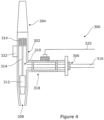
Figure 4 is a simplified cross sectional view of dispensing outlet means according to an embodiment of the present invention; -
Figure 5 is a simplified view of dispensing apparatus which does not form part of the present invention. - Referring firstly to
figure 1 , there is illustrated dispensing apparatus in the form ofbeer dispensing apparatus 2 according to an embodiment of the present invention. - The
apparatus 2 includes a plurality of reservoirs in the form ofbeer kegs 4 for the containment of the beer, a plurality of dispensing outlet means in the form of free flow beer taps 6 located remotely from thebeer kegs 4, and beer flow lines orconduits 8a-8c located between thebeer kegs 4 and the beer taps 6 for allowing beer to flow from thebeer kegs 4 to the beer taps 6 in use. Eachbeer tap 6 is movable from an open position, wherein beer can be dispensed from an outlet aperture in the same, to a closed position, wherein beer is prevented from being dispensed from the outlet aperture. - A cooler 10 is provided through which each
beer flow line 8a-8c flows in order to cool the beer contained in the flow lines to a required temperature. - In accordance with the present invention detection means in the form of
electronic fob detectors 12 are associated with eachbeer keg 4 to detect when the keg is empty or when there is insufficient beer contained in thekeg 4 to dispense. In the illustration, eachfob detector 12 includes a chamber through which beer from the keg flows before entering theflow line 8a-8c in use. The chamber includes a float that is located above aside outlet 14 of the chamber when there is beer contained in the keg. As the beer is dispensed from the side outlet 14 (or a bottom outlet (not shown)) and the keg becomes empty, the float becomes lower in the chamber and shuts off theside outlet 14 and actuates a reed switch or continuity connection contained in a base of the chamber. Actuation of the reed switch or continuity connection sends a data signal to acontrol unit 16 via acommunication line 18 provided between eachfob detector 12 and thecontrol unit 16 to signal whether aparticular keg 4 is empty. - Micro-processing means provided in the
control unit 16 processes the data signal from thefob detectors 12 and signals to asolenoid valve 20 provided in theflow line 8a-8c in association with eachbeer tap 6 via communication lines 22. The solenoid valve is normally in an open position wherein it allows beer to flow through the same tobeer tap 6. When thesolenoid valve 20 receives a data signal from thecontrol unit 16 that akeg 4 is empty, it moves thesolenoid valve 20 associated with that particularbeer flow line 8a-8c from the open position to a closed position. With thesolenoid valve 20 in a closed position, this closes thebeer flow line 8a-8c irrespective of whether thebeer tap 6 is an open or closed position. This prevents thebeer flow lines 8a-8c from being depressurised when an associatedkeg 4 becomes empty, thereby preventing fob being formed in thebeer lines 8a-8c. - Indication means in the form of a
visual light 24 is associated with eachbeer tap 6. Each light 24 is in communication with thecontrol unit 16 via the communication lines 22. In one example, each light 24 can be lit green when thesolenoid valve 20 is in an open position to provide a visual indication to a bar worker that the beer flow line is in an operable position and there is beer contained inkeg 4. Once thesolenoid valve 20 has been moved to a closed position, the light 24 can be lit red to provide a visual indication to the bar worker that the beer flow line has been closed and akeg 4 needs to be changed. - A bar worker can replace the
empty keg 4 with a full keg. For example, the bar worker typically bleeds the fob detection chamber, this is turn raises the float inside the detection chamber, releasing the electrical contact of the float with the reed switch, thereby signalling to the control unit that the keg is now full. The control unit signals to the solenoid valve associated with the particular keg that the keg is full, thereby moving the solenoid valve from the closed position to an open position. With the solenoid valve open, thetap 6 can then be moved from a closed position to an open position to allow beer to once again dispensed fromtap 6. - The control unit can detect which data signal has been emitted or generated from which fob detector, thereby allowing the corresponding beer tap in the same beer line as the keg that needs to be replaced to be moved from the open position to the closed position in use.
- It will be appreciated that the apparatus could be provided with any number of kegs and/or any number of beer taps as required.
- In
figure 2 ,beer dispensing apparatus 100 is shown which does not form part of the present invention. The three beer dispensing taps 6 are provided in fluid flow communication with a single beer reservoir orkeg 4. Once thekeg 4 becomes empty, thefob detector 12 associated withkeg 4 communicates this to thecontrol unit 16, which in turn signals to all threesolenoid valves 20 associated with the beer taps 6 to move from an open position to a closed position. The visual indication lights 24 can be used to signal to a bar worker that thekeg 4 needs to be changed. Theflow lines 8a-8c are combined into asingle flow line 8d between the cooler 10 and thekeg 4. - Although
figures 1 and2 illustrate a wired or hard wired system, thecommunication lines 18 and/or 22 could represent wireless communication lines or include wireless communication if required. This has the advantage that the present invention can be set up in any building, environment, outside and/or the like. Suitable transmitter, receiver and/or transceiver devices can be provided on each component that is to communicate with thecontrol unit 16 in use. - Referring to
figure 3 ,wireless dispensing apparatus 200 is illustrated which does not form part of the present invention. This apparatus works in a similar manner to the apparatus described above but thecontrol unit 16 communicates wirelessly with thesolenoid valves 20 via atransceiver device 202 provided in or associated withcontrol unit 16. More particularly,transceiver device 202 communicates wirelessly with atransceiver device 204 provided with or associated with the threetaps 6, thesolenoid valves 20 and the indication lights 24, as shown byarrows 206. Once thekeg 4 becomes empty, thefob detector 12 associated withkeg 4 communicates this to thecontrol unit 16, which in turn signals to all threesolenoid valves 20 via theWIFI connection 206 between the twotransceivers solenoid valves 20 associated with eachbeer tap 6 from an open position to a closed position. A signal is also transmitted to the indicator lights to change the light condition and visually indicate that thekeg 4 is empty. - The
control unit 16 is used to communicate with thetaps 6 directly or viatransceiver 204 to control whether the taps are in the open or closed positions and/or with cooler 10 to control the temperature of the beer in theflow lines 8a-8d and/or the like. - The
solenoid valve 20 is of a free flow type wherein any volume of beer can be dispensed through the same. - The
control unit 16 can have user actuation means associated with the same to allow a user to operate thesolenoid valve 20, thetap 6, the cooler 10 and/or thefob detector 12 irrespective and/or independently to any other component of the apparatus. For example, a user can move thesolenoid valve 20 from the open position to the closed position if they wish to clean the apparatus, irrespective of whether thekeg 4 is full or not. This can be performed, for example, by actuating a cleaning over-ride switch on thecontrol unit 16. Once the apparatus has been cleaned, the user can then re-open the solenoid valve to allow normal operation of the dispensing apparatus. - Referring to
figure 4 , there is illustrated dispensing outlet means in the form of a dispensing font orbeer tap 300 according to an embodiment of the present invention. Thebeer tap 300 includes ahousing 302 having atap handle 304, aninlet aperture 306 and anoutlet aperture 308. Achannel 310 is defined throughhousing 302 between theinlet aperture 306 and theoutlet aperture 308 through which one or more items, such as for example beer, can flow in use. Aplunger element 312 is movably connected to taphandle 304 via connection means 314, such that actuation of the tap handle 304 can move theplunger 312 between an open position, wherein theplunger element 312 is moved clear ofoutlet aperture 308 and beer contained withinchannel 310 can flow out of saidoutlet aperture 308, and a closed position, wherein theplunger element 312 closesoutlet aperture 308 and beer contained withinchannel 310 is prevented from flowing out ofoutlet aperture 308. - The tap handle 304 is electrically operated.
- A
feed line 316 is connected toinlet aperture 306 to allow beer to flow from a reservoir intochannel 310 ofhousing 302. Thefeed line 316 can be connected via any suitable connection means. - In accordance with one embodiment of the present invention, valve means in the form of a
solenoid valve 318 is provided inhousing 302 betweeninlet aperture 306 and outlet aperture 308 (and preferably upstream of plunger element 312). Thus, in contrast with the embodiments shown infigures 1-3 wherein the solenoid valves are provided in theflow line 8a-8c upstream ofbeer tap 6, thesolenoid valve 318 in this example is provided as an integral part oftap 300. Thesolenoid valve 318 allows thetap 300 to be remotely controlled in a similar manner to that described in the earlier embodiments. - An
electrical cable 320 can be connected tosolenoid valve 318 to allow one or more control signals from control unit to be sent directly or indirectly to move thevalve 318 between the open and closed positions. Alternatively, thesolenoid valve 318 can be controlled via wireless means. - An indicator light 322 can be provided on
tap 300 to indicate to a user whether thesolenoid valve 318 is in an open or closed position as previously described. However, theindicator light 322 could be provided separate to tap 300 if required. - Referring to
figure 5 , there is illustrated a further embodiment of dispensingapparatus 400 which does not form part of the present invention. This apparatus is capable of both wireless communication and wired communication. The two forms of communication can take place simultaneously to each other or independently of and/or separately of each other. A user can also select which form of communication is used at any particular time. This makes this embodiment of the present invention very flexible in terms of how it can be used. The same reference numerals have been used to describe the same features and components as mentioned in earlier embodiments. - Multiple dispensing taps 6 are provided and these are all connected with a central
WIFI transceiver unit 204. ThisWIFI transceiver unit 204 allows wireless communication with thecentral control unit 16 viaWIFI transceiver unit 202, and also allows communication with thecontrol unit 16 viawired connection 16. The provision of two possible communication pathways provides a back-up pathway in the event one of the pathways cannot work, such as if there is a loss of WIFI, if there is damage to the wired connection and/or the like. Thesingle transceiver unit 204 allows control of all thesolenoid valves 20 associated with all the dispensing taps 6. A flowmeter reporting unit 402 is associated with theflow lines 8a-8c that measures the flow or liquid in eachline 8a-8c. The flowmeter reporting unit 402 is provided between the cooler 10 and thekeg 4. Theunit 402 communicates with a flowmeter receiving unit 404, that in turn communicates with thecontrol unit 400 via thetransceiver unit 202 and that can signal with an information cloud to report on system controls and liquid volumes. Theflow receiving unit 404 is the data hub control unit for receiving data from the flow meter. This sends one or more signals to the internet cloud which a customer can log on to their account and see the flow readings on liquid volumes that have passed through their system. It will also provide data relating to the temperature of the liquid, the rate of flow of the liquid and/or the like.
Claims (11)
- Free-flow beverage dispensing apparatus (2, 100, 200, 400) for dispensing one or more beverage items therefrom in use; said apparatus (2, 100, 200, 400) including a plurality of reservoirs for containment of the one or more beverage items to be dispensed; and a plurality of dispensing outlet means; the dispensing outlet means configured to be moved between a closed position, wherein dispensing of the one or more beverage items therefrom is prevented, and an open position, wherein the one or more beverage items can be dispensed therefrom for dispensing the one or more beverage items from said apparatus (2, 100, 200, 400), each of the dispensing outlet means in fluid communication with a single one of the reservoirs; and a single free-flow conduit or free-flow line (8a-8c) located between each reservoir and the dispensing outlet means, and wherein free-flow valve means are provided with or associated with said dispensing outlet means to control dispensing of the one or more beverage items from said dispensing outlet means in use, said free-flow valve means movable between an open position, wherein the one or more beverage items can be dispensed from the dispensing outlet means, and a closed position, wherein the one or more beverage items are prevented from being dispensed from said dispensing outlet means, the apparatus (2, 100, 200, 400) including detection means for detecting when each of the plurality of reservoirs contain an insufficiency of said beverage items to be dispensed; whereby the dispensing outlet means are electronically actuated dispensing outlet means, and said beverage dispensing apparatus (2, 100, 200, 400) includes a control unit (16) that is arranged to communicate with and/or control at least two, or all, of said multiple dispensing outlet means simultaneously and/or each dispensing outlet means independently of one or more other dispensing outlet means directly and via the free-flow valve means (20, 318); and the detection means are arranged to communicate with the control unit (16) and, on detection of insufficient beverage items to be dispensed from the reservoir, this is communicated to the control unit (16) which is arranged to signal to the valve means to move from the open position to the closed position.
- The free-flow beverage dispensing apparatus according to claim 1, wherein the control unit (16) communicates with the dispensing outlet means, the free-flow valve means and/or the detection means via wired and/or wireless means.
- The free-flow beverage dispensing apparatus according to claim 2 wherein the dispensing outlet means, the control unit (16), the free-flow valve means and/or the detection means includes one or more transmitter means, receiver means and/or transceiver means (202, 204)for transmitting and/or receiving one or more data signals in use.
- The free-flow beverage dispensing apparatus according to claim 1, wherein the control unit (16) is located remotely from the free-flow valve means, the dispensing outlet means, the reservoirs and/or the detection means.
- The free-flow beverage dispensing apparatus according to claim 1 wherein the control unit (16) includes any or any combination of micro-processing means, software, memory means, user actuation means or display means.
- The free-flow beverage dispensing apparatus according to claim 1 wherein the detection means includes any mechanism which allows detection of the reservoirs being empty and/or having insufficient beverage items for dispensing, weight detection means, ultrasonic level detection means, sonic level detection means, fob detection means (12), one or more reed switches, and/or pressure detection means.
- The free-flow beverage dispensing apparatus according to claim 1 wherein the free-flow valve means is any or any combination of being electronically controlled, including one or more solenoid valves (20, 318), is normally in an open position unless the reservoir has insufficient beverage items to be dispensed, or requires no or a reduced power supply to maintain the valve means in an open position in use.
- The free-flow beverage dispensing apparatus according to claim 1, wherein power supply means are provided for supplying electrical power to the control unit (16), the dispensing outlet means, the free-flow valve means and/or the detection means in use.
- The free-flow beverage dispensing apparatus according to claim 1, wherein indication means are provided to allow the status of the dispensing outlet means, the free-flow valve means, the free- flow conduit and/or free-flow lines (8a-8c) and/or the detection means to be indicated to a user in use.
- The free-flow beverage dispensing apparatus according to claim 1, wherein one or more heating devices and/or cooling devices (10) are provided for heating and/or cooling one or more parts of the apparatus (2, 100, 200, 400) respectively in use.
- A method of using free-flow beverage dispensing apparatus (2, 100, 200, 400) for dispensing one or more beverage items therefrom in use; said apparatus (2, 100, 200, 400) including a plurality of reservoirs for containment of the one or more beverage items to be dispensed; and a plurality of dispensing outlet means ; the dispensing outlet means configured to be moved between a closed position, wherein dispensing of the one or more beverage items therefrom is prevented, and an open position, wherein the one or more beverage items can be dispensed therefrom for dispensing the one or more beverage items from said apparatus (2, 100, 200, 400); each of the dispensing outlet means in fluid communication with a single one of said reservoirs; and a single free-flow conduit or free-flow line (8a-8c) located between each of the reservoirs and the dispensing outlet means, and wherein free-flow valve means are provided with or associated with said dispensing outlet means to control dispensing of the one or more beverage items from said dispensing outlet means in use; said free-flow valve means movable between an open position, wherein the one or more beverage items can be dispensed from the dispensing outlet means, and a closed position, wherein the one or more beverage items are prevented from being dispensed from said dispensing outlet means; and the apparatus (2, 100, 200, 400) including detection means for detecting when the reservoirs contain an insufficiency of said beverage items to be dispensed, said method including the steps of dispensing the one or more beverage items from the apparatus (2, 100, 200, 400) via moving the free-flow valve means from the closed position to the open position, moving the dispensing outlet means from a closed position to an open position, moving the beverage items from the reservoir to the dispensing outlet means via the at least one free-flow conduit or free-flow line (8a-8c), characterised in that dispensing outlet means are electronically actuated dispensing outlet means; and a control unit (16) is provided that is arranged to communicate and/or control, at least two, or all, of said dispensing outlet means simultaneously and/or each dispensing outlet means independently of one or more other dispensing outlet means directly and via the free-flow valve means (20,318); the detection means communicating with the control unit (16) and, on detection of insufficient beverage items to be dispensed from the reservoir, communicating this to the control unit (16) which signals to the free-flow valve means to move from the open position to the closed position.
Applications Claiming Priority (1)
| Application Number | Priority Date | Filing Date | Title |
|---|---|---|---|
| GBGB1806302.4A GB201806302D0 (en) | 2018-04-18 | 2018-04-18 | Dispensing apparatus and method of use thereof |
Publications (3)
| Publication Number | Publication Date |
|---|---|
| EP3556726A1 EP3556726A1 (en) | 2019-10-23 |
| EP3556726B1 true EP3556726B1 (en) | 2025-02-26 |
| EP3556726C0 EP3556726C0 (en) | 2025-02-26 |
Family
ID=62203335
Family Applications (1)
| Application Number | Title | Priority Date | Filing Date |
|---|---|---|---|
| EP19275043.8A Active EP3556726B1 (en) | 2018-04-18 | 2019-04-03 | Free-flow beverage dispensing apparatus and method of use thereof |
Country Status (3)
| Country | Link |
|---|---|
| US (1) | US20190322518A1 (en) |
| EP (1) | EP3556726B1 (en) |
| GB (1) | GB201806302D0 (en) |
Families Citing this family (3)
| Publication number | Priority date | Publication date | Assignee | Title |
|---|---|---|---|---|
| US11613455B1 (en) * | 2015-04-15 | 2023-03-28 | Sestra Systems, Inc. | Automated venting of gas/foam from foam on beer detector for carbonated beverages |
| CA3170145C (en) | 2020-02-07 | 2024-01-09 | Alfa Laval Copenhagen A/S | Unit for dispensing ultra-high gravity fermented beverages on draft |
| MX2022014843A (en) * | 2020-05-25 | 2023-05-16 | Sestra Systems Inc | Fob system for intelligent flow detection and dispense control. |
Family Cites Families (5)
| Publication number | Priority date | Publication date | Assignee | Title |
|---|---|---|---|---|
| US4305527A (en) * | 1977-06-13 | 1981-12-15 | The Cornelius Company | Method of dispensing a carbonated beverage |
| GB2165525A (en) * | 1984-08-18 | 1986-04-16 | Porter Lancastrian Ltd | Beverage dispensing apparatus with one measuring device for plural outlets |
| GB8810056D0 (en) * | 1988-04-28 | 1988-06-02 | Distillers Co Carbon Dioxide | Beverage metering system |
| GB2423980B (en) | 2003-07-02 | 2007-04-25 | Imi Cornelius | Beverage dispense |
| GB0415388D0 (en) * | 2004-07-08 | 2004-08-11 | Futuretec Technologies Ltd | Beverage quality monitoring system |
-
2018
- 2018-04-18 GB GBGB1806302.4A patent/GB201806302D0/en not_active Ceased
-
2019
- 2019-04-03 EP EP19275043.8A patent/EP3556726B1/en active Active
- 2019-04-17 US US16/386,525 patent/US20190322518A1/en not_active Abandoned
Also Published As
| Publication number | Publication date |
|---|---|
| EP3556726A1 (en) | 2019-10-23 |
| US20190322518A1 (en) | 2019-10-24 |
| EP3556726C0 (en) | 2025-02-26 |
| GB201806302D0 (en) | 2018-05-30 |
Similar Documents
| Publication | Publication Date | Title |
|---|---|---|
| US6536626B2 (en) | Self-monitoring, intelligent fountain dispenser | |
| US11845643B2 (en) | Beverage dispensing | |
| CA2628347C (en) | Automatic controller for a beverage dispensing faucet | |
| CN107531475B (en) | Beverage dispensing system | |
| EP3556726B1 (en) | Free-flow beverage dispensing apparatus and method of use thereof | |
| AU2001253902A1 (en) | Self-monitoring, intelligent fountain dispenser | |
| US20100170916A1 (en) | Control system for a beverage dispensing apparatus | |
| WO2007053665A2 (en) | Controller-based management of a fluid dispensing system | |
| EP4103509A1 (en) | Beverage dispenser with consumable monitoring system | |
| GB2505903A (en) | Dispensing beverage left in dispense lines using pressurised gas | |
| WO2024250266A1 (en) | A beverage dispensing system | |
| IE20040152U1 (en) | An apparatus and method for cleaning beverage lines | |
| IES84068Y1 (en) | An apparatus and method for cleaning beverage lines |
Legal Events
| Date | Code | Title | Description |
|---|---|---|---|
| PUAI | Public reference made under article 153(3) epc to a published international application that has entered the european phase |
Free format text: ORIGINAL CODE: 0009012 |
|
| STAA | Information on the status of an ep patent application or granted ep patent |
Free format text: STATUS: THE APPLICATION HAS BEEN PUBLISHED |
|
| AK | Designated contracting states |
Kind code of ref document: A1 Designated state(s): AL AT BE BG CH CY CZ DE DK EE ES FI FR GB GR HR HU IE IS IT LI LT LU LV MC MK MT NL NO PL PT RO RS SE SI SK SM TR |
|
| AX | Request for extension of the european patent |
Extension state: BA ME |
|
| STAA | Information on the status of an ep patent application or granted ep patent |
Free format text: STATUS: REQUEST FOR EXAMINATION WAS MADE |
|
| 17P | Request for examination filed |
Effective date: 20200403 |
|
| STAA | Information on the status of an ep patent application or granted ep patent |
Free format text: STATUS: EXAMINATION IS IN PROGRESS |
|
| 17Q | First examination report despatched |
Effective date: 20230104 |
|
| REG | Reference to a national code |
Ref legal event code: R079 Free format text: PREVIOUS MAIN CLASS: B67D0001120000 Ipc: B67D0001080000 Ref country code: DE Ref legal event code: R079 Ref document number: 602019066438 Country of ref document: DE Free format text: PREVIOUS MAIN CLASS: B67D0001120000 Ipc: B67D0001080000 |
|
| GRAP | Despatch of communication of intention to grant a patent |
Free format text: ORIGINAL CODE: EPIDOSNIGR1 |
|
| STAA | Information on the status of an ep patent application or granted ep patent |
Free format text: STATUS: GRANT OF PATENT IS INTENDED |
|
| RIC1 | Information provided on ipc code assigned before grant |
Ipc: B67D 1/08 20060101AFI20240925BHEP |
|
| INTG | Intention to grant announced |
Effective date: 20241008 |
|
| GRAS | Grant fee paid |
Free format text: ORIGINAL CODE: EPIDOSNIGR3 |
|
| GRAA | (expected) grant |
Free format text: ORIGINAL CODE: 0009210 |
|
| STAA | Information on the status of an ep patent application or granted ep patent |
Free format text: STATUS: THE PATENT HAS BEEN GRANTED |
|
| AK | Designated contracting states |
Kind code of ref document: B1 Designated state(s): AL AT BE BG CH CY CZ DE DK EE ES FI FR GB GR HR HU IE IS IT LI LT LU LV MC MK MT NL NO PL PT RO RS SE SI SK SM TR |
|
| REG | Reference to a national code |
Ref country code: GB Ref legal event code: FG4D |
|
| REG | Reference to a national code |
Ref country code: CH Ref legal event code: EP |
|
| REG | Reference to a national code |
Ref country code: DE Ref legal event code: R096 Ref document number: 602019066438 Country of ref document: DE |
|
| REG | Reference to a national code |
Ref country code: IE Ref legal event code: FG4D |
|
| U01 | Request for unitary effect filed |
Effective date: 20250317 |
|
| U07 | Unitary effect registered |
Designated state(s): AT BE BG DE DK EE FI FR IT LT LU LV MT NL PT RO SE SI Effective date: 20250324 |
|
| U20 | Renewal fee for the european patent with unitary effect paid |
Year of fee payment: 7 Effective date: 20250429 |
|
| PG25 | Lapsed in a contracting state [announced via postgrant information from national office to epo] |
Ref country code: RS Free format text: LAPSE BECAUSE OF FAILURE TO SUBMIT A TRANSLATION OF THE DESCRIPTION OR TO PAY THE FEE WITHIN THE PRESCRIBED TIME-LIMIT Effective date: 20250526 |
|
| PG25 | Lapsed in a contracting state [announced via postgrant information from national office to epo] |
Ref country code: PL Free format text: LAPSE BECAUSE OF FAILURE TO SUBMIT A TRANSLATION OF THE DESCRIPTION OR TO PAY THE FEE WITHIN THE PRESCRIBED TIME-LIMIT Effective date: 20250226 |
|
| PG25 | Lapsed in a contracting state [announced via postgrant information from national office to epo] |
Ref country code: ES Free format text: LAPSE BECAUSE OF FAILURE TO SUBMIT A TRANSLATION OF THE DESCRIPTION OR TO PAY THE FEE WITHIN THE PRESCRIBED TIME-LIMIT Effective date: 20250226 |
|
| PGFP | Annual fee paid to national office [announced via postgrant information from national office to epo] |
Ref country code: GB Payment date: 20250429 Year of fee payment: 7 |
|
| PG25 | Lapsed in a contracting state [announced via postgrant information from national office to epo] |
Ref country code: IS Free format text: LAPSE BECAUSE OF FAILURE TO SUBMIT A TRANSLATION OF THE DESCRIPTION OR TO PAY THE FEE WITHIN THE PRESCRIBED TIME-LIMIT Effective date: 20250626 Ref country code: NO Free format text: LAPSE BECAUSE OF FAILURE TO SUBMIT A TRANSLATION OF THE DESCRIPTION OR TO PAY THE FEE WITHIN THE PRESCRIBED TIME-LIMIT Effective date: 20250526 |
|
| PG25 | Lapsed in a contracting state [announced via postgrant information from national office to epo] |
Ref country code: HR Free format text: LAPSE BECAUSE OF FAILURE TO SUBMIT A TRANSLATION OF THE DESCRIPTION OR TO PAY THE FEE WITHIN THE PRESCRIBED TIME-LIMIT Effective date: 20250226 |
|
| PG25 | Lapsed in a contracting state [announced via postgrant information from national office to epo] |
Ref country code: GR Free format text: LAPSE BECAUSE OF FAILURE TO SUBMIT A TRANSLATION OF THE DESCRIPTION OR TO PAY THE FEE WITHIN THE PRESCRIBED TIME-LIMIT Effective date: 20250527 |
|
| PGFP | Annual fee paid to national office [announced via postgrant information from national office to epo] |
Ref country code: IE Payment date: 20250429 Year of fee payment: 7 |
|
| PG25 | Lapsed in a contracting state [announced via postgrant information from national office to epo] |
Ref country code: SM Free format text: LAPSE BECAUSE OF FAILURE TO SUBMIT A TRANSLATION OF THE DESCRIPTION OR TO PAY THE FEE WITHIN THE PRESCRIBED TIME-LIMIT Effective date: 20250226 |
|
| PG25 | Lapsed in a contracting state [announced via postgrant information from national office to epo] |
Ref country code: CZ Free format text: LAPSE BECAUSE OF FAILURE TO SUBMIT A TRANSLATION OF THE DESCRIPTION OR TO PAY THE FEE WITHIN THE PRESCRIBED TIME-LIMIT Effective date: 20250226 |
|
| PG25 | Lapsed in a contracting state [announced via postgrant information from national office to epo] |
Ref country code: SK Free format text: LAPSE BECAUSE OF FAILURE TO SUBMIT A TRANSLATION OF THE DESCRIPTION OR TO PAY THE FEE WITHIN THE PRESCRIBED TIME-LIMIT Effective date: 20250226 |
|
| REG | Reference to a national code |
Ref country code: CH Ref legal event code: H13 Free format text: ST27 STATUS EVENT CODE: U-0-0-H10-H13 (AS PROVIDED BY THE NATIONAL OFFICE) Effective date: 20251125 |
|
| PG25 | Lapsed in a contracting state [announced via postgrant information from national office to epo] |
Ref country code: MC Free format text: LAPSE BECAUSE OF FAILURE TO SUBMIT A TRANSLATION OF THE DESCRIPTION OR TO PAY THE FEE WITHIN THE PRESCRIBED TIME-LIMIT Effective date: 20250226 |
|
| PLBE | No opposition filed within time limit |
Free format text: ORIGINAL CODE: 0009261 |
|
| STAA | Information on the status of an ep patent application or granted ep patent |
Free format text: STATUS: NO OPPOSITION FILED WITHIN TIME LIMIT |
|
| PG25 | Lapsed in a contracting state [announced via postgrant information from national office to epo] |
Ref country code: CH Free format text: LAPSE BECAUSE OF NON-PAYMENT OF DUE FEES Effective date: 20250430 |
|
| 26N | No opposition filed |
Effective date: 20251127 |