EP3556044B1 - Procédé de transmission de paquets chiffrés dans un réseau de communication - Google Patents
Procédé de transmission de paquets chiffrés dans un réseau de communication Download PDFInfo
- Publication number
- EP3556044B1 EP3556044B1 EP16819045.2A EP16819045A EP3556044B1 EP 3556044 B1 EP3556044 B1 EP 3556044B1 EP 16819045 A EP16819045 A EP 16819045A EP 3556044 B1 EP3556044 B1 EP 3556044B1
- Authority
- EP
- European Patent Office
- Prior art keywords
- size
- padding
- random
- packet
- minimum
- Prior art date
- Legal status (The legal status is an assumption and is not a legal conclusion. Google has not performed a legal analysis and makes no representation as to the accuracy of the status listed.)
- Active
Links
Images


Classifications
-
- H—ELECTRICITY
- H04—ELECTRIC COMMUNICATION TECHNIQUE
- H04L—TRANSMISSION OF DIGITAL INFORMATION, e.g. TELEGRAPHIC COMMUNICATION
- H04L9/00—Cryptographic mechanisms or cryptographic arrangements for secret or secure communications; Network security protocols
- H04L9/06—Cryptographic mechanisms or cryptographic arrangements for secret or secure communications; Network security protocols the encryption apparatus using shift registers or memories for block-wise or stream coding, e.g. DES systems or RC4; Hash functions; Pseudorandom sequence generators
- H04L9/0618—Block ciphers, i.e. encrypting groups of characters of a plain text message using fixed encryption transformation
-
- G—PHYSICS
- G06—COMPUTING OR CALCULATING; COUNTING
- G06F—ELECTRIC DIGITAL DATA PROCESSING
- G06F7/00—Methods or arrangements for processing data by operating upon the order or content of the data handled
- G06F7/58—Random or pseudo-random number generators
- G06F7/588—Random number generators, i.e. based on natural stochastic processes
-
- H—ELECTRICITY
- H04—ELECTRIC COMMUNICATION TECHNIQUE
- H04L—TRANSMISSION OF DIGITAL INFORMATION, e.g. TELEGRAPHIC COMMUNICATION
- H04L63/00—Network architectures or network communication protocols for network security
- H04L63/04—Network architectures or network communication protocols for network security for providing a confidential data exchange among entities communicating through data packet networks
- H04L63/0428—Network architectures or network communication protocols for network security for providing a confidential data exchange among entities communicating through data packet networks wherein the data content is protected, e.g. by encrypting or encapsulating the payload
- H04L63/0435—Network architectures or network communication protocols for network security for providing a confidential data exchange among entities communicating through data packet networks wherein the data content is protected, e.g. by encrypting or encapsulating the payload wherein the sending and receiving network entities apply symmetric encryption, i.e. same key used for encryption and decryption
-
- H—ELECTRICITY
- H04—ELECTRIC COMMUNICATION TECHNIQUE
- H04L—TRANSMISSION OF DIGITAL INFORMATION, e.g. TELEGRAPHIC COMMUNICATION
- H04L2209/00—Additional information or applications relating to cryptographic mechanisms or cryptographic arrangements for secret or secure communication H04L9/00
- H04L2209/20—Manipulating the length of blocks of bits, e.g. padding or block truncation
Definitions
- the present invention relates to the field of communication networks.
- the present invention relates to a method for transmitting encrypted packets in a communication network.
- the present invention relates to a node for communication network configured to implement such method, to a communication network comprising such node and to a computer program product performing the method steps when the product is run on a computer.
- a packet-switched communication network data are transmitted in the form of packets that are routed from a source node to a destination node through possible intermediate nodes.
- exemplary packet-switched networks are IP (Internet Protocol) networks, Ethernet networks and MPLS (Multi-Protocol Label Switching) networks.
- encryption is a process of encoding packets before their transmission, so that only authorized parties can read their content. Hence, encryption does not prevent eavesdropping as such, but denies the packet content to unauthorized parties.
- packets are encrypted by applying thereto an encryption algorithm, so as to obtain an encrypted packet.
- encryption algorithms include block cipher encryption algorithms.
- Such encryption algorithms typically operate on fixed-sized groups of bytes, called “blocks”. Hence, given a block size of B bytes, application of the encryption algorithm causes the packet size to be rounded up to the nearest integer multiple of B.
- encrypted packets also typically comprise an overhead of size OH, which typically comprises security information e.g. for authentication purposes or the like.
- IPsec Internet Protocol Security
- IP Internet Protocol
- IPsec provides for encrypting each IP packet transmitted during a certain IP session.
- ESP Encapsulating Security Payload
- the deterministic relationship between size of plaintext packets and size of encrypted packets may be detrimental to the network security.
- the technique pad to MTU, it masks shorter packets (all the plaintext packets are padded to the same size MTU, independently of their original size) but, as a drawback, it typically entails a consistent waste of bandwidth.
- the MTU is 1500 bytes.
- the typical average size of IP packets transmitted over the Internet ranges between 500 bytes and 600 bytes. This means that the bandwidth needed for transmitting an encrypted packet padded according to pad to MTU is about tripled by the padding.
- the Applicant has tackled the problem of providing a method for transmitting encrypted packets in a communication network which overcomes the aforesaid drawbacks.
- the Applicant has tackled the problem of providing a method for transmitting encrypted packets in a communication network making use of a padding technique for hiding the plaintext packet sizes, which allows efficiently hiding the shorter plaintexts packet sizes and which, at the same time, allows reducing the bandwidth consumption entailed by the padding.
- the above drawbacks are solved by padding each plaintext packet, before its encryption, with a padding content whose padding size is randomly selected, independently for each plaintext packet, in a range comprised between a minimum padding size PS min and a maximum padding size PS max , wherein for each plaintext packet whose size is lower than a predefined minimum packet size TS min , the minimum padding size PS min is equal to the difference between the predefined minimum packet size TS min and the plaintext packet size.
- the randomly padded plaintext packets are then encrypted and transmitted.
- the random padding advantageously brings all the plaintext packets, before encryption, to sizes randomly ranging in a range inferiorly limited by the predefined minimum packet size TS min .
- choosing the padding size so as to bring the plaintext packets to random sizes advantageously entails a bandwidth consumption lower than padding all the plaintext packets to a same maximum packet size.
- the bandwidth consumption entailed by the padding of the present invention is advantageously reduced in comparison to the above technique pad to MTU.
- choosing the padding size so as to bring the plaintext packet to a random size comprised in a range inferiorly limited by the predefined minimum packet size TS min advantageously results in an efficient hiding of the shorter plaintext packet sizes, namely of those lower than the minimum packet size TS min .
- the present invention provides a method for transmitting encrypted packets from a first node to a second node of a communication network, the method comprising, at the first node:
- the minimum padding size is set equal to 0.
- the maximum padding size is equal to the difference between a predefined maximum packet size and the plaintext packet size.
- the padding size is selected as a random integer Z comprised between a minimum value X and a maximum value Y, where Z is the padding size expressed in number of blocks of B bytes, X is the minimum padding size expressed in number of blocks of B bytes and Y is the maximum padding size expressed in number of blocks of B bytes, step b) comprising encrypting the padded plaintext packet by applying a block cipher encryption algorithm with a block size of B bytes.
- the random integer Z is selected by drawing one or more values of a discrete random variable z having a probability mass function p Z ( z ), the probability mass function p Z ( z ) being constant for z comprised between X and Y.
- the probability mass function p Z ( z ) is variable over time and/or on a client or session basis.
- the probability mass function p Z ( z ) is a linearly decreasing function for z comprised between X and Y.
- the probability mass function p Z ( z ) is a non linearly decreasing function for z comprised between X and Y.
- the random integer Z is preferably selected by:
- the random integer number Z is preferably selected by:
- the random integer number Z is selected by:
- the random integer number Z is selected by:
- the present invention provides a node for a packet switched communication network, the node comprising:
- the present invention provides a communication network comprising at least a node as set forth above.
- the present invention provides a computer program product loadable in the memory of a computer and including software code portions for performing the steps of the method as set forth above, when the product is run on said computer.
- FIG. 1 schematically shows an exemplary packet-switched communication network 100 implementing the method for transmitting encrypted packets according to embodiments of the present invention.
- the communication network 100 may be an IP network, an Ethernet network, an MPLS network or any other known type of packet-switched communication network.
- the communication network 100 comprises a plurality of nodes reciprocally interconnected by links according to any known topology.
- the communication network 100 comprises a first node 1 and a second node 2.
- the first node 1 is preferably configured to transmit a flow of encrypted packets 4 to the second node 2.
- the first node 1 preferably comprises a padding unit 11, an encryption unit 12 and a transmitter 13.
- the padding unit 1 is preferably configured to receive a flow of plaintext packets 4" and to pad each packet, thereby providing a flow of padded plaintext packets 4'.
- the flow of plaintext packets 4" may be either generated at the first node 1, or it may be received at the first node 1 from a packet source comprised in or external to the communication network 100. Besides, the flow of plaintext packets 4" may be addressed to the second node 2 or to a packet destination comprised in or external to the communication network 1.
- the flow of plaintext packets 4" may comprise packets generated by a same source node and addressed to a same destination node.
- the flow of plaintext packets 4" may be a "macro-flow" comprising packets generated by different source nodes and/or addressed to different destination nodes, which only share a length of their paths between the first node 1 and the second node 2.
- the encryption unit 12 is preferably configured to receive the flow of padded plaintext packets 4' from the padding unit 11 and to encrypt them, so as to provide the encrypted packet flow 4.
- the transmitter 13 is finally configured to receive the encrypted packet flow 4 from the encryption unit 12 and to transmit it to the second node 2.
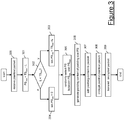
- the padding unit 11 receives a plaintext packet (step 300), it preferably pads it to a random packet size comprised between a predefined minimum packet size TS min and a predefined maximum packet size TS max .
- the padding unit 11 preferably calculates a maximum padding size PS max as the difference between said predefined maximum packet size TS max and the plaintext packet size L (step 301).
- the predefined maximum packet size TS max has a same value for all the received plaintext packets, independently of their size.
- the predefined maximum packet size TS max is equal to the maximum packet size allowed by the transmission protocol of the plaintext packets.
- the maximum packet size allowed by the IP protocol is 1504 bytes.
- the padding unit 11 preferably determines whether the size L of the plaintext packet received at step 300 is lower than a predefined minimum packet size TS min (step 302).
- the predefined minimum packet size TS min is preferably selected based on the statistical distribution of the size of plaintext packets.
- the minimum packet size TS min is preferably selected so that 30%, more preferably 40%, even more preferably 50% of the plaintext packets is shorter than TS min . This way, if a padded plaintext packet of length TS min is found, it is almost impossible making any assumption on its original size L. For instance, for IP networks the minimum packet size TS min may be set to 128 bytes or 256 bytes.
- the padding unit 11 preferably calculates a minimum padding size PS min as the difference between said predefined minimum packet size TS min and the plaintext packet size L (step 303).
- the padding unit 11 preferably sets the minimum padding size PS min equal to 0 (step 304).
- the padding unit 11 preferably determines a padding size PS for the plaintext packet received at step 300 (step 305).
- the padding unit PS preferably randomly selects the padding size PS in a range comprised between the minimum padding size PS min calculated at step 303 or 304 and the maximum padding size PS max calculated at step 301. Further details on the random selection of the padding size PS according to preferred embodiments of the present invention will be provided herein below.
- the padding unit 11 preferably generates a padding content of size PS as determined at step 305 (step 306).
- the padding content is predetermined and known also at the node N2 receiving the encrypted packet flow 4.
- the padding content may be one bit equal to "1” followed by PS-1 (in bits) bits equal to "0". This way, the node N2 may readily recognize the padding content after decryption, and remove it in order to recover the plaintext packet.
- the padding unit 11 then preferably adds the padding content generated at step 306 to the plaintext packet (step 307), thereby providing to the encryption unit 12 a padded plaintext packet having a random size comprised between the predefined minimum packet size TS min and the predefined maximum packet size TS max .
- the encryption unit 12 preferably encrypts the padded plaintext packet (step 308), thereby providing to the transmitter 13 an encrypted packet.
- the encryption step may be carried out according to any known encryption protocol, such as e.g. HMAC-SHA1/SHA2, TripleDES-CBC, AES-CBC or AES-GCM.
- the transmitter 13 finally transmits the encrypted packet to the second node N2 through the communication network 100.
- the random padding of the flow chart of Figure 3 therefore brings all the plaintext packets, before encryption, to sizes randomly ranging between the predefined minimum packet size TS min and the predefined maximum packet size TS max . This advantageously allows efficiently masking the shorter plaintexts packet sizes and, at the same time, reducing the bandwidth consumption entailed by the padding.
- choosing the padding size PS so as to bring the plaintext packet to a random size comprised in a range superiorly limited by the maximum packet size TS max advantageously entails a bandwidth consumption lower than padding all the plaintext packets to such maximum packet size TS max . Therefore, even if the maximum packet size TS max is set equal to the maximum packet size MTU allowed by the transmission protocol of the plaintext packets, the bandwidth consumption entailed by the padding according to the present invention is advantageously reduced in comparison with the above technique pad to MTU.
- choosing the padding size PS so as to bring the plaintext packet to a random size comprised in a range inferiorly limited by the predefined minimum packet size TS min advantageously results in an efficient masking of the shorter plaintext packet sizes, namely of those lower than the minimum packet size TS min .
- Encrypted packets carrying plaintext packets shorter than TS min can not indeed be distinguished from encrypted packets carrying plaintext packets longer than TS min .
- the step 305 of randomly selecting the padding size PS in a range comprised between the minimum padding size PS min and the maximum padding size PS max will be described in further detail.
- the encryption algorithm applied by the encryption unit 12 to the plaintext packets at step 308 is a block cipher encryption algorithm with a block size of B bytes (e.g. 16 bytes).
- first of all the value of L is preferably rounded up to the nearest integer multiple of B.
- predefined minimum packet size TS min and predefined maximum packet size TS max are preferably set equal to integer multiples of B.
- the maximum padding size PS max is preferably calculated as a difference between the predefined maximum packet size TS max and the rounded up value of L.
- the padding unit 11 compares the rounded up value of L with the minimum packet size TS min . Then, if the rounded up value of L is lower than the minimum packet size TS min , at step 303 the minimum padding size PS min is preferably calculated as a difference between the predefined minimum packet size TS max and the rounded up value of L. Otherwise, PS min is set equal to 0 (step 304).
- the padding size PS is preferably selected as a random integer multiple of B comprised between the minimum padding size PS min and the maximum padding size PS max .
- the padding content is generated, whose size is equal to the padding size PS as selected at step 305, increased by the difference between the rounded up value of L and the original value of L.
- TS max may be set equal to 1504 bytes (namely, 94 blocks of 16 bytes) and TS min may be set e.g. equal to 128 bytes (namely, 8 blocks of 16 bytes).
- TS min may be set e.g. equal to 128 bytes (namely, 8 blocks of 16 bytes).
- an IP packet of exemplary size L equal to 100 bytes is received, the value of L is preferably rounded up to 112 bytes, namely the nearest multiple integer of 16 bytes.
- the padding size PS is preferably selected as a random integer multiple of B comprised between the minimum padding size PS min and the maximum padding size PS max .
- the padding size PS may be preferably selected as a random integer Z comprised between X and Y, wherein Z is the padding size PS expressed as number of blocks (namely, PS/B), X is the minimum padding size PS min expressed as number of blocks (namely, PS min /B) and Y is the maximum padding size PS max expressed as number of blocks (namely, PS max /B).
- Z is a random integer selected in the range comprised between 1 and 87.
- the value of Z is provided by drawing one or more values of a discrete random variable z having a certain probability mass function p Z ( z ), which - as known - is the function which gives the probability that the discrete random variable z has a certain value.
- the probability mass function p Z ( z ) may be designed in different ways.
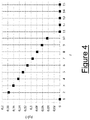
- the probability mass function p Z ( z ) of the discrete random variable z is uniform between X and Y, meaning that all the integer numbers comprised between X and Y have a same probability of being selected.
- the padding unit 11 preferably assigns to Z to first drawn value of the discrete random variable z. This results in a size of the padded plaintext packet statistically uniformly distributed between the minimum packet length TS min and the maximum packet length TS max .
- the probability mass function p Z ( z ) is not constant between X and Y, meaning that the integer numbers comprised between X and Y have different probabilities of being drawn.
- the values of A and B may be calculated by applying the following constraints:
- the value RP is preferably set in order to balance a trade-off between cost due to the extra-bandwidth required by padding and capability of hiding the plaintext packets size.
- the higher RP the lower the extra-bandwidth required by padding.
- the higher RP the lower the capability of hiding the original sizes of the plaintext packets.
- RP is preferably comprised between 2 and 5.
- the value of the probability mass function p Z ( z ) for each value of z comprised between X and Y may then be determined by replacing the calculated values of A and B in equation [4] above.
- the first element AP(1) is preferably set to a certain value, e.g. RP(Y-X).
- the first array AP(i) allows determining the values of the probability mass function p Z ( z ) for each value of z comprised between X and Y.
- the padding unit 11 may execute the following algorithm.
- a random number R is drawn in a range comprised between 1 and APC(N).
- the probability mass function of the random variable r providing the random integer R is constant for r between 1 and APC(N), while it is 0 for r ⁇ 1 and r >APC(N).
- the drawn random number R is then preferably compared with every element of the second array APC(i) in an ordered way, starting from the first element APC(1).
- This procedure may be formalized as follows:
- shorter encrypted packets certainly derive from shorter plaintext packets.
- TS min the predefined minimum size
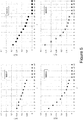
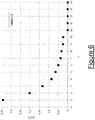
- a statistical distribution of the encrypted packets concentrated towards the minimum packet size TS min enhances the "hiding" effect, because shorter encrypted packets become more frequent.
- identification of shorter encrypted packets carrying shorter plaintext packets amongst such an increased number of shorter encrypted packets becomes more difficult.
- the padding unit 11 in order to provide a padding size Z (in number of blocks) randomly chosen between X and Y with a not linearly decreasing probability mass function p Z ( z ) between X and Y, at step 305 the padding unit 11 preferably performs the following steps:
- the probability mass function p R ( r ) of the random variable r providing the random integer R is constant between 1 and a predefined maximum number of draws NMS, while it is zero for r ⁇ 1 and r >NMS.
- NMS is preferably comprised between 2 and 4.
- the probability mass function p T ( t ) of the random variable t providing the R random integers T 1 , T 2 , ... T R is constant between X and Y, while it is zero for t ⁇ X and t >Y.
- Z is equal to Y only when Y is the minimum amongst the R drawn random integers T 1 , T 2 , ... T R . This situation only happens if:
- the probability that the padding size Z is equal to a certain value z comprised between X and Y may be determined as follows.
- N * NMS is the probability of having a single draw providing a certain value
- N ⁇ z + 1 N i is the probability of having a number R of draws equal to i and all providing values ⁇ z
- N ⁇ z N i is the probability of having a number R of draws equal to i providing values > z.
- the padding unit 11 in order to provide a padding size Z (in number of blocks) randomly chosen between X and Y with a not linearly decreasing probability mass function p Z ( z ) between X and Y, at step 305 the padding unit 11 preferably performs the following steps:
- the probability mass function p R ( r ) of the random variable r providing the random integer R is constant between 1 and a predefined maximum number of draws NMS, while it is zero for r ⁇ 1 and r >NMS.
- the probability mass function p S ( s ) of the random variable s providing the random integer S is constant between 1 and R, while it is zero for s ⁇ 1 and s >R.
- the probability mass function p T ( t ) of the random variable t providing the S random integers T 1 , T 2 , ... T S is constant between X and Y, while it is zero for t ⁇ X and t >Y.
- the probability mass function p S ( S ) of the random variable s may indeed be determined by considering that the value s is obtained if two events occur, namely (i) the first draw provides a value of R equal to r ⁇ s and (ii) the second draw provides a value of S equal to s .
- the probability of (i) is 1/NMS, while the probability of (ii) is 1/ r .
- first and second non-linear probability mass functions as described above are obtained by performing a single-step draw and a two-step draw, respectively, of the number of draws providing the set of integers whose minimum is set equal to Z
- a non-linear probability mass function may be obtained by performing an N-step draw of the number of draws providing the set of integers whose minimum is set equal to Z.
- R 1 is drawn between 1 and NMS
- R 2 is drawn between 1 and R 1
- R 3 is drawn between 1 and R 2 and so on, until the random number R N is drawn.
- R N random integers are drawn between X and Y, and Z is set equal to their minimum.
- the probability mass function p Z ( z ) of the random variable z providing the padding size Z preferably is variable over time.
- the slope of the probability mass function p Z ( z ) may be varied over time.
- the probability mass function p Z ( z ) is changed based on the network access point (e.g. enodeB for LTE networks).
- New values of the maximum number of draws NMS and of the ratio RP may be provided every Tb seconds.
- the duration of Tb may be also changed, e.g. it may be randomly selected in as range comprised between a minimum duration and a maximum duration.
- the probability mass function p Z ( z ) is changed on a client or session basis, e.g. for each mobile terminal connected to the communication network 100.
- both the maximum number of draws NMS and the ratio RP are preferably selected. If a client is connected beyond a certain maximum time, its NMS and RP may be varied over time.
- the first technique is simpler but more expensive, while the second technique is more complex but less expensive, from the network operator point of view.
- NMS varies between 2 and 4.
Landscapes
- Engineering & Computer Science (AREA)
- Computer Security & Cryptography (AREA)
- Computer Networks & Wireless Communication (AREA)
- Signal Processing (AREA)
- General Physics & Mathematics (AREA)
- Physics & Mathematics (AREA)
- General Engineering & Computer Science (AREA)
- Theoretical Computer Science (AREA)
- Computational Mathematics (AREA)
- Mathematical Analysis (AREA)
- Mathematical Optimization (AREA)
- Pure & Applied Mathematics (AREA)
- Computer Hardware Design (AREA)
- Computing Systems (AREA)
- Data Exchanges In Wide-Area Networks (AREA)
Claims (15)
- Procédé de transmission de paquets chiffrés (4), d'un premier nœud (1) à un second nœud (2) d'un réseau de communication (100), ledit procédé comprenant, au niveau dudit premier nœud (1), les étapes ci-dessous consistant à :a) remplir un paquet de texte en clair (4") avec un contenu de remplissage, ce qui permet de fournir par conséquent un paquet de texte en clair rempli (4') ;b) fournir un paquet chiffré (4) en chiffrant ledit paquet de texte en clair rempli (4') ; etc) transmettre ledit paquet chiffré (4), dudit premier nœud (1) audit second nœud (2), dans lequel ledit contenu de remplissage présente une taille de remplissage (PS), et dans lequel l'étape a) comprend l'étape consistant à sélectionner de manière aléatoire ladite taille de remplissage (PS), dans une plage comprise entre une taille de remplissage minimale (PSmin) et une taille de remplissage maximale (PSmax) ;dans lequel, si la taille (L) dudit paquet de texte en clair (4") est inférieure à une taille de paquet minimale prédéfinie (TSmin), ladite taille de remplissage minimale (PSmin) est égale à la différence entre ladite taille de paquet minimale prédéfinie (TSmin) et la taille de paquet de texte en clair (L).
- Procédé selon la revendication 1 dans lequel, si ladite taille (L) dudit paquet de texte en clair (4") est égale ou supérieure à ladite taille de paquet minimale prédéfinie (TSmin), ladite taille de remplissage minimale PSmin est définie comme étant égale à 0.
- Procédé selon la revendication 1 ou 2, dans lequel ladite taille de remplissage maximale (PSmax) est égale à la différence entre une taille de paquet maximale prédéfinie (TSmax) et ladite taille de paquet de texte en clair (L).
- Procédé selon l'une quelconque des revendications précédentes, dans lequel ladite taille de remplissage (PS) est sélectionnée comme étant un nombre entier aléatoire Z compris entre une valeur minimale X et une valeur maximale Y, où Z est ladite taille de remplissage (PS) exprimée en nombre de blocs de B octets, X est ladite taille de remplissage minimale (PSmin) exprimée en nombre de blocs de B octets, et Y est ladite taille de remplissage maximale (PSmax) exprimée en nombre de blocs de B octets, l'étape b) comprenant l'étape consistant à chiffrer ledit paquet de texte en clair rempli (4') en appliquant un algorithme de chiffrement par blocs avec une taille de bloc de B octets.
- Procédé selon la revendication 4, dans lequel ledit nombre entier aléatoire Z est sélectionné en tirant une ou plusieurs valeurs d'une variable aléatoire discrète z présentant une fonction de masse de probabilité pZ(z), ladite fonction de masse de probabilité pZ(z) étant constante pour la valeur z comprise entre X et Y.
- Procédé selon la revendication 4, dans lequel ledit nombre entier aléatoire Z est sélectionné en tirant une ou plusieurs valeurs d'une variable aléatoire discrète z présentant une fonction de masse de probabilité pZ(z), ladite fonction de masse de probabilité pZ(z) étant une fonction décroissante pour la valeur z comprise entre X et Y, ladite fonction de masse de probabilité pZ(z) présentant une valeur maximale à z=X et une valeur minimale à z=y, le rapport entre ladite valeur maximale et ladite valeur minimale présentant une valeur RP.
- Procédé selon la revendication 6, dans lequel ladite fonction de masse de probabilité pZ(z) est variable au fil du temps et/ou sur une base de client ou de session.
- Procédé selon la revendication 6 ou 7, dans lequel ladite fonction de masse de probabilité pZ(z) est une fonction linéairement décroissante pour la valeur z comprise entre X et Y.
- Procédé selon la revendication 6 ou 7, dans lequel ladite fonction de masse de probabilité pZ(z) est une fonction non linéairement décroissante pour la valeur z comprise entre X et Y.
- Procédé selon la revendication 8, dans lequel ledit nombre entier aléatoire Z est sélectionné en mettant en œuvre les étapes ci-dessous consistant à :• fournir un premier tableau AP(j), j étant un indice compris entre 1 et N=Y-X+1, avec AP(j-1)-AP(j)=RP-1 ;• fournir un second tableau APC(i), i étant un indice compris entre 1 et N=Y-X+1, dans lequel :
 • tirer un nombre aléatoire R dans une plage comprise entre 1 et APC(N), la fonction de masse de probabilité de la variable aléatoire r fournissant le nombre aléatoire R étant constante pour la variable r comprise entre 1 et APC(N) ; et• dans lequel le nombre aléatoire R est comparé à chaque élément dudit second tableau APC(i) de manière ordonnée, en commençant par le premier élément APC(1) et, la première fois que ledit nombre aléatoire R se révèle inférieur ou égal à un élément APC(i*) dudit second tableau, alors Z est égal à X+i*-1.
- Procédé selon la revendication 9, dans lequel ledit nombre entier aléatoire Z est sélectionné en mettant en œuvre les étapes ci-dessous consistant à :• tirer un nombre entier aléatoire R compris entre 1 et un nombre maximal de tirages NMS, indiquant le nombre de tirages à mettre en œuvre ;• tirer R nombres entiers aléatoires T1, T2, ..., TR compris entre X et Y ; et• définir Z comme étant égal au nombre minimum parmi lesdits R nombres entiers aléatoires tirés T1, T2, ..., TR;dans lequel la fonction de masse de probabilité pR(r) de la variable aléatoire r fournissant le nombre entier aléatoire R est constante entre 1 et NMS ; et
dans lequel la fonction de masse de probabilité pT(t) de la variable aléatoire t fournissant les R nombres entiers aléatoires T1, T2, ..., TR est constante entre X et Y. - Procédé selon la revendication 9, dans lequel ledit nombre entier aléatoire Z est sélectionné en mettant en œuvre les étapes ci-dessous consistant à :• tirer un nombre N>1 de nombres entiers aléatoires R1, R2, ..., RN, R1 étant sélectionné entre 1 et un nombre maximal de tirages NMS, et Ri, où i>1, étant sélectionné entre 1 et Ri-1 ;• tirer RN nombres entiers aléatoires compris entre X et Y ; et• définir Z comme étant égal au nombre minimum parmi lesdits RN nombres entiers aléatoires tirés ;dans lequel la fonction de masse de probabilité pR(r) de la variable aléatoire r fournissant les N nombres entiers aléatoires R1, R2, ..., RN est constante ; et
dans lequel la fonction de masse de probabilité pT(t) de la variable aléatoire t fournissant les RN nombres entiers aléatoires est constante entre X et Y. - Procédé selon la revendication 9, dans lequel ledit nombre entier aléatoire Z est sélectionné en mettant en œuvre les étapes ci-dessous consistant à :• tirer N>1 nombres entiers aléatoires R1, R2, ..., RN compris entre 1 et un nombre maximal de tirages NMS ;• définir Rmin comme étant égal au nombre minimum parmi lesdits N nombres entiers aléatoires R1, R2, ..., RN ;• tirer Rmin nombres entiers aléatoires compris entre X et Y ; et• définir Z comme étant égal au nombre minimum parmi lesdits Rmin nombres entiers aléatoires tirés ;dans lequel la fonction de masse de probabilité pR(r) de la variable aléatoire r fournissant les N nombres entiers aléatoires R1, R2, ..., RN est constante entre 1 et NMS ; et
dans lequel la fonction de masse de probabilité pT(t) de la variable aléatoire t fournissant les Rmin nombres entiers aléatoires est constante entre X et Y. - Nœud (1) pour un réseau de communication à commutation de paquets (100), ledit nœud (1) comprenant :• une unité de remplissage (11) configurée de manière à remplir un paquet de texte en clair (4") avec un contenu de remplissage, ce qui permet de fournir par conséquent un paquet de texte en clair rempli (4') ;• une unité de chiffrement (12) configurée de manière à fournir un paquet chiffré (4) en chiffrant ledit paquet de texte en clair rempli (4') ; et• une unité de transmission (13) configurée de manière à transmettre ledit paquet chiffré (4), dudit nœud (1) à un nœud supplémentaire (2) dudit réseau de communication (100) ;dans lequel ladite unité de remplissage (11) est configurée de manière à générer ledit contenu de remplissage avec une taille de remplissage (PS), en sélectionnant de manière aléatoire ladite taille de remplissage (PS) dans une plage comprise entre une taille de remplissage minimale (PSmin) et une taille de remplissage maximale (PSmax) ;
dans lequel, si la taille (L) dudit paquet de texte en clair (4") est inférieure à une taille de paquet minimale prédéfinie (TSmin), ladite unité de remplissage (11) est configurée de manière à définir ladite taille de remplissage minimale (PSmin) comme étant égale à la différence entre ladite taille de paquet minimale prédéfinie (TSmin) et la taille de paquet de texte en clair (L). - Réseau de communication (100) comprenant au moins un nœud (1) selon la revendication 14.
Applications Claiming Priority (1)
| Application Number | Priority Date | Filing Date | Title |
|---|---|---|---|
| PCT/EP2016/081140 WO2018108274A1 (fr) | 2016-12-15 | 2016-12-15 | Procédé de transmission de paquets chiffrés dans un réseau de communication |
Publications (2)
| Publication Number | Publication Date |
|---|---|
| EP3556044A1 EP3556044A1 (fr) | 2019-10-23 |
| EP3556044B1 true EP3556044B1 (fr) | 2021-08-11 |
Family
ID=57614355
Family Applications (1)
| Application Number | Title | Priority Date | Filing Date |
|---|---|---|---|
| EP16819045.2A Active EP3556044B1 (fr) | 2016-12-15 | 2016-12-15 | Procédé de transmission de paquets chiffrés dans un réseau de communication |
Country Status (3)
| Country | Link |
|---|---|
| US (1) | US11258581B2 (fr) |
| EP (1) | EP3556044B1 (fr) |
| WO (1) | WO2018108274A1 (fr) |
Families Citing this family (1)
| Publication number | Priority date | Publication date | Assignee | Title |
|---|---|---|---|---|
| US11115184B2 (en) * | 2017-05-22 | 2021-09-07 | Micro Focus Llc | Format preserving encryption with padding |
Family Cites Families (6)
| Publication number | Priority date | Publication date | Assignee | Title |
|---|---|---|---|---|
| US6704871B1 (en) * | 1997-09-16 | 2004-03-09 | Safenet, Inc. | Cryptographic co-processor |
| US6918034B1 (en) * | 1999-09-29 | 2005-07-12 | Nokia, Corporation | Method and apparatus to provide encryption and authentication of a mini-packet in a multiplexed RTP payload |
| US20030156715A1 (en) * | 2001-06-12 | 2003-08-21 | Reeds James Alexander | Apparatus, system and method for validating integrity of transmitted data |
| US8127130B2 (en) * | 2006-04-18 | 2012-02-28 | Advanced Communication Concepts, Inc. | Method and system for securing data utilizing reconfigurable logic |
| US9673983B2 (en) * | 2012-09-14 | 2017-06-06 | Qualcomm Incorporated | Apparatus and method for protecting message data |
| US10303795B2 (en) * | 2014-09-10 | 2019-05-28 | Amazon Technologies, Inc. | Read descriptors at heterogeneous storage systems |
-
2016
- 2016-12-15 EP EP16819045.2A patent/EP3556044B1/fr active Active
- 2016-12-15 US US16/468,194 patent/US11258581B2/en active Active
- 2016-12-15 WO PCT/EP2016/081140 patent/WO2018108274A1/fr not_active Ceased
Non-Patent Citations (1)
| Title |
|---|
| None * |
Also Published As
| Publication number | Publication date |
|---|---|
| US11258581B2 (en) | 2022-02-22 |
| EP3556044A1 (fr) | 2019-10-23 |
| WO2018108274A1 (fr) | 2018-06-21 |
| US20190334696A1 (en) | 2019-10-31 |
Similar Documents
| Publication | Publication Date | Title |
|---|---|---|
| JP7008725B2 (ja) | カウンタベースの暗号システムにおける改良型認証付き暗号化のための方法及びシステム | |
| Hintaw et al. | A robust security scheme based on enhanced symmetric algorithm for MQTT in the Internet of Things | |
| AlFardan et al. | On the security of RC4 in TLS and WPA | |
| US20070255947A1 (en) | Methods and systems for incremental crypto processing of fragmented packets | |
| US9083528B2 (en) | Authentication of encrypted data blocks | |
| US12021999B2 (en) | Devices and methods for the generating and authentication of at least one data packet to be transmitted in a bus system (BU), in particular of a motor vehicle | |
| Wu et al. | Lightweight security protocols for the Internet of Things | |
| US11405407B2 (en) | Data packet sending method, network device, control device, and network system | |
| Schmidbauer et al. | Challenging channels: Encrypted covert channels within challenge-response authentication | |
| EP3729716B1 (fr) | Chiffrement à flot | |
| US11115187B2 (en) | Apparatus and method for block ciphers for real-time data transmission | |
| US11258581B2 (en) | Method for transmitting encrypted packets in a communication network | |
| Amaran et al. | Lightweight security for MQTT-SN | |
| Nir et al. | Algorithm implementation requirements and usage guidance for the internet key exchange protocol version 2 (ikev2) | |
| US7231048B2 (en) | Key sharing system, public key cryptosystem, signature system, key sharing apparatus, encryption apparatus, decryption apparatus, signature apparatus, authentication apparatus, key sharing method, encryption method, decryption method, signature method, authentication method, and programs | |
| Chiwariro et al. | Security in Publish/Subscribe Protocol for Internet of Things | |
| Mohamed | Cryptography concepts: Confidentiality | |
| KR20200028782A (ko) | 실시간 데이터 전송을 위한 패턴 암호 블록 모드에 기초한 암호화 방법 및 장치 | |
| JP7538342B2 (ja) | リモートサーバから端末にメッセージを送信する方法 | |
| Noura et al. | E3sn: efficient security scheme for sensor networks | |
| Mohamed | Wireless Communication Systems: Confidentiality: Encryption and Decryption | |
| Ali et al. | 18 Authentication of User | |
| Malekzadeh et al. | Protected control packets to prevent denial of services attacks in IEEE 802.11 wireless networks | |
| JPH11145951A (ja) | 紛失通信方法 | |
| KR101616717B1 (ko) | 버냄 사이퍼 암호 알고리즘을 이용한 암복호화 서비스 제공 방법 및 시스템 |
Legal Events
| Date | Code | Title | Description |
|---|---|---|---|
| STAA | Information on the status of an ep patent application or granted ep patent |
Free format text: STATUS: UNKNOWN |
|
| STAA | Information on the status of an ep patent application or granted ep patent |
Free format text: STATUS: THE INTERNATIONAL PUBLICATION HAS BEEN MADE |
|
| PUAI | Public reference made under article 153(3) epc to a published international application that has entered the european phase |
Free format text: ORIGINAL CODE: 0009012 |
|
| STAA | Information on the status of an ep patent application or granted ep patent |
Free format text: STATUS: REQUEST FOR EXAMINATION WAS MADE |
|
| 17P | Request for examination filed |
Effective date: 20190701 |
|
| AK | Designated contracting states |
Kind code of ref document: A1 Designated state(s): AL AT BE BG CH CY CZ DE DK EE ES FI FR GB GR HR HU IE IS IT LI LT LU LV MC MK MT NL NO PL PT RO RS SE SI SK SM TR |
|
| AX | Request for extension of the european patent |
Extension state: BA ME |
|
| DAV | Request for validation of the european patent (deleted) | ||
| DAX | Request for extension of the european patent (deleted) | ||
| STAA | Information on the status of an ep patent application or granted ep patent |
Free format text: STATUS: EXAMINATION IS IN PROGRESS |
|
| 17Q | First examination report despatched |
Effective date: 20200519 |
|
| GRAP | Despatch of communication of intention to grant a patent |
Free format text: ORIGINAL CODE: EPIDOSNIGR1 |
|
| STAA | Information on the status of an ep patent application or granted ep patent |
Free format text: STATUS: GRANT OF PATENT IS INTENDED |
|
| INTG | Intention to grant announced |
Effective date: 20210302 |
|
| GRAS | Grant fee paid |
Free format text: ORIGINAL CODE: EPIDOSNIGR3 |
|
| GRAA | (expected) grant |
Free format text: ORIGINAL CODE: 0009210 |
|
| STAA | Information on the status of an ep patent application or granted ep patent |
Free format text: STATUS: THE PATENT HAS BEEN GRANTED |
|
| AK | Designated contracting states |
Kind code of ref document: B1 Designated state(s): AL AT BE BG CH CY CZ DE DK EE ES FI FR GB GR HR HU IE IS IT LI LT LU LV MC MK MT NL NO PL PT RO RS SE SI SK SM TR |
|
| REG | Reference to a national code |
Ref country code: CH Ref legal event code: EP |
|
| REG | Reference to a national code |
Ref country code: DE Ref legal event code: R096 Ref document number: 602016062119 Country of ref document: DE |
|
| REG | Reference to a national code |
Ref country code: IE Ref legal event code: FG4D Ref country code: AT Ref legal event code: REF Ref document number: 1420497 Country of ref document: AT Kind code of ref document: T Effective date: 20210915 |
|
| REG | Reference to a national code |
Ref country code: LT Ref legal event code: MG9D |
|
| REG | Reference to a national code |
Ref country code: NL Ref legal event code: MP Effective date: 20210811 |
|
| REG | Reference to a national code |
Ref country code: AT Ref legal event code: MK05 Ref document number: 1420497 Country of ref document: AT Kind code of ref document: T Effective date: 20210811 |
|
| PG25 | Lapsed in a contracting state [announced via postgrant information from national office to epo] |
Ref country code: LT Free format text: LAPSE BECAUSE OF FAILURE TO SUBMIT A TRANSLATION OF THE DESCRIPTION OR TO PAY THE FEE WITHIN THE PRESCRIBED TIME-LIMIT Effective date: 20210811 Ref country code: BG Free format text: LAPSE BECAUSE OF FAILURE TO SUBMIT A TRANSLATION OF THE DESCRIPTION OR TO PAY THE FEE WITHIN THE PRESCRIBED TIME-LIMIT Effective date: 20211111 Ref country code: AT Free format text: LAPSE BECAUSE OF FAILURE TO SUBMIT A TRANSLATION OF THE DESCRIPTION OR TO PAY THE FEE WITHIN THE PRESCRIBED TIME-LIMIT Effective date: 20210811 Ref country code: HR Free format text: LAPSE BECAUSE OF FAILURE TO SUBMIT A TRANSLATION OF THE DESCRIPTION OR TO PAY THE FEE WITHIN THE PRESCRIBED TIME-LIMIT Effective date: 20210811 Ref country code: ES Free format text: LAPSE BECAUSE OF FAILURE TO SUBMIT A TRANSLATION OF THE DESCRIPTION OR TO PAY THE FEE WITHIN THE PRESCRIBED TIME-LIMIT Effective date: 20210811 Ref country code: FI Free format text: LAPSE BECAUSE OF FAILURE TO SUBMIT A TRANSLATION OF THE DESCRIPTION OR TO PAY THE FEE WITHIN THE PRESCRIBED TIME-LIMIT Effective date: 20210811 Ref country code: PT Free format text: LAPSE BECAUSE OF FAILURE TO SUBMIT A TRANSLATION OF THE DESCRIPTION OR TO PAY THE FEE WITHIN THE PRESCRIBED TIME-LIMIT Effective date: 20211213 Ref country code: NO Free format text: LAPSE BECAUSE OF FAILURE TO SUBMIT A TRANSLATION OF THE DESCRIPTION OR TO PAY THE FEE WITHIN THE PRESCRIBED TIME-LIMIT Effective date: 20211111 Ref country code: RS Free format text: LAPSE BECAUSE OF FAILURE TO SUBMIT A TRANSLATION OF THE DESCRIPTION OR TO PAY THE FEE WITHIN THE PRESCRIBED TIME-LIMIT Effective date: 20210811 Ref country code: SE Free format text: LAPSE BECAUSE OF FAILURE TO SUBMIT A TRANSLATION OF THE DESCRIPTION OR TO PAY THE FEE WITHIN THE PRESCRIBED TIME-LIMIT Effective date: 20210811 |
|
| PG25 | Lapsed in a contracting state [announced via postgrant information from national office to epo] |
Ref country code: PL Free format text: LAPSE BECAUSE OF FAILURE TO SUBMIT A TRANSLATION OF THE DESCRIPTION OR TO PAY THE FEE WITHIN THE PRESCRIBED TIME-LIMIT Effective date: 20210811 Ref country code: LV Free format text: LAPSE BECAUSE OF FAILURE TO SUBMIT A TRANSLATION OF THE DESCRIPTION OR TO PAY THE FEE WITHIN THE PRESCRIBED TIME-LIMIT Effective date: 20210811 Ref country code: GR Free format text: LAPSE BECAUSE OF FAILURE TO SUBMIT A TRANSLATION OF THE DESCRIPTION OR TO PAY THE FEE WITHIN THE PRESCRIBED TIME-LIMIT Effective date: 20211112 |
|
| PG25 | Lapsed in a contracting state [announced via postgrant information from national office to epo] |
Ref country code: NL Free format text: LAPSE BECAUSE OF FAILURE TO SUBMIT A TRANSLATION OF THE DESCRIPTION OR TO PAY THE FEE WITHIN THE PRESCRIBED TIME-LIMIT Effective date: 20210811 |
|
| PG25 | Lapsed in a contracting state [announced via postgrant information from national office to epo] |
Ref country code: DK Free format text: LAPSE BECAUSE OF FAILURE TO SUBMIT A TRANSLATION OF THE DESCRIPTION OR TO PAY THE FEE WITHIN THE PRESCRIBED TIME-LIMIT Effective date: 20210811 |
|
| REG | Reference to a national code |
Ref country code: DE Ref legal event code: R097 Ref document number: 602016062119 Country of ref document: DE |
|
| PG25 | Lapsed in a contracting state [announced via postgrant information from national office to epo] |
Ref country code: SM Free format text: LAPSE BECAUSE OF FAILURE TO SUBMIT A TRANSLATION OF THE DESCRIPTION OR TO PAY THE FEE WITHIN THE PRESCRIBED TIME-LIMIT Effective date: 20210811 Ref country code: SK Free format text: LAPSE BECAUSE OF FAILURE TO SUBMIT A TRANSLATION OF THE DESCRIPTION OR TO PAY THE FEE WITHIN THE PRESCRIBED TIME-LIMIT Effective date: 20210811 Ref country code: RO Free format text: LAPSE BECAUSE OF FAILURE TO SUBMIT A TRANSLATION OF THE DESCRIPTION OR TO PAY THE FEE WITHIN THE PRESCRIBED TIME-LIMIT Effective date: 20210811 Ref country code: EE Free format text: LAPSE BECAUSE OF FAILURE TO SUBMIT A TRANSLATION OF THE DESCRIPTION OR TO PAY THE FEE WITHIN THE PRESCRIBED TIME-LIMIT Effective date: 20210811 Ref country code: CZ Free format text: LAPSE BECAUSE OF FAILURE TO SUBMIT A TRANSLATION OF THE DESCRIPTION OR TO PAY THE FEE WITHIN THE PRESCRIBED TIME-LIMIT Effective date: 20210811 Ref country code: AL Free format text: LAPSE BECAUSE OF FAILURE TO SUBMIT A TRANSLATION OF THE DESCRIPTION OR TO PAY THE FEE WITHIN THE PRESCRIBED TIME-LIMIT Effective date: 20210811 |
|
| PLBE | No opposition filed within time limit |
Free format text: ORIGINAL CODE: 0009261 |
|
| STAA | Information on the status of an ep patent application or granted ep patent |
Free format text: STATUS: NO OPPOSITION FILED WITHIN TIME LIMIT |
|
| 26N | No opposition filed |
Effective date: 20220512 |
|
| PG25 | Lapsed in a contracting state [announced via postgrant information from national office to epo] |
Ref country code: MC Free format text: LAPSE BECAUSE OF FAILURE TO SUBMIT A TRANSLATION OF THE DESCRIPTION OR TO PAY THE FEE WITHIN THE PRESCRIBED TIME-LIMIT Effective date: 20210811 |
|
| REG | Reference to a national code |
Ref country code: CH Ref legal event code: PL |
|
| PG25 | Lapsed in a contracting state [announced via postgrant information from national office to epo] |
Ref country code: SI Free format text: LAPSE BECAUSE OF FAILURE TO SUBMIT A TRANSLATION OF THE DESCRIPTION OR TO PAY THE FEE WITHIN THE PRESCRIBED TIME-LIMIT Effective date: 20210811 |
|
| REG | Reference to a national code |
Ref country code: BE Ref legal event code: MM Effective date: 20211231 |
|
| PG25 | Lapsed in a contracting state [announced via postgrant information from national office to epo] |
Ref country code: LU Free format text: LAPSE BECAUSE OF NON-PAYMENT OF DUE FEES Effective date: 20211215 Ref country code: IE Free format text: LAPSE BECAUSE OF NON-PAYMENT OF DUE FEES Effective date: 20211215 |
|
| PG25 | Lapsed in a contracting state [announced via postgrant information from national office to epo] |
Ref country code: BE Free format text: LAPSE BECAUSE OF NON-PAYMENT OF DUE FEES Effective date: 20211231 |
|
| PG25 | Lapsed in a contracting state [announced via postgrant information from national office to epo] |
Ref country code: LI Free format text: LAPSE BECAUSE OF NON-PAYMENT OF DUE FEES Effective date: 20211231 Ref country code: CH Free format text: LAPSE BECAUSE OF NON-PAYMENT OF DUE FEES Effective date: 20211231 |
|
| PG25 | Lapsed in a contracting state [announced via postgrant information from national office to epo] |
Ref country code: CY Free format text: LAPSE BECAUSE OF FAILURE TO SUBMIT A TRANSLATION OF THE DESCRIPTION OR TO PAY THE FEE WITHIN THE PRESCRIBED TIME-LIMIT Effective date: 20210811 |
|
| P01 | Opt-out of the competence of the unified patent court (upc) registered |
Effective date: 20230528 |
|
| P02 | Opt-out of the competence of the unified patent court (upc) changed |
Effective date: 20230531 |
|
| PG25 | Lapsed in a contracting state [announced via postgrant information from national office to epo] |
Ref country code: HU Free format text: LAPSE BECAUSE OF FAILURE TO SUBMIT A TRANSLATION OF THE DESCRIPTION OR TO PAY THE FEE WITHIN THE PRESCRIBED TIME-LIMIT; INVALID AB INITIO Effective date: 20161215 |
|
| PG25 | Lapsed in a contracting state [announced via postgrant information from national office to epo] |
Ref country code: MK Free format text: LAPSE BECAUSE OF FAILURE TO SUBMIT A TRANSLATION OF THE DESCRIPTION OR TO PAY THE FEE WITHIN THE PRESCRIBED TIME-LIMIT Effective date: 20210811 |
|
| PG25 | Lapsed in a contracting state [announced via postgrant information from national office to epo] |
Ref country code: MT Free format text: LAPSE BECAUSE OF FAILURE TO SUBMIT A TRANSLATION OF THE DESCRIPTION OR TO PAY THE FEE WITHIN THE PRESCRIBED TIME-LIMIT Effective date: 20210811 |
|
| PG25 | Lapsed in a contracting state [announced via postgrant information from national office to epo] |
Ref country code: TR Free format text: LAPSE BECAUSE OF FAILURE TO SUBMIT A TRANSLATION OF THE DESCRIPTION OR TO PAY THE FEE WITHIN THE PRESCRIBED TIME-LIMIT Effective date: 20210811 |
|
| PGFP | Annual fee paid to national office [announced via postgrant information from national office to epo] |
Ref country code: GB Payment date: 20251229 Year of fee payment: 10 |
|
| PGFP | Annual fee paid to national office [announced via postgrant information from national office to epo] |
Ref country code: FR Payment date: 20251222 Year of fee payment: 10 |
|
| PGFP | Annual fee paid to national office [announced via postgrant information from national office to epo] |
Ref country code: DE Payment date: 20251222 Year of fee payment: 10 |
|
| PGFP | Annual fee paid to national office [announced via postgrant information from national office to epo] |
Ref country code: IT Payment date: 20251231 Year of fee payment: 10 |