EP3555248B1 - Ether-based lubricant compositions, methods and uses - Google Patents
Ether-based lubricant compositions, methods and uses Download PDFInfo
- Publication number
- EP3555248B1 EP3555248B1 EP17816808.4A EP17816808A EP3555248B1 EP 3555248 B1 EP3555248 B1 EP 3555248B1 EP 17816808 A EP17816808 A EP 17816808A EP 3555248 B1 EP3555248 B1 EP 3555248B1
- Authority
- EP
- European Patent Office
- Prior art keywords
- lubricant composition
- alkyl
- oxidant
- aminic
- less
- Prior art date
- Legal status (The legal status is an assumption and is not a legal conclusion. Google has not performed a legal analysis and makes no representation as to the accuracy of the status listed.)
- Active
Links
Images
Classifications
-
- C—CHEMISTRY; METALLURGY
- C10—PETROLEUM, GAS OR COKE INDUSTRIES; TECHNICAL GASES CONTAINING CARBON MONOXIDE; FUELS; LUBRICANTS; PEAT
- C10M—LUBRICATING COMPOSITIONS; USE OF CHEMICAL SUBSTANCES EITHER ALONE OR AS LUBRICATING INGREDIENTS IN A LUBRICATING COMPOSITION
- C10M169/00—Lubricating compositions characterised by containing as components a mixture of at least two types of ingredient selected from base-materials, thickeners or additives, covered by the preceding groups, each of these compounds being essential
- C10M169/04—Mixtures of base-materials and additives
-
- C—CHEMISTRY; METALLURGY
- C10—PETROLEUM, GAS OR COKE INDUSTRIES; TECHNICAL GASES CONTAINING CARBON MONOXIDE; FUELS; LUBRICANTS; PEAT
- C10M—LUBRICATING COMPOSITIONS; USE OF CHEMICAL SUBSTANCES EITHER ALONE OR AS LUBRICATING INGREDIENTS IN A LUBRICATING COMPOSITION
- C10M2203/00—Organic non-macromolecular hydrocarbon compounds and hydrocarbon fractions as ingredients in lubricant compositions
- C10M2203/10—Petroleum or coal fractions, e.g. tars, solvents, bitumen
- C10M2203/102—Aliphatic fractions
- C10M2203/1025—Aliphatic fractions used as base material
-
- C—CHEMISTRY; METALLURGY
- C10—PETROLEUM, GAS OR COKE INDUSTRIES; TECHNICAL GASES CONTAINING CARBON MONOXIDE; FUELS; LUBRICANTS; PEAT
- C10M—LUBRICATING COMPOSITIONS; USE OF CHEMICAL SUBSTANCES EITHER ALONE OR AS LUBRICATING INGREDIENTS IN A LUBRICATING COMPOSITION
- C10M2205/00—Organic macromolecular hydrocarbon compounds or fractions, whether or not modified by oxidation as ingredients in lubricant compositions
- C10M2205/02—Organic macromolecular hydrocarbon compounds or fractions, whether or not modified by oxidation as ingredients in lubricant compositions containing acyclic monomers
- C10M2205/028—Organic macromolecular hydrocarbon compounds or fractions, whether or not modified by oxidation as ingredients in lubricant compositions containing acyclic monomers containing aliphatic monomers having more than four carbon atoms
- C10M2205/0285—Organic macromolecular hydrocarbon compounds or fractions, whether or not modified by oxidation as ingredients in lubricant compositions containing acyclic monomers containing aliphatic monomers having more than four carbon atoms used as base material
-
- C—CHEMISTRY; METALLURGY
- C10—PETROLEUM, GAS OR COKE INDUSTRIES; TECHNICAL GASES CONTAINING CARBON MONOXIDE; FUELS; LUBRICANTS; PEAT
- C10M—LUBRICATING COMPOSITIONS; USE OF CHEMICAL SUBSTANCES EITHER ALONE OR AS LUBRICATING INGREDIENTS IN A LUBRICATING COMPOSITION
- C10M2207/00—Organic non-macromolecular hydrocarbon compounds containing hydrogen, carbon and oxygen as ingredients in lubricant compositions
- C10M2207/02—Hydroxy compounds
- C10M2207/023—Hydroxy compounds having hydroxy groups bound to carbon atoms of six-membered aromatic rings
- C10M2207/026—Hydroxy compounds having hydroxy groups bound to carbon atoms of six-membered aromatic rings with tertiary alkyl groups
-
- C—CHEMISTRY; METALLURGY
- C10—PETROLEUM, GAS OR COKE INDUSTRIES; TECHNICAL GASES CONTAINING CARBON MONOXIDE; FUELS; LUBRICANTS; PEAT
- C10M—LUBRICATING COMPOSITIONS; USE OF CHEMICAL SUBSTANCES EITHER ALONE OR AS LUBRICATING INGREDIENTS IN A LUBRICATING COMPOSITION
- C10M2207/00—Organic non-macromolecular hydrocarbon compounds containing hydrogen, carbon and oxygen as ingredients in lubricant compositions
- C10M2207/02—Hydroxy compounds
- C10M2207/023—Hydroxy compounds having hydroxy groups bound to carbon atoms of six-membered aromatic rings
- C10M2207/028—Overbased salts thereof
-
- C—CHEMISTRY; METALLURGY
- C10—PETROLEUM, GAS OR COKE INDUSTRIES; TECHNICAL GASES CONTAINING CARBON MONOXIDE; FUELS; LUBRICANTS; PEAT
- C10M—LUBRICATING COMPOSITIONS; USE OF CHEMICAL SUBSTANCES EITHER ALONE OR AS LUBRICATING INGREDIENTS IN A LUBRICATING COMPOSITION
- C10M2207/00—Organic non-macromolecular hydrocarbon compounds containing hydrogen, carbon and oxygen as ingredients in lubricant compositions
- C10M2207/04—Ethers; Acetals; Ortho-esters; Ortho-carbonates
- C10M2207/0406—Ethers; Acetals; Ortho-esters; Ortho-carbonates used as base material
-
- C—CHEMISTRY; METALLURGY
- C10—PETROLEUM, GAS OR COKE INDUSTRIES; TECHNICAL GASES CONTAINING CARBON MONOXIDE; FUELS; LUBRICANTS; PEAT
- C10M—LUBRICATING COMPOSITIONS; USE OF CHEMICAL SUBSTANCES EITHER ALONE OR AS LUBRICATING INGREDIENTS IN A LUBRICATING COMPOSITION
- C10M2215/00—Organic non-macromolecular compounds containing nitrogen as ingredients in lubricant Compositions
- C10M2215/02—Amines, e.g. polyalkylene polyamines; Quaternary amines
- C10M2215/06—Amines, e.g. polyalkylene polyamines; Quaternary amines having amino groups bound to carbon atoms of six-membered aromatic rings
- C10M2215/064—Di- and triaryl amines
- C10M2215/065—Phenyl-Naphthyl amines
-
- C—CHEMISTRY; METALLURGY
- C10—PETROLEUM, GAS OR COKE INDUSTRIES; TECHNICAL GASES CONTAINING CARBON MONOXIDE; FUELS; LUBRICANTS; PEAT
- C10M—LUBRICATING COMPOSITIONS; USE OF CHEMICAL SUBSTANCES EITHER ALONE OR AS LUBRICATING INGREDIENTS IN A LUBRICATING COMPOSITION
- C10M2215/00—Organic non-macromolecular compounds containing nitrogen as ingredients in lubricant Compositions
- C10M2215/02—Amines, e.g. polyalkylene polyamines; Quaternary amines
- C10M2215/06—Amines, e.g. polyalkylene polyamines; Quaternary amines having amino groups bound to carbon atoms of six-membered aromatic rings
- C10M2215/066—Arylene diamines
-
- C—CHEMISTRY; METALLURGY
- C10—PETROLEUM, GAS OR COKE INDUSTRIES; TECHNICAL GASES CONTAINING CARBON MONOXIDE; FUELS; LUBRICANTS; PEAT
- C10M—LUBRICATING COMPOSITIONS; USE OF CHEMICAL SUBSTANCES EITHER ALONE OR AS LUBRICATING INGREDIENTS IN A LUBRICATING COMPOSITION
- C10M2219/00—Organic non-macromolecular compounds containing sulfur, selenium or tellurium as ingredients in lubricant compositions
- C10M2219/04—Organic non-macromolecular compounds containing sulfur, selenium or tellurium as ingredients in lubricant compositions containing sulfur-to-oxygen bonds, i.e. sulfones, sulfoxides
- C10M2219/046—Overbased sulfonic acid salts
-
- C—CHEMISTRY; METALLURGY
- C10—PETROLEUM, GAS OR COKE INDUSTRIES; TECHNICAL GASES CONTAINING CARBON MONOXIDE; FUELS; LUBRICANTS; PEAT
- C10M—LUBRICATING COMPOSITIONS; USE OF CHEMICAL SUBSTANCES EITHER ALONE OR AS LUBRICATING INGREDIENTS IN A LUBRICATING COMPOSITION
- C10M2223/00—Organic non-macromolecular compounds containing phosphorus as ingredients in lubricant compositions
- C10M2223/02—Organic non-macromolecular compounds containing phosphorus as ingredients in lubricant compositions having no phosphorus-to-carbon bonds
- C10M2223/04—Phosphate esters
- C10M2223/045—Metal containing thio derivatives
-
- C—CHEMISTRY; METALLURGY
- C10—PETROLEUM, GAS OR COKE INDUSTRIES; TECHNICAL GASES CONTAINING CARBON MONOXIDE; FUELS; LUBRICANTS; PEAT
- C10N—INDEXING SCHEME ASSOCIATED WITH SUBCLASS C10M RELATING TO LUBRICATING COMPOSITIONS
- C10N2030/00—Specified physical or chemical properties which is improved by the additive characterising the lubricating composition, e.g. multifunctional additives
- C10N2030/02—Pour-point; Viscosity index
-
- C—CHEMISTRY; METALLURGY
- C10—PETROLEUM, GAS OR COKE INDUSTRIES; TECHNICAL GASES CONTAINING CARBON MONOXIDE; FUELS; LUBRICANTS; PEAT
- C10N—INDEXING SCHEME ASSOCIATED WITH SUBCLASS C10M RELATING TO LUBRICATING COMPOSITIONS
- C10N2030/00—Specified physical or chemical properties which is improved by the additive characterising the lubricating composition, e.g. multifunctional additives
- C10N2030/08—Resistance to extreme temperature
-
- C—CHEMISTRY; METALLURGY
- C10—PETROLEUM, GAS OR COKE INDUSTRIES; TECHNICAL GASES CONTAINING CARBON MONOXIDE; FUELS; LUBRICANTS; PEAT
- C10N—INDEXING SCHEME ASSOCIATED WITH SUBCLASS C10M RELATING TO LUBRICATING COMPOSITIONS
- C10N2030/00—Specified physical or chemical properties which is improved by the additive characterising the lubricating composition, e.g. multifunctional additives
- C10N2030/10—Inhibition of oxidation, e.g. anti-oxidants
-
- C—CHEMISTRY; METALLURGY
- C10—PETROLEUM, GAS OR COKE INDUSTRIES; TECHNICAL GASES CONTAINING CARBON MONOXIDE; FUELS; LUBRICANTS; PEAT
- C10N—INDEXING SCHEME ASSOCIATED WITH SUBCLASS C10M RELATING TO LUBRICATING COMPOSITIONS
- C10N2030/00—Specified physical or chemical properties which is improved by the additive characterising the lubricating composition, e.g. multifunctional additives
- C10N2030/52—Base number [TBN]
-
- C—CHEMISTRY; METALLURGY
- C10—PETROLEUM, GAS OR COKE INDUSTRIES; TECHNICAL GASES CONTAINING CARBON MONOXIDE; FUELS; LUBRICANTS; PEAT
- C10N—INDEXING SCHEME ASSOCIATED WITH SUBCLASS C10M RELATING TO LUBRICATING COMPOSITIONS
- C10N2030/00—Specified physical or chemical properties which is improved by the additive characterising the lubricating composition, e.g. multifunctional additives
- C10N2030/74—Noack Volatility
-
- C—CHEMISTRY; METALLURGY
- C10—PETROLEUM, GAS OR COKE INDUSTRIES; TECHNICAL GASES CONTAINING CARBON MONOXIDE; FUELS; LUBRICANTS; PEAT
- C10N—INDEXING SCHEME ASSOCIATED WITH SUBCLASS C10M RELATING TO LUBRICATING COMPOSITIONS
- C10N2040/00—Specified use or application for which the lubricating composition is intended
- C10N2040/25—Internal-combustion engines
Definitions
- the present invention relates to lubricant compositions containing base oils comprising certain ether base stock which are suitable for use in a lubricant composition intended for use in an internal combustion engine. Also provided are uses of the lubricant compositions and of the ether base stocks.
- Lubricating compositions generally comprise a base oil of lubricating viscosity together with one or more additives to deliver properties including for example, reduced friction and wear, improved viscosity index, improved dispersancy, detergency, and resistance to oxidation and corrosion.
- a lubricant base oil may comprise one or more lubricating base stocks.
- Lubricant base stocks used in automotive engine lubricants are generally obtained from petrochemical sources, for example they may be obtained as the higher boiling fractions isolated during the refining of crude oil or as the products of chemical reactions of feedstocks from petrochemical sources. Lubricant base stocks can also be made from Fischer-Tropsch wax.
- Lubricant base stocks may be classified as Group I, II, III, IV and V base stocks according to API standard 1509, "ENGINE OIL LICENSING AND CERTIFICATION SYSTEM", 17 th Edition, Annex E (October 2013 with Errata March 2015), as set out in Table 1.
- Group I base stocks are typically manufactured by known processes including, for example, solvent extraction and solvent dewaxing, or solvent extraction and catalytic dewaxing.
- Group II and Group III base stocks are typically manufactured by known processes including, for example, catalytic hydrogenation and/or catalytic hydrocracking, and catalytic hydroisomerisation.
- Group IV base stocks include for example, hydrogenated oligomers of alpha olefins.
- a combination of properties is desirable in a base stock for conferring to a lubricant composition comprising it.
- a base stock for example in passenger car engine oils, it may be desirable for a base stock to confer a low viscosity profile on the lubricant composition, since this leads to improved fuel economy.
- base stocks it is desirable for base stocks to have a low kinematic viscosity as well as good low-temperature viscosity characteristics, for example a low pour point or low viscosity as measured using a mini-rotary viscometer (MRV).
- MMV mini-rotary viscometer
- the general trend is for an improvement in the viscosity profile (i.e. a reduction in viscosity parameters) of a base oil to be accompanied by an undesirable increase in volatility.
- lubricant compositions it is desirable for lubricant compositions to exhibit good oxidation stability, particularly when used in an internal combustion engine where oxidative degradation is exacerbated as a result of the high temperatures encountered in an engine.
- Good oxidation stability can extend the useful lifetime of a lubricant composition, for instance, by reducing oxidative thickening, which can otherwise rapidly lead to a loss of fuel economy, as well as decreasing deposit and sludge formation which may otherwise ultimately result in engine failure.
- oxidation stability of a lubricant composition is improved by the addition of anti-oxidants.
- An antioxidant level representative of a high performance engine oil may exceed 5 %, by weight of the lubricant composition.
- a significant proportion of the composition may be made up of anti-oxidants and therefore these represent a significant cost component of the lubricant composition.
- Common antioxidants used in lubricant compositions for use in an internal combustion engine include phenolic and aminic anti-oxidants.
- phenolic anti-oxidants is known to have detrimental environmental effects whilst the presence of aminic antioxidants has been found by the inventors to contribute to turbocharger deposits, piston varnish and copper corrosion and can also cause problems with elastomer compatibility.
- CN 101 006 164 is directed to a lubricating oil composition for fluid dynamic bearings comprising 50 to 100% by mass of an ether compound comprising at least one ether bond and 11 to 34 carbon atoms as a base oil and a kinematic viscosity of at least 2.2 mm 2 /s at 100° C.
- the ether compound may be a monoether compound represented by R 1 -O-R 2 , wherein R 1 is a monovalent hydrocarbon group comprising a side chain having 8 to 24 carbon atoms and R 2 represents a monovalent hydrocarbon group having 3 to 10 carbon atoms.
- the ether compound may be a diether compound represented by R 3 -O-R 4 -O-R 5 , wherein R 3 and R 5 are each selected from a monovalent hydrocarbon group, R 4 represents a divalent hydrocarbon group, at least one of groups R 3 , R 4 and R 5 has a side chain, and the total number of carbon atoms in R 3 , R 4 and R 5 is 11 to 34.
- the ether compound may be a tri- or tetraether compound of the formula R 6 -O-(R 7 -O) n -R 8 , wherein R 6 and R 8 are each selected from a monovalent hydrocarbon group, R 7 is a divalent hydrocarbon group, n is an integer of 2 or 3, at least one of the groups R 6 , R 7 and R 8 has a side chain, and the total number of carbon atoms in R 6 , R 7 and R 8 is 11 to 34.
- Suitable ether compounds include 2-hexyldecyl decyl ether, branched eicosyl butyl ether, 2-hexyldecyl nonyl ether, 2-octyldodecyl pentyl ether, 2-octyldodecyl hexyl ether, 1,4-bis(3,5,5-trimethylhexoxy) butane, 1,5-bis(3,5,5-trimethylhexoxy)pentane, 1,6-bis(3, 5,5-trimethylhexoxy )hexane, 1,8-bis(3,5,5-trimethylhexoxy)octane, 1,8-bis(2-ethylhexoxy)octane, 1,5-bis(nonyloxy)-3-methylpentane, 1,5-bisdecyloxy )-3-methylpentane, 1,3-bis(decyloxy)-2,2-dimethylpropane, 1,6-bis(3,
- Negative interactions between a lubricant composition and oil seals that are found in engines may, in some cases, lead to loss of lubricant through failure of the oil seals.
- a lubricant composition having low volatility for a given viscosity profile, but which is also suitable for use in an internal combustion engine.
- a lubricant composition which exhibits good oxidative stability without requiring a high anti-oxidant treat rate, as is typically associated with a high performance engine oil.
- a lubricant composition for an internal combustion engine comprising a base oil of lubricating viscosity, wherein the base oil comprises an ether base stock of formula (4):
- a lubricant composition comprising a base oil of lubricating viscosity, wherein the base oil comprises an ether base stock of formula (A):
- an ether base stock of the lubricant composition selected from a subset of the compounds of formula (A), namely a compound of formula (1):
- a lubricant composition for lubricating a surface.
- a lubricant composition for an internal combustion engine comprising a base oil of lubricating viscosity, wherein the base oil comprises an ether base stock of formula (4):
- a lubricant composition comprising a base oil of lubricating viscosity, wherein the base oil comprises an ether base stock of formula (A):
- aliphatic hydrocarbyl refers to a group comprising hydrogen and carbon atoms, where one or more carbon atoms may optionally be replaced with -O-, which group may be saturated or unsaturated, preferably saturated, and contains from 1 to 40 carbon atoms.
- hydrocarbyl groups include hydrocarbyl groups containing from 2 to 28 carbon atoms, such as from 3 to 26 carbon atoms or from 4 to 24 carbon atoms.
- the carbon atoms is replaced with -O-, from 2% to 35 % of the carbon atoms are preferably replaced with -O-, orfrom 5 % to 25%.
- the aliphatic hydrocarbyl group has 1 to 3 carbon atoms replaced with -O-, for example 2 carbon atoms replaced with -O-. In other examples, none of the carbon atoms are replaced with -O-.
- Examples of aliphatic hydrocarbyl groups include acyclic groups, non-aromatic cyclic groups and groups comprising both an acyclic portion and a non-aromatic cyclic portion.
- the aliphatic hydrocarbyl group may be straight chain or branched chain.
- the aliphatic hydrocarbyl group includes monovalent groups and polyvalent groups as specified. Examples of monovalent hydrocarbyl groups include alkyl, alkenyl, alkynyl and carbocyclyl (e.g. cycloalkyl or cycloalkenyl).
- alkyl refers to a monovalent straight or branched chain alkyl moiety containing from 1 to 40 carbon atoms.
- alkyl groups include alkyl groups containing from 1 to 30 carbon atoms, e.g. from 2, 3 or 4 carbon atoms to 24, 25, or 26 carbon atoms, e.g. from 1 to 20 carbon atoms, from 1 to 14 carbon atoms, from 2 to 26 carbon atoms and from 3 to 24 carbon atoms.
- Particular examples include alkyl groups containing 1, 2, 3, 4, 5, 6, 7, 8, 9, 10, 11, 12, 13, 14, 15, 16, 17, 18, 19, 20, 21, 22, 23, 24, 25, 26, 27, 28, 29 and 30 carbon atoms.
- alkyl groups include methyl, ethyl, n-propyl, isopropyl, n-butyl, sec-butyl, tert- butyl, pentyl, hexyl and the like. Unless specifically indicated otherwise, the term "alkyl" does not include optional substituents.
- cycloalkyl refers to a monovalent saturated aliphatic hydrocarbyl moiety containing from 3 to 40 carbon atoms and containing at least one ring, wherein said ring has at least 3 ring carbon atoms.
- the cycloalkyl groups mentioned herein may optionally have alkyl groups attached thereto.
- Examples of cycloalkyl groups include cycloalkyl groups containing from 3 to 16 carbon atoms, e.g. from 3 to 10 carbon atoms. Particular examples include cycloalkyl groups containing 3, 4, 5 or 6 ring carbon atoms.
- Examples of cycloalkyl groups include groups that are monocyclic, polycyclic (e.g. bicyclic) or bridged ring system.
- Examples of cycloalkyl groups include cyclopropyl, cyclobutyl, cyclopentyl, cyclohexyl and the like.
- alkenyl refers to a monovalent straight or branched chain alkyl group containing from 2 to 40 carbon atoms and containing, in addition, at least one carbon-carbon double bond, of either E or Z configuration unless specified.
- alkenyl groups include alkenyl groups containing from 2 to 28 carbon atoms, e.g. from 3 to 26 carbon atoms, e.g. from 4 to 24 carbon atoms.
- Particular examples include alkenyl groups containing 2, 3, 4, 5 or 6 carbon atoms.
- alkenyl groups include ethenyl, 2-propenyl, 1-butenyl, 2-butenyl, 3-butenyl, 1-pentenyl, 2-pentenyl, 3-pentenyl, 1-hexenyl, 2-hexenyl, 3-hexenyl and the like.
- alkylene refers to a divalent straight or branched chain saturated hydrocarbyl group consisting of hydrogen and carbon atoms and containing from 1 to 30 carbon atoms.
- alkylene groups include alkylene groups that contain from 1 to 20 carbon atoms, e.g. from 1 to 12 carbon atoms, e.g. from 1 to 10 carbon atoms.
- Particular examples include alkylene groups that contain 1, 2, 3, 4, 5 or 6 carbon atoms.
- alkoxy refers to -O-alkyl, wherein alkyl is as defined herein.
- an alkoxy group contains from 1 to 40 carbon atoms, e.g. from 1 to 28 carbon atoms, or from 1 to 26 carbon atoms, or from 1 to 24 carbon atoms e.g. from 1 to 10 carbon atoms.
- Particular examples include alkoxy groups that contain 1, 2, 3, 4, 5 or 6 carbon atoms. Examples of alkoxy groups include methoxy, ethoxy, propoxy, isopropoxy, butoxy, tert-butoxy, pentoxy, hexoxy and the like.
- alkoxy-substituted-alkyl and "cycloalkyl-substituted-alkyl” refer to a straight or branched chain alkyl group in which one of the hydrogens of the alkyl chain is replaced with an alkoxy or cycloalkyl group as described herein, respectively.
- R a and R b , of formula (A) may be independently selected from alkyl, alkoxy-substituted-alkyl and cycloalkyl-substituted-alkyl, provided that where R a and R b are both alkyl at least one of R a and R b is branched-chain alkyl.
- R a and R b are both alkyl
- both R a and R b are branched-chain alkyl.
- R a and R b of formula (A) are independently selected from C 1-30 alkyl, such as C 2-20 alkyl, C 5-30 cycloalkyl-substituted-alkyl, such as C 5-25 cycloalkyl-substituted-alkyl, or C 2-30 alkoxy-substituted-alkyl, such as C 2-20 alkoxy-substituted-alkyl.
- R a of formula (A) contains more carbon atoms than R b .
- R a of formula (A) contains from 12 to 30 carbon atoms, preferably from 12 to 26 carbon atoms, and/or R b contains from 2 to 20 carbon atoms, preferably from 2 to 12 carbon atoms.
- the ether base stock of the lubricant composition is a compound of formula (1):
- R 1 and R 2 are C 1-15 alkyl or, together with the carbon atom to which they are attached, C 5-30 cycloalkyl, such as C 2-12 alkyl or, together with the carbon atom to which they are attached, C 5-25 cycloalkyl.
- R 3 , R 4 and R 5 are H or C 1-15 alkyl, such as H or C 2-12 alkyl.
- R 5 is H.
- R 6 is C 1-20 alkyl or such as C 1-16 alkyl or
- R 7 and R 8 are H, C 1-20 alkyl or, together with the carbon atom to which they are attached, C 5-30 cycloalkyl, such as H, C 2-12 alkyl or, together with the carbon atom to which they are attached, C 5-25 cycloalkyl.
- R 7 and R 8 are C 1-20 alkyl, such as C 2-12 alkyl.
- R 9 is H or C 1-20 alkyl, such as H or C 2-12 alkyl. Preferably, R 9 is H.
- X is C 1-20 alkylene, such as C 3-15 alkylene.
- p is 0, 1 or 2, such as 0 or 1.
- n and n are 0, 1 or 2, such as 0 or 1.
- R 1 and R 2 are as described as alkyl or, together with the carbon atom to which they are attached, cycloalkyl. It will be understood that, where R 1 and R 2 are both alkyl groups, they may be the same as or different from one another. Similar considerations apply to other substituents which are defined as part of a group of substituents. Thus, the considerations apply, for example, to R 3 , R 4 and R 5 ; to R 7 and R 8 ; and to the values taken by m and n.
- R 3 , R 4 and R 5 are described as being H or alkyl, it will be understood that each of R 3 , R 4 and R 5 may be H, each of R 3 , R 4 and R 5 may be alkyl, or a subset of R 3 , R 4 and R 5 may be H and another subset of R 3 , R 4 and R 5 may be alkyl.
- R 3 , R 4 and R 5 or a subset thereof, are alkyl, each of R 3 , R 4 and R 5 may be the same alkyl group or they may be different alkyl groups.
- R 1 (or any other notation) is used at a number of locations in a formula, it is used to denote the presence of the same group at each of these locations.
- the ether compounds of the lubricant compositions may contain a total number of carbons atoms of from about 20 to about 50.
- the total number of carbons in the ether compounds may be from about 25 to about 45, such as from about 28 to about 40 or from about 28 to about 36.
- alkyl and alkylene groups mentioned herein i.e. those that may be represented by R a , R b , R 1 , R 2 , R 3 , R 4 , R 5 , R 6 , R 7 , R 8 , R 9 and X, may be straight chain alkyl or alkylene groups, though they may also be branched.
- Each alkyl group and each alkylene group contains a single branch point or is a straight chain alkyl or alkylene group.
- R a and R b are both alkyl groups, at least one of these alkyl groups is branched, preferably both.
- the alkyl and alkylene groups are straight chain alkyl or alkylene groups. It will be understood that, aside from alkyl branching (if present), the alkyl and alkylene groups are unsubstituted unless otherwise indicated and so may not contain any atoms other than carbon or hydrogen.
- the unclaimed compounds of formula (A) and/or formula (1) may have a kinematic viscosity at 40 °C of less than about 25 cSt, such as less than about 20 cSt, or less than about 17 cSt.
- the compounds may have a kinematic viscosity at 100 °C of less than about 7 cSt, such as less than about 5 cSt, or less than about 4 cSt.
- the unclaimed compounds may have a viscosity index of greater than about 100, such as greater than about 110, or greater than about 120.
- the kinematic viscosity at 40 °C and the kinematic viscosity at 100 °C may be measured according to ASTM D7279.
- the viscosity index may be measured according to ASTM D2270.
- the unclaimed compounds may have a Noack volatility of less than about 26%, such as less than about 20%, less than about 16 %, or less than about 12 % by weight. Noack volatility may be measured according to CEC-L-40-A-93.
- the unclaimed compounds may have a viscosity at 150 °C and a shear rate of 10 6 s -1 of no greater than 1.7 cP, such as no greater than 1.5 cP.
- This high temperature high shear viscosity may be measured according to CEC-L-36-A-90.
- the ether compounds described herein may be used for reducing the total amount of antioxidant additive required in a lubricant composition, the anti-oxidant comprising at least one aminic anti-oxidant and/or at least one phenolic anti-oxidant, in order for the lubricant composition to achieve a particular level of oxidative stability performance, preferably where the lubricant composition is for an internal combustion engine, such as that associated with an automotive vehicle.
- the lubricant compositions for improving through the use of the ether compounds described herein comprise aminic and/or phenolic anti-oxidant and have a total combined amount of aminic and phenolic anti-oxidant in the lubricant composition is not more than 4.0 %, not more than 3.0 %, not more than 2.5 %, or not more than 2.0 %, by weight of the lubricant composition.
- the lubricant compositions for improving through the use of the ether compounds described herein comprise aminic and/or phenolic anti-oxidant and have a total combined amount of aminic and phenolic antioxidant in the lubricant composition of at least 0.25 %, at least 0.5 %, or at least 1.0 %, by weight of the lubricant composition
- a method of reducing the total amount of anti-oxidant additive required in a lubricant composition, the antioxidant comprising at least one aminic anti-oxidant and/or at least one phenolic anti-oxidant, in order for the lubricant composition to achieve a particular level of oxidative stability performance comprising the step of providing or supplying to the lubricant composition at least one of the ether compounds described herein.
- the lubricant composition is for an internal combustion engine, such as that associated with an automotive vehicle.
- the lubricant compositions for improving by means of the ether compounds described herein comprise aminic and/or phenolic anti-oxidant and have a total combined amount of aminic and phenolic anti-oxidant in the lubricant composition is not more than 4.0 %, not more than 3.0 %, not more than 2.5 %, or not more than 2.0 %, by weight of the lubricant composition.
- the lubricant compositions for improving by means of the ether compounds described herein comprise aminic and/or phenolic anti-oxidant and have a total combined amount of aminic and phenolic anti-oxidant in the lubricant composition of at least 0.25 %, at least 0.5 %, or at least 1.0 %, by weight of the lubricant composition.
- the lubricant compositions described herein may be used to improve the fuel economy performance and/or piston cleanliness performance of an engine and/or a vehicle, such as an automotive vehicle associated with an internal combustion engine. Accordingly, disclosed herein but not encompassed within the present invention is a method of improving the fuel economy performance and/or piston cleanliness performance of an engine and/or a vehicle, such as an automotive vehicle associated with an internal combustion engine, comprising the step of providing the engine and/or the vehicle with a lubricant composition as described herein.
- the ether compounds described herein may have a pour point of less than -10 °C, such as less than about -25 °C, or less than about -35 °C. Pour point may be measured according to ASTM D5950.
- the ether compounds may have a cold-crankcase simulator viscosity at -35 °C of less than about 1800 cP, such as less than about 1500 cP, or less than about 1200 cP, for example as measured according to ASTM D5293.
- the ether compounds may have a DSC oxidation onset temperature of greater than about 165 °C, such as greater than about 175 °C, or greater than about 185 °C, for example as measured according to ASTM E2009 (method B).
- the unclaimed ether compounds of formula (A) or formula (1) may have a kinematic viscosity at 100 °C of about 3 to about 4 cSt and a Noack volatility of less than about 20%, such as less than about 16 %, or less than about 12 %, by weight; or a kinematic viscosity at 100 °C of about 2 to about 3 cSt, and a Noack volatility of less than about 40 %, such as less than about 30 %, by weight.
- the unclaimed ether compounds of formula (A) or formula (1) are particularly suited for blending into a lubricant composition.
- the compounds are miscible with conventional base stocks, including hydrocarbon base stocks, as well as with conventional lubricant additives.
- the compounds may be used in a lubricant composition in a relatively high amount (for example, in an amount of greater than about 10 % by weight, such as greater than about 20 % by weight or greater than about 30 % by weight) whilst meeting elastomer compatibility requirements for lubricant compositions.
- the unclaimed compounds of formula (A) and formula (1) may be prepared from a wide range of commercially available feedstocks.
- the compounds are prepared from bio-derived feedstocks.
- the compounds may contain greater than about 50 %, such as greater than about 70 %, or greater than about 80 % by weight of biobased carbon.
- the biobased carbon content of the compounds may be measured according to ASTM D6866.
- the compounds of formula (1) may be derived from ⁇ -alkylated alcohols.
- the compound may have the formula (2):
- R 1 and R 2 are C 1-15 alkyl or, together with the carbon atom to which they are attached, C 5-30 cycloalkyl, such as C 2-12 alkyl or, together with the carbon atom to which they are attached, C 5-25 cycloalkyl.
- R 1 and R 2 are C 1-15 alkyl, such as C 2-12 alkyl.
- R 3 and R 5 are H or C 1-15 alkyl, such as H or C 2-12 alkyl. Preferably, R 3 and R 5 are H.
- R 4 is C 1-15 alkyl, such as C 2-12 alkyl.
- R 6 is C 1-15 alkyl or such as C 1-12 alkyl or
- R 7 and R 8 are H, C 1-20 alkyl or, together with the carbon atom to which they are attached, C 5-30 cycloalkyl, such as H, C 2-12 alkyl or, together with the carbon atom to which they are attached, C 5-25 cycloalkyl.
- R 7 and R 8 are C 1-20 alkyl, such as C 2-12 alkyl.
- R 9 is H or C 1-20 alkyl, such as H or C 2-12 alkyl. Preferably, R 9 is H.
- X is C 1-20 alkylene, such as C 3-15 alkylene.
- p is 0, 1 or 2, such as 0 or 1.
- n is 0, 1 or 2, such as 0 or 1.
- the compound is derived from a ⁇ -alkylated alcohol, it is preferably derived, at least in part, from a Guerbet alcohol.
- Compounds which are derived, at least in part, from Guerbet alcohols may have the formula (3):
- R 1 is C 1-12 alkyl, such as C 2-10 alkyl.
- R 3 is H or C 1-12 alkyl, such as H or C 2-10 alkyl. Preferably, R 3 is H.
- R 4 is C 1-15 alkyl, such as C 2-12 alkyl.
- R 5 is H or C 1-15 alkyl, such as H or C 2-12 alkyl. Preferably, R 5 is H.
- R 6 is C 1-15 alkyl or , such as C 1-12 alkyl or Preferably, R 6 is C 1-15 alkyl, such as C 1-12 alkyl.
- R 7 and R 8 are H, C 1-20 alkyl or, together with the carbon atom to which they are attached, C 5-30 cycloalkyl, such as H, C 2-12 alkyl or, together with the carbon atom to which they are attached, C 5-25 cycloalkyl.
- R 7 and R 8 are C 1-20 alkyl, such as C 2-12 alkyl.
- R 9 is H or C 1-20 alkyl, such as H or C 2-12 alkyl. Preferably, R 9 is H.
- X is C 1-20 alkylene, such as C 3-15 alkylene.
- p is 0, 1 or 2, such as 0 or 1.
- n is 0, 1 or 2, such as 0 or 1.
- One portion of the compound of formula (3) has a structure which may be derived from a Guerbet alcohol (i.e. the portion containing R 1 and R 3 ), whereas the other portion need not be derived from a Guerbet alcohol (i.e. the portion containing R 4 , R 5 and R 6 ).
- the compound may be derived from a combination of two Guerbet alcohols.
- the ether base stock has the formula (4):
- R 1 and R 4 are C 1-12 alkyl, such as C 2-10 alkyl.
- R 3 and R 5 are H or C 1-12 alkyl, such as H or C 2-10 alkyl. Preferably, R 3 and R 5 are H.
- R 1 is C 4-12 alkyl, such as C 6-10 alkyl
- R 1 and R 4 may be different.
- R 3 and R 5 may be different.
- R 1 and R 4 are different and R 3 and R 5 are also different.
- the compound may be derived from a reaction in which the same Guerbet alcohols are combined.
- a compound prepared in this way may have the formula (5):
- R 1 is C 1-10 alkyl, such as C 2-9 alkyl.
- R 3 is H or C 1-9 alkyl, such as H or C 2-8 alkyl. Preferably, R 3 is H.
- R 1 is C 3-10 alkyl, such as C 4-8 alkyl; and R 3 is H.
- Compounds that are derived from Guerbet alcohols include compounds GE1-GE3, GE5, GE7-GE9, SE1, SE2 and TE1 as shown in Table 2.
- Base stocks GE1, GE3, GE7, GE18, GE22 and GE23 shown in Table 2 fall within formula (4) as defined above.
- Guerbet alcohols may be prepared, for example, by dimerising primary alcohols to form a ⁇ -alkylated alcohol product in a Guerbet reaction: where R 1 and R 3 are as defined previously; and/or: where R 4 and R 5 are as defined previously.
- the compound may be prepared from the Guerbet alcohol, for example, according to the following reaction: where: Y is a leaving group; and R 1 , R 3 , R 4 , R 5 , R 6 and n are as defined previously for the compound of formula (3).
- one of the Guerbet alcohols may first be modified so that it contains a leaving group, Y, and the compound then prepared: then: or: then: where: Y is a leaving group; and R 1 , R 3 , R 4 and R 5 are as defined previously for the compound of formula (4).
- Guerbet alcohols are combined to form a compound, they may be combined, for example, according to the following reactions: then: where: Y is a leaving group; and R 1 and R 3 are as defined previously for the compound of formula (5).
- a mesylate group may be introduced by reacting the Guerbet alcohol with mesyl chloride in the presence of triethylamine.
- a bromide group may be introduced by reacting the Guerbet alcohol with N-bromosuccinimide and triphenyl phosphine.
- a base for example potassium hydroxide or potassium tert-butoxide
- a catalyst for example Starks' catalyst: N -Methyl- N,N,N -trioctyloctan-1-ammonium chloride
- a base for example potassium hydroxide or potassium tert-butoxide
- a catalyst for example Starks' catalyst: N -Methyl- N,N,N -trioctyloctan-1-ammonium chloride
- Y may be any suitable leaving group, such as a halogen (for example bromine, chlorine or iodine) or a sulfonate ester (for example mesylate ortosylate).
- a halogen for example bromine, chlorine or iodine
- a sulfonate ester for example mesylate ortosylate
- the compounds of formula (1) are secondary or tertiary ether compounds.
- the compound may have the formula (6):
- R 1 and R 2 may be C 1-15 alkyl or, together with the carbon atom to which they are attached, C 5-30 cycloalkyl, such as C 2-12 alkyl or, together with the carbon atom to which they are attached, C 5-25 cycloalkyl.
- R 1 and R 2 are C 1-15 alkyl, such as C 2-12 alkyl.
- R 3 , R 4 and R 5 are H or C 1-15 alkyl, such as H or C 2-12 alkyl.
- R 5 is H.
- R 6 is C 1-20 alkyl or such as C 1-16 alkyl or
- R 7 and R 8 are H, C 1-20 alkyl or, together with the carbon atom to which they are attached, C 5-30 cycloalkyl, such as H, C 2-12 alkyl or, together with the carbon atom to which they are attached, C 5-25 cycloalkyl.
- R 7 and R 8 are C 1-20 alkyl, such as C 2-12 alkyl.
- R 9 is H or C 1-20 alkyl, such as H or C 2-12 alkyl. Preferably, R 9 is H.
- X is C 1-20 alkylene, such as C 3-15 alkylene.
- p is 0, 1 or 2, such as 0 or 1.
- n is 0, 1 or 2, such as 0 or 1.
- Secondary and tertiary ether compounds may have the formula (7):
- R 1 and R 2 are C 1-15 alkyl or, together with the carbon to which they are attached, C 5-30 cycloalkyl, such as C 2-12 alkyl or, together with the carbon to which they are attached, C 5-25 cycloalkyl.
- R 3 , R 4 and R 5 are H or C 1-15 alkyl, such as H or C 2-12 alkyl.
- R 5 is H.
- R 6 is C 1-20 alkyl, such as C 1-16 alkyl.
- the compounds may be secondary ether compounds of formula (8):
- R 1 and R 2 are C 1-15 alkyl, such as C 2-12 alkyl.
- the secondary ether may be obtained from a cyclic compound.
- R 1 and R 2 together with the carbon to which they are attached, form a cycloalkyl group, such as a C 5-30 cycloalkyl or a C 5-25 cycloalkyl.
- the cycloalkyl group may contain a cyclopentyl, cyclohexyl or cycloheptyl group optionally having one or more alkyl groups, such as C 1-12 alkyl or C 1-8 alkyl, attached thereto.
- R 4 and R 5 are H or C 1-15 alkyl, such as H or C 2-12 alkyl.
- R 5 is H.
- R 6 is C 1-20 alkyl, such as C 1-16 alkyl.
- the compounds may be tertiary ether compounds of formula (9):
- R 1 and R 2 are C 1-15 alkyl or, together with the carbon to which they are attached, C 5-30 cycloalkyl, such as C 2-12 alkyl or, together with the carbon to which they are attached, C 5-25 cycloalkyl.
- R 1 and R 2 are C 1-15 alkyl, such as C 2-12 alkyl.
- R 3 is C 1-12 alkyl, such as C 1-10 alkyl.
- R 4 and R 5 are H or C 1-15 alkyl, such as H or C 2-12 alkyl.
- R 6 is C 1-20 alkyl, such as C 1-16 alkyl.
- secondary and tertiary ether compounds examples include SE1, SE2 and TE1 as shown in Table 2.
- the secondary and tertiary ether compounds may be prepared according to the following reactions: or: where: Y is a leaving group; and R 1 , R 2 , R 3 , R 4 , R 5 , R 6 and n are as defined previously for the compound of formula (6).
- reaction may be carried out in the presence of magnesium sulfate, sulfuric acid and dichloromethane.
- Secondary and tertiary alcohol starting materials for use in etherification reactions will generally be commercially available, or they may be obtained from commercially available ketones.
- Y may be any suitable leaving group, such as a halogen (for example bromine, chlorine or iodine) or a sulfonate ester (for example mesylate or tosylate).
- a halogen for example bromine, chlorine or iodine
- a sulfonate ester for example mesylate or tosylate
- the compound may comprise an ether which is derived on one side from a secondary or tertiary alcohol and is derived on the other side from a Guerbet alcohol.
- the compound may have the formula (10):
- R 1 may be C 1-12 alkyl, such as C 2-10 alkyl.
- R 3 is H or C 1-12 alkyl, such as H or C 2-10 alkyl. Preferably, R 3 is H.
- R 4 is C 1-15 alkyl, such as C 2-12 alkyl.
- R 5 is H or C 1-15 alkyl, such as H or C 2-12 alkyl. Preferably, R 5 is H.
- R 6 is C 1-15 alkyl or such as C 1-12 alkyl or
- R 7 and R 8 are H, C 1-20 alkyl or, together with the carbon atom to which they are attached, C 5-30 cycloalkyl, such as H, C 2-12 alkyl or, together with the carbon atom to which they are attached, C 5-25 cycloalkyl.
- R 7 and R 8 are C 1-20 alkyl, such as C 2-12 alkyl.
- R 9 is H or C 1-20 alkyl, such as H or C 2-12 alkyl. Preferably, R 9 is H.
- X is C 1-20 alkylene, such as C 3-15 alkylene.
- p is 0, 1 or 2, such as 0 or 1.
- Examples of secondary and tertiary ether compounds derived from a Guerbet-alcohol include compounds SE1, SE2 and TE1 as shown in Table 2.
- the compounds of formula (1) are monoethers.
- the compound is a diether compound.
- Such compounds may have the formula (11):
- R 1 and R 2 are C 1-15 alkyl or, together with the carbon to which they are attached, C 5-30 cycloalkyl, such as C 2-12 alkyl or, together with the carbon to which they are attached, C 5-25 cycloalkyl.
- R 1 and R 2 are C 1-15 alkyl, such as C 2-12 alkyl.
- R 3 , R 4 and R 5 are H or C 1-15 alkyl, such as H or C 2-12 alkyl. Preferably, R 3 and R 5 are H.
- R 7 and R 8 are H, C 1-20 alkyl or, together with the carbon atom to which they are attached, C 5-30 cycloalkyl, such as H, C 2-12 alkyl or, together with the carbon atom to which they are attached, C 5-25 cycloalkyl.
- R 7 and R 8 are C 1-20 alkyl, such as C 2-12 alkyl.
- R 9 is H or C 1-20 alkyl, such as H or C 2-12 alkyl. Preferably, R 9 is H.
- X is C 1-20 alkylene, such as C 3-15 alkylene.
- p is 0, 1 or 2, such as 0 or 1.
- n and n are 0, 1 or 2, such as 0 or 1.
- the diether compound may contain two ether groups, at least one of which is derived from a ⁇ -alkylated alcohol.
- the compound may have the formula (12):
- R 1 and R 2 are C 1-15 alkyl or, together with the carbon atom to which they are attached, C 5-30 cycloalkyl, such as C 2-12 alkyl or, together with the carbon atom to which they are attached, C 5-25 cycloalkyl.
- R 1 and R 2 are C 1-15 alkyl, such as C 2-12 alkyl.
- R 3 , R 4 and R 5 are H or C 1-15 alkyl, such as H or C 2-12 alkyl.
- R 3 and R 5 are H.
- R 4 is C 1-15 alkyl, such as C 2-12 alkyl
- R 7 and R 8 are H, C 1-20 alkyl or, together with the carbon atom to which they are attached, C 5-30 cycloalkyl, such as H, C 2-12 alkyl or, together with the carbon atom to which they are attached, C 5-25 cycloalkyl.
- R 7 and R 8 are C 1-20 alkyl, such as C 2-12 alkyl.
- R 9 is H or C 1-20 alkyl, such as H or C 2-12 alkyl. Preferably, R 9 is H.
- X is C 1-20 alkylene, such as C 3-15 alkylene.
- p is 0, 1 or 2, such as 0 or 1.
- n is 0, 1 or 2, such as 0 or 1.
- Guerbet-derived base stocks GE1- GE9 examples of Guerbet-derived base stocks GE1- GE9, secondary ether base stocks SE1 and SE2, and tertiary ether base stock TE1 of formula (1), are shown in Table 2.
- Base stocks GE1, GE3, GE7, GE18, GE22 and GE23 shown in Table 2 fall within formula (4) as defined above.
- the ether compounds of formula (A), or the subset thereof of formula (1) may be used as part of a base oil.
- the base oils may contain an amount of compound of formula (A), or a compound of the subset thereof of formula (1), which is sufficient to impart beneficial properties of the compound onto the base oil.
- the base oil comprises greater than about 5 %, such as greater than about 25 %, or greater than about 40 % by weight of ether compound of formula (A), or the subset thereof of formula (1).
- the base oil may comprise up to about 100 %, such as up to about 90 % of compound of formula (A), or of the subset thereof of formula (1).
- the compound of formula (A), or of the subset thereof of formula (1), in the base oil may be composed of a single compound or a combination of compounds of formula (A), or of the subset thereof of formula (1).
- the remainder of the base oil may be made up with base stocks which are not compounds of formula (A) and formula (1).
- Base stocks other than those of formula (A) and formula (1) which are suitable for use in the base oil include non-aqueous base stocks, such as Group I, Group II, Group III, Group IV and Group V base stocks.
- the remainder of the base oil may comprise a single base stock or a combination of base stocks other than those of formula (A) and formula (1).
- the base oils are used as part of the lubricant composition in accordance with the present invention.
- the lubricant compositions may contain an amount of base oil which is sufficient to impart beneficial properties of the compound of formula (A), or a compound of the subset thereof of formula (1), onto the lubricating composition.
- the lubricant composition comprises greater than about 50 %, such as greater than about 65 %, or greater than about 80 % by weight of base oil.
- the base oil may be composed of a single base oil or a combination of base oils comprising compound of formula (A), or of the subset thereof of formula (1).
- the lubricant composition comprises at least one aminic anti-oxidant and/or at least one phenolic anti-oxidant, wherein the total combined amount of aminic and phenolic antioxidant is no more than 4 %, by weight of the lubricant composition.
- the lubricant compositions have a total combined amount of aminic and phenolic anti-oxidant in the lubricant composition of not more than 3.0 %, not more than 2.5 %, or not more than 2.0 %, by weight of the lubricant composition.
- the lubricant compositions have a total combined amount of aminic and phenolic anti-oxidant in the lubricant composition of at least 0.25 %, at least 0.5 %, or at least 1.0 %, by weight of the lubricant composition.
- any total combined amount of aminic and phenolic anti-oxidant may be present in the lubricant composition of the invention provided it does not exceed 4 %, by weight of the lubricant composition.
- any sub-range of anti-oxidant concentration which lies within the above range may be used in accordance with the invention.
- all sub-ranges formed from the combination of a lower weight percentage limit of 0.1, 0.2, 0.3, 0.4, 0.5, 0.6, 0.7, 0.8, 0.9, 1.0, 1.1, 1.2, 1.3, 1.4, 1.5 together with an upper weight percentage limit of 4.0, 3.9, 3.8, 3.7, 3.6, 3.5, 3.4, 3.3, 3.2, 3.1, 3.0, 2.9, 2.8, 2.7, 2.6, 2.5, 2.4, 2.3, 2.2, 2.1 or 2.0 may be utilized in accordance with the present invention.
- a particular advantage of the unclaimed lubricant compositions relates to the oxidative stability conferred to the lubricant composition by the presence of ether compounds of formula (A), or of the subset thereof of formula (1).
- This allows desirable oxidative stability properties to be attained in the composition without the need for the same total concentration of aminic and/or phenolic antioxidants as would usually be required in a comparable lubricant composition which is formulated without any ether compounds of formula (A) or formula (1).
- a total combined aminic and/or phenolic antioxidant level representative of a high performance engine oil may exceed 5 %, by weight of the lubricant composition.
- the present invention enables the use of much lower concentrations of total combined aminic and/or phenolic antioxidants to achieve the same or better oxidative stability properties, both before and during use, for instance, in an internal combustion engine, compared to conventional lubricant compositions which comprise the same aminic and/or phenolic antioxidants but in higher concentration.
- This is of particular benefit from a cost perspective as well as from a lubricant composition lifetime, fuel economy and piston cleanliness perspective.
- a reduction in aminic anti-oxidant in a lubricant composition for an internal combustion engine has a particular benefit in reducing turbocharger deposits as well as a reduction in copper corrosion and an increase in elastomer compatibility. Meanwhile, a reduction in phenolic antioxidant leads to an improvement in environmental toxicity of the lubricant compositions.
- ZDDP zinc dihydrocarbyl dithiophosphates
- an additional benefit of the present invention is that greater amounts of ZDDP can be used with the ether compositions of the invention without significantly impacting upon the oxidative stability of the composition, such that the full anti-wear benefit of ZDDP can be realized.
- the lubricant compositions of the invention may comprise both aminic anti-oxidant and phenolic anti-oxidant.
- the lubricant compositions of the invention may comprise aminic anti-oxidant or phenolic anti-oxidant and not both.
- the aminic and/or phenolic antioxidants present in the compositions of the invention are not particularly limited, provided that they are suitable for use in a lubricant composition intended for use in an internal combustion engine, for instance an internal combustion engine of an automotive vehicle.
- the phenolic anti-oxidant is selected from alkylated monophenols, alkylated hydroquinones, hydroxylated thiodiphenyl ethers, alkylidenebisphenols, acylaminophenols, and sulphurised alkyl phenols and alkali and alkaline earth metal salts thereof.
- the phenolic anti-oxidant is selected from 2-t-butyl-4-heptyl phenol, 2-t-butyl-4-octyl phenol, 2-t-butyl-4-dodecyl phenol, 2,6-di-t-butyl-4-methylphenol, 2,6-di-t-butyl-4-heptylphenol, 2,6-di-t-butyl-4-dodecylphenol, 2-methyl-6-t-butyl-4-heptylphenol, 2-methyl-6-t-butyl-4-dodecylphenol, 4,4'-methylenebis(2,6-di-t-butylphenol), 2'-bis(4-heptyl-6-t-butylphenol), 2,2'-bis(4-octyl-6-t-butylphenol), 2,2'-bis(4-dodecyl-6-t-butylphenol), 4,4'-bis(2,6-di-t
- the aminic anti-oxidant is selected from alkylated and non-alkylated aromatic amines, alkylated diphenylamines, N-alkylated phenylenediamines, phenyl- ⁇ -naphthylamine, and alkylated phenyl- ⁇ -naphthylamines.
- the aminic anti-oxidant is selected from p,p-dioctylphenylamine, t-octylphenyl- ⁇ -naphthylamine, p-octylphenyl- ⁇ -naphthylamine, monooctyldiphenylamine, N,N-di(2-naphthyl)-p-phenylenediamine, phenyl-1-naphthylamine, phenyl-2-naphthylamine, an alkylphenyl-1-naphthylamine and an alkylphenyl-2-naphthylamine and derivatives thereof.
- the lubricant composition may also comprise other antioxidants which are not aminic or phenolic in nature.
- the lubricant compositions of the invention may additionally comprise antioxidants selected from hydroxylated thiodiphenyl ethers, thiopropionates, metallic dithiocarbamates, 1,3,4-dimercaptothiadiazole and derivatives, oil soluble copper compounds (for example, copper dihydrocarbyl thio- or thio-phosphate, copper salts of a synthetic or natural carboxylic acids, for example a C 8 to C 18 fatty acid, an unsaturated acid or a branched carboxylic acid, for example basic, neutral or acidic Cu(I) and/or Cu(II) salts derived from alkenyl succinic acids or anhydrides), alkaline earth metal salts of alkylphenolthioesters, suitably containing C 5 to C 12 alkyl side chains, barium t-octylphenyl sulphide, phosphos
- non-aminic and non-phenolic antioxidants are used in minimal amounts where they are present.
- the total amount of non-aminic and non-phenolic antioxidant in the lubricant compositions is not more than 1.0 %, not more than 0.75 %, or not more than 0.5 %, by weight of the lubricant composition.
- the antioxidant present in the lubricant compositions consists, or consists essentially of, aminic and/or phenolic antioxidant.
- the lubricant composition may also comprise other lubricant additives, in addition to antioxidants.
- the additional lubricant additives will typically be present in the lubricant composition in an amount of from about 2 % to about 40 % by weight, such as about 3 % to about 30 % by weight.
- Suitable additional lubricant additives include detergents (including metallic and non-metallic detergents), friction modifiers, viscosity modifiers, dispersants (including metallic and non-metallic dispersants), dispersant viscosity modifiers, viscosity index improvers, pour point depressants, anti-wear additives, rust inhibitors, corrosion inhibitors, antioxidants (sometimes also called oxidation inhibitors), anti-foams (sometimes also called anti-foaming agents), seal swell agents (sometimes also called seal compatibility agents), extreme pressure additives (including metallic, non-metallic, phosphorus containing, non-phosphorus containing, sulphur containing and non-sulphur containing extreme pressure additives), surfactants, demulsifiers, anti-seizure agents, wax modifiers, lubricity agents, anti-staining agents, chromophoric agents, metal deactivators, and mixtures of two or more thereof.
- detergents including metallic and non-metallic detergents
- friction modifiers
- the lubricant composition comprises a detergent.
- detergents include ashless detergents (that is, non-metal containing detergents) and metal-containing detergents. Suitable non-metallic detergents are described for example in US 7,622,431 .
- Metal-containing detergents comprise at least one metal salt of at least one organic acid, which is called soap or surfactant.
- Suitable organic acids include for example, sulphonic acids, phenols (suitably sulphurised and including for example, phenols with more than one hydroxyl group, phenols with fused aromatic rings, phenols which have been modified for example, alkylene bridged phenols, and Mannich base-condensed phenols and saligenin-type phenols, produced for example by reaction of phenol and an aldehyde under basic conditions) and sulphurised derivatives thereof, and carboxylic acids including for example, aromatic carboxylic acids (for example hydrocarbyl-substituted salicylic acids and derivatives thereof, for example hydrocarbyl substituted salicylic acids and sulphurised derivatives thereof).
- phenols suitable sulphurised and including for example, phenols with more than one hydroxyl group, phenols with fused aromatic rings, phenols which have been modified for example, alkylene bridged phenols, and Mannich base-condensed phenols and saligenin-type phenols
- magnesium detergents may also be used in the lubricant compositions of the present invention without negatively impacting oxidative stability.
- the amount of magnesium contained in the lubricant composition is from 0.025 wt.% to 0.5 wt. %, preferably from 0.05 wt.% to 0.4 wt.%, more preferably from 0.08 wt.% to 0.35 wt.%, even more preferably from 0.1 wt.% to 0.25 wt.%.
- This level of elemental magnesium may be derived from the use of magnesium detergents and/or other magnesium-containing additives or otherwise.
- the lubricant composition comprises a friction modifier.
- Suitable friction modifiers include for example, ash-producing additives and ashless additives.
- suitable friction modifiers include fatty acid derivatives including for example, fatty acid esters, amides, amines, and ethoxylated amines.
- suitable ester friction modifiers include esters of glycerol for example, mono-, di-, and trioleates, mono-palmitates and mono-myristates.
- a particularly suitable fatty acid ester friction modifier is glycerol monooleate.
- Suitable friction modifiers also include molybdenum compounds for example, organo molybdenum compounds, molybdenum dialkyldithiocarbamates, molybdenum dialkylthiophosphates, molybdenum disulphide, tri-molybdenum cluster dialkyldithiocarbamates, non-sulphur molybdenum compounds and the like.
- molybdenum-containing compounds are described for example, in EP 1533362 A1 for example in paragraphs [0101] to [0117].
- the lubricant composition comprises a dispersant.
- suitable ashless dispersants include oil soluble salts, esters, amino-esters, amides, imides and oxazolines of long chain hydrocarbon-substituted mono- and polycarboxylic acids or anhydrides thereof; thiocarboxylate derivatives of long chain hydrocarbons; long chain aliphatic hydrocarbons containing polyamine moieties attached directly thereto; Mannich condensation products formed by condensing a long chain substituted phenol with formaldehyde and polyalkylene polyamine; Koch reaction products and the like.
- Particularly preferred dispersants for use in the present invention are long chain aliphatic hydrocarbons containing polyamine moieties attached directly thereto such as polyisobutylene succinyl anhydride-polyamines (PIBSA-PAM).
- borated dispersants may also be used in the lubricant compositions of the present invention without negatively impacting oxidative stability.
- the lubricant composition may contain boron in an amount from 0.005 wt.% to 0.05 wt.%, preferably from 0.0075 wt.% to 0.035 wt.%. This level of elemental boron may be derived from the use of a borated dispersants and/or boron-containing anti-wear additives or otherwise.
- the lubricant composition comprises a dispersant viscosity modifier.
- a dispersant viscosity modifier examples include WO 99/21902 , WO 2003/099890 and WO 2006/099250 .
- the lubricant composition comprises a viscosity index improver.
- suitable viscosity modifiers include high molecular weight hydrocarbon polymers (for example polyisobutylene, copolymers of ethylene and propylene and higher alpha-olefins); polyesters (for example polymethacrylates); hydrogenated poly(styrene-co-butadiene or isoprene) polymers and modifications (for example star polymers); and esterified poly(styrene-co-maleic anhydride) polymers.
- Oil-soluble viscosity modifying polymers generally exhibit number average molecular weights of at least about 15,000 to about 1,000,000, such as about 20,000 to about 600,000 as determined by gel permeation chromatography or light scattering methods.
- the lubricant composition comprises a pour point depressant.
- suitable pour point depressants include Cg to C 18 dialkyl fumarate/vinyl acetate copolymers, methacrylates, polyacrylates, polyarylamides, polymethacrylates, polyalkyl methacrylates, vinyl fumarates, styrene esters, condensation products of haloparaffin waxes and aromatic compounds, vinyl carboxylate polymers, terpolymers of dialkyfumarates, vinyl esters of fatty acids and allyl vinyl ethers, wax naphthalene and the like.
- the lubricant composition comprises at least one anti-wear additive.
- suitable anti-wear additives include non-phosphorus containing additives for example, sulphurised olefins.
- suitable anti-wear additives also include phosphorus-containing anti-wear additives.
- suitable ashless phosphorus-containing anti-wear additives include trilauryl phosphite and triphenylphosphorothionate and those disclosed in paragraph [0036] of US 2005/0198894 .
- suitable ash-forming, phosphorus-containing anti-wear additives include dihydrocarbyl dithiophosphate metal salts.
- suitable metals of the dihydrocarbyl dithiophosphate metal salts include alkali and alkaline earth metals, aluminium, lead, tin, molybdenum, manganese, nickel, copper and zinc.
- Particularly suitable dihydrocarbyl dithiophosphate metal salts are zinc dihydrocarbyl dithiophosphates (ZDDP).
- the amount of phosphorus contained in the lubricant composition is less than 0.5 wt.%, preferably from 0.001 to 0.3 wt.%, more preferably from 0.025 to 0.2 wt.%, and even more preferably from 0.04 to 0.12 wt.%, based on the total weight of the lubricant composition.
- ZDDP is particularly well tolerated in terms of oxidative stability of the lubricant compositions of the invention, and appears also to confer synergistic effects when used in combination with the ether base stock and antioxidants, the use of ZDDP in the compositions of the present invention is particularly beneficial to the overall properties of the lubricant composition, particularly from an anti-wear perspective.
- the amount of dihydrocarbyl dithiophosphate metal salts, preferably in the form of zinc dihydrocarbyl dithiophosphates (ZDDP), in the lubricant composition is from 0.01 wt.% to 10.0 wt.%, preferably from 0.1 wt.% to 5 wt.%, more preferably from 0.2 wt.% to 2.5 wt.% and even more preferably from 0.3 wt.% to 1.0 wt.%.
- the lubricant composition comprises a rust inhibitor.
- suitable rust inhibitors include non-ionic polyoxyalkylene polyols and esters thereof, polyoxyalkylene phenols, polyoxyalkylene polyols, anionic alky sulphonic acids, zinc dithiophosphates, metal phenolates, basic metal sulphonates, fatty acids and amines.
- the lubricant composition comprises a corrosion inhibitor.
- suitable corrosion inhibitors include phosphosulphurised hydrocarbons and the products obtained by the reaction of phosphosulphurised hydrocarbon with an alkaline earth metal oxide or hydroxide, non-ionic polyoxyalkylene polyols and esters thereof, polyoxyalkylene phenols, thiadiazoles, triazoles and anionic alkyl sulphonic acids.
- suitable epoxidised ester corrosion inhibitors are described in US 2006/0090393 .
- the lubricant composition comprises an antifoam agent.
- suitable anti-foam agents include silicones, organic polymers, siloxanes (including poly siloxanes and (poly) dimethyl siloxanes, phenyl methyl siloxanes), acrylates and the like.
- the lubricant composition comprises a seal swell agent.
- suitable seal swell agents include long chain organic acids, organic phosphates, aromatic esters, aromatic hydrocarbons, esters (for example butylbenzyl phthalate) and polybutenyl succinic anhydride.
- the lubricant composition may comprise lubricant additives in the amounts shown in Table 3.
- Table 3 Lubricant composition Additive type Suitable amount (actives) if present by weight Preferred amount (actives) if present by weight Phosphorus-containing anti-wear additives Corresponding to about 10 to about 6000 ppm P Corresponding to about 10 to about 1000 ppm P Molybdenum-containing anti-wear additives Corresponding to about 10 to about 1000 ppm Mo Corresponding to about 40 to about 600 ppm Mo Boron-containing anti-wear additives Corresponding to about 10 to about 500 ppm B Corresponding to about 50 to about 350 ppm B Friction modifiers About 0.01 to about 5 % About 0.01 to about 1.5 % Molybdenum-containing friction modifiers Corresponding to about 10 to about 1000 ppm Mo Corresponding to about 400 to about 600 ppm Mo Molybdenum-containing additives (e.g.
- the lubricant compositions may have a kinematic viscosity at 40 °C of less than about 60 cSt, such as less than about 55 cSt, or less than about 50 cSt.
- the lubricant compositions may have a kinematic viscosity at 100 °C of less than about 12 cSt, such as less than about 10 cSt, or less than about 9.5 cSt.
- the lubricant compositions may have a viscosity index of greater than about 100, such as greater than about 110, or greater than about 120.
- the kinematic viscosity at 40 °C and the kinematic viscosity at 100 °C may be measured according to ASTM D445.
- the viscosity index may be calculated according to ASTM D2270.
- the lubricant compositions may have a Noack volatility of less than about 25 %, such as less than about 15 %, or less than about 10 % by weight. Noack volatility may be measured according to CEC-L-40-A-93.
- the lubricant compositions may have a viscosity at 150 °C and a shear rate of 10 6 s -1 of no greater than 3 cP, such as no greater than 2.8 cP.
- This high temperature high shear viscosity may be measured according to CEC-L-36-A-90.
- the lubricant composition may have at least one of: an oxidative stability performance on a CEC-L-088-02 test indicated by an absolute viscosity increase at 40 °C of no more than 45 cSt, such as no more than 35 cSt or no more than 25 cSt; a fuel economy performance on a CEC-L-054-96 test of at least 2.5 %, such as at least 3 %; a piston cleanliness performance on a CEC-L-088-02 test indicated by an overall piston merit of at least 8.5, such as 9; and an oxidative stability performance on a CEC-L-109-14 test indicated by an increase in kinematic viscosity at 100 °C of less than 200 %, preferably less than 150 %, at 216 hours and/or less than 200 %, preferably less than 150 %, at 168 hours.
- the lubricant compositions may have a cold-crankcase simulator performance at -30 °C of less than about 3000, such as less than about 2800, or less than about 2750, for example as measured according to ASTM D5293.
- Preferred lubricant compositions meet the requirements set out in SAE J300.
- the lubricant compositions may be used in a method of lubricating a surface.
- Suitable surfaces include those in power transmission systems for example drive lines and gear boxes for example for vehicles including for example passenger vehicles and heavy duty vehicles; and those in internal combustion engines, for example the crankcases of internal combustion engines. Suitable surfaces also include those in turbine bearings for example in water turbine bearings.
- Suitable internal combustion engines include, for example, engines used in automotive applications, engines used in marine applications and engines used in land- based power generation plants.
- the lubricant compositions are particularly suited to use in an automotive internal combustion engine.
- the lubricant compositions may be used to improve the fuel economy and/or piston cleanliness performance of an internal combustion engine and/or a vehicle, such as an automotive vehicle associated with an internal combustion engine. Accordingly, disclosed herein but not encompassed within the claimed invention are methods of improving the fuel economy and/or piston cleanliness performance of an internal combustion engine and/or a vehicle, such as an automotive vehicle associated with an internal combustion engine, comprising the step of providing or supplying to the engine and/or vehicle at least one of the lubricant compositions.
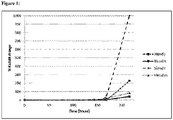
- Fig. 1 is a graph of percentage increase in Kinematic Viscosity at 100 °C against time corresponding to results of CEC-L-109 testing of blended compositions containing Guerbet-derived base stock (GE3) and/or a Group III base stock (Yubase 4) together with varying amounts of aminic oxidant and/or phenolic oxidant as well as other lubricant additives.
- GE3 Guerbet-derived base stock
- Yubase 4 Group III base stock
- Guerbet-derived base stock GE3 of formula (1) was prepared, the structure of which is shown in Table 4.
- Table 4 Molecular Weight Chemical Formula Structure GE3 522.97 C 36 H 74 O
- DSC Differential scanning calorimetry
- Noack volatility was measured using a method which was based on IP 393 and was considered similar to CEC-L-40-A-93. According to the method, reference oils of known Noack volatility were heated from 40 °C to 550 °C to determine the temperature at which the Noack volatility weight loss of each of the reference oils was reached. The base stocks were subjected to the same process as the reference oils. The Noack weight of the base stocks could be determined based on the results obtained from the reference oils.
- the Guerbet-derived base stock ether has a lower volatility, lower pour point and lower kinematic viscosity as compared to the conventional base oil.
- Example 2 Properties of lubricant compositions containing ether base stocks
- Guerbet-derived ether base stock GE3 was blended with conventional base oil additives (additive A, a commercially available additive package providing a dispersant level representative of high performance engine oil between 7 and 10 wt% based on the total weight of the lubricant composition; additive B, a cold-flow improver; additive C, an oxidation inhibitor; and additive D, a viscosity index improver) and conventional base oils (Yubase 4, a group III base oil; and Yubase 6, a group III base oil) to form a lubricant blend.
- a Baseline blend was also prepared. Yubase 4 was chosen as the main component of the Baseline blend, since it exhibits a similar KV100 to Guerbet-derived ether base stock, GE3.
- the Baseline blend was believed to be a stringent baseline for comparison, since it is a 5W-30 formulation which meets certain specifications (ACEA A5/B5, API-SN/GF-4).
- the details of the blended compositions are shown in Table 6 in % by weight Table 6 Baseline blend GE3 blend Additive A 16.4 16.4 Additive B 0.15 0.15 Additive C 0.1 0.1 Additive D 4 4 Yubase 4 67.45 17.45 Yubase 6 11.9 11.9 GE3 0 50
- the properties of the Guerbet-derived base stock are also exhibited in the blended composition. In particular, beneficial viscosity, volatility and cold-flow properties are observed.
- the Guerbet-derived base stock also exhibited similar HTHS measurements, TBNs and sulphated ash contents to the Baseline blend.
- Blended compositions comprising Guerbet-derived base stock (GE3), a group III base stock (Yubase 4) or a group IV base stock (PAO 4) together with varying amounts of aminic oxidant (a diphenylamine) and/or phenolic oxidant (a substituted phenol) were subjected to the CEC-L-85-99 test, which measures DSC oxidation onset temperature and DSC oxidation induction time of the tested blends. Results obtained from the CEC-L-85-99 testing are shown in Table 8 (compositional data shown in % by weight). Blends A to J are provided as comparaitve examples.
- Fully formulated lubricant compositions comprising Guerbet-derived base stock (GE3) and a group III base stock (Yubase 4) together with varying amounts of aminic oxidant and/or phenolic oxidant as well as other lubricant additives including (non-borated) dispersant, detergents, viscosity index modifier (VIM) and secondary ZDDP, were subjected to the CEC-L-85-99 test. Results obtained from the CEC-L-85-99 testing are shown in Table 9 (compositional data shown in % by weight). Lubricant compositions 1 to 8 are provided as comparative examples.
- the presence of ZDDP in addition to aminic or phenolic anti-oxidants, also surprisingly confers a substantial increase in oxidative stability as shown by the corresponding increases in oxidation onset temperature and oxidation induction time (Compositions 13 to 16 compared to Compositions 9 to 12). Furthermore, this effect is particularly pronounced where aminic and phenolic antioxidants are present in equal amounts of 0.5 wt.% in the ether-based composition (Composition 16). This pronounced effect is not, however, observed in the corresponding non-ether-based system (Composition 8), indicating that there are synergistic effects associated with the combination of an ether base stock together with aminic and phenolic anti-oxidants and ZDDP.
- the presence of ZDDP therefore offers a further improvement in oxidative stability in the compositions of the invention whilst also contributing to improved anti-wear performance of the lubricant composition.
- Fully formulated lubricant compositions comprising Guerbet-derived base stock (GE3) and a group III base stock (Yubase 4) together with varying amounts of aminic oxidant and/or phenolic oxidant, as well as other lubricant additives including (non-borated) dispersant, borated dispersant, detergents, viscosity modifier (VM) and secondary ZDDP, were subjected to the CEC-L-109 test.
- the CEC-L-109 test is a high temperature oxidation test designed to determine the oxidative stability of an engine lubricant, via the measurement of percentage increase in Kinematic Viscosity at 100 °C ("KV 100 % change”), with lower percentage changes indicative of higher oxidative stability.
- the CEC-L-109 test results in the form of average percentage increase in Kinematic Viscosity at 100 °C from duplicate runs, illustrate the benefit of increasing the total antioxidant concentration (compare the result for Composition b with that of Composition a) as well as the negative impact of the presence of ZDDP on oxidative stability of the non-ether based lubricant compositions in this test (compare results for Compositions a and b with those of Compositions c and d).
- the presence of 6 wt.% borated dispersant provides approximately 0.021 wt.% of boron (on an elemental basis) to the lubricant compositions.
- the presence of the borated dispersant and associated boron gives rise to a substantial increase in percentage change in Kinematic Viscosity at 100 °C for the non-ether based Composition g (too viscous to measure).
- the presence of borated dispersant in the ether-based Composition h is well tolerated with only a moderate average percentage increase in Kinematic Viscosity at 100 °C (84.4 %).
- the presence of 0.86 wt.% magnesium-containing detergent provides approximately 0.072 wt.% magnesium (on an elemental basis) to the lubricant compositions.
- the presence of the magnesium-containing detergent gives rise to a substantial increase in percentage change in Kinematic Viscosity at 100 °C for the non-ether based Composition i (too viscous to measure).
- the presence of magnesium-containing detergent in the ether-based Composition j is well tolerated with only a moderate average percentage increase in Kinematic Viscosity at 100 °C (76.1%).
- compositions f and h The effect of the presence of ZDDP and/or borated dispersant in compositions of the invention (Compositions f and h) compared to conventional non-ether based compositions (Compositions e and g) as discussed above are also illustrated in Figure 1 .
- results in the above examples demonstrate the benefit of the ether base stocks together with aminic and/or phenolic antioxidants for improving oxidative stability, as well as the additional benefits resulting from a synergy with ZDDP.
- aminic and/or phenolic antioxidants can be used in lower amounts in lubricant compositions comprising ether base stocks in accordance with the invention and achieve similar or better oxidative stability in comparison to conventional non-ether based lubricant compositions.
- a reduction in aminic anti-oxidant in a lubricant composition for an internal combustion engine has a particular benefit in reducing turbocharger deposits as well as a reduction in copper corrosion and an increase in elastomer compatibility. Meanwhile, a reduction in phenolic antioxidant leads to an improvement in environmental toxicity of the lubricant compositions.
Landscapes
- Chemical & Material Sciences (AREA)
- Chemical Kinetics & Catalysis (AREA)
- General Chemical & Material Sciences (AREA)
- Oil, Petroleum & Natural Gas (AREA)
- Organic Chemistry (AREA)
- Lubricants (AREA)
Priority Applications (1)
| Application Number | Priority Date | Filing Date | Title |
|---|---|---|---|
| EP22169847.5A EP4108745A1 (en) | 2016-12-16 | 2017-12-14 | Ether-based lubricant compositions, methods and uses |
Applications Claiming Priority (2)
| Application Number | Priority Date | Filing Date | Title |
|---|---|---|---|
| CN2016110345 | 2016-12-16 | ||
| PCT/EP2017/082924 WO2018109123A1 (en) | 2016-12-16 | 2017-12-14 | Ether-based lubricant compositions, methods and uses |
Related Child Applications (1)
| Application Number | Title | Priority Date | Filing Date |
|---|---|---|---|
| EP22169847.5A Division EP4108745A1 (en) | 2016-12-16 | 2017-12-14 | Ether-based lubricant compositions, methods and uses |
Publications (2)
| Publication Number | Publication Date |
|---|---|
| EP3555248A1 EP3555248A1 (en) | 2019-10-23 |
| EP3555248B1 true EP3555248B1 (en) | 2022-04-27 |
Family
ID=60702780
Family Applications (2)
| Application Number | Title | Priority Date | Filing Date |
|---|---|---|---|
| EP17816808.4A Active EP3555248B1 (en) | 2016-12-16 | 2017-12-14 | Ether-based lubricant compositions, methods and uses |
| EP22169847.5A Withdrawn EP4108745A1 (en) | 2016-12-16 | 2017-12-14 | Ether-based lubricant compositions, methods and uses |
Family Applications After (1)
| Application Number | Title | Priority Date | Filing Date |
|---|---|---|---|
| EP22169847.5A Withdrawn EP4108745A1 (en) | 2016-12-16 | 2017-12-14 | Ether-based lubricant compositions, methods and uses |
Country Status (6)
| Country | Link |
|---|---|
| US (1) | US20200115651A1 (enExample) |
| EP (2) | EP3555248B1 (enExample) |
| JP (3) | JP7107938B2 (enExample) |
| CN (2) | CN115895763B (enExample) |
| PL (1) | PL3555248T3 (enExample) |
| WO (1) | WO2018109123A1 (enExample) |
Families Citing this family (1)
| Publication number | Priority date | Publication date | Assignee | Title |
|---|---|---|---|---|
| US11773343B2 (en) * | 2021-11-17 | 2023-10-03 | Afton Chemical Corporation | Engine oil formulation with improved Sequence VIII performance |
Family Cites Families (22)
| Publication number | Priority date | Publication date | Assignee | Title |
|---|---|---|---|---|
| GB817054A (en) * | 1954-08-07 | 1959-07-22 | Hoechst Ag | Manufacture of esters |
| JPS5128087B2 (enExample) * | 1971-09-22 | 1976-08-17 | ||
| DE2812444A1 (de) * | 1978-03-22 | 1979-10-04 | Hoechst Ag | Tertiaere butylaether als faserpraeparationsmittel |
| EP1025138B1 (en) | 1997-10-28 | 2005-03-02 | Castrol Limited | Processes for preparing grafted copolymers |
| WO2003099890A2 (en) | 2002-05-24 | 2003-12-04 | Castrol Limited | Preparation of monomers for grafting to polyolefins, and lubricating oil compositions containing grafted copolymer |
| EP1577371A4 (en) * | 2002-12-24 | 2008-11-05 | Idemitsu Kosan Co | LUBRICANT BASE OIL AND LUBE OIL COMPOSITION |
| GB0326808D0 (en) | 2003-11-18 | 2003-12-24 | Infineum Int Ltd | Lubricating oil composition |
| US7696136B2 (en) | 2004-03-11 | 2010-04-13 | Crompton Corporation | Lubricant compositions containing hydroxy carboxylic acid and hydroxy polycarboxylic acid esters |
| JP4563082B2 (ja) * | 2004-06-03 | 2010-10-13 | 出光興産株式会社 | 潤滑油基油及び潤滑油組成物 |
| JPWO2006025253A1 (ja) * | 2004-08-30 | 2008-05-08 | 出光興産株式会社 | 流体軸受用潤滑油組成物 |
| US20060090393A1 (en) | 2004-10-29 | 2006-05-04 | Rowland Robert G | Epoxidized ester additives for reducing lead corrosion in lubricants and fuels |
| US8703872B2 (en) | 2005-03-11 | 2014-04-22 | Castrol Limited | Multiple function graft polymer |
| US7691794B2 (en) | 2006-01-04 | 2010-04-06 | Chemtura Corporation | Lubricating oil and fuel compositions |
| JP2007056276A (ja) * | 2006-12-04 | 2007-03-08 | Idemitsu Kosan Co Ltd | 潤滑油基油 |
| US9243201B2 (en) * | 2011-10-26 | 2016-01-26 | Exxonmobil Research And Engineering Company | Low viscosity lubricating oil base stocks and processes for preparing same |
| US20140256607A1 (en) * | 2011-10-28 | 2014-09-11 | Idemitsu Kosan Co., Ltd. | Lubrication oil composition |
| US20140207235A1 (en) * | 2013-01-23 | 2014-07-24 | Warsaw Orthopedic, Inc. | Expandable allograft cage |
| US10125335B2 (en) * | 2013-06-28 | 2018-11-13 | Castrol Limited | Lubricating compositions containing isoprene based components |
| CN106103669A (zh) * | 2014-03-27 | 2016-11-09 | 陶氏环球技术有限责任公司 | 适于润滑剂调配物的分散剂 |
| JP6259728B2 (ja) * | 2014-06-30 | 2018-01-10 | 出光興産株式会社 | 潤滑油組成物 |
| KR101819132B1 (ko) * | 2015-02-09 | 2018-01-16 | 가부시키가이샤 모레스코 | 윤활제 조성물과 그 이용 및 지방족 에테르 화합물 |
| CA2987861C (en) * | 2015-06-18 | 2024-04-09 | Castrol Limited | Ether compounds and related compositions |
-
2017
- 2017-12-14 EP EP17816808.4A patent/EP3555248B1/en active Active
- 2017-12-14 JP JP2019532717A patent/JP7107938B2/ja active Active
- 2017-12-14 US US16/470,243 patent/US20200115651A1/en not_active Abandoned
- 2017-12-14 WO PCT/EP2017/082924 patent/WO2018109123A1/en not_active Ceased
- 2017-12-14 CN CN202211673733.2A patent/CN115895763B/zh active Active
- 2017-12-14 CN CN201780085260.5A patent/CN110462010B/zh active Active
- 2017-12-14 PL PL17816808.4T patent/PL3555248T3/pl unknown
- 2017-12-14 EP EP22169847.5A patent/EP4108745A1/en not_active Withdrawn
-
2022
- 2022-07-14 JP JP2022113566A patent/JP2022160461A/ja active Pending
-
2024
- 2024-03-01 JP JP2024031444A patent/JP2024081643A/ja not_active Ceased
Also Published As
| Publication number | Publication date |
|---|---|
| JP7107938B2 (ja) | 2022-07-27 |
| CN115895763B (zh) | 2024-09-13 |
| JP2020502338A (ja) | 2020-01-23 |
| WO2018109123A1 (en) | 2018-06-21 |
| CN110462010A (zh) | 2019-11-15 |
| CN115895763A (zh) | 2023-04-04 |
| JP2022160461A (ja) | 2022-10-19 |
| EP3555248A1 (en) | 2019-10-23 |
| US20200115651A1 (en) | 2020-04-16 |
| JP2024081643A (ja) | 2024-06-18 |
| CN110462010B (zh) | 2023-01-10 |
| EP4108745A1 (en) | 2022-12-28 |
| PL3555248T3 (pl) | 2022-08-29 |
Similar Documents
| Publication | Publication Date | Title |
|---|---|---|
| EP3310884B1 (en) | Ether compounds and related compositions | |
| EP3555250B1 (en) | Ether-based lubricant composition and its use | |
| JP2024081643A (ja) | エーテル系の潤滑剤組成物、方法および使用 | |
| US20190309237A1 (en) | Ether-Based Lubricant Compositions, Methods and Uses | |
| US20200102520A1 (en) | Ether-Based Lubricant Compositions, Methods and Uses | |
| JP2002047498A (ja) | 高硫黄エンジン油組成物 | |
| JP2020502339A5 (enExample) | ||
| JP2020502338A5 (enExample) | ||
| WO2020156961A1 (en) | Use of ether base stocks | |
| WO2020156962A1 (en) | Use of ether base stocks |
Legal Events
| Date | Code | Title | Description |
|---|---|---|---|
| STAA | Information on the status of an ep patent application or granted ep patent |
Free format text: STATUS: UNKNOWN |
|
| STAA | Information on the status of an ep patent application or granted ep patent |
Free format text: STATUS: THE INTERNATIONAL PUBLICATION HAS BEEN MADE |
|
| PUAI | Public reference made under article 153(3) epc to a published international application that has entered the european phase |
Free format text: ORIGINAL CODE: 0009012 |
|
| STAA | Information on the status of an ep patent application or granted ep patent |
Free format text: STATUS: REQUEST FOR EXAMINATION WAS MADE |
|
| 17P | Request for examination filed |
Effective date: 20190614 |
|
| AK | Designated contracting states |
Kind code of ref document: A1 Designated state(s): AL AT BE BG CH CY CZ DE DK EE ES FI FR GB GR HR HU IE IS IT LI LT LU LV MC MK MT NL NO PL PT RO RS SE SI SK SM TR |
|
| AX | Request for extension of the european patent |
Extension state: BA ME |
|
| DAV | Request for validation of the european patent (deleted) | ||
| DAX | Request for extension of the european patent (deleted) | ||
| STAA | Information on the status of an ep patent application or granted ep patent |
Free format text: STATUS: EXAMINATION IS IN PROGRESS |
|
| 17Q | First examination report despatched |
Effective date: 20200821 |
|
| GRAP | Despatch of communication of intention to grant a patent |
Free format text: ORIGINAL CODE: EPIDOSNIGR1 |
|
| STAA | Information on the status of an ep patent application or granted ep patent |
Free format text: STATUS: GRANT OF PATENT IS INTENDED |
|
| INTG | Intention to grant announced |
Effective date: 20211111 |
|
| RIN1 | Information on inventor provided before grant (corrected) |
Inventor name: YATES, REBECCA Inventor name: WEST, KEVIN RICHARD Inventor name: REDSHAW, JOHN MICHAEL Inventor name: LAMB, GORDON DAVID Inventor name: BREAKSPEAR, ANGELA Inventor name: ADAMS, IEUAN STEPHEN |
|
| GRAS | Grant fee paid |
Free format text: ORIGINAL CODE: EPIDOSNIGR3 |
|
| GRAA | (expected) grant |
Free format text: ORIGINAL CODE: 0009210 |
|
| STAA | Information on the status of an ep patent application or granted ep patent |
Free format text: STATUS: THE PATENT HAS BEEN GRANTED |
|
| AK | Designated contracting states |
Kind code of ref document: B1 Designated state(s): AL AT BE BG CH CY CZ DE DK EE ES FI FR GB GR HR HU IE IS IT LI LT LU LV MC MK MT NL NO PL PT RO RS SE SI SK SM TR |
|
| REG | Reference to a national code |
Ref country code: GB Ref legal event code: FG4D |
|
| REG | Reference to a national code |
Ref country code: CH Ref legal event code: EP |
|
| REG | Reference to a national code |
Ref country code: AT Ref legal event code: REF Ref document number: 1486956 Country of ref document: AT Kind code of ref document: T Effective date: 20220515 |
|
| REG | Reference to a national code |
Ref country code: DE Ref legal event code: R096 Ref document number: 602017056631 Country of ref document: DE |
|
| REG | Reference to a national code |
Ref country code: IE Ref legal event code: FG4D |
|
| REG | Reference to a national code |
Ref country code: NL Ref legal event code: FP |
|
| REG | Reference to a national code |
Ref country code: SE Ref legal event code: TRGR |
|
| REG | Reference to a national code |
Ref country code: LT Ref legal event code: MG9D |
|
| REG | Reference to a national code |
Ref country code: AT Ref legal event code: MK05 Ref document number: 1486956 Country of ref document: AT Kind code of ref document: T Effective date: 20220427 |
|
| PG25 | Lapsed in a contracting state [announced via postgrant information from national office to epo] |
Ref country code: PT Free format text: LAPSE BECAUSE OF FAILURE TO SUBMIT A TRANSLATION OF THE DESCRIPTION OR TO PAY THE FEE WITHIN THE PRESCRIBED TIME-LIMIT Effective date: 20220829 Ref country code: NO Free format text: LAPSE BECAUSE OF FAILURE TO SUBMIT A TRANSLATION OF THE DESCRIPTION OR TO PAY THE FEE WITHIN THE PRESCRIBED TIME-LIMIT Effective date: 20220727 Ref country code: LT Free format text: LAPSE BECAUSE OF FAILURE TO SUBMIT A TRANSLATION OF THE DESCRIPTION OR TO PAY THE FEE WITHIN THE PRESCRIBED TIME-LIMIT Effective date: 20220427 Ref country code: HR Free format text: LAPSE BECAUSE OF FAILURE TO SUBMIT A TRANSLATION OF THE DESCRIPTION OR TO PAY THE FEE WITHIN THE PRESCRIBED TIME-LIMIT Effective date: 20220427 Ref country code: GR Free format text: LAPSE BECAUSE OF FAILURE TO SUBMIT A TRANSLATION OF THE DESCRIPTION OR TO PAY THE FEE WITHIN THE PRESCRIBED TIME-LIMIT Effective date: 20220728 Ref country code: FI Free format text: LAPSE BECAUSE OF FAILURE TO SUBMIT A TRANSLATION OF THE DESCRIPTION OR TO PAY THE FEE WITHIN THE PRESCRIBED TIME-LIMIT Effective date: 20220427 Ref country code: ES Free format text: LAPSE BECAUSE OF FAILURE TO SUBMIT A TRANSLATION OF THE DESCRIPTION OR TO PAY THE FEE WITHIN THE PRESCRIBED TIME-LIMIT Effective date: 20220427 Ref country code: BG Free format text: LAPSE BECAUSE OF FAILURE TO SUBMIT A TRANSLATION OF THE DESCRIPTION OR TO PAY THE FEE WITHIN THE PRESCRIBED TIME-LIMIT Effective date: 20220727 Ref country code: AT Free format text: LAPSE BECAUSE OF FAILURE TO SUBMIT A TRANSLATION OF THE DESCRIPTION OR TO PAY THE FEE WITHIN THE PRESCRIBED TIME-LIMIT Effective date: 20220427 |
|
| PG25 | Lapsed in a contracting state [announced via postgrant information from national office to epo] |
Ref country code: RS Free format text: LAPSE BECAUSE OF FAILURE TO SUBMIT A TRANSLATION OF THE DESCRIPTION OR TO PAY THE FEE WITHIN THE PRESCRIBED TIME-LIMIT Effective date: 20220427 Ref country code: LV Free format text: LAPSE BECAUSE OF FAILURE TO SUBMIT A TRANSLATION OF THE DESCRIPTION OR TO PAY THE FEE WITHIN THE PRESCRIBED TIME-LIMIT Effective date: 20220427 Ref country code: IS Free format text: LAPSE BECAUSE OF FAILURE TO SUBMIT A TRANSLATION OF THE DESCRIPTION OR TO PAY THE FEE WITHIN THE PRESCRIBED TIME-LIMIT Effective date: 20220827 |
|
| REG | Reference to a national code |
Ref country code: DE Ref legal event code: R097 Ref document number: 602017056631 Country of ref document: DE |
|
| PG25 | Lapsed in a contracting state [announced via postgrant information from national office to epo] |
Ref country code: SM Free format text: LAPSE BECAUSE OF FAILURE TO SUBMIT A TRANSLATION OF THE DESCRIPTION OR TO PAY THE FEE WITHIN THE PRESCRIBED TIME-LIMIT Effective date: 20220427 Ref country code: SK Free format text: LAPSE BECAUSE OF FAILURE TO SUBMIT A TRANSLATION OF THE DESCRIPTION OR TO PAY THE FEE WITHIN THE PRESCRIBED TIME-LIMIT Effective date: 20220427 Ref country code: RO Free format text: LAPSE BECAUSE OF FAILURE TO SUBMIT A TRANSLATION OF THE DESCRIPTION OR TO PAY THE FEE WITHIN THE PRESCRIBED TIME-LIMIT Effective date: 20220427 Ref country code: EE Free format text: LAPSE BECAUSE OF FAILURE TO SUBMIT A TRANSLATION OF THE DESCRIPTION OR TO PAY THE FEE WITHIN THE PRESCRIBED TIME-LIMIT Effective date: 20220427 Ref country code: DK Free format text: LAPSE BECAUSE OF FAILURE TO SUBMIT A TRANSLATION OF THE DESCRIPTION OR TO PAY THE FEE WITHIN THE PRESCRIBED TIME-LIMIT Effective date: 20220427 Ref country code: CZ Free format text: LAPSE BECAUSE OF FAILURE TO SUBMIT A TRANSLATION OF THE DESCRIPTION OR TO PAY THE FEE WITHIN THE PRESCRIBED TIME-LIMIT Effective date: 20220427 |
|
| PLBE | No opposition filed within time limit |
Free format text: ORIGINAL CODE: 0009261 |
|
| STAA | Information on the status of an ep patent application or granted ep patent |
Free format text: STATUS: NO OPPOSITION FILED WITHIN TIME LIMIT |
|
| PG25 | Lapsed in a contracting state [announced via postgrant information from national office to epo] |
Ref country code: AL Free format text: LAPSE BECAUSE OF FAILURE TO SUBMIT A TRANSLATION OF THE DESCRIPTION OR TO PAY THE FEE WITHIN THE PRESCRIBED TIME-LIMIT Effective date: 20220427 |
|
| 26N | No opposition filed |
Effective date: 20230130 |
|
| PG25 | Lapsed in a contracting state [announced via postgrant information from national office to epo] |
Ref country code: SI Free format text: LAPSE BECAUSE OF FAILURE TO SUBMIT A TRANSLATION OF THE DESCRIPTION OR TO PAY THE FEE WITHIN THE PRESCRIBED TIME-LIMIT Effective date: 20220427 |
|
| P01 | Opt-out of the competence of the unified patent court (upc) registered |
Effective date: 20230526 |
|
| REG | Reference to a national code |
Ref country code: CH Ref legal event code: PL |
|
| PG25 | Lapsed in a contracting state [announced via postgrant information from national office to epo] |
Ref country code: LU Free format text: LAPSE BECAUSE OF NON-PAYMENT OF DUE FEES Effective date: 20221214 |
|
| PG25 | Lapsed in a contracting state [announced via postgrant information from national office to epo] |
Ref country code: LI Free format text: LAPSE BECAUSE OF NON-PAYMENT OF DUE FEES Effective date: 20221231 Ref country code: IE Free format text: LAPSE BECAUSE OF NON-PAYMENT OF DUE FEES Effective date: 20221214 Ref country code: CH Free format text: LAPSE BECAUSE OF NON-PAYMENT OF DUE FEES Effective date: 20221231 |
|
| PG25 | Lapsed in a contracting state [announced via postgrant information from national office to epo] |
Ref country code: HU Free format text: LAPSE BECAUSE OF FAILURE TO SUBMIT A TRANSLATION OF THE DESCRIPTION OR TO PAY THE FEE WITHIN THE PRESCRIBED TIME-LIMIT; INVALID AB INITIO Effective date: 20171214 |
|
| PG25 | Lapsed in a contracting state [announced via postgrant information from national office to epo] |
Ref country code: CY Free format text: LAPSE BECAUSE OF FAILURE TO SUBMIT A TRANSLATION OF THE DESCRIPTION OR TO PAY THE FEE WITHIN THE PRESCRIBED TIME-LIMIT Effective date: 20220427 |
|
| PG25 | Lapsed in a contracting state [announced via postgrant information from national office to epo] |
Ref country code: MK Free format text: LAPSE BECAUSE OF FAILURE TO SUBMIT A TRANSLATION OF THE DESCRIPTION OR TO PAY THE FEE WITHIN THE PRESCRIBED TIME-LIMIT Effective date: 20220427 |
|
| PG25 | Lapsed in a contracting state [announced via postgrant information from national office to epo] |
Ref country code: MC Free format text: LAPSE BECAUSE OF FAILURE TO SUBMIT A TRANSLATION OF THE DESCRIPTION OR TO PAY THE FEE WITHIN THE PRESCRIBED TIME-LIMIT Effective date: 20220427 |
|
| PG25 | Lapsed in a contracting state [announced via postgrant information from national office to epo] |
Ref country code: MC Free format text: LAPSE BECAUSE OF FAILURE TO SUBMIT A TRANSLATION OF THE DESCRIPTION OR TO PAY THE FEE WITHIN THE PRESCRIBED TIME-LIMIT Effective date: 20220427 |
|
| PG25 | Lapsed in a contracting state [announced via postgrant information from national office to epo] |
Ref country code: MT Free format text: LAPSE BECAUSE OF FAILURE TO SUBMIT A TRANSLATION OF THE DESCRIPTION OR TO PAY THE FEE WITHIN THE PRESCRIBED TIME-LIMIT Effective date: 20220427 |
|
| PG25 | Lapsed in a contracting state [announced via postgrant information from national office to epo] |
Ref country code: BG Free format text: LAPSE BECAUSE OF FAILURE TO SUBMIT A TRANSLATION OF THE DESCRIPTION OR TO PAY THE FEE WITHIN THE PRESCRIBED TIME-LIMIT Effective date: 20220427 |
|
| PG25 | Lapsed in a contracting state [announced via postgrant information from national office to epo] |
Ref country code: BG Free format text: LAPSE BECAUSE OF FAILURE TO SUBMIT A TRANSLATION OF THE DESCRIPTION OR TO PAY THE FEE WITHIN THE PRESCRIBED TIME-LIMIT Effective date: 20220427 |
|
| PGFP | Annual fee paid to national office [announced via postgrant information from national office to epo] |
Ref country code: GB Payment date: 20251229 Year of fee payment: 9 |
|
| PGFP | Annual fee paid to national office [announced via postgrant information from national office to epo] |
Ref country code: IT Payment date: 20251219 Year of fee payment: 9 |
|
| PGFP | Annual fee paid to national office [announced via postgrant information from national office to epo] |
Ref country code: NL Payment date: 20251226 Year of fee payment: 9 Ref country code: FR Payment date: 20251226 Year of fee payment: 9 |
|
| PGFP | Annual fee paid to national office [announced via postgrant information from national office to epo] |
Ref country code: BE Payment date: 20251229 Year of fee payment: 9 Ref country code: TR Payment date: 20251121 Year of fee payment: 9 |
|
| PGFP | Annual fee paid to national office [announced via postgrant information from national office to epo] |
Ref country code: SE Payment date: 20251227 Year of fee payment: 9 |
|
| PGFP | Annual fee paid to national office [announced via postgrant information from national office to epo] |
Ref country code: PL Payment date: 20251120 Year of fee payment: 9 |
|
| PGFP | Annual fee paid to national office [announced via postgrant information from national office to epo] |
Ref country code: DE Payment date: 20251229 Year of fee payment: 9 |