EP3553788A2 - Système de surveillance de signes vitaux - Google Patents
Système de surveillance de signes vitaux Download PDFInfo
- Publication number
- EP3553788A2 EP3553788A2 EP19159374.8A EP19159374A EP3553788A2 EP 3553788 A2 EP3553788 A2 EP 3553788A2 EP 19159374 A EP19159374 A EP 19159374A EP 3553788 A2 EP3553788 A2 EP 3553788A2
- Authority
- EP
- European Patent Office
- Prior art keywords
- vitals
- data
- patient
- devices
- platform
- Prior art date
- Legal status (The legal status is an assumption and is not a legal conclusion. Google has not performed a legal analysis and makes no representation as to the accuracy of the status listed.)
- Withdrawn
Links
Images


Classifications
-
- A—HUMAN NECESSITIES
- A61—MEDICAL OR VETERINARY SCIENCE; HYGIENE
- A61B—DIAGNOSIS; SURGERY; IDENTIFICATION
- A61B5/00—Measuring for diagnostic purposes; Identification of persons
- A61B5/0002—Remote monitoring of patients using telemetry, e.g. transmission of vital signals via a communication network
- A61B5/0015—Remote monitoring of patients using telemetry, e.g. transmission of vital signals via a communication network characterised by features of the telemetry system
- A61B5/0022—Monitoring a patient using a global network, e.g. telephone networks, internet
-
- A—HUMAN NECESSITIES
- A61—MEDICAL OR VETERINARY SCIENCE; HYGIENE
- A61B—DIAGNOSIS; SURGERY; IDENTIFICATION
- A61B5/00—Measuring for diagnostic purposes; Identification of persons
- A61B5/02—Detecting, measuring or recording for evaluating the cardiovascular system, e.g. pulse, heart rate, blood pressure or blood flow
- A61B5/0205—Simultaneously evaluating both cardiovascular conditions and different types of body conditions, e.g. heart and respiratory condition
- A61B5/02055—Simultaneously evaluating both cardiovascular condition and temperature
-
- A—HUMAN NECESSITIES
- A61—MEDICAL OR VETERINARY SCIENCE; HYGIENE
- A61B—DIAGNOSIS; SURGERY; IDENTIFICATION
- A61B5/00—Measuring for diagnostic purposes; Identification of persons
- A61B5/74—Details of notification to user or communication with user or patient; User input means
- A61B5/746—Alarms related to a physiological condition, e.g. details of setting alarm thresholds or avoiding false alarms
-
- G—PHYSICS
- G16—INFORMATION AND COMMUNICATION TECHNOLOGY [ICT] SPECIALLY ADAPTED FOR SPECIFIC APPLICATION FIELDS
- G16H—HEALTHCARE INFORMATICS, i.e. INFORMATION AND COMMUNICATION TECHNOLOGY [ICT] SPECIALLY ADAPTED FOR THE HANDLING OR PROCESSING OF MEDICAL OR HEALTHCARE DATA
- G16H40/00—ICT specially adapted for the management or administration of healthcare resources or facilities; ICT specially adapted for the management or operation of medical equipment or devices
- G16H40/60—ICT specially adapted for the management or administration of healthcare resources or facilities; ICT specially adapted for the management or operation of medical equipment or devices for the operation of medical equipment or devices
- G16H40/67—ICT specially adapted for the management or administration of healthcare resources or facilities; ICT specially adapted for the management or operation of medical equipment or devices for the operation of medical equipment or devices for remote operation
-
- G—PHYSICS
- G16—INFORMATION AND COMMUNICATION TECHNOLOGY [ICT] SPECIALLY ADAPTED FOR SPECIFIC APPLICATION FIELDS
- G16H—HEALTHCARE INFORMATICS, i.e. INFORMATION AND COMMUNICATION TECHNOLOGY [ICT] SPECIALLY ADAPTED FOR THE HANDLING OR PROCESSING OF MEDICAL OR HEALTHCARE DATA
- G16H50/00—ICT specially adapted for medical diagnosis, medical simulation or medical data mining; ICT specially adapted for detecting, monitoring or modelling epidemics or pandemics
- G16H50/20—ICT specially adapted for medical diagnosis, medical simulation or medical data mining; ICT specially adapted for detecting, monitoring or modelling epidemics or pandemics for computer-aided diagnosis, e.g. based on medical expert systems
-
- G—PHYSICS
- G16—INFORMATION AND COMMUNICATION TECHNOLOGY [ICT] SPECIALLY ADAPTED FOR SPECIFIC APPLICATION FIELDS
- G16H—HEALTHCARE INFORMATICS, i.e. INFORMATION AND COMMUNICATION TECHNOLOGY [ICT] SPECIALLY ADAPTED FOR THE HANDLING OR PROCESSING OF MEDICAL OR HEALTHCARE DATA
- G16H50/00—ICT specially adapted for medical diagnosis, medical simulation or medical data mining; ICT specially adapted for detecting, monitoring or modelling epidemics or pandemics
- G16H50/30—ICT specially adapted for medical diagnosis, medical simulation or medical data mining; ICT specially adapted for detecting, monitoring or modelling epidemics or pandemics for calculating health indices; for individual health risk assessment
-
- G—PHYSICS
- G16—INFORMATION AND COMMUNICATION TECHNOLOGY [ICT] SPECIALLY ADAPTED FOR SPECIFIC APPLICATION FIELDS
- G16H—HEALTHCARE INFORMATICS, i.e. INFORMATION AND COMMUNICATION TECHNOLOGY [ICT] SPECIALLY ADAPTED FOR THE HANDLING OR PROCESSING OF MEDICAL OR HEALTHCARE DATA
- G16H50/00—ICT specially adapted for medical diagnosis, medical simulation or medical data mining; ICT specially adapted for detecting, monitoring or modelling epidemics or pandemics
- G16H50/70—ICT specially adapted for medical diagnosis, medical simulation or medical data mining; ICT specially adapted for detecting, monitoring or modelling epidemics or pandemics for mining of medical data, e.g. analysing previous cases of other patients
-
- G—PHYSICS
- G16—INFORMATION AND COMMUNICATION TECHNOLOGY [ICT] SPECIALLY ADAPTED FOR SPECIFIC APPLICATION FIELDS
- G16H—HEALTHCARE INFORMATICS, i.e. INFORMATION AND COMMUNICATION TECHNOLOGY [ICT] SPECIALLY ADAPTED FOR THE HANDLING OR PROCESSING OF MEDICAL OR HEALTHCARE DATA
- G16H80/00—ICT specially adapted for facilitating communication between medical practitioners or patients, e.g. for collaborative diagnosis, therapy or health monitoring
-
- A—HUMAN NECESSITIES
- A61—MEDICAL OR VETERINARY SCIENCE; HYGIENE
- A61B—DIAGNOSIS; SURGERY; IDENTIFICATION
- A61B5/00—Measuring for diagnostic purposes; Identification of persons
- A61B5/0002—Remote monitoring of patients using telemetry, e.g. transmission of vital signals via a communication network
- A61B5/0004—Remote monitoring of patients using telemetry, e.g. transmission of vital signals via a communication network characterised by the type of physiological signal transmitted
- A61B5/0006—ECG or EEG signals
-
- A—HUMAN NECESSITIES
- A61—MEDICAL OR VETERINARY SCIENCE; HYGIENE
- A61B—DIAGNOSIS; SURGERY; IDENTIFICATION
- A61B5/00—Measuring for diagnostic purposes; Identification of persons
- A61B5/0002—Remote monitoring of patients using telemetry, e.g. transmission of vital signals via a communication network
- A61B5/0004—Remote monitoring of patients using telemetry, e.g. transmission of vital signals via a communication network characterised by the type of physiological signal transmitted
- A61B5/0008—Temperature signals
-
- A—HUMAN NECESSITIES
- A61—MEDICAL OR VETERINARY SCIENCE; HYGIENE
- A61B—DIAGNOSIS; SURGERY; IDENTIFICATION
- A61B5/00—Measuring for diagnostic purposes; Identification of persons
- A61B5/02—Detecting, measuring or recording for evaluating the cardiovascular system, e.g. pulse, heart rate, blood pressure or blood flow
- A61B5/0205—Simultaneously evaluating both cardiovascular conditions and different types of body conditions, e.g. heart and respiratory condition
-
- A—HUMAN NECESSITIES
- A61—MEDICAL OR VETERINARY SCIENCE; HYGIENE
- A61B—DIAGNOSIS; SURGERY; IDENTIFICATION
- A61B5/00—Measuring for diagnostic purposes; Identification of persons
- A61B5/02—Detecting, measuring or recording for evaluating the cardiovascular system, e.g. pulse, heart rate, blood pressure or blood flow
- A61B5/021—Measuring pressure in heart or blood vessels
-
- A—HUMAN NECESSITIES
- A61—MEDICAL OR VETERINARY SCIENCE; HYGIENE
- A61B—DIAGNOSIS; SURGERY; IDENTIFICATION
- A61B5/00—Measuring for diagnostic purposes; Identification of persons
- A61B5/02—Detecting, measuring or recording for evaluating the cardiovascular system, e.g. pulse, heart rate, blood pressure or blood flow
- A61B5/024—Measuring pulse rate or heart rate
- A61B5/02438—Measuring pulse rate or heart rate with portable devices, e.g. worn by the patient
-
- A—HUMAN NECESSITIES
- A61—MEDICAL OR VETERINARY SCIENCE; HYGIENE
- A61B—DIAGNOSIS; SURGERY; IDENTIFICATION
- A61B5/00—Measuring for diagnostic purposes; Identification of persons
- A61B5/08—Measuring devices for evaluating the respiratory organs
-
- A—HUMAN NECESSITIES
- A61—MEDICAL OR VETERINARY SCIENCE; HYGIENE
- A61B—DIAGNOSIS; SURGERY; IDENTIFICATION
- A61B5/00—Measuring for diagnostic purposes; Identification of persons
- A61B5/145—Measuring characteristics of blood in vivo, e.g. gas concentration or pH-value ; Measuring characteristics of body fluids or tissues, e.g. interstitial fluid or cerebral tissue
-
- A—HUMAN NECESSITIES
- A61—MEDICAL OR VETERINARY SCIENCE; HYGIENE
- A61B—DIAGNOSIS; SURGERY; IDENTIFICATION
- A61B5/00—Measuring for diagnostic purposes; Identification of persons
- A61B5/145—Measuring characteristics of blood in vivo, e.g. gas concentration or pH-value ; Measuring characteristics of body fluids or tissues, e.g. interstitial fluid or cerebral tissue
- A61B5/14532—Measuring characteristics of blood in vivo, e.g. gas concentration or pH-value ; Measuring characteristics of body fluids or tissues, e.g. interstitial fluid or cerebral tissue for measuring glucose, e.g. by tissue impedance measurement
-
- A—HUMAN NECESSITIES
- A61—MEDICAL OR VETERINARY SCIENCE; HYGIENE
- A61B—DIAGNOSIS; SURGERY; IDENTIFICATION
- A61B5/00—Measuring for diagnostic purposes; Identification of persons
- A61B5/145—Measuring characteristics of blood in vivo, e.g. gas concentration or pH-value ; Measuring characteristics of body fluids or tissues, e.g. interstitial fluid or cerebral tissue
- A61B5/1455—Measuring characteristics of blood in vivo, e.g. gas concentration or pH-value ; Measuring characteristics of body fluids or tissues, e.g. interstitial fluid or cerebral tissue using optical sensors, e.g. spectral photometrical oximeters
- A61B5/14551—Measuring characteristics of blood in vivo, e.g. gas concentration or pH-value ; Measuring characteristics of body fluids or tissues, e.g. interstitial fluid or cerebral tissue using optical sensors, e.g. spectral photometrical oximeters for measuring blood gases
-
- A—HUMAN NECESSITIES
- A61—MEDICAL OR VETERINARY SCIENCE; HYGIENE
- A61B—DIAGNOSIS; SURGERY; IDENTIFICATION
- A61B5/00—Measuring for diagnostic purposes; Identification of persons
- A61B5/68—Arrangements of detecting, measuring or recording means, e.g. sensors, in relation to patient
- A61B5/6801—Arrangements of detecting, measuring or recording means, e.g. sensors, in relation to patient specially adapted to be attached to or worn on the body surface
-
- A—HUMAN NECESSITIES
- A61—MEDICAL OR VETERINARY SCIENCE; HYGIENE
- A61B—DIAGNOSIS; SURGERY; IDENTIFICATION
- A61B5/00—Measuring for diagnostic purposes; Identification of persons
- A61B5/68—Arrangements of detecting, measuring or recording means, e.g. sensors, in relation to patient
- A61B5/6801—Arrangements of detecting, measuring or recording means, e.g. sensors, in relation to patient specially adapted to be attached to or worn on the body surface
- A61B5/6802—Sensor mounted on worn items
- A61B5/681—Wristwatch-type devices
Definitions
- a care provider may perform actions to maintain or improve the health of a patient via prevention, diagnosis, and treatment of disease, illness, injury, and/or other physical or mental impairments in the patient.
- Care may include primary care, secondary care, and tertiary care, as well as public health.
- a medical system may include a platform that includes one or more memory devices and one or more processors communicatively coupled to the one or more memory devices.
- the platform may connect and communicate bi-directionally with a plurality of devices via a gateway device.
- the plurality of devices may include different types of devices and devices manufactured by a plurality of different third parties.
- At least some of the plurality of devices may include sensors capable of gathering vitals data from a patient.
- the vitals data may include a plurality of different types of vitals data.
- the platform may support continuous and live streaming of the vitals data from the sensors.
- the platform may receive threshold data on a per patient basis.
- the threshold data may identify a baseline value for one or more of the plurality of different types of vitals data.
- the platform may selectively generate an alert based on the vitals data and the threshold data.
- the platform may provide the alert to a responsible party when the alert is generated by providing the alert to a device associated with the responsible party.
- a patient monitoring system may include a platform that includes one or more memory devices and one or more processors communicatively coupled to the one or more memory devices.
- the platform may connect and communicate bi-directionally with a plurality of devices via a gateway device.
- At least some of the plurality of devices may be wearable devices that include sensors capable of gathering vitals data from a patient.
- the at least some of the plurality of devices may be directly connected to the gateway device based on being located in a same location as the gateway device.
- the platform may support continuous and live streaming of the vitals data from the sensors.
- the platform may perform an analysis of the vitals data on a per patient basis.
- the platform may selectively generate an alert based on a result of performing the analysis.
- the platform may provide the alert to a responsible party when the alert is generated by providing the alert to a device associated with the responsible party.
- a remote care system may include a platform that includes one or more memory devices and one or more processors communicatively coupled to the one or more memory devices.
- the platform may connect and communicate bi-directionally with a plurality of devices via a gateway device. At least some of the plurality of devices may include sensors capable of gathering vitals data from a patient.
- the vitals data may include a plurality of different types of vitals data.
- the platform may connect and communicate bi-directionally with another plurality of devices.
- the other plurality of devices may be remote to the gateway device and the at least some of the plurality of devices.
- the platform may support continuous and live streaming of the vitals data from the sensors.
- the platform may perform a set of actions on a per patient basis based on analyzing the vitals data.
- a provider typically needs to be physically present to perform check-ups on the patient, to communicate healthcare strategies to the patient, and/or the like.
- the patient may need to travel to a doctor's office, may need to be checked-in to a hospital, and/or the like to receive healthcare from a provider.
- This system of providing healthcare to a patient is inefficient, as healthcare provisioning is confined by a physical location.
- providing healthcare in this manner reduces a quantity of patients that a provider can serve (e.g., due to the provider having to move from patient room to patient room, having to gather current vitals data prior to consulting with the patient, and/or the like).
- Some implementations described herein provide a system that is capable of utilizing sensors, remote and local client devices, and a vitals monitoring platform (a computing platform) to gather and analyze vitals data related to a patient.
- the system provides a tool that facilitates remote provisioning of healthcare to a patient by a provider, in a manner not previously possible. This reduces or eliminates physical constraints on providing healthcare to a patient, thereby improving an efficiency of providing healthcare to the patient. In addition, this reduces an amount of time needed to provide healthcare to a patient, thereby improving a quantity of patients to which a provider can provide healthcare and/or reducing an amount of time that a patient needs to wait to receive healthcare. Further, by providing a system that can gather and/or analyze real-time vitals data for a patient, the system facilitates more accurate and real-time (or near real-time) adjustments to healthcare being provided to the patient, thereby improving provisioning of healthcare to the patient.
- Fig. 1 is a diagram of an overview of an example implementation 100 described herein.
- implementation 100 includes various sets of patient sensors, a set of local client devices (e.g., where a local client device is associated with a respective set of patient sensors), a vitals monitoring platform (a computing platform), and a set of remote client devices.
- a set of local client devices e.g., where a local client device is associated with a respective set of patient sensors
- a vitals monitoring platform a computing platform
- remote client devices e.g., a computing platform
- these devices may comprise a patient monitoring system, a remote care system, and/or the like.
- a set of patient sensors may be included in one or more wearable devices worn by the patient and/or otherwise configured to gather vitals data from the patient, as described elsewhere herein.
- a set of patient sensors may be wirelessly connected to a local client device, which may be in a same location as the set of sensors and/or the patient (e.g., in a same room as the set of sensors or the patient, in a same building as the set of sensors and/or the patient, and/or the like).
- a local client device may be a bed-side device in a hospital room.
- the two or more devices when two or more devices are in a same location, the two or more devices may be directly connected with each other via a direct wired connections, via a direct wireless connection, such as a Bluetooth connection, and/or the like.
- the set of local client devices may be connected to the vitals monitoring platform via a network, such the Internet (e.g., the vitals monitoring platform may be cloud based, may be located in a data center off site from the local client devices, and/or the like).
- the set of local client devices may function as a set of gateway devices between various sets of patient sensors and the vitals monitoring platform.
- the vitals monitoring platform may be connected to the set of remote client devices via a network.
- the set of remote client devices may be located at a location that is different than the set of patient sensors, the set of local client devices, and/or the patient.
- a patient may be located in a hospital and a remote client device may be located at an office of a doctor, or the patient may be located at the home of the patient and the remote client device may be located at a hospital or a doctor's office of a doctor providing healthcare to the patient.
- the sets of patient sensors may provide, to respective local client devices, vitals data gathered from respective patients.
- a set of patient sensors may gather heart rate data, blood pressure data, body temperature data, respiratory rate data, oxygen saturation data, electrocardiography data, and/or the like from the patient and may provide this data to a corresponding local client device via a wireless connection between the set of patient sensors and the local client device (e.g., via a Wi-Fi connection, a Bluetooth connection, a Bluetooth Low Energy (BLE) connection, and/or the like) based on the respective local client device being within communicative proximity of the set of patient sensors.
- a local client device may receive different types of vitals data from different types of patient sensors (e.g., a heart rate monitor that gathers heart rate data, a thermometer device that gathers temperature data, and/or the like).
- a set of patient sensors may encrypt the vitals data prior to sending the vitals data to a local client device (e.g., using a hash function, an advanced encryption standard (AES) algorithm, public-private key encryption, and/or the like) and/or may provide the vitals data via a secure wireless connection (e.g., a hypertext transfer protocol secure (HTTPS) connection, a secure shell (SSH) tunnel, and/or the like) to secure the vitals data.
- a secure wireless connection e.g., a hypertext transfer protocol secure (HTTPS) connection, a secure shell (SSH) tunnel, and/or the like
- the set of patient sensors may provide the vitals data at an interval, according to a schedule, based on receiving a request for the vitals data from a local client device, when values included in the vitals data satisfies a threshold, in a streaming (e.g., continuous) manner as the vitals data is collected, and/or the like.
- the set of local client devices may process the vitals data and/or perform one or more other actions related to the vitals data and/or a respective set of patient sensors. For example, a local client device may determine whether values included in the vitals data satisfy a threshold (e.g., as an initial screening step before providing the vitals data to the vitals monitoring platform). This conserves processing resources and/or network resources that would otherwise be consumed providing the vitals data to the vitals monitoring platform when the vitals data does not satisfy a threshold.
- a threshold e.g., as an initial screening step before providing the vitals data to the vitals monitoring platform.
- a local client device may monitor a battery level of a battery of a respective set of patient sensors and may trigger an alarm, may output sensory output (e.g., a sound, light, etc.), and/or the like to indicate to a nurse that a battery level of a battery satisfies a threshold.
- a local client device may send a message to another client device (e.g., a remote client device via the vitals monitoring platform) to notify a health care provider that a battery level of a patient sensor satisfies a threshold, that a value for vitals data satisfies a threshold, and/or the like.
- a local client device may format the vitals data so that the vitals data is in a format that the vitals monitoring platform can use (e.g., after determining that a value for the vitals data satisfies a threshold), thereby conserving processing resources of the vitals monitoring platform that would otherwise be consumed formatting the data, conserving processing resources of the vitals monitoring platform that would otherwise be consumed via slower processing of unformatted data, and/or the like.
- the set of local client devices may provide the vitals data to the vitals monitoring platform.
- the set of local client devices may provide vitals data in a manner that is the same as or similar to the manner in which the sets of patient sensors provided the vitals data.
- the set of local client devices may wait until a threshold amount of vitals data is received before sending the vitals data, may provide the vitals data in a streaming manner, may provide the vitals data after encrypting the vitals data, may provide the vitals data via a secure connection, and/or the like.
- different local client devices may provide the vitals data according to different schedules, based on receiving different requests for the vitals data, at different intervals, and/or the like.
- the vitals monitoring platform may manage data related to monitoring of vitals data for hundreds, thousands, or more patients (e.g., may manage a frequency at which vitals data is to be collected, a type of vitals data to be collected, and/or the like).
- the vitals monitoring platform may configure the set of local client devices to provide vitals data based on a respective patient with which the vitals data is associated, may request the vitals data from the set of local client devices according to different schedules, and/or the like. In this way, the vitals monitoring platform can manage collection of vitals data in a manner not possible by a human actor.
- the vitals monitoring platform may process the vitals data and/or may perform one or more actions related to the vitals data. For example, the vitals monitoring platform may analyze the vitals data to determine whether values included in the vitals data satisfy a threshold (e.g., on a per patient basis), may use a machine learning model to determine whether combinations of values in the vitals data indicate a potential issue with the health of a patient, and/or the like, may determine a score for the health of a patient and/or for a specific condition being monitored (e.g., using a machine learning model), and/or the like, as described elsewhere herein.
- the vitals monitoring platform may process vitals data for hundreds, thousands, or more patients in real-time (or near real-time). In this way, the vitals monitoring platform may process vitals data in a manner not possible by a human actor.
- the vitals monitoring platform may send a message to a client device associated with a healthcare provider (e.g., a remote client device) based on processing the vitals data.
- a healthcare provider e.g., a remote client device
- the vitals monitoring platform may send a message to a remote client device associated with a doctor, a nurse, and/or the like associated with a patient when the vitals data includes values that satisfy a threshold, when a score related to the patient satisfies a threshold, and/or the like.
- the vitals monitoring platform may dynamically monitor results of processing vitals data for hundreds, thousands, or more patients and may dynamically send notifications based on the results, in a manner not possible by a human actor.
- the vitals monitoring platform may schedule a meeting between a healthcare provider associated with a remote client device and another healthcare provider or a patient associated with a local client device based on a result of processing vitals data.
- the vitals monitoring platform may use electronic calendars associated with individuals to attend the meeting to identify an available time for the meeting and may generate a calendar item on the electronic calendars for the meeting.
- the vitals monitoring platform may provide vitals data to the set of remote client devices.
- the vitals monitoring platform may provide the vitals data in a continuous and live streaming manner, in real-time (or near real-time) as the vitals data is gathered by the sets of patient sensors and/or is provided to the vitals monitoring platform, and/or the like.
- the vitals monitoring platform may provide the vitals data for display via a user interface and may update the user interface in a continuous and live manner as the vitals data is received from the set of local client devices.
- the user interface may include graphs, charts, gauges, and/or the like for displaying the vitals data (e.g., current values for the vitals data, values for the vitals data over time, and/or the like).
- the vitals monitoring platform may trigger an alarm via the set of remote client devices based on a result of processing and/or analyzing the vitals data, may send a message for display via a display associated with the remote client device, and/or the like.
- the set of remote client devices may provide a set of instructions to the vitals monitoring platform.
- the set of instructions may cause the vitals monitoring platform to generate a set of graphical outputs based on the vitals data (e.g., charts, graphs, etc. that show the vitals data over time, in relation to historical values, in relation to population averages, etc.).
- the set of instructions may be related to modifying operations of a patient sensor (e.g., may be related to causing the patient sensor to increase a rate of monitoring the vitals data, to causing the patient sensor to decrease the rate of monitoring vitals data, to causing the patient sensor to initiate an idle state, to causing the patient sensor to terminate an idle state, etc.). Additionally, or alternatively, and as another example, the set of instructions may relate to causing the vitals monitoring platform to establish an audio conferencing or a video conferencing session with a particular local client device.
- the vitals monitoring platform may provide the set of instructions to the appropriate local client device and/or may perform another action based on receiving the set of instructions.
- the vitals monitoring platform may provide a set of instructions to a local client device to modify operations of a respective set of patient sensors.
- the vitals monitoring platform may establish an audio conferencing session or a video conferencing session between a remote client device and a local client device (e.g., by establishing a peer-to-peer (P2P) communication between the remote client device and the local client device using a web real-time communication (WebRTC) protocol).
- P2P peer-to-peer
- WebRTC web real-time communication
- the vitals monitoring platform may manage hundreds, thousands, or more sets of instructions and/or sets of actions related to hundreds, thousands, or more local client devices.
- the vitals monitoring platform may provide one or more user interfaces associated with providing a user of the vitals monitoring platform a way to obtain and/or evaluate vitals data, with providing continuous and live streaming of data, with providing video conferencing, or other communications, and/or the like.
- the vitals monitoring platform may provide the one or more user interfaces for display simultaneously.
- the vitals monitoring platform may provide a user interface for display for video conferencing, and may overlay a user interface associated with visualizing data on top of the interface for the video conferencing.
- the vitals monitoring platform provides a tool that can be used for real-time (or near real-time) assessment of data, collaboration on care provided to an individual, and/or the like in a manner not previously possible.
- the set of local client devices may perform respective actions based on receiving the set of instructions from the vitals monitoring platform and/or based on another action performed by the vitals monitoring platform. For example, a local client device may modify operations of a patient sensor. Additionally, or alternatively, and as another example, a local client device may provide, to a remote client device, communications associated with an audio conferencing session and/or a video conferencing session, such as audio data, video data, and/or the like.
- the vitals monitoring platform may connect to and facilitate bi-directional communications among devices (e.g., remote client devices, local client device, and/or patient sensors) related to providing healthcare services to a patient.
- devices e.g., remote client devices, local client device, and/or patient sensors
- This facilitates provisioning of remote healthcare services to the patient, thereby improving a capability of a provider to provide the healthcare services.
- this reduces or eliminates a need for a set of devices to be dedicated to a patient (e.g., a provider can use a single remote client device to monitor and/or provide healthcare services to multiple patients), thereby reducing a quantity of devices needed to provide healthcare services to multiple patients.
- this facilitates centralized management of patents on an individualized basis, thereby improving an accuracy of providing care to multiple patients (e.g., by facilitating analysis of healthcare being provided to a patient in relation to the history of the patient, healthcare being provided to other patients, etc.), facilitating population-based analytics to provide faster detection of health-related issues, and/or the like.
- Fig. 1 is provided merely as an example. Other examples are possible and may differ from what was described with regard to Fig. 1 . Although Fig. 1 was described in the context of providing healthcare to a patient, the implementations are not limited to this context and could apply to other contexts, such as monitoring vitals data for an operator of a vehicle, for an individual working around toxic chemicals, and/or the like.
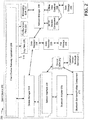
- Fig. 2 is a diagram of an example implementation 200 described herein.
- Fig. 2 shows example components of a client device, such as a local client device described with regard to Fig. 1 , and the interaction of the various components of this device.
- implementation 200 includes a client device 202 similar to other client devices described elsewhere herein.
- client device 202 may include a device manager 204.
- device manager 204 may include a common interface to facilitate communications with a set of sensor devices.
- client device 202 may include a set of sensor interfaces 206.
- the sensor interfaces 206 may provide client device 202 with specific capabilities needed to communicate with respective sensors (e.g., may provide client device 202 with a capability to use a protocol associated with a sensor, to use particular commands associated with a sensor, etc.).
- device manager 204 and sensor interface 206 may communicate to discover a sensor, to start and/or pause data collection by a sensor, and/or the like.
- client device 202 may include a Bluetooth adapter 208.
- Bluetooth adapter 208 may provide client device 202 with a capability to perform Bluetooth-related functions, such as initiating device discovery, querying a list of paired devices, creating a Bluetooth server socket to listen for connection requests, and/or the like.
- sensor interface 206 and Bluetooth adapter 208 may communicate so that communications (e.g., instructions, vitals data, etc.) can be exchanged between client device 202 and a sensor.
- client device 202 may include a Bluetooth services/profiles component 210.
- Bluetooth services/profiles component 210 may define the manner in which client device 202 uses Bluetooth technology (e.g., a manner in which multimedia data is streamed over a Bluetooth connection, a manner in which messages are exchanged among devices associated with a Bluetooth connection, and/or the like).
- client device 202 may include a sensor software development kit (SDK) 212.
- SDK sensor software development kit
- sensor SDK 212 may provide compatibility between client device 202 and a vendor-specific operating system, protocol, and/or the like.
- client device 202 may include a customer-vendor Bluetooth service component 214.
- customer-vendor Bluetooth service component 214 may define a vendor-specific manner in which client device 202 is to use Bluetooth technology.
- client device 202 may include a front end 216.
- front end 216 may include applications, user interfaces, and/or the like related to controlling client device 202.
- front end 216 may include a client device gateway application 218 that is associated with displaying vitals data and/or that communicates with device manager 204 to control data capture from a sensor (e.g., remote control of the sensor).
- device manager 204 and client device gateway application 218 may communicate via an application programming interface (API), such as to start and/or pause data collection by a sensor, to record data, and/or the like.
- client device 202 may use client device gateway application 218 to communicate with a vitals monitoring platform.
- API application programming interface
- client device 202 may include log files 220.
- log files 220 may gather and/or store reports related to dropped connections between client device 202 and a sensor, application crashes (e.g., crashes of client device gateway application 218), and/or the like.
- client device 202 may include configuration files 222.
- configuration files 222 may store user-specific configurations for client device gateway application 218 (e.g., an arrangement of a user interface, a manner in which vitals data is displayed, and/or the like), client device 202 configurations (e.g., a rate at which client device 202 is to receive and/or request vitals data from a sensor, a rate at which client device 202 is to provide the vitals data to a vitals monitoring platform, etc.), and/or the like.
- client device gateway application 218 e.g., an arrangement of a user interface, a manner in which vitals data is displayed, and/or the like
- client device 202 configurations e.g., a rate at which client device 202 is to receive and/or request vitals data from a sensor, a rate at which client device 202 is to provide the vitals data to a vitals monitoring platform, etc.
- client device 202 may include a data manager 224.
- data manager 224 may receive and/or store vitals data from a sensor (e.g., in chronological order, by sensor, and/or the like).
- client device 202 may include a data recorder 226.
- data recorder 226 may store data by writing the data to memory resources of client device 202, organizing the data into files, and/or the like.
- device manager 204 and data manager 224 may communicate via an API.
- client device 202 may include file storage 228.
- file storage 228 may store data generated by client device 202, received by client device 202, and/or the like.
- client device 202 may include a network manager 230.
- network manager 230 may receive vitals data from data manager 224, may consolidate vitals data (e.g., by sensor, by time, etc.), may send vitals data to a vitals monitoring platform, may store vitals data (e.g., when client device 202 is not connected to the vitals monitoring platform), and/or the like.
- client device 202 may include a messaging SDK 232.
- messaging SDK 232 may provide client device 202 with a capability to communicate with the vitals monitoring platform.
- client device 202 may include a hypertext transfer protocol (HTTP) service component 234.
- HTTP hypertext transfer protocol
- HTTP service component 234 may facilitate transfer of vitals data to the vitals monitoring platform via an HTTP connection with the vitals monitoring platform.
- client device 202 may include an offline data capturer 236.
- offline data capturer 236 may store vitals data (e.g., in data storage 238) by sensor, in a chronological order in which the vitals data was received, and/or the like when client device 202 is not connected to the vitals monitoring platform.
- the offline data capturer 236 may provide vitals data to HTTP service component 234 so that the vitals data can be provided to the vitals monitoring platform.
- Fig. 2 is provided merely as an example. Other examples are possible and may differ from what was described with regard to Fig. 2 .
- the number and arrangement of devices and/or components shown in Fig. 2 are provided as an example.
- implementation 200 may include additional devices and/or components, fewer devices and/or components, different devices and/or components, or differently arranged devices and/or components than those shown in Fig. 2 .
- a set of devices and/or components (e.g., one or more devices and/or components) of implementation 200 may perform one or more functions described as being performed by another set of devices and/or components of implementation 200.
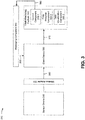
- Fig. 3 is a diagram of an example implementation 300 described herein. Fig. 3 shows interactions between devices and/or components related to gathering vitals data.
- implementation 300 may include a sensor device 310.
- sensor device 310 may be the same as or similar to other sensors described elsewhere herein.
- implementation 300 may include wireless adapter 320.
- wireless adapter 320 may include a Bluetooth adapter, a Wi-Fi adapter, and/or the like, similar to that described elsewhere herein.
- implementation 300 may include a client device 330.
- client device 330 may be the same as or similar to other client devices described elsewhere herein.
- implementation 300 may include a vitals monitoring platform 340 (e.g., that includes control component 340-1, data analytics component 340-2, and/or data visualization component 340-3).
- vitals monitoring platform 340 may be the same as or similar to other vitals monitoring platforms described elsewhere herein.
- control component 340-1 may be related to controlling operations of sensor device 310.
- control component 340-1 may generate instructions related to controlling sensor device 310, may communicate the instructions to sensor device 310, and/or the like.
- data analytics component 340-2 may be related to analyzing vitals data (e.g., determining whether values included in the vitals data satisfy a threshold, detecting a trend and/or a pattern in the vitals data, using a model to detect particular combinations of values in the vitals data, and/or the like).
- data visualization component 340-3 may generate graphical output for the vitals data, for a result of analyzing the vitals data, and/or the like.
- sensor device 310 may provide vitals data to client device 330 using wireless adapter 320 (e.g., via a Bluetooth connection, a Wi-Fi connection, and/or the like).
- client device 330 may provide vitals data to vitals monitoring platform 340 (e.g., via a network, such as the Internet).
- vitals monitoring platform 340 e.g., using control component 340-1
- the set of instructions may be included in a firebase cloud messaging (FCM) notification.
- FCM firebase cloud messaging
- Fig. 3 is provided merely as an example. Other examples are possible and may differ from what was described with regard to Fig. 3 .
- the number and arrangement of devices and/or components shown in Fig. 3 are provided as an example.
- implementation 300 may include additional devices and/or components, fewer devices and/or components, different devices and/or components, or differently arranged devices and/or components than those shown in Fig. 3 .
- a set of devices and/or components (e.g., one or more devices and/or components) of implementation 300 may perform one or more functions described as being performed by another set of devices and/or components of implementation 300.
- Fig. 4 is a diagram of an example environment 400 in which systems and/or methods, described herein, may be implemented.
- environment 400 may include a client device 410, a sensor 420, a vitals monitoring platform 430 within a cloud computing environment 432 that includes a set of computing resources 434 (e.g., referred to collectively as "computing resources 434" and individually as “computing resource 434"), a server device 440, and a network 450.
- Devices of environment 400 may interconnect via wired connections, wireless connections, or a combination of wired and wireless connections.
- Client device 410 includes one or more devices capable of receiving, generating, storing, processing, and/or providing vitals data related to a patient.
- client device 410 may include a mobile phone (e.g., a smart phone, a radiotelephone, etc.), a laptop computer, a tablet computer, a handheld computer, a gaming device, a wearable communication device (e.g., a smart wristwatch, a pair of smart eyeglasses, etc.), a desktop computer, or a similar type of device.
- client device 410 may be located local to sensor 420, as described elsewhere herein. In some implementations, client device 410 may be located remote to sensor 420, as described elsewhere herein.
- client device 410 may receive vitals data from sensor 420 and may provide the vitals data to vitals monitoring platform 430, as described elsewhere herein.
- client device 410 may function as a gateway device between sensor 420 and vitals monitoring platform 430 (e.g., may function as a communication intermediary between sensor 420 and vitals monitoring platform 430).
- Sensor 420 includes one or more devices capable of receiving, generating, storing, processing, and/or providing vitals data from a patient (e.g., a human patient or an animal patient).
- sensor 420 may include a blood pressure monitor, an oximeter, a glucometer, an airflow sensor, Galvanic skin response sensor, electrocardiogram sensor, a heart rate monitor, a scale, a pulse oximeter, a thermometer, or a similar type of device.
- sensor 420 may be implemented within a wearable device (e.g., a smart wristwatch, a pair of smart eyeglasses, an activity band, and/or the like), as described elsewhere herein.
- sensor 420 may provide vitals data to client device 410 after gathering the vitals data (e.g., a local client device 410), as described elsewhere herein. Additionally, or alternatively, sensor 420 may be controlled remotely by client device 410 via vitals monitoring platform 430, as described elsewhere herein.
- a patient may be associated with multiple sensors 420 that are of different types and/or manufactured by different third parties.
- a patient may be associated with a blood pressure monitor and a heart rate monitor, which are gathering vitals data from the patient and which may be manufactured by different third parties (e.g., may utilize different communication interfaces, different protocols, different messaging schemes, and/or the like).
- vitals monitoring platform 430 may be capable of managing a complex system of sensors 420.
- sensor 420 may include a device that gathers environmental data of an environment in which the patient is located (e.g., humidity data, air temperature data, whether particular chemicals are present in the environment, and/or the like).
- environmental data e.g., humidity data, air temperature data, whether particular chemicals are present in the environment, and/or the like.
- Vitals monitoring platform 430 includes one or more devices capable of receiving, generating, storing, processing, and/or providing vitals data related to a patient.
- vitals monitoring platform 430 may include a cloud server or a group of cloud servers.
- vitals monitoring platform 430 may be designed to be modular such that certain software components can be swapped in or out depending on a particular need. As such, vitals monitoring platform 430 may be easily and/or quickly reconfigured for different uses.
- vitals monitoring platform 430 may be hosted in cloud computing environment 432.
- vitals monitoring platform 430 may not be cloud-based (i.e., may be implemented outside of a cloud computing environment) or may be partially cloud-based.
- Cloud computing environment 432 includes an environment that hosts vitals monitoring platform 430.
- Cloud computing environment 432 may provide computation, software, data access, storage, and/or other services that do not require end-user knowledge of a physical location and configuration of a system and/or a device that hosts vitals monitoring platform 430.
- cloud computing environment 432 may include a group of computing resources 434 (referred to collectively as “computing resources 434" and individually as “computing resource 434").
- Computing resource 434 includes one or more personal computers, workstation computers, server devices, or another type of computation and/or communication device.
- computing resource 434 may host vitals monitoring platform 430.
- the cloud resources may include compute instances executing in computing resource 434, storage devices provided in computing resource 434, data transfer devices provided by computing resource 434, etc.
- computing resource 434 may communicate with other computing resources 434 via wired connections, wireless connections, or a combination of wired and wireless connections.
- computing resource 434 may include a group of cloud resources, such as one or more applications (“APPs”) 434-1, one or more virtual machines (“VMs”) 434-2, one or more virtualized storages (“VSs”) 434-3, or one or more hypervisors (“HYPs”) 434-4.
- APPs applications
- VMs virtual machines
- VSs virtualized storages
- HOPs hypervisors
- Application 434-1 includes one or more software applications that may be provided to or accessed by one or more devices of environment 400. Application 434-1 may eliminate a need to install and execute the software applications on devices of environment 400.
- application 434-1 may include software associated with vitals monitoring platform 430 and/or any other software capable of being provided via cloud computing environment 432.
- one application 434-1 may send/receive information to/from one or more other applications 434-1, via virtual machine 434-2.
- application 434-1 may include a software application associated with one or more databases and/or operating systems.
- application 434-1 may include an enterprise application, a functional application, an analytics application, and/or the like.
- Virtual machine 434-2 includes a software implementation of a machine (e.g., a computer) that executes programs like a physical machine.
- Virtual machine 434-2 may be either a system virtual machine or a process virtual machine, depending upon use and degree of correspondence to any real machine by virtual machine 434-2.
- a system virtual machine may provide a complete system platform that supports execution of a complete operating system ("OS").
- a process virtual machine may execute a single program, and may support a single process.
- virtual machine 434-2 may execute on behalf of a user (e.g., a user of client device 410), and may manage infrastructure of cloud computing environment 432, such as data management, synchronization, or long-duration data transfers.
- Virtualized storage 434-3 includes one or more storage systems and/or one or more devices that use virtualization techniques within the storage systems or devices of computing resource 434.
- types of virtualizations may include block virtualization and file virtualization.
- Block virtualization may refer to abstraction (or separation) of logical storage from physical storage so that the storage system may be accessed without regard to physical storage or heterogeneous structure. The separation may permit administrators of the storage system flexibility in how the administrators manage storage for end users.
- File virtualization may eliminate dependencies between data accessed at a file level and a location where files are physically stored. This may enable optimization of storage use, server consolidation, and/or performance of non-disruptive file migrations.
- Hypervisor 434-4 provides hardware virtualization techniques that allow multiple operating systems (e.g., "guest operating systems") to execute concurrently on a host computer, such as computing resource 434.
- Hypervisor 434-4 may present a virtual operating platform to the guest operating systems, and may manage the execution of the guest operating systems. Multiple instances of a variety of operating systems may share virtualized hardware resources.
- Server device 440 includes one or more devices capable of receiving, generating storing, processing, and/or providing vitals data associated with a patient.
- server device 440 may include a server (e.g., in a data center or a cloud computing environment), a data center (e.g., a multi-server micro datacenter), a workstation computer, a virtual machine (VM) provided in a cloud computing environment, or a similar type of device.
- server device 440 may include a communication interface that allows server device 440 to receive information from and/or transmit information to other devices in environment 400.
- server device 440 may be a physical device implemented within a housing, such as a chassis.
- server device 440 may be a virtual device implemented by one or more computer devices of a cloud computing environment or a data center. In some implementations, server device 440 may provide, to vitals monitoring platform 430, vitals data, data related to a threshold, and/or the like, as described elsewhere herein.
- Network 450 includes one or more wired and/or wireless networks.
- network 450 may include a cellular network (e.g., a long-term evolution (LTE) network, a code division multiple access (CDMA) network, a 3G network, a 4G network, a 5G network, another type of next generation network, etc.), a public land mobile network (PLMN), a local area network (LAN), a wide area network (WAN), a metropolitan area network (MAN), a telephone network (e.g., the Public Switched Telephone Network (PSTN)), a private network, an ad hoc network, an intranet, the Internet, a fiber optic-based network, a cloud computing network, or the like, and/or a combination of these or other types of networks.
- LTE long-term evolution
- CDMA code division multiple access
- 3G Third Generation
- 4G fourth generation
- 5G Fifth Generation
- PLMN public land mobile network
- PLMN public land mobile network
- LAN local area network
- environment 400 may include multiple client devices 410, multiple sensors 420, and/or multiple server devices 440.
- multiple client devices 410 may be associated with respective sets of sensors 420 and respective patients (e.g., hundreds, thousands, or more client devices 410, sets of sensors 420, and/or patients).
- vitals monitoring platform 430 may be connected to a complex set of client devices 410 and/or sensors 420.
- the number and arrangement of devices and networks shown in Fig. 4 are provided as an example. In practice, there may be additional devices and/or networks, fewer devices and/or networks, different devices and/or networks, or differently arranged devices and/or networks than those shown in Fig. 4 . Furthermore, two or more devices shown in Fig. 4 may be implemented within a single device, or a single device shown in Fig. 4 may be implemented as multiple, distributed devices. Additionally, or alternatively, a set of devices (e.g., one or more devices) of environment 400 may perform one or more functions described as being performed by another set of devices of environment 400.
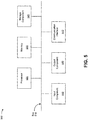
- Fig. 5 is a diagram of example components of a device 500.
- Device 500 may correspond to client device 410, sensor 420, vitals monitoring platform 430, computing resource 434, and/or server device 440.
- client device 410, sensor 420, vitals monitoring platform 430, computing resource 434, and/or server device 440 may include one or more devices 500 and/or one or more components of device 500.
- device 500 may include a bus 510, a processor 520, a memory 530, a storage component 540, an input component 550, an output component 560, and a communication interface 570.
- Bus 510 includes a component that permits communication among the components of device 500.
- Processor 520 is implemented in hardware, firmware, or a combination of hardware and software.
- Processor 520 is a central processing unit (CPU), a graphics processing unit (GPU), an accelerated processing unit (APU), a microprocessor, a microcontroller, a digital signal processor (DSP), a field-programmable gate array (FPGA), an application-specific integrated circuit (ASIC), or another type of processing component.
- processor 520 includes one or more processors capable of being programmed to perform a function.
- Memory 530 includes a random access memory (RAM), a read only memory (ROM), and/or another type of dynamic or static storage device (e.g., a flash memory, a magnetic memory, and/or an optical memory) that stores information and/or instructions for use by processor 520.
- RAM random access memory
- ROM read only memory
- static storage device e.g., a flash memory, a magnetic memory, and/or an optical memory
- Storage component 540 stores information and/or software related to the operation and use of device 500.
- storage component 540 may include a hard disk (e.g., a magnetic disk, an optical disk, a magneto-optic disk, and/or a solid state disk), a compact disc (CD), a digital versatile disc (DVD), a floppy disk, a cartridge, a magnetic tape, and/or another type of non-transitory computer-readable medium, along with a corresponding drive.
- Input component 550 includes a component that permits device 500 to receive information, such as via user input (e.g., a touch screen display, a keyboard, a keypad, a mouse, a button, a switch, and/or a microphone). Additionally, or alternatively, input component 550 may include a sensor for sensing information (e.g., a global positioning system (GPS) component, an accelerometer, a gyroscope, and/or an actuator).
- Output component 560 includes a component that provides output information from device 500 (e.g., a display, a speaker, and/or one or more light-emitting diodes (LEDs)).
- LEDs light-emitting diodes
- Communication interface 570 includes a transceiver-like component (e.g., a transceiver and/or a separate receiver and transmitter) that enables device 500 to communicate with other devices, such as via a wired connection, a wireless connection, or a combination of wired and wireless connections.
- Communication interface 570 may permit device 500 to receive information from another device and/or provide information to another device.
- communication interface 570 may include an Ethernet interface, an optical interface, a coaxial interface, an infrared interface, a radio frequency (RF) interface, a universal serial bus (USB) interface, a Wi-Fi interface, a cellular network interface, or the like.
- RF radio frequency
- USB universal serial bus
- Device 500 may perform one or more processes described herein. Device 500 may perform these processes based on processor 520 executing software instructions stored by a non-transitory computer-readable medium, such as memory 530 and/or storage component 540.
- a computer-readable medium is defined herein as a non-transitory memory device.
- a memory device includes memory space within a single physical storage device or memory space spread across multiple physical storage devices.
- Software instructions may be read into memory 530 and/or storage component 540 from another computer-readable medium or from another device via communication interface 570. When executed, software instructions stored in memory 530 and/or storage component 540 may cause processor 520 to perform one or more processes described herein. Additionally, or alternatively, hardwired circuitry may be used in place of or in combination with software instructions to perform one or more processes described herein. Thus, implementations described herein are not limited to any specific combination of hardware circuitry and software.
- device 500 may include additional components, fewer components, different components, or differently arranged components than those shown in Fig. 5 . Additionally, or alternatively, a set of components (e.g., one or more components) of device 500 may perform one or more functions described as being performed by another set of components of device 500.
- a set of components e.g., one or more components
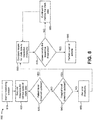
- Fig. 6 is a flow chart of an example process 600 for a vitals monitoring platform.
- one or more process blocks of Fig. 6 may be performed by vitals monitoring platform 430.
- one or more process blocks of Fig. 6 may be performed by another device or a group of devices separate from or including vitals monitoring platform 430, such as client device 410, sensor 420, or computing resource 434.
- process 600 may include starting a monitoring session (block 610).
- vitals monitoring platform 430 e.g., using computing resource 434, processor 520, output component 560, communication interface 570, and/or the like
- a monitoring session of sensor 420 may be associated with sensor 420 gathering vitals data from a patient (e.g., initiating gathering of vitals data, monitoring gathering of vitals data, modifying gathering of vitals data, and/or the like).
- vitals monitoring platform 430 may start a monitoring session by sending a set of instructions to sensor 420 (e.g., via client device 410).
- vitals monitoring platform 430 may send a set of instructions to a local client device 410 in a hospital room associated with a patient with which sensor 420 is associated (e.g., via network 450) and the local client device 410 may provide the set of instructions to the appropriate sensor 420 based on information included in the set of instructions that identifies sensor 420 (e.g., via a Wi-Fi connection, a Bluetooth connection, a BLE connection, and/or the like).
- a Wi-Fi connection e.g., a Wi-Fi connection, a Bluetooth connection, a BLE connection, and/or the like.
- vitals monitoring platform 430 may start the monitoring session based on receiving a set of instructions to start the monitoring session (e.g., based on input from client device 410). For example, vitals monitoring platform 430 may receive the set of instructions to start a monitoring session for a patient based on input from a remote client device 410 associated with a provider associated with providing healthcare services to the patient and/or based on input from a local client device 410 (e.g., located in a hospital room of the patient and used by an attending nurse). Additionally, or alternatively, vitals monitoring platform 430 may start the monitoring session based on a schedule (e.g., at a particular time of day, or minute of an hour), periodically, and/or the like.
- a schedule e.g., at a particular time of day, or minute of an hour
- vitals monitoring platform 430 may start a monitoring session based on a result of processing historical vitals data for the patient.
- vitals monitoring platform 430 may have generated a model based on a training set of data that includes various sets of vitals data and corresponding schedules for monitoring sessions.
- vitals monitoring platform 430 may use the model to process historical vitals data for a patient and may determine a schedule for monitoring sessions for the patient based on a result of processing the historical vitals data using the model.
- vitals monitoring platform 430 may start the monitoring session according to the schedule that vitals monitoring platform 430 determined using the model.
- vitals monitoring platform 430 may update the model in real-time based on historical vitals data from other patients, so that vitals monitoring platform 430 can accurately determine a schedule for monitoring vitals data of the patient.
- automating this process conserves computing resources (e.g., processor resources, memory resources, and/or the like) that would otherwise be wasted in attempting to determine a schedule for monitoring vitals data, and computing resources of client device 410 that would be wasted monitoring vitals data at a higher rate than needed.
- computing resources e.g., processor resources, memory resources, and/or the like
- vitals monitoring platform 430 may start a monitoring session prior to requesting thresholds for various types of vitals data.
- process 600 may include requesting thresholds for various types of vitals data (block 620).
- vitals monitoring platform 430 e.g., using computing resource 434, processor 520, output component 560, communication interface 570, and/or the like
- server device 440 may request, from server device 440, thresholds (e.g., information identifying a threshold value, threshold data that identifies a baseline value, and/or the like) for various types of vitals data (e.g., types of vitals data associated with the monitoring session).
- thresholds e.g., information identifying a threshold value, threshold data that identifies a baseline value, and/or the like
- types of vitals data e.g., types of vitals data associated with the monitoring session.
- a threshold value or a baseline value may be a minimum value expected for a vital, a maximum value expected for a vital, a normal value (or expected value) for a vital, and/or the like.
- a patient may be associated with multiple sensors 420, however the monitoring session may be associated with a subset of the multiple sensors 420.
- vitals monitoring platform 430 request thresholds associated with the subset of the multiple sensors 420, rather than for all of the multiple sensors 420. This conserves computing resources of vitals monitoring platform 430 and/or server device 440 that would otherwise be consumed requesting and/or providing thresholds for sensors 420 not associated with the monitoring session. In this way, vitals monitoring platform 430 may request thresholds on a per-patient basis, a per-sensor 420 basis, and/or the like.
- a threshold may include a default threshold (e.g., a hospital-level threshold) associated with a hospital, a rule, a regulation, an industry standard, and/or the like. Additionally, or alternatively, a threshold may include a customized threshold for a patient (e.g., a patient-level threshold). For example, a provider, such as a doctor, a nurse, and/or the like, may set a threshold for a particular patient, via input to client device 410, that is different from a default threshold. In some implementations, vitals monitoring platform 430 may determine a customized threshold for a patient using a model.
- a default threshold e.g., a hospital-level threshold
- a threshold may include a customized threshold for a patient (e.g., a patient-level threshold). For example, a provider, such as a doctor, a nurse, and/or the like, may set a threshold for a particular patient, via input to client device 410, that is different from a default threshold.
- vitals monitoring platform 430 may have generated the model using a training set of data that includes historical vitals data for other patients and corresponding thresholds. Continuing with the previous example, vitals monitoring platform 430 may process historical vitals data of the patient using the model to determine a customized threshold for a patient. Additionally, or alternatively, and continuing with the previous example, vitals monitoring platform 430 may determine a default threshold for a hospital in a similar manner.
- vitals monitoring platform 430 may receive information identifying the thresholds from server device 440 based on requesting the thresholds from server device 440.
- server device 440 may provide information to vitals monitoring platform 430 that identifies a threshold associated with the monitoring session (e.g., a threshold for a particular sensor 420, for a particular patient, for a particular hospital, and/or the like) after identifying the requested thresholds (e.g., based on performing a lookup of information identifying a patient, a particular sensor 420, and/or the like associated with a monitoring session in a data structure to identify the requested thresholds).
- a threshold associated with the monitoring session e.g., a threshold for a particular sensor 420, for a particular patient, for a particular hospital, and/or the like
- identifying the requested thresholds e.g., based on performing a lookup of information identifying a patient, a particular sensor 420, and/or the like associated with a monitoring session in a data structure to identify
- vitals monitoring platform 430 may request thresholds for various types of vitals data prior to determining whether the thresholds have been updated.
- process 600 may include determining whether a patient-level threshold has been updated (block 630).
- vitals monitoring platform 430 e.g., using computing resource 434, processor 520, memory 530, and/or the like
- may determine whether a patient-level threshold has been updated e.g., whether a customized threshold has been updated.
- vitals monitoring platform 430 may perform a comparison of information identifying a current patient-level threshold (e.g., from server device 440) and information identifying a prior patient-level threshold (e.g., stored in memory 530) and may determine whether the patient-level threshold has been updated based on a result of performing the comparison. For example, vitals monitoring platform 430 may perform a lookup of the prior patient-level threshold in a data structure to perform the comparison.
- server device 440 may provide information that indicates whether the patient-level data has been updated from a previously provided patient-level threshold (e.g., rather than providing information that identifies the current patient-level threshold when the patient-level threshold has not been updated) and vitals monitoring platform 430 may determine whether the patient-level threshold has been updated based on the information that identifies whether the patient-level threshold has been updated.
- vitals monitoring platform 430 may determine whether a patient-level threshold is associated with a particular patient and/or sensor 420 based on information from server device 440. For example, a particular patient and/or sensor 420 may not be associated with a patient-level threshold (e.g., a doctor, a nurse, and/or the like may not have set a customized threshold for the particular patient).
- vitals monitoring platform 430 may determine whether a patient-level threshold has been updated prior to determining whether a hospital-level threshold has been updated.
- process 600 may include determining whether a hospital-level threshold has been updated (block 640). For example, if vitals monitoring platform 430 determines that the patient-level threshold has not been updated (or that a patient-level threshold has not been configured for a patient), then vitals monitoring platform 430 (e.g., using computing resource 434, processor 520, memory 530, and/or the like) may determine whether a hospital-level threshold has been updated. In some implementations, vitals monitoring platform 430 may determine whether a hospital-level threshold has been updated in a manner that is similar to that described above with regard to block 630. In this way, vitals monitoring platform 430 may determine whether a hospital-level threshold has been updated prior to using a threshold to analyze vitals data.
- process 600 may include determining to use prior thresholds (block 650). For example, if vitals monitoring platform 430 determines that the hospital-level threshold has not been updated (and/or that the patient-level threshold has not been updated or set), then vitals monitoring platform 430 (e.g., using computing resource 434, processor 520, memory 530, and/or the like) may determine to use prior thresholds.
- vitals monitoring platform 430 may determine to use a prior hospital-level threshold if a hospital-level threshold has not been updated. Additionally, or alternatively, vitals monitoring platform 430 may determine to use a hospital-level threshold if a patient-level threshold has not been set for a particular patient. Additionally, or alternatively, vitals monitoring platform 430 may determine to use a prior patient-level threshold if a patient-level threshold has not been updated.
- vitals monitoring platform 430 may determine to use prior thresholds prior to comparing values for vitals data to respective thresholds.
- process 600 may include comparing values for vitals data to respective thresholds (block 660).
- vitals monitoring platform 430 e.g., using computing resource 434, processor 520, and/or the like
- vitals monitoring platform 430 may compare a first value for a first type of vitals data to a first threshold, may compare a second value for a second type of vitals data to a second threshold, and so forth.
- vitals monitoring platform 430 may compare values for vitals data to the updated patient-level threshold. Additionally, or alternatively, if the hospital-level threshold has been updated (block 640-YES), then vitals monitoring platform 430 may compare values for vitals data to an updated hospital-level threshold. Additionally, or alternatively, vitals monitoring platform 430 may compare values for vitals data to a prior patient-level threshold, a prior hospital-level threshold, and/or the like (e.g., based on the patient-level threshold not being updated, based on a patient-level threshold not being set for a patient, and/or based on the hospital-level threshold not being updated).
- vitals monitoring platform 430 may process the values using a model (e.g., to determine whether particular combinations of values, associated with health-related issues, are present in the vitals data). For example, vitals monitoring platform 430 may have generated the model based on a training set of data that includes various combinations of values for vitals data and information identifying corresponding health-related issues. Additionally, or alternatively, vitals monitoring platform 430 may process values for the vitals data to determine whether the values include a trend, a pattern, and/or the like (e.g., that indicates a health-related issue for a patient).
- a model e.g., to determine whether particular combinations of values, associated with health-related issues, are present in the vitals data. For example, vitals monitoring platform 430 may have generated the model based on a training set of data that includes various combinations of values for vitals data and information identifying corresponding health-related issues. Additionally, or alternatively, vitals monitoring platform 430 may process values for the vitals data to determine whether the values include a trend,
- vitals monitoring platform 430 may determine a score for a patient, for a type of vitals data, and/or the like (e.g., a score that indicates a health-related issue, that indicates satisfaction of a threshold, and/or the like). For example, vitals monitoring platform 430 may determine a score based on values for vitals data satisfying a threshold, based on the vitals data including a particular combination of values, a particular trend of values, a particular pattern of values, and/or the like.
- vitals monitoring platform 430 can use the model to identify (or predict) health-related issues that are indicated by complex combinations of values, complex trends and/or patterns in values for vitals data, and/or the like.
- vitals monitoring platform 430 can use the model to identify health-related issues that cannot otherwise be identified by a human actor and/or manual processing of vitals data.
- vitals monitoring platform 430 may compare values for vitals data to respective thresholds prior to determining whether the values satisfy the respective thresholds.
- process 600 may include determining whether the values satisfy the respective thresholds (block 670).
- vitals monitoring platform 430 e.g., using computing resource 434, processor 520, and/or the like
- vitals monitoring platform 430 may determine whether the values satisfy the respective thresholds in real-time (or near real-time), as vitals data is streamed to vitals monitoring platform 430, based on a result of comparing the values for the vitals data to the respective thresholds, and/or the like. Additionally, or alternatively, vitals monitoring platform 430 may determine whether the values includes a particular combination of values, a combination of values relative to respective thresholds, and/or the like. For example, vitals monitoring platform 430 may perform this determination based on a result of processing the values using a model, in real-time (or near real-time), as vitals data is streamed to vitals monitoring platform 430, and/or the like.
- vitals monitoring platform 430 may determine whether values for vitals data includes a pattern, a trend, and/or the like (e.g., as vitals data is streamed to vitals monitoring platform 430, based on a result of processing vitals data using a model, etc.). In this way, vitals monitoring platform 430 may identify a health-related issue based on a threshold, when the health-related issue cannot be identified using a threshold, and/or the like.
- vitals monitoring platform 430 may determine whether the values satisfy the respective thresholds prior to performing various actions.
- process 600 may include continuing to monitor the vitals data (block 680).
- vitals monitoring platform 430 e.g., using computing resource 434, processor 520, input component 550, communication interface 570, and/or the like
- vitals monitoring platform 430 may continue to receive vitals data from sensor 420 (e.g., via client device 410).
- vitals monitoring platform 430 may continue to compare values for the vitals data to the respective thresholds and to determine whether the values satisfy the respective thresholds.
- process 600 may include returning to block 660.
- process 600 may include performing a set of actions (block 690).
- vitals monitoring platform 430 e.g., using computing resource 434, processor 520, output component 560, communication interface 570, and/or the like
- vitals monitoring platform 430 may perform analytics on the vitals data. Additionally, or alternatively, vitals monitoring platform 430 may generate a graphical output (e.g., for the vitals data). In some implementations, vitals monitoring platform 430 may generate a graphical output and/or may configure a user interface based on a user profile associated with client device 410 (e.g., logged into vitals monitoring platform 430). For example, vitals monitoring platform 430 may provide patient-level data to a healthcare provider via a user interface, but may provide aggregated and anonymized patient-related data to a manager of a hospital.
- vitals monitoring platform 430 may provide information via a user interface in a continuous and live manner (e.g., as the information, such as vitals data, a result of analyzing vitals data, and/or the like, is received by vitals monitoring platform 430, is determined by vitals monitoring platform 430, as the information changes, and/or the like). Additionally, or alternatively, vitals monitoring platform 430 may trigger an alarm, send a message (e.g., may selectively generate and/or send an alert based on vitals data associated with a patient, based on a result of analyzing the vitals data, and/or the like), schedule a meeting, and/or the like in a manner similar to that described elsewhere herein.
- a message e.g., may selectively generate and/or send an alert based on vitals data associated with a patient, based on a result of analyzing the vitals data, and/or the like
- vitals monitoring platform 430 may generate an alert and/or may send the alert to a device associated with a responsible party for a patient (e.g., may send a text message, may send an email, may cause a user interface to be provided for display and/or populated with an alert, and/or the like).
- a device associated with a responsible party for a patient e.g., may send a text message, may send an email, may cause a user interface to be provided for display and/or populated with an alert, and/or the like).
- vitals monitoring platform 430 may perform revenue tracking-related actions. For example, vitals monitoring platform 430 may monitor costs related to provider time spent remotely providing healthcare services to a patient, revenue generated from use of sensor 420 (e.g., a test related to sensor 420), and/or the like and may output this information via a user interface associated with client device 410.
- vitals monitoring platform 430 may monitor costs related to provider time spent remotely providing healthcare services to a patient, revenue generated from use of sensor 420 (e.g., a test related to sensor 420), and/or the like and may output this information via a user interface associated with client device 410.
- vitals monitoring platform 430 may provide a set of instructions to client device 410 and/or sensor 420 in a manner similar to that described elsewhere herein. Additionally, or alternatively, vitals monitoring platform 430 may activate a camera and/or a microphone on client device 410 for an audio and/or video conferencing session. Additionally, or alternatively, vitals monitoring platform 430 may facilitate an audio and/or video conferencing session by establishing a P2P communication session between a local client device 410 and a remote client device 410, similar to that described elsewhere herein.
- vitals monitoring platform 430 may trigger administration of medicine to a patient (e.g., based on vitals data). For example, vitals monitoring platform 430 may cause a medicine dispenser to begin administration of a particular medicine, to adjust an amount of a particular medicine administered to a patient, and/or to stop administration of a particular medicine. Additionally, or alternatively, and as another example, vitals monitoring platform 430 may send a message to client device 410 associated with a healthcare provider to notify the healthcare provider to administer medicine (or adjust administration of the medicine) to a patient. Additionally, or alternatively, vitals monitoring platform 430 may detect addition or removal of a particular sensor 420 from a set of sensors 420 (e.g., based on a local client device 410 detecting or not detecting a wireless signal from sensor 420).
- process 600 may include additional blocks, fewer blocks, different blocks, or differently arranged blocks than those depicted in Fig. 6 . Additionally, or alternatively, two or more of the blocks of process 600 may be performed in parallel.
- vitals monitoring platform 430 may facilitate and/or manage remote provisioning of healthcare to a patient. This reduces or eliminates inefficiencies that would otherwise be present with non-remote provisioning of healthcare services. In addition, this conserves processing resources that would otherwise be consumed via an inefficient manual use of a device to provide healthcare services to a patient by providing a tool that can be used to reduce or eliminate a need for a human actor. Further, this improves an accuracy of providing healthcare services to a patient, thereby improving provisioning of the healthcare services.
- implementations were described in the context of a healthcare provider providing healthcare services to a patient, the implementations apply equally to other contexts, such as another type of responsible party monitoring vitals data and/or environmental data for an operator of a vehicle, an individual that works with chemicals, and/or the like.
- the term component is intended to be broadly construed as hardware, firmware, and/or a combination of hardware and software.
- satisfying a threshold may refer to a value being greater than the threshold, more than the threshold, higher than the threshold, greater than or equal to the threshold, less than the threshold, fewer than the threshold, lower than the threshold, less than or equal to the threshold, equal to the threshold, or the like.
Landscapes
- Health & Medical Sciences (AREA)
- Engineering & Computer Science (AREA)
- Life Sciences & Earth Sciences (AREA)
- Medical Informatics (AREA)
- Biomedical Technology (AREA)
- Public Health (AREA)
- General Health & Medical Sciences (AREA)
- Pathology (AREA)
- Primary Health Care (AREA)
- Epidemiology (AREA)
- Molecular Biology (AREA)
- Heart & Thoracic Surgery (AREA)
- Veterinary Medicine (AREA)
- Animal Behavior & Ethology (AREA)
- Physics & Mathematics (AREA)
- Surgery (AREA)
- Biophysics (AREA)
- Physiology (AREA)
- Cardiology (AREA)
- Data Mining & Analysis (AREA)
- Databases & Information Systems (AREA)
- Computer Networks & Wireless Communication (AREA)
- Pulmonology (AREA)
- Business, Economics & Management (AREA)
- General Business, Economics & Management (AREA)
- Measuring And Recording Apparatus For Diagnosis (AREA)
Applications Claiming Priority (1)
| Application Number | Priority Date | Filing Date | Title |
|---|---|---|---|
| US15/950,785 US10335031B1 (en) | 2018-04-11 | 2018-04-11 | Vitals monitoring system |
Publications (2)
| Publication Number | Publication Date |
|---|---|
| EP3553788A2 true EP3553788A2 (fr) | 2019-10-16 |
| EP3553788A3 EP3553788A3 (fr) | 2019-12-04 |
Family
ID=65724158
Family Applications (1)
| Application Number | Title | Priority Date | Filing Date |
|---|---|---|---|
| EP19159374.8A Withdrawn EP3553788A3 (fr) | 2018-04-11 | 2019-02-26 | Système de surveillance de signes vitaux |
Country Status (2)
| Country | Link |
|---|---|
| US (1) | US10335031B1 (fr) |
| EP (1) | EP3553788A3 (fr) |
Families Citing this family (5)
| Publication number | Priority date | Publication date | Assignee | Title |
|---|---|---|---|---|
| US11672934B2 (en) * | 2020-05-12 | 2023-06-13 | Covidien Lp | Remote ventilator adjustment |
| US12543982B2 (en) | 2021-01-22 | 2026-02-10 | Cilag Gmbh International | Method of adjusting a surgical parameter based on biomarker measurements |
| US20220233252A1 (en) * | 2021-01-22 | 2022-07-28 | Ethicon Llc | Pre-surgical and surgical processing for surgical data context |
| CN115118619B (zh) * | 2022-06-21 | 2024-11-12 | 阿里云计算有限公司 | 网络监测方法、装置、电子设备、介质及程序产品 |
| CN117137495A (zh) * | 2023-09-25 | 2023-12-01 | 浙江好络维医疗技术有限公司 | 一种心血管院外实时监护系统的使用方法 |
Family Cites Families (8)
| Publication number | Priority date | Publication date | Assignee | Title |
|---|---|---|---|---|
| US20050288571A1 (en) * | 2002-08-20 | 2005-12-29 | Welch Allyn, Inc. | Mobile medical workstation |
| WO2006076498A2 (fr) * | 2005-01-13 | 2006-07-20 | Welch Allyn, Inc. | Moniteur de signes vitaux |
| US10238351B2 (en) * | 2008-05-12 | 2019-03-26 | Earlysense Ltd. | Monitoring, predicting and treating clinical episodes |
| US9323894B2 (en) * | 2011-08-19 | 2016-04-26 | Masimo Corporation | Health care sanitation monitoring system |
| US10911515B2 (en) * | 2012-05-24 | 2021-02-02 | Deka Products Limited Partnership | System, method, and apparatus for electronic patient care |
| US20120094600A1 (en) * | 2010-10-19 | 2012-04-19 | Welch Allyn, Inc. | Platform for patient monitoring |
| US20130132109A1 (en) * | 2011-11-17 | 2013-05-23 | Infosys Limited | System and method for remote management of medical devices and patients |
| RU2017109565A (ru) * | 2014-08-22 | 2018-09-24 | Конинклейке Филипс Н.В. | Выработка настроек сигналов тревоги для устройства медицинского мониторинга |
-
2018
- 2018-04-11 US US15/950,785 patent/US10335031B1/en active Active
-
2019
- 2019-02-26 EP EP19159374.8A patent/EP3553788A3/fr not_active Withdrawn
Non-Patent Citations (1)
| Title |
|---|
| None |
Also Published As
| Publication number | Publication date |
|---|---|
| US10335031B1 (en) | 2019-07-02 |
| EP3553788A3 (fr) | 2019-12-04 |
Similar Documents
| Publication | Publication Date | Title |
|---|---|---|
| EP3553788A2 (fr) | Système de surveillance de signes vitaux | |
| US11923079B1 (en) | Creating and testing digital bio-markers based on genetic and phenotypic data for therapeutic interventions and clinical trials | |
| AU2016269572B2 (en) | User device platform for interacting with cloud-based platform | |
| US10347373B2 (en) | Intelligent integration, analysis, and presentation of notifications in mobile health systems | |
| US9649073B2 (en) | Usage modeling for intelligent management of alarms and messages in mobile health systems | |
| US9734301B2 (en) | Intelligent presentation of alarms and messages in mobile health systems | |
| WO2018119924A1 (fr) | Procédé et dispositif de régulation de l'humeur d'un utilisateur | |
| US11157832B2 (en) | Machine learning system for predicting optimal interruptions based on biometric data collected using wearable devices | |
| CN108428477A (zh) | 基于数字双胞胎的云医疗仿真平台的构建方法及云医疗系统 | |
| US12347572B2 (en) | System and method for monitoring patient health | |
| US11607167B2 (en) | User device based parkinson disease detection | |
| WO2018219809A1 (fr) | Système et procédé permettant de fournir une présentation à base de couches d'une prédiction relative à un patient et générée par un modèle | |
| WO2019040918A1 (fr) | Procédés de gestion d'une thérapie de traitement comportemental et dispositifs associés | |
| US9129501B1 (en) | Augmented acknowledgement of alarms and messages in mobile health systems | |
| US20160342670A1 (en) | Device data synchronization | |
| US20250228457A1 (en) | Monitoring system and method for remote monitoring of physiological health | |
| EP3339810B1 (fr) | Détection de conditions de déclenchement pour la mise à jour dynamique d'un modèle basé sur des données de capteur dans un environnement informatique de brouillard | |
| Wang et al. | Impact of the 90-90-90 goal and pre-exposure prophylaxis on HIV transmission and elimination in men who have sex with men in China: A mathematical modeling study | |
| Maglogiannis et al. | Intelligent health monitoring based on pervasive technologies and cloud computing | |
| US20240211495A1 (en) | Systems and methods for labelling data | |
| HK1209245A1 (en) | Network-based healthcare monitoring system | |
| CN117331923A (zh) | 一种医疗数据平台数据汇聚映射系统及终端机 | |
| Shalom et al. | Implementation of a distributed guideline-based decision support model within a patient-guidance framework | |
| Ramamoorthy | Personalized health monitoring system using IOT and cloud | |
| US20180150615A1 (en) | Device for facilitating clinical trial |
Legal Events
| Date | Code | Title | Description |
|---|---|---|---|
| PUAI | Public reference made under article 153(3) epc to a published international application that has entered the european phase |
Free format text: ORIGINAL CODE: 0009012 |
|
| STAA | Information on the status of an ep patent application or granted ep patent |
Free format text: STATUS: THE APPLICATION HAS BEEN PUBLISHED |
|
| AK | Designated contracting states |
Kind code of ref document: A2 Designated state(s): AL AT BE BG CH CY CZ DE DK EE ES FI FR GB GR HR HU IE IS IT LI LT LU LV MC MK MT NL NO PL PT RO RS SE SI SK SM TR |
|
| AX | Request for extension of the european patent |
Extension state: BA ME |
|
| PUAL | Search report despatched |
Free format text: ORIGINAL CODE: 0009013 |
|
| AK | Designated contracting states |
Kind code of ref document: A3 Designated state(s): AL AT BE BG CH CY CZ DE DK EE ES FI FR GB GR HR HU IE IS IT LI LT LU LV MC MK MT NL NO PL PT RO RS SE SI SK SM TR |
|
| AX | Request for extension of the european patent |
Extension state: BA ME |
|
| RIC1 | Information provided on ipc code assigned before grant |
Ipc: A61B 5/024 20060101ALN20191029BHEP Ipc: A61B 5/0205 20060101ALN20191029BHEP Ipc: A61B 5/00 20060101ALN20191029BHEP Ipc: A61B 5/08 20060101ALN20191029BHEP Ipc: G16H 50/30 20180101ALI20191029BHEP Ipc: A61B 5/145 20060101ALN20191029BHEP Ipc: G16H 80/00 20180101ALN20191029BHEP Ipc: G16H 40/67 20180101AFI20191029BHEP Ipc: A61B 5/1455 20060101ALN20191029BHEP Ipc: A61B 5/021 20060101ALN20191029BHEP Ipc: A61B 5/0402 20060101ALN20191029BHEP |
|
| STAA | Information on the status of an ep patent application or granted ep patent |
Free format text: STATUS: REQUEST FOR EXAMINATION WAS MADE |
|
| 17P | Request for examination filed |
Effective date: 20200514 |
|
| RBV | Designated contracting states (corrected) |
Designated state(s): AL AT BE BG CH CY CZ DE DK EE ES FI FR GB GR HR HU IE IS IT LI LT LU LV MC MK MT NL NO PL PT RO RS SE SI SK SM TR |
|
| STAA | Information on the status of an ep patent application or granted ep patent |
Free format text: STATUS: EXAMINATION IS IN PROGRESS |
|
| 17Q | First examination report despatched |
Effective date: 20230201 |
|
| STAA | Information on the status of an ep patent application or granted ep patent |
Free format text: STATUS: THE APPLICATION IS DEEMED TO BE WITHDRAWN |
|
| 18D | Application deemed to be withdrawn |
Effective date: 20250611 |