EP3553655B1 - Verteilte richtlinienbasierte bereitstellung und durchsetzung für dienstqualität - Google Patents
Verteilte richtlinienbasierte bereitstellung und durchsetzung für dienstqualität Download PDFInfo
- Publication number
- EP3553655B1 EP3553655B1 EP19177852.1A EP19177852A EP3553655B1 EP 3553655 B1 EP3553655 B1 EP 3553655B1 EP 19177852 A EP19177852 A EP 19177852A EP 3553655 B1 EP3553655 B1 EP 3553655B1
- Authority
- EP
- European Patent Office
- Prior art keywords
- virtual disk
- host
- coordinator
- virtual
- module
- Prior art date
- Legal status (The legal status is an assumption and is not a legal conclusion. Google has not performed a legal analysis and makes no representation as to the accuracy of the status listed.)
- Active
Links
Images



Classifications
-
- G—PHYSICS
- G06—COMPUTING OR CALCULATING; COUNTING
- G06F—ELECTRIC DIGITAL DATA PROCESSING
- G06F9/00—Arrangements for program control, e.g. control units
- G06F9/06—Arrangements for program control, e.g. control units using stored programs, i.e. using an internal store of processing equipment to receive or retain programs
- G06F9/44—Arrangements for executing specific programs
- G06F9/455—Emulation; Interpretation; Software simulation, e.g. virtualisation or emulation of application or operating system execution engines
- G06F9/45533—Hypervisors; Virtual machine monitors
- G06F9/45558—Hypervisor-specific management and integration aspects
-
- H—ELECTRICITY
- H04—ELECTRIC COMMUNICATION TECHNIQUE
- H04L—TRANSMISSION OF DIGITAL INFORMATION, e.g. TELEGRAPHIC COMMUNICATION
- H04L47/00—Traffic control in data switching networks
- H04L47/10—Flow control; Congestion control
- H04L47/24—Traffic characterised by specific attributes, e.g. priority or QoS
-
- G—PHYSICS
- G06—COMPUTING OR CALCULATING; COUNTING
- G06F—ELECTRIC DIGITAL DATA PROCESSING
- G06F3/00—Input arrangements for transferring data to be processed into a form capable of being handled by the computer; Output arrangements for transferring data from processing unit to output unit, e.g. interface arrangements
- G06F3/06—Digital input from, or digital output to, record carriers, e.g. RAID, emulated record carriers or networked record carriers
- G06F3/0601—Interfaces specially adapted for storage systems
- G06F3/0602—Interfaces specially adapted for storage systems specifically adapted to achieve a particular effect
- G06F3/0604—Improving or facilitating administration, e.g. storage management
- G06F3/0605—Improving or facilitating administration, e.g. storage management by facilitating the interaction with a user or administrator
-
- G—PHYSICS
- G06—COMPUTING OR CALCULATING; COUNTING
- G06F—ELECTRIC DIGITAL DATA PROCESSING
- G06F3/00—Input arrangements for transferring data to be processed into a form capable of being handled by the computer; Output arrangements for transferring data from processing unit to output unit, e.g. interface arrangements
- G06F3/06—Digital input from, or digital output to, record carriers, e.g. RAID, emulated record carriers or networked record carriers
- G06F3/0601—Interfaces specially adapted for storage systems
- G06F3/0602—Interfaces specially adapted for storage systems specifically adapted to achieve a particular effect
- G06F3/061—Improving I/O performance
-
- G—PHYSICS
- G06—COMPUTING OR CALCULATING; COUNTING
- G06F—ELECTRIC DIGITAL DATA PROCESSING
- G06F3/00—Input arrangements for transferring data to be processed into a form capable of being handled by the computer; Output arrangements for transferring data from processing unit to output unit, e.g. interface arrangements
- G06F3/06—Digital input from, or digital output to, record carriers, e.g. RAID, emulated record carriers or networked record carriers
- G06F3/0601—Interfaces specially adapted for storage systems
- G06F3/0628—Interfaces specially adapted for storage systems making use of a particular technique
- G06F3/0653—Monitoring storage devices or systems
-
- G—PHYSICS
- G06—COMPUTING OR CALCULATING; COUNTING
- G06F—ELECTRIC DIGITAL DATA PROCESSING
- G06F3/00—Input arrangements for transferring data to be processed into a form capable of being handled by the computer; Output arrangements for transferring data from processing unit to output unit, e.g. interface arrangements
- G06F3/06—Digital input from, or digital output to, record carriers, e.g. RAID, emulated record carriers or networked record carriers
- G06F3/0601—Interfaces specially adapted for storage systems
- G06F3/0668—Interfaces specially adapted for storage systems adopting a particular infrastructure
- G06F3/067—Distributed or networked storage systems, e.g. storage area networks [SAN], network attached storage [NAS]
-
- G—PHYSICS
- G06—COMPUTING OR CALCULATING; COUNTING
- G06F—ELECTRIC DIGITAL DATA PROCESSING
- G06F9/00—Arrangements for program control, e.g. control units
- G06F9/06—Arrangements for program control, e.g. control units using stored programs, i.e. using an internal store of processing equipment to receive or retain programs
- G06F9/44—Arrangements for executing specific programs
- G06F9/4401—Bootstrapping
- G06F9/4411—Configuring for operating with peripheral devices; Loading of device drivers
-
- H—ELECTRICITY
- H04—ELECTRIC COMMUNICATION TECHNIQUE
- H04L—TRANSMISSION OF DIGITAL INFORMATION, e.g. TELEGRAPHIC COMMUNICATION
- H04L47/00—Traffic control in data switching networks
- H04L47/10—Flow control; Congestion control
- H04L47/24—Traffic characterised by specific attributes, e.g. priority or QoS
- H04L47/2483—Traffic characterised by specific attributes, e.g. priority or QoS involving identification of individual flows
-
- H—ELECTRICITY
- H04—ELECTRIC COMMUNICATION TECHNIQUE
- H04L—TRANSMISSION OF DIGITAL INFORMATION, e.g. TELEGRAPHIC COMMUNICATION
- H04L47/00—Traffic control in data switching networks
- H04L47/70—Admission control; Resource allocation
- H04L47/74—Admission control; Resource allocation measures in reaction to resource unavailability
- H04L47/741—Holding a request until resources become available
-
- H—ELECTRICITY
- H04—ELECTRIC COMMUNICATION TECHNIQUE
- H04L—TRANSMISSION OF DIGITAL INFORMATION, e.g. TELEGRAPHIC COMMUNICATION
- H04L47/00—Traffic control in data switching networks
- H04L47/70—Admission control; Resource allocation
- H04L47/83—Admission control; Resource allocation based on usage prediction
-
- G—PHYSICS
- G06—COMPUTING OR CALCULATING; COUNTING
- G06F—ELECTRIC DIGITAL DATA PROCESSING
- G06F9/00—Arrangements for program control, e.g. control units
- G06F9/06—Arrangements for program control, e.g. control units using stored programs, i.e. using an internal store of processing equipment to receive or retain programs
- G06F9/44—Arrangements for executing specific programs
- G06F9/455—Emulation; Interpretation; Software simulation, e.g. virtualisation or emulation of application or operating system execution engines
- G06F9/45533—Hypervisors; Virtual machine monitors
- G06F9/45558—Hypervisor-specific management and integration aspects
- G06F2009/45579—I/O management, e.g. providing access to device drivers or storage
-
- G—PHYSICS
- G06—COMPUTING OR CALCULATING; COUNTING
- G06F—ELECTRIC DIGITAL DATA PROCESSING
- G06F2209/00—Indexing scheme relating to G06F9/00
- G06F2209/50—Indexing scheme relating to G06F9/50
- G06F2209/508—Monitor
-
- H—ELECTRICITY
- H04—ELECTRIC COMMUNICATION TECHNIQUE
- H04L—TRANSMISSION OF DIGITAL INFORMATION, e.g. TELEGRAPHIC COMMUNICATION
- H04L47/00—Traffic control in data switching networks
- H04L47/70—Admission control; Resource allocation
- H04L47/82—Miscellaneous aspects
- H04L47/822—Collecting or measuring resource availability data
Definitions
- Distributed systems allow multiple clients in a network to access a pool of shared resources.
- a distributed storage system allows a cluster of host computers to aggregate local disks (e.g., SSD, PCI-based flash storage, SATA, or SAS magnetic disks) located in or attached to each host computer to create a single and shared pool of storage.
- This pool of storage (sometimes referred to herein as a "datastore” or "store") is accessible by all host computers in the cluster and may be presented as a single namespace of storage entities (such as a hierarchical file system namespace in the case of files, a flat namespace of unique identifiers in the case of objects, etc.).
- Storage clients in turn, such as virtual machines spawned on the host computers may use the datastore, for example, to store virtual disks that are accessed by the virtual machines during their operation.
- the shared local disks that make up the datastore may have different performance characteristics (e.g., capacity, input/output per second or IOPS capabilities, etc.), usage of such shared local disks to store virtual disks or portions thereof may be distributed among the virtual machines based on the needs of each given virtual machine.
- This approach provides enterprises with cost-effective performance. For instance, distributed storage using pooled local disks is inexpensive, highly scalable, and relatively simple to manage. Because such distributed storage can use commodity disks in the cluster, enterprises do not need to invest in additional storage infrastructure. However, one issue that arises with this approach relates to contention between multiple clients accessing the shared storage resources. In particular, reduced overall performance and higher latency occur when multiple clients need to simultaneously access different data that is backed by the same local disk in a particular host computer at a combined IOPS (input/output per second) that exceeds the IOPS capacity of the local disk.
- IOPS input/output per second
- US8,103,769B1 Weiser et al describes dynamic isolation of shared resources.
- US 2011/265085 A1 KEDEM ZIV [IL] ET AL) 27 October 2011 (2011-10-27) concerns the sending of input/output (I/O) write requests to different appliances residing on the hypervisor located at different locations, using a tapping driver intercepting write requests and provides data services thereon, thus enabling disaster recovery data services.
- US 2012/210068 A1 (JOSHI VIKRAM [US] ET AL) 16 August 2012 (2012-08-16) discloses the management of I/O operations to improve performance of VMs and reduce the number of I/O operations handled by the primary storage system.
- US 2010/153617 A1 MIROSHNICHENKO ALEX [US] ET AL 17 June 2010 (2010-06-17) concerns a storage management system to provide functionality that enables server virtualization in a data center with enhanced system performance.
- One example of the present disclosure provides a method for providing resource usage feedback to a plurality of clients having access to a shared resource.
- the method generally includes monitoring a rate of usage of the shared resource by at least a portion of the clients, wherein each client has been reserved a minimum usage rate for the shared resource.
- congestion metric is determined for at least a portion of the clients that are currently attempting to access the shared resource.
- the congestion metric for each client is based on the client's usage of the shared resource and is used by the clients to calculate a delay period prior attempting another access of the shared resource.
- the method generally includes transmitting each of the determined congestion metrics to a corresponding client.
- Examples include, without limitation, a computer-readable medium that includes instructions that enable a processing unit to implement one or more aspects of the disclosed methods as well as a computer system having a processor, memory, and modules configured to implement one or more aspects of the disclosed methods.
- Examples disclosed herein provide techniques for measuring congestion at a shared resource (e.g., storage, etc.) and controlling the quality of service provided to consumers of the shared resource.
- a host computer providing a shared resource (e.g., its local storage, etc.) to a cluster of host computers monitors the usage of the shared resource (e.g., IOPS, etc.) of clients (e.g., virtual machines running on any of the host computers in the cluster, etc.) accessing the resource.
- the shared resource e.g., IOPS, etc.
- the host computer issues a congestion metric to at least a portion of the clients trying to access the shared resource.
- the congestion metric may specify the extent of resource contention.
- Clients use the congestion metric to determine how long to delay subsequent requests (e.g., I/O operations, etc.) to access the shared resource.
- clients may receive a non-zero congestion metric (e.g., clients that have exceeded their reserved rates) that may cause them to delay requests for a period of time based on the congestion metric, while other clients may receive a "zero" congestion metric (e.g., clients that have used resources within the rates reserved for them) may send requests immediately.
- the computer hosting the storage resources may calibrate the response to the congestion metric so that a given client has a total service time similar to what the client may have had if all requests had been delivered immediately.
- VSAN virtual storage area network
- Each host server may include a storage management module (also referred to herein as a VSAN module) in order to automate storage management workflows (e.g., create objects in the object store, etc.) and provide access to objects in the object store (e.g., handle I/O operations to objects in the object store, etc.) based on predefined storage policies specified for objects in the object store.
- the host servers further support the instantiation of virtual machines (VMs) which act as clients to the VSAN object store.
- the "objects" stored in the object store may include, for example, file system objects that may contain VM configuration files and virtual disk descriptor files, virtual disk objects that are accessed by the VMs during runtime and the like.
- An administrator may initially configure a VM with specific storage requirements for its "virtual disk” depending its intended use (e.g., capacity, availability, IOPS, etc.), the administrator may define a storage profile or policy for each VM specifying such availability, capacity, IOPS and the like. As further described below, the VSAN module may then create a virtual disk for the VM backing it with physical storage resources of the object store based on the defined policy.
- an administrator may specify a storage policy for a virtual disk for VM A that requires a minimum reservation of 400 read IOPS (but having no limit on the maximum amount of read IOPS it can consume), and accordingly, the VSAN module may create a virtual disk "object" backed by a local storage resource that can provide a maximum of 550 read IOPS. Further, the administrator may specify another storage policy for a virtual disk for VM B that requires a minimum reservation of 100 read IOPS (but, again, having no limit on the maximum amount of read IOPS it can consume). The VSAN module may also back the virtual disk for VM B with the same local storage resource (and therefore be left with 50 read IOPS remaining).
- VM A exceeds its minimum reservation of 400 read IOPS and, for example, utilizes 500 read IOPS
- VM B can continue performing I/O operations to its virtual disk at a rate of 50 read IOPS without experiencing contention for the local storage resource.
- VM A continues to perform I/O on its virtual disk at 500 read IOPS, and VM B needs to use its minimally reserved amount of 100 read IOPS to access its own virtual disk, contention will occur.
- the VSAN module on each node monitors the rate at which the local storage resources on the node are being accessed by clients (such as, for example, other VSAN modules on other nodes that are acting on behalf of VMs running on such nodes).
- the VSAN module residing in each node may broadcast the current resource usage status to other VSAN modules of other nodes in the cluster.
- contention occurs at a local storage resource, for example, due to simultaneous access by multiple clients, the node calculates a congestion metric that is then issued to the clients attempting to access the local storage resource.
- the congestion metric may indicate a measure of how much contention is occurring, which may cause the clients (e.g., the VSAN modules acting on behalf of VMs that are performing I/O operations that reach the local storage resource) to delay or otherwise throttle back their I/O operation requests.
- the VSAN module in the node may also itself use the congestion metric to queue and delay incoming requests to the local storage resource.
- the VSAN module of the host computer hosting the storage resources calculates the amount of congestion to the resources. Once determined, the VSAN module transmits the congestion metric to the client without calculating the resource usage of a particular client. Upon receiving the congestion metric from the host computer, the client calculates a delay period based on its own resource usage and whether it is exceeding allotted resources.
- This approach allows for distributed provisioning and decentralized policy enforcement across multiple clients.
- a server e.g., node housing the local storage resource
- this approach reduces space needed for buffering at the server while still allowing differential priority scheduling among the requests of each client.
- the VSAN module because only clients that exceed their reserved allocation for resources (and not the clients that are using resources as reserved for them) delay requests to the VSAN module, such an approach requires less complicated logic, resulting in improved performance of the distributed system.
- a VSAN module provides as a reference example of a system that monitors resources and controls the congestion of resources at multiple points.
- This reference example is included to provide an understanding of the examples described herein.
- these examples are applicable in other contexts related to allocating distributed storage resources to clients, regardless of the type of computing environment.
- the examples may be applicable to software defined computers, networks, and storage arrays.
- the examples may also be applicable in other contexts relating to allocating other shared computing resources (e.g., processing, memory and network resources, etc.).
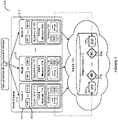
- FIG. 1 illustrates a computing environment 100, according to one example.
- computing environment 100 is a VSAN environment that leverages the commodity local storage housed in or directly attached (hereinafter, use of the term "housed” or “housed in” may be used to encompass both housed in or otherwise directly attached) to host servers or nodes 111 of a cluster 110 to provide an aggregate object store 116 to virtual machines (VMs) 112 running on the nodes.
- the local commodity storage housed in or otherwise directly attached to the nodes 111 may include combinations of solid state drives (SSDs) 117 and/or magnetic or spinning disks 118.
- SSDs 117 serve as a read cache and/or write buffer in front of magnetic disks 118 to increase I/O performance.
- a virtualization management platform 105 is associated with cluster 110 of nodes 111.
- Virtualization management platform 105 enables an administrator to manage the configuration and spawning of VMs on the various nodes 111.
- each node 111 includes a virtualization layer or hypervisor 113, a VSAN module 114, and hardware 119 (which includes the SSDs 117 and magnetic disks 118 of a node 111).
- hypervisor 113 Through hypervisor 113, a node 111 is able to launch and run multiple VMs 112.
- Hypervisor 113 in part, manages hardware 119 to properly allocate computing resources (e.g., processing power, random access memory, etc.) for each VM 112.
- each hypervisor 113 through its corresponding VSAN module 114, provides access to storage resources located in hardware 119 (e.g., SSDs 117 and magnetic disks 118) for use as storage for virtual disks (or portions thereof) and other related files that may be accessed by any VM 112 residing in any of nodes 111 in cluster 110.
- storage resources located in hardware 119 e.g., SSDs 117 and magnetic disks 118
- VMware may be installed on nodes 111 as hypervisor 113
- vCenter Server from VMware may be used as virtualization management platform 105.
- VSAN module 114 is implemented as a "VSAN" device driver within hypervisor 113.
- VSAN module 114 provides access to a conceptual "VSAN" 115 through which an administrator can create a number of top-level "device” or namespace objects that are backed by object store 116.
- the administrator may specify a particular file system for the device object (such device objects hereinafter also thus referred to "file system objects").
- file system objects such device objects hereinafter also thus referred to "file system objects"
- each hypervisor 113 in each node 111 may, during a boot process, discover a /vsan/ root node for a conceptual global namespace that is exposed by VSAN module 114.
- hypervisor 113 can then determine all the top-level file system objects (or other types of top-level device objects) currently residing in VSAN 115. When a VM (or other client) attempts to access one of the file system objects, hypervisor 113 may dynamically "auto-mount" the file system object at that time.
- a file system object e.g., /vsan/fs_name1, etc.
- a file system object that is accessible through VSAN 115 may, for example, be implemented to emulate the semantics of a particular file system such as VMware's distributed or clustered file system, VMFS, which is designed to provide concurrency control among simultaneously accessing VMs.
- VSAN 115 supports multiple file system objects, it is able provide storage resources through object store 116 without being confined by limitations of any particular clustered file system. For example, many clustered file systems (e.g., VMFS, etc.) can only scale to support a certain amount of nodes 111. By providing multiple top-level file system object support, VSAN 115 overcomes the scalability limitations of such clustered file systems.
- clustered file systems e.g., VMFS, etc.
- a file system object may, itself, provide access to a number of virtual disk descriptor files (e.g., .vmdk files in a vSphere environment, etc.) accessible by VMs 112 running in cluster 110.
- virtual disk descriptor files e.g., .vmdk files in a vSphere environment, etc.
- These virtual disk descriptor files contain references to virtual disk "objects" that contain the actual data for the virtual disk and are separately backed by object store 116.
- a virtual disk object may itself be a hierarchical or "composite” object that, as described further below, is further composed of “component” objects (again separately backed by object store 116) that reflect the storage requirements (e.g., capacity, availability, IOPs, etc.) of a corresponding storage profile or policy generated by the administrator when initially creating the virtual disk.
- component objects e.g., capacity, availability, IOPs, etc.
- each VSAN module 114 (through a cluster level object management or "CLOM" sub-module, in examples as further described below) communicates with other VSAN modules 114 of other nodes 111 to create and maintain an in-memory metadata database (e.g., maintained separately but in synchronized fashion in the memory of each node 111) that contains metadata describing the locations, configurations, policies and relationships among the various objects stored in object store 116.
- This in-memory metadata database is utilized by a VSAN module 114 on a node 111, for example, when an administrator first creates a virtual disk for a VM as well as when the VM is running and performing I/O operations (e.g., read or write) on the virtual disk.
- VSAN module 114 (through a document object manager or "DOM" sub-module, in one example as further described below) traverses a hierarchy of objects using the metadata in the in-memory database in order to properly route an I/O operation request to the node (or nodes) that houses (house) the actual physical local storage that backs the portion of the virtual disk that is subject to the I/O operation.
- DOM document object manager
- Figure 2 illustrates an example hierarchical structure of objects organized within object store 116 that represent a virtual disk, according to one example.
- a VM 112 running on one of nodes 111 may perform I/O operations on a virtual disk that is stored as a hierarchical or composite object 200 in object store 116.
- Hypervisor 113 provides VM 112 access to the virtual disk by interfacing with the abstraction of VSAN 115 through VSAN module 114 (e.g., by auto-mounting the top-level file system object corresponding to the virtual disk object, as previously discussed, in one example).
- VSAN module 114 by querying its local copy of the in-memory metadata database, is able to identify a particular file system object 205 (e.g., a VMFS file system object in one example, etc.) stored in VSAN 115 that stores a descriptor file 210 for the virtual disk (e.g., a .vmdk file, etc.).
- a particular file system object 205 e.g., a VMFS file system object in one example, etc.
- VSAN 115 that stores a descriptor file 210 for the virtual disk (e.g., a .vmdk file, etc.).
- the file system object 205 may store a variety of other files consistent with its purpose, such as virtual machine configuration files (e.g., .vmx files in a vSphere environment, etc.) and the like when supporting a virtualization environment.
- each file system object may be configured to support only those virtual disks corresponding to a particular VM (e.g.,
- Descriptor file 210 includes a reference to composite object 200 that is separately stored in object store 116 and conceptually represents the virtual disk (and thus may also be sometimes referenced herein as a virtual disk object).
- Composite object 200 stores metadata describing a storage organization or configuration for the virtual disk (sometimes referred to herein as a virtual disk "blueprint") that suits the storage requirements or service level agreements (SLAs) in a corresponding storage profile or policy (e.g., capacity, availability, IOPS, etc.) generated by an administrator when creating the virtual disk.
- SLAs service level agreements
- composite object 200 includes a virtual disk blueprint 215 that describes a RAID 1 configuration where two mirrored copies of the virtual disk (e.g., mirrors) are each further striped in a RAID 0 configuration.
- Composite object 225 may thus contain references to a number of "leaf' or "component" objects 220 x corresponding to each stripe (e.g., data partition of the virtual disk) in each of the virtual disk mirrors.
- the metadata accessible by VSAN module 114 in the in-memory metadata database for each component object 220 provides a mapping to or otherwise identifies a particular node 111 x in cluster 110 that houses the physical storage resources (e.g., magnetic disks 118, etc.) that actually store the stripe (as well as the location of the stripe within such physical resource).
- the physical storage resources e.g., magnetic disks 118, etc.
- FIG. 3 illustrates components of a VSAN module 114, according to one example.
- VSAN module 114 may execute as a device driver exposing an abstraction of a VSAN 115 to hypervisor 113.
- Various sub-modules of VSAN module 114 handle different responsibilities and may operate within either user space 315 or kernel space 320 depending on such responsibilities.
- VSAN module 114 includes a cluster level object management (CLOM) sub-module 325 that operates in user space 315.
- CLOM sub-module 325 generates virtual disk blueprints during creation of a virtual disk by an administrator and ensures that objects created for such virtual disk blueprints are configured to meet storage profile or policy requirements set by the administrator.
- CLOM cluster level object management
- CLOM sub-module 325 may also be accessed (e.g., to dynamically revise or otherwise update a virtual disk blueprint or the mappings of the virtual disk blueprint to actual physical storage in object store 116) on a change made by an administrator to the storage profile or policy relating to an object or when changes to the cluster or workload result in an object being out of compliance with a current storage profile or policy.
- CLOM sub-module 325 applies a variety of heuristics and/or distributed algorithms to generate virtual disk blueprint 215 that describes a configuration in cluster 110 that meets or otherwise suits the storage policy (e.g., RAID configuration to achieve desired redundancy through mirroring and access performance through striping, which nodes' local storage should store certain portions/partitions/stripes of the virtual disk to achieve load balancing, etc.).
- CLOM sub-module 325 in one example, is responsible for generating blueprint 215 describing the RAID 1/RAID 0 configuration for virtual disk object 200 in Figure 2 when the virtual disk was first created by the administrator.
- a storage policy may specify requirements for capacity, IOPS, availability, and reliability.
- Storage policies may also specify a workload characterization (e.g., random or sequential access, I/O request size, cache size, expected cache hit ration, etc.).
- the administrator may also specify an affinity to VSAN module 114 to preferentially use certain nodes 111 (or the local disks housed therein). For example, when provisioning a new virtual disk for a VM, an administrator may generate a storage policy or profile for the virtual disk specifying that the virtual disk have a reserve capacity of 400GB, a reservation of 150 read IOPS, a reservation of 300 write IOPS, and a desired availability of 99.99%.
- CLOM sub-module 325 Upon receipt of the generated storage policy, CLOM sub-module 325 consults the in-memory metadata database maintained by its VSAN module 114 to determine the current state of cluster 110 in order generate a virtual disk blueprint for a composite object (e.g., the virtual disk object) that suits the generated storage policy. As further discussed below, CLOM sub-module 325 may then communicate the blueprint to its corresponding distributed object manager (DOM) sub-module 340 which interacts with object space 116 to implement the blueprint by, for example, allocating or otherwise mapping component objects (e.g., stripes) of the composite object to physical storage locations within various nodes 111 of cluster 110.
- DOM distributed object manager
- VSAN module 114 may also include a cluster monitoring, membership, and directory services (CMMDS) sub-module 335 that maintains the previously discussed in-memory metadata database to provide information on the state of cluster 110 to other sub-modules of VSAN module 114 and also tracks the general "health" of cluster 110 by monitoring the status, accessibility, and visibility of each node 111 in cluster 110.
- CMSDS cluster monitoring, membership, and directory services
- the in-memory metadata database serves as a directory service that maintains a physical inventory of the VSAN environment, such as the various nodes 111, the storage resources in the nodes 111 (SSD, magnetic disks, etc.) housed therein and the characteristics/capabilities thereof, the current state of the nodes 111 and there corresponding storage resources, network paths among the nodes 111, and the like.
- the in-memory metadata database further provides a catalog of metadata for objects stored in object store 116 (e.g., what composite and component objects exist, what component objects belong to what composite objects, which nodes serve as "coordinators” or "owners” that control access to which objects, quality of service requirements for each object, object configurations, the mapping of objects to physical storage locations, etc.).
- object store 116 e.g., what composite and component objects exist, what component objects belong to what composite objects, which nodes serve as "coordinators” or "owners” that control access to which objects, quality of service requirements for each object, object configurations, the mapping of objects to physical storage locations, etc.
- CMMDS sub-module 335 represented by the connecting lines in Figure 3
- CLOM sub-module 325 accesses the in-memory metadata database to generate a virtual disk blueprint, and in order to handle an I/O operation from a running VM 112, DOM sub-module 340 accesses the in-memory metadata database to determine the nodes 111 that store the component objects (e.g., stripes) of a corresponding composite object (e.g., virtual disk object) and the paths by which those nodes are reachable in order to satisfy the I/O operation.
- component objects e.g., stripes
- composite object e.g., virtual disk object
- DOM sub-module 340 controls access to and handles operations on those component objects in object store 116 that are stored in the local storage of the particular node 111 in which DOM sub-module 340 runs as well as certain other composite objects for which its node 111 has been currently designated as the "coordinator" or "owner.”
- a DOM sub-module 340 that serves as the coordinator for the target composite object e.g., the virtual disk object that is subject to the I/O operation
- the DOM sub-module 340 of the node running the VM would also have to communicate across the network with the DOM sub-module 340 of the coordinator.
- the two DOM sub-modules 340 of the two nodes may to communicate to change the role of the coordinator of the virtual disk object to the node running the VM (e.g., thereby reducing the amount of network communication needed to coordinate I/O operations between the node running the VM and the node serving as the coordinator for the virtual disk object).
- DOM sub-modules 340 also similarly communicate amongst one another during object creation.
- a virtual disk blueprint generated by CLOM module 325 during creation of a virtual disk may include information that designates which nodes 111 should serve as the coordinators for the virtual disk object as well as its corresponding component objects (stripes, etc.).
- Each of the DOM sub-modules 340 for such designated nodes is issued requests (e.g., by the DOM sub-module 340 designated as the coordinator for the virtual disk object or by the DOM sub-module 340 of the node generating the virtual disk blueprint, etc.
- DOM sub-module 340 interacts with a log structured object manager (LSOM) sub-module 350 that serves as the component in VSAN module 114 that actually drives communication with the local SSDs and magnetic disks of its node 111.
- LSOM log structured object manager
- LSOM sub-module 350 In addition to allocating local storage for component objects (as well as to store other metadata such a policies and configurations for composite objects for which its node serves as coordinator, etc.), LSOM sub-module 350 additionally monitors the flow of I/O operations to the local storage of its node 111, for example, to report whether a storage resource is congested.
- Figure 3 also depicts a reliable datagram transport (RDT) sub-module 345 that delivers datagrams of arbitrary size between logical endpoints (e.g., nodes, objects, etc.), where the endpoints may potentially be over multiple paths.
- RDT reliable datagram transport
- the underlying transport is TCP.
- other transports such as RDMA may be used.
- RDT sub-module 345 is used, for example, when DOM sub-modules 340 communicate with one another, as previously discussed above to create objects or to handle I/O operations.
- RDT module 345 interacts with CMMDS module 335 to resolve the address of logical endpoints dynamically in order to maintain up-to-date location information in the in-memory metadata database as well as to create, remove, or reestablish connections based on link health status. For example, if CMMDS module 335 reports a link as unhealthy, RDT sub-module 345 may drop the connection in favor of a link in better condition.
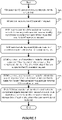
- Figure 4 illustrates a method flow diagram for creating a virtual disk object based on a defined storage policy, according to one example.
- an administrator may interact with a user interface of virtual management platform 105 to create a virtual disk having capacity, availability and IOPS requirements (e.g., the defined storage policy).
- virtual management platform 105 may then request a "master" node 111 to create an object for the virtual disk in step 405.
- a master node 111 may generate a virtual disk blueprint through its CLOM sub-module 325 in VSAN module.
- CLOM sub-module 35 generates a virtual disk blueprint for the creation of a virtual disk object (e.g., a composite object) based on the status of cluster 110 as determined by consulting the in-memory metadata database of CMMDS sub-module 335.
- the virtual disk blueprint may identify a particular node that should serve as the coordinator or owner of the virtual disk object.
- the DOM sub-module 340 of the master node 111 may the request the DOM sub-module 340 of the identified node to create the virtual disk object.
- the DOM sub-module 340 of the identified node receives the request and creates the virtual disk object, by, for example, communicating with its corresponding the LSOM sub-module 350 to persistently store metadata describing the virtual disk object in its local storage.
- the DOM sub-module 340 based on the virtual disk object blueprint, identifies those others nodes in cluster 110 that have been designated to serve as the coordinator or owner for any component objects in the virtual disk blueprint.
- the DOM sub-module 340 communicates (e.g., using its RDT sub-module 345) with the DOM sub-modules 340 of the other nodes that will serve as coordinators for the component objects and store the data backing such component objects in their local storage.
- DOM sub-modules 340 When such DOM sub-modules 340 receive a request from the DOM sub-module 340 of the coordinator of the virtual disk object to create their respective component objects, they, in turn in step 430, communicate with their respective LSOM modules 350 to allocate local storage for the component object (and its related metadata). Once such component objects have been created, their DOM sub-modules 340 advertise the creation of the components to the in-memory metadata database of its CMMDS sub-module 335 in step 435.
- the DOM sub-module 340 for the coordinator of the virtual disk object also advertises its creation to its CMMDS sub-module 335 to update the in-memory metadata database and ultimately transmits an acknowledgement to the administrator (e.g., via the master node communications back to virtual management platform 105).
- FIG. 5 illustrates the handling of an I/O operation originating from a VM, according to one example.
- the VM's guest operating system transmits an I/O operation request intended for its virtual disk (through a device driver of the guest operating system) which, in step 505, is received by hypervisor 113 and ultimately transmitted and transformed through various layers of an I/O stack in hypervisor 113 to DOM sub-module 340 of VSAN module 114.
- the I/O request received by DOM sub-module 340 includes a unique identifier for an object representing the virtual disk that DOM sub-module 340 uses to identify the coordinator node of the virtual disk object by accessing the in-memory metadata database of CMMDS sub-module 335 (in certain examples, accessing the in-memory metadata database to look up a mapping of the identity of the coordinator node to the unique identifier occurs only when the virtual disk object is initially accessed, with such mapping persisting for future I/O operations such that subsequent lookups are not needed).
- the DOM sub-module 340 of the node running the VM communicates (e.g., using its RDT sub-module 345) with the DOM sub-module 340 of the coordinator node to request that it perform the I/O operation in step 515.
- the two DOM sub-modules will communicate to update the role of the coordinator of the virtual disk object to be the node of the running VM.
- DOM sub-module Upon the coordinator's receipt of the I/O request, in step 520, its DOM sub-module identifies (e.g., by again referencing the in-memory metadata database, in certain examples) those coordinator nodes for the particular component objects (e.g., stripes) of the virtual disk object that are subject to the I/O operation. For example, if the I/O operation spans multiple stripes (e.g., multiple component objects) of a RAID 0 configuration, DOM sub-module 340 may split the I/O operation and appropriately transmit correspond I/O requests to the respective coordinator nodes for the relevant component objects that correspond to the two stripes.
- component objects e.g., stripes
- the DOM sub-module of the coordinator node for the virtual disk object requests that the DOM sub-modules for the coordinator nodes of the identified component objects perform the I/O operation request and, in step 530, the DOM sub-modules of such coordinator nodes for the identified component objects interact with their corresponding LSOM sub-modules to perform the I/O operation in the local storage resource where the component object is stored.
- multiple clients may simultaneously send requests to perform I/O operations on a particular local storage resource located in a particular node at any given time.
- the component objects e.g., stripes, etc.
- the VSAN module 114 of such a node may place the I/O operation into a storage resource queue for processing.
- the VSAN module 114 (via its LSOM sub-module, as previously discussed) monitors usage of the local storage resource and may issue a congestion metric to the clients attempting to access the local storage.
- the congestion metric provides a measure by which a client may calculate a delay prior to sending additional I/O requests to the local storage resource.
- Figure 6 illustrates a method flow diagram for transmitting congestion metrics to clients by a VSAN module, according to one example.
- components of different composite objects may reside in the same node and contend for the shared local resources, such as SSD and magnetic disk IOPS.
- the LSOM sub-module 350 of each node includes the configuration of the local component objects and policies as applied to each component. Further, LSOM sub-module 350 monitors the resource usage of component objects to ensure that the component objects adhere to the policy.
- a client accessing a component object e.g., other VSAN modules acting on behalf of running VMs
- the VSAN module 114 (through its LSOM sub-module 350) sends a congestion metric to the client, upon which the client delays subsequent I/O requests.
- a VSAN module 114 of a node 111 in cluster 110 receives an I/O operation request originating from the client accessing a component object residing in node 111.
- the VSAN module 114 (through its DOM sub-module 340) may serve as the coordinator for a component object (e.g., stripe, etc.) of a virtual disk object corresponding to the running VM.
- step 610 once it receives the I/O operation request, the VSAN module 114 (through its LSOM sub-module 350) determines whether the IOPS capacity of the local storage resource backing the component object has been exceeded (e.g., resulting in contention and potential congestion) due to other clients that might be accessing the same local storage to, for example, access other different component objects that comprise their corresponding virtual disk objects. If there is no contention, then, in step 615, VSAN module 114 proceeds to handle the I/O operation request by communicating with its LSOM sub-module 350 to access the local storage resource.
- the local LSOM sub-module 350 calculates a congestion metric for any client that is currently conducting I/O with the local storage resource and has exceeded the IOPS reservations specified in their storage policies.
- LSOM sub-module 350 calculates the congestion metric using a time-weighted sum (e.g., by decaying previous values and adding recent congestion measurements).
- LSOM sub-module 350 also may calculate a different congestion metric for each client based on the client's usage of the local storage resource relative to the usage by other clients of the local storage resource.
- VSAN module 114 may communicate with the VSAN modules 114 of the other nodes (through LSOM sub-modules 350) to combine its congestion metrics with possible congestion metrics generated from the other VSAN modules residing in the other nodes to produce an overall congestion metric for the client.
- the VSAN module 114 sends the congestion metric to the clients.
- the clients Upon receipt, the clients, through DOM sub-module 340, use the congestion metric to determine how long to delay subsequent I/O operation requests based on the amount of resources the client is using and the amount of congestion described by the congestion metric. That is, rather than forcing a fixed period of delay on clients that are overusing resources (such an approach may lead to unwanted oscillations in usage), in certain examples, the congestion metric provides the client with information to calculate a randomized delay period from a distribution proportional to the metric. Because the service costs required for read and write operations differ, the wait period required by the congestion metric may depend on the type and size of the I/O operation. For example, a congestion metric may require a longer delay period for a write operation than a read operation because generally, write operations are more computationally expensive than read operations.
- the VSAN module may issue a different congestion metric to every client accessing the local storage resource regardless of whether such client is exceeding its reserved allocations. While the congestion metrics transmitted to clients exceeding their reserved allocation may result in such clients delaying transmission of subsequent I/O operation requests, clients accessing the local storage resource within their reserved allocations may receive a congestion metric (e.g., a zero metric) that permits them to send I/O operation requests without delay. After the congestion has subsided, the VSAN module 114 may stop transmitting congestion metrics after each client request.
- a congestion metric e.g., a zero metric
- the host LSOM sub-module 350 calculates a local measure of congestion and sends the congestion metric to each client without tailoring the congestion metric to the resource usage of a particular client. Upon which clients delay requests if they are oversubscribing. It could then be up to the consuming client to respond to congestion if they're oversubscribing.
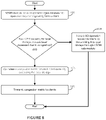
- Figure 7 illustrates a method for delaying an I/O operation request to the VSAN module during congestion, according to one example.
- a client e.g., a VSAN module 114 of a node 111 supporting a VM
- a congestion metric as a result of transmitting an I/O operation request to its virtual disk, as described in Figure 6 .
- the LSOM sub-module 350 of a client VSAN module 114 may, in communicating with the LSOM sub-module 350 of the VSAN module 114 of the node storing an object may receive such a congestion metric.
- the DOM sub-module 340 of client VSAN module 114 may calculate a time delay based on the congestion metric.
- the client VSAN module 114 Upon receiving the congestion metric, if the client VSAN module 114 (through its DOM sub-module 340) needs to transmit additional I/O operation requests, in step 710, it calculates a time to delay prior to transmitting the request, for example, based on a random distribution over a range, where the maximum value is a function of the congestion metric. In step 715, the client VSAN module 114 waits for calculated delay prior to transmitting the I/O operation request.
- the wait period calculated from the congestion metric may be based on the amount of IOPS the client is exceeding the reserved allocation. That is, clients exceeding the reserved allocation far more than clients exceeding by a smaller amount may be required to delay requests for a longer period.
- VSAN module may enable creation of high level storage objects other than virtual disks, such as, without limitation, REST objects, files, file systems, blob (binary large objects) and other objects.
- high level storage objects such as, without limitation, REST objects, files, file systems, blob (binary large objects) and other objects.
- congestion prevention techniques described in the foregoing examples related primarily to dealing with congestion at local storage resources, alternative examples may utilize similar techniques to reduce contention for memory, processing and/or networking resources that may arise, for example, if a single node operates as a coordinator for two different virtual disks currently being accessed by two different VMs.
- DOM sub-module 340 may also monitor resource usage in CPU, memory, and networking to deal with contention for those resources in a manner similar to that of LSOM sub-module 350 in monitoring resource usage such as IOPS and capacity for the local storage resources (or alternatively, LSOM sub-module 350 may also be configured to monitor CPU, memory and/or networking usage).
- VSAN module 114 has been generally depicted as embedded in hypervisor 113, alternative examples may implement VSAN module separate from hypervisor 113, for example as a special virtual machine or virtual appliance, a separate application or any other "pluggable" module or driver that can be inserted into computing platform in order to provide and manage a distributed object store .
- examples described herein measure congestion and control quality of service to distributed resources.
- examples described herein provide predictability in accessing distributed resources and delivers low latency to clients that use resources as provisioned. Further, delaying the requests at ingress to the resource application rather than at the resource queues requires less complicated queuing logic than previous solutions have required.
- the various embodiments described herein may employ various computer-implemented operations involving data stored in computer systems. For example, these operations may require physical manipulation of physical quantities usually, though not necessarily, these quantities may take the form of electrical or magnetic signals where they, or representations of them, are capable of being stored, transferred, combined, compared, or otherwise manipulated. Further, such manipulations are often referred to in terms, such as producing, identifying, determining, or comparing. Any operations described herein that form part of one or more embodiments may be useful machine operations.
- one or more embodiments also relate to a device or an apparatus for performing these operations. The apparatus may be specially constructed for specific required purposes, or it may be a general purpose computer selectively activated or configured by a computer program stored in the computer.
- various general purpose machines may be used with computer programs written in accordance with the teachings herein, or it may be more convenient to construct a more specialized apparatus to perform the required operations.
- One or more embodiments may be implemented as one or more computer programs or as one or more computer program modules embodied in one or more computer readable media.
- the term computer readable medium refers to any data storage device that can store data which can thereafter be input to a computer system computer readable media may be based on any existing or subsequently developed technology for embodying computer programs in a manner that enables them to be read by a computer.
- Examples of a computer readable medium include a hard drive, network attached storage (NAS), read-only memory, random-access memory (e.g., a flash memory device), a CD (Compact Discs), CD-ROM, a CD-R, or a CD-RW, a DVD (Digital Versatile Disc), a magnetic tape, and other optical and non-optical data storage devices.
- the computer readable medium can also be distributed over a network coupled computer system so that the computer readable code is stored and executed in a distributed fashion.
- virtualization methods have generally assumed that virtual machines present interfaces consistent with a particular hardware system, the methods described may be used in conjunction with virtualizations that do not correspond directly to any particular hardware system.
- Virtualization systems in accordance with the various embodiments, implemented as hosted embodiments, non-hosted embodiments, or as embodiments that tend to blur distinctions between the two, are all envisioned.
- various virtualization operations may be wholly or partially implemented in hardware.
- a hardware implementation may employ a look-up table for modification of storage access requests to secure non-disk data.
- the virtualization software can therefore include components of a host, console, or guest operating system that performs virtualization functions.
- Plural instances may be provided for components, operations or structures described herein as a single instance.
- boundaries between various components, operations and data stores are somewhat arbitrary, and particular operations are illustrated in the context of specific illustrative configurations. Other allocations of functionality are envisioned and may fall within the scope of one or more embodiments.
- structures and functionality presented as separate components in exemplary configurations may be implemented as a combined structure or component.
- structures and functionality presented as a single component may be implemented as separate components.
- a computer-implemented method for providing resource usage feedback to a plurality of clients having access to a shared resource comprising: monitoring a rate of usage of the shared resource by at least a portion of the clients, wherein each client has been reserved a minimum usage rate for the shared resource; upon detecting that the rate of usage of the shared resource has exceeded a maximum rate supported by the shared resource, determining a congestion metric for at least a portion of the clients that are currently attempting to accessing the shared resource, wherein the congestion metric for each client is based on the client's usage of the shared resource and is used by the clients to calculate a delay period prior attempting another access of the shared resource; and transmitting each of the determined congestion metrics to a corresponding client.
- the shared resource is a local storage drive housed in a host computer belonging to a cluster of host computers that supports the execution of the plurality of clients and wherein each host computer in the cluster contributes a corresponding local storage drive to form a pool of shared resources accessible as a single virtual storage device.
- At least one of the clients is performing I/O operations on a virtual disk, wherein at least one section of the virtual disk is backed by a portion of the shared resource and at least one other section of the virtual disk is backed by a different local storage disk housed in a different host computer belonging to the cluster.
- the virtual disk is organized as a RAID 0 stripe set and the section of the virtual disk backed by a portion of the shared resource the at least one other section of the virtual disk backed by a different local storage disk both represent a different stripe in the stripe set.
- a second client is performing I/O operations on a second virtual disk, wherein at least one portion of the second virtual disk is backed by a second portion of the shared resource and at least one other portion of the second virtual disk is backed by a different local disk housed in a different host computer belonging to the cluster.
- the clients each comprise a virtual machine running in one of the host computers in the cluster.
- all clients that have exceeded their reserved minimum usage rate for the shared resource are transmitted a congestion metric having a non-zero value and all clients that have not exceeded their reserved minimum usage rate for the shared resource are transmitted a congestion metric zero value that results in no delay period being calculated by the client.
- non-transitory computer readable storage medium storing instructions, which, when executed on a processor, perform the described method.
- a computer system comprising: a processor and a memory hosting a module, which, when executed on the processor, performs the described method.
Landscapes
- Engineering & Computer Science (AREA)
- Theoretical Computer Science (AREA)
- Software Systems (AREA)
- Physics & Mathematics (AREA)
- General Engineering & Computer Science (AREA)
- General Physics & Mathematics (AREA)
- Human Computer Interaction (AREA)
- Computer Networks & Wireless Communication (AREA)
- Signal Processing (AREA)
- Computer Security & Cryptography (AREA)
- Information Retrieval, Db Structures And Fs Structures Therefor (AREA)
- Debugging And Monitoring (AREA)
Claims (12)
- Computerimplementiertes Verfahren zur Handhabung einer Speichereingabe/-ausgabe (E/A)-Operation, die von einer virtuellen Maschine (VM) (112) stammt und auf eine virtuelle Festplatte gerichtet ist, wobei die VM (112) auf einem ersten Host (111A) ausgeführt wird, wobei der erste Host (111A) Teil eines Clusters von Hostcomputern (111A, 111B ... 111N) ist, die jeweils eigene physische Speicherressourcen (117, 118) aufweisen, wobei der erste Host (111A) einen ersten Treiber (114A) enthält, das Verfahren umfassend:Empfangen, durch den ersten Treiber (114A), der E/A-Operation;Abrufen, aus der E/A-Operation, einer Kennung für ein virtuelles Festplattenobjekt (200), das die virtuelle Festplatte darstellt, wobei das virtuelle Festplattenobjekt (200) aus virtuellen Komponentenobjekten (220) besteht, wobei die virtuellen Komponentenobjekte (220A-220F) zu beliebigen verfügbaren physischen Speicherressourcen (117, 118) im gesamten Cluster von Hostcomputern (111A-N) zuordenbar sind;Bestimmen, unter Verwendung der Kennung, eines Hosts (111A, 111B), der als virtueller Festplatten-Koordinator-Host des virtuellen Festplattenobjekts (200) mittels Zugreifens auf eine Datenbank (335) des ersten Hosts (111A) dient, wobei der virtuelle Festplatten-Koordinator-Host den Zugriff auf das virtuelle Festplattenobjekt (200) steuert;Durchführung von einem der Folgenden:Übertragen, durch den ersten Treiber (114A), der E/A-Operation an einen zweiten Treiber (114B) auf einem zweiten Host (111B), der als virtueller Festplatten-Koordinator-Host dient, oderAktualisieren der Datenbank (335), um den ersten Host (111A) als virtuellen Festplatten-Koordinator-Host des virtuellen Festplattenobjekts (200) festzulegen; undAusführen der E/A-Operation durch den virtuellen Festplatten-Koordinator-Host (111A, 111B) mittels Kommunizierens mit den Hosts (111A, 111B ... 111N), die die Koordinatoren für die virtuellen Komponentenobjekte (220A-220F) des virtuellen Festplattenobjekts (200) sind.
- Verfahren nach Anspruch 1, wobei der erste Host (111) die Virtualisierungssoftware (113) implementiert, die den ersten Treiber (114A) einschließt.
- Verfahren nach Anspruch 1, wobei das Durchführen das Übertragen, durch den ersten Treiber (114A), der E/A-Operation an den zweiten Treiber (114B) des virtuellen Festplatten-Koordinator-Hosts umfasst, während als der virtuelle Festplatten-Koordinator-Host der zweite Host (111B) beibehalten wird, der den zweiten Treiber (114B) ausführt.
- Verfahren nach Anspruch 1, wobei das Durchführen, wenn der erste Host (111A), der die die VM (112A) ausführt, und der Host, der als Koordinator des virtuellen Festplattenobjekts (200) dient, unterschiedlich sind, das Kommunizieren mit dem zweiten Treiber (114B) vor dem Aktualisieren der Datenbank (335), um den ersten Host (111A) als virtuellen Festplatten-Koordinator-Host des virtuellen Festplattenobjekts (200) festzulegen, umfasst.
- Verfahren nach Anspruch 1, wobei das Ausführen der E/A-Operation umfasst:Identifizieren, durch den virtuellen Festplatten-Koordinator-Host, der virtuellen Komponentenobjekte (220A-220F) der virtuellen Festplatte, auf die sich die E/A-Operation bezieht, wobei die virtuellen Komponentenobjekte (220A-220F) jeweils eine Datenpartition der virtuellen Festplatte beinhalten;Bestimmen eines Komponentenobjekt-Koordinator-Hosts für jedes der Komponentenobjekte (220A-220F), wobei der Komponentenobjekt-Koordinator-Host den Zugriff auf ein zugeordnetes Komponentenobjekt (220A-220F) steuert.
- Verfahren nach Anspruch 5, ferner umfassend:Übertragen, durch den virtuellen Festplatten-Koordinator-Host, der E/A-Operation an jeden der Komponentenobjekt-Koordinator-Hosts; undDurchführen, durch jeden der Komponentenobjekt-Koordinator-Hosts, der EA-Operation in einer lokalen Speicherressource (117, 118), in der das virtuelle Komponentenobjekt (220A-220F) gespeichert ist.
- Verfahren nach Anspruch 1, wobei das virtuelle Festplattenobjekt (200) in einem Objektspeicher (116) gespeichert wird.
- Verfahren nach Anspruch 1, wobei jeder Hostcomputer (111) in dem Cluster (110) mindestens einen Teil seiner entsprechenden lokalen Speicherressource (117, 118) beisteuert, um einen Pool gemeinsam genutzter Ressourcen zu bilden, in dem die virtuelle Festplatte gespeichert wird.
- Verfahren nach Anspruch 1, wobei mindestens ein Abschnitt der virtuellen Festplatte von einer lokalen Speicherressource (117, 118) gesichert wird, die in dem ersten Host (111A) untergebracht ist, und mindestens ein anderer Abschnitt der virtuellen Festplatte von einer unterschiedlichen lokalen Speicherressource (117, 118) gesichert wird, die in einem anderen Hostcomputer (111B) untergebracht ist.
- Verfahren nach Anspruch 9, wobei die virtuelle Festplatte als ein RAID 0 Stripe-Set organisiert ist und wobei der Abschnitt der virtuellen Festplatte, der von der lokalen Speicherressource (117, 118) gesichert wird, in dem ersten Host (111A) untergebracht ist, und der mindestens eine andere Abschnitt der virtuellen Festplatte, der durch die andere lokale Speicherressource (117, 118) in dem anderen Hostcomputer (111B) gesichert wird, verschiedene Stripes in dem Stripe-Set darstellt.
- Computerlesbares Medium mit Anweisungen, die bei Ausführung durch ein Computersystem das Verfahren nach einem der Ansprüche 1 bis 10 durchführen.
- Computersystem, das konfiguriert ist, um das Verfahren nach einem der Ansprüche 1 bis 10 durchzuführen.
Applications Claiming Priority (3)
| Application Number | Priority Date | Filing Date | Title |
|---|---|---|---|
| US14/010,247 US9887924B2 (en) | 2013-08-26 | 2013-08-26 | Distributed policy-based provisioning and enforcement for quality of service |
| PCT/US2014/041164 WO2015030893A1 (en) | 2013-08-26 | 2014-06-05 | Distributed policy-based provisioning and enforcement for quality of service |
| EP14736156.2A EP3039545B1 (de) | 2013-08-26 | 2014-06-05 | Verteilte richtlinienbasierte bereitstellung und durchsetzung für dienstgüte |
Related Parent Applications (2)
| Application Number | Title | Priority Date | Filing Date |
|---|---|---|---|
| EP14736156.2A Division EP3039545B1 (de) | 2013-08-26 | 2014-06-05 | Verteilte richtlinienbasierte bereitstellung und durchsetzung für dienstgüte |
| EP14736156.2A Division-Into EP3039545B1 (de) | 2013-08-26 | 2014-06-05 | Verteilte richtlinienbasierte bereitstellung und durchsetzung für dienstgüte |
Publications (2)
| Publication Number | Publication Date |
|---|---|
| EP3553655A1 EP3553655A1 (de) | 2019-10-16 |
| EP3553655B1 true EP3553655B1 (de) | 2022-04-06 |
Family
ID=51134343
Family Applications (2)
| Application Number | Title | Priority Date | Filing Date |
|---|---|---|---|
| EP19177852.1A Active EP3553655B1 (de) | 2013-08-26 | 2014-06-05 | Verteilte richtlinienbasierte bereitstellung und durchsetzung für dienstqualität |
| EP14736156.2A Active EP3039545B1 (de) | 2013-08-26 | 2014-06-05 | Verteilte richtlinienbasierte bereitstellung und durchsetzung für dienstgüte |
Family Applications After (1)
| Application Number | Title | Priority Date | Filing Date |
|---|---|---|---|
| EP14736156.2A Active EP3039545B1 (de) | 2013-08-26 | 2014-06-05 | Verteilte richtlinienbasierte bereitstellung und durchsetzung für dienstgüte |
Country Status (5)
| Country | Link |
|---|---|
| US (3) | US9887924B2 (de) |
| EP (2) | EP3553655B1 (de) |
| JP (1) | JP6208354B2 (de) |
| AU (1) | AU2014311867B2 (de) |
| WO (1) | WO2015030893A1 (de) |
Families Citing this family (40)
| Publication number | Priority date | Publication date | Assignee | Title |
|---|---|---|---|---|
| US11016820B2 (en) | 2013-08-26 | 2021-05-25 | Vmware, Inc. | Load balancing of resources |
| US9887924B2 (en) | 2013-08-26 | 2018-02-06 | Vmware, Inc. | Distributed policy-based provisioning and enforcement for quality of service |
| US9811531B2 (en) | 2013-08-26 | 2017-11-07 | Vmware, Inc. | Scalable distributed storage architecture |
| US10747475B2 (en) | 2013-08-26 | 2020-08-18 | Vmware, Inc. | Virtual disk blueprints for a virtualized storage area network, wherein virtual disk objects are created from local physical storage of host computers that are running multiple virtual machines |
| WO2015060753A1 (en) * | 2013-10-23 | 2015-04-30 | Telefonaktiebolaget Lm Ericsson (Publ) | Methods, nodes and computer program for enabling of resource component allocation |
| US20150317556A1 (en) * | 2014-04-30 | 2015-11-05 | Prophetstor Data Services, Inc. | Adaptive quick response controlling system for software defined storage system for improving performance parameter |
| US10725684B2 (en) * | 2014-09-30 | 2020-07-28 | EMC IP Holding Company LLC | Method and apparatus for cost-based load balancing for port selection |
| JP6578694B2 (ja) * | 2015-03-25 | 2019-09-25 | 日本電気株式会社 | 情報処理装置、方法及びプログラム |
| US9678680B1 (en) * | 2015-03-30 | 2017-06-13 | EMC IP Holding Company LLC | Forming a protection domain in a storage architecture |
| US9830082B1 (en) | 2015-09-08 | 2017-11-28 | EMC IP Holding Company LLC | Hybrid hyper-converged infrastructure and storage appliance |
| US9778865B1 (en) * | 2015-09-08 | 2017-10-03 | EMC IP Holding Company LLC | Hyper-converged infrastructure based on server pairs |
| US12489791B2 (en) * | 2015-10-28 | 2025-12-02 | Qomplx Llc | Privilege assurance of computer network environments |
| US10007556B2 (en) * | 2015-12-07 | 2018-06-26 | International Business Machines Corporation | Reducing utilization speed of disk storage based on rate of resource provisioning |
| CN109496401B (zh) | 2015-12-23 | 2021-01-05 | 华为技术有限公司 | 一种业务接管方法、存储设备和业务接管装置 |
| US10809998B2 (en) | 2016-02-12 | 2020-10-20 | Nutanix, Inc. | Virtualized file server splitting and merging |
| CN107196873B (zh) * | 2016-03-15 | 2020-07-31 | 阿里巴巴集团控股有限公司 | 一种分布式集群的业务请求发送方法及装置 |
| US11568073B2 (en) | 2016-12-02 | 2023-01-31 | Nutanix, Inc. | Handling permissions for virtualized file servers |
| US11294777B2 (en) | 2016-12-05 | 2022-04-05 | Nutanix, Inc. | Disaster recovery for distributed file servers, including metadata fixers |
| US11281484B2 (en) | 2016-12-06 | 2022-03-22 | Nutanix, Inc. | Virtualized server systems and methods including scaling of file system virtual machines |
| US11288239B2 (en) | 2016-12-06 | 2022-03-29 | Nutanix, Inc. | Cloning virtualized file servers |
| US11301144B2 (en) | 2016-12-28 | 2022-04-12 | Amazon Technologies, Inc. | Data storage system |
| US10509601B2 (en) * | 2016-12-28 | 2019-12-17 | Amazon Technologies, Inc. | Data storage system with multi-tier control plane |
| US10514847B2 (en) | 2016-12-28 | 2019-12-24 | Amazon Technologies, Inc. | Data storage system with multiple durability levels |
| US10771550B2 (en) | 2016-12-28 | 2020-09-08 | Amazon Technologies, Inc. | Data storage system with redundant internal networks |
| US10484015B2 (en) | 2016-12-28 | 2019-11-19 | Amazon Technologies, Inc. | Data storage system with enforced fencing |
| US11010064B2 (en) | 2017-02-15 | 2021-05-18 | Amazon Technologies, Inc. | Data system with flush views |
| US10489189B2 (en) * | 2017-02-17 | 2019-11-26 | International Business Machines Corporation | Selection of maintenance tasks |
| US10768827B2 (en) * | 2017-04-07 | 2020-09-08 | Microsoft Technology Licensing, Llc | Performance throttling of virtual drives |
| US10761726B2 (en) * | 2018-04-16 | 2020-09-01 | VWware, Inc. | Resource fairness control in distributed storage systems using congestion data |
| US11086826B2 (en) | 2018-04-30 | 2021-08-10 | Nutanix, Inc. | Virtualized server systems and methods including domain joining techniques |
| US11169723B2 (en) | 2019-06-28 | 2021-11-09 | Amazon Technologies, Inc. | Data storage system with metadata check-pointing |
| US11687244B2 (en) * | 2019-10-24 | 2023-06-27 | Micron Technology, Inc. | Quality of service for memory devices using weighted memory access operation types |
| US11237731B2 (en) | 2019-10-24 | 2022-02-01 | Micron Technology, Inc. | Quality of service for memory devices using suspend and resume of program and erase operations |
| US11620053B2 (en) | 2019-10-24 | 2023-04-04 | Micron Technology, Inc. | Quality of service for the multiple functions in memory devices |
| US12541431B2 (en) | 2019-12-31 | 2026-02-03 | Nutanix, Inc. | Parallel change file tracking in a distributed file server virtual machine (FSVM) architecture |
| US11853785B1 (en) * | 2020-03-02 | 2023-12-26 | Amazon Technologies, Inc. | Virtual machine cloning and resource configuration |
| US12131192B2 (en) | 2021-03-18 | 2024-10-29 | Nutanix, Inc. | Scope-based distributed lock infrastructure for virtualized file server |
| CN116954477A (zh) * | 2022-04-15 | 2023-10-27 | 戴尔产品有限公司 | 基于活动水平的虚拟卷放置 |
| US20240126446A1 (en) * | 2022-10-18 | 2024-04-18 | VMware, LLC | Management of multi-type storage including hyperconverged storage |
| US12461832B2 (en) | 2023-09-27 | 2025-11-04 | Nutanix, Inc. | Durable handle management for failover in distributed file servers |
Family Cites Families (137)
| Publication number | Priority date | Publication date | Assignee | Title |
|---|---|---|---|---|
| JPH06110766A (ja) | 1992-09-25 | 1994-04-22 | Hitachi Ltd | 分割格納ファイルシステムのディレクトリ構成方法および計算機システム |
| US5778384A (en) | 1995-12-22 | 1998-07-07 | Sun Microsystems, Inc. | System and method for automounting and accessing remote file systems in Microsoft Windows in a networking environment |
| US6032224A (en) | 1996-12-03 | 2000-02-29 | Emc Corporation | Hierarchical performance system for managing a plurality of storage units with different access speeds |
| US6314526B1 (en) | 1998-07-10 | 2001-11-06 | International Business Machines Corporation | Resource group quorum scheme for highly scalable and highly available cluster system management |
| US6553389B1 (en) | 1999-09-13 | 2003-04-22 | Hewlett-Packard Company | Resource availability determination mechanism for distributed data storage system |
| US6658473B1 (en) | 2000-02-25 | 2003-12-02 | Sun Microsystems, Inc. | Method and apparatus for distributing load in a computer environment |
| US6985905B2 (en) | 2000-03-03 | 2006-01-10 | Radiant Logic Inc. | System and method for providing access to databases via directories and other hierarchical structures and interfaces |
| JP2002108567A (ja) | 2000-09-28 | 2002-04-12 | Hitachi Ltd | 記憶制御装置 |
| US6839752B1 (en) | 2000-10-27 | 2005-01-04 | International Business Machines Corporation | Group data sharing during membership change in clustered computer system |
| US6915391B2 (en) | 2000-12-15 | 2005-07-05 | International Business Machines Corporation | Support for single-node quorum in a two-node nodeset for a shared disk parallel file system |
| US20040136379A1 (en) * | 2001-03-13 | 2004-07-15 | Liao Raymond R | Method and apparatus for allocation of resources |
| US6708175B2 (en) | 2001-06-06 | 2004-03-16 | International Business Machines Corporation | Program support for disk fencing in a shared disk parallel file system across storage area network |
| US20020188592A1 (en) | 2001-06-11 | 2002-12-12 | Storage Technology Corporation | Outboard data storage management system and method |
| US6687701B2 (en) | 2001-09-25 | 2004-02-03 | Hewlett-Packard Development Company, L.P. | Namespace management in a distributed file system |
| ES2359399T3 (es) | 2001-11-23 | 2011-05-23 | Commvault Systems, Inc. | Sistema y procedimiento de duplicación selectiva de datos. |
| US8914429B2 (en) | 2002-02-08 | 2014-12-16 | Willaim Pitts | Method for creating global distributed namespace |
| US6985914B2 (en) | 2002-02-20 | 2006-01-10 | Emc Corporation | Cluster meta file system of file system cells managed by respective data movers of a network file server |
| US7035858B2 (en) | 2002-04-29 | 2006-04-25 | Sun Microsystems, Inc. | System and method dynamic cluster membership in a distributed data system |
| JP4124331B2 (ja) | 2002-09-17 | 2008-07-23 | 株式会社日立製作所 | Dbms向け仮想ボリューム作成・管理方法 |
| US7774444B1 (en) * | 2002-10-16 | 2010-08-10 | Symantec Operating Corporation | SAN simulator |
| AU2003291014A1 (en) | 2002-11-14 | 2004-06-15 | Isilon Systems, Inc. | Systems and methods for restriping files in a distributed file system |
| US7159093B2 (en) | 2002-12-20 | 2007-01-02 | Veritas Operating Corporation | Development of a detailed logical volume configuration from high-level user requirements |
| US7143260B2 (en) | 2002-12-20 | 2006-11-28 | Veritas Operating Corporation | Intermediate descriptions of intent for storage allocation |
| US7519725B2 (en) * | 2003-05-23 | 2009-04-14 | International Business Machines Corporation | System and method for utilizing informed throttling to guarantee quality of service to I/O streams |
| US7277897B2 (en) | 2003-08-01 | 2007-10-02 | Oracle International Corporation | Dynamic reassignment of data ownership |
| US8234517B2 (en) | 2003-08-01 | 2012-07-31 | Oracle International Corporation | Parallel recovery by non-failed nodes |
| CN101566931B (zh) * | 2003-08-14 | 2011-05-18 | 克姆佩棱特科技公司 | 虚拟磁盘驱动系统和方法 |
| US9489150B2 (en) * | 2003-08-14 | 2016-11-08 | Dell International L.L.C. | System and method for transferring data between different raid data storage types for current data and replay data |
| US8527541B2 (en) | 2003-11-05 | 2013-09-03 | Emc Corporation | Method for mapping a flat namespace onto a hierarchical namespace using locality of reference cues |
| US7529836B1 (en) * | 2004-01-08 | 2009-05-05 | Network Appliance, Inc. | Technique for throttling data access requests |
| US20050166011A1 (en) | 2004-01-23 | 2005-07-28 | Burnett Robert J. | System for consolidating disk storage space of grid computers into a single virtual disk drive |
| US20050240714A1 (en) | 2004-04-13 | 2005-10-27 | Bea Systems, Inc. | System and method for virtual content repository deployment |
| US7768959B1 (en) | 2004-04-21 | 2010-08-03 | Marvell International Ltd. | All-in-one wireless network device |
| US7360030B1 (en) * | 2004-06-01 | 2008-04-15 | Sanbolic, Inc. | Methods and apparatus facilitating volume management |
| US7441096B2 (en) | 2004-07-07 | 2008-10-21 | Hitachi, Ltd. | Hierarchical storage management system |
| US7613703B2 (en) | 2004-09-30 | 2009-11-03 | Microsoft Corporation | Organizing resources into collections to facilitate more efficient and reliable resource access |
| US7770076B2 (en) | 2004-11-02 | 2010-08-03 | Nvidia Corporation | Multi-platter disk drive controller and methods for synchronous redundant data operations |
| US20060161753A1 (en) | 2005-01-18 | 2006-07-20 | Aschoff John G | Method, apparatus and program storage device for providing automatic performance optimization of virtualized storage allocation within a virtualized storage subsystem |
| US20060218360A1 (en) | 2005-03-22 | 2006-09-28 | Burkey Todd R | Method, apparatus and program storage device for providing an optimized read methodology for synchronously mirrored virtual disk pairs |
| US7617370B2 (en) | 2005-04-29 | 2009-11-10 | Netapp, Inc. | Data allocation within a storage system architecture |
| US8127059B1 (en) | 2005-09-02 | 2012-02-28 | Pmc-Sierra Us, Inc. | Apparatus for interconnecting hosts with storage devices |
| US20070055703A1 (en) | 2005-09-07 | 2007-03-08 | Eyal Zimran | Namespace server using referral protocols |
| US20070214384A1 (en) | 2006-03-07 | 2007-09-13 | Manabu Kitamura | Method for backing up data in a clustered file system |
| US7716425B1 (en) | 2006-09-27 | 2010-05-11 | Hewlett-Packard Development Company, L.P. | Prefetching data in distributed storage systems |
| US7739470B1 (en) * | 2006-10-20 | 2010-06-15 | Emc Corporation | Limit algorithm using queue depth to control application performance |
| US7669029B1 (en) | 2006-11-15 | 2010-02-23 | Network Appliance, Inc. | Load balancing a data storage system |
| US7734884B1 (en) | 2006-12-29 | 2010-06-08 | Emc Corporation | Simultaneous concurrent and cascaded triangular asynchronous replication |
| JP4505763B2 (ja) | 2007-01-31 | 2010-07-21 | ヒューレット−パッカード デベロップメント カンパニー エル.ピー. | ノードクラスタの管理 |
| JP2008210057A (ja) | 2007-02-23 | 2008-09-11 | Hitachi Ltd | 記憶システム及びその管理方法 |
| US8090792B2 (en) | 2007-03-08 | 2012-01-03 | Nec Laboratories America, Inc. | Method and system for a self managing and scalable grid storage |
| JP5379956B2 (ja) | 2007-03-19 | 2013-12-25 | 株式会社日立製作所 | ストレージ装置及び記憶領域配置方法 |
| US8682916B2 (en) | 2007-05-25 | 2014-03-25 | F5 Networks, Inc. | Remote file virtualization in a switched file system |
| WO2009088435A1 (en) | 2007-12-31 | 2009-07-16 | Netapp, Inc. | System and method for automatic storage load balancing in virtual server environments |
| JP2009217475A (ja) | 2008-03-10 | 2009-09-24 | Fujitsu Ltd | ストレージシステム,ストレージ装置,ストレージシステムの制御方法および制御プログラム |
| WO2009134772A2 (en) | 2008-04-29 | 2009-11-05 | Maxiscale, Inc | Peer-to-peer redundant file server system and methods |
| US8612678B2 (en) | 2008-04-30 | 2013-12-17 | Netapp, Inc. | Creating logical disk drives for raid subsystems |
| US9459927B2 (en) | 2008-05-22 | 2016-10-04 | Alcatel Lucent | Central office based virtual personal computer |
| JP5250869B2 (ja) | 2008-08-28 | 2013-07-31 | 株式会社日立製作所 | ストレージシステム、論理記憶領域割り当て方法及び計算機システム |
| JP5026375B2 (ja) | 2008-09-09 | 2012-09-12 | 株式会社日立製作所 | ストレージ装置及びストレージ装置の制御方法 |
| WO2010030996A1 (en) * | 2008-09-15 | 2010-03-18 | Virsto Software | Storage management system for virtual machines |
| US20100114826A1 (en) | 2008-10-24 | 2010-05-06 | Microsoft Corporation | Configuration management in distributed data systems |
| US9396021B2 (en) | 2008-12-16 | 2016-07-19 | International Business Machines Corporation | Techniques for dynamically assigning jobs to processors in a cluster using local job tables |
| US8893050B2 (en) | 2009-01-12 | 2014-11-18 | International Business Machines Corporation | Assembly and output of user-defined groupings |
| JP5180865B2 (ja) | 2009-02-10 | 2013-04-10 | 株式会社日立製作所 | ファイルサーバ、ファイル管理システムおよびファイル管理方法 |
| KR101042908B1 (ko) | 2009-02-12 | 2011-06-21 | 엔에이치엔(주) | 네트워크 분리 장애 상황에서 메이저 그룹을 결정하기 위한방법, 시스템, 및 컴퓨터 판독 가능한 기록 매체 |
| US8291159B2 (en) | 2009-03-12 | 2012-10-16 | Vmware, Inc. | Monitoring and updating mapping of physical storage allocation of virtual machine without changing identifier of the storage volume assigned to virtual machine |
| US8176289B2 (en) | 2009-05-21 | 2012-05-08 | Red Hat Israel, Ltd. | Method to support sparse volumes or thin provisioned volumes in real time |
| US8694578B2 (en) | 2009-05-29 | 2014-04-08 | Microsoft Corporation | Swarm-based synchronization over a network of object stores |
| US8429097B1 (en) * | 2009-08-12 | 2013-04-23 | Amazon Technologies, Inc. | Resource isolation using reinforcement learning and domain-specific constraints |
| US8103769B1 (en) * | 2009-09-03 | 2012-01-24 | Amazon Technologies, Inc. | Dynamic isolation of shared resources |
| US8387060B2 (en) | 2009-10-01 | 2013-02-26 | Dell Products L.P. | Virtual machine resource allocation group policy based on workload profile, application utilization and resource utilization |
| US8566520B1 (en) | 2009-10-05 | 2013-10-22 | Marvell International Ltd. | Storage space allocation for logical disk creation |
| US8326799B2 (en) | 2009-10-09 | 2012-12-04 | Seagate Technology Llc | Data distribution in systems with multiple storage entities |
| US8635422B1 (en) | 2009-10-29 | 2014-01-21 | Symantec Corporation | Systems and methods for reclaiming storage space from deleted volumes on thin-provisioned disks |
| US8074003B1 (en) | 2009-12-28 | 2011-12-06 | Emc Corporation | Host-based storage controller providing block devices in geographically distributed storage |
| US8200812B2 (en) * | 2009-12-31 | 2012-06-12 | International Business Machines Corporation | Reducing workload on a backend system using client side request throttling |
| US8543778B2 (en) | 2010-01-28 | 2013-09-24 | Hitachi, Ltd. | Management system and methods of storage system comprising pool configured of actual area groups of different performances |
| US8453036B1 (en) | 2010-02-01 | 2013-05-28 | Network Appliance, Inc. | System and method for dynamically resizing a parity declustered group |
| US8645750B2 (en) | 2010-03-04 | 2014-02-04 | Hitachi, Ltd. | Computer system and control method for allocation of logical resources to virtual storage areas |
| US11256529B2 (en) * | 2010-03-17 | 2022-02-22 | Zerto Ltd. | Methods and apparatus for providing hypervisor level data services for server virtualization |
| US20110238857A1 (en) * | 2010-03-29 | 2011-09-29 | Amazon Technologies, Inc. | Committed processing rates for shared resources |
| JP2012008854A (ja) | 2010-06-25 | 2012-01-12 | Hitachi Ltd | ストレージ仮想化装置 |
| US10162722B2 (en) | 2010-07-15 | 2018-12-25 | Veritas Technologies Llc | Virtual machine aware replication method and system |
| US9864685B2 (en) | 2010-08-25 | 2018-01-09 | Intel Corporation | Method and system for cache tiering |
| US20120054264A1 (en) * | 2010-08-31 | 2012-03-01 | International Business Machines Corporation | Techniques for Migrating Active I/O Connections with Migrating Servers and Clients |
| WO2012042509A1 (en) | 2010-10-01 | 2012-04-05 | Peter Chacko | A distributed virtual storage cloud architecture and a method thereof |
| WO2011110026A1 (zh) | 2010-10-29 | 2011-09-15 | 华为技术有限公司 | 一种实现数据中心资源负载均衡的方法及装置 |
| US8782335B2 (en) | 2010-11-08 | 2014-07-15 | Lsi Corporation | Latency reduction associated with a response to a request in a storage system |
| US9032146B2 (en) | 2010-11-30 | 2015-05-12 | Lenovo Enterprise Solutions (Singapore) Pte. Ltd. | Dynamic use of raid levels responsive to workload requirements |
| WO2012090247A1 (en) | 2010-12-28 | 2012-07-05 | Hitachi, Ltd. | Storage system, management method of the storage system, and program |
| US8918613B2 (en) | 2011-02-02 | 2014-12-23 | Hitachi, Ltd. | Storage apparatus and data management method for storage area allocation based on access frequency |
| US8996807B2 (en) * | 2011-02-15 | 2015-03-31 | Intelligent Intellectual Property Holdings 2 Llc | Systems and methods for a multi-level cache |
| US9201677B2 (en) * | 2011-05-23 | 2015-12-01 | Intelligent Intellectual Property Holdings 2 Llc | Managing data input/output operations |
| JP2012173996A (ja) | 2011-02-22 | 2012-09-10 | Nec Corp | クラスタシステム、クラスタ管理方法、およびクラスタ管理プログラム |
| US8904136B2 (en) | 2011-03-15 | 2014-12-02 | Symantec Corporation | Optimized shrinking of virtual disks |
| US9513814B1 (en) * | 2011-03-29 | 2016-12-06 | EMC IP Holding Company LLC | Balancing I/O load on data storage systems |
| WO2012147116A1 (en) | 2011-04-25 | 2012-11-01 | Hitachi, Ltd. | Computer system and virtual machine control method |
| US20120303322A1 (en) | 2011-05-23 | 2012-11-29 | Rego Charles W | Incorporating memory and io cycle information into compute usage determinations |
| US8645654B1 (en) | 2011-06-29 | 2014-02-04 | Emc Corporation | Selecting physical storage in data storage systems |
| US9489396B2 (en) | 2011-07-01 | 2016-11-08 | V3 Systems Holdings, Inc. | Intermediation of hypervisor file system and storage device models |
| US9244967B2 (en) | 2011-08-01 | 2016-01-26 | Actifio, Inc. | Incremental copy performance between data stores |
| US8954979B1 (en) | 2011-08-15 | 2015-02-10 | Netapp, Inc. | Method and system for managing resources in a network |
| WO2013024485A2 (en) * | 2011-08-17 | 2013-02-21 | Scaleio Inc. | Methods and systems of managing a distributed replica based storage |
| US9116633B2 (en) | 2011-09-30 | 2015-08-25 | Commvault Systems, Inc. | Information management of virtual machines having mapped storage devices |
| US8276140B1 (en) * | 2011-11-14 | 2012-09-25 | Google Inc. | Adjustable virtual network performance |
| US9336061B2 (en) | 2012-01-14 | 2016-05-10 | International Business Machines Corporation | Integrated metering of service usage for hybrid clouds |
| US20140130055A1 (en) | 2012-02-14 | 2014-05-08 | Aloke Guha | Systems and methods for provisioning of storage for virtualized applications |
| US9020912B1 (en) | 2012-02-20 | 2015-04-28 | F5 Networks, Inc. | Methods for accessing data in a compressed file system and devices thereof |
| US9298715B2 (en) | 2012-03-07 | 2016-03-29 | Commvault Systems, Inc. | Data storage system utilizing proxy device for storage operations |
| US9348724B2 (en) | 2012-05-21 | 2016-05-24 | Hitachi, Ltd. | Method and apparatus for maintaining a workload service level on a converged platform |
| JPWO2013190737A1 (ja) | 2012-06-19 | 2016-02-08 | 日本電気株式会社 | サーバシステム、サーバ、サーバ制御方法、及び、サーバ制御プログラム |
| US20140001294A1 (en) * | 2012-06-29 | 2014-01-02 | Metso Minerals Industries, Inc. | Stirred mill, method of simulating a grinding process in a stirred mill, and method of grinding a material in a stirred mill |
| US9612966B2 (en) * | 2012-07-03 | 2017-04-04 | Sandisk Technologies Llc | Systems, methods and apparatus for a virtual machine cache |
| US9244846B2 (en) | 2012-07-06 | 2016-01-26 | International Business Machines Corporation | Ensuring causality of transactional storage accesses interacting with non-transactional storage accesses |
| US20140115579A1 (en) * | 2012-10-19 | 2014-04-24 | Jonathan Kong | Datacenter storage system |
| US9453740B2 (en) | 2012-10-30 | 2016-09-27 | Alpine Electronics, Inc. | Method of displaying objects on navigation map |
| US9448883B1 (en) * | 2012-12-04 | 2016-09-20 | Cadence Design Systems, Inc. | System and method for allocating data in memory array having regions of varying storage reliability |
| US9092161B2 (en) | 2012-12-05 | 2015-07-28 | Red Hat Israel, Ltd. | Selection of allocation policy and format for virtual machine disk images |
| US9122528B2 (en) | 2012-12-13 | 2015-09-01 | Telefonaktiebolaget L M Ericsson (Publ) | Energy conservation and hardware usage management for data centers |
| US8924664B2 (en) | 2012-12-13 | 2014-12-30 | Infinidat Ltd. | Logical object deletion |
| US9239730B2 (en) * | 2013-01-11 | 2016-01-19 | Red Hat Israel, Ltd. | Managing connections in a distributed virtualization environment |
| US9495404B2 (en) | 2013-01-11 | 2016-11-15 | Commvault Systems, Inc. | Systems and methods to process block-level backup for selective file restoration for virtual machines |
| US9015123B1 (en) | 2013-01-16 | 2015-04-21 | Netapp, Inc. | Methods and systems for identifying changed data in an expandable storage volume |
| US8984243B1 (en) | 2013-02-22 | 2015-03-17 | Amazon Technologies, Inc. | Managing operational parameters for electronic resources |
| US9507887B1 (en) * | 2013-03-13 | 2016-11-29 | EMC IP Holding Company LLC | Adaptive techniques for workload distribution across multiple storage tiers |
| US9983962B2 (en) * | 2013-05-08 | 2018-05-29 | Hitachi, Ltd. | Storage system and data management method of journaling and storing remote copies |
| US9015650B2 (en) | 2013-06-03 | 2015-04-21 | Microsoft Technology Licensing, Llc | Unified datacenter storage model |
| US8850455B1 (en) | 2013-06-28 | 2014-09-30 | Emc Corporation | Method and system for parent backup application monitoring of children backup applications |
| US9088501B2 (en) | 2013-07-31 | 2015-07-21 | Citrix Systems, Inc. | Systems and methods for least connection load balancing by multi-core device |
| US11016820B2 (en) | 2013-08-26 | 2021-05-25 | Vmware, Inc. | Load balancing of resources |
| US11018988B2 (en) | 2013-08-26 | 2021-05-25 | Vmware, Inc. | Translating high level requirements policies to distributed configurations |
| US9887924B2 (en) | 2013-08-26 | 2018-02-06 | Vmware, Inc. | Distributed policy-based provisioning and enforcement for quality of service |
| US9811531B2 (en) | 2013-08-26 | 2017-11-07 | Vmware, Inc. | Scalable distributed storage architecture |
| US10747475B2 (en) | 2013-08-26 | 2020-08-18 | Vmware, Inc. | Virtual disk blueprints for a virtualized storage area network, wherein virtual disk objects are created from local physical storage of host computers that are running multiple virtual machines |
| US9672115B2 (en) | 2013-08-26 | 2017-06-06 | Vmware, Inc. | Partition tolerance in cluster membership management |
| US9582198B2 (en) | 2013-08-26 | 2017-02-28 | Vmware, Inc. | Compressed block map of densely-populated data structures |
| US9609058B2 (en) | 2014-10-13 | 2017-03-28 | Commvault Systems, Inc. | Storage management operations based on executable files served on demand to storage management components |
-
2013
- 2013-08-26 US US14/010,247 patent/US9887924B2/en not_active Expired - Fee Related
-
2014
- 2014-06-05 EP EP19177852.1A patent/EP3553655B1/de active Active
- 2014-06-05 AU AU2014311867A patent/AU2014311867B2/en not_active Ceased
- 2014-06-05 EP EP14736156.2A patent/EP3039545B1/de active Active
- 2014-06-05 WO PCT/US2014/041164 patent/WO2015030893A1/en not_active Ceased
- 2014-06-05 JP JP2016531609A patent/JP6208354B2/ja active Active
-
2018
- 2018-02-05 US US15/889,196 patent/US10855602B2/en active Active
-
2020
- 2020-10-29 US US17/083,680 patent/US12126536B2/en active Active
Also Published As
| Publication number | Publication date |
|---|---|
| JP2016525761A (ja) | 2016-08-25 |
| US9887924B2 (en) | 2018-02-06 |
| US20210075731A1 (en) | 2021-03-11 |
| US10855602B2 (en) | 2020-12-01 |
| EP3039545B1 (de) | 2019-07-24 |
| US12126536B2 (en) | 2024-10-22 |
| WO2015030893A1 (en) | 2015-03-05 |
| JP6208354B2 (ja) | 2017-10-04 |
| AU2014311867A1 (en) | 2016-03-03 |
| EP3553655A1 (de) | 2019-10-16 |
| US20180176142A1 (en) | 2018-06-21 |
| AU2014311867B2 (en) | 2017-03-30 |
| US20150058475A1 (en) | 2015-02-26 |
| EP3039545A1 (de) | 2016-07-06 |
Similar Documents
| Publication | Publication Date | Title |
|---|---|---|
| US12126536B2 (en) | Distributed policy-based provisioning and enforcement for quality of service | |
| US11809753B2 (en) | Virtual disk blueprints for a virtualized storage area network utilizing physical storage devices located in host computers | |
| US11729113B2 (en) | Translating high level requirements policies to distributed storage configurations | |
| US11249956B2 (en) | Scalable distributed storage architecture | |
| US20210271524A1 (en) | Load balancing of resources |
Legal Events
| Date | Code | Title | Description |
|---|---|---|---|
| PUAI | Public reference made under article 153(3) epc to a published international application that has entered the european phase |
Free format text: ORIGINAL CODE: 0009012 |
|
| STAA | Information on the status of an ep patent application or granted ep patent |
Free format text: STATUS: THE APPLICATION HAS BEEN PUBLISHED |
|
| AC | Divisional application: reference to earlier application |
Ref document number: 3039545 Country of ref document: EP Kind code of ref document: P |
|
| AK | Designated contracting states |
Kind code of ref document: A1 Designated state(s): AL AT BE BG CH CY CZ DE DK EE ES FI FR GB GR HR HU IE IS IT LI LT LU LV MC MK MT NL NO PL PT RO RS SE SI SK SM TR |
|
| STAA | Information on the status of an ep patent application or granted ep patent |
Free format text: STATUS: REQUEST FOR EXAMINATION WAS MADE |
|
| 17P | Request for examination filed |
Effective date: 20200414 |
|
| RBV | Designated contracting states (corrected) |
Designated state(s): AL AT BE BG CH CY CZ DE DK EE ES FI FR GB GR HR HU IE IS IT LI LT LU LV MC MK MT NL NO PL PT RO RS SE SI SK SM TR |
|
| GRAP | Despatch of communication of intention to grant a patent |
Free format text: ORIGINAL CODE: EPIDOSNIGR1 |
|
| STAA | Information on the status of an ep patent application or granted ep patent |
Free format text: STATUS: GRANT OF PATENT IS INTENDED |
|
| RIC1 | Information provided on ipc code assigned before grant |
Ipc: H04L 12/26 20060101ALN20211020BHEP Ipc: G06F 3/06 20060101ALI20211020BHEP Ipc: H04L 12/911 20130101ALI20211020BHEP Ipc: G06F 9/4401 20180101ALI20211020BHEP Ipc: G06F 9/455 20180101AFI20211020BHEP |
|
| INTG | Intention to grant announced |
Effective date: 20211104 |
|
| GRAS | Grant fee paid |
Free format text: ORIGINAL CODE: EPIDOSNIGR3 |
|
| GRAA | (expected) grant |
Free format text: ORIGINAL CODE: 0009210 |
|
| STAA | Information on the status of an ep patent application or granted ep patent |
Free format text: STATUS: THE PATENT HAS BEEN GRANTED |
|
| AC | Divisional application: reference to earlier application |
Ref document number: 3039545 Country of ref document: EP Kind code of ref document: P |
|
| AK | Designated contracting states |
Kind code of ref document: B1 Designated state(s): AL AT BE BG CH CY CZ DE DK EE ES FI FR GB GR HR HU IE IS IT LI LT LU LV MC MK MT NL NO PL PT RO RS SE SI SK SM TR |
|
| REG | Reference to a national code |
Ref country code: GB Ref legal event code: FG4D |
|
| REG | Reference to a national code |
Ref country code: CH Ref legal event code: EP |
|
| REG | Reference to a national code |
Ref country code: AT Ref legal event code: REF Ref document number: 1482028 Country of ref document: AT Kind code of ref document: T Effective date: 20220415 |
|
| REG | Reference to a national code |
Ref country code: DE Ref legal event code: R096 Ref document number: 602014083193 Country of ref document: DE |
|
| REG | Reference to a national code |
Ref country code: IE Ref legal event code: FG4D |
|
| REG | Reference to a national code |
Ref country code: LT Ref legal event code: MG9D |
|
| REG | Reference to a national code |
Ref country code: NL Ref legal event code: MP Effective date: 20220406 |
|
| REG | Reference to a national code |
Ref country code: AT Ref legal event code: MK05 Ref document number: 1482028 Country of ref document: AT Kind code of ref document: T Effective date: 20220406 |
|
| PG25 | Lapsed in a contracting state [announced via postgrant information from national office to epo] |
Ref country code: NL Free format text: LAPSE BECAUSE OF FAILURE TO SUBMIT A TRANSLATION OF THE DESCRIPTION OR TO PAY THE FEE WITHIN THE PRESCRIBED TIME-LIMIT Effective date: 20220406 |
|
| PG25 | Lapsed in a contracting state [announced via postgrant information from national office to epo] |
Ref country code: SE Free format text: LAPSE BECAUSE OF FAILURE TO SUBMIT A TRANSLATION OF THE DESCRIPTION OR TO PAY THE FEE WITHIN THE PRESCRIBED TIME-LIMIT Effective date: 20220406 Ref country code: PT Free format text: LAPSE BECAUSE OF FAILURE TO SUBMIT A TRANSLATION OF THE DESCRIPTION OR TO PAY THE FEE WITHIN THE PRESCRIBED TIME-LIMIT Effective date: 20220808 Ref country code: NO Free format text: LAPSE BECAUSE OF FAILURE TO SUBMIT A TRANSLATION OF THE DESCRIPTION OR TO PAY THE FEE WITHIN THE PRESCRIBED TIME-LIMIT Effective date: 20220706 Ref country code: LT Free format text: LAPSE BECAUSE OF FAILURE TO SUBMIT A TRANSLATION OF THE DESCRIPTION OR TO PAY THE FEE WITHIN THE PRESCRIBED TIME-LIMIT Effective date: 20220406 Ref country code: HR Free format text: LAPSE BECAUSE OF FAILURE TO SUBMIT A TRANSLATION OF THE DESCRIPTION OR TO PAY THE FEE WITHIN THE PRESCRIBED TIME-LIMIT Effective date: 20220406 Ref country code: GR Free format text: LAPSE BECAUSE OF FAILURE TO SUBMIT A TRANSLATION OF THE DESCRIPTION OR TO PAY THE FEE WITHIN THE PRESCRIBED TIME-LIMIT Effective date: 20220707 Ref country code: FI Free format text: LAPSE BECAUSE OF FAILURE TO SUBMIT A TRANSLATION OF THE DESCRIPTION OR TO PAY THE FEE WITHIN THE PRESCRIBED TIME-LIMIT Effective date: 20220406 Ref country code: ES Free format text: LAPSE BECAUSE OF FAILURE TO SUBMIT A TRANSLATION OF THE DESCRIPTION OR TO PAY THE FEE WITHIN THE PRESCRIBED TIME-LIMIT Effective date: 20220406 Ref country code: BG Free format text: LAPSE BECAUSE OF FAILURE TO SUBMIT A TRANSLATION OF THE DESCRIPTION OR TO PAY THE FEE WITHIN THE PRESCRIBED TIME-LIMIT Effective date: 20220706 Ref country code: AT Free format text: LAPSE BECAUSE OF FAILURE TO SUBMIT A TRANSLATION OF THE DESCRIPTION OR TO PAY THE FEE WITHIN THE PRESCRIBED TIME-LIMIT Effective date: 20220406 |
|
| PG25 | Lapsed in a contracting state [announced via postgrant information from national office to epo] |
Ref country code: RS Free format text: LAPSE BECAUSE OF FAILURE TO SUBMIT A TRANSLATION OF THE DESCRIPTION OR TO PAY THE FEE WITHIN THE PRESCRIBED TIME-LIMIT Effective date: 20220406 Ref country code: PL Free format text: LAPSE BECAUSE OF FAILURE TO SUBMIT A TRANSLATION OF THE DESCRIPTION OR TO PAY THE FEE WITHIN THE PRESCRIBED TIME-LIMIT Effective date: 20220406 Ref country code: LV Free format text: LAPSE BECAUSE OF FAILURE TO SUBMIT A TRANSLATION OF THE DESCRIPTION OR TO PAY THE FEE WITHIN THE PRESCRIBED TIME-LIMIT Effective date: 20220406 Ref country code: IS Free format text: LAPSE BECAUSE OF FAILURE TO SUBMIT A TRANSLATION OF THE DESCRIPTION OR TO PAY THE FEE WITHIN THE PRESCRIBED TIME-LIMIT Effective date: 20220806 |
|
| REG | Reference to a national code |
Ref country code: DE Ref legal event code: R097 Ref document number: 602014083193 Country of ref document: DE |
|
| PG25 | Lapsed in a contracting state [announced via postgrant information from national office to epo] |
Ref country code: SM Free format text: LAPSE BECAUSE OF FAILURE TO SUBMIT A TRANSLATION OF THE DESCRIPTION OR TO PAY THE FEE WITHIN THE PRESCRIBED TIME-LIMIT Effective date: 20220406 Ref country code: SK Free format text: LAPSE BECAUSE OF FAILURE TO SUBMIT A TRANSLATION OF THE DESCRIPTION OR TO PAY THE FEE WITHIN THE PRESCRIBED TIME-LIMIT Effective date: 20220406 Ref country code: RO Free format text: LAPSE BECAUSE OF FAILURE TO SUBMIT A TRANSLATION OF THE DESCRIPTION OR TO PAY THE FEE WITHIN THE PRESCRIBED TIME-LIMIT Effective date: 20220406 Ref country code: MC Free format text: LAPSE BECAUSE OF FAILURE TO SUBMIT A TRANSLATION OF THE DESCRIPTION OR TO PAY THE FEE WITHIN THE PRESCRIBED TIME-LIMIT Effective date: 20220406 Ref country code: EE Free format text: LAPSE BECAUSE OF FAILURE TO SUBMIT A TRANSLATION OF THE DESCRIPTION OR TO PAY THE FEE WITHIN THE PRESCRIBED TIME-LIMIT Effective date: 20220406 Ref country code: DK Free format text: LAPSE BECAUSE OF FAILURE TO SUBMIT A TRANSLATION OF THE DESCRIPTION OR TO PAY THE FEE WITHIN THE PRESCRIBED TIME-LIMIT Effective date: 20220406 Ref country code: CZ Free format text: LAPSE BECAUSE OF FAILURE TO SUBMIT A TRANSLATION OF THE DESCRIPTION OR TO PAY THE FEE WITHIN THE PRESCRIBED TIME-LIMIT Effective date: 20220406 |
|
| REG | Reference to a national code |
Ref country code: CH Ref legal event code: PL |
|
| PLBE | No opposition filed within time limit |
Free format text: ORIGINAL CODE: 0009261 |
|
| STAA | Information on the status of an ep patent application or granted ep patent |
Free format text: STATUS: NO OPPOSITION FILED WITHIN TIME LIMIT |
|
| REG | Reference to a national code |
Ref country code: BE Ref legal event code: MM Effective date: 20220630 |
|
| 26N | No opposition filed |
Effective date: 20230110 |
|
| PG25 | Lapsed in a contracting state [announced via postgrant information from national office to epo] |
Ref country code: AL Free format text: LAPSE BECAUSE OF FAILURE TO SUBMIT A TRANSLATION OF THE DESCRIPTION OR TO PAY THE FEE WITHIN THE PRESCRIBED TIME-LIMIT Effective date: 20220406 |
|
| PG25 | Lapsed in a contracting state [announced via postgrant information from national office to epo] |
Ref country code: LU Free format text: LAPSE BECAUSE OF NON-PAYMENT OF DUE FEES Effective date: 20220605 Ref country code: LI Free format text: LAPSE BECAUSE OF NON-PAYMENT OF DUE FEES Effective date: 20220630 Ref country code: IE Free format text: LAPSE BECAUSE OF NON-PAYMENT OF DUE FEES Effective date: 20220605 Ref country code: CH Free format text: LAPSE BECAUSE OF NON-PAYMENT OF DUE FEES Effective date: 20220630 |
|
| PG25 | Lapsed in a contracting state [announced via postgrant information from national office to epo] |
Ref country code: SI Free format text: LAPSE BECAUSE OF FAILURE TO SUBMIT A TRANSLATION OF THE DESCRIPTION OR TO PAY THE FEE WITHIN THE PRESCRIBED TIME-LIMIT Effective date: 20220406 Ref country code: BE Free format text: LAPSE BECAUSE OF NON-PAYMENT OF DUE FEES Effective date: 20220630 |
|
| PG25 | Lapsed in a contracting state [announced via postgrant information from national office to epo] |
Ref country code: IT Free format text: LAPSE BECAUSE OF FAILURE TO SUBMIT A TRANSLATION OF THE DESCRIPTION OR TO PAY THE FEE WITHIN THE PRESCRIBED TIME-LIMIT Effective date: 20220406 |
|
| REG | Reference to a national code |
Ref country code: DE Ref legal event code: R081 Ref document number: 602014083193 Country of ref document: DE Owner name: VMWARE LLC, PALO ALTO, US Free format text: FORMER OWNER: VMWARE, INC., PALO ALTO, CA, US |
|
| PG25 | Lapsed in a contracting state [announced via postgrant information from national office to epo] |
Ref country code: HU Free format text: LAPSE BECAUSE OF FAILURE TO SUBMIT A TRANSLATION OF THE DESCRIPTION OR TO PAY THE FEE WITHIN THE PRESCRIBED TIME-LIMIT; INVALID AB INITIO Effective date: 20140605 |
|
| PG25 | Lapsed in a contracting state [announced via postgrant information from national office to epo] |
Ref country code: MK Free format text: LAPSE BECAUSE OF FAILURE TO SUBMIT A TRANSLATION OF THE DESCRIPTION OR TO PAY THE FEE WITHIN THE PRESCRIBED TIME-LIMIT Effective date: 20220406 Ref country code: CY Free format text: LAPSE BECAUSE OF FAILURE TO SUBMIT A TRANSLATION OF THE DESCRIPTION OR TO PAY THE FEE WITHIN THE PRESCRIBED TIME-LIMIT Effective date: 20220406 |
|
| PG25 | Lapsed in a contracting state [announced via postgrant information from national office to epo] |
Ref country code: MT Free format text: LAPSE BECAUSE OF FAILURE TO SUBMIT A TRANSLATION OF THE DESCRIPTION OR TO PAY THE FEE WITHIN THE PRESCRIBED TIME-LIMIT Effective date: 20220406 |
|
| PG25 | Lapsed in a contracting state [announced via postgrant information from national office to epo] |
Ref country code: BG Free format text: LAPSE BECAUSE OF FAILURE TO SUBMIT A TRANSLATION OF THE DESCRIPTION OR TO PAY THE FEE WITHIN THE PRESCRIBED TIME-LIMIT Effective date: 20220406 |
|
| PG25 | Lapsed in a contracting state [announced via postgrant information from national office to epo] |
Ref country code: BG Free format text: LAPSE BECAUSE OF FAILURE TO SUBMIT A TRANSLATION OF THE DESCRIPTION OR TO PAY THE FEE WITHIN THE PRESCRIBED TIME-LIMIT Effective date: 20220406 |
|
| PG25 | Lapsed in a contracting state [announced via postgrant information from national office to epo] |
Ref country code: TR Free format text: LAPSE BECAUSE OF FAILURE TO SUBMIT A TRANSLATION OF THE DESCRIPTION OR TO PAY THE FEE WITHIN THE PRESCRIBED TIME-LIMIT Effective date: 20220406 |
|
| PGFP | Annual fee paid to national office [announced via postgrant information from national office to epo] |
Ref country code: GB Payment date: 20260520 Year of fee payment: 13 |
|
| PGFP | Annual fee paid to national office [announced via postgrant information from national office to epo] |
Ref country code: DE Payment date: 20260610 Year of fee payment: 13 |
|
| PGFP | Annual fee paid to national office [announced via postgrant information from national office to epo] |
Ref country code: FR Payment date: 20260520 Year of fee payment: 13 |