EP3553654A1 - Avionik-datenzugriffsfunktion - Google Patents
Avionik-datenzugriffsfunktion Download PDFInfo
- Publication number
- EP3553654A1 EP3553654A1 EP19167712.9A EP19167712A EP3553654A1 EP 3553654 A1 EP3553654 A1 EP 3553654A1 EP 19167712 A EP19167712 A EP 19167712A EP 3553654 A1 EP3553654 A1 EP 3553654A1
- Authority
- EP
- European Patent Office
- Prior art keywords
- data
- avionics
- adaf
- uncertified
- certified
- Prior art date
- Legal status (The legal status is an assumption and is not a legal conclusion. Google has not performed a legal analysis and makes no representation as to the accuracy of the status listed.)
- Ceased
Links
Images

Classifications
-
- G—PHYSICS
- G05—CONTROLLING; REGULATING
- G05B—CONTROL OR REGULATING SYSTEMS IN GENERAL; FUNCTIONAL ELEMENTS OF SUCH SYSTEMS; MONITORING OR TESTING ARRANGEMENTS FOR SUCH SYSTEMS OR ELEMENTS
- G05B19/00—Program-control systems
- G05B19/02—Program-control systems electric
- G05B19/04—Program control other than numerical control, i.e. in sequence controllers or logic controllers
-
- H—ELECTRICITY
- H04—ELECTRIC COMMUNICATION TECHNIQUE
- H04L—TRANSMISSION OF DIGITAL INFORMATION, e.g. TELEGRAPHIC COMMUNICATION
- H04L67/00—Network arrangements or protocols for supporting network services or applications
- H04L67/01—Protocols
- H04L67/12—Protocols specially adapted for proprietary or special-purpose networking environments, e.g. medical networks, sensor networks, networks in vehicles or remote metering networks
-
- G—PHYSICS
- G06—COMPUTING OR CALCULATING; COUNTING
- G06F—ELECTRIC DIGITAL DATA PROCESSING
- G06F9/00—Arrangements for program control, e.g. control units
- G06F9/06—Arrangements for program control, e.g. control units using stored programs, i.e. using an internal store of processing equipment to receive or retain programs
- G06F9/44—Arrangements for executing specific programs
- G06F9/445—Program loading or initiating
-
- G—PHYSICS
- G08—SIGNALLING
- G08G—TRAFFIC CONTROL SYSTEMS
- G08G5/00—Traffic control systems for aircraft
- G08G5/20—Arrangements for acquiring, generating, sharing or displaying traffic information
- G08G5/21—Arrangements for acquiring, generating, sharing or displaying traffic information located onboard the aircraft
-
- H—ELECTRICITY
- H04—ELECTRIC COMMUNICATION TECHNIQUE
- H04L—TRANSMISSION OF DIGITAL INFORMATION, e.g. TELEGRAPHIC COMMUNICATION
- H04L12/00—Data switching networks
- H04L12/28—Data switching networks characterised by path configuration, e.g. LAN [Local Area Networks] or WAN [Wide Area Networks]
- H04L12/40—Bus networks
-
- B—PERFORMING OPERATIONS; TRANSPORTING
- B64—AIRCRAFT; AVIATION; COSMONAUTICS
- B64D—EQUIPMENT FOR FITTING IN OR TO AIRCRAFT; FLIGHT SUITS; PARACHUTES; ARRANGEMENT OR MOUNTING OF POWER PLANTS OR PROPULSION TRANSMISSIONS IN AIRCRAFT
- B64D45/00—Aircraft indicators or protectors not otherwise provided for
- B64D2045/0075—Adaptations for use of electronic flight bags in aircraft; Supports therefor in the cockpit
-
- H—ELECTRICITY
- H04—ELECTRIC COMMUNICATION TECHNIQUE
- H04L—TRANSMISSION OF DIGITAL INFORMATION, e.g. TELEGRAPHIC COMMUNICATION
- H04L12/00—Data switching networks
- H04L12/28—Data switching networks characterised by path configuration, e.g. LAN [Local Area Networks] or WAN [Wide Area Networks]
- H04L12/40—Bus networks
- H04L2012/40267—Bus for use in transportation systems
- H04L2012/4028—Bus for use in transportation systems the transportation system being an aircraft
Definitions
- avionics architectures generally include a number of FAA-certified on-board avionics control functions, such as flight management systems, which are secured so as to obey given constraints of integrity and availability.
- certified on-board avionics control functions are segregated from non-FAA-certified devices and applications, such as laptop computers, etc., which are not sufficiently secure to be integrated into the avionics control functions.
- Uncertified applications can offer certain benefits over certified applications, and connectivity between certified and uncertified applications continues to increase and become more robust.
- An increasing number of non-safety critical functionalities e.g., takeoff performance predictions, are being developed as uncertified applications rather than as certified applications.
- An uncertified remote client application may comprise a variety of elements hosted outside the avionics bay, such as, for example, a portable electronic flight bag (EFB), an installed EFB, or an external client such as a ground center.
- EFB portable electronic flight bag
- some of the benefits may include: (a) improving flight safety by providing both flight crews and air traffic control with increased situational awareness; (b) providing savings to airliners by cutting down fuel consumption, maintenance costs, flight delays, etc.; and (c) improving customer satisfaction by providing a variety of quality services.
- the data tap solution fails to make available on existing I/O busses a significant amount of valuable information internal to the avionics.
- the data tap solution can fetch data from the bus, it cannot send data back into the avionics from the remote client applications.
- certain bus data follows proprietary protocols, which may be difficult to decode on the remote client.
- the remote client cannot control the timing of data accessibility, i.e., no demand driven facility is available.
- the data tap solution also requires remote clients to manage variations in data formats, which vary for different aircrafts and platforms. Data tap solutions also must ingest all traffic on the busses to be monitored, rather than enabling remote clients to request data and receive only the requested data. In some cases with high volumes of data traffic, the data tap approach may take too much time to be received by the remote client applications.
- the present application discloses a new avionics system comprising an avionics data access function (ADAF), which acts as a multi-mode data acquisition agent for one or more onboard avionics control functions and serves the requests from one or more remote client applications.
- ADAF avionics data access function
- ADAF comprises a separate space- and time-partitioned module, which handles retrieving data from the onboard avionics and transmitting the data to the remote client application(s) in the appropriate format.
- a system comprises an aircraft having a processor with one or more certified on-board avionics control functions configured to control the operation of the aircraft, each such certified on-board avionics control function having a corresponding data access component.
- the system further comprises one or more uncertified computing devices, each such uncertified computing device having one or more uncertified client applications configured to communicate with the certified on-board avionics control function(s); and an avionics data access function (ADAF) located on-board the aircraft, in communication with the data access component(s) and with the uncertified client application(s).
- the ADAF is configured to control access to the certified on-board avionics control function(s) through the corresponding data access component(s).
- the ADAF is further configured to enable bi-directional communications between the certified on-board avionics control function(s) and the uncertified client application(s) by converting data transmitted from a uncertified client application to a certified on-board avionics control function to a first suitable communications protocol, by converting data transmitted from the certified on-board avionics control function to the uncertified client application to a second suitable communications protocol, and by obtaining data requested by the uncertified client application from one or more available data sources such that the data source(s) are abstracted from the uncertified client application.
- the available data sources may comprise one or more avionics control functions via their respective data access components, one or more avionics port or bus data, one or more shared memories, one or more avionics non-volatile memories, or one or more avionics databases.
- the ADAF may be configured to select one or more data sources based on a loadable configuration database.
- the system may further comprise a gateway in communication with the ADAF via an avionics bus and with the uncertified computing device(s) via a wireless communication link.
- the ADAF may be built using software product line (SPL) architecture.
- the ADAF may be configured to provide data in one or more standard formats, such as A834, FIXM, JSON, XML, or raw binary.
- the ADAF may be configured to support periodic data transactions, event-driven data transactions, or request-driven data transactions.
- the ADAF may be configured to enable connections with uncertified client application(s) over one or more of the following buses: Ethernet, ASCB, AFDX, A429, or RS232.
- the ADAF may be configured to operate on one or more of the following host operating systems: Windriver VxWorks, DEOS, or APEX.
- the system may further comprise a random access memory.
- the ADAF may be configured to compress or encrypt data before transmission.
- the ADAF may be configured to provide protocol management for one or more of the following communications protocols: TCP/IP, TFTP, or A834.
- a system comprises an aircraft having a first processor card comprising one or more certified on-board avionics control functions configured to control the operation of the aircraft, each such certified on-board avionics control function having a corresponding data access component.
- the system further comprises one or more uncertified computing devices, each such uncertified computing device having one or more uncertified client applications configured to communicate with the certified on-board avionics control function(s); and a second processor card comprising an avionics data access function (ADAF) located on-board the aircraft, in communication with the data access component(s) and with the uncertified client application(s).
- the ADAF is configured to control access to the certified on-board avionics control function(s) through the corresponding data access component(s).
- the ADAF is further configured to enable bi-directional communications between the certified on-board avionics control function(s) and the uncertified client application(s) by converting data transmitted from a uncertified client application to a certified on-board avionics control function to a first suitable communications protocol, by converting data transmitted from the certified on-board avionics control function to the uncertified client application to a second suitable communications protocol, and by obtaining data requested by the uncertified client application from one or more available data sources such that the data source(s) are abstracted from the uncertified client application.
- the available data sources may comprise one or more avionics control functions via their respective data access components, one or more avionics port or bus data, one or more shared memories, one or more avionics non-volatile memories, or one or more avionics databases.
- the ADAF may be configured to select one or more data sources based on a loadable configuration database.
- the system may further comprise a gateway in communication with the ADAF via an avionics bus and with the uncertified computing device(s) via a wireless communication link.
- a system comprises an aircraft having a first processor card comprising one or more certified on-board avionics control functions configured to control the operation of the aircraft, each such certified on-board avionics control function having a corresponding data access component; and a second processor card comprising one or more certified on-board avionics control functions configured to control the operation of the aircraft, each such certified on-board avionics control function having a corresponding data access component.
- the system further comprises one or more uncertified computing devices, each such uncertified computing device having one or more uncertified client applications configured to communicate with the certified on-board avionics control function(s); and a third processor card comprising an avionics data access function (ADAF) located on-board the aircraft, in communication with the data access component(s) and with the uncertified client application(s).
- ADAF avionics data access function
- the ADAF is configured to control access to the certified on-board avionics control function(s) through the corresponding data access component(s).
- the ADAF is further configured to enable bi-directional communications between the certified on-board avionics control function(s) and the uncertified client application(s) by converting data transmitted from a uncertified client application to a certified on-board avionics control function to a first suitable communications protocol, by converting data transmitted from the certified on-board avionics control function to the uncertified client application to a second suitable communications protocol, and by obtaining data requested by the uncertified client application from one or more available data sources such that the data source(s) are abstracted from the uncertified client application.
- the available data sources may comprise one or more avionics control functions via their respective data access components, one or more avionics port or bus data, one or more shared memories, one or more avionics non-volatile memories, or one or more avionics databases.
- the ADAF may be configured to select one or more data sources based on a loadable configuration database.
- the system may further comprise a gateway in communication with the ADAF via an avionics bus and with the uncertified computing device(s) via a wireless communication link.
- the present application describes systems and methods to enable a server-client communication model between certified avionics applications and uncertified remote client applications.
- An avionics software component can act as a multi-mode data acquisition agent for one or more avionics onboard and serve requests from one or more remote client applications.
- the systems and methods described herein advantageously exhibit minimal impact to avionics applications in terms of cost, schedule, performance, and availability.
- the application describes an avionics system comprising ADAF, a separate space and time partitioned module, which handles retrieving data from the concerned avionics and then transmitting the data to the respective remote client applications in a suitable format.
- ADAF can advantageously enable client applications to retrieve avionics data by using APIs to blend data from multiple data sources, such as avionics bus/port, avionics shared memory, avionics non-volatile memory (NVM), avionics internal data from one or more sources, etc.
- ADAF enables blending data from multiple sources including internal data from two or more avionics.
- ADAF can also provide a configuration-driven data acquisition list, and can enable different types of data transfers, such as periodic, aperiodic, event-driven, etc.
- ADAF can also protect avionics from too frequent requests via rate control and caching, for example.
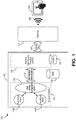
- Figure 1 illustrates an exemplary embodiment of an avionics system 100 comprising a processor 105 with an avionics partition 110 having a plurality of certified on-board avionics control functions 115A, 115B in communication with a corresponding data access component (DAC) 120.
- the avionics partition 110 is in communication with ADAF 125 having an avionics data access database (ADADB) 140, via a suitable inter-partition communication link 130.
- ADAF 125 is implemented using a DO178C DAL E partition, and the inter-partition communication link 130 comprises an A653 port, shared memory, or another suitable communication means.
- the processor 105 further comprises a random access memory (RAM) 135.
- the avionics system 100 further comprises a gateway 145 in communication with the processor 105 via an avionics bus 150.
- the gateway 145 is in communication with one or more uncertified computing devices 155 via a suitable communication link 160, such as a wireless communication link.
- ADAF 125 resides along with the certified avionics control functions 115 of interest, e.g., flight management system (FMS), in the same processor card, sharing the same processor 105.
- the uncertified computing device(s) 155 host one or more remote client applications that are complementary to primary cockpit systems and have minimal impact on the real-time operation of the FMS.
- the uncertified computing device(s) 155 may host applications such as an EFB flight planning app, a weather app that retrieves FMS flight plan data, etc.
- ADAF 125 establishes a protocol with the certified avionics control functions 115 to fetch data from the certified avionics control functions 115.
- ADAF 125 also establishes a protocol with one or more external applications hosted in the uncertified computing device 155, or remote client, via the gateway 145.
- ADADB 140 acts as a core configuration file used by ADAF 125 to determine parameters such as: (a) what data is to be given; (b) which client is to be given data; (c) what rate the data is to be given; (d) which format to provide the data; (e) how much can the data be given; and (f) when to start and stop the data transmission.
- ADAF 125 provides a user interface in which data is made available to remote client applications in a number of different data sets. While the remote clients may have read access to the data sets, in some cases ADAF 125 will not support changes to FMS data.
- ADAF 125 governs access to data sets in accordance with parameters saved in ADADB 140. For example, a first parameter X may establish a number of different FPLN data sets remote clients can access, a second parameter Y may establish a number of different non-FPLN data sets remote clients can access, and a third parameter Z may establish a periodic rate at which remote clients can access such data sets.
- parameters X, Y and Z can advantageously be defined based on factors such as the capability of the hardware, FMS, etc., so as not to negatively impact the FMS operation.
- the ADAF 125 will respond with a meaningful message indicating that data is not available.
- ADAF 125 is built using software product line (SPL) architecture, which advantageously enables it to have a number of plug-and-play components that can be used to quickly build a new solution for new configurations with new features, such as hardware, operating system (OS), bus, clients, algorithms, etc.
- SPL software product line
- ADAF 125 can be built using a variety of other suitable architectures aside from SPL.
- ADAF may provide a number of distinct and advantageous features over existing systems and methods.
- ADAF may provide a data source abstraction feature, which makes data available to a client from one or more sources, which are abstracted from the client.
- ADAF can choose the data from a number of sources, such as: (a) avionics bus or avionics output port - the data is made available into the bus/port by the avionics; ADAF can consume the data and send to the client; (b) shared memory - the data is made available in a shared memory region; ADAF can read the required data and send to the client; (c) NVM - the data is made available in a NVM; ADAF can read the required data and send to the client; (d) internal data - the data is made available by a client/server protocol between ADAF and the avionics; ADAF acts as the server while the avionics acts as the client; (e) aircraft database data - there are several databases loaded into the avionics.
- ADAF may provide APIs to provide data in various standard formats, such as A834, FIXM, etc.
- ADAF may also support multiple mechanisms of data transactions such as periodic, event-driven, request-driven, etc.
- ADAF can allow client applications to subscribe to one or more data events for a given data, e.g., which event should trigger a transmission.
- ADAF may be configuration driven, meaning the subscription list for data and the client data needs may vary from program to program, avionics to avionics, airliner to airliner, client to client, etc.
- ADAF can allow these data attributes to be configured via a separate loadable file, ADADB.
- ADAF can acquire data from more than one avionics application and can be application-independent, meaning that ADAF can blend data from multiple avionics along with other data sources while compiling one data set. ADAF can also protect the avionics from too frequent data requests from rogue client applications by, for example, maintaining the rate at which avionics can be accessed, or caching the response for a given request and providing the cached responses to multiple clients or repeat requestors.
- ADAF 125 may provide a bus abstraction feature, which enables connections with remote client apps on one or more uncertified computing devices 155 over a variety of buses, such as Ethernet, ASCB, AFDX, A429, RS232, etc.
- ADAF 125 also may provide an OS abstraction feature, which enables the avionics system 100 to operate a variety of host operating systems, such as Windriver VxWorks, DEOS, APEX, etc.
- ADAF 125 also may provide an avionics variation abstraction feature, which enables ADAF 125 to take data from a number of different aircraft baselines, such as A320, A340, A350, A380, B747, B777x, B757, E2, ERJ, G450, G650, DF7X, etc.
- ADAF 125 may support a variety of data formats for remote client apps, such as JSON, XML, raw binary, FIXM, etc.
- ADAF 125 also may provide a data standardization feature, which enables raw data from certified avionics control function(s) 115 to be converted to a standard format using data collection, data filtering, and/or data formatting in ADAF 125.
- ADAF 125 also may provide a data access mechanism, which enables data to be transmitted periodically or on a demand-driven or event-driven basis. ADAF 125 also may provide data compression and/or data encryption features, which enable data to be compressed and/or encrypted before transmission. In addition, ADAF 125 may provide protocol management for a variety of communications protocols, such as TCP/IP, TFTP, A834, custom protocols, etc. ADAF 125 also may provide a number of data accounting algorithms. ADAF 125 also may enable efficient client management using caching techniques. ADAF 125 also may provide a data collection mechanism, which enables data to be collected directly from the avionics, or from the bus 150, or from the non-volatile memory.
- an avionics system 200 comprises a first processor card 205A with an avionics partition 210 having a plurality of certified on-board avionics control functions 215A, 215B in communication with a DAC 220.
- the avionics system 200 further comprises a second processor card 205B hosting ADAF 225 with ADADB 240, as well as a gateway 245 in communication with an uncertified computing device 255 via a suitable communication link 260, such as a wireless communication link.
- ADAF 225 is in communication with both avionics partition 210 and gateway 245 via avionics bus 250.
- ADAF 225 performs similar functions in avionics system 200 as ADAF 125 described above in connection with Figure 1 .
- ADAF 225 communicates with certified onboard avionics control function(s) 215, such as FMS, via avionics bus 250, and thus may exhibit somewhat slower response time to remote client applications.
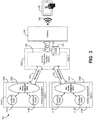
- FIG 3 illustrates an alternative embodiment of an avionics system 300, in which ADAF 325 can fetch data from multiple avionics for one or more remote client applications.
- avionics system 300 comprises a first processor card 305A with a first avionics partition 310A having a plurality of certified on-board avionics control functions 315A, 315B in communication with a first DAC 320A.
- the avionics system 300 further comprises a second processor card 305B with a second avionics partition 310B having a plurality of certified on-board avionics control functions 315C, 315D in communication with a second DAC 320B.
- the avionics system 300 further comprises a third processor card 305C hosting ADAF 325 with ADADB 340, as well as a gateway 345 in communication with an uncertified computing device 355 via a suitable communication link 360, such as a wireless communication link.
- ADAF 325 is in communication with avionics partitions 310A, 310B and gateway 345 via avionics bus 350.
- ADAF 325 performs similar functions in avionics system 300 as ADAF 125 described above in connection with Figure 1 .
- ADAF 325 communicates with certified onboard avionics control function(s) 315, such as FMS, via avionics bus 350, and thus may exhibit somewhat slower response time to remote client applications.
- ADAF may exhibit a number of distinct advantages over existing systems and methods.
- ADAF may comprise a space and time partitioned process dedicated to get and/or set the internal data of one or more associated avionics applications.
- ADAF may be application-independent, i.e., ADAF need not be tied down to a particular avionics application.
- ADAF can also simultaneously connect with more than one avionics application.
- ADAF may provide data in various standard formats such as JSON, XML, A834, FIXM, etc.
- ADAF can support different clients simultaneously of different DAL each.
- ADAF can control the access to a server application, deciding the rate a data request can be posted to the server application, regardless of the rate at which the client has requested.
- ADAF can also provide response data buffering, i.e., for a given request, the response is buffered for a given time period after which another response is acquired from the server application, ensuring that redundant requests from the client are handled without any impact to the server application.
- ADAF can be driven by a loadable configuration file giving the information on what parameter the user needs, at what rate, what format, when it has to be triggered, etc.
- the loadable configuration file can be tailored and loaded without a need to change the loaded software.
- ADAF can also support different kinds of transmission of parameters, such as periodic, aperiodic, event driven, data volume based (restricted by the number of bytes that could be transmitted), etc.
- ADAF can also advantageously enable users to transfer dynamic trigger or filter algorithms during run time.
- ADAF can enable users to acquire data from various avionics databases loaded into the avionics bay.
- ADAF also allows application-specific processing logic to be loaded as a separate entity, e.g., DLL, SPL component, etc., so that the design can work with various kinds of avionics.
- ADAF can be placed: (a) in the same box or LRM as that of the server avionics application, (b) in the same avionics bus network but in a different box or LRM, or (c) out of the avionics bus network, e.g., in a remote client, etc.
- ADAF can work in "split" mode, in which a first ADAF component is hosted in the same box, LRM or card as the avionic server application is running, while a second ADAF component is hosted in the same box, LRM or remote client in which a client application is running.
- a system comprises an aircraft having a processor with one or more certified on-board avionics control functions configured to control the operation of the aircraft, each such certified on-board avionics control function having a corresponding data access component.
- the system further comprises one or more uncertified computing devices, each such uncertified computing device having one or more uncertified client applications configured to communicate with the certified on-board avionics control function(s); and an avionics data access function (ADAF) located on-board the aircraft, in communication with the data access component(s) and with the uncertified client application(s).
- the ADAF is configured to control access to the certified on-board avionics control function(s) through the corresponding data access component(s).
- the ADAF is further configured to enable bi-directional communications between the certified on-board avionics control function(s) and the uncertified client application(s) by converting data transmitted from a uncertified client application to a certified on-board avionics control function to a first suitable communications protocol, by converting data transmitted from the certified on-board avionics control function to the uncertified client application to a second suitable communications protocol, and by obtaining data requested by the uncertified client application from one or more available data sources such that the data source(s) are abstracted from the uncertified client application.
- the available data sources may comprise one or more avionics control functions via their respective data access components, one or more avionics port or bus data, one or more shared memories, one or more avionics non-volatile memories, or one or more avionics databases.
- the ADAF may be configured to select one or more data sources based on a loadable configuration database.
- the system may further comprise a gateway in communication with the ADAF via an avionics bus and with the uncertified computing device(s) via a wireless communication link.
- the ADAF may be built using software product line (SPL) architecture.
- the ADAF may be configured to provide data in one or more standard formats, such as A834, FIXM, JSON, XML, or raw binary.
- the ADAF may be configured to support periodic data transactions, event-driven data transactions, or request-driven data transactions.
- the ADAF may be configured to enable connections with uncertified client application(s) over one or more of the following buses: Ethernet, ASCB, AFDX, A429, or RS232.
- the ADAF may be configured to operate on one or more of the following host operating systems: Windriver VxWorks, DEOS, or APEX.
- the system may further comprise a random access memory.
- the ADAF may be configured to compress or encrypt data before transmission.
- the ADAF may be configured to provide protocol management for one or more of the following communications protocols: TCP/IP, TFTP, or A834.
- a system comprises an aircraft having a first processor card comprising one or more certified on-board avionics control functions configured to control the operation of the aircraft, each such certified on-board avionics control function having a corresponding data access component.
- the system further comprises one or more uncertified computing devices, each such uncertified computing device having one or more uncertified client applications configured to communicate with the certified on-board avionics control function(s); and a second processor card comprising an avionics data access function (ADAF) located on-board the aircraft, in communication with the data access component(s) and with the uncertified client application(s).
- the ADAF is configured to control access to the certified on-board avionics control function(s) through the corresponding data access component(s).
- the ADAF is further configured to enable bi-directional communications between the certified on-board avionics control function(s) and the uncertified client application(s) by converting data transmitted from a uncertified client application to a certified on-board avionics control function to a first suitable communications protocol, by converting data transmitted from the certified on-board avionics control function to the uncertified client application to a second suitable communications protocol, and by obtaining data requested by the uncertified client application from one or more available data sources such that the data source(s) are abstracted from the uncertified client application.
- the available data sources may comprise one or more avionics control functions via their respective data access components, one or more avionics port or bus data, one or more shared memories, one or more avionics non-volatile memories, or one or more avionics databases.
- the ADAF may be configured to select one or more data sources based on a loadable configuration database.
- the system may further comprise a gateway in communication with the ADAF via an avionics bus and with the uncertified computing device(s) via a wireless communication link.
- a system comprises an aircraft having a first processor card comprising one or more certified on-board avionics control functions configured to control the operation of the aircraft, each such certified on-board avionics control function having a corresponding data access component; and a second processor card comprising one or more certified on-board avionics control functions configured to control the operation of the aircraft, each such certified on-board avionics control function having a corresponding data access component.
- the system further comprises one or more uncertified computing devices, each such uncertified computing device having one or more uncertified client applications configured to communicate with the certified on-board avionics control function(s); and a third processor card comprising an avionics data access function (ADAF) located on-board the aircraft, in communication with the data access component(s) and with the uncertified client application(s).
- ADAF avionics data access function
- the ADAF is configured to control access to the certified on-board avionics control function(s) through the corresponding data access component(s).
- the ADAF is further configured to enable bi-directional communications between the certified on-board avionics control function(s) and the uncertified client application(s) by converting data transmitted from a uncertified client application to a certified on-board avionics control function to a first suitable communications protocol, by converting data transmitted from the certified on-board avionics control function to the uncertified client application to a second suitable communications protocol, and by obtaining data requested by the uncertified client application from one or more available data sources such that the data source(s) are abstracted from the uncertified client application.
- the available data sources may comprise one or more avionics control functions via their respective data access components, one or more avionics port or bus data, one or more shared memories, one or more avionics non-volatile memories, or one or more avionics databases.
- the ADAF may be configured to select one or more data sources based on a loadable configuration database.
- the system may further comprise a gateway in communication with the ADAF via an avionics bus and with the uncertified computing device(s) via a wireless communication link.
Landscapes
- Engineering & Computer Science (AREA)
- Software Systems (AREA)
- General Physics & Mathematics (AREA)
- Physics & Mathematics (AREA)
- Theoretical Computer Science (AREA)
- Computer Networks & Wireless Communication (AREA)
- Signal Processing (AREA)
- Aviation & Aerospace Engineering (AREA)
- General Engineering & Computer Science (AREA)
- Medical Informatics (AREA)
- General Health & Medical Sciences (AREA)
- Computing Systems (AREA)
- Health & Medical Sciences (AREA)
- Automation & Control Theory (AREA)
- Computer And Data Communications (AREA)
- Information Transfer Between Computers (AREA)
Applications Claiming Priority (2)
| Application Number | Priority Date | Filing Date | Title |
|---|---|---|---|
| US201862606154P | 2018-04-09 | 2018-04-09 | |
| US15/952,190 US20190312935A1 (en) | 2018-04-09 | 2018-04-12 | Avionics data access function |
Publications (1)
| Publication Number | Publication Date |
|---|---|
| EP3553654A1 true EP3553654A1 (de) | 2019-10-16 |
Family
ID=66334150
Family Applications (1)
| Application Number | Title | Priority Date | Filing Date |
|---|---|---|---|
| EP19167712.9A Ceased EP3553654A1 (de) | 2018-04-09 | 2019-04-05 | Avionik-datenzugriffsfunktion |
Country Status (3)
| Country | Link |
|---|---|
| US (1) | US20190312935A1 (de) |
| EP (1) | EP3553654A1 (de) |
| CN (1) | CN110361990A (de) |
Cited By (1)
| Publication number | Priority date | Publication date | Assignee | Title |
|---|---|---|---|---|
| EP3910438A1 (de) | 2020-05-12 | 2021-11-17 | AIRBUS HELICOPTERS DEUTSCHLAND GmbH | Steuerungs- und überwachungsvorrichtung für ein fahrzeug |
Families Citing this family (11)
| Publication number | Priority date | Publication date | Assignee | Title |
|---|---|---|---|---|
| US11792278B2 (en) * | 2016-09-30 | 2023-10-17 | Vmware, Inc. | Resolving conflicts of application runtime dependencies |
| US20200348148A1 (en) * | 2019-04-30 | 2020-11-05 | Honeywell International Inc. | System and method for rendering dynamic data and controlling the visual form of the data on a cockpit display without altering the certified software |
| US20210130005A1 (en) * | 2019-10-31 | 2021-05-06 | Ge Aviation Systems Llc | Method and system to abstract data from an avionics device |
| US11763685B2 (en) | 2020-02-28 | 2023-09-19 | Ge Aviation Systems Llc | Directing and communicating data to a flight management system |
| US11334235B2 (en) | 2020-02-28 | 2022-05-17 | Ge Aviation Systems Llc | Comparison interface for navigation data |
| US11698794B2 (en) * | 2020-09-02 | 2023-07-11 | Ge Aviation Systems Llc | Systems and method for flexible access of a regulated system |
| DE102022117644A1 (de) * | 2022-07-14 | 2024-01-25 | Recaro Aircraft Seating Gmbh & Co. Kg | Flugzeugsitzsteuereinheit |
| US12470404B2 (en) | 2023-07-31 | 2025-11-11 | Honeywell International Inc. | Systems and methods for performing certain communication functions in a non-certified computer |
| EP4503673A1 (de) * | 2023-07-31 | 2025-02-05 | Honeywell International Inc. | Systeme und verfahren zur durchführung bestimmter kommunikationsfunktionen in einem nicht zertifizierten computer |
| US12497194B2 (en) * | 2023-09-29 | 2025-12-16 | General Electric Company | Aircraft monitoring system |
| DE102024000581B4 (de) * | 2024-02-23 | 2025-09-04 | Diehl Defence Gmbh & Co. Kg | Verfahren zum Betrieb eines Luftkampfsystems |
Citations (3)
| Publication number | Priority date | Publication date | Assignee | Title |
|---|---|---|---|---|
| US20080037453A1 (en) * | 2006-08-08 | 2008-02-14 | Arinc Incorporated | Systems and methods for facilitating communication between transceivers using different protocols |
| WO2013013243A1 (en) * | 2011-07-21 | 2013-01-24 | John Uczekaj | Avionics gateway interface, systems and methods |
| US20180007137A1 (en) * | 2016-06-30 | 2018-01-04 | Panasonic Avionics Corporation | Conversion of aircraft data over wireless networks for flight deck and cabin airline applications |
Family Cites Families (15)
| Publication number | Priority date | Publication date | Assignee | Title |
|---|---|---|---|---|
| US5828893A (en) * | 1992-12-24 | 1998-10-27 | Motorola, Inc. | System and method of communicating between trusted and untrusted computer systems |
| US6401013B1 (en) * | 2000-07-11 | 2002-06-04 | Rockwell Collins, Inc. | Method and system for integrating a laptop PC in a cockpit |
| US7756145B2 (en) * | 2005-12-02 | 2010-07-13 | The Boeing Company | Methods and apparatus providing an airborne e-enabled architecture as a system of systems |
| FR2907758B1 (fr) * | 2006-10-26 | 2009-05-15 | Airbus France Sa | Dispositif d'integration d'un ordinateur portable dans un cockpit d'avion |
| US20080229416A1 (en) * | 2007-01-09 | 2008-09-18 | G. K. Webb Services Llc | Computer Network Virus Protection System and Method |
| FR2917206B1 (fr) * | 2007-06-06 | 2009-12-25 | Airbus France | Systeme embarque de controle d'acces pour une communication du domaine ouvert vers le domaine avionique. |
| US7729263B2 (en) * | 2007-08-08 | 2010-06-01 | Honeywell International Inc. | Aircraft data link network routing |
| US20090058682A1 (en) * | 2007-08-27 | 2009-03-05 | Honeywell International Inc. | Aircraft data network access for personal electronic devices |
| FR2937487B1 (fr) * | 2008-10-22 | 2010-11-26 | Airbus France | Dispositif et procede de communication entre un systeme informatique portable et des equipements avioniques |
| US8364328B2 (en) * | 2011-04-14 | 2013-01-29 | Hedrick Geoffrey S M | Avionics data entry devices |
| US20130305391A1 (en) * | 2012-05-14 | 2013-11-14 | Rosemount Aerospace, Inc. | Common Computing Apparatus Providing Distinct Non-Certified And Certified Computing Platforms |
| US9337953B1 (en) * | 2012-09-24 | 2016-05-10 | Rockwell Collins, Inc. | Smart device for controlling avionics data transfer apparatus and method |
| US9694903B2 (en) * | 2013-06-27 | 2017-07-04 | Airbus Operations (Sas) | Secure aircraft-based mobile device connectivity systems and methods |
| US9284045B1 (en) * | 2014-03-28 | 2016-03-15 | Garmin International, Inc. | Connected cockpit system and method |
| US10362035B1 (en) * | 2016-07-22 | 2019-07-23 | Rockwell Collins, Inc. | Secured communications using avionics power bus network |
-
2018
- 2018-04-12 US US15/952,190 patent/US20190312935A1/en not_active Abandoned
-
2019
- 2019-03-27 CN CN201910242024.0A patent/CN110361990A/zh active Pending
- 2019-04-05 EP EP19167712.9A patent/EP3553654A1/de not_active Ceased
Patent Citations (3)
| Publication number | Priority date | Publication date | Assignee | Title |
|---|---|---|---|---|
| US20080037453A1 (en) * | 2006-08-08 | 2008-02-14 | Arinc Incorporated | Systems and methods for facilitating communication between transceivers using different protocols |
| WO2013013243A1 (en) * | 2011-07-21 | 2013-01-24 | John Uczekaj | Avionics gateway interface, systems and methods |
| US20180007137A1 (en) * | 2016-06-30 | 2018-01-04 | Panasonic Avionics Corporation | Conversion of aircraft data over wireless networks for flight deck and cabin airline applications |
Cited By (1)
| Publication number | Priority date | Publication date | Assignee | Title |
|---|---|---|---|---|
| EP3910438A1 (de) | 2020-05-12 | 2021-11-17 | AIRBUS HELICOPTERS DEUTSCHLAND GmbH | Steuerungs- und überwachungsvorrichtung für ein fahrzeug |
Also Published As
| Publication number | Publication date |
|---|---|
| CN110361990A (zh) | 2019-10-22 |
| US20190312935A1 (en) | 2019-10-10 |
Similar Documents
| Publication | Publication Date | Title |
|---|---|---|
| EP3553654A1 (de) | Avionik-datenzugriffsfunktion | |
| US6275767B1 (en) | Method for implementing an air traffic service unit | |
| US11164465B2 (en) | Real-time identification and provision of preferred flight parameters | |
| US8700298B2 (en) | Tailored arrivals allocation system clearance generator | |
| CN104670509A (zh) | 航空电子系统,特别是飞行器的飞行管理系统 | |
| CN111447251A (zh) | 用于使用边缘计算来收集、监测并分析来自多个车辆的车辆数据的系统和方法 | |
| EP3618400B1 (de) | Systeme und verfahren zur kontextbewussten netzwerknachrichtenfilterung | |
| US10417261B2 (en) | Systems and methods for flexible access of internal data of an avionics system | |
| US10554755B2 (en) | Aircraft data interface function implementation using aircraft condition monitoring function and data gathering application architecture | |
| CN101989945A (zh) | 用于飞机的通信网络 | |
| US9986036B2 (en) | Apparatus and method of operating a system | |
| US12505749B2 (en) | Systems and methods for bi-directional communication between one or more vehicles and a cloud based computing system | |
| US20120191830A1 (en) | Avionic data communication management arrangement | |
| CN117272236B (zh) | 一种基于航班时序的多来源预达时间融合方法及系统 | |
| US20200250995A1 (en) | System and method for flight delay prevention in real-time | |
| CN103927406B (zh) | 用于驾驶具有性能函数服务器的飞行器的系统和飞行器 | |
| DE112021008546T5 (de) | Verfahren, systeme, herstellungsartikel und einrichtungen zur arbeitslastkomplexitätsschätzung | |
| EP4236267B1 (de) | Konfigurationswerkzeug in einem avioniksystem | |
| US12617547B2 (en) | Offboard graphics rendering gateway via avionics full duplex ethernet for a cockpit display system | |
| WO2023107939A1 (en) | Systems and methods for bi-directional communication between one or more vehicles and a cloud based computing | |
| US20260121848A1 (en) | Avionics-based control of an open world data interface | |
| Fu et al. | A Health Management Platform Architecture Design for Civil Aircraft | |
| WO2026054796A2 (en) | Offboard graphics rendering gateway via avionics full duplex ethernet for a cockpit display system | |
| Jha et al. | Framework and platform for next generation aircraft health management system | |
| CN113849710A (zh) | 用于管理飞行器的数据的方法、系统和介质 |
Legal Events
| Date | Code | Title | Description |
|---|---|---|---|
| PUAI | Public reference made under article 153(3) epc to a published international application that has entered the european phase |
Free format text: ORIGINAL CODE: 0009012 |
|
| STAA | Information on the status of an ep patent application or granted ep patent |
Free format text: STATUS: THE APPLICATION HAS BEEN PUBLISHED |
|
| AK | Designated contracting states |
Kind code of ref document: A1 Designated state(s): AL AT BE BG CH CY CZ DE DK EE ES FI FR GB GR HR HU IE IS IT LI LT LU LV MC MK MT NL NO PL PT RO RS SE SI SK SM TR |
|
| AX | Request for extension of the european patent |
Extension state: BA ME |
|
| STAA | Information on the status of an ep patent application or granted ep patent |
Free format text: STATUS: REQUEST FOR EXAMINATION WAS MADE |
|
| 17P | Request for examination filed |
Effective date: 20191024 |
|
| RBV | Designated contracting states (corrected) |
Designated state(s): AL AT BE BG CH CY CZ DE DK EE ES FI FR GB GR HR HU IE IS IT LI LT LU LV MC MK MT NL NO PL PT RO RS SE SI SK SM TR |
|
| STAA | Information on the status of an ep patent application or granted ep patent |
Free format text: STATUS: EXAMINATION IS IN PROGRESS |
|
| 17Q | First examination report despatched |
Effective date: 20200623 |
|
| STAA | Information on the status of an ep patent application or granted ep patent |
Free format text: STATUS: THE APPLICATION HAS BEEN REFUSED |
|
| 18R | Application refused |
Effective date: 20210923 |
|
| P01 | Opt-out of the competence of the unified patent court (upc) registered |
Effective date: 20230525 |