EP3553571A1 - Appareil de prévisions météorologiques et procédé - Google Patents
Appareil de prévisions météorologiques et procédé Download PDFInfo
- Publication number
- EP3553571A1 EP3553571A1 EP19168706.0A EP19168706A EP3553571A1 EP 3553571 A1 EP3553571 A1 EP 3553571A1 EP 19168706 A EP19168706 A EP 19168706A EP 3553571 A1 EP3553571 A1 EP 3553571A1
- Authority
- EP
- European Patent Office
- Prior art keywords
- instant
- weather
- building
- predictive
- activation
- Prior art date
- Legal status (The legal status is an assumption and is not a legal conclusion. Google has not performed a legal analysis and makes no representation as to the accuracy of the status listed.)
- Granted
Links
Images





Classifications
-
- F—MECHANICAL ENGINEERING; LIGHTING; HEATING; WEAPONS; BLASTING
- F24—HEATING; RANGES; VENTILATING
- F24F—AIR-CONDITIONING; AIR-HUMIDIFICATION; VENTILATION; USE OF AIR CURRENTS FOR SCREENING
- F24F11/00—Control or safety arrangements
- F24F11/62—Control or safety arrangements characterised by the type of control or by internal processing, e.g. using fuzzy logic, adaptive control or estimation of values
- F24F11/63—Electronic processing
-
- G—PHYSICS
- G05—CONTROLLING; REGULATING
- G05B—CONTROL OR REGULATING SYSTEMS IN GENERAL; FUNCTIONAL ELEMENTS OF SUCH SYSTEMS; MONITORING OR TESTING ARRANGEMENTS FOR SUCH SYSTEMS OR ELEMENTS
- G05B13/00—Adaptive control systems, i.e. systems automatically adjusting themselves to have a performance which is optimum according to some preassigned criterion
- G05B13/02—Adaptive control systems, i.e. systems automatically adjusting themselves to have a performance which is optimum according to some preassigned criterion electric
- G05B13/04—Adaptive control systems, i.e. systems automatically adjusting themselves to have a performance which is optimum according to some preassigned criterion electric involving the use of models or simulators
- G05B13/048—Adaptive control systems, i.e. systems automatically adjusting themselves to have a performance which is optimum according to some preassigned criterion electric involving the use of models or simulators using a predictor
-
- F—MECHANICAL ENGINEERING; LIGHTING; HEATING; WEAPONS; BLASTING
- F24—HEATING; RANGES; VENTILATING
- F24F—AIR-CONDITIONING; AIR-HUMIDIFICATION; VENTILATION; USE OF AIR CURRENTS FOR SCREENING
- F24F11/00—Control or safety arrangements
- F24F11/30—Control or safety arrangements for purposes related to the operation of the system, e.g. for safety or monitoring
-
- F—MECHANICAL ENGINEERING; LIGHTING; HEATING; WEAPONS; BLASTING
- F24—HEATING; RANGES; VENTILATING
- F24F—AIR-CONDITIONING; AIR-HUMIDIFICATION; VENTILATION; USE OF AIR CURRENTS FOR SCREENING
- F24F11/00—Control or safety arrangements
- F24F11/30—Control or safety arrangements for purposes related to the operation of the system, e.g. for safety or monitoring
- F24F11/46—Improving electric energy efficiency or saving
-
- F—MECHANICAL ENGINEERING; LIGHTING; HEATING; WEAPONS; BLASTING
- F24—HEATING; RANGES; VENTILATING
- F24F—AIR-CONDITIONING; AIR-HUMIDIFICATION; VENTILATION; USE OF AIR CURRENTS FOR SCREENING
- F24F11/00—Control or safety arrangements
- F24F11/50—Control or safety arrangements characterised by user interfaces or communication
- F24F11/56—Remote control
- F24F11/57—Remote control using telephone networks
-
- F—MECHANICAL ENGINEERING; LIGHTING; HEATING; WEAPONS; BLASTING
- F24—HEATING; RANGES; VENTILATING
- F24F—AIR-CONDITIONING; AIR-HUMIDIFICATION; VENTILATION; USE OF AIR CURRENTS FOR SCREENING
- F24F11/00—Control or safety arrangements
- F24F11/50—Control or safety arrangements characterised by user interfaces or communication
- F24F11/56—Remote control
- F24F11/58—Remote control using Internet communication
-
- F—MECHANICAL ENGINEERING; LIGHTING; HEATING; WEAPONS; BLASTING
- F24—HEATING; RANGES; VENTILATING
- F24F—AIR-CONDITIONING; AIR-HUMIDIFICATION; VENTILATION; USE OF AIR CURRENTS FOR SCREENING
- F24F11/00—Control or safety arrangements
- F24F11/62—Control or safety arrangements characterised by the type of control or by internal processing, e.g. using fuzzy logic, adaptive control or estimation of values
- F24F11/63—Electronic processing
- F24F11/65—Electronic processing for selecting an operating mode
-
- G—PHYSICS
- G01—MEASURING; TESTING
- G01W—METEOROLOGY
- G01W1/00—Meteorology
- G01W1/10—Devices for predicting weather conditions
-
- G—PHYSICS
- G05—CONTROLLING; REGULATING
- G05B—CONTROL OR REGULATING SYSTEMS IN GENERAL; FUNCTIONAL ELEMENTS OF SUCH SYSTEMS; MONITORING OR TESTING ARRANGEMENTS FOR SUCH SYSTEMS OR ELEMENTS
- G05B19/00—Programme-control systems
- G05B19/02—Programme-control systems electric
- G05B19/04—Programme control other than numerical control, i.e. in sequence controllers or logic controllers
- G05B19/048—Monitoring; Safety
-
- F—MECHANICAL ENGINEERING; LIGHTING; HEATING; WEAPONS; BLASTING
- F24—HEATING; RANGES; VENTILATING
- F24F—AIR-CONDITIONING; AIR-HUMIDIFICATION; VENTILATION; USE OF AIR CURRENTS FOR SCREENING
- F24F2110/00—Control inputs relating to air properties
- F24F2110/10—Temperature
- F24F2110/12—Temperature of the outside air
-
- F—MECHANICAL ENGINEERING; LIGHTING; HEATING; WEAPONS; BLASTING
- F24—HEATING; RANGES; VENTILATING
- F24F—AIR-CONDITIONING; AIR-HUMIDIFICATION; VENTILATION; USE OF AIR CURRENTS FOR SCREENING
- F24F2130/00—Control inputs relating to environmental factors not covered by group F24F2110/00
- F24F2130/10—Weather information or forecasts
-
- F—MECHANICAL ENGINEERING; LIGHTING; HEATING; WEAPONS; BLASTING
- F24—HEATING; RANGES; VENTILATING
- F24F—AIR-CONDITIONING; AIR-HUMIDIFICATION; VENTILATION; USE OF AIR CURRENTS FOR SCREENING
- F24F2140/00—Control inputs relating to system states
- F24F2140/50—Load
-
- F—MECHANICAL ENGINEERING; LIGHTING; HEATING; WEAPONS; BLASTING
- F24—HEATING; RANGES; VENTILATING
- F24F—AIR-CONDITIONING; AIR-HUMIDIFICATION; VENTILATION; USE OF AIR CURRENTS FOR SCREENING
- F24F2140/00—Control inputs relating to system states
- F24F2140/60—Energy consumption
-
- Y—GENERAL TAGGING OF NEW TECHNOLOGICAL DEVELOPMENTS; GENERAL TAGGING OF CROSS-SECTIONAL TECHNOLOGIES SPANNING OVER SEVERAL SECTIONS OF THE IPC; TECHNICAL SUBJECTS COVERED BY FORMER USPC CROSS-REFERENCE ART COLLECTIONS [XRACs] AND DIGESTS
- Y02—TECHNOLOGIES OR APPLICATIONS FOR MITIGATION OR ADAPTATION AGAINST CLIMATE CHANGE
- Y02A—TECHNOLOGIES FOR ADAPTATION TO CLIMATE CHANGE
- Y02A90/00—Technologies having an indirect contribution to adaptation to climate change
- Y02A90/10—Information and communication technologies [ICT] supporting adaptation to climate change, e.g. for weather forecasting or climate simulation
Definitions
- the present disclosure relates in general to the sector of building climatization.
- the present disclosure concerns a weather-predictive apparatus and relative system that controls and modifies the operation of a climatization plant of a building using weather forecasts.
- Control devices are known for the activation/deactivation of climatization regulation plants in buildings of the industrial, public or domestic type; examples of plants are thermal power stations, refrigeration systems, HVAC systems, air conditioners, heat pumps.
- control devices are the thermostat placed inside homes or offices, having the function of maintaining the internal temperature close to a defined temperature value (for example equal to 20 °C), by means of monitoring the internal temperature values and possibly also the external temperature of the home or office.
- a defined temperature value for example equal to 20 °C
- the programmable thermostats also have the function of regulating the internal temperature of the building according to different time intervals (e.g. it is possible to set a different internal temperature value for every hour), by means of controlling the activation/deactivation of the climatization plant.
- control devices are electromechanical clocks, which allow the activation or deactivation of a climatization plant at predetermined times; for example in a building used as an office, they allow the activation of the plant at 5:00 and its deactivation at 19:00 every day.
- Control devices are known for the activation/deactivation of climatization plants of a building which consider (in addition to the building's internal temperature value and possibly its external temperature value) the past behaviour of the building, such as for example, the days/hours when the building is occupied by people and those in which it is not.
- Control devices are also known for the activation/deactivation of climatization plants of a building that consider historical data relating to past climate conditions of the area where the building is located.
- US 2018/058710 A1 discloses the use of weather forecasts for calculating a change of the set point of the internal temperature of a building, in particular using a variable hysteresis range (see Fig.3 ).
- US 2016/146497 A1 discloses prediction of the internal temperature of a building as a function of weather forecasts periodically updated.
- US 2017/082310 A1 discloses a system and method for determining a time instant for switching off a cooling apparatus based on forecast temperatures.
- the present invention relates to a dynamic weather-predictive apparatus for controlling a climatization plant for example of a building as defined in the enclosed claim 1 and the preferred embodiments thereof described in dependent claims 2 to 5.
- the basic idea is to manage a weather-energy forecast which uses data representative of weather forecasts in the short term (typically around 8-24-36 hours), to bidirectionally exchange weather-climate data and predictive weather data associated with the building (for example, its external temperature), continuously updating said weather-energy forecast (dynamic thermal profile) in the short term and periodically recalculating the instants of activation/deactivation of the building's climatization plant within the same short term, and modifying the operation of the climatization plant as a function of the continuously updated weather-energy forecast.
- data representative of weather forecasts in the short term typically around 8-24-36 hours
- predictive weather data associated with the building for example, its external temperature
- continuously updating said weather-energy forecast dynamic thermal profile
- the Applicant has perceived that the weather-predictive apparatus, the weather-predictive system and the control method according to the present disclosure optimize the operating dynamics of climatization plants as they perform a synchronized control with the evolution of weather phenomena, minimizing the time interval in which the climatization plant is in operation: in this way the consumption of electricity and fuel is reduced and at the same time a condition of well-being and comfort for users within the building is maintained.
- the weather-predictive apparatus, the weather-predictive system and the control method according to the present disclosure further have the advantage of not requiring the use of at least a part of the hysteresis levels, thus reducing the reaction time of the climatization plant.
- the weather-predictive apparatus, the weather-predictive system and the control method according to the present disclosure allow to obtain a trend of the internal temperature of the air-conditioned environment which is more steady (i.e. the presence of spikes is reduced), thus increasing the comfort of people inside the building.
- a weather-predictive system 1 for continuously controlling a climatization plant of a building according to the invention.
- climatization plants are central heating systems, refrigeration systems, HVAC systems, air conditioners, heat pumps, thermal plants.
- the weather-predictive control system 1 uses a continuous calibration mechanism of the thermal profile that uses the current measured value of weather-climate data associated with the building, considered for cyclically recalculating (for example, every hour or every 15 minutes) the same forecast weather-climate data in a time interval ⁇ t defined starting from the current instant (for example, every hour in the 8 or 24 or 36 hours following the current instant), wherein said forecast is performed by means of the weather forecast, using a physical-mathematical atmospheric model that takes into account the actual measured value of the weather-climate data associated with the building.
- predictive weather data associated with the building is intended as geolocalized and continuously updated predictive weather data through the interaction between the weather-predictive system and sensors present in the plant and/or the building.
- thermo profile is intended as a sequence of the weather forecast values associated with the considered building, such as the values of its external temperature.
- the forecast time interval value ⁇ t is chosen as a function of the time interval necessary to reach or exceed the nominal activation or deactivation instant.
- the forecast time interval value ⁇ t is defined at the configuration phase and is for example equal to 8 hours or 24 hours.
- the length of the weather-climate forecast data recalculation cycle is a parameter that can be configured and can be for example in the order of seconds, minutes (for example, 15 minutes) or hours (for example, 1 hour).
- the weather-climate data associated with the building are the external temperature T_ext of the building (current or an average calculated over a given time interval) and thus the weather-predictive control system 1 cyclically recalculates (for example, with a period of an hour) the external temperature T_ext_p external to the building foreseen in the forecast time interval ⁇ t starting from the current instant (for example, every hour during the 8 hours or 24 hours or 36 hours).
- the control system 1 has the function of suitably controlling the activation and deactivation of a climatization plant of a building of the domestic, public or industrial type, minimizing the time interval in which the climatization plant is in operation, so as to reduce the consumption of electricity and fuel and at the same time maintain a comfortable condition for the users within the building.
- the control system 1 comprises a weather-predictive apparatus 2, a network element 3 and a weather forecast device 4.
- the network element 3 is connected on one side to the weather-predictive apparatus 2 and on the other side to the weather forecast device 4.
- network element 3 belongs to a telecommunications network 5 that comprises a plurality of network elements having the function of interconnecting each other the weather-predictive apparatus 2 and the weather forecast device 4.
- the telecommunications network 5 can be of medium-long distance type or short distance type.
- the medium-long distance type telecommunications network 5 can be of the radio-mobile type (for example, the 2G, 3G, 4G type or subsequent), or mixed fixed- radiomobile type.
- the short distance telecommunications network 5 can be of the wireless type, such as WiFi or Bluetooth.
- the weather forecast device 4 has the function of continuously calculating the predictive weather data forecast in the short term and associated with the considered building in the area wherein it is located; for example, the weather forecast device 4 periodically calculates every hour (or every 15 minutes) the temperature external to the building foreseen in the 8 or 24 or 36 hours after the current instant.
- the weather forecast device 4 is for example a computer server, or a set of two or more computer servers connected to each other.
- the use of a separate weather forecast device 4 (from the weather-predictive apparatus 2) for the calculation of the weather forecasts has the advantage of concentrating the complex calculation needed to obtain the weather forecasts in one point; furthermore, the use of the separate weather forecast device 4 has the advantage of concentrating complex algorithms of the atmospheric model used for the calculation of these weather forecasts in one point.
- the weather forecast device 4 comprises a processing unit 4-1, a signal transceiver 4-2 and a database 4-3.
- the processing unit 4-1 is for example a microprocessor, an electrically programmable logic device, a FPGA (Field Programmable Gate Array) or a Application Specific Integrated Circuit (ASIC).
- a microprocessor for example a microprocessor, an electrically programmable logic device, a FPGA (Field Programmable Gate Array) or a Application Specific Integrated Circuit (ASIC).
- FPGA Field Programmable Gate Array
- ASIC Application Specific Integrated Circuit
- the signal transceiver 4-2 is configured to receive from the weather-predictive apparatus 2 the current measured value (i.e. in real time) of the weather-climate data associated with the considered building.
- the transceiver 4-2 can transmit/receive signals of a fixed type (for example, Ethernet) or, alternatively, of a wireless type at a short, medium or long distance (for example, WiFi or UMTS or LTE).
- a fixed type for example, Ethernet
- a wireless type for example, WiFi or UMTS or LTE
- the database 4-3 is configured to store data representative of the physical-mathematical model of the Earth's atmosphere, indicated hereinafter as "atmospheric model”.
- Atmospheric model is intended as a set of non-linear mathematical equations based on the conservation laws of physics that use current weather conditions (detected on the surface of the Earth and/or by means of satellites) to calculate the weather forecast in a subsequent instant of time in certain points in the space, by solving the above equations with numerical analysis techniques.
- a "time steps" procedure is carried out, according to which the current weather conditions are used to calculate, using the equations of the atmospheric model, a first weather forecast in a first short time interval (for example, around a few minutes); subsequently, the first weather forecast becomes the starting point for the equations of the atmospheric model and a second weather forecast is calculated for a second short time interval subsequent to the first time interval. This time steps calculation is repeated until the desired time instant of the weather forecast is reached.
- the processing unit 4-1 is configured to calculate continuously, depending on the current measured value of the weather-climate data associated with the considered building and of the short term weather forecasts obtained by means of the atmospheric model, predictive weather data forecast in the short term associated with the building in the area where it is located.
- the new weather forecast curves are used for redefining the new activation and deactivation time instants and/or the modulation of the climatization plant, thus the process continues in the same way for each time interval t i in a continuous way.
- the weather forecast is for example the forecast of the external temperature at a given point of the Earth (identified as latitude, longitude and height relative to the ground) at every hour for the 8 or 24 hours following the current instant.
- the weather forecasts are solar radiation, wind speed and direction, barometric pressure.
- the weather-climate data associated with the considered building include one or more among the following for example:
- the signal transceiver 4-2 is further configured to receive from the processing unit 4-1 the predictive weather data forecast in the short term associated with the considered building and to transmit said predictive weather data to the weather-predictive apparatus 2, crossing the network element 3.
- the weather-predictive apparatus 2 has the function of controlling the activation and deactivation of the climatization plant of the building as a function of the predictive weather data forecast in the short term.
- the weather-predictive apparatus 2 comprises a processing unit 2-1, a signal transceiver 2-4, a sensor 2-2 for the external temperature T_ext of the building and in particular a sensor 2-3 of the internal temperature T_int of the building.
- the processing unit 2-1 is for example a microprocessor, an electrically programmable logic device, a FPGA (Field Programmable Gate Array) or a Application Specific Integrated Circuit (ASIC).
- a microprocessor for example a microprocessor, an electrically programmable logic device, a FPGA (Field Programmable Gate Array) or a Application Specific Integrated Circuit (ASIC).
- FPGA Field Programmable Gate Array
- ASIC Application Specific Integrated Circuit
- the external temperature sensor 2-2 is configured to generate a signal S_T_ext representative of the current measured value of the temperature external to the considered building.
- an external temperature sensor of the building is considered, but alternatively (or in combination) it is possible to use other weather-climate and environmental data sensors associated with the building, such as an external humidity sensor, wind speed sensor, solar radiation sensor, rainfall sensor of atmospheric precipitation.
- the signal transceiver 2-4 is configured to transmit towards the weather forecast device 4 the current value (i.e. in real time) of the measured weather-climate data associated with the considered building, wherein said weather-climate data are for example the detected value of the external temperature T_ext of the building detected by the external temperature sensor 2-2, the detected value of the internal temperature T_int of the building detected by the internal temperature sensor 2-3, or weather-climate data detected by other sensors such as external humidity, wind speed, solar radiation, etc.
- the signal transceiver 2-4 is further configured to receive from the network element 3 data representative of the weather forecasts in the short term in the area wherein the specific building is located, then said short term weather forecast data are forwarded to the processing unit 2-1.
- the transceiver 2-4 can transmit/receive signals of a fixed type (for example, Ethernet) or, alternatively, of a wireless type at a short, medium or long distance (for example, WiFi or UMTS or LTE).
- a fixed type for example, Ethernet
- a wireless type for example, WiFi or UMTS or LTE
- the processing unit 2-1 of the weather-predictive apparatus 2 is configured to receive from the sensor 2-2 the signal representative of the current measured value of the external temperature T_ext of the building, is configured to receive from the transceiver 2-4 the predictive weather data forecast in the short term associated with the considered building, and is configured to generate, as a function of the current measured value of the weather-climate data associated with the building and at least part of the predictive weather data forecast in the short term, a change in a nominal activation instant and/or a change in a nominal deactivation instant of the climatization plant of the building.
- the processing unit 2-1 calculates said change in the nominal activation instant as a function of a plurality of predictive weather data values that comprise all the values up to the comprised nominal activation instant; furthermore, the processing unit 2-1 calculates said change in the nominal deactivation instant as a function of a plurality of predictive weather data values at instants which comprise all the values up to the comprised nominal deactivation instant.
- the processing unit 2-1 calculates said change in the nominal activation instant as a function of a plurality of predictive weather data values at instants which are both before the nominal activation instant and after the nominal activation instant; the processing unit 2-1 also calculates said change in the nominal deactivation instant as a function of a plurality of predictive weather data values at instants that are both before the nominal deactivation instant and after the nominal deactivation instant.
- the nominal activation instant is fixed at 6:00
- the weather-climate data and predictive weather data (for example, the external temperature of the building) have a granularity of 1 hour and at the current instant it is 23:00.
- the value of the forecast time interval ⁇ t is chosen as equal to 12 hours and thus 12 predictive weather data values are received at the instants 24:00, 1:00, 2:00, 3:00, 4:00, 5:00, 6:00, 7:00, 8:00, 9:00, 10:00, 11:00.
- the change in the nominal activation instant is calculated taking into account both the predictive weather data values at the instants 24:00, 1:00, 2:00, 3:00, 4:00, 5:00 which are before the nominal activation instant (6:00), and the predictive weather data values at the instants 7:00, 8:00, 9:00, 10:00, 11:00 which are after the nominal activation instant (6:00).
- the processing unit 2-1 is configured to generate a suitable command signal S_en for electrically controlling the activation and deactivation of the climatization plant of the building, as will be further explained in more detail.
- the predictive weather data are the value of the external temperature T_ext_p foreseen in the short term (value comprised between 8 and 24 hours) in the area wherein the specific building is located.
- said control of the activation or deactivation instant of the climatization plant of the building is carried out by means of the by-pass of the electro-mechanical clock or programmable thermostat already present in the climatization plant and by the opening or closing of a switch 7 (commonly referred to as contactor) that normally activates or deactivates the climatization plant of the building, as a function of the electrical connection between an alternating supply voltage VAC, and an internal supply voltage V_ic that supplies the climatization plant; therefore, the processing unit 2-1 is configured to generate the command signal S_en to close or open the switch 7 which respectively enables or disables the power supply to the climatization plant of the building.
- a switch 7 commonly referred to as contactor
- the switch 7 is positioned for example in the switchboard of the climatization plant and is configured to switch, as a function of the value of the command signal S_en, between a closed position in which it is such to supply power VAC (for example, voltage and alternating current) to the climatization plant and an open position in which it is such to interrupt the power supply to the climatization plant.
- VAC for example, voltage and alternating current
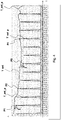
- the predictive external temperature values T_ext_p are calculated every hour, for example at 24:00, 1:00, 2:00... and so on until 12:00 and then up to 21:00.
- the weather-predictive system 1 continuously acquires (in the considered example every hour) the current value of the external temperature T_ext (measured by means of the temperature sensor 2-2) and continuously recalculates (by means of the weather forecast device 4) the forecast value of the external predictive temperature T_ext_p external to the building in a plurality of instants following the current instant, as will be further explained in more detail; thus the weather-predictive system 1 continuously recalculates (in the considered example every hour), as a function of the values of the differences between the current measured temperature and the forecast temperatures, the instant of activation and deactivation of the climatization plant.
- the nominal operating interval of the heating plant (programmed for example with an electro-mechanical clock) is comprised between 5:00 and 19:00, i.e. the heating plant should be activated at 5:00 and should be deactivated at 19:00.
- the actual operating interval of the heating system is comprised between 5:50 and 17:55, i.e. the heating plant is actually activated at 5:50 and is actually deactivated at 17:55, by means of the weather-predictive system 1 according to the invention.
- the weather-predictive system 1 has postponed the activation of the heating plant from 5:00 to 5:50 (i.e. a delay of 50 minutes) and has anticipated the deactivation of the heating plant from 19:00 to 17:55 (i.e. 65 minutes early), thus reducing the operating interval of the heating plant from 14 hours to 12 hours and 5 minutes: in this way the consumption of electricity and fuel is reduced, while simultaneously maintaining comfortable conditions for users inside the building.
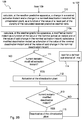
- the flow diagram 100 is shown of a method for the weather-predictive control of a climatization plant of a building according to the invention.
- the method is performed by means of the weather-predictive system 1, in particular it is performed in part by the weather-predictive apparatus 2 by means of a software program executed on the processing unit 2-1, in part by the weather forecast device 4 by means of another software program executed on the processing unit 4-1 and in part by the network element 3.
- the flow diagram 100 starts with step 101.
- step 101 the cycle continues to step 102, wherein the weather-predictive apparatus 2 acquires the current measured value of one or more weather-climate data associated with the building.
- the weather-climate data associated with the building are the external temperature T_ext of the building detected by the temperature sensor 2-2.
- step 102 the cycle continues to step 103 wherein the weather-predictive apparatus 2 transmits to the weather forecast device 4 the measured value of the weather-climate data associated with the building through the network element 5.
- step 104 the network element 3 receives the measured value of the weather-climate data associated with the building, thus the network element 3 transmits to the weather forecast device 4 the measured value of the weather-climate data associated with the building.
- step 104 the cycle continues to step 105 wherein the weather forecast device 4 receives the measured value of the weather-climate data associated with the building.
- step 106 the weather forecast device 4 calculates a plurality (i.e. at least two) of predictive weather data associated with the building in at least part of the forecast time interval, as a function of the measured value of the received weather-climate data associated with the building and as a function of the weather forecasts in a forecast time interval defined starting from the current instant.
- a plurality i.e. at least two
- step 106 said plurality of predictive weather data is calculated in time instants (for example, every hour or every 15 minutes) which are both before and after the nominal activation instant and nominal deactivation instant.
- the nominal activation instant is at 6:00
- the weather-climate data and predictive weather data have a granularity of 1 hour and at the current instant it is 23:00.
- the forecast time interval ⁇ t is chosen as equal to 12 hours, so that at 23:00 12 values are calculated of the predictive weather data at the instants 24:00, 1:00, 2:00, 3:00, 4:00, 5:00, 6:00, 7:00, 8:00, 9:00, 10:00, 11:00; the previous list includes both predictive weather data at the instants 24:00, 1:00, 2:00, 3:00, 4:00, 5:00 which are before the nominal activation instant (6:00), and the predictive weather data at the instants 7:00, 8:00, 9:00, 10:00, 11:00 which are after the nominal activation instant (6:00).
- said plurality of predictive weather data is periodic, i.e. two successive values are separated by a time interval equal to a period (for example, an hour or 15 minutes).
- the weather-climate data associated with the building are the value of its external temperature T_ext and the weather forecasts are a forecast of the temperature external to the building every hour in the 8 hours following the current instant which is supposed at 11:00 am: in step 106 a forecast is thus calculated of the external temperature T_ext of the building at 12:00, 13:00, 14:00, 15:00, 16:00, 17:00, 18:00, 19:00.
- step 106 the cycle continues to step 107 wherein the weather forecast device 4 transmits to the weather-predictive apparatus 2 through the network node 3, the plurality of calculated predictive weather data associated with the building.
- step 107 the cycle continues to step 108 wherein the network element 3 receives the plurality of calculated predictive weather data, thus the network element 3 transmits to the predictive-weather apparatus 2 the plurality of calculated predictive weather data.
- step 109 the weather-predictive apparatus 2 receives the plurality of calculated predictive weather data associated with the building.
- step 110 the weather-predictive apparatus 2 calculates a change in a nominal activation instant and a change in a nominal deactivation instant of the climatization plant of the building as a function of the value of at least part of the plurality of the calculated received predictive weather data.
- step 110 the calculation can take into account a plurality of predictive weather data values at instants that comprise all the values up to the nominal activation/deactivation instant; alternatively, in step 110 the calculation can consider a plurality of predictive weather data values at instants which are both before and after the nominal activation/deactivation instant.
- step 110 the value of the current activation instant of the climatization plant is calculated as a function of the difference ⁇ T ext between the measured value at the current instant of the weather-climate data associated with the building and at least a part of the predictive weather data values before and/or after the nominal activation instant.
- step 110 the cycle continues to step 110a, wherein the weather-predictive apparatus 2 calculates a modified activation instant as a function of the value of the nominal activation instant and of the value of said change in the nominal activation instant.
- the nominal activation instant is 6:00, while the actual calculated activation instant is 6:30, therefore in step 110 a change (delay) of 30 minutes was calculated.
- step 110 the value of the actual deactivation instant of the climatization plant is calculated as a function of the difference ⁇ T ext between the measured value of the weather-climate data at the current instant associated with the building and at least a part of the predictive weather data values before and/or after the nominal activation instant.
- the nominal deactivation instant is 19:00, while the actual calculated deactivation instant is 18:45, therefore in step 110 a change (advance) of 15 minutes was calculated.
- step 110a the cycle continues to step 111, wherein the current instant is checked to verify if it is equal to the calculated modified activation instant:
- step 113 it is checked whether the current instant is equal to the calculated modified deactivation instant
- step 114 the elapse of a defined sub-interval of time (for example, equal to 1 hour) is waited for and when said defined sub-interval of time has elapsed, from step 114 the cycle returns to the initial step 102.
- a defined sub-interval of time for example, equal to 1 hour
- the value of said sub-interval of time is the value of the calculation cycle period.
- the cycle consisting of the steps 102, 103, 104, 105, 106, 107, 108, 109, 110, 111, 113, 114 is repeated until the moment is reached wherein the instant for activating the climatization plant is calculated, or until the moment is reached wherein the instant for deactivating the climatization plant is calculated.
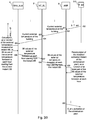
- the temperature sensor 2-2 detects the current external temperature value of the building and at the instant t2 (following t0) the weather-predictive apparatus 2 transmits to the weather forecast device 4 the current external temperature value detected.
- the network element 3 receives the current detected value of the external temperature and forwards it to the weather forecast device 4.
- the weather forecast device 4 receives the detected current external temperature value and calculates, as a function of the current external temperature value of the building at instant t0, 36 values of the temperature external to the building foreseen at each hour starting from the current instant t5, namely:
- the weather forecast device 4 transmits towards the weather-predictive apparatus 2 the 36 values of the temperature external to the building foreseen at each hour starting from the instant t5.
- the network element 3 receives the 36 forecast external temperature values and forwards them towards the weather-predictive apparatus 2.
- the weather-predictive apparatus 2 receives the 36 values of the forecast external temperature and calculates a modified activation instant of the building's climatization plant, as a function of at least part of the 36 forecast external temperature values at each hour.
- the second calculation cycle of the activation instant of the climatization plant begins, which is similar to the first calculation cycle and is comprised between the instant t10 and the instant t19.
- the weather-predictive apparatus 2 has recalculated the modified activation instant of the climatization plant of the building, which can be the same or different than the activation instant previously calculated at the instant t9.
- the processing unit 2-1 of the weather-predictive apparatus 2 calculates that the modified activation instant of the building's climatization plant is equal to t60.
- the processing unit 2-1 of the weather-predictive apparatus 2 detects that the current instant is equal to the modified activation instant t60 and thus generates the command signal S_en which controls the activation of the climatization plant, by means of closing the switch 7, which electrically connects an input terminal thereof which receives the alternating supply voltage VAC with an output terminal thereof which generates the internal supply voltage V_ic that supplies power to the climatization plant, thus making it possible to supply power to the climatization plant.
- the instant t60 wherein the activation is carried out is different (in particular after) than the nominal activation instant of 6:00; for example, the instant t60 can be the same at 6:15, or 6:30, or 6:45, or 7:00.
- the operation between the instants t100 and t109 is similar to that illustrated previously between the instants t0 and t9, with the difference that at the instant t109 the modified deactivation instant is calculated (instead of the modified activation instant) of the climatization plant of the building.
- the processing unit 2-1 of the weather-predictive apparatus 2 detects that the current instant t160 is equal to the modified activation instant t160 and thus generates the command signal S_en which controls the deactivation of the climatization plant, by means of opening the switch 7, which electrically disconnects the input terminal thereof which receives the alternating supply voltage VAC with an output terminal thereof which generates the internal supply voltage V_ic that powers the climatization plant, thus interrupting the supply to the climatization plant.
- the instant t160 wherein the deactivation is carried out is different (in particular before) than the nominal deactivation instant at 19:00; for example, the instant t160 can be equal to 17:30, or 17:00 or 16:30 or 16:00.
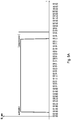
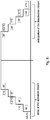
- the processing unit 2-1 of the weather-predictive apparatus 2 calculates the modified activation and deactivation instant of the building's climatization plant using a double stair algorithm which considers the difference ⁇ T ext between the current measured external temperature T_ext (or an average of the last values) and one or more values of the predictive external temperature T_ext_p foreseen in the short term outside the building, as shown in Figure 6 .
- Figure 6 comprises an activation stair positioned to the left relative to the activation instant delay (with respect to the nominal activation instant) of the climatization plant of the considered building and comprises a deactivation stair positioned to the right relative to the deactivation instant advance (with respect to the nominal deactivation instant) of the climatization plant.
- the activation stair comprises four steps, each of which is composed of the following pair of values:
- the processing unit 2-1 of the weather-predictive apparatus 2 detects a certain value ⁇ T ext of the difference of the external temperature
- the processing unit 2-1 generates the command signal S_en having a value representative of the activation delay corresponding to said determined value ⁇ T ext of the external temperature difference.
- the steps of the activation stair have the following values:
- the processing unit 2-1 generates the command signal S_en having an appropriate value representative of an activation delay of the climatization plant equal to 30 minutes, i.e. the activation of the climatization plant is postponed by 30 minutes.
- the deactivation stair comprises four steps, each of which is composed of the following pairs of values:
- the processing unit 2-1 generates the command signal S_en having an appropriate value representative of an activation advance of the climatization plant equal to 60 minutes, i.e. the activation of the heating plant is anticipated by 60 minutes.
- the invention is not only applicable for controlling the activation/deactivation instants of a climatization plant, but more in general is also applicable within the operating interval of the climatization plant wherein it is such to carry out a by-pass of the thermostat or programmable thermostat already installed: in this case the system is configured to perform a modulation of the activation and deactivation of the climatization plant during the operating interval.
- the forecast time interval value ⁇ t can be much less than 24 hours, for example in the order of a minute.
- a weather-predictive system 1 to control a climatization plant, the system comprising a weather-predictive apparatus 2, a weather forecast device 4, a telecommunications network 5 and a switch 7, wherein:
- a method for the weather-predictive control of a climatization plant comprising the steps of:
Landscapes
- Engineering & Computer Science (AREA)
- Combustion & Propulsion (AREA)
- General Engineering & Computer Science (AREA)
- Mechanical Engineering (AREA)
- Chemical & Material Sciences (AREA)
- Physics & Mathematics (AREA)
- Signal Processing (AREA)
- Automation & Control Theory (AREA)
- General Physics & Mathematics (AREA)
- Mathematical Physics (AREA)
- Fuzzy Systems (AREA)
- Human Computer Interaction (AREA)
- Environmental & Geological Engineering (AREA)
- Health & Medical Sciences (AREA)
- Artificial Intelligence (AREA)
- Computer Vision & Pattern Recognition (AREA)
- Evolutionary Computation (AREA)
- Medical Informatics (AREA)
- Software Systems (AREA)
- Environmental Sciences (AREA)
- Ecology (AREA)
- Biodiversity & Conservation Biology (AREA)
- Atmospheric Sciences (AREA)
- Life Sciences & Earth Sciences (AREA)
- Air Conditioning Control Device (AREA)
- Air-Conditioning For Vehicles (AREA)
Applications Claiming Priority (1)
| Application Number | Priority Date | Filing Date | Title |
|---|---|---|---|
| IT102018000004483A IT201800004483A1 (it) | 2018-04-13 | 2018-04-13 | Apparato meteo predittivo e relativo sistema per il controllo di un impianto di climatizzazione |
Publications (2)
| Publication Number | Publication Date |
|---|---|
| EP3553571A1 true EP3553571A1 (fr) | 2019-10-16 |
| EP3553571B1 EP3553571B1 (fr) | 2021-06-09 |
Family
ID=63014763
Family Applications (1)
| Application Number | Title | Priority Date | Filing Date |
|---|---|---|---|
| EP19168706.0A Active EP3553571B1 (fr) | 2018-04-13 | 2019-04-11 | Appareil de prévisions météorologiques et procédé |
Country Status (3)
| Country | Link |
|---|---|
| US (1) | US11036196B2 (fr) |
| EP (1) | EP3553571B1 (fr) |
| IT (1) | IT201800004483A1 (fr) |
Cited By (1)
| Publication number | Priority date | Publication date | Assignee | Title |
|---|---|---|---|---|
| US11036196B2 (en) * | 2018-04-13 | 2021-06-15 | Raffaele Salerno | Weather-predictive apparatus and system thereof for controlling a climatization plant |
Families Citing this family (2)
| Publication number | Priority date | Publication date | Assignee | Title |
|---|---|---|---|---|
| CN111505739B (zh) * | 2020-03-30 | 2022-07-22 | 中国人民解放军国防科技大学 | 利用高频星地链路多特征量进行晴雨时刻判定的方法 |
| CN114167522B (zh) * | 2021-12-17 | 2024-07-02 | 深圳市云端高科信息科技有限公司 | 一种用于智慧城市高层建筑的风场监测与校正系统 |
Citations (6)
| Publication number | Priority date | Publication date | Assignee | Title |
|---|---|---|---|---|
| GB2516582A (en) * | 2012-06-15 | 2015-01-28 | Mitsubishi Electric Corp | Air-conditioning management device, air-conditioning management method, and program |
| US20160146497A1 (en) | 2014-11-20 | 2016-05-26 | Honeywell International Inc. | Maintaining an attribute of a building |
| US20170082310A1 (en) | 2015-08-17 | 2017-03-23 | Andre Keshmeshian | System and Method to Determine a Time to Turn Off Cooling Equipment Based on Forecasted Temperatures |
| US20170241661A1 (en) * | 2009-08-14 | 2017-08-24 | Optimum Energy Llc | Predictive free cooling |
| US20180058710A1 (en) | 2016-08-29 | 2018-03-01 | Iot Cloud Technologies Inc. | Weather Anticipating Programmable Thermostat and Wireless Network PTAC Control |
| EP3296654A1 (fr) * | 2015-05-15 | 2018-03-21 | Samsung Electronics Co., Ltd. | Procédé de commande de l'activation d'un dispositif de conditionnement d'air et appareil associé |
Family Cites Families (3)
| Publication number | Priority date | Publication date | Assignee | Title |
|---|---|---|---|---|
| US9784509B2 (en) * | 2011-05-27 | 2017-10-10 | The Board Of Trustees Of The University Of Illinois | Optimized heating and cooling system |
| GB201313444D0 (en) * | 2013-07-29 | 2013-09-11 | Ambi Labs Ltd | Energy efficient indoor climate controller |
| IT201800004483A1 (it) * | 2018-04-13 | 2019-10-13 | Apparato meteo predittivo e relativo sistema per il controllo di un impianto di climatizzazione |
-
2018
- 2018-04-13 IT IT102018000004483A patent/IT201800004483A1/it unknown
-
2019
- 2019-04-11 EP EP19168706.0A patent/EP3553571B1/fr active Active
- 2019-04-12 US US16/383,483 patent/US11036196B2/en active Active
Patent Citations (6)
| Publication number | Priority date | Publication date | Assignee | Title |
|---|---|---|---|---|
| US20170241661A1 (en) * | 2009-08-14 | 2017-08-24 | Optimum Energy Llc | Predictive free cooling |
| GB2516582A (en) * | 2012-06-15 | 2015-01-28 | Mitsubishi Electric Corp | Air-conditioning management device, air-conditioning management method, and program |
| US20160146497A1 (en) | 2014-11-20 | 2016-05-26 | Honeywell International Inc. | Maintaining an attribute of a building |
| EP3296654A1 (fr) * | 2015-05-15 | 2018-03-21 | Samsung Electronics Co., Ltd. | Procédé de commande de l'activation d'un dispositif de conditionnement d'air et appareil associé |
| US20170082310A1 (en) | 2015-08-17 | 2017-03-23 | Andre Keshmeshian | System and Method to Determine a Time to Turn Off Cooling Equipment Based on Forecasted Temperatures |
| US20180058710A1 (en) | 2016-08-29 | 2018-03-01 | Iot Cloud Technologies Inc. | Weather Anticipating Programmable Thermostat and Wireless Network PTAC Control |
Cited By (1)
| Publication number | Priority date | Publication date | Assignee | Title |
|---|---|---|---|---|
| US11036196B2 (en) * | 2018-04-13 | 2021-06-15 | Raffaele Salerno | Weather-predictive apparatus and system thereof for controlling a climatization plant |
Also Published As
| Publication number | Publication date |
|---|---|
| US11036196B2 (en) | 2021-06-15 |
| US20210141348A9 (en) | 2021-05-13 |
| EP3553571B1 (fr) | 2021-06-09 |
| US20190317460A1 (en) | 2019-10-17 |
| IT201800004483A1 (it) | 2019-10-13 |
Similar Documents
| Publication | Publication Date | Title |
|---|---|---|
| US20210318707A1 (en) | Dynamic load curtailment system and method | |
| US10354345B2 (en) | Optimizing and controlling the energy consumption of a building | |
| US6643567B2 (en) | Energy consumption estimation using real time pricing information | |
| US10393398B2 (en) | System and method for optimizing use of plug-in air conditioners and portable heaters | |
| US10584890B2 (en) | System and method for using a mobile electronic device to optimize an energy management system | |
| CA2800491C (fr) | Systeme et procede d'utilisation d'un dispositif electronique mobile pour optimiser un systeme de gestion de l'energie | |
| US10731886B2 (en) | HVAC system including energy analytics engine | |
| US11374409B2 (en) | Power system load flexibility forecasting | |
| EP2866117B1 (fr) | Système et procédé de commande de chauffage réparti prédictif et adaptatif | |
| CN107743569B (zh) | Hvac系统启动/停止控制 | |
| CN104279713A (zh) | 一种空调器控制方法、系统和空调控制器 | |
| US11036196B2 (en) | Weather-predictive apparatus and system thereof for controlling a climatization plant | |
| CN103162346A (zh) | 基于云服务的集中供暖监控系统及集中供暖系统调节方法 | |
| CN105190193B (zh) | 空调控制装置、空调控制系统和空调控制方法 | |
| KR20190023903A (ko) | 다형 영향인자를 활용한 원단위 기반 다차원 건물 에너지 부하 예측에 기반한 건물 에너지 관리 시스템 및 방법 | |
| US20250377128A1 (en) | Energy management and smart thermostat learning methods and control systems | |
| KR101779797B1 (ko) | 빅 데이터를 이용한 자기학습형 havc 에너지 관리 시스템 및 그 구동 방법 | |
| Korkas et al. | Adaptive optimization for smart operation of cyber-physical systems: A thermostatic zoning test case | |
| EP3451109A1 (fr) | Système et procédé pour définir une ouverture de soupape | |
| Kosmatopoulos | GRID-CONNECTED MICROGRIDS: DEMAND MANAGEMENT VIA DISTRIBUTED CONTROL AND | |
| Peng et al. | Data-driven outdoor and indoor temperature prediction for energy-efficient building operation |
Legal Events
| Date | Code | Title | Description |
|---|---|---|---|
| PUAI | Public reference made under article 153(3) epc to a published international application that has entered the european phase |
Free format text: ORIGINAL CODE: 0009012 |
|
| STAA | Information on the status of an ep patent application or granted ep patent |
Free format text: STATUS: THE APPLICATION HAS BEEN PUBLISHED |
|
| AK | Designated contracting states |
Kind code of ref document: A1 Designated state(s): AL AT BE BG CH CY CZ DE DK EE ES FI FR GB GR HR HU IE IS IT LI LT LU LV MC MK MT NL NO PL PT RO RS SE SI SK SM TR |
|
| AX | Request for extension of the european patent |
Extension state: BA ME |
|
| STAA | Information on the status of an ep patent application or granted ep patent |
Free format text: STATUS: REQUEST FOR EXAMINATION WAS MADE |
|
| 17P | Request for examination filed |
Effective date: 20200415 |
|
| RBV | Designated contracting states (corrected) |
Designated state(s): AL AT BE BG CH CY CZ DE DK EE ES FI FR GB GR HR HU IE IS IT LI LT LU LV MC MK MT NL NO PL PT RO RS SE SI SK SM TR |
|
| GRAP | Despatch of communication of intention to grant a patent |
Free format text: ORIGINAL CODE: EPIDOSNIGR1 |
|
| STAA | Information on the status of an ep patent application or granted ep patent |
Free format text: STATUS: GRANT OF PATENT IS INTENDED |
|
| RIC1 | Information provided on ipc code assigned before grant |
Ipc: F24F 11/63 20180101ALN20210202BHEP Ipc: G01W 1/10 20060101AFI20210202BHEP Ipc: F24F 11/46 20180101ALI20210202BHEP Ipc: F24F 130/10 20180101ALI20210202BHEP |
|
| INTG | Intention to grant announced |
Effective date: 20210305 |
|
| GRAS | Grant fee paid |
Free format text: ORIGINAL CODE: EPIDOSNIGR3 |
|
| GRAA | (expected) grant |
Free format text: ORIGINAL CODE: 0009210 |
|
| STAA | Information on the status of an ep patent application or granted ep patent |
Free format text: STATUS: THE PATENT HAS BEEN GRANTED |
|
| AK | Designated contracting states |
Kind code of ref document: B1 Designated state(s): AL AT BE BG CH CY CZ DE DK EE ES FI FR GB GR HR HU IE IS IT LI LT LU LV MC MK MT NL NO PL PT RO RS SE SI SK SM TR |
|
| REG | Reference to a national code |
Ref country code: GB Ref legal event code: FG4D |
|
| REG | Reference to a national code |
Ref country code: CH Ref legal event code: EP Ref country code: AT Ref legal event code: REF Ref document number: 1400972 Country of ref document: AT Kind code of ref document: T Effective date: 20210615 |
|
| REG | Reference to a national code |
Ref country code: DE Ref legal event code: R096 Ref document number: 602019005168 Country of ref document: DE |
|
| REG | Reference to a national code |
Ref country code: IE Ref legal event code: FG4D |
|
| REG | Reference to a national code |
Ref country code: LT Ref legal event code: MG9D |
|
| PG25 | Lapsed in a contracting state [announced via postgrant information from national office to epo] |
Ref country code: FI Free format text: LAPSE BECAUSE OF FAILURE TO SUBMIT A TRANSLATION OF THE DESCRIPTION OR TO PAY THE FEE WITHIN THE PRESCRIBED TIME-LIMIT Effective date: 20210609 Ref country code: HR Free format text: LAPSE BECAUSE OF FAILURE TO SUBMIT A TRANSLATION OF THE DESCRIPTION OR TO PAY THE FEE WITHIN THE PRESCRIBED TIME-LIMIT Effective date: 20210609 Ref country code: LT Free format text: LAPSE BECAUSE OF FAILURE TO SUBMIT A TRANSLATION OF THE DESCRIPTION OR TO PAY THE FEE WITHIN THE PRESCRIBED TIME-LIMIT Effective date: 20210609 Ref country code: BG Free format text: LAPSE BECAUSE OF FAILURE TO SUBMIT A TRANSLATION OF THE DESCRIPTION OR TO PAY THE FEE WITHIN THE PRESCRIBED TIME-LIMIT Effective date: 20210909 |
|
| REG | Reference to a national code |
Ref country code: AT Ref legal event code: MK05 Ref document number: 1400972 Country of ref document: AT Kind code of ref document: T Effective date: 20210609 |
|
| REG | Reference to a national code |
Ref country code: NL Ref legal event code: MP Effective date: 20210609 |
|
| PG25 | Lapsed in a contracting state [announced via postgrant information from national office to epo] |
Ref country code: RS Free format text: LAPSE BECAUSE OF FAILURE TO SUBMIT A TRANSLATION OF THE DESCRIPTION OR TO PAY THE FEE WITHIN THE PRESCRIBED TIME-LIMIT Effective date: 20210609 Ref country code: SE Free format text: LAPSE BECAUSE OF FAILURE TO SUBMIT A TRANSLATION OF THE DESCRIPTION OR TO PAY THE FEE WITHIN THE PRESCRIBED TIME-LIMIT Effective date: 20210609 Ref country code: LV Free format text: LAPSE BECAUSE OF FAILURE TO SUBMIT A TRANSLATION OF THE DESCRIPTION OR TO PAY THE FEE WITHIN THE PRESCRIBED TIME-LIMIT Effective date: 20210609 Ref country code: NO Free format text: LAPSE BECAUSE OF FAILURE TO SUBMIT A TRANSLATION OF THE DESCRIPTION OR TO PAY THE FEE WITHIN THE PRESCRIBED TIME-LIMIT Effective date: 20210909 |
|
| PG25 | Lapsed in a contracting state [announced via postgrant information from national office to epo] |
Ref country code: SK Free format text: LAPSE BECAUSE OF FAILURE TO SUBMIT A TRANSLATION OF THE DESCRIPTION OR TO PAY THE FEE WITHIN THE PRESCRIBED TIME-LIMIT Effective date: 20210609 Ref country code: EE Free format text: LAPSE BECAUSE OF FAILURE TO SUBMIT A TRANSLATION OF THE DESCRIPTION OR TO PAY THE FEE WITHIN THE PRESCRIBED TIME-LIMIT Effective date: 20210609 Ref country code: ES Free format text: LAPSE BECAUSE OF FAILURE TO SUBMIT A TRANSLATION OF THE DESCRIPTION OR TO PAY THE FEE WITHIN THE PRESCRIBED TIME-LIMIT Effective date: 20210609 Ref country code: CZ Free format text: LAPSE BECAUSE OF FAILURE TO SUBMIT A TRANSLATION OF THE DESCRIPTION OR TO PAY THE FEE WITHIN THE PRESCRIBED TIME-LIMIT Effective date: 20210609 Ref country code: AT Free format text: LAPSE BECAUSE OF FAILURE TO SUBMIT A TRANSLATION OF THE DESCRIPTION OR TO PAY THE FEE WITHIN THE PRESCRIBED TIME-LIMIT Effective date: 20210609 Ref country code: SM Free format text: LAPSE BECAUSE OF FAILURE TO SUBMIT A TRANSLATION OF THE DESCRIPTION OR TO PAY THE FEE WITHIN THE PRESCRIBED TIME-LIMIT Effective date: 20210609 Ref country code: PT Free format text: LAPSE BECAUSE OF FAILURE TO SUBMIT A TRANSLATION OF THE DESCRIPTION OR TO PAY THE FEE WITHIN THE PRESCRIBED TIME-LIMIT Effective date: 20211011 Ref country code: NL Free format text: LAPSE BECAUSE OF FAILURE TO SUBMIT A TRANSLATION OF THE DESCRIPTION OR TO PAY THE FEE WITHIN THE PRESCRIBED TIME-LIMIT Effective date: 20210609 Ref country code: RO Free format text: LAPSE BECAUSE OF FAILURE TO SUBMIT A TRANSLATION OF THE DESCRIPTION OR TO PAY THE FEE WITHIN THE PRESCRIBED TIME-LIMIT Effective date: 20210609 |
|
| PG25 | Lapsed in a contracting state [announced via postgrant information from national office to epo] |
Ref country code: PL Free format text: LAPSE BECAUSE OF FAILURE TO SUBMIT A TRANSLATION OF THE DESCRIPTION OR TO PAY THE FEE WITHIN THE PRESCRIBED TIME-LIMIT Effective date: 20210609 |
|
| REG | Reference to a national code |
Ref country code: DE Ref legal event code: R097 Ref document number: 602019005168 Country of ref document: DE |
|
| PLBE | No opposition filed within time limit |
Free format text: ORIGINAL CODE: 0009261 |
|
| STAA | Information on the status of an ep patent application or granted ep patent |
Free format text: STATUS: NO OPPOSITION FILED WITHIN TIME LIMIT |
|
| PG25 | Lapsed in a contracting state [announced via postgrant information from national office to epo] |
Ref country code: DK Free format text: LAPSE BECAUSE OF FAILURE TO SUBMIT A TRANSLATION OF THE DESCRIPTION OR TO PAY THE FEE WITHIN THE PRESCRIBED TIME-LIMIT Effective date: 20210609 |
|
| 26N | No opposition filed |
Effective date: 20220310 |
|
| PG25 | Lapsed in a contracting state [announced via postgrant information from national office to epo] |
Ref country code: AL Free format text: LAPSE BECAUSE OF FAILURE TO SUBMIT A TRANSLATION OF THE DESCRIPTION OR TO PAY THE FEE WITHIN THE PRESCRIBED TIME-LIMIT Effective date: 20210609 |
|
| PGFP | Annual fee paid to national office [announced via postgrant information from national office to epo] |
Ref country code: MC Payment date: 20220331 Year of fee payment: 4 |
|
| PGFP | Annual fee paid to national office [announced via postgrant information from national office to epo] |
Ref country code: MT Payment date: 20220429 Year of fee payment: 4 |
|
| PG25 | Lapsed in a contracting state [announced via postgrant information from national office to epo] |
Ref country code: MC Free format text: LAPSE BECAUSE OF NON-PAYMENT OF DUE FEES Effective date: 20230502 |
|
| PG25 | Lapsed in a contracting state [announced via postgrant information from national office to epo] |
Ref country code: MC Free format text: LAPSE BECAUSE OF NON-PAYMENT OF DUE FEES Effective date: 20230502 |
|
| PG25 | Lapsed in a contracting state [announced via postgrant information from national office to epo] |
Ref country code: HU Free format text: LAPSE BECAUSE OF FAILURE TO SUBMIT A TRANSLATION OF THE DESCRIPTION OR TO PAY THE FEE WITHIN THE PRESCRIBED TIME-LIMIT; INVALID AB INITIO Effective date: 20190411 |
|
| PG25 | Lapsed in a contracting state [announced via postgrant information from national office to epo] |
Ref country code: MK Free format text: LAPSE BECAUSE OF FAILURE TO SUBMIT A TRANSLATION OF THE DESCRIPTION OR TO PAY THE FEE WITHIN THE PRESCRIBED TIME-LIMIT Effective date: 20210609 Ref country code: CY Free format text: LAPSE BECAUSE OF FAILURE TO SUBMIT A TRANSLATION OF THE DESCRIPTION OR TO PAY THE FEE WITHIN THE PRESCRIBED TIME-LIMIT Effective date: 20210609 |
|
| PG25 | Lapsed in a contracting state [announced via postgrant information from national office to epo] |
Ref country code: TR Free format text: LAPSE BECAUSE OF FAILURE TO SUBMIT A TRANSLATION OF THE DESCRIPTION OR TO PAY THE FEE WITHIN THE PRESCRIBED TIME-LIMIT Effective date: 20210609 |
|
| PG25 | Lapsed in a contracting state [announced via postgrant information from national office to epo] |
Ref country code: GR Free format text: LAPSE BECAUSE OF NON-PAYMENT OF DUE FEES Effective date: 20210609 |
|
| PG25 | Lapsed in a contracting state [announced via postgrant information from national office to epo] |
Ref country code: GR Free format text: LAPSE BECAUSE OF NON-PAYMENT OF DUE FEES Effective date: 20210609 |
|
| PGFP | Annual fee paid to national office [announced via postgrant information from national office to epo] |
Ref country code: LU Payment date: 20250424 Year of fee payment: 7 |
|
| PGFP | Annual fee paid to national office [announced via postgrant information from national office to epo] |
Ref country code: DE Payment date: 20250428 Year of fee payment: 7 |
|
| PGFP | Annual fee paid to national office [announced via postgrant information from national office to epo] |
Ref country code: GB Payment date: 20250422 Year of fee payment: 7 |
|
| PGFP | Annual fee paid to national office [announced via postgrant information from national office to epo] |
Ref country code: BE Payment date: 20250424 Year of fee payment: 7 Ref country code: IT Payment date: 20250428 Year of fee payment: 7 |
|
| PGFP | Annual fee paid to national office [announced via postgrant information from national office to epo] |
Ref country code: FR Payment date: 20250424 Year of fee payment: 7 |
|
| PGFP | Annual fee paid to national office [announced via postgrant information from national office to epo] |
Ref country code: CH Payment date: 20250501 Year of fee payment: 7 |
|
| PGFP | Annual fee paid to national office [announced via postgrant information from national office to epo] |
Ref country code: IE Payment date: 20250417 Year of fee payment: 7 |