EP3553078A1 - Glyco-engineered interleukin-4 based antagonists - Google Patents
Glyco-engineered interleukin-4 based antagonists Download PDFInfo
- Publication number
- EP3553078A1 EP3553078A1 EP18166787.4A EP18166787A EP3553078A1 EP 3553078 A1 EP3553078 A1 EP 3553078A1 EP 18166787 A EP18166787 A EP 18166787A EP 3553078 A1 EP3553078 A1 EP 3553078A1
- Authority
- EP
- European Patent Office
- Prior art keywords
- mutein
- amino acid
- protein
- mutated
- sequence
- Prior art date
- Legal status (The legal status is an assumption and is not a legal conclusion. Google has not performed a legal analysis and makes no representation as to the accuracy of the status listed.)
- Withdrawn
Links
- 108090000978 Interleukin-4 Proteins 0.000 title claims abstract description 61
- 239000005557 antagonist Substances 0.000 title description 29
- 102000004388 Interleukin-4 Human genes 0.000 title description 23
- 229940028885 interleukin-4 Drugs 0.000 title description 2
- 108090000623 proteins and genes Proteins 0.000 claims abstract description 157
- 102000004169 proteins and genes Human genes 0.000 claims abstract description 154
- 150000001413 amino acids Chemical class 0.000 claims abstract description 139
- 229920000642 polymer Polymers 0.000 claims abstract description 131
- 230000021615 conjugation Effects 0.000 claims abstract description 76
- 102000003816 Interleukin-13 Human genes 0.000 claims abstract description 60
- 108090000176 Interleukin-13 Proteins 0.000 claims abstract description 60
- 239000008194 pharmaceutical composition Substances 0.000 claims abstract description 48
- 230000011664 signaling Effects 0.000 claims abstract description 36
- 230000002401 inhibitory effect Effects 0.000 claims abstract description 35
- 238000000034 method Methods 0.000 claims abstract description 31
- 102000039446 nucleic acids Human genes 0.000 claims abstract description 19
- 108020004707 nucleic acids Proteins 0.000 claims abstract description 19
- 150000007523 nucleic acids Chemical class 0.000 claims abstract description 19
- 235000018102 proteins Nutrition 0.000 claims description 149
- 229940024606 amino acid Drugs 0.000 claims description 145
- 235000001014 amino acid Nutrition 0.000 claims description 145
- 210000004027 cell Anatomy 0.000 claims description 117
- 230000035772 mutation Effects 0.000 claims description 43
- 238000006206 glycosylation reaction Methods 0.000 claims description 36
- 230000013595 glycosylation Effects 0.000 claims description 35
- 230000014509 gene expression Effects 0.000 claims description 33
- 150000002482 oligosaccharides Chemical class 0.000 claims description 21
- 235000018417 cysteine Nutrition 0.000 claims description 19
- 150000002772 monosaccharides Chemical class 0.000 claims description 19
- 238000004519 manufacturing process Methods 0.000 claims description 18
- DCXYFEDJOCDNAF-UHFFFAOYSA-N Asparagine Natural products OC(=O)C(N)CC(N)=O DCXYFEDJOCDNAF-UHFFFAOYSA-N 0.000 claims description 16
- DCXYFEDJOCDNAF-REOHCLBHSA-N L-asparagine Chemical compound OC(=O)[C@@H](N)CC(N)=O DCXYFEDJOCDNAF-REOHCLBHSA-N 0.000 claims description 16
- 229960001230 asparagine Drugs 0.000 claims description 16
- 235000009582 asparagine Nutrition 0.000 claims description 16
- XUJNEKJLAYXESH-UHFFFAOYSA-N cysteine Natural products SCC(N)C(O)=O XUJNEKJLAYXESH-UHFFFAOYSA-N 0.000 claims description 15
- 229920001542 oligosaccharide Polymers 0.000 claims description 15
- 208000006673 asthma Diseases 0.000 claims description 13
- DHMQDGOQFOQNFH-UHFFFAOYSA-N Glycine Chemical compound NCC(O)=O DHMQDGOQFOQNFH-UHFFFAOYSA-N 0.000 claims description 12
- CKLJMWTZIZZHCS-REOHCLBHSA-N L-aspartic acid Chemical compound OC(=O)[C@@H](N)CC(O)=O CKLJMWTZIZZHCS-REOHCLBHSA-N 0.000 claims description 12
- 230000002255 enzymatic effect Effects 0.000 claims description 12
- 235000003704 aspartic acid Nutrition 0.000 claims description 10
- OQFSQFPPLPISGP-UHFFFAOYSA-N beta-carboxyaspartic acid Natural products OC(=O)C(N)C(C(O)=O)C(O)=O OQFSQFPPLPISGP-UHFFFAOYSA-N 0.000 claims description 10
- 208000027866 inflammatory disease Diseases 0.000 claims description 10
- 239000004472 Lysine Substances 0.000 claims description 8
- 235000018977 lysine Nutrition 0.000 claims description 8
- 206010012438 Dermatitis atopic Diseases 0.000 claims description 7
- KDXKERNSBIXSRK-YFKPBYRVSA-N L-lysine Chemical compound NCCCC[C@H](N)C(O)=O KDXKERNSBIXSRK-YFKPBYRVSA-N 0.000 claims description 7
- KDXKERNSBIXSRK-UHFFFAOYSA-N Lysine Natural products NCCCCC(N)C(O)=O KDXKERNSBIXSRK-UHFFFAOYSA-N 0.000 claims description 7
- 239000002253 acid Substances 0.000 claims description 7
- 201000008937 atopic dermatitis Diseases 0.000 claims description 7
- 210000003527 eukaryotic cell Anatomy 0.000 claims description 7
- 239000004471 Glycine Substances 0.000 claims description 6
- 201000009961 allergic asthma Diseases 0.000 claims description 6
- 206010020751 Hypersensitivity Diseases 0.000 claims description 5
- 230000007815 allergy Effects 0.000 claims description 5
- 208000026935 allergic disease Diseases 0.000 claims description 4
- 206010003246 arthritis Diseases 0.000 claims description 4
- 206010009887 colitis Diseases 0.000 claims description 4
- 238000012258 culturing Methods 0.000 claims description 4
- 230000001268 conjugating effect Effects 0.000 claims description 3
- 239000013598 vector Substances 0.000 abstract description 11
- 102220471101 Aryl hydrocarbon receptor_F82D_mutation Human genes 0.000 description 95
- RWSXRVCMGQZWBV-WDSKDSINSA-N glutathione Chemical compound OC(=O)[C@@H](N)CCC(=O)N[C@@H](CS)C(=O)NCC(O)=O RWSXRVCMGQZWBV-WDSKDSINSA-N 0.000 description 50
- 102000005962 receptors Human genes 0.000 description 41
- 108020003175 receptors Proteins 0.000 description 41
- 108010038486 Interleukin-4 Receptors Proteins 0.000 description 35
- 102000010787 Interleukin-4 Receptors Human genes 0.000 description 35
- 229960003180 glutathione Drugs 0.000 description 28
- WEVYAHXRMPXWCK-UHFFFAOYSA-N Acetonitrile Chemical compound CC#N WEVYAHXRMPXWCK-UHFFFAOYSA-N 0.000 description 27
- 125000003275 alpha amino acid group Chemical group 0.000 description 26
- JJAHTWIKCUJRDK-UHFFFAOYSA-N succinimidyl 4-(N-maleimidomethyl)cyclohexane-1-carboxylate Chemical compound C1CC(CN2C(C=CC2=O)=O)CCC1C(=O)ON1C(=O)CCC1=O JJAHTWIKCUJRDK-UHFFFAOYSA-N 0.000 description 26
- 125000003396 thiol group Chemical group [H]S* 0.000 description 25
- 241000588724 Escherichia coli Species 0.000 description 22
- 102100020941 Interleukin-4 Human genes 0.000 description 21
- 229960002442 glucosamine Drugs 0.000 description 20
- 108010010907 pitrakinra Proteins 0.000 description 20
- 229950008185 pitrakinra Drugs 0.000 description 20
- 108010024636 Glutathione Proteins 0.000 description 19
- 238000005859 coupling reaction Methods 0.000 description 19
- 230000008878 coupling Effects 0.000 description 18
- 238000010168 coupling process Methods 0.000 description 18
- 102100020791 Interleukin-13 receptor subunit alpha-1 Human genes 0.000 description 17
- WQZGKKKJIJFFOK-GASJEMHNSA-N Glucose Natural products OC[C@H]1OC(O)[C@H](O)[C@@H](O)[C@@H]1O WQZGKKKJIJFFOK-GASJEMHNSA-N 0.000 description 16
- MSWZFWKMSRAUBD-UHFFFAOYSA-N beta-D-galactosamine Natural products NC1C(O)OC(CO)C(O)C1O MSWZFWKMSRAUBD-UHFFFAOYSA-N 0.000 description 16
- 229940077731 carbohydrate nutrients Drugs 0.000 description 16
- 150000004676 glycans Chemical group 0.000 description 16
- 239000000126 substance Substances 0.000 description 16
- 101710112663 Interleukin-13 receptor subunit alpha-1 Proteins 0.000 description 15
- 150000001720 carbohydrates Chemical class 0.000 description 15
- 235000014633 carbohydrates Nutrition 0.000 description 15
- 238000006243 chemical reaction Methods 0.000 description 15
- 125000000151 cysteine group Chemical group N[C@@H](CS)C(=O)* 0.000 description 14
- 230000000694 effects Effects 0.000 description 14
- 238000002474 experimental method Methods 0.000 description 14
- 239000000872 buffer Substances 0.000 description 13
- -1 IL-4 Proteins 0.000 description 12
- 102220636841 Transforming protein RhoA_T28N_mutation Human genes 0.000 description 12
- 230000002797 proteolythic effect Effects 0.000 description 12
- MSWZFWKMSRAUBD-IVMDWMLBSA-N 2-amino-2-deoxy-D-glucopyranose Chemical compound N[C@H]1C(O)O[C@H](CO)[C@@H](O)[C@@H]1O MSWZFWKMSRAUBD-IVMDWMLBSA-N 0.000 description 11
- 239000004971 Cross linker Substances 0.000 description 11
- 102220506877 Microfibrillar-associated protein 2_Q20N_mutation Human genes 0.000 description 11
- 238000003556 assay Methods 0.000 description 11
- WQZGKKKJIJFFOK-VFUOTHLCSA-N beta-D-glucose Chemical compound OC[C@H]1O[C@@H](O)[C@H](O)[C@@H](O)[C@@H]1O WQZGKKKJIJFFOK-VFUOTHLCSA-N 0.000 description 11
- 239000008103 glucose Substances 0.000 description 11
- 239000000203 mixture Substances 0.000 description 11
- LCEFEIBEOBPPSJ-UHFFFAOYSA-N phenyl selenohypobromite Chemical compound Br[Se]C1=CC=CC=C1 LCEFEIBEOBPPSJ-UHFFFAOYSA-N 0.000 description 11
- 230000001965 increasing effect Effects 0.000 description 10
- 239000000243 solution Substances 0.000 description 10
- 238000000338 in vitro Methods 0.000 description 9
- 210000003000 inclusion body Anatomy 0.000 description 9
- 230000001590 oxidative effect Effects 0.000 description 9
- 230000017854 proteolysis Effects 0.000 description 9
- 238000006722 reduction reaction Methods 0.000 description 9
- 230000004988 N-glycosylation Effects 0.000 description 8
- 230000015572 biosynthetic process Effects 0.000 description 8
- 239000000463 material Substances 0.000 description 8
- 239000000546 pharmaceutical excipient Substances 0.000 description 8
- 238000000746 purification Methods 0.000 description 8
- 102220118164 rs886041310 Human genes 0.000 description 8
- 238000002415 sodium dodecyl sulfate polyacrylamide gel electrophoresis Methods 0.000 description 8
- UCSJYZPVAKXKNQ-HZYVHMACSA-N streptomycin Chemical compound CN[C@H]1[C@H](O)[C@@H](O)[C@H](CO)O[C@H]1O[C@@H]1[C@](C=O)(O)[C@H](C)O[C@H]1O[C@@H]1[C@@H](NC(N)=N)[C@H](O)[C@@H](NC(N)=N)[C@H](O)[C@H]1O UCSJYZPVAKXKNQ-HZYVHMACSA-N 0.000 description 8
- 102220604900 Protein Lines homolog 1_N38Q_mutation Human genes 0.000 description 7
- 230000004071 biological effect Effects 0.000 description 7
- 238000011534 incubation Methods 0.000 description 7
- 238000004949 mass spectrometry Methods 0.000 description 7
- 230000009467 reduction Effects 0.000 description 7
- 230000002829 reductive effect Effects 0.000 description 7
- 101001002709 Homo sapiens Interleukin-4 Proteins 0.000 description 6
- 108090000631 Trypsin Proteins 0.000 description 6
- 102000004142 Trypsin Human genes 0.000 description 6
- 230000004913 activation Effects 0.000 description 6
- 125000003277 amino group Chemical group 0.000 description 6
- 230000003042 antagnostic effect Effects 0.000 description 6
- 238000013459 approach Methods 0.000 description 6
- 230000001588 bifunctional effect Effects 0.000 description 6
- 239000003153 chemical reaction reagent Substances 0.000 description 6
- 231100000673 dose–response relationship Toxicity 0.000 description 6
- 102000055229 human IL4 Human genes 0.000 description 6
- RAXXELZNTBOGNW-UHFFFAOYSA-N imidazole Natural products C1=CNC=N1 RAXXELZNTBOGNW-UHFFFAOYSA-N 0.000 description 6
- 229920001223 polyethylene glycol Polymers 0.000 description 6
- 230000035755 proliferation Effects 0.000 description 6
- 238000002198 surface plasmon resonance spectroscopy Methods 0.000 description 6
- 239000012588 trypsin Substances 0.000 description 6
- XMIIGOLPHOKFCH-UHFFFAOYSA-N 3-phenylpropionic acid Chemical compound OC(=O)CCC1=CC=CC=C1 XMIIGOLPHOKFCH-UHFFFAOYSA-N 0.000 description 5
- KCXVZYZYPLLWCC-UHFFFAOYSA-N EDTA Chemical compound OC(=O)CN(CC(O)=O)CCN(CC(O)=O)CC(O)=O KCXVZYZYPLLWCC-UHFFFAOYSA-N 0.000 description 5
- 102000017278 Glutaredoxin Human genes 0.000 description 5
- 108050005205 Glutaredoxin Proteins 0.000 description 5
- 108010053070 Glutathione Disulfide Proteins 0.000 description 5
- 108060003951 Immunoglobulin Proteins 0.000 description 5
- 240000004808 Saccharomyces cerevisiae Species 0.000 description 5
- FAPWRFPIFSIZLT-UHFFFAOYSA-M Sodium chloride Chemical compound [Na+].[Cl-] FAPWRFPIFSIZLT-UHFFFAOYSA-M 0.000 description 5
- 125000004432 carbon atom Chemical group C* 0.000 description 5
- 230000001419 dependent effect Effects 0.000 description 5
- 239000003085 diluting agent Substances 0.000 description 5
- 239000012634 fragment Substances 0.000 description 5
- YPZRWBKMTBYPTK-BJDJZHNGSA-N glutathione disulfide Chemical compound OC(=O)[C@@H](N)CCC(=O)N[C@H](C(=O)NCC(O)=O)CSSC[C@@H](C(=O)NCC(O)=O)NC(=O)CC[C@H](N)C(O)=O YPZRWBKMTBYPTK-BJDJZHNGSA-N 0.000 description 5
- 102000018358 immunoglobulin Human genes 0.000 description 5
- 230000001976 improved effect Effects 0.000 description 5
- 238000001727 in vivo Methods 0.000 description 5
- 230000004048 modification Effects 0.000 description 5
- 238000012986 modification Methods 0.000 description 5
- 239000000047 product Substances 0.000 description 5
- 239000012460 protein solution Substances 0.000 description 5
- 230000004044 response Effects 0.000 description 5
- 239000000725 suspension Substances 0.000 description 5
- 150000003573 thiols Chemical class 0.000 description 5
- 229920000936 Agarose Polymers 0.000 description 4
- 102000002260 Alkaline Phosphatase Human genes 0.000 description 4
- 108020004774 Alkaline Phosphatase Proteins 0.000 description 4
- 239000004475 Arginine Substances 0.000 description 4
- 208000012657 Atopic disease Diseases 0.000 description 4
- 102000004127 Cytokines Human genes 0.000 description 4
- 108090000695 Cytokines Proteins 0.000 description 4
- NTYJJOPFIAHURM-UHFFFAOYSA-N Histamine Chemical compound NCCC1=CN=CN1 NTYJJOPFIAHURM-UHFFFAOYSA-N 0.000 description 4
- 229930182555 Penicillin Natural products 0.000 description 4
- JGSARLDLIJGVTE-MBNYWOFBSA-N Penicillin G Chemical compound N([C@H]1[C@H]2SC([C@@H](N2C1=O)C(O)=O)(C)C)C(=O)CC1=CC=CC=C1 JGSARLDLIJGVTE-MBNYWOFBSA-N 0.000 description 4
- 108010000134 Vascular Cell Adhesion Molecule-1 Proteins 0.000 description 4
- 102100023543 Vascular cell adhesion protein 1 Human genes 0.000 description 4
- 150000001412 amines Chemical class 0.000 description 4
- 238000004458 analytical method Methods 0.000 description 4
- 229940121363 anti-inflammatory agent Drugs 0.000 description 4
- 239000002260 anti-inflammatory agent Substances 0.000 description 4
- ODKSFYDXXFIFQN-UHFFFAOYSA-N arginine Natural products OC(=O)C(N)CCCNC(N)=N ODKSFYDXXFIFQN-UHFFFAOYSA-N 0.000 description 4
- 235000009697 arginine Nutrition 0.000 description 4
- SQVRNKJHWKZAKO-UHFFFAOYSA-N beta-N-Acetyl-D-neuraminic acid Natural products CC(=O)NC1C(O)CC(O)(C(O)=O)OC1C(O)C(O)CO SQVRNKJHWKZAKO-UHFFFAOYSA-N 0.000 description 4
- 239000003638 chemical reducing agent Substances 0.000 description 4
- 150000001945 cysteines Chemical class 0.000 description 4
- 230000003247 decreasing effect Effects 0.000 description 4
- 230000006870 function Effects 0.000 description 4
- 239000001963 growth medium Substances 0.000 description 4
- 210000003630 histaminocyte Anatomy 0.000 description 4
- 125000002887 hydroxy group Chemical group [H]O* 0.000 description 4
- 208000015181 infectious disease Diseases 0.000 description 4
- 238000012482 interaction analysis Methods 0.000 description 4
- 210000004962 mammalian cell Anatomy 0.000 description 4
- 239000003550 marker Substances 0.000 description 4
- 239000002609 medium Substances 0.000 description 4
- 238000002703 mutagenesis Methods 0.000 description 4
- 231100000350 mutagenesis Toxicity 0.000 description 4
- 229930027945 nicotinamide-adenine dinucleotide Natural products 0.000 description 4
- 230000036961 partial effect Effects 0.000 description 4
- 229940049954 penicillin Drugs 0.000 description 4
- 239000003755 preservative agent Substances 0.000 description 4
- 125000002924 primary amino group Chemical group [H]N([H])* 0.000 description 4
- 238000004007 reversed phase HPLC Methods 0.000 description 4
- YGSDEFSMJLZEOE-UHFFFAOYSA-N salicylic acid Chemical compound OC(=O)C1=CC=CC=C1O YGSDEFSMJLZEOE-UHFFFAOYSA-N 0.000 description 4
- WVYADZUPLLSGPU-UHFFFAOYSA-N salsalate Chemical compound OC(=O)C1=CC=CC=C1OC(=O)C1=CC=CC=C1O WVYADZUPLLSGPU-UHFFFAOYSA-N 0.000 description 4
- 210000002966 serum Anatomy 0.000 description 4
- 239000002904 solvent Substances 0.000 description 4
- 238000010186 staining Methods 0.000 description 4
- 229960005322 streptomycin Drugs 0.000 description 4
- 238000010254 subcutaneous injection Methods 0.000 description 4
- 239000007929 subcutaneous injection Substances 0.000 description 4
- 238000013518 transcription Methods 0.000 description 4
- 230000035897 transcription Effects 0.000 description 4
- 238000001890 transfection Methods 0.000 description 4
- CSCPPACGZOOCGX-UHFFFAOYSA-N Acetone Chemical compound CC(C)=O CSCPPACGZOOCGX-UHFFFAOYSA-N 0.000 description 3
- WVDDGKGOMKODPV-UHFFFAOYSA-N Benzyl alcohol Chemical compound OCC1=CC=CC=C1 WVDDGKGOMKODPV-UHFFFAOYSA-N 0.000 description 3
- FBPFZTCFMRRESA-FSIIMWSLSA-N D-Glucitol Natural products OC[C@H](O)[C@H](O)[C@@H](O)[C@H](O)CO FBPFZTCFMRRESA-FSIIMWSLSA-N 0.000 description 3
- FBPFZTCFMRRESA-KVTDHHQDSA-N D-Mannitol Chemical compound OC[C@@H](O)[C@@H](O)[C@H](O)[C@H](O)CO FBPFZTCFMRRESA-KVTDHHQDSA-N 0.000 description 3
- FBPFZTCFMRRESA-JGWLITMVSA-N D-glucitol Chemical compound OC[C@H](O)[C@@H](O)[C@H](O)[C@H](O)CO FBPFZTCFMRRESA-JGWLITMVSA-N 0.000 description 3
- 231100000491 EC50 Toxicity 0.000 description 3
- 241000206602 Eukaryota Species 0.000 description 3
- 108010063907 Glutathione Reductase Proteins 0.000 description 3
- 102100036442 Glutathione reductase, mitochondrial Human genes 0.000 description 3
- ZDXPYRJPNDTMRX-VKHMYHEASA-N L-glutamine Chemical compound OC(=O)[C@@H](N)CCC(N)=O ZDXPYRJPNDTMRX-VKHMYHEASA-N 0.000 description 3
- 229930195725 Mannitol Natural products 0.000 description 3
- NQTADLQHYWFPDB-UHFFFAOYSA-N N-Hydroxysuccinimide Chemical compound ON1C(=O)CCC1=O NQTADLQHYWFPDB-UHFFFAOYSA-N 0.000 description 3
- 239000012124 Opti-MEM Substances 0.000 description 3
- 102000035195 Peptidases Human genes 0.000 description 3
- 108091005804 Peptidases Proteins 0.000 description 3
- DNIAPMSPPWPWGF-UHFFFAOYSA-N Propylene glycol Chemical compound CC(O)CO DNIAPMSPPWPWGF-UHFFFAOYSA-N 0.000 description 3
- 239000004365 Protease Substances 0.000 description 3
- 108010076504 Protein Sorting Signals Proteins 0.000 description 3
- PLXBWHJQWKZRKG-UHFFFAOYSA-N Resazurin Chemical compound C1=CC(=O)C=C2OC3=CC(O)=CC=C3[N+]([O-])=C21 PLXBWHJQWKZRKG-UHFFFAOYSA-N 0.000 description 3
- NINIDFKCEFEMDL-UHFFFAOYSA-N Sulfur Chemical group [S] NINIDFKCEFEMDL-UHFFFAOYSA-N 0.000 description 3
- SFOZKJGZNOBSHF-RGDJUOJXSA-N [(2r,3r,4s,5r,6s)-3,4,5-triacetyloxy-6-sulfanyloxan-2-yl]methyl acetate Chemical compound CC(=O)OC[C@H]1O[C@@H](S)[C@H](OC(C)=O)[C@@H](OC(C)=O)[C@@H]1OC(C)=O SFOZKJGZNOBSHF-RGDJUOJXSA-N 0.000 description 3
- MJOQJPYNENPSSS-XQHKEYJVSA-N [(3r,4s,5r,6s)-4,5,6-triacetyloxyoxan-3-yl] acetate Chemical compound CC(=O)O[C@@H]1CO[C@@H](OC(C)=O)[C@H](OC(C)=O)[C@H]1OC(C)=O MJOQJPYNENPSSS-XQHKEYJVSA-N 0.000 description 3
- RFTYUPUYONMXFU-UHFFFAOYSA-N [SeH]SC1=CC=CC=C1 Chemical compound [SeH]SC1=CC=CC=C1 RFTYUPUYONMXFU-UHFFFAOYSA-N 0.000 description 3
- 238000002835 absorbance Methods 0.000 description 3
- 239000004480 active ingredient Substances 0.000 description 3
- 239000013566 allergen Substances 0.000 description 3
- 230000008485 antagonism Effects 0.000 description 3
- 210000003719 b-lymphocyte Anatomy 0.000 description 3
- 230000008901 benefit Effects 0.000 description 3
- 229910052799 carbon Inorganic materials 0.000 description 3
- 239000003795 chemical substances by application Substances 0.000 description 3
- 238000011161 development Methods 0.000 description 3
- 230000018109 developmental process Effects 0.000 description 3
- 150000002016 disaccharides Chemical class 0.000 description 3
- 229950003468 dupilumab Drugs 0.000 description 3
- 230000002708 enhancing effect Effects 0.000 description 3
- 125000002791 glucosyl group Chemical group C1([C@H](O)[C@@H](O)[C@H](O)[C@H](O1)CO)* 0.000 description 3
- ZDXPYRJPNDTMRX-UHFFFAOYSA-N glutamine Natural products OC(=O)C(N)CCC(N)=O ZDXPYRJPNDTMRX-UHFFFAOYSA-N 0.000 description 3
- 235000004554 glutamine Nutrition 0.000 description 3
- 150000002337 glycosamines Chemical class 0.000 description 3
- 230000007062 hydrolysis Effects 0.000 description 3
- 238000006460 hydrolysis reaction Methods 0.000 description 3
- 229940072221 immunoglobulins Drugs 0.000 description 3
- 239000003112 inhibitor Substances 0.000 description 3
- 230000005764 inhibitory process Effects 0.000 description 3
- 230000003993 interaction Effects 0.000 description 3
- 239000000594 mannitol Substances 0.000 description 3
- 235000010355 mannitol Nutrition 0.000 description 3
- 230000001404 mediated effect Effects 0.000 description 3
- YPZRWBKMTBYPTK-UHFFFAOYSA-N oxidized gamma-L-glutamyl-L-cysteinylglycine Natural products OC(=O)C(N)CCC(=O)NC(C(=O)NCC(O)=O)CSSCC(C(=O)NCC(O)=O)NC(=O)CCC(N)C(O)=O YPZRWBKMTBYPTK-UHFFFAOYSA-N 0.000 description 3
- 229920001184 polypeptide Polymers 0.000 description 3
- 108090000765 processed proteins & peptides Proteins 0.000 description 3
- 102000004196 processed proteins & peptides Human genes 0.000 description 3
- 239000002464 receptor antagonist Substances 0.000 description 3
- 229940044551 receptor antagonist Drugs 0.000 description 3
- 238000004153 renaturation Methods 0.000 description 3
- 239000011780 sodium chloride Substances 0.000 description 3
- 229910000162 sodium phosphate Inorganic materials 0.000 description 3
- 239000000600 sorbitol Substances 0.000 description 3
- 241000894007 species Species 0.000 description 3
- 238000012360 testing method Methods 0.000 description 3
- 230000001225 therapeutic effect Effects 0.000 description 3
- 230000007838 tissue remodeling Effects 0.000 description 3
- 238000004448 titration Methods 0.000 description 3
- LENZDBCJOHFCAS-UHFFFAOYSA-N tris Chemical compound OCC(N)(CO)CO LENZDBCJOHFCAS-UHFFFAOYSA-N 0.000 description 3
- XLYOFNOQVPJJNP-UHFFFAOYSA-N water Substances O XLYOFNOQVPJJNP-UHFFFAOYSA-N 0.000 description 3
- SCGJGNWMYSYORS-YFKPBYRVSA-N (2s)-2-azaniumylhex-5-ynoate Chemical compound OC(=O)[C@@H](N)CCC#C SCGJGNWMYSYORS-YFKPBYRVSA-N 0.000 description 2
- JUSMHIGDXPKSID-DVKNGEFBSA-N 1-thio-beta-D-glucopyranose Chemical compound OC[C@H]1O[C@@H](S)[C@H](O)[C@@H](O)[C@@H]1O JUSMHIGDXPKSID-DVKNGEFBSA-N 0.000 description 2
- WRMNZCZEMHIOCP-UHFFFAOYSA-N 2-phenylethanol Chemical compound OCCC1=CC=CC=C1 WRMNZCZEMHIOCP-UHFFFAOYSA-N 0.000 description 2
- CIWBSHSKHKDKBQ-JLAZNSOCSA-N Ascorbic acid Chemical compound OC[C@H](O)[C@H]1OC(=O)C(O)=C1O CIWBSHSKHKDKBQ-JLAZNSOCSA-N 0.000 description 2
- IJGRMHOSHXDMSA-UHFFFAOYSA-N Atomic nitrogen Chemical compound N#N IJGRMHOSHXDMSA-UHFFFAOYSA-N 0.000 description 2
- UXVMQQNJUSDDNG-UHFFFAOYSA-L Calcium chloride Chemical compound [Cl-].[Cl-].[Ca+2] UXVMQQNJUSDDNG-UHFFFAOYSA-L 0.000 description 2
- 108091035707 Consensus sequence Proteins 0.000 description 2
- 108020004414 DNA Proteins 0.000 description 2
- BWGNESOTFCXPMA-UHFFFAOYSA-N Dihydrogen disulfide Chemical compound SS BWGNESOTFCXPMA-UHFFFAOYSA-N 0.000 description 2
- RFSUNEUAIZKAJO-ARQDHWQXSA-N Fructose Chemical compound OC[C@H]1O[C@](O)(CO)[C@@H](O)[C@@H]1O RFSUNEUAIZKAJO-ARQDHWQXSA-N 0.000 description 2
- WHUUTDBJXJRKMK-UHFFFAOYSA-N Glutamic acid Natural products OC(=O)C(N)CCC(O)=O WHUUTDBJXJRKMK-UHFFFAOYSA-N 0.000 description 2
- PEDCQBHIVMGVHV-UHFFFAOYSA-N Glycerine Chemical compound OCC(O)CO PEDCQBHIVMGVHV-UHFFFAOYSA-N 0.000 description 2
- 108090000288 Glycoproteins Proteins 0.000 description 2
- 102000003886 Glycoproteins Human genes 0.000 description 2
- 102100039620 Granulocyte-macrophage colony-stimulating factor Human genes 0.000 description 2
- HTTJABKRGRZYRN-UHFFFAOYSA-N Heparin Chemical compound OC1C(NC(=O)C)C(O)OC(COS(O)(=O)=O)C1OC1C(OS(O)(=O)=O)C(O)C(OC2C(C(OS(O)(=O)=O)C(OC3C(C(O)C(O)C(O3)C(O)=O)OS(O)(=O)=O)C(CO)O2)NS(O)(=O)=O)C(C(O)=O)O1 HTTJABKRGRZYRN-UHFFFAOYSA-N 0.000 description 2
- 101001003135 Homo sapiens Interleukin-13 receptor subunit alpha-1 Proteins 0.000 description 2
- MHAJPDPJQMAIIY-UHFFFAOYSA-N Hydrogen peroxide Chemical compound OO MHAJPDPJQMAIIY-UHFFFAOYSA-N 0.000 description 2
- 108010073816 IgE Receptors Proteins 0.000 description 2
- 102000009438 IgE Receptors Human genes 0.000 description 2
- DGAQECJNVWCQMB-PUAWFVPOSA-M Ilexoside XXIX Chemical compound C[C@@H]1CC[C@@]2(CC[C@@]3(C(=CC[C@H]4[C@]3(CC[C@@H]5[C@@]4(CC[C@@H](C5(C)C)OS(=O)(=O)[O-])C)C)[C@@H]2[C@]1(C)O)C)C(=O)O[C@H]6[C@@H]([C@H]([C@@H]([C@H](O6)CO)O)O)O.[Na+] DGAQECJNVWCQMB-PUAWFVPOSA-M 0.000 description 2
- 206010061218 Inflammation Diseases 0.000 description 2
- 108010066719 Interleukin Receptor Common gamma Subunit Proteins 0.000 description 2
- 102000018682 Interleukin Receptor Common gamma Subunit Human genes 0.000 description 2
- 102000004559 Interleukin-13 Receptors Human genes 0.000 description 2
- 108010017511 Interleukin-13 Receptors Proteins 0.000 description 2
- 102100039078 Interleukin-4 receptor subunit alpha Human genes 0.000 description 2
- 102000015696 Interleukins Human genes 0.000 description 2
- 108010063738 Interleukins Proteins 0.000 description 2
- 241000235058 Komagataella pastoris Species 0.000 description 2
- WHUUTDBJXJRKMK-VKHMYHEASA-N L-glutamic acid Chemical compound OC(=O)[C@@H](N)CCC(O)=O WHUUTDBJXJRKMK-VKHMYHEASA-N 0.000 description 2
- 241000829100 Macaca mulatta polyomavirus 1 Species 0.000 description 2
- 102220468721 MyoD family inhibitor domain-containing protein 2_E26N_mutation Human genes 0.000 description 2
- SQVRNKJHWKZAKO-PFQGKNLYSA-N N-acetyl-beta-neuraminic acid Chemical compound CC(=O)N[C@@H]1[C@@H](O)C[C@@](O)(C(O)=O)O[C@H]1[C@H](O)[C@H](O)CO SQVRNKJHWKZAKO-PFQGKNLYSA-N 0.000 description 2
- 102000000447 Peptide-N4-(N-acetyl-beta-glucosaminyl) Asparagine Amidase Human genes 0.000 description 2
- 108010055817 Peptide-N4-(N-acetyl-beta-glucosaminyl) Asparagine Amidase Proteins 0.000 description 2
- BELBBZDIHDAJOR-UHFFFAOYSA-N Phenolsulfonephthalein Chemical compound C1=CC(O)=CC=C1C1(C=2C=CC(O)=CC=2)C2=CC=CC=C2S(=O)(=O)O1 BELBBZDIHDAJOR-UHFFFAOYSA-N 0.000 description 2
- 241000425347 Phyla <beetle> Species 0.000 description 2
- 239000002202 Polyethylene glycol Substances 0.000 description 2
- WCUXLLCKKVVCTQ-UHFFFAOYSA-M Potassium chloride Chemical compound [Cl-].[K+] WCUXLLCKKVVCTQ-UHFFFAOYSA-M 0.000 description 2
- ONIBWKKTOPOVIA-UHFFFAOYSA-N Proline Natural products OC(=O)C1CCCN1 ONIBWKKTOPOVIA-UHFFFAOYSA-N 0.000 description 2
- 108700008625 Reporter Genes Proteins 0.000 description 2
- 206010039085 Rhinitis allergic Diseases 0.000 description 2
- 206010070834 Sensitisation Diseases 0.000 description 2
- 239000007983 Tris buffer Substances 0.000 description 2
- PPSNSGXAFDMBHM-REWJHTLYSA-N [(2r,3r,4s,5r)-3,4,5-triacetyloxy-1-hydroxy-6-oxohexan-2-yl] acetate Chemical compound CC(=O)O[C@H](CO)[C@@H](OC(C)=O)[C@H](OC(C)=O)[C@@H](OC(C)=O)C=O PPSNSGXAFDMBHM-REWJHTLYSA-N 0.000 description 2
- XJLXINKUBYWONI-DQQFMEOOSA-N [[(2r,3r,4r,5r)-5-(6-aminopurin-9-yl)-3-hydroxy-4-phosphonooxyoxolan-2-yl]methoxy-hydroxyphosphoryl] [(2s,3r,4s,5s)-5-(3-carbamoylpyridin-1-ium-1-yl)-3,4-dihydroxyoxolan-2-yl]methyl phosphate Chemical compound NC(=O)C1=CC=C[N+]([C@@H]2[C@H]([C@@H](O)[C@H](COP([O-])(=O)OP(O)(=O)OC[C@@H]3[C@H]([C@@H](OP(O)(O)=O)[C@@H](O3)N3C4=NC=NC(N)=C4N=C3)O)O2)O)=C1 XJLXINKUBYWONI-DQQFMEOOSA-N 0.000 description 2
- 125000002777 acetyl group Chemical group [H]C([H])([H])C(*)=O 0.000 description 2
- 230000009471 action Effects 0.000 description 2
- 238000001042 affinity chromatography Methods 0.000 description 2
- 239000000556 agonist Substances 0.000 description 2
- 230000001270 agonistic effect Effects 0.000 description 2
- 230000029936 alkylation Effects 0.000 description 2
- 238000005804 alkylation reaction Methods 0.000 description 2
- 201000010105 allergic rhinitis Diseases 0.000 description 2
- 125000000539 amino acid group Chemical group 0.000 description 2
- 239000003146 anticoagulant agent Substances 0.000 description 2
- 229940127219 anticoagulant drug Drugs 0.000 description 2
- 239000000427 antigen Substances 0.000 description 2
- 108091007433 antigens Proteins 0.000 description 2
- 102000036639 antigens Human genes 0.000 description 2
- 229940009098 aspartate Drugs 0.000 description 2
- 239000011324 bead Substances 0.000 description 2
- WPYMKLBDIGXBTP-UHFFFAOYSA-N benzoic acid Chemical compound OC(=O)C1=CC=CC=C1 WPYMKLBDIGXBTP-UHFFFAOYSA-N 0.000 description 2
- 230000000903 blocking effect Effects 0.000 description 2
- 210000004369 blood Anatomy 0.000 description 2
- 239000008280 blood Substances 0.000 description 2
- RYYVLZVUVIJVGH-UHFFFAOYSA-N caffeine Chemical compound CN1C(=O)N(C)C(=O)C2=C1N=CN2C RYYVLZVUVIJVGH-UHFFFAOYSA-N 0.000 description 2
- 239000001110 calcium chloride Substances 0.000 description 2
- 229910001628 calcium chloride Inorganic materials 0.000 description 2
- 150000001721 carbon Chemical group 0.000 description 2
- 238000000423 cell based assay Methods 0.000 description 2
- 238000004113 cell culture Methods 0.000 description 2
- 238000001516 cell proliferation assay Methods 0.000 description 2
- 230000008859 change Effects 0.000 description 2
- HVYWMOMLDIMFJA-DPAQBDIFSA-N cholesterol Chemical compound C1C=C2C[C@@H](O)CC[C@]2(C)[C@@H]2[C@@H]1[C@@H]1CC[C@H]([C@H](C)CCCC(C)C)[C@@]1(C)CC2 HVYWMOMLDIMFJA-DPAQBDIFSA-N 0.000 description 2
- 238000003776 cleavage reaction Methods 0.000 description 2
- 229940111134 coxibs Drugs 0.000 description 2
- 239000003255 cyclooxygenase 2 inhibitor Substances 0.000 description 2
- 238000006731 degradation reaction Methods 0.000 description 2
- HUPFGZXOMWLGNK-UHFFFAOYSA-N diflunisal Chemical compound C1=C(O)C(C(=O)O)=CC(C=2C(=CC(F)=CC=2)F)=C1 HUPFGZXOMWLGNK-UHFFFAOYSA-N 0.000 description 2
- 238000010494 dissociation reaction Methods 0.000 description 2
- 230000005593 dissociations Effects 0.000 description 2
- 239000003814 drug Substances 0.000 description 2
- 239000003995 emulsifying agent Substances 0.000 description 2
- 210000002889 endothelial cell Anatomy 0.000 description 2
- 210000000222 eosinocyte Anatomy 0.000 description 2
- 210000003979 eosinophil Anatomy 0.000 description 2
- 229960002737 fructose Drugs 0.000 description 2
- 229930182830 galactose Natural products 0.000 description 2
- 239000000499 gel Substances 0.000 description 2
- 235000013922 glutamic acid Nutrition 0.000 description 2
- 239000004220 glutamic acid Substances 0.000 description 2
- 210000002443 helper t lymphocyte Anatomy 0.000 description 2
- 229960002897 heparin Drugs 0.000 description 2
- 229920000669 heparin Polymers 0.000 description 2
- 229960001340 histamine Drugs 0.000 description 2
- JYGXADMDTFJGBT-VWUMJDOOSA-N hydrocortisone Chemical compound O=C1CC[C@]2(C)[C@H]3[C@@H](O)C[C@](C)([C@@](CC4)(O)C(=O)CO)[C@@H]4[C@@H]3CCC2=C1 JYGXADMDTFJGBT-VWUMJDOOSA-N 0.000 description 2
- 210000002865 immune cell Anatomy 0.000 description 2
- CGIGDMFJXJATDK-UHFFFAOYSA-N indomethacin Chemical compound CC1=C(CC(O)=O)C2=CC(OC)=CC=C2N1C(=O)C1=CC=C(Cl)C=C1 CGIGDMFJXJATDK-UHFFFAOYSA-N 0.000 description 2
- 230000001939 inductive effect Effects 0.000 description 2
- 230000002757 inflammatory effect Effects 0.000 description 2
- 230000004054 inflammatory process Effects 0.000 description 2
- 239000004615 ingredient Substances 0.000 description 2
- 238000002347 injection Methods 0.000 description 2
- 239000007924 injection Substances 0.000 description 2
- CFHGBZLNZZVTAY-UHFFFAOYSA-N lawesson's reagent Chemical compound C1=CC(OC)=CC=C1P1(=S)SP(=S)(C=2C=CC(OC)=CC=2)S1 CFHGBZLNZZVTAY-UHFFFAOYSA-N 0.000 description 2
- 150000002617 leukotrienes Chemical class 0.000 description 2
- 239000008176 lyophilized powder Substances 0.000 description 2
- VNWKTOKETHGBQD-UHFFFAOYSA-N methane Natural products C VNWKTOKETHGBQD-UHFFFAOYSA-N 0.000 description 2
- LXCFILQKKLGQFO-UHFFFAOYSA-N methylparaben Chemical compound COC(=O)C1=CC=C(O)C=C1 LXCFILQKKLGQFO-UHFFFAOYSA-N 0.000 description 2
- 230000005012 migration Effects 0.000 description 2
- 238000013508 migration Methods 0.000 description 2
- 210000003205 muscle Anatomy 0.000 description 2
- BOPGDPNILDQYTO-NNYOXOHSSA-N nicotinamide-adenine dinucleotide Chemical compound C1=CCC(C(=O)N)=CN1[C@H]1[C@H](O)[C@H](O)[C@@H](COP(O)(=O)OP(O)(=O)OC[C@@H]2[C@H]([C@@H](O)[C@@H](O2)N2C3=NC=NC(N)=C3N=C2)O)O1 BOPGDPNILDQYTO-NNYOXOHSSA-N 0.000 description 2
- 230000003647 oxidation Effects 0.000 description 2
- 238000007254 oxidation reaction Methods 0.000 description 2
- 150000002924 oxiranes Chemical class 0.000 description 2
- 229940094443 oxytocics prostaglandins Drugs 0.000 description 2
- FJKROLUGYXJWQN-UHFFFAOYSA-N papa-hydroxy-benzoic acid Natural products OC(=O)C1=CC=C(O)C=C1 FJKROLUGYXJWQN-UHFFFAOYSA-N 0.000 description 2
- 230000001991 pathophysiological effect Effects 0.000 description 2
- 229960003531 phenolsulfonphthalein Drugs 0.000 description 2
- 239000002953 phosphate buffered saline Substances 0.000 description 2
- 239000001267 polyvinylpyrrolidone Substances 0.000 description 2
- 229920000036 polyvinylpyrrolidone Polymers 0.000 description 2
- 235000013855 polyvinylpyrrolidone Nutrition 0.000 description 2
- 239000000843 powder Substances 0.000 description 2
- 238000002360 preparation method Methods 0.000 description 2
- 230000008569 process Effects 0.000 description 2
- 230000000770 proinflammatory effect Effects 0.000 description 2
- 230000009465 prokaryotic expression Effects 0.000 description 2
- QELSKZZBTMNZEB-UHFFFAOYSA-N propylparaben Chemical compound CCCOC(=O)C1=CC=C(O)C=C1 QELSKZZBTMNZEB-UHFFFAOYSA-N 0.000 description 2
- 150000003180 prostaglandins Chemical class 0.000 description 2
- 239000011541 reaction mixture Substances 0.000 description 2
- 230000035484 reaction time Effects 0.000 description 2
- 239000011347 resin Substances 0.000 description 2
- 229920005989 resin Polymers 0.000 description 2
- 229960004889 salicylic acid Drugs 0.000 description 2
- 150000003902 salicylic acid esters Chemical class 0.000 description 2
- 230000007017 scission Effects 0.000 description 2
- 230000035945 sensitivity Effects 0.000 description 2
- 230000008313 sensitization Effects 0.000 description 2
- SQVRNKJHWKZAKO-OQPLDHBCSA-N sialic acid Chemical compound CC(=O)N[C@@H]1[C@@H](O)C[C@@](O)(C(O)=O)OC1[C@H](O)[C@H](O)CO SQVRNKJHWKZAKO-OQPLDHBCSA-N 0.000 description 2
- 238000002741 site-directed mutagenesis Methods 0.000 description 2
- 239000001488 sodium phosphate Substances 0.000 description 2
- GEHJYWRUCIMESM-UHFFFAOYSA-L sodium sulfite Chemical compound [Na+].[Na+].[O-]S([O-])=O GEHJYWRUCIMESM-UHFFFAOYSA-L 0.000 description 2
- 238000003756 stirring Methods 0.000 description 2
- 238000003860 storage Methods 0.000 description 2
- 238000006467 substitution reaction Methods 0.000 description 2
- 235000000346 sugar Nutrition 0.000 description 2
- 239000006228 supernatant Substances 0.000 description 2
- 239000004094 surface-active agent Substances 0.000 description 2
- 238000003786 synthesis reaction Methods 0.000 description 2
- 230000002194 synthesizing effect Effects 0.000 description 2
- UMGDCJDMYOKAJW-UHFFFAOYSA-N thiourea Chemical compound NC(N)=S UMGDCJDMYOKAJW-UHFFFAOYSA-N 0.000 description 2
- 230000032258 transport Effects 0.000 description 2
- 150000004043 trisaccharides Chemical class 0.000 description 2
- RYFMWSXOAZQYPI-UHFFFAOYSA-K trisodium phosphate Chemical compound [Na+].[Na+].[Na+].[O-]P([O-])([O-])=O RYFMWSXOAZQYPI-UHFFFAOYSA-K 0.000 description 2
- 230000003827 upregulation Effects 0.000 description 2
- 229940124549 vasodilator Drugs 0.000 description 2
- 239000003071 vasodilator agent Substances 0.000 description 2
- 239000003981 vehicle Substances 0.000 description 2
- QGXQUPXAQKVWCR-VLWCUQPCSA-N (2S,3R,4S,5R,6R)-2-[(2R,3S,4R,5R)-4,5-dihydroxy-2-(hydroxymethyl)-6-sulfanyloxan-3-yl]oxy-6-(hydroxymethyl)oxane-3,4,5-triol Chemical compound C1([C@H](O)[C@@H](O)[C@H](O[C@H]2[C@H](O)[C@@H](O)[C@@H](O)[C@H](O2)CO)[C@H](O1)CO)S QGXQUPXAQKVWCR-VLWCUQPCSA-N 0.000 description 1
- JNYAEWCLZODPBN-JGWLITMVSA-N (2r,3r,4s)-2-[(1r)-1,2-dihydroxyethyl]oxolane-3,4-diol Chemical class OC[C@@H](O)[C@H]1OC[C@H](O)[C@H]1O JNYAEWCLZODPBN-JGWLITMVSA-N 0.000 description 1
- ABXYOVCSAGTJAC-DPYQTVNSSA-N (2r,3s,4s,5r)-2,3,4,5,6-pentahydroxyhexanethial Chemical compound OC[C@@H](O)[C@H](O)[C@H](O)[C@@H](O)C=S ABXYOVCSAGTJAC-DPYQTVNSSA-N 0.000 description 1
- RDJGLLICXDHJDY-NSHDSACASA-N (2s)-2-(3-phenoxyphenyl)propanoic acid Chemical compound OC(=O)[C@@H](C)C1=CC=CC(OC=2C=CC=CC=2)=C1 RDJGLLICXDHJDY-NSHDSACASA-N 0.000 description 1
- CIFCKCQAKQRJFC-REOHCLBHSA-N (2s)-2-amino-3-azidopropanoic acid Chemical compound OC(=O)[C@@H](N)CN=[N+]=[N-] CIFCKCQAKQRJFC-REOHCLBHSA-N 0.000 description 1
- NEMHIKRLROONTL-QMMMGPOBSA-N (2s)-2-azaniumyl-3-(4-azidophenyl)propanoate Chemical compound OC(=O)[C@@H](N)CC1=CC=C(N=[N+]=[N-])C=C1 NEMHIKRLROONTL-QMMMGPOBSA-N 0.000 description 1
- ABXYOVCSAGTJAC-KVTDHHQDSA-N (2s,3s,4r,5r)-2,3,4,5,6-pentahydroxyhexanethial Chemical compound OC[C@@H](O)[C@@H](O)[C@H](O)[C@H](O)C=S ABXYOVCSAGTJAC-KVTDHHQDSA-N 0.000 description 1
- IIZPXYDJLKNOIY-JXPKJXOSSA-N 1-palmitoyl-2-arachidonoyl-sn-glycero-3-phosphocholine Chemical compound CCCCCCCCCCCCCCCC(=O)OC[C@H](COP([O-])(=O)OCC[N+](C)(C)C)OC(=O)CCC\C=C/C\C=C/C\C=C/C\C=C/CCCCC IIZPXYDJLKNOIY-JXPKJXOSSA-N 0.000 description 1
- 150000003923 2,5-pyrrolediones Chemical class 0.000 description 1
- JYWKEVKEKOTYEX-UHFFFAOYSA-N 2,6-dibromo-4-chloroiminocyclohexa-2,5-dien-1-one Chemical compound ClN=C1C=C(Br)C(=O)C(Br)=C1 JYWKEVKEKOTYEX-UHFFFAOYSA-N 0.000 description 1
- MSWZFWKMSRAUBD-GASJEMHNSA-N 2-amino-2-deoxy-D-galactopyranose Chemical compound N[C@H]1C(O)O[C@H](CO)[C@H](O)[C@@H]1O MSWZFWKMSRAUBD-GASJEMHNSA-N 0.000 description 1
- AUARUCAREKTRCL-UHFFFAOYSA-N 2-amino-5-azidopentanoic acid Chemical compound OC(=O)C(N)CCCN=[N+]=[N-] AUARUCAREKTRCL-UHFFFAOYSA-N 0.000 description 1
- DBTMGCOVALSLOR-UHFFFAOYSA-N 32-alpha-galactosyl-3-alpha-galactosyl-galactose Natural products OC1C(O)C(O)C(CO)OC1OC1C(O)C(OC2C(C(CO)OC(O)C2O)O)OC(CO)C1O DBTMGCOVALSLOR-UHFFFAOYSA-N 0.000 description 1
- XZKIHKMTEMTJQX-UHFFFAOYSA-N 4-Nitrophenyl Phosphate Chemical compound OP(O)(=O)OC1=CC=C([N+]([O-])=O)C=C1 XZKIHKMTEMTJQX-UHFFFAOYSA-N 0.000 description 1
- ZRYZBQLXDKPBDU-UHFFFAOYSA-N 4-bromobenzaldehyde Chemical compound BrC1=CC=C(C=O)C=C1 ZRYZBQLXDKPBDU-UHFFFAOYSA-N 0.000 description 1
- PJJGZPJJTHBVMX-UHFFFAOYSA-N 5,7-Dihydroxyisoflavone Chemical compound C=1C(O)=CC(O)=C(C2=O)C=1OC=C2C1=CC=CC=C1 PJJGZPJJTHBVMX-UHFFFAOYSA-N 0.000 description 1
- QFBWOLBPVQLZEH-GASJEMHNSA-N 6-sulfo-D-quinovose Chemical compound OC1O[C@H](CS(O)(=O)=O)[C@@H](O)[C@H](O)[C@H]1O QFBWOLBPVQLZEH-GASJEMHNSA-N 0.000 description 1
- VHRSUDSXCMQTMA-PJHHCJLFSA-N 6alpha-methylprednisolone Chemical compound C([C@@]12C)=CC(=O)C=C1[C@@H](C)C[C@@H]1[C@@H]2[C@@H](O)C[C@]2(C)[C@@](O)(C(=O)CO)CC[C@H]21 VHRSUDSXCMQTMA-PJHHCJLFSA-N 0.000 description 1
- 102000007469 Actins Human genes 0.000 description 1
- 108010085238 Actins Proteins 0.000 description 1
- HJCMDXDYPOUFDY-WHFBIAKZSA-N Ala-Gln Chemical compound C[C@H](N)C(=O)N[C@H](C(O)=O)CCC(N)=O HJCMDXDYPOUFDY-WHFBIAKZSA-N 0.000 description 1
- BSYNRYMUTXBXSQ-UHFFFAOYSA-N Aspirin Chemical compound CC(=O)OC1=CC=CC=C1C(O)=O BSYNRYMUTXBXSQ-UHFFFAOYSA-N 0.000 description 1
- 241000713842 Avian sarcoma virus Species 0.000 description 1
- 239000005711 Benzoic acid Substances 0.000 description 1
- BVKZGUZCCUSVTD-UHFFFAOYSA-M Bicarbonate Chemical compound OC([O-])=O BVKZGUZCCUSVTD-UHFFFAOYSA-M 0.000 description 1
- MNIPYSSQXLZQLJ-UHFFFAOYSA-N Biofenac Chemical compound OC(=O)COC(=O)CC1=CC=CC=C1NC1=C(Cl)C=CC=C1Cl MNIPYSSQXLZQLJ-UHFFFAOYSA-N 0.000 description 1
- 239000002028 Biomass Substances 0.000 description 1
- BTBUEUYNUDRHOZ-UHFFFAOYSA-N Borate Chemical compound [O-]B([O-])[O-] BTBUEUYNUDRHOZ-UHFFFAOYSA-N 0.000 description 1
- 241000283690 Bos taurus Species 0.000 description 1
- 241000701822 Bovine papillomavirus Species 0.000 description 1
- VOVIALXJUBGFJZ-KWVAZRHASA-N Budesonide Chemical compound C1CC2=CC(=O)C=C[C@]2(C)[C@@H]2[C@@H]1[C@@H]1C[C@H]3OC(CCC)O[C@@]3(C(=O)CO)[C@@]1(C)C[C@@H]2O VOVIALXJUBGFJZ-KWVAZRHASA-N 0.000 description 1
- 239000008000 CHES buffer Substances 0.000 description 1
- OKTJSMMVPCPJKN-UHFFFAOYSA-N Carbon Chemical group [C] OKTJSMMVPCPJKN-UHFFFAOYSA-N 0.000 description 1
- GHXZTYHSJHQHIJ-UHFFFAOYSA-N Chlorhexidine Chemical compound C=1C=C(Cl)C=CC=1NC(N)=NC(N)=NCCCCCCN=C(N)N=C(N)NC1=CC=C(Cl)C=C1 GHXZTYHSJHQHIJ-UHFFFAOYSA-N 0.000 description 1
- LUKZNWIVRBCLON-GXOBDPJESA-N Ciclesonide Chemical compound C1([C@H]2O[C@@]3([C@H](O2)C[C@@H]2[C@@]3(C[C@H](O)[C@@H]3[C@@]4(C)C=CC(=O)C=C4CC[C@H]32)C)C(=O)COC(=O)C(C)C)CCCCC1 LUKZNWIVRBCLON-GXOBDPJESA-N 0.000 description 1
- ITRJWOMZKQRYTA-RFZYENFJSA-N Cortisone acetate Chemical compound C1CC2=CC(=O)CC[C@]2(C)[C@@H]2[C@@H]1[C@@H]1CC[C@@](C(=O)COC(=O)C)(O)[C@@]1(C)CC2=O ITRJWOMZKQRYTA-RFZYENFJSA-N 0.000 description 1
- 229920000858 Cyclodextrin Polymers 0.000 description 1
- 241000701022 Cytomegalovirus Species 0.000 description 1
- CBOJBBMQJBVCMW-UHFFFAOYSA-N D-(+)-Galactosamine Chemical compound Cl.O=CC(N)C(O)C(O)C(O)CO CBOJBBMQJBVCMW-UHFFFAOYSA-N 0.000 description 1
- RXVWSYJTUUKTEA-UHFFFAOYSA-N D-maltotriose Natural products OC1C(O)C(OC(C(O)CO)C(O)C(O)C=O)OC(CO)C1OC1C(O)C(O)C(O)C(CO)O1 RXVWSYJTUUKTEA-UHFFFAOYSA-N 0.000 description 1
- WQZGKKKJIJFFOK-QTVWNMPRSA-N D-mannopyranose Chemical compound OC[C@H]1OC(O)[C@@H](O)[C@@H](O)[C@@H]1O WQZGKKKJIJFFOK-QTVWNMPRSA-N 0.000 description 1
- 239000004375 Dextrin Substances 0.000 description 1
- 229920001353 Dextrin Polymers 0.000 description 1
- 108090000204 Dipeptidase 1 Proteins 0.000 description 1
- 206010013710 Drug interaction Diseases 0.000 description 1
- 239000006144 Dulbecco’s modified Eagle's medium Substances 0.000 description 1
- 102000004190 Enzymes Human genes 0.000 description 1
- 108090000790 Enzymes Proteins 0.000 description 1
- 208000031637 Erythroblastic Acute Leukemia Diseases 0.000 description 1
- 208000036566 Erythroleukaemia Diseases 0.000 description 1
- 239000001116 FEMA 4028 Substances 0.000 description 1
- 206010016654 Fibrosis Diseases 0.000 description 1
- WJOHZNCJWYWUJD-IUGZLZTKSA-N Fluocinonide Chemical compound C1([C@@H](F)C2)=CC(=O)C=C[C@]1(C)[C@]1(F)[C@@H]2[C@@H]2C[C@H]3OC(C)(C)O[C@@]3(C(=O)COC(=O)C)[C@@]2(C)C[C@@H]1O WJOHZNCJWYWUJD-IUGZLZTKSA-N 0.000 description 1
- 241000700662 Fowlpox virus Species 0.000 description 1
- 229930091371 Fructose Natural products 0.000 description 1
- 239000005715 Fructose Substances 0.000 description 1
- 241000233866 Fungi Species 0.000 description 1
- 108090000045 G-Protein-Coupled Receptors Proteins 0.000 description 1
- 102000003688 G-Protein-Coupled Receptors Human genes 0.000 description 1
- 108010010803 Gelatin Proteins 0.000 description 1
- 102000005744 Glycoside Hydrolases Human genes 0.000 description 1
- 108010031186 Glycoside Hydrolases Proteins 0.000 description 1
- 108700023372 Glycosyltransferases Proteins 0.000 description 1
- 108010017213 Granulocyte-Macrophage Colony-Stimulating Factor Proteins 0.000 description 1
- MUQNGPZZQDCDFT-JNQJZLCISA-N Halcinonide Chemical compound C1CC2=CC(=O)CC[C@]2(C)[C@]2(F)[C@@H]1[C@@H]1C[C@H]3OC(C)(C)O[C@@]3(C(=O)CCl)[C@@]1(C)C[C@@H]2O MUQNGPZZQDCDFT-JNQJZLCISA-N 0.000 description 1
- 241000700721 Hepatitis B virus Species 0.000 description 1
- 108010093488 His-His-His-His-His-His Proteins 0.000 description 1
- 101000746373 Homo sapiens Granulocyte-macrophage colony-stimulating factor Proteins 0.000 description 1
- 101000617830 Homo sapiens Sterol O-acyltransferase 1 Proteins 0.000 description 1
- 241000701109 Human adenovirus 2 Species 0.000 description 1
- FOGXJPFPZOHSQS-AYVLZSQQSA-N Hydrocortisone butyrate propionate Chemical compound C1CC2=CC(=O)CC[C@]2(C)[C@@H]2[C@@H]1[C@@H]1CC[C@@](C(=O)COC(=O)CC)(OC(=O)CCC)[C@@]1(C)C[C@@H]2O FOGXJPFPZOHSQS-AYVLZSQQSA-N 0.000 description 1
- HEFNNWSXXWATRW-UHFFFAOYSA-N Ibuprofen Chemical compound CC(C)CC1=CC=C(C(C)C(O)=O)C=C1 HEFNNWSXXWATRW-UHFFFAOYSA-N 0.000 description 1
- 102000003812 Interleukin-15 Human genes 0.000 description 1
- 108090000172 Interleukin-15 Proteins 0.000 description 1
- 108010002350 Interleukin-2 Proteins 0.000 description 1
- 102000000588 Interleukin-2 Human genes 0.000 description 1
- 102100030703 Interleukin-22 Human genes 0.000 description 1
- 108010002616 Interleukin-5 Proteins 0.000 description 1
- 108010002586 Interleukin-7 Proteins 0.000 description 1
- 102100021592 Interleukin-7 Human genes 0.000 description 1
- 108010002335 Interleukin-9 Proteins 0.000 description 1
- 102000000585 Interleukin-9 Human genes 0.000 description 1
- LPHGQDQBBGAPDZ-UHFFFAOYSA-N Isocaffeine Natural products CN1C(=O)N(C)C(=O)C2=C1N(C)C=N2 LPHGQDQBBGAPDZ-UHFFFAOYSA-N 0.000 description 1
- 241001138401 Kluyveromyces lactis Species 0.000 description 1
- ODKSFYDXXFIFQN-BYPYZUCNSA-P L-argininium(2+) Chemical compound NC(=[NH2+])NCCC[C@H]([NH3+])C(O)=O ODKSFYDXXFIFQN-BYPYZUCNSA-P 0.000 description 1
- QIVBCDIJIAJPQS-VIFPVBQESA-N L-tryptophane Chemical compound C1=CC=C2C(C[C@H](N)C(O)=O)=CNC2=C1 QIVBCDIJIAJPQS-VIFPVBQESA-N 0.000 description 1
- OUYCCCASQSFEME-QMMMGPOBSA-N L-tyrosine Chemical compound OC(=O)[C@@H](N)CC1=CC=C(O)C=C1 OUYCCCASQSFEME-QMMMGPOBSA-N 0.000 description 1
- GUBGYTABKSRVRQ-QKKXKWKRSA-N Lactose Natural products OC[C@H]1O[C@@H](O[C@H]2[C@H](O)[C@@H](O)C(O)O[C@@H]2CO)[C@H](O)[C@@H](O)[C@H]1O GUBGYTABKSRVRQ-QKKXKWKRSA-N 0.000 description 1
- SBDNJUWAMKYJOX-UHFFFAOYSA-N Meclofenamic Acid Chemical compound CC1=CC=C(Cl)C(NC=2C(=CC=CC=2)C(O)=O)=C1Cl SBDNJUWAMKYJOX-UHFFFAOYSA-N 0.000 description 1
- ZRVUJXDFFKFLMG-UHFFFAOYSA-N Meloxicam Chemical compound OC=1C2=CC=CC=C2S(=O)(=O)N(C)C=1C(=O)NC1=NC=C(C)S1 ZRVUJXDFFKFLMG-UHFFFAOYSA-N 0.000 description 1
- OVRNDRQMDRJTHS-UHFFFAOYSA-N N-acelyl-D-glucosamine Natural products CC(=O)NC1C(O)OC(CO)C(O)C1O OVRNDRQMDRJTHS-UHFFFAOYSA-N 0.000 description 1
- OVRNDRQMDRJTHS-FMDGEEDCSA-N N-acetyl-beta-D-glucosamine Chemical compound CC(=O)N[C@H]1[C@H](O)O[C@H](CO)[C@@H](O)[C@@H]1O OVRNDRQMDRJTHS-FMDGEEDCSA-N 0.000 description 1
- MBLBDJOUHNCFQT-LXGUWJNJSA-N N-acetylglucosamine Natural products CC(=O)N[C@@H](C=O)[C@@H](O)[C@H](O)[C@H](O)CO MBLBDJOUHNCFQT-LXGUWJNJSA-N 0.000 description 1
- SQVRNKJHWKZAKO-LUWBGTNYSA-N N-acetylneuraminic acid Chemical compound CC(=O)N[C@@H]1[C@@H](O)CC(O)(C(O)=O)O[C@H]1[C@H](O)[C@H](O)CO SQVRNKJHWKZAKO-LUWBGTNYSA-N 0.000 description 1
- MKWKNSIESPFAQN-UHFFFAOYSA-N N-cyclohexyl-2-aminoethanesulfonic acid Chemical compound OS(=O)(=O)CCNC1CCCCC1 MKWKNSIESPFAQN-UHFFFAOYSA-N 0.000 description 1
- 108091006036 N-glycosylated proteins Proteins 0.000 description 1
- 125000001429 N-terminal alpha-amino-acid group Chemical group 0.000 description 1
- BLXXJMDCKKHMKV-UHFFFAOYSA-N Nabumetone Chemical compound C1=C(CCC(C)=O)C=CC2=CC(OC)=CC=C21 BLXXJMDCKKHMKV-UHFFFAOYSA-N 0.000 description 1
- CMWTZPSULFXXJA-UHFFFAOYSA-N Naproxen Natural products C1=C(C(C)C(O)=O)C=CC2=CC(OC)=CC=C21 CMWTZPSULFXXJA-UHFFFAOYSA-N 0.000 description 1
- 206010029719 Nonspecific reaction Diseases 0.000 description 1
- 108091028043 Nucleic acid sequence Proteins 0.000 description 1
- 108091005461 Nucleic proteins Proteins 0.000 description 1
- 230000004989 O-glycosylation Effects 0.000 description 1
- 241000320412 Ogataea angusta Species 0.000 description 1
- 229910019142 PO4 Inorganic materials 0.000 description 1
- 241001505332 Polyomavirus sp. Species 0.000 description 1
- 229920001213 Polysorbate 20 Polymers 0.000 description 1
- 239000012980 RPMI-1640 medium Substances 0.000 description 1
- 238000011529 RT qPCR Methods 0.000 description 1
- 102000013968 STAT6 Transcription Factor Human genes 0.000 description 1
- 108010011005 STAT6 Transcription Factor Proteins 0.000 description 1
- 241000235070 Saccharomyces Species 0.000 description 1
- 229920002684 Sepharose Polymers 0.000 description 1
- 102000007562 Serum Albumin Human genes 0.000 description 1
- 108010071390 Serum Albumin Proteins 0.000 description 1
- VMHLLURERBWHNL-UHFFFAOYSA-M Sodium acetate Chemical compound [Na+].CC([O-])=O VMHLLURERBWHNL-UHFFFAOYSA-M 0.000 description 1
- DWAQJAXMDSEUJJ-UHFFFAOYSA-M Sodium bisulfite Chemical compound [Na+].OS([O-])=O DWAQJAXMDSEUJJ-UHFFFAOYSA-M 0.000 description 1
- 108091081024 Start codon Proteins 0.000 description 1
- 102100021993 Sterol O-acyltransferase 1 Human genes 0.000 description 1
- 108010090804 Streptavidin Proteins 0.000 description 1
- 101000697584 Streptomyces lavendulae Streptothricin acetyltransferase Proteins 0.000 description 1
- 238000000692 Student's t-test Methods 0.000 description 1
- 229930006000 Sucrose Natural products 0.000 description 1
- CZMRCDWAGMRECN-UGDNZRGBSA-N Sucrose Chemical compound O[C@H]1[C@H](O)[C@@H](CO)O[C@@]1(CO)O[C@@H]1[C@H](O)[C@@H](O)[C@H](O)[C@@H](CO)O1 CZMRCDWAGMRECN-UGDNZRGBSA-N 0.000 description 1
- QAOWNCQODCNURD-UHFFFAOYSA-L Sulfate Chemical compound [O-]S([O-])(=O)=O QAOWNCQODCNURD-UHFFFAOYSA-L 0.000 description 1
- 239000005864 Sulphur Substances 0.000 description 1
- 210000001744 T-lymphocyte Anatomy 0.000 description 1
- 108090000190 Thrombin Proteins 0.000 description 1
- QIVBCDIJIAJPQS-UHFFFAOYSA-N Tryptophan Natural products C1=CC=C2C(CC(N)C(O)=O)=CNC2=C1 QIVBCDIJIAJPQS-UHFFFAOYSA-N 0.000 description 1
- FTNIPWXXIGNQQF-UHFFFAOYSA-N UNPD130147 Natural products OC1C(O)C(O)C(CO)OC1OC1C(CO)OC(OC2C(OC(OC3C(OC(OC4C(OC(O)C(O)C4O)CO)C(O)C3O)CO)C(O)C2O)CO)C(O)C1O FTNIPWXXIGNQQF-UHFFFAOYSA-N 0.000 description 1
- XSQUKJJJFZCRTK-UHFFFAOYSA-N Urea Natural products NC(N)=O XSQUKJJJFZCRTK-UHFFFAOYSA-N 0.000 description 1
- 241000700605 Viruses Species 0.000 description 1
- 241000235015 Yarrowia lipolytica Species 0.000 description 1
- 241000607479 Yersinia pestis Species 0.000 description 1
- 108010084455 Zeocin Proteins 0.000 description 1
- AUARUCAREKTRCL-BYPYZUCNSA-N [(4s)-4-amino-4-carboxybutyl]-diazonioazanide Chemical compound OC(=O)[C@@H](N)CCCN=[N+]=[N-] AUARUCAREKTRCL-BYPYZUCNSA-N 0.000 description 1
- FBRAWBYQGRLCEK-UHFFFAOYSA-N [17-(2-chloroacetyl)-9-fluoro-10,13,16-trimethyl-3,11-dioxo-7,8,12,14,15,16-hexahydro-6h-cyclopenta[a]phenanthren-17-yl] butanoate Chemical compound C1CC2=CC(=O)C=CC2(C)C2(F)C1C1CC(C)C(C(=O)CCl)(OC(=O)CCC)C1(C)CC2=O FBRAWBYQGRLCEK-UHFFFAOYSA-N 0.000 description 1
- 229960004420 aceclofenac Drugs 0.000 description 1
- QTBSBXVTEAMEQO-UHFFFAOYSA-N acetic acid Substances CC(O)=O QTBSBXVTEAMEQO-UHFFFAOYSA-N 0.000 description 1
- JUVKBTMTRQITRH-VWFNIEHNSA-N acetic acid (2R,3S,4R,5R)-2,3,4,5,6-pentahydroxyhexanal Chemical group CC(O)=O.CC(O)=O.CC(O)=O.CC(O)=O.OC[C@@H](O)[C@@H](O)[C@H](O)[C@@H](O)C=O JUVKBTMTRQITRH-VWFNIEHNSA-N 0.000 description 1
- 150000001242 acetic acid derivatives Chemical class 0.000 description 1
- 150000007513 acids Chemical class 0.000 description 1
- 125000003647 acryloyl group Chemical group O=C([*])C([H])=C([H])[H] 0.000 description 1
- 230000003213 activating effect Effects 0.000 description 1
- 208000021841 acute erythroid leukemia Diseases 0.000 description 1
- 230000010933 acylation Effects 0.000 description 1
- 238000005917 acylation reaction Methods 0.000 description 1
- 229960004229 alclometasone dipropionate Drugs 0.000 description 1
- DJHCCTTVDRAMEH-DUUJBDRPSA-N alclometasone dipropionate Chemical compound C([C@H]1Cl)C2=CC(=O)C=C[C@]2(C)[C@@H]2[C@@H]1[C@@H]1C[C@@H](C)[C@@](C(=O)COC(=O)CC)(OC(=O)CC)[C@@]1(C)C[C@@H]2O DJHCCTTVDRAMEH-DUUJBDRPSA-N 0.000 description 1
- 150000001298 alcohols Chemical class 0.000 description 1
- 150000001299 aldehydes Chemical class 0.000 description 1
- 150000001312 aldohexoses Chemical class 0.000 description 1
- 229910001508 alkali metal halide Inorganic materials 0.000 description 1
- 150000008045 alkali metal halides Chemical class 0.000 description 1
- WQZGKKKJIJFFOK-PHYPRBDBSA-N alpha-D-galactose Chemical compound OC[C@H]1O[C@H](O)[C@H](O)[C@@H](O)[C@H]1O WQZGKKKJIJFFOK-PHYPRBDBSA-N 0.000 description 1
- 229960003099 amcinonide Drugs 0.000 description 1
- ILKJAFIWWBXGDU-MOGDOJJUSA-N amcinonide Chemical compound O([C@@]1([C@H](O2)C[C@@H]3[C@@]1(C[C@H](O)[C@]1(F)[C@@]4(C)C=CC(=O)C=C4CC[C@H]13)C)C(=O)COC(=O)C)C12CCCC1 ILKJAFIWWBXGDU-MOGDOJJUSA-N 0.000 description 1
- 150000001408 amides Chemical class 0.000 description 1
- 239000012491 analyte Substances 0.000 description 1
- 150000008064 anhydrides Chemical class 0.000 description 1
- RWZYAGGXGHYGMB-UHFFFAOYSA-N anthranilic acid Chemical class NC1=CC=CC=C1C(O)=O RWZYAGGXGHYGMB-UHFFFAOYSA-N 0.000 description 1
- 230000000692 anti-sense effect Effects 0.000 description 1
- 229940111136 antiinflammatory and antirheumatic drug fenamates Drugs 0.000 description 1
- 229940111131 antiinflammatory and antirheumatic product propionic acid derivative Drugs 0.000 description 1
- 239000004599 antimicrobial Substances 0.000 description 1
- 239000003963 antioxidant agent Substances 0.000 description 1
- 235000006708 antioxidants Nutrition 0.000 description 1
- 239000012062 aqueous buffer Substances 0.000 description 1
- 150000001502 aryl halides Chemical class 0.000 description 1
- 235000010323 ascorbic acid Nutrition 0.000 description 1
- 239000011668 ascorbic acid Substances 0.000 description 1
- 229960005070 ascorbic acid Drugs 0.000 description 1
- 125000000613 asparagine group Chemical group N[C@@H](CC(N)=O)C(=O)* 0.000 description 1
- CKLJMWTZIZZHCS-REOHCLBHSA-L aspartate group Chemical group N[C@@H](CC(=O)[O-])C(=O)[O-] CKLJMWTZIZZHCS-REOHCLBHSA-L 0.000 description 1
- 238000000429 assembly Methods 0.000 description 1
- 230000000712 assembly Effects 0.000 description 1
- 125000004429 atom Chemical group 0.000 description 1
- 230000002238 attenuated effect Effects 0.000 description 1
- 150000001541 aziridines Chemical class 0.000 description 1
- 230000001580 bacterial effect Effects 0.000 description 1
- 229960004495 beclometasone Drugs 0.000 description 1
- NBMKJKDGKREAPL-DVTGEIKXSA-N beclomethasone Chemical compound C1CC2=CC(=O)C=C[C@]2(C)[C@]2(Cl)[C@@H]1[C@@H]1C[C@H](C)[C@@](C(=O)CO)(O)[C@@]1(C)C[C@@H]2O NBMKJKDGKREAPL-DVTGEIKXSA-N 0.000 description 1
- 230000009286 beneficial effect Effects 0.000 description 1
- 229960000686 benzalkonium chloride Drugs 0.000 description 1
- 235000010233 benzoic acid Nutrition 0.000 description 1
- 229960004365 benzoic acid Drugs 0.000 description 1
- 235000019445 benzyl alcohol Nutrition 0.000 description 1
- CADWTSSKOVRVJC-UHFFFAOYSA-N benzyl(dimethyl)azanium;chloride Chemical compound [Cl-].C[NH+](C)CC1=CC=CC=C1 CADWTSSKOVRVJC-UHFFFAOYSA-N 0.000 description 1
- WHGYBXFWUBPSRW-FOUAGVGXSA-N beta-cyclodextrin Chemical compound OC[C@H]([C@H]([C@@H]([C@H]1O)O)O[C@H]2O[C@@H]([C@@H](O[C@H]3O[C@H](CO)[C@H]([C@@H]([C@H]3O)O)O[C@H]3O[C@H](CO)[C@H]([C@@H]([C@H]3O)O)O[C@H]3O[C@H](CO)[C@H]([C@@H]([C@H]3O)O)O[C@H]3O[C@H](CO)[C@H]([C@@H]([C@H]3O)O)O3)[C@H](O)[C@H]2O)CO)O[C@@H]1O[C@H]1[C@H](O)[C@@H](O)[C@@H]3O[C@@H]1CO WHGYBXFWUBPSRW-FOUAGVGXSA-N 0.000 description 1
- 235000011175 beta-cyclodextrine Nutrition 0.000 description 1
- 102000006635 beta-lactamase Human genes 0.000 description 1
- 229960004853 betadex Drugs 0.000 description 1
- 229960002537 betamethasone Drugs 0.000 description 1
- UREBDLICKHMUKA-DVTGEIKXSA-N betamethasone Chemical compound C1CC2=CC(=O)C=C[C@]2(C)[C@]2(F)[C@@H]1[C@@H]1C[C@H](C)[C@@](C(=O)CO)(O)[C@@]1(C)C[C@@H]2O UREBDLICKHMUKA-DVTGEIKXSA-N 0.000 description 1
- 229960001102 betamethasone dipropionate Drugs 0.000 description 1
- CIWBQSYVNNPZIQ-XYWKZLDCSA-N betamethasone dipropionate Chemical compound C1CC2=CC(=O)C=C[C@]2(C)[C@]2(F)[C@@H]1[C@@H]1C[C@H](C)[C@@](C(=O)COC(=O)CC)(OC(=O)CC)[C@@]1(C)C[C@@H]2O CIWBQSYVNNPZIQ-XYWKZLDCSA-N 0.000 description 1
- 229960004311 betamethasone valerate Drugs 0.000 description 1
- SNHRLVCMMWUAJD-SUYDQAKGSA-N betamethasone valerate Chemical compound C1CC2=CC(=O)C=C[C@]2(C)[C@]2(F)[C@@H]1[C@@H]1C[C@H](C)[C@@](C(=O)CO)(OC(=O)CCCC)[C@@]1(C)C[C@@H]2O SNHRLVCMMWUAJD-SUYDQAKGSA-N 0.000 description 1
- 230000001851 biosynthetic effect Effects 0.000 description 1
- 229930189065 blasticidin Natural products 0.000 description 1
- 229960004436 budesonide Drugs 0.000 description 1
- 239000004067 bulking agent Substances 0.000 description 1
- 239000006227 byproduct Substances 0.000 description 1
- 210000004899 c-terminal region Anatomy 0.000 description 1
- 229960001948 caffeine Drugs 0.000 description 1
- VJEONQKOZGKCAK-UHFFFAOYSA-N caffeine Natural products CN1C(=O)N(C)C(=O)C2=C1C=CN2C VJEONQKOZGKCAK-UHFFFAOYSA-N 0.000 description 1
- 235000011148 calcium chloride Nutrition 0.000 description 1
- 238000004364 calculation method Methods 0.000 description 1
- 150000001718 carbodiimides Chemical class 0.000 description 1
- 150000004649 carbonic acid derivatives Chemical class 0.000 description 1
- 150000001735 carboxylic acids Chemical class 0.000 description 1
- 230000015556 catabolic process Effects 0.000 description 1
- 230000003197 catalytic effect Effects 0.000 description 1
- 230000001413 cellular effect Effects 0.000 description 1
- 230000003196 chaotropic effect Effects 0.000 description 1
- 239000002738 chelating agent Substances 0.000 description 1
- 238000012412 chemical coupling Methods 0.000 description 1
- 210000004978 chinese hamster ovary cell Anatomy 0.000 description 1
- 229960003260 chlorhexidine Drugs 0.000 description 1
- 235000012000 cholesterol Nutrition 0.000 description 1
- 229960003728 ciclesonide Drugs 0.000 description 1
- 150000001860 citric acid derivatives Chemical class 0.000 description 1
- 229960004703 clobetasol propionate Drugs 0.000 description 1
- CBGUOGMQLZIXBE-XGQKBEPLSA-N clobetasol propionate Chemical compound C1CC2=CC(=O)C=C[C@]2(C)[C@]2(F)[C@@H]1[C@@H]1C[C@H](C)[C@@](C(=O)CCl)(OC(=O)CC)[C@@]1(C)C[C@@H]2O CBGUOGMQLZIXBE-XGQKBEPLSA-N 0.000 description 1
- 229960005465 clobetasone butyrate Drugs 0.000 description 1
- 229960001209 clonixin Drugs 0.000 description 1
- CLOMYZFHNHFSIQ-UHFFFAOYSA-N clonixin Chemical compound CC1=C(Cl)C=CC=C1NC1=NC=CC=C1C(O)=O CLOMYZFHNHFSIQ-UHFFFAOYSA-N 0.000 description 1
- 239000003086 colorant Substances 0.000 description 1
- 238000004040 coloring Methods 0.000 description 1
- 239000002299 complementary DNA Substances 0.000 description 1
- 239000008139 complexing agent Substances 0.000 description 1
- 239000000356 contaminant Substances 0.000 description 1
- 238000011109 contamination Methods 0.000 description 1
- 239000003246 corticosteroid Substances 0.000 description 1
- 229960001334 corticosteroids Drugs 0.000 description 1
- BMCQMVFGOVHVNG-TUFAYURCSA-N cortisol 17-butyrate Chemical compound C1CC2=CC(=O)CC[C@]2(C)[C@@H]2[C@@H]1[C@@H]1CC[C@@](C(=O)CO)(OC(=O)CCC)[C@@]1(C)C[C@@H]2O BMCQMVFGOVHVNG-TUFAYURCSA-N 0.000 description 1
- FZCHYNWYXKICIO-FZNHGJLXSA-N cortisol 17-valerate Chemical compound C1CC2=CC(=O)CC[C@]2(C)[C@@H]2[C@@H]1[C@@H]1CC[C@@](C(=O)CO)(OC(=O)CCCC)[C@@]1(C)C[C@@H]2O FZCHYNWYXKICIO-FZNHGJLXSA-N 0.000 description 1
- ALEXXDVDDISNDU-JZYPGELDSA-N cortisol 21-acetate Chemical compound C1CC2=CC(=O)CC[C@]2(C)[C@@H]2[C@@H]1[C@@H]1CC[C@@](C(=O)COC(=O)C)(O)[C@@]1(C)C[C@@H]2O ALEXXDVDDISNDU-JZYPGELDSA-N 0.000 description 1
- 229960003290 cortisone acetate Drugs 0.000 description 1
- 102000003675 cytokine receptors Human genes 0.000 description 1
- 108010057085 cytokine receptors Proteins 0.000 description 1
- 230000009089 cytolysis Effects 0.000 description 1
- 230000007423 decrease Effects 0.000 description 1
- 230000002939 deleterious effect Effects 0.000 description 1
- 238000012217 deletion Methods 0.000 description 1
- 230000037430 deletion Effects 0.000 description 1
- 230000036425 denaturation Effects 0.000 description 1
- 238000004925 denaturation Methods 0.000 description 1
- 238000011033 desalting Methods 0.000 description 1
- 229960003662 desonide Drugs 0.000 description 1
- WBGKWQHBNHJJPZ-LECWWXJVSA-N desonide Chemical compound C1CC2=CC(=O)C=C[C@]2(C)[C@@H]2[C@@H]1[C@@H]1C[C@H]3OC(C)(C)O[C@@]3(C(=O)CO)[C@@]1(C)C[C@@H]2O WBGKWQHBNHJJPZ-LECWWXJVSA-N 0.000 description 1
- 229960003957 dexamethasone Drugs 0.000 description 1
- UREBDLICKHMUKA-CXSFZGCWSA-N dexamethasone Chemical compound C1CC2=CC(=O)C=C[C@]2(C)[C@]2(F)[C@@H]1[C@@H]1C[C@@H](C)[C@@](C(=O)CO)(O)[C@@]1(C)C[C@@H]2O UREBDLICKHMUKA-CXSFZGCWSA-N 0.000 description 1
- 229960003428 dexibuprofen Drugs 0.000 description 1
- HEFNNWSXXWATRW-JTQLQIEISA-N dexibuprofen Chemical compound CC(C)CC1=CC=C([C@H](C)C(O)=O)C=C1 HEFNNWSXXWATRW-JTQLQIEISA-N 0.000 description 1
- 229960002783 dexketoprofen Drugs 0.000 description 1
- DKYWVDODHFEZIM-NSHDSACASA-N dexketoprofen Chemical compound OC(=O)[C@@H](C)C1=CC=CC(C(=O)C=2C=CC=CC=2)=C1 DKYWVDODHFEZIM-NSHDSACASA-N 0.000 description 1
- 235000019425 dextrin Nutrition 0.000 description 1
- 239000008121 dextrose Substances 0.000 description 1
- 238000010586 diagram Methods 0.000 description 1
- 238000000502 dialysis Methods 0.000 description 1
- 229960001259 diclofenac Drugs 0.000 description 1
- DCOPUUMXTXDBNB-UHFFFAOYSA-N diclofenac Chemical compound OC(=O)CC1=CC=CC=C1NC1=C(Cl)C=CC=C1Cl DCOPUUMXTXDBNB-UHFFFAOYSA-N 0.000 description 1
- 229960000616 diflunisal Drugs 0.000 description 1
- LOKCTEFSRHRXRJ-UHFFFAOYSA-I dipotassium trisodium dihydrogen phosphate hydrogen phosphate dichloride Chemical compound P(=O)(O)(O)[O-].[K+].P(=O)(O)([O-])[O-].[Na+].[Na+].[Cl-].[K+].[Cl-].[Na+] LOKCTEFSRHRXRJ-UHFFFAOYSA-I 0.000 description 1
- 229940105576 disalcid Drugs 0.000 description 1
- BNIILDVGGAEEIG-UHFFFAOYSA-L disodium hydrogen phosphate Chemical compound [Na+].[Na+].OP([O-])([O-])=O BNIILDVGGAEEIG-UHFFFAOYSA-L 0.000 description 1
- 229910000397 disodium phosphate Inorganic materials 0.000 description 1
- 239000006185 dispersion Substances 0.000 description 1
- 239000002612 dispersion medium Substances 0.000 description 1
- 238000004090 dissolution Methods 0.000 description 1
- 125000002228 disulfide group Chemical group 0.000 description 1
- AFOSIXZFDONLBT-UHFFFAOYSA-N divinyl sulfone Chemical class C=CS(=O)(=O)C=C AFOSIXZFDONLBT-UHFFFAOYSA-N 0.000 description 1
- 229940072701 dolobid Drugs 0.000 description 1
- 239000002552 dosage form Substances 0.000 description 1
- 230000007783 downstream signaling Effects 0.000 description 1
- 229960001850 droxicam Drugs 0.000 description 1
- OEHFRZLKGRKFAS-UHFFFAOYSA-N droxicam Chemical compound C12=CC=CC=C2S(=O)(=O)N(C)C(C2=O)=C1OC(=O)N2C1=CC=CC=N1 OEHFRZLKGRKFAS-UHFFFAOYSA-N 0.000 description 1
- 229940079593 drug Drugs 0.000 description 1
- 239000012636 effector Substances 0.000 description 1
- 238000010828 elution Methods 0.000 description 1
- 230000012202 endocytosis Effects 0.000 description 1
- 239000003623 enhancer Substances 0.000 description 1
- 230000007071 enzymatic hydrolysis Effects 0.000 description 1
- 238000006047 enzymatic hydrolysis reaction Methods 0.000 description 1
- 229940088598 enzyme Drugs 0.000 description 1
- 235000019441 ethanol Nutrition 0.000 description 1
- BEFDCLMNVWHSGT-UHFFFAOYSA-N ethenylcyclopentane Chemical compound C=CC1CCCC1 BEFDCLMNVWHSGT-UHFFFAOYSA-N 0.000 description 1
- 229960005293 etodolac Drugs 0.000 description 1
- XFBVBWWRPKNWHW-UHFFFAOYSA-N etodolac Chemical compound C1COC(CC)(CC(O)=O)C2=N[C]3C(CC)=CC=CC3=C21 XFBVBWWRPKNWHW-UHFFFAOYSA-N 0.000 description 1
- 229960004945 etoricoxib Drugs 0.000 description 1
- MNJVRJDLRVPLFE-UHFFFAOYSA-N etoricoxib Chemical compound C1=NC(C)=CC=C1C1=NC=C(Cl)C=C1C1=CC=C(S(C)(=O)=O)C=C1 MNJVRJDLRVPLFE-UHFFFAOYSA-N 0.000 description 1
- 230000005713 exacerbation Effects 0.000 description 1
- 230000007717 exclusion Effects 0.000 description 1
- 239000013604 expression vector Substances 0.000 description 1
- 238000000605 extraction Methods 0.000 description 1
- 229960001419 fenoprofen Drugs 0.000 description 1
- 230000004761 fibrosis Effects 0.000 description 1
- 239000000945 filler Substances 0.000 description 1
- 229960002524 firocoxib Drugs 0.000 description 1
- FULAPETWGIGNMT-UHFFFAOYSA-N firocoxib Chemical compound C=1C=C(S(C)(=O)=O)C=CC=1C=1C(C)(C)OC(=O)C=1OCC1CC1 FULAPETWGIGNMT-UHFFFAOYSA-N 0.000 description 1
- 239000000796 flavoring agent Substances 0.000 description 1
- 229960004369 flufenamic acid Drugs 0.000 description 1
- LPEPZBJOKDYZAD-UHFFFAOYSA-N flufenamic acid Chemical compound OC(=O)C1=CC=CC=C1NC1=CC=CC(C(F)(F)F)=C1 LPEPZBJOKDYZAD-UHFFFAOYSA-N 0.000 description 1
- 229960001347 fluocinolone acetonide Drugs 0.000 description 1
- FEBLZLNTKCEFIT-VSXGLTOVSA-N fluocinolone acetonide Chemical compound C1([C@@H](F)C2)=CC(=O)C=C[C@]1(C)[C@]1(F)[C@@H]2[C@@H]2C[C@H]3OC(C)(C)O[C@@]3(C(=O)CO)[C@@]2(C)C[C@@H]1O FEBLZLNTKCEFIT-VSXGLTOVSA-N 0.000 description 1
- 229960000785 fluocinonide Drugs 0.000 description 1
- 229960003973 fluocortolone Drugs 0.000 description 1
- GAKMQHDJQHZUTJ-ULHLPKEOSA-N fluocortolone Chemical compound C1([C@@H](F)C2)=CC(=O)C=C[C@]1(C)[C@@H]1[C@@H]2[C@@H]2C[C@@H](C)[C@H](C(=O)CO)[C@@]2(C)C[C@@H]1O GAKMQHDJQHZUTJ-ULHLPKEOSA-N 0.000 description 1
- 125000001207 fluorophenyl group Chemical group 0.000 description 1
- DEFOZIFYUBUHHU-IYQKUMFPSA-N fluprednidene acetate Chemical compound C1CC2=CC(=O)C=C[C@]2(C)[C@]2(F)[C@@H]1[C@@H]1CC(=C)[C@@](C(=O)COC(=O)C)(O)[C@@]1(C)C[C@@H]2O DEFOZIFYUBUHHU-IYQKUMFPSA-N 0.000 description 1
- 229960002650 fluprednidene acetate Drugs 0.000 description 1
- 229960002390 flurbiprofen Drugs 0.000 description 1
- SYTBZMRGLBWNTM-UHFFFAOYSA-N flurbiprofen Chemical compound FC1=CC(C(C(O)=O)C)=CC=C1C1=CC=CC=C1 SYTBZMRGLBWNTM-UHFFFAOYSA-N 0.000 description 1
- 238000009472 formulation Methods 0.000 description 1
- 239000008273 gelatin Substances 0.000 description 1
- 229920000159 gelatin Polymers 0.000 description 1
- 235000019322 gelatine Nutrition 0.000 description 1
- 235000011852 gelatine desserts Nutrition 0.000 description 1
- 230000002068 genetic effect Effects 0.000 description 1
- WHUUTDBJXJRKMK-VKHMYHEASA-L glutamate group Chemical group N[C@@H](CCC(=O)[O-])C(=O)[O-] WHUUTDBJXJRKMK-VKHMYHEASA-L 0.000 description 1
- 235000011187 glycerol Nutrition 0.000 description 1
- 125000003147 glycosyl group Chemical group 0.000 description 1
- 102000045442 glycosyltransferase activity proteins Human genes 0.000 description 1
- 108700014210 glycosyltransferase activity proteins Proteins 0.000 description 1
- 210000002175 goblet cell Anatomy 0.000 description 1
- 101150002138 grxA gene Proteins 0.000 description 1
- 229960000789 guanidine hydrochloride Drugs 0.000 description 1
- PJJJBBJSCAKJQF-UHFFFAOYSA-N guanidinium chloride Chemical compound [Cl-].NC(N)=[NH2+] PJJJBBJSCAKJQF-UHFFFAOYSA-N 0.000 description 1
- 229940093915 gynecological organic acid Drugs 0.000 description 1
- 229960002383 halcinonide Drugs 0.000 description 1
- 125000005179 haloacetyl group Chemical group 0.000 description 1
- 229960002475 halometasone Drugs 0.000 description 1
- GGXMRPUKBWXVHE-MIHLVHIWSA-N halometasone Chemical compound C1([C@@H](F)C2)=CC(=O)C(Cl)=C[C@]1(C)[C@]1(F)[C@@H]2[C@@H]2C[C@@H](C)[C@@](C(=O)CO)(O)[C@@]2(C)C[C@@H]1O GGXMRPUKBWXVHE-MIHLVHIWSA-N 0.000 description 1
- 210000003958 hematopoietic stem cell Anatomy 0.000 description 1
- 125000005842 heteroatom Chemical group 0.000 description 1
- HNDVDQJCIGZPNO-UHFFFAOYSA-N histidine Natural products OC(=O)C(N)CC1=CN=CN1 HNDVDQJCIGZPNO-UHFFFAOYSA-N 0.000 description 1
- 210000005260 human cell Anatomy 0.000 description 1
- 229960000890 hydrocortisone Drugs 0.000 description 1
- 229960002453 hydrocortisone aceponate Drugs 0.000 description 1
- MFBMYAOAMQLLPK-FZNHGJLXSA-N hydrocortisone aceponate Chemical compound C1CC2=CC(=O)CC[C@]2(C)[C@@H]2[C@@H]1[C@@H]1CC[C@@](C(=O)COC(C)=O)(OC(=O)CC)[C@@]1(C)C[C@@H]2O MFBMYAOAMQLLPK-FZNHGJLXSA-N 0.000 description 1
- 229960001067 hydrocortisone acetate Drugs 0.000 description 1
- 229960001524 hydrocortisone butyrate Drugs 0.000 description 1
- 229960002846 hydrocortisone probutate Drugs 0.000 description 1
- 229960000631 hydrocortisone valerate Drugs 0.000 description 1
- 229960002163 hydrogen peroxide Drugs 0.000 description 1
- 229920001477 hydrophilic polymer Polymers 0.000 description 1
- 230000002209 hydrophobic effect Effects 0.000 description 1
- 206010020718 hyperplasia Diseases 0.000 description 1
- 229960001680 ibuprofen Drugs 0.000 description 1
- 150000002463 imidates Chemical class 0.000 description 1
- 230000028993 immune response Effects 0.000 description 1
- 210000000987 immune system Anatomy 0.000 description 1
- 230000001771 impaired effect Effects 0.000 description 1
- 238000010348 incorporation Methods 0.000 description 1
- 229960000905 indomethacin Drugs 0.000 description 1
- 230000006698 induction Effects 0.000 description 1
- 230000036512 infertility Effects 0.000 description 1
- 238000001802 infusion Methods 0.000 description 1
- 238000013383 initial experiment Methods 0.000 description 1
- 238000013101 initial test Methods 0.000 description 1
- 239000007972 injectable composition Substances 0.000 description 1
- 238000003780 insertion Methods 0.000 description 1
- 230000037431 insertion Effects 0.000 description 1
- 230000002452 interceptive effect Effects 0.000 description 1
- 108010074108 interleukin-21 Proteins 0.000 description 1
- 230000003834 intracellular effect Effects 0.000 description 1
- 238000010255 intramuscular injection Methods 0.000 description 1
- 239000007927 intramuscular injection Substances 0.000 description 1
- 238000001990 intravenous administration Methods 0.000 description 1
- 238000010253 intravenous injection Methods 0.000 description 1
- 238000004255 ion exchange chromatography Methods 0.000 description 1
- 230000002427 irreversible effect Effects 0.000 description 1
- 239000012948 isocyanate Substances 0.000 description 1
- 150000002513 isocyanates Chemical class 0.000 description 1
- 238000002955 isolation Methods 0.000 description 1
- 150000002540 isothiocyanates Chemical class 0.000 description 1
- 239000007951 isotonicity adjuster Substances 0.000 description 1
- 229950002252 isoxicam Drugs 0.000 description 1
- YYUAYBYLJSNDCX-UHFFFAOYSA-N isoxicam Chemical compound OC=1C2=CC=CC=C2S(=O)(=O)N(C)C=1C(=O)NC=1C=C(C)ON=1 YYUAYBYLJSNDCX-UHFFFAOYSA-N 0.000 description 1
- BQINXKOTJQCISL-GRCPKETISA-N keto-neuraminic acid Chemical class OC(=O)C(=O)C[C@H](O)[C@@H](N)[C@@H](O)[C@H](O)[C@H](O)CO BQINXKOTJQCISL-GRCPKETISA-N 0.000 description 1
- DKYWVDODHFEZIM-UHFFFAOYSA-N ketoprofen Chemical compound OC(=O)C(C)C1=CC=CC(C(=O)C=2C=CC=CC=2)=C1 DKYWVDODHFEZIM-UHFFFAOYSA-N 0.000 description 1
- 229960000991 ketoprofen Drugs 0.000 description 1
- 229960004752 ketorolac Drugs 0.000 description 1
- OZWKMVRBQXNZKK-UHFFFAOYSA-N ketorolac Chemical compound OC(=O)C1CCN2C1=CC=C2C(=O)C1=CC=CC=C1 OZWKMVRBQXNZKK-UHFFFAOYSA-N 0.000 description 1
- 238000002372 labelling Methods 0.000 description 1
- 239000008101 lactose Substances 0.000 description 1
- 239000000787 lecithin Substances 0.000 description 1
- 235000010445 lecithin Nutrition 0.000 description 1
- 229940067606 lecithin Drugs 0.000 description 1
- 229950003488 licofelone Drugs 0.000 description 1
- UAWXGRJVZSAUSZ-UHFFFAOYSA-N licofelone Chemical compound OC(=O)CC=1N2CC(C)(C)CC2=C(C=2C=CC=CC=2)C=1C1=CC=C(Cl)C=C1 UAWXGRJVZSAUSZ-UHFFFAOYSA-N 0.000 description 1
- 239000003446 ligand Substances 0.000 description 1
- 230000000670 limiting effect Effects 0.000 description 1
- 150000002632 lipids Chemical class 0.000 description 1
- 239000007788 liquid Substances 0.000 description 1
- 239000008297 liquid dosage form Substances 0.000 description 1
- 230000007774 longterm Effects 0.000 description 1
- OXROWJKCGCOJDO-JLHYYAGUSA-N lornoxicam Chemical compound O=C1C=2SC(Cl)=CC=2S(=O)(=O)N(C)\C1=C(\O)NC1=CC=CC=N1 OXROWJKCGCOJDO-JLHYYAGUSA-N 0.000 description 1
- 229960002202 lornoxicam Drugs 0.000 description 1
- 229960002373 loxoprofen Drugs 0.000 description 1
- YMBXTVYHTMGZDW-UHFFFAOYSA-N loxoprofen Chemical compound C1=CC(C(C(O)=O)C)=CC=C1CC1C(=O)CCC1 YMBXTVYHTMGZDW-UHFFFAOYSA-N 0.000 description 1
- 229960000994 lumiracoxib Drugs 0.000 description 1
- KHPKQFYUPIUARC-UHFFFAOYSA-N lumiracoxib Chemical compound OC(=O)CC1=CC(C)=CC=C1NC1=C(F)C=CC=C1Cl KHPKQFYUPIUARC-UHFFFAOYSA-N 0.000 description 1
- 150000002669 lysines Chemical class 0.000 description 1
- 125000005439 maleimidyl group Chemical group C1(C=CC(N1*)=O)=O 0.000 description 1
- FJCUPROCOFFUSR-UHFFFAOYSA-N malto-pentaose Natural products OC1C(O)C(OC(C(O)CO)C(O)C(O)C=O)OC(CO)C1OC1C(O)C(O)C(OC2C(C(O)C(OC3C(C(O)C(O)C(CO)O3)O)C(CO)O2)O)C(CO)O1 FJCUPROCOFFUSR-UHFFFAOYSA-N 0.000 description 1
- FJCUPROCOFFUSR-GMMZZHHDSA-N maltopentaose Chemical compound O[C@@H]1[C@@H](O)[C@@H](O[C@H]([C@H](O)CO)[C@H](O)[C@@H](O)C=O)O[C@H](CO)[C@H]1O[C@@H]1[C@H](O)[C@@H](O)[C@H](O[C@@H]2[C@@H]([C@@H](O)[C@H](O[C@@H]3[C@@H]([C@@H](O)[C@H](O)[C@@H](CO)O3)O)[C@@H](CO)O2)O)[C@@H](CO)O1 FJCUPROCOFFUSR-GMMZZHHDSA-N 0.000 description 1
- FYGDTMLNYKFZSV-UHFFFAOYSA-N mannotriose Natural products OC1C(O)C(O)C(CO)OC1OC1C(CO)OC(OC2C(OC(O)C(O)C2O)CO)C(O)C1O FYGDTMLNYKFZSV-UHFFFAOYSA-N 0.000 description 1
- 230000000873 masking effect Effects 0.000 description 1
- 239000011159 matrix material Substances 0.000 description 1
- 238000005259 measurement Methods 0.000 description 1
- 229960003803 meclofenamic acid Drugs 0.000 description 1
- 229960003464 mefenamic acid Drugs 0.000 description 1
- 229960001929 meloxicam Drugs 0.000 description 1
- 230000002503 metabolic effect Effects 0.000 description 1
- 229910021645 metal ion Inorganic materials 0.000 description 1
- 125000002496 methyl group Chemical group [H]C([H])([H])* 0.000 description 1
- 239000004292 methyl p-hydroxybenzoate Substances 0.000 description 1
- 235000010270 methyl p-hydroxybenzoate Nutrition 0.000 description 1
- 229960002216 methylparaben Drugs 0.000 description 1
- 229960004584 methylprednisolone Drugs 0.000 description 1
- 229960001664 mometasone Drugs 0.000 description 1
- QLIIKPVHVRXHRI-CXSFZGCWSA-N mometasone Chemical compound C1CC2=CC(=O)C=C[C@]2(C)[C@]2(Cl)[C@@H]1[C@@H]1C[C@@H](C)[C@@](C(=O)CCl)(O)[C@@]1(C)C[C@@H]2O QLIIKPVHVRXHRI-CXSFZGCWSA-N 0.000 description 1
- 229960002744 mometasone furoate Drugs 0.000 description 1
- WOFMFGQZHJDGCX-ZULDAHANSA-N mometasone furoate Chemical compound O([C@]1([C@@]2(C)C[C@H](O)[C@]3(Cl)[C@@]4(C)C=CC(=O)C=C4CC[C@H]3[C@@H]2C[C@H]1C)C(=O)CCl)C(=O)C1=CC=CO1 WOFMFGQZHJDGCX-ZULDAHANSA-N 0.000 description 1
- 230000003843 mucus production Effects 0.000 description 1
- 229950006780 n-acetylglucosamine Drugs 0.000 description 1
- 229960004270 nabumetone Drugs 0.000 description 1
- 229960002009 naproxen Drugs 0.000 description 1
- CMWTZPSULFXXJA-VIFPVBQESA-N naproxen Chemical compound C1=C([C@H](C)C(O)=O)C=CC2=CC(OC)=CC=C21 CMWTZPSULFXXJA-VIFPVBQESA-N 0.000 description 1
- 239000013642 negative control Substances 0.000 description 1
- 230000003472 neutralizing effect Effects 0.000 description 1
- 229960000965 nimesulide Drugs 0.000 description 1
- HYWYRSMBCFDLJT-UHFFFAOYSA-N nimesulide Chemical compound CS(=O)(=O)NC1=CC=C([N+]([O-])=O)C=C1OC1=CC=CC=C1 HYWYRSMBCFDLJT-UHFFFAOYSA-N 0.000 description 1
- 229910052757 nitrogen Inorganic materials 0.000 description 1
- 229940021182 non-steroidal anti-inflammatory drug Drugs 0.000 description 1
- 231100000252 nontoxic Toxicity 0.000 description 1
- 230000003000 nontoxic effect Effects 0.000 description 1
- 239000012038 nucleophile Substances 0.000 description 1
- 239000002773 nucleotide Substances 0.000 description 1
- 125000003729 nucleotide group Chemical group 0.000 description 1
- 235000015097 nutrients Nutrition 0.000 description 1
- 150000007524 organic acids Chemical class 0.000 description 1
- 235000005985 organic acids Nutrition 0.000 description 1
- 229960003104 ornithine Drugs 0.000 description 1
- OFPXSFXSNFPTHF-UHFFFAOYSA-N oxaprozin Chemical compound O1C(CCC(=O)O)=NC(C=2C=CC=CC=2)=C1C1=CC=CC=C1 OFPXSFXSNFPTHF-UHFFFAOYSA-N 0.000 description 1
- 229960002739 oxaprozin Drugs 0.000 description 1
- 229960004662 parecoxib Drugs 0.000 description 1
- TZRHLKRLEZJVIJ-UHFFFAOYSA-N parecoxib Chemical compound C1=CC(S(=O)(=O)NC(=O)CC)=CC=C1C1=C(C)ON=C1C1=CC=CC=C1 TZRHLKRLEZJVIJ-UHFFFAOYSA-N 0.000 description 1
- 244000052769 pathogen Species 0.000 description 1
- 230000007310 pathophysiology Effects 0.000 description 1
- 230000006320 pegylation Effects 0.000 description 1
- 230000035515 penetration Effects 0.000 description 1
- 230000000737 periodic effect Effects 0.000 description 1
- 230000000144 pharmacologic effect Effects 0.000 description 1
- 229960002895 phenylbutazone Drugs 0.000 description 1
- VYMDGNCVAMGZFE-UHFFFAOYSA-N phenylbutazonum Chemical compound O=C1C(CCCC)C(=O)N(C=2C=CC=CC=2)N1C1=CC=CC=C1 VYMDGNCVAMGZFE-UHFFFAOYSA-N 0.000 description 1
- CWCMIVBLVUHDHK-ZSNHEYEWSA-N phleomycin D1 Chemical compound N([C@H](C(=O)N[C@H](C)[C@@H](O)[C@H](C)C(=O)N[C@@H]([C@H](O)C)C(=O)NCCC=1SC[C@@H](N=1)C=1SC=C(N=1)C(=O)NCCCCNC(N)=N)[C@@H](O[C@H]1[C@H]([C@@H](O)[C@H](O)[C@H](CO)O1)O[C@@H]1[C@H]([C@@H](OC(N)=O)[C@H](O)[C@@H](CO)O1)O)C=1N=CNC=1)C(=O)C1=NC([C@H](CC(N)=O)NC[C@H](N)C(N)=O)=NC(N)=C1C CWCMIVBLVUHDHK-ZSNHEYEWSA-N 0.000 description 1
- 235000021317 phosphate Nutrition 0.000 description 1
- 125000002467 phosphate group Chemical group [H]OP(=O)(O[H])O[*] 0.000 description 1
- 150000003013 phosphoric acid derivatives Chemical class 0.000 description 1
- 230000004962 physiological condition Effects 0.000 description 1
- 229960002702 piroxicam Drugs 0.000 description 1
- QYSPLQLAKJAUJT-UHFFFAOYSA-N piroxicam Chemical compound OC=1C2=CC=CC=C2S(=O)(=O)N(C)C=1C(=O)NC1=CC=CC=N1 QYSPLQLAKJAUJT-UHFFFAOYSA-N 0.000 description 1
- 230000010287 polarization Effects 0.000 description 1
- 229920001983 poloxamer Polymers 0.000 description 1
- 239000000256 polyoxyethylene sorbitan monolaurate Substances 0.000 description 1
- 235000010486 polyoxyethylene sorbitan monolaurate Nutrition 0.000 description 1
- 239000000244 polyoxyethylene sorbitan monooleate Substances 0.000 description 1
- 235000010482 polyoxyethylene sorbitan monooleate Nutrition 0.000 description 1
- 229920001451 polypropylene glycol Polymers 0.000 description 1
- 229920001282 polysaccharide Polymers 0.000 description 1
- 229920000136 polysorbate Polymers 0.000 description 1
- 229940068977 polysorbate 20 Drugs 0.000 description 1
- 229920000053 polysorbate 80 Polymers 0.000 description 1
- 229940068968 polysorbate 80 Drugs 0.000 description 1
- 229940068965 polysorbates Drugs 0.000 description 1
- 239000001103 potassium chloride Substances 0.000 description 1
- 235000011164 potassium chloride Nutrition 0.000 description 1
- 230000003389 potentiating effect Effects 0.000 description 1
- 238000001556 precipitation Methods 0.000 description 1
- 229960002794 prednicarbate Drugs 0.000 description 1
- FNPXMHRZILFCKX-KAJVQRHHSA-N prednicarbate Chemical compound C1CC2=CC(=O)C=C[C@]2(C)[C@@H]2[C@@H]1[C@@H]1CC[C@@](C(=O)COC(=O)CC)(OC(=O)OCC)[C@@]1(C)C[C@@H]2O FNPXMHRZILFCKX-KAJVQRHHSA-N 0.000 description 1
- 229960005205 prednisolone Drugs 0.000 description 1
- OIGNJSKKLXVSLS-VWUMJDOOSA-N prednisolone Chemical compound O=C1C=C[C@]2(C)[C@H]3[C@@H](O)C[C@](C)([C@@](CC4)(O)C(=O)CO)[C@@H]4[C@@H]3CCC2=C1 OIGNJSKKLXVSLS-VWUMJDOOSA-N 0.000 description 1
- 229960004618 prednisone Drugs 0.000 description 1
- XOFYZVNMUHMLCC-ZPOLXVRWSA-N prednisone Chemical compound O=C1C=C[C@]2(C)[C@H]3C(=O)C[C@](C)([C@@](CC4)(O)C(=O)CO)[C@@H]4[C@@H]3CCC2=C1 XOFYZVNMUHMLCC-ZPOLXVRWSA-N 0.000 description 1
- 230000002335 preservative effect Effects 0.000 description 1
- 238000012545 processing Methods 0.000 description 1
- 230000002062 proliferating effect Effects 0.000 description 1
- 150000005599 propionic acid derivatives Chemical class 0.000 description 1
- 235000010232 propyl p-hydroxybenzoate Nutrition 0.000 description 1
- 239000004405 propyl p-hydroxybenzoate Substances 0.000 description 1
- 229960003415 propylparaben Drugs 0.000 description 1
- 230000004845 protein aggregation Effects 0.000 description 1
- 238000002331 protein detection Methods 0.000 description 1
- 230000012846 protein folding Effects 0.000 description 1
- 230000005588 protonation Effects 0.000 description 1
- 238000004451 qualitative analysis Methods 0.000 description 1
- 238000003259 recombinant expression Methods 0.000 description 1
- 238000000611 regression analysis Methods 0.000 description 1
- 230000021207 regulation of T-helper cell differentiation Effects 0.000 description 1
- 230000013878 renal filtration Effects 0.000 description 1
- 238000009877 rendering Methods 0.000 description 1
- HSSLDCABUXLXKM-UHFFFAOYSA-N resorufin Chemical compound C1=CC(=O)C=C2OC3=CC(O)=CC=C3N=C21 HSSLDCABUXLXKM-UHFFFAOYSA-N 0.000 description 1
- 238000004366 reverse phase liquid chromatography Methods 0.000 description 1
- 229960000953 salsalate Drugs 0.000 description 1
- 239000012266 salt solution Substances 0.000 description 1
- 230000003248 secreting effect Effects 0.000 description 1
- 238000000926 separation method Methods 0.000 description 1
- 238000012163 sequencing technique Methods 0.000 description 1
- 125000005629 sialic acid group Chemical group 0.000 description 1
- 230000019491 signal transduction Effects 0.000 description 1
- 238000001542 size-exclusion chromatography Methods 0.000 description 1
- 239000011734 sodium Substances 0.000 description 1
- 229910052708 sodium Inorganic materials 0.000 description 1
- 239000001632 sodium acetate Substances 0.000 description 1
- 235000017281 sodium acetate Nutrition 0.000 description 1
- AJPJDKMHJJGVTQ-UHFFFAOYSA-M sodium dihydrogen phosphate Chemical compound [Na+].OP(O)([O-])=O AJPJDKMHJJGVTQ-UHFFFAOYSA-M 0.000 description 1
- 229940079827 sodium hydrogen sulfite Drugs 0.000 description 1
- 235000010267 sodium hydrogen sulphite Nutrition 0.000 description 1
- 229940001482 sodium sulfite Drugs 0.000 description 1
- 235000010265 sodium sulphite Nutrition 0.000 description 1
- 235000010199 sorbic acid Nutrition 0.000 description 1
- 239000004334 sorbic acid Substances 0.000 description 1
- 229940075582 sorbic acid Drugs 0.000 description 1
- 238000001179 sorption measurement Methods 0.000 description 1
- 230000006641 stabilisation Effects 0.000 description 1
- 238000011105 stabilization Methods 0.000 description 1
- 230000000638 stimulation Effects 0.000 description 1
- 239000005720 sucrose Substances 0.000 description 1
- 150000005846 sugar alcohols Chemical class 0.000 description 1
- 150000008163 sugars Chemical class 0.000 description 1
- YBBRCQOCSYXUOC-UHFFFAOYSA-N sulfuryl dichloride Chemical class ClS(Cl)(=O)=O YBBRCQOCSYXUOC-UHFFFAOYSA-N 0.000 description 1
- 229960000894 sulindac Drugs 0.000 description 1
- MLKXDPUZXIRXEP-MFOYZWKCSA-N sulindac Chemical compound CC1=C(CC(O)=O)C2=CC(F)=CC=C2\C1=C/C1=CC=C(S(C)=O)C=C1 MLKXDPUZXIRXEP-MFOYZWKCSA-N 0.000 description 1
- 230000001502 supplementing effect Effects 0.000 description 1
- 239000000375 suspending agent Substances 0.000 description 1
- 238000012353 t test Methods 0.000 description 1
- 230000008685 targeting Effects 0.000 description 1
- 229960002871 tenoxicam Drugs 0.000 description 1
- WZWYJBNHTWCXIM-UHFFFAOYSA-N tenoxicam Chemical compound O=C1C=2SC=CC=2S(=O)(=O)N(C)C1=C(O)NC1=CC=CC=N1 WZWYJBNHTWCXIM-UHFFFAOYSA-N 0.000 description 1
- 230000008719 thickening Effects 0.000 description 1
- 239000002562 thickening agent Substances 0.000 description 1
- RTKIYNMVFMVABJ-UHFFFAOYSA-L thimerosal Chemical compound [Na+].CC[Hg]SC1=CC=CC=C1C([O-])=O RTKIYNMVFMVABJ-UHFFFAOYSA-L 0.000 description 1
- 229940033663 thimerosal Drugs 0.000 description 1
- 229960004072 thrombin Drugs 0.000 description 1
- 229960003114 tixocortol pivalate Drugs 0.000 description 1
- BISFDZNIUZIKJD-XDANTLIUSA-N tixocortol pivalate Chemical compound C1CC2=CC(=O)CC[C@]2(C)[C@@H]2[C@@H]1[C@@H]1CC[C@@](C(=O)CSC(=O)C(C)(C)C)(O)[C@@]1(C)C[C@@H]2O BISFDZNIUZIKJD-XDANTLIUSA-N 0.000 description 1
- 229960002905 tolfenamic acid Drugs 0.000 description 1
- YEZNLOUZAIOMLT-UHFFFAOYSA-N tolfenamic acid Chemical compound CC1=C(Cl)C=CC=C1NC1=CC=CC=C1C(O)=O YEZNLOUZAIOMLT-UHFFFAOYSA-N 0.000 description 1
- 229960001017 tolmetin Drugs 0.000 description 1
- UPSPUYADGBWSHF-UHFFFAOYSA-N tolmetin Chemical compound C1=CC(C)=CC=C1C(=O)C1=CC=C(CC(O)=O)N1C UPSPUYADGBWSHF-UHFFFAOYSA-N 0.000 description 1
- 239000012443 tonicity enhancing agent Substances 0.000 description 1
- 239000012096 transfection reagent Substances 0.000 description 1
- 102000027257 transmembrane receptors Human genes 0.000 description 1
- 108091008578 transmembrane receptors Proteins 0.000 description 1
- ODLHGICHYURWBS-LKONHMLTSA-N trappsol cyclo Chemical compound CC(O)COC[C@H]([C@H]([C@@H]([C@H]1O)O)O[C@H]2O[C@@H]([C@@H](O[C@H]3O[C@H](COCC(C)O)[C@H]([C@@H]([C@H]3O)O)O[C@H]3O[C@H](COCC(C)O)[C@H]([C@@H]([C@H]3O)O)O[C@H]3O[C@H](COCC(C)O)[C@H]([C@@H]([C@H]3O)O)O[C@H]3O[C@H](COCC(C)O)[C@H]([C@@H]([C@H]3O)O)O3)[C@H](O)[C@H]2O)COCC(O)C)O[C@@H]1O[C@H]1[C@H](O)[C@@H](O)[C@@H]3O[C@@H]1COCC(C)O ODLHGICHYURWBS-LKONHMLTSA-N 0.000 description 1
- 229960005294 triamcinolone Drugs 0.000 description 1
- GFNANZIMVAIWHM-OBYCQNJPSA-N triamcinolone Chemical compound O=C1C=C[C@]2(C)[C@@]3(F)[C@@H](O)C[C@](C)([C@@]([C@H](O)C4)(O)C(=O)CO)[C@@H]4[C@@H]3CCC2=C1 GFNANZIMVAIWHM-OBYCQNJPSA-N 0.000 description 1
- 229960002117 triamcinolone acetonide Drugs 0.000 description 1
- YNDXUCZADRHECN-JNQJZLCISA-N triamcinolone acetonide Chemical compound C1CC2=CC(=O)C=C[C@]2(C)[C@]2(F)[C@@H]1[C@@H]1C[C@H]3OC(C)(C)O[C@@]3(C(=O)CO)[C@@]1(C)C[C@@H]2O YNDXUCZADRHECN-JNQJZLCISA-N 0.000 description 1
- GPRLSGONYQIRFK-MNYXATJNSA-N triton Chemical compound [3H+] GPRLSGONYQIRFK-MNYXATJNSA-N 0.000 description 1
- 229960000281 trometamol Drugs 0.000 description 1
- OUYCCCASQSFEME-UHFFFAOYSA-N tyrosine Natural products OC(=O)C(N)CC1=CC=C(O)C=C1 OUYCCCASQSFEME-UHFFFAOYSA-N 0.000 description 1
- 241000701161 unidentified adenovirus Species 0.000 description 1
- 241001430294 unidentified retrovirus Species 0.000 description 1
- 238000011144 upstream manufacturing Methods 0.000 description 1
- 239000011800 void material Substances 0.000 description 1
- 239000000080 wetting agent Substances 0.000 description 1
- FYGDTMLNYKFZSV-BYLHFPJWSA-N β-1,4-galactotrioside Chemical compound O[C@@H]1[C@@H](O)[C@H](O)[C@@H](CO)O[C@H]1O[C@@H]1[C@H](CO)O[C@@H](O[C@@H]2[C@@H](O[C@@H](O)[C@H](O)[C@H]2O)CO)[C@H](O)[C@H]1O FYGDTMLNYKFZSV-BYLHFPJWSA-N 0.000 description 1
Images


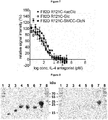


Classifications
-
- C—CHEMISTRY; METALLURGY
- C07—ORGANIC CHEMISTRY
- C07K—PEPTIDES
- C07K14/00—Peptides having more than 20 amino acids; Gastrins; Somatostatins; Melanotropins; Derivatives thereof
- C07K14/435—Peptides having more than 20 amino acids; Gastrins; Somatostatins; Melanotropins; Derivatives thereof from animals; from humans
- C07K14/52—Cytokines; Lymphokines; Interferons
- C07K14/54—Interleukins [IL]
- C07K14/5406—IL-4
Definitions
- the present invention relates to IL-4 muteins capable of inhibiting IL-4 and/or IL-13 signalling, wherein a non-protein-polymer is conjugated to the mutein via a mutated amino acid, which allows site-directed conjugation of a non-protein polymer.
- the present invention further relates to nucleic acids and vectors encoding the IL-4 muteins as well as pharmaceutical compositions, kit of parts comprising the IL-4 muteins.
- the invention further relates to the IL-4 muteins for use in methods of treatment.
- cytokine Interleukin (IL)-4 is produced by various hematopoietic cells and exerts multiple effects in the immune system.
- One major function is in the regulation of T-helper cell differentiation, where it triggers the development of uncommitted naive CD4 + T-helper cells (Th 0 ) into subtype 2 T-helper cells (Th 2 ).
- Th 0 uncommitted naive CD4 + T-helper cells
- Th 2 subtype 2 T-helper cells
- Mature Th 2 cells secrete a specific subset of cytokines including IL-4, IL-5 and IL-13 that mediate the inflammatory immune response directed against extracellular pathogens (Abbas et al. 1996).
- Th 2 -cells By secreting IL-4, Th 2 -cells suppress the development of Th 1 -phenotype thereby maintaining Th 2 proliferation and activity (Parronchie et al. 1992, Nakamura et al. 1997). Physiologic effects of IL-4 and IL-13 partially coincide. Both cytokines induce upregulation of vascular cell adhesion molecule-1 (VCAM1) on endothelial cells and thus facilitate leucocyte migration from the blood to the site of infection (Bochner et al. 1995, Schleimer et al. 1992). Pathophysiologically most important however, IL-4 and IL-13 drive immunoglobulin class switching in B-cells to produce antibodies of the immunoglobulin E (IgE) class (Punnonen et al.
- IgE immunoglobulin E
- IL-4 and IL-13 up-regulate Fc ⁇ -receptors for IgE immunoglobulins on mast cells, eosinophils and B-cells thereby enhancing IgE dependent responses (Xia et al. 1997, Kaur et al. 2006).
- IL-4/IL-13 mediated IgE sensitization is of great pathophysiological significance, as IgE antibodies play a major role in the onset and progression of various atopic diseases, such as asthma, atopic dermatitis and allergic rhinitis.
- IL-13 does not appear to play a role in Th 2 -cell polarization but rather seems to be important for the inflammatory effector phase.
- IL-13 induces increased mucus production and is more strongly involved in tissue remodeling by causing fibrosis or goblet cell hyperplasia (Zhu et al. 1999, Hershey et al. 2003).
- Their crucial role in the pathophysiology of atopic diseases has made IL-4 and IL-13 key targets for novel therapeutic approaches to fight allergies and asthma.
- IL-4 and IL-13 share a highly overlapping set of transmembrane receptors, which upon ligand-mediated activation induce the Jak/STAT signaling cascade.
- IL-4 can form two types of heterodimeric receptor assemblies, termed interleukin-4 type I and type II receptor.
- IL-4 binds first to its high affinity receptor IL-4 receptor ⁇ (IL-4R ⁇ , CD124) and this membrane-located complex then recruits either one of two other receptors, which is either the so-called common ⁇ chain (short: yc; CD132) to form the IL-4 type-I receptor, or IL-13 receptor IL-13R ⁇ 1 (CD213a1) to form the IL-4 type-II receptor (LaPorte et al. 2008).
- the type I receptor is activated exclusively by IL-4, although the common ⁇ chain itself is shared by other cytokine receptors, e.g. IL-2, IL-7, IL-9, IL-15 and IL-21 (Leonard et al. 2001).
- the IL-4 type II receptor can be activated by IL-4 and IL-13 and hence both cytokines assemble and activate the same receptor complex possibly explaining their overlapping functions in vivo.
- IL-13 induces receptor assembly in a reversed order, where IL-13 first binds to its high affinity receptor IL-13R ⁇ 1 before engaging IL-4R ⁇ (LaPorte et al. 2008, Andrews et al. 2002).
- IL-4 and IL-13 are distinct features that allows simultaneous blocking of downstream signaling of both cytokines by specifically targeting the receptor IL-4R ⁇ .
- Therapeutics acting in this manner have been established.
- monoclonal anti-IL-4R ⁇ antibodies, AMG317 (Amgen) and Dupilumab (Regeneron/Sanofi) have been developed, which bind IL-4R ⁇ , thereby neutralizing IL-4 and IL-13 signaling (Gandhi et al. 2017).
- Dupilumab has been recently approved for treatment of atopic dermatitis and is currently being tested in clinical trials for treatment of allergic asthma, thereby confirming that IL-4R ⁇ is indeed an effective therapeutic target for atopic diseases (Barranco et al. 2017).
- a second, but not antibody-based strategy to inhibit IL-4 and IL-13 signaling has been implemented in the past by employing a mechanistically highly similar approach as for Dupilumab.
- the present invention relates in a first aspect to an IL-4 mutein capable of inhibiting IL-4 and/or IL-13 signalling, wherein the IL-4 mutein comprises an amino acid mutation at each of sequence positions 82 and 121 in comparison to the human mature IL-4 (positions 25-153 of UniProt database entry P05112, SEQ ID NO: 1), wherein the amino acid at sequence position 82 is mutated to aspartic acid and the amino acid at sequence position 121 is mutated to an amino acid, which allows site-directed conjugation of a non-protein-polymer, and wherein a non-protein-polymer is conjugated to the mutein via the mutated amino acid at sequence position 121.
- the present invention further relates in a second aspect to an IL-4 mutein capable of inhibiting IL-4 and/or IL-13 signalling, wherein the IL-4 mutein comprises an amino acid mutation at each of sequence positions 82 and 117 in comparison to the human mature IL-4 (positions 25-153 of UniProt database entry P05112, SEQ ID NO: 1), wherein the amino acid at position 82 is mutated to aspartic acid and the amino acid at position 117 is mutated to an amino acid, which allows site-directed conjugation of a non-protein-polymer, and wherein a non-protein-polymer is conjugated to the IL-4 mutein via the mutated amino acid of position 117.
- the IL-4 mutein comprises an amino acid mutation at each of sequence positions 82 and 117 in comparison to the human mature IL-4 (positions 25-153 of UniProt database entry P05112, SEQ ID NO: 1), wherein the amino acid at position 82 is mutated to aspartic acid and
- the mutein of the second aspect is an antagonist of IL-4 receptor type II and/or preferably comprises a further mutation at position 124, wherein the amino acid at position 124 is mutated to an amino acid selected from the group consisting of glycine, lysine and asparagine.
- the IL-4 mutein of the first and the second aspect preferably further comprises at least one, two or three mutated amino acid(s) at a sequence position selected from the group consisting of sequence positions 20, 28 and 61, preferably providing one additional glycosylation site at each mutated sequence position, more preferably the IL-4 mutein comprises asparagine at each mutated sequence position selected from the group consisting of sequence positions 20, 28 and 61 and most preferably, the IL-4 mutein is N-glycosylated at at least one sequence position selected from the group consisting of sequence positions 20, 28 and 61.
- the present invention relates to the IL-4 mutein of the first and the second aspect further comprising at least one, two or three mutated amino acid(s) at a sequence position selected from the group consisting of sequence positions 20, 28 and 61, wherein preferably the at least one, two or three mutated amino acid(s) at a sequence position selected from the group consisting of sequence positions 20, 28 and 61 is mutated to an amino acid, which allows site-direct conjugation of a non-protein polymer and wherein a non-protein polymer is conjugated to the IL-4 mutein via the mutated amino acid at a sequence position selected from the group consisting of positions 20, 28 and 61.
- the IL-4 mutein of the first and the second aspect preferably further comprises a mutated amino acid at sequence position 38, wherein the amino acid at sequence position 38 is mutated to an amino acid, which allows site-directed conjugation of a non-protein-polymer and wherein a non-protein polymer is conjugated to the IL-4 mutein via the mutated amino acid of sequence position 38.
- the IL-4 mutein of the first and the second aspect preferably comprises, or more preferably consists of/has an amino acid sequence with at least 75 %, at least 80 %, at least 85 %, at least 90 %, at least 95 % or at least 99 % sequence identity to an amino acid sequence selected from the group consisting of SEQ ID NOs: 2-10, wherein the IL-4 mutein comprises at least one amino acid, which allows site-directed conjugation of a non-protein polymer and wherein a non-protein polymer is conjugated to the IL-4 mutein via the amino acid, which allows site-directed conjugation of a non-protein polymer.
- the IL-4 mutein of the first and the second aspect has or consists of an amino acid sequence selected from the group consisting of SEQ ID NOs: 2-10, wherein the IL-4 mutein comprises at least one amino acid, which allows site-directed conjugation of a non-protein polymer and wherein a non-protein polymer is conjugated to the IL-4 mutein via the amino acid, which allows site-directed conjugation of a non-protein polymer.
- amino acid which allows site-directed conjugation of a non-protein-polymer, preferably is cysteine.
- the non-protein polymer preferably comprises a mono- or oligosaccharide, polysialic acid, or a complex N-glycan-like oligosaccharide structure.
- the non-protein polymer preferably is chemically modified to allow conjugation to an amino acid, which allows site-directed conjugation of a non-protein polymer, more preferably, the non-protein polymer comprises a thiol group or is coupled to SMCC (succinimidyl 4-(N-maleimidomethyl)cyclohexane-1-carboxylate).
- SMCC succinimidyl 4-(N-maleimidomethyl)cyclohexane-1-carboxylate
- the IL-4 mutein preferably has a glycosylation pattern obtained by an expression in a eukaryotic cell, wherein the glycosylation pattern more preferably is obtained by expression in a mammalian cell.
- the present invention further relates to a nucleic acid encoding the IL-4 mutein of the invention.
- the present invention further relates to a vector comprising the nucleic acid of the invention; the vector preferably further comprises a promoter operatively linked to the nucleic acid.
- the present invention further relates to a host cell comprising the nucleic acid or the vector of the invention.
- the host cell preferably is eukaryotic, more preferably mammalian.
- the present invention further relates to a method for producing an IL-4 mutein according to any of the first and the second aspect, comprising the steps of: (a) culturing the host cell of claim 23 or 24 under conditions allowing the production of the IL-4 mutein, (b) obtaining the IL-4 mutein, (c) optionally conjugating the IL-4 mutein with a non-protein polymer, (d) optionally removing non-conjugated IL-4 muteins, and (e) optionally enzymatic elongation of chemically coupled mono- and/or oligosaccharides.
- the present invention further relates to a pharmaceutical composition
- a pharmaceutical composition comprising the IL-4 mutein of the first and the second aspect, wherein the pharmaceutical composition preferably is adapted for inhalation or subcutaneous injection.
- the present invention further relates to a pharmaceutical kit of parts comprising the pharmaceutical composition of the invention and an anti-inflammatory agent.
- the present invention further relates to the IL-4 muteins of the first and the second aspect, the pharmaceutical composition of any of the invention or the pharmaceutical kit of parts of the invention for use in a method of treating a subject.
- the present invention further relates to the IL-4 muteins of the first and the second aspect, the pharmaceutical composition of any of the invention or the pharmaceutical kit of parts of the invention for use in a method of treating an inflammatory disease, wherein the inflammatory disease preferably is selected from the list consisting of asthma, arthritis, colitis ulcera, atopic dermatitis, allergy and allergic asthma, or leishmaniosis.
- the subject preferably is human.
- the inventors of the present invention surprisingly found that the site-directed attachment of a bulky residue, like e.g. a (branched) sugar moiety, at sequence positions 117 or 121 in the receptor-binding epitope shared by yc and IL13R ⁇ 1 renders an IL-4 mutein an IL-4 and/or IL-13 antagonist.
- All the glyco-engineered IL-4 antagonistic muteins described herein additionally contain the mutation F82D, which was shown to augment the binding affinity of the IL-4 protein to its receptor IL-4R ⁇ by a factor of about 5-fold (Kraich et al.
- muteins of the invention comprise the mutation F82D.
- IL-4" relates to human IL-4.
- IL-4 is also known as "B-cell stimulatory factor 1 (BSF-1)" or "lymphocyte stimulatory factor 1".
- BSF-1 B-cell stimulatory factor 1
- Human IL-4 preferably relates to a full-length protein defined by UniProt P05112, a fragment thereof, or a variant thereof. More preferably, human IL-4 refers to positions 25-153 as set forth in SEQ ID NO: 1, which may act as reference scaffold, of the protein defined by UniProt database entry P05112. The numbering for sequence positions used throughout this disclosure relates to the sequence positions in SEQ ID NO: 1 and starts in the UniProt entry P05112 after the signal peptide at histidine 25.
- a "mutein,” a “mutated” entity (whether protein or nucleic acid), or “mutant” refers to the exchange, deletion, or insertion of one or more nucleotides or amino acids, compared to the naturally occurring (wild-type) nucleic acid or protein "reference” scaffold.
- the term “mutein,” as used herein, may also include its functional fragments or variants. Fragments or variants of particular muteins described in the present disclosure preferably retain the function of inhibiting IL-4 and/or IL-13 signaling, and such fragments or variants are "functional fragments or variants" of the reference muteins disclosed herein.
- the muteins of the invention are "capable of inhibiting IL-4 and/or IL-13 signaling".
- “Capable of inhibiting IL-4 and/or IL-13 signaling” as used herein relates to the property of an IL-4 mutein to prevent IL-4 and/or IL-13 induced signaling. Inhibition is this context means a reduction of IL-4 and/or IL-13 activity by, for, example, about 50 % or more, about 60 % or more, about 70 % or more, about 80 % or more, about 90 % or more, about 95 % or more, or about 99 % or more when measured in a suitable activity assay when compared to wild type IL-4 and/or IL-13.
- IL-4 and/or IL-13 activity assays that can be used for determining the inhibitory capability of muteins of the invention are shown in Examples 4, 5 and 8.
- IL-4 muteins that are capable of inhibiting IL-4 and/or IL-13 signaling may also relate to IL-4 muteins that inhibit the action of IL-4 and/or IL-13 with a K i of 100 nM or less, 75 nM or less, 50 nM or less or 25 nM or less.
- IL-4 and/or IL-13 signaling may also be defined as “being an antagonist of IL-4 receptor type I and/or IL-4 receptor type II".
- human IL-4 receptor type I and type II comprise IL-4R ⁇ (CD124).
- the type I receptor further comprises the (common) yc chain and only IL-4 and not IL-13 can bind to IL-4 receptor type I.
- IL-4 first binds to IL-4R ⁇ and then the second chain, yc (CD132), is associated.
- the IL-4 type II receptor on contrast interacts with IL-4 and IL-13 and further comprises IL-13R ⁇ 1.
- IL-4 first also binds to IL-4R ⁇ but then sequesters IL-13R ⁇ 1 (CD213a1).
- IL-13 first binds to IL-13R ⁇ 1 and then sequesters IL-4R ⁇ .
- the IL-4 mutein may be capable of inhibiting IL-4 receptor type I, may be capable of inhibiting IL-4 receptor type II, or may be capable of inhibiting IL-4 receptor type I and IL-4 receptor type II.
- the muteins of the present invention presumably first bind the IL-4R ⁇ chain with high affinity. At sufficiently high concentrations, all IL-4R ⁇ chains are bound to the IL-4 mutein. However, the IL-4 mutein prevents the association of the second part of the IL-4 receptor type I, the yc chain, and/or IL-4 receptor type II, the IL-13R ⁇ 1 chain presumably by steric hindrance due to the bulky side chain.
- the present invention relates to an IL-4 mutein capable of inhibiting IL-4 and/or IL-13 signaling, wherein the IL-4 mutein comprises an amino acid mutation at each of sequence positions 82 and 121 in comparison to the human mature IL-4 (which is composed of positions 25-153 of UniProt database entry P05112, SEQ ID NO: 1), wherein the amino acid at sequence position 82 is mutated to aspartic acid and the amino acid at sequence position 121 is mutated to an amino acid, which allows site-directed conjugation of a non-protein-polymer, and wherein a non-protein-polymer is conjugated to the mutein via the mutated amino acid at sequence position 121.
- the IL-4 mutein of the first aspect is capable of inhibiting IL-4 and IL-13 signaling. As shown in Examples 4, 5 and 8, the IL-4 mutein of the first aspect is capable of inhibiting IL-4 and/or IL-13 signaling.
- the present invention relates to an IL-4 mutein capable of inhibiting IL-4 and/or IL-13 signaling, wherein the IL-4 mutein comprises an amino acid mutation at each of sequence positions 82 and 117 in comparison to the human mature IL-4 (positions 25-153 of UniProt database entry P05112, SEQ ID NO: 1), wherein the amino acid at position 82 is mutated to aspartic acid and the amino acid at position 117 is mutated to an amino acid, which allows site-directed conjugation of a non-protein-polymer, and wherein a non-protein-polymer is conjugated to the IL-4 mutein via the mutated amino acid of position 117.
- the IL-4 mutein of the second aspect is capable of inhibiting IL-4 and IL-13 signaling.
- the IL-4 mutein of the second aspect is capable of inhibiting IL-4 and/or IL-13 signaling.
- the ability of the mutein of the second aspect to inhibit IL-13 signaling is dependent on the size of the non-protein-polymer that is conjugated to the IL-4 mutein of the second aspect.
- the IL-4 mutein with glutathione conjugated to position 117 completely blocks IL-4 receptor type II (as shown by the activity in HEK Blue cells lacking IL-4 receptor type I), whereas it is still able to activate the type I receptor (as shown by the activity in TF-1 cells having both IL-4 receptor type I and type II).
- the IL-4 muteins K117C-Glc, K117C-4acGlc and K117N Expi show with increasing size of the non-protein polymer a decrease of IL-4 receptor type II activity (as shown by the activity in HEK Blue cells lacking IL-4 receptor type I).
- small non-protein-polymers like e.g. a glutathione, glucose or glucose tetraacetate conjugated to the mutein of the second aspect (K117C GSH, K117C Glc, K117C 4ac Glc in Fig.
- the mutein may not be able to inhibit signaling derived from the IL-4 receptor type I but may act as (partial) agonist.
- the mutein may not be able to inhibit signaling derived from the IL-4 receptor type I but may act as (partial) agonist.
- larger non-protein-polymers like e.g. a complex N-glycan are conjugated to the IL-4 mutein by expression in a eukaryotic host cells, like e.g. HEK293 Expi (see K117N Expi in Fig. 9B ) of the second aspect, both IL-4 receptor type I and type II are inhibited.
- IL-4 muteins comprising the mutations F82D and K117C or K117N show an increase of antagonism of the IL-4 receptor type II with an increase of size of the non-protein polymer, which is conjugated to the amino acid, which allows site-directed conjugation of a non-protein polymer, at position 117.
- the inhibitory efficacy is significantly enhanced if the mutein is combined with the mutation T28N, which results in the conjugation of a complex branched N-glycan at position 28 upon production in a human cell line (see also Fig. 9B ).
- the size and the architecture of the non-protein polymer may affect the inhibitory efficacy as well as the specificity, which IL-4 receptor is blocked.
- the IL-4 mutein is an antagonist of (only) IL-4 receptor type II.
- Such an IL-4 mutein preferably comprises a small non-protein-polymer, more preferably a non-protein-polymer with a molecular weight of 250 to 750 Dalton or less.
- small non-protein polymers are glutathione or a trisaccharide, such as maltotriose with a thiol group at the first anomeric C-atom, e.g. Glc- ⁇ -Glc- ⁇ -Glc- ⁇ -SH).
- a branched trisaccharide with the thiol group at the anomeric C-atom of a glucose moiety which is then conjugated to two other glucose moieties via the OH groups at carbon atoms C2 and C4.
- a further mutation of Y124D, Y124G or Y124K in the IL-4 mutein of the second aspect may render the IL-4 mutein of the second aspect an antagonist of both IL-4 receptor type I and type II.
- This feature is independent of the size of the non-protein-polymer conjugated to the IL-4 mutein via the mutated amino acid of position 117.
- the present invention relates to an IL-4 mutein of the second aspect, wherein the amino acid at position 124 is mutated to an amino acid selected from the group consisting of glycine, lysine and asparagine.
- the muteins of the invention may comprise mutations at further sequence positions.
- the IL-4 muteins of the invention further comprise at least one, at least two, or three mutated amino acid(s) at a sequence position selected from the group consisting of sequence positions 20, 28 and 61. Modifications at these positions, which preferably enable the attachment or conjugation of bulky and/or branched moieties, i.e. of a non-protein polymer, that may further improve the antagonistic effect and/or the proteolytic stability of the IL-4 muteins of the invention.
- One possibility to conjugate bulky moieties to the sequence positions 20, 28 and 61 is the introduction of glycosylation sites at each mutated sequence position. If the IL-4 mutein of the invention is expressed in a eukaryotic expression system, the IL-4 mutein will be biosynthetically glycosylated by the host cell.
- the introduced glycosylation may further inhibit the association of the yc or the IL-13R ⁇ 1 chain to the IL-4R ⁇ /IL-4 mutein complex, thereby further inhibiting IL-4 and/or IL-13 signaling, and/or further prevent proteolytic degradation, i.e. increase serum half-life.
- the IL-4 mutein of the invention comprises asparagine at each mutated sequence position selected from the group consisting of sequence positions 20, 28 and 61. More preferably, the IL-4 mutein is N-glycosylated at at least one sequence position selected from the group consisting of sequence positions 20, 28 and 61. As shown in Table 4, the hyper-glycosylated IL-4 mutein F82D Q20N T28N K61N expressed in the human Hek293 host cell has the highest proteolytic stability, indicating an increased half-life.
- the present invention relates to an IL-4 mutein, wherein the at least one, at least two or three mutated amino acid(s) at (a) sequence position(s) selected from the group consisting of sequence positions 20, 28 and 61 of the IL-4 mutein is/are mutated to an amino acid, which allows site-direct conjugation of a non-protein polymer and wherein a non-protein polymer is conjugated to the IL-4 mutein via the mutated amino acid at a sequence position selected from the group consisting of positions 20, 28 and 61.
- a bulky moiety i.e. a non-protein polymer
- a bulky moiety i.e. a non-protein polymer
- This position provides a further possible mutation site for a mutation to an amino acid that allows site-directed conjugation of a non-protein polymer, to which a non-protein polymer may be preferably conjugated.
- the IL-4 mutein further comprises a mutated amino acid at sequence position 38, wherein the amino acid at sequence position 38 is mutated to an amino acid, which allows site-directed conjugation of a non-protein-polymer and wherein a non-protein polymer is conjugated to the IL-4 mutein via the mutated amino acid of sequence position 38.
- amino acid which allows site-directed conjugation of a non-protein polymer
- Reactive amino acid residues in the 20 "standard" natural amino acids include sulfhydryl groups, carboxylic acids, amides, alcohols and amino groups.
- amino acid, which allows site-directed conjugation of a non-protein polymer is cysteine. Cysteines have the advantage of a very reactive sulfhydryl side group and are also not very common in proteins. While two cysteines readily build a cysteine bridge in oxidative environments if the two cysteines are in proximity, single cysteines can be interaction partners for non-protein polymers.
- unnatural amino acids could be envisioned as amino acids, which allow site-directed conjugation of a non-protein polymer.
- genetic code expansion it is possible to incorporate unnatural amino acids into proteins expressed in prokaryotic and even eukaryotic cells.
- Serfling et al. 2016 disclosed a method for such an incorporation of a photoactivatable unnatural amino acid into GPCRs.
- a person skilled in the art is capable of incorporating an unnatural amino acid into an IL-4 mutein.
- suitable unnatural amino acids include, but are not limited to, 3-Azido-L-alanine, 4-Azido-L-homoalanine HCI (L-AHA), 4-Azido-L-phenylalanine 5-Azido-L-ornithine, 5-Azido-L-norvaline, 2-Amino-5-azidopentanoic acid, 6-Azido-L-lysine, 6-Azido-L-lysine and L-Homopropargylglycine (L-HPG).
- 3-Azido-L-alanine 4-Azido-L-homoalanine HCI (L-AHA)
- 4-Azido-L-phenylalanine 5-Azido-L-ornithine
- 5-Azido-L-norvaline 5-Azido-L-norvaline
- 2-Amino-5-azidopentanoic acid 6-Azido
- the amino acid which allows site-directed conjugation of a non-protein polymer, may be asparagine, in case it is part of a glycosylation site.
- a glycosylation site has the consensus sequence Asn-Xaa-Xab, wherein Xaa can be any amino acid except proline and Xab can be Ser or Thr. If necessary, adjacent sequence positions have to be mutated as well to generate the consensus sequence.
- the IL-4 mutein has to carry at least the following mutations: K117N and I119T, preferably additionally T118A.
- the amino acid, which allows site-directed conjugation of a non-protein polymer is asparagine and part of a glycosylation sequence
- the conjugation of a non-protein polymer is achieved by expression in eukaryotic host cells as described herein, e.g. in a HEK293 Expi cells to obtain a complex human N-glycan structure (see also Example 8).
- the amino acid, which allows site-directed mutagenesis is asparagine, in case it is part of a glycosylation site, or cysteine.
- the amino acid, which allows site-directed conjugation of a non-protein polymer is not asparagine, aspartic acid, glutamine, glutamic acid and/or lysine. In one embodiment, the amino acid, which allows site-directed conjugation of a non-protein polymer at sequence position 121 is not asparagine, aspartic acid, glutamine, glutamic acid and/or lysine.
- the IL-4 mutein may comprise glycosylation sites.
- Eukaryotic cells detect these signal sequences and attach a specific glycan to the asparagine of the recognition sequence.
- Mammalian cells are a specific subtype of the domain of eukaryote, which attach significantly different glycan structures, e.g. in comparison to the kingdom of fungi. Accordingly, the present invention relates to an IL-4 mutein having a glycosylation pattern obtained by an expression in a eukaryotic cell, preferably a mammalian cell.
- non-protein polymer is a moiety that is suitable for preventing the association of the yc or IL-13R ⁇ 1 chain to the complex comprising the IL-4 mutein and IL4-R ⁇ , thereby inhibiting the assembling of the IL-4 receptor type I or type II complex and consequently inhibiting IL-4 and/or IL-13 signalling without being a protein.
- carbohydrates, sugars, glycans or the like the proteolytic stability of the IL-4 muteins is improved as well.
- the non-protein polymer is not polyethylene glycol, polypropylene glycol or a polyoxyalkylene.
- the non-protein polymer may comprise a monosaccharide or an oligosaccharide.
- Monosaccharides are the most basic units of carbohydrates. The general formula is C n H 2n O n . Examples of monosaccharides include glucose (dextrose), fructose (levulose) and galactose. Further, each carbon atom that supports a hydroxyl group (so, all of the carbons except for the primary and terminal carbon) is chiral, giving rise to a number of isomeric forms, all with the same chemical formula. For instance, galactose and glucose are both aldohexoses, but have different physical structures and chemical properties.
- Also derivatives of monosaccharides which include amino sugars such as galactosamine, glucosamine, sialic acid and N-actecylglucosamine, and sulfosugars such as sulfoquinovose, are within the scope of the invention.
- the non-protein polymer may also comprise an oligosaccharide.
- An oligosaccharide as used herein is a saccharide polymer containing a small number (typically 2 to 20) of monosaccharides. They are normally present as glycans: oligosaccharide chains linked to lipids or to compatible amino acid side chains in proteins, by N- or O-glycosidic bonds. N-linked oligosaccharides are usually attached to asparagine via a beta linkage to the amine nitrogen of the side chain.
- the non-protein polymer may however be attached to the mutated amino acid, which allows site-directed conjugation of a non-protein polymer, by the use of a cross-linker.
- the non-protein polymer may also comprise a complex N-glycan-like oligosaccharide structure. Examples for complex N-glycan-like oligosaccharide structures can be found in Figure 1 .
- the oligosaccharide may be modified to allow site-directed conjugation.
- the oligosaccharide may also comprise an amino group.
- the non-protein polymer may also comprise a polysialic acid.
- Sialic acid is a generic term for the N- or O-substituted derivatives of neuraminic acid, a monosaccharide with a nine-carbon backbone. It is also the name for the most common member of this group, N-acetylneuraminic acid (Neu5Ac or NANA).
- the amino group preferably bears either an acetyl or a glycosyl group, but other modifications have been described.
- the hydroxyl substituents may vary considerably; acetyl, lactyl, methyl, sulfate, and phosphate groups are within the scope of the invention. However, the amino group may also be unmodified.
- Polysialic acid is a carbohydrate comprising ⁇ 2,8-linked sialic acids and may also be comprised in the non-protein polymer.
- the non-protein polymer of the invention preferably is chemically modified to allow conjugation to an amino acid, which allows site-directed conjugation of a non-protein polymer.
- the non-protein polymer is modified to contain a thiol group to allow site-directed conjugation.
- a thio-carbohydrate may be directly conjugated to the IL-4 mutein.
- a glyco-engineering strategy established by Gamblin et al. 2004 that is termed Glyco-SeS, implements thiol-functionalized carbohydrates for site-directed linker-free conjugation to cysteine residues.
- Reaction with a phenylselenylating reagent converts the free sulfhydryl group of an engineered cysteine residue into the corresponding mixed phenylselenylsulphide (Bernardes et al. 2006, Gamblin et al. 2004, van Kasteren et al. 2007). Because of the resulting electrophilic nature of the Sulphur atom in the S-Se bond, it readily reacts with a thiol-containing carbohydrate to form a disulphide-linked protein-glycan conjugate.
- thio-carbohydrate is first activated with phenylselenylbromide, which can then be coupled to a free unpaired cysteine residue in the protein.
- Thiol-functionalized carbohydrates in general are monosaccharides, disaccharides or glycans as defined herein, which have been modified to contain at least one, preferably one, sulfhydryl group instead of a hydroxyl group, preferably at the C 1 atom. Examples for such thiol-functionalized carbohydrates and their synthesis are e.g. disclosed in Goncalo et al.
- a further method of synthesizing such functionalized carbohydrates is the reaction of reducing carbohydrates with Lawesson's reagent to thio-glycans (as largest thio-glycan a maltopentaose was shown as example). Given the reaction scheme, the production of thio-glycans is not limited to these mono- and oligosaccharides but should be expandable to also more complex glycan structures as found in natural glycoproteins.
- the non-protein polymer is chemically modified to allow conjugation to an amino acid, which allows site-directed conjugation of a non-protein polymer, preferably by the conjugation to a cross linker, which e.g. is first coupled to an amine of the non-protein polymer. Then, the linker-non-protein polymer-complex may be conjugated to the IL-4 mutein via the amino acid, which allows site-directed conjugation.
- a linker comprises a group, which is reactive towards sulfhydryl groups, like e.g.
- haloacetyls maleimides, aziridines, acryloyls, arylating agents, vinyl sulfones, pyridyl disulfides, TNB-thiols and disulfide reducing agents.
- Most of these groups conjugate to sulfhydryls by either alkylation (usually the formation of a thioether bond) or disulfide exchange (formation of a disulfide bond).
- Such linkers further comprise a group, which is reactive to an amino group, like e.g.
- An example for such a linker is SMCC (succinimidyl 4-(N-maleimidomethyl)cyclohexane-1-carboxylate).
- a preferred non-protein polymer is Glucosamine (GlcN) coupled to SMCC, i.e. SMCC-GlcN.
- the IL-4 muteins are expressed in a prokaryotic host cell, e.g. in E. coli, the IL-4 mutein may be expressed into inclusion bodies. While refolding the IL-4 mutein in an oxidative environment, glutathione may be added in a redox couple. If the IL-4 mutein is not modified thereafter, the non-protein polymer is glutathione. Accordingly, the present invention relates to an embodiment, wherein the non-protein polymer is glutathione.
- Fig. 10 shows an overview of preferred amino acid sequences of the IL-4 muteins of the invention.
- the IL-4 mutein may comprise a sequence as depicted in any of SEQ ID NOs: 2-10.
- the IL-4 mutein may essentially consist of a sequence as depicted in any of SEQ ID NOs: 2-10.
- the IL-4 mutein may consist of a sequence as depicted in any of SEQ ID NOs: 2-10.
- the IL-4 mutein may also comprise an amino acid sequence with at least 75 %, at least 80 %, at least 85 %, at least 90 % at least 95 % or at least 99 % sequence identity to an amino an amino acid sequence selected from the group consisting of SEQ ID NOs: 2-10, wherein the IL-4 mutein comprises at least one amino acid, which allows site-directed conjugation of a non-protein polymer and wherein a non-protein polymer is conjugated to the IL-4 mutein via the amino acid, which allows site-directed conjugation of a non-protein polymer.
- the IL-4 mutein either comprises the mutation K117C or the mutation R121C, more preferably the IL-4 mutein either comprises the mutation K117C or the mutation R121C, and in addition the mutation F82D.
- the IL-4 mutein may also essentially consist of an amino acid sequence with at least 75 %, at least 80 %, at least 85 %, at least 90 % at least 95 % or at least 99 % sequence identity to an amino an amino acid sequence selected from the group consisting of SEQ ID NOs: 2-10, wherein the IL-4 mutein comprises at least one amino acid, which allows site-directed conjugation of a non-protein polymer and wherein a non-protein polymer is conjugated to the IL-4 mutein via the amino acid, which allows site-directed conjugation of a non-protein polymer.
- the IL-4 mutein either comprises the mutation K117C or the mutation R121C, more preferably the IL-4 mutein either comprises the mutation K117C or the mutation R121C, and in addition the mutation F82D.
- the IL-4 mutein may also consist of an amino acid sequence with an amino acid sequence selected from the group consisting of SEQ ID NOs: 2-10, wherein the IL-4 mutein comprises at least one amino acid, which allows site-directed conjugation of a non-protein polymer and wherein a non-protein polymer is conjugated to the IL-4 mutein via the amino acid, which allows site-directed conjugation of a non-protein polymer.
- sequence identity as used herein in its usual meaning and includes identical amino acids as well as amino acids which are regarded to be conservative substitutions (for example, exchange of a glutamate residue by an aspartate residue) at equivalent positions in the linear amino acid sequence of two proteins that are compared with each other.
- identity or “sequence identity” is meant a property of sequences that measures their similarity or relationship.
- sequence identity or “identity” as used in the present invention means the percentage of pair-wise identical residues - following (homology) alignment of a sequence of a polypeptide of the invention with a sequence in question - with respect to the number of residues in the longer of these two sequences. Identity is measured by dividing the number of identical residues by the total number of residues and multiplying the product by 100.
- the percentage of sequence homology or sequence identity can, for example, be determined herein using the program BLASTP, version blastp 2.2.5 (November 16, 2002; cf. Altschul, S. F. et al. (1997) Nucl. Acids Res. 25, 3389-3402 ).
- the percentage of homology is based on the alignment of the entire polypeptide sequences (matrix: BLOSUM 62; gap costs: 11.1; cutoff value set to 10 -3 ) optionally including the propeptide sequences, using the human IL-4 as reference in a pairwise comparison. It is calculated as the percentage of numbers of "positives" (homologous amino acids) indicated as result in the BLASTP program output divided by the total number of amino acids selected by the program for the alignment. It is noted in this connection that this total number of selected amino acids can differ from the length of the human IL-4.
- the present invention also relates to a nucleic acid encoding the IL-4 mutein.
- a nucleic acid may be comprised in a vector.
- the vector further comprises a promoter operatively linked to the nucleic acid.
- a promoter is suitable to induce transcription of a gene and thereby induces the expression of the nucleic acid.
- Promoters are untranscribed sequences located upstream (i.e., 5') to the start codon of a structural gene (generally within about 100 to 1000 bp) that control the transcription of the structural gene. Promoters are conventionally grouped into one of two classes: inducible promoters and constitutive promoters. Inducible promoters initiate increased levels of transcription from DNA under their control in response to some change in culture conditions, such as the presence or absence of a nutrient or a change in temperature. Constitutive promoters, on the other hand, initiate continual gene product production; that is, there is little or no control over gene expression. A large number of promoters, recognized by a variety of potential host cells, are well known. A heterologous promoter is preferred, however, if it permits greater transcription and higher yields of the expressed protein as compared to the native promoter, and if it is compatible with the host cell system that has been selected for use.
- Promoters suitable for use with prokaryotic hosts include the beta-lactamase and lactose promoter systems; alkaline phosphatase; a tryptophan (trp) promoter system; and hybrid promoters such as the tac promoter. Other known bacterial promoters are also suitable. Their sequences have been published, thereby enabling one skilled in the art to ligate them to the desired DNA sequence, using linkers or adapters as needed to supply any useful restriction sites.
- Suitable promoters for use with yeast hosts are also well known in the art.
- Yeast enhancers are advantageously used with yeast promoters.
- Suitable promoters for use with mammalian host cells are well known and include, but are not limited to, those obtained from the genomes of viruses such as polyoma virus, fowl pox virus, adenovirus (such as Adenovirus 2), bovine papilloma virus, avian sarcoma virus, cytomegalovirus, retroviruses, hepatitis-B virus and most preferably Simian Virus 40 (SV40).
- viruses such as polyoma virus, fowl pox virus, adenovirus (such as Adenovirus 2), bovine papilloma virus, avian sarcoma virus, cytomegalovirus, retroviruses, hepatitis-B virus and most preferably Simian Virus 40 (SV40).
- Other suitable mammalian promoters include hetero
- the present invention further relates to a host cell comprising the nucleic acid or the vector of the invention.
- Suitable host cells may be prokaryotic or eukaryotic.
- a preferred prokaryotic host cell is E. coli.
- Eukaryotic cells are able to recognize glycosylation signals and conjugate glycans to the asparagine of the signal sequence to form N-glycosylated proteins.
- the host cell preferably is eukaryotic.
- Eukaryotic host cells may include yeast, like e.g. Saccharomyces, Pichia pastoris, Kluyveromyces lactis, Hansenula polymorpha, Yarrowia lipolytica. Other preferred host cells are Sf9 cells.
- the host cell is mammalian.
- Suitable mammalian host cells are for example CHO cells, HEK293 cells, Expi293 cells, HeLa cells, U2OS cells, A549 cells, HT1090 cells, CAD cells, P19 cells, NIH 3T3 cells, L020 cells, N2a cells, MCF-7 cells, Y79 cells, SO-Rb50 cells, HepG2 cells, DUKX-X11 cells, J558L cells and BHK cells.
- the present invention further relates to a method for producing an IL-4 mutein according to the invention, comprising the steps of: culturing the host cell under conditions allowing the production of the IL-4 mutein and obtaining the IL-4 mutein.
- Constants allowing the production of the IL-4 mutein relate at least to the choice of a suitable culture medium, a suitable temperature or a suitable container or incubator. Different host cells need different culture media. Examples for the conditions allowing the production of the IL-4 mutein are shown in the Examples (see materials and methods). A person skilled in the art is capable of choosing the culture conditions to ensure sufficient and efficient protein expression.
- Obtaining the IL-4 mutein as used herein relates to the isolation or purification of the IL-4 mutein, i.e. the separation of the IL-4 mutein from the other parts of the host cells. Possible steps include the lysis of the host cell and a further purification.
- the IL-4 muteins expressed in E. coli are expressed in inclusion bodies. A person skilled in the art knows how to separate inclusion bodies. Another way to isolate the IL-4 mutein could be the use of affinity chromatography. For exemplary means and methods to obtain the IL-4 mutein see the materials and methods section of the Examples.
- a further optional step includes the conjugation of the IL-4 mutein with a non-protein polymer, preferably as described herein.
- the method may further comprise the step removing non-conjugated IL-4 muteins, which is exemplified in the Examples.
- the method may comprise further a step of enzymatic elongation of chemically coupled mono- and/or oligosaccharides.
- the enzymatic elongation of chemically coupled mono- and/or disaccharides may be done by employing glycosyltransferases and/or other glycan-processing enzymes. Examples for such enzymatic elongation is disclosed in Gamblin et al. (2004), Angew Chem Int Ed, 43:828-833
- the IL-4 mutein may be comprised in a pharmaceutical composition.
- the pharmaceutical composition of the present invention may be suitable or adapted for inhalation or subcutaneous injection.
- the pharmaceutical compositions can be in lyophilized powder in admixture with suitable excipients in a suitable vial or tube.
- the drugs Before use in the clinic, the drugs may be reconstituted by dissolving the lyophilized powder in a suitable solvent system for form a composition suitable for intravenous or intramuscular injection.
- compositions provided herein may be provided in a sterile injectable form, i.e. in a form that is adapted for subcutaneous injection or intravenous infusion.
- pharmaceutical compositions are provided in a liquid dosage form that is suitable for injection.
- pharmaceutical compositions are provided as powders ( e.g. lyophilized and/or sterilized), optionally under vacuum, which are reconstituted with an aqueous diluent (e.g., water, buffer, salt solution, etc.) prior to injection.
- aqueous diluent e.g., water, buffer, salt solution, etc.
- pharmaceutical compositions are diluted and/or reconstituted in water, sodium chloride solution, sodium acetate solution, benzyl alcohol solution, phosphate buffered saline, etc.
- powder should be mixed gently with the aqueous diluent (e.g., not shaken).
- compositions provided herein may also be inhalable.
- Such an inhalable IL-4 and IL-13 mutein pharmaceutical compositions are, for example, disclosed in WO 2009/009775 .
- compositions contemplated as part of the present invention are not limited to pharmaceutical compositions that are injectable or inhalable, but include all types of pharmaceutical compositions commonly known and used in the art.
- compositions may further comprise one or more pharmaceutically acceptable excipients.
- pharmaceutical compositions comprise one or more preservatives.
- pharmaceutical compositions comprise no preservative.
- Excipients as used herein may be or comprise solvents, dispersion media, diluents, or other liquid vehicles, dispersion or suspension aids, surface active agents, isotonic agents, thickening or emulsifying agents, preservatives, and the like, as suited to the particular dosage form desired. Remington's The Science and Practice of Pharmacy, 21st Edition, A. R.
- Gennaro (Lippincott, Williams & Wilkins, Baltimore, MD, 2006 ) discloses a variety of excipients used in formulating pharmaceutical compositions and known techniques for the preparation thereof. Except insofar as any conventional excipient medium is incompatible with a substance or its derivatives, such as by producing any undesirable biological effect or otherwise interacting in a deleterious manner with any other component(s) of the pharmaceutical composition, its use is contemplated to be within the scope of this invention.
- compositions may contain pharmaceutically acceptable auxiliary substances as required.
- Acceptable auxiliary substances preferably are nontoxic to recipients at the dosages and concentrations employed.
- the pharmaceutical composition can contain auxiliary substances for modifying, maintaining, or preserving, for example, the pH, osmolality, viscosity, clarity, color, isotonicity, odor, sterility, stability, rate of dissolution or release, adsorption, or penetration of the composition.
- Suitable formulation materials include, but are not limited to, amino acids (such as glycine, glutamine, asparagine, arginine, or lysine), antimicrobials, antioxidants (such as ascorbic acid, sodium sulfite, or sodium hydrogen- sulfite), buffers (such as borate, bicarbonate, Tris-HCI, citrates, phosphates, or other organic acids), bulking agents (such as mannitol or glycine), chelating agents (such as ethylenediamine tetraacetic acid (EDTA)), complexing agents (such as caffeine, polyvinylpyrrolidone, beta-cyclodextrin, or hydroxypropyl-beta-cyclodextrin), fillers, monosaccharides, disaccharides, and other carbohydrates (such as glucose, mannose, or dextrins), proteins (such as serum albumin, gelatin, or immunoglobulins), coloring, flavoring and diluting agents, emul
- a pharmaceutical composition in accordance with the invention may be prepared, packaged, and/or sold in bulk, as a single unit dose, and/or as a plurality of single unit doses.
- a "unit dose" is discrete amount of the pharmaceutical composition comprising a predetermined amount of the active ingredient.
- Relative amounts of active ingredient, pharmaceutically acceptable excipient, and/or any additional ingredients in a pharmaceutical composition in accordance with the invention may vary, depending upon the identity, size, and/or condition of the subject treated and/or depending upon the route by which the composition is to be administered.
- the composition may comprise between 0.1% and 100% (w/w) active ingredient, i.e. the IL-4 mutein.
- the optimal pharmaceutical composition can be determined by a skilled artisan depending upon, for example, the intended route of administration, delivery format, and desired dosage. See, e.g., Remington's Pharmaceutical Sciences, supra.
- the present invention also relates to a pharmaceutical kit of parts comprising the pharmaceutical composition of the invention and an anti-inflammatory agent.
- an anti-inflammatory agent include, but are not limited to, corticosteroids such as hydrocortisone, methylprednisolone, prednisolone, prednisone, triamcinolone, Amcinonide, budesonide, desonide, fluocinolone acetonide, fluocinonide, halcinonide, and triamcinolone acetonide, Beclometasone, betamethasone, dexamethasone, fluocortolone, halometasone, mometasone Alclometasone dipropionate, betamethasone dipropionate, betamethasone valerate, clobetasol propionate, clobetasone butyrate, fluprednidene acetate, mometasone furoate Ciclesonide, cortisone a
- IL-4 and IL-13 induce upregulation of vascular cell adhesion molecule-1 (VCAM1) on endothelial cells and thus facilitate leucocyte migration from the blood to the site of infection. Further, IL-4 and IL-13 upregulate Fc ⁇ -receptors for IgE immunoglobulins on mast cells, eosinophils and B-cells, thereby enhancing IgE-dependent responses.
- VCAM1 vascular cell adhesion molecule-1
- IgE antibodies play a major role in the onset and progression of various atopic diseases, such as asthma, atopic dermatitis and allergic rhinitis.
- the recognition of a specific antigen/allergen through the IgE/Fc ⁇ complex on mast cells as well as basophilic and eosinophilic granulocytes stimulates degranulation of the cell leading to the release of pro-inflammatory mediators, like the anticoagulant heparin and the vasodilator histamine, which promote transport of immune cells to the site of infection.
- the IL-4 mutein of the invention, the pharmaceutical composition of the invention and the pharmaceutical kit of parts of the invention are useful in treating a subject with an inflammatory disease characterized by the actions of IL-4 and/or IL-13.
- the present invention relates to the IL-4 mutein of the invention, the pharmaceutical composition of the invention or the pharmaceutical kit of parts of the invention for use in a method of treatment.
- the IL-4 mutein of the invention, the pharmaceutical composition of the invention or the pharmaceutical kit of parts of the invention are for use in a method of treating an inflammatory disease.
- the inflammatory disease preferably is asthma, arthritis, colitis ulcera, atopic dermatitis, allergy and allergic asthma.
- the IL-4 mutein of the invention, the pharmaceutical composition of the invention or the pharmaceutical kit of parts of the invention are for use in a method of treating leishmaniosis.
- the subject preferably is human. A person skilled in the art is able to determine the correct dosage of the IL-4 mutein of the invention for use in methods of treatment.
- less than 20 means less than the number indicated.
- more than or greater than means more than or greater than the indicated number, e.g. more than 80 % means more than or greater than the indicated number of 80 %.
- E. coli glutaredoxin (GRX-01) was obtained from Cayman Chemical, glutathione and NADPH was obtained from Carl Roth GmbH (Karlsruhe, Germany), and yeast glutathione reductase (GR) was from Sigma-Aldrich (St. Louis, MO, USA).
- Succinimidyl 4-(N-maleimidomethyl) cyclohexane-1-carboxylate (SMCC) was purchased from Apollo Scientific (Cheshire, UK) and D(+) glucosamine hydrochloride was obtained from Merck (Darmstadt, Germany).
- Phenylselenylbromide, 1-thio- ⁇ -D-glucose sodium salt and 1-thio- ⁇ -D-glucose tetraacetate was ordered from Sigma-Aldrich (St. Louis, USA). Sequencing grade trypsin was acquired from Promega (Fitchburg, USA).
- the cDNA-encoding IL-4 cysteine muteins were synthesized by two-step mutagenesis PCR. Expression, purification and enzymatic reduction of E. coli derived IL-4 cysteine variants were essentially performed as described by Duppatla et al. 2012. The following primers were used for mutagenesis: Table 1: List of primers used for mutagenesis.
- the cross-linker SMCC (succinimidyl 4-(N-maleimido-methyl)-cyclohexane-1-carboxylate) was dissolved in acetonitrile at a concentration of 100mM.
- a 400mM glucosamine solution was prepared in 100mM sodium phosphate, 4mM EDTA pH 8.0. Both solutions were mixed in 1:1 (v/v) ratio to yield a stoichiometric ratio (SMCC:glucosamine) of 1:4 and the mixture was incubated at 21°C for 2 h. The reaction was stopped by adding TFA to a final concentration of 0.1% (v/v).
- the SMCC-glucosamine coupling product was purified by subsequent RP-HPLC employing a C18 column ( ⁇ RPC C2/C18 ST 4.6/100, GE Healthcare) and elution was monitored at 302nm (absorbance maximum of the maleimide group in SMCC).
- the SMCC-glucosamine conjugate eluted at 55-60% acetonitrile. Conjugate-containing fractions were pooled, analyzed by mass spectrometry and freeze-dried.
- thiol-activated IL-4 mutein was dissolved in 100 mM sodium phosphate pH 6.5, glucosamine-SMCC conjugate was dissolved acetonitrile to give a 5 mM concentration and both solutions were mixed in a molar ratio (protein:gluco-SMCC conjugate) of 1:100. After incubation for 2h at 21°C the reaction mixture was subsequently purified by RP-HPLC employing a C4 column (Jupiter C4, 10 ⁇ m, 250 ⁇ 10 mm, Phenomenex, Germany) and a gradient 0.1 % TFA to 100 % acetonitrile.
- C4 column Jupiter C4, 10 ⁇ m, 250 ⁇ 10 mm, Phenomenex, Germany
- Glyco-SeS reaction was performed as in van Kasteren et al. 2007.
- Activated IL-4 mutein was dissolved in buffer containing 10 mM CHES, 70mM MES, 2mM CaCl 2 , pH 9.5 to a final concentration of 66 ⁇ M.
- Phenylselenylbromide was dissolved in acetonitrile at a concentration of 100 mM.
- the reaction was started by adding 40 equiv. (3 mM) of phenylselenyl bromide to the protein solution. The mixture was vortexed for 30 seconds and then placed on a shaker for 1 h at 21 °C.
- Non-reacted phenylselenylbromide and byproducts were removed by size exclusion chromatography using a PD10 column (GE Healthcare). Protein-containing fractions were pooled and stored at -20°C until further use. Thiol-group containing carbohydrates were dissolved in water at 30 mM concentration. A 66 ⁇ M protein-phenylselenyl conjugate was incubated with 3 mM of the above-described thiol-carbohydrate solution for 20min at 21 °C, to increase coupling yield further thiol-carbohydrate solution was added to raise the final concentration to 6 mM. The mixture was incubated again for 20 min at 21 °C.
- the IL4-carbohydrate conjugate was subsequently purified by RP-HPLC using a C4 column (Jupiter C4, 10 ⁇ m, 250 ⁇ 10 mm, Phenomenex, Germany) and employing a gradient 0.1% TFA to 100% acetonitrile.
- IL-4 protein either in form of E. coli -derived IL-4 inclusion bodies or purified from Hek293 cells was first denatured using 5.3 M GuHCl, 100 mM Tris pH 8.0, 1 mM DTT (conc. of 50 mg/mL for inclusion bodies or 1 mg/mL for Hek293T protein). After stirring for 2h at RT the clarified solution was added dropwise to 25-fold ice cold refolding buffer (1 M Arginine, 50 mM Tris HCI pH 8.0, 5 mM EDTA, 1 mM thiol-containing carbohydrate as non-protein polymer) while stirring and incubated at 4 °C for at least 72 h.
- His-tagged Hek293 cell derived IL-4 mutein was isolated using IMAC as stated above and subsequent dialysis against 1 mM HCI.
- E. coli -derived IL-4 mutein was purified using ion exchange chromatography (HiTrap CM Sepharose FF, GE Healthcare) and subsequent RP-HPLC using a C4 column. Protein containing fractions were freeze-dried for storage at -20°C.
- lodoacetyl-activated agarose beads (SulfoLinkTM, Thermo Scientific) were used to remove unreacted protein with free sulfhydryl groups after chemical glycosylation reaction.
- 1 mg IL-4 protein 1 mL of the resin is added to 1 mg IL-4-conjugate mixture dissolved in 50mM Tris-HCI, 1mM EDTA pH 8.0. The suspension is mixed several times by inverting, for completion of the reaction the suspension is incubated at 21°C for 45min. The suspension is filled into a column jacket and the flow-through is collected. The protein solution is analyzed by SDS-PAGE and mass spectrometry, extensively dialyzed against 1 mM HCI and freeze-dried. If the protein pool still contains non-conjugated IL-4 mutein the purification step is repeated using fresh iodoacetyl-activated agarose.
- HEKBlue IL-4/IL-13 cells (Invivogen) were cultured in a growth medium containing DMEM glutamax (Gibco), 10% heat inactivated FBS, 100 ⁇ g/mL streptomycin, 100 U/mL penicillin, 100 ⁇ g/mL zeocin, 10 ⁇ g/mL blasticidin at 37 °C and 5% CO2. Assays were performed in growth medium without phenol red. For the experiment cells were seeded in 96 well f-bottom plates (1x10 4 cells/well). After 20-24 h of incubation with IL-4 the supernatant was taken and a PNPP assay was performed to assess SEAP induction. Absorbance was measured at 405/630 nm on a microplate reader.
- TF-1 cells were grown in RMPI-1640 (Gibco) medium supplemented with 10% heat inactivated FBS, 100 ⁇ g/mL streptomycin, 100 U/mL penicillin and 8 ng/mL GM-CSF at 37 °C and 5% CO2.
- Proliferation assays were performed in RPMI-1640 with 10 % FBS, 100 ⁇ g/mL streptomycin, 100 U/mL penicillin without phenol red and GMCSF.
- Prior to administration of IL-4 cells were starved for four hours. For the experiment cells were seeded in 96 well f-bottom plates (4x10 4 cells/well).
- the proliferation rate was assessed by adding resazurin dye solution (0.15mg/ml in PBS) to the cells. After 4 h of incubation at 37°C to facilitate NADH/H + -dependent reduction to the red fluorescent resorufin, absorbance was measured at 571/749 nm on a microplate reader.
- IL-4 muteins To evaluate the biologic activity of the IL-4 muteins cells were treated with 50 pM of IL-4 muteins. Signal intensity was normalized to 50 pM of wildtype IL-4. The K i -values of the IL-4 muteins were calculated from data obtained from dose-response curves.
- the half maximal effective concentration (EC 50 ) of wildtype IL-4 was determined by treating cells with a log 2 titration of IL-4 wildtype, starting at 10 nM concentration.
- IC 50 half maximal inhibitory concentration
- cells were treated with 50 pM of wildtype IL-4 in combination with a log 2 titration of IL-4 muteins, starting at 200 nM concentration. Signal intensity was normalized to 50 pM of wildtype IL-4.
- Proteins were dissolved in 50 mM Tris-HCI, 1mM CaCl2 pH 7.6 and adjusted to a concentration of 30 - 32 ⁇ M. To about 500 ⁇ L of protein solution 10 ⁇ g of solubilized trypsin (Promega) was added. At different time points a sample was taken and mixed with 1:5 inhibitor cocktail (Merck). A SDS PAGE was performed with distinct amounts of sample and marker. After Coomassie staining gels were analysed with ImageLab software using the volume tool. Band intensities were normalized to a distinct marker band. Values were analysed statistically using the two-tailed t-test for independent samples (threshold for the declaration of statistical significance: P value ⁇ 0.05).
- IL4 cysteine muteins containing biosynthetic glycan structures as non-protein polymers were produced in transiently transfected HEK293 cells, namely high-expression cell lines such as Freestyle293TM or Expi293TM cells. Additional N-glycosylation sites were introduced by site-directed mutagenesis PCR (Primer sequence support) and cDNA was cloned into a modified version of the expression vector pHLsec (original pHLsec was provided by A. Radu Aricescu, University of Oxford) containing a C-terminal hexahistidine peptide tag and a downstream thrombin cleavage site, which allows subsequent removal of the His-tag if required.
- pHLsec original pHLsec was provided by A. Radu Aricescu, University of Oxford
- Expi293TM or Freestyle293TM expression medium (Invitrogen) accordingly supplemented with 100 U/ml penicillin and 100 ⁇ g/ml streptomycin in a humidified 8% CO 2 incubator at 37 °C and suspension (120 rpm).
- Expi293TM cells Prior to transfection, Expi293TM cells were adjusted to 2.5 ⁇ 10 6 cells/mL and Freestyle293TM cells to 7.5 ⁇ 10 5 cells/mL. Transfection was performed using PEI transfection reagent. Per ml of expression culture 1 ⁇ g vector-DNA was required.
- the DNA was added to OptiMEM medium (volume of OptiMEM is 3.5% (v/v) of the total culture volume) and mixed in a 1:1 ratio with OptiMEM (volume is 3% (v/v) of the total cell culture volume) supplemented with 2 ⁇ g/ml PEI (25 kDa linear, Polyscience).
- the transfection mixture was incubated at 21°C for 20 min and was then added dropwise to the cell culture. Five days after transfection, cells were centrifuged (6000 g, 15 min, 4 °C). The supernatant was dialysed twice against 10x volume of 5 mM NaH 2 PO 4 , 45 mM Na 2 HPO 4 , 300 mM NaCl and 10 mM Imidazole, pH 8.3.
- IMAC immobilized metal ion affinity chromatography
- Example 1 Coupling of glycan structures to position 121 via a bifunctional chemical cross-linker
- a thiol group was introduced to generate a reactive site.
- a prokaryotic expression system has been chosen for production that produces IL-4 in insoluble form expressed in so-called inclusion bodies.
- the non-folded protein requires an oxidative in vitro refolding to adopt its native four-helix bundle architecture stabilized by the three native disulphide bonds.
- Previous studies in our lab have shown that introducing the mutation F82D, i.e. exchanging Phe82 in the third helix by an aspartate, greatly increases refolding yield.
- this mutation augments the binding affinity of the IL-4 protein to its receptor IL-4R ⁇ by a factor of about 5-fold (Kraich et al. 2006).
- Arg121 was mutated in IL-4 F82D to a cysteine to yield the IL-4 mutein F82D R121C.
- the IL-4 mutein was expressed in E. coli to form insoluble inclusion bodies, where it was extracted from and solubilized in a buffer containing a chaotropic reagent.
- a glutathione-based redox couple was added during oxidative in vitro refolding. Under these conditions the unpaired cysteine residue introduced at position 121 (Cys121) formed a mixed disulphide with a glutathione moiety.
- Duppatla et al. 2012 developed a procedure employing an enzymatic removal of the glutathione moiety from the mixed protein-glutathione muteins using the E. coli enzyme glutaredoxin-1 (grxA).
- grxA glutaredoxin-1
- grxA glutaredoxin-1
- GSH glutathione in its reduced form
- the low concentration of GSH allows to mainly reducing/deglutathionylating the mixed disulphide bond, but reaction times need to be optimized as longer incubation leads to reduction of also the native disulphide bonds of IL-4 with the same consequences as described above for chemical reduction.
- PNGase F hydrolyses the N-glycosidic bond between the asparagine residue of the protein and the first N-acetyl glucosamine (GlcNac) residue of the glycan chain, releasing a complex glycan with a single amino group at the anomeric carbon atom of the first GlcNac molecule.
- glucosamine-SMCC conjugate was prepared to prevent unwanted random labeling of IL-4 primary amino residues, e.g. lysines, via NHS reaction.
- SMCC was coupled to 2-glucosamine in a molar ration of 1:4, using a solvent containing 50 % acetonitrile to increase the solubility of the hydrophobic SMCC.
- Example 2 Linker-free coupling of thiol-carbohydrates using phenylselenylbromide activation
- Enzymatically deglutathionylated and purified IL-4 mutein F82D R121C protein was treated with 40-fold molar excess of phenylselenyl bromide for 1 h at RT to yield the selenylsulphide intermediate ( Figure 3 ).
- the purified IL-4 mutein was then reacted with an 80-fold molar excess of the respective thio-glycan for 40 min at RT to provide the disulphide linked glycan-mutein conjugate.
- mass spectrometry analysis revealed a minor contamination, which exhibited the molecular weight of unmodified IL-4 mutein F82D R121C.
- non-conjugated IL-4 mutein F82D R121C exerts agonistic activity, unmodified protein had to be removed. Since the agonistic contaminant carries the free thiol-group in its reduced and reactive state, non-conjugated IL-4 F82D R121C was removed by coupling to iodoacetyl-activated agarose thereby yielding homogenous glycosylated IL-4 F82D R121C-SS-(4ac)Glc and IL4 F82D R121C-SS-Glc, respectively. The results demonstrate that the Glyco-SeS method can be used for a cross-linker-free preparation of a disulphide-linked IL-4 glycoprotein.
- Example 3 Direct coupling of thiol-carbohydrates during refolding of bacterially derived IL-4
- the oxidative refolding protocol for renaturation of IL-4 cysteine muteins from inclusion bodies utilizes a glutathione GSH/GSSG redox couple to facilitate the formation of native disulphide bonds.
- Reduced glutathione (GSH) thereby unspecifically cleaves disulphide bonds whereas oxidized glutathione (GSSG) induces formation of new disulphide bonds.
- GSH glutathione
- GSSG oxidized glutathione
- Bacterially derived inclusion bodies harboring IL-4 mutein F82D R121C were solubilized using a buffer containing guanidine hydrochloride and DTT. After incubation for 2 h at RT, the protein solution was added to 25 volumes ice-cold renaturation buffer to yield a protein concentration of about 50 ⁇ g/ml.
- the renaturation buffer contained 1 M arginine to reduce protein aggregation.
- a glutathione redox couple 5 mM oxidized glutathione, 2 mM reduced glutathione
- 1 mM 1- ⁇ -thio-glucose (tetraacetate) as non-protein polymer was added.
- Example 4 Glycosylated IL-4 F82D R121C muteins display increased IL-4R ⁇ receptor binding
- the much stronger binding is mainly attributable to reduced dissociation rates (k off ) due to the F82D mutation.
- K D disulphide-linked glucose- and glucose tetraacetate-modified IL-4 F82D R121C muteins a K D of about 17 and 35 pM could be determined.
- the glyco-engineered mutein IL4 F82D R121C coupled to glucosamine via the cross-linker SMCC however exhibited a lower affinity (K D about 90 pM) only two-fold better than wildtype IL-4 despite carrying the same IL-4R ⁇ affinity-enhancing mutation F82D.
- This lower affinity in particular when compared to the glycan-conjugates with disulphide-bonded thioglycans, might indicate a lower percentage of active IL-4 protein, which could possibly be due to a harsher treatment during coupling.
- HEK-BlueTM IL-4/IL-13 cells are stable HEK293 cell transfectants that carry a secreted alkaline phosphatase (SEAP) as reporter gene coupled to an IL-4/IL-13 responsive promoter.
- SEAP secreted alkaline phosphatase
- HEK-Blue cells carry only the IL-4 type II receptor comprising IL-4R ⁇ and IL-13R ⁇ 1, they serve as a cellular reporter system specific for IL-4 receptor type II signaling.
- the human erythroleukemia cell line TF-1 also proliferates in response to IL-4 and IL-13 (Lefort et al. 1995).
- TF1 cells carry both the ⁇ c and IL-13R ⁇ 1 receptor in addition to IL-4R ⁇ (expression of all three IL-4/IL-13 receptors, i.e. IL-4R ⁇ , ⁇ c and IL-13R ⁇ 1 were confirmed by quantitative real-time PCR) and therefore can be used to analyze type I and type II receptor signaling experiment.
- Dose-dependent proliferation stimulated by IL-4 and its glycan-conjugates was quantitatively assessed photometrically by resazurin staining.
- IL-4 variant F82D N38C was used as negative control. Position 38 is the native N-glycosylation site in IL-4; hence modification with thio-glycans should not interfere with IL-4 activity if it occurs site-specific.
- the half-maximal inhibitory concentration (IC 50 ) of each variant was determined from competition of wild-type IL-4 activity using the TF1 cell proliferation assay and by measuring the dose-dependent inhibition of IL-4 induced expression of secreted alkaline phosphatase in HEK-Blue cells.
- K i the inhibitory constant for wild-type IL-4 was determined first, stimulation of the cells with IL-4 was then done employing the concentration corresponding to the EC 50 value.
- the inhibitory constant (K i ) can be considered as a measure of the binding affinity of an antagonist for its receptor, in this case the glyco-engineered IL-4 F82D R121C muteins for the IL-4R ⁇ receptor.
- the glucose and tetraacetate glucose IL-4 conjugates exhibited a K i of about 20 pM in TF-1 and HEK-Blue cells, which is more than 5 times lower than the K i determined for the original Pitrakinra (K i ⁇ 100 pM) (Table 3).
- the IL-4 variant coupled to SMCC-glucosamine had a slightly higher K i of about 50 pM, which correlates with its lower binding affinity to IL-4R ⁇ determined in the SPR experiments.
- IL-4 single amino acid muteins with the substitutions Q20N, E26N, T28N, A34N and K61N were generated showing a mobility shift in SDS-PAGE analysis thereby indicating that the engineered glycosylation sites are modified accordingly ( Figure 8 ). From this set of IL-4 muteins with additional N-glycosylation sites, we designed an IL-4 mutein that comprised three additional N-glycans in order to significantly increase the size of the IL-4 protein.
- the muteins modifying position 20 28 and 61 (Q20N, T28N and K61N) were chosen, because the single amino acid muteins showed increased expression rate compared to wild-type IL-4, while some other muteins, e.g. E26N, showed strongly decreased protein expression.
- the IL-4 mutein F82D Q20N T28N K61N R121C-Glc which carries complex N-glycans at positions 38 (natural N-glycosylation site of IL-4), 20, 28 and 61, and a disulphide conjugated glucose at position R121C bound to IL-4R ⁇ with an affinity of about 218 ⁇ 28 pM.
- coli-derived IL-4 antagonist F82D R121C-Glc (K D about 20 pM) is likely to the significantly increased molecular size, which affects the association rate constants thereby decreasing binding affinity (k on : 1.12 ⁇ 0.4[M -1 s -1 ] x 10 6 / k off : 2.37 ⁇ 0.5[s -1 ] x 10 -4 ).
- the binding affinity is not significantly different from wildtype IL-4 (K D : 183 ⁇ 42) and Pitrakinra (K D : 163 ⁇ 39pM) (p > 0.05).
- Example 7 IL-4 muteins with additional N-glycosylation have enhanced proteolytic stability
- Proteolysis progress was then quantified by measuring the Coomassie staining intensity of the protein bands of residual non-proteolyzed IL-4 protein using the Biorad ImageLab software.
- the "proteolytic" half-life of each IL-4 mutein was determined by regression analysis of the data applying a one phase decay and using the software Prism (Table 4).
- E . coli -derived IL-4 muteins such as IL-4 F82D or Pitrakinra (IL-4 R121D Y124D), which completely lack glycosylation, were most susceptible to proteolytic degradation by trypsin and exhibited a half-life of only about 1 h under the conditions tested.
- IL-4 F82D mutein obtained from expression in HEK 293 cells, which carries one complex N-glycan at IL-4's natural glycosylation site Asn38 exhibited a half-life of about 5 h showing that the presence of one glycan moiety drastically improved proteolytic stability.
- an IL-4 mutein N38Q lacking all glycosylation was produced in HEK 293 cells.
- IL-4 variants harboring two (Q20N and the natural site at Asn38) or four N-glycosylated sites (Q20N-T28N-K61N and the natural site Asn38) showed a significantly enhanced stability against proteolytic degradation and exhibited half-lives of about 12 and 30 h, respectively, clearly indicating that proteolytic stability of IL-4 can be drastically increased by hyper glycosylation using HEK 293 cells as expression system.
- IL-4 mutein F82D K117C may be an IL-4 receptor type I and II antagonist or an IL-4 receptor type II antagonist but a partial IL-4 receptor type I agonist
- the IL-4 muteins have been produced as described above.
- the E. coli -derived IL-4 mutein F82D K117C coupled to glutathione (IL4 F82D K117C GSH) fully blunts IL-4 signaling with a K i of 17 pM
- the modified IL-4 antagonist Pitrakinra (carries the mutation F82D for enhanced efficacy) shown as a reference and benchmark exhibits a K i of about 12 pM in the same assay ( Fig. 9A ).
- HEKBlue cells do not carry the IL4 receptor subunit yc, but only IL13R ⁇ 1.
- IL-4 muteins To compare a set of IL-4 muteins, two different assays showing their capacity to antagonize IL4 signaling in either TF1 cells (carry IL4 type I as well as type II receptors) and/or to inhibit IL4-induced reporter gene expression via the IL4 type II receptor in HEK Blue cells were performed ( Fig. 9B ). While IL-4 full antagonists like IL-4 mutein F82D/R121C-GSH, IL-4 mutein F82D/R121C-Glc ( E .
- IL-4 mutein F82D/R121C-4acGlc glucose-tetraacetate
- IL-4 mutein F82D/R121C-SMCC-Glc glucosamine coupled via a bifunctional chemical crosslinker
- the 3 rd generation IL-4 antagonist IL-4 mutein Q20N/T28N/K61N/F82D/R121C-Glc abrogate IL-4 signaling in both marker cells like the benchmark Pitrakinra, type II receptor antagonists like IL-4 mutein F82D/R121E, or the novel IL4 mutein F82D/T28N (carrying a biosynthetically introduced complex N-glycan at position 28) only shutdown signaling in HEKBlue cells not carrying the yc receptor subunit of the IL4 type I receptor.
- IL-4 muteins showed partial type II receptor antagonism, e.g. IL4 F82D/K117C-GSH, IL4 F82D/K117C-4acGlc, showing in comparison with the new type II receptor-specific IL-4 antagonist modified at position 117 that the choice of a modification of the right architecture and size can convert these IL-4 muteins either into IL4 type II receptor antagonists or even IL-4 full antagonists (see IL-4 mutein F82D/N38Q/K117N, lane 5 of the bar diagram).
Landscapes
- Chemical & Material Sciences (AREA)
- Health & Medical Sciences (AREA)
- Life Sciences & Earth Sciences (AREA)
- Organic Chemistry (AREA)
- General Health & Medical Sciences (AREA)
- Gastroenterology & Hepatology (AREA)
- Biochemistry (AREA)
- Biophysics (AREA)
- Zoology (AREA)
- Genetics & Genomics (AREA)
- Medicinal Chemistry (AREA)
- Molecular Biology (AREA)
- Proteomics, Peptides & Aminoacids (AREA)
- Toxicology (AREA)
- Peptides Or Proteins (AREA)
- Medicines That Contain Protein Lipid Enzymes And Other Medicines (AREA)
- Micro-Organisms Or Cultivation Processes Thereof (AREA)
Abstract
The present invention relates to IL-4 muteins capable of inhibiting IL-4 and/or IL-13 signalling, wherein a non-protein-polymer is conjugated to the mutein via a mutated amino acid, which allows site-directed conjugation of a non-protein polymer. The present invention further relates to nucleic acids and vectors encoding the IL-4 muteins as well as pharmaceutical compositions, kit of parts comprising the IL-4 muteins. The invention further relates to the IL-4 muteins for use in methods of treatment.
Description
- The present invention relates to IL-4 muteins capable of inhibiting IL-4 and/or IL-13 signalling, wherein a non-protein-polymer is conjugated to the mutein via a mutated amino acid, which allows site-directed conjugation of a non-protein polymer. The present invention further relates to nucleic acids and vectors encoding the IL-4 muteins as well as pharmaceutical compositions, kit of parts comprising the IL-4 muteins. The invention further relates to the IL-4 muteins for use in methods of treatment.
- The 129 amino acid cytokine Interleukin (IL)-4 is produced by various hematopoietic cells and exerts multiple effects in the immune system. One major function is in the regulation of T-helper cell differentiation, where it triggers the development of uncommitted naive CD4+ T-helper cells (Th0) into subtype 2 T-helper cells (Th2). Mature Th2 cells secrete a specific subset of cytokines including IL-4, IL-5 and IL-13 that mediate the inflammatory immune response directed against extracellular pathogens (Abbas et al. 1996).
- By secreting IL-4, Th2-cells suppress the development of Th1-phenotype thereby maintaining Th2 proliferation and activity (Parronchie et al. 1992, Nakamura et al. 1997). Physiologic effects of IL-4 and IL-13 partially coincide. Both cytokines induce upregulation of vascular cell adhesion molecule-1 (VCAM1) on endothelial cells and thus facilitate leucocyte migration from the blood to the site of infection (Bochner et al. 1995, Schleimer et al. 1992). Pathophysiologically most important however, IL-4 and IL-13 drive immunoglobulin class switching in B-cells to produce antibodies of the immunoglobulin E (IgE) class (Punnonen et al. 1993, Worm et al. 1997). In addition, IL-4 and IL-13 up-regulate Fcε-receptors for IgE immunoglobulins on mast cells, eosinophils and B-cells thereby enhancing IgE dependent responses (Xia et al. 1997, Kaur et al. 2006). IL-4/IL-13 mediated IgE sensitization is of great pathophysiological significance, as IgE antibodies play a major role in the onset and progression of various atopic diseases, such as asthma, atopic dermatitis and allergic rhinitis. The recognition of a specific antigen/allergen through the IgE/Fcε complex on mast cells as well as basophilic and eosinophilic granulocytes stimulates degranulation of the cell leading to the release of pro-inflammatory mediators, like the anticoagulant heparin and the vasodilator histamine, which promote transport of immune cells to the site of infection. In addition, prostaglandins, leukotrienes and proteases released upon degranulation facilitate local inflammation by causing muscle constriction and tissue remodeling (Stone et al. 2010). However, there are also some functional differences between IL-4 and IL-13. Because human T-cells predominantly express functional IL-4 type I receptor on their cell surface (Graber et al. 1998), IL-13 does not appear to play a role in Th2-cell polarization but rather seems to be important for the inflammatory effector phase. In particular, IL-13 induces increased mucus production and is more strongly involved in tissue remodeling by causing fibrosis or goblet cell hyperplasia (Zhu et al. 1999, Hershey et al. 2003). Their crucial role in the pathophysiology of atopic diseases has made IL-4 and IL-13 key targets for novel therapeutic approaches to fight allergies and asthma.
- IL-4 and IL-13 share a highly overlapping set of transmembrane receptors, which upon ligand-mediated activation induce the Jak/STAT signaling cascade. IL-4 can form two types of heterodimeric receptor assemblies, termed interleukin-4 type I and type II receptor. In a sequential interaction process IL-4 binds first to its high affinity receptor IL-4 receptor α (IL-4Rα, CD124) and this membrane-located complex then recruits either one of two other receptors, which is either the so-called common γ chain (short: yc; CD132) to form the IL-4 type-I receptor, or IL-13 receptor IL-13Rα1 (CD213a1) to form the IL-4 type-II receptor (LaPorte et al. 2008). The type I receptor is activated exclusively by IL-4, although the common γ chain itself is shared by other cytokine receptors, e.g. IL-2, IL-7, IL-9, IL-15 and IL-21 (Leonard et al. 2001). The IL-4 type II receptor can be activated by IL-4 and IL-13 and hence both cytokines assemble and activate the same receptor complex possibly explaining their overlapping functions in vivo. However, IL-13 induces receptor assembly in a reversed order, where IL-13 first binds to its high affinity receptor IL-13Rα1 before engaging IL-4Rα (LaPorte et al. 2008, Andrews et al. 2002).
- The overlapping receptor usage of IL-4 and IL-13 is a distinct feature that allows simultaneous blocking of downstream signaling of both cytokines by specifically targeting the receptor IL-4Rα. Therapeutics acting in this manner have been established. Using the classical route to interfere with signaling of extracellular ligand-receptor systems, monoclonal anti-IL-4Rα antibodies, AMG317 (Amgen) and Dupilumab (Regeneron/Sanofi), have been developed, which bind IL-4Rα, thereby neutralizing IL-4 and IL-13 signaling (Gandhi et al. 2017). Dupilumab has been recently approved for treatment of atopic dermatitis and is currently being tested in clinical trials for treatment of allergic asthma, thereby confirming that IL-4Rα is indeed an effective therapeutic target for atopic diseases (Barranco et al. 2017). A second, but not antibody-based strategy to inhibit IL-4 and IL-13 signaling has been implemented in the past by employing a mechanistically highly similar approach as for Dupilumab. From a mutagenesis study two positions in IL-4 were shown to convert the IL-4 protein into a highly effective antagonist that binds to IL-4Rα with wildtype-like affinity but is incapable to activate either the type I or the type II receptor as it cannot bind to γc or IL-13Rα1 (Duschl et al. 1995, Tony et al 1994). This IL-4 double variant harboring the mutations R121D and Y124D was termed Pitrakinra. It was tested for application in allergic asthma until clinical phase trial Ila, where it failed to meet the endpoint criteria, although positive therapeutical effects, e.g. fewer number of allergen induced exacerbations could be observed (Wenzel et al. 2007). Due to failure to meet the endpoint criteria, further developments of Pitrakinra were stopped. Some of the disadvantages were the very short half-life of Pitrakinra in vivo due its small size and lack of glycosylation (Longphre et al. 2010), which was a result of its production in prokaryotic expression systems. To overcome the short half-life, PEGylation of Pitrakinra was tested, however, even though coupling of the PEG moiety was done site-specific, the modification significantly impaired efficacy of the IL-4 inhibitor (
WO 2011/106779 ). Accordingly, there is still a need for improved IL-4 and/or IL-13 antagonists, which have a higher stability towards proteolytic degradation. The technical problem therefore is to comply with this need. - The technical problem is solved by the subject-matter as defined in the claims. It is presented herein an improved version of Pitrakinra, which evades its inherent disadvantages using a novel approach to simultaneously implement IL-4 antagonism and enhance pharmacological properties to ensure a significant half-life in vivo.
- Accordingly, the present invention relates in a first aspect to an IL-4 mutein capable of inhibiting IL-4 and/or IL-13 signalling, wherein the IL-4 mutein comprises an amino acid mutation at each of sequence positions 82 and 121 in comparison to the human mature IL-4 (positions 25-153 of UniProt database entry P05112, SEQ ID NO: 1), wherein the amino acid at sequence position 82 is mutated to aspartic acid and the amino acid at sequence position 121 is mutated to an amino acid, which allows site-directed conjugation of a non-protein-polymer, and wherein a non-protein-polymer is conjugated to the mutein via the mutated amino acid at sequence position 121.
- The present invention further relates in a second aspect to an IL-4 mutein capable of inhibiting IL-4 and/or IL-13 signalling, wherein the IL-4 mutein comprises an amino acid mutation at each of sequence positions 82 and 117 in comparison to the human mature IL-4 (positions 25-153 of UniProt database entry P05112, SEQ ID NO: 1), wherein the amino acid at position 82 is mutated to aspartic acid and the amino acid at position 117 is mutated to an amino acid, which allows site-directed conjugation of a non-protein-polymer, and wherein a non-protein-polymer is conjugated to the IL-4 mutein via the mutated amino acid of position 117.
- Preferably, the mutein of the second aspect is an antagonist of IL-4 receptor type II and/or preferably comprises a further mutation at position 124, wherein the amino acid at position 124 is mutated to an amino acid selected from the group consisting of glycine, lysine and asparagine.
- The IL-4 mutein of the first and the second aspect preferably further comprises at least one, two or three mutated amino acid(s) at a sequence position selected from the group consisting of
sequence positions 20, 28 and 61, preferably providing one additional glycosylation site at each mutated sequence position, more preferably the IL-4 mutein comprises asparagine at each mutated sequence position selected from the group consisting ofsequence positions 20, 28 and 61 and most preferably, the IL-4 mutein is N-glycosylated at at least one sequence position selected from the group consisting ofsequence positions 20, 28 and 61. - Alternatively, the present invention relates to the IL-4 mutein of the first and the second aspect further comprising at least one, two or three mutated amino acid(s) at a sequence position selected from the group consisting of
sequence positions 20, 28 and 61, wherein preferably the at least one, two or three mutated amino acid(s) at a sequence position selected from the group consisting ofsequence positions 20, 28 and 61 is mutated to an amino acid, which allows site-direct conjugation of a non-protein polymer and wherein a non-protein polymer is conjugated to the IL-4 mutein via the mutated amino acid at a sequence position selected from the group consisting ofpositions 20, 28 and 61. - The IL-4 mutein of the first and the second aspect preferably further comprises a mutated amino acid at sequence position 38, wherein the amino acid at sequence position 38 is mutated to an amino acid, which allows site-directed conjugation of a non-protein-polymer and wherein a non-protein polymer is conjugated to the IL-4 mutein via the mutated amino acid of sequence position 38.
- The IL-4 mutein of the first and the second aspect preferably comprises, or more preferably consists of/has an amino acid sequence with at least 75 %, at least 80 %, at least 85 %, at least 90 %, at least 95 % or at least 99 % sequence identity to an amino acid sequence selected from the group consisting of SEQ ID NOs: 2-10, wherein the IL-4 mutein comprises at least one amino acid, which allows site-directed conjugation of a non-protein polymer and wherein a non-protein polymer is conjugated to the IL-4 mutein via the amino acid, which allows site-directed conjugation of a non-protein polymer. More preferably, the IL-4 mutein of the first and the second aspect has or consists of an amino acid sequence selected from the group consisting of SEQ ID NOs: 2-10, wherein the IL-4 mutein comprises at least one amino acid, which allows site-directed conjugation of a non-protein polymer and wherein a non-protein polymer is conjugated to the IL-4 mutein via the amino acid, which allows site-directed conjugation of a non-protein polymer.
- The amino acid, which allows site-directed conjugation of a non-protein-polymer, preferably is cysteine.
- The non-protein polymer preferably comprises a mono- or oligosaccharide, polysialic acid, or a complex N-glycan-like oligosaccharide structure.
- The non-protein polymer preferably is chemically modified to allow conjugation to an amino acid, which allows site-directed conjugation of a non-protein polymer, more preferably, the non-protein polymer comprises a thiol group or is coupled to SMCC (succinimidyl 4-(N-maleimidomethyl)cyclohexane-1-carboxylate).
- The IL-4 mutein preferably has a glycosylation pattern obtained by an expression in a eukaryotic cell, wherein the glycosylation pattern more preferably is obtained by expression in a mammalian cell.
- The present invention further relates to a nucleic acid encoding the IL-4 mutein of the invention.
- The present invention further relates to a vector comprising the nucleic acid of the invention; the vector preferably further comprises a promoter operatively linked to the nucleic acid.
- The present invention further relates to a host cell comprising the nucleic acid or the vector of the invention. The host cell preferably is eukaryotic, more preferably mammalian.
- The present invention further relates to a method for producing an IL-4 mutein according to any of the first and the second aspect, comprising the steps of: (a) culturing the host cell of claim 23 or 24 under conditions allowing the production of the IL-4 mutein, (b) obtaining the IL-4 mutein, (c) optionally conjugating the IL-4 mutein with a non-protein polymer, (d) optionally removing non-conjugated IL-4 muteins, and (e) optionally enzymatic elongation of chemically coupled mono- and/or oligosaccharides.
- The present invention further relates to a pharmaceutical composition comprising the IL-4 mutein of the first and the second aspect, wherein the pharmaceutical composition preferably is adapted for inhalation or subcutaneous injection.
- The present invention further relates to a pharmaceutical kit of parts comprising the pharmaceutical composition of the invention and an anti-inflammatory agent.
- The present invention further relates to the IL-4 muteins of the first and the second aspect, the pharmaceutical composition of any of the invention or the pharmaceutical kit of parts of the invention for use in a method of treating a subject.
- The present invention further relates to the IL-4 muteins of the first and the second aspect, the pharmaceutical composition of any of the invention or the pharmaceutical kit of parts of the invention for use in a method of treating an inflammatory disease, wherein the inflammatory disease preferably is selected from the list consisting of asthma, arthritis, colitis ulcera, atopic dermatitis, allergy and allergic asthma, or leishmaniosis. The subject preferably is human.
- The invention will be better understood with reference to the detailed description when considered in conjunction with the non-limiting examples and the accompanying drawings, in which:
-
Fig. 1 shows typical glycosylation patterns of proteins that are attached to in various kingdoms, phyla, classes and species of eukaryotes. These patterns are examples for non-protein polymers that may be conjugated to the IL-4 mutein of the invention. The conjugation may occur biosynthetically, i.e. by expression in the described kingdoms, phyla, classes and species of eukaryotes, or chemically, preferably by activating the non-protein polymer as described herein. -
Fig. 2 shows an example of the conjugation of an amino sugar to a reduced IL-4 mutein via the bifunctional cross-linker SMCC. A) Expression in E. coli and oxidative refolding of IL-4 cysteine variants in the presence of a glutathione redox couple B) Enzymatic reduction of the glutathione-mixed disulphide using glutaredoxin-1 yielding the engineered cysteine residue with a free thiol-group C) Reaction of the bifunctional cross-linker SMCC with glucosamine D) Site directed conjugation of the purified SMCC-glucosamine to the free thiol-group of the engineered cysteine residue. -
Fig. 3 shows an example of the conjugation of thiol-glycans to reduced IL-4 muteins using phenylselenylbromide activation. A) Expression in E. coli and oxidative refolding of IL-4 cysteine muteins in the presence of a glutathione redox couple B) Enzymatic reduction of the glutathione-mixed disulphide using glutaredoxin-1 yielding the engineered cysteine residue with a free thiol-group C) Activation of the free thiol-group of the engineered cysteine residue with phenylselenylbromide to give the corresponding phenylselenyl sulphide D) Conjugation of the thiol-glycan yielding the disulphide linked protein-glycan conjugate. -
Fig. 4 shows an example of the conjugation of thiol-glycans to IL-4 muteins during refolding. Expression in E. coli and oxidative refolding of IL-4 cysteine muteins in the presence of thiol-glycan. -
Fig. 5A shows the in vitro interaction analysis of the binding of the IL-4 F82D R121C-Glc mutein to IL-4Rα determined by SPR at the indicated concentrations. -
Fig. 5B shows the in vitro interaction analysis of the binding of the IL-4 to IL-4Rα determined by SPR at the indicated concentrations. -
Fig. 6 shows the biologic activity of glyco-engineered IL-4 F82D R121C muteins in HEKBlue and TF-1 cells. Cells were incubated with 50 pM of each variant and signal intensity was normalized to IL-4 WT. Data is shown from three independent experiments (n=3). 1: WT; 2: F82D N38C-Glc; 3: F82D R121C-SMCC-GlcN; 4: F82D R121C-Glc; 5: F82D R121C-4acGlc; 6: F82D R121C-Glc (Hek293); 7: R121D Y124D (Pitrakinra); 8: F82D R121E. -
Fig. 7 shows dose response curves of glyco-engineered IL-4 F82D R121C muteins in TF-1 cells. Cells were incubated with alog 2 titration of the indicated IL-4 F82D R121C muteins in 50 pM IL-4 WT as detailed in the Examples. The signal intensity was normalized to IL-4 WT at 50 pM. Data is shown from three independent experiments (n=3). -
Fig. 8 shows SDS-PAGE of purified Hek293 derived IL-4 hyper glycosylated muteins under non-reducing conditions. The SDS gel was first submitted to periodic acid-Schiff staining (right panel) to visualize the degree of glycosylation, before Coomassie was used for protein detection. 1: protein size standard; 2:F82D N38Q; 3:WT; 4:F82D Q20N; 5:F82D T28N; 6:F82DK61N; 7:F82D Q20N T28N K61N (ConA); 8: marker. -
Fig. 9A shows the inhibition of IL4-stimulated STAT6 signaling measured by expression of secreted alkaline phosphatase (SEAP) in HEK293 cells (HEKBlue cells, Invitrogen) by IL4 antagonists. -
Fig. 9B shows the biologic activity of glyco-engineered IL-4 F82D K117C/N variants muteins in HEKBlue and TF-1 cells. Cells were incubated with 50 pM of each variant and signal intensity was normalized to wildtype IL-4. 1:WT; 2: F82D K117C-GSH; 3:F82D K117C-Glc; 4:F82D K117C-4acGlc; 5:F82D N38Q K117N (Hek293); 6:R121D Y124D; 7: F82D N38Q T28N (Hek293). -
Fig. 10 shows an alignment of preferred IL-4 mutein sequences and the human wild type IL-4. Underlined sequence positions differ from the wild type IL-4 sequence depicted as SEQ ID NO: 1. - The present invention is described in detail in the following and will also be further illustrated by the appended examples and figures.
- Pitrakinra exerts its antagonistic effect through two mutations: arginine 121 and tyrosine 124 are both replaced by aspartate, thereby introducing an electrostatic mismatch in the binding epitopes to the receptors yc and IL-13Rα1 (Muller et al. 1994). While the mutation Y124D already yielded an inactive IL-4, more sensitive cell-based assays showed that the second mutation R121D is required to obtain a highly effective antagonist interfering with both IL-4 and IL-13 signaling (Tony et al. 1994, Kruse et al. 1992, Kruse et al. 1993). The inventors of the present invention surprisingly found that the site-directed attachment of a bulky residue, like e.g. a (branched) sugar moiety, at sequence positions 117 or 121 in the receptor-binding epitope shared by yc and IL13Rα1 renders an IL-4 mutein an IL-4 and/or IL-13 antagonist. All the glyco-engineered IL-4 antagonistic muteins described herein additionally contain the mutation F82D, which was shown to augment the binding affinity of the IL-4 protein to its receptor IL-4Rα by a factor of about 5-fold (Kraich et al. 2006), which will hence benefit the IL-4 muteins, as these might be more effectively compete off endogenous wildtype IL-4 and might render them superior to the original Pitrakinra. Accordingly, preferably all muteins of the invention comprise the mutation F82D.
- As used herein, unless otherwise specified, "IL-4" relates to human IL-4. IL-4 is also known as "B-cell stimulatory factor 1 (BSF-1)" or "lymphocyte
stimulatory factor 1". Human IL-4 preferably relates to a full-length protein defined by UniProt P05112, a fragment thereof, or a variant thereof. More preferably, human IL-4 refers to positions 25-153 as set forth in SEQ ID NO: 1, which may act as reference scaffold, of the protein defined by UniProt database entry P05112. The numbering for sequence positions used throughout this disclosure relates to the sequence positions in SEQ ID NO: 1 and starts in the UniProt entry P05112 after the signal peptide at histidine 25. - As used herein, a "mutein," a "mutated" entity (whether protein or nucleic acid), or "mutant" refers to the exchange, deletion, or insertion of one or more nucleotides or amino acids, compared to the naturally occurring (wild-type) nucleic acid or protein "reference" scaffold. The term "mutein," as used herein, may also include its functional fragments or variants. Fragments or variants of particular muteins described in the present disclosure preferably retain the function of inhibiting IL-4 and/or IL-13 signaling, and such fragments or variants are "functional fragments or variants" of the reference muteins disclosed herein.
- The muteins of the invention are "capable of inhibiting IL-4 and/or IL-13 signaling". "Capable of inhibiting IL-4 and/or IL-13 signaling" as used herein relates to the property of an IL-4 mutein to prevent IL-4 and/or IL-13 induced signaling. Inhibition is this context means a reduction of IL-4 and/or IL-13 activity by, for, example, about 50 % or more, about 60 % or more, about 70 % or more, about 80 % or more, about 90 % or more, about 95 % or more, or about 99 % or more when measured in a suitable activity assay when compared to wild type IL-4 and/or IL-13. While in principle any respective activity assay known to the skilled person can be used, illustrative examples of suitable IL-4 and/or IL-13 activity assays that can be used for determining the inhibitory capability of muteins of the invention are shown in Examples 4, 5 and 8. IL-4 muteins that are capable of inhibiting IL-4 and/or IL-13 signaling may also relate to IL-4 muteins that inhibit the action of IL-4 and/or IL-13 with a Ki of 100 nM or less, 75 nM or less, 50 nM or less or 25 nM or less.
- However, "capable of inhibiting IL-4 and/or IL-13 signaling" may also be defined as "being an antagonist of IL-4 receptor type I and/or IL-4 receptor type II". Both, human IL-4 receptor type I and type II comprise IL-4Rα (CD124). The type I receptor further comprises the (common) yc chain and only IL-4 and not IL-13 can bind to IL-4 receptor type I. Here, IL-4 first binds to IL-4Rα and then the second chain, yc (CD132), is associated. The IL-4 type II receptor on contrast interacts with IL-4 and IL-13 and further comprises IL-13Rα1. In case of IL-4, IL-4 first also binds to IL-4Rα but then sequesters IL-13Rα1 (CD213a1). In case of IL-13, IL-13 first binds to IL-13Rα1 and then sequesters IL-4Rα. Accordingly, the IL-4 mutein may be capable of inhibiting IL-4 receptor type I, may be capable of inhibiting IL-4 receptor type II, or may be capable of inhibiting IL-4 receptor type I and IL-4 receptor type II.
- Without wishing to be bound by theory, the muteins of the present invention presumably first bind the IL-4Rα chain with high affinity. At sufficiently high concentrations, all IL-4Rα chains are bound to the IL-4 mutein. However, the IL-4 mutein prevents the association of the second part of the IL-4 receptor type I, the yc chain, and/or IL-4 receptor type II, the IL-13Rα1 chain presumably by steric hindrance due to the bulky side chain.
- In a first aspect, the present invention relates to an IL-4 mutein capable of inhibiting IL-4 and/or IL-13 signaling, wherein the IL-4 mutein comprises an amino acid mutation at each of sequence positions 82 and 121 in comparison to the human mature IL-4 (which is composed of positions 25-153 of UniProt database entry P05112, SEQ ID NO: 1), wherein the amino acid at sequence position 82 is mutated to aspartic acid and the amino acid at sequence position 121 is mutated to an amino acid, which allows site-directed conjugation of a non-protein-polymer, and wherein a non-protein-polymer is conjugated to the mutein via the mutated amino acid at sequence position 121. In one embodiment, the IL-4 mutein of the first aspect is capable of inhibiting IL-4 and IL-13 signaling. As shown in Examples 4, 5 and 8, the IL-4 mutein of the first aspect is capable of inhibiting IL-4 and/or IL-13 signaling.
- In a second aspect, the present invention relates to an IL-4 mutein capable of inhibiting IL-4 and/or IL-13 signaling, wherein the IL-4 mutein comprises an amino acid mutation at each of sequence positions 82 and 117 in comparison to the human mature IL-4 (positions 25-153 of UniProt database entry P05112, SEQ ID NO: 1), wherein the amino acid at position 82 is mutated to aspartic acid and the amino acid at position 117 is mutated to an amino acid, which allows site-directed conjugation of a non-protein-polymer, and wherein a non-protein-polymer is conjugated to the IL-4 mutein via the mutated amino acid of position 117. In one embodiment, the IL-4 mutein of the second aspect is capable of inhibiting IL-4 and IL-13 signaling.
- As shown in Example 8, the IL-4 mutein of the second aspect is capable of inhibiting IL-4 and/or IL-13 signaling. However, the ability of the mutein of the second aspect to inhibit IL-13 signaling is dependent on the size of the non-protein-polymer that is conjugated to the IL-4 mutein of the second aspect. The IL-4 mutein with glutathione conjugated to position 117 completely blocks IL-4 receptor type II (as shown by the activity in HEK Blue cells lacking IL-4 receptor type I), whereas it is still able to activate the type I receptor (as shown by the activity in TF-1 cells having both IL-4 receptor type I and type II). The IL-4 muteins K117C-Glc, K117C-4acGlc and K117N Expi (with a complex N-linked glycan at position 117 due to expression in a human host cell) show with increasing size of the non-protein polymer a decrease of IL-4 receptor type II activity (as shown by the activity in HEK Blue cells lacking IL-4 receptor type I). In case of small non-protein-polymers like e.g. a glutathione, glucose or glucose tetraacetate conjugated to the mutein of the second aspect (K117C GSH, K117C Glc, K117C 4ac Glc in
Fig. 9B ), the mutein may not be able to inhibit signaling derived from the IL-4 receptor type I but may act as (partial) agonist. However, if larger non-protein-polymers like e.g. a complex N-glycan are conjugated to the IL-4 mutein by expression in a eukaryotic host cells, like e.g. HEK293 Expi (see K117N Expi inFig. 9B ) of the second aspect, both IL-4 receptor type I and type II are inhibited. Hence, IL-4 muteins comprising the mutations F82D and K117C or K117N show an increase of antagonism of the IL-4 receptor type II with an increase of size of the non-protein polymer, which is conjugated to the amino acid, which allows site-directed conjugation of a non-protein polymer, at position 117. The inhibitory efficacy is significantly enhanced if the mutein is combined with the mutation T28N, which results in the conjugation of a complex branched N-glycan at position 28 upon production in a human cell line (see alsoFig. 9B ). In sum, the size and the architecture of the non-protein polymer may affect the inhibitory efficacy as well as the specificity, which IL-4 receptor is blocked. - Accordingly, in one embodiment of the IL-4 mutein of the second aspect, the IL-4 mutein is an antagonist of (only) IL-4 receptor type II. Such an IL-4 mutein preferably comprises a small non-protein-polymer, more preferably a non-protein-polymer with a molecular weight of 250 to 750 Dalton or less. Examples for such small non-protein polymers are glutathione or a trisaccharide, such as maltotriose with a thiol group at the first anomeric C-atom, e.g. Glc-α-Glc-α -Glc- α -SH). Alternatively a branched trisaccharide with the thiol group at the anomeric C-atom of a glucose moiety, which is then conjugated to two other glucose moieties via the OH groups at carbon atoms C2 and C4.
- A further mutation of Y124D, Y124G or Y124K in the IL-4 mutein of the second aspect may render the IL-4 mutein of the second aspect an antagonist of both IL-4 receptor type I and type II. This feature is independent of the size of the non-protein-polymer conjugated to the IL-4 mutein via the mutated amino acid of position 117. Accordingly, the present invention relates to an IL-4 mutein of the second aspect, wherein the amino acid at position 124 is mutated to an amino acid selected from the group consisting of glycine, lysine and asparagine.
- The muteins of the invention may comprise mutations at further sequence positions. Preferably, the IL-4 muteins of the invention further comprise at least one, at least two, or three mutated amino acid(s) at a sequence position selected from the group consisting of sequence positions 20, 28 and 61. Modifications at these positions, which preferably enable the attachment or conjugation of bulky and/or branched moieties, i.e. of a non-protein polymer, that may further improve the antagonistic effect and/or the proteolytic stability of the IL-4 muteins of the invention.
- One possibility to conjugate bulky moieties to the sequence positions 20, 28 and 61 is the introduction of glycosylation sites at each mutated sequence position. If the IL-4 mutein of the invention is expressed in a eukaryotic expression system, the IL-4 mutein will be biosynthetically glycosylated by the host cell. The introduced glycosylation may further inhibit the association of the yc or the IL-13Rα1 chain to the IL-4Rα/IL-4 mutein complex, thereby further inhibiting IL-4 and/or IL-13 signaling, and/or further prevent proteolytic degradation, i.e. increase serum half-life. Accordingly, at least one, at least two or three mutated amino acid(s) at a sequence position selected from the group consisting of sequence positions 20, 28 and 61 provide(s) one additional glycosylation site at each mutated sequence position. Preferably, the IL-4 mutein of the invention comprises asparagine at each mutated sequence position selected from the group consisting of sequence positions 20, 28 and 61. More preferably, the IL-4 mutein is N-glycosylated at at least one sequence position selected from the group consisting of sequence positions 20, 28 and 61. As shown in Table 4, the hyper-glycosylated IL-4 mutein F82D Q20N T28N K61N expressed in the human Hek293 host cell has the highest proteolytic stability, indicating an increased half-life.
- Another possibility to conjugate non-protein polymers to the sequence positions 20, 28 and 61 is the mutation to an amino acid, which allows site-directed conjugation of a non-protein polymer and to conjugate a non-protein polymer to a mutated amino acid at sequence position(s) 20, 28, and/or 61. Accordingly the present invention relates to an IL-4 mutein, wherein the at least one, at least two or three mutated amino acid(s) at (a) sequence position(s) selected from the group consisting of sequence positions 20, 28 and 61 of the IL-4 mutein is/are mutated to an amino acid, which allows site-direct conjugation of a non-protein polymer and wherein a non-protein polymer is conjugated to the IL-4 mutein via the mutated amino acid at a sequence position selected from the group consisting of
positions 20, 28 and 61. - Further, a bulky moiety, i.e. a non-protein polymer, may be introduced at sequence position 38 of IL-4. This position provides a further possible mutation site for a mutation to an amino acid that allows site-directed conjugation of a non-protein polymer, to which a non-protein polymer may be preferably conjugated. Accordingly, the IL-4 mutein further comprises a mutated amino acid at sequence position 38, wherein the amino acid at sequence position 38 is mutated to an amino acid, which allows site-directed conjugation of a non-protein-polymer and wherein a non-protein polymer is conjugated to the IL-4 mutein via the mutated amino acid of sequence position 38.
- The "amino acid, which allows site-directed conjugation of a non-protein polymer" may be an amino acid with a reactive amino acid residue. Reactive amino acid residues in the 20 "standard" natural amino acids include sulfhydryl groups, carboxylic acids, amides, alcohols and amino groups. Preferably, the amino acid, which allows site-directed conjugation of a non-protein polymer, is cysteine. Cysteines have the advantage of a very reactive sulfhydryl side group and are also not very common in proteins. While two cysteines readily build a cysteine bridge in oxidative environments if the two cysteines are in proximity, single cysteines can be interaction partners for non-protein polymers.
- Beside the "natural" amino acids, also unnatural amino acids could be envisioned as amino acids, which allow site-directed conjugation of a non-protein polymer. Using genetic code expansion, it is possible to incorporate unnatural amino acids into proteins expressed in prokaryotic and even eukaryotic cells. Serfling et al. 2016 disclosed a method for such an incorporation of a photoactivatable unnatural amino acid into GPCRs. Hence, a person skilled in the art is capable of incorporating an unnatural amino acid into an IL-4 mutein. Examples for suitable unnatural amino acids include, but are not limited to, 3-Azido-L-alanine, 4-Azido-L-homoalanine HCI (L-AHA), 4-Azido-L-phenylalanine 5-Azido-L-ornithine, 5-Azido-L-norvaline, 2-Amino-5-azidopentanoic acid, 6-Azido-L-lysine, 6-Azido-L-lysine and L-Homopropargylglycine (L-HPG).
- In another embodiment, the amino acid, which allows site-directed conjugation of a non-protein polymer, may be asparagine, in case it is part of a glycosylation site. A glycosylation site has the consensus sequence Asn-Xaa-Xab, wherein Xaa can be any amino acid except proline and Xab can be Ser or Thr. If necessary, adjacent sequence positions have to be mutated as well to generate the consensus sequence. E.g., to introduce a glycosylation site at position 117 of IL-4, the IL-4 mutein has to carry at least the following mutations: K117N and I119T, preferably additionally T118A. If the amino acid, which allows site-directed conjugation of a non-protein polymer, is asparagine and part of a glycosylation sequence, the conjugation of a non-protein polymer, e.g. a glycan structure, is achieved by expression in eukaryotic host cells as described herein, e.g. in a HEK293 Expi cells to obtain a complex human N-glycan structure (see also Example 8). In one embodiment, the amino acid, which allows site-directed mutagenesis is asparagine, in case it is part of a glycosylation site, or cysteine.
- In one embodiment, the amino acid, which allows site-directed conjugation of a non-protein polymer, is not asparagine, aspartic acid, glutamine, glutamic acid and/or lysine. In one embodiment, the amino acid, which allows site-directed conjugation of a non-protein polymer at sequence position 121 is not asparagine, aspartic acid, glutamine, glutamic acid and/or lysine.
- The IL-4 mutein may comprise glycosylation sites. Eukaryotic cells detect these signal sequences and attach a specific glycan to the asparagine of the recognition sequence. Mammalian cells are a specific subtype of the domain of eukaryote, which attach significantly different glycan structures, e.g. in comparison to the kingdom of fungi. Accordingly, the present invention relates to an IL-4 mutein having a glycosylation pattern obtained by an expression in a eukaryotic cell, preferably a mammalian cell.
- The "non-protein polymer" is a moiety that is suitable for preventing the association of the yc or IL-13Rα1 chain to the complex comprising the IL-4 mutein and IL4-Rα, thereby inhibiting the assembling of the IL-4 receptor type I or type II complex and consequently inhibiting IL-4 and/or IL-13 signalling without being a protein. By using carbohydrates, sugars, glycans or the like, the proteolytic stability of the IL-4 muteins is improved as well. In one embodiment, the non-protein polymer is not polyethylene glycol, polypropylene glycol or a polyoxyalkylene.
- The non-protein polymer may comprise a monosaccharide or an oligosaccharide. Monosaccharides are the most basic units of carbohydrates. The general formula is CnH2nOn. Examples of monosaccharides include glucose (dextrose), fructose (levulose) and galactose. Further, each carbon atom that supports a hydroxyl group (so, all of the carbons except for the primary and terminal carbon) is chiral, giving rise to a number of isomeric forms, all with the same chemical formula. For instance, galactose and glucose are both aldohexoses, but have different physical structures and chemical properties. Also derivatives of monosaccharides, which include amino sugars such as galactosamine, glucosamine, sialic acid and N-actecylglucosamine, and sulfosugars such as sulfoquinovose, are within the scope of the invention.
- As outlined herein, the non-protein polymer may also comprise an oligosaccharide. An oligosaccharide as used herein is a saccharide polymer containing a small number (typically 2 to 20) of monosaccharides. They are normally present as glycans: oligosaccharide chains linked to lipids or to compatible amino acid side chains in proteins, by N- or O-glycosidic bonds. N-linked oligosaccharides are usually attached to asparagine via a beta linkage to the amine nitrogen of the side chain. However, the non-protein polymer may however be attached to the mutated amino acid, which allows site-directed conjugation of a non-protein polymer, by the use of a cross-linker. Accordingly, the non-protein polymer may also comprise a complex N-glycan-like oligosaccharide structure. Examples for complex N-glycan-like oligosaccharide structures can be found in
Figure 1 . The oligosaccharide may be modified to allow site-directed conjugation. The oligosaccharide may also comprise an amino group. - The non-protein polymer may also comprise a polysialic acid. Sialic acid is a generic term for the N- or O-substituted derivatives of neuraminic acid, a monosaccharide with a nine-carbon backbone. It is also the name for the most common member of this group, N-acetylneuraminic acid (Neu5Ac or NANA). The amino group preferably bears either an acetyl or a glycosyl group, but other modifications have been described. The hydroxyl substituents may vary considerably; acetyl, lactyl, methyl, sulfate, and phosphate groups are within the scope of the invention. However, the amino group may also be unmodified. Polysialic acid is a carbohydrate comprising α2,8-linked sialic acids and may also be comprised in the non-protein polymer.
- The non-protein polymer of the invention preferably is chemically modified to allow conjugation to an amino acid, which allows site-directed conjugation of a non-protein polymer. In one embodiment, the non-protein polymer is modified to contain a thiol group to allow site-directed conjugation. Such a thio-carbohydrate may be directly conjugated to the IL-4 mutein. A glyco-engineering strategy, established by Gamblin et al. 2004 that is termed Glyco-SeS, implements thiol-functionalized carbohydrates for site-directed linker-free conjugation to cysteine residues. Reaction with a phenylselenylating reagent converts the free sulfhydryl group of an engineered cysteine residue into the corresponding mixed phenylselenylsulphide (Bernardes et al. 2006, Gamblin et al. 2004, van Kasteren et al. 2007). Because of the resulting electrophilic nature of the Sulphur atom in the S-Se bond, it readily reacts with a thiol-containing carbohydrate to form a disulphide-linked protein-glycan conjugate. This strategy can also be employed in an alternative setup, where the thio-carbohydrate is first activated with phenylselenylbromide, which can then be coupled to a free unpaired cysteine residue in the protein. Thiol-functionalized carbohydrates in general are monosaccharides, disaccharides or glycans as defined herein, which have been modified to contain at least one, preferably one, sulfhydryl group instead of a hydroxyl group, preferably at the C1 atom. Examples for such thiol-functionalized carbohydrates and their synthesis are e.g. disclosed in Goncalo et al. (2006), Angew Chem Int Ed, 45(24):4007-4011, and include, but are not limited to, 1-thio-β-D-glucose, 1-thio-mannose, 1-thio-galactose, 1-thio-lactose, 1-thio-maltopentaose, 1-thio- galabiose and 1-thio-β-D-glucose tetraacetate. Another method of synthesizing such functionalized carbohydrates like glycosyl thiols involves the treatment of glycosyl halides with a sulphur nucleophile (either thiourea or potassium thioacetate) in acetone, followed by mild hydrolysis. A further method of synthesizing such functionalized carbohydrates is the reaction of reducing carbohydrates with Lawesson's reagent to thio-glycans (as largest thio-glycan a maltopentaose was shown as example). Given the reaction scheme, the production of thio-glycans is not limited to these mono- and oligosaccharides but should be expandable to also more complex glycan structures as found in natural glycoproteins.
- In another embodiment, the non-protein polymer is chemically modified to allow conjugation to an amino acid, which allows site-directed conjugation of a non-protein polymer, preferably by the conjugation to a cross linker, which e.g. is first coupled to an amine of the non-protein polymer. Then, the linker-non-protein polymer-complex may be conjugated to the IL-4 mutein via the amino acid, which allows site-directed conjugation. Such a linker comprises a group, which is reactive towards sulfhydryl groups, like e.g. haloacetyls, maleimides, aziridines, acryloyls, arylating agents, vinyl sulfones, pyridyl disulfides, TNB-thiols and disulfide reducing agents. Most of these groups conjugate to sulfhydryls by either alkylation (usually the formation of a thioether bond) or disulfide exchange (formation of a disulfide bond). Such linkers further comprise a group, which is reactive to an amino group, like e.g. isothiocyanates, isocyanates, acyl azides, NHS (N-hydroxysuccinimide) esters, sulfonyl chlorides, aldehydes, glyoxals, epoxides, oxiranes, carbonates, aryl halides, imidoesters, carbodiimides, anhydrides, and fluorophenyl esters. Most of these conjugate to amines by either acylation or alkylation. An example for such a linker is SMCC (succinimidyl 4-(N-maleimidomethyl)cyclohexane-1-carboxylate). A preferred non-protein polymer is Glucosamine (GlcN) coupled to SMCC, i.e. SMCC-GlcN.
- If the IL-4 muteins are expressed in a prokaryotic host cell, e.g. in E. coli, the IL-4 mutein may be expressed into inclusion bodies. While refolding the IL-4 mutein in an oxidative environment, glutathione may be added in a redox couple. If the IL-4 mutein is not modified thereafter, the non-protein polymer is glutathione. Accordingly, the present invention relates to an embodiment, wherein the non-protein polymer is glutathione.
-
Fig. 10 shows an overview of preferred amino acid sequences of the IL-4 muteins of the invention. The IL-4 mutein may comprise a sequence as depicted in any of SEQ ID NOs: 2-10. The IL-4 mutein may essentially consist of a sequence as depicted in any of SEQ ID NOs: 2-10. The IL-4 mutein may consist of a sequence as depicted in any of SEQ ID NOs: 2-10. The IL-4 mutein may also comprise an amino acid sequence with at least 75 %, at least 80 %, at least 85 %, at least 90 % at least 95 % or at least 99 % sequence identity to an amino an amino acid sequence selected from the group consisting of SEQ ID NOs: 2-10, wherein the IL-4 mutein comprises at least one amino acid, which allows site-directed conjugation of a non-protein polymer and wherein a non-protein polymer is conjugated to the IL-4 mutein via the amino acid, which allows site-directed conjugation of a non-protein polymer. Preferably, the IL-4 mutein either comprises the mutation K117C or the mutation R121C, more preferably the IL-4 mutein either comprises the mutation K117C or the mutation R121C, and in addition the mutation F82D. - The IL-4 mutein may also essentially consist of an amino acid sequence with at least 75 %, at least 80 %, at least 85 %, at least 90 % at least 95 % or at least 99 % sequence identity to an amino an amino acid sequence selected from the group consisting of SEQ ID NOs: 2-10, wherein the IL-4 mutein comprises at least one amino acid, which allows site-directed conjugation of a non-protein polymer and wherein a non-protein polymer is conjugated to the IL-4 mutein via the amino acid, which allows site-directed conjugation of a non-protein polymer. Preferably, the IL-4 mutein either comprises the mutation K117C or the mutation R121C, more preferably the IL-4 mutein either comprises the mutation K117C or the mutation R121C, and in addition the mutation F82D.
- The IL-4 mutein may also consist of an amino acid sequence with an amino acid sequence selected from the group consisting of SEQ ID NOs: 2-10, wherein the IL-4 mutein comprises at least one amino acid, which allows site-directed conjugation of a non-protein polymer and wherein a non-protein polymer is conjugated to the IL-4 mutein via the amino acid, which allows site-directed conjugation of a non-protein polymer.
- The term "homology" as used herein in its usual meaning and includes identical amino acids as well as amino acids which are regarded to be conservative substitutions (for example, exchange of a glutamate residue by an aspartate residue) at equivalent positions in the linear amino acid sequence of two proteins that are compared with each other. By "identity" or "sequence identity" is meant a property of sequences that measures their similarity or relationship. The term "sequence identity" or "identity" as used in the present invention means the percentage of pair-wise identical residues - following (homology) alignment of a sequence of a polypeptide of the invention with a sequence in question - with respect to the number of residues in the longer of these two sequences. Identity is measured by dividing the number of identical residues by the total number of residues and multiplying the product by 100.
- The percentage of sequence homology or sequence identity can, for example, be determined herein using the program BLASTP, version blastp 2.2.5 (November 16, 2002; cf. Altschul, S. F. et al. (1997) Nucl. Acids Res. 25, 3389-3402). In this embodiment the percentage of homology is based on the alignment of the entire polypeptide sequences (matrix: BLOSUM 62; gap costs: 11.1; cutoff value set to 10-3) optionally including the propeptide sequences, using the human IL-4 as reference in a pairwise comparison. It is calculated as the percentage of numbers of "positives" (homologous amino acids) indicated as result in the BLASTP program output divided by the total number of amino acids selected by the program for the alignment. It is noted in this connection that this total number of selected amino acids can differ from the length of the human IL-4.
- The present invention also relates to a nucleic acid encoding the IL-4 mutein. Such a nucleic acid may be comprised in a vector. Preferably, the vector further comprises a promoter operatively linked to the nucleic acid. Such a promoter is suitable to induce transcription of a gene and thereby induces the expression of the nucleic acid.
- Promoters are untranscribed sequences located upstream (i.e., 5') to the start codon of a structural gene (generally within about 100 to 1000 bp) that control the transcription of the structural gene. Promoters are conventionally grouped into one of two classes: inducible promoters and constitutive promoters. Inducible promoters initiate increased levels of transcription from DNA under their control in response to some change in culture conditions, such as the presence or absence of a nutrient or a change in temperature. Constitutive promoters, on the other hand, initiate continual gene product production; that is, there is little or no control over gene expression. A large number of promoters, recognized by a variety of potential host cells, are well known. A heterologous promoter is preferred, however, if it permits greater transcription and higher yields of the expressed protein as compared to the native promoter, and if it is compatible with the host cell system that has been selected for use.
- Promoters suitable for use with prokaryotic hosts include the beta-lactamase and lactose promoter systems; alkaline phosphatase; a tryptophan (trp) promoter system; and hybrid promoters such as the tac promoter. Other known bacterial promoters are also suitable. Their sequences have been published, thereby enabling one skilled in the art to ligate them to the desired DNA sequence, using linkers or adapters as needed to supply any useful restriction sites.
- Suitable promoters for use with yeast hosts are also well known in the art. Yeast enhancers are advantageously used with yeast promoters. Suitable promoters for use with mammalian host cells are well known and include, but are not limited to, those obtained from the genomes of viruses such as polyoma virus, fowl pox virus, adenovirus (such as Adenovirus 2), bovine papilloma virus, avian sarcoma virus, cytomegalovirus, retroviruses, hepatitis-B virus and most preferably Simian Virus 40 (SV40). Other suitable mammalian promoters include heterologous mammalian promoters, for example, heat-shock promoters and the actin promoter.
- The present invention further relates to a host cell comprising the nucleic acid or the vector of the invention. Suitable host cells may be prokaryotic or eukaryotic. A preferred prokaryotic host cell is E. coli. Eukaryotic cells are able to recognize glycosylation signals and conjugate glycans to the asparagine of the signal sequence to form N-glycosylated proteins. Accordingly, the host cell preferably is eukaryotic. Eukaryotic host cells may include yeast, like e.g. Saccharomyces, Pichia pastoris, Kluyveromyces lactis, Hansenula polymorpha, Yarrowia lipolytica. Other preferred host cells are Sf9 cells. Preferably, the host cell is mammalian. Suitable mammalian host cells are for example CHO cells, HEK293 cells, Expi293 cells, HeLa cells, U2OS cells, A549 cells, HT1090 cells, CAD cells, P19 cells, NIH 3T3 cells, L020 cells, N2a cells, MCF-7 cells, Y79 cells, SO-Rb50 cells, HepG2 cells, DUKX-X11 cells, J558L cells and BHK cells.
- The present invention further relates to a method for producing an IL-4 mutein according to the invention, comprising the steps of: culturing the host cell under conditions allowing the production of the IL-4 mutein and obtaining the IL-4 mutein.
- "Conditions allowing the production of the IL-4 mutein" as used herein relate at least to the choice of a suitable culture medium, a suitable temperature or a suitable container or incubator. Different host cells need different culture media. Examples for the conditions allowing the production of the IL-4 mutein are shown in the Examples (see materials and methods). A person skilled in the art is capable of choosing the culture conditions to ensure sufficient and efficient protein expression.
- "Obtaining the IL-4 mutein" as used herein relates to the isolation or purification of the IL-4 mutein, i.e. the separation of the IL-4 mutein from the other parts of the host cells. Possible steps include the lysis of the host cell and a further purification. In one example, the IL-4 muteins expressed in E. coli are expressed in inclusion bodies. A person skilled in the art knows how to separate inclusion bodies. Another way to isolate the IL-4 mutein could be the use of affinity chromatography. For exemplary means and methods to obtain the IL-4 mutein see the materials and methods section of the Examples.
- A further optional step includes the conjugation of the IL-4 mutein with a non-protein polymer, preferably as described herein. However, as not all IL-4 mutein may be successfully conjugated, the method may further comprise the step removing non-conjugated IL-4 muteins, which is exemplified in the Examples.
- The method may comprise further a step of enzymatic elongation of chemically coupled mono- and/or oligosaccharides. The enzymatic elongation of chemically coupled mono- and/or disaccharides may be done by employing glycosyltransferases and/or other glycan-processing enzymes. Examples for such enzymatic elongation is disclosed in Gamblin et al. (2004), Angew Chem Int Ed, 43:828-833
- The IL-4 mutein may be comprised in a pharmaceutical composition. The pharmaceutical composition of the present invention may be suitable or adapted for inhalation or subcutaneous injection. For injectable formulations, the pharmaceutical compositions can be in lyophilized powder in admixture with suitable excipients in a suitable vial or tube. Before use in the clinic, the drugs may be reconstituted by dissolving the lyophilized powder in a suitable solvent system for form a composition suitable for intravenous or intramuscular injection.
- Pharmaceutical compositions provided herein may be provided in a sterile injectable form, i.e. in a form that is adapted for subcutaneous injection or intravenous infusion. For example, in some embodiments, pharmaceutical compositions are provided in a liquid dosage form that is suitable for injection. In some embodiments, pharmaceutical compositions are provided as powders (e.g. lyophilized and/or sterilized), optionally under vacuum, which are reconstituted with an aqueous diluent (e.g., water, buffer, salt solution, etc.) prior to injection. In some embodiments, pharmaceutical compositions are diluted and/or reconstituted in water, sodium chloride solution, sodium acetate solution, benzyl alcohol solution, phosphate buffered saline, etc. In some embodiments, powder should be mixed gently with the aqueous diluent (e.g., not shaken).
- Pharmaceutical compositions provided herein may also be inhalable. Such an inhalable IL-4 and IL-13 mutein pharmaceutical compositions are, for example, disclosed in
WO 2009/009775 . - The pharmaceutical compositions contemplated as part of the present invention are not limited to pharmaceutical compositions that are injectable or inhalable, but include all types of pharmaceutical compositions commonly known and used in the art.
- The pharmaceutical compositions may further comprise one or more pharmaceutically acceptable excipients. In some embodiments, pharmaceutical compositions comprise one or more preservatives. In some embodiments, pharmaceutical compositions comprise no preservative. Excipients as used herein may be or comprise solvents, dispersion media, diluents, or other liquid vehicles, dispersion or suspension aids, surface active agents, isotonic agents, thickening or emulsifying agents, preservatives, and the like, as suited to the particular dosage form desired. Remington's The Science and Practice of Pharmacy, 21st Edition, A. R. Gennaro, (Lippincott, Williams & Wilkins, Baltimore, MD, 2006) discloses a variety of excipients used in formulating pharmaceutical compositions and known techniques for the preparation thereof. Except insofar as any conventional excipient medium is incompatible with a substance or its derivatives, such as by producing any undesirable biological effect or otherwise interacting in a deleterious manner with any other component(s) of the pharmaceutical composition, its use is contemplated to be within the scope of this invention.
- The compositions may contain pharmaceutically acceptable auxiliary substances as required. Acceptable auxiliary substances preferably are nontoxic to recipients at the dosages and concentrations employed. The pharmaceutical composition can contain auxiliary substances for modifying, maintaining, or preserving, for example, the pH, osmolality, viscosity, clarity, color, isotonicity, odor, sterility, stability, rate of dissolution or release, adsorption, or penetration of the composition. Suitable formulation materials include, but are not limited to, amino acids (such as glycine, glutamine, asparagine, arginine, or lysine), antimicrobials, antioxidants (such as ascorbic acid, sodium sulfite, or sodium hydrogen- sulfite), buffers (such as borate, bicarbonate, Tris-HCI, citrates, phosphates, or other organic acids), bulking agents (such as mannitol or glycine), chelating agents (such as ethylenediamine tetraacetic acid (EDTA)), complexing agents (such as caffeine, polyvinylpyrrolidone, beta-cyclodextrin, or hydroxypropyl-beta-cyclodextrin), fillers, monosaccharides, disaccharides, and other carbohydrates (such as glucose, mannose, or dextrins), proteins (such as serum albumin, gelatin, or immunoglobulins), coloring, flavoring and diluting agents, emulsifying agents, hydrophilic polymers (such as polyvinylpyrrolidone), low molecular weight polypeptides, salt-forming counterions (such as sodium), preservatives (such as benzalkonium chloride, benzoic acid, salicylic acid, thimerosal, phenethyl alcohol, methyl paraben, propyl paraben, chlorhexidine, sorbic acid, or hydrogen peroxide), solvents (such as glycerin, propylene glycol, or polyethylene glycol), sugar alcohols (such as mannitol or sorbitol), suspending agents, surfactants or wetting agents (such as pluronics; PEG; sorbitan esters; polysorbates such as polysorbate 20 or polysorbate 80; triton; tromethamine; lecithin; cholesterol or tyloxapal), stability enhancing agents (such as sucrose or sorbitol), tonicity enhancing agents (such as alkali metal halides - preferably sodium or potassium chloride - or mannitol sorbitol), delivery vehicles, diluents, excipients and/or pharmaceutical adjuvants. See Remington's Pharmaceutical Sciences (18th Ed., A.R. Gennaro, ed., Mack Publishing Company 1990.
- A pharmaceutical composition in accordance with the invention may be prepared, packaged, and/or sold in bulk, as a single unit dose, and/or as a plurality of single unit doses. As used herein, a "unit dose" is discrete amount of the pharmaceutical composition comprising a predetermined amount of the active ingredient.
- Relative amounts of active ingredient, pharmaceutically acceptable excipient, and/or any additional ingredients in a pharmaceutical composition in accordance with the invention may vary, depending upon the identity, size, and/or condition of the subject treated and/or depending upon the route by which the composition is to be administered. By way of example, the composition may comprise between 0.1% and 100% (w/w) active ingredient, i.e. the IL-4 mutein. The optimal pharmaceutical composition can be determined by a skilled artisan depending upon, for example, the intended route of administration, delivery format, and desired dosage. See, e.g., Remington's Pharmaceutical Sciences, supra.
- The present invention also relates to a pharmaceutical kit of parts comprising the pharmaceutical composition of the invention and an anti-inflammatory agent. Examples for an anti-inflammatory agent include, but are not limited to, corticosteroids such as hydrocortisone, methylprednisolone, prednisolone, prednisone, triamcinolone, Amcinonide, budesonide, desonide, fluocinolone acetonide, fluocinonide, halcinonide, and triamcinolone acetonide, Beclometasone, betamethasone, dexamethasone, fluocortolone, halometasone, mometasone Alclometasone dipropionate, betamethasone dipropionate, betamethasone valerate, clobetasol propionate, clobetasone butyrate, fluprednidene acetate, mometasone furoate Ciclesonide, cortisone acetate, hydrocortisone aceponate, hydrocortisone acetate, hydrocortisone buteprate, hydrocortisone butyrate, hydrocortisone valerate, prednicarbate, or tixocortol pivalate; or nonsteroidal anti-inflammatory drugs such as Salicylates (Aspirin (acetylsalicylic acid), Diflunisal (Dolobid), Salicylic acid and other salicylates, Salsalate (Disalcid), Propionic acid derivatives (Ibuprofen, Dexibuprofen, Naproxen, Fenoprofen, Ketoprofen, Dexketoprofen, Flurbiprofen, Oxaprozin, Loxoprofen), acetic acid derivatives (Indomethacin, Tolmetin, Sulindac, Etodolac, Ketorolac, Diclofenac, Aceclofenac, Nabumetone), Enolic acid (Oxicam) derivatives (Piroxicam, Meloxicam, Tenoxicam, Droxicam, Lornoxicam, Isoxicam, Phenylbutazone (Bute)), Anthranilic acid derivatives (Fenamates: Mefenamic acid, Meclofenamic acid, Flufenamic acid, Tolfenamic acid), Selective COX-2 inhibitors (Coxibs: Parecoxib, Lumiracoxib, Etoricoxib, Firocoxib) Sulfonanilides, Nimesulide, Clonixin, Licofelone, or H-harpagide.
- The IL-4 mutein of the invention, the pharmaceutical composition of the invention and the pharmaceutical kit of parts of the invention are useful in treating a subject. A subject that may profit from such a treatment may suffer from an inflammatory disease. As outlined above, IL-4 and IL-13 induce upregulation of vascular cell adhesion molecule-1 (VCAM1) on endothelial cells and thus facilitate leucocyte migration from the blood to the site of infection. Further, IL-4 and IL-13 upregulate Fcε-receptors for IgE immunoglobulins on mast cells, eosinophils and B-cells, thereby enhancing IgE-dependent responses. IL-4/IL-13-mediated IgE sensitization is of great pathophysiological significance, as IgE antibodies play a major role in the onset and progression of various atopic diseases, such as asthma, atopic dermatitis and allergic rhinitis. The recognition of a specific antigen/allergen through the IgE/Fcε complex on mast cells as well as basophilic and eosinophilic granulocytes stimulates degranulation of the cell leading to the release of pro-inflammatory mediators, like the anticoagulant heparin and the vasodilator histamine, which promote transport of immune cells to the site of infection. In addition, prostaglandins, leukotrienes and proteases released upon degranulation facilitate local inflammation by causing muscle constriction and tissue remodeling. Accordingly, the IL-4 mutein of the invention, the pharmaceutical composition of the invention and the pharmaceutical kit of parts of the invention are useful in treating a subject with an inflammatory disease characterized by the actions of IL-4 and/or IL-13.
- Accordingly, the present invention relates to the IL-4 mutein of the invention, the pharmaceutical composition of the invention or the pharmaceutical kit of parts of the invention for use in a method of treatment. Preferably, the IL-4 mutein of the invention, the pharmaceutical composition of the invention or the pharmaceutical kit of parts of the invention are for use in a method of treating an inflammatory disease. The inflammatory disease preferably is asthma, arthritis, colitis ulcera, atopic dermatitis, allergy and allergic asthma. In another preferred embodiment, the IL-4 mutein of the invention, the pharmaceutical composition of the invention or the pharmaceutical kit of parts of the invention are for use in a method of treating leishmaniosis. The subject preferably is human. A person skilled in the art is able to determine the correct dosage of the IL-4 mutein of the invention for use in methods of treatment.
- It is noted that as used herein, the singular forms "a", "an", and "the", include plural references unless the context clearly indicates otherwise. Thus, for example, reference to "a reagent" includes one or more of such different reagents and reference to "the method" includes reference to equivalent steps and methods known to those of ordinary skill in the art that could be modified or substituted for the methods described herein.
- Unless otherwise indicated, the term "at least" preceding a series of elements is to be understood to refer to every element in the series. Those skilled in the art will recognize, or be able to ascertain using no more than routine experimentation, many equivalents to the specific embodiments of the invention described herein. Such equivalents are intended to be encompassed by the present invention.
- The term "and/or" wherever used herein includes the meaning of "and", "or" and "all or any other combination of the elements connected by said term".
- The term "less than" or in turn "more than" does not include the concrete number.
- For example, less than 20 means less than the number indicated. Similarly, more than or greater than means more than or greater than the indicated number, e.g. more than 80 % means more than or greater than the indicated number of 80 %.
- Throughout this specification and the claims which follow, unless the context requires otherwise, the word "comprise", and variations such as "comprises" and "comprising", will be understood to imply the inclusion of a stated integer or step or group of integers or steps but not the exclusion of any other integer or step or group of integer or step. When used herein the term "comprising" can be substituted with the term "containing" or "including" or sometimes when used herein with the term "having". When used herein "consisting of" excludes any element, step, or ingredient not specified.
- The term "including" means "including but not limited to". "Including" and "including but not limited to" are used interchangeably.
- It should be understood that this invention is not limited to the particular methodology, protocols, material, reagents, and substances, etc., described herein and as such can vary. The terminology used herein is for the purpose of describing particular embodiments only, and is not intended to limit the scope of the present invention, which is defined solely by the claims.
- All publications cited throughout the text of this specification (including all patents, patent application, scientific publications, instructions, etc.), whether supra or infra, are hereby incorporated by reference in their entirety. Nothing herein is to be construed as an admission that the invention is not entitled to antedate such disclosure by virtue of prior invention. To the extent the material incorporated by reference contradicts or is inconsistent with this specification, the specification will supersede any such material.
- The content of all documents and patent documents cited herein is incorporated by reference in their entirety.
- An even better understanding of the present invention and of its advantages will be evident from the following examples, offered for illustrative purposes only. The examples are not intended to limit the scope of the present invention in any way.
- The invention is also characterized by the following items:
- Item 1: A IL-4 mutein capable of inhibiting IL-4 and/or IL-13 signalling, wherein the IL-4 mutein comprises an amino acid mutation at each of sequence positions 82 and 121 in comparison to the human mature IL-4 (positions 25-153 of UniProt database entry P05112, SEQ ID NO: 1), wherein the amino acid at sequence position 82 is mutated to aspartic acid and the amino acid at sequence position 121 is mutated to an amino acid, which allows site-directed conjugation of a non-protein-polymer, and wherein a non-protein-polymer is conjugated to the mutein via the mutated amino acid at sequence position 121.
- Item 2: An IL-4 mutein capable of inhibiting IL-4 and/or IL-13 signalling, wherein the IL-4 mutein comprises an amino acid mutation at each of sequence positions 82 and 117 in comparison to the human mature IL-4 (positions 25-153 of UniProt database entry P05112, SEQ ID NO: 1), wherein the amino acid at position 82 is mutated to aspartic acid and the amino acid at position 117 is mutated to an amino acid, which allows site-directed conjugation of a non-protein-polymer, and wherein a non-protein-polymer is conjugated to the IL-4 mutein via the mutated amino acid of position 117.
- Item 3: The mutein of
item 2, wherein the mutein is an antagonist of IL-4 receptor type II. - Item 4: The IL-4 mutein of
item 2, wherein the IL-4 mutein comprises a further mutation at position 124, wherein the amino acid at position 124 is mutated to an amino acid selected from the group consisting of glycine, lysine and asparagine. - Item 5: The IL-4 mutein of any of the preceding items, further comprising at least one mutated amino acid at a sequence position selected from the group consisting of sequence positions 20, 28 and 61.
- Item 6: The IL-4 mutein of
items 1 to 4, further comprising two mutated amino acids at sequence positions selected from the group consisting of sequence positions 20, 28 and 61. - Item 7: The IL-4 mutein of
items 1 to 4, further comprising three mutated amino acids at sequence positions selected from the group consisting of sequence positions 20, 28 and 61. - Item 8: The IL-4 mutein of items 5-7, wherein the at least one, two or three mutated amino acid(s) at a sequence position selected from the group consisting of sequence positions 20, 28 and 61 provides one additional glycosylation site at each mutated sequence position.
- Item 9: Item The IL-4 mutein of
items 5 to 8, wherein the IL-4 mutein comprises asparagine at each mutated sequence position selected from the group consisting of sequence positions 20, 28 and 61. - Item 10: The IL-4 mutein of
items 5 to 9, wherein the IL-4 mutein is N-glycosylated at at least one sequence position selected from the group consisting of sequence positions 20, 28 and 61. - Item 11: The IL-4 mutein of
items 5 to 7, wherein the at least one, two or three mutated amino acid(s) at a sequence position selected from the group consisting of sequence positions 20, 28 and 61 is mutated to an amino acid, which allows site-direct conjugation of a non-protein polymer and wherein a non-protein polymer is conjugated to the IL-4 mutein via the mutated amino acid at a sequence position selected from the group consisting ofpositions 20, 28 and 61. - Item 12: The IL-4 mutein of any of the preceding items, further comprising a mutated amino acid at sequence position 38, wherein the amino acid at sequence position 38 is mutated to an amino acid, which allows site-directed conjugation of a non-protein-polymer and wherein a non-protein polymer is conjugated to the IL-4 mutein via the mutated amino acid of sequence position 38.
- Item 13: The IL-4 mutein of any of the preceding items, comprising an amino acid sequence with at least 75 %, at least 80 %, at least 85 %, at least 90 %, at least 95 % or at least 99 % sequence identity to an amino acid sequence selected from the group consisting of SEQ ID NOs: 2-10, wherein the IL-4 mutein comprises at least one amino acid, which allows site-directed conjugation of a non-protein polymer and wherein a non-protein polymer is conjugated to the IL-4 mutein via the amino acid, which allows site-directed conjugation of a non-protein polymer.
- Item 14: The IL-4 mutein of any of the preceding items, consisting of an amino acid sequence with at least 75 %, at least 80 %, at least 85 %, at least 90 %, at least 95 % or at least 99 % sequence identity to a sequence selected from the group consisting of SEQ ID NOs: 2-10, wherein the IL-4 mutein comprises at least one amino acid, which allows site-directed conjugation of a non-protein polymer and wherein a non-protein polymer is conjugated to the IL-4 mutein via the amino acid, which allows site-directed conjugation of a non-protein polymer.
- Item 15: The IL-4 mutein of any of the preceding items that has an amino acid sequence selected from the group consisting of SEQ ID NOs: 2-10, wherein the IL-4 mutein comprises at least one amino acid, which allows site-directed conjugation of a non-protein polymer and wherein a non-protein polymer is conjugated to the IL-4 mutein via the amino acid, which allows site-directed conjugation of a non-protein polymer..
- Item 16: The IL-4 mutein of any of the preceding items, wherein the amino acid, which allows site-directed conjugation of a non-protein-polymer, is cysteine.
- Item 17: The IL-4 mutein of any of the preceding items, wherein the non-protein polymer comprises a mono- or oligosaccharide.
- Item 18: The IL-4 mutein of any of the preceding items, wherein the non-protein polymer comprises polysialic acid or a complex N-glycan-like oligosaccharide structure.
- Item 19: The IL-4 mutein of item 17 or 18, wherein the non-protein polymer is chemically modified to allow conjugation to an amino acid, which allows site-directed conjugation of a non-protein polymer.
- Item 20: The IL-4 mutein of item 19, wherein the non-protein polymer comprises a thiol group or is coupled to SMCC (succinimidyl 4-(N-maleimidomethyl)cyclohexane-1-carboxylate).
- Item 21: The IL-4 mutein of any of the preceding items, wherein the IL-4 mutein has a glycosylation pattern obtained by an expression in a eukaryotic cell.
- Item 22: The IL-4 mutein of item 21, wherein the glycosylation pattern is obtained by expression in a mammalian cell.
- Item 23: A nucleic acid encoding the IL-4 mutein of any one of items 1-22.
- Item 24: A vector comprising the nucleic acid of item 23.
- Item 25: The vector of item 24, further comprising a promoter operatively linked to the nucleic acid.
- Item 26: A host cell comprising the nucleic acid of item 23 or the vector of item 24 or 25.
- Item 27: The host cell of item 26, wherein the host cell is eukaryotic, preferably mammalian.
- Item 28: A method for producing an IL-4 mutein according to any of
items 1 to 22, comprising the steps of:- (a) culturing the host cell of item 23 or 24 under conditions allowing the production of the IL-4 mutein,
- (b) obtaining the IL-4 mutein,
- (c) optionally conjugating the IL-4 mutein with a non-protein polymer,
- (d) optionally removing non-conjugated IL-4 muteins, and
- (e) optionally enzymatic elongation of chemically coupled mono- and/or oligosaccharides.
- Item 29: A pharmaceutical composition comprising the IL-4 mutein of any one of items 1-22.
- Item 30: The pharmaceutical composition of item 29, wherein the pharmaceutical composition is adapted for inhalation.
- Item 31: The pharmaceutical composition of item 29, wherein the pharmaceutical composition is adapted for subcutaneous injection.
- Item 32: A pharmaceutical kit of parts comprising the pharmaceutical composition of item 29 and an anti-inflammatory agent.
- Item 33: The IL-4 mutein of any of items 1-22, the pharmaceutical composition of any of items 29-31 or the pharmaceutical kit of parts of item 32 for use in a method of treating a subject.
- Item 34: The IL-4 mutein of any of items 1-22, the pharmaceutical composition of any of items 29-31 or the pharmaceutical kit of parts of item 32 for use in a method of treating an inflammatory disease.
- Item 35: The IL-4 mutein of any of items 1-22, the pharmaceutical composition of any of items 29-31 or the pharmaceutical kit of parts of item 32 for use of item 34, wherein the inflammatory disease is selected from the list consisting of asthma, arthritis, colitis ulcera, atopic dermatitis, allergy and allergic asthma.
- Item 36: The IL-4 mutein of any of items 1-22, the pharmaceutical composition of any of items 29-31 or the pharmaceutical kit of parts of item 32 for use in a method of treating leishmaniosis.
- Item 37: The IL-4 mutein for use of any one of items 33-36, wherein the subject is human.
- E. coli glutaredoxin (GRX-01) was obtained from Cayman Chemical, glutathione and NADPH was obtained from Carl Roth GmbH (Karlsruhe, Germany), and yeast glutathione reductase (GR) was from Sigma-Aldrich (St. Louis, MO, USA). Succinimidyl 4-(N-maleimidomethyl) cyclohexane-1-carboxylate (SMCC) was purchased from Apollo Scientific (Cheshire, UK) and D(+) glucosamine hydrochloride was obtained from Merck (Darmstadt, Germany). Phenylselenylbromide, 1-thio-β-D-glucose sodium salt and 1-thio-β-D-glucose tetraacetate was ordered from Sigma-Aldrich (St. Louis, USA). Sequencing grade trypsin was acquired from Promega (Fitchburg, USA).
- The cDNA-encoding IL-4 cysteine muteins were synthesized by two-step mutagenesis PCR. Expression, purification and enzymatic reduction of E. coli derived IL-4 cysteine variants were essentially performed as described by Duppatla et al. 2012. The following primers were used for mutagenesis:
Table 1: List of primers used for mutagenesis. (s: sense, as: anti-sense) Name Sequence SEQ ID NO R121D Y124D_s GACGATCATGGACGAGAAAGATTC 11 R121D Y124D_as GAATCTTTCTCGTCCATGATCGTC 12 F82D_s CAGCTGATCCGAGACCTGAAACGG 13 F82D_as CGTTTCAGGTCTCGGA TCAGCTG 14 N38C_s CTGCCTCCAAGTGCACAACTGAGAAG 15 N38C_as CTTCTCAGTTGTGCACTTGGAGGCAG 16 R121C_s GGCTAAAGACGATCATGTGTGAGAAATATTCAAAGTG 17 R121C_as CACTTTGAATATTTCTCACACATGATCGTCTTTAGCC 18 Q20N_s GCCTCACAGAGAACAAGACTCTGTGCACCG 19 Q20N_as CGGTGCACAGAGTCTTGTTCTCTGTGAGGC 20 T28N_s GCACCGAGTTGAACGTAACAGAC 21 T28N_as GTCTGTTACGTTCAACTCGGTGC 22 K61N_s CCACCATGAGAACGACACTCGCTGC 23 K61N_as GCAGCGAGTGTCGTTCTCATGGTGG 24 K117N_T118A_ I119T_s GGAAAGGCTAAACGCGACCATGAGAGAGAAATATTC 25 K117N_T118A_ I119T_as GAATATTTCTCTCTCATGGTCGCGTTTAGCCTTTCC 26 R121N_K123S_s CTAAAGACGATCATGAACGAGAGCTATTCAAAGTGTTC 27 R121N_K123S_a s GAACACTTTGAATAGCTCTCGTTCATGATCGTCTTAG 28 N38Q_s CTGCCTCCAAGCAGACAACTGAGAAG 29 N38Q_as CTTCTCAGTTGTCTGCTTGGAGGCAG 30 - The cross-linker SMCC (succinimidyl 4-(N-maleimido-methyl)-cyclohexane-1-carboxylate) was dissolved in acetonitrile at a concentration of 100mM. A 400mM glucosamine solution was prepared in 100mM sodium phosphate, 4mM EDTA pH 8.0. Both solutions were mixed in 1:1 (v/v) ratio to yield a stoichiometric ratio (SMCC:glucosamine) of 1:4 and the mixture was incubated at 21°C for 2 h. The reaction was stopped by adding TFA to a final concentration of 0.1% (v/v). The SMCC-glucosamine coupling product was purified by subsequent RP-HPLC employing a C18 column (µRPC C2/C18 ST 4.6/100, GE Healthcare) and elution was monitored at 302nm (absorbance maximum of the maleimide group in SMCC). The SMCC-glucosamine conjugate eluted at 55-60% acetonitrile. Conjugate-containing fractions were pooled, analyzed by mass spectrometry and freeze-dried. For coupling to IL-4, thiol-activated IL-4 mutein was dissolved in 100 mM sodium phosphate pH 6.5, glucosamine-SMCC conjugate was dissolved acetonitrile to give a 5 mM concentration and both solutions were mixed in a molar ratio (protein:gluco-SMCC conjugate) of 1:100. After incubation for 2h at 21°C the reaction mixture was subsequently purified by RP-HPLC employing a C4 column (Jupiter C4, 10 µm, 250 × 10 mm, Phenomenex, Germany) and a gradient 0.1 % TFA to 100 % acetonitrile.
- Glyco-SeS reaction was performed as in van Kasteren et al. 2007. Activated IL-4 mutein was dissolved in buffer containing 10 mM CHES, 70mM MES, 2mM CaCl2, pH 9.5 to a final concentration of 66 µM. Phenylselenylbromide was dissolved in acetonitrile at a concentration of 100 mM. The reaction was started by adding 40 equiv. (3 mM) of phenylselenyl bromide to the protein solution. The mixture was vortexed for 30 seconds and then placed on a shaker for 1 h at 21 °C. Non-reacted phenylselenylbromide and byproducts were removed by size exclusion chromatography using a PD10 column (GE Healthcare). Protein-containing fractions were pooled and stored at -20°C until further use. Thiol-group containing carbohydrates were dissolved in water at 30 mM concentration. A 66 µM protein-phenylselenyl conjugate was incubated with 3 mM of the above-described thiol-carbohydrate solution for 20min at 21 °C, to increase coupling yield further thiol-carbohydrate solution was added to raise the final concentration to 6 mM. The mixture was incubated again for 20 min at 21 °C. The IL4-carbohydrate conjugate was subsequently purified by RP-HPLC using a C4 column (Jupiter C4, 10 µm, 250 × 10 mm, Phenomenex, Germany) and employing a gradient 0.1% TFA to 100% acetonitrile.
- IL-4 protein either in form of E. coli-derived IL-4 inclusion bodies or purified from Hek293 cells was first denatured using 5.3 M GuHCl, 100 mM Tris pH 8.0, 1 mM DTT (conc. of 50 mg/mL for inclusion bodies or 1 mg/mL for Hek293T protein). After stirring for 2h at RT the clarified solution was added dropwise to 25-fold ice cold refolding buffer (1 M Arginine, 50 mM Tris HCI pH 8.0, 5 mM EDTA, 1 mM thiol-containing carbohydrate as non-protein polymer) while stirring and incubated at 4 °C for at least 72 h. His-tagged Hek293 cell derived IL-4 mutein was isolated using IMAC as stated above and subsequent dialysis against 1 mM HCI. E. coli-derived IL-4 mutein was purified using ion exchange chromatography (HiTrap CM Sepharose FF, GE Healthcare) and subsequent RP-HPLC using a C4 column. Protein containing fractions were freeze-dried for storage at -20°C.
- lodoacetyl-activated agarose beads (SulfoLink™, Thermo Scientific) were used to remove unreacted protein with free sulfhydryl groups after chemical glycosylation reaction. For the purification of 1 mg IL-4
protein 1 mL of the resin is added to 1 mg IL-4-conjugate mixture dissolved in 50mM Tris-HCI, 1mM EDTA pH 8.0. The suspension is mixed several times by inverting, for completion of the reaction the suspension is incubated at 21°C for 45min. The suspension is filled into a column jacket and the flow-through is collected. The protein solution is analyzed by SDS-PAGE and mass spectrometry, extensively dialyzed against 1 mM HCI and freeze-dried. If the protein pool still contains non-conjugated IL-4 mutein the purification step is repeated using fresh iodoacetyl-activated agarose. - HEKBlue IL-4/IL-13 cells (Invivogen) were cultured in a growth medium containing DMEM glutamax (Gibco), 10% heat inactivated FBS, 100 µg/mL streptomycin, 100 U/mL penicillin, 100 µg/mL zeocin, 10 µg/mL blasticidin at 37 °C and 5% CO2. Assays were performed in growth medium without phenol red. For the experiment cells were seeded in 96 well f-bottom plates (1x10⁴ cells/well). After 20-24 h of incubation with IL-4 the supernatant was taken and a PNPP assay was performed to assess SEAP induction. Absorbance was measured at 405/630 nm on a microplate reader.
- TF-1 cells were grown in RMPI-1640 (Gibco) medium supplemented with 10% heat inactivated FBS, 100 µg/mL streptomycin, 100 U/mL penicillin and 8 ng/mL GM-CSF at 37 °C and 5% CO2. Proliferation assays were performed in RPMI-1640 with 10 % FBS, 100 µg/mL streptomycin, 100 U/mL penicillin without phenol red and GMCSF. Prior to administration of IL-4, cells were starved for four hours. For the experiment cells were seeded in 96 well f-bottom plates (4x10⁴ cells/well). After 72 h of incubation with IL-4, the proliferation rate was assessed by adding resazurin dye solution (0.15mg/ml in PBS) to the cells. After 4 h of incubation at 37°C to facilitate NADH/H+-dependent reduction to the red fluorescent resorufin, absorbance was measured at 571/749 nm on a microplate reader.
- To evaluate the biologic activity of the IL-4 muteins cells were treated with 50 pM of IL-4 muteins. Signal intensity was normalized to 50 pM of wildtype IL-4. The Ki-values of the IL-4 muteins were calculated from data obtained from dose-response curves. The half maximal effective concentration (EC50) of wildtype IL-4 was determined by treating cells with a
log 2 titration of IL-4 wildtype, starting at 10 nM concentration. To assess the half maximal inhibitory concentration (IC50) of antagonistic IL-4 muteins, cells were treated with 50 pM of wildtype IL-4 in combination with alog 2 titration of IL-4 muteins, starting at 200 nM concentration. Signal intensity was normalized to 50 pM of wildtype IL-4. - Proteins were dissolved in 50 mM Tris-HCI, 1mM CaCl2 pH 7.6 and adjusted to a concentration of 30 - 32 µM. To about 500 µL of
protein solution 10 µg of solubilized trypsin (Promega) was added. At different time points a sample was taken and mixed with 1:5 inhibitor cocktail (Merck). A SDS PAGE was performed with distinct amounts of sample and marker. After Coomassie staining gels were analysed with ImageLab software using the volume tool. Band intensities were normalized to a distinct marker band. Values were analysed statistically using the two-tailed t-test for independent samples (threshold for the declaration of statistical significance: P value < 0.05). - IL4 cysteine muteins containing biosynthetic glycan structures as non-protein polymers were produced in transiently transfected HEK293 cells, namely high-expression cell lines such as Freestyle293™ or Expi293™ cells. Additional N-glycosylation sites were introduced by site-directed mutagenesis PCR (Primer sequence support) and cDNA was cloned into a modified version of the expression vector pHLsec (original pHLsec was provided by A. Radu Aricescu, University of Oxford) containing a C-terminal hexahistidine peptide tag and a downstream thrombin cleavage site, which allows subsequent removal of the His-tag if required.
- Cells were grown in Expi293™ or Freestyle293™ expression medium (Invitrogen) accordingly supplemented with 100 U/ml penicillin and 100 µg/ml streptomycin in a humidified 8% CO2 incubator at 37 °C and suspension (120 rpm). Prior to transfection, Expi293™ cells were adjusted to 2.5×10⁶ cells/mL and Freestyle293™ cells to 7.5×10⁵ cells/mL. Transfection was performed using PEI transfection reagent. Per ml of
expression culture 1 µg vector-DNA was required. The DNA was added to OptiMEM medium (volume of OptiMEM is 3.5% (v/v) of the total culture volume) and mixed in a 1:1 ratio with OptiMEM (volume is 3% (v/v) of the total cell culture volume) supplemented with 2 µg/ml PEI (25 kDa linear, Polyscience). The transfection mixture was incubated at 21°C for 20 min and was then added dropwise to the cell culture. Five days after transfection, cells were centrifuged (6000 g, 15 min, 4 °C). The supernatant was dialysed twice against 10x volume of 5 mM NaH2PO4, 45 mM Na2HPO4, 300 mM NaCl and 10 mM Imidazole, pH 8.3. Prior to immobilized metal ion affinity chromatography (IMAC) (HisTrap Excel column, GE Healthcare), the protein solution was centrifuged again (20 min, 25000 g, 4 °C). Protein was eluted with the above-described buffer supplemented with 500 mM imidazole. IL-4-containing fractions are analyzed by SDS-PAGE, pooled, dialyzed against 1 mM HCI and freeze-dried. - For chemical coupling a thiol group was introduced to generate a reactive site. A prokaryotic expression system has been chosen for production that produces IL-4 in insoluble form expressed in so-called inclusion bodies. After extraction, the non-folded protein requires an oxidative in vitro refolding to adopt its native four-helix bundle architecture stabilized by the three native disulphide bonds. Previous studies in our lab have shown that introducing the mutation F82D, i.e. exchanging Phe82 in the third helix by an aspartate, greatly increases refolding yield. In addition, this mutation augments the binding affinity of the IL-4 protein to its receptor IL-4Rα by a factor of about 5-fold (Kraich et al. 2006). To generate an IL-4 protein that can be converted to an antagonist, Arg121 was mutated in IL-4 F82D to a cysteine to yield the IL-4 mutein F82D R121C. The IL-4 mutein was expressed in E. coli to form insoluble inclusion bodies, where it was extracted from and solubilized in a buffer containing a chaotropic reagent. To facilitate proper formation of the three native disulphide bonds in IL-4 muteins, a glutathione-based redox couple was added during oxidative in vitro refolding. Under these conditions the unpaired cysteine residue introduced at position 121 (Cys121) formed a mixed disulphide with a glutathione moiety. While this is beneficial as it protects the thiol group of the unpaired cysteine from unwanted non-specific reactions and allows purification and long-term storage of the starting protein material, it also requires an additional step for the removal of this "protection" group before glycan coupling can proceed. Initial tests to cleave the mixed disulphide via chemical reduction were not successful, as all reducing agent tested resulted in opening of IL-4's native disulphide bonds, which led to denaturation and irreversible precipitation of the reduced protein.
- Duppatla et al. 2012 developed a procedure employing an enzymatic removal of the glutathione moiety from the mixed protein-glutathione muteins using the E. coli enzyme glutaredoxin-1 (grxA). For this reaction a low concentration of glutathione in its reduced form (GSH) is used, which becomes oxidized and is again reduced in a catalytic cycle by glutathione reductase and NADPH. The low concentration of GSH allows to mainly reducing/deglutathionylating the mixed disulphide bond, but reaction times need to be optimized as longer incubation leads to reduction of also the native disulphide bonds of IL-4 with the same consequences as described above for chemical reduction. For IL-4 F82D R121C a reaction time of 2.5 min was sufficient to fully convert Cys121 into its unconjugated, free thiol form and protein could be recovered in high purity with about 80 % yield. Oxidation of the free thiol group was quenched by transferring the protein into buffer with pH lower than 6 which lead to protonation of the free thiol group and protects from oxidation processes.
- First, complex glycans from natural protein sources were isolated. This might be achieved by enzymatic hydrolysis, e.g. cleavage via the endoglycosidase PNGase-F, which does not require harsh chemical conditions thereby minimizing the risk to chemically alter the glycan molecule. PNGase F hydrolyses the N-glycosidic bond between the asparagine residue of the protein and the first N-acetyl glucosamine (GlcNac) residue of the glycan chain, releasing a complex glycan with a single amino group at the anomeric carbon atom of the first GlcNac molecule. Coupling of this amino-sugar to Cys121 requires a (hetero)-bifunctional chemical cross-linker that has both a thiol-reactive and an amino-reactive group (
Figure 2 ). Most importantly, the reaction can be performed under near physiological conditions. As bifunctional cross-linker succinimidyl 4-(N-maleimidomethyl) cyclohexane-1-carboxylate (SMCC) was chosen. - A study was performed by using the commercially available monosaccharide 2-glucosamine, which carries the amino function at C-
atom 2 next to the anomeric C-atom. First, the glucosamine-SMCC conjugate was prepared to prevent unwanted random labeling of IL-4 primary amino residues, e.g. lysines, via NHS reaction. SMCC was coupled to 2-glucosamine in a molar ration of 1:4, using a solvent containing 50 % acetonitrile to increase the solubility of the hydrophobic SMCC. Unfortunately, mass spectrometry analysis of the coupling product showed a rather low conversion rate, making a purification of the SMCC-glucosamine adduct essential to avoid the presence of amino-reactive, non-glucosamine coupled SMCC in the subsequent coupling reaction with the IL-4 protein. A reversed-phase chromatography was chosen as the SMCC moiety exhibits rather high hydrophobicity, which is decreased when coupled to the quite hydrophilic glucosamine molecule. A µRPC C2/C18 ST 4.6/100 column was used to separate the coupling product from non-reacted educts. While the SMCC-glucosamine conjugate was eluted at 55 % acetonitrile concentration, the non-reacted SMCC required 90 % acetonitrile to be released form the reversed-phase resin. The overall yield for the conjugate was estimated to about 5 % only (based on SMCC as educt). Mass spectrometry confirmed the purity of the conjugate, which was then reacted in a molar ratio of 100:1 in an aqueous buffer system for 2 h at room temperature (RT) with enzymatic activated IL-4 F82D R121C. After purification of the mutein-SMCC-glucosamine conjugate (about 50 % yield), mass spectrometry confirmed that the mutein-glyco-conjugate can be indeed prepared and coupling to the mutein occurred specifically to the activated thiol group. - A different approach, which would allow direct conjugation of a glycan moiety to the engineered cysteine residue Cys121 and Cys117, was developed. A glyco-engineering strategy, established by Gamblin and colleagues that is termed Glyco-SeS, implements thiol-functionalized carbohydrates for site-directed linker-free conjugation to cysteine residues. Reaction with a phenylselenylating reagent converts the free sulfhydryl group of an engineered cysteine residue into the corresponding mixed phenylselenylsulphide (Bernardes et al. 2006, Gamblin et al. 2004, van Kasteren et al. 2007). Because of the resulting electrophilic nature of the sulphur atom in the S-Se bond, it readily reacts with a thiol-containing carbohydrate to form a disulphide-linked protein-glycan conjugate. This strategy can also be employed in an alternative setup, where the thio-carbohydrate is first activated with phenylselenylbromide, which can then be coupled to a free unpaired cysteine residue in the IL-4 mutein.
- This approach has been shown to be applicable to glycans isolated from natural sources, although the glycan compound first has to be thiol-functionalized, e.g. through reaction with Lawesson's reagent (Bernardes et al. 2006). To demonstrate the feasibility of this approach for IL-4 mutein F82D R121C, the commercially available thiol-carbohydrates 1-thio-β-D-glucose and the acetylated derivative 1-thio-β-D-glucose tetraacetate were used. Enzymatically deglutathionylated and purified IL-4 mutein F82D R121C protein was treated with 40-fold molar excess of phenylselenyl bromide for 1 h at RT to yield the selenylsulphide intermediate (
Figure 3 ). After desalting, the purified IL-4 mutein was then reacted with an 80-fold molar excess of the respective thio-glycan for 40 min at RT to provide the disulphide linked glycan-mutein conjugate. However, full conversion could not be achieved, mass spectrometry analysis revealed a minor contamination, which exhibited the molecular weight of unmodified IL-4 mutein F82D R121C. Because non-conjugated IL-4 mutein F82D R121C exerts agonistic activity, unmodified protein had to be removed. Since the agonistic contaminant carries the free thiol-group in its reduced and reactive state, non-conjugated IL-4 F82D R121C was removed by coupling to iodoacetyl-activated agarose thereby yielding homogenous glycosylated IL-4 F82D R121C-SS-(4ac)Glc and IL4 F82D R121C-SS-Glc, respectively. The results demonstrate that the Glyco-SeS method can be used for a cross-linker-free preparation of a disulphide-linked IL-4 glycoprotein. - The oxidative refolding protocol for renaturation of IL-4 cysteine muteins from inclusion bodies utilizes a glutathione GSH/GSSG redox couple to facilitate the formation of native disulphide bonds. Reduced glutathione (GSH) thereby unspecifically cleaves disulphide bonds whereas oxidized glutathione (GSSG) induces formation of new disulphide bonds. Thus, a slow disulphide reshuffling occurs that facilitates formation and stabilization of a proteins native disulphide bonds and conformation. We wondered if a disulphide linked IL-4 glyco-conjugate could be generated in a similar way, by adding a thioglycan instead of glutathione to the refolding buffer, thereby rendering enzymatic liberation of the thiol group from a mixed disulfide glutathione conjugate void (
Figure 4 ). - Bacterially derived inclusion bodies harboring IL-4 mutein F82D R121C were solubilized using a buffer containing guanidine hydrochloride and DTT. After incubation for 2 h at RT, the protein solution was added to 25 volumes ice-cold renaturation buffer to yield a protein concentration of about 50 µg/ml. The renaturation buffer contained 1 M arginine to reduce protein aggregation. Instead of supplementing the buffer with a glutathione redox couple (5 mM oxidized glutathione, 2 mM reduced glutathione) 1 mM 1-β-thio-glucose (tetraacetate) as non-protein polymer was added. Surprisingly, even though no oxidizing redox partner such as oxidized glutathione was present, the refolding yield was identical to that obtained for refolding buffer comprising the complete glutathione redox couple (about 10 mg protein per gram E. coli cell biomass). Mass spectrometry verified that all three native disulphide bonds were formed and that Cys121 was completely disulphide bonded to glucose (tetraacetate) with no non-conjugated species being present.
- To test whether the coupling of thio-glycans affects the receptor binding properties of the IL-4 mutein to the high-affinity receptor IL-4Rα, which could deteriorate the antagonistic efficacy of the IL-4 glycan-conjugates, in vitro interaction analysis employing surface plasmon resonance (SPR) was used to determine the binding kinetics and affinities of the glyco-engineered IL-4 F82D R121C muteins towards the IL-4Rα receptor. The ectodomain of IL-4Rα was immobilized onto a streptavidin-coated biosensor chip using site-specifically biotinylated IL-4Rα ectodomain protein. This biosensor was then perfused with IL-4 mutein-glycan-conjugates as analytes employing six different concentrations to yield sensorgrams for the analysis of association and dissociation kinetics (
Figure 5 ). The sensorgrams were analyzed by applying a 1:1 Langmuir-type inter action model revealing an apparent KD value of 183 ± 42 pM for the binding of wild-type (non-modified/conjugated, not harboring the affinity-enhancing mutation F82D) IL-4 to IL-4Rα Glyco-engineered IL-4 F82D R121C muteins conjugated to different glycan moieties exhibited very high-affinity binding to IL-4Rα, which exceeded that of wildtype IL-4 and Pitrakinra by about 9 to 10fold (Table 2).Table 2: Binding affinities of glyco-engineered IL-4 F82D R121C muteins to IL-4Rα ECD in SPR. Kinetic rate and equilibrium binding constants were derived from three independent experiments (n=3) using five different analyte concentrations. The binding parameters kon, koff, and KD represent mean values and standard deviations. IL-4 mutein kon[M-1s-1] x 106 koff[s-1] x 10-4 KD[pM] WT 5.34 ± 1.49 9.37 ± 0.25 183.33 ± 41.68 F82D N38C-Glc 15.53 ± 2.90 2.90 ± 1.57 18.67 ± 0.99 F82D R121C-SMCC-GlcN 4.58 ± 0.58 4.18 ± 0.62 93.37 ± 25.87 F82D R121C-4acGlc 7.28 ± 0.82 2.57 ± 0.39 35.23 ± 3.72 F82D R121C-Glc 6.99 ± 5.99 1.15 ±0.98 16.60 ± 0.44 R121D-Y124D 5.97 ± 0.54 9.59 ± 1.45 163.33± 39.11 - The much stronger binding is mainly attributable to reduced dissociation rates (koff) due to the F82D mutation. For disulphide-linked glucose- and glucose tetraacetate-modified IL-4 F82D R121C muteins a KD of about 17 and 35 pM could be determined. The glyco-engineered mutein IL4 F82D R121C coupled to glucosamine via the cross-linker SMCC however exhibited a lower affinity (KD about 90 pM) only two-fold better than wildtype IL-4 despite carrying the same IL-4Rα affinity-enhancing mutation F82D. This lower affinity, in particular when compared to the glycan-conjugates with disulphide-bonded thioglycans, might indicate a lower percentage of active IL-4 protein, which could possibly be due to a harsher treatment during coupling.
- The biological activity of the glycan-conjugated IL-4 F82D R121C muteins was assessed in vitro using two different cell-based experiments. So-called HEK-Blue™ IL-4/IL-13 cells (Invivogen) are stable HEK293 cell transfectants that carry a secreted alkaline phosphatase (SEAP) as reporter gene coupled to an IL-4/IL-13 responsive promoter. As HEK-Blue cells carry only the IL-4 type II receptor comprising IL-4Rα and IL-13Rα1, they serve as a cellular reporter system specific for IL-4 receptor type II signaling. The human erythroleukemia cell line TF-1 also proliferates in response to IL-4 and IL-13 (Lefort et al. 1995). In contrast to HEK-Blue cells, TF1 cells carry both the γc and IL-13Rα1 receptor in addition to IL-4Rα (expression of all three IL-4/IL-13 receptors, i.e. IL-4Rα, γc and IL-13Rα1 were confirmed by quantitative real-time PCR) and therefore can be used to analyze type I and type II receptor signaling experiment. Dose-dependent proliferation stimulated by IL-4 and its glycan-conjugates was quantitatively assessed photometrically by resazurin staining. Both cell lines demonstrated high sensitivity for IL-4 with half-maximal effective concentration (EC50) values of 4 pM for wild-type IL-4 (IL-4 WT) in HEK cells and 7 pM for wild-type IL-4 in TF-1 cells, which is in agreement with published data (Tony et al. 1994, Duppatla et al. 2014).
- At a concentration of 50 pM, which is approximately 10-fold higher than the half-maximal effective concentration (EC50) of wild-type IL-4, none of the glyco-engineered IL-4 F82D R121C muteins, independent whether the muteins were conjugated to SMCC glucosamine or disulphide-linked to glucose or tetraacetate glucose, exhibited any biological activity (<1%) in either HEK Blue or TF-1 cells, similar to Pitrakinra, which was used as reference (IL-4 R121D Y124D) (
Figure 6 ). The IL-4 variant R121E fully abrogated IL-4 receptor type II signaling (Shanafeld et al. 1998), but could still efficiently stimulate proliferation of TF-1 cells (maximal proliferation level was 72.7 ± 12.3% compared with wild-type IL-4) consistent with IL-4 R121E being reported as IL-4 receptor type II-specific antagonist. The IL-4 variant F82D N38C was used as negative control. Position 38 is the native N-glycosylation site in IL-4; hence modification with thio-glycans should not interfere with IL-4 activity if it occurs site-specific. In our tests IL-4 F82D N38C conjugated to glucose indeed exhibited biological activities identical to wild-type IL-4, thereby confirming that the production scheme employing refolding in the presence of thio-glycans specifically conjugates to the unpaired cysteine residues and hence does not alter IL-4's native disulphide bonding pattern. - To evaluate the antagonistic efficacy of the glyco-engineered IL-4 F82D R121C muteins, the half-maximal inhibitory concentration (IC50) of each variant was determined from competition of wild-type IL-4 activity using the TF1 cell proliferation assay and by measuring the dose-dependent inhibition of IL-4 induced expression of secreted alkaline phosphatase in HEK-Blue cells. For qualitative analysis and calculation of the inhibitory constant Ki, the EC50 value for wild-type IL-4 was determined first, stimulation of the cells with IL-4 was then done employing the concentration corresponding to the EC50 value. IC50 values were then determined from dose response curves (see
Figure 7 ), the inhibitory constant (Ki) was then calculated using the Cheng-Prusoff equation (Ki = IC50/(1 + [IL-4]/EC50). - The inhibitory constant (Ki) can be considered as a measure of the binding affinity of an antagonist for its receptor, in this case the glyco-engineered IL-4 F82D R121C muteins for the IL-4Rα receptor. The glucose and tetraacetate glucose IL-4 conjugates exhibited a Ki of about 20 pM in TF-1 and HEK-Blue cells, which is more than 5 times lower than the Ki determined for the original Pitrakinra (Ki ≈ 100 pM) (Table 3). The IL-4 variant coupled to SMCC-glucosamine had a slightly higher Ki of about 50 pM, which correlates with its lower binding affinity to IL-4Rα determined in the SPR experiments. These data clearly demonstrate that our glyco-engineered IL-4 F82D R121C muteins block both IL-4 receptors, type I and type II, and therefore present highly effective full IL-4 receptor antagonists that are more potent than the original Pitrakinra (
Figure 7 and Table 3).Table 3: Inhibitory constants of the glyco-engineered IL-4 F82D R121C variants in vitro. The Ki values were calculated using the IC50 values of the IL-4 F82D R121C muteins and the EC50 value of IL-4 WT (TF-1: 6.7 ± 1.5 pM; HEKBlue: 3.6 ± 1.0 pM) obtained from dose response curves in TF-1 and HEKBlue cell assays as detailed under experimental procedures. Data was used from three independent experiments (n=3). IL-4 mutein Inhibitory constant (ki) [pM] TF-1 HEKBlue F82D R121C-SMCC-GlcN 51.2 ± 10.4 F82D R121C-Glc 17.4 ± 6.4 13.1 ± 4.1 F82D R121C-4ac Glc 14.6 ± 6.3 R121D Y124D 98.3 ± 21.3 82.4 ± 20.7 - One of the pharmacokinetic disadvantages of the original Pitrakinra is its short serum half-life, which was estimated to about 3 hours. In vivo, protein half-life is determined by several biochemical factors such as N-terminal amino acid type (N-end rule), presence of protein degradation motifs (PEST sequences), presence of N- or O-glycosylation, which modulate endocytosis and intracellular protein degradation processes, or by physical factors such as protein size that affects half-life due to clearance via renal filtration. Its small size of only 15 kDa and its lack of glycosylation are certainly key factors determining Pitrakinra's very short serum half-life and therefore severely limited its efficacy as IL-4 inhibitor in vivo. It is thus not surprising that attempts were made to improve the pharmacokinetics of Pitrakinra by increasing its size through site-specific conjugation of a 40 kDa PEG polymer. While this indeed improved serum half-life from a few hours to about 5 days, the very long chain length of the linear PEG moiety critically affected IL-4Rα binding and thus decreased its efficacy to act as IL-4 antagonist.
- We therefore tested whether a glycosylated IL-4 mutein that is generated by expression in an eukaryotic expression system can be combined with our chemical glycosylation to then provide an IL-4 antagonist with enhanced pharmacokinetic properties due to a complex human-like glycosylation. Several potential N-glycosylation sites were constructed at different positions in IL-4 by altering the amino acid sequence of IL-4 to comprise the N-glycosylation motif N-X-S/T with X not being proline. The IL-4 muteins were then tested whether these novel sites are modified/glycosylated upon recombinant expression in HEK 293 cells. Five IL-4 single amino acid muteins with the substitutions Q20N, E26N, T28N, A34N and K61N were generated showing a mobility shift in SDS-PAGE analysis thereby indicating that the engineered glycosylation sites are modified accordingly (
Figure 8 ). From this set of IL-4 muteins with additional N-glycosylation sites, we designed an IL-4 mutein that comprised three additional N-glycans in order to significantly increase the size of the IL-4 protein. From the above-listed positions themuteins modifying position 20, 28 and 61 (Q20N, T28N and K61N) were chosen, because the single amino acid muteins showed increased expression rate compared to wild-type IL-4, while some other muteins, e.g. E26N, showed strongly decreased protein expression. - SDS-PAGE analysis revealed an apparent molecular weight between 25 and 35 kDa for IL-4 mutein F82D Q20N T28N K61N (
Figure 8 ), which is about a two-fold increase in molecular weight compared to E. coli derived wild-type IL-4 or Pitrakinra. To test whether the N-glycosylation affects binding to IL-4Rα, an in vitro interaction analysis was performed. The IL-4 mutein F82D Q20N T28N K61N R121C-Glc, which carries complex N-glycans at positions 38 (natural N-glycosylation site of IL-4), 20, 28 and 61, and a disulphide conjugated glucose at position R121C bound to IL-4Rα with an affinity of about 218 ± 28 pM. The 10 times lower affinity compared to the E. coli-derived IL-4 antagonist F82D R121C-Glc (KD about 20 pM) is likely to the significantly increased molecular size, which affects the association rate constants thereby decreasing binding affinity (kon: 1.12 ± 0.4[M-1s-1] x 106/ koff: 2.37 ± 0.5[s-1] x 10-4). However, due to rescue by the F82D mutation the binding affinity is not significantly different from wildtype IL-4 (KD: 183 ± 42) and Pitrakinra (KD: 163 ± 39pM) (p > 0.05). In competition with wildtype IL-4 in a TF-1 cell assay the glycosylated IL-4 variant F82D Q20N T28N K61N R121C-Glc attenuated IL-4 dependent response below background level and exhibited a Ki of about 184 ± 55 pM, which is agreement with its KD value. - Several studies have reported that glycosylation can confer stability against proteolytic degradation by masking proteolytically sensitive sites in a protein. We therefore analyzed if the hyper glycosylated IL-4 muteins also show increased proteolytic stability in vitro. IL-4 proteins expressed in different expression systems and carrying different amounts of glycan structures were incubated with bovine trypsin, which here served as model protease. Extended treatment of bacterially derived IL-4 protein with trypsin resulted in complete hydrolysis. Proteolysis was monitored by SDS-PAGE analysis of samples taken at different incubation times of the reaction mixture. Proteolysis progress was then quantified by measuring the Coomassie staining intensity of the protein bands of residual non-proteolyzed IL-4 protein using the Biorad ImageLab software. The "proteolytic" half-life of each IL-4 mutein was determined by regression analysis of the data applying a one phase decay and using the software Prism (Table 4).
Table 4: Comparison of proteolytic stability of differentially glycosylated IL-4 muteins derived from eukaryotic expression systems. Tryptic degradation of IL-4 muteins over time was analysed using SDS-PAGE as detailed under experimental procedure. Half-life ± standard deviation values were derived from two independent experiments (n=2). IL-4 mutein Amount of N-glycans Half-life [h] F82D (E.coli) 0 0.9 ± 0.05 F82D N38Q (Hek293) 0 2.5 ± 0,1 F82D (Hek293) 1 4.7 ± 1.7 F82D Q20N (Hek293) 2 12.1± 1.0 F82D Q20N-T28N-K61N (Hek293) 4 30.1 ± 1.5 WT (P. pastoris) 1 2.4 ± 0,1 WT (Hek293) 1 3.6 ± 0,7 - Initial experiments showed that the mutations F82D and R121C required to generate the novel IL-4 muteins did not alter proteolytic sensitivity compared to wild-type IL-4. E. coli-derived IL-4 muteins such as IL-4 F82D or Pitrakinra (IL-4 R121D Y124D), which completely lack glycosylation, were most susceptible to proteolytic degradation by trypsin and exhibited a half-life of only about 1 h under the conditions tested. In contrast, IL-4 F82D mutein obtained from expression in HEK 293 cells, which carries one complex N-glycan at IL-4's natural glycosylation site Asn38 exhibited a half-life of about 5 h showing that the presence of one glycan moiety drastically improved proteolytic stability. To investigate if the enhanced proteolytic stability observed for HEK 293-derived IL-4 is indeed due to glycosylation and not enhanced protein folding stability, an IL-4 mutein N38Q lacking all glycosylation was produced in HEK 293 cells. This mutein IL-4 F82D N38Q showed a half-life of about 2.5 h, indicating that IL-4 mutein expressed in HEK 293 cells is indeed more stable in part certainly due the glycosylation non-existent in E. coli-derived IL-4 protein. Why however, the non-glycosylated IL-4 derived from eukaryotic expression exhibits nevertheless a 2-fold longer resistance against hydrolysis by trypsin despite lacking glycosylation as the E. coli-derived counterpart remains unclear. Conformingly, IL-4 variants harboring two (Q20N and the natural site at Asn38) or four N-glycosylated sites (Q20N-T28N-K61N and the natural site Asn38) showed a significantly enhanced stability against proteolytic degradation and exhibited half-lives of about 12 and 30 h, respectively, clearly indicating that proteolytic stability of IL-4 can be drastically increased by hyper glycosylation using HEK 293 cells as expression system.
- The IL-4 muteins have been produced as described above. The E. coli-derived IL-4 mutein F82D K117C coupled to glutathione (IL4 F82D K117C GSH) fully blunts IL-4 signaling with a Ki of 17 pM, the modified IL-4 antagonist Pitrakinra (carries the mutation F82D for enhanced efficacy) shown as a reference and benchmark exhibits a Ki of about 12 pM in the same assay (
Fig. 9A ). HEKBlue cells do not carry the IL4 receptor subunit yc, but only IL13Rα1. Hence type II receptor-specific antagonists and full IL-4 antagonist blocking both IL-4 type I and type II receptor activation cannot be distinguished in this assay. Since the same mutein however shows high proliferative activity (resazurin-based measurement of NADH/H* synthesis correlating metabolic activity with proliferation) in TF-1 cells (Figure 9B ), which carry both IL-4 receptor types (type I (IL4 specific) and type II (activated by IL-4 and IL-13)), it clearly confirms that IL-4 mutein F82D K117C-GSH is a antagonist specific for IL-4 type II receptor. - To compare a set of IL-4 muteins, two different assays showing their capacity to antagonize IL4 signaling in either TF1 cells (carry IL4 type I as well as type II receptors) and/or to inhibit IL4-induced reporter gene expression via the IL4 type II receptor in HEK Blue cells were performed (
Fig. 9B ). While IL-4 full antagonists like IL-4 mutein F82D/R121C-GSH, IL-4 mutein F82D/R121C-Glc (E. coli-derived or the mammalian cell-expression derived IL-4 F82D/R121C-Glc Hek293), IL-4 mutein F82D/R121C-4acGlc (glucose-tetraacetate), IL-4 mutein F82D/R121C-SMCC-Glc (glucosamine coupled via a bifunctional chemical crosslinker) or the 3rd generation IL-4 antagonist IL-4 mutein Q20N/T28N/K61N/F82D/R121C-Glc abrogate IL-4 signaling in both marker cells like the benchmark Pitrakinra, type II receptor antagonists like IL-4 mutein F82D/R121E, or the novel IL4 mutein F82D/T28N (carrying a biosynthetically introduced complex N-glycan at position 28) only shutdown signaling in HEKBlue cells not carrying the yc receptor subunit of the IL4 type I receptor. The latter variant however showed residual IL-4 activity in a couple of experiments and might therefore be also only a partial type II receptor-specific antagonist. A number of IL-4 muteins showed partial type II receptor antagonism, e.g. IL4 F82D/K117C-GSH, IL4 F82D/K117C-4acGlc, showing in comparison with the new type II receptor-specific IL-4 antagonist modified at position 117 that the choice of a modification of the right architecture and size can convert these IL-4 muteins either into IL4 type II receptor antagonists or even IL-4 full antagonists (see IL-4 mutein F82D/N38Q/K117N,lane 5 of the bar diagram). -
- Abbas, A. K.; Murphy, K. M.; Sher, A., Functional diversity of helper T lymphocytes. Nature 1996, 383 (6603), 787-793.
- Andrews, A.-L.; Holloway, J. W.; Puddicombe, S. M.; Holgate, S. T.; Davies, D. E., Kinetic analysis of the interleukin-13 receptor complex. The Journal of biological chemistry 2002, 277 (48), 46073-46078.
- Barranco, P.; Phillips-Angles, E.; Dominguez-Ortega, J.; Quirce, S., Dupilumab in the management of moderate-to-severe asthma: the data so far. Therapeutics and clinical risk management 2017, 13, 1139-1149.
- Bernardes, G. J. L.; Gamblin, D. P.; Davis, B. G., The direct formation of glycosyl thiols from reducing sugars allows one-pot protein glycoconjugation. Angewandte Chemie (International ed. in English) 2006, 45 (24), 4007-4011.
- Bochner, B. S.; Klunk, D. A.; Sterbinsky, S. A.; Coffman, R. L.; Schleimer, R. P., IL-13 selectively induces vascular cell adhesion molecule-1 expression in human endothelial cells. Journal of immunology (Baltimore, Md. : 1950) 1995, 154 (2), 799-803.
- Carr, C.; Aykent, S.; Kimack, N. M.; Levine, A. D., Disulfide assignments in recombinant mouse and .
- Duppatla, V.; Gjorgjevikj, M.; Schmitz, W.; Hermanns, H. M.; Schäfer, C. M.; Kottmair, M.; Muller, T.; Sebald, W., IL-4 analogues with site-specific chemical modification at position 121 inhibit IL-4 and IL-13 biological activities. Bioconjugate chemistry 2014, 25 (1), 52-62.
- Duppatla, V.; Gjorgjevikj, M.; Schmitz, W.; Kottmair, M.; Mueller, T. D.; Sebald, W., Enzymatic deglutathionylation to generate interleukin-4 cysteine muteins with free thiol. Bioconjugate chemistry 2012, 23 (7), 1396-1405.
- Duschl, A.; Muller, T.; Sebald, W., Antagonistic mutant proteins of interleukin-4. Behring Institute Mitteilungen 1995, (96), 87-94.
- Gamblin, D. P.; Garnier, P.; van Kasteren, S.; Oldham, N. J.; Fairbanks, A. J.; Davis, B. G., Glyco-SeS: selenenylsulfide-mediated protein glycoconjugation--a new strategy in post-translational modification. Angewandte Chemie (International ed. in English) 2004, 43 (7), 828-833.
- Gandhi, N. A.; Pirozzi, G.; Graham, N. M. H., Commonality of the IL-4/IL-13 pathway in atopic diseases. Expert review of clinical immunology 2017, 13 (5), 425-437.
- Graber, P.; Gretener, D.; Herren, S.; Aubry, J. P.; Elson, G.; Poudrier, J.; Lecoanet-Henchoz, S.; Alouani, S.; Losberger, C.; Bonnefoy, J. Y.; Kosco-Vilbois, M. H.; Gauchat, J. F., The distribution of IL-13 receptor alpha1 expression on B cells, T cells and monocytes and its regulation by IL-13 and IL-4. European journal of immunology 1998, 28 (12), 4286-4298.
- Hershey, G. K. K., IL-13 receptors and signaling pathways: an evolving web. The Journal of allergy and clinical immunology 2003, 111 (4), 677-90; quiz 691.
- Kaur, D.; Hollins, F.; Woodman, L.; Yang, W.; Monk, P.; May, R.; Bradding, P.; Brightling, C. E., Mast cells express IL-13R alpha 1: IL-13 promotes human lung mast cell proliferation and Fc epsilon RI expression. Allergy 2006, 61 (9), 1047-1053.
- Kraich, M.; Klein, M.; Patiño, E.; Harrer, H.; Nickel, J.; Sebald, W.; Mueller, T. D., A modular interface of IL-4 allows for scalable affinity without affecting specificity for the IL-4 receptor. .
- Kruse, N.; Tony, H. P.; Sebald, W., Conversion of human interleukin-4 into a high affinity antagonist by a single amino acid replacement. The EMBO journal 1992, 11 (9), 3237-3244.
- Kruse, N.; Shen, B. J.; Arnold, S.; Tony, H. P.; Muller, T.; Sebald, W., Two distinct functional sites of .
- LaPorte, S. L.; Juo, Z. S.; Vaclavikova, J.; Coif, L. A.; Qi, X.; Heller, N. M.; Keegan, A. D.; Garcia, K. C., Molecular and structural basis of cytokine receptor pleiotropy in the interleukin-4/13 system. Cell 2008, 132 (2), 259-272.
- Leonard, W. J., Cytokines and immunodeficiency diseases. Nature reviews. Immunology 2001, 1 (3), 200-208.
- Lefort, S.; Vita, N.; Reeb, R.; Caput, D.; Ferrara, P., IL-13 and IL-4 share signal transduction elements as well as receptor components in TF-1 cells. FEBS letters 1995, 366 (2-3), 122-126.
- Longphre, M. V.; Fuller, R. W., Aerovant (recombinant human interleukin-4 variant). In New Drugs and Targets for Asthma and COPD, Hansel, T. T.; Barnes, P. J., Eds. KARGER: Basel, 2010; Vol. 39, pp 123-126.
- Muller, T.; Sebald, W.; Oschkinat, H., Antagonist design through forced electrostatic mismatch. Nature Structural & Molecular Biology 1994, 1 (10), 674-676.
- Nakamura, T.; Lee, R. K.; Nam, S. Y.; Podack, E. R.; Bottomly, K.; Flavell, R. A., Roles of IL-4 and IFN-gamma in stabilizing the T .
- Parronchi, P.; Carli, M. d.; Manetti, R.; Simonelli, C.; Sampognaro, S.; Piccinni, M. P.; Macchia, D.; Maggi, E.; Del Prete, G.; Romagnani, S., IL-4 and IFN (alpha and gamma) exert opposite regulatory effects on the development of cytolytic potential by Th1 or Th2 human T cell clones. Journal of immunology (Baltimore, Md. : 1950) 1992, 149 (9), 2977-2983.
- Punnonen, J.; Aversa, G.; Cocks, B. G.; McKenzie, A. N.; Menon, S.; Zurawski, G.; Waal Malefyt, R. d.; Vries, J. E. d., Interleukin 13 induces interleukin 4-independent IgG4 and IgE synthesis and CD23 expression by human B cells. Proceedings of the National Academy of Sciences of the United States of America 1993, 90 (8), 3730-3734.
- Schleimer, R. P.; Sterbinsky, S. A.; Kaiser, J.; Bickel, C. A.; Klunk, D. A.; Tomioka, K.; Newman, W.; Luscinskas, F. W.; Gimbrone, M. A.; Mclntyre, B. W., IL-4 induces adherence of human eosinophils and basophils but not neutrophils to endothelium. Association with expression of VCAM-1. Journal of immunology (Baltimore, Md. : 1950) 1992, 148 (4), 1086-1092.
- Serfling R., Coin I., Incorporation of Unnatural Amino Acids into Proteins Expressed in Mammalian Cells. Methods Enzymol 2016, 580, 89-107
- Shanafelt, A. B.; Forte, C. P.; Kasper, J. J.; Sanchez-Pescador, L.; Wetzel, M.; Gundel, R.; Greve, J. M., An immune cell-.
- Stone, K. D.; Prussin, C.; Metcalfe, D. D., IgE, mast cells, basophils, and eosinophils. The Journal of allergy and clinical immunology 2010, 125 (2 Suppl 2), S73-80.
- Tony, H. P.; Shen, B. J.; Reusch, P.; Sebald, W., Design of human interleukin-4 antagonists inhibiting interleukin-4-dependent and interleukin-13-dependent responses in T-cells and B-cells with high efficiency. European journal of biochemistry 1994, 225 (2), 659-665.
- van Kasteren, S. I.; Kramer, H. B.; Gamblin, D. P.; Davis, B. G., Site-selective glycosylation of proteins: creating synthetic glycoproteins. Nature protocols 2007, 2 (12), 3185-3194.
- Wenzel, S.; Wilbraham, D.; Fuller, R.; Getz, E. B.; Longphre, M., Effect of an interleukin-4 variant on late phase asthmatic response to allergen challenge in asthmatic patients: results of two phase 2a studies. Lancet (London, England) 2007, 370 (9596), 1422-1431.
- Worm, M.; Henz, B. M., Molecular regulation of human IgE synthesis. Journal of molecular medicine (Berlin, Germany) 1997, 75 (6), 440-447.
- Xia, H. Z.; Du, Z.; Craig, S.; Klisch, G.; Noben-Trauth, N.; Kochan, J. P.; Huff, T. H.; Irani, A. M.; Schwartz, L. B., Effect of recombinant human IL-4 on tryptase, chymase, and Fc epsilon receptor type I expression in recombinant human stem cell factor-dependent fetal liver-derived human mast cells. Journal of immunology (Baltimore, Md. : 1950) 1997, 159 (6), 2911-2921.
- Zhu, Z.; Homer, R. J.; Wang, Z.; Chen, Q.; Geba, G. P.; Wang, J.; Zhang, Y.; Elias, J. A., Pulmonary expression of interleukin-13 causes inflammation, mucus hypersecretion, subepithelial fibrosis, physiologic abnormalities, and eotaxin production. The Journal of clinical investigation 1999, 103 (6), 779-788.



Claims (15)
- A IL-4 mutein capable of inhibiting IL-4 and/or IL-13 signalling, wherein the IL-4 mutein comprises an amino acid mutation at each of sequence positions 82 and 121 in comparison to the human mature IL-4 (positions 25-153 of UniProt database entry P05112, SEQ ID NO: 1), wherein the amino acid at sequence position 82 is mutated to aspartic acid and the amino acid at sequence position 121 is mutated to an amino acid, which allows site-directed conjugation of a non-protein-polymer, and wherein a non-protein-polymer is conjugated to the mutein via the mutated amino acid at sequence position 121.
- An IL-4 mutein capable of inhibiting IL-4 and/or IL-13 signalling, wherein the IL-4 mutein comprises an amino acid mutation at each of sequence positions 82 and 117 in comparison to the human mature IL-4 (positions 25-153 of UniProt database entry P05112, SEQ ID NO: 1), wherein the amino acid at position 82 is mutated to aspartic acid and the amino acid at position 117 is mutated to an amino acid, which allows site-directed conjugation of a non-protein-polymer, and wherein a non-protein-polymer is conjugated to the IL-4 mutein via the mutated amino acid of position 117.
- The IL-4 mutein of claim 2, wherein the IL-4 mutein comprises a further mutation at position 124, wherein the amino acid at position 124 is mutated to an amino acid selected from the group consisting of glycine, lysine and asparagine.
- The IL-4 mutein of any of the preceding claims, further comprising at least one mutated amino acid at a sequence position selected from the group consisting of sequence positions 20, 28 and 61.
- The IL-4 mutein of claim 4, wherein the at least one mutated amino acid(s) at a sequence position selected from the group consisting of sequence positions 20, 28 and 61 provides one additional glycosylation site at each mutated sequence position, or is mutated to an amino acid, which allows site-direct conjugation of a non-protein polymer and wherein a non-protein polymer is conjugated to the IL-4 mutein via the mutated amino acid at a sequence position selected from the group consisting of positions 20, 28 and 61
- The IL-4 mutein of any of the preceding claims, further comprising a mutated amino acid at sequence position 38, wherein the amino acid at sequence position 38 is mutated to an amino acid, which allows site-directed conjugation of a non-protein-polymer and wherein a non-protein polymer is conjugated to the IL-4 mutein via the mutated amino acid of sequence position 38.
- The IL-4 mutein of any of the preceding claims, comprising an amino acid sequence with at least 75 %, at least 80 %, at least 85 %, at least 90 %, at least 95 % or at least 99 % sequence identity to an amino acid sequence selected from the group consisting of SEQ ID NOs: 2-10, wherein the IL-4 mutein comprises at least one amino acid, which allows site-directed conjugation of a non-protein polymer and wherein a non-protein polymer is conjugated to the IL-4 mutein via the amino acid, which allows site-directed conjugation of a non-protein polymer.
- The IL-4 mutein of any of the preceding claims, wherein the amino acid, which allows site-directed conjugation of a non-protein-polymer, is cysteine.
- The IL-4 mutein of any of the preceding claims, wherein the non-protein polymer comprises a mono- or oligosaccharide, polysialic acid or a complex N-glycan-like oligosaccharide structure.
- The IL-4 mutein of any of the preceding claims, wherein the IL-4 mutein has a glycosylation pattern obtained by an expression in a eukaryotic cell.
- A nucleic acid encoding the IL-4 mutein of any one of claims 1-10.
- A method for producing an IL-4 mutein according to any of claims 1 to 10, comprising the steps of:(a) culturing the host cell comprising the nucleic acid of claim 11 under conditions allowing the production of the IL-4 mutein,(b) obtaining the IL-4 mutein,(c) optionally conjugating the IL-4 mutein with a non-protein polymer,(d) optionally removing non-conjugated IL-4 muteins, and(e) optionally enzymatic elongation of chemically coupled mono- and/or oligosaccharides.
- A pharmaceutical composition comprising the IL-4 mutein of any one of claims 1-10.
- The IL-4 mutein of any of claims 1-10 or the pharmaceutical composition of claim 13 for use in a method of treating a subject.
- The IL-4 mutein of any of claims 1-10, the pharmaceutical composition of claim 13 for use in a method of treating leishmaniosis or an inflammatory disease, preferably the inflammatory disease is selected from the list consisting of asthma, arthritis, colitis ulcera, atopic dermatitis, allergy and allergic asthma.
Priority Applications (2)
| Application Number | Priority Date | Filing Date | Title |
|---|---|---|---|
| EP18166787.4A EP3553078A1 (en) | 2018-04-11 | 2018-04-11 | Glyco-engineered interleukin-4 based antagonists |
| PCT/EP2019/059182 WO2019197510A1 (en) | 2018-04-11 | 2019-04-11 | Glyco-engineered interleukin-4 based antagonists |
Applications Claiming Priority (1)
| Application Number | Priority Date | Filing Date | Title |
|---|---|---|---|
| EP18166787.4A EP3553078A1 (en) | 2018-04-11 | 2018-04-11 | Glyco-engineered interleukin-4 based antagonists |
Publications (1)
| Publication Number | Publication Date |
|---|---|
| EP3553078A1 true EP3553078A1 (en) | 2019-10-16 |
Family
ID=62067327
Family Applications (1)
| Application Number | Title | Priority Date | Filing Date |
|---|---|---|---|
| EP18166787.4A Withdrawn EP3553078A1 (en) | 2018-04-11 | 2018-04-11 | Glyco-engineered interleukin-4 based antagonists |
Country Status (2)
| Country | Link |
|---|---|
| EP (1) | EP3553078A1 (en) |
| WO (1) | WO2019197510A1 (en) |
Citations (4)
| Publication number | Priority date | Publication date | Assignee | Title |
|---|---|---|---|---|
| WO2005023860A2 (en) * | 2003-08-29 | 2005-03-17 | Bayer Pharmaceuticals Corporation | Modified il-4 mutein receptor antagonists |
| WO2009009775A1 (en) | 2007-07-11 | 2009-01-15 | Aerovance, Inc. | Pharmaceutical polypeptide dry powder aerosol formulation and method of preparation |
| WO2011106779A1 (en) | 2010-02-26 | 2011-09-01 | Aerovance Inc. | Use of modified il-4 mutien receptor antagonists to treat dermatitis |
| WO2015000585A1 (en) * | 2013-07-02 | 2015-01-08 | Walter Sebald | Muteins of cytokines of the gamma-chain receptor family conjugated to a non-protein group |
-
2018
- 2018-04-11 EP EP18166787.4A patent/EP3553078A1/en not_active Withdrawn
-
2019
- 2019-04-11 WO PCT/EP2019/059182 patent/WO2019197510A1/en not_active Ceased
Patent Citations (4)
| Publication number | Priority date | Publication date | Assignee | Title |
|---|---|---|---|---|
| WO2005023860A2 (en) * | 2003-08-29 | 2005-03-17 | Bayer Pharmaceuticals Corporation | Modified il-4 mutein receptor antagonists |
| WO2009009775A1 (en) | 2007-07-11 | 2009-01-15 | Aerovance, Inc. | Pharmaceutical polypeptide dry powder aerosol formulation and method of preparation |
| WO2011106779A1 (en) | 2010-02-26 | 2011-09-01 | Aerovance Inc. | Use of modified il-4 mutien receptor antagonists to treat dermatitis |
| WO2015000585A1 (en) * | 2013-07-02 | 2015-01-08 | Walter Sebald | Muteins of cytokines of the gamma-chain receptor family conjugated to a non-protein group |
Non-Patent Citations (43)
| Title |
|---|
| "Remington's Pharmaceutical Sciences", 1990, MACK PUBLISHING COMPANY |
| "Remington's The Science and Practice of Pharmacy", 2006, LIPPINCOTT, WILLIAMS & WILKINS |
| "UniProt", Database accession no. P05112 |
| ABBAS, A. K.; MURPHY, K. M.; SHER, A.: "Functional diversity of helper T lymphocytes", NATURE, vol. 383, no. 6603, 1996, pages 787 - 793, XP002661503 |
| ALTSCHUL, S. F. ET AL., NUCL. ACIDS RES., vol. 25, 1997, pages 3389 - 3402 |
| ANDREWS, A.-L.; HOLLOWAY, J. W.; PUDDICOMBE, S. M.; HOLGATE, S. T.; DAVIES, D. E.: "Kinetic analysis of the interleukin-13 receptor complex", THE JOURNAL OF BIOLOGICAL CHEMISTRY, vol. 277, no. 48, 2002, pages 46073 - 46078 |
| BARRANCO, P.; PHILLIPS-ANGLES, E.; DOMINGUEZ-ORTEGA, J.; QUIRCE, S.: "Dupilumab in the management of moderate-to-severe asthma: the data so far", THERAPEUTICS AND CLINICAL RISK MANAGEMENT, vol. 13, 2017, pages 1139 - 1149 |
| BERNARDES, G. J. L.; GAMBLIN, D. P.; DAVIS, B. G.: "The direct formation of glycosyl thiols from reducing sugars allows one-pot protein glycoconjugation", ANGEWANDTE CHEMIE, vol. 45, no. 24, 2006, pages 4007 - 4011 |
| BOCHNER, B. S.; KLUNK, D. A.; STERBINSKY, S. A.; COFFMAN, R. L.; SCHLEIMER, R. P.: "IL-13 selectively induces vascular cell adhesion molecule-1 expression in human endothelial cells", JOURNAL OF IMMUNOLOGY (BALTIMORE, MD. : 1950), vol. 154, no. 2, 1995, pages 799 - 803 |
| CARR, C.; AYKENT, S.; KIMACK, N. M.; LEVINE, A. D.: "Disulfide assignments in recombinant mouse and human interleukin 4", BIOCHEMISTRY, vol. 30, no. 6, 2002, pages 1515 - 1523 |
| DUPPATLA V ET AL: "IL-4 analogues with site-specific chemical modification at position 121 inhibit IL-4 and IL-13 biological activities", BIOCONJUGATE CHEMISTRY, AMERICAN CHEMICAL SOCIETY, US, vol. 25, no. 1, 15 January 2014 (2014-01-15), pages 52 - 62, XP002730832, ISSN: 1043-1802, [retrieved on 20131231], DOI: 10.1021/BC400307K * |
| DUPPATLA, V.; GJORGJEVIKJ, M.; SCHMITZ, W.; HERMANNS, H. M.; SCHAFER, C. M.; KOTTMAIR, M.; MULLER, T.; SEBALD, W.: "IL-4 analogues with site-specific chemical modification at position 121 inhibit IL-4 and IL-13 biological activities", BIOCONJUGATE CHEMISTRY, vol. 25, no. 1, 2014, pages 52 - 62, XP002730832, DOI: doi:10.1021/bc400307k |
| DUPPATLA, V.; GJORGJEVIKJ, M.; SCHMITZ, W.; KOTTMAIR, M.; MUELLER, T. D.; SEBALD, W.: "Enzymatic deglutathionylation to generate interleukin-4 cysteine muteins with free thiol", BIOCONJUGATE CHEMISTRY, vol. 23, no. 7, 2012, pages 1396 - 1405, XP002716136, DOI: doi:10.1021/bc2004389 |
| DUSCHL, A.; MULLER, T.; SEBALD, W.: "Antagonistic mutant proteins of interleukin-4", BEHRING INSTITUTE MITTEILUNGEN, vol. 96, 1995, pages 87 - 94 |
| GAMBLIN ET AL., ANGEW CHEM INT ED, vol. 43, 2004, pages 828 - 833 |
| GAMBLIN, D. P.; GAMIER, P.; VAN KASTEREN, S.; OLDHAM, N. J.; FAIRBANKS, A. J.; DAVIS, B. G.: "Glyco-SeS: selenenylsulfide-mediated protein glycoconjugation--a new strategy in post-translational modification", ANGEWANDTE CHEMIE, vol. 43, no. 7, 2004, pages 828 - 833, XP002328861, DOI: doi:10.1002/anie.200352975 |
| GANDHI, N. A.; PIROZZI, G.; GRAHAM, N. M. H.: "Commonality of the IL-4/IL-13 pathway in atopic diseases", EXPERT REVIEW OF CLINICAL IMMUNOLOGY, vol. 13, no. 5, 2017, pages 425 - 437 |
| GONCALO ET AL., ANGEW CHEM INT ED, vol. 45, no. 24, 2006, pages 4007 - 4011 |
| GRABER, P.; GRETENER, D.; HERREN, S.; AUBRY, J. P; ELSON, G.; POUDRIER, J.; LECOANET-HENCHOZ, S.; ALOUANI, S.; LOSBERGER, C.; BONN: "The distribution of IL-13 receptor alpha1 expression on B cells, T cells and monocytes and its regulation by IL-13 and IL-4", EUROPEAN JOURNAL OF IMMUNOLOGY, vol. 28, no. 12, 1998, pages 4286 - 4298, XP002961740, DOI: doi:10.1002/(SICI)1521-4141(199812)28:12<4286::AID-IMMU4286>3.0.CO;2-H |
| HERSHEY, G. K. K.: "IL-13 receptors and signaling pathways: an evolving web", THE JOURNAL OF ALLERGY AND CLINICAL IMMUNOLOGY, vol. 111, no. 4, 2003, pages 677 - 90, XP002484849, DOI: doi:10.1067/mai.2003.1333 |
| KAUR, D.; HOLLINS, F.; WOODMAN, L.; YANG, W.; MONK, P.; MAY, R.; BRADDING, P.; BRIGHTLING, C. E.: "Mast cells express IL-13R alpha 1: IL-13 promotes human lung mast cell proliferation and Fc epsilon RI expression", ALLERGY, vol. 61, no. 9, 2006, pages 1047 - 1053 |
| KRAICH MICHAEL ET AL: "A modular interface of IL-4 allows for scalable affinity without affecting specificity for the IL-4 receptor", BMC BIOLOGY, BIOMED CENTRAL, LONDON, GB, GB, vol. 4, no. 1, 26 April 2006 (2006-04-26), pages 13, XP021019018, ISSN: 1741-7007, DOI: 10.1186/1741-7007-4-13 * |
| KRAICH, M.; KLEIN, M.; PATINO, E.; HARRER, H.; NICKEL, J.; SEBALD, W.; MUELLER, T. D.: "A modular interface of IL-4 allows for scalable affinity without affecting specificity for the IL-4 receptor", BMC BIOLOGY, 13 April 2006 (2006-04-13) |
| KRUSE, N.; SHEN, B. J.; ARNOLD, S.; TONY, H. P.; MULLER, T.; SEBALD, W.: "Two distinct functional sites of human interleukin 4 are identified by variants impaired in either receptor binding or receptor activation", THE EMBO JOURNAL, vol. 12, no. 13, 1993, pages 5121 - 5129, XP000565734 |
| KRUSE, N.; TONY, H. P.; SEBALD, W.: "Conversion of human interleukin-4 into a high affinity antagonist by a single amino acid replacement", THE EMBO JOURNAL, vol. 11, no. 9, 1992, pages 3237 - 3244, XP002045478 |
| LAPORTE, S. L.; JUO, Z. S.; VACLAVIKOVA, J.; COIF, L. A.; QI, X.; HELLER, N. M.; KEEGAN, A. D.; GARCIA, K. C.: "Molecular and structural basis of cytokine receptor pleiotropy in the interleukin-4/13 system", CELL, vol. 132, no. 2, 2008, pages 259 - 272 |
| LEFORT, S.; VITA, N.; REEB, R.; CAPUT, D.; FERRARA, P.: "IL-13 and IL-4 share signal transduction elements as well as receptor components in TF-1 cells", FEBS LETTERS, vol. 366, no. 2-3, 1995, pages 122 - 126, XP002010891, DOI: doi:10.1016/0014-5793(95)00512-8 |
| LEONARD, W. J.: "Cytokines and immunodeficiency diseases", NATURE REVIEWS. IMMUNOLOGY, vol. 1, no. 3, 2001, pages 200 - 208 |
| LONGPHRE, M. V.; FULLER, R. W.: "New Drugs and Targets for Asthma and COPD", vol. 39, 2010, KARGER, article "Aerovant (recombinant human interleukin-4 variant", pages: 123 - 126 |
| MULLER, T.; SEBALD, W.; OSCHKINAT, H.: "Antagonist design through forced electrostatic mismatch.", NATURE STRUCTURAL & MOLECULAR BIOLOGY, vol. 1, no. 10, 1994, pages 674 - 676 |
| NAKAMURA, T.; LEE, R. K.; NAM, S. Y.; PODACK, E. R.; BOTTOMLY, K.; FLAVELL, R. A.: "Roles of IL-4 and IFN-gamma in stabilizing the T helper cell type 1 and 2 phenotype", JOURNAL OF IMMUNOLOGY (BALTIMORE, MD. : 1950, vol. 158, no. 6, 1997, pages 2648 - 2653 |
| PARRONCHI, P.; CARLI, M. D.; MANETTI, R.; SIMONELLI, C.; SAMPOGNARO, S.; PICCINNI, M. P.; MACCHIA, D.; MAGGI, E.; DEL PRETE, G.; R: "IL-4 and IFN (alpha and gamma) exert opposite regulatory effects on the development of cytolytic potential by Th1 or Th2 human T cell clones.", JOURNAL OF IMMUNOLOGY (BALTIMORE, MD. : 1950), vol. 149, no. 9, 1992, pages 2977 - 2983 |
| PUNNONEN, J.; AVERSA, G.; COCKS, B. G.; MCKENZIE, A. N.; MENON, S.; ZURAWSKI, G.; WAAL MALEFYT, R. D.; VRIES, J. E. D.: "Interleukin 13 induces interleukin 4-independent IgG4 and IgE synthesis and CD23 expression by human B cells", PROCEEDINGS OF THE NATIONAL ACADEMY OF SCIENCES OF THE UNITED STATES OF AMERICA, vol. 90, no. 8, 1993, pages 3730 - 3734 |
| SCHLEIMER, R. P.; STERBINSKY, S. A.; KAISER, J.; BICKEL, C. A.; KLUNK, D. A.; TOMIOKA, K.; NEWMAN, W.; LUSCINSKAS, F. W.; GIMBRONE: "IL-4 induces adherence of human eosinophils and basophils but not neutrophils to endothelium. Association with expression of VCAM-1", JOURNAL OF IMMUNOLOGY (BALTIMORE, MD. : 1950), vol. 148, no. 4, 1992, pages 1086 - 1092 |
| SERFLING R.; COIN I.: "Incorporation of Unnatural Amino Acids into Proteins Expressed in Mammalian Cells", METHODS ENZYMOL, vol. 580, 2016, pages 89 - 107 |
| SHANAFELT, A. B.; FORTE, C. P.; KASPER, J. J.; SANCHEZ-PESCADOR, L.; WETZEL, M.; GUNDEL, R.; GREVE, J. M.: "An immune cell-selective interleukin 4 agonist", PROCEEDINGS OF THE NATIONAL ACADEMY OF SCIENCES OF THE UNITED STATES OF AMERICA, vol. 95, no. 16, 1998, pages 9454 - 9458 |
| STONE, K. D.; PRUSSIN, C.; METCALFE, D. D.: "IgE, mast cells, basophils, and eosinophils", THE JOURNAL OF ALLERGY AND CLINICAL IMMUNOLOGY, vol. 125, no. 2, 2010, pages 73 - 80, XP026914607, DOI: doi:10.1016/j.jaci.2009.11.017 |
| TONY, H. P.; SHEN, B. J.; REUSCH, P.; SEBALD, W.: "Design of human interleukin-4 antagonists inhibiting interleukin-4-dependent and interleukin-13-dependent responses in T-cells and B-cells with high efficiency", EUROPEAN JOURNAL OF BIOCHEMISTRY, vol. 225, no. 2, 1994, pages 659 - 665, XP055269978, DOI: doi:10.1111/j.1432-1033.1994.00659.x |
| VAN KASTEREN, S. I.; KRAMER, H. B.; GAMBLIN, D. P.; DAVIS, B. G.: "Site-selective glycosylation of proteins: creating synthetic glycoproteins", NATURE PROTOCOLS, vol. 2, no. 12, 2007, pages 3185 - 3194, XP055036558, DOI: doi:10.1038/nprot.2007.430 |
| WENZEL, S.; WILBRAHAM, D.; FULLER, R.; GETZ, E. B.; LONGPHRE, M.: "Effect of an interleukin-4 variant on late phase asthmatic response to allergen challenge in asthmatic patients: results of two phase 2a studies", LANCET (LONDON, ENGLAND), vol. 370, no. 9596, 2007, pages 1422 - 1431, XP022303966, DOI: doi:10.1016/S0140-6736(07)61600-6 |
| WORM, M.; HENZ, B. M.: "Molecular regulation of human IgE synthesis", JOURNAL OF MOLECULAR MEDICINE (BERLIN, GERMANY), vol. 75, no. 6, 1997, pages 440 - 447 |
| XIA, H. Z.; DU, Z.; CRAIG, S.; KLISCH, G.; NOBEN-TRAUTH, N.; KOCHAN, J. P.; HUFF, T. H.; IRANI, A. M.; SCHWARTZ, L. B.: "Effect of recombinant human IL-4 on tryptase, chymase, and Fc epsilon receptor type I expression in recombinant human stem cell factor-dependent fetal liver-derived human mast cells", JOURNAL OF IMMUNOLOGY (BALTIMORE, MD. : 1950, vol. 159, no. 6, 1997, pages 2911 - 2921 |
| ZHU, Z.; HOMER, R. J.; WANG, Z.; CHEN, Q.; GEBA, G. P.; WANG, J.; ZHANG, Y.; ELIAS, J. A.: "Pulmonary expression of interleukin-13 causes inflammation, mucus hypersecretion, subepithelial fibrosis, physiologic abnormalities, and eotaxin production", THE JOURNAL OF CLINICAL INVESTIGATION, vol. 103, no. 6, 1999, pages 779 - 788 |
Also Published As
| Publication number | Publication date |
|---|---|
| WO2019197510A1 (en) | 2019-10-17 |
Similar Documents
| Publication | Publication Date | Title |
|---|---|---|
| ES2632504T3 (en) | Modified insulin polypeptides and their uses | |
| RU2537268C2 (en) | Recombinant follicle-stimulating hormone (fsh) containing alpha-2, 3- and alpha-2, 6-syalilation | |
| ES2972902T3 (en) | Modified relaxin polypeptides and their uses | |
| JP7596268B2 (en) | Pharmaceutical composition comprising a triple-active substance having activity at all of glucagon, GLP-1 and GIP receptors, and insulin | |
| CN101062419B (en) | The polymer conjugate of interferon-beta-1a and use thereof | |
| TW538048B (en) | A soluble derivative of a soluble polypeptide and its use | |
| US9234192B2 (en) | Conjugated proteins | |
| WO2021022149A1 (en) | Insulin analogs and methods of using the same | |
| ZA200602000B (en) | Albumin-binding derivatives of therapeutic peptides | |
| CA2728000C (en) | Polysaccharide-protein conjugates reversibly coupled via imine bonds | |
| Ramírez-Andersen et al. | Long-acting human growth hormone analogue by noncovalent albumin binding | |
| CN107056929A (en) | Porcine somatotropin polypeptide and its purposes by modification | |
| CN107674121A (en) | Bovine somatotropin polypeptide and its purposes by modification | |
| EP2819702A1 (en) | Novel prodrug containing molecule compostions and their uses | |
| KR20190003546A (en) | Conjugate C1 esterase inhibitors and uses thereof | |
| AU2018309724B2 (en) | Modified DDAH polypeptides comprising a pharmacokinetic enhancing moiety, improved pharmacology and their uses | |
| JP2024543991A (en) | IL10 variants and uses thereof | |
| WO2019197510A1 (en) | Glyco-engineered interleukin-4 based antagonists | |
| JP2009242372A (en) | Erythropoietin derivative having uniform sugar chain structure | |
| Thomas et al. | Design of glycoengineered IL-4 antagonists employing chemical and biosynthetic glycosylation | |
| ES2693273T3 (en) | Pharmaceutical preparation | |
| WO2014172488A2 (en) | Chemically and thermodynamically stable insulin analogues and improved methods for their production | |
| HK40106050A (en) | Modified relaxin polypeptides and their uses | |
| ES2833533T3 (en) | Recombinant FSH including alpha 2,3 and alpha 2,6 sialylation | |
| EP3448414B1 (en) | Nope for treatment of pathological muscle loss and weakness |
Legal Events
| Date | Code | Title | Description |
|---|---|---|---|
| PUAI | Public reference made under article 153(3) epc to a published international application that has entered the european phase |
Free format text: ORIGINAL CODE: 0009012 |
|
| AK | Designated contracting states |
Kind code of ref document: A1 Designated state(s): AL AT BE BG CH CY CZ DE DK EE ES FI FR GB GR HR HU IE IS IT LI LT LU LV MC MK MT NL NO PL PT RO RS SE SI SK SM TR |
|
| AX | Request for extension of the european patent |
Extension state: BA ME |
|
| STAA | Information on the status of an ep patent application or granted ep patent |
Free format text: STATUS: THE APPLICATION IS DEEMED TO BE WITHDRAWN |
|
| 18D | Application deemed to be withdrawn |
Effective date: 20200603 |