EP3552918A1 - Antriebsanordnung zum antreiben eines schienengüterwagens - Google Patents
Antriebsanordnung zum antreiben eines schienengüterwagens Download PDFInfo
- Publication number
- EP3552918A1 EP3552918A1 EP18166247.9A EP18166247A EP3552918A1 EP 3552918 A1 EP3552918 A1 EP 3552918A1 EP 18166247 A EP18166247 A EP 18166247A EP 3552918 A1 EP3552918 A1 EP 3552918A1
- Authority
- EP
- European Patent Office
- Prior art keywords
- drive arrangement
- arm
- pressure cylinder
- railway truck
- railway
- Prior art date
- Legal status (The legal status is an assumption and is not a legal conclusion. Google has not performed a legal analysis and makes no representation as to the accuracy of the status listed.)
- Granted
Links
Images

Classifications
-
- B—PERFORMING OPERATIONS; TRANSPORTING
- B61—RAILWAYS
- B61F—RAIL VEHICLE SUSPENSIONS, e.g. UNDERFRAMES, BOGIES OR ARRANGEMENTS OF WHEEL AXLES; RAIL VEHICLES FOR USE ON TRACKS OF DIFFERENT WIDTH; PREVENTING DERAILING OF RAIL VEHICLES; WHEEL GUARDS, OBSTRUCTION REMOVERS OR THE LIKE FOR RAIL VEHICLES
- B61F13/00—Rail vehicles characterised by wheel arrangements, not otherwise provided for
-
- B—PERFORMING OPERATIONS; TRANSPORTING
- B61—RAILWAYS
- B61D—BODY DETAILS OR KINDS OF RAILWAY VEHICLES
- B61D15/00—Other railway vehicles, e.g. scaffold cars; Adaptations of vehicles for use on railways
-
- B—PERFORMING OPERATIONS; TRANSPORTING
- B61—RAILWAYS
- B61J—SHIFTING OR SHUNTING OF RAIL VEHICLES
- B61J3/00—Shunting or short-distance haulage devices; Similar devices for hauling trains on steep gradients or as starting aids; Car propelling devices therefor
- B61J3/12—Self-propelled tractors or pushing vehicles, e.g. mules
Definitions
- aspects of the present invention relate to a drive arrangement for driving a railway truck, the railway truck being arranged to carry a work unit.
- a work unit which provides the support needed for performing the work or maintenance work, is carried by a railway truck having wheels.
- the work unit may e.g. be an excavator, a suction unit etc.
- Such a work unit is located on an ordinary railway truck.
- Such a railway truck is arranged to be driven by a locomotive or the like and has no driving means of its own. Therefore, when such a railway truck is arranged to carry a work unit either a locomotive should be used, or a separate driving means should be provided.
- the inventors of the present invention have identified the need to improve the work on or the maintenance work of a railway track, or the area around the railway track, when using a work unit placed on a railway truck.
- the object of the present invention is thus to improve the work on or the maintenance work of a railway track, or the area around the railway track, when using a work unit carried by a railway truck.
- Another object of the present invention is to improve the flexibility of the work on or the maintenance work of a railway track, or the area around the railway track when using a work unit located on a railway truck.
- a drive arrangement for driving a railway truck having wheels, the railway truck being arranged to carry a work unit.
- the drive arrangement comprises two drivable wheels rotatably connected to a wheel unit, wherein the wheel unit being arranged to keep the drivable wheels of the drive arrangement at a certain distance from one another.
- the drive arrangement comprises a first pressure cylinder having a first end and a second end, where the first end of the first pressure cylinder is connected to the wheel unit. The second end of the first pressure cylinder is connectable to the work unit, wherein the first pressure cylinder is arranged to, in an active position, push the wheels of the drive arrangement into engagement with a railway track.
- the drive arrangement comprises a first arm having a first end and a second end, wherein the first end of the first arm is pivotally connected to the wheel unit.
- the second end of the first arm is pivotally connectable to the work unit such that the second end of the first arm is positioned at a distance from the second end of the first pressure cylinder.
- the drive arrangement comprises a second arm having a first end and a second end. The first end of the second arm is pivotally connected to the wheel unit, and the second end of the second arm is pivotally connectable to the work unit such that the second end of the second arm is located at a distance from the second end of the first pressure cylinder. The first end of the first arm is located at a distance from the first end of the second arm.
- an efficient auxiliary drive arranged to be placed on an existing conventional railway truck.
- No drive for the wheels of the railway truck is needed. Instead the railway truck is driven, moved forward or backward along the railway track, by the drivable wheels of the drive arrangement.
- the drive arrangement does not need to be attached or anchored to the railway truck but is mounted simply by placing the work unit on the railway truck.
- the drive arrangement can be seen as a mobile unit, which can be moved from one railway truck to another.
- the two drivable wheels of the drive arrangement are positioned adjacent to wheels of the railway truck.
- the two drivable wheels of the drive arrangement can be moved between a working/active position with a sufficient pressure against the railway track and a rest/inactive position retracted from the railway track.
- the work unit can be any kind of apparatus for maintaining of or working on the railway track, or in the area around the railway track, e.g. an excavator, a vacuum lifting apparatus, a suction apparatus for sucking up ballast crushed stones or pebbles, an apparatus for placing ballast crushed stones along the railway track etc.
- engagement with is meant that the respective wheel is in a position in which it rolls on the railway track, i.e. the wheel is brought into engaging contact with the railway track when brought into engagement therewith.
- the length of each arm is determined at least based on the railway curve radius of the railway track.
- the drive arrangement is efficiently adapted to the railway track and its curvature.
- the railway truck has a longitudinal extension, and the first end of the first arm is located at a distance from the first end of the second arm in a direction transversely to the longitudinal extension of the railway truck.
- the longitudinal extension of the railway truck extends in a direction of movement of the railway truck, and/or in the direction of the railway track.
- the second end of the first arm and the second end of the second arm are connectable to the work unit such that the second end of the first arm is positioned at a distance from the second end of the second arm.
- the stability of the structure of the drive arrangement is further improved.
- the guidance of the driveable wheels of the drive arrangement along the railway track is further improved.
- the railway truck has a longitudinal extension
- the second end of the first arm is arranged to be positioned at a distance from the second end of the second arm in a direction transversely to the longitudinal extension of the railway truck.
- the railway truck has a longitudinal extension, and each arm extends substantially in the direction of the longitudinal extension of the railway truck.
- each arm extends substantially in the direction of the longitudinal extension of the railway truck.
- the drivable wheels of the drive arrangement are arranged to be driven by at least one hydraulic engine.
- other engines e.g. at least one combustion engine, or at least one electric motor.
- the distance between the second ends of the first and second arms exceeds the distance between the first ends of the first and second arms.
- the stability of the structure of the drive arrangement is further improved.
- the control of the wheels of the drive arrangement is improved.
- the drive arrangement comprises a second pressure cylinder having a first end and a second end.
- the first end of the second pressure cylinder is connected to the wheel unit, and the second end of the second pressure cylinder is connectable to the work unit.
- the second pressure cylinder is arranged to, in an active position, push the wheels of the drive arrangement into engagement with the railway track, and wherein the second end of the second arm is pivotally connectable to the work unit such that the second end of the second arm is positioned at a distance from the second end of the second pressure cylinder.
- the first and second pressure cylinders are spaced apart, i.e. placed with a distance to one another. With two pressure cylinders, the two wheels of the drive arrangement are more efficiently pressed against the railway track.
- the first end of the first pressure cylinder is adjacent to one of the drivable wheels of the drive arrangement, and the first end of the second pressure cylinder is adjacent to the other wheel of the drive arrangement.
- the control of the driveable wheels of the drive arrangement along the railway track is improved.
- the first end of the first arm is adjacent to the first end of the first pressure cylinder, and the first end of the second arm is adjacent to the first end of the second pressure cylinder.
- the control of the driveable wheels of the drive arrangement along the railway track is further improved.
- each pressure cylinder is arranged to, in an inactive position, lift the wheels of the drive arrangement from an engagement with the railway track.
- the wheels of the drive arrangement are retracted from the railway track in an efficient manner, when brought to the inactive position.
- the first end of each pressure cylinder is pivotally connected to the wheel unit, wherein the second end of each pressure cylinder is arranged to be pivotally connected to the work unit.
- the control of the driveable wheels of the drive arrangement along the railway track is further improved.
- the length of each arm exceeds the length of each pressure cylinder.
- the control of the driveable wheels of the drive arrangement along the railway track is further improved.
- each pressure cylinder is a hydraulic pressure cylinder.
- it may also be a gas/pneumatic pressure cylinder.
- the drive arrangement comprises a hydraulic pump assembly carried by the railway truck, wherein the hydraulic pump assembly is arranged to provide pressurized fluid to each pressure cylinder.
- a railway truck drive arrangement wherein the railway truck drive arrangement comprises at least one drive arrangement according to any of the claims 1 to 14, or according to any embodiment disclosed above or below, and wherein the railway truck drive arrangement comprises the work unit arranged to be carried by the railway truck.
- the advantages of the railway truck drive arrangement and its embodiment correspond to the advantages of the drive arrangement embodiments mentioned above.
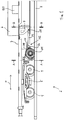
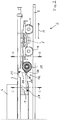
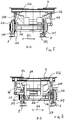
- a railway truck 2 with wheels 4 is schematically shown, on to which an embodiment of the drive arrangement 102 is positioned for driving the railway truck 2.
- the wheels 4 of the railway truck 2 may be mounted to a bogie 5 of the railway truck 2.
- the railway truck 2 is arranged to carry a work unit 6 which is located on a support 7 of the railway truck 2.
- the work unit 6 is arranged to be carried by the railway truck 2.
- the work unit 6 may be any kind of apparatus for maintaining or working on a railway track 8 or the surroundings of the railway track 8.
- each drive arrangement 102 comprises two drivable wheels 104 rotatably connected to a wheel unit 106.
- the wheel unit 106 is arranged to keep the drivable wheels 104 of the drive arrangement 102 at a certain distance from one another, which depends on the width of the railway track 8.
- the drivable wheels 104 of the drive arrangement 102 are in an active position, where the drivable wheels 104 are in engagement with the railway track 8.
- the drivable wheels 104 of the drive arrangement 102 are in an inactive, or rest, position, where the drivable wheels 104 have been lifted (or retracted) from the engagement with the railway track 8.
- the drive arrangement 102 includes an elongated first pressure cylinder 108 with a first end 110 and a second end 112.
- the first end 110 of the first pressure cylinder 108 is connected to the wheel unit 106, and the second end 112 of the first pressure cylinder 108 is connectable to the work unit 6.
- the first pressure cylinder 108 is arranged to, in the active position, push the wheels 104 of the drive arrangement 102 into engagement with the railway track 8.
- the drive arrangement 102 comprises an elongated second pressure cylinder 208 with a first end 210 and a second end 212.
- the first end 210 of the second pressure cylinder 208 is connected to the wheel unit 106, and the second end 212 of the second pressure cylinder 208 is connectable to the work unit 6.
- the second pressure cylinder 208 is also arranged to, in the active position, push the wheels 104 of the drive arrangement 102 into engagement with the railway track 8.
- each pressure cylinder 108, 208 is arranged to, in the inactive position, lift the wheels 104 of the drive arrangement 102 from an engagement with the railway track 8.
- the first and second pressure cylinders 108, 208 are spaced apart, i.e. placed with a distance to one another.
- Each pressure cylinder 108, 208 may be a hydraulic pressure cylinder, or a gas/pneumatic cylinder.
- the drive arrangement 102 comprises an elongated first arm 114 with a first end 116 and a second end 118.
- the first end 116 of the first arm 114 is pivotally connected (pivotally mounted or pivotally attached) to the wheel unit 106.
- the second end 118 of the first arm 114 is pivotally connectable to the work unit 6 such that the second end 118 of the first arm 114 is positioned (located) at a distance from the second end 112 of the first pressure cylinder 108.
- the second end 118 of the first arm 114 is connected to a mounting member 9 of the work unit 6.
- the drive arrangement 102 comprises an elongated second arm 214 with a first end 216 and a second end 218.
- the first end 216 of the second arm 214 is pivotally connected to the wheel unit 106.
- the second end 218 of the second arm 214 is pivotally connectable to the work unit 6 such that the second end 218 of the second arm 214 is positioned at a distance from the second end 112 of the first pressure cylinder 108.
- the second end 218 of the second arm 214 is pivotally connectable to the work unit 6 such that the second end 218 of the second arm 214 is positioned at a distance from the second end of the second pressure cylinder 208.
- the second end 218 of the second arm 214 is connected to a mounting member 19 of the work unit 6.
- Each mounting member 9, 19 of the work unit 6 extends below the support 7 of the railway truck 2.
- the wheel unit 106 is arranged to be mechanically supported by the first and second pressure cylinders 108, 208 and the first and second arms 114, 214.
- each arm 114, 214 may be determined at least based on the railway curve radius of the railway track 8.
- the first end 116 of the first arm 114 is located at a distance from the first end 216 of the second arm 214.
- the railway truck 2 has a longitudinal extension 10 in a direction of movement of the railway truck 2 and/or in the direction of the railway track 8.
- the first end 116 of the first arm 114 is located at a distance from the first end 216 of the second arm 214 in a direction transversely 122 to the longitudinal extension 10 of the railway truck 2.
- the second end 118 of the first arm 114 and the second end 218 of the second arm 214 are connectable to the work unit 6 such that the second end 118 of the first arm 114 is positioned (located) at a distance from the second end 218 of the second arm 214 in a direction 122 transversely to the longitudinal extension 10 of the railway truck 2.
- the distance between the second ends 118, 218 of the first and second arms 114, 214, in a direction 122 transversely to the longitudinal extension 10 of the railway truck 2 exceeds the distance between the first ends 116, 216 of the first and second arms 114, 214 in a direction 122 transversely to the longitudinal extension 10 of the railway truck 2.
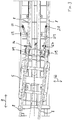
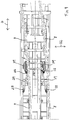
- each arm 114, 214 extends substantially in the direction of the longitudinal extension 10 of the railway truck 2. As shown in Figs. 3-4 , each arm 114, 214 may laterally form an angle with the longitudinal extension 10 of the railway truck 2. Each angle is at least based on the railway curve radius of the railway track 8. The respective angle may, e.g., be 0°-40°, and may change along the railway track 8.
- the wheels 104 of the drive arrangement 102 are situated in a curve of the railway track 8, and the arms 114, 214 in Fig. 3 are laterally displaced in relation to the arms 114, 214 in Fig. 4 .
- the length of each arm 114, 214 exceeds the length of each pressure cylinder 108, 208.
- the drivable wheels 104 of the drive arrangement 102 are advantageously arranged to be driven by at least one hydraulic engine, e.g. one hydraulic engine 124, 126 for each wheel 104.
- Each hydraulic engine 124, 126 is mounted to each wheel 104 adjacent to each wheel 104.
- the first end 116 of the first arm 114 is adjacent to the first end 110 of the first pressure cylinder 108.
- the first end 216 of the second arm 214 is adjacent to the first end 210 of the second pressure cylinder 208.
- the first end 110 of the first pressure cylinder 108 may be adjacent to one of the drivable wheels 104 (a first wheel) of the drive arrangement 102
- the first end 210 of the second pressure cylinder 208 may be adjacent to the other wheel 104 (a second wheel) of the drive arrangement 102.
- the first end 116 of the first arm 114 may be adjacent to one of the drivable wheels 104 of the drive arrangement 102
- the first end 216 of the second arm 214 may be adjacent to the other wheel 104 of the drive arrangement 102.
- each pressure cylinder 108, 208 is pivotally connected (pivotally mounted) to the wheel unit 106, and the second end 112, 212 of each pressure cylinder 108, 208 is arranged to be pivotally connected to the work unit 6.
- the wheels 104 of the drive arrangement 102 are situated in a curve of the railway track 8, and the pressure cylinders 108, 208 in Figs. 4 and 5 are laterally displaced in relation to the cylinders 108, 208 in Fig. 7 .
- the drive arrangement 102 comprises a hydraulic pump assembly 120 carried by the railway truck 2 on the support 7, and the hydraulic pump assembly 120 is arranged to provide pressurized fluid to each pressure cylinder 108, 208 and to each hydraulic engine 124, 126.
- the pipes/tubes between the hydraulic pump assembly 120 and the pressure cylinders 108, 208 and the hydraulic engines 124, 126 are left out.
- a railway truck drive arrangement is also provided, which comprises at least one drive arrangement 102 as disclosed above with reference to the embodiments, and wherein the railway truck drive arrangement comprises the work unit 6 arranged to be carried by the railway truck 2, as disclosed above.
- connection By the term “connected”, if nothing else is mentioned, is meant “mechanically connected”, e.g. mounted or attached.
Landscapes
- Engineering & Computer Science (AREA)
- Mechanical Engineering (AREA)
- Transportation (AREA)
- Arrangement And Driving Of Transmission Devices (AREA)
- Machines For Laying And Maintaining Railways (AREA)
Priority Applications (1)
| Application Number | Priority Date | Filing Date | Title |
|---|---|---|---|
| EP18166247.9A EP3552918B1 (de) | 2018-04-09 | 2018-04-09 | Antriebsanordnung zum antreiben eines schienengüterwagens |
Applications Claiming Priority (1)
| Application Number | Priority Date | Filing Date | Title |
|---|---|---|---|
| EP18166247.9A EP3552918B1 (de) | 2018-04-09 | 2018-04-09 | Antriebsanordnung zum antreiben eines schienengüterwagens |
Publications (2)
| Publication Number | Publication Date |
|---|---|
| EP3552918A1 true EP3552918A1 (de) | 2019-10-16 |
| EP3552918B1 EP3552918B1 (de) | 2021-02-17 |
Family
ID=61913063
Family Applications (1)
| Application Number | Title | Priority Date | Filing Date |
|---|---|---|---|
| EP18166247.9A Active EP3552918B1 (de) | 2018-04-09 | 2018-04-09 | Antriebsanordnung zum antreiben eines schienengüterwagens |
Country Status (1)
| Country | Link |
|---|---|
| EP (1) | EP3552918B1 (de) |
Citations (4)
| Publication number | Priority date | Publication date | Assignee | Title |
|---|---|---|---|---|
| FR2482031A2 (fr) * | 1980-05-06 | 1981-11-13 | Noyon Gustave | Wagon demontable pour la coordination technique du transport rail-route |
| FR2526743A1 (fr) * | 1982-05-13 | 1983-11-18 | Sotramef | Dispositif permettant d'immobiliser ou de faire progresser un wagon sur une voie ferree |
| JPS59230859A (ja) * | 1983-06-15 | 1984-12-25 | 株式会社日立製作所 | 鉄道車両用台車 |
| FR2684949A1 (fr) * | 1991-12-13 | 1993-06-18 | Spie Enertrans | Dispositif de motorisation de wagon et procede pour deplacer au moins un wagon. |
-
2018
- 2018-04-09 EP EP18166247.9A patent/EP3552918B1/de active Active
Patent Citations (4)
| Publication number | Priority date | Publication date | Assignee | Title |
|---|---|---|---|---|
| FR2482031A2 (fr) * | 1980-05-06 | 1981-11-13 | Noyon Gustave | Wagon demontable pour la coordination technique du transport rail-route |
| FR2526743A1 (fr) * | 1982-05-13 | 1983-11-18 | Sotramef | Dispositif permettant d'immobiliser ou de faire progresser un wagon sur une voie ferree |
| JPS59230859A (ja) * | 1983-06-15 | 1984-12-25 | 株式会社日立製作所 | 鉄道車両用台車 |
| FR2684949A1 (fr) * | 1991-12-13 | 1993-06-18 | Spie Enertrans | Dispositif de motorisation de wagon et procede pour deplacer au moins un wagon. |
Also Published As
| Publication number | Publication date |
|---|---|
| EP3552918B1 (de) | 2021-02-17 |
Similar Documents
| Publication | Publication Date | Title |
|---|---|---|
| US10144626B2 (en) | Fork carriage apparatus for a materials handling vehicle | |
| US6988451B2 (en) | Rail car mover apparatus for loader vehicle | |
| US10443209B2 (en) | Boom configuration for a skid steer loader | |
| ATE411211T1 (de) | Baumaschine mit gelenk-fahrgestell | |
| JP2005324790A (ja) | 建設機械用の下部走行装置のゲージ幅を変更する方法 | |
| JP2004132173A (ja) | 関節式フレーム作業車両 | |
| US9732497B2 (en) | Traveling device and working machine | |
| CN112239181A (zh) | 具有改进的稳定器的伸缩臂叉装车 | |
| EP3552918B1 (de) | Antriebsanordnung zum antreiben eines schienengüterwagens | |
| JP4416713B2 (ja) | 軌陸作業機 | |
| CN101117202A (zh) | 一种新型液压履带式起重机 | |
| US6957705B2 (en) | Loader linkage | |
| JP2015214827A (ja) | レール削正車両 | |
| EP3844348B1 (de) | Hubarmanordnung einer kraftmaschine | |
| EP0311637B1 (de) | Fahrbare arbeitseinheit mit heb- und senkbaren stützbeinen | |
| CN117802839A (zh) | 一种多功能履带式换枕机 | |
| ATE427236T1 (de) | Hydraulische kippanordnung fur einen lastkraftwagen | |
| JP2002363901A (ja) | 道床材料を掘り返すための軌道保守装置 | |
| JP4607816B2 (ja) | ブラシ清掃作業車 | |
| CN117287561A (zh) | 一种矿用双向驾驶管道安装机 | |
| CN117263041A (zh) | 一种矿用履带式管道安装机 | |
| US20060182575A1 (en) | Pull and lift system for transporting roofing materials | |
| JP2685500B2 (ja) | 自走式コンクリート吹付装置 | |
| CN220488465U (zh) | 矿用气动管路辅助安装车 | |
| CN222728036U (zh) | 一种煤矿用转载机推移装置 |
Legal Events
| Date | Code | Title | Description |
|---|---|---|---|
| PUAI | Public reference made under article 153(3) epc to a published international application that has entered the european phase |
Free format text: ORIGINAL CODE: 0009012 |
|
| STAA | Information on the status of an ep patent application or granted ep patent |
Free format text: STATUS: THE APPLICATION HAS BEEN PUBLISHED |
|
| AK | Designated contracting states |
Kind code of ref document: A1 Designated state(s): AL AT BE BG CH CY CZ DE DK EE ES FI FR GB GR HR HU IE IS IT LI LT LU LV MC MK MT NL NO PL PT RO RS SE SI SK SM TR |
|
| AX | Request for extension of the european patent |
Extension state: BA ME |
|
| STAA | Information on the status of an ep patent application or granted ep patent |
Free format text: STATUS: REQUEST FOR EXAMINATION WAS MADE |
|
| 17P | Request for examination filed |
Effective date: 20191125 |
|
| RBV | Designated contracting states (corrected) |
Designated state(s): AL AT BE BG CH CY CZ DE DK EE ES FI FR GB GR HR HU IE IS IT LI LT LU LV MC MK MT NL NO PL PT RO RS SE SI SK SM TR |
|
| GRAP | Despatch of communication of intention to grant a patent |
Free format text: ORIGINAL CODE: EPIDOSNIGR1 |
|
| STAA | Information on the status of an ep patent application or granted ep patent |
Free format text: STATUS: GRANT OF PATENT IS INTENDED |
|
| INTG | Intention to grant announced |
Effective date: 20200918 |
|
| GRAS | Grant fee paid |
Free format text: ORIGINAL CODE: EPIDOSNIGR3 |
|
| GRAA | (expected) grant |
Free format text: ORIGINAL CODE: 0009210 |
|
| STAA | Information on the status of an ep patent application or granted ep patent |
Free format text: STATUS: THE PATENT HAS BEEN GRANTED |
|
| AK | Designated contracting states |
Kind code of ref document: B1 Designated state(s): AL AT BE BG CH CY CZ DE DK EE ES FI FR GB GR HR HU IE IS IT LI LT LU LV MC MK MT NL NO PL PT RO RS SE SI SK SM TR |
|
| REG | Reference to a national code |
Ref country code: GB Ref legal event code: FG4D |
|
| REG | Reference to a national code |
Ref country code: CH Ref legal event code: EP |
|
| REG | Reference to a national code |
Ref country code: DE Ref legal event code: R096 Ref document number: 602018012500 Country of ref document: DE |
|
| REG | Reference to a national code |
Ref country code: AT Ref legal event code: REF Ref document number: 1361113 Country of ref document: AT Kind code of ref document: T Effective date: 20210315 |
|
| REG | Reference to a national code |
Ref country code: SE Ref legal event code: TRGR |
|
| REG | Reference to a national code |
Ref country code: IE Ref legal event code: FG4D |
|
| REG | Reference to a national code |
Ref country code: LT Ref legal event code: MG9D |
|
| REG | Reference to a national code |
Ref country code: NL Ref legal event code: MP Effective date: 20210217 |
|
| PG25 | Lapsed in a contracting state [announced via postgrant information from national office to epo] |
Ref country code: BG Free format text: LAPSE BECAUSE OF FAILURE TO SUBMIT A TRANSLATION OF THE DESCRIPTION OR TO PAY THE FEE WITHIN THE PRESCRIBED TIME-LIMIT Effective date: 20210517 Ref country code: FI Free format text: LAPSE BECAUSE OF FAILURE TO SUBMIT A TRANSLATION OF THE DESCRIPTION OR TO PAY THE FEE WITHIN THE PRESCRIBED TIME-LIMIT Effective date: 20210217 Ref country code: GR Free format text: LAPSE BECAUSE OF FAILURE TO SUBMIT A TRANSLATION OF THE DESCRIPTION OR TO PAY THE FEE WITHIN THE PRESCRIBED TIME-LIMIT Effective date: 20210518 Ref country code: HR Free format text: LAPSE BECAUSE OF FAILURE TO SUBMIT A TRANSLATION OF THE DESCRIPTION OR TO PAY THE FEE WITHIN THE PRESCRIBED TIME-LIMIT Effective date: 20210217 Ref country code: NO Free format text: LAPSE BECAUSE OF FAILURE TO SUBMIT A TRANSLATION OF THE DESCRIPTION OR TO PAY THE FEE WITHIN THE PRESCRIBED TIME-LIMIT Effective date: 20210517 Ref country code: PT Free format text: LAPSE BECAUSE OF FAILURE TO SUBMIT A TRANSLATION OF THE DESCRIPTION OR TO PAY THE FEE WITHIN THE PRESCRIBED TIME-LIMIT Effective date: 20210617 Ref country code: LT Free format text: LAPSE BECAUSE OF FAILURE TO SUBMIT A TRANSLATION OF THE DESCRIPTION OR TO PAY THE FEE WITHIN THE PRESCRIBED TIME-LIMIT Effective date: 20210217 |
|
| REG | Reference to a national code |
Ref country code: AT Ref legal event code: MK05 Ref document number: 1361113 Country of ref document: AT Kind code of ref document: T Effective date: 20210217 |
|
| PG25 | Lapsed in a contracting state [announced via postgrant information from national office to epo] |
Ref country code: LV Free format text: LAPSE BECAUSE OF FAILURE TO SUBMIT A TRANSLATION OF THE DESCRIPTION OR TO PAY THE FEE WITHIN THE PRESCRIBED TIME-LIMIT Effective date: 20210217 Ref country code: PL Free format text: LAPSE BECAUSE OF FAILURE TO SUBMIT A TRANSLATION OF THE DESCRIPTION OR TO PAY THE FEE WITHIN THE PRESCRIBED TIME-LIMIT Effective date: 20210217 Ref country code: NL Free format text: LAPSE BECAUSE OF FAILURE TO SUBMIT A TRANSLATION OF THE DESCRIPTION OR TO PAY THE FEE WITHIN THE PRESCRIBED TIME-LIMIT Effective date: 20210217 Ref country code: RS Free format text: LAPSE BECAUSE OF FAILURE TO SUBMIT A TRANSLATION OF THE DESCRIPTION OR TO PAY THE FEE WITHIN THE PRESCRIBED TIME-LIMIT Effective date: 20210217 |
|
| PG25 | Lapsed in a contracting state [announced via postgrant information from national office to epo] |
Ref country code: IS Free format text: LAPSE BECAUSE OF FAILURE TO SUBMIT A TRANSLATION OF THE DESCRIPTION OR TO PAY THE FEE WITHIN THE PRESCRIBED TIME-LIMIT Effective date: 20210617 |
|
| PG25 | Lapsed in a contracting state [announced via postgrant information from national office to epo] |
Ref country code: CZ Free format text: LAPSE BECAUSE OF FAILURE TO SUBMIT A TRANSLATION OF THE DESCRIPTION OR TO PAY THE FEE WITHIN THE PRESCRIBED TIME-LIMIT Effective date: 20210217 Ref country code: EE Free format text: LAPSE BECAUSE OF FAILURE TO SUBMIT A TRANSLATION OF THE DESCRIPTION OR TO PAY THE FEE WITHIN THE PRESCRIBED TIME-LIMIT Effective date: 20210217 Ref country code: AT Free format text: LAPSE BECAUSE OF FAILURE TO SUBMIT A TRANSLATION OF THE DESCRIPTION OR TO PAY THE FEE WITHIN THE PRESCRIBED TIME-LIMIT Effective date: 20210217 Ref country code: SM Free format text: LAPSE BECAUSE OF FAILURE TO SUBMIT A TRANSLATION OF THE DESCRIPTION OR TO PAY THE FEE WITHIN THE PRESCRIBED TIME-LIMIT Effective date: 20210217 |
|
| REG | Reference to a national code |
Ref country code: DE Ref legal event code: R097 Ref document number: 602018012500 Country of ref document: DE |
|
| PG25 | Lapsed in a contracting state [announced via postgrant information from national office to epo] |
Ref country code: RO Free format text: LAPSE BECAUSE OF FAILURE TO SUBMIT A TRANSLATION OF THE DESCRIPTION OR TO PAY THE FEE WITHIN THE PRESCRIBED TIME-LIMIT Effective date: 20210217 Ref country code: DK Free format text: LAPSE BECAUSE OF FAILURE TO SUBMIT A TRANSLATION OF THE DESCRIPTION OR TO PAY THE FEE WITHIN THE PRESCRIBED TIME-LIMIT Effective date: 20210217 Ref country code: SK Free format text: LAPSE BECAUSE OF FAILURE TO SUBMIT A TRANSLATION OF THE DESCRIPTION OR TO PAY THE FEE WITHIN THE PRESCRIBED TIME-LIMIT Effective date: 20210217 Ref country code: MC Free format text: LAPSE BECAUSE OF FAILURE TO SUBMIT A TRANSLATION OF THE DESCRIPTION OR TO PAY THE FEE WITHIN THE PRESCRIBED TIME-LIMIT Effective date: 20210217 |
|
| PLBE | No opposition filed within time limit |
Free format text: ORIGINAL CODE: 0009261 |
|
| STAA | Information on the status of an ep patent application or granted ep patent |
Free format text: STATUS: NO OPPOSITION FILED WITHIN TIME LIMIT |
|
| PG25 | Lapsed in a contracting state [announced via postgrant information from national office to epo] |
Ref country code: LU Free format text: LAPSE BECAUSE OF NON-PAYMENT OF DUE FEES Effective date: 20210409 |
|
| REG | Reference to a national code |
Ref country code: BE Ref legal event code: MM Effective date: 20210430 |
|
| 26N | No opposition filed |
Effective date: 20211118 |
|
| PG25 | Lapsed in a contracting state [announced via postgrant information from national office to epo] |
Ref country code: FR Free format text: LAPSE BECAUSE OF NON-PAYMENT OF DUE FEES Effective date: 20210417 Ref country code: ES Free format text: LAPSE BECAUSE OF FAILURE TO SUBMIT A TRANSLATION OF THE DESCRIPTION OR TO PAY THE FEE WITHIN THE PRESCRIBED TIME-LIMIT Effective date: 20210217 Ref country code: AL Free format text: LAPSE BECAUSE OF FAILURE TO SUBMIT A TRANSLATION OF THE DESCRIPTION OR TO PAY THE FEE WITHIN THE PRESCRIBED TIME-LIMIT Effective date: 20210217 |
|
| PG25 | Lapsed in a contracting state [announced via postgrant information from national office to epo] |
Ref country code: SI Free format text: LAPSE BECAUSE OF FAILURE TO SUBMIT A TRANSLATION OF THE DESCRIPTION OR TO PAY THE FEE WITHIN THE PRESCRIBED TIME-LIMIT Effective date: 20210217 |
|
| PG25 | Lapsed in a contracting state [announced via postgrant information from national office to epo] |
Ref country code: IT Free format text: LAPSE BECAUSE OF FAILURE TO SUBMIT A TRANSLATION OF THE DESCRIPTION OR TO PAY THE FEE WITHIN THE PRESCRIBED TIME-LIMIT Effective date: 20210217 |
|
| PG25 | Lapsed in a contracting state [announced via postgrant information from national office to epo] |
Ref country code: IS Free format text: LAPSE BECAUSE OF FAILURE TO SUBMIT A TRANSLATION OF THE DESCRIPTION OR TO PAY THE FEE WITHIN THE PRESCRIBED TIME-LIMIT Effective date: 20210617 |
|
| PG25 | Lapsed in a contracting state [announced via postgrant information from national office to epo] |
Ref country code: BE Free format text: LAPSE BECAUSE OF NON-PAYMENT OF DUE FEES Effective date: 20210430 |
|
| PG25 | Lapsed in a contracting state [announced via postgrant information from national office to epo] |
Ref country code: CY Free format text: LAPSE BECAUSE OF FAILURE TO SUBMIT A TRANSLATION OF THE DESCRIPTION OR TO PAY THE FEE WITHIN THE PRESCRIBED TIME-LIMIT Effective date: 20210217 |
|
| PG25 | Lapsed in a contracting state [announced via postgrant information from national office to epo] |
Ref country code: HU Free format text: LAPSE BECAUSE OF FAILURE TO SUBMIT A TRANSLATION OF THE DESCRIPTION OR TO PAY THE FEE WITHIN THE PRESCRIBED TIME-LIMIT; INVALID AB INITIO Effective date: 20180409 |
|
| PG25 | Lapsed in a contracting state [announced via postgrant information from national office to epo] |
Ref country code: MK Free format text: LAPSE BECAUSE OF FAILURE TO SUBMIT A TRANSLATION OF THE DESCRIPTION OR TO PAY THE FEE WITHIN THE PRESCRIBED TIME-LIMIT Effective date: 20210217 |
|
| PG25 | Lapsed in a contracting state [announced via postgrant information from national office to epo] |
Ref country code: MT Free format text: LAPSE BECAUSE OF FAILURE TO SUBMIT A TRANSLATION OF THE DESCRIPTION OR TO PAY THE FEE WITHIN THE PRESCRIBED TIME-LIMIT Effective date: 20210217 |
|
| PGFP | Annual fee paid to national office [announced via postgrant information from national office to epo] |
Ref country code: DE Payment date: 20250423 Year of fee payment: 8 |
|
| PGFP | Annual fee paid to national office [announced via postgrant information from national office to epo] |
Ref country code: CH Payment date: 20250501 Year of fee payment: 8 |
|
| PGFP | Annual fee paid to national office [announced via postgrant information from national office to epo] |
Ref country code: IE Payment date: 20250626 Year of fee payment: 8 |
|
| PGFP | Annual fee paid to national office [announced via postgrant information from national office to epo] |
Ref country code: SE Payment date: 20250417 Year of fee payment: 8 |
|
| PG25 | Lapsed in a contracting state [announced via postgrant information from national office to epo] |
Ref country code: TR Free format text: LAPSE BECAUSE OF FAILURE TO SUBMIT A TRANSLATION OF THE DESCRIPTION OR TO PAY THE FEE WITHIN THE PRESCRIBED TIME-LIMIT Effective date: 20210217 |
|
| PGFP | Annual fee paid to national office [announced via postgrant information from national office to epo] |
Ref country code: GB Payment date: 20260209 Year of fee payment: 9 |
|
| REG | Reference to a national code |
Ref country code: CH Ref legal event code: U11 Free format text: ST27 STATUS EVENT CODE: U-0-0-U10-U11 (AS PROVIDED BY THE NATIONAL OFFICE) Effective date: 20260501 |