EP3552401B1 - Procédé et appareil pour traiter un contenu à partir d'une pluralité de sources de contenu externes - Google Patents
Procédé et appareil pour traiter un contenu à partir d'une pluralité de sources de contenu externes Download PDFInfo
- Publication number
- EP3552401B1 EP3552401B1 EP18748195.7A EP18748195A EP3552401B1 EP 3552401 B1 EP3552401 B1 EP 3552401B1 EP 18748195 A EP18748195 A EP 18748195A EP 3552401 B1 EP3552401 B1 EP 3552401B1
- Authority
- EP
- European Patent Office
- Prior art keywords
- content
- external
- source
- contents
- mode
- Prior art date
- Legal status (The legal status is an assumption and is not a legal conclusion. Google has not performed a legal analysis and makes no representation as to the accuracy of the status listed.)
- Active
Links
Images







Classifications
-
- H—ELECTRICITY
- H04—ELECTRIC COMMUNICATION TECHNIQUE
- H04N—PICTORIAL COMMUNICATION, e.g. TELEVISION
- H04N21/00—Selective content distribution, e.g. interactive television or video on demand [VOD]
- H04N21/40—Client devices specifically adapted for the reception of or interaction with content, e.g. set-top-box [STB]; Operations thereof
- H04N21/47—End-user applications
- H04N21/482—End-user interface for program selection
-
- H—ELECTRICITY
- H04—ELECTRIC COMMUNICATION TECHNIQUE
- H04N—PICTORIAL COMMUNICATION, e.g. TELEVISION
- H04N21/00—Selective content distribution, e.g. interactive television or video on demand [VOD]
- H04N21/40—Client devices specifically adapted for the reception of or interaction with content, e.g. set-top-box [STB]; Operations thereof
- H04N21/43—Processing of content or additional data, e.g. demultiplexing additional data from a digital video stream; Elementary client operations, e.g. monitoring of home network or synchronising decoder's clock; Client middleware
- H04N21/431—Generation of visual interfaces for content selection or interaction; Content or additional data rendering
- H04N21/4312—Generation of visual interfaces for content selection or interaction; Content or additional data rendering involving specific graphical features, e.g. screen layout, special fonts or colors, blinking icons, highlights or animations
- H04N21/4314—Generation of visual interfaces for content selection or interaction; Content or additional data rendering involving specific graphical features, e.g. screen layout, special fonts or colors, blinking icons, highlights or animations for fitting data in a restricted space on the screen, e.g. EPG data in a rectangular grid
-
- H—ELECTRICITY
- H04—ELECTRIC COMMUNICATION TECHNIQUE
- H04N—PICTORIAL COMMUNICATION, e.g. TELEVISION
- H04N21/00—Selective content distribution, e.g. interactive television or video on demand [VOD]
- H04N21/40—Client devices specifically adapted for the reception of or interaction with content, e.g. set-top-box [STB]; Operations thereof
- H04N21/43—Processing of content or additional data, e.g. demultiplexing additional data from a digital video stream; Elementary client operations, e.g. monitoring of home network or synchronising decoder's clock; Client middleware
- H04N21/436—Interfacing a local distribution network, e.g. communicating with another STB or one or more peripheral devices inside the home
- H04N21/4363—Adapting the video stream to a specific local network, e.g. a Bluetooth® network
- H04N21/43632—Adapting the video stream to a specific local network, e.g. a Bluetooth® network involving a wired protocol, e.g. IEEE 1394
- H04N21/43635—HDMI
-
- H—ELECTRICITY
- H04—ELECTRIC COMMUNICATION TECHNIQUE
- H04N—PICTORIAL COMMUNICATION, e.g. TELEVISION
- H04N21/00—Selective content distribution, e.g. interactive television or video on demand [VOD]
- H04N21/40—Client devices specifically adapted for the reception of or interaction with content, e.g. set-top-box [STB]; Operations thereof
- H04N21/43—Processing of content or additional data, e.g. demultiplexing additional data from a digital video stream; Elementary client operations, e.g. monitoring of home network or synchronising decoder's clock; Client middleware
- H04N21/443—OS processes, e.g. booting an STB, implementing a Java virtual machine in an STB or power management in an STB
- H04N21/4438—Window management, e.g. event handling following interaction with the user interface
-
- H—ELECTRICITY
- H04—ELECTRIC COMMUNICATION TECHNIQUE
- H04N—PICTORIAL COMMUNICATION, e.g. TELEVISION
- H04N21/00—Selective content distribution, e.g. interactive television or video on demand [VOD]
- H04N21/40—Client devices specifically adapted for the reception of or interaction with content, e.g. set-top-box [STB]; Operations thereof
- H04N21/45—Management operations performed by the client for facilitating the reception of or the interaction with the content or administrating data related to the end-user or to the client device itself, e.g. learning user preferences for recommending movies, resolving scheduling conflicts
- H04N21/462—Content or additional data management, e.g. creating a master electronic program guide from data received from the Internet and a Head-end, controlling the complexity of a video stream by scaling the resolution or bit-rate based on the client capabilities
- H04N21/4622—Retrieving content or additional data from different sources, e.g. from a broadcast channel and the Internet
-
- H—ELECTRICITY
- H04—ELECTRIC COMMUNICATION TECHNIQUE
- H04N—PICTORIAL COMMUNICATION, e.g. TELEVISION
- H04N21/00—Selective content distribution, e.g. interactive television or video on demand [VOD]
- H04N21/80—Generation or processing of content or additional data by content creator independently of the distribution process; Content per se
- H04N21/83—Generation or processing of protective or descriptive data associated with content; Content structuring
- H04N21/84—Generation or processing of descriptive data, e.g. content descriptors
Definitions
- the present disclosure relates to content processing devices and methods for processing content from a plurality of external content sources.
- TVs originally used to have only a broadcast mode for watching broadcast channels.
- TV come with a number of other modes, such as a universal serial bus (USB) mode, high-definition multimedia interface (HDMI), Wi-Fi, Bluetooth, screen mirroring, digital living network alliance (DLNA), streaming, etc.
- USB universal serial bus
- HDMI high-definition multimedia interface
- Wi-Fi Wireless Fidelity
- Bluetooth Wireless Fidelity
- screen mirroring screen mirroring
- DLNA digital living network alliance
- an aspect of the present disclosure is to provide a content processing device comprising: a content mapping engine configured to map contents of a plurality of external content sources to a content listing in one or more source modes of the content processing device based on at least one content parameter.
- the present disclosure provides a system where a user can access, in a single source, content present across multiple sources without the need to switch between the multiple sources, while simultaneously providing a seamless viewing experience.
- various functions described below can be implemented or supported by one or more computer programs, each of which is formed from computer readable program code and embodied in a computer readable medium.
- application and “program” refer to one or more computer programs, software components, sets of instructions, procedures, functions, objects, classes, instances, related data, or a portion thereof adapted for implementation in a suitable computer readable program code.
- computer readable program code includes any type of computer code, including source code, object code, and executable code.
- computer readable medium includes any type of medium capable of being accessed by a computer, such as read only memory (ROM), random access memory (RAM), a hard disk drive, a compact disc (CD), a digital video disc (DVD), or any other type of memory.
- ROM read only memory
- RAM random access memory
- CD compact disc
- DVD digital video disc
- a "non-transitory” computer readable medium excludes wired, wireless, optical, or other communication links that transport transitory electrical or other signals.
- a non-transitory computer readable medium includes media where data can be permanently stored and media where data can be stored and later overwritten, such as a rewritable optical disc or an erasable memory device.
- FIGS. 1 through 27 discussed below, and the various embodiments used to describe the principles of the present disclosure in this patent document are by way of illustration only and should not be construed in any way to limit the scope of the disclosure. Those skilled in the art will understand that the principles of the present disclosure may be implemented in any suitably arranged system or device.
- first or second may be used to describe various features, but do not limit such features. For example, the terms do not limit the order and/or the importance of their associated features. Such terms may be used to differentiate one feature from another.
- first user equipment (UE) and second UE are both user equipment, but are different user equipment.
- UE user equipment
- a first component may be referred to as a second component, and likewise, a second component may be referred to as a first component.
- a component is said to be “connected with” or “connected to” another component, the component may be directly connected with, or connected to, the other component, or another component may exist in between.
- a component is said to be “directly connected with” or “directly connected to” another component, it should be understood that no components exist in between.
- module indicates, for example, a unit including a combination of one or more of hardware, software, or firmware.
- module may be interchangeably used with the terms, for example, “unit,” “logic,” “logical block,” “component,” or “circuit.”
- the “module” may be a minimum unit or part of the components integrally formed.
- the “module” may be a minimum unit or part of one or more functions.
- the “module” may be implemented mechanically or electronically.
- the “module” may include at least one of an application-specific integrated circuit (ASIC), a field-programmable gate array (FPGA), or a programmable-logic device (PLD) for performing operations which are well known or will be developed.
- ASIC application-specific integrated circuit
- FPGA field-programmable gate array
- PLD programmable-logic device
- a content processing device can be a device including TV display functionality, for example, a device including a cathode ray tube (CRT), a digital light processing (DLP) display, a plasma display, a liquid crystal display (LCD) with or without thin-film-transistor (TFT), a light-emitting diode (LED) display, an organic light-emitting diode (OLED) display, or any other type of display.
- TV display functionality for example, a device including a cathode ray tube (CRT), a digital light processing (DLP) display, a plasma display, a liquid crystal display (LCD) with or without thin-film-transistor (TFT), a light-emitting diode (LED) display, an organic light-emitting diode (OLED) display, or any other type of display.
- the content processing device may include, but are not limited to, a set top box (STB), an electronic device having a TV tuner in hardware or software form, a smartphone, a tablet personal computer (PC), a mobile phone, a video phone, an e-book reader, a desktop PC, a laptop PC, a netbook computer, a personal digital assistant (PDA), a portable multimedia player (PMP), etc.
- STB set top box
- PC personal computer
- PDA personal digital assistant
- PMP portable multimedia player
- example embodiments of the present disclosure provide a content processing device and will be described by referring to the attached drawings.
- the term 'user' used in embodiments of the present disclosure may represent a person or a device (e.g., an artificial intelligence (AI) electronic device) who or which uses the content processing device.
- AI artificial intelligence
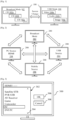
- FIG. 1 illustrates switching from one source mode to another source mode.
- a TV 100 can be first operated in a broadcast mode 102, switched to operate in a USB mode 104, and switched back to operate in the broadcast mode 102 again.
- the broadcast mode 102 provides access to broadcast channels, CH 102a, CH 102b, CH 102c, and so on, while the USB mode 104 provides access to video 104a, audio 104b, image 104c, or any other type of files stored on a USB drive (not shown).
- FIG. 2 illustrates switching between multiple source modes.
- a TV 200 may be capable of operating in more than two modes, such as a broadcast mode 202, USB source mode 204, a mobile source mode 206, and a personal computer (PC) source mode 208 through HDMI.
- the TV 200 can be switched from a current mode to operate in any other available mode.
- a user can watch content in one mode, but to watch another content in a second mode, the user has to manually switch his TV to operate in the second mode.
- a user can only watch broadcast channels, but not movies stored in an external hard disk like a USB drive.
- the user has to switch his TV from the broadcast mode to operate in the USB mode. So a problem with the methods is that one can play content only from one source in a current source mode. If any external device is connected to a TV, users switch the TV to operate in a corresponding source mode to be able to browse the content present in the external device.
- a TV can be enabled to receive content from personalized web channels with the help of a local PC. Additionally, content available in a home network can be allocated to an empty TV channel.
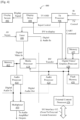
- FIG. 4 illustrates a block diagram of a content processing device 400, according to the present disclosure.
- the content processing device 400 contains a display screen 402 configured to display visual output to a viewer based on a display signal generated by a display driver 404.
- the display driver 404 accepts a primary digital video signal from a digital video/graphics processor 420.
- a TV processor 406 provides basic control functions and viewer input interfaces for facilitating TV functionality of the content processing device 400.
- the TV processor 406 receives viewer commands, both from TV control buttons located on the content processing device 400 and/or from a handheld remote control unit through an infrared (IR) port. Based on the viewer commands, the TV processor 406 controls a tuner 408.
- the tuner 408 can be an analog tuner or a digital tuner.
- the TV processor 406 also supplies user inputs to the digital video/graphics processor 420 over a universal asynchronous receiver/transmitter (UART) command channel or a different kind of commnunication channel.
- UART universal asynchronous receiver/transmitter
- the tuner 408 allows the content processing device 400 to switch between various analog or digital inputs for both video and audio.
- the video inputs can include a radio frequency (RF) signal carrying broadcast TV, digital TV, and/or high-definition TV signals, NTSC video, S-Video, and/or RGB component video inputs, although various embodiments may not accept each of these signal types or may accept signals in other formats (such as PAL).
- RF radio frequency
- the selected video input is converted to a digital data stream 'Digital Video In' and is supplied to a media processor 410.
- the tuner 408 also selects an audio source, digitizes that source if necessary, and supplies that digitized source as 'Digital Audio In' to an audio processor 414 and a multiplexer 430.
- the audio source can be selected, independently of the current video source, as the audio channel(s) of a currently tuned RF TV signal, stereophonic or monophonic audio connected to the content processing device 400 by audio jacks corresponding to a video input, or an internal microphone.
- the tuner 408 may also work as a source manager to select a source mode for the content processing device 400 or switch from one source mode to another.
- the media processor 410 and the digital video/graphics processor 420 provide various digital feature capabilities of the content processing device 400, as will be described further in relation to exemplary embodiments below.
- the digital video/ graphics processor 420 functions as a master processor, and the media processor 410 functions as a slave processor.
- the media processor 410 supplies digital video, either corresponding to 'Digital Video In' or to a decoded media stream from another source, such as an external content source, to the digital video/graphics processor 420 over a digital video (DV) transfer bus.
- DV digital video
- the media processor 410 performs MPEG (Motion Picture Expert Group) coding and decoding of digital media streams for the content processing device 400, as instructed by the digital video/graphics processor 420.
- a data bus connects a memory 412 to the media processor 410.
- the audio processor 414 also connects to this data bus to provide audio coding and decoding for media streams handled by the media processor 410.
- the digital video/graphics processor 420 coordinates (and/or implements) many of the digital features of the content processing device 400.
- a data bus connects a memory 422 to the digital video/graphics processor 420.
- a system bus connects the digital video/graphics processor 420 to the media processor 410, an audio processor 424, a flash memory 426, and an external content processor 428.
- the flash memory 426 stores boot code, configuration data, executable code, and Java code for graphics applications, etc.
- the external content processor 428 is the component primarily responsible for implementing the present disclosure. The function and sub-components of the external content processor 428 is described in detail in conjunction with FIG. 5 . Those of ordinary skill in the art will appreciate that the external content processor 428 may not need to be implemented as a separate component.
- the functionality of the external content processor 428 may be implemented by using one or more other components of the content processing device 400. In one example, the functionality of the external content processor 428 may be implemented by the media processor 410, or the digital video/graphics processor 420, or a combination of both or in combination with any other component of the content processing device 400.
- the external content processor 428, on screen display (OSD) of the content is operated by the processor 420/410 to display the content properly.
- OSD screen display
- the external content processor 428 receives external content from one or more external sources via an Input / Output (IO) interface 432.
- the IO interface 432 can be wired or wireless interface to communicate audio-video or data signals. Examples of the IO interface include, but are not limited to universal serial bus (USB), high definition multimedia interface (HDMI), local area network (LAN) / Ethernet, Bluetooth, IR, near-field communication (NFC), wireless local area network (WLAN), Wi-Fi, super (S) -video, component inputs (red, green, and blue cables), audio video also known as Radio Corporation of America (RCA) connector or as Composite (yellow, white and red inputs), video graphics array (VGA) for PC, digital visual interface (DVI), radio frequency (RF) connector stereo/composite video, optical disk (CD, DVD, Blu-ray, etc.), optical port also known as to slink, digital or analog coaxial, PC cards such as Personal Computer Memory Card International Association (PCMCIA), etc.
- USB universal serial bus
- HDMI high definition multimedia
- the external content processor 428 via the IO interface 432 can provide extended media and/or application capability.
- the digital video/graphics processor 420 can pass data from the DV transfer bus to the display driver 404 as is, but the processor 420 can also supersede, modify, or superimpose the DV transfer signal with information received from the external content processor 428.
- the multiplexer 430 provides audio output to the TV amplifier and line outputs (not shown) from one of first to third sources.
- the first source is the current Digital Audio In stream from the tuner 408.
- the second and third sources are the Digital Audio Outputs of the audio processors 414 and 424. These two outputs are tied to the same input of the multiplexer 430, since each audio processor is capable of tri-stating its output when it is not selected.
- the names of the components of the content processing device 400 may differ according to the type of the content processing device 400.
- the content processing device 400 may include one or more of the components, omit some components, or further include other components according to its type.
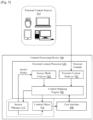
- FIG. 5 illustrates another block diagram of the content processing device 400, according to the present disclosure.
- the present disclosure is not limited to the above mentioned features of above mentioned components and modules. This present disclosure can be implemented using any combination of the above mentioned components and modules or may be extended to other devices which support multimedia content playback. Also, the present disclosure is applicable to any kind of content supported for playback and present on paired devices or connected devices.
- the present disclosure aims to provide a solution with respect to multiple sources, for content processing devices, such as smart TVs, where one can play only single content at a time due to a single source being supported on single screen mode.
- the content processing device 400 further comprises a user interface 508 configured to present/display a modified content listing having mappings of external contents.
- a user interface 508 configured to present/display a modified content listing having mappings of external contents.
- at least the display screen 402, the display driver 404, and the TV processor 406 shown in FIG. 4 together form a part of the user interface 508 shown in FIG. 5 .
- the user interface 508 may also include some more components from FIG. 4 , for example, audio output related components can also be part of the user interface 508.
- corresponding external content source is identified by the content mapping engine 506.
- the content processing device 400 further comprises a source manager 512 to provide information of source modes to the source mode analyser 504 and to switch to the identified external content source hosting the selected content.
- a source manager 512 to provide information of source modes to the source mode analyser 504 and to switch to the identified external content source hosting the selected content.
- at least the tuner 408 shown in FIG. 4 forms a part of the source manager 512 shown in FIG. 5 .
- the content processing device 400 further comprises a content player 510 configured to play or smartly stream the selected content from the identified external content source.
- the content player 510 may be provided in the flash memory 426 shown in FIG. 4 .
- the external content processor 428 may be further implemented to comprise and control the source manager 512 and the content player 510.
- the content player 510 can be an image viewer client, an audio player, a video player, an address book content display client, an email client, a web page display client, etc.
- the image viewer client operates as a photo browser for the content processing device 400. This is a user application which allows a user to select a slideshow, select music to go with the slide show, select an album, pause, play, stop and resume. User interfaces may vary.
- the audio player client operates as an audio browser for the content processing device 400.
- This is a user application that allows the user to select music, view/select from a playlist of content, and read about a singer and/or album, group, etc.
- the player allows a user to pause, play, stop, resume, fast forward, rewind in response to user actions received through a remote control or the IO interface 432.
- the video player operates as a video browser for the content processing device 400.
- This user application allows a user to select video, view a playlist, pause, resume, jump to live, fast-forward, rewind, stop and play in response to user actions received by the remote control or the IO interface 432.
- the address book content display client operates as an address content book browser.
- the application interface allows a user to add, edit, remove, and view stored content through the remote control or the IO interface 432.
- This address book may interface and be compatible with known address books in ways known by those of ordinary skill in the art.
- the email/webpage display client operates as an email and webpage browser.
- the application allows users to view and write emails and display webpages. Content for these can be obtained from a remotely connected commuting device. Operation of the email and web browser client can be effected by using a keyboard interface to the TV and/or remote control with qwerty (keys) associated with the number pad.
- the present disclosure provides the content processing device 400 comprising: the content mapping engine 506 configured to map contents of the plurality of external content sources 514 to a content listing in one or more source modes of the content processing device 400 based on at least one content parameter.
- the at least one content parameter comprises at least one of a genre, metadata, information derived from the metadata, size, category, type, etc. of the contents
- the content listing comprises at least one of an electronic program guide (EPG), an interactive program guide (IPG), a TV guide, a browsing menu, a TV menu, etc.
- EPG electronic program guide
- IPG interactive program guide
- the content processing device 400 may further comprise the external content analyser 502 to analyse the contents of the plurality of external content sources 514.
- the plurality of external content sources 514 comprises two or more of a USB device, a HDMI device, a mobile device, a tablet device, a PC, a laptop, a storage device, a wirelessly connected device, a set top box, a broadcasting system, etc.
- the content processing device 400 may further comprise the source mode analyser 504 to analyse the one or more source modes of the content processing device 400.
- the one or more source modes comprises one or more of a broadcasting mode, an application mode, a multi-screen mode, and a picture in picture (PIP) mode.
- the content mapping engine 506 may be further configured to map one external source to one of a channel in the broadcasting mode, an application in the application mode, a screen in the multi-screen mode, and a PIP window in the PIP mode.
- the source mode analyser 504 may be further configured to identify unused or least viewed channels when the content processing device 400 is in the broadcasting mode, wherein the content mapping engine 506 may be further configured to map the contents of the plurality of external content sources 514 to the unused or least viewed channels within the content listing based on the at least one content parameter.
- the source mode analyser 504 may be further configured to identify multimedia applications or widgets when the content processing device 400 is in the application mode, wherein the content mapping engine 506 is further configured to map the contents of the plurality of external content sources 514 to the identified multimedia applications or widgets within the content listing based on the at least one content parameter.
- the source mode analyser 504 may be further configured to identify at least one screen when the content processing device 400 is in the multi-screen mode, wherein the content mapping engine 506 is further configured to map the contents of the plurality of external content sources 514 to the at least one screen in the multi-screen mode based on the at least one content parameter.
- the source mode analyser 504 may be further configured to identify at least one PIP window when the content processing device 400 is in the PIP mode, wherein the content mapping engine 506 is further configured to map the contents of the plurality of external content sources 514 to the at least one PIP window in the PIP mode based on the at least one content parameter.
- the content processing device 400 may further comprise the user interface 508 configured to present a modified content listing of the one or more source modes, the modified listing having mappings of the contents of the plurality of external content sources 514 to the content listing in the one or more source modes of the content processing device 400.
- the modified content listing is generated by performing at least one of adding of new content in the content listing, replacing of least viewed content from the content listing with new content, appending of new content in the content listing, and replacing of unavailable content from the content listing with new content.
- the user interface 508 presents the modified content listing in a smart view listing of all the contents of the plurality of external content sources 514 in a single view such that content can be selected from an external content source without explicitly switching to the external content source.
- the present disclosure provides the content processing device 400 comprising: the user interface 508 configured to present a content listing in a current source mode of the content processing device 400, the content listing comprising mapping of contents of the plurality of external content sources 514 to the content listing in the current source mode of the content processing device 400, and to receive a selection of one of the contents of the plurality of external content sources 514 in the content listing; the content mapping engine 506 configured to determine an external content source hosting the selected content; the source manager 512 to automatically switch to the external content source 514 from the current source mode; and the content player 510 configured to play the selected content from the external content source 514.
- the selected content is streamed from the external content source 514 in the current source mode of the content processing device 400.
- the present disclosure provides the content processing device 400 comprising: the external content analyser 502 configured to analyse contents of the plurality of external content sources 514; the source mode analyser 504 configured to analyse one or more source modes of the content processing device 400; the content mapping engine 506 configured to map the contents of the plurality of external content sources 514 to a content listing in the one or more source modes of the content processing device 400 based on at least one content parameter; the user interface 508 configured to: present a modified content listing of the one or more source modes, the modified listing having mappings of the contents of the plurality of external content sources 514 to the content listing in the one or more source modes of the content processing device 400, and receive a selection on one of the contents of the plurality of external content sources 514 in the content listing, wherein the content mapping engine 506 is configured to determine an external content source hosting the selected content; the source manager 512 configured to automatically switch to the external content source; and the content player 510 configured to play the selected content from the external content source.
- FIG. 6 illustrates a flowchart of a method 600 for mapping external contents, according to the present disclosure.
- the method 600 may be performed by using the content processing device 400.
- the contents of the plurality of external content sources 514 are analysed.
- the plurality of external content sources 514 comprises two or more of a USB device, a HDMI device, a mobile device, a tablet device, a PC, a laptop, storage device, a wirelessly connected device, a set top box, a broadcasting system, etc.
- the one or more source modes of the content processing device 400 are analysed.
- the one or more source modes comprise one or more of a broadcasting mode, an application mode, a multi-screen mode, and a PIP mode, wherein the mapping comprises mapping one external source to one of a channel in the broadcasting mode, an application in the application mode, a screen in the multi-screen mode, a PIP window in the PIP mode.
- the content processing device 400 is in a broadcasting mode, unused or least viewed channels are identified and the contents of the plurality of external content sources 514 are mapped to the unused or least viewed channels within the content listing based on the at least one content parameter.
- multimedia applications or widgets are identified, and the contents of the plurality of external content sources 514 are mapped to the identified multimedia applications or widgets within the content listing based on the at least one content parameter.
- the content processing device 400 is in the multi-screen mode, at least one screen is identified and the contents of the plurality of external content sources 514 are mapped to the at least one screen in the multi-screen mode based on the at least one content parameter.
- the content processing device 400 is in the PIP mode, at least one PIP window is identified and the contents of the plurality of external content sources 514 are mapped to the at least one PIP window in the PIP mode based on the at least one content parameter.
- contents of a plurality of external content sources 514 are mapped to a content listing in one or more source modes of the content processing device 400, based on at least one content parameter.
- the at least one content parameter comprises at least one of a genre, metadata, information derived from metadata, size, category, type, etc. of the contents
- the content listing comprises at least one of an EPG, an IPG, a TV guide, a browsing menu, a TV menu, etc.
- a modified content listing of the one or more source modes is presented.
- the modified listing comprises mapping of the contents of the plurality of external content sources 514 to the content listing in the one or more source modes of the content processing device 400.
- the modified content listing is generated by performing at least one of adding of new content in the content listing, replacing of least viewed content from the content listing with new content, appending new content in the content listing, replacing of unavailable content from the content listing with new content, etc.
- the modified content listing is presented in a smart view, which lists all the contents of the plurality of external content sources 514 in a single view such that content can be selected from an external content source without explicitly switching to the external content source.
- FIG. 7 illustrates a flowchart of a method 700 for playing mapped external content, according to the present disclosure.
- the method 700 may be implemented by the content processing device 400.
- a content listing is presented in a current source mode of the content processing device 400, the content listing comprising a mapping of contents of a plurality of external content sources 514 to the content listing in the current source mode of the content processing device 400.
- a selection is received of one of the contents of the plurality of external content sources 514 in the content listing.
- an external content source hosting the selected content is determined.
- the current source mode is automatically switched to the external content source.
- the selected content is played from the external content source.
- the selected content may be streamed from the external content source in the current source mode of the content processing device 400.
- FIG. 8 illustrates a flowchart of an overall method 800 for mapping external content and subsequently playing the mapped external content, according to the present disclosure.
- the method 800 may be performed by using the content processing device 400.
- one or more source modes of the content processing device 400 are analysed.
- contents of the plurality of external content sources 514 are mapped to a content listing in the one or more source modes of the content processing device 400, based on at least one content parameter.
- a modified content listing of the one or more source modes is presented.
- the modified listing comprises mappings of the contents of the plurality of external content sources 514 to the content listing in the one or more source modes of the content processing device 400.
- a selection is received of one of the contents of the plurality of external content sources 514 in the content listing.
- the external content source 514 hosting the selected content is determined.
- the selected content is played from the external content source 514.
- the present disclosure provides a seamless viewing experience, with respect to content present on multiple sources, to users so that users can access all the content present on multiple sources in a smart view mode without having to switch between different sources.
- a TV has at least the following source modes by default for playing content: broadcasting mode, application mode, and PIP or multi-screen Mode.
- genre based mapping of external content to the above mentioned source modes can be provided. Whenever any external device, such as a mobile device, USB device, PC, etc., is connected to the TV, based upon the genre of external content, a list of content is displayed in the corresponding genre of default modes of the TV. In this way, users can select and play external content directly from the default modes of the TV.
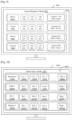
- FIG. 9 illustrates a TV 900 having a smart broadcasting mode 902, according to the present disclosure.
- contents 904 of the USB devices USB-1 and USB-2 are mapped to least viewed channels based on matching of the genre of the contents 904 with the genres 906a-906d of the smart broadcasting mode 902.
- FIG. 9 illustrates a TV 900 having a smart broadcasting mode 902, according to the present disclosure.
- song 1 from USB-1 is mapped to channel 108 in the music 906a genre already having channels 101 to 103; Movie 1 from USB-1 is mapped to channel 205 in the action 906b genre already having channels 201 to 203; Video 2 from USB-2 is mapped to channel 305 in the sports 906c genre already having channels 301 to 303; and Video 3 from USB-1 is mapped to channel 409 in the comedy 906d genre already having channels 401 to 403.
- users can be provided with options, such as 'switch to source' and 'start playback of content'.
- FIG. 10 illustrates a TV 1000 having a smart view mode 1002 according to the present disclosure.
- the TV 1000 comprises a content mapping engine configured to map contents of a plurality of external content sources 1004a-1004d to a content listing in one or more source modes of the content processing device 400 based on at least one content parameter.
- the TV further comprises a user interface 1001 configured to present a modified content listing of the one or more source modes, the modified listing having mappings of the contents of the plurality of external content sources 1004a-1004d to the content listing in the one or more source modes of the content processing device 400.
- the modified content listing is generated by performing at least one of adding of new content in the content listing, replacing of least viewed content from the content listing with new content, appending of new content in the content listing, and replacing of unavailable content from the content listing with new content.
- the user interface 1001 presents the modified content listing in a smart view mode 1002 listing all the contents of the plurality of external content sources 1004a-1004d in a single view such that content can be selected from an external content source without explicitly switching to the external content source.
- a smart view mode 1002 users can access all the content present on connected or paired devices with the TV 1000 in a single view so that users can play any content from any source without having to switch to that source.
- the smart view mode 1002 presents the contents 1006a-1006n of broadcast mode 1004a, contents 1008a-1008n of USB-1 1004b, contents 1010a-1010n of PC-1 1004c, and contents 1012a-1012n of mobile-1 1004d in a single view to users.
- the contents are grouped by source and within each group can be arranged according to filetype, filename, or by any other relevant content parameter.
- FIG. 11 illustrates a smart view framework 1100 according to the present disclosure.
- the smart view framework 1100 enables mapping of externally stored multimedia content shown in block 1102 with least viewed broadcast channels or video on demand applications/widgets or PIPs/multi-screen as shown in block 1104.
- users can access external content in parallel to a current content mode rather than repeatedly switching between multiple sources.
- users have an option for a "single source play all content" mechanism on their TV to access content from different sources in a single source mode.
- the TV may provide a smart view mode, mapping of external content in a broadcasting mode, mapping of external content in an application mode, and mapping of external content in a PIP/multi-screen mode.
- viewers can access content from different sources in a single source and do not need to keep on repeatedly switching between sources.
- these features provide a convenient viewing experience to viewers who like to play movies, songs, etc., from the external sources.
- This smart view framework 1100 enables automated mapping by taking intelligence based decisions.
- One aspect of this framework is to stream external content from connected devices, such as a USB device or external hard disk, to a current mode of the TV.
- Another aspect of this framework 1100 is to map and stream the external content to least viewed broadcast channels so that users can access external content directly without the need of switching the source mode to USB.
- Another aspect of this framework 1100 is to perform genre based mapping and streaming of external content to broadcast channels, apps, and PIP/multi-screen based upon the current genre of content being viewed.
- Another aspect of this framework 1100 is to map and stream the external content to multimedia applications provided in the TV so that streamed content can be accessed through these apps directly.
- Another aspect of this framework 1100 is to map and stream the external content to PIP/multi-screen so that whenever PIP/multi-screen is turned on, the user can directly access the locally stored content without the need to switch to the external source.
- FIG. 12 illustrates a TV 1200, wherein an option 1202 to turn on smart view mode according to the present disclosure is provided in the advance settings 1204 in a TV menu along with other routine options. Further settings 1206 of the smart view mode can be controlled automatically or manually by a user.
- FIG. 13 illustrates a TV 1300, wherein user defined settings 1302 of a smart view mode according to the present disclosure are depicted.
- the user defined settings comprise settings such as 'show all content in Single View Mode' 1304, 'Map External Content to least viewed channels' 1306, 'Map External Content to Multimedia apps' 1308, 'Map external content to PIP' 1310, 'Content Parameter based Mapping of external content' 1312, etc.
- FIG. 14 illustrates an overall framework 1400 according to the present disclosure.
- the framework 1400 provides an intelligent mapping of externally stored content to broadcast channels, apps, or PIPs/multi-screen based upon content parameters, such as genre, identification, and other aspects related to the user's viewing habits.
- multiple external content sources 1402 may be connected to a TV 1406 having an external content processor 1404, such as the external content processor 428, according to an embodiment of the present disclosure.
- the external content processor 1404 analyses external content from multiple external sources.
- the analysis involves determining at least one relevant content parameter.
- Table 1 shown below indicates such a sample analysis, where the type of content along with genre information is determined as content parameters.
- Table 1 External Source External Content Content Parameter Type Genre USB Titanic.mp4 Movie Romantic USB Jurassic.avi Movie Action USB Video 1.mp4 Video Entertainment PC RockSong.mp3 Song Music PC Song2.mp3 Song Music Mobile Video1.avi Video Sports Mobile Video2.avi Video kids
- the external content processor 1404 analyses items of various source modes, for example, as listed in Table 2 below.
- Table 2 Source Modes Items Content Parameter(Frequency, Type, etc) Broadcast Mode Channel-1 Least Viewed Broadcast Mode Channel-2 Least Viewed Broadcast Mode Channel-N Empty Application Mode App-1 Video Application Mode App-2 Video, Flash Application Mode App-N Video, Audio PIP Mode PIP Video
- the external content processor 1404 maps the external content to items of the source modes based on the content parameter identification shown in Tables 1 and 2.
- Table 3 shown below depicts the mapping of external content with the items of source modes.
- Source Modes Items External Content External Source Broadcast Mode Channel-1 Titanic.mp4 USB Broadcast Mode Chaneel-2 Jurassic.avi USB Broadcast Mode Channel-N RockSong.mp3 PC Application mode App-1 Video.avi Mobile Application mode App-2 Song2.mp3 PC Application mode App-N Song2.mp3 PC PIP Mode PIP Video1.mp4 USB
- the present disclosure provides automated streaming of the external content in a broadcasting mode 1406a, including automated streaming of the external content to least viewed channels, appending the external content to empty channels present in mapped genre, and mapped streaming of external content according to genre, such as sports, movies, entertainment, news, etc.
- the present disclosure also provides automated streaming of the external content in an application mode 1406b, including automated mapping of the external content to multimedia apps, automated mapping of the external content to genre based apps, and automated mapping to multimedia widgets to play the external content.
- the present disclosure also provides automated streaming of the external content in multi-screen or a PIP mode 1406c, including automated streaming of the external content to the multi-screen or PIP.
- FIG. 15 illustrates a high level flowchart 1500 in terms of key aspects according to the present disclosure.
- external content is analysed by an external content analyser to determine a content parameter, such as the genre of contents .
- a content parameter such as the genre of contents .
- a list of the external content stored in connected devices such as a USB device, PC, mobile device, tablet, etc. is prepared.
- the external content is categorized according to genre, such as entertainment, horror, romantic, action, sports, etc., on the basis of metadata, internet assistance, filenames, user history, etc., of the external content.
- the external content analyser is basically responsible for analysing content present on the paired/ connected devices which can be played on a TV.
- the external content analyser will first identify the list of devices connected to the TV and will prepare a database of content present on each device as shown below in Table 4.
- the database which provides information about the content present on the paired devices, is prepared.
- the important information present in this database is the genre and the category of the external content stored on the connected devices. This information is used further to provide proper mapping of the external content to broadcast channels or multimedia apps based upon their genre.
- the genre and category based information can be extracted in different ways, such as by parsing the metadata information present in files.
- source modes are analysed to determine relevant content parameters. More specifically, various source modes, such as broadcasting mode, app mode, multi-screen mode, PIP mode, etc., are analysed to identify least viewed channels, a genre of a current mode, genres of apps, PIP, etc.
- the external content is mapped to the source modes on the basis of determined content parameters. For example, an external content genre is mapped to a current mode genre, the external content is mapped to the least viewed channels, the external content is mapped to the multimedia apps, and the external content is mapped to the PIP.
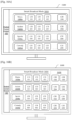
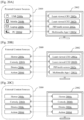
- FIGS. 16A-16D illustrate a TV 1600 having a broadcast content analyser 1602 configured to implement a smart broadcast mode, according to an exemplary embodiment of the present disclosure.
- the broadcast content analyser 1602 can be a part of the source mode analyser 504 described previously.
- the broadcast content analyser 1602 is responsible for identification of user interest in broadcast channels shown in a smart broadcast mode 1604 and to analyse which are the most viewed channels and which are the least viewed channels at any given span of time.
- genre 1606a-1606d of the broadcast channels 101-499 are already available to the broadcast providers. So the TV 1600 already has the information about each channel's genre. Already each channel number is categorized by the broadcast service provider according to the genre. Further, the broadcast content analyser 1602 further identifies the viewer's preference by identifying most viewed channels and/or the least viewed channels. Based upon the duration of viewing time of any particular channel or program, the broadcast content analyser analyses what kind of content or channels are preferred by the users and what are the least viewed channels. When the least viewed channels are identified, the external content can be streamed on those least viewed channels.
- the broadcast content analyser 1602 analyses the viewing habits of the user and based upon this analysis, prepares a list of channels which are most viewed by the user as well as a list of channels which are least viewed by the user.
- Table 5 below shows a sample database of channels prepared by the broadcast content analyser 1602, which incliudes information related to the programs as well as the channels.
- the broadcast content analyser 1602 identifies empty channels as well as the least viewed channels 1608 in each genre. Since these channels are either empty or least viewed by the user, these channels can be used to map and show the external content, which may be of more interest to the user. A sample mapping is shown in Table 6 below.
- FIG. 16C illustrates the sample mapping 1610 of the external content to the least viewed channels done by a content mapping engine 1603. As shown, Song 1 from USB 1 is mapped to Channel 108, Song 2 from USB 1 is mapped to channel 105, video 2 from USB 2 is mapped to channel 253, and video 3 from USB 1 is mapped to channel 256.
- FIG. 16D illustrates a genre based mapping 1612 of the external content to the broadcast channels done by the content mapping engine 1603.
- Song 1 from USB 1 is mapped to the Channel 108 in Music > Rock genre 1606a
- Movie 1 from USB 1 is mapped to the channel 209 in Action > Adventure genre 1606b
- video 2 from USB 2 is mapped to the channel 353 in Sports > Cricket genre 1606c
- video 3 from USB 1 is mapped to the channel 467 in Comedy > Anaimation genre 1606d.
- This genre based mapping 1612 provides a more enhanced viewing experience to viewers.
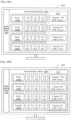
- FIGS. 17A-17B illustrate a TV 1700 having an app analyser 1702 configured to implement an application mode 1704, according to the present disclosure.
- the app analyser 1702 can be a part of the source mode analyser 504 described above.
- the app analyser 1702 analyses installed apps 1706 and/or recommended apps 1708 on the TV 1700.
- applications which the user can install on the TV 1700.
- Many of these applications are multimedia based applications capable of playing multimedia content.
- the app analyser 1702 maps the external content to the multimedia apps based on its category and genre.
- each app installed or recommended on the TV 1700, which can play the multimedia content is listed along with category and genre of content played in the particular app, as shown in Table 8 below.
- Table 8 Application Category Genre APP_104 Video Movies APP_203 Video Programs APP_302 Video Sports APP_304 Video Movies APP_401 Audio Soft APP_403 Audio Rock
- each external content source 1712 is mapped to one or more multimedia apps 1710, according to an embodiment of the present disclosure.
- PC 1712a is mapped to app_104
- laptop 1712b is mapped to app 203 and 304
- mobile device 1712c is mapped to app 302
- USB device 1712d is mapped to app 401 and app 403.
- the content of external content sources 1712 are playable from the mapped multimedia apps 1710.
- FIG. 18 illustrates a TV 1800 having a PIP/multi-screen analyser 1802 configured to implement a smart PIP/multi-screen mode 1804, according to the present disclosure.
- the PIP/multi-screen analyser 1802 can be a part of the source mode analyser 504 described previously.
- the PIP/multi-screen analyser 1802 enables streaming of external content to a PIP/multi-screen. Also, based upon the background content, such as channel 1806, being played when the PIP/ multi-screen 1808 is turned on, the PIP/multi-screen analyser 1802 can perform genre based mapping.
- the external content can be mapped to the PIP/multi-screen 1808 so that whenever the user wants to watch the external content in parallel to current content, the user can easily access the external content via the PIP/multi-screen mode 1804. This will provide the user a parallel viewing experience with respect to multiple contents from the multiple sources.
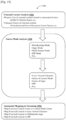
- FIG. 19 illustrates a flowchart 1900. To implement the present disclosure, certain operations can be performed and based upon output of these operations, certain other operations can also be performed. Here only the basic operations are explained, but this present disclosure is not limited to just these operations.
- the same framework can be used to enlist the multimedia content present in external storages and playback of the multimedia content using inbuilt multimedia players as well as other multimedia content players. How the multimedia content present in the external storage can be listed on a TV is described below.
- an external device pairing notification is sent to the currently active source.
- a content parsing thread can be executed in the background to list the content present on the paired devices. The same method can be used to list the multimedia content present on the external device by parsing the external device in the background.
- a database (as shown in Table 9 below) of content can be prepared with parameters of the external content such as content type, size, category, etc.
- This database provides information about the content present on the paired devices. Other important information present in such databases is the genre and category of the external content stored on the connected devices.
- the external content is categorized.
- the metadata of each of the content is analysed to identify the content genre and category, as shown in Table 10 below. This can be done by analysing the certain metadata present with content, such as name, file extension, details, etc.
- Table 10 Device Connectivity Content Name Type Genre Category USB-1 Direct Titanic.mp4 Video Romance, Drama Movies USB-1 Direct JurassicPark.
- the least viewed channels are identified. This can be achieved by analysing viewing habits of the user. User profiling can also be considered in the case of a multi-user environment. Depending upon the average time spent on any channel, the channel can be listed as highly viewed, moderately viewed or least viewed. This can be done by taking out the average of total time spent viewing channels by the user for a particular period span, for example, 1 Month.
- the channels which are viewed for much less than the average time can be considered as moderately viewed or the least viewed channels. These channels can be further utilized to display some other content which may be of interest to the user.
- the external content is mapped to other sources on the TV. This can be done in multiple ways. Once the databases of the external content, the least viewed channels and the multimedia apps are ready, a virtual mapping of the external content to any of the aforementioned TV sources is created based upon genre mapping or availability of the TV sources. This can be a manual function performed by the user to select the external content and map to any TV source or can also be an automated process based upon user inputs and preferences.
- the external content is played directly on other sources of the TV.
- a first option is to select and play the external content on a mapped source selection. This is one method of playing the content from the USB or any external device connected to the TV. The only difference is that the user will have an option to play the content from the different TV source. Whenever the user will select any least viewed channel or Multimedia App or PIP, the user will get the list of available/present external content and can select any of the content and play the content.
- a second option is to automatically stream the external content on the mapped TV source: This method creates a local content streaming server on the TV itself so that the TV can stream the external content to the mapped TV sources.
- the TV In the case of streaming of the local content to the mapped TV, when the external device is not capable of streaming the content to the TV, the TV itself will stream the content from the external device, for example, a USB device, hard disk, etc., to the mapped TV sources.
- the TV will stream the local content to a local IP host so that the apps or least viewed broadcast channels can receive the streamed local content.
- the content Once the device is connected to the TV, the content is accessible to the TV.
- the TV can now stream the local content to any of the least viewed channels or PIP or any multimedia application by applying local host streaming methods.
- FIGS. 20A-20C illustrate multiple ways of mapping the external content sources 2000 to the TV 2002 sources, according to the present disclosure.
- FIG. 20A illustrates a device configured to perform TV source mapping.
- content present on a particular device is mapped to a particular DTV source.
- content present on a USB device 2000a is mapped to a least viewed channel 1 2002a
- content present on a mobile device 2000b is mapped to a least viewed channel 2 2002b
- content present on a laptop 2000c is mapped to a PIP/multi-screen 2002c
- content present on a PC 2000d is mapped to a multimedia app 1 2002d.
- FIG. 20B illustrates genre to source mapping.
- the content is mapped based upon genre of content to TV source content, i.e., the content belonging to a particular genre is mapped to a particular DTV source.
- horror genre 2004a is mapped to the least viewed channel 1 2002a
- comedy genre 2004b is mapped to the least viewed channel 2 2002b
- drama genre 2004c is mapped to the PIP/ multi-screen 2002c
- action genre 2004d is mapped to the multimedia app 1 2002d.
- FIG. 20C illustrates genre to genre mapping:
- the content is mapped based upon genre of content to a genre in a broadcasting mode .
- action based external multimedia content is mapped to the least viewed channels in the action genre of the broadcasting mode.
- the external content having horror genre 2004a is mapped to horror genre 2006a in the broadcasting mode
- the external content having comedy genre 2004b is mapped to comedy genre 2006b in the broadcasting mode
- the external content having drama genre 2004c is mapped to the drama genre 2006c in the broadcasting mode
- the external content having action genre 2004d is mapped to the action genre 2006d in the broadcasting mode.
- a computer application named Share Manager 2100 can stream media on digital living network alliance (DLNA) devices.
- DLNA digital living network alliance
- This computer application provides an efficient way to share content on a PC with a TV.
- the PC is an effective DLNA media server, which makes it possible to view most types of video files on the TV without any wires or cables. It also works with wired connections.
- a content sharing app 2200 (depicted in FIG. 22A ) allows an assortment of devices 2202, such as TV 2202a, tablets 2202b, laptops 2202c, phones 2202d, etc., to share their media output with one another.
- FIG. 22A shows an assortment of devices 2202, such as TV 2202a, tablets 2202b, laptops 2202c, phones 2202d, etc.
- the content sharing app 2200 for Android can support 3 modes: playing media from the phone on another device, for example, a TV, computer, etc., playing media from another device on the phone, and connecting media from source 1 to source 2 by using the phone as a link.
- All these streaming frameworks have their own UI on the TV so the user may switch to the particular source to access the content which is streamed from the mobile or the PC.
- content is stored on a USB device or external hard disk, there is no mechanism to stream this content from the connected USB/HDD to the TV.
- the user will switch to Media Play Source to access the content present on the TV. As shown in FIG.
- the present disclosure enables a TV 2300 to itself stream-in local content so that if any multimedia content is present on any connected external device 2304, such as the USB device or hard disk, no external device is used to act as a server for streaming content to its source modes 2302, such as least viewed channels 2302a and 2302b in the broadcasting mode, PIP/multi-screen 2302c in the PIP/multi-screen mode, and multimedia app 2302d in the application mode.
- FIG. 23B illustrates an example, where two USB devices, USB-1 and USB-2, 2302, are connected to the TV 2300. The contents of USB-1 and USB-2 are mapped to the least viewed channels 2302a and 2302b in the broadcasting mode, the PIP/multi-screen 2302c in the PIP/multi-screen mode, and the multimedia app 2302d in the application mode.
- FIG. 24 illustrates a flowchart 2400 of another example of use of the present disclosure.
- the flowchart begins with operation 2404.
- contents of the external sources are analysed to determine the values of at least one content parameter.
- source modes of the TV are analysed to determine the value of the at least one content parameter. More specifically, least viewed broadcast channels in each category/genre, the multimedia apps, and the PIP/ multi-screen are identified.
- the analysed external content is mapped to the analysed source modes of the TV on the basis of the determined values of the at least one content parameter. Examples of the at least one content parameter include, but are not limited to genre, metadata, information derived from metadata, size, category, type, etc. More specifically, the external content is mapped to the identified least viewed channels, apps, and PIP/multi-screen.
- the mapped external content is streamed or re-routed based on user input.
- the process ends.
- FIG. 25 illustrates a flowchart 2500 of analysis of broadcast content, according to the present disclosure.
- the flowchart begins with operation 2502.
- a category/ genre of each of the broadcast channels is identified.
- an average viewing time for each category/ genre is determined.
- a list of channels below the average/ threshold viewing time is prepared.
- a channel radio frequency is identified for content transmission.
- the process ends.
- FIG. 26 illustrates a flowchart 2600 of analysis of the external content, according to the present disclosure.
- the flowchart begins with operation 2602.
- operation 2604 the external device connected to the TV is parsed.
- operation 2606 it is determined if multimedia content is present on the external device. If any multimedia content is not present on the external device, the flowchart ends. However, if the multimedia content is present on the external device, then a summary of the multimedia content is prepared in operation 2608 to detect content parameters.
- it is checked if the external device is capable of content streaming. If the external device is not capable of content streaming, then the multimedia content is re-routed to a mapped source in operation 2612. However, if the external device is capable of content streaming, then the multimedia content is streamed to the mapped source in operation 2614. Thereafter, the process ends in operation 2616.
- a first example of use is to provide a smart view mode, i.e., single screen for multiple sources. It is desired to provide a seamless viewing experience with respect to content present on multiple sources to the user.
- the user can access all the content present on multiple sources in the smart view mode without the need to switch between the different sources.
- the user can access all the content present on the devices connected or paired with the TV in the single view mode so that the user can play any content from any source without the need to switch to that source.
- the user interface of the smart view mode can be dynamically modified if the list of the connected devices is overly large as well as if the number of playable content on each device is high.
- the user can be provided with various options to sort content in ascending or descending order by content size, content date, content duration, content name, etc.
- the user can also be provided with various options to filter content by device type (PC / USB / mobile / etc.), media type (audio / video / etc.), connection type (secured / public / etc.), status (watched / unwatched / newly added / etc.), and so on. In this way, the user can easily access a huge amount of content present across devices.
- the present disclosure takes care of access to secured content across devices by providing restricted/secured access based upon content type.
- the user may put a limitation on access to content based upon privacy settings as shown in Table 12 below.
- Table 12 Content Genre Accessibility Authentication Type Adult Restricted/Locked Authentication Romance Secured Authentication Action Public No authentication Comedy Public No authentication Horror Secured Authentication Drama Public No authentication Sports Public No authentication kids Public No authentication Personal Files Locked Authentication devices, that content may be accessible only after a pre-defined authentication process, with which content may not be allowed to be played.
- the content can be filtered before being listed on the device so that the user is shown only content which the user can play.
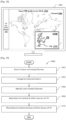
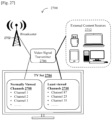
- FIG. 27 Another example of use 2700 of the present disclosure, as illustrated in FIG. 27 , is to map local content to the least viewed broadcast channels.
- the TV is mostly used to watch broadcast content all the time. Therefore, if the user is comfortable using the user interface of the broadcast mode, there is no point making the user browse multiple user interfaces for multiple sources.
- the broadcaster 2702 broadcasts content to a TV 2704 through a video signal transmitter 2706.
- normally viewed channels 2708 and least viewed channels 2710 are identified in the TV 2704.
- any of the external content sources 2712 are connected to the TV 2704, their content are automatically mapped to the least viewed channels 2710, according to the present disclosure.
- Another example of use of the present disclosure is to map local content to multimedia apps.
- users can access all the external content through mapping of the multimedia enabled apps to local content. In this way, the users can play local content directly from the apps which support multimedia playback.
- Another example of use of the present disclosure is to map local content to PIPs.
- the PIPs are accessible on almost every screen of the TV, be it broadcasting, application mode, multi-screen, etc.
- Streaming external content on the PIP can be a simple way of accessing the external content.
- Another example of use of the present disclosure is to stream local content to virtual apps.
- a multimedia playback framework exists in the TVs, whenever any external content is detected on any paired device, this external content can be played via a multimedia widget dedicated to playing external multimedia content.
- Another example of use of the present disclosure is to stream local content to appended channels.
- mapping of external devices to TV modes Another example of use of the present disclosure is mapping of external devices to TV modes.
- Dedicated mapping of a device to a TV source is very useful because it can help users as they do not have to remember many different mappings.
- a content list may gradually become huge and it becomes difficult for the users to remember which content is mapped to which TV mode.
- mapping devices to a particular channel or application, it helps the users to remember easily.
- Another example of use of the present disclosure is mapping of genre based content to TV modes. Categorization of external content and providing category based mapping of the external content to the TV modes helps users to access the same genre content in the same screen from across multiple sources.
- the present disclosure can be implemented using parallel execution of modules in different threads. Further, the present disclosure can be implemented using local as well as cloud servers for analysing external contents.
- the databases can be stored on the user device, paired devices, as well as cloud servers.
- the steaming mechanism can also be implemented on the paired devices. The present disclosure can be applied to different devices with different user interface setups.
Landscapes
- Engineering & Computer Science (AREA)
- Multimedia (AREA)
- Signal Processing (AREA)
- Databases & Information Systems (AREA)
- Human Computer Interaction (AREA)
- Software Systems (AREA)
- Computer Networks & Wireless Communication (AREA)
- Two-Way Televisions, Distribution Of Moving Picture Or The Like (AREA)
Claims (8)
- Dispositif de traitement de contenu comprenant :
un processeur configuré pour commander :un analyseur de contenu externe pour analyser un genre de contenus d'au moins une source de contenu externe,un analyseur de mode source pour analyser une fréquence de visualisation de canaux de diffusion dans un mode de diffusion du dispositif de traitement de contenu, identifiant ainsi au moins un canal de diffusion inutilisé ou le moins regardé ayant un genre de contenus ; etune interface utilisateur configurée pour présenter une liste de contenu modifiée du mode de diffusion,un moteur de mappage de contenu pour mapper les contenus de la pluralité de sources de contenu externes à une liste de contenu dans le mode de diffusion du dispositif de traitement de contenu, sur la base de la fréquence de visualisation des canaux de diffusion et du genre de contenus des sources de contenu externes, de sorte que l'au moins une source externe du genre de contenus est mappée sur l'au moins un canal de diffusion inutilisé ou le moins regardé du même genre de contenus,où le processeur est en outre configuré pour commander au moteur de mappage de contenu d'appliquer le mappage pour obtenir la liste de contenu modifiée, et pour reproduire les contenus de l'au moins une source de contenu externe en réponse à une sélection des contenus dans la liste de contenu modifiée dans le mode de diffusion sans passer du mode de diffusion à un mode source de contenu externe. - Dispositif de traitement de contenu selon la revendication 1, où la pluralité de sources de contenu externes comprend deux ou plusieurs parmi un dispositif de bus série universel, USB, un dispositif d'interface multimédia haute définition, HDMI, un dispositif mobile, un dispositif de tablette, un ordinateur personnel, PC, un ordinateur portable, un dispositif de stockage, un dispositif connecté sans fil, un boîtier décodeur et un système de diffusion.
- Dispositif de traitement de contenu selon la revendication 1, où la liste de contenu comprend au moins un parmi un guide de programmes électronique, EPG, un guide de programmes interactif, IPG, un guide TV, un menu de navigation et un menu TV.
- Dispositif de traitement de contenu selon la revendication 1, où l'interface utilisateur présente la liste de contenu modifiée dans une liste smart view de tous les contenus de la pluralité de sources de contenu externes dans une vue unique de sorte qu'un contenu peut être sélectionné à partir d'une source de contenu externe sans passer explicitement par la source de contenu externe.
- Procédé effectué en utilisant un dispositif de traitement de contenu, le procédé comprenant :analyser une fréquence de visualisation de canaux de diffusion dans un mode de diffusion du dispositif de traitement de contenu, identifiant ainsi au moins un canal de diffusion inutilisé ou le moins regardé ayant un genre de contenus ;analyser un genre de contenus d'au moins une source de contenu externe ;mapper les contenus de la pluralité de sources de contenu externes à une liste de contenu dans le mode de diffusion du dispositif de traitement de contenu, sur la base de la fréquence de visualisation des canaux de diffusion et du genre de contenus des sources de contenu externes, de sorte que l'au moins une source externe du genre de contenus est mappée à l'au moins un canal de diffusion inutilisé ou le moins regardé du même genre de contenus ;afficher sur une interface utilisateur une liste de contenu modifiée du mode de diffusion où le mappage est appliqué, etreproduire les contenus de l'au moins une source de contenu externe en réponse à une sélection des contenus dans la liste de contenu modifiée dans le mode de diffusion sans passer du mode de diffusion à un mode de source de contenu externe.
- Procédé selon la revendication 5, où la pluralité de sources de contenu externes comprend deux ou plusieurs parmi un dispositif de bus série universel, USB, un dispositif d'interface multimédia haute définition, HDMI, un dispositif mobile, un dispositif de tablette, un ordinateur personnel, PC, un ordinateur portable, un dispositif de stockage, un dispositif connecté sans fil, un boîtier décodeur et un système de diffusion.
- Procédé selon la revendication 5, où la liste de contenu comprend au moins un parmi un guide de programmes électronique, EPG, un guide de programmes interactif, IPG, un guide TV, un menu de navigation et un menu TV.
- Procédé selon la revendication 1,
où l'interface utilisateur présente la liste de contenu modifiée dans une liste smart view de tous les contenus de la pluralité de sources de contenu externes dans une vue unique de sorte qu'un contenu peut être sélectionné à partir d'une source de contenu externe sans passer explicitement par la source de contenu externe.
Applications Claiming Priority (2)
| Application Number | Priority Date | Filing Date | Title |
|---|---|---|---|
| IN201711004223 | 2017-02-06 | ||
| PCT/KR2018/001559 WO2018143765A1 (fr) | 2017-02-06 | 2018-02-06 | Procédé et appareil pour traiter un contenu à partir d'une pluralité de sources de contenu externes |
Publications (3)
| Publication Number | Publication Date |
|---|---|
| EP3552401A4 EP3552401A4 (fr) | 2019-10-16 |
| EP3552401A1 EP3552401A1 (fr) | 2019-10-16 |
| EP3552401B1 true EP3552401B1 (fr) | 2024-07-17 |
Family
ID=63038213
Family Applications (1)
| Application Number | Title | Priority Date | Filing Date |
|---|---|---|---|
| EP18748195.7A Active EP3552401B1 (fr) | 2017-02-06 | 2018-02-06 | Procédé et appareil pour traiter un contenu à partir d'une pluralité de sources de contenu externes |
Country Status (3)
| Country | Link |
|---|---|
| US (1) | US11032618B2 (fr) |
| EP (1) | EP3552401B1 (fr) |
| WO (1) | WO2018143765A1 (fr) |
Families Citing this family (2)
| Publication number | Priority date | Publication date | Assignee | Title |
|---|---|---|---|---|
| US11140447B2 (en) * | 2019-04-30 | 2021-10-05 | Rovi Guides, Inc. | Personalized media guide for offline media devices |
| CN113542839B (zh) * | 2021-06-09 | 2022-10-18 | 荣耀终端有限公司 | 电子设备的投屏方法和电子设备 |
Citations (1)
| Publication number | Priority date | Publication date | Assignee | Title |
|---|---|---|---|---|
| US20090094646A1 (en) * | 2007-10-04 | 2009-04-09 | At&T Knowledge Ventures, L.P. | Method and system for content mapping |
Family Cites Families (14)
| Publication number | Priority date | Publication date | Assignee | Title |
|---|---|---|---|---|
| TW570449U (en) | 2003-05-30 | 2004-01-01 | Aviquest Technology Co Ltd | Multi-media playing TV |
| KR20070110365A (ko) | 2005-02-15 | 2007-11-16 | 코닌클리케 필립스 일렉트로닉스 엔.브이. | 기상, 금융 시장, 미디어 판매 또는 캘린더 데이터와 같은외부 요인들에 기초한 자동적 개인 재생 목록 생성 |
| KR20060115806A (ko) * | 2005-05-06 | 2006-11-10 | 삼성전자주식회사 | 디스플레이 장치 및 그 제어방법 |
| US20080106487A1 (en) * | 2005-08-05 | 2008-05-08 | Samsung Electronics Co., Ltd. | Apparatus for providing multiple screens and method of dynamically configuring multiple screens |
| KR100772392B1 (ko) | 2006-02-07 | 2007-11-01 | 삼성전자주식회사 | 홈 네트워크에서 tv 채널을 이용한 콘텐트 처리 방법 및그 장치 |
| CN101953162A (zh) * | 2008-02-22 | 2011-01-19 | 夏普株式会社 | 集成接口装置及集成接口装置的控制方法 |
| US8341678B1 (en) | 2008-07-18 | 2012-12-25 | Meld Technology Inc. | Using TV remote control and TV to display content from any one of multiple sources |
| KR100935352B1 (ko) | 2009-04-03 | 2010-01-06 | 고준빈 | 다기능 av 리모콘 시스템 |
| US20110283320A1 (en) * | 2010-05-13 | 2011-11-17 | Rovi Technologies Corporation | Systems and methods for identifying a program using information from a third-party data source |
| US20110289414A1 (en) | 2010-05-18 | 2011-11-24 | Rovi Technologies Corporation | Guided navigation |
| KR101694164B1 (ko) * | 2010-09-02 | 2017-01-09 | 엘지전자 주식회사 | 영상표시기기 및 그 동작 방법 |
| US20130332831A1 (en) | 2012-06-07 | 2013-12-12 | Sony Corporation | Content management user interface that is pervasive across a user's various devices |
| CN103828388A (zh) | 2012-08-17 | 2014-05-28 | 弗莱克斯电子有限责任公司 | 提供智能电视徽标的方法和显示屏 |
| WO2016081624A1 (fr) * | 2014-11-18 | 2016-05-26 | Branch Media Labs, Inc. | Identification et mise en correspondance automatiques de dispositifs électroniques de client avec des ports sur un commutateur hdmi |
-
2018
- 2018-02-05 US US15/889,021 patent/US11032618B2/en not_active Expired - Fee Related
- 2018-02-06 EP EP18748195.7A patent/EP3552401B1/fr active Active
- 2018-02-06 WO PCT/KR2018/001559 patent/WO2018143765A1/fr not_active Ceased
Patent Citations (1)
| Publication number | Priority date | Publication date | Assignee | Title |
|---|---|---|---|---|
| US20090094646A1 (en) * | 2007-10-04 | 2009-04-09 | At&T Knowledge Ventures, L.P. | Method and system for content mapping |
Also Published As
| Publication number | Publication date |
|---|---|
| US20180227638A1 (en) | 2018-08-09 |
| EP3552401A4 (fr) | 2019-10-16 |
| US11032618B2 (en) | 2021-06-08 |
| WO2018143765A1 (fr) | 2018-08-09 |
| EP3552401A1 (fr) | 2019-10-16 |
Similar Documents
| Publication | Publication Date | Title |
|---|---|---|
| CN103081502B (zh) | 操作图像显示设备的方法 | |
| CN102835124B (zh) | 图像显示设备和用于操作图像显示设备的方法 | |
| KR102726003B1 (ko) | 자연어 쿼리의 보충 기능을 수행하기 위한 시스템 및 방법 | |
| US9571054B2 (en) | Systems and methods for dynamically adjusting volume based on media content | |
| US20130346430A1 (en) | Systems and methods for navigating to content without an advertisement | |
| US20120054793A1 (en) | Method for synchronizing contents and display device enabling the method | |
| US12008031B2 (en) | Systems and methods for enabling quick multi-application menu access to media options | |
| US20150121306A1 (en) | Methods and systems for customizing functions of media guidance applications | |
| US20130007809A1 (en) | Methods and systems for customizing viewing environment preferences in a viewing environment control application | |
| KR20130033044A (ko) | 컨텐츠 공유 방법 및 그를 이용한 영상 표시 장치 | |
| CN103081499A (zh) | 图像显示设备及其操作方法 | |
| KR20130033672A (ko) | 컨텐츠 관리 방법 및 그를 이용한 영상 표시 장치 | |
| WO2013151901A1 (fr) | Système et procédé de navigation dans un contenu sur un équipement utilisateur comportant un afficheur tactile à régions multiples | |
| EP3955105A1 (fr) | Système et procédé de détection de conflits sur la base de préférences utilisateur | |
| EP3622671B1 (fr) | Systèmes et procédés pour ajuster un environnement de consommation multimédia sur la base de changements d'états d'un objet | |
| US11849191B2 (en) | Methods and systems for filtering media content | |
| CN102612836A (zh) | 图像显示设备及其操作方法 | |
| KR20130081182A (ko) | 서비스 처리 장치 및 서비스 처리 방법 | |
| EP3622717A1 (fr) | Systèmes et procédés de classement de sources de contenu sur la base d'un certain nombre de ressources multimédia identifiées comme étant intéressantes pour un utilisateur | |
| US10057647B1 (en) | Methods and systems for launching multimedia applications based on device capabilities | |
| EP3552401B1 (fr) | Procédé et appareil pour traiter un contenu à partir d'une pluralité de sources de contenu externes | |
| US20150007230A1 (en) | Methods and systems for customizing an interactive media guide with additional information | |
| KR102040608B1 (ko) | 디지털 디바이스 및 그 신호 처리방법 | |
| KR20220065455A (ko) | 영상 콘텐츠 제공을 위한 장치 및 그 제어방법 | |
| US20130347035A1 (en) | Systems and methods for navigating to a favorite content source without an advertisement |
Legal Events
| Date | Code | Title | Description |
|---|---|---|---|
| STAA | Information on the status of an ep patent application or granted ep patent |
Free format text: STATUS: THE INTERNATIONAL PUBLICATION HAS BEEN MADE |
|
| PUAI | Public reference made under article 153(3) epc to a published international application that has entered the european phase |
Free format text: ORIGINAL CODE: 0009012 |
|
| STAA | Information on the status of an ep patent application or granted ep patent |
Free format text: STATUS: REQUEST FOR EXAMINATION WAS MADE |
|
| 17P | Request for examination filed |
Effective date: 20190712 |
|
| A4 | Supplementary search report drawn up and despatched |
Effective date: 20190821 |
|
| AK | Designated contracting states |
Kind code of ref document: A1 Designated state(s): AL AT BE BG CH CY CZ DE DK EE ES FI FR GB GR HR HU IE IS IT LI LT LU LV MC MK MT NL NO PL PT RO RS SE SI SK SM TR |
|
| AX | Request for extension of the european patent |
Extension state: BA ME |
|
| DAV | Request for validation of the european patent (deleted) | ||
| DAX | Request for extension of the european patent (deleted) | ||
| STAA | Information on the status of an ep patent application or granted ep patent |
Free format text: STATUS: EXAMINATION IS IN PROGRESS |
|
| 17Q | First examination report despatched |
Effective date: 20210118 |
|
| GRAP | Despatch of communication of intention to grant a patent |
Free format text: ORIGINAL CODE: EPIDOSNIGR1 |
|
| STAA | Information on the status of an ep patent application or granted ep patent |
Free format text: STATUS: GRANT OF PATENT IS INTENDED |
|
| INTG | Intention to grant announced |
Effective date: 20240319 |
|
| GRAS | Grant fee paid |
Free format text: ORIGINAL CODE: EPIDOSNIGR3 |
|
| GRAA | (expected) grant |
Free format text: ORIGINAL CODE: 0009210 |
|
| STAA | Information on the status of an ep patent application or granted ep patent |
Free format text: STATUS: THE PATENT HAS BEEN GRANTED |
|
| AK | Designated contracting states |
Kind code of ref document: B1 Designated state(s): AL AT BE BG CH CY CZ DE DK EE ES FI FR GB GR HR HU IE IS IT LI LT LU LV MC MK MT NL NO PL PT RO RS SE SI SK SM TR |
|
| REG | Reference to a national code |
Ref country code: CH Ref legal event code: EP |
|
| REG | Reference to a national code |
Ref country code: DE Ref legal event code: R096 Ref document number: 602018071860 Country of ref document: DE |
|
| REG | Reference to a national code |
Ref country code: IE Ref legal event code: FG4D |
|
| REG | Reference to a national code |
Ref country code: LT Ref legal event code: MG9D |
|
| REG | Reference to a national code |
Ref country code: NL Ref legal event code: MP Effective date: 20240717 |
|
| PG25 | Lapsed in a contracting state [announced via postgrant information from national office to epo] |
Ref country code: PT Free format text: LAPSE BECAUSE OF FAILURE TO SUBMIT A TRANSLATION OF THE DESCRIPTION OR TO PAY THE FEE WITHIN THE PRESCRIBED TIME-LIMIT Effective date: 20241118 |
|
| REG | Reference to a national code |
Ref country code: AT Ref legal event code: MK05 Ref document number: 1705211 Country of ref document: AT Kind code of ref document: T Effective date: 20240717 |
|
| PG25 | Lapsed in a contracting state [announced via postgrant information from national office to epo] |
Ref country code: NL Free format text: LAPSE BECAUSE OF FAILURE TO SUBMIT A TRANSLATION OF THE DESCRIPTION OR TO PAY THE FEE WITHIN THE PRESCRIBED TIME-LIMIT Effective date: 20240717 |
|
| PG25 | Lapsed in a contracting state [announced via postgrant information from national office to epo] |
Ref country code: PT Free format text: LAPSE BECAUSE OF FAILURE TO SUBMIT A TRANSLATION OF THE DESCRIPTION OR TO PAY THE FEE WITHIN THE PRESCRIBED TIME-LIMIT Effective date: 20241118 Ref country code: NL Free format text: LAPSE BECAUSE OF FAILURE TO SUBMIT A TRANSLATION OF THE DESCRIPTION OR TO PAY THE FEE WITHIN THE PRESCRIBED TIME-LIMIT Effective date: 20240717 |
|
| PG25 | Lapsed in a contracting state [announced via postgrant information from national office to epo] |
Ref country code: NO Free format text: LAPSE BECAUSE OF FAILURE TO SUBMIT A TRANSLATION OF THE DESCRIPTION OR TO PAY THE FEE WITHIN THE PRESCRIBED TIME-LIMIT Effective date: 20241017 |
|
| PG25 | Lapsed in a contracting state [announced via postgrant information from national office to epo] |
Ref country code: FI Free format text: LAPSE BECAUSE OF FAILURE TO SUBMIT A TRANSLATION OF THE DESCRIPTION OR TO PAY THE FEE WITHIN THE PRESCRIBED TIME-LIMIT Effective date: 20240717 Ref country code: GR Free format text: LAPSE BECAUSE OF FAILURE TO SUBMIT A TRANSLATION OF THE DESCRIPTION OR TO PAY THE FEE WITHIN THE PRESCRIBED TIME-LIMIT Effective date: 20241018 Ref country code: PL Free format text: LAPSE BECAUSE OF FAILURE TO SUBMIT A TRANSLATION OF THE DESCRIPTION OR TO PAY THE FEE WITHIN THE PRESCRIBED TIME-LIMIT Effective date: 20240717 |
|
| PG25 | Lapsed in a contracting state [announced via postgrant information from national office to epo] |
Ref country code: BG Free format text: LAPSE BECAUSE OF FAILURE TO SUBMIT A TRANSLATION OF THE DESCRIPTION OR TO PAY THE FEE WITHIN THE PRESCRIBED TIME-LIMIT Effective date: 20240717 |
|
| PG25 | Lapsed in a contracting state [announced via postgrant information from national office to epo] |
Ref country code: LV Free format text: LAPSE BECAUSE OF FAILURE TO SUBMIT A TRANSLATION OF THE DESCRIPTION OR TO PAY THE FEE WITHIN THE PRESCRIBED TIME-LIMIT Effective date: 20240717 |
|
| PG25 | Lapsed in a contracting state [announced via postgrant information from national office to epo] |
Ref country code: IS Free format text: LAPSE BECAUSE OF FAILURE TO SUBMIT A TRANSLATION OF THE DESCRIPTION OR TO PAY THE FEE WITHIN THE PRESCRIBED TIME-LIMIT Effective date: 20241117 Ref country code: AT Free format text: LAPSE BECAUSE OF FAILURE TO SUBMIT A TRANSLATION OF THE DESCRIPTION OR TO PAY THE FEE WITHIN THE PRESCRIBED TIME-LIMIT Effective date: 20240717 |
|
| PG25 | Lapsed in a contracting state [announced via postgrant information from national office to epo] |
Ref country code: HR Free format text: LAPSE BECAUSE OF FAILURE TO SUBMIT A TRANSLATION OF THE DESCRIPTION OR TO PAY THE FEE WITHIN THE PRESCRIBED TIME-LIMIT Effective date: 20240717 |
|
| PG25 | Lapsed in a contracting state [announced via postgrant information from national office to epo] |
Ref country code: ES Free format text: LAPSE BECAUSE OF FAILURE TO SUBMIT A TRANSLATION OF THE DESCRIPTION OR TO PAY THE FEE WITHIN THE PRESCRIBED TIME-LIMIT Effective date: 20240717 Ref country code: RS Free format text: LAPSE BECAUSE OF FAILURE TO SUBMIT A TRANSLATION OF THE DESCRIPTION OR TO PAY THE FEE WITHIN THE PRESCRIBED TIME-LIMIT Effective date: 20241017 |
|
| PG25 | Lapsed in a contracting state [announced via postgrant information from national office to epo] |
Ref country code: RS Free format text: LAPSE BECAUSE OF FAILURE TO SUBMIT A TRANSLATION OF THE DESCRIPTION OR TO PAY THE FEE WITHIN THE PRESCRIBED TIME-LIMIT Effective date: 20241017 Ref country code: PL Free format text: LAPSE BECAUSE OF FAILURE TO SUBMIT A TRANSLATION OF THE DESCRIPTION OR TO PAY THE FEE WITHIN THE PRESCRIBED TIME-LIMIT Effective date: 20240717 Ref country code: NO Free format text: LAPSE BECAUSE OF FAILURE TO SUBMIT A TRANSLATION OF THE DESCRIPTION OR TO PAY THE FEE WITHIN THE PRESCRIBED TIME-LIMIT Effective date: 20241017 Ref country code: LV Free format text: LAPSE BECAUSE OF FAILURE TO SUBMIT A TRANSLATION OF THE DESCRIPTION OR TO PAY THE FEE WITHIN THE PRESCRIBED TIME-LIMIT Effective date: 20240717 Ref country code: IS Free format text: LAPSE BECAUSE OF FAILURE TO SUBMIT A TRANSLATION OF THE DESCRIPTION OR TO PAY THE FEE WITHIN THE PRESCRIBED TIME-LIMIT Effective date: 20241117 Ref country code: HR Free format text: LAPSE BECAUSE OF FAILURE TO SUBMIT A TRANSLATION OF THE DESCRIPTION OR TO PAY THE FEE WITHIN THE PRESCRIBED TIME-LIMIT Effective date: 20240717 Ref country code: GR Free format text: LAPSE BECAUSE OF FAILURE TO SUBMIT A TRANSLATION OF THE DESCRIPTION OR TO PAY THE FEE WITHIN THE PRESCRIBED TIME-LIMIT Effective date: 20241018 Ref country code: FI Free format text: LAPSE BECAUSE OF FAILURE TO SUBMIT A TRANSLATION OF THE DESCRIPTION OR TO PAY THE FEE WITHIN THE PRESCRIBED TIME-LIMIT Effective date: 20240717 Ref country code: ES Free format text: LAPSE BECAUSE OF FAILURE TO SUBMIT A TRANSLATION OF THE DESCRIPTION OR TO PAY THE FEE WITHIN THE PRESCRIBED TIME-LIMIT Effective date: 20240717 Ref country code: BG Free format text: LAPSE BECAUSE OF FAILURE TO SUBMIT A TRANSLATION OF THE DESCRIPTION OR TO PAY THE FEE WITHIN THE PRESCRIBED TIME-LIMIT Effective date: 20240717 Ref country code: AT Free format text: LAPSE BECAUSE OF FAILURE TO SUBMIT A TRANSLATION OF THE DESCRIPTION OR TO PAY THE FEE WITHIN THE PRESCRIBED TIME-LIMIT Effective date: 20240717 |
|
| PGFP | Annual fee paid to national office [announced via postgrant information from national office to epo] |
Ref country code: DE Payment date: 20250120 Year of fee payment: 8 |
|
| PG25 | Lapsed in a contracting state [announced via postgrant information from national office to epo] |
Ref country code: SM Free format text: LAPSE BECAUSE OF FAILURE TO SUBMIT A TRANSLATION OF THE DESCRIPTION OR TO PAY THE FEE WITHIN THE PRESCRIBED TIME-LIMIT Effective date: 20240717 Ref country code: RO Free format text: LAPSE BECAUSE OF FAILURE TO SUBMIT A TRANSLATION OF THE DESCRIPTION OR TO PAY THE FEE WITHIN THE PRESCRIBED TIME-LIMIT Effective date: 20240717 Ref country code: DK Free format text: LAPSE BECAUSE OF FAILURE TO SUBMIT A TRANSLATION OF THE DESCRIPTION OR TO PAY THE FEE WITHIN THE PRESCRIBED TIME-LIMIT Effective date: 20240717 |
|
| REG | Reference to a national code |
Ref country code: DE Ref legal event code: R097 Ref document number: 602018071860 Country of ref document: DE |
|
| PG25 | Lapsed in a contracting state [announced via postgrant information from national office to epo] |
Ref country code: EE Free format text: LAPSE BECAUSE OF FAILURE TO SUBMIT A TRANSLATION OF THE DESCRIPTION OR TO PAY THE FEE WITHIN THE PRESCRIBED TIME-LIMIT Effective date: 20240717 |
|
| PG25 | Lapsed in a contracting state [announced via postgrant information from national office to epo] |
Ref country code: CZ Free format text: LAPSE BECAUSE OF FAILURE TO SUBMIT A TRANSLATION OF THE DESCRIPTION OR TO PAY THE FEE WITHIN THE PRESCRIBED TIME-LIMIT Effective date: 20240717 |
|
| PG25 | Lapsed in a contracting state [announced via postgrant information from national office to epo] |
Ref country code: SK Free format text: LAPSE BECAUSE OF FAILURE TO SUBMIT A TRANSLATION OF THE DESCRIPTION OR TO PAY THE FEE WITHIN THE PRESCRIBED TIME-LIMIT Effective date: 20240717 |
|
| PLBE | No opposition filed within time limit |
Free format text: ORIGINAL CODE: 0009261 |
|
| STAA | Information on the status of an ep patent application or granted ep patent |
Free format text: STATUS: NO OPPOSITION FILED WITHIN TIME LIMIT |
|
| 26N | No opposition filed |
Effective date: 20250422 |
|
| PG25 | Lapsed in a contracting state [announced via postgrant information from national office to epo] |
Ref country code: SE Free format text: LAPSE BECAUSE OF FAILURE TO SUBMIT A TRANSLATION OF THE DESCRIPTION OR TO PAY THE FEE WITHIN THE PRESCRIBED TIME-LIMIT Effective date: 20240717 |
|
| PG25 | Lapsed in a contracting state [announced via postgrant information from national office to epo] |
Ref country code: MC Free format text: LAPSE BECAUSE OF FAILURE TO SUBMIT A TRANSLATION OF THE DESCRIPTION OR TO PAY THE FEE WITHIN THE PRESCRIBED TIME-LIMIT Effective date: 20240717 |
|
| REG | Reference to a national code |
Ref country code: CH Ref legal event code: PL |
|
| PG25 | Lapsed in a contracting state [announced via postgrant information from national office to epo] |
Ref country code: LU Free format text: LAPSE BECAUSE OF NON-PAYMENT OF DUE FEES Effective date: 20250206 |
|
| PG25 | Lapsed in a contracting state [announced via postgrant information from national office to epo] |
Ref country code: CH Free format text: LAPSE BECAUSE OF NON-PAYMENT OF DUE FEES Effective date: 20250228 |
|
| GBPC | Gb: european patent ceased through non-payment of renewal fee |
Effective date: 20250206 |
|
| REG | Reference to a national code |
Ref country code: BE Ref legal event code: MM Effective date: 20250228 |
|
| PG25 | Lapsed in a contracting state [announced via postgrant information from national office to epo] |
Ref country code: GB Free format text: LAPSE BECAUSE OF NON-PAYMENT OF DUE FEES Effective date: 20250206 |
|
| PG25 | Lapsed in a contracting state [announced via postgrant information from national office to epo] |
Ref country code: FR Free format text: LAPSE BECAUSE OF NON-PAYMENT OF DUE FEES Effective date: 20250228 |
|
| PG25 | Lapsed in a contracting state [announced via postgrant information from national office to epo] |
Ref country code: BE Free format text: LAPSE BECAUSE OF NON-PAYMENT OF DUE FEES Effective date: 20250228 |
|
| PG25 | Lapsed in a contracting state [announced via postgrant information from national office to epo] |
Ref country code: IE Free format text: LAPSE BECAUSE OF NON-PAYMENT OF DUE FEES Effective date: 20250206 |
|
| PG25 | Lapsed in a contracting state [announced via postgrant information from national office to epo] |
Ref country code: IT Free format text: LAPSE BECAUSE OF FAILURE TO SUBMIT A TRANSLATION OF THE DESCRIPTION OR TO PAY THE FEE WITHIN THE PRESCRIBED TIME-LIMIT Effective date: 20240717 |