EP3552047B1 - Heuristik neuronaler netze im feldbetrieb - Google Patents
Heuristik neuronaler netze im feldbetrieb Download PDFInfo
- Publication number
- EP3552047B1 EP3552047B1 EP17878687.7A EP17878687A EP3552047B1 EP 3552047 B1 EP3552047 B1 EP 3552047B1 EP 17878687 A EP17878687 A EP 17878687A EP 3552047 B1 EP3552047 B1 EP 3552047B1
- Authority
- EP
- European Patent Office
- Prior art keywords
- plan
- well
- drilling
- neural network
- information
- Prior art date
- Legal status (The legal status is an assumption and is not a legal conclusion. Google has not performed a legal analysis and makes no representation as to the accuracy of the status listed.)
- Active
Links
Images







Classifications
-
- G—PHYSICS
- G01—MEASURING; TESTING
- G01V—GEOPHYSICS; GRAVITATIONAL MEASUREMENTS; DETECTING MASSES OR OBJECTS; TAGS
- G01V11/00—Prospecting or detecting by methods combining techniques covered by two or more of main groups G01V1/00 - G01V9/00
- G01V11/002—Details, e.g. power supply systems for logging instruments, transmitting or recording data, specially adapted for well logging, also if the prospecting method is irrelevant
-
- G—PHYSICS
- G01—MEASURING; TESTING
- G01V—GEOPHYSICS; GRAVITATIONAL MEASUREMENTS; DETECTING MASSES OR OBJECTS; TAGS
- G01V1/00—Seismology; Seismic or acoustic prospecting or detecting
- G01V1/28—Processing seismic data, e.g. for interpretation or for event detection
- G01V1/282—Application of seismic models, synthetic seismograms
-
- G—PHYSICS
- G01—MEASURING; TESTING
- G01V—GEOPHYSICS; GRAVITATIONAL MEASUREMENTS; DETECTING MASSES OR OBJECTS; TAGS
- G01V20/00—Geomodelling in general
-
- G—PHYSICS
- G01—MEASURING; TESTING
- G01V—GEOPHYSICS; GRAVITATIONAL MEASUREMENTS; DETECTING MASSES OR OBJECTS; TAGS
- G01V3/00—Electric or magnetic prospecting or detecting; Measuring magnetic field characteristics of the earth, e.g. declination, deviation
- G01V3/38—Processing data, e.g. for analysis, for interpretation, for correction
-
- G—PHYSICS
- G06—COMPUTING OR CALCULATING; COUNTING
- G06F—ELECTRIC DIGITAL DATA PROCESSING
- G06F18/00—Pattern recognition
- G06F18/20—Analysing
- G06F18/21—Design or setup of recognition systems or techniques; Extraction of features in feature space; Blind source separation
- G06F18/214—Generating training patterns; Bootstrap methods, e.g. bagging or boosting
-
- G—PHYSICS
- G06—COMPUTING OR CALCULATING; COUNTING
- G06N—COMPUTING ARRANGEMENTS BASED ON SPECIFIC COMPUTATIONAL MODELS
- G06N3/00—Computing arrangements based on biological models
- G06N3/02—Neural networks
- G06N3/04—Architecture, e.g. interconnection topology
- G06N3/045—Combinations of networks
-
- G—PHYSICS
- G06—COMPUTING OR CALCULATING; COUNTING
- G06N—COMPUTING ARRANGEMENTS BASED ON SPECIFIC COMPUTATIONAL MODELS
- G06N3/00—Computing arrangements based on biological models
- G06N3/02—Neural networks
- G06N3/04—Architecture, e.g. interconnection topology
- G06N3/0464—Convolutional networks [CNN, ConvNet]
-
- G—PHYSICS
- G06—COMPUTING OR CALCULATING; COUNTING
- G06N—COMPUTING ARRANGEMENTS BASED ON SPECIFIC COMPUTATIONAL MODELS
- G06N3/00—Computing arrangements based on biological models
- G06N3/02—Neural networks
- G06N3/08—Learning methods
-
- G—PHYSICS
- G06—COMPUTING OR CALCULATING; COUNTING
- G06N—COMPUTING ARRANGEMENTS BASED ON SPECIFIC COMPUTATIONAL MODELS
- G06N3/00—Computing arrangements based on biological models
- G06N3/02—Neural networks
- G06N3/08—Learning methods
- G06N3/09—Supervised learning
-
- G—PHYSICS
- G06—COMPUTING OR CALCULATING; COUNTING
- G06N—COMPUTING ARRANGEMENTS BASED ON SPECIFIC COMPUTATIONAL MODELS
- G06N3/00—Computing arrangements based on biological models
- G06N3/02—Neural networks
- G06N3/08—Learning methods
- G06N3/092—Reinforcement learning
-
- E—FIXED CONSTRUCTIONS
- E21—EARTH OR ROCK DRILLING; MINING
- E21B—EARTH OR ROCK DRILLING; OBTAINING OIL, GAS, WATER, SOLUBLE OR MELTABLE MATERIALS OR A SLURRY OF MINERALS FROM WELLS
- E21B2200/00—Special features related to earth drilling for obtaining oil, gas or water
- E21B2200/22—Fuzzy logic, artificial intelligence, neural networks or the like
-
- G—PHYSICS
- G06—COMPUTING OR CALCULATING; COUNTING
- G06F—ELECTRIC DIGITAL DATA PROCESSING
- G06F30/00—Computer-aided design [CAD]
- G06F30/20—Design optimisation, verification or simulation
Definitions
- a resource field can be an accumulation, pool or group of pools of one or more resources (e.g., oil, gas, oil and gas) in a subsurface environment.
- a resource field can include at least one reservoir.
- a reservoir may be shaped in a manner that can trap hydrocarbons and may be covered by an impermeable or sealing rock.
- a bore can be drilled into an environment where the bore may be utilized to form a well that can be utilized in producing hydrocarbons from a reservoir.
- an alternator may be coupled to the aforementioned drive shaft where the alternator includes at least one stator winding electrically coupled to a control circuit to selectively short the at least one stator winding to electromagnetically brake the alternator and thereby selectively brake rotation of the modulator rotor to modulate the pressure pulses in the mud.
- a sticking force can be a product of the differential pressure between the wellbore and the reservoir and the area that the differential pressure is acting upon. This means that a relatively low differential pressure (delta p) applied over a large working area can be just as effective in sticking pipe as can a high differential pressure applied over a small area.
- the seismic-to-simulation framework 302 can be, for example, the PETREL@ framework (Schlumberger Limited, Houston, Texas) and the technical data framework 303 can be, for example, the TECHLOG ® framework (Schlumberger Limited, Houston, Texas).
- a framework can include a model simulation layer along with a framework services layer, a framework core layer and a modules layer.
- the framework may include the commercially available OCEAN@ framework where the model simulation layer can include or operatively link to the commercially available PETREL@ model-centric software package that hosts OCEAN@ framework applications.
- the PETREL@ software may be considered a data-driven application.
- the PETREL@ software can include a framework for model building and visualization. Such a model may include one or more grids.
- a workflow may be a process implementable at least in part in the OCEAN@ framework.
- a workflow may include one or more worksteps that access a module such as a plug-in (e.g., external executable code, etc.).
- a framework may provide for modeling petroleum systems.
- the commercially available modeling framework marketed as the PETROMOD ® framework includes features for input of various types of information (e.g., seismic, well, geological, etc.) to model evolution of a sedimentary basin.
- the PETROMOD ® framework provides for petroleum systems modeling via input of various data such as seismic data, well data and other geological data, for example, to model evolution of a sedimentary basin.
- the PETROMOD ® framework may predict if, and how, a reservoir has been charged with hydrocarbons, including, for example, the source and timing of hydrocarbon generation, migration routes, quantities, pore pressure and hydrocarbon type in the subsurface or at surface conditions.
- workflows may be constructed to provide basin-to-prospect scale exploration solutions.
- Data exchange between frameworks can facilitate construction of models, analysis of data (e.g., PETROMOD ® framework data analyzed using PETREL@ framework capabilities), and coupling of workflows.
- a workflow may progress to a geology and geophysics (“G&G”) service provider, which may generate a well trajectory (see, e.g., the generation block 324), which may involve execution of one or more G&G software packages.
- G&G software packages include the PETREL@ framework.
- a G&G service provider may determine a well trajectory or a section thereof, based on, for example, one or more model(s) provided by a formation evaluation (e.g., per the evaluation block 314), and/or other data, e.g., as accessed from one or more databases (e.g., maintained by one or more servers, etc.).
- a well trajectory may take into consideration various "basis of design” (BOD) constraints, such as general surface location, target (e.g., reservoir) location, and the like.
- BOD basic surface location
- target e.g., reservoir
- a trajectory may incorporate information about tools, bottom-hole assemblies, casing sizes, etc., that may be used in drilling the well.
- a well trajectory determination may take into consideration a variety of other parameters, including risk tolerances, fluid weights and/or plans, bottom-hole pressures, drilling time, etc.
- a workflow may progress to a first engineering service provider (e.g., one or more processing machines associated therewith), which may validate a well trajectory and, for example, relief well design (see, e.g., the validation block 328).
- a validation process may include evaluating physical properties, calculations, risk tolerances, integration with other aspects of a workflow, etc.
- one or more parameters for such determinations may be maintained by a server and/or by the first engineering service provider; noting that one or more model(s), well trajectory(ies), etc. may be maintained by a server and accessed by the first engineering service provider.
- the first engineering service provider may include one or more computing systems executing one or more software packages.
- the well trajectory may be adjusted or a message or other notification sent to the G&G service provider requesting such modification.
- one or more engineering service providers may provide a casing design, bottom-hole assembly (BHA) design, fluid design, and/or the like, to implement a well trajectory (see, e.g., the design block 338).
- BHA bottom-hole assembly
- a second engineering service provider may perform such design using one of more software applications.
- Such designs may be stored in one or more databases maintained by one or more servers, which may, for example, employ STUDIO ® framework tools, and may be accessed by one or more of the other service providers in a workflow.
- a second engineering service provider may seek approval from a third engineering service provider for one or more designs established along with a well trajectory.
- the third engineering service provider may consider various factors as to whether the well engineering plan is acceptable, such as economic variables (e.g., oil production forecasts, costs per barrel, risk, drill time, etc.), and may request authorization for expenditure, such as from the operating company's representative, well-owner's representative, or the like (see, e.g., the formulation block 334).
- at least some of the data upon which such determinations are based may be stored in one or more database maintained by one or more servers.
- a first, a second, and/or a third engineering service provider may be provided by a single team of engineers or even a single engineer, and thus may or may not be separate entities.
- an engineering service provider may suggest changes to casing, a bottom-hole assembly, and/or fluid design, or otherwise notify and/or return control to a different engineering service provider, so that adjustments may be made to casing, a bottom-hole assembly, and/or fluid design.
- the engineering service provider may suggest an adjustment to the well trajectory and/or a workflow may return to or otherwise notify an initial engineering service provider and/or a G&G service provider such that either or both may modify the well trajectory.
- the geological service provider may then re-evaluate the well trajectory, or one or more other aspects of the well engineering plan, and may, in some cases, and potentially within predetermined constraints, adjust the well engineering plan according to the real-life drilling parameters (e.g., based on acquired data in the field, etc.).
- Various activities of a workflow may be performed consecutively and/or may be performed out of order (e.g., based partially on information from templates, nearby wells, etc. to fill in any gaps in information that is to be provided by another service provider).
- undertaking one activity may affect the results or basis for another activity, and thus may, either manually or automatically, call for a variation in one or more workflow activities, work products, etc.
- a server may allow for storing information on a central database accessible to various service providers where variations may be sought by communication with an appropriate service provider, may be made automatically, or may otherwise appear as suggestions to the relevant service provider.
- Such an approach may be considered to be a holistic approach to a well workflow, in comparison to a sequential, piecemeal approach.
- various actions of a workflow may be repeated multiple times during drilling of a wellbore.
- feedback from a drilling service provider may be provided at or near real-time, and the data acquired during drilling may be fed to one or more other service providers, which may adjust its piece of the workflow accordingly.
- such adjustments may permeate through the workflow, e.g., in an automated fashion.
- a cyclic process may additionally or instead proceed after a certain drilling goal is reached, such as the completion of a section of the wellbore, and/or after the drilling of the entire wellbore, or on a per-day, week, month, etc. basis.
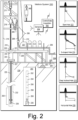
- a system can be utilized to implement a method for facilitating distributed well engineering, planning, and/or drilling system design across multiple computation devices where collaboration can occur among various different users (e.g., some being local, some being remote, some being mobile, etc.).
- the various users via appropriate devices may be operatively coupled via one or more networks (e.g., local and/or wide area networks, public and/or private networks, land-based, marine-based and/or areal networks, etc.).
- networks e.g., local and/or wide area networks, public and/or private networks, land-based, marine-based and/or areal networks, etc.
- a system may allow well engineering, planning, and/or drilling system design to take place via a subsystems approach where a wellsite system is composed of various subsystem, which can include equipment subsystems and/or operational subsystems (e.g., control subsystems, etc.).
- computations may be performed using various computational platforms/devices that are operatively coupled via communication links (e.g., network links, etc.).
- communication links e.g., network links, etc.
- one or more links may be operatively coupled to a common database (e.g., a server site, etc.).
- a particular server or servers may manage receipt of notifications from one or more devices and/or issuance of notifications to one or more devices.
- a system may be implemented for a project where the system can output a well plan, for example, as a digital well plan, a paper well plan, a digital and paper well plan, etc.
- a well plan can be a complete well engineering plan or design for the particular project.
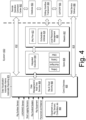
- Fig. 4 shows an example of a system 400 that includes various components that can be local to a wellsite and includes various components that can be remote from a wellsite.
- the system 400 includes a Maestro block 402, an Opera block 404, a Core & Services block 406 and an Equipment block 408. These blocks can be labeled in one or more manners other than as shown in the example of Fig. 4 .
- the blocks 402, 404, 406 and 408 can be defined by one or more of operational features, functions, relationships in an architecture, etc.
- the blocks 402, 404, 406 and 408 may be described in a pyramidal architecture where, from peak to base, a pyramid includes the Maestro block 402, the Opera block 404, the Core & Services block 406 and the Equipment block 408.
- the Maestro block 402 can be associated with a well management level (e.g., well planning and/or orchestration) and can be associated with a rig management level (e.g., rig dynamic planning and/or orchestration).
- the Opera block 404 can be associated with a process management level (e.g., rig integrated execution).
- the Core & Services block 406 can be associated with a data management level (e.g., sensor, instrumentation, inventory, etc.).
- the Equipment block 408 can be associated with a wellsite equipment level (e.g., wellsite subsystems, etc.).
- the Maestro block 402 may receive information from a drilling workflow framework and/or one or more other sources, which may be remote from a wellsite.
- the Core & Services block 406 includes a data management and real-time services block 464 (e.g., real-time or near real-time services) and a rig and cloud security block 468 (e.g., as to provisioning and various type of security measures, etc.).
- the Equipment block 408 is shown as being capable of providing various types of information to the Core & Services block 406. For example, consider information from a rig surface sensor, a LWD/MWD sensor, a mud logging sensor, a rig control system, rig equipment, personnel, material, etc.
- a block 470 can provide for one or more of data visualization, automatic alarms, automatic reporting, etc.
- the block 470 may be operatively coupled to the Core & Services block 406 and/or one or more other blocks.
- the system 400 of Fig. 4 may be a field management tool.
- the system 400 of Fig. 4 may include a drilling framework (see, e.g., the drilling framework 304).
- blocks in the system 400 of Fig. 4 that may be remote from a wellsite may be a drilling framework (see, e.g., the drilling framework 304).
- the drilling workflow framework 494 can be or include a G&G system and a well planning system.
- a G&G system corresponds to hardware, software, firmware, or a combination thereof that provides support for geology and geophysics.
- a geologist who understands the reservoir may decide where to drill the well using the G&G system that creates a three-dimensional model of the subsurface formation and includes simulation tools.
- the G&G system may transfer a well trajectory and other information selected by the geologist to a well planning system.
- the well planning system corresponds to hardware, software, firmware, or a combination thereof that produces a well plan.
- the well plan may be a high-level drilling program for the well.
- the well planning system may also be referred to as a well plan generator.
- various blocks can be components that may correspond to one or more software modules, hardware infrastructure, firmware, equipment, or any combination thereof. Communication between the components may be local or remote, direct or indirect, via application programming interfaces, and procedure calls, or through one or more communication channels.
- various blocks in the system 400 of Fig. 4 can correspond to levels of granularity in controlling operations of associated with equipment and/or personnel in an oilfield.
- the system 400 can include the Maestro block 402 (e.g., for well plan execution), the Opera block 404 (e.g., process manager collection), the Core & Services block 406, and the Equipment block 408.
- the Maestro block 402 may be referred to as a well plan execution system.
- a well plan execution system corresponds to hardware, software, firmware or a combination thereof that performs an overall coordination of the well construction process, such as coordination of a drilling rig and the management of the rig and the rig equipment.
- a well plan execution system may be configured to obtain the general well plan from well planning system and transform the general well plan into a detailed well plan.
- the detailed well plan may include a specification of the activities involved in performing an action in the general well plan, the days and/or times to perform the activities, the individual resources performing the activities, and other information.
- a well plan execution system may further include functionality to monitor an execution of a well plan to track progress and dynamically adjust the plan.
- a well plan execution system may be configured to handle logistics and resources with respect to on and off the rig.
- a well plan execution system may include multiple sub-components, such as a detailer that is configured to detail the well planning system plan, a monitor that is configured to monitor the execution of the plan, a plan manager that is configured to perform dynamic plan management, and a logistics and resources manager to control the logistics and resources of the well.
- a well plan execution system may be configured to coordinate between the different processes managed by a process manager collection (see, e.g., the Opera block 404). In other words, a well plan execution system can communicate and manage resource sharing between processes in a process manager collection while operating at, for example, a higher level of granularity than process manager collection.
- a process manager collection can include functionality to perform individual process management of individual domains of an oilfield, such as a rig. For example, when drilling a well, different activities may be performed. Each activity may be controlled by an individual process manager in the process manager collection.
- a process manager collection may include multiple process managers, whereby each process manager controls a different activity (e.g., activity related to the rig). In other words, each process manager may have a set of tasks defined for the process manager that is particular to the type of physics involved in the activity. For example, drilling a well may use drilling mud, which is fluid pumped into well in order to extract drill cuttings from the well.
- a drilling mud process manager may exist in a process manager collection that manages the mixing of the drilling mud, the composition, testing of the drilling mud properties, determining whether the pressure is accurate, and performing other such tasks.
- the drilling mud process manager may be separate from a process manager that controls movement of drill pipe from a well.
- a process manager collection may partition activities into several different domains and manages each of the domains individually.
- a process manager collection may include, for example, a drilling process manager, a mud preparation and management process manager, a casing running process manager, a cementing process manager, a rig equipment process manager, and other process managers.
- a process manager collection may provide direct control or advice regarding the components above. As an example, coordination between process managers in a process manager collection may be performed by a well plan execution system.
- Core & Service block 406 (e.g., a core services block or CS block), it can include functionality to manage individual pieces of equipment and/or equipment subsystems.
- a CS block can include functionality to handle basic data structure of the oilfield, such as the rig, acquire metric data, produce reports, and manages resources of people and supplies.
- a CS block may include a data acquirer and aggregator, a rig state identifier, a real-time (RT) drill services (e.g., near real-time), a reporter, a cloud, and an inventory manager.
- RT real-time
- a data acquirer and aggregator can include functionality to interface with individual equipment components and sensor and acquire data.
- a data acquirer and aggregator may further include functionality to interface with sensors located at the oilfield.
- a rig state identifier can includes functionality to obtain data from the data acquirer and aggregator and transform the data into state information.
- state information may include health and operability of a rig as well as information about a particular task being performed by equipment.
- a wellsite "cloud” framework can correspond to an information technology infrastructure locally at an oilfield, such as an individual rig in the oilfield.
- the wellsite "cloud” framework may be an "Internet of Things” (IoT) framework.
- IoT Internet of Things
- a wellsite "cloud” framework can be an edge of the cloud (e.g., a network of networks) or of a private network.
- an inventory manager can be a block that includes functionality to manage materials, such as a list and amount of each resource on a rig.
- a system may collect temporally and depth aligned surface data and downhole data from a drilling rig and transmit the collected data to data acquirers and aggregators in core services, which can store the collected data for access onsite at a drilling rig or offsite via a computing resource environment.
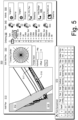
- the GUI 500 can include a graphical control of a drillstring 560 where, for example, various portions of the drillstring 560 may be selected to expose one or more associated parameters (e.g., type of equipment, equipment specifications, operational history, etc.).
- Fig. 5 also shows a table 570 as a point spreadsheet that specifies information for a plurality of wells.
- a plan can include various plan parameters, which may represent plan states at one or more points in time.
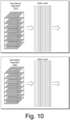
- a method can include representing a plan as a two-dimensional or three-dimensional data structure. For example, consider a method that includes representing a plan as a two-dimensional array such as a pixel array of a two-dimensional image. As an example, a three-dimensional array may be a voxel array where such an array may optionally be sliced to generate one or more two-dimensional arrays.
- a convolutional neural network can be a class of deep, feed-forward artificial neural networks that is suitable for analyzing visual imagery.
- various states can exist where one or more states may be represented as an image or images. Such an image or images can be structured for analysis rather than visual inspection by the human eye.
- Convolutional neural networks as neural networks generally, find a basis within biological processes in which a connectivity pattern between neurons is inspired by organization of an animal's visual cortex. For example, individual cortical neurons tend to respond to stimuli in a restricted region of a visual field known as the receptive field where receptive fields of different neurons partially overlap such that they cover the entire visual field within an animal's view.
- CNNs tend to use relatively little pre-processing compared to some other types of image classification algorithms. As such, a network learns filters that in other approaches may have been hand-engineered. independence from prior knowledge and human effort in feature design can be beneficial.
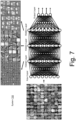
- Fig. 7 shows an example of a system 700 that includes a deep neural network (DNN) applied to computer vision.
- the system 700 can receive information via an input layer, analyze information via hidden layers and output information via an output layer.
- the information received at the input layer can be images such as facial images that are composed of pixels, which may be in a color space (e.g., RGB, grayscale, etc.).
- the system 700 may learn (e.g., be trained) in one or more manners. Learning may be deep learning. As an example, learning can include unsupervised learning, reinforcement learning, supervised learning, semi-supervised learning, etc.
- Deep learning can be implemented using one or more techniques or technologies, such as, for example, an optimizer, stochastic gradient descent, unsupervised data pre-training of models to automate feature extraction, transfer functions, large data set(s) size, multiple processors (e.g., GPUs and/or CPUs) to accommodate considerable computational costs incurred by deep neural network models combined with large datasets, etc.
- an optimizer stochastic gradient descent
- unsupervised data pre-training of models to automate feature extraction transfer functions
- large data set(s) size large data set(s) size
- processors e.g., GPUs and/or CPUs
- each successive layer in a neural network can utilize features from a previous layer to learn more complex features.
- a next layer can then use those patterns of local contrast to fixate on data that resemble eyes, noses, and mouths as facial features.
- Another subsequent layer can (e.g., a top layer) can then apply those facial features to face templates.
- a deep neural network is capable of composing features of increasing complexity in each of its successive layers.
- the system 700 can perform automated learning of data representations and features.
- Such an application of deep neural networks may include models that can learn useful hierarchical representations of images, audio and written language. For example, consider these learned feature hierarchies in these domains can be construed as:
- AlphaGo DNN technology is trained to learn heuristics that guide search more efficiently in a massive search space.
- AlphaGo utilizes two kinds of DNNs: a value network to evaluate board positions and a policy network used to evaluate moves, and they are trained by a mix of supervised learning through studying examples provided by human and self-playing in the style of reinforcement learning.
- These pre-trained DNNs allow the heuristic search algorithm (through Monte Carlo sampling) to identify promising moves without looking ahead thousands of steps and effectively beat world-class human players despite a search space including an astronomical number of states.
- planning such as well planning or more generally operations planning, may be performed in an automated and/or semi-automated manner.
- automated planning can be in the complexity class of PSPACE-complete, and undecidable when numeric reasoning is included.
- Planning can be at least as difficult as Go (PSPACE-hard without Ko).
- plan generation can involve traversing a huge search tree, and finding a path from an initial state to a goal state, which can be computationally intractable.
- pixels can be pixels of a two-dimensional image.
- pixels along one dimension in the image can represent a state (e.g., an operational state of field equipment with respect to a geologic environment, a wellbore, a trajectory, drilling fluid, etc.).
- each pixel along one dimension in the image can be coded according to a grayscale scheme and/or coded according to a color scheme.
- a line of pixels represents a state (e.g., along a dimension of the two-dimensional image of pixels)
- the individual pixels can be coded to indicate a value or values of a variable, which can be a state variable.
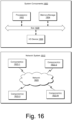
- Fig. 16 shows components of a computing system 1600 and a networked system 1610.
- the system 1600 includes one or more processors 1602, memory and/or storage components 1604, one or more input and/or output devices 1606 and a bus 1608.
- instructions may be stored in one or more computer-readable media (e.g., memory/storage components 1604). Such instructions may be read by one or more processors (e.g., the processor(s) 1602) via a communication bus (e.g., the bus 1608), which may be wired or wireless.
- the one or more processors may execute such instructions to implement (wholly or in part) one or more attributes (e.g., as part of a method).
Landscapes
- Engineering & Computer Science (AREA)
- Physics & Mathematics (AREA)
- Life Sciences & Earth Sciences (AREA)
- General Physics & Mathematics (AREA)
- Theoretical Computer Science (AREA)
- Data Mining & Analysis (AREA)
- General Life Sciences & Earth Sciences (AREA)
- Geophysics (AREA)
- Artificial Intelligence (AREA)
- General Engineering & Computer Science (AREA)
- Evolutionary Computation (AREA)
- Molecular Biology (AREA)
- Computational Linguistics (AREA)
- General Health & Medical Sciences (AREA)
- Biophysics (AREA)
- Computing Systems (AREA)
- Biomedical Technology (AREA)
- Mathematical Physics (AREA)
- Software Systems (AREA)
- Health & Medical Sciences (AREA)
- Remote Sensing (AREA)
- Environmental & Geological Engineering (AREA)
- Geology (AREA)
- Acoustics & Sound (AREA)
- Bioinformatics & Computational Biology (AREA)
- Computer Vision & Pattern Recognition (AREA)
- Evolutionary Biology (AREA)
- Bioinformatics & Cheminformatics (AREA)
- Earth Drilling (AREA)
Claims (6)
- Rechnerimplementiertes Verfahren (1400) zum Steuern von Ölfeldausrüstung, umfassend:Darstellen von Ölfeldbohrungsplaninformationen als zweidimensionales Bild, das Pixel in einem zweidimensionalen Wertearray umfasst, wobei die erste Dimension des Arrays Zeitpunkte im Bohrungsplan darstellt und die zweite Dimension dem Bohrungsplan (1410) zugeordnete Zustandsvariablen darstellt, wobei die Bohrungsplaninformationen Spezifikationen von mit der Ausführung von Maßnahmen im Bohrungsplan verbundenen Aktivitäten, der Durchführung der Maßnahmen zugeordnete Zeiten, und Ressourcen zum Durchführen der Aktivitäten umfasst, und wobei die Zustandsvariablen Ausrüstungsbetriebszustände, Druckdaten, Gesteinszustandsdaten, Fluidströmungsdaten und Trajektoriedaten umfassen, die einen Bohrvorgang für eine Bohrstelle definieren;Trainieren eines Convolutional Deep Neural Networks basierend auf den Pixeln, um ein trainiertes Deep Neural Network (1420) zu generieren, wobei das Trainieren eine Supervised-Learning-Phase umfasst, bei der räumlich korrelierte Merkmale im Bild, die Zustände des Bohrplans darstellen, identifiziert werden, um eine vorläufige Version eines Value Networks zu generieren, und eine Deep-Reinforcement-Learning-Phase, bei der einem Bohrplan zugeordnete Steuerungsmaßnahmen gegen das Value Network ausgewertet werden, um ein Policy Network zu erlernen, das ein Mapping zwischen den Zuständen und Maßnahmen erstellt;Implementieren des trainierten Convolutional Deep Neural Networks beim Generieren eines Ölfeldbohrungsplans (1430), wobei das trainierte Deep Neural Network dazu verwendet wird, das auf Pixeln basierende Bild zu analysieren, um einen aktuellen Zustand des Bohrungsplans zu ermitteln und einen nächsten Zustand zu ermitteln, wobei der nächste Zustand ein gewünschter Zustand ist, der über eine oder mehrere dem Bohrungsplan zugeordnete Steuerungsmaßnahmen erzielt werden kann; undAusgeben des Ölfeldbohrungsplans als digitalen Plan, der die ermittelten Steuerungsmaßnahmen für die Ölfeldausrüstung (1440) spezifiziert.
- Verfahren nach Anspruch 1, wobei die eine oder die mehreren Steuerungsmaßnahmen eine Bohrsteuerungsmaßnahme, eine Bohrspülungssteuerungsmaßnahme, eine Sensorsteuerungsmaßnahme, eine Frakturierungssteuerungsmaßnahme oder eine Herauszieh-(Pull-out-of-Hole-, POOH-)Steuerungsmaßnahme umfassen.
- Verfahren nach Anspruch 1, wobei jedes der Pixel entlang der einen Dimension im Bild gemäß einem Graustufenschema oder gemäß einem Farbschema codiert wird.
- Verfahren nach Anspruch 1, wobei das Implementieren des trainierten Deep Neural Network umfasst, auf das trainierte Deep Neural Network als heuristisches Tool zuzugreifen, das die Suche eines Planers beim Generieren des Ölfeldbetriebsplans durch den Planer erleichtert.
- System, umfassend:einen Prozessor;einen Speicher, auf den der Prozessor Zugriff hat; undim Speicher abgelegte prozessorausführbare Anweisungen, die dazu ausführbar sind, das System anzuweisen, das Verfahren nach einem der vorhergehenden Ansprüche durchzuführen.
- Rechnerlesbares Speichermedium oder rechnerlesbare Speichermedien, umfassend prozessorausführbare Anweisungen, um ein Rechensystem dazu anzuweisen, das Verfahren nach einem der Ansprüche 1 bis 4 durchzuführen.
Applications Claiming Priority (2)
| Application Number | Priority Date | Filing Date | Title |
|---|---|---|---|
| US201662431853P | 2016-12-09 | 2016-12-09 | |
| PCT/US2017/064801 WO2018106748A1 (en) | 2016-12-09 | 2017-12-06 | Field operations neural network heuristics |
Publications (3)
| Publication Number | Publication Date |
|---|---|
| EP3552047A1 EP3552047A1 (de) | 2019-10-16 |
| EP3552047A4 EP3552047A4 (de) | 2020-07-29 |
| EP3552047B1 true EP3552047B1 (de) | 2024-07-10 |
Family
ID=62491320
Family Applications (1)
| Application Number | Title | Priority Date | Filing Date |
|---|---|---|---|
| EP17878687.7A Active EP3552047B1 (de) | 2016-12-09 | 2017-12-06 | Heuristik neuronaler netze im feldbetrieb |
Country Status (3)
| Country | Link |
|---|---|
| US (2) | US11740384B2 (de) |
| EP (1) | EP3552047B1 (de) |
| WO (1) | WO2018106748A1 (de) |
Families Citing this family (30)
| Publication number | Priority date | Publication date | Assignee | Title |
|---|---|---|---|---|
| WO2018106748A1 (en) | 2016-12-09 | 2018-06-14 | Schlumberger Technology Corporation | Field operations neural network heuristics |
| US11763143B2 (en) | 2017-04-19 | 2023-09-19 | AIBrain Corporation | Adding deep learning based AI control |
| WO2019036063A1 (en) * | 2017-08-18 | 2019-02-21 | Landmark Graphics Corporation | OPTIMIZATION OF PENETRATION RATES FOR DRILLING WELLS USING MACHINE LEARNING |
| WO2019060411A1 (en) * | 2017-09-19 | 2019-03-28 | Marine Technologies, Llc | CONDITIONAL SYSTEM ONLINE ADVICE ON RISKS (COBRAS) |
| GB2585581B (en) * | 2018-05-09 | 2022-06-01 | Landmark Graphics Corp | Learning based Bayesian optimization for optimizing controllable drilling parameters |
| US12147920B2 (en) | 2018-12-04 | 2024-11-19 | Schlumberger Technology Corporation | Multi-domain planning and execution |
| EP3794528A4 (de) | 2018-05-12 | 2022-01-26 | Services Pétroliers Schlumberger | System zur interpretation von seismischen daten |
| US11288609B2 (en) | 2018-12-04 | 2022-03-29 | Schlumberger Technology Corporation | Systems and methods for executing a plan associated with multiple equipment by using rule-based inference |
| US12524716B2 (en) | 2018-05-15 | 2026-01-13 | Schlumberger Technology Corporation | Operations management network system and method |
| EP3623570A1 (de) * | 2018-09-14 | 2020-03-18 | Shell Internationale Research Maatschappij B.V. | Verfahren zur echtzeit-geologischen lokalisierung mit stochastischem clustering und musterabgleich |
| US20210312332A1 (en) * | 2018-07-31 | 2021-10-07 | Shell Oil Company | Method for simulating a coupled geological and drilling environment for training a function approximating agent |
| WO2020028302A1 (en) * | 2018-07-31 | 2020-02-06 | Shell Oil Company | Process for real time geological localization with reinforcement learning |
| WO2020028298A1 (en) * | 2018-07-31 | 2020-02-06 | Shell Oil Company | Method for geological steering control through reinforcement learning |
| US11585932B2 (en) * | 2018-09-17 | 2023-02-21 | Transocean Sedco Forex Ventures Limited | Systems, methods and apparatus for characterizing stick-up height, position and orientation of a drill pipe |
| US11204761B2 (en) * | 2018-12-03 | 2021-12-21 | International Business Machines Corporation | Data center including cognitive agents and related methods |
| US11354921B2 (en) * | 2019-02-05 | 2022-06-07 | Landmark Graphics Corporation | Generation of digital well schematics |
| WO2020172322A1 (en) * | 2019-02-19 | 2020-08-27 | Google Llc | Controlling agents using latent plans |
| US20200302293A1 (en) * | 2019-03-20 | 2020-09-24 | Exxonmobil Research And Engineering Company | Methods and systems for field development decision optimization |
| US11143775B2 (en) * | 2019-05-09 | 2021-10-12 | Schlumberger Technology Corporation | Automated offset well analysis |
| CN110531429A (zh) * | 2019-08-02 | 2019-12-03 | 中国科学院电子学研究所 | 一种基于监督下降法的时间域电磁数据目标反演方法 |
| US11687778B2 (en) | 2020-01-06 | 2023-06-27 | The Research Foundation For The State University Of New York | Fakecatcher: detection of synthetic portrait videos using biological signals |
| WO2021221682A1 (en) * | 2020-05-01 | 2021-11-04 | Landmark Graphics Corporation | Facilitating hydrocarbon exploration by applying a machine-learning model to basin data |
| US11670073B2 (en) * | 2020-08-25 | 2023-06-06 | Saudi Arabian Oil Company | System and method for detection of carbonate core features from core images |
| EP4271909A4 (de) | 2021-05-13 | 2025-04-09 | Drilldocs Company | Systeme und verfahren zur abbildung und erkennung von objekten |
| US12298459B2 (en) * | 2021-06-14 | 2025-05-13 | Saudi Arabian Oil Company | Flow-after-flow tests in hydrocarbon wells |
| WO2022266504A1 (en) | 2021-06-18 | 2022-12-22 | Drilldocs Company | Systems and methods to determine and control wellbore stability |
| JP7841875B2 (ja) * | 2021-12-22 | 2026-04-07 | 日鉄テックスエンジ株式会社 | 学習モデル作成装置、計画作成装置、学習モデル作成方法、計画作成方法、およびプログラム |
| US12534981B2 (en) | 2022-12-12 | 2026-01-27 | Saudi Arabian Oil Company | Detecting interference between hydrocarbon wells |
| CN117148433B (zh) * | 2023-10-30 | 2023-12-26 | 吉林大学 | 一种基于gpt-l模型的微地震p波s波分类方法 |
| WO2025136438A1 (en) * | 2023-12-06 | 2025-06-26 | Schlumberger Technology Corporation | Foundation models for artificial intelligence-based geoscience solutions |
Family Cites Families (6)
| Publication number | Priority date | Publication date | Assignee | Title |
|---|---|---|---|---|
| US6549879B1 (en) * | 1999-09-21 | 2003-04-15 | Mobil Oil Corporation | Determining optimal well locations from a 3D reservoir model |
| US8285531B2 (en) * | 2007-04-19 | 2012-10-09 | Smith International, Inc. | Neural net for use in drilling simulation |
| US8046314B2 (en) * | 2007-07-20 | 2011-10-25 | Schlumberger Technology Corporation | Apparatus, method and system for stochastic workflow in oilfield operations |
| CA2996880C (en) * | 2015-09-29 | 2021-04-13 | Halliburton Energy Services, Inc. | Big data point and vector model |
| US10346723B2 (en) * | 2016-11-01 | 2019-07-09 | Snap Inc. | Neural network for object detection in images |
| WO2018106748A1 (en) | 2016-12-09 | 2018-06-14 | Schlumberger Technology Corporation | Field operations neural network heuristics |
-
2017
- 2017-12-06 WO PCT/US2017/064801 patent/WO2018106748A1/en not_active Ceased
- 2017-12-06 US US16/466,034 patent/US11740384B2/en active Active
- 2017-12-06 EP EP17878687.7A patent/EP3552047B1/de active Active
-
2023
- 2023-07-06 US US18/347,597 patent/US12061305B2/en active Active
Also Published As
| Publication number | Publication date |
|---|---|
| US11740384B2 (en) | 2023-08-29 |
| EP3552047A4 (de) | 2020-07-29 |
| US20230341585A1 (en) | 2023-10-26 |
| EP3552047A1 (de) | 2019-10-16 |
| US20190302310A1 (en) | 2019-10-03 |
| WO2018106748A1 (en) | 2018-06-14 |
| US12061305B2 (en) | 2024-08-13 |
Similar Documents
| Publication | Publication Date | Title |
|---|---|---|
| US12061305B2 (en) | Field operations neural network heuristics | |
| US11603749B2 (en) | Field operations system | |
| US12333469B2 (en) | Wellsite report system | |
| US11428077B2 (en) | Geological interpretation with artificial intelligence | |
| US12366153B2 (en) | Well construction equipment framework | |
| EP3464809B1 (de) | Erkennung von ereignissen in bohrlochberichten | |
| US11421523B2 (en) | Real-time well construction process inference through probabilistic data fusion | |
| US12340294B2 (en) | Dynamic well construction model | |
| US11423493B2 (en) | Combinatorial solver and logic solver planner | |
| US12468866B2 (en) | Drillstring assembly framework | |
| US11668849B2 (en) | Automated well time estimation | |
| WO2023004026A1 (en) | Drillstring equipment controller | |
| CN121443827A (zh) | 钻井框架 | |
| US20250298944A1 (en) | Drilling operations framework | |
| CN120752412A (zh) | 定向钻进框架 |
Legal Events
| Date | Code | Title | Description |
|---|---|---|---|
| STAA | Information on the status of an ep patent application or granted ep patent |
Free format text: STATUS: THE INTERNATIONAL PUBLICATION HAS BEEN MADE |
|
| PUAI | Public reference made under article 153(3) epc to a published international application that has entered the european phase |
Free format text: ORIGINAL CODE: 0009012 |
|
| STAA | Information on the status of an ep patent application or granted ep patent |
Free format text: STATUS: REQUEST FOR EXAMINATION WAS MADE |
|
| 17P | Request for examination filed |
Effective date: 20190624 |
|
| AK | Designated contracting states |
Kind code of ref document: A1 Designated state(s): AL AT BE BG CH CY CZ DE DK EE ES FI FR GB GR HR HU IE IS IT LI LT LU LV MC MK MT NL NO PL PT RO RS SE SI SK SM TR |
|
| AX | Request for extension of the european patent |
Extension state: BA ME |
|
| DAV | Request for validation of the european patent (deleted) | ||
| DAX | Request for extension of the european patent (deleted) | ||
| A4 | Supplementary search report drawn up and despatched |
Effective date: 20200625 |
|
| RIC1 | Information provided on ipc code assigned before grant |
Ipc: G01V 1/30 20060101AFI20200619BHEP Ipc: G01V 11/00 20060101ALI20200619BHEP Ipc: G01V 99/00 20090101ALI20200619BHEP Ipc: G06G 7/00 20060101ALI20200619BHEP Ipc: G01V 3/38 20060101ALI20200619BHEP Ipc: G06N 3/04 20060101ALI20200619BHEP Ipc: G06N 3/08 20060101ALI20200619BHEP |
|
| STAA | Information on the status of an ep patent application or granted ep patent |
Free format text: STATUS: EXAMINATION IS IN PROGRESS |
|
| 17Q | First examination report despatched |
Effective date: 20221012 |
|
| REG | Reference to a national code |
Ref legal event code: R079 Free format text: PREVIOUS MAIN CLASS: G01V0001300000 Ipc: G01V0003380000 Ref country code: DE Ref legal event code: R079 Ref document number: 602017083266 Country of ref document: DE Free format text: PREVIOUS MAIN CLASS: G01V0001300000 Ipc: G01V0003380000 |
|
| GRAP | Despatch of communication of intention to grant a patent |
Free format text: ORIGINAL CODE: EPIDOSNIGR1 |
|
| STAA | Information on the status of an ep patent application or granted ep patent |
Free format text: STATUS: GRANT OF PATENT IS INTENDED |
|
| RIC1 | Information provided on ipc code assigned before grant |
Ipc: G06N 3/08 20060101ALI20240206BHEP Ipc: G06N 3/045 20230101ALI20240206BHEP Ipc: G01V 20/00 20240101ALI20240206BHEP Ipc: G01V 11/00 20060101ALI20240206BHEP Ipc: G01V 3/38 20060101AFI20240206BHEP |
|
| INTG | Intention to grant announced |
Effective date: 20240222 |
|
| GRAS | Grant fee paid |
Free format text: ORIGINAL CODE: EPIDOSNIGR3 |
|
| GRAA | (expected) grant |
Free format text: ORIGINAL CODE: 0009210 |
|
| STAA | Information on the status of an ep patent application or granted ep patent |
Free format text: STATUS: THE PATENT HAS BEEN GRANTED |
|
| AK | Designated contracting states |
Kind code of ref document: B1 Designated state(s): AL AT BE BG CH CY CZ DE DK EE ES FI FR GB GR HR HU IE IS IT LI LT LU LV MC MK MT NL NO PL PT RO RS SE SI SK SM TR |
|
| REG | Reference to a national code |
Ref country code: CH Ref legal event code: EP |
|
| REG | Reference to a national code |
Ref country code: DE Ref legal event code: R096 Ref document number: 602017083266 Country of ref document: DE |
|
| REG | Reference to a national code |
Ref country code: LT Ref legal event code: MG9D |
|
| REG | Reference to a national code |
Ref country code: NL Ref legal event code: MP Effective date: 20240710 |
|
| PG25 | Lapsed in a contracting state [announced via postgrant information from national office to epo] |
Ref country code: PT Free format text: LAPSE BECAUSE OF FAILURE TO SUBMIT A TRANSLATION OF THE DESCRIPTION OR TO PAY THE FEE WITHIN THE PRESCRIBED TIME-LIMIT Effective date: 20241111 |
|
| REG | Reference to a national code |
Ref country code: AT Ref legal event code: MK05 Ref document number: 1702527 Country of ref document: AT Kind code of ref document: T Effective date: 20240710 |
|
| PG25 | Lapsed in a contracting state [announced via postgrant information from national office to epo] |
Ref country code: NL Free format text: LAPSE BECAUSE OF FAILURE TO SUBMIT A TRANSLATION OF THE DESCRIPTION OR TO PAY THE FEE WITHIN THE PRESCRIBED TIME-LIMIT Effective date: 20240710 |
|
| PG25 | Lapsed in a contracting state [announced via postgrant information from national office to epo] |
Ref country code: PT Free format text: LAPSE BECAUSE OF FAILURE TO SUBMIT A TRANSLATION OF THE DESCRIPTION OR TO PAY THE FEE WITHIN THE PRESCRIBED TIME-LIMIT Effective date: 20241111 Ref country code: NL Free format text: LAPSE BECAUSE OF FAILURE TO SUBMIT A TRANSLATION OF THE DESCRIPTION OR TO PAY THE FEE WITHIN THE PRESCRIBED TIME-LIMIT Effective date: 20240710 |
|
| PG25 | Lapsed in a contracting state [announced via postgrant information from national office to epo] |
Ref country code: FI Free format text: LAPSE BECAUSE OF FAILURE TO SUBMIT A TRANSLATION OF THE DESCRIPTION OR TO PAY THE FEE WITHIN THE PRESCRIBED TIME-LIMIT Effective date: 20240710 Ref country code: GR Free format text: LAPSE BECAUSE OF FAILURE TO SUBMIT A TRANSLATION OF THE DESCRIPTION OR TO PAY THE FEE WITHIN THE PRESCRIBED TIME-LIMIT Effective date: 20241011 Ref country code: PL Free format text: LAPSE BECAUSE OF FAILURE TO SUBMIT A TRANSLATION OF THE DESCRIPTION OR TO PAY THE FEE WITHIN THE PRESCRIBED TIME-LIMIT Effective date: 20240710 |
|
| PG25 | Lapsed in a contracting state [announced via postgrant information from national office to epo] |
Ref country code: BG Free format text: LAPSE BECAUSE OF FAILURE TO SUBMIT A TRANSLATION OF THE DESCRIPTION OR TO PAY THE FEE WITHIN THE PRESCRIBED TIME-LIMIT Effective date: 20240710 |
|
| PG25 | Lapsed in a contracting state [announced via postgrant information from national office to epo] |
Ref country code: LV Free format text: LAPSE BECAUSE OF FAILURE TO SUBMIT A TRANSLATION OF THE DESCRIPTION OR TO PAY THE FEE WITHIN THE PRESCRIBED TIME-LIMIT Effective date: 20240710 |
|
| PG25 | Lapsed in a contracting state [announced via postgrant information from national office to epo] |
Ref country code: IS Free format text: LAPSE BECAUSE OF FAILURE TO SUBMIT A TRANSLATION OF THE DESCRIPTION OR TO PAY THE FEE WITHIN THE PRESCRIBED TIME-LIMIT Effective date: 20241110 Ref country code: AT Free format text: LAPSE BECAUSE OF FAILURE TO SUBMIT A TRANSLATION OF THE DESCRIPTION OR TO PAY THE FEE WITHIN THE PRESCRIBED TIME-LIMIT Effective date: 20240710 |
|
| PG25 | Lapsed in a contracting state [announced via postgrant information from national office to epo] |
Ref country code: HR Free format text: LAPSE BECAUSE OF FAILURE TO SUBMIT A TRANSLATION OF THE DESCRIPTION OR TO PAY THE FEE WITHIN THE PRESCRIBED TIME-LIMIT Effective date: 20240710 |
|
| PG25 | Lapsed in a contracting state [announced via postgrant information from national office to epo] |
Ref country code: ES Free format text: LAPSE BECAUSE OF FAILURE TO SUBMIT A TRANSLATION OF THE DESCRIPTION OR TO PAY THE FEE WITHIN THE PRESCRIBED TIME-LIMIT Effective date: 20240710 Ref country code: RS Free format text: LAPSE BECAUSE OF FAILURE TO SUBMIT A TRANSLATION OF THE DESCRIPTION OR TO PAY THE FEE WITHIN THE PRESCRIBED TIME-LIMIT Effective date: 20241010 |
|
| PG25 | Lapsed in a contracting state [announced via postgrant information from national office to epo] |
Ref country code: RS Free format text: LAPSE BECAUSE OF FAILURE TO SUBMIT A TRANSLATION OF THE DESCRIPTION OR TO PAY THE FEE WITHIN THE PRESCRIBED TIME-LIMIT Effective date: 20241010 Ref country code: PL Free format text: LAPSE BECAUSE OF FAILURE TO SUBMIT A TRANSLATION OF THE DESCRIPTION OR TO PAY THE FEE WITHIN THE PRESCRIBED TIME-LIMIT Effective date: 20240710 Ref country code: LV Free format text: LAPSE BECAUSE OF FAILURE TO SUBMIT A TRANSLATION OF THE DESCRIPTION OR TO PAY THE FEE WITHIN THE PRESCRIBED TIME-LIMIT Effective date: 20240710 Ref country code: IS Free format text: LAPSE BECAUSE OF FAILURE TO SUBMIT A TRANSLATION OF THE DESCRIPTION OR TO PAY THE FEE WITHIN THE PRESCRIBED TIME-LIMIT Effective date: 20241110 Ref country code: HR Free format text: LAPSE BECAUSE OF FAILURE TO SUBMIT A TRANSLATION OF THE DESCRIPTION OR TO PAY THE FEE WITHIN THE PRESCRIBED TIME-LIMIT Effective date: 20240710 Ref country code: GR Free format text: LAPSE BECAUSE OF FAILURE TO SUBMIT A TRANSLATION OF THE DESCRIPTION OR TO PAY THE FEE WITHIN THE PRESCRIBED TIME-LIMIT Effective date: 20241011 Ref country code: FI Free format text: LAPSE BECAUSE OF FAILURE TO SUBMIT A TRANSLATION OF THE DESCRIPTION OR TO PAY THE FEE WITHIN THE PRESCRIBED TIME-LIMIT Effective date: 20240710 Ref country code: ES Free format text: LAPSE BECAUSE OF FAILURE TO SUBMIT A TRANSLATION OF THE DESCRIPTION OR TO PAY THE FEE WITHIN THE PRESCRIBED TIME-LIMIT Effective date: 20240710 Ref country code: BG Free format text: LAPSE BECAUSE OF FAILURE TO SUBMIT A TRANSLATION OF THE DESCRIPTION OR TO PAY THE FEE WITHIN THE PRESCRIBED TIME-LIMIT Effective date: 20240710 Ref country code: AT Free format text: LAPSE BECAUSE OF FAILURE TO SUBMIT A TRANSLATION OF THE DESCRIPTION OR TO PAY THE FEE WITHIN THE PRESCRIBED TIME-LIMIT Effective date: 20240710 |
|
| REG | Reference to a national code |
Ref country code: DE Ref legal event code: R097 Ref document number: 602017083266 Country of ref document: DE |
|
| PG25 | Lapsed in a contracting state [announced via postgrant information from national office to epo] |
Ref country code: DK Free format text: LAPSE BECAUSE OF FAILURE TO SUBMIT A TRANSLATION OF THE DESCRIPTION OR TO PAY THE FEE WITHIN THE PRESCRIBED TIME-LIMIT Effective date: 20240710 Ref country code: RO Free format text: LAPSE BECAUSE OF FAILURE TO SUBMIT A TRANSLATION OF THE DESCRIPTION OR TO PAY THE FEE WITHIN THE PRESCRIBED TIME-LIMIT Effective date: 20240710 Ref country code: SM Free format text: LAPSE BECAUSE OF FAILURE TO SUBMIT A TRANSLATION OF THE DESCRIPTION OR TO PAY THE FEE WITHIN THE PRESCRIBED TIME-LIMIT Effective date: 20240710 |
|
| PG25 | Lapsed in a contracting state [announced via postgrant information from national office to epo] |
Ref country code: EE Free format text: LAPSE BECAUSE OF FAILURE TO SUBMIT A TRANSLATION OF THE DESCRIPTION OR TO PAY THE FEE WITHIN THE PRESCRIBED TIME-LIMIT Effective date: 20240710 |
|
| PG25 | Lapsed in a contracting state [announced via postgrant information from national office to epo] |
Ref country code: CZ Free format text: LAPSE BECAUSE OF FAILURE TO SUBMIT A TRANSLATION OF THE DESCRIPTION OR TO PAY THE FEE WITHIN THE PRESCRIBED TIME-LIMIT Effective date: 20240710 |
|
| PG25 | Lapsed in a contracting state [announced via postgrant information from national office to epo] |
Ref country code: IT Free format text: LAPSE BECAUSE OF FAILURE TO SUBMIT A TRANSLATION OF THE DESCRIPTION OR TO PAY THE FEE WITHIN THE PRESCRIBED TIME-LIMIT Effective date: 20240710 Ref country code: SK Free format text: LAPSE BECAUSE OF FAILURE TO SUBMIT A TRANSLATION OF THE DESCRIPTION OR TO PAY THE FEE WITHIN THE PRESCRIBED TIME-LIMIT Effective date: 20240710 |
|
| PLBE | No opposition filed within time limit |
Free format text: ORIGINAL CODE: 0009261 |
|
| STAA | Information on the status of an ep patent application or granted ep patent |
Free format text: STATUS: NO OPPOSITION FILED WITHIN TIME LIMIT |
|
| 26N | No opposition filed |
Effective date: 20250411 |
|
| REG | Reference to a national code |
Ref country code: DE Ref legal event code: R119 Ref document number: 602017083266 Country of ref document: DE |
|
| PG25 | Lapsed in a contracting state [announced via postgrant information from national office to epo] |
Ref country code: MC Free format text: LAPSE BECAUSE OF FAILURE TO SUBMIT A TRANSLATION OF THE DESCRIPTION OR TO PAY THE FEE WITHIN THE PRESCRIBED TIME-LIMIT Effective date: 20240710 |
|
| REG | Reference to a national code |
Ref country code: CH Ref legal event code: PL |
|
| PG25 | Lapsed in a contracting state [announced via postgrant information from national office to epo] |
Ref country code: LU Free format text: LAPSE BECAUSE OF NON-PAYMENT OF DUE FEES Effective date: 20241206 |
|
| PG25 | Lapsed in a contracting state [announced via postgrant information from national office to epo] |
Ref country code: SE Free format text: LAPSE BECAUSE OF FAILURE TO SUBMIT A TRANSLATION OF THE DESCRIPTION OR TO PAY THE FEE WITHIN THE PRESCRIBED TIME-LIMIT Effective date: 20240710 |
|
| REG | Reference to a national code |
Ref country code: BE Ref legal event code: MM Effective date: 20241231 |
|
| PG25 | Lapsed in a contracting state [announced via postgrant information from national office to epo] |
Ref country code: DE Free format text: LAPSE BECAUSE OF NON-PAYMENT OF DUE FEES Effective date: 20250701 |
|
| PG25 | Lapsed in a contracting state [announced via postgrant information from national office to epo] |
Ref country code: BE Free format text: LAPSE BECAUSE OF NON-PAYMENT OF DUE FEES Effective date: 20241231 |
|
| PGFP | Annual fee paid to national office [announced via postgrant information from national office to epo] |
Ref country code: FR Payment date: 20250930 Year of fee payment: 9 |
|
| PG25 | Lapsed in a contracting state [announced via postgrant information from national office to epo] |
Ref country code: CH Free format text: LAPSE BECAUSE OF NON-PAYMENT OF DUE FEES Effective date: 20241231 |
|
| PG25 | Lapsed in a contracting state [announced via postgrant information from national office to epo] |
Ref country code: IE Free format text: LAPSE BECAUSE OF NON-PAYMENT OF DUE FEES Effective date: 20241206 |
|
| PGFP | Annual fee paid to national office [announced via postgrant information from national office to epo] |
Ref country code: GB Payment date: 20251001 Year of fee payment: 9 |
|
| PGFP | Annual fee paid to national office [announced via postgrant information from national office to epo] |
Ref country code: NO Payment date: 20251210 Year of fee payment: 9 |
|
| PG25 | Lapsed in a contracting state [announced via postgrant information from national office to epo] |
Ref country code: CY Free format text: LAPSE BECAUSE OF FAILURE TO SUBMIT A TRANSLATION OF THE DESCRIPTION OR TO PAY THE FEE WITHIN THE PRESCRIBED TIME-LIMIT; INVALID AB INITIO Effective date: 20171206 |