EP3551748B1 - Perinatal tissue derived mesenchymal stem cells: method of preparation and uses thereof - Google Patents
Perinatal tissue derived mesenchymal stem cells: method of preparation and uses thereof Download PDFInfo
- Publication number
- EP3551748B1 EP3551748B1 EP17832923.1A EP17832923A EP3551748B1 EP 3551748 B1 EP3551748 B1 EP 3551748B1 EP 17832923 A EP17832923 A EP 17832923A EP 3551748 B1 EP3551748 B1 EP 3551748B1
- Authority
- EP
- European Patent Office
- Prior art keywords
- cells
- mscs
- markers
- over
- disorder
- Prior art date
- Legal status (The legal status is an assumption and is not a legal conclusion. Google has not performed a legal analysis and makes no representation as to the accuracy of the status listed.)
- Active
Links
Images


Classifications
-
- C—CHEMISTRY; METALLURGY
- C12—BIOCHEMISTRY; BEER; SPIRITS; WINE; VINEGAR; MICROBIOLOGY; ENZYMOLOGY; MUTATION OR GENETIC ENGINEERING
- C12N—MICROORGANISMS OR ENZYMES; COMPOSITIONS THEREOF; PROPAGATING, PRESERVING, OR MAINTAINING MICROORGANISMS; MUTATION OR GENETIC ENGINEERING; CULTURE MEDIA
- C12N5/00—Undifferentiated human, animal or plant cells, e.g. cell lines; Tissues; Cultivation or maintenance thereof; Culture media therefor
- C12N5/06—Animal cells or tissues; Human cells or tissues
- C12N5/0602—Vertebrate cells
- C12N5/0652—Cells of skeletal and connective tissues; Mesenchyme
- C12N5/0662—Stem cells
- C12N5/0668—Mesenchymal stem cells from other natural sources
-
- A—HUMAN NECESSITIES
- A61—MEDICAL OR VETERINARY SCIENCE; HYGIENE
- A61K—PREPARATIONS FOR MEDICAL, DENTAL OR TOILETRY PURPOSES
- A61K35/00—Medicinal preparations containing materials or reaction products thereof with undetermined constitution
- A61K35/12—Materials from mammals; Compositions comprising non-specified tissues or cells; Compositions comprising non-embryonic stem cells; Genetically modified cells
- A61K35/28—Bone marrow; Haematopoietic stem cells; Mesenchymal stem cells of any origin, e.g. adipose-derived stem cells
-
- A—HUMAN NECESSITIES
- A61—MEDICAL OR VETERINARY SCIENCE; HYGIENE
- A61K—PREPARATIONS FOR MEDICAL, DENTAL OR TOILETRY PURPOSES
- A61K8/00—Cosmetics or similar toiletry preparations
- A61K8/02—Cosmetics or similar toiletry preparations characterised by special physical form
- A61K8/04—Dispersions; Emulsions
- A61K8/042—Gels
-
- A—HUMAN NECESSITIES
- A61—MEDICAL OR VETERINARY SCIENCE; HYGIENE
- A61K—PREPARATIONS FOR MEDICAL, DENTAL OR TOILETRY PURPOSES
- A61K8/00—Cosmetics or similar toiletry preparations
- A61K8/18—Cosmetics or similar toiletry preparations characterised by the composition
- A61K8/96—Cosmetics or similar toiletry preparations characterised by the composition containing materials, or derivatives thereof of undetermined constitution
- A61K8/98—Cosmetics or similar toiletry preparations characterised by the composition containing materials, or derivatives thereof of undetermined constitution of animal origin
- A61K8/981—Cosmetics or similar toiletry preparations characterised by the composition containing materials, or derivatives thereof of undetermined constitution of animal origin of mammals or bird
- A61K8/983—Blood, e.g. plasma
-
- A—HUMAN NECESSITIES
- A61—MEDICAL OR VETERINARY SCIENCE; HYGIENE
- A61K—PREPARATIONS FOR MEDICAL, DENTAL OR TOILETRY PURPOSES
- A61K9/00—Medicinal preparations characterised by special physical form
- A61K9/06—Ointments; Bases therefor; Other semi-solid forms, e.g. creams, sticks, gels
-
- A—HUMAN NECESSITIES
- A61—MEDICAL OR VETERINARY SCIENCE; HYGIENE
- A61P—SPECIFIC THERAPEUTIC ACTIVITY OF CHEMICAL COMPOUNDS OR MEDICINAL PREPARATIONS
- A61P1/00—Drugs for disorders of the alimentary tract or the digestive system
- A61P1/16—Drugs for disorders of the alimentary tract or the digestive system for liver or gallbladder disorders, e.g. hepatoprotective agents, cholagogues, litholytics
-
- A—HUMAN NECESSITIES
- A61—MEDICAL OR VETERINARY SCIENCE; HYGIENE
- A61P—SPECIFIC THERAPEUTIC ACTIVITY OF CHEMICAL COMPOUNDS OR MEDICINAL PREPARATIONS
- A61P11/00—Drugs for disorders of the respiratory system
-
- A—HUMAN NECESSITIES
- A61—MEDICAL OR VETERINARY SCIENCE; HYGIENE
- A61P—SPECIFIC THERAPEUTIC ACTIVITY OF CHEMICAL COMPOUNDS OR MEDICINAL PREPARATIONS
- A61P13/00—Drugs for disorders of the urinary system
- A61P13/12—Drugs for disorders of the urinary system of the kidneys
-
- A—HUMAN NECESSITIES
- A61—MEDICAL OR VETERINARY SCIENCE; HYGIENE
- A61P—SPECIFIC THERAPEUTIC ACTIVITY OF CHEMICAL COMPOUNDS OR MEDICINAL PREPARATIONS
- A61P15/00—Drugs for genital or sexual disorders; Contraceptives
-
- A—HUMAN NECESSITIES
- A61—MEDICAL OR VETERINARY SCIENCE; HYGIENE
- A61P—SPECIFIC THERAPEUTIC ACTIVITY OF CHEMICAL COMPOUNDS OR MEDICINAL PREPARATIONS
- A61P17/00—Drugs for dermatological disorders
-
- A—HUMAN NECESSITIES
- A61—MEDICAL OR VETERINARY SCIENCE; HYGIENE
- A61P—SPECIFIC THERAPEUTIC ACTIVITY OF CHEMICAL COMPOUNDS OR MEDICINAL PREPARATIONS
- A61P17/00—Drugs for dermatological disorders
- A61P17/02—Drugs for dermatological disorders for treating wounds, ulcers, burns, scars, keloids, or the like
-
- A—HUMAN NECESSITIES
- A61—MEDICAL OR VETERINARY SCIENCE; HYGIENE
- A61P—SPECIFIC THERAPEUTIC ACTIVITY OF CHEMICAL COMPOUNDS OR MEDICINAL PREPARATIONS
- A61P17/00—Drugs for dermatological disorders
- A61P17/10—Anti-acne agents
-
- A—HUMAN NECESSITIES
- A61—MEDICAL OR VETERINARY SCIENCE; HYGIENE
- A61P—SPECIFIC THERAPEUTIC ACTIVITY OF CHEMICAL COMPOUNDS OR MEDICINAL PREPARATIONS
- A61P17/00—Drugs for dermatological disorders
- A61P17/12—Keratolytics, e.g. wart or anti-corn preparations
-
- A—HUMAN NECESSITIES
- A61—MEDICAL OR VETERINARY SCIENCE; HYGIENE
- A61P—SPECIFIC THERAPEUTIC ACTIVITY OF CHEMICAL COMPOUNDS OR MEDICINAL PREPARATIONS
- A61P19/00—Drugs for skeletal disorders
- A61P19/02—Drugs for skeletal disorders for joint disorders, e.g. arthritis, arthrosis
-
- A—HUMAN NECESSITIES
- A61—MEDICAL OR VETERINARY SCIENCE; HYGIENE
- A61P—SPECIFIC THERAPEUTIC ACTIVITY OF CHEMICAL COMPOUNDS OR MEDICINAL PREPARATIONS
- A61P21/00—Drugs for disorders of the muscular or neuromuscular system
-
- A—HUMAN NECESSITIES
- A61—MEDICAL OR VETERINARY SCIENCE; HYGIENE
- A61P—SPECIFIC THERAPEUTIC ACTIVITY OF CHEMICAL COMPOUNDS OR MEDICINAL PREPARATIONS
- A61P3/00—Drugs for disorders of the metabolism
- A61P3/08—Drugs for disorders of the metabolism for glucose homeostasis
- A61P3/10—Drugs for disorders of the metabolism for glucose homeostasis for hyperglycaemia, e.g. antidiabetics
-
- A—HUMAN NECESSITIES
- A61—MEDICAL OR VETERINARY SCIENCE; HYGIENE
- A61P—SPECIFIC THERAPEUTIC ACTIVITY OF CHEMICAL COMPOUNDS OR MEDICINAL PREPARATIONS
- A61P37/00—Drugs for immunological or allergic disorders
- A61P37/02—Immunomodulators
- A61P37/06—Immunosuppressants, e.g. drugs for graft rejection
-
- A—HUMAN NECESSITIES
- A61—MEDICAL OR VETERINARY SCIENCE; HYGIENE
- A61P—SPECIFIC THERAPEUTIC ACTIVITY OF CHEMICAL COMPOUNDS OR MEDICINAL PREPARATIONS
- A61P7/00—Drugs for disorders of the blood or the extracellular fluid
- A61P7/06—Antianaemics
-
- A—HUMAN NECESSITIES
- A61—MEDICAL OR VETERINARY SCIENCE; HYGIENE
- A61P—SPECIFIC THERAPEUTIC ACTIVITY OF CHEMICAL COMPOUNDS OR MEDICINAL PREPARATIONS
- A61P9/00—Drugs for disorders of the cardiovascular system
- A61P9/04—Inotropic agents, i.e. stimulants of cardiac contraction; Drugs for heart failure
-
- A—HUMAN NECESSITIES
- A61—MEDICAL OR VETERINARY SCIENCE; HYGIENE
- A61P—SPECIFIC THERAPEUTIC ACTIVITY OF CHEMICAL COMPOUNDS OR MEDICINAL PREPARATIONS
- A61P9/00—Drugs for disorders of the cardiovascular system
- A61P9/10—Drugs for disorders of the cardiovascular system for treating ischaemic or atherosclerotic diseases, e.g. antianginal drugs, coronary vasodilators, drugs for myocardial infarction, retinopathy, cerebrovascula insufficiency, renal arteriosclerosis
-
- A—HUMAN NECESSITIES
- A61—MEDICAL OR VETERINARY SCIENCE; HYGIENE
- A61Q—SPECIFIC USE OF COSMETICS OR SIMILAR TOILETRY PREPARATIONS
- A61Q19/00—Preparations for care of the skin
-
- A—HUMAN NECESSITIES
- A61—MEDICAL OR VETERINARY SCIENCE; HYGIENE
- A61Q—SPECIFIC USE OF COSMETICS OR SIMILAR TOILETRY PREPARATIONS
- A61Q19/00—Preparations for care of the skin
- A61Q19/02—Preparations for care of the skin for chemically bleaching or whitening the skin
-
- A—HUMAN NECESSITIES
- A61—MEDICAL OR VETERINARY SCIENCE; HYGIENE
- A61Q—SPECIFIC USE OF COSMETICS OR SIMILAR TOILETRY PREPARATIONS
- A61Q19/00—Preparations for care of the skin
- A61Q19/08—Anti-ageing preparations
-
- C—CHEMISTRY; METALLURGY
- C12—BIOCHEMISTRY; BEER; SPIRITS; WINE; VINEGAR; MICROBIOLOGY; ENZYMOLOGY; MUTATION OR GENETIC ENGINEERING
- C12N—MICROORGANISMS OR ENZYMES; COMPOSITIONS THEREOF; PROPAGATING, PRESERVING, OR MAINTAINING MICROORGANISMS; MUTATION OR GENETIC ENGINEERING; CULTURE MEDIA
- C12N5/00—Undifferentiated human, animal or plant cells, e.g. cell lines; Tissues; Cultivation or maintenance thereof; Culture media therefor
- C12N5/06—Animal cells or tissues; Human cells or tissues
- C12N5/0602—Vertebrate cells
- C12N5/0652—Cells of skeletal and connective tissues; Mesenchyme
- C12N5/0662—Stem cells
- C12N5/0663—Bone marrow mesenchymal stem cells (BM-MSC)
-
- C—CHEMISTRY; METALLURGY
- C12—BIOCHEMISTRY; BEER; SPIRITS; WINE; VINEGAR; MICROBIOLOGY; ENZYMOLOGY; MUTATION OR GENETIC ENGINEERING
- C12N—MICROORGANISMS OR ENZYMES; COMPOSITIONS THEREOF; PROPAGATING, PRESERVING, OR MAINTAINING MICROORGANISMS; MUTATION OR GENETIC ENGINEERING; CULTURE MEDIA
- C12N2501/00—Active agents used in cell culture processes, e.g. differentation
- C12N2501/20—Cytokines; Chemokines
- C12N2501/23—Interleukins [IL]
- C12N2501/2301—Interleukin-1 (IL-1)
-
- C—CHEMISTRY; METALLURGY
- C12—BIOCHEMISTRY; BEER; SPIRITS; WINE; VINEGAR; MICROBIOLOGY; ENZYMOLOGY; MUTATION OR GENETIC ENGINEERING
- C12N—MICROORGANISMS OR ENZYMES; COMPOSITIONS THEREOF; PROPAGATING, PRESERVING, OR MAINTAINING MICROORGANISMS; MUTATION OR GENETIC ENGINEERING; CULTURE MEDIA
- C12N2501/00—Active agents used in cell culture processes, e.g. differentation
- C12N2501/20—Cytokines; Chemokines
- C12N2501/23—Interleukins [IL]
- C12N2501/2304—Interleukin-4 (IL-4)
-
- C—CHEMISTRY; METALLURGY
- C12—BIOCHEMISTRY; BEER; SPIRITS; WINE; VINEGAR; MICROBIOLOGY; ENZYMOLOGY; MUTATION OR GENETIC ENGINEERING
- C12N—MICROORGANISMS OR ENZYMES; COMPOSITIONS THEREOF; PROPAGATING, PRESERVING, OR MAINTAINING MICROORGANISMS; MUTATION OR GENETIC ENGINEERING; CULTURE MEDIA
- C12N2506/00—Differentiation of animal cells from one lineage to another; Differentiation of pluripotent cells
- C12N2506/02—Differentiation of animal cells from one lineage to another; Differentiation of pluripotent cells from embryonic cells
- C12N2506/025—Differentiation of animal cells from one lineage to another; Differentiation of pluripotent cells from embryonic cells from extra-embryonic cells, e.g. trophoblast, placenta
Definitions
- MSCs Mesenchymal stem cells
- FCS-supplemented DMEM [12], [13], [14]
- MSCs have a mesodermal, ectodermal and endodermal differentiation potential. MSCs also have immunosuppressive properties. MSCs inhibit or halt maturation of dendritic cells and proliferation of T cells, B cells and NK cells. Their immunomodulatory action is mediated by the cytokines and chemokines they secrete. Several groups have demonstrated that MSCs within placental tissue display multi-lineage developmental plasticity in vitro and in vivo.
- Placental tissue including umbilical cord, umbilical cord blood, placenta, chorion, amnion and amnion fluid
- Placental tissue-derived MSCs show positive expression of CD29, CD44, CD73, CD90 and CD105, negative expression for hematopoietic surface markers CD11b, CD19, CD34 and CD45, and negative expression for the endothelial surface marker CD31.
- placental tissue-derived MSCs are able to trans-differentiate into cells of all three germ layers in appropriate conditions (e.g. a complete media).
- Perinatal tissue-derived MSCs have also been shown to possess broad immunoregulatory capabilities and are capable of influencing both adaptive and innate immune responses. These MSCs inhibit immune cells proliferation and maturation and suppress immune reactions both in vitro and in vivo in a non-MHC restricted manner. Therefore, these MSCs are considered to be hypoimmunogenic, displaying low expression levels of HLA class I, no expression of HLA class II, and no expression of costimulatory molecules, including CD40, CD80, and CD86. Basically, these MSCs could exert widespread immunomodulatory effects on cells of both the innate and adaptive immune system.
- Ex-vivo expanded placenta MSCs have also been showed to suppress the activity of a broad range of immune cells, including T cells, natural killer T (NKT) cells, dendritic cells (DCs), B cells, neutrophils, monocytes, macrophages and so on.
- T cells natural killer T (NKT) cells
- DCs dendritic cells
- B cells neutrophils, monocytes, macrophages and so on.
- UC-MSCs umbilical cord derived MSCs
- ACLF acute-on-chronic liver failure
- HBV hepatitis B virus
- RA rheumatoid arthritis
- MSCs have been defined by using a combination of cell surface phenotypic protein markers, plastic adherent fibroblast-like growth and functional properties. Yet, there are several different subpopulations according to these cell surface markers and these different subpopulations show different biological characteristics, biological functions and are not all efficient in treatment protocols. For example, some MSC populations are stimulated by IL1 ⁇ ([12]), whereas other populations are not (the CD106 positive MSCs in [15]). Additionally, the proliferation of some MSC populations is inhibited by IL4 ([12]), whereas other are induced to proliferation in the presence of this cytokine ([13]).
- the present application fulfills all these needs and others, by proposing an optimal method for generating and purifying MSCs subpopulations of different origins (either from placental tissue or from umbilical cord) and ultimately expanding said subpopulation with the least possible passages and minimal number of population doublings.
- This method leads to the recovery, from placental and from umbilical cord tissues, of highly potent MSCs having a multilineage differentiation capacity.
- This method reproducibly provides with a considerable number of MSC cells that are suitable for clinical application.
- Example 1 discloses a preparation method for generating human placenta tissue derived CD106 high CD151 + Nestin + mesenchymal stem cells (MSCs) at industrial scale, enabling to obtain a yield of at least 1 ⁇ 10 5 cells/cm 2 MSCs which are prepared in a GMP-compliant facility and are suitable for allogenic use.
- Said placental tissue derived CD106 high CD151 + Nestin + mesenchymal stem cells (MSCs) comprise over 95% of cells which express the positive markers CD73, CD90, CD105 and CD166, and less than 2% of cells which express the negative markers CD45, CD34 and HLA-DR.
- This method is useful for generating cells that can be used in transplantation trials into a human subject or in an animal.
- the invention relates to an in vitro method to prepare CD106 high CD151 + Nestin + mesenchymal stem cells (MSCs) at industrial scale, said method comprising culturing a population of undifferentiated MSCs in a culture medium comprising between 1 and 100 ng/ml of added Interleukin 1 ⁇ and between 1 and 100 ng/ml of added Interleukin 4, for at least one day, preferably for two days.
- MSCs mesenchymal stem cells
- Said "population of undifferentiated MSCs” can be obtained by collecting the mononuclear cells present in a biological tissue or fluid and growing them in a first culture medium. These mononuclear cells can be obtained by any conventional means, e.g., by enzymatic digestion or explant culture of perinatal tissue pieces [10] or isolation from biological fluids [11].
- Explant culture is a particularly preferred process for deriving MSC from umbilical cords, as exposed in example 3 below.
- this process requires to remove the sample from the transport solution, to cut it in sections (roughly 2-3cm long), to disinfect them with antibiotics and antifungal agents that are rinsed afterwards, to recover the epithelial membrane and dispose pieces of said membrane in flasks for them to adhere (preferably without medium, at room temperature), before complete medium is added carefully on the adhered explants and keep incubated at 37°C for several days.
- the migrated cells are eventually collected with appropriate tools and maintained in culture in the appropriate first medium (see below) until they reach the target confluency.
- Said "first culture medium” can be any classical medium commonly used to favor growth of living primary cells. Preferably, it does not contain any growth factors nor any differentiation factors.
- first culture medium examples include DMEM, DMEM/F12, MEM, alpha-MEM (a-MEM), IMDM, or RPMI.
- said first culture medium is DMEM (Dulbecco's Modified Eagle's Medium) or DMEM/F12 (Dulbecco's Modified Eagle's Medium: Nutrient Mixture F-12).
- said first culture medium contains 2-20% or 2-10% of fetal bovine serum.
- said first culture medium may contain 1-5% platelet lysate.
- a most preferred medium contains 2-20% or 2-10% of fetal bovine serum and 1-5% platelet lysate.
- first culture medium a medium which is devoid of serum or platelet lysate, provided that it contains other appropriate agents favoring the growth of primary living cells.
- said "biological tissue” is any portion of a placental tissue, or of umbilical cord.
- it can include or consist in placental cotyledons, the amnion membrane or the chorionic membrane of the placenta.
- it can be the Wharton jelly found in the umbilical cord. It can include the veins and/or the arteries, or be deprived thereof.
- said "biological fluid” is a sample of umbilical cord blood, of placenta blood or of amniotic fluid, which have been harmlessly collected from a woman or a mammal in general.
- these tissues and fluids can be obtained after the delivery of a baby or an offspring, without any invasive proceedings.
- Said population of undifferentiated MSCs is preferentially a population of mesenchymal stem cells seeded on a plastic surface, which has been cultured in said first culture medium devoid of any growth factor until the cells reach a confluency of 85-90%.
- the cells are phenotypically characterized by FACS or any conventional means, in order to detect the level of the surface markers CD73, CD90, CD105, CD166, CD45, CD34 and HLA-DR.
- the cells are trypsinized and seeded again at a lower density, e.g. at a density of 1000 to 5000 MSCs per cm 2 into a second culture medium.
- said "second culture medium” is any classical medium commonly used to favor living primary cells growth. It can be the same medium as the "first culture medium", or it can be another one, chosen for example among DMEM, DMEM/F12, MEM, alpha-MEM (a-MEM), IMDM, or RPMI. More preferably, said second culture medium is DMEM (Dulbecco's Modified Eagle's Medium) or DMEM/F12 (Dulbecco's Modified Eagle's Medium: Nutrient Mixture F-12).
- DMEM Dulbecco's Modified Eagle's Medium
- DMEM/F12 Dulbecco's Modified Eagle's Medium: Nutrient Mixture F-12
- said second culture medium contains serum or platelet lysate, for example between 2-20% of fetal bovine serum and/or 1-5% platelet lysate.
- a most preferred second medium is DMEM containing 2-20% of fetal bovine serum and 1-5% platelet lysate. It is also possible to use as second culture medium a medium which is devoid of serum or platelet lysate, provided that it contains other appropriate agents favoring the growth of primary living cells.
- pro-inflammatory growth factors or inflammatory mediators are added to the second culture medium and the cells are cultured in said medium until they reach 90-95% confluency.
- Said "pro-inflammatory growth factors” are typically interleukins or chemokines that are known to have a pro-inflammatory effect.
- interleukins that can be added in the second culture medium include TNF ⁇ , IL1, IL4, IL12, IL18, and IFN ⁇ .
- chemokines that can be added in the second culture medium include CXCL8, CXCL10, CXCL1, CXCL2, CXCL3, CCL2, and CCL5.
- Other inflammatory mediators (such as anti-inflammatory agents) can be used.
- At least two pro-inflammatory growth factors are added in the second culture medium defined above. These at least two pro-inflammatory growth factors can be chosen in the group consisting of: TNF ⁇ , IL1, IL4, IL12, IL18, and IFN ⁇ . Said pro-inflammatory growth factors can be chosen among IL1, IL4, IL12, IL18.
- a typical concentration of growth factor(s) that can be added to the MSCs is comprised between 1-100 ng/mL, more preferably between 10-80 ng/mL.
- the culturing step of the MSCs with the growth factor(s) lasts for at least one day, more preferably for two days.
- IL1 herein designates any isoform of Interleukin 1, in particular, IL1 ⁇ and IL1 ⁇ .
- IL1 isoforms may be of various origins, depending on the intended application.
- animal IL1 may be used for veterinary applications.
- IL1 ⁇ is added in the second culture medium of the invention.
- the concentration of added Interleukin 1 ⁇ can be comprised between 1-100 ng/mL, preferably between 1-50 ng/mL, more preferably between 10-40 ng/mL.
- IL1 ⁇ Human IL1beta (IL1 ⁇ ) is referenced to as accession number NP_000567.1 (SEQ ID NO:6, 269 amino acids). Recombinant protein is commercially available in GMP conditions (RnD systems, Thermofisher, Cellgenix, Peprotech).
- IL4 herein designates any isoform of Interleukin 4.
- IL4 may be of various origins, depending on the intended application. For example, animal IL4 may be used for veterinary applications.
- Human IL4 is referenced to as accession number AAA59149 (SEQ ID NO:7, 153 amino acids).
- Recombinant protein is commercially available in GMP conditions (RnD systems, Thermofisher, Cellgenix, Peprotech).
- the second medium of the invention contains a mixture of IL1 ⁇ and IL4, as disclosed in the experimental part below.
- the added Interleukin 1 ⁇ has a concentration comprised between 1-100 ng/mL, preferably between 1-50 ng/mL, more preferably between 10-40 ng/mL. and the added IL4 has a concentration comprised between 1-100 ng/mL, preferably between 1-50 ng/mL, more preferably between 10-40 ng/mL.
- the culturing step with Interleukin 1 ⁇ and IL4 lasts for at least one day, more preferably for two days.
- the cells are phenotypically characterized by any conventional means, in order to detect the level of surface markers CD73, CD90, CD105, CD166, CD45, CD34 and HLA-DR. These markers are well-known in the art. Antibodies useful for detecting the expression level of these markers are all commercially available.
- cell surface markers may be notably assessed using well known technologies such as cell membrane staining using biotinylation or other equivalent techniques followed by immunoprecipitation with specific antibodies, flow cytometry, western blot, ELISA or ELISPOT, antibodies microarrays, or tissue microarrays coupled to immunohistochemistry.
- suitable techniques include FRET or BRET, single cell microscopic or histochemistry methods using single or multiple excitation wavelength and applying any of the adapted optical methods, such as electrochemical methods (voltametry and amperometry techniques), atomic force microscopy, and radio frequency methods, e.g.
- multipolar resonance spectroscopy confocal and non-confocal, detection of fluorescence, luminescence, chemiluminescence, absorbance, reflectance, transmittance, and birefringence or refractive index (e.g., surface plasmon resonance, ellipsometry, a resonant mirror method, a grating coupler waveguide method or interferometry), cell ELISA, , radioisotopic, magnetic resonance imaging, analysis by polyacrylamide gel electrophoresis (SDS-PAGE); HPLC-Mass Spectroscopy; Liquid Chromatography/Mass Spectrometry/Mass Spectrometry (LC-MS/MS).
- SDS-PAGE polyacrylamide gel electrophoresis
- HPLC-Mass Spectroscopy Liquid Chromatography/Mass Spectrometry/Mass Spectrometry
- the levels of cell surface markers are assessed by FACS.
- the method of the invention typically requires to :
- the collected cells may then be phenotypically characterized by FACS or any conventional means, in order to detect the level of surface markers CD73, CD90, CD105, CD166, CD45, CD34 and HLA-DR. Said first and second culture media have been described above.
- the typical concentration of added growth factor(s) is comprised between 1-100 ng/mL, more preferably between 10-80 ng/mL.
- the culturing step with growth factor(s) lasts for at least one day, more preferably for two days.
- the concentration of added Interleukin 1 ⁇ or IL4 is comprised between 1-100 ng/mL, preferably between 1-50 ng/mL, more preferably between 10-40 ng/mL
- the culturing step with Interleukin 1 ⁇ and IL4 lasts for at least one day, more preferably for two days.
- the final collected cells will be the "cell culture of the invention", or "CD106 high CD151 + Nestin + MSCs of the invention” or “MSCs of the invention”.
- This cell culture typically comprises over 60%, preferably between 60 and 70%, preferably over 70%, preferably over 80%, more preferably over 90% and even more preferably over 95% of cells expressing CD106. Moreover, it comprises over 98%, preferably over 99% of cells expressing CD151.
- it comprises over 98%, preferably over 99% of cells expressing Nestin, Finally, it comprises over 95%, preferably over 96%, preferably over 97%, preferably over 98% of cells expressing the positive markers CD73, CD90, CD105 and CD166, and comprises less than 2% cells expressing the negative markers CD45, CD34 and HLA-DR.
- CD106 also known as VCAM-1 for "vascular cell adhesion protein 1" is known to have three isoforms.
- NP_001069.1 (herein referred to as SEQ ID NO:1, 739 amino acids)
- NP_542413.1 (herein referred to as SEQ ID NO:2, 647 amino acids)
- NP_001186763.1 (herein referred to as SEQ ID NO:3, 677 amino acids) are the sequences of the isoforms a, b and c respectively.
- Antibodies to detect the level of expression of this particular biomarker are commercially available (for example by Thermofisher, Abcam, OriGen, etc.).
- the expression of this marker at the surface of the cells of the invention is very important, as it triggers pro-angiogenic activities that are essential for their therapeutic use.
- the nestin biomarker (herein referred to as SEQ ID NO:4, 1621 amino acids) is referenced under the number NP_006608.1 in humans.
- Antibodies to detect the level of expression of this particular biomarker are commercially available (for example by Thermofisher, Abcam, etc.).
- the CD151 biomarker (herein referred to as SEQ ID NO5, 253 amino acids) is referenced under the number NP_620599 in humans.
- Antibodies to detect the level of expression of this particular biomarker are commercially available (for example by Invitrogen, Sigma-Aldrich, Abcam, etc.).
- the culturing steps are performed on a plastic surface.
- the method of the invention may comprise the steps of:
- the present application therefore also relates to a method to enhance the CD106 expression level of undifferentiated MSCs, said method comprising culturing a population of undifferentiated MSCs in a culture medium comprising between 1 and 100 ng/ml of added Interleukin 1 ⁇ and between 1 and 100 ng/ml of added Interleukin 4, for at least one day, preferably for two days.
- a culture medium comprising between 1 and 100 ng/ml of added Interleukin 1 ⁇ and between 1 and 100 ng/ml of added Interleukin 4, for at least one day, preferably for two days.
- the invention relates to a cell culture obtained by the above-described method.
- This cell culture typically contains isolated CD106 high CD151 + Nestin + MSCs expressing the vascular cell adhesion molecule 1 (VCAM-1) marker at a detectably higher level than mesenchymal stem cells derived from adult bone marrow, adipose tissue, umbilical cord or placenta that have not been in contact with any growth factors during their preparation.
- Said cell culture contains :
- the cell culture of the invention is characterized in that:
- the said cell culture is characterized in that it contains over 98% of MSCs that do not express the markers CD11b, CD14, CD15, CD16, CD31, CD34, CD45, CD49f, CD102, CD104 and CD133 at a detectable level.
- markers are well-known in the art and antibodies detecting same are commercially available.
- the cell culture of the invention contains:
- a cell "expresses a marker at a detectable level” if said marker is present at a significant level on its surface, i.e., if the signal associated to the staining of said surface marker (typically obtained with an antibody recognizing said marker, said antibody being for example coupled to a fluorescent dye) which is measured for said cell is superior to the signal corresponding to the staining of one cell being known as not expressing said marker.
- the signal associated to the staining of said surface marker typically obtained with an antibody recognizing said marker, said antibody being for example coupled to a fluorescent dye
- results disclosed in the experimental part of the present application show that the cell culture obtained by the method of the invention is capable of inducing angiogenesis in vitro and in vivo. These results moreover show that administering said cells to individuals (human or animal subjects) suffering from an ischemic disease or from a disorder of the circulatory system results in a detectable improvement of one or more symptoms of said disease or disorder.
- CD106+ MSCs have been selected for their pro-angiogenic efficiency, and proposed as a treatment for hindlimb ischemia ([16], [17]).
- invention relates to the use of said cells as a medicament for treating an individual suffering from an ischemic disease or from a disorder of the circulatory system.
- the invention relates to the use of said cells for the manufacture of a medicament intended to be used for treating subjects suffering from an ischemic disease or from a disorder of the circulatory system.
- the medicament of the invention can also be applied to skin vascular capillary network and may include dermatological and cosmetic applications.
- any mammal may be treated by the cells of the invention.
- Said mammal can be a pet (a dog, a cat, a horse, etc.) or a cattle animal (a sheep, a goat, a cow, etc.).
- the initial undifferentiated MSCs will be obtained from a biological sample from the same animal species (allogenic graft) or from a similar species (heterologous graft), and the growth factors that are used in the second culture medium will correspond to those of the same animal species.
- the initial MSCs will be obtained from a perinatal tissue or biological fluid of a cat, and a cat IL1 ⁇ (recombinant or not) will be added in the second culture medium, optionally along with cat IL4.
- said mammal is a human being.
- the initial MSCs will be obtained from a perinatal tissue or from a biological fluid obtained from a woman, and human IL1 ⁇ (recombinant or not, e.g., SEQ ID NO:6) will be added to the second culture medium, optionally along with human IL4 (e.g., of SEQ ID NO:7).
- the cell culture of the invention may be transplanted or topically applied to said subject by any conventional means.
- the present invention is drawn to a method for treating a subject suffering from an ischemic disease, a disorder of the circulatory system, an immune disease, an organ injury or an organ function failure, said method comprising the step of transplanting the cell culture described above to said subject.
- This transplantation may be performed by using an implanted reservoir or by injecting the cells in situ in the muscle, or via intravenous injections or by any appropriate delivery system.
- the application may also be performed topically, by directly contacting the cells with skin or a mucous membrane, or by applying the cells with a device on the skin or on any mucous membrane, or by delivering the cells by any appropriate delivery system to the skin or mucous membrane.
- said disease or disorder is chosen in the group consisting of: type-1 diabetes mellitus, type-II diabetes, GVHD, aplastic anemia, multiple sclerosis, Duchenne muscular dystrophy, rheumatoid arthritis, cerebral stroke, idiopathic pulmonary fibrosis, dilated cardiomyopathy, osteoarthritis, cirrhosis, liver failure, kidney failure, peripheral arterial occlusive disease, critical limb ischemia, peripheral vascular disease, heart failure, diabetic ulcer or any degenerative disease, synechia, endometrial disorder or fibrotic disorder of the gastro-intestinal tract such as anal fistula.
- said disease or disorder is a peripheral arterial occlusive disease, a critical limb ischemia, a peripheral vascular disease, or a diabetic ulcer.
- said disease or disorder is a skin or a mucous membrane disease, including (but not limited to) a diabetic ulcer, an ulcer, a trauma, a burn, a scald, a wound or a wound healing problem, Decubitus ulcer, a wart, etc.
- the cell culture of the invention may more precisely be used in a dermatological preparation whose aim is to treat skin pathologies such as burns, wounds, ulcers, scars, warts, or other diseases such as synechia or fibrotic disorders of the gastro-intestinal tract (for example anal fistula).
- said disease or disorder is anal fistula or endometrial injury.
- the MSCs of the invention for dermatologic or cosmetic purposes, for example for regenerating the cells of the skin or of a mucosal membrane, improving the aspect of the skin or of a mucosal membrane, correcting a defect of the skin or of a mucosal membrane or for healing burning area of the skin or of the mucosal membrane.
- the cell culture of the invention may be mixed with any agent, composition of agents or other biologically compatible material or device.
- the cell culture of the invention may also be encapsulated or included in any appropriate delivery system or biocompatible material.
- the cells or preparation containing the cells may be applied with a medical device, such as a endoscope, a stent, or a syringe, for example. It can be also applied topically by contacting the cells with the skin or a mucosa.
- the present invention also targets a medical device containing the cell culture of the invention.
- medical device it is herein encompassed any instrument, apparatus, implement, machine, appliance, implant, reagent for administering a therapeutic composition.
- said medical device is, for example, a patch, a stent, an endoscope, or a syringe.
- the present invention also targets a delivery system containing the cell culture of the invention.
- delivery system it is herein encompassed any system (medium or carrier) for administering a pharmaceutical product to a patient. It can be an oral delivery or a controlled-release system.
- said delivery system is for example liposomes, proliposomes, microspheres, micro- or nano-vesicles of biopolymers, lipids or nanoparticles.
- the cells of the invention are included in an hydrogel or another biocompatible material or excipient.
- Said hydrogel may include notably alginate sodium hydrogel, hyaluronic acid hydrogel, chitosan hydrogel, collagen hydrogel, HPMC Hydrogel, Poly-L-lysine hydrogel, Poly-L-glutamic acid hydrogel, polyvinyl alcohol (PVA) hydrogel, polyacrylic acid hydrogel, polymethylacrylic acid hydrogel, polyacrylamide (PAM) hydrogel, and Poly N acrylamide (PNAM) hydrogel.
- PVA polyvinyl alcohol
- PAM polyacrylamide
- PNAM Poly N acrylamide
- the present invention also relates to a hydrogel containing the MSCs of the invention and possibly another biocompatible material or excipient.
- An alginate hydrogel is herein preferred, such as for the alginate hydrogel described in CN106538515 .
- biocompatible materials are those classically used in biomedical applications. They are for example metals (such as stainless steel, cobalt alloys, titanium alloys), ceramics (aluminium oxide, zirconia, calcium phosphates), polymers (silicones, poly(ethylene), poly(vinyl chloride), polyurethanes, polylactides) or natural polymers (alginate, collagen, gelatin, elastin, etc.). These materials may be synthetic or natural. Biocompatible excipients are well-known in the art and do therefore not need to be detailed.
- This hydrogel can be used for cosmetic or therapeutic purposes.
- the present invention also concerns a pharmaceutical or a veterinary composition containing the cell culture of the invention, as well as its use for treating the diseases and disorders mentioned above. It also concerns a dermatologic or cosmetic composition containing the cell culture of the invention.
- This pharmaceutical, veterinary or cosmetic composition may further contain other biocompatible agents (e.g., an hydrogel) as described above.
- biocompatible agents e.g., an hydrogel
- Said composition preferably contains at least about 1 to 5 ⁇ 10 6 cells.
- the method of the invention has been realized by:
- This method enabled to generate a subpopulation of placental-derived MSCs with a yield of at least 1 ⁇ 10 5 cells/cm 2 MSCs (5 ⁇ 10 6 MSCs in T75 cm 2 flasks when they are 90% confluent) that can be used in allogenic administrations.
- These cell cultures comprised over 95% cells which express positive markers CD73, CD90, CD105 and CD166, and less than 2% cells which express negative markers CD45, CD34 and HLA-DR.
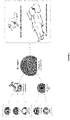
- the human perinatal tissue derived CD106 high CD151 + Nestin + MSCs were fibroblast-like and grow very well on plastic flask (cf. Fig 2 ).
- MSCs comprise over 95% cells which express the positive markers CD73, CD90, CD105 and CD166, and less than 2% cells which express the negative markers CD45, CD34 and HLA-DR. After this, MSCs keep growing till 90% cell confluent (see Tables 1 and 2 below), in practice during about 2 days.
- MSCs cell surface protein CD106, CD151 and Nestin increased significantly after the interleukin 1 and 4 were added.
- TABLE 1 shows the expression of CD11b, CD19, CD29, CD31, CD34, CD45, CD73, CD90, CD 105, CD106, CD151, Nestin and HLA-DR on placenta tissue derived MSCs before adding interleukin 1 and 4 obtained in placenta Example 1, 2, and 3.
- TABLE 2 shows the expression of CD11b, CD19, CD29, CD31, CD34, CD45, CD73, CD90, CD 105, CD106, CD151, Nestin and HLA-DR on the placenta tissue derived MSCs after adding interleukin 1 and 4 in Experiments 1, 2 and 3.
- the results show that CD106 and Nestin protein marker increased significantly 48 hours after adding the IL-1 and IL-4 in complete medium. Meanwhile, the CD106 high CD151 + Nestin + cells still have classical MSCs cellular surface phenotypic marker.
- Table 3 shows the related expression levels of growth factors secreted in the spent media by q-PCR. The results show that placenta tissue derived MSCs have more protein expression or secretion of IL-6, IL-8, IL-10, HGF, ANG, MMP2, VEGF-A and TGF- ⁇ at 48 hours after adding IL-1 and IL-4 in complete medium.
- the umbilical cord was removed from the transport solution and cut in 2-3cm long sections. To avoid contamination by adherent blood cells, each cord segment containing a blood clot that cannot be removed was discarded. The sections were then disinfected in a bath of antibiotics and antifungal agents composed of ⁇ MEM + Vancomycin 1 g/L + Amoxicillin 1 g/L + Amikacin 500 mg/L + Amphotericin B 50 mg/L for 30min at room temperature (RT). Antibiotics were extemporaneously dissolved in sterile water for injection.
- the sections of umbilical cord were removed from the bath and quickly rinsed in 1X PBS at RT.
- the epithelial membrane was slightly sectioned without touching the vessels.
- Each section was then detailed in slices of 0.5cm thickness and disposed at the bottom of a 150cm 2 plastic flask with lid. 6 to 10 slices per flask were disposed with at least a 1cm radius circle of free space around each slice, and left to adhere for 15min without medium at RT.
- the culture medium was changed after 5 to 7 days.
- the medium was removed and cells were washed with 30mL of 1X PBS per flask. Cells were then removed with Trypzean ® and collected with the old medium and centrifuged 10 min at 2500rpm. Supernatant was discarded and cells were then suspended in a cryopreservation solution consisting in ⁇ MEM + 100mg/mL HSA + 10% DMSO and cryopreserved.
- the umbilical cord was removed from the transport solution and cut in 2-3cm long sections. To avoid contamination by adherent blood cells, each segment containing a blood clot that cannot be removed was discarded,. The sections were then disinfected in a bath of antibiotics and antifungal agents composed of ⁇ DMEM + Vancomycin 1 g/L + Amoxicillin 1 g/L + Amikacin 500 mg/L + Amphotericin B 50 mg/L for 30min at room temperature (RT). Antibiotics were extemporaneously dissolved in sterile water for injection.
- the cord was then cut in small pieces and immersed in an enzymatic cocktail comprising 2.7 mg/mL collagenase type I and 0.7 mg/mL hyaluronidase, incubated for 3 h at 37°C with gentle agitation, followed by the addition of 2.5% trypsin and a further incubation for 30 min.
- an enzymatic cocktail comprising 2.7 mg/mL collagenase type I and 0.7 mg/mL hyaluronidase
- the digested suspension was diluted 1:2 with medium to reduce the viscosity of the suspension and passed through a nylon mesh to obtain single suspension. Cells were centrifuged at 300 ⁇ g for 20 min, and seeded at 10,000 cells/cm 2 with fresh medium.
- the culture medium was changed after 5 to 7 days and every 7 days after that.
- the medium was removed and cells were washed with 30mL of 1X PBS per flask. Cells were then removed with Trypzean ® and collected with the old medium and centrifuged 10 min at 2500rpm. Supernatant was discarded and cells were then suspended in a cryopreservation solution consisting in ⁇ MEM + 100mg/mL HSA + 10% DMSO and cryopreserved.
- the cells were suspended in preheated complete medium, and assessed for number and viability (blue trypan / Mallassez hemocytometer).
- the cells were seeded in two 75cm 2 plastic culture flasks in complete medium, and incubated (90% humidity, 5% CO 2 , 37°C).
- the cells were checked for confluency. When confluency reached 30 to 50%, the old medium was discarded and replaced either by fresh complete medium for unstimulated condition, or by fresh medium completed with 10ng/mL of IL-1 ⁇ and 10ng/mL of IL-4.
- the cells were checked for confluency. If confluency was up to 80%, the cells were harvested. Briefly, the old medium was discarded and the cells were washed with 1X DPBS. Trypsin EDTA was added and the cells were incubated 5 min at 37°C. Trypsin was neutralized with at least 2X the volume of medium, and the cell suspension was harvested and assessed for number and viability.
- the flow cytometry experiment required 1 ⁇ 10 6 cells, which were centrifuged and resuspended in 1X DPBS + 0.4% HSA.
- the cells were labelled for CD73, CD90 CD105, CD106, CD151 and CD31, CD34, CD45, HLA-DR according to the following protocol:
- Extracellular staining was performed for CD106 and CD151 markers as recommended by the FACS manufacturer and antibodies providers. Intracellular staining was performed for Nestin. For intracellular staining, the Fixation/Permeabilization solution called "BD Cytofix/Cytoperm kit" was used.
- a fixation step was performed, by contacting the cells with a 1XDPBS 0,5% formaldehyde solution.
- the cells were washed with 1X DPBS + 0.4% HSA and permeabilized for Nestin labelling.
- the labelled cells were analyzed with the Accuri C6+ BD Biosciences cytometer, and results were analyzed with the BD Accuri C6 Plus software.
- CD106 The expression of CD106 at the surface of said cells was measured by flow cytometry.
- Mesenchymal stem cells were isolated from umbilical cord using the two different methods exposed above (see 2.1. and 2.2.) : by explant isolation and by enzymatic digestion.
- All cells were cultivated in the same culture medium ( ⁇ MEM + 5% platelet lysate (LP)), stimulated at passage 3 according to the method of the invention and collected 2 days after stimulation. Cells viability is measured and cells were counted.
- CD73, CD90, CD105 are over 95% positive, while CD31, CD34, CD45 and HLA-DR were negative.
- CD151+ and Nestin were also both over 95% positive, independently of the stimulation or the isolation method.
- the MSCs isolated by enzymatic digestion expressed higher levels of CD106 before stimulation (53%) than the MSCs isolated with the explants methods (20%) They were however less sensitive to stimulation with the inflammatory cocktail: a smaller increase in CD106 has been observed ( +4% increase vs +60% increase).
- the explants method is therefore the preferred method of the invention for umbilical cord-derived MSCs.
- Table 5 viability and cell count of the MSCs obtained after the two experimental protocols exposed in 2.1. and 2.2.
- COR88Ex P3+1 MSCs isolated by the explants method Condition Non stimulated Stimulated Non stimulated Stimulated Viability 97.8% 95.8% 99.2% 97.1% Cell count 6.0 ⁇ 10 6 4.65 ⁇ 10 6 6.2 ⁇ 10 6 8.26 ⁇ 10 6
- Table 6 molecular markers of umbilical cord-derived MSCs obtained by the two experimental conditions exposed in 2.1. and 2.2.
- Mesenchymal stem cells were isolated from two umbilical cord by explant isolation (see 2.1.).
- All cells were cultivated in the same culture medium ( ⁇ MEM + 5% platelet lysate (LP)), stimulated at passage 4 according to the method of the invention with a mix of 10ng/mL of IL-1b and 10ng/mL of IL-4, or by each interleukin separately (10ng/mL each) and collected 2 days after stimulation. Cells viability is measured and cells were counted.
- ⁇ MEM + 5% platelet lysate (LP) platelet lysate
- CD73, CD90, CD105 are over 95% positive, while CD31, CD34, CD45 and HLA-DR were negative.
- CD151+ was also over 95% positive, independently of the stimulation.
- % of CD106 CORD 1 CORD 2 Unstimulated cells 11,60% 5,00% IL-1b + IL-4 stimulation 75,88% 54,29% IL-1b stimulation 32,19% 13,41% IL-4 stimulation 22,88% 15,77%
- This example focuses on the therapeutic neovascularization effect of placental derived CD106 high CD151 + Nestin + MSCs. It provides insights into their potential for clinical use as a cell-based therapy combined with insulin injection for treating critical hind limb ischemia in diabetes. Our results showed that Placenta derived CD106 high CD151 + Nestin + MSCs participate in angiogenesis and therapeutic vascularisation in order to improve ischemia and restore blood flow perfusion by directly differentiating into vascular cells. In addition, placenta derived CD106 high CD151 + Nestin + MSCs improved ischemia damage and functional recovery in diabetic rats.
- Immunodeficient male nude rats of six weeks of age were purchased from Vital River Laboratories (Charles River Laboratories suppler in China). Diabetes was induced with a single intraperitoneal injection of streptozotocin (70 mg/kg in Citrate buffer solution, only prepared immediately prior to injection) after overnight fasting. Fasting plasma glucose levels were measured every week and rats with Plasma glucose between 11 mM and 15 mM were considered to be diabetic. Age- and weight-matched nude rats receiving an intraperitoneal citrate buffer injection were used as non-diabetic controls (glycaemia between 5.5 and 8 mM).
- diabetic nude rats were anesthetized (60mg/kg pentobarbital intraperitoneally) and the left femoral artery were occluded by ligating it with 3-0 silk.
- the ligature was applied 0.5 cm proximally to the bifurcation of the saphenous and popliteal arteries. Lipiodol (1.5ml/kg) was used to induce an embolism intravascularly.
- a sham ligature was applied to the left femoral artery with the left hind limb remaining non ischemic.
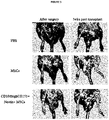
- the histological data on figure 4 show that the capillary density was increased in the cell transplant groups compared to the PBS group.
- more capillary numbers were observed in the CD106 high CD151 + Nestin + MSCs subpopulation cell transplant groups in diabetic rats and non-diabetic rats in comparison with the PBS group.
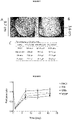
- Figure 5 showed the functional evidence of ischemia-induced changes using vascularisation LDPI.
- the image shows that blood flow was completely blocked in the left hind limb on the surgical day; this is indicated by the deep dark colour.
- the blood flow perfusion was restored to some degree in all the groups but did not return to normal in the PBS group where the ischemia/non-ischemia perfusion ratio only achieved 52%.
- the perfusion recovery in the cell transplant groups was significantly higher.
- the ratio was 81% in the P- MSCs group of the prior art (P ⁇ 0.05 vs PBS group) and 86% for the CD106 high CD151 + Nestin + MSCs subpopulation group (P ⁇ 0.01 vs PBS group).
- This example focuses on the therapeutic effect of placenta derived CD106 high CD151 + Nestin + MSCs of the invention to patients suffering from diabetes. It provides insights into their potential for a clinical use as a cell-based therapy diabetes.
- a total of 15 patients with diabetes were included in this clinical trial.
- the inclusion criteria were patients with type 2 diabetes diagnosed from November 2013 to November 2014 in Tianjin General Hospital.
- the patients were between 30 and 85 years of age, duration of diabetes ⁇ 3 years, requiring insulin for optimal glycemic control in a dose of ⁇ 0.7 U/kg/day at least for 1.5 year, having insulin dysfunction, poorly controlled blood glucose fluctuation with insulin-based treatment, and willingness to participate in the study.
- These 15 patients were between 42 and 67 years of age, with a median age of 59 years old; duration of diabetes from 3 years to 17 years, with an median of 8 years; daily insulin requirement from 38 units to 90 units, with an average of 58.7 units.
- the original general treatments were maintained. All of the patients were followed up after therapy for at least 6 months.
- This example focuses on the therapeutic effect of placenta derived MSCs of the invention to patients with aplastic anemia and provides insights into their potential for clinical use as a cell-based therapy for aplastic anemia.
- Aplastic anemia is mostly considered as an immune-mediated bone marrow (BM) failure syndrome, characterized by hypoplasia and pancytopenia with fatty BM and reduced angiogenesis.
- BM bone marrow
- Previous investigations have demonstrated that acquired aplastic anemia is manifested by abnormalities of HSCs/HPCs and hematopoietic microenvironment. Lots of evidences have hinted that aplastic anemia might be a syndrome characterized by stem/progenitor-cell disorders including HSCs/HPCs and MSCs.
- MSCs support hematopoiesis and regulate almost overall immune cells function to maintain the hematopoietic and immune homeostasis.
- MSCs can modulate the functions of the main immune cell including T cells, B cells, monocytes, DCs, NKTs and neutrophils [5].
- MSCs possess remarkable immunosuppressive properties on Th1, Th17 and CTLs. MSCs inhibit the proliferation of T cells, IFN- ⁇ and TNF- ⁇ secretion by Th1 cells while promoting IL-10 production by Th2 cells and the expansion of Treg cells.
- MSCs from aplastic anemia patients had poor proliferation and deficient immune suppression of MLR, PHA-induced T cell activation and IFN- ⁇ release [6,7].
- Our recent study showed that MSCs from aplastic anemia patients were reduced in suppressing the proliferation and clonogenic potential of CD4+ T cells while promoting Treg cells expansion.
- MSCs were also found defective in suppressing the production of TNF- ⁇ and IFN- ⁇ by CD4+ cells. However, there was no significant difference in regulating the production of IL-4, IL-10 and IL-17 [8]. In addition, our research also showed that MSCs from aplastic anemia patients showed aberrant morphology, decreased proliferation and clonogenic potential, and increased apoptosis as compared with BM-MSCs from healthy controls. MSCs from aplastic anemia patients were susceptible to be induced to differentiate into adipocytes but more difficult to differentiate into osteoblasts.
- MSCs is a promising therapeutic candidate for treating aplastic anemia due to the following two important facts:
- This example focuses on the therapeutic effect of placenta derived MSCs obtained according to the method of the invention (i.e., with IL1 and IL4 treatment) administered to patients suffering from liver diseases. It provides insights into their potential for clinical use as a cell-based therapy for liver diseases.
- the ultrasonic examination results showed an ascite level of 9.7 cm before MSCs were administered (see Fig. 7A ).
- the ascite level decreased to 3.6 cm one month after the administration of the MSCs ( Fig.7 B) .
- the results showed that the liver functions of patient with decompensated cirrhosis improved significantly after the administration of the MSCs.
- CA125 expression in serum decreased to normal level according to the clinical references.
- the placenta derived MSCs of the invention is a very good cytotherapeutic choice for liver diseases.
- the pro-angiogenic potential of the MSC of the invention has been further tested in a hindlimb ischemia murine model.
- mice Twelve 8-week-old NOD/SCID mice (Laboratoire Janvier) were anesthetized with a mix of ketamin and xylazine. The left proximal and distal parts of the femoral artery of the left leg was then ligated (6.0 silk suture, Ethicon, Issy-Les-Moulineaux, France) and the part between ligations excised. Mice that exhibit more than 80% of ischemia after surgery were intramuscularly injected in the gastrocnemius muscle of the ischemic limb with 2 doses of MSCs of the invention as obtained according to the protocols exposed in point 2.4. above (0.5 ⁇ 10 6 cells per animal in Group 2, 0.05. 10 6 cells per animal in Group 3). A saline solution injection was used in the Control Group 1. A dose of 20ng/mL of VEGF/mice was also injected in the Control Group 4.
- Hind limb blood flow was measured using a scanner-laser Doppler (Laser Doppler Perfusion system, Perimed PeriScan PIM III). The average perfusion of ischemic and non-ischemic limbs was determined before and after ischemia, and every 7 days until 21 days after ischemia. Blood flow-dependent changes in laser frequency were imaged using different colored pixels. Images were analyzed to quantify blood flow by using a blood perfusion analysis software (LPDIwin). Percentage of perfusion was expressed as the ratio of the ischemic to the non-ischemic hind limb.
- LPDIwin blood perfusion analysis software
- mice were euthanized at the end of the experiment (D21).
- Hind-limb gastrocnemius muscles were dissected and stained to visualize the distribution of the cells nuclei in the muscular fiber. Muscles isolated from the ischemic hind limb were fixed in paraffin and stained with hematoxylin/eosin.
- mice In the ischemic muscles of mice from Groups 1 (NaCl 0,9%) and 4 (VEGF 20ng/mL), 21 days after ischemia induction, cells exhibit very few nuclei in the periphery of the muscular fiber, since they are still regenerating.
- mice In the ischemic muscles of mice from Group 3 (0.05. 10 6 MSC cells or 50k), 21 days after ischemia induction, 50% of muscular fibers are regenerated and exhibit nuclei in the periphery of the fiber. The regeneration happens faster than in Groups 1 and 4.
- mice from Group 2 0.5 ⁇ 10 6 MSC cells or 500k
- 21 days after ischemia induction 100% of muscular fibers are regenerated and exhibit nuclei in the periphery of the fiber.
- the staining profile of the muscle is identical to the normal, non-ischemic, muscle.
- the 500k cells dose allows a complete regeneration of the muscle.
Landscapes
- Health & Medical Sciences (AREA)
- Life Sciences & Earth Sciences (AREA)
- Engineering & Computer Science (AREA)
- General Health & Medical Sciences (AREA)
- Veterinary Medicine (AREA)
- Public Health (AREA)
- Animal Behavior & Ethology (AREA)
- Chemical & Material Sciences (AREA)
- Bioinformatics & Cheminformatics (AREA)
- Organic Chemistry (AREA)
- Medicinal Chemistry (AREA)
- Pharmacology & Pharmacy (AREA)
- General Chemical & Material Sciences (AREA)
- Chemical Kinetics & Catalysis (AREA)
- Nuclear Medicine, Radiotherapy & Molecular Imaging (AREA)
- Biomedical Technology (AREA)
- Developmental Biology & Embryology (AREA)
- Zoology (AREA)
- Dermatology (AREA)
- Immunology (AREA)
- Biotechnology (AREA)
- Cell Biology (AREA)
- Epidemiology (AREA)
- Hematology (AREA)
- Wood Science & Technology (AREA)
- Genetics & Genomics (AREA)
- Rheumatology (AREA)
- Birds (AREA)
- Diabetes (AREA)
- Biochemistry (AREA)
- Microbiology (AREA)
- General Engineering & Computer Science (AREA)
- Cardiology (AREA)
- Virology (AREA)
- Gerontology & Geriatric Medicine (AREA)
- Dispersion Chemistry (AREA)
- Urology & Nephrology (AREA)
- Endocrinology (AREA)
- Heart & Thoracic Surgery (AREA)
- Orthopedic Medicine & Surgery (AREA)
Description
- Mesenchymal stem cells (MSCs) are known to be useful in regenerative medicine and tissue engineering. In adults, bone marrow, adipose tissue, dental pulp, and menstrual blood are the main sources of MSCs. They can also be obtained by cultivating placental cells or umbilical cord cells for 3-4 weeks in FCS-supplemented DMEM ([12], [13], [14]).
- MSCs have a mesodermal, ectodermal and endodermal differentiation potential. MSCs also have immunosuppressive properties. MSCs inhibit or halt maturation of dendritic cells and proliferation of T cells, B cells and NK cells. Their immunomodulatory action is mediated by the cytokines and chemokines they secrete. Several groups have demonstrated that MSCs within placental tissue display multi-lineage developmental plasticity in vitro and in vivo. Placental tissue (including umbilical cord, umbilical cord blood, placenta, chorion, amnion and amnion fluid) - derived MSCs show positive expression of CD29, CD44, CD73, CD90 and CD105, negative expression for hematopoietic surface markers CD11b, CD19, CD34 and CD45, and negative expression for the endothelial surface marker CD31. In addition, placental tissue-derived MSCs are able to trans-differentiate into cells of all three germ layers in appropriate conditions (e.g. a complete media).
- Perinatal tissue-derived MSCs have also been shown to possess broad immunoregulatory capabilities and are capable of influencing both adaptive and innate immune responses. These MSCs inhibit immune cells proliferation and maturation and suppress immune reactions both in vitro and in vivo in a non-MHC restricted manner. Therefore, these MSCs are considered to be hypoimmunogenic, displaying low expression levels of HLA class I, no expression of HLA class II, and no expression of costimulatory molecules, including CD40, CD80, and CD86. Basically, these MSCs could exert widespread immunomodulatory effects on cells of both the innate and adaptive immune system. Ex-vivo expanded placenta MSCs have also been showed to suppress the activity of a broad range of immune cells, including T cells, natural killer T (NKT) cells, dendritic cells (DCs), B cells, neutrophils, monocytes, macrophages and so on.
- Human perinatal tissue-derived MSCs are also safe according to numerous clinical trial reports. The safety and initial efficacy of umbilical cord derived MSCs (UC-MSCs) transfusions for acute-on-chronic liver failure (ACLF) patients associated with hepatitis B virus (HBV) infection was assessed. These results suggested that MSCs transfusions are safe in the clinic and may serve as a novel therapeutic approach for HBV-associated ACLF patients [1]. The safety and efficacy of human UC-MSCs in the treatment of rheumatoid arthritis (RA) also was assessed. These results showed that no serious adverse effects were observed during or after infusion. Furthermore, the treatment of MSCs induced a significant remission of disease according to the 28-joint disease activity score [2]. Scientists evaluated the safety and feasibility of intramyocardial MSCs injection in nine patients, shortly after acute myocardial infarction (AMI) during short-term and 5-year follow-up [3]. These results suggested that intramyocardial injection of MSCs in patients shortly after AMI is feasible and safe up to 5-year follow-up. A prospective double blind randomized placebo controlled multi-center study to determine the safety of MSCs in patients with critical limb ischemia showed that MSCs are also safe when injected intramuscularly at a dose of 2 million cells/kg body weight [4]. No neoplastic complications were detected at any MSCs implantation sites. Hongye Fan et al ([15]) showed that the transplantation of IL1β primed MSCs has an enhanced therapeutical efficiency in DSS-induced murine colitis, which depends on their increased immunosuppressive capacities and enhanced migration ability.
WO 2014/093948 also disclosed the therapeutic value of purified MSCs. - However, the definition of MSCs has always been controversial because there is no specific or unique cell surface marker identifying them unambiguously. To date, MSCs have been defined by using a combination of cell surface phenotypic protein markers, plastic adherent fibroblast-like growth and functional properties. Yet, there are several different subpopulations according to these cell surface markers and these different subpopulations show different biological characteristics, biological functions and are not all efficient in treatment protocols. For example, some MSC populations are stimulated by IL1β ([12]), whereas other populations are not (the CD106 positive MSCs in [15]). Additionally, the proliferation of some MSC populations is inhibited by IL4 ([12]), whereas other are induced to proliferation in the presence of this cytokine ([13]). There is therefore an urgent need to identify a population of functional MSCs that have a clinical efficiency and standardize their preparation process. It is also important to set up a protocol that can be used on every placental and extra-embryonic tissue interchangeably. More precisely, it is important to identify a preparation process that yields therapeutically efficient MSC populations either from placental tissue or from umbilical cord fragments.
- Meanwhile, there is currently a high demand of human MSCs for numerous therapeutic applications but insufficient availability in the market. There is therefore a need for an industrial scale process giving a high yield of functional MSCs. There is also a need for an efficient culturing system that gives an optimum yield at an affordable cost, thereby reducing the demand-supply gap, for MSCs obtained from all placental and extraembryonic tissues.
- The present application fulfills all these needs and others, by proposing an optimal method for generating and purifying MSCs subpopulations of different origins (either from placental tissue or from umbilical cord) and ultimately expanding said subpopulation with the least possible passages and minimal number of population doublings. This method leads to the recovery, from placental and from umbilical cord tissues, of highly potent MSCs having a multilineage differentiation capacity. This method reproducibly provides with a considerable number of MSC cells that are suitable for clinical application.
- Example 1 (see below) discloses a preparation method for generating human placenta tissue derived CD106high CD151+Nestin+ mesenchymal stem cells (MSCs) at industrial scale, enabling to obtain a yield of at least 1×10⁵ cells/cm2 MSCs which are prepared in a GMP-compliant facility and are suitable for allogenic use. Said placental tissue derived CD106high CD151+Nestin+ mesenchymal stem cells (MSCs) comprise over 95% of cells which express the positive markers CD73, CD90, CD105 and CD166, and less than 2% of cells which express the negative markers CD45, CD34 and HLA-DR.
- This method is useful for generating cells that can be used in transplantation trials into a human subject or in an animal.
- It comprises the two following general steps:
- (i) Culturing mesenchymal stem cells obtained from a biological tissue or fluid in a first culture medium deprived of growth factors, so as to generate a population of cultured undifferentiated mesenchymal stem cells,
and - (ii) contacting said population of cultured undifferentiated mesenchymal stem cells with a second culture medium containing pro-inflammatory growth factors or inflammatory mediators, thereby generating CD106high CD151+Nestin+ mesenchymal stem cells useful for transplantation into a subject in need thereof.
- In a first aspect, the invention relates to an in vitro method to prepare CD106high CD151+Nestin+ mesenchymal stem cells (MSCs) at industrial scale, said method comprising culturing a population of undifferentiated MSCs in a culture medium comprising between 1 and 100 ng/ml of added Interleukin 1β and between 1 and 100 ng/ml of added Interleukin 4, for at least one day, preferably for two days.
- Said "population of undifferentiated MSCs" can be obtained by collecting the mononuclear cells present in a biological tissue or fluid and growing them in a first culture medium. These mononuclear cells can be obtained by any conventional means, e.g., by enzymatic digestion or explant culture of perinatal tissue pieces [10] or isolation from biological fluids [11].
- Explant culture is a particularly preferred process for deriving MSC from umbilical cords, as exposed in example 3 below.
- Typically, this process requires to remove the sample from the transport solution, to cut it in sections (roughly 2-3cm long), to disinfect them with antibiotics and antifungal agents that are rinsed afterwards, to recover the epithelial membrane and dispose pieces of said membrane in flasks for them to adhere (preferably without medium, at room temperature), before complete medium is added carefully on the adhered explants and keep incubated at 37°C for several days. The migrated cells are eventually collected with appropriate tools and maintained in culture in the appropriate first medium (see below) until they reach the target confluency.
- Said "first culture medium" can be any classical medium commonly used to favor growth of living primary cells. Preferably, it does not contain any growth factors nor any differentiation factors.
- The skilled person well knows what kind of culture media can be used as "first culture medium". They are for example DMEM, DMEM/F12, MEM, alpha-MEM (a-MEM), IMDM, or RPMI. Preferably, said first culture medium is DMEM (Dulbecco's Modified Eagle's Medium) or DMEM/F12 (Dulbecco's Modified Eagle's Medium: Nutrient Mixture F-12).
- More preferably, said first culture medium contains 2-20% or 2-10% of fetal bovine serum. Alternatively, said first culture medium may contain 1-5% platelet lysate. A most preferred medium contains 2-20% or 2-10% of fetal bovine serum and 1-5% platelet lysate.
- It is also possible to use as first culture medium a medium which is devoid of serum or platelet lysate, provided that it contains other appropriate agents favoring the growth of primary living cells.
- In a preferred embodiment, said "biological tissue" is any portion of a placental tissue, or of umbilical cord. In particular, it can include or consist in placental cotyledons, the amnion membrane or the chorionic membrane of the placenta. Also, it can be the Wharton jelly found in the umbilical cord. It can include the veins and/or the arteries, or be deprived thereof.
- In another embodiment, said "biological fluid" is a sample of umbilical cord blood, of placenta blood or of amniotic fluid, which have been harmlessly collected from a woman or a mammal in general. For example, these tissues and fluids can be obtained after the delivery of a baby or an offspring, without any invasive proceedings.
- Said population of undifferentiated MSCs is preferentially a population of mesenchymal stem cells seeded on a plastic surface, which has been cultured in said first culture medium devoid of any growth factor until the cells reach a confluency of 85-90%.
- Regularly, the cells are phenotypically characterized by FACS or any conventional means, in order to detect the level of the surface markers CD73, CD90, CD105, CD166, CD45, CD34 and HLA-DR.
- When 95% of the cells express the positive surface markers CD73, CD90, CD105 and CD166, and less than 2% express the negative surface markers CD45, CD34 and HLA-DR, the cells are trypsinized and seeded again at a lower density, e.g. at a density of 1000 to 5000 MSCs per cm2 into a second culture medium.
- Preferably, said "second culture medium" is any classical medium commonly used to favor living primary cells growth. It can be the same medium as the "first culture medium", or it can be another one, chosen for example among DMEM, DMEM/F12, MEM, alpha-MEM (a-MEM), IMDM, or RPMI. More preferably, said second culture medium is DMEM (Dulbecco's Modified Eagle's Medium) or DMEM/F12 (Dulbecco's Modified Eagle's Medium: Nutrient Mixture F-12).
- Even more preferably, said second culture medium contains serum or platelet lysate, for example between 2-20% of fetal bovine serum and/or 1-5% platelet lysate. A most preferred second medium is DMEM containing 2-20% of fetal bovine serum and 1-5% platelet lysate. It is also possible to use as second culture medium a medium which is devoid of serum or platelet lysate, provided that it contains other appropriate agents favoring the growth of primary living cells.
- When the cells reach 40-50% confluency, pro-inflammatory growth factors or inflammatory mediators are added to the second culture medium and the cells are cultured in said medium until they reach 90-95% confluency.
- Said "pro-inflammatory growth factors" are typically interleukins or chemokines that are known to have a pro-inflammatory effect. Examples of interleukins that can be added in the second culture medium include TNFα, IL1, IL4, IL12, IL18, and IFNγ. Examples of chemokines that can be added in the second culture medium include CXCL8, CXCL10, CXCL1, CXCL2, CXCL3, CCL2, and CCL5. Other inflammatory mediators (such as anti-inflammatory agents) can be used.
- At least two pro-inflammatory growth factors are added in the second culture medium defined above. These at least two pro-inflammatory growth factors can be chosen in the group consisting of: TNFα, IL1, IL4, IL12, IL18, and IFNγ. Said pro-inflammatory growth factors can be chosen among IL1, IL4, IL12, IL18.
- A typical concentration of growth factor(s) that can be added to the MSCs is comprised between 1-100 ng/mL, more preferably between 10-80 ng/mL. The culturing step of the MSCs with the growth factor(s) lasts for at least one day, more preferably for two days.
- The term "IL1" herein designates any isoform of
Interleukin 1, in particular, IL1α and IL1β. IL1 isoforms may be of various origins, depending on the intended application. For example, animal IL1 may be used for veterinary applications. IL1β is added in the second culture medium of the invention. The concentration of added Interleukin 1β can be comprised between 1-100 ng/mL, preferably between 1-50 ng/mL, more preferably between 10-40 ng/mL. - Human IL1beta (IL1β) is referenced to as accession number NP_000567.1 (SEQ ID NO:6, 269 amino acids). Recombinant protein is commercially available in GMP conditions (RnD systems, Thermofisher, Cellgenix, Peprotech).
- The term "IL4" herein designates any isoform of
Interleukin 4. IL4 may be of various origins, depending on the intended application. For example, animal IL4 may be used for veterinary applications. - Human IL4 is referenced to as accession number AAA59149 (SEQ ID NO:7, 153 amino acids). Recombinant protein is commercially available in GMP conditions (RnD systems, Thermofisher, Cellgenix, Peprotech).
- The second medium of the invention contains a mixture of IL1β and IL4, as disclosed in the experimental part below.
- In said second medium, the added Interleukin 1β has a concentration comprised between 1-100 ng/mL, preferably between 1-50 ng/mL, more preferably between 10-40 ng/mL. and the added IL4 has a concentration comprised between 1-100 ng/mL, preferably between 1-50 ng/mL, more preferably between 10-40 ng/mL. The culturing step with Interleukin 1β and IL4 lasts for at least one day, more preferably for two days.
- In a final step, the cells are phenotypically characterized by any conventional means, in order to detect the level of surface markers CD73, CD90, CD105, CD166, CD45, CD34 and HLA-DR. These markers are well-known in the art. Antibodies useful for detecting the expression level of these markers are all commercially available.
- Expression of these cell surface markers may be notably assessed using well known technologies such as cell membrane staining using biotinylation or other equivalent techniques followed by immunoprecipitation with specific antibodies, flow cytometry, western blot, ELISA or ELISPOT, antibodies microarrays, or tissue microarrays coupled to immunohistochemistry. Other suitable techniques include FRET or BRET, single cell microscopic or histochemistry methods using single or multiple excitation wavelength and applying any of the adapted optical methods, such as electrochemical methods (voltametry and amperometry techniques), atomic force microscopy, and radio frequency methods, e.g. multipolar resonance spectroscopy, confocal and non-confocal, detection of fluorescence, luminescence, chemiluminescence, absorbance, reflectance, transmittance, and birefringence or refractive index (e.g., surface plasmon resonance, ellipsometry, a resonant mirror method, a grating coupler waveguide method or interferometry), cell ELISA, , radioisotopic, magnetic resonance imaging, analysis by polyacrylamide gel electrophoresis (SDS-PAGE); HPLC-Mass Spectroscopy; Liquid Chromatography/Mass Spectrometry/Mass Spectrometry (LC-MS/MS).
- Preferably, the levels of cell surface markers are assessed by FACS. In other words, the method of the invention typically requires to :
- a) collect the mononuclear cells contained in a perinatal biological tissue or fluid,
- b) allow said mononuclear cells to grow into a first culture medium until they reach 85-90% confluence, preferably on a plastic surface,
- c) once 95% of the cells express the positive markers CD73, CD90, CD105 and CD166, and less than 2% express the negative markers CD45, CD34 and HLA-DR, seed the cells at a density of 1000 to 5000 MSCs per cm2 into a second culture medium,
- d) add between 1-100ng/mL of inflammatory mediators or pro-inflammatory growth factors once the cells reach 40-50% confluency,
- e) collect the cells when they reach 90-95% confluency.
- The collected cells may then be phenotypically characterized by FACS or any conventional means, in order to detect the level of surface markers CD73, CD90, CD105, CD166, CD45, CD34 and HLA-DR. Said first and second culture media have been described above.
- In step d) of said method, the typical concentration of added growth factor(s) is comprised between 1-100 ng/mL, more preferably between 10-80 ng/mL. The culturing step with growth factor(s) lasts for at least one day, more preferably for two days.
- The concentration of added Interleukin 1β or IL4 is comprised between 1-100 ng/mL, preferably between 1-50 ng/mL, more preferably between 10-40 ng/mLThe culturing step with Interleukin 1β and IL4 lasts for at least one day, more preferably for two days.
- The final collected cells will be the "cell culture of the invention", or "CD106high CD151+Nestin+ MSCs of the invention" or "MSCs of the invention". This cell culture typically comprises over 60%, preferably between 60 and 70%, preferably over 70%, preferably over 80%, more preferably over 90% and even more preferably over 95% of cells expressing CD106. Moreover, it comprises over 98%, preferably over 99% of cells expressing CD151. Moreover, it comprises over 98%, preferably over 99% of cells expressing Nestin, Finally, it comprises over 95%, preferably over 96%, preferably over 97%, preferably over 98% of cells expressing the positive markers CD73, CD90, CD105 and CD166, and comprises less than 2% cells expressing the negative markers CD45, CD34 and HLA-DR.
- CD106 (also known as VCAM-1 for "vascular
cell adhesion protein 1") is known to have three isoforms. NP_001069.1 (herein referred to as SEQ ID NO:1, 739 amino acids), NP_542413.1 (herein referred to as SEQ ID NO:2, 647 amino acids) and NP_001186763.1 (herein referred to as SEQ ID NO:3, 677 amino acids) are the sequences of the isoforms a, b and c respectively. Antibodies to detect the level of expression of this particular biomarker are commercially available (for example by Thermofisher, Abcam, OriGen, etc.). The expression of this marker at the surface of the cells of the invention is very important, as it triggers pro-angiogenic activities that are essential for their therapeutic use. - The nestin biomarker (herein referred to as SEQ ID NO:4, 1621 amino acids) is referenced under the number NP_006608.1 in humans. Antibodies to detect the level of expression of this particular biomarker are commercially available (for example by Thermofisher, Abcam, etc.).
- The CD151 biomarker (herein referred to as SEQ ID NO5, 253 amino acids) is referenced under the number NP_620599 in humans. Antibodies to detect the level of expression of this particular biomarker are commercially available (for example by Invitrogen, Sigma-Aldrich, Abcam, etc.).
- In a preferred embodiment, the culturing steps (or growing steps) are performed on a plastic surface.
- More specifically, the method of the invention may comprise the steps of:
- a) Optionally separately collecting placental tissues from multiple donors;
- b) Optionally washing the placental tissue three times using 1X PBS, dissected in 1mm3 cubes and washing the cubes tissue again to remove most of the blood from the tissue.
- c) Optionally digesting the placental tissue of each donor separately with collagenase, centrifuging the digested tissue and collecting the mononuclear cells,
- d) Seeding the collected mononuclear cells into a culture medium;
- e) Trypsinizing and passage the cells once they reach 85-90% confluence;
- f) Characterizing the cells based on the percentage of cells which express positive markers CD73, CD90, CD105 and CD166, and negative markers CD45, CD34 and HLA-DR;
- g) Seeding the cells in a culture medium containing 90% Dulbecco's Modified Eagle's Medium/F12-Knockout (DMEM/F12-KO) and 10% FBS and growth factors at a seeding density of 1000 to 5000 MSCs per cm2 when they comprise at least 95% of the positive markers and at most 2% of the negative markers,
- h) Adding between 1-100ng/mL of interleukin 1β and optionally between 1-100ng/mL of IL4 when they are 40-50% confluent;
- i) Trypsinizing and collecting the cells once they reach 90-95% confluence; and
- j) Optionally characterizing the cells based on the percentage of cells which express positive markers CD73, CD90, CD105 and CD166, and negative markers CD45, CD34 and HLA-DR.
- The results disclosed below show that the expression of CD106 is greatly enhanced at the surface of the MSCs obtained by the method of the invention either from umbilical cord or placenta. This expression is of high importance for the therapeutic use of the thus generated cells (see below).
- The present application therefore also relates to a method to enhance the CD106 expression level of undifferentiated MSCs, said method comprising culturing a population of undifferentiated MSCs in a culture medium comprising between 1 and 100 ng/ml of added Interleukin 1β and between 1 and 100 ng/ml of added
Interleukin 4, for at least one day, preferably for two days. The particular conditions are exposed thoroughly above, all the detailed embodiments applying mutatis mutandis. - In another aspect, the invention relates to a cell culture obtained by the above-described method. This cell culture typically contains isolated CD106high CD151+ Nestin+ MSCs expressing the vascular cell adhesion molecule 1 (VCAM-1) marker at a detectably higher level than mesenchymal stem cells derived from adult bone marrow, adipose tissue, umbilical cord or placenta that have not been in contact with any growth factors during their preparation. Said cell culture contains :
- over 60% of cells expressing CD106 at a detectable level,
- over 98% of cells expressing CD151 at a detectable level,
- over 90% of cells expressing Nestin at a detectable level,
- over 95% of cells expressing the markers CD73, CD90, CD 105 and CD 166 at a detectable level, and
- less than 2% of cells which express the markers CD45, CD34 and HLA-DR at a detectable level.
- In a preferred embodiment, the cell culture of the invention is characterized in that:
- (i) over 60%, preferably over 70%, more preferably over 80% and even more preferably over 90% of cells express CD106 at a detectable level, and
- (ii) over 98%, preferably over 99% of cells express CD151 at a detectable level, and
- (iii) over 90%, preferably over 92%, more preferably over 98% of cells express Nestin at a detectable level, and
- (iv) over 95%, preferably over 96%, preferably over 97%, preferably over 98% of cells expressing the positive markers CD73, CD90, CD105 and CD166 at a detectable level, and
- (v) less than 2% of cells which express the markers CD45, CD34 and HLA-DR at a detectable level.
- In a more preferred embodiment, the said cell culture is characterized in that it contains over 98% of MSCs that do not express the markers CD11b, CD14, CD15, CD16, CD31, CD34, CD45, CD49f, CD102, CD104 and CD133 at a detectable level. These markers are well-known in the art and antibodies detecting same are commercially available.
- In a preferred embodiment, the cell culture of the invention contains:
- over 80% and even more preferably over 90% of cells expressing CD106 at a detectable level, and
- over 98%, preferably over 99% of cells expressing CD151 at a detectable level, and
- over 90%, preferably over 99% of cells expressing Nestin at a detectable level, and
- over 95%, preferably over 96%, preferably over 97%, preferably over 98% of cells expressing the markers CD73, CD90, CD 105 and CD 166 at a detectable level, and
- less than 2% of cells which express the markers CD45, CD34 and HLA-DR at a detectable level.
- According to the present invention, a cell "expresses a marker at a detectable level" if said marker is present at a significant level on its surface, i.e., if the signal associated to the staining of said surface marker (typically obtained with an antibody recognizing said marker, said antibody being for example coupled to a fluorescent dye) which is measured for said cell is superior to the signal corresponding to the staining of one cell being known as not expressing said marker. The skilled person is well aware of how to identify said cells / markers so that these protocols do not need to be detailed here.
- The results disclosed in the experimental part of the present application show that the cell culture obtained by the method of the invention is capable of inducing angiogenesis in vitro and in vivo. These results moreover show that administering said cells to individuals (human or animal subjects) suffering from an ischemic disease or from a disorder of the circulatory system results in a detectable improvement of one or more symptoms of said disease or disorder.
- The results disclosed below also show that the methods of the invention enable to generate cells expressing high level of the CD106 / VCAM1 membrane protein. Importantly, this protein has been recently associated to the expression of pro-angiogenic cytokines. Therefore, CD106+ MSCs have been selected for their pro-angiogenic efficiency, and proposed as a treatment for hindlimb ischemia ([16], [17]).
- Therefore, in a third aspect, invention relates to the use of said cells as a medicament for treating an individual suffering from an ischemic disease or from a disorder of the circulatory system. In other words, the invention relates to the use of said cells for the manufacture of a medicament intended to be used for treating subjects suffering from an ischemic disease or from a disorder of the circulatory system. The medicament of the invention can also be applied to skin vascular capillary network and may include dermatological and cosmetic applications.
- Any mammal may be treated by the cells of the invention. Said mammal can be a pet (a dog, a cat, a horse, etc.) or a cattle animal (a sheep, a goat, a cow, etc.). It is obvious for the skilled person that, when an animal is to be treated according to the method of the invention, the initial undifferentiated MSCs will be obtained from a biological sample from the same animal species (allogenic graft) or from a similar species (heterologous graft), and the growth factors that are used in the second culture medium will correspond to those of the same animal species. For example, if a cat is to be treated, then the initial MSCs will be obtained from a perinatal tissue or biological fluid of a cat, and a cat IL1β (recombinant or not) will be added in the second culture medium, optionally along with cat IL4.
- In a preferred embodiment, said mammal is a human being. In this case, the initial MSCs will be obtained from a perinatal tissue or from a biological fluid obtained from a woman, and human IL1β (recombinant or not, e.g., SEQ ID NO:6) will be added to the second culture medium, optionally along with human IL4 (e.g., of SEQ ID NO:7).
- In this aim, the cell culture of the invention may be transplanted or topically applied to said subject by any conventional means. In this case, the present invention is drawn to a method for treating a subject suffering from an ischemic disease, a disorder of the circulatory system, an immune disease, an organ injury or an organ function failure, said method comprising the step of transplanting the cell culture described above to said subject. This transplantation may be performed by using an implanted reservoir or by injecting the cells in situ in the muscle, or via intravenous injections or by any appropriate delivery system. The application may also be performed topically, by directly contacting the cells with skin or a mucous membrane, or by applying the cells with a device on the skin or on any mucous membrane, or by delivering the cells by any appropriate delivery system to the skin or mucous membrane.
- Preferably, said disease or disorder is chosen in the group consisting of: type-1 diabetes mellitus, type-II diabetes, GVHD, aplastic anemia, multiple sclerosis, Duchenne muscular dystrophy, rheumatoid arthritis, cerebral stroke, idiopathic pulmonary fibrosis, dilated cardiomyopathy, osteoarthritis, cirrhosis, liver failure, kidney failure, peripheral arterial occlusive disease, critical limb ischemia, peripheral vascular disease, heart failure, diabetic ulcer or any degenerative disease, synechia, endometrial disorder or fibrotic disorder of the gastro-intestinal tract such as anal fistula.. More preferably, said disease or disorder is a peripheral arterial occlusive disease, a critical limb ischemia, a peripheral vascular disease, or a diabetic ulcer. In a particular embodiment, said disease or disorder is a skin or a mucous membrane disease, including (but not limited to) a diabetic ulcer, an ulcer, a trauma, a burn, a scald, a wound or a wound healing problem, Decubitus ulcer, a wart, etc.
- The cell culture of the invention may more precisely be used in a dermatological preparation whose aim is to treat skin pathologies such as burns, wounds, ulcers, scars, warts, or other diseases such as synechia or fibrotic disorders of the gastro-intestinal tract (for example anal fistula).
- In another particular embodiment, said disease or disorder is anal fistula or endometrial injury.
- Other applications are encompassed within the present application. In particular, it is possible to use the MSCs of the invention for dermatologic or cosmetic purposes, for example for regenerating the cells of the skin or of a mucosal membrane, improving the aspect of the skin or of a mucosal membrane, correcting a defect of the skin or of a mucosal membrane or for healing burning area of the skin or of the mucosal membrane.
- In order to enhance the efficiency and facilitate the administration of the medicament of the invention, the cell culture of the invention may be mixed with any agent, composition of agents or other biologically compatible material or device. The cell culture of the invention may also be encapsulated or included in any appropriate delivery system or biocompatible material. The cells or preparation containing the cells may be applied with a medical device, such as a endoscope, a stent, or a syringe, for example. It can be also applied topically by contacting the cells with the skin or a mucosa.
- The present invention also targets a medical device containing the cell culture of the invention. By "medical device", it is herein encompassed any instrument, apparatus, implement, machine, appliance, implant, reagent for administering a therapeutic composition. In the context of the invention, said medical device is, for example, a patch, a stent, an endoscope, or a syringe.
- The present invention also targets a delivery system containing the cell culture of the invention. By "delivery system", it is herein encompassed any system (medium or carrier) for administering a pharmaceutical product to a patient. It can be an oral delivery or a controlled-release system. In the context of the invention, said delivery system is for example liposomes, proliposomes, microspheres, micro- or nano-vesicles of biopolymers, lipids or nanoparticles.
- In a preferred embodiment of the invention, the cells of the invention are included in an hydrogel or another biocompatible material or excipient. Said hydrogel may include notably alginate sodium hydrogel, hyaluronic acid hydrogel, chitosan hydrogel, collagen hydrogel, HPMC Hydrogel, Poly-L-lysine hydrogel, Poly-L-glutamic acid hydrogel, polyvinyl alcohol (PVA) hydrogel, polyacrylic acid hydrogel, polymethylacrylic acid hydrogel, polyacrylamide (PAM) hydrogel, and Poly N acrylamide (PNAM) hydrogel.
- The present invention also relates to a hydrogel containing the MSCs of the invention and possibly another biocompatible material or excipient. An alginate hydrogel is herein preferred, such as for the alginate hydrogel described in
CN106538515 . - In the context of the present invention, "biocompatible materials" are those classically used in biomedical applications. They are for example metals (such as stainless steel, cobalt alloys, titanium alloys), ceramics (aluminium oxide, zirconia, calcium phosphates), polymers (silicones, poly(ethylene), poly(vinyl chloride), polyurethanes, polylactides) or natural polymers (alginate, collagen, gelatin, elastin, etc.). These materials may be synthetic or natural. Biocompatible excipients are well-known in the art and do therefore not need to be detailed.
- This hydrogel can be used for cosmetic or therapeutic purposes.
- The present invention also concerns a pharmaceutical or a veterinary composition containing the cell culture of the invention, as well as its use for treating the diseases and disorders mentioned above. It also concerns a dermatologic or cosmetic composition containing the cell culture of the invention.
- This pharmaceutical, veterinary or cosmetic composition may further contain other biocompatible agents (e.g., an hydrogel) as described above.
- Said composition preferably contains at least about 1 to 5 × 10⁶ cells.
- In order that the disclosure may be readily understood and put into practical effect, reference will now be made to exemplary embodiments and illustrated figures. The figures together with a detailed description below serve to further illustrate the embodiments and explain various principles and advantages in accordance with the present disclosure.
-
Fig. 1 discloses a diagram showing how the CD106high CD151+ Nestin+ MSCs subpopulation of the invention can be prepared. -
Fig. 2 shows the morphology of the MSCs attached to culture flasks in placenta, according to Example 1. -
Fig. 3 shows the adipogenic and osteogenic cell differentiation of CD106high CD151+ Nestin+ MSCs. The results show that CD106high CD151+ Nestin+ MSCs subpopulation are capable of adipogenic and osteogenic differentiation in appropriate medium. The white arrows highlight lipid droplets and strongly mineralized area. -
Fig. 4 shows a pathological examination by angiography: Representative angiograms obtained on postoperative day 21. -
Fig. 5 shows a pathological examination by LDPI: Representative LDPI images obtained onpostoperative day 0 and day 21. On the above panel, the area is still affected 3 weeks after the transplant, as shown by the white arrow. On the lower panels, black arrows highlight perfused area, 3 weeks after the transplant. -
Fig. 6 shows the results of placenta derived MSCs infusion for patients with diabetes. A total of 15 patients with diabetes (11 men and 4 women) were included in this clinical trial. (A) shows a reduction in mean insulin requirement after 3 times of treatment with perinatal tissue derived CD106high CD151+ Nestin+ MSCs in this group of 15 patients, which was statistically significant (P<0.001). (B) shows that the treatment of perinatal derived CD106high CD151+ Nestin+ MSCs also significantly improved the level of glycosylated hemoglobin of patients with diabetes (P<0.001). These results show that perinatal derived CD106high CD151+ Nestin+ MSCs may be a good choice for patients with diabetes. -
Fig 7. (A) show the ascites level using ultrasonic examination before CD106high CD151+ Nestin+ MSCs infusion in a patient suffering from decompensated cirrhosis. And(B) show the ascites level using ultrasonic examination one month after the CD106high CD151+ Nestin+ MSCs were administered.(C) show that the liver functions of said patient improved significantly. CA125 expression decreased to normal level. In addition, total protein, albumin, globulin in serum also increased significantly. -
Fig 8 shows the evaluation of the perfusion rate in a NOD/SCID mouse hindlimb ischemia model after arterial ligation and injection of various doses of umbilical cord MSCs of the invention, or saline solution or VEGF. - For simplicity and illustrative purposes, the present invention is described by referring to exemplary embodiments thereof. It will be apparent, however, to one of ordinary skill in the art that the present invention may be practiced without limitation to these specific details. In other instances, well known methods have not been described in detail so as not to unnecessarily obscure the present invention.
- The method of the invention has been realized by:
- a) separately collecting human placenta tissue from multiple mother donors;
- b) washing the placenta tissue three times using 1X PBS, dissected in 1mm3 cubes and washing the cubes tissue again to remove most of the blood from the tissue.
- c) digesting the placenta tissue of each donor separately with collagenase, centrifuging the digested tissue and collecting the mononuclear cells,
- d) seeding the mononuclear cells into a culture medium;
- e) trypsinizing and passage the cells once they reach 85-90% confluence;
- f) characterizing the cells based on the percentage of cells which express positive markers CD73, CD90, CD105 and CD166, and negative markers CD45, CD34 and HLA-DR;
- g) seeding the cells in a culture medium containing 90% Dulbecco's Modified Eagle's Medium/F12-Knockout (DMEM/F12-KO) and 10% FBS and growth factors at a seeding density of 1000 to 5000 MSCs per cm2 when they comprise at least 95% of the positive markers and at most 2% of the negative markers,
- h) obtaining CD106high CD151+Nestin+ MSCs comprising over 80% cells which express CD106, 98% for CD151, 98% for Nestin, and 95% cells which express positive markers CD73, CD90, CD 105 and CD 166, and less than 2% cells which express negative markers CD45, CD34 and HLA-DR (for transplantation use) and adding 20ng/mL of IL1β (provided by Peprotech) and 20ng/mL of IL4 (provided by Peprotech) when they are 40-50% confluent;
- i) trypsinizing and collecting the cells once they reach 90-95% confluence;
- j) characterizing the cells based on the percentage of cells which express positive markers CD73, CD90, CD105 and CD166, and negative markers CD45, CD34 and HLA-DR.
- This method enabled to generate a subpopulation of placental-derived MSCs with a yield of at least 1×10⁵ cells/cm2 MSCs (5×10⁶ MSCs in T75 cm2 flasks when they are 90% confluent) that can be used in allogenic administrations. These cell cultures comprised over 95% cells which express positive markers CD73, CD90, CD105 and CD166, and less than 2% cells which express negative markers CD45, CD34 and HLA-DR.
- The human perinatal tissue derived CD106high CD151+ Nestin+ MSCs were fibroblast-like and grow very well on plastic flask (cf.
Fig 2 ). - Three independent experiments have been performed (
experiment 1,experiment 2 and experiment 3). 20ng/mL of both Interleukin 1 (β) and 4 have been added when the cells are 40-50% confluent (seeFig 1 ). At that point, MSCs comprise over 95% cells which express the positive markers CD73, CD90, CD105 and CD166, and less than 2% cells which express the negative markers CD45, CD34 and HLA-DR. After this, MSCs keep growing till 90% cell confluent (see Tables 1 and 2 below), in practice during about 2 days. - Of note, the expression of MSCs cell surface protein CD106, CD151 and Nestin increased significantly after the
interleukin - TABLE 1 shows the expression of CD11b, CD19, CD29, CD31, CD34, CD45, CD73, CD90, CD 105, CD106, CD151, Nestin and HLA-DR on placenta tissue derived MSCs before adding
interleukin Table 1 Surface markers Experiment 1 Experiment 2Experiment 3 IgG-PE 0.4% 0.9% 0.1% IgG-FITC 0.5% 0.1% 0.4% CD11b-PE 0.2% 1.4% 0.3% CD19-FITC 0.7% 0.2% 0.6% CD34-FITC 0.9% 0.1% 0.3% CD45-PE 0.2% 1.1% 0.3% CD31-FITC 0.3% 0.1% 0.4% CD73-PE 99.2% 99.1% 99.8% CD90-PE 99.7% 100% 98.9% CD105-FITC 96.7% 98.1% 98.8% CD106-PE 31.5% 23.2% 30.6% CD151-PE 95.6% 96.1% 93.8% CD29-PE 99.4% 100% 99.9% CD44-FITC 99.6% 99.4% 99.2% Nestin-PE 82.5% 78.7% 84.1% HLA-DR-PE 0.0% 0.9% 0.0% - TABLE 2 shows the expression of CD11b, CD19, CD29, CD31, CD34, CD45, CD73, CD90, CD 105, CD106, CD151, Nestin and HLA-DR on the placenta tissue derived MSCs after adding
interleukin Experiments Table 2 Surface markers Experiment 1 Experiment 2Experiment 3 IgG-PE 0.1% 0.6% 0.2% IgG-FITC 0.2% 0.4% 0.4% CD11b-PE 0.2% 1.0% 0.1% CD19-FITC 0.4% 0.8% 0.8% CD34-FITC 0.4% 0.2% 0.5% CD45-PE 0.5% 0.8% 0.7% CD31-FITC 0.7% 0.5% 0.8% CD73-PE 99.9% 99.9% 99.7% CD90-PE 99.3% 100% 99.7% CD105-FITC 99.8% 99.8% 95.5% CD106-PE 82.7% 81.9% 84.3% CD151-PE 98.2% 99.4% 98.3% CD29- PE 100% 100% 99.6% CD44-FITC 99.8% 99.8% 99.6% Nestin-PE 93.7% 92.9% 90.6% HLA-DR-PE 0.0% 1.3% 0.5% - These subpopulations can secrete more cellular growth factors, cytokines, immunomodulation factors and inflammation factors (see Table 3). These CD106high CD151+ Nestin+ MSCs will therefore have a better potential of immunomodulation and angiogenesis.
- Table 3 shows the related expression levels of growth factors secreted in the spent media by q-PCR. The results show that placenta tissue derived MSCs have more protein expression or secretion of IL-6, IL-8, IL-10, HGF, ANG, MMP2, VEGF-A and TGF-βat 48 hours after adding IL-1 and IL-4 in complete medium.
Table 3 Growth factors Before IL-1 and il-4 Post IL-1 and IL-4 T -test IL-6 1.03±0.29 15.06±3.24 P<0.05 IL-8 1.07±0.31 13.74±4.51 P<0.05 IL-10 0.82±0.31 7.84±2.32 P<0.05 HGF 0.85±0.42 4.19±1.63 P<0.05 ANG 1.13±0.28 3.58±1.25 P<0.05 MMP 20.95±0.42 3.92±1.29 P<0.05 VEGF-A 1.18±0.24 2.83±0.76 P<0.05 TGF-β 0.96±0.29 2.07±0.37 P<0.05 bFGF 1.05±0.35 1.47±0.44 P>0.05 SDF 1.13±0.27 1.92±0.66 P>0.05 - The following reagents have been used in the present example:
Cellgenix 001011-050 IL-1b GMP Cellgenix 001003-050 IL-4 GMP (250µg/mL) Aliquots 15µL Peprotech 200-01B Recombinant Human IL-1b 100µg Peprotech 200-04 Recombinant Human IL-4 100µg BD 555749 PE Mouse IgG1, Isotype Control BD 555647 PE Mouse Anti-Human CD106 51-10C9 RUO BD 550257 PE Mouse Anti-Human CD73 AD2 RUO BD 556057 PE Mouse Anti-Human CD151 14A2.H1 RUO Miltenyi 130-081-002 CD34-PE, human Miltenyi 130-092-654 CD31-FITC, human Miltenyi 130-099-295 CD90-PE-Vio770, human Miltenyi 130-111-788 Anti-HLA-DR-FITC, human Miltenyi 130-094-941 CD105-PE, human Miltenyi 130-110-631 CD45-FITC, human Miltenyi 130-091-835 Mouse IgG2a-PE Miltenyi 130-092-213 Mouse IgG1-FITC Miltenyi 130-096-654 Mouse IgG1-PE-Vio770 Miltenyi 130-104-693 MACS Comp Bead Kit anti-REA Miltenyi 130-097-900 MACS Comp Bead Kit anti-Mouse Igk - The umbilical cord was removed from the transport solution and cut in 2-3cm long sections. To avoid contamination by adherent blood cells, each cord segment containing a blood clot that cannot be removed was discarded. The sections were then disinfected in a bath of antibiotics and antifungal agents composed of αMEM + Vancomycin 1 g/L + Amoxicillin 1 g/L + Amikacin 500 mg/L + Amphotericin B 50 mg/L for 30min at room temperature (RT). Antibiotics were extemporaneously dissolved in sterile water for injection.
- The sections of umbilical cord were removed from the bath and quickly rinsed in 1X PBS at RT. The epithelial membrane was slightly sectioned without touching the vessels. Each section was then detailed in slices of 0.5cm thickness and disposed at the bottom of a 150cm2 plastic flask with lid. 6 to 10 slices per flask were disposed with at least a 1cm radius circle of free space around each slice, and left to adhere for 15min without medium at RT.
- After adhesion, complete medium (αMEM + 5% CPL + 2 U/mL heparin) was added carefully, to keep the explants adherent to the bottom of the flask. The flasks were then incubated at 37°C, 90% humidity and 5% CO2.
- The culture medium was changed after 5 to 7 days.
- At
day 10 after isolation, the migration of the cells out of the explants was controlled by inverted microscopy. If a circle of adherent cells was visible around most of the explants, they were carefully removed, by picking them out of the flask, through the lid, with a sterile, disposable, single-use pair of tweezers. - From this step, the confluency of the cells was visually checked every other day and, if needed, a medium change was performed at day 17.
- When the cells reached 70-90% confluency or at D20, the medium was removed and cells were washed with 30mL of 1X PBS per flask. Cells were then removed with Trypzean® and collected with the old medium and centrifuged 10 min at 2500rpm. Supernatant was discarded and cells were then suspended in a cryopreservation solution consisting in αMEM + 100mg/mL HSA + 10% DMSO and cryopreserved.
- The umbilical cord was removed from the transport solution and cut in 2-3cm long sections. To avoid contamination by adherent blood cells, each segment containing a blood clot that cannot be removed was discarded,. The sections were then disinfected in a bath of antibiotics and antifungal agents composed of αDMEM + Vancomycin 1 g/L + Amoxicillin 1 g/L + Amikacin 500 mg/L + Amphotericin B 50 mg/L for 30min at room temperature (RT). Antibiotics were extemporaneously dissolved in sterile water for injection.
- The cord was then cut in small pieces and immersed in an enzymatic cocktail comprising 2.7 mg/mL collagenase type I and 0.7 mg/mL hyaluronidase, incubated for 3 h at 37°C with gentle agitation, followed by the addition of 2.5% trypsin and a further incubation for 30 min.
- The digested suspension was diluted 1:2 with medium to reduce the viscosity of the suspension and passed through a nylon mesh to obtain single suspension. Cells were centrifuged at 300 × g for 20 min, and seeded at 10,000 cells/cm2 with fresh medium.
- The culture medium was changed after 5 to 7 days and every 7 days after that.
- When the cells reached 70-90% confluency or at D20, the medium was removed and cells were washed with 30mL of 1X PBS per flask. Cells were then removed with Trypzean® and collected with the old medium and centrifuged 10 min at 2500rpm. Supernatant was discarded and cells were then suspended in a cryopreservation solution consisting in αMEM + 100mg/mL HSA + 10% DMSO and cryopreserved.
- Cells were thawed following a classical protocol. Briefly, cryotubes were removed for liquid nitrogen and quickly plunge into a 37°C water bath. As soon as there was no ice left in the tube, cells were diluted in preheated (37°C) complete medium (αMEM + 0.5%(v/v) ciprofloxacine + 2U/mL heparin + 5% (v/v) LP) and quickly centrifuged (300g, RT, 5min).
- After centrifugation, the cells were suspended in preheated complete medium, and assessed for number and viability (blue trypan / Mallassez hemocytometer).
- The cells were seeded in two 75cm2 plastic culture flasks in complete medium, and incubated (90% humidity, 5% CO2, 37°C).
- After a few days of expansion, the cells were checked for confluency. When confluency reached 30 to 50%, the old medium was discarded and replaced either by fresh complete medium for unstimulated condition, or by fresh medium completed with 10ng/mL of IL-1β and 10ng/mL of IL-4.
- Cells were then incubated at least 2 days before the flow cytometry experiments.
- After 2 to 3 days of expansion/stimulation, the cells were checked for confluency. If confluency was up to 80%, the cells were harvested. Briefly, the old medium was discarded and the cells were washed with 1X DPBS. Trypsin EDTA was added and the cells were incubated 5 min at 37°C. Trypsin was neutralized with at least 2X the volume of medium, and the cell suspension was harvested and assessed for number and viability.
- The flow cytometry experiment required 1×10⁶ cells, which were centrifuged and resuspended in 1X DPBS + 0.4% HSA.
- The cells were labelled for CD73, CD90 CD105, CD106, CD151 and CD31, CD34, CD45, HLA-DR according to the following protocol:
- 1. The cells were assessed for viability and number.
- 2. The volume of suspension necessary to obtain 20 000 cells /labelling tube was placed in a 15mL propylene plastic tube.
- 3. The tube was centrifuged 5min at 300g and 4°C.
- 4. The cells were resuspended with 1X DPBS + 0.4% HSA (dilute 10x 4mg/mL HSA in 1XDPBS). The volume necessary was 500µL per labelling tube.
- Extracellular staining was performed for CD106 and CD151 markers as recommended by the FACS manufacturer and antibodies providers. Intracellular staining was performed for Nestin. For intracellular staining, the Fixation/Permeabilization solution called "BD Cytofix/Cytoperm kit" was used.
- If the cells were not analyzed immediately after the staining, a fixation step was performed, by contacting the cells with a
1XDPBS 0,5% formaldehyde solution. - After labelling, the cells were washed with 1X DPBS + 0.4% HSA and permeabilized for Nestin labelling.
- The labelled cells were analyzed with the Accuri C6+ BD Biosciences cytometer, and results were analyzed with the BD Accuri C6 Plus software.
- Several batches of umbilical cord-derived MSCs (HB-COR001 to COR005-MSC) have been obtained by cultivating cord-MSCs isolated by means of the explant methods disclosed above (2.1.) in the conditions exposed in point 2.4. above. For Cord 3 and 5 (COR003 and COR005), two MSC populations (MSC1 and MSC2) have been obtained concomitantly, by repeating the steps of the invention in a separate manner.
- The expression of CD106 at the surface of said cells was measured by flow cytometry.
- All tested batches of MSC exhibited a drastic increase (>60%) in the CD106 expression levels (see table 4).
Table 4: CD106 expression of Umbilical Cord-derived MSCs after stimulation with IL1β and IL4 CD106 levels before and after full stimulation (10ng/mL of BOTH IL-1b and IL-4) Cord % of CD106 before stimulation % of CD106 after stimulation Umbilical Cord-derived MSC HB1-COR001- MSC1 15,71% 97,34% HB1-COR002-MSC1 9,58% 70,62% HB1-COR003- MSC1 8,25% 69,42% HB1-COR003- MSC2 8,25% 59,47% HB1-COR005-MSC1 9,89% 71,26% HB1-COR005-MSC2 9,89% 75,48% - Mesenchymal stem cells were isolated from umbilical cord using the two different methods exposed above (see 2.1. and 2.2.) : by explant isolation and by enzymatic digestion.
- All cells were cultivated in the same culture medium (αMEM + 5% platelet lysate (LP)), stimulated at passage 3 according to the method of the invention and collected 2 days after stimulation. Cells viability is measured and cells were counted.
- The expression of several phenotypic markers, including CD106, was then measured by flow cytometry.
- All MSCs, whatever the isolation method or the stimulation condition, expressed phenotypic markers in a classical way: CD73, CD90, CD105 are over 95% positive, while CD31, CD34, CD45 and HLA-DR were negative.
- CD151+ and Nestin were also both over 95% positive, independently of the stimulation or the isolation method.
- Without stimulation, the MSCs isolated by enzymatic digestion expressed higher levels of CD106 before stimulation (53%) than the MSCs isolated with the explants methods (20%) They were however less sensitive to stimulation with the inflammatory cocktail: a smaller increase in CD106 has been observed ( +4% increase vs +60% increase).
- The explants method is therefore the preferred method of the invention for umbilical cord-derived MSCs.
Table 5: viability and cell count of the MSCs obtained after the two experimental protocols exposed in 2.1. and 2.2. COR27Enz P3+1 MSCs isolated by Enzymatic digestion COR88Ex P3+1 MSCs isolated by the explants method Condition Non stimulated Stimulated Non stimulated Stimulated Viability 97.8% 95.8% 99.2% 97.1% Cell count 6.0×10⁶ 4.65×10⁶ 6.2×10⁶ 8.26×10⁶ Table 6: molecular markers of umbilical cord-derived MSCs obtained by the two experimental conditions exposed in 2.1. and 2.2. COR27 Enz (-) COR27 Enz (+) COR88 Enz (-) COR88 Enz (+) CD73+ 100,00% 99,88% 99,99% 99,99% CD90+ 99,98% 99,87% 99,95% 98,56% CD105+ 99,99% 100,00% 99,99% 99,99% CD31- 99,97% 99,59% 99,85% 99,92% CD34- 93,57% 93,70% 99,35% 97,91% CD45- 99,92% 99,94% 99,96% 99,98% HLADR - 100,00% 100,00% 99,99% 99,99% CD106+ 53,41% 57,21% 20,68% 80,31% CD151+ 99,99% 100,00% 99,99% 100,00 % Nestin+ 100,00% 100,00% 100,00% 99,98% - Mesenchymal stem cells were isolated from two umbilical cord by explant isolation (see 2.1.).
- All cells were cultivated in the same culture medium (αMEM + 5% platelet lysate (LP)), stimulated at
passage 4 according to the method of the invention with a mix of 10ng/mL of IL-1b and 10ng/mL of IL-4, or by each interleukin separately (10ng/mL each) and collected 2 days after stimulation. Cells viability is measured and cells were counted. - The expression of several phenotypic markers, including CD106, was then measured by flow cytometry.
- All MSCs, regardless of the stimulation condition, expressed phenotypic markers in a classical way: CD73, CD90, CD105 are over 95% positive, while CD31, CD34, CD45 and HLA-DR were negative. CD151+ was also over 95% positive, independently of the stimulation.
- Regarding the CD106 marker, the increase of expression observed with the stimulation with a combination of IL1 and IL4 is 3 to 5-fold higher than the increase of expression observed with a single interleukin stimulation (see Table 7.).
Table 7: CD106 expression levels obtained after stimulation of MSCs with a combination of IL1-IL4 or with a single IL. % of CD106 CORD 1 CORD 2Unstimulated cells 11,60% 5,00% IL-1b + IL-4 stimulation 75,88% 54,29% IL-1b stimulation 32,19% 13,41% IL-4 stimulation 22,88% 15,77% - This example focuses on the therapeutic neovascularization effect of placental derived CD106high CD151+ Nestin+ MSCs. It provides insights into their potential for clinical use as a cell-based therapy combined with insulin injection for treating critical hind limb ischemia in diabetes. Our results showed that Placenta derived CD106high CD151+ Nestin+ MSCs participate in angiogenesis and therapeutic vascularisation in order to improve ischemia and restore blood flow perfusion by directly differentiating into vascular cells. In addition, placenta derived CD106high CD151+ Nestin+ MSCs improved ischemia damage and functional recovery in diabetic rats.
- Immunodeficient male nude rats of six weeks of age were purchased from Vital River Laboratories (Charles River Laboratories suppler in China). Diabetes was induced with a single intraperitoneal injection of streptozotocin (70 mg/kg in Citrate buffer solution, only prepared immediately prior to injection) after overnight fasting. Fasting plasma glucose levels were measured every week and rats with Plasma glucose between 11 mM and 15 mM were considered to be diabetic. Age- and weight-matched nude rats receiving an intraperitoneal citrate buffer injection were used as non-diabetic controls (glycaemia between 5.5 and 8 mM).
- Two weeks later, diabetic nude rats were anesthetized (60mg/kg pentobarbital intraperitoneally) and the left femoral artery were occluded by ligating it with 3-0 silk. The ligature was applied 0.5 cm proximally to the bifurcation of the saphenous and popliteal arteries. Lipiodol (1.5ml/kg) was used to induce an embolism intravascularly. A sham ligature was applied to the left femoral artery with the left hind limb remaining non ischemic.
- After the ischemia model was established, the surgical limb deficiency was obvious as the limb could no longer support any weight and the paw was swollen and red. Over time the ischemic damage improved to different degrees in all the groups. The recovery of limb function was significantly increased in CD106high CD151+ Nestin+ MSCs subpopulation (
figure 4 ). - More precisely, the histological data on
figure 4 show that the capillary density was increased in the cell transplant groups compared to the PBS group. In addition, more capillary numbers were observed in the CD106high CD151+ Nestin+ MSCs subpopulation cell transplant groups in diabetic rats and non-diabetic rats in comparison with the PBS group. -
Figure 5 showed the functional evidence of ischemia-induced changes using vascularisation LDPI. The image shows that blood flow was completely blocked in the left hind limb on the surgical day; this is indicated by the deep dark colour. Three weeks later, the blood flow perfusion was restored to some degree in all the groups but did not return to normal in the PBS group where the ischemia/non-ischemia perfusion ratio only achieved 52%. The perfusion recovery in the cell transplant groups was significantly higher. The ratio was 81% in the P- MSCs group of the prior art (P<0.05 vs PBS group) and 86% for the CD106high CD151+ Nestin+ MSCs subpopulation group (P<0.01 vs PBS group). - The perfusion recovery in both MSCs subpopulation was significantly higher. Therefore, the results revealed that MSCs improve blood flow perfusion and that the MSCs of the invention are more effective in doing so. In fact, the MSCs of the invention showed a significant improvement in the restoration of blood flow in both diabetic and non-diabetic rats.
- The results revealed that the MSCs of the invention improve blood flow perfusion more efficiently than the MSCs of the prior art. This example indicates that administration of the MSCs of the invention is a promising new approach for diabetic critical limb ischemia.
- This example focuses on the therapeutic effect of placenta derived CD106high CD151+ Nestin+ MSCs of the invention to patients suffering from diabetes. It provides insights into their potential for a clinical use as a cell-based therapy diabetes.
- A total of 15 patients with diabetes (11 men and 4 women) were included in this clinical trial. The inclusion criteria were patients with
type 2 diabetes diagnosed from November 2013 to November 2014 in Tianjin General Hospital. The patients were between 30 and 85 years of age, duration of diabetes≥3 years, requiring insulin for optimal glycemic control in a dose of ≥0.7 U/kg/day at least for 1.5 year, having insulin dysfunction, poorly controlled blood glucose fluctuation with insulin-based treatment, and willingness to participate in the study. These 15 patients were between 42 and 67 years of age, with a median age of 59 years old; duration of diabetes from 3 years to 17 years, with an median of 8 years; daily insulin requirement from 38 units to 90 units, with an average of 58.7 units. Simultaneous glucose tolerance test, insulin release test, C peptide stimulation test and the determination of glycosylated hemoglobin was examined every three months. The cardiac, liver and kidney function tests were performed. The adverse events and side effects were observed during treatment. It was considered it to be effective if daily insulin requirement reduced by≥50% after treatment and lasted more than 3 months. - The patients received three intravenous infusions of the placenta derived MSCs (P-MSCs) of the invention, with one month interval of infusion. The total number of P-MSCs administered for each patient was of (1.0-1.5)x 106 / kg, with an average of 1.25 ×10⁶/kg. At the same time, patients continued to apply insulin, and adjusted the insulin dose according to blood glucose levels. For complications, the original general treatments were maintained. All of the patients were followed up after therapy for at least 6 months.
- This clinical trial showed a reduction in mean insulin requirement after 3 administrations of placenta derived MSCs of the invention in this group of 15 patients, which was statistically significant (P<0.001). The insulin injection dosage for patients with diabetes almost decreased by half after Placenta-derived MSCs of the invention were administered (as compared with the mean insulin dosage taken during the 6 months prior to MSCs administration) (
Fig.6 A) . - This clinical trial showed that the treatment with placenta derived MSCs of the invention significantly decreased the level of glycosylated hemoglobin of patients with diabetes (P<0.001) (
Fig. 6B ). - These data support that the MSCs of the invention can be used for treatment of patients with diabetes.
- This example focuses on the therapeutic effect of placenta derived MSCs of the invention to patients with aplastic anemia and provides insights into their potential for clinical use as a cell-based therapy for aplastic anemia.
- Aplastic anemia is mostly considered as an immune-mediated bone marrow (BM) failure syndrome, characterized by hypoplasia and pancytopenia with fatty BM and reduced angiogenesis. Previous investigations have demonstrated that acquired aplastic anemia is manifested by abnormalities of HSCs/HPCs and hematopoietic microenvironment. Lots of evidences have hinted that aplastic anemia might be a syndrome characterized by stem/progenitor-cell disorders including HSCs/HPCs and MSCs. MSCs support hematopoiesis and regulate almost overall immune cells function to maintain the hematopoietic and immune homeostasis. MSCs can modulate the functions of the main immune cell including T cells, B cells, monocytes, DCs, NKTs and neutrophils [5]. MSCs possess remarkable immunosuppressive properties on Th1, Th17 and CTLs. MSCs inhibit the proliferation of T cells, IFN-γ and TNF-α secretion by Th1 cells while promoting IL-10 production by Th2 cells and the expansion of Treg cells. However, recent researches showed that MSCs from aplastic anemia patients had poor proliferation and deficient immune suppression of MLR, PHA-induced T cell activation and IFN-γ release [6,7]. Our recent study showed that MSCs from aplastic anemia patients were reduced in suppressing the proliferation and clonogenic potential of CD4+ T cells while promoting Treg cells expansion. MSCs were also found defective in suppressing the production of TNF-α and IFN-γ by CD4+ cells. However, there was no significant difference in regulating the production of IL-4, IL-10 and IL-17 [8]. In addition, our research also showed that MSCs from aplastic anemia patients showed aberrant morphology, decreased proliferation and clonogenic potential, and increased apoptosis as compared with BM-MSCs from healthy controls. MSCs from aplastic anemia patients were susceptible to be induced to differentiate into adipocytes but more difficult to differentiate into osteoblasts. Consistent with abnormal biological features, a large number of genes implicated in cell cycle, cell division, proliferation, chemotaxis and hematopoietic cell lineage showed markedly decreased expression in MSCs from these aplastic anemia patients. Conversely, more genes related with apoptosis, adipogenesis and immune response showed increased expression in MSCs from aplastic anemia patients. The gene expression profile of MSCs further confirmed the abnormal biological properties and provided significant evidence for the possible mechanism of the destruction of the BM microenvironment in aplastic anemia [9].
- MSCs is a promising therapeutic candidate for treating aplastic anemia due to the following two important facts:
- i) the hematopoiesis supportive and potent immunosuppressive capability of MSCs in general and
- ii) the biological characteristic difference and functional deficiency observed in MSCs derived from patients with aplastic anemia.
- In a clinical trial, a 6-year-old girl with intermittent fever continued for more than a month was treated with MSCs. Aplastic anemia was confirmed after two bone marrow biopsies revealed hypocellularity. There was no improvement in the peripheral blood phenotype after treatment of cyclosporine and stanozolol for almost 6 months. Hematopoietic stem cell transplantation was not good choice because it was very difficult to find a matched donor. Therefore, the patient was administered by intravenous infusion with 1×10⁷ of the placenta derived MSCs of the invention. The peripheral blood phenotype improved significantly after the 1st MSCs transplantation. However, the patient was still dependent on blood products transfusion including red blood cell and platelet transfusion. 6 months later, the patient accepted for the 2nd time a 1×10⁷ intravenous injection of the MSCs of the invention. The phenotype of peripheral blood improved significantly and reached almost
normal levels 12 months after the 2nd injection. In addition, the patient was completely independent onblood products transfusion 12 months after the 2nd injection (Table 8). These data support that the placenta derived MSCs of the invention can be used for clinical treatment of patients with aplastic anemia.Table 8 The phenotype of peripheral blood during the treatment of placenta derived MSCs. Phenotype of PB Pre-treatment 6 months post 1st MSCT 12 months post 2nd MSCT WBC 0.64×10⁹/ l 4×10⁹/l 5×10⁹/l ANC 0.03×10⁹/ l 1×10⁹/l 1.5×10⁹/l HGB 48 g/l 80 g/l 110 g/l PLT 3×10⁹/l 28×109/l 53×109/l - This example focuses on the therapeutic effect of placenta derived MSCs obtained according to the method of the invention (i.e., with IL1 and IL4 treatment) administered to patients suffering from liver diseases. It provides insights into their potential for clinical use as a cell-based therapy for liver diseases.
- In this clinical trial, a 40- year-old man was confirmed suffering from alcoholic hepatitis for more than ten years. The patient was confirmed with decompensated cirrhosis two years ago although he accepted conventional treatment. Because there is no good choice for treatment of decompensated cirrhosis, the patient accepted voluntarily an intravenous injection of 4×10⁷ MSCs of the invention.
- In this clinical trial, the ultrasonic examination results showed an ascite level of 9.7 cm before MSCs were administered (see
Fig. 7A ). However, the ascite level decreased to 3.6 cm one month after the administration of the MSCs (Fig.7 B) . Furthermore, the results showed that the liver functions of patient with decompensated cirrhosis improved significantly after the administration of the MSCs. Moreover, CA125 expression in serum decreased to normal level according to the clinical references. - These results demonstrate the excellent clinical reaction in decompensated cirrhosis patients treated with the MSCs of the invention.
- In addition, total protein, albumin, globulin in serum also increased significantly to reach the normal level according the clinical references (
Fig.7 C) . These results showed that patient's liver synthetic and metabolic function improved one month after the intravenous injection of MSCs. - Therefore, the placenta derived MSCs of the invention is a very good cytotherapeutic choice for liver diseases.
- The pro-angiogenic potential of the MSC of the invention has been further tested in a hindlimb ischemia murine model.
- Twelve 8-week-old NOD/SCID mice (Laboratoire Janvier) were anesthetized with a mix of ketamin and xylazine. The left proximal and distal parts of the femoral artery of the left leg was then ligated (6.0 silk suture, Ethicon, Issy-Les-Moulineaux, France) and the part between ligations excised. Mice that exhibit more than 80% of ischemia after surgery were intramuscularly injected in the gastrocnemius muscle of the ischemic limb with 2 doses of MSCs of the invention as obtained according to the protocols exposed in point 2.4. above (0.5×10⁶ cells per animal in
Group 2, 0.05. 106 cells per animal in Group 3). A saline solution injection was used in theControl Group 1. A dose of 20ng/mL of VEGF/mice was also injected in theControl Group 4. - The injection scheme as well as the dose was derived for the intended clinical use of the cells and the dose administered to animals was >10 times the proposed dose for a phase I/II clinical trial in humans (which is of about 25×106 cells/kg, that means about 0.5×10⁶ cells/mouse (average mouse weight = 20 gr)).
- Hind limb blood flow was measured using a scanner-laser Doppler (Laser Doppler Perfusion system, Perimed PeriScan PIM III). The average perfusion of ischemic and non-ischemic limbs was determined before and after ischemia, and every 7 days until 21 days after ischemia. Blood flow-dependent changes in laser frequency were imaged using different colored pixels. Images were analyzed to quantify blood flow by using a blood perfusion analysis software (LPDIwin). Percentage of perfusion was expressed as the ratio of the ischemic to the non-ischemic hind limb.
- Mice were euthanized at the end of the experiment (D21). Hind-limb gastrocnemius muscles were dissected and stained to visualize the distribution of the cells nuclei in the muscular fiber. Muscles isolated from the ischemic hind limb were fixed in paraffin and stained with hematoxylin/eosin.
-
Figure 8 shows the mean reperfusion rate after hind limb ischemia in mice treated with different injections :NaCl 0,9% (negative control - n=8),VEGF 20 ng/ml (positive control - n=6), 50.103 MS cells (n=9) and 500.103 MS cells (n=7). - These results demonstrated that administration of high doses of the MSCs of the invention in mice after ligation of the femoral artery resulted in higher perfusion rates when compared to vehicle (NaCl) of VEGF administered alone. A 100% perfusion rate was observed as early as 7 days post cell injection for mice receiving the highest dose of cells (0.5x 10⁶ cells). There was a statistically significant difference with the other groups.
- Also, a dose response effect is likely since in this preliminary experiment the highest dose of cells (0.5x 10⁶ cells) seems to achieve better perfusion rate than a 10 folds lower dose.
- These results confirm the actual angiogenic potency of the MSCs of the invention to improve blood perfusion in this mouse model of CLI.
- In the normal, non-ischemic muscles, cells nuclei are distributed in the periphery of the muscular fiber.
- In the ischemic muscles of mice from Groups 1 (
NaCl 0,9%) and 4 (VEGF 20ng/mL), 21 days after ischemia induction, cells exhibit very few nuclei in the periphery of the muscular fiber, since they are still regenerating. - In the ischemic muscles of mice from Group 3 (0.05. 106 MSC cells or 50k), 21 days after ischemia induction, 50% of muscular fibers are regenerated and exhibit nuclei in the periphery of the fiber. The regeneration happens faster than in
Groups - In the ischemic muscles of mice from Group 2 (0.5×10⁶ MSC cells or 500k), 21 days after ischemia induction, 100% of muscular fibers are regenerated and exhibit nuclei in the periphery of the fiber. The staining profile of the muscle is identical to the normal, non-ischemic, muscle. In this experiment, the 500k cells dose allows a complete regeneration of the muscle.
-
- 1. Shi M, Zhang Z, Xu R, Lin H, Fu J, Zou Z, Zhang A, Shi J, Chen L, Lv S et al: Human mesenchymal stem cell transfusion is safe and improves liver function in acute-on-chronic liver failure patients. Stem cells translational medicine 2012, 1(10):725-731.
- 2. Wang L, Wang L, Cong X, Liu G, Zhou J, Bai B, Li Y, Bai W, Li M, Ji H et al: Human umbilical cord mesenchymal stem cell therapy for patients with active rheumatoid arthritis: safety and efficacy. Stem cells and development 2013, 22(24):3192-3202.
- 3. Rodrigo SF, van Ramshorst J, Hoogslag GE, Boden H, Velders MA, Cannegieter SC, Roelofs H, Al Younis I, Dibbets-Schneider P, Fibbe WE et al: Intramyocardial injection of autologous bone marrow-derived ex vivo expanded mesenchymal stem cells in acute myocardial infarction patients is feasible and safe up to 5 years of follow-up. Journal of cardiovascular translational research 2013, 6(5):816-825.
- 4. Gupta PK, Chullikana A, Parakh R, Desai S, Das A, Gottipamula S, Krishnamurthy S, Anthony N, Pherwani A, Majumdar AS: A double blind randomized placebo controlled phase I/II study assessing the safety and efficacy of allogeneic bone marrow derived mesenchymal stem cell in critical limb ischemia. Journal of translational medicine 2013, 11:143.
- 5. Chen X, Armstrong MA, Li G: Mesenchymal stem cells in immunoregulation. Immunology and cell biology 2006, 84(5):413-421.
- 6. Bacigalupo A, Valle M, Podesta M, Pitto A, Zocchi E, De Flora A, Pozzi S, Luchetti S, Frassoni F, Van Lint MT et al: T-cell suppression mediated by mesenchymal stem cells is deficient in patients with severe aplastic anemia. Experimental hematology 2005, 33(7):819-827.
- 7. Chao YH, Peng CT, Harn HJ, Chan CK, Wu KH: Poor potential of proliferation and differentiation in bone marrow mesenchymal stem cells derived from children with severe aplastic anemia. Annals of hematology 2010, 89(7):715-723.
- 8. Li J, Lu S, Yang S, Xing W, Feng J, Li W, Zhao Q, Wu H, Ge M, Ma F et al: Impaired immunomodulatory ability of bone marrow mesenchymal stem cells on CD4(+) T cells in aplastic anemia. Results in immunology 2012, 2:142-147.
- 9. Li J, Yang S, Lu S, Zhao H, Feng J, Li W, Ma F, Ren Q, Liu B, Zhang L et al: Differential gene expression profile associated with the abnormality of bone marrow mesenchymal stem cells in aplastic anemia. PloS one 2012, 7(11):e47764.
- 10. Anna Otte, Vesna Bucan, Kerstin Reimers, and Ralf Hass. Mesenchymal Stem Cells Maintain Long-Term In Vitro Stemness During Explant Culture. Tissue Engineering Part C: Methods. November 2013, 19(12): 937-948
- 11. Van Pham, P., Truong, N.C., Le, P.TB. et al. Isolation and proliferation of umbilical cord tissue derived mesenchymal stem cells for clinical applications. Cell Tissue Bank (2016) 17: 289
- 12. Dong Li et al, Biological characteristics of human placental mesenchymal stem cells and their proliferative response to various cytokines. Cells Tissues Organs 2007; 186:169-179.
- 13. Abomaray F.M. et al, Phenotypic and functional characterization of mesenchymal stem/multipotent Stromal cells from Decidua Basalis of human term placenta. Stem cells international, volume 2016, Article ID5184601
- 14. Savilova A.M. et al, Comparaison of the expression of immunomodulatory factors in cultures of mesenchymal stromal cells from human extraembryonic tissues. Cell Technologies in Biology and Medicine, N°4, February 2015
- 15. Hongye Fan et al, Pre-treatment with IL-1β enhances the efficacy of MSC transplantation in DSS-induced colitis. Cellular and Molecular Immunology (2012), 9, 473-481
- 16. Han Z.C., et al, New insights into the heterogeneity and functional diversity of human mesenchymal stem cells. Bio-medical Materials and Engineering 28 (2017) S29-S45
- 17. Du W. et al, VCAM-1+ placenta chorionic villi-derived mesenchymal stem cells display potent pro-angiogenic activity. Stem Cell research & therapy (2016) 7:49
-
- <110> HEALTH AND BIOTECH FRANCE
- <120> Perinatal tissue derived mesenchymal stem cells: Method of preparation and uses thereof
- <130> B373499 D36728
- <150>
PCT/IB/2016/001936
<151> 2016-12-12 - <160> 7
- <170> PatentIn version 3.5
- <210> 1
<211> 739
<212> PRT
<213> homo sapiens - <220>
<221> MISC_FEATURE
<223> isoform a of CD106 in human - <400> 1

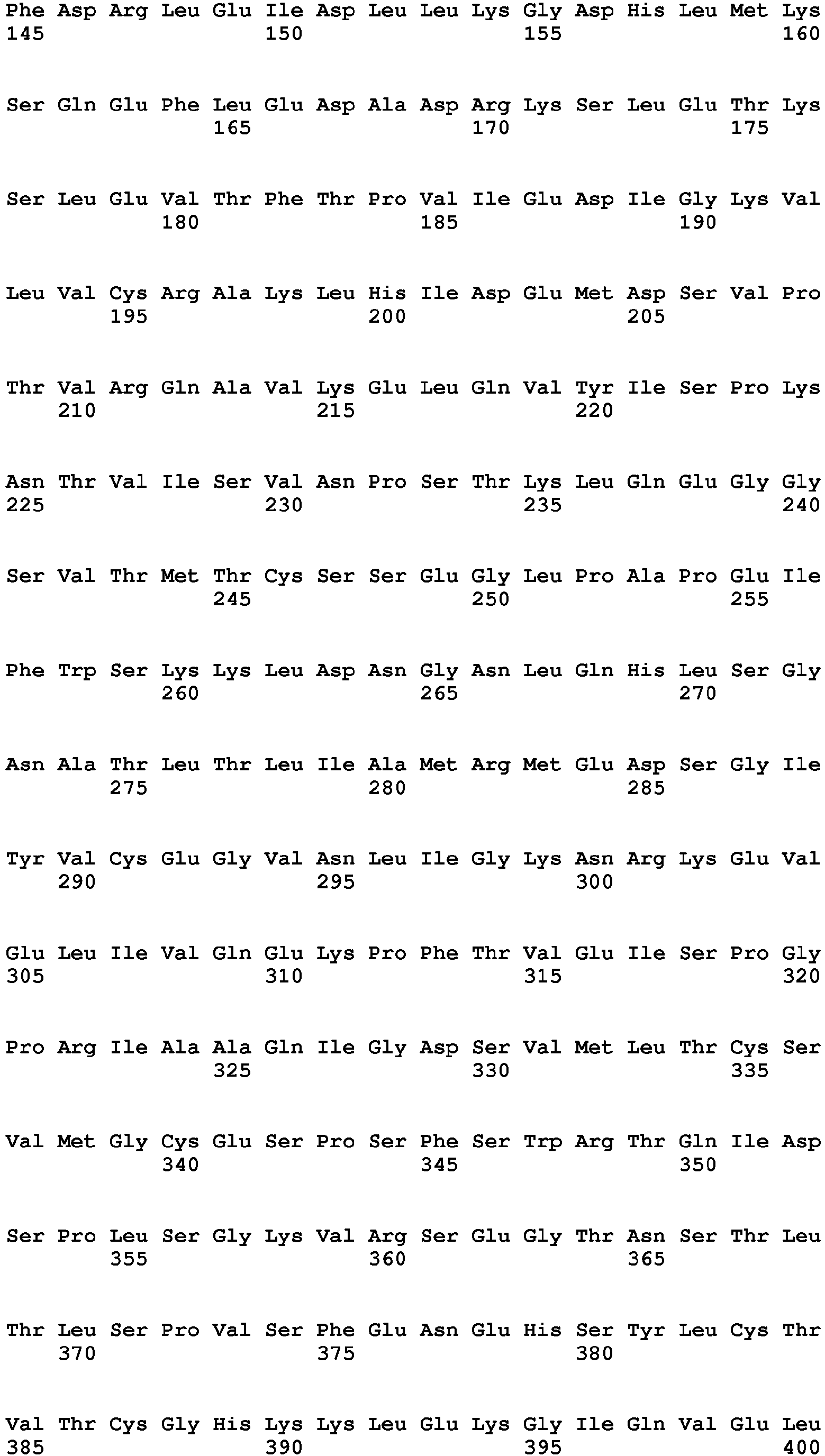


- <210> 2
<211> 647
<212> PRT
<213> homo sapiens - <220>
<221> MISC_FEATURE
<223> isoform b of CD106 human - <400> 2
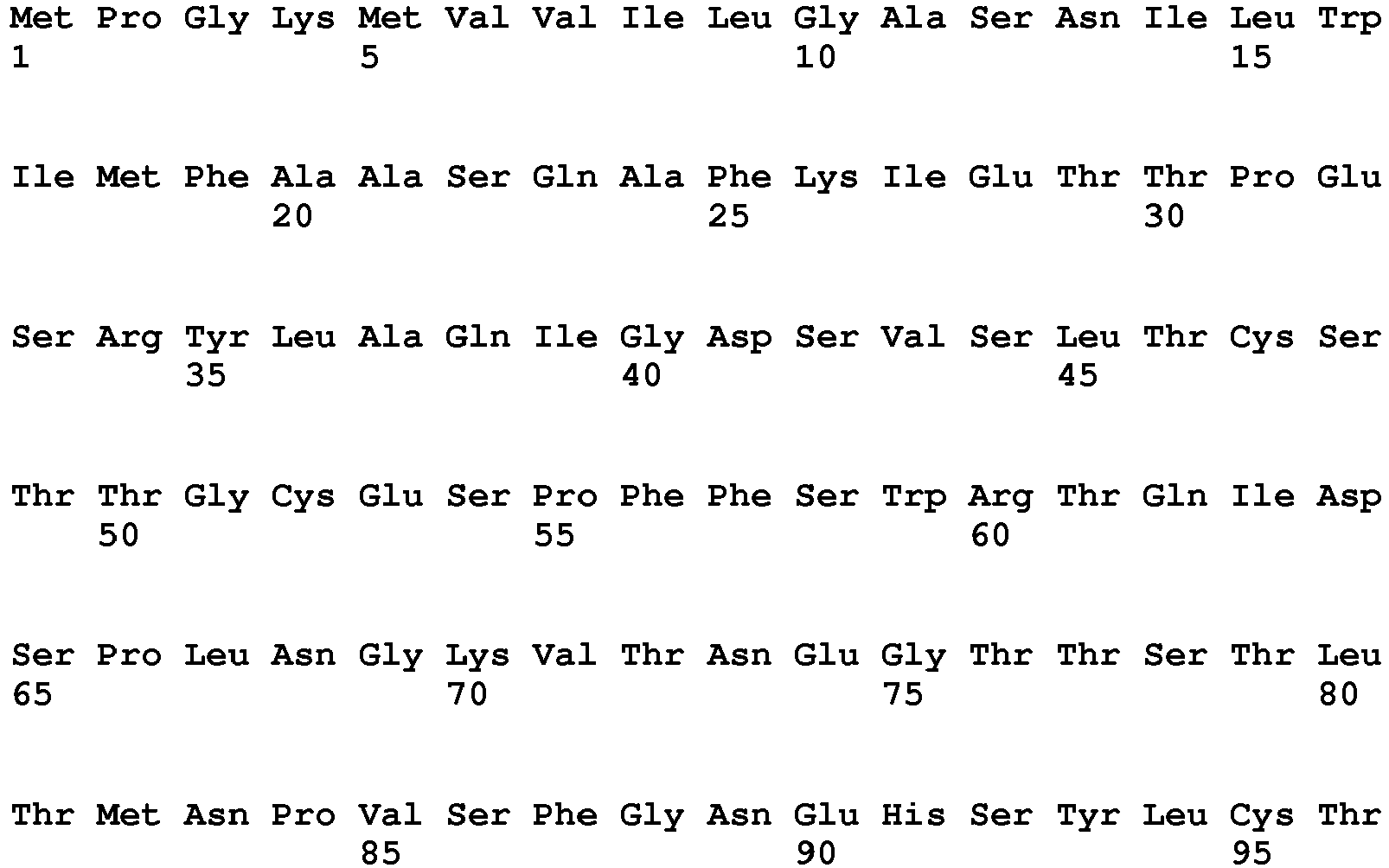


- <210> 3
<211> 677
<212> PRT
<213> homo sapiens - <220>
<221> MISC_FEATURE
<223> isoform c of CD106 human - <400> 3

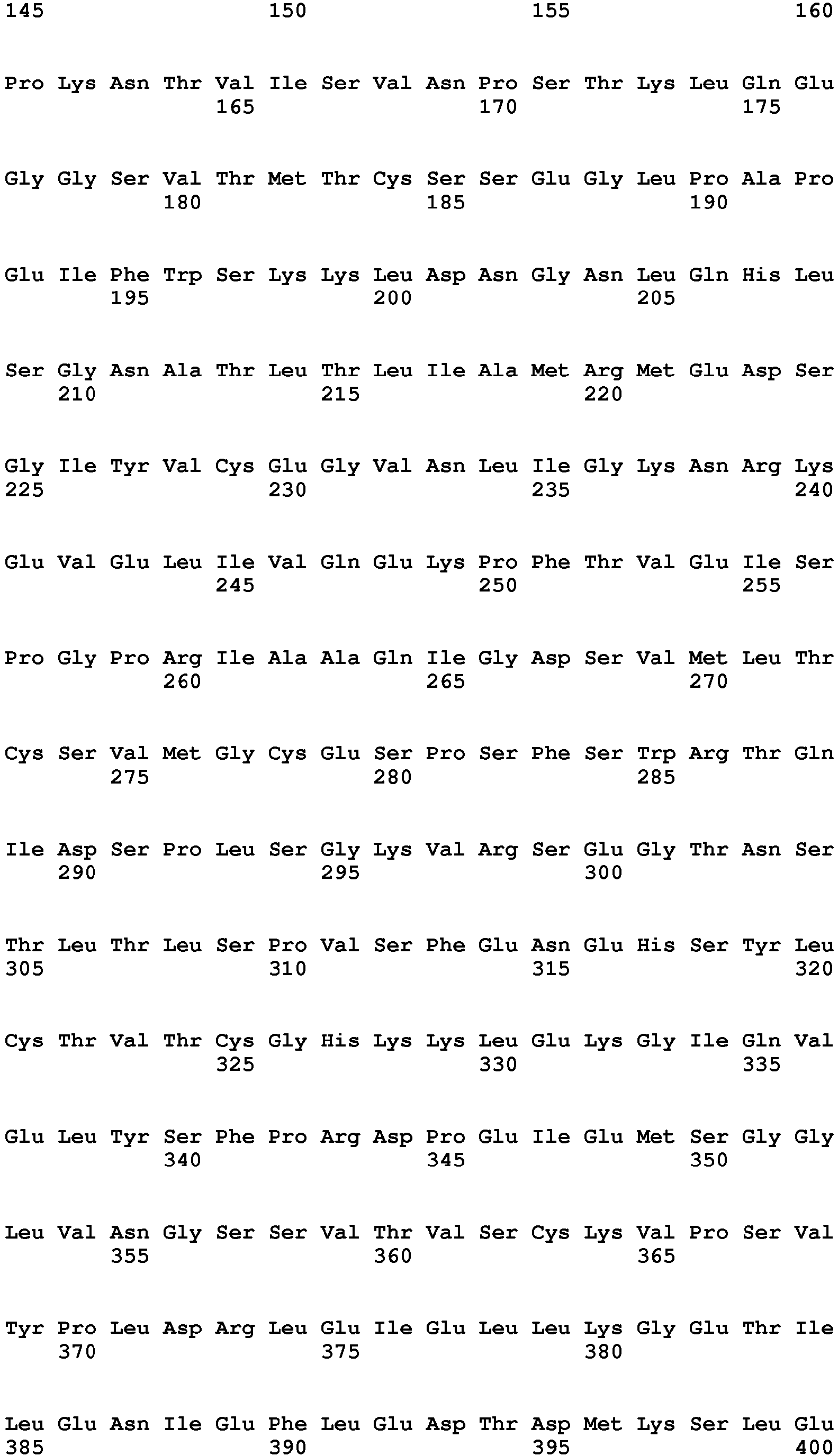


- <210> 4
<211> 1621
<212> PRT
<213> homo sapiens - <220>
<221> MISC_FEATURE
<223> Nestin human - <400> 4


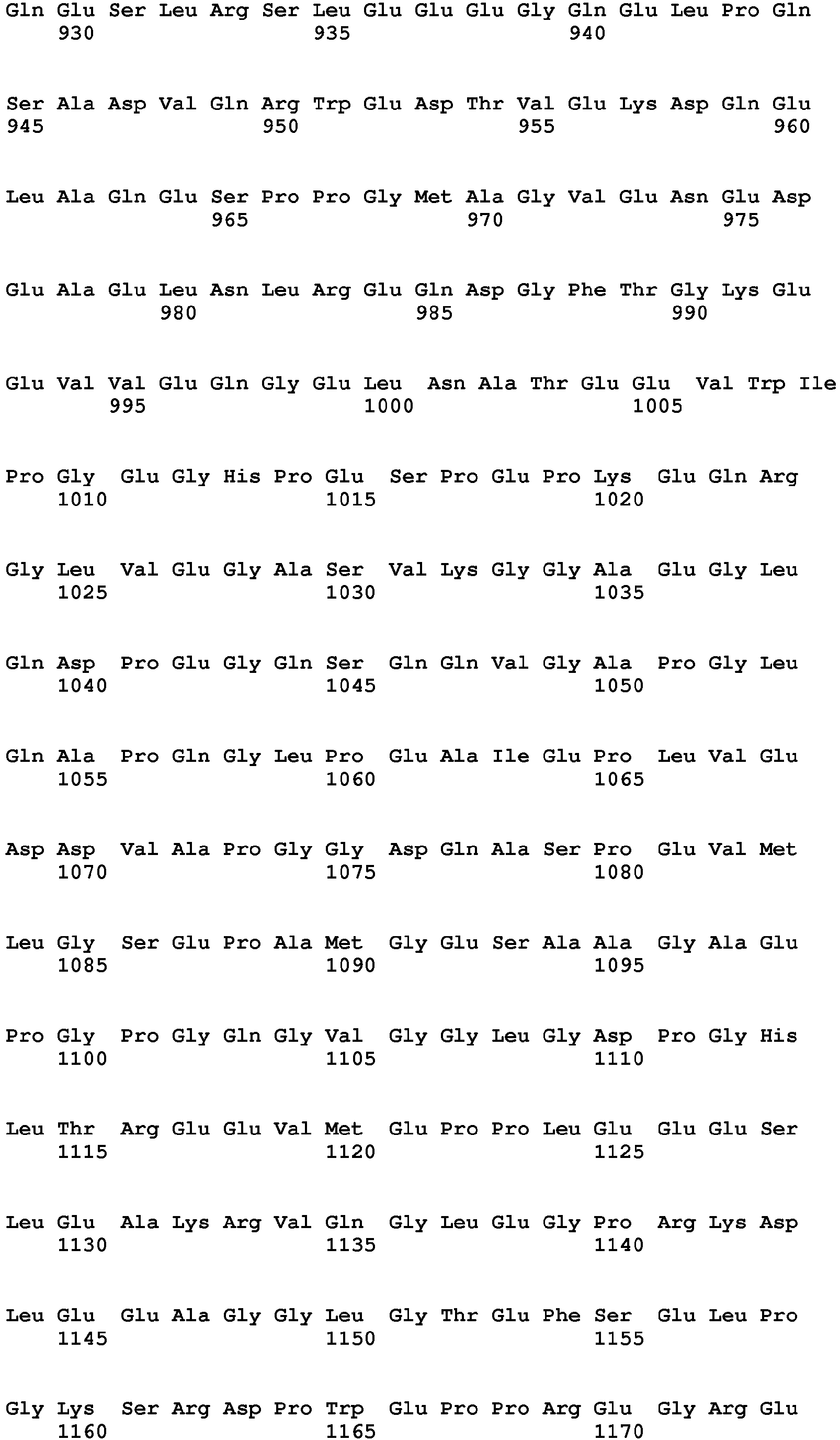


- <210> 5
<211> 253
<212> PRT
<213> homo sapiens - <220>
<221> MISC_FEATURE
<223> CD151 human - <400> 5


- <210> 6
<211> 269
<212> PRT
<213> homo sapiens - <220>
<221> MISC_FEATURE
<223> IL1beta human - <400> 6


- <210> 7
<211> 153
<212> PRT
<213> homo sapiens - <220>
<221> MISC_FEATURE
<223> IL4 human - <400> 7
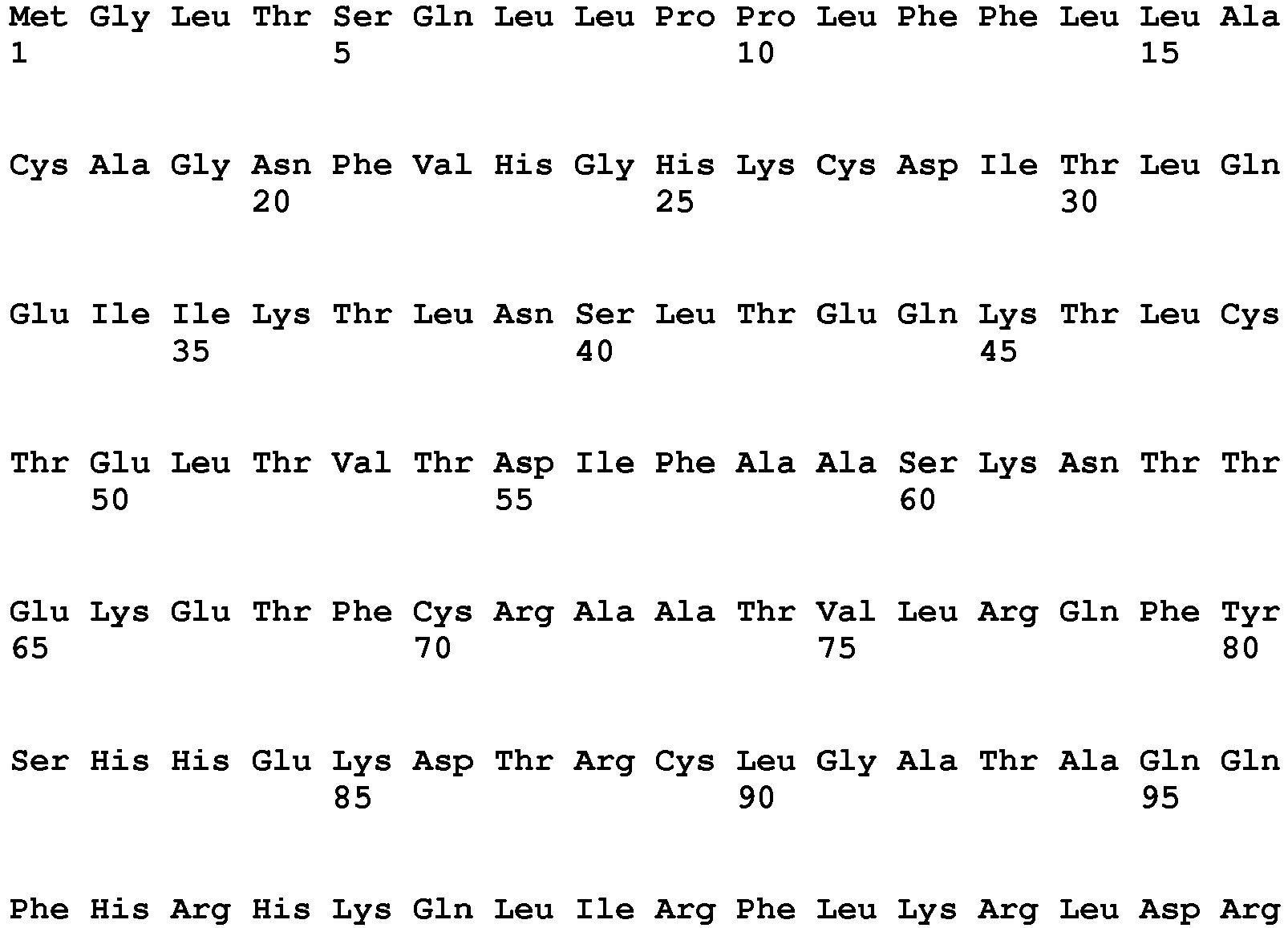

Claims (15)
- A method to prepare CD106high CD151+Nestin+ mesenchymal stem cells (MSCs), said method comprising culturing a population of undifferentiated MSCs in a culture medium comprising between 1 and 100 ng/ml of added Interleukin 1β and between 1 and 100 ng/ml of added Interleukin 4, for at least one day, preferably for two days.
- A method to enhance the CD106 expression level of undifferentiated MSCs, said method comprising culturing a population of undifferentiated MSCs in a culture medium comprising between 1 and 100 ng/ml of added Interleukin 1β and between 1 and 100 ng/ml of added Interleukin 4, for at least one day, preferably for two days.
- The method of any one of claims 1-2, comprising the steps of:a) provide the mononuclear cells contained in a perinatal biological tissue or fluid,b) allow said mononuclear cells to grow into a first culture medium devoid of any growth factor until they reach 85-90% confluence, preferably on a plastic surface,c) once 95% of the cells express the positive markers CD73, CD90, CD105 and CD166, and less than 2% express the negative markers CD45, CD34 and HLA-DR, seed the cells at a density of 1000 to 5000 MSCs per cm2 into a second culture medium,d) once the cells reach 40-50% confluency, add between 1 and 100 ng/ml of Interleukin 1β and between 1 and 100 ng/ml of Interleukin 4, for at least one day,e) collect the cells when they reach 90-95% confluency.
- The method of any one of claims 1-3, wherein the population of cells collected at step e) contains:- over 60% of cells expressing CD106 at a detectable level,- over 98% of cells expressing CD151 at a detectable level,- over 98% of cells expressing Nestin at a detectable level,- over 95% of cells expressing the markers CD73, CD90, CD 105 and CD 166 at a detectable level, and- less than 2% of cells which express the markers CD45, CD34 and HLA-DR at a detectable level.
- A cell culture containing the CD106high CD151+Nestin+ mesenchymal stem cells (MSCs) obtained by the method of claims 1 to 4, said cell culture containing :- over 60% of cells expressing CD106 at a detectable level,- over 98% of cells expressing CD151 at a detectable level,- over 90% of cells expressing Nestin at a detectable level,- over 95% of cells expressing the markers CD73, CD90, CD 105 and CD 166 at a detectable level, and- less than 2% of cells which express the markers CD45, CD34 and HLA-DR at a detectable level.
- The cell culture as defined in claim 5, for use for treating subjects suffering from an ischemic disease, from a disorder of the circulatory system, from an immune disease, from an organ injury or disorder or from an organ function failure.
- The cell culture for use according to claim 6, wherein said disease or disorder is chosen in the group consisting of: type-1 diabetes mellitus, type-II diabetes, GVHD, aplastic anemia, multiple sclerosis, Duchenne muscular dystrophy, rheumatoid arthritis, cerebral stroke, idiopathic pulmonary fibrosis, dilated cardiomyopathy, osteoarthritis, cirrhosis, liver failure, kidney failure, peripheral arterial occlusive disease, critical limb ischemia, peripheral vascular disease, heart failure, diabetic ulcer, fibrotic disorders, synechia, endometrial disorders, diabetic ulcer, an ulcer, a trauma, a burn, a scald, a wound or wound healing problem, a Decubitus ulcer, a wart, a synechia, an endometrial disorder and a fibrotic disorder of the gastro-intestinal tract such as anal fistula.
- A pharmaceutical or veterinary composition containing the cell culture as defined in claim 5.
- The pharmaceutical composition of claim 8, for use for treating subjects suffering from an ischemic disease, from a disorder of the circulatory system, from an immune disease, from a fibrotic disorder, from an organ injury or from an organ function failure, or from a disease or disorder chosen in the group consisting of: type-1 diabetes mellitus, type-II diabetes, GVHD, aplastic anemia, multiple sclerosis, Duchenne muscular dystrophy, rheumatoid arthritis, cerebral stroke, idiopathic pulmonary fibrosis, dilated cardiomyopathy, osteoarthritis, cirrhosis, liver failure, kidney failure, peripheral arterial occlusive disease, critical limb ischemia, peripheral vascular disease, heart failure, diabetic ulcer, fibrotic disorders, synechia and endometrial disorders.
- A dermatologic or a cosmetic composition containing the cell culture as defined in claim 5.
- Use of the cosmetic composition of claim 10, for regenerating the skin or mucosal cells, improving the skin or mucosal membrane aspect or for correcting a skin or mucosal membrane defect, such as dark patches, spots, acne, wrinkles, dryness.
- The dermatologic composition of claim 10, for its use for healing a skin injury or disorder, such as a burn, a scar, an angioma, a mole, or a wart.
- A medical device containing the cell culture as defined in claim 5, wherein it is preferably a bandage, a patch, a stent, an endoscope, or a syringe.
- A delivery system containing the cell culture as defined in claim 5, wherein it is preferably micro or nano-vesicles of biopolymers, lipids or nanoparticles.
- A hydrogel, preferably an alginate hydrogel, containing the cell culture as defined in claim 5, optionally with another biocompatible material or excipient.
Applications Claiming Priority (2)
| Application Number | Priority Date | Filing Date | Title |
|---|---|---|---|
| IB2016001936 | 2016-12-12 | ||
| PCT/EP2017/082316 WO2018108859A1 (en) | 2016-12-12 | 2017-12-12 | Perinatal tissue derived mesenchymal stem cells: method of preparation and uses thereof |
Publications (2)
| Publication Number | Publication Date |
|---|---|
| EP3551748A1 EP3551748A1 (en) | 2019-10-16 |
| EP3551748B1 true EP3551748B1 (en) | 2022-07-13 |
Family
ID=57995241
Family Applications (1)
| Application Number | Title | Priority Date | Filing Date |
|---|---|---|---|
| EP17832923.1A Active EP3551748B1 (en) | 2016-12-12 | 2017-12-12 | Perinatal tissue derived mesenchymal stem cells: method of preparation and uses thereof |
Country Status (9)
| Country | Link |
|---|---|
| US (1) | US12053492B2 (en) |
| EP (1) | EP3551748B1 (en) |
| JP (1) | JP7275441B2 (en) |
| KR (1) | KR102590455B1 (en) |
| CN (1) | CN110352240A (en) |
| CA (1) | CA3046576A1 (en) |
| ES (1) | ES2927461T3 (en) |
| PT (1) | PT3551748T (en) |
| WO (1) | WO2018108859A1 (en) |
Cited By (1)
| Publication number | Priority date | Publication date | Assignee | Title |
|---|---|---|---|---|
| EP3802794A1 (en) * | 2018-06-11 | 2021-04-14 | Health and Biotech France (H&B France) | Extracellular vesicles derived from mesenchymal stem cells |
Families Citing this family (16)
| Publication number | Priority date | Publication date | Assignee | Title |
|---|---|---|---|---|
| US8961956B2 (en) | 2011-11-30 | 2015-02-24 | Ocata Therapeutics, Inc. | Mesenchymal stromal cells and uses related thereto |
| PL2785359T3 (en) | 2011-11-30 | 2018-12-31 | Astellas Institute For Regenerative Medicine | MEZENCHYMAL RIGID CELLS AND RELATED APPLICATIONS |
| CN104471059B (en) | 2012-07-12 | 2018-04-17 | 珠海横琴爱姆斯坦生物科技有限公司 | Mesenchymal-like stem cells derived from human embryonic stem cells, methods and applications thereof |
| GB201703058D0 (en) * | 2017-02-24 | 2017-04-12 | Ucl Business Plc | Biomarkers |
| WO2019165121A1 (en) | 2018-02-21 | 2019-08-29 | Board Of Regents, The University Of Texas System | Methods for activation and expansion of natural killer cells and uses therof |
| CN108728408B (en) * | 2018-05-28 | 2021-08-24 | 天津博雅秀岩生物技术有限公司 | Canine fetal membrane mesenchymal stem cells and preparation method and medium used |
| AU2019355201B2 (en) * | 2018-10-05 | 2026-04-23 | Board Of Regents, The University Of Texas System | Methods for the expansion of mesenchymal stromal cells |
| AU2020362379A1 (en) * | 2019-10-08 | 2022-04-07 | Cellresearch Corporation Pte. Ltd. | A method of assessing wound healing potency of a mesenchymal stem population and related methods of selecting mesenchymal stem cells and identifying tissue as starting material for producing a mesenchymal stem cell population |
| KR102268242B1 (en) * | 2020-01-06 | 2021-06-23 | 에스씨엠생명과학 주식회사 | Composition for enhancing activity of stem cells |
| WO2021263285A1 (en) * | 2020-06-24 | 2021-12-30 | Board Of Regents, The University Of Texas System | Large-scale production of exosomes from primed mesenchymal stromal cells for clinical use |
| TWI782355B (en) * | 2020-11-18 | 2022-11-01 | 國立陽明交通大學 | Composition and use of interleukin stimulated human umbilical cord mesenchymal stem cells for the treatment of rheumatoid arthritis |
| JP2024509124A (en) * | 2021-02-26 | 2024-02-29 | アルグラ サイエンシズ エルエルシー | Villous stromal cell composition and use thereof |
| KR102717862B1 (en) * | 2021-05-18 | 2024-10-15 | 에스씨엠생명과학 주식회사 | Composition for preventing or treating of atopic dermatitis comprising highly functionalized stem cells |
| CN114561349B (en) * | 2022-03-16 | 2023-10-20 | 深圳市北科生物科技有限公司 | Exosomes produced by IL18, IL12, IL15 treated mesenchymal stem cells and antiviral use |
| CN114736856B (en) * | 2022-06-15 | 2022-08-26 | 天津百恩生物科技有限公司 | Preparation method and application of canine placenta mesenchymal stem cells |
| CN118406642B (en) * | 2023-04-04 | 2025-05-09 | 温州医科大学 | Human placental perivascular stem cells and their therapeutic effects on ischemic diseases |
Family Cites Families (12)
| Publication number | Priority date | Publication date | Assignee | Title |
|---|---|---|---|---|
| ZA200401646B (en) * | 2003-03-12 | 2004-06-07 | Reliance Life Sciences Pvt Ltd | Derivation of terminally differentiated dopaminergic neurons from human embryonic stem cells. |
| US10046011B2 (en) | 2008-01-31 | 2018-08-14 | Rutgers, The State University Of New Jersey | Compositions for inducing or suppressing an immune response |
| WO2009154770A2 (en) * | 2008-06-18 | 2009-12-23 | The Texas A & M University System | Mesenchymal stem cells, compositions, and methods for treatment of cardiac tissue damage |
| CN101748096B (en) * | 2008-12-17 | 2013-03-13 | 北京汉氏联合生物技术有限公司 | Subtotipotent stem cells, preparation method and use thereof |
| CN102703380B (en) * | 2008-12-17 | 2014-07-09 | 北京汉氏联合生物技术有限公司 | Sub-totipotent stem cell, preparation method and application thereof |
| KR101078419B1 (en) * | 2009-03-20 | 2011-10-31 | 주식회사 스템메디언스 | Compositions for Improving Skin Conditions Using Fetus-derived Mesenchymal Stem Cells from Amniotic Fluids |
| CN102539736B (en) * | 2011-12-16 | 2015-04-29 | 北京汉氏联合生物技术有限公司 | CD106-positive cells, and identification and preparation method and application thereof |
| EP2900808B1 (en) * | 2012-09-28 | 2019-04-03 | Scripps Health | Methods of differentiating stem cells into chondrocytes |
| JP6377632B2 (en) | 2012-12-14 | 2018-08-22 | ラトガース,ザ ステート ユニバーシティ オブ ニュー ジャージー | Methods for modulating the immunoregulatory effects of stem cells |
| CN104630140A (en) * | 2013-11-06 | 2015-05-20 | 吉林济惠生物科技有限公司 | Isolation and culture method of placenta mesenchyma precursor stem cells |
| CN105483206B (en) * | 2016-01-06 | 2019-09-13 | 北京汉氏联合生物技术股份有限公司 | A method of promoting endothelial cell proliferation ability with VCAM-1 detection MSC |
| CN106538515A (en) | 2016-11-03 | 2017-03-29 | 明光市大全甜叶菊专业合作社 | A kind of Stevia seed store method |
-
2017
- 2017-12-12 CN CN201780086267.9A patent/CN110352240A/en active Pending
- 2017-12-12 WO PCT/EP2017/082316 patent/WO2018108859A1/en not_active Ceased
- 2017-12-12 PT PT178329231T patent/PT3551748T/en unknown
- 2017-12-12 US US16/468,669 patent/US12053492B2/en active Active
- 2017-12-12 KR KR1020197019932A patent/KR102590455B1/en active Active
- 2017-12-12 CA CA3046576A patent/CA3046576A1/en active Pending
- 2017-12-12 EP EP17832923.1A patent/EP3551748B1/en active Active
- 2017-12-12 ES ES17832923T patent/ES2927461T3/en active Active
- 2017-12-12 JP JP2019551740A patent/JP7275441B2/en active Active
Cited By (1)
| Publication number | Priority date | Publication date | Assignee | Title |
|---|---|---|---|---|
| EP3802794A1 (en) * | 2018-06-11 | 2021-04-14 | Health and Biotech France (H&B France) | Extracellular vesicles derived from mesenchymal stem cells |
Also Published As
| Publication number | Publication date |
|---|---|
| JP2020503375A (en) | 2020-01-30 |
| CN110352240A (en) | 2019-10-18 |
| US20200009193A1 (en) | 2020-01-09 |
| EP3551748A1 (en) | 2019-10-16 |
| KR20190128622A (en) | 2019-11-18 |
| CA3046576A1 (en) | 2018-06-21 |
| KR102590455B1 (en) | 2023-10-17 |
| WO2018108859A1 (en) | 2018-06-21 |
| JP7275441B2 (en) | 2023-05-18 |
| RU2019118712A3 (en) | 2021-04-16 |
| PT3551748T (en) | 2022-09-29 |
| US12053492B2 (en) | 2024-08-06 |
| ES2927461T3 (en) | 2022-11-07 |
| RU2019118712A (en) | 2021-01-12 |
Similar Documents
| Publication | Publication Date | Title |
|---|---|---|
| US12053492B2 (en) | Perinatal tissue derived mesenchymal stem cells: method of preparation and uses thereof | |
| JP5599568B2 (en) | Treatment of peripheral vascular disease using postpartum-derived cells | |
| JP5676253B2 (en) | Highly efficient collection of functional cells in vivo | |
| JP5937210B2 (en) | Treatment of peripheral vascular disease using cells derived from umbilical cord tissue | |
| US11000552B2 (en) | Pluripotent stem cell for treating diabetic skin ulcer | |
| JP2008504290A (en) | Cell-based treatment of ischemia | |
| JP2010505849A (en) | Methods and compositions useful for diabetic wound healing | |
| CN105112357A (en) | Adherent cells from placenta and use of same in disease treatment | |
| CN110898078B (en) | Preparation and application of mesenchymal stem cell secretion factor | |
| US9855300B2 (en) | Composition and method to improve the therapeutic effect of stem cells | |
| JP6663445B2 (en) | Methods and compositions for stimulating cell proliferation and the provision of biologically active mixtures of FGF2 isoforms | |
| Tracy et al. | State of the field: cellular and exosomal therapeutic approaches in vascular regeneration | |
| US20090047257A1 (en) | Novel cell populations and uses thereof | |
| WO2021131261A1 (en) | Cell group and method for acquiring same | |
| RU2780179C2 (en) | Mesenchymal stem cells originating from perinatal tissue: method for their production and use | |
| WO2018051340A1 (en) | A process for retrieval of matrix dependent mesenchymal stromal cells from tissue | |
| US20240293471A1 (en) | Placental cell treatment for critical limb ischemia patient subpopulations | |
| Fukuta et al. | Synergistic effect of ex-vivo quality and quantity cultured mononuclear cells and mesenchymal stem cell therapy in ischemic hind limb model mice | |
| KR102901451B1 (en) | Treatment of peripheral blood flow disorders | |
| AU2024344499A1 (en) | Mesenchymal lineage precursor or stem cells (mlpscs) for use in methods of treating congenital heart disease | |
| JP2016135791A (en) | Treatment of peripheral vascular disease using umbilical cord tissue-derived cells |
Legal Events
| Date | Code | Title | Description |
|---|---|---|---|
| STAA | Information on the status of an ep patent application or granted ep patent |
Free format text: STATUS: UNKNOWN |
|
| STAA | Information on the status of an ep patent application or granted ep patent |
Free format text: STATUS: THE INTERNATIONAL PUBLICATION HAS BEEN MADE |
|
| PUAI | Public reference made under article 153(3) epc to a published international application that has entered the european phase |
Free format text: ORIGINAL CODE: 0009012 |
|
| STAA | Information on the status of an ep patent application or granted ep patent |
Free format text: STATUS: REQUEST FOR EXAMINATION WAS MADE |
|
| 17P | Request for examination filed |
Effective date: 20190708 |
|
| AK | Designated contracting states |
Kind code of ref document: A1 Designated state(s): AL AT BE BG CH CY CZ DE DK EE ES FI FR GB GR HR HU IE IS IT LI LT LU LV MC MK MT NL NO PL PT RO RS SE SI SK SM TR |
|
| AX | Request for extension of the european patent |
Extension state: BA ME |
|
| STAA | Information on the status of an ep patent application or granted ep patent |
Free format text: STATUS: EXAMINATION IS IN PROGRESS |
|
| DAV | Request for validation of the european patent (deleted) | ||
| DAX | Request for extension of the european patent (deleted) | ||
| 17Q | First examination report despatched |
Effective date: 20200313 |
|
| GRAP | Despatch of communication of intention to grant a patent |
Free format text: ORIGINAL CODE: EPIDOSNIGR1 |
|
| STAA | Information on the status of an ep patent application or granted ep patent |
Free format text: STATUS: GRANT OF PATENT IS INTENDED |
|
| INTG | Intention to grant announced |
Effective date: 20220303 |
|
| RIN1 | Information on inventor provided before grant (corrected) |
Inventor name: WANG, TAO Inventor name: HAN, ZHIBO Inventor name: HAN, ZHONGCHAO |
|
| GRAS | Grant fee paid |
Free format text: ORIGINAL CODE: EPIDOSNIGR3 |
|
| GRAA | (expected) grant |
Free format text: ORIGINAL CODE: 0009210 |
|
| STAA | Information on the status of an ep patent application or granted ep patent |
Free format text: STATUS: THE PATENT HAS BEEN GRANTED |
|
| AK | Designated contracting states |
Kind code of ref document: B1 Designated state(s): AL AT BE BG CH CY CZ DE DK EE ES FI FR GB GR HR HU IE IS IT LI LT LU LV MC MK MT NL NO PL PT RO RS SE SI SK SM TR |
|
| REG | Reference to a national code |
Ref country code: CH Ref legal event code: EP |
|
| REG | Reference to a national code |
Ref country code: DE Ref legal event code: R096 Ref document number: 602017059506 Country of ref document: DE |
|
| REG | Reference to a national code |
Ref country code: AT Ref legal event code: REF Ref document number: 1504309 Country of ref document: AT Kind code of ref document: T Effective date: 20220815 |
|
| REG | Reference to a national code |
Ref country code: IE Ref legal event code: FG4D |
|
| REG | Reference to a national code |
Ref country code: PT Ref legal event code: SC4A Ref document number: 3551748 Country of ref document: PT Date of ref document: 20220929 Kind code of ref document: T Free format text: AVAILABILITY OF NATIONAL TRANSLATION Effective date: 20220923 |
|
| REG | Reference to a national code |
Ref country code: ES Ref legal event code: FG2A Ref document number: 2927461 Country of ref document: ES Kind code of ref document: T3 Effective date: 20221107 |
|
| REG | Reference to a national code |
Ref country code: LT Ref legal event code: MG9D |
|
| REG | Reference to a national code |
Ref country code: NL Ref legal event code: MP Effective date: 20220713 |
|
| PG25 | Lapsed in a contracting state [announced via postgrant information from national office to epo] |
Ref country code: SE Free format text: LAPSE BECAUSE OF FAILURE TO SUBMIT A TRANSLATION OF THE DESCRIPTION OR TO PAY THE FEE WITHIN THE PRESCRIBED TIME-LIMIT Effective date: 20220713 Ref country code: RS Free format text: LAPSE BECAUSE OF FAILURE TO SUBMIT A TRANSLATION OF THE DESCRIPTION OR TO PAY THE FEE WITHIN THE PRESCRIBED TIME-LIMIT Effective date: 20220713 Ref country code: NO Free format text: LAPSE BECAUSE OF FAILURE TO SUBMIT A TRANSLATION OF THE DESCRIPTION OR TO PAY THE FEE WITHIN THE PRESCRIBED TIME-LIMIT Effective date: 20221013 Ref country code: NL Free format text: LAPSE BECAUSE OF FAILURE TO SUBMIT A TRANSLATION OF THE DESCRIPTION OR TO PAY THE FEE WITHIN THE PRESCRIBED TIME-LIMIT Effective date: 20220713 Ref country code: LV Free format text: LAPSE BECAUSE OF FAILURE TO SUBMIT A TRANSLATION OF THE DESCRIPTION OR TO PAY THE FEE WITHIN THE PRESCRIBED TIME-LIMIT Effective date: 20220713 Ref country code: LT Free format text: LAPSE BECAUSE OF FAILURE TO SUBMIT A TRANSLATION OF THE DESCRIPTION OR TO PAY THE FEE WITHIN THE PRESCRIBED TIME-LIMIT Effective date: 20220713 Ref country code: FI Free format text: LAPSE BECAUSE OF FAILURE TO SUBMIT A TRANSLATION OF THE DESCRIPTION OR TO PAY THE FEE WITHIN THE PRESCRIBED TIME-LIMIT Effective date: 20220713 |
|
| REG | Reference to a national code |
Ref country code: AT Ref legal event code: MK05 Ref document number: 1504309 Country of ref document: AT Kind code of ref document: T Effective date: 20220713 |
|
| PG25 | Lapsed in a contracting state [announced via postgrant information from national office to epo] |
Ref country code: PL Free format text: LAPSE BECAUSE OF FAILURE TO SUBMIT A TRANSLATION OF THE DESCRIPTION OR TO PAY THE FEE WITHIN THE PRESCRIBED TIME-LIMIT Effective date: 20220713 Ref country code: IS Free format text: LAPSE BECAUSE OF FAILURE TO SUBMIT A TRANSLATION OF THE DESCRIPTION OR TO PAY THE FEE WITHIN THE PRESCRIBED TIME-LIMIT Effective date: 20221113 Ref country code: HR Free format text: LAPSE BECAUSE OF FAILURE TO SUBMIT A TRANSLATION OF THE DESCRIPTION OR TO PAY THE FEE WITHIN THE PRESCRIBED TIME-LIMIT Effective date: 20220713 Ref country code: GR Free format text: LAPSE BECAUSE OF FAILURE TO SUBMIT A TRANSLATION OF THE DESCRIPTION OR TO PAY THE FEE WITHIN THE PRESCRIBED TIME-LIMIT Effective date: 20221014 |
|
| REG | Reference to a national code |
Ref country code: DE Ref legal event code: R097 Ref document number: 602017059506 Country of ref document: DE |
|
| PG25 | Lapsed in a contracting state [announced via postgrant information from national office to epo] |
Ref country code: SM Free format text: LAPSE BECAUSE OF FAILURE TO SUBMIT A TRANSLATION OF THE DESCRIPTION OR TO PAY THE FEE WITHIN THE PRESCRIBED TIME-LIMIT Effective date: 20220713 Ref country code: RO Free format text: LAPSE BECAUSE OF FAILURE TO SUBMIT A TRANSLATION OF THE DESCRIPTION OR TO PAY THE FEE WITHIN THE PRESCRIBED TIME-LIMIT Effective date: 20220713 Ref country code: DK Free format text: LAPSE BECAUSE OF FAILURE TO SUBMIT A TRANSLATION OF THE DESCRIPTION OR TO PAY THE FEE WITHIN THE PRESCRIBED TIME-LIMIT Effective date: 20220713 Ref country code: CZ Free format text: LAPSE BECAUSE OF FAILURE TO SUBMIT A TRANSLATION OF THE DESCRIPTION OR TO PAY THE FEE WITHIN THE PRESCRIBED TIME-LIMIT Effective date: 20220713 Ref country code: AT Free format text: LAPSE BECAUSE OF FAILURE TO SUBMIT A TRANSLATION OF THE DESCRIPTION OR TO PAY THE FEE WITHIN THE PRESCRIBED TIME-LIMIT Effective date: 20220713 |
|
| PLBE | No opposition filed within time limit |
Free format text: ORIGINAL CODE: 0009261 |
|
| STAA | Information on the status of an ep patent application or granted ep patent |
Free format text: STATUS: NO OPPOSITION FILED WITHIN TIME LIMIT |
|
| PG25 | Lapsed in a contracting state [announced via postgrant information from national office to epo] |
Ref country code: SK Free format text: LAPSE BECAUSE OF FAILURE TO SUBMIT A TRANSLATION OF THE DESCRIPTION OR TO PAY THE FEE WITHIN THE PRESCRIBED TIME-LIMIT Effective date: 20220713 Ref country code: EE Free format text: LAPSE BECAUSE OF FAILURE TO SUBMIT A TRANSLATION OF THE DESCRIPTION OR TO PAY THE FEE WITHIN THE PRESCRIBED TIME-LIMIT Effective date: 20220713 |
|
| 26N | No opposition filed |
Effective date: 20230414 |
|
| PG25 | Lapsed in a contracting state [announced via postgrant information from national office to epo] |
Ref country code: AL Free format text: LAPSE BECAUSE OF FAILURE TO SUBMIT A TRANSLATION OF THE DESCRIPTION OR TO PAY THE FEE WITHIN THE PRESCRIBED TIME-LIMIT Effective date: 20220713 |
|
| PG25 | Lapsed in a contracting state [announced via postgrant information from national office to epo] |
Ref country code: SI Free format text: LAPSE BECAUSE OF FAILURE TO SUBMIT A TRANSLATION OF THE DESCRIPTION OR TO PAY THE FEE WITHIN THE PRESCRIBED TIME-LIMIT Effective date: 20220713 |
|
| PG25 | Lapsed in a contracting state [announced via postgrant information from national office to epo] |
Ref country code: HU Free format text: LAPSE BECAUSE OF FAILURE TO SUBMIT A TRANSLATION OF THE DESCRIPTION OR TO PAY THE FEE WITHIN THE PRESCRIBED TIME-LIMIT; INVALID AB INITIO Effective date: 20171212 |
|
| PG25 | Lapsed in a contracting state [announced via postgrant information from national office to epo] |
Ref country code: CY Free format text: LAPSE BECAUSE OF FAILURE TO SUBMIT A TRANSLATION OF THE DESCRIPTION OR TO PAY THE FEE WITHIN THE PRESCRIBED TIME-LIMIT Effective date: 20220713 |
|
| PG25 | Lapsed in a contracting state [announced via postgrant information from national office to epo] |
Ref country code: MK Free format text: LAPSE BECAUSE OF FAILURE TO SUBMIT A TRANSLATION OF THE DESCRIPTION OR TO PAY THE FEE WITHIN THE PRESCRIBED TIME-LIMIT Effective date: 20220713 |
|
| PG25 | Lapsed in a contracting state [announced via postgrant information from national office to epo] |
Ref country code: TR Free format text: LAPSE BECAUSE OF FAILURE TO SUBMIT A TRANSLATION OF THE DESCRIPTION OR TO PAY THE FEE WITHIN THE PRESCRIBED TIME-LIMIT Effective date: 20220713 |
|
| PG25 | Lapsed in a contracting state [announced via postgrant information from national office to epo] |
Ref country code: BG Free format text: LAPSE BECAUSE OF FAILURE TO SUBMIT A TRANSLATION OF THE DESCRIPTION OR TO PAY THE FEE WITHIN THE PRESCRIBED TIME-LIMIT Effective date: 20220713 |
|
| PG25 | Lapsed in a contracting state [announced via postgrant information from national office to epo] |
Ref country code: MT Free format text: LAPSE BECAUSE OF FAILURE TO SUBMIT A TRANSLATION OF THE DESCRIPTION OR TO PAY THE FEE WITHIN THE PRESCRIBED TIME-LIMIT Effective date: 20220713 |
|
| PGFP | Annual fee paid to national office [announced via postgrant information from national office to epo] |
Ref country code: PT Payment date: 20251120 Year of fee payment: 9 |
|
| PGFP | Annual fee paid to national office [announced via postgrant information from national office to epo] |
Ref country code: LU Payment date: 20251127 Year of fee payment: 9 |
|
| REG | Reference to a national code |
Ref country code: CH Ref legal event code: U11 Free format text: ST27 STATUS EVENT CODE: U-0-0-U10-U11 (AS PROVIDED BY THE NATIONAL OFFICE) Effective date: 20260101 |
|
| PGFP | Annual fee paid to national office [announced via postgrant information from national office to epo] |
Ref country code: GB Payment date: 20251229 Year of fee payment: 9 |
|
| PGFP | Annual fee paid to national office [announced via postgrant information from national office to epo] |
Ref country code: MC Payment date: 20251126 Year of fee payment: 9 |
|
| PGFP | Annual fee paid to national office [announced via postgrant information from national office to epo] |
Ref country code: IT Payment date: 20251210 Year of fee payment: 9 |
|
| PGFP | Annual fee paid to national office [announced via postgrant information from national office to epo] |
Ref country code: FR Payment date: 20251113 Year of fee payment: 9 |
|
| PGFP | Annual fee paid to national office [announced via postgrant information from national office to epo] |
Ref country code: BE Payment date: 20251226 Year of fee payment: 9 |
|
| PGFP | Annual fee paid to national office [announced via postgrant information from national office to epo] |
Ref country code: IE Payment date: 20251126 Year of fee payment: 9 |
|
| PGFP | Annual fee paid to national office [announced via postgrant information from national office to epo] |
Ref country code: ES Payment date: 20260112 Year of fee payment: 9 |
|
| PGFP | Annual fee paid to national office [announced via postgrant information from national office to epo] |
Ref country code: DE Payment date: 20251231 Year of fee payment: 9 |
|
| PGFP | Annual fee paid to national office [announced via postgrant information from national office to epo] |
Ref country code: CH Payment date: 20260101 Year of fee payment: 9 |