EP3550490A1 - Service data processing method and apparatus, and client - Google Patents
Service data processing method and apparatus, and client Download PDFInfo
- Publication number
- EP3550490A1 EP3550490A1 EP17876550.9A EP17876550A EP3550490A1 EP 3550490 A1 EP3550490 A1 EP 3550490A1 EP 17876550 A EP17876550 A EP 17876550A EP 3550490 A1 EP3550490 A1 EP 3550490A1
- Authority
- EP
- European Patent Office
- Prior art keywords
- processed
- received data
- service item
- label
- time period
- Prior art date
- Legal status (The legal status is an assumption and is not a legal conclusion. Google has not performed a legal analysis and makes no representation as to the accuracy of the status listed.)
- Withdrawn
Links
Images






Classifications
-
- G—PHYSICS
- G06—COMPUTING OR CALCULATING; COUNTING
- G06Q—INFORMATION AND COMMUNICATION TECHNOLOGY [ICT] SPECIALLY ADAPTED FOR ADMINISTRATIVE, COMMERCIAL, FINANCIAL, MANAGERIAL OR SUPERVISORY PURPOSES; SYSTEMS OR METHODS SPECIALLY ADAPTED FOR ADMINISTRATIVE, COMMERCIAL, FINANCIAL, MANAGERIAL OR SUPERVISORY PURPOSES, NOT OTHERWISE PROVIDED FOR
- G06Q20/00—Payment architectures, schemes or protocols
- G06Q20/30—Payment architectures, schemes or protocols characterised by the use of specific devices or networks
- G06Q20/32—Payment architectures, schemes or protocols characterised by the use of specific devices or networks using wireless devices
- G06Q20/326—Payment applications installed on the mobile devices
-
- G—PHYSICS
- G06—COMPUTING OR CALCULATING; COUNTING
- G06F—ELECTRIC DIGITAL DATA PROCESSING
- G06F16/00—Information retrieval; Database structures therefor; File system structures therefor
- G06F16/20—Information retrieval; Database structures therefor; File system structures therefor of structured data, e.g. relational data
- G06F16/23—Updating
-
- G—PHYSICS
- G06—COMPUTING OR CALCULATING; COUNTING
- G06Q—INFORMATION AND COMMUNICATION TECHNOLOGY [ICT] SPECIALLY ADAPTED FOR ADMINISTRATIVE, COMMERCIAL, FINANCIAL, MANAGERIAL OR SUPERVISORY PURPOSES; SYSTEMS OR METHODS SPECIALLY ADAPTED FOR ADMINISTRATIVE, COMMERCIAL, FINANCIAL, MANAGERIAL OR SUPERVISORY PURPOSES, NOT OTHERWISE PROVIDED FOR
- G06Q20/00—Payment architectures, schemes or protocols
- G06Q20/08—Payment architectures
- G06Q20/10—Payment architectures specially adapted for electronic funds transfer [EFT] systems; specially adapted for home banking systems
- G06Q20/102—Bill distribution or payments
-
- G—PHYSICS
- G06—COMPUTING OR CALCULATING; COUNTING
- G06Q—INFORMATION AND COMMUNICATION TECHNOLOGY [ICT] SPECIALLY ADAPTED FOR ADMINISTRATIVE, COMMERCIAL, FINANCIAL, MANAGERIAL OR SUPERVISORY PURPOSES; SYSTEMS OR METHODS SPECIALLY ADAPTED FOR ADMINISTRATIVE, COMMERCIAL, FINANCIAL, MANAGERIAL OR SUPERVISORY PURPOSES, NOT OTHERWISE PROVIDED FOR
- G06Q20/00—Payment architectures, schemes or protocols
- G06Q20/08—Payment architectures
- G06Q20/12—Payment architectures specially adapted for electronic shopping systems
-
- G—PHYSICS
- G06—COMPUTING OR CALCULATING; COUNTING
- G06Q—INFORMATION AND COMMUNICATION TECHNOLOGY [ICT] SPECIALLY ADAPTED FOR ADMINISTRATIVE, COMMERCIAL, FINANCIAL, MANAGERIAL OR SUPERVISORY PURPOSES; SYSTEMS OR METHODS SPECIALLY ADAPTED FOR ADMINISTRATIVE, COMMERCIAL, FINANCIAL, MANAGERIAL OR SUPERVISORY PURPOSES, NOT OTHERWISE PROVIDED FOR
- G06Q20/00—Payment architectures, schemes or protocols
- G06Q20/30—Payment architectures, schemes or protocols characterised by the use of specific devices or networks
- G06Q20/32—Payment architectures, schemes or protocols characterised by the use of specific devices or networks using wireless devices
- G06Q20/322—Aspects of commerce using mobile devices [M-devices]
- G06Q20/3221—Access to banking information through M-devices
-
- G—PHYSICS
- G06—COMPUTING OR CALCULATING; COUNTING
- G06Q—INFORMATION AND COMMUNICATION TECHNOLOGY [ICT] SPECIALLY ADAPTED FOR ADMINISTRATIVE, COMMERCIAL, FINANCIAL, MANAGERIAL OR SUPERVISORY PURPOSES; SYSTEMS OR METHODS SPECIALLY ADAPTED FOR ADMINISTRATIVE, COMMERCIAL, FINANCIAL, MANAGERIAL OR SUPERVISORY PURPOSES, NOT OTHERWISE PROVIDED FOR
- G06Q20/00—Payment architectures, schemes or protocols
- G06Q20/38—Payment protocols; Details thereof
- G06Q20/42—Confirmation, e.g. check or permission by the legal debtor of payment
Definitions
- the present application relates to the field of computer and Internet technologies, and in particular, to methods, apparatuses, and client devices for processing service data.
- the collection mode includes a mode in which a user collects money from one or more users. Specifically, for example, user A (a receiver) needs to collect money from user B (a payer) and user C (a payer), and user A can initiate a request message of a collection service to corresponding payers: user B and user C. Then, user B and user C enter a payment interface corresponding to the collection service based on the request message, to perform payment and complete the collection service. It can be seen that, in the previously described collection mode, a payer needs to enter a corresponding payment interface based on a request message of a collection service sent by a receiver to complete the collection service.
- a payer may directly perform payment in a transfer mode when a request message of a collection service is not received in a timely manner.
- the payer does not enter a payment page of the corresponding collection service to perform payment.
- the collection service is an ongoing service item that is to be processed. Consequently, server resources are wasted, server processing speed is affected, and user experience is reduced.
- An objective of implementations of the present application is to provide methods, apparatuses, and client devices for processing service data, to help a user complete a service item that is to be processed, and further release server resources, accelerate server processing speed, and improve user experience.
- a method for processing service data including: determining target data of a service item that is to be processed; querying whether received data associated with the target data exists within a predetermined time period; when a determining result is yes, setting a first to-be-confirmed label for the received data associated with the target data; and displaying a first message confirmation interface, where the first message confirmation interface includes a confirmation message about whether to combine the received data that has the first to-be-confirmed label into the corresponding service item that is to be processed.
- a method for processing service data including: determining a target object of a service item that is to be processed; querying whether received data sent by the target object exists within a predetermined time period; when a determining result is yes, setting a second to-be-confirmed label for the received data sent by the target object; and displaying a second message confirmation interface, where the second message confirmation interface includes a confirmation message about whether to combine the received data that has the second to-be-confirmed label into the corresponding service item that is to be processed.
- An apparatus for processing service data including: a target data determining module, configured to determine target data of a service item that is to be processed; a first querying module, configured to query whether received data associated with the target data exists within a predetermined time period; a first label setting module, configured to set a first to-be-confirmed label for the received data associated with the target data when a result determined by the first querying module is yes; and a first confirmation message display module, configured to display a first message confirmation interface, where the first message confirmation interface includes a confirmation message about whether to combine the received data that has the first to-be-confirmed label into the corresponding service item that is to be processed.
- An apparatus for processing service data including: a target object determining module, configured to determine a target object of a service item that is to be processed; a second querying module, configured to query whether received data sent by the target object exists within a predetermined time period; a second label setting module, configured to set a second to-be-confirmed label for the received data sent by the target object when a result determined by the second querying module is yes; and a second confirmation message display module, configured to display a second message confirmation interface, where the second message confirmation interface includes a confirmation message about whether to combine the received data that has the second to-be-confirmed label into the corresponding service item that is to be processed.
- a client including: at least one processor; a memory storing programmed instructions, where the programmed instructions, when executed by the at least one processor, instruct the at least one processor to determine target data of a service item that is to be processed, query whether received data associated with the target data exists within a predetermined time period, set a first to-be-confirmed label for the received data associated with the target data when a determining result is yes, and send an instruction for displaying a first message confirmation interface, where the first message confirmation interface includes a confirmation message about whether to combine the received data that has the first to-be-confirmed label into the corresponding service item that is to be processed; and a display unit, coupled to the at least one processor, configured to display the first message confirmation interface, where the first message confirmation interface includes the confirmation message about whether to combine the received data that has the first to-be-confirmed label into the corresponding service item that is to be processed.
- a client including: at least one processor; a memory storing programmed instructions, wherein the programmed instructions, when executed by the at least one processor, instruct the at least one processor to determine a target object of a service item that is to be processed, query whether received data sent by the target object exists within a predetermined time period, set a second to-be-confirmed label for the received data sent by the target object when a determining result is yes, and send an instruction for displaying a second message confirmation interface, where the second message confirmation interface includes a confirmation message about whether to combine the received data that has the second to-be-confirmed label into the corresponding service item that is to be processed; and a display unit, coupled to the at least one processor, configured to display the second message confirmation interface, where the second message confirmation interface includes the confirmation message about whether to combine the received data that has the second to-be-confirmed label into the corresponding service item that is to be processed.
- Implementations of the present application provide methods, apparatuses, and client devices for processing service data.
- NFC Near Field Communication
- WiFi Wireless Fidelity
- 3G/4G/5G a technology of swiping card by using a point of sale (POS) machine
- POS point of sale
- QR quick response code scanning technology
- bar code scanning technology Bluetooth
- SMS short message service
- MMS multimedia messaging service
- FIG. 1 is a schematic flowchart illustrating an implementation of a method for processing service data, according to the present application.
- the method can include more or fewer operation steps based on a conventional or non-creative effort.
- a sequence of the steps listed in the implementation is merely one of numerous execution sequences of the steps, and does not represent a unique execution sequence.
- execution can be performed based on the method sequence shown in the implementation or the accompanying drawing, or performed in parallel (e.g., a parallel processor or a multi-thread processing environment).
- the method can include the following steps.
- S110 Determine target data of a service item that is to be processed.
- the target data of the service item that is to be processed can include funds, or can include other virtual objects, such as bonus points.
- the target data can include one or more pieces of data.
- the service item that is to be processed is an ongoing collection service. Assume that user A, user B, user C, and user D spend a total of 107 RMB on an AA dinner, and the payment is first made by user A. Then, user A can initiate a collection service.
- target data of the collection service here is funds, and includes one piece of data: 26.75 RMB.
- user E purchases articles for user X, user Y, and user Z
- the value of user X's articles and the value of user Y's articles are each at 200 RMB
- articles of user Z are valued at 300 RMB.
- user E can set two pieces of target data when initiating a collection service: 200 RMB and 300 RMB.
- user X, user Y, and user Z can select a corresponding amount to complete payment.
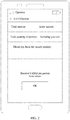
- FIG. 2 is a schematic diagram illustrating an initiation page of an implementation in which a smartphone accesses an application program that has a collection function to perform a collection service, according to the present application.
- user A can enter the initiation page of the collection service shown in FIG. 2 , enter 107 in a total amount and 4 in a total quantity of persons, and tap OK to initiate the collection service.
- a server can determine corresponding target data by using the total amount and the total quantity of persons that are entered. Then, user A can send a request message of the collection service to the corresponding payers: user B, user C, and user D.
- the initiation page in the implementations of the present application is not limited to the form in FIG. 2 , and can further include another form with reference to actual application situations, for example, a form of directly entering target data and a total quantity of persons. Implementations are not limited in the implementations of the present application.
- FIG. 3 is a schematic diagram illustrating a page of an implementation after a request message of a collection service is sent, according to the present application. It can be seen from FIG. 3 that user A sends a request message in a group, and the group can usually include at least one payer.
- the request message in the implementations of the present application can be sent in a group that includes a payer to notify the payer of the payment, or can be directly sent to a corresponding payer. Implementations are not limited in the implementations of the present application.
- S120 Query whether received data associated with the target data exists within a predetermined time period.
- the predetermined time period can include a time period predetermined based on a generation time of the service item that is to be processed.
- the predetermined time period can include the generation time of the service item that is to be processed, or may not include the generation time of the service item that is to be processed.
- the predetermined time period can include at least one of the following setting methods: a first time period before the generation time of the service item that is to be processed; a second time period after the generation time of the service item that is to be processed; a third time period before the generation time of the service item that is to be processed; or a fourth time period after the generation time of the service item that is to be processed.
- specific values can be set for the first time period, the second time period, the third time period, and the fourth time period with reference to actual application situations.
- the third time period can be the same as the fourth time period, or can be different from the fourth time period.
- the received data can include received transfer information, etc.
- user X transfers 200 RMB to you.
- the received data associated with the target data can include at least one of the following: received data whose difference from the target data is less than or equal to a predetermined threshold; or received data that is in a multiple relationship with the target data.
- a collection service is used as an example.
- the target data is 25.88 RMB
- a payer may directly transfer 26 RMB for ease of transfer convenience.
- the transfer can be included in the received data associated with the target data by setting the predetermined threshold here.
- the predetermined threshold can be predetermined based on a type of the target data and actual application situations. For example, when the target data is funds, the predetermined threshold can be set to 1 RMB. When the target data is bonus points, the predetermined threshold can be set to 10 bonus points. Implementations are not limited in the implementations of the present application.
- FIG. 4 is a schematic diagram illustrating a scenario of an implementation after a request message of a collection service is sent, according to the present application. It can be seen that user B and user D are in a group in which user A sends a request message of a collection service, and user B and user D enter a corresponding payment interface for payment by using the request message sent by user A, but user C is not in the group in which user A sends the request message of the collection service at first. As a result, user C does not receive, in a timely manner, the request message of the collection service initiated by user A.
- a collection service is used as an example.
- One payer may perform payment for a plurality of payers.
- the received data associated with the target data can include the received data that is in a multiple relationship with the target data.
- the received data associated with the target data in the implementations of the present application is not limited to the previously described cases. In practice, another piece of data can be further included, and implementations are not limited in the implementations of the present application.
- the first to-be-confirmed label can be set for the received data associated with the target data.
- the first to-be-confirmed label can include predetermined labels that are in a one-to-one correspondence with corresponding service items that are to be processed.
- the first to-be-confirmed label that corresponds to the collection service that can be initiated by user A for the previously described AA dinner can be set for the information that user C transfers 27 RMB to user A.
- S140 Display a first message confirmation interface, where the first message confirmation interface includes a confirmation message about whether to combine the received data that has the first to-be-confirmed label into the corresponding service item that is to be processed.
- the first message confirmation interface can be displayed.
- the first message confirmation interface includes the confirmation message about whether to combine the received data that has the first to-be-confirmed label into the corresponding service item that is to be processed.
- the first message confirmation interface can include an interface that is predetermined based on the confirmation message about whether to combine the received data that has the first to-be-confirmed label into the corresponding service item that is to be processed.
- the method before the displaying a first message confirmation interface, can further include the following: monitoring whether there is an operation instruction for entering a processing interface of the service item that is to be processed, and in response to detecting the operation instruction for entering the processing interface of the service item that is to be processed, displaying the first message confirmation interface, where the first message confirmation interface includes the confirmation message about whether to combine the received data that has the first to-be-confirmed label into the corresponding service item that is to be processed.
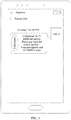
- FIG. 5 is a schematic diagram illustrating an implementation of a processing page of a collection service, according to the present application. It can be seen from FIG. 5 that a user can obtain data of a current progress of a collection service.
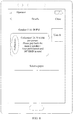
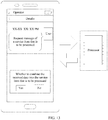
- FIG. 6 is a schematic diagram illustrating an implementation of displaying a first message confirmation interface in a processing page of a collection service, according to the present application.
- a page displaying the first message confirmation interface in the implementations of the present application is not limited to a form of the processing page of the collection service in FIG. 6 , and can further include another form with reference to actual application situations. Implementations are not limited in the implementations of the present application.
- the method can further include the following: when an execution result of the confirmation message is yes, combining the received data that has the first to-be-confirmed label into the service item that is to be processed.
- the method can further include the following: when an execution result of the confirmation message is no, removing the label from the received data that has the first to-be-confirmed label.
- the label removal processing can include removing the first to-be-confirmed label.
- FIG. 7 is a schematic flowchart illustrating another implementation of a method for processing service data, according to the present application.
- the method can include more or fewer operation steps based on a conventional or non-creative effort.
- a sequence of the steps listed in the implementation is merely one of numerous execution sequences of the steps, and does not represent a unique execution sequence.
- execution can be performed based on the method sequence shown in the implementation or the accompanying drawing, or performed in parallel (e.g., a parallel processor or a multi-thread processing environment).
- the method can include the following steps.
- S710 Determine a target object of a service item that is to be processed.
- the service item that is to be processed is an ongoing collection service
- the target object of the service item that is to be processed can include a corresponding payer.
- account information of the payer can be obtained as the target object of the service item that is to be processed.
- FIG. 8 is a schematic diagram illustrating a page of an implementation after a collection service is initiated, according to the present application. It can be seen from FIG. 8 that a user can tap a button of "select a payer" to send a request message of the collection service to a corresponding payer.
- S720 Query whether received data sent by the target object exists within a predetermined time period.
- the predetermined time period can include a time period predetermined based on a trigger time of the service item that is to be processed.
- the predetermined time period includes at least one of the following time periods: a first time period before a generation time of the service item that is to be processed; a second time period after the generation time of the service item that is to be processed; a third time period before the generation time of the service item that is to be processed; or a fourth time period after the generation time of the service item that is to be processed.
- the received data can include received transfer information, etc.
- user X transfers 200 RMB to you.
- the second to-be-confirmed label can be set for the received data sent by the target object.
- the second to-be-confirmed label can include predetermined labels that are in a one-to-one correspondence with corresponding service items that are to be processed.
- S740 Display a second message confirmation interface, where the second message confirmation interface includes a confirmation message about whether to combine the received data that has the second to-be-confirmed label into the corresponding service item that is to be processed.
- the second message confirmation interface can be displayed.
- the second message confirmation interface includes the confirmation message about whether to combine the received data that has the second to-be-confirmed label into the corresponding service item that is to be processed.
- the second message confirmation interface can include an interface that is predetermined based on the confirmation message about whether to combine the received data that has the second to-be-confirmed label into the corresponding service item that is to be processed.
- the method before the displaying a second message confirmation interface, can further include the following: monitoring whether there is an operation instruction for entering a processing interface of the service item that is to be processed, and in response to detecting that the operation instruction for entering the processing interface of the service item that is to be processed, displaying the second message confirmation interface, where the second message confirmation interface includes the confirmation message about whether to combine the received data that has the second to-be-confirmed label into the corresponding service item that is to be processed.
- the method can further include the following: when an execution result of the confirmation message is yes, combining the received data that has the second to-be-confirmed label into the service item that is to be processed.
- the method can further include the following: when an execution result of the confirmation message is no, removing the label from the received data that has the second to-be-confirmed label.
- FIG. 9 is a schematic structural diagram illustrating an implementation of an apparatus for processing service data, according to the present application.
- the apparatus 900 can include a target data determining module 910, configured to determine target data of a service item that is to be processed; a first querying module 920, configured to query whether received data associated with the target data exists within a predetermined time period; a first label setting module 930, configured to set a first to-be-confirmed label for the received data associated with the target data when a result determined by the first querying module 920 is yes; and a first confirmation message display module 940, configured to display a first message confirmation interface, where the first message confirmation interface includes a confirmation message about whether to combine the received data that has the first to-be-confirmed label into the corresponding service item that is to be processed.
- FIG. 10 is a schematic structural diagram illustrating another implementation of an apparatus for processing service data, according to the present application.
- the apparatus 900 can further include a first data combination module 950, configured to combine the received data that has the first to-be-confirmed label into the service item that is to be processed when an execution result of the confirmation message is yes.
- the apparatus 900 can further include a first label removal module, configured to remove the label from the received data that has the first to-be-confirmed label when an execution result of the confirmation message is no.
- the apparatus can further include a first monitoring module, configured to monitor whether there is an operation instruction for entering a processing interface of the service item that is to be processed, where in response to detecting the operation instruction for entering the processing interface of the service item that is to be processed, the first message confirmation interface is displayed, and the first message confirmation interface includes the confirmation message about whether to combine the received data that has the first to-be-confirmed label into the corresponding service item that is to be processed.
- a first monitoring module configured to monitor whether there is an operation instruction for entering a processing interface of the service item that is to be processed, where in response to detecting the operation instruction for entering the processing interface of the service item that is to be processed, the first message confirmation interface is displayed, and the first message confirmation interface includes the confirmation message about whether to combine the received data that has the first to-be-confirmed label into the corresponding service item that is to be processed.
- the predetermined time period can include at least one of the following time periods: a first time period before a generation time of the service item that is to be processed; a second time period after the generation time of the service item that is to be processed; a third time period before the generation time of the service item that is to be processed; or a fourth time period after the generation time of the service item that is to be processed.
- the received data associated with the target data can include at least one of the following: received data whose difference from the target data is less than or equal to a predetermined threshold; or received data that is in a multiple relationship with the target data.
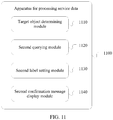
- FIG. 11 is a schematic structural diagram illustrating another implementation of an apparatus for processing service data, according to the present application.
- an apparatus 1100 can include a target object determining module 1110, configured to determine a target object of a service item that is to be processed; a second querying module 1120, configured to query whether received data sent by the target object exists within a predetermined time period; a second label setting module 1130, configured to set a second to-be-confirmed label for the received data sent by the target object when a result determined by the second querying module 1120 is yes; and a second confirmation message display module 1140, configured to display a second message confirmation interface, where the second message confirmation interface includes a confirmation message about whether to combine the received data that has the second to-be-confirmed label into the corresponding service item that is to be processed.
- FIG. 12 is a schematic structural diagram illustrating another implementation of an apparatus for processing service data, according to the present application.
- the apparatus 1100 can further include a second data combination module 1150, configured to combine the received data that has the second to-be-confirmed label into the service item that is to be processed when an execution result of the confirmation message is yes.
- the apparatus 1100 can further include a second label removal module, configured to remove the label from the received data that has the second to-be-confirmed label when an execution result of the confirmation message is no.
- a second label removal module configured to remove the label from the received data that has the second to-be-confirmed label when an execution result of the confirmation message is no.
- the apparatus can further include a second monitoring module, configured to monitor whether there is an operation instruction for entering a processing interface of the service item that is to be processed, where in response to detecting the operation instruction for entering the processing interface of the service item that is to be processed, the second message confirmation interface is displayed, and the second message confirmation interface includes the confirmation message about whether to combine the received data that has the second to-be-confirmed label into the corresponding service item that is to be processed.
- a second monitoring module configured to monitor whether there is an operation instruction for entering a processing interface of the service item that is to be processed, where in response to detecting the operation instruction for entering the processing interface of the service item that is to be processed, the second message confirmation interface is displayed, and the second message confirmation interface includes the confirmation message about whether to combine the received data that has the second to-be-confirmed label into the corresponding service item that is to be processed.
- the predetermined time period can include at least one of the following time periods: a first time period before a generation time of the service item that is to be processed; a second time period after the generation time of the service item that is to be processed; a third time period before the generation time of the service item that is to be processed; or a fourth time period after the generation time of the service item that is to be processed.
- Another aspect of the present application further provides an implementation of a client, where the client can include at least one processor; a memory storing programmed instructions, where the programmed instructions, when executed by the at least one processor, instruct the at least one processor to determine target data of a service item that is to be processed, query whether received data associated with the target data exists within a predetermined time period, set a first to-be-confirmed label for the received data associated with the target data when a determining result is yes, and send an instruction for displaying a first message confirmation interface, where the first message confirmation interface includes a confirmation message about whether to combine the received data that has the first to-be-confirmed label into the corresponding service item that is to be processed; and a display unit, coupled to the at least one processor, configured to display the first message confirmation interface when the processor detects an operation instruction for entering a processing interface of the service item that is to be processed, where the first message confirmation interface includes the confirmation message about whether to combine the received data that has the first to-be-confirmed label into the
- FIG. 13 is a schematic structural diagram illustrating an example implementation of a client, according to the present application.
- the client program instruction can further include the following: when an execution result of the confirmation message is yes, combining the received data that has the first to-be-confirmed label into the service item that is to be processed.
- the client program instruction can further include the following: when an execution result of the confirmation message is no, removing the label from the received data that has the first to-be-confirmed label.
- the present application further provides another implementation of a client, where the client can include at least one processor; a memory storing programmed instructions, wherein the programmed instructions, when executed by the at least one processor, instruct the at least one processor to determine a target object of a service item that is to be processed, query whether received data sent by the target object exists within a predetermined time period, set a second to-be-confirmed label for the received data sent by the target object when a determining result is yes, and send an instruction for displaying a second message confirmation interface, where the second message confirmation interface includes a confirmation message about whether to combine the received data that has the second to-be-confirmed label into the corresponding service item that is to be processed; and a display unit, coupled to the at least one processor, configured to display the second message confirmation interface when the processor detects an operation instruction for entering a processing interface of the service item that is to be processed, where the second message confirmation interface includes the confirmation message about whether to combine the received data that has the second to-be-confirmed label into the
- the client program instruction can further include the following: when an execution result of the confirmation message is yes, combining the received data that has the second to-be-confirmed label into the service item that is to be processed.
- the client program instruction can further include the following: when an execution result of the confirmation message is no, removing the label from the received data that has the second to-be-confirmed label.
- the processor can include a central processing unit (CPU), and certainly, can further include a single-chip microcomputer with a logic processing capability, a logic gate circuit, an integrated circuit, etc, or an appropriate combination of them.
- the display unit can include a mobile device display screen, a projection device, etc.
- the received data related to the service item that is to be processed is determined, the label that is to be confirmed and that is in a one-to-one correspondence with the corresponding service item that is to be processed is set for the related received data, and then the message confirmation interface including the confirmation message about whether to combine the received data that has the label that is to be confirmed into the corresponding service item that is to be processed is displayed to help a user complete the service item that is to be processed.
- the technical solutions provided in the implementations of the present application can help a user complete a service item that is to be processed, and can further release server resources, accelerate server processing speed, and improve user experience.
- a method procedure can be improved by using a hardware entity module.
- a programmable logic device e.g., a field programmable gate array (FPGA)
- FPGA field programmable gate array
- HDL hardware description language
- VHDL Very-High-Speed Integrated Circuit Hardware Description Language
- Verilog Verilog
- a controller can be implemented in any appropriate way.
- the controller can be a microprocessor, a processor, or a computer readable medium, a logic gate, a switch, an application-specific integrated circuit (ASIC), a programmable logic controller, or an embedded microcontroller that stores computer readable program code (for example, software or firmware) that can be executed by the processor (or the microprocessor).
- ASIC application-specific integrated circuit
- a programmable logic controller or an embedded microcontroller that stores computer readable program code (for example, software or firmware) that can be executed by the processor (or the microprocessor).
- Examples of the controller include but are not limited to the following microcontrollers: ARC 625D, Atmel AT91SAM, Microchip PIC18F26K20, or Silicon Labs C8051F320.
- a memory controller can also be implemented as a part of control logic of the memory.
- a controller can be implemented by using a pure computer readable program code method, and the method steps can be logically programmed to enable the controller to implement the same functions in forms of a logic gate, a switch, an application-specific integrated circuit, a programmable logic controller, an embedded microcontroller, etc. Therefore, the controller can be considered as a hardware component, and an apparatus included in the controller and configured to implement various functions in the controller can also be considered as a structure in a hardware component. Alternatively, an apparatus configured to implement various functions can be considered as a software module that can implement the method or a structure in a hardware component.
- the apparatuses and modules illustrated in the previous implementations can be implemented by using a computer chip or an entity, or can be implemented by using a product that has a certain function.
- a typical implementation device is a computer.
- the computer can be, for example, a personal computer, a laptop computer, a cellular phone, a camera phone, a smartphone, a personal digital assistant, a media player, a navigation device, an email device, a game console, a tablet computer, a wearable device, or a combination of any of these devices.
- each module can be implemented in one or more pieces of software and/or hardware.
- an implementation of the present disclosure can be provided as a method, an apparatus, or a computer program product. Therefore, the present disclosure can use a form of hardware only implementations, software only implementations, or implementations with a combination of software and hardware. In addition, the present disclosure can use a form of a computer program product implemented on one or more computer-usable storage media (including but not limited to a magnetic disk memory, a compact disc read-only memory (CD-ROM), and an optical memory) that include computer-usable program code.
- a computer-usable storage media including but not limited to a magnetic disk memory, a compact disc read-only memory (CD-ROM), and an optical memory
- These computer program instructions can be provided for a general-purpose computer, a dedicated computer, an embedded processor, or a processor of another programmable data processing device to generate a machine, so that the instructions executed by the computer or the processor of the another programmable data processing device generate an apparatus for implementing a specific function in one or more processes in the flowcharts and/or in one or more blocks in the block diagrams.
- These computer program instructions can be stored in a computer readable memory that can instruct the computer or the another programmable data processing device to work in a specific way, so that the instructions stored in the computer readable memory generate an artifact that includes an instruction apparatus.
- the instruction apparatus implements a specific function in one or more processes in the flowcharts and/or in one or more blocks in the block diagrams.
- a computing device includes one or more processors (CPU), one or more input/output interfaces, one or more network interfaces, and one or more memories.
- the memory may include a non-persistent memory, a random access memory (RAM), and/or a non-volatile memory in a computer readable medium, for example, a read-only memory (ROM) or a flash memory (flash RAM).
- ROM read-only memory
- flash RAM flash memory
- the computer readable medium includes persistent, non-persistent, movable, and unmovable media that can store information by using any method or technology.
- the information can be a computer readable instruction, a data structure, a program module, or other data.
- Examples of a computer storage medium include but are not limited to a phase-change random access memory (PRAM), a static random access memory (SRAM), a dynamic random access memory (DRAM), another type of random access memory (RAM), a read-only memory (ROM), an electrically erasable programmable read-only memory (EEPROM), a flash memory or another memory technology, a compact disc read-only memory (CD-ROM), a digital versatile disc (DVD) or another optical storage, a cassette, a cassette magnetic disk storage or another magnetic storage device or any other non-transmission medium.
- the computer storage medium can be used to store information that can be accessed by a computing device. As described in the present specification, the computer readable medium does not include computer readable transitory media (transitory media
- an implementation of the present application can be provided as a method, an apparatus, or a computer program product. Therefore, the present application can use a form of hardware only implementations, software only implementations, or implementations with a combination of software and hardware. In addition, the present application can use a form of a computer program product implemented on one or more computer-usable storage media (including but not limited to a magnetic disk memory, a compact disc read-only memory (CD-ROM), and an optical memory) that include computer-usable program code.
- a computer-usable storage media including but not limited to a magnetic disk memory, a compact disc read-only memory (CD-ROM), and an optical memory
- the present application can be described in common contexts of computer executable instructions executed by a computer, such as a program module.
- the program module includes a routine, a program, an object, a component, a data structure, etc. executing a specific task or implementing a specific abstract data type.
- the present application can also be practiced in distributed computing environments. In these distributed computing environments, tasks are executed by remote processing devices that are connected by using a communications network. In the distributed computing environments, the program module can be located in local and remote computer storage media that include storage devices.
Landscapes
- Business, Economics & Management (AREA)
- Accounting & Taxation (AREA)
- Finance (AREA)
- Engineering & Computer Science (AREA)
- Theoretical Computer Science (AREA)
- General Physics & Mathematics (AREA)
- Physics & Mathematics (AREA)
- Strategic Management (AREA)
- General Business, Economics & Management (AREA)
- Development Economics (AREA)
- Economics (AREA)
- Computer Networks & Wireless Communication (AREA)
- Data Mining & Analysis (AREA)
- Databases & Information Systems (AREA)
- General Engineering & Computer Science (AREA)
- User Interface Of Digital Computer (AREA)
- Information Transfer Between Computers (AREA)
- Financial Or Insurance-Related Operations Such As Payment And Settlement (AREA)
- Mobile Radio Communication Systems (AREA)
Abstract
Description
- The present application relates to the field of computer and Internet technologies, and in particular, to methods, apparatuses, and client devices for processing service data.
- With the development of electronic technologies and Internet technologies, functions of electronic devices (especially intelligent mobile devices) become more powerful, and the electronic devices can complete various transactions provided that users install various application programs on the electronic devices based on demands of the users.
- With the rapid development of intelligent mobile devices, more users choose mobile payments in their daily life. Currently, main modes of mobile payment include a transfer mode, a collection mode, etc. The collection mode includes a mode in which a user collects money from one or more users. Specifically, for example, user A (a receiver) needs to collect money from user B (a payer) and user C (a payer), and user A can initiate a request message of a collection service to corresponding payers: user B and user C. Then, user B and user C enter a payment interface corresponding to the collection service based on the request message, to perform payment and complete the collection service. It can be seen that, in the previously described collection mode, a payer needs to enter a corresponding payment interface based on a request message of a collection service sent by a receiver to complete the collection service.
- However, in the existing technology, a payer may directly perform payment in a transfer mode when a request message of a collection service is not received in a timely manner. In this case, the payer does not enter a payment page of the corresponding collection service to perform payment. As a result, the collection service is an ongoing service item that is to be processed. Consequently, server resources are wasted, server processing speed is affected, and user experience is reduced.
- An objective of implementations of the present application is to provide methods, apparatuses, and client devices for processing service data, to help a user complete a service item that is to be processed, and further release server resources, accelerate server processing speed, and improve user experience.
- To alleviate the previously described technical problems, the implementations of the present application are implemented as follows:
A method for processing service data is provided, including: determining target data of a service item that is to be processed; querying whether received data associated with the target data exists within a predetermined time period; when a determining result is yes, setting a first to-be-confirmed label for the received data associated with the target data; and displaying a first message confirmation interface, where the first message confirmation interface includes a confirmation message about whether to combine the received data that has the first to-be-confirmed label into the corresponding service item that is to be processed. - A method for processing service data is provided, including: determining a target object of a service item that is to be processed; querying whether received data sent by the target object exists within a predetermined time period; when a determining result is yes, setting a second to-be-confirmed label for the received data sent by the target object; and displaying a second message confirmation interface, where the second message confirmation interface includes a confirmation message about whether to combine the received data that has the second to-be-confirmed label into the corresponding service item that is to be processed.
- An apparatus for processing service data is provided, including: a target data determining module, configured to determine target data of a service item that is to be processed; a first querying module, configured to query whether received data associated with the target data exists within a predetermined time period; a first label setting module, configured to set a first to-be-confirmed label for the received data associated with the target data when a result determined by the first querying module is yes; and a first confirmation message display module, configured to display a first message confirmation interface, where the first message confirmation interface includes a confirmation message about whether to combine the received data that has the first to-be-confirmed label into the corresponding service item that is to be processed.
- An apparatus for processing service data is provided, including: a target object determining module, configured to determine a target object of a service item that is to be processed; a second querying module, configured to query whether received data sent by the target object exists within a predetermined time period; a second label setting module, configured to set a second to-be-confirmed label for the received data sent by the target object when a result determined by the second querying module is yes; and a second confirmation message display module, configured to display a second message confirmation interface, where the second message confirmation interface includes a confirmation message about whether to combine the received data that has the second to-be-confirmed label into the corresponding service item that is to be processed.
- A client, including: at least one processor; a memory storing programmed instructions, where the programmed instructions, when executed by the at least one processor, instruct the at least one processor to determine target data of a service item that is to be processed, query whether received data associated with the target data exists within a predetermined time period, set a first to-be-confirmed label for the received data associated with the target data when a determining result is yes, and send an instruction for displaying a first message confirmation interface, where the first message confirmation interface includes a confirmation message about whether to combine the received data that has the first to-be-confirmed label into the corresponding service item that is to be processed; and a display unit, coupled to the at least one processor, configured to display the first message confirmation interface, where the first message confirmation interface includes the confirmation message about whether to combine the received data that has the first to-be-confirmed label into the corresponding service item that is to be processed.
- A client, including: at least one processor; a memory storing programmed instructions, wherein the programmed instructions, when executed by the at least one processor, instruct the at least one processor to determine a target object of a service item that is to be processed, query whether received data sent by the target object exists within a predetermined time period, set a second to-be-confirmed label for the received data sent by the target object when a determining result is yes, and send an instruction for displaying a second message confirmation interface, where the second message confirmation interface includes a confirmation message about whether to combine the received data that has the second to-be-confirmed label into the corresponding service item that is to be processed; and a display unit, coupled to the at least one processor, configured to display the second message confirmation interface, where the second message confirmation interface includes the confirmation message about whether to combine the received data that has the second to-be-confirmed label into the corresponding service item that is to be processed.
- It can be learned from the technical solutions provided in the implementations of the present application that, in the implementations of the present application, whether the received data associated with obtained target data of the service item that is to be processed exists within the predetermined time period is determined, the label that is to be confirmed and that is in a one-to-one correspondence with the corresponding service item that is to be processed is set for the received data associated with the target data, and then the confirmation message about whether to combine the received data that has the label that is to be confirmed into the corresponding service item that is to be processed is displayed to help a user complete the service item that is to be processed. Further, a case in which a user performs service processing in another way instead of entering a service data payment processing interface can be effectively alleviated. Compared with the existing technology, the technical solutions provided in the implementations of the present application can help a user complete a service item that is to be processed, and can further release server resources, accelerate server processing speed, and improve user experience.
- To describe the technical solutions in the implementations of the present application or in the existing technology more clearly, the following briefly describes the accompanying drawings needed for describing the implementations or the existing technology. Apparently, the accompanying drawings in the following description merely show some implementations, and a person of ordinary skill in the art can still derive other drawings from these accompanying drawings without creative efforts.
-
FIG. 1 is a schematic flowchart illustrating an implementation of a method for processing service data, according to the present application; -
FIG. 2 is a schematic diagram illustrating an initiation page of an implementation in which a smartphone accesses an application program that has a collection function to perform a collection service, according to the present application; -
FIG. 3 is a schematic diagram illustrating a page of an implementation after a request message of a collection service is sent, according to the present application; -
FIG. 4 is a schematic diagram illustrating a scenario of an implementation after a request message of a collection service is sent, according to the present application; -
FIG. 5 is a schematic diagram illustrating an implementation of a processing page of a collection service, according to the present application; -
FIG. 6 is a schematic diagram illustrating an implementation of displaying a first message confirmation interface in a processing page of a collection service, according to the present application; -
FIG. 7 is a schematic flowchart illustrating another implementation of a method for processing service data, according to the present application; -
FIG. 8 is a schematic diagram illustrating a page of an implementation after a collection service is initiated, according to the present application; -
FIG. 9 is a schematic structural diagram illustrating an implementation of an apparatus for processing service data, according to the present application; -
FIG. 10 is a schematic structural diagram illustrating another implementation of an apparatus for processing service data, according to the present application; -
FIG. 11 is a schematic structural diagram illustrating another implementation of an apparatus for processing service data, according to the present application; -
FIG. 12 is a schematic structural diagram illustrating another implementation of an apparatus for processing service data, according to the present application; and -
FIG. 13 is a schematic structural diagram illustrating an example implementation of a client, according to the present application. - Implementations of the present application provide methods, apparatuses, and client devices for processing service data.
- Technical carriers related to payment in the implementations of the present application can include, for example, Near Field Communication (NFC), Wireless Fidelity (WiFi), 3G/4G/5G, a technology of swiping card by using a point of sale (POS) machine, a quick response code scanning technology, a bar code scanning technology, Bluetooth, infrared, a short message service (SMS), and a multimedia messaging service (MMS).
- To make a person skilled in the art understand the technical solutions in the present application better, the following clearly and comprehensively describes the technical solutions in the implementations of the present application with reference to the accompanying drawings in the implementations of the present application. Apparently, the described implementations are merely some but not all of the implementations of the present application. All other implementations obtained by a person of ordinary skill in the art based on the implementations of the present application without creative efforts shall fall within the protection scope of the present application.
- Specific implementation of the implementations of the present application is described in detail below by using several specific examples.
- The following first describes an implementation of a method for processing service data according to the present application.
FIG. 1 is a schematic flowchart illustrating an implementation of a method for processing service data, according to the present application. Although the present application provides the operation steps of the method described in the implementation or flowchart, the method can include more or fewer operation steps based on a conventional or non-creative effort. A sequence of the steps listed in the implementation is merely one of numerous execution sequences of the steps, and does not represent a unique execution sequence. In actual execution of an apparatus or a client product, execution can be performed based on the method sequence shown in the implementation or the accompanying drawing, or performed in parallel (e.g., a parallel processor or a multi-thread processing environment). Specifically, as shown inFIG. 1 , the method can include the following steps. - S110: Determine target data of a service item that is to be processed.
- In the present implementation of the present application, the target data of the service item that is to be processed can include funds, or can include other virtual objects, such as bonus points. Generally, the target data can include one or more pieces of data. In a specific implementation, for example, the service item that is to be processed is an ongoing collection service. Assume that user A, user B, user C, and user D spend a total of 107 RMB on an AA dinner, and the payment is first made by user A. Then, user A can initiate a collection service. Correspondingly, target data of the collection service here is funds, and includes one piece of data: 26.75 RMB. In another specific implementation, assume that user E purchases articles for user X, user Y, and user Z, and the value of user X's articles and the value of user Y's articles are each at 200 RMB, and articles of user Z are valued at 300 RMB. Correspondingly, user E can set two pieces of target data when initiating a collection service: 200 RMB and 300 RMB. Correspondingly, user X, user Y, and user Z can select a corresponding amount to complete payment.
- In the present implementation, for example, an application program that has a collection function is installed in a smartphone. With reference to the previous implementation in which user A, user B, user C, and user D spend a total of 107 RMB on an AA dinner,
FIG. 2 is a schematic diagram illustrating an initiation page of an implementation in which a smartphone accesses an application program that has a collection function to perform a collection service, according to the present application. After tapping a trigger button that has an AA collection function in a corresponding application program, user A can enter the initiation page of the collection service shown inFIG. 2 , enter 107 in a total amount and 4 in a total quantity of persons, and tap OK to initiate the collection service. Correspondingly, a server can determine corresponding target data by using the total amount and the total quantity of persons that are entered. Then, user A can send a request message of the collection service to the corresponding payers: user B, user C, and user D. - In addition, it is worthwhile to note that the initiation page in the implementations of the present application is not limited to the form in
FIG. 2 , and can further include another form with reference to actual application situations, for example, a form of directly entering target data and a total quantity of persons. Implementations are not limited in the implementations of the present application. -
FIG. 3 is a schematic diagram illustrating a page of an implementation after a request message of a collection service is sent, according to the present application. It can be seen fromFIG. 3 that user A sends a request message in a group, and the group can usually include at least one payer. In addition, the request message in the implementations of the present application can be sent in a group that includes a payer to notify the payer of the payment, or can be directly sent to a corresponding payer. Implementations are not limited in the implementations of the present application. - S120: Query whether received data associated with the target data exists within a predetermined time period.
- In the present implementation of the present application, after the target data of the service item that is to be processed is determined, whether the received data associated with the target data exists within the predetermined time period can be queried. Specifically, the predetermined time period can include a time period predetermined based on a generation time of the service item that is to be processed. The predetermined time period can include the generation time of the service item that is to be processed, or may not include the generation time of the service item that is to be processed. Specifically, the predetermined time period can include at least one of the following setting methods: a first time period before the generation time of the service item that is to be processed; a second time period after the generation time of the service item that is to be processed; a third time period before the generation time of the service item that is to be processed; or a fourth time period after the generation time of the service item that is to be processed.
- Specifically, specific values can be set for the first time period, the second time period, the third time period, and the fourth time period with reference to actual application situations. The third time period can be the same as the fourth time period, or can be different from the fourth time period.
- In a specific implementation, the received data can include received transfer information, etc. For example, user X transfers 200 RMB to you. Specifically, the received data associated with the target data can include at least one of the following: received data whose difference from the target data is less than or equal to a predetermined threshold; or received data that is in a multiple relationship with the target data.
- In some implementations, a collection service is used as an example. Assume that the target data is 25.88 RMB, and a payer may directly transfer 26 RMB for ease of transfer convenience. Correspondingly, the transfer can be included in the received data associated with the target data by setting the predetermined threshold here. Specifically, the predetermined threshold can be predetermined based on a type of the target data and actual application situations. For example, when the target data is funds, the predetermined threshold can be set to 1 RMB. When the target data is bonus points, the predetermined threshold can be set to 10 bonus points. Implementations are not limited in the implementations of the present application.
- In practice, with reference to the previously described implementation of AA dinner,
FIG. 4 is a schematic diagram illustrating a scenario of an implementation after a request message of a collection service is sent, according to the present application. It can be seen that user B and user D are in a group in which user A sends a request message of a collection service, and user B and user D enter a corresponding payment interface for payment by using the request message sent by user A, but user C is not in the group in which user A sends the request message of the collection service at first. As a result, user C does not receive, in a timely manner, the request message of the collection service initiated by user A. Assume that user C chooses to directly transfer a corresponding amount of money to user A, and directly transfer 27 RMB to user A for ease of transfer convenience. In this case, by querying whether the received data associated with target data exists within the predetermined time period, it can be found that information that user C transfers 27 RMB to user A is the received data associated with the target data 26.75 RMB. - In another implementation, a collection service is used as an example. One payer may perform payment for a plurality of payers. Correspondingly, the received data associated with the target data can include the received data that is in a multiple relationship with the target data. In addition, it is worthwhile to note that the received data associated with the target data in the implementations of the present application is not limited to the previously described cases. In practice, another piece of data can be further included, and implementations are not limited in the implementations of the present application.
- S130: When a determining result is yes, set a first to-be-confirmed label for the received data associated with the target data.
- In the present implementation of the present application, when the determining result in step S120 is yes, the first to-be-confirmed label can be set for the received data associated with the target data. Specifically, the first to-be-confirmed label can include predetermined labels that are in a one-to-one correspondence with corresponding service items that are to be processed.
- In a specific implementation, with reference to the previously described implementation of AA dinner, the first to-be-confirmed label that corresponds to the collection service that can be initiated by user A for the previously described AA dinner can be set for the information that user C transfers 27 RMB to user A.
- S140: Display a first message confirmation interface, where the first message confirmation interface includes a confirmation message about whether to combine the received data that has the first to-be-confirmed label into the corresponding service item that is to be processed.
- In the present implementation of the present application, after the first to-be-confirmed label is set for the received data associated with the target data, the first message confirmation interface can be displayed. The first message confirmation interface includes the confirmation message about whether to combine the received data that has the first to-be-confirmed label into the corresponding service item that is to be processed. Specifically, the first message confirmation interface can include an interface that is predetermined based on the confirmation message about whether to combine the received data that has the first to-be-confirmed label into the corresponding service item that is to be processed.
- In some implementations, before the displaying a first message confirmation interface, the method can further include the following: monitoring whether there is an operation instruction for entering a processing interface of the service item that is to be processed, and in response to detecting the operation instruction for entering the processing interface of the service item that is to be processed, displaying the first message confirmation interface, where the first message confirmation interface includes the confirmation message about whether to combine the received data that has the first to-be-confirmed label into the corresponding service item that is to be processed.
-
FIG. 5 is a schematic diagram illustrating an implementation of a processing page of a collection service, according to the present application. It can be seen fromFIG. 5 that a user can obtain data of a current progress of a collection service. - In a specific implementation, with reference to the previously described implementation of AA dinner, when it is detected that user A enters a processing interface of the collection service, a confirmation message indicating that user C transfers 27 RMB to you and whether to combine the information about the transfer into the collection service is displayed. Correspondingly, the user can determine, based on the confirmation message and the current progress of the collection service, whether to combine the data into the collection service, and can further help user A complete the service item that is to be processed.
FIG. 6 is a schematic diagram illustrating an implementation of displaying a first message confirmation interface in a processing page of a collection service, according to the present application. - In addition, it is worthwhile to note that a page displaying the first message confirmation interface in the implementations of the present application is not limited to a form of the processing page of the collection service in
FIG. 6 , and can further include another form with reference to actual application situations. Implementations are not limited in the implementations of the present application. - In some implementations, the method can further include the following: when an execution result of the confirmation message is yes, combining the received data that has the first to-be-confirmed label into the service item that is to be processed.
- Correspondingly, in some implementations, the method can further include the following: when an execution result of the confirmation message is no, removing the label from the received data that has the first to-be-confirmed label.
- Specifically, the label removal processing can include removing the first to-be-confirmed label.
- It can be learned from the implementation of the method for processing service data in the present application that, in the present application, whether the received data associated with obtained target data of the service item that is to be processed exists within the predetermined time period is determined, the first to-be-confirmed label that is in a one-to-one correspondence with the corresponding service item that is to be processed is set for the received data associated with the target data, and then the first message confirmation interface that includes the confirmation message about whether to combine the received data that has the first to-be-confirmed label into the corresponding service item that is to be processed is displayed to help a user complete the service item that is to be processed. Further, a case in which a user performs service processing in another way instead of entering a service data payment processing interface can be effectively alleviated. Compared with the existing technology, the technical solutions provided in the implementations of the present application can help a user complete a service item that is to be processed, and can further release server resources, accelerate server processing speed, and improve user experience.
- The following describes another implementation of a method for processing service data according to the present application.
FIG. 7 is a schematic flowchart illustrating another implementation of a method for processing service data, according to the present application. Although the present application provides the operation steps of the method described in the implementation or flowchart, the method can include more or fewer operation steps based on a conventional or non-creative effort. A sequence of the steps listed in the implementation is merely one of numerous execution sequences of the steps, and does not represent a unique execution sequence. In actual execution of an apparatus or a client product, execution can be performed based on the method sequence shown in the implementation or the accompanying drawing, or performed in parallel (e.g., a parallel processor or a multi-thread processing environment). Specifically, as shown inFIG. 7 , the method can include the following steps. - S710: Determine a target object of a service item that is to be processed.
- In the present implementation of the present application, for example, the service item that is to be processed is an ongoing collection service, and the target object of the service item that is to be processed can include a corresponding payer. With reference to the previously described implementation of AA dinner, after entering a total amount and a total quantity of persons and tapping an OK button in
FIG. 2 , the user needs to send a request message of the collection service to a corresponding payer. Correspondingly, account information of the payer can be obtained as the target object of the service item that is to be processed.FIG. 8 is a schematic diagram illustrating a page of an implementation after a collection service is initiated, according to the present application. It can be seen fromFIG. 8 that a user can tap a button of "select a payer" to send a request message of the collection service to a corresponding payer. - S720: Query whether received data sent by the target object exists within a predetermined time period.
- In the present implementation of the present application, after the target object of the service item that is to be processed is determined, whether the received data sent by the target object exists within the predetermined time period can be queried. Specifically, the predetermined time period can include a time period predetermined based on a trigger time of the service item that is to be processed. Preferably, the predetermined time period includes at least one of the following time periods: a first time period before a generation time of the service item that is to be processed; a second time period after the generation time of the service item that is to be processed; a third time period before the generation time of the service item that is to be processed; or a fourth time period after the generation time of the service item that is to be processed.
- In a specific implementation, the received data can include received transfer information, etc. For example, user X transfers 200 RMB to you.
- S730: When a determining result is yes, set a second to-be-confirmed label for the received data sent by the target object.
- In the present implementation of the present application, when the determining result in step S720 is yes, the second to-be-confirmed label can be set for the received data sent by the target object. Specifically, the second to-be-confirmed label can include predetermined labels that are in a one-to-one correspondence with corresponding service items that are to be processed.
- S740: Display a second message confirmation interface, where the second message confirmation interface includes a confirmation message about whether to combine the received data that has the second to-be-confirmed label into the corresponding service item that is to be processed.
- In the present implementation of the present application, the second message confirmation interface can be displayed. The second message confirmation interface includes the confirmation message about whether to combine the received data that has the second to-be-confirmed label into the corresponding service item that is to be processed. Specifically, the second message confirmation interface can include an interface that is predetermined based on the confirmation message about whether to combine the received data that has the second to-be-confirmed label into the corresponding service item that is to be processed.
- In some implementations, before the displaying a second message confirmation interface, the method can further include the following: monitoring whether there is an operation instruction for entering a processing interface of the service item that is to be processed, and in response to detecting that the operation instruction for entering the processing interface of the service item that is to be processed, displaying the second message confirmation interface, where the second message confirmation interface includes the confirmation message about whether to combine the received data that has the second to-be-confirmed label into the corresponding service item that is to be processed.
- In some implementations, the method can further include the following: when an execution result of the confirmation message is yes, combining the received data that has the second to-be-confirmed label into the service item that is to be processed.
- In some implementations, the method can further include the following: when an execution result of the confirmation message is no, removing the label from the received data that has the second to-be-confirmed label.
- It can be learned from the implementation of the method for processing service data in the present application that, in the present application, whether the received data sent by the target object of the service item that is to be processed exists within the predetermined time period is determined, the second to-be-confirmed label that is in a one-to-one correspondence with the corresponding service item that is to be processed is set for the received data sent by the target object, and then the second message confirmation interface that includes the confirmation message about whether to combine the received data that has the second to-be-confirmed label into the corresponding service item that is to be processed is displayed to help a user complete the service item that is to be processed. Further, a case in which a user performs service processing in another way instead of entering a service data payment processing interface can be effectively alleviated. Compared with the existing technology, the technical solutions provided in the implementations of the present application can help a user complete a service item that is to be processed, and can further release server resources, accelerate server processing speed, and improve user experience.
- Another aspect of the present application further provides an apparatus for processing service data.
FIG. 9 is a schematic structural diagram illustrating an implementation of an apparatus for processing service data, according to the present application. As shown inFIG. 9 , theapparatus 900 can include a targetdata determining module 910, configured to determine target data of a service item that is to be processed; afirst querying module 920, configured to query whether received data associated with the target data exists within a predetermined time period; a firstlabel setting module 930, configured to set a first to-be-confirmed label for the received data associated with the target data when a result determined by thefirst querying module 920 is yes; and a first confirmationmessage display module 940, configured to display a first message confirmation interface, where the first message confirmation interface includes a confirmation message about whether to combine the received data that has the first to-be-confirmed label into the corresponding service item that is to be processed. -
FIG. 10 is a schematic structural diagram illustrating another implementation of an apparatus for processing service data, according to the present application. As shown inFIG. 10 , theapparatus 900 can further include a firstdata combination module 950, configured to combine the received data that has the first to-be-confirmed label into the service item that is to be processed when an execution result of the confirmation message is yes. - In another implementation, the
apparatus 900 can further include a first label removal module, configured to remove the label from the received data that has the first to-be-confirmed label when an execution result of the confirmation message is no. - In another implementation, the apparatus can further include a first monitoring module, configured to monitor whether there is an operation instruction for entering a processing interface of the service item that is to be processed, where in response to detecting the operation instruction for entering the processing interface of the service item that is to be processed, the first message confirmation interface is displayed, and the first message confirmation interface includes the confirmation message about whether to combine the received data that has the first to-be-confirmed label into the corresponding service item that is to be processed.
- In another implementation, the predetermined time period can include at least one of the following time periods: a first time period before a generation time of the service item that is to be processed; a second time period after the generation time of the service item that is to be processed; a third time period before the generation time of the service item that is to be processed; or a fourth time period after the generation time of the service item that is to be processed.
- In another implementation, the received data associated with the target data can include at least one of the following: received data whose difference from the target data is less than or equal to a predetermined threshold; or received data that is in a multiple relationship with the target data.
- The present application further provides another implementation of an apparatus for processing service data.
FIG. 11 is a schematic structural diagram illustrating another implementation of an apparatus for processing service data, according to the present application. As shown inFIG. 11 , anapparatus 1100 can include a targetobject determining module 1110, configured to determine a target object of a service item that is to be processed; asecond querying module 1120, configured to query whether received data sent by the target object exists within a predetermined time period; a secondlabel setting module 1130, configured to set a second to-be-confirmed label for the received data sent by the target object when a result determined by thesecond querying module 1120 is yes; and a second confirmationmessage display module 1140, configured to display a second message confirmation interface, where the second message confirmation interface includes a confirmation message about whether to combine the received data that has the second to-be-confirmed label into the corresponding service item that is to be processed. -
FIG. 12 is a schematic structural diagram illustrating another implementation of an apparatus for processing service data, according to the present application. As shown inFIG. 12 , theapparatus 1100 can further include a seconddata combination module 1150, configured to combine the received data that has the second to-be-confirmed label into the service item that is to be processed when an execution result of the confirmation message is yes. - In another implementation, the
apparatus 1100 can further include a second label removal module, configured to remove the label from the received data that has the second to-be-confirmed label when an execution result of the confirmation message is no. - In another implementation, the apparatus can further include a second monitoring module, configured to monitor whether there is an operation instruction for entering a processing interface of the service item that is to be processed, where in response to detecting the operation instruction for entering the processing interface of the service item that is to be processed, the second message confirmation interface is displayed, and the second message confirmation interface includes the confirmation message about whether to combine the received data that has the second to-be-confirmed label into the corresponding service item that is to be processed.
- In another implementation, the predetermined time period can include at least one of the following time periods: a first time period before a generation time of the service item that is to be processed; a second time period after the generation time of the service item that is to be processed; a third time period before the generation time of the service item that is to be processed; or a fourth time period after the generation time of the service item that is to be processed.
- Another aspect of the present application further provides an implementation of a client, where the client can include at least one processor; a memory storing programmed instructions, where the programmed instructions, when executed by the at least one processor, instruct the at least one processor to determine target data of a service item that is to be processed, query whether received data associated with the target data exists within a predetermined time period, set a first to-be-confirmed label for the received data associated with the target data when a determining result is yes, and send an instruction for displaying a first message confirmation interface, where the first message confirmation interface includes a confirmation message about whether to combine the received data that has the first to-be-confirmed label into the corresponding service item that is to be processed; and a display unit, coupled to the at least one processor, configured to display the first message confirmation interface when the processor detects an operation instruction for entering a processing interface of the service item that is to be processed, where the first message confirmation interface includes the confirmation message about whether to combine the received data that has the first to-be-confirmed label into the corresponding service item that is to be processed.
-
FIG. 13 is a schematic structural diagram illustrating an example implementation of a client, according to the present application. - In another implementation, the client program instruction can further include the following: when an execution result of the confirmation message is yes, combining the received data that has the first to-be-confirmed label into the service item that is to be processed.
- In another implementation, the client program instruction can further include the following: when an execution result of the confirmation message is no, removing the label from the received data that has the first to-be-confirmed label.
- The present application further provides another implementation of a client, where the client can include at least one processor; a memory storing programmed instructions, wherein the programmed instructions, when executed by the at least one processor, instruct the at least one processor to determine a target object of a service item that is to be processed, query whether received data sent by the target object exists within a predetermined time period, set a second to-be-confirmed label for the received data sent by the target object when a determining result is yes, and send an instruction for displaying a second message confirmation interface, where the second message confirmation interface includes a confirmation message about whether to combine the received data that has the second to-be-confirmed label into the corresponding service item that is to be processed; and a display unit, coupled to the at least one processor, configured to display the second message confirmation interface when the processor detects an operation instruction for entering a processing interface of the service item that is to be processed, where the second message confirmation interface includes the confirmation message about whether to combine the received data that has the second to-be-confirmed label into the corresponding service item that is to be processed.
- In another implementation, the client program instruction can further include the following: when an execution result of the confirmation message is yes, combining the received data that has the second to-be-confirmed label into the service item that is to be processed.
- In another implementation, the client program instruction can further include the following: when an execution result of the confirmation message is no, removing the label from the received data that has the second to-be-confirmed label.
- Specifically, in the present implementation of the present application, the processor can include a central processing unit (CPU), and certainly, can further include a single-chip microcomputer with a logic processing capability, a logic gate circuit, an integrated circuit, etc, or an appropriate combination of them. The display unit can include a mobile device display screen, a projection device, etc.
- It can be learned from the implementations of methods, apparatuses, and client devices for processing service data in the present application that, in the present application, the received data related to the service item that is to be processed is determined, the label that is to be confirmed and that is in a one-to-one correspondence with the corresponding service item that is to be processed is set for the related received data, and then the message confirmation interface including the confirmation message about whether to combine the received data that has the label that is to be confirmed into the corresponding service item that is to be processed is displayed to help a user complete the service item that is to be processed. Further, a case in which a user performs service processing in another way instead of entering a service data payment processing interface can be effectively alleviated. Compared with the existing technology, the technical solutions provided in the implementations of the present application can help a user complete a service item that is to be processed, and can further release server resources, accelerate server processing speed, and improve user experience.
- In the 1990s, whether technology improvement is hardware improvement (e.g., improvement of a circuit structure such as a diode, a transistor, or a switch) or software improvement (improvement of a method procedure) can be obviously distinguished. However, as technologies develop, the current improvement for many method procedures can be considered as a direct improvement of a hardware circuit structure. A designer usually programs an improved method procedure to a hardware circuit, to obtain a corresponding hardware circuit structure. Therefore, a method procedure can be improved by using a hardware entity module. For example, a programmable logic device (PLD) (e.g., a field programmable gate array (FPGA)) is such an integrated circuit, and a logical function of the programmable logic device is determined by a user through device programming. The designer performs programming to "integrate" a digital system to a PLD without requesting a chip manufacturer to design and produce an application-specific integrated circuit chip. In addition, the programming is mostly implemented by modifying "logic compiler" software instead of manually making an integrated circuit chip. This is similar to a software compiler used for program development and compiling. However, original code before compiling is also written in a specific programming language, which is referred to as a hardware description language (HDL). There are many HDLs, such as Advanced Boolean Expression Language (ABEL), Altera Hardware Description Language (AHDL), Confluence, Cornell University Programming Language (CUPL), HDCal, Java Hardware Description Language (JHDL), Lava, Lola, MyHDL, PALASM, and Ruby Hardware Description Language (RHDL). Currently, Very-High-Speed Integrated Circuit Hardware Description Language (VHDL) and Verilog are most commonly used. A person skilled in the art should also understand that a hardware circuit that implements a logical method procedure can be readily obtained once the method procedure is logically programmed by using the several described hardware description languages and is programmed into an integrated circuit.
- A controller can be implemented in any appropriate way. For example, the controller can be a microprocessor, a processor, or a computer readable medium, a logic gate, a switch, an application-specific integrated circuit (ASIC), a programmable logic controller, or an embedded microcontroller that stores computer readable program code (for example, software or firmware) that can be executed by the processor (or the microprocessor). Examples of the controller include but are not limited to the following microcontrollers: ARC 625D, Atmel AT91SAM, Microchip PIC18F26K20, or Silicon Labs C8051F320. A memory controller can also be implemented as a part of control logic of the memory. A person skilled in the art also knows that a controller can be implemented by using a pure computer readable program code method, and the method steps can be logically programmed to enable the controller to implement the same functions in forms of a logic gate, a switch, an application-specific integrated circuit, a programmable logic controller, an embedded microcontroller, etc. Therefore, the controller can be considered as a hardware component, and an apparatus included in the controller and configured to implement various functions in the controller can also be considered as a structure in a hardware component. Alternatively, an apparatus configured to implement various functions can be considered as a software module that can implement the method or a structure in a hardware component.
- The apparatuses and modules illustrated in the previous implementations can be implemented by using a computer chip or an entity, or can be implemented by using a product that has a certain function. A typical implementation device is a computer. Specifically, the computer can be, for example, a personal computer, a laptop computer, a cellular phone, a camera phone, a smartphone, a personal digital assistant, a media player, a navigation device, an email device, a game console, a tablet computer, a wearable device, or a combination of any of these devices.
- For ease of description, the previous apparatuses are described by dividing the functions into various modules. Certainly, when the present application is implemented, the functions of each module can be implemented in one or more pieces of software and/or hardware.
- A person skilled in the art should understand that an implementation of the present disclosure can be provided as a method, an apparatus, or a computer program product. Therefore, the present disclosure can use a form of hardware only implementations, software only implementations, or implementations with a combination of software and hardware. In addition, the present disclosure can use a form of a computer program product implemented on one or more computer-usable storage media (including but not limited to a magnetic disk memory, a compact disc read-only memory (CD-ROM), and an optical memory) that include computer-usable program code.
- The present disclosure is described with reference to the flowcharts and/or block diagrams of the method, the device (apparatus), and the computer program product based on the implementations of the present disclosure. It is worthwhile to note that computer program instructions can be used to implement each process and/or each block in the flowcharts and/or the block diagrams and a combination of a process and/or a block in the flowcharts and/or the block diagrams. These computer program instructions can be provided for a general-purpose computer, a dedicated computer, an embedded processor, or a processor of another programmable data processing device to generate a machine, so that the instructions executed by the computer or the processor of the another programmable data processing device generate an apparatus for implementing a specific function in one or more processes in the flowcharts and/or in one or more blocks in the block diagrams.
- These computer program instructions can be stored in a computer readable memory that can instruct the computer or the another programmable data processing device to work in a specific way, so that the instructions stored in the computer readable memory generate an artifact that includes an instruction apparatus. The instruction apparatus implements a specific function in one or more processes in the flowcharts and/or in one or more blocks in the block diagrams.
- These computer program instructions can be loaded onto the computer or the another programmable data processing device, so that a series of operations and steps are performed on the computer or the another programmable device, thereby generating computer-implemented processing. Therefore, the instructions executed on the computer or the another programmable device provide steps for implementing a specific function in one or more processes in the flowcharts and/or in one or more blocks in the block diagrams.
- In a typical configuration, a computing device includes one or more processors (CPU), one or more input/output interfaces, one or more network interfaces, and one or more memories.
- The memory may include a non-persistent memory, a random access memory (RAM), and/or a non-volatile memory in a computer readable medium, for example, a read-only memory (ROM) or a flash memory (flash RAM). The memory is an example of the computer readable medium.
- The computer readable medium includes persistent, non-persistent, movable, and unmovable media that can store information by using any method or technology. The information can be a computer readable instruction, a data structure, a program module, or other data. Examples of a computer storage medium include but are not limited to a phase-change random access memory (PRAM), a static random access memory (SRAM), a dynamic random access memory (DRAM), another type of random access memory (RAM), a read-only memory (ROM), an electrically erasable programmable read-only memory (EEPROM), a flash memory or another memory technology, a compact disc read-only memory (CD-ROM), a digital versatile disc (DVD) or another optical storage, a cassette, a cassette magnetic disk storage or another magnetic storage device or any other non-transmission medium. The computer storage medium can be used to store information that can be accessed by a computing device. As described in the present specification, the computer readable medium does not include computer readable transitory media (transitory media) such as a modulated data signal and a carrier.
- It is worthwhile to further note that the terms "include", "comprise", or their any other variants are intended to cover a non-exclusive inclusion, so that a process, a method, an article, or a device that includes a list of elements not only includes those elements but also includes other elements which are not expressly listed, or further includes elements inherent to such a process, method, article, or device. An element preceded by "includes a..." does not, without more constraints, preclude the existence of additional identical elements in the process, method, article, or device that includes the element.
- A person skilled in the art should understand that an implementation of the present application can be provided as a method, an apparatus, or a computer program product. Therefore, the present application can use a form of hardware only implementations, software only implementations, or implementations with a combination of software and hardware. In addition, the present application can use a form of a computer program product implemented on one or more computer-usable storage media (including but not limited to a magnetic disk memory, a compact disc read-only memory (CD-ROM), and an optical memory) that include computer-usable program code.
- The present application can be described in common contexts of computer executable instructions executed by a computer, such as a program module. Generally, the program module includes a routine, a program, an object, a component, a data structure, etc. executing a specific task or implementing a specific abstract data type. The present application can also be practiced in distributed computing environments. In these distributed computing environments, tasks are executed by remote processing devices that are connected by using a communications network. In the distributed computing environments, the program module can be located in local and remote computer storage media that include storage devices.
- The implementations of the present specification are described in a progressive way. For same or similar parts in the implementations, references can be made to the implementations. Each implementation focuses on a difference from other implementations. Particularly, an apparatus or client implementation is basically similar to the method implementation, and therefore is described briefly. For related parts, references can be made to partial descriptions in the method implementation.
- The previous descriptions are merely implementations of the present application, and are not intended to limit the present application. A person skilled in the art can make various modifications and changes to the present application. Any modification, equivalent replacement, or improvement made without departing from the spirit and principle of the present application shall fall within the scope of the claims in the present application.
Claims (28)
- A method for processing service data, comprising:determining target data of a service item that is to be processed;querying whether received data associated with the target data exists within a predetermined time period;in response to determining that the received data associated with the target data exists within the predetermined time period, setting a first to-be-confirmed label for the received data associated with the target data; anddisplaying a first message confirmation interface, wherein the first message confirmation interface comprises a confirmation message about whether to combine the received data that has the first to-be-confirmed label into the corresponding service item that is to be processed.
- The method according to claim 1, wherein the method further comprises:
in response to determining to combine the received data that has the first to-be-confirmed label into the corresponding service item that is to be processed, combining the received data that has the first to-be-confirmed label into the service item that is to be processed. - The method according to claim 1, wherein the method further comprises:
in response to determining not to combine the received data that has the first to-be-confirmed label into the corresponding service item that is to be processed, removing the label from the received data that has the first to-be-confirmed label. - The method according to any one of claims 1 to 3, wherein before the displaying a first message confirmation interface, the method further comprises:monitoring whether there is an operation instruction for entering a processing interface of the service item that is to be processed; andin response to detecting the operation instruction for entering the processing interface of the service item that is to be processed, displaying the first message confirmation interface, wherein the first message confirmation interface comprises the confirmation message about whether to combine the received data that has the first to-be-confirmed label into the corresponding service item that is to be processed.
- The method according to any one of claims 1 to 3, wherein the predetermined time period comprises at least one of the following time periods:a first time period before a generation time of the service item that is to be processed;a second time period after the generation time of the service item that is to be processed;a third time period before the generation time of the service item that is to be processed; ora fourth time period after the generation time of the service item that is to be processed.
- The method according to any one of claims 1 to 3, wherein the received data associated with the target data comprises at least one of the following:received data whose difference from the target data is less than or equal to a predetermined threshold; orreceived data that is in a multiple relationship with the target data.
- A method for processing service data, comprising:determining a target object of a service item that is to be processed;querying whether received data sent by the target object exists within a predetermined time period;in response to determining that the received data sent by the target object exists within the predetermined time period, setting a second to-be-confirmed label for the received data sent by the target object; anddisplaying a second message confirmation interface, wherein the second message confirmation interface comprises a confirmation message about whether to combine the received data that has the second to-be-confirmed label into the corresponding service item that is to be processed.
- The method according to claim 7, wherein the method further comprises:
in response to determining to combine the received data that has the second to-be-confirmed label into the corresponding service item that is to be processed, combining the received data that has the second to-be-confirmed label into the service item that is to be processed. - The method according to claim 7, wherein the method further comprises:
in response to determining not to combine the received data that has the second to-be-confirmed label into the corresponding service item that is to be processed, removing the label from the received data that has the second to-be-confirmed label. - The method according to any one of claims 7 to 9, wherein before the displaying a second message confirmation interface, the method further comprises:monitoring whether there is an operation instruction for entering a processing interface of the service item that is to be processed, andin response to detecting the operation instruction for entering the processing interface of the service item that is to be processed, displaying the second message confirmation interface, wherein the second message confirmation interface comprises the confirmation message about whether to combine the received data that has the second to-be-confirmed label into the corresponding service item that is to be processed.
- The method according to any one of claims 7 to 9, wherein the predetermined time period comprises at least one of the following time periods:a first time period before a generation time of the service item that is to be processed;a second time period after the generation time of the service item that is to be processed;a third time period before the generation time of the service item that is to be processed; ora fourth time period after the generation time of the service item that is to be processed.
- An apparatus for processing service data, comprising:a target data determining module, configured to determine target data of a service item that is to be processed;a first querying module, configured to query whether received data associated with the target data exists within a predetermined time period;a first label setting module, configured to set a first to-be-confirmed label for the received data associated with the target data when a result determined by the first querying module is yes; anda first confirmation message display module, configured to display a first message confirmation interface, wherein the first message confirmation interface comprises a confirmation message about whether to combine the received data that has the first to-be-confirmed label into the corresponding service item that is to be processed.
- The apparatus according to claim 12, wherein the apparatus further comprises:
a first data combination module, configured to combine the received data that has the first to-be-confirmed label into the service item that is to be processed in response to determining to combine the received data that has the first to-be-confirmed label into the corresponding service item that is to be processed. - The apparatus according to claim 12, wherein the apparatus further comprises:
a first label removal module, configured to remove the label from the received data that has the first to-be-confirmed label in response to determining not to combine the received data that has the first to-be-confirmed label into the corresponding service item that is to be processed. - The apparatus according to any one of claims 12 to 14, wherein the apparatus further comprises:a first monitoring module, configured to monitor whether there is an operation instruction for entering a processing interface of the service item that is to be processed,wherein in response to detecting the operation instruction for entering the processing interface of the service item that is to be processed, the first confirmation message display module displays the first message confirmation interface; andwherein the first message confirmation interface comprises the confirmation message about whether to combine the received data that has the first to-be-confirmed label into the corresponding service item that is to be processed.
- The apparatus according to any one of claims 12 to 14, wherein the predetermined time period comprises at least one of the following time periods:a first time period before a generation time of the service item that is to be processed;a second time period after the generation time of the service item that is to be processed;a third time period before the generation time of the service item that is to be processed; ora fourth time period after the generation time of the service item that is to be processed.
- The apparatus according to any one of claims 12 to 14, wherein the received data associated with the target data comprises at least one of the following:received data whose difference from the target data is less than or equal to a predetermined threshold; orreceived data that is in a multiple relationship with the target data.
- An apparatus for processing service data, comprising:a target object determining module, configured to determine a target object of a service item that is to be processed;a second querying module, configured to query whether received data sent by the target object exists within a predetermined time period;a second label setting module, configured to set a second to-be-confirmed label for the received data sent by the target object in response to determining that the received data sent by the target object exists within the predetermined time period; anda second confirmation message display module, configured to display a second message confirmation interface, wherein the second message confirmation interface comprises a confirmation message about whether to combine the received data that has the second to-be-confirmed label into the corresponding service item that is to be processed.
- The apparatus according to claim 18, wherein the apparatus further comprises:
a second data combination module, configured to combine the received data that has the second to-be-confirmed label into the service item that is to be processed in response to determining to combine the received data that has the second to-be-confirmed label into the corresponding service item that is to be processed. - The apparatus according to claim 18, wherein the apparatus further comprises:
a second label removal module, configured to remove the label from the received data that has the second to-be-confirmed label in response to determining not to combine the received data that has the second to-be-confirmed label into the corresponding service item that is to be processed. - The apparatus according to any one of claims 18 to 20, wherein the apparatus further comprises:a second monitoring module, configured to monitor whether there is an operation instruction for entering a processing interface of the service item that is to be processed,wherein in response to detecting the operation instruction for entering the processing interface of the service item that is to be processed, the second confirmation message display module displays the second message confirmation interface, andwherein the second message confirmation interface comprises the confirmation message about whether to combine the received data that has the second to-be-confirmed label into the corresponding service item that is to be processed.
- The apparatus according to any one of claims 18 to 20, wherein the predetermined time period comprises at least one of the following time periods:a first time period before a generation time of the service item that is to be processed;a second time period after the generation time of the service item that is to be processed; anda third time period before the generation time of the service item that is to be processed; ora fourth time period after the generation time of the service item that is to be processed.
- A client, comprising:at least one processor;a memory storing programmed instructions, wherein the programmed instructions, when executed by the at least one processor, instruct the at least one processor to:determine target data of a service item that is to be processed;query whether received data associated with the target data exists within a predetermined time period;set a first to-be-confirmed label for the received data associated with the target data in response to determining that the received data associated with the target data exists within the predetermined time period; andsend an instruction for displaying a first message confirmation interface, wherein the first message confirmation interface comprises a confirmation message about whether to combine the received data that has the first to-be-confirmed label into the corresponding service item that is to be processed; anda display unit, coupled to the at least one processor, configured to display the first message confirmation interface, wherein the first message confirmation interface comprises the confirmation message about whether to combine the received data that has the first to-be-confirmed label into the corresponding service item that is to be processed.
- The client according to claim 23, wherein the client program instruction further comprises:
in response to determining to combine the received data that has the first to-be-confirmed label into the corresponding service item that is to be processed, combining the received data that has the first to-be-confirmed label into the service item that is to be processed. - The client according to claim 23, wherein the client program instruction further comprises:
in response to determining not to combine the received data that has the first to-be-confirmed label into the corresponding service item that is to be processed, removing the label from the received data that has the first to-be-confirmed label. - A client, comprising:at least one processor;a memory storing programmed instructions, wherein the programmed instructions, when executed by the at least one processor, instruct the at least one processor to:determine a target object of a service item that is to be processed;query whether received data sent by the target object exists within a predetermined time period;set a second to-be-confirmed label for the received data sent by the target object in response to determining that the received data sent by the target object exists within the predetermined time period; andsend an instruction for displaying a second message confirmation interface, wherein the second message confirmation interface comprises a confirmation message about whether to combine the received data that has the second to-be-confirmed label into the corresponding service item that is to be processed; anda display unit, coupled to the at least one processor, configured to display the second message confirmation interface, wherein the second message confirmation interface comprises the confirmation message about whether to combine the received data that has the second to-be-confirmed label into the corresponding service item that is to be processed.
- The client according to claim 26, wherein the client program instruction further comprises:
in response to determining to combine the received data that has the second to-be-confirmed label into the corresponding service item that is to be processed, combining the received data that has the second to-be-confirmed label into the service item that is to be processed. - The client according to claim 26, wherein the client program instruction further comprises:
in response to determining not to combine the received data that has the second to-be-confirmed label into the corresponding service item that is to be processed, removing the label from the received data that has the second to-be-confirmed label.
Applications Claiming Priority (2)
| Application Number | Priority Date | Filing Date | Title |
|---|---|---|---|
| CN201611077603.7A CN107038561A (en) | 2016-11-30 | 2016-11-30 | A kind of business data processing method, device and client |
| PCT/CN2017/112588 WO2018099314A1 (en) | 2016-11-30 | 2017-11-23 | Service data processing method and apparatus, and client |
Publications (2)
| Publication Number | Publication Date |
|---|---|
| EP3550490A1 true EP3550490A1 (en) | 2019-10-09 |
| EP3550490A4 EP3550490A4 (en) | 2019-12-04 |
Family
ID=59530402
Family Applications (1)
| Application Number | Title | Priority Date | Filing Date |
|---|---|---|---|
| EP17876550.9A Withdrawn EP3550490A4 (en) | 2016-11-30 | 2017-11-23 | METHOD AND APPARATUS FOR PROCESSING SERVICE DATA, AND CLIENT |
Country Status (10)
| Country | Link |
|---|---|
| US (1) | US10831740B2 (en) |
| EP (1) | EP3550490A4 (en) |
| JP (1) | JP6860670B2 (en) |
| KR (1) | KR102289611B1 (en) |
| CN (1) | CN107038561A (en) |
| MY (1) | MY200182A (en) |
| PH (1) | PH12019501208A1 (en) |
| SG (1) | SG10202107194WA (en) |
| TW (1) | TWI677836B (en) |
| WO (1) | WO2018099314A1 (en) |
Families Citing this family (20)
| Publication number | Priority date | Publication date | Assignee | Title |
|---|---|---|---|---|
| CN107038561A (en) * | 2016-11-30 | 2017-08-11 | 阿里巴巴集团控股有限公司 | A kind of business data processing method, device and client |
| CN111061408A (en) * | 2018-10-17 | 2020-04-24 | 钉钉控股(开曼)有限公司 | Resource receiving method and device |
| CN111352624A (en) * | 2018-12-20 | 2020-06-30 | 阿里巴巴集团控股有限公司 | Interface display method, information processing method and device |
| CN111913743B (en) * | 2019-05-09 | 2023-04-14 | 杭州海康威视数字技术股份有限公司 | Data processing method and device |
| CN110852830A (en) * | 2019-09-30 | 2020-02-28 | 口碑(上海)信息技术有限公司 | Target user information acquisition method and service subscription system |
| CN111078737B (en) * | 2019-11-25 | 2023-03-21 | 北京明略软件系统有限公司 | Commonality analysis method and device, data processing equipment and readable storage medium |
| CN111062800B (en) * | 2019-11-27 | 2023-09-08 | 同盾控股有限公司 | Data processing method, device, electronic device, and computer-readable medium |
| CN111260307A (en) * | 2019-12-06 | 2020-06-09 | 深圳市科南软件有限公司 | Automatic processing method for expense allocation |
| CN117407431A (en) * | 2020-01-10 | 2024-01-16 | 支付宝(杭州)信息技术有限公司 | Data processing and monitoring methods, devices and equipment |
| CN111338621B (en) * | 2020-02-21 | 2024-04-26 | 北京衡石科技有限公司 | Method, apparatus, electronic device and computer readable medium for displaying data |
| CN111538736B (en) * | 2020-03-11 | 2023-08-29 | 上海联蔚数字科技集团股份有限公司 | User tag updating method and device |
| CN113934778B (en) * | 2020-07-13 | 2024-10-15 | 腾讯科技(深圳)有限公司 | User data display method and device, storage medium and electronic equipment |
| CN111985326B (en) * | 2020-07-15 | 2024-02-13 | 菜鸟智能物流控股有限公司 | Data processing method, device, electronic equipment and storage medium |
| CN112311898B (en) * | 2020-11-17 | 2023-07-18 | 深圳市欢太数字科技有限公司 | Data processing method and device, server, computer-readable storage medium |
| CN115392879A (en) * | 2020-11-23 | 2022-11-25 | 支付宝(杭州)信息技术有限公司 | Project processing method and device |
| CN113077169A (en) * | 2021-04-16 | 2021-07-06 | 上海华客信息科技有限公司 | Method, system, equipment and medium for recommending customer service personnel based on label |
| CN113256240B (en) * | 2021-04-22 | 2023-04-07 | 支付宝(杭州)信息技术有限公司 | Message processing method and device and server |
| CN116149959B (en) * | 2023-04-20 | 2023-07-18 | 北京集度科技有限公司 | A data processing device, method, monitoring equipment and computer program product |
| CN116842063A (en) * | 2023-06-30 | 2023-10-03 | 北京达佳互联信息技术有限公司 | Data processing methods and devices |
| CN119539797A (en) * | 2025-01-23 | 2025-02-28 | 支付宝(杭州)信息技术有限公司 | A method, device, equipment and medium for multi-person payment |
Family Cites Families (40)
| Publication number | Priority date | Publication date | Assignee | Title |
|---|---|---|---|---|
| JP2000011263A (en) * | 1998-06-22 | 2000-01-14 | Fujitsu Ltd | Split bill support device and communication terminal device |
| US7353203B1 (en) * | 1999-11-23 | 2008-04-01 | Inzap, Inc. | System and method for invoice confirmation and funding |
| US7542943B2 (en) * | 2000-10-30 | 2009-06-02 | Amazon Technologies, Inc. | Computer services and methods for collecting payments from and providing content to web users |
| JP2003036381A (en) * | 2001-07-23 | 2003-02-07 | Just Syst Corp | Product purchase support device, product purchase support method, program for causing a computer to execute the method, and computer-readable recording medium storing the program |
| US9111315B2 (en) * | 2005-02-16 | 2015-08-18 | Clyde Mitchell | Method for providing a searchable, comprehensive database of proposed rides |
| US7258268B2 (en) * | 2005-02-28 | 2007-08-21 | Moneygram International, Inc. | Method and apparatus for money transfer |
| CN101079133A (en) * | 2006-06-29 | 2007-11-28 | 腾讯科技(深圳)有限公司 | Batch payment system and batch payment method |
| WO2008106885A1 (en) * | 2007-03-07 | 2008-09-12 | Huawei Technologies Co., Ltd. | Method and system for the service compatibility |
| CN101441751A (en) * | 2007-11-23 | 2009-05-27 | 李孟儒 | Transaction program of network transaction platform for processing group purchase |
| US7970654B2 (en) * | 2008-05-30 | 2011-06-28 | Clibanoff Andrew A | System and method for processing single sale transactions involving one or more payors |
| US20100063926A1 (en) * | 2008-09-09 | 2010-03-11 | Damon Charles Hougland | Payment application framework |
| TWM364923U (en) * | 2008-11-07 | 2009-09-11 | Tzu-Han Kao | Fee charging system |
| US8965798B1 (en) * | 2009-01-30 | 2015-02-24 | The Pnc Financial Services Group, Inc. | Requesting reimbursement for transactions |
| WO2010138969A1 (en) * | 2009-05-29 | 2010-12-02 | Boku, Inc. | Systems and methods to schedule transactions |
| US8660911B2 (en) * | 2009-09-23 | 2014-02-25 | Boku, Inc. | Systems and methods to facilitate online transactions |
| US9576284B2 (en) * | 2011-09-29 | 2017-02-21 | Paypal, Inc. | Social proximity payments |
| JP5906110B2 (en) * | 2012-03-26 | 2016-04-20 | 株式会社ゼンリンデータコム | Burden amount calculation system and burden amount calculation method |
| CN103379462B (en) * | 2012-04-23 | 2017-03-01 | 阿尔卡特朗讯 | A kind of method and apparatus for processing accounting request |
| JP2013246710A (en) * | 2012-05-28 | 2013-12-09 | Nikon Corp | Electronic device |
| US20150348034A1 (en) * | 2012-12-26 | 2015-12-03 | Felica Networks, Inc. | Settlement management apparatus, information processing apparatus, settlement management method, and settlement management system |
| US9449321B2 (en) * | 2013-03-15 | 2016-09-20 | Square, Inc. | Transferring money using email |
| KR102036690B1 (en) * | 2013-06-27 | 2019-10-25 | 주식회사 우리은행 | Method and apparatus for managing deposit/wihdrawal details of group payment |
| CN104636921B (en) * | 2013-11-06 | 2016-12-21 | 腾讯科技(深圳)有限公司 | On-line payment method based on communication group, payment system and server system |
| US10402899B2 (en) * | 2013-11-20 | 2019-09-03 | Capital One Services, Llc | Shared expensive management |
| CN104753906B (en) * | 2013-12-31 | 2017-05-24 | 腾讯科技(深圳)有限公司 | data transfer method, device and system |
| JP6486593B2 (en) * | 2014-02-17 | 2019-03-20 | 株式会社日本総合研究所 | Joint settlement program, joint settlement apparatus and joint settlement method |
| US20160117651A1 (en) * | 2014-10-27 | 2016-04-28 | Facebook, Inc. | Facilitating sending and receiving of payments between users in a group |
| US9092766B1 (en) * | 2014-10-28 | 2015-07-28 | Poynt Co. | Payment terminal system and method of use |
| EP3016050A1 (en) * | 2014-10-29 | 2016-05-04 | SNS Bank N.V. | System and method for handling a payment link |
| CN104408647A (en) * | 2014-11-29 | 2015-03-11 | 深圳市无微不至数字技术有限公司 | Credit exchange method, credit exchange device and system |
| CN105787720A (en) * | 2014-12-23 | 2016-07-20 | 崔羽丰 | Payment method for realizing active payment of payment party through acquiring to-be-paid object |
| CN104766208A (en) * | 2015-04-20 | 2015-07-08 | 百度在线网络技术(北京)有限公司 | Mobile payment method and device |
| WO2016179012A1 (en) * | 2015-05-01 | 2016-11-10 | Pay2Day Solutions, Inc. | Methods and systems for message-based bill payment |
| CN105631653A (en) * | 2015-05-06 | 2016-06-01 | 宇龙计算机通信科技(深圳)有限公司 | Payment request processing method, payment request processing device and terminal |
| CN104933558B (en) * | 2015-05-29 | 2020-05-22 | 百度在线网络技术(北京)有限公司 | Order payment method and device |
| CN105262674B (en) * | 2015-10-29 | 2018-09-25 | 小米科技有限责任公司 | Method, apparatus, server and terminal for privacy authority to be arranged |
| KR101754759B1 (en) * | 2015-11-04 | 2017-07-06 | 김재영 | Messenger server for mediating remittance and collection of money |
| CN105719135A (en) * | 2015-12-31 | 2016-06-29 | 杨川林 | Multi-group fund income payment method based on mobile phones |
| CN105913244A (en) * | 2016-04-11 | 2016-08-31 | 胡秀英 | Multi-user business data processing method and system |
| CN107038561A (en) * | 2016-11-30 | 2017-08-11 | 阿里巴巴集团控股有限公司 | A kind of business data processing method, device and client |
-
2016
- 2016-11-30 CN CN201611077603.7A patent/CN107038561A/en active Pending
-
2017
- 2017-09-19 TW TW106132065A patent/TWI677836B/en not_active IP Right Cessation
- 2017-11-23 WO PCT/CN2017/112588 patent/WO2018099314A1/en not_active Ceased
- 2017-11-23 KR KR1020197018835A patent/KR102289611B1/en active Active
- 2017-11-23 SG SG10202107194WA patent/SG10202107194WA/en unknown
- 2017-11-23 EP EP17876550.9A patent/EP3550490A4/en not_active Withdrawn
- 2017-11-23 JP JP2019529214A patent/JP6860670B2/en active Active
- 2017-11-23 MY MYPI2019002996A patent/MY200182A/en unknown
-
2019
- 2019-05-30 PH PH12019501208A patent/PH12019501208A1/en unknown
- 2019-05-30 US US16/426,928 patent/US10831740B2/en active Active
Also Published As
| Publication number | Publication date |
|---|---|
| US10831740B2 (en) | 2020-11-10 |
| EP3550490A4 (en) | 2019-12-04 |
| CN107038561A (en) | 2017-08-11 |
| WO2018099314A1 (en) | 2018-06-07 |
| MY200182A (en) | 2023-12-12 |
| SG10202107194WA (en) | 2021-08-30 |
| JP2020501258A (en) | 2020-01-16 |
| PH12019501208A1 (en) | 2019-12-11 |
| KR102289611B1 (en) | 2021-08-18 |
| TW201822092A (en) | 2018-06-16 |
| JP6860670B2 (en) | 2021-04-21 |
| TWI677836B (en) | 2019-11-21 |
| KR20190086553A (en) | 2019-07-22 |
| US20190278761A1 (en) | 2019-09-12 |
Similar Documents
| Publication | Publication Date | Title |
|---|---|---|
| EP3550490A1 (en) | Service data processing method and apparatus, and client | |
| US10872342B2 (en) | Method and apparatus for offline payment, service processing, and payment processing | |
| US10353514B2 (en) | Systems, methods, and applications for dynamic input mode selection based on whether an identified operating-system includes an application system program interface associated with input mode | |
| EP3547129A1 (en) | Block chain consensus method and device | |
| US10891609B2 (en) | Transaction card and information displaying method | |
| US11443251B2 (en) | Method and device for predicting traffic | |
| EP3611684A1 (en) | Method and device for account creation, account refilling and data synchronization | |
| KR102485448B1 (en) | Electronic device and method for processing gesture input | |
| US20140173529A1 (en) | Circular gesture for touch sensitive ui control feature | |
| US20150153930A1 (en) | Information navigation on electronic devices | |
| US20200294013A1 (en) | Executing application without unlocking mobile device | |
| CN108345977A (en) | A kind of method for processing business and device | |
| US20190295136A1 (en) | Method and device for releasing evaluation information | |
| US10614512B1 (en) | Interactive user interface | |
| CN115330380A (en) | Payment processing method and device | |
| US20240127227A1 (en) | Offline transaction processing | |
| CN106873866B (en) | Content amplification display method and device | |
| CN108681901A (en) | A kind of method, apparatus and equipment of payment | |
| HK1241529A (en) | Business data processing method, device and client | |
| HK1241529A1 (en) | Business data processing method, device and client | |
| US20190104171A1 (en) | System and method for transferring value between database records | |
| HK1259243A1 (en) | Transaction card and information display method | |
| HK40093279A (en) | Carbon-saving service processing method and device | |
| HK1248892B (en) | Account creation, account recharging and data synchronization method and device | |
| CA2981326A1 (en) | System and method for transferring value between database records |
Legal Events
| Date | Code | Title | Description |
|---|---|---|---|
| STAA | Information on the status of an ep patent application or granted ep patent |
Free format text: STATUS: THE INTERNATIONAL PUBLICATION HAS BEEN MADE |
|
| PUAI | Public reference made under article 153(3) epc to a published international application that has entered the european phase |
Free format text: ORIGINAL CODE: 0009012 |
|
| STAA | Information on the status of an ep patent application or granted ep patent |
Free format text: STATUS: REQUEST FOR EXAMINATION WAS MADE |
|
| 17P | Request for examination filed |
Effective date: 20190628 |
|
| AK | Designated contracting states |
Kind code of ref document: A1 Designated state(s): AL AT BE BG CH CY CZ DE DK EE ES FI FR GB GR HR HU IE IS IT LI LT LU LV MC MK MT NL NO PL PT RO RS SE SI SK SM TR |
|
| AX | Request for extension of the european patent |
Extension state: BA ME |
|
| A4 | Supplementary search report drawn up and despatched |
Effective date: 20191031 |
|
| RIC1 | Information provided on ipc code assigned before grant |
Ipc: G06Q 20/32 20120101ALI20191025BHEP Ipc: G06Q 20/42 20120101ALI20191025BHEP Ipc: G06Q 20/10 20120101AFI20191025BHEP |
|
| DAV | Request for validation of the european patent (deleted) | ||
| DAX | Request for extension of the european patent (deleted) | ||
| STAA | Information on the status of an ep patent application or granted ep patent |
Free format text: STATUS: EXAMINATION IS IN PROGRESS |
|
| 17Q | First examination report despatched |
Effective date: 20201026 |
|
| RAP1 | Party data changed (applicant data changed or rights of an application transferred) |
Owner name: ADVANCED NEW TECHNOLOGIES CO., LTD. |
|
| STAA | Information on the status of an ep patent application or granted ep patent |
Free format text: STATUS: THE APPLICATION IS DEEMED TO BE WITHDRAWN |
|
| 18D | Application deemed to be withdrawn |
Effective date: 20210306 |