EP3549090B1 - Verfahren zur ermöglichung eines benutzers zum empfang von informationen im zusammenhang mit einem tor - Google Patents
Verfahren zur ermöglichung eines benutzers zum empfang von informationen im zusammenhang mit einem tor Download PDFInfo
- Publication number
- EP3549090B1 EP3549090B1 EP17885244.8A EP17885244A EP3549090B1 EP 3549090 B1 EP3549090 B1 EP 3549090B1 EP 17885244 A EP17885244 A EP 17885244A EP 3549090 B1 EP3549090 B1 EP 3549090B1
- Authority
- EP
- European Patent Office
- Prior art keywords
- user
- wellness
- information
- time zone
- insight
- Prior art date
- Legal status (The legal status is an assumption and is not a legal conclusion. Google has not performed a legal analysis and makes no representation as to the accuracy of the status listed.)
- Active
Links
Images






Classifications
-
- G—PHYSICS
- G06—COMPUTING OR CALCULATING; COUNTING
- G06Q—INFORMATION AND COMMUNICATION TECHNOLOGY [ICT] SPECIALLY ADAPTED FOR ADMINISTRATIVE, COMMERCIAL, FINANCIAL, MANAGERIAL OR SUPERVISORY PURPOSES; SYSTEMS OR METHODS SPECIALLY ADAPTED FOR ADMINISTRATIVE, COMMERCIAL, FINANCIAL, MANAGERIAL OR SUPERVISORY PURPOSES, NOT OTHERWISE PROVIDED FOR
- G06Q50/00—Information and communication technology [ICT] specially adapted for implementation of business processes of specific business sectors, e.g. utilities or tourism
- G06Q50/10—Services
- G06Q50/22—Social work or social welfare, e.g. community support activities or counselling services
-
- A—HUMAN NECESSITIES
- A63—SPORTS; GAMES; AMUSEMENTS
- A63B—APPARATUS FOR PHYSICAL TRAINING, GYMNASTICS, SWIMMING, CLIMBING, OR FENCING; BALL GAMES; TRAINING EQUIPMENT
- A63B24/00—Electric or electronic controls for exercising apparatus of preceding groups; Controlling or monitoring of exercises, sportive games, training or athletic performances
- A63B24/0062—Monitoring athletic performances, e.g. for determining the work of a user on an exercise apparatus, the completed jogging or cycling distance
-
- A—HUMAN NECESSITIES
- A63—SPORTS; GAMES; AMUSEMENTS
- A63B—APPARATUS FOR PHYSICAL TRAINING, GYMNASTICS, SWIMMING, CLIMBING, OR FENCING; BALL GAMES; TRAINING EQUIPMENT
- A63B24/00—Electric or electronic controls for exercising apparatus of preceding groups; Controlling or monitoring of exercises, sportive games, training or athletic performances
- A63B24/0075—Means for generating exercise programs or schemes, e.g. computerized virtual trainer, e.g. using expert databases
-
- G—PHYSICS
- G06—COMPUTING OR CALCULATING; COUNTING
- G06F—ELECTRIC DIGITAL DATA PROCESSING
- G06F15/00—Digital computers in general; Data processing equipment in general
- G06F15/16—Combinations of two or more digital computers each having at least an arithmetic unit, a program unit and a register, e.g. for a simultaneous processing of several programs
-
- G—PHYSICS
- G16—INFORMATION AND COMMUNICATION TECHNOLOGY [ICT] SPECIALLY ADAPTED FOR SPECIFIC APPLICATION FIELDS
- G16H—HEALTHCARE INFORMATICS, i.e. INFORMATION AND COMMUNICATION TECHNOLOGY [ICT] SPECIALLY ADAPTED FOR THE HANDLING OR PROCESSING OF MEDICAL OR HEALTHCARE DATA
- G16H20/00—ICT specially adapted for therapies or health-improving plans, e.g. for handling prescriptions, for steering therapy or for monitoring patient compliance
- G16H20/30—ICT specially adapted for therapies or health-improving plans, e.g. for handling prescriptions, for steering therapy or for monitoring patient compliance relating to physical therapies or activities, e.g. physiotherapy, acupressure or exercising
-
- G—PHYSICS
- G16—INFORMATION AND COMMUNICATION TECHNOLOGY [ICT] SPECIALLY ADAPTED FOR SPECIFIC APPLICATION FIELDS
- G16H—HEALTHCARE INFORMATICS, i.e. INFORMATION AND COMMUNICATION TECHNOLOGY [ICT] SPECIALLY ADAPTED FOR THE HANDLING OR PROCESSING OF MEDICAL OR HEALTHCARE DATA
- G16H30/00—ICT specially adapted for the handling or processing of medical images
- G16H30/40—ICT specially adapted for the handling or processing of medical images for processing medical images, e.g. editing
-
- G—PHYSICS
- G16—INFORMATION AND COMMUNICATION TECHNOLOGY [ICT] SPECIALLY ADAPTED FOR SPECIFIC APPLICATION FIELDS
- G16H—HEALTHCARE INFORMATICS, i.e. INFORMATION AND COMMUNICATION TECHNOLOGY [ICT] SPECIALLY ADAPTED FOR THE HANDLING OR PROCESSING OF MEDICAL OR HEALTHCARE DATA
- G16H40/00—ICT specially adapted for the management or administration of healthcare resources or facilities; ICT specially adapted for the management or operation of medical equipment or devices
- G16H40/60—ICT specially adapted for the management or administration of healthcare resources or facilities; ICT specially adapted for the management or operation of medical equipment or devices for the operation of medical equipment or devices
- G16H40/67—ICT specially adapted for the management or administration of healthcare resources or facilities; ICT specially adapted for the management or operation of medical equipment or devices for the operation of medical equipment or devices for remote operation
-
- G—PHYSICS
- G16—INFORMATION AND COMMUNICATION TECHNOLOGY [ICT] SPECIALLY ADAPTED FOR SPECIFIC APPLICATION FIELDS
- G16H—HEALTHCARE INFORMATICS, i.e. INFORMATION AND COMMUNICATION TECHNOLOGY [ICT] SPECIALLY ADAPTED FOR THE HANDLING OR PROCESSING OF MEDICAL OR HEALTHCARE DATA
- G16H50/00—ICT specially adapted for medical diagnosis, medical simulation or medical data mining; ICT specially adapted for detecting, monitoring or modelling epidemics or pandemics
- G16H50/30—ICT specially adapted for medical diagnosis, medical simulation or medical data mining; ICT specially adapted for detecting, monitoring or modelling epidemics or pandemics for calculating health indices; for individual health risk assessment
-
- A—HUMAN NECESSITIES
- A63—SPORTS; GAMES; AMUSEMENTS
- A63B—APPARATUS FOR PHYSICAL TRAINING, GYMNASTICS, SWIMMING, CLIMBING, OR FENCING; BALL GAMES; TRAINING EQUIPMENT
- A63B24/00—Electric or electronic controls for exercising apparatus of preceding groups; Controlling or monitoring of exercises, sportive games, training or athletic performances
- A63B24/0062—Monitoring athletic performances, e.g. for determining the work of a user on an exercise apparatus, the completed jogging or cycling distance
- A63B2024/0065—Evaluating the fitness, e.g. fitness level or fitness index
-
- A—HUMAN NECESSITIES
- A63—SPORTS; GAMES; AMUSEMENTS
- A63B—APPARATUS FOR PHYSICAL TRAINING, GYMNASTICS, SWIMMING, CLIMBING, OR FENCING; BALL GAMES; TRAINING EQUIPMENT
- A63B24/00—Electric or electronic controls for exercising apparatus of preceding groups; Controlling or monitoring of exercises, sportive games, training or athletic performances
- A63B24/0062—Monitoring athletic performances, e.g. for determining the work of a user on an exercise apparatus, the completed jogging or cycling distance
- A63B2024/0068—Comparison to target or threshold, previous performance or not real time comparison to other individuals
-
- A—HUMAN NECESSITIES
- A63—SPORTS; GAMES; AMUSEMENTS
- A63B—APPARATUS FOR PHYSICAL TRAINING, GYMNASTICS, SWIMMING, CLIMBING, OR FENCING; BALL GAMES; TRAINING EQUIPMENT
- A63B24/00—Electric or electronic controls for exercising apparatus of preceding groups; Controlling or monitoring of exercises, sportive games, training or athletic performances
- A63B24/0084—Exercising apparatus with means for competitions, e.g. virtual races
Definitions
- Embodiments of the present invention relate generally to information and/or activity tracking, and in particular, to a method of allowing a user to receive information associated with a wellness goal.
- Consumer health apps have seen a gradual decline in interest and usage over the past few years due to a fundamental misunderstanding of their value to consumers. Most have operated under the assumption that users already have clearly-defined health goals, that they understand how to interpret data and enjoy doing it, that they are highly motivated and involved in managing their own health, and that their time is relatively free and available. Many users do not fall into these categories, and are underserved by current market solutions. They may have interest in improving their health, but many do not have clearly defined goals, an understanding of how to take small, progressive steps towards their goals, a love of data and numbers, or the time to micro-manage their decision marking.
- Document US 2010/138975 discloses a system and method for motivating users to improve their wellness utilizing complex event processing on sensor and user-interaction data of the users collected over time using inference and predictive models in order to deliver personalized interactions to motive the users toward their wellness goals.
- Document US2006/205564 discloses a method and apparatus for a mobile lifestyle management system, combining a server-based application enabling creation of an integrated health and wellness plan (comprising diet, exercise, medication and vitals testing), with a client-based application enabling management of, and compliance with, the resulting lifestyle plan.
- a server-based application enabling creation of an integrated health and wellness plan (comprising diet, exercise, medication and vitals testing), with a client-based application enabling management of, and compliance with, the resulting lifestyle plan.
- the present disclosure is to provide a method of allowing a user to receive information associated with a wellness goal.
- a method of allowing a user to receive information associated with a wellness goal and providing new systems for and methods of allowing a user to receive information associated with a wellness goal.
- Couple and its derivatives refer to any direct or indirect communication between two or more elements, whether or not those elements are in physical contact with one another.
- transmit and “communicate,” as well as derivatives thereof, encompass both direct and indirect communication.
- the term “or” is inclusive, meaning and/or.
- phrases "associated with,” as well as derivatives thereof, means to include, be included within, interconnect with, contain, be contained within, connect to or with, couple to or with, be communicable with, cooperate with, interleave, juxtapose, be proximate to, be bound to or with, have, have a property of, have a relationship to or with, or the like.
- the phrase "at least one of,” when used with a list of items, means that different combinations of one or more of the listed items may be used, and only one item in the list may be needed. For example, "at least one of: A, B, and C" includes any of the following combinations: A, B, C, A and B, A and C, B and C, and A and B and C.
- various functions described below can be implemented or supported by one or more computer programs, each of which is formed from computer readable program code and embodied in a computer readable medium.
- application and “program” refer to one or more computer programs, software components, sets of instructions, procedures, functions, objects, classes, instances, related data, or a portion thereof adapted for implementation in a suitable computer readable program code.
- computer readable program code includes any type of computer code, including source code, object code, and executable code.
- computer readable medium includes any type of medium capable of being accessed by a computer, such as read only memory (ROM), random access memory (RAM), a hard disk drive, a compact disc (CD), a digital video disc (DVD), or any other type of memory.
- ROM read only memory
- RAM random access memory
- CD compact disc
- DVD digital video disc
- a "non-transitory” computer readable medium excludes wired, wireless, optical, or other communication links that transport transitory electrical or other signals.
- a non-transitory computer readable medium includes media where data can be permanently stored and media where data can be stored and later overwritten, such as a rewritable optical disc or an erasable memory device.
- the systems and methods set forth below provide an intelligent engine that compares user-set goals, behavioral and sensor-driven data, a user's self-report-data, and external data sources to form correlations that help users understand the cause and effect behind their decisions, and provide information and suggest actions, also known as Actionable Insights, that might further improve their status based on this data.
- These correlations, information and suggestions are pushed to the user when they are believed to have the most impact, and are pushed only when a significant correlation is found or a suggestion is generated. Insights that are continually engaged with are weighted by the intelligent engine, allowing the product to push more useful information to the user over time.
- a goal may be a wellness goal (i.e., any type of goal associated with the physical or mental well-being) of a user of a electronic device or a user participating in a wellness program designed to improve the physical or mental well-being of the user.
- Wellness goals could include such goals as weight loss, increased exercise, improved sleep, improved circulation, improved skin condition, improved heart rate, improved blood pressure, improved mental function, improved memory, or any other measurable, detectable, or perceived improvement in a physical or mental condition of a user.
- a system 100 provides various elements associated with a network 102, which may be a wireless communication network for example.
- the system 100 comprises an electronic device 104, for example, a mobile device that may be coupled to a server 106, for example, a mobile device server by way of a communication link 105 separate from the network 102, or by way of the network 102 using communication links between each of the electronic device 104 and the server 106 and the network 102.
- information related to a electronic device may be stored on the server 106.
- the server 106 may be associated with a manufacturer of the electronic device 104, and therefore be considered a trusted entity associated with the mobile device, or may be a third-party server that provides a service, such as a wellness tracking program (e.g.
- the network 102 could be any type of network, such as a wireless network, for transferring data between elements of the system 100. While shown as a single network, the network 102 may comprises a plurality of different networks operating using different data transfer protocols that may be controlled or operated by different network operators.
- Other elements of the system may include another network, such as a landline network 108, and other electronic devices 110-114, for example. Some of the electronic devices may communicate directly with one another, such as electronic device 104 and electronic device 110, which may communicate by way of a communication link 116.
- the communication link 116 may be any type of communication link that provides direct communication between two elements of the system, such as two electronic devices.
- the communication link 116 could be any type of local connection that does not require network 102, such as a Bluetooth connection, a Near Field Communication (NFC) connection, a WiFi connection for electronic devices that are on the same WiFi network, a cellular network separate from network 102, or any other type of communication link that would enable one or more users exchange information between electronic devices.
- NFC Near Field Communication
- electronic device 104 could be a smart phone and electronic device 110 could be a wearable device having one or more sensors for providing or receiving domain information, context information, environmental information, or any other type of information that may be useful in helping a user achieve a goal.
- Actionable Insights could be implemented when tracking the activities of a user in other domains, such as travel, work, education, recreation, or entertainment, for example, where Actionable Insights could provide information or suggestions that improve a user's benefit or enjoyment in that particular domain.
- domain information may be wellness information including biometric information associated with a user that is detected by a electronic device.
- Biometric information could be any data that is detected by a sensor on or associated with the electronic device, such as from a wearable device in communication with a electronic device, including for example heart rate, body temperature, skin temperature, carbon dioxide levels, oxygen levels or any other biological measurement that could be detected by a sensor.
- Context information may include any type of data related to time, date, a user's location, a user's schedules, a user's calendar information, location of other users registers with a program, other users' schedules or calendar information, schedule information related to facilities, including local facilities such as parks, community centers, fitness centers, athletic equipment stores, health food stores (e.g. physical locations or on-line), or other facilities or locations that may be accessed or used by a user to achieve a goal.
- local facilities such as parks, community centers, fitness centers, athletic equipment stores, health food stores (e.g. physical locations or on-line), or other facilities or locations that may be accessed or used by a user to achieve a goal.
- Environmental information may include current weather information, weather forecasts, temperature, humidity, wind speed, a barometric measurement, or other information that may affect a user achieving a goal.
- the system may also include a merchant server 106 that could provide information related to products or services which could help a user achieve a goal.
- the electronic devices could be any type of device for tracking information, and some electronic devices may be associated with a single user.
- a electronic device could be a portable wireless communication device, such as a smart phone, tablet computer, or laptop computer, or a wearable device, such as smart watch, smart wristband, smart pendent, or smart necklace.
- Information from different electronic devices may be associated with a single user and stored on the server 106, one or more electronic devices of the user, or both.
- Information from multiple users associated with multiple electronic devices may be stored on the server to enable providing information associated with goals to a user of a electronic device, as will be described in more detail below. While electronic devices are shown by way of example, some information associated with one or more users may be acquired from or provided to a fixed device, such as a desktop computer having sensors or other monitoring devices for storing information from a user.
- FIG. 1 is just one example of a system for providing tracking information to a user to aid a user in achieving a goal, and different configurations of elements or additional elements could be implemented to allow a user to receive information related to a particular program, including information related to achieving a wellness goal as described below.
- the electronic device 200 may comprise a processor circuit 202 coupled to a plurality of cameras 204 and 205.
- the electronic device 200 could be any type of device adapted to transmit and receive information, such as a smart phone, tablet or other electronic device receiving or providing information, such as a wearable device.
- the processor circuit 202 could be an ARM processor, an X86 processor, a MIPS processor, a graphics processing unit (GPU), a general purpose GPU, or any other processor configured to execute instructions stored in a memory.
- the processor circuit 202 could be implemented in one or more processing devices, where the processors may be different.
- the electronic device could include a central processing unit (CPU) as well as a GPU for example.
- the processor circuit 202 may be coupled to a display 206 for displaying information to a user.
- the processor circuit 202 may also be coupled to a memory 208 that enables storing information related to data or information associated with achieving a goal.
- the memory 208 could be implemented as a part of the processor circuit 202, or could be implemented in addition to any cache memory of the processor, as is well known.
- the memory 208 could include any type of memory, such as a solid state drive (SSD), Flash memory, Read Only Memory (ROM) or any other memory element that provides long term memory, where the memory could be any type of internal memory of the electronic drive or external memory accessible by the electronic device.
- SSD solid state drive
- ROM Read Only Memory
- a user interface 210 is also provided to enable a user to both input data and receive data. Some activity tracking may require user's manual input.
- the user interface could include a touch screen user interface commonly used on a portable communication device, such as a smart phone, smart watch or tablet computer, and other input/output (I/O) elements, such as a speaker and a microphone.
- the user interface could also comprise devices for inputting or outputting data that could be attached to the electronic device by way of an electrical connector, or by way of a wireless connection, such as a Bluetooth or a Near Field Communication (NFC) connection.
- a user may also be able to log on to an account associated with an app that tracks a user's progress in achieving a goal.
- the processor circuit 202 may also be coupled to other elements that receive input data or provide data, including various sensors 211, an inertial measurement unit (IMU) 212 and a Global Positioning System (GPS) device 213 for activity tracking.
- IMU inertial measurement unit
- GPS Global Positioning System
- an inertial measurement unit (IMU) 212 can provide various information related to the motion or orientation of the device, while GPS 213 provides location information associated with the device.
- the sensors which may be a part of or coupled to a electronic device, may include by way of example a light intensity (e.g.
- the processor circuit 202 may receive input data by way of an input/output (I/O) port 214 or a transceiver 216 coupled to an antenna 218.
- I/O input/output
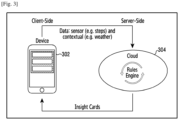
- Fig. 3 a block diagram shows a transfer of information between a client side and a server side.
- Users may have a device for activity tracking via sensors associated with device.
- the device could be smart device, such as a mobile phone, a wearable device such as a smart watch, a smart pendant, a smart bracelet, etc.
- Fig. 3 a block diagram shows a transfer of information between a client side and a server side.
- the device could be smart device, such as a mobile phone, a wearable device such as a smart watch, a smart pendant, a smart bracelet, etc.
- a client-side device 302 which may be a electronic device for example, exchanges information with a server-side device 304, which may be a cloud-based server having a rules engine, in one embodiment.
- Data including for example sensor data, environmental data and contextual data, are provided to the rules engine of the server-side.
- a rules engine may analyze the data and generate information, such as insight information as described below to help achieve a wellness goal.
- Information related to a wellness program of the user such as an insight card that could be displayed on a screen of a electronic device, can be provided back to the user, as will be described in more detail below. While an insight card is shown by way of example, it should be understood that information related to achieving a wellness goal could be provided to a user in any format, such as visual or audible format, or at any type of device, including multiple devices accessible by a user.
- a electronic device may monitor a user's sleep or lack of activity. For example, to monitor a user's sleep, one embodiment may track data points, including but not limited to a duration of sleep, historical sleep data, a time that the user went to sleep, a time that the user woke up, a sleep consistency rating, phone usage data, weather information, heart rate, caffeine input data (e.g. a manual input), user provided sleep rating (e.g. a manual input).
- data points including but not limited to a duration of sleep, historical sleep data, a time that the user went to sleep, a time that the user woke up, a sleep consistency rating, phone usage data, weather information, heart rate, caffeine input data (e.g. a manual input), user provided sleep rating (e.g. a manual input).
- Actionable Insights may be presented to the user, such as by way of an insight card or some other messages, (e.g. an audible message).
- Actionable Insights may suggest actions for the user to take on, in view of the insight concluded based on the tracked data that may be received from a sensor, input by a user, or otherwise provided to a device of the user.
- Proactive insights are Actionable Insights provided to the user based on continuous tracking of the user's progress measured against their set goal.
- Reactive insights are Actionable Insights presented to the user based on trends being noticed by the system with respect to the goals set by the users. Noticeable trends may represent repeatable patterns that can be noticed from the historically collected user data.
- Correlational insights are Actionable Insights driven by combining multiple user data points into a single insight that is then presented to the user so that the user may be able to derive unseen patterns from the data. Criteria for determining whether to display an insight may include whether there is an insight or a correlation available, whether the correlation or insight is significant, the relative importance of the insight, the number of insight carts that have been displayed recently, whether it is the right time of the day to display the insight, and whether a user has found an insight card useful in the past.
- one embodiment may notify the user of: 1) a reactive insight revealing a noticeable trend such as "Ten consecutive days of extra sleep...must feel good. would you like to extend your sleep goal?"; 2) a proactive insight such as "It's getting to that time of the day to wind things down. Hit the zzz in the next hour to exceed your sleep goal"; and/or 3) a correlational insight such as "This is interesting: on the days that you sleep less, you walk less. Don't let today be another statistic, and hit that 8k step goal!" While proactive insights, reactive insights, and correlational insights are shown by way of example, it should be understood that these categories are provided by way of example, and different categories or additional categories could be provided.
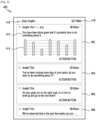
- the daily insight feed 400 may be shown on a screen of a device of the user, or provided to the user in some other format, such as an audible format.
- the daily insight feed 400 may comprise a plurality of insight cards 402-408. Each insight card may include an insight title 410, an information portion 412, and a graphic portion 412. Each of the insight cards may be selected, such as by tapping on the insight card, to see additional information related to the insight. While specific fields of the insight cards are shown by way of example, it should be understood that different fields, including a lesser or greater number of fields could be implemented.
- the daily insight feed 400 may comprise a settings option 416, which can be selected to set preferences related to the display of insight information. A return option 418 can be selected to leave the daily insight feed.
- a Social Insight is another type of insight that may be provided, and may include using a user's stated goals and friend networks to suggest competing with a friend (who may be another user registered to a wellness tracking program for example) to boost their performance and engagement level and "beat" their score for the week.
- the user device is configured to identify friends of the user registered to the wellness tracking program. While friends are described by way of example, a user may also follow one or more users that they do not know, which may include celebrities or other famous people. Friends of the user may be first retrieved from the contact list stored on the device. Friends of the user can be further determined, upon the user's authorization, based on the user's social network information (such as Facebook friends, Instagram followers, contacts saved in an email service, etc.).
- the device may connect with the wellness service and identify those friends that are also registered with the service.
- a wellness service could be any type of service that may help a user improve any aspect of health, such as health monitoring, or any other service that may increase the chances of achieving wellness goals, such as involvement in fitness centers that provide opportunities to exercise, or clubs or organizations for purchasing health food, exercise equipment, or electronic equipment for tracking or taking measurements of a user.
- a user can identify friends (registered with the wellness service) whom she would like to connect with and view their wellness achievements.
- the service can also "match" the user to a similar profile based on the aforementioned process, or identify groups or celebrities to match with.
- the matching capability may be performed on a wellness tracking server used by a wellness tracking program, such as a server for example.
- One or more devices monitor the user's performance, and can challenge the user based on her friend's performance retrieved from the wellness server.
- the device may suggest a challenge to the user.
- the device may choose a friend whose goal is the closest to the user, or the device may choose a friend based on frequency of interactions between the user and this friend. It can also base suggestions on currently followed users.
- the wellness service may only share some information, such as an achievement level with a device of the user.
- the device can determine the achievement level of the user, and based on the level difference, ask the user whether she would like to beat her friend (i.e. achieve greater performance according to one or more criteria, including for example one or more measurements based upon user tracking).
- the achievement level may be predetermined by the wellness service or program based on a ranking mechanism. For example, all registered users may be ranked from 1 to 10 based on activity type and length. This way, the user will not know exactly what her friend did, or for how long. However, the device is able to determine what can be done to raise levels. If the friend opts to share activity details with the user, the device can provide such details to the user. The device will notify the user that her current wellness plan or "goal" needs to be updated to beat her friend or followed users, also known as shadowed users.
- the device may notify the user that her current wellness plan or "goal" needs to be updated to beat her friend.
- the device may make recommendations that may help the user achieve that goal.
- the recommendations may be as simple as carrying out one activity longer than planned.
- the device may also recommend alternative activities, taking into consideration environmental data such as weather, pollution, time, location, venue, and/or user's history and preference.
- the device may suggest a certain activity on a time that is effective and convenient for the user to outperform her friends. For example, the device may understand that the user will have a BBQ party near a park this weekend, and therefore recommend playing soccer so that the user can boost her performance without changing her weekend plans.
- a notification will be sent to the friend informing her that the user will try to compete, and the friend's device may make a recommendation in a similar manner to help the friend maintain the lead. If the user succeeds in the challenge, the device may ask the user to upgrade her wellness plan accordingly.
- the device may recommend that the user follow her friend, as a "ghost" or "shadow” user. If the user chooses to do so, the device may make recommendation in a way to mirror the friend. If the user and the friend are located in different areas, the device can map the friend's venue to a local one available to the user, based on the user's current location. For example, if the user's friend is jogging in Central Park, and the user is in Mountain View, CA, the user's device may recommend following a trail in the Shoreline park that resembles the trail in Central Park, such as in distance, incline or overall difficulty or calories burned.
- the following example illustrates a daily insight provided to a user to follow a friend.
- User A has set a goal to be active for at least 60 minutes a day. She meets this goal on Monday and Tuesday, but falls behind on Wednesday.
- a health tracking app notices her dip in performance and selects User B as a suggested challenge partner based on his similar goals and strong weekly performance.
- User A taps the card and accepts the challenge, modifying her goal for the week.
- she receives an activity summary card showing her performance relative to User B and adjusting her daily goals to include her original goal (60 minutes) and stretch goal (72 minutes).
- User A has surpassed her 60-minute goal and beaten User B on the weekly leaderboard.
- User B may challenge User A to push his goals even further.
- Intervention Insight may also be provided.
- a request may be made for regular self-report data to augment their sensor data, and ultimately a detailed report suggesting steps to take may be provided.
- the device may provide an insight card that communicates the challenge and suggests that the user start an intervention period.
- Intervention may have preset notions or threshold values based on medical knowledge or user history data. For example, some studies show that a person should have an average daily sleep of 7-8 hours.
- an intervention period may be triggered when the device determines that the user failed to follow her sleep schedule (for example, the user has gone to bed later and/or got up later) for a certain time period.
- the length of the intervention period may have a system default value, or an initial set up based on the nature of the activity.
- the intervention period may be set as two weeks, but may generally have a finite value and last for a specific, limited period of time.
- the device may retrieve a list of survey questions associated with the difficulty experienced by the user.
- the list of survey questions may be created based on medical knowledge maintained at a wellness service using a wellness server or by a wellness program that helps illuminate underlying causes of failure to achieve a certain wellness plan or goal.
- the device may ask whether the user has consumed coffee in the later afternoon, or whether the user drinks water before bedtime.
- the device may also ask questions related to water consumption. These questions may be asked during appropriate times during the day to coincide with the behavior being questioned (e.g. sleep questions immediately upon waking, food questions after regular meal times, etc.).
- the device may recommend remedial actions, in response to the user's answer to the survey questions, or withhold making suggestions until the end of the intervention period, depending on the strength of a behavior pattern. For example, if the user indicates that she did drink espresso at 5PM, the device may suggest drinking it earlier during the day or a decaf coffee instead at 5PM. Remedial actions may also be suggested based on shadowed users. For example, the device may state that shadowed users found success drinking a decaf coffee at 5PM. The alternative suggestions are also based on established medical knowledge and/or common observation. For example, if the user indicates that she drinks water right before bedtime, the device may suggest to avoid drinking water two hours before bed.
- the devices may recommend different options to various users due to their medical conditions, or may withhold recommendations until more conclusive suggestions are available.
- Each survey question may have a different prompting frequency, based on the nature of the question and/or status update of the user.
- the coffee question may be raised every other day, while the water question may be prompted twice a week.
- the device may further suggest a tracking program to the user. For example, the device may recommend a coffee tracker, if the user's sleeping schedule improved after stop drinking coffee in the late afternoon.
- the device may present the user with a comprehensive report of their performance relative to the type of intervention and goal (e.g. sleep, activity, nutrition, etc.).
- This report may combine elements of both quantitative (i.e. behavior-based) and qualitative (i.e. self-report or survey) data.
- the device may generate a series of observations or patterns that have been observed, potential suggestions or ideas on ways to improve the user's health, and additional options to learn more.
- These suggestions may include changes to the user's goals, new goals or trackers to employ, or a suggestion to connect to a doctor using the Ask an Expert feature of a health tracking app.
- These actions may be related to any shadowed users, showing suggestions these users have taken.
- the device may also suggest extending the intervention period to ensure that the improvement has been stabilized. How long an intervention period can be extended may be goal-specific, and/or be determined by the nature of the recommended actions. If the device determines that the issue stays or that the device has exhausted the survey questions, the device may obtain a list of professionals that may be provided to the user and that may help the user with the difficulty experienced by the user.
- the example below demonstrates an intervention initiated by a health tracking app implemented on a device of the user.
- User A is struggling with her sleep. Her goal is to sleep at least 7 hours a night, and she has consistently slept less than 5 for over two weeks. The device notices this pattern and suggests that she conduct an intervention to better understand her sleep habits and suggest ways for her to sleep better.
- User A agrees and elects to begin the intervention program. Every morning, she receives a series of prompts that ask her to rate her sleep, and ask whether certain conditions were present during her sleep. For example, the device may ask how many times she woke up during the night, whether she experienced night sweats, or whether she had trouble falling asleep.
- the device may ask if her lights are still on, whether she is working or winding down, or whether she has begun to get ready to sleep.
- User A may receive a report from her device illustrating her sleep patterns, and showing that she tends to get poor sleep when she has night sweats, and that this is correlated with her caffeine intake during the day.
- the device may suggest that she limit caffeine to one cup of coffee before 3pm, and adjust her caffeine tracker accordingly.
- User A consents and begins her new sleep program.
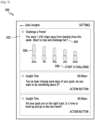
- Fig. 5 another example of a daily insight feed 500 that may be provided to a user receiving wellness information is shown.
- the example of a daily insight feed shown in Fig. 5 includes an insight card comprising a challenge request 502 having an information portion 504 including a challenge related to a number of steps taken for the day, and a graphic portion 506 showing a number of steps taken by the user of the mobile device (designated at "me") and 4 other users including Anna, Ellie, Jack, and Sarah.
- the user can select the option 508 to accept the challenge.
- Insight Cards are intended to provide the user with clear, impactful health insights in plain language, and a direct action to take to improve their health and achieve health related goals.
- Actionable Insights provided on insight cards can be accessed by tapping on an Insight Feed icon, which loads the Insight Feed as will be described in more detail below in reference to Fig. 7 . Further, tapping on a card leads to a Detail View.
- Actionable Insights can also be accessed directly by tapping on a notification delivered via a Quick Panel, as will also be described in more detail below in reference to Fig. 7 .
- Actionable Insights may be powered by a rule-based engine that compares various data (e.g. user goals, behavioral and sensor data, self-report data, external data sources) to determine triggers or correlations that drive user insights and suggests actions to improve their health.
- the data can be provided to or detected by a device used to provide wellness information to a user.
- the data could include user goals, such as to "Feel More Rested: Bedtime and Wakeup Times, Sleep Quality Goal," "Be More Active: Active Minutes, Calories, Steps,” or “Eat Healthier: Calories Consumed, Fat/Carbohydrates/Protein Consumed.”
- the data could also include sensor data, which may include sound amplitude, acceleration, light intensity, screen proximity (which may be used to adjust the size of a font displayed on a screen), running apps (which may be used to how information is distributed), battery states (which may affect when and how often insights are provided), screen states (which may be used to determine what a user is doing at the time and what insights to provide), and GPS/location, for example.
- the data could also include Self-Report Data: Feel More Rested: Bedtime and Wakeup Times, Sleep Quality Goal, Be More Active: Active Minutes, Calories, Steps, Eat Healthier: Calories Consumed, Fat/Carbohydrates/Protein Consumed.
- External Data Sources could also be used to provide Weather and local conditions (e.g. UV, humidity, pollution, etc.), Friends' activity and goals (e.g. social data). While some examples of data sources are provided, it should be understood that other sources of data could also be used to determine or obtain data associated with a wellness program.
- Insights may also be pushed to the user when they are believed to be most timely, and are pushed only when a significant trigger or correlation is found. Variations on the insight are displayed at random, and variations with greater engagement are prioritized for future display. User interactions may be monitored by the system and tracked. Via a Bayesian learning algorithm for example, card types that are consistently engaged with (e.g. taps, time spent) are prioritized and displayed; ignored cards are deprioritized and stop appearing. Linguistic and content-based variations are A/B tested, with favored combinations prioritized.
- a diagram shows a mobile device displaying another type of insight card that provides a daily activity goal 602.
- the user may be provided with a boost activity option 604, where additional actions related to the activity goal could be provided to help the user exceed the goal, or achieve a different goal that may be beneficial in the user's wellness program.
- a main screen display 702 for a health tracking app comprises an daily insight feed icon 704 that can be selected to provide daily insights on the daily insights feed 706, as described above in reference to Figs. 5 and 6 .
- the main screen display 702 comprises a group of information sections, including by way of example a goal section 708, a step tracking section 710, and sleep monitoring section 712, and a sensor tracking section 714.
- insight feed icon 704 is selected, the daily insights feed is presented, where different fields associated with daily insights could be accessed.
- the detailed view 716 shows data related to a user's sleep, including for example a sleep rating and sleep goals versus performance. While an example of a weekly sleep hygiene quick access panel is shown in Fig. 7 by way of example, it should be understood that quick access panels could be provided for any type of wellness information.
- a diagram shows a device having a quick access panel for providing information related to an activity goal.
- an activity coach section 802 can be selected, where a daily activity goal 804 can be provided.
- the daily activity goa can include information related to an activity goal and include summary information associated with activity for achieving the goal. Within the daily activity goal, more detailed information can be provided in response to the selection of a category of summary data.
- Fig. 9 a diagram shows different categories of information provided to a user of a device tracking wellness information.
- the categories of information shown by way of example in Fig. 9 include proactive insight, reactive insight, and correlational insight as described above.
- the proactive insight may include an indication of a goal met for a certain category of activity
- a reactive insight may include a particular data trend that is identified for a particular activity
- a data correlation may be presented, or the user could select the insight, such as by tapping the screen, to access more detailed information related to the insight.
- a preference score such as a number of times a type of notification is opened, a number of insight cards that are opened, CTA/Action Taps, the amount of time spent on Detail View, and direct user feedback (i.e. a rating). While this criteria for determining a preference score is provided by way of example, it should be understood that a fewer or greater number of criteria could be used, and the criteria could be weighted to generate a preference score.
- FIG. 11 a diagram shows the presentation of information associated with a time zone shift.
- a goal portion 1102 could be provided to enable a user to review a goal related to achieving wellness goals in spite of time zone changes.
- a status portion 1104 could be provided to enable a user to understand information related to a potential future time zone change. For example, a device could detect that the user is moving or may have knowledge of travel plans based upon calendar information for example, and estimate the time zone change.
- a social insight 1106 could be provided based upon the time zone change, such as providing an indication of the most active time period for a user in the new time zone.
- a Time Zone Insight may also allow using a user's location and time zone shift data to suggest adjusting their sleep and activity goals to optimize their health, recover from jetlag and maintain their progress towards their health goals.
- a device When a user travels and crosses time zones, a device will notify the user with activity recommendations based on recognition of such changes.
- Time zone shift notification and recommendation is one example of the proactive insight feature.
- the device may retrieve the user's wellness plan and identifies activities that should be carried out for the rest of the day. If the user is shadowing another user in a different time zone, it will alert the user and ask if the user would prefer to be temporarily matched with another user in the same time zone; if not, goals and challenge requests will be adjusted as necessary for the new time zone.
- the device may prompt the user by asking whether she is interested in keeping the same time schedule for these activities, notwithstanding the time zone change.
- the device may recommend an adjusted activity schedule, changing activity period for one activity, removing one activity, and/or replace one activity with another, etc. The recommendation is based on the percentage needed to accomplish the goal set by the wellness plan for that day (e.g.
- completion percentage can be determined based on already performed activities, which are tracked by the device, for that day), the remaining time for the day caused by the time zone change, the user's activity history and preference associated with the present time.
- the device may be configured to further recognize transportation modes, track food/water consumption.
- the device may also retrieve information identifying an impact (e.g. adjust jet lag that the user needs to sleep shorter/longer than usual, take certain medicine, etc.) to a human due to the time zone change.
- the device may recommend nutrition intake and other activities (e.g. unusual activities such as meditation, message; or activity specific to the present location of the user, surfing, skiing, etc.) to help the user stay on the wellness plan.
- the following example shows Actionable Insights based upon a time zone change.
- Adam has a goal of sleeping at least 8 hours, with a bedtime of 10pm and a wake-up time of 6am set on his wellness application.
- User A embarks on a business trip to Dubai, where the time difference is +8 hours.
- Upon landing in Dubai he receives an insight card that welcomes him to Dubai and reminds him of the time zone change. It asks him if he would like to be matched with a local user, and he consents.
- a local user in the new time zone could be selected to have similar characteristics as the user being followed in the original time zone.
- the local user can be someone sharing similar fame/reputation, body shape, age, gender, etc., someone who has a good relationship with a particular user such as a celebrity, someone who has exercised or joined activity events previously with the celebrity, a trainer of the celebrity, or someone with profile similar to the user himself, etc.
- the local user in the new time zone could be selected based upon criteria for matching users, such as the use of a performance index as set forth below or any other criteria for matching a user to another user having similar goals or characteristics.
- a list of applicable users is generated, along with a list of local groups with information on their activities and historic data, and he selects the "Dubai Runners Club" group to shadow.
- Actionable Insights also provides him contextual data, including local sunrise and sunset, average statistics on sleep within that country and city, and number of daylight hours left. He is also presented with contextually-relevant articles that provide tips and guidance on how to improve the quality and duration of his sleep while he is traveling. It should be noted that the user can still follow the same celebrity, but based upon different criteria. Instead of following the celebrity's present activity, the user can participate in activities based on what the celebrity did when experiencing a similar time zone change. The user can also choose to participate in activities similar to other followers of the celebrity, current activities when they are in the same current time zone, or past activities when they were in the same time zone previously. An action may be presented on-screen to Adam to change his sleep goal. He taps the action button, allowing him to adjust his bedtime and wake-up time to more reasonable hours, allowing him to maintain his sleep goals in his new time zone. In one embodiment, Actionable Insights may make recommendations and/or provide insights without user inputs.
- the device is also capable of providing advanced recommendation if it can determine that time zone change will happen within certain time period based on analyzing of the user's calendar (e.g. events listed on the calendar indicating traveling to a different city, state, or country).
- FIG. 12 a diagram shows an activity summary for a user of a device tracking wellness information.
- a summary field 1202 could be included to provide a user with summary information, such as a weekly activity summary as shown.
- a performance field 1204 could be included to provide a user with information related to a user's performance, such as exercise, diet, or any other metric for determining a user's activity that may impact achieving a wellness goal.
- the performance field 1204 of Fig. 12 may include information related to a goal versus performance for certain activities and performance detail associated with certain days of a week for example.
- All Actionable Insights are delivered to a user relative to their own goals, providing customized messages, content and recommendations dependent on how they perform against these benchmarks.
- Goals can be set manually, or through a mechanism known as "shadowing.” Shadowing provides the user visibility into the health activities that another user is engaged in. Dependent on bi-directional preferences, users can see such items as but not limited to scheduled workouts, meal plans, and sleep schedules of the users they shadow. Importantly, users can set their own goals relative to a Shadowed user's goals, selecting either to match or outperform (i.e. "beat") these goals.
- Users can shadow their immediate contacts, friends and family by directly connecting with them through a wellness tracking app. They can also ask to be algorithmically matched with another wellness tracking user who has a similar health profile (including for example weight, height, age, BMI, health goals and past performance), creating a "virtual" shadowing relationship with this user. The requested user has the option to share or not share their data and has complete control over what information is shared. Users can also shadow groups of people, such as their home town (e.g. Sunnyvale, CA) or affinity groups (e.g. "Sea Kayakers”). Finally, users can shadow celebrities or well-known personalities, either for free or for a fee.
- Users can be matched with another user of a wellness tracking app using a number of data inputs, which together yield a "performance index" that is not visible to the user but that presents a number of recommended users to shadow.
- the inputs that matching takes into account include: self-reported data: health goals, level of desired effort, functional training requirements, if any.
- Data can also include automatically collected data, such as time zone and location type (e.g. urban, suburban, exurban or rural), training or activity history, weather, transaction history (e.g. a mobile payment vendor), content consumption patterns (e.g. TV, radio, music, etc.), driving habits and patterns (e.g. collected via Automatic or similar device), keywords/ topics discussed (e.g.
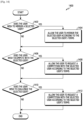
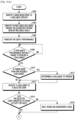
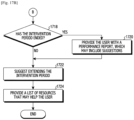
- FIG. 13-17 The following flow charts describe various exemplary methods of allowing a user to receive information associated with a wellness program.
- the various elements of the methods of Figs. 13-17 may be implemented using the systems and circuits of Figs. 1-12 as described, or using some other suitable circuits. While specific elements of the method are described, it should be understood that additional elements of the method, or additional details related to the elements, could be implemented according to the disclosure of Figs. 1-12 .
- a flow diagram shows a method of allowing a user of a device tracking wellness information to shadow another user of a device tracking wellness information.
- Available users that may be followed are identified at a block 1302.
- a user is allowed to select another user to follow at a block 1304.
- the user may select another user to follow on a mobile device or other computer device using a wellness app for example.
- It is then determined whether a selected user is required to receive a request to be followed at a block 1306. Such a requirement may be set by a user on a mobile device or other computer implementing a wellness app. If so, it is determined whether the selected user has accepted the request at a block 1308.
- Information from the selected user is provided to the user that is following the selected user at a block 1310.
- Interaction between the user and the selected user is allowed at a block 1312. It is then determined whether the user has changed time zones at a block 1314.
- the various users may exchange messages related to their shadowing.
- Information in implementing the wellness program related to the time zone change is provided at a block 1316. Insight is provided to the user at a block 1318. For example, any type of insight as described above could be provided.
- a flow diagram shows a method of enabling a user that is being shadowed to establish rules related to the transfer of information. It is determined whether the user wishes to mirror a selected user at a block 1402. If so, the user is allowed to mirror the selected user according to the selected user's terms at a block 1404. For example, a user that is being followed can select what type of information is provided to the other user. It is then determined whether the user wishes to compete with the selected user at a block 1406. If so, the user is allowed to request a competition with the selected user according to the selected user's terms at a block 1408. For example, the user that is being followed may select the type of activities that she may wish to compete in (e.g.
- the user determines whether the user wishes to challenge the selected user at a block 1410. If so, the user is allowed to request a competition with the selected user according to the selected user's terms at a block 1412. For example, the user may select to be provided a request only on week on weekends or during the summer.
- a flow diagram shows a method of providing information to a user of a device tracking wellness information based upon changes in a time zone. It is determined whether a planned change in time zone will occur at a block 1502. If so, advanced recommendations are provided to adjust to the change in time zone at a block 1504. It is then determined whether the user has changed time zones at a block 1506. If so, the user is provided with activity recommendations based upon the change in time zone at a block 1508. It is also determined whether the user prefers to be temporarily matched with another used in the same time zone at a block 1510. If so, the goals and challenge requests are adjusted as necessary for the new time zone at a block 1512.
- a flow diagram shows a method of providing information to a user of a device related to social insight.
- Users registered to a wellness service are identified at a block 1602.
- Other users including groups or celebrities having similar wellness goals are identify at a block 1604.
- a user's performance is monitored at a block 1606. It is then determined if a user's performance within a range to provide a challenge at a block 1608. If so it is also determined if there is more than one possible challenge at a block 1610. If so, a challenge to present is determined at a block 1612. Either way, a challenge is suggested to a user at a block 1614.
- a recommendation to beat the selected user is provided at a block 1622. It is determined whether the selected user has accepted the challenge at a block 1624. If so, the user is notified that the selected user has accepted the challenge at a block 1626. Recommendations are provided to the selected user to beat the user at a block 1628. The user can then be asked to upgrade a wellness plan at a block 1628. It is also determined whether the user and the selected user are in different locations at a block 1630. If so, a recommendation may be made to the user of available locations similar to the selected user's location at a block 1632.
- a flow diagram shows a method of enabling an intervention based upon information associated activities of a user trying to achieve a wellness goal. It is determined whether the user has had difficulty staying on a wellness plan or achieving a goal at a block 1702. If so, an insight that communicates a challenge and suggests that the user start an intervention period is provided at a block 1704. It is then determined whether the user has accepted the intervention at a block 1706. If so, a user intervention period based upon the wellness goal is established at a block 1708. A list of survey questions are provided at a block 1710. Remedial actions, which may be based upon survey questions, may also be provided at a block 1712.
- a tracking program may be recommended at a block 1716. It is also determined whether the intervention period has ended at a block 1718. If so, the user may be provided with a performance report, which may include suggestions to achieve performance goals, at a block 1720. If not, it may be suggested to extend the intervention period at a block 1722, and a list of resources that may help the user may be provided at a block 1724.
Landscapes
- Health & Medical Sciences (AREA)
- Engineering & Computer Science (AREA)
- General Health & Medical Sciences (AREA)
- Primary Health Care (AREA)
- Medical Informatics (AREA)
- Public Health (AREA)
- Epidemiology (AREA)
- Business, Economics & Management (AREA)
- Biomedical Technology (AREA)
- Physical Education & Sports Medicine (AREA)
- Theoretical Computer Science (AREA)
- General Business, Economics & Management (AREA)
- Software Systems (AREA)
- Tourism & Hospitality (AREA)
- Computer Hardware Design (AREA)
- General Physics & Mathematics (AREA)
- Physics & Mathematics (AREA)
- Databases & Information Systems (AREA)
- Life Sciences & Earth Sciences (AREA)
- Biophysics (AREA)
- Child & Adolescent Psychology (AREA)
- Economics (AREA)
- Human Resources & Organizations (AREA)
- Marketing (AREA)
- Strategic Management (AREA)
- General Engineering & Computer Science (AREA)
- Radiology & Medical Imaging (AREA)
- Pathology (AREA)
- Data Mining & Analysis (AREA)
- Nuclear Medicine, Radiotherapy & Molecular Imaging (AREA)
- Medical Treatment And Welfare Office Work (AREA)
Claims (12)
- Verfahren zum Bereitstellen eines Gesundheitsdienstes durch eine elektronische Vorrichtung eines ersten Benutzers, wobei das Verfahren Folgendes umfasst:Identifizieren eines zweiten Benutzers in einer ersten Zeitzone, dem für den Gesundheitsdienst zu folgen ist;basierend darauf, dass ein dem zweiten Benutzer zugeordneter Messwert innerhalb eines vorbestimmten Bereichs eines dem ersten Benutzer zugeordneten Messwerts liegt, Anzeigen einer Erkenntniskarte zum Verbessern der Gesundheit des ersten Benutzers über eine Anzeige der elektronischen Vorrichtung, wobei die Erkenntniskarte den dem zweiten Benutzer zugeordneten Messwert und eine Herausforderungsanfrage für den zweiten Benutzer enthält;Erkennen einer Zeitzonenänderung des ersten Benutzers von der ersten Zeitzone zu einer zweiten Zeitzone basierend auf Kontextinformationen der elektronischen Vorrichtung;als Reaktion auf das Erkennen der Zeitzonenänderung Anzeigen einer Benutzerschnittstelle über die Anzeige zum Auswählen, ob mit einem zu folgenden lokalen Benutzer abzugleichen ist;als Reaktion auf eine Benutzereingabe für die Benutzeroberfläche Auswählen eines dritten Benutzers als den lokalen Benutzer, dem für den Gesundheitsdienst zu folgen ist, basierend auf der Zeitzonenänderung; undbasierend darauf, dass ein dem dritten Benutzer zugeordneter Messwert innerhalb des vorbestimmten Bereichs des dem ersten Benutzer zugeordneten Messwerts liegt, Anzeigen einer Erkenntniskarte zum Verbessern des Gesundheitsstatus des ersten Benutzers über die Anzeige, wobei die Erkenntniskarte den dem dritten Benutzer zugeordneten Messwert und eine Herausforderungsanfrage für den dritten Benutzer enthält.
- Verfahren nach Anspruch 1, wobei der dem zweiten Benutzer zugeordnete Messwert oder der dem dritten Benutzer zugeordnete Messwert einem messbaren Wert entspricht, der sich auf eines von Schlaf, Aktivität oder Ernährung bezieht.
- Verfahren nach Anspruch 1, wobei die Kontextinformationen Standortinformationen über die Bewegung des ersten Benutzers oder Kalenderinformationen für den Reiseplan des ersten Benutzers enthalten; und
wobei die Zeitzonenänderung des ersten Benutzers basierend auf den Standortinformationen oder den Kalenderinformationen erkannt wird. - Verfahren nach Anspruch 1, ferner Anzeigen von Aktivitätsempfehlungen basierend auf der zweiten Zeitzone umfassend.
- Verfahren nach Anspruch 1, ferner Anzeigen eines Vorschlags zum Anpassen von Schlaf- und Aktivitätszielen basierend auf der Zeitzonenänderung umfassend.
- Verfahren nach Anspruch 1, ferner Anzeigen eines Vorschlags zum Erholen vom Jetlag basierend auf der Zeitzonenänderung umfassend.
- Elektronische Vorrichtung, die zum Umsetzen des Verfahrens nach Anspruch 1 ausgelegt ist.
- Elektronische Vorrichtung, die zum Umsetzen des Verfahrens nach Anspruch 2 ausgelegt ist.
- Elektronische Vorrichtung, die zum Umsetzen des Verfahrens nach Anspruch 3 ausgelegt ist.
- Elektronische Vorrichtung, die zum Umsetzen des Verfahrens nach Anspruch 4 ausgelegt ist.
- Elektronische Vorrichtung, die zum Umsetzen des Verfahrens nach Anspruch 5 ausgelegt ist.
- Elektronische Vorrichtung, die zum Umsetzen des Verfahrens nach Anspruch 6 ausgelegt ist.
Applications Claiming Priority (3)
| Application Number | Priority Date | Filing Date | Title |
|---|---|---|---|
| US201662438426P | 2016-12-22 | 2016-12-22 | |
| US15/716,624 US11191999B2 (en) | 2016-12-22 | 2017-09-27 | Method of allowing a user to receive information associated with a goal |
| PCT/KR2017/015191 WO2018117663A1 (en) | 2016-12-22 | 2017-12-21 | A method of allowing a user to receive information associated with a goal |
Publications (4)
| Publication Number | Publication Date |
|---|---|
| EP3549090A1 EP3549090A1 (de) | 2019-10-09 |
| EP3549090A4 EP3549090A4 (de) | 2020-01-22 |
| EP3549090C0 EP3549090C0 (de) | 2024-09-11 |
| EP3549090B1 true EP3549090B1 (de) | 2024-09-11 |
Family
ID=62624846
Family Applications (1)
| Application Number | Title | Priority Date | Filing Date |
|---|---|---|---|
| EP17885244.8A Active EP3549090B1 (de) | 2016-12-22 | 2017-12-21 | Verfahren zur ermöglichung eines benutzers zum empfang von informationen im zusammenhang mit einem tor |
Country Status (4)
| Country | Link |
|---|---|
| US (1) | US11191999B2 (de) |
| EP (1) | EP3549090B1 (de) |
| KR (1) | KR102405405B1 (de) |
| WO (1) | WO2018117663A1 (de) |
Families Citing this family (16)
| Publication number | Priority date | Publication date | Assignee | Title |
|---|---|---|---|---|
| BR112015004595A2 (pt) | 2012-08-28 | 2017-07-04 | Delos Living Llc | sistemas, métodos e artigos para melhorar o bem-estar associado a ambientes habitáveis |
| US10712722B2 (en) | 2014-02-28 | 2020-07-14 | Delos Living Llc | Systems and articles for enhancing wellness associated with habitable environments |
| US10923226B2 (en) | 2015-01-13 | 2021-02-16 | Delos Living Llc | Systems, methods and articles for monitoring and enhancing human wellness |
| US11224782B2 (en) * | 2017-06-04 | 2022-01-18 | Apple Inc. | Physical activity monitoring and motivating with an electronic device |
| US11668481B2 (en) | 2017-08-30 | 2023-06-06 | Delos Living Llc | Systems, methods and articles for assessing and/or improving health and well-being |
| US20190199715A1 (en) * | 2017-12-26 | 2019-06-27 | Paypal, Inc. | Shared account enrollment and biometric activity monitoring for value apportionment |
| EP3850458A4 (de) | 2018-09-14 | 2022-06-08 | Delos Living, LLC | Systeme und verfahren zur luftsanierung |
| US20220237637A1 (en) * | 2018-12-18 | 2022-07-28 | Meta Platforms, Inc. | Systems and methods for real time crowdsourcing |
| EP3675001B1 (de) * | 2018-12-27 | 2025-04-16 | Koa Health Digital Solutions S.L.U. | Computerimplementiertes verfahren, system und computerprogramm zur bestimmung des optimalen verhaltenspfades für einen benutzer |
| US11844163B2 (en) | 2019-02-26 | 2023-12-12 | Delos Living Llc | Method and apparatus for lighting in an office environment |
| US11898898B2 (en) | 2019-03-25 | 2024-02-13 | Delos Living Llc | Systems and methods for acoustic monitoring |
| KR102370765B1 (ko) * | 2020-05-25 | 2022-03-04 | 주식회사 화이트큐브 | 목표 달성 보상 지급 방법 |
| KR20220019396A (ko) * | 2020-08-10 | 2022-02-17 | 삼성전자주식회사 | 컨텐츠를 추천하기 위한 전자 장치 |
| CN116235137A (zh) * | 2020-08-11 | 2023-06-06 | 苹果公司 | 用于管理健康数据的用户界面 |
| US12370411B1 (en) * | 2020-12-30 | 2025-07-29 | Meta Platforms Technologies, Llc | Interfaces and methods for representing coordinated objectives |
| WO2025221171A1 (en) * | 2024-04-19 | 2025-10-23 | Ali MAJED | Title: innovative social networking application for personal vision and goal achievement (twinklode) the twinkle of lodestar |
Family Cites Families (28)
| Publication number | Priority date | Publication date | Assignee | Title |
|---|---|---|---|---|
| US20130158368A1 (en) | 2000-06-16 | 2013-06-20 | Bodymedia, Inc. | System for monitoring and managing body weight and other physiological conditions including iterative and personalized planning, intervention and reporting capability |
| WO2006094288A2 (en) | 2005-03-04 | 2006-09-08 | Peterson Eric K | Method and apparatus for mobile health and wellness management incorporating real-time coaching and feedback, community and rewards |
| US10115172B2 (en) | 2006-04-07 | 2018-10-30 | Koninklijke Philips N.V. | Self-adaptive care plan goal modules |
| US7771320B2 (en) * | 2006-09-07 | 2010-08-10 | Nike, Inc. | Athletic performance sensing and/or tracking systems and methods |
| US20090250785A1 (en) | 2008-04-02 | 2009-10-08 | Thomas Joseph Krutsick | Methods of forming a shallow base region of a bipolar transistor |
| WO2010138975A1 (en) | 2009-05-29 | 2010-12-02 | Sk Telecom Americas, Inc. | System and method for motivating users to improve their wellness |
| GB2471902A (en) | 2009-07-17 | 2011-01-19 | Sharp Kk | Sleep management system which correlates sleep and performance data |
| US20110246926A1 (en) | 2010-04-02 | 2011-10-06 | Irunurun, Llc | Comparative action management |
| US10706128B2 (en) | 2010-05-12 | 2020-07-07 | Zipongo | System and method for automated personalized and community-specific eating and activity planning, linked to tracking system with automated multimodal item identification and size estimation system |
| US8620617B2 (en) | 2010-09-30 | 2013-12-31 | Fitbit, Inc. | Methods and systems for interactive goal setting and recommender using events having combined activity and location information |
| US20130124218A1 (en) | 2011-10-07 | 2013-05-16 | RedBrick Health Corporation | Social engagement engine for health wellness program |
| US9530331B2 (en) | 2011-10-07 | 2016-12-27 | Axeos, LLC | System and method for selecting and altering a training session |
| FI124367B (fi) | 2011-11-11 | 2014-07-31 | Firstbeat Technologies Oy | Menetelmä ja järjestelmä henkilön fysiologisen tilan kartoittamiseksi |
| US20130252216A1 (en) | 2012-03-20 | 2013-09-26 | Microsoft Corporation | Monitoring physical therapy via image sensor |
| US9597014B2 (en) * | 2012-06-22 | 2017-03-21 | Fitbit, Inc. | GPS accuracy refinement using external sensors |
| US9174085B2 (en) * | 2012-07-31 | 2015-11-03 | John Paul Foley | Exercise system and method |
| US8777624B2 (en) | 2012-10-12 | 2014-07-15 | Elencee, Inc. | Wellness and weight management system and method |
| US20140125480A1 (en) | 2012-11-06 | 2014-05-08 | Aliphcom | General health and wellness management method and apparatus for a wellness application using data associated with a data-capable band |
| US20140142967A1 (en) | 2012-11-16 | 2014-05-22 | Wellness & Prevention, Inc. | Method and system for assessing user engagement during wellness program interaction |
| US8951165B2 (en) | 2013-03-05 | 2015-02-10 | Microsoft Corporation | Personal training with physical activity monitoring device |
| US10052554B2 (en) * | 2013-03-15 | 2018-08-21 | Facebook, Inc. | Suggesting matches for players of an online multiplayer game based on skills and/or social proximity |
| WO2015048683A1 (en) | 2013-09-27 | 2015-04-02 | Futurewei Technologies, Inc. | Health management context-aware platform on smartphone |
| US9716909B2 (en) * | 2013-11-19 | 2017-07-25 | SketchPost, LLC | Mobile video editing and sharing for social media |
| US9992292B2 (en) | 2014-04-01 | 2018-06-05 | Noom, Inc. | Wellness support groups for mobile devices |
| US20150347700A1 (en) | 2014-05-30 | 2015-12-03 | Microsoft Corporation | Correlating behaviors and wellness outcomes |
| US10582007B2 (en) * | 2016-04-01 | 2020-03-03 | Fujitsu Limited | Goal-based social networking to improve user motivation |
| US20170301258A1 (en) * | 2016-04-15 | 2017-10-19 | Palo Alto Research Center Incorporated | System and method to create, monitor, and adapt individualized multidimensional health programs |
| US9794752B1 (en) * | 2016-09-29 | 2017-10-17 | International Business Machines Corporation | Dynamically creating fitness groups |
-
2017
- 2017-09-27 US US15/716,624 patent/US11191999B2/en active Active
- 2017-12-21 EP EP17885244.8A patent/EP3549090B1/de active Active
- 2017-12-21 WO PCT/KR2017/015191 patent/WO2018117663A1/en not_active Ceased
- 2017-12-21 KR KR1020197021514A patent/KR102405405B1/ko active Active
Also Published As
| Publication number | Publication date |
|---|---|
| KR102405405B1 (ko) | 2022-06-08 |
| US20180178063A1 (en) | 2018-06-28 |
| WO2018117663A1 (en) | 2018-06-28 |
| KR20190090057A (ko) | 2019-07-31 |
| EP3549090A4 (de) | 2020-01-22 |
| EP3549090C0 (de) | 2024-09-11 |
| US11191999B2 (en) | 2021-12-07 |
| EP3549090A1 (de) | 2019-10-09 |
Similar Documents
| Publication | Publication Date | Title |
|---|---|---|
| EP3549090B1 (de) | Verfahren zur ermöglichung eines benutzers zum empfang von informationen im zusammenhang mit einem tor | |
| US11397997B2 (en) | Device for implementing body fluid analysis and social networking event planning | |
| US11030708B2 (en) | Method of and device for implementing contagious illness analysis and tracking | |
| US10387898B2 (en) | Crowd-based personalized recommendations of food using measurements of affective response | |
| KR102513337B1 (ko) | 체중 관리 및 활동성 추적 시스템 | |
| US9171048B2 (en) | Goal-based content selection and delivery | |
| US20170031449A1 (en) | Wearable device | |
| US11494390B2 (en) | Crowd-based scores for hotels from measurements of affective response | |
| US9533227B2 (en) | Systems and methods in support of providing customized gamification for accomplishing goals | |
| US20140363797A1 (en) | Method for providing wellness-related directives to a user | |
| US20150079561A1 (en) | Generating, displaying, and tracking of wellness tasks | |
| JP6692239B2 (ja) | 情報処理装置、情報処理システム、端末装置、情報処理方法及び情報処理プログラム | |
| US20160174910A1 (en) | Biological exercise information display processing device and biological exercise information processing system | |
| US20250135287A1 (en) | Method and system to provide individualized interventions based on a wellness model | |
| KR102369103B1 (ko) | 사용자 정보 처리 방법 및 그 장치 | |
| KR20180065593A (ko) | 웨어러블 기기 기반의 헬스케어 시스템 | |
| US11862034B1 (en) | Variable content customization for coaching service | |
| CN111369212A (zh) | 信息管理装置、移动终端、信息管理方法及存储介质 | |
| US11654343B2 (en) | Exercise history managing device, exercise history managing method, and computer program for executing same in computer | |
| US20250103953A1 (en) | Information providing device, information providing method, and recording medium | |
| US20230241482A1 (en) | Exercise history managing device, exercise history managing method, and computer program for executing same in computer | |
| Bloodworth | Designing Goal-Oriented Systems: How Competition and Automation Foster Motivation and Results | |
| ZhiHua | Promoting Behavior Change Through Interactive Signage with Active Talk Function |
Legal Events
| Date | Code | Title | Description |
|---|---|---|---|
| STAA | Information on the status of an ep patent application or granted ep patent |
Free format text: STATUS: THE INTERNATIONAL PUBLICATION HAS BEEN MADE |
|
| PUAI | Public reference made under article 153(3) epc to a published international application that has entered the european phase |
Free format text: ORIGINAL CODE: 0009012 |
|
| STAA | Information on the status of an ep patent application or granted ep patent |
Free format text: STATUS: REQUEST FOR EXAMINATION WAS MADE |
|
| 17P | Request for examination filed |
Effective date: 20190702 |
|
| AK | Designated contracting states |
Kind code of ref document: A1 Designated state(s): AL AT BE BG CH CY CZ DE DK EE ES FI FR GB GR HR HU IE IS IT LI LT LU LV MC MK MT NL NO PL PT RO RS SE SI SK SM TR |
|
| AX | Request for extension of the european patent |
Extension state: BA ME |
|
| A4 | Supplementary search report drawn up and despatched |
Effective date: 20191220 |
|
| RIC1 | Information provided on ipc code assigned before grant |
Ipc: G16H 20/30 20180101AFI20191216BHEP |
|
| DAV | Request for validation of the european patent (deleted) | ||
| DAX | Request for extension of the european patent (deleted) | ||
| STAA | Information on the status of an ep patent application or granted ep patent |
Free format text: STATUS: EXAMINATION IS IN PROGRESS |
|
| 17Q | First examination report despatched |
Effective date: 20210923 |
|
| GRAP | Despatch of communication of intention to grant a patent |
Free format text: ORIGINAL CODE: EPIDOSNIGR1 |
|
| STAA | Information on the status of an ep patent application or granted ep patent |
Free format text: STATUS: GRANT OF PATENT IS INTENDED |
|
| INTG | Intention to grant announced |
Effective date: 20240426 |
|
| GRAS | Grant fee paid |
Free format text: ORIGINAL CODE: EPIDOSNIGR3 |
|
| GRAA | (expected) grant |
Free format text: ORIGINAL CODE: 0009210 |
|
| STAA | Information on the status of an ep patent application or granted ep patent |
Free format text: STATUS: THE PATENT HAS BEEN GRANTED |
|
| AK | Designated contracting states |
Kind code of ref document: B1 Designated state(s): AL AT BE BG CH CY CZ DE DK EE ES FI FR GB GR HR HU IE IS IT LI LT LU LV MC MK MT NL NO PL PT RO RS SE SI SK SM TR |
|
| REG | Reference to a national code |
Ref country code: GB Ref legal event code: FG4D |
|
| REG | Reference to a national code |
Ref country code: CH Ref legal event code: EP |
|
| REG | Reference to a national code |
Ref country code: DE Ref legal event code: R096 Ref document number: 602017084850 Country of ref document: DE |
|
| REG | Reference to a national code |
Ref country code: IE Ref legal event code: FG4D |
|
| U01 | Request for unitary effect filed |
Effective date: 20241010 |
|
| U07 | Unitary effect registered |
Designated state(s): AT BE BG DE DK EE FI FR IT LT LU LV MT NL PT RO SE SI Effective date: 20241029 |
|
| PG25 | Lapsed in a contracting state [announced via postgrant information from national office to epo] |
Ref country code: NO Free format text: LAPSE BECAUSE OF FAILURE TO SUBMIT A TRANSLATION OF THE DESCRIPTION OR TO PAY THE FEE WITHIN THE PRESCRIBED TIME-LIMIT Effective date: 20241211 |
|
| PG25 | Lapsed in a contracting state [announced via postgrant information from national office to epo] |
Ref country code: GR Free format text: LAPSE BECAUSE OF FAILURE TO SUBMIT A TRANSLATION OF THE DESCRIPTION OR TO PAY THE FEE WITHIN THE PRESCRIBED TIME-LIMIT Effective date: 20241212 |
|
| PG25 | Lapsed in a contracting state [announced via postgrant information from national office to epo] |
Ref country code: HR Free format text: LAPSE BECAUSE OF FAILURE TO SUBMIT A TRANSLATION OF THE DESCRIPTION OR TO PAY THE FEE WITHIN THE PRESCRIBED TIME-LIMIT Effective date: 20240911 |
|
| PG25 | Lapsed in a contracting state [announced via postgrant information from national office to epo] |
Ref country code: RS Free format text: LAPSE BECAUSE OF FAILURE TO SUBMIT A TRANSLATION OF THE DESCRIPTION OR TO PAY THE FEE WITHIN THE PRESCRIBED TIME-LIMIT Effective date: 20241211 Ref country code: ES Free format text: LAPSE BECAUSE OF FAILURE TO SUBMIT A TRANSLATION OF THE DESCRIPTION OR TO PAY THE FEE WITHIN THE PRESCRIBED TIME-LIMIT Effective date: 20240911 |
|
| U20 | Renewal fee for the european patent with unitary effect paid |
Year of fee payment: 8 Effective date: 20241226 |
|
| PG25 | Lapsed in a contracting state [announced via postgrant information from national office to epo] |
Ref country code: RS Free format text: LAPSE BECAUSE OF FAILURE TO SUBMIT A TRANSLATION OF THE DESCRIPTION OR TO PAY THE FEE WITHIN THE PRESCRIBED TIME-LIMIT Effective date: 20241211 Ref country code: NO Free format text: LAPSE BECAUSE OF FAILURE TO SUBMIT A TRANSLATION OF THE DESCRIPTION OR TO PAY THE FEE WITHIN THE PRESCRIBED TIME-LIMIT Effective date: 20241211 Ref country code: HR Free format text: LAPSE BECAUSE OF FAILURE TO SUBMIT A TRANSLATION OF THE DESCRIPTION OR TO PAY THE FEE WITHIN THE PRESCRIBED TIME-LIMIT Effective date: 20240911 Ref country code: GR Free format text: LAPSE BECAUSE OF FAILURE TO SUBMIT A TRANSLATION OF THE DESCRIPTION OR TO PAY THE FEE WITHIN THE PRESCRIBED TIME-LIMIT Effective date: 20241212 Ref country code: ES Free format text: LAPSE BECAUSE OF FAILURE TO SUBMIT A TRANSLATION OF THE DESCRIPTION OR TO PAY THE FEE WITHIN THE PRESCRIBED TIME-LIMIT Effective date: 20240911 |
|
| PG25 | Lapsed in a contracting state [announced via postgrant information from national office to epo] |
Ref country code: IS Free format text: LAPSE BECAUSE OF FAILURE TO SUBMIT A TRANSLATION OF THE DESCRIPTION OR TO PAY THE FEE WITHIN THE PRESCRIBED TIME-LIMIT Effective date: 20250111 |
|
| PG25 | Lapsed in a contracting state [announced via postgrant information from national office to epo] |
Ref country code: SM Free format text: LAPSE BECAUSE OF FAILURE TO SUBMIT A TRANSLATION OF THE DESCRIPTION OR TO PAY THE FEE WITHIN THE PRESCRIBED TIME-LIMIT Effective date: 20240911 |
|
| PG25 | Lapsed in a contracting state [announced via postgrant information from national office to epo] |
Ref country code: PL Free format text: LAPSE BECAUSE OF FAILURE TO SUBMIT A TRANSLATION OF THE DESCRIPTION OR TO PAY THE FEE WITHIN THE PRESCRIBED TIME-LIMIT Effective date: 20240911 Ref country code: CZ Free format text: LAPSE BECAUSE OF FAILURE TO SUBMIT A TRANSLATION OF THE DESCRIPTION OR TO PAY THE FEE WITHIN THE PRESCRIBED TIME-LIMIT Effective date: 20240911 |
|
| PG25 | Lapsed in a contracting state [announced via postgrant information from national office to epo] |
Ref country code: SK Free format text: LAPSE BECAUSE OF FAILURE TO SUBMIT A TRANSLATION OF THE DESCRIPTION OR TO PAY THE FEE WITHIN THE PRESCRIBED TIME-LIMIT Effective date: 20240911 |
|
| PG25 | Lapsed in a contracting state [announced via postgrant information from national office to epo] |
Ref country code: MC Free format text: LAPSE BECAUSE OF FAILURE TO SUBMIT A TRANSLATION OF THE DESCRIPTION OR TO PAY THE FEE WITHIN THE PRESCRIBED TIME-LIMIT Effective date: 20240911 |
|
| PLBE | No opposition filed within time limit |
Free format text: ORIGINAL CODE: 0009261 |
|
| STAA | Information on the status of an ep patent application or granted ep patent |
Free format text: STATUS: NO OPPOSITION FILED WITHIN TIME LIMIT |
|
| REG | Reference to a national code |
Ref country code: CH Ref legal event code: PL |
|
| 26N | No opposition filed |
Effective date: 20250612 |
|
| GBPC | Gb: european patent ceased through non-payment of renewal fee |
Effective date: 20241221 |
|
| PG25 | Lapsed in a contracting state [announced via postgrant information from national office to epo] |
Ref country code: GB Free format text: LAPSE BECAUSE OF NON-PAYMENT OF DUE FEES Effective date: 20241221 |
|
| PG25 | Lapsed in a contracting state [announced via postgrant information from national office to epo] |
Ref country code: CH Free format text: LAPSE BECAUSE OF NON-PAYMENT OF DUE FEES Effective date: 20241231 |
|
| PG25 | Lapsed in a contracting state [announced via postgrant information from national office to epo] |
Ref country code: IE Free format text: LAPSE BECAUSE OF NON-PAYMENT OF DUE FEES Effective date: 20241221 |