EP3548439B1 - Verfahren zur nitrifizierung von hochkonzentriertem ammoniakabwasser - Google Patents
Verfahren zur nitrifizierung von hochkonzentriertem ammoniakabwasser Download PDFInfo
- Publication number
- EP3548439B1 EP3548439B1 EP17804587.8A EP17804587A EP3548439B1 EP 3548439 B1 EP3548439 B1 EP 3548439B1 EP 17804587 A EP17804587 A EP 17804587A EP 3548439 B1 EP3548439 B1 EP 3548439B1
- Authority
- EP
- European Patent Office
- Prior art keywords
- nitrite
- aqueous medium
- ammonia
- anode
- concentration
- Prior art date
- Legal status (The legal status is an assumption and is not a legal conclusion. Google has not performed a legal analysis and makes no representation as to the accuracy of the status listed.)
- Active
Links
Images
Classifications
-
- C—CHEMISTRY; METALLURGY
- C02—TREATMENT OF WATER, WASTE WATER, SEWAGE, OR SLUDGE
- C02F—TREATMENT OF WATER, WASTE WATER, SEWAGE, OR SLUDGE
- C02F9/00—Multistage treatment of water, waste water or sewage
-
- C—CHEMISTRY; METALLURGY
- C02—TREATMENT OF WATER, WASTE WATER, SEWAGE, OR SLUDGE
- C02F—TREATMENT OF WATER, WASTE WATER, SEWAGE, OR SLUDGE
- C02F1/00—Treatment of water, waste water, or sewage
- C02F1/02—Treatment of water, waste water, or sewage by heating
- C02F1/04—Treatment of water, waste water, or sewage by heating by distillation or evaporation
- C02F1/048—Purification of waste water by evaporation
-
- C—CHEMISTRY; METALLURGY
- C02—TREATMENT OF WATER, WASTE WATER, SEWAGE, OR SLUDGE
- C02F—TREATMENT OF WATER, WASTE WATER, SEWAGE, OR SLUDGE
- C02F1/00—Treatment of water, waste water, or sewage
- C02F1/28—Treatment of water, waste water, or sewage by sorption
- C02F1/283—Treatment of water, waste water, or sewage by sorption using coal, charred products, or inorganic mixtures containing them
-
- C—CHEMISTRY; METALLURGY
- C02—TREATMENT OF WATER, WASTE WATER, SEWAGE, OR SLUDGE
- C02F—TREATMENT OF WATER, WASTE WATER, SEWAGE, OR SLUDGE
- C02F1/00—Treatment of water, waste water, or sewage
- C02F1/44—Treatment of water, waste water, or sewage by dialysis, osmosis or reverse osmosis
- C02F1/441—Treatment of water, waste water, or sewage by dialysis, osmosis or reverse osmosis by reverse osmosis
-
- C—CHEMISTRY; METALLURGY
- C02—TREATMENT OF WATER, WASTE WATER, SEWAGE, OR SLUDGE
- C02F—TREATMENT OF WATER, WASTE WATER, SEWAGE, OR SLUDGE
- C02F1/00—Treatment of water, waste water, or sewage
- C02F1/46—Treatment of water, waste water, or sewage by electrochemical methods
- C02F1/461—Treatment of water, waste water, or sewage by electrochemical methods by electrolysis
- C02F1/467—Treatment of water, waste water, or sewage by electrochemical methods by electrolysis by electrochemical disinfection; by electrooxydation or by electroreduction
- C02F1/4672—Treatment of water, waste water, or sewage by electrochemical methods by electrolysis by electrochemical disinfection; by electrooxydation or by electroreduction by electrooxydation
-
- C—CHEMISTRY; METALLURGY
- C02—TREATMENT OF WATER, WASTE WATER, SEWAGE, OR SLUDGE
- C02F—TREATMENT OF WATER, WASTE WATER, SEWAGE, OR SLUDGE
- C02F1/00—Treatment of water, waste water, or sewage
- C02F1/46—Treatment of water, waste water, or sewage by electrochemical methods
- C02F1/461—Treatment of water, waste water, or sewage by electrochemical methods by electrolysis
- C02F1/46104—Devices therefor; Their operating or servicing
- C02F1/46109—Electrodes
- C02F2001/46133—Electrodes characterised by the material
-
- C—CHEMISTRY; METALLURGY
- C02—TREATMENT OF WATER, WASTE WATER, SEWAGE, OR SLUDGE
- C02F—TREATMENT OF WATER, WASTE WATER, SEWAGE, OR SLUDGE
- C02F2103/00—Nature of the water, waste water, sewage or sludge to be treated
- C02F2103/005—Black water originating from toilets
-
- C—CHEMISTRY; METALLURGY
- C02—TREATMENT OF WATER, WASTE WATER, SEWAGE, OR SLUDGE
- C02F—TREATMENT OF WATER, WASTE WATER, SEWAGE, OR SLUDGE
- C02F2103/00—Nature of the water, waste water, sewage or sludge to be treated
- C02F2103/20—Nature of the water, waste water, sewage or sludge to be treated from animal husbandry
-
- C—CHEMISTRY; METALLURGY
- C02—TREATMENT OF WATER, WASTE WATER, SEWAGE, OR SLUDGE
- C02F—TREATMENT OF WATER, WASTE WATER, SEWAGE, OR SLUDGE
- C02F2201/00—Apparatus for treatment of water, waste water or sewage
- C02F2201/46—Apparatus for electrochemical processes
- C02F2201/461—Electrolysis apparatus
- C02F2201/46105—Details relating to the electrolytic devices
- C02F2201/4612—Controlling or monitoring
- C02F2201/46125—Electrical variables
- C02F2201/46135—Voltage
-
- C—CHEMISTRY; METALLURGY
- C02—TREATMENT OF WATER, WASTE WATER, SEWAGE, OR SLUDGE
- C02F—TREATMENT OF WATER, WASTE WATER, SEWAGE, OR SLUDGE
- C02F2201/00—Apparatus for treatment of water, waste water or sewage
- C02F2201/46—Apparatus for electrochemical processes
- C02F2201/461—Electrolysis apparatus
- C02F2201/46105—Details relating to the electrolytic devices
- C02F2201/4612—Controlling or monitoring
- C02F2201/46125—Electrical variables
- C02F2201/4614—Current
-
- C—CHEMISTRY; METALLURGY
- C02—TREATMENT OF WATER, WASTE WATER, SEWAGE, OR SLUDGE
- C02F—TREATMENT OF WATER, WASTE WATER, SEWAGE, OR SLUDGE
- C02F2209/00—Controlling or monitoring parameters in water treatment
- C02F2209/06—Controlling or monitoring parameters in water treatment pH
-
- C—CHEMISTRY; METALLURGY
- C02—TREATMENT OF WATER, WASTE WATER, SEWAGE, OR SLUDGE
- C02F—TREATMENT OF WATER, WASTE WATER, SEWAGE, OR SLUDGE
- C02F2209/00—Controlling or monitoring parameters in water treatment
- C02F2209/40—Liquid flow rate
-
- C—CHEMISTRY; METALLURGY
- C02—TREATMENT OF WATER, WASTE WATER, SEWAGE, OR SLUDGE
- C02F—TREATMENT OF WATER, WASTE WATER, SEWAGE, OR SLUDGE
- C02F2301/00—General aspects of water treatment
- C02F2301/04—Flow arrangements
- C02F2301/046—Recirculation with an external loop
-
- C—CHEMISTRY; METALLURGY
- C02—TREATMENT OF WATER, WASTE WATER, SEWAGE, OR SLUDGE
- C02F—TREATMENT OF WATER, WASTE WATER, SEWAGE, OR SLUDGE
- C02F3/00—Biological treatment of water, waste water, or sewage
- C02F3/005—Combined electrochemical biological processes
-
- C—CHEMISTRY; METALLURGY
- C02—TREATMENT OF WATER, WASTE WATER, SEWAGE, OR SLUDGE
- C02F—TREATMENT OF WATER, WASTE WATER, SEWAGE, OR SLUDGE
- C02F3/00—Biological treatment of water, waste water, or sewage
- C02F3/006—Regulation methods for biological treatment
-
- C—CHEMISTRY; METALLURGY
- C02—TREATMENT OF WATER, WASTE WATER, SEWAGE, OR SLUDGE
- C02F—TREATMENT OF WATER, WASTE WATER, SEWAGE, OR SLUDGE
- C02F3/00—Biological treatment of water, waste water, or sewage
- C02F3/30—Aerobic and anaerobic processes
- C02F3/302—Nitrification and denitrification treatment
- C02F3/303—Nitrification and denitrification treatment characterised by the nitrification
-
- Y—GENERAL TAGGING OF NEW TECHNOLOGICAL DEVELOPMENTS; GENERAL TAGGING OF CROSS-SECTIONAL TECHNOLOGIES SPANNING OVER SEVERAL SECTIONS OF THE IPC; TECHNICAL SUBJECTS COVERED BY FORMER USPC CROSS-REFERENCE ART COLLECTIONS [XRACs] AND DIGESTS
- Y02—TECHNOLOGIES OR APPLICATIONS FOR MITIGATION OR ADAPTATION AGAINST CLIMATE CHANGE
- Y02W—CLIMATE CHANGE MITIGATION TECHNOLOGIES RELATED TO WASTEWATER TREATMENT OR WASTE MANAGEMENT
- Y02W10/00—Technologies for wastewater treatment
- Y02W10/10—Biological treatment of water, waste water, or sewage
Definitions
- the present invention generally relates to a method for the biological nitrification of high-strength aqueous ammonia solutions such as urine, manure, digester supernatant or landfill leachate. More particularly, it relates to a self-adjusting electrochemically assisted operating principle for the above.
- Source separation of urine is a promising approach to recycle nutrients from wastewater because most of the macro nutrients excreted by humans (nitrogen, phosphorus, potassium) are contained in urine (Larsen et al., 2009). It has been shown that evaporation of water is the most promising process to recover all these nutrients from urine in a concentrated solution ( Udert and Wumbleter, Water Research 46 (2012) 453-464 ). However, before the water can be evaporated the urine needs to be stabilized to prevent ammonia volatilization which is achieved by lowering the pH value for example by adding an acid ( Ek et al., Water Science and Technology 54 (2006) 437-444 ) or by nitrification (Udert and Wumbleter, 2012, loc. cit.).
- Nitrification is a more suitable method. It is a biological process involving two bacterial groups: ammonia oxidizing bacteria (AOB) and nitrite oxidizing bacteria (NOB).
- AOB ammonia oxidizing bacteria
- NOB nitrite oxidizing bacteria
- AOB oxidize ammonia to nitrite
- NOB oxidize nitrite to nitrate.
- the NOB are inhibited by nitrite already at low concentrations, which can easily lead to nitrite accumulation and the failure of the process (Fumasoli et al., 2016; Udert and Wamba, 2012, loc. cit.).
- the NOB inhibition can appear when AOB activity, and therewith nitrite production, increases due to a change in operating conditions such as a change in pH, temperature, or the influent load.
- US 2013/112601 A1 generally discloses bio-electrochemical systems suitable for denitrification and pH control.
- US5382331 A addresses the problem of inline detection and control of nitrite in the context of corrosion control in steel water pipes, which relies on adding nitrite as an inhibitor.
- the measurement principle used is the correlation of the current to the nitrite concentration in a chronoamperometric measurement.
- GB2174207 A deals with the continuous determination of nitrite and nitrate in aqueous media. It is based on the potentiostatic oxidation of nitrite to nitrate on a platinum or glassy carbon electrode and the determination of nitrite from the resulting current. Removal of nitrite is not addressed.
- EP2619142 A1 addresses the removal of nitrate and ammonia from wastewater.
- the invention is a combined removal of ammonia and nitrate in an undivided flow-through electrolyzer.
- Nitrate is reduced to ammonia on a copper/nickel alloy and ammonia is oxidized to N 2 on a dimensionally stable anode.
- Nitrite is mentioned as a by-product of nitrate reduction, which is oxidized to nitrate at the anode.
- the control of nitrite is not the focus of the process and no coupling to a biological process is foreseen.
- a method of biological nitrification of an ammonia containing aqueous medium wherein in a first oxidation step ammonia is oxidized to nitrite by ammonia oxidizing bacteria (AOB) and wherein in a second oxidation step nitrite is oxidized to nitrate by nitrite oxidizing bacteria (NOB), characterized in that a supplementary process of nitrite removal is applied which has a nitrite removal rate that is dependent on the instant nitrite concentration in the aqueous medium.
- AOB ammonia oxidizing bacteria
- NOB nitrite oxidizing bacteria
- the supplementary process comprises exposing the aqueous medium to a potentiostatically operated electrolysis cell comprising an anode, a cathode and a reference electrode, wherein the anode potential is maintained at a fixed value against the reference electrode (e.g. a silver / silver chloride electrode, a (Ag/AgCI), mercury / mercury sulfate electrode (MSE), or a saturated calomel electrode (SCE)), the fixed potential value being 0.4 V to 2.0 V versus a standard hydrogen electrode reference (SHE).
- a fixed value against the reference electrode e.g. a silver / silver chloride electrode, a (Ag/AgCI), mercury / mercury sulfate electrode (MSE), or a saturated calomel electrode (SCE)
- SHE standard hydrogen electrode reference
- the value of the upper potential limit depends on the type of electrode, but should generally not exceed 2.0 V.
- the potential of the anode in the range of 0.4 to 2.0 V, particularly 0.9 to 1.5 V, preferably about 1.2 V versus SHE or lower, very few competing reactions take place in nitrified urine and similar ammonia containing aqueous media, which results in just a small background current in case no nitrite is present.
- Nitrite starts to be oxidized on graphite anodes at about 0.9 V versus SHE.
- the presence of nitrite leads to a very selective oxidation to nitrate at an anode potential of about 1.2 V versus SHE.
- the present invention solves the problem of accumulating nitrite and the resulting process instability during nitrification by assisting the biological nitrite oxidation by NOB by providing a supplementary process of nitrite removal.
- the term "dependent on the instant nitrite concentration in the aqueous medium" shall be interpreted broadly. In general the rate of nitrite removal will depend on the type of supplementary process and could be almost constant over a certain concentration range or it could be essentially linearly dependent on nitrite concentration or it could have a more complex concentration dependence. In a preferred embodiment, the rate of nitrite removal is a monotonically increasing function of nitrite concentration, i.e. a function that is either increasing or constant.
- a key advantage of having a regulated supplementary process of nitrite removal is that the rate of nitrite removal is increased when it is particularly needed in order to keep the nitrite concentration low enough, or to lower the nitrite concentration to such acceptable levels, so as to allow sufficient NOB activity to keep oxidizing the nitrite produced by AOB.
- concentration of nitrite shall be understood as the concentration of nitrite at a particular time.
- concentration measurement will be obtained over a certain measurement time and may be taken at one or possibly at multiple locations in the aqueous medium.
- concentration measurement data may be taken in such manner that the principal task is achieved, namely the avoidance of an excessive nitrite concentration in the region where nitrification is being carried out.
- the process is applicable to a range of ammonia containing aqueous media such as manure, digester supernatant or landfill leachate.
- the aqueous medium is urine, particularly source-separated urine (claim 2).
- nitrite removal Various additional methods for carrying out the supplementary process of nitrite removal can be envisioned. For example, it is possible to monitor the instant nitrite concentration photometrically or with a selective nitrite sensor and to use some kind of feedback mechanism to steer a process that reduces nitrite concentration. In principle, the latter process could involve the addition of a suitable reactant. For example, one could pass the aqueous medium through an auxiliary reactor kept under oxygen-free conditions and add suitable organic species to promote denitrification. Alternatively, if the overall method is carried out in a flow-through mode, the controlled nitrite removal is advantageously achieved by reducing the rate of influent medium.
- exposing the aqueous medium to a potentiostatically operated electrolysis cell shall be understood in a broad sense. It shall comprise, as one example, the case that the aqueous medium is in contact with the cathode and anode of the electrolysis cell simply immersed in a reaction vessel containing the aqueous medium. But it shall also comprise, as another example, the case where the electrolysis cell is arranged separate from the reaction vessel and the aqueous medium is forced to flow through the electrolysis cell and back into the reaction vessel.
- the embodiment with potentiostatically operated electrolysis cell is very beneficial for two reasons. If nitrite accumulates due to high AOB activity, the electrolysis cell automatically starts to degrade nitrite. There is no need for nitrite detection or monitoring because the electrolysis cell switches on automatically and no chemicals need to be added. It is further beneficial that only small currents are flowing if no nitrite is present. This reduces the energy demand during stable operation of biological urine nitrification. When the electrochemical cell is operated in potentiostatic mode, the current and therewith the nitrite oxidation rate increases with the nitrite concentration.
- anode and cathode can be selected from a variety of types and designs.
- both the anode and the cathode are configured as graphite electrodes (claim 3).
- the electrical current flowing through the anode or the applied voltage is used to quantify the concentration of nitrite present in the electrolysis cell (claim 5). In this manner the process detects and quantifies nitrite while removing nitrite at the same time.
- the nitrification method further comprises a step of removing micro-pollutants contained in the wastewater. This may be done, for example, by means of an appropriately configured activated carbon filter system.
- the nitrification method is carried out as a continuous flow process wherein ammonia containing aqueous medium with an initial ammonia concentration flows into a reaction zone where it is subjected to said first and second oxidation steps and subsequently flows out of the reaction zone having a comparatively lower ammonia concentration.
- this process there is also a decomposition of a substantial fraction of the organic compounds initially present in the aqueous medium, which is particularly favorable when using an activated carbon filter system.
- the pH-value of the aqueous medium is maintained by controlling the inflow rate of the ammonia containing aqueous medium.
- the above defined method of biological nitrification further comprises a subsequent step of water removal.
- This is particularly useful as implementation of a method for recycling nutrients from wastewater rich in nitrogen and other nutrients.
- wastewater rich in nitrogen and other nutrients One example is urine.
- the water removal is effected by evaporation. Alternatively or additionally, water removal may be effected by reverse osmosis or any other suitable physical process.
- the aqueous medium will contain at least some small amounts of ammonia.
- Potentiostatic arrangements including the electronic control circuitry that is needed to ensure stable operation thereof are basically known to the skilled person.
- they comprise a working electrode, a counter electrode and a reference electrode.
- the system functions by maintaining the potential of the working electrode at a constant level with respect to the reference electrode, which is achieved by adjusting the current at the counter electrode.
- the anode acts as the working electrode whereas the cathode acts as the counter electrode.
- the reference electrode used in such an arrangement need not be a standard hydrogen electrode (SHE).
- SHE standard hydrogen electrode
- the reference to a potential defined versus the SHE which is a convenient definition, implies that if using another type of reference electrode it will be necessary to duly take into account the potential of the reference electrode versus the SHE.
- the potentiostatic regulating means are configured to maintain the fixed potential value in the range of 0.4 to 2.0 V, particularly 0.9 to 1.5 V, more particularly 1.1 to 1.3 V versus SHE.
- the reference electrode is a silver/silver chloride (Ag/AgCI) electrode, a mercury/mercurous sulfate (MSE) electrode or a saturated calomel (SCE) electrode.
- Ag/AgCI silver/silver chloride
- MSE mercury/mercurous sulfate
- SCE saturated calomel
- the apparatus further comprises means for removing micro-pollutants from the aqueous medium.
- Such removal may be achieved, e.g. by ozonation or by adsorption using appropriate adsorption means.
- the adsorption means can comprise an activated carbon filter system.
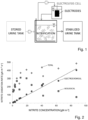
- the apparatus shown in Fig. 1 comprises a potentiostatically operated electrolysis cell coupled to a biological urine nitrification reactor.
- the nitrification is carried out in a continuous flow stirred tank reactor (CSTR).
- CSTR continuous flow stirred tank reactor
- the content of the reactor is simultaneously recirculated through an electrolysis cell by means of a pump.
- the electrolysis cell consists of a parallel plate flow cell equipped with a graphite anode and a graphite cathode.
- the electrochemical cell should also work with other types of electrodes, i.e. with other electrode materials and shapes.
- a reference electrode is used to control the anode potential. Electrochemical nitrite oxidation sets in automatically as soon as elevated nitrite concentrations are present in the reactor.
- nitrite oxidation was added as a pulse to a running urine nitrification reactor coupled with an electrolysis cell.
- the nitrite oxidation rates were then evaluated in function of the nitrite concentration.
- the share of biological and electrochemical nitrite oxidation could be set out ( Fig. 2 ).
- Biological nitrite oxidation was the dominant process until a concentration of 40 gN ⁇ m -3 was reached.
- the electrochemical nitrite oxidation rate was higher.
- the biological nitrite oxidation increased until a concentration of 15 gN ⁇ m -3 was reached.
- the electrochemical nitrite oxidation rate was increasing linearly up to a nitrite concentration of 90 gN ⁇ m -3 reaching a value of about 400 gN ⁇ m -3 ⁇ d -1 .
- the slope of the straight line depends on the ratio of electrode surface to reactor volume and on the applied anode potential. The more electrode surface is provided for a given reactor volume the steeper is the slope.
- the second series of experiments consisted of influent load increase experiments.
- the inflow was increased from a base load of stored urine at which biological nitrification was running stably.
- the influent load was increased from 5% up to 100% of the base load.
- the increased ammonia load and pH led to increased AOB activity and nitrite accumulation.
- For influent load increases up to 20% the nitrite accumulation was negligible meaning that NOB activity could keep up with AOB activity.
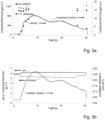
- Load increases of more than 20% and up to 40% resulted in the accumulation of nitrite and the electrochemical oxidation of nitrite ( Fig. 3 ).
- nitrite concentrations reached values up to 12 gN ⁇ m 3 and electrochemical nitrite oxidation was estimated to account for about 15% of the nitrite oxidation at maximum.
- electrochemical nitrite oxidation allowed more NOB to grow into the system and to adapt to the higher influent load.
Landscapes
- Life Sciences & Earth Sciences (AREA)
- Hydrology & Water Resources (AREA)
- Engineering & Computer Science (AREA)
- Environmental & Geological Engineering (AREA)
- Water Supply & Treatment (AREA)
- Chemical & Material Sciences (AREA)
- Organic Chemistry (AREA)
- Water Treatment By Electricity Or Magnetism (AREA)
- Purification Treatments By Anaerobic Or Anaerobic And Aerobic Bacteria Or Animals (AREA)
Claims (11)
- Verfahren zur biologischen Nitrifikation eines Ammoniak enthaltenden wässrigen Mediums, wobei in einem ersten Oxidationsschritt Ammoniak durch Ammoniak oxidierende Bakterien (AOB) zu Nitrit oxidiert wird und wobei in einem zweiten Oxidationsschritt Nitrit durch Nitrit oxidierende Bakterien (NOB) zu Nitrat oxidiert wird, wobei ein zusätzlicher Prozess der Nitritentfernung angewendet wird, der eine Nitritentfernungsrate aufweist, die von der momentanen Nitritkonzentration im wässrigen Medium abhängig ist, dadurch gekennzeichnet, dass beim zusätzlichen Prozess das wässrige Medium einer potentiostatisch betriebenen Elektrolysezelle ausgesetzt wird, welche eine Anode, eine Kathode und eine Referenzelektrode umfasst, wobei das Anodenpotential auf einem festen Wert gegenüber der Referenzelektrode gehalten wird, wobei der feste Potentialwert 0,4 V bis 2,0 V gegenüber einer Standard-Wasserstoffelektroden-Referenz (SHE) beträgt.
- Verfahren nach Anspruch 1, wobei das wässrige Medium Urin ist.
- Verfahren nach Anspruch 1 oder 2, wobei die Anode und die Kathode als Graphitelektroden ausgebildet sind.
- Verfahren nach einem der Ansprüche 1 bis 3, wobei das Anodenpotential auf einem Wert im Bereich von 0.9 bis 1.5 V, insbesondere 1.1 bis 1.3 V, gegenüber SHE gehalten wird.
- Verfahren nach einem der Ansprüche 1 bis 4, wobei der durch die Anode fliessende elektrische Strom oder die angelegte Spannung zur Quantifizierung der Konzentration des in der Elektrolysezelle vorhandenen Nitrits verwendet wird.
- Verfahren nach einem der Ansprüche 1 bis 5, wobei der pH-Wert des wässrigen Mediums im Bereich von 5,4 bis 8,0 gehalten wird.
- Verfahren nach einem der Ansprüche 1 bis 6, weiterhin umfassend einen Schritt zur Entfernung von im Abwasser enthaltenen Mikroverunreinigungen.
- Verfahren nach einem der Ansprüche 1 bis 7, welches als kontinuierlicher Durchflussprozess ausgeführt wird, bei dem ammoniakhaltiges wässriges Medium mit einer anfänglichen Ammoniakkonzentration in eine Reaktionszone fliesst, wo es dem besagten ersten und zweiten Oxidationsschritt unterzogen wird, und anschliessend mit einer vergleichsweise niedrigeren Ammoniakkonzentration aus der Reaktionszone fliesst.
- Verfahren nach den Ansprüchen 7 und 8, wobei der pH-Wert des wässrigen Mediums durch Steuerung der Zuflussrate des Ammoniak enthaltenden wässrigen Mediums aufrechterhalten wird.
- Verfahren nach einem der Ansprüche 1 bis 9, gefolgt von einem Schritt der Wasserentfernung.
- Verfahren nach Anspruch 10, wobei der Schritt der Wasserentfernung durch Verdampfen erfolgt.
Applications Claiming Priority (2)
| Application Number | Priority Date | Filing Date | Title |
|---|---|---|---|
| EP16201432.8A EP3330230A1 (de) | 2016-11-30 | 2016-11-30 | Verfahren und vorrichtung zur nitrifizierung von hochkonzentriertem ammoniakabwasser |
| PCT/EP2017/080994 WO2018100069A1 (en) | 2016-11-30 | 2017-11-30 | Method and apparatus for the nitrification of high-strength aqueous ammonia solutions |
Publications (4)
| Publication Number | Publication Date |
|---|---|
| EP3548439A1 EP3548439A1 (de) | 2019-10-09 |
| EP3548439B1 true EP3548439B1 (de) | 2024-08-14 |
| EP3548439C0 EP3548439C0 (de) | 2024-08-14 |
| EP3548439B8 EP3548439B8 (de) | 2024-11-27 |
Family
ID=57442568
Family Applications (2)
| Application Number | Title | Priority Date | Filing Date |
|---|---|---|---|
| EP16201432.8A Pending EP3330230A1 (de) | 2016-11-30 | 2016-11-30 | Verfahren und vorrichtung zur nitrifizierung von hochkonzentriertem ammoniakabwasser |
| EP17804587.8A Active EP3548439B8 (de) | 2016-11-30 | 2017-11-30 | Verfahren zur nitrifizierung von hochkonzentriertem ammoniakabwasser |
Family Applications Before (1)
| Application Number | Title | Priority Date | Filing Date |
|---|---|---|---|
| EP16201432.8A Pending EP3330230A1 (de) | 2016-11-30 | 2016-11-30 | Verfahren und vorrichtung zur nitrifizierung von hochkonzentriertem ammoniakabwasser |
Country Status (4)
| Country | Link |
|---|---|
| EP (2) | EP3330230A1 (de) |
| CA (1) | CA3043664A1 (de) |
| ES (1) | ES2990158T3 (de) |
| WO (1) | WO2018100069A1 (de) |
Families Citing this family (6)
| Publication number | Priority date | Publication date | Assignee | Title |
|---|---|---|---|---|
| US10800667B1 (en) | 2018-05-03 | 2020-10-13 | Sedron Technologies, LLC | System and method for multi-functional slurry processing |
| CN108773878A (zh) * | 2018-06-07 | 2018-11-09 | 中国地质大学(北京) | 一种垃圾渗滤液生化出水处理反应器和方法 |
| CN109052806A (zh) * | 2018-07-23 | 2018-12-21 | 安吉钰禾环保科技有限公司 | 一种基于a/o-电化学氧化-baf组合工艺的垃圾渗滤液处理装置及方法 |
| CN108975493A (zh) * | 2018-07-31 | 2018-12-11 | 清华大学 | 尿液废水的资源化方法 |
| US12365864B1 (en) | 2024-01-18 | 2025-07-22 | Sedron Technologies, LLC | Systems and methods for producing ammonium nitrate |
| CN120737970B (zh) * | 2025-09-04 | 2025-11-18 | 武汉水之国环保科技有限公司 | 一种亚硝酸盐氧化还原菌的保藏方法 |
Family Cites Families (7)
| Publication number | Priority date | Publication date | Assignee | Title |
|---|---|---|---|---|
| FR2580404B1 (fr) | 1985-04-15 | 1988-04-22 | Univ Languedoc | Dispositif pour le dosage amperometrique en continu des nitrites et/ou des nitrates qui sont presents dans un milieu aqueux quelconque |
| US5382331A (en) | 1993-07-26 | 1995-01-17 | Nalco Chemical Company | Method and apparatus for inline electrochemical monitoring and automated control of oxidizing or reducing agents in water systems |
| WO2008109911A1 (en) * | 2007-03-15 | 2008-09-18 | The University Of Queensland | Microbial fuel cell |
| EP3284829A1 (de) * | 2009-06-16 | 2018-02-21 | Cambrian Innovation, Inc. | Systeme und vorrichtung zur verarbeitung und überwachung von wasser, abwasser und anderen biologisch abbaubaren stoffen |
| US10851003B2 (en) * | 2010-07-21 | 2020-12-01 | Matthew Silver | Denitrification and pH control using bio-electrochemical systems |
| EP2619142A4 (de) | 2010-09-21 | 2015-04-29 | Inst Nat Rech Scient | Verfahren und system zur elektrochemischen abspaltung von nitrat und ammoniak |
| ES2547031B1 (es) * | 2014-03-31 | 2016-04-12 | Abengoa Water, S.L. | Sistema bioelectroquímico y procedimiento para la eliminación de materia orgánica y compuestos nitrogenados de aguas residuales |
-
2016
- 2016-11-30 EP EP16201432.8A patent/EP3330230A1/de active Pending
-
2017
- 2017-11-30 WO PCT/EP2017/080994 patent/WO2018100069A1/en not_active Ceased
- 2017-11-30 EP EP17804587.8A patent/EP3548439B8/de active Active
- 2017-11-30 ES ES17804587T patent/ES2990158T3/es active Active
- 2017-11-30 CA CA3043664A patent/CA3043664A1/en active Pending
Also Published As
| Publication number | Publication date |
|---|---|
| CA3043664A1 (en) | 2018-06-07 |
| EP3330230A1 (de) | 2018-06-06 |
| EP3548439B8 (de) | 2024-11-27 |
| ES2990158T3 (es) | 2024-11-29 |
| EP3548439A1 (de) | 2019-10-09 |
| EP3548439C0 (de) | 2024-08-14 |
| WO2018100069A1 (en) | 2018-06-07 |
Similar Documents
| Publication | Publication Date | Title |
|---|---|---|
| EP3548439B1 (de) | Verfahren zur nitrifizierung von hochkonzentriertem ammoniakabwasser | |
| CN111196653B (zh) | 一种用于化工废水高效处理的电催化芬顿氧化-电化学氧化耦合工艺及其装置 | |
| Wu et al. | Ammonium recovery from reject water combined with hydrogen production in a bioelectrochemical reactor | |
| US7175765B2 (en) | Method for treating for-treatment water containing organic matter and nitrogen compound | |
| JP4671743B2 (ja) | アンモニア性窒素含有廃水の電解処理方法及び装置 | |
| Pous et al. | Effect of hydraulic retention time and substrate availability in denitrifying bioelectrochemical systems | |
| KR101176437B1 (ko) | 암모니아 및 유기물의 동시제거를 위한 생물전기화학적 폐수처리 장치 및 이를 이용한 폐수처리 방법 | |
| CN109516641B (zh) | 一种电催化氧化—生化耦合处理高盐高浓度有机废水的方法 | |
| Modin et al. | Microbial electrochemical recovery of zinc | |
| CN104817142A (zh) | 去除污水中硝酸盐的电化学方法及装置 | |
| Puig et al. | Simultaneous domestic wastewater treatment and renewable energy production using microbial fuel cells (MFCs) | |
| CN111573834A (zh) | 一种基于短程反硝化电极协同厌氧氨氧化脱氮的反应器 | |
| Cho et al. | Effects of electric voltage and sodium chloride level on electrolysis of swine wastewater | |
| CN114149086A (zh) | 一种厌氧氨氧化菌的富集方法、氨氮脱除方法及装置 | |
| CN114873851B (zh) | 一种高盐高氨氮废水自养脱氮与全量化处理装置和方法 | |
| US7300592B2 (en) | Water treatment device | |
| Mohottige et al. | Integrating bioelectrochemical system with aerobic bioreactor for organics removal and caustic recovery from alkaline saline wastewater | |
| JP2009061390A (ja) | 水中のアンモニア性窒素の直接酸化法及びその装置 | |
| Ul et al. | Continuous high-purity bioelectrochemical nitrogen recovery from high N-loaded wastewaters | |
| JP4408706B2 (ja) | 窒素除去方法および装置 | |
| JP4616594B2 (ja) | 水処理方法および水処理装置 | |
| Moreno et al. | Biokinetic evaluation of fatty acids degradation in microbial fuel cell type bioreactors | |
| Holtmann et al. | Detection of the microbial activity of aerobic heterotrophic, anoxic heterotrophic and aerobic autotrophic activated sludge organisms with an electrochemical sensor | |
| KR100598596B1 (ko) | 수중 질소 제거용 전기화학적 수처리방법 및 장치 | |
| Kim et al. | Model-based development of cell voltage control system for modified bio-electro-Fenton process |
Legal Events
| Date | Code | Title | Description |
|---|---|---|---|
| STAA | Information on the status of an ep patent application or granted ep patent |
Free format text: STATUS: UNKNOWN |
|
| STAA | Information on the status of an ep patent application or granted ep patent |
Free format text: STATUS: THE INTERNATIONAL PUBLICATION HAS BEEN MADE |
|
| PUAI | Public reference made under article 153(3) epc to a published international application that has entered the european phase |
Free format text: ORIGINAL CODE: 0009012 |
|
| STAA | Information on the status of an ep patent application or granted ep patent |
Free format text: STATUS: REQUEST FOR EXAMINATION WAS MADE |
|
| 17P | Request for examination filed |
Effective date: 20190628 |
|
| AK | Designated contracting states |
Kind code of ref document: A1 Designated state(s): AL AT BE BG CH CY CZ DE DK EE ES FI FR GB GR HR HU IE IS IT LI LT LU LV MC MK MT NL NO PL PT RO RS SE SI SK SM TR |
|
| AX | Request for extension of the european patent |
Extension state: BA ME |
|
| DAV | Request for validation of the european patent (deleted) | ||
| DAX | Request for extension of the european patent (deleted) | ||
| STAA | Information on the status of an ep patent application or granted ep patent |
Free format text: STATUS: EXAMINATION IS IN PROGRESS |
|
| 17Q | First examination report despatched |
Effective date: 20220707 |
|
| GRAP | Despatch of communication of intention to grant a patent |
Free format text: ORIGINAL CODE: EPIDOSNIGR1 |
|
| STAA | Information on the status of an ep patent application or granted ep patent |
Free format text: STATUS: GRANT OF PATENT IS INTENDED |
|
| INTG | Intention to grant announced |
Effective date: 20240102 |
|
| GRAS | Grant fee paid |
Free format text: ORIGINAL CODE: EPIDOSNIGR3 |
|
| GRAA | (expected) grant |
Free format text: ORIGINAL CODE: 0009210 |
|
| STAA | Information on the status of an ep patent application or granted ep patent |
Free format text: STATUS: THE PATENT HAS BEEN GRANTED |
|
| AK | Designated contracting states |
Kind code of ref document: B1 Designated state(s): AL AT BE BG CH CY CZ DE DK EE ES FI FR GB GR HR HU IE IS IT LI LT LU LV MC MK MT NL NO PL PT RO RS SE SI SK SM TR |
|
| REG | Reference to a national code |
Ref country code: GB Ref legal event code: FG4D |
|
| REG | Reference to a national code |
Ref country code: CH Ref legal event code: EP |
|
| REG | Reference to a national code |
Ref country code: DE Ref legal event code: R096 Ref document number: 602017084100 Country of ref document: DE |
|
| REG | Reference to a national code |
Ref country code: IE Ref legal event code: FG4D |
|
| U01 | Request for unitary effect filed |
Effective date: 20240913 |
|
| GRAT | Correction requested after decision to grant or after decision to maintain patent in amended form |
Free format text: ORIGINAL CODE: EPIDOSNCDEC |
|
| REG | Reference to a national code |
Ref country code: CH Ref legal event code: PK Free format text: BERICHTIGUNG B8 |
|
| RAP4 | Party data changed (patent owner data changed or rights of a patent transferred) |
Owner name: EAWAG, EIDGENOESSISCHE ANSTALTFUER WASSERVERSORGUNG,ABWASSERREINIGUNG UND GEWAESSERSCHUTZ |
|
| U07 | Unitary effect registered |
Designated state(s): AT BE BG DE DK EE FI FR IT LT LU LV MT NL PT RO SE SI Effective date: 20241002 |
|
| REG | Reference to a national code |
Ref country code: ES Ref legal event code: FG2A Ref document number: 2990158 Country of ref document: ES Kind code of ref document: T3 Effective date: 20241129 |
|
| U20 | Renewal fee for the european patent with unitary effect paid |
Year of fee payment: 8 Effective date: 20241113 |
|
| PG25 | Lapsed in a contracting state [announced via postgrant information from national office to epo] |
Ref country code: NO Free format text: LAPSE BECAUSE OF FAILURE TO SUBMIT A TRANSLATION OF THE DESCRIPTION OR TO PAY THE FEE WITHIN THE PRESCRIBED TIME-LIMIT Effective date: 20241114 |
|
| PG25 | Lapsed in a contracting state [announced via postgrant information from national office to epo] |
Ref country code: GR Free format text: LAPSE BECAUSE OF FAILURE TO SUBMIT A TRANSLATION OF THE DESCRIPTION OR TO PAY THE FEE WITHIN THE PRESCRIBED TIME-LIMIT Effective date: 20241115 Ref country code: PL Free format text: LAPSE BECAUSE OF FAILURE TO SUBMIT A TRANSLATION OF THE DESCRIPTION OR TO PAY THE FEE WITHIN THE PRESCRIBED TIME-LIMIT Effective date: 20240814 |
|
| PGFP | Annual fee paid to national office [announced via postgrant information from national office to epo] |
Ref country code: GB Payment date: 20241120 Year of fee payment: 8 |
|
| PG25 | Lapsed in a contracting state [announced via postgrant information from national office to epo] |
Ref country code: IS Free format text: LAPSE BECAUSE OF FAILURE TO SUBMIT A TRANSLATION OF THE DESCRIPTION OR TO PAY THE FEE WITHIN THE PRESCRIBED TIME-LIMIT Effective date: 20241214 |
|
| PG25 | Lapsed in a contracting state [announced via postgrant information from national office to epo] |
Ref country code: HR Free format text: LAPSE BECAUSE OF FAILURE TO SUBMIT A TRANSLATION OF THE DESCRIPTION OR TO PAY THE FEE WITHIN THE PRESCRIBED TIME-LIMIT Effective date: 20240814 |
|
| PG25 | Lapsed in a contracting state [announced via postgrant information from national office to epo] |
Ref country code: RS Free format text: LAPSE BECAUSE OF FAILURE TO SUBMIT A TRANSLATION OF THE DESCRIPTION OR TO PAY THE FEE WITHIN THE PRESCRIBED TIME-LIMIT Effective date: 20241114 |
|
| PGFP | Annual fee paid to national office [announced via postgrant information from national office to epo] |
Ref country code: ES Payment date: 20241230 Year of fee payment: 8 |
|
| PG25 | Lapsed in a contracting state [announced via postgrant information from national office to epo] |
Ref country code: RS Free format text: LAPSE BECAUSE OF FAILURE TO SUBMIT A TRANSLATION OF THE DESCRIPTION OR TO PAY THE FEE WITHIN THE PRESCRIBED TIME-LIMIT Effective date: 20241114 Ref country code: PL Free format text: LAPSE BECAUSE OF FAILURE TO SUBMIT A TRANSLATION OF THE DESCRIPTION OR TO PAY THE FEE WITHIN THE PRESCRIBED TIME-LIMIT Effective date: 20240814 Ref country code: NO Free format text: LAPSE BECAUSE OF FAILURE TO SUBMIT A TRANSLATION OF THE DESCRIPTION OR TO PAY THE FEE WITHIN THE PRESCRIBED TIME-LIMIT Effective date: 20241114 Ref country code: IS Free format text: LAPSE BECAUSE OF FAILURE TO SUBMIT A TRANSLATION OF THE DESCRIPTION OR TO PAY THE FEE WITHIN THE PRESCRIBED TIME-LIMIT Effective date: 20241214 Ref country code: HR Free format text: LAPSE BECAUSE OF FAILURE TO SUBMIT A TRANSLATION OF THE DESCRIPTION OR TO PAY THE FEE WITHIN THE PRESCRIBED TIME-LIMIT Effective date: 20240814 Ref country code: GR Free format text: LAPSE BECAUSE OF FAILURE TO SUBMIT A TRANSLATION OF THE DESCRIPTION OR TO PAY THE FEE WITHIN THE PRESCRIBED TIME-LIMIT Effective date: 20241115 |
|
| PGFP | Annual fee paid to national office [announced via postgrant information from national office to epo] |
Ref country code: CH Payment date: 20241201 Year of fee payment: 8 |
|
| PG25 | Lapsed in a contracting state [announced via postgrant information from national office to epo] |
Ref country code: SM Free format text: LAPSE BECAUSE OF FAILURE TO SUBMIT A TRANSLATION OF THE DESCRIPTION OR TO PAY THE FEE WITHIN THE PRESCRIBED TIME-LIMIT Effective date: 20240814 |
|
| PG25 | Lapsed in a contracting state [announced via postgrant information from national office to epo] |
Ref country code: CZ Free format text: LAPSE BECAUSE OF FAILURE TO SUBMIT A TRANSLATION OF THE DESCRIPTION OR TO PAY THE FEE WITHIN THE PRESCRIBED TIME-LIMIT Effective date: 20240814 |
|
| PG25 | Lapsed in a contracting state [announced via postgrant information from national office to epo] |
Ref country code: SK Free format text: LAPSE BECAUSE OF FAILURE TO SUBMIT A TRANSLATION OF THE DESCRIPTION OR TO PAY THE FEE WITHIN THE PRESCRIBED TIME-LIMIT Effective date: 20240814 |
|
| PLBE | No opposition filed within time limit |
Free format text: ORIGINAL CODE: 0009261 |
|
| STAA | Information on the status of an ep patent application or granted ep patent |
Free format text: STATUS: NO OPPOSITION FILED WITHIN TIME LIMIT |
|
| PG25 | Lapsed in a contracting state [announced via postgrant information from national office to epo] |
Ref country code: MC Free format text: LAPSE BECAUSE OF FAILURE TO SUBMIT A TRANSLATION OF THE DESCRIPTION OR TO PAY THE FEE WITHIN THE PRESCRIBED TIME-LIMIT Effective date: 20240814 |
|
| 26N | No opposition filed |
Effective date: 20250515 |
|
| PG25 | Lapsed in a contracting state [announced via postgrant information from national office to epo] |
Ref country code: IE Free format text: LAPSE BECAUSE OF NON-PAYMENT OF DUE FEES Effective date: 20241130 |
|
| REG | Reference to a national code |
Ref country code: CH Ref legal event code: U11 Free format text: ST27 STATUS EVENT CODE: U-0-0-U10-U11 (AS PROVIDED BY THE NATIONAL OFFICE) Effective date: 20251201 |
|
| U20 | Renewal fee for the european patent with unitary effect paid |
Year of fee payment: 9 Effective date: 20251030 |