EP3547765B1 - Energieverteilung auf teilbänder in mehrfachzugriffs-kommunikationssystemen - Google Patents
Energieverteilung auf teilbänder in mehrfachzugriffs-kommunikationssystemen Download PDFInfo
- Publication number
- EP3547765B1 EP3547765B1 EP18305355.2A EP18305355A EP3547765B1 EP 3547765 B1 EP3547765 B1 EP 3547765B1 EP 18305355 A EP18305355 A EP 18305355A EP 3547765 B1 EP3547765 B1 EP 3547765B1
- Authority
- EP
- European Patent Office
- Prior art keywords
- sub
- band
- users
- user
- bands
- Prior art date
- Legal status (The legal status is an assumption and is not a legal conclusion. Google has not performed a legal analysis and makes no representation as to the accuracy of the status listed.)
- Active
Links
Images


Classifications
-
- H—ELECTRICITY
- H04—ELECTRIC COMMUNICATION TECHNIQUE
- H04W—WIRELESS COMMUNICATION NETWORKS
- H04W52/00—Power management, e.g. Transmission Power Control [TPC] or power classes
- H04W52/04—Transmission power control [TPC]
- H04W52/30—Transmission power control [TPC] using constraints in the total amount of available transmission power
- H04W52/34—TPC management, i.e. sharing limited amount of power among users or channels or data types, e.g. cell loading
- H04W52/346—TPC management, i.e. sharing limited amount of power among users or channels or data types, e.g. cell loading distributing total power among users or channels
-
- H—ELECTRICITY
- H04—ELECTRIC COMMUNICATION TECHNIQUE
- H04W—WIRELESS COMMUNICATION NETWORKS
- H04W52/00—Power management, e.g. Transmission Power Control [TPC] or power classes
- H04W52/04—Transmission power control [TPC]
- H04W52/38—TPC being performed in particular situations
- H04W52/42—TPC being performed in particular situations in systems with time, space, frequency or polarisation diversity
-
- H—ELECTRICITY
- H04—ELECTRIC COMMUNICATION TECHNIQUE
- H04W—WIRELESS COMMUNICATION NETWORKS
- H04W72/00—Local resource management
- H04W72/04—Wireless resource allocation
- H04W72/044—Wireless resource allocation based on the type of the allocated resource
-
- H—ELECTRICITY
- H04—ELECTRIC COMMUNICATION TECHNIQUE
- H04W—WIRELESS COMMUNICATION NETWORKS
- H04W72/00—Local resource management
- H04W72/50—Allocation or scheduling criteria for wireless resources
- H04W72/54—Allocation or scheduling criteria for wireless resources based on quality criteria
- H04W72/542—Allocation or scheduling criteria for wireless resources based on quality criteria using measured or perceived quality
Definitions
- the present invention relates to the attribution of power in multiple access communications system such as Orthogonal Multiple Access (OMA) and Non-Orthogonal Multiple Access (NOMA).
- OMA Orthogonal Multiple Access
- NOMA Non-Orthogonal Multiple Access
- NOMA Non-Orthogonal Multiple Access
- NOMA proportional fairness
- the system consists of K users per cell, with a total system bandwidth B divided into S sub-bands, and a maximum allowable transmit power Pmax by the Base Station.
- n(s) indicates the number of users non-orthogonally scheduled at sub-band s .
- the SIC process as described in Fundamentals of Wireless Communication, Cambridge University Press, 2005 by D. Tse, and P.
- the optimum order for user decoding is in the increasing order of the users' squared channel gains normalized by the noise and inter-cell interference h s , k n 2 n s , k n where h s,kn is the equivalent channel gain, at sub-band s, between user k n and the BS, and n s,kn the average power of the received Gaussian noise plus intercell interference by user k n .
- R s ,k n B S log 2 1 + h s , k n 2 P s , k n ⁇ k j ⁇ U s , h s , k n 2 n s , k n ⁇ h s , k j 2 n s , k nj h s , k n 2 P s , k j + n s , k n
- P s denotes the amount of allocated power on sub-band s. Since the scheduler in NOMA may allocate a sub-band to more than one user simultaneously, the user scheduling policy and the power allocation algorithm largely affect system efficiency and user fairness. A “Proportional Fairness” (PF) scheduler is known to achieve a good trade-off between these two metrics.
- PF Proportional Fairness
- the objective of the PF scheduler is to maximize the logarithmic sum of user throughputs or, equivalently, long term averaged user rates, in order to ensure balance between cell throughput and user fairness.
- This scheduling policy has been adopted in the majority of proposed NOMA implementations.
- the scheduling algorithm keeps track of the average throughput T k (t) of each user in a past window of length t c , where t c defines the throughput averaging time window (number of simulated subframes).
- R s,k (t) represents the achievable throughput of user k on sub-band s, at time instance t. This is calculated based on Eq.(1) above, and can equal zero if user k is not scheduled on sub-band s. For each sub-band s, all possible candidate user sets are considered, and the set of scheduled users U s is chosen in such a way to maximize the PF scheduling metric:
- U s arg max U ⁇ k ⁇ U R s , k
- a difficulty with this approach is that power allocation on the basis for example of the Proportional Fairness calculation depends on knowledge of user throughput on a specified sub-band, which implies that users have already been allocated to particular sub-bands.
- maximum throughput can generally be achieved where there is the greatest possible difference in transmission power for the users on a given sub-band, so that optimal allocation of users to sub-bands requires knowledge of the power available for each user. Accordingly, the considerations are mutually interdependent. It is desirable to identify a mechanism for resolving this tension and providing a method for a more optimal attribution of power to sub-bands resulting in improved overall data throughput and/or fairness.
- a system for assigning power to each sub-band in a time slot t in a multiple access communications system comprises a coordinator adapted to select sub-bands for consideration in sequence for assignment of one or more users, the users being assigned to respective sub-bands with regard to a respective provisional sub-band power allocation for the sub-band under consideration.
- the system further comprises a power calculator adapted to determine a provisional partial power budget for a subset of the sub-bands comprising the sub-bands to which users have been assigned in the present time slot and the sub-band under consideration in the sequence, where the fraction of the total available power determined as the provisional partial power budget corresponds to the fraction of the number of sub-bands in the subset from the total number of sub-bands to be assigned, and to determine the provisional sub-band power allocation for the sub-band under consideration, by performing a waterfilling distribution of the provisional partial power budget amongst the subset of the sub-bands, based on the channel gain of the users already assigned to sub-bands in the present time slot.
- a method of assigning power to each sub-band in a time slot t in a multiple access communications system wherein sub-bands are considered in sequence for assignment of one or more users, the users being assigned to respective sub-bands with regard to a respective provisional sub-band power allocation for the sub-band under consideration.
- the method comprises the steps of determining a provisional partial power budget for a subset of the sub-bands comprising the sub-bands to which users have been assigned in the present time slot and the sub-band under consideration in the sequence.
- the fraction of the total available power determined as the provisional partial power budget corresponds to the fraction of the number of sub-bands in the subset from the total number of sub-bands to be assigned.
- the provisional sub-band power allocation is determined for the sub-band under consideration by performing a waterfilling distribution of the provisional partial power budget amongst the subset of the sub-bands, based on the channel gain of the users already assigned to sub-bands in the present time slot.
- the step of users being assigned to respective sub-bands with regard to a respective provisional sub-band power allocation comprises the calculation of a set maximizing a performance metric reflecting the known throughput, and/or fairness across users.
- the method comprises the further step of calculating a final power allocation for each sub-band from the last iteration of the water filling algorithm corresponding to the combination of users selected for each sub-band.
- the water filling algorithm comprises determining a sub-band attenuation value proportional to the reciprocal of the square of the channel gain value of the user having the highest channel gain assigned to that sub-band, distributing the provisional partial power budget using a floor for each sub-band defined by the respective sub-band attenuation value.
- the method comprises the further steps of determining every possible combination of users assignable to the sub-band under consideration; assessing each possible combination of users assignable to the sub-band under consideration, and attributing to the selected sub-band whichever combination of users optimises the performance metric.
- the method comprises the further steps of assigning as an initial sub-band assignment a user excluding any user who has already been assigned to an initial sub-band to the sub-band under consideration, as first user for that respective sub-band.
- a plurality of candidate pairs of users for possible assignment to the sub-band under consideration are determined, with each candidate pair of users comprising two different users including the first user and a candidate second user.
- the plurality of candidate pairs is restricted to a set of candidate pairs comprising candidate second users whose channel gain is complementary to the channel gain of the first user, and the respective second sub-band is assigned as user as the user excluding any user who has already been assigned to an initial sub-band and maximizing the performance metric reflecting the known throughput, and/or fairness across users.
- a computer program adapted to implement the steps of the second aspect and a computer readable medium incorporating the computer program.
- Waterfilling based approaches can be seen as analogous to filling a vessel with an uneven floor with water, where the level of the floor for each sub-band is dictated by the channel gain of the sub-band.
- the "water” poured over this floor is the power to be distributed, and in accordance with the analogy, more power will pool in the areas with a lower floor.
- Good channels with a high channel gain will have a low floor and as such receive a greater proportion of the available power on this basis.
- the power to be distributed in prior art approaches is generally presumed to be the total available transmission power, however in a number of possible implementations, such an approach may be less than optimal.
- the power distribution may only be performed for the sub-bands to which users, and power, have already been assigned, plus the sub-bands presently under consideration. This will have the effect of exaggerating the power available for assignments for the first channels to be considered, and only give properly representative values once users have been attributed for all sub-bands.
- a pro rata proportion of the available power is distributed.
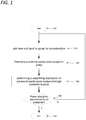
- Figure 1 shows a new disclosed method of attributing power to each of a plurality of sub-bands in a time slot t in a multiple access communications system, in accordance with an embodiment. As shown, the method starts at step 100 before proceeding to step 110 at which a sub-band is added to a group for consideration.
- step 120 a provisional partial power budget is determined for the group of sub-bands to be considered, which comprises the sub-bands to which users have been assigned in the present time slot, in previous iterations if any, and the sub-band added for consideration at step 110, where the fraction of the total available power determined as the provisional partial power budget corresponds to the fraction of the number of sub-bands in the subset from the total number of sub-bands to be assigned.
- step 130 a provisional sub-band power allocation for the sub-band under consideration is determined by performing a waterfilling distribution of the provisional partial power budget amongst the subset of the sub-bands, based on the channel gain of the users already assigned to sub-bands in the present time slot.
- step 140 it is considered whether a power allocation has been performed for all sub-bands. In a case where all sub-bands have been considered the method terminates at step 150, or otherwise reverts to step 110.
- a method of assigning users to each sub-band in a time slot t in a multiple access communications system wherein sub-bands are considered in sequence for assignment of one or more users, the users being assigned to respective sub-bands with regard to a respective provisional sub-band power allocation for the sub-band under consideration.
- this method comprises the steps of determining a provisional partial power budget for a subset of the sub-bands, comprising the sub-bands to which users have been assigned in the present time slot and the sub-band under consideration in the sequence, where the fraction of the total available power determined as the provisional partial power budget corresponds to the fraction of the number of sub-bands in the subset from the total number of sub-bands to be assigned, and determining the provisional sub-band power allocation for the sub-band under consideration, by performing a waterfilling distribution of the provisional partial power budget amongst the subset of the sub-bands, based on the channel gain of the users already assigned to sub-bands in the present time slot.
- a waterfilling approach is analogous to filling a vessel with an uneven floor (as dictated by the different sub-band attenuation values) with water. Given a particular volume of water, corresponding to the total transmission power budget, it will naturally find its own level, whereby the depth at any point indicates the power allocation for the underlying sub-band.
- An improved waterfilling algorithm in accordance with certain embodiments may be seen as implicitly ensuring that the total power assigned across the carrier under consideration and all other sub-bands to which users have been assigned, is equal to a pro rata proportion of the total power budget, assuming an equal share of power for each sub-band for the total power budget equal to (sxPmax/S), as discussed above, and such that, for each sub-band considered thus far, the sum of the power provisionally assigned to that sub-band and the sub-band attenuation value of that sub-band is a constant.
- the waterline level is predicted based on the previous level (as determined for the sub-bands allocated so far) and the channel gain of the considered users scheduled on the current sub-band s.
- the further steps of calculating a final power allocation for each sub-band from the last iteration of the water filling algorithm corresponding to the combination of users selected for each sub-band may be performed thereby enabling transmission at the optimised levels.
- Figure 2 demonstrates the application of the water filling approach, in accordance with the method of figure 1 .
- a sub-band attenuation value may be used as an indicator of the channel gain for the candidate set of users is obtained, proportional to the reciprocal of the square of gain of the selected channel, corresponding for each combination to the highest of the channel gain value associated with the users in that candidate set.
- the water filling algorithm of step 130 may comprise determining a sub-band attenuation value proportional to the reciprocal of the square of the channel gain value of the user having the highest channel gain assigned to that sub-band, and distributing the provisional partial power budget, using a floor for each sub-band defined by the respective sub-band attenuation value.
- the sub-band attenuation values of each of the sub-bands are illustrated arranged next to each other in order of magnitude, with the sub-band having the lowest sub-band attenuation value on the left, and the sub-band having the highest sub-band attenuation value on the right.
- the current sub-band sub-band 3, having sub-band attenuation value 231 is situated to the left of the other two sub-bands.
- a first provisional power allocation 212 is implied for sub-band 1
- a second provisional power allocation 222 is implied for sub-band 2
- a third provisional power allocation 232 is implied for sub-band under consideration, sub-band 3, such that in each case the sum of each provisional power allocation with the corresponding sub-band attenuation value would be equal to a constant value 201, and the sum of the three values 212, 222, 232 is equal to a pro rata proportion of the total transmit power 3Pmax/S.
- the step of users being assigned to respective sub-bands with regard to the respective provisional sub-band power allocation may comprise the calculation of a set maximizing a performance metric reflecting the achieved throughput, and/or fairness across users.
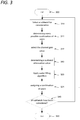
- Figure 3 shows steps of an exemplary method of assigning users to respective sub-bands with regard to the respective provisional sub-band power allocation.
- the method starts at step 300, before proceeding to step 310 at which a sub-band is selected for consideration.
- the sub-band selected may be any of the sub-bands defined in the system, since in accordance with the present embodiment the sub-bands may be considered in any order.
- the method proceeds to step 311, at which every possible combination of users is determined for the sub-band under consideration.
- the number of users that may be assigned to any one sub-band may be fixed or capped, or may be determined freely, in order to optimize a performance metric.
- the number of users that might be assigned to any sub-band may be extended beyond two.
- the waterline calculation will remain the same, based on the highest channel gain among scheduled users for a possible candidate user set. Nevertheless, the number of possible combinations for any sub-band will grow dramatically as the possible number of users per sub-band increases.
- the gain obtained when 3 users are scheduled per sub-band is around 1% compared to 2 users per sub-band, as demonstrated by Y. Saito, A. Benjebbour, Y. Kishiyama, and T. Nakamura, in "System-level performance evaluation of downlink non-orthogonal multiple access (NOMA) » IEEE PIMRC, Sept 2013 .
- NOMA downlink non-orthogonal multiple access
- typically two users may be assigned to each sub-band, and for the purposes of the implementation discussed by way of example below, it is assumed that this is the case, for simplification of the description and illustration purposes.
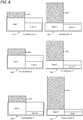
- each of the users 1, 2, 3 and 4 has a respective channel gain value 401, 402, 403, 404.
- user 1 has the highest channel gain or "h" value
- user 2 has the next highest
- user 3 has the next highest
- user 4 has the lowest channel gain value.
- a parameter is generally fed back from the receiver to the transmitter with information regarding the quality of the channel. This can be treated in accordance with some embodiments of the present invention as an indicator of the channel gain value, and it is presumed that implementations of NOMA in accordance with the present invention will provide some analogous mechanism.
- any embodiment whilst waterfilling is performed based on the channel gain of the users, this need not depend on an explicit measurement of each user's channel gain, but may also use any value that may be obtained or derived in the system which may be taken as indicative of a respective user's channel gain.
- FIG 4 if there are four users 1, 2, 3 and 4, of which any two may be assigned to the channel under consideration, there are then six possible combinations: combination 410 comprising user 1 and 2, combination 420 comprising user 1 and 3, combination 430 comprising user 1 and 4, combination 440 comprising user 2 and 3, combination 450 comprising user 2 and 4, and combination 460 comprising user 3 and 4.
- the method proceeds from step 311 to step 312 at which the channel gain value of the user in each that combination having the highest channel gain is selected.
- step 312 the channel gain value of the user in each that combination having the highest channel gain is selected.
- a corresponding sub-band attenuation value may be calculated for each combination, reflecting the highest channel gain of the users in that combination.
- the sub-band attenuation value 411 is obtained for combination 1
- the sub-band attenuation value 421 is obtained for combination 2
- the sub-band attenuation value 431 is obtained for combination 3
- the sub-band attenuation value 441 is obtained for combination 4
- the sub-band attenuation value 451 is obtained for combination 5
- the sub-band attenuation value 461 is obtained for combination 6.
- the example of figure 4 is a simplified scenario for the purposes of illustration.
- any of the users 1, 2, 3, and 4 may be assigned alone to the channel under consideration, which would lead to four additional candidate user sets. This is equivalent to falling back to a pure orthogonal allocation with only one user per sub-band. This guarantees that the obtained system will not show worse performance than the orthogonal case.
- the method of figure 3 next proceeds from step 312 to step 313 at which a sub-band attenuation value is determined for each combination of users that may be assigned to the channel under consideration.
- Figure 4 illustrates the determination of sub-band attenuation values. As shown, each combination of users 410, 420, 430, 440, 450, 460 is illustrated, and in each case a respective sub-band attenuation value 411, 421, 431, 441, 451, 461 is shown. This sub-band attenuation value is, in each case, proportional to the reciprocal of the square of the selected channel gain value selected at step 312, corresponding for each combination to the highest of the channel gain values associated with the users in that combination.
- the sub-band attenuation value may be equal to the total transmission bandwidth multiplied by the Noise power, divided by the square of the selected channel gain value multiplied by the total number of the sub-bands, or BN 0 S h s , k ⁇ 2 , where N 0 is the noise power (equal for all sub-bands) and h s,k * is the channel gain of the user k* showing the highest channel gain in a given combination of users on the sub-band currently under consideration, s designates a particular sub-band under consideration, and S is the total number of sub-bands.
- step 313 The method next proceeds from step 313 to step 320, at which a provisional power assignment is calculated for the sub-band under consideration and all other sub-bands to which users have been assigned, for each possible combination of users assignable to the sub-band under consideration.
- Those computations are made using a water filling algorithm across the selected sub-band and every sub-band selected previously, using a floor for each sub-band defined by the respective sub-band attenuation value as determined at step 313. As such this step corresponds to performing step 120 as described above for multiple candidate pair combinations.
- step 320 The method now proceeds from step 320 to step 321, at which a combination of users is selected from those considered at step 320.
- a performance metric value may be determined for the sub-band under consideration with each possible combination of users assignable to the sub-band under consideration, on the basis of the respective provisional power allocation determined for the sub-band under consideration with each possible combination of users assignable to the sub-band under consideration as determined at step 320.
- a variety of performance metrics may be appropriate depending on user and system priorities, for example expressed in terms of fairness, throughput and the like. Suitable performance metrics may be based on throughput predictions on the basis of transmission power allocations. Performance metrics based on fairness may also be suitable. Still further, metrics based on both fairness and throughput may also be appropriate, such as the Proportional Fairness calculation presented above or variants thereof.
- step 321 whichever combination of users provides the best performance metric value is assigned to the sub-band under consideration.
- step 340 it is determined whether all sub-bands in the system have been considered for the assignment of users and allocation of power in accordance with steps 310 to 321 above. And in a case where at least one sub-band has yet to be considered, the method reverts to step 310, at which a new sub-band is selected from those yet to be considered. Otherwise, the method proceeds to terminate at step 350.
- a provisional power allocation may be further calculated for each sub-band selected previously from the waterfilling algorithm.
- the method may comprise a further step of calculating a provisional power allocation for each sub-band selected previously from the waterfilling algorithm, corresponding to the combination of users selected for each sub-band.
- the method of figure 1 or 3 may comprise the further steps of determining every possible combination of users assignable to the sub-band under consideration; assessing each possible combination of users assignable to the sub-band under consideration and attributing to the selected sub-band whichever combination of users optimises the performance metric.
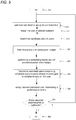
- Figure 5 shows a method of attributing users to one or more of a plurality of sub-bands in a multiple access communications system in accordance with an embodiment. Specifically there is provided a method of selecting users from a pool of candidate users U for allocation to a plurality of sub-bands in a time slot t in a multiple access communications system. Access is granted following allocation of resources in time and frequency. Allocation is divided into a number of time slots. The time slot is the elementary time allocation unit in the communication system. For instance, in 4G systems, it is equal to 1 ms. For each time slot, sub-bands are allocated sequentially until the total number of sub-bands per time slot is reached. This embodiment relates to an initial sub-band assignment for each user.
- Subsequent sub-band assignments may occur once all users have received an initial assignment in accordance with this embodiment as described with reference to certain further embodiments below. Exemplary details of this approach are presented in more detail below.
- the method starts at step 500 before proceeding to step 510 at which a new sub-band is added to the group for consideration as discussed above with reference to step 110 of figure 1 .
- the method next proceeds to step 511 at which a user is assigned as an initial sub-band assignment to a respective selected sub-band in the current time slot t, as first user for that respective selected sub-band.
- the user assigned at this step 511 may be any user excluding users who have already been assigned to an initial sub-band.
- the user to be assigned at this step 511 may be selected according to a variety of bases.
- the method may comprise a further step of sorting all users in order of priority according to a criterion prior to the step of assigning.
- the user assigned may be the user having the highest priority excluding any user who has already been assigned to an initial sub-band to a selected sub-band in a time slot t.
- a priority list may be used at the beginning of the allocation process for the selection of the first user on each sub-band. The idea behind this priority list is to have all users granted a sub-band (and some throughput) at least once at the beginning of the allocation process.
- the priority list may be created: all the K users are sorted in the Base Station (BS).
- BS Base Station
- the users are removed from this priority list as soon as they are selected in step 511. At subsequent time slots, if the priority list is not empty, only the remaining users are sorted again (update of the priority list). The resulting priority list is used while at least one user has not been assigned any sub-band during the assignment process.
- this sorting of users in order of priority may comprise sorting the users in order of best channel gain measured for the current time slot for each user across all sub-bands, where the user accorded the highest priority is the user having the lowest best channel gain.
- the lowest best channel gain (“lowest best h") sorting provides good performance (in terms of cell-edge user throughput and total cell throughput)-Users may be sorted at the Base Station based on the channel gain experience by users on available sub-bands, h s,k being the channel gain of user k on sub-band s. This may be expressed in the following manner: for each user k, select that user's highest channel gain h s best among the channel gains experienced over all sub-bands. The user with the highest priority is the one having the lowest best channel gain, and vice versa.
- the user may be selected at random. This may comprise the further step of sorting all users in order of priority according to a random sorting, which may be performed at a lower processing overhead that other sorting approaches.
- User 1 ( k 1 ) is assigned the sub-band which has the highest value of h s,k1 among all the available sub-bands.
- the assigned user k 1 may be removed from the list.
- the selected sub-band to which the user is assigned as first user at step 511 may be selected as the sub-band to which no first user is currently attributed offering the highest channel gain for that user.
- the sub-band to which the user is assigned may be selected at random from the sub-bands to which no first user is currently assigned. This may comprise the further step of sorting all users in order of priority according to a random sorting, which may be performed at a lower processing overhead than other sorting approaches.
- projected throughput is, for the current time slot, the sum of the achievable throughputs for the user on each sub-band to which the user has been attributed, and known throughput is representative of the average throughput achieved by the user over a predefined historical period, and the known throughput can include the projected throughput or not.
- the selection of the first user in the initial sub-band assignment phase as discussed above may be described in terms of the priority list not being empty (i.e. all the users have not been assigned a sub-band, or, equivalently, any throughput, yet,) in which case the selection of the next user to be assigned to a sub-band as user 1 may be carried out according to the order given by the priority list.
- the priority list is empty (i.e; all the users have now been assigned a sub-band or equivalently, a non-zero throughput)
- alternative selection mechanisms may be envisaged as described below.
- step 511 a plurality of candidate pairs of users are determined for possible assignment to the selected sub-band, where each candidate pair of users comprises two different users including the first user (as assigned to the sub-band at step 511) and a candidate second user.
- step 520 a provisional power allocation is assigned to the selected sub-band for each candidate pair of users, on the basis of a partial power budget determined for the group as discussed above with respect to step 120 of figure 1 .
- Power may be distributed equally amongst users or other strategies can be applied to the distribution of the power between the users attributed to that sub-band (for example FPA- Fixed power allocation, FTPA- fractional transmit power allocation or Full Search Power Allocation) within a sub-band, all of which are compatible with and encompassed in the present disclosure.
- FPA- Fixed power allocation for example FPA- Fixed power allocation, FTPA- fractional transmit power allocation or Full Search Power Allocation
- FTPA- fractional transmit power allocation or Full Search Power Allocation Full Search Power Allocation
- the total available transmission power may be distributed between sub-bands by a variety of mechanisms.
- One example is based on an equal distribution of power.
- provisional PA may be carried out during the pairing process. This provides an opportunity to attempt to identify an optimal power distribution between the users.
- step 530 power is distributed among sub-bands on the basis of an waterfilling distribution of the partial power budget, as described above with respect to step 130 of figure 1 .
- a sub-band attenuation value for each candidate set of users is obtained, proportional to the reciprocal of the square of gain of the selected channel, corresponding for each combination to the highest of the channel gain value associated with the users in that candidate set.
- the sub-band attenuation value may be equal to the total transmission bandwidth multiplied by the Noise power, divided by the square of the selected channel gain value multiplied by the total number of the sub-bands, or BN 0 S h s , k ⁇ 2 , where N 0 is the noise power (equal for all sub-bands) and h s,k * is the channel gain of the user k* showing the highest channel gain in a given combination of users on the sub-band currently under consideration, s designates a particular sub-band under consideration, and S is the total number of sub-bands.
- the provisional power assignment may then be calculated for the sub-band under consideration. This is calculated using a waterfilling algorithm across the selected sub-band and every sub-band selected previously, using a floor for each sub-band defined by the respective sub-band attenuation value.
- the plurality of candidates is restricted to a set of candidate pairs comprising candidate second users whose channel gain is complementary to the channel gain of the first user.
- a complementary channel gain is a channel gain, such that assigning a user having that channel gain to the selected sub-band together with the corresponding first user, would indicate a total sub-band throughput greater than the sub-band throughput achievable by assigning all available power as indicated by the provisional power allocation for the corresponding candidate pair of users for the respective sub-band to the first user.
- a complementary second user may be a candidate second user whose channel gain differs from that of the first user k 1 , taking advantage of the fact that the total throughput in NOMA systems increases with the difference in channel gains of paired users.
- the channel gain values may be computed for all the users k 2 (excluding the already selected first user k 1 ) for the sub-band s for which the second respective user is to be assigned, and for every candidate second user k 2 , computing the achievable throughput for k 1 and k 2 on s.
- the method may simply adopt OMA, where user k 1 occupies the currently selected sub-band s.
- step 531 a respective second sub-band user is assigned (as an initial sub-band assignment) to the user, excluding any user who has already been assigned to an initial sub-band, belonging to the set maximizing a performance metric reflecting the known throughput, and/or fairness across users.
- the method of figure 5 may proceed to select one of these candidate pairs of users for the definitive attribution of a selected second candidate user to the selected sub-band.
- the second sub-band user may be selected as the candidate second user maximizing a metric reflecting the system throughput, subject to a factor reflecting fairness across users.
- metrics suitable for the selection of the second users subject to a factor reflecting fairness across users examples of which will be presented in the following part of the specification.
- a first example of a metric suitable for use at step 532 is termed "Flexible Throughput vs Fairness Maximisation Metric" (FTFMM).
- metric k 2 Argmax k ⁇ S 2 R s , k t + R s , k 1 t aR k , tot t + bR k 1 , tot t
- the numerator portion represents the NOMA throughput on sub-band s with a given pair of users, and the denominator represents a weighted cumulated known throughput of those same users.
- Parameters a and b are optional and may take values between 0 and 1, so as to provide a mechanism for varying the relative importance of fairness on one hand and throughput on the other.
- the known throughput of user k 1 is taken into account in the denominator, reducing the impact of the known throughput of user k 2 .
- the maximisation of this metric tends to favour the pair of users with a high NOMA throughput, and/or with a low known throughput and/or with a low throughput loss in NOMA, as compared to an OMA configuration with user k 1 alone.
- User selection on the basis of the foregoing metrics generally comprises identifying the user minimizing or maximizing the metric. It will be appreciated that since the metrics are presented as one factor divided by another, whether the desired user maximizes or minimizes the metric will depend on which factor is adopted as the numerator and which as the denominator.
- this may be referred to as identifying the user giving rise to an extremum in the ratio between the two factors.
- this is one example of a metric suitable for use in the selection of the second user for a particular sub-band, wherein the second sub-band user is selected as the candidate second user giving rise to an extremum in a metric reflecting the ratio between total throughput achievable by each pair of users comprising the first user assigned to the sub-band under consideration and a respective candidate second user, and the known throughput achieved by that same pair of users over a predetermined preceding period.
- FMM Airness Maximisation metric
- this is one example of a metric suitable for use in the selection of the second user for a particular sub-band, wherein the second sub-band user is selected as the candidate second user giving rise to an extremum in the matching between the average throughput of each user and the average throughput of all users over a predetermined preceding period.
- the minimization metric tends to favour users k 2 , that make the known throughput of every user as close to the average throughput of all users and/or with a high NOMA throughput. As such this metric represents a combination of aspects of the preceding metrics, offering a balance between fairness and throughput.
- This metric computation requires Power Allocation (PA), provisional or final, depending on the PA Strategy.
- PA Power Allocation
- this is one example of a metric suitable for use in the selection of the second user for a particular sub-band, wherein the second sub-band user is selected as the candidate second user giving rise to an extremum in a metric reflecting a ratio between the total throughput achievable by each pair of users comprising the first user assigned to the sub-band under consideration and a respective candidate second user, and the sum of deviations of the known throughput of each user over a predetermined preceding period from the average throughput of all users over the predetermined preceding period.
- All implementations of the invention advantageously provide significant improvements compared to conventional proportional fairness in NOMA (reaching a Gini fairness of 0.1 in less than 10ms or less) apart from the FTFMM metric with the a weighting factor set to 0 and the b weighting factor set to 1, which shows a relatively small improvement.
- the FTFMM metric with the 'a' weighting factor set to 1 and the 'b' weighting factor set to 0, and the FMM metric show a far smoother, less bursty user throughput level overtime.
- the method next determines at step 540 whether all sub-bands have been considered and in a case where sub-bands remain to be considered, reverting to step 510, or otherwise terminating at step 550.
- the method may be optionally considered to comprise the further steps of then repeating the steps of assigning a first user to a selected sub-band, provisionally assigning a power allocation to the selected sub-band, and assigning a second user to the selected sub-band, until all sub-bands in the current time slot have been attributed.
- the method of figure 5 of attributing users to one or more of a plurality of sub-bands in a multiple access communications system achieves fairness among users in any time scale of interest and reduces the convergence time towards a required fairness performance, with short-term fairness being achieved, which is particularly beneficial when quasi-constant user rate is required, requires no deep buffering and is compatible with low-latency constraints. Furthermore, it provides higher total cell throughput than the classic PF scheduler. It can be associated with unequal power allocation techniques such as waterfilling. For NOMA schemes, this solution advantageously offers a reduction of the number of tested user pairs for each sub-band attribution, leading to a complexity decrease compared to PF.
- the embodiment of figure 5 relates to an initial sub-band assignment for each user. Subsequent sub-band assignments occurring once all users have received an initial assignment may then occur, according to a further mechanism. This may occur in a context where user 1 is selected among the set of users that need to communicate as the user experiencing the lowest total achieved throughput, or alternatively where user 1 is selected among the set of users that need to communicate as the user experiencing the largest distance between its projected throughput and its target throughput. In either case, on this basis where, at step 532, the set of assignable users is empty, no second user is assigned to the sub-band corresponding to the empty set, and user assignment for the selected sub-band is considered to be complete on the basis of the assignment of the first user alone.
- the method may comprise the further steps of continuing to repeat the steps of assigning as an initial sub-band assignment a first user to the selected sub-band, provisionally assigning a power allocation to the selected sub-band, and assigning a second user as an initial sub-band assignment to the selected sub-band and selecting a new sub-band for successive time slots, until all users have been assigned to a sub-band.
- the embodiment of figure 5 relates to an initial sub-band assignment for each user. Subsequent sub-band assignments occurring once all users have received an initial assignment may then occur according to a further mechanism.
- any remaining sub-bands in the current time slot, and each sub-band in subsequent time slots may be assigned as a first user the user having the lowest total known throughput, wherein each user is assigned to the remaining sub-band to which no first user is currently attributed offering the highest channel gain for that user.
- This approach may be applicable in particular where users are not assigned throughput targets.
- a user may be assigned as first user whose known total throughput is furthest from a respective target throughput defined for that user, wherein each user is assigned to the remaining sub-band to which no first user is currently attributed offering the highest channel gain for that user.
- This approach may be applicable in particular where users are assigned throughput targets.
- the separate treatment of initial sub-band allocation advantageously helps ensure that all users are served quickly, thereby reducing service latency in a quasi-optimal way.
- users may be served according to the system/user requirements for example on a best effort or target throughput basis.
- the initial phase as described above allows the short-term fairness to be improved and the subsequent phase helps guarantee a high throughput and a good long-term fairness.
- the method may comprise an additional step of assigning a final power allocation to each user of each sub-band. This may be performed for example for each sub-band once all user allocations are complete for that sub-band in the current time slot.
- the final power allocation may be performed by a final iteration of the waterfilling method as described above.
- a provisional partial power budget is determined for the subset of sub-bands comprising the sub-bands to which users have been assigned in the present time slot and the sub-band under consideration in the sequence, where the fraction of the total available power determined as the provisional partial power budget corresponds to the fraction of the number of sub-bands in the subset from the total number of sub-bands to be assigned, and the provisional power allocation for the sub-band under consideration is obtained by performing a waterfilling distribution of the provisional partial power budget amongst the subset of the sub-bands, based on the channel gain of the users already assigned to sub-bands in the present time slot. Attribution of power to sub-bands on this basis tends to improve overall data throughput and/or fairness.
- Figure 6 shows a system according to an embodiment.
- a system 600 for assigning power to each sub-band in a time slot t in a multiple access communications system.
- the system comprises a coordinator 601 adapted to select sub-bands, which as shown are enumerated in a sub-band list 621, for consideration in sequence for assignment of one or more users, which as shown are enumerated in a user list 611.
- the users are assigned to respective sub-bands with regard to a respective provisional sub-band power allocation for the sub-band under consideration.
- the system 600 further comprises a power calculator 602 adapted to determine a provisional partial power budget for a subset of sub-bands comprising the sub-bands to which users have been assigned in the present time slot and the sub-band under consideration in the sequence as designated by the coordinator 601, where the fraction of the total available power determined as the provisional partial power budget corresponds to the fraction of the number of sub-bands in the subset from the total number of sub-bands to be assigned.
- the power calculator 602 is further adapted to determine the provisional sub-band power allocation for the sub-band under consideration, by performing a waterfilling distribution of the provisional partial power budget amongst the subset of the sub-bands, based on the channel gain of the users already assigned to sub-bands in the present time slot.
- system of figure 6 is represented as being associated with a cellular telephone tower, e.g. a base transceiving station.
- a cellular telephone tower e.g. a base transceiving station.
- the skilled person will appreciate that equivalent functionality might equally be implemented in a communications device such as a telephone hand set, or in other parts of the communications network such as a Base station controller, mobile switching center, and so on.
- the disclosed methods can take form of an entirely hardware embodiment (e.g. FPGA), an entirely software embodiment (for example to control a system according to the invention) or an embodiment containing both hardware and software elements.
- Software embodiments include but are not limited to firmware, resident software, microcode, etc.
- the invention can take the form of a computer program product accessible from a computer-usable or computer-readable medium providing program code for use by or in connection with a computer or an instruction execution system.
- a computer-usable or computer-readable can be any apparatus that can contain, store, communicate, propagate, or transport the program for use by or in connection with the instruction execution system, apparatus, or device.
- the medium can be an electronic, magnetic, optical, electromagnetic, infrared, or semiconductor system (or apparatus or device) or a propagation medium.
- a mechanism is proposed based on iteratively applying a waterfilling algorithm to distribute power across a progressive subset of sub-bands to provisionally distribute the power budget across that subset of sub-bands, where at each iteration the water filling algorithm is carried out for each possible combination of users assignable to the newly considered sub-band using a floor for that sub-band proportional to the reciprocal of the square of the highest channel gain value of any user in that combination, and calculating a throughput for that combination with the corresponding power attribution, whereby the combination retained for the next iteration (with an additional sub-band) is whichever optimises a performance metric.
- This process is thus repeated until users are assigned to all sub-bands, whereupon a definitive power allocation is calculated from the last iteration of the water filling algorithm.
Landscapes
- Engineering & Computer Science (AREA)
- Computer Networks & Wireless Communication (AREA)
- Signal Processing (AREA)
- Quality & Reliability (AREA)
- Mobile Radio Communication Systems (AREA)
Claims (9)
- System zur Zuweisung von Leistung zu jedem Subband in einem Zeitschlitz t in einem Kommunikationssystem mit Mehrfachzugriff,
wobei das System einen Koordinator (601) umfasst, ausgelegt zum Auswählen von Subbändern zur Betrachtung in Folge zur Zuweisung eines oder mehrerer Benutzer, wobei die Benutzer jeweiligen Subbändern in Bezug auf eine jeweilige vorläufige Subband-Leistungszuordnung für das betrachtete Subband zugewiesen werden,
wobei das System ferner einen Leistungsrechner (602) umfasst, ausgelegt zum Bestimmen eines vorläufigen Teilleistungsbudgets für eine Teilmenge von Subbändern, die die Subbänder, denen Benutzer im gegenwärtigen Zeitschlitz zugewiesen wurden, und das in der Folge betrachtete Subband umfasst, wobei der Bruchteil der gesamten als das vorläufige Teilleistungsbudget bestimmten verfügbaren Leistung dem Bruchteil der Anzahl von Subbändern in der Teilmenge aus der Gesamtzahl von zuzuweisenden Subbändern entspricht, und
zum Bestimmen der vorläufigen Subband-Leistungszuordnung für das betrachtete Subband durch Ausführen einer Water-Filling-Verteilung des vorläufigen Teilleistungsbudgets unter der Teilmenge von Subbändern auf der Basis des Kanalgewinns der bereits Subbändern im gegenwärtigen Zeitschlitz zugewiesenen Benutzer. - Verfahren zum Zuweisen von Leistung zu jedem Subband in einem Zeitschlitz t in einem Kommunikationssystem mit Mehrfachzugriff, wobei Subbänder in Folge zur Zuweisung eines oder mehrerer Benutzer betrachtet werden, wobei die Benutzer jeweiligen Subbändern in Bezug auf eine jeweilige vorläufige Subband-Leistungszuordnung für das betrachtete Subband zugewiesen werden,
wobei das Verfahren für jedes neue in der Folge betrachtete Subband die folgenden Schritte beinhaltet:Bestimmen (120) eines vorläufigen Teilleistungsbudgets für eine Teilmenge von Subbändern, die die Subbänder, denen Benutzer im gegenwärtigen Zeitschlitz zugewiesen wurden, und das in der Folge betrachtete Subband umfasst, wobei der als vorläufiges Teilleistungsbudget bestimmte Bruchteil der gesamten verfügbaren Leistung dem Bruchteil der Anzahl von Subbändern in der Teilmenge von der Gesamtzahl von zuzuweisenden Subbändern entspricht,und Bestimmen (130) der vorläufigen Subband-Leistungszuteilung für das betrachtete Subband durch Ausführen einer Water-Filling-Verteilung des vorläufigen Teilleistungsbudgets unter der Teilmenge der Subbänder auf der Basis des Kanalgewinns der Benutzer, die bereits Subbändern im gegenwärtigen Zeitschlitz zugewiesen sind. - Verfahren nach Anspruch 2, wobei der Schritt des Zuweisens von Benutzern zu jeweiligen Subbändern in Bezug auf eine jeweilige vorläufige Subband-Leistungszuordnung das Berechnen eines Satzes, der eine den bekannten Durchsatz widerspiegelnde Leistungsmetrik maximiert, und/oder Fairness zwischen Benutzern beinhaltet.
- Verfahren nach Anspruch 2 oder 3, das den weiteren Schritt des Berechnens einer letzten Leistungszuordnung für jedes Subband aus der letzten Iteration des Water-Filling-Algorithmus entsprechend der für jedes Subband ausgewählten Kombination von Benutzern beinhaltet.
- Verfahren nach einem der Ansprüche 2 bis 4, wobei der Water-Filling-Algorithmus Folgendes umfasst:- Bestimmen eines Subband-Dämpfungswerts proportional zum Kehrwert des Quadrats des Kanalverstärkungswerts des Benutzers mit der höchsten diesem Subband zugewiesenen Kanalverstärkung, und- Verteilen des vorläufigen Teilleistungsbudgets unter Verwendung einer Untergrenze für jedes durch den jeweiligen Subbanddämpfungswert definierte Subband.
- Verfahren nach einem der Ansprüche 2 bis 5 mit den folgenden weiteren Schritten:- Bestimmen jeder möglichen Kombination von Nutzern, die dem betrachteten Subband zugewiesen werden können;- Bewerten jeder möglichen Kombination von Nutzern, die dem betrachteten Subband zugewiesen werden können, und- Zuordnen derjenigen Kombination von Nutzern zu dem ausgewählten Subband, die die Leistungsmetrik optimiert.
- Verfahren nach einem der Ansprüche 2 bis 5 mit den folgenden weiteren Schritten:- Zuweisen, als eine anfängliche Subbandzuweisung eines Benutzers, ausschließlich Benutzern, die bereits einem anfänglichen Subband zugewiesen wurden, dem betrachteten Subband als erster Benutzer für dieses jeweilige Subband,- Bestimmen, für das betrachtete Subband, einer Mehrzahl von Kandidatenpaaren von Benutzern für eine mögliche Zuweisung zum betrachteten Subband, wobei jedes Kandidatenpaar von Benutzern zwei verschiedene Benutzer einschließlich des ersten Benutzers und eines zweiten Kandidatenbenutzers umfasst,- Beschränken der Mehrzahl von Kandidatenpaaren auf einen Satz von Kandidatenpaaren, die zweite Kandidatenbenutzer umfassen, deren Kanalgewinn komplementär zum Kanalgewinn des ersten Benutzers ist, und- Zuweisen des jeweiligen zweiten Subbandbenutzers als Benutzer ausschließlich Benutzern, die bereits einem anfänglichen Subband zugewiesen wurden, und Maximieren der den bekannten Durchsatz widerspiegelnden Leistungsmetrik, und/oder Fairness zwischen Benutzern.
- Computerprogramm, das bei Ausführung zum Implementieren der Schritte nach einem der Ansprüche 2 bis 7 ausgelegt ist.
- Computerlesbares Medium, das das Computerprogramm nach Anspruch 8 enthält.
Priority Applications (4)
| Application Number | Priority Date | Filing Date | Title |
|---|---|---|---|
| EP18305355.2A EP3547765B1 (de) | 2018-03-28 | 2018-03-28 | Energieverteilung auf teilbänder in mehrfachzugriffs-kommunikationssystemen |
| CN201980029280.XA CN112262598B (zh) | 2018-03-28 | 2019-03-20 | 多址通信系统中对子带的功率分配的方法和装置 |
| US16/982,007 US11737034B2 (en) | 2018-03-28 | 2019-03-20 | Method and apparatus for power distribution to sub-bands in multiple access communications systems |
| PCT/EP2019/057010 WO2019185430A1 (en) | 2018-03-28 | 2019-03-20 | Method and apparatus for power distribution to sub-bands in multiple access communications systems |
Applications Claiming Priority (1)
| Application Number | Priority Date | Filing Date | Title |
|---|---|---|---|
| EP18305355.2A EP3547765B1 (de) | 2018-03-28 | 2018-03-28 | Energieverteilung auf teilbänder in mehrfachzugriffs-kommunikationssystemen |
Publications (2)
| Publication Number | Publication Date |
|---|---|
| EP3547765A1 EP3547765A1 (de) | 2019-10-02 |
| EP3547765B1 true EP3547765B1 (de) | 2021-08-18 |
Family
ID=61972058
Family Applications (1)
| Application Number | Title | Priority Date | Filing Date |
|---|---|---|---|
| EP18305355.2A Active EP3547765B1 (de) | 2018-03-28 | 2018-03-28 | Energieverteilung auf teilbänder in mehrfachzugriffs-kommunikationssystemen |
Country Status (4)
| Country | Link |
|---|---|
| US (1) | US11737034B2 (de) |
| EP (1) | EP3547765B1 (de) |
| CN (1) | CN112262598B (de) |
| WO (1) | WO2019185430A1 (de) |
Families Citing this family (5)
| Publication number | Priority date | Publication date | Assignee | Title |
|---|---|---|---|---|
| EP4243515B1 (de) * | 2020-11-30 | 2025-02-12 | Huawei Technologies Co., Ltd. | Leistungssteuerungsverfahren, kommunikationsvorrichtung und system |
| CN113938183B (zh) * | 2021-10-19 | 2024-03-15 | 深圳泓越信息科技有限公司 | 多波束卫星系统下基于非正交多址的通信资源分配方法 |
| CN114124254B (zh) * | 2021-11-24 | 2024-03-29 | 东莞理工学院 | 一种总速率最大化的noma下行用户选择方法和系统 |
| CN114339712B (zh) * | 2021-12-29 | 2024-05-07 | 广州艾美网络科技有限公司 | 无线麦克风的配对方法和装置、无线麦克风管理系统 |
| CN116249190B (zh) * | 2022-09-09 | 2025-06-24 | 北京邮电大学 | 多用户配对传输确定方法和装置 |
Family Cites Families (11)
| Publication number | Priority date | Publication date | Assignee | Title |
|---|---|---|---|---|
| UA86191C2 (uk) * | 2002-10-25 | 2009-04-10 | Квелкомм Инкорпорейтед | Калібрування каналу для комунікаційної системи з дуплексним зв'язком та часовим розділенням каналу |
| KR100717828B1 (ko) * | 2005-12-09 | 2007-05-11 | 한국전자통신연구원 | 다중사용자 ofdm 시스템에서의 적응적 전송전력 할당방법 |
| US8102882B2 (en) * | 2006-05-02 | 2012-01-24 | Nokia Corporation | Subcarrier truncating data transmission scheme in OFDM system |
| CN101784119B (zh) * | 2010-02-05 | 2012-02-08 | 北京邮电大学 | Ofdma分布式天线网络资源的分配方法 |
| KR20110121145A (ko) * | 2010-04-30 | 2011-11-07 | 삼성전자주식회사 | 광대역 무선통신 시스템에서 협력 전송을 위한 전력 제어 장치 및 방법 |
| CN102202403B (zh) * | 2011-06-15 | 2014-07-16 | 华南理工大学 | 多用户多输入单输出-正交频分多址系统的资源分配方法 |
| US20130101055A1 (en) * | 2011-10-21 | 2013-04-25 | Texas Instruments Incorporated | Sub-Band Power Scaling Reporting and Sub-Band Transmit Power Estimation |
| CN103778918B (zh) * | 2012-10-26 | 2016-09-07 | 华为技术有限公司 | 音频信号的比特分配的方法和装置 |
| US20170303276A1 (en) * | 2016-04-15 | 2017-10-19 | Qualcomm Incorporated | Techniques for ofdma rate adaptation |
| EP3273736B1 (de) * | 2016-07-19 | 2020-08-26 | Institut Mines Telecom / Telecom Bretagne | Verfahren und vorrichtung für leistungs- und benutzerverteilung an subbänder in noma-systemen |
| US10057863B2 (en) * | 2016-10-07 | 2018-08-21 | Futurewei Technologies, Inc. | Apparatus, computer program, and method for setting a power of a cell node based on cell node gradient information |
-
2018
- 2018-03-28 EP EP18305355.2A patent/EP3547765B1/de active Active
-
2019
- 2019-03-20 US US16/982,007 patent/US11737034B2/en active Active
- 2019-03-20 CN CN201980029280.XA patent/CN112262598B/zh active Active
- 2019-03-20 WO PCT/EP2019/057010 patent/WO2019185430A1/en not_active Ceased
Also Published As
| Publication number | Publication date |
|---|---|
| EP3547765A1 (de) | 2019-10-02 |
| WO2019185430A1 (en) | 2019-10-03 |
| US11737034B2 (en) | 2023-08-22 |
| US20210022088A1 (en) | 2021-01-21 |
| CN112262598A (zh) | 2021-01-22 |
| CN112262598B (zh) | 2024-08-13 |
Similar Documents
| Publication | Publication Date | Title |
|---|---|---|
| US8174959B2 (en) | Auction based resource allocation in wireless systems | |
| US11737034B2 (en) | Method and apparatus for power distribution to sub-bands in multiple access communications systems | |
| Hojeij et al. | Resource allocation in downlink non-orthogonal multiple access (NOMA) for future radio access | |
| EP3273736B1 (de) | Verfahren und vorrichtung für leistungs- und benutzerverteilung an subbänder in noma-systemen | |
| US7924698B2 (en) | Proportional fair scheduler for OFDMA wireless systems | |
| US9474082B2 (en) | Method and apparatus for co-scheduling transmissions in a wireless network | |
| EP3337268B1 (de) | Verfahren und vorrichtung für benutzerverteilung an subbänder in noma-systemen nach einem gewichteten proportional-fairness verfahren | |
| US20130329826A1 (en) | Lte scheduling | |
| JP2010226712A (ja) | 周波数資源割当てのためのセル間干渉予測方法 | |
| US11296852B2 (en) | User distribution to sub-bands in multiple access communications systems | |
| Gu et al. | A resource allocation scheme for device-to-device communications using LTE-A uplink resources | |
| US11515986B2 (en) | Method and apparatus for user distribution to sub-bands in multiple access communications systems | |
| US11323970B2 (en) | Method and apparatus for user distribution to sub-bands in multiple access communications systems | |
| Youssef et al. | Resource allocation for mixed traffic types in distributed antenna systems using NOMA | |
| Hajipour et al. | Proportional fair scheduling in multi-carrier networks using channel predictions | |
| Shah et al. | Proportional Fair Resource Scheduling for Cell-Edge Users in O-RAN-Based Small-Cell Networks | |
| Hojeij et al. | Joint resource and power allocation technique for downlink power-domain non-orthogonal multiple access | |
| Hong et al. | Cross-layer scheduling with fairness for multi-user OFDM system: a restless bandit approach |
Legal Events
| Date | Code | Title | Description |
|---|---|---|---|
| PUAI | Public reference made under article 153(3) epc to a published international application that has entered the european phase |
Free format text: ORIGINAL CODE: 0009012 |
|
| STAA | Information on the status of an ep patent application or granted ep patent |
Free format text: STATUS: THE APPLICATION HAS BEEN PUBLISHED |
|
| AK | Designated contracting states |
Kind code of ref document: A1 Designated state(s): AL AT BE BG CH CY CZ DE DK EE ES FI FR GB GR HR HU IE IS IT LI LT LU LV MC MK MT NL NO PL PT RO RS SE SI SK SM TR |
|
| AX | Request for extension of the european patent |
Extension state: BA ME |
|
| STAA | Information on the status of an ep patent application or granted ep patent |
Free format text: STATUS: REQUEST FOR EXAMINATION WAS MADE |
|
| 17P | Request for examination filed |
Effective date: 20200326 |
|
| RBV | Designated contracting states (corrected) |
Designated state(s): AL AT BE BG CH CY CZ DE DK EE ES FI FR GB GR HR HU IE IS IT LI LT LU LV MC MK MT NL NO PL PT RO RS SE SI SK SM TR |
|
| GRAP | Despatch of communication of intention to grant a patent |
Free format text: ORIGINAL CODE: EPIDOSNIGR1 |
|
| STAA | Information on the status of an ep patent application or granted ep patent |
Free format text: STATUS: GRANT OF PATENT IS INTENDED |
|
| INTG | Intention to grant announced |
Effective date: 20210419 |
|
| GRAS | Grant fee paid |
Free format text: ORIGINAL CODE: EPIDOSNIGR3 |
|
| GRAA | (expected) grant |
Free format text: ORIGINAL CODE: 0009210 |
|
| STAA | Information on the status of an ep patent application or granted ep patent |
Free format text: STATUS: THE PATENT HAS BEEN GRANTED |
|
| AK | Designated contracting states |
Kind code of ref document: B1 Designated state(s): AL AT BE BG CH CY CZ DE DK EE ES FI FR GB GR HR HU IE IS IT LI LT LU LV MC MK MT NL NO PL PT RO RS SE SI SK SM TR |
|
| REG | Reference to a national code |
Ref country code: GB Ref legal event code: FG4D |
|
| REG | Reference to a national code |
Ref country code: CH Ref legal event code: EP |
|
| REG | Reference to a national code |
Ref country code: DE Ref legal event code: R096 Ref document number: 602018021981 Country of ref document: DE |
|
| REG | Reference to a national code |
Ref country code: IE Ref legal event code: FG4D Ref country code: AT Ref legal event code: REF Ref document number: 1422773 Country of ref document: AT Kind code of ref document: T Effective date: 20210915 |
|
| REG | Reference to a national code |
Ref country code: LT Ref legal event code: MG9D |
|
| REG | Reference to a national code |
Ref country code: NL Ref legal event code: MP Effective date: 20210818 |
|
| REG | Reference to a national code |
Ref country code: AT Ref legal event code: MK05 Ref document number: 1422773 Country of ref document: AT Kind code of ref document: T Effective date: 20210818 |
|
| PG25 | Lapsed in a contracting state [announced via postgrant information from national office to epo] |
Ref country code: HR Free format text: LAPSE BECAUSE OF FAILURE TO SUBMIT A TRANSLATION OF THE DESCRIPTION OR TO PAY THE FEE WITHIN THE PRESCRIBED TIME-LIMIT Effective date: 20210818 Ref country code: ES Free format text: LAPSE BECAUSE OF FAILURE TO SUBMIT A TRANSLATION OF THE DESCRIPTION OR TO PAY THE FEE WITHIN THE PRESCRIBED TIME-LIMIT Effective date: 20210818 Ref country code: FI Free format text: LAPSE BECAUSE OF FAILURE TO SUBMIT A TRANSLATION OF THE DESCRIPTION OR TO PAY THE FEE WITHIN THE PRESCRIBED TIME-LIMIT Effective date: 20210818 Ref country code: SE Free format text: LAPSE BECAUSE OF FAILURE TO SUBMIT A TRANSLATION OF THE DESCRIPTION OR TO PAY THE FEE WITHIN THE PRESCRIBED TIME-LIMIT Effective date: 20210818 Ref country code: RS Free format text: LAPSE BECAUSE OF FAILURE TO SUBMIT A TRANSLATION OF THE DESCRIPTION OR TO PAY THE FEE WITHIN THE PRESCRIBED TIME-LIMIT Effective date: 20210818 Ref country code: LT Free format text: LAPSE BECAUSE OF FAILURE TO SUBMIT A TRANSLATION OF THE DESCRIPTION OR TO PAY THE FEE WITHIN THE PRESCRIBED TIME-LIMIT Effective date: 20210818 Ref country code: AT Free format text: LAPSE BECAUSE OF FAILURE TO SUBMIT A TRANSLATION OF THE DESCRIPTION OR TO PAY THE FEE WITHIN THE PRESCRIBED TIME-LIMIT Effective date: 20210818 Ref country code: BG Free format text: LAPSE BECAUSE OF FAILURE TO SUBMIT A TRANSLATION OF THE DESCRIPTION OR TO PAY THE FEE WITHIN THE PRESCRIBED TIME-LIMIT Effective date: 20211118 Ref country code: NO Free format text: LAPSE BECAUSE OF FAILURE TO SUBMIT A TRANSLATION OF THE DESCRIPTION OR TO PAY THE FEE WITHIN THE PRESCRIBED TIME-LIMIT Effective date: 20211118 Ref country code: PT Free format text: LAPSE BECAUSE OF FAILURE TO SUBMIT A TRANSLATION OF THE DESCRIPTION OR TO PAY THE FEE WITHIN THE PRESCRIBED TIME-LIMIT Effective date: 20211220 |
|
| PG25 | Lapsed in a contracting state [announced via postgrant information from national office to epo] |
Ref country code: PL Free format text: LAPSE BECAUSE OF FAILURE TO SUBMIT A TRANSLATION OF THE DESCRIPTION OR TO PAY THE FEE WITHIN THE PRESCRIBED TIME-LIMIT Effective date: 20210818 Ref country code: LV Free format text: LAPSE BECAUSE OF FAILURE TO SUBMIT A TRANSLATION OF THE DESCRIPTION OR TO PAY THE FEE WITHIN THE PRESCRIBED TIME-LIMIT Effective date: 20210818 Ref country code: GR Free format text: LAPSE BECAUSE OF FAILURE TO SUBMIT A TRANSLATION OF THE DESCRIPTION OR TO PAY THE FEE WITHIN THE PRESCRIBED TIME-LIMIT Effective date: 20211119 |
|
| PG25 | Lapsed in a contracting state [announced via postgrant information from national office to epo] |
Ref country code: NL Free format text: LAPSE BECAUSE OF FAILURE TO SUBMIT A TRANSLATION OF THE DESCRIPTION OR TO PAY THE FEE WITHIN THE PRESCRIBED TIME-LIMIT Effective date: 20210818 |
|
| PG25 | Lapsed in a contracting state [announced via postgrant information from national office to epo] |
Ref country code: DK Free format text: LAPSE BECAUSE OF FAILURE TO SUBMIT A TRANSLATION OF THE DESCRIPTION OR TO PAY THE FEE WITHIN THE PRESCRIBED TIME-LIMIT Effective date: 20210818 |
|
| REG | Reference to a national code |
Ref country code: DE Ref legal event code: R097 Ref document number: 602018021981 Country of ref document: DE |
|
| PG25 | Lapsed in a contracting state [announced via postgrant information from national office to epo] |
Ref country code: SM Free format text: LAPSE BECAUSE OF FAILURE TO SUBMIT A TRANSLATION OF THE DESCRIPTION OR TO PAY THE FEE WITHIN THE PRESCRIBED TIME-LIMIT Effective date: 20210818 Ref country code: SK Free format text: LAPSE BECAUSE OF FAILURE TO SUBMIT A TRANSLATION OF THE DESCRIPTION OR TO PAY THE FEE WITHIN THE PRESCRIBED TIME-LIMIT Effective date: 20210818 Ref country code: RO Free format text: LAPSE BECAUSE OF FAILURE TO SUBMIT A TRANSLATION OF THE DESCRIPTION OR TO PAY THE FEE WITHIN THE PRESCRIBED TIME-LIMIT Effective date: 20210818 Ref country code: EE Free format text: LAPSE BECAUSE OF FAILURE TO SUBMIT A TRANSLATION OF THE DESCRIPTION OR TO PAY THE FEE WITHIN THE PRESCRIBED TIME-LIMIT Effective date: 20210818 Ref country code: CZ Free format text: LAPSE BECAUSE OF FAILURE TO SUBMIT A TRANSLATION OF THE DESCRIPTION OR TO PAY THE FEE WITHIN THE PRESCRIBED TIME-LIMIT Effective date: 20210818 Ref country code: AL Free format text: LAPSE BECAUSE OF FAILURE TO SUBMIT A TRANSLATION OF THE DESCRIPTION OR TO PAY THE FEE WITHIN THE PRESCRIBED TIME-LIMIT Effective date: 20210818 |
|
| PLBE | No opposition filed within time limit |
Free format text: ORIGINAL CODE: 0009261 |
|
| STAA | Information on the status of an ep patent application or granted ep patent |
Free format text: STATUS: NO OPPOSITION FILED WITHIN TIME LIMIT |
|
| 26N | No opposition filed |
Effective date: 20220519 |
|
| PG25 | Lapsed in a contracting state [announced via postgrant information from national office to epo] |
Ref country code: IT Free format text: LAPSE BECAUSE OF FAILURE TO SUBMIT A TRANSLATION OF THE DESCRIPTION OR TO PAY THE FEE WITHIN THE PRESCRIBED TIME-LIMIT Effective date: 20210818 |
|
| PG25 | Lapsed in a contracting state [announced via postgrant information from national office to epo] |
Ref country code: SI Free format text: LAPSE BECAUSE OF FAILURE TO SUBMIT A TRANSLATION OF THE DESCRIPTION OR TO PAY THE FEE WITHIN THE PRESCRIBED TIME-LIMIT Effective date: 20210818 |
|
| PG25 | Lapsed in a contracting state [announced via postgrant information from national office to epo] |
Ref country code: MC Free format text: LAPSE BECAUSE OF FAILURE TO SUBMIT A TRANSLATION OF THE DESCRIPTION OR TO PAY THE FEE WITHIN THE PRESCRIBED TIME-LIMIT Effective date: 20210818 |
|
| REG | Reference to a national code |
Ref country code: CH Ref legal event code: PL |
|
| REG | Reference to a national code |
Ref country code: BE Ref legal event code: MM Effective date: 20220331 |
|
| PG25 | Lapsed in a contracting state [announced via postgrant information from national office to epo] |
Ref country code: LU Free format text: LAPSE BECAUSE OF NON-PAYMENT OF DUE FEES Effective date: 20220328 Ref country code: LI Free format text: LAPSE BECAUSE OF NON-PAYMENT OF DUE FEES Effective date: 20220331 Ref country code: IE Free format text: LAPSE BECAUSE OF NON-PAYMENT OF DUE FEES Effective date: 20220328 Ref country code: CH Free format text: LAPSE BECAUSE OF NON-PAYMENT OF DUE FEES Effective date: 20220331 |
|
| PG25 | Lapsed in a contracting state [announced via postgrant information from national office to epo] |
Ref country code: BE Free format text: LAPSE BECAUSE OF NON-PAYMENT OF DUE FEES Effective date: 20220331 |
|
| PG25 | Lapsed in a contracting state [announced via postgrant information from national office to epo] |
Ref country code: MK Free format text: LAPSE BECAUSE OF FAILURE TO SUBMIT A TRANSLATION OF THE DESCRIPTION OR TO PAY THE FEE WITHIN THE PRESCRIBED TIME-LIMIT Effective date: 20210818 Ref country code: CY Free format text: LAPSE BECAUSE OF FAILURE TO SUBMIT A TRANSLATION OF THE DESCRIPTION OR TO PAY THE FEE WITHIN THE PRESCRIBED TIME-LIMIT Effective date: 20210818 |
|
| PG25 | Lapsed in a contracting state [announced via postgrant information from national office to epo] |
Ref country code: HU Free format text: LAPSE BECAUSE OF FAILURE TO SUBMIT A TRANSLATION OF THE DESCRIPTION OR TO PAY THE FEE WITHIN THE PRESCRIBED TIME-LIMIT; INVALID AB INITIO Effective date: 20180328 |
|
| PG25 | Lapsed in a contracting state [announced via postgrant information from national office to epo] |
Ref country code: MT Free format text: LAPSE BECAUSE OF FAILURE TO SUBMIT A TRANSLATION OF THE DESCRIPTION OR TO PAY THE FEE WITHIN THE PRESCRIBED TIME-LIMIT Effective date: 20210818 |
|
| PGFP | Annual fee paid to national office [announced via postgrant information from national office to epo] |
Ref country code: DE Payment date: 20250305 Year of fee payment: 8 |
|
| PGFP | Annual fee paid to national office [announced via postgrant information from national office to epo] |
Ref country code: FR Payment date: 20250310 Year of fee payment: 8 |
|
| PGFP | Annual fee paid to national office [announced via postgrant information from national office to epo] |
Ref country code: GB Payment date: 20250227 Year of fee payment: 8 |
|
| PG25 | Lapsed in a contracting state [announced via postgrant information from national office to epo] |
Ref country code: TR Free format text: LAPSE BECAUSE OF FAILURE TO SUBMIT A TRANSLATION OF THE DESCRIPTION OR TO PAY THE FEE WITHIN THE PRESCRIBED TIME-LIMIT Effective date: 20210818 |