EP3546434A1 - Glass wool, and vacuum heat insulation material using same - Google Patents
Glass wool, and vacuum heat insulation material using same Download PDFInfo
- Publication number
- EP3546434A1 EP3546434A1 EP17851047.5A EP17851047A EP3546434A1 EP 3546434 A1 EP3546434 A1 EP 3546434A1 EP 17851047 A EP17851047 A EP 17851047A EP 3546434 A1 EP3546434 A1 EP 3546434A1
- Authority
- EP
- European Patent Office
- Prior art keywords
- glass
- less
- glass wool
- content
- cao
- Prior art date
- Legal status (The legal status is an assumption and is not a legal conclusion. Google has not performed a legal analysis and makes no representation as to the accuracy of the status listed.)
- Granted
Links
Images

Classifications
-
- F—MECHANICAL ENGINEERING; LIGHTING; HEATING; WEAPONS; BLASTING
- F16—ENGINEERING ELEMENTS AND UNITS; GENERAL MEASURES FOR PRODUCING AND MAINTAINING EFFECTIVE FUNCTIONING OF MACHINES OR INSTALLATIONS; THERMAL INSULATION IN GENERAL
- F16L—PIPES; JOINTS OR FITTINGS FOR PIPES; SUPPORTS FOR PIPES, CABLES OR PROTECTIVE TUBING; MEANS FOR THERMAL INSULATION IN GENERAL
- F16L59/00—Thermal insulation in general
- F16L59/06—Arrangements using an air layer or vacuum
- F16L59/065—Arrangements using an air layer or vacuum using vacuum
-
- C—CHEMISTRY; METALLURGY
- C03—GLASS; MINERAL OR SLAG WOOL
- C03C—CHEMICAL COMPOSITION OF GLASSES, GLAZES OR VITREOUS ENAMELS; SURFACE TREATMENT OF GLASS; SURFACE TREATMENT OF FIBRES OR FILAMENTS MADE FROM GLASS, MINERALS OR SLAGS; JOINING GLASS TO GLASS OR OTHER MATERIALS
- C03C13/00—Fibre or filament compositions
- C03C13/04—Fibre optics, e.g. core and clad fibre compositions
- C03C13/045—Silica-containing oxide glass compositions
-
- B—PERFORMING OPERATIONS; TRANSPORTING
- B32—LAYERED PRODUCTS
- B32B—LAYERED PRODUCTS, i.e. PRODUCTS BUILT-UP OF STRATA OF FLAT OR NON-FLAT, e.g. CELLULAR OR HONEYCOMB, FORM
- B32B3/00—Layered products comprising a layer with external or internal discontinuities or unevennesses, or a layer of non-planar shape; Layered products comprising a layer having particular features of form
- B32B3/02—Layered products comprising a layer with external or internal discontinuities or unevennesses, or a layer of non-planar shape; Layered products comprising a layer having particular features of form characterised by features of form at particular places, e.g. in edge regions
- B32B3/04—Layered products comprising a layer with external or internal discontinuities or unevennesses, or a layer of non-planar shape; Layered products comprising a layer having particular features of form characterised by features of form at particular places, e.g. in edge regions characterised by at least one layer folded at the edge, e.g. over another layer ; characterised by at least one layer enveloping or enclosing a material
-
- B—PERFORMING OPERATIONS; TRANSPORTING
- B32—LAYERED PRODUCTS
- B32B—LAYERED PRODUCTS, i.e. PRODUCTS BUILT-UP OF STRATA OF FLAT OR NON-FLAT, e.g. CELLULAR OR HONEYCOMB, FORM
- B32B5/00—Layered products characterised by the non- homogeneity or physical structure, i.e. comprising a fibrous, filamentary, particulate or foam layer; Layered products characterised by having a layer differing constitutionally or physically in different parts
- B32B5/02—Layered products characterised by the non- homogeneity or physical structure, i.e. comprising a fibrous, filamentary, particulate or foam layer; Layered products characterised by having a layer differing constitutionally or physically in different parts characterised by structural features of a fibrous or filamentary layer
-
- B—PERFORMING OPERATIONS; TRANSPORTING
- B32—LAYERED PRODUCTS
- B32B—LAYERED PRODUCTS, i.e. PRODUCTS BUILT-UP OF STRATA OF FLAT OR NON-FLAT, e.g. CELLULAR OR HONEYCOMB, FORM
- B32B5/00—Layered products characterised by the non- homogeneity or physical structure, i.e. comprising a fibrous, filamentary, particulate or foam layer; Layered products characterised by having a layer differing constitutionally or physically in different parts
- B32B5/02—Layered products characterised by the non- homogeneity or physical structure, i.e. comprising a fibrous, filamentary, particulate or foam layer; Layered products characterised by having a layer differing constitutionally or physically in different parts characterised by structural features of a fibrous or filamentary layer
- B32B5/022—Non-woven fabric
-
- B—PERFORMING OPERATIONS; TRANSPORTING
- B32—LAYERED PRODUCTS
- B32B—LAYERED PRODUCTS, i.e. PRODUCTS BUILT-UP OF STRATA OF FLAT OR NON-FLAT, e.g. CELLULAR OR HONEYCOMB, FORM
- B32B5/00—Layered products characterised by the non- homogeneity or physical structure, i.e. comprising a fibrous, filamentary, particulate or foam layer; Layered products characterised by having a layer differing constitutionally or physically in different parts
- B32B5/22—Layered products characterised by the non- homogeneity or physical structure, i.e. comprising a fibrous, filamentary, particulate or foam layer; Layered products characterised by having a layer differing constitutionally or physically in different parts characterised by the presence of two or more layers which are next to each other and are fibrous, filamentary, formed of particles or foamed
- B32B5/24—Layered products characterised by the non- homogeneity or physical structure, i.e. comprising a fibrous, filamentary, particulate or foam layer; Layered products characterised by having a layer differing constitutionally or physically in different parts characterised by the presence of two or more layers which are next to each other and are fibrous, filamentary, formed of particles or foamed one layer being a fibrous or filamentary layer
- B32B5/26—Layered products characterised by the non- homogeneity or physical structure, i.e. comprising a fibrous, filamentary, particulate or foam layer; Layered products characterised by having a layer differing constitutionally or physically in different parts characterised by the presence of two or more layers which are next to each other and are fibrous, filamentary, formed of particles or foamed one layer being a fibrous or filamentary layer another layer next to it also being fibrous or filamentary
-
- B—PERFORMING OPERATIONS; TRANSPORTING
- B32—LAYERED PRODUCTS
- B32B—LAYERED PRODUCTS, i.e. PRODUCTS BUILT-UP OF STRATA OF FLAT OR NON-FLAT, e.g. CELLULAR OR HONEYCOMB, FORM
- B32B7/00—Layered products characterised by the relation between layers; Layered products characterised by the relative orientation of features between layers, or by the relative values of a measurable parameter between layers, i.e. products comprising layers having different physical, chemical or physicochemical properties; Layered products characterised by the interconnection of layers
- B32B7/04—Interconnection of layers
- B32B7/12—Interconnection of layers using interposed adhesives or interposed materials with bonding properties
-
- C—CHEMISTRY; METALLURGY
- C03—GLASS; MINERAL OR SLAG WOOL
- C03B—MANUFACTURE, SHAPING, OR SUPPLEMENTARY PROCESSES
- C03B37/00—Manufacture or treatment of flakes, fibres, or filaments from softened glass, minerals, or slags
- C03B37/01—Manufacture of glass fibres or filaments
- C03B37/04—Manufacture of glass fibres or filaments by using centrifugal force, e.g. spinning through radial orifices; Construction of the spinner cups therefor
-
- C—CHEMISTRY; METALLURGY
- C03—GLASS; MINERAL OR SLAG WOOL
- C03C—CHEMICAL COMPOSITION OF GLASSES, GLAZES OR VITREOUS ENAMELS; SURFACE TREATMENT OF GLASS; SURFACE TREATMENT OF FIBRES OR FILAMENTS MADE FROM GLASS, MINERALS OR SLAGS; JOINING GLASS TO GLASS OR OTHER MATERIALS
- C03C1/00—Ingredients generally applicable to manufacture of glasses, glazes, or vitreous enamels
- C03C1/002—Use of waste materials, e.g. slags
-
- C—CHEMISTRY; METALLURGY
- C03—GLASS; MINERAL OR SLAG WOOL
- C03C—CHEMICAL COMPOSITION OF GLASSES, GLAZES OR VITREOUS ENAMELS; SURFACE TREATMENT OF GLASS; SURFACE TREATMENT OF FIBRES OR FILAMENTS MADE FROM GLASS, MINERALS OR SLAGS; JOINING GLASS TO GLASS OR OTHER MATERIALS
- C03C13/00—Fibre or filament compositions
-
- C—CHEMISTRY; METALLURGY
- C03—GLASS; MINERAL OR SLAG WOOL
- C03C—CHEMICAL COMPOSITION OF GLASSES, GLAZES OR VITREOUS ENAMELS; SURFACE TREATMENT OF GLASS; SURFACE TREATMENT OF FIBRES OR FILAMENTS MADE FROM GLASS, MINERALS OR SLAGS; JOINING GLASS TO GLASS OR OTHER MATERIALS
- C03C13/00—Fibre or filament compositions
- C03C13/06—Mineral fibres, e.g. slag wool, mineral wool, rock wool
-
- C—CHEMISTRY; METALLURGY
- C03—GLASS; MINERAL OR SLAG WOOL
- C03C—CHEMICAL COMPOSITION OF GLASSES, GLAZES OR VITREOUS ENAMELS; SURFACE TREATMENT OF GLASS; SURFACE TREATMENT OF FIBRES OR FILAMENTS MADE FROM GLASS, MINERALS OR SLAGS; JOINING GLASS TO GLASS OR OTHER MATERIALS
- C03C3/00—Glass compositions
- C03C3/04—Glass compositions containing silica
- C03C3/076—Glass compositions containing silica with 40% to 90% silica, by weight
- C03C3/089—Glass compositions containing silica with 40% to 90% silica, by weight containing boron
- C03C3/091—Glass compositions containing silica with 40% to 90% silica, by weight containing boron containing aluminium
-
- F—MECHANICAL ENGINEERING; LIGHTING; HEATING; WEAPONS; BLASTING
- F16—ENGINEERING ELEMENTS AND UNITS; GENERAL MEASURES FOR PRODUCING AND MAINTAINING EFFECTIVE FUNCTIONING OF MACHINES OR INSTALLATIONS; THERMAL INSULATION IN GENERAL
- F16L—PIPES; JOINTS OR FITTINGS FOR PIPES; SUPPORTS FOR PIPES, CABLES OR PROTECTIVE TUBING; MEANS FOR THERMAL INSULATION IN GENERAL
- F16L59/00—Thermal insulation in general
- F16L59/02—Shape or form of insulating materials, with or without coverings integral with the insulating materials
-
- F—MECHANICAL ENGINEERING; LIGHTING; HEATING; WEAPONS; BLASTING
- F16—ENGINEERING ELEMENTS AND UNITS; GENERAL MEASURES FOR PRODUCING AND MAINTAINING EFFECTIVE FUNCTIONING OF MACHINES OR INSTALLATIONS; THERMAL INSULATION IN GENERAL
- F16L—PIPES; JOINTS OR FITTINGS FOR PIPES; SUPPORTS FOR PIPES, CABLES OR PROTECTIVE TUBING; MEANS FOR THERMAL INSULATION IN GENERAL
- F16L59/00—Thermal insulation in general
- F16L59/02—Shape or form of insulating materials, with or without coverings integral with the insulating materials
- F16L59/028—Compositions for or methods of fixing a thermally insulating material
-
- F—MECHANICAL ENGINEERING; LIGHTING; HEATING; WEAPONS; BLASTING
- F16—ENGINEERING ELEMENTS AND UNITS; GENERAL MEASURES FOR PRODUCING AND MAINTAINING EFFECTIVE FUNCTIONING OF MACHINES OR INSTALLATIONS; THERMAL INSULATION IN GENERAL
- F16L—PIPES; JOINTS OR FITTINGS FOR PIPES; SUPPORTS FOR PIPES, CABLES OR PROTECTIVE TUBING; MEANS FOR THERMAL INSULATION IN GENERAL
- F16L59/00—Thermal insulation in general
- F16L59/04—Arrangements using dry fillers, e.g. using slag wool
-
- B—PERFORMING OPERATIONS; TRANSPORTING
- B32—LAYERED PRODUCTS
- B32B—LAYERED PRODUCTS, i.e. PRODUCTS BUILT-UP OF STRATA OF FLAT OR NON-FLAT, e.g. CELLULAR OR HONEYCOMB, FORM
- B32B2260/00—Layered product comprising an impregnated, embedded, or bonded layer wherein the layer comprises an impregnation, embedding, or binder material
- B32B2260/02—Composition of the impregnated, bonded or embedded layer
- B32B2260/021—Fibrous or filamentary layer
-
- B—PERFORMING OPERATIONS; TRANSPORTING
- B32—LAYERED PRODUCTS
- B32B—LAYERED PRODUCTS, i.e. PRODUCTS BUILT-UP OF STRATA OF FLAT OR NON-FLAT, e.g. CELLULAR OR HONEYCOMB, FORM
- B32B2260/00—Layered product comprising an impregnated, embedded, or bonded layer wherein the layer comprises an impregnation, embedding, or binder material
- B32B2260/04—Impregnation, embedding, or binder material
- B32B2260/046—Synthetic resin
-
- B—PERFORMING OPERATIONS; TRANSPORTING
- B32—LAYERED PRODUCTS
- B32B—LAYERED PRODUCTS, i.e. PRODUCTS BUILT-UP OF STRATA OF FLAT OR NON-FLAT, e.g. CELLULAR OR HONEYCOMB, FORM
- B32B2262/00—Composition or structural features of fibres which form a fibrous or filamentary layer or are present as additives
- B32B2262/10—Inorganic fibres
- B32B2262/101—Glass fibres
-
- B—PERFORMING OPERATIONS; TRANSPORTING
- B32—LAYERED PRODUCTS
- B32B—LAYERED PRODUCTS, i.e. PRODUCTS BUILT-UP OF STRATA OF FLAT OR NON-FLAT, e.g. CELLULAR OR HONEYCOMB, FORM
- B32B2307/00—Properties of the layers or laminate
- B32B2307/30—Properties of the layers or laminate having particular thermal properties
- B32B2307/304—Insulating
-
- B—PERFORMING OPERATIONS; TRANSPORTING
- B32—LAYERED PRODUCTS
- B32B—LAYERED PRODUCTS, i.e. PRODUCTS BUILT-UP OF STRATA OF FLAT OR NON-FLAT, e.g. CELLULAR OR HONEYCOMB, FORM
- B32B2307/00—Properties of the layers or laminate
- B32B2307/30—Properties of the layers or laminate having particular thermal properties
- B32B2307/31—Heat sealable
-
- B—PERFORMING OPERATIONS; TRANSPORTING
- B32—LAYERED PRODUCTS
- B32B—LAYERED PRODUCTS, i.e. PRODUCTS BUILT-UP OF STRATA OF FLAT OR NON-FLAT, e.g. CELLULAR OR HONEYCOMB, FORM
- B32B2307/00—Properties of the layers or laminate
- B32B2307/70—Other properties
- B32B2307/718—Weight, e.g. weight per square meter
-
- B—PERFORMING OPERATIONS; TRANSPORTING
- B32—LAYERED PRODUCTS
- B32B—LAYERED PRODUCTS, i.e. PRODUCTS BUILT-UP OF STRATA OF FLAT OR NON-FLAT, e.g. CELLULAR OR HONEYCOMB, FORM
- B32B2307/00—Properties of the layers or laminate
- B32B2307/70—Other properties
- B32B2307/72—Density
-
- B—PERFORMING OPERATIONS; TRANSPORTING
- B32—LAYERED PRODUCTS
- B32B—LAYERED PRODUCTS, i.e. PRODUCTS BUILT-UP OF STRATA OF FLAT OR NON-FLAT, e.g. CELLULAR OR HONEYCOMB, FORM
- B32B2307/00—Properties of the layers or laminate
- B32B2307/70—Other properties
- B32B2307/732—Dimensional properties
-
- B—PERFORMING OPERATIONS; TRANSPORTING
- B32—LAYERED PRODUCTS
- B32B—LAYERED PRODUCTS, i.e. PRODUCTS BUILT-UP OF STRATA OF FLAT OR NON-FLAT, e.g. CELLULAR OR HONEYCOMB, FORM
- B32B2419/00—Buildings or parts thereof
-
- B—PERFORMING OPERATIONS; TRANSPORTING
- B32—LAYERED PRODUCTS
- B32B—LAYERED PRODUCTS, i.e. PRODUCTS BUILT-UP OF STRATA OF FLAT OR NON-FLAT, e.g. CELLULAR OR HONEYCOMB, FORM
- B32B2509/00—Household appliances
- B32B2509/10—Refrigerators or refrigerating equipment
-
- B—PERFORMING OPERATIONS; TRANSPORTING
- B32—LAYERED PRODUCTS
- B32B—LAYERED PRODUCTS, i.e. PRODUCTS BUILT-UP OF STRATA OF FLAT OR NON-FLAT, e.g. CELLULAR OR HONEYCOMB, FORM
- B32B2605/00—Vehicles
-
- C—CHEMISTRY; METALLURGY
- C03—GLASS; MINERAL OR SLAG WOOL
- C03C—CHEMICAL COMPOSITION OF GLASSES, GLAZES OR VITREOUS ENAMELS; SURFACE TREATMENT OF GLASS; SURFACE TREATMENT OF FIBRES OR FILAMENTS MADE FROM GLASS, MINERALS OR SLAGS; JOINING GLASS TO GLASS OR OTHER MATERIALS
- C03C2213/00—Glass fibres or filaments
Definitions
- the present invention relates to a glass wool and a vacuum insulation material using the same. More particularly, the present invention relates to a glass wool having low moisture absorption and a vacuum insulation material using the same.
- Glass wool is widely used as an insulation material, sound insulation material and/or sound absorption material in numerous fields for the purpose of retaining heat, retaining cold, insulating from heat or soundproofing and the like as a result of having properties such as lightweight properties, thermal insulating properties, sound insulating properties or sound absorbing properties.
- vacuum insulation materials are also known that are obtained by sealing a glass wool core material with an envelope and reducing the pressure inside.
- C-glass having a high content of alkaline metal
- glass wool is produced using crushed waste glass referred to as "cullet" as raw material
- the glass composition of glass wool is greatly influenced by the type and amount of cullet used as raw material. Since there are limitations on the types of cullet that can be used on an industrial scale, glass compositions able to be used as the glass composition of glass wool are limited to a certain range.
- Patent Documents 1 and 2 disclose glass compositions of glass wool that satisfy requirements in terms of physical properties of a heat insulation material as well as requirements in terms of production.
- Thermal insulating properties of glass wool thermal insulation materials are known to be adversely affected due to the presence of moisture, and countermeasures are implemented for allowing this moisture to escape by providing ventilation and the like.
- thermal insulating properties of vacuum insulation materials are also known to be adversely affected due to the effects of moisture that enters from the edges of the envelope, and a desiccant is typically sealed inside to adsorb that moisture.
- glass wool demonstrates a decrease in thermal insulating properties due to the effects of moisture, the moisture absorption of glass wool per se has been virtually ignored. Even if the moisture absorption of glass wool per se had been considered, this only focused on the filament diameter and/or the type of binder of the glass wool that have a direct effect on adsorption surface area.
- the inventors of the present invention found that the glass composition of glass wool is more significantly affected by moisture absorption than by such factors as filament diameter.
- an object of the present invention is to provide a glass wool that has physical properties required for use as a thermal insulation material, can be produced industrially, and is capable of lowering moisture absorption, and a vacuum insulation material using that glass wool.
- the present invention is as indicated below.
- a glass wool that has physical properties required for use as a thermal insulating material can be produced industrially, and is capable of lowering moisture absorption, and a vacuum insulation material that uses that glass wool, can be provided.
- the glass wool of the present invention has the composition indicated below:
- the inventors of the present invention found that Na 2 O and K 2 O content as well as B 2 O 3 ; content have a considerable effect on the moisture absorption of glass wool per se during the course of examining variations in physical properties during the production of glass wool. More specifically, the inventors of the present invention found that the moisture absorption of glass wool decreases considerably in the case of a low content of Na 2 O and K 2 O and a high content of B 2 O 3 .
- Na 2 O is thought to have an effect on the moisture adsorption of glass.
- B 2 O 3 enters into the glass structure as a result of B 3+ bonding with oxygen in the form of a tetra-coordinated structure, and since this structure is in the form of a tetrahedron, it does not readily react with water.
- it is further thought to be due to a reduction in the non-bridging oxygen of Si as a result of bonding with Na + , thereby causing a reduction in the number of moisture adsorption sites. The same can be assumed to occur with respect to K 2 O as well.
- the content of Na 2 O and K 2 O are made to be comparatively low while the content of B 2 O 3 ; is made to be comparatively high in order to lower moisture absorption.
- a decrease in the amounts of Na 2 O and K 2 O causes a rise in the melting temperature while also resulting in an increase in glass viscosity, thereby making production difficult, if the B 2 O 3 ; content of the glass is comparatively high, glass viscosity can be lowered together with lowering the melting temperature.
- phase separation tends to occur when the content of B 2 O 3 ; increases, it is necessary to place an upper limit on the content of B 2 O 3 ; as well.
- the total content of MgO and CaO is made to be comparatively high in order to further lower viscosity.
- devitrification tends to occur when the contents of CaO and MgO become comparatively high, these tendencies can be inhibited and suitable elasticity and chemical durability are obtained by using the contents of SiO 2 and Al 2 O 3 within specific ranges.
- a glass composition having the combination of components indicated above is able to simultaneously satisfy requirements for those physical properties required for use as a glass wool thermal insulating material and the industrial production thereof, such as reduced moisture absorption, prevention of devitrification, prevention of phase separation, industrial production using cullet, suitable viscosity, elasticity or chemical durability.
- the content of SiO 2 in the glass composition of the glass wool of the present invention is 60.0wt% to 65.0wt%.
- the SiO 2 content of the glass wool is within this range, the viscosity and melting temperature of the glass can be made to be within suitable ranges, vitrification can be facilitated, the glass is resistant to devitrification, and suitable elasticity can be imparted to the glass wool.
- an SiO 2 content within this range facilitates production from cullet.
- the SiO 2 content may be 60.0wt% or more, 60.5wt% or more, 61.0wt% or more, 61.5wt% or more, 62.0wt% or more, 62.5wt% or more or 63.0wt% or more, and 65.0wt% or less, 64.5wt% or less, 64.0wt% or less, 63.5wt% or less or 63.0wt% or less.
- the content of Al 2 O 3 in the glass composition of the glass wool of the present invention is 0.5wt% to 2.0wt%.
- the viscosity and melting temperature of the glass can be made to be within suitable ranges, the glass is resistant to devitrification, and suitable elasticity, water resistance and chemical durability can be imparted to the glass wool.
- an Al 2 O 3 content within this range facilitates production from cullet.
- the Al 2 O 3 content may be 0.5wt% or more, 0.8wt% or more, 1.0wt% or more, 1.2wt% or more, 1.4wt% or more or 1.5wt% or more, and 2.0wt% or less, 1.8wt% or less, 1.6wt% or less, 1.4wt% or less, 1.2wt% or less or 1.0wt% or less.
- the total content of Na 2 O and K 2 O in the glass composition of the glass wool of the present invention is 13.0wt% to 17.0wt%.
- the total content of Na 2 O and K 2 O may be 13.0wt% or more, 13.5wt% or more, 14.0wt% or more, 14.5wt% or more, 15.0wt% or more, 15.5wt% or more or 16.0wt% or more, and 17.0wt% or less, 16.5wt% or less or 16.0wt% or less.
- Na 2 O and K 2 O are preferably used in combination, and chemical durability of the glass wool can be improved based on a mixed alkali effect as a result thereof.
- Na 2 O is preferably used in a comparatively large amount in comparison with K 2 O.
- the ratio of the contents of Na 2 O and K 2 O may be 2.0 or more, 3.0 or more, 5.0 or more, 8.0 or more, 10.0 or more, 12.0 or more, 15.0 or more, 17.0 or more or 20.0 or more, and 50.0 or less, 40.0 or less, 30.0 or less, 25.0 or less, 22.0 or less, 20.0 or less, 17.0 or less or 15.0 or less.
- a ratio of Na 2 O/K 2 O of 15.0 to 25.0 is particularly advantageous in the case of producing the glass wool using cullet.
- the content of Na 2 O may be 13.5wt% or more, 13.0wt% or more, 14.0wt% or more, 14.5wt% or more, 15.0wt% or more or 15.5wt% or more, and 17.0wt% or less, 16.5wt% or less, 16.0wt% or less, 15.5wt% or less or 15.0wt% or less.
- the content of K 2 O may be 0.3wt% or more, 0.5wt% or more, 0.8wt% or more, 1.0wt% or more, 1.5wt% or more or 2.0wt% or more, and 3.0wt% or less, 2.5wt% or less, 2.0wt% or less, 1.5wt% or less, 1.0wt% or less or 0.5wt% or less.
- the total content of MgO and CaO in the glass composition of the glass wool of the present invention is 8.0wt% to 12.0wt%.
- the total content of MgO and CaO may be 8.0wt% or more, 8.5wt% or more, 9.0wt% or more, 9.5wt% or more, 10.0wt% or more, 10.5wt% or more or 11.0wt% or more, and 12.0wt% or less, 11.5wt% or less, 11.0wt% or less, 10.5wt% or less or 10.0wt% or less.
- MgO and CaO are preferably used in combination, so that devitrification can be inhibited and changes in viscosity at high temperatures can be decreased as a result thereof. Namely, since devitrification tends to occur if the content of CaO is excessively high, the tendency to undergo devitrification can be inhibited by substituting CaO with MgO. In addition, changes in viscosity at high temperatures can be decreased as a result thereof.
- the ratio of the contents of MgO and CaO may be 0.1 or more, 0.2 or more, 0.4 or more, 0.5 or more or 1.0 or more, and 5.0 or less, 3.0 or less, 2.0 or less, 1.5 or less, 1.0 or less, 0.8 or less, 0.5 or less or 0.3 or less.
- a ratio of MgO/CaO of 0.2 to 0.8 is particularly advantageous in the case of producing the glass wool using cullet.
- the content of MgO may be 1.0wt% or more, 1.5wt% or more, 2.0wt% or more, 2.5wt% or more, 3.0wt% or more, 3.5wt% or more or 4.0wt% or more, and 5.0wt% or less, 4.5wt% or less, 4.0wt% or less, 3.5wt% or less 3.0wt% or less, 2.5wt% or less, 2.0wt% or less or 1.5wt% or less.
- the content of CaO may be 5.0wt% or more, 5.5wt% or more, 6.0wt% or more, 6.5wt% or more, 7.0wt% or more, 7.5wt% or more, 8.0wt% or more or 8.5wt% or more, and 11.0wt% or less, 10.5wt% or less, 10.0wt% or less, 9.5wt% or less, 9.0wt% or less, 8.5wt% or less, 8.0wt% or less, 7.5wt% or less or 7.0wt% or less.
- the content of B 2 O 3 in the glass composition of the glass wool of the present invention is 5.0wt% to 12.0wt%.
- the glass wool of the present invention can be made to have suitable viscosity and melting temperature, and requirements in terms of having physical properties of a thermal insulation material and requirements in terms of production can be satisfied.
- the content of B 2 O 3 ; is within this range, moisture absorption of the resulting glass wool is low, thereby offering the advantage of high thermal insulating properties.
- the content of B 2 O 3 may be 5.0wt% or more, 5.5wt% or more, 6.0wt% or more, 6.5wt% or more, 7.0wt% or more, 7.5wt% or more or 8.0wt% or more, and 12.0wt% or less, 11.5wt% or less, 11.0wt% or less, 10.5wt% or less, 10.0wt% or less, 9.5wt% or less, 9.0wt% or less, 8.5wt% or less or 8.0wt% or less.
- the glass composition of the glass wool of the present invention may contain other constituent components within a range that satisfies requirements in terms of having physical properties of a thermal insulation material and requirements in terms of production, and examples of other constituent components that may be contained include S 2 O 3 , Fe 2 O 3 , MnO, BaO, TiO 2 , SrO, PbO, Cr 2 O 3 , ZnO, Rb 2 O and Cs 2 O.
- These other constituent components may be contained in total at 10.0wt% or less, 8.0wt% or less, 6.0wt% or less, 4.0wt% or less, 3.5wt% or less, 3.0wt% or less, 2.5wt% or less, 2.0wt% or less, 1.5wt% or less, 1.0wt% or less or 0.5wt% or less.
- the equilibrium moisture content on day 7 of the glass wool of the present invention in the case of having measured according to the method described in the examples may be 1.0wt% or less, 0.80wt% or less, 0.60wt% or less, 0.50wt% or less, 0.40wt% or less or 0.30wt% or less.
- the mean filament diameter of the glass wool of the present invention may be, for example, 1.0 ⁇ m or more, 2.0 ⁇ m or more or 3.0 ⁇ m or more and 20 ⁇ m or less, 10 ⁇ m or less, 8 ⁇ m or less or 5 ⁇ m or less.
- the glass filament diameter referred to here can be measured by observing 200 or more filaments of the glass wool with a microscope, such as by placing a small amount of glass wool between two glass slides and observing 200 or more filaments with the VHX-200 Digital Microscope manufactured by Keyence Corp.
- the area weight of the glass wool of the present invention may be, for example, 1000 g/m 2 or more, 1200 g/m 2 or more, 1500 g/m 2 or more, 1800 g/m 2 or more or 2000 g/m 2 or more, and 4000 g/m 2 or less, 3500 g/m 2 or less, 3000 g/m 2 or less or 2500 g/m 2 or less.
- the density of the glass wool of the present invention may be, for example, 50 kg/m 3 or more, 80 kg/m 3 or more, 100 kg/m 3 or more or 150 kg/m 3 or more, and 350 kg/m3 or less, 300 kg/m 3 or less, 250 kg/m 3 or less or 200 kg/m 3 or less.
- the glass wool of the present invention may be in the form of a sheet-like compact such as a glass wool compact like that obtained according to the method described in the specification of Japanese Patent No. 3712129 .
- the glass wool of the present invention may be a single layer or may be two or three or more laminated layers.
- the glass wool of the present invention may have a resin binder such as a phenolic resin binder. In addition, it may also substantially not have a resin binder.
- the glass wool of the present invention may be in the form of a three-dimensional framework structure in which the intersecting portions of the filaments are joined with an inorganic binder such as water glass like that obtained according to the method described in the specification of Japanese Patent No. 3712129 .
- the vacuum insulation material of the present invention comprises the aforementioned glass wool and an envelope that encloses the glass wool.
- the envelope comprises a heat sealable layer, barrier layer and protective layer, sealing portions are formed on the ends thereof by mutually heat-sealing opposing heat sealable layers, and the glass wool is enclosed in the envelope in the form of a core material.
- Each layer can be adhered together with a layer of adhesive.
- an adsorbent or hygroscopic agent and the like can also be contained between and/or within each layer.
- the thickness of the envelope may be 10 ⁇ m or more, 20 ⁇ m or more, 30 ⁇ m or more or 40 ⁇ m or more, and 100 ⁇ m or less, 80 ⁇ m or less or 60 ⁇ m or less.
- the vacuum insulation material of the present invention can be used to thermally insulate, for example, floor heating systems, vending machines, modular bathrooms, bathtubs and their covers, thermos flasks, refrigerators, refrigerated storage rooms, refrigerated vehicles, cool boxes, automobiles, building (such as residential) rooves, building walls, building ceilings, building floors or hot water tanks.
- the glass wool production method of the present invention comprises obtaining a glass melt by melting glass raw materials comprising cullet and an additive, and forming the glass melt into filaments.
- the cullet may have a glass composition like that indicated below in particular.
- SiO 2 69.0wt% to 72.0wt%
- Al 2 O 3 1.5wt% to 3.5wt%
- Na 2 O 12.0wt% to 14.0wt%
- K 2 O 0.8wt% to 1.5wt%
- MgO 0.2wt% to 4.0wt%
- CaO 7.5wt% to 12.0wt%
- B 2 O 3 0.2wt% or less
- Other components balance
- Cullet derived from empty bottles in particular may have an MgO content of 0.2wt% to 1.0wt% and CaO content of 9.5wt% to 12.0wt%.
- cullet derived from automotive glass may have an MgO content of 2.5wt% to 4.5wt% and CaO content of 7.5wt% to 9.5wt%.
- one type of the aforementioned cullet can be used alone or a plurality of types can be used in combination.
- the method of the present invention comprises obtaining a glass melt by melting glass raw materials consisting of this cullet and an additive for adjusting glass composition, such as silica sand, feldspar, kaolin, potassium feldspar, sodium feldspar, soda ash, dolomite, magnesite, talc, boric acid, borax, sodium sulfate (mirabilite), manganese dioxide, sodium nitrate, colemanite, lazurite, calcined alumina, anorthite, nepheline syenite, lepidolite, petalite, spodumene, blast furnace slag, potassium carbonate, potassium nitrate, calcium carbonate, magnesia lime, aluminum hydroxide, magnesium hydroxide, calcium carbonate, saltpeter, fluorite, red lead, limestone or quicklime, followed by
- Melting of the glass raw materials and formation of the glass melt into filaments can be carried out according to known methods described in, for example, Japanese Unexamined Patent Publication No. 2009-155172 .
- Glass raw materials comprising 5 parts by weight to 20 parts by weight of borax and 0 parts by weight to 5 parts by weight of soda ash to 100 parts by weight of cullet having the composition shown in Table 1 were melted to obtain a glass melt, followed by forming the glass melt into filaments using a spinner to obtain the glass wool of Example 1 having a mean filament diameter of about 4 ⁇ m and the composition shown in Table 1.
- each type of glass wool core material was cut into squares measuring 50 mm to 60 mm on a side to a weight of 10 g followed by measurement of their length, width and thickness, confirming that the density was the same for each type, and using these pieces as samples.
- the samples were placed in a drying oven in an environment at 105°C and dried.
- the weight of each sample was measured every 24 hours and the samples were dried until the difference between consecutively measured weights was within 0.1%.
- the samples were transferred to a constant-temperature, constant-humidity chamber in an environment having a temperature of 23°C and humidity of 93% followed by measuring the weights of the core material samples every 24 hours.
- FIG. 1 Time-based changes in equilibrium moisture content are shown in FIG. 1 .
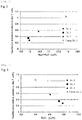
- graphs of equilibrium moisture content on day 7 versus total Na 2 O + K 2 O content and equilibrium moisture content on day 7 versus B 2 O 3 ; content are shown in FIGS. 2 and 3 , respectively.
Landscapes
- Engineering & Computer Science (AREA)
- Chemical & Material Sciences (AREA)
- Life Sciences & Earth Sciences (AREA)
- General Engineering & Computer Science (AREA)
- Materials Engineering (AREA)
- Organic Chemistry (AREA)
- Geochemistry & Mineralogy (AREA)
- Chemical Kinetics & Catalysis (AREA)
- General Chemical & Material Sciences (AREA)
- Mechanical Engineering (AREA)
- General Life Sciences & Earth Sciences (AREA)
- Optics & Photonics (AREA)
- Physics & Mathematics (AREA)
- Textile Engineering (AREA)
- Manufacturing & Machinery (AREA)
- Glass Compositions (AREA)
- Thermal Insulation (AREA)
Abstract
Description
- The present invention relates to a glass wool and a vacuum insulation material using the same. More particularly, the present invention relates to a glass wool having low moisture absorption and a vacuum insulation material using the same.
- Glass wool is widely used as an insulation material, sound insulation material and/or sound absorption material in numerous fields for the purpose of retaining heat, retaining cold, insulating from heat or soundproofing and the like as a result of having properties such as lightweight properties, thermal insulating properties, sound insulating properties or sound absorbing properties. In addition, vacuum insulation materials are also known that are obtained by sealing a glass wool core material with an envelope and reducing the pressure inside.
- Although various studies have been previously conducted on the glass composition of glass wool, a glass composition is typically used that is referred to as "C-glass", having a high content of alkaline metal.
- However, since glass wool is produced using crushed waste glass referred to as "cullet" as raw material, the glass composition of glass wool is greatly influenced by the type and amount of cullet used as raw material. Since there are limitations on the types of cullet that can be used on an industrial scale, glass compositions able to be used as the glass composition of glass wool are limited to a certain range.
- In addition, since it is also necessary to take into consideration such factors as the chemical durability, thermal conductivity, mechanical strength, glass melting temperature, viscosity or liquidus temperature of the glass wool based requirements in terms of physical properties of a thermal insulation material as well as requirements in terms of production, selection of the contents of each constituent component of a glass composition is subjected to considerable limitations.
- For example,
Patent Documents -
- [Patent Document 1] Japanese Unexamined Patent Publication No.
2005-344871 - [Patent Document 2] Japanese Unexamined Patent Publication No.
2008-286263 - Thermal insulating properties of glass wool thermal insulation materials are known to be adversely affected due to the presence of moisture, and countermeasures are implemented for allowing this moisture to escape by providing ventilation and the like. In addition, thermal insulating properties of vacuum insulation materials are also known to be adversely affected due to the effects of moisture that enters from the edges of the envelope, and a desiccant is typically sealed inside to adsorb that moisture.
- Although glass wool demonstrates a decrease in thermal insulating properties due to the effects of moisture, the moisture absorption of glass wool per se has been virtually ignored. Even if the moisture absorption of glass wool per se had been considered, this only focused on the filament diameter and/or the type of binder of the glass wool that have a direct effect on adsorption surface area.
- However, during the course of examining variations in physical properties during the production of glass wool, the inventors of the present invention found that the glass composition of glass wool is more significantly affected by moisture absorption than by such factors as filament diameter.
- Therefore, an object of the present invention is to provide a glass wool that has physical properties required for use as a thermal insulation material, can be produced industrially, and is capable of lowering moisture absorption, and a vacuum insulation material using that glass wool.
- As a result of conducting extensive studies, the inventors of the present invention found that the aforementioned problems can be solved by the means indicated below. Namely, the present invention is as indicated below.
- <
Aspect 1>
Glass wool having the following glass composition:- SiO2: 60.0wt% to 65.0 wt%,
- Al2O3: 0.5wt% to 2.0wt%,
- Na2O and K2O: 13.0wt% to 17.0wt%,
- MgO and CaO: 8.0wt% to 12.0wt%,
- B2O3: 5.0wt% to 12.0wt%, and
- other components: balance.
- <
Aspect 2>
The glass wool described inAspect 1 having the following glass composition:- Na2O and K2O: 14.0wt% to 16.5wt%,
- MgO and CaO: 9.0wt% to 11.5wt%, and
- B2O3: 5.0wt% to 8.0wt%.
- <
Aspect 3>
The glass wool described inAspect 1 having the following glass composition:- SiO2: 62.0wt% to 64.0wt%
- Al2O3: 1.2wt% to 1.8wt%,
- Na2O: 14.0wt% to 16.0wt%,
- K2O: 0.5wt% to 2.0wt%,
- MgO: 2.0wt% to 4.0wt%,
- CaO: 6.0wt% to 8.0wt%, and
- B2O3: 6.0wt% to 8.0wt%.
- <
Aspect 4>
The glass wool described in any ofAspects 1 to 3, wherein the mean filament diameter is 0.5 µm or more to 20 µm or less. - <
Aspect 5>
The glass wool described in any ofAspects 1 to 4, which does not contain a resin binder. - <
Aspect 6>
The glass wool described in any ofAspects 1 to 5, which is a sheet-like compact. - <
Aspect 7>
The glass wool described in any ofAspects 1 to 5, wherein equilibrium moisture content onday 7 in the case of having measured in compliance with the chamber method defined in JIS A 1475 is 1.0wt% or less. - <Aspect 8>
A vacuum insulation material comprising the glass wool described in any ofAspects 1 to 7 and an envelope that encloses the glass wool. - <Aspect 9>
A method for producing the glass wool described in any ofAspects 1 to 7, comprising:- obtaining a glass melt by melting glass raw materials comprising cullet and an additive for adjusting glass composition, and
- forming the glass melt into filaments.
- According to the present invention, a glass wool that has physical properties required for use as a thermal insulating material, can be produced industrially, and is capable of lowering moisture absorption, and a vacuum insulation material that uses that glass wool, can be provided.
-
-
FIG. 1 shows time-based changes in the equilibrium moisture contents of various samples examined in examples. -
FIG. 2 indicates a graph of equilibrium moisture content onday 7 versus Na2O and K2O content of various samples examined in examples. -
FIG. 3 indicates a graph of equilibrium moisture content onday 7 versus B2O3 content of various samples examined in examples. - The glass wool of the present invention has the composition indicated below:
- SiO2: 60.0wt% to 65.0wt%,
- Al2O3: 0.5wt% to 2.0wt%,
- Na2O and K2O: 13.0wt% to 17.0wt%,
- MgO and CaO: 8.0wt% to 12.0wt%,
- B2O3: 5.0wt% to 12.0wt%, and
- other components: balance.
- The inventors of the present invention found that Na2O and K2O content as well as B2O3; content have a considerable effect on the moisture absorption of glass wool per se during the course of examining variations in physical properties during the production of glass wool. More specifically, the inventors of the present invention found that the moisture absorption of glass wool decreases considerably in the case of a low content of Na2O and K2O and a high content of B2O3.
- Although not bound by theory, this decrease in moisture absorption is thought to be due to the following reason. In the case of Na2O, for example, -Si-O-Si- bonds are cleaved by forming two Si-ONa moieties from a single -Si-O-Si- moiety. Since these Si-ONa moieties readily react with hydronium ions (H3O+) present in water, a hydration reaction occurs in the form of Si-ONa + H3O+ → Si-O-H + Na + H2O, and a hydration reaction layer forms on the surface of the glass. In addition, silanol (Si-O-H) groups formed are also known to adsorb water. In this manner, Na2O is thought to have an effect on the moisture adsorption of glass. Moreover, B2O3; enters into the glass structure as a result of B3+ bonding with oxygen in the form of a tetra-coordinated structure, and since this structure is in the form of a tetrahedron, it does not readily react with water. In addition, it is further thought to be due to a reduction in the non-bridging oxygen of Si as a result of bonding with Na+, thereby causing a reduction in the number of moisture adsorption sites. The same can be assumed to occur with respect to K2O as well.
- Thus, in the present invention, the content of Na2O and K2O are made to be comparatively low while the content of B2O3; is made to be comparatively high in order to lower moisture absorption. Here, although a decrease in the amounts of Na2O and K2O causes a rise in the melting temperature while also resulting in an increase in glass viscosity, thereby making production difficult, if the B2O3; content of the glass is comparatively high, glass viscosity can be lowered together with lowering the melting temperature. On the other hand, since phase separation tends to occur when the content of B2O3; increases, it is necessary to place an upper limit on the content of B2O3; as well. Thus, in the present invention, the total content of MgO and CaO is made to be comparatively high in order to further lower viscosity. However, since devitrification tends to occur when the contents of CaO and MgO become comparatively high, these tendencies can be inhibited and suitable elasticity and chemical durability are obtained by using the contents of SiO2 and Al2O3 within specific ranges.
- The inventors of the present invention found that a glass composition having the combination of components indicated above is able to simultaneously satisfy requirements for those physical properties required for use as a glass wool thermal insulating material and the industrial production thereof, such as reduced moisture absorption, prevention of devitrification, prevention of phase separation, industrial production using cullet, suitable viscosity, elasticity or chemical durability.
- The following respectively provides explanations of each of the components and physical properties of the glass composition of the glass wool of the present invention.
- The content of SiO2 in the glass composition of the glass wool of the present invention is 60.0wt% to 65.0wt%. In the case the SiO2 content of the glass wool is within this range, the viscosity and melting temperature of the glass can be made to be within suitable ranges, vitrification can be facilitated, the glass is resistant to devitrification, and suitable elasticity can be imparted to the glass wool. In addition, an SiO2 content within this range facilitates production from cullet.
- The SiO2 content may be 60.0wt% or more, 60.5wt% or more, 61.0wt% or more, 61.5wt% or more, 62.0wt% or more, 62.5wt% or more or 63.0wt% or more, and 65.0wt% or less, 64.5wt% or less, 64.0wt% or less, 63.5wt% or less or 63.0wt% or less.
- The content of Al2O3 in the glass composition of the glass wool of the present invention is 0.5wt% to 2.0wt%. In the case the Al2O3 content of the glass wool is within this range, the viscosity and melting temperature of the glass can be made to be within suitable ranges, the glass is resistant to devitrification, and suitable elasticity, water resistance and chemical durability can be imparted to the glass wool. In addition, an Al2O3 content within this range facilitates production from cullet.
- The Al2O3 content may be 0.5wt% or more, 0.8wt% or more, 1.0wt% or more, 1.2wt% or more, 1.4wt% or more or 1.5wt% or more, and 2.0wt% or less, 1.8wt% or less, 1.6wt% or less, 1.4wt% or less, 1.2wt% or less or 1.0wt% or less.
- The total content of Na2O and K2O in the glass composition of the glass wool of the present invention is 13.0wt% to 17.0wt%. By making the total amount of Na2O and K2O to be comparatively small in this manner after having made other constituent components to be within the aforementioned ranges, the amount of moisture adsorbed by the glass wool of the present invention can be lowered, the viscosity and melting temperature of the glass can be made to be within suitable ranges and requirements in terms of having physical properties of a thermal insulation material and requirements in terms of production can be satisfied. In addition, if the total content of Na2O and K2O is within this range, there is the advantage of being resistant to decreases in strength.
- The total content of Na2O and K2O may be 13.0wt% or more, 13.5wt% or more, 14.0wt% or more, 14.5wt% or more, 15.0wt% or more, 15.5wt% or more or 16.0wt% or more, and 17.0wt% or less, 16.5wt% or less or 16.0wt% or less.
- Na2O and K2O are preferably used in combination, and chemical durability of the glass wool can be improved based on a mixed alkali effect as a result thereof. On the other hand, since there is increased susceptibility to erosion of furnace materials, melting tends to be difficult, and the glass is susceptible to phase separation if the content of K2O is excessively high, Na2O is preferably used in a comparatively large amount in comparison with K2O. The ratio of the contents of Na2O and K2O (Na2O/K2O) may be 2.0 or more, 3.0 or more, 5.0 or more, 8.0 or more, 10.0 or more, 12.0 or more, 15.0 or more, 17.0 or more or 20.0 or more, and 50.0 or less, 40.0 or less, 30.0 or less, 25.0 or less, 22.0 or less, 20.0 or less, 17.0 or less or 15.0 or less. A ratio of Na2O/K2O of 15.0 to 25.0 is particularly advantageous in the case of producing the glass wool using cullet.
- The content of Na2O may be 13.5wt% or more, 13.0wt% or more, 14.0wt% or more, 14.5wt% or more, 15.0wt% or more or 15.5wt% or more, and 17.0wt% or less, 16.5wt% or less, 16.0wt% or less, 15.5wt% or less or 15.0wt% or less.
- In addition, the content of K2O may be 0.3wt% or more, 0.5wt% or more, 0.8wt% or more, 1.0wt% or more, 1.5wt% or more or 2.0wt% or more, and 3.0wt% or less, 2.5wt% or less, 2.0wt% or less, 1.5wt% or less, 1.0wt% or less or 0.5wt% or less.
- The total content of MgO and CaO in the glass composition of the glass wool of the present invention is 8.0wt% to 12.0wt%. By making the total content of MgO and CaO to be such an amount after having made other constituent components to be within the aforementioned ranges, the glass viscosity of the glass wool of the present invention can be lowered and the potential for devitrification can be reduced. In addition, if the total content of MgO and CaO is within this range, there is the advantage of being resistant to decreases in strength.
- The total content of MgO and CaO may be 8.0wt% or more, 8.5wt% or more, 9.0wt% or more, 9.5wt% or more, 10.0wt% or more, 10.5wt% or more or 11.0wt% or more, and 12.0wt% or less, 11.5wt% or less, 11.0wt% or less, 10.5wt% or less or 10.0wt% or less.
- MgO and CaO are preferably used in combination, so that devitrification can be inhibited and changes in viscosity at high temperatures can be decreased as a result thereof. Namely, since devitrification tends to occur if the content of CaO is excessively high, the tendency to undergo devitrification can be inhibited by substituting CaO with MgO. In addition, changes in viscosity at high temperatures can be decreased as a result thereof. The ratio of the contents of MgO and CaO (MgO/CaO) may be 0.1 or more, 0.2 or more, 0.4 or more, 0.5 or more or 1.0 or more, and 5.0 or less, 3.0 or less, 2.0 or less, 1.5 or less, 1.0 or less, 0.8 or less, 0.5 or less or 0.3 or less. A ratio of MgO/CaO of 0.2 to 0.8 is particularly advantageous in the case of producing the glass wool using cullet.
- The content of MgO may be 1.0wt% or more, 1.5wt% or more, 2.0wt% or more, 2.5wt% or more, 3.0wt% or more, 3.5wt% or more or 4.0wt% or more, and 5.0wt% or less, 4.5wt% or less, 4.0wt% or less, 3.5wt% or less 3.0wt% or less, 2.5wt% or less, 2.0wt% or less or 1.5wt% or less.
- In addition, the content of CaO may be 5.0wt% or more, 5.5wt% or more, 6.0wt% or more, 6.5wt% or more, 7.0wt% or more, 7.5wt% or more, 8.0wt% or more or 8.5wt% or more, and 11.0wt% or less, 10.5wt% or less, 10.0wt% or less, 9.5wt% or less, 9.0wt% or less, 8.5wt% or less, 8.0wt% or less, 7.5wt% or less or 7.0wt% or less.
- The content of B2O3 in the glass composition of the glass wool of the present invention is 5.0wt% to 12.0wt%. By using B2O3; in a comparatively large amount in this manner after having made other constituent components to be within the aforementioned ranges, the glass wool of the present invention can be made to have suitable viscosity and melting temperature, and requirements in terms of having physical properties of a thermal insulation material and requirements in terms of production can be satisfied. In addition, if the content of B2O3; is within this range, moisture absorption of the resulting glass wool is low, thereby offering the advantage of high thermal insulating properties.
- The content of B2O3; may be 5.0wt% or more, 5.5wt% or more, 6.0wt% or more, 6.5wt% or more, 7.0wt% or more, 7.5wt% or more or 8.0wt% or more, and 12.0wt% or less, 11.5wt% or less, 11.0wt% or less, 10.5wt% or less, 10.0wt% or less, 9.5wt% or less, 9.0wt% or less, 8.5wt% or less or 8.0wt% or less.
- The glass composition of the glass wool of the present invention may contain other constituent components within a range that satisfies requirements in terms of having physical properties of a thermal insulation material and requirements in terms of production, and examples of other constituent components that may be contained include S2O3, Fe2O3, MnO, BaO, TiO2, SrO, PbO, Cr2O3, ZnO, Rb2O and Cs2O.
- These other constituent components may be contained in total at 10.0wt% or less, 8.0wt% or less, 6.0wt% or less, 4.0wt% or less, 3.5wt% or less, 3.0wt% or less, 2.5wt% or less, 2.0wt% or less, 1.5wt% or less, 1.0wt% or less or 0.5wt% or less.
- The equilibrium moisture content on
day 7 of the glass wool of the present invention in the case of having measured according to the method described in the examples may be 1.0wt% or less, 0.80wt% or less, 0.60wt% or less, 0.50wt% or less, 0.40wt% or less or 0.30wt% or less. - The mean filament diameter of the glass wool of the present invention may be, for example, 1.0 µm or more, 2.0 µm or more or 3.0 µm or more and 20 µm or less, 10 µm or less, 8 µm or less or 5 µm or less. The glass filament diameter referred to here can be measured by observing 200 or more filaments of the glass wool with a microscope, such as by placing a small amount of glass wool between two glass slides and observing 200 or more filaments with the VHX-200 Digital Microscope manufactured by Keyence Corp.
- The area weight of the glass wool of the present invention may be, for example, 1000 g/m2 or more, 1200 g/m2 or more, 1500 g/m2 or more, 1800 g/m2 or more or 2000 g/m2 or more, and 4000 g/m2 or less, 3500 g/m2 or less, 3000 g/m2 or less or 2500 g/m2 or less.
- The density of the glass wool of the present invention may be, for example, 50 kg/m3 or more, 80 kg/m3 or more, 100 kg/m3 or more or 150 kg/m3 or more, and 350 kg/m3 or less, 300 kg/m3 or less, 250 kg/m3 or less or 200 kg/m3 or less.
- The glass wool of the present invention may be in the form of a sheet-like compact such as a glass wool compact like that obtained according to the method described in the specification of Japanese Patent No.
3712129 - The glass wool of the present invention may have a resin binder such as a phenolic resin binder. In addition, it may also substantially not have a resin binder. For example, the glass wool of the present invention may be in the form of a three-dimensional framework structure in which the intersecting portions of the filaments are joined with an inorganic binder such as water glass like that obtained according to the method described in the specification of Japanese Patent No.
3712129 - The vacuum insulation material of the present invention comprises the aforementioned glass wool and an envelope that encloses the glass wool. Normally, the envelope comprises a heat sealable layer, barrier layer and protective layer, sealing portions are formed on the ends thereof by mutually heat-sealing opposing heat sealable layers, and the glass wool is enclosed in the envelope in the form of a core material. Each layer can be adhered together with a layer of adhesive. In addition, an adsorbent or hygroscopic agent and the like can also be contained between and/or within each layer.
- The thickness of the envelope may be 10 µm or more, 20 µm or more, 30 µm or more or 40 µm or more, and 100 µm or less, 80 µm or less or 60 µm or less.
- The vacuum insulation material of the present invention can be used to thermally insulate, for example, floor heating systems, vending machines, modular bathrooms, bathtubs and their covers, thermos flasks, refrigerators, refrigerated storage rooms, refrigerated vehicles, cool boxes, automobiles, building (such as residential) rooves, building walls, building ceilings, building floors or hot water tanks.
- The glass wool production method of the present invention comprises obtaining a glass melt by melting glass raw materials comprising cullet and an additive, and forming the glass melt into filaments.
- Commercially available recycled cullet such as empty bottles, automotive glass, screen boards, cathode ray tubes, liquid crystal panels, displays, mirrors or plate glass can be used for the cullet. This type of cullet normally has a glass composition like that indicated below.
SiO2: 65.0wt% to 75.0wt%
Al2O3 : 1.0wt% to 5.0wt%
Na2O: 10.0wt% to 15.0wt%
K2O: 0.5wt% to 3.0wt%
MgO: 0.1wt% to 5.0wt%
CaO: 7.0wt% to 13.0wt%
B2O3: 0.3wt% or less
Other components: balance - In addition, the cullet may have a glass composition like that indicated below in particular.
SiO2: 69.0wt% to 72.0wt%
Al2O3: 1.5wt% to 3.5wt%
Na2O: 12.0wt% to 14.0wt%
K2O: 0.8wt% to 1.5wt%
MgO: 0.2wt% to 4.0wt%
CaO: 7.5wt% to 12.0wt%
B2O3: 0.2wt% or less
Other components: balance - Cullet derived from empty bottles in particular may have an MgO content of 0.2wt% to 1.0wt% and CaO content of 9.5wt% to 12.0wt%. In addition, cullet derived from automotive glass may have an MgO content of 2.5wt% to 4.5wt% and CaO content of 7.5wt% to 9.5wt%.
- In the present invention, one type of the aforementioned cullet can be used alone or a plurality of types can be used in combination. The method of the present invention comprises obtaining a glass melt by melting glass raw materials consisting of this cullet and an additive for adjusting glass composition, such as silica sand, feldspar, kaolin, potassium feldspar, sodium feldspar, soda ash, dolomite, magnesite, talc, boric acid, borax, sodium sulfate (mirabilite), manganese dioxide, sodium nitrate, colemanite, lazurite, calcined alumina, anorthite, nepheline syenite, lepidolite, petalite, spodumene, blast furnace slag, potassium carbonate, potassium nitrate, calcium carbonate, magnesia lime, aluminum hydroxide, magnesium hydroxide, calcium carbonate, saltpeter, fluorite, red lead, limestone or quicklime, followed by forming this glass melt into filaments. The aforementioned glass wool of the present invention can be easily obtained using glass raw materials substantially consisting of cullet and borax, or using glass raw materials substantially consisting of cullet, soda ash and borax.
- Melting of the glass raw materials and formation of the glass melt into filaments can be carried out according to known methods described in, for example, Japanese Unexamined Patent Publication No.
2009-155172 - Glass raw materials comprising 5 parts by weight to 20 parts by weight of borax and 0 parts by weight to 5 parts by weight of soda ash to 100 parts by weight of cullet having the composition shown in Table 1 were melted to obtain a glass melt, followed by forming the glass melt into filaments using a spinner to obtain the glass wool of Example 1 having a mean filament diameter of about 4 µm and the composition shown in Table 1.
- Glass wools of Examples 2 and 3 and Comparative Example 1 shown in Table 2 were obtained in the same manner as Example 1 with the exception of changing the mixing ratio of cullet, borax and soda ash.
[Table 1] Cullet Ex. 1 Ex. 2 Ex. 3 Comp. Ex. 1 SiO2 68.2 to 70.6 63.1 63.0 63.0 63.9 Al2O3 1.3 to 2.0 1.3 1.4 1.4 1.5 12.2 to 13.6 15.7 15.1 15.1 17.0 K2O 0.7 to 1.4 0.7 0.9 0.9 0.9 Na2O+K2O 16.5 15.9 16.0 17.9 Na2O/K2O - 21.5 17.7 17.4 18.9 MgO 3.3 to 3.9 3.1 3.2 3.2 3.2 CaO 8.1 to 9.0 7.8 7.7 7.6 7.7 MgO+CaO - 10.9 10.8 10.7 11.0 MgO/CaO - 0.40 0.41 0.42 0.42 B2O3; 0 6.1 7.4 7.9 4.0 Other 1.5 to 3.8 2.1 1.6 1.1 1.7 - The equilibrium moisture contents of these glass wools were measured in compliance with the chamber method defined in JIS A 1475. More specifically, each type of glass wool core material was cut into squares measuring 50 mm to 60 mm on a side to a weight of 10 g followed by measurement of their length, width and thickness, confirming that the density was the same for each type, and using these pieces as samples. After measuring the weights of the samples prior to drying, the samples were placed in a drying oven in an environment at 105°C and dried. Here, the weight of each sample was measured every 24 hours and the samples were dried until the difference between consecutively measured weights was within 0.1%. Next, the samples were transferred to a constant-temperature, constant-humidity chamber in an environment having a temperature of 23°C and humidity of 93% followed by measuring the weights of the core material samples every 24 hours.
- Time-based changes in equilibrium moisture content are shown in
FIG. 1 . In addition, graphs of equilibrium moisture content onday 7 versus total Na2O + K2O content and equilibrium moisture content onday 7 versus B2O3; content are shown inFIGS. 2 and 3 , respectively. - It can be understood from
FIG. 1 that moisture absorption is low in the case of a comparatively low content of Na2O + K2O and a comparatively high content of B2O3; (Examples 1 to 3). In addition, it can be understood fromFIG. 2 that there is a high correlation between the total amount of Na2O + K2O and moisture absorption. Moreover, it can be understood fromFIG. 3 that there is also a high correlation between the amount of B2O3; and moisture absorption.
Claims (9)
- Glass wool having the following glass composition:SiO2: 60.0wt% to 65.0 wt%,Al2O3: 0.5wt% to 2.0wt%,Na2O and K2O: 13.0wt% to 17.0wt%,MgO and CaO: 8.0wt% to 12.0wt%,B2O3: 5.0wt% to 12.0wt%, andother components: balance.
- The glass wool according to claim 1 having the following glass composition:Na2O and K2O: 14.0wt% to 16.5wt%,MgO and CaO: 9.0wt% to 11.5wt%, andB2O3: 5.0wt% to 8.0wt%.
- The glass wool according to claim 1 having the following glass composition:SiO2: 62.0wt% to 64.0wt%Al2O3: 1.2wt% to 1.8wt%,Na2O: 14.0wt% to 16.0wt%,K2O: 0.5wt% to 2.0wt%,MgO: 2.0wt% to 4.0wt%,CaO: 6.0wt% to 8.0wt%, andB2O3 : 6.0wt% to 8.0wt%.
- The glass wool according to any of claims 1 to 3, wherein the mean filament diameter is 0.5 µm or more to 20 µm or less.
- The glass wool according to any of claims 1 to 4, which does not contain a resin binder.
- The glass wool according to any of claims 1 to 5, which is a sheet-like compact.
- The glass wool according to any of claims 1 to 5, wherein equilibrium moisture content on day 7 in the case of having measured in compliance with the chamber method defined in JIS A 1475 is 1.0wt% or less.
- A vacuum insulation material comprising the glass wool according to any of claims 1 to 7 and an envelope that encloses the glass wool.
- A method for producing the glass wool according to any of claims 1 to 7, comprising:obtaining a glass melt by melting glass raw materials comprising cullet and an additive for adjusting glass composition, andforming the glass melt into filaments.
Priority Applications (1)
| Application Number | Priority Date | Filing Date | Title |
|---|---|---|---|
| SI201731491T SI3546434T1 (en) | 2016-09-16 | 2017-09-19 | Glass wool, and vacuum heat insulation material using same |
Applications Claiming Priority (2)
| Application Number | Priority Date | Filing Date | Title |
|---|---|---|---|
| JP2016182074 | 2016-09-16 | ||
| PCT/JP2017/033777 WO2018052150A1 (en) | 2016-09-16 | 2017-09-19 | Glass wool, and vacuum heat insulation material using same |
Publications (3)
| Publication Number | Publication Date |
|---|---|
| EP3546434A1 true EP3546434A1 (en) | 2019-10-02 |
| EP3546434A4 EP3546434A4 (en) | 2020-12-09 |
| EP3546434B1 EP3546434B1 (en) | 2024-01-24 |
Family
ID=61619966
Family Applications (1)
| Application Number | Title | Priority Date | Filing Date |
|---|---|---|---|
| EP17851047.5A Active EP3546434B1 (en) | 2016-09-16 | 2017-09-19 | Glass wool, and vacuum heat insulation material using same |
Country Status (9)
| Country | Link |
|---|---|
| US (1) | US11078110B2 (en) |
| EP (1) | EP3546434B1 (en) |
| JP (1) | JP6860582B2 (en) |
| KR (1) | KR102502887B1 (en) |
| CN (1) | CN110023260A (en) |
| CA (1) | CA3036830A1 (en) |
| MY (1) | MY193093A (en) |
| SI (1) | SI3546434T1 (en) |
| WO (1) | WO2018052150A1 (en) |
Cited By (1)
| Publication number | Priority date | Publication date | Assignee | Title |
|---|---|---|---|---|
| EP4330203B1 (en) | 2021-04-28 | 2025-04-16 | Saint-Gobain Isover | Method for manufacturing glass fibers from unprocessed mineral materials |
Families Citing this family (4)
| Publication number | Priority date | Publication date | Assignee | Title |
|---|---|---|---|---|
| FR3104568B1 (en) * | 2019-12-11 | 2022-07-22 | Saint Gobain Isover | PROCESS FOR MANUFACTURING MINERAL WOOL |
| CN111517644A (en) * | 2020-04-30 | 2020-08-11 | 保定市桥与果新材料科技有限公司 | Passive room inorganic wallboard and preparation method thereof |
| KR102789122B1 (en) * | 2020-08-25 | 2025-04-01 | 주식회사 케이씨씨 | Core material for vacuum insulation panel and preparing method thereof |
| FR3164457A1 (en) * | 2024-07-10 | 2026-01-16 | Saint-Gobain Isover | METHOD FOR MANUFACTURING GLASS FIBERS FROM BOTTLE GLASS CULCATE |
Family Cites Families (20)
| Publication number | Priority date | Publication date | Assignee | Title |
|---|---|---|---|---|
| SE418961C (en) * | 1979-05-09 | 1987-03-23 | Partek Ab | FIBER GLASS FIXED SEEN NING |
| AU630484B2 (en) * | 1989-08-11 | 1992-10-29 | Isover Saint-Gobain | Glass fibres capable of decomposing in a physiological medium |
| US6017835A (en) | 1993-11-05 | 2000-01-25 | Owens Corning Fiberglas Technology, Inc. | Glass compositions for producing dual-glass fibers |
| US5952254A (en) | 1997-06-17 | 1999-09-14 | Isover Saint-Gobain | Mineral wool composition |
| US7144633B2 (en) | 2002-07-29 | 2006-12-05 | Evanite Fiber Corporation | Glass compositions |
| KR100789469B1 (en) | 2004-04-29 | 2007-12-31 | 주식회사 케이씨씨 | Composition of biosoluble glass fiber |
| JP2005344871A (en) * | 2004-06-04 | 2005-12-15 | Matsushita Electric Ind Co Ltd | Vacuum insulation material and vacuum insulation production system |
| JP3712129B1 (en) * | 2005-06-07 | 2005-11-02 | 株式会社マグ | Manufacturing method of glass wool molded body, glass wool molded body, and vacuum heat insulating material |
| JP5040433B2 (en) | 2007-05-16 | 2012-10-03 | パナソニック株式会社 | Vacuum insulation |
| US7842631B2 (en) | 2007-10-04 | 2010-11-30 | Johns Manville | Glass compositions with high softening point temperatures |
| JP2009155172A (en) | 2007-12-27 | 2009-07-16 | Asahi Fiber Glass Co Ltd | Glass fiber laminate and vacuum heat insulating material |
| KR20120054601A (en) * | 2009-08-04 | 2012-05-30 | 크나우프 인설레이션 게엠베하 | Flame resistant fiberglass insulation, products, and methods |
| CN101857394B (en) | 2010-05-11 | 2012-07-11 | 太仓宏大方圆电气有限公司 | Production method of superfine glass wool product |
| EP2450320B1 (en) * | 2010-11-04 | 2014-01-08 | Corning Incorporated | Transparent spinel glass-ceramics free of As2O3 and Sb2O3 |
| CN102062277B (en) * | 2010-11-11 | 2012-05-09 | 苏州维艾普新材料有限公司 | Wet-process superfine glass wool vacuum insulation panel and production method thereof |
| US8536079B2 (en) * | 2011-04-29 | 2013-09-17 | Owens Corning Intellectual Capital, Llc | Use of boron to reduce the thermal conductivity of unbonded loosefill insulation |
| KR20130112433A (en) | 2012-04-04 | 2013-10-14 | 주식회사 케이씨씨 | A composition for preparing glass wool and a biosoluble glass wool prepared therefrom |
| CN103570247B (en) * | 2012-07-24 | 2016-06-08 | 南京航空航天大学 | A kind of centrifuging super glass wool and its preparation method |
| CN103058526A (en) * | 2013-01-11 | 2013-04-24 | 成都瀚江新型建筑材料有限公司 | Glass wool for dry vacuum insulated panel core material and production method thereof |
| CN104266040A (en) | 2014-08-20 | 2015-01-07 | 李载润 | Vacuum insulation panel made of biological soluble glass fibers |
-
2017
- 2017-09-19 CN CN201780070962.6A patent/CN110023260A/en active Pending
- 2017-09-19 JP JP2018539209A patent/JP6860582B2/en active Active
- 2017-09-19 WO PCT/JP2017/033777 patent/WO2018052150A1/en not_active Ceased
- 2017-09-19 CA CA3036830A patent/CA3036830A1/en active Pending
- 2017-09-19 EP EP17851047.5A patent/EP3546434B1/en active Active
- 2017-09-19 US US16/333,352 patent/US11078110B2/en active Active
- 2017-09-19 SI SI201731491T patent/SI3546434T1/en unknown
- 2017-09-19 MY MYPI2019001378A patent/MY193093A/en unknown
- 2017-09-19 KR KR1020197010382A patent/KR102502887B1/en active Active
Cited By (1)
| Publication number | Priority date | Publication date | Assignee | Title |
|---|---|---|---|---|
| EP4330203B1 (en) | 2021-04-28 | 2025-04-16 | Saint-Gobain Isover | Method for manufacturing glass fibers from unprocessed mineral materials |
Also Published As
| Publication number | Publication date |
|---|---|
| EP3546434B1 (en) | 2024-01-24 |
| WO2018052150A1 (en) | 2018-03-22 |
| KR102502887B1 (en) | 2023-02-24 |
| MY193093A (en) | 2022-09-26 |
| CN110023260A (en) | 2019-07-16 |
| JP6860582B2 (en) | 2021-04-14 |
| CA3036830A1 (en) | 2018-03-22 |
| JPWO2018052150A1 (en) | 2019-06-27 |
| US11078110B2 (en) | 2021-08-03 |
| KR20190055136A (en) | 2019-05-22 |
| EP3546434A4 (en) | 2020-12-09 |
| SI3546434T1 (en) | 2024-04-30 |
| US20190249817A1 (en) | 2019-08-15 |
Similar Documents
| Publication | Publication Date | Title |
|---|---|---|
| EP3546434B1 (en) | Glass wool, and vacuum heat insulation material using same | |
| CN102471132B (en) | Glass composition and fibers made therefrom | |
| KR102651562B1 (en) | Zircon compatible, ion exchangeable glass with high damage resistance | |
| US11866364B2 (en) | Salt bath for glass reinforcement, preparation method therefor, reinforced glass and glass raw material | |
| CZ20001826A3 (en) | Mineral wool and composition thereof | |
| AU2017213544B2 (en) | Glass manufacturing method using electric melting | |
| CN102557432B (en) | High-strength touch screen glass component suitable for chemical tempering | |
| US20190389765A1 (en) | Glass Compositions and Fibers Made Therefrom | |
| US7842631B2 (en) | Glass compositions with high softening point temperatures | |
| RU2384545C2 (en) | Fire-resistant brick for tray of float bath and method of its manufacture | |
| CN100366560C (en) | Soda calcium silicate series fireproof glass | |
| KR102725023B1 (en) | Mineral wool | |
| WO2008007570A1 (en) | Lead-free glass composition | |
| JP2007153649A (en) | Glass composition, glass fiber, and vacuum heat insulating material | |
| KR20200062056A (en) | Inorganic fiber composition using recycled material, inorganic fiber formed of the same, inorganic thermal insulator including the inorganic fiber and method for manufacturing the same | |
| CN104211299A (en) | Low-density high-strength cover glass for touch screen | |
| CN119462213A (en) | A low thermal conductivity ceramic rock plate and preparation method thereof | |
| Cook et al. | v37 issue 1 a_grid. qxd 1/20/2016 4: 15 PM Page 43 | |
| Hubert et al. | Simon Cook, David Lever | |
| Wang | Perlite derived foam glass with low thermal expansion |
Legal Events
| Date | Code | Title | Description |
|---|---|---|---|
| STAA | Information on the status of an ep patent application or granted ep patent |
Free format text: STATUS: THE INTERNATIONAL PUBLICATION HAS BEEN MADE |
|
| PUAI | Public reference made under article 153(3) epc to a published international application that has entered the european phase |
Free format text: ORIGINAL CODE: 0009012 |
|
| STAA | Information on the status of an ep patent application or granted ep patent |
Free format text: STATUS: REQUEST FOR EXAMINATION WAS MADE |
|
| 17P | Request for examination filed |
Effective date: 20190416 |
|
| AK | Designated contracting states |
Kind code of ref document: A1 Designated state(s): AL AT BE BG CH CY CZ DE DK EE ES FI FR GB GR HR HU IE IS IT LI LT LU LV MC MK MT NL NO PL PT RO RS SE SI SK SM TR |
|
| AX | Request for extension of the european patent |
Extension state: BA ME |
|
| DAV | Request for validation of the european patent (deleted) | ||
| DAX | Request for extension of the european patent (deleted) | ||
| RAP1 | Party data changed (applicant data changed or rights of an application transferred) |
Owner name: SAINT-GOBAIN ISOVER |
|
| A4 | Supplementary search report drawn up and despatched |
Effective date: 20201105 |
|
| RIC1 | Information provided on ipc code assigned before grant |
Ipc: F16L 59/065 20060101ALI20201030BHEP Ipc: C03C 1/00 20060101ALI20201030BHEP Ipc: C03C 13/00 20060101AFI20201030BHEP Ipc: F16L 59/02 20060101ALI20201030BHEP |
|
| GRAP | Despatch of communication of intention to grant a patent |
Free format text: ORIGINAL CODE: EPIDOSNIGR1 |
|
| STAA | Information on the status of an ep patent application or granted ep patent |
Free format text: STATUS: GRANT OF PATENT IS INTENDED |
|
| INTG | Intention to grant announced |
Effective date: 20230908 |
|
| GRAS | Grant fee paid |
Free format text: ORIGINAL CODE: EPIDOSNIGR3 |
|
| GRAA | (expected) grant |
Free format text: ORIGINAL CODE: 0009210 |
|
| STAA | Information on the status of an ep patent application or granted ep patent |
Free format text: STATUS: THE PATENT HAS BEEN GRANTED |
|
| AK | Designated contracting states |
Kind code of ref document: B1 Designated state(s): AL AT BE BG CH CY CZ DE DK EE ES FI FR GB GR HR HU IE IS IT LI LT LU LV MC MK MT NL NO PL PT RO RS SE SI SK SM TR |
|
| REG | Reference to a national code |
Ref country code: GB Ref legal event code: FG4D |
|
| REG | Reference to a national code |
Ref country code: CH Ref legal event code: EP |
|
| REG | Reference to a national code |
Ref country code: DE Ref legal event code: R096 Ref document number: 602017078770 Country of ref document: DE |
|
| REG | Reference to a national code |
Ref country code: IE Ref legal event code: FG4D |
|
| P01 | Opt-out of the competence of the unified patent court (upc) registered |
Effective date: 20240123 |
|
| REG | Reference to a national code |
Ref country code: LT Ref legal event code: MG9D |
|
| REG | Reference to a national code |
Ref country code: NL Ref legal event code: MP Effective date: 20240124 |
|
| PG25 | Lapsed in a contracting state [announced via postgrant information from national office to epo] |
Ref country code: NL Free format text: LAPSE BECAUSE OF FAILURE TO SUBMIT A TRANSLATION OF THE DESCRIPTION OR TO PAY THE FEE WITHIN THE PRESCRIBED TIME-LIMIT Effective date: 20240124 |
|
| PG25 | Lapsed in a contracting state [announced via postgrant information from national office to epo] |
Ref country code: NL Free format text: LAPSE BECAUSE OF FAILURE TO SUBMIT A TRANSLATION OF THE DESCRIPTION OR TO PAY THE FEE WITHIN THE PRESCRIBED TIME-LIMIT Effective date: 20240124 |
|
| PG25 | Lapsed in a contracting state [announced via postgrant information from national office to epo] |
Ref country code: IS Free format text: LAPSE BECAUSE OF FAILURE TO SUBMIT A TRANSLATION OF THE DESCRIPTION OR TO PAY THE FEE WITHIN THE PRESCRIBED TIME-LIMIT Effective date: 20240524 |
|
| PG25 | Lapsed in a contracting state [announced via postgrant information from national office to epo] |
Ref country code: LT Free format text: LAPSE BECAUSE OF FAILURE TO SUBMIT A TRANSLATION OF THE DESCRIPTION OR TO PAY THE FEE WITHIN THE PRESCRIBED TIME-LIMIT Effective date: 20240124 |
|
| PG25 | Lapsed in a contracting state [announced via postgrant information from national office to epo] |
Ref country code: GR Free format text: LAPSE BECAUSE OF FAILURE TO SUBMIT A TRANSLATION OF THE DESCRIPTION OR TO PAY THE FEE WITHIN THE PRESCRIBED TIME-LIMIT Effective date: 20240425 |
|
| REG | Reference to a national code |
Ref country code: AT Ref legal event code: MK05 Ref document number: 1652085 Country of ref document: AT Kind code of ref document: T Effective date: 20240124 |
|
| PG25 | Lapsed in a contracting state [announced via postgrant information from national office to epo] |
Ref country code: HR Free format text: LAPSE BECAUSE OF FAILURE TO SUBMIT A TRANSLATION OF THE DESCRIPTION OR TO PAY THE FEE WITHIN THE PRESCRIBED TIME-LIMIT Effective date: 20240124 Ref country code: RS Free format text: LAPSE BECAUSE OF FAILURE TO SUBMIT A TRANSLATION OF THE DESCRIPTION OR TO PAY THE FEE WITHIN THE PRESCRIBED TIME-LIMIT Effective date: 20240424 |
|
| PG25 | Lapsed in a contracting state [announced via postgrant information from national office to epo] |
Ref country code: ES Free format text: LAPSE BECAUSE OF FAILURE TO SUBMIT A TRANSLATION OF THE DESCRIPTION OR TO PAY THE FEE WITHIN THE PRESCRIBED TIME-LIMIT Effective date: 20240124 |
|
| PG25 | Lapsed in a contracting state [announced via postgrant information from national office to epo] |
Ref country code: AT Free format text: LAPSE BECAUSE OF FAILURE TO SUBMIT A TRANSLATION OF THE DESCRIPTION OR TO PAY THE FEE WITHIN THE PRESCRIBED TIME-LIMIT Effective date: 20240124 |
|
| PG25 | Lapsed in a contracting state [announced via postgrant information from national office to epo] |
Ref country code: RS Free format text: LAPSE BECAUSE OF FAILURE TO SUBMIT A TRANSLATION OF THE DESCRIPTION OR TO PAY THE FEE WITHIN THE PRESCRIBED TIME-LIMIT Effective date: 20240424 Ref country code: NO Free format text: LAPSE BECAUSE OF FAILURE TO SUBMIT A TRANSLATION OF THE DESCRIPTION OR TO PAY THE FEE WITHIN THE PRESCRIBED TIME-LIMIT Effective date: 20240424 Ref country code: LT Free format text: LAPSE BECAUSE OF FAILURE TO SUBMIT A TRANSLATION OF THE DESCRIPTION OR TO PAY THE FEE WITHIN THE PRESCRIBED TIME-LIMIT Effective date: 20240124 Ref country code: IS Free format text: LAPSE BECAUSE OF FAILURE TO SUBMIT A TRANSLATION OF THE DESCRIPTION OR TO PAY THE FEE WITHIN THE PRESCRIBED TIME-LIMIT Effective date: 20240524 Ref country code: HR Free format text: LAPSE BECAUSE OF FAILURE TO SUBMIT A TRANSLATION OF THE DESCRIPTION OR TO PAY THE FEE WITHIN THE PRESCRIBED TIME-LIMIT Effective date: 20240124 Ref country code: GR Free format text: LAPSE BECAUSE OF FAILURE TO SUBMIT A TRANSLATION OF THE DESCRIPTION OR TO PAY THE FEE WITHIN THE PRESCRIBED TIME-LIMIT Effective date: 20240425 Ref country code: FI Free format text: LAPSE BECAUSE OF FAILURE TO SUBMIT A TRANSLATION OF THE DESCRIPTION OR TO PAY THE FEE WITHIN THE PRESCRIBED TIME-LIMIT Effective date: 20240124 Ref country code: ES Free format text: LAPSE BECAUSE OF FAILURE TO SUBMIT A TRANSLATION OF THE DESCRIPTION OR TO PAY THE FEE WITHIN THE PRESCRIBED TIME-LIMIT Effective date: 20240124 Ref country code: BG Free format text: LAPSE BECAUSE OF FAILURE TO SUBMIT A TRANSLATION OF THE DESCRIPTION OR TO PAY THE FEE WITHIN THE PRESCRIBED TIME-LIMIT Effective date: 20240124 Ref country code: AT Free format text: LAPSE BECAUSE OF FAILURE TO SUBMIT A TRANSLATION OF THE DESCRIPTION OR TO PAY THE FEE WITHIN THE PRESCRIBED TIME-LIMIT Effective date: 20240124 |
|
| PG25 | Lapsed in a contracting state [announced via postgrant information from national office to epo] |
Ref country code: PT Free format text: LAPSE BECAUSE OF FAILURE TO SUBMIT A TRANSLATION OF THE DESCRIPTION OR TO PAY THE FEE WITHIN THE PRESCRIBED TIME-LIMIT Effective date: 20240524 Ref country code: PL Free format text: LAPSE BECAUSE OF FAILURE TO SUBMIT A TRANSLATION OF THE DESCRIPTION OR TO PAY THE FEE WITHIN THE PRESCRIBED TIME-LIMIT Effective date: 20240124 |
|
| PG25 | Lapsed in a contracting state [announced via postgrant information from national office to epo] |
Ref country code: SE Free format text: LAPSE BECAUSE OF FAILURE TO SUBMIT A TRANSLATION OF THE DESCRIPTION OR TO PAY THE FEE WITHIN THE PRESCRIBED TIME-LIMIT Effective date: 20240124 Ref country code: PT Free format text: LAPSE BECAUSE OF FAILURE TO SUBMIT A TRANSLATION OF THE DESCRIPTION OR TO PAY THE FEE WITHIN THE PRESCRIBED TIME-LIMIT Effective date: 20240524 Ref country code: PL Free format text: LAPSE BECAUSE OF FAILURE TO SUBMIT A TRANSLATION OF THE DESCRIPTION OR TO PAY THE FEE WITHIN THE PRESCRIBED TIME-LIMIT Effective date: 20240124 Ref country code: LV Free format text: LAPSE BECAUSE OF FAILURE TO SUBMIT A TRANSLATION OF THE DESCRIPTION OR TO PAY THE FEE WITHIN THE PRESCRIBED TIME-LIMIT Effective date: 20240124 |
|
| PG25 | Lapsed in a contracting state [announced via postgrant information from national office to epo] |
Ref country code: DK Free format text: LAPSE BECAUSE OF FAILURE TO SUBMIT A TRANSLATION OF THE DESCRIPTION OR TO PAY THE FEE WITHIN THE PRESCRIBED TIME-LIMIT Effective date: 20240124 |
|
| PG25 | Lapsed in a contracting state [announced via postgrant information from national office to epo] |
Ref country code: SM Free format text: LAPSE BECAUSE OF FAILURE TO SUBMIT A TRANSLATION OF THE DESCRIPTION OR TO PAY THE FEE WITHIN THE PRESCRIBED TIME-LIMIT Effective date: 20240124 |
|
| PG25 | Lapsed in a contracting state [announced via postgrant information from national office to epo] |
Ref country code: CZ Free format text: LAPSE BECAUSE OF FAILURE TO SUBMIT A TRANSLATION OF THE DESCRIPTION OR TO PAY THE FEE WITHIN THE PRESCRIBED TIME-LIMIT Effective date: 20240124 Ref country code: EE Free format text: LAPSE BECAUSE OF FAILURE TO SUBMIT A TRANSLATION OF THE DESCRIPTION OR TO PAY THE FEE WITHIN THE PRESCRIBED TIME-LIMIT Effective date: 20240124 |
|
| REG | Reference to a national code |
Ref country code: DE Ref legal event code: R026 Ref document number: 602017078770 Country of ref document: DE |
|
| PLBI | Opposition filed |
Free format text: ORIGINAL CODE: 0009260 |
|
| PG25 | Lapsed in a contracting state [announced via postgrant information from national office to epo] |
Ref country code: SK Free format text: LAPSE BECAUSE OF FAILURE TO SUBMIT A TRANSLATION OF THE DESCRIPTION OR TO PAY THE FEE WITHIN THE PRESCRIBED TIME-LIMIT Effective date: 20240124 |
|
| PG25 | Lapsed in a contracting state [announced via postgrant information from national office to epo] |
Ref country code: SM Free format text: LAPSE BECAUSE OF FAILURE TO SUBMIT A TRANSLATION OF THE DESCRIPTION OR TO PAY THE FEE WITHIN THE PRESCRIBED TIME-LIMIT Effective date: 20240124 Ref country code: SK Free format text: LAPSE BECAUSE OF FAILURE TO SUBMIT A TRANSLATION OF THE DESCRIPTION OR TO PAY THE FEE WITHIN THE PRESCRIBED TIME-LIMIT Effective date: 20240124 Ref country code: RO Free format text: LAPSE BECAUSE OF FAILURE TO SUBMIT A TRANSLATION OF THE DESCRIPTION OR TO PAY THE FEE WITHIN THE PRESCRIBED TIME-LIMIT Effective date: 20240124 Ref country code: EE Free format text: LAPSE BECAUSE OF FAILURE TO SUBMIT A TRANSLATION OF THE DESCRIPTION OR TO PAY THE FEE WITHIN THE PRESCRIBED TIME-LIMIT Effective date: 20240124 Ref country code: DK Free format text: LAPSE BECAUSE OF FAILURE TO SUBMIT A TRANSLATION OF THE DESCRIPTION OR TO PAY THE FEE WITHIN THE PRESCRIBED TIME-LIMIT Effective date: 20240124 Ref country code: CZ Free format text: LAPSE BECAUSE OF FAILURE TO SUBMIT A TRANSLATION OF THE DESCRIPTION OR TO PAY THE FEE WITHIN THE PRESCRIBED TIME-LIMIT Effective date: 20240124 |
|
| PLAB | Opposition data, opponent's data or that of the opponent's representative modified |
Free format text: ORIGINAL CODE: 0009299OPPO |
|
| PLAX | Notice of opposition and request to file observation + time limit sent |
Free format text: ORIGINAL CODE: EPIDOSNOBS2 |
|
| 26 | Opposition filed |
Opponent name: URSA INSULATION S.A. Effective date: 20241024 |
|
| PG25 | Lapsed in a contracting state [announced via postgrant information from national office to epo] |
Ref country code: IT Free format text: LAPSE BECAUSE OF FAILURE TO SUBMIT A TRANSLATION OF THE DESCRIPTION OR TO PAY THE FEE WITHIN THE PRESCRIBED TIME-LIMIT Effective date: 20240124 |
|
| R26 | Opposition filed (corrected) |
Opponent name: URSA INSULATION S.A. Effective date: 20241024 |
|
| PG25 | Lapsed in a contracting state [announced via postgrant information from national office to epo] |
Ref country code: IT Free format text: LAPSE BECAUSE OF FAILURE TO SUBMIT A TRANSLATION OF THE DESCRIPTION OR TO PAY THE FEE WITHIN THE PRESCRIBED TIME-LIMIT Effective date: 20240124 |
|
| PLBB | Reply of patent proprietor to notice(s) of opposition received |
Free format text: ORIGINAL CODE: EPIDOSNOBS3 |
|
| PG25 | Lapsed in a contracting state [announced via postgrant information from national office to epo] |
Ref country code: MC Free format text: LAPSE BECAUSE OF FAILURE TO SUBMIT A TRANSLATION OF THE DESCRIPTION OR TO PAY THE FEE WITHIN THE PRESCRIBED TIME-LIMIT Effective date: 20240124 |
|
| REG | Reference to a national code |
Ref country code: CH Ref legal event code: PL |
|
| PG25 | Lapsed in a contracting state [announced via postgrant information from national office to epo] |
Ref country code: LU Free format text: LAPSE BECAUSE OF NON-PAYMENT OF DUE FEES Effective date: 20240919 |
|
| REG | Reference to a national code |
Ref country code: BE Ref legal event code: MM Effective date: 20240930 |
|
| PG25 | Lapsed in a contracting state [announced via postgrant information from national office to epo] |
Ref country code: BE Free format text: LAPSE BECAUSE OF NON-PAYMENT OF DUE FEES Effective date: 20240930 |
|
| PG25 | Lapsed in a contracting state [announced via postgrant information from national office to epo] |
Ref country code: CH Free format text: LAPSE BECAUSE OF NON-PAYMENT OF DUE FEES Effective date: 20240930 |
|
| PG25 | Lapsed in a contracting state [announced via postgrant information from national office to epo] |
Ref country code: IE Free format text: LAPSE BECAUSE OF NON-PAYMENT OF DUE FEES Effective date: 20240919 |
|
| PGFP | Annual fee paid to national office [announced via postgrant information from national office to epo] |
Ref country code: DE Payment date: 20250730 Year of fee payment: 9 |
|
| PGFP | Annual fee paid to national office [announced via postgrant information from national office to epo] |
Ref country code: GB Payment date: 20250731 Year of fee payment: 9 |
|
| PGFP | Annual fee paid to national office [announced via postgrant information from national office to epo] |
Ref country code: FR Payment date: 20250808 Year of fee payment: 9 |
|
| PGFP | Annual fee paid to national office [announced via postgrant information from national office to epo] |
Ref country code: SI Payment date: 20250813 Year of fee payment: 9 |
|
| RDAF | Communication despatched that patent is revoked |
Free format text: ORIGINAL CODE: EPIDOSNREV1 |
|
| PG25 | Lapsed in a contracting state [announced via postgrant information from national office to epo] |
Ref country code: CY Free format text: LAPSE BECAUSE OF FAILURE TO SUBMIT A TRANSLATION OF THE DESCRIPTION OR TO PAY THE FEE WITHIN THE PRESCRIBED TIME-LIMIT; INVALID AB INITIO Effective date: 20170919 |
|
| PG25 | Lapsed in a contracting state [announced via postgrant information from national office to epo] |
Ref country code: HU Free format text: LAPSE BECAUSE OF FAILURE TO SUBMIT A TRANSLATION OF THE DESCRIPTION OR TO PAY THE FEE WITHIN THE PRESCRIBED TIME-LIMIT; INVALID AB INITIO Effective date: 20170919 |
|
| RDAG | Patent revoked |
Free format text: ORIGINAL CODE: 0009271 |
|
| STAA | Information on the status of an ep patent application or granted ep patent |
Free format text: STATUS: PATENT REVOKED |
|
| REG | Reference to a national code |
Ref country code: CH Ref legal event code: N12 Free format text: ST27 STATUS EVENT CODE: U-0-0-N10-N12 (AS PROVIDED BY THE NATIONAL OFFICE) Effective date: 20260430 |