EP3545643B1 - Druckeridentität und -sicherheit - Google Patents
Druckeridentität und -sicherheit Download PDFInfo
- Publication number
- EP3545643B1 EP3545643B1 EP17874775.4A EP17874775A EP3545643B1 EP 3545643 B1 EP3545643 B1 EP 3545643B1 EP 17874775 A EP17874775 A EP 17874775A EP 3545643 B1 EP3545643 B1 EP 3545643B1
- Authority
- EP
- European Patent Office
- Prior art keywords
- printing device
- memory portion
- card
- secure memory
- authentication
- Prior art date
- Legal status (The legal status is an assumption and is not a legal conclusion. Google has not performed a legal analysis and makes no representation as to the accuracy of the status listed.)
- Active
Links
Images

Classifications
-
- H—ELECTRICITY
- H04—ELECTRIC COMMUNICATION TECHNIQUE
- H04L—TRANSMISSION OF DIGITAL INFORMATION, e.g. TELEGRAPHIC COMMUNICATION
- H04L9/00—Cryptographic mechanisms or cryptographic arrangements for secret or secure communications; Network security protocols
- H04L9/08—Key distribution or management, e.g. generation, sharing or updating, of cryptographic keys or passwords
- H04L9/0816—Key establishment, i.e. cryptographic processes or cryptographic protocols whereby a shared secret becomes available to two or more parties, for subsequent use
- H04L9/0819—Key transport or distribution, i.e. key establishment techniques where one party creates or otherwise obtains a secret value, and securely transfers it to the other(s)
- H04L9/0825—Key transport or distribution, i.e. key establishment techniques where one party creates or otherwise obtains a secret value, and securely transfers it to the other(s) using asymmetric-key encryption or public key infrastructure [PKI], e.g. key signature or public key certificates
-
- G—PHYSICS
- G06—COMPUTING OR CALCULATING; COUNTING
- G06F—ELECTRIC DIGITAL DATA PROCESSING
- G06F21/00—Security arrangements for protecting computers, components thereof, programs or data against unauthorised activity
- G06F21/50—Monitoring users, programs or devices to maintain the integrity of platforms, e.g. of processors, firmware or operating systems
- G06F21/57—Certifying or maintaining trusted computer platforms, e.g. secure boots or power-downs, version controls, system software checks, secure updates or assessing vulnerabilities
-
- G—PHYSICS
- G06—COMPUTING OR CALCULATING; COUNTING
- G06F—ELECTRIC DIGITAL DATA PROCESSING
- G06F21/00—Security arrangements for protecting computers, components thereof, programs or data against unauthorised activity
- G06F21/50—Monitoring users, programs or devices to maintain the integrity of platforms, e.g. of processors, firmware or operating systems
- G06F21/57—Certifying or maintaining trusted computer platforms, e.g. secure boots or power-downs, version controls, system software checks, secure updates or assessing vulnerabilities
- G06F21/575—Secure boot
-
- G—PHYSICS
- G06—COMPUTING OR CALCULATING; COUNTING
- G06F—ELECTRIC DIGITAL DATA PROCESSING
- G06F21/00—Security arrangements for protecting computers, components thereof, programs or data against unauthorised activity
- G06F21/60—Protecting data
- G06F21/606—Protecting data by securing the transmission between two devices or processes
- G06F21/608—Secure printing
-
- G—PHYSICS
- G09—EDUCATION; CRYPTOGRAPHY; DISPLAY; ADVERTISING; SEALS
- G09C—CIPHERING OR DECIPHERING APPARATUS FOR CRYPTOGRAPHIC OR OTHER PURPOSES INVOLVING THE NEED FOR SECRECY
- G09C1/00—Apparatus or methods whereby a given sequence of signs, e.g. an intelligible text, is transformed into an unintelligible sequence of signs by transposing the signs or groups of signs or by replacing them by others according to a predetermined system
-
- H—ELECTRICITY
- H04—ELECTRIC COMMUNICATION TECHNIQUE
- H04L—TRANSMISSION OF DIGITAL INFORMATION, e.g. TELEGRAPHIC COMMUNICATION
- H04L9/00—Cryptographic mechanisms or cryptographic arrangements for secret or secure communications; Network security protocols
- H04L9/08—Key distribution or management, e.g. generation, sharing or updating, of cryptographic keys or passwords
- H04L9/0894—Escrow, recovery or storing of secret information, e.g. secret key escrow or cryptographic key storage
-
- H—ELECTRICITY
- H04—ELECTRIC COMMUNICATION TECHNIQUE
- H04L—TRANSMISSION OF DIGITAL INFORMATION, e.g. TELEGRAPHIC COMMUNICATION
- H04L9/00—Cryptographic mechanisms or cryptographic arrangements for secret or secure communications; Network security protocols
- H04L9/32—Cryptographic mechanisms or cryptographic arrangements for secret or secure communications; Network security protocols including means for verifying the identity or authority of a user of the system or for message authentication, e.g. authorization, entity authentication, data integrity or data verification, non-repudiation, key authentication or verification of credentials
- H04L9/3226—Cryptographic mechanisms or cryptographic arrangements for secret or secure communications; Network security protocols including means for verifying the identity or authority of a user of the system or for message authentication, e.g. authorization, entity authentication, data integrity or data verification, non-repudiation, key authentication or verification of credentials using a predetermined code, e.g. password, passphrase or PIN
-
- H—ELECTRICITY
- H04—ELECTRIC COMMUNICATION TECHNIQUE
- H04L—TRANSMISSION OF DIGITAL INFORMATION, e.g. TELEGRAPHIC COMMUNICATION
- H04L9/00—Cryptographic mechanisms or cryptographic arrangements for secret or secure communications; Network security protocols
- H04L9/32—Cryptographic mechanisms or cryptographic arrangements for secret or secure communications; Network security protocols including means for verifying the identity or authority of a user of the system or for message authentication, e.g. authorization, entity authentication, data integrity or data verification, non-repudiation, key authentication or verification of credentials
- H04L9/3263—Cryptographic mechanisms or cryptographic arrangements for secret or secure communications; Network security protocols including means for verifying the identity or authority of a user of the system or for message authentication, e.g. authorization, entity authentication, data integrity or data verification, non-repudiation, key authentication or verification of credentials involving certificates, e.g. public key certificate [PKC] or attribute certificate [AC]; Public key infrastructure [PKI] arrangements
Definitions
- This disclosure relates to a method and system for establishing a unique and secure identity for a printing device at the time of manufacturing.
- printing devices become increasing more reliant on interconnectivity with customers, other printing devices, and servers, these printing devices become more open for attack or reconfiguration by unauthorized third parties. Unauthorized access to the printing device can lead to unauthorized access and/or distribution of private customer data. Also, unauthorized reconfiguration of the printing device can cause damage to the printing device.
- This application is directed to a method and system for establishing a unique and secure identity for a printing device at the time of manufacturing.
- the printing device can be used, for example, to personalize plastic cards such as financial cards including credit and debit cards, identification cards, driver's licenses, and other personalized plastic cards.
- the printing device is a card printer.
- the embodiments described herein can generate a unique and secure identity for any type of printing device and subcomponents of the printing device.
- the types of printing devices and subcomponents of a printing device can include, for example, a central card issuance system, a desktop card printer, a desktop embosser, a passport system, a desktop laminator, a smart card reader, an input and/or output card hopper, etc.
- Each unique and secure identity can include one or more unique private keys, each of which is associated with a different operation (for example, authenticating a connection to a server or encrypting payload data) of the printing device.
- Each of the unique private keys can be stored in a secure memory portion of the printing device or be protected by a storage root key stored in a secure memory portion of the printing device.
- Authorization of a particular operation of the printing device can be established using a Public Key Infrastructure (PKI) with the particular private key that is associated with the particular operation to be performed by the printing device and the corresponding public key.
- PKI Public Key Infrastructure
- the secure memory portion can store one or more public keys each of which is associated with a different operation (for example, authenticating supplies, performing a secure boot operation) of the printing device.
- Each of the unique public keys can be stored in a secure memory portion of the printing device or be protected by a storage root key stored in a secure memory portion of the printing device.
- Authorization of a particular operation of the printing device can be established using a Public Key Infrastructure (PKI) with the particular public key that is associated with the particular operation to be performed by the printing device and the corresponding private key.
- PKI Public Key Infrastructure
- the unique and secure identity can be generated at the time of manufacturing (e.g., at factory) to provide assurance to the user that the printing device is not configured with unauthorized firmware, hardware, and/or software. That is, the embodiments described herein can prevent the printing device from running if it is configured with unauthorized firmware, hardware and/or software. The embodiments described herein can also prevent network attacks that would allow an external device/software to monitor customer personalization data.
- Establishing a unique printer identity at the time of manufacture provides each printing device with a verifiable identity and makes it harder to compromise the identity once the machine is placed into the field. It also creates a factory baseline for comparing authentic firmware to malware and/or other unwanted code that may be added in the field.
- a unique private key can be generated for each of the following operations: authentication of the printing device by a cloud server/service; authentication of supplies for use by the printing device; authentication of the printing device by a printer client (e.g., document design and/or issuance and/or management systems, etc.) using printer protocols; authenticate signed firmware for modification (e.g., firmware upgrade and/or firmware downgrade); authenticate a print manager; authenticate modular device security; authenticate configuration settings of the printing device; authenticate source of print jobs, configuration data, etc.; secure and/or measured boot of the printing device; Secure Sockets Layer/Transport Layer Security (SSL/TLS) authentication; authenticate modular device security (a multi-hopper, a touch screen, etc.); provide dual authentication; authenticate private key storage; authenticate file system encryption (e.g., whole files system encryption, customer data only encryption, etc.); payload encryption; etc.
- SSL/TLS Secure Sockets Layer/Transport Layer Security
- two or more of the unique private keys can be established during manufacturing of the printing device (e.g., "at factory”).
- one or more of the unique private keys can also be established/loaded after manufacturing outside of the factory (e.g., by the customer, or by a Remote Monitoring and Management (RMM) server component (hereinafter referred to as a "customer identity").
- RMM Remote Monitoring and Management
- a customer can supplement the at factory or manufacturer identity with their own customer identity.
- a method for establishing a unique and secure identity of a printing device includes obtaining a first private key for use with a first operation (for example, TLS/SSL authentication) of the printing device.
- the method also includes obtaining a second private key for use with a second operation (for example, payload encryption) of the printing device.
- the method includes loading the first private key into a secure memory portion of the printing device during manufacturing of the printing device.
- the method includes loading the second private key into the secure memory portion of the printing device during manufacturing of the printing device.
- a printing device in another embodiment, includes a printer functionality component, a network input/output, a processor and a secure memory portion.
- the printer functionality component performs a physical action on a customized personalization document such as a financial card or ID.
- the network input/output transmits and receives data outside the printing device.
- the processor controls operation of the printer functionality component.
- the secure memory portion stores a unique and secure identity of the printing device including at least one factory established key associated with a secure boot operation.
- the unique and secure identity can include a plurality of factory established keys. Each of the plurality of factory established keys can be associated with a different operation of the printing device.
- the processor when the processor receives data that would require an operation to be performed by the printing device and a public key to authorize the operation, the processor can determine whether the operation is authorized based on the public key and a factory established private key associated with the operation before the processor processes the data and the printing device performs the operation. In some embodiments, when the processor receives data that would require an operation to be performed by the printing device and a private key to authorize the operation, the processor can determine whether the operation is authorized based on the private key and a factory established public key associated with the operation before the processor processes the data and the printing device performs the operation. In yet another embodiment, a method for performing an operation of a printing device is provided.
- the method includes a processor of the printing device receiving, from an external secondary device, data and an authorization request for validating authorization for the printing device to perform the operation.
- the method also includes retrieving a key corresponding to the operation amongst one or more keys stored in a secure memory portion of the printing device.
- the method includes the processor determining whether the operation is authorized using the authorization request and the retrieved key. Further, the method includes the printing device performing the operation when the operation is authorized, and includes the printing device performing a physical action on a customized personalization document.
- a printing device in yet another embodiment, includes a housing, a card input in the housing, a card travel path, a print engine and a secure memory portion.
- the card travel path extends through the housing from the card input.
- the print engine is disposed along the card travel path.
- the secure memory portion stores a unique and secure identity of the printing device including at least one factory established key associated with an operation performed by the printing device.
- a method of generating a unique and secure identity of a printing device during manufacturing of the printing device includes reading a unique printing device serial number associated with a component of the printing device. The method also includes sending the unique printing device serial number to a certificate authority. Also, the method includes receiving from the certification authority a certificate that is unique to the printing device containing the unique printing device serial number. Further, the method includes loading the certificate to the printing device. In some embodiments, the unique printing device serial number can be placed in the common name field of the certificate.
- This application is directed to a method and system for establishing a unique and secure identity for a printing device at the time of manufacturing.
- each unique and secure identity can include one or more unique private keys, each of which is associated with a different operation of the printing device.
- Each of the unique private keys can be stored in a secure memory portion of the printing device.
- Authorization of a particular operation of the printing device can be established using PKI with the particular private key associated with the particular operation in conjunction with the corresponding public key.
- a printing device includes a secure memory portion that stores a unique and secure identity defined at the time of manufacture and that can be verified remotely.
- the customer can supplement the unique and secure identity with their own custom printer identity that is installed by the customer and stored in the secure memory portion.
- the custom printer identity can be used, for example, for TLS server authentication.
- portions of the custom printer identity can be usable alongside portions of the unique and secure printer identity (e.g., for TLS client authentication).
- portions of the custom printer identity can override portions of the unique and secure printer identity.
- portions of the unique and secure printer identity that are overridden by portions of a customer printer identity can remain stored in the secure memory portion.
- one or more private keys associated with a certificate can be stored in a secure memory portion of a printing device. This can include private keys corresponding to a unique and secure printer identity, a customer printer identity, and or a payload protection certificate.
- Data e.g., public key(s), private key(s), certificate(s), storage root key(s), attestation identity key(s), etc.
- stored in a secure memory portion of a printing device can include data entirely loaded/stored in the secure memory portion and data stored (including portions of data) stored outside of the secure memory portion that is protected by a storage root key that is stored in the secure memory portion.
- the types of printing devices and subcomponents of a printing device can include, for example, a central card issuance system, a desktop card printer, a desktop embosser, a passport system, a desktop laminator, a smart card reader, an input and/or output card hopper, etc.
- a unique and secure identity of the printing device refers to one or more private keys stored within a secure memory portion of the printing device.
- the unique and secure identity of the printing device can also include one or more certificates, one or more public keys, and/or one or more key pairs (e.g., a public key and a private key).
- the unique and secure identity is generated at the time of manufacture and can be verified remotely.
- a customer may be able to supplement the unique and secure identity with their own custom printer identity.
- a private key refers to a cryptographic key intended to be known only to a recipient that can be used to, for example, decipher data encrypted with a public key associated with the private key.
- a public key refers to a cryptographic key that can be obtained and used by anyone to, for example, encrypt data intended for a particular recipient that can only be deciphered by using the associated private key.
- a certificate refers to a digital document containing attributes associated to the printing device that is issued by an attribute authority and is used to characterize and/or entitle the printing device and/or a secondary device to operate or work with the printing device.
- the certificate can bind an identity to a particular key associated with the certificate.
- the certificate can include, for example, an issuance date of the certificate before which a key can be invalid, an expiration date of the certificate after which the key can become invalid, policy information including restrictions on the key associated with the certificate, a serial number of the printing device, a serial number for one or more unique subcomponents of the printing device (e.g., a serial number of a Trusted Platform Module (TPM), a serial number of a Field Programmable Gate Array (FPGA), etc.), a private key, a public key, etc.
- TPM Trusted Platform Module
- FPGA Field Programmable Gate Array
- a Certificate Authority can store, generate, issue, and sign one or more certificates, private keys, and/or public keys.
- a manufacturer CA refers to a CA that provides one or more certificates, private keys, and/or public keys to a printing device at factory and/or during manufacturing of the printing device.
- a third party CA includes a CA that a customer can use to provide one or more certificates, private keys, and/or public keys to a printing device after manufacturing of the printing device.
- a secure memory portion refers to an isolated memory portion associated with the printing device that stores the unique and secure identity of the printing device therein.
- the secure memory portion can store, for example, a storage root key, an attestation identity key, one or more certificates, one or more private keys, and/or one or more public keys.
- An attestation identity key refers to an identity key that can be used to find and bind other identity keys stored in a secure memory portion to an endorsement key in order to complete a chain of trust between, for example, an endorsement key and each of a plurality of keys (including private keys) stored in the secure memory portion and associated with an identity (e.g., the unique and secure identity, one or more customer identities, etc.).
- the attestation identity key can attest to the fact that a particular key exists in the secure memory portion and can attest to measurements submitted to the secure memory portion to allow the secure memory portion to sign off on the measurements for later verification (e.g., during a measured boot discussed below).
- a storage root key refers to a key used to protect data and/or other keys stored outside of a secure memory portion.
- cryptographic hash refers to a mathematical algorithm that maps data of arbitrary size to a bit string of a fixed size that is designed to be a one-way function (i.e., a function that is infeasible to invert).
- a hardware security module refers to a physical computing device that safeguards and manages digital keys for storing authentication and providing crypto-processing.
- a factory established key refers to a key (e.g., public, private, etc.) that is stored in the secure memory portion at a time during manufacturing of the printing device.
- the factory established key may be obtained and/or generated within the factory or outside of the factory.
- Fig. 1 illustrates a schematic diagram of an exemplary architecture for a printing device 100 that can be used in the embodiments described herein.
- the printing device 100 generally includes one or more printer functionality component(s) 105, a processor 110, an optional user input/output (I/O) 115, a network I/O 120, a non-secure memory portion 125, a storage 130, a secure memory portion 135, and an interconnect 150.
- the printing device 100 can be in communication with one or more secondary devices 180 through a network 140.
- the printing device 100 can also be in communication with one or more hardware security module(s) (HSM(s)) 185.
- HSM(s) hardware security module
- the printing device 100 is generally representative of hardware aspects of a variety of printing devices and subcomponents that can be used in the issuance of a customized personalization document.
- Examples of the printing device 100 can include a distributed issuance printer, a central card issuance system, a desktop card printer, a desktop embosser, a passport system, a desktop laminator, a smart card reader, an input and/or output card hopper, etc. It will be appreciated that the examples of the printing device 100 listed above are exemplary and other types of printing devices can also be included.
- the printer functionality component 105 can perform one or more primary functions of the printing device 100. For example, when the printing device 100 is a desktop card printer, the printer functionality component 105 can print a card. In another example, when the printing device 100 is a desktop embosser, the printer functionality component 105 can emboss a card. In yet another example, when the printing device 100 is a desktop laminator, the printer functionality component 105 can laminate a card. Printer functionality component 105 can include a magnetic stripe station that can read and/or write data to a magnetic stripe. Printer functionality component 105 can also include a chip programming station that can read data on a chip and/or write data to a chip.
- the processor 110 controls operation of the printing device 100 including the printer functionality component 105, the network I/O 120 and the optional user I/O 115.
- the processor 110 can retrieve and execute programming data obtained by the network I/O 120 and/or the optional user I/O 115 and stored in the non-secure memory portion 125, the secure memory portion 135 and/or the storage 130.
- the processor 110 can also store, identify and use application data residing in the non-secure memory portion 125.
- the interconnect 150 is used to transmit programming instructions and/or application data between the processor 110, the printer functionality component 105, the optional user I/O 115, the network I/O 120, the non-secure memory portion 125, the storage 130, and the secure memory portion 135.
- the interconnect 150 can, for example, be one or more busses or the like.
- the processor 110 can be a single processor, multiple processors, or a single processor having multiple processing cores.
- the optional user I/O 115 can include a display 116 and/or an input 117, according to some embodiments. It is to be appreciated that the optional user I/O 115 can be one or more devices connected in communication with the printing device 100 that is physically separate from the printing device 100. For example, the display 116 and the input 117 can be connected in communication but be physically separate from the printing device 100. In some embodiments, the display 116 and input 117 can be physically included with the printing device 100.
- the display 116 can include any of a variety of display devices suitable for displaying information to the user. Examples of devices suitable for the display 116 include, but are not limited to, a cathode ray tube (CRT) monitor, a liquid crystal display (LCD) monitor, a light emitting diode (LED) monitor, or the like.
- CTR cathode ray tube
- LCD liquid crystal display
- LED light emitting diode
- the input 117 can include any of a variety of input devices or means suitable for receiving an input from the user. Examples of devices suitable for the input 117 include, but are not limited to, a keyboard, a mouse, a trackball, a button, a voice command, a proximity sensor, an ocular sensing device for determining an input based on eye movements (e.g., scrolling based on an eye movement), or the like. It is to be appreciated that combinations of the foregoing inputs 117 can be included as the input 117. In some embodiments, the input 117 can be integrated with the display 116 such that both input and output are performed by the display 116.
- the network I/O 120 is configured to transmit and receive data to one or more secondary device(s) 180 and optionally one or more hardware security module(s) (HSM(s)) 185 via the network 140.
- the network 140 may alternatively be referred to as the communications network 140. Examples of the network 140 can include, but are not limited to, a local area network (LAN), a wide area network (WAN), the Internet, a wired communication link, or the like.
- the network I/O 120 can transmit and receive data via the network 140 through a wireless connection using WiFi, Bluetooth, ZigBee or other similar wireless communication protocols.
- the printing device 100 can transmit data via the network 140 through a cellular, 3G, 4G, or other wireless protocol.
- the network I/O 120 can transmit and receive data via a wire line, an optical fiber cable, a Universal Serial Bus "USB" cable, or the like. It is to be appreciated that the network I/O 120 can communicate through the network 140 through suitable combinations of the preceding wired and wireless communication methods.
- the non-secure memory portion 125 is generally included to be representative of a random access memory such as, but not limited to, Static Random Access Memory (SRAM), Dynamic Random Access Memory (DRAM), or Flash.
- the non-secure memory portion 125 can be a volatile memory.
- the non-secure memory portion 125 can be a non-volatile memory.
- at least a portion of the memory can be virtual memory.
- the storage 130 is generally included to be representative of a non-volatile memory such as, but not limited to, a hard disk drive, a solid state device, removable memory cards, optical storage, flash memory devices, network attached storage (NAS), or connections to storage area network (SAN) devices, or other similar devices that may store non-volatile data.
- the storage 130 is a computer readable medium.
- the storage 130 can include storage that is external to the printing device 100, such as in a cloud.
- the secure memory portion 135 is generally included to be representative of a memory storage device that is distinct and/or separate from the non-secure memory portion 125 and the storage 130.
- the secure memory portion 135 includes a processor.
- the secure memory portion 135 can include for example, a secure crypto processor such as a TPM, a JAVA card, a memory device, etc. Suitable TPMs are sold by Infineon Technologies AG (Munich, Germany).
- the secure memory portion 135 includes the capabilities for the secure generation of cryptographic keys.
- private keys used in the secure memory portion 135 are not accessible on a bus or to external programs and all encryption/decryption is done within the secure memory portion 135.
- the secure memory portion 135 can be part of the same memory device as the non-secure memory portion 125 and/or the storage 130, but isolated from the non-secure memory portion 125 and/or the storage 130.
- the secure memory portion 135 is configured to store the unique and secure identity of the printing device 100 generated at the factory and/or during manufacturing of the printing device 100.
- the secure memory portion 135 can store a plurality of private keys that help form the unique and secure identity of the printing device 100. Each of the private keys can be associated with a different operation of the printing device 100.
- the printing device 100 can be issued one or more certificates by a Central Authority (CA) such as, for example, a manufacturing CA with any corresponding private keys stored in the secure memory portion 135.
- CA Central Authority
- a CA can generate four key pairs (e.g., a storage root key pair, an attestation key pair, printer identity key pair, and a payload protection key pair) and three certificates (e.g., an attestation certificate, a printer identity certificate, and a payload protection certificate).
- the printer identity certificate and/or the payload protection certificate may contain a serial number unique to a component of the printer.
- the secure memory portion 135 can also store one or more custom printer identities provided by a customer after manufacturing of the printing device 100.
- Each custom printer identity can include one or more custom private keys that can supplement and/or override one or more private keys of the unique and secure identity.
- storing a plurality of private keys in the secure memory portion refers to using a storage root key stored in the secure memory portion 135 to protect the private keys, for example by encryption, that are then stored outside of the secure memory portion 135. Private keys protected by the storage root key can be decrypted by passing them back through the secure memory portion 135. Accordingly, the secure memory portion 135 is not required to store each of the private keys in their entirety and thus storage space within the secure memory portion 135 can be reduced.
- Authorization of a particular operation of the printing device 100 can be established using the particular private key associated with the particular operation..
- the secure memory portion 135 can include a public key to authenticate supplies (e.g., printer ribbon, printer ink, etc.) to be used by the printer functionality component 105.
- a supply is added to the printing device 100
- the processor 110 can check to see that the supply has an authorization request (e.g., a private key certificate, a public key certificate, etc.). If the supply has an authorization request, the processor 110 can use the particular public key associated with adding supplies to the printing device 100 and use the public key in conjunction with the authorization request to ensure that the supply is authorized by the printing device 100. If the supply does not include an authorization request or if the authorization request is not authorized by the public key, the processor 110 can instruct the printer functionality component 105 not to operate until the supply is replaced and/or providing a notification/alarm to the user.
- an authorization request e.g., a private key certificate, a public key certificate, etc.
- the processor 110 can instruct the printer functionality component 105 not to operate until the supply is replaced and/or providing a notification/alarm
- a unique private key can be generated for authentication of the printing device 100 by a cloud server/service via the network I/O 120, for example during initial registration or enrollment of the printing device 100 to the cloud server/service.
- a unique private key can be generated for authentication of supplies (e.g., printer ribbon, printer ink, etc.) for use by, for example, the printer functionality component 105 of the printing device 100.
- supplies e.g., printer ribbon, printer ink, etc.
- a unique private key can be generated for authentication of the printing device 100 by a printer client (e.g., document design and/or issuance and/or management systems, etc.) using printer protocols.
- a printer client e.g., document design and/or issuance and/or management systems, etc.
- a unique private key can be generated for authentication of the printing device by a print manager.
- a unique private key can be generated to authenticate a firmware upgrade and/or downgrade. This can include authentication for, for example, major and minor releases and patches.
- a unique private key can be generated to authenticate modular device security. This can include authentication for, for example, a multi-hopper, a touch screen, etc.
- a unique private key can be generated to authenticate configuration settings of the printing device 100. This can include authentication for, for example, printer speed settings, printer color parameter settings, etc.
- a unique private key can be generated to authenticate a source of print job(s), configuration data, etc. This can include authentication for, for example, each client sending a print job to the printing device 100.
- a unique private key can be generated to facilitate a secure boot of the printing device 100. This can include authentication, for example, every time the printing device 100 is turned on. Accordingly, the printing device 100 can be prevented from running when configured, for example, with unauthorized software. The customer can therefore be confident that the printing device 100 is running a safe and secure software (e.g., the manufacture provided software).
- each step of the booting process verifies authentication of the secure boot prior to moving onto the next step of the booting process.
- a cryptographic hash of a public key is programmed into the processor 110 and an internal boot loader (e.g., a boot read-only memory (ROM)) of the processor 110 can refuse to transfer control to an external boot loader unless it is signed with a private key matching the cryptographic hash of the public key.
- an internal boot loader e.g., a boot read-only memory (ROM)
- ROM boot read-only memory
- the cryptographic hash of a public key can be burned into a portion of the processor 110. That is, the cryptographic hash of the public key can be programmed into a fuse block of the processor 110 so that the cryptographic hash of the public key can be read but not reprogrammed. Accordingly, the amount of storage space in the processor required can be reduced as the cryptographic hash of the public key takes up less storage space than the public key.
- the secure boot public key can have a storage space size of more than 2000 bits and the cryptographic hash of the secure boot key can have a storage space size of about 160 bits up to about 256 bits.
- the portion of the processor 110 can be a P1010 security fuse processor available from Freescale Semiconductor, Inc., which was acquired by NXP (Eindhoven, Netherlands).
- a private key (e.g., a security boot private key) can be stored offline and external of the printing device 100 (e.g., at a CA).
- a unique private key can be generated to authenticate a measured boot of the printing device 100.
- authentication is not necessarily verified at each step of the booting process before allowing the booting process to proceed to the next step. Rather, in a measured boot, each step of the booting process is measured and stored (in some embodiments as a cryptographic hash) in the secure memory portion 135 for later attestation. The measured boot may continue to proceed through each step of the booting process even if proper authentication has not been verified at one or more of the previous steps of the booting process.
- the external boot loader can initialize the secure memory portion 135, measure a current state of the boot process (e.g., firmware image) of the external boot loader and a current state of the boot process (e.g., firmware image) of an operating system of the printing device 100, and send the results to the secure memory portion 135 for secure attestation.
- the attestation identity key can be used by the secure memory portion 135 to attest to the results sent to the secure memory portion 135 for later verification.
- the external boot loader can be configured to store one or more of: a public key for verification of a firmware signing key, a list of additional trusted firmware signing key pairs, and a blacklist of unsecure firmware images.
- a unique private key can be generated for SSL/TLS authentication between the printing device 100 and one or more secondary devices 180 such as, for example, a server.
- a unique private key for SSL/TLS authentication generated during manufacturing of the printing device can be replaced with a customer initiated unique private key for SSL/TLS authentication.
- the unique private key for SSL/TLS authentication generated during manufacturing of the printing device can be used alongside with a customer initiated unique private key for SSL/TLS authentication.
- a TLS server can indicate which private key it wants by specifying the Root of Trust supported as part of the TLS handshake between the TLS server and the printing device 100.
- a client e.g., a print driver, a management tool, etc.
- the connection can be performed over/using TLS and the printing device 100 can use a printer identity certificate to determine whether the client is authorized to connect to the printing device 100.
- a manufacturer printer identity certificate issued by a manufacturer CA during manufacturing of the printing device 100 can be for TLS server authentication, TLS client authentication, and other purposes of the printing device 100.
- the manufacturer printer identity certificate includes a TLS private key(s) that can be stored in the secure memory portion 135, while the TLS authentication public key(s) can be certified by a CA.
- a customer may additionally configure a separate custom printer identity certificate that can be, for example, self-signed by the printing device 100, or generated by a third party CA.
- the printing device 100 can be configured to use the custom printer identity certificate instead of the manufacturer printer identity certificate. In some embodiments, even if the custom printer identity certificate is used instead of the manufacturer printer identity certificate, the manufacturer printer identity certificate may remain saved in the secure memory portion 135.
- a unique private key can be generated to provide dual authentication communication via the network I/O 120. This can include authentication, for example, to allow user(s) to log into the printing device 100 and/or access the printing device 100.
- a unique private key can be generated to authenticate key and certificate storage. This can include authentication for, for example, field overwrites of one or more private keys (e.g., authenticate a customer initiated private key).
- a unique private key can be generated to authenticate file system encryption (e.g., whole files system encryption, customer data only encryption, etc.). This can include authentication for providing file system encryption for, for example, log files, job history, etc.
- file system encryption e.g., whole files system encryption, customer data only encryption, etc.
- a unique private key can be generated to facilitate payload encryption.
- Payload encryption can allow data to be encrypted prior to being transmitted over, for example, a TLS connection.
- separate certificates with separately configured roots of trust can be used for data sent to the printing device 100 and data transmitted by the printing device 100.
- the printing device 100 can be issued a payload protection certificate that can be used by, for example, one or more backend systems to encrypt data that is to be sent to the printing device 100.
- the payload protection certificate may also be used by the printing device 100 to sign data originating from the printing device 100.
- a payload protection private key can be stored in the secure memory portion 135 and a payload protection public key can be certified by a manufacturer CA during manufacturing of the printing device 100.
- a customer may additionally configure a separate custom payload protection certificate that can be, for example, self-signed by the printing device 100, or generated by a third party CA.
- the printing device 100 can be configured to use the custom payload protection certificate instead of a manufacturer printer identity certificate. In some embodiments, even if the custom payload protection certificate is used instead of the manufacturer payload protection certificate, the manufacturer payload protection certificate may remain saved in the secure memory portion 135.
- two or more of the unique private keys can be established while the printing device 100 is still being manufactured (also known as an "at factory identity").
- one or more of the unique private keys can also be established after manufacturing of the printing device and/or outside of the factory (e.g., by the customer, a legacy printing device (e.g., a printing device without a secure memory portion)), or by a RMM server component (also known as a "customer identity").
- a private key established outside of the factory is referred to herein as a customer initiated private key.
- the two or more unique private keys of the at factory identity can be part of one Root of Trust while the one or more customer initiated private keys can be part of one or more different Root of Trusts. Accordingly, a customer can supplement the at factory identity with their own customer identity, that is installed into the printing device 100.
- encrypting and/or decrypting operations of the printing device 100 can use a customer initiated private key to protect customer specific data being encrypted or decrypted (e.g., name information, credit card number information, date of birth information, etc.).
- customer initiated private key cannot replace and/or override a factory established private key in order to protect specific operations (e.g., maintenance operations) performed by the printing device 100.
- a customer initiated private key may not be used, for example, for a firmware upgrade and/or downgrade operation, for a maintenance task of the printing device 100, for creating and/or replacing the at factory identity, etc.
- the printing device 100 can communicate with one or more optional HSM(s) 185.
- Each of the optional HSM(s) 185 can include for example, a secure crypto processor such as a TPM, a JAVA card, a memory device, etc.
- Each of the HSM(s) 185 can be configured to store one or more certificates, one or more public keys, one or more private keys, an attestation identity key, and/or a storage root key associated with the printing device 100.
- one or more of the HSM(s) 185 can work in conjunction with and/or in lieu of the secure memory portion 135.
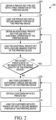
- Fig. 2 illustrates a flowchart of one embodiment of a method 200 for providing identity and security to the printing device 100 shown in Fig. 1 .
- the processor 110 of the printing device 100 obtains a private key for use with a first operation of the printing device 100.
- the first operation can be any of the operations discussed above with respect to Fig. 1 .
- the first operation can be TLS/SSL authentication.
- the private key can be issued to the printing device 100 by an attribute authority.
- the processor 110 loads the private key into the secure memory portion 135.
- the processor 110 of the printing device 100 obtains an additional private key for use with an additional operation of the printing device 100. Similar to the first operation, the additional operation can be any of the operations discussed above with respect to Fig. 1 .
- the second operation can be payload encryption.
- the additional private key can also be issued to the printing device 100 by the attribute authority.
- the processor 110 loads the additional private key into the secure memory portion 135.
- the processor 110 determines whether any other private keys are to be issued to establish the unique and secure identity of the printing device 100 during manufacturing of the printing device 100. If another private key is to be issued during manufacturing, the method 200 proceeds back to 215. If no other private keys are to be issued during manufacturing, the method 200 proceeds to 230.
- the processor 110 waits for a customer to supplement the unique and secure identity of the printing device 100.
- the processor 110 obtains a customer initiated private key for use with an operation of the printing device 100.
- the operation can be any of the operations discussed above with respect to Fig. 1 .
- the customer initiated private key is issued to the printing device 100 by an attribute authority.
- the attribute authority can be the same attribute authority that issued the first private key and the additional private key(s). In other embodiments, the attribute authority can be a different attribute authority. Also, in some embodiments, the customer initiated private key can be part of a different Root of Trust than the Root of Trust for the first private key and the additional private key(s). Customer initiated private key(s) that are part of a different Root of Trust than the private keys loaded into the secure memory portion 135 at during manufacturing allows a customer to protect and control customer specific data.
- the processor 110 loads the customer initiated private key into the secure memory portion 135.
- the processor 110 replaces the previously stored private key with the customer initiated private key.
- the processor 110 stores both the previously stored private key with the customer initiated private key in the secure memory portion 135. The process 200 then returns to 230.
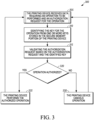
- Fig. 3 illustrates a flowchart of one embodiment of a method 300 for performing an operation of the printing device 100 shown in Fig. 1 .
- the operation can be any of the operations discussed above with respect to Fig. 1 .
- the printing device waits to receive data that requires the printing device 100 to perform an operation and an authorization request (e.g., a public key certificate, a private key certificate, etc.) for the operation.
- the data and authorization request may be received via the network I/O 120 and/or the optional user I/O 115.
- the method 300 then proceeds to 310.
- a key (e.g., a private key, a public key, etc.) associated with the operation to be performed is identified from one or more keys stored in the secure memory portion 135.
- the processor 110 can identify the key to be used.
- a processor within the secure memory portion 135 can identify the key to be used. It will be appreciated that in other embodiments, any other processor external or internal to the printing device 100 could also identify the key to be used.
- the method 300 then proceeds to 315.
- the authorization request is validated using the authorization request and the identified key to determine whether the operation is authorized.
- the processor 110 can validate the authorization request.
- a processor within the secure memory portion 135 can validate the authorization request. It will be appreciated that in other embodiments, any other processor external or internal to the printing device 100 can also validate the authorization request. If it is determined that the operation is authorized based on the authorization request and the identified key at 320, the method 300 proceeds to 325. Otherwise, the method 300 proceeds to 330.
- the printing device 100 performs the operation and the method 300 returns to 305.
- the processor 110 cancels the operation and can optionally provide a notification/alarm to the user. The method 300 then returns to 305.
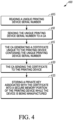
- Fig. 4 illustrates a flowchart of a method 400 for generating a unique and secure identity of a printing device during manufacturing of the printing device.
- the method begins at 405 whereby a unique printing device serial number from the printing device being manufactured is read.
- the unique printing device serial number can include, for example, the serial number for the entire printing device, the serial number for one or more subcomponents of the printing device (e.g., the serial number of a TPM, the serial number of a FPGA, etc.), etc.
- a client reads the unique printing device serial number from the printing device being manufactured.
- the unique printing device serial number is sent to a CA.
- a client sends the unique printing device serial number to the CA.
- the CA generates a certificate unique to the printing device that is based on and includes the unique printing device serial number.
- the private key can be associated with any one of a plurality of different operations of the printing device.
- a certificate can be generated for each of the following operations: authentication of the printing device by a cloud server/service; authentication of supplies for use by the printing device; authentication of the printing device by a printer client (e.g., document design and/or issuance and/or management systems, etc.) using printer protocols; authenticate signed firmware for upgrade and/or downgrade; authenticate a print manager; authenticate modular device security; authenticate configuration settings of the printing device; authenticate source of print jobs, configuration data, etc.; authenticate secure and/or measured boot of the printing device; Secure Sockets Layer/Transport Layer Security (SSL/TLS) authentication; authenticate modular device security (a multi-hopper, a touch screen, etc.); provide dual authentication; authenticate key and certificate storage; authenticate file system encryption (e.g., whole files system encryption, customer data only encryption, etc.); authenticate payload encryption; etc.
- SSL/TLS Secure Sockets Layer/Transport Layer Security
- the CA sends the certificate to the printing device.
- the CA can send the certificate to the printing device directly.
- the CA can send the certificate to the client and the client then forwards the certificate over to the printing device.
- the printing device stores a private key associated with the certificate into a secure memory portion of the printing device while the printing device is being manufactured. This provides assurance to the user that the printing device is not configured with unauthorized firmware, hardware, and/or software. Also, this can prevent the printing device from running if it is configured with unauthorized firmware, hardware and/or software. This can also prevent network attacks that would allow an external device/software to monitor customer personalization data.
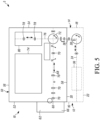
- Fig. 5 illustrates one embodiment of a card printer 5 that can be used with the embodiments described herein.
- the card printer includes a modular print engine 10 that is detachably and removably mounted on top of a lower module 12.
- the card printer 5 is configured to personalize, for example, plastic cards such as financial cards including credit and debit cards, identification cards, driver's licenses, and other personalized plastic cards.
- the modular print engine 10 includes a housing 50 having a front end 52, a rear end 54, a top 56 and a bottom 58.
- a main card input 60 is located at the front end 52 of the housing 50 through which plastic cards to be processed by the modular print engine 10 and/or by the lower module 12 (i.e. processed by the card printer 5) are input.
- the card input 60 can also form a card output through which processed cards can be output from the modular print engine 10.
- a card output that is separate from the card input 60, but also located at the front end 52 like the card input 60 can be provided through which processed cards can be output from the modular print engine 10.
- a card input hopper 62 can be mounted at the front end 52 of the housing 50 that is in communication with the card input 60.
- a card output hopper 66 can also be mounted at the front end 52 of the housing 50 that is in communication with the card output for receiving finished processed cards.
- a main or first card travel path 68 extends through the housing 50 from the input 60.
- the card travel path 68 extends substantially horizontally through the housing 50 substantially parallel to the bottom 58.
- Cards are transported along the card travel path 68 by a card transport mechanism, such as sets of rollers 70.
- a print engine 74 is disposed along the card travel path 68 that is configured to print on a card disposed on the card travel path 68.
- the print engine 74 can be configured to perform retransfer printing, direct to card printing, inkjet printing, laser marking, laser engraving, and any other type of printing performed on cards.
- a second card travel path 76 can extend upwardly from a card reorienting mechanism 72.
- the second card travel path 76 extends substantially vertically upward from the card reorienting mechanism 72.
- Cards are transported along the card travel path 76 by a card transport mechanism, such as sets of rollers 78.
- a removable option module 80 is disposed along the second card travel path 76 and above the first card travel path 68.
- the removable option module 80 includes at least one card processing mechanism that is configured to perform a processing operation on a plastic card.
- the removable option module 80 is one of a plurality of removable option modules 80 that can be installed one at a time in the modular print engine 10 to permit changes to the functionality of the modular print engine 10.
- Each option module 80 is configured to be individually and separately removably installed in the housing 50 along the second card travel path 76 and above the first card travel path 68, and each option module 80 is configured to perform a different processing operation on a plastic card received thereby.
- One option module 80 can be removed and replaced with a different option module 80 to change the functionality of the modular print engine 10.
- the option module 80 can be a magnetic stripe station that can read data on a magnetic stripe of a card and/or write data onto the magnetic stripe. In another embodiment, the option module 80 can be a chip programming station that can read data on a chip of a card and/or write data to the chip.
- the lower module 12 generally includes a lower module housing 14 illustrated in dashed lines with a front end 16, a rear end 18 opposite the front end 16, a top 20, and a bottom 22 opposite the top 20.
- a main card transport path 24 is defined in the housing 14 along which a plastic card is transported generally in a horizontal direction or generally parallel to the top 20 and the bottom 22.
- a slot 26 is defined in the top 20 of the housing 14 through which a card can be input into the housing 14 from the modular print engine 10 and, in some embodiments, output from the housing 14 back into the modular print engine 10.
- a secondary card transport path 28 leads from the slot 26 to a card reorienting mechanism 30 that is disposed adjacent to the rear end 18 of the housing 14.
- the secondary card transport path 28 can be generally vertical or perpendicular to the main card transport path 24 which can be generally horizontal.
- a card enters the lower module 12 from the modular print engine 10 through the slot 26.
- the card is transported along the secondary card transport path 28 and into the card reorienting mechanism 30 which is then rotated to bring the card in line with the main card transport path 24.
- the card is then directed along the main card transport path 24 to one or more card processing mechanism(s) 36 which perform the one or more processing operations on the card.
- card processing mechanisms 36 that can be used include, but are not
- the lower module 12 can also include an output 38 at the end of the transport path 24 through which a card can be output from the lower module 12 after processing by the processing mechanism(s) 36.
- the lower module 12 may also include a card de-bowing mechanism (not shown) that is used to eliminate a bow that may occur on the card as a result of processing by the processing mechanism(s) 36.
- aspects described herein can be embodied as a system, method, or computer readable medium.
- the aspects described can be implemented in hardware, software (including firmware or the like), or combinations thereof.
- Some aspects can be implemented in a computer readable medium, including computer readable instructions for execution by a processor. Any combination of one or more computer readable medium(s) can be used.
- the computer readable medium can include a computer readable signal medium and/or a computer readable storage medium.
- a computer readable storage medium can include any tangible medium capable of storing a computer program for use by a programmable processor to perform functions described herein by operating on input data and generating an output.
- a computer program is a set of instructions that can be used, directly or indirectly, in a computer system to perform a certain function or determine a certain result.
- Examples of computer readable storage media include, but are not limited to, a floppy disk; a hard disk; a random access memory (RAM); a read-only memory (ROM); a semiconductor memory device such as, but not limited to, an erasable programmable read-only memory (EPROM), an electrically erasable programmable read-only memory (EEPROM), Flash memory, or the like; a portable compact disk read-only memory (CD-ROM); an optical storage device; a magnetic storage device; other similar device; or suitable combinations of the foregoing.
- a computer readable signal medium can include a propagated data signal having computer readable instructions. Examples of propagated signals include, but are not limited to, an optical propagated signal, an electro-magnetic propagated signal, or the like.
- a computer readable signal medium can include any computer readable medium that is not a computer readable storage medium that can propagate a computer program for use by a programmable processor to perform functions described herein by operating on input data and generating an output.
- Cloud computing generally includes the provision of scalable computing resources as a service over a network (e.g., the Internet or the like).
Landscapes
- Engineering & Computer Science (AREA)
- Computer Security & Cryptography (AREA)
- Theoretical Computer Science (AREA)
- Software Systems (AREA)
- General Engineering & Computer Science (AREA)
- Computer Hardware Design (AREA)
- Computer Networks & Wireless Communication (AREA)
- Signal Processing (AREA)
- Physics & Mathematics (AREA)
- General Physics & Mathematics (AREA)
- General Health & Medical Sciences (AREA)
- Bioethics (AREA)
- Health & Medical Sciences (AREA)
- Accessory Devices And Overall Control Thereof (AREA)
Claims (16)
- Druckvorrichtung, umfassend:Ein Gehäuse;eine Karteneingabe im Gehäuse;einen Kartenweg, der sich von der Karteneingabe aus durch das Gehäuse erstreckt;eine Druckmaschine, die entlang des Kartenweges angeordnet ist;einen nicht gesicherten Speicherabschnitt; undeinen sicheren Speicherabschnitt, bei dem es sich um einen isolierten Speicherabschnitt handelt, der sich von dem nicht sicheren Speicherabschnitt unterscheidet und/oder von diesem getrennt ist, wobei der sichere Speicherabschnitt einen Kryptoprozessor einschließt und wobei der sichere Speicherabschnitt so konfiguriert ist, dass er eine eindeutige und sichere Identität der Druckvorrichtung einschließlich mindestens eines werkseitig festgelegten Schlüssels speichert,wobei der sichere Speicherabschnitt Zugang zu einer Vielzahl von privaten Schlüsseln hat, wobei jeder der Vielzahl von privaten Schlüsseln einem von der Druckvorrichtung ausgeführten Vorgang zugehörig ist,wobei der Kryptoprozessor so konfiguriert ist, dass er eine einem angeforderten, von der Druckvorrichtung auszuführenden Vorgang zugehörige Autorisierungsanfrage unter Verwendung mindestens eines der mehreren dem angeforderten Vorgang zugehörigen privaten Schlüssel validiert, undwobei die Druckvorrichtung so konfiguriert ist, dass sie den angeforderten Vorgang nach der Validierung der Autorisierungsanfrage durch den Kryptoprozessor ausführt.
- Druckvorrichtung nach Anspruch 1, wobei der mindestens eine werkseitig erstellte Schlüssel ein privater Schlüssel ist.
- Druckvorrichtung nach einem der Ansprüche 1-3, wobei die Druckmaschine so konfiguriert ist, dass sie mindestens eines von Retransferdruck, Druck direkt auf die Karte, Tintenstrahldruck, Lasermarkierung und Lasergravur auf einer Karte ausführt.
- Druckvorrichtung nach einem der vorstehenden Ansprüche, wobei der Kryptoprozessor so konfiguriert ist, dass er den mindestens einen der mehreren privaten Schlüssel identifiziert, der dem von der Druckvorrichtung auszuführenden angeforderten Vorgang zugehört, und/oder dass er die Autorisierungsanfrage validiert, indem er den angeforderten Vorgang unter Verwendung der Autorisierungsanfrage und des mindestens einen der mehreren privaten Schlüssel entschlüsselt.
- Druckvorrichtung nach einem der vorstehenden Ansprüche, wobei der mindestens eine in dem sicheren Speicherabschnitt gespeicherte private Schlüssel nicht über einen Bus der Druckvorrichtung zugänglich ist.
- Druckvorrichtung nach einem der vorstehenden Ansprüche, wobei der nicht gesicherte Speicherabschnitt und der gesicherte Speicherabschnitt Teil einer einzigen Speichervorrichtung sind, wobei der gesicherte Speicherabschnitt von dem nicht gesicherten Speicherabschnitt isoliert ist.
- Druckvorrichtung nach einem der vorstehenden Ansprüche, wobei der sichere Speicherabschnitt einen Speicherstammschlüssel speichert, der die Vielzahl der außerhalb des sicheren Speicherabschnitts gespeicherten privaten Schlüssel und/oder die Vielzahl der privaten Schlüssel schützt.
- Druckvorrichtung nach einem der vorstehenden Ansprüche, wobei der angeforderte Vorgang, der von der Druckvorrichtung auszuführen ist, mindestens eines der folgenden einschließt: Authentifizierung der Druckvorrichtung durch einen Cloud-Server/Dienst; Authentifizierung von Versorgungen zur Verwendung durch die Druckvorrichtung; Authentifizierung der Druckvorrichtung durch einen Drucker-Client unter Verwendung eines Druckerprotokolls; Authentifizierung von signierter Firmware zur Modifikation; Authentifizierung eines Druckmanagers; Authentifizierung einer modularen Vorrichtungssicherheit; Authentifizierung einer Konfigurationseinstellung der Druckvorrichtung; Authentifizierung einer Quelle eines Druckauftrags und/oder von Konfigurationsdaten; Authentifizierung eines sicheren und/oder gemessenen Starts der Druckvorrichtung; eine Authentifizierung von Secure Sockets Layer/Transport Layer Security (SSL/TLS); Authentifizierung einer modularen Vorrichtungssicherheit; eine duale Authentifizierung; Authentifizierung einer privaten Schlüsselspeicherung; Authentifizierung einer Dateisystemverschlüsselung; und eine Nutzdatenverschlüsselung.
- Druckvorrichtung nach einem der vorstehenden Ansprüche, die ferner eine Druckerfunktionskomponente umfasst, die so konfiguriert ist, dass sie eine physische Aktion an einem personalisierten Dokument ausführt.
- Druckvorrichtung nach Anspruch 9, wobei es sich bei der Karte um eine Finanz- oder Identifikationskarte handelt und die Druckerfunktionskomponente eine Druckmaschine einschließt, die eingerichtet ist, kundenspezifische Informationen auf die Finanz- oder Identifikationskarte zu drucken.
- Druckvorrichtung nach Anspruch 9 oder 10, wobei es sich bei der Druckerfunktionskomponente um mindestens eine der folgenden Komponenten handelt: Eine Magnetstreifenstation, die Daten auf einem Magnetstreifen einer Karte abliest und/oder schreibt; und eine Chip-Programmierstation, die Daten auf einem Chip einer Karte abliest und/oder schreibt.
- Druckvorrichtung nach einem der Ansprüche 9 bis 11, die ferner eine zweite Druckerfunktionskomponente umfasst, die so konfiguriert ist, dass sie eine zweite physische Aktion an dem personalisierten Dokument ausführt, wobei sich die zweite physische Aktion von der ersten physischen Aktion unterscheidet.
- Druckvorrichtung nach einem der vorstehenden Ansprüche, ferner umfassend:Eine Netzwerkeingabe/-ausgabe, die so konfiguriert ist, dass sie die Autorisierungsanfrage von einer externen sekundären Vorrichtung empfängt,wobei der sichere Speicherabschnitt so konfiguriert ist, dass er einen bestimmten privaten Schlüssel aus der Vielzahl der privaten Schlüssel, die dem angeforderten Vorgang zugehören, abruft,wobei die Druckvorrichtung so konfiguriert ist, dass sie bestimmt, ob der angeforderte Vorgang unter Verwendung der Autorisierungsanfrage und des abgerufenen bestimmten privaten Schlüssels validiert wird, undwobei die Druckvorrichtung so konfiguriert ist, dass sie den angeforderten Vorgang ausführt, wenn der angeforderte Vorgang validiert wird.
- Druckvorrichtung nach einem der vorstehenden Ansprüche, wobei die Autorisierungsanfrage ein öffentlicher Schlüssel ist.
- Druckvorrichtung nach einem der vorstehenden Ansprüche, wobei der Kryptoprozessor so konfiguriert ist, dass er die Autorisierungsanforderung unter Verwendung der Autorisierungsanforderung und mindestens eines der mehreren privaten Schlüssel, die dem angeforderten Vorgang zugeordnet sind, validiert.
- Druckvorrichtung nach einem der vorstehenden Ansprüche, wobei die Druckvorrichtung so konfiguriert ist, dass sie mindestens einen öffentlichen Schlüssel oder einen kryptographischen Hash speichert, der einem sicheren Bootvorgang zugehört.
Applications Claiming Priority (2)
| Application Number | Priority Date | Filing Date | Title |
|---|---|---|---|
| US201662425898P | 2016-11-23 | 2016-11-23 | |
| PCT/US2017/063074 WO2018098325A1 (en) | 2016-11-23 | 2017-11-22 | Printer identity and security |
Publications (3)
| Publication Number | Publication Date |
|---|---|
| EP3545643A1 EP3545643A1 (de) | 2019-10-02 |
| EP3545643A4 EP3545643A4 (de) | 2020-10-14 |
| EP3545643B1 true EP3545643B1 (de) | 2023-08-16 |
Family
ID=62196110
Family Applications (1)
| Application Number | Title | Priority Date | Filing Date |
|---|---|---|---|
| EP17874775.4A Active EP3545643B1 (de) | 2016-11-23 | 2017-11-22 | Druckeridentität und -sicherheit |
Country Status (4)
| Country | Link |
|---|---|
| EP (1) | EP3545643B1 (de) |
| KR (1) | KR102558262B1 (de) |
| CN (2) | CN116186728A (de) |
| WO (1) | WO2018098325A1 (de) |
Families Citing this family (5)
| Publication number | Priority date | Publication date | Assignee | Title |
|---|---|---|---|---|
| CN112596690A (zh) * | 2020-12-30 | 2021-04-02 | 珠海艾派克微电子有限公司 | 一种耗材芯片的复位、升级方法、芯片和芯片处理设备 |
| US11392705B1 (en) * | 2021-07-29 | 2022-07-19 | Netskope, Inc. | Disk encryption key management for booting of a device |
| CN113836516B (zh) * | 2021-09-13 | 2023-08-29 | 北京安御道合科技有限公司 | 一种打印机硒鼓防伪与打印次数保护系统、方法 |
| CN119731653A (zh) * | 2022-08-19 | 2025-03-28 | 三星电子株式会社 | 电子设备和在电子设备上执行用户认证的方法 |
| EP4724937A1 (de) * | 2023-06-12 | 2026-04-15 | Entrust Corporation | Verbrauchsmittelversorgung für kartendrucker |
Family Cites Families (16)
| Publication number | Priority date | Publication date | Assignee | Title |
|---|---|---|---|---|
| US6314521B1 (en) * | 1997-11-26 | 2001-11-06 | International Business Machines Corporation | Secure configuration of a digital certificate for a printer or other network device |
| JP3620362B2 (ja) | 1998-10-16 | 2005-02-16 | 日本ビクター株式会社 | カード記録装置 |
| US7339690B2 (en) * | 1999-07-14 | 2008-03-04 | Fargo Electronics, Inc. | Identification card printer with client/server |
| US7305556B2 (en) * | 2001-12-05 | 2007-12-04 | Canon Kabushiki Kaisha | Secure printing with authenticated printer key |
| US7398972B2 (en) | 2003-11-17 | 2008-07-15 | Datacard Corporation | Plastic card reorienting mechanism and interchangeable input hopper |
| US7725703B2 (en) * | 2005-01-07 | 2010-05-25 | Microsoft Corporation | Systems and methods for securely booting a computer with a trusted processing module |
| JP2008194999A (ja) * | 2007-02-15 | 2008-08-28 | Murata Mach Ltd | 印刷管理装置 |
| US7866904B2 (en) * | 2007-03-06 | 2011-01-11 | Datacard Corporation | Desktop card printer with indent printing apparatus and method of printing |
| JP2008234603A (ja) * | 2007-03-23 | 2008-10-02 | Sharp Corp | 画像形成システム、携帯端末装置、コンピュータプログラム、記録媒体及び画像形成方法 |
| JP5369502B2 (ja) * | 2008-06-04 | 2013-12-18 | 株式会社リコー | 機器、管理装置、機器管理システム、及びプログラム |
| EP2520436B1 (de) * | 2009-12-28 | 2020-02-26 | Toppan Printing Co., Ltd. | Druckvorrichtung |
| WO2013126647A1 (en) | 2012-02-23 | 2013-08-29 | Datacard Corporation | Card reorienting mechanism and methods utilizing same |
| US20140164753A1 (en) * | 2012-12-06 | 2014-06-12 | Samsung Electronics Co., Ltd | System on chip for performing secure boot, image forming apparatus using the same, and method thereof |
| EP2775421B1 (de) * | 2013-03-05 | 2019-07-03 | Wincor Nixdorf International GmbH | Sichere Endgerätplattform |
| CN204414831U (zh) * | 2013-08-28 | 2015-06-24 | 无锡华通智能交通技术开发有限公司 | 一种公安证件打印机 |
| EP3280596B1 (de) * | 2015-04-09 | 2024-10-30 | Entrust Datacard Corporation | Druckmodule und druckmodulkomponenten |
-
2017
- 2017-11-22 CN CN202211588704.6A patent/CN116186728A/zh active Pending
- 2017-11-22 KR KR1020197017002A patent/KR102558262B1/ko active Active
- 2017-11-22 CN CN201780084360.6A patent/CN110214434B/zh active Active
- 2017-11-22 EP EP17874775.4A patent/EP3545643B1/de active Active
- 2017-11-22 WO PCT/US2017/063074 patent/WO2018098325A1/en not_active Ceased
Also Published As
| Publication number | Publication date |
|---|---|
| CN110214434A (zh) | 2019-09-06 |
| WO2018098325A1 (en) | 2018-05-31 |
| EP3545643A4 (de) | 2020-10-14 |
| CN110214434B (zh) | 2022-12-23 |
| KR20190077552A (ko) | 2019-07-03 |
| CN116186728A (zh) | 2023-05-30 |
| EP3545643A1 (de) | 2019-10-02 |
| KR102558262B1 (ko) | 2023-07-21 |
Similar Documents
| Publication | Publication Date | Title |
|---|---|---|
| US10872161B2 (en) | Printer identity and security | |
| CN113632417B (zh) | 使用物理不可克隆函数产生计算装置的身份 | |
| JP7602539B2 (ja) | 量子安全ネットワーキング | |
| US20240127213A1 (en) | System and method for secure communication in a retail environment | |
| CN113826351B (zh) | 在操作期间验证紧急车辆的标识 | |
| US10243745B2 (en) | Method and system for producing a secure communication channel for terminals | |
| CN113841368A (zh) | 验证进入信任区的车辆的身份 | |
| JP2023535013A (ja) | 量子安全支払いシステム | |
| KR102558262B1 (ko) | 프린터 아이덴티티 및 보안 | |
| CN113615125A (zh) | 使用密钥的身份验证 | |
| US20200014545A1 (en) | Method for Using Cryptography to Protect Deployable Rapid On-Site Manufacturing 3D Printing Systems and Enable a Single Time Printing Protocol | |
| EP3447706B1 (de) | Verteilen von zahlungsschlüsseln unter mehreren diskreten vorrichtungen in einem verkaufsstellensystem | |
| US9645775B2 (en) | Printing composite documents | |
| US20240028672A1 (en) | Terminal hardware configuration system | |
| US20250217519A1 (en) | A device and a method for controlling use of a cryptographic key | |
| KR20100043799A (ko) | Mtm 기반 모바일 단말기 간의 비밀 데이터 이전 방법 | |
| JP7169193B2 (ja) | 周辺機器におけるセキュリティ保護を行なう方法および装置 | |
| CN204414831U (zh) | 一种公安证件打印机 | |
| US20150022844A1 (en) | User credentials for performing multifunction device workflow action | |
| KR20160072384A (ko) | 금융 시스템, 금융 시스템의 펌웨어 무결성 체크 방법 |
Legal Events
| Date | Code | Title | Description |
|---|---|---|---|
| STAA | Information on the status of an ep patent application or granted ep patent |
Free format text: STATUS: THE INTERNATIONAL PUBLICATION HAS BEEN MADE |
|
| PUAI | Public reference made under article 153(3) epc to a published international application that has entered the european phase |
Free format text: ORIGINAL CODE: 0009012 |
|
| STAA | Information on the status of an ep patent application or granted ep patent |
Free format text: STATUS: REQUEST FOR EXAMINATION WAS MADE |
|
| 17P | Request for examination filed |
Effective date: 20190618 |
|
| AK | Designated contracting states |
Kind code of ref document: A1 Designated state(s): AL AT BE BG CH CY CZ DE DK EE ES FI FR GB GR HR HU IE IS IT LI LT LU LV MC MK MT NL NO PL PT RO RS SE SI SK SM TR |
|
| AX | Request for extension of the european patent |
Extension state: BA ME |
|
| DAV | Request for validation of the european patent (deleted) | ||
| DAX | Request for extension of the european patent (deleted) | ||
| RIC1 | Information provided on ipc code assigned before grant |
Ipc: G06F 21/60 20130101ALI20200609BHEP Ipc: G06F 21/57 20130101ALI20200609BHEP Ipc: H04L 9/08 20060101AFI20200609BHEP Ipc: G09C 1/00 20060101ALI20200609BHEP Ipc: H04L 9/32 20060101ALI20200609BHEP |
|
| A4 | Supplementary search report drawn up and despatched |
Effective date: 20200916 |
|
| RIC1 | Information provided on ipc code assigned before grant |
Ipc: G06F 21/57 20130101ALI20200910BHEP Ipc: H04L 9/08 20060101AFI20200910BHEP Ipc: H04L 9/32 20060101ALI20200910BHEP Ipc: G06F 21/60 20130101ALI20200910BHEP Ipc: G09C 1/00 20060101ALI20200910BHEP |
|
| GRAP | Despatch of communication of intention to grant a patent |
Free format text: ORIGINAL CODE: EPIDOSNIGR1 |
|
| STAA | Information on the status of an ep patent application or granted ep patent |
Free format text: STATUS: GRANT OF PATENT IS INTENDED |
|
| INTG | Intention to grant announced |
Effective date: 20230228 |
|
| GRAS | Grant fee paid |
Free format text: ORIGINAL CODE: EPIDOSNIGR3 |
|
| GRAA | (expected) grant |
Free format text: ORIGINAL CODE: 0009210 |
|
| STAA | Information on the status of an ep patent application or granted ep patent |
Free format text: STATUS: THE PATENT HAS BEEN GRANTED |
|
| AK | Designated contracting states |
Kind code of ref document: B1 Designated state(s): AL AT BE BG CH CY CZ DE DK EE ES FI FR GB GR HR HU IE IS IT LI LT LU LV MC MK MT NL NO PL PT RO RS SE SI SK SM TR |
|
| P01 | Opt-out of the competence of the unified patent court (upc) registered |
Effective date: 20230706 |
|
| RAP3 | Party data changed (applicant data changed or rights of an application transferred) |
Owner name: ENTRUST CORPORATION |
|
| REG | Reference to a national code |
Ref country code: GB Ref legal event code: FG4D |
|
| REG | Reference to a national code |
Ref country code: CH Ref legal event code: EP |
|
| REG | Reference to a national code |
Ref country code: DE Ref legal event code: R096 Ref document number: 602017072925 Country of ref document: DE |
|
| REG | Reference to a national code |
Ref country code: IE Ref legal event code: FG4D |
|
| REG | Reference to a national code |
Ref country code: LT Ref legal event code: MG9D |
|
| REG | Reference to a national code |
Ref country code: NL Ref legal event code: MP Effective date: 20230816 |
|
| REG | Reference to a national code |
Ref country code: AT Ref legal event code: MK05 Ref document number: 1601127 Country of ref document: AT Kind code of ref document: T Effective date: 20230816 |
|
| PG25 | Lapsed in a contracting state [announced via postgrant information from national office to epo] |
Ref country code: GR Free format text: LAPSE BECAUSE OF FAILURE TO SUBMIT A TRANSLATION OF THE DESCRIPTION OR TO PAY THE FEE WITHIN THE PRESCRIBED TIME-LIMIT Effective date: 20231117 |
|
| PG25 | Lapsed in a contracting state [announced via postgrant information from national office to epo] |
Ref country code: IS Free format text: LAPSE BECAUSE OF FAILURE TO SUBMIT A TRANSLATION OF THE DESCRIPTION OR TO PAY THE FEE WITHIN THE PRESCRIBED TIME-LIMIT Effective date: 20231216 |
|
| PG25 | Lapsed in a contracting state [announced via postgrant information from national office to epo] |
Ref country code: SE Free format text: LAPSE BECAUSE OF FAILURE TO SUBMIT A TRANSLATION OF THE DESCRIPTION OR TO PAY THE FEE WITHIN THE PRESCRIBED TIME-LIMIT Effective date: 20230816 Ref country code: RS Free format text: LAPSE BECAUSE OF FAILURE TO SUBMIT A TRANSLATION OF THE DESCRIPTION OR TO PAY THE FEE WITHIN THE PRESCRIBED TIME-LIMIT Effective date: 20230816 Ref country code: PT Free format text: LAPSE BECAUSE OF FAILURE TO SUBMIT A TRANSLATION OF THE DESCRIPTION OR TO PAY THE FEE WITHIN THE PRESCRIBED TIME-LIMIT Effective date: 20231218 Ref country code: NO Free format text: LAPSE BECAUSE OF FAILURE TO SUBMIT A TRANSLATION OF THE DESCRIPTION OR TO PAY THE FEE WITHIN THE PRESCRIBED TIME-LIMIT Effective date: 20231116 Ref country code: NL Free format text: LAPSE BECAUSE OF FAILURE TO SUBMIT A TRANSLATION OF THE DESCRIPTION OR TO PAY THE FEE WITHIN THE PRESCRIBED TIME-LIMIT Effective date: 20230816 Ref country code: LV Free format text: LAPSE BECAUSE OF FAILURE TO SUBMIT A TRANSLATION OF THE DESCRIPTION OR TO PAY THE FEE WITHIN THE PRESCRIBED TIME-LIMIT Effective date: 20230816 Ref country code: LT Free format text: LAPSE BECAUSE OF FAILURE TO SUBMIT A TRANSLATION OF THE DESCRIPTION OR TO PAY THE FEE WITHIN THE PRESCRIBED TIME-LIMIT Effective date: 20230816 Ref country code: IS Free format text: LAPSE BECAUSE OF FAILURE TO SUBMIT A TRANSLATION OF THE DESCRIPTION OR TO PAY THE FEE WITHIN THE PRESCRIBED TIME-LIMIT Effective date: 20231216 Ref country code: HR Free format text: LAPSE BECAUSE OF FAILURE TO SUBMIT A TRANSLATION OF THE DESCRIPTION OR TO PAY THE FEE WITHIN THE PRESCRIBED TIME-LIMIT Effective date: 20230816 Ref country code: GR Free format text: LAPSE BECAUSE OF FAILURE TO SUBMIT A TRANSLATION OF THE DESCRIPTION OR TO PAY THE FEE WITHIN THE PRESCRIBED TIME-LIMIT Effective date: 20231117 Ref country code: FI Free format text: LAPSE BECAUSE OF FAILURE TO SUBMIT A TRANSLATION OF THE DESCRIPTION OR TO PAY THE FEE WITHIN THE PRESCRIBED TIME-LIMIT Effective date: 20230816 Ref country code: AT Free format text: LAPSE BECAUSE OF FAILURE TO SUBMIT A TRANSLATION OF THE DESCRIPTION OR TO PAY THE FEE WITHIN THE PRESCRIBED TIME-LIMIT Effective date: 20230816 |
|
| PG25 | Lapsed in a contracting state [announced via postgrant information from national office to epo] |
Ref country code: PL Free format text: LAPSE BECAUSE OF FAILURE TO SUBMIT A TRANSLATION OF THE DESCRIPTION OR TO PAY THE FEE WITHIN THE PRESCRIBED TIME-LIMIT Effective date: 20230816 |
|
| PG25 | Lapsed in a contracting state [announced via postgrant information from national office to epo] |
Ref country code: ES Free format text: LAPSE BECAUSE OF FAILURE TO SUBMIT A TRANSLATION OF THE DESCRIPTION OR TO PAY THE FEE WITHIN THE PRESCRIBED TIME-LIMIT Effective date: 20230816 |
|
| PG25 | Lapsed in a contracting state [announced via postgrant information from national office to epo] |
Ref country code: SM Free format text: LAPSE BECAUSE OF FAILURE TO SUBMIT A TRANSLATION OF THE DESCRIPTION OR TO PAY THE FEE WITHIN THE PRESCRIBED TIME-LIMIT Effective date: 20230816 Ref country code: RO Free format text: LAPSE BECAUSE OF FAILURE TO SUBMIT A TRANSLATION OF THE DESCRIPTION OR TO PAY THE FEE WITHIN THE PRESCRIBED TIME-LIMIT Effective date: 20230816 Ref country code: ES Free format text: LAPSE BECAUSE OF FAILURE TO SUBMIT A TRANSLATION OF THE DESCRIPTION OR TO PAY THE FEE WITHIN THE PRESCRIBED TIME-LIMIT Effective date: 20230816 Ref country code: EE Free format text: LAPSE BECAUSE OF FAILURE TO SUBMIT A TRANSLATION OF THE DESCRIPTION OR TO PAY THE FEE WITHIN THE PRESCRIBED TIME-LIMIT Effective date: 20230816 Ref country code: DK Free format text: LAPSE BECAUSE OF FAILURE TO SUBMIT A TRANSLATION OF THE DESCRIPTION OR TO PAY THE FEE WITHIN THE PRESCRIBED TIME-LIMIT Effective date: 20230816 Ref country code: CZ Free format text: LAPSE BECAUSE OF FAILURE TO SUBMIT A TRANSLATION OF THE DESCRIPTION OR TO PAY THE FEE WITHIN THE PRESCRIBED TIME-LIMIT Effective date: 20230816 Ref country code: SK Free format text: LAPSE BECAUSE OF FAILURE TO SUBMIT A TRANSLATION OF THE DESCRIPTION OR TO PAY THE FEE WITHIN THE PRESCRIBED TIME-LIMIT Effective date: 20230816 |
|
| REG | Reference to a national code |
Ref country code: DE Ref legal event code: R097 Ref document number: 602017072925 Country of ref document: DE |
|
| PLBE | No opposition filed within time limit |
Free format text: ORIGINAL CODE: 0009261 |
|
| STAA | Information on the status of an ep patent application or granted ep patent |
Free format text: STATUS: NO OPPOSITION FILED WITHIN TIME LIMIT |
|
| REG | Reference to a national code |
Ref country code: CH Ref legal event code: PL |
|
| PG25 | Lapsed in a contracting state [announced via postgrant information from national office to epo] |
Ref country code: MC Free format text: LAPSE BECAUSE OF FAILURE TO SUBMIT A TRANSLATION OF THE DESCRIPTION OR TO PAY THE FEE WITHIN THE PRESCRIBED TIME-LIMIT Effective date: 20230816 |
|
| PG25 | Lapsed in a contracting state [announced via postgrant information from national office to epo] |
Ref country code: LU Free format text: LAPSE BECAUSE OF NON-PAYMENT OF DUE FEES Effective date: 20231122 |
|
| PG25 | Lapsed in a contracting state [announced via postgrant information from national office to epo] |
Ref country code: CH Free format text: LAPSE BECAUSE OF NON-PAYMENT OF DUE FEES Effective date: 20231130 |
|
| 26N | No opposition filed |
Effective date: 20240517 |
|
| PG25 | Lapsed in a contracting state [announced via postgrant information from national office to epo] |
Ref country code: MC Free format text: LAPSE BECAUSE OF FAILURE TO SUBMIT A TRANSLATION OF THE DESCRIPTION OR TO PAY THE FEE WITHIN THE PRESCRIBED TIME-LIMIT Effective date: 20230816 Ref country code: LU Free format text: LAPSE BECAUSE OF NON-PAYMENT OF DUE FEES Effective date: 20231122 Ref country code: CH Free format text: LAPSE BECAUSE OF NON-PAYMENT OF DUE FEES Effective date: 20231130 Ref country code: SI Free format text: LAPSE BECAUSE OF FAILURE TO SUBMIT A TRANSLATION OF THE DESCRIPTION OR TO PAY THE FEE WITHIN THE PRESCRIBED TIME-LIMIT Effective date: 20230816 |
|
| REG | Reference to a national code |
Ref country code: BE Ref legal event code: MM Effective date: 20231130 |
|
| REG | Reference to a national code |
Ref country code: IE Ref legal event code: MM4A |
|
| PG25 | Lapsed in a contracting state [announced via postgrant information from national office to epo] |
Ref country code: IE Free format text: LAPSE BECAUSE OF NON-PAYMENT OF DUE FEES Effective date: 20231122 |
|
| PG25 | Lapsed in a contracting state [announced via postgrant information from national office to epo] |
Ref country code: BE Free format text: LAPSE BECAUSE OF NON-PAYMENT OF DUE FEES Effective date: 20231130 |
|
| PG25 | Lapsed in a contracting state [announced via postgrant information from national office to epo] |
Ref country code: IE Free format text: LAPSE BECAUSE OF NON-PAYMENT OF DUE FEES Effective date: 20231122 Ref country code: BE Free format text: LAPSE BECAUSE OF NON-PAYMENT OF DUE FEES Effective date: 20231130 |
|
| PG25 | Lapsed in a contracting state [announced via postgrant information from national office to epo] |
Ref country code: BG Free format text: LAPSE BECAUSE OF FAILURE TO SUBMIT A TRANSLATION OF THE DESCRIPTION OR TO PAY THE FEE WITHIN THE PRESCRIBED TIME-LIMIT Effective date: 20230816 |
|
| PG25 | Lapsed in a contracting state [announced via postgrant information from national office to epo] |
Ref country code: BG Free format text: LAPSE BECAUSE OF FAILURE TO SUBMIT A TRANSLATION OF THE DESCRIPTION OR TO PAY THE FEE WITHIN THE PRESCRIBED TIME-LIMIT Effective date: 20230816 |
|
| PG25 | Lapsed in a contracting state [announced via postgrant information from national office to epo] |
Ref country code: IT Free format text: LAPSE BECAUSE OF NON-PAYMENT OF DUE FEES Effective date: 20231122 |
|
| PG25 | Lapsed in a contracting state [announced via postgrant information from national office to epo] |
Ref country code: IT Free format text: LAPSE BECAUSE OF NON-PAYMENT OF DUE FEES Effective date: 20231122 |
|
| REG | Reference to a national code |
Ref country code: DE Ref legal event code: R082 Ref document number: 602017072925 Country of ref document: DE Representative=s name: PLASSERAUD IP GMBH, DE |
|
| PG25 | Lapsed in a contracting state [announced via postgrant information from national office to epo] |
Ref country code: CY Free format text: LAPSE BECAUSE OF FAILURE TO SUBMIT A TRANSLATION OF THE DESCRIPTION OR TO PAY THE FEE WITHIN THE PRESCRIBED TIME-LIMIT; INVALID AB INITIO Effective date: 20171122 |
|
| PG25 | Lapsed in a contracting state [announced via postgrant information from national office to epo] |
Ref country code: HU Free format text: LAPSE BECAUSE OF FAILURE TO SUBMIT A TRANSLATION OF THE DESCRIPTION OR TO PAY THE FEE WITHIN THE PRESCRIBED TIME-LIMIT; INVALID AB INITIO Effective date: 20171122 |
|
| PG25 | Lapsed in a contracting state [announced via postgrant information from national office to epo] |
Ref country code: TR Free format text: LAPSE BECAUSE OF FAILURE TO SUBMIT A TRANSLATION OF THE DESCRIPTION OR TO PAY THE FEE WITHIN THE PRESCRIBED TIME-LIMIT Effective date: 20230816 |
|
| PGFP | Annual fee paid to national office [announced via postgrant information from national office to epo] |
Ref country code: DE Payment date: 20251128 Year of fee payment: 9 |
|
| PGFP | Annual fee paid to national office [announced via postgrant information from national office to epo] |
Ref country code: GB Payment date: 20251127 Year of fee payment: 9 |
|
| PGFP | Annual fee paid to national office [announced via postgrant information from national office to epo] |
Ref country code: FR Payment date: 20251125 Year of fee payment: 9 |