EP3543322A1 - Resin composition and sliding member - Google Patents
Resin composition and sliding member Download PDFInfo
- Publication number
- EP3543322A1 EP3543322A1 EP17870663.6A EP17870663A EP3543322A1 EP 3543322 A1 EP3543322 A1 EP 3543322A1 EP 17870663 A EP17870663 A EP 17870663A EP 3543322 A1 EP3543322 A1 EP 3543322A1
- Authority
- EP
- European Patent Office
- Prior art keywords
- sliding
- coating layer
- test
- surface roughness
- binder resin
- Prior art date
- Legal status (The legal status is an assumption and is not a legal conclusion. Google has not performed a legal analysis and makes no representation as to the accuracy of the status listed.)
- Granted
Links
Images

Classifications
-
- C—CHEMISTRY; METALLURGY
- C10—PETROLEUM, GAS OR COKE INDUSTRIES; TECHNICAL GASES CONTAINING CARBON MONOXIDE; FUELS; LUBRICANTS; PEAT
- C10M—LUBRICATING COMPOSITIONS; USE OF CHEMICAL SUBSTANCES EITHER ALONE OR AS LUBRICATING INGREDIENTS IN A LUBRICATING COMPOSITION
- C10M169/00—Lubricating compositions characterised by containing as components a mixture of at least two types of ingredient selected from base-materials, thickeners or additives, covered by the preceding groups, each of these compounds being essential
- C10M169/04—Mixtures of base-materials and additives
-
- C—CHEMISTRY; METALLURGY
- C10—PETROLEUM, GAS OR COKE INDUSTRIES; TECHNICAL GASES CONTAINING CARBON MONOXIDE; FUELS; LUBRICANTS; PEAT
- C10M—LUBRICATING COMPOSITIONS; USE OF CHEMICAL SUBSTANCES EITHER ALONE OR AS LUBRICATING INGREDIENTS IN A LUBRICATING COMPOSITION
- C10M111/00—Lubrication compositions characterised by the base-material being a mixture of two or more compounds covered by more than one of the main groups C10M101/00 - C10M109/00, each of these compounds being essential
- C10M111/04—Lubrication compositions characterised by the base-material being a mixture of two or more compounds covered by more than one of the main groups C10M101/00 - C10M109/00, each of these compounds being essential at least one of them being a macromolecular organic compound
-
- C—CHEMISTRY; METALLURGY
- C10—PETROLEUM, GAS OR COKE INDUSTRIES; TECHNICAL GASES CONTAINING CARBON MONOXIDE; FUELS; LUBRICANTS; PEAT
- C10M—LUBRICATING COMPOSITIONS; USE OF CHEMICAL SUBSTANCES EITHER ALONE OR AS LUBRICATING INGREDIENTS IN A LUBRICATING COMPOSITION
- C10M103/00—Lubricating compositions characterised by the base-material being an inorganic material
- C10M103/02—Carbon; Graphite
-
- C—CHEMISTRY; METALLURGY
- C10—PETROLEUM, GAS OR COKE INDUSTRIES; TECHNICAL GASES CONTAINING CARBON MONOXIDE; FUELS; LUBRICANTS; PEAT
- C10M—LUBRICATING COMPOSITIONS; USE OF CHEMICAL SUBSTANCES EITHER ALONE OR AS LUBRICATING INGREDIENTS IN A LUBRICATING COMPOSITION
- C10M103/00—Lubricating compositions characterised by the base-material being an inorganic material
- C10M103/06—Metal compounds
-
- C—CHEMISTRY; METALLURGY
- C10—PETROLEUM, GAS OR COKE INDUSTRIES; TECHNICAL GASES CONTAINING CARBON MONOXIDE; FUELS; LUBRICANTS; PEAT
- C10M—LUBRICATING COMPOSITIONS; USE OF CHEMICAL SUBSTANCES EITHER ALONE OR AS LUBRICATING INGREDIENTS IN A LUBRICATING COMPOSITION
- C10M107/00—Lubricating compositions characterised by the base-material being a macromolecular compound
- C10M107/38—Lubricating compositions characterised by the base-material being a macromolecular compound containing halogen
-
- C—CHEMISTRY; METALLURGY
- C10—PETROLEUM, GAS OR COKE INDUSTRIES; TECHNICAL GASES CONTAINING CARBON MONOXIDE; FUELS; LUBRICANTS; PEAT
- C10M—LUBRICATING COMPOSITIONS; USE OF CHEMICAL SUBSTANCES EITHER ALONE OR AS LUBRICATING INGREDIENTS IN A LUBRICATING COMPOSITION
- C10M107/00—Lubricating compositions characterised by the base-material being a macromolecular compound
- C10M107/40—Lubricating compositions characterised by the base-material being a macromolecular compound containing nitrogen
- C10M107/44—Macromolecular compounds obtained otherwise than by reactions only involving carbon-to-carbon unsaturated bonds
-
- C—CHEMISTRY; METALLURGY
- C10—PETROLEUM, GAS OR COKE INDUSTRIES; TECHNICAL GASES CONTAINING CARBON MONOXIDE; FUELS; LUBRICANTS; PEAT
- C10M—LUBRICATING COMPOSITIONS; USE OF CHEMICAL SUBSTANCES EITHER ALONE OR AS LUBRICATING INGREDIENTS IN A LUBRICATING COMPOSITION
- C10M125/00—Lubricating compositions characterised by the additive being an inorganic material
- C10M125/02—Carbon; Graphite
-
- C—CHEMISTRY; METALLURGY
- C10—PETROLEUM, GAS OR COKE INDUSTRIES; TECHNICAL GASES CONTAINING CARBON MONOXIDE; FUELS; LUBRICANTS; PEAT
- C10M—LUBRICATING COMPOSITIONS; USE OF CHEMICAL SUBSTANCES EITHER ALONE OR AS LUBRICATING INGREDIENTS IN A LUBRICATING COMPOSITION
- C10M125/00—Lubricating compositions characterised by the additive being an inorganic material
- C10M125/22—Compounds containing sulfur, selenium or tellurium
-
- C—CHEMISTRY; METALLURGY
- C10—PETROLEUM, GAS OR COKE INDUSTRIES; TECHNICAL GASES CONTAINING CARBON MONOXIDE; FUELS; LUBRICANTS; PEAT
- C10M—LUBRICATING COMPOSITIONS; USE OF CHEMICAL SUBSTANCES EITHER ALONE OR AS LUBRICATING INGREDIENTS IN A LUBRICATING COMPOSITION
- C10M147/00—Lubricating compositions characterised by the additive being a macromolecular compound containing halogen
- C10M147/02—Monomer containing carbon, hydrogen and halogen only
-
- C—CHEMISTRY; METALLURGY
- C10—PETROLEUM, GAS OR COKE INDUSTRIES; TECHNICAL GASES CONTAINING CARBON MONOXIDE; FUELS; LUBRICANTS; PEAT
- C10M—LUBRICATING COMPOSITIONS; USE OF CHEMICAL SUBSTANCES EITHER ALONE OR AS LUBRICATING INGREDIENTS IN A LUBRICATING COMPOSITION
- C10M149/00—Lubricating compositions characterised by the additive being a macromolecular compound containing nitrogen
- C10M149/12—Macromolecular compounds obtained otherwise than by reactions only involving carbon-to-carbon unsaturated bonds
- C10M149/14—Macromolecular compounds obtained otherwise than by reactions only involving carbon-to-carbon unsaturated bonds a condensation reaction being involved
- C10M149/18—Polyamides
-
- C—CHEMISTRY; METALLURGY
- C10—PETROLEUM, GAS OR COKE INDUSTRIES; TECHNICAL GASES CONTAINING CARBON MONOXIDE; FUELS; LUBRICANTS; PEAT
- C10M—LUBRICATING COMPOSITIONS; USE OF CHEMICAL SUBSTANCES EITHER ALONE OR AS LUBRICATING INGREDIENTS IN A LUBRICATING COMPOSITION
- C10M161/00—Lubricating compositions characterised by the additive being a mixture of a macromolecular compound and a non-macromolecular compound, each of these compounds being essential
-
- C—CHEMISTRY; METALLURGY
- C10—PETROLEUM, GAS OR COKE INDUSTRIES; TECHNICAL GASES CONTAINING CARBON MONOXIDE; FUELS; LUBRICANTS; PEAT
- C10M—LUBRICATING COMPOSITIONS; USE OF CHEMICAL SUBSTANCES EITHER ALONE OR AS LUBRICATING INGREDIENTS IN A LUBRICATING COMPOSITION
- C10M169/00—Lubricating compositions characterised by containing as components a mixture of at least two types of ingredient selected from base-materials, thickeners or additives, covered by the preceding groups, each of these compounds being essential
- C10M169/04—Mixtures of base-materials and additives
- C10M169/044—Mixtures of base-materials and additives the additives being a mixture of non-macromolecular and macromolecular compounds
-
- F—MECHANICAL ENGINEERING; LIGHTING; HEATING; WEAPONS; BLASTING
- F16—ENGINEERING ELEMENTS AND UNITS; GENERAL MEASURES FOR PRODUCING AND MAINTAINING EFFECTIVE FUNCTIONING OF MACHINES OR INSTALLATIONS; THERMAL INSULATION IN GENERAL
- F16C—SHAFTS; FLEXIBLE SHAFTS; ELEMENTS OR CRANKSHAFT MECHANISMS; ROTARY BODIES OTHER THAN GEARING ELEMENTS; BEARINGS
- F16C17/00—Sliding-contact bearings for exclusively rotary movement
- F16C17/12—Sliding-contact bearings for exclusively rotary movement characterised by features not related to the direction of the load
- F16C17/24—Sliding-contact bearings for exclusively rotary movement characterised by features not related to the direction of the load with devices affected by abnormal or undesired positions, e.g. for preventing overheating, for safety
-
- F—MECHANICAL ENGINEERING; LIGHTING; HEATING; WEAPONS; BLASTING
- F16—ENGINEERING ELEMENTS AND UNITS; GENERAL MEASURES FOR PRODUCING AND MAINTAINING EFFECTIVE FUNCTIONING OF MACHINES OR INSTALLATIONS; THERMAL INSULATION IN GENERAL
- F16C—SHAFTS; FLEXIBLE SHAFTS; ELEMENTS OR CRANKSHAFT MECHANISMS; ROTARY BODIES OTHER THAN GEARING ELEMENTS; BEARINGS
- F16C33/00—Parts of bearings; Special methods for making bearings or parts thereof
- F16C33/02—Parts of sliding-contact bearings
- F16C33/04—Brasses; Bushes; Linings
- F16C33/06—Sliding surface mainly made of metal
- F16C33/10—Construction relative to lubrication
- F16C33/1025—Construction relative to lubrication with liquid, e.g. oil, as lubricant
- F16C33/1045—Details of supply of the liquid to the bearing
-
- F—MECHANICAL ENGINEERING; LIGHTING; HEATING; WEAPONS; BLASTING
- F16—ENGINEERING ELEMENTS AND UNITS; GENERAL MEASURES FOR PRODUCING AND MAINTAINING EFFECTIVE FUNCTIONING OF MACHINES OR INSTALLATIONS; THERMAL INSULATION IN GENERAL
- F16C—SHAFTS; FLEXIBLE SHAFTS; ELEMENTS OR CRANKSHAFT MECHANISMS; ROTARY BODIES OTHER THAN GEARING ELEMENTS; BEARINGS
- F16C33/00—Parts of bearings; Special methods for making bearings or parts thereof
- F16C33/02—Parts of sliding-contact bearings
- F16C33/04—Brasses; Bushes; Linings
- F16C33/20—Sliding surface consisting mainly of plastics
- F16C33/201—Composition of the plastic
-
- C—CHEMISTRY; METALLURGY
- C10—PETROLEUM, GAS OR COKE INDUSTRIES; TECHNICAL GASES CONTAINING CARBON MONOXIDE; FUELS; LUBRICANTS; PEAT
- C10M—LUBRICATING COMPOSITIONS; USE OF CHEMICAL SUBSTANCES EITHER ALONE OR AS LUBRICATING INGREDIENTS IN A LUBRICATING COMPOSITION
- C10M2201/00—Inorganic compounds or elements as ingredients in lubricant compositions
- C10M2201/04—Elements
- C10M2201/041—Carbon; Graphite; Carbon black
-
- C—CHEMISTRY; METALLURGY
- C10—PETROLEUM, GAS OR COKE INDUSTRIES; TECHNICAL GASES CONTAINING CARBON MONOXIDE; FUELS; LUBRICANTS; PEAT
- C10M—LUBRICATING COMPOSITIONS; USE OF CHEMICAL SUBSTANCES EITHER ALONE OR AS LUBRICATING INGREDIENTS IN A LUBRICATING COMPOSITION
- C10M2201/00—Inorganic compounds or elements as ingredients in lubricant compositions
- C10M2201/04—Elements
- C10M2201/041—Carbon; Graphite; Carbon black
- C10M2201/0413—Carbon; Graphite; Carbon black used as base material
-
- C—CHEMISTRY; METALLURGY
- C10—PETROLEUM, GAS OR COKE INDUSTRIES; TECHNICAL GASES CONTAINING CARBON MONOXIDE; FUELS; LUBRICANTS; PEAT
- C10M—LUBRICATING COMPOSITIONS; USE OF CHEMICAL SUBSTANCES EITHER ALONE OR AS LUBRICATING INGREDIENTS IN A LUBRICATING COMPOSITION
- C10M2201/00—Inorganic compounds or elements as ingredients in lubricant compositions
- C10M2201/06—Metal compounds
- C10M2201/065—Sulfides; Selenides; Tellurides
- C10M2201/066—Molybdenum sulfide
-
- C—CHEMISTRY; METALLURGY
- C10—PETROLEUM, GAS OR COKE INDUSTRIES; TECHNICAL GASES CONTAINING CARBON MONOXIDE; FUELS; LUBRICANTS; PEAT
- C10M—LUBRICATING COMPOSITIONS; USE OF CHEMICAL SUBSTANCES EITHER ALONE OR AS LUBRICATING INGREDIENTS IN A LUBRICATING COMPOSITION
- C10M2201/00—Inorganic compounds or elements as ingredients in lubricant compositions
- C10M2201/06—Metal compounds
- C10M2201/065—Sulfides; Selenides; Tellurides
- C10M2201/066—Molybdenum sulfide
- C10M2201/0663—Molybdenum sulfide used as base material
-
- C—CHEMISTRY; METALLURGY
- C10—PETROLEUM, GAS OR COKE INDUSTRIES; TECHNICAL GASES CONTAINING CARBON MONOXIDE; FUELS; LUBRICANTS; PEAT
- C10M—LUBRICATING COMPOSITIONS; USE OF CHEMICAL SUBSTANCES EITHER ALONE OR AS LUBRICATING INGREDIENTS IN A LUBRICATING COMPOSITION
- C10M2213/00—Organic macromolecular compounds containing halogen as ingredients in lubricant compositions
- C10M2213/06—Perfluoro polymers
- C10M2213/062—Polytetrafluoroethylene [PTFE]
-
- C—CHEMISTRY; METALLURGY
- C10—PETROLEUM, GAS OR COKE INDUSTRIES; TECHNICAL GASES CONTAINING CARBON MONOXIDE; FUELS; LUBRICANTS; PEAT
- C10M—LUBRICATING COMPOSITIONS; USE OF CHEMICAL SUBSTANCES EITHER ALONE OR AS LUBRICATING INGREDIENTS IN A LUBRICATING COMPOSITION
- C10M2213/00—Organic macromolecular compounds containing halogen as ingredients in lubricant compositions
- C10M2213/06—Perfluoro polymers
- C10M2213/062—Polytetrafluoroethylene [PTFE]
- C10M2213/0623—Polytetrafluoroethylene [PTFE] used as base material
-
- C—CHEMISTRY; METALLURGY
- C10—PETROLEUM, GAS OR COKE INDUSTRIES; TECHNICAL GASES CONTAINING CARBON MONOXIDE; FUELS; LUBRICANTS; PEAT
- C10M—LUBRICATING COMPOSITIONS; USE OF CHEMICAL SUBSTANCES EITHER ALONE OR AS LUBRICATING INGREDIENTS IN A LUBRICATING COMPOSITION
- C10M2217/00—Organic macromolecular compounds containing nitrogen as ingredients in lubricant compositions
- C10M2217/02—Macromolecular compounds obtained from nitrogen containing monomers by reactions only involving carbon-to-carbon unsaturated bonds
- C10M2217/024—Macromolecular compounds obtained from nitrogen containing monomers by reactions only involving carbon-to-carbon unsaturated bonds containing monomers having an unsaturated radical bound to an amido or imido group
-
- C—CHEMISTRY; METALLURGY
- C10—PETROLEUM, GAS OR COKE INDUSTRIES; TECHNICAL GASES CONTAINING CARBON MONOXIDE; FUELS; LUBRICANTS; PEAT
- C10M—LUBRICATING COMPOSITIONS; USE OF CHEMICAL SUBSTANCES EITHER ALONE OR AS LUBRICATING INGREDIENTS IN A LUBRICATING COMPOSITION
- C10M2217/00—Organic macromolecular compounds containing nitrogen as ingredients in lubricant compositions
- C10M2217/04—Macromolecular compounds from nitrogen-containing monomers obtained otherwise than by reactions only involving carbon-to-carbon unsaturated bonds
- C10M2217/044—Polyamides
-
- C—CHEMISTRY; METALLURGY
- C10—PETROLEUM, GAS OR COKE INDUSTRIES; TECHNICAL GASES CONTAINING CARBON MONOXIDE; FUELS; LUBRICANTS; PEAT
- C10M—LUBRICATING COMPOSITIONS; USE OF CHEMICAL SUBSTANCES EITHER ALONE OR AS LUBRICATING INGREDIENTS IN A LUBRICATING COMPOSITION
- C10M2217/00—Organic macromolecular compounds containing nitrogen as ingredients in lubricant compositions
- C10M2217/04—Macromolecular compounds from nitrogen-containing monomers obtained otherwise than by reactions only involving carbon-to-carbon unsaturated bonds
- C10M2217/044—Polyamides
- C10M2217/0443—Polyamides used as base material
-
- C—CHEMISTRY; METALLURGY
- C10—PETROLEUM, GAS OR COKE INDUSTRIES; TECHNICAL GASES CONTAINING CARBON MONOXIDE; FUELS; LUBRICANTS; PEAT
- C10N—INDEXING SCHEME ASSOCIATED WITH SUBCLASS C10M RELATING TO LUBRICATING COMPOSITIONS
- C10N2010/00—Metal present as such or in compounds
- C10N2010/12—Groups 6 or 16
-
- C—CHEMISTRY; METALLURGY
- C10—PETROLEUM, GAS OR COKE INDUSTRIES; TECHNICAL GASES CONTAINING CARBON MONOXIDE; FUELS; LUBRICANTS; PEAT
- C10N—INDEXING SCHEME ASSOCIATED WITH SUBCLASS C10M RELATING TO LUBRICATING COMPOSITIONS
- C10N2020/00—Specified physical or chemical properties or characteristics, i.e. function, of component of lubricating compositions
- C10N2020/01—Physico-chemical properties
- C10N2020/055—Particles related characteristics
- C10N2020/06—Particles of special shape or size
-
- C—CHEMISTRY; METALLURGY
- C10—PETROLEUM, GAS OR COKE INDUSTRIES; TECHNICAL GASES CONTAINING CARBON MONOXIDE; FUELS; LUBRICANTS; PEAT
- C10N—INDEXING SCHEME ASSOCIATED WITH SUBCLASS C10M RELATING TO LUBRICATING COMPOSITIONS
- C10N2030/00—Specified physical or chemical properties which is improved by the additive characterising the lubricating composition, e.g. multifunctional additives
- C10N2030/06—Oiliness; Film-strength; Anti-wear; Resistance to extreme pressure
-
- C—CHEMISTRY; METALLURGY
- C10—PETROLEUM, GAS OR COKE INDUSTRIES; TECHNICAL GASES CONTAINING CARBON MONOXIDE; FUELS; LUBRICANTS; PEAT
- C10N—INDEXING SCHEME ASSOCIATED WITH SUBCLASS C10M RELATING TO LUBRICATING COMPOSITIONS
- C10N2040/00—Specified use or application for which the lubricating composition is intended
- C10N2040/02—Bearings
-
- C—CHEMISTRY; METALLURGY
- C10—PETROLEUM, GAS OR COKE INDUSTRIES; TECHNICAL GASES CONTAINING CARBON MONOXIDE; FUELS; LUBRICANTS; PEAT
- C10N—INDEXING SCHEME ASSOCIATED WITH SUBCLASS C10M RELATING TO LUBRICATING COMPOSITIONS
- C10N2040/00—Specified use or application for which the lubricating composition is intended
- C10N2040/30—Refrigerators lubricants or compressors lubricants
-
- C—CHEMISTRY; METALLURGY
- C10—PETROLEUM, GAS OR COKE INDUSTRIES; TECHNICAL GASES CONTAINING CARBON MONOXIDE; FUELS; LUBRICANTS; PEAT
- C10N—INDEXING SCHEME ASSOCIATED WITH SUBCLASS C10M RELATING TO LUBRICATING COMPOSITIONS
- C10N2050/00—Form in which the lubricant is applied to the material being lubricated
- C10N2050/023—Multi-layer lubricant coatings
-
- C—CHEMISTRY; METALLURGY
- C10—PETROLEUM, GAS OR COKE INDUSTRIES; TECHNICAL GASES CONTAINING CARBON MONOXIDE; FUELS; LUBRICANTS; PEAT
- C10N—INDEXING SCHEME ASSOCIATED WITH SUBCLASS C10M RELATING TO LUBRICATING COMPOSITIONS
- C10N2050/00—Form in which the lubricant is applied to the material being lubricated
- C10N2050/08—Solids
-
- F—MECHANICAL ENGINEERING; LIGHTING; HEATING; WEAPONS; BLASTING
- F16—ENGINEERING ELEMENTS AND UNITS; GENERAL MEASURES FOR PRODUCING AND MAINTAINING EFFECTIVE FUNCTIONING OF MACHINES OR INSTALLATIONS; THERMAL INSULATION IN GENERAL
- F16C—SHAFTS; FLEXIBLE SHAFTS; ELEMENTS OR CRANKSHAFT MECHANISMS; ROTARY BODIES OTHER THAN GEARING ELEMENTS; BEARINGS
- F16C2202/00—Solid materials defined by their properties
- F16C2202/50—Lubricating properties
- F16C2202/52—Graphite
-
- F—MECHANICAL ENGINEERING; LIGHTING; HEATING; WEAPONS; BLASTING
- F16—ENGINEERING ELEMENTS AND UNITS; GENERAL MEASURES FOR PRODUCING AND MAINTAINING EFFECTIVE FUNCTIONING OF MACHINES OR INSTALLATIONS; THERMAL INSULATION IN GENERAL
- F16C—SHAFTS; FLEXIBLE SHAFTS; ELEMENTS OR CRANKSHAFT MECHANISMS; ROTARY BODIES OTHER THAN GEARING ELEMENTS; BEARINGS
- F16C2202/00—Solid materials defined by their properties
- F16C2202/50—Lubricating properties
- F16C2202/54—Molybdenum disulfide
-
- F—MECHANICAL ENGINEERING; LIGHTING; HEATING; WEAPONS; BLASTING
- F16—ENGINEERING ELEMENTS AND UNITS; GENERAL MEASURES FOR PRODUCING AND MAINTAINING EFFECTIVE FUNCTIONING OF MACHINES OR INSTALLATIONS; THERMAL INSULATION IN GENERAL
- F16C—SHAFTS; FLEXIBLE SHAFTS; ELEMENTS OR CRANKSHAFT MECHANISMS; ROTARY BODIES OTHER THAN GEARING ELEMENTS; BEARINGS
- F16C2208/00—Plastics; Synthetic resins, e.g. rubbers
- F16C2208/02—Plastics; Synthetic resins, e.g. rubbers comprising fillers, fibres
-
- F—MECHANICAL ENGINEERING; LIGHTING; HEATING; WEAPONS; BLASTING
- F16—ENGINEERING ELEMENTS AND UNITS; GENERAL MEASURES FOR PRODUCING AND MAINTAINING EFFECTIVE FUNCTIONING OF MACHINES OR INSTALLATIONS; THERMAL INSULATION IN GENERAL
- F16C—SHAFTS; FLEXIBLE SHAFTS; ELEMENTS OR CRANKSHAFT MECHANISMS; ROTARY BODIES OTHER THAN GEARING ELEMENTS; BEARINGS
- F16C2208/00—Plastics; Synthetic resins, e.g. rubbers
- F16C2208/20—Thermoplastic resins
- F16C2208/40—Imides, e.g. polyimide [PI], polyetherimide [PEI]
- F16C2208/42—Polyamideimide [PAI]
-
- F—MECHANICAL ENGINEERING; LIGHTING; HEATING; WEAPONS; BLASTING
- F16—ENGINEERING ELEMENTS AND UNITS; GENERAL MEASURES FOR PRODUCING AND MAINTAINING EFFECTIVE FUNCTIONING OF MACHINES OR INSTALLATIONS; THERMAL INSULATION IN GENERAL
- F16C—SHAFTS; FLEXIBLE SHAFTS; ELEMENTS OR CRANKSHAFT MECHANISMS; ROTARY BODIES OTHER THAN GEARING ELEMENTS; BEARINGS
- F16C2240/00—Specified values or numerical ranges of parameters; Relations between them
- F16C2240/40—Linear dimensions, e.g. length, radius, thickness, gap
- F16C2240/54—Surface roughness
Definitions
- the present invention relates to a sliding member.
- a sliding material with a resin coating layer is known, in which PTFE, graphite, and MoS 2 are used as additives in a binder resin (refer to Patent Documents 1 and 2).
- the present invention provides a technique for improving wear and seizure resistance under a high load state in an environment where a supply of lubricating oil supply is insufficient.
- the present invention provides a sliding member including: a base material; a coating layer formed on the base material and made of a resin composition including the following (A) - (C); (A) a binder resin including polyamideimide; (B) PTFE dispersed in the binder resin; and (C) at least one of graphite and MoS2 dispersed in the binder resin; wherein a surface roughness of the coating layer after a sliding test is equal to or less than the surface roughness of the coating layer before the sliding test, the sliding test being carried out under the following condition:
- the surface roughness after the sliding test may be equal to or less than the half of the surface roughness before the sliding test.
- the surface roughness after the sliding test may be equal to or less than 2.1 ⁇ m RzJIS.
- wear and seizure resistance can be improved under a high load state in an environment where a supply of lubricating oil is insufficient.
- FIG. 1 is a schematic cross-sectional view showing the structure of compressor 1 according to one embodiment of the present invention.
- Compressor 1 is a swash plate type compressor.
- Compressor 1 includes shaft 2, swash plate 3, piston 4 and shoe 5.
- Shaft 2 is rotatably supported relative to a housing (not shown in the figures).
- Swash plate 3 is fixed at an oblique angle relative to the axis of rotation of shaft 2.
- Swash plate 3 is an example of the sliding member according to the present invention.
- Piston 4 reciprocates in a cylinder bore (not shown in the figures) provided in the housing.
- Shoe 5 is provided between swash plate 3 and piston 4 and slides with each of swash plate 3 and piston 4, respectively.
- shoe 5 the surface that slides with swash plate 3 is substantially flat, and the surface sliding with piston 4 has a dome-like (hemispherical) shape.
- Shoe 5 is an example of a mating member that slides on the sliding member according to the present invention. The rotation of shaft 2 is converted to the reciprocating motion of piston 4 by swash plate 3.
- FIG. 2 illustrates an example of the positional relationship between swash plate 3 and shoes 5.
- FIG. 2 is a view from a direction perpendicular to the sliding surface.
- Swash plate 3 is disk-shaped overall and has a hole at its center.
- shoe 5 performs rotational movement on the sliding surface.
- rotational movement refers to a movement by which shoe 5 defines a circular trajectory relative to swash plate 3.
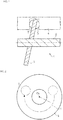
- FIG. 3 illustrates an exemplary cross-sectional structure of swash plate 3.
- FIG. 3 is a schematic view showing a structure in cross section perpendicular to the surface that slides with shoe 5.
- Swash plate 3 has a substrate 31, coating layer 32, and coating layer 33. Coating layer 32 and coating layer 33 both slide on shoe 5.
- Each of coating layer 32 and coating layer 33 are examples of the coating layer according to the present invention.
- the base material 31 is formed to be disk-shaped with a hole at its center.
- the base material is made of an alloy satisfying the required characteristics, for example, the material is an iron-based, copper-based, or aluminum-based alloy. From the viewpoint of preventing adhesion with shoe 5, swash plate 3 is preferably made of a material different from that of shoe 5.
- Coating layer 32 is formed to improve the characteristics of the sliding surface of swash plate 3.
- Coating layer 32 is made of a resin composition.
- the resin composition includes a binder resin and an additive dispersed in the binder resin.
- the binder resin is made of, for example, a thermosetting resin. At least one of polyamideimide (PAI), polyamide (PA), and polyimide (PI), epoxy, and phenol is used as the thermosetting resin, for example.
- the binder resin preferably includes at least one of PAI and PI.
- the content of the binder resin in the resin composition is preferably 50 to 80 vol%. More preferably, the content of the binder resin is more than 60 vol%. More preferably, the upper limit of the content of the binder resin is 75 vol%.
- a solid lubricant is used as the additive.
- the solid lubricant is added to improve lubricating properties, in other words, to reduce a coefficient of friction.
- the resin composition includes 20 to 50 vol% of solid lubricant in total.
- PTFE polytetrafluoroethylene
- this resin composition includes, in addition to PTFE, at least one of graphite (Gr) and MoS 2 .
- the content of MoS 2 is preferably less than the content of PTFE.
- the content of PTFE is 10 to 30 vol%, and more preferably 15 to 25 vol%.
- the content of MoS 2 is 0 to 10 vol%, preferably 0 to 4 vol% (that is, MoS 2 may not be included).
- the content of graphite is preferably 0 to 20 vol%, more preferably 10 to 20 vol%. Moreover, it is preferable that the content of MoS 2 is less than the content of graphite.
- the average particle diameter of the additive added to the binder resin is preferably less than 10 ⁇ m, and more preferably, equal to or less than 5 ⁇ m, in order to enhance the smoothness of the sliding surface and to assist the formation of an oil film.
- the average particle diameter means the 50% diameter (median diameter) in the distribution of the sphere equivalent diameter obtained by the laser diffraction method in the state of the raw material before mixing with the binder resin.
- the average particle size of PTFE is preferably larger than either the average particle size of graphite or the average particle size of MoS 2 .
- the inventors of the present invention hypothesize that by using PTFE having an average particle diameter larger than that of graphite and MoS 2 , the PTFE is stretched on the sliding surface to cover the graphite or MoS 2 , whereby smoothness of the sliding surface is easily maintained.
- the resin composition may further include hard particles as the additive.
- the hard particle at least one of an oxide, a nitride, a carbide, and a sulfide is used, for example.
- the average particle size of the hard particles is preferably less than 10 ⁇ m, and more preferably smaller than the average particle size of PTFE.
- Coating layer 33 is also formed using the same resin composition as coating layer 32.
- the surface that acts as the sliding surface that is, the surface on which coating layer 32 is formed and the surface on which coating layer 33 is formed are substantially flat.
- the surface of the substrate 31 may be roughened to enhance the adhesion to coating layer 32.
- an intermediate layer may be formed between the substrate 31 and coating layer 32.
- the sliding member having a coating layer formed using the resin composition according to the present embodiment is not limited to a swash plate for a compressor.
- the sliding member may be a shoe for a compressor, or a half bearing, a bush, or a thrust washer used in an engine.
- the present inventors manufactured test pieces of the sliding member under various conditions. The present inventors evaluated their characteristics. Cast iron was used as the base material of the sliding member. The base material was processed to have the shape of the swash plate shown in FIG. 1 . The coating layer was formed on this base material, and was made of the resin composition described in Table 1. PAI was used as the binder resin.
- Experiment Example 3 is an example where the average particle size of MoS 2 is larger than the average particle size of PTFE. [Table 1] binder resin PTFE Gr. MoS 2 vol% vol% average particle size ( ⁇ m) vol% average particle size ( ⁇ m) vol% average particle size ( ⁇ m) Experiment Example 1 Val. 16 5 18 2 2 2 2 Experiment Example 2 Val. 20 5 18 2 not included - Experiment Example 3 Val. 11 5 16 2 19 20
- the abrasion resistance test was performed on the test pieces of the above three experiment examples.
- the test conditions of the abrasion resistance test were as follows.
- the present inventor observed the sliding surface of the test pieces after the test, and confirmed whether the coating layer was worn or not. Although abrasion occurred in Experiment Example 3, no abrasion was found in Experiment Examples 1 and 2. Thus, compared with Experiment Example 3, Experiment Examples 1 and 2 showed improved wear resistance.
- the present inventors performed a seizure resistance test on the test pieces of Experiment Examples 1 and 2.
- the test conditions of the seizure resistance test were as follows.
- FIG. 4 shows the surface pressure measured in the contact resistance test. While seizure occurred in the test piece of Experiment Example 3 at a surface pressure of 10 MPa, no seizure occurred in the test pieces of Experiment Examples 1 and 2 even at a maximum surface pressure of 20 MPa of the test apparatus. Thus, compared with Experiment Example 3, Experiment Examples 1 and 2 showed improved seizure resistance.
- the present inventors performed a sliding test on the test pieces of Experiment Examples 1 and 2, and measured the surface roughness of the sliding surface before and after the test using a surface roughness meter (SP81B manufactured by Kosaka Laboratory). Further, the surface was observed with an electron microscope.
- the test conditions of the sliding test were the same as those of the seizure resistance test described above.
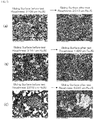
- FIG. 5 shows the state of the sliding surface before and after the sliding test.
- FIG. 5(A) shows Experiment Example 1
- FIG. 5(B) shows Experiment Example 2
- FIG. 5(C) shows Experiment Example 3.
- the surface roughness is measured according to the ten-point average roughness RzJIS defined in JIS B 0601: 2001. While the surface roughness increased in Experiment Example 3 during the sliding test, the surface roughness decreased in Experiment Examples 1 and 2 during the sliding test. The surface roughness after the sliding test was equal to or less than the half of the surface roughness before the sliding test. Further, the surface roughness after the sliding test was equal to or less than 2.1 ⁇ m RzJIS. In other words, while the surface became rougher in Experiment Example 3 after use, the surface became smoother in Experiment Examples 1 and 2 after use.
Landscapes
- Chemical & Material Sciences (AREA)
- Oil, Petroleum & Natural Gas (AREA)
- Chemical Kinetics & Catalysis (AREA)
- General Chemical & Material Sciences (AREA)
- Organic Chemistry (AREA)
- Engineering & Computer Science (AREA)
- General Engineering & Computer Science (AREA)
- Inorganic Chemistry (AREA)
- Mechanical Engineering (AREA)
- Sliding-Contact Bearings (AREA)
- Compressors, Vaccum Pumps And Other Relevant Systems (AREA)
- Lubricants (AREA)
Abstract
Description
- The present invention relates to a sliding member.
- To improve characteristics of a sliding surface, a sliding material with a resin coating layer is known, in which PTFE, graphite, and MoS2 are used as additives in a binder resin (refer to
Patent Documents 1 and 2). -
- Patent Document 1:
JP 2002-310345 - Patent Document 2:
JP 2008-56750 - In the technology disclosed in
Patent Documents - The present invention provides a technique for improving wear and seizure resistance under a high load state in an environment where a supply of lubricating oil supply is insufficient.
- The present invention provides a sliding member including: a base material; a coating layer formed on the base material and made of a resin composition including the following (A) - (C); (A) a binder resin including polyamideimide; (B) PTFE dispersed in the binder resin; and (C) at least one of graphite and MoS2 dispersed in the binder resin; wherein a surface roughness of the coating layer after a sliding test is equal to or less than the surface roughness of the coating layer before the sliding test, the sliding test being carried out under the following condition:
- Testing device: Oil spray type poor lubrication tester
- Speed: 6.3 m/sec
- Surface pressure: 2 to 20 MPa (incremental increase: 2 MPa/min.)
- Time: up to 10 min.
- Lubrication method: Spray
- Lubricating oil: refrigeration oil
- Counterpart material: Bearing steel.
- The surface roughness after the sliding test may be equal to or less than the half of the surface roughness before the sliding test.
- The surface roughness after the sliding test may be equal to or less than 2.1µm RzJIS.
- According to the present invention, wear and seizure resistance can be improved under a high load state in an environment where a supply of lubricating oil is insufficient.
-
-
FIG. 1 is a schematic cross-sectional view showing the structure ofcompressor 1 according to one embodiment. -
FIG. 2 illustrates an example of the positional relationship betweenswash plate 3 andshoes 5. -
FIG. 3 illustrates an exemplary cross-sectional structure ofswash plate 3. -
FIG. 4 shows a surface pressure measured in a contact resistance test. -
FIG. 5 shows a state of the sliding surface before and after a sliding test. - 1... compressor, 2...shaft, 3...swash plate, 31...base material, 32...coating layer, 33...coating layer, 4...piston
-
FIG. 1 is a schematic cross-sectional view showing the structure ofcompressor 1 according to one embodiment of the present invention.Compressor 1 is a swash plate type compressor.Compressor 1 includesshaft 2,swash plate 3, piston 4 andshoe 5.Shaft 2 is rotatably supported relative to a housing (not shown in the figures). Swashplate 3 is fixed at an oblique angle relative to the axis of rotation ofshaft 2. Swashplate 3 is an example of the sliding member according to the present invention. Piston 4 reciprocates in a cylinder bore (not shown in the figures) provided in the housing.Shoe 5 is provided betweenswash plate 3 and piston 4 and slides with each ofswash plate 3 and piston 4, respectively. Inshoe 5, the surface that slides withswash plate 3 is substantially flat, and the surface sliding with piston 4 has a dome-like (hemispherical) shape.Shoe 5 is an example of a mating member that slides on the sliding member according to the present invention. The rotation ofshaft 2 is converted to the reciprocating motion of piston 4 byswash plate 3. -
FIG. 2 illustrates an example of the positional relationship betweenswash plate 3 andshoes 5.FIG. 2 is a view from a direction perpendicular to the sliding surface. Swashplate 3 is disk-shaped overall and has a hole at its center. Viewed fromswash plate 3,shoe 5 performs rotational movement on the sliding surface. Here, "rotational movement" refers to a movement by whichshoe 5 defines a circular trajectory relative toswash plate 3. -
FIG. 3 illustrates an exemplary cross-sectional structure ofswash plate 3.FIG. 3 is a schematic view showing a structure in cross section perpendicular to the surface that slides withshoe 5. Swashplate 3 has asubstrate 31,coating layer 32, andcoating layer 33. Coatinglayer 32 andcoating layer 33 both slide onshoe 5. Each ofcoating layer 32 andcoating layer 33 are examples of the coating layer according to the present invention. Thebase material 31 is formed to be disk-shaped with a hole at its center. The base material is made of an alloy satisfying the required characteristics, for example, the material is an iron-based, copper-based, or aluminum-based alloy. From the viewpoint of preventing adhesion withshoe 5,swash plate 3 is preferably made of a material different from that ofshoe 5. -
Coating layer 32 is formed to improve the characteristics of the sliding surface ofswash plate 3.Coating layer 32 is made of a resin composition. The resin composition includes a binder resin and an additive dispersed in the binder resin. The binder resin is made of, for example, a thermosetting resin. At least one of polyamideimide (PAI), polyamide (PA), and polyimide (PI), epoxy, and phenol is used as the thermosetting resin, for example. Among these, the binder resin preferably includes at least one of PAI and PI. For example, the content of the binder resin in the resin composition is preferably 50 to 80 vol%. More preferably, the content of the binder resin is more than 60 vol%. More preferably, the upper limit of the content of the binder resin is 75 vol%. - A solid lubricant is used as the additive. The solid lubricant is added to improve lubricating properties, in other words, to reduce a coefficient of friction. For example, the resin composition includes 20 to 50 vol% of solid lubricant in total. PTFE (polytetrafluoroethylene) is used as the solid lubricant. Furthermore, this resin composition includes, in addition to PTFE, at least one of graphite (Gr) and MoS2. The content of MoS2 is preferably less than the content of PTFE. For example, the content of PTFE is 10 to 30 vol%, and more preferably 15 to 25 vol%. The content of MoS2 is 0 to 10 vol%, preferably 0 to 4 vol% (that is, MoS2 may not be included). The content of graphite is preferably 0 to 20 vol%, more preferably 10 to 20 vol%. Moreover, it is preferable that the content of MoS2 is less than the content of graphite.
- The average particle diameter of the additive added to the binder resin is preferably less than 10 µm, and more preferably, equal to or less than 5 µm, in order to enhance the smoothness of the sliding surface and to assist the formation of an oil film. Here, the average particle diameter means the 50% diameter (median diameter) in the distribution of the sphere equivalent diameter obtained by the laser diffraction method in the state of the raw material before mixing with the binder resin. When the average particle diameter of the additive is less than 10 µm, the sliding surface is maintained smooth, in contrast to where the average particle diameter of the additive is equal to or less than 10 µm, and as a result formation of an oil film is enhanced. Therefore, transition from boundary lubrication to mixed lubrication or fluid lubrication is facilitated, and enhanced lubrication is easily obtained even under severe conditions such as low oil content and high load.
- The average particle size of PTFE is preferably larger than either the average particle size of graphite or the average particle size of MoS2. The inventors of the present invention hypothesize that by using PTFE having an average particle diameter larger than that of graphite and MoS2, the PTFE is stretched on the sliding surface to cover the graphite or MoS2, whereby smoothness of the sliding surface is easily maintained.
- The resin composition may further include hard particles as the additive. As the hard particle, at least one of an oxide, a nitride, a carbide, and a sulfide is used, for example. The average particle size of the hard particles is preferably less than 10 µm, and more preferably smaller than the average particle size of PTFE.
-
Coating layer 33 is also formed using the same resin composition ascoating layer 32. In thesubstrate 31, the surface that acts as the sliding surface, that is, the surface on whichcoating layer 32 is formed and the surface on whichcoating layer 33 is formed are substantially flat. The surface of thesubstrate 31 may be roughened to enhance the adhesion tocoating layer 32. In addition, an intermediate layer may be formed between thesubstrate 31 andcoating layer 32. - The present invention is not limited to the above embodiment and various modifications can be applied to the embodiment. For example, the sliding member having a coating layer formed using the resin composition according to the present embodiment is not limited to a swash plate for a compressor. The sliding member may be a shoe for a compressor, or a half bearing, a bush, or a thrust washer used in an engine.
- The present inventors manufactured test pieces of the sliding member under various conditions. The present inventors evaluated their characteristics. Cast iron was used as the base material of the sliding member. The base material was processed to have the shape of the swash plate shown in
FIG. 1 . The coating layer was formed on this base material, and was made of the resin composition described in Table 1. PAI was used as the binder resin. Experiment Example 3 is an example where the average particle size of MoS2 is larger than the average particle size of PTFE.[Table 1] binder resin PTFE Gr. MoS2 vol% vol% average particle size (µm) vol% average particle size (µm) vol% average particle size (µm) Experiment Example 1 Val. 16 5 18 2 2 2 Experiment Example 2 Val. 20 5 18 2 not included - Experiment Example 3 Val. 11 5 16 2 19 20 - First, the abrasion resistance test was performed on the test pieces of the above three experiment examples. The test conditions of the abrasion resistance test were as follows.
- Test equipment: High pressure atmosphere friction and wear tester
- Speed: 40 m/sec
- Surface pressure: 4 to 12 MPa (increased incrementally by 2 MPa/3min)
- Time: Hold for 1 hour at maximum surface pressure
- Atmosphere: refrigerant and poor lubrication
- Counterpart material: Bearing steel
- The present inventor observed the sliding surface of the test pieces after the test, and confirmed whether the coating layer was worn or not. Although abrasion occurred in Experiment Example 3, no abrasion was found in Experiment Examples 1 and 2. Thus, compared with Experiment Example 3, Experiment Examples 1 and 2 showed improved wear resistance.
- Furthermore, the present inventors performed a seizure resistance test on the test pieces of Experiment Examples 1 and 2. The test conditions of the seizure resistance test were as follows.
- Testing device: Oil spray type poor lubrication tester
- Speed: 6.3 m/sec
- Surface pressure: 2 to 20 MPa (incremental increase: 2 MPa/min.)
- Time: up to 10 min.
- Lubrication method: Spray
- Lubricating oil: refrigeration oil
- Counterpart material: Bearing steel
-
FIG. 4 shows the surface pressure measured in the contact resistance test. While seizure occurred in the test piece of Experiment Example 3 at a surface pressure of 10 MPa, no seizure occurred in the test pieces of Experiment Examples 1 and 2 even at a maximum surface pressure of 20 MPa of the test apparatus. Thus, compared with Experiment Example 3, Experiment Examples 1 and 2 showed improved seizure resistance. - Furthermore, the present inventors performed a sliding test on the test pieces of Experiment Examples 1 and 2, and measured the surface roughness of the sliding surface before and after the test using a surface roughness meter (SP81B manufactured by Kosaka Laboratory). Further, the surface was observed with an electron microscope. The test conditions of the sliding test were the same as those of the seizure resistance test described above.
-
FIG. 5 shows the state of the sliding surface before and after the sliding test.FIG. 5(A) shows Experiment Example 1,FIG. 5(B) shows Experiment Example 2, andFIG. 5(C) shows Experiment Example 3. It is of note that the surface roughness is measured according to the ten-point average roughness RzJIS defined in JIS B 0601: 2001. While the surface roughness increased in Experiment Example 3 during the sliding test, the surface roughness decreased in Experiment Examples 1 and 2 during the sliding test. The surface roughness after the sliding test was equal to or less than the half of the surface roughness before the sliding test. Further, the surface roughness after the sliding test was equal to or less than 2.1µm RzJIS. In other words, while the surface became rougher in Experiment Example 3 after use, the surface became smoother in Experiment Examples 1 and 2 after use.
Claims (3)
- A sliding member comprising:a base material;a coating layer formed on the base material and made of a resin composition including the following (A) - (C);(A) a binder resin including polyamideimide;(B) PTFE dispersed in the binder resin; and(C) at least one of graphite and MoS2 dispersed in the binder resin;whereina surface roughness of the coating layer after a sliding test is equal to or less than the surface roughness of the coating layer before the sliding test, the sliding test being carried out under the following condition:Testing device: Oil spray type poor lubrication testerSpeed: 6.3 m/secSurface pressure: 2 to 20 MPa (incremental increase: 2 MPa/min.)Time: up to 10 min.Lubrication method: SprayLubricating oil: refrigeration oilCounterpart material: Bearing steel.
- The sliding member according to Claim 1, wherein
the surface roughness after the sliding test is equal to or less than the half of the surface roughness before the sliding test. - The sliding member according to Claim 1 or 2, wherein
the surface roughness after the sliding test is equal to or less than 2.1µm RzJIS.
Applications Claiming Priority (2)
| Application Number | Priority Date | Filing Date | Title |
|---|---|---|---|
| JP2016224317A JP7390774B2 (en) | 2016-11-17 | 2016-11-17 | sliding member |
| PCT/JP2017/041337 WO2018092857A1 (en) | 2016-11-17 | 2017-11-16 | Resin composition and sliding member |
Publications (3)
| Publication Number | Publication Date |
|---|---|
| EP3543322A1 true EP3543322A1 (en) | 2019-09-25 |
| EP3543322A4 EP3543322A4 (en) | 2020-07-15 |
| EP3543322B1 EP3543322B1 (en) | 2023-12-27 |
Family
ID=62146480
Family Applications (1)
| Application Number | Title | Priority Date | Filing Date |
|---|---|---|---|
| EP17870663.6A Active EP3543322B1 (en) | 2016-11-17 | 2017-11-16 | Sliding member |
Country Status (6)
| Country | Link |
|---|---|
| US (1) | US11421173B2 (en) |
| EP (1) | EP3543322B1 (en) |
| JP (1) | JP7390774B2 (en) |
| KR (1) | KR102204289B1 (en) |
| CN (1) | CN110036097A (en) |
| WO (1) | WO2018092857A1 (en) |
Families Citing this family (2)
| Publication number | Priority date | Publication date | Assignee | Title |
|---|---|---|---|---|
| GB2599119B (en) * | 2020-09-24 | 2023-02-01 | Mahle Int Gmbh | Bearing material with solid lubricant |
| CN115558539B (en) * | 2022-09-27 | 2024-04-30 | 中国机械总院集团武汉材料保护研究所有限公司 | Solid-liquid composite lubricating coating, preparation method and application |
Family Cites Families (40)
| Publication number | Priority date | Publication date | Assignee | Title |
|---|---|---|---|---|
| JP2517604B2 (en) | 1987-07-13 | 1996-07-24 | 大豊工業株式会社 | Sliding material |
| US5427698A (en) | 1988-12-09 | 1995-06-27 | Takata Corporation | Coating composition for lubrication |
| JP3017626B2 (en) * | 1993-08-03 | 2000-03-13 | トヨタ自動車株式会社 | Sliding resin composition |
| US5486299A (en) * | 1993-11-02 | 1996-01-23 | Dow Corning Asia, Ltd | Wear-resistant lubricant composition |
| JPH08104803A (en) | 1994-10-03 | 1996-04-23 | Idemitsu Petrochem Co Ltd | Resin composition |
| JPH08199116A (en) | 1995-01-26 | 1996-08-06 | Shikoku Chem Corp | Resin composition for coating |
| JP3054589B2 (en) | 1996-02-29 | 2000-06-19 | 大同メタル工業株式会社 | Bearing structure of plain bearing |
| JP3416049B2 (en) * | 1998-02-27 | 2003-06-16 | 株式会社リケン | Coating material for sliding part and piston ring |
| JP2000136397A (en) * | 1998-10-30 | 2000-05-16 | Taiho Kogyo Co Ltd | Solid lubricating coating material and sliding material using the same |
| US6305847B1 (en) | 1998-12-22 | 2001-10-23 | Daido Metal Company Ltd. | Sliding bearing |
| CN1215267C (en) * | 2001-03-16 | 2005-08-17 | 大丰工业株式会社 | slider |
| JP3765243B2 (en) | 2001-04-12 | 2006-04-12 | 住友金属工業株式会社 | Threaded joints for steel pipes |
| BRPI0402257A (en) * | 2003-06-19 | 2005-06-14 | Toyota Jidoshokki Kk | Coating composition for use on sliding members |
| JP2005089514A (en) * | 2003-09-12 | 2005-04-07 | Taiho Kogyo Co Ltd | Sliding member |
| JP2005146366A (en) * | 2003-11-17 | 2005-06-09 | Toyota Industries Corp | Sliding member |
| JP4583750B2 (en) | 2003-12-25 | 2010-11-17 | 大豊工業株式会社 | Sliding material |
| JP2005305395A (en) * | 2004-04-26 | 2005-11-04 | Toyota Industries Corp | Method for coating aluminium based substrate and coated material of aluminium based substrate |
| JP2006161563A (en) * | 2004-12-02 | 2006-06-22 | Honda Motor Co Ltd | Piston of internal combustion engine |
| DE102005055366A1 (en) | 2004-12-10 | 2006-06-14 | Mahle International Gmbh | Connecting rod for an internal combustion engine and method for coating its sliding bearing surfaces |
| JP4921894B2 (en) | 2006-08-30 | 2012-04-25 | 住鉱潤滑剤株式会社 | Multi-layer lubricating coating composition, multi-layer lubricating coating and piston having the coating |
| JP2008259965A (en) | 2007-04-12 | 2008-10-30 | Toyota Motor Corp | Surface treatment method and sliding member |
| JP4420940B2 (en) | 2007-06-15 | 2010-02-24 | 大同メタル工業株式会社 | Dry lubricating coating composition and sliding bearing using the dry lubricating coating composition as a sliding layer |
| JP5060223B2 (en) * | 2007-09-12 | 2012-10-31 | トヨタ自動車株式会社 | Piston for internal combustion engine |
| JPWO2009041653A1 (en) | 2007-09-27 | 2011-01-27 | 大豊工業株式会社 | Composition for sliding member and sliding member coated with the composition |
| JP2010196813A (en) * | 2009-02-25 | 2010-09-09 | Daido Metal Co Ltd | Sliding member |
| JP4932884B2 (en) | 2009-05-01 | 2012-05-16 | アクロス株式会社 | Coating composition for sliding member |
| EP2468824A4 (en) * | 2009-08-21 | 2013-02-13 | Dow Corning Toray Co Ltd | Coating composition for sliding members |
| JP5259544B2 (en) * | 2009-10-06 | 2013-08-07 | 大同メタル工業株式会社 | Sliding resin composition |
| JP2011208613A (en) | 2010-03-30 | 2011-10-20 | Daihatsu Motor Co Ltd | Tank device for vehicle |
| JP5783398B2 (en) | 2010-03-30 | 2015-09-24 | Ntn株式会社 | Swing and rotary cam lifter and overhead valve engine |
| JP5483349B2 (en) | 2010-03-31 | 2014-05-07 | 住鉱潤滑剤株式会社 | Lubricating film forming resin composition |
| BR112013013301A2 (en) | 2010-12-02 | 2016-09-06 | Taiho Kogyo Co Ltd | oscillating plate compressor type oscillating plate |
| CN103415604A (en) | 2011-02-18 | 2013-11-27 | 大丰工业株式会社 | Sliding material composition and sliding member |
| JP5753756B2 (en) | 2011-03-07 | 2015-07-22 | 大豊工業株式会社 | Scroll compressor |
| BR112014006606B1 (en) * | 2011-09-28 | 2019-10-15 | Taiho Kogyo Co., Ltd. | SYSTEM UNDERSTANDING A SLIDING MEMBER AND A COUPLING MEMBER |
| JP6108284B2 (en) | 2012-05-07 | 2017-04-05 | Nokクリューバー株式会社 | Composition for sliding member |
| JPWO2014103067A1 (en) * | 2012-12-28 | 2017-01-12 | サンデンホールディングス株式会社 | Swash plate compressor |
| WO2014103073A1 (en) | 2012-12-28 | 2014-07-03 | サンデン株式会社 | Swash plate compressor |
| CN104747414A (en) * | 2013-12-31 | 2015-07-01 | 上海三电贝洱汽车空调有限公司 | Slider |
| JP6133916B2 (en) | 2015-02-27 | 2017-05-24 | トヨタ自動車株式会社 | Manufacturing method of sliding member and manufacturing method of piston |
-
2016
- 2016-11-17 JP JP2016224317A patent/JP7390774B2/en active Active
-
2017
- 2017-11-16 WO PCT/JP2017/041337 patent/WO2018092857A1/en not_active Ceased
- 2017-11-16 US US16/461,069 patent/US11421173B2/en active Active
- 2017-11-16 KR KR1020197014777A patent/KR102204289B1/en active Active
- 2017-11-16 EP EP17870663.6A patent/EP3543322B1/en active Active
- 2017-11-16 CN CN201780070785.1A patent/CN110036097A/en active Pending
Also Published As
| Publication number | Publication date |
|---|---|
| WO2018092857A1 (en) | 2018-05-24 |
| JP7390774B2 (en) | 2023-12-04 |
| US11421173B2 (en) | 2022-08-23 |
| CN110036097A (en) | 2019-07-19 |
| KR102204289B1 (en) | 2021-01-18 |
| EP3543322A4 (en) | 2020-07-15 |
| KR20190077430A (en) | 2019-07-03 |
| US20190276762A1 (en) | 2019-09-12 |
| JP2018080283A (en) | 2018-05-24 |
| EP3543322B1 (en) | 2023-12-27 |
Similar Documents
| Publication | Publication Date | Title |
|---|---|---|
| JP5001646B2 (en) | Plain bearing | |
| JP4583750B2 (en) | Sliding material | |
| EP2264316B1 (en) | Swash plate and method of manufacturing same | |
| US20100261625A1 (en) | Composition for sliding member and sliding member coated with the composition | |
| US6305847B1 (en) | Sliding bearing | |
| US7331274B2 (en) | Sliding film, sliding member, composition for sliding film, sliding device, swash-plate type compressor, process for forming sliding film, and process for producing sliding member | |
| JP2010196813A (en) | Sliding member | |
| EP3543322B1 (en) | Sliding member | |
| EP3543295B1 (en) | Resin composition and sliding member | |
| WO2017018098A1 (en) | Sliding member and swashplate-type compressor | |
| JP2018035838A (en) | Thrust washer | |
| JP6468991B2 (en) | Sliding member and swash plate compressor | |
| WO2017094810A1 (en) | Sliding member and swash plate type compressor | |
| JP2013210061A (en) | Sliding bearing and method of manufacturing the same | |
| US20220106982A1 (en) | Sliding member | |
| JP2017096398A (en) | Sliding member | |
| JP2019082216A (en) | Sliding member | |
| JP2017096397A (en) | Slide member |
Legal Events
| Date | Code | Title | Description |
|---|---|---|---|
| STAA | Information on the status of an ep patent application or granted ep patent |
Free format text: STATUS: THE INTERNATIONAL PUBLICATION HAS BEEN MADE |
|
| PUAI | Public reference made under article 153(3) epc to a published international application that has entered the european phase |
Free format text: ORIGINAL CODE: 0009012 |
|
| STAA | Information on the status of an ep patent application or granted ep patent |
Free format text: STATUS: REQUEST FOR EXAMINATION WAS MADE |
|
| 17P | Request for examination filed |
Effective date: 20190617 |
|
| AK | Designated contracting states |
Kind code of ref document: A1 Designated state(s): AL AT BE BG CH CY CZ DE DK EE ES FI FR GB GR HR HU IE IS IT LI LT LU LV MC MK MT NL NO PL PT RO RS SE SI SK SM TR |
|
| AX | Request for extension of the european patent |
Extension state: BA ME |
|
| DAV | Request for validation of the european patent (deleted) | ||
| DAX | Request for extension of the european patent (deleted) | ||
| A4 | Supplementary search report drawn up and despatched |
Effective date: 20200617 |
|
| RIC1 | Information provided on ipc code assigned before grant |
Ipc: C10M 149/18 20060101ALI20200610BHEP Ipc: C10M 161/00 20060101AFI20200610BHEP Ipc: C10M 169/04 20060101ALI20200610BHEP Ipc: F16C 33/06 20060101ALI20200610BHEP Ipc: C10N 30/06 20060101ALI20200610BHEP Ipc: C10N 40/02 20060101ALI20200610BHEP Ipc: C10N 10/12 20060101ALI20200610BHEP Ipc: C10M 125/02 20060101ALI20200610BHEP Ipc: C10M 125/22 20060101ALI20200610BHEP Ipc: C10M 147/02 20060101ALI20200610BHEP Ipc: C10N 40/30 20060101ALI20200610BHEP |
|
| STAA | Information on the status of an ep patent application or granted ep patent |
Free format text: STATUS: EXAMINATION IS IN PROGRESS |
|
| 17Q | First examination report despatched |
Effective date: 20220613 |
|
| GRAP | Despatch of communication of intention to grant a patent |
Free format text: ORIGINAL CODE: EPIDOSNIGR1 |
|
| RIC1 | Information provided on ipc code assigned before grant |
Ipc: F16C 33/06 20060101ALI20230605BHEP Ipc: F16C 33/20 20060101ALI20230605BHEP Ipc: F16C 33/10 20060101ALI20230605BHEP Ipc: F16C 17/24 20060101ALI20230605BHEP Ipc: C10N 40/02 20060101ALI20230605BHEP Ipc: C10N 30/06 20060101ALI20230605BHEP Ipc: C10N 10/12 20060101ALI20230605BHEP Ipc: C10M 125/02 20060101ALI20230605BHEP Ipc: C10M 125/22 20060101ALI20230605BHEP Ipc: C10M 147/02 20060101ALI20230605BHEP Ipc: C10M 149/18 20060101ALI20230605BHEP Ipc: C10M 169/04 20060101ALI20230605BHEP Ipc: C10N 20/06 20060101ALI20230605BHEP Ipc: C10M 161/00 20060101AFI20230605BHEP |
|
| STAA | Information on the status of an ep patent application or granted ep patent |
Free format text: STATUS: GRANT OF PATENT IS INTENDED |
|
| INTG | Intention to grant announced |
Effective date: 20230713 |
|
| GRAS | Grant fee paid |
Free format text: ORIGINAL CODE: EPIDOSNIGR3 |
|
| GRAA | (expected) grant |
Free format text: ORIGINAL CODE: 0009210 |
|
| STAA | Information on the status of an ep patent application or granted ep patent |
Free format text: STATUS: THE PATENT HAS BEEN GRANTED |
|
| AK | Designated contracting states |
Kind code of ref document: B1 Designated state(s): AL AT BE BG CH CY CZ DE DK EE ES FI FR GB GR HR HU IE IS IT LI LT LU LV MC MK MT NL NO PL PT RO RS SE SI SK SM TR |
|
| REG | Reference to a national code |
Ref country code: GB Ref legal event code: FG4D |
|
| REG | Reference to a national code |
Ref country code: CH Ref legal event code: EP |
|
| REG | Reference to a national code |
Ref country code: DE Ref legal event code: R096 Ref document number: 602017077998 Country of ref document: DE |
|
| REG | Reference to a national code |
Ref country code: IE Ref legal event code: FG4D |
|
| PG25 | Lapsed in a contracting state [announced via postgrant information from national office to epo] |
Ref country code: GR Free format text: LAPSE BECAUSE OF FAILURE TO SUBMIT A TRANSLATION OF THE DESCRIPTION OR TO PAY THE FEE WITHIN THE PRESCRIBED TIME-LIMIT Effective date: 20240328 |
|
| REG | Reference to a national code |
Ref country code: LT Ref legal event code: MG9D |
|
| PG25 | Lapsed in a contracting state [announced via postgrant information from national office to epo] |
Ref country code: LT Free format text: LAPSE BECAUSE OF FAILURE TO SUBMIT A TRANSLATION OF THE DESCRIPTION OR TO PAY THE FEE WITHIN THE PRESCRIBED TIME-LIMIT Effective date: 20231227 |
|
| PG25 | Lapsed in a contracting state [announced via postgrant information from national office to epo] |
Ref country code: ES Free format text: LAPSE BECAUSE OF FAILURE TO SUBMIT A TRANSLATION OF THE DESCRIPTION OR TO PAY THE FEE WITHIN THE PRESCRIBED TIME-LIMIT Effective date: 20231227 |
|
| PG25 | Lapsed in a contracting state [announced via postgrant information from national office to epo] |
Ref country code: LT Free format text: LAPSE BECAUSE OF FAILURE TO SUBMIT A TRANSLATION OF THE DESCRIPTION OR TO PAY THE FEE WITHIN THE PRESCRIBED TIME-LIMIT Effective date: 20231227 Ref country code: GR Free format text: LAPSE BECAUSE OF FAILURE TO SUBMIT A TRANSLATION OF THE DESCRIPTION OR TO PAY THE FEE WITHIN THE PRESCRIBED TIME-LIMIT Effective date: 20240328 Ref country code: FI Free format text: LAPSE BECAUSE OF FAILURE TO SUBMIT A TRANSLATION OF THE DESCRIPTION OR TO PAY THE FEE WITHIN THE PRESCRIBED TIME-LIMIT Effective date: 20231227 Ref country code: ES Free format text: LAPSE BECAUSE OF FAILURE TO SUBMIT A TRANSLATION OF THE DESCRIPTION OR TO PAY THE FEE WITHIN THE PRESCRIBED TIME-LIMIT Effective date: 20231227 Ref country code: BG Free format text: LAPSE BECAUSE OF FAILURE TO SUBMIT A TRANSLATION OF THE DESCRIPTION OR TO PAY THE FEE WITHIN THE PRESCRIBED TIME-LIMIT Effective date: 20240327 |
|
| REG | Reference to a national code |
Ref country code: NL Ref legal event code: MP Effective date: 20231227 |
|
| REG | Reference to a national code |
Ref country code: AT Ref legal event code: MK05 Ref document number: 1644525 Country of ref document: AT Kind code of ref document: T Effective date: 20231227 |
|
| PG25 | Lapsed in a contracting state [announced via postgrant information from national office to epo] |
Ref country code: NL Free format text: LAPSE BECAUSE OF FAILURE TO SUBMIT A TRANSLATION OF THE DESCRIPTION OR TO PAY THE FEE WITHIN THE PRESCRIBED TIME-LIMIT Effective date: 20231227 |
|
| PG25 | Lapsed in a contracting state [announced via postgrant information from national office to epo] |
Ref country code: SE Free format text: LAPSE BECAUSE OF FAILURE TO SUBMIT A TRANSLATION OF THE DESCRIPTION OR TO PAY THE FEE WITHIN THE PRESCRIBED TIME-LIMIT Effective date: 20231227 Ref country code: RS Free format text: LAPSE BECAUSE OF FAILURE TO SUBMIT A TRANSLATION OF THE DESCRIPTION OR TO PAY THE FEE WITHIN THE PRESCRIBED TIME-LIMIT Effective date: 20231227 Ref country code: NO Free format text: LAPSE BECAUSE OF FAILURE TO SUBMIT A TRANSLATION OF THE DESCRIPTION OR TO PAY THE FEE WITHIN THE PRESCRIBED TIME-LIMIT Effective date: 20240327 Ref country code: NL Free format text: LAPSE BECAUSE OF FAILURE TO SUBMIT A TRANSLATION OF THE DESCRIPTION OR TO PAY THE FEE WITHIN THE PRESCRIBED TIME-LIMIT Effective date: 20231227 Ref country code: LV Free format text: LAPSE BECAUSE OF FAILURE TO SUBMIT A TRANSLATION OF THE DESCRIPTION OR TO PAY THE FEE WITHIN THE PRESCRIBED TIME-LIMIT Effective date: 20231227 Ref country code: HR Free format text: LAPSE BECAUSE OF FAILURE TO SUBMIT A TRANSLATION OF THE DESCRIPTION OR TO PAY THE FEE WITHIN THE PRESCRIBED TIME-LIMIT Effective date: 20231227 |
|
| PG25 | Lapsed in a contracting state [announced via postgrant information from national office to epo] |
Ref country code: IS Free format text: LAPSE BECAUSE OF FAILURE TO SUBMIT A TRANSLATION OF THE DESCRIPTION OR TO PAY THE FEE WITHIN THE PRESCRIBED TIME-LIMIT Effective date: 20240427 |
|
| PG25 | Lapsed in a contracting state [announced via postgrant information from national office to epo] |
Ref country code: AT Free format text: LAPSE BECAUSE OF FAILURE TO SUBMIT A TRANSLATION OF THE DESCRIPTION OR TO PAY THE FEE WITHIN THE PRESCRIBED TIME-LIMIT Effective date: 20231227 Ref country code: CZ Free format text: LAPSE BECAUSE OF FAILURE TO SUBMIT A TRANSLATION OF THE DESCRIPTION OR TO PAY THE FEE WITHIN THE PRESCRIBED TIME-LIMIT Effective date: 20231227 |
|
| PG25 | Lapsed in a contracting state [announced via postgrant information from national office to epo] |
Ref country code: SK Free format text: LAPSE BECAUSE OF FAILURE TO SUBMIT A TRANSLATION OF THE DESCRIPTION OR TO PAY THE FEE WITHIN THE PRESCRIBED TIME-LIMIT Effective date: 20231227 |
|
| PG25 | Lapsed in a contracting state [announced via postgrant information from national office to epo] |
Ref country code: SM Free format text: LAPSE BECAUSE OF FAILURE TO SUBMIT A TRANSLATION OF THE DESCRIPTION OR TO PAY THE FEE WITHIN THE PRESCRIBED TIME-LIMIT Effective date: 20231227 Ref country code: SK Free format text: LAPSE BECAUSE OF FAILURE TO SUBMIT A TRANSLATION OF THE DESCRIPTION OR TO PAY THE FEE WITHIN THE PRESCRIBED TIME-LIMIT Effective date: 20231227 Ref country code: RO Free format text: LAPSE BECAUSE OF FAILURE TO SUBMIT A TRANSLATION OF THE DESCRIPTION OR TO PAY THE FEE WITHIN THE PRESCRIBED TIME-LIMIT Effective date: 20231227 Ref country code: IT Free format text: LAPSE BECAUSE OF FAILURE TO SUBMIT A TRANSLATION OF THE DESCRIPTION OR TO PAY THE FEE WITHIN THE PRESCRIBED TIME-LIMIT Effective date: 20231227 Ref country code: IS Free format text: LAPSE BECAUSE OF FAILURE TO SUBMIT A TRANSLATION OF THE DESCRIPTION OR TO PAY THE FEE WITHIN THE PRESCRIBED TIME-LIMIT Effective date: 20240427 Ref country code: EE Free format text: LAPSE BECAUSE OF FAILURE TO SUBMIT A TRANSLATION OF THE DESCRIPTION OR TO PAY THE FEE WITHIN THE PRESCRIBED TIME-LIMIT Effective date: 20231227 Ref country code: CZ Free format text: LAPSE BECAUSE OF FAILURE TO SUBMIT A TRANSLATION OF THE DESCRIPTION OR TO PAY THE FEE WITHIN THE PRESCRIBED TIME-LIMIT Effective date: 20231227 Ref country code: AT Free format text: LAPSE BECAUSE OF FAILURE TO SUBMIT A TRANSLATION OF THE DESCRIPTION OR TO PAY THE FEE WITHIN THE PRESCRIBED TIME-LIMIT Effective date: 20231227 |
|
| PG25 | Lapsed in a contracting state [announced via postgrant information from national office to epo] |
Ref country code: PL Free format text: LAPSE BECAUSE OF FAILURE TO SUBMIT A TRANSLATION OF THE DESCRIPTION OR TO PAY THE FEE WITHIN THE PRESCRIBED TIME-LIMIT Effective date: 20231227 Ref country code: PT Free format text: LAPSE BECAUSE OF FAILURE TO SUBMIT A TRANSLATION OF THE DESCRIPTION OR TO PAY THE FEE WITHIN THE PRESCRIBED TIME-LIMIT Effective date: 20240429 |
|
| PG25 | Lapsed in a contracting state [announced via postgrant information from national office to epo] |
Ref country code: PT Free format text: LAPSE BECAUSE OF FAILURE TO SUBMIT A TRANSLATION OF THE DESCRIPTION OR TO PAY THE FEE WITHIN THE PRESCRIBED TIME-LIMIT Effective date: 20240429 Ref country code: PL Free format text: LAPSE BECAUSE OF FAILURE TO SUBMIT A TRANSLATION OF THE DESCRIPTION OR TO PAY THE FEE WITHIN THE PRESCRIBED TIME-LIMIT Effective date: 20231227 |
|
| REG | Reference to a national code |
Ref country code: DE Ref legal event code: R097 Ref document number: 602017077998 Country of ref document: DE |
|
| PG25 | Lapsed in a contracting state [announced via postgrant information from national office to epo] |
Ref country code: DK Free format text: LAPSE BECAUSE OF FAILURE TO SUBMIT A TRANSLATION OF THE DESCRIPTION OR TO PAY THE FEE WITHIN THE PRESCRIBED TIME-LIMIT Effective date: 20231227 |
|
| PG25 | Lapsed in a contracting state [announced via postgrant information from national office to epo] |
Ref country code: DK Free format text: LAPSE BECAUSE OF FAILURE TO SUBMIT A TRANSLATION OF THE DESCRIPTION OR TO PAY THE FEE WITHIN THE PRESCRIBED TIME-LIMIT Effective date: 20231227 |
|
| PLBE | No opposition filed within time limit |
Free format text: ORIGINAL CODE: 0009261 |
|
| STAA | Information on the status of an ep patent application or granted ep patent |
Free format text: STATUS: NO OPPOSITION FILED WITHIN TIME LIMIT |
|
| 26N | No opposition filed |
Effective date: 20240930 |
|
| PG25 | Lapsed in a contracting state [announced via postgrant information from national office to epo] |
Ref country code: SI Free format text: LAPSE BECAUSE OF FAILURE TO SUBMIT A TRANSLATION OF THE DESCRIPTION OR TO PAY THE FEE WITHIN THE PRESCRIBED TIME-LIMIT Effective date: 20231227 |
|
| REG | Reference to a national code |
Ref country code: CH Ref legal event code: PL |
|
| PG25 | Lapsed in a contracting state [announced via postgrant information from national office to epo] |
Ref country code: MC Free format text: LAPSE BECAUSE OF FAILURE TO SUBMIT A TRANSLATION OF THE DESCRIPTION OR TO PAY THE FEE WITHIN THE PRESCRIBED TIME-LIMIT Effective date: 20231227 |
|
| PG25 | Lapsed in a contracting state [announced via postgrant information from national office to epo] |
Ref country code: LU Free format text: LAPSE BECAUSE OF NON-PAYMENT OF DUE FEES Effective date: 20241116 |
|
| REG | Reference to a national code |
Ref country code: CH Ref legal event code: PL |
|
| GBPC | Gb: european patent ceased through non-payment of renewal fee |
Effective date: 20241116 |
|
| PG25 | Lapsed in a contracting state [announced via postgrant information from national office to epo] |
Ref country code: CH Free format text: LAPSE BECAUSE OF NON-PAYMENT OF DUE FEES Effective date: 20241130 |
|
| REG | Reference to a national code |
Ref country code: BE Ref legal event code: MM Effective date: 20241130 |
|
| PG25 | Lapsed in a contracting state [announced via postgrant information from national office to epo] |
Ref country code: GB Free format text: LAPSE BECAUSE OF NON-PAYMENT OF DUE FEES Effective date: 20241116 Ref country code: BE Free format text: LAPSE BECAUSE OF NON-PAYMENT OF DUE FEES Effective date: 20241130 |
|
| PG25 | Lapsed in a contracting state [announced via postgrant information from national office to epo] |
Ref country code: FR Free format text: LAPSE BECAUSE OF NON-PAYMENT OF DUE FEES Effective date: 20241130 |
|
| PG25 | Lapsed in a contracting state [announced via postgrant information from national office to epo] |
Ref country code: IE Free format text: LAPSE BECAUSE OF NON-PAYMENT OF DUE FEES Effective date: 20241116 |
|
| PGFP | Annual fee paid to national office [announced via postgrant information from national office to epo] |
Ref country code: DE Payment date: 20250930 Year of fee payment: 9 |
|
| PG25 | Lapsed in a contracting state [announced via postgrant information from national office to epo] |
Ref country code: HU Free format text: LAPSE BECAUSE OF FAILURE TO SUBMIT A TRANSLATION OF THE DESCRIPTION OR TO PAY THE FEE WITHIN THE PRESCRIBED TIME-LIMIT; INVALID AB INITIO Effective date: 20171116 |
|
| PG25 | Lapsed in a contracting state [announced via postgrant information from national office to epo] |
Ref country code: CY Free format text: LAPSE BECAUSE OF FAILURE TO SUBMIT A TRANSLATION OF THE DESCRIPTION OR TO PAY THE FEE WITHIN THE PRESCRIBED TIME-LIMIT; INVALID AB INITIO Effective date: 20171116 |