EP3537635B2 - Zuteilung von präambelsequenzen - Google Patents
Zuteilung von präambelsequenzen Download PDFInfo
- Publication number
- EP3537635B2 EP3537635B2 EP19163746.1A EP19163746A EP3537635B2 EP 3537635 B2 EP3537635 B2 EP 3537635B2 EP 19163746 A EP19163746 A EP 19163746A EP 3537635 B2 EP3537635 B2 EP 3537635B2
- Authority
- EP
- European Patent Office
- Prior art keywords
- sequences
- root
- sequence
- subsets
- ordering
- Prior art date
- Legal status (The legal status is an assumption and is not a legal conclusion. Google has not performed a legal analysis and makes no representation as to the accuracy of the status listed.)
- Active
Links
Images




Classifications
-
- H—ELECTRICITY
- H04—ELECTRIC COMMUNICATION TECHNIQUE
- H04L—TRANSMISSION OF DIGITAL INFORMATION, e.g. TELEGRAPHIC COMMUNICATION
- H04L5/00—Arrangements affording multiple use of the transmission path
- H04L5/003—Arrangements for allocating sub-channels of the transmission path
- H04L5/0053—Allocation of signalling, i.e. of overhead other than pilot signals
-
- H—ELECTRICITY
- H04—ELECTRIC COMMUNICATION TECHNIQUE
- H04J—MULTIPLEX COMMUNICATION
- H04J13/00—Code division multiplex systems
- H04J13/10—Code generation
- H04J13/14—Generation of codes with a zero correlation zone
-
- H—ELECTRICITY
- H04—ELECTRIC COMMUNICATION TECHNIQUE
- H04J—MULTIPLEX COMMUNICATION
- H04J13/00—Code division multiplex systems
- H04J13/0007—Code type
- H04J13/0055—ZCZ [zero correlation zone]
- H04J13/0059—CAZAC [constant-amplitude and zero auto-correlation]
- H04J13/0062—Zadoff-Chu
-
- H—ELECTRICITY
- H04—ELECTRIC COMMUNICATION TECHNIQUE
- H04L—TRANSMISSION OF DIGITAL INFORMATION, e.g. TELEGRAPHIC COMMUNICATION
- H04L5/00—Arrangements affording multiple use of the transmission path
- H04L5/003—Arrangements for allocating sub-channels of the transmission path
- H04L5/0037—Inter-user or inter-terminal allocation
Definitions
- the present invention relates to allocation of preamble sequences for an access procedure in a mobile communication system.
- the invention relates to allocation of preamble sequences for a random access in E-UTRAN (Evolved UMTS (Universal Mobile Telecommunications System) Terrestrial Radio Access Network).
- E-UTRAN Evolved UMTS (Universal Mobile Telecommunications System) Terrestrial Radio Access Network).
- E-UTRAN The random access procedure of E-UTRAN resembles that of WCDMA (Wideband Code Division Multiple Access).
- a user equipment UE transmits a preamble on an access slot.
- a number of different preamble sequences have been defined for the UE to select for the preamble transmission.
- Zadoff-Chu sequences have been chosen.
- the length of a sequence is 839 samples, which means that 838 root sequences are available.
- up to 64 cyclically shifted sequences are obtained from a root sequence.
- E-UTRAN FDD Frequency Division Duplex
- 64 preamble sequences are allocated for each cell.
- a root sequence index u0 and a cyclic shift increment Ncs and a mobility parameter are broadcasted for UEs of a cell.
- the UEs form a complete set of 64 sequences by determining available cyclic shifts of the sequence u0 and continuing from the consecutive root sequences until the 64 sequences are collected.
- This selected sequence allocation system means that it is required to define an order of the root sequences.
- the ordering should be decided taking into account two issues.
- CM cubic metric
- a so called sequence restriction scheme may completely deny utilization of a root sequence or at least some of its cyclic shifts.
- the restriction scheme is needed because of the special properties of the Zadoff-Chu sequences in case of large frequency offsets, and the scheme will be applied in cells where UEs can move with high speeds. In the following, such cells are called high mobility cells, and the other cells, where restrictions are not applied, are called low mobility cells.
- a mobility parameter of the System Information indicates if the restrictions are in use.
- the restrictions define a maximum supportable cell size for each root sequence. If the sequences are ordered according to the maximum supportable size of a high mobility cell, the reuse of the sequences can be optimized in presence of both high and low mobility cells. Those root sequences that are not available in high mobility cells of a certain size form a set of consecutive sequences that can be effectively allocated for low mobility cells.
- LG ELECTRONICS "Preamble Index Mapping for Non-Synchronized RACH",3GPP DRAFT; R1-073501, 3RD GENERATION PARTNERSHIP PROJECT (3GPP) discloses hybrid index ordering.
- PANASONIC, NTT DOCOMO "Zadoff-Chu sequence allocation on RACH for complexity reduction”, TSG-RAN WG1 #47BIS, no. R1-070189, 15 January 2007 (2007-01-15), - 19 January 2007 discloses Zadoff-Chu sequence definition and allocation on non-synchronized random access preamble.
- the present invention aims at enabling a more flexible sequence allocation where both criteria of sequence ordering are taken into account.
- sequence allocation in cyclic manner is proposed. This enables a more flexible sequence allocation which - depending on the sequence ordering and allocation scheme - may lead to a larger reuse factor, i.e. an additional set of preambles for allocation in the network.
- UE implementation is simplified since an error case that UE needs a sequence consecutive to 837 is eliminated.
- a device which comprises a searching unit configured to search a set of specific sequences, comprising a set of root sequences and cyclic shifts thereof, wherein the searching unit is configured to start from a root sequence index indicating a root sequence of ordered root sequences, include available cyclic shifts of the root sequence, and continue with a next root sequence if necessary for filling the set, and wherein the searching unit is configured to interpret the ordered root sequences in a cyclic manner so that sequence number 0 is considered to be consecutive to sequence number 837.
- a method of searching a set of specific sequences comprising a set of root sequences and cyclic shifts thereof, wherein the searching comprises starting from a root sequence index indicating a root sequence of ordered root sequences, including available cyclic shifts of the root sequence; and continuing with a next root sequence if necessary for filling the set, and wherein the method further comprises interpreting the ordered root sequences in a cyclic manner so that sequence number 0 is considered to be consecutive to sequence number 837.
- a root sequence ordering scheme includes the steps: (1) dividing sequences in two groups according to CM, (2) segmenting the sequences in both of the groups according to the supported size of high mobility cells or segmenting only the high CM group according to supported size of high mobility cells, and (3) ordering the sequences in the segments according to CM.
- This ordering scheme allows simple and effective allocation as those low CM sequences that provide equal and maximal radio coverage can be allocated over a continuous set of sequences.
- allocation of high CM sequences can be done taking into account the differences of the radio coverage of the sequences.
- CM of QPSK Quadrature Phase Shift Keying
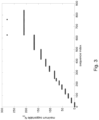
- Fig. 1 shows the maximum supported cyclic shift increment Ncs as a function of the sequence index when the first ordering scheme is adopted.
- the maximum Ncs is proportional to the maximum cell size.
- Ncs has been quantized to 15 values 13, 26, 38, 52, 64, 76, 83, 104, 119, 139, 167, 209, 279, 419, 839.
- the dashed line is a CM boundary dividing the sequences into low and high CM sets.
- the ordering as shown in Fig. 2 is obtained.
- the high and low CM sets are formed as described above, but the low CM set is ordered according to the increasing supported size of high mobility cell and the high CM set is ordered according to the decreasing supported size of high mobility cell.
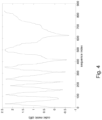
- Fig. 2 shows the maximum cyclic shift increment Ncs as a function of the root sequence index when the sequences are ordered with the second ordering scheme.
- the maximum Ncs is proportional to the cell size.
- the possible Ncs values have been quantized to 15 values.
- the dashed line is a CM boundary dividing the sequences into low and high CM sets.
- Figs. 1 and 2 are different if flexible allocation over the CM boundary is considered.
- allocation over the CM boundary can be made flexibly only for the low mobility cells, while in the scheme of Fig. 2 the flexible allocation over the CM boundary is possible only for the sequences supporting large high mobility cells.
- sequence allocation is made cyclic.
- a UE forms a set of 64 sequences by starting from a broadcasted sequence u0 and using the consecutive sequences as needed. Sequence number one is considered to be consecutive to the sequence number 838.
- the first embodiment is described by referring to Fig. 5 .
- the first ordering scheme as shown in Fig. 1 is adopted.
- a desired division of sequences between high and low mobility cells may be made e.g. as shown by the lines with the arrow heads: Dashed lines mark the sequences that are reserved for allocation in the high mobility cells while sequences marked with a dotted line are reserved for low mobility cells. How large these reserved sequence sets should be, depends on the number of high mobility cells relative to the low mobility cells and the cell size. Let us also assume that Ncs is below 167. Without the cyclic allocation, the sequences reserved for high mobility cells would form two disconnected sets and the root sequences allocated for one high mobility cell would be collected either from the low CM group or from the high CM group.
- the two sequence sets marked with the dashed lines are joined according to the cyclic allocation, for allocations over the CM boundary.
- cyclic allocation is useful also if sequence ordering scheme of Fig. 2 is in use because u0 value 837 and values close to that are not be possible except in very small cells where the 64 sequences can be collected from a single or a few root sequences.
- the first embodiment simplifies the sequence allocation by allowing the root sequences number 837 and 0 to be allocated in the same cell. This flexibility may in some cases lead to an additional set of 64 sequences if the sequences are ordered as in the first or second ordering schemes shown in Figs. 1 and 2 .
- the first embodiment does not complicate implementation of UE or base station in any way.
- the first embodiment actually simplifies implementation of the UE because it removes the error case that UE would not have 64 sequences after including all the cyclic shifts of the sequence number 837.
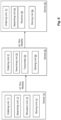
- Fig. 6 shows a schematic block diagram illustrating a network controlling device 10, a device 20 which may act as base station and a device 30 which may act as user equipment according to the first embodiment.
- Each of the devices 10, 20, 30 comprises a searching unit 12, 22, 32 which searches specific sequences based on a root sequence index u0 indicating a root sequence of ordered sequences, a cyclic shift increment of the root sequence Ncs and a mobility parameter "Mobility" from the ordered sequences.
- the ordered sequences may be generated by an ordering unit 11, 21, 31 which may be provided in each of the devices 10, 20, 30.
- the ordering unit 11, 21, 31 may generate the ordered sequences after every boot up of the device 10, 20, 30.
- the ordering unit can be replaced by a permanent memory (storage unit) 14, 24, 34 in which the sequence order needs to be loaded only once or during possible software updates.
- the ordered sequences are obtained by dividing sequences of predetermined length and number into a first set comprising first sequences and a second set comprising second sequences in accordance with a cubic metric of each of the sequences below or above a predetermined threshold, and ordering the first sequences in accordance with a supported size of a high mobility cell supported by each of the first sequences and complementarily ordering the second sequences in accordance with the supported size of the high mobility cell supported by each of the second sequences.
- the cubic metric of each of the first sequences may be below the predetermined threshold and the cubic metric of each of the second sequences may be above the predetermined threshold.
- the ordering unit 11 may order the first sequences in accordance with the supported size of the high mobility cell decreasing and the second sequences in accordance with the supported size of the high mobility cell increasing as shown in Fig. 1 or vice versa as shown in Fig. 2 .
- the specific sequences searched by the searching unit 12, 22, 32 may comprise a set of root sequences and cyclic shifts thereof.
- the searching unit 12, 22, 32 starts the search of suitable root sequences from a sequence indicated by the root sequence index u0, including consecutive root sequences if needed, interpreting the order of the root sequences, i.e. the root sequence order, cyclic.
- the device 10 may further comprise an allocation unit 13 which decides the root sequence index, the cyclic shift increment and the mobility parameter based on a required supported size of a cell in a communications network and a required cubic metric.
- the transmission of information between the devices 10, 20, 30 is minimized if only the indication of a root sequence (root sequence index) u0, a cyclic shift increment Ncs and a mobility parameter are sent from device 10 to device 20 and further to device 30.
- the connection between device 20 and 30 is an air-interface, and device 20 includes a transmitter 23 that transmits u0, Ncs and the mobility parameter as a part of the System Information.
- a receiver 33 of device 30 receives u0, Ncs and the mobility parameter.
- the devices shown in Fig. 6 may have further functionality for working e.g. as network controlling device, base station and user equipment.
- the functions of the devices relevant for understanding the principles of the invention are described using functional blocks as shown in Fig. 6 .
- the arrangement of the functional blocks of the devices is not construed to limit the first embodiment, and the functions may be performed by one block or further split into sub-blocks.
- the second embodiment proposes a sequence ordering scheme that combines the first and third ordering schemes or the second and third ordering schemes.
- First the low and high CM sets are formed as shown in Fig. 1 or 2 .
- the third ordering scheme is applied separately to the low and high CM sets or at least to the high CM set: Subsets are formed according to the supported cell size and the sequences inside each subset are ordered according to the CM.
- the resulting CM configuration is shown in Fig. 7 for the case that the first and the third ordering schemes are combined and subsets are formed for both low and high CM sets.
- CM defines the power back-off that UE has to apply in order to maintain low enough interference level on the adjacent channels: if CM is large, the UE has to lower its mean transmission power. On the other hand, if CM is low, the UE could transmit with higher mean power without exceeding the limits of the adjacent channel interference. However, the UE cannot exceed the 24 dBm maximum mean power which the UE should support when transmitting a QPSK signal. In other words, even if the CM of a sequence is below the CM of QPSK, the UE will not be able to transmit it with a power larger than 24dBm.
- the sequences with CM less than CM of QPSK can then be freely ordered according to the cell size criterion as done in the first ordering scheme because all these sequences can be transmitted with the same maximum power.
- the first ordering scheme also the sequences whose CM is larger than CM of QPSK are ordered only according to the cell size criterion.
- the differences in CM cannot then be fully utilized in this group because the consecutive sequences can have quite different CM values. If this group is ordered using the third ordering scheme, the consecutive sequences inside a subset have roughly the same CM, i.e. they can be transmitted with nearly the same maximum mean power (the same power back-off is needed).
- a disadvantage of the third ordering scheme is that the subsets are dividing the sequences with low CM into disjoint sets which is not optimal for sequence allocation. Treating the low CM sequences separately minimizes the effect of this disadvantage. As mentioned above, no coverage gain can be obtained even if the third ordering scheme was applied to the low CM set. However, a very minor possibility for UE's battery power saving might justify ordering also the low CM set with the third ordering scheme. If CM is below the CM of QPSK, UE can at least in principle tune its power amplifier more nonlinear, which would mean saving battery power.
- the ordering unit 11, 21, 31 of device 10, 20, 30 divides sequences of predetermined length and number into a first set comprising first sequences and a second set comprising second sequences in accordance with a cubic metric of each of the sequences below or above a predetermined threshold, orders the first sequences in accordance with a supported size of a high mobility cell supported by each of the first sequences, divides the second sequences into subsets in accordance with the supported size of the high mobility cell supported by each of the second sequences and orders the second sequences inside each of the subsets in accordance with the cubic metric of each of the second sequences, thereby obtaining ordered sequences.
- the first sequences are divided into subsets in accordance with the supported size of the high mobility cell supported by each of the first sequences and the sequences inside a subset are ordered according to CM.
- the cubic metric of each of the first sequences may be below the predetermined threshold and the cubic metric of each of the second sequences may be above the predetermined threshold.
- the ordering unit 11, 21, 31 may order the first sequences in accordance with the supported size of the high mobility cell decreasing.
- the searching unit 12, 22 and 32 searches in the thus ordered sequences.
- the ordering unit 11, 21, 31 may generate the ordered sequences after every boot up of the device 10, 20, 30.
- the ordering unit can be replaced by the permanent memory (storage unit) 14, 24, 34 in which the sequence order needs to be loaded only once or during possible software updates.
- the specific sequences searched by the searching unit 12, 22, 32 may comprise a set of root sequences and cyclic shifts thereof.
- the searching unit 12, 22, 32 starts the search of suitable root sequences from a sequence indicated by the root sequence index u0, including consecutive root sequences if needed.
- the second embodiment does not add complexity of devices 10, 20, 30 compared with the first to third ordering schemes. If sequences are ordered according to the cell size criterion, an implementation is to store the sequence order in the permanent memory of the UE. Then all the ordering schemes have equal complexity.
- CM is just an example of a property quantifying the need of the power back-off.
- the invention is applicable as such if any other measure, like peak-to-average power ratio, is used instead of CM to relate a power back-off value to a root sequence.
Landscapes
- Engineering & Computer Science (AREA)
- Signal Processing (AREA)
- Computer Networks & Wireless Communication (AREA)
- Power Engineering (AREA)
- Mobile Radio Communication Systems (AREA)
- Radio Relay Systems (AREA)
- Management, Administration, Business Operations System, And Electronic Commerce (AREA)
- Information Retrieval, Db Structures And Fs Structures Therefor (AREA)
- Medicines Containing Antibodies Or Antigens For Use As Internal Diagnostic Agents (AREA)
- Peptides Or Proteins (AREA)
- Data Exchanges In Wide-Area Networks (AREA)
- Synchronisation In Digital Transmission Systems (AREA)
Claims (13)
- Vorrichtung (10, 20, 30) umfassend:eine Sucheinheit (12, 22, 32), die dafür konfiguriert ist, einen Satz mit spezifischen Sequenzen zu suchen, der einen Satz von Wurzelsequenzen und zyklischen Verschiebungen davon umfasst, wobei die Sucheinheit (12, 22, 32) dafür konfiguriert ist, von einem Wurzelsequenzindex zu starten, der auf eine Wurzelsequenz von geordneten Wurzelsequenzen hindeutet, verfügbare zyklische Verschiebungen der Wurzelsequenz einzubeziehen und mit einer nächsten Wurzelsequenz fortzufahren, falls zum Auffüllen des Satzes erforderlich,wobei die geordneten Wurzelsequenzen durch Ordnen von Sequenzen mit einer vorgegebenen Länge und Anzahl entsprechend der kubischen Metrik jeder der Sequenzen und einer Größe einer Zelle hoher Mobilität, die jede der Sequenzen unterstützt, erhalten werden, wobei das Ordnen umfasst:- Aufteilen der Sequenzen in einen ersten Satz mit Werten der kubischen Metrik unter einem vorbestimmten Grenzwert und einem zweiten Satz mit Werten der kubischen Metrik oberhalb des Grenzwerts,- Bilden von zwei oder mehr Teilsätzen der Sequenzen in dem ersten Satz und zwei oder mehr Teilsätzen der Sequenzen in dem zweiten Satz entsprechend den unterstützten Zellgrößen, wobei die Teilsätze so angeordnet sind, dass die unterstützten Zellgrößen der Sequenzen zwischen den Teilsätzen des ersten Satzes zunehmen und zwischen den Teilsätzen des zweiten Satzes abnehmen oder umgekehrt, und- Ordnen der Sequenzen in jedem Teilsatz nach ihren Werten der kubischen Metrik.
- Vorrichtung (10, 20, 30) nach Anspruch 1,
wobei die Sequenzen jedes weiteren Teilsatzes nach abnehmendem Werten der kubischen Metrik geordnet werden und jeder weitere Teilsatz nach zunehmenden Werten der kubischen Metrik geordnet wird. - Vorrichtung (10, 20, 30) nach einem der Ansprüche 1 bis 2, wobei die Teilsätze nach maximal unterstützten zyklischen Verschiebungsinkrementen der Sequenzen, quantisiert in eine vorbestimmte Menge von Werten, gebildet werden.
- Vorrichtung (10, 20, 30) nach einem der Ansprüche 1 bis 3, wobei der Grenzwert der Wert der kubischen Metrik der Quadraturphasenumtastung ist.
- Vorrichtung (10, 20, 30) nach einem der Ansprüche 1 bis 4, wobei die Wurzelsequenzen Zadoff-Chu-Sequenzen sind.
- Vorrichtung (30) nach einem der Ansprüche 1 bis 5, umfassend einen Empfänger (33), der dafür konfiguriert ist, einen Mobilitätsparameter zu empfangen, welcher angibt, ob das Ordnen ein Sequenzbeschränkungsschema verwendet, wobei die Beschränkungen die maximale unterstützbare Größe einer Zelle hoher Mobilität für jede Wurzelsequenz definieren.
- Vorrichtung (30) nach einem der Ansprüche 1 bis 6, die dafür konfiguriert ist, eine Sequenz in dem Satz mit spezifischen Sequenzen für die Übertragung einer Präambel in einem Direktzugriffsverfahren eines Evolved Universal Terrestrial Radio Access Network zu verwenden.
- Vorrichtung (20) nach einem der Ansprüche 1 bis 5, umfassend einen Sender (23), der dafür konfiguriert ist, einen Mobilitätsparameter zu senden, welcher angibt, ob das Ordnen ein Sequenzbeschränkungsschema verwendet, wobei die Beschränkungen die maximale unterstützbare Größe einer Zelle hoher Mobilität für jede Wurzelsequenz definieren.
- Verfahren umfassend:
Suchen eines Satzes mit spezifischen Sequenzen, umfassend einen Satz mit Wurzelsequenzen und zyklischen Verschiebungen davon, wobei das Suchen umfasst:Starten mit einem Wurzelsequenzindex, welcher eine Wurzelsequenz von geordneten Wurzelsequenzen angibt, Einbeziehen verfügbarer zyklischer Verschiebungen der Wurzelsequenz;und Fortfahren mit einer nächsten Wurzelsequenz, falls zum Auffüllen des Satzes erforderlich,wobei die geordneten Wurzelsequenzen durch Ordnen von Sequenzen mit einer vorgegebenen Länge und Anzahl entsprechend der kubischen Metrik jeder der Sequenzen und einer Größe einer Zelle hoher Mobilität, die jede der Sequenzen unterstützt, erhalten werden, wobei das Ordnen umfasst:- Aufteilen der Sequenzen in einen ersten Satz mit Werten der kubischen Metrik unter einem vorbestimmten Grenzwert und einem zweiten Satz mit Werten der kubischen Metrik oberhalb des Grenzwerts,- Bilden von zwei oder mehr Teilsätzen der Sequenzen in dem ersten Satz und zwei oder mehr Teilsätzen der Sequenzen in dem zweiten Satz entsprechend den unterstützten Zellgrößen, wobei die Teilsätze so angeordnet sind, dass die unterstützten Zellgrößen der Sequenzen zwischen den Teilsätzen des ersten Satzes zunehmen und zwischen den Teilsätzen des zweiten Satzes abnehmen oder umgekehrt, undOrdnen der Sequenzen in jedem Teilsatz nach ihren Werten der kubischen Metrik. - Verfahren nach Anspruch 9, wobei die Sequenzen jedes weiteren Teilsatzes nach abnehmendem Werten der kubischen Metrik geordnet wird und jeder weitere Teilsatz nach zunehmenden Werten der kubischen Metrik geordnet wird.
- Verfahren nach einem der Ansprüche 9 bis 10, wobei die Teilsätze nach maximal unterstützten zyklischen Verschiebungsinkrementen der Sequenzen, quantisiert in eine vorbestimmte Menge von Werten, gebildet werden.
- Verfahren nach einem der Ansprüche 9 bis 11, wobei der Grenzwert der Wert der kubischen Metrik der Quadraturphasenumtastung ist.
- Computerprogrammprodukt mit einem Programm für einen Prozessor, umfassend Softwarecodeabschnitte zum Ausführen der Verfahrensschritte nach einem der Ansprüche 9 bis 12, wenn das Programm auf dem Prozessor läuft.
Priority Applications (3)
| Application Number | Priority Date | Filing Date | Title |
|---|---|---|---|
| EP19163746.1A EP3537635B2 (de) | 2007-10-02 | 2007-10-02 | Zuteilung von präambelsequenzen |
| EP20201661.4A EP3799333B1 (de) | 2007-10-02 | 2007-10-02 | Zuteilung von präambelsequenzen |
| EP23184895.3A EP4246838A3 (de) | 2007-10-02 | 2007-10-02 | Zuweisung von präambelsequenzen |
Applications Claiming Priority (4)
| Application Number | Priority Date | Filing Date | Title |
|---|---|---|---|
| EP19163746.1A EP3537635B2 (de) | 2007-10-02 | 2007-10-02 | Zuteilung von präambelsequenzen |
| EP17163537.8A EP3220562B1 (de) | 2007-10-02 | 2007-10-02 | Zuteilung von präambelsequenzen |
| EP07117750.5A EP2045939B1 (de) | 2007-10-02 | 2007-10-02 | Zuteilung von Präambelsequenzen |
| EP15181110.6A EP2981103B1 (de) | 2007-10-02 | 2007-10-02 | Zuteilung von präambelsequenzen |
Related Parent Applications (4)
| Application Number | Title | Priority Date | Filing Date |
|---|---|---|---|
| EP17163537.8A Division-Into EP3220562B1 (de) | 2007-10-02 | 2007-10-02 | Zuteilung von präambelsequenzen |
| EP17163537.8A Division EP3220562B1 (de) | 2007-10-02 | 2007-10-02 | Zuteilung von präambelsequenzen |
| EP15181110.6A Division EP2981103B1 (de) | 2007-10-02 | 2007-10-02 | Zuteilung von präambelsequenzen |
| EP07117750.5A Division EP2045939B1 (de) | 2007-09-02 | 2007-10-02 | Zuteilung von Präambelsequenzen |
Related Child Applications (4)
| Application Number | Title | Priority Date | Filing Date |
|---|---|---|---|
| EP20201661.4A Division EP3799333B1 (de) | 2007-10-02 | 2007-10-02 | Zuteilung von präambelsequenzen |
| EP20201661.4A Division-Into EP3799333B1 (de) | 2007-10-02 | 2007-10-02 | Zuteilung von präambelsequenzen |
| EP23184895.3A Division EP4246838A3 (de) | 2007-10-02 | 2007-10-02 | Zuweisung von präambelsequenzen |
| EP23184895.3A Division-Into EP4246838A3 (de) | 2007-10-02 | 2007-10-02 | Zuweisung von präambelsequenzen |
Publications (3)
| Publication Number | Publication Date |
|---|---|
| EP3537635A1 EP3537635A1 (de) | 2019-09-11 |
| EP3537635B1 EP3537635B1 (de) | 2020-11-25 |
| EP3537635B2 true EP3537635B2 (de) | 2024-11-13 |
Family
ID=39156603
Family Applications (7)
| Application Number | Title | Priority Date | Filing Date |
|---|---|---|---|
| EP11187489.7A Active EP2482602B1 (de) | 2007-10-02 | 2007-10-02 | Zuteilung von Präambelsequenzen |
| EP15181110.6A Active EP2981103B1 (de) | 2007-10-02 | 2007-10-02 | Zuteilung von präambelsequenzen |
| EP20201661.4A Active EP3799333B1 (de) | 2007-10-02 | 2007-10-02 | Zuteilung von präambelsequenzen |
| EP07117750.5A Active EP2045939B1 (de) | 2007-09-02 | 2007-10-02 | Zuteilung von Präambelsequenzen |
| EP19163746.1A Active EP3537635B2 (de) | 2007-10-02 | 2007-10-02 | Zuteilung von präambelsequenzen |
| EP23184895.3A Pending EP4246838A3 (de) | 2007-10-02 | 2007-10-02 | Zuweisung von präambelsequenzen |
| EP17163537.8A Active EP3220562B1 (de) | 2007-10-02 | 2007-10-02 | Zuteilung von präambelsequenzen |
Family Applications Before (4)
| Application Number | Title | Priority Date | Filing Date |
|---|---|---|---|
| EP11187489.7A Active EP2482602B1 (de) | 2007-10-02 | 2007-10-02 | Zuteilung von Präambelsequenzen |
| EP15181110.6A Active EP2981103B1 (de) | 2007-10-02 | 2007-10-02 | Zuteilung von präambelsequenzen |
| EP20201661.4A Active EP3799333B1 (de) | 2007-10-02 | 2007-10-02 | Zuteilung von präambelsequenzen |
| EP07117750.5A Active EP2045939B1 (de) | 2007-09-02 | 2007-10-02 | Zuteilung von Präambelsequenzen |
Family Applications After (2)
| Application Number | Title | Priority Date | Filing Date |
|---|---|---|---|
| EP23184895.3A Pending EP4246838A3 (de) | 2007-10-02 | 2007-10-02 | Zuweisung von präambelsequenzen |
| EP17163537.8A Active EP3220562B1 (de) | 2007-10-02 | 2007-10-02 | Zuteilung von präambelsequenzen |
Country Status (15)
| Country | Link |
|---|---|
| US (2) | US8451787B2 (de) |
| EP (7) | EP2482602B1 (de) |
| JP (1) | JP5291715B2 (de) |
| KR (2) | KR101165896B1 (de) |
| CN (1) | CN101884186B (de) |
| AU (1) | AU2008306128B2 (de) |
| BR (1) | BRPI0818696B1 (de) |
| CA (1) | CA2701143C (de) |
| ES (3) | ES2732207T3 (de) |
| HU (2) | HUE033053T2 (de) |
| MX (1) | MX2010003540A (de) |
| PL (3) | PL3220562T4 (de) |
| RU (1) | RU2495526C2 (de) |
| WO (1) | WO2009043610A1 (de) |
| ZA (1) | ZA201002343B (de) |
Families Citing this family (9)
| Publication number | Priority date | Publication date | Assignee | Title |
|---|---|---|---|---|
| EP2482602B1 (de) | 2007-10-02 | 2015-12-16 | Nokia Solutions and Networks Oy | Zuteilung von Präambelsequenzen |
| CN101998637B (zh) * | 2009-08-18 | 2014-06-11 | 华为技术有限公司 | 前导的配置方法及装置 |
| CN102271108B (zh) * | 2010-06-07 | 2014-04-30 | 中兴通讯股份有限公司 | 恒模序列的离散傅立叶变换的快速计算方法和装置 |
| CN104125574B (zh) * | 2013-04-23 | 2017-11-17 | 华为技术服务有限公司 | 一种zc根序列索引重分配方法及装置 |
| CN105208669B (zh) * | 2014-06-27 | 2019-01-01 | 中国移动通信集团公司 | Zc根序列的选择方法、装置、相关设备和系统 |
| US11431464B2 (en) | 2017-05-05 | 2022-08-30 | Samsung Electronics Co., Ltd. | Method and apparatus for uplink transmission in wireless communication system |
| WO2018203727A1 (en) * | 2017-05-05 | 2018-11-08 | Samsung Electronics Co., Ltd | Method and apparatus for uplink transmission in wireless communication system |
| US11317402B2 (en) * | 2017-06-26 | 2022-04-26 | Samsung Electronics Co., Ltd. | Method for generating preamble, method for configuring preamble and equipment thereof, random access method, device, user equipment and base station |
| CN108400829B (zh) * | 2018-02-09 | 2019-12-06 | 北京松果电子有限公司 | Zc序列的生成方法及装置 |
Family Cites Families (34)
| Publication number | Priority date | Publication date | Assignee | Title |
|---|---|---|---|---|
| US6614781B1 (en) | 1998-11-20 | 2003-09-02 | Level 3 Communications, Inc. | Voice over data telecommunications network architecture |
| US6377618B1 (en) | 1998-12-30 | 2002-04-23 | Agere Systems Guardian Corp. | Auto-correlation system and method for rate detection of a data communication channel |
| US6434147B1 (en) | 1999-01-08 | 2002-08-13 | Nortel Netwoks Limited | Method and system for sequential ordering of missing sequence numbers in SREJ frames in a telecommunication system |
| US6768768B2 (en) * | 2001-09-19 | 2004-07-27 | Qualcomm Incorporated | Method and apparatus for step two W-CDMA searching |
| CN1319333C (zh) | 2002-06-26 | 2007-05-30 | 诺基亚公司 | 负载均衡方法、系统、负载控制设备和接入点、用户终端 |
| RU2297731C2 (ru) * | 2002-11-13 | 2007-04-20 | Зте Корпорейшн | Способ планирования скорости передачи по прямому каналу и планировщик, работающий по этому способу |
| JP3816450B2 (ja) | 2003-02-18 | 2006-08-30 | Kddi株式会社 | 送信機及び受信機 |
| US7907898B2 (en) * | 2004-03-26 | 2011-03-15 | Qualcomm Incorporated | Asynchronous inter-piconet routing |
| US7599327B2 (en) | 2004-06-24 | 2009-10-06 | Motorola, Inc. | Method and apparatus for accessing a wireless communication system |
| US7893873B2 (en) | 2005-12-20 | 2011-02-22 | Qualcomm Incorporated | Methods and systems for providing enhanced position location in wireless communications |
| US20070171849A1 (en) | 2006-01-03 | 2007-07-26 | Interdigital Technology Corporation | Scheduling channel quality indicator and acknowledgement/negative acknowledgement feedback |
| WO2007086131A1 (ja) | 2006-01-27 | 2007-08-02 | Fujitsu Limited | 基地局及び無線通信システム並びにパイロットパターン決定方法 |
| US8863221B2 (en) * | 2006-03-07 | 2014-10-14 | Samsung Electronics Co., Ltd. | Method and system for integrating content and services among multiple networks |
| US20070217362A1 (en) | 2006-03-20 | 2007-09-20 | Nokia Corporation | Amended control for resource allocation in a radio access network |
| US8098745B2 (en) * | 2006-03-27 | 2012-01-17 | Texas Instruments Incorporated | Random access structure for wireless networks |
| CN103312486B (zh) | 2006-04-27 | 2017-12-26 | 德克萨斯仪器股份有限公司 | 在无线通信系统中分配参考信号的方法和装置 |
| US7881398B2 (en) | 2006-08-21 | 2011-02-01 | Agere Systems Inc. | FFT numerology for an OFDM transmission system |
| US8571120B2 (en) * | 2006-09-22 | 2013-10-29 | Texas Instruments Incorporated | Transmission of acknowledge/not acknowledge (ACK/NACK) bits and their embedding in the reference signal |
| US8094554B2 (en) | 2006-10-26 | 2012-01-10 | Qualcomm Incorporated | Compressed mode operation and power control with discontinuous transmission and/or reception |
| US8199706B2 (en) | 2006-10-27 | 2012-06-12 | Texas Instruments Incorporated | Random access design for high doppler in wireless networks |
| US7957759B2 (en) | 2006-12-08 | 2011-06-07 | Texas Instruments Incorporated | Wideband reference signal transmission in SC-FDMA communication systems |
| WO2008078919A2 (en) * | 2006-12-22 | 2008-07-03 | Lg Electronics Inc. | Methods for sequence generation and transmission based on time and frequency domain transmission unit in a mobile communication system |
| KR20080084536A (ko) | 2007-03-16 | 2008-09-19 | 엘지전자 주식회사 | 무선통신 시스템에서 제어정보 전송 방법 |
| EP1971097B1 (de) * | 2007-03-16 | 2014-03-12 | LG Electronics Inc. | Verfahren zur Erzeugung von einer zufälligen Zugangspräambel in einem drahtlosen Kommunikationssystem |
| CN102752856B (zh) | 2007-03-19 | 2015-02-04 | 知识产权之桥一号有限责任公司 | 序列通知装置和方法、移动站、序列生成方法及集成电路 |
| US20080316959A1 (en) | 2007-06-19 | 2008-12-25 | Rainer Bachl | Method of transmitting scheduling requests over uplink channels |
| CN101090281B (zh) | 2007-06-19 | 2010-06-02 | 中兴通讯股份有限公司 | 一种上行随机接入前导序列选择方法 |
| US8773968B2 (en) * | 2007-08-06 | 2014-07-08 | Texas Instruments Incorporated | Signaling of random access preamble sequences in wireless networks |
| CN101094529B (zh) | 2007-08-10 | 2011-03-02 | 中兴通讯股份有限公司 | 随机接入信道的zc序列排序方法及装置 |
| JP5094975B2 (ja) | 2007-09-03 | 2012-12-12 | 三星電子株式会社 | Sc−fdma通信システムにおけるシーケンスホッピング |
| EP2482602B1 (de) | 2007-10-02 | 2015-12-16 | Nokia Solutions and Networks Oy | Zuteilung von Präambelsequenzen |
| WO2009048279A2 (en) | 2007-10-10 | 2009-04-16 | Lg Electronics Inc. | High speed access system and method in a mobile communications network |
| US8189455B1 (en) | 2007-11-07 | 2012-05-29 | Research In Motion Limited | Coding information for communication over an orthogonal frequency division multiple access (OFDMA)-based wireless link |
| CN101179860B (zh) | 2007-12-05 | 2011-03-16 | 中兴通讯股份有限公司 | 随机接入信道的zc序列排序方法和装置 |
-
2007
- 2007-10-02 EP EP11187489.7A patent/EP2482602B1/de active Active
- 2007-10-02 EP EP15181110.6A patent/EP2981103B1/de active Active
- 2007-10-02 HU HUE15181110A patent/HUE033053T2/hu unknown
- 2007-10-02 PL PL17163537.8T patent/PL3220562T4/pl unknown
- 2007-10-02 ES ES17163537T patent/ES2732207T3/es active Active
- 2007-10-02 EP EP20201661.4A patent/EP3799333B1/de active Active
- 2007-10-02 EP EP07117750.5A patent/EP2045939B1/de active Active
- 2007-10-02 PL PL15181110T patent/PL2981103T3/pl unknown
- 2007-10-02 ES ES20201661T patent/ES2957711T3/es active Active
- 2007-10-02 EP EP19163746.1A patent/EP3537635B2/de active Active
- 2007-10-02 HU HUE17163537A patent/HUE043912T2/hu unknown
- 2007-10-02 ES ES15181110.6T patent/ES2631813T3/es active Active
- 2007-10-02 EP EP23184895.3A patent/EP4246838A3/de active Pending
- 2007-10-02 EP EP17163537.8A patent/EP3220562B1/de active Active
- 2007-10-02 PL PL20201661.4T patent/PL3799333T3/pl unknown
-
2008
- 2008-06-05 US US12/680,930 patent/US8451787B2/en not_active Ceased
- 2008-06-05 KR KR1020107009808A patent/KR101165896B1/ko active Active
- 2008-06-05 WO PCT/EP2008/056979 patent/WO2009043610A1/en not_active Ceased
- 2008-06-05 MX MX2010003540A patent/MX2010003540A/es active IP Right Grant
- 2008-06-05 US US17/484,778 patent/USRE50185E1/en active Active
- 2008-06-05 CA CA2701143A patent/CA2701143C/en active Active
- 2008-06-05 RU RU2010117380/07A patent/RU2495526C2/ru active
- 2008-06-05 KR KR1020127003821A patent/KR101168832B1/ko active Active
- 2008-06-05 CN CN200880119475.5A patent/CN101884186B/zh active Active
- 2008-06-05 BR BRPI0818696-0A patent/BRPI0818696B1/pt active IP Right Grant
- 2008-06-05 AU AU2008306128A patent/AU2008306128B2/en active Active
- 2008-06-05 JP JP2010527370A patent/JP5291715B2/ja active Active
-
2010
- 2010-04-01 ZA ZA2010/02343A patent/ZA201002343B/en unknown
Also Published As
Similar Documents
| Publication | Publication Date | Title |
|---|---|---|
| EP3537635B2 (de) | Zuteilung von präambelsequenzen | |
| EP3734884B1 (de) | Verfahren und vorrichtung zur übertragung eines messreferenzsignals | |
| RU2718173C1 (ru) | Способ передачи восходящей управляющей информации, оконечное устройство и сетевое устройство | |
| CN114698113A (zh) | Pucch传输方法、装置、设备及存储介质 | |
| CN114698110A (zh) | 资源映射方法、装置及设备 | |
| US20090270095A1 (en) | System and Methods for Generating Masking Sequences | |
| HK40049369B (en) | Allocation of preamble sequences | |
| HK40049369A (en) | Allocation of preamble sequences | |
| HK40090581A (en) | Allocation of preamble sequences | |
| HK40006104B (en) | Allocation of preamble sequences | |
| HK40006104A (en) | Allocation of preamble sequences | |
| KR20210083345A (ko) | 기준 신호를 위한 시퀀스 생성 |
Legal Events
| Date | Code | Title | Description |
|---|---|---|---|
| PUAI | Public reference made under article 153(3) epc to a published international application that has entered the european phase |
Free format text: ORIGINAL CODE: 0009012 |
|
| STAA | Information on the status of an ep patent application or granted ep patent |
Free format text: STATUS: THE APPLICATION HAS BEEN PUBLISHED |
|
| AC | Divisional application: reference to earlier application |
Ref document number: 2045939 Country of ref document: EP Kind code of ref document: P Ref document number: 2981103 Country of ref document: EP Kind code of ref document: P Ref document number: 3220562 Country of ref document: EP Kind code of ref document: P |
|
| AK | Designated contracting states |
Kind code of ref document: A1 Designated state(s): AT BE BG CH CY CZ DE DK EE ES FI FR GB GR HU IE IS IT LI LT LU LV MC MT NL PL PT RO SE SI SK TR |
|
| STAA | Information on the status of an ep patent application or granted ep patent |
Free format text: STATUS: REQUEST FOR EXAMINATION WAS MADE |
|
| 17P | Request for examination filed |
Effective date: 20200311 |
|
| RBV | Designated contracting states (corrected) |
Designated state(s): AT BE BG CH CY CZ DE DK EE ES FI FR GB GR HU IE IS IT LI LT LU LV MC MT NL PL PT RO SE SI SK TR |
|
| REG | Reference to a national code |
Ref country code: HK Ref legal event code: DE Ref document number: 40006104 Country of ref document: HK |
|
| GRAP | Despatch of communication of intention to grant a patent |
Free format text: ORIGINAL CODE: EPIDOSNIGR1 |
|
| STAA | Information on the status of an ep patent application or granted ep patent |
Free format text: STATUS: GRANT OF PATENT IS INTENDED |
|
| INTG | Intention to grant announced |
Effective date: 20200616 |
|
| GRAS | Grant fee paid |
Free format text: ORIGINAL CODE: EPIDOSNIGR3 |
|
| GRAA | (expected) grant |
Free format text: ORIGINAL CODE: 0009210 |
|
| STAA | Information on the status of an ep patent application or granted ep patent |
Free format text: STATUS: THE PATENT HAS BEEN GRANTED |
|
| AC | Divisional application: reference to earlier application |
Ref document number: 3220562 Country of ref document: EP Kind code of ref document: P Ref document number: 2045939 Country of ref document: EP Kind code of ref document: P Ref document number: 2981103 Country of ref document: EP Kind code of ref document: P |
|
| AK | Designated contracting states |
Kind code of ref document: B1 Designated state(s): AT BE BG CH CY CZ DE DK EE ES FI FR GB GR HU IE IS IT LI LT LU LV MC MT NL PL PT RO SE SI SK TR |
|
| REG | Reference to a national code |
Ref country code: GB Ref legal event code: FG4D |
|
| REG | Reference to a national code |
Ref country code: CH Ref legal event code: EP |
|
| REG | Reference to a national code |
Ref country code: DE Ref legal event code: R096 Ref document number: 602007060810 Country of ref document: DE |
|
| REG | Reference to a national code |
Ref country code: AT Ref legal event code: REF Ref document number: 1339485 Country of ref document: AT Kind code of ref document: T Effective date: 20201215 |
|
| REG | Reference to a national code |
Ref country code: IE Ref legal event code: FG4D |
|
| REG | Reference to a national code |
Ref country code: AT Ref legal event code: MK05 Ref document number: 1339485 Country of ref document: AT Kind code of ref document: T Effective date: 20201125 |
|
| REG | Reference to a national code |
Ref country code: NL Ref legal event code: MP Effective date: 20201125 |
|
| PG25 | Lapsed in a contracting state [announced via postgrant information from national office to epo] |
Ref country code: GR Free format text: LAPSE BECAUSE OF FAILURE TO SUBMIT A TRANSLATION OF THE DESCRIPTION OR TO PAY THE FEE WITHIN THE PRESCRIBED TIME-LIMIT Effective date: 20210226 Ref country code: PT Free format text: LAPSE BECAUSE OF FAILURE TO SUBMIT A TRANSLATION OF THE DESCRIPTION OR TO PAY THE FEE WITHIN THE PRESCRIBED TIME-LIMIT Effective date: 20210325 Ref country code: FI Free format text: LAPSE BECAUSE OF FAILURE TO SUBMIT A TRANSLATION OF THE DESCRIPTION OR TO PAY THE FEE WITHIN THE PRESCRIBED TIME-LIMIT Effective date: 20201125 |
|
| PG25 | Lapsed in a contracting state [announced via postgrant information from national office to epo] |
Ref country code: BG Free format text: LAPSE BECAUSE OF FAILURE TO SUBMIT A TRANSLATION OF THE DESCRIPTION OR TO PAY THE FEE WITHIN THE PRESCRIBED TIME-LIMIT Effective date: 20210225 Ref country code: SE Free format text: LAPSE BECAUSE OF FAILURE TO SUBMIT A TRANSLATION OF THE DESCRIPTION OR TO PAY THE FEE WITHIN THE PRESCRIBED TIME-LIMIT Effective date: 20201125 Ref country code: LV Free format text: LAPSE BECAUSE OF FAILURE TO SUBMIT A TRANSLATION OF THE DESCRIPTION OR TO PAY THE FEE WITHIN THE PRESCRIBED TIME-LIMIT Effective date: 20201125 Ref country code: IS Free format text: LAPSE BECAUSE OF FAILURE TO SUBMIT A TRANSLATION OF THE DESCRIPTION OR TO PAY THE FEE WITHIN THE PRESCRIBED TIME-LIMIT Effective date: 20210325 Ref country code: PL Free format text: LAPSE BECAUSE OF FAILURE TO SUBMIT A TRANSLATION OF THE DESCRIPTION OR TO PAY THE FEE WITHIN THE PRESCRIBED TIME-LIMIT Effective date: 20201125 Ref country code: AT Free format text: LAPSE BECAUSE OF FAILURE TO SUBMIT A TRANSLATION OF THE DESCRIPTION OR TO PAY THE FEE WITHIN THE PRESCRIBED TIME-LIMIT Effective date: 20201125 |
|
| REG | Reference to a national code |
Ref country code: LT Ref legal event code: MG9D |
|
| PG25 | Lapsed in a contracting state [announced via postgrant information from national office to epo] |
Ref country code: CZ Free format text: LAPSE BECAUSE OF FAILURE TO SUBMIT A TRANSLATION OF THE DESCRIPTION OR TO PAY THE FEE WITHIN THE PRESCRIBED TIME-LIMIT Effective date: 20201125 Ref country code: SK Free format text: LAPSE BECAUSE OF FAILURE TO SUBMIT A TRANSLATION OF THE DESCRIPTION OR TO PAY THE FEE WITHIN THE PRESCRIBED TIME-LIMIT Effective date: 20201125 Ref country code: EE Free format text: LAPSE BECAUSE OF FAILURE TO SUBMIT A TRANSLATION OF THE DESCRIPTION OR TO PAY THE FEE WITHIN THE PRESCRIBED TIME-LIMIT Effective date: 20201125 Ref country code: RO Free format text: LAPSE BECAUSE OF FAILURE TO SUBMIT A TRANSLATION OF THE DESCRIPTION OR TO PAY THE FEE WITHIN THE PRESCRIBED TIME-LIMIT Effective date: 20201125 Ref country code: LT Free format text: LAPSE BECAUSE OF FAILURE TO SUBMIT A TRANSLATION OF THE DESCRIPTION OR TO PAY THE FEE WITHIN THE PRESCRIBED TIME-LIMIT Effective date: 20201125 |
|
| REG | Reference to a national code |
Ref country code: DE Ref legal event code: R026 Ref document number: 602007060810 Country of ref document: DE |
|
| PLBI | Opposition filed |
Free format text: ORIGINAL CODE: 0009260 |
|
| PG25 | Lapsed in a contracting state [announced via postgrant information from national office to epo] |
Ref country code: DK Free format text: LAPSE BECAUSE OF FAILURE TO SUBMIT A TRANSLATION OF THE DESCRIPTION OR TO PAY THE FEE WITHIN THE PRESCRIBED TIME-LIMIT Effective date: 20201125 |
|
| PLAX | Notice of opposition and request to file observation + time limit sent |
Free format text: ORIGINAL CODE: EPIDOSNOBS2 |
|
| 26 | Opposition filed |
Opponent name: GUANGDONG OPPO MOBILE TELECOMMUNICATIONS CORP., LTD. Effective date: 20210825 |
|
| PG25 | Lapsed in a contracting state [announced via postgrant information from national office to epo] |
Ref country code: IT Free format text: LAPSE BECAUSE OF FAILURE TO SUBMIT A TRANSLATION OF THE DESCRIPTION OR TO PAY THE FEE WITHIN THE PRESCRIBED TIME-LIMIT Effective date: 20201125 Ref country code: NL Free format text: LAPSE BECAUSE OF FAILURE TO SUBMIT A TRANSLATION OF THE DESCRIPTION OR TO PAY THE FEE WITHIN THE PRESCRIBED TIME-LIMIT Effective date: 20201125 |
|
| PG25 | Lapsed in a contracting state [announced via postgrant information from national office to epo] |
Ref country code: SI Free format text: LAPSE BECAUSE OF FAILURE TO SUBMIT A TRANSLATION OF THE DESCRIPTION OR TO PAY THE FEE WITHIN THE PRESCRIBED TIME-LIMIT Effective date: 20201125 |
|
| PLBB | Reply of patent proprietor to notice(s) of opposition received |
Free format text: ORIGINAL CODE: EPIDOSNOBS3 |
|
| PG25 | Lapsed in a contracting state [announced via postgrant information from national office to epo] |
Ref country code: ES Free format text: LAPSE BECAUSE OF FAILURE TO SUBMIT A TRANSLATION OF THE DESCRIPTION OR TO PAY THE FEE WITHIN THE PRESCRIBED TIME-LIMIT Effective date: 20201125 |
|
| PG25 | Lapsed in a contracting state [announced via postgrant information from national office to epo] |
Ref country code: IS Free format text: LAPSE BECAUSE OF FAILURE TO SUBMIT A TRANSLATION OF THE DESCRIPTION OR TO PAY THE FEE WITHIN THE PRESCRIBED TIME-LIMIT Effective date: 20210325 |
|
| REG | Reference to a national code |
Ref country code: CH Ref legal event code: PL |
|
| REG | Reference to a national code |
Ref country code: BE Ref legal event code: MM Effective date: 20211031 |
|
| PG25 | Lapsed in a contracting state [announced via postgrant information from national office to epo] |
Ref country code: MC Free format text: LAPSE BECAUSE OF FAILURE TO SUBMIT A TRANSLATION OF THE DESCRIPTION OR TO PAY THE FEE WITHIN THE PRESCRIBED TIME-LIMIT Effective date: 20201125 |
|
| PG25 | Lapsed in a contracting state [announced via postgrant information from national office to epo] |
Ref country code: LU Free format text: LAPSE BECAUSE OF NON-PAYMENT OF DUE FEES Effective date: 20211002 Ref country code: BE Free format text: LAPSE BECAUSE OF NON-PAYMENT OF DUE FEES Effective date: 20211031 |
|
| PG25 | Lapsed in a contracting state [announced via postgrant information from national office to epo] |
Ref country code: LI Free format text: LAPSE BECAUSE OF NON-PAYMENT OF DUE FEES Effective date: 20211031 Ref country code: CH Free format text: LAPSE BECAUSE OF NON-PAYMENT OF DUE FEES Effective date: 20211031 |
|
| PG25 | Lapsed in a contracting state [announced via postgrant information from national office to epo] |
Ref country code: IE Free format text: LAPSE BECAUSE OF NON-PAYMENT OF DUE FEES Effective date: 20211002 |
|
| REG | Reference to a national code |
Ref country code: CH Ref legal event code: PK Free format text: BERICHTIGUNGEN |
|
| RIC2 | Information provided on ipc code assigned after grant |
Ipc: H04J 13/00 20110101ALN20221208BHEP Ipc: H04L 5/00 20060101ALI20221208BHEP Ipc: H04J 13/14 20110101AFI20221208BHEP |
|
| APAH | Appeal reference modified |
Free format text: ORIGINAL CODE: EPIDOSCREFNO |
|
| APBM | Appeal reference recorded |
Free format text: ORIGINAL CODE: EPIDOSNREFNO |
|
| APBP | Date of receipt of notice of appeal recorded |
Free format text: ORIGINAL CODE: EPIDOSNNOA2O |
|
| REG | Reference to a national code |
Ref country code: CH Ref legal event code: PK Free format text: BERICHTIGUNGEN |
|
| APBM | Appeal reference recorded |
Free format text: ORIGINAL CODE: EPIDOSNREFNO |
|
| APBP | Date of receipt of notice of appeal recorded |
Free format text: ORIGINAL CODE: EPIDOSNNOA2O |
|
| RIC2 | Information provided on ipc code assigned after grant |
Ipc: H04J 13/00 20110101ALN20230327BHEP Ipc: H04L 5/00 20060101ALI20230327BHEP Ipc: H04J 13/14 20110101AFI20230327BHEP |
|
| PG25 | Lapsed in a contracting state [announced via postgrant information from national office to epo] |
Ref country code: CY Free format text: LAPSE BECAUSE OF FAILURE TO SUBMIT A TRANSLATION OF THE DESCRIPTION OR TO PAY THE FEE WITHIN THE PRESCRIBED TIME-LIMIT Effective date: 20201125 |
|
| P01 | Opt-out of the competence of the unified patent court (upc) registered |
Effective date: 20230527 |
|
| PG25 | Lapsed in a contracting state [announced via postgrant information from national office to epo] |
Ref country code: HU Free format text: LAPSE BECAUSE OF FAILURE TO SUBMIT A TRANSLATION OF THE DESCRIPTION OR TO PAY THE FEE WITHIN THE PRESCRIBED TIME-LIMIT; INVALID AB INITIO Effective date: 20071002 |
|
| APBQ | Date of receipt of statement of grounds of appeal recorded |
Free format text: ORIGINAL CODE: EPIDOSNNOA3O |
|
| APBQ | Date of receipt of statement of grounds of appeal recorded |
Free format text: ORIGINAL CODE: EPIDOSNNOA3O |
|
| APAH | Appeal reference modified |
Free format text: ORIGINAL CODE: EPIDOSCREFNO |
|
| PLBP | Opposition withdrawn |
Free format text: ORIGINAL CODE: 0009264 |
|
| PG25 | Lapsed in a contracting state [announced via postgrant information from national office to epo] |
Ref country code: TR Free format text: LAPSE BECAUSE OF FAILURE TO SUBMIT A TRANSLATION OF THE DESCRIPTION OR TO PAY THE FEE WITHIN THE PRESCRIBED TIME-LIMIT Effective date: 20201125 |
|
| APBU | Appeal procedure closed |
Free format text: ORIGINAL CODE: EPIDOSNNOA9O |
|
| PG25 | Lapsed in a contracting state [announced via postgrant information from national office to epo] |
Ref country code: MT Free format text: LAPSE BECAUSE OF FAILURE TO SUBMIT A TRANSLATION OF THE DESCRIPTION OR TO PAY THE FEE WITHIN THE PRESCRIBED TIME-LIMIT Effective date: 20201125 |
|
| PUAH | Patent maintained in amended form |
Free format text: ORIGINAL CODE: 0009272 |
|
| STAA | Information on the status of an ep patent application or granted ep patent |
Free format text: STATUS: PATENT MAINTAINED AS AMENDED |
|
| 27A | Patent maintained in amended form |
Effective date: 20241113 |
|
| AK | Designated contracting states |
Kind code of ref document: B2 Designated state(s): AT BE BG CH CY CZ DE DK EE ES FI FR GB GR HU IE IS IT LI LT LU LV MC MT NL PL PT RO SE SI SK TR |
|
| REG | Reference to a national code |
Ref country code: DE Ref legal event code: R102 Ref document number: 602007060810 Country of ref document: DE |
|
| REG | Reference to a national code |
Ref country code: DE Ref legal event code: R082 Ref document number: 602007060810 Country of ref document: DE Representative=s name: MOLNIA HO PARTG MBB, DE |
|
| PGFP | Annual fee paid to national office [announced via postgrant information from national office to epo] |
Ref country code: GB Payment date: 20250904 Year of fee payment: 19 |
|
| PGFP | Annual fee paid to national office [announced via postgrant information from national office to epo] |
Ref country code: FR Payment date: 20250908 Year of fee payment: 19 |
|
| PGFP | Annual fee paid to national office [announced via postgrant information from national office to epo] |
Ref country code: DE Payment date: 20250902 Year of fee payment: 19 |