EP3537281B1 - Speichersteuergerät und vorrichtung zur verarbeitung von e/a-anfragen - Google Patents
Speichersteuergerät und vorrichtung zur verarbeitung von e/a-anfragen Download PDFInfo
- Publication number
- EP3537281B1 EP3537281B1 EP17889889.6A EP17889889A EP3537281B1 EP 3537281 B1 EP3537281 B1 EP 3537281B1 EP 17889889 A EP17889889 A EP 17889889A EP 3537281 B1 EP3537281 B1 EP 3537281B1
- Authority
- EP
- European Patent Office
- Prior art keywords
- ranking
- index
- processing
- request
- core
- Prior art date
- Legal status (The legal status is an assumption and is not a legal conclusion. Google has not performed a legal analysis and makes no representation as to the accuracy of the status listed.)
- Active
Links
Images




Classifications
-
- G—PHYSICS
- G06—COMPUTING OR CALCULATING; COUNTING
- G06F—ELECTRIC DIGITAL DATA PROCESSING
- G06F3/00—Input arrangements for transferring data to be processed into a form capable of being handled by the computer; Output arrangements for transferring data from processing unit to output unit, e.g. interface arrangements
- G06F3/06—Digital input from, or digital output to, record carriers, e.g. RAID, emulated record carriers or networked record carriers
- G06F3/0601—Interfaces specially adapted for storage systems
- G06F3/0602—Interfaces specially adapted for storage systems specifically adapted to achieve a particular effect
- G06F3/061—Improving I/O performance
-
- G—PHYSICS
- G06—COMPUTING OR CALCULATING; COUNTING
- G06F—ELECTRIC DIGITAL DATA PROCESSING
- G06F3/00—Input arrangements for transferring data to be processed into a form capable of being handled by the computer; Output arrangements for transferring data from processing unit to output unit, e.g. interface arrangements
- G06F3/06—Digital input from, or digital output to, record carriers, e.g. RAID, emulated record carriers or networked record carriers
- G06F3/0601—Interfaces specially adapted for storage systems
- G06F3/0602—Interfaces specially adapted for storage systems specifically adapted to achieve a particular effect
- G06F3/0604—Improving or facilitating administration, e.g. storage management
-
- G—PHYSICS
- G06—COMPUTING OR CALCULATING; COUNTING
- G06F—ELECTRIC DIGITAL DATA PROCESSING
- G06F3/00—Input arrangements for transferring data to be processed into a form capable of being handled by the computer; Output arrangements for transferring data from processing unit to output unit, e.g. interface arrangements
- G06F3/06—Digital input from, or digital output to, record carriers, e.g. RAID, emulated record carriers or networked record carriers
- G06F3/0601—Interfaces specially adapted for storage systems
- G06F3/0602—Interfaces specially adapted for storage systems specifically adapted to achieve a particular effect
- G06F3/061—Improving I/O performance
- G06F3/0613—Improving I/O performance in relation to throughput
-
- G—PHYSICS
- G06—COMPUTING OR CALCULATING; COUNTING
- G06F—ELECTRIC DIGITAL DATA PROCESSING
- G06F3/00—Input arrangements for transferring data to be processed into a form capable of being handled by the computer; Output arrangements for transferring data from processing unit to output unit, e.g. interface arrangements
- G06F3/06—Digital input from, or digital output to, record carriers, e.g. RAID, emulated record carriers or networked record carriers
- G06F3/0601—Interfaces specially adapted for storage systems
- G06F3/0628—Interfaces specially adapted for storage systems making use of a particular technique
- G06F3/0629—Configuration or reconfiguration of storage systems
- G06F3/0637—Permissions
-
- G—PHYSICS
- G06—COMPUTING OR CALCULATING; COUNTING
- G06F—ELECTRIC DIGITAL DATA PROCESSING
- G06F3/00—Input arrangements for transferring data to be processed into a form capable of being handled by the computer; Output arrangements for transferring data from processing unit to output unit, e.g. interface arrangements
- G06F3/06—Digital input from, or digital output to, record carriers, e.g. RAID, emulated record carriers or networked record carriers
- G06F3/0601—Interfaces specially adapted for storage systems
- G06F3/0628—Interfaces specially adapted for storage systems making use of a particular technique
- G06F3/0655—Vertical data movement, i.e. input-output transfer; data movement between one or more hosts and one or more storage devices
- G06F3/0658—Controller construction arrangements
-
- G—PHYSICS
- G06—COMPUTING OR CALCULATING; COUNTING
- G06F—ELECTRIC DIGITAL DATA PROCESSING
- G06F3/00—Input arrangements for transferring data to be processed into a form capable of being handled by the computer; Output arrangements for transferring data from processing unit to output unit, e.g. interface arrangements
- G06F3/06—Digital input from, or digital output to, record carriers, e.g. RAID, emulated record carriers or networked record carriers
- G06F3/0601—Interfaces specially adapted for storage systems
- G06F3/0628—Interfaces specially adapted for storage systems making use of a particular technique
- G06F3/0655—Vertical data movement, i.e. input-output transfer; data movement between one or more hosts and one or more storage devices
- G06F3/0659—Command handling arrangements, e.g. command buffers, queues, command scheduling
-
- G—PHYSICS
- G06—COMPUTING OR CALCULATING; COUNTING
- G06F—ELECTRIC DIGITAL DATA PROCESSING
- G06F3/00—Input arrangements for transferring data to be processed into a form capable of being handled by the computer; Output arrangements for transferring data from processing unit to output unit, e.g. interface arrangements
- G06F3/06—Digital input from, or digital output to, record carriers, e.g. RAID, emulated record carriers or networked record carriers
- G06F3/0601—Interfaces specially adapted for storage systems
- G06F3/0628—Interfaces specially adapted for storage systems making use of a particular technique
- G06F3/0662—Virtualisation aspects
-
- G—PHYSICS
- G06—COMPUTING OR CALCULATING; COUNTING
- G06F—ELECTRIC DIGITAL DATA PROCESSING
- G06F3/00—Input arrangements for transferring data to be processed into a form capable of being handled by the computer; Output arrangements for transferring data from processing unit to output unit, e.g. interface arrangements
- G06F3/06—Digital input from, or digital output to, record carriers, e.g. RAID, emulated record carriers or networked record carriers
- G06F3/0601—Interfaces specially adapted for storage systems
- G06F3/0668—Interfaces specially adapted for storage systems adopting a particular infrastructure
- G06F3/067—Distributed or networked storage systems, e.g. storage area networks [SAN], network attached storage [NAS]
-
- G—PHYSICS
- G06—COMPUTING OR CALCULATING; COUNTING
- G06F—ELECTRIC DIGITAL DATA PROCESSING
- G06F3/00—Input arrangements for transferring data to be processed into a form capable of being handled by the computer; Output arrangements for transferring data from processing unit to output unit, e.g. interface arrangements
- G06F3/06—Digital input from, or digital output to, record carriers, e.g. RAID, emulated record carriers or networked record carriers
- G06F3/0601—Interfaces specially adapted for storage systems
- G06F3/0668—Interfaces specially adapted for storage systems adopting a particular infrastructure
- G06F3/0671—In-line storage system
- G06F3/0683—Plurality of storage devices
-
- G—PHYSICS
- G06—COMPUTING OR CALCULATING; COUNTING
- G06F—ELECTRIC DIGITAL DATA PROCESSING
- G06F9/00—Arrangements for program control, e.g. control units
- G06F9/06—Arrangements for program control, e.g. control units using stored programs, i.e. using an internal store of processing equipment to receive or retain programs
- G06F9/46—Multiprogramming arrangements
- G06F9/50—Allocation of resources, e.g. of the central processing unit [CPU]
- G06F9/5083—Techniques for rebalancing the load in a distributed system
-
- G06F2003/0697—
-
- G—PHYSICS
- G06—COMPUTING OR CALCULATING; COUNTING
- G06F—ELECTRIC DIGITAL DATA PROCESSING
- G06F2209/00—Indexing scheme relating to G06F9/00
- G06F2209/50—Indexing scheme relating to G06F9/50
- G06F2209/5022—Workload threshold
-
- G—PHYSICS
- G06—COMPUTING OR CALCULATING; COUNTING
- G06F—ELECTRIC DIGITAL DATA PROCESSING
- G06F2209/00—Indexing scheme relating to G06F9/00
- G06F2209/50—Indexing scheme relating to G06F9/50
- G06F2209/503—Resource availability
Definitions
- This application relates to the field of storage technologies, and in particular, to a storage controller and an input/output (10) request processing method performed by the storage controller.
- a storage array is usually used in a large-scale storage scenario, and includes a plurality of storage mediums and a storage controller.
- the storage medium may include a hard disk drive (HDD) and a solid state drive (SSD).
- a client sends an IO request to the storage controller by using a communications network.
- the storage controller processes the received IO request. For example, if the IO request is a read request, the storage controller determines a storage medium to which the read request points. Then, the storage controller reads corresponding data from the one or more storage mediums, and returns the data to the client.
- the storage controller virtualizes the storage mediums in the storage array into a plurality of storage units.
- the IO request received by the storage controller usually points to a storage unit. If different storage types are used, the storage controller virtualizes the plurality of storage mediums into different types of storage units. For example, if block storage is used, the storage controller virtualizes the plurality of storage mediums into one or more logical unit numbers (LUN). Each IO request of the client points to a LUN. If file storage is used, each IO request of the client points to a file system. If object storage is used, each IO request of the client points to a bucket.
- LUN logical unit numbers
- IOPS IO per second
- US 2016/092108 A1 discloses a method for implementing quality of service in a network storage system, each received request is associated to one task, and each task is associated with a queue and a flow counter value.
- EP 2330 506 A1 discloses a method for balancing an interrupt load of a multicore processor.
- US 2014/059553 A1 discloses a hardware assisted real-time schedule using memory monitoring.
- the invention provides a storage controller of claim 1, an I/O request processing method of claim 6 and a storage medium of claim 11, to improve an IOPS fulfillment rate.
- a first aspect of this application provides a storage controller.
- the storage controller is applicable to a storage system having a plurality of storage units.
- the storage controller includes a memory device and a plurality of cores.
- the plurality of cores include at least one distribution core, a plurality of ranking cores, and at least one request processing core.
- the memory device stores a plurality of input/output IO requests, each IO request points to one storage unit, and a corresponding shared processing ranking index is further set for each storage unit in the memory device.
- the distribution core executes code stored in the memory device to: receive an IO request stored in the memory device, and distribute the received IO request to the plurality of ranking cores.
- each ranking core executes code stored in the memory device to perform the following actions: obtaining an IO request for which a processing ranking index is to be generated and that is distributed by each distribution core; determining a target storage unit to which the IO request for which a processing ranking index is to be generated points; obtaining an IO per second parameter of the target storage unit; generating, based on the IO per second parameter of the target storage unit and a value of a shared processing ranking index corresponding to the target storage unit, the processing ranking index for the IO request for which a processing ranking index is to be generated; updating, by using the processing ranking index of the IO request for which a processing ranking index is to be generated, the shared processing ranking index corresponding to the target storage unit; and storing, in an index queue corresponding to the ranking core, the processing ranking index of the IO request for which a processing ranking index is to be generated, where the index queue corresponding to said each ranking core is stored in the memory device and includes processing ranking indexes that are generated by said each ranking core for the IO requests
- the request processing core executes code stored in the memory device to periodically process an IO request corresponding to a smallest processing ranking index in the index queue corresponding to said each ranking core.
- the distribution core, the plurality of ranking cores, and the request processing core may work in parallel.
- the storage controller generates a processing ranking index for each IO request, and determines a processing order based on values of the processing ranking index of the IO requests, thereby effectively improving an IOPS parameter fulfillment rate.
- each ranking core when generating the processing ranking index for the IO request, each ranking core does not need to access another ranking core to obtain a processing ranking index generated by the another ranking core for the IO request, thereby improving processing efficiency.
- Each ranking core described according to any aspect of this application or any implementation of any aspect is any one of the plurality of ranking cores.
- the target storage unit described according to any aspect of this application or any implementation of any aspect is a logical unit number LUN, a file system, or a bucket.
- said each ranking core generates the processing ranking index for the IO request for which a processing ranking index is to be generated by performing the following operation: calculating, based on a sum of the value of the shared processing ranking index corresponding to the target storage unit and a ratio of K to the IO per second parameter of the target storage unit, the processing ranking index of the IO request for which a processing ranking index is to be generated, where K is a positive number.
- each ranking core before calculating the processing ranking index of the IO request for which a processing ranking index is to be generated, said each ranking core is further configured to obtain a current system time.
- said each ranking core calculates the processing ranking index of the IO request for which a processing ranking index is to be generated by performing the following operation: using, as the processing ranking index of the IO request for which a processing ranking index is to be generated, a larger one of the current system time and the sum of the value of the shared processing ranking index corresponding to the target storage unit and the ratio of K to the IO per second parameter of the target storage unit.
- the system time is considered during the calculation of the processing ranking index, thereby improving IO request scheduling accuracy.
- said each ranking core is further configured to: at a moment after which the processing ranking index is generated for the IO request for which a processing ranking index is to be generated, determine that there is no IO request that has been distributed to said each ranking core, that points to the target storage unit, and for which no index has been generated. Subsequently, said each ranking core calculates a sum, at the moment, of the value of the shared processing ranking index corresponding to the target storage unit and the ratio of K to the IO per second parameter of the target storage unit, to use the sum as a pending processing ranking index. In addition, said each ranking core stores the pending processing ranking index in the index queue corresponding to said each ranking core. During operation of the ranking cores, once it is determined that there is no IO request pointing to the target storage unit in the IO requests that have been distributed to the ranking cores and for which no index has been generated, the pending processing ranking index is generated.
- an IO request corresponding to a processing ranking index that is greater than the pending processing ranking index and that is included in the index queue corresponding to said each ranking core cannot be processed by the request processing core.
- Said each ranking core is further configured to remove the pending processing ranking index from the index queue corresponding to said each ranking core if an IO request pointing to the target storage unit is distributed to said each ranking core after the moment or the duration in which the pending processing ranking index exists in the index queue corresponding to said each ranking core exceeds a preset threshold.
- Application of the pending processing ranking index can improve IO request scheduling accuracy.
- the request processing core periodically processes the IO request corresponding to the smallest processing ranking index in the index queue corresponding to said each ranking core by performing the following operations: periodically accessing the index queue corresponding to said each ranking core; and processing an IO request, during each access, corresponding to the smallest processing ranking index in the index queue corresponding to said each ranking core.
- a second aspect of this application provides an IO request processing method.
- the storage controller performs the method.
- the method includes: receiving, by the distribution core, an IO request, and distributing the received IO request to the plurality of ranking cores; obtaining, by each ranking core, an IO request for which a processing ranking index is to be generated and that is distributed by each distribution core; determining, by said each ranking core, a target storage unit to which the IO request for which a processing ranking index is to be generated points; obtaining, by said each ranking core, an IO per second parameter of the target storage unit; generating, by said each ranking core based on the IO per second parameter of the target storage unit and a value of a shared processing ranking index corresponding to the target storage unit, the processing ranking index for the IO request for which a processing ranking index is to be generated; updating, by said each ranking core by using the processing ranking index of the IO request for which a processing ranking index is to be generated, the shared processing ranking index corresponding to the target storage unit;
- the generating, by said each ranking core based on the IO per second parameter of the target storage unit and a value of a shared processing ranking index corresponding to the target storage unit, the processing ranking index for the IO request for which a processing ranking index is to be generated includes: calculating, based on a sum of the shared processing ranking index corresponding to the target storage unit and a ratio of K to the IO per second parameter of the target storage unit, the processing ranking index of the IO request for which a processing ranking index is to be generated, where K is a positive number.
- the method before the calculating, by said each ranking core, the processing ranking index of the IO request for which a processing ranking index is to be generated, the method further includes: obtaining, by said each ranking core, a current system time; and the calculating, by said each ranking core based on a sum of the shared processing ranking index corresponding to the target storage unit and a ratio of K to the IO per second parameter of the target storage unit, the processing ranking index of the IO request for which a processing ranking index is to be generated includes: using, by said each ranking core, as the processing ranking index of the IO request for which a processing ranking index is to be generated, a larger one of the current system time and the sum of the shared processing ranking index corresponding to the target storage unit and the ratio of K to the IO per second parameter of the target storage unit.
- the method further includes: determining, by said each ranking core, at a moment after which the processing ranking index is generated for the IO request for which a processing ranking index is to be generated, that there is no IO request that has been distributed to said each ranking core, that points to the target storage unit, and for which no index has been generated; calculating, by said each ranking core, a sum, at the moment, of the value of the shared processing ranking index corresponding to the target storage unit and the ratio of K to the IO per second parameter of the target storage unit, to use the sum as a pending processing ranking index; and storing, by said each ranking core, the pending processing ranking index in the index queue corresponding to said each ranking core.
- a fourth implementation of the second aspect within duration in which the pending processing ranking index exists in the index queue corresponding to said each ranking core, an IO request corresponding to a processing ranking index that is greater than the pending processing ranking index and that is included in the index queue corresponding to said each ranking core cannot be processed by the request processing core; and said each ranking core removes the pending processing ranking index from the index queue corresponding to said each ranking core if an IO request pointing to the target storage unit is distributed to said each ranking core after the moment or the duration in which the pending processing ranking index exists in the index queue corresponding to said each ranking core exceeds a preset threshold.
- the periodically processing, by each request processing core, an IO request corresponding to a smallest processing ranking index in the index queue corresponding to said each ranking core includes:
- a third aspect of this application provides a storage medium.
- the storage medium stores program code.
- the storage controller performs the IO request processing method according to any one of the second aspect or the implementations of the second aspect.
- the storage medium includes but is not limited to a read-only memory, a random access memory, a flash memory, an HDD, or an SSD.
- a processor includes one or more central processing units and each central processing unit includes one or more cores.
- a storage unit may be a LUN, a file system, or a bucket, respectively corresponding to a case in which block storage, file storage, or object storage is used in a storage system.
- the storage system in this specification presents P LUNs for a client, and P is a positive integer greater than 1.
- an IO request includes IO data and metadata.
- the IO data includes information such as to-be-operated data of the IO request and an address of the to-be-operated data.
- the metadata includes a target storage unit ID of the IO request.
- the target storage unit ID may be a LUN ID, a file system ID, or a bucket ID.
- an IOPS parameter may be an IOPS parameter of a storage unit, or an TOPS processing weight of a storage unit.
- the TOPS processing weight refers to a proportion of resources used by a storage array to process an IO request pointing to each storage unit. Therefore, the IOPS parameter may be set by a user according to a service requirement. For example, the user determines, according to a service requirement, a minimum of IOPS of a storage unit related to a service, or the user determines a weight of resources of the storage array that need to be occupied by an IO request of a storage unit related to a service.
- the IOPS parameter may alternatively be set according to a level of a user. For example, an advanced user has a relatively large IOPS parameter, to ensure experience of the advanced user.
- a storage controller stores IOPS parameters of different storage units.
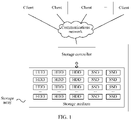
- a processor of the storage controller includes a plurality of cores, a memory device, and a communications interface. Each core establishes a communication connection to the memory device.
- the storage controller communicates with a client and a storage medium by using the communications interface. An IO request obtained from the communications interface is stored in an IO storage space of the memory device.
- IO request scheduling and processing there are mainly three types of programs: an IO request distribution program, an IO request ranking program, and an IO request processing program being used.
- the IO request distribution program, the IO request ranking program, and the IO request processing program each are implemented by a core running code in the memory device.
- a core running the IO request distribution program is referred to as a distribution core
- a core running the IO request ranking program is referred to as a ranking core
- a core running an IO request processing program is referred to as a request processing core.
- a quantity of cores to be respectively allocated to the three types of programs may be adjusted depending on running pressure of the three types of programs.
- a core on which each program runs may be adjusted depending on a load status of each core.
- a core 1 is configured to execute the IO request distribution program
- a core 2 to a core n are configured to execute the IO request ranking program
- a core n+1 to a core n+m are configured to execute the IO request processing program
- a core n+m+1 is configured to execute an operating system of the storage controller.
- the IO request distribution program distributes IO requests in the IO storage space, and distributes the IO requests to subspaces of the cores running the IO request ranking program.
- FIG. 1 is configured to execute the IO request distribution program
- a core 2 to a core n are configured to execute the IO request ranking program
- a core n+1 to a core n+m are configured to execute the IO request processing program
- a core n+m+1 is
- subspaces of the core 2 to the core n are located inside a space of the core 1.
- the subspaces of the core 2 to the core n may be alternatively located outside the space of the core 1, or respectively located inside spaces of the cores.
- the IO request distribution program may distribute a plurality of received IO requests to each IO request ranking program in turn, to ensure that a same quantity of IO requests are distributed to all the IO request ranking programs.
- each IO request ranking program reads IO requests distributed to the IO request ranking program and sorts the IO requests.
- a sorting result is stored in an index queue in a space of a core in which each IO request ranking program is located.
- the index queue may be implemented by using different data structures, such as a pile and a first-in-first-out queue.
- Each IO request ranking program generates one processing ranking index for each IO request in a subspace of the IO request ranking program, and then sorts the processing ranking indexes of the IO requests in the index queue.
- An IO request with small index is preferentially to be processed by an idle IO request processing program.
- the IO request processing program may specifically perform, according to a type of an IO request, a write operation or a read operation corresponding to the IO request.
- the IO request processing program may alternatively be configured to perform configuration, deduplication, or the like on data carried by the IO request.
- block storage is used in a storage array in which the storage controller is located and a storage medium of the storage array is virtualized into 100 LUNs.
- IOPS parameters need to be set for some LUNs.
- Each IO request received by the storage controller points to a LUN.
- a client generates an IO request at an indefinite speed. Therefore, a quantity of IO requests that point to different LUNs and that are generated per second may vary greatly.
- the sorting result of the IO request ranking program affects whether an IOPS parameter of each LUN can be fulfilled. For example, an IOPS parameter of a LUN 1 is 1000, and an IOPS parameter of a LUN 2 is 200.
- IO requests pointing to the LUN 2 are generated within a period of time, 1000 IO requests pointing to the LUN 1 and 2000 IO requests pointing to the LUN 2 are stored in the IO storage space of the memory device at a moment.
- the 3000 IO requests are distributed to IO request ranking programs in the core 2 to the core n+1 for sorting. If the IO request ranking programs schedule the IO requests based only on the IOPS parameter of the LUN 1 and the IOPS parameter of the LUN 2, finally, it is generally difficult for the n IO request ranking programs to fulfill the IOPS parameter of the LUN 1 and the IOPS parameter of the LUN 2. If the IO request ranking programs communicate with each other during generation of processing ranking indexes, this is helpful in fulfilling a lower limit of IOPS of each LUN. However, overheads of the communication between the IO request ranking programs are very high.
- This application provides an IO request processing method.
- the method is applicable to the storage controller shown in FIG. 2 .
- the memory device of the storage controller shown in FIG. 2 maintains one shared processing ranking index for each storage unit.
- the P shared processing ranking indexes may be read or written by each IO scheduler. Initial values of the shared processing ranking indexes are the same. For example, the initial values of the shared processing ranking indexes may be 0.
- the shared processing ranking indexes may be combined into a table, and set in the storage space of the memory device. All the shared processing ranking indexes are created by the operating system before the storage controller starts to distribute IO description information.
- the communications interface receives a plurality of IO requests sent by the client, and stores the plurality of IO requests in the IO storage space.
- the IO request distribution program generates IO description information for each IO request, and establishes a mapping relationship between each IO request and the IO description information of the IO request.
- the IO description information of each IO request includes a LUN ID carried in metadata of the IO request.
- IO description information may be generated for each IO request during sorting of the IO requests. Subsequently, the IO request ranking program generates a processing ranking index based on the IO description information, to reduce read/write load on the memory device.
- the IO request distribution program distributes the plurality of pieces of IO description information to subspaces of cores in which the IO request ranking programs are located.
- the IO request distribution program may create, in a subspace of a core in which each IO request ranking program is located, a queue for each LUN, and separately store, in the queue of each LUN, IO description information allocated to the subspace of the core in which the IO request ranking program is located, so that in a subsequent step, the IO request ranking program identifies a LUN to which each piece of IO description information points.
- 10 description information A-B-C indicates C th IO description information that points to a LUN B and that is distributed to an IO request ranking program running on a core A.
- a processing ranking index A-B-C indicates a processing ranking index of the IO description information A-B-C.
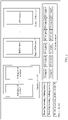
- the IO request ranking program running on the core 2 currently generates a processing ranking index for IO description information 2-1-3. Therefore, processing ranking indexes of IO description information 2-1-1 and IO description information 2-1-2 have been stored by the IO request ranking program in an index queue of the core 2.
- the IO request ranking program running on the core 2 obtains the IO description information 2-1-3 from a subspace of the core 2, and obtains a LUN ID corresponding to the IO description information 2-1-3.
- the IO request ranking program running on the core 2 obtains an IOPS parameter of a LUN 1 according to the LUN ID.
- the IO request ranking program running on the core 2 obtains, according to the LUN ID, a value of a shared processing ranking index corresponding to the LUN 1, that is, a value of a shared processing ranking index 1.
- the IO request ranking program running on the core 2 obtains a current system time by using an operating system interface.
- the current system time may specifically refer to a quantity of nanoseconds that have elapsed from startup of the storage controller to invocation of the operating system interface.
- the IO request ranking program running on the core 2 calculates a processing ranking index 2-1-3 of the IO description information 2-1-3.
- the processing ranking index 2-1-3 Max ⁇ the value of the shared processing ranking index 1 + K / the IOPS parameter of the LUN 1, the current system time ⁇ .
- K is a positive number, and commonly, a value of K is 1.
- the IO request ranking program running on the core 2 updates the shared processing ranking index corresponding to the LUN 1 by using the processing ranking index 2-1-3.
- each IO request ranking program After generating a processing ranking index of IO description information corresponding to a LUN, each IO request ranking program updates a shared processing ranking index corresponding to the LUN by using the generated processing ranking index. Therefore, the P shared counters respectively record processing ranking indexes of IO requests that point to each LUN and that are the most recently processed. Therefore, when any IO request ranking program calculates a processing ranking index of IO description information pointing to a LUN p, a value of a shared processing ranking index p is equal to a processing ranking index of a previous piece of IO description information pointing to the LUN p.
- the LUN p is any one of the P LUNs presented by the storage system.
- the processing ranking index 2-1-1 Max ⁇ an initial processing ranking index + K / the IOPS parameter of the LUN 1, a current system time ⁇ .
- the initial processing ranking index may be 0.
- the IO request ranking program running on the core 2 stores the processing ranking index 2-1-3 in the index queue of the core 2.
- a correspondence is established between the IO description information 2-1-3 and the processing ranking index 2-1-3, or a correspondence is established between the processing ranking index 2-1-3 and an IO request for which the IO description information 2-1-3 is generated, so that the IO request corresponding to the processing ranking index 2-1-3 can be determined in a subsequent step.
- each IO request ranking program generates a processing ranking index for each piece of IO description information distributed to the IO request ranking program, and stores the processing ranking index in an index queue of the IO request ranking program. Therefore, processing ranking indexes of one or more IO requests that are not processed are stored in index queues of the core 2 to the core n.
- the operating system learns that the IO request processing program enters an idle state.
- the operating system records a processing order of each IO request processing program, that is, the processing order indicates an IO request corresponding to a smallest processing ranking index in an index queue that is to be subsequently processed by an IO request processing program after entering an idle state.
- the processing order needs to enable an IO request processing program to process processing ranking indexes in all the index queues at same or close frequency.
- an IO request processing program periodically processes an IO request corresponding to a smallest processing ranking index in each index queue.
- the processing order may be: each IO request processing program polls all the index queues in an order of the core 2 to the core n, and processes an IO request corresponding to a smallest processing ranking index in an index queue accessed each time. Every time after processing an IO request corresponding to a smallest processing ranking index in an index queue, an idle IO request processing program processes an IO request corresponding to a smallest processing ranking index in a next index queue.
- the operating system binds the IO request processing programs to the index queues respectively one by one. In this case, after an IO request processing program enters an idle state, the operating system determines that the idle IO request processing program subsequently processes an IO request corresponding to a smallest processing ranking index in an index queue corresponding to the idle IO request processing program.
- the operating system After the operating system determines an index queue in which an IO request corresponding to a smallest processing ranking index is to be processed by the idle IO request processing program, the operating system selects the smallest processing ranking index from the index queue, and instructs the idle IO request processing program to process the IO request corresponding to the smallest processing ranking index, or the operating system instructs the idle IO request processing program to access the index queue, and process the IO request corresponding to the smallest processing ranking index in the index queue.
- Both the step of obtaining the IOPS parameter of the LUN 1 and the step of obtaining a current system time may be performed at any moment before the processing ranking index 2-1-3 is generated.
- the foregoing step of obtaining a system time is an optional step.
- the value of the generated processing ranking index 2-1-3 the value of the shared processing ranking index 1 + K / the IOPS parameter of the LUN 1.
- the idle IO request processing program preferentially processes the IO request corresponding to the smallest processing ranking index in each index queue. Therefore, if no IO request pointing to a LUN is distributed within a period of time to the IO request ranking program running on the core 2, but IO requests pointing to another LUN are continuously distributed within this period of time to the IO request ranking program running on the core 2, in a subsequent period of time, once IO requests pointing to the LUN are distributed to the IO request ranking program running on the core 2, all processing ranking indexes of these IO requests pointing to the LUN may be smaller than processing ranking indexes of the IO requests pointing to the another LUN.
- the IO requests pointing to the LUN are continuously preferentially processed by the idle IO request processing program, causing starvation of the IO requests pointing to the another LUN. Therefore, the consideration of the system time in the calculation of the processing ranking index prevents, if there is a long idle LUN, the IO requests pointing to the another LUN from subsequently being blocked after the IO requests pointing to the LUN are distributed to the subspace of the IO request ranking program running on the core 2, improving IO request scheduling accuracy.
- New processing ranking indexes generated between the moment 1 and the moment 2 include:
- the processing ranking indexes of these pieces of newly distributed IO description information pointing to the LUN 2 may be equal to the current system time and not be much smaller than the processing ranking index of the IO description information pointing to the LUN 1.
- the consideration of the system time in the calculation of the processing ranking index prevents, if there is a long idle LUN within a period of time, IO requests pointing to another LUN from subsequently being blocked after IO requests pointing to the idle LUN arrive, improving IO request scheduling accuracy.
- the IO request ranking program running on the core 2 determines, at a moment, that the IO description information pointing to the LUN 1 in the index queue of the core 2 has been processed, as shown in FIG. 6 , and after the processing ranking index 2-1-5 is generated, if there is no IO description information that points to the LUN 1 and for which no processing ranking index is generated in the IO description information that is distributed to the IO request ranking program running on the core 2, the IO request ranking program running on the core 2 generates a pending processing ranking index and stores the pending processing ranking index in the index queue of the core 2.
- the pending processing ranking index the value of the shared processing ranking index corresponding to the LUN 1 at the moment + K / the IOPS parameter of the LUN 1.
- the pending processing ranking index is removed in one of the following two cases.
- new IO description information pointing to the LUN 1 is distributed to the IO request ranking program running on the core 2.
- existence duration of the pending processing ranking index exceeds a preset threshold.
- the step of generating a pending processing ranking index is an optional step. Processing ranking indexes in each index queue are sorted together with the pending processing ranking index. If the operating system determines, in the process of selecting an IO request to be subsequently processed for the idle IO request processing program, that a smallest processing ranking index in a current index queue is a pending processing ranking index, because the pending processing ranking index does not correspond to any IO request, the idle IO request processing program cannot process an IO request corresponding to a processing ranking index in the index queue. The operating system may reselect an index queue for the idle IO request processing program.
- the idle IO request processing program polls the index queues of the cores in an order of the core 2 to the core n. If the idle IO request processing program currently polls an index queue of a core 3, but finds that a smallest processing ranking index in the index queue of the core 3 is a pending processing ranking index, the idle IO request processing program skips the index queue of the core 3, and accesses an index queue of a core 4.
- a speed at which an IO request ranking program generates a processing ranking index for an IO request is usually much higher than a speed at which an IO request processing program processes an IO request.
- IO description information corresponding to a smallest processing ranking index in the index queue of the core 2 may be caused to point to the LUN 1 all the time, causing the idle IO request processing program to constantly process the IO request pointing to the LUN 1, and finally causing it difficult to fulfill the IOPS parameter of the LUN 2.
- a pending processing ranking index 2-2-6 is generated, and before the pending processing ranking index 2-2-6 is removed, a processing ranking index in the index queue of the core 2 that is greater than the pending processing ranking index 2-2-6 cannot be processed by the idle IO request processing program. Consequently, the idle IO request processing program needs to access another index queue. Therefore, use of the pending processing ranking index can improve IO request scheduling accuracy, thereby improving an IOPS parameter fulfillment rate.
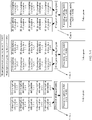
- the processor includes three ranking cores, FIG. 7-1 is an initial state, and initial values of the shared processing ranking index 1 and the shared processing ranking index 2 are both 0.
- FIG. 7-1 is an initial state
- initial values of the shared processing ranking index 1 and the shared processing ranking index 2 are both 0.
- IO description information a-b-c indicates c th IO description information that points to a LUN b and that is distributed to a core a.
- Initial processing ranking indexes of IO description information pointing to a LUN 1 and IO description information pointing to a LUN 2 are both 0.
- An IOPS parameter of the LUN 1 is 1000
- an IOPS parameter of the LUN 2 is 500
- K 1.
- an IO request ranking program running on a core 2 calculates a processing ranking index for IO description information 2-1-1, and the processing ranking index of the IO description information 2-1-1 is 0.001. Subsequently, the value of the shared processing ranking index 1 is updated to 0.001, as shown in FIG. 7-2 .
- an IO request ranking program running on a core 3 calculates a processing ranking index for IO description information 3-1-1, where the processing ranking index is 0.002. Subsequently, the value of the shared processing ranking index 1 is updated to 0.002, as shown in FIG. 7-3 .
- an IO request ranking program running on a core 4 calculates a processing ranking index for IO description information 4-1-1, where the processing ranking index is 0.003. Subsequently, the value of the shared processing ranking index 1 is updated to 0.003.
- the IO request ranking program running on the core 4 calculates a processing ranking index for IO description information 4-2-1, and the processing ranking index of the IO description information 4-2-1 is 0.002. Subsequently, the value of the shared processing ranking index 2 is updated to 0.002, as shown in FIG. 7-4 .
- the IO request ranking program running on the core 2 calculates a processing ranking index for IO description information 2-1-2, where the processing ranking index is 0.004. Subsequently, the value of the shared processing ranking index 1 is updated to 0.004.
- the IO request ranking program running on the core 2 calculates a processing ranking index for IO description information 2-2-1, and the processing ranking index of the IO description information 2-2-1 is 0.004. Subsequently, the value of the shared processing ranking index 2 is updated to 0.004, as shown in FIG. 7-5 .
- Processes of subsequently generating a processing ranking index in the core 2, the core 3, and the core 4 are performed by analogy.
- the storage controller applied to this application includes a bus, a processor, a memory device, and a communications interface.
- the processor, the memory device, and the communications interface communicate with each other by using the bus.
- the memory device may include a volatile memory, such as a random access memory (RAM).
- RAM random access memory
- the communications interface includes a network interface and a storage medium access interface, respectively configured to obtain an IO request sent by a client and access a storage medium.
- the memory device stores code required for executing an IO request distribution program, an IO request ranking program, an IO request processing program, and an operating system.
- each core in the processor invokes code stored in the memory device, to perform the IO request processing method provided above.
- the methods described with reference to the content disclosed in this application may be implemented in a manner of executing a software instruction by a processor.
- the software instruction may include a corresponding software module.
- the software module may be stored in a RAM, a flash memory, a read-only memory (ROM), an erasable programmable read-only memory (EPROM), an electrically erasable programmable read-only memory (EEPROM), a hard disk, a compact disc, or a storage medium in any other forms well-known in the art.
Landscapes
- Engineering & Computer Science (AREA)
- Theoretical Computer Science (AREA)
- Physics & Mathematics (AREA)
- General Engineering & Computer Science (AREA)
- General Physics & Mathematics (AREA)
- Human Computer Interaction (AREA)
- Software Systems (AREA)
- Information Retrieval, Db Structures And Fs Structures Therefor (AREA)
- Multi Processors (AREA)
- Computer And Data Communications (AREA)
Claims (11)
- Speicherungssteuerung, wobei sich die Speicherungssteuerung in einem Speicherungssystem befindet, das mehrere Speicherungseinheiten aufweist, und dadurch gekennzeichnet ist, dass sie Folgendes umfasst:einen Verteilungskern,mehrere Einstufungskerne,mindestens einen Anforderungsverarbeitungskern undeine Speichervorrichtung, wobei die Speichervorrichtung mehrere Eingabe/Ausgabe- bzw. EA-Anforderungen speichert, wobei jede EA-Anforderung auf eine Speicherungseinheit zeigt, undwobei die Speichervorrichtung einen entsprechenden Geteilte-Verarbeitung-Einstufungsindex für jede Speicherungseinheit speichert,wobei jeder Geteilte-Verarbeitung-Einstufungsindex mit einem Anfangswert gesetzt wird, der für jede Speicherungseinheit derselbe ist;wobei der Verteilungskern ausgelegt ist zumEmpfangen der mehreren EA-Anforderungen und Verteilen der empfangenen EA-Anforderungen über die mehreren Einstufungskerne zum Ausgleichen von Lasten der mehreren Einstufungskerne;jeder Einstufungskern ausgelegt ist zumErhalten einer EA-Anforderung, die durch den Verteilungskern verteilt wird;Bestimmen einer Zielspeicherungseinheit, auf die die EA-Anforderung zeigt;Erhalten eines EA-pro-Sekunde-Parameters der Zielspeicherungseinheit von der Speicherungssteuerung, wobei der EA-pro-Sekunde-Parameter gemäß einer Dienstanforderung auf der Basis von Benutzereingaben oder gemäß dem Erfahrungsniveau eines Benutzers gesetzt wird und wobei die Speicherungssteuerung EA-pro-Sekunde-Parameter für verschiedene Speicherungseinheiten speichert;Erzeugen eines Verarbeitungseinstufungsindex für die EA-Anforderung auf der Basis des EA-pro-Sekunde-Parameters der Zielspeicherungseinheit und eines Werts eines Geteilte-Verarbeitung-Einstufungsindex, der der Zielspeicherungseinheit entspricht;Aktualisieren des Geteilte-Verarbeitung-Einstufungsindex, der der Zielspeicherungseinheit entspricht, durch Verwendung des Verarbeitungseinstufungsindex der EA-Anforderung durch Aufzeichnen des Verarbeitungseinstufungsindex für die EA-Anforderung in dem Geteilte-Verarbeitung-Einstufungsindex; undSpeichern des Verarbeitungseinstufungsindex der EA-Anforderung in einer Indexwarteschlange, die dem Einstufungskern entspricht, wobei die Indexwarteschlange, die dem Einstufungskern entspricht, in der Speichervorrichtung gespeichert wird und Verarbeitungseinstufungsindizes umfasst, die durch den Einstufungskern erzeugt wurden; undjeder Anforderungsverarbeitungskern ausgelegt ist zumperiodischen Verarbeiten aller Indexwarteschlangen, wobei Verarbeiten einer Indexwarteschlange Verarbeiten der EA-Anforderung mit dem kleinsten Verarbeitungseinstufungsindex umfasst;wobei jeder der jeweiligen Einstufungskerne den Verarbeitungseinstufungsindex für die EA-Anforderung durch Ausführen der folgenden Operation erzeugt:
Berechnen des Verarbeitungseinstufungsindex der EA-Anforderung auf der Basis einer Summe des Werts des Geteilte-Verarbeitung-Einstufungsindex, der der Zielspeicherungseinheit entspricht, und einem Verhältnis von K zu dem EA-pro-Sekunde-Parameter der Zielspeicherungseinheit, wobei K eine vorbestimmte positive Zahl ist. - Speicherungssteuerung nach Anspruch 1, wobei vor dem Berechnen des Verarbeitungseinstufungsindex der EA-Anforderung der Einstufungskern ferner ausgelegt ist zum Erhalten einer aktuellen Systemzeit; undder Einstufungskern den Verarbeitungseinstufungsindex der EA-Anforderung, für die ein Verarbeitungseinstufungsindex zu erzeugen ist, durch Ausführen der folgenden Operation berechnet;Verwenden eines größeren der aktuellen Systemzeit und der Summe des Werts des Geteilte-Verarbeitung-Einstufungsindex, der der Zielspeicherungseinheit entspricht, und des Verhältnisses von K zu dem EA-pro-Sekunde-Parameter der Zielspeicherungseinheit als den Verarbeitungseinstufungsindex der EA-Anforderung.
- Speicherungssteuerung nach Anspruch 1 oder 2, wobei der Einstufungskern ferner ausgelegt ist zumBestimmen, dass es keine EA-Anforderung gibt, die an den Einstufungskern verteilt wurde, die auf die Zielspeicherungseinheit zeigt und für die kein Index erzeugt worden ist, zu einem Zeitpunkt nach dem Erzeugen des Verarbeitungseinstufungsindex für die EA-Anforderung;Berechnen einer Summe des Werts des Geteilte-Verarbeitung-Einstufungsindex, der der Zielspeicherungseinheit entspricht, zu dem Zeitpunkt zur Verwendung der Summe als einen anstehenden Verarbeitungseinstufungsindex; undSpeichern des anstehenden Verarbeitungseinstufungsindex in der Indexwarteschlange, die dem Einstufungskern entspricht.
- Speicherungssteuerung nach Anspruch 3, wobei innerhalb der Dauer, wofür der anstehende Verarbeitungseinstufungsindex in der Indexwarteschlange, die dem Einstufungskern entspricht, existiert, eine EA-Anforderung, die einem Verarbeitungseinstufungsindex entspricht, der größer als der anstehende Verarbeitungseinstufungsindex ist und der in der Indexwarteschlange enthalten ist, die dem Einstufungskern entspricht, nicht durch den Anforderungsverarbeitungskern verarbeitet werden kann; und
der Einstufungskern ferner ausgelegt ist zum Entfernen des anstehenden Verarbeitungseinstufungsindex aus der Indexwarteschlange, die dem Einstufungskern entspricht, wenn eine EA-Anforderung, die auf die Zielspeicherungseinheit zeigt, nach dem Zeitpunkt an den Einstufungskern verteilt wird oder die Dauer, wofür der anstehende Verarbeitungseinstufungsindex in der Indexwarteschlange, die dem Einstufungskern entspricht, existiert, , eine voreingestellte Schwelle überschreitet. - Speicherungssteuerung nach einem der Ansprüche 1 bis 4, wobei der Anforderungsverarbeitungskern periodisch die dem kleinsten Verarbeitungseinstufungsindex in der Indexwarteschlange, die dem Einstufungskern entspricht, entsprechende EA-Anforderung durch Ausführen der folgenden Operationen verarbeitet:periodisches Zugreifen auf die Indexwarteschlange, die dem Einstufungskern entspricht; undVerarbeiten einer EA-Anforderung während jedes Zugriffs, die dem kleinsten Verarbeitungseinstufungsindex in der Indexwarteschlange, die dem Einstufungskern entspricht, entspricht.
- Eingabe/Ausgabe- bzw. EA-Anforderungsverarbeitungsverfahren, wobei das Verfahren durch eine Speicherungssteuerung eines Speicherungssystems ausgeführt wird, das mehrere Speicherungseinheiten umfasst, wobei die Speicherungssteuerung dadurch gekennzeichnet ist, dass eine Speichervorrichtung, einen Verteilungskern, mehrere Einstufungskerne und mindestens einen Anforderungsverarbeitungskern umfasst, wobei die Speichervorrichtung mehrere EA-Anforderungen speichert, wobei jede EA-Anforderung auf eine Speicherungseinheit zeigt, und einen entsprechenden Geteilte-Verarbeitung-Einstufungsindex für jede Speicherungseinheit speichert, wobei jeder Geteilte-Verarbeitung-Einstufungsindex mit einem Anfangswert gesetzt wird, der für jede Speicherungseinheit derselbe ist, und das Verfahren Folgendes umfasst:Empfangen der mehreren EA-Anforderungen durch den Verteilungskern und Verteilen der empfangenen EA-Anforderungen über die mehreren Einstufungskerne zum Ausgleichen von Lasten der mehreren Einstufungskerne;Erhalten der EA-Anforderungen, die durch den Verteilungskern verteilt werden, durch die jeweiligen Einstufungskerne;Bestimmen einer Zielspeicherungseinheit durch jeden der jeweiligen Einstufungskerne, auf die die EA-Anforderung zeigt;Erhalten eines EA-pro-Sekunde-Parameters der Zielspeicherungseinheit von der Speicherungssteuerung durch jeden der jeweiligen Einstufungskerne, wobei der EA-pro-Sekunde-Parameter gemäß einer Dienstanforderung auf der Basis von Benutzereingaben oder gemäß dem Erfahrungsniveau eines Benutzers gesetzt wird und wobei die Speicherungssteuerung EA-pro-Sekunde-Parameter für verschiedene Speicherungseinheiten speichert;Erzeugen eines Verarbeitungseinstufungsindex für die EA-Anforderung auf der Basis des EA-pro-Sekunde-Parameters der Zielspeicherungseinheit und eines Werts eines Geteilte-Verarbeitung-Einstufungsindex, der der Zielspeicherungseinheit entspricht, durch jeden der jeweiligen Einstufungskerne;Aktualisieren des Geteilte-Verarbeitung-Einstufungsindex, der der Zielspeicherungseinheit entspricht, durch jeden der jeweiligen Einstufungskerne durch Verwendung des Verarbeitungseinstufungsindex der EA-Anforderung durch Aufzeichnen des Verarbeitungseinstufungsindex für die EA-Anforderung in dem Geteilte-Verarbeitung-Einstufungsindex;Speichern des Verarbeitungseinstufungsindex der EA-Anforderung durch jeden der jeweiligen Einstufungskerne in einer Indexwarteschlange, die dem jeweiligen Einstufungskern entspricht, wobei die Indexwarteschlange, die dem jeweiligen Einstufungskern entspricht, in der Speichervorrichtung gespeichert wird undVerarbeitungseinstufungsindizes umfasst, die durch den jeweiligen Einstufungskern erzeugt wurden; undperiodisches Verarbeiten aller Indexwarteschlangen durch jeden Anforderungsverarbeitungskern, wobei Verarbeiten einer Indexwarteschlange umfasst, die EA-Anforderung mit dem kleinsten Verarbeitungseinstufungsindex zu verarbeiten,wobei das Erzeugen des Verarbeitungseinstufungsindex für die EA-Anforderung durch jeden der jeweiligen Einstufungskerne Folgendes umfasst:
Berechnen des Verarbeitungseinstufungsindex der EA-Anforderung auf der Basis einer Summe des Werts des Geteilte-Verarbeitung-Einstufungsindex, der der Zielspeicherungseinheit entspricht, und einem Verhältnis von K zu dem EA-pro-Sekunde-Parameter der Zielspeicherungseinheit, wobei K eine vorbestimmte positive Zahl ist. - Verfahren nach Anspruch 6, wobei das Verfahren vor dem Berechnen des Verarbeitungseinstufungsindex der EA-Anforderung durch den Einstufungskern ferner Folgendes umfasst: Erhalten einer aktuellen Systemzeit durch den Einstufungskern; und
das Berechnen des Verarbeitungseinstufungsindex der EA-Anforderung durch den Einstufungskern auf der Basis einer Summe des Geteilte-Verarbeitung-Einstufungsindex, der der Zielspeicherungseinheit entspricht, und eines Verhältnisses von K zu dem EA-pro-Sekunde-Parameter der Zielspeicherungseinheit Folgendes umfasst:
Verwenden eines größeren der aktuellen Systemzeit und der Summe des Geteilte-Verarbeitung-Einstufungsindex, der der Zielspeicherungseinheit entspricht, und des Verhältnisses von K zu dem EA-pro-Sekunde-Parameter der Zielspeicherungseinheit als den Verarbeitungseinstufungsindex der EA-Anforderung, für die ein Verarbeitungseinstufungsindex zu erzeugen ist, durch den Einstufungskern. - Verfahren nach Anspruch 6 oder 7, wobei das Verfahren ferner Folgendes umfasst:Bestimmen, dass es keine EA-Anforderung gibt, die an den Einstufungskern verteilt wurde, die auf die Zielspeicherungseinheit zeigt und für die kein Index erzeugt worden ist, durch den Einstufungskern zu einem Zeitpunkt nach dem Erzeugen des Verarbeitungseinstufungsindex für die EA-Anforderung;Berechnen einer Summe des Werts des Geteilte-Verarbeitung-Einstufungsindex, der der Zielspeicherungseinheit entspricht, und des Verhältnisses von K zu dem EA-pro-Sekunde-Parameter der Zielspeicherungseinheit zu dem Zeitpunkt zur Verwendung der Summe als einen anstehenden Verarbeitungseinstufungsindex durch den Einstufungskern; undSpeichern des anstehenden Verarbeitungseinstufungsindex in der Indexwarteschlange durch den Einstufungskern, die dem Einstufungskern entspricht.
- Verfahren nach Anspruch 7, wobei innerhalb der Dauer, wofür der anstehende Verarbeitungseinstufungsindex in der Indexwarteschlange, die dem Einstufungskern entspricht, existiert, eine EA-Anforderung, die einem Verarbeitungseinstufungsindex entspricht, der größer als der anstehende Verarbeitungseinstufungsindex ist und der in der Indexwarteschlange enthalten ist, die dem Einstufungskern entspricht, nicht durch den Anforderungsverarbeitungskern verarbeitet werden kann; und
der Einstufungskern den anstehenden Verarbeitungseinstufungsindex aus der Indexwarteschlange, die dem Einstufungskern entspricht, entfernt, wenn eine EA-Anforderung, die auf die Zielspeicherungseinheit zeigt, nach dem Zeitpunkt an den Einstufungskern verteilt wird, oder die Dauer, wofür der anstehende Verarbeitungseinstufungsindex in der Indexwarteschlange, die dem Einstufungskern entspricht, existiert, eine voreingestellte Schwelle überschreitet. - Verfahren nach einem der Ansprüche 6 bis 9, wobei das periodische Verarbeiten einer einem kleinsten Verarbeitungseinstufungsindex in der Indexwarteschlange, die dem Einstufungskern entspricht, entsprechenden EA-Anforderung durch jeden Anforderungsverarbeitungskern Folgendes umfasst:periodisches Zugreifen auf die Indexwarteschlange, die dem Einstufungskern entspricht; undVerarbeiten einer EA-Anforderung während jedes Zugriffs, die dem kleinsten Verarbeitungseinstufungsindex in der Indexwarteschlange, die dem Einstufungskern entspricht, entspricht.
- Nicht-flüchtiges computerlesbares Speicherungsmedium, das computerbenutzbaren Programmcode aufweist, der für eine Speicherungssteuerung verwendet wird, die sich in einem Speicherungssystem befindet, das mehrere Speicherungseinheiten aufweist, und wobei die Speicherungssteuerung dadurch gekennzeichnet ist, dass sie einen Verteilungskern, mehrere Einstufungskerne, mindestens einen Anforderungsverarbeitungskern und eine Speichervorrichtung umfasst, wobei die Speichervorrichtung mehrere Eingabe/Ausgabe- bzw. EA-Anforderungen speichert, wobei jede EA-Anforderung auf eine Speicherungseinheit zeigt, und wobei die Speichervorrichtung einen entsprechenden Geteilte-Verarbeitung-Einstufungsindex für jede Speicherungseinheit speichert, wobei jeder Geteilte-Verarbeitung-Einstufungsindex mit einem Anfangswert gesetzt wird, der für jede Speicherungseinheit derselbe ist, wobei die Speicherungssteuerung den computerbenutzbaren Programmcode ausführt, so dassder Verteilungskern die mehreren EA-Anforderungen empfängt und die empfangenen EA-Anforderungen über die mehreren Einstufungskerne verteilt, um Lasten der mehreren Einstufungskerne auszugleichen;jeder Einstufungskern, der eine EA-Anforderung erhält, die durch den Verteilungskern verteilt wird,eine Zielspeicherungseinheit bestimmt, auf die die EA-Anforderung zeigt;einen EA-pro-Sekunde-Parameter der Zielspeicherungseinheit von der Speicherungssteuerung erhält, wobei der EA-pro-Sekunde-Parameter gemäß einer Dienstanforderung auf der Basis von Benutzereingaben oder gemäß dem Erfahrungsniveau eines Benutzers gesetzt wird und wobei die Speicherungssteuerung EA-pro-Sekunde-Parameter für verschiedene Speicherungseinheiten speichert;auf der Basis des EA-pro-Sekunde-Parameters der Zielspeicherungseinheit und eines Werts eines Geteilte-Verarbeitung-Einstufungsindex, der der Zielspeicherungseinheit entspricht, einen Verarbeitungseinstufungsindex für die EA-Anforderung erzeugt; durch Verwendung des Verarbeitungseinstufungsindex der EA-Anforderung den Geteilte-Verarbeitung-Einstufungsindex, der der Zielspeicherungseinheit entspricht, durch Aufzeichnen des Verarbeitungseinstufungsindex für die EA-Anforderung in dem Geteilte-Verarbeitung-Einstufungsindex aktualisiert; undin einer Indexwarteschlange, die dem Einstufungskern entspricht, den Verarbeitungseinstufungsindex der EA-Anforderung speichert, wobei die Indexwarteschlange, die dem Einstufungskern entspricht, in der Speichervorrichtung gespeichert wird und Verarbeitungseinstufungsindizes umfasst, die durch den Einstufungskern erzeugt wurden; undjeder Anforderungsverarbeitungskern periodisch alle Indexwarteschlangen verarbeitet, wobei Verarbeiten einer Indexwarteschlange umfasst, die EA-Anforderung mit dem kleinsten Verarbeitungseinstufungsindex zu verarbeiten; wobei jeder der jeweiligen Einstufungskerne den Verarbeitungseinstufungsindex für die EA-Anforderung durch Ausführen der folgenden Operation erzeugt:
Berechnen des Verarbeitungseinstufungsindex der EA-Anforderung auf der Basis einer Summe des Werts des Geteilte-Verarbeitung-Einstufungsindex, der der Zielspeicherungseinheit entspricht, und einem Verhältnis von K zu dem EA-pro-Sekunde-Parameter der Zielspeicherungseinheit, wobei K eine vorbestimmte positive Zahl ist.
Applications Claiming Priority (2)
| Application Number | Priority Date | Filing Date | Title |
|---|---|---|---|
| CN201710008824.7A CN106775493B (zh) | 2017-01-05 | 2017-01-05 | 一种存储控制器及io请求处理方法 |
| PCT/CN2017/108194 WO2018126771A1 (zh) | 2017-01-05 | 2017-10-28 | 一种存储控制器及io请求处理方法 |
Publications (3)
| Publication Number | Publication Date |
|---|---|
| EP3537281A1 EP3537281A1 (de) | 2019-09-11 |
| EP3537281A4 EP3537281A4 (de) | 2019-11-27 |
| EP3537281B1 true EP3537281B1 (de) | 2022-08-17 |
Family
ID=58949747
Family Applications (1)
| Application Number | Title | Priority Date | Filing Date |
|---|---|---|---|
| EP17889889.6A Active EP3537281B1 (de) | 2017-01-05 | 2017-10-28 | Speichersteuergerät und vorrichtung zur verarbeitung von e/a-anfragen |
Country Status (4)
| Country | Link |
|---|---|
| US (1) | US10884667B2 (de) |
| EP (1) | EP3537281B1 (de) |
| CN (2) | CN106775493B (de) |
| WO (1) | WO2018126771A1 (de) |
Families Citing this family (8)
| Publication number | Priority date | Publication date | Assignee | Title |
|---|---|---|---|---|
| EP3550421B1 (de) | 2016-12-29 | 2021-06-30 | Huawei Technologies Co., Ltd. | Speichersteuergerät und vorrichtung zur verarbeitung von e/a-anfragen |
| CN106775493B (zh) * | 2017-01-05 | 2019-01-25 | 华为技术有限公司 | 一种存储控制器及io请求处理方法 |
| US11194735B2 (en) * | 2017-09-29 | 2021-12-07 | Intel Corporation | Technologies for flexible virtual function queue assignment |
| US11005970B2 (en) * | 2019-07-24 | 2021-05-11 | EMC IP Holding Company LLC | Data storage system with processor scheduling using distributed peek-poller threads |
| CN111708491B (zh) * | 2020-05-29 | 2022-11-04 | 苏州浪潮智能科技有限公司 | 一种随机写方法和装置 |
| US12449977B2 (en) * | 2021-05-21 | 2025-10-21 | Samsung Electronics Co., Ltd. | Low latency multiple storage device system |
| US12067254B2 (en) | 2021-05-21 | 2024-08-20 | Samsung Electronics Co., Ltd. | Low latency SSD read architecture with multi-level error correction codes (ECC) |
| CN120891990B (zh) * | 2025-09-30 | 2026-01-27 | 济南浪潮数据技术有限公司 | Io流限速控制方法及装置、电子设备和存储介质 |
Family Cites Families (36)
| Publication number | Priority date | Publication date | Assignee | Title |
|---|---|---|---|---|
| US7917903B2 (en) | 2003-03-27 | 2011-03-29 | Hewlett-Packard Development Company, L.P. | Quality of service controller and method for a data storage system |
| US7277984B2 (en) * | 2004-06-23 | 2007-10-02 | International Business Machines Corporation | Methods, apparatus and computer programs for scheduling storage requests |
| US7646779B2 (en) | 2004-12-23 | 2010-01-12 | Intel Corporation | Hierarchical packet scheduler using hole-filling and multiple packet buffering |
| US7823154B2 (en) | 2005-09-16 | 2010-10-26 | Hewlett-Packard Development Company, L.P. | System and method for providing, by a plurality of schedulers, differentiated service to consumers of distributed resources |
| JP2007257180A (ja) | 2006-03-22 | 2007-10-04 | Hitachi Ltd | ネットワークノード、スイッチ及びネットワーク障害回復方法 |
| US11010076B2 (en) * | 2007-03-29 | 2021-05-18 | Violin Systems Llc | Memory system with multiple striping of raid groups and method for performing the same |
| CN100553331C (zh) * | 2007-12-21 | 2009-10-21 | 北京天天宽广网络科技有限公司 | 基于p2p技术的视频网络中的内容分发与存储系统及其方法 |
| CN101272334B (zh) | 2008-03-19 | 2010-11-10 | 杭州华三通信技术有限公司 | 使用多核CPU处理QoS业务的方法、装置和设备 |
| CN101299181A (zh) | 2008-07-08 | 2008-11-05 | 杭州华三通信技术有限公司 | 基于磁盘进行i/o请求缓存的方法和装置以及san存储设备 |
| US20100030931A1 (en) | 2008-08-04 | 2010-02-04 | Sridhar Balasubramanian | Scheduling proportional storage share for storage systems |
| CN101354664B (zh) * | 2008-08-19 | 2011-12-28 | 中兴通讯股份有限公司 | 多核处理器中断负载均衡方法和装置 |
| US7912951B2 (en) * | 2008-10-28 | 2011-03-22 | Vmware, Inc. | Quality of service management |
| US8037219B2 (en) * | 2009-04-14 | 2011-10-11 | Lsi Corporation | System for handling parallel input/output threads with cache coherency in a multi-core based storage array |
| CN102073461B (zh) * | 2010-12-07 | 2012-07-04 | 成都市华为赛门铁克科技有限公司 | 输入输出请求调度方法、相关装置和存储阵列 |
| CN103299271B (zh) | 2011-01-11 | 2016-04-13 | 惠普发展公司,有限责任合伙企业 | 并发请求调度 |
| US8793463B2 (en) | 2011-09-12 | 2014-07-29 | Microsoft Corporation | Allocation strategies for storage device sets |
| CN103577115B (zh) | 2012-07-31 | 2016-09-14 | 华为技术有限公司 | 数据的排布处理方法、装置和服务器 |
| US8943505B2 (en) * | 2012-08-24 | 2015-01-27 | National Instruments Corporation | Hardware assisted real-time scheduler using memory monitoring |
| US8984243B1 (en) | 2013-02-22 | 2015-03-17 | Amazon Technologies, Inc. | Managing operational parameters for electronic resources |
| CN103338252B (zh) * | 2013-06-27 | 2017-05-24 | 南京邮电大学 | 一种分布式数据库并发存储虚拟请求机制的实现方法 |
| CN103412790B (zh) * | 2013-08-07 | 2016-07-06 | 南京师范大学 | 移动安全中间件的多核并发调度方法与系统 |
| US9170943B2 (en) * | 2013-08-29 | 2015-10-27 | Globalfoundries U.S. 2 Llc | Selectively enabling write caching in a storage system based on performance metrics |
| US9983801B1 (en) * | 2013-09-21 | 2018-05-29 | Avago Technologies General Ip (Singapore) Pte. Ltd. | Priority queueing for low latency storage networks |
| CN104679575B (zh) | 2013-11-28 | 2018-08-24 | 阿里巴巴集团控股有限公司 | 输入输出流的控制系统及其方法 |
| EP3103018B1 (de) * | 2014-02-28 | 2019-07-03 | Huawei Technologies Co., Ltd. | Verfahren zur computerprogrammfehlerbeseitigung |
| US20150254088A1 (en) * | 2014-03-08 | 2015-09-10 | Datawise Systems, Inc. | Methods and systems for converged networking and storage |
| CN105589829A (zh) * | 2014-09-15 | 2016-05-18 | 华为技术有限公司 | 基于多核处理器芯片的数据处理方法、装置以及系统 |
| US9483187B2 (en) * | 2014-09-30 | 2016-11-01 | Nimble Storage, Inc. | Quality of service implementation in a networked storage system with hierarchical schedulers |
| CN105934793A (zh) | 2014-12-27 | 2016-09-07 | 华为技术有限公司 | 一种存储系统数据分发的方法、分发装置与存储系统 |
| CN104571960B (zh) * | 2014-12-30 | 2018-01-16 | 华为技术有限公司 | Io请求分发装置及方法、主机、存储阵列和计算机系统 |
| US9575664B2 (en) * | 2015-04-08 | 2017-02-21 | Prophetstor Data Services, Inc. | Workload-aware I/O scheduler in software-defined hybrid storage system |
| CN106155764A (zh) | 2015-04-23 | 2016-11-23 | 阿里巴巴集团控股有限公司 | 调度虚拟机输入输出资源的方法及装置 |
| US9696935B2 (en) * | 2015-04-24 | 2017-07-04 | Kabushiki Kaisha Toshiba | Storage device that secures a block for a stream or namespace and system having the storage device |
| CN105183375B (zh) | 2015-08-31 | 2019-04-23 | 成都华为技术有限公司 | 一种热点数据的服务质量的控制方法和装置 |
| CN105892955B (zh) * | 2016-04-29 | 2019-10-18 | 华为技术有限公司 | 一种管理存储系统的方法及设备 |
| CN106775493B (zh) * | 2017-01-05 | 2019-01-25 | 华为技术有限公司 | 一种存储控制器及io请求处理方法 |
-
2017
- 2017-01-05 CN CN201710008824.7A patent/CN106775493B/zh active Active
- 2017-01-05 CN CN201811589794.4A patent/CN109799956B/zh active Active
- 2017-10-28 WO PCT/CN2017/108194 patent/WO2018126771A1/zh not_active Ceased
- 2017-10-28 EP EP17889889.6A patent/EP3537281B1/de active Active
-
2019
- 2019-07-05 US US16/503,817 patent/US10884667B2/en active Active
Also Published As
| Publication number | Publication date |
|---|---|
| EP3537281A1 (de) | 2019-09-11 |
| EP3537281A4 (de) | 2019-11-27 |
| CN106775493A (zh) | 2017-05-31 |
| WO2018126771A1 (zh) | 2018-07-12 |
| US10884667B2 (en) | 2021-01-05 |
| US20190332328A1 (en) | 2019-10-31 |
| CN106775493B (zh) | 2019-01-25 |
| CN109799956B (zh) | 2023-11-17 |
| CN109799956A (zh) | 2019-05-24 |
Similar Documents
| Publication | Publication Date | Title |
|---|---|---|
| US10884667B2 (en) | Storage controller and IO request processing method | |
| US9182923B2 (en) | Controlling throughput of processing units associated with different load types in storage system | |
| US10965610B1 (en) | Systems and methods for allocating shared resources in multi-tenant environments | |
| WO2017167025A1 (zh) | 一种实现任务调度的方法、装置及计算机存储介质 | |
| US10712945B2 (en) | Deduplication processing method, and storage device | |
| EP3208709B1 (de) | Chargenverarbeitungsverfahren und vorrichtung für systemaufrufbefehle | |
| Shin et al. | Deadline-guaranteed scheduling algorithm with improved resource utilization for cloud computing | |
| CN112711461B (zh) | 一种虚拟机迁移方法及相关设备 | |
| CN107291550B (zh) | 一种针对迭代应用的Spark平台资源动态分配方法及系统 | |
| CN113032102A (zh) | 资源重调度方法、装置、设备和介质 | |
| CN114443211B (zh) | 虚拟机热迁移方法、设备及存储介质 | |
| CN111190745A (zh) | 一种数据处理方法、装置及计算机可读存储介质 | |
| US10496282B1 (en) | Adaptive port management to meet service level objectives using reinforcement learning | |
| WO2024260034A1 (zh) | 分布式训练任务调度方法、设备及非易失性可读存储介质 | |
| WO2025050901A1 (zh) | 任务处理、任务调度方法、计算设备及计算机存储介质 | |
| US20190391847A1 (en) | Resource Scheduling Method and Related Apparatus | |
| CN108958975A (zh) | 一种控制数据恢复速度的方法、装置及设备 | |
| CN106940656A (zh) | 一种任务调度方法及装置 | |
| CN103729417B (zh) | 一种数据扫描的方法及装置 | |
| CN106708624B (zh) | 一种多工作域计算资源的自适应调整方法 | |
| EP3550421B1 (de) | Speichersteuergerät und vorrichtung zur verarbeitung von e/a-anfragen | |
| CN104239520B (zh) | 一种基于历史信息的hdfs数据块放置策略 | |
| CN115658304A (zh) | 一种资源调度方法、装置、电子设备及存储介质 | |
| CN106484310B (zh) | 一种存储阵列操作方法和装置 | |
| CN110955644A (zh) | 一种存储系统的io控制方法、装置、设备及存储介质 |
Legal Events
| Date | Code | Title | Description |
|---|---|---|---|
| STAA | Information on the status of an ep patent application or granted ep patent |
Free format text: STATUS: THE INTERNATIONAL PUBLICATION HAS BEEN MADE |
|
| PUAI | Public reference made under article 153(3) epc to a published international application that has entered the european phase |
Free format text: ORIGINAL CODE: 0009012 |
|
| STAA | Information on the status of an ep patent application or granted ep patent |
Free format text: STATUS: REQUEST FOR EXAMINATION WAS MADE |
|
| 17P | Request for examination filed |
Effective date: 20190604 |
|
| AK | Designated contracting states |
Kind code of ref document: A1 Designated state(s): AL AT BE BG CH CY CZ DE DK EE ES FI FR GB GR HR HU IE IS IT LI LT LU LV MC MK MT NL NO PL PT RO RS SE SI SK SM TR |
|
| AX | Request for extension of the european patent |
Extension state: BA ME |
|
| A4 | Supplementary search report drawn up and despatched |
Effective date: 20191029 |
|
| RIC1 | Information provided on ipc code assigned before grant |
Ipc: G06F 9/46 20060101ALI20191023BHEP Ipc: G06F 3/06 20060101AFI20191023BHEP Ipc: G06F 15/80 20060101ALI20191023BHEP |
|
| DAV | Request for validation of the european patent (deleted) | ||
| DAX | Request for extension of the european patent (deleted) | ||
| STAA | Information on the status of an ep patent application or granted ep patent |
Free format text: STATUS: EXAMINATION IS IN PROGRESS |
|
| 17Q | First examination report despatched |
Effective date: 20200911 |
|
| GRAP | Despatch of communication of intention to grant a patent |
Free format text: ORIGINAL CODE: EPIDOSNIGR1 |
|
| STAA | Information on the status of an ep patent application or granted ep patent |
Free format text: STATUS: GRANT OF PATENT IS INTENDED |
|
| INTG | Intention to grant announced |
Effective date: 20211007 |
|
| GRAS | Grant fee paid |
Free format text: ORIGINAL CODE: EPIDOSNIGR3 |
|
| GRAJ | Information related to disapproval of communication of intention to grant by the applicant or resumption of examination proceedings by the epo deleted |
Free format text: ORIGINAL CODE: EPIDOSDIGR1 |
|
| GRAL | Information related to payment of fee for publishing/printing deleted |
Free format text: ORIGINAL CODE: EPIDOSDIGR3 |
|
| STAA | Information on the status of an ep patent application or granted ep patent |
Free format text: STATUS: EXAMINATION IS IN PROGRESS |
|
| INTC | Intention to grant announced (deleted) | ||
| GRAP | Despatch of communication of intention to grant a patent |
Free format text: ORIGINAL CODE: EPIDOSNIGR1 |
|
| STAA | Information on the status of an ep patent application or granted ep patent |
Free format text: STATUS: GRANT OF PATENT IS INTENDED |
|
| INTG | Intention to grant announced |
Effective date: 20220407 |
|
| GRAS | Grant fee paid |
Free format text: ORIGINAL CODE: EPIDOSNIGR3 |
|
| GRAA | (expected) grant |
Free format text: ORIGINAL CODE: 0009210 |
|
| STAA | Information on the status of an ep patent application or granted ep patent |
Free format text: STATUS: THE PATENT HAS BEEN GRANTED |
|
| AK | Designated contracting states |
Kind code of ref document: B1 Designated state(s): AL AT BE BG CH CY CZ DE DK EE ES FI FR GB GR HR HU IE IS IT LI LT LU LV MC MK MT NL NO PL PT RO RS SE SI SK SM TR |
|
| REG | Reference to a national code |
Ref country code: CH Ref legal event code: EP |
|
| REG | Reference to a national code |
Ref country code: DE Ref legal event code: R096 Ref document number: 602017060864 Country of ref document: DE |
|
| REG | Reference to a national code |
Ref country code: IE Ref legal event code: FG4D |
|
| REG | Reference to a national code |
Ref country code: AT Ref legal event code: REF Ref document number: 1512608 Country of ref document: AT Kind code of ref document: T Effective date: 20220915 |
|
| REG | Reference to a national code |
Ref country code: NL Ref legal event code: MP Effective date: 20220817 |
|
| REG | Reference to a national code |
Ref country code: LT Ref legal event code: MG9D |
|
| PG25 | Lapsed in a contracting state [announced via postgrant information from national office to epo] |
Ref country code: SE Free format text: LAPSE BECAUSE OF FAILURE TO SUBMIT A TRANSLATION OF THE DESCRIPTION OR TO PAY THE FEE WITHIN THE PRESCRIBED TIME-LIMIT Effective date: 20220817 Ref country code: RS Free format text: LAPSE BECAUSE OF FAILURE TO SUBMIT A TRANSLATION OF THE DESCRIPTION OR TO PAY THE FEE WITHIN THE PRESCRIBED TIME-LIMIT Effective date: 20220817 Ref country code: PT Free format text: LAPSE BECAUSE OF FAILURE TO SUBMIT A TRANSLATION OF THE DESCRIPTION OR TO PAY THE FEE WITHIN THE PRESCRIBED TIME-LIMIT Effective date: 20221219 Ref country code: NO Free format text: LAPSE BECAUSE OF FAILURE TO SUBMIT A TRANSLATION OF THE DESCRIPTION OR TO PAY THE FEE WITHIN THE PRESCRIBED TIME-LIMIT Effective date: 20221117 Ref country code: NL Free format text: LAPSE BECAUSE OF FAILURE TO SUBMIT A TRANSLATION OF THE DESCRIPTION OR TO PAY THE FEE WITHIN THE PRESCRIBED TIME-LIMIT Effective date: 20220817 Ref country code: LV Free format text: LAPSE BECAUSE OF FAILURE TO SUBMIT A TRANSLATION OF THE DESCRIPTION OR TO PAY THE FEE WITHIN THE PRESCRIBED TIME-LIMIT Effective date: 20220817 Ref country code: LT Free format text: LAPSE BECAUSE OF FAILURE TO SUBMIT A TRANSLATION OF THE DESCRIPTION OR TO PAY THE FEE WITHIN THE PRESCRIBED TIME-LIMIT Effective date: 20220817 Ref country code: FI Free format text: LAPSE BECAUSE OF FAILURE TO SUBMIT A TRANSLATION OF THE DESCRIPTION OR TO PAY THE FEE WITHIN THE PRESCRIBED TIME-LIMIT Effective date: 20220817 |
|
| REG | Reference to a national code |
Ref country code: AT Ref legal event code: MK05 Ref document number: 1512608 Country of ref document: AT Kind code of ref document: T Effective date: 20220817 |
|
| PG25 | Lapsed in a contracting state [announced via postgrant information from national office to epo] |
Ref country code: PL Free format text: LAPSE BECAUSE OF FAILURE TO SUBMIT A TRANSLATION OF THE DESCRIPTION OR TO PAY THE FEE WITHIN THE PRESCRIBED TIME-LIMIT Effective date: 20220817 Ref country code: IS Free format text: LAPSE BECAUSE OF FAILURE TO SUBMIT A TRANSLATION OF THE DESCRIPTION OR TO PAY THE FEE WITHIN THE PRESCRIBED TIME-LIMIT Effective date: 20221217 Ref country code: HR Free format text: LAPSE BECAUSE OF FAILURE TO SUBMIT A TRANSLATION OF THE DESCRIPTION OR TO PAY THE FEE WITHIN THE PRESCRIBED TIME-LIMIT Effective date: 20220817 Ref country code: GR Free format text: LAPSE BECAUSE OF FAILURE TO SUBMIT A TRANSLATION OF THE DESCRIPTION OR TO PAY THE FEE WITHIN THE PRESCRIBED TIME-LIMIT Effective date: 20221118 |
|
| PG25 | Lapsed in a contracting state [announced via postgrant information from national office to epo] |
Ref country code: SM Free format text: LAPSE BECAUSE OF FAILURE TO SUBMIT A TRANSLATION OF THE DESCRIPTION OR TO PAY THE FEE WITHIN THE PRESCRIBED TIME-LIMIT Effective date: 20220817 Ref country code: RO Free format text: LAPSE BECAUSE OF FAILURE TO SUBMIT A TRANSLATION OF THE DESCRIPTION OR TO PAY THE FEE WITHIN THE PRESCRIBED TIME-LIMIT Effective date: 20220817 Ref country code: ES Free format text: LAPSE BECAUSE OF FAILURE TO SUBMIT A TRANSLATION OF THE DESCRIPTION OR TO PAY THE FEE WITHIN THE PRESCRIBED TIME-LIMIT Effective date: 20220817 Ref country code: DK Free format text: LAPSE BECAUSE OF FAILURE TO SUBMIT A TRANSLATION OF THE DESCRIPTION OR TO PAY THE FEE WITHIN THE PRESCRIBED TIME-LIMIT Effective date: 20220817 Ref country code: CZ Free format text: LAPSE BECAUSE OF FAILURE TO SUBMIT A TRANSLATION OF THE DESCRIPTION OR TO PAY THE FEE WITHIN THE PRESCRIBED TIME-LIMIT Effective date: 20220817 Ref country code: AT Free format text: LAPSE BECAUSE OF FAILURE TO SUBMIT A TRANSLATION OF THE DESCRIPTION OR TO PAY THE FEE WITHIN THE PRESCRIBED TIME-LIMIT Effective date: 20220817 |
|
| REG | Reference to a national code |
Ref country code: DE Ref legal event code: R097 Ref document number: 602017060864 Country of ref document: DE |
|
| PG25 | Lapsed in a contracting state [announced via postgrant information from national office to epo] |
Ref country code: SK Free format text: LAPSE BECAUSE OF FAILURE TO SUBMIT A TRANSLATION OF THE DESCRIPTION OR TO PAY THE FEE WITHIN THE PRESCRIBED TIME-LIMIT Effective date: 20220817 Ref country code: MC Free format text: LAPSE BECAUSE OF FAILURE TO SUBMIT A TRANSLATION OF THE DESCRIPTION OR TO PAY THE FEE WITHIN THE PRESCRIBED TIME-LIMIT Effective date: 20220817 Ref country code: EE Free format text: LAPSE BECAUSE OF FAILURE TO SUBMIT A TRANSLATION OF THE DESCRIPTION OR TO PAY THE FEE WITHIN THE PRESCRIBED TIME-LIMIT Effective date: 20220817 |
|
| REG | Reference to a national code |
Ref country code: CH Ref legal event code: PL |
|
| PLBE | No opposition filed within time limit |
Free format text: ORIGINAL CODE: 0009261 |
|
| STAA | Information on the status of an ep patent application or granted ep patent |
Free format text: STATUS: NO OPPOSITION FILED WITHIN TIME LIMIT |
|
| REG | Reference to a national code |
Ref country code: BE Ref legal event code: MM Effective date: 20221031 |
|
| PG25 | Lapsed in a contracting state [announced via postgrant information from national office to epo] |
Ref country code: LU Free format text: LAPSE BECAUSE OF NON-PAYMENT OF DUE FEES Effective date: 20221028 Ref country code: AL Free format text: LAPSE BECAUSE OF FAILURE TO SUBMIT A TRANSLATION OF THE DESCRIPTION OR TO PAY THE FEE WITHIN THE PRESCRIBED TIME-LIMIT Effective date: 20220817 |
|
| 26N | No opposition filed |
Effective date: 20230519 |
|
| GBPC | Gb: european patent ceased through non-payment of renewal fee |
Effective date: 20221117 |
|
| PG25 | Lapsed in a contracting state [announced via postgrant information from national office to epo] |
Ref country code: LI Free format text: LAPSE BECAUSE OF NON-PAYMENT OF DUE FEES Effective date: 20221031 Ref country code: FR Free format text: LAPSE BECAUSE OF NON-PAYMENT OF DUE FEES Effective date: 20221031 Ref country code: CH Free format text: LAPSE BECAUSE OF NON-PAYMENT OF DUE FEES Effective date: 20221031 |
|
| PG25 | Lapsed in a contracting state [announced via postgrant information from national office to epo] |
Ref country code: SI Free format text: LAPSE BECAUSE OF FAILURE TO SUBMIT A TRANSLATION OF THE DESCRIPTION OR TO PAY THE FEE WITHIN THE PRESCRIBED TIME-LIMIT Effective date: 20220817 |
|
| PG25 | Lapsed in a contracting state [announced via postgrant information from national office to epo] |
Ref country code: BE Free format text: LAPSE BECAUSE OF NON-PAYMENT OF DUE FEES Effective date: 20221031 |
|
| PG25 | Lapsed in a contracting state [announced via postgrant information from national office to epo] |
Ref country code: IE Free format text: LAPSE BECAUSE OF NON-PAYMENT OF DUE FEES Effective date: 20221028 Ref country code: GB Free format text: LAPSE BECAUSE OF NON-PAYMENT OF DUE FEES Effective date: 20221117 |
|
| PG25 | Lapsed in a contracting state [announced via postgrant information from national office to epo] |
Ref country code: HU Free format text: LAPSE BECAUSE OF FAILURE TO SUBMIT A TRANSLATION OF THE DESCRIPTION OR TO PAY THE FEE WITHIN THE PRESCRIBED TIME-LIMIT; INVALID AB INITIO Effective date: 20171028 |
|
| PG25 | Lapsed in a contracting state [announced via postgrant information from national office to epo] |
Ref country code: CY Free format text: LAPSE BECAUSE OF FAILURE TO SUBMIT A TRANSLATION OF THE DESCRIPTION OR TO PAY THE FEE WITHIN THE PRESCRIBED TIME-LIMIT Effective date: 20220817 |
|
| PG25 | Lapsed in a contracting state [announced via postgrant information from national office to epo] |
Ref country code: MK Free format text: LAPSE BECAUSE OF FAILURE TO SUBMIT A TRANSLATION OF THE DESCRIPTION OR TO PAY THE FEE WITHIN THE PRESCRIBED TIME-LIMIT Effective date: 20220817 Ref country code: IT Free format text: LAPSE BECAUSE OF FAILURE TO SUBMIT A TRANSLATION OF THE DESCRIPTION OR TO PAY THE FEE WITHIN THE PRESCRIBED TIME-LIMIT Effective date: 20220817 |
|
| PG25 | Lapsed in a contracting state [announced via postgrant information from national office to epo] |
Ref country code: BG Free format text: LAPSE BECAUSE OF FAILURE TO SUBMIT A TRANSLATION OF THE DESCRIPTION OR TO PAY THE FEE WITHIN THE PRESCRIBED TIME-LIMIT Effective date: 20220817 |
|
| PG25 | Lapsed in a contracting state [announced via postgrant information from national office to epo] |
Ref country code: MT Free format text: LAPSE BECAUSE OF FAILURE TO SUBMIT A TRANSLATION OF THE DESCRIPTION OR TO PAY THE FEE WITHIN THE PRESCRIBED TIME-LIMIT Effective date: 20220817 |
|
| PG25 | Lapsed in a contracting state [announced via postgrant information from national office to epo] |
Ref country code: TR Free format text: LAPSE BECAUSE OF FAILURE TO SUBMIT A TRANSLATION OF THE DESCRIPTION OR TO PAY THE FEE WITHIN THE PRESCRIBED TIME-LIMIT Effective date: 20220817 |
|
| PGFP | Annual fee paid to national office [announced via postgrant information from national office to epo] |
Ref country code: DE Payment date: 20250902 Year of fee payment: 9 |