EP3535397B1 - Alpha-v beta-6 integrin ligands and uses thereof - Google Patents
Alpha-v beta-6 integrin ligands and uses thereof Download PDFInfo
- Publication number
- EP3535397B1 EP3535397B1 EP17867252.3A EP17867252A EP3535397B1 EP 3535397 B1 EP3535397 B1 EP 3535397B1 EP 17867252 A EP17867252 A EP 17867252A EP 3535397 B1 EP3535397 B1 EP 3535397B1
- Authority
- EP
- European Patent Office
- Prior art keywords
- misc
- feature
- xaa
- αvβ6 integrin
- ligand
- Prior art date
- Legal status (The legal status is an assumption and is not a legal conclusion. Google has not performed a legal analysis and makes no representation as to the accuracy of the status listed.)
- Active
Links
- 0 CCC(*)N*C(C(*)=O)NC(*CCC1=C(C2C=CC=CC2C)C=CC(C)C1)=O Chemical compound CCC(*)N*C(C(*)=O)NC(*CCC1=C(C2C=CC=CC2C)C=CC(C)C1)=O 0.000 description 1
- XEIXIGPALHQISH-UHFFFAOYSA-N CN(C(C=C)=C)O Chemical compound CN(C(C=C)=C)O XEIXIGPALHQISH-UHFFFAOYSA-N 0.000 description 1
Images


Classifications
-
- A—HUMAN NECESSITIES
- A61—MEDICAL OR VETERINARY SCIENCE; HYGIENE
- A61K—PREPARATIONS FOR MEDICAL, DENTAL OR TOILETRY PURPOSES
- A61K31/00—Medicinal preparations containing organic active ingredients
- A61K31/70—Carbohydrates; Sugars; Derivatives thereof
- A61K31/7088—Compounds having three or more nucleosides or nucleotides
- A61K31/713—Double-stranded nucleic acids or oligonucleotides
-
- C—CHEMISTRY; METALLURGY
- C07—ORGANIC CHEMISTRY
- C07K—PEPTIDES
- C07K5/00—Peptides containing up to four amino acids in a fully defined sequence; Derivatives thereof
- C07K5/04—Peptides containing up to four amino acids in a fully defined sequence; Derivatives thereof containing only normal peptide links
- C07K5/06—Dipeptides
- C07K5/06008—Dipeptides with the first amino acid being neutral
- C07K5/06017—Dipeptides with the first amino acid being neutral and aliphatic
- C07K5/06026—Dipeptides with the first amino acid being neutral and aliphatic the side chain containing 0 or 1 carbon atom, i.e. Gly or Ala
-
- A—HUMAN NECESSITIES
- A61—MEDICAL OR VETERINARY SCIENCE; HYGIENE
- A61K—PREPARATIONS FOR MEDICAL, DENTAL OR TOILETRY PURPOSES
- A61K38/00—Medicinal preparations containing peptides
- A61K38/04—Peptides having up to 20 amino acids in a fully defined sequence; Derivatives thereof
- A61K38/08—Peptides having 5 to 11 amino acids
-
- A—HUMAN NECESSITIES
- A61—MEDICAL OR VETERINARY SCIENCE; HYGIENE
- A61K—PREPARATIONS FOR MEDICAL, DENTAL OR TOILETRY PURPOSES
- A61K47/00—Medicinal preparations characterised by the non-active ingredients used, e.g. carriers or inert additives; Targeting or modifying agents chemically bound to the active ingredient
- A61K47/50—Medicinal preparations characterised by the non-active ingredients used, e.g. carriers or inert additives; Targeting or modifying agents chemically bound to the active ingredient the non-active ingredient being chemically bound to the active ingredient, e.g. polymer-drug conjugates
- A61K47/51—Medicinal preparations characterised by the non-active ingredients used, e.g. carriers or inert additives; Targeting or modifying agents chemically bound to the active ingredient the non-active ingredient being chemically bound to the active ingredient, e.g. polymer-drug conjugates the non-active ingredient being a modifying agent
- A61K47/56—Medicinal preparations characterised by the non-active ingredients used, e.g. carriers or inert additives; Targeting or modifying agents chemically bound to the active ingredient the non-active ingredient being chemically bound to the active ingredient, e.g. polymer-drug conjugates the non-active ingredient being a modifying agent the modifying agent being an organic macromolecular compound, e.g. an oligomeric, polymeric or dendrimeric molecule
- A61K47/59—Medicinal preparations characterised by the non-active ingredients used, e.g. carriers or inert additives; Targeting or modifying agents chemically bound to the active ingredient the non-active ingredient being chemically bound to the active ingredient, e.g. polymer-drug conjugates the non-active ingredient being a modifying agent the modifying agent being an organic macromolecular compound, e.g. an oligomeric, polymeric or dendrimeric molecule obtained otherwise than by reactions only involving carbon-to-carbon unsaturated bonds, e.g. polyureas or polyurethanes
- A61K47/60—Medicinal preparations characterised by the non-active ingredients used, e.g. carriers or inert additives; Targeting or modifying agents chemically bound to the active ingredient the non-active ingredient being chemically bound to the active ingredient, e.g. polymer-drug conjugates the non-active ingredient being a modifying agent the modifying agent being an organic macromolecular compound, e.g. an oligomeric, polymeric or dendrimeric molecule obtained otherwise than by reactions only involving carbon-to-carbon unsaturated bonds, e.g. polyureas or polyurethanes the organic macromolecular compound being a polyoxyalkylene oligomer, polymer or dendrimer, e.g. PEG, PPG, PEO or polyglycerol
-
- A—HUMAN NECESSITIES
- A61—MEDICAL OR VETERINARY SCIENCE; HYGIENE
- A61K—PREPARATIONS FOR MEDICAL, DENTAL OR TOILETRY PURPOSES
- A61K47/00—Medicinal preparations characterised by the non-active ingredients used, e.g. carriers or inert additives; Targeting or modifying agents chemically bound to the active ingredient
- A61K47/50—Medicinal preparations characterised by the non-active ingredients used, e.g. carriers or inert additives; Targeting or modifying agents chemically bound to the active ingredient the non-active ingredient being chemically bound to the active ingredient, e.g. polymer-drug conjugates
- A61K47/51—Medicinal preparations characterised by the non-active ingredients used, e.g. carriers or inert additives; Targeting or modifying agents chemically bound to the active ingredient the non-active ingredient being chemically bound to the active ingredient, e.g. polymer-drug conjugates the non-active ingredient being a modifying agent
- A61K47/62—Medicinal preparations characterised by the non-active ingredients used, e.g. carriers or inert additives; Targeting or modifying agents chemically bound to the active ingredient the non-active ingredient being chemically bound to the active ingredient, e.g. polymer-drug conjugates the non-active ingredient being a modifying agent the modifying agent being a protein, peptide or polyamino acid
- A61K47/64—Drug-peptide, drug-protein or drug-polyamino acid conjugates, i.e. the modifying agent being a peptide, protein or polyamino acid which is covalently bonded or complexed to a therapeutically active agent
-
- A—HUMAN NECESSITIES
- A61—MEDICAL OR VETERINARY SCIENCE; HYGIENE
- A61P—SPECIFIC THERAPEUTIC ACTIVITY OF CHEMICAL COMPOUNDS OR MEDICINAL PREPARATIONS
- A61P43/00—Drugs for specific purposes, not provided for in groups A61P1/00-A61P41/00
-
- C—CHEMISTRY; METALLURGY
- C07—ORGANIC CHEMISTRY
- C07K—PEPTIDES
- C07K16/00—Immunoglobulins [IG], e.g. monoclonal or polyclonal antibodies
- C07K16/18—Immunoglobulins [IG], e.g. monoclonal or polyclonal antibodies against material from animals or humans
- C07K16/28—Immunoglobulins [IG], e.g. monoclonal or polyclonal antibodies against material from animals or humans against receptors, cell surface antigens or cell surface determinants
-
- C—CHEMISTRY; METALLURGY
- C07—ORGANIC CHEMISTRY
- C07K—PEPTIDES
- C07K16/00—Immunoglobulins [IG], e.g. monoclonal or polyclonal antibodies
- C07K16/18—Immunoglobulins [IG], e.g. monoclonal or polyclonal antibodies against material from animals or humans
- C07K16/28—Immunoglobulins [IG], e.g. monoclonal or polyclonal antibodies against material from animals or humans against receptors, cell surface antigens or cell surface determinants
- C07K16/2839—Immunoglobulins [IG], e.g. monoclonal or polyclonal antibodies against material from animals or humans against receptors, cell surface antigens or cell surface determinants against the integrin superfamily
-
- C—CHEMISTRY; METALLURGY
- C07—ORGANIC CHEMISTRY
- C07K—PEPTIDES
- C07K7/00—Peptides having 5 to 20 amino acids in a fully defined sequence; Derivatives thereof
- C07K7/02—Linear peptides containing at least one abnormal peptide link
-
- C—CHEMISTRY; METALLURGY
- C07—ORGANIC CHEMISTRY
- C07K—PEPTIDES
- C07K7/00—Peptides having 5 to 20 amino acids in a fully defined sequence; Derivatives thereof
- C07K7/04—Linear peptides containing only normal peptide links
- C07K7/06—Linear peptides containing only normal peptide links having 5 to 11 amino acids
-
- C—CHEMISTRY; METALLURGY
- C12—BIOCHEMISTRY; BEER; SPIRITS; WINE; VINEGAR; MICROBIOLOGY; ENZYMOLOGY; MUTATION OR GENETIC ENGINEERING
- C12N—MICROORGANISMS OR ENZYMES; COMPOSITIONS THEREOF; PROPAGATING, PRESERVING, OR MAINTAINING MICROORGANISMS; MUTATION OR GENETIC ENGINEERING; CULTURE MEDIA
- C12N15/00—Mutation or genetic engineering; DNA or RNA concerning genetic engineering, vectors, e.g. plasmids, or their isolation, preparation or purification; Use of hosts therefor
- C12N15/09—Recombinant DNA-technology
- C12N15/11—DNA or RNA fragments; Modified forms thereof; Non-coding nucleic acids having a biological activity
- C12N15/113—Non-coding nucleic acids modulating the expression of genes, e.g. antisense oligonucleotides; Antisense DNA or RNA; Triplex- forming oligonucleotides; Catalytic nucleic acids, e.g. ribozymes; Nucleic acids used in co-suppression or gene silencing
-
- C—CHEMISTRY; METALLURGY
- C12—BIOCHEMISTRY; BEER; SPIRITS; WINE; VINEGAR; MICROBIOLOGY; ENZYMOLOGY; MUTATION OR GENETIC ENGINEERING
- C12N—MICROORGANISMS OR ENZYMES; COMPOSITIONS THEREOF; PROPAGATING, PRESERVING, OR MAINTAINING MICROORGANISMS; MUTATION OR GENETIC ENGINEERING; CULTURE MEDIA
- C12N15/00—Mutation or genetic engineering; DNA or RNA concerning genetic engineering, vectors, e.g. plasmids, or their isolation, preparation or purification; Use of hosts therefor
- C12N15/09—Recombinant DNA-technology
- C12N15/11—DNA or RNA fragments; Modified forms thereof; Non-coding nucleic acids having a biological activity
- C12N15/113—Non-coding nucleic acids modulating the expression of genes, e.g. antisense oligonucleotides; Antisense DNA or RNA; Triplex- forming oligonucleotides; Catalytic nucleic acids, e.g. ribozymes; Nucleic acids used in co-suppression or gene silencing
- C12N15/1138—Non-coding nucleic acids modulating the expression of genes, e.g. antisense oligonucleotides; Antisense DNA or RNA; Triplex- forming oligonucleotides; Catalytic nucleic acids, e.g. ribozymes; Nucleic acids used in co-suppression or gene silencing against receptors or cell surface proteins
-
- A—HUMAN NECESSITIES
- A61—MEDICAL OR VETERINARY SCIENCE; HYGIENE
- A61K—PREPARATIONS FOR MEDICAL, DENTAL OR TOILETRY PURPOSES
- A61K38/00—Medicinal preparations containing peptides
-
- C—CHEMISTRY; METALLURGY
- C07—ORGANIC CHEMISTRY
- C07K—PEPTIDES
- C07K2319/00—Fusion polypeptide
- C07K2319/30—Non-immunoglobulin-derived peptide or protein having an immunoglobulin constant or Fc region, or a fragment thereof, attached thereto
-
- C—CHEMISTRY; METALLURGY
- C12—BIOCHEMISTRY; BEER; SPIRITS; WINE; VINEGAR; MICROBIOLOGY; ENZYMOLOGY; MUTATION OR GENETIC ENGINEERING
- C12N—MICROORGANISMS OR ENZYMES; COMPOSITIONS THEREOF; PROPAGATING, PRESERVING, OR MAINTAINING MICROORGANISMS; MUTATION OR GENETIC ENGINEERING; CULTURE MEDIA
- C12N2310/00—Structure or type of the nucleic acid
- C12N2310/10—Type of nucleic acid
- C12N2310/14—Type of nucleic acid interfering nucleic acids [NA]
-
- C—CHEMISTRY; METALLURGY
- C12—BIOCHEMISTRY; BEER; SPIRITS; WINE; VINEGAR; MICROBIOLOGY; ENZYMOLOGY; MUTATION OR GENETIC ENGINEERING
- C12N—MICROORGANISMS OR ENZYMES; COMPOSITIONS THEREOF; PROPAGATING, PRESERVING, OR MAINTAINING MICROORGANISMS; MUTATION OR GENETIC ENGINEERING; CULTURE MEDIA
- C12N2310/00—Structure or type of the nucleic acid
- C12N2310/30—Chemical structure
- C12N2310/35—Nature of the modification
- C12N2310/351—Conjugate
- C12N2310/3513—Protein; Peptide
-
- C—CHEMISTRY; METALLURGY
- C12—BIOCHEMISTRY; BEER; SPIRITS; WINE; VINEGAR; MICROBIOLOGY; ENZYMOLOGY; MUTATION OR GENETIC ENGINEERING
- C12N—MICROORGANISMS OR ENZYMES; COMPOSITIONS THEREOF; PROPAGATING, PRESERVING, OR MAINTAINING MICROORGANISMS; MUTATION OR GENETIC ENGINEERING; CULTURE MEDIA
- C12N2320/00—Applications; Uses
- C12N2320/30—Special therapeutic applications
- C12N2320/32—Special delivery means, e.g. tissue-specific
Definitions
- peptide-based alpha-v beta-6 ( ⁇ v ⁇ 6) integrin ligands useful in targeting ⁇ v ⁇ 6 integrin and/or targeting cells that express ⁇ v ⁇ 6 integrin.
- the ⁇ v ⁇ 6 integrin ligands can be conjugated to one or more cargo molecules to facilitate the delivery of the cargo molecules to cells expressing ⁇ v ⁇ 6 integrin, such as epithelial cells.
- Integrin alpha-v beta-6 ( ⁇ v ⁇ 6), which is expressed in various epithelial cells, is a receptor for the latency-associated peptide (LAP) of TGF- ⁇ and for the (ECM) proteins fibronectin, vitronectin, and tenascin.
- ⁇ v ⁇ 6 integrin Although barely detectable in normal healthy adult epithelia, ⁇ v ⁇ 6 integrin is upregulated during wound healing and in different cancers (e.g., colon, ovarian, endometrial, and gastric cancer), and often associates with poor cancer prognosis. It has been shown that ⁇ v ⁇ 6 integrin can promote cell invasion and migration in metastasis, and inhibit apoptosis. ⁇ v ⁇ 6 integrin may also regulate expression of matrix metalloproteases (MMPs) and activate TGF- ⁇ 1. There is increasing evidence, primarily from in vitro studies, that suggest that ⁇ v ⁇ 6 integrin may promote carcinoma progression. Thus, integrin ⁇ v ⁇ 6 is attractive as a tumor biomarker and potential therapeutic target and for its role in expression of matrix metalloproteases (MMPs) and activation of TGF- ⁇ 1.
- MMPs matrix metalloproteases
- WO 2015/160770 discloses bi-terminal PEGylated peptide conjugates that target an integrin such as ⁇ v ⁇ 6 integrin.
- the peptide conjugates further comprise a biological agent such as an imaging agent or a therapeutic agent, e.g., covalently attached to one of the PEG moieties.
- the peptide conjugates disclosed are particularly useful for imaging a tumor, organ, or tissue and for treating integrin-mediated diseases and disorders such as cancer, inflammatory diseases, autoimmune diseases, chronic fibrosis, chronic obstructive pulmonary disease (COPD), lung emphysema, and chronic wounding skin disease.
- COPD chronic obstructive pulmonary disease
- integrin ⁇ (v) ⁇ (6) is a biomarker for non-small cell lung cancer (NSCLC) as well as other carcinomas.
- NSCLC non-small cell lung cancer
- H2009.1 tetrameric peptide
- This peptide is used to actively deliver paclitaxel to ⁇ v ⁇ 6-positive cells.
- WO 01/00660 discloses peptides of formula Ac-Arg-X 1 -Asp-X 2 -X 3 -X 4 -X 5 -X 6 -NH 2 which are biologically active as ligands of the ⁇ v ⁇ 6, wherein: Ac represents Acetyl, X 1 represents Ser, Gly, Thr, Asp, Arg, Val, Tyr, His or Ala; X 2 represents Leu, Ile, Nle, Val or Phe; X 3 represents Asp, Glu, Lys, Phe, Aib, Nal, Gly, Ala, Bgl or Phg; X 4 represents Gly, Ala, Ser, beta -Ala or omega -Abu; X 5 represents Leu, Ile, Nle, Val or Phe, and; X 6 represents Arg, Har, Lys, Leu, Orn, Phe, Ala, Tyr, Gly, Ser or Asp, whereby the aforementioned amino acids can be derivatized.
- Dehydroascorbate as a by-product of copper-catalysed azide-alkyne click (CuAAC) reactions.
- CuAAC copper-catalysed azide-alkyne click
- Dehydroascorbate forms advanced glycation end products (AGEs) in tissues undergoing oxidative stress.
- ⁇ v ⁇ 6 integrin ligands also termed ⁇ v ⁇ 6 ligands
- the ⁇ v ⁇ 6 integrin ligands disclosed herein are stable in serum and have affinity for, and can bind specifically to, ⁇ v ⁇ 6 integrins.
- the ⁇ v ⁇ 6 integrin ligands described herein have improved stability compared to other known ⁇ v ⁇ 6 integrin-binding peptides, such as the natural peptide RGDLATLRQL (SEQ ID NO: 1). While having increased serum stability, the novel ⁇ v ⁇ 6 ligands described herein retain binding to (affinity for) ⁇ v ⁇ 6 integrin.
- the present ⁇ v ⁇ 6 integrin ligands comprise the general formula: RG 1 DLXaa 1 Xaa 2 L-Xaa 3 Xaa 4 L-R 1 (SEQ ID NO: 96) (Formula VIII), wherein R is L-arginine; G 1 is L-glycine or N-methyl glycine; D is L-aspartic acid (L-aspartate); L is L-leucine; Xaa 1 is L-alanine; Xaa 2 is L-a aminobutyric acid (Abu); Xaa 3 is citruline (Cit); Xaa 4 is aminoisobutyric acid (Aib) and R 1 is optional and, if present, includes polyethylene glycol (PEG) and/or a linking group.
- PEG polyethylene glycol
- an "amine-terminal cap” comprises a chemical moiety that is capable of increasing and/or otherwise improving protease resistance and/or serum stability characteristics of an RGDLATL natural peptide. Such improvements can be determined, for example, using methods generally known in the art, including but not limited to, for example, by determining half-life of the ⁇ v ⁇ 6 integrin ligand, ⁇ v ⁇ 6 integrin ligand-cargo molecule conjugate, or ⁇ v ⁇ 6 integrin ligand-containing composition in vivo and/or in vitro.
- Z includes a protease resistant acylation, sulfonylation, or alkylation of the N-terminal amine of an ⁇ v ⁇ 6 integrin ligand disclosed herein.
- the amine-terminal cap Z can be alkyl-CO, ArCO, alkyl-SO 2 , ArSO 2 , alkyl or aryl groups.
- the alkyl group can be either linear or branched aliphatic alkyl groups and aryl groups can be either aromatic or heteroaromatic groups.
- the amine-terminal cap Z can be but is not limited to, CH 3 CO, CH 3 CH 2 CO, CH 3 (CH 2 ) 2 CO, (CH 3 ) 2 CHCO, CH 3 (CH 2 ) 3 CO, (CH 3 ) 2 CHCH 2 CO, CH 3 CH 2 CH(CH 3 )CO, (CH 3 ) 3 CCO, CH 3 (CH 2 ) 4 CO, CH 3 SO 2 , CH 3 CH 2 SO 2 , CH 3 (CH 2 ) 2 SO 2 , (CH 3 ) 2 CHSO 2 , CH 3 (CH 2 ) 3 SO 2 , (CH 3 ) 2 CHCH 2 SO 2 , CH 3 CH 2 CH(CH 3 )SO 2 , (CH 3 ) 3 CSO 2 , PhCO, PhSO 2 , alkyl group having 1, 2, 3, 4, 5, 6, 7, 8, 9, or 10 carbon atoms, methyl, ethyl, propyl, butyl, pentyl, NH 2 NH, PEG, guanidinyl
- the amine-terminal cap CH 3 CO the amine-terminal cap CH 3 CO.
- any of the ⁇ v ⁇ 6 integrin ligands disclosed herein can be linked to a cargo molecule, a reactive group, and/or a protected reactive group.
- a reactive group can be used to facilitate conjugation of the ⁇ v ⁇ 6 integrin ligand to a molecule, such as one or more cargo molecules (e.g., any of the cargo molecules described herein or known in the art).
- the ⁇ v ⁇ 6 integrin ligands disclosed herein can increase targeting of a cargo molecule to an ⁇ v ⁇ 6 integrin or a cell expressing an ⁇ v ⁇ 6 integrin.
- a cargo molecule can be, but is not limited to, a pharmaceutically active ingredient or compound, a drug product, a prodrug, or a therapeutically valuable substance.
- a cargo molecule can be, but is not limited to, a small molecule, an antibody, an antibody fragment, an immunoglobulin, a monoclonal antibody, a label or marker, a lipid, a natural or modified nucleic acid or polynucleotide (e.g., an oligomeric compound such as an antisense oligonucleotide or an RNAi agent), a peptide, an aptamer, a polymer, a polyamine, a protein, a toxin, a vitamin, a polyethylene glycol, a hapten, a digoxigenin, a biotin, a radioactive atom or molecule, or a fluorophore.
- a cargo molecule includes a pharmaceutically active ingredient, a drug product, or a prodrug. In some embodiments, a cargo molecule includes an oligomeric compound as a pharmaceutically active ingredient. In some embodiments, a cargo molecule includes an RNAi agent as a pharmaceutically active ingredient.
- Described herein is the use of the described ⁇ v ⁇ 6 ligands to target a cargo molecule to an ⁇ v ⁇ 6 expressing cell.
- the cell may be in vitro, in situ, ex vivo, or in vivo.
- the references to methods of treatment in the subsequent paragraphs of this description are to be interpreted as references to the compounds, pharmaceutical compositions and medicaments of the present invention for use in a method for treatment of the human (or animal) body by therapy (or for diagnosis).
- compositions that include one or more of the engineered, non-naturally occurring ⁇ v ⁇ 6 ligands described herein.
- compositions comprising one or more ⁇ v ⁇ 6 integrin ligands disclosed herein include one or more oligomeric compound(s), such as one or more RNAi agent(s), to be delivered to a cell in vivo.
- oligomeric compound(s) such as one or more RNAi agent(s)
- described herein are compositions for delivering an RNAi agent to a cell in vivo, wherein the RNAi agent is conjugated to one or more ⁇ v ⁇ 6 ligands.
- compositions that include one or more ⁇ v ⁇ 6 ligands are described.
- a composition comprises a pharmaceutically acceptable excipient.
- a composition that includes one or more ⁇ v ⁇ 6 ligands comprises one or more other pharmaceutical substances or pharmaceutically active ingredients or compounds.
- compositions comprise medicaments that include one or more ⁇ v ⁇ 6 ligands as described herein.
- the medicament further comprises a pharmaceutically acceptable excipient.
- compositions that include one or more ⁇ v ⁇ 6 integrin ligands disclosed herein can be delivered in vivo or in vitro, for example, to type I and II alveolar epithelial cells, goblet cells, secretory epithelial cells, ciliated epithelial cells, corneal and conjunctival epithelial cells, dermal epithelial cells, cholangiocytes, enterocytes, ductal epithelial cells, glandular epithelial cells, renal tubules, and epithelial tumors (carcinomas).
- type I and II alveolar epithelial cells goblet cells, secretory epithelial cells, ciliated epithelial cells, corneal and conjunctival epithelial cells, dermal epithelial cells, cholangiocytes, enterocytes, ductal epithelial cells, glandular epithelial cells, renal tubules, and epithelial tumors (carcinomas).
- the present disclosure provides methods comprising the use of one or more ⁇ v ⁇ 6 ligands and/or compositions as described herein and, if desired, bringing the disclosed ⁇ v ⁇ 6 ligands and/or compositions into a form suitable for administration as a pharmaceutical product.
- the disclosure provides methods for the manufacture of the ligands and compositions, e.g., medicaments, described herein.
- compositions that include one or more ⁇ v ⁇ 6 integrin ligands can be administered to subjects in vivo using routes of administration known in the art to be suitable for such administration in view of the cargo molecule sought to be administered, including, for example, intravenous, subcutaneous, intraperitoneal, intradermal, transdermal, oral, sublingual, topical, intratumoral, intranasal, or inhaled (aerosol or dry powder formulations) administration.
- the compositions that include one or more ⁇ v ⁇ 6 integrin ligands may be administered for systemic delivery, for example, by intravenous or subcutaneous administration.
- compositions that include one or more ⁇ v ⁇ 6 integrin ligands may be administered for localized delivery, for example, by inhaled delivery via dry powder inhaler or nebulizer. In some embodiments, the compositions that include one or more ⁇ v ⁇ 6 integrin ligands may be administered for localized delivery by topical administration.
- disclosed herein are methods for delivering one or more desired cargo molecule(s) to a type I alveolar epithelial cell in vivo, the methods comprising administering to the subject one or more ⁇ v ⁇ 6 integrin ligands conjugated to the one or more cargo molecule.
- disclosed herein are methods for delivering one or more desired cargo molecule(s) to a type II alveolar epithelial cell in vivo, the methods comprising administering to the subject one or more ⁇ v ⁇ 6 integrin ligands conjugated to the one or more cargo molecule.
- disclosed herein are methods for delivering one or more desired cargo molecule(s) to a goblet cell in vivo, the methods comprising administering to the subject one or more ⁇ v ⁇ 6 integrin ligands conjugated to the one or more cargo molecule.
- disclosed herein are methods for delivering one or more desired cargo molecule(s) to a secretory epithelial cell in vivo, the methods comprising administering to the subject one or more ⁇ v ⁇ 6 integrin ligands conjugated to the one or more cargo molecule.
- disclosed herein are methods for delivering one or more desired cargo molecule(s) to a ciliated epithelial cell in vivo, the methods comprising administering to the subject one or more ⁇ v ⁇ 6 integrin ligands conjugated to the one or more cargo molecule.
- disclosed herein are methods for delivering one or more desired cargo molecule(s) to a corneal epithelial cell in vivo, the methods comprising administering to the subject one or more ⁇ v ⁇ 6 integrin ligands conjugated to the one or more cargo molecule.
- disclosed herein are methods for delivering one or more desired cargo molecule(s) to a conjunctival epithelial cell in vivo, the methods comprising administering to the subject one or more ⁇ v ⁇ 6 integrin ligands conjugated to the one or more cargo molecule.
- disclosed herein are methods for delivering one or more desired cargo molecule(s) to a dermal epithelial cell in vivo, the methods comprising administering to the subject one or more ⁇ v ⁇ 6 integrin ligands conjugated to the one or more cargo molecule.
- disclosed herein are methods for delivering one or more desired cargo molecule(s) to a cholangiocyte in vivo, the methods comprising administering to the subject one or more ⁇ v ⁇ 6 integrin ligands conjugated to the one or more cargo molecule.
- disclosed herein are methods for delivering one or more desired cargo molecule(s) to an enterocyte in vivo, the methods comprising administering to the subject one or more ⁇ v ⁇ 6 integrin ligands conjugated to the one or more cargo molecule.
- disclosed herein are methods for delivering one or more desired cargo molecule(s) to a ductal epithelial cell in vivo, the methods comprising administering to the subject one or more ⁇ v ⁇ 6 integrin ligands conjugated to the one or more cargo molecule.
- disclosed herein are methods for delivering one or more desired cargo molecule(s) to a glandular epithelial cell in vivo, the methods comprising administering to the subject one or more ⁇ v ⁇ 6 integrin ligands conjugated to the one or more cargo molecule.
- disclosed herein are methods for delivering one or more desired cargo molecule(s) to a renal tubule in vivo, the methods comprising administering to the subject one or more ⁇ v ⁇ 6 integrin ligands conjugated to the one or more cargo molecule.
- disclosed herein are methods for delivering one or more desired cargo molecule(s) to an epithelial tumor (carcinoma) in vivo, the methods comprising administering to the subject one or more ⁇ v ⁇ 6 integrin ligands conjugated to the one or more cargo molecule.
- disclosed herein are methods of delivering an oligomeric compound to a type I alveolar epithelial cell in vivo, the methods comprising administering to the subject one or more ⁇ v ⁇ 6 integrin ligands conjugated to the one or more oligomeric compound.
- methods of delivering an RNAi agent to a type I alveolar epithelial cell in vivo the methods comprising administering to the subject one or more ⁇ v ⁇ 6 integrin ligands conjugated to the one or more RNAi agent.
- RNAi agent conjugated to one or more ligands having affinity for ⁇ v ⁇ 6 integrin comprising administering to the subject an RNAi agent conjugated to one or more ligands having affinity for ⁇ v ⁇ 6 integrin.
- disclosed herein are methods of delivering an oligomeric compound to a type II alveolar epithelial cell in vivo, comprising administering to the subject one or more ⁇ v ⁇ 6 integrin ligands conjugated to the one or more oligomeric compound.
- methods of delivering an RNAi agent to a type II alveolar epithelial cell in vivo comprising administering to the subject one or more ⁇ v ⁇ 6 integrin ligands conjugated to the one or more RNAi agent.
- RNAi agent conjugated to one or more ligands having affinity for ⁇ v ⁇ 6 integrin comprising administering to the subject an RNAi agent conjugated to one or more ligands having affinity for ⁇ v ⁇ 6 integrin.
- disclosed herein are methods of delivering an oligomeric compound to a goblet cell in vivo, comprising administering to the subject one or more ⁇ v ⁇ 6 integrin ligands conjugated to the one or more oligomeric compound.
- methods of delivering an RNAi agent to a goblet cell in vivo comprising administering to the subject one or more ⁇ v ⁇ 6 integrin ligands conjugated to the one or more RNAi agent.
- RNAi agent conjugated to one or more ligands having affinity for ⁇ v ⁇ 6 integrin comprising administering to the subject an RNAi agent conjugated to one or more ligands having affinity for ⁇ v ⁇ 6 integrin.
- disclosed herein are methods of delivering an oligomeric compound to a secretory epithelial cell in vivo, comprising administering to the subject one or more ⁇ v ⁇ 6 integrin ligands conjugated to the one or more oligomeric compound.
- methods of delivering an RNAi agent to a secretory epithelial cell in vivo comprising administering to the subject one or more ⁇ v ⁇ 6 integrin ligands conjugated to the one or more RNAi agent.
- RNAi agent conjugated to one or more ligands having affinity for ⁇ v ⁇ 6 integrin comprising administering to the subject an RNAi agent conjugated to one or more ligands having affinity for ⁇ v ⁇ 6 integrin.
- disclosed herein are methods of delivering an oligomeric compound to a ciliated epithelial cell in vivo, comprising administering to the subject one or more ⁇ v ⁇ 6 integrin ligands conjugated to the one or more oligomeric compound.
- methods of delivering an RNAi agent to a ciliated epithelial cell in vivo comprising administering to the subject one or more ⁇ v ⁇ 6 integrin ligands conjugated to the one or more RNAi agent.
- RNAi agent conjugated to one or more ligands having affinity for ⁇ v ⁇ 6 integrin comprising administering to the subject an RNAi agent conjugated to one or more ligands having affinity for ⁇ v ⁇ 6 integrin.
- disclosed herein are methods of delivering an oligomeric compound to a corneal epithelial cell in vivo, comprising administering to the subject one or more ⁇ v ⁇ 6 integrin ligands conjugated to the one or more oligomeric compound.
- methods of delivering an RNAi agent to a corneal epithelial cell in vivo comprising administering to the subject one or more ⁇ v ⁇ 6 integrin ligands conjugated to the one or more RNAi agent.
- RNAi agent conjugated to one or more ligands having affinity for ⁇ v ⁇ 6 integrin comprising administering to the subject an RNAi agent conjugated to one or more ligands having affinity for ⁇ v ⁇ 6 integrin.
- disclosed herein are methods of delivering an oligomeric compound to a conjunctival epithelial cell in vivo, comprising administering to the subject one or more ⁇ v ⁇ 6 integrin ligands conjugated to the one or more oligomeric compound.
- methods of delivering an RNAi agent to a conjunctival epithelial cell in vivo comprising administering to the subject one or more ⁇ v ⁇ 6 integrin ligands conjugated to the one or more RNAi agent.
- RNAi agent conjugated to one or more ligands having affinity for ⁇ v ⁇ 6 integrin comprising administering to the subject an RNAi agent conjugated to one or more ligands having affinity for ⁇ v ⁇ 6 integrin.
- disclosed herein are methods of delivering an oligomeric compound to a dermal epithelial cell in vivo, comprising administering to the subject one or more ⁇ v ⁇ 6 integrin ligands conjugated to the one or more oligomeric compound.
- methods of delivering an RNAi agent to a dermal epithelial cell in vivo comprising administering to the subject one or more ⁇ v ⁇ 6 integrin ligands conjugated to the one or more RNAi agent.
- RNAi agent conjugated to one or more ligands having affinity for ⁇ v ⁇ 6 integrin comprising administering to the subject an RNAi agent conjugated to one or more ligands having affinity for ⁇ v ⁇ 6 integrin.
- disclosed herein are methods of delivering an oligomeric compound to a cholangiocyte in vivo, comprising administering to the subject one or more ⁇ v ⁇ 6 integrin ligands conjugated to the one or more oligomeric compound.
- methods of delivering an RNAi agent to a cholangiocyte in vivo comprising administering to the subject one or more ⁇ v ⁇ 6 integrin ligands conjugated to the one or more RNAi agent.
- RNAi agent conjugated to one or more ligands having affinity for ⁇ v ⁇ 6 integrin comprising administering to the subject an RNAi agent conjugated to one or more ligands having affinity for ⁇ v ⁇ 6 integrin.
- disclosed herein are methods of delivering an oligomeric compound to an enterocyte in vivo, comprising administering to the subject one or more ⁇ v ⁇ 6 integrin ligands conjugated to the one or more oligomeric compound.
- methods of delivering an RNAi agent to an enterocyte in vivo comprising administering to the subject one or more ⁇ v ⁇ 6 integrin ligands conjugated to the one or more RNAi agent.
- methods of inhibiting the expression of a target gene in an enterocyte in vivo the methods comprising administering to the subject an RNAi agent conjugated to one or more ligands having affinity for ⁇ v ⁇ 6 integrin.
- disclosed herein are methods of delivering an oligomeric compound to a ductal epithelial cell in vivo, comprising administering to the subject one or more ⁇ v ⁇ 6 integrin ligands conjugated to the one or more oligomeric compound.
- methods of delivering an RNAi agent to a ductal epithelial cell in vivo comprising administering to the subject one or more ⁇ v ⁇ 6 integrin ligands conjugated to the one or more RNAi agent.
- RNAi agent conjugated to one or more ligands having affinity for ⁇ v ⁇ 6 integrin comprising administering to the subject an RNAi agent conjugated to one or more ligands having affinity for ⁇ v ⁇ 6 integrin.
- disclosed herein are methods of delivering an oligomeric compound to a glandular epithelial cell in vivo, comprising administering to the subject one or more ⁇ v ⁇ 6 integrin ligands conjugated to the one or more oligomeric compound.
- methods of delivering an RNAi agent to a glandular epithelial cell in vivo comprising administering to the subject one or more ⁇ v ⁇ 6 integrin ligands conjugated to the one or more RNAi agent.
- RNAi agent conjugated to one or more ligands having affinity for ⁇ v ⁇ 6 integrin comprising administering to the subject an RNAi agent conjugated to one or more ligands having affinity for ⁇ v ⁇ 6 integrin.
- disclosed herein are methods of delivering an oligomeric compound to a renal tubule in vivo, comprising administering to the subject one or more ⁇ v ⁇ 6 integrin ligands conjugated to the one or more oligomeric compound.
- methods of delivering an RNAi agent to a renal tubule in vivo comprising administering to the subject one or more ⁇ v ⁇ 6 integrin ligands conjugated to the one or more RNAi agent.
- RNAi agent conjugated to one or more ligands having affinity for ⁇ v ⁇ 6 integrin comprising administering to the subject an RNAi agent conjugated to one or more ligands having affinity for ⁇ v ⁇ 6 integrin.
- disclosed herein are methods of delivering an oligomeric compound to an epithelial tumor (carcinoma) in vivo, comprising administering to the subject one or more ⁇ v ⁇ 6 integrin ligands conjugated to the one or more oligomeric compound.
- methods of delivering an RNAi agent to an epithelial tumor (carcinoma) in vivo comprising administering to the subject one or more ⁇ v ⁇ 6 integrin ligands conjugated to the one or more RNAi agent.
- RNAi agent conjugated to one or more ligands having affinity for ⁇ v ⁇ 6 integrin comprising administering to the subject an RNAi agent conjugated to one or more ligands having affinity for ⁇ v ⁇ 6 integrin.
- alkyl refers to a saturated aliphatic hydrocarbon group, straight chain or branched, having from 1 to 10 carbon atoms unless otherwise specified.
- C 1 -C 6 alkyl includes alkyl groups having 1, 2, 3, 4, 5, or 6 carbons in a linear or branched arrangement.
- Non-limiting examples of alkyl groups include methyl, ethyl, iso propyl, tert-butyl, n -hexyl.
- aminoalkyl refers to an alkyl group as defined above, substituted at any position with one or more amino groups as permitted by normal valency. The amino groups may be unsubstituted, monosubstituted, or di-substituted.
- Non-limiting examples of aminoalkyl groups include aminomethyl, dimethylaminomethyl, and 2-aminoprop-1-yl.
- cycloalkyl means a saturated or unsaturated nonaromatic hydrocarbon ring group having from 3 to 14 carbon atoms, unless otherwise specified.
- Non-limiting examples of cycloalkyl groups include, but are not limited to, cyclopropyl, methylcyclopropyl, 2,2-dimethyl-cyclobutyl, 2-ethyl-cyclopentyl, and cyclohexyl.
- Cycloalkyls may include multiple spiro- or fused rings. Cycloalkyl groups are optionally mono-, di-, tri-, tetra- , or penta-substituted on any position as permitted by normal valency.
- alkenyl refers to a non-aromatic hydrocarbon radical, straight, or branched, containing at least one carbon-carbon double bond, and having from 2 to 10 carbon atoms unless otherwise specified. Up to five carbon-carbon double bonds may be present in such groups.
- C 2 -C 6 alkenyl is defined as an alkenyl radical having from 2 to 6 carbon atoms. Examples of alkenyl groups include, but are not limited to, ethenyl, propenyl, butenyl, and cyclohexenyl.
- the straight, branched, or cyclic portion of the alkenyl group may contain double bonds and is optionally mono-, di-, tri-, tetra-, or penta-substituted on any position as permitted by normal valency.
- cycloalkenyl means a monocyclic hydrocarbon group having the specified number of carbon atoms and at least one carbon-carbon double bond.
- alkynyl refers to a hydrocarbon radical, straight or branched, containing from 2 to 10 carbon atoms, unless otherwise specified, and containing at least one carbon-carbon triple bond. Up to 5 carbon-carbon triple bonds may be present.
- C 2 -C 6 alkynyl means an alkynyl radical having from 2 to 6 carbon atoms.
- alkynyl groups include, but are not limited to, ethynyl, 2-propynyl, and 2-butynyl.
- the straight or branched portion of the alkynyl group may be optionally mono-, di-, tri-, tetra-, or penta-substituted on any position as permitted by normal valency.
- alkoxyl refers to -O-alkyl radical having the indicated number of carbon atoms.
- C 1-6 alkoxy is intended to include C 1 , C 2 , C 3 , C 4 , C 5 , and C 6 alkoxy groups.
- C 1-8 alkoxy is intended to include C 1 , C 2 , C 3 , C 4 , C 5 , C 6 , C 7 , and C 8 alkoxy groups.
- alkoxy examples include, but are not limited to, methoxy, ethoxy, n-propoxy, i-propoxy, n-butoxy, s-butoxy, t-butoxy, n-pentoxy, s-pentoxy, n-heptoxy, and n-octoxy.
- keto refers to any alkyl, alkenyl, alkynyl, cycloalkyl, cycloalkenyl, heterocyclyl, heteroaryl, or aryl group as defined herein attached through a carbonyl bridge.
- keto groups include, but are not limited to, alkanoyl (e.g., acetyl, propionyl, butanoyl, pentanoyl, or hexanoyl), alkenoyl (e.g., acryloyl) alkynoyl (e.g., ethynoyl, propynoyl, butynoyl, pentynoyl, or hexynoyl), aryloyl (e.g., benzoyl), heteroaryloyl (e.g., pyrroloyl, imidazoloyl, quinolinoyl, or pyridinoyl).
- alkanoyl e.g., acetyl, propionyl, butanoyl, pentanoyl, or hexanoyl
- alkenoyl e.g., acryloyl
- alkoxycarbonyl refers to any alkoxy group as defined above attached through a carbonyl bridge (i.e., -C(O)O-alkyl).
- alkoxycarbonyl groups include, but are not limited to, methoxycarbonyl, ethoxycarbonyl, iso-propoxycarbonyl, n-propoxycarbonyl, t-butoxycarbonyl, benzyloxycarbonyl, or n-pentoxycarbonyl.
- aryloxycarbonyl refers to any aryl group as defined herein attached through an oxycarbonyl bridge (i.e., -C(O)O-aryl).
- aryloxycarbonyl groups include, but are not limited to, phenoxycarbonyl and naphthyloxycarbonyl.
- heteroaryloxycarbonyl refers to any heteroaryl group as defined herein attached through an oxycarbonyl bridge (i.e., -C(O)O-heteroaryl).
- heteroaryloxycarbonyl groups include, but are not limited to, 2-pyridyloxycarbonyl, 2-oxazolyloxycarbonyl, 4-thiazolyloxycarbonyl, or pyrimidinyloxycarbonyl.
- aryl or “aromatic” means any stable monocyclic or polycyclic carbon ring of up to 6 atoms in each ring, wherein at least one ring is aromatic.
- aryl groups include, but are not limited to, phenyl, naphthyl, anthracenyl, tetrahydronaphthyl, indanyl, and biphenyl. In cases where the aryl substituent is bicyclic and one ring is non-aromatic, it is understood that attachment is via the aromatic ring.
- Aryl groups are optionally mono-, di-, tri-, tetra-, or penta-substituted on any position as permitted by normal valency.
- heteroaryl represents a stable monocyclic or polycyclic ring of up to 7 atoms in each ring, wherein at least one ring is aromatic and contains from 1 to 4 heteroatoms selected from the group consisting of O, N, and S.
- heteroaryl groups include, but are not limited to, acridinyl, carbazolyl, cinnolinyl, quinoxalinyl, pyrrazolyl, indolyl, benzotriazolyl, furanyl, thienyl, benzothienyl, benzofuranyl, benzimidazolonyl, benzoxazolonyl, quinolinyl, isoquinolinyl, dihydroisoindolonyl, imidazopyridinyl, isoindolonyl, indazolyl, oxazolyl, oxadiazolyl, isoxazolyl, indolyl, pyrazinyl, pyridazinyl, pyridinyl, pyrimidinyl, pyrrolyl, and tetrahydroquinoline.
- Heteroaryl is also understood to include the N-oxide derivative of any nitrogen-containing heteroaryl. In cases where the heteroaryl substituent is bicyclic and one ring is non-aromatic or contains no heteroatoms, it is understood that attachment is via the aromatic ring or via the heteroatom containing ring. Heteroaryl groups are optionally mono-, di-, tri-, tetra-, or penta-substituted on any position as permitted by normal valency.
- heterocycle means a 3- to 14-membered aromatic or nonaromatic heterocycle containing from 1 to 4 heteroatoms selected from the group consisting of O, N, and S, including polycyclic groups.
- heterocyclic is also considered to be synonymous with the terms “heterocycle” and “heterocyclyl” and is understood as also having the same definitions set forth herein.
- Heterocyclyl includes the above mentioned heteroaryls, as well as dihydro and tetrahydro analogs thereof.
- heterocyclyl groups include, but are not limited to, azetidinyl, benzoimidazolyl, benzofuranyl, benzofurazanyl, benzopyrazolyl, benzotriazolyl, benzothiophenyl, benzoxazolyl, carbazolyl, carbolinyl, cinnolinyl, furanyl, imidazolyl, indolinyl, indolyl, indolazinyl, indazolyl, isobenzofuranyl, isoindolyl, isoquinolyl, isothiazolyl, isoxazolyl, naphthpyridinyl, oxadiazolyl, oxooxazolidinyl, oxazolyl, oxazoline, oxopiperazinyl, oxopyrrolidinyl, oxomorpholinyl, isoxazoline, oxetanyl, pyranyl,
- Heterocyclyl groups are optionally mono-, di-, tri-, tetra-, or penta-substituted on any position as permitted by normal valency.
- treat means the methods or steps taken to provide relief from or alleviation of the number, severity, and/or frequency of one or more symptoms of a disease or condition in a subject.
- isomers refers to compounds that have identical molecular formulae, but that differ in the nature or the sequence of bonding of their atoms or in the arrangement of their atoms in space. Isomers that differ in the arrangement of their atoms in space are termed “stereoisomers.” Stereoisomers that are not mirror images of one another are termed “diastereoisomers,” and stereoisomers that are non-superimposable mirror images are termed “enantiomers,” or sometimes optical isomers. A carbon atom bonded to four non-identical substituents is termed a "chiral center.”
- a linking group is one or more atoms that connects one molecule or portion of a molecule to another to second molecule or second portion of a molecule.
- the terms linking group and spacers are sometimes used interchangeably.
- the term scaffold is sometimes used interchangeably with a linking group.
- a linking group can include a peptide-cleavable linking group.
- a linking group can include or consist of the peptide FCitFP (SEQ ID NO: 131).
- the term "linked" when referring to the connection between two molecules means that two molecules are joined by a covalent bond or that two molecules are associated via noncovalent bonds (e.g., hydrogen bonds or ionic bonds).
- the association between the two different molecules has a K D of less than 1 ⁇ 10 -4 M (e.g., less than 1 ⁇ 10 -5 M, less than 1 ⁇ 10 -6 M, or less than 1 ⁇ 10 -7 M) in physiologically acceptable buffer (e.g., phosphate buffered saline).
- physiologically acceptable buffer e.g., phosphate buffered saline.
- the term linked as used herein may refer to the connection between a first compound and a second compound either with or without any intervening atoms or groups of atoms.
- standard amino acids or “natural amino acids” include alanine, cysteine, aspartic acid (aspartate), glutamic acid (glutamate), phenylalanine, glycine, histidine, isoleucine, lysine, leucine, methionine, asparagine, proline, glutamine, arginine, serine, threonine, valine, tryptophan, tyrosine.
- non-standard amino acids include, but are not limited to, selenocysteine, pyrrolysine, N-formylmethionine, hydroxyproline, selenomethionine, ⁇ -Amino-isobutyric acid (Aib), L- ⁇ -amino-butyric acid (Abu), ⁇ , ⁇ -diaminobutyric acid, dehydroalanine, norleucine, alloisoleucine, t-leucine, ⁇ -amino-n-heptanoic acid, ⁇ , ⁇ -diaminopropionic acid, ⁇ -N-oxalyl- ⁇ , ⁇ -diaminopropionic acid, allothreonine, homocysteine, homoserine, ⁇ -homo-alanine ( ⁇ 3-hA), isovaline, norvaline (Nva), citrulline (Cit), ornithine, ⁇ -methyl-a
- each structure disclosed herein is intended to represent all such possible isomers, including their optically pure and racemic forms.
- the structures disclosed herein are intended to cover mixtures of diastereomers as well as single stereoisomers.
- the compounds and compositions disclosed herein may have certain atoms (e.g., N, O, or S atoms) in a protonated or deprotonated state, depending upon the environment in which the compound or composition is placed. Accordingly, as used herein, the structures disclosed herein envisage that certain functional groups, such as, for example, OH, SH, or NH, may be protonated or deprotonated. The disclosure herein is intended to cover the disclosed compounds and compositions regardless of their state of protonation based on the pH of the environment, as would be readily understood by the person of ordinary skill in the art.
- Pharmacokinetics is a general concern for peptide-based drug products and pharmaceutical compositions that include peptides. Many peptides, for example, do not circulate in the blood for more than a few minutes due to enzymatic degradation. This often significantly reduces or even prevents their usefulness as therapeutic agents or as components of drug products.
- ⁇ v ⁇ 6 integrin ligands disclosed herein are stable in serum and have affinity for, or can bind to, ⁇ v ⁇ 6 integrins.
- ⁇ v ⁇ 6 integrin ligands having serum stability and affinity for ⁇ v ⁇ 6 integrins as defined in the appended claims.
- the ⁇ v ⁇ 6 integrin ligands can be used to target ⁇ v ⁇ 6 integrin expressing cells in vitro, in situ, ex vivo, and/or in vivo.
- the ⁇ v ⁇ 6 integrin ligands can be conjugated to one or more cargo molecules to direct the cargo molecules to ⁇ v ⁇ 6 integrin expressing cells in vitro, in situ, ex vivo, and/or in vivo.
- the cargo molecules include or consist of pharmaceutically active compounds.
- the ⁇ v ⁇ 6 integrin ligands disclosed herein are conjugated to cargo molecules to direct the cargo molecules to epithelial cells in vivo.
- the present ⁇ v ⁇ 6 integrin ligands comprise the general formula: RG 1 DLXaa 1 Xaa 2 L-Xaa 3 Xaa 4 L-R 1 (SEQ ID NO: 96) (Formula VIII), wherein R is L-arginine; G 1 is L-glycine or N-methyl glycine; D is L-aspartic acid (L-aspartate); L is L-leucine; Xaa 1 is L-alanine; Xaa 2 is L-a aminobutyric acid (Abu); Xaa 3 is citruline (Cit); Xaa 4 is aminoisobutyric acid (Aib) and R 1 is optional and, if present, includes polyethylene glycol (PEG) and/or a linking group.
- PEG polyethylene glycol
- R 1 is present and comprises a PEG group having 1-100 ethylene oxide (CH 2 -CH 2 -O) units (e.g., 1 to 90, 1 to 80, 1 to 70, 1 to 60, 1 to 50, 1 to 40, 1 to 30, 1 to 20, 1 to 10, 1 to 5, 2 to 100, 2 to 90, 2 to 80, 2 to 70, 2 to 60, 2 to 50, 2 to 40, 2 to 30, 2 to 20, 2 to 10, 2 to 5, 5 to 100, 5 to 90, 5 to 80, 5 to 70, 5 to 60, 5 to 50, 5 to 40, 5 to 30, 5 to 20, 5 to 10, 10 to 100, 10 to 90, 10 to 80, 10 to 70, 10 to 60, 10 to 50, 10 to 40, 10 to 30, 10 to 20, 20 to 100, 20 to 90, 20 to 80, 20 to 70, 20 to 60, 20 to 50, 20 to 40, 20 to 30, 30 to 100, 30 to 90, 30 to 80, 30 to 70, 30 to 60, 30 to 50, 30 to 40, 40 to 100,
- R 1 is present and comprises a PEG group having 2-30 ethylene oxide units. In some embodiments, R 1 is present and comprises a PEG group having 2-20 ethylene oxide units. In some embodiments, R 1 is present and comprises a PEG group having 2-10 ethylene oxide units. In some embodiments, R 1 is present and comprises a PEG group having 5-20 ethylene oxide units. In some embodiments, R 1 is present and comprises a PEG group having 2, 3, 4, 5, 6, 7, 8, 9, 10, 11, 12, 13, 14, 15, 16, 17, 18, 19, or 20 ethylene oxide units.
- Reactive groups are well known in the art and provide for formation of covalent linkages between two molecules or reactants.
- Suitable reactive groups for use in the scope of the inventions herein include, but are not limited to: amino groups, amide groups, carboxylic acid groups, azides, alkynes, propargyl groups, BCN(biclclo[6.1.0]nonyne, DBCO(dibenzocyclooctyne) thiols, maleimide groups, aminooxy groups, N-hydroxysuccinimide (NHS) or other activated ester (for example, PNP, TFP, PFP), bromo groups, aldehydes, carbonates, tosylates, tetrazines, trans-cyclooctene (TCO), hydrazides, hydroxyl groups, disulfides, and orthopyridyl disulfide groups.
- Incorporation of reactive groups can facilitate conjugation of an ⁇ v ⁇ 6 integrin ligand disclosed herein to a cargo molecule.
- Conjugation reactions are well known in the art and provide for formation of covalent linkages between two molecules or reactants. Suitable conjugation reactions for use in the scope of the inventions herein include, but are not limited to, amide coupling reaction, Michael addition reaction, hydrazone formation reaction and click chemistry cycloaddition reaction.
- the ⁇ v ⁇ 6 integrin targeting ligands disclosed herein are synthesized as a tetrafluorophenyl (TFP) ester, which can be displaced by a reactive amino group to attach a cargo molecule.
- TFP tetrafluorophenyl
- Protected reactive groups are also commonly used in the art.
- a protecting group provides temporary chemical transformation of a reactive group into a group that does not react under conditions where the non-protected group reacts, e.g, to provide chemo-selectivity in a subsequent chemical reaction.
- Suitable protected reactive groups for use in the scope of the inventions herein include, but are not limited to, BOC groups (t-butoxycarbonyl), Fmoc (9-fluorenylmethoxycarbonyl), carboxybenzyl (CBZ) groups, benzyl esters, and PBF (2,2,4,6,7-pentamethyldihydrobenzofuran-5-sulfonyl).
- a cargo molecule is any molecule for which targeting to an ⁇ v ⁇ 6 integrin or a cell expressing an ⁇ v ⁇ 6 integrin may be desired.
- a cargo molecule can be, but is not limited to, a pharmaceutical ingredient, a drug product, a prodrug, a therapeutically valuable substance, a small molecule, an antibody, an antibody fragment, an immunoglobulin, a monoclonal antibody, a label or marker, a lipid, a natural or modified nucleic acid or polynucleotide, a peptide, a polymer, a polyamine, a protein, an aptamer, a toxin, a vitamin, a PEG, a hapten, a digoxigenin, a biotin, a radioactive atom or molecule, or a fluorophore.
- one or more cargo molecules are linked to one or more ⁇ v ⁇ 6 integrin ligands to target the
- the one or more cargo molecules is a pharmaceutical ingredient or pharmaceutical composition.
- the one or more cargo molecules is an oligomeric compound.
- an "oligomeric compound" is a nucleotide sequence containing about 10-50 (e.g., 10 to 48, 10 to 46, 10 to 44, 10 to 42, 10 to 40, 10 to 38, 10 to 36, 10 to 34, 10 to 32, 10 to 30, 10 to 28, 10 to 26, 10 to 24, 10 to 22, 10 to 20, 10 to 18, 10 to 16, 10 to 14, 10 to 12, 12 to 50, 12 to 48, 12 to 46, 12 to 44, 12 to 42, 12 to 40, 12 to 38, 12 to 36, 12 to 34, 12 to 32, 12 to 30, 12 to 28, 12 to 26, 12 to 24, 12 to 22, 12 to 20, 12 to 18, 12 to 16, 12 to 14, 14 to 50, 14 to 48, 14 to 46, 14 to 44, 14 to 42, 14 to 40, 14 to 38, 14 to 36, 14 to 34, 14 to 32, 14 to 30, 14 to 28, 14 to 26, 14 to 26, 14 to 26 14 to
- an oligomeric compound has a nucleobase sequence that is at least partially complementary to a coding sequence in an expressed target nucleic acid or target gene within a cell.
- the oligomeric compounds upon delivery to a cell expressing a gene, are able to inhibit the expression of the underlying gene, and are referred to herein as "expression-inhibiting oligomeric compounds.” The gene expression can be inhibited in vitro or in vivo.
- Oligonucleotides include, but are not limited to: oligonucleotides, single-stranded oligonucleotides, single-stranded antisense oligonucleotides, short interfering RNAs (siRNAs), double-strand RNAs (dsRNA), micro RNAs (miRNAs), short hairpin RNAs (shRNA), ribozymes, interfering RNA molecules, and dicer substrates.
- siRNAs short interfering RNAs
- dsRNA double-strand RNAs
- miRNAs micro RNAs
- shRNA short hairpin RNAs
- ribozymes interfering RNA molecules, and dicer substrates.
- an oligomeric compound is a single-stranded oligomeric compound.
- an oligomeric compound is a double-stranded oligomeric compound.
- the one or more cargo molecules is/are an "RNAi agent," which as defined herein is an agent that contains an RNA or RNA-like (e.g., chemically modified RNA) oligonucleotide molecule that is capable of degrading or inhibiting translation of messenger RNA (mRNA) transcripts of a target mRNA in a sequence specific manner.
- RNAi agents may operate through the RNA interference mechanism (i.e., inducing RNA interference through interaction with the RNA interference pathway machinery (RNA-induced silencing complex or RISC) of mammalian cells), or by any alternative mechanism(s) or pathway(s).
- RNAi agents While it is believed that RNAi agents, as that term is used herein, operate primarily through the RNA interference mechanism, the disclosed RNAi agents are not bound by or limited to any particular pathway or mechanism of action. RNAi agents include, but are not limited to: single-stranded oligonucleotides, single-stranded antisense oligonucleotides, short interfering RNAs (siRNAs), double-stranded RNAs (dsRNA), micro RNAs (miRNAs), short hairpin RNAs (shRNA), and dicer substrates.
- siRNAs short interfering RNAs
- dsRNA double-stranded RNAs
- miRNAs micro RNAs
- shRNA short hairpin RNAs
- RNAi agents can be comprised of at least a sense strand (also referred to as a passenger strand) that includes a first sequence, and an antisense strand (also referred to as a guide strand) that includes a second sequence.
- the length of an RNAi agent sense and antisense strands can each be 16 to 49 nucleotides in length.
- the sense and antisense strands of an RNAi agent are independently 17 to 26 nucleotides in length.
- the sense and antisense strands are independently 19 to 26 nucleotides in length.
- the sense and antisense strands are independently 21 to 26 nucleotides in length.
- the sense and antisense strands are independently 21 to 24 nucleotides in length.
- the sense and antisense strands can be either the same length or different lengths.
- the RNAi agents include an antisense strand sequence that is at least partially complementary to a sequence in the target gene, and upon delivery to a cell expressing the target, an RNAi agent may inhibit the expression of one or more target genes in vivo or in vitro.
- Oligomeric compounds generally, and RNAi agents specifically, may be comprised of modified nucleotides and/or one or more non-phosphodiester linkages.
- a "modified nucleotide” is a nucleotide other than a ribonucleotide (2'-hydroxyl nucleotide).
- at least 50% e.g., at least 60%, at least 70%, at least 80%, at least 90%, at least 95%, at least 97%, at least 98%, at least 99%, or 100%
- at least 50% e.g., at least 60%, at least 70%, at least 80%, at least 90%, at least 95%, at least 97%, at least 98%, at least 99%, or 100%
- the nucleotides are modified nucleotides.
- modified nucleotides include, but are not limited to, deoxyribonucleotides, nucleotide mimics, abasic nucleotides, 2'-modified nucleotides, 3' to 3' linkages (inverted) nucleotides, non-natural base-comprising nucleotides, bridged nucleotides, peptide nucleic acids, 2',3'-seco nucleotide mimics (unlocked nucleobase analogues, locked nucleotides, 3'-O-methoxy (2' internucleoside linked) nucleotides, 2'-F-Arabino nucleotides, 5'-Me, 2'-fluoro nucleotide, morpholino nucleotides, vinyl phosphonate deoxyribonucleotides, vinyl phosphonate containing nucleotides, and cyclopropyl phosphonate containing nucleotides.
- 2'-modified nucleotides include, but are not limited to, 2'-O-methyl nucleotides, 2'-deoxy-2'-fluoro nucleotides, 2'-deoxy nucleotides, 2'-methoxyethyl (2'-O-2-methoxylethyl) nucleotides, 2'-amino nucleotides, and 2'-alkyl nucleotides.
- one or more nucleotides of an oligomeric compound may be linked by non-standard linkages or backbones (i.e., modified internucleoside linkages or modified backbones).
- a modified internucleoside linkage may be a non-phosphate-containing covalent internucleoside linkage.
- Modified internucleoside linkages or backbones include, but are not limited to, 5'-phosphorothioate groups, chiral phosphorothioates, thiophosphates, phosphorodithioates, phosphotriesters, aminoalkyl-phosphotriesters, alkyl phosphonates (e.g., methyl phosphonates or 3'-alkylene phosphonates), chiral phosphonates, phosphinates, phosphoramidates (e.g., 3'-amino phosphoramidate, aminoalkylphosphoramidates, or thionophosphoramidates), thionoalkyl-phosphonates, thionoalkylphosphotriesters, morpholino linkages, boranophosphates having normal 3'-5' linkages, 2'-5' linked analogs of boranophosphates, or boranophosphates having inverted polarity wherein the adjacent pairs of nucleoside units are linked 3'-5' to 5
- RNAi agent sense strands and antisense strands may be synthesized and/or modified by methods known in the art.
- the disclosure of RNAi agents directed to the inhibition of alpha-ENaC expression may be found, for example, in International Patent Application Publication No. WO 2008/15213 1 . J 2.
- Additional disclosures related to RNAi agents may be found, for example, in the disclosure of modifications may be found, for example, in International Patent Application No. PCT/US2017/0455446 to Arrowhead Pharmaceuticals, Inc..
- the one or more cargo molecule(s) can include or consist of a PEG moiety that can acts as a pharmacokinetic (PK) modulator.
- the one or more cargo molecules can include a PEG moiety having about 20-900 ethylene oxide (CH 2 -CH 2 -O) units (e.g., 20 to 850, 20 to 800, 20 to 750, 20 to 700, 20 to 650, 20 to 600, 20 to 550, 20 to 500, 20 to 450, 20 to 400, 20 to 350, 20 to 300, 20 to 250, 20 to 200, 20 to 150, 20 to 100, 20 to 75, 20 to 50, 100 to 850, 100 to 800, 100 to 750, 100 to 700, 100 to 650, 100 to 600, 100 to 550, 100 to 500, 100 to 450, 100 to 400, 100 to 350, 100 to 300, 100 to 250, 100 to 200, 100 to 150, 200 to 850, 200 to 800, 200 to 750, 200 to 700, 200 to 650, 200 to 600, 200 to 550, 200
- the one or more cargo molecule(s) consist of a PEG moiety having approximately 455 ethylene oxide units (about 20 kilodalton (kDa) molecular weight). In some embodiments, a PEG moiety has a molecular weight of about 2 kilodaltons. In some embodiments, a PEG moiety has a molecular weight of about 20 kilodaltons. In some embodiments, a PEG moiety has a molecular weight of about 40 kilodaltons.
- the PEG moieties described herein may be linear or branched. The PEG moieties may be discrete (monodispersed) or non-discrete (polydispersed).
- PEG moieties for use as a PK enhancing cargo molecule may be purchase commercially.
- the one or more cargo molecule(s) include a PEG moiety that can act as a PK modulator or enhancer, as well as a different cargo molecule, such as a pharmaceutically active ingredient or compound.
- the described ⁇ v ⁇ 6 integrin ligands include salts or solvates thereof.
- Solvates of an ⁇ v ⁇ 6 ligand is taken to mean adductions of inert solvent molecules onto the ⁇ v ⁇ 6 integrin ligand which form owing to their mutual attractive force.
- Solvates are, for example, mono- or dihydrates or addition compounds with alcohols, such as, for example, with methanol or ethanol.
- Free amino groups or free hydroxyl groups can be provided as substituents of ⁇ v ⁇ 6 integrin ligands with corresponding protecting groups.
- the ⁇ v ⁇ 6 integrin ligands also include, e.g., derivatives, i.e., ⁇ v ⁇ 6 integrin ligands modified with, for example, alkyl or acyl groups, sugars or oligopeptides, which are cleaved either in vitro or in an organism.
- an ⁇ v ⁇ 6 integrin ligand disclosed herein facilitates the delivery of a cargo molecule into the cytosol of a cell presenting an ⁇ v ⁇ 6 integrin on its surface, either through ligand-mediated endocytosis, pinocytosis, or by other means. In some embodiments, an ⁇ v ⁇ 6 integrin ligand disclosed herein facilitates the delivery of a cargo molecule to the plasma membrane of a cell presenting an ⁇ v ⁇ 6 integrin.
- the described ⁇ v ⁇ 6 ligands showed increased serum stability compared to the naturally occurring ⁇ v ⁇ 6 integrin-binding peptide RGDLATLRQL (SEQ ID NO: 1). As shown in the Examples herein, only about 5% of the naturally occurring peptide RGDLATLRQL (SEQ ID NO: 1) is detectable after 4 h incubation at 37°C in mouse plasma. The peptide RGDLATLRQL (SEQ ID NO: 1) was undetectable after 8 hours at 37°C in mouse plasma. In some embodiments, an ⁇ v ⁇ 6 integrin ligand disclosed herein exhibits greater than 20% of the ligand remaining detected by HLPC after 12-hour incubation at 37°C in mouse plasma. While having increased serum stability from the natural peptide, the described ⁇ v ⁇ 6 integrin ligands retained binding to (affinity for) the ⁇ v ⁇ 6 integrin.
- compositions that include or consist of or consist essentially of one or more of the ⁇ v ⁇ 6 integrin ligands disclosed herein.
- a "pharmaceutical composition” comprises a pharmacologically effective amount of an Active Pharmaceutical Ingredient (API), and optionally one or more pharmaceutically acceptable excipients.
- Pharmaceutically acceptable excipients are substances other than the Active Pharmaceutical ingredient (API, therapeutic product) that are intentionally included in the drug delivery system. Excipients do not exert or are not intended to exert a therapeutic effect at the intended dosage. Excipients may act to a) aid in processing of the drug delivery system during manufacture, b) protect, support or enhance stability, bioavailability or patient acceptability of the API, c) assist in product identification, and/or d) enhance any other attribute of the overall safety, effectiveness, of delivery of the API during storage or use.
- a pharmaceutically acceptable excipient may or may not be an inert substance.
- Excipients include, but are not limited to: absorption enhancers, anti-adherents, anti-foaming agents, anti-oxidants, binders, buffering agents, carriers, coating agents, colors, delivery enhancers, delivery polymers, dextran, dextrose, diluents, disintegrants, emulsifiers, extenders, fillers, flavors, glidants, humectants, lubricants, oils, polymers, preservatives, saline, salts, solvents, sugars, suspending agents, sustained release matrices, sweeteners, thickening agents, tonicity agents, vehicles, water-repelling agents, and wetting agents.
- compositions described herein can contain other additional components commonly found in pharmaceutical compositions.
- the additional component is a pharmaceutically-active material.
- Pharmaceutically-active materials include, but are not limited to: anti-pruritics, astringents, local anesthetics, or anti-inflammatory agents (e.g., antihistamine, diphenhydramine, etc.), small molecule drug, antibody, antibody fragment, aptamers, and/or vaccine.
- compositions may also contain preserving agents, solubilizing agents, stabilizing agents, wetting agents, emulsifiers, sweeteners, colorants, odorants, salts for the variation of osmotic pressure, buffers, coating agents, or antioxidants. They may also contain other therapeutically valuable agents.
- compositions can be administered in a number of ways depending upon whether local or systemic treatment is desired and upon the area to be treated. Administration can be made by any way commonly known in the art, such as, but not limited to, topical (e.g., by a transdermal patch), pulmonary (e.g., by inhalation or insufflation of powders or aerosols, including by nebulizer, intratracheal, intranasal), epidermal, transdermal, oral or parenteral.
- topical e.g., by a transdermal patch
- pulmonary e.g., by inhalation or insufflation of powders or aerosols, including by nebulizer, intratracheal, intranasal
- epidermal transdermal
- oral or parenteral e.g., oral or parenteral.
- Parenteral administration includes, but is not limited to, intravenous, intraarterial, subcutaneous, intraperitoneal or intramuscular injection or infusion; subdermal (e.g., via an implanted device), intracranial, intraparenchymal, intrathecal, and intraventricular, administration.
- the pharmaceutical compositions described herein are administered by subcutaneous injection.
- the pharmaceutical compositions may be administered orally, for example in the form of tablets, coated tablets, dragées, hard or soft gelatine capsules, solutions, emulsions or suspensions. Administration can also be carried out rectally, for example using suppositories; locally or percutaneously, for example using ointments, creams, gels, or solutions; or parenterally, for example using injectable solutions.
- compositions suitable for injectable use include sterile aqueous solutions (where water soluble) or dispersions and sterile powders for the extemporaneous preparation of sterile injectable solutions or dispersion.
- suitable carriers include physiological saline, bacteriostatic water, Cremophor ELTM (BASF, Parsippany, NJ) or phosphate buffered saline. It should be stable under the conditions of manufacture and storage and should be preserved against the contaminating action of microorganisms such as bacteria and fungi.
- the carrier can be a solvent or dispersion medium containing, for example, water, ethanol, polyol (for example, glycerol, propylene glycol, and liquid polyethylene glycol), and suitable mixtures thereof.
- the proper fluidity can be maintained, for example, by the use of a coating such as lecithin, by the maintenance of the required particle size in the case of dispersion and by the use of surfactants.
- isotonic agents for example, sugars, polyalcohols such as mannitol, sorbitol, and sodium chloride in the composition.
- Prolonged absorption of the injectable compositions can be brought about by including in the composition an agent which delays absorption, for example, aluminum monostearate and gelatin.
- Sterile injectable solutions can be prepared by incorporating the active compound in the required amount in an appropriate solvent with one or a combination of ingredients enumerated above, as required, followed by filter sterilization.
- dispersions are prepared by incorporating the active compound into a sterile vehicle which contains a basic dispersion medium and the required other ingredients from those enumerated above.
- methods of preparation include vacuum drying and freeze-drying which yields a powder of the active ingredient plus any additional desired ingredient from a previously sterile-filtered solution thereof.
- Formulations suitable for intra-articular administration can be in the form of a sterile aqueous preparation of any of the ligands described herein that can be in microcrystalline form, for example, in the form of an aqueous microcrystalline suspension.
- Liposomal formulations or biodegradable polymer systems can also be used to present any of the ligands described herein for both intra-articular and ophthalmic administration.
- the active compounds can be prepared with carriers that will protect the compound against rapid elimination from the body, such as a controlled release formulation, including implants and microencapsulated delivery systems.
- a controlled release formulation including implants and microencapsulated delivery systems.
- Biodegradable, biocompatible polymers can be used, such as ethylene vinyl acetate, polyanhydrides, polyglycolic acid, collagen, polyorthoesters, and polylactic acid. Methods for preparation of such formulations will be apparent to those skilled in the art.
- Liposomal suspensions can also be used as pharmaceutically acceptable carriers. These can be prepared according to methods known to those skilled in the art, for example, as described in U.S. Patent No. 4,522,811 .
- a pharmaceutical composition can contain other additional components commonly found in pharmaceutical compositions.
- additional components include, but are not limited to: anti-pruritics, astringents, local anesthetics, or anti-inflammatory agents (e.g., antihistamine, diphenhydramine, etc.).
- anti-pruritics e.g., anti-pruritics
- astringents e.g., astringent
- local anesthetics e.g., anti-inflammatory agents
- anti-inflammatory agents e.g., antihistamine, diphenhydramine, etc.
- Medicaments containing an ⁇ v ⁇ 6 ligand are also an object of the present invention, as are processes for the manufacture of such medicaments, which processes comprise bringing one or more compounds containing a ⁇ v ⁇ 6 ligand, and, if desired, one or more other therapeutically valuable substances, into a dosage form suitable for administration to human subjects.
- the described ⁇ v ⁇ 6 ligands and pharmaceutical compositions comprising ⁇ v ⁇ 6 ligands disclosed herein may be packaged or included in a kit, container, pack, or dispenser.
- the ⁇ v ⁇ 6 ligands and pharmaceutical compositions comprising the ⁇ v ⁇ 6 ligands may be packaged in pre-filled syringes or vials.
- Chem-Matrix Rink Amide resin was placed in fritted polypropylene syringe and agitated in DCM for 30 minutes prior to use. The following standard solid phase peptide synthesis conditions were used. Fmoc deprotections were carried out by soaking 40 ml of a piperidine:DMF solution (20:80 v/v) per 1 mmole of resin for 20 min. Amide couplings were carried out by soaking the resin with 4 molar eq. Fmoc-amino acid, 4 molar eq. HBTU and 10 molar eq. Diisopropylethylamine in DMF at 0.1 M concentration of Fmoc-amino acid in DMF for 40 minutes.
- Fmoc-Dap(DNP)-OH was used to attach the DNP chromophore to the resin, and the peptide was synthesized off the Dap ⁇ -amine. Cleavage from the resin was carried out in a trifluoroacetic acid solution for 2 hours. The solvent was reduced to 10% original volume via pressurized air and precipitated using Et 2 O. Microcleavage via TFA and analytical HPLC-MS verified identity of product. The peptides were then purified to > 95 % purity on a preparative scale Shimadzu HPLC using a Supelco "Discovery BIO" wide pore C18 column (25 cm ⁇ 21 mm, 10 um particles) eluting with linear gradients of approximately 1 ml/min.
- the sample was injected onto an analytical HPLC (Shimadzu HPLC) equipped with a Waters XBridge BEH130 C18 column (250 mm ⁇ 6.6 mm, 5 ⁇ m particles) using a 10-90% B solvent over 50 minutes.
- a solvent denotes H 2 O:F 3 CCO 2 H 100:0.1 v/v;
- B solvent denotes CH 3 CN: F 3 CCO 2 H 100:0.1 v/v.
- Each peptide was covalently linked to cargo molecule PEG 8 -Dap(DNP), The PEG 8 -Dap(DNP) was then use to facilitate analysis.
- Peptide derivatives were linked to cargo molecule PEG 8 -Dap(DNP) and incubated in mouse serum at 37°C for 4, 8, 12, or 24 hours. Peptide derivative stability was measured by HPLC. Data is shown in the following Table 1 (amine-terminal cap and Xaa 1 Xaa 2 are underlined): Table 1. Serum Stability of ⁇ v ⁇ 6 Ligands Peptide derivative SEQ ID NO.
- the presence of an amine-terminal cap (Z) can provide increased serum stability.
- the presence of a non-standard amino acids at Xaa 1 , Xaa 2 , and/or J (e.g., Xaa 3 and Xaa 4 ) in the formulae disclosed herein also provide increased serum stability compared to the natural peptide of SEQ ID NO: 1.
- Each ⁇ v ⁇ 6 ligand was modified with HyNic to facilitate conjugation to the cargo molecule.
- Purified polymer was combined with ⁇ v ⁇ 6 ligand-(PEG) 8 -K-HyNic at a weight ratio of 1:1.9 (polymer: ⁇ v ⁇ 6 ligand) in 50 mM NaOAC-HOAc, pH 5.0 buffer at RT overnight to form the ⁇ v ⁇ 6 ligand-polymer conjugate.
- the ⁇ v ⁇ 6 ligand-polymer conjugate was purified using a sephadex G-50 spin column.
- Conjugation efficiency was quantified by measuring Absorbance of the ⁇ v ⁇ 6-polymer conjugate at 354 nm using an extinction coefficient of 2.9 ⁇ 10 1 M -1 cm -1 for bis-aryl hydrazone bond.
- Molar concentration of polymer mM weight concentration of polymer mg / ml molecular weight of polymer Dalton ⁇ 1000
- Molar concentration of ⁇ v ⁇ 6 mM A 354 conj . ⁇ ⁇ v ⁇ 6 ⁇ A 354 conj .
- each ⁇ v ⁇ 6 ligand or negative control peptide was conjugated to a Cy5-labeled polymer (as described above) and evaluated for binding to cells.
- HUH7 human hepatocellular carcinoma
- SKOV3 human ovarian carcinoma
- H2009 human lung epithelial adenocarcinoma
- CAPAN-2 human pancreas adenocarcinoma
- H2009 human lung epithelial adenocarcinoma
- CAPAN-2 human pancreas adenocarcinoma
- Cells were detached from culturing flasks with Accutase, washed in PBS, and seeded into 5 ml polystyrene round-bottom tubes at 200,000 cells in 200 ⁇ l complete media (culturing media with supplements and fetal calf serum).
- ⁇ v ⁇ 6ligand-polymer conjugates or no-ligand-polymer conjugates were added at 5 ⁇ g/ml (polymer-Cy5 concentration) to cells, mixed and incubated at 37°C for 3 h.
- Viable cells were initially gated as the SYTOX blue negative population on the C detector with the violet laser. These viable cells were then assessed for conjugate binding/uptake with the red laser as the Mean Fluorescence Intensity (MFI) of the Cy5 fluorophore. Data analyses were performed with FlowJo v10.1 software. A specific MFI Ratio (sMFIr) for each ⁇ v ⁇ 6 ligand was determined by the formula: specific sample MFI value/no-ligand MFI value .
- Negative control peptides AcRGaMeDLAAbuLCitAib, AcRGDaMeLAAbuLCitAib, RGELATLRQL, AcCitGDLATLCitQL, AcK(Me) 2 GDLATLRQL, and AcR(Me) 2 GDLATLRQL, which do not contain an RGD, did not show significant binding to H2009 or CAPAN-2 ⁇ v ⁇ 6 integrin-positive control cells, indicating a lack of affinity for the ⁇ v ⁇ 6 integrin.
- Double-stranded oligonucleotide compositions that included a sense strand and an antisense strand each having fewer than 26 nucleotides (i.e., a type of RNAi agent), were synthesized according to phosphoramidite technology on solid phase in accordance with general procedures known in the art and commonly used in oligonucleotide synthesis.
- RNAi agents herein were performed on a solid support made of controlled pore glass purchased commercially (CPG, 500 ⁇ or 600 ⁇ , obtained from Prime Synthesis, Aston, PA, USA), using either a MerMade96E ® (Bioautomation), a MerMade12 ® (Bioautomation), or an OP Pilot 100 (GE Healthcare) for synthesis depending on scale. All RNA and 2'-modified RNA phosphoramidites were purchased commercially (Thermo Fisher Scientific (Milwaukee, WI, USA). For cleavage and deprotection, after finalization of the solid phase synthesis, the dried solid support was treated with a 1:1 volume solution of 40 wt.
- oligomers were purified by anionic exchange HPLC using a TSKgel SuperQ-5PW 13 ⁇ m column and Shimadzu LC-8 system. Buffer A was 20 mM Tris, 5 mM EDTA, pH 9.0 and contained 20% Acetonitrile and buffer B was the same as buffer A with the addition of 1.5 M sodium chloride. UV traces at 260 nm were recorded.
- RNAi agents were lyophilized and stored at -15 to -25°C. Duplex concentration was determined by measuring the solution absorbance on a UV-Vis spectrometer in 1 ⁇ PBS.
- the solution absorbance at 260 nm was then multiplied by a conversion factor and the dilution factor to determine the duplex concentration. Unless otherwise stated, all conversion factor was 0.037 mg/(mL ⁇ cm). For some experiments, a conversion factor was calculated from an experimentally determined extinction coefficient.
- the RNAi agents synthesized for Example 4 included an antisense strand having a nucleobase sequence at least partially complementary to the gene expressing the alpha subunit of the amiloride-sensitive epithelial sodium channel (commonly referred to as alpha-ENaC or SCNN1A).
- the alpha-ENaC RNAi agents were designed to be capable of degrading or inhibiting translation of messenger RNA (mRNA) transcripts of alpha-ENaC in a sequence specific manner, thereby inhibiting expression of the alpha-ENaC gene.
- the RNAi agents were comprised of modified nucleotides and more than one non-phosphodiester linkage.
- the aspartic acid (D) in the 'RGD' motif is believed to be required for ligand binding to alpha-v integrin receptors, and the ligands with the substitution of glutamic acid (E) have significantly reduced av integrin binding affinities.
- the same alpha-ENaC RNAi agent was used in Groups 2, 3, and 4.
- the ⁇ v ⁇ 6 integrin ligand used was synthesized as a TFP ester (as shown in Figure 1 ) using general peptide synthesis techniques well known in the art and similar to those set forth in Example 1 herein, with the exception of the resin cleavage, which was achieved using 20% HFIP (hexofluoroisopropanol) in DCM (dichloromethane) for 30 minutes to one hour, in place of TFA cleavage.
- the 5' terminal end of the sense strand of the RNAi agent was modified with a C 6 amine (-NH 2 ).
- TFP-ester ⁇ v ⁇ 6 integrin ligand was then conjugated to the amino group located at the 5' terminal end of modified sense strand of the RNAi agent using 3 equivalents of the TFP-ester ⁇ v ⁇ 6 integrin ligand in DMSO:water 9:1 and excess amount of triethylamine as base, at room temperature. Purification was conducted by adding ACN into the solution to precipitate the product and dry under high vacuum.
- Rats Four (4) rats were dosed per group. Rats were euthanized on study day 5, and total RNA was isolated from both lungs following collection and homogenization. mRNA abundance of alpha-ENaC was quantitated by probe-based quantitative PCR, normalized to GAPDH expression and expressed as fraction of vehicle control group (geometric mean, +/- 95% confidence interval). Table 3.
- the ⁇ v ⁇ 6 ligand of Figure 3 conjugated to an alpha-ENaC RNAi agent showed increased relative knockdown of alpha-ENaC mRNA (approximately 78% knockdown), compared to naked RNAi agent (46% knockdown) and RNAi agent conjugated to the RGE-control ligand (57% knockdown) of the alpha-ENaC lung target in vivo.
- Alpha-ENaC RNAi agents similar to those described in Example 4 were synthesized following the same synthesis procedures.
- male Sprague-Dawley rats were administered a dose of 200 microliters via a microsprayer device (Penn Century, Philadelphia, PA), which included the following dosing groups: (1) D5W vehicle; (2) 1.5 mg/kg of an RNAi agent without a ligand ("naked RNAi agent"), formulated in D5W; (3) 1.5 mg/kg of an alpha-ENaC RNAi agent conjugated to the ⁇ v ⁇ 6 integrin ligand of Figure 3 , formulated in D5W; or (4) 1.5 mg/kg of an alpha-ENaC RNAi agent conjugated to a tridentate ⁇ v ⁇ 6 integrin ligand, having the structure shown in Figure 11 .
- RNAi agents were designed to inhibit the expression of the alpha-ENaC gene.
- the same alpha-ENaC RNAi agent was used in Groups 2, 3, and 4.
- the 5' terminal end of the sense strand of the RNAi agents were modified with a C 6 amine (-NH 2 ) as in Example 4.
- the ⁇ v ⁇ 6 integrin ligands of Figure 3 were synthesized and conjugated to the alpha-ENaC RNAi agents following the same procedures of Example 4.
- the alpha-ENaC-RNAi agent When conjugating to avb6 ligand shown in Figure 11 , the alpha-ENaC-RNAi agent was first functionalized with DBCO-PEG5-NHS ester by conjugating to the 5' amine functionalized terminal end of the sense strand using triethylamine as base.
- the tridentate avb6 integrin ligand was synthesized having a PEG-azide reactive group, as shown in Figure 10 . After precipitation in a phosphate buffered saline/acetonitrile solvent system, the tridentate avb6 integrin ligand was conjugated to the RNAi agent using copper-free cycloaddition.
- RNA abundance of the target was quantitated by probe-based quantitative PCR, normalized to GAPDH expression and expressed as fraction of vehicle control group (geometric mean, +/- 95% confidence interval). Table 4.
- Alpha-ENaC RNAi agents similar to those described in Example 4 were synthesized following the same synthesis procedures.
- male Sprague-Dawley rats were administered a dose of 200 microliters via a microsprayer device (Penn Century, Philadelphia, PA), which included the following dosing groups: (1) D5W vehicle; (2) 3 mg/kg of an RNAi agent without a ligand ("naked RNAi agent"), formulated in D5W; or (3) 3.0 mg/kg of an alpha-ENaC RNAi agent conjugated to the ⁇ v ⁇ 6 integrin ligand of Figure 3 , formulated in D5W.
- the alpha-ENaC RNAi agent and ⁇ v ⁇ 6 integrin ligands were synthesized and conjugated according to the same procedures set forth in Example 4.
- RNA abundance of the target was quantitated by probe-based quantitative PCR, normalized to GAPDH expression and expressed as fraction of vehicle control group (geometric mean, +/- 95% confidence interval). Table 5.
- RNAi agent As shown in Table 5, above, the ⁇ v ⁇ 6 ligand of Figure 3 conjugated to an RNAi agent showed increased relative knockdown (approximately 83% knockdown), compared to naked RNAi agent (approximately 51% knockdown) of the lung target in vivo.
- Example 7 In vivo oropharyngeal aspiration of RNAi agents targeting a gene expressed in the lung conjugated to ⁇ v ⁇ 6 integrin ligands in rats
- Alpha-ENaC RNAi agents similar to those described in Example 4 were synthesized following the same synthesis procedures.
- male Sprague-Dawley rats were administered via oropharyngeal aspiration a dose of 200 microliters, which included the following dosing groups: (1) isotonic saline; (2) 0.5 mg/kg of an RNAi agent targeting alpha-ENaC conjugated to the ⁇ v ⁇ 6 integrin ligand of Figure 3 , formulated in isotonic saline; or (3) 0.5 mg/kg of an RNAi agent targeting alpha-ENaC conjugated to the ⁇ v ⁇ 6 integrin ligand of Figure 5 , formulated in isotonic saline.
- the same alpha-ENaC RNAi agents were used for Groups 2 and 3.
- the 5' terminal end of the sense strand of the RNAi agent was modified with a C 6 amine (-NH 2 ), as set forth in Example 4.
- the alpha-ENaC RNAi agent and ⁇ v ⁇ 6 integrin ligands of Figure 3 were synthesized and conjugated according to same procedures set forth in Example 4.
- For the ⁇ v ⁇ 6 integrin ligands of Figure 5 were synthesized as a TFP-ester, and additionally the N-terminal of the ⁇ v ⁇ 6 integrin ligand was protected by an fmoc group.
- the conjugation to the RNAi agent was then carried out in the same manner as set forth in Example 4, followed by fmoc deprotection using triethylamine as base.
- RNA abundance of the target was quantitated by probe-based quantitative PCR, normalized to GAPDH expression and expressed as fraction of vehicle control group (geometric mean, +/- 95% confidence interval). Table 6.
- Example 8 In vivo Intratracheal Administration of RNAi Agents Targeting alpha-ENaC Conjugated to ⁇ v ⁇ 6 Integrin Ligands and Poly-L-lysine Scaffold in Rats
- Alpha-ENaC RNAi agents similar to those described in Example 4 were synthesized following the same synthesis procedures.
- male Sprague-Dawley rats were administered a dose of 200 microliters via a microsprayer device (Penn Century, Philadelphia, PA) of either: (1) D5W (5% dextrose in water); (2) 0.5 mg/kg of an RNAi agent without a ligand ("naked RNAi agent"), formulated in D5W; (3) 1.5 mg/kg a naked RNAi agent, formulated in D5W; (4) 5 mg/kg of a naked RNAi agent, formulated in D5W; (5) 0.5 mg/kg of an alpha-ENaC RNAi agent conjugated to the ⁇ v ⁇ 6 integrin ligand of Figure 4 , via a poly-L-lysine (PLL) scaffold, formulated in D5W; (6) 1.5 mg/kg of an alpha-ENaC RNAi agent conjugated to the ⁇ v ⁇ 6 integrin lig
- RNAi agents were designed to inhibit the expression of the alpha-ENaC gene.
- the same alpha-ENaC RNAi agent was used in Groups 2 through 7.
- the ⁇ v ⁇ 6 integrin ligand was initially synthesized as a TFP-ester (shown in Figure 2 ).
- the PLL scaffold used in Groups 5, 6 and 7 of Example 8 was approximately one-hundred (100) L-lysine monomeric units (approximately 12 kilodaltons).
- the poly-L-lysine polymer was modified with 3 equivalents of SMPT (4-succinimidyloxycarbonyl-alpha-methyl- ⁇ (2-pyridyldithio)toluene) and the 5' amine of the (C 6 amine modified) sense strand of the RNAi agent was modified with SATA (N-succinimidyl S-acetylthioacetate).
- SATA N-succinimidyl S-acetylthioacetate
- the ⁇ v ⁇ 6 integrin ligand of Figure 2 (15 equivalents) was added as a solid and stirred for one hour.
- a protease-cleavable functionalized alanine-citrulline-PEG 12 (10 equivalents; functionalized with para-nitrophenylcarbonate) was added.
- RNAi agent one equivalent was added dropwise maintaining a pH at 8.6.
- the remaining lysine groups were functionalized with protease-cleavable functionalized alanine-citrulline-PEG 12 .
- the product was purified by tangential flow filtration.
- RNA abundance of the target was quantitated by probe-based quantitative PCR, normalized to GAPDH expression and expressed as fraction of vehicle control group (geometric mean, +/- 95% confidence interval). The data are reported in the graph of Figure 12 .
- the ⁇ v ⁇ 6 ligand of Figure 4 conjugated to a poly-L-lysine scaffold and an RNAi agent showed increased relative knockdown at all three dose levels compared to naked RNAi agent (68% knockdown versus 47% knockdown at the 0.5 mg/kg dose, 78% knockdown versus 47% knockdown at the 1.5 mg/kg dose, and 86% knockdown versus 75% knockdown at the 5 mg/kg dose).
- Fluorescence microscopy images were prepared using standard methods known in the art. The fluorescence images showed that Cy3 labeled-conjugates without an ⁇ v ⁇ 6 integrin ligand were not internalized by any cell type.
- the Cy3 conjugates with the ⁇ v ⁇ 6 ligand of Figure 7 were internalized by primary lung epithelial cells (as shown by an accumulation of red signal within endosomal compartments of primary lung epithelial cells in the image), but were not internalized by the primary endothelial and smooth muscle cells. This shows that the ⁇ v ⁇ 6 integrin ligands disclosed herein are capable of being selectively internalized by epithelial cells expressing ⁇ v ⁇ 6 integrin.
- C57bl/6 mice were injected with an intravenous dose of 120 micrograms of: (1) a Cy3-labeled (red) polyacrylate polymer scaffold without a ligand (no ligand-conjugate) or (2) a Cy3-labeled (red) polyacrylate polymer scaffold conjugated to conjugated to the ⁇ v ⁇ 6 integrin ligand of Figure 7 ( ⁇ v ⁇ 6 ligand-conjugate) or (3) a Cy3-labeled (red) polyacrylate polymer scaffold conjugated to an inactivated ⁇ v ⁇ 6 integrin ligand having the structure Ac-RGELAAbuL-CitAibL (SEQ ID NO: 132), which as previously described in Example 4 is used as a negative control ligand.
- mice Twenty-four hours after injection, mice were sacrificed and tissues harvested, fixed, processed and sectioned. Tissue sections were stained with FITC-phalloidin (F-actin, green) and Hoechst stain (DNA, blue) and imaged by fluorescence microscopy.
- FITC-phalloidin F-actin, green
- DNA DNA, blue
Landscapes
- Health & Medical Sciences (AREA)
- Chemical & Material Sciences (AREA)
- Life Sciences & Earth Sciences (AREA)
- Organic Chemistry (AREA)
- Engineering & Computer Science (AREA)
- General Health & Medical Sciences (AREA)
- Genetics & Genomics (AREA)
- Molecular Biology (AREA)
- Medicinal Chemistry (AREA)
- Bioinformatics & Cheminformatics (AREA)
- Proteomics, Peptides & Aminoacids (AREA)
- Biochemistry (AREA)
- Biophysics (AREA)
- Veterinary Medicine (AREA)
- Public Health (AREA)
- Animal Behavior & Ethology (AREA)
- Pharmacology & Pharmacy (AREA)
- Biomedical Technology (AREA)
- Epidemiology (AREA)
- Immunology (AREA)
- Zoology (AREA)
- Wood Science & Technology (AREA)
- General Engineering & Computer Science (AREA)
- Biotechnology (AREA)
- Plant Pathology (AREA)
- Physics & Mathematics (AREA)
- Microbiology (AREA)
- Gastroenterology & Hepatology (AREA)
- Chemical Kinetics & Catalysis (AREA)
- General Chemical & Material Sciences (AREA)
- Nuclear Medicine, Radiotherapy & Molecular Imaging (AREA)
- Medicines That Contain Protein Lipid Enzymes And Other Medicines (AREA)
- Peptides Or Proteins (AREA)
- Pharmaceuticals Containing Other Organic And Inorganic Compounds (AREA)
- Medicinal Preparation (AREA)
- Organic Low-Molecular-Weight Compounds And Preparation Thereof (AREA)
- Medicines Containing Material From Animals Or Micro-Organisms (AREA)
- Steroid Compounds (AREA)
- Materials For Medical Uses (AREA)
- Medicines Containing Antibodies Or Antigens For Use As Internal Diagnostic Agents (AREA)
Description
- Disclosed are peptide-based alpha-v beta-6 (αvβ6) integrin ligands useful in targeting αvβ6 integrin and/or targeting cells that express αvβ6 integrin. The αvβ6 integrin ligands can be conjugated to one or more cargo molecules to facilitate the delivery of the cargo molecules to cells expressing αvβ6 integrin, such as epithelial cells.
- Integrin alpha-v beta-6 (αvβ6), which is expressed in various epithelial cells, is a receptor for the latency-associated peptide (LAP) of TGF-β and for the (ECM) proteins fibronectin, vitronectin, and tenascin.
- Although barely detectable in normal healthy adult epithelia, αvβ6 integrin is upregulated during wound healing and in different cancers (e.g., colon, ovarian, endometrial, and gastric cancer), and often associates with poor cancer prognosis. It has been shown that αvβ6 integrin can promote cell invasion and migration in metastasis, and inhibit apoptosis. αvβ6 integrin may also regulate expression of matrix metalloproteases (MMPs) and activate TGF-β1. There is increasing evidence, primarily from in vitro studies, that suggest that αvβ6 integrin may promote carcinoma progression. Thus, integrin αvβ6 is attractive as a tumor biomarker and potential therapeutic target and for its role in expression of matrix metalloproteases (MMPs) and activation of TGF-β1.
-
WO 2015/160770 discloses bi-terminal PEGylated peptide conjugates that target an integrin such as αvβ6 integrin. In particular embodiments disclosed, the peptide conjugates further comprise a biological agent such as an imaging agent or a therapeutic agent, e.g., covalently attached to one of the PEG moieties. The peptide conjugates disclosed are particularly useful for imaging a tumor, organ, or tissue and for treating integrin-mediated diseases and disorders such as cancer, inflammatory diseases, autoimmune diseases, chronic fibrosis, chronic obstructive pulmonary disease (COPD), lung emphysema, and chronic wounding skin disease. - Shunzi Li et al. (2011) disclose integrin α(v)β(6) is a biomarker for non-small cell lung cancer (NSCLC) as well as other carcinomas. Disclosed is a tetrameric peptide, referred to as H2009.1, which binds αvβ6and displays minimal affinity for other RGD-binding integrins. This peptide is used to actively deliver paclitaxel to αvβ6-positive cells.
-
WO 01/00660 - Anne C. Conibear et al. (2016) disclose dehydroascorbate as a by-product of copper-catalysed azide-alkyne click (CuAAC) reactions. Dehydroascorbate forms advanced glycation end products (AGEs) in tissues undergoing oxidative stress.
- The scope of the invention is defined in the appended set of claims.
- Described herein are novel, engineered, non-naturally occurring peptide-based αvβ6 integrin ligands (also termed αvβ6 ligands) as defined in the appended claims. The αvβ6 integrin ligands disclosed herein are stable in serum and have affinity for, and can bind specifically to, αvβ6 integrins. Further described herein are compositions that include the present αvβ6 integrin ligands, and methods of use for αvβ6 integrin ligands and compositions described herein. Any references in the description to methods of treatment refer to the present αvβ6 integrin ligands and compositions comprising these ligands for use in a method of treatment of the human or animal body by therapy.
- The αvβ6 integrin ligands described herein have improved stability compared to other known αvβ6 integrin-binding peptides, such as the natural peptide RGDLATLRQL (SEQ ID NO: 1). While having increased serum stability, the novel αvβ6 ligands described herein retain binding to (affinity for) αvβ6 integrin.
- The present αvβ6 integrin ligands comprise the general formula: RG1DLXaa1Xaa2L-Xaa3Xaa4L-R1 (SEQ ID NO: 96) (Formula VIII), wherein R is L-arginine; G1 is L-glycine or N-methyl glycine; D is L-aspartic acid (L-aspartate); L is L-leucine; Xaa1 is L-alanine; Xaa2 is L-a aminobutyric acid (Abu); Xaa3 is citruline (Cit); Xaa4 is aminoisobutyric acid (Aib) and R1 is optional and, if present, includes polyethylene glycol (PEG) and/or a linking group.
- As used herein, an "amine-terminal cap" comprises a chemical moiety that is capable of increasing and/or otherwise improving protease resistance and/or serum stability characteristics of an RGDLATL natural peptide. Such improvements can be determined, for example, using methods generally known in the art, including but not limited to, for example, by determining half-life of the αvβ6 integrin ligand, αvβ6 integrin ligand-cargo molecule conjugate, or αvβ6 integrin ligand-containing composition in vivo and/or in vitro. In some embodiments, Z includes a protease resistant acylation, sulfonylation, or alkylation of the N-terminal amine of an αvβ6 integrin ligand disclosed herein. In some embodiments, the amine-terminal cap Z can be alkyl-CO, ArCO, alkyl-SO2, ArSO2, alkyl or aryl groups. In some embodiments, the alkyl group can be either linear or branched aliphatic alkyl groups and aryl groups can be either aromatic or heteroaromatic groups. In some embodiments, the amine-terminal cap Z can be but is not limited to, CH3CO, CH3CH2CO, CH3(CH2)2CO, (CH3)2CHCO, CH3(CH2)3CO, (CH3)2CHCH2CO, CH3CH2CH(CH3)CO, (CH3)3CCO, CH3(CH2)4CO, CH3SO2, CH3CH2SO2, CH3(CH2)2SO2, (CH3)2CHSO2, CH3(CH2)3SO2, (CH3)2CHCH2SO2, CH3CH2CH(CH3)SO2, (CH3)3CSO2, PhCO, PhSO2, alkyl group having 1, 2, 3, 4, 5, 6, 7, 8, 9, or 10 carbon atoms, methyl, ethyl, propyl, butyl, pentyl, NH2NH, PEG, guanidinyl, CH3OCH2CH2OCH2CH2CO, CH3O(CH2CH2O)2CH2CH2CO, CH3O(CH2CH2O)3CH2CH2CO, CH3O(CH2CH2O)4CH2CH2CO, CH3O(CH2CH2O)sCH2CH2CO, CH3OCH2CH2OCH2CO, CH3O(CH2CH2O)2CH2CO, CH3O(CH2CH2O)3CH2CO, CH3O(CH2CH2O)4CH2CO, CH3O(CH2CH2O)5CH2CO, CH3OCH2CH2OCO, CH3O(CH2CH2O)2CO, CH3O(CH2CH2O)3CO, CH3O(CH2CH2O)4CO, CH3O(CH2CH2O)5CO, HOCH2CH2OCH2CH2CO, HO(CH2CH2O)2CH2CH2CO, HO(CH2CH2O)3CH2CH2CO, HO(CH2CH2O)4CH2CH2CO, HO(CH2CH2O)5CH2CH2CO, HOCH2CH2OCH2CO, HO(CH2CH2O)2CH2CO, HO(CH2CH2O)3CH2CO, HO(CH2CH2O)4CH2CO, HO(CH2CH2O)5CH2CO, HOCH2CH2OCO, HO(CH2CH2O)2CO, HO(CH2CH2O)3CO, HO(CH2CH2O)4CO, HO(CH2CH2O)5CO, CH3CH2OCH2CH2OCH2CH2CO, CH3CH2O(CH2CH2O)2CH2CH2CO, CH3CH2O(CH2CH2O)3CH2CH2CO, CH3CH2O(CH2CH2O)4CH2CH2CO, CH3CH2O(CH2CH2O)sCH2CH2CO, CH3CH2OCH2CH2OCH2CO, CH3CH2O(CH2CH2O)2CH2CO, CH3CH2O(CH2CH2O)3CH2CO, CH3CH2O(CH2CH2O)4CH2CO, CH3CH2O(CH2CH2O)5CH2CO, CH3CH2OCH2CH2OCO, CH3CH2O(CH2CH2O)2CO, CH3CH2O(CH2CH2O)3CO, CH3CH2O(CH2CH2O)4CO, CH3CH2O(CH2CH2O)5CO, CH3OCH2CH2CO, HOCH2CH2CO, or CH3CH2OCH2CH2CO.
- In some embodiments, the amine-terminal cap CH3CO.
- In some embodiments, any of the αvβ6 integrin ligands disclosed herein can be linked to a cargo molecule, a reactive group, and/or a protected reactive group. A reactive group can be used to facilitate conjugation of the αvβ6 integrin ligand to a molecule, such as one or more cargo molecules (e.g., any of the cargo molecules described herein or known in the art). The αvβ6 integrin ligands disclosed herein can increase targeting of a cargo molecule to an αvβ6 integrin or a cell expressing an αvβ6 integrin. A cargo molecule can be, but is not limited to, a pharmaceutically active ingredient or compound, a drug product, a prodrug, or a therapeutically valuable substance. In some embodiments, a cargo molecule can be, but is not limited to, a small molecule, an antibody, an antibody fragment, an immunoglobulin, a monoclonal antibody, a label or marker, a lipid, a natural or modified nucleic acid or polynucleotide (e.g., an oligomeric compound such as an antisense oligonucleotide or an RNAi agent), a peptide, an aptamer, a polymer, a polyamine, a protein, a toxin, a vitamin, a polyethylene glycol, a hapten, a digoxigenin, a biotin, a radioactive atom or molecule, or a fluorophore. In some embodiments, a cargo molecule includes a pharmaceutically active ingredient, a drug product, or a prodrug. In some embodiments, a cargo molecule includes an oligomeric compound as a pharmaceutically active ingredient. In some embodiments, a cargo molecule includes an RNAi agent as a pharmaceutically active ingredient.
- Described herein is the use of the described αvβ6 ligands to target a cargo molecule to an αvβ6 expressing cell. The cell may be in vitro, in situ, ex vivo, or in vivo. The references to methods of treatment in the subsequent paragraphs of this description are to be interpreted as references to the compounds, pharmaceutical compositions and medicaments of the present invention for use in a method for treatment of the human (or animal) body by therapy (or for diagnosis).
- In another aspect, this disclosure provides compositions that include one or more of the engineered, non-naturally occurring αvβ6 ligands described herein. For example, in some embodiments, compositions comprising one or more αvβ6 integrin ligands disclosed herein include one or more oligomeric compound(s), such as one or more RNAi agent(s), to be delivered to a cell in vivo. In some embodiments, described herein are compositions for delivering an RNAi agent to a cell in vivo, wherein the RNAi agent is conjugated to one or more αvβ6 ligands.
- Compositions that include one or more αvβ6 ligands are described. In some embodiments, a composition comprises a pharmaceutically acceptable excipient. In some embodiments, a composition that includes one or more αvβ6 ligands comprises one or more other pharmaceutical substances or pharmaceutically active ingredients or compounds.
- In other embodiments, the compositions comprise medicaments that include one or more αvβ6 ligands as described herein. In some embodiments, the medicament further comprises a pharmaceutically acceptable excipient.
- Compositions that include one or more αvβ6 integrin ligands disclosed herein can be delivered in vivo or in vitro, for example, to type I and II alveolar epithelial cells, goblet cells, secretory epithelial cells, ciliated epithelial cells, corneal and conjunctival epithelial cells, dermal epithelial cells, cholangiocytes, enterocytes, ductal epithelial cells, glandular epithelial cells, renal tubules, and epithelial tumors (carcinomas).
- In another aspect, the present disclosure provides methods comprising the use of one or more αvβ6 ligands and/or compositions as described herein and, if desired, bringing the disclosed αvβ6 ligands and/or compositions into a form suitable for administration as a pharmaceutical product. In other embodiments, the disclosure provides methods for the manufacture of the ligands and compositions, e.g., medicaments, described herein.
- Compositions that include one or more αvβ6 integrin ligands can be administered to subjects in vivo using routes of administration known in the art to be suitable for such administration in view of the cargo molecule sought to be administered, including, for example, intravenous, subcutaneous, intraperitoneal, intradermal, transdermal, oral, sublingual, topical, intratumoral, intranasal, or inhaled (aerosol or dry powder formulations) administration. In some embodiments, the compositions that include one or more αvβ6 integrin ligands may be administered for systemic delivery, for example, by intravenous or subcutaneous administration. In some embodiments, the compositions that include one or more αvβ6 integrin ligands may be administered for localized delivery, for example, by inhaled delivery via dry powder inhaler or nebulizer. In some embodiments, the compositions that include one or more αvβ6 integrin ligands may be administered for localized delivery by topical administration.
- In some embodiments, disclosed herein are methods for delivering one or more desired cargo molecule(s) to a type I alveolar epithelial cell in vivo, the methods comprising administering to the subject one or more αvβ6 integrin ligands conjugated to the one or more cargo molecule.
- In some embodiments, disclosed herein are methods for delivering one or more desired cargo molecule(s) to a type II alveolar epithelial cell in vivo, the methods comprising administering to the subject one or more αvβ6 integrin ligands conjugated to the one or more cargo molecule.
- In some embodiments, disclosed herein are methods for delivering one or more desired cargo molecule(s) to a goblet cell in vivo, the methods comprising administering to the subject one or more αvβ6 integrin ligands conjugated to the one or more cargo molecule.
- In some embodiments, disclosed herein are methods for delivering one or more desired cargo molecule(s) to a secretory epithelial cell in vivo, the methods comprising administering to the subject one or more αvβ6 integrin ligands conjugated to the one or more cargo molecule.
- In some embodiments, disclosed herein are methods for delivering one or more desired cargo molecule(s) to a ciliated epithelial cell in vivo, the methods comprising administering to the subject one or more αvβ6 integrin ligands conjugated to the one or more cargo molecule.
- In some embodiments, disclosed herein are methods for delivering one or more desired cargo molecule(s) to a corneal epithelial cell in vivo, the methods comprising administering to the subject one or more αvβ6 integrin ligands conjugated to the one or more cargo molecule.
- In some embodiments, disclosed herein are methods for delivering one or more desired cargo molecule(s) to a conjunctival epithelial cell in vivo, the methods comprising administering to the subject one or more αvβ6 integrin ligands conjugated to the one or more cargo molecule.
- In some embodiments, disclosed herein are methods for delivering one or more desired cargo molecule(s) to a dermal epithelial cell in vivo, the methods comprising administering to the subject one or more αvβ6 integrin ligands conjugated to the one or more cargo molecule.
- In some embodiments, disclosed herein are methods for delivering one or more desired cargo molecule(s) to a cholangiocyte in vivo, the methods comprising administering to the subject one or more αvβ6 integrin ligands conjugated to the one or more cargo molecule.
- In some embodiments, disclosed herein are methods for delivering one or more desired cargo molecule(s) to an enterocyte in vivo, the methods comprising administering to the subject one or more αvβ6 integrin ligands conjugated to the one or more cargo molecule.
- In some embodiments, disclosed herein are methods for delivering one or more desired cargo molecule(s) to a ductal epithelial cell in vivo, the methods comprising administering to the subject one or more αvβ6 integrin ligands conjugated to the one or more cargo molecule.
- In some embodiments, disclosed herein are methods for delivering one or more desired cargo molecule(s) to a glandular epithelial cell in vivo, the methods comprising administering to the subject one or more αvβ6 integrin ligands conjugated to the one or more cargo molecule.
- In some embodiments, disclosed herein are methods for delivering one or more desired cargo molecule(s) to a renal tubule in vivo, the methods comprising administering to the subject one or more αvβ6 integrin ligands conjugated to the one or more cargo molecule.
- In some embodiments, disclosed herein are methods for delivering one or more desired cargo molecule(s) to an epithelial tumor (carcinoma) in vivo, the methods comprising administering to the subject one or more αvβ6 integrin ligands conjugated to the one or more cargo molecule.
- In some embodiments, disclosed herein are methods of delivering an oligomeric compound to a type I alveolar epithelial cell in vivo, the methods comprising administering to the subject one or more αvβ6 integrin ligands conjugated to the one or more oligomeric compound. In some embodiments, disclosed herein are methods of delivering an RNAi agent to a type I alveolar epithelial cell in vivo, the methods comprising administering to the subject one or more αvβ6 integrin ligands conjugated to the one or more RNAi agent. In some embodiments, disclosed herein are methods of inhibiting the expression of a target gene in a type I alveolar epithelial cell in vivo, the methods comprising administering to the subject an RNAi agent conjugated to one or more ligands having affinity for αvβ6 integrin.
- In some embodiments, disclosed herein are methods of delivering an oligomeric compound to a type II alveolar epithelial cell in vivo, comprising administering to the subject one or more αvβ6 integrin ligands conjugated to the one or more oligomeric compound. In some embodiments, disclosed herein are methods of delivering an RNAi agent to a type II alveolar epithelial cell in vivo, comprising administering to the subject one or more αvβ6 integrin ligands conjugated to the one or more RNAi agent. In some embodiments, disclosed herein are methods of inhibiting the expression of a target gene in a type II alveolar epithelial cell in vivo, the methods comprising administering to the subject an RNAi agent conjugated to one or more ligands having affinity for αvβ6 integrin.
- In some embodiments, disclosed herein are methods of delivering an oligomeric compound to a goblet cell in vivo, comprising administering to the subject one or more αvβ6 integrin ligands conjugated to the one or more oligomeric compound. In some embodiments, disclosed herein are methods of delivering an RNAi agent to a goblet cell in vivo, comprising administering to the subject one or more αvβ6 integrin ligands conjugated to the one or more RNAi agent. In some embodiments, disclosed herein are methods of inhibiting the expression of a target gene in a goblet cell in vivo, the methods comprising administering to the subject an RNAi agent conjugated to one or more ligands having affinity for αvβ6 integrin.
- In some embodiments, disclosed herein are methods of delivering an oligomeric compound to a secretory epithelial cell in vivo, comprising administering to the subject one or more αvβ6 integrin ligands conjugated to the one or more oligomeric compound. In some embodiments, disclosed herein are methods of delivering an RNAi agent to a secretory epithelial cell in vivo, comprising administering to the subject one or more αvβ6 integrin ligands conjugated to the one or more RNAi agent. In some embodiments, disclosed herein are methods of inhibiting the expression of a target gene in a secretory epithelial cell in vivo, the methods comprising administering to the subject an RNAi agent conjugated to one or more ligands having affinity for αvβ6 integrin.
- In some embodiments, disclosed herein are methods of delivering an oligomeric compound to a ciliated epithelial cell in vivo, comprising administering to the subject one or more αvβ6 integrin ligands conjugated to the one or more oligomeric compound. In some embodiments, disclosed herein are methods of delivering an RNAi agent to a ciliated epithelial cell in vivo, comprising administering to the subject one or more αvβ6 integrin ligands conjugated to the one or more RNAi agent. In some embodiments, disclosed herein are methods of inhibiting the expression of a target gene in a ciliated epithelial cell in vivo, the methods comprising administering to the subject an RNAi agent conjugated to one or more ligands having affinity for αvβ6 integrin.
- In some embodiments, disclosed herein are methods of delivering an oligomeric compound to a corneal epithelial cell in vivo, comprising administering to the subject one or more αvβ6 integrin ligands conjugated to the one or more oligomeric compound. In some embodiments, disclosed herein are methods of delivering an RNAi agent to a corneal epithelial cell in vivo, comprising administering to the subject one or more αvβ6 integrin ligands conjugated to the one or more RNAi agent. In some embodiments, disclosed herein are methods of inhibiting the expression of a target gene in a corneal epithelial cell in vivo, the methods comprising administering to the subject an RNAi agent conjugated to one or more ligands having affinity for αvβ6 integrin.
- In some embodiments, disclosed herein are methods of delivering an oligomeric compound to a conjunctival epithelial cell in vivo, comprising administering to the subject one or more αvβ6 integrin ligands conjugated to the one or more oligomeric compound. In some embodiments, disclosed herein are methods of delivering an RNAi agent to a conjunctival epithelial cell in vivo, comprising administering to the subject one or more αvβ6 integrin ligands conjugated to the one or more RNAi agent. In some embodiments, disclosed herein are methods of inhibiting the expression of a target gene in a conjunctival epithelial cell in vivo, the methods comprising administering to the subject an RNAi agent conjugated to one or more ligands having affinity for αvβ6 integrin.
- In some embodiments, disclosed herein are methods of delivering an oligomeric compound to a dermal epithelial cell in vivo, comprising administering to the subject one or more αvβ6 integrin ligands conjugated to the one or more oligomeric compound. In some embodiments, disclosed herein are methods of delivering an RNAi agent to a dermal epithelial cell in vivo, comprising administering to the subject one or more αvβ6 integrin ligands conjugated to the one or more RNAi agent. In some embodiments, disclosed herein are methods of inhibiting the expression of a target gene in a dermal epithelial cell in vivo, the methods comprising administering to the subject an RNAi agent conjugated to one or more ligands having affinity for αvβ6 integrin.
- In some embodiments, disclosed herein are methods of delivering an oligomeric compound to a cholangiocyte in vivo, comprising administering to the subject one or more αvβ6 integrin ligands conjugated to the one or more oligomeric compound. In some embodiments, disclosed herein are methods of delivering an RNAi agent to a cholangiocyte in vivo, comprising administering to the subject one or more αvβ6 integrin ligands conjugated to the one or more RNAi agent. In some embodiments, disclosed herein are methods of inhibiting the expression of a target gene in a cholangiocyte in vivo, the methods comprising administering to the subject an RNAi agent conjugated to one or more ligands having affinity for αvβ6 integrin.
- In some embodiments, disclosed herein are methods of delivering an oligomeric compound to an enterocyte in vivo, comprising administering to the subject one or more αvβ6 integrin ligands conjugated to the one or more oligomeric compound. In some embodiments, disclosed herein are methods of delivering an RNAi agent to an enterocyte in vivo, comprising administering to the subject one or more αvβ6 integrin ligands conjugated to the one or more RNAi agent. In some embodiments, disclosed herein are methods of inhibiting the expression of a target gene in an enterocyte in vivo, the methods comprising administering to the subject an RNAi agent conjugated to one or more ligands having affinity for αvβ6 integrin.
- In some embodiments, disclosed herein are methods of delivering an oligomeric compound to a ductal epithelial cell in vivo, comprising administering to the subject one or more αvβ6 integrin ligands conjugated to the one or more oligomeric compound. In some embodiments, disclosed herein are methods of delivering an RNAi agent to a ductal epithelial cell in vivo, comprising administering to the subject one or more αvβ6 integrin ligands conjugated to the one or more RNAi agent. In some embodiments, disclosed herein are methods of inhibiting the expression of a target gene in a ductal epithelial cell in vivo, the methods comprising administering to the subject an RNAi agent conjugated to one or more ligands having affinity for αvβ6 integrin.
- In some embodiments, disclosed herein are methods of delivering an oligomeric compound to a glandular epithelial cell in vivo, comprising administering to the subject one or more αvβ6 integrin ligands conjugated to the one or more oligomeric compound. In some embodiments, disclosed herein are methods of delivering an RNAi agent to a glandular epithelial cell in vivo, comprising administering to the subject one or more αvβ6 integrin ligands conjugated to the one or more RNAi agent. In some embodiments, disclosed herein are methods of inhibiting the expression of a target gene in a glandular epithelial cell in vivo, the methods comprising administering to the subject an RNAi agent conjugated to one or more ligands having affinity for αvβ6 integrin.
- In some embodiments, disclosed herein are methods of delivering an oligomeric compound to a renal tubule in vivo, comprising administering to the subject one or more αvβ6 integrin ligands conjugated to the one or more oligomeric compound. In some embodiments, disclosed herein are methods of delivering an RNAi agent to a renal tubule in vivo, comprising administering to the subject one or more αvβ6 integrin ligands conjugated to the one or more RNAi agent. In some embodiments, disclosed herein are methods of inhibiting the expression of a target gene in a renal tubule in vivo, the methods comprising administering to the subject an RNAi agent conjugated to one or more ligands having affinity for αvβ6 integrin.
- In some embodiments, disclosed herein are methods of delivering an oligomeric compound to an epithelial tumor (carcinoma) in vivo, comprising administering to the subject one or more αvβ6 integrin ligands conjugated to the one or more oligomeric compound. In some embodiments, disclosed herein are methods of delivering an RNAi agent to an epithelial tumor (carcinoma) in vivo, comprising administering to the subject one or more αvβ6 integrin ligands conjugated to the one or more RNAi agent. In some embodiments, disclosed herein are methods of inhibiting the expression of a target gene in an epithelial tumor (carcinoma) in vivo, the methods comprising administering to the subject an RNAi agent conjugated to one or more ligands having affinity for αvβ6 integrin.
- As used herein, the term "alkyl" refers to a saturated aliphatic hydrocarbon group, straight chain or branched, having from 1 to 10 carbon atoms unless otherwise specified. For example, "C1-C6 alkyl" includes alkyl groups having 1, 2, 3, 4, 5, or 6 carbons in a linear or branched arrangement. Non-limiting examples of alkyl groups include methyl, ethyl, isopropyl, tert-butyl, n-hexyl. As used herein, the term "aminoalkyl" refers to an alkyl group as defined above, substituted at any position with one or more amino groups as permitted by normal valency. The amino groups may be unsubstituted, monosubstituted, or di-substituted. Non-limiting examples of aminoalkyl groups include aminomethyl, dimethylaminomethyl, and 2-aminoprop-1-yl.
- As used herein, the term "cycloalkyl" means a saturated or unsaturated nonaromatic hydrocarbon ring group having from 3 to 14 carbon atoms, unless otherwise specified. Non-limiting examples of cycloalkyl groups include, but are not limited to, cyclopropyl, methylcyclopropyl, 2,2-dimethyl-cyclobutyl, 2-ethyl-cyclopentyl, and cyclohexyl. Cycloalkyls may include multiple spiro- or fused rings. Cycloalkyl groups are optionally mono-, di-, tri-, tetra- , or penta-substituted on any position as permitted by normal valency.
- As used herein, the term "alkenyl" refers to a non-aromatic hydrocarbon radical, straight, or branched, containing at least one carbon-carbon double bond, and having from 2 to 10 carbon atoms unless otherwise specified. Up to five carbon-carbon double bonds may be present in such groups. For example, "C2-C6" alkenyl is defined as an alkenyl radical having from 2 to 6 carbon atoms. Examples of alkenyl groups include, but are not limited to, ethenyl, propenyl, butenyl, and cyclohexenyl. The straight, branched, or cyclic portion of the alkenyl group may contain double bonds and is optionally mono-, di-, tri-, tetra-, or penta-substituted on any position as permitted by normal valency. The term "cycloalkenyl" means a monocyclic hydrocarbon group having the specified number of carbon atoms and at least one carbon-carbon double bond.
- As used herein, the term "alkynyl" refers to a hydrocarbon radical, straight or branched, containing from 2 to 10 carbon atoms, unless otherwise specified, and containing at least one carbon-carbon triple bond. Up to 5 carbon-carbon triple bonds may be present. Thus, "C2-C6 alkynyl" means an alkynyl radical having from 2 to 6 carbon atoms. Examples of alkynyl groups include, but are not limited to, ethynyl, 2-propynyl, and 2-butynyl. The straight or branched portion of the alkynyl group may be optionally mono-, di-, tri-, tetra-, or penta-substituted on any position as permitted by normal valency.
- As used herein, "alkoxyl" or "alkoxy" refers to -O-alkyl radical having the indicated number of carbon atoms. For example, C1-6 alkoxy is intended to include C1, C2, C3, C4, C5, and C6 alkoxy groups. For example, C1-8 alkoxy, is intended to include C1, C2, C3, C4, C5, C6, C7, and C8 alkoxy groups. Examples of alkoxy include, but are not limited to, methoxy, ethoxy, n-propoxy, i-propoxy, n-butoxy, s-butoxy, t-butoxy, n-pentoxy, s-pentoxy, n-heptoxy, and n-octoxy.
- As used herein, "keto" refers to any alkyl, alkenyl, alkynyl, cycloalkyl, cycloalkenyl, heterocyclyl, heteroaryl, or aryl group as defined herein attached through a carbonyl bridge. Examples of keto groups include, but are not limited to, alkanoyl (e.g., acetyl, propionyl, butanoyl, pentanoyl, or hexanoyl), alkenoyl (e.g., acryloyl) alkynoyl (e.g., ethynoyl, propynoyl, butynoyl, pentynoyl, or hexynoyl), aryloyl (e.g., benzoyl), heteroaryloyl (e.g., pyrroloyl, imidazoloyl, quinolinoyl, or pyridinoyl).
- As used herein, "alkoxycarbonyl" refers to any alkoxy group as defined above attached through a carbonyl bridge (i.e., -C(O)O-alkyl). Examples of alkoxycarbonyl groups include, but are not limited to, methoxycarbonyl, ethoxycarbonyl, iso-propoxycarbonyl, n-propoxycarbonyl, t-butoxycarbonyl, benzyloxycarbonyl, or n-pentoxycarbonyl.
- As used herein, "aryloxycarbonyl" refers to any aryl group as defined herein attached through an oxycarbonyl bridge (i.e., -C(O)O-aryl). Examples of aryloxycarbonyl groups include, but are not limited to, phenoxycarbonyl and naphthyloxycarbonyl.
- As used herein, "heteroaryloxycarbonyl" refers to any heteroaryl group as defined herein attached through an oxycarbonyl bridge (i.e., -C(O)O-heteroaryl). Examples of heteroaryloxycarbonyl groups include, but are not limited to, 2-pyridyloxycarbonyl, 2-oxazolyloxycarbonyl, 4-thiazolyloxycarbonyl, or pyrimidinyloxycarbonyl.
- As used herein, "aryl" or "aromatic" means any stable monocyclic or polycyclic carbon ring of up to 6 atoms in each ring, wherein at least one ring is aromatic. Examples of aryl groups include, but are not limited to, phenyl, naphthyl, anthracenyl, tetrahydronaphthyl, indanyl, and biphenyl. In cases where the aryl substituent is bicyclic and one ring is non-aromatic, it is understood that attachment is via the aromatic ring. Aryl groups are optionally mono-, di-, tri-, tetra-, or penta-substituted on any position as permitted by normal valency.
- As used herein, the term "heteroaryl" represents a stable monocyclic or polycyclic ring of up to 7 atoms in each ring, wherein at least one ring is aromatic and contains from 1 to 4 heteroatoms selected from the group consisting of O, N, and S. Examples of heteroaryl groups include, but are not limited to, acridinyl, carbazolyl, cinnolinyl, quinoxalinyl, pyrrazolyl, indolyl, benzotriazolyl, furanyl, thienyl, benzothienyl, benzofuranyl, benzimidazolonyl, benzoxazolonyl, quinolinyl, isoquinolinyl, dihydroisoindolonyl, imidazopyridinyl, isoindolonyl, indazolyl, oxazolyl, oxadiazolyl, isoxazolyl, indolyl, pyrazinyl, pyridazinyl, pyridinyl, pyrimidinyl, pyrrolyl, and tetrahydroquinoline. "Heteroaryl" is also understood to include the N-oxide derivative of any nitrogen-containing heteroaryl. In cases where the heteroaryl substituent is bicyclic and one ring is non-aromatic or contains no heteroatoms, it is understood that attachment is via the aromatic ring or via the heteroatom containing ring. Heteroaryl groups are optionally mono-, di-, tri-, tetra-, or penta-substituted on any position as permitted by normal valency.
- As used herein, the term "heterocycle," "heterocyclic," or "heterocyclyl" means a 3- to 14-membered aromatic or nonaromatic heterocycle containing from 1 to 4 heteroatoms selected from the group consisting of O, N, and S, including polycyclic groups. As used herein, the term "heterocyclic" is also considered to be synonymous with the terms "heterocycle" and "heterocyclyl" and is understood as also having the same definitions set forth herein. "Heterocyclyl" includes the above mentioned heteroaryls, as well as dihydro and tetrahydro analogs thereof. Examples of heterocyclyl groups include, but are not limited to, azetidinyl, benzoimidazolyl, benzofuranyl, benzofurazanyl, benzopyrazolyl, benzotriazolyl, benzothiophenyl, benzoxazolyl, carbazolyl, carbolinyl, cinnolinyl, furanyl, imidazolyl, indolinyl, indolyl, indolazinyl, indazolyl, isobenzofuranyl, isoindolyl, isoquinolyl, isothiazolyl, isoxazolyl, naphthpyridinyl, oxadiazolyl, oxooxazolidinyl, oxazolyl, oxazoline, oxopiperazinyl, oxopyrrolidinyl, oxomorpholinyl, isoxazoline, oxetanyl, pyranyl, pyrazinyl, pyrazolyl, pyridazinyl, pyridopyridinyl, pyridazinyl, pyridyl, pyridinonyl, pyrimidyl, pyrimidinonyl, pyrrolyl, quinazolinyl, quinolyl, quinoxalinyl, tetrahydropyranyl, tetrahydrofuranyl, tetrahydrothiopyranyl, tetrahydroisoquinolinyl, tetrazolyl, tetrazolopyridyl, thiadiazolyl, thiazolyl, thienyl, triazolyl, 1,4-dioxanyl, hexahydroazepinyl, piperazinyl, piperidinyl, pyridin-2-onyl, pyrrolidinyl, morpholinyl, thiomorpholinyl, dihydrobenzoimidazolyl, dihydrobenzofuranyl,dihydrobenzothiophenyl, dihydrobenzoxazolyl, dihydrofuranyl, dihydroimidazolyl, dihydroindolyl, dihydroisooxazolyl, dihydroisothiazolyl, dihydrooxadiazolyl, dihydrooxazolyl, dihydropyrazinyl, dihydropyrazolyl, dihydropyridinyl, dihydropyrimidinyl, dihydropyrrolyl, dihydroquinolinyl, dihydrotetrazolyl, dihydrothiadiazolyl, dihydrothiazolyl, dihydrothienyl, dihydrotriazolyl, dihydroazetidinyl, dioxidothiomorpholinyl, methylenedioxybenzoyl, tetrahydrofuranyl, and tetrahydrothienyl, and N-oxides thereof. Attachment of a heterocyclyl substituent can occur via a carbon atom or via a heteroatom. Heterocyclyl groups are optionally mono-, di-, tri-, tetra-, or penta-substituted on any position as permitted by normal valency.
- As used herein, the terms "treat," "treatment," and the like, mean the methods or steps taken to provide relief from or alleviation of the number, severity, and/or frequency of one or more symptoms of a disease or condition in a subject.
- Unless stated otherwise, use of the symbol

- As used herein, the term "isomers" refers to compounds that have identical molecular formulae, but that differ in the nature or the sequence of bonding of their atoms or in the arrangement of their atoms in space. Isomers that differ in the arrangement of their atoms in space are termed "stereoisomers." Stereoisomers that are not mirror images of one another are termed "diastereoisomers," and stereoisomers that are non-superimposable mirror images are termed "enantiomers," or sometimes optical isomers. A carbon atom bonded to four non-identical substituents is termed a "chiral center."
- As used herein, a linking group is one or more atoms that connects one molecule or portion of a molecule to another to second molecule or second portion of a molecule. In the art, the terms linking group and spacers are sometimes used interchangeably. Similarly, as used in the art, the term scaffold is sometimes used interchangeably with a linking group. In some embodiments, a linking group can include a peptide-cleavable linking group. In some embodiments, a linking group can include or consist of the peptide FCitFP (SEQ ID NO: 131).
- As used herein, the term "linked" when referring to the connection between two molecules means that two molecules are joined by a covalent bond or that two molecules are associated via noncovalent bonds (e.g., hydrogen bonds or ionic bonds). In some examples, where the term "linked" refers to the association between two molecules via noncovalent bonds, the association between the two different molecules has a KD of less than 1 × 10⁻⁴ M (e.g., less than 1 × 10⁻⁵ M, less than 1 × 10⁻⁶ M, or less than 1 × 10⁻⁷ M) in physiologically acceptable buffer (e.g., phosphate buffered saline). Unless stated, the term linked as used herein may refer to the connection between a first compound and a second compound either with or without any intervening atoms or groups of atoms.
- As used herein, "standard amino acids" or "natural amino acids" include alanine, cysteine, aspartic acid (aspartate), glutamic acid (glutamate), phenylalanine, glycine, histidine, isoleucine, lysine, leucine, methionine, asparagine, proline, glutamine, arginine, serine, threonine, valine, tryptophan, tyrosine.
- As used herein, "non-standard amino acids" include, but are not limited to, selenocysteine, pyrrolysine, N-formylmethionine, hydroxyproline, selenomethionine, α-Amino-isobutyric acid (Aib), L-α-amino-butyric acid (Abu), α,γ-diaminobutyric acid, dehydroalanine, norleucine, alloisoleucine, t-leucine, α-amino-n-heptanoic acid, α,β-diaminopropionic acid, β-N-oxalyl-α,β-diaminopropionic acid, allothreonine, homocysteine, homoserine, β-homo-alanine (β3-hA), isovaline, norvaline (Nva), citrulline (Cit), ornithine, α-methyl-aspartate (αMeD), α-methyl-leucine (αMeL), N-methyl alanine, N-methyl-glycine (NMeG), N-methyl Leucine (NMeL), β-cyclohexyl-alanine (Cha), N-ethyl alanine, N,N-ε-dimethyl lysine (K(Me)2), is dimethyl arginine (R(Me)2), Dap(Ac), n-alkylated L-a amino acids, and other amino acid analogs or amino acid mimetics that function in a manner similar to the naturally occurring amino acids.
- As used herein, unless specifically identified in a structure as having a particular conformation, for each structure in which asymmetric centers are present and thus give rise to enantiomers, diastereomers, or other stereoisomeric configurations, each structure disclosed herein is intended to represent all such possible isomers, including their optically pure and racemic forms. For example, the structures disclosed herein are intended to cover mixtures of diastereomers as well as single stereoisomers.
- The person of ordinary skill in the art would readily understand and appreciate that the compounds and compositions disclosed herein may have certain atoms (e.g., N, O, or S atoms) in a protonated or deprotonated state, depending upon the environment in which the compound or composition is placed. Accordingly, as used herein, the structures disclosed herein envisage that certain functional groups, such as, for example, OH, SH, or NH, may be protonated or deprotonated. The disclosure herein is intended to cover the disclosed compounds and compositions regardless of their state of protonation based on the pH of the environment, as would be readily understood by the person of ordinary skill in the art.
- As used in a claim herein, the phrase "consisting of' excludes any element, step, or ingredient not specified in the claim. When used in a claim herein, the phrase "consisting essentially of' limits the scope of a claim to the specified materials or steps and those that do not materially affect the basic and novel characteristic(s) of the claimed invention.
- Unless otherwise defined, all technical and scientific terms used herein have the same meaning as commonly understood by one of ordinary skill in the art to which this invention belongs. Although methods and materials similar or equivalent to those described herein can be used in the practice or testing of the present invention, suitable methods and materials are described below.
- Pharmacokinetics is a general concern for peptide-based drug products and pharmaceutical compositions that include peptides. Many peptides, for example, do not circulate in the blood for more than a few minutes due to enzymatic degradation. This often significantly reduces or even prevents their usefulness as therapeutic agents or as components of drug products.
- Stability studies in various serum preparations (e.g., measuring in vitro degradation of peptides in serum and/or plasma), have become important screening assays in peptide-based drug development. As shown by, among other things, such studies, the αvβ6 integrin ligands disclosed herein are stable in serum and have affinity for, or can bind to, αvβ6 integrins.
- Other features and advantages of the invention will be apparent from the following detailed description, and from the claims.
-
-
FIG. 1 represents the chemical structure of an example of an αvβ6 integrin ligand disclosed herein synthesized as a tetrafluorophenyl (TFP) ester. The αvβ6integrin ligand includes a PEG20 (twenty (20) ethylene oxide (CH2-CH2-O) units) and an FCitFP linking group. -
FIG. 2 represents the chemical structure of an example of an αvβ6integrin ligands disclosed herein synthesized as a tetrafluorophenyl (TFP) ester. The αvβ6 integrin ligand includes a PEG5 (five (5) ethylene oxide (CH2-CH2-O) units). -
FIG. 3 represents the chemical structure of an example of an αvβ6 integrin ligand disclosed herein that includes CH3CO as an amine-terminal cap, a PEG20, and an FCitFP linking group. -
FIG. 4 represents the chemical structure of an example of an αvβ6 integrin ligand disclosed herein that includes CH3CO as an amine-terminal cap and a PEG5. -
FIG. 5 represents the chemical structure of an example of an αvβ6 integrin ligand disclosed herein without an amine-terminal cap. The αvβ6 integrin ligand includes a PEG20 and an FCitFP linking group. -
FIG. 6 represents the chemical structure of an example of an αvβ6 integrin ligand disclosed herein without an amine-terminal cap. The αvβ6 integrin ligand includes a PEG5. -
FIG. 7 represents the chemical structure of an example of an αvβ6 integrin ligand disclosed herein that includes CH3CO as an amine-terminal cap. -
FIG. 8 represents the chemical structure of an example of an αvβ6 integrin ligand disclosed herein that includes CH3CO as an amine-terminal cap, a PEG20, and an FCitFP linking group. Further shown in the structure is a 20 kilodalton (kDa) PEG moiety. -
FIG. 9 represents the chemical structure of an example of an αvβ6 integrin ligand disclosed herein that includes CH3CO as an amine-terminal cap, a PEG20, and an FCitFP linking group. Further shown in the structure is a 20 kilodalton (kDa) PEG moiety, and the structure is shown linked to an oligomeric compound, such as an RNAi agent. -
FIG. 10 represents the chemical structure of an example of a tridentate αvβ6 integrin ligand disclosed herein that includes CH3CO as an amine-terminal cap and a PEG5, linked to a bis-glutamic acid scaffold and a PEG-azide reactive group. -
FIG. 11 represents the chemical structure of an example of a tridentate αvβ6 integrin ligand disclosed herein that includes CH3CO as an amine-terminal cap and a PEG5, linked to a bis-glutamic acid scaffold. -
FIG. 12 is a graph showing Rat whole lung alpha ENaC expression in Sprague-Dawley rats of naked alpha-ENaC RNAi agent without a targeting ligand and the same alpha-ENaC RNAi agent conjugated to a poly-L-lysine scaffold and to the αvβ6 integrin ligand represented by the structure ofFigure 4 . - Described herein are novel, engineered, non-naturally occurring peptide-based αvβ6 integrin ligands having serum stability and affinity for αvβ6 integrins as defined in the appended claims. The αvβ6 integrin ligands can be used to target αvβ6 integrin expressing cells in vitro, in situ, ex vivo, and/or in vivo. In some embodiments, the αvβ6 integrin ligands can be conjugated to one or more cargo molecules to direct the cargo molecules to αvβ6 integrin expressing cells in vitro, in situ, ex vivo, and/or in vivo. In some embodiments, the cargo molecules include or consist of pharmaceutically active compounds. In some embodiments, the αvβ6 integrin ligands disclosed herein are conjugated to cargo molecules to direct the cargo molecules to epithelial cells in vivo.
- The present αvβ6 integrin ligands comprise the general formula: RG1DLXaa1Xaa2L-Xaa3Xaa4L-R1 (SEQ ID NO: 96) (Formula VIII), wherein R is L-arginine; G1 is L-glycine or N-methyl glycine; D is L-aspartic acid (L-aspartate); L is L-leucine; Xaa1 is L-alanine; Xaa2 is L-a aminobutyric acid (Abu); Xaa3 is citruline (Cit); Xaa4 is aminoisobutyric acid (Aib) and R1 is optional and, if present, includes polyethylene glycol (PEG) and/or a linking group.
- As used herein, in some embodiments, R1 is present and comprises a PEG group having 1-100 ethylene oxide (CH2-CH2-O) units (e.g., 1 to 90, 1 to 80, 1 to 70, 1 to 60, 1 to 50, 1 to 40, 1 to 30, 1 to 20, 1 to 10, 1 to 5, 2 to 100, 2 to 90, 2 to 80, 2 to 70, 2 to 60, 2 to 50, 2 to 40, 2 to 30, 2 to 20, 2 to 10, 2 to 5, 5 to 100, 5 to 90, 5 to 80, 5 to 70, 5 to 60, 5 to 50, 5 to 40, 5 to 30, 5 to 20, 5 to 10, 10 to 100, 10 to 90, 10 to 80, 10 to 70, 10 to 60, 10 to 50, 10 to 40, 10 to 30, 10 to 20, 20 to 100, 20 to 90, 20 to 80, 20 to 70, 20 to 60, 20 to 50, 20 to 40, 20 to 30, 30 to 100, 30 to 90, 30 to 80, 30 to 70, 30 to 60, 30 to 50, 30 to 40, 40 to 100, 40 to 90, 40 to 80, 40 to 70, 40 to 60, 40 to 50, 50 to 100, 50 to 90, 50 to 80, 50 to 70, 50 to 60, 60 to 100, 60 to 90, 60 to 80, 60 to 70, 70 to 100, 70 to 90, 70 to 80, 80 to 100, 80 to 90, or 90 to 100 ethylene oxide units). In some embodiments, R1 is present and comprises a PEG group having 2-30 ethylene oxide units. In some embodiments, R1 is present and comprises a PEG group having 2-20 ethylene oxide units. In some embodiments, R1 is present and comprises a PEG group having 2-10 ethylene oxide units. In some embodiments, R1 is present and comprises a PEG group having 5-20 ethylene oxide units. In some embodiments, R1 is present and comprises a PEG group having 2, 3, 4, 5, 6, 7, 8, 9, 10, 11, 12, 13, 14, 15, 16, 17, 18, 19, or 20 ethylene oxide units.
- Reactive groups are well known in the art and provide for formation of covalent linkages between two molecules or reactants. Suitable reactive groups for use in the scope of the inventions herein include, but are not limited to: amino groups, amide groups, carboxylic acid groups, azides, alkynes, propargyl groups, BCN(biclclo[6.1.0]nonyne, DBCO(dibenzocyclooctyne) thiols, maleimide groups, aminooxy groups, N-hydroxysuccinimide (NHS) or other activated ester (for example, PNP, TFP, PFP), bromo groups, aldehydes, carbonates, tosylates, tetrazines, trans-cyclooctene (TCO), hydrazides, hydroxyl groups, disulfides, and orthopyridyl disulfide groups.
- Incorporation of reactive groups can facilitate conjugation of an αvβ6 integrin ligand disclosed herein to a cargo molecule. Conjugation reactions are well known in the art and provide for formation of covalent linkages between two molecules or reactants. Suitable conjugation reactions for use in the scope of the inventions herein include, but are not limited to, amide coupling reaction, Michael addition reaction, hydrazone formation reaction and click chemistry cycloaddition reaction.
- In some embodiments, the αvβ6 integrin targeting ligands disclosed herein are synthesized as a tetrafluorophenyl (TFP) ester, which can be displaced by a reactive amino group to attach a cargo molecule.
- Protected reactive groups are also commonly used in the art. A protecting group provides temporary chemical transformation of a reactive group into a group that does not react under conditions where the non-protected group reacts, e.g, to provide chemo-selectivity in a subsequent chemical reaction. Suitable protected reactive groups for use in the scope of the inventions herein include, but are not limited to, BOC groups (t-butoxycarbonyl), Fmoc (9-fluorenylmethoxycarbonyl), carboxybenzyl (CBZ) groups, benzyl esters, and PBF (2,2,4,6,7-pentamethyldihydrobenzofuran-5-sulfonyl).
- A cargo molecule is any molecule for which targeting to an αvβ6 integrin or a cell expressing an αvβ6 integrin may be desired. A cargo molecule can be, but is not limited to, a pharmaceutical ingredient, a drug product, a prodrug, a therapeutically valuable substance, a small molecule, an antibody, an antibody fragment, an immunoglobulin, a monoclonal antibody, a label or marker, a lipid, a natural or modified nucleic acid or polynucleotide, a peptide, a polymer, a polyamine, a protein, an aptamer, a toxin, a vitamin, a PEG, a hapten, a digoxigenin, a biotin, a radioactive atom or molecule, or a fluorophore. In some embodiments, one or more cargo molecules (e.g., the same or different cargo molecules) are linked to one or more αvβ6 integrin ligands to target the cargo molecules to a cell expressing an αvβ6 integrin.
- In some embodiments, the one or more cargo molecules is a pharmaceutical ingredient or pharmaceutical composition. In some embodiments, the one or more cargo molecules is an oligomeric compound. As used herein, an "oligomeric compound" is a nucleotide sequence containing about 10-50 (e.g., 10 to 48, 10 to 46, 10 to 44, 10 to 42, 10 to 40, 10 to 38, 10 to 36, 10 to 34, 10 to 32, 10 to 30, 10 to 28, 10 to 26, 10 to 24, 10 to 22, 10 to 20, 10 to 18, 10 to 16, 10 to 14, 10 to 12, 12 to 50, 12 to 48, 12 to 46, 12 to 44, 12 to 42, 12 to 40, 12 to 38, 12 to 36, 12 to 34, 12 to 32, 12 to 30, 12 to 28, 12 to 26, 12 to 24, 12 to 22, 12 to 20, 12 to 18, 12 to 16, 12 to 14, 14 to 50, 14 to 48, 14 to 46, 14 to 44, 14 to 42, 14 to 40, 14 to 38, 14 to 36, 14 to 34, 14 to 32, 14 to 30, 14 to 28, 14 to 26, 14 to 24, 14 to 22, 14 to 20, 14 to 18, 14 to 16, 16 to 50, 16 to 48, 16 to 46, 16 to 44, 16 to 42, 16 to 40, 16 to 38, 16 to 36, 16 to 34, 16 to 32, 16 to 30, 16 to 28, 16 to 26, 16 to 24, 16 to 22, 16 to 20, 16 to 18, 18 to 50, 18 to 48, 18 to 46, 18 to 44, 18 to 42, 18 to 40, 18 to 38, 18 to 36, 18 to 34, 18 to 32, 18 to 30, 18 to 28, 18 to 26, 18 to 24, 18 to 22, 18 to 20, 20 to 50, 20 to 48, 20 to 46, 20 to 44, 20 to 42, 20 to 40, 20 to 38, 20 to 36, 20 to 34, 20 to 32, 20 to 30, 20 to 28, 20 to 26, 20 to 24, 20 to 22, 22 to 50, 22 to 48, 22 to 46, 22 to 44, 22 to 42, 22 to 40, 22 to 38, 22 to 36, 22 to 34, 22 to 32, 22 to 30, 22 to 28, 22 to 26, 22 to 24, 24 to 50, 24 to 48, 24 to 46, 24 to 44, 24 to 42, 24 to 40, 24 to 38, 24 to 36, 24 to 34, 24 to 32, 24 to 30, 24 to 28, 24 to 26, 26 to 50, 26 to 48, 26 to 46, 26 to 44, 26 to 42, 26 to 40, 26 to 38, 26 to 36, 26 to 34, 26 to 32, 26 to 30, 26 to 28, 28 to 50, 28 to 48, 28 to 46, 28 to 44, 28 to 42, 28 to 40, 28 to 38, 28 to 36, 28 to 34, 28 to 32, to 28 to 30, 30 to 50, 30 to 48, 30 to 46, 30 to 44, 30 to 42, 30 to 40, 30 to 38, 30 to 36, 30 to 34, 30 to 32, 32 to 50, 32 to 48, 32 to 46, 32 to 44, 32 to 42, 32 to 40, 32 to 38, 32 to 36, 32 to 34, 34 to 50, 34 to 48, 34 to 46, 34 to 44, 34 to 42, 34 to 40, 34 to 38, 34 to 36, 36 to 50, 36 to 48, 36 to 46, 36 to 44, 36 to 42, 36 to 40, 36 to 38, 38 to 50, 38 to 48, 38 to 46, 38 to 44, 38 to 42, 38 to 40, 40 to 50, 40 to 48, 40 to 46, 40 to 44, 40 to 42, 42 to 50, 42 to 48, 42 to 46, 42 to 44, 44 to 50, 44 to 48, 44 to 46, 46 to 50, 46 to 48, or 48 to 50) nucleotides or nucleotide base pairs. In some embodiments, an oligomeric compound has a nucleobase sequence that is at least partially complementary to a coding sequence in an expressed target nucleic acid or target gene within a cell. In some embodiments, the oligomeric compounds, upon delivery to a cell expressing a gene, are able to inhibit the expression of the underlying gene, and are referred to herein as "expression-inhibiting oligomeric compounds." The gene expression can be inhibited in vitro or in vivo.
- "Oligomeric compounds" include, but are not limited to: oligonucleotides, single-stranded oligonucleotides, single-stranded antisense oligonucleotides, short interfering RNAs (siRNAs), double-strand RNAs (dsRNA), micro RNAs (miRNAs), short hairpin RNAs (shRNA), ribozymes, interfering RNA molecules, and dicer substrates. In some embodiments, an oligomeric compound is a single-stranded oligomeric compound. In some embodiments, an oligomeric compound is a double-stranded oligomeric compound.
- In some embodiments, the one or more cargo molecules is/are an "RNAi agent," which as defined herein is an agent that contains an RNA or RNA-like (e.g., chemically modified RNA) oligonucleotide molecule that is capable of degrading or inhibiting translation of messenger RNA (mRNA) transcripts of a target mRNA in a sequence specific manner. As used herein, RNAi agents may operate through the RNA interference mechanism (i.e., inducing RNA interference through interaction with the RNA interference pathway machinery (RNA-induced silencing complex or RISC) of mammalian cells), or by any alternative mechanism(s) or pathway(s). While it is believed that RNAi agents, as that term is used herein, operate primarily through the RNA interference mechanism, the disclosed RNAi agents are not bound by or limited to any particular pathway or mechanism of action. RNAi agents include, but are not limited to: single-stranded oligonucleotides, single-stranded antisense oligonucleotides, short interfering RNAs (siRNAs), double-stranded RNAs (dsRNA), micro RNAs (miRNAs), short hairpin RNAs (shRNA), and dicer substrates.
- Typically, RNAi agents can be comprised of at least a sense strand (also referred to as a passenger strand) that includes a first sequence, and an antisense strand (also referred to as a guide strand) that includes a second sequence. The length of an RNAi agent sense and antisense strands can each be 16 to 49 nucleotides in length. In some embodiments, the sense and antisense strands of an RNAi agent are independently 17 to 26 nucleotides in length. In some embodiments, the sense and antisense strands are independently 19 to 26 nucleotides in length. In some embodiments, the sense and antisense strands are independently 21 to 26 nucleotides in length. In some embodiments, the sense and antisense strands are independently 21 to 24 nucleotides in length. The sense and antisense strands can be either the same length or different lengths. The RNAi agents include an antisense strand sequence that is at least partially complementary to a sequence in the target gene, and upon delivery to a cell expressing the target, an RNAi agent may inhibit the expression of one or more target genes in vivo or in vitro.
- Oligomeric compounds generally, and RNAi agents specifically, may be comprised of modified nucleotides and/or one or more non-phosphodiester linkages. As used herein, a "modified nucleotide" is a nucleotide other than a ribonucleotide (2'-hydroxyl nucleotide). In some embodiments, at least 50% (e.g., at least 60%, at least 70%, at least 80%, at least 90%, at least 95%, at least 97%, at least 98%, at least 99%, or 100%) of the nucleotides are modified nucleotides. As used herein, modified nucleotides include, but are not limited to, deoxyribonucleotides, nucleotide mimics, abasic nucleotides, 2'-modified nucleotides, 3' to 3' linkages (inverted) nucleotides, non-natural base-comprising nucleotides, bridged nucleotides, peptide nucleic acids, 2',3'-seco nucleotide mimics (unlocked nucleobase analogues, locked nucleotides, 3'-O-methoxy (2' internucleoside linked) nucleotides, 2'-F-Arabino nucleotides, 5'-Me, 2'-fluoro nucleotide, morpholino nucleotides, vinyl phosphonate deoxyribonucleotides, vinyl phosphonate containing nucleotides, and cyclopropyl phosphonate containing nucleotides. 2'-modified nucleotides (i.e. a nucleotide with a group other than a hydroxyl group at the 2' position of the five-membered sugar ring) include, but are not limited to, 2'-O-methyl nucleotides, 2'-deoxy-2'-fluoro nucleotides, 2'-deoxy nucleotides, 2'-methoxyethyl (2'-O-2-methoxylethyl) nucleotides, 2'-amino nucleotides, and 2'-alkyl nucleotides.
- Moreover, one or more nucleotides of an oligomeric compound, such as an RNAi agent, may be linked by non-standard linkages or backbones (i.e., modified internucleoside linkages or modified backbones). A modified internucleoside linkage may be a non-phosphate-containing covalent internucleoside linkage. Modified internucleoside linkages or backbones include, but are not limited to, 5'-phosphorothioate groups, chiral phosphorothioates, thiophosphates, phosphorodithioates, phosphotriesters, aminoalkyl-phosphotriesters, alkyl phosphonates (e.g., methyl phosphonates or 3'-alkylene phosphonates), chiral phosphonates, phosphinates, phosphoramidates (e.g., 3'-amino phosphoramidate, aminoalkylphosphoramidates, or thionophosphoramidates), thionoalkyl-phosphonates, thionoalkylphosphotriesters, morpholino linkages, boranophosphates having normal 3'-5' linkages, 2'-5' linked analogs of boranophosphates, or boranophosphates having inverted polarity wherein the adjacent pairs of nucleoside units are linked 3'-5' to 5'-3' or 2'-5' to 5'-2'.
- It is not necessary for all positions in a given compound to be uniformly modified. Conversely, more than one modification may be incorporated in a single oligomeric compound or even in a single nucleotide thereof.
- The RNAi agent sense strands and antisense strands may be synthesized and/or modified by methods known in the art. For example, the disclosure of RNAi agents directed to the inhibition of alpha-ENaC expression may be found, for example, in International Patent Application Publication No.
WO 2008/15213 1 .J 2. Additional disclosures related to RNAi agents may be found, for example, in the disclosure of modifications may be found, for example, in International Patent Application No.PCT/US2017/0455446 to Arrowhead Pharmaceuticals, Inc.. - In some embodiments, the one or more cargo molecule(s) can include or consist of a PEG moiety that can acts as a pharmacokinetic (PK) modulator. In some embodiments, the one or more cargo molecules can include a PEG moiety having about 20-900 ethylene oxide (CH2-CH2-O) units (e.g., 20 to 850, 20 to 800, 20 to 750, 20 to 700, 20 to 650, 20 to 600, 20 to 550, 20 to 500, 20 to 450, 20 to 400, 20 to 350, 20 to 300, 20 to 250, 20 to 200, 20 to 150, 20 to 100, 20 to 75, 20 to 50, 100 to 850, 100 to 800, 100 to 750, 100 to 700, 100 to 650, 100 to 600, 100 to 550, 100 to 500, 100 to 450, 100 to 400, 100 to 350, 100 to 300, 100 to 250, 100 to 200, 100 to 150, 200 to 850, 200 to 800, 200 to 750, 200 to 700, 200 to 650, 200 to 600, 200 to 550, 200 to 500, 200 to 450, 200 to 400, 200 to 350, 200 to 300, 200 to 250, 250 to 900, 250 to 850, 250 to 800, 250 to 750, 250 to 700, 250 to 650, 250 to 600, 250 to 550, 250 to 500, 250 to 450, 250 to 400, 250 to 350, 250 to 300, 300 to 900, 300 to 850, 300 to 800, 300 to 750, 300 to 700, 300 to 650, 300 to 600, 300 to 550, 300 to 500, 300 to 450, 300 to 400, 300 to 350, 350 to 900, 350 to 850, 350 to 800, 350 to 750, 350 to 700, 350 to 650, 350 to 600, 350 to 550, 350 to 500, 350 to 450, 350 to 400, 400 to 900, 400 to 850, 400 to 800, 400 to 750, 400 to 700, 400 to 650, 400 to 600, 400 to 550, 400 to 500, 400 to 450, 450 to 900, 450 to 850, 450 to 800, 450 to 750, 450 to 700, 450 to 650, 450 to 600, 450 to 550, 450 to 500, 500 to 900, 500 to 850, 500 to 800, 500 to 750, 500 to 700, 500 to 650, 500 to 600, 500 to 550, 550 to 900, 550 to 850, 550 to 800, 550 to 750, 550 to 700, 550 to 650, 550 to 600, 600 to 900, 600 to 850, 600 to 800, 600 to 750, 600 to 700, 600 to 650, 650 to 900, 650 to 850, 650 to 800, 650 to 750, 650 to 700, 700 to 900, 700 to 850, 700 to 800, 700 to 750, 750 to 900, 750 to 850, 750 to 800, 800 to 900, 850 to 900, or 850 to 900 ethylene oxide units). In some embodiments, the one or more cargo molecule(s) consist of a PEG moiety having approximately 455 ethylene oxide units (about 20 kilodalton (kDa) molecular weight). In some embodiments, a PEG moiety has a molecular weight of about 2 kilodaltons. In some embodiments, a PEG moiety has a molecular weight of about 20 kilodaltons. In some embodiments, a PEG moiety has a molecular weight of about 40 kilodaltons. The PEG moieties described herein may be linear or branched. The PEG moieties may be discrete (monodispersed) or non-discrete (polydispersed). PEG moieties for use as a PK enhancing cargo molecule may be purchase commercially. In some embodiments, the one or more cargo molecule(s) include a PEG moiety that can act as a PK modulator or enhancer, as well as a different cargo molecule, such as a pharmaceutically active ingredient or compound.
- The described αvβ6 integrin ligands include salts or solvates thereof. Solvates of an αvβ6 ligand is taken to mean adductions of inert solvent molecules onto the αvβ6 integrin ligand which form owing to their mutual attractive force. Solvates are, for example, mono- or dihydrates or addition compounds with alcohols, such as, for example, with methanol or ethanol.
- Free amino groups or free hydroxyl groups can be provided as substituents of αvβ6 integrin ligands with corresponding protecting groups.
- The αvβ6 integrin ligands also include, e.g., derivatives, i.e., αvβ6 integrin ligands modified with, for example, alkyl or acyl groups, sugars or oligopeptides, which are cleaved either in vitro or in an organism.
- In some embodiments, an αvβ6 integrin ligand disclosed herein facilitates the delivery of a cargo molecule into the cytosol of a cell presenting an αvβ6 integrin on its surface, either through ligand-mediated endocytosis, pinocytosis, or by other means. In some embodiments, an αvβ6 integrin ligand disclosed herein facilitates the delivery of a cargo molecule to the plasma membrane of a cell presenting an αvβ6 integrin.
- In some embodiments, the described αvβ6 ligands showed increased serum stability compared to the naturally occurring αvβ6 integrin-binding peptide RGDLATLRQL (SEQ ID NO: 1). As shown in the Examples herein, only about 5% of the naturally occurring peptide RGDLATLRQL (SEQ ID NO: 1) is detectable after 4 h incubation at 37°C in mouse plasma. The peptide RGDLATLRQL (SEQ ID NO: 1) was undetectable after 8 hours at 37°C in mouse plasma. In some embodiments, an αvβ6 integrin ligand disclosed herein exhibits greater than 20% of the ligand remaining detected by HLPC after 12-hour incubation at 37°C in mouse plasma. While having increased serum stability from the natural peptide, the described αvβ6 integrin ligands retained binding to (affinity for) the αvβ6 integrin.
- In some embodiments, the present disclosure provides pharmaceutical compositions that include or consist of or consist essentially of one or more of the αvβ6 integrin ligands disclosed herein.
- As used herein, a "pharmaceutical composition" comprises a pharmacologically effective amount of an Active Pharmaceutical Ingredient (API), and optionally one or more pharmaceutically acceptable excipients. Pharmaceutically acceptable excipients (excipients) are substances other than the Active Pharmaceutical ingredient (API, therapeutic product) that are intentionally included in the drug delivery system. Excipients do not exert or are not intended to exert a therapeutic effect at the intended dosage. Excipients may act to a) aid in processing of the drug delivery system during manufacture, b) protect, support or enhance stability, bioavailability or patient acceptability of the API, c) assist in product identification, and/or d) enhance any other attribute of the overall safety, effectiveness, of delivery of the API during storage or use. A pharmaceutically acceptable excipient may or may not be an inert substance.
- Excipients include, but are not limited to: absorption enhancers, anti-adherents, anti-foaming agents, anti-oxidants, binders, buffering agents, carriers, coating agents, colors, delivery enhancers, delivery polymers, dextran, dextrose, diluents, disintegrants, emulsifiers, extenders, fillers, flavors, glidants, humectants, lubricants, oils, polymers, preservatives, saline, salts, solvents, sugars, suspending agents, sustained release matrices, sweeteners, thickening agents, tonicity agents, vehicles, water-repelling agents, and wetting agents.
- The pharmaceutical compositions described herein can contain other additional components commonly found in pharmaceutical compositions. In some embodiments, the additional component is a pharmaceutically-active material. Pharmaceutically-active materials include, but are not limited to: anti-pruritics, astringents, local anesthetics, or anti-inflammatory agents (e.g., antihistamine, diphenhydramine, etc.), small molecule drug, antibody, antibody fragment, aptamers, and/or vaccine.
- The pharmaceutical compositions may also contain preserving agents, solubilizing agents, stabilizing agents, wetting agents, emulsifiers, sweeteners, colorants, odorants, salts for the variation of osmotic pressure, buffers, coating agents, or antioxidants. They may also contain other therapeutically valuable agents.
- The pharmaceutical compositions can be administered in a number of ways depending upon whether local or systemic treatment is desired and upon the area to be treated. Administration can be made by any way commonly known in the art, such as, but not limited to, topical (e.g., by a transdermal patch), pulmonary (e.g., by inhalation or insufflation of powders or aerosols, including by nebulizer, intratracheal, intranasal), epidermal, transdermal, oral or parenteral. Parenteral administration includes, but is not limited to, intravenous, intraarterial, subcutaneous, intraperitoneal or intramuscular injection or infusion; subdermal (e.g., via an implanted device), intracranial, intraparenchymal, intrathecal, and intraventricular, administration. In some embodiments, the pharmaceutical compositions described herein are administered by subcutaneous injection. The pharmaceutical compositions may be administered orally, for example in the form of tablets, coated tablets, dragées, hard or soft gelatine capsules, solutions, emulsions or suspensions. Administration can also be carried out rectally, for example using suppositories; locally or percutaneously, for example using ointments, creams, gels, or solutions; or parenterally, for example using injectable solutions.
- Pharmaceutical compositions suitable for injectable use include sterile aqueous solutions (where water soluble) or dispersions and sterile powders for the extemporaneous preparation of sterile injectable solutions or dispersion. For intravenous administration, suitable carriers include physiological saline, bacteriostatic water, Cremophor ELTM (BASF, Parsippany, NJ) or phosphate buffered saline. It should be stable under the conditions of manufacture and storage and should be preserved against the contaminating action of microorganisms such as bacteria and fungi. The carrier can be a solvent or dispersion medium containing, for example, water, ethanol, polyol (for example, glycerol, propylene glycol, and liquid polyethylene glycol), and suitable mixtures thereof. The proper fluidity can be maintained, for example, by the use of a coating such as lecithin, by the maintenance of the required particle size in the case of dispersion and by the use of surfactants. In many cases, it will be preferable to include isotonic agents, for example, sugars, polyalcohols such as mannitol, sorbitol, and sodium chloride in the composition. Prolonged absorption of the injectable compositions can be brought about by including in the composition an agent which delays absorption, for example, aluminum monostearate and gelatin.
- Sterile injectable solutions can be prepared by incorporating the active compound in the required amount in an appropriate solvent with one or a combination of ingredients enumerated above, as required, followed by filter sterilization. Generally, dispersions are prepared by incorporating the active compound into a sterile vehicle which contains a basic dispersion medium and the required other ingredients from those enumerated above. In the case of sterile powders for the preparation of sterile injectable solutions, methods of preparation include vacuum drying and freeze-drying which yields a powder of the active ingredient plus any additional desired ingredient from a previously sterile-filtered solution thereof.
- Formulations suitable for intra-articular administration can be in the form of a sterile aqueous preparation of any of the ligands described herein that can be in microcrystalline form, for example, in the form of an aqueous microcrystalline suspension. Liposomal formulations or biodegradable polymer systems can also be used to present any of the ligands described herein for both intra-articular and ophthalmic administration.
- The active compounds can be prepared with carriers that will protect the compound against rapid elimination from the body, such as a controlled release formulation, including implants and microencapsulated delivery systems. Biodegradable, biocompatible polymers can be used, such as ethylene vinyl acetate, polyanhydrides, polyglycolic acid, collagen, polyorthoesters, and polylactic acid. Methods for preparation of such formulations will be apparent to those skilled in the art. Liposomal suspensions can also be used as pharmaceutically acceptable carriers. These can be prepared according to methods known to those skilled in the art, for example, as described in
U.S. Patent No. 4,522,811 . - A pharmaceutical composition can contain other additional components commonly found in pharmaceutical compositions. Such additional components include, but are not limited to: anti-pruritics, astringents, local anesthetics, or anti-inflammatory agents (e.g., antihistamine, diphenhydramine, etc.). As used herein, "pharmacologically effective amount," "therapeutically effective amount," or simply "effective amount" refers to that amount of an the pharmaceutically active agent to produce a pharmacological, therapeutic or preventive result.
- Medicaments containing an αvβ6 ligand are also an object of the present invention, as are processes for the manufacture of such medicaments, which processes comprise bringing one or more compounds containing a αvβ6 ligand, and, if desired, one or more other therapeutically valuable substances, into a dosage form suitable for administration to human subjects.
- The described αvβ6 ligands and pharmaceutical compositions comprising αvβ6 ligands disclosed herein may be packaged or included in a kit, container, pack, or dispenser. The αvβ6 ligands and pharmaceutical compositions comprising the αvβ6 ligands may be packaged in pre-filled syringes or vials.
- Chem-Matrix Rink Amide resin was placed in fritted polypropylene syringe and agitated in DCM for 30 minutes prior to use. The following standard solid phase peptide synthesis conditions were used. Fmoc deprotections were carried out by soaking 40 ml of a piperidine:DMF solution (20:80 v/v) per 1 mmole of resin for 20 min. Amide couplings were carried out by soaking the resin with 4 molar eq. Fmoc-amino acid, 4 molar eq. HBTU and 10 molar eq. Diisopropylethylamine in DMF at 0.1 M concentration of Fmoc-amino acid in DMF for 40 minutes. Fmoc-Dap(DNP)-OH was used to attach the DNP chromophore to the resin, and the peptide was synthesized off the Dap α-amine. Cleavage from the resin was carried out in a trifluoroacetic acid solution for 2 hours. The solvent was reduced to 10% original volume via pressurized air and precipitated using Et2O. Microcleavage via TFA and analytical HPLC-MS verified identity of product. The peptides were then purified to > 95 % purity on a preparative scale Shimadzu HPLC using a Supelco "Discovery BIO" wide pore C18 column (25 cm × 21 mm, 10 um particles) eluting with linear gradients of approximately 1 ml/min. Purity was assessed using an analytical Shimadzu HPLC equipped with a Waters XBridge BEH130 C18 column (250 mm × 6.6 mm, 5µm particles) using a 10-90% B solvent over 50 minutes. A solvent denotes H2O:F3CCO2H 100:0.1 v/v, B solvent denoted CH3CN: F3CCO2H 100:0.1 v/v.

- Serum stability of αvβ6 ligands were tested by incubating the αvβ6 ligands in mouse serum and analyzing the percentage of undigested peptide at various time points. Undigested αvβ6 ligand was determined by analytical HPLC. Individual stock solutions of the αvβ6 ligands were prepared by dissolving the peptides in H2O at > 10 mg/ml concentration. Concentration of αvβ6 ligand was assessed using UV/Vis absorption (DNP : λ=365, ∈=17300 M-1Cm-1). The αvβ6 ligand was diluted to 1 mg/ml ligand in 90% mouse plasma and placed in an incubator at 37°C. At the given time points (4, 8, 12, and 24 hours), the sample was injected onto an analytical HPLC (Shimadzu HPLC) equipped with a Waters XBridge BEH130 C18 column (250 mm × 6.6 mm, 5µm particles) using a 10-90% B solvent over 50 minutes. A solvent denotes H2O:F3CCO2H 100:0.1 v/v; B solvent denotes CH3CN: F3CCO2H 100:0.1 v/v.
- Percent ligand remaining following serum incubation was calculated using the following equation:

- Each peptide was covalently linked to cargo molecule PEG8-Dap(DNP), The PEG8-Dap(DNP) was then use to facilitate analysis.

- Peptide derivatives were linked to cargo molecule PEG8-Dap(DNP) and incubated in mouse serum at 37°C for 4, 8, 12, or 24 hours. Peptide derivative stability was measured by HPLC. Data is shown in the following Table 1 (amine-terminal cap and Xaa1Xaa2 are underlined):
Table 1. Serum Stability of αvβ6 Ligands Peptide derivative SEQ ID NO. % remaining t = 4 h t = 8 h t = 12 h t = 24 h RGDLATLRQL 1 5 <0.1 <0.1 Ac- RGDLATLTQL 2 90 67 34 RGDLAAbuLCitAibL 3 48 16 5 Ac- RGDLAAbuLCitAibL 4 94 82 72 Ac- RGDLAAbuLCitAibL 4 86 75 67 41 Ac- RGDLAAbuLCitAib 5 95 82 73 48 Ac-RGDLAAbuLCit 6 88 77 69 44 Ac-RGDLAAbuL 7 91 85 80 69 Ac- RGDLAAbuLCitAib 5 72 Ac-RGDLAAbuLCitK 8 35 Ac-RGDLAAbuLCitE 9 79 Ac-RGDLAAbuLCitF 10 22 Ac-RGDLAAbuLCitQ 11 insoluble Ac- RGDLAAbuLCitG 12 49 Ac- RGDLAAbuLCitAib 5 72 Ac-RGDLAAbuLKAib 13 35 Ac-RGDLAAbuLEAib 14 79 Ac-RGDLAAbuLFAib 15 22 Ac-RGDLAAbuLQAib 16 insoluble Ac-RGDLAAbuLGAib 17 49 Ac- RGDLAAbuLCitAib 5 52 CH 3 CH 2 CO-RGDLAAbuLCitAib 18 49 CH 3 (CH 2 ) 2 CO-RGDLAAbuLCitAih 19 49 CH 3 (CH 2 ) 3 CO-RGDLAAbuLCitAih 20 58 CH 3 (CH 2 ) 4 CO-RGDLAAbuLCitAib 21 51 Ac- RGDLAAbuLCitAib 5 87 Ac-RGDLKAbuLCitAib 22 71 Ac-RGDLEAbuLCitAib 23 98 Ac-RGDLFAbuLCitAib 24 64 Ac-RGDLQAbuLCitAib 25 87 Ac- RGDLAAbuLCitAib 5 85 Ac-RGDLPAbuLCitAib 26 91 Ac-RGDLAKLCitAib 27 72 Ac-RGDLAELCitAib 28 96 Ac-RGDLAFLCitAib 29 88 Ac- RGDLAAbuLCitAib 5 72 Ac-RGDLGAbuLCitAib 30 82 Ac-RGDLAGLCitAib 31 92 Ac-RGDLAPLCitAib 32 84 Ac-RGDLAAbuLCitP 33 68 Ac-RGDLAAbuLCit 6 79 - As shown herein, the presence of an amine-terminal cap (Z) can provide increased serum stability. Further, as shown herein, the presence of a non-standard amino acids at Xaa1, Xaa2, and/or J (e.g., Xaa3 and Xaa4) in the formulae disclosed herein, also provide increased serum stability compared to the natural peptide of SEQ ID NO: 1.
- A. αvβ6 ligand-cargo molecule conjugation. Each αvβ6 ligand was attached to a reversibly modified 1170-100B polymer cargo molecule. The 1170-100B polymer cargo molecule (a 56:44 ethoxyethylamine acrylate:propyl acrylate copolymer having a MW of about 45000) was labeled with Cy5 (NHS linker) and combined with aldehyde-PEG24-ACit at a weight ratio of 2:1 (polymer:aldehyde-PEG24-ACit) in 50 mM HEPES pH 9.0 buffer for 1 h at RT to form (aldehyde-PEG24-ACit)n-1170-100B wherein n is an integer greater than 0. Typically, n was about 10.

- The aldehyde-PEG24-ACit-modified polymer was then reacted with PEG12-ACit at a weight ratio of 1:8 (polymer:PEG12-ACit) in 50 mM HEPES, pH 9.0 buffer for 1 h at RT to form (aldehyde-PEG24-ACit)n-1170-100B-(CitA-PEG12)m, wherein m is an integer greater than 0.

- The modified polymer was then purified using a sephadex G-50 spin column and concentration determined:

- Each αvβ6 ligand was modified with HyNic to facilitate conjugation to the cargo molecule. Purified polymer was combined with αvβ6 ligand-(PEG)8-K-HyNic at a weight ratio of 1:1.9 (polymer: αvβ6 ligand) in 50 mM NaOAC-HOAc, pH 5.0 buffer at RT overnight to form the αvβ6 ligand-polymer conjugate. The αvβ6 ligand-polymer conjugate was purified using a sephadex G-50 spin column.


- Conjugation efficiency was quantified by measuring Absorbance of the αvβ6-polymer conjugate at 354 nm using an extinction coefficient of 2.9×101 M-1cm-1 for bis-aryl hydrazone bond.


- B. αvβ6 ligand binding (flow cytometric analyses). To assess for specificity of binding of the αvβ6 ligands to the αvβ6 integrin, each αvβ6 ligand or negative control peptide was conjugated to a Cy5-labeled polymer (as described above) and evaluated for binding to cells. HUH7 (human hepatocellular carcinoma) and SKOV3 (human ovarian carcinoma) cells were determined to exhibit very low αvβ6 cell surface expression and were employed as the negative-control cell lines. H2009 (human lung epithelial adenocarcinoma) and CAPAN-2 (human pancreas adenocarcinoma) cells served as the αvβ6 positive-control cell lines. Cells were detached from culturing flasks with Accutase, washed in PBS, and seeded into 5 ml polystyrene round-bottom tubes at 200,000 cells in 200 µl complete media (culturing media with supplements and fetal calf serum). αvβ6ligand-polymer conjugates or no-ligand-polymer conjugates were added at 5 µg/ml (polymer-Cy5 concentration) to cells, mixed and incubated at 37°C for 3 h. Incubation at 37°C facilitated ligand/receptor interaction which may result in static binding to the extracellular cell surface and/or internalized ligand/receptor complexes. The mixture was re-suspended at 1 h intervals. Following a 3 h incubation, cells were washed 2× with 4 ml chilled buffer (PBS-2% FCS) and re-suspended in 200 µl buffer containing 10 µM SYTOX blue stain for live/dead cell gating. Samples were analyzed on a BD Biosciences Canto II cytometer equipped with a violet (405nm), blue (488nm) and red (633nm) lasers. Viable cells were initially gated as the SYTOX blue negative population on the C detector with the violet laser. These viable cells were then assessed for conjugate binding/uptake with the red laser as the Mean Fluorescence Intensity (MFI) of the Cy5 fluorophore. Data analyses were performed with FlowJo v10.1 software. A specific MFI Ratio (sMFIr) for each αvβ6 ligand was determined by the formula:

- As shown in Table 2, below, only peptide Ac-RGDLAAbuLCitAibL showed modest binding to SKOV3 cells. This peptide showed no significant binding to HUH7 cells. Thus, none of the peptides tested exhibited non-specific binding. Negative control peptides AcRGaMeDLAAbuLCitAib, AcRGDaMeLAAbuLCitAib, RGELATLRQL, AcCitGDLATLCitQL, AcK(Me)2GDLATLRQL, and AcR(Me)2GDLATLRQL, which do not contain an RGD, did not show significant binding to H2009 or CAPAN-2 αvβ6 integrin-positive control cells, indicating a lack of affinity for the αvβ6 integrin. Most of the other peptides showed binding to H2009 or CAPAN-2 cells that was comparable or higher than for the natural peptides, RGDLATLRQL and RGDLATL, indicating good affinity to the αvβ6 integrin.
Table 2. αvβ6 Ligand Binding to αvβ6 Integrin Expressing (H2009 and CAPAN-2) and Non-Expressing Cells (HUH7 and SKOV3) Peptide SEQ ID NO. MFI HUH 7 SKOV3 H200 9 CAPAN-2 Ac-RGDLAAbuLCitAibL 4 1.0 3.2 7.7 Ac-RGaMeDLAAbuLCitAib 34 0.9 0.9 1.0 Ac-RGDαMeLAAbuLCitAib 35 0.9 0.8 0.9 Ac-RGDLAAbuL 7 0.9 2.6 7.9 Ac-RGDLAAbuLAib 36 0.9 3.2 8.9 RGDLATLRQL 1 1.4 4.7 RGELATLRQL (RGE control) 37 0.99 RGDLATLRQLEEEK-(HyNic) 38 6.5 meta-guanidino-benzoic-GDLA TLRQL 39 4.5 Ac-RGDLATLRQL 2 4.7 Me-RGDLATLRQL 40 4.8 Guanidinyl-RGDLA TLRQL 41 4.3 MeO-PEG8-RGDLATLRQL 42 2.5 Ac-RGDLALLRQL 43 6.06 Ac-RGDLAAbuLRQL 44 6.47 Ac-RGDLAILRQL 45 6.22 Ac-RGDLAVLRQL 46 6.23 Ac-CitGDLATLRQL 47 2.45 Ac-RGDLATLCitQL 48 3.94 Ac-CitGDLATLCitQL 49 0.99 Ac-RGDLATLRAbuL 50 4.26 Ac-RGDLATLRAibL 51 3.9 Ac-RGDLATLRDap(Ac)L 52 4.18 Ac-RGDLATLRCitL 53 4.07 Ac-RGDLATLRNvaL 54 4.26 RGDLATLRQL 55 4.32 Ac-RGDLAAbuLCitAibL 4 2.25 4.55 Ac-K(Me)2GDLATLRQL 56 0.9 1.1 Ac-R(Me)2GDLATLRQL 57 0.9 1 Dap(guanidino)-GDLATLRQL 58 1.4 3.4 des-amino-RGDLATLRQL 59 0.8 1.1 Ac-RGDLP3-hATLRQL 60 1.2 4.5 Ac-RGDLAibTLRQL 61 1.4 4 Ac-RGDLChaTLRQL 62 1 5.1 RGDLATLRQ 63 1.6 4.7 RGDLATLR 64 1.4 4.6 RGDLATL 65 1.2 2.9 RGDLAT 66 0.9 1.3 Ac-RGD LAibAbuLCitAib 67 Ac-RGDLβ3-hAAbuLCitAib 68 2.34 Ac-RGDLChaAbuLCitAib 69 1.6 Ac-RNMeGDLATLRQL 70 0.97 4.61 Ac-RGDLAAbuLCitAib 5 4.7 Ac-RNMeGDLAAbuLCitAib 71 2.6 Ac-RGDNMeLAAbuLCitAib 72 1 Ac-RGDLAAbuNMeLCitAib 73 1.3 CH3CH2-RGDLAAbuLCitAib 74 4.4 CH3(CH2)2-RGDLAAbuLCitAib 75 3.9 CH3(CH2)3-RGDLAAbuLCitAib 76 4.7 CH3(CH2)4-RGDLAAbuLCitAib 77 4.1 Ac-RGaMeDLAAbuLCitAib 34 1 Ac-RGDαMeLAAbuLCitAib 35 1 Ac-RGDLKAbuLCitAib 22 3.6 Ac-RGDLEAbuLCitAib 23 2.6 Ac-RGDLFAbuLCitAib 24 2.7 Ac-RGDLQAbuLCitAib 25 3.7 Ac-RGDLGAbuLCitAib 30 3.7 Ac-RGDLPAbuLCitAib 26 1 Ac-RGDLAKLCitAib 27 3.6 Ac-RGDLAELCitAib 28 2.4 Ac-RGDLAFLCitAib 29 2 Ac-RGDLAQLCitAib 78 3.6 Ac-RGDLAPLCitAib 32 2.8 Ac-RGDLAAbuLCit 6 3.3 Ac-RGDLAAbuLFAib 15 3.6 Ac-RGDLAAbuLPAib 79 1.6 Ac-RGDLAAbuLCitK 8 5.2 Ac-RGDLAAbuLCitE 9 4 Ac-RGDLAAbuLCitF 10 3.7 Ac-RGDLAAbuLCitQ 11 4.4 Ac-RGDLAAbuLCitG 12 4.8 Ac-RGDLAAbuLCitAib 5 3.8 CH3(CH2)1CO-RGDLAAbuLCitAib 80 4.2 CH3(CH2)2CORGDLAAbuLCitAib 19 4.3 CH3(CH2)3CO-RGDLAAbuLCitAib 20 4.1 CH3(CH2)4CO-RGDLAAbuLCitAib 21 3.9 CH3O(CH2CH2O)1CH2CH2CO-RGDLAAbuLCitAib 81 3.8 CH3O(CH2CH2O)2CH2CH2CO-RGDLAAbuLCitAib 82 3.6 CH3O(CH2CH2O)3CH2CH2CO-RGDLAAbuLCitAib 83 3.7 CH3O(CH2CH2O)5CH2CH2CO-RGDLAAbuLCitAib 84 1.6 Ac-RGDLATLRQL 2 4.7 RGDLAAbuLCitAibL 3 4.6 Ac-RGDLAAbuLCitAibL 4 4.6 Ac-RGDLAAbuL 7 2.6 Ac-RGDLAAbuLAib 36 3.2 Ac-RGDLAAbuLKAib 13 5.4 Ac-RGDLAAbuLEAib 14 1.9 Ac-RGDLAAbuLGAib 17 4 Ac-RGDLAAbuLCitP 33 4 Ac-RGDLAAbuLQAib 16 4.4 Ac-RGDLAGLCitAib 31 3.8 - Certain abbreviations of non-standard amino acids and other chemical groups identified in the preceding table have the chemical structures as follows:


- Double-stranded oligonucleotide compositions that included a sense strand and an antisense strand each having fewer than 26 nucleotides (i.e., a type of RNAi agent), were synthesized according to phosphoramidite technology on solid phase in accordance with general procedures known in the art and commonly used in oligonucleotide synthesis. The syntheses of RNAi agents herein were performed on a solid support made of controlled pore glass purchased commercially (CPG, 500 Å or 600Å, obtained from Prime Synthesis, Aston, PA, USA), using either a MerMade96E® (Bioautomation), a MerMade12® (Bioautomation), or an OP Pilot 100 (GE Healthcare) for synthesis depending on scale. All RNA and 2'-modified RNA phosphoramidites were purchased commercially (Thermo Fisher Scientific (Milwaukee, WI, USA). For cleavage and deprotection, after finalization of the solid phase synthesis, the dried solid support was treated with a 1:1 volume solution of 40 wt. % methylamine in water and 28% ammonium hydroxide solution (Aldrich) for 1.5 hours at 30°C. The solution was evaporated and the solid residue was reconstituted in water. For purification, crude oligomers were purified by anionic exchange HPLC using a TSKgel SuperQ-5PW 13µm column and Shimadzu LC-8 system. Buffer A was 20 mM Tris, 5 mM EDTA, pH 9.0 and contained 20% Acetonitrile and buffer B was the same as buffer A with the addition of 1.5 M sodium chloride. UV traces at 260 nm were recorded. Appropriate fractions were pooled then run on size exclusion HPLC using a GE Healthcare XK 26/40 column packed with Sephadex G-25 fine with a running buffer of 100mM ammonium bicarbonate, pH 6.7 and 20% Acetonitrile. For annealing, complementary strands were mixed by combining equimolar RNA solutions (sense and antisense) in 1×PBS (Phosphate-Buffered Saline, 1×, Corning, Cellgro) to form the RNAi agents. Some RNAi agents were lyophilized and stored at -15 to -25°C. Duplex concentration was determined by measuring the solution absorbance on a UV-Vis spectrometer in 1× PBS. The solution absorbance at 260 nm was then multiplied by a conversion factor and the dilution factor to determine the duplex concentration. Unless otherwise stated, all conversion factor was 0.037 mg/(mL·cm). For some experiments, a conversion factor was calculated from an experimentally determined extinction coefficient.
- The RNAi agents synthesized for Example 4 included an antisense strand having a nucleobase sequence at least partially complementary to the gene expressing the alpha subunit of the amiloride-sensitive epithelial sodium channel (commonly referred to as alpha-ENaC or SCNN1A). The alpha-ENaC RNAi agents were designed to be capable of degrading or inhibiting translation of messenger RNA (mRNA) transcripts of alpha-ENaC in a sequence specific manner, thereby inhibiting expression of the alpha-ENaC gene. The RNAi agents were comprised of modified nucleotides and more than one non-phosphodiester linkage.
- On
study day 1 andday 2, male Sprague-Dawley rats were administered a dose of 200 microliters intratracheally via a microsprayer device (Penn Century, Philadelphia, PA), which included the following dosing groups: (1) 5% dextrose in water vehicle (D5W); (2) 1.5 mg/kg of an alpha-ENaC RNAi agent without a ligand ("naked RNAi agent"), formulated in 5% dextrose; (3) 1.5 mg/kg of an alpha-ENaC RNAi agent conjugated to the αvβ6 integrin ligand ofFigure 3 (with the αvβ6 integrin ligand conjugated at the 5' terminal end of the sense strand), formulated in 5% dextrose; or (4) 1.5 mg/kg of alpha-ENaC RNAi agent conjugated to an inactivated αvβ6 integrin ligand having the structure Ac-RGELAAbuL-CitAibL (SEQ ID NO: 132) to serve as a negative control ligand. The aspartic acid (D) in the 'RGD' motif is believed to be required for ligand binding to alpha-v integrin receptors, and the ligands with the substitution of glutamic acid (E) have significantly reduced av integrin binding affinities. The same alpha-ENaC RNAi agent was used inGroups - The αvβ6 integrin ligand used was synthesized as a TFP ester (as shown in
Figure 1 ) using general peptide synthesis techniques well known in the art and similar to those set forth in Example 1 herein, with the exception of the resin cleavage, which was achieved using 20% HFIP (hexofluoroisopropanol) in DCM (dichloromethane) for 30 minutes to one hour, in place of TFA cleavage. The 5' terminal end of the sense strand of the RNAi agent was modified with a C6 amine (-NH2). The TFP-ester αvβ6 integrin ligand was then conjugated to the amino group located at the 5' terminal end of modified sense strand of the RNAi agent using 3 equivalents of the TFP-ester αvβ6 integrin ligand in DMSO:water 9:1 and excess amount of triethylamine as base, at room temperature. Purification was conducted by adding ACN into the solution to precipitate the product and dry under high vacuum. - Four (4) rats were dosed per group. Rats were euthanized on
study day 5, and total RNA was isolated from both lungs following collection and homogenization. mRNA abundance of alpha-ENaC was quantitated by probe-based quantitative PCR, normalized to GAPDH expression and expressed as fraction of vehicle control group (geometric mean, +/- 95% confidence interval).Table 3. Relative alpha-ENaC expression of mRNA Normalized to Control of Example 4 Group Relative Expression (Geometric Mean) Lower / Upper 95% Confidence Interval (1) 5% dextrose vehicle 1.000 0.77 / 1.30 (2) Naked RNAi agent (no ligand) 0.54 0.24 / 1.22 (3) αvβ6 ligand Figure 3 -RNAi agent conjugate0.22 0.11 / 0.44 (4) RGE-control ligand-RNAi agent conjugate 0.43 0.26/0.73 - As shown in Table 3, above, the αvβ6 ligand of
Figure 3 conjugated to an alpha-ENaC RNAi agent showed increased relative knockdown of alpha-ENaC mRNA (approximately 78% knockdown), compared to naked RNAi agent (46% knockdown) and RNAi agent conjugated to the RGE-control ligand (57% knockdown) of the alpha-ENaC lung target in vivo. - Alpha-ENaC RNAi agents similar to those described in Example 4 were synthesized following the same synthesis procedures. On
study day 1 andday 2, male Sprague-Dawley rats were administered a dose of 200 microliters via a microsprayer device (Penn Century, Philadelphia, PA), which included the following dosing groups: (1) D5W vehicle; (2) 1.5 mg/kg of an RNAi agent without a ligand ("naked RNAi agent"), formulated in D5W; (3) 1.5 mg/kg of an alpha-ENaC RNAi agent conjugated to the αvβ6 integrin ligand ofFigure 3 , formulated in D5W; or (4) 1.5 mg/kg of an alpha-ENaC RNAi agent conjugated to a tridentate αvβ6 integrin ligand, having the structure shown inFigure 11 . The RNAi agents were designed to inhibit the expression of the alpha-ENaC gene. The same alpha-ENaC RNAi agent was used inGroups Figure 3 were synthesized and conjugated to the alpha-ENaC RNAi agents following the same procedures of Example 4. When conjugating to avb6 ligand shown inFigure 11 , the alpha-ENaC-RNAi agent was first functionalized with DBCO-PEG5-NHS ester by conjugating to the 5' amine functionalized terminal end of the sense strand using triethylamine as base. The tridentate avb6 integrin ligand was synthesized having a PEG-azide reactive group, as shown inFigure 10 . After precipitation in a phosphate buffered saline/acetonitrile solvent system, the tridentate avb6 integrin ligand was conjugated to the RNAi agent using copper-free cycloaddition. - Five (5) rats were dosed per group. Rats were euthanized on
study day 5, and total RNA was isolated from both lungs following collection and homogenization. mRNA abundance of the target was quantitated by probe-based quantitative PCR, normalized to GAPDH expression and expressed as fraction of vehicle control group (geometric mean, +/- 95% confidence interval).Table 4. Relative alpha-ENaC expression of mRNA Normalized to Control of Example 5 Group Relative Expression (Geometric mean) Lower / Upper 95% Confidence Interval (1) 5% dextrose vehicle 1.000 0.72/1.40 (2) Naked RNAi agent (no ligand) 0.34 0.25 / 0.45 (3) αvβ6 ligand Figure 3 -RNAi agent conjugate0.29 0.15/0.55 (4) [αvβ6 ligand Figure 11 ((i.e., αvβ6 ligand)3)]-RNAi agent conjugate0.21 0.09 / 0.51 - As shown in Table 4, above, conjugating three αvβ6 ligands (forming a "tridentate" ligand) as shown in
Figure 11 , to an alpha-ENaC RNAi agent, showed increased relative knockdown (approximately 79%), compared to RNAi agent conjugated to one αvβ6 ligand (Figure 3 ) (71%) and naked RNAi agent (66%) in vivo. - Alpha-ENaC RNAi agents similar to those described in Example 4 were synthesized following the same synthesis procedures. On
study day 1 andday 2, male Sprague-Dawley rats were administered a dose of 200 microliters via a microsprayer device (Penn Century, Philadelphia, PA), which included the following dosing groups: (1) D5W vehicle; (2) 3 mg/kg of an RNAi agent without a ligand ("naked RNAi agent"), formulated in D5W; or (3) 3.0 mg/kg of an alpha-ENaC RNAi agent conjugated to the αvβ6 integrin ligand ofFigure 3 , formulated in D5W. The alpha-ENaC RNAi agent and αvβ6 integrin ligands were synthesized and conjugated according to the same procedures set forth in Example 4. - Five (5) rats were dosed per group. Rats were euthanized on
study day 5, and total RNA was isolated from both lungs following collection and homogenization. mRNA abundance of the target was quantitated by probe-based quantitative PCR, normalized to GAPDH expression and expressed as fraction of vehicle control group (geometric mean, +/- 95% confidence interval).Table 5. Relative alpha-ENaC expression of mRNA Normalized to Control of Example 6 Group Relative Expression (Geometric mean) Lower / Upper 95% Confidence Interval (1) 5% dextrose vehicle 1.000 0.76 / 1.31 (2) Naked RNAi agent (no ligand) 0.49 0.42 / 0.56 (3) αvβ6 ligand Figure 3 -RNAi agent conjugate0.17 0.12/23 - As shown in Table 5, above, the αvβ6 ligand of
Figure 3 conjugated to an RNAi agent showed increased relative knockdown (approximately 83% knockdown), compared to naked RNAi agent (approximately 51% knockdown) of the lung target in vivo. - Alpha-ENaC RNAi agents similar to those described in Example 4 were synthesized following the same synthesis procedures. On
study day 1, male Sprague-Dawley rats were administered via oropharyngeal aspiration a dose of 200 microliters, which included the following dosing groups: (1) isotonic saline; (2) 0.5 mg/kg of an RNAi agent targeting alpha-ENaC conjugated to the αvβ6 integrin ligand ofFigure 3 , formulated in isotonic saline; or (3) 0.5 mg/kg of an RNAi agent targeting alpha-ENaC conjugated to the αvβ6 integrin ligand ofFigure 5 , formulated in isotonic saline. The same alpha-ENaC RNAi agents were used forGroups Figure 3 were synthesized and conjugated according to same procedures set forth in Example 4. For the αvβ6 integrin ligands ofFigure 5 were synthesized as a TFP-ester, and additionally the N-terminal of the αvβ6 integrin ligand was protected by an fmoc group. The conjugation to the RNAi agent was then carried out in the same manner as set forth in Example 4, followed by fmoc deprotection using triethylamine as base. - Five (5) rats were dosed per group. Rats were euthanized on study day 9, and total RNA was isolated from both lungs following collection and homogenization. mRNA abundance of the target was quantitated by probe-based quantitative PCR, normalized to GAPDH expression and expressed as fraction of vehicle control group (geometric mean, +/- 95% confidence interval).
Table 6. Relative alpha-ENaC expression of mRNA Normalized to Control of Example 7 Group Relative Expression (Geometric mean) Lower / Upper 95% Confidence Interval (1) Isotonic Saline 1.000 0.85 / 1.17 (2) αvβ6 ligand Figure 3 -RNAi agent conjugate0.632 0.49 / 0.80 (3) αvβ6 ligand Figure 5 -RNAi agent conjugate0.592 0.50 / 0.70 - As shown in Table 6, above, both the αvβ6 ligands of
Figure 3 andFigure 5 conjugated to an RNAi agent showed knockdown of the alpha-ENaC lung target in vivo. - Alpha-ENaC RNAi agents similar to those described in Example 4 were synthesized following the same synthesis procedures. On
study day 1 andday 2, male Sprague-Dawley rats were administered a dose of 200 microliters via a microsprayer device (Penn Century, Philadelphia, PA) of either: (1) D5W (5% dextrose in water); (2) 0.5 mg/kg of an RNAi agent without a ligand ("naked RNAi agent"), formulated in D5W; (3) 1.5 mg/kg a naked RNAi agent, formulated in D5W; (4) 5 mg/kg of a naked RNAi agent, formulated in D5W; (5) 0.5 mg/kg of an alpha-ENaC RNAi agent conjugated to the αvβ6 integrin ligand ofFigure 4 , via a poly-L-lysine (PLL) scaffold, formulated in D5W; (6) 1.5 mg/kg of an alpha-ENaC RNAi agent conjugated to the αvβ6 integrin ligand ofFigure 4 , via a PLL scaffold, formulated in D5W; or (7) 5 mg/kg of an alpha-ENaC RNAi agent conjugated to the αvβ6 integrin ligand ofFigure 4 , via a PLL scaffold formulated in D5W. The RNAi agents were designed to inhibit the expression of the alpha-ENaC gene. The same alpha-ENaC RNAi agent was used inGroups 2 through 7. The αvβ6 integrin ligand was initially synthesized as a TFP-ester (shown inFigure 2 ). The PLL scaffold used inGroups 5, 6 and 7 of Example 8 was approximately one-hundred (100) L-lysine monomeric units (approximately 12 kilodaltons). The poly-L-lysine polymer was modified with 3 equivalents of SMPT (4-succinimidyloxycarbonyl-alpha-methyl-α(2-pyridyldithio)toluene) and the 5' amine of the (C6 amine modified) sense strand of the RNAi agent was modified with SATA (N-succinimidyl S-acetylthioacetate). Next, the αvβ6 integrin ligand ofFigure 2 (15 equivalents) was added as a solid and stirred for one hour. Then a protease-cleavable functionalized alanine-citrulline-PEG12 (10 equivalents; functionalized with para-nitrophenylcarbonate) was added. After 15 minutes, SATA-modified RNAi agent (one equivalent) was added dropwise maintaining a pH at 8.6. The remaining lysine groups were functionalized with protease-cleavable functionalized alanine-citrulline-PEG12. The product was purified by tangential flow filtration. - Five (5) rats were dosed per group. Rats were euthanized on
study day 5, and total RNA was isolated from both lungs following collection and homogenization. mRNA abundance of the target was quantitated by probe-based quantitative PCR, normalized to GAPDH expression and expressed as fraction of vehicle control group (geometric mean, +/- 95% confidence interval). The data are reported in the graph ofFigure 12 . - As shown in
Figure 12 , the αvβ6 ligand ofFigure 4 conjugated to a poly-L-lysine scaffold and an RNAi agent showed increased relative knockdown at all three dose levels compared to naked RNAi agent (68% knockdown versus 47% knockdown at the 0.5 mg/kg dose, 78% knockdown versus 47% knockdown at the 1.5 mg/kg dose, and 86% knockdown versus 75% knockdown at the 5 mg/kg dose). - Primary human lung epithelial, endothelial and smooth muscle cells were cultured and exposed for 24 hours to: (1) a Cy3-labeled (red) polyacrylate polymer scaffold without a ligand (no ligand-conjugate); or (2) a Cy3-labeled (red) polyacrylate polymer scaffold conjugated to conjugated to the αvβ6 integrin ligand of
Figure 7 (αvβ6 ligand-conjugate). Cells were stained with FITC-phalloidin (F-actin, green) and Hoechst stain (DNA, blue) and imaged by fluorescence microscopy. - Fluorescence microscopy images were prepared using standard methods known in the art. The fluorescence images showed that Cy3 labeled-conjugates without an αvβ6 integrin ligand were not internalized by any cell type. The Cy3 conjugates with the αvβ6 ligand of
Figure 7 , however, were internalized by primary lung epithelial cells (as shown by an accumulation of red signal within endosomal compartments of primary lung epithelial cells in the image), but were not internalized by the primary endothelial and smooth muscle cells. This shows that the αvβ6 integrin ligands disclosed herein are capable of being selectively internalized by epithelial cells expressing αvβ6 integrin. - C57bl/6 mice were injected with an intravenous dose of 120 micrograms of: (1) a Cy3-labeled (red) polyacrylate polymer scaffold without a ligand (no ligand-conjugate) or (2) a Cy3-labeled (red) polyacrylate polymer scaffold conjugated to conjugated to the αvβ6 integrin ligand of
Figure 7 (αvβ6 ligand-conjugate) or (3) a Cy3-labeled (red) polyacrylate polymer scaffold conjugated to an inactivated αvβ6 integrin ligand having the structure Ac-RGELAAbuL-CitAibL (SEQ ID NO: 132), which as previously described in Example 4 is used as a negative control ligand. Twenty-four hours after injection, mice were sacrificed and tissues harvested, fixed, processed and sectioned. Tissue sections were stained with FITC-phalloidin (F-actin, green) and Hoechst stain (DNA, blue) and imaged by fluorescence microscopy. - A. Lung Bronchiolar Epithelial Cells. Fluorescence microscopy images of lung bronchiolar epithelial cells from the mice of Example 10 were prepared using standard methods. From these images, Cy3-labeled conjugates (shown by red markings in the images) with the αvβ6 ligand of
Figure 7 were selectively internalized into endosomal compartments by lung bronchiolar epithelial cells in vivo, whereas essentially no epithelial internalization was observed with constructs that included no ligand or RGE-ligand control conjugates (i.e., no red was apparent in these images). - B. Renal Epithelial Tissues. Fluorescence microscopy images of rental tubular epithelial tissues from the mice of Example 10 were prepared using standard methods. From these images, Cy3-labeled conjugates with the αvβ6 ligand of
Figure 7 were selectively internalized into endosomal compartments by renal tubular epithelial cells in vivo (shown by red markings in the images), whereas essentially no epithelial internalization was observed with no ligand control conjugates. - C. Gastrointestinal Tract Epithelial Cells. Fluorescence microscopy images of rental epithelial tissues from the mice of Example 10 were prepared using standard methods. Cy3-labeled conjugates with the αvβ6 ligand of
Figure 7 were selectively internalized into endosomal compartments by GI tract epithelial cells in vivo in both small intestines and gallbladder (shown by red markings in the images), whereas essentially no epithelial internalization was observed with the no ligand control conjugates. -
- <110> Arrowhead Pharmaceuticals, Inc. Almeida, Aaron Li, Zhen Bush, Erik W. Pei, Tao Glebocka, Agnieszka Nicholas, Anthony Carlson, Jeffrey Fowler-Watters, Matthew
- <120> Alpha-v Beta-6 Integrin Ligands
- <130> 30639-WO1
- <150> 62415752
<151> 2016-11-01 - <160> 132
- <210> 1
<211> 10
<212> PRT
<213> Artificial sequence - <220>
<223> synthetic natural peptide ligand - <400> 1

- <210> 2
<211> 10
<212> PRT
<213> Artificial sequence - <220>
<223> synthetic peptide ligand - <220>
<221> misc_feature
<222> (1)..(1)
<223> N-terminal Ac - <400> 2

- <210> 3
<211> 10
<212> PRT
<213> Artificial sequence - <220>
<223> synthetic peptide ligand - <220>
<221> misc_feature
<222> (6)..(6)
<223> Xaa = Abu - <220>
<221> misc_feature
<222> (8)..(8)
<223> Xaa = Cit - <220>
<221> misc_feature
<222> (9)..(9)
<223> Xaa = Aib - <400> 3

- <210> 4
<211> 10
<212> PRT
<213> Artificial sequence - <220>
<223> synthetic peptide ligand - <220>
<221> misc_feature
<222> (1)..(1)
<223> N-terminal Ac - <220>
<221> misc_feature
<222> (6)..(6)
<223> Xaa = Abu - <220>
<221> misc_feature
<222> (8)..(8)
<223> Xaa = Cit - <220>
<221> misc_feature
<222> (9)..(9)
<223> Xaa = Aib - <400> 4

- <210> 5
<211> 9
<212> PRT
<213> Artificial sequence - <220>
<223> synthetic peptide ligand - <220>
<221> misc_feature
<222> (1)..(1)
<223> N-terminal Ac - <220>
<221> misc_feature
<222> (6).. (6)
<223> Xaa = Abu - <220>
<221> misc_feature
<222> (8)..(8)
<223> Xaa = Cit - <220>
<221> misc_feature
<222> (9)..(9)
<223> Xaa = Aib - <400> 5

- <210> 6
<211> 8
<212> PRT
<213> Artificial sequence - <220>
<223> synthetic peptide ligand - <220>
<221> misc_feature
<222> (1)..(1)
<223> N-terminal Ac - <220>
<221> misc_feature
<222> (6)..(6)
<223> Xaa = Abu - <220>
<221> misc_feature
<222> (8)..(8)
<223> Xaa = Cit - <400> 6

- <210> 7
<211> 7
<212> PRT
<213> Artificial sequence - <220>
<223> synthetic peptide ligand - <220>
<221> misc_feature
<222> (1)..(1)
<223> N-terminal Ac - <220>
<221> misc_feature
<222> (6)..(6)
<223> Xaa = Abu - <400> 7

- <210> 8
<211> 9
<212> PRT
<213> Artificial sequence - <220>
<223> synthetic peptide ligand - <220>
<221> misc_feature
<222> (1)..(1)
<223> N-terminal Ac - <220>
<221> misc_feature
<222> (6)..(6)
<223> Xaa = Abu - <220>
<221> misc_feature
<222> (8)..(8)
<223> Xaa = Cit - <400> 8

- <210> 9
<211> 9
<212> PRT
<213> Artificial sequence - <220>
<223> synthetic peptide ligand - <220>
<221> misc_feature
<222> (1)..(1)
<223> N-terminal Ac - <220>
<221> misc_feature
<222> (6)..(6)
<223> Xaa = Abu - <220>
<221> misc_feature
<222> (8)..(8)
<223> Xaa = Cit - <400> 9

- <210> 10
<211> 9
<212> PRT
<213> Artificial sequence - <220>
<223> synthetic peptide ligand - <220>
<221> misc_feature
<222> (1)..(1)
<223> N-terminal Ac - <220>
<221> misc_feature
<222> (6)..(6)
<223> Xaa = Abu - <220>
<221> misc_feature
<222> (8)..(8)
<223> Xaa = Cit - <400> 10

- <210> 11
<211> 9
<212> PRT
<213> Artificial sequence - <220>
<223> synthetic peptide ligand - <220>
<221> misc_feature
<222> (1)..(1)
<223> N-terminal Ac - <220>
<221> misc_feature
<222> (6)..(6)
<223> Xaa = Abu - <220>
<221> misc_feature
<222> (8)..(8)
<223> Xaa = Cit - <400> 11

- <210> 12
<211> 9
<212> PRT
<213> Artificial sequence - <220>
<223> synthetic peptide ligand - <220>
<221> misc_feature
<222> (1)..(1)
<223> N-terminal Ac - <220>
<221> misc_feature
<222> (6)..(6)
<223> Xaa = Abu - <220>
<221> misc_feature
<222> (8)..(8)
<223> Xaa = Cit - <400> 12

- <210> 13
<211> 9
<212> PRT
<213> Artificial sequence - <220>
<223> synthetic peptide ligand - <220>
<221> misc_feature
<222> (1)..(1)
<223> N-terminal Ac - <220>
<221> misc_feature
<222> (6)..(6)
<223> Xaa = Abu - <220>
<221> misc_feature
<222> (9)..(9)
<223> Xaa = Aib - <400> 13

- <210> 14
<211> 9
<212> PRT
<213> Artificial sequence - <220>
<223> synthetic peptide ligand - <220>
<221> misc_feature
<222> (1)..(1)
<223> N-terminal Ac - <220>
<221> misc_feature
<222> (6)..(6)
<223> Xaa = Abu - <220>
<221> misc_feature
<222> (9)..(9)
<223> Xaa = Aib - <400> 14

- <210> 15
<211> 9
<212> PRT
<213> Artificial sequence - <220>
<223> synthetic peptide ligand - <220>
<221> misc_feature
<222> (1)..(1)
<223> N-terminal Ac - <220>
<221> misc_feature
<222> (6)..(6)
<223> Xaa = Abu - <220>
<221> misc_feature
<222> (9)..(9)
<223> Xaa = Aib - <400> 15

- <210> 16
<211> 9
<212> PRT
<213> Artificial sequence - <220>
<223> synthetic peptide ligand - <220>
<221> misc_feature
<222> (1)..(1)
<223> N-terminal Ac - <220>
<221> misc_feature
<222> (6)..(6)
<223> Xaa = Abu - <220>
<221> misc_feature
<222> (9)..(9)
<223> Xaa = Aib - <400> 16

- <210> 17
<211> 9
<212> PRT
<213> Artificial sequence - <220>
<223> synthetic peptide ligand - <220>
<221> misc_feature
<222> (1)..(1)
<223> N-terminal Ac - <220>
<221> misc_feature
<222> (6)..(6)
<223> Xaa = Abu - <220>
<221> misc_feature
<222> (9)..(9)
<223> Xaa = Aib - <400> 17

- <210> 18
<211> 9
<212> PRT
<213> Artificial sequence - <220>
<223> synthetic peptide ligand - <220>
<221> misc_feature
<222> (1)..(1)
<223> N-terminal CH3CH2CO - <220>
<221> misc_feature
<222> (6)..(6)
<223> Xaa = Abu - <220>
<221> misc_feature
<222> (8)..(8)
<223> Xaa = Cit - <220>
<221> misc_feature
<222> (9)..(9)
<223> Xaa = Aib - <400> 18

- <210> 19
<211> 9
<212> PRT
<213> Artificial sequence - <220>
<223> synthetic peptide ligand - <220>
<221> misc_feature
<222> (1)..(1)
<223> N-terminal CH3(CH2)2CO - <220>
<221> misc_feature
<222> (6)..(6)
<223> Xaa = Abu - <220>
<221> misc_feature
<222> (8)..(8)
<223> Xaa = Cit - <220>
<221> misc_feature
<222> (9)..(9)
<223> Xaa = Aib - <400> 19

- <210> 20
<211> 9
<212> PRT
<213> Artificial sequence - <220>
<223> synthetic peptide ligand - <220>
<221> misc_feature
<222> (1)..(1)
<223> N-terminal CH3(CH2)3CO - <220>
<221> misc_feature
<222> (6)..(6)
<223> Xaa = Abu - <220>
<221> misc_feature
<222> (8)..(8)
<223> Xaa = Cit - <220>
<221> misc_feature
<222> (9)..(9)
<223> Xaa = Aib - <400> 20

- <210> 21
<211> 9
<212> PRT
<213> Artificial sequence - <220>
<223> synthetic peptide ligand - <220>
<221> misc_feature
<222> (1)..(1)
<223> N-terminal CH3(CH2)4CO - <220>
<221> misc_feature
<222> (6).. (6)
<223> Xaa = Abu - <220>
<221> misc_feature
<222> (8)..(8)
<223> Xaa = Cit - <220>
<221> misc_feature
<222> (9)..(9)
<223> Xaa = Aib - <400> 21

- <210> 22
<211> 9
<212> PRT
<213> Artificial sequence - <220>
<223> synthetic peptide ligand - <220>
<221> misc_feature
<222> (1)..(1)
<223> N-terminal Ac - <220>
<221> misc_feature
<222> (6)..(6)
<223> Xaa = Abu - <220>
<221> misc_feature
<222> (8)..(8)
<223> Xaa = Cit - <220>
<221> misc_feature
<222> (9)..(9)
<223> Xaa = Aib - <400> 22

- <210> 23
<211> 9
<212> PRT
<213> Artificial sequence - <220>
<223> synthetic peptide ligand - <220>
<221> misc_feature
<222> (1)..(1)
<223> N-terminal Ac - <220>
<221> misc_feature
<222> (6)..(6)
<223> Xaa = Abu - <220>
<221> misc_feature
<222> (8)..(8)
<223> Xaa = Cit - <220>
<221> misc_feature
<222> (9)..(9)
<223> Xaa = Aib - <400> 23

- <210> 24
<211> 9
<212> PRT
<213> Artificial sequence - <220>
<223> synthetic peptide ligand - <220>
<221> misc_feature
<222> (1)..(1)
<223> N-terminal Ac - <220>
<221> misc_feature
<222> (6)..(6)
<223> Xaa = Abu - <220>
<221> misc_feature
<222> (8)..(8)
<223> Xaa = Cit - <220>
<221> misc_feature
<222> (9)..(9)
<223> Xaa = Aib - <400> 24

- <210> 25
<211> 9
<212> PRT
<213> Artificial sequence - <220>
<223> synthetic peptide ligand - <220>
<221> misc_feature
<222> (1)..(1)
<223> N-terminal Ac - <220>
<221> misc_feature
<222> (6)..(6)
<223> Xaa = Abu - <220>
<221> misc_feature
<222> (8)..(8)
<223> Xaa = Cit - <220>
<221> misc_feature
<222> (9)..(9)
<223> Xaa = Aib - <400> 25

- <210> 26
<211> 9
<212> PRT
<213> Artificial sequence - <220>
<223> synthetic peptide ligand - <220>
<221> misc_feature
<222> (1)..(1)
<223> N-terminal Ac - <220>
<221> misc_feature
<222> (6)..(6)
<223> Xaa = Abu - <220>
<221> misc_feature
<222> (8)..(8)
<223> Xaa = Cit - <220>
<221> misc_feature
<222> (9)..(9)
<223> Xaa = Aib - <400> 26

- <210> 27
<211> 9
<212> PRT
<213> Artificial sequence - <220>
<223> synthetic peptide ligand - <220>
<221> misc_feature
<222> (1)..(1)
<223> N-terminal Ac - <220>
<221> misc_feature
<222> (8)..(8)
<223> Xaa = Cit - <220>
<221> misc_feature
<222> (9)..(9)
<223> Xaa = Aib - <400> 27

- <210> 28
<211> 9
<212> PRT
<213> Artificial sequence - <220>
<223> synthetic peptide ligand - <220>
<221> misc_feature
<222> (1)..(1)
<223> N-terminal Ac - <220>
<221> misc_feature
<222> (8)..(8)
<223> Xaa = Cit - <220>
<221> misc_feature
<222> (9)..(9)
<223> Xaa = Aib - <400> 28

- <210> 29
<211> 9
<212> PRT
<213> Artificial sequence - <220>
<223> synthetic peptide ligand - <220>
<221> misc_feature
<222> (1)..(1)
<223> N-terminal Ac - <220>
<221> misc_feature
<222> (8)..(8)
<223> Xaa = Cit - <220>
<221> misc_feature
<222> (9)..(9)
<223> Xaa = Aib - <400> 29

- <210> 30
<211> 9
<212> PRT
<213> Artificial sequence - <220>
<223> synthetic peptide ligand - <220>
<221> misc_feature
<222> (1)..(1)
<223> N-terminal Ac - <220>
<221> misc_feature
<222> (6)..(6)
<223> Xaa = Abu - <220>
<221> misc_feature
<222> (8)..(8)
<223> Xaa = Cit - <220>
<221> misc_feature
<222> (9)..(9)
<223> Xaa = Aib - <400> 30

- <210> 31
<211> 9
<212> PRT
<213> Artificial sequence - <220>
<223> synthetic peptide ligand - <220>
<221> misc_feature
<222> (1)..(1)
<223> N-terminal Ac - <220>
<221> misc_feature
<222> (8)..(8)
<223> Xaa = Cit - <220>
<221> misc_feature
<222> (9)..(9)
<223> Xaa = Aib - <400> 31

- <210> 32
<211> 9
<212> PRT
<213> Artificial sequence - <220>
<223> synthetic peptide ligand - <220>
<221> misc_feature
<222> (1)..(1)
<223> N-terminal Ac - <220>
<221> misc_feature
<222> (8)..(8)
<223> Xaa = Cit - <220>
<221> misc_feature
<222> (9)..(9)
<223> Xaa = Aib - <400> 32

- <210> 33
<211> 9
<212> PRT
<213> Artificial sequence - <220>
<223> synthetic peptide ligand - <220>
<221> misc_feature
<222> (1)..(1)
<223> N-terminal Ac - <220>
<221> misc_feature
<222> (6)..(6)
<223> Xaa = Abu - <220>
<221> misc_feature
<222> (8)..(8)
<223> Xaa = Cit - <400> 33

- <210> 34
<211> 9
<212> PRT
<213> Artificial sequence - <220>
<223> synthetic peptide ligand - <220>
<221> misc_feature
<222> (1)..(1)
<223> N-terminal Ac - <220>
<221> misc_feature
<222> (3)..(3)
<223> Xaa = alpha-methyl aspartate - <220>
<221> misc_feature
<222> (6)..(6)
<223> Xaa = Abu - <220>
<221> misc_feature
<222> (8)..(8)
<223> Xaa = Cit - <220>
<221> misc_feature
<222> (9)..(9)
<223> Xaa = Aib - <400> 34

- <210> 35
<211> 9
<212> PRT
<213> Artificial sequence - <220>
<223> synthetic peptide ligand - <220>
<221> misc_feature
<222> (1)..(1)
<223> N-terminal Ac - <220>
<221> misc_feature
<222> (4)..(4)
<223> Xaa = alpha-methyl leucine - <220>
<221> misc_feature
<222> (6)..(6)
<223> Xaa = Abu - <220>
<221> misc_feature
<222> (8)..(8)
<223> Xaa = Cit - <220>
<221> misc_feature
<222> (9)..(9)
<223> Xaa = Aib - <400> 35

- <210> 36
<211> 8
<212> PRT
<213> Artificial sequence - <220>
<223> synthetic peptide ligand - <220>
<221> misc_feature
<222> (1)..(1)
<223> N-terminal Ac - <220>
<221> misc_feature
<222> (6)..(6)
<223> Xaa = Abu - <220>
<221> misc_feature
<222> (8)..(8)
<223> Xaa = Aib - <400> 36

- <210> 37
<211> 10
<212> PRT
<213> Artificial sequence - <220>
<223> synthetic natural peptide ligand - <400> 37

- <210> 38
<211> 14
<212> PRT
<213> Artificial Sequence - <220>
<223> synthetic peptide ligand - <220>
<221> misc_feature
<222> (1)..(1)
<223> C-terminal HyNic - <400> 38

- <210> 39
<211> 10
<212> PRT
<213> Artificial sequence - <220>
<223> synthetic peptide ligand - <220>
<221> misc_feature
<222> (1)..(1)
<223> N-terminal meta-guanidino-benzoic - <400> 39

- <210> 40
<211> 10
<212> PRT
<213> Artificial sequence - <220>
<223> synthetic peptide ligand - <220>
<221> misc_feature
<222> (1)..(1)
<223> C-terminal Me - <400> 40

- <210> 41
<211> 10
<212> PRT
<213> Artificial sequence - <220>
<223> synthetic peptide ligand - <220>
<221> misc_feature
<222> (1)..(1)
<223> N-terminal Guanidinyl - <400> 41

- <210> 42
<211> 10
<212> PRT
<213> Artificial sequence - <220>
<223> synthetic peptide ligand - <220>
<221> misc_feature
<222> (1)..(1)
<223> N-terminal Me0-PEG8 - <400> 42

- <210> 43
<211> 10
<212> PRT
<213> Artificial sequence - <220>
<223> synthetic peptide ligand - <220>
<221> misc_feature
<222> (1)..(1)
<223> N-terminal Ac - <400> 43

- <210> 44
<211> 10
<212> PRT
<213> Artificial sequence - <220>
<223> synthetic peptide ligand - <220>
<221> misc_feature
<222> (1)..(1)
<223> N-terminal Ac - <220>
<221> misc_feature
<222> (6)..(6)
<223> Xaa = Abu - <400> 44

- <210> 45
<211> 10
<212> PRT
<213> Artificial sequence - <220>
<223> synthetic peptide ligand - <220>
<221> misc_feature
<222> (1)..(1)
<223> N-terminal Ac - <400> 45

- <210> 46
<211> 10
<212> PRT
<213> Artificial sequence - <220>
<223> synthetic peptide ligand - <220>
<221> misc_feature
<222> (1)..(1)
<223> N-terminal Ac - <400> 46

- <210> 47
<211> 10
<212> PRT
<213> Artificial sequence - <220>
<223> synthetic peptide ligand - <220>
<221> misc_feature
<222> (1)..(1)
<223> N-terminal Ac - <220>
<221> misc_feature
<222> (1)..(1)
<223> Xaa = Cit - <400> 47

- <210> 48
<211> 10
<212> PRT
<213> Artificial sequence - <220>
<223> synthetic peptide ligand - <220>
<221> misc_feature
<222> (1)..(1)
<223> N-terminal Ac - <220>
<221> misc_feature
<222> (8)..(8)
<223> Xaa = Cit - <400> 48

- <210> 49
<211> 10
<212> PRT
<213> Artificial sequence - <220>
<223> synthetic peptide ligand - <220>
<221> misc_feature
<222> (1)..(1)
<223> N-terminal Ac - <220>
<221> misc_feature
<222> (1)..(1)
<223> Xaa = Cit - <220>
<221> misc_feature
<222> (8)..(8)
<223> Xaa = Cit - <400> 49

- <210> 50
<211> 10
<212> PRT
<213> Artificial sequence - <220>
<223> synthetic peptide ligand - <220>
<221> misc_feature
<222> (1)..(1)
<223> N-terminal Ac - <220>
<221> misc_feature
<222> (9)..(9)
<223> Xaa = Abu - <400> 50

- <210> 51
<211> 10
<212> PRT
<213> Artificial sequence - <220>
<223> synthetic peptide ligand - <220>
<221> misc_feature
<222> (1)..(1)
<223> N-terminal Ac - <220>
<221> misc_feature
<222> (9)..(9)
<223> Xaa = Aib - <400> 51

- <210> 52
<211> 10
<212> PRT
<213> Artificial sequence - <220>
<223> synthetic peptide ligand - <220>
<221> misc_feature
<222> (1)..(1)
<223> N-terminal Ac - <220>
<221> misc_feature
<222> (9)..(9)
<223> Xaa = Dap(Ac) - <400> 52

- <210> 53
<211> 10
<212> PRT
<213> Artificial sequence - <220>
<223> synthetic peptide ligand - <220>
<221> misc_feature
<222> (1)..(1)
<223> N-terminal Ac - <220>
<221> misc_feature
<222> (9)..(9)
<223> Xaa = Cit - <400> 53

- <210> 54
<211> 10
<212> PRT
<213> Artificial sequence - <220>
<223> synthetic peptide ligand - <220>
<221> misc_feature
<222> (1)..(1)
<223> N-terminal Ac - <220>
<221> misc_feature
<222> (9)..(9)
<223> Xaa = Nva - <400> 54

- <210> 55
<211> 10
<212> PRT
<213> Artificial sequence - <220>
<223> synthetic natural peptide - <400> 55

- <210> 56
<211> 10
<212> PRT
<213> Artificial sequence - <220>
<223> synthetic peptide ligand - <220>
<221> misc_feature
<222> (1)..(1)
<223> N-terminal Ac - <220>
<221> misc_feature
<222> (1)..(1)
<223> Xaa = N,N-epsilon-dimethyl lysine - <400> 56

- <210> 57
<211> 10
<212> PRT
<213> Artificial sequence - <220>
<223> synthetic peptide ligand - <220>
<221> misc_feature
<222> (1)..(1)
<223> N-terminal Ac - <220>
<221> misc_feature
<222> (1)..(1)
<223> Xaa = dimethyl arginine - <400> 57

- <210> 58
<211> 9
<212> PRT
<213> Artificial sequence - <220>
<223> synthetic peptide ligand - <220>
<221> misc_feature
<222> (1)..(1)
<223> N-terminal Dap(guanidino) - <400> 58

- <210> 59
<211> 10
<212> PRT
<213> Artificial sequence - <220>
<223> synthetic peptide ligand - <220>
<221> misc_feature
<222> (1)..(1)
<223> N-terminal des-amino - <400> 59

- <210> 60
<211> 11
<212> PRT
<213> Artificial sequence - <220>
<223> synthetic peptide ligand - <220>
<221> misc_feature
<222> (1)..(1)
<223> N-terminal Ac - <220>
<221> misc_feature
<222> (5)..(5)
<223> Xaa = Beta-homo-alanine - <400> 60

- <210> 61
<211> 10
<212> PRT
<213> Artificial sequence - <220>
<223> synthetic peptide ligand - <220>
<221> misc_feature
<222> (1)..(1)
<223> N-terminal Ac - <220>
<221> misc_feature
<222> (5)..(5)
<223> Xaa = Aib - <400> 61

- <210> 62
<211> 10
<212> PRT
<213> Artificial sequence - <220>
<223> synthetic peptide ligand - <220>
<221> misc_feature
<222> (1)..(1)
<223> N-terminal Ac - <220>
<221> misc_feature
<222> (5)..(5)
<223> Xaa = Beta-cyclohexyl alanine - <400> 62

- <210> 63
<211> 9
<212> PRT
<213> Artificial sequence - <220>
<223> synthetic natural peptide - <400> 63

- <210> 64
<211> 8
<212> PRT
<213> Artificial sequence - <220>
<223> synthetic natural peptide - <400> 64

- <210> 65
<211> 7
<212> PRT
<213> Artificial sequence - <220>
<223> synthetic natural peptide - <400> 65

- <210> 66
<211> 6
<212> PRT
<213> Atrificial sequence - <220>
<223> synthetic natural peptide - <400> 66

- <210> 67
<211> 9
<212> PRT
<213> Artificial sequence - <220>
<223> synthetic peptide ligand - <220>
<221> misc_feature
<222> (1)..(1)
<223> N-terminal Ac - <220>
<221> misc_feature
<222> (5)..(5)
<223> Xaa = Aib - <220>
<221> misc_feature
<222> (6)..(6)
<223> Xaa = Abu - <220>
<221> misc_feature
<222> (8)..(8)
<223> Xaa = Cit - <220>
<221> misc_feature
<222> (9)..(9)
<223> Xaa = Aib - <400> 67

- <210> 68
<211> 9
<212> PRT
<213> Artificial sequence - <220>
<223> synthetic peptide ligand - <220>
<221> misc_feature
<222> (1)..(1)
<223> N-terminal Ac - <220>
<221> misc_feature
<222> (5)..(5)
<223> Xaa = Beta-homo alanine - <220>
<221> misc_feature
<222> (6)..(6)
<223> Xaa = Abu - <220>
<221> misc_feature
<222> (8)..(8)
<223> Xaa = Cit - <220>
<221> misc_feature
<222> (9)..(9)
<223> Xaa = Aib - <400> 68

- <210> 69
<211> 9
<212> PRT
<213> Artificial sequence - <220>
<223> synthetic peptide ligand - <220>
<221> misc_feature
<222> (1)..(1)
<223> N-terminal Ac - <220>
<221> misc_feature
<222> (5)..(5)
<223> Xaa = Beta-cyclohexyl alanine - <220>
<221> misc_feature
<222> (6)..(6)
<223> Xaa = Abu - <220>
<221> misc_feature
<222> (8)..(8)
<223> Xaa = Cit - <220>
<221> misc_feature
<222> (9)..(9)
<223> Xaa = Aib - <400> 69

- <210> 70
<211> 10
<212> PRT
<213> Artificial sequence - <220>
<223> synthetic peptide ligand - <220>
<221> misc_feature
<222> (1)..(1)
<223> N-terminal Ac - <220>
<221> misc_feature
<222> (2)..(2)
<223> Xaa = N-methyl-Glycine - <400> 70

- <210> 71
<211> 9
<212> PRT
<213> Artificial sequence - <220>
<223> synthetic peptide ligand - <220>
<221> misc_feature
<222> (1)..(1)
<223> N-terminal Ac - <220>
<221> misc_feature
<222> (2).. (2)
<223> Xaa = N-methyl-Glycine - <220>
<221> misc_feature
<222> (6)..(6)
<223> Xaa = Abu - <220>
<221> misc_feature
<222> (8)..(8)
<223> Xaa = Cit - <220>
<221> misc_feature
<222> (9)..(9)
<223> Xaa = Aib - <400> 71

- <210> 72
<211> 9
<212> PRT
<213> Artificial sequence - <220>
<223> synthetic peptide ligand - <220>
<221> misc_feature
<222> (1)..(1)
<223> N-terminal Ac - <220>
<221> misc_feature
<222> (4)..(4)
<223> Xaa = N-methyl Leucine - <220>
<221> misc_feature
<222> (6)..(6)
<223> Xaa = Abu - <220>
<221> misc_feature
<222> (8)..(8)
<223> Xaa = Cit - <220>
<221> misc_feature
<222> (9)..(9)
<223> Xaa = Aib - <400> 72

- <210> 73
<211> 9
<212> PRT
<213> Artificial sequence - <220>
<223> synthetic peptide ligand - <220>
<221> misc_feature
<222> (1)..(1)
<223> N-terminal Ac - <220>
<221> misc_feature
<222> (6)..(6)
<223> Xaa = Abu - <220>
<221> misc_feature
<222> (7)..(7)
<223> Xaa = N-methyl Leucine - <220>
<221> misc_feature
<222> (8)..(8)
<223> Xaa = Cit - <220>
<221> misc_feature
<222> (9)..(9)
<223> Xaa = Aib - <400> 73

- <210> 74
<211> 9
<212> PRT
<213> Artificial sequence - <220>
<223> synthetic peptide ligand - <220>
<221> misc_feature
<222> (1)..(1)
<223> N-terminal CH3CH2 - <220>
<221> misc_feature
<222> (6)..(6)
<223> Xaa = Abu - <220>
<221> misc_feature
<222> (8)..(8)
<223> Xaa = Cit - <220>
<221> misc_feature
<222> (9)..(9)
<223> Xaa = Aib - <400> 74

- <210> 75
<211> 9
<212> PRT
<213> Artificial sequence - <220>
<223> synthetic peptide ligand - <220>
<221> misc_feature
<222> (1)..(1)
<223> N-terminal CH3(CH2)2 - <220>
<221> misc_feature
<222> (6)..(6)
<223> Xaa = Abu - <220>
<221> misc_feature
<222> (8)..(8)
<223> Xaa = Cit - <220>
<221> misc_feature
<222> (9)..(9)
<223> Xaa = Aib - <400> 75

- <210> 76
<211> 9
<212> PRT
<213> Artificial sequence - <220>
<223> synthetic peptide ligand - <220>
<221> misc_feature
<222> (1)..(1)
<223> N-terminal CH3(CH2)3 - <220>
<221> misc_feature
<222> (6)..(6)
<223> Xaa = Abu - <220>
<221> misc_feature
<222> (8)..(8)
<223> Xaa = Cit - <220>
<221> misc_feature
<222> (9)..(9)
<223> Xaa = Aib - <400> 76

- <210> 77
<211> 9
<212> PRT
<213> Artificial sequence - <220>
<223> synthetic peptide ligand - <220>
<221> misc_feature
<222> (1)..(1)
<223> N-terminal CH3(CH2)4 - <220>
<221> misc_feature
<222> (6)..(6)
<223> Xaa = Abu - <220>
<221> misc_feature
<222> (8)..(8)
<223> Xaa = Cit - <220>
<221> misc_feature
<222> (9)..(9)
<223> Xaa = Aib - <400> 77

- <210> 78
<211> 9
<212> PRT
<213> Artificial sequence - <220>
<223> synthetic peptide ligand - <220>
<221> misc_feature
<222> (1)..(1)
<223> N-terminal Ac - <220>
<221> misc_feature
<222> (8)..(8)
<223> Xaa = Cit - <220>
<221> misc_feature
<222> (9)..(9)
<223> Xaa = Aib - <400> 78

- <210> 79
<211> 9
<212> PRT
<213> Artificial sequence - <220>
<223> synthetic peptide ligand - <220>
<221> misc_feature
<222> (1)..(1)
<223> N-terminal Ac - <220>
<221> misc_feature
<222> (6)..(6)
<223> Xaa = Abu - <220>
<221> misc_feature
<222> (9)..(9)
<223> Xaa = Aib - <400> 79

- <210> 80
<211> 9
<212> PRT
<213> Artificial sequence - <220>
<223> synthetic peptide ligand - <220>
<221> misc_feature
<222> (1)..(1)
<223> N-terminal CH3(CH2)1CO - <220>
<221> misc_feature
<222> (6)..(6)
<223> Xaa = Abu - <220>
<221> misc_feature
<222> (8)..(8)
<223> Xaa = Cit - <220>
<221> misc_feature
<222> (9)..(9)
<223> Xaa = Aib - <400> 80

- <210> 81
<211> 9
<212> PRT
<213> Artificial sequence - <220>
<223> synthetic peptide ligand - <220>
<221> misc_feature
<222> (1)..(1)
<223> N-terminal CH3O(CH2CH2O)1CH2CH2CO - <220>
<221> misc_feature
<222> (6)..(6)
<223> Xaa = Abu - <220>
<221> misc_feature
<222> (8)..(8)
<223> Xaa = Cit - <220>
<221> misc_feature
<222> (9)..(9)
<223> Xaa = Aib - <400> 81

- <210> 82
<211> 9
<212> PRT
<213> Artificial sequence - <220>
<223> synthetic peptide ligand - <220>
<221> misc_feature
<222> (1)..(1)
<223> N-terminal CH3O(CH2CH2O)2CH2CH2CO - <220>
<221> misc_feature
<222> (6).. (6)
<223> Xaa = Abu - <220>
<221> misc_feature
<222> (8)..(8)
<223> Xaa = Cit - <220>
<221> misc_feature
<222> (9)..(9)
<223> Xaa = Aib - <400> 82

- <210> 83
<211> 9
<212> PRT
<213> Artificial sequence - <220>
<223> synthetic peptide ligand - <220>
<221> misc_feature
<222> (1)..(1)
<223> N-terminal CH3O(CH2CH2O)3CH2CH2CO - <220>
<221> misc_feature
<222> (6)..(6)
<223> Xaa = Abu - <220>
<221> misc_feature
<222> (8)..(8)
<223> Xaa = Cit - <220>
<221> misc_feature
<222> (9)..(9)
<223> Xaa = Aib - <400> 83

- <210> 84
<211> 9
<212> PRT
<213> Artificial sequence - <220>
<223> synthetic peptide ligand - <220>
<221> misc_feature
<222> (1)..(1)
<223> N-terminal CH3O(CH2CH2O)5CH2CH2CO - <220>
<221> misc_feature
<222> (6)..(6)
<223> Xaa = Abu - <220>
<221> misc_feature
<222> (8)..(8)
<223> Xaa = Cit - <220>
<221> misc_feature
<222> (9)..(9)
<223> Xaa = Aib - <400> 84

- <210> 85
<211> 7
<212> PRT
<213> Artificial sequence - <220>
<223> synthetic peptide ligand - <220>
<221> misc_feature
<222> (1)..(1)
<223> N-terminal cap - <220>
<221> misc_feature
<222> (2)..(2)
<223> Xaa = G1 - <220>
<221> misc_feature
<222> (5)..(5)
<223> Xaa = Xaa1 - <220>
<221> misc_feature
<222> (6)..(6)
<223> Xaa = Xaa2 - <400> 85

- <210> 86
<211> 7
<212> PRT
<213> Artificial sequence - <220>
<223> synthetic peptide ligand - <220>
<221> misc_feature
<222> (1)..(1)
<223> N-terminal cap - <220>
<221> misc_feature
<222> (2)..(2)
<223> Xaa = G1 - <220>
<221> misc_feature
<222> (5)..(5)
<223> Xaa = Xaa1 - <220>
<221> misc_feature
<222> (6)..(6)
<223> Xaa = Xaa2 - <220>
<221> misc_feature
<222> (7)..(7)
<223> C-terminal -J-R1 - <400> 86

- <210> 87
<211> 7
<212> PRT
<213> Artificial sequence - <220>
<223> synthetic peptide ligand - <220>
<221> misc_feature
<222> (1)..(1)
<223> N-terminal cap - <220>
<221> misc_feature
<222> (2)..(2)
<223> Xaa = G1 - <220>
<221> misc_feature
<222> (5)..(5)
<223> Xaa = Xaa1 - <220>
<221> misc_feature
<222> (6)..(6)
<223> Xaa = Xaa2 - <220>
<221> misc_feature
<222> (7)..(7)
<223> C-terminal -J-R1-R2 - <400> 87

- <210> 88
<211> 7
<212> PRT
<213> Artificial sequence - <220>
<223> synthetic peptide ligand - <220>
<221> misc_feature
<222> (1)..(1)
<223> N-terminal cap - <220>
<221> misc_feature
<222> (2).. (2)
<223> Xaa = G1 - <220>
<221> misc_feature
<222> (5)..(5)
<223> Xaa = Xaa1 - <220>
<221> misc_feature
<222> (6)..(6)
<223> Xaa = Xaa2 - <220>
<221> misc_feature
<222> (7)..(7)
<223> C-terminal -J-R1)n-R3 - <400> 88

- <210> 89
<211> 7
<212> PRT
<213> Artificial sequence - <220>
<223> synthetic peptide ligand - <220>
<221> misc_feature
<222> (1)..(1)
<223> N-terminal cap - <220>
<221> misc_feature
<222> (2).. (2)
<223> Xaa = G1 - <220>
<221> misc_feature
<222> (5)..(5)
<223> Xaa = Xaa1 - <220>
<221> misc_feature
<222> (6)..(6)
<223> Xaa = Xaa2 - <220>
<221> misc_feature
<222> (7)..(7)
<223> C-terminal -J-R1)n-R4-(R3)p - <400> 89

- <210> 90
<211> 7
<212> PRT
<213> Artificial sequence - <220>
<223> synthetic peptide ligand - <220>
<221> misc_feature
<222> (1)..(1)
<223> N-terminal cap - <220>
<221> misc_feature
<222> (2)..(2)
<223> Xaa = G1 - <220>
<221> misc_feature
<222> (6)..(6)
<223> Xaa = XaaU - <400> 90

- <210> 91
<211> 7
<212> PRT
<213> Artificial sequence - <220>
<223> synthetic peptide ligand - <220>
<221> misc_feature
<222> (1)..(1)
<223> N-terminal cap - <220>
<221> misc_feature
<222> (2).. (2)
<223> Xaa = G1 - <220>
<221> misc_feature
<222> (6)..(6)
<223> Xaa = Abu - <400> 91

- <210> 92
<211> 10
<212> PRT
<213> Artificial sequence - <220>
<223> synthetic peptide ligand - <220>
<221> misc_feature
<222> (1)..(1)
<223> N-terminal cap - <220>
<221> misc_feature
<222> (2)..(2)
<223> Xaa = G1 - <220>
<221> misc_feature
<222> (5)..(5)
<223> Xaa = Xaa1 - <220>
<221> misc_feature
<222> (6).. (6)
<223> Xaa = Xaa2 - <220>
<221> misc_feature
<222> (8)..(8)
<223> Xaa = Xaa3 - <220>
<221> misc_feature
<222> (9)..(9)
<223> Xaa = Xaa4 - <220>
<221> misc_feature
<222> (10)..(10)
<223> C-terminal -R1 - <400> 92

- <210> 93
<211> 10
<212> PRT
<213> Artificial sequence - <220>
<223> synthetic peptide ligand - <220>
<221> misc_feature
<222> (1)..(1)
<223> N-terminal cap - <220>
<221> misc_feature
<222> (2)..(2)
<223> Xaa = G1 - <220>
<221> misc_feature
<222> (6)..(6)
<223> Xaa = XaaU - <220>
<221> misc_feature
<222> (6).. (6)
<223> Xaa = Xaa2 - <220>
<221> misc_feature
<222> (8)..(8)
<223> Xaa = Xaa3 - <220>
<221> misc_feature
<222> (9)..(9)
<223> Xaa = Xaa4 - <220>
<221> misc_feature
<222> (10)..(10)
<223> C-terminal -R1 - <400> 93

- <210> 94
<211> 10
<212> PRT
<213> Artificial sequence - <220>
<223> synthetic peptide ligand - <220>
<221> misc_feature
<222> (1)..(1)
<223> N-terminal cap - <220>
<221> misc_feature
<222> (2)..(2)
<223> Xaa = G1 - <220>
<221> misc_feature
<222> (6)..(6)
<223> Xaa = Abu - <220>
<221> misc_feature
<222> (8)..(8)
<223> Xaa = Xaa3 - <220>
<221> misc_feature
<222> (9)..(9)
<223> Xaa = Xaa4 - <220>
<221> misc_feature
<222> (10)..(10)
<223> C-terminal -R1 - <400> 94

- <210> 95
<211> 10
<212> PRT
<213> Artificial sequence - <220>
<223> synthetic peptide ligand - <220>
<221> misc_feature
<222> (1)..(1)
<223> N-terminal cap - <220>
<221> misc_feature
<222> (2)..(2)
<223> Xaa = G1 - <220>
<221> misc_feature
<222> (6)..(6)
<223> Xaa = XaaU - <220>
<221> misc_feature
<222> (8)..(9)
<223> Xaa = XaaU - <220>
<221> misc_feature
<222> (10)..(10)
<223> C-terminal -R1 - <400> 95

- <210> 96
<211> 10
<212> PRT
<213> Artificial sequence - <220>
<223> synthetic peptide ligand - <220>
<221> misc_feature
<222> (2)..(2)
<223> Xaa = G1 - <220>
<221> misc_feature
<222> (5)..(5)
<223> Xaa = Xaa1 - <220>
<221> misc_feature
<222> (6)..(6)
<223> Xaa = Xaa2 - <220>
<221> misc_feature
<222> (8)..(8)
<223> Xaa = Xaa3 - <220>
<221> misc_feature
<222> (9)..(9)
<223> Xaa = Xaa4 - <220>
<221> misc_feature
<222> (10)..(10)
<223> C-terminal -R1 - <400> 96

- <210> 97
<211> 10
<212> PRT
<213> Artificial sequence - <220>
<223> synthetic peptide ligand - <220>
<221> misc_feature
<222> (2)..(2)
<223> Xaa = G1 - <220>
<221> misc_feature
<222> (6).. (6)
<223> Xaa = Abu - <220>
<221> misc_feature
<222> (8)..(8)
<223> Xaa = Cit - <220>
<221> misc_feature
<222> (9)..(9)
<223> Xaa = Aib - <220>
<221> misc_feature
<222> (10)..(10)
<223> C-terminal -R1 - <400> 97

- <210> 98
<211> 7
<212> PRT
<213> Artificial sequence - <220>
<223> synthetic peptide ligand - <220>
<221> misc_feature
<222> (2)..(2)
<223> Xaa = G1 - <220>
<221> misc_feature
<222> (5)..(5)
<223> Xaa = Xaa1 - <220>
<221> misc_feature
<222> (6)..(6)
<223> Xaa = Xaa2 - <400> 98

- <210> 99
<211> 7
<212> PRT
<213> Artificial sequence - <220>
<223> synthetic peptide ligand - <220>
<221> misc_feature
<222> (1)..(1)
<223> N-terminal cap - <220>
<221> misc_feature
<222> (2)..(2)
<223> Xaa = G1 - <220>
<221> misc_feature
<222> (5)..(5)
<223> Xaa = Xaa1 - <220>
<221> misc_feature
<222> (6)..(6)
<223> Xaa = XaaU - <400> 99

- <210> 100
<211> 7
<212> PRT
<213> Artificial sequence - <220>
<223> synthetic peptide ligand - <220>
<221> misc_feature
<222> (2)..(2)
<223> Xaa = G1 - <220>
<221> misc_feature
<222> (5)..(5)
<223> Xaa = Xaa1 - <220>
<221> misc_feature
<222> (6)..(6)
<223> Xaa = Xaa2 - <220>
<221> misc_feature
<222> (7)..(7)
<223> C-terminal -J-R1 - <400> 100

- <210> 101
<211> 7
<212> PRT
<213> Artificial sequence - <220>
<223> synthetic peptide ligand - <220>
<221> misc_feature
<222> (2)..(2)
<223> Xaa = G1 - <220>
<221> misc_feature
<222> (5)..(5)
<223> Xaa = Xaa1 - <220>
<221> misc_feature
<222> (6)..(6)
<223> Xaa = Xaa2 - <220>
<221> misc_feature
<222> (7)..(7)
<223> C-terminal -J-R1-R2 - <400> 101

- <210> 102
<211> 7
<212> PRT
<213> Artificial sequence - <220>
<223> synthetic peptide ligand - <220>
<221> misc_feature
<222> (2)..(2)
<223> Xaa = G1 - <220>
<221> misc_feature
<222> (5)..(5)
<223> Xaa = Xaa1 - <220>
<221> misc_feature
<222> (6)..(6)
<223> Xaa = Xaa2 - <220>
<221> misc_feature
<222> (7)..(7)
<223> C-terminal -J-R1)n-R3 - <400> 102

- <210> 103
<211> 7
<212> PRT
<213> Artificial sequence - <220>
<223> synthetic peptide ligand - <220>
<221> misc_feature
<222> (2)..(2)
<223> Xaa = G1 - <220>
<221> misc_feature
<222> (5)..(5)
<223> Xaa = Xaa1 - <220>
<221> misc_feature
<222> (6)..(6)
<223> Xaa = Xaa2 - <220>
<221> misc_feature
<222> (7)..(7)
<223> C-terminal -J-R1)n-R4-(R3)p - <400> 103

- <210> 104
<211> 10
<212> PRT
<213> Artificial sequence - <220>
<223> synthetic peptide ligand - <220>
<221> misc_feature
<222> (2)..(2)
<223> Xaa = G1 - <220>
<221> misc_feature
<222> (5)..(5)
<223> Xaa = Xaa1 - <220>
<221> misc_feature
<222> (6).. (6)
<223> Xaa = Xaa2 - <220>
<221> misc_feature
<222> (8)..(8)
<223> Xaa = Xaa3 - <220>
<221> misc_feature
<222> (9)..(9)
<223> Xaa = Xaa4 - <220>
<221> misc_feature
<222> (10)..(10)
<223> C-terminal -R1 - <400> 104

- <210> 105
<211> 7
<212> PRT
<213> Artificial sequence - <220>
<223> synthetic peptide ligand - <220>
<221> misc_feature
<222> (1)..(1)
<223> N-terminal cap - <220>
<221> misc_feature
<222> (2).. (2)
<223> Xaa = G1 - <220>
<221> misc_feature
<222> (5)..(5)
<223> Xaa = Xaa1 - <220>
<221> misc_feature
<222> (6)..(6)
<223> Xaa = Xaa2 - <220>
<221> misc_feature
<222> (7)..(7)
<223> C-terminal -J-R1)n-R4-(R2)p - <400> 105

- <210> 106
<211> 7
<212> PRT
<213> Artificial sequence - <220>
<223> synthetic peptide ligand - <220>
<221> misc_feature
<222> (2)..(2)
<223> Xaa = G1 - <220>
<221> misc_feature
<222> (5)..(5)
<223> Xaa = Xaa1 - <220>
<221> misc_feature
<222> (6)..(6)
<223> Xaa = Xaa2 - <220>
<221> misc_feature
<222> (7)..(7)
<223> C-terminal -J-R1)n-R4-(R2)p - <400> 106

- <210> 107
<211> 10
<212> PRT
<213> Artificial sequence - <220>
<223> synthetic peptide ligand - <220>
<221> misc_feature
<222> (2)..(2)
<223> Xaa = G1 - <220>
<221> misc_feature
<222> (6)..(6)
<223> Xaa = Abu - <220>
<221> misc_feature
<222> (8)..(8)
<223> Xaa = Cit - <220>
<221> misc_feature
<222> (9)..(9)
<223> Xaa = Aib - <220>
<221> misc_feature
<222> (10)..(10)
<223> C-terminal -R1)n-R4-(R2)p - <400> 107

- <210> 108
<211> 10
<212> PRT
<213> Artificial sequence - <220>
<223> synthetic peptide ligand - <220>
<221> misc_feature
<222> (2)..(2)
<223> Xaa = G1 - <220>
<221> misc_feature
<222> (6)..(6)
<223> Xaa = Abu - <220>
<221> misc_feature
<222> (8)..(8)
<223> Xaa = Cit - <220>
<221> misc_feature
<222> (9)..(9)
<223> Xaa = Aib - <220>
<221> misc_feature
<222> (10)..(10)
<223> C-terminal -R1)n-R4-(R3)p - <400> 108

- <210> 109
<211> 7
<212> PRT
<213> Artificial sequence - <220>
<223> synthetic peptide ligand - <220>
<221> misc_feature
<222> (1)..(1)
<223> N-terminal cap - <220>
<221> misc_feature
<222> (5)..(5)
<223> Xaa = Xaa1 - <220>
<221> misc_feature
<222> (6)..(6)
<223> Xaa = Xaa2 - <400> 109

- <210> 110
<211> 7
<212> PRT
<213> Artificial sequence - <220>
<223> synthetic peptide ligand - <220>
<221> misc_feature
<222> (1)..(1)
<223> N-terminal cap - <220>
<221> misc_feature
<222> (6)..(6)
<223> Xaa = Abu - <220>
<221> misc_feature
<222> (7)..(7)
<223> C-terminal -R7 - <400> 110

- <210> 111
<211> 7
<212> PRT
<213> Artificial sequence - <220>
<223> synthetic peptide ligand - <220>
<221> misc_feature
<222> (1)..(1)
<223> N-terminal cap - <220>
<221> misc_feature
<222> (6)..(6)
<223> Xaa = Abu - <220>
<221> misc_feature
<222> (7)..(7)
<223> C-terminal -R7 - <400> 111

- <210> 112
<211> 7
<212> PRT
<213> Artificial sequence - <220>
<223> synthetic peptide ligand - <220>
<221> misc_feature
<222> (1)..(1)
<223> N-terminal cap - <220>
<221> misc_feature
<222> (6)..(6)
<223> Xaa = Abu - <220>
<221> misc_feature
<222> (7)..(7)
<223> C-terminal -R7 - <400> 112

- <210> 113
<211> 7
<212> PRT
<213> Artificial sequence - <220>
<223> synthetic peptide ligand - <220>
<221> misc_feature
<222> (1)..(1)
<223> N-terminal cap - <220>
<221> misc_feature
<222> (6)..(6)
<223> Xaa = Abu - <220>
<221> misc_feature
<222> (7)..(7)
<223> C-terminal -R7 - <400> 113

- <210> 114
<211> 7
<212> PRT
<213> Artificial sequence - <220>
<223> synthetic peptide ligand - <220>
<221> misc_feature
<222> (1)..(1)
<223> N-terminal R1 - <220>
<221> misc_feature
<222> (6)..(6)
<223> Xaa = Abu - <400> 114

- <210> 115
<211> 7
<212> PRT
<213> Artificial sequence - <220>
<223> synthetic peptide ligand - <220>
<221> misc_feature
<222> (1)..(1)
<223> N-terminal R1 - <220>
<221> misc_feature
<222> (6)..(6)
<223> Xaa = Abu - <400> 115

- <210> 116
<211> 7
<212> PRT
<213> Artificial sequence - <220>
<223> synthetic peptide ligand - <220>
<221> misc_feature
<222> (1)..(1)
<223> N-terminal R1 - <220>
<221> misc_feature
<222> (6)..(6)
<223> Xaa = Abu - <220>
<221> misc_feature
<222> (7)..(7)
<223> C-terminal -R7 - <400> 116

- <210> 117
<211> 7
<212> PRT
<213> Artificial sequence - <220>
<223> synthetic peptide ligand - <220>
<221> misc_feature
<222> (2)..(2)
<223> Xaa = G1 - <220>
<221> misc_feature
<222> (5)..(5)
<223> Xaa = Xaa1 - <220>
<221> misc_feature
<222> (6)..(6)
<223> Xaa = Xaa2 - <400> 117

- <210> 118
<211> 7
<212> PRT
<213> Artificial sequence - <220>
<223> synthetic peptide ligand - <220>
<221> misc_feature
<222> (6)..(6)
<223> Xaa = Abu - <400> 118

- <210> 119
<211> 7
<212> PRT
<213> Artificial sequence - <220>
<223> synthetic peptide ligand - <220>
<221> misc_feature
<222> (6)..(6)
<223> Xaa = Abu - <400> 119

- <210> 120
<211> 7
<212> PRT
<213> Artificial sequence - <220>
<223> synthetic peptide ligand - <220>
<221> misc_feature
<222> (6)..(6)
<223> Xaa = Abu - <400> 120

- <210> 121
<211> 7
<212> PRT
<213> Artificial sequence - <220>
<223> synthetic peptide ligand - <220>
<221> misc_feature
<222> (6)..(6)
<223> Xaa = Abu - <400> 121

- <210> 122
<211> 7
<212> PRT
<213> Artificial sequence - <220>
<223> synthetic peptide ligand - <220>
<221> misc_feature
<222> (6)..(6)
<223> Xaa = Abu - <400> 122

- <210> 123
<211> 7
<212> PRT
<213> Artificial sequence - <220>
<223> synthetic peptide ligand - <220>
<221> misc_feature
<222> (6)..(6)
<223> Xaa = Abu - <400> 123

- <210> 124
<211> 7
<212> PRT
<213> Artificial sequence - <220>
<223> synthetic peptide ligand - <220>
<221> misc_feature
<222> (6)..(6)
<223> Xaa = Abu - <400> 124

- <210> 125
<211> 7
<212> PRT
<213> Artificial sequence - <220>
<223> synthetic natural peptide - <400> 125

- <210> 126
<211> 7
<212> PRT
<213> Artificial sequence - <220>
<223> synthetic natural peptide - <400> 126

- <210> 127
<211> 7
<212> PRT
<213> Artificial sequence - <220>
<223> synthetic natural peptide - <400> 127

- <210> 128
<211> 7
<212> PRT
<213> Artificial sequence - <220>
<223> synthetic natural peptide - <400> 128

- <210> 129
<211> 7
<212> PRT
<213> Artificial sequence - <220>
<223> synthetic natural peptide - <400> 129

- <210> 130
<211> 7
<212> PRT
<213> Artificial sequence - <220>
<223> synthetic natural peptide - <400> 130

- <210> 131
<211> 4
<212> PRT
<213> Artificial sequence - <220>
<223> synthetic peptide ligand - <220>
<221> misc_feature
<222> (2)..(2)
<223> Xaa = Cit - <400> 131
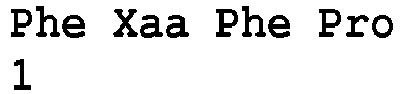
- <210> 132
<211> 10
<212> PRT
<213> Artificial sequence - <220>
<223> synthetic peptide ligand - <220>
<221> misc_feature
<222> (1)..(1)
<223> N-terminal Ac - <220>
<221> misc_feature
<222> (6)..(6)
<223> Xaa = Abu - <220>
<221> misc_feature
<222> (8)..(8)
<223> Xaa = Cit - <220>
<221> misc_feature
<222> (9)..(9)
<223> Xaa = Aib - <400> 132

Claims (12)
- An αvβ6 integrin ligand comprising:
RG1DLXaa1Xaa2L-Xaa3Xaa4L-R1 (SEQ ID NO: 96) (Formula VIII)
whereinR is L-arginine;G1 is L-glycine or N-methyl glycine;D is L-aspartic acid (L-aspartate);L is L-leucine;Xaa1 is L-alanine;Xaa2 is L-α-aminobutyric acid (Abu);Xaa3 is citrulline (Cit);Xaa4 is aminoisobutyric acid (Aib); andR1 is optional and, if present, includes PEG and/or a linking group. - The αvβ6 integrin ligand of claim 1, wherein R1 comprises a polyethylene glycol having 2-20 ethylene oxide units.
- The αvβ6 integrin ligand of claim 1 or claim 2, wherein the αvβ6 integrin ligand comprises an amine-terminal cap.
- The αvβ6 integrin ligand of any of claims 1 to 3, wherein the amine-terminal cap is selected from the group consisting of: CH3CO, CH3CH2CO, CH3(CH2)2CO, (CH3)2CHCO, CH3(CH2)3CO, (CH3)2CHCH2CO, CH3CH2CH(CH3)CO, (CH3)3CCO, CH3(CH2)4CO, CH3SO2, CH3CH2SO2, CH3(CH2)2SO2, (CH3)2CHSO2, CH3(CH2)3SO2, (CH3)2CHCH2SO2, CH3CH2CH(CH3)SO2, (CH3)3CSO2, PhCO, PhSO2, alkyl group having 1, 2, 3, 4, 5, 6, 7, 8, 9, or 10 carbon atoms, methyl, ethyl, propyl, butyl, pentyl, NH2NH, PEG, guanidinyl, CH3OCH2CH2OCH2CH2CO, CH3O(CH2CH2O)2CH2CH2CO, CH3O(CH2CH2O)3CH2CH2CO, CH3O(CH2CH2O)4CH2CH2CO, CH3O(CH2CH2O)5CH2CH2CO, CH3OCH2CH2OCH2CO, CH3O(CH2CH2O)2CH2CO, CH3O(CH2CH2O)3CH2CO, CH3O(CH2CH2O)4CH2CO, CH3O(CH2CH2O)5CH2CO, CH3OCH2CH2OCO, CH3O(CH2CH2O)2CO, CH3O(CH2CH2O)3CO, CH3O(CH2CH2O)4CO, CH3O(CH2CH2O)5CO, HOCH2CH2OCH2CH2CO, HO(CH2CH2O)2CH2CH2CO, HO(CH2CH2O)3CH2CH2CO, HO(CH2CH2O)4CH2CH2CO, HO(CH2CH2O)5CH2CH2CO, HOCH2CH2OCH2CO, HO(CH2CH2O)2CH2CO, HO(CH2CH2O)3CH2CO, HO(CH2CH2O)4CH2CO, HO(CH2CH2O)5CH2CO, HOCH2CH2OCO, HO(CH2CH2O)2CO, HO(CH2CH2O)3CO, HO(CH2CH2O)4CO, HO(CH2CH2O)5CO, CH3CH2OCH2CH2OCH2CH2CO, CH3CH2O(CH2CH2O)2CH2CH2CO, CH3CH2O(CH2CH2O)3CH2CH2CO, CH3CH2O(CH2CH2O)4CH2CH2CO, CH3CH2O(CH2CH2O)5CH2CH2CO, CH3CH2OCH2CH2OCH2CO, CH3CH2O(CH2CH2O)2CH2CO, CH3CH2O(CH2CH2O)3CH2CO, CH3CH2O(CH2CH2O)4CH2CO, CH3CH2O(CH2CH2O)5CH2CO, CH3CH2OCH2CH2OCO, CH3CH2O(CH2CH2O)2CO, CH3CH2O(CH2CH2O)3CO, CH3CH2O(CH2CH2O)4CO, CH3CH2O(CH2CH2O)5CO, CH3OCH2CH2CO, HOCH2CH2CO, or CH3CH2OCH2CH2CO.
- The αvβ6 integrin ligand of claim 4, wherein the amine terminal cap is CH3CO.
- The αvβ6 integrin ligand of claim 1, wherein the αvβ6 integrin ligand comprises the sequence of SEQ ID NO: 4 (Ac-RGDLAAbuLCitAibL).
- The αvβ6 integrin ligand of any of claims 1 to 6, wherein the αvβ6 integrin ligand is further conjugated to a cargo molecule.
- The αvβ6 integrin ligand of any of claims 1 to 7, wherein the αvβ6 integrin ligand is conjugated to a cargo molecule that comprises a small molecule, an antibody, an antibody fragment, an immunoglobulin, a monoclonal antibody, a label or marker, a lipid, a natural or modified nucleic acid or polynucleotide, a peptide, an aptamer, a polymer, a polyamine, a protein, a toxin, a vitamin, a polyethylene glycol, a hapten, a digoxigenin, a biotin, a radioactive atom or molecule, or a fluorophore.
- The αvβ6 integrin ligand of any of claims 1 to 8, wherein the αvβ6 integrin ligand is conjugated to a cargo molecule that comprises an active pharmaceutical ingredient.
- The αvβ6 integrin ligand of any of claims 1 to 9, wherein the αvβ6 integrin ligand is conjugated to a cargo molecule that comprises an oligomeric compound.
- The αvβ6 integrin ligand of claim 10, wherein the oligomeric compound is an RNAi agent.
- A composition comprising the αvβ6 integrin ligand of any of claims 1 to 11, and a pharmaceutically acceptable excipient.
Priority Applications (4)
| Application Number | Priority Date | Filing Date | Title |
|---|---|---|---|
| EP21202340.2A EP3981780A1 (en) | 2016-11-01 | 2017-11-01 | Alpha-v beta-6 integrin ligands and uses thereof |
| PL17867252T PL3535397T3 (en) | 2016-11-01 | 2017-11-01 | Alpha-v beta-6 integrin ligands and uses thereof |
| SI201731066T SI3535397T1 (en) | 2016-11-01 | 2017-11-01 | Alpha-v beta-6 integrin ligands and uses thereof |
| HRP20220181TT HRP20220181T1 (en) | 2016-11-01 | 2017-11-01 | Alpha-v beta-6 integrin ligands and uses thereof |
Applications Claiming Priority (2)
| Application Number | Priority Date | Filing Date | Title |
|---|---|---|---|
| US201662415752P | 2016-11-01 | 2016-11-01 | |
| PCT/US2017/059550 WO2018085415A1 (en) | 2016-11-01 | 2017-11-01 | Alpha-v beta-6 integrin ligands and uses thereof |
Related Child Applications (2)
| Application Number | Title | Priority Date | Filing Date |
|---|---|---|---|
| EP21202340.2A Division-Into EP3981780A1 (en) | 2016-11-01 | 2017-11-01 | Alpha-v beta-6 integrin ligands and uses thereof |
| EP21202340.2A Division EP3981780A1 (en) | 2016-11-01 | 2017-11-01 | Alpha-v beta-6 integrin ligands and uses thereof |
Publications (3)
| Publication Number | Publication Date |
|---|---|
| EP3535397A1 EP3535397A1 (en) | 2019-09-11 |
| EP3535397A4 EP3535397A4 (en) | 2020-06-03 |
| EP3535397B1 true EP3535397B1 (en) | 2022-01-05 |
Family
ID=62076333
Family Applications (2)
| Application Number | Title | Priority Date | Filing Date |
|---|---|---|---|
| EP21202340.2A Pending EP3981780A1 (en) | 2016-11-01 | 2017-11-01 | Alpha-v beta-6 integrin ligands and uses thereof |
| EP17867252.3A Active EP3535397B1 (en) | 2016-11-01 | 2017-11-01 | Alpha-v beta-6 integrin ligands and uses thereof |
Family Applications Before (1)
| Application Number | Title | Priority Date | Filing Date |
|---|---|---|---|
| EP21202340.2A Pending EP3981780A1 (en) | 2016-11-01 | 2017-11-01 | Alpha-v beta-6 integrin ligands and uses thereof |
Country Status (20)
| Country | Link |
|---|---|
| US (2) | US11180529B2 (en) |
| EP (2) | EP3981780A1 (en) |
| JP (3) | JP7291624B2 (en) |
| KR (1) | KR102634762B1 (en) |
| CN (2) | CN117285626A (en) |
| AU (2) | AU2017354041B2 (en) |
| CA (1) | CA3039618A1 (en) |
| DK (1) | DK3535397T3 (en) |
| EA (1) | EA201991102A1 (en) |
| ES (1) | ES2906109T3 (en) |
| HR (1) | HRP20220181T1 (en) |
| IL (2) | IL266343B2 (en) |
| JO (1) | JOP20190084B1 (en) |
| MX (3) | MX2019004909A (en) |
| PL (1) | PL3535397T3 (en) |
| SA (1) | SA519401709B1 (en) |
| SI (1) | SI3535397T1 (en) |
| TW (1) | TWI776821B (en) |
| WO (1) | WO2018085415A1 (en) |
| ZA (2) | ZA201901905B (en) |
Families Citing this family (16)
| Publication number | Priority date | Publication date | Assignee | Title |
|---|---|---|---|---|
| SI3535397T1 (en) * | 2016-11-01 | 2022-04-29 | Arrowhead Pharmaceuticals, Inc. | Alpha-v beta-6 integrin ligands and uses thereof |
| MX394210B (en) | 2017-02-28 | 2025-03-04 | Morphic Therapeutic Inc | Inhibitors of (alpha-v)(beta-6) integrin |
| MA52117A (en) | 2017-02-28 | 2022-04-06 | Morphic Therapeutic Inc | INHIBITORS OF INTEGRIN (ALPHA-V) (BETA-6) |
| TN2019000308A1 (en) | 2017-07-06 | 2021-05-07 | Arrowhead Pharmaceuticals Inc | RNAi AGENTS FOR INHIBITING EXPRESSION OF ALPHA-ENaC AND METHODS OF USE |
| WO2020047208A1 (en) | 2018-08-29 | 2020-03-05 | Morphic Therapeutic, Inc. | Inhibitors of (alpha-v)(beta-6) integrin |
| WO2020047239A1 (en) | 2018-08-29 | 2020-03-05 | Morphic Therapeutic, Inc. | INHIBITING αV β6 INTEGRIN |
| SI3844162T1 (en) | 2018-08-29 | 2025-06-30 | Morphic Therapeutic, Inc. | Inhibitors of alpha v beta6 integrin |
| KR102663798B1 (en) | 2019-06-25 | 2024-05-03 | 주식회사 엘지에너지솔루션 | Battery system |
| TW202130809A (en) * | 2019-10-29 | 2021-08-16 | 美商愛羅海德製藥公司 | Rnai agents for inhibiting expression of beta-enac, compositions thereof, and methods of use |
| CA3189065A1 (en) * | 2020-09-11 | 2022-03-17 | Arrowhead Pharmaceuticals, Inc. | Rnai agents for inhibiting expression of dux4, compositions thereof, and methods of use |
| WO2022056269A1 (en) * | 2020-09-11 | 2022-03-17 | Arrowhead Pharmaceuticals, Inc. | Skeletal muscle delivery platforms and methods of use |
| CN116783294A (en) * | 2020-09-11 | 2023-09-19 | 箭头药业股份有限公司 | Integrin targeting ligands and their uses |
| MX2023002939A (en) * | 2020-09-11 | 2023-04-11 | Arrowhead Pharmaceuticals Inc | Skeletal muscle delivery platforms and methods of use. |
| JP2024516096A (en) | 2021-04-08 | 2024-04-12 | アローヘッド ファーマシューティカルズ インコーポレイテッド | RNAi agents for inhibiting expression of receptor for advanced glycation end products, compositions thereof, and methods of use |
| MX2023014026A (en) | 2021-05-28 | 2023-12-12 | Arrowhead Pharmaceuticals Inc | RNAI AGENTS TO INHIBIT THE EXPRESSION OF MUCIN 5AC (MUC5AC), COMPOSITIONS OF THESE AND METHODS OF USE. |
| JP2025522880A (en) | 2022-06-30 | 2025-07-17 | アルナイラム ファーマシューティカルズ, インコーポレイテッド | Cyclic disulfide-modified phosphate-based oligonucleotide prodrugs |
Family Cites Families (15)
| Publication number | Priority date | Publication date | Assignee | Title |
|---|---|---|---|---|
| US4522811A (en) | 1982-07-08 | 1985-06-11 | Syntex (U.S.A.) Inc. | Serial injection of muramyldipeptides and liposomes enhances the anti-infective activity of muramyldipeptides |
| DE19929410A1 (en) * | 1999-06-26 | 2000-12-28 | Merck Patent Gmbh | New octapepide compounds as alpha v beta 6 integrin inhibitors useful for treating and diagnosing heart disease, tumors, osteoporosis, fibrosis, inflammation, infection and psoriasis |
| AU2001257174A1 (en) * | 2000-04-21 | 2001-11-07 | Amgen Inc. | Integrin/adhesion antagonists |
| DE10118550A1 (en) * | 2001-04-14 | 2002-10-17 | Merck Patent Gmbh | New 3-ethanoylamino-3-phenyl-propionic acid derivatives, are integrin agonists or antagonists useful e.g. for treating angiogenic, cardiovascular, inflammatory, osteolytic or tumor diseases or infections |
| GB0520068D0 (en) * | 2005-10-03 | 2005-11-09 | Cancer Res Technology | av peptide ligand |
| EP2064244B1 (en) | 2006-08-03 | 2019-06-05 | MedImmune Limited | ANTIBODIES DIRECTED TO alphaVbeta6 AND USES THEREOF |
| AR066984A1 (en) | 2007-06-15 | 2009-09-23 | Novartis Ag | INHIBITION OF THE EXPRESSION OF THE ALFA SUBUNITY OF THE SODIUM EPITELIAL CHANNEL (ENAC) THROUGH ARNI (INTERFERENCE RNA) |
| WO2009069727A1 (en) | 2007-11-28 | 2009-06-04 | Fujifilm Corporation | Method for chemically modifying biopolymer or polypeptide |
| PL2643349T3 (en) | 2010-11-26 | 2020-03-31 | Molecular Partners Ag | Designed repeat proteins binding to serum albumin |
| SG11201404354UA (en) * | 2012-02-17 | 2014-10-30 | Seattle Genetics Inc | ANTIBODIES TO INTEGRIN αVβ6 AND USE OF SAME TO TREAT CANCER |
| CA2945945C (en) | 2014-04-15 | 2023-10-03 | The Regents Of The University Of California | Bi-terminal pegylated integrin-binding peptides and methods of use thereof |
| WO2016164357A1 (en) | 2015-04-06 | 2016-10-13 | The Board Of Regents Of The University Of Oklahoma | Phages for biomarker capture and methods of use |
| EP3130912B1 (en) | 2015-08-14 | 2017-06-28 | Sick Ag | Method for determining the concentration of a gas component and spectrometer for same |
| JOP20190015A1 (en) | 2016-08-04 | 2019-02-04 | Arrowhead Pharmaceuticals Inc | RNAi AGENTS FOR HEPATITIS B VIRUS INFECTION |
| SI3535397T1 (en) * | 2016-11-01 | 2022-04-29 | Arrowhead Pharmaceuticals, Inc. | Alpha-v beta-6 integrin ligands and uses thereof |
-
2017
- 2017-11-01 SI SI201731066T patent/SI3535397T1/en unknown
- 2017-11-01 PL PL17867252T patent/PL3535397T3/en unknown
- 2017-11-01 JP JP2019522676A patent/JP7291624B2/en active Active
- 2017-11-01 CN CN202311057967.9A patent/CN117285626A/en active Pending
- 2017-11-01 IL IL266343A patent/IL266343B2/en unknown
- 2017-11-01 IL IL305158A patent/IL305158A/en unknown
- 2017-11-01 TW TW106137824A patent/TWI776821B/en active
- 2017-11-01 MX MX2019004909A patent/MX2019004909A/en unknown
- 2017-11-01 AU AU2017354041A patent/AU2017354041B2/en active Active
- 2017-11-01 WO PCT/US2017/059550 patent/WO2018085415A1/en not_active Ceased
- 2017-11-01 CA CA3039618A patent/CA3039618A1/en active Pending
- 2017-11-01 EA EA201991102A patent/EA201991102A1/en unknown
- 2017-11-01 DK DK17867252.3T patent/DK3535397T3/en active
- 2017-11-01 HR HRP20220181TT patent/HRP20220181T1/en unknown
- 2017-11-01 CN CN201780068077.4A patent/CN109952376B/en active Active
- 2017-11-01 EP EP21202340.2A patent/EP3981780A1/en active Pending
- 2017-11-01 KR KR1020197012274A patent/KR102634762B1/en active Active
- 2017-11-01 EP EP17867252.3A patent/EP3535397B1/en active Active
- 2017-11-01 ES ES17867252T patent/ES2906109T3/en active Active
- 2017-11-01 JO JOP/2019/0084A patent/JOP20190084B1/en active
-
2019
- 2019-03-27 ZA ZA2019/01905A patent/ZA201901905B/en unknown
- 2019-04-26 MX MX2023007051A patent/MX2023007051A/en unknown
- 2019-04-26 MX MX2023007046A patent/MX2023007046A/en unknown
- 2019-04-30 US US16/399,073 patent/US11180529B2/en active Active
- 2019-05-01 SA SA519401709A patent/SA519401709B1/en unknown
-
2021
- 2021-10-14 US US17/501,486 patent/US12173086B2/en active Active
-
2022
- 2022-03-18 ZA ZA2022/03240A patent/ZA202203240B/en unknown
-
2023
- 2023-06-02 JP JP2023091857A patent/JP2023105046A/en not_active Withdrawn
-
2024
- 2024-04-24 AU AU2024202695A patent/AU2024202695A1/en active Pending
-
2025
- 2025-05-02 JP JP2025076681A patent/JP2025107348A/en active Pending
Also Published As
Similar Documents
| Publication | Publication Date | Title |
|---|---|---|
| US12173086B2 (en) | Alpha-v beta-6 integrin ligands and uses thereof | |
| CN103282503B (en) | Small molecule conjugates for intracellular delivery of nucleic acids | |
| AU2002306500C1 (en) | Transporters comprising spaced arginine moieties | |
| CA3079402A1 (en) | Integrin ligands and uses thereof | |
| CN103491982B (en) | The polynucleotides delivering in vivo conjugate connected with enzyme sensitiveness | |
| EP2206787A2 (en) | Peptide-enhanced transfections | |
| CN112074290A (en) | Integrin targeting ligands and uses thereof | |
| HK40014552B (en) | Alpha-v beta-6 integrin ligands and uses thereof | |
| JP6495714B2 (en) | Novel membrane permeable peptide | |
| EP3784267B1 (en) | Integrin targeting ligands and uses thereof | |
| BR112019008965B1 (en) | ALPHA-V BETA-6 INTEGRIN LIGAND AND COMPOSITION COMPRISING THE SAME | |
| EA042923B1 (en) | ALPHA-V BETA-6 INTEGRIN LIGANDS AND OPTIONS FOR THEIR APPLICATIONS | |
| CN120775845A (en) | SiRNA, drug for inhibiting melanocortin receptor 4 (MC 4R) gene expression and application thereof | |
| WO2026037285A1 (en) | Kidney-targeting polypeptide-oligonucleotide conjugate and use thereof | |
| JP6966427B2 (en) | Biologically cleavable tetrapeptide linking agent | |
| CN121127266A (en) | Peptide oligonucleotide conjugates for inhibiting the expression of target genes in the central nervous system and their applications | |
| HK1188947A (en) | In vivo polynucleotide delivery conjugates having enzyme sensitive linkages | |
| HK1188947B (en) | In vivo polynucleotide delivery conjugates having enzyme sensitive linkages | |
| HK1089450B (en) | Method and carrier complexes for delivering molecules to cells | |
| HK1089450A1 (en) | Method and carrier complexes for delivering molecules to cells |
Legal Events
| Date | Code | Title | Description |
|---|---|---|---|
| REG | Reference to a national code |
Ref country code: HR Ref legal event code: TUEP Ref document number: P20220181 Country of ref document: HR |
|
| STAA | Information on the status of an ep patent application or granted ep patent |
Free format text: STATUS: THE INTERNATIONAL PUBLICATION HAS BEEN MADE |
|
| PUAI | Public reference made under article 153(3) epc to a published international application that has entered the european phase |
Free format text: ORIGINAL CODE: 0009012 |
|
| STAA | Information on the status of an ep patent application or granted ep patent |
Free format text: STATUS: REQUEST FOR EXAMINATION WAS MADE |
|
| 17P | Request for examination filed |
Effective date: 20190524 |
|
| AK | Designated contracting states |
Kind code of ref document: A1 Designated state(s): AL AT BE BG CH CY CZ DE DK EE ES FI FR GB GR HR HU IE IS IT LI LT LU LV MC MK MT NL NO PL PT RO RS SE SI SK SM TR |
|
| AX | Request for extension of the european patent |
Extension state: BA ME |
|
| DAV | Request for validation of the european patent (deleted) | ||
| DAX | Request for extension of the european patent (deleted) | ||
| A4 | Supplementary search report drawn up and despatched |
Effective date: 20200508 |
|
| RIC1 | Information provided on ipc code assigned before grant |
Ipc: A61K 38/00 20060101ALN20200501BHEP Ipc: C07K 19/00 20060101ALN20200501BHEP Ipc: C07K 7/02 20060101ALI20200501BHEP Ipc: A61P 43/00 20060101ALI20200501BHEP Ipc: A61K 47/60 20170101ALI20200501BHEP Ipc: C07K 7/06 20060101AFI20200501BHEP Ipc: A61K 31/713 20060101ALI20200501BHEP Ipc: C12N 15/113 20100101ALI20200501BHEP Ipc: A61K 47/64 20170101ALI20200501BHEP |
|
| RAP1 | Party data changed (applicant data changed or rights of an application transferred) |
Owner name: ARROWHEAD PHARMACEUTICALS, INC. |
|
| REG | Reference to a national code |
Ref country code: HK Ref legal event code: DE Ref document number: 40014552 Country of ref document: HK |
|
| STAA | Information on the status of an ep patent application or granted ep patent |
Free format text: STATUS: EXAMINATION IS IN PROGRESS |
|
| 17Q | First examination report despatched |
Effective date: 20201209 |
|
| REG | Reference to a national code |
Ref country code: DE Ref legal event code: R079 Ref document number: 602017052037 Country of ref document: DE Free format text: PREVIOUS MAIN CLASS: C12N0015113000 Ipc: C07K0007060000 |
|
| GRAP | Despatch of communication of intention to grant a patent |
Free format text: ORIGINAL CODE: EPIDOSNIGR1 |
|
| STAA | Information on the status of an ep patent application or granted ep patent |
Free format text: STATUS: GRANT OF PATENT IS INTENDED |
|
| RIC1 | Information provided on ipc code assigned before grant |
Ipc: C07K 19/00 20060101ALN20210423BHEP Ipc: A61K 38/00 20060101ALN20210423BHEP Ipc: A61P 35/00 20060101ALI20210423BHEP Ipc: A61K 31/713 20060101ALI20210423BHEP Ipc: C12N 15/113 20100101ALI20210423BHEP Ipc: A61K 47/64 20170101ALI20210423BHEP Ipc: A61K 47/60 20170101ALI20210423BHEP Ipc: C07K 7/02 20060101ALI20210423BHEP Ipc: C07K 7/06 20060101AFI20210423BHEP |
|
| RIC1 | Information provided on ipc code assigned before grant |
Ipc: C07K 19/00 20060101ALN20210507BHEP Ipc: A61K 38/00 20060101ALN20210507BHEP Ipc: A61P 35/00 20060101ALI20210507BHEP Ipc: A61K 31/713 20060101ALI20210507BHEP Ipc: C12N 15/113 20100101ALI20210507BHEP Ipc: A61K 47/64 20170101ALI20210507BHEP Ipc: A61K 47/60 20170101ALI20210507BHEP Ipc: C07K 7/02 20060101ALI20210507BHEP Ipc: C07K 7/06 20060101AFI20210507BHEP |
|
| INTG | Intention to grant announced |
Effective date: 20210528 |
|
| RIN1 | Information on inventor provided before grant (corrected) |
Inventor name: FOWLER-WATTERS, MATTHEW Inventor name: CARLSON, JEFFREY Inventor name: NICHOLAS, ANTHONY Inventor name: GLEBOCKA, ANGIESZKA Inventor name: PEI, TAO Inventor name: BUSH, ERIK, W Inventor name: LI, ZHEN Inventor name: ALMEIDA, AARON |
|
| GRAS | Grant fee paid |
Free format text: ORIGINAL CODE: EPIDOSNIGR3 |
|
| GRAA | (expected) grant |
Free format text: ORIGINAL CODE: 0009210 |
|
| STAA | Information on the status of an ep patent application or granted ep patent |
Free format text: STATUS: THE PATENT HAS BEEN GRANTED |
|
| AK | Designated contracting states |
Kind code of ref document: B1 Designated state(s): AL AT BE BG CH CY CZ DE DK EE ES FI FR GB GR HR HU IE IS IT LI LT LU LV MC MK MT NL NO PL PT RO RS SE SI SK SM TR |
|
| REG | Reference to a national code |
Ref country code: GB Ref legal event code: FG4D |
|
| REG | Reference to a national code |
Ref country code: CH Ref legal event code: EP |
|
| REG | Reference to a national code |
Ref country code: AT Ref legal event code: REF Ref document number: 1460485 Country of ref document: AT Kind code of ref document: T Effective date: 20220115 |
|
| REG | Reference to a national code |
Ref country code: FI Ref legal event code: FGE |
|
| REG | Reference to a national code |
Ref country code: DE Ref legal event code: R096 Ref document number: 602017052037 Country of ref document: DE |
|
| REG | Reference to a national code |
Ref country code: DK Ref legal event code: T3 Effective date: 20220125 |
|
| REG | Reference to a national code |
Ref country code: IE Ref legal event code: FG4D |
|
| REG | Reference to a national code |
Ref country code: SE Ref legal event code: TRGR |
|
| REG | Reference to a national code |
Ref country code: GR Ref legal event code: EP Ref document number: 20220400265 Country of ref document: GR Effective date: 20220309 |
|
| REG | Reference to a national code |
Ref country code: NO Ref legal event code: T2 Effective date: 20220105 |
|
| REG | Reference to a national code |
Ref country code: NL Ref legal event code: FP |
|
| REG | Reference to a national code |
Ref country code: ES Ref legal event code: FG2A Ref document number: 2906109 Country of ref document: ES Kind code of ref document: T3 Effective date: 20220413 |
|
| REG | Reference to a national code |
Ref country code: LT Ref legal event code: MG9D |
|
| REG | Reference to a national code |
Ref country code: HR Ref legal event code: T1PR Ref document number: P20220181 Country of ref document: HR |
|
| PG25 | Lapsed in a contracting state [announced via postgrant information from national office to epo] |
Ref country code: RS Free format text: LAPSE BECAUSE OF FAILURE TO SUBMIT A TRANSLATION OF THE DESCRIPTION OR TO PAY THE FEE WITHIN THE PRESCRIBED TIME-LIMIT Effective date: 20220105 Ref country code: PT Free format text: LAPSE BECAUSE OF FAILURE TO SUBMIT A TRANSLATION OF THE DESCRIPTION OR TO PAY THE FEE WITHIN THE PRESCRIBED TIME-LIMIT Effective date: 20220505 Ref country code: LT Free format text: LAPSE BECAUSE OF FAILURE TO SUBMIT A TRANSLATION OF THE DESCRIPTION OR TO PAY THE FEE WITHIN THE PRESCRIBED TIME-LIMIT Effective date: 20220105 |
|
| PG25 | Lapsed in a contracting state [announced via postgrant information from national office to epo] |
Ref country code: LV Free format text: LAPSE BECAUSE OF FAILURE TO SUBMIT A TRANSLATION OF THE DESCRIPTION OR TO PAY THE FEE WITHIN THE PRESCRIBED TIME-LIMIT Effective date: 20220105 |
|
| PG25 | Lapsed in a contracting state [announced via postgrant information from national office to epo] |
Ref country code: IS Free format text: LAPSE BECAUSE OF FAILURE TO SUBMIT A TRANSLATION OF THE DESCRIPTION OR TO PAY THE FEE WITHIN THE PRESCRIBED TIME-LIMIT Effective date: 20220505 |
|
| REG | Reference to a national code |
Ref country code: DE Ref legal event code: R097 Ref document number: 602017052037 Country of ref document: DE |
|
| PG25 | Lapsed in a contracting state [announced via postgrant information from national office to epo] |
Ref country code: SM Free format text: LAPSE BECAUSE OF FAILURE TO SUBMIT A TRANSLATION OF THE DESCRIPTION OR TO PAY THE FEE WITHIN THE PRESCRIBED TIME-LIMIT Effective date: 20220105 Ref country code: SK Free format text: LAPSE BECAUSE OF FAILURE TO SUBMIT A TRANSLATION OF THE DESCRIPTION OR TO PAY THE FEE WITHIN THE PRESCRIBED TIME-LIMIT Effective date: 20220105 Ref country code: RO Free format text: LAPSE BECAUSE OF FAILURE TO SUBMIT A TRANSLATION OF THE DESCRIPTION OR TO PAY THE FEE WITHIN THE PRESCRIBED TIME-LIMIT Effective date: 20220105 Ref country code: EE Free format text: LAPSE BECAUSE OF FAILURE TO SUBMIT A TRANSLATION OF THE DESCRIPTION OR TO PAY THE FEE WITHIN THE PRESCRIBED TIME-LIMIT Effective date: 20220105 |
|
| PLBE | No opposition filed within time limit |
Free format text: ORIGINAL CODE: 0009261 |
|
| REG | Reference to a national code |
Ref country code: HR Ref legal event code: ODRP Ref document number: P20220181 Country of ref document: HR Payment date: 20221018 Year of fee payment: 6 |
|
| STAA | Information on the status of an ep patent application or granted ep patent |
Free format text: STATUS: NO OPPOSITION FILED WITHIN TIME LIMIT |
|
| PG25 | Lapsed in a contracting state [announced via postgrant information from national office to epo] |
Ref country code: AL Free format text: LAPSE BECAUSE OF FAILURE TO SUBMIT A TRANSLATION OF THE DESCRIPTION OR TO PAY THE FEE WITHIN THE PRESCRIBED TIME-LIMIT Effective date: 20220105 |
|
| 26N | No opposition filed |
Effective date: 20221006 |
|
| REG | Reference to a national code |
Ref country code: AT Ref legal event code: UEP Ref document number: 1460485 Country of ref document: AT Kind code of ref document: T Effective date: 20220105 |
|
| PG25 | Lapsed in a contracting state [announced via postgrant information from national office to epo] |
Ref country code: MC Free format text: LAPSE BECAUSE OF FAILURE TO SUBMIT A TRANSLATION OF THE DESCRIPTION OR TO PAY THE FEE WITHIN THE PRESCRIBED TIME-LIMIT Effective date: 20220105 |
|
| P01 | Opt-out of the competence of the unified patent court (upc) registered |
Effective date: 20230530 |
|
| REG | Reference to a national code |
Ref country code: HR Ref legal event code: ODRP Ref document number: P20220181 Country of ref document: HR Payment date: 20231018 Year of fee payment: 7 |
|
| PG25 | Lapsed in a contracting state [announced via postgrant information from national office to epo] |
Ref country code: HU Free format text: LAPSE BECAUSE OF FAILURE TO SUBMIT A TRANSLATION OF THE DESCRIPTION OR TO PAY THE FEE WITHIN THE PRESCRIBED TIME-LIMIT; INVALID AB INITIO Effective date: 20171101 |
|
| PG25 | Lapsed in a contracting state [announced via postgrant information from national office to epo] |
Ref country code: CY Free format text: LAPSE BECAUSE OF FAILURE TO SUBMIT A TRANSLATION OF THE DESCRIPTION OR TO PAY THE FEE WITHIN THE PRESCRIBED TIME-LIMIT Effective date: 20220105 |
|
| PG25 | Lapsed in a contracting state [announced via postgrant information from national office to epo] |
Ref country code: MK Free format text: LAPSE BECAUSE OF FAILURE TO SUBMIT A TRANSLATION OF THE DESCRIPTION OR TO PAY THE FEE WITHIN THE PRESCRIBED TIME-LIMIT Effective date: 20220105 |
|
| PG25 | Lapsed in a contracting state [announced via postgrant information from national office to epo] |
Ref country code: MT Free format text: LAPSE BECAUSE OF FAILURE TO SUBMIT A TRANSLATION OF THE DESCRIPTION OR TO PAY THE FEE WITHIN THE PRESCRIBED TIME-LIMIT Effective date: 20220105 |
|
| REG | Reference to a national code |
Ref country code: HR Ref legal event code: ODRP Ref document number: P20220181 Country of ref document: HR Payment date: 20241021 Year of fee payment: 8 |
|
| REG | Reference to a national code |
Ref country code: HR Ref legal event code: ODRP Ref document number: P20220181 Country of ref document: HR Payment date: 20251021 Year of fee payment: 9 |
|
| REG | Reference to a national code |
Ref country code: CH Ref legal event code: U11 Free format text: ST27 STATUS EVENT CODE: U-0-0-U10-U11 (AS PROVIDED BY THE NATIONAL OFFICE) Effective date: 20251201 |
|
| PGFP | Annual fee paid to national office [announced via postgrant information from national office to epo] |
Ref country code: NL Payment date: 20251126 Year of fee payment: 9 Ref country code: LU Payment date: 20251126 Year of fee payment: 9 |
|
| PGFP | Annual fee paid to national office [announced via postgrant information from national office to epo] |
Ref country code: DE Payment date: 20251128 Year of fee payment: 9 |
|
| PGFP | Annual fee paid to national office [announced via postgrant information from national office to epo] |
Ref country code: GB Payment date: 20251127 Year of fee payment: 9 |
|
| PGFP | Annual fee paid to national office [announced via postgrant information from national office to epo] |
Ref country code: NO Payment date: 20251128 Year of fee payment: 9 |
|
| PGFP | Annual fee paid to national office [announced via postgrant information from national office to epo] |
Ref country code: AT Payment date: 20251128 Year of fee payment: 9 |
|
| PGFP | Annual fee paid to national office [announced via postgrant information from national office to epo] |
Ref country code: IT Payment date: 20251119 Year of fee payment: 9 Ref country code: FI Payment date: 20251125 Year of fee payment: 9 Ref country code: DK Payment date: 20251125 Year of fee payment: 9 |
|
| PGFP | Annual fee paid to national office [announced via postgrant information from national office to epo] |
Ref country code: HR Payment date: 20251021 Year of fee payment: 9 Ref country code: FR Payment date: 20251125 Year of fee payment: 9 |
|
| PGFP | Annual fee paid to national office [announced via postgrant information from national office to epo] |
Ref country code: TR Payment date: 20251023 Year of fee payment: 9 Ref country code: BE Payment date: 20251119 Year of fee payment: 9 Ref country code: GR Payment date: 20251126 Year of fee payment: 9 |
|
| PGFP | Annual fee paid to national office [announced via postgrant information from national office to epo] |
Ref country code: SE Payment date: 20251127 Year of fee payment: 9 Ref country code: CH Payment date: 20251201 Year of fee payment: 9 |
|
| PGFP | Annual fee paid to national office [announced via postgrant information from national office to epo] |
Ref country code: IE Payment date: 20251127 Year of fee payment: 9 Ref country code: CZ Payment date: 20251020 Year of fee payment: 9 |
|
| PGFP | Annual fee paid to national office [announced via postgrant information from national office to epo] |
Ref country code: BG Payment date: 20251113 Year of fee payment: 9 Ref country code: PL Payment date: 20251022 Year of fee payment: 9 |
|
| PGFP | Annual fee paid to national office [announced via postgrant information from national office to epo] |
Ref country code: SI Payment date: 20251017 Year of fee payment: 9 Ref country code: ES Payment date: 20251201 Year of fee payment: 9 |