EP3533751A1 - Winde - Google Patents
Winde Download PDFInfo
- Publication number
- EP3533751A1 EP3533751A1 EP18159425.0A EP18159425A EP3533751A1 EP 3533751 A1 EP3533751 A1 EP 3533751A1 EP 18159425 A EP18159425 A EP 18159425A EP 3533751 A1 EP3533751 A1 EP 3533751A1
- Authority
- EP
- European Patent Office
- Prior art keywords
- winch
- rigid member
- load
- rope
- transformer
- Prior art date
- Legal status (The legal status is an assumption and is not a legal conclusion. Google has not performed a legal analysis and makes no representation as to the accuracy of the status listed.)
- Withdrawn
Links
Images





Classifications
-
- B—PERFORMING OPERATIONS; TRANSPORTING
- B66—HOISTING; LIFTING; HAULING
- B66D—CAPSTANS; WINCHES; TACKLES, e.g. PULLEY BLOCKS; HOISTS
- B66D3/00—Portable or mobile lifting or hauling appliances
- B66D3/18—Power-operated hoists
- B66D3/26—Other details, e.g. housings
-
- B—PERFORMING OPERATIONS; TRANSPORTING
- B66—HOISTING; LIFTING; HAULING
- B66D—CAPSTANS; WINCHES; TACKLES, e.g. PULLEY BLOCKS; HOISTS
- B66D1/00—Rope, cable, or chain winding mechanisms; Capstans
- B66D1/28—Other constructional details
- B66D1/40—Control devices
- B66D1/42—Control devices non-automatic
- B66D1/46—Control devices non-automatic electric
-
- B—PERFORMING OPERATIONS; TRANSPORTING
- B66—HOISTING; LIFTING; HAULING
- B66C—CRANES; LOAD-ENGAGING ELEMENTS OR DEVICES FOR CRANES, CAPSTANS, WINCHES, OR TACKLES
- B66C13/00—Other constructional features or details
- B66C13/04—Auxiliary devices for controlling movements of suspended loads, or preventing cable slack
-
- B—PERFORMING OPERATIONS; TRANSPORTING
- B66—HOISTING; LIFTING; HAULING
- B66D—CAPSTANS; WINCHES; TACKLES, e.g. PULLEY BLOCKS; HOISTS
- B66D3/00—Portable or mobile lifting or hauling appliances
- B66D3/18—Power-operated hoists
- B66D3/24—Applications of limit switches
-
- H—ELECTRICITY
- H02—GENERATION; CONVERSION OR DISTRIBUTION OF ELECTRIC POWER
- H02G—INSTALLATION OF ELECTRIC CABLES OR LINES, OR OF COMBINED OPTICAL AND ELECTRIC CABLES OR LINES
- H02G11/00—Arrangements of electric cables or lines between relatively-movable parts
- H02G11/02—Arrangements of electric cables or lines between relatively-movable parts using take-up reel or drum
Definitions
- the present invention generally relates to a winch comprising a rigid member used to stabilize a load when being raised and/or lowered by the winch, and a winch and method for wirelessly charging an electrical device comprised in or coupled to the load.
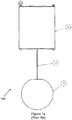
- FIG. 1a depicts a side-view of a schematic illustration of a winch 100 according to the prior art.
- the winch 100 comprises a gearbox 1 and a rope 2.
- the rope 2 is attached to a load 3 which can be raised by winding the rope 2 using the gearbox 3.
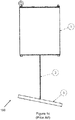
- Figure 1c shows a side-view of a schematic illustration of a further winch 150 according to the prior art.
- a load 3 which has a flat or pancake-like shape is attached to the rope 2.
- the load 3 which is attached to the rope 2 of the winch 150 may start swaying or oscillating around an axis defined by the gravitational force (being parallel to the direction of the rope 2 in a stable position in which the rope does not move) upon fast movement of the load when the rope is being wound or unwound.
- Winches and a method for wirelessly charging an electrical device according to the present disclosure are set out in the independent claims. Preferred embodiments of the winches and the method are outlined in the dependent claims.
- a winch comprising: a rope; and a rigid member coupled, at a first end portion of the rope, to the rope, wherein the rigid member is coupleable to a load raisable and/or lowerable by the winch, and wherein the rigid member is configured to substantially increase an effective length of a said load to stabilize said load when being raised and/or lowered by the winch.
- the rigid member may hereby be an elongated rigid member which may, for example, be coupled or connected to the rope directly or indirectly via an attachment (for example, but not limited to, a solid ring or hook) fixed to the rope.
- the elongated rigid member may hereby be configured to substantially increase the effective length of the load which is to be raised and/or lowered by the winch.
- the rigid member may substantially increase the effective length of the load by increasing said length by 10%, preferably by 20%, more preferably by 30%, more preferably by 40%, more preferably by 50%, more preferably by 60%, more preferably by 70%, more preferably by 80%, more preferably by 90%, more preferably by 100%, or more preferably by more than 100%.
- the inventors have realized that increasing the effective length of the load by coupling a rigid member between the rope and the load allows for stabilizing the load when being raised and/or lowered by the winch, in particular during relatively fast movements, i.e. movements of the load faster than a threshold.
- a tilting angle of the load from an original value in which the load does not move may be reduced by increasing the effective length of the load. As outlined above, this allows for stabilizing the load when being moved by the winch.
- the winch further comprises a gearbox coupled, at a second end portion of the rope, to the rope, wherein the first end portion of the rope is opposite to the second end portion of the rope, and wherein the gearbox is configured to wound and/or unwound the rope.
- a gearbox coupled, at a second end portion of the rope, to the rope, wherein the first end portion of the rope is opposite to the second end portion of the rope, and wherein the gearbox is configured to wound and/or unwound the rope.
- the rigid member comprises a solid connector fixed to the rope.
- Providing a solid connector fixed to the rope may advantageously allow for a more stable connection to be provided between the rope and the load.
- the rigid member may comprise a plastic cover arranged around the solid connector. This may be particularly advantageous as the connection between the rigid member and the rope on the one hand, and/or between the rigid member and the load on the other hand may be protected, thereby reducing or minimizing any deterioration of such a connection or connections.
- the rigid member comprises a semi-rigid cable.
- a semi-rigid cable may allow for a coupling between the rope and the load via the semi-rigid cable to be provided, in which coupling any forces acting on the load caused by a deviation of the rope from the original, ideal axial alignment (for example, parallel to the gravitational force) may be dampened. This may further reduce swaying of the load when being moved by the winch.
- the rigid member comprises a ferromagnetic or ferrimagnetic material, and wherein the rigid member is configured as a transformer core for wirelessly charging an electrical device of a said load.
- the inventors have realized that by providing a rigid member, arranged between and coupled to a rope and a load, may alternatively or additionally be used as a transformer core, thereby providing for an alternative or additional functionality of the rigid member.
- a rigid member which comprises a ferromagnetic or ferrimagnetic material allows for much faster charging of such an electrical device compared to coreless charging systems.
- the winch further comprises a first transformer coil penetrable by the rigid member upon raising and/or lowering of a said load by the winch.
- the first transformer coil is arranged on or coupled or connected to the gearbox of the winch.
- alternative arrangements may be provided.
- the first transformer coil may hereby be arranged with its winding(s) around an axis defined by the rope (in particular when the rope is in a still, non-moving position). As the rope is wound and/or unwound, the rigid member may be driven into and out of the first transformer coil. When the rigid member and the first transformer coil are aligned along the axis defined by the rope in a certain position, the rigid member and the first transformer coil may form part of a transformer which may be used in order to wirelessly charge the electrical device. A charging system external to the winch may hereby be avoided.
- the winch further comprises a second transformer coil penetrable by the rigid member upon raising and/or lowering of a said load by the winch, wherein the first and second transformer coils are spaced apart with respect to each other along an axis defined by the rope (the axis being defined, for example, when the rope is in a still, i.e. non-moving position, such that the axis is parallel to the gravitational force), and wherein, when the rigid member penetrates each of the first and second transformer coils, the rigid member and the first and second transformer coils form a transformer for said wirelessly charging of the electrical device.
- a configuration may be particularly advantageous, in particular as no further parts may be needed in order to form the transformer.
- a varying electric current may be applied in the first transformer coil, thereby wirelessly charging the electrical device via the transformer.
- the second transformer coil may hereby, similarly to the first transformer coil, be arranged with its winding(s) around an axis defined by the rope (the axis being defined, for example, when the rope is in a still, i.e. non-moving position, as outlined above). As the rope is wound and/or unwound, the rigid member may be driven into and out of the second transformer coil.
- Some kind of electrical coupling between the electrical device and the second transformer coil may hereby be provided such that the electrical device can be charged wirelessly using the transformer formed by the first and second transformer coils and the rigid member.
- the winch further comprises said load comprising said electrical device, wherein the second transformer coil is comprised in or coupled to the load.
- the second transformer coil is comprised in or coupled to the load.
- the rigid member comprises control electronics for controlling the wireless charging of the electrical device and/or for controlling raising and/or lowering the load. It may be particularly advantageous for the control electronics to be used for controlling both wirelessly charging the electrical device and raising/lowering the load, so as to provide for a single unit in the form of control electronics being capable of performing multiple actions.
- the winch further comprises a sensing unit configured to sense a change of inductance and/or current flow in one or both of the first and second transformer coils, and wherein the winch is configured to stop winding or unwinding, respectively, the rope (to raise or lower, respectively, the load) in response to said sensing of said change of inductance and/or current flow in one or both of the first and second transformer coils.
- the transformer coils may hereby be used as a contactless proximity switch and/or an overwinding prevention switch. Therefore, in case the first and second transformer coils are within certain proximity (i.e. within a threshold distance), winding or unwinding, respectively, of the rope may be stopped.
- control electronics may be used as or be comprised in the sensing unit.
- the position of the load at which winding or unwinding, respectively, of the rope may be stopped due to the transformer coils being spaced apart by a distance which is less than the threshold distance, may be used as a reference position (e.g. zero position) of the load at which charging of the electrical device (for example the battery) may be initiated.
- the transformer coils may be used as a contactless proximity switch and/or an overwinding prevention switch
- the transformer coils may be used as a trigger not only for overwinding prevention, but also (additionally or alternatively) as a trigger for when wireless charging of the electrical device should be initiated.
- the rigid member comprises steel. This may be particularly advantageous for various reasons. For example, steel may be preferential as it exhibits relatively high hardness, thereby allowing for a particularly stable connection to be provided, for example, between the rigid member and the rope and/or the load. As will be appreciated, steel is also a relatively cheap material to obtain. Further still, variants of the winch in which the rigid member may be configured as a transformer core for wirelessly charging an electrical device of the load, steel may provide for the ferromagnetic properties of the rigid member.
- a method for wirelessly charging an electrical device comprised in or coupled to a load raisable and/or lowerable by a winch comprising: providing the winch comprising: a rigid member coupled to a rope of the winch, wherein the rigid member comprises a ferromagnetic or ferrimagnetic material, and a first transformer coil arranged around an axis defined by the rope (which axis may be defined, for example, when the rope is in a still, non-moving position such that the axis is parallel to the direction of the gravitational force); coupling the rigid member to the load; providing a second transformer coil and coupling the second transformer coil to the electrical device comprised in or coupled to the load, wherein the second transformer coil is arranged around the rigid member (so that the rigid member penetrates the winding(s) of the second transformer coil); and aligning the first and second transformer coils and the rigid member relative to each other along the axis defined by the rope such that they form a transformer; and charging the electrical device wirelessly using
- the alignment between the first and second transformer coils and the rigid member relative to each other may be changed from a first position, in which a transformer is formed and in which the electrical device may be charged wirelessly using the transformer, to a second position in which no complete transformer is formed by the first and second transformer coils and the rigid member, thereby preventing charging of the electrical device wirelessly.
- the method may hereby make use of, in particular, the rigid member being exploited as a transformer core.
- the rigid member may additionally allow for reducing swaying of the load when being raised and/or lowered by the winch.
- the winch may comprise a source for the varying electrical current which is to be applied in the first transformer coil.
- the source for the varying electrical current may be external to the winch.
- any preferred examples and implementations of the winch as outlined above may be taken into consideration and used in variants of the method as specified above and as outlined in the following.
- said charging of the electrical device wirelessly using the transformer formed by the first and second transformer coils and the rigid member comprises applying a varying electrical current in the first transformer coil.
- Wirelessly charging the electrical device may hereby be performed faster compared to coreless charging methods and systems, using primarily features and components of example implementations of the winch as described herein.
- said aligning of the first and second transformer coils and the rigid member along the axis defined by the rope comprises winding or unwinding, respectively, the rope to raise or lower, respectively, the load using the winch.
- Switching between states of the winch in which, on the one hand, the electrical device may be charged wirelessly and, on the other hand, in which no wirelessly charging of the electrical device is possible, may simply be performed by raising and/or lowering the load using the winch.
- example implementations of the winch as described herein allow for reducing swaying of a load during movement, in particular during fast movement above a certain threshold velocity.
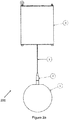
- Figure 2a depicts a side view of a schematic illustration of a winch 200 according to some example implementations as described herein.
- a load 1 (which may or may not be comprised in what is dubbed the winch) is attached to a rigid member 4.
- the rigid member 4 is formed by a steel connector and a semi-rigid cable which are covered by a plastic cover.
- the plastic cover allows for hiding the steel connector and the semi-rigid cable, in particular to thereby prevent deterioration of the steel connector and the semi-rigid cable given any environmental exposures.
- the rigid member 4 is firmly connected to the load 1.
- the load 1 and the rigid member 4 may have predefined, corresponding mating parts allowing for a firm connection to be realized between the rigid member 4 and the load 1.
- the rigid member 4 is coupled to a rope 2 of the winch 200.
- a fixed connection between the rigid member 4 and the rope 2 of the winch 200 may be provided.
- the winch 200 further comprises, in this example, a gearbox 3 which may be used in order to wind or unwind the rope 2.
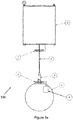
- Figure 2b depicts a schematic side view of the winch 200 with further labeling for illustrative purposes according to some example implementations as described herein.
- a length of the load 1 from, in this example, its center of mass 5 to the point at which the load 1 is connected to the rigid member 4 is denoted as L2.
- the rigid member 4 increases the effective length of the load 1 by a value denoted as L1 to a total effective length of the load of L1 + L2. As outlined above, this may stabilize the load and may allow for faster movement (compared to the winch 100 as depicted in Figures 1a and b ) of the load 1 when being raised and/or lowered by the winch 200, without the load 1 starting to sway or oscillate around the axis defined by the rope 2 or around an axis parallel to the gravitational force.
- Figure 2c depicts a snapshot of a schematic side view of the winch 200 when the load 1 is being raised and/or lowered by the winch 200 according to some example implementations as described herein.
- the direction along which the rope 2 extends does not deviate as much from its original orientation (parallel to the gravitational force) when the load is being raised and/or lowered by the winch 200.
- the part of the rigid member 4 which is connected to the rope 2 is that part of the rigid member 4 which may sway the most during movement of the load.
- the load 1 itself may not sway as much as, in this example, the top part of the rigid member 4 during movement given the increased effective length of the load.
- Figure 3a depicts a side view of a schematic illustration of a winch 300 according to some example implementations as described herein.
- the rigid member 4 comprises (or, in some variants, is entirely made of) steel or another ferromagnetic or ferrimagnetic material.
- the rigid member 4 may hereby be used as a transformer core for a contactless (wireless) charging of any electrical device, such as electrical device 8, which may be coupled to or be comprised in (for example, be inside) the load.
- a first transformer coil 7 is coupled to the gearbox 3 of the winch 300.
- the first transformer coil 7 may be arranged on another part of the winch 300.
- the first transformer coil 7 is, in this example, arranged on the winch 300 such that the rope 2 passes through the winding(s) of the first transformer coil 7.
- a second transformer coil 6 with one or more windings is provided at the load side.
- the second transformer coil 6 is coupled to the electrical device 8 which is placed inside the load 1.
- the second transformer coil 6 may alternatively or additionally be coupled to another part(s) of the load 1, in which case wiring may, in some examples, be used to electrically couple or connect the second transformer coil 6 and the electrical device 8 with each other.
- the second transformer coil 6 is, in this example, arranged such that the rigid member 4 penetrates the winding(s) of the second transformer coil 6.
- Figure 3b depicts a side view of a schematic illustration of the winch 300 shown in Figure 3a in a different state according to some example implementations as described herein.
- the load 1 is raised as shown in Figure 3b to such an extent that the rigid member 4 penetrates each of the first and second transformer coils.
- the rigid member 4 together with the first and second transformer coils all together form a transformer which may be used to wirelessly charge the electrical device 8.
- a much faster charging compared to coreless charging systems may hereby be achieved.
- the electrical device 8 may be charged or chargeable ( Figure 3b ), or not ( Figure 3a ).
- the transformer may be formed at a top position of the winch.
- one or more additional or alternative positions may be predetermined at which the transformer may be formed by the rigid member 4 and the first and second transformer coils.
- Figure 3c depicts a side view of a schematic illustration of a winch 350 according to some example implementations as described herein.
- the rigid member 4 comprises a battery 8, which may preferably be a cylindrical battery.
- a cylindrical battery may hereby ensure that a rotational symmetry may not be further distorted so that the stability while the load 1 is being raised or lowered may be maintained (as much as possible). For example, if the rope 2 rotates around its own longitudinal axis when the load 1 is being raised or lowered, no further forces may be generated which would otherwise result in a certain swaying or oscillating motion of the structure.
- the rigid member 4 further comprises a connecting device 9 and control electronics 10.
- the connecting device 9 is, in this example, used to attach the rope 2 to the rigid member 4.
- the control electronics 10 may be used for wireless charging and/or control of the load 1 in particular in case the load is or comprises, for example, a lighting device (such as an OLED lighting panel).
- reference numeral 10 refers to a sensing unit which is configured to sense a change of inductance and/or current flow in one or both of the first and second transformer coils, wherein the winch is configured to stop winding or unwinding, respectively, the rope 2 in response to said sensing of said change of inductance and/or current flow in one or both of the first and second transformer coils.
- the control electronics 10 may be constituted by or be comprised in the sensing unit.
- the coil 6 is moved to a location above the rigid member 4 and on top, i.e. above the connecting device 9.
- This configuration of the winch 350 in which the coil 6 is moved above the rigid member 4 (and in particular the connecting device 9 of the rigid member 4) allows that the rigid member 4 may not necessarily have to be entirely made out of a ferromagnetic or ferrimagnetic material. Only a part of the rigid member 4 may be made of a ferromagnetic or ferrimagnetic material. In some examples, only the connecting device 9 is made of or comprises a ferromagnetic or ferrimagnetic material.
- providing only a part of the rigid member 4 with a ferromagnetic or ferrimagnetic material may still be sufficient so that the part which is made of a ferromagnetic or ferrimagnetic material together with the coils 6 and 7 may form a transformer used as outlined above, for example for wirelessly charging an electrical device.
- the electrical device which may be wirelessly charged may be the battery 8.
- the electric energy which may hereby be stored in the battery 8 may be used in order to (electrically) power the load 1, which may be, for example, a lighting device, such as an OLED lighting panel.
- the coil 6 may be moved to be on top of the rigid member 4.
- the coils 6 and 7 may be exploited as a contactless proximity switch or overwinding prevention switch.
- electronics which may be constituted by or be comprised in the control electronics 10) inside the winch may sense a change of inductance and/or current flow which may be used as a trigger to stop movement, i.e. stop winding or unwinding the rope 2.
- this position at which movement is stopped may be used as a reference position (for example zero position) of the load.
- Such a reference position may be used, for example, to determine a current position of the load to thereby identify whether, for example, wireless charging of the electrical device may be possible in the current position.
- This reference position may alternatively be used as a charging position for the electrical device, which may be the battery 8.
- the load (which may, in some variants, comprise or be coupled to one or both of the electrical device and the second transformer coil) may be a separate part distinct from the winch to which the load may be coupled or connected.
- the load (which may, in some example implementations, comprise or be coupled to one or both of the electrical device and the second transformer coil) may be integral to, i.e. comprised in the winch.
- the rigid member may be fixed solidly to the load. This solid fixation may allow for increasing stability when raising or lowering the load due to the increase of the effective length of the load.
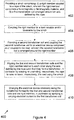
- Figure 4 shows a flowchart of a method 400 according to some example implementations as described herein.
- the method 400 comprises, in this example, at step 402, providing a winch comprising: (i) a rigid member coupled to a rope of the winch, wherein the rigid member comprises a ferromagnetic or ferrimagnetic material, and (ii) a first transformer coil arranged around an axis defined by the rope.
- the axis may hereby be defined by the rope when the rope is in a still position, i.e. when the rope is not wound or unwound, such that the defined axis may, in some examples, be parallel to the direction of the gravitational force.
- the rigid member is coupled to a load raisable and/or lowerable by the winch.
- a second transformer coil is then provided, at step 406, which is coupled to an electrical device comprised in or coupled to the load.
- the second transformer coil is, in this example, arranged around the rigid member.
- the second transformer coil may be arranged such that the rigid member penetrates the winding(s) of the second transformer coil.
- the first and second transformer coils and the rigid member are aligned relative to each other along the axis defined by the rope (for example, when the rope is in a still, non-moving position) such that the first and second transformer coils and the rigid member form a transformer.
- This may in particular be achieved by winding or unwinding, respectively, the rope to raise or lower, respectively, the load using the winch.
- the electrical device is charged wirelessly using the transformer formed by the first and second transformer coils and the rigid member. This may in particular be achieved by applying a varying electrical current in the first transformer coil.
Landscapes
- Engineering & Computer Science (AREA)
- Mechanical Engineering (AREA)
- Charge And Discharge Circuits For Batteries Or The Like (AREA)
Priority Applications (2)
| Application Number | Priority Date | Filing Date | Title |
|---|---|---|---|
| EP18159425.0A EP3533751A1 (de) | 2018-03-01 | 2018-03-01 | Winde |
| US16/286,692 US20190270625A1 (en) | 2018-03-01 | 2019-02-27 | Winch |
Applications Claiming Priority (1)
| Application Number | Priority Date | Filing Date | Title |
|---|---|---|---|
| EP18159425.0A EP3533751A1 (de) | 2018-03-01 | 2018-03-01 | Winde |
Publications (1)
| Publication Number | Publication Date |
|---|---|
| EP3533751A1 true EP3533751A1 (de) | 2019-09-04 |
Family
ID=61526734
Family Applications (1)
| Application Number | Title | Priority Date | Filing Date |
|---|---|---|---|
| EP18159425.0A Withdrawn EP3533751A1 (de) | 2018-03-01 | 2018-03-01 | Winde |
Country Status (2)
| Country | Link |
|---|---|
| US (1) | US20190270625A1 (de) |
| EP (1) | EP3533751A1 (de) |
Families Citing this family (3)
| Publication number | Priority date | Publication date | Assignee | Title |
|---|---|---|---|---|
| US11072518B2 (en) * | 2018-12-06 | 2021-07-27 | Dmitrijs Volohovs | Winch |
| CN112456361A (zh) * | 2020-11-25 | 2021-03-09 | 西北工业大学 | 一种减小吊放声纳液压绞车水下分机摆动幅度的控制方法 |
| US12459793B2 (en) * | 2022-11-14 | 2025-11-04 | Hornet Acquisitionco, Llc | Method to detect homing loads in rescue hoist and winch assemblies |
Citations (3)
| Publication number | Priority date | Publication date | Assignee | Title |
|---|---|---|---|---|
| US3512657A (en) * | 1967-09-21 | 1970-05-19 | Hydranautics | Motion takeup device |
| DE3418923A1 (de) * | 1984-05-21 | 1985-11-21 | Mauer-Blitz Bau-Service GmbH, 4670 Lünen | Anlage zum versetzen von mauersteinen |
| JP2002167161A (ja) * | 2000-11-29 | 2002-06-11 | Yamanegumi:Kk | フローテイングクレーン用伸縮吊具 |
-
2018
- 2018-03-01 EP EP18159425.0A patent/EP3533751A1/de not_active Withdrawn
-
2019
- 2019-02-27 US US16/286,692 patent/US20190270625A1/en not_active Abandoned
Patent Citations (3)
| Publication number | Priority date | Publication date | Assignee | Title |
|---|---|---|---|---|
| US3512657A (en) * | 1967-09-21 | 1970-05-19 | Hydranautics | Motion takeup device |
| DE3418923A1 (de) * | 1984-05-21 | 1985-11-21 | Mauer-Blitz Bau-Service GmbH, 4670 Lünen | Anlage zum versetzen von mauersteinen |
| JP2002167161A (ja) * | 2000-11-29 | 2002-06-11 | Yamanegumi:Kk | フローテイングクレーン用伸縮吊具 |
Also Published As
| Publication number | Publication date |
|---|---|
| US20190270625A1 (en) | 2019-09-05 |
Similar Documents
| Publication | Publication Date | Title |
|---|---|---|
| US20190270625A1 (en) | Winch | |
| US11325702B2 (en) | Tethered aerial drone system | |
| KR101232036B1 (ko) | 비접촉 전력전달 장치 및 자기유도 방식의 급전장치 | |
| US20160100041A1 (en) | Cable-withdrawing assembly | |
| US20120206090A1 (en) | Charging device using magnets | |
| KR102117111B1 (ko) | 테더 드론을 지원하는 지상 스테이션 및 이를 포함하는 테더 드론 시스템 | |
| US12426593B2 (en) | Motive device for waterfowl decoy deployment system | |
| EP4277065A1 (de) | Ladekabelführungssystem | |
| KR20230113334A (ko) | 케이블을 포함하는 충전 장치 및 충전 방법 | |
| JP2015517293A (ja) | 自動位置調整無線充電器及びそれを用いた充電方法 | |
| JP2009213294A (ja) | 非接触充電器 | |
| WO2021239884A1 (en) | Electric vehicle charging system | |
| CN105744128A (zh) | 网络摄像机系统 | |
| WO2016121089A1 (ja) | 電力供給システム、及び電力供給方法 | |
| KR20160134283A (ko) | 케이블 감김 장치를 구비한 전기자동차용 충전기 | |
| KR101315976B1 (ko) | 자동 위치조정 무선충전기 및 그를 이용한 충전 방법 | |
| JP2012246129A (ja) | クレーンフック部における充電システム | |
| EP2587645A1 (de) | Oszillierender stromgenerator | |
| KR101175297B1 (ko) | 전자기 유도방식의 무선 충전회로 | |
| US20250237276A1 (en) | Portable winch | |
| US11905935B2 (en) | Actuator element and method for operating an actuator element | |
| JPH05182731A (ja) | 相対的に動く二つの端位置の間で送電するための装置 | |
| EP4427799A3 (de) | Implantierbare medizinische vorrichtung ohne drahtspule mit konfiguration zum empfang von drahtlosleistung von einem externen ladegerät | |
| EP1038821A3 (de) | Kabelaufroller für ein Elektrogerät | |
| CN111725671B (zh) | 具有活动式绝缘层的系留线缆组件、线缆箱及无人机系统 |
Legal Events
| Date | Code | Title | Description |
|---|---|---|---|
| PUAI | Public reference made under article 153(3) epc to a published international application that has entered the european phase |
Free format text: ORIGINAL CODE: 0009012 |
|
| AK | Designated contracting states |
Kind code of ref document: A1 Designated state(s): AL AT BE BG CH CY CZ DE DK EE ES FI FR GB GR HR HU IE IS IT LI LT LU LV MC MK MT NL NO PL PT RO RS SE SI SK SM TR |
|
| AX | Request for extension of the european patent |
Extension state: BA ME |
|
| 17P | Request for examination filed |
Effective date: 20200131 |
|
| RBV | Designated contracting states (corrected) |
Designated state(s): AL AT BE BG CH CY CZ DE DK EE ES FI FR GB GR HR HU IE IS IT LI LT LU LV MC MK MT NL NO PL PT RO RS SE SI SK SM TR |
|
| 17Q | First examination report despatched |
Effective date: 20200403 |
|
| STAA | Information on the status of an ep patent application or granted ep patent |
Free format text: STATUS: THE APPLICATION HAS BEEN WITHDRAWN |
|
| 18W | Application withdrawn |
Effective date: 20200514 |