EP3533482B1 - Systeme und verfahren zur durchführung einer gekoppelten extrakorporalen photopherese - Google Patents
Systeme und verfahren zur durchführung einer gekoppelten extrakorporalen photopherese Download PDFInfo
- Publication number
- EP3533482B1 EP3533482B1 EP19159588.3A EP19159588A EP3533482B1 EP 3533482 B1 EP3533482 B1 EP 3533482B1 EP 19159588 A EP19159588 A EP 19159588A EP 3533482 B1 EP3533482 B1 EP 3533482B1
- Authority
- EP
- European Patent Office
- Prior art keywords
- mononuclear cell
- cell collection
- blood
- product
- mononuclear
- Prior art date
- Legal status (The legal status is an assumption and is not a legal conclusion. Google has not performed a legal analysis and makes no representation as to the accuracy of the status listed.)
- Active
Links
Images



Classifications
-
- A—HUMAN NECESSITIES
- A61—MEDICAL OR VETERINARY SCIENCE; HYGIENE
- A61M—DEVICES FOR INTRODUCING MEDIA INTO, OR ONTO, THE BODY; DEVICES FOR TRANSDUCING BODY MEDIA OR FOR TAKING MEDIA FROM THE BODY; DEVICES FOR PRODUCING OR ENDING SLEEP OR STUPOR
- A61M1/00—Suction or pumping devices for medical purposes; Devices for carrying-off, for treatment of, or for carrying-over, body-liquids; Drainage systems
- A61M1/36—Other treatment of blood in a by-pass of the natural circulatory system, e.g. temperature adaptation, irradiation ; Extra-corporeal blood circuits
- A61M1/3681—Other treatment of blood in a by-pass of the natural circulatory system, e.g. temperature adaptation, irradiation ; Extra-corporeal blood circuits by irradiation
- A61M1/3683—Other treatment of blood in a by-pass of the natural circulatory system, e.g. temperature adaptation, irradiation ; Extra-corporeal blood circuits by irradiation using photoactive agents
-
- A—HUMAN NECESSITIES
- A61—MEDICAL OR VETERINARY SCIENCE; HYGIENE
- A61M—DEVICES FOR INTRODUCING MEDIA INTO, OR ONTO, THE BODY; DEVICES FOR TRANSDUCING BODY MEDIA OR FOR TAKING MEDIA FROM THE BODY; DEVICES FOR PRODUCING OR ENDING SLEEP OR STUPOR
- A61M1/00—Suction or pumping devices for medical purposes; Devices for carrying-off, for treatment of, or for carrying-over, body-liquids; Drainage systems
- A61M1/14—Dialysis systems; Artificial kidneys; Blood oxygenators ; Reciprocating systems for treatment of body fluids, e.g. single needle systems for hemofiltration or pheresis
- A61M1/30—Single needle dialysis ; Reciprocating systems, alternately withdrawing blood from and returning it to the patient, e.g. single-lumen-needle dialysis or single needle systems for hemofiltration or pheresis
-
- A—HUMAN NECESSITIES
- A61—MEDICAL OR VETERINARY SCIENCE; HYGIENE
- A61M—DEVICES FOR INTRODUCING MEDIA INTO, OR ONTO, THE BODY; DEVICES FOR TRANSDUCING BODY MEDIA OR FOR TAKING MEDIA FROM THE BODY; DEVICES FOR PRODUCING OR ENDING SLEEP OR STUPOR
- A61M1/00—Suction or pumping devices for medical purposes; Devices for carrying-off, for treatment of, or for carrying-over, body-liquids; Drainage systems
- A61M1/34—Filtering material out of the blood by passing it through a membrane, i.e. hemofiltration or diafiltration
- A61M1/342—Adding solutions to the blood, e.g. substitution solutions
- A61M1/3455—Substitution fluids
-
- A—HUMAN NECESSITIES
- A61—MEDICAL OR VETERINARY SCIENCE; HYGIENE
- A61M—DEVICES FOR INTRODUCING MEDIA INTO, OR ONTO, THE BODY; DEVICES FOR TRANSDUCING BODY MEDIA OR FOR TAKING MEDIA FROM THE BODY; DEVICES FOR PRODUCING OR ENDING SLEEP OR STUPOR
- A61M1/00—Suction or pumping devices for medical purposes; Devices for carrying-off, for treatment of, or for carrying-over, body-liquids; Drainage systems
- A61M1/34—Filtering material out of the blood by passing it through a membrane, i.e. hemofiltration or diafiltration
- A61M1/3496—Plasmapheresis; Leucopheresis; Lymphopheresis
-
- A—HUMAN NECESSITIES
- A61—MEDICAL OR VETERINARY SCIENCE; HYGIENE
- A61M—DEVICES FOR INTRODUCING MEDIA INTO, OR ONTO, THE BODY; DEVICES FOR TRANSDUCING BODY MEDIA OR FOR TAKING MEDIA FROM THE BODY; DEVICES FOR PRODUCING OR ENDING SLEEP OR STUPOR
- A61M1/00—Suction or pumping devices for medical purposes; Devices for carrying-off, for treatment of, or for carrying-over, body-liquids; Drainage systems
- A61M1/36—Other treatment of blood in a by-pass of the natural circulatory system, e.g. temperature adaptation, irradiation ; Extra-corporeal blood circuits
- A61M1/3621—Extra-corporeal blood circuits
- A61M1/3622—Extra-corporeal blood circuits with a cassette forming partially or totally the blood circuit
- A61M1/36222—Details related to the interface between cassette and machine
- A61M1/362227—Details related to the interface between cassette and machine the interface providing means for actuating on functional elements of the cassette, e.g. plungers
-
- A—HUMAN NECESSITIES
- A61—MEDICAL OR VETERINARY SCIENCE; HYGIENE
- A61M—DEVICES FOR INTRODUCING MEDIA INTO, OR ONTO, THE BODY; DEVICES FOR TRANSDUCING BODY MEDIA OR FOR TAKING MEDIA FROM THE BODY; DEVICES FOR PRODUCING OR ENDING SLEEP OR STUPOR
- A61M1/00—Suction or pumping devices for medical purposes; Devices for carrying-off, for treatment of, or for carrying-over, body-liquids; Drainage systems
- A61M1/36—Other treatment of blood in a by-pass of the natural circulatory system, e.g. temperature adaptation, irradiation ; Extra-corporeal blood circuits
- A61M1/3621—Extra-corporeal blood circuits
- A61M1/3622—Extra-corporeal blood circuits with a cassette forming partially or totally the blood circuit
- A61M1/36225—Extra-corporeal blood circuits with a cassette forming partially or totally the blood circuit with blood pumping means or components thereof
-
- A—HUMAN NECESSITIES
- A61—MEDICAL OR VETERINARY SCIENCE; HYGIENE
- A61M—DEVICES FOR INTRODUCING MEDIA INTO, OR ONTO, THE BODY; DEVICES FOR TRANSDUCING BODY MEDIA OR FOR TAKING MEDIA FROM THE BODY; DEVICES FOR PRODUCING OR ENDING SLEEP OR STUPOR
- A61M1/00—Suction or pumping devices for medical purposes; Devices for carrying-off, for treatment of, or for carrying-over, body-liquids; Drainage systems
- A61M1/36—Other treatment of blood in a by-pass of the natural circulatory system, e.g. temperature adaptation, irradiation ; Extra-corporeal blood circuits
- A61M1/3692—Washing or rinsing blood or blood constituents
-
- A—HUMAN NECESSITIES
- A61—MEDICAL OR VETERINARY SCIENCE; HYGIENE
- A61M—DEVICES FOR INTRODUCING MEDIA INTO, OR ONTO, THE BODY; DEVICES FOR TRANSDUCING BODY MEDIA OR FOR TAKING MEDIA FROM THE BODY; DEVICES FOR PRODUCING OR ENDING SLEEP OR STUPOR
- A61M1/00—Suction or pumping devices for medical purposes; Devices for carrying-off, for treatment of, or for carrying-over, body-liquids; Drainage systems
- A61M1/36—Other treatment of blood in a by-pass of the natural circulatory system, e.g. temperature adaptation, irradiation ; Extra-corporeal blood circuits
- A61M1/3693—Other treatment of blood in a by-pass of the natural circulatory system, e.g. temperature adaptation, irradiation ; Extra-corporeal blood circuits using separation based on different densities of components, e.g. centrifuging
-
- A—HUMAN NECESSITIES
- A61—MEDICAL OR VETERINARY SCIENCE; HYGIENE
- A61M—DEVICES FOR INTRODUCING MEDIA INTO, OR ONTO, THE BODY; DEVICES FOR TRANSDUCING BODY MEDIA OR FOR TAKING MEDIA FROM THE BODY; DEVICES FOR PRODUCING OR ENDING SLEEP OR STUPOR
- A61M1/00—Suction or pumping devices for medical purposes; Devices for carrying-off, for treatment of, or for carrying-over, body-liquids; Drainage systems
- A61M1/36—Other treatment of blood in a by-pass of the natural circulatory system, e.g. temperature adaptation, irradiation ; Extra-corporeal blood circuits
- A61M1/3693—Other treatment of blood in a by-pass of the natural circulatory system, e.g. temperature adaptation, irradiation ; Extra-corporeal blood circuits using separation based on different densities of components, e.g. centrifuging
- A61M1/3696—Other treatment of blood in a by-pass of the natural circulatory system, e.g. temperature adaptation, irradiation ; Extra-corporeal blood circuits using separation based on different densities of components, e.g. centrifuging with means for adding or withdrawing liquid substances during the centrifugation, e.g. continuous centrifugation
-
- A—HUMAN NECESSITIES
- A61—MEDICAL OR VETERINARY SCIENCE; HYGIENE
- A61M—DEVICES FOR INTRODUCING MEDIA INTO, OR ONTO, THE BODY; DEVICES FOR TRANSDUCING BODY MEDIA OR FOR TAKING MEDIA FROM THE BODY; DEVICES FOR PRODUCING OR ENDING SLEEP OR STUPOR
- A61M2202/00—Special media to be introduced, removed or treated
- A61M2202/0021—Special media to be introduced, removed or treated removed from and reintroduced into the body, e.g. after treatment
-
- A—HUMAN NECESSITIES
- A61—MEDICAL OR VETERINARY SCIENCE; HYGIENE
- A61M—DEVICES FOR INTRODUCING MEDIA INTO, OR ONTO, THE BODY; DEVICES FOR TRANSDUCING BODY MEDIA OR FOR TAKING MEDIA FROM THE BODY; DEVICES FOR PRODUCING OR ENDING SLEEP OR STUPOR
- A61M2202/00—Special media to be introduced, removed or treated
- A61M2202/04—Liquids
- A61M2202/0413—Blood
- A61M2202/0429—Red blood cells; Erythrocytes
-
- A—HUMAN NECESSITIES
- A61—MEDICAL OR VETERINARY SCIENCE; HYGIENE
- A61M—DEVICES FOR INTRODUCING MEDIA INTO, OR ONTO, THE BODY; DEVICES FOR TRANSDUCING BODY MEDIA OR FOR TAKING MEDIA FROM THE BODY; DEVICES FOR PRODUCING OR ENDING SLEEP OR STUPOR
- A61M2202/00—Special media to be introduced, removed or treated
- A61M2202/04—Liquids
- A61M2202/0413—Blood
- A61M2202/0439—White blood cells; Leucocytes
- A61M2202/0443—Macrophages, e.g. monocytes
-
- A—HUMAN NECESSITIES
- A61—MEDICAL OR VETERINARY SCIENCE; HYGIENE
- A61M—DEVICES FOR INTRODUCING MEDIA INTO, OR ONTO, THE BODY; DEVICES FOR TRANSDUCING BODY MEDIA OR FOR TAKING MEDIA FROM THE BODY; DEVICES FOR PRODUCING OR ENDING SLEEP OR STUPOR
- A61M2205/00—General characteristics of the apparatus
- A61M2205/05—General characteristics of the apparatus combined with other kinds of therapy
- A61M2205/051—General characteristics of the apparatus combined with other kinds of therapy with radiation therapy
- A61M2205/053—General characteristics of the apparatus combined with other kinds of therapy with radiation therapy ultraviolet
-
- A—HUMAN NECESSITIES
- A61—MEDICAL OR VETERINARY SCIENCE; HYGIENE
- A61M—DEVICES FOR INTRODUCING MEDIA INTO, OR ONTO, THE BODY; DEVICES FOR TRANSDUCING BODY MEDIA OR FOR TAKING MEDIA FROM THE BODY; DEVICES FOR PRODUCING OR ENDING SLEEP OR STUPOR
- A61M2205/00—General characteristics of the apparatus
- A61M2205/33—Controlling, regulating or measuring
- A61M2205/3306—Optical measuring means
Definitions
- the present disclosure relates to extracorporeal photopheresis ("ECP"). More particularly, the present disclosure is directed to ensuring that a mononuclear cell product having a consistent volume and composition is collected in view of variable input parameters.
- Whole blood is made up of various cellular and non-cellular components such as red cells, white cells, and platelets suspended in its liquid component, plasma.
- Whole blood can be separated into its constituent components (cellular, liquid, or other), with one or more of the separated components being administered to a patient in need of that particular component or components.
- blood and/or blood components is common in the treatment of patients suffering from disease. Rather than infuse whole blood, it is more typical for individual components to be administered to the patient(s) as their needs require.
- administration (infusion) of platelets is often prescribed for cancer patients whose ability to make platelets has been compromised by chemotherapy.
- Infusion of white blood cells i.e., mononuclear cells or "MNCs"
- MNCs mononuclear cells
- CTCL Cutaneous T-cell lymphoma
- T-cells a type of mononuclear cell
- mutate or grow in an uncontrolled way migrate to the skin, and form itchy, scaly plaques or patches. More advanced stages of the disease also affect the lymph nodes.
- Therapeutic treatment options for CTCL have previously been limited. While chemotherapy has been utilized, this particular form of treatment also has many associated undesirable side effects, such as lowered resistance to infection, bleeding, bruising, nausea, infertility, and hair loss.
- Organ allograft rejection may be characterized as the rejection of tissues that are foreign to a host, including transplanted cardiac tissue as well as lung, liver, and renal transplants. Immunosuppression drug therapy following transplantation is common. However, there are potential drawbacks including reoccurring infection due to the compromised competence of the immune system caused by this type of therapy.
- graft versus host disease is a complication that can occur after a stem cell or bone marrow transplant, in which the newly transplanted material attacks the transplant recipient's body.
- the differences between the donor's cells and recipient's tissues often cause T-cells from the donor to recognize the recipient's body tissues as foreign, thereby causing the newly transplanted cells to attack the recipient.
- GVHD may complicate stem cell or bone marrow transplantation, thereby potentially limiting these life-saving therapies. Therefore, after a transplant, the recipient is usually administered a drug that suppresses the immune system, which helps reduce the chances or severity of GVHD.
- RA rheumatoid arthritis
- PSS progressive systemic sclerosis
- ECP which is also sometimes referred to as extracorporeal photochemotherapy
- ECP is a process that includes: (1) collection of MNCs from a blood source , (2) photoactivation treatment of the collected MNCs, and (3) reinfusion of the treated MNCs back to the blood source.
- ECP involves the extracorporeal exposure of peripheral blood mononuclear cells combined with a photoactive compound, such as 8-methoxypsoralen or "8-MOP,” which is then photoactivated by ultraviolet (“UV”) light, followed by the reinfusion of the treated MNCs.
- a photoactive compound such as 8-methoxypsoralen or "8-MOP”
- UV ultraviolet
- ECP electrospheresis
- systems for performing online ECP include, for example, the CELLEX ® and UVAR XTS ® systems available from Therakos, Inc., of Exton, PA.
- a dedicated photopheresis device is used to perform the entire therapy, including reinfusion of treated MNCs.
- Such devices are "dedicated" photopheresis devices, designed only for performing photopheresis and cannot perform other collection protocols needed in a hospital or blood processing setting including, for example, multifunctional apheresis protocols for collection of platelets, plasma, red blood cells (“RBCs”), granulocytes, and/or perform plasma/RBC exchange protocols.
- a multifunctional apheresis device may be used to collect MNCs.
- the collected MNCs typically contained in one or more collection containers, are severed or otherwise separated from the tubing set used during collection, where they are later treated in a separate irradiation or UVA light device, followed by manual reinfusion of the treated cells to a patient.
- the present disclosure is directed to an extracorporeal photopheresis system comprising a separation device configured to execute a mononuclear cell collection cycle in which blood is separated into a plasma constituent, a mononuclear cell-containing layer, and red blood cells, with at least a portion of the mononuclear cell-containing layer and at least a portion of the separated red blood cells being collected together as a pre-product.
- the separation device is further configured to produce a single mononuclear cell product from said pre-product, which is irradiated with a fixed dose of light by an irradiation device of the system.
- the system further includes a controller configured to control operation of at least the separation device, which controller is further configured to allow for execution of one or more of the mononuclear cell collection cycles prior to production of the single mononuclear cell product, with the single mononuclear cell product being produced using the pre-products collected during each mononuclear cell collection cycle.
- the controller controls the separation device to produce the mononuclear cell product with a predetermined volume and a predetermined hematocrit, regardless of the number of mononuclear cell collection cycles executed and the number of pre-products used to produce the mononuclear cell product.
- the present disclosure is directed to a method for extracorporeal photopheresis, which includes executing a mononuclear cell collection cycle in which blood is separated into a plasma constituent, a mononuclear cell-containing layer, and red blood cells, with at least a portion of the mononuclear cell-containing layer and at least a portion of the separated red blood cells being collected together as a pre-product.
- the mononuclear cell collection cycle is optionally repeated, with a single mononuclear cell product being produced using the pre-products collected during each mononuclear cell collection cycle.
- the mononuclear cell product is irradiated using a fixed dose of light, with at least a portion of the irradiated mononuclear cell product being returned to the blood source.
- the mononuclear cell product has a predetermined volume and a predetermined hematocrit regardless of the number of mononuclear cell collection cycles executed and the number of pre-products used to produce the mononuclear cell product.
- Fig. 1 shows, in general, exemplary mechanical components that may make up the system and be used in the methods described herein.
- the system includes a separation device 10 and a treatment (i.e., irradiation) device 20.
- the irradiation device 20 is independent and housed separately from the separation device 10.
- the separation device 10 and the irradiation device 20 may be located adjacent to each other.
- the separation device 10 and the irradiation device 20 may be located in the same room, but physically spaced several feet or yards from each other.
- the irradiation device 20 may be on a table top located near or adjacent to the separation device 10, allowing an operator or clinician to have access to both devices during an ECP procedure.
- Systems according to the present disclosure may include additional devices, such as a washing device (which may be incorporated into the separation device 10) without departing from the scope of the present disclosure.
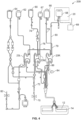
- a disposable fluid flow circuit or fluid processing assembly 200 ( Figs. 2 and 4 ) provides a sterile closed pathway between the blood source (for example a bag or container with previously collected blood of a patient), the separation device 10, and the irradiation device 20.
- the blood source for example a bag or container with previously collected blood of a patient
- the separation device 10 for example a bag or container with previously collected blood of a patient
- the irradiation device 20 With reference to Fig. 1 , whole blood is drawn into the fluid circuit 200 from the blood source and introduced into the separation device 10, with MNCs being separated from other blood components. Other components separated from the whole blood, such as red blood cells and platelets may be returned to the blood source or collected in pre-attached containers of the fluid circuit 200.
- the collected MNC product is then treated in the irradiation device 20, which involves the photoactivation of a photoactive agent that has been combined with the MNCs.
- the MNC product may optionally be provided to a washing device, which, as noted above, may be incorporated into the separation device 10 and, preferably, is one and the same. If the treated MNC product is to be washed, it is suspended in a wash solution within the separation/washing device 10. The suspension of MNCs in the wash solution is then subjected to a centrifugal field (or other environment which can effect separation of the fluid components), whereby the MNCs are concentrated and separated from the supernatant, which typically includes excess and unbound photoactivation agent. The concentrated MNCs are finally returned to the blood source, with the supernatant being diverted to an appropriate waste container.
- Devices useful in the collection (and washing) of MNCs include the device currently marketed as the AMICUS ® separator by Fenwal, Inc., of Lake Zurich, Illinois, which is an affiliate of Fresenius Kabi AG of Bad Homburg, Germany. MNC collections using a device of this type are described in greater detail in U.S. Patent No. 6,027,657 .
- the apparatus used for the harvesting, collection, and reinfusion of MNCs in accordance with the systems and methods described herein is a multifunctional automated apheresis device, as is the case with the AMICUS ® separator.
- the separation device 10 be a multifunctional automated apparatus that can perform various collection protocols and/or serve multiple purposes, as may be needed by a particular hospital or facility, such that it can be used not only in performing ECP procedures of the type described herein, but can also be used for other purposes including the collection of blood and blood components including platelets, plasma, red blood cells, and granulocytes and/or the performance of plasma/RBC exchange, among other functions that may be required by the hospital or medical facility.
- Devices useful in the irradiation of collected MNCs include those available from sources such as Cerus Corporation, of Concord, California.
- One example of a suitable irradiation device is described in U.S. Patent 7,433,030 .
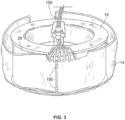
- Fig. 2 more particularly shows an exemplary fluid circuit or fluid processing assembly 200 mounted to a front panel of the separation device 10, with Fig. 3 showing a separation chamber 14 of the fluid circuit 200 and Fig. 4 showing the entire fluid circuit 200.
- the fluid circuit 200 includes a plurality of processing cassettes 23L, 23M and 23R with tubing loops for association with peristaltic pumps of pump stations PSL, PSM, and PSR (respectively) of the separation device 10 ( Fig. 2 ).
- the fluid circuit 200 also includes a network of tubing and pre-connected containers for establishing flow communication with the blood source and for processing and collecting fluids and blood and blood components, as best shown in Fig. 4 . As shown in Figs.
- the fluid circuit 200 may include an anticoagulant container 60, a waste container 62 for collecting waste from one or more steps in the ECP procedure, a container 64 for holding saline or other wash or resuspension medium, a plasma collection container 66, an RBC collection container 67, an MNC collection container 68, and, optionally, a container 69 for holding the photoactivation agent.
- Fig. 2 shows the MNC collection container 68 hanging from the side of the separation device 10, it may instead be housed within the irradiation device 20 (represented in Fig. 4 by broken lines), thereby eliminating the step of having the operator place the MNC collection container 68 into the irradiation device 20.
- the tubing leading to and/or from the MNC collection container 68 in the fluid circuit 200 is preferably of a sufficient length to reach the irradiation device 20 which, as noted above, is preferably positioned adjacent to the separation device 10.
- Such a configuration is advantageous to the extent that the MNC collection container 68 does not have to be separated or otherwise disconnected from the fluid circuit 200 for the collected MNCs to be treated in the irradiation device 20.
- the fluid circuit 200 further includes an inlet line 72, an anticoagulant line 74 connected to the anticoagulant container 60, an RBC line 76 extending between the RBC collection container 67 and a port of the middle cassette 23M for conveying separated red blood cells from a first stage 12 of the separation chamber 14 into the RBC collection container 67, a plasma line 78 for conveying separated plasma to the plasma collection container 66, and an MNC line 80 for conveying separated MNCs to and from the first stage 12 of the separation chamber 14 (via the right cassette 23R).
- the fluid circuit 200 also includes at least one access device (e.g., a venipuncture needle) for accessing the circulatory system of the blood source.
- the fluid circuit 200 includes an inlet needle 70 and a return needle 82, while in other embodiments, a single needle can serve as both the inlet and outlet needle.
- Fluid flow through the fluid circuit 200 is preferably driven, controlled, and adjusted by a microprocessor-based controller of the separation device 10, which controls operation of the various valves, pumps, weight scales, and sensors of the separation device 10, as described in greater detail in U.S. Patent No. 6,027,657 .
- a centrifuge of the separation device 10 includes a rotating spool element 18 ( Fig. 3 ) and a concentric, outer bowl element (not shown), with the separation chamber 14 positioned within an annular gap defined by the spool element 18 and the bowl element.
- the bowl element and the spool element 18 are pivoted on a yoke (not illustrated) between an upright position and a suspended position. When upright, the bowl element and the spool element 18 are presented for access by the user.
- a mechanism permits the spool element 18 and the bowl element to be opened so that the user can wrap the separation chamber 14 about the spool element 18, as in Fig. 3 .
- Pins 150 on the spool element 18 engage cutouts on the separation chamber 14 to secure the separation chamber 14 on the spool element 18.
- the radial boundaries of the centrifugal field are formed by the interior wall of the bowl element and the exterior wall 26 of the spool element 18.
- the interior bowl wall defines the high-G wall.
- the exterior spool wall 26 defines the low-G wall.
- Fig. 5 shows the various steps of an exemplary procedure according to an aspect of the present disclosure.
- whole blood is withdrawn from a blood source (step 30) through the inlet needle 70 and introduced into the first stage 12 of the separation chamber 14 of the fluid circuit 200, where the whole blood is subjected to a centrifugal field.
- the centrifugal field will separate an interface or MNC-containing layer from red blood cells, platelets, and plasma (step 32).
- the components such as red blood cells and platelets may be returned to the blood source or may be diverted to a container for further processing, while the MNC-containing layer is collected for subsequent treatment.
- Collection of MNCs may proceed in one or more cycles.
- the fluid collected in the MNC collection container 68 during each MNC collection cycle is referred to herein as a "pre-product," with the final MNC product eventually irradiated by the irradiation device 20 comprising the sum of all of the pre-products, along with any other additives present in the MNC collection container 68 at the time of irradiation (e.g., a diluting solution or photoactivation agent).
- the irradiation device 20 is configured to treat an MNC product with a fixed dose of light that is selected for an MNC product having a predetermined volume and a predetermined hematocrit.
- the predetermined volume is approximately 200 mL and the predetermined hematocrit is approximately 2%, but the predetermined volume and/or the predetermined hematocrit may vary without departing from the scope of the present disclosure.
- one aspect of the present disclosure is related to control of the separation device 10 so as to ensure that the MNC product has the proper volume and hematocrit, regardless of the number of MNC collection cycles executed by the separation device 10.
- the number of MNC collection cycles executed in a given therapeutic procedure may depend upon any of a number of factors.
- the controller is programmed or configured to allow an operator to input the volume of blood to be processed during the procedure. Below a first volume (e.g., 3000 mL), the controller will determined that it is appropriate to execute one MNC collection cycle. Between the first volume and another, higher volume (e.g., 6000 mL), the controller will determine that it is appropriate to execute two MNC collection cycles. Above the higher second volume (optionally with an upper limit, such as 9000 mL), the controller will determine that it is appropriate to execute three MNC collection cycles. While only between one and three MNC collection cycles are executed in this example, it should be understood that the principles described herein may be employed in systems and methods in which more than three MNC collections cycles are executed in a single online ECP procedure.
- the controller is programmed or configured to allow an operator to input the target yield of MNCs to be collected and treated, which may also require the entry of a patient MNC pre-count (unless the yield of MNCs collected can be determined by the system during an ECP procedure). Based on the target MNC yield and the number of MNCs collected during each MNC collection cycle, the controller may determine the number of MNC collection cycles to execute. For example, if the target yield is 5 ⁇ 10 9 MNCs and the separation device 10 is predicted to collect 1 ⁇ 10 9 MNCs per MNC collection cycle, then the controller will determine that it is appropriate to execute the MNC collection cycle five times.
- the separation device 10 includes a hematocrit sensor configured to monitor the hematocrit of any fluid conveyed toward the MNC collection container 68.
- the system controller may determine the RBC content of the MNC collection container 68 by multiplying the volumetric flow rate of the fluid by the hematocrit and control operation of the separation device 10 to arrive at the proper RBC content before the MNC product is irradiated by the irradiation device 20.
- the controller may control operation of the separation device 10 such that, over the course of the procedure (and regardless of the number of MNC collection cycles executed), approximately 4 mL of red blood cells are conveyed into the MNC collection container 68 as part of the MNC product.
- This will typically include diluting the contents of the MNC collection container 68 with a diluting solution such as plasma or saline (as shown in step 33) to arrive at the predetermined volume (200 mL in the exemplary embodiment) and predetermined hematocrit (2% in the exemplary embodiment).
- a hematocrit sensor may not be available, so other measures must be taken to ensure that the MNC product has the proper volume and hematocrit.
- the separation device 10 omits a hematocrit sensor capable of directly monitoring the hematocrit of the fluid conveyed toward the MNC collection container 68.
- a different approach is followed to arrive at an MNC product having a suitable volume and hematocrit.
- the separation device 10 is provided with an optical sensor assembly 84 configured to monitor an outlet line defining a portion of the flow path between an outlet port of the first stage 12 of the separation chamber 14 and the MNC collection container 68.
- an optical sensor assembly 84 configured to monitor an outlet line defining a portion of the flow path between an outlet port of the first stage 12 of the separation chamber 14 and the MNC collection container 68.
- the optical sensor assembly 84 is configured to monitor an outlet line 86 positioned upstream of the right cassette 23R.
- an optical sensor assembly may be configured to monitor some other outlet line of the flow path between the outlet port of the first stage 12 of the separation chamber 14 and the and the MNC collection container 68, such as the MNC line 80.
- the optical sensor assembly 84 corresponds to the optical sensor described in U.S. Patent No. 6,027,657 , but the configuration of the optical sensor assembly 84 may vary without departing from the scope of the present disclosure, provided that it is capable of detecting the presence of the MNC-containing layer in the associated outlet line.
- separation and collection of the MNC-containing layer begins with blood being drawn into the first stage 12 of the separation chamber 14.
- the blood in the separation chamber 14 is separated into a plasma constituent (i.e., a low density component, which may include platelets), the interface or buffy coat or MNC-containing layer (i.e., an intermediate density component, which includes MNCs and may also include smaller red blood cells), and packed red blood cells (i.e., a high density component) by operation of the centrifuge of the separation device 10.
- a plasma constituent i.e., a low density component, which may include platelets
- the interface or buffy coat or MNC-containing layer i.e., an intermediate density component, which includes MNCs and may also include smaller red blood cells
- packed red blood cells i.e., a high density component
- the portions of the separated plasma constituent and packed red blood cells removed from the separation chamber 14 may be returned to the blood source and/or separately collected in collection containers, with a portion of the removed red blood cells being recirculated through the first stage 12 to move the interface into the proper position within the first stage 12.
- the optical sensor assembly 84 monitors the fluid exiting the first stage 12 to detect the presence of the MNC-containing layer, which (in one embodiment) corresponds to an increase in the optical density of the fluid passing through the outlet line 86.
- the plasma constituent may be conveyed into the MNC collection container 68 as part of the pre-product or may be directed elsewhere, such as being returned to the blood source.
- the separated red blood cells will begin exiting the first stage 12 via the plasma outlet port, behind the MNC-containing layer. At least a portion of the red blood cells exiting the separation chamber 14 during this phase is directed into the MNC collection container 68 to increase the hematocrit of the fluid within the MNC collection container 68, while another portion of the red blood cells may be directed elsewhere (e.g., being returned to the blood source), if not needed to increase the hematocrit of the fluid within the MNC collection container 68.
- the same volume of MNCs may be collected as a part of each pre-product, such that the system controller will know the amount of red blood cells conveyed into the MNC collection container 68 if a selected volume of the contents of the separation chamber 14 (referred to herein as an "RBC offset") is conveyed out of the separation chamber 14 after the optical sensor assembly 84 has detected the MNC-containing layer.
- RBC offset a selected volume of the contents of the separation chamber 14
- the controller will know that the first 3 mL of fluid flowing past the optical sensor assembly 84 will be the MNC-containing layer, while the next 2 mL of fluid flowing past the optical sensor assembly 84 will be packed red blood cells.
- the RBC offset is not necessarily equal to the volume of the pre-product collected during a particular cycle, depending on the location of the optical sensor assembly 84. For example, if the volume of the flow path between the optical sensor assembly 84 and the MNC collection container 68 is 1.5 mL and the RBC offset is 5 mL (with 3 mL of MNCs collected during each cycle), then the pre-product will comprise 3 mL of MNCs and 0.5 mL of red blood cells, with 1.5 mL of red blood cells remaining in the flow path between the optical sensor assembly 84 and the MNC collection container 68.
- the controller may use this information to control the RBC content of each pre-product. For example, if the controller has determined that only one MNC collection cycle is to be executed, then it may operate the separation device 10 with an RBC offset sufficient to provide the entire required volume of red blood cells to the MNC collection container 68 (which may be approximately 6.8 mL in one embodiment). If the controller has determined that two MNC collection cycles are to be executed, then it may operate the separation device 10 with a smaller RBC offset (compared to a single-cycle procedure, which may be approximately 6.0 mL in one embodiment) to provide half of the required volume of red blood cells to the MNC collection container 68 during each MNC collection cycle.
- the controller may operate the separation device 10 with an even smaller RBC offset (compared to a single- or double-cycle procedure, which may be approximately 5.2 mL in one embodiment) to provide one-third of the required volume of red blood cells to the MNC collection container 68 during each MNC collection cycle.
- RBC offset compared to a single- or double-cycle procedure, which may be approximately 5.2 mL in one embodiment
- the controller may operate the separation device 10 with an even smaller RBC offset (compared to a single- or double-cycle procedure, which may be approximately 5.2 mL in one embodiment) to provide one-third of the required volume of red blood cells to the MNC collection container 68 during each MNC collection cycle.
- the RBC offset of at least two MNC collection cycles of a single procedure may be different. For example, an earlier cycle may employ a smaller RBC offset than a later cycle or a larger RBC offset than a later cycle.
- the controller directs the operation of the separation device 10 to provide the fluid in the MNC collection container 68 with the proper RBC content and volume
- the contents of the MNC collection container 68 are then combined with 8-MOP or any other suitable photoactivation agent, such as a psoralen compound (step 34).
- the MNC collection container 68 may be initially filled with the desired volume of the agent.
- the separation device 10, under the direction of its controller may be programmed or configured to automatically deliver the desired amount of photoactive agent from, for example, container 69 before or after MNC collection, based on the volume of MNCs collected or to be collected.
- the photoactivation agent is combined with the collected and diluted MNCs to arrive at a mixture (referred to herein as the MNC product) having the proper composition for irradiation.
- the MNCs may be combined with the 8-MOP to arrive at a final 8-MOP concentration of about 330 nanograms/mL or in a range of about 100 to 500 nanograms/mL.
- the MNCs may be irradiated in the MNC collection container 68, in which case the MNC collection container 68 is configured so as to be suitable for irradiation by light of a selected wavelength.
- suitable it is meant that the walls of the MNC collection container 68 are sufficiently transparent to light of the selected wavelength to activate the photoactive agent. In treatments using UVA light, for example, container walls made of ethylene vinyl acetate are suitable.
- the MNC collection container 68 may be placed inside the irradiation device 20 by the operator or, more preferably, may be placed inside an irradiation chamber of the irradiation device 20 at the beginning of the ECP procedure and prior to whole blood withdrawal (as shown by the broken lines representing device 20 in Fig. 4 ). In any event, the MNC collection container 68 preferably remains integrally connected to the remainder of the fluid circuit 200 during the entire procedure, thereby maintaining the closed or functionally closed condition of the fluid circuit 200.
- the mixture of MNCs and photoactivation agent is then irradiated for a selected period of time (step 36), which may be a fixed dose of light according to an aspect of the present disclosure.
- the MNC product may be exposed to UV bulbs having a wavelength in the UVA range of about 320 nm to 400 nm for a selected period of time, such as approximately 10-60 minutes, resulting in an average UVA exposure of approximately 0.5-5.0 J/cm 2 or approximately 1-2 J/cm 2 or approximately 1.5 J/cm 2 per lymphocyte.
- the treated MNCs may be returned to the separation device 10, such as to the first stage 12 of the separation chamber 14 in the centrifuge of the separation device 10 (step 38).
- one of the pumps of the separation device 10 associated with the right cassette 23R may be actuated by the controller to withdraw the treated MNCs from the MNC collection container 68, through the right cassette 23R, and back into the first stage 12 of the separation chamber 14.
- the MNCs may be concentrated (step 40) by centrifugation to remove the supernatant from the treated MNCs (step 41), with the supernatant being conveyed to the waste container 62.
- Concentrating treated MNCs prior to reinfusion allows for the concentrated MNCs to have a smaller total volume than MNCs that have not been concentrated, allowing for a smaller volume of concentrated MNCs to be more quickly reinfused to the blood source.
- the concentrated MNCs may be resuspended in a suitable resuspension medium (e.g., plasma, saline), as shown in step 43, and returned to the blood source.
- a suitable resuspension medium e.g., plasma, saline
- the concentrated and treated MNCs may be combined with a suitable wash solution (step 42). If the concentrated MNCs are combined with wash solution, the mixture is subjected to a centrifugal field within the separation chamber 14, which separates the MNCs from any remaining supernatant (step 44). In particular, any remaining unbound and excess photoactive agent will be separated from the concentrated MNCs and suspended in the supernatant. The supernatant may then be withdrawn to the waste container 62, while the concentrated and washed MNCs may be resuspended with a resuspension solution (such as, but not limited to, plasma or saline) as shown in step 45, and returned to the blood source, as shown in step 46.
- a resuspension solution such as, but not limited to, plasma or saline
- a multifunctional separation device 10 may be used to perform an online ECP procedure.
- the online nature of the approach described herein avoids the necessity for additional MNC product labeling or handling, as the MNCs never leave the fluid circuit 200 and the MNC collection container 68 is never disconnected from the fluid circuit 200 during the entire procedure.
- the fluid circuit 200 provides a sterile, closed pathway between the multifunctional separation device 10 and the irradiation device 20 such that from the time MNCs are harvested from the blood source to the time that the treated MNCs are reinfused to the blood source , an online closed system is maintained and reinfusion to the correct blood source is ensured.
Landscapes
- Health & Medical Sciences (AREA)
- Heart & Thoracic Surgery (AREA)
- Vascular Medicine (AREA)
- Life Sciences & Earth Sciences (AREA)
- Engineering & Computer Science (AREA)
- Anesthesiology (AREA)
- Biomedical Technology (AREA)
- Hematology (AREA)
- Animal Behavior & Ethology (AREA)
- General Health & Medical Sciences (AREA)
- Public Health (AREA)
- Veterinary Medicine (AREA)
- Cardiology (AREA)
- Urology & Nephrology (AREA)
- Emergency Medicine (AREA)
- External Artificial Organs (AREA)
Claims (15)
- System zur extrakorporalen Photopherese, umfassend:eine Bestrahlungsvorrichtung (20), die derart konfiguriert ist, dass sie ein einzelnes mononukleares Zellprodukt mit einem vorbestimmten Volumen und einem vorbestimmten Hämatokritwert unter Verwendung einer feststehenden Lichtdosis bestrahlt, undeine Trennvorrichtung (10), welche eine Steuerung umfasst, die so konfoguriert ist, dass sie den Betrieb von zumindest der Trennvorrichtung (10) steuert, um das mononukleare Zellprodukt zu erzeugen, wobei die Trennvorrichtung konfiguriert istzur Durchführung eines Zyklus zur Sammlung mononuklearer Zellen, bei dem Blut in der Trennvorrichtung (10) in einen Plasmabestandteil, eine mononukleare Zellen enthaltende Schicht und rote Blutkörperchen getrennt wird, gefolgt von der Entfernung von Teilen des Plasmabestandteils und der roten Blutkörperchen aus der Trennvorrichtung, während sich die mononukleare Zellen enthaltende Schicht in der Trennvorrichtung (10) ansammelt; undzumindest ein Teil der mononukleare Zellen enthaltenden Schicht aus der Trennvorrichtung (10) zusammen mit zumindest einem Teil der abgetrennten roten Blutkörperchen als Vorprodukt gesammelt wird, wobei die abgetrennten roten Blutkörperchen verwendet werden, um den Hämatokritwert des Vorprodukts zu erhöhen, undum das einzelne mononukleare Zellprodukt aus dem Vorprodukt herzustellen;wobei die Steuerung ferner derart konfiguriert ist, dass siedie Durchführung eines oder mehrerer der Zyklen zur Sammlung mononuklearer Zellen vor der Herstellung des einzelnen mononuklearen Zellprodukts ermöglicht, wobei das einzelne mononukleare Zellprodukt unter Verwendung der während jedes Zyklus zur Sammlung mononuklearer Zellen gesammelten Vorprodukte hergestellt wird, unddie Trennvorrichtung (10) steuert, um das mononukleare Zellprodukt mit dem vorbestimmten Volumen und dem vorbestimmten Hämatokritwert herzustellen, unabhängig von der Anzahl der durchgeführten Zyklen zur Sammlung mononuklearer Zellen und der Anzahl der Vorprodukte, die verwendet werden, um das mononukleare Zellprodukt herzustellen.
- System zur extrakorporalen Photopherese nach Anspruch 1, ferner umfassend eine Fluidverarbeitungsanordnung (200), wobei der Zyklus zur Sammlung mononuklearer Zellen umfasst:Ansaugen von Blut in die Fluidverarbeitungsanordnung (200) aus einer Blutquelle,Fördern des Bluts in eine Trennkammer (14) der Fluidverarbeitungsanordnung (200),Trennen des Bluts in der Trennkammer (14) in den Plasmabestandteil, die mononukleare Zellen enthaltende Schicht, und die roten Blutkörperchen,Fördern zumindest eines Teils der abgetrennten roten Blutkörperchen von der Trennkammer (14) zu einem Sammelbehälter (67) für rote Blutkörperchen der Fluidverarbeitungsanordnung (200), während ein Volumen der mononukleare Zellen enthaltenden Schicht in der Trennkammer (14) zunehmen kann,Fördern von zumindest einem Teil der Inhalte des Sammelbehälters (67) für rote Blutkörperchen zu der Trennkammer (14), um zumindest einen Teil der Inhalte der Trennkammer (14), der die mononukleare Zellen enthaltende Schicht umfasst, aus der Trennkammer (14) über eine Auslassleitung (86) der Fluidverarbeitungsanordnung (200) zu einem Sammelbehälter (68) für mononukleare Zellen der Fluidverarbeitungsanordnung (200) zu fördern,Erfassen der mononukleare Zellen enthaltenden Schicht in der Auslassleitung (86), undFördern eines ausgewählten Volumens der Inhalte der Trennkammer (14) aus der Trennkammer (14) über die Auslassleitung (86), nachdem die mononukleare Zellen enthaltende Schicht in der Auslassleitung (86) erfasst wurde, wobei das Fluid, das aus der Trennkammer (14) in den Sammelbehälter (68) für mononukleare Zellen gefördert wird, während jedes Zyklus zur Sammlung mononuklearer Zellen das Vorprodukt umfasst, das während dieses Zyklus zur Sammlung mononuklearer Zellen gesammelt wurde.
- System zur extrakorporalen Photopherese nach Anspruch 2, wobei die Steuerung derart konfiguriert ist, dass das ausgewählte Volumen abnimmt, wenn die Anzahl der Male, die der Zyklus zur Sammlung mononuklearer Zellen durchgeführt wird, zunimmt.
- System zur extrakorporalen Photopherese nach einem der Ansprüche 2 bis 3, wobei die Steuerung derart konfiguriert ist, dass, wenn der Zyklus zur Sammlung mononuklearer Zellen zumindest zweimal durchgeführt wird, das ausgewählte Volumen für jeden Zyklus zur Sammlung mononuklearer Zellen das gleiche ist.
- System zur extrakorporalen Photopherese nach einem der Ansprüche 2 bis 3, wobei die Steuerung derart konfiguriert ist, dass, wenn der Zyklus zur Sammlung mononuklearer Zellen zumindest zweimal durchgeführt wird, das ausgewählte Volumen für zumindest zwei der Zyklen zur Sammlung mononuklearer Zellen unterschiedlich ist.
- System zur extrakorporalen Photopherese nach einem der Ansprüche 2 bis 5, wobeidie Steuerung ferner derart konfiguriert ist, dass sie die Auswahl eines Gesamtvolumens an Blut zulässt, das von der Blutquelle in die Fluidverarbeitungsanordnung (200) gesaugt werden soll, unddie Anzahl der Male, die der Zyklus zur Sammlung mononuklearer Zellen durchgeführt wird, zumindest teilweise auf dem Gesamtvolumen des Bluts basiert, das in die Fluidverarbeitungsanordnung (200) aus der Blutquelle gesaugt werden soll.
- System zur extrakorporalen Photopherese nach einem der Ansprüche 2 bis 5, wobeidie Steuerung ferner derart konfiguriert ist, dass eine Zielausbeute an zu sammelnden mononuklearen Zellen gewählt werden kann, unddie Anzahl der Male, die der Zyklus zur Sammlung mononuklearer Zellen durchgeführt wird, zumindest teilweise auf der Zielausbeute an zu sammelnden mononuklearen Zellen und einer Vorzählung der mononuklearen Zellen aus der Blutquelle basiert.
- System zur extrakorporalen Photopherese nach einem der vorstehenden Ansprüche, wobei das vorbestimmte Volumen etwa 200 mL und der vorbestimmte Hämatokritwert etwa 2 % beträgt.
- Verfahren zur extrakorporalen Photopherese, umfassend:Ausführen eines Zyklus zum Sammeln mononuklearer Zellen, bei dem Blut aus einer nicht lebenden Blutquelle in einer Trennvorrichtung (10) in einen Plasmabestandteil, eine mononukleare Zellen enthaltende Schicht und rote Blutkörperchen getrennt wird, gefolgt von dem Entfernen von Teilen des Plasmabestandteils und der roten Blutkörperchen aus der Trennvorrichtung (10), während die mononukleare Zellen enthaltende Schicht sich in der Trennvorrichtung (10) ansammelt;Sammeln von zumindest einem Teil der mononukleare Zellen enthaltenden Schicht aus der Trennvorrichtung (10) und zumindest einem Teil der abgetrennten roten Blutkörperchen als ein Vorprodukt, wobei die abgetrennten roten Blutkörperchen verwendet werden, um den Hämatokritwert des Vorprodukts zu erhöhen,optional Wiederholen des Zyklus zur Sammlung mononuklearer Zellen;Herstellen eines einzelnen mononuklearen Zellprodukts unter Verwendung der Vorprodukte, die während jedes Zyklus zur Sammlung mononuklearer Zellen gesammelt wurden;Bestrahlen des mononuklearen Zellprodukts unter Verwendung einer feststehenden Lichtdosis; undRückführen zumindest eines Teils des bestrahlten mononuklearen Zellprodukts zu der Trennvorrichtung (10), wobei das mononukleare Zellprodukt ein vorbestimmtes Volumen und einen vorbestimmten Hämatokritwert aufweist, unabhängig von der Anzahl der durchgeführten Zyklen zur Sammlung mononuklearer Zellen und der Anzahl an Vorprodukten, die zur Herstellung des mononuklearen Zellprodukts verwendet werden.
- Verfahren nach Anspruch 9, wobeidas Ausführen des Zyklus zur Sammlung mononuklearer Zellen umfasst:Ansaugen von Blut in eine Fluidverarbeitungsanordnung (200) aus einem Behälter mit zuvor gesammeltem Blut als Blutquelle,Fördern des Bluts in eine Trennkammer (14) der Fluidverarbeitungsanordnung (200),Trennen des Bluts in der Trennkammer (14) in den Plasmabestandteil, die mononukleare Zellen enthaltende Schicht, und die roten Blutkörperchen,Fördern zumindest eines Teils der abgetrennten roten Blutkörperchen aus der Trennkammer (14) zu einem Sammelbehälter (67) für rote Blutkörperchen, während ein Volumen der mononukleare Zellen enthaltenden Schicht in der Trennkammer (14) zunehmen kann,Fördern von zumindest einem Teil der Inhalte des Sammelbehälters (67) für rote Blutkörperchen zu der Trennkammer (14), um zumindest einen Teil der Inhalte der Trennkammer (14), der die mononukleare Zellen enthaltende Schicht umfasst, aus der Trennkammer (14) über eine Auslassleitung (86) zu einem Sammelbehälter (68) für mononukleare Zellen zu fördern,Erfassen der mononukleare Zellen enthaltenden Schicht in der Auslassleitung (86), undFördern eines ausgewählten Volumens der Inhalte der Trennkammer (14) aus der Trennkammer (14) über die Auslassleitung (86), nachdem die mononukleare Zellen enthaltende Schicht in der Auslassleitung (86) erfasst wurde,wobei das Herstellen eines einzelnen mononuklearen Zellprodukts die Erhöhung des Volumens der Inhalte des Sammelbehälters (68) für mononukleare Zellen auf das vorbestimmte Volumen mit dem vorbestimmten Hämatokritwert umfasst; undwobei das ausgewählte Volumen zumindest teilweise auf der Anzahl der Male basiert, die der Zyklus zur Sammlung mononuklearer Zellen durchgeführt wird.
- Verfahren nach Anspruch 10, wobei das ausgewählte Volumen abnimmt, wenn die Anzahl der Male, die der Zyklus zur Sammlung mononuklearer Zellen durchgeführt wird, zunimmt.
- Verfahren nach einem der Ansprüche 10 bis 11, wobeider Zyklus zur Sammlung mononuklearer Zellen zumindest einmal wiederholt wird, unddas ausgewählte Volumen für jeden Zyklus zur Sammlung mononuklearer Zellen gleich ist.
- Verfahren nach einem der Ansprüche 10 bis 11, wobeider Zyklus zur Sammlung mononuklearer Zellen zumindest einmal wiederholt wird unddas ausgewählte Volumen für zumindest zwei der Zyklen zur Sammlung mononuklearer Zellen verschieden ist.
- Verfahren nach einem der Ansprüche 10 bis 13, ferner umfassend das Auswählen eines Gesamtvolumens an Blut, das aus der Blutquelle in die Fluidverarbeitungsanordnung gesaugt werden soll, wobei die Anzahl der Male, die der Zyklus zur Sammlung mononuklearer Zellen wiederholt wird, zumindest teilweise auf dem Gesamtvolumen an Blut basiert, das aus der Blutquelle in die Fluidverarbeitungsanordnung (200) gesaugt werden soll.
- Verfahren nach einem der Ansprüche 10 bis 13, ferner umfassend das Auswählen einer Zielausbeute an zu sammelnden mononuklearen Zellen, wobei die Anzahl der Male, die der Zyklus zur Sammlung mononuklearer Zellen wiederholt wird, zumindest teilweise auf der Zielausbeute an zu sammelnden mononuklearen Zellen und auf einer Vorzählung mononuklearer Zellen aus der Blutquelle basiert.
Applications Claiming Priority (1)
| Application Number | Priority Date | Filing Date | Title |
|---|---|---|---|
| US201862636927P | 2018-03-01 | 2018-03-01 |
Publications (3)
| Publication Number | Publication Date |
|---|---|
| EP3533482A1 EP3533482A1 (de) | 2019-09-04 |
| EP3533482B1 true EP3533482B1 (de) | 2024-08-07 |
| EP3533482C0 EP3533482C0 (de) | 2024-08-07 |
Family
ID=65628611
Family Applications (1)
| Application Number | Title | Priority Date | Filing Date |
|---|---|---|---|
| EP19159588.3A Active EP3533482B1 (de) | 2018-03-01 | 2019-02-27 | Systeme und verfahren zur durchführung einer gekoppelten extrakorporalen photopherese |
Country Status (2)
| Country | Link |
|---|---|
| US (1) | US11318239B2 (de) |
| EP (1) | EP3533482B1 (de) |
Families Citing this family (6)
| Publication number | Priority date | Publication date | Assignee | Title |
|---|---|---|---|---|
| EP3632484B1 (de) | 2018-10-04 | 2025-12-03 | Fenwal, Inc. | Systeme zum sammeln von proben in einem photophereseverfahren |
| EP3666311B1 (de) | 2018-12-13 | 2026-02-04 | Fenwal, Inc. | Systeme und verfahren zur behandlung einer biologischen flüssigkeit mit licht im fall eines glühlampenausfalls |
| US11883543B2 (en) | 2019-04-16 | 2024-01-30 | Fenwal, Inc. | Systems and methods for photoactivation of a biological fluid |
| US12318530B2 (en) * | 2021-04-13 | 2025-06-03 | Fenwal, Inc. | Systems and methods for performing extracorporeal photopheresis |
| US12558469B2 (en) | 2021-08-06 | 2026-02-24 | Fenwal, Inc. | Systems and methods for converting an apheresis fluid processing circuit to single or double needle mode |
| US20240024559A1 (en) | 2022-07-22 | 2024-01-25 | Fenwal, Inc. | Blood processing and treatment systems and methods with procedure estimator |
Family Cites Families (11)
| Publication number | Priority date | Publication date | Assignee | Title |
|---|---|---|---|---|
| EP0572656B1 (de) | 1991-12-23 | 1997-11-05 | Baxter International Inc. | Zentrifuge wobei korb und spule trennbar sind zum verschaffen von zugang zur trennkammer |
| CA2250919C (en) | 1996-03-29 | 2008-05-13 | Therakos, Inc. | Photopheresis treatment of leukocytes |
| US6027657A (en) | 1997-07-01 | 2000-02-22 | Baxter International Inc. | Systems and methods for collecting diluted mononuclear cells |
| US7068361B2 (en) | 1999-06-03 | 2006-06-27 | Baxter International | Apparatus, systems and methods for processing and treating a biological fluid with light |
| US7479123B2 (en) * | 2002-03-04 | 2009-01-20 | Therakos, Inc. | Method for collecting a desired blood component and performing a photopheresis treatment |
| US9399093B2 (en) * | 2012-01-27 | 2016-07-26 | Fenwal, Inc. | Systems and methods for performing online extracorporeal photopheresis |
| US10172995B2 (en) * | 2013-02-06 | 2019-01-08 | Fenwal, Inc. | System and method for determining irradiation exposure time with irradiation sensors during extracorporeal photopheresis |
| WO2014123521A1 (en) * | 2013-02-06 | 2014-08-14 | Fenwal, Inc. | Method for delivering desired light dose to cells in a light attenuating medium |
| JP6632359B2 (ja) | 2015-01-05 | 2020-01-22 | フェンウォール、インコーポレイテッド | 体外フォトフェレーシスにおいて照射受光部を用いて最小ヘマトクリットを検出するためのシステムと方法 |
| EP3053616A1 (de) | 2015-02-06 | 2016-08-10 | Fenwal, Inc. | System und verfahren zur bestimmung der bestrahlungszeit mit strahlungssensoren während der extrakorporalen photopherese |
| US10434240B2 (en) | 2015-08-17 | 2019-10-08 | Fenwal, Inc. | Methods and systems for processing and washing a photopheresis mononuclear cell product |
-
2019
- 2019-02-27 US US16/286,726 patent/US11318239B2/en active Active
- 2019-02-27 EP EP19159588.3A patent/EP3533482B1/de active Active
Also Published As
| Publication number | Publication date |
|---|---|
| EP3533482A1 (de) | 2019-09-04 |
| US11318239B2 (en) | 2022-05-03 |
| EP3533482C0 (de) | 2024-08-07 |
| US20190269844A1 (en) | 2019-09-05 |
Similar Documents
| Publication | Publication Date | Title |
|---|---|---|
| US10518020B2 (en) | Systems and methods for performing online extracorporeal photopheresis | |
| US11318239B2 (en) | Systems and methods for performing online extracorporeal photopheresis | |
| US20220305187A1 (en) | System And Method For Plasma Purification Prior To Mononuclear Cell Collection | |
| EP3632484B1 (de) | Systeme zum sammeln von proben in einem photophereseverfahren | |
| US11857714B2 (en) | Systems and methods for monitoring and controlling fluid balance during a biological fluid procedure | |
| US10556053B2 (en) | System for collecting mononuclear cells having a suitable hematocrit for extracorporeal photopheresis | |
| US20220273856A1 (en) | Methods and Systems for Maintaining Patient Fluid Balance During an Extracorporeal Therapeutic Cell Treatment | |
| EP3711789A1 (de) | Vorrichtung und verfahren zur massenphotoaktivierung von mononuklearen zellen | |
| EP3461510B1 (de) | Systeme und verfahren zur rückführung behandelter mononuklearer zellen in eine blooo-quelle | |
| EP3501567B1 (de) | Verfahren zum sammeln einer apoptotischen weissen blutkörperkomponente und einer transplantatkomponente und system zum sammeln und infundieren dieser komponenten | |
| EP4137171B1 (de) | Systeme und verfahren zum durchführen von extrakorporaler photopherese |
Legal Events
| Date | Code | Title | Description |
|---|---|---|---|
| PUAI | Public reference made under article 153(3) epc to a published international application that has entered the european phase |
Free format text: ORIGINAL CODE: 0009012 |
|
| STAA | Information on the status of an ep patent application or granted ep patent |
Free format text: STATUS: THE APPLICATION HAS BEEN PUBLISHED |
|
| AK | Designated contracting states |
Kind code of ref document: A1 Designated state(s): AL AT BE BG CH CY CZ DE DK EE ES FI FR GB GR HR HU IE IS IT LI LT LU LV MC MK MT NL NO PL PT RO RS SE SI SK SM TR |
|
| AX | Request for extension of the european patent |
Extension state: BA ME |
|
| STAA | Information on the status of an ep patent application or granted ep patent |
Free format text: STATUS: REQUEST FOR EXAMINATION WAS MADE |
|
| 17P | Request for examination filed |
Effective date: 20200220 |
|
| RBV | Designated contracting states (corrected) |
Designated state(s): AL AT BE BG CH CY CZ DE DK EE ES FI FR GB GR HR HU IE IS IT LI LT LU LV MC MK MT NL NO PL PT RO RS SE SI SK SM TR |
|
| STAA | Information on the status of an ep patent application or granted ep patent |
Free format text: STATUS: EXAMINATION IS IN PROGRESS |
|
| 17Q | First examination report despatched |
Effective date: 20230403 |
|
| GRAP | Despatch of communication of intention to grant a patent |
Free format text: ORIGINAL CODE: EPIDOSNIGR1 |
|
| STAA | Information on the status of an ep patent application or granted ep patent |
Free format text: STATUS: GRANT OF PATENT IS INTENDED |
|
| INTG | Intention to grant announced |
Effective date: 20240315 |
|
| GRAS | Grant fee paid |
Free format text: ORIGINAL CODE: EPIDOSNIGR3 |
|
| GRAA | (expected) grant |
Free format text: ORIGINAL CODE: 0009210 |
|
| STAA | Information on the status of an ep patent application or granted ep patent |
Free format text: STATUS: THE PATENT HAS BEEN GRANTED |
|
| AK | Designated contracting states |
Kind code of ref document: B1 Designated state(s): AL AT BE BG CH CY CZ DE DK EE ES FI FR GB GR HR HU IE IS IT LI LT LU LV MC MK MT NL NO PL PT RO RS SE SI SK SM TR |
|
| REG | Reference to a national code |
Ref country code: GB Ref legal event code: FG4D |
|
| REG | Reference to a national code |
Ref country code: CH Ref legal event code: EP |
|
| REG | Reference to a national code |
Ref country code: IE Ref legal event code: FG4D |
|
| REG | Reference to a national code |
Ref country code: DE Ref legal event code: R096 Ref document number: 602019056430 Country of ref document: DE |
|
| U01 | Request for unitary effect filed |
Effective date: 20240822 |
|
| U07 | Unitary effect registered |
Designated state(s): AT BE BG DE DK EE FI FR IT LT LU LV MT NL PT RO SE SI Effective date: 20240902 |
|
| PG25 | Lapsed in a contracting state [announced via postgrant information from national office to epo] |
Ref country code: NO Free format text: LAPSE BECAUSE OF FAILURE TO SUBMIT A TRANSLATION OF THE DESCRIPTION OR TO PAY THE FEE WITHIN THE PRESCRIBED TIME-LIMIT Effective date: 20241107 |
|
| PG25 | Lapsed in a contracting state [announced via postgrant information from national office to epo] |
Ref country code: GR Free format text: LAPSE BECAUSE OF FAILURE TO SUBMIT A TRANSLATION OF THE DESCRIPTION OR TO PAY THE FEE WITHIN THE PRESCRIBED TIME-LIMIT Effective date: 20241108 Ref country code: PL Free format text: LAPSE BECAUSE OF FAILURE TO SUBMIT A TRANSLATION OF THE DESCRIPTION OR TO PAY THE FEE WITHIN THE PRESCRIBED TIME-LIMIT Effective date: 20240807 |
|
| PG25 | Lapsed in a contracting state [announced via postgrant information from national office to epo] |
Ref country code: IS Free format text: LAPSE BECAUSE OF FAILURE TO SUBMIT A TRANSLATION OF THE DESCRIPTION OR TO PAY THE FEE WITHIN THE PRESCRIBED TIME-LIMIT Effective date: 20241207 |
|
| PG25 | Lapsed in a contracting state [announced via postgrant information from national office to epo] |
Ref country code: HR Free format text: LAPSE BECAUSE OF FAILURE TO SUBMIT A TRANSLATION OF THE DESCRIPTION OR TO PAY THE FEE WITHIN THE PRESCRIBED TIME-LIMIT Effective date: 20240807 |
|
| PG25 | Lapsed in a contracting state [announced via postgrant information from national office to epo] |
Ref country code: ES Free format text: LAPSE BECAUSE OF FAILURE TO SUBMIT A TRANSLATION OF THE DESCRIPTION OR TO PAY THE FEE WITHIN THE PRESCRIBED TIME-LIMIT Effective date: 20240807 Ref country code: RS Free format text: LAPSE BECAUSE OF FAILURE TO SUBMIT A TRANSLATION OF THE DESCRIPTION OR TO PAY THE FEE WITHIN THE PRESCRIBED TIME-LIMIT Effective date: 20241107 |
|
| PG25 | Lapsed in a contracting state [announced via postgrant information from national office to epo] |
Ref country code: RS Free format text: LAPSE BECAUSE OF FAILURE TO SUBMIT A TRANSLATION OF THE DESCRIPTION OR TO PAY THE FEE WITHIN THE PRESCRIBED TIME-LIMIT Effective date: 20241107 Ref country code: PL Free format text: LAPSE BECAUSE OF FAILURE TO SUBMIT A TRANSLATION OF THE DESCRIPTION OR TO PAY THE FEE WITHIN THE PRESCRIBED TIME-LIMIT Effective date: 20240807 Ref country code: NO Free format text: LAPSE BECAUSE OF FAILURE TO SUBMIT A TRANSLATION OF THE DESCRIPTION OR TO PAY THE FEE WITHIN THE PRESCRIBED TIME-LIMIT Effective date: 20241107 Ref country code: IS Free format text: LAPSE BECAUSE OF FAILURE TO SUBMIT A TRANSLATION OF THE DESCRIPTION OR TO PAY THE FEE WITHIN THE PRESCRIBED TIME-LIMIT Effective date: 20241207 Ref country code: HR Free format text: LAPSE BECAUSE OF FAILURE TO SUBMIT A TRANSLATION OF THE DESCRIPTION OR TO PAY THE FEE WITHIN THE PRESCRIBED TIME-LIMIT Effective date: 20240807 Ref country code: GR Free format text: LAPSE BECAUSE OF FAILURE TO SUBMIT A TRANSLATION OF THE DESCRIPTION OR TO PAY THE FEE WITHIN THE PRESCRIBED TIME-LIMIT Effective date: 20241108 Ref country code: ES Free format text: LAPSE BECAUSE OF FAILURE TO SUBMIT A TRANSLATION OF THE DESCRIPTION OR TO PAY THE FEE WITHIN THE PRESCRIBED TIME-LIMIT Effective date: 20240807 |
|
| U20 | Renewal fee for the european patent with unitary effect paid |
Year of fee payment: 7 Effective date: 20250227 |
|
| PG25 | Lapsed in a contracting state [announced via postgrant information from national office to epo] |
Ref country code: SM Free format text: LAPSE BECAUSE OF FAILURE TO SUBMIT A TRANSLATION OF THE DESCRIPTION OR TO PAY THE FEE WITHIN THE PRESCRIBED TIME-LIMIT Effective date: 20240807 |
|
| PG25 | Lapsed in a contracting state [announced via postgrant information from national office to epo] |
Ref country code: CZ Free format text: LAPSE BECAUSE OF FAILURE TO SUBMIT A TRANSLATION OF THE DESCRIPTION OR TO PAY THE FEE WITHIN THE PRESCRIBED TIME-LIMIT Effective date: 20240807 |
|
| PG25 | Lapsed in a contracting state [announced via postgrant information from national office to epo] |
Ref country code: SK Free format text: LAPSE BECAUSE OF FAILURE TO SUBMIT A TRANSLATION OF THE DESCRIPTION OR TO PAY THE FEE WITHIN THE PRESCRIBED TIME-LIMIT Effective date: 20240807 |
|
| PLBE | No opposition filed within time limit |
Free format text: ORIGINAL CODE: 0009261 |
|
| STAA | Information on the status of an ep patent application or granted ep patent |
Free format text: STATUS: NO OPPOSITION FILED WITHIN TIME LIMIT |
|
| 26N | No opposition filed |
Effective date: 20250508 |
|
| PG25 | Lapsed in a contracting state [announced via postgrant information from national office to epo] |
Ref country code: MC Free format text: LAPSE BECAUSE OF FAILURE TO SUBMIT A TRANSLATION OF THE DESCRIPTION OR TO PAY THE FEE WITHIN THE PRESCRIBED TIME-LIMIT Effective date: 20240807 |
|
| REG | Reference to a national code |
Ref country code: CH Ref legal event code: PL |
|
| PG25 | Lapsed in a contracting state [announced via postgrant information from national office to epo] |
Ref country code: CH Free format text: LAPSE BECAUSE OF NON-PAYMENT OF DUE FEES Effective date: 20250228 |
|
| PG25 | Lapsed in a contracting state [announced via postgrant information from national office to epo] |
Ref country code: IE Free format text: LAPSE BECAUSE OF NON-PAYMENT OF DUE FEES Effective date: 20250227 |
|
| U20 | Renewal fee for the european patent with unitary effect paid |
Year of fee payment: 8 Effective date: 20260227 |
|
| PGFP | Annual fee paid to national office [announced via postgrant information from national office to epo] |
Ref country code: GB Payment date: 20260227 Year of fee payment: 8 |