EP3533040B1 - Fahrassistenzverfahren und system - Google Patents
Fahrassistenzverfahren und system Download PDFInfo
- Publication number
- EP3533040B1 EP3533040B1 EP16826153.5A EP16826153A EP3533040B1 EP 3533040 B1 EP3533040 B1 EP 3533040B1 EP 16826153 A EP16826153 A EP 16826153A EP 3533040 B1 EP3533040 B1 EP 3533040B1
- Authority
- EP
- European Patent Office
- Prior art keywords
- road
- road user
- user
- users
- behavioral model
- Prior art date
- Legal status (The legal status is an assumption and is not a legal conclusion. Google has not performed a legal analysis and makes no representation as to the accuracy of the status listed.)
- Active
Links
Images


Classifications
-
- G—PHYSICS
- G08—SIGNALLING
- G08G—TRAFFIC CONTROL SYSTEMS
- G08G1/00—Traffic control systems for road vehicles
- G08G1/09—Arrangements for giving variable traffic instructions
- G08G1/0962—Arrangements for giving variable traffic instructions having an indicator mounted inside the vehicle, e.g. giving voice messages
-
- B—PERFORMING OPERATIONS; TRANSPORTING
- B60—VEHICLES IN GENERAL
- B60W—CONJOINT CONTROL OF VEHICLE SUB-UNITS OF DIFFERENT TYPE OR DIFFERENT FUNCTION; CONTROL SYSTEMS SPECIALLY ADAPTED FOR HYBRID VEHICLES; ROAD VEHICLE DRIVE CONTROL SYSTEMS FOR PURPOSES NOT RELATED TO THE CONTROL OF A PARTICULAR SUB-UNIT
- B60W30/00—Purposes of road vehicle drive control systems not related to the control of a particular sub-unit, e.g. of systems using conjoint control of vehicle sub-units
- B60W30/08—Active safety systems predicting or avoiding probable or impending collision or attempting to minimise its consequences
- B60W30/09—Taking automatic action to avoid collision, e.g. braking and steering
-
- B—PERFORMING OPERATIONS; TRANSPORTING
- B60—VEHICLES IN GENERAL
- B60W—CONJOINT CONTROL OF VEHICLE SUB-UNITS OF DIFFERENT TYPE OR DIFFERENT FUNCTION; CONTROL SYSTEMS SPECIALLY ADAPTED FOR HYBRID VEHICLES; ROAD VEHICLE DRIVE CONTROL SYSTEMS FOR PURPOSES NOT RELATED TO THE CONTROL OF A PARTICULAR SUB-UNIT
- B60W30/00—Purposes of road vehicle drive control systems not related to the control of a particular sub-unit, e.g. of systems using conjoint control of vehicle sub-units
- B60W30/08—Active safety systems predicting or avoiding probable or impending collision or attempting to minimise its consequences
- B60W30/095—Predicting travel path or likelihood of collision
- B60W30/0953—Predicting travel path or likelihood of collision the prediction being responsive to vehicle dynamic parameters
-
- B—PERFORMING OPERATIONS; TRANSPORTING
- B60—VEHICLES IN GENERAL
- B60W—CONJOINT CONTROL OF VEHICLE SUB-UNITS OF DIFFERENT TYPE OR DIFFERENT FUNCTION; CONTROL SYSTEMS SPECIALLY ADAPTED FOR HYBRID VEHICLES; ROAD VEHICLE DRIVE CONTROL SYSTEMS FOR PURPOSES NOT RELATED TO THE CONTROL OF A PARTICULAR SUB-UNIT
- B60W30/00—Purposes of road vehicle drive control systems not related to the control of a particular sub-unit, e.g. of systems using conjoint control of vehicle sub-units
- B60W30/08—Active safety systems predicting or avoiding probable or impending collision or attempting to minimise its consequences
- B60W30/095—Predicting travel path or likelihood of collision
- B60W30/0956—Predicting travel path or likelihood of collision the prediction being responsive to traffic or environmental parameters
-
- B—PERFORMING OPERATIONS; TRANSPORTING
- B60—VEHICLES IN GENERAL
- B60W—CONJOINT CONTROL OF VEHICLE SUB-UNITS OF DIFFERENT TYPE OR DIFFERENT FUNCTION; CONTROL SYSTEMS SPECIALLY ADAPTED FOR HYBRID VEHICLES; ROAD VEHICLE DRIVE CONTROL SYSTEMS FOR PURPOSES NOT RELATED TO THE CONTROL OF A PARTICULAR SUB-UNIT
- B60W40/00—Estimation or calculation of non-directly measurable driving parameters for road vehicle drive control systems not related to the control of a particular sub unit, e.g. by using mathematical models
- B60W40/02—Estimation or calculation of non-directly measurable driving parameters for road vehicle drive control systems not related to the control of a particular sub unit, e.g. by using mathematical models related to ambient conditions
- B60W40/04—Traffic conditions
-
- B—PERFORMING OPERATIONS; TRANSPORTING
- B60—VEHICLES IN GENERAL
- B60W—CONJOINT CONTROL OF VEHICLE SUB-UNITS OF DIFFERENT TYPE OR DIFFERENT FUNCTION; CONTROL SYSTEMS SPECIALLY ADAPTED FOR HYBRID VEHICLES; ROAD VEHICLE DRIVE CONTROL SYSTEMS FOR PURPOSES NOT RELATED TO THE CONTROL OF A PARTICULAR SUB-UNIT
- B60W50/00—Details of control systems for road vehicle drive control not related to the control of a particular sub-unit, e.g. process diagnostic or vehicle driver interfaces
- B60W50/0097—Predicting future conditions
-
- B—PERFORMING OPERATIONS; TRANSPORTING
- B60—VEHICLES IN GENERAL
- B60W—CONJOINT CONTROL OF VEHICLE SUB-UNITS OF DIFFERENT TYPE OR DIFFERENT FUNCTION; CONTROL SYSTEMS SPECIALLY ADAPTED FOR HYBRID VEHICLES; ROAD VEHICLE DRIVE CONTROL SYSTEMS FOR PURPOSES NOT RELATED TO THE CONTROL OF A PARTICULAR SUB-UNIT
- B60W50/00—Details of control systems for road vehicle drive control not related to the control of a particular sub-unit, e.g. process diagnostic or vehicle driver interfaces
- B60W50/08—Interaction between the driver and the control system
- B60W50/14—Means for informing the driver, warning the driver or prompting a driver intervention
-
- G—PHYSICS
- G06—COMPUTING OR CALCULATING; COUNTING
- G06N—COMPUTING ARRANGEMENTS BASED ON SPECIFIC COMPUTATIONAL MODELS
- G06N20/00—Machine learning
-
- G—PHYSICS
- G06—COMPUTING OR CALCULATING; COUNTING
- G06V—IMAGE OR VIDEO RECOGNITION OR UNDERSTANDING
- G06V20/00—Scenes; Scene-specific elements
- G06V20/50—Context or environment of the image
- G06V20/56—Context or environment of the image exterior to a vehicle by using sensors mounted on the vehicle
- G06V20/58—Recognition of moving objects or obstacles, e.g. vehicles or pedestrians; Recognition of traffic objects, e.g. traffic signs, traffic lights or roads
-
- G—PHYSICS
- G06—COMPUTING OR CALCULATING; COUNTING
- G06V—IMAGE OR VIDEO RECOGNITION OR UNDERSTANDING
- G06V20/00—Scenes; Scene-specific elements
- G06V20/50—Context or environment of the image
- G06V20/56—Context or environment of the image exterior to a vehicle by using sensors mounted on the vehicle
- G06V20/588—Recognition of the road, e.g. of lane markings; Recognition of the vehicle driving pattern in relation to the road
-
- G—PHYSICS
- G08—SIGNALLING
- G08G—TRAFFIC CONTROL SYSTEMS
- G08G1/00—Traffic control systems for road vehicles
- G08G1/16—Anti-collision systems
- G08G1/166—Anti-collision systems for active traffic, e.g. moving vehicles, pedestrians, bikes
-
- B—PERFORMING OPERATIONS; TRANSPORTING
- B60—VEHICLES IN GENERAL
- B60W—CONJOINT CONTROL OF VEHICLE SUB-UNITS OF DIFFERENT TYPE OR DIFFERENT FUNCTION; CONTROL SYSTEMS SPECIALLY ADAPTED FOR HYBRID VEHICLES; ROAD VEHICLE DRIVE CONTROL SYSTEMS FOR PURPOSES NOT RELATED TO THE CONTROL OF A PARTICULAR SUB-UNIT
- B60W50/00—Details of control systems for road vehicle drive control not related to the control of a particular sub-unit, e.g. process diagnostic or vehicle driver interfaces
- B60W2050/0001—Details of the control system
- B60W2050/0002—Automatic control, details of type of controller or control system architecture
- B60W2050/0016—State machine analysis
-
- B—PERFORMING OPERATIONS; TRANSPORTING
- B60—VEHICLES IN GENERAL
- B60W—CONJOINT CONTROL OF VEHICLE SUB-UNITS OF DIFFERENT TYPE OR DIFFERENT FUNCTION; CONTROL SYSTEMS SPECIALLY ADAPTED FOR HYBRID VEHICLES; ROAD VEHICLE DRIVE CONTROL SYSTEMS FOR PURPOSES NOT RELATED TO THE CONTROL OF A PARTICULAR SUB-UNIT
- B60W50/00—Details of control systems for road vehicle drive control not related to the control of a particular sub-unit, e.g. process diagnostic or vehicle driver interfaces
- B60W2050/0001—Details of the control system
- B60W2050/0019—Control system elements or transfer functions
- B60W2050/0028—Mathematical models, e.g. for simulation
-
- B—PERFORMING OPERATIONS; TRANSPORTING
- B60—VEHICLES IN GENERAL
- B60W—CONJOINT CONTROL OF VEHICLE SUB-UNITS OF DIFFERENT TYPE OR DIFFERENT FUNCTION; CONTROL SYSTEMS SPECIALLY ADAPTED FOR HYBRID VEHICLES; ROAD VEHICLE DRIVE CONTROL SYSTEMS FOR PURPOSES NOT RELATED TO THE CONTROL OF A PARTICULAR SUB-UNIT
- B60W50/00—Details of control systems for road vehicle drive control not related to the control of a particular sub-unit, e.g. process diagnostic or vehicle driver interfaces
- B60W50/08—Interaction between the driver and the control system
- B60W50/14—Means for informing the driver, warning the driver or prompting a driver intervention
- B60W2050/143—Alarm means
Definitions
- driving assistance should be understood broadly and not be limited to the support of an active human driver, but extend even to fully autonomous driving.
- ADAS Advanced Driver Assistance Systems
- autonomous driving has become a critical concern around the world, whether it is to increase safety and security of drivers, passengers or pedestrians, enhance mobility for people and freight, or protect the environment.
- techniques to accurately predict the trajectories and intents of road users are time and memory demanding, which sets an obstacle to the development of safe and secure autonomous driving systems.
- Négre in "Probabilistic analysis of dynamic scenes and collision risks assessment to improve driving safety", IEEE Intelligent Transportation Systems Magazine, 3(4):4-19 , have disclosed a traffic scene prediction method in which a set of available maneuvers is considered for each road user in a traffic scene, the maneuver that a road user is performing or about to perform is identified using a layered Hidden Markov Model and, once identified, the trajectory that the road user will subsequently follow is predicted using Gaussian processes based on previously recorded data of drivers performing the same maneuver.
- the prediction time horizon of this method is limited to the duration of the maneuver, and no interaction between road users is considered.
- N. Lee and K. M. Kitani in “Predicting wide receiver trajectories in American football", in 2016 IEEE Winter Conference on Applications of Computer Vision (WACV), March 2016, pp. 1-9 , have proposed a planning-based approach in the completely different field of predicting trajectories of an attacking player in American football. This approach used a dynamic feature dependent on the motion of opposing players, which was predicted using supervised learning.
- a first object of the disclosure is that of proposing a driving assistance method according to claim 1, which substantially increases the safety and security of a road vehicle by accurately predicting a future traffic scene, and taking appropriate action in response, using limited computational resources.
- the present driving assistance method can offer a high accuracy in scene prediction even with limited computational resources.
- estimating the probability of each action from the set of alternative subsequent actions for each road user of the set of road users with the dynamic behavioral model taking into account at least a previously calculated occupancy probability distribution of the set of road users better fits the predictive behavior of human drivers.
- the belief state may be probabilistically estimated for each road user of the set of road users by the data processor for a plurality of successive timesteps, a new occupancy probability distribution being calculated on the basis of the belief state probabilistically estimated for each successive timestep.
- the driving assistance method may further comprise a step of sorting the set of road users by order of decreasing driving priority, before the step of estimating a probability of each action from a set of alternative subsequent actions, which may then be successively carried out for each road user of the set of road users following the order of decreasing driving priority.
- the at least one dynamic feature may comprise a time-headway and/or a time-to-collision between the road user to which the dynamic behavioral model is assigned and another road user.
- the dynamic behavioral model may be a dynamic behavioral model learned from observed road user behavior using a machine learning algorithm such as, for example, an inverse reinforcement learning algorithm, and in particular a maximum entropy inverse reinforcement learning algorithm.
- a machine learning algorithm such as, for example, an inverse reinforcement learning algorithm, and in particular a maximum entropy inverse reinforcement learning algorithm.
- Each behavioral model of the finite plurality of behavioral models may be associated with a cost function for calculating a cost of a subsequent action from a current state, and the probability of an action from a set of alternative subsequent actions for a given road user may then be estimated as one minus the ratio of a cost of the action to the sum total of costs of the set of alternative subsequent actions, according to the cost function associated with a behavioral model assigned to the given road user.
- the traffic scene may comprise a multi-lane road, and the set of alternative subsequent actions for each road user of the set of road users may then comprise lane and/or speed changes.
- the step of assigning a behavioral model, from among a finite plurality of behavioral models, to each road user of the set of road users may be carried out, by a data processor, based on behavior by each road user of said set of road users prior to the current states.
- an aggregated probability of a prior trajectory of the road user may be calculated using each behavioral model, and the behavioral model with the highest aggregated probability may then be selected.
- the present disclosure also relates to a driving assistance system according to claim 10.
- the present disclosure also relates to road vehicle comprising such a driving assistance system.
- Fig. 1 illustrates schematically a road vehicle 1 with a drivetrain 10, brakes 30, steering 20 and a driving assistance system 100 according to an embodiment of the invention.
- This driving assistance system 100 comprises a sensor set 101, a data storage device 102, a data processor 103, a warning signal output device 104 and a driving command output device 105.
- the data processor 103 is connected to the sensor set 101, to the data storage device 102, and to the warning signal and driving command output devices 104, 105.
- the driving command output device 105 is in turn connected to the drivetrain 10, brakes 30 and steering 20 of the road vehicle 1.
- Fig. 2 is a functional scheme of the driving assistance system 100.
- the sensor set 101 may comprise a variety of sensors, such as an inertial measurement unit 201, a satellite navigation receiver 202, a LIDAR 203, a radar 204, and a front camera 205.
- the data processor 103 is adapted to process the raw incoming data from the sensor set 101 to identify and track obstacles, as well as to identify and track road lanes, and localize the road vehicle 1 on those road lanes and within a road network.
- a first functional processing layer 210 in the data processor 103 including an obstacle tracker module 211, a lane tracker module 212 and a localization module 213.
- the obstacle tracker module 211 processes the incoming data from the inertial measurement unit 201, satellite navigation receiver 202, LIDAR 203 and radar 204 in order to identify and track obstacles, in particular mobile obstacles such as other road users in a traffic scene within an area at least longitudinally centered on the road vehicle 1.
- the lane tracker module 212 processes the incoming data from the front camera 205 in order to identify and track the lanes of the multi-lane road, whereas the localization module 213 processes the same incoming data to localize the road vehicle 1 on one of those lanes and in the road network.
- the data processor 103 is also adapted to further process the output data from the first functional processing layer in order to predict a future traffic scene in the area centered on the road vehicle 1. This is illustrated on Fig. 2 by a prediction layer 220 in the data processor 103, including an observation management module 221, a behavioral model assignment module 222, and a scene prediction module 223.
- the observation management module 221 merges the output from the obstacle tracker module 211, lane tracker module 212 and localization module 213 so as to generate a grid G covering the road in an area centered on the road vehicle 1 at least in a direction of travel, which may be a longitudinal direction of the road, and locate the other road users in the current traffic scene on this grid G , which is divided in cells ( x , y ), wherein x is a longitudinal cell index corresponding to a longitudinal position on the road, and y is a lane index.
- the longitudinal resolution of the grid can be denoted by r x .
- the observation management module 221 allocates an index i to each road user of a finite set V of m road users, including road vehicle 1, within the area centered on road vehicle 1, and identifies its current position ( x i , y i ) on this grid G, as well as its current speed z i .
- the observation management module 221 also identifies as the current preferred speed z i . of each road user i the maximum speed observed for that road user / since the last change in the legal speed limit on the road.
- a tuple (( x i , y i ), z i , z i • ) of position ( x i ; y i ), speed z i and preferred speed z i . represent a state s i of each road user i.
- the behavioral model assignment module 222 assigns a behavioral model, selected from a finite plurality of behavioral models in a database stored in the data storage device 102, to each road user i .
- the static features may notably comprise a lane preference, and a speed deviation.
- the lane preference may be expressed as a vector of n l mutually exclusive binary features, whereas the speed deviation corresponds to a difference between speed z i and preferred speed z i • .
- the dynamic features of a road user i may notably comprise a time-headway ⁇ ( s i , s j ) from a closest leading road user j on the same lane, a time-headway ⁇ ( s i , s k ) to a closest trailing road user k on the same lane, a time-to-collision ⁇ ( s i , s j ) with the closest leading road user j on the same lane and a time-to-collision ⁇ ( s i , s k ) with the closest trailing road user kon the same lane.
- the behavioral model database stored in the data storage device 102 in the present embodiment comprises a finite plurality of alternative dynamic behavioral models, each comprising a set of weight vectors ⁇ s i and ⁇ d i corresponding to a specific driving behavior.
- the database may contain a safe driver model, corresponding to a road user with a preference for high time-headway and/or time-to-collision values; an aggressive driver model, corresponding to a road user with a high tolerance for low time-headway and/or time-to-collision values and a preference for the left-most lane in a multi-lane road; an exiting driver model, corresponding to a road user aiming to take an oncoming exit from the multi-lane road, and therefore giving preference to merging into the right-most lane over maintaining its preferred speed; and an incoming driver model, corresponding to a road user adapting its speed in order to merge into the road lanes.
- Each dynamic behavioral model may have previously been learnt offline from observed road behavior, for example using a machine learning algorithm such as an Inverse Reinforcement Learning (IRL) algorithm.
- IRL algorithms aim to find a cost function corresponding to a behavioral model underlying a set of observed trajectories, wherein each trajectory may be defined as a sequence of states over a plurality of consecutive timesteps.
- the goal of an IRL algorithm is to find the weight vectors of the cost function for which the optimal policy obtained by solving the underlying planning problem would result in trajectories sufficiently similar to the observed trajectories according to a given statistic.
- IRL algorithms have already been shown as a viable approach for learning cost functions describing driving behaviors, for example by P. Abbeel and A.Y.
- An IRL algorithm that may in particular be used to learn the static and dynamic weight vectors ⁇ s i and ⁇ d i corresponding to a specific driving behavior is the Maximum Entropy Inverse Reinforcement Learning (ME IRL) algorithm disclosed by Brian D. Ziebart, Andrew Maas, J. Andrew Bagnell and Anind K. Dey in "Maximum Entropy Inverse Reinforcement Learning", Proceedings of the Twenty-Third AAAI Conference on Artificial Intelligence, AAAI 2008, Chicago, Illinois, USA July 13-17, 2008, pp. 1433-1438 .
- ME IRL Maximum Entropy Inverse Reinforcement Learning
- the cost function associated with a behavioral model can be used to calculate a probability ⁇ t i a i
- This probability may be calculated as one minus the ratio of the cost of state s' i at time t according to the cost function to the sum total of the costs of states that can be reached, from state s i , through each and every action available to the road user i from state s i at time t.
- a behavioral model is selected from among the finite plurality of alternative behavioral models in the database stored in the data storage device 102, to be assigned to a given road user i in a current traffic scene, on the basis of a prior trajectory of the road user i .
- This prior trajectory comprises the successive states of this road user i perceived through the observation management module 221 over a plurality of timesteps, eventually up to the current state s i .
- the aggregated probability of this prior trajectory according to each behavioral model is calculated using the cost function associated to that behavioral model, and the behavioral model with the highest aggregated probability is selected. More specifically, to calculate the aggregated probability of a prior trajectory according to a behavioral model, the probability of each action throughout the prior trajectory is calculated using the cost function associated with that behavioral model, and multiplied by each other.
- the scene prediction module 223 predicts the future evolution of the current traffic scene, as perceived through the observation management module 221, using the behavioral models assigned by the behavioral model assignment module 222 to the road users within that current traffic scene.
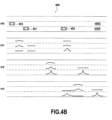
- b i 0 corresponds also an initial occupancy probability distribution o 0 i x i y i wherein an occupancy probability of 1 is set at the current position ( x i , y i ) of road user i, as perceived through the observation management module 221.
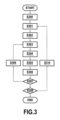
- the m road users in the traffic scene are sorted by descending driving priority in the next step S301.
- This driving priority may be mainly allocated according to the longitudinal position of the road users, with a leading road user being allocated a higher driving priority than a trailing road user.
- the general and/or local rules of the road may also be taken into account in this driving priority allocation.
- step S301 After executing step S301, road user index i is set to 1 in step S302. Then, in step S303, for each available action a i from each possible state s i of road user i at time t, the value of the dynamic cost component associated to each dynamic feature for each possible location ( x j , y j ) of each other road user j at time t is calculated by multiplying the value of that dynamic feature by the corresponding component of dynamic weight vector ⁇ d i according to the behavioral model assigned to road user i and probability-weighted according to the occupancy probability distribution o t j x j y j of road users j
- each possible state s i we understand in particular each state s i with a non-zero probability.
- a probability-weighted average of speeds z j of the possible states s j in which road user j occupies that location ( x j , y j ) may be used as the speed of road user j.
- the highest value for each dynamic cost component is then selected to form a probability-weighted dynamic cost vector used in step S304 to calculate the probability ⁇ t i a i
- the belief state b i t+1 for road user i at the next timestep t+1 is calculated based on the probability ⁇ t i a i
- s i and transition Tr i ( s i , a i ) associated to each available action a i from each possible state s i for road user i at time t, according to the equation: b t + 1 i s ′ i ⁇ s i ⁇ a i P s ′ i
- the time complexity of this algorithm grows linearly with respect to the time horizon T and with the number of available actions for each road user, and quadratically with respect to the number of road users and available states for each road user.
- the data processor 103 also comprises a collision risk evaluation module 230 adapted to process the future traffic scene prediction output by scene prediction module 223 in order to determine a risk of collision for road vehicle 1 and, if this risk of collision exceeds a predetermined threshold, output a driver warning signal through warning signal output device 104 and/or execute an avoidance action through driving command output device 105.
- a collision risk evaluation module 230 adapted to process the future traffic scene prediction output by scene prediction module 223 in order to determine a risk of collision for road vehicle 1 and, if this risk of collision exceeds a predetermined threshold, output a driver warning signal through warning signal output device 104 and/or execute an avoidance action through driving command output device 105.
Landscapes
- Engineering & Computer Science (AREA)
- Automation & Control Theory (AREA)
- Transportation (AREA)
- Mechanical Engineering (AREA)
- Physics & Mathematics (AREA)
- General Physics & Mathematics (AREA)
- Theoretical Computer Science (AREA)
- Mathematical Physics (AREA)
- Human Computer Interaction (AREA)
- Software Systems (AREA)
- Multimedia (AREA)
- Artificial Intelligence (AREA)
- Medical Informatics (AREA)
- Evolutionary Computation (AREA)
- Computing Systems (AREA)
- General Engineering & Computer Science (AREA)
- Data Mining & Analysis (AREA)
- Computer Vision & Pattern Recognition (AREA)
- Traffic Control Systems (AREA)
Claims (11)
- Fahrassistenz-Verfahren für ein Straßenfahrzeug (1), wobei das Fahrassistenz-Verfahren die Schritte umfasst des:Erfassens einer Menge von Straßenbenutzern und eines aktuellen Zustands für jeden Straßenbenutzer der Menge von Straßenbenutzern innerhalb eines Verkehrsszenarios, welches das Straßenfahrzeug (1) beinhaltet, wobei ein aktueller Zustand eine aktuelle Geschwindigkeit und eine aktuelle Position beinhaltet,Zuweisens eines dynamischen Verhaltensmodells aus einer finiten Mehrzahl von Verhaltensmodellen an jeden Straßenbenutzer aus der Menge von Straßenbenutzern, wobei das dynamische Verhaltensmodell mindestens ein dynamisches Merkmal zur Berücksichtigung eines Zustands eines anderen Straßenbenutzers als jenes Straßenbenutzers, an den das dynamische Verhaltensmodell zugewiesen wurde, aufweist,probabilistischen Schätzens eines Annahmezustands für jeden Straßenbenutzer aus der Menge von Straßenbenutzern durch einen Datenprozessor (103) unter Verwendung des dynamischen Verhaltensmodells, das jedem Straßenbenutzer aus der Menge von Straßenbenutzern zugewiesen wurde, wobei der Annahmezustand eine Menge von alternativen Folgezuständen und entsprechenden Wahrscheinlichkeiten umfasst, wobei jeder alternative Folgezustand eine Geschwindigkeit und eine Position beinhaltet,Bestimmens eines Risikos einer Kollision des Straßenfahrzeugs (1) mit einem Straßenbenutzer aus der Menge von Straßenbenutzern, auf Grundlage des probabilistisch geschätzten Annahmezustands eines jeden Straßenbenutzers aus der Menge von Straßenbenutzern, undAusgebens eines Fahrer-Warnsignals und/oder Ausführens einer Ausweichaktion, wenn das Risiko einer Kollision eine vorbestimmte Schwelle überschreitet,wobei der Annahmezustand für jeden Straßenbenutzer aus der Menge von Straßenbenutzern durch den Datenprozessor (103) probabilistisch geschätzt wird, indem er die Schritte durchführt des:Schätzens einer Wahrscheinlichkeit für jede Aktion aus einer Menge von alternativen Folgeaktionen für jeden Straßenbenutzer aus der Menge von Straßenbenutzern unter Verwendung des dynamischen Verhaltensmodells, das jedem Straßenbenutzer aus der Menge von Straßenbenutzern zugewiesen wurde, und unter Berücksichtigung mindestens einer zuvor berechneten Belegungs-Wahrscheinlichkeitsverteilung aus der Menge von Straßenbenutzern,Berechnens eines jeden alternativen Folgezustands, der sich aus jeder Aktion aus der Menge von alternativen Folgeaktionen für den entsprechenden Straßenbenutzer ergibt.
- Fahrassistenz-Verfahren nach Anspruch 1, wobei der Annahmezustand für jeden Straßenbenutzer aus der Menge von Straßenbenutzern durch den Datenprozessor (103) für mehrere aufeinanderfolgende Zeitschritte probabilistisch geschätzt wird, wobei auf Grundlage des für jeden aufeinanderfolgenden Zeitschritt probabilistisch geschätzten Annahmezustands eine neue Belegungs-Wahrscheinlichkeitsverteilung berechnet wird.
- Fahrassistenz-Verfahren nach einem der Ansprüche 1 oder 2, umfassend einen Schritt des Sortierens der Menge von Straßenbenutzern in absteigender Reihenfolge des Fahrtvorrangs, vor dem Schritt des Schätzens der Wahrscheinlichkeit einer jeden Aktion aus einer Menge von alternativen Folgeaktionen, wobei der Schritt der Reihe nach für jeden Straßenbenutzer aus der Menge von Straßenbenutzern in der abnehmenden Reihenfolge des Fahrtvorrangs durchgeführt wird.
- Fahrassistenz-Verfahren nach einem der Ansprüche 1 bis 3, wobei das zumindest ein dynamisches Merkmal einen Zeitvorlauf und/oder eine Zeit bis zur Kollision zwischen dem Straßenbenutzer, an welchen das dynamische Verhaltensmodell zugewiesen wurde, und einem weiteren Straßenbenutzer umfasst.
- Fahrassistenz-Verfahren nach einem der Ansprüche 1 bis 4, wobei das dynamische Verhaltensmodell ein dynamisches Verhaltensmodell ist, das aus beobachtetem Straßenbenutzerverhalten unter Verwendung eines maschinellen Lernalgorithmus gelernt wurde.
- Fahrassistenz-Verfahren nach einem der Ansprüche 1 bis 5, wobei jedes Verhaltensmodell aus der finiten Mehrzahl von Verhaltensmodellen einer Kostenfunktion zum Berechnen der Kosten einer Folgeaktion aus einem aktuellen Zustand zugeordnet ist, und wobei die Wahrscheinlichkeit einer Aktion aus einer Menge von alternativen Folgeaktionen für einen gegebenen Straßenbenutzer als eins minus das Verhältnis der Kosten der Aktion zu der Gesamtsumme der Kosten der Menge von alternativen Folgeaktionen gemäß der Kostenfunktion, die einem dem gegebenen Straßenbenutzer zugeordneten Verhaltensmodell zugewiesen ist, geschätzt wird.
- Fahrassistenz-Verfahren nach einem der Ansprüche 1 bis 6, wobei das Verkehrsszenario eine mehrspurige Straße umfasst, und die Menge von alternativen Folgeaktionen für jeden Straßenbenutzer aus der Menge von Straßenbenutzern Spurwechsel und/oder Geschwindigkeitsänderungen umfasst.
- Fahrassistenz-Verfahren nach einem der vorhergehenden Ansprüche, wobei der Schritt des Zuweisens eines Verhaltensmodells aus einer finiten Mehrzahl von Verhaltensmodellen an jeden Straßenbenutzer aus der Menge von Straßenbenutzern durch einen Datenprozessor auf Grundlage des Verhaltens eines jeden Straßenbenutzers aus der Menge von Straßenbenutzern vor den aktuellen Zuständen erfolgt.
- Fahrassistenz-Verfahren nach Anspruch 8, wobei zur Zuweisung eines Verhaltensmodells aus der finiten Mehrzahl von Verhaltensmodellen an einen Straßenbenutzer eine aggregierte Wahrscheinlichkeit eines vorhergehenden Verlaufs des Straßenbenutzers, welcher die vorhergehenden Zustände des Straßenbenutzers beinhaltet, unter Verwendung eines jeden Verhaltensmodells berechnet wird, und das Verhaltensmodell mit der höchsten aggregierten Wahrscheinlichkeit ausgewählt wird.
- Fahrassistenz-System (100) für ein Straßenfahrzeug (1), wobei das Fahrassistenz-Verfahren (100) umfasst:eine Menge (101) von Sensoren zum Erfassen einer Menge von Straßenbenutzern und eines aktuellen Zustands für jeden Straßenbenutzer der Menge von Straßenbenutzern innerhalb eines Verkehrsszenarios, welches das Straßenfahrzeug (1) beinhaltet, wobei ein aktueller Zustand eine aktuelle Geschwindigkeit und eine aktuelle Position beinhaltet,eine Datenspeichervorrichtung (102) für eine Datenbank umfassend eine finite Mehrzahl von Verhaltensmodellen,einen Datenprozessor (103), der mit der Menge (101) von Sensoren und der Datenspeichervorrichtung (102) verbunden ist, zur Zuweisung eines Verhaltensmodells aus der finiten Mehrzahl von Verhaltensmodellen an jeden Straßenbenutzer aus der Menge von Straßenbenutzern, zum probabilistischen Schätzen eines Annahmezustands für jeden Straßenbenutzers aus der Menge von Straßenbenutzern, gemäß dem einem jeden Straßenbenutzer aus der Menge von Straßenbenutzern zugewiesenen Verhaltensmodell, und zum Bestimmen eines Risikos einer Kollision des Straßenfahrzeugs (1) mit einem Straßenbenutzer aus der Menge von Straßenbenutzern, auf Grundlage des probabilistisch geschätzten Annahmezustands eines jeden Straßenbenutzers aus der Menge von Straßenbenutzern, undeine Ausgabevorrichtung (104, 105), die mit dem Datenprozessor (103) verbunden ist, zum Ausgeben eines Fahrer-Warnsignals und/oder Ausführen einer Ausweichaktion, wenn das Risiko einer Kollision eine vorbestimmte Schwelle überschreitet,wobei das Fahrassistenz-System dadurch gekennzeichnet ist, dass der Annahmezustand eine Menge von alternativen Folgezuständen und entsprechenden Wahrscheinlichkeiten umfasst, wobei jeder alternative Folgezustand eine Geschwindigkeit und eine Position umfasst, dass das Verhaltensmodell, für dessen Zuweisung an jeden Straßenbenutzer aus der Menge von Straßenbenutzern der Datenprozessor (103) ausgestaltet ist, ein dynamisches Verhaltensmodell mit mindestens einem dynamischen Merkmal zur Berücksichtigung eines Zustands eines anderen Straßenbenutzers als jenes Straßenbenutzers ist, an den das dynamische Verhaltensmodell zugewiesen wurde, und dass der Datenprozessor (103) dazu ausgestaltet ist, den Annahmezustand für jeden Straßenbenutzer aus der Menge von Straßenbenutzern probabilistisch zu schätzen, indem er die Schritte durchführt des:Schätzens einer Wahrscheinlichkeit für jede Aktion aus einer Menge von alternativen Folgeaktionen für jeden Straßenbenutzer aus der Menge von Straßenbenutzern unter Verwendung des dynamischen Verhaltensmodells, das jedem Straßenbenutzer aus der Menge von Straßenbenutzern zugewiesen wurde, und unter Berücksichtigung mindestens einer zuvor berechneten Belegungs-Wahrscheinlichkeitsverteilung aus der Menge von Straßenbenutzern,Berechnens eines jeden alternativen Folgezustands, der sich aus jeder Aktion aus der Menge von alternativen Folgeaktionen für den entsprechenden Straßenbenutzer ergibt.
- Straßenfahrzeug (1), umfassend ein Fahrassistenz-System (100) nach Anspruch 10.
Applications Claiming Priority (1)
| Application Number | Priority Date | Filing Date | Title |
|---|---|---|---|
| PCT/IB2016/001737 WO2018078413A1 (en) | 2016-10-31 | 2016-10-31 | Driving assistance method and system |
Publications (3)
| Publication Number | Publication Date |
|---|---|
| EP3533040A1 EP3533040A1 (de) | 2019-09-04 |
| EP3533040B1 true EP3533040B1 (de) | 2024-12-11 |
| EP3533040B8 EP3533040B8 (de) | 2025-01-22 |
Family
ID=57796752
Family Applications (1)
| Application Number | Title | Priority Date | Filing Date |
|---|---|---|---|
| EP16826153.5A Active EP3533040B8 (de) | 2016-10-31 | 2016-10-31 | Fahrassistenzverfahren und system |
Country Status (3)
| Country | Link |
|---|---|
| US (1) | US11648935B2 (de) |
| EP (1) | EP3533040B8 (de) |
| WO (1) | WO2018078413A1 (de) |
Families Citing this family (28)
| Publication number | Priority date | Publication date | Assignee | Title |
|---|---|---|---|---|
| EP3401182B1 (de) * | 2017-05-09 | 2020-09-09 | Veoneer Sweden AB | Vorrichtung zur fahrspurerkennung |
| US11364899B2 (en) | 2017-06-02 | 2022-06-21 | Toyota Motor Europe | Driving assistance method and system |
| DE102017221940A1 (de) * | 2017-12-05 | 2019-06-06 | Bayerische Motoren Werke Aktiengesellschaft | Verfahren und Fahrerassistenzsystem zum Steuern eines Kraftfahrzeugs und Kraftfahrzeug |
| US11273836B2 (en) * | 2017-12-18 | 2022-03-15 | Plusai, Inc. | Method and system for human-like driving lane planning in autonomous driving vehicles |
| US11724691B2 (en) * | 2018-09-15 | 2023-08-15 | Toyota Research Institute, Inc. | Systems and methods for estimating the risk associated with a vehicular maneuver |
| US11364913B2 (en) * | 2019-03-26 | 2022-06-21 | GM Global Technology Operations LLC | Situational complexity quantification for autonomous systems |
| US11157784B2 (en) * | 2019-05-08 | 2021-10-26 | GM Global Technology Operations LLC | Explainable learning system and methods for autonomous driving |
| CN112824836B (zh) * | 2019-11-21 | 2024-12-17 | 北京图森智途科技有限公司 | 移动工具碰撞检测方法及相关设备 |
| US11480963B2 (en) * | 2019-12-20 | 2022-10-25 | Waymo Llc | Vehicle intent prediction neural network |
| US11587329B2 (en) * | 2019-12-27 | 2023-02-21 | Valeo Schalter Und Sensoren Gmbh | Method and apparatus for predicting intent of vulnerable road users |
| DE102020200183A1 (de) | 2020-01-09 | 2021-07-15 | Continental Automotive Gmbh | Verfahren zum Erstellen einer probabilistischen Freiraumkarte mit statischen und dynamischen Objekten |
| WO2021247082A1 (en) | 2020-06-05 | 2021-12-09 | Gatik Ai Inc. | Method and system for deterministic trajectory selection based on uncertainty estimation for an autonomous agent |
| JP7538893B2 (ja) * | 2020-06-05 | 2024-08-22 | ガティック エーアイ インコーポレイテッド | 自律エージェントのデータドリブンかつモジュラー式の意思決定と経路生成のための方法およびシステム |
| US11034364B1 (en) * | 2020-06-05 | 2021-06-15 | Gatik Ai Inc. | Method and system for context-aware decision making of an autonomous agent |
| WO2022008087A1 (en) * | 2020-07-10 | 2022-01-13 | Embotech Ag | Recursive, real-time capable, interaction-aware methods of planning motions for autonomous vehicles |
| US12272245B2 (en) * | 2020-07-24 | 2025-04-08 | Autobrains Technologies Ltd | Bypass assistance |
| WO2022249548A1 (ja) * | 2021-05-28 | 2022-12-01 | 日立Astemo株式会社 | 車両の走行制御装置、車両制御システム、及び車両制御方法 |
| WO2023114396A1 (en) | 2021-12-16 | 2023-06-22 | Gatik Ai Inc. | Method and system for addressing failure in an autonomous agent |
| CA3240477A1 (en) | 2021-12-16 | 2023-06-22 | Apeksha Kumavat | Method and system for expanding the operational design domain of an autonomous agent |
| CN114291081B (zh) * | 2021-12-31 | 2023-07-04 | 成都路行通信息技术有限公司 | 一种基于人工智能算法的车辆碰撞检测方法 |
| EP4220601A1 (de) * | 2022-01-27 | 2023-08-02 | Continental Autonomous Mobility Germany GmbH | Verfahren und vorrichtung zur ortung eines verkehrsteilnehmers und fahrzeug |
| US12400541B2 (en) * | 2022-02-23 | 2025-08-26 | Southeast University | Multi-objective optimization control method and system for cooperative ramp merging of connected vehicles on highway |
| CN115230706B (zh) * | 2022-08-01 | 2024-06-14 | 北京理工大学 | 一种基于博弈的多车协同换道决策与控制方法 |
| US12391274B2 (en) * | 2023-02-28 | 2025-08-19 | Nissan North America, Inc. | Learning constraints over beliefs in autonomous vehicle operations |
| WO2024250013A2 (en) * | 2023-06-02 | 2024-12-05 | Drisk, Inc. | System and methods for remapping driving scenarios for training autonomous vehicles |
| JP7831414B2 (ja) * | 2023-06-16 | 2026-03-17 | トヨタ自動車株式会社 | 制御装置 |
| US20260062031A1 (en) * | 2024-08-27 | 2026-03-05 | cogniBIT GmbH | Human intent prediction for driver assistance system |
| US12409824B1 (en) | 2024-12-20 | 2025-09-09 | Gatik Ai Inc. | Drive-by-wire vehicle architecture |
Citations (6)
| Publication number | Priority date | Publication date | Assignee | Title |
|---|---|---|---|---|
| US20050086003A1 (en) * | 2002-01-17 | 2005-04-21 | Tarabishy M. N. | Method for collision avoidance and collision mitigation |
| US20060041381A1 (en) * | 2002-05-07 | 2006-02-23 | Stephan Simon | Method for determing an accident risk between a first object with at least one second object |
| US20080312830A1 (en) * | 2007-06-12 | 2008-12-18 | Juan Liu | Using long-range dynamics and mental-state models to assess collision risk for early warning |
| US20100106418A1 (en) * | 2007-06-20 | 2010-04-29 | Toyota Jidosha Kabushiki Kaisha | Vehicle travel track estimator |
| US20110313664A1 (en) * | 2009-02-09 | 2011-12-22 | Toyota Jidosha Kabushiki Kaisha | Apparatus for predicting the movement of a mobile body |
| US20150344030A1 (en) * | 2014-05-30 | 2015-12-03 | Honda Research Institute Europe Gmbh | Method and vehicle with an advanced driver assistance system for risk-based traffic scene analysis |
Family Cites Families (4)
| Publication number | Priority date | Publication date | Assignee | Title |
|---|---|---|---|---|
| US7579942B2 (en) * | 2006-10-09 | 2009-08-25 | Toyota Motor Engineering & Manufacturing North America, Inc. | Extra-vehicular threat predictor |
| US7925438B2 (en) * | 2007-10-30 | 2011-04-12 | Alpine Electronics, Inc. | Method and apparatus for displaying route guidance list for navigation system |
| US20170329332A1 (en) * | 2016-05-10 | 2017-11-16 | Uber Technologies, Inc. | Control system to adjust operation of an autonomous vehicle based on a probability of interference by a dynamic object |
| US10154377B2 (en) * | 2016-09-12 | 2018-12-11 | Polaris Industries Inc. | Vehicle to vehicle communications device and methods for recreational vehicles |
-
2016
- 2016-10-31 US US16/345,987 patent/US11648935B2/en active Active
- 2016-10-31 EP EP16826153.5A patent/EP3533040B8/de active Active
- 2016-10-31 WO PCT/IB2016/001737 patent/WO2018078413A1/en not_active Ceased
Patent Citations (6)
| Publication number | Priority date | Publication date | Assignee | Title |
|---|---|---|---|---|
| US20050086003A1 (en) * | 2002-01-17 | 2005-04-21 | Tarabishy M. N. | Method for collision avoidance and collision mitigation |
| US20060041381A1 (en) * | 2002-05-07 | 2006-02-23 | Stephan Simon | Method for determing an accident risk between a first object with at least one second object |
| US20080312830A1 (en) * | 2007-06-12 | 2008-12-18 | Juan Liu | Using long-range dynamics and mental-state models to assess collision risk for early warning |
| US20100106418A1 (en) * | 2007-06-20 | 2010-04-29 | Toyota Jidosha Kabushiki Kaisha | Vehicle travel track estimator |
| US20110313664A1 (en) * | 2009-02-09 | 2011-12-22 | Toyota Jidosha Kabushiki Kaisha | Apparatus for predicting the movement of a mobile body |
| US20150344030A1 (en) * | 2014-05-30 | 2015-12-03 | Honda Research Institute Europe Gmbh | Method and vehicle with an advanced driver assistance system for risk-based traffic scene analysis |
Also Published As
| Publication number | Publication date |
|---|---|
| EP3533040B8 (de) | 2025-01-22 |
| EP3533040A1 (de) | 2019-09-04 |
| WO2018078413A1 (en) | 2018-05-03 |
| US11648935B2 (en) | 2023-05-16 |
| US20190329763A1 (en) | 2019-10-31 |
Similar Documents
| Publication | Publication Date | Title |
|---|---|---|
| EP3533040B1 (de) | Fahrassistenzverfahren und system | |
| US11364899B2 (en) | Driving assistance method and system | |
| US11834077B2 (en) | Systems, methods, and media for occlusion-aware motion planning | |
| Min et al. | Deep Q learning based high level driving policy determination | |
| WO2019124001A1 (ja) | 移動体挙動予測装置および移動体挙動予測方法 | |
| González et al. | High-speed highway scene prediction based on driver models learned from demonstrations | |
| EP3794573B1 (de) | Navigieren in überlasteten verkehrsräumen mit sätzen von risikostuffen | |
| CN116507541B (zh) | 在自动驾驶中预测其他道路使用者的反应的方法和系统 | |
| WO2022151666A1 (en) | Systems, methods, and media for evaluation of trajectories and selection of a trajectory for a vehicle | |
| WO2022256760A1 (en) | Method and system for predicting behavior of actors in an environment of an autonomous vehicle | |
| CN114763156B (zh) | 使用基于关注度的事件结构的认知情境意识的方法 | |
| Youssef et al. | Comparative study of end-to-end deep learning methods for self-driving car | |
| Ren et al. | Intelligent Path Planning and Obstacle Avoidance Algorithms for Autonomous Vehicles Based on Enhanced RRT Algorithm | |
| JP7258077B2 (ja) | 他車両行動予測装置 | |
| US20240017746A1 (en) | Assessing present intentions of an actor perceived by an autonomous vehicle | |
| Wheeler et al. | A probabilistic framework for microscopic traffic propagation | |
| Molaie et al. | Auto-driving policies in highway based on distributional deep reinforcement learning | |
| EP4517369A1 (de) | Systeme und verfahren zur verarbeitung ausgewählter teile von radardaten | |
| EP4517688A1 (de) | Automatische entfernung ausgewählter trainingsdaten aus einem datensatz | |
| Otto et al. | A strategy on situation evaluation for driver assistance systems in commercial vehicles considering pedestrians in urban traffic | |
| Takei et al. | SLHP: Short-/Long-term Hybrid Prediction for Road Users | |
| Hina et al. | Machine Learning-Assisted Cognition of Driving Context and Avoidance of Road Obstacles |
Legal Events
| Date | Code | Title | Description |
|---|---|---|---|
| STAA | Information on the status of an ep patent application or granted ep patent |
Free format text: STATUS: UNKNOWN |
|
| STAA | Information on the status of an ep patent application or granted ep patent |
Free format text: STATUS: THE INTERNATIONAL PUBLICATION HAS BEEN MADE |
|
| PUAI | Public reference made under article 153(3) epc to a published international application that has entered the european phase |
Free format text: ORIGINAL CODE: 0009012 |
|
| STAA | Information on the status of an ep patent application or granted ep patent |
Free format text: STATUS: REQUEST FOR EXAMINATION WAS MADE |
|
| 17P | Request for examination filed |
Effective date: 20190529 |
|
| AK | Designated contracting states |
Kind code of ref document: A1 Designated state(s): AL AT BE BG CH CY CZ DE DK EE ES FI FR GB GR HR HU IE IS IT LI LT LU LV MC MK MT NL NO PL PT RO RS SE SI SK SM TR |
|
| AX | Request for extension of the european patent |
Extension state: BA ME |
|
| DAV | Request for validation of the european patent (deleted) | ||
| DAX | Request for extension of the european patent (deleted) | ||
| STAA | Information on the status of an ep patent application or granted ep patent |
Free format text: STATUS: EXAMINATION IS IN PROGRESS |
|
| 17Q | First examination report despatched |
Effective date: 20210428 |
|
| REG | Reference to a national code |
Ref country code: DE Ref legal event code: R079 Free format text: PREVIOUS MAIN CLASS: G08G0001096200 Ipc: B60W0040000000 Ref document number: 602016090607 Country of ref document: DE |
|
| GRAP | Despatch of communication of intention to grant a patent |
Free format text: ORIGINAL CODE: EPIDOSNIGR1 |
|
| STAA | Information on the status of an ep patent application or granted ep patent |
Free format text: STATUS: GRANT OF PATENT IS INTENDED |
|
| RIC1 | Information provided on ipc code assigned before grant |
Ipc: B60W 40/04 20060101ALI20230510BHEP Ipc: B60W 30/095 20120101ALI20230510BHEP Ipc: G08G 1/16 20060101ALI20230510BHEP Ipc: B60W 30/09 20120101ALI20230510BHEP Ipc: G08G 1/0962 20060101ALI20230510BHEP Ipc: B60W 50/14 20120101ALI20230510BHEP Ipc: B60W 50/00 20060101ALI20230510BHEP Ipc: B60W 40/00 20060101AFI20230510BHEP |
|
| INTG | Intention to grant announced |
Effective date: 20230607 |
|
| GRAJ | Information related to disapproval of communication of intention to grant by the applicant or resumption of examination proceedings by the epo deleted |
Free format text: ORIGINAL CODE: EPIDOSDIGR1 |
|
| STAA | Information on the status of an ep patent application or granted ep patent |
Free format text: STATUS: EXAMINATION IS IN PROGRESS |
|
| GRAP | Despatch of communication of intention to grant a patent |
Free format text: ORIGINAL CODE: EPIDOSNIGR1 |
|
| STAA | Information on the status of an ep patent application or granted ep patent |
Free format text: STATUS: GRANT OF PATENT IS INTENDED |
|
| INTC | Intention to grant announced (deleted) | ||
| INTG | Intention to grant announced |
Effective date: 20231116 |
|
| GRAJ | Information related to disapproval of communication of intention to grant by the applicant or resumption of examination proceedings by the epo deleted |
Free format text: ORIGINAL CODE: EPIDOSDIGR1 |
|
| STAA | Information on the status of an ep patent application or granted ep patent |
Free format text: STATUS: EXAMINATION IS IN PROGRESS |
|
| INTC | Intention to grant announced (deleted) | ||
| GRAP | Despatch of communication of intention to grant a patent |
Free format text: ORIGINAL CODE: EPIDOSNIGR1 |
|
| STAA | Information on the status of an ep patent application or granted ep patent |
Free format text: STATUS: GRANT OF PATENT IS INTENDED |
|
| INTG | Intention to grant announced |
Effective date: 20240705 |
|
| GRAS | Grant fee paid |
Free format text: ORIGINAL CODE: EPIDOSNIGR3 |
|
| GRAA | (expected) grant |
Free format text: ORIGINAL CODE: 0009210 |
|
| STAA | Information on the status of an ep patent application or granted ep patent |
Free format text: STATUS: THE PATENT HAS BEEN GRANTED |
|
| AK | Designated contracting states |
Kind code of ref document: B1 Designated state(s): AL AT BE BG CH CY CZ DE DK EE ES FI FR GB GR HR HU IE IS IT LI LT LU LV MC MK MT NL NO PL PT RO RS SE SI SK SM TR |
|
| REG | Reference to a national code |
Ref country code: GB Ref legal event code: FG4D |
|
| REG | Reference to a national code |
Ref country code: CH Ref legal event code: EP |
|
| REG | Reference to a national code |
Ref country code: CH Ref legal event code: PK Free format text: BERICHTIGUNG B8 |
|
| REG | Reference to a national code |
Ref country code: IE Ref legal event code: FG4D |
|
| REG | Reference to a national code |
Ref country code: DE Ref legal event code: R096 Ref document number: 602016090607 Country of ref document: DE |
|
| RAP4 | Party data changed (patent owner data changed or rights of a patent transferred) |
Owner name: TOYOTA MOTOR EUROPE |
|
| REG | Reference to a national code |
Ref country code: DE Ref legal event code: R081 Ref document number: 602016090607 Country of ref document: DE Owner name: TOYOTA JIDOSHA KABUSHIKI KAISHA, TOYOTA-SHI, JP Free format text: FORMER OWNERS: INSTITUT NATIONAL DE RECHERCHE EN INFORMATIQUE ET EN AUTOMATIQUE, ROCQUENCOURT, FR; INSTITUT NATIONAL DES SCIENCES APPLIQUEES DE LYON, VILLEURBANNE, FR; TOYOTA MOTOR EUROPE, BRUSSELS, BE Ref country code: DE Ref legal event code: R081 Ref document number: 602016090607 Country of ref document: DE Owner name: TOYOTA MOTOR EUROPE, BE Free format text: FORMER OWNERS: INSTITUT NATIONAL DE RECHERCHE EN INFORMATIQUE ET EN AUTOMATIQUE, ROCQUENCOURT, FR; INSTITUT NATIONAL DES SCIENCES APPLIQUEES DE LYON, VILLEURBANNE, FR; TOYOTA MOTOR EUROPE, BRUSSELS, BE |
|
| REG | Reference to a national code |
Ref country code: DE Ref legal event code: R081 Ref document number: 602016090607 Country of ref document: DE Owner name: TOYOTA JIDOSHA KABUSHIKI KAISHA, TOYOTA-SHI, JP Free format text: FORMER OWNER: TOYOTA MOTOR EUROPE, BRUSSELS, BE |
|
| RAP2 | Party data changed (patent owner data changed or rights of a patent transferred) |
Owner name: TOYOTA JIDOSHA KABUSHIKI KAISHA |
|
| REG | Reference to a national code |
Ref country code: LT Ref legal event code: MG9D |
|
| PG25 | Lapsed in a contracting state [announced via postgrant information from national office to epo] |
Ref country code: HR Free format text: LAPSE BECAUSE OF FAILURE TO SUBMIT A TRANSLATION OF THE DESCRIPTION OR TO PAY THE FEE WITHIN THE PRESCRIBED TIME-LIMIT Effective date: 20241211 |
|
| PG25 | Lapsed in a contracting state [announced via postgrant information from national office to epo] |
Ref country code: FI Free format text: LAPSE BECAUSE OF FAILURE TO SUBMIT A TRANSLATION OF THE DESCRIPTION OR TO PAY THE FEE WITHIN THE PRESCRIBED TIME-LIMIT Effective date: 20241211 |
|
| PG25 | Lapsed in a contracting state [announced via postgrant information from national office to epo] |
Ref country code: BG Free format text: LAPSE BECAUSE OF FAILURE TO SUBMIT A TRANSLATION OF THE DESCRIPTION OR TO PAY THE FEE WITHIN THE PRESCRIBED TIME-LIMIT Effective date: 20241211 |
|
| REG | Reference to a national code |
Ref country code: NL Ref legal event code: MP Effective date: 20241211 |
|
| PG25 | Lapsed in a contracting state [announced via postgrant information from national office to epo] |
Ref country code: ES Free format text: LAPSE BECAUSE OF FAILURE TO SUBMIT A TRANSLATION OF THE DESCRIPTION OR TO PAY THE FEE WITHIN THE PRESCRIBED TIME-LIMIT Effective date: 20241211 |
|
| PG25 | Lapsed in a contracting state [announced via postgrant information from national office to epo] |
Ref country code: NO Free format text: LAPSE BECAUSE OF FAILURE TO SUBMIT A TRANSLATION OF THE DESCRIPTION OR TO PAY THE FEE WITHIN THE PRESCRIBED TIME-LIMIT Effective date: 20250311 |
|
| PG25 | Lapsed in a contracting state [announced via postgrant information from national office to epo] |
Ref country code: LV Free format text: LAPSE BECAUSE OF FAILURE TO SUBMIT A TRANSLATION OF THE DESCRIPTION OR TO PAY THE FEE WITHIN THE PRESCRIBED TIME-LIMIT Effective date: 20241211 Ref country code: GR Free format text: LAPSE BECAUSE OF FAILURE TO SUBMIT A TRANSLATION OF THE DESCRIPTION OR TO PAY THE FEE WITHIN THE PRESCRIBED TIME-LIMIT Effective date: 20250312 |
|
| PG25 | Lapsed in a contracting state [announced via postgrant information from national office to epo] |
Ref country code: RS Free format text: LAPSE BECAUSE OF FAILURE TO SUBMIT A TRANSLATION OF THE DESCRIPTION OR TO PAY THE FEE WITHIN THE PRESCRIBED TIME-LIMIT Effective date: 20250311 |
|
| PG25 | Lapsed in a contracting state [announced via postgrant information from national office to epo] |
Ref country code: NL Free format text: LAPSE BECAUSE OF FAILURE TO SUBMIT A TRANSLATION OF THE DESCRIPTION OR TO PAY THE FEE WITHIN THE PRESCRIBED TIME-LIMIT Effective date: 20241211 |
|
| REG | Reference to a national code |
Ref country code: AT Ref legal event code: MK05 Ref document number: 1750181 Country of ref document: AT Kind code of ref document: T Effective date: 20241211 |
|
| PG25 | Lapsed in a contracting state [announced via postgrant information from national office to epo] |
Ref country code: SM Free format text: LAPSE BECAUSE OF FAILURE TO SUBMIT A TRANSLATION OF THE DESCRIPTION OR TO PAY THE FEE WITHIN THE PRESCRIBED TIME-LIMIT Effective date: 20241211 |
|
| PG25 | Lapsed in a contracting state [announced via postgrant information from national office to epo] |
Ref country code: PL Free format text: LAPSE BECAUSE OF FAILURE TO SUBMIT A TRANSLATION OF THE DESCRIPTION OR TO PAY THE FEE WITHIN THE PRESCRIBED TIME-LIMIT Effective date: 20241211 |
|
| PG25 | Lapsed in a contracting state [announced via postgrant information from national office to epo] |
Ref country code: IS Free format text: LAPSE BECAUSE OF FAILURE TO SUBMIT A TRANSLATION OF THE DESCRIPTION OR TO PAY THE FEE WITHIN THE PRESCRIBED TIME-LIMIT Effective date: 20250411 |
|
| PG25 | Lapsed in a contracting state [announced via postgrant information from national office to epo] |
Ref country code: PT Free format text: LAPSE BECAUSE OF FAILURE TO SUBMIT A TRANSLATION OF THE DESCRIPTION OR TO PAY THE FEE WITHIN THE PRESCRIBED TIME-LIMIT Effective date: 20250411 |
|
| PG25 | Lapsed in a contracting state [announced via postgrant information from national office to epo] |
Ref country code: AT Free format text: LAPSE BECAUSE OF FAILURE TO SUBMIT A TRANSLATION OF THE DESCRIPTION OR TO PAY THE FEE WITHIN THE PRESCRIBED TIME-LIMIT Effective date: 20241211 Ref country code: RO Free format text: LAPSE BECAUSE OF FAILURE TO SUBMIT A TRANSLATION OF THE DESCRIPTION OR TO PAY THE FEE WITHIN THE PRESCRIBED TIME-LIMIT Effective date: 20241211 |
|
| PG25 | Lapsed in a contracting state [announced via postgrant information from national office to epo] |
Ref country code: SK Free format text: LAPSE BECAUSE OF FAILURE TO SUBMIT A TRANSLATION OF THE DESCRIPTION OR TO PAY THE FEE WITHIN THE PRESCRIBED TIME-LIMIT Effective date: 20241211 |
|
| PG25 | Lapsed in a contracting state [announced via postgrant information from national office to epo] |
Ref country code: CZ Free format text: LAPSE BECAUSE OF FAILURE TO SUBMIT A TRANSLATION OF THE DESCRIPTION OR TO PAY THE FEE WITHIN THE PRESCRIBED TIME-LIMIT Effective date: 20241211 |
|
| PG25 | Lapsed in a contracting state [announced via postgrant information from national office to epo] |
Ref country code: IT Free format text: LAPSE BECAUSE OF FAILURE TO SUBMIT A TRANSLATION OF THE DESCRIPTION OR TO PAY THE FEE WITHIN THE PRESCRIBED TIME-LIMIT Effective date: 20241211 |
|
| PG25 | Lapsed in a contracting state [announced via postgrant information from national office to epo] |
Ref country code: SE Free format text: LAPSE BECAUSE OF FAILURE TO SUBMIT A TRANSLATION OF THE DESCRIPTION OR TO PAY THE FEE WITHIN THE PRESCRIBED TIME-LIMIT Effective date: 20241211 |
|
| REG | Reference to a national code |
Ref country code: DE Ref legal event code: R097 Ref document number: 602016090607 Country of ref document: DE |
|
| PG25 | Lapsed in a contracting state [announced via postgrant information from national office to epo] |
Ref country code: DK Free format text: LAPSE BECAUSE OF FAILURE TO SUBMIT A TRANSLATION OF THE DESCRIPTION OR TO PAY THE FEE WITHIN THE PRESCRIBED TIME-LIMIT Effective date: 20241211 |
|
| PLBE | No opposition filed within time limit |
Free format text: ORIGINAL CODE: 0009261 |
|
| STAA | Information on the status of an ep patent application or granted ep patent |
Free format text: STATUS: NO OPPOSITION FILED WITHIN TIME LIMIT |
|
| 26N | No opposition filed |
Effective date: 20250912 |
|
| PGFP | Annual fee paid to national office [announced via postgrant information from national office to epo] |
Ref country code: DE Payment date: 20251015 Year of fee payment: 10 |
|
| PGFP | Annual fee paid to national office [announced via postgrant information from national office to epo] |
Ref country code: FR Payment date: 20251021 Year of fee payment: 10 |