EP3528126A1 - Représentation l'exécution d'un test d'une application logicielle utilisant la réalité étendue - Google Patents
Représentation l'exécution d'un test d'une application logicielle utilisant la réalité étendue Download PDFInfo
- Publication number
- EP3528126A1 EP3528126A1 EP19155467.4A EP19155467A EP3528126A1 EP 3528126 A1 EP3528126 A1 EP 3528126A1 EP 19155467 A EP19155467 A EP 19155467A EP 3528126 A1 EP3528126 A1 EP 3528126A1
- Authority
- EP
- European Patent Office
- Prior art keywords
- codebase
- extended reality
- graphical model
- test
- rendered view
- Prior art date
- Legal status (The legal status is an assumption and is not a legal conclusion. Google has not performed a legal analysis and makes no representation as to the accuracy of the status listed.)
- Granted
Links
Images





Classifications
-
- G—PHYSICS
- G06—COMPUTING OR CALCULATING; COUNTING
- G06F—ELECTRIC DIGITAL DATA PROCESSING
- G06F11/00—Error detection; Error correction; Monitoring
- G06F11/30—Monitoring
- G06F11/34—Recording or statistical evaluation of computer activity, e.g. of down time, of input/output operation ; Recording or statistical evaluation of user activity, e.g. usability assessment
- G06F11/3409—Recording or statistical evaluation of computer activity, e.g. of down time, of input/output operation ; Recording or statistical evaluation of user activity, e.g. usability assessment for performance assessment
- G06F11/3419—Recording or statistical evaluation of computer activity, e.g. of down time, of input/output operation ; Recording or statistical evaluation of user activity, e.g. usability assessment for performance assessment by assessing time
-
- G—PHYSICS
- G06—COMPUTING OR CALCULATING; COUNTING
- G06F—ELECTRIC DIGITAL DATA PROCESSING
- G06F11/00—Error detection; Error correction; Monitoring
- G06F11/30—Monitoring
- G06F11/3003—Monitoring arrangements specially adapted to the computing system or computing system component being monitored
- G06F11/302—Monitoring arrangements specially adapted to the computing system or computing system component being monitored where the computing system component is a software system
-
- G—PHYSICS
- G06—COMPUTING OR CALCULATING; COUNTING
- G06F—ELECTRIC DIGITAL DATA PROCESSING
- G06F11/00—Error detection; Error correction; Monitoring
- G06F11/30—Monitoring
- G06F11/3089—Monitoring arrangements determined by the means or processing involved in sensing the monitored data, e.g. interfaces, connectors, sensors, probes, agents
- G06F11/3093—Configuration details thereof, e.g. installation, enabling, spatial arrangement of the probes
-
- G—PHYSICS
- G06—COMPUTING OR CALCULATING; COUNTING
- G06F—ELECTRIC DIGITAL DATA PROCESSING
- G06F11/00—Error detection; Error correction; Monitoring
- G06F11/30—Monitoring
- G06F11/32—Monitoring with visual or acoustical indication of the functioning of the machine
- G06F11/323—Visualisation of programs or trace data
-
- G—PHYSICS
- G06—COMPUTING OR CALCULATING; COUNTING
- G06F—ELECTRIC DIGITAL DATA PROCESSING
- G06F11/00—Error detection; Error correction; Monitoring
- G06F11/30—Monitoring
- G06F11/34—Recording or statistical evaluation of computer activity, e.g. of down time, of input/output operation ; Recording or statistical evaluation of user activity, e.g. usability assessment
- G06F11/3466—Performance evaluation by tracing or monitoring
-
- G—PHYSICS
- G06—COMPUTING OR CALCULATING; COUNTING
- G06F—ELECTRIC DIGITAL DATA PROCESSING
- G06F11/00—Error detection; Error correction; Monitoring
- G06F11/36—Prevention of errors by analysis, debugging or testing of software
- G06F11/3604—Analysis of software for verifying properties of programs
- G06F11/3612—Analysis of software for verifying properties of programs by runtime analysis
-
- G—PHYSICS
- G06—COMPUTING OR CALCULATING; COUNTING
- G06F—ELECTRIC DIGITAL DATA PROCESSING
- G06F11/00—Error detection; Error correction; Monitoring
- G06F11/36—Prevention of errors by analysis, debugging or testing of software
- G06F11/3604—Analysis of software for verifying properties of programs
- G06F11/3616—Analysis of software for verifying properties of programs using software metrics
-
- G—PHYSICS
- G06—COMPUTING OR CALCULATING; COUNTING
- G06F—ELECTRIC DIGITAL DATA PROCESSING
- G06F2201/00—Indexing scheme relating to error detection, to error correction, and to monitoring
- G06F2201/865—Monitoring of software
Definitions
- extended reality devices such as augmented reality devices, virtual reality devices, mixed reality devices, and/or the like.
- immersive experiences with extended reality devices leverage affordances of natural human perception (e.g., spatial memory, motion, manipulation, feedback, and/or the like) for better comprehension of three-dimensional (3D) visualizations and enhanced creativity.
- a non-transitory computer-readable medium may store instructions that include one or more instructions that, when executed by one or more processors of a device, cause the one or more processors to instrument a codebase associated with a software application.
- the one or more instructions may cause the one or more processors to execute a test on the instrumented codebase as the instrumented codebase executes, wherein the instrumented codebase generates test data based on the test being executed.
- the one or more instructions may cause the one or more processors to generate a live graphical model of the codebase from a composite graphical model of the codebase.
- the one or more instructions may cause the one or more processors to generate an extended reality rendered view of the live graphical model.
- an immersive application platform may automatically create an extended reality rendered view of a live graphical model of a codebase for display by an extended reality device.
- the extended reality rendered view of a live graphical model may display the live graphical model based on a test that is executed on the codebase.
- the immersive application platform may generate the live graphical model based on test data generated by the test, may modify the live graphical model and/or the extended reality rendered view of the live graphical model as the test is executed on the codebase, and/or the like.
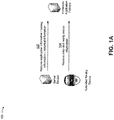
- the server device may store and/or transmit various types of information to the immersive application platform, to the extended reality device, and/or the like.
- the information may include application information associated with a software application, testing information associated with the software application, historical information associated with the software application, and/or the like.
- the application information may include a codebase associated with the software application, design information for the software application, and/or the like.
- the testing information may include information identifying one or more tests that are to be executed on the software application, parameters for the one or more tests, one or more test scripts that are to be executed for the one or more tests, and/or the like.
- the historical information may include historical test data associated with the software application, historical outputs from one or more dynamic analysis testing tools that tested the software application, and/or the like.
- the extended reality device may include an augmented reality device, a virtual reality device, a mixed reality device, and/or the like, that is capable of displaying an extended reality rendered view associated with a software application.
- the extended reality device may be a wearable device (e.g., a virtual reality headset, an augmented reality headset, etc.), a hand-held device (e.g., a smartphone, a tablet computer, etc.), another type of device (e.g., a server device, a desktop computer device, etc.), and/or the like.
- the extended reality device may provide information to the immersive application platform.
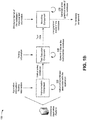
- the instrumentation component may insert instrumentation code into a codebase associated with a software application.
- the instrumentation code may provide various virtual sensors that generate test data as the codebase executes.
- the test execution component may execute one or more tests on the instrumented codebase, while the instrumented codebase is executing, to generate the test data.
- the immersive application platform may use the test data to monitor the codebase, measure a level of performance of the codebase, to diagnose errors associated with the codebase, and to generate execution trace information associated with the codebase, and/or the like.
- the extended reality device may provide information to the immersive application platform.
- the information may include information associated with the extended reality device, as described above.
- the extended reality device may provide the information based on receiving a request to provide the information, such as when the immersive application platform requests the information; may automatically provide the information to the immersive application platform based on a user selecting a particular software application to test, and/or the like.
- the instrumentation component may provide the instrumented codebase to the test execution component.
- the test execution component may also receive the testing information associated with the software application. As shown by reference number 108, the test execution component may execute a test on the instrumented codebase to generate test data.
- the testing information may include information identifying one or more test scripts that are to be executed by the test execution component, one or more parameters that are to be used for the test, and/or the like. Accordingly, the test execution component may identify the one or more test scripts, and may execute the one or more test scripts to execute the test on the instrumented codebase as the instrumented codebase executes.
- the test execution component may provide the test data to the modelling component.
- the test execution component may provide the test data while the test is being executed (e.g., as a continuous and/or real-time test data feed), may provide the test data after the test is complete, may provide the test data at specified time intervals, may provide the test data based on the modelling component requesting the test data, and/or the like.
- the modelling component may receive the test data from the test execution component, may receive the historical information associated with the software application and the application information from the server device, and/or the like. As shown by reference number 110, the modelling component may generate a live graphical model of the codebase. For example, the modelling component may generate the live graphical model of the codebase based on the test data, based on the historical information, based on the application information, and/or the like.
- the composite graphical model may include a graphical model that includes live test data and historical test data.
- the modelling component may map the historical information onto the graphical model. For example, the modelling component may map historical test data (e.g., historical test data associated with one or more previous tests executed on the codebase), historical outputs from one or more dynamic analysis tools (e.g., historical outputs generated by the codebase as the codebase is exercised by a dynamic analysis tool while the codebase is executing), and/or the like, included in the historical information, onto particular elements of the codebase included in the graphical model of the codebase.
- historical test data e.g., historical test data associated with one or more previous tests executed on the codebase
- dynamic analysis tools e.g., historical outputs generated by the codebase as the codebase is exercised by a dynamic analysis tool while the codebase is executing
- the one or more analyses may include a hotspot analysis (e.g., an analysis that determines a quantity of times an element included in the codebase is executed by the test), a dead code analysis (e.g., an analysis that determines whether an output generated by an element included in the code base is not used as input to another element included in the codebase), an unreachable code analysis (e.g., an analysis that determines whether an element, or code included in an element, does not execute because there may be no link to the element and/or code in the codebase), an infinite loop analysis (e.g., an analysis of whether there is an execution loop of one or more elements that does not terminate due to no termination point for the loop existing in the codebase, due to the criteria for the termination point being unable to be satisfied, and/or the like), a redundant code analysis (e.g., an analysis of whether the codebase includes redundant code), an analysis of whether one or more elements, included in the codebase, uses data from an untrusted source, an analysis of whether the one or
- the modelling component may provide the live graphical model to the rendering component.
- the rendering component may receive the live graphical model and/or the extended reality device information, and may generate an extended reality rendered view of the live graphical model.
- the rendering component may select topology that is to be used to display the live graphical model in the extended reality rendered view. Examples of topologies that may be used to display the live graphical model may include a three-dimensional tree hierarchy, a random topology, a three-dimensional undirected or directed graph, and/or the like.
- the rendering component may select the topology based on one or more properties associated with the codebase, such as a quantity of elements (e.g., packages, classes, methods, etc.) included in the codebase, based on a quantity of relationships between elements (e.g., a quantity of relationships between elements of the same type, a quantity of relationships between elements of different types, etc.), and/or the like; based on the extended reality device information (e.g., based on whether the extended reality device is an augmented reality device, a virtual reality device, a mixed reality device, and/or the like); based on one or more preferences of a user using the extended reality device; based on one or more properties associated with the test executed on the codebase (e.g., based on a quantity of test scripts executed on the codebase, based on a quantity of elements, included in the codebase, that is exercised by the test, based on a test type associated with the test, and/or the like); and/or the like.
- a quantity of elements
- the rendering component may select the one or more objects based on the structure of the codebase, based on a type of programming language associated with the codebase, based on user input, and/or the like. In some implementations, the rendering component may select a different object to represent each type of element included in the codebase.
- implementations described herein use a computerized process to perform tasks that were not previously performed or were previously performed using subjective human intuition or input.
- prior software application testing approaches include reviewing testing logs after a test is executed, and then if the test fails, attempting to perform a postmortem analysis involving detailed code walkthroughs, which may be textual, non-intuitive and may quickly become directionless if multiple subsystems are involved without the ability to view a holistic view of the software application.
- automatically creating the extended reality rendered view of the live graphical model for the extended reality device conserves computing resources (e.g., processors, memory, and/or the like) that would otherwise be wasted in unsuccessfully attempting to comprehend the test results associated with the software application using other techniques.
- FIGs. 1A-1D is provided merely as an example. Other examples are possible and may differ from what was described with regard to Figs. 1A-1D .
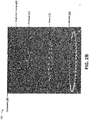
- extended reality rendered view 200 may display a codebase 205 in 3D form.
- extended reality rendered view 200 may include a hierarchical view of one or more elements included in codebase 205.
- extended reality rendered view 200 may include a rendering of one or more packages 210 (collectively referred to as "packages 210" and individually as “package 210") included in codebase 205, one or more classes 215 (collectively referred to as "classes 215" and individually as “class 215") included in packages 210, one or more methods 220 (collectively referred to as "methods 220" and individually as “method 220") included in classes 215, and/or the like.
- extended reality rendered view 225 may include a rendering of a plurality of execution traces 230 (collectively referred to as “execution traces 230" and individually as “execution trace 230").
- Execution traces 230 may represent an execution path associated with the test.
- an execution traces 230 between a package 210 and a class 215 may indicate that the test caused package 210 to call class 215, provide an output to class 215, receive an input from class 215, and/or the like.
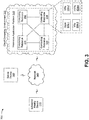
- extended reality device 310 may include an augmented reality device, a virtual reality device, a mixed reality device, a gaming device, a wearable communication device (e.g., a smart wristwatch, a pair of smart eyeglasses, etc.), or a similar type of device.
- extended reality device 310 may be a hand-held device, a head-mounted device, another type of wearable device, and/or the like.
- Server device 320 includes one or more devices capable of receiving, generating, storing, processing, and/or providing information, such as information described herein.
- server device 320 may include a laptop computer, a tablet computer, a desktop computer, a server device, a group of server devices, or a similar type of device, which provides application information associated with a software application, testing information associated with the software application, historical information associated with the software application, and/or the like, to immersive application platform 330.
- server device 320 may receive information from and/or transmit information to extended reality device 310 and/or immersive application platform 330.
- Immersive application platform 330 includes one or more devices capable of automatically creating an immersive representation of a software application for extended reality device 310.
- immersive application platform 330 may include one or more devices capable of receiving information from server device 320, from the extended reality device 310, and/or the like; capable of generating an extended reality rendered view of a live graphical model associated with a test executed on a codebase of a software application; capable of providing the extended reality rendered view of the live graphical model to the extended reality device, the server device, and/or the like; capable of receiving an input, associated with the extended reality rendered view of the live graphical model and/or associated with the test; capable of modifying the extended reality rendered view of the live graphical model; and/or the like.
- immersive application platform 330 may be designed to be modular such that certain software components may be swapped in or out depending on a particular need. As such, immersive application platform 330 may be easily and/or quickly reconfigured for different uses. In some implementations, immersive application platform 330 may receive information from and/or transmit information to extended reality device 310 and/or server device 320.
- immersive application platform 330 may be hosted in a cloud computing environment 332.
- immersive application platform 330 may not be cloud-based (i.e., may be implemented outside of a cloud computing environment) or may be partially cloud-based.
- Cloud computing environment 332 includes an environment that hosts immersive application platform 330.
- Cloud computing environment 332 may provide computation, software, data access, storage, etc. services that do not require end-user knowledge of a physical location and configuration of system(s) and/or device(s) that hosts immersive application platform 330.
- cloud computing environment 332 may include a group of computing resources 334 (referred to collectively as "computing resources 334" and individually as "computing resource 334").
- Computing resource 334 includes one or more personal computers, workstation computers, server devices, or other types of computation and/or communication devices.
- computing resource 334 may host immersive application platform 330.
- the cloud resources may include compute instances executing in computing resource 334, storage devices provided in computing resource 334, data transfer devices provided by computing resource 334, etc.
- computing resource 334 may communicate with other computing resources 334 via wired connections, wireless connections, or a combination of wired and wireless connections.
- Application 334-1 includes one or more software applications that may be provided to or accessed by extended reality device 310. Application 334-1 may eliminate a need to install and execute the software applications on extended reality device 310.
- application 334-1 may include software associated with immersive application platform 330 and/or any other software capable of being provided via cloud computing environment 332.
- one application 334-1 may send/receive information to/from one or more other applications 334-1, via virtual machine 334-2.
- Virtualized storage 334-3 includes one or more storage systems and/or one or more devices that use virtualization techniques within the storage systems or devices of computing resource 334.
- types of virtualizations may include block virtualization and file virtualization.
- Block virtualization may refer to abstraction (or separation) of logical storage from physical storage so that the storage system may be accessed without regard to physical storage or heterogeneous structure. The separation may permit administrators of the storage system flexibility in how the administrators manage storage for end users.
- File virtualization may eliminate dependencies between data accessed at a file level and a location where files are physically stored. This may enable optimization of storage use, server consolidation, and/or performance of non-disruptive file migrations.
- Bus 410 includes a component that permits communication among the components of device 400.
- Processor 420 is implemented in hardware, firmware, or a combination of hardware and software.
- Processor 420 takes the form of a central processing unit (CPU), a graphics processing unit (GPU), an accelerated processing unit (APU), a microprocessor, a microcontroller, a digital signal processor (DSP), a field-programmable gate array (FPGA), an application-specific integrated circuit (ASIC), or another type of processing component.
- processor 420 includes one or more processors capable of being programmed to perform a function.
- Memory 430 includes a random access memory (RAM), a read only memory (ROM), and/or another type of dynamic or static storage device (e.g., a flash memory, a magnetic memory, and/or an optical memory) that stores information and/or instructions for use by processor 420.
- RAM random access memory
- ROM read only memory
- static storage device e.g., a flash memory, a magnetic memory, and/or an optical memory
- Storage component 440 stores information and/or software related to the operation and use of device 400.
- storage component 440 may include a hard disk (e.g., a magnetic disk, an optical disk, a magneto-optic disk, and/or a solid state disk), a compact disc (CD), a digital versatile disc (DVD), a floppy disk, a cartridge, a magnetic tape, and/or another type of non-transitory computer-readable medium, along with a corresponding drive.
- Communication interface 470 includes a transceiver-like component (e.g., a transceiver and/or a separate receiver and transmitter) that enables device 400 to communicate with other devices, such as via a wired connection, a wireless connection, or a combination of wired and wireless connections.
- Communication interface 470 may permit device 400 to receive information from another device and/or provide information to another device.
- communication interface 470 may include an Ethernet interface, an optical interface, a coaxial interface, an infrared interface, a radio frequency (RF) interface, a universal serial bus (USB) interface, a Wi-Fi interface, a cellular network interface, or the like.
- RF radio frequency
- USB universal serial bus
- Device 400 may perform one or more processes described herein. Device 400 may perform these processes based on processor 420 executing software instructions stored by a non-transitory computer-readable medium, such as memory 430 and/or storage component 440.
- a computer-readable medium is defined herein as a non-transitory memory device.
- a memory device includes memory space within a single physical storage device or memory space spread across multiple physical storage devices.
- Software instructions may be read into memory 430 and/or storage component 440 from another computer-readable medium or from another device via communication interface 470. When executed, software instructions stored in memory 430 and/or storage component 440 may cause processor 420 to perform one or more processes described herein. Additionally, or alternatively, hardwired circuitry may be used in place of or in combination with software instructions to perform one or more processes described herein. Thus, implementations described herein are not limited to any specific combination of hardware circuitry and software.
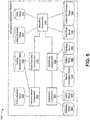
- DSL store 545 may include information mapping the variables, objects, operators, methods, and/or the like, of the programming language associated with the codebase to the variables, objects, operators, methods, and/or the like, of the domain specific language.
- DSL store 545 may include information mapping the expressions, meanings, context, and/or the like, of the programming language associated with the codebase to the expressions, meanings, context, and/or the like, of the domain specific language.
- topology store 560 may include information identifying a plurality of different topologies that may be used to display the live graphical model in the extended reality rendered view.
- Rendering component 520 may select a topology, from the plurality of different topologies included in topology store 560, that is to be used to display the domain specific language format of the codebase in the extended reality rendered view.
- object store 565 may include information identifying a plurality of objects that may be used to represent elements included in the codebase.
- Rendering component 520 may select one or more objects, of the plurality of objects, that are to be used to represent the elements included in the codebase.
- rendering component 520 may modify the extended reality rendered view of the live graphical model. In some implementations, rendering component 520 may modify the extended reality rendered view based on information included in device information store 570.
- device information store 570 may include information associated with the extended reality device, such as lighting information, spatial information, information identifying an extended reality device type associated with the extended reality device, and/or the like.
- input store 575 may include information identifying one or more gestures (e.g., hand gestures, arm gestures, facial gestures, etc.), information identifying one or more voice commands, information identifying one or more inputs that may be received via another type of input device, and/or the like.
- Interaction component 525 may identify a gesture, a voice comment, and/or the like, associated with the user interaction, based on the information included in input store 575.
- mapping store 580 may include information mapping the gestures, the voice comments, the inputs that may be received from another type of input device, and/or the like, to one or more actions, associated with the extended reality rendered view, associated with the test, and/or the like, that interaction component 525 may perform.
- Interaction component 525 may identify, based on the information included in mapping store 580, an action, associated with the identified gesture, voice command, and/or other input, that is to be performed on the extended reality rendered view, on the test, and/or the like.
- Interaction component 525 may perform the action to modify the extended reality rendered view; to start the test, to stop the test, to pause the test, to rerun the test, and/or the like; and may provide the modified extended reality rendered view to the extended reality device for display by the extended reality device.
- immersive application platform 500 may include additional components, fewer components, different components, or differently arranged components than those shown in Fig. 5 . Additionally, or alternatively, a set of components (e.g., one or more components) of immersive application platform 500 may perform one or more functions described as being performed by another set of components of immersive application platform 500.
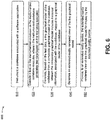
- Fig. 6 is a flow chart of an example process 600 for representing a test execution of a software application using extended reality.
- one or more process blocks of Fig. 6 may be performed by an immersive application platform, such as immersive application platform 330, immersive application platform 500, and/or the like.
- one or more process blocks of Fig. 6 may be performed by another device or a group of devices separate from or including the immersive application platform, such as an extended reality device (e.g., extended reality device 310), a server device (e.g., server device 320), and/or the like.
- an extended reality device e.g., extended reality device 310
- a server device e.g., server device 320
- process 600 may include executing a test on the instrumented codebase as the instrumented codebase executes, wherein the instrumented codebase generates test data based on the test being executed (block 620).
- the immersive application platform e.g., using processor 420, memory 430, storage component 440, output component 460, communication interface 470, and/or the like
- the instrumented codebase may generate test data based on the test being executed.
- process 600 may include generating, based on the test data, a live graphical model of the codebase from a composite graphical model of the codebase, wherein the composite graphical model includes historical information, associated with the codebase, mapped to a graphical model of the codebase (block 630).
- the immersive application platform e.g., using processor 420, memory 430, storage component 440, output component 460, communication interface 470, and/or the like
- the composite graphical model may include historical information, associated with the codebase, mapped to a graphical model of the codebase.
- process 600 may include generating an extended reality rendered view of the live graphical model (block 640).
- the immersive application platform e.g., using processor 420, memory 430, storage component 440, output component 460, communication interface 470, and/or the like
- process 600 may include providing, to an extended reality device, the extended reality rendered view of the live graphical model for display by the extended reality device (block 650).
- the immersive application platform e.g., using processor 420, memory 430, storage component 440, output component 460, communication interface 470, and/or the like
- the immersive application platform may perform a static analysis of the codebase to determine a structure of the codebase and one or more metrics associated with the codebase, and may generate the graphical model based on the structure of the codebase and the one or more metrics.
- the one or more metrics include at least one of coupling between object classes (CBO) associated with a class included in the codebase, a level of abstraction associated with a package included in the codebase, or a class responsibility associated with the class included in the codebase.
- CBO object classes
- the immersive application platform may generate the extended reality rendered view of the live graphical model based on information associated with the extended reality device.
- the historical information may include at least one of historical test data associated with the codebase, or one or more historical outputs, associated with one or more dynamic analysis tools, generated by the codebase.
- the immersive application platform may identify a join point that identifies an element included in the codebase, and may insert instrumentation code at the identified element.
- the extended reality rendered view of the live graphical model may include a rendering of a plurality of objects associated with a plurality of elements included in the codebase, and a rendering of a plurality of representations of a plurality of execution traces between the plurality of elements.
- process 600 may include additional blocks, fewer blocks, different blocks, or differently arranged blocks than those depicted in Fig. 6 . Additionally, or alternatively, two or more of the blocks of process 600 may be performed in parallel.
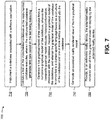
- Fig. 7 is a flow chart of an example process 700 for representing a test execution of a software application using extended reality.
- one or more process blocks of Fig. 7 may be performed by an immersive application platform, such as immersive application platform 330, immersive application platform 500, and/or the like.
- one or more process blocks of Fig. 7 may be performed by another device or a group of devices separate from or including the immersive application platform, such as an extended reality device (e.g., extended reality device 310), a server device (e.g., server device 320), and/or the like.
- an extended reality device e.g., extended reality device 310
- a server device e.g., server device 320
- process 700 may include instrumenting a codebase associated with a software application (block 710).
- the immersive application platform e.g., using processor 420, memory 430, storage component 440, input component 450, communication interface 470, and/or the like
- the composite graphical model may include historical information, associated with the codebase, mapped to a graphical model of the codebase.
- the graphical model of the codebase may be converted to a domain specific language based on a structure of the codebase and one or more metrics associated with the codebase.
- process 700 may include providing, to an extended reality device, the extended reality rendered view of the live graphical model for display by the extended reality device (block 750).
- the immersive application platform e.g., using processor 420, memory 430, storage component 440, output component 460, communication interface 470, and/or the like
- Process 700 may include additional implementations, such as any single implementation or any combination of implementations described below and/or in connection with one or more other processes described elsewhere herein.
- the immersive application platform may perform an analysis of the composite graphical model, and may combine results of the analysis with the composite graphical model to generate the live graphical model.
- the analysis of the composite graphical model may include at least one of a hotspot analysis based on the test data, a dead code analysis based on the test data, an analysis of whether one or more elements, included in the codebase, uses data from an untrusted source, or an analysis of whether the one or more elements, included in the codebase, provides data to the untrusted source.
- the extended reality rendered view of the live graphical model may include a visual indicator of at least one of a quantity of times an element, included in the codebase, is executed by the test being executed on the instrumented codebase, an amount of time the element, included in the codebase, takes to execute, or an execution trace between the element and another element that calls the element when the test is executed on the instrumented codebase.
- Fig. 8 is a flow chart of an example process 800 for representing a test execution of a software application using extended reality.
- one or more process blocks of Fig. 8 may be performed by an immersive application platform, such as immersive application platform 330, immersive application platform 500, and/or the like.
- one or more process blocks of Fig. 8 may be performed by another device or a group of devices separate from or including the immersive application platform, such as an extended reality device (e.g., extended reality device 310), a server device (e.g., server device 320), and/or the like.
- an extended reality device e.g., extended reality device 310
- a server device e.g., server device 320
- process 800 may include instrumenting a codebase associated with a software application (block 810).
- the immersive application platform e.g., using processor 420, memory 430, storage component 440, input component 450, communication interface 470, and/or the like
- process 800 may include execute a test on the instrumented codebase as the instrumented codebase executes, wherein the instrumented codebase generates test data based on the test being executed (block 820).
- the immersive application platform e.g., using processor 420, memory 430, storage component 440, output component 460, communication interface 470, and/or the like
- the instrumented codebase may generate test data based on the test being executed.
- process 800 may include generating a live graphical model of the codebase from a composite graphical model of the codebase (block 830).
- the immersive application platform e.g., using processor 420, memory 430, storage component 440, output component 460, communication interface 470, and/or the like
- process 800 may include generating an extended reality rendered view of the live graphical model (block 840).
- the immersive application platform e.g., using processor 420, memory 430, storage component 440, output component 460, communication interface 470, and/or the like
- process 800 may include providing, to an extended reality device, the extended reality rendered view of the live graphical model for display be the extended reality device (block 850).
- the immersive application platform e.g., using processor 420, memory 430, storage component 440, output component 460, communication interface 470, and/or the like
- process 800 may include receiving an input associated with the execution of the test on the instrumented codebase (block 860).
- the immersive application platform e.g., using processor 420, memory 430, storage component 440, output component 460, communication interface 470, and/or the like
- process 800 may include providing, to the extended reality device, the modified extended reality rendered view of the live graphical model for display by the extended reality device (block 880).
- the immersive application platform e.g., using processor 420, memory 430, storage component 440, output component 460, communication interface 470, and/or the like
- the test data may include at least one of information identifying an execution frequency of a method included in the codebase (e.g., a quantity of times a method, in the codebase, is executed), information identifying an execution duration of the method, or information identifying an execution trace associated with the method.
- the immersive application platform may generate the extended reality rendered view of the live graphical model based on information associated with the extended reality device, wherein the information associated with the extended reality device includes at least one of lighting information associated with the extended reality device, spatial information associated with the extended reality device, or information identifying an extended reality device type associated with the extended reality device.
- the immersive application platform may select a topology that is to be used to display the live graphical model in the extended reality rendered view of the live graphical model, and may select one or more objects that are to be displayed in the topology.
- the immersive application platform may identify a plurality of join points associated with a plurality of locations in the codebase, and may insert instrumentation code at the plurality of locations.
- implementations described herein use a computerized process to perform tasks that were not previously performed or were previously performed using subjective human intuition or input.
- prior software application testing approaches include reviewing testing logs after a test is executed, and then if the test fails, attempting to perform a postmortem analysis involving detailed code walkthroughs, which may be textual, non-intuitive and may quickly become directionless if multiple subsystems are involved without the ability to view a holistic view of the software application.
- automatically creating the extended reality rendered view of the live graphical model for the extended reality device conserves computing resources (e.g., processors, memory, and/or the like) that would otherwise be wasted in unsuccessfully attempting to comprehend the test results associated with the software application using other techniques.
- a user interface may include a graphical user interface, a non-graphical user interface, a text-based user interface, or the like.
- a user interface may provide information for display.
- a user may interact with the information, such as by providing input via an input component of a device that provides the user interface for display.
- a user interface may be configurable by a device and/or a user (e.g., a user may change the size of the user interface, information provided via the user interface, a position of information provided via the user interface, etc.).
Landscapes
- Engineering & Computer Science (AREA)
- Theoretical Computer Science (AREA)
- General Engineering & Computer Science (AREA)
- Physics & Mathematics (AREA)
- General Physics & Mathematics (AREA)
- Quality & Reliability (AREA)
- Computer Hardware Design (AREA)
- Software Systems (AREA)
- Computing Systems (AREA)
- Data Mining & Analysis (AREA)
- Mathematical Physics (AREA)
- User Interface Of Digital Computer (AREA)
- Debugging And Monitoring (AREA)
Applications Claiming Priority (2)
| Application Number | Priority Date | Filing Date | Title |
|---|---|---|---|
| IN201841006007 | 2018-02-16 | ||
| US16/113,595 US10592397B2 (en) | 2018-02-16 | 2018-08-27 | Representing a test execution of a software application using extended reality |
Publications (2)
| Publication Number | Publication Date |
|---|---|
| EP3528126A1 true EP3528126A1 (fr) | 2019-08-21 |
| EP3528126B1 EP3528126B1 (fr) | 2023-03-15 |
Family
ID=65324216
Family Applications (1)
| Application Number | Title | Priority Date | Filing Date |
|---|---|---|---|
| EP19155467.4A Active EP3528126B1 (fr) | 2018-02-16 | 2019-02-05 | Représentation l'exécution d'un test d'une application logicielle utilisant la réalité étendue |
Country Status (1)
| Country | Link |
|---|---|
| EP (1) | EP3528126B1 (fr) |
Cited By (1)
| Publication number | Priority date | Publication date | Assignee | Title |
|---|---|---|---|---|
| CN117421839A (zh) * | 2023-11-06 | 2024-01-19 | 上海同星智能科技有限公司 | 汽车仿真测试过程中的程序步骤可视化实现方法及系统 |
Family Cites Families (1)
| Publication number | Priority date | Publication date | Assignee | Title |
|---|---|---|---|---|
| US20170024305A1 (en) * | 2014-02-11 | 2017-01-26 | Hewlett Packard Enterprise Development Lp | Client application profiling |
-
2019
- 2019-02-05 EP EP19155467.4A patent/EP3528126B1/fr active Active
Non-Patent Citations (5)
| Title |
|---|
| DANILO ANSALONI ET AL: "Enabling Modularity and Re-use in Dynamic Program Analysis Tools for the Java Virtual Machine", 1 July 2013, ECOOP 2013 OBJECT-ORIENTED PROGRAMMING, SPRINGER BERLIN HEIDELBERG, BERLIN, HEIDELBERG, PAGE(S) 352 - 377, ISBN: 978-3-642-39037-1, XP047033411 * |
| FITTKAU FLORIAN ET AL: "Software landscape and application visualization for system comprehension with ExplorViz", INFORMATION AND SOFTWARE TECHNOLOGY, ELSEVIER, AMSTERDAM, NL, vol. 87, 15 July 2016 (2016-07-15), pages 259 - 277, XP029992952, ISSN: 0950-5849, DOI: 10.1016/J.INFSOF.2016.07.004 * |
| HARTMUT SEICHTER ET AL: "ComposAR", MIXED AND AUGMENTED REALITY, 2008. ISMAR 2008. 7TH IEEE/ACM INTERNATIONAL SYMPOSIUM ON, IEEE, PISCATAWAY, NJ, USA, 15 September 2008 (2008-09-15), pages 177 - 178, XP058352826, ISBN: 978-1-4244-2840-3, DOI: 10.1109/ISMAR.2008.4637354 * |
| HARUO AMARI ET AL: "A VIRTUAL REALITY APPLICATION FOR SOFTWARE VISUALIZATION", PROCEEDINGS OF THE VIRTUAL REALITY ANNUAL INTERNATIONAL SYMPOSIUM. SEATTLE, SEPT. 18 - 22, 1993; [PROCEEDINGS OF THE VIRTUAL REALITY ANNUAL INTERNATIONAL SYMPOSIUM], NEW YORK, IEEE, US, vol. SYMP. 1, 18 September 1993 (1993-09-18), pages 1 - 06, XP000457674 * |
| VINCUR JURAJ ET AL: "VR City: Software Analysis in Virtual Reality Environment", 2017 IEEE INTERNATIONAL CONFERENCE ON SOFTWARE QUALITY, RELIABILITY AND SECURITY COMPANION (QRS-C), IEEE, 25 July 2017 (2017-07-25), pages 509 - 516, XP033139528, DOI: 10.1109/QRS-C.2017.88 * |
Cited By (1)
| Publication number | Priority date | Publication date | Assignee | Title |
|---|---|---|---|---|
| CN117421839A (zh) * | 2023-11-06 | 2024-01-19 | 上海同星智能科技有限公司 | 汽车仿真测试过程中的程序步骤可视化实现方法及系统 |
Also Published As
| Publication number | Publication date |
|---|---|
| EP3528126B1 (fr) | 2023-03-15 |
Similar Documents
| Publication | Publication Date | Title |
|---|---|---|
| US10592397B2 (en) | Representing a test execution of a software application using extended reality | |
| EP3867880B1 (fr) | Objets de visualisation de données dans un environnement virtuel | |
| US10838717B2 (en) | Representing a software application using extended reality | |
| US9021428B2 (en) | Troubleshooting visuals and transient expressions in executing applications | |
| US8990777B2 (en) | Interactive graph for navigating and monitoring execution of application code | |
| US9734040B2 (en) | Animated highlights in a graph representing an application | |
| US9720799B1 (en) | Validating applications using object level hierarchy analysis | |
| US8862975B2 (en) | Web-based workflow service visualization and navigation | |
| CN108351764B (zh) | 数据处理方法和系统 | |
| WO2019144681A1 (fr) | Appareil et procédé d'essais automatisés, support de stockage et dispositif électronique | |
| US20170091317A1 (en) | Location correlation between query script and data flow | |
| US20140189650A1 (en) | Setting Breakpoints Using an Interactive Graph Representing an Application | |
| US20140189652A1 (en) | Filtering and Transforming a Graph Representing an Application | |
| CN108170611A (zh) | 自动化测试方法及装置、存储介质、电子设备 | |
| US9792198B2 (en) | Debugger with method restart capability | |
| CN106095666A (zh) | 游戏自动化测试方法及相关装置 | |
| US9122793B2 (en) | Distributed debugging of an application in a distributed computing environment | |
| KR102048313B1 (ko) | 컴포넌트들을 연결하기 위한 강화된 툴을 갖는 그래픽 사용자 인터페이스 | |
| CN111801713B (zh) | 用于生成射线跟踪图像的可视化的技术 | |
| EP3000041A1 (fr) | Graphique pour naviguer dans un code d'application | |
| US20160072692A1 (en) | Two-way remote communication system | |
| US8745537B1 (en) | Graphical interface for managing and monitoring the status of a graphical model | |
| CN112306844A (zh) | 软件开发系统的接口测试方法、装置、设备及存储介质 | |
| EP3528126B1 (fr) | Représentation l'exécution d'un test d'une application logicielle utilisant la réalité étendue | |
| TWI803901B (zh) | 半導體設備建模方法及裝置 |
Legal Events
| Date | Code | Title | Description |
|---|---|---|---|
| PUAI | Public reference made under article 153(3) epc to a published international application that has entered the european phase |
Free format text: ORIGINAL CODE: 0009012 |
|
| STAA | Information on the status of an ep patent application or granted ep patent |
Free format text: STATUS: THE APPLICATION HAS BEEN PUBLISHED |
|
| AK | Designated contracting states |
Kind code of ref document: A1 Designated state(s): AL AT BE BG CH CY CZ DE DK EE ES FI FR GB GR HR HU IE IS IT LI LT LU LV MC MK MT NL NO PL PT RO RS SE SI SK SM TR |
|
| AX | Request for extension of the european patent |
Extension state: BA ME |
|
| STAA | Information on the status of an ep patent application or granted ep patent |
Free format text: STATUS: REQUEST FOR EXAMINATION WAS MADE |
|
| 17P | Request for examination filed |
Effective date: 20200220 |
|
| RBV | Designated contracting states (corrected) |
Designated state(s): AL AT BE BG CH CY CZ DE DK EE ES FI FR GB GR HR HU IE IS IT LI LT LU LV MC MK MT NL NO PL PT RO RS SE SI SK SM TR |
|
| STAA | Information on the status of an ep patent application or granted ep patent |
Free format text: STATUS: EXAMINATION IS IN PROGRESS |
|
| 17Q | First examination report despatched |
Effective date: 20210304 |
|
| GRAP | Despatch of communication of intention to grant a patent |
Free format text: ORIGINAL CODE: EPIDOSNIGR1 |
|
| STAA | Information on the status of an ep patent application or granted ep patent |
Free format text: STATUS: GRANT OF PATENT IS INTENDED |
|
| RIC1 | Information provided on ipc code assigned before grant |
Ipc: G06F 11/30 20060101ALN20221114BHEP Ipc: G06F 11/36 20060101ALI20221114BHEP Ipc: G06F 11/34 20060101ALI20221114BHEP Ipc: G06F 11/32 20060101AFI20221114BHEP |
|
| INTG | Intention to grant announced |
Effective date: 20221209 |
|
| GRAS | Grant fee paid |
Free format text: ORIGINAL CODE: EPIDOSNIGR3 |
|
| GRAA | (expected) grant |
Free format text: ORIGINAL CODE: 0009210 |
|
| STAA | Information on the status of an ep patent application or granted ep patent |
Free format text: STATUS: THE PATENT HAS BEEN GRANTED |
|
| AK | Designated contracting states |
Kind code of ref document: B1 Designated state(s): AL AT BE BG CH CY CZ DE DK EE ES FI FR GB GR HR HU IE IS IT LI LT LU LV MC MK MT NL NO PL PT RO RS SE SI SK SM TR |
|
| REG | Reference to a national code |
Ref country code: CH Ref legal event code: EP Ref country code: GB Ref legal event code: FG4D |
|
| REG | Reference to a national code |
Ref country code: DE Ref legal event code: R096 Ref document number: 602019026316 Country of ref document: DE |
|
| REG | Reference to a national code |
Ref country code: IE Ref legal event code: FG4D |
|
| REG | Reference to a national code |
Ref country code: AT Ref legal event code: REF Ref document number: 1554402 Country of ref document: AT Kind code of ref document: T Effective date: 20230415 |
|
| P01 | Opt-out of the competence of the unified patent court (upc) registered |
Effective date: 20230523 |
|
| REG | Reference to a national code |
Ref country code: LT Ref legal event code: MG9D |
|
| REG | Reference to a national code |
Ref country code: NL Ref legal event code: MP Effective date: 20230315 |
|
| PG25 | Lapsed in a contracting state [announced via postgrant information from national office to epo] |
Ref country code: RS Free format text: LAPSE BECAUSE OF FAILURE TO SUBMIT A TRANSLATION OF THE DESCRIPTION OR TO PAY THE FEE WITHIN THE PRESCRIBED TIME-LIMIT Effective date: 20230315 Ref country code: NO Free format text: LAPSE BECAUSE OF FAILURE TO SUBMIT A TRANSLATION OF THE DESCRIPTION OR TO PAY THE FEE WITHIN THE PRESCRIBED TIME-LIMIT Effective date: 20230615 Ref country code: LV Free format text: LAPSE BECAUSE OF FAILURE TO SUBMIT A TRANSLATION OF THE DESCRIPTION OR TO PAY THE FEE WITHIN THE PRESCRIBED TIME-LIMIT Effective date: 20230315 Ref country code: LT Free format text: LAPSE BECAUSE OF FAILURE TO SUBMIT A TRANSLATION OF THE DESCRIPTION OR TO PAY THE FEE WITHIN THE PRESCRIBED TIME-LIMIT Effective date: 20230315 Ref country code: HR Free format text: LAPSE BECAUSE OF FAILURE TO SUBMIT A TRANSLATION OF THE DESCRIPTION OR TO PAY THE FEE WITHIN THE PRESCRIBED TIME-LIMIT Effective date: 20230315 |
|
| REG | Reference to a national code |
Ref country code: AT Ref legal event code: MK05 Ref document number: 1554402 Country of ref document: AT Kind code of ref document: T Effective date: 20230315 |
|
| PG25 | Lapsed in a contracting state [announced via postgrant information from national office to epo] |
Ref country code: SE Free format text: LAPSE BECAUSE OF FAILURE TO SUBMIT A TRANSLATION OF THE DESCRIPTION OR TO PAY THE FEE WITHIN THE PRESCRIBED TIME-LIMIT Effective date: 20230315 Ref country code: NL Free format text: LAPSE BECAUSE OF FAILURE TO SUBMIT A TRANSLATION OF THE DESCRIPTION OR TO PAY THE FEE WITHIN THE PRESCRIBED TIME-LIMIT Effective date: 20230315 Ref country code: GR Free format text: LAPSE BECAUSE OF FAILURE TO SUBMIT A TRANSLATION OF THE DESCRIPTION OR TO PAY THE FEE WITHIN THE PRESCRIBED TIME-LIMIT Effective date: 20230616 Ref country code: FI Free format text: LAPSE BECAUSE OF FAILURE TO SUBMIT A TRANSLATION OF THE DESCRIPTION OR TO PAY THE FEE WITHIN THE PRESCRIBED TIME-LIMIT Effective date: 20230315 |
|
| PG25 | Lapsed in a contracting state [announced via postgrant information from national office to epo] |
Ref country code: SM Free format text: LAPSE BECAUSE OF FAILURE TO SUBMIT A TRANSLATION OF THE DESCRIPTION OR TO PAY THE FEE WITHIN THE PRESCRIBED TIME-LIMIT Effective date: 20230315 Ref country code: RO Free format text: LAPSE BECAUSE OF FAILURE TO SUBMIT A TRANSLATION OF THE DESCRIPTION OR TO PAY THE FEE WITHIN THE PRESCRIBED TIME-LIMIT Effective date: 20230315 Ref country code: PT Free format text: LAPSE BECAUSE OF FAILURE TO SUBMIT A TRANSLATION OF THE DESCRIPTION OR TO PAY THE FEE WITHIN THE PRESCRIBED TIME-LIMIT Effective date: 20230717 Ref country code: ES Free format text: LAPSE BECAUSE OF FAILURE TO SUBMIT A TRANSLATION OF THE DESCRIPTION OR TO PAY THE FEE WITHIN THE PRESCRIBED TIME-LIMIT Effective date: 20230315 Ref country code: EE Free format text: LAPSE BECAUSE OF FAILURE TO SUBMIT A TRANSLATION OF THE DESCRIPTION OR TO PAY THE FEE WITHIN THE PRESCRIBED TIME-LIMIT Effective date: 20230315 Ref country code: CZ Free format text: LAPSE BECAUSE OF FAILURE TO SUBMIT A TRANSLATION OF THE DESCRIPTION OR TO PAY THE FEE WITHIN THE PRESCRIBED TIME-LIMIT Effective date: 20230315 Ref country code: AT Free format text: LAPSE BECAUSE OF FAILURE TO SUBMIT A TRANSLATION OF THE DESCRIPTION OR TO PAY THE FEE WITHIN THE PRESCRIBED TIME-LIMIT Effective date: 20230315 |
|
| PG25 | Lapsed in a contracting state [announced via postgrant information from national office to epo] |
Ref country code: SK Free format text: LAPSE BECAUSE OF FAILURE TO SUBMIT A TRANSLATION OF THE DESCRIPTION OR TO PAY THE FEE WITHIN THE PRESCRIBED TIME-LIMIT Effective date: 20230315 Ref country code: PL Free format text: LAPSE BECAUSE OF FAILURE TO SUBMIT A TRANSLATION OF THE DESCRIPTION OR TO PAY THE FEE WITHIN THE PRESCRIBED TIME-LIMIT Effective date: 20230315 Ref country code: IS Free format text: LAPSE BECAUSE OF FAILURE TO SUBMIT A TRANSLATION OF THE DESCRIPTION OR TO PAY THE FEE WITHIN THE PRESCRIBED TIME-LIMIT Effective date: 20230715 |
|
| REG | Reference to a national code |
Ref country code: DE Ref legal event code: R097 Ref document number: 602019026316 Country of ref document: DE |
|
| PLBE | No opposition filed within time limit |
Free format text: ORIGINAL CODE: 0009261 |
|
| STAA | Information on the status of an ep patent application or granted ep patent |
Free format text: STATUS: NO OPPOSITION FILED WITHIN TIME LIMIT |
|
| PG25 | Lapsed in a contracting state [announced via postgrant information from national office to epo] |
Ref country code: SI Free format text: LAPSE BECAUSE OF FAILURE TO SUBMIT A TRANSLATION OF THE DESCRIPTION OR TO PAY THE FEE WITHIN THE PRESCRIBED TIME-LIMIT Effective date: 20230315 Ref country code: DK Free format text: LAPSE BECAUSE OF FAILURE TO SUBMIT A TRANSLATION OF THE DESCRIPTION OR TO PAY THE FEE WITHIN THE PRESCRIBED TIME-LIMIT Effective date: 20230315 |
|
| 26N | No opposition filed |
Effective date: 20231218 |
|
| PG25 | Lapsed in a contracting state [announced via postgrant information from national office to epo] |
Ref country code: IT Free format text: LAPSE BECAUSE OF FAILURE TO SUBMIT A TRANSLATION OF THE DESCRIPTION OR TO PAY THE FEE WITHIN THE PRESCRIBED TIME-LIMIT Effective date: 20230315 |
|
| PG25 | Lapsed in a contracting state [announced via postgrant information from national office to epo] |
Ref country code: MC Free format text: LAPSE BECAUSE OF FAILURE TO SUBMIT A TRANSLATION OF THE DESCRIPTION OR TO PAY THE FEE WITHIN THE PRESCRIBED TIME-LIMIT Effective date: 20230315 |
|
| REG | Reference to a national code |
Ref country code: CH Ref legal event code: PL |
|
| PG25 | Lapsed in a contracting state [announced via postgrant information from national office to epo] |
Ref country code: LU Free format text: LAPSE BECAUSE OF NON-PAYMENT OF DUE FEES Effective date: 20240205 |
|
| PG25 | Lapsed in a contracting state [announced via postgrant information from national office to epo] |
Ref country code: CH Free format text: LAPSE BECAUSE OF NON-PAYMENT OF DUE FEES Effective date: 20240229 |
|
| PG25 | Lapsed in a contracting state [announced via postgrant information from national office to epo] |
Ref country code: LU Free format text: LAPSE BECAUSE OF NON-PAYMENT OF DUE FEES Effective date: 20240205 Ref country code: CH Free format text: LAPSE BECAUSE OF NON-PAYMENT OF DUE FEES Effective date: 20240229 |
|
| PG25 | Lapsed in a contracting state [announced via postgrant information from national office to epo] |
Ref country code: BG Free format text: LAPSE BECAUSE OF FAILURE TO SUBMIT A TRANSLATION OF THE DESCRIPTION OR TO PAY THE FEE WITHIN THE PRESCRIBED TIME-LIMIT Effective date: 20230315 |
|
| PG25 | Lapsed in a contracting state [announced via postgrant information from national office to epo] |
Ref country code: BG Free format text: LAPSE BECAUSE OF FAILURE TO SUBMIT A TRANSLATION OF THE DESCRIPTION OR TO PAY THE FEE WITHIN THE PRESCRIBED TIME-LIMIT Effective date: 20230315 |
|
| REG | Reference to a national code |
Ref country code: BE Ref legal event code: MM Effective date: 20240229 |
|
| PG25 | Lapsed in a contracting state [announced via postgrant information from national office to epo] |
Ref country code: BE Free format text: LAPSE BECAUSE OF NON-PAYMENT OF DUE FEES Effective date: 20240229 |
|
| PGFP | Annual fee paid to national office [announced via postgrant information from national office to epo] |
Ref country code: GB Payment date: 20241212 Year of fee payment: 7 |
|
| PGFP | Annual fee paid to national office [announced via postgrant information from national office to epo] |
Ref country code: FR Payment date: 20241209 Year of fee payment: 7 |
|
| PG25 | Lapsed in a contracting state [announced via postgrant information from national office to epo] |
Ref country code: BE Free format text: LAPSE BECAUSE OF NON-PAYMENT OF DUE FEES Effective date: 20240229 |
|
| PGFP | Annual fee paid to national office [announced via postgrant information from national office to epo] |
Ref country code: DE Payment date: 20241210 Year of fee payment: 7 |
|
| PG25 | Lapsed in a contracting state [announced via postgrant information from national office to epo] |
Ref country code: CY Free format text: LAPSE BECAUSE OF FAILURE TO SUBMIT A TRANSLATION OF THE DESCRIPTION OR TO PAY THE FEE WITHIN THE PRESCRIBED TIME-LIMIT; INVALID AB INITIO Effective date: 20190205 |
|
| PG25 | Lapsed in a contracting state [announced via postgrant information from national office to epo] |
Ref country code: HU Free format text: LAPSE BECAUSE OF FAILURE TO SUBMIT A TRANSLATION OF THE DESCRIPTION OR TO PAY THE FEE WITHIN THE PRESCRIBED TIME-LIMIT; INVALID AB INITIO Effective date: 20190205 |
|
| PG25 | Lapsed in a contracting state [announced via postgrant information from national office to epo] |
Ref country code: TR Free format text: LAPSE BECAUSE OF FAILURE TO SUBMIT A TRANSLATION OF THE DESCRIPTION OR TO PAY THE FEE WITHIN THE PRESCRIBED TIME-LIMIT Effective date: 20230315 |
|
| PGFP | Annual fee paid to national office [announced via postgrant information from national office to epo] |
Ref country code: IE Payment date: 20251209 Year of fee payment: 8 |